judge
Judge — December 12, 1931
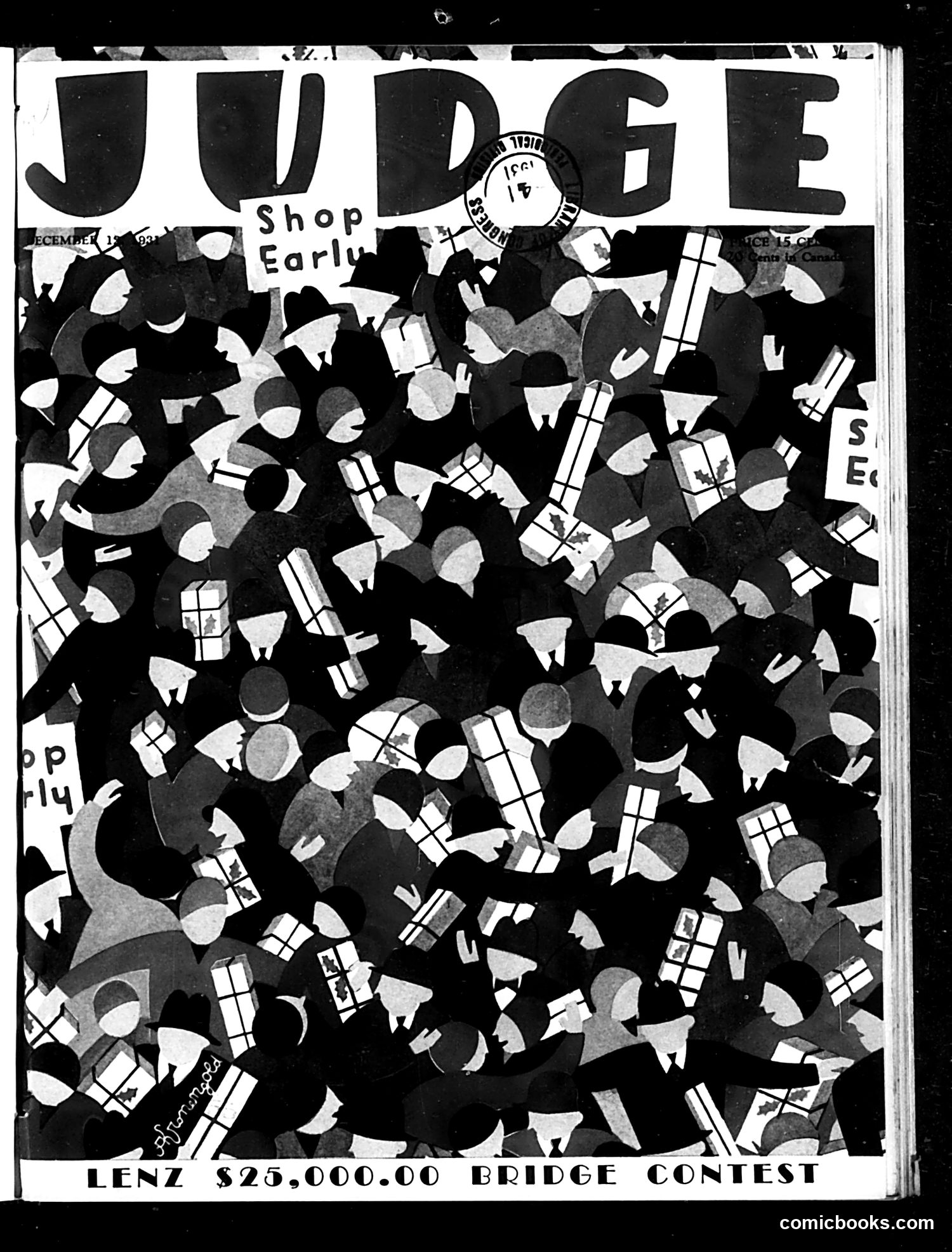
Analysis This Judge magazine cover depicts a crowded Christmas shopping scene, with the large "JUDGE" masthead and "Shop Early" message at top. The image shows masses of people (rendered as silhouettes and simplified forms) carrying wrapped presents and packages during the holiday season. The satire appears to target the commercialization of Christmas and the frenzied consumer behavior it generates—the overwhelming crowds rushing to purchase gifts. The "Shop Early" advisory is ironic, suggesting that despite such warnings, people still wait until the last moment, creating chaotic scenes. At bottom, a "Lenz $25,000.00 Bridge Contest" advertisement appears, likely unrelated editorial content. The date marking shows December 1906, placing this during the early 20th-century retail era when Christmas shopping was becoming a major commercial phenomenon worthy of satirical commentary.
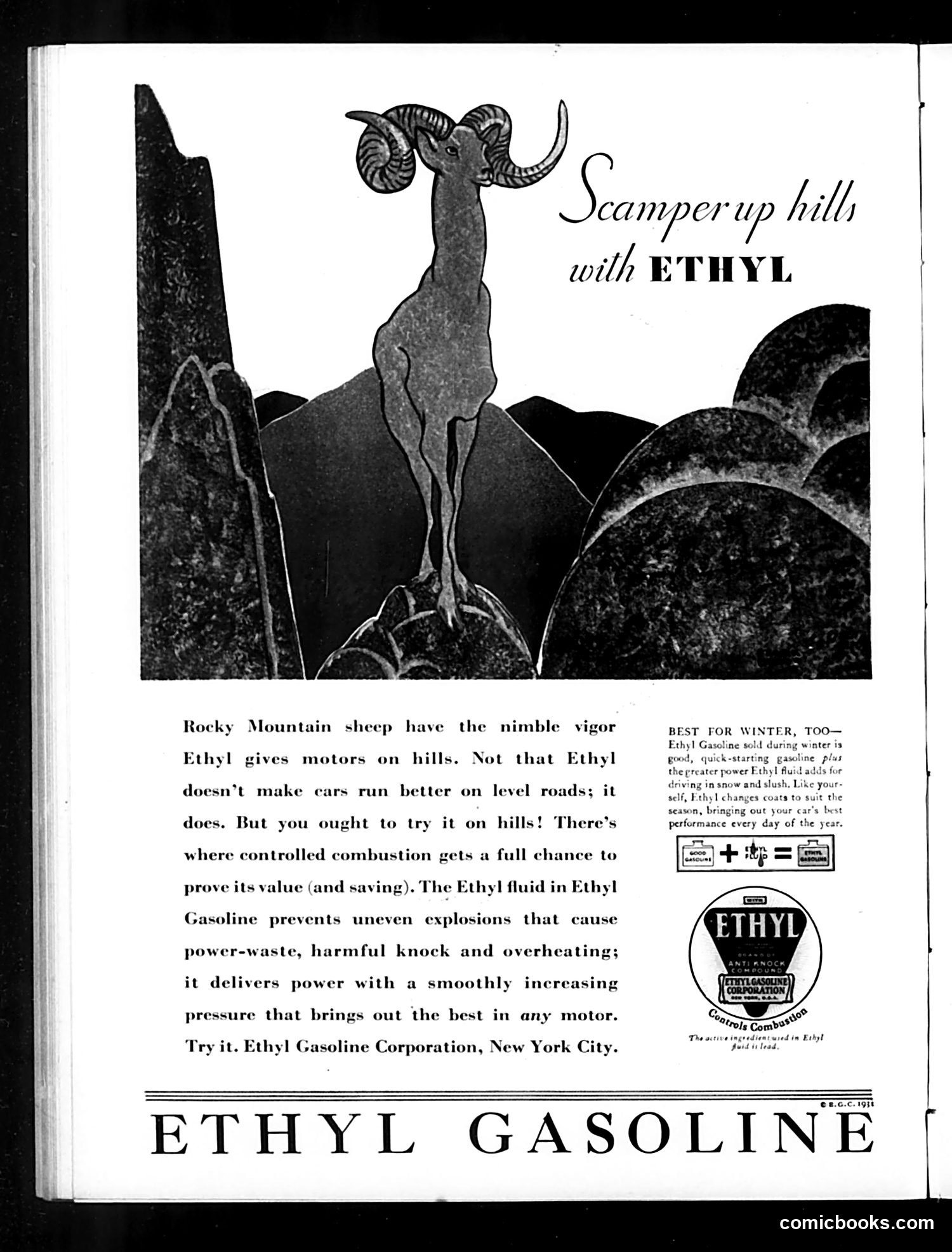
Ethyl Gasoline Advertisement, Judge Magazine This is primarily a commercial advertisement, not satire. It promotes Ethyl Gasoline, a brand that added tetraethyl lead to fuel as an anti-knock additive (now recognized as toxic). The advertisement uses a Rocky Mountain sheep mascot to represent the product's power and vigor. The visual pun compares the sheep "scampering up hills" with enhanced motor performance—suggesting Ethyl gasoline gives cars superior climbing ability and power on inclines. The copy emphasizes combustion control and smooth power delivery, claiming Ethyl prevents engine knock and overheating. A small diagram shows the additive's chemical formula. This reflects early-20th-century marketing before lead's health dangers were widely understood or regulated.
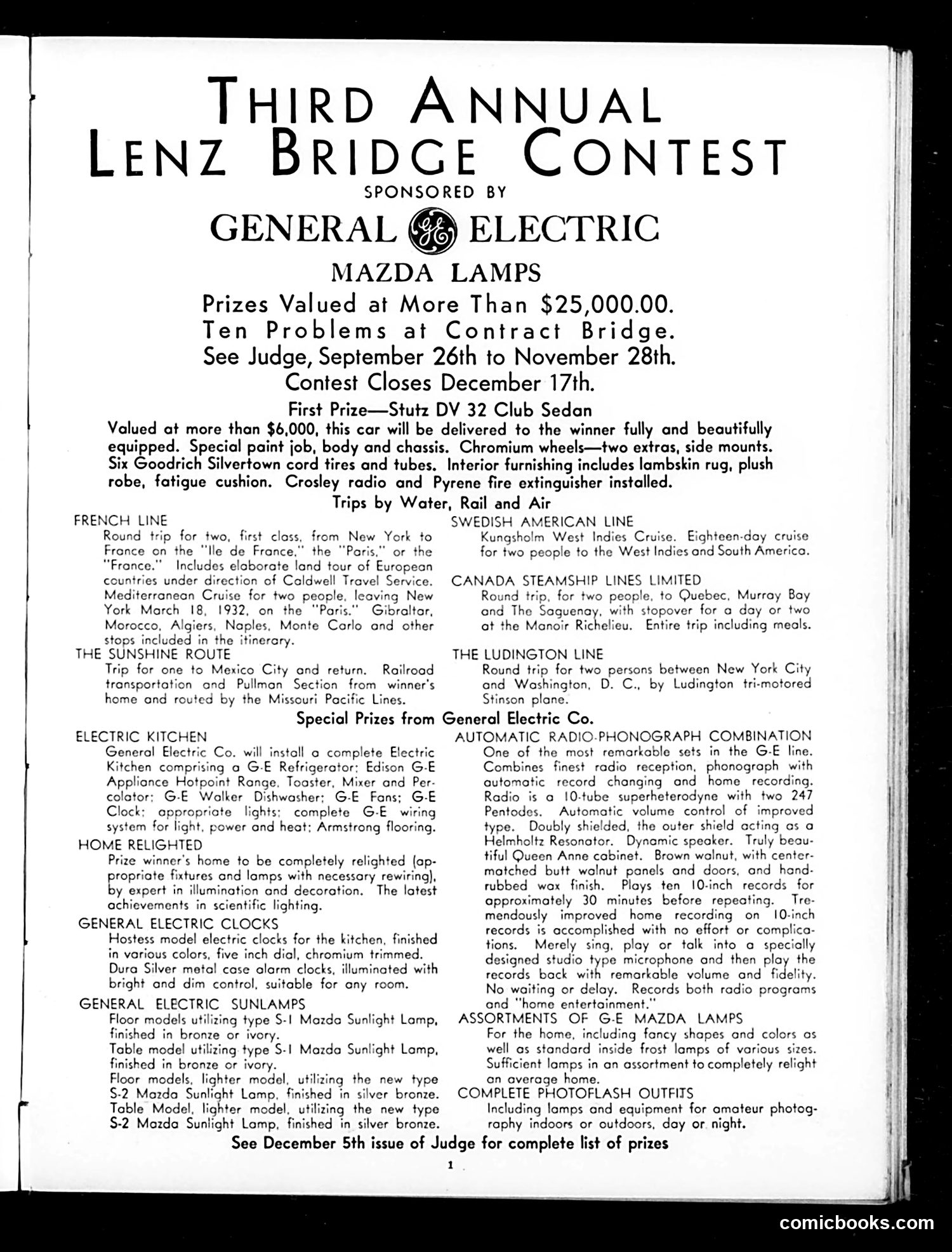
Content Description This page is primarily advertising, not satire or political commentary. It announces the "Third Annual Lenz Bridge Contest" sponsored by General Electric and Mazda Lamps, with prizes totaling over $25,000. The contest involves solving "ten problems at Contract Bridge," with entries accepted September 26 through November 28, closing December 17. The first prize is a Stutz DV 32 Club Sedan valued at $6,000, plus additional prizes including international trips (French Line cruise, Swedish American Line, Canadian Steamship), a complete electric kitchen, home relighting, General Electric clocks, lamps, and photography equipment. This reflects 1920s-30s commercial promotion through games and contests—a marketing strategy where manufacturers sponsored bridge (a popular card game) competitions to advertise products.
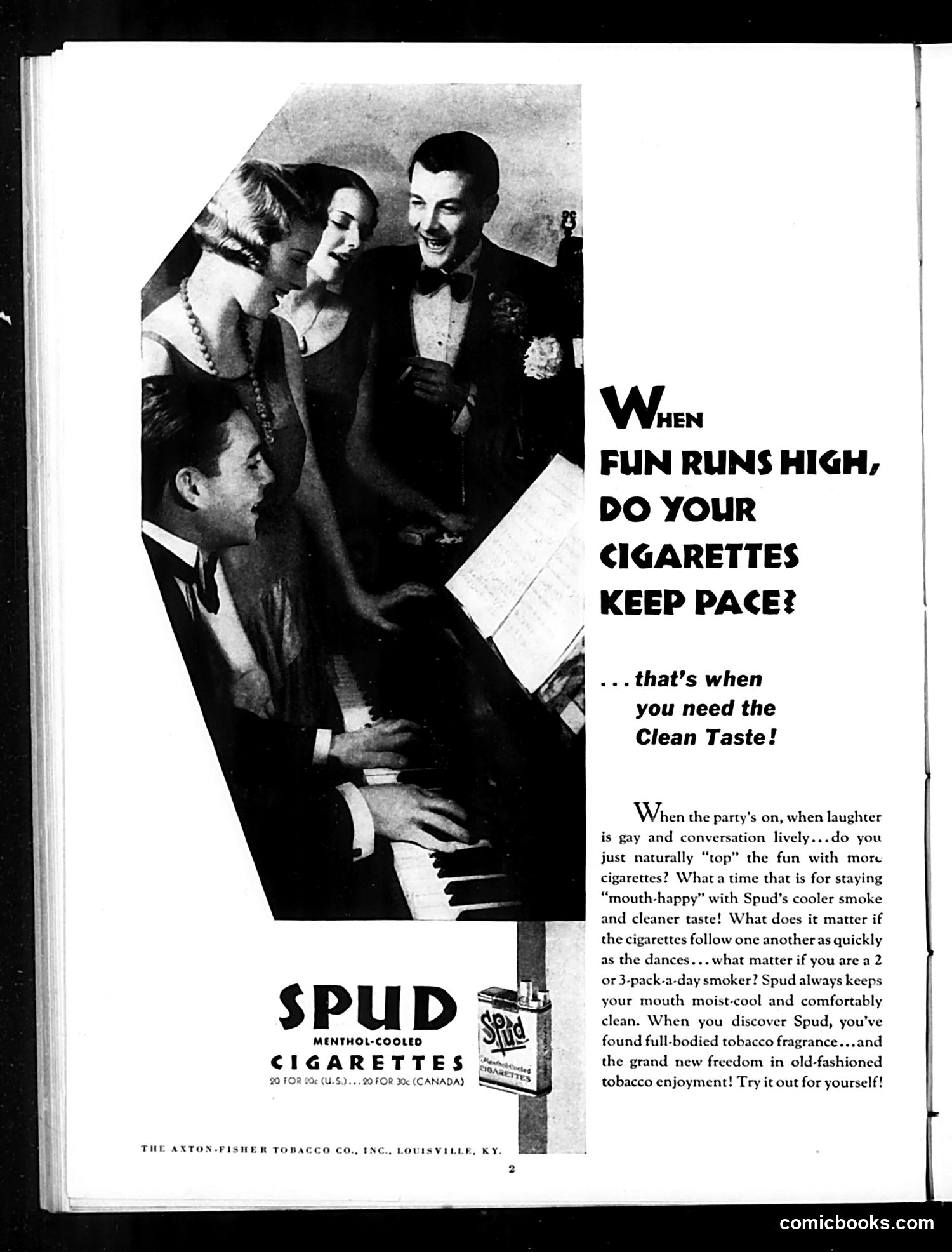
Analysis This page is primarily a cigarette advertisement, not political satire. It's a Spud menthol cigarettes ad from the Axton-Fisher Tobacco Company (Louisville, Kentucky). The image shows well-dressed people at what appears to be a social gathering or party. The ad's appeal is to active smokers who consume cigarettes rapidly ("2 or 3-pack-a-day smoker"), arguing that Spud's menthol keeps the smoker's mouth "moist-cool and comfortably clean" despite heavy smoking. The phrase "when fun runs high, do your cigarettes keep pace?" frames smoking as integral to social enjoyment. This reflects mid-20th-century advertising that normalized heavy smoking in social contexts without health disclaimers. This is a historical artifact showing how cigarettes were once marketed as lifestyle products for active, sociable people.
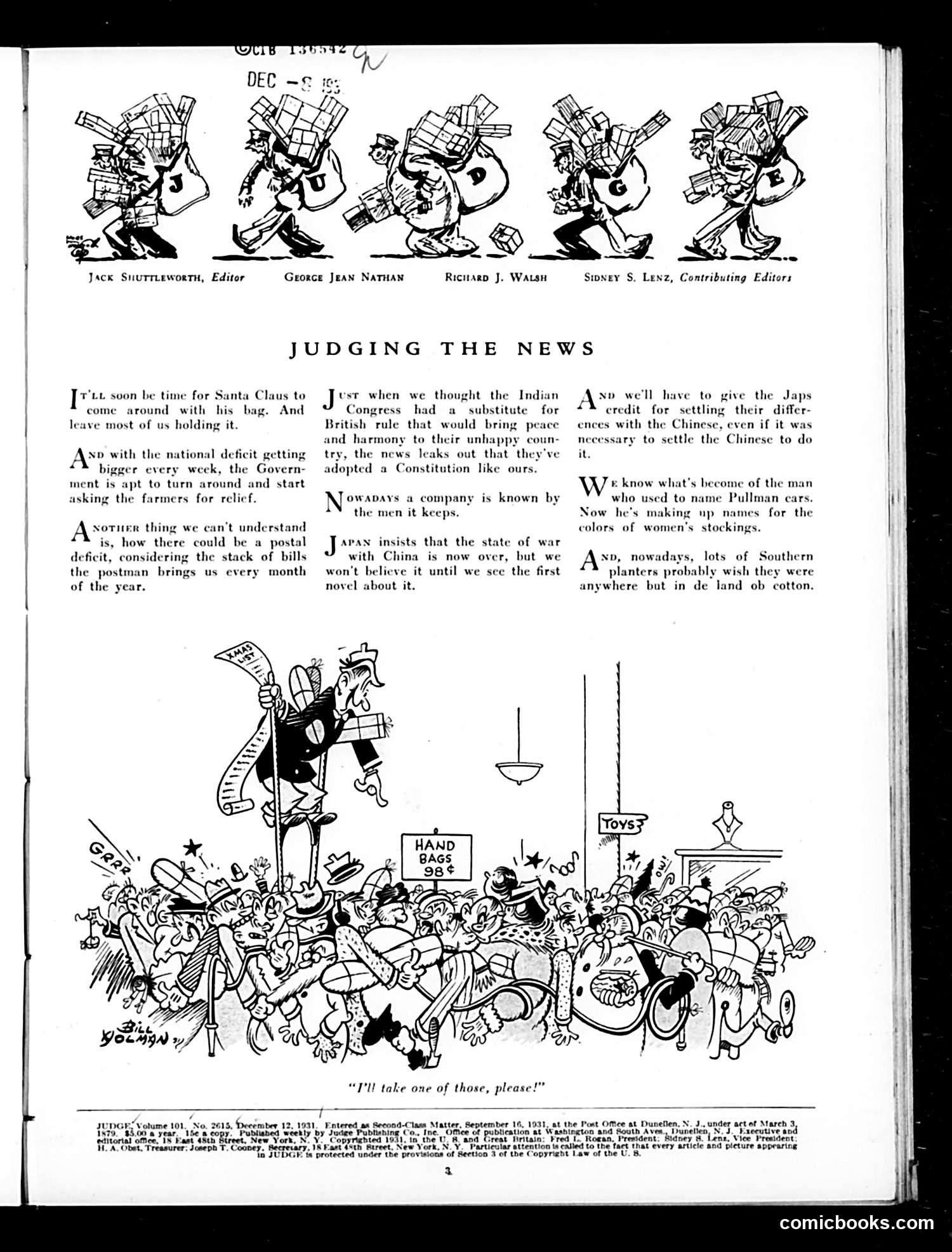
Analysis of "Judging the News" Page This December 1931 *Judge* page offers satirical commentary on current events through brief editorial quips and a large cartoon. The text addresses: - Santa/holiday deficit: Sardonic comments on national financial troubles during the Great Depression - Indian Congress: Reference to Indian independence negotiations with Britain - Postal deficit: Criticism of government inefficiency - Japan-China conflict: Skepticism about Japan's claims regarding their war with China - Pullman cars/women's stockings: A gossip item about a railway executive The large cartoon depicts a chaotic Christmas/consumer shopping scene with a vendor on a pole surrounded by crowds grabbing toys and goods, captioned "I'll take one of those, please!" This satirizes Depression-era consumerism and retail chaos—the desperation or excess of holiday shopping despite economic hardship.
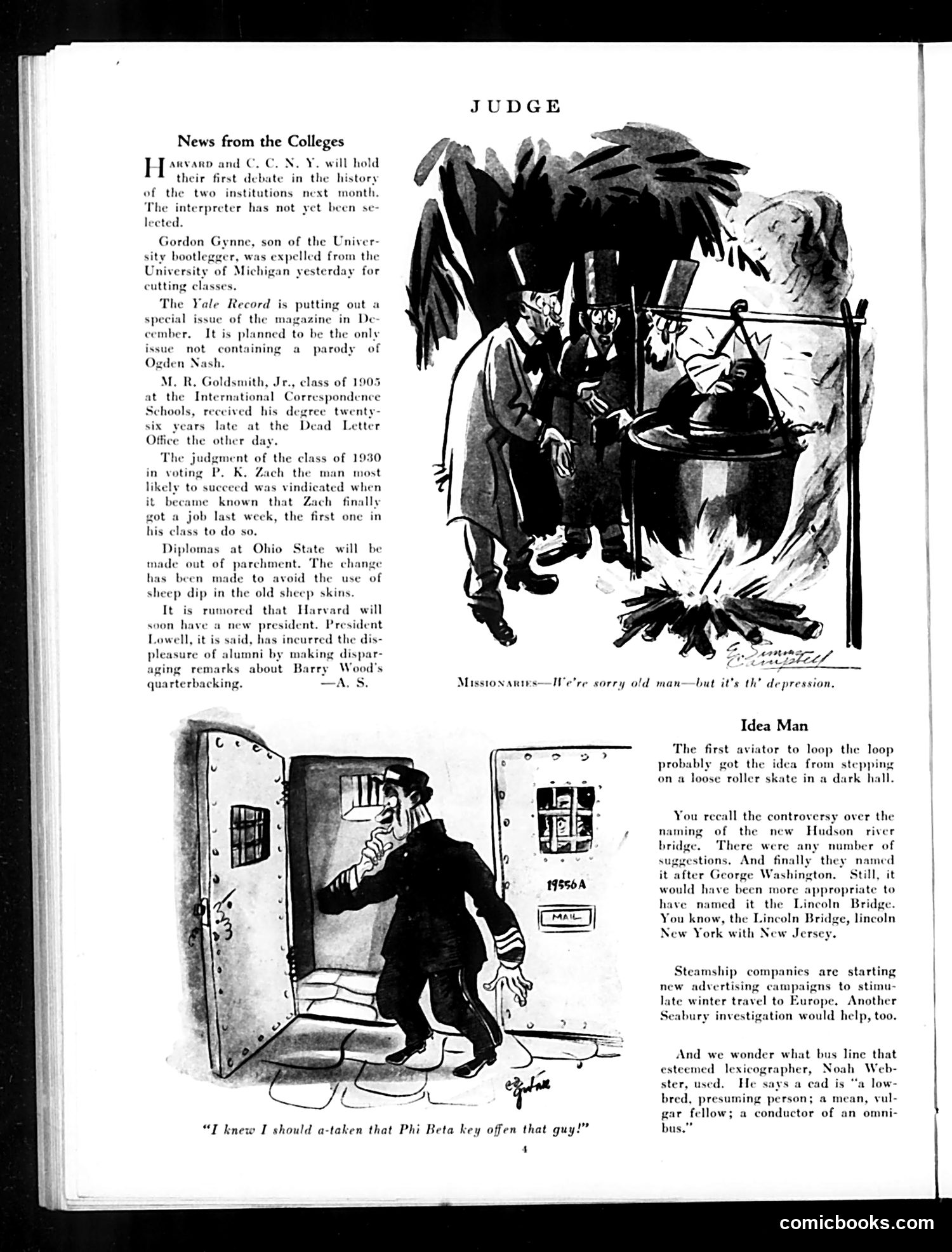
Analysis of Judge Magazine Page Top Cartoon ("Missionaries"): Shows figures in a cauldron over fire. The caption reads "We're sorry old man—but it's the depression." This is satirizing the Great Depression era (1930s based on context clues), suggesting that economic hardship justifies extreme measures—here, darkly joking about missionary cannibalism. The satire targets how the Depression affected even supposedly civilized society. Bottom Cartoon: A man at a door labeled "MAIL" appears caught using a Phi Beta Key (academic honor society key). The caption "I knew I should a-taken that Phi Beta key often that guy!" suggests he's a mail carrier or postal worker stealing from mail using the academic key—satirizing white-collar crime or postal service corruption during economically desperate times. The page combines social commentary on Depression-era desperation.
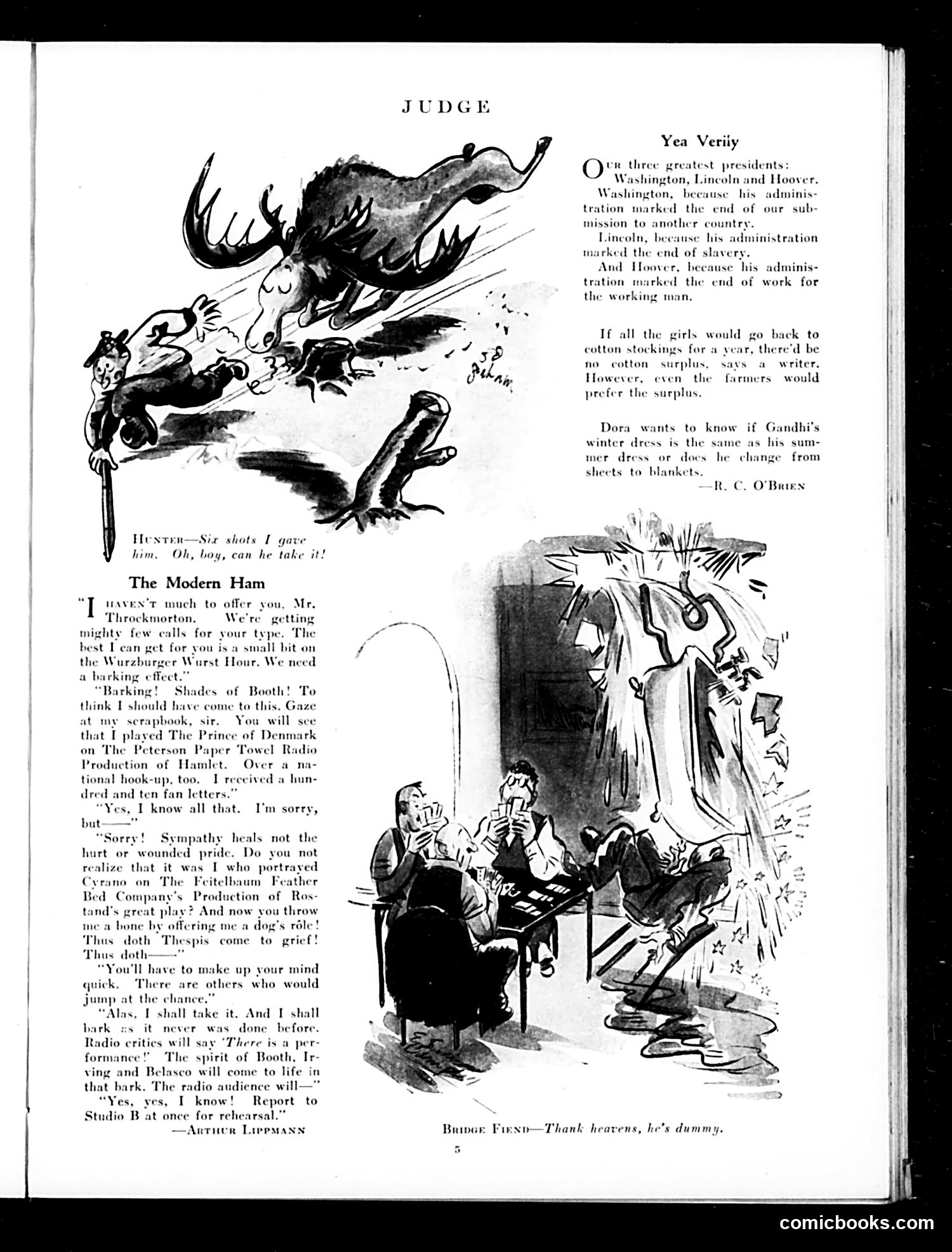
Analysis of Judge Magazine Page This page contains two satirical pieces: "The Modern Ham" (left): A theater satire mocking an actor named Throckmorton who's auditioning. The joke centers on his terrible performance—he wants "barking effects" for a Hamlet radio production. The humor lies in conflating Shakespeare with crude sound effects, satirizing both bad acting and radio's novelty as a performance medium. "Bridge Fiend" (right): Shows someone at a bridge table, apparently playing poorly or behaving badly. The caption "Thank heavens, he's dummy" is a bridge card-game pun—the "dummy" is a legitimate position—while suggesting the character is actually incompetent or foolish. Both pieces mock popular entertainments and social pretensions of the era.
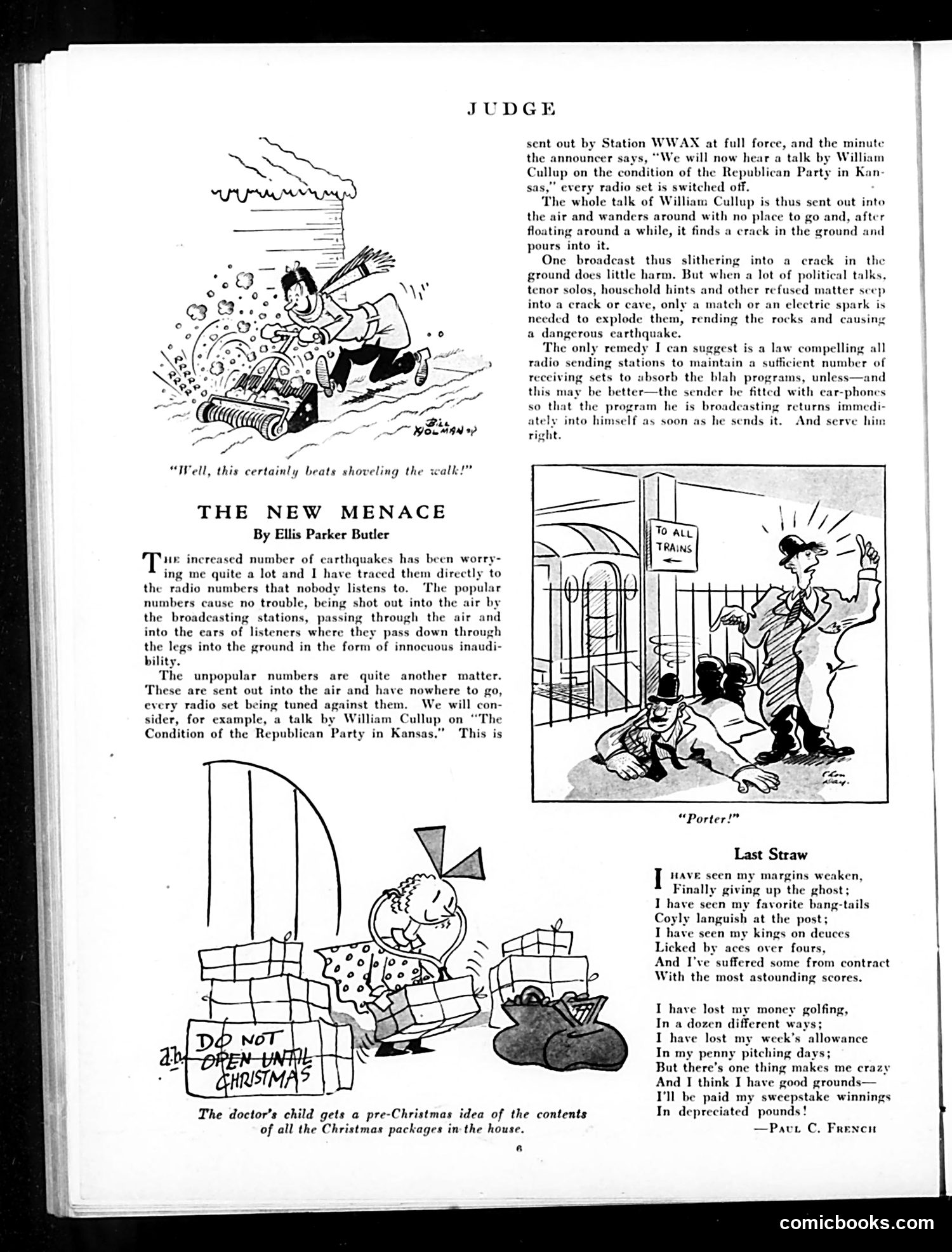
"The New Menace" - Judge Magazine Satire This article by Ellis Parker Butler satirizes radio broadcasting's unintended consequences. The main cartoon shows earthquakes caused by radio waves penetrating the ground—a humorous exaggeration of early 20th-century anxieties about new technology's hidden dangers. Butler specifically references a broadcast by William Cullup about "The Condition of the Republican Party in Kansas," arguing that unpopular radio content "nowhere to go" gets broadcast indiscriminately. The satire suggests radio stations lack quality control, broadcasting trivial political speeches that paradoxically cause literal damage. The secondary cartoons mock unrelated domestic chaos—a Christmas-obsessed child and a train station porter. These appear to be standalone Judge humor pieces rather than connected to the main radio satire.
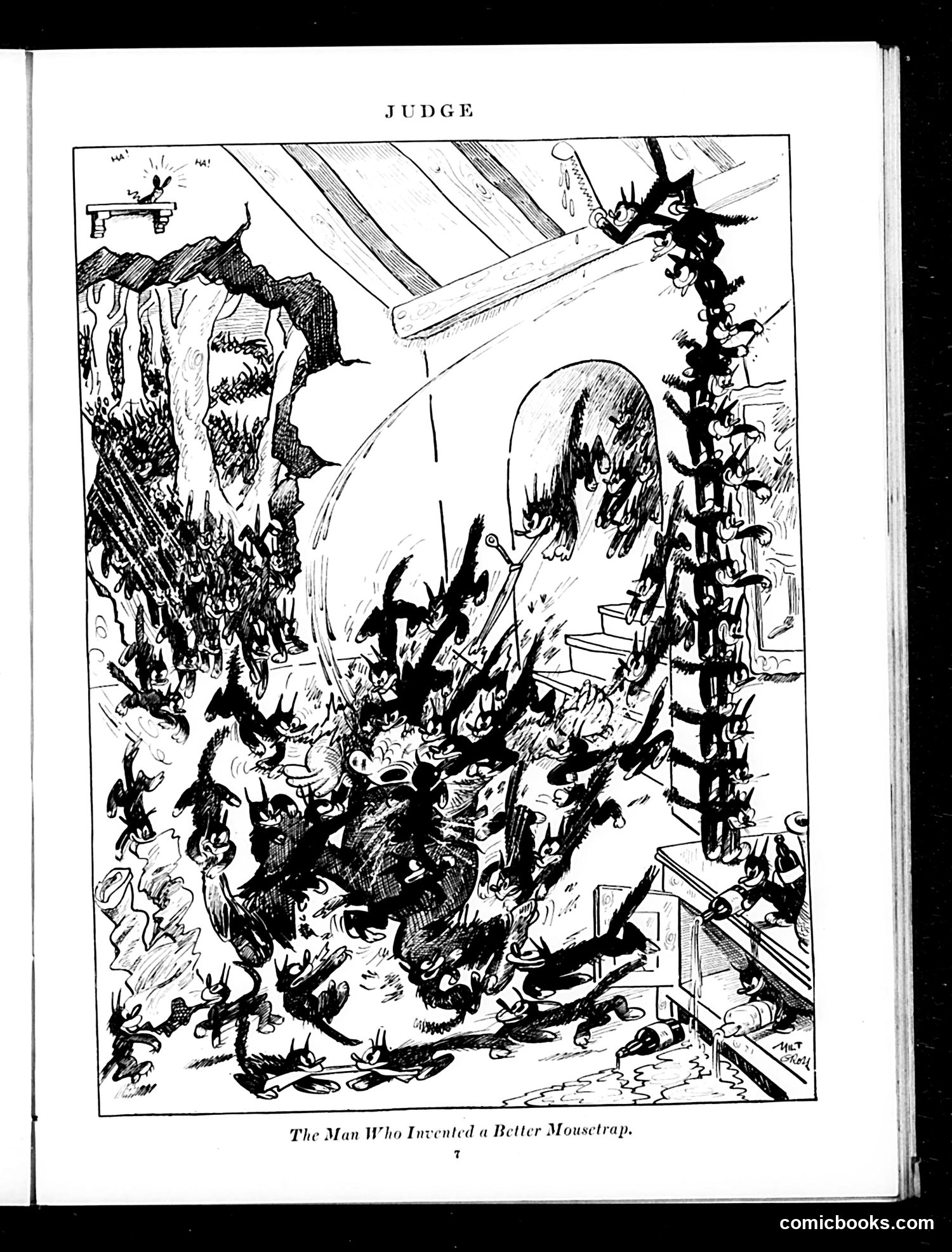
"The Man Who Invented a Better Mousetrap" This satirical cartoon illustrates the famous saying that "if you build a better mousetrap, the world will beat a path to your door." The image shows the inventor's house overwhelmed by a chaotic mob of mice—contradicting the proverb's promise of success and wealth. Instead of bringing customers eager to buy his invention, the "better mousetrap" has attracted hordes of mice directly to his home, creating pandemonium. The cartoon satirizes the gap between entrepreneurial hopes and harsh reality: innovations don't automatically guarantee prosperity. It mocks both the naive optimism of inventors who believe a good product sells itself, and the false promise of the original aphorism itself.
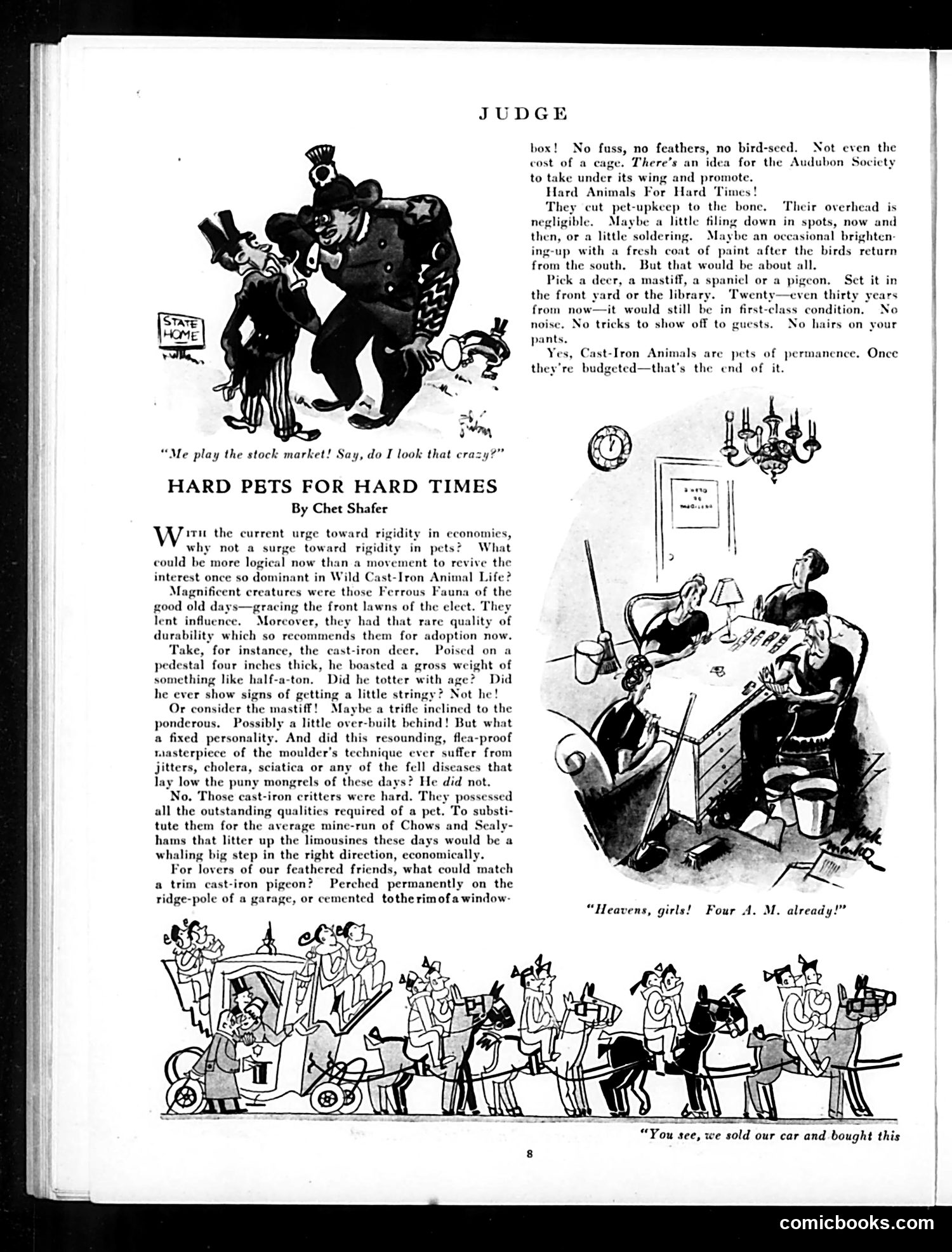
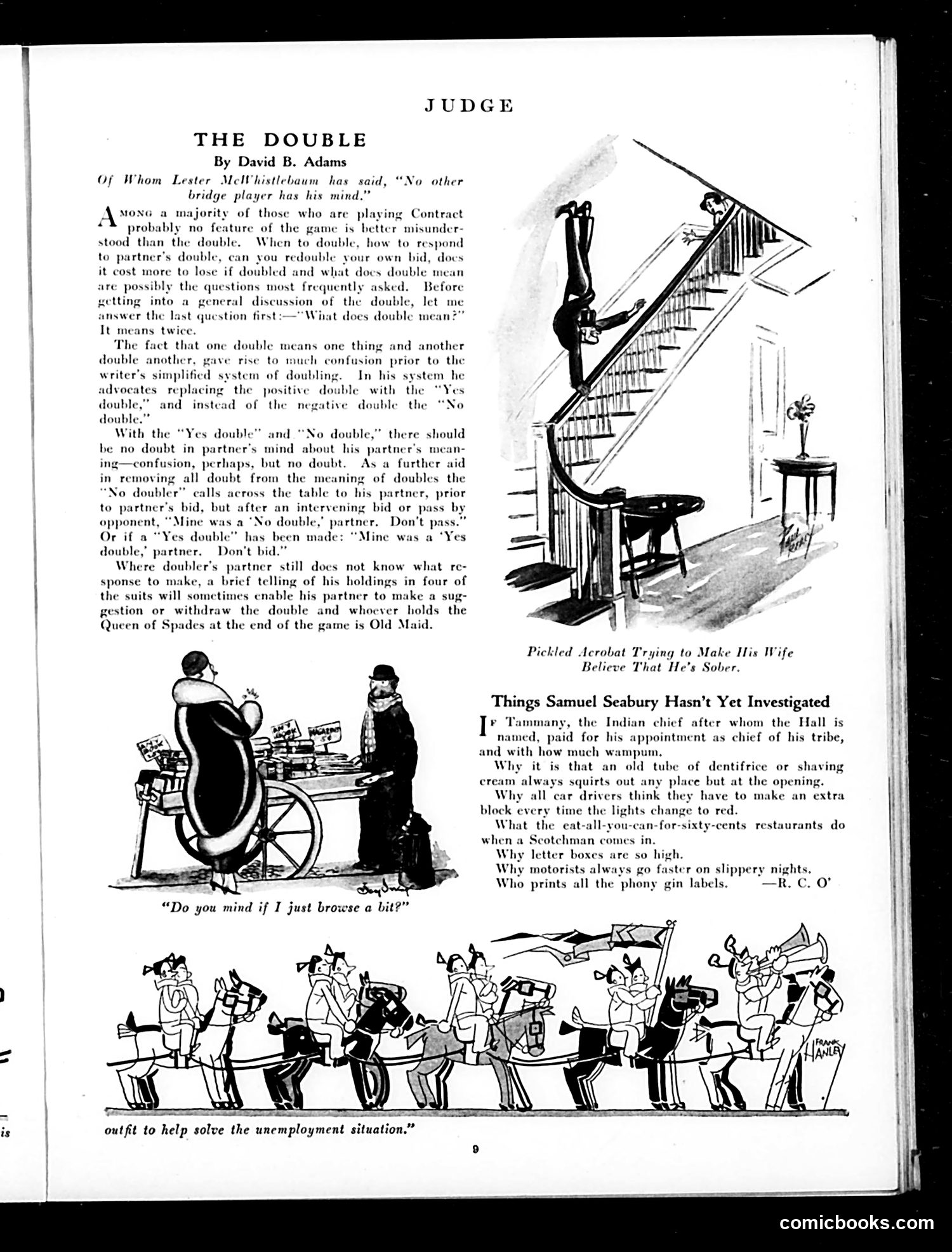
Analysis This Judge magazine page contains two distinct elements: "The Double" (main article): A humorous instructional piece by David B. Adams about Contract Bridge strategy, specifically how to interpret and communicate "doubles" (competitive bids). The satire lies in the deliberately absurd "simplified system"—replacing confusing bridge terminology with blunt declarations like "Mine was a 'No double,' partner. Don't pass," culminating in the joke that whoever holds the Queen of Spades at game's end plays "Old Maid" (a children's card game), mocking the complexity bridge players encounter. "Things Samuel Seabury Hasn't Yet Investigated": A satirical list referencing Samuel Seabury, likely the 1930s New York judge who investigated municipal corruption (Tammany Hall). The piece humorously suggests trivial, unsolvable mysteries he should investigate instead—like why toothpaste tubes malfunction or why Scotsmen avoid restaurant deals. This mocks Seabury's high-profile investigations as potentially endless, suggesting there are always more absurd "crimes" to examine. Both items use absurdist humor typical of Judge's sophisticated readership.
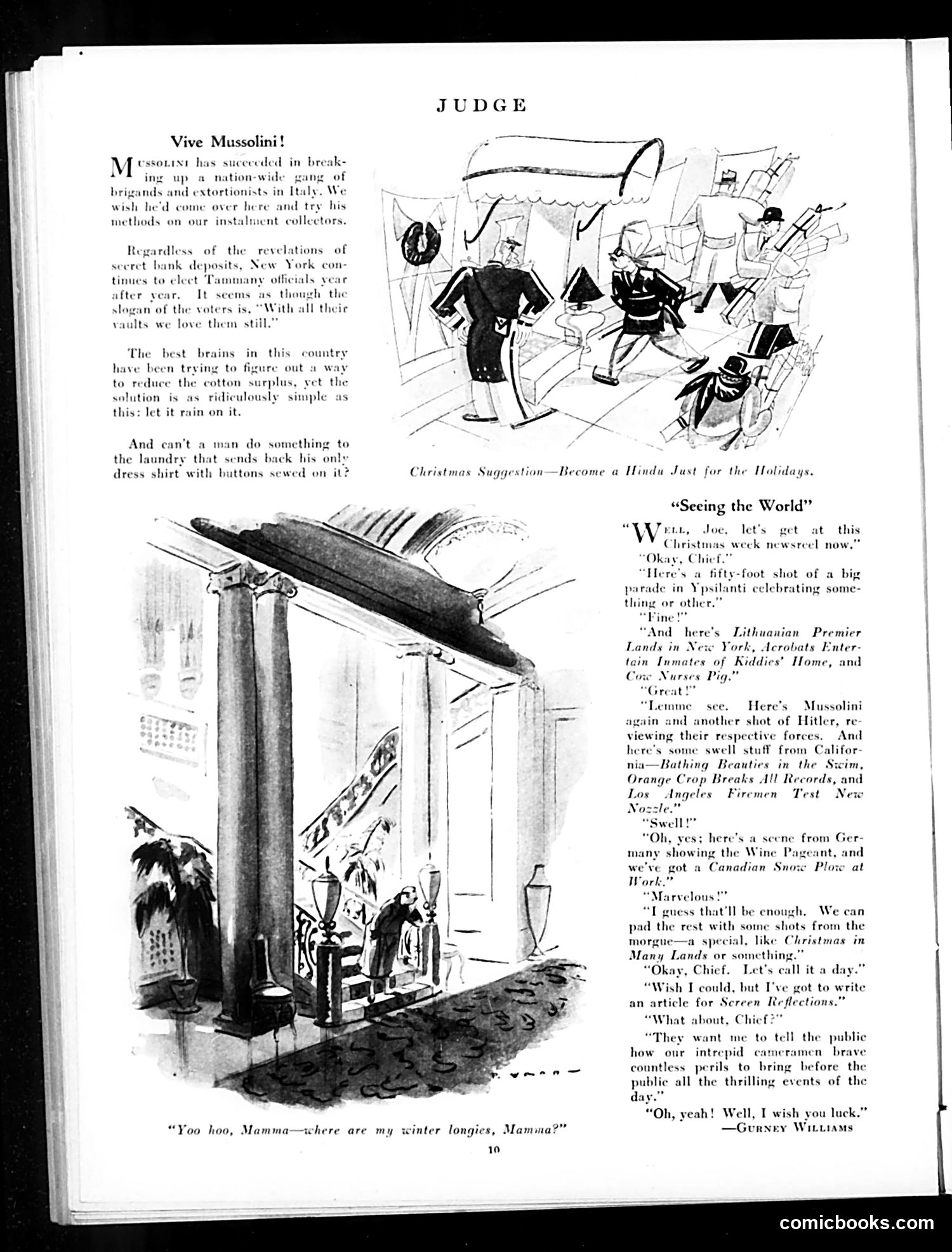
Judge Magazine Page Analysis This page contains three satirical pieces: Top Section - "Vive Mussolini!": A brief commentary praising Mussolini for breaking up organized crime in Italy, sarcastically wishing he'd come to America to deal with "instalment collectors" (debt collectors). This reflects 1920s-30s fascination with Mussolini's authoritarian methods, before widespread recognition of fascism's dangers. Upper Cartoon: Shows Hindu fakirs (holy men) as a "Christmas Suggestion," likely mocking Americans' superficial interest in exotic Eastern religions as holiday novelties. Main Cartoon - "Seeing the World": Depicts newsreel editors discussing mundane footage: Lithuanian premier visits, circus acts, California scenes, and repeated Hitler/Mussolini military footage. The satire criticizes how newsreels pad programming with trivial content and morgue footage, presenting routine events as thrilling journalism while genuinely significant political developments receive repetitive coverage. Bottom Cartoon: A domestic joke about laundry losing a person's winter clothing. The page satirizes 1930s media superficiality and fascist propaganda visibility.
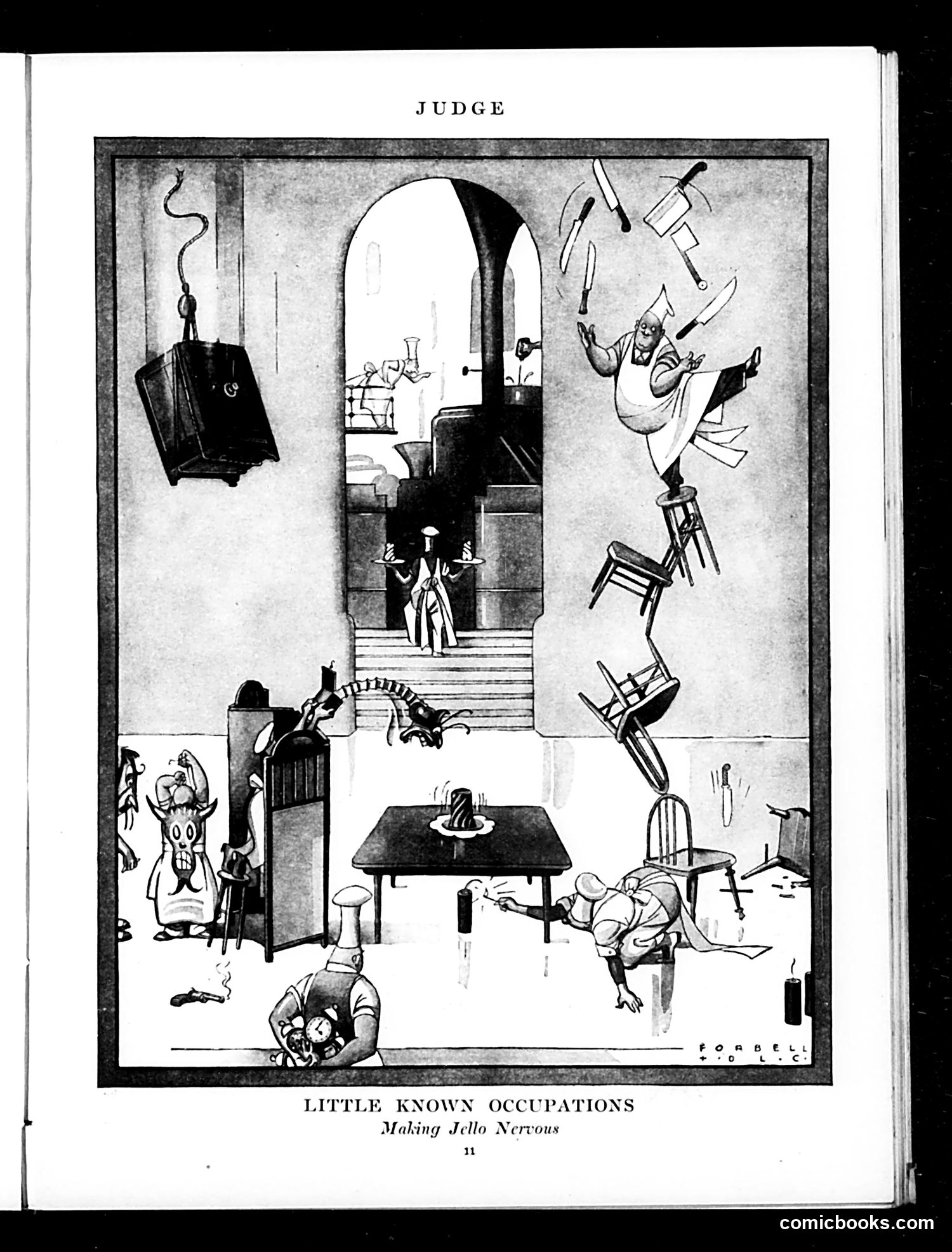
"Making Jello Nervous" — Judge Magazine Cartoon This is a single-panel cartoon satirizing the work of a judicial officer or judge. The central figure seated on an elevated bench presides over a courtroom in chaos—literally. Lawyers, documents, furniture, and people are flying through the air around the room, suggesting the disruptive nature of legal proceedings. The title's pun—"Making Jello Nervous"—plays on "Judge" and the gelatin dessert's notorious instability when jostled. The cartoon jokes that judges preside over inherently chaotic, turbulent environments where order constantly collapses into disorder. It's satirizing either judicial incompetence, courtroom mayhem, or simply the absurd unpredictability of legal proceedings that supposedly aim for order and justice.
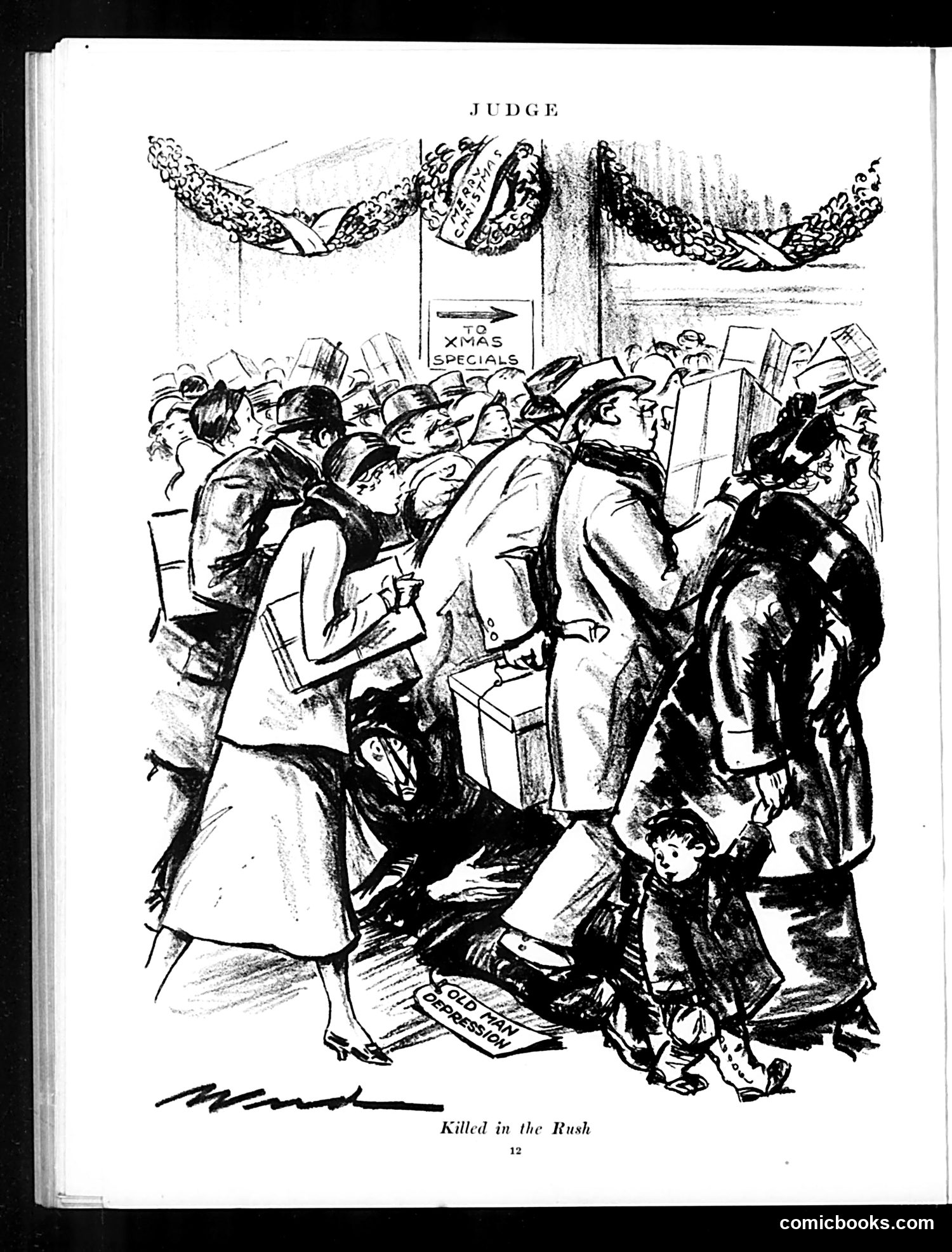
"Killed in the Rush" This political cartoon satirizes the chaos of Christmas shopping, depicted as a violent "rush" of consumers stampeding toward "XMAS SPECIALS." The crowded mass of shoppers, drawn with exaggerated aggression and desperation, tramples a small child underfoot—literally "killed in the rush." The satire critiques the commercialization of Christmas and the dangerous frenzy it creates among consumers competing for bargain deals. The irony is sharp: what should be a holiday of generosity and goodwill instead produces a stampede where even children become casualties of consumer greed. The artist (signed but unclear) uses this dark humor to mock both the excess of holiday commercialism and shoppers' willingness to abandon civility for discounts.
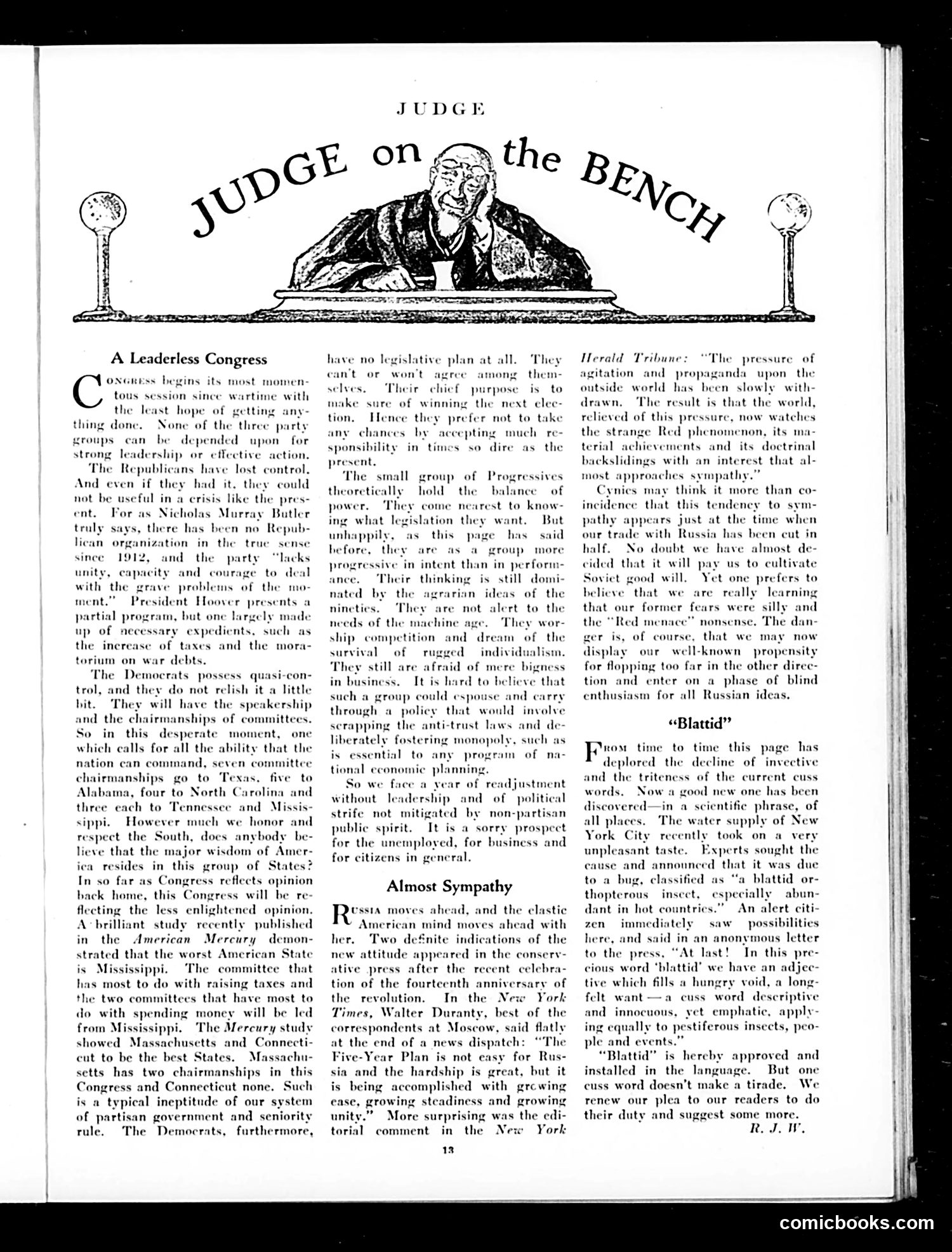
"Judge on the Bench" - A Leaderless Congress (circa early 1930s) This editorial cartoon criticizes the fragmented state of Congress during an economic crisis. The masthead shows a disheveled judge presiding over chaos—reflecting the article's complaint that no political party can provide effective leadership. The text attacks: - Republicans: Lost control; lack real organization - Democrats: Hold committee positions but have no legislative plan; focused only on winning elections - Progressives: Ideologically stuck in 1890s agrarian thinking; impractical The core critique: Southern states dominate key congressional committees (Texas, Alabama, North Carolina get most chairmanships) despite Massachusetts and Connecticut being "the best States" by merit. This seniority-based system ensures incompetent leadership during national economic crisis. A secondary piece mocks American sympathy toward Soviet Russia's Five-Year Plan, noting the "new attitude" in conservative press like the *New York Times*. The overall message: partisan gridlock prevents solutions to unemployment and economic hardship.
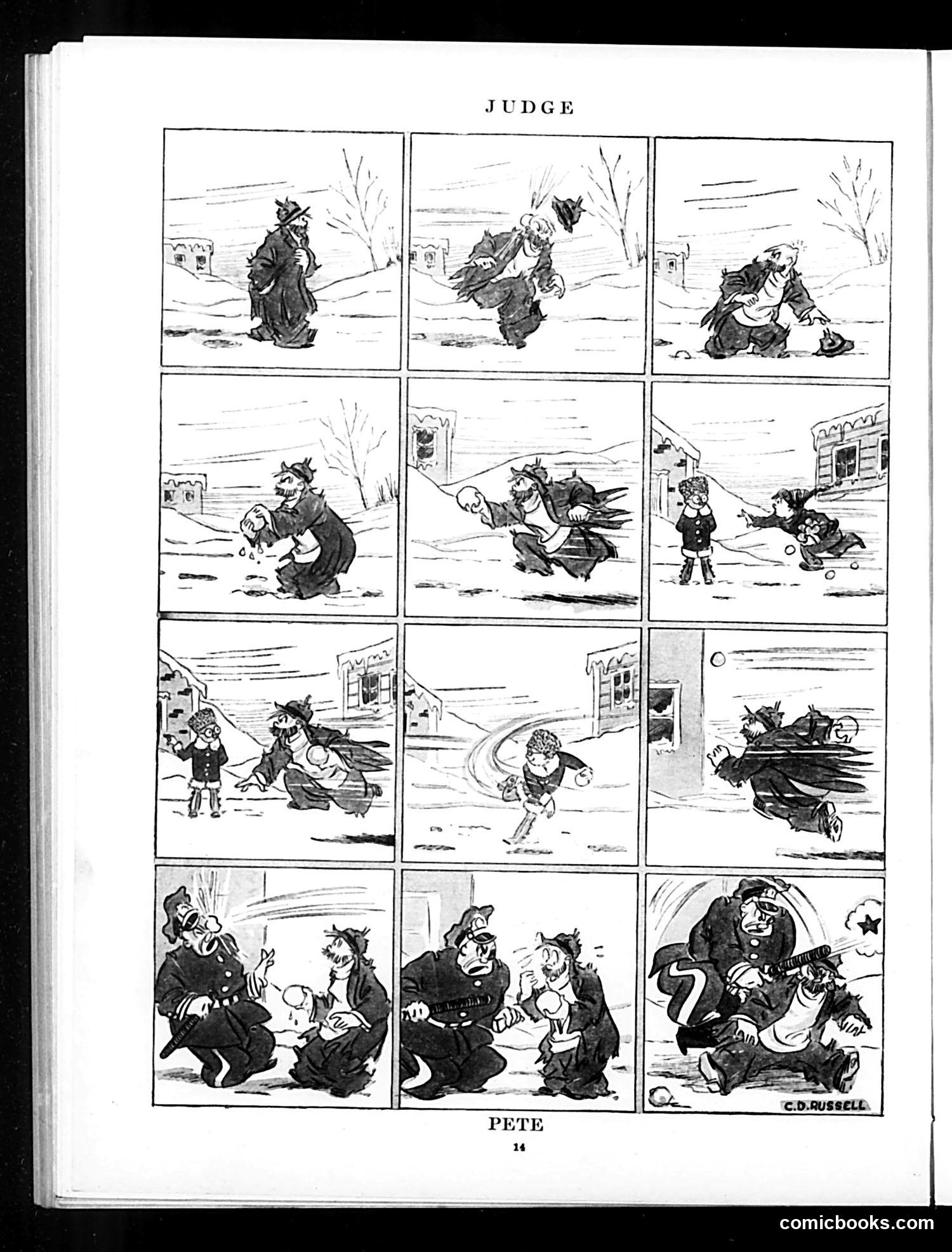
"Judge" - Page Analysis This is a comic strip titled "Judge" by C.D. Russell, depicting a winter scene with exaggerated character expressions. The narrative appears to show a judge figure (identifiable by formal dress and authoritative bearing) interacting with common people in a snowy setting. The strip progresses from the judge's dignified initial appearance through increasingly chaotic scenes—slipping on ice, losing composure, and ultimately being mocked or humiliated by lower-class characters in the final panels. The satire likely critiques judicial pomposity or hypocrisy: the strip demonstrates how even authority figures are reduced to foolishness by circumstance, suggesting that social hierarchy is fragile and that the supposedly superior "judge" is no better than ordinary people when circumstances humble him.
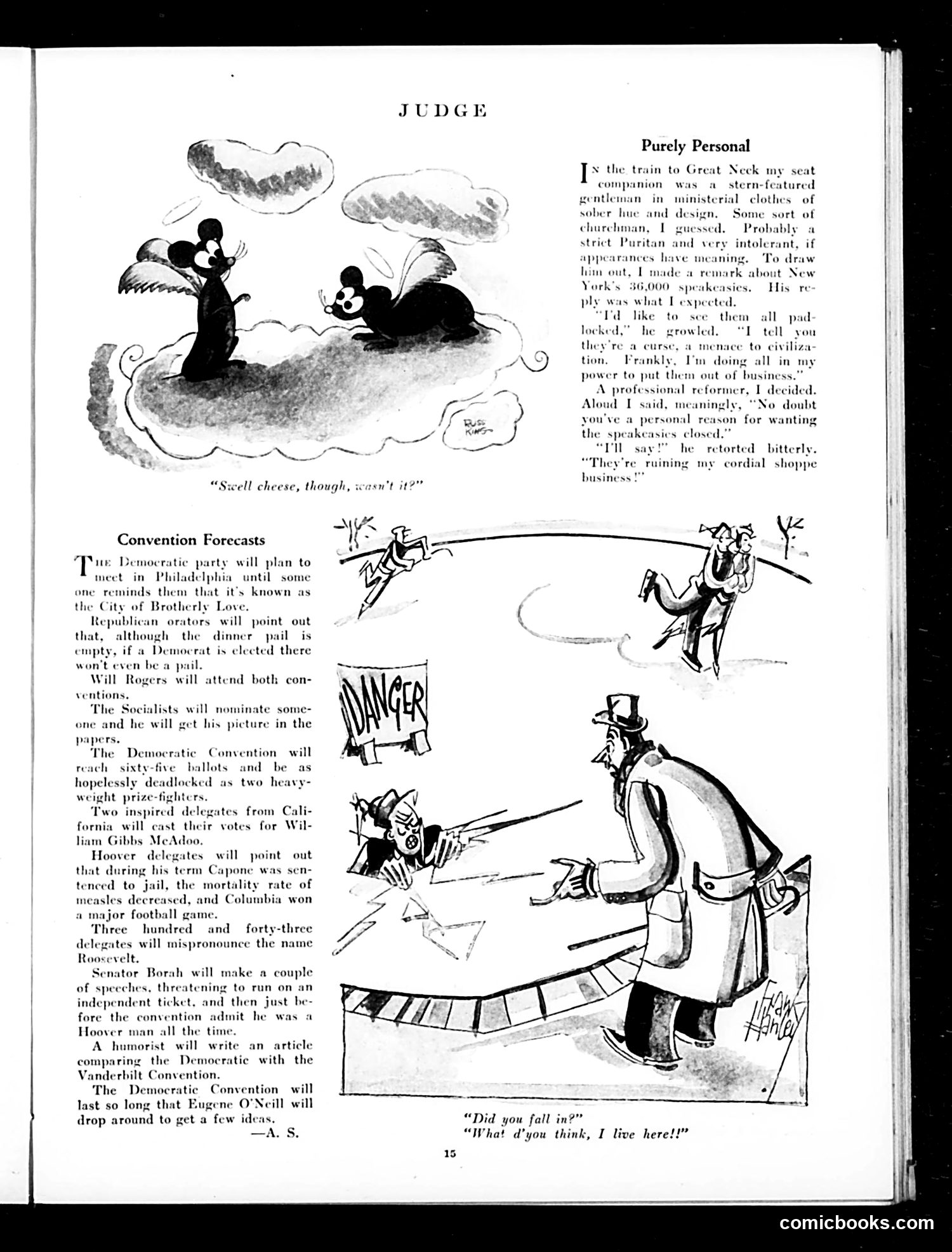
Judge Magazine Page Analysis This page contains two separate satirical pieces from Judge magazine (likely 1920s-30s, given Prohibition and Convention references). "Purely Personal" mocks reformist hypocrisy: A stern, ministerially-dressed man lectures the narrator about closing speakeasies as moral evils—then reveals he opposes them because they're ruining his own liquor business. The joke exposes self-righteous reform movements as actually driven by personal profit loss. "Convention Forecasts" predicts Democratic and Republican conventions with cynical humor: Democrats will deadlock interminably; Republicans will boast about Hoover despite economic problems (Capone jailing, measles deaths); Will Rogers attends both; Senator Borah threatens independent runs but backs down. The cartoons below show political figures in farcical situations—one labeled "Danger" suggests the chaos of convention politics. The satire targets political hypocrisy, Prohibition-era corruption, and the absurdity of party conventions.
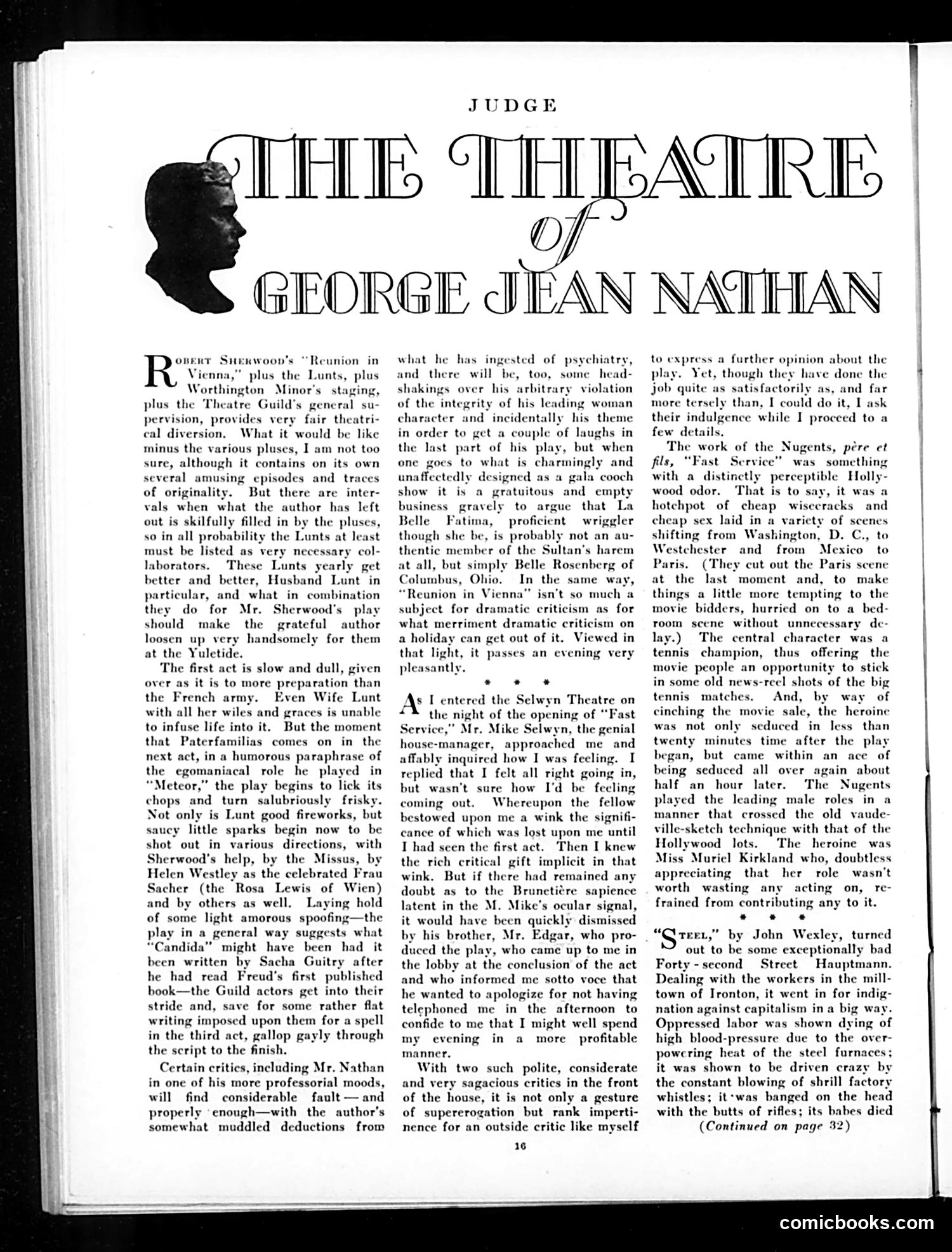
Judge Magazine Theater Review: "The Theatre of George Jean Nathan" This is a theater review column by George Jean Nathan, a prominent drama critic of the era. The page discusses Robert Sherwood's play "Reunion in Vienna," featuring the Lunt acting couple (husband and wife performers Alfred Lunt and Lynn Fontanne, celebrated theater stars of the 1930s). Nathan's satire targets theatrical pretension: he argues the play succeeds despite its flaws because of the Lunts' talent and the Theatre Guild's production values, not Sherwood's writing. He humorously compares enjoying the play to appreciating a "cooch show" (burlesque entertainment)—suggesting critics should judge entertainment on its own terms rather than imposing serious dramatic standards. The anecdote about the Selwyn Theatre manager's "wink" mocks the theater world's insider politeness and veiled criticism. Nathan satirizes how producers apologetically warn critics they might waste their evening—a backhanded insult disguised as politeness.
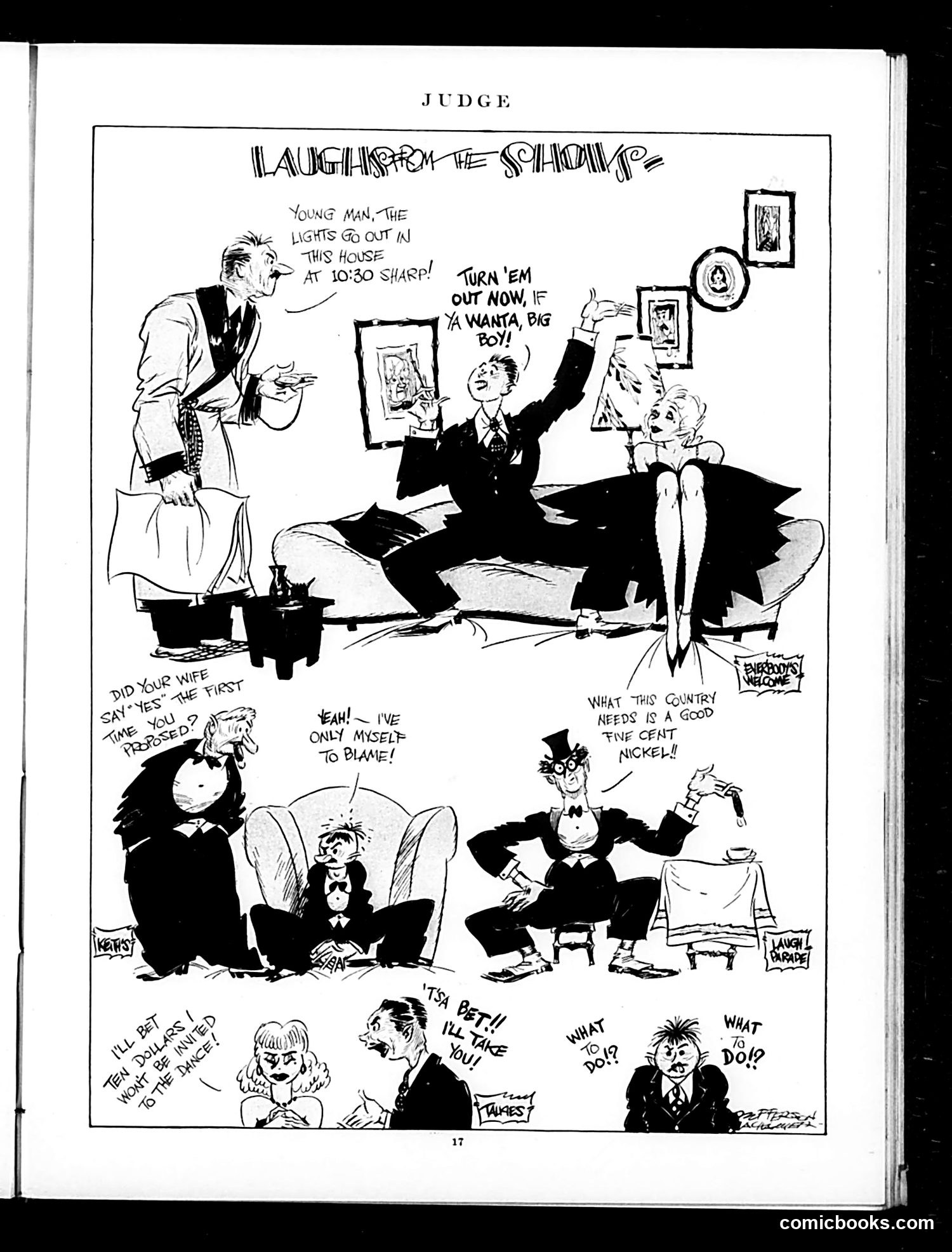
"Laughed at the Shadows" - Judge Cartoon Analysis This appears to be a domestic comedy cartoon satirizing a young husband's attempts to impress his wife and peers. The narrative follows a man bragging about turning off the house lights at 10:30 sharp—a minor domestic accomplishment he presents as impressive self-discipline. The satire targets masculine posturing and self-aggrandizement: the husband boasts about this trivial act while his wife questions his actual responsibility ("Did your wife say 'yes' the first time you proposed?"), and a final character complains about needing a "good five cent nickel," suggesting economic concerns of the era. The humor derives from the disconnect between the husband's inflated self-image and the mundane, unremarkable nature of his "achievement," mocking men who exaggerate minor domestic contributions.
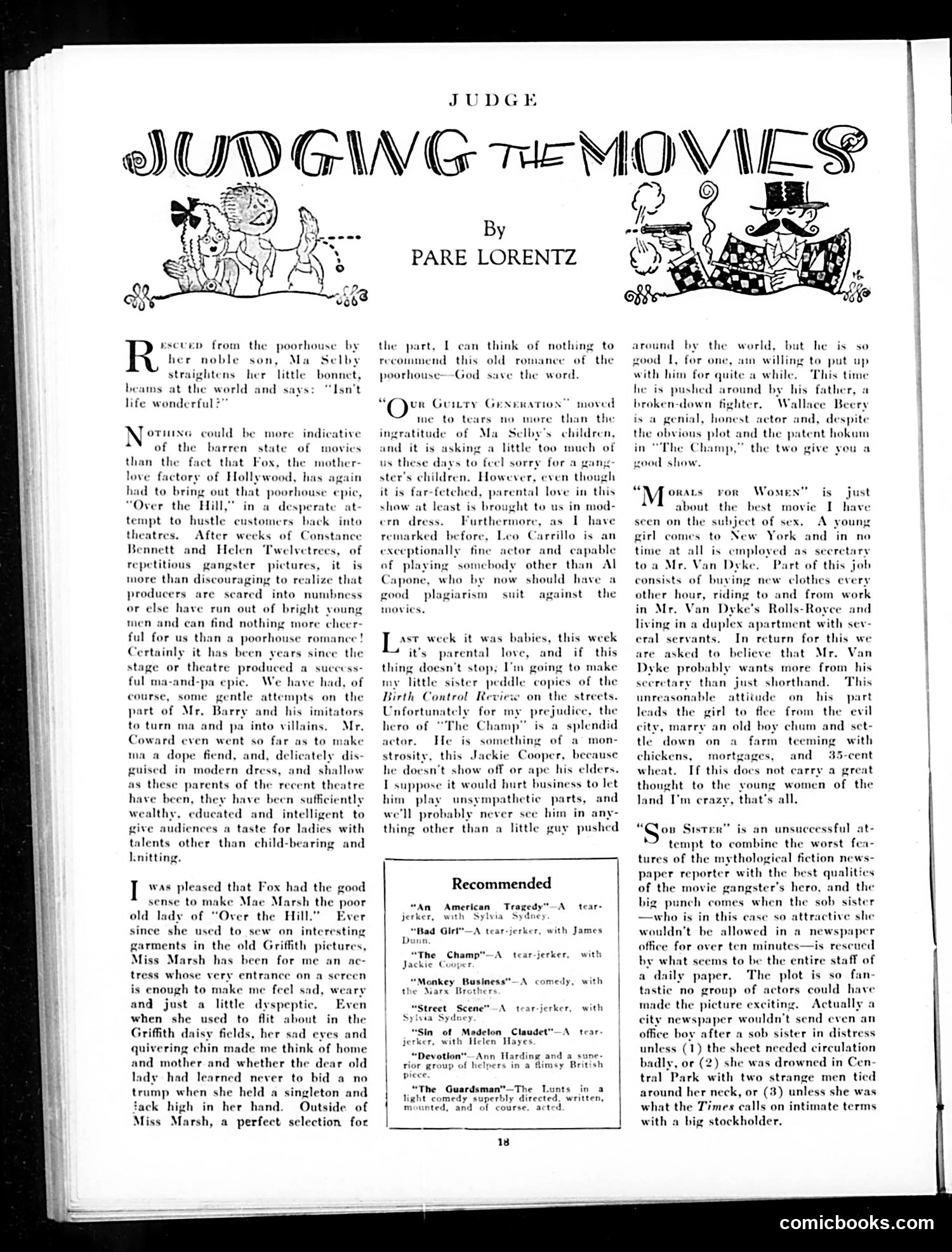
Judge Magazine Film Criticism: "Judging the Movies" This page is film criticism by Pare Lorentz reviewing contemporary movies. The cartoonish illustrations are decorative headers, not political commentary. Lorentz satirizes Hollywood's creative exhaustion: studios repeatedly recycle sentimental "poorhouse romance" and maternal melodrama plots because producers have "run out of bright young men" with fresh ideas. He mocks Fox Studios' reliance on tearjerkers like "Over the Hill" and "The Champ"—films exploiting audiences' nostalgia rather than offering genuine innovation. The criticism targets two specific issues: (1) Hollywood's formula-driven repetition of outdated theatrical clichés dressed in modern settings, and (2) the industry's apparent fear of risk-taking, forcing child actor Jackie Cooper into sympathetic roles because "unsympathetic parts" might hurt box office. Lorentz praises actress Mae Marsh's casting but criticizes the film's central premise. The "Recommended" box lists contemporary releases, all categorized as "tear-jerkers"—itself the satire's point: Hollywood is creatively bankrupt, manufacturing emotional manipulation rather than meaningful entertainment.
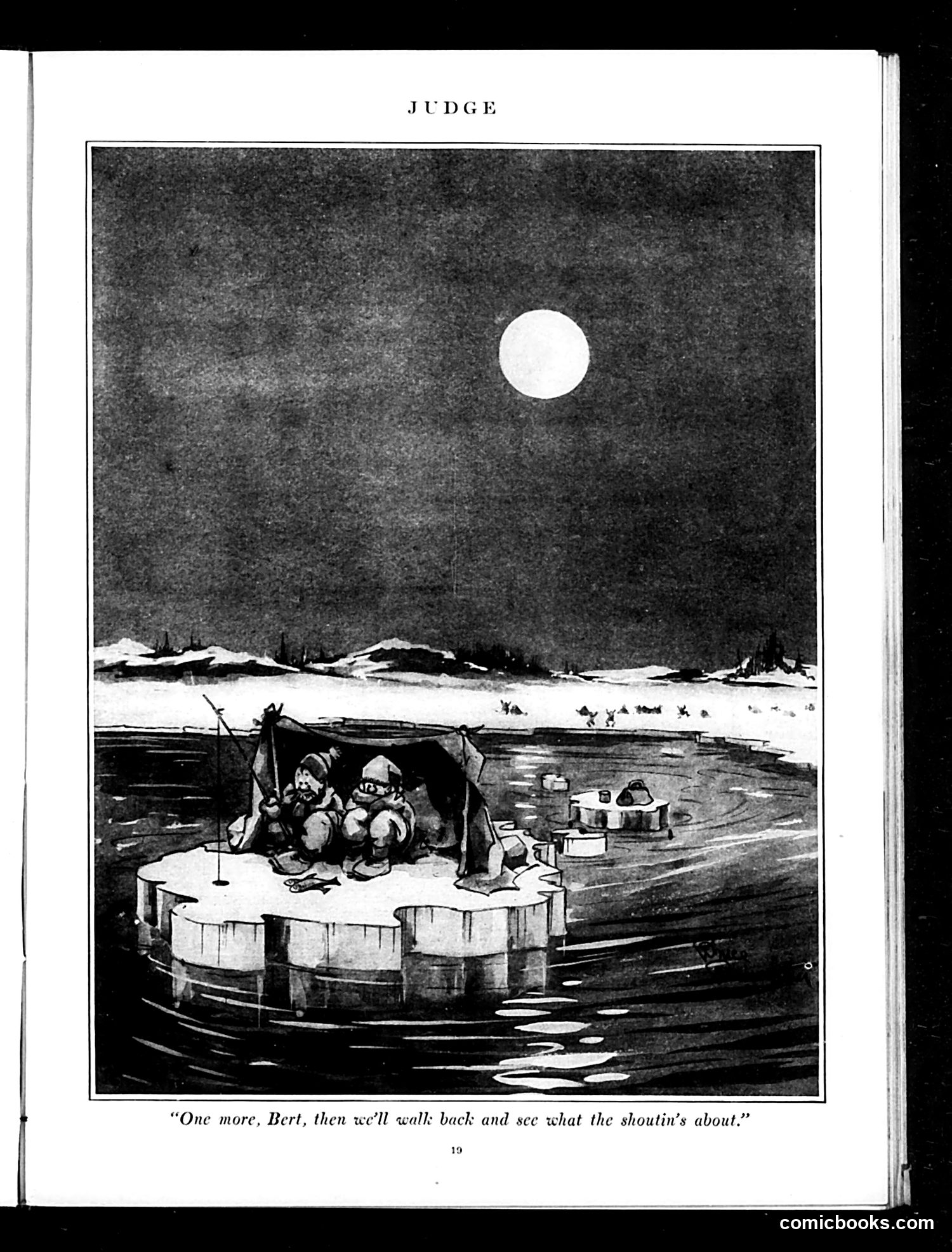
Judge Magazine - "Judge" Page Analysis This page from *Judge* magazine presents a single cartoon titled "One more, Bert, then we'll walk back and see what the shoutin's about." The image depicts two figures in what appears to be an Arctic or polar setting, sitting in a small boat on dark water. They're sheltered under a tent-like structure, with snow and ice visible across the frozen landscape behind them. A prominent full moon illuminates the dark sky above. The caption suggests the men are taking a brief respite before investigating some commotion ("shoutin's") occurring elsewhere. The cartoon likely satirizes either frontier exploration, Arctic expeditions, or possibly contemporary political/social conflicts—though without additional context about the publication date and historical events, the specific subject of their mockery remains unclear.
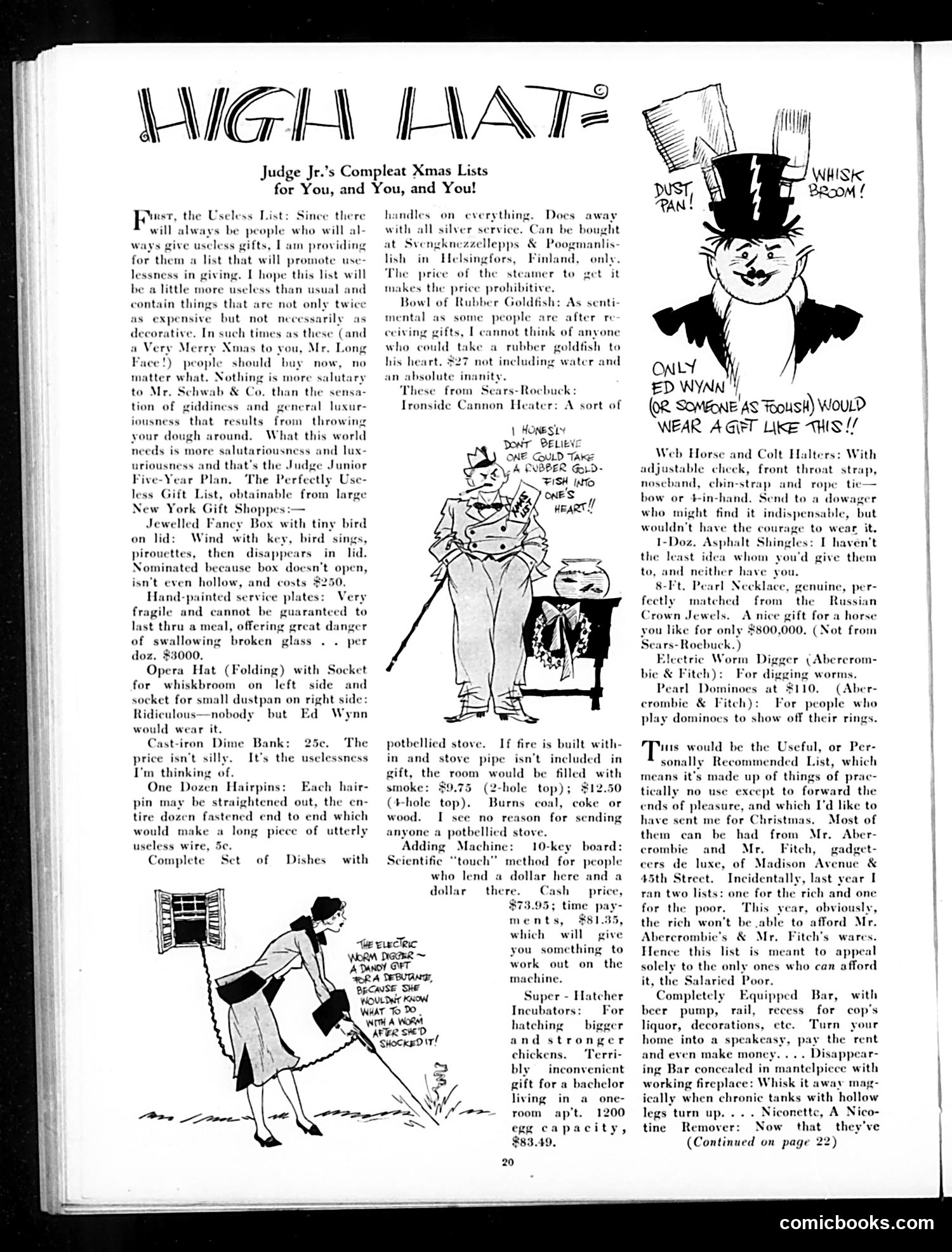
"Judge Jr.'s Compleat Xmas Lists" - Satire on Consumer Culture This page satirizes 1920s American consumer excess and gift-giving anxiety. "Judge Jr." presents deliberately absurd, expensive, and utterly impractical gift recommendations from upscale retailers (Sears-Roebuck, New York boutiques, Abercrombie & Fitch). The humor targets both wealthy consumers eager to spend money conspicuously and the merchandising culture encouraging such waste. Items like a rubber goldfish ($27), hand-painted plates that break easily, hairpins convertible to useless wire, and a potbellied cannon heater that fills rooms with smoke exemplify the critique. The cartoon figures (right side) mock the absurdity—a man in a top hat declaring "only a human (or someone as tough) would wear a gift like this!" The satire suggests that during economically uncertain times, frivolous luxury purchases represent both foolishness and a misguided attempt at respectability through spending.
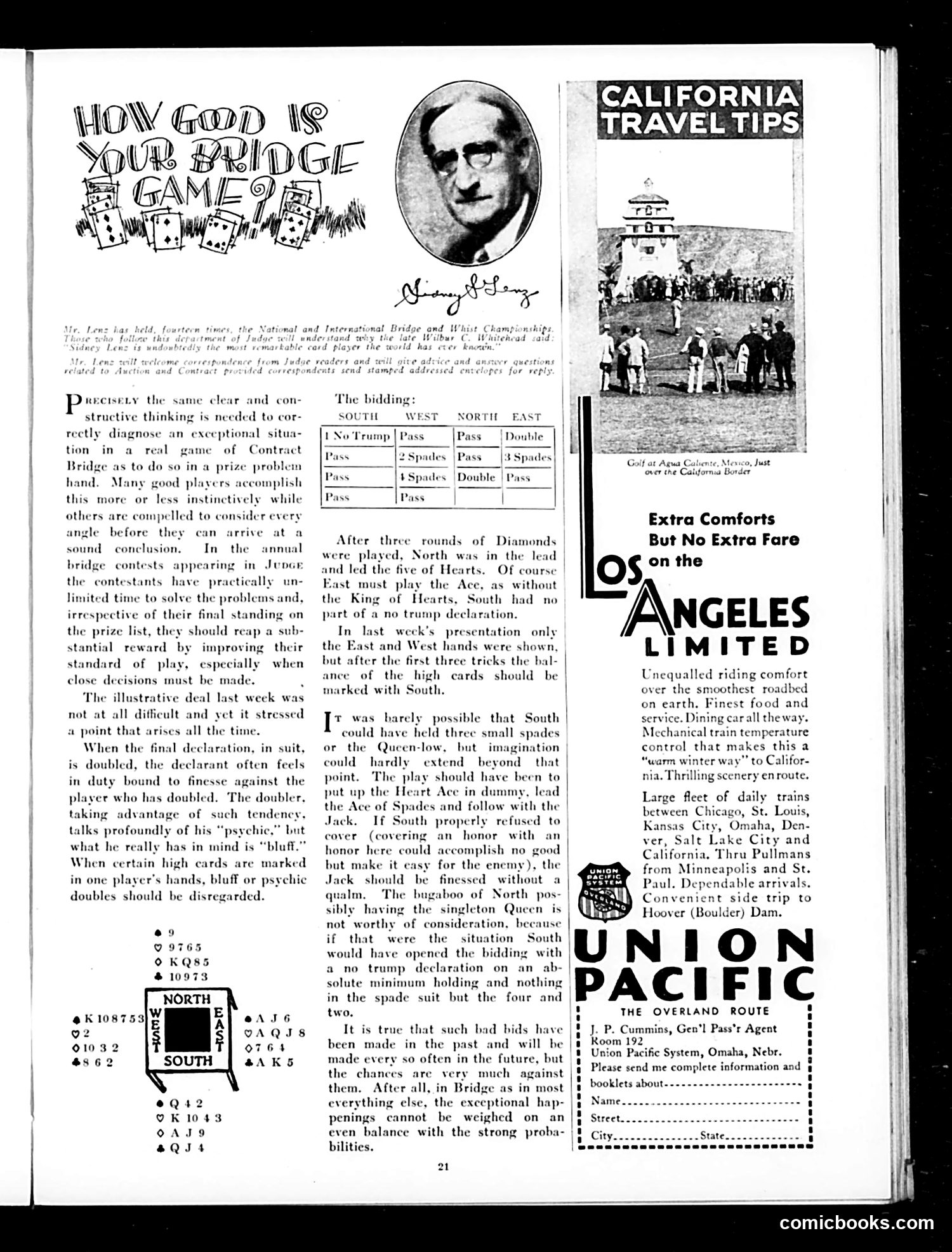
Judge Magazine Page Analysis This page primarily contains instructional bridge (card game) content rather than political satire. The main feature is a technical article explaining contract bridge strategy, illustrated with a card game diagram and hands. The only cartoon element is the header "HOW GOOD IS YOUR BRIDGE GAME?" with dice imagery and a portrait of an unidentified man (likely the bridge expert author). The satirical context: Judge magazine was known for mixing humor with serious instructional content. The cartoon's title humorously frames bridge strategy as luck-dependent ("how good is your game?"), though the article argues the opposite—that clear, logical thinking determines outcomes. The page also contains period advertising for the Los Angeles Limited train service and Union Pacific Railway, typical of 1920s-30s magazine content. No clear political references are visible. This appears to be a leisure/recreation-focused page rather than a satirical commentary on current events or politics.
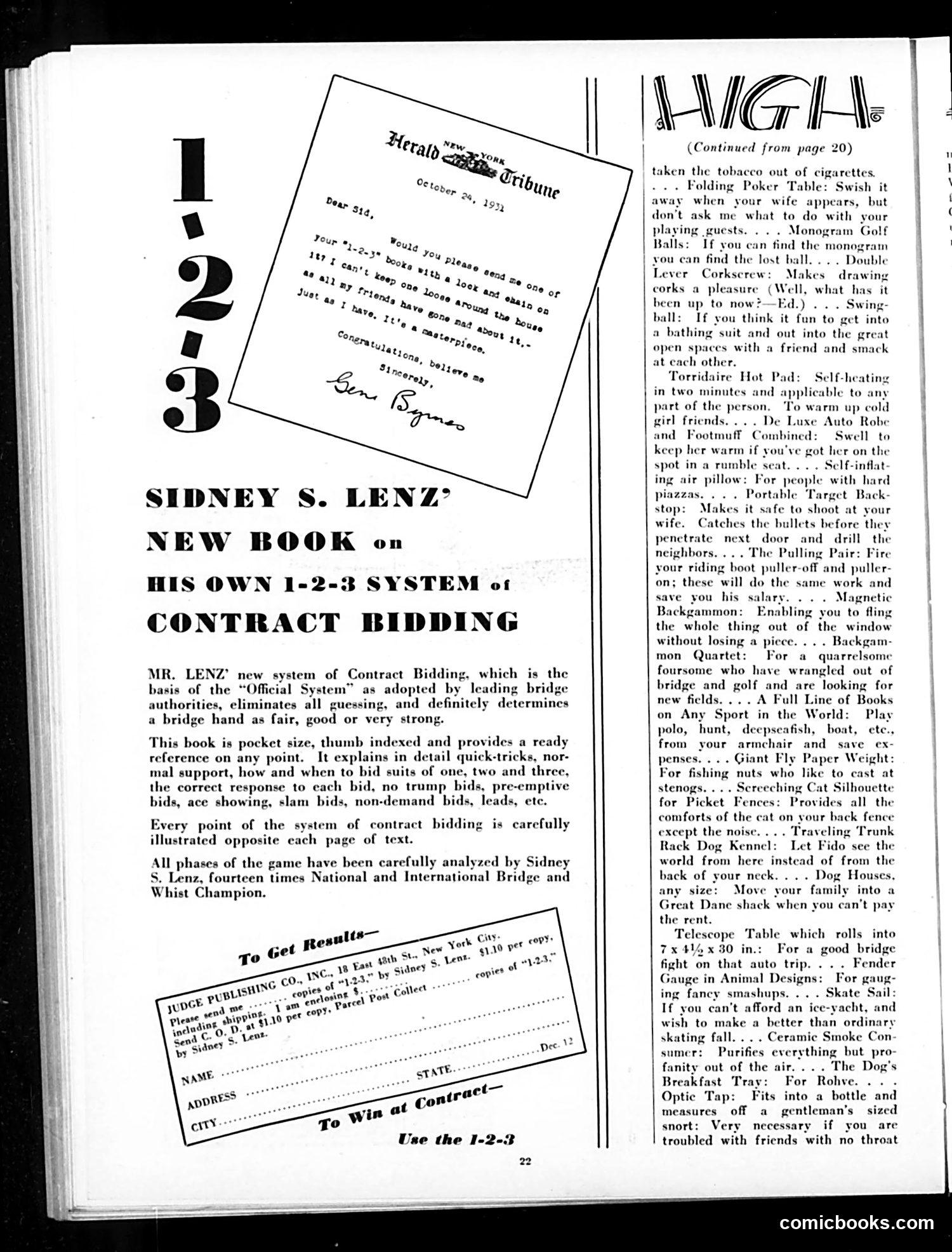
Page Analysis: Judge Magazine Advertisement & Gift Guide This page is primarily advertising and editorial content, not a cartoon. It consists of two main sections: 1. Left side: Advertisement for Sidney S. Lenz's new book on contract bridge bidding, featuring a facsimile letter from Lenz endorsing the system. Lenz is identified as a "fourteen times National and International Bridge and Whist Champion." The ad emphasizes the book's practical utility for bridge players. 2. Right side: A humorous gift guide (continued from page 20) offering novelty and practical items with satirical descriptions. The humor targets domestic life and leisure activities—examples include a "Portable Target Back-stop" for shooting at your wife, self-heating pads for warming "cold girl friends," and a "Great Dane shack" for when you can't pay rent. The tone mocks both consumerism and gender relations typical of the era. The satire gently ridicules middle-class aspirations and marital dynamics through exaggerated product descriptions.
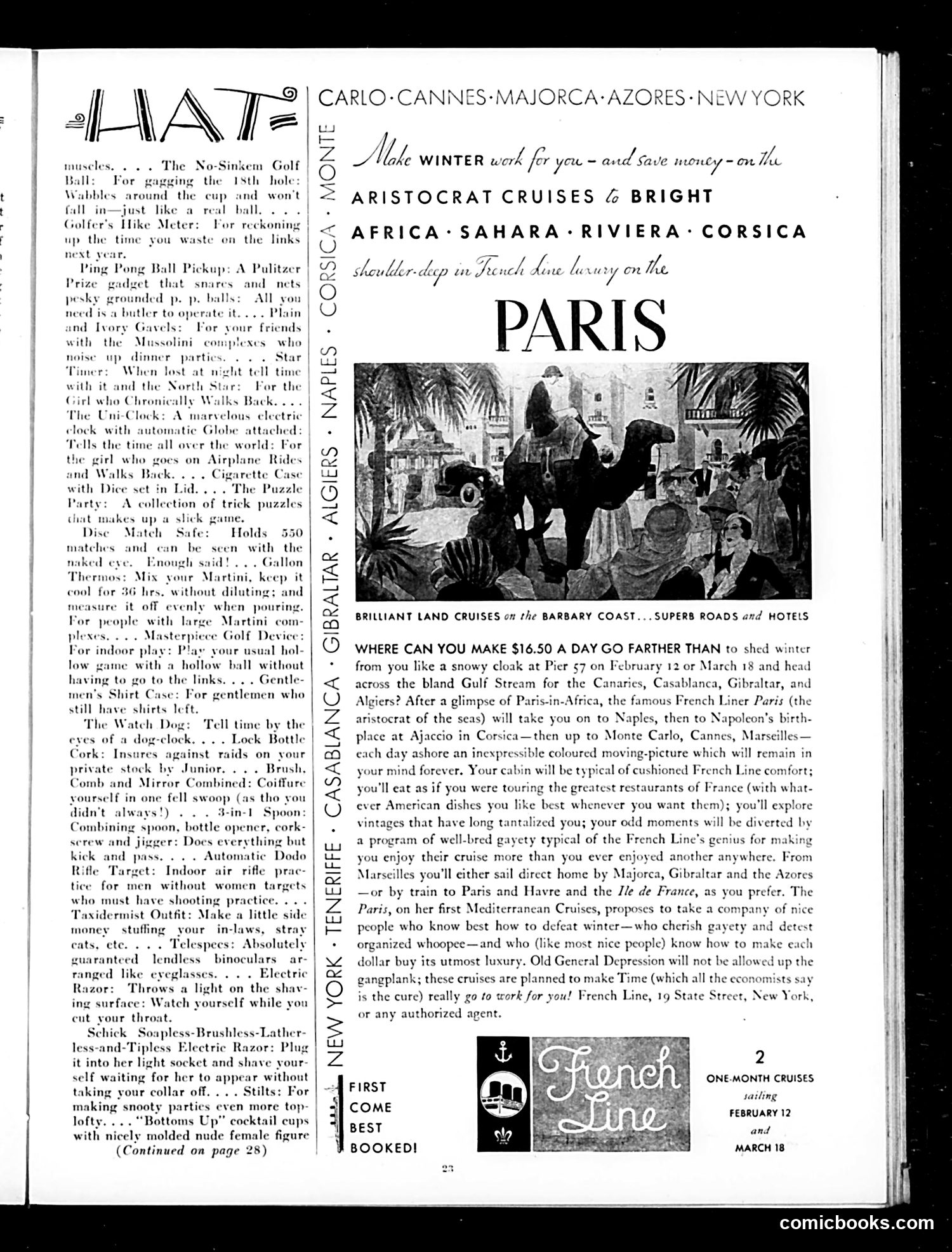
Analysis of This Judge Magazine Page This is primarily an advertisement page, not a political cartoon. It features: Main Content: A luxury cruise advertisement for the French Line's "Paris" ship, promoting Mediterranean winter cruises to Africa, the Sahara, Riviera, and Corsica. The ad targets wealthy Americans seeking escape from snowy winters, offering "shoulder-deep in French blue luxury" travel. Left Column: A humorous list of gadgets and novelty items (golf devices, Martini thermoses, electric razors, etc.)—typical 1920s-30s consumer novelties mocking modern gadgetry obsession. Historical Context: The page reflects Depression-era aspirational advertising, when luxury cruises and expensive gadgets were marketed to those wealthy enough to afford them, creating stark contrast with economic hardship. The emphasis on French luxury and prestige reflects America's cultural fascination with European sophistication during this period. Political/Social Satire: The gadget list implicitly satirizes consumer culture and materialism—poking fun at the wealthy's frivolous spending habits.
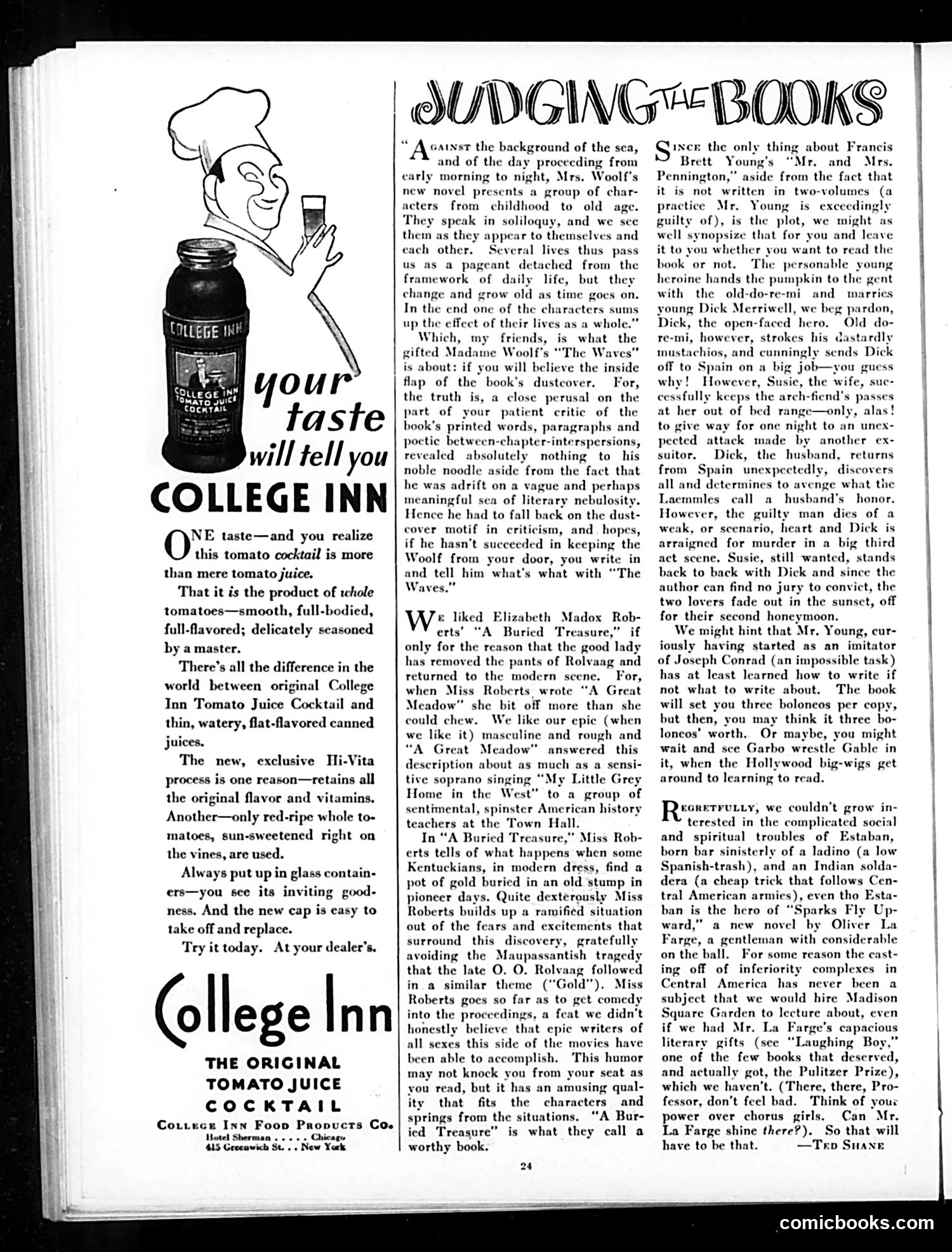
Explaining This Judge Magazine Page to Modern Readers This page is primarily advertising and book reviews, not political satire. The left side features a College Inn Tomato Juice Cocktail advertisement with a cartoon chef, using the era's common sales pitch: emphasizing quality ingredients and modern processing ("Hi-Vita process"). The right side contains literary criticism under "Judging the Books," reviewing three contemporary novels: Virginia Woolf's *The Waves*, Elizabeth Madox Roberts' *A Buried Treasure*, and Francis Brett Young's *Mr. and Mrs. Pennington*. The critic is dismissive of Woolf—admitting he couldn't understand her avant-garde narrative style and resorted to reading the dustcover. He prefers Roberts' more accessible storytelling, particularly praising her unexpected use of humor in what could have been a heavy "epic" novel. The tone is characteristic of 1920s-30s literary journalism: witty, slightly condescending, and concerned with whether books are readable entertainment rather than experimentally challenging.
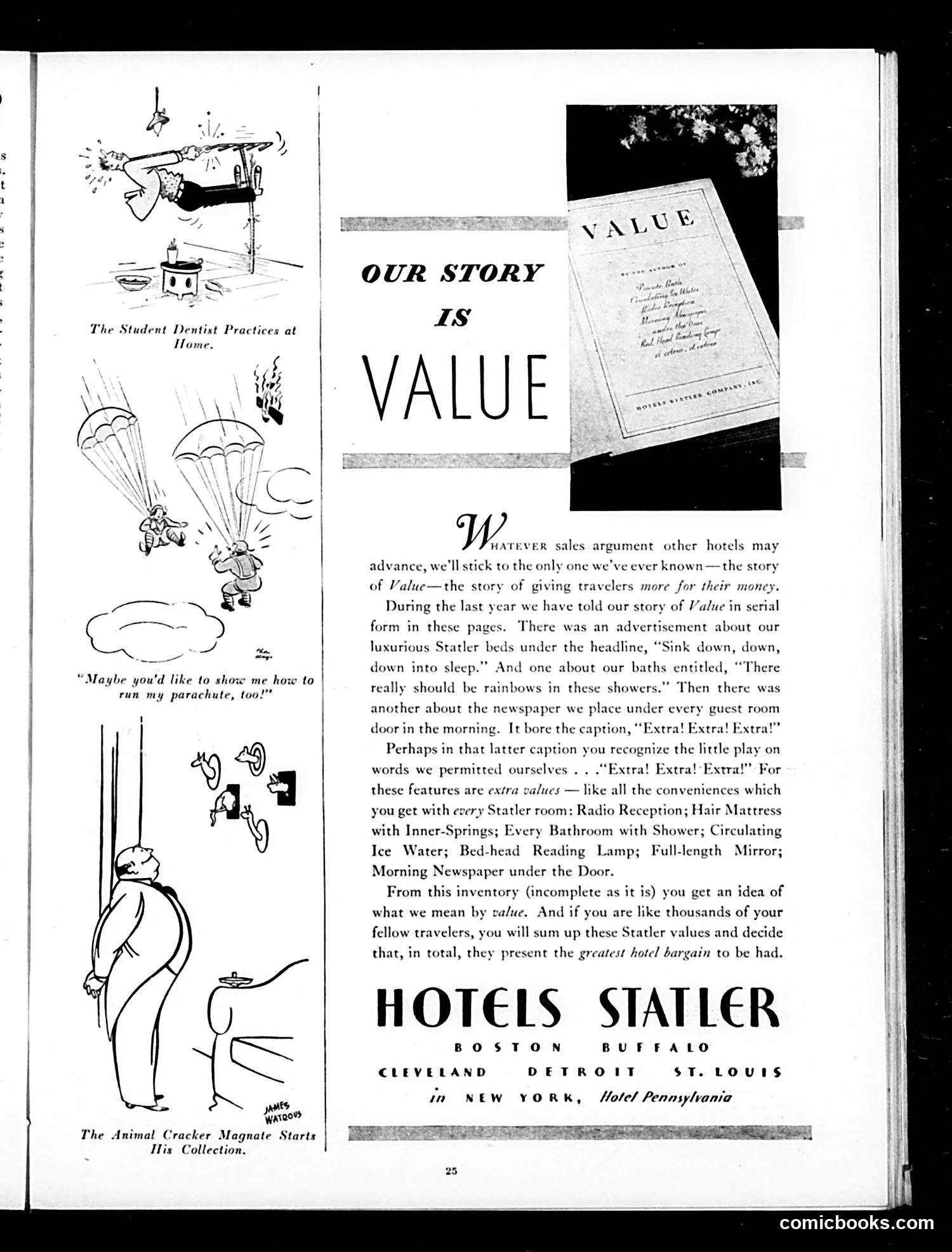
Analysis of Judge Magazine Page This page is primarily a Statler Hotels advertisement with satirical cartoon vignettes on the left margin. The three small cartoons mock everyday situations: 1. "The Student Dentist Practices at Home" shows a figure being launched through the air by dental equipment—satirizing amateur dentistry or untrained practitioners. 2. "The Animal Cracker Magnate Starts His Collection" depicts someone collecting animal crackers, poking fun at wealthy industrialists and their obsessive collecting habits (a common target of Gilded Age satire). The main advertisement emphasizes hotel "value"—promoting Statler Hotels' amenities (Radio Reception, Hair Mattresses, newspapers, reading lamps, etc.) as superior bargains. The text playfully references their slogan "Extra! Extra! Extra!" to emphasize "extra values" guests receive. This reflects early-20th-century marketing strategy: positioning consumer comforts as luxury features justifying premium pricing. The page's blend of humor and advertising was typical Judge magazine editorial practice.
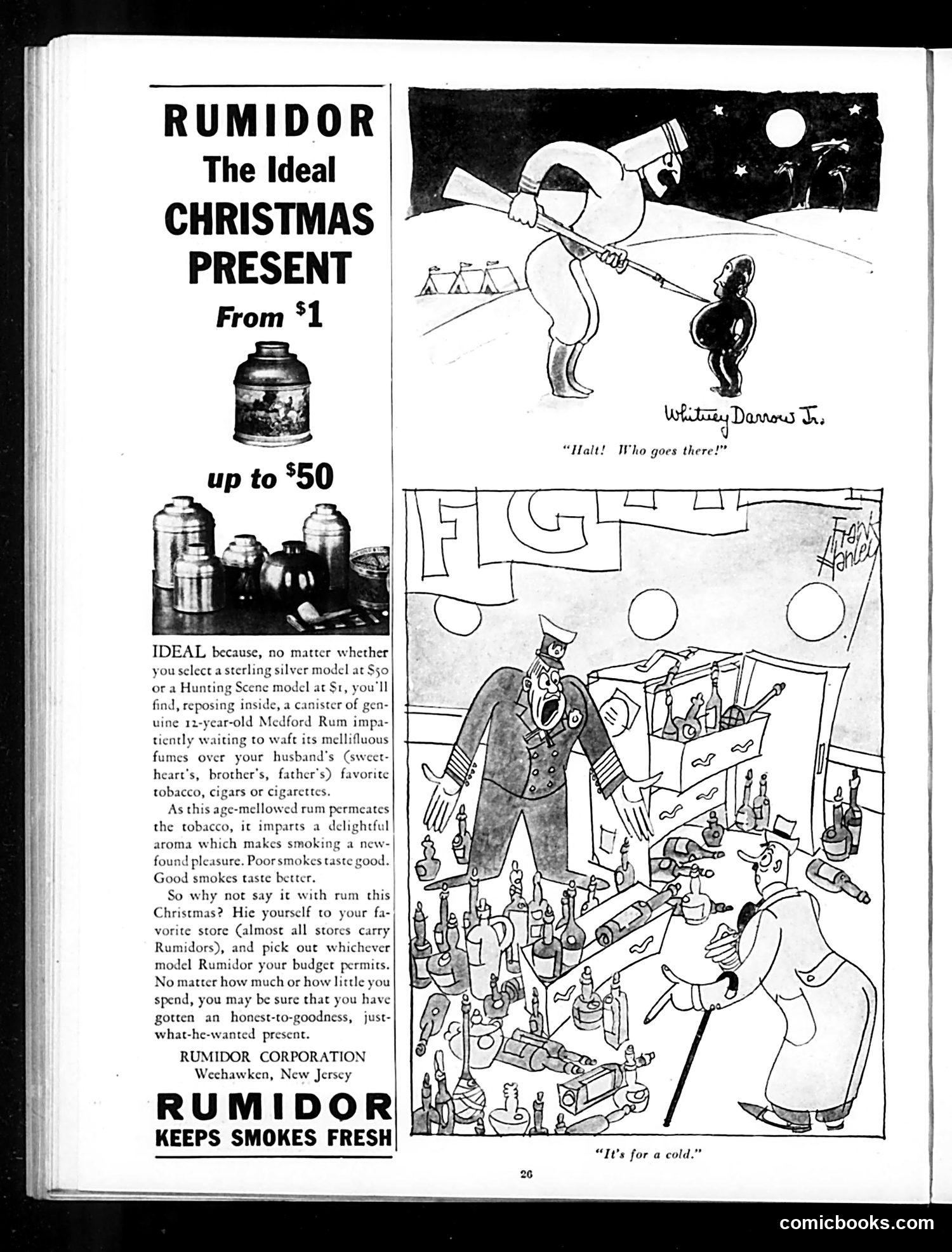
Page Analysis: Rumidor Advertisement with Cartoons This page is primarily a Rumidor liquor advertisement disguised as editorial content in Judge magazine. The ads promote decorative rum containers ("Rumidors") as Christmas gifts, ranging from $1 to $50, claiming the alcohol keeps tobacco fresh and improves smoking. The accompanying cartoons are humorous illustrations unrelated to the product: 1. Top cartoon (by Whitney Darrow Jr.): A snowman confronts a figure, captioned "Halt! Who goes there?"—a wartime sentry gag. 2. Bottom cartoon: A chaotic Christmas morning scene with a well-dressed man discovering scattered liquor bottles, captioned "It's for a cold"—the joke being someone claiming medicinal necessity for alcohol consumption. These cartoons exploit Prohibition-era humor about drinking, which remained relevant culturally even after Prohibition's 1933 repeal. The advertisements blur the line between editorial and commercial content, a common magazine practice of that era.
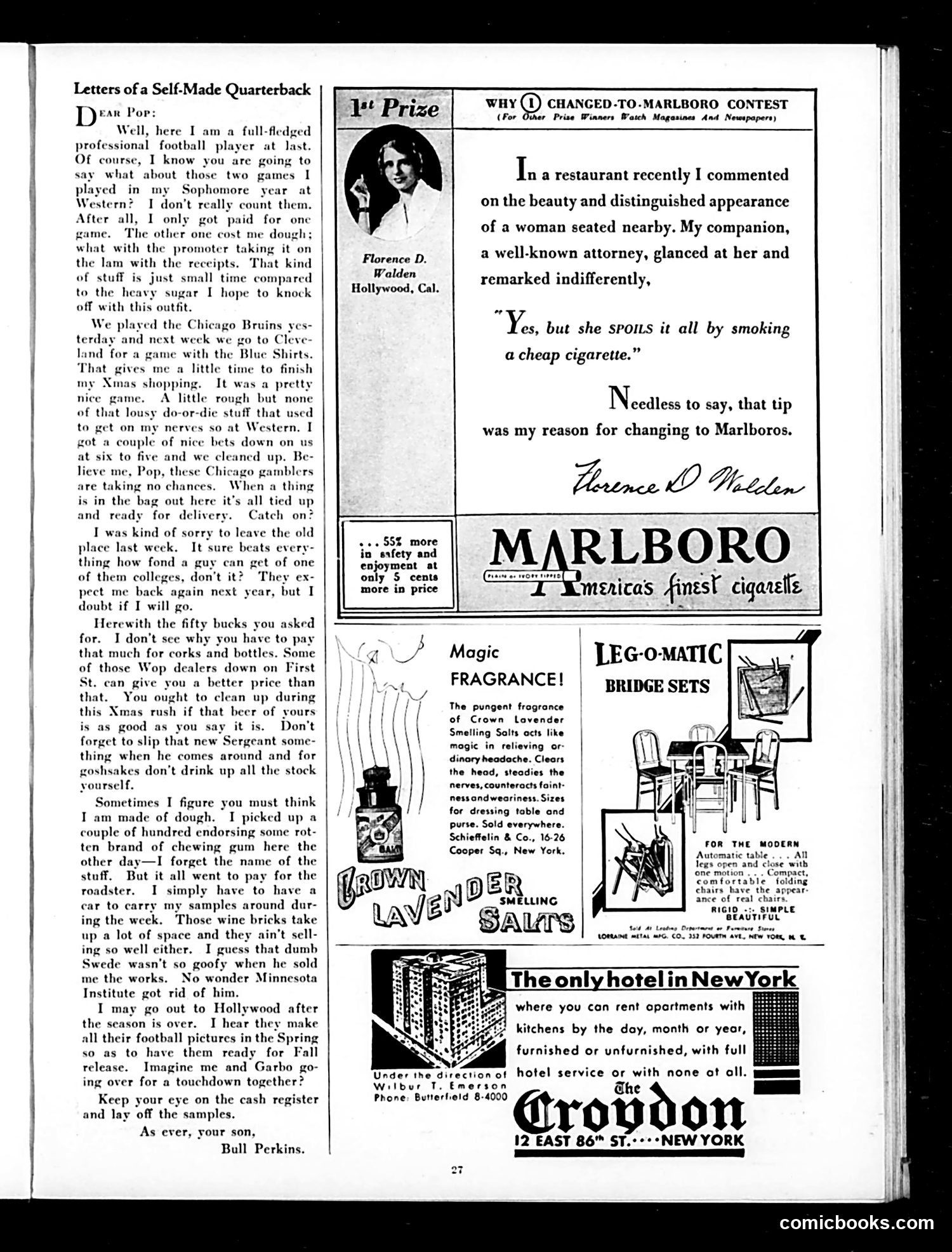
Explanation for Modern Readers This page features a satirical letter from "Bull Perkins," a self-made college quarterback turned professional player, writing to his father. The humor lies in the character's oblivious moral contradictions: he brags about getting paid to play football while casually describing gambling on games, endorsing products he hasn't used, and—most tellingly—his father apparently runs an illegal alcohol operation during Prohibition (references to "corks and bottles," "beer," and "wine bricks"). The satire targets post-WWI American excess and hypocrisy: young athletes corrupted by money, Prohibition-era bootlegging normalized as family business, and the commercialization of college sports. Bull's casual tone about betting, bribing officials ("slip that new Sergeant something"), and his get-rich-quick schemes reveals widespread corruption in 1920s athletics and society. The page also contains period advertisements (Marlboro cigarettes, bridge furniture, a New York hotel), typical of Judge magazine's content.
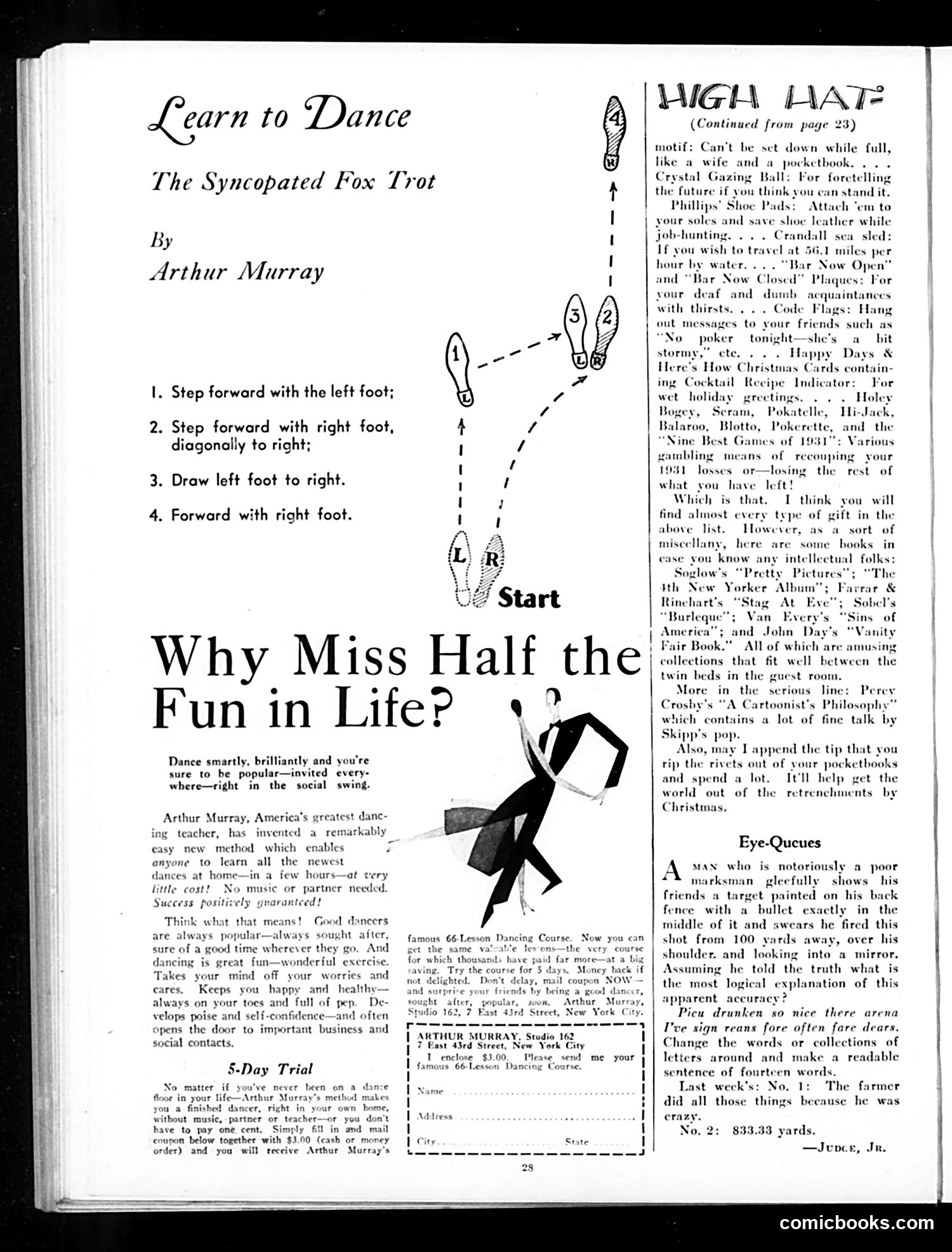
Judge Magazine Page Analysis This page contains advertising and instructional content rather than political satire. The main elements are: "Learn to Dance" Section: Arthur Murray's dancing instruction advertisement, teaching the "Syncopated Fox Trot" through numbered steps with foot diagrams. Murray was a famous real dancing instructor of the era offering mail-order dance lessons. "Why Miss Half the Fun in Life?" is a persuasive ad claiming dancing makes you popular, happy, and confident—opening doors to "important business and social contacts." This reflects 1930s social values emphasizing dancing's role in courtship and social advancement. Right Column: "HIGH HAT" gift suggestions (continued from previous page), satirizing frivolous Christmas presents like "Crystal Gazing Balls" and novelty drinking-related items, reflecting Depression-era absurdity. Bottom: Word puzzles and a humorous anecdote about a poor marksman's impossible shot. This page is primarily commercial content—an Arthur Murray dancing course advertisement with light satirical gift commentary, typical of Judge magazine's mixed editorial/advertising format.
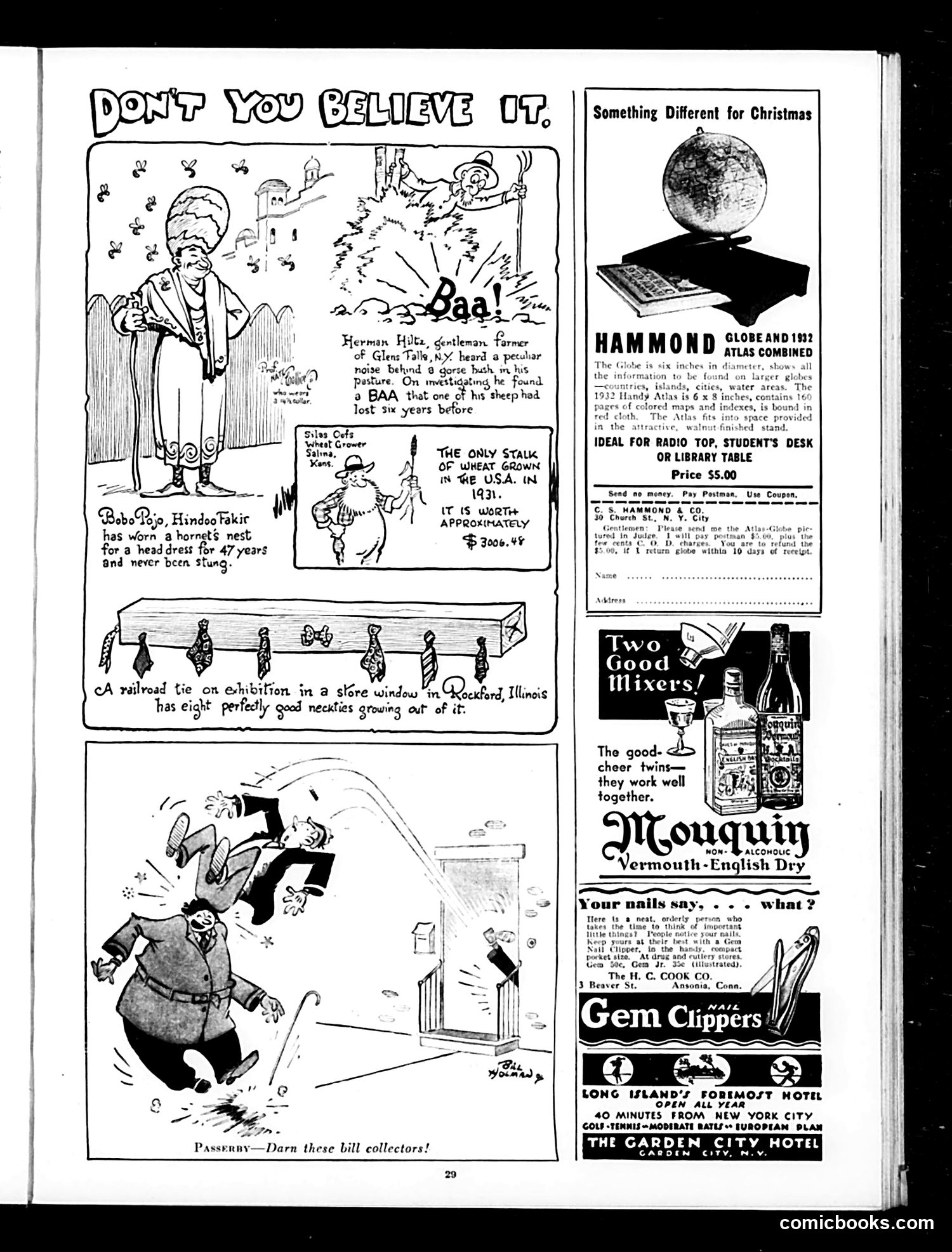
"Don't You Believe It" - Judge Magazine Page Analysis This page features humorous tall tales and oddities presented as "unbelievable but true" claims, a common Judge format. The left side contains four cartoon vignettes mocking credulous readers: 1. Baba Pio, Hindu fakir: Claims to have worn a hornet's nest as a headdress for 47 years without being stung—obvious nonsense presented deadpan. 2. Herman Hilts' sheep: A farmer's "baaa" heard from a bush supposedly belonged to a sheep missing for six years—absurd premise. 3. Wheat stalk: Claims the "only stalk of wheat grown in USA in 1931" was worth $300.49—mocking agricultural depression-era desperation. 4. Railroad tie neckties: A display item sprouted "eight perfectly good neckties"—surreal visual joke. The bottom cartoon shows a bill collector being pelted—satirizing debt collection practices. The right side contains period advertisements (Hammond globe, clippers, vermouth, hotel). The satire targets gullibility and exaggeration in popular tales during the Depression era.
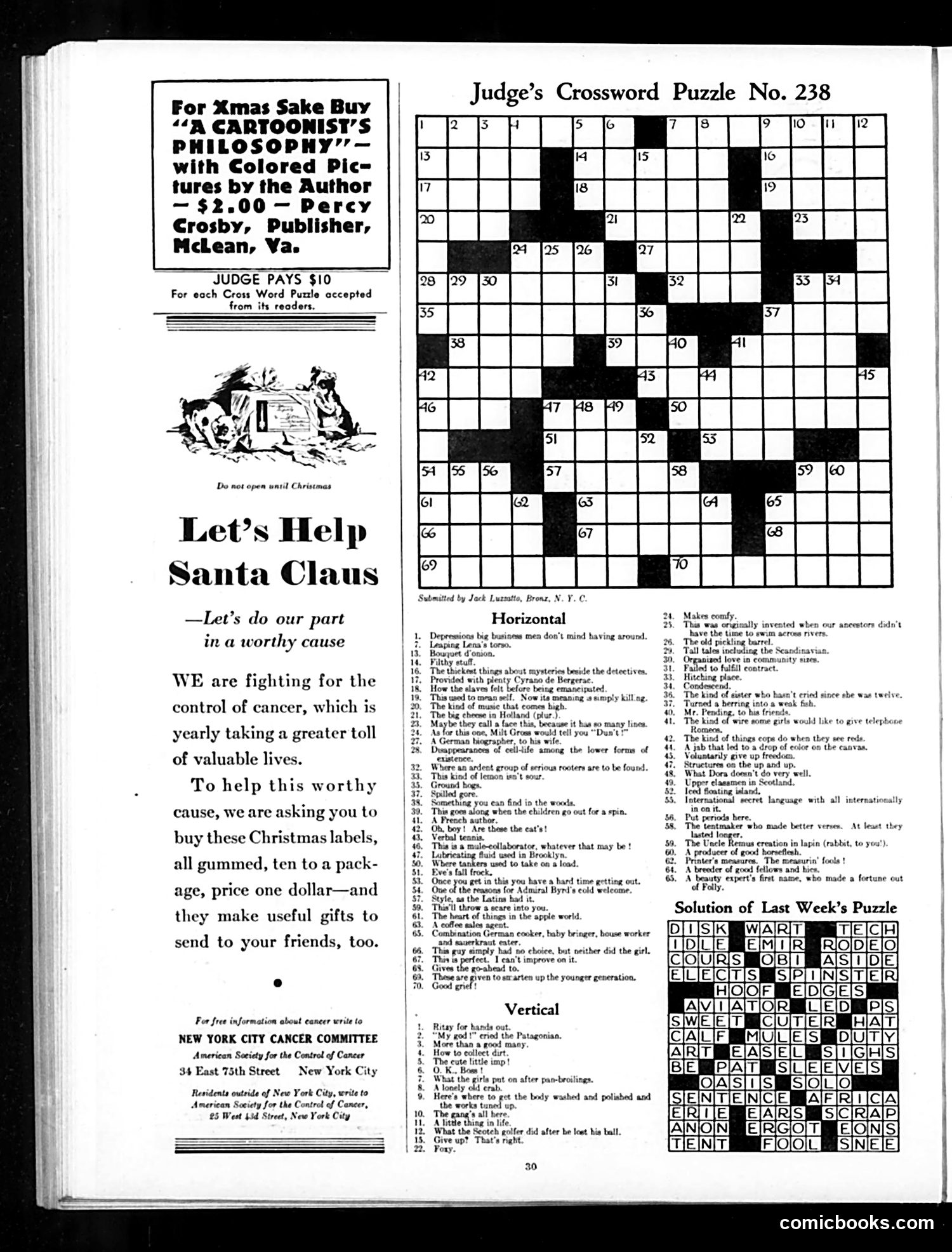
Judge Magazine Page Analysis This page contains advertising and fundraising content rather than political satire. The main elements are: Left side: An advertisement for Percy Crosby's book "A Cartoonist's Philosophy" ($2.00) and a charitable appeal for the New York City Cancer Committee. Judge magazine is soliciting Christmas labels—ten per dollar—with proceeds supporting cancer research, a major public health concern of the era. Right side: Judge's crossword puzzle #238, with clues and a solved puzzle from the previous week below. The page reflects early 20th-century concerns: cancer was becoming recognized as a significant medical problem requiring organized fundraising. The "Santa Claus" framing ("Let's Help Santa Claus") attempts to tie holiday goodwill to disease prevention—a common charitable messaging strategy. There is no political cartoon or satire visible on this page. It's primarily a service/feature page mixing commerce, charity, and entertainment (the crossword puzzle).
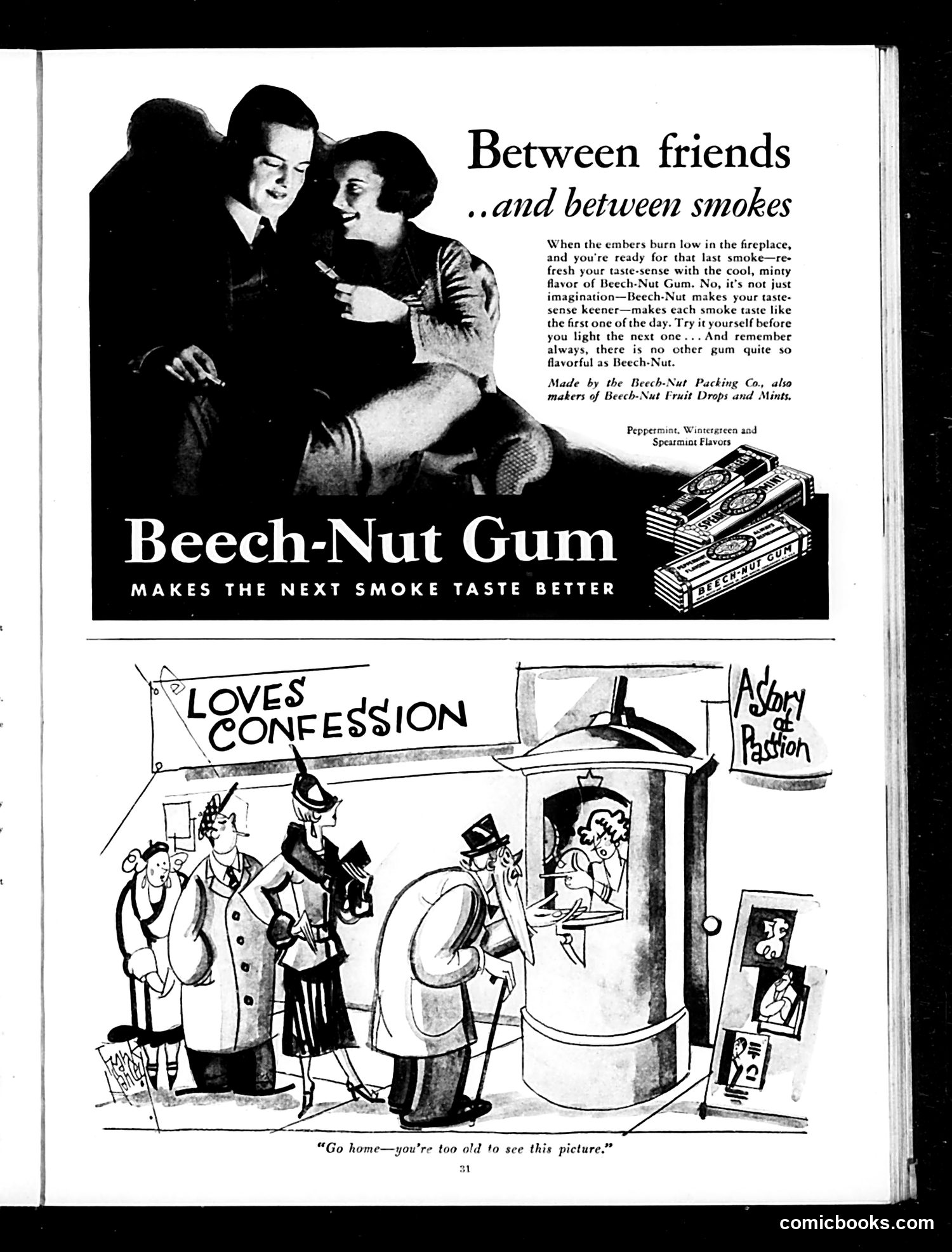
Analysis This page contains two distinct pieces: a Beech-Nut Gum advertisement and an unrelated cartoon. The Advertisement (top): A straightforward commercial showing an intimate couple by a fireplace, promoting gum as a palate-cleanser between cigarettes. The pitch is that chewing gum refreshes your taste buds, making the next smoke more enjoyable. This reflects the era when smoking was socially normalized and cigarette consumption was actively marketed. The Cartoon (bottom): A satirical scene at what appears to be a confession booth ("Love's Confession"), where a doorman or usher tells an older man, "Go home—you're too old to see this picture." The joke plays on double meaning: the man is too old for adult-themed entertainment, but he's literally trying to enter a confessional booth. The satire likely mocks either overzealous movie censorship or the irony of age-restricted content in a religious setting.
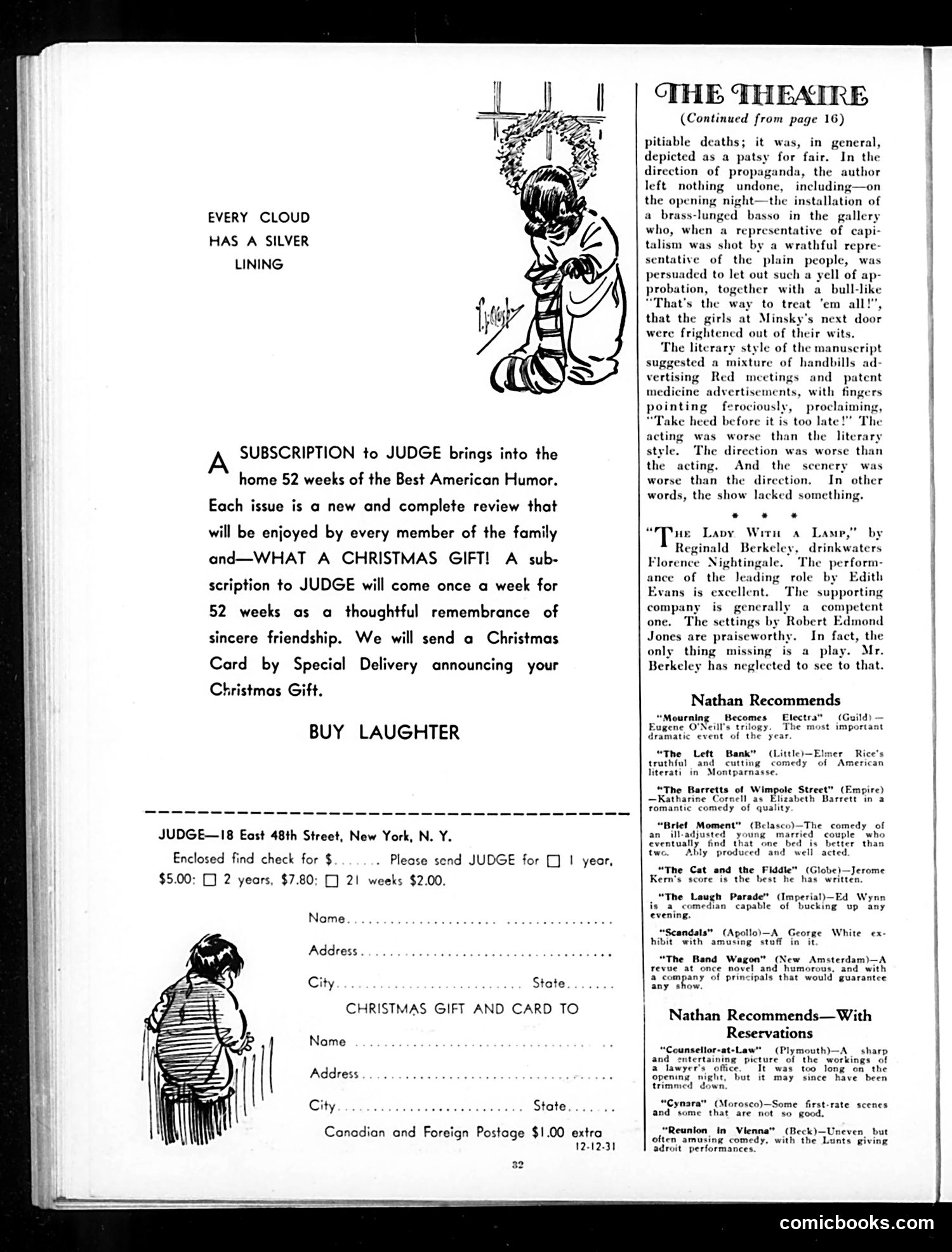
Judge Magazine Page Analysis This is primarily an advertising and subscription page for Judge magazine itself, promoting a Christmas gift subscription. The left side features a sentimental illustration of a child with the motto "Every Cloud Has a Silver Lining"—typical feel-good messaging for holiday gift-giving. The right side continues theatre reviews from the previous page. The critic discusses a propagandistic play depicting capitalism negatively, noting it included a planted audience member (a "brass-lunged basso") who shouted approval when capitalists were shot on stage. The reviews of various Broadway productions follow, with recommendations from critic Nathan (likely George Jean Nathan). The content reflects 1931-era American theatre and magazine culture—Judge positioned itself as family-friendly humor. The theatre criticism demonstrates theatrical sophistication while the subscription pitch emphasizes "laughter" and "best American humor" as suitable family entertainment.
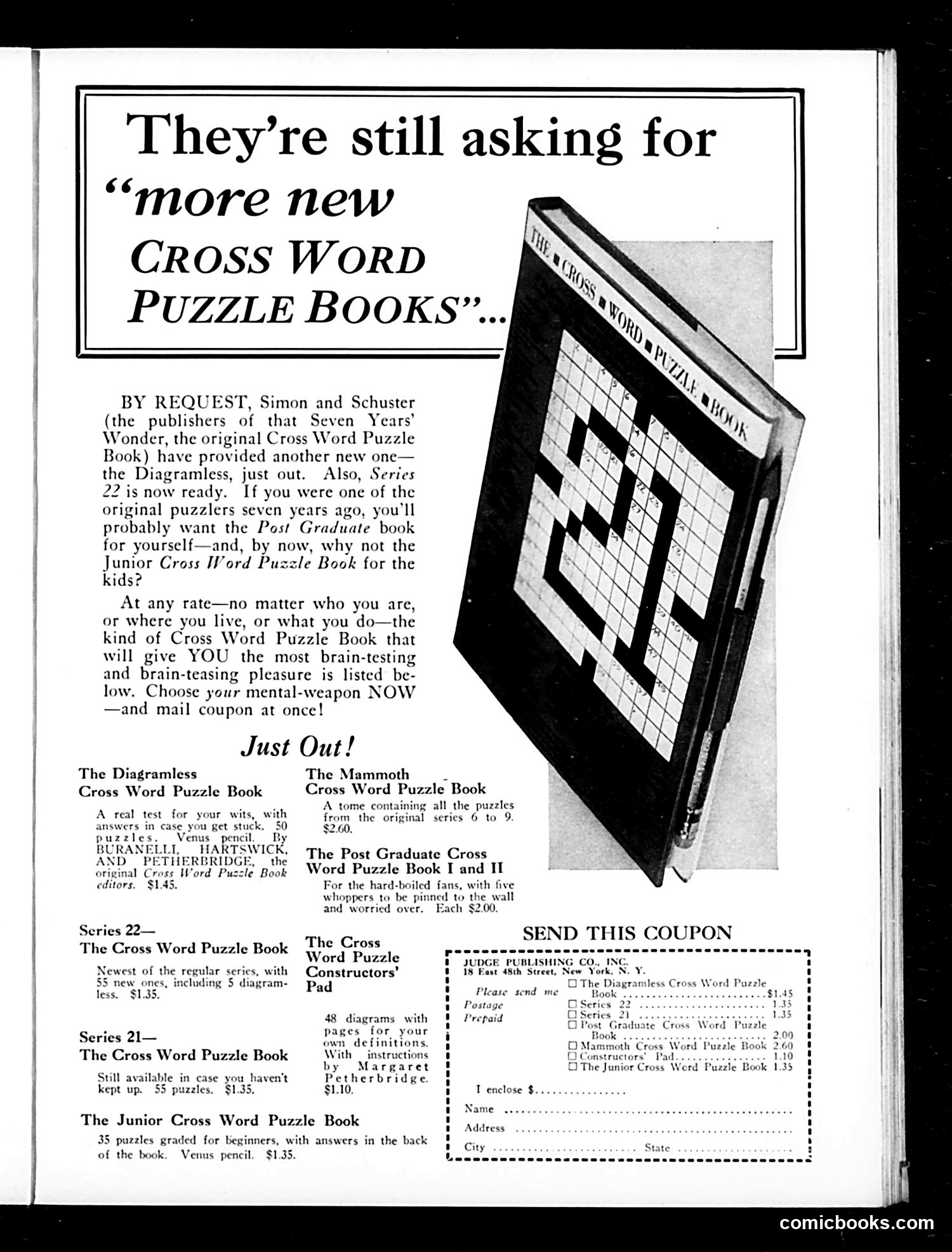
Analysis This is primarily an advertisement, not a political cartoon. Judge magazine is promoting crossword puzzle books published by Simon and Schuster, capitalizing on what the text calls "that Seven Years' Wonder"—the crossword puzzle craze that swept America in the 1920s. The satirical angle is subtle: the headline "They're still asking for 'more new Cross Word Puzzle Books'" gently mocks the obsessive popularity of crosswords, suggesting the public's seemingly insatiable demand has become almost comedic. The ad positions crossword puzzles as a cultural phenomenon so dominant that books exist for every demographic: adults, "hard-boiled fans," post-graduates, and children. The accompanying illustration shows stacked puzzle books, visually emphasizing the abundance of offerings. The humor lies in reflecting back to readers their own puzzle-book addiction as a notable cultural moment worth satirizing.
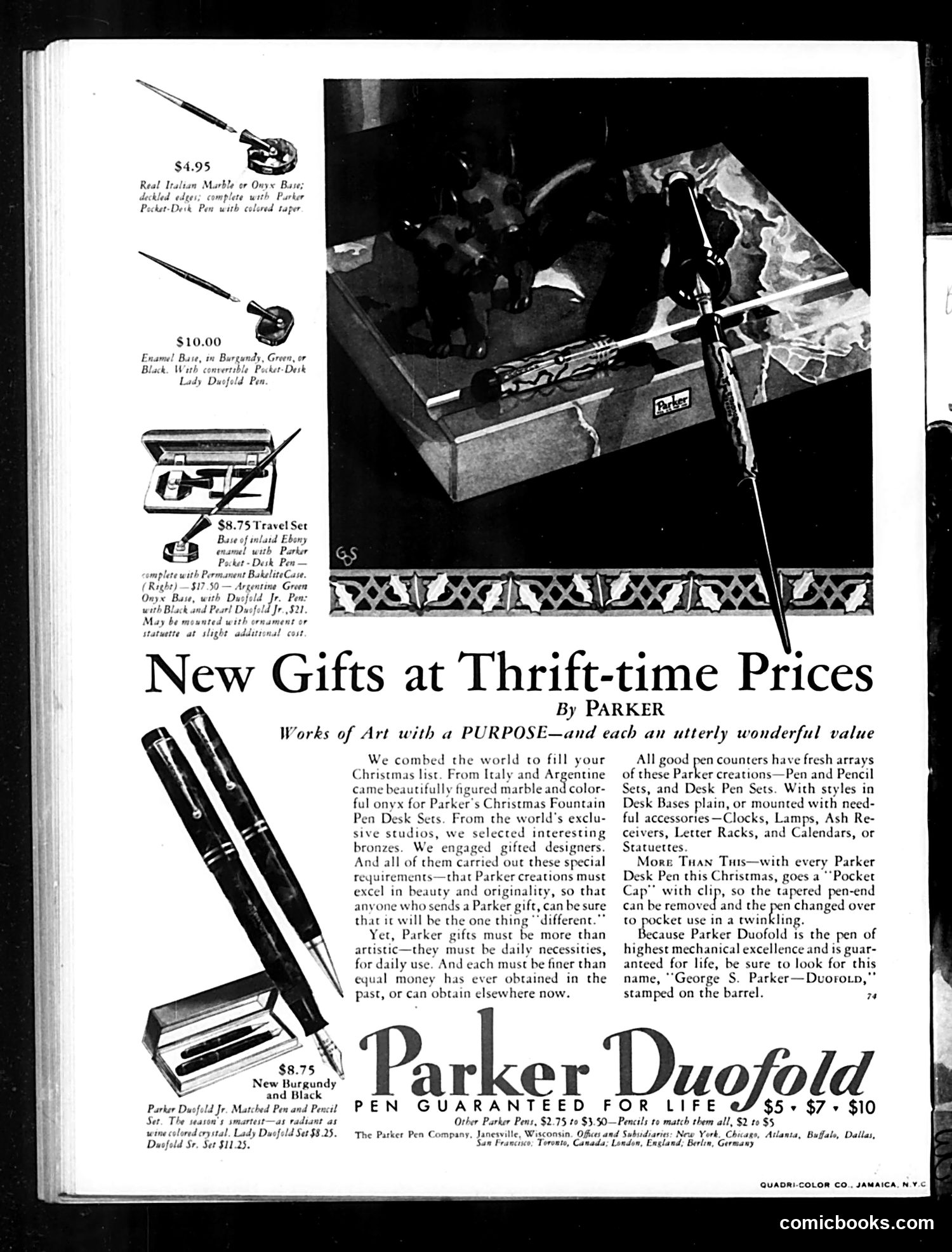
Analysis This page is primarily advertising, not satire or political commentary. It's a Parker Pen Company advertisement from Judge magazine promoting their luxury fountain pens and desk sets as Christmas gifts. The ad emphasizes that Parker products are "Works of Art with a PURPOSE"—combining aesthetic beauty (marble bases, onyx, bronze) with practical daily use. The copy positions these pens as premium gift items that justify their cost ($5-$10, substantial for the era) because they excel in both design and mechanical reliability. The only visual content shows product photography of Parker Duofold pens and desk sets, along with price listings for various models (Italian Marble bases, Onyx bases, Travel Sets, matched pen-and-pencil sets). There is no political cartoon, satire, or social commentary on this page—it's straightforward luxury goods marketing targeting middle-to-upper-class consumers seeking prestigious Christmas presents. The phrase "thrift-time prices" ironically suggests affordability for upscale products.