judge
Judge — February 20, 1932
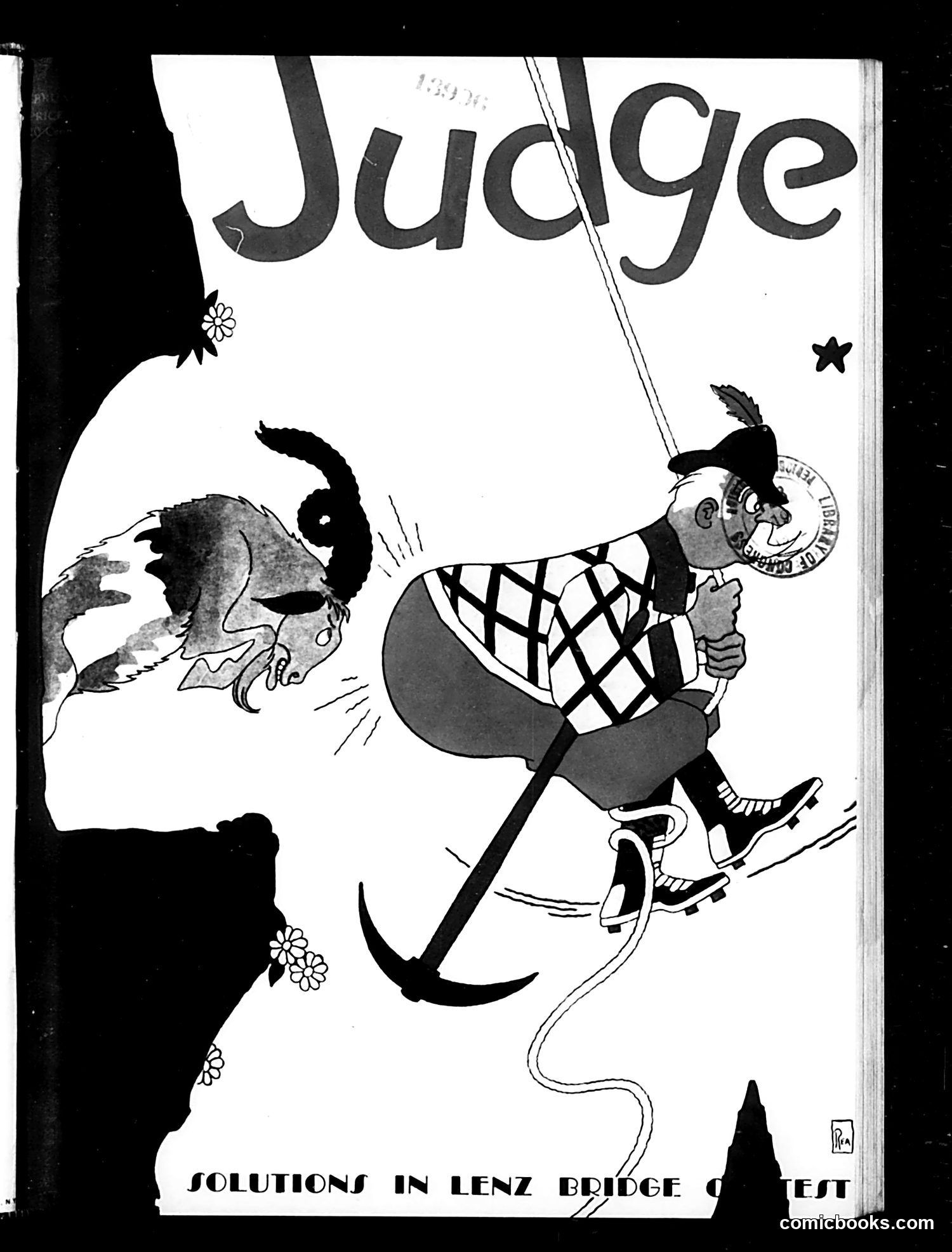
Judge Magazine Cover Analysis This appears to be a Judge magazine cover titled "Solutions in Lenz Bridge Contest." The illustration depicts a caricatured figure (likely a judge or authority figure, given the context) precariously balanced on a tightrope while being menaced by a demon or devil-like creature on the left. The figure holds an umbrella and appears to be struggling for balance. The "Lenz Bridge" reference and the precarious tightrope imagery suggest this satirizes a legal or political controversy requiring careful judgment—the figure must navigate between opposing forces without falling. The demon likely represents one side of a dispute or threat. Without more specific historical context about the Lenz Bridge case, the exact controversy remains unclear, but the central metaphor portrays decision-making as dangerously balanced.
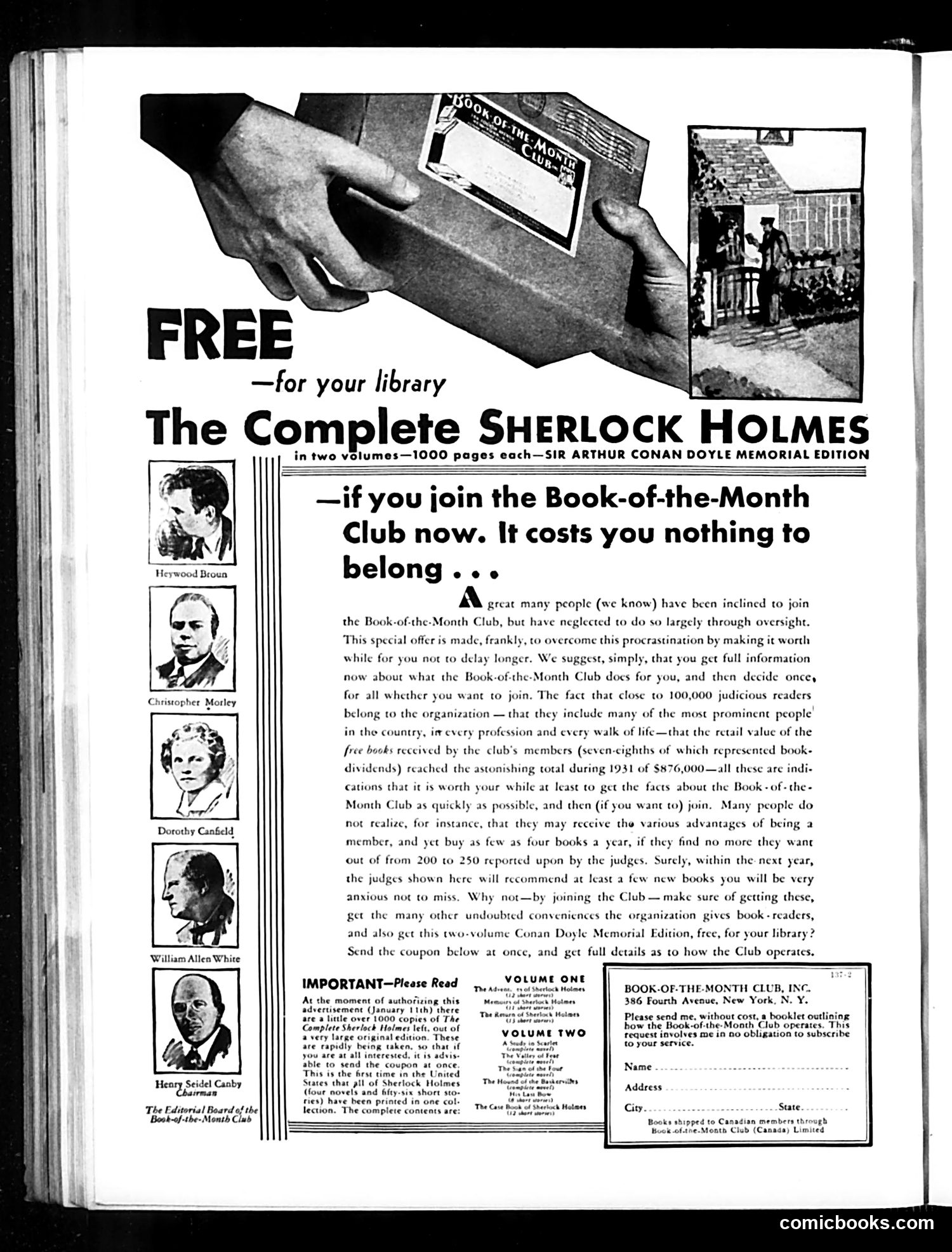
Analysis This page is primarily advertising, not satire or political content. It promotes the Book-of-the-Month Club's free offer of a complete two-volume Sherlock Holmes memorial edition by Sir Arthur Conan Doyle. The left side features portraits of five celebrity judges who selected the club's monthly offerings: Heywood Broun, Christopher Morley, Dorothy Canfield, William Allen White, and Henry Seidel Canby (identified as "Chairman"). Their inclusion lends prestige to the club's book selections. The advertisement emphasizes membership benefits and encourages readers to join using the coupon provided. There is no political satire or social commentary—this is a straightforward commercial promotion appearing in Judge magazine.
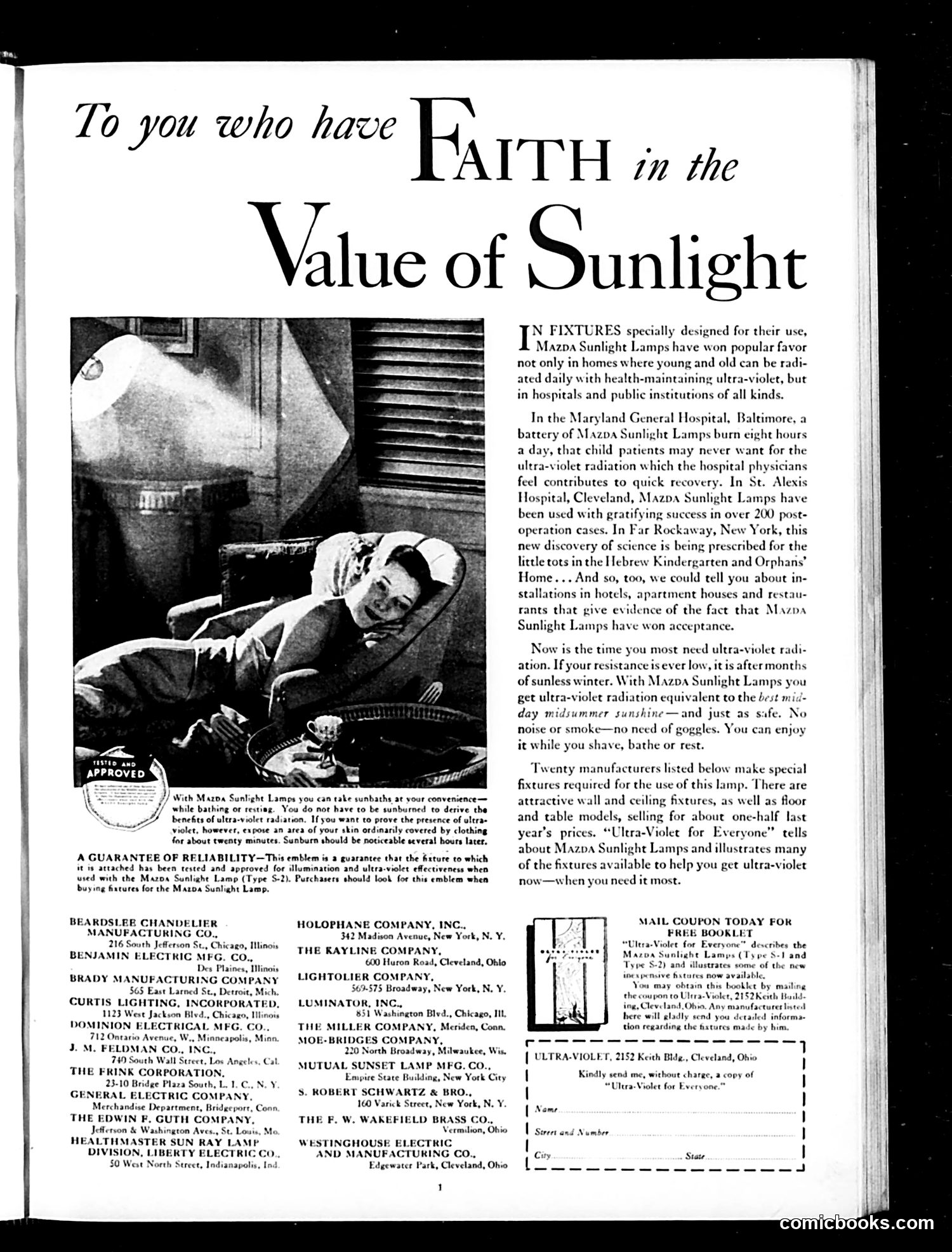
Analysis This page is primarily advertising, not satire or political commentary. It promotes Mazda Sunlight Lamps, ultraviolet therapeutic devices marketed for health benefits. The image shows a patient receiving UV lamp treatment, likely for rickets or other conditions. The text claims these lamps provide "ultra-violet radiation equivalent to the best mid-day midsummer sunshine" and were used in hospitals, orphanages, and homes. The headline "To you who have Faith in the Value of Sunlight" appeals to period health beliefs about sunshine's medicinal properties. Twenty manufacturers are listed as approved fixture makers. This reflects 1920s-30s enthusiasm for UV therapy—then considered genuinely therapeutic—before the health risks of UV exposure were understood. The page represents commercial exploitation of legitimate (if incomplete) medical science of that era.
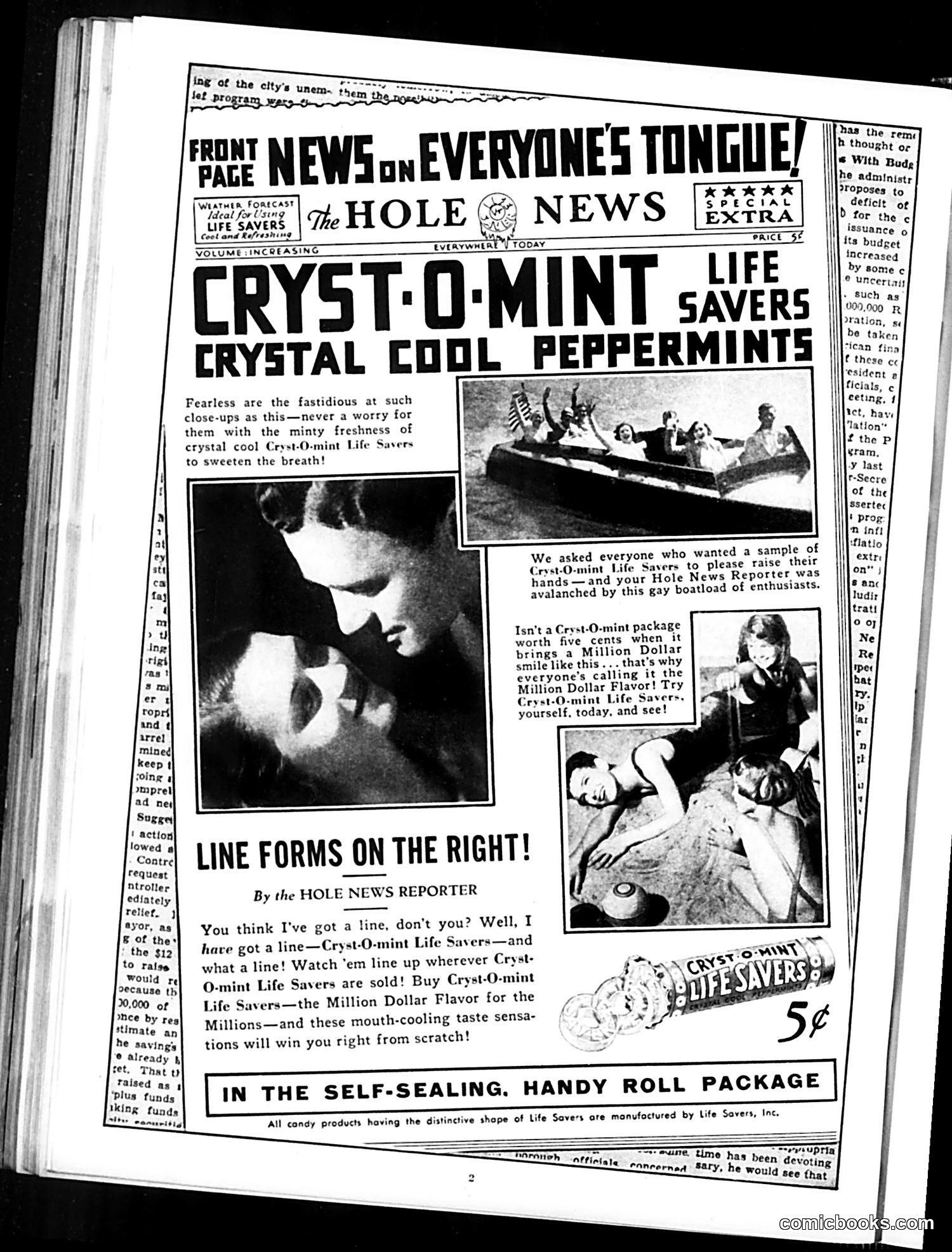
Analysis This page is primarily a vintage advertisement, not political satire. It promotes Cryst-O-Mint Life Savers candy with the headline "CRYST-O-MINT LIFE SAVERS—CRYSTAL COOL PEPPERMINTS." The advertisement uses early 20th-century marketing tactics: a "Hole News" publication format (pun on the product's ring shape), testimonial-style photos of people enjoying the candy, and claims about freshness and appeal. The tagline references a "Million Dollar Flavor" promotion. The only satirical element is the framing device—presenting candy marketing as breaking news—which gently mocks how aggressively advertising was packaged as journalism in this era. The price of 5¢ and "self-sealing, handy roll package" reflect period product details. Overall, this is commercial content rather than political commentary.
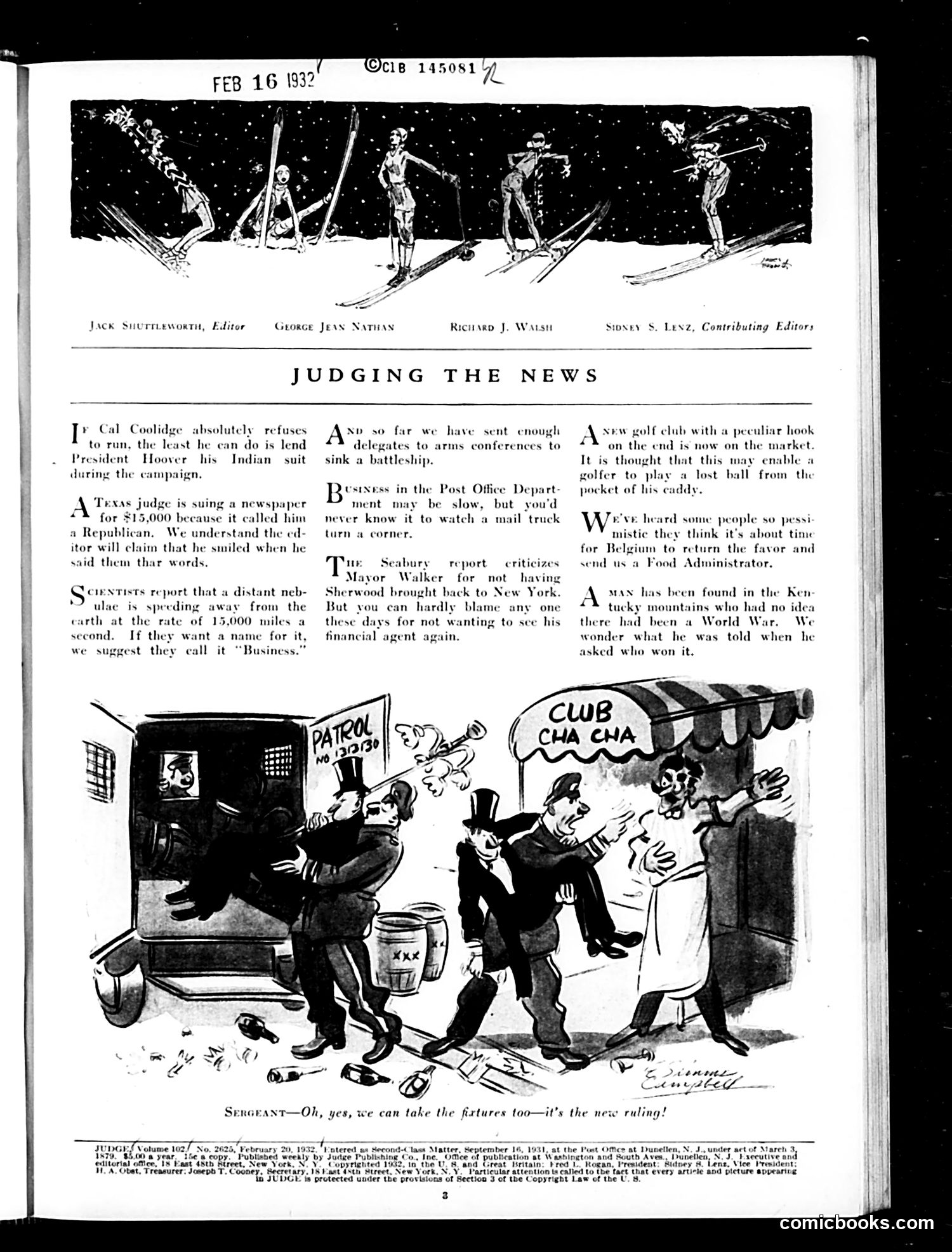
"Judging the News" – February 16, 1932 This page satirizes recent news items through brief commentary and a cartoon. The main cartoon depicts Prohibition enforcement officers raiding an illegal "Club Cha Cha" nightclub. A police sergeant tells the proprietor: "Oh yes, we can take the fixtures too—it's the new ruling!" The joke targets the absurdity of Prohibition (1920-1933): authorities were confiscating not just alcohol but now club furnishings as contraband. The satire mocks both the futility of enforcement and the expanding scope of seizures during the final years of Prohibition, suggesting the policy had become increasingly ridiculous and heavy-handed. The surrounding items comment on Cal Coolidge's refusal to lend money, a slow Post Office, and a man from Kentucky's mountains unaware of WWI—typical light satirical observations of the era.
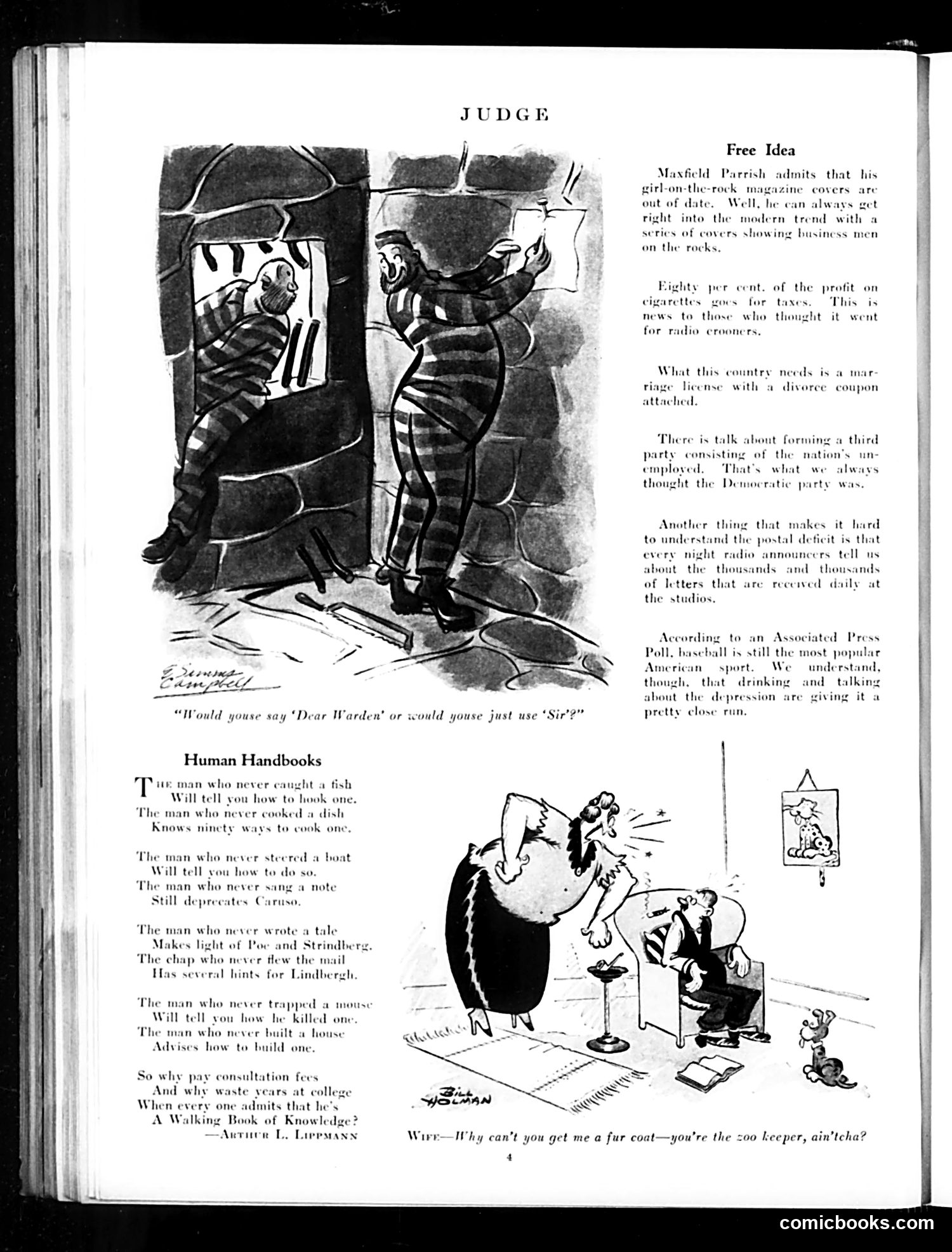
Analysis of Judge Magazine Page This page contains two cartoons and a poem satirizing early 20th-century American life. Top cartoon: Two men in a train compartment; one asks the other to say "Dear Warden" or use "Sir" instead of casual address. This mocks pretentious formality and class consciousness in confined social spaces. "Human Handbooks" poem: Uses folk-wisdom format to mock self-help culture and consultation fees. It suggests that so-called experts (those who've never done something themselves) profit by advising others—a critique of professional expertise and education's value. Bottom cartoon: A wife demands a fur coat from her husband, who humorously compares himself to a "zoo keeper." This satirizes consumerism, marital dynamics, and women's material expectations—common Judge themes mocking domestic relationships and spend-thrift wives.
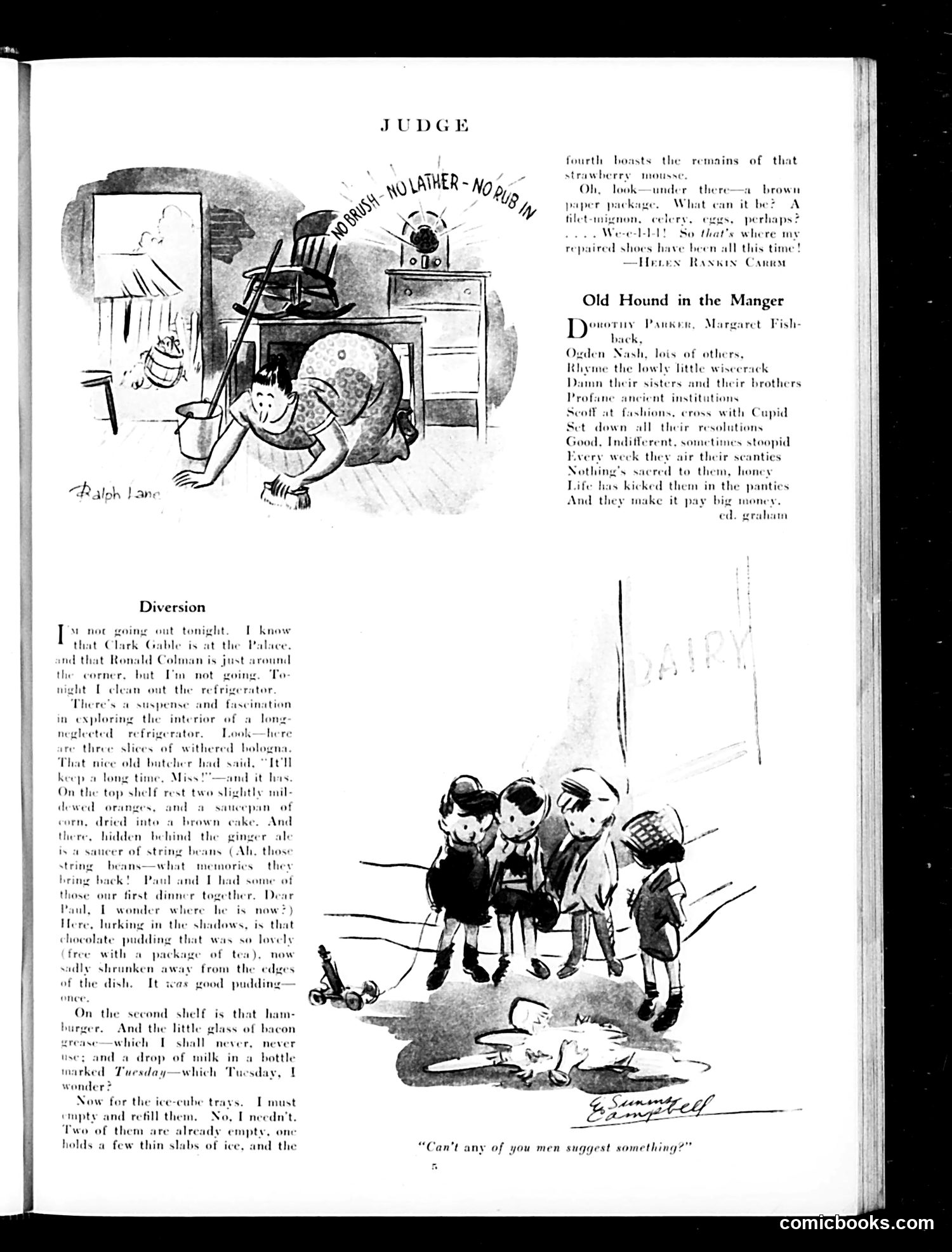
Analysis of Judge Page Top Cartoon ("No Lather - No Rub In"): A figure struggling inside what appears to be a large globe or spherical object. The caption suggests difficulty or futility—likely satirizing some contemporary problem or political situation where effort yields no results. Without clearer context, the specific target is unclear. Middle Section ("Old Hound in the Manger"): Verse about characters including Dorothy Parker and Margaret Fishback, mocking socialites or literary figures for their pretentious behavior and scandalous activities. This appears to be society gossip humor. Bottom Cartoon ("Diversion"): A humorous domestic scene where someone prefers exploring a neglected refrigerator over going out, referencing Clark Gable and Ronald Colman (contemporary Hollywood stars). The satire mocks Depression-era domestic distraction and foodstuff curiosities.
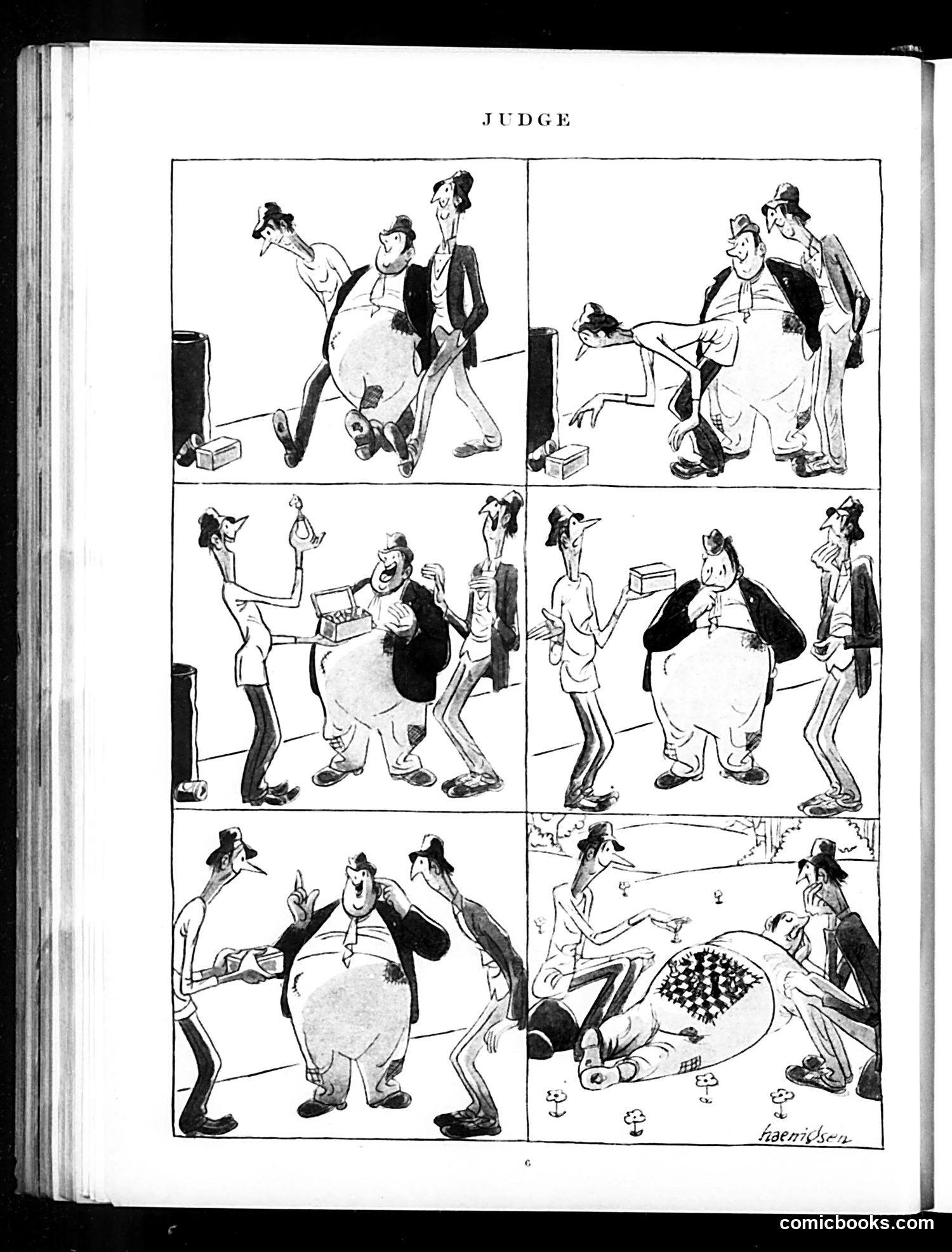
"Judge" - Political Cartoon Analysis This six-panel comic titled "JUDGE" depicts a satirical narrative about judicial corruption or bribery. The central figure—a portly judge—is shown interacting with various parties who appear to be offering him money or bribes (visible in panels showing cash/boxes). The progression suggests the judge's progressive moral compromise: he initially refuses or hesitates, but gradually accepts payments. By the final panel, he's shown playing chess—possibly symbolizing how justice becomes a calculated game rather than principled deliberation. The caricature style and exaggerated physique emphasize the judge's greed and moral weakness. Without visible dates or specific references, the cartoon likely critiques turn-of-the-century judicial corruption, a common satirical target in American magazines of that era. The artist's signature reads "Hendrickson."
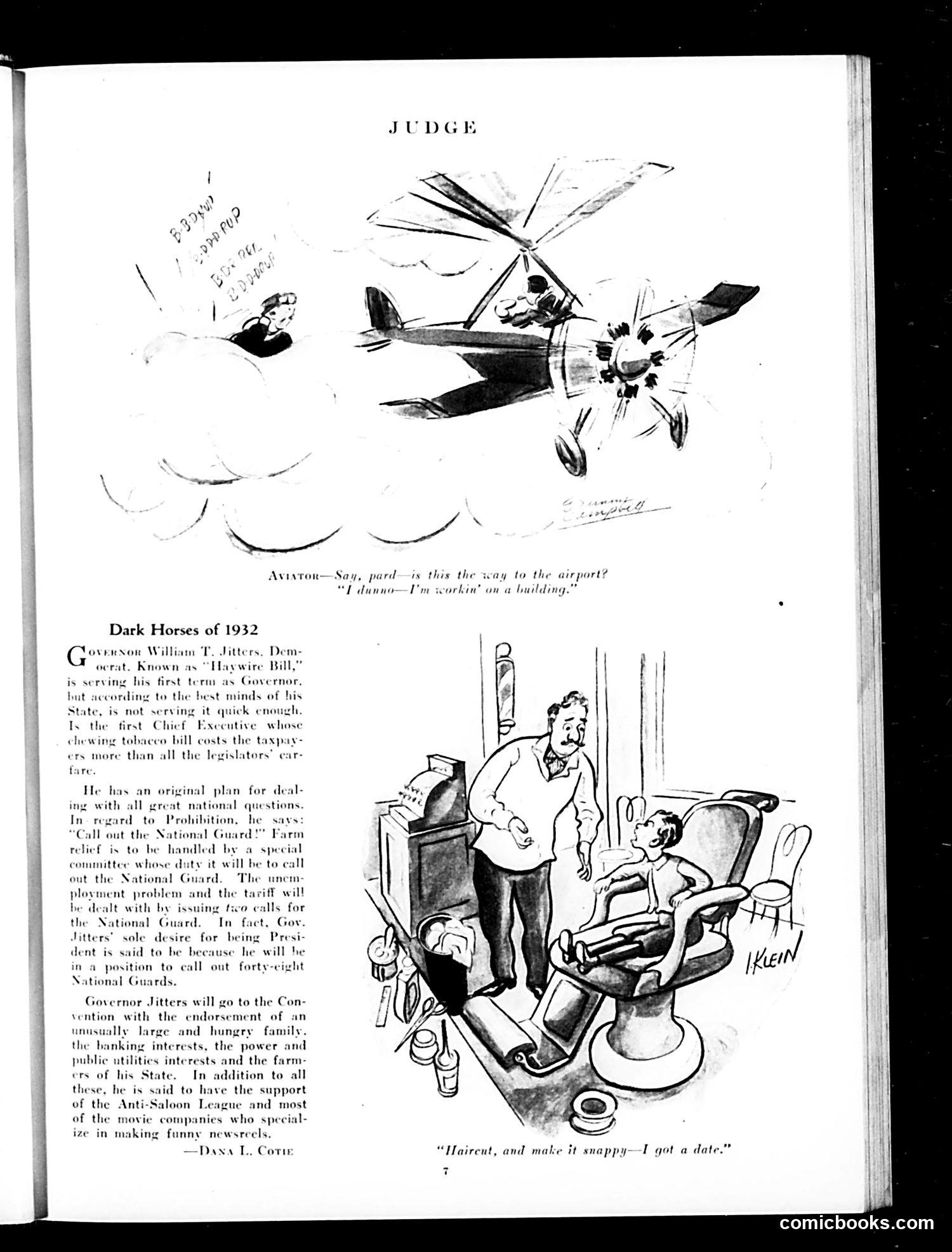
Judge Magazine Political Cartoon Analysis Top cartoon: An aviator asks a construction worker for directions to the airport. The worker replies he's "workin' on a building," a visual pun on the phrase "working on" — suggesting the worker is literally constructing rather than merely employed. Bottom section: A satirical article titled "Dark Horses of 1932" mocks Governor William T. Jitters (a fictional "Haywire Bill"), a Democratic candidate. The satire ridicules his proposed solutions: he wants to handle Prohibition, unemployment, and tariffs by calling out the National Guard—absurdly treating every problem identically. The piece further lampoons him for his expensive chewing tobacco habit and suggests his political support comes from self-interested groups (banking, utilities, farmers) and movie studios profiting from "funny newsreels." The accompanying cartoon shows a barber's shop scene with caption "Haircut, and make it snappy—I got a date," likely illustrating the frivolous nature of political candidates. This reflects 1932 election-year satirizing of undistinguished political candidates.
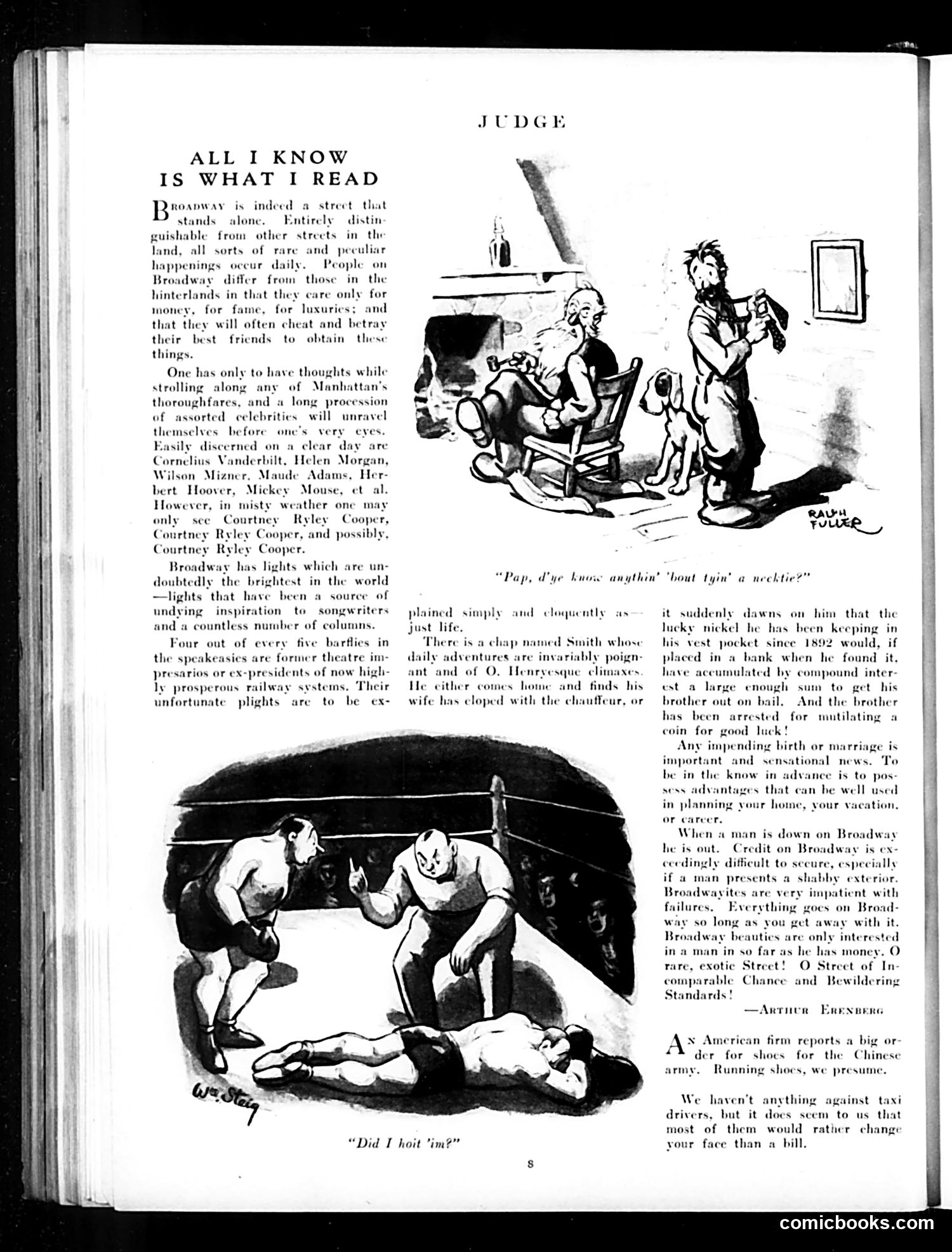
Analysis of This Judge Magazine Page This page satirizes Broadway and New York's theatrical district circa the 1920s-30s (Prohibition era, given references to "speakeasies"). The top cartoon shows a man being arrested with a woman and child present—captioned "Pap, d'ye know anythin' 'bout tyin' a necklace?"—likely mocking petty crime and domestic chaos on Broadway. The lower cartoon depicts men in what appears to be an underground setting, captioned "Did I hoit 'im?"—possibly referencing violence or criminal activity. The essay "All I Know Is What I Read" by Arthur Greenberg mocks Broadway's superficiality: celebrities, speakeasy barflies (failed theater producers), people willing to betray friends for money and fame. It ridicules the district's obsession with wealth, gossip, and appearance—noting that credit is impossible for shabby-looking people, and that luck rather than merit determines success. The final quips mock taxi drivers and report a Chinese army shoe order sarcastically as "running shoes"—likely an ethnic joke. The satire targets Broadway's moral decay and materialism.
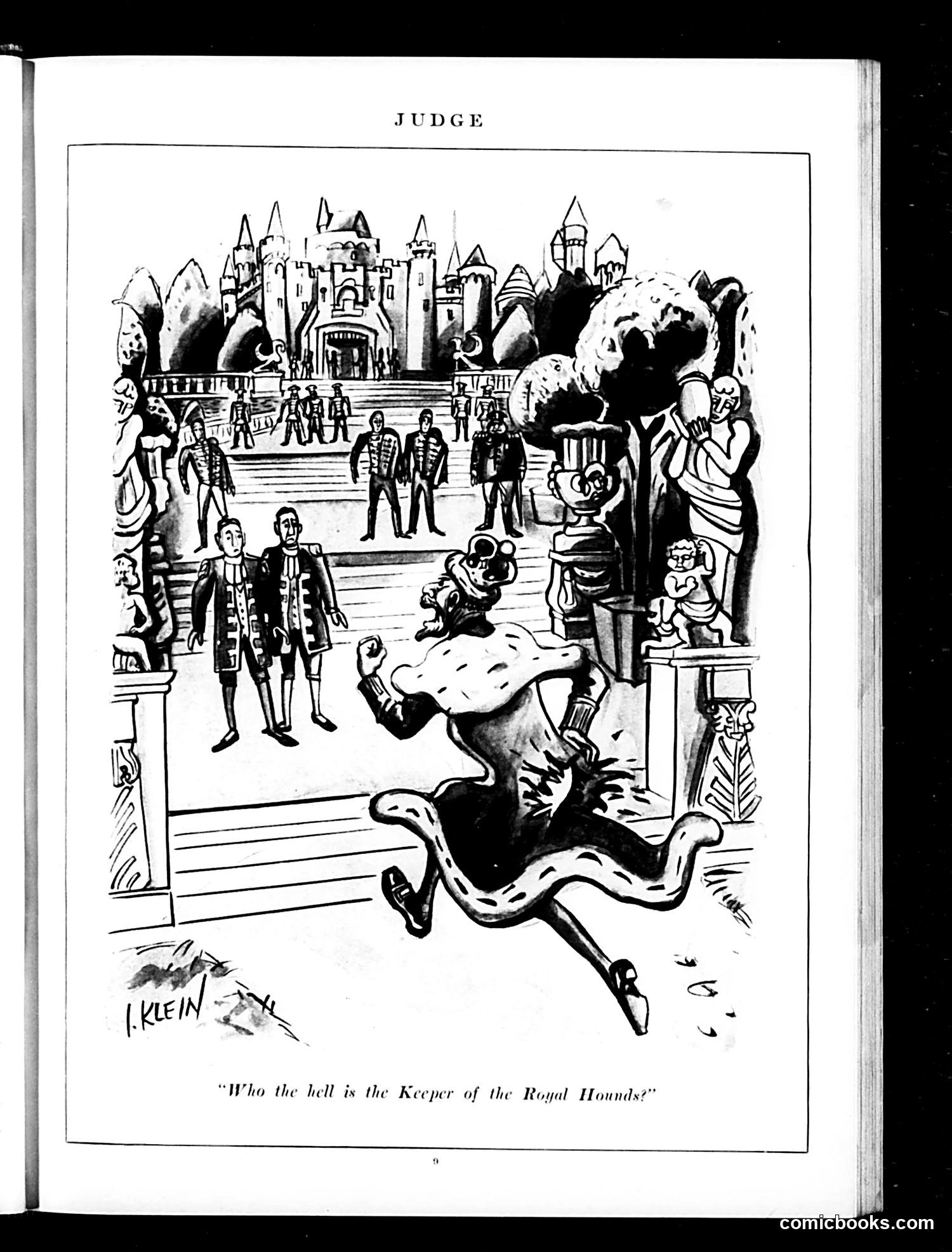
Analysis of "Judge" Cartoon This single political cartoon depicts a chaotic scene at what appears to be a royal palace or formal court setting. A disheveled figure runs frantically through the grounds while formally-dressed officials and guards stand about, seemingly confused or indifferent. The caption—"Who the hell is the Keeper of the Royal Hounds?"—suggests the cartoon satirizes governmental incompetence or administrative chaos. The running figure likely represents either a loose dog or someone in disarray, while the composed officials represent bureaucratic indifference to disorder. The cartoon critiques how authority figures fail to maintain proper oversight or control, appearing complacent amid obvious problems. Without the publication date visible, the specific political target remains unclear, but it's characteristic of *Judge* magazine's satirical approach to governance and institutional responsibility.
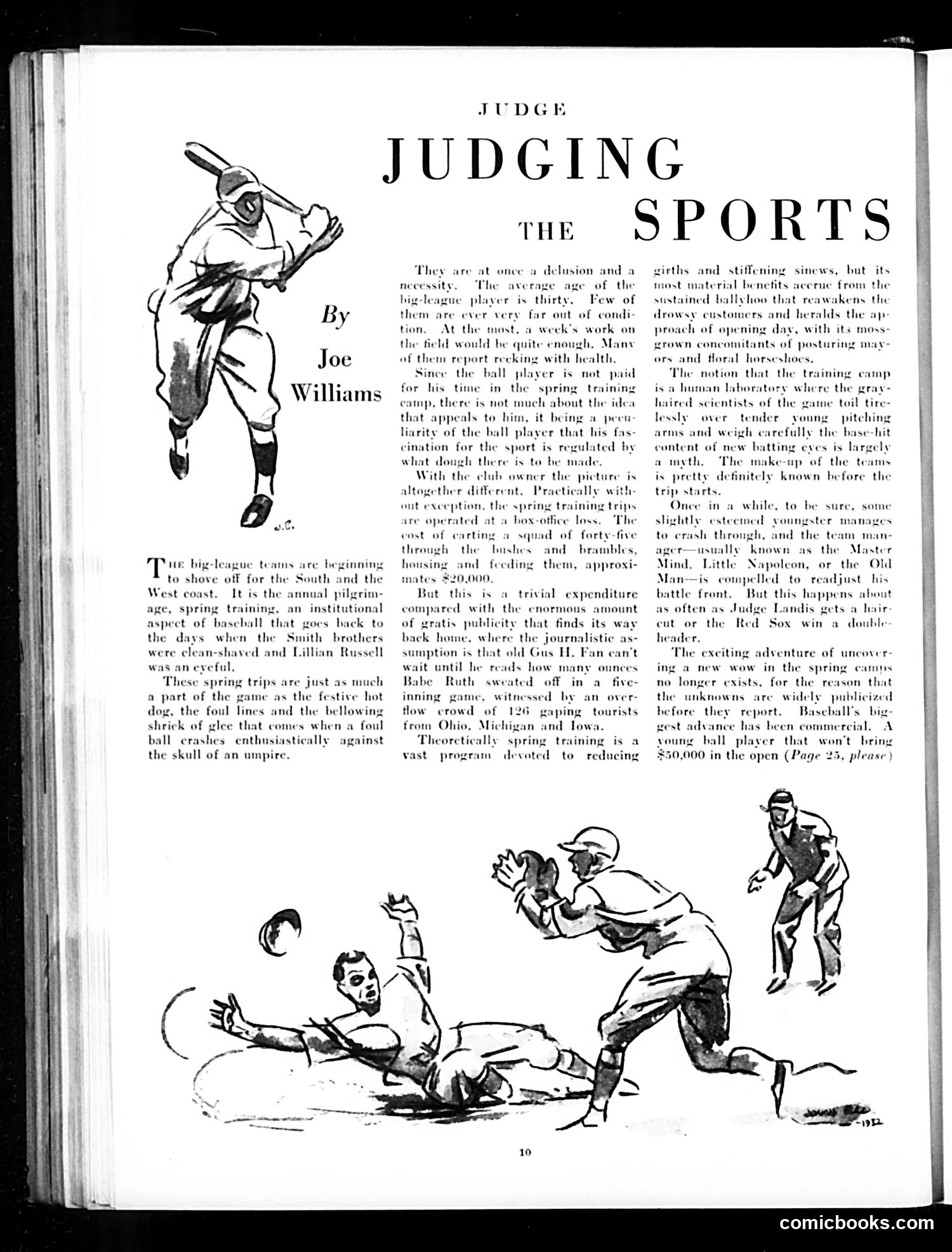
"Judging the Sports" by Joe Williams This article satirizes spring training in Major League Baseball as pure commercial theater rather than athletic necessity. Williams argues that players—paid only during the season—have little incentive to train seriously in spring, yet club owners run these trips at a loss for the publicity value. The satire targets the media's role in creating mystique around spring training. References to "old Gus H. Fan" and breathless reporting about Babe Ruth sweating in front of small tourist crowds mock how baseball generates customer excitement through manufactured drama and journalistic hype. Williams debunks the romantic notion that training camps develop young talent ("gray-haired scientists" carefully grooming prospects). Instead, team rosters are predetermined; the camps primarily serve as commercial promotion for the upcoming season—complete with "floral horseshoes" and ceremonial mayors. The punchline: baseball's greatest achievement isn't athletic development but commercial advancement. The "exciting adventure" of discovering unknown talent is dead because modern publicity exposes prospects before spring training even begins.
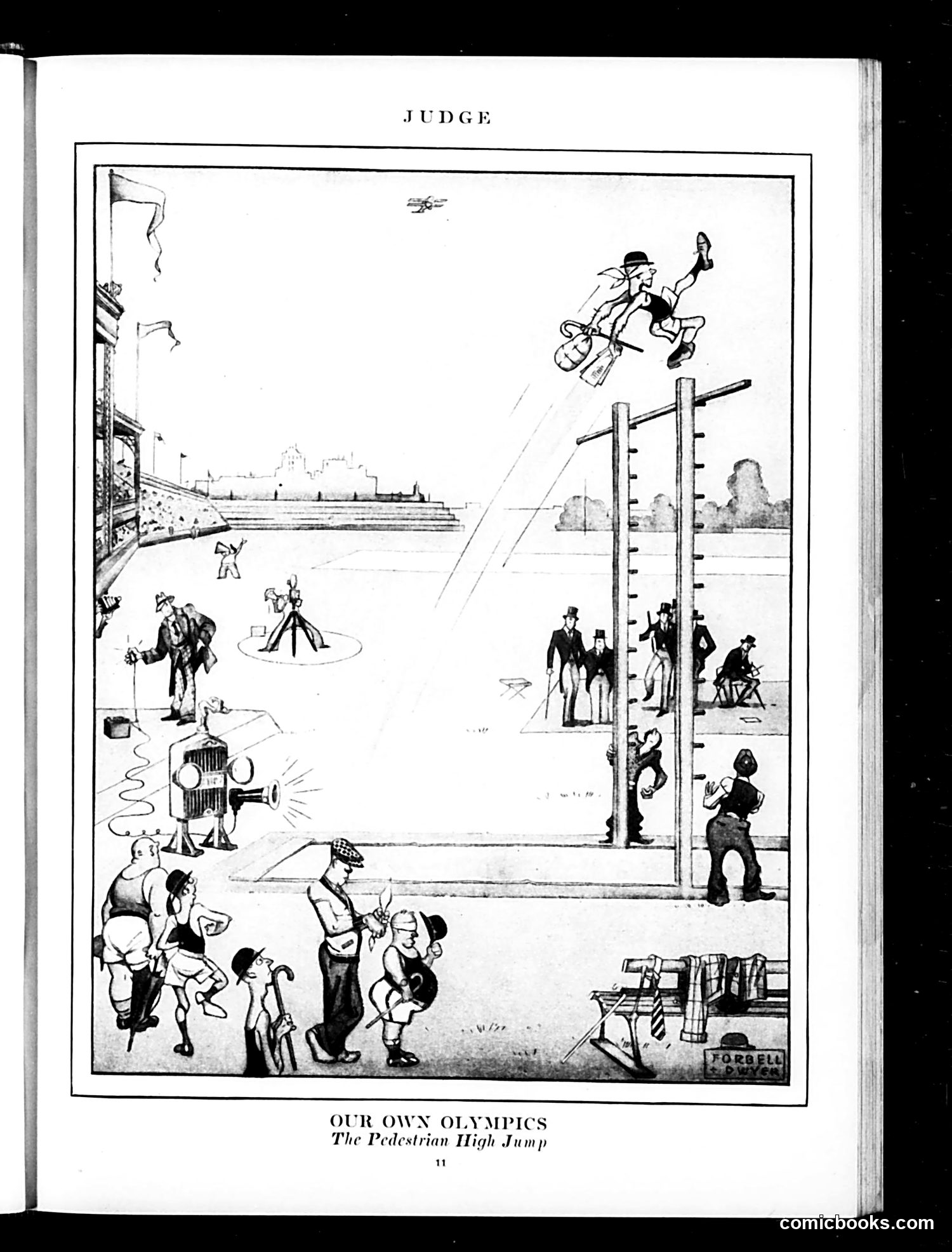
Analysis of "Our Own Olympics: The Pedestrian High Jump" This satirical cartoon from *Judge* magazine mocks ordinary urban life by framing it as Olympic competition. The scene depicts everyday pedestrians navigating city obstacles as if they were track-and-field events. The central figure performs a comedic "high jump" over a structural pole or barrier, while other figures engage in various pedestrian activities—some climbing, others interacting with urban infrastructure like lampposts and construction materials. The humor derives from treating mundane city navigation as legitimate athletic achievement. This satire likely critiques either the commercialization of the Olympics themselves, or the absurdity of modern urban existence where navigating crowded streets and obstacles becomes an unintentional athletic feat. The title suggests *Judge*'s characteristic blend of social observation and visual wit.
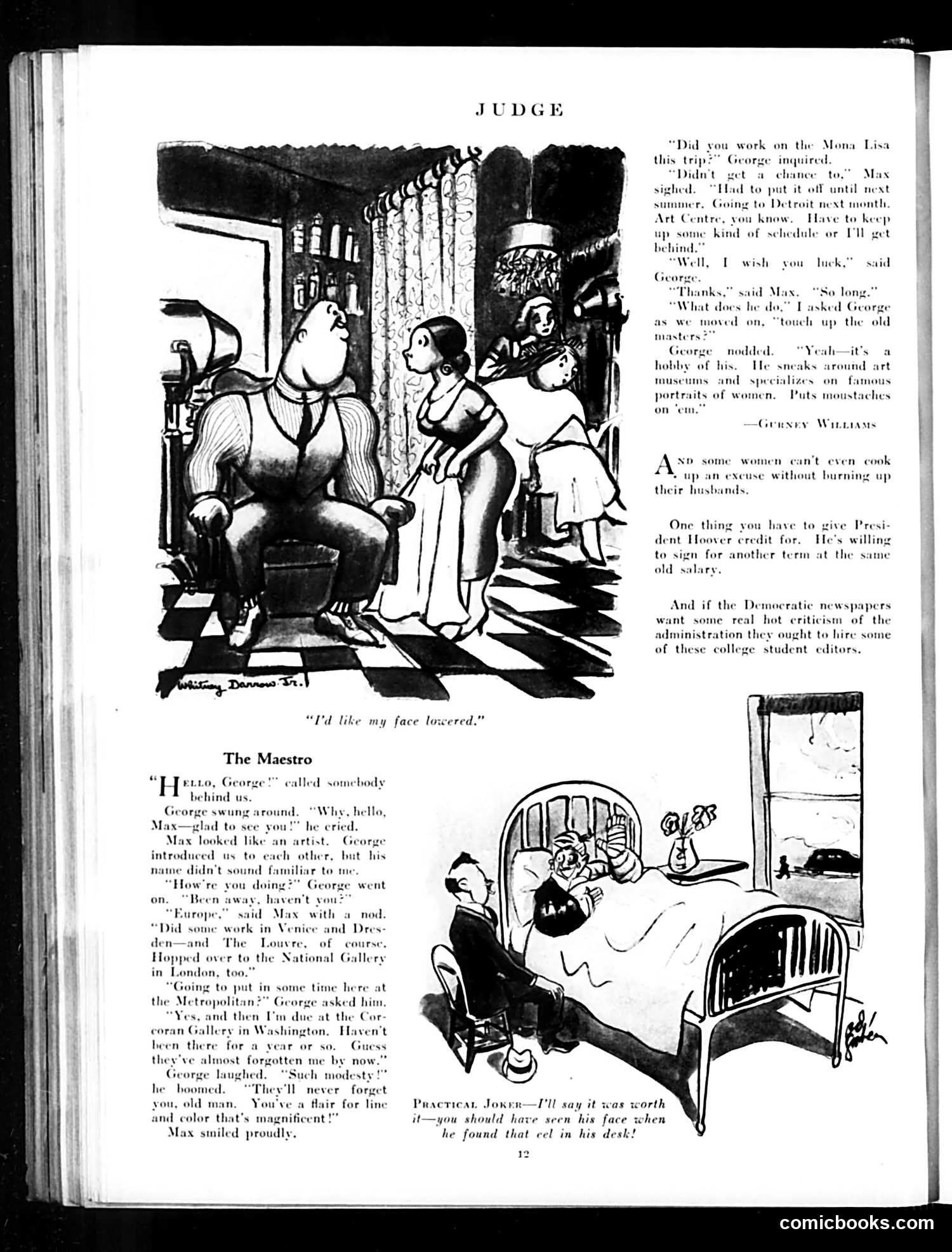
Judge Magazine Page Analysis This page contains two distinct satirical pieces: Top cartoon ("I'd like my face lowered"): A visual gag depicting a vain man in a chair, apparently requesting cosmetic alteration. The joke relies on the double meaning of "lowered"—he wants his face positioned lower, but the caption suggests vanity-driven cosmetic surgery. This mocks aristocratic or wealthy men's obsession with appearance. "The Maestro" story: A prose satire about an artist named Max who constantly name-drops prestigious museums (the Louvre, National Gallery, Metropolitan Museum, Corcoran Gallery) and claims to be restoring old masters' portraits—particularly "putting moustaches on" famous paintings of women. The humor targets pretentious art world figures who boast of international credentials while engaging in questionable or absurd artistic practices. George and the narrator see through Max's self-aggrandizing claims. The surrounding editorial quips mock women's excuses, praise Hoover's willingness to continue as president at current salary, and critique college newspaper editors' weak political commentary. The page overall satirizes artistic pretension and social vanity typical of 1920s-30s satire.
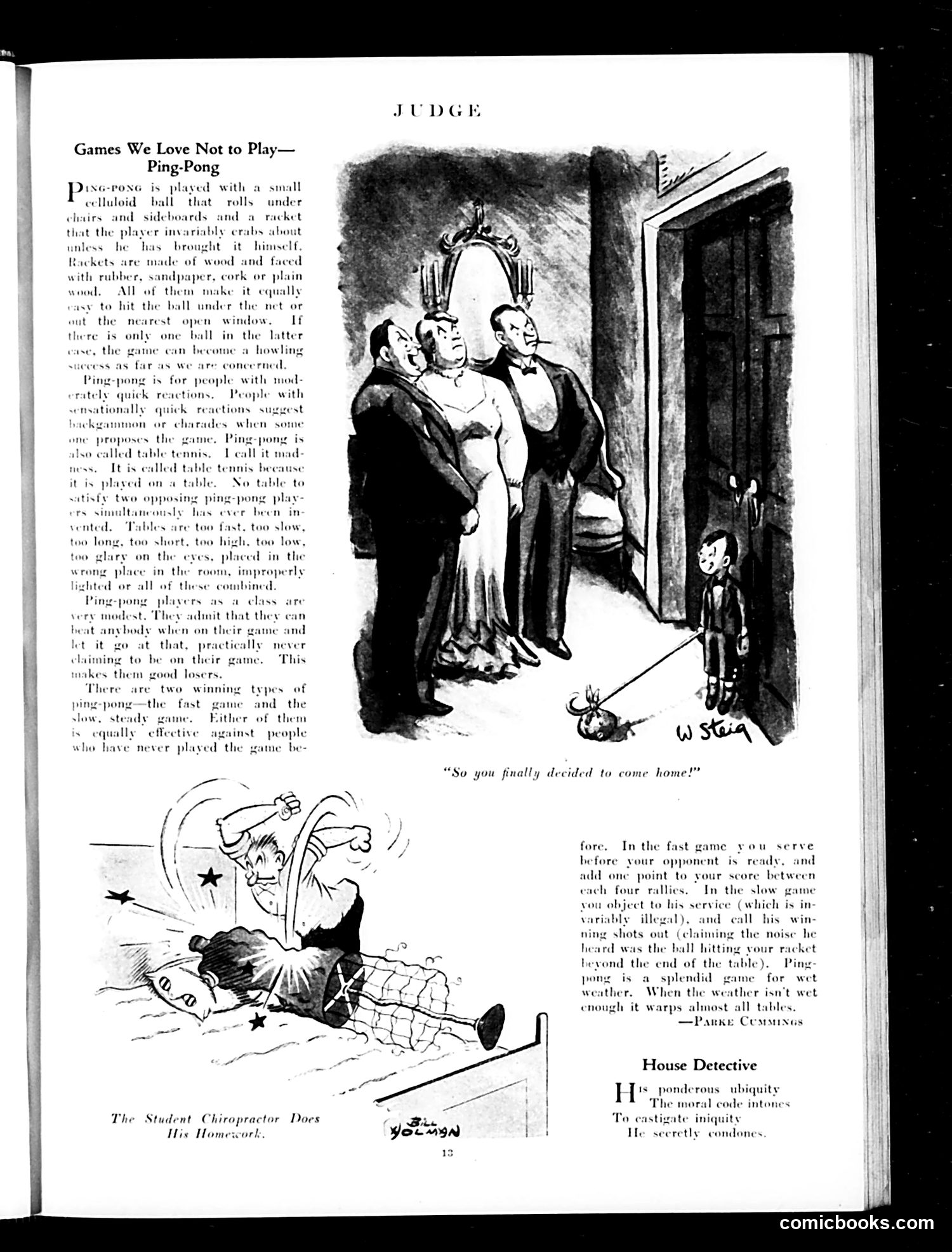
Explanation for Modern Readers This *Judge* magazine page satirizes ping-pong as a frustrating parlor game. The text mockingly catalogs why people dislike it: balls roll under furniture, paddles are uncomfortable, tables are never properly sized or positioned, and the game's rules encourage poor sportsmanship (players claim balls hit the racket to dispute calls). The top cartoon depicts a small boy arriving home late; his parents await with obvious displeasure—the joke being that even a child would rather be out than endure ping-pong at home. The lower cartoon shows "The Student Chiropractor Does His Homework," illustrating how ping-pong's awkward serving position and hunched play literally damages one's spine. The "House Detective" poem fragment at bottom appears unrelated—likely transitional content toward another article. The satire targets upper-class Victorian leisure culture, where ping-pong was fashionable but impractical. The humor relies on readers' shared experience of the game's genuine annoyances.
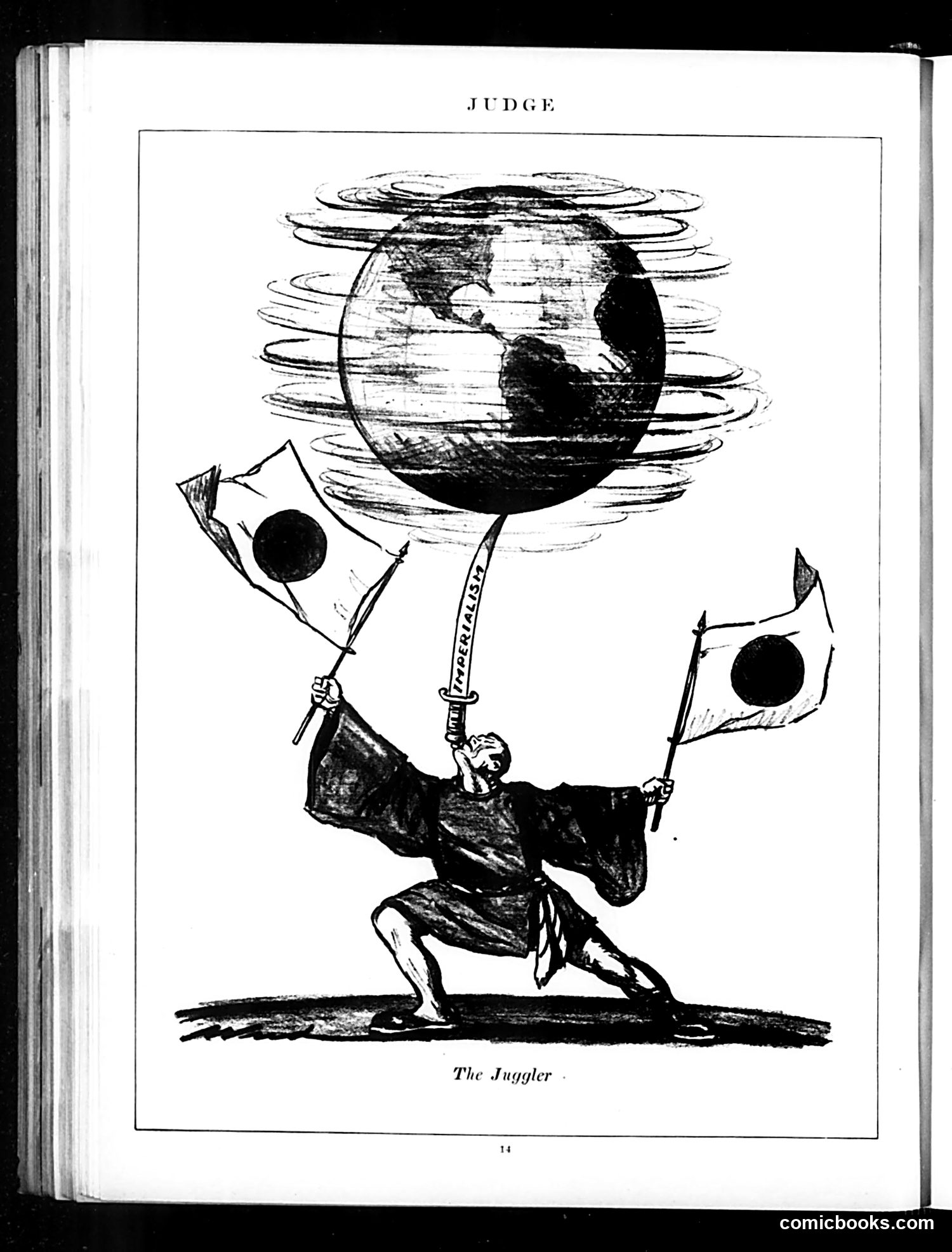
"The Juggler" This political cartoon depicts a figure in judicial robes juggling a globe while holding flags labeled "Persecution" (center) and what appear to be nationalist symbols (left and right). The cartoon satirizes a judge or judicial authority attempting to balance competing international interests or political pressures—represented by the spinning globe and multiple flags. The title "The Juggler" suggests criticism of someone performing a precarious balancing act, likely maintaining an appearance of impartiality while actually favoring certain nations or ideologies. Without the publication date visible, the specific historical context remains unclear, but the imagery suggests commentary on judicial bias, international diplomacy, or judicial involvement in nationalist causes during a period of global tension.
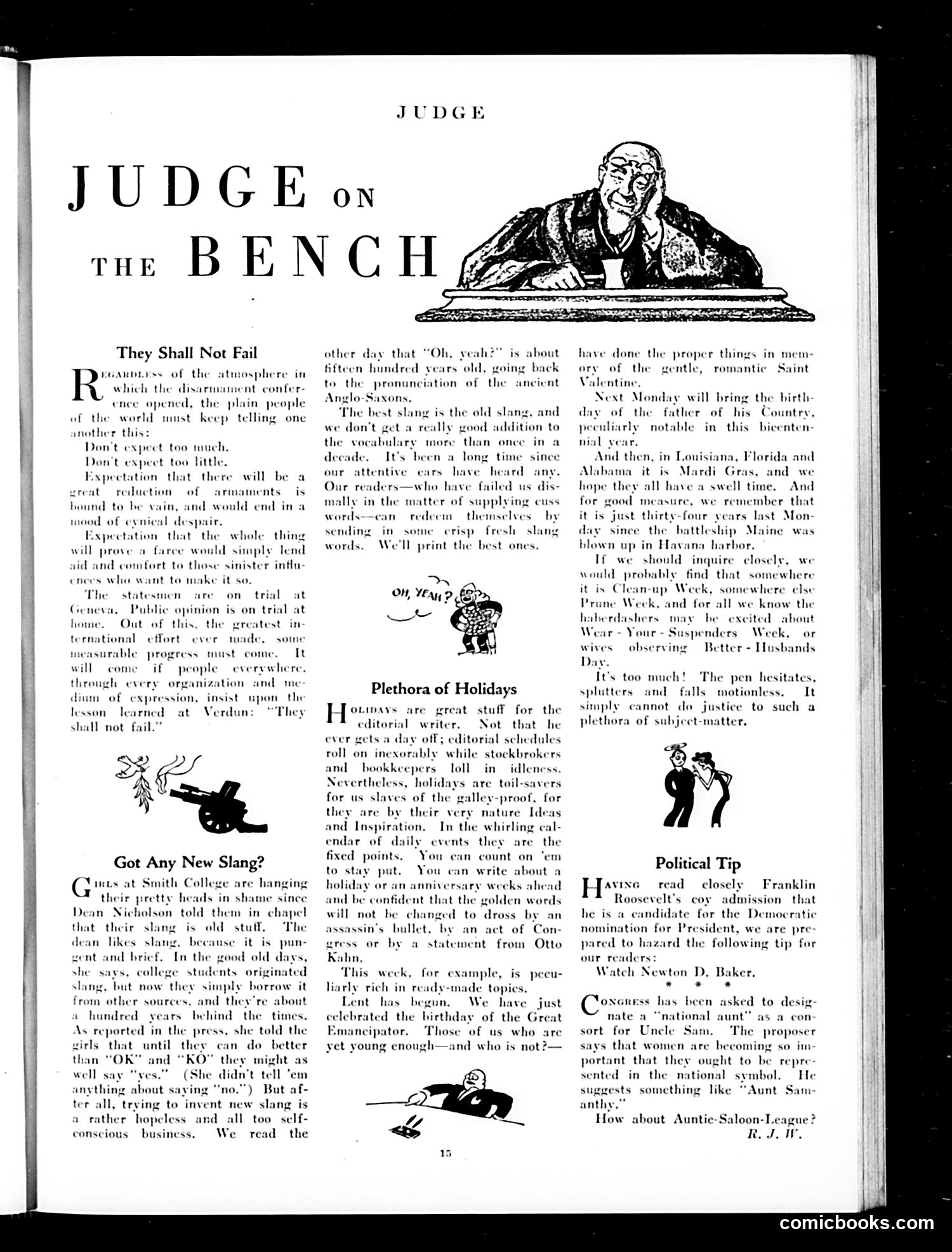
"Judge on the Bench" - Page Analysis This page from Judge magazine contains three distinct sections: Main Editorial ("They Shall Not Fail"): Commentary on disarmament conferences (likely the 1920s-30s Geneva talks), urging realistic expectations—neither too optimistic nor too pessimistic about international peace efforts. "Got Any New Slang?": Satirizes Smith College dean's complaint that students recycle old slang rather than invent new expressions. The piece gently mocks the futility of trying to manufacture authentic slang, noting that truly fresh language emerges organically, rarely. "Plethora of Holidays": Humorously catalogs the glut of holidays and observances cluttering the calendar (Lent, Lincoln's birthday, Valentine's Day, Mardi Gras, the Maine anniversary). The satirist complains editors exploit these fixed points to generate reliable content without worry of events invalidating their pieces—a practical advantage of holiday-focused writing. The cartoons are simple line drawings accompanying each section, providing visual punctuation rather than complex satirical imagery. The overall tone is lighthearted social commentary on American institutional life.
Judge Theater Review: "The House of Doom" This is a theater review by Judge magazine's drama critic, evaluating a play called "The House of Doom" at the Spielhaus Masque theater. The critic argues that this spectacularly bad play was more entertaining than most legitimate productions. He compares it favorably to "Love's Call," an earlier notorious failure so poorly written that audiences laughed uncontrollably—the critic notes the theater manager almost cancelled the show, thinking the empty seats meant no audience, unaware patrons had fallen into the aisles laughing. The satire targets critical snobbery: reviewers dismiss such "rubbish" yet deny it provides genuine amusement. The critic contends terrible shows can be paradoxically entertaining—audiences went for genuine enjoyment, not pretense. He references other memorably bad theatrical productions (James Owen O'Connor's "Hamlet," the Cherry Sisters) as examples of entertainment value in incompetence. The piece mocks both theater critics and audiences' contradictory attitudes about "high" versus "low" entertainment.
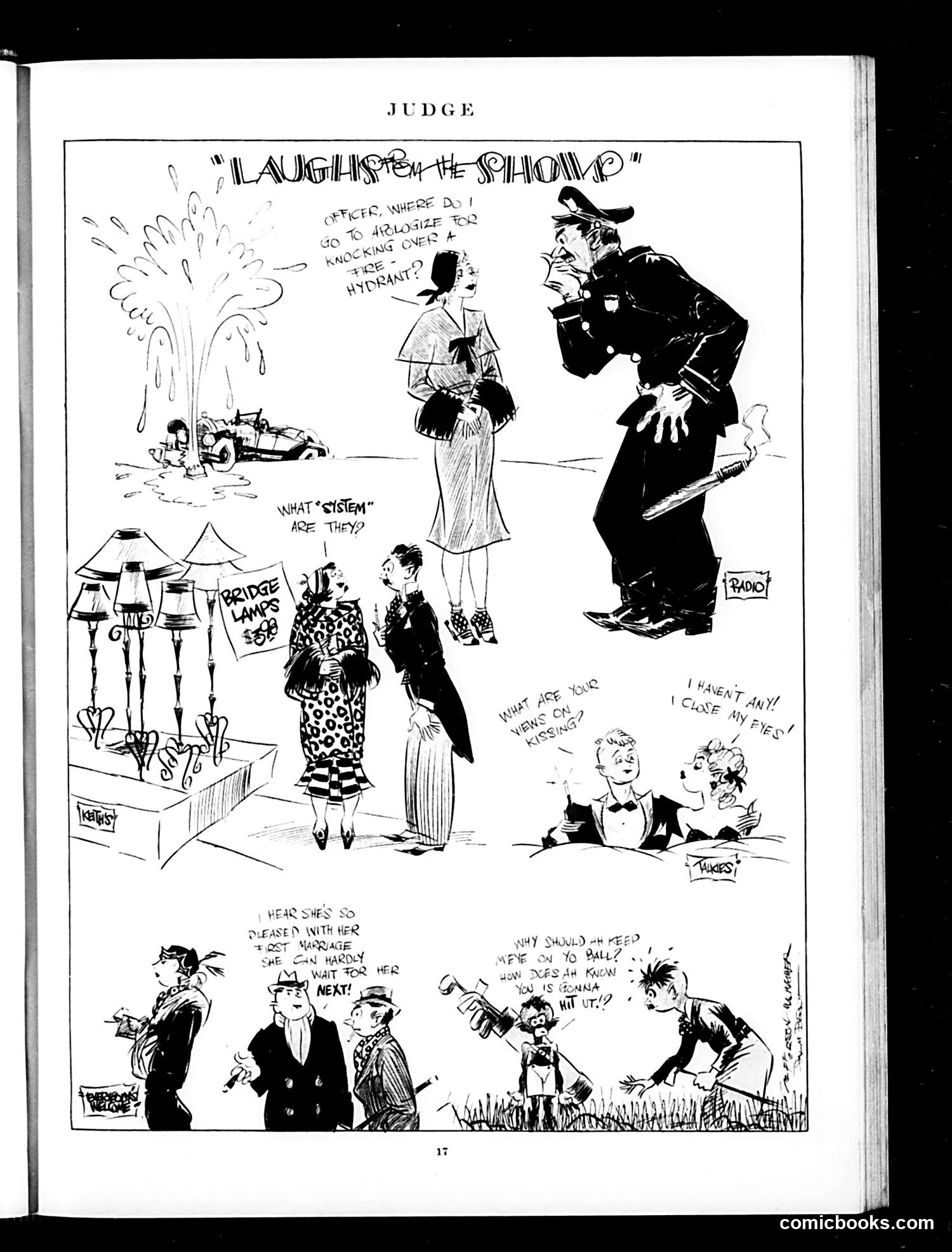
"Laughs at the Shop" This multi-panel comic satirizes urban social life and consumer culture. The top panels show a woman shopping and encountering various inconveniences—a fire hydrant blocking her path, confusing bridge/lamp displays, and bewildered reactions from others ("What system are they?"). The comedy hinges on the absurdity of modern conveniences and public infrastructure creating chaos rather than convenience. Later panels mock dating and social etiquette, with men confused about proper behavior around women. The final panels appear to joke about baseball and masculine pastimes conflicting with courtship obligations. The overall satire targets the confusion and awkwardness of contemporary urban life and changing social norms around gender interaction—typical Judge magazine fare mocking modern society's growing complexity and the clash between traditional expectations and new realities.
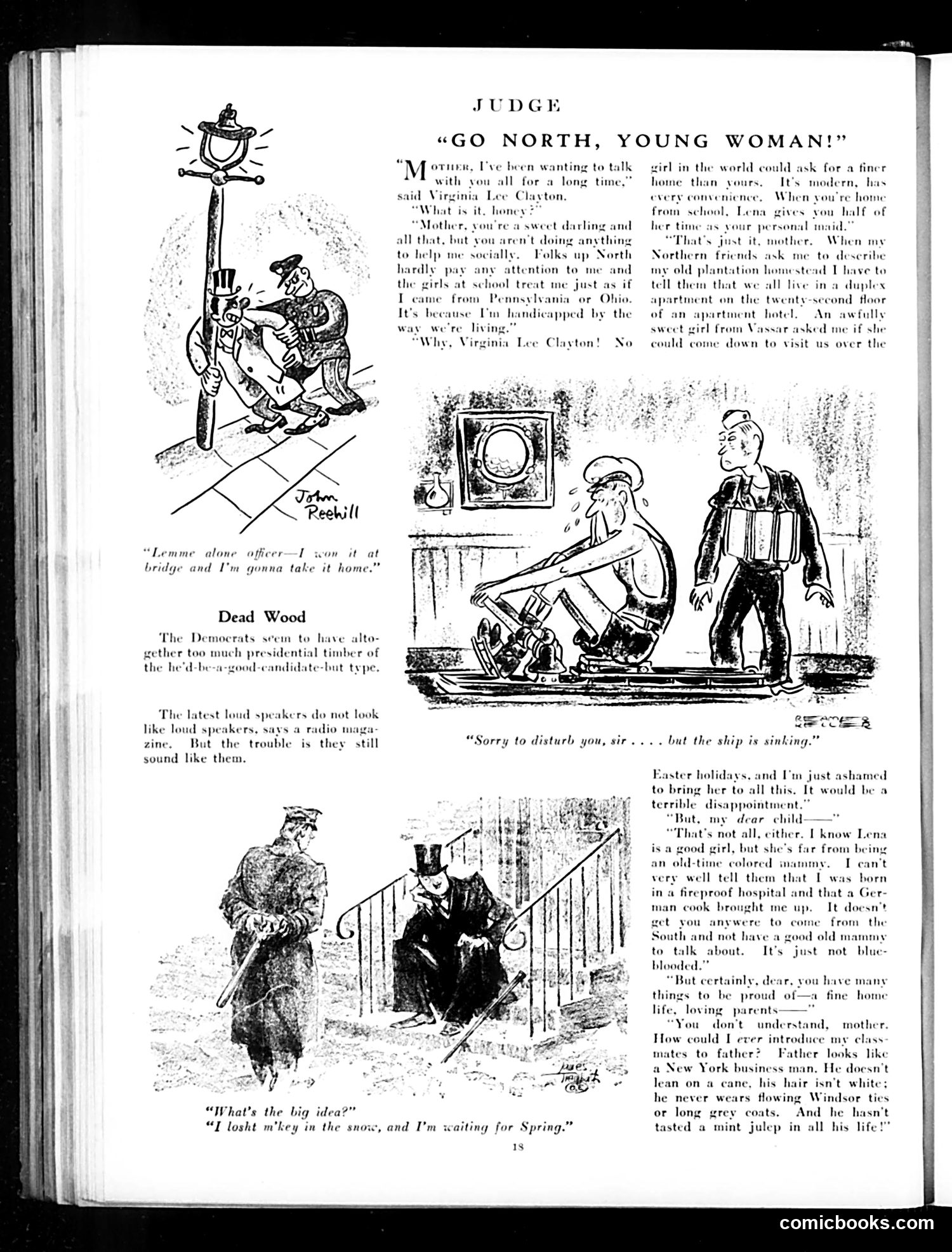
Analysis: "Go North, Young Woman!" This satirical piece mocks Southern social pretension and nostalgia for the antebellum South. Virginia Lee Clayton, a young woman from a modern, wealthy Southern family, complains to her mother that she lacks social cachet at school because her family doesn't conform to romanticized Old South stereotypes. Her grievances reveal the satire's target: she's embarrassed that her father looks like a modern businessman (no cane, white hair, or Windsor ties), that they live in a contemporary apartment building rather than a plantation, and that their Black servant Lena is educated rather than fitting the "old-time colored mammy" stereotype. The joke cuts both ways—satirizing both Southerners clinging to antebellum imagery for social status and Northern perception of the South. The other cartoons on the page (dead wood, loud speakers, lost keys) appear to be separate political/social jokes, unrelated to the main story.
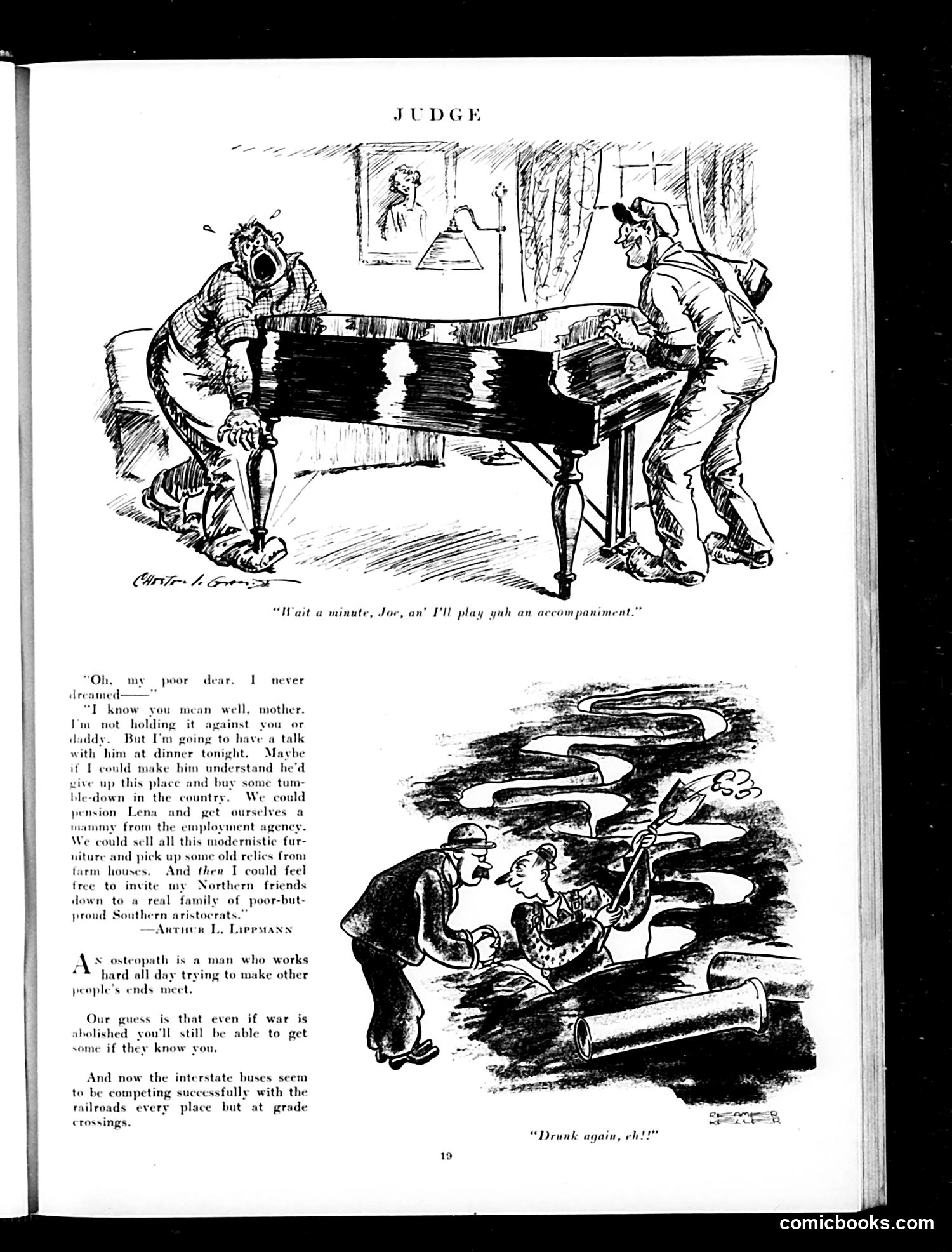
Analysis of Judge Magazine Page This page contains two distinct satirical pieces: Top Cartoon: Two men at a piano—one disheveled, one more composed—with the caption about playing "an accompaniment." The sketch appears to be a generic joke about musical accompaniment, though context is unclear. Middle Section: A quote attributed to Arthur L. Lippmann mocking Southern pretension. A woman complains to her mother that her father won't abandon their modern home and furnishings to adopt fake "poor-but-proud Southern aristocrat" poverty—selling modernistic furniture for "old relics" to impress Northern guests. The satire targets wealthy people performatively adopting rural Southern identity as fashionable affectation. Bottom Cartoon: Two men in a rural landscape (possibly a hobo camp or roadside setting) with one saying "Drunk again, eh?!" The joke's full meaning is unclear without additional context. Lower Prose: Brief satirical quips about osteopaths, war, and interstate buses competing with railroads at grade crossings (a dark joke about accidents). The page primarily satirizes class performance and social pretension.
"Judging the Movies" by Pare Lorentz This is a film criticism essay attacking the talent and appeal of actress Norma Shearer. Lorentz argues that Shearer lacks genuine acting ability and charm, relying instead on superficial glamour and the studio system's promotion. He contrasts her unfavorably with genuinely talented performers like Ruth Gordon, Lynn Fontanne, and Helen Hayes. The author criticizes both Shearer's fans (who mistake mimicry for talent) and the film industry for promoting her, particularly producer Irving Thalberg. He singles out her performance in "Private Lives" as particularly poor—a well-crafted play rendered mediocre by miscasting. The sidebar "Recommended" reviews other current films, including "Arrowsmith" (praised for Miss Hayes), "Hell Divers," "Monkey Business," and "Taxi" (Cagney). This represents Judge magazine's satirical film criticism from Hollywood's early sound era, circa late 1920s-early 1930s.
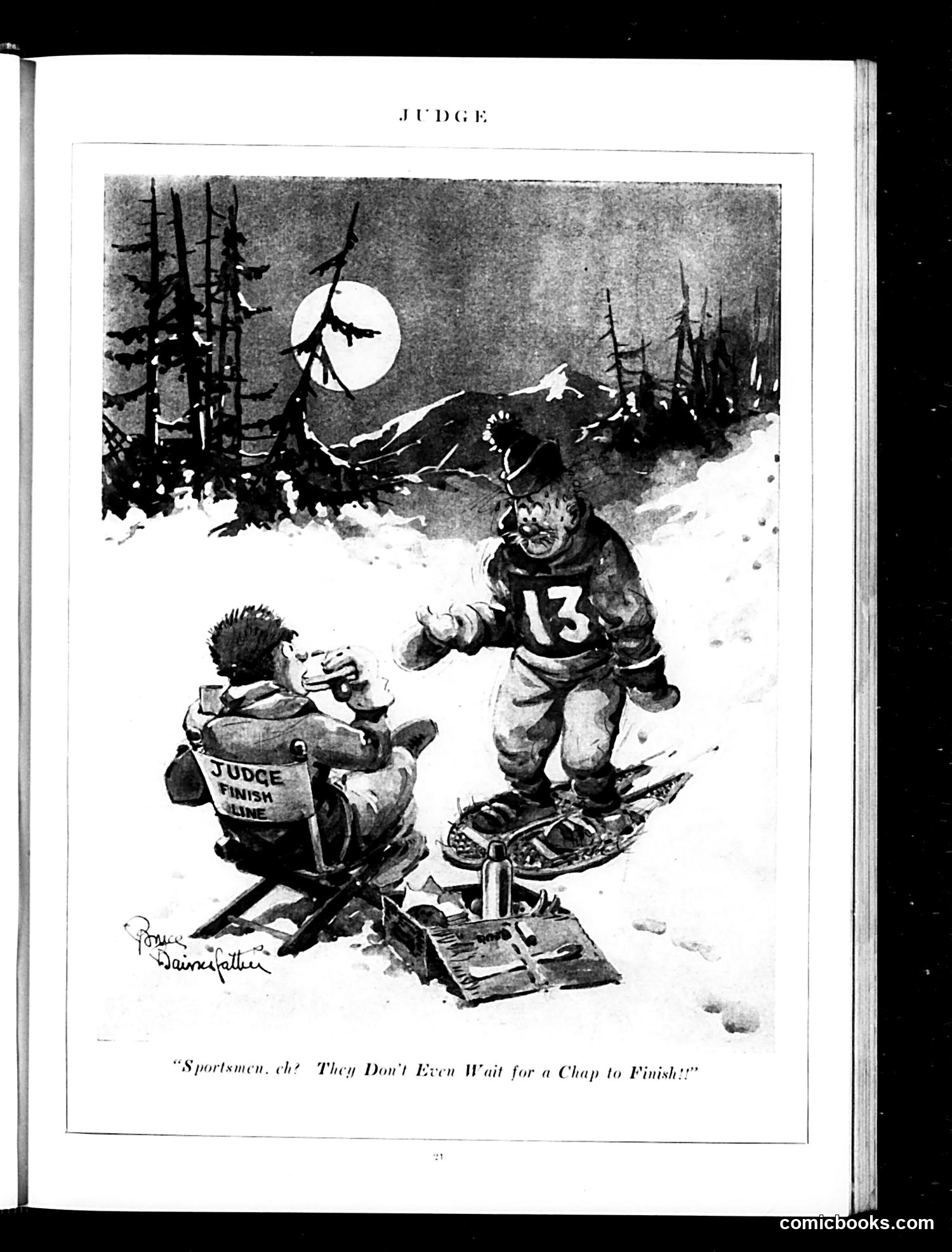
Judge Magazine Cartoon Analysis This cartoon titled "Sportsmen, ch? They Don't Even Wait for a Chap to Finish!" depicts a winter sports competition with caricatured figures engaged in what appears to be a ski race. One skier wears a bib marked "13" and is actively racing, while another figure sits at a "Judge Finish Line" checkpoint, apparently still eating or mid-meal. The humor relies on contrasting proper sporting etiquette with impatient competitive behavior—the joke being that modern athletes won't even pause to allow officials or judges to complete their tasks before racing past the finish line. The exaggerated caricatures and snowy wilderness setting enhance the satirical tone about changing standards of sportsmanship and decorum in early 20th-century athletic competition.
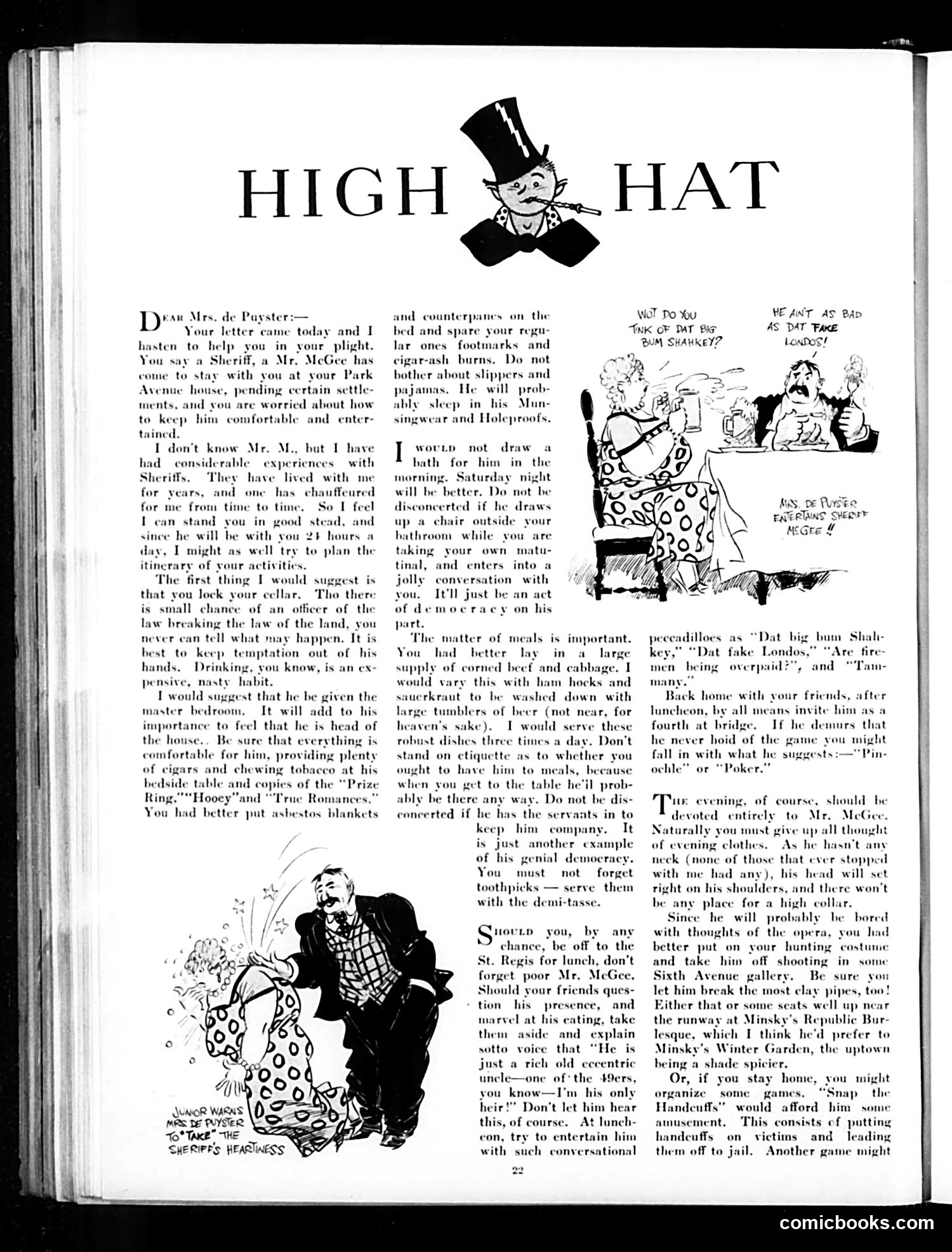
"High Hat" Advice Column Satire This is a satirical advice column addressing a wealthy socialite ("Mrs. de Payster") forced to host a sheriff in her Park Avenue home—likely due to debt collection or legal matters during the economically strained period (context suggests Prohibition era, given cellar-locking advice). The humor targets class anxiety and hypocrisy. The author mock-seriously advises her to treat this working-class official as a guest of honor, suggesting she serve him corned beef and cabbage, cheap beer, and pulp magazines ("Prize Hooey," "True Romances"). The cartoons show the sheriff's crude behavior—sprawling in the lady's chair, speaking in thick dialect about boxers ("Dempsey," "Londos," "Shankey"). The satire exposes the absurdity of forced intimacy between wealthy elites and ordinary law enforcement, while mocking both the sheriff's working-class vulgarity and the socialite's desperate attempts at maintaining decorum. The advice to call him a "rich old eccentric uncle" from the 49ers reveals class pretense and social embarrassment.
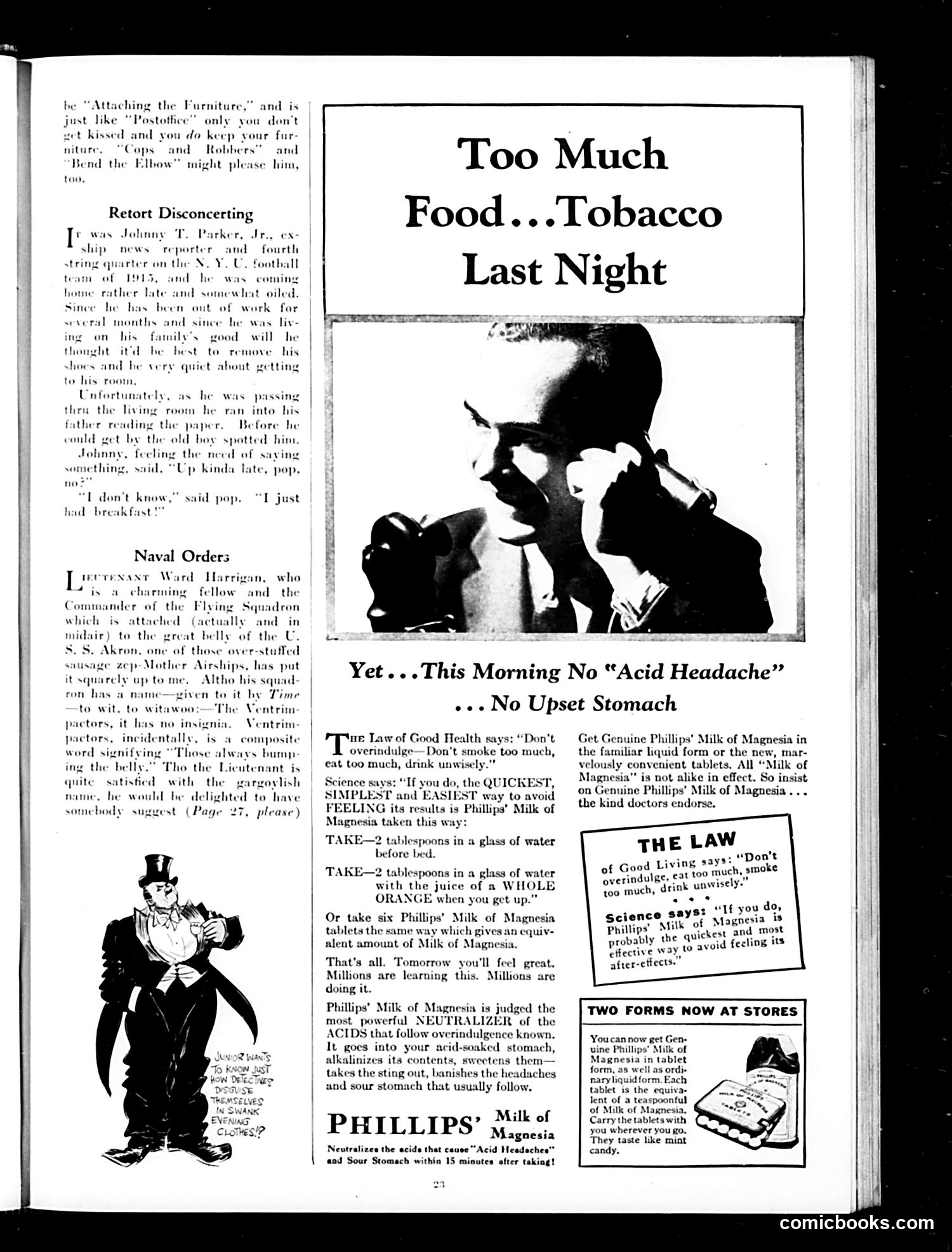
Analysis for Modern Readers This page contains two humorous anecdotes and a full-page advertisement for Phillips' Milk of Magnesia. The Cartoons/Stories: The two brief satirical pieces—"Retort Disconcerting" and "Naval Orders"—are light humor pieces typical of Judge magazine. The first depicts a hung-over young man returning home late; his father's deadpan reply ("I just had breakfast") is the joke's punchline. The second concerns a naval commander seeking a name for his squadron. These are genteel comedic observations rather than pointed satire. The Advertisement: The dominant content is a product advertisement showing a well-dressed man suffering from overindulgence (excessive food, tobacco, alcohol). The ad promises Phillips' Milk of Magnesia as a quick remedy for acid indigestion and hangovers. The marketing strategy appeals to the "Law of Good Health"—essentially offering pharmacological permission for excess via a convenient cure-all. This reflects 1920s-era attitudes toward both indulgence and medicinal panaceas, before modern FDA regulations. The ad's emphasis on convenience (tablet form newly available) shows early consumer marketing targeting busy urban professionals.
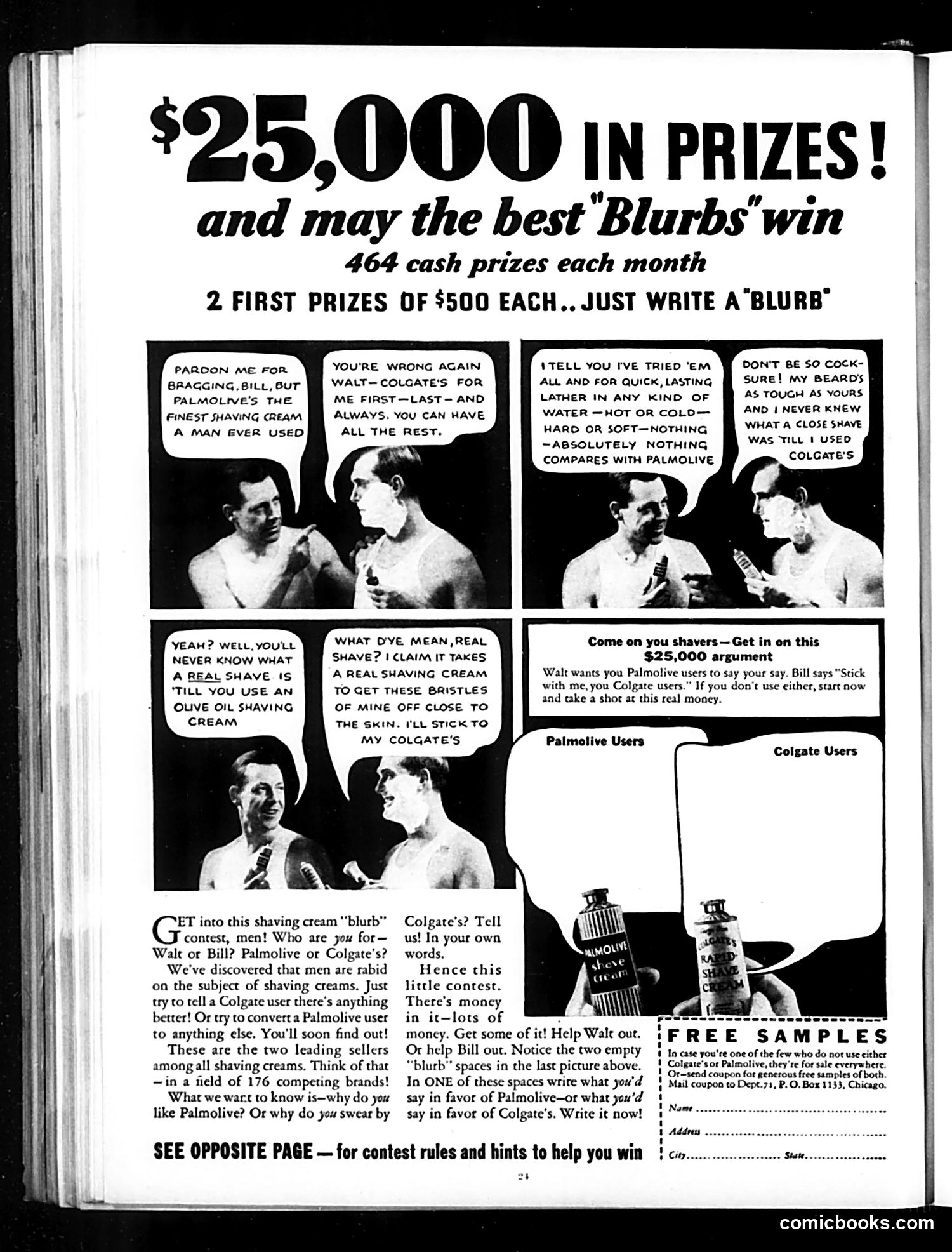
Explanation for Modern Readers This is primarily advertising content disguised as editorial contest, not political satire. Judge magazine is running a promotional contest for two competing shaving cream brands: Palmolive and Colgate. The "cartoon" depicts two men (labeled Walt and Bill, representing each brand's users) engaged in a humorous debate about which shaving cream is superior. The joke relies on the observation that shaving cream users are passionately, almost irrationally loyal to their preferred brand—treating the choice like a serious argument rather than a minor consumer decision. The contest asks readers to write advertising "blurbs" (short promotional statements) favoring either product, with $25,000 in total prizes offered. This was a common 1920s-30s marketing tactic: leveraging the magazine's audience to generate free advertising copy while disguising it as entertainment and reader participation. The satire here is gentle: mocking consumer brand loyalty itself, not any political figure or movement.
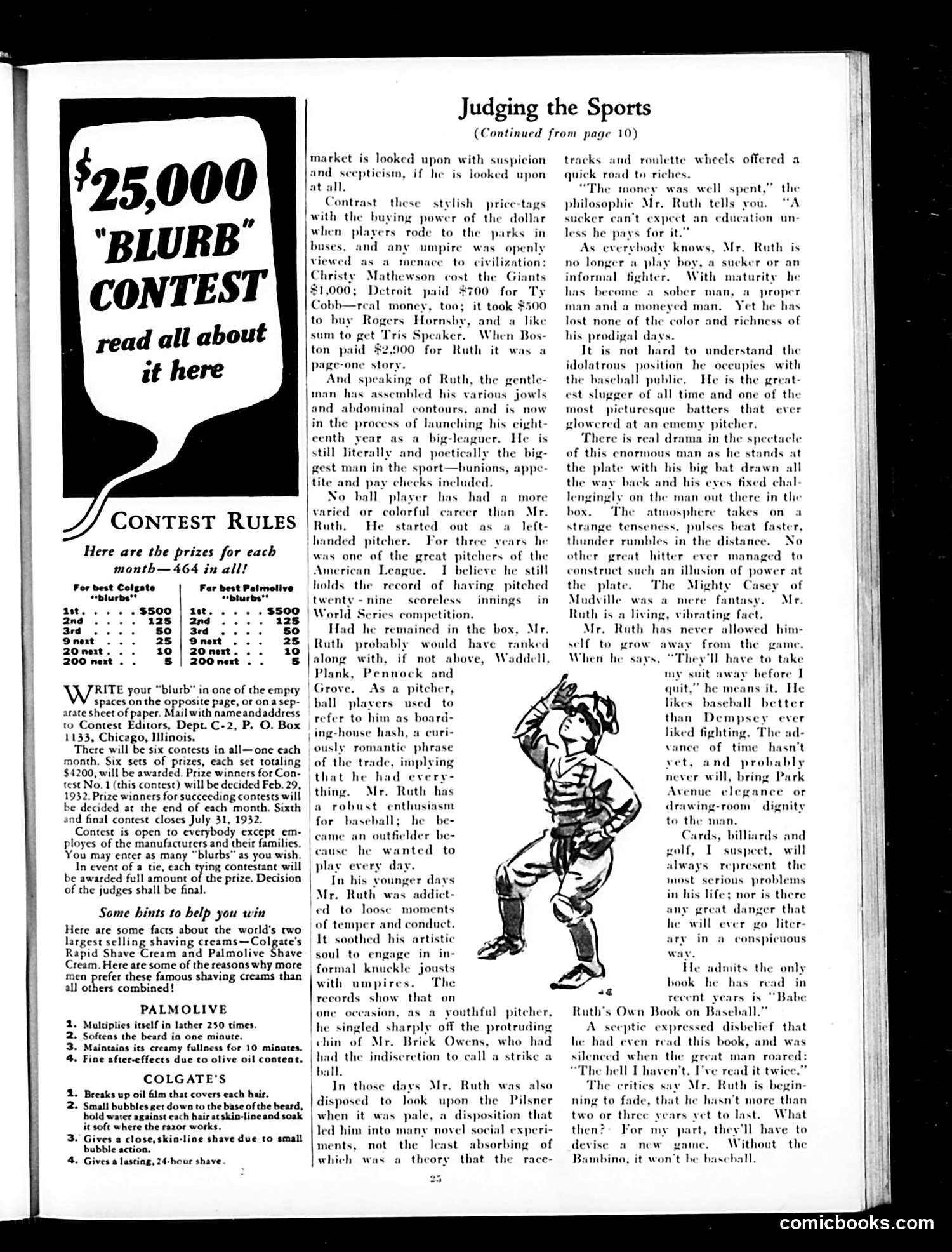
"Judging the Sports": Babe Ruth Satire This page satirizes baseball superstar Babe Ruth through a lengthy article examining his inflated salary and celebrity status versus his actual accomplishments. The piece contrasts Ruth's $20,000 signing bonus with historical player salaries (Mathewson, Ty Cobb, Hornsby, Tris Speaker), arguing the baseball market operates on "suspicion and scepticism." The satire mocks Ruth's physical appearance and behavior—describing his "abdominal contours," his youthful temper tantrums (punching umpire Brick Owens), and his excessive drinking ("disposed to look upon the Pilsner"). It notes he abandoned his promising pitching career simply because he preferred playing outfield daily. The joke is Ruth's transformation from undisciplined troublemaker into baseball's biggest draw despite—not because of—genuine merit. The accompanying illustration shows him as a catcher in exaggerated stance. The page also features unrelated shaving cream advertisements (Colgate's, Palmolive) with a "$25,000 Blurb Contest," typical of Judge magazine's revenue model.
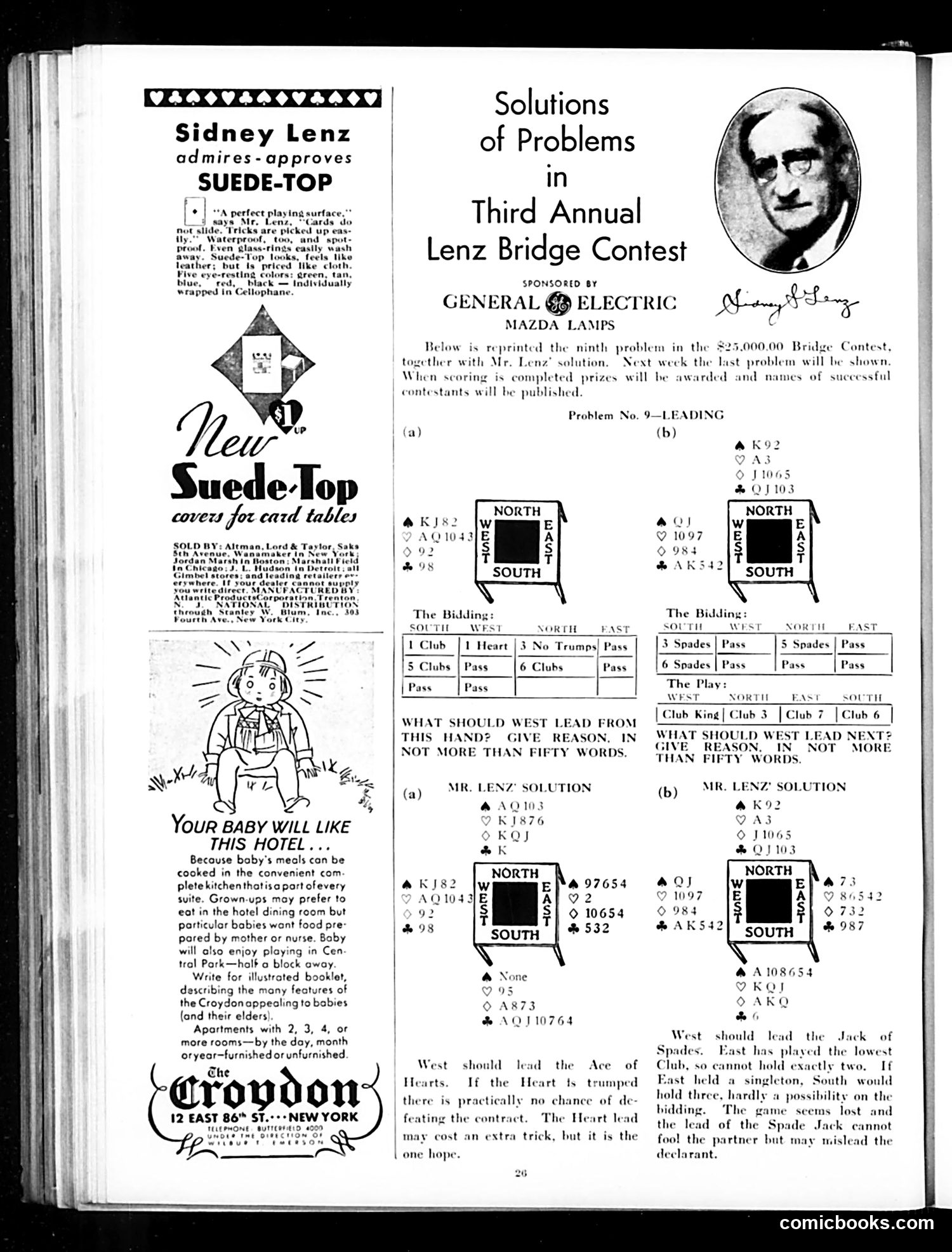
Judge Magazine Bridge Problem Page This page is primarily instructional content, not satire. It features the ninth problem from a "$25,000 Bridge Contest" sponsored by General Electric, with solutions by Sidney Lenz, a famous bridge player of the era. The page combines: 1. Bridge instruction: Two card-play problems asking readers what West should lead, with Lenz's expert solutions explaining the strategic reasoning. 2. Period advertisements: For "Suede-Top" card table covers and the Croydon apartment hotel (appealing to families with babies). 3. Sidney Lenz's photograph and signature: Establishing his authority as the contest authority. This represents Judge magazine's format of mixing light humor with practical content for its educated, leisure-class readership. The bridge contest itself was a legitimate puzzle competition meant to engage readers intellectually—not satirical commentary.
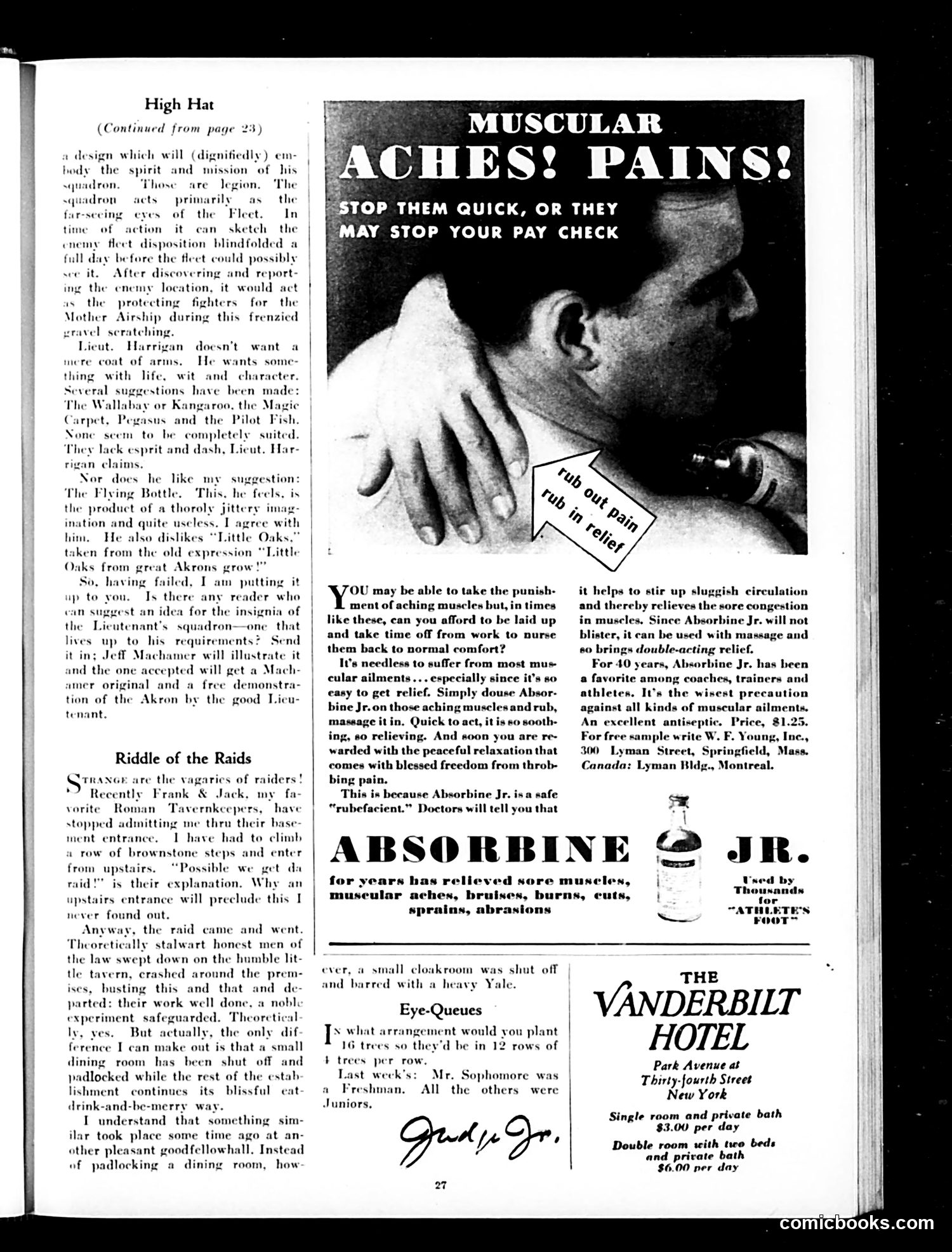
"High Hat" Page Analysis This page contains three distinct elements: "High Hat" (fiction continuation): A serialized story about designing a military squadron insignia. The narrator solicits reader suggestions for an emblem that embodies "life, wit and character," having rejected proposals like the Flying Bottle and "Little Oaks." This appears to be lighthearted military humor. "Riddle of the Raids": A Prohibition-era commentary. The author describes how speakeasy owners (Frank & Jack's "Roman Tavernkeepers") responded to liquor raids by simply padlocking a dining room while operations continued in other areas. The satire highlights the ineffectiveness and absurdity of Prohibition enforcement—authorities conduct raids that accomplish little beyond cosmetic compliance. Advertisements: The bulk of the page features product ads, including Absorbine Jr. (muscle rub) and the Vanderbilt Hotel, typical of magazine monetization. The Prohibition satire is the most historically significant content, mocking law enforcement's performative efforts against widespread speakeasy culture.
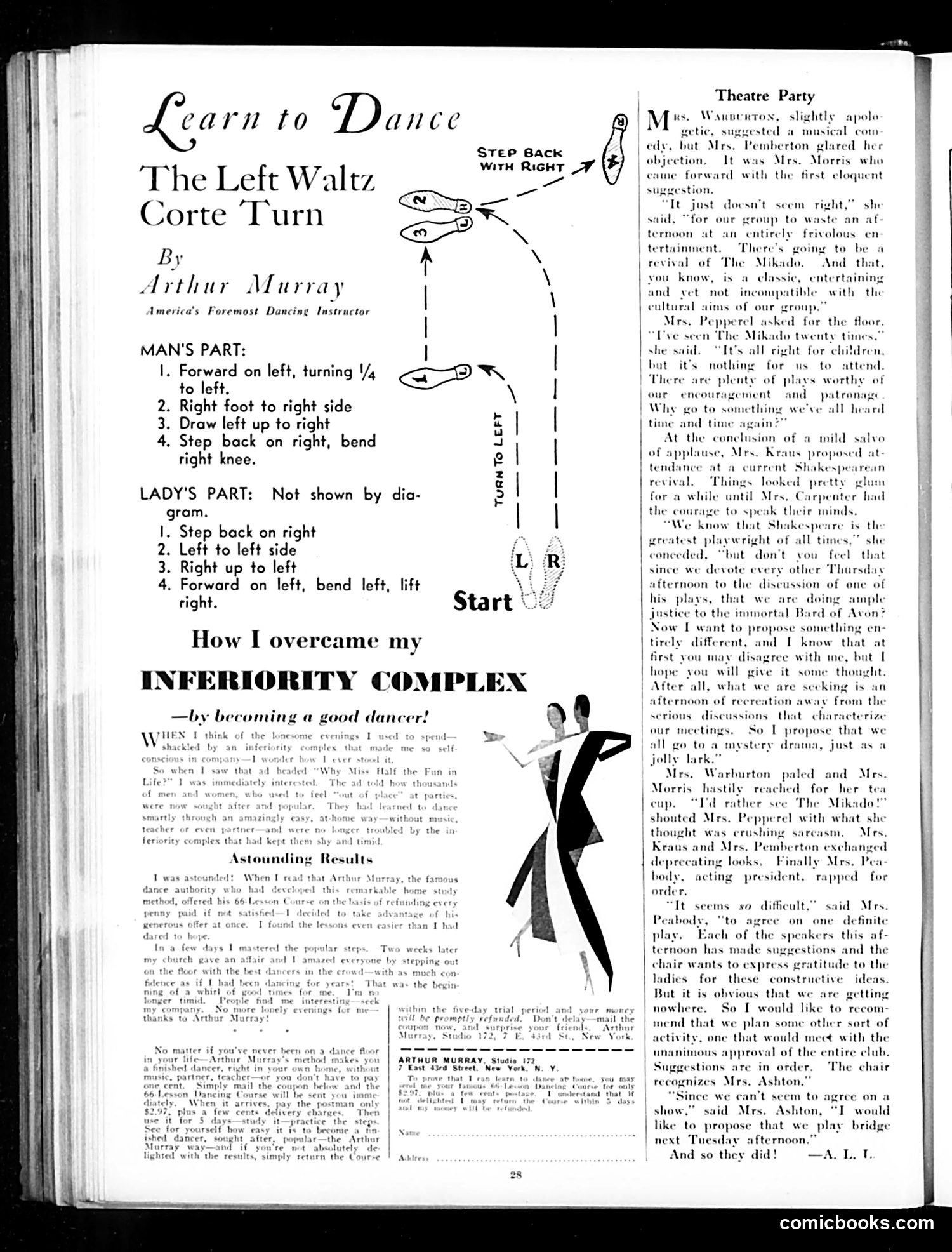
"Theatre Party" — A Satire on Women's Club Debates This page contains two distinct elements: dance instructions by Arthur Murray (a famous real dancing instructor of the era) and a satirical short story about a women's club meeting. The satire mocks the pretentious debate among club members about how to spend an afternoon. Mrs. Pemberton and others insist they should attend an intellectually worthy activity—a Shakespeare revival—claiming devotion to "cultural aims." Mrs. Kraus proposes the same thing. Yet when Mrs. Ashton finally suggests simply playing bridge, everyone immediately agrees and abandons all their high-minded rhetoric. The joke: these women use grandiose language about art and culture to justify their gatherings, but they actually just want to socialize casually. The satire gently ridicules the gap between their stated noble intentions and actual desires—they're eager to ditch Shakespeare for cards the moment someone offers a genuinely appealing alternative. It's social commentary on female club culture's performative intellectualism.
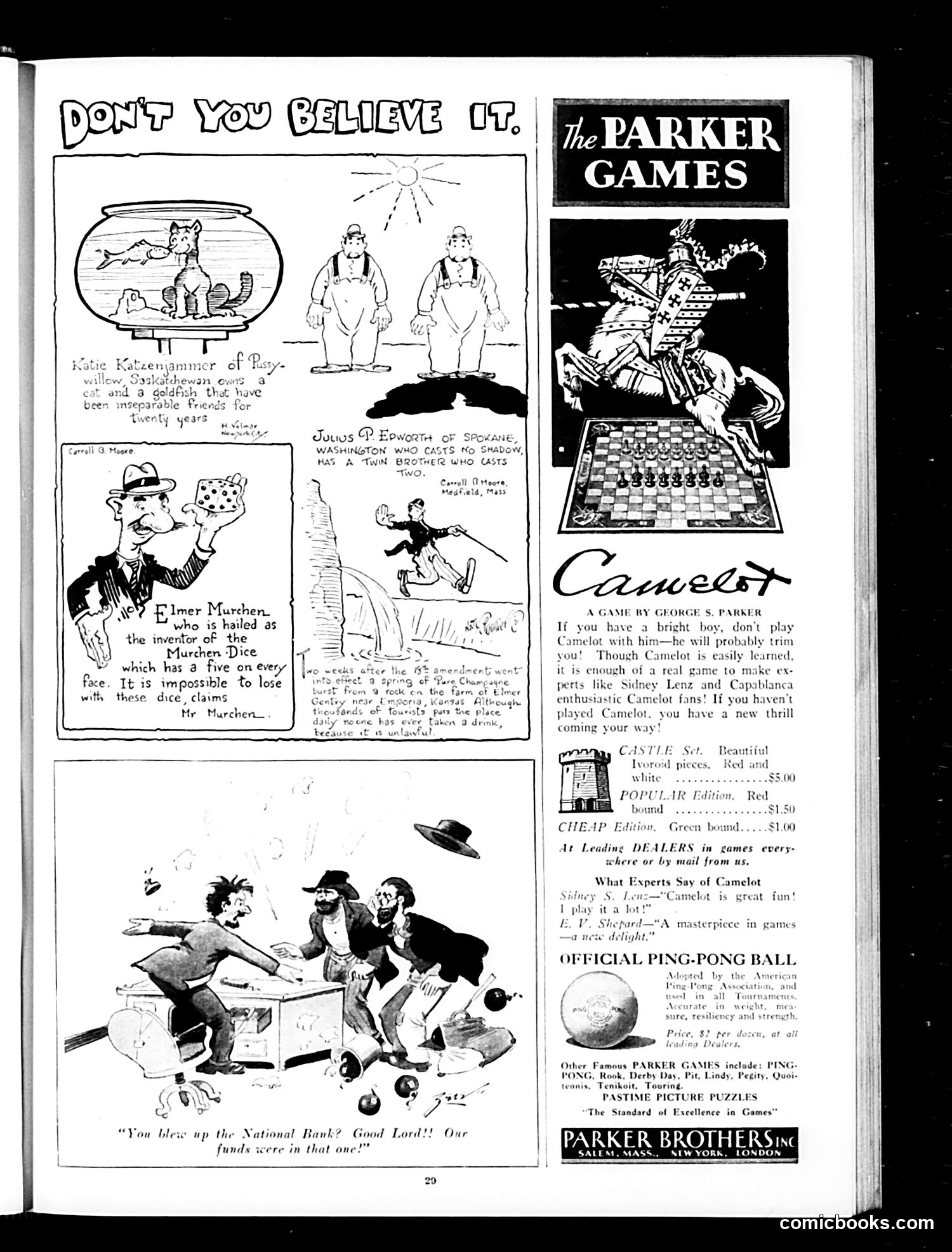
Explanation for Modern Readers This Judge magazine page contains three unrelated items: "Don't You Believe It" (top left): A satirical column debunking tall tales. It mocks Katie Katzenhammer (from the comic strip "The Katzenjammer Kids") for supposedly keeping a goldfish twenty years, and ridicules Elmer Murchen's claim to have invented "trick dice" with five on every face—an obvious impossibility presented as fact. The satire exposes how people spread obviously false stories. Bottom cartoon: Shows three men in panic over a bank failure, exclaiming their funds were in "that one"—likely referencing real banking collapses or financial crises common in early 20th-century America, a period of economic instability. Right side: Advertisement for Parker Brothers games, including "Camelot" (a chess-like strategy game) and ping-pong equipment. The ad includes testimonials from game experts. The page is primarily advertising with satirical filler content—typical Judge magazine layout.
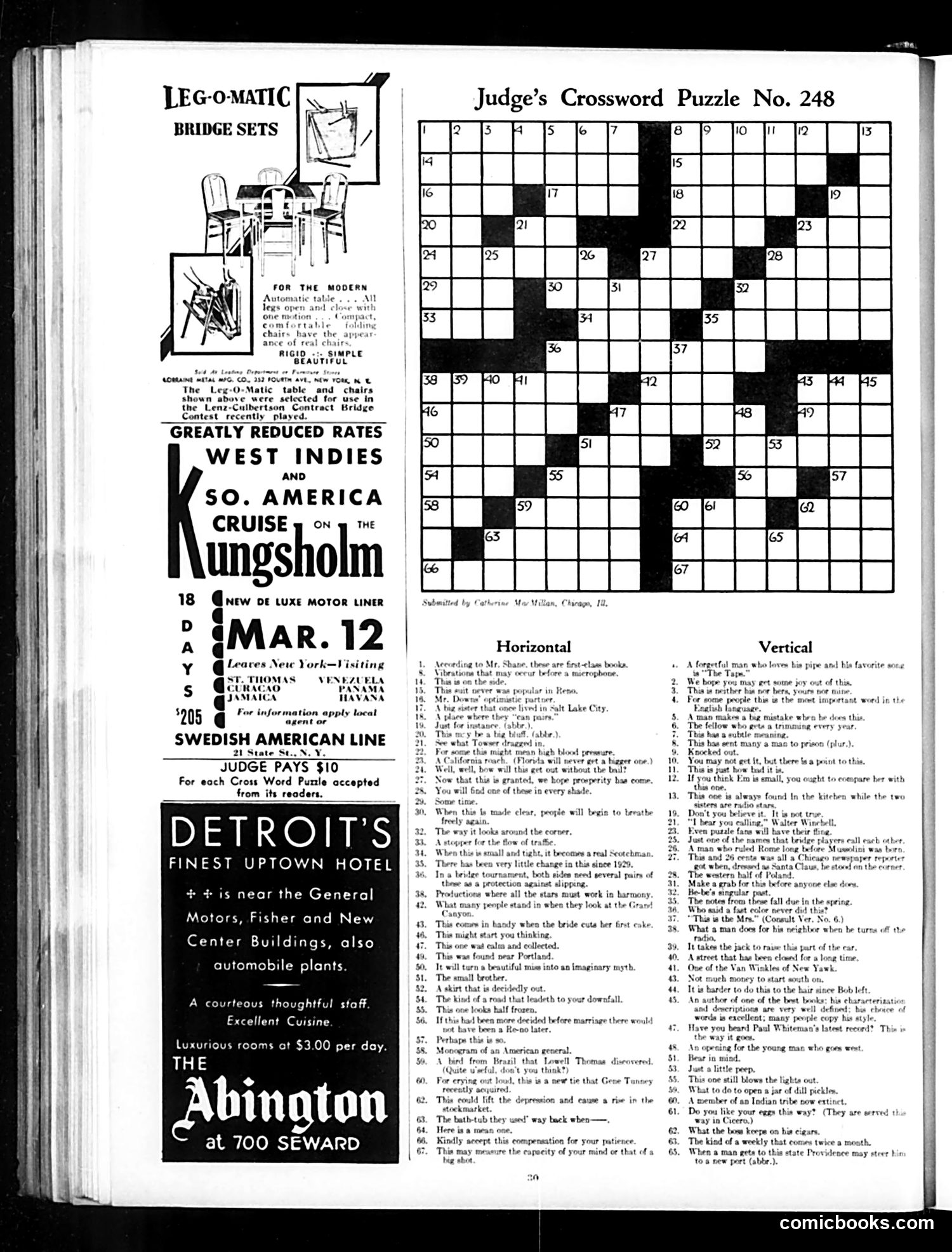
Judge Magazine Page Analysis This page is primarily advertising and a crossword puzzle, not satire or political commentary. The left side features advertisements for luxury goods and travel—a "Leg-O-Matic" folding bridge table/chair set, a cruise to the West Indies on the Swedish American Line (departing March 12), and Detroit and New York hotels. These target affluent readers during what appears to be the 1920s-30s era. The right side is Judge's Crossword Puzzle No. 248, with both horizontal and vertical clues. Judge magazine famously paid readers $10 per accepted crossword puzzle, advertising this as an incentive at the bottom left. The puzzle clues are typical period wordplay—some reference contemporary culture (Paul Whiteman's orchestra records, bridge card games), but mostly they're generic riddles and definitions. No specific political figures or satire are evident on this particular page.
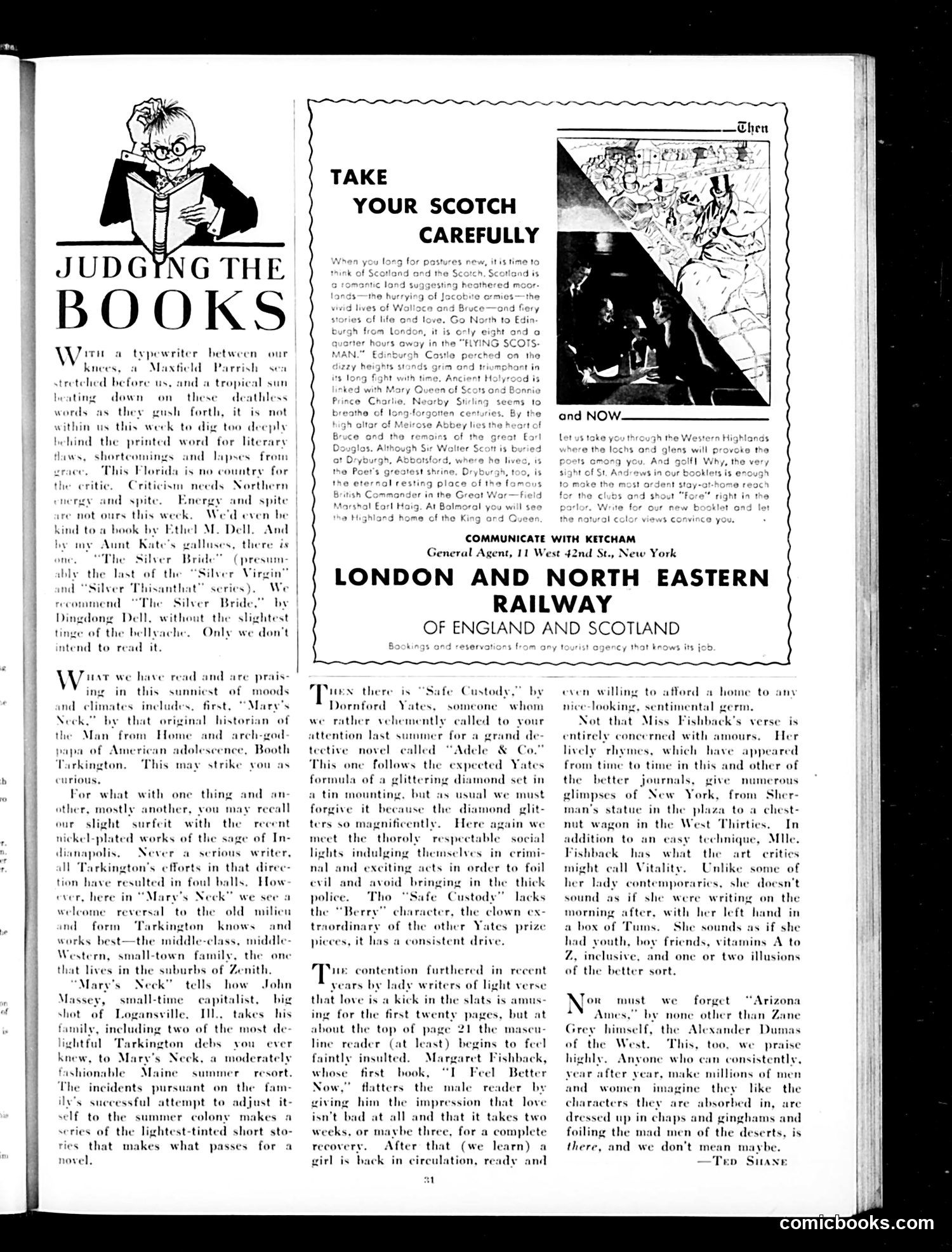
Explanation for Modern Readers This page from *Judge* magazine contains a book review column titled "Judging the Books." The cartoonist (left margin) depicts a critic reading and judging literature. The reviews discuss three novels: Booth Tarkington's "Mary's Neck" (praised as his best work in years), Dornford Yates's "Safe Custody" (a detective story following his popular formula), and works by poet Mule Fishback and author Zane Grey. The main satire is the *framing device*: the critic claims to be writing from Florida in tropical leisure, deliberately avoiding serious literary criticism. The joke is that this relaxed, sunburned reviewer is therefore *kind* to mediocre books—he even admits he'd praise Ethel M. Dell, apparently a sentimental author. The embedded railway advertisement interrupts the column, typical of magazine layouts of this era. The overall humor reflects how vacation, climate, and mood affect critical judgment—not literary merit.
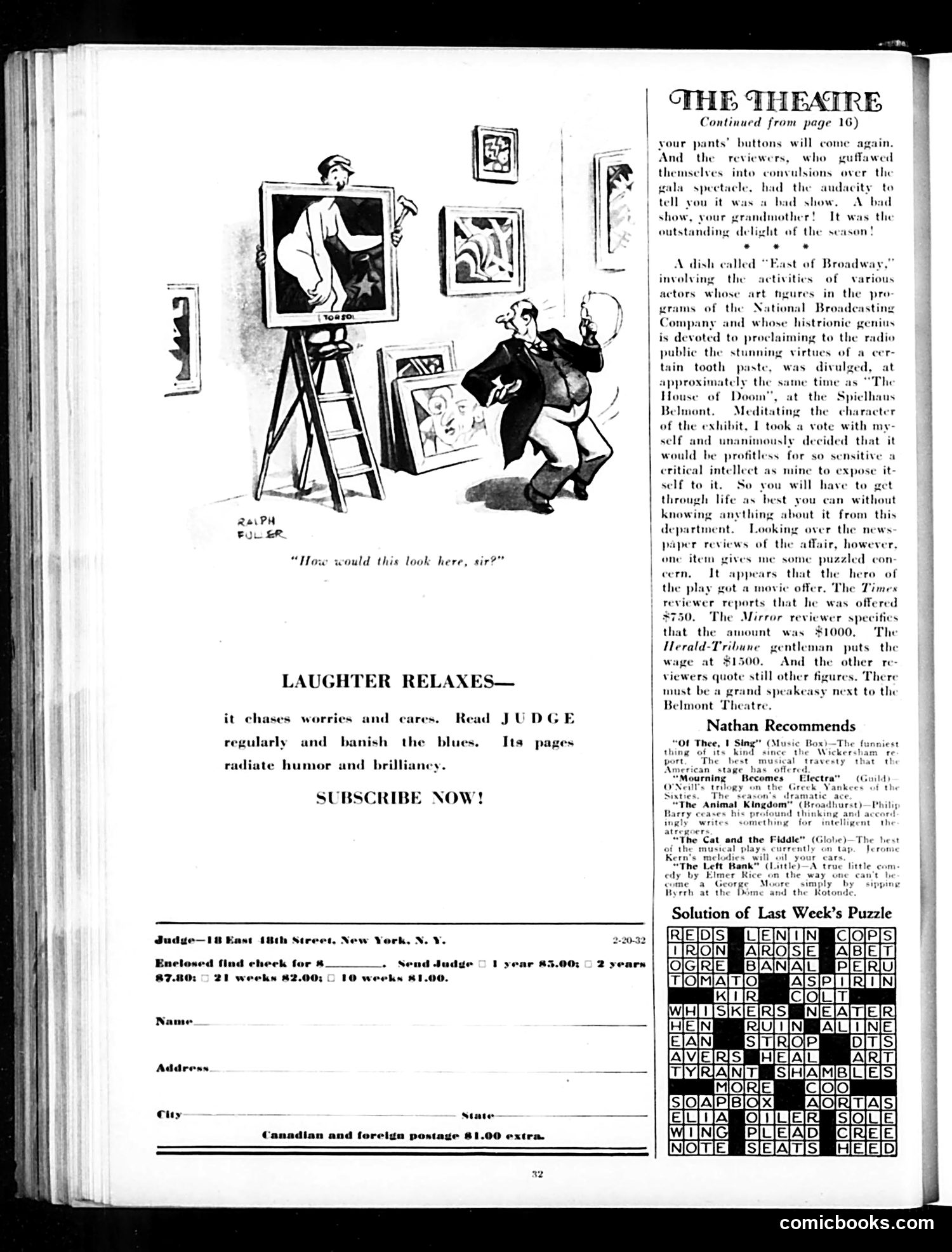
Analysis of Judge Magazine Page This page is primarily advertising and subscription material for Judge magazine itself, dated 2-20-32 (February 1932). The cartoon "How would this look here, sir?" depicts an artist on a ladder showing framed artwork to a well-dressed gentleman—likely a patron or gallery owner—considering whether to display or purchase a piece. It's a straightforward visual gag about art acquisition and taste. The main text promotes Judge's subscription with claims that reading it provides laughter that "chases worries and cares" and "banishes the blues"—appealing messaging during the Great Depression when humor offered escapism. The right column contains theater criticism discussing Broadway productions and radio advertising tie-ins, with commentary on conflicting newspaper salary reports for an unnamed actor who received a movie offer. The page concludes with a crossword puzzle solution, standard magazine content of the era. This appears to be a back-of-magazine advertising and miscellaneous content section rather than satirical commentary.
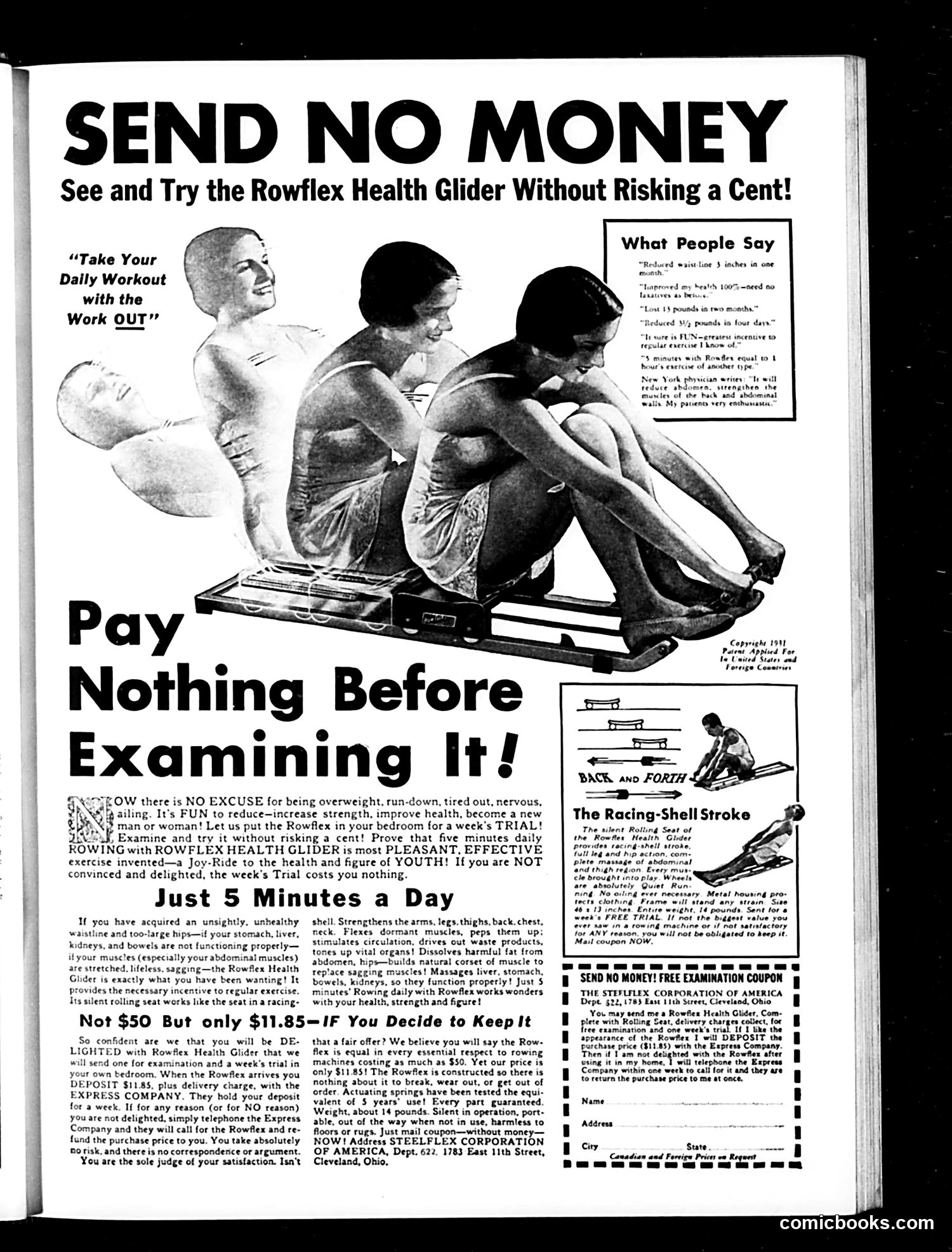
Analysis for Modern Readers This is a full-page advertisement, not satire or political commentary. It promotes the "Rowflex Health Glider," a rowing machine exercise device marketed as a home fitness solution. The ad uses typical early-20th-century marketing tactics: exaggerated health claims ("dissolves harmful fat," "massages liver, stomach, bowels"), before-and-after testimonials, and a no-risk trial offer ($11.85 if you keep it, otherwise free return). The images show men and women using the device in their bedrooms. The pitch targets common 1930s anxieties—being overweight, "run-down," or out-of-shape—framing exercise as fun and achievable in just five minutes daily. The "no money" headline uses reverse psychology: you can try it free before committing. There is no cartoon satire here. This appears to be Judge magazine's advertising content, reflecting genuine period health/fitness marketing rather than social commentary or political criticism.
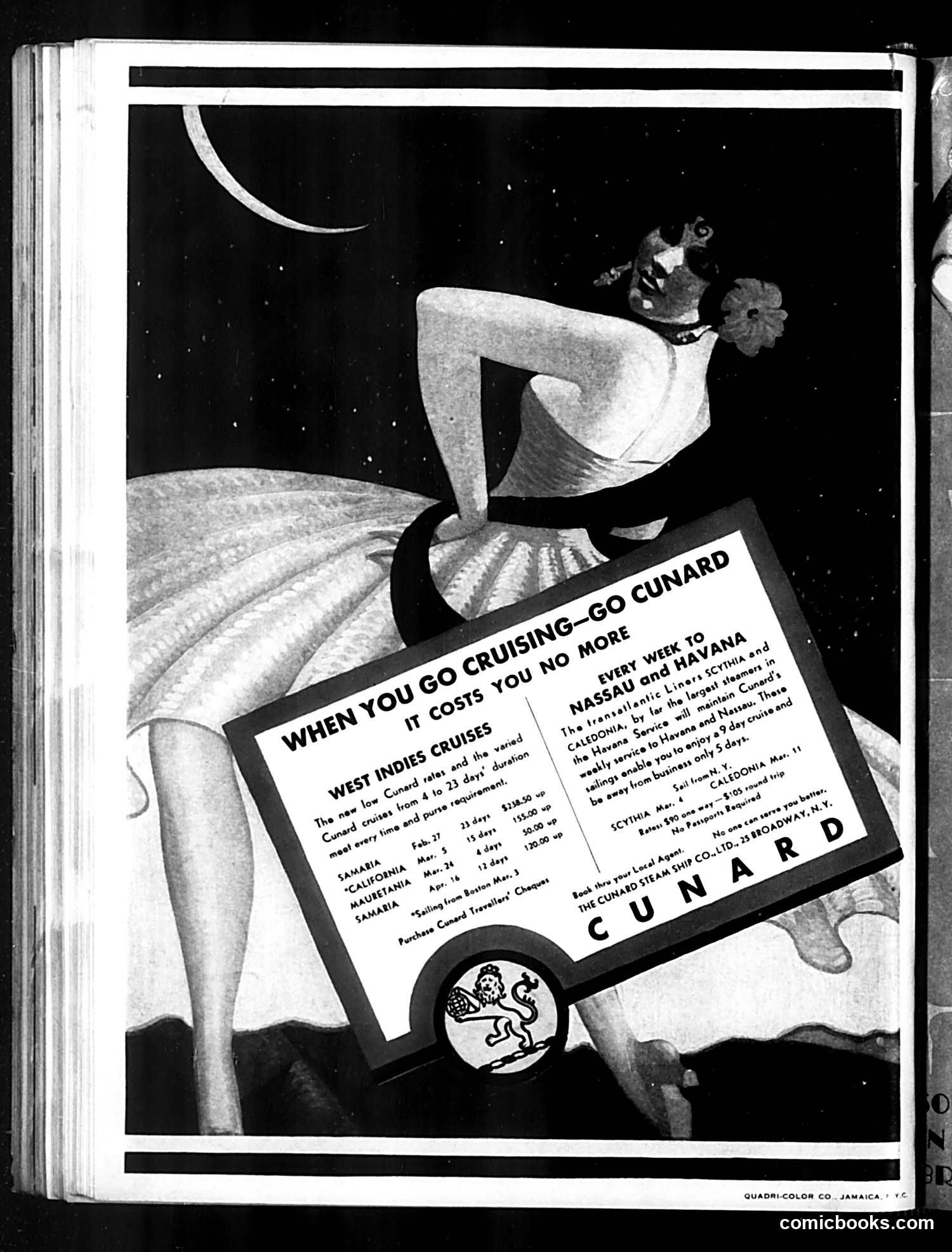
Advertisement Analysis This is a Cunard cruise line advertisement, not a political cartoon. It depicts a stylized woman in evening wear holding a promotional brochure for West Indies cruises. The headline "When You Go Cruising—Go Cunard" emphasizes the luxury cruise company's offerings. The ad lists cruise itineraries including Nassau, Havana, and other Caribbean destinations, with pricing details and departure schedules. The crescent moon and stars in the background suggest exotic, romantic tropical travel—the aspirational imagery typical of 1930s-40s travel advertising. This represents the era when Caribbean cruising was marketed as an exclusive leisure activity for affluent American passengers, with Cunard positioned as the premier cruise operator.