judge
Judge — February 27, 1932
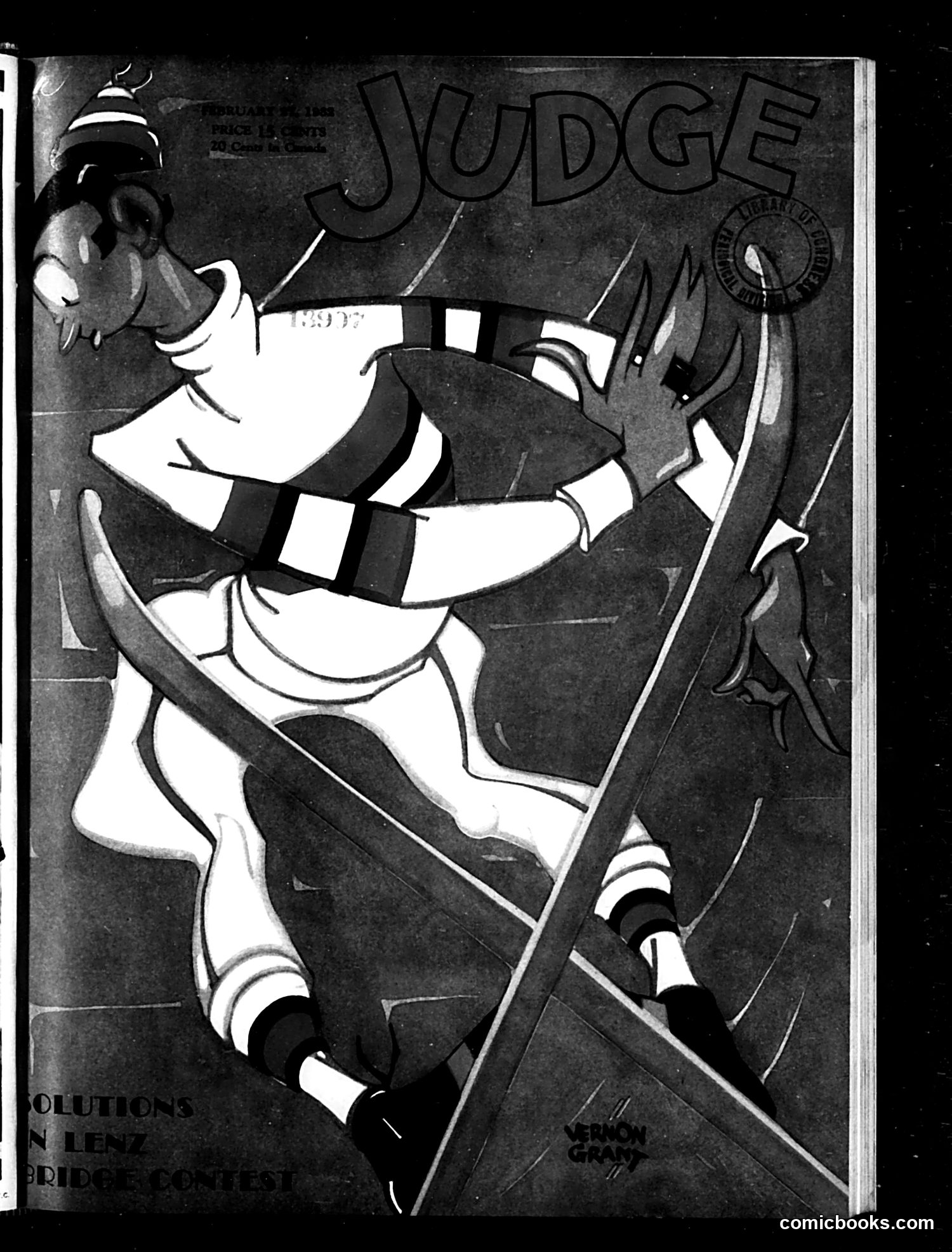
Judge Magazine Page Analysis This appears to be a cover or feature page from *Judge* magazine depicting an anthropomorphic dog character dressed as a judge or judicial official, complete with robes and what appears to be judicial regalia. The figure holds a gavel and sits in an authoritative pose. The visible text fragments reference "solutions," "lenz," and "bridge contest," though full context is unclear from the partial OCR. The styling and composition suggest this is satirical commentary on judicial matters, possibly mocking legal proceedings or a specific court decision of the era. Without complete text or clearer date information, the specific political or social target remains uncertain, though the anthropomorphic characterization suggests commentary on authority figures or the legal establishment.
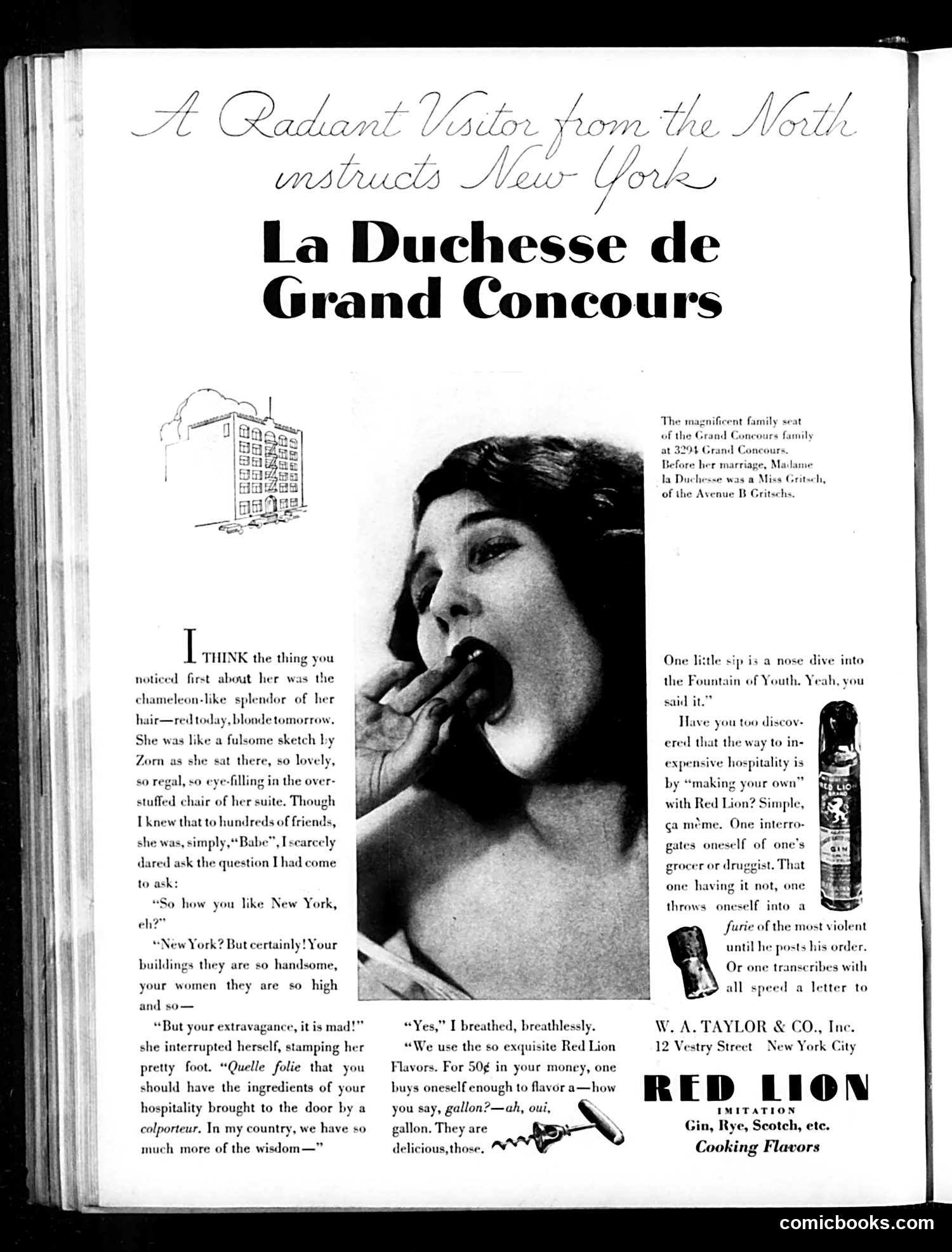
Analysis This page is primarily advertising disguised as editorial content—a common Judge magazine format. The headline "La Duchesse de Grand Concours" introduces a wealthy French noblewoman visiting New York, photographed sipping from what appears to be a beverage. The satirical angle mocks upper-class European affectation and American social climbing. The Duchess criticizes New York's "extravagance" while embracing "hospitality," which the text reveals means consuming Red Lion flavoring extract—a cheap, mass-market product. The irony is that she discovers inexpensive American solutions superior to European sophistication. The small building illustration depicts the Grand Concours family residence at 3294 Grand Concourse in the Bronx. Ultimately, this is product placement leveraging xenophobic humor about French pretension to sell cooking flavors to American homemakers.
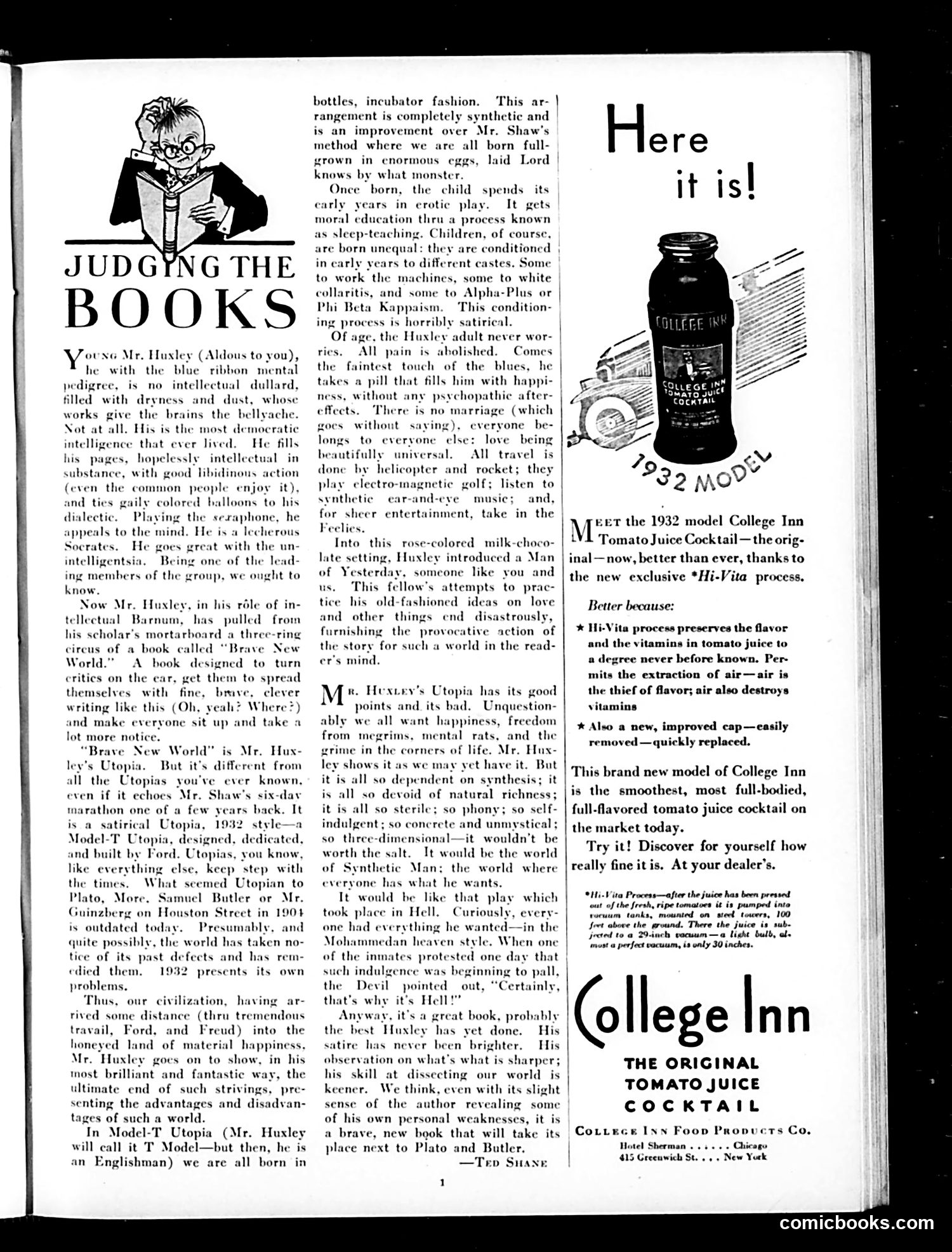
Analysis of Judge Magazine Page This page combines book criticism with advertising. The left column, "Judging the Books," reviews Aldous Huxley's *Brave New World* and a 1932 Model-T Utopia. The critic (Ted Shane) mocks these dystopian works, praising Huxley's satire as superior because it exposes society's flaws without pretending to offer solutions. The cartoon shows a small figure labeled as representing Huxley-style critique—diminutive, intellectual, examining society through literature rather than action. The right side advertises College Inn Tomato Juice Cocktail using the "Hi-Vita process," claiming it preserves flavor and vitamins better than competitors. This juxtaposes satirical social commentary with commercial product marketing—typical of Judge's mixed editorial/advertising format from this era.
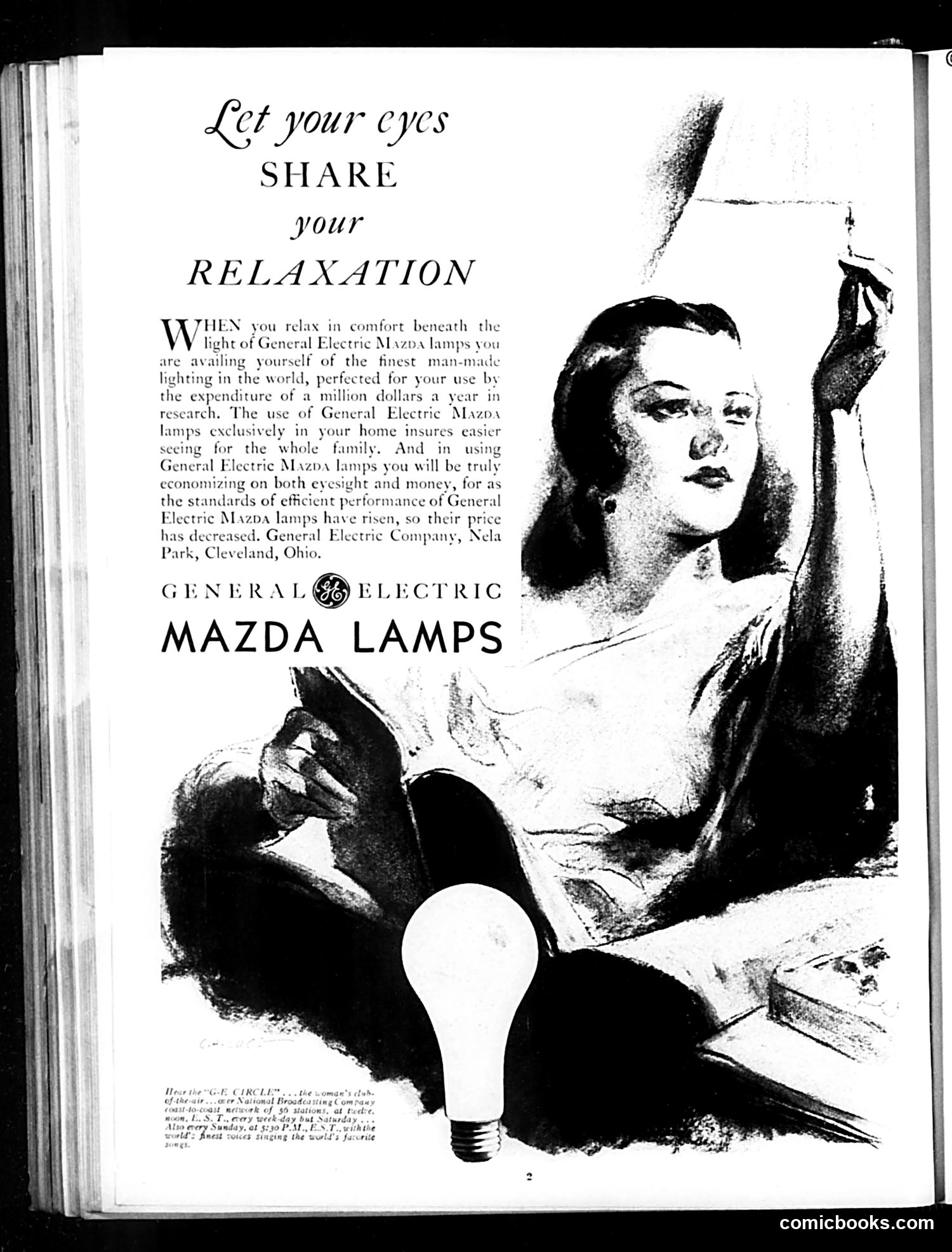
Analysis This page is primarily a General Electric advertisement, not political satire. It promotes Mazda lamps by General Electric, manufactured in Nela Park, Cleveland, Ohio. The ad uses a relaxation theme: a woman reclines comfortably reading beneath a glowing Mazda lamp. The copy emphasizes that GE's research investments (a million dollars annually) have perfected these lamps for home use, improving visibility while reducing costs for consumers. The visual and textual message is straightforward product marketing: reliable lighting enables comfortable leisure activities. There is no political or social satire present—this is commercial advertising typical of Judge magazine's revenue model, where paid advertisements appeared alongside satirical content.
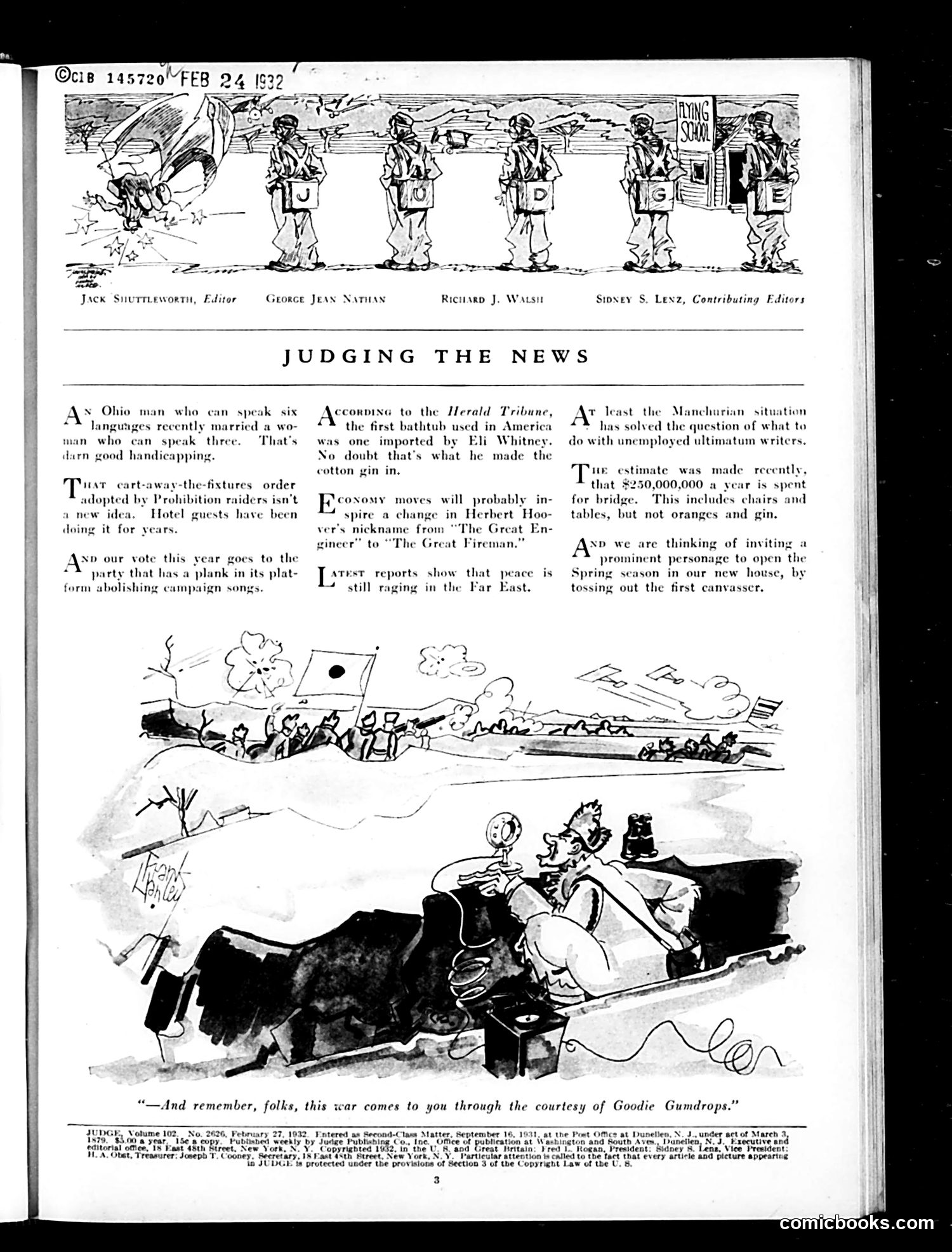
"Judging the News" — February 24, 1932 This page features editorial commentary and cartoons satirizing current events. The bottom cartoon, captioned "And remember, folks, this war comes to you through the courtesy of Goodie Gumdrops," appears to mock media coverage of the ongoing conflict in the Far East (likely the Japanese invasion of Manchuria, 1931-32). The image shows what appears to be a radio broadcaster or commentator presenting warfare as entertainment, suggesting the satire criticizes how American media sensationalizes distant military conflicts for commercial purposes. The "Goodie Gumdrops" reference likely parodies actual sponsor names of radio programs, implying corporate interests profit from war coverage. The top cartoon shows five figures labeled with letters (likely representing newspaper editors or commentators), reinforcing the issue's focus on media criticism and editorial judgment.
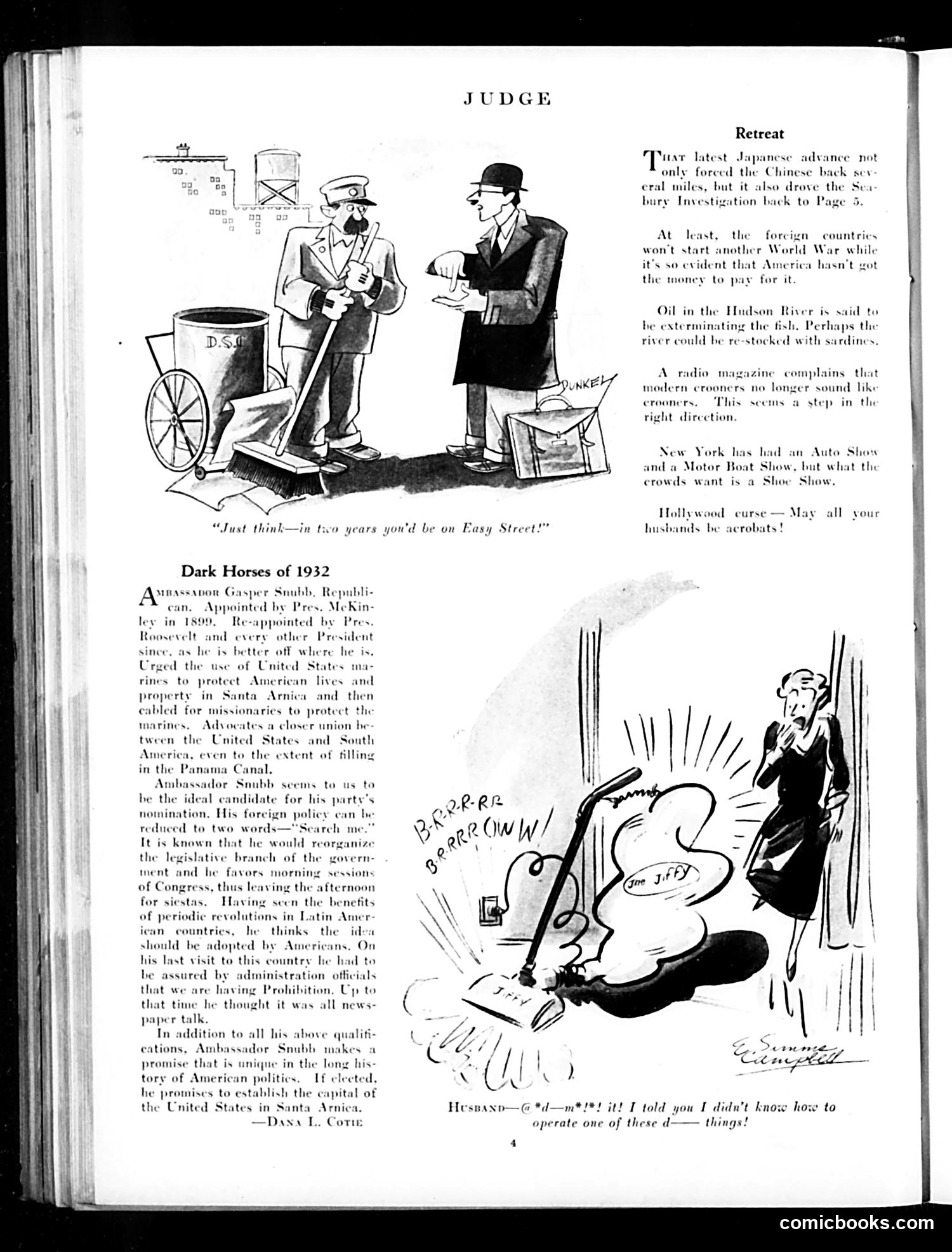
Analysis of Judge Magazine Page The top cartoon depicts two figures discussing future poverty, with one standing on a large barrel labeled "D.S.D." (likely a financial or economic reference). The joke plays on economic anxiety during the Depression era—the character predicts homelessness "in two years" on "Easy Street." The lower cartoon shows a husband operating what appears to be a mechanical device or appliance, with his wife instructing him. The humor relies on gender stereotypes: the husband is incompetent with household technology, a common trope in period comedy. The "Dark Horses of 1932" article discusses Ambassador Gasper Snabb, a political figure. The satirical commentary questions his qualifications and foreign policy positions, suggesting skepticism about his nomination prospects. Overall, the page reflects Depression-era economic anxiety and traditional gender roles.
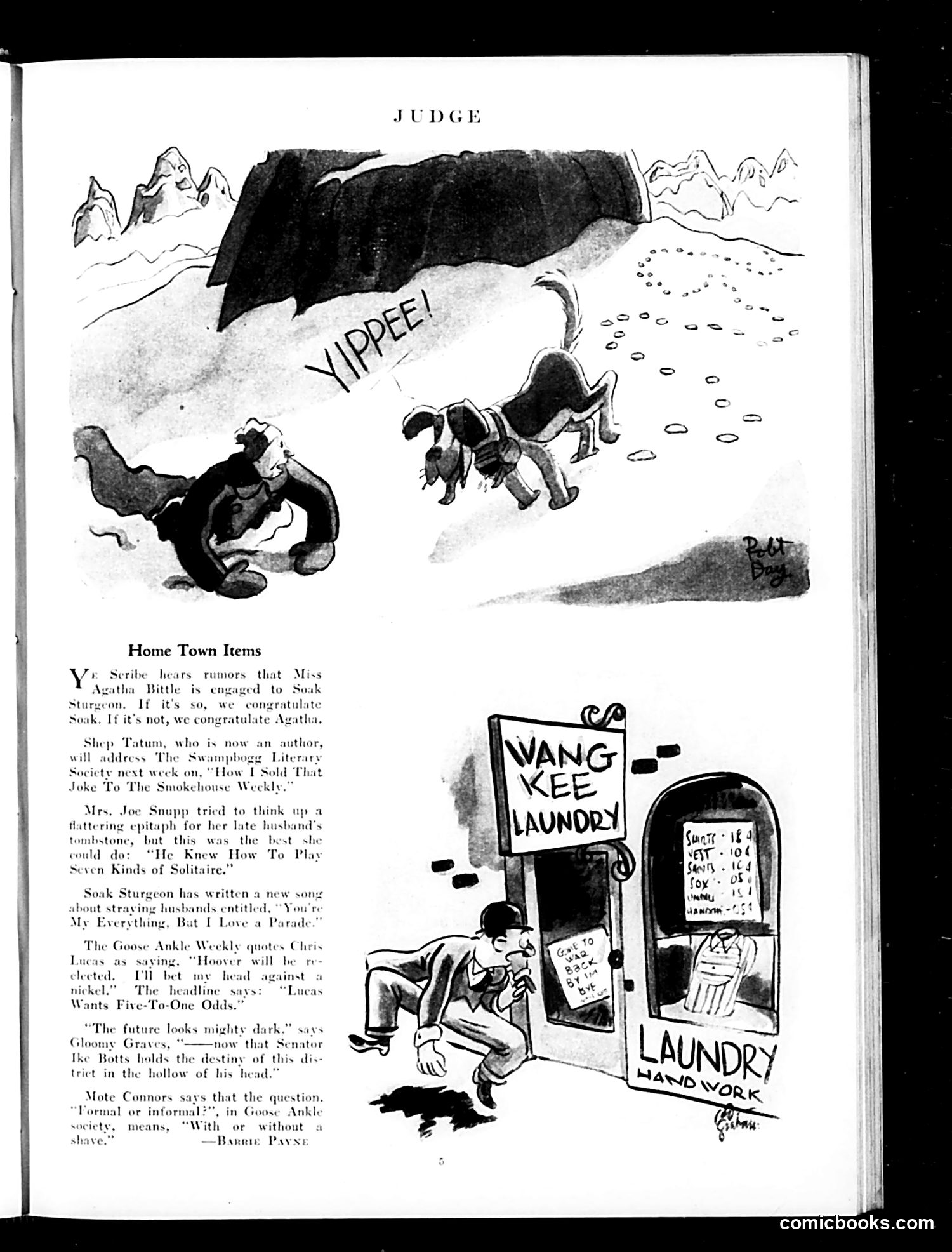
Analysis of Judge Magazine Page Top Cartoon ("Judge"): Shows a figure in winter gear being chased by a large dark shape labeled "YIPPEE!" across snowy terrain. The meaning is unclear without additional context—it may reference a contemporary political figure or scandal, but the specific reference cannot be determined from the image alone. Bottom Cartoon ("Wang-Kee Laundry"): Depicts a man struggling with a laundry service counter. This appears to be ethnic satire, common in early 20th-century American humor, mocking Chinese laundry businesses through stereotypical naming and depiction. The humor relies on exaggerated characterization typical of the era's problematic comedic conventions. "Home Town Items": Brief gossip-column text about local figures and social observations, standard Judge magazine filler content.
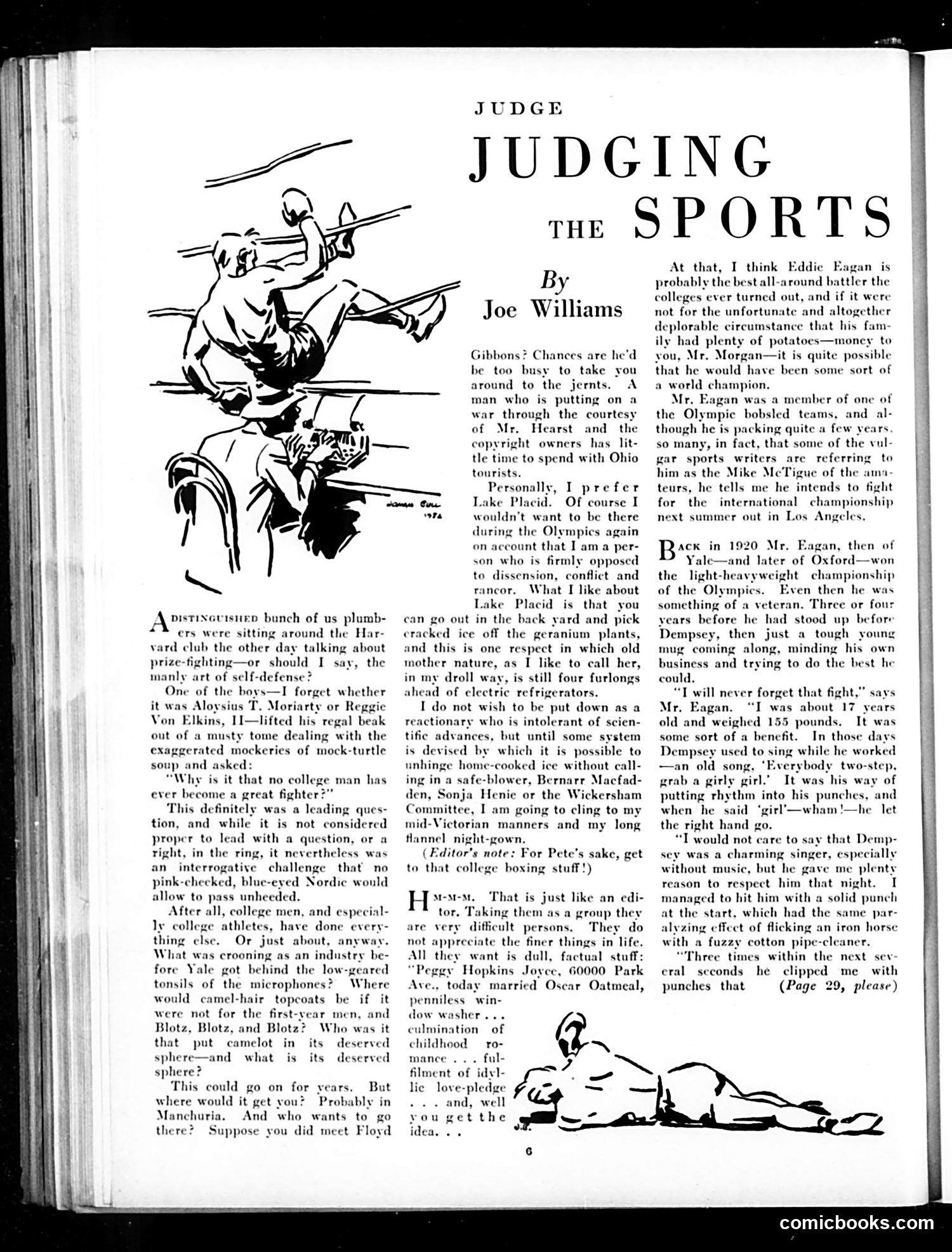
"Judging the Sports" by Joe Williams This page combines editorial commentary on boxing and college athletics with satirical illustrations. The main article discusses Eddie Eagan, a boxer and Olympic athlete, and references his potential fight for an international championship. The text critiques college sports culture, mocking the notion that college athletes become "great fighters" and satirizing the "dull, factual stuff" college administrators want from athletes versus their actual talents. Williams names figures like Hopkins Joyce and Oscar Oatmeal (likely pseudonyms or misspellings), discussing boxing's role in youth development. The cartoons show boxing scenes—a fighter mid-punch and another knocked down—illustrating the physical nature of the sport being discussed. The piece appears skeptical of boxing's value while defending individual athletes like Eagan.
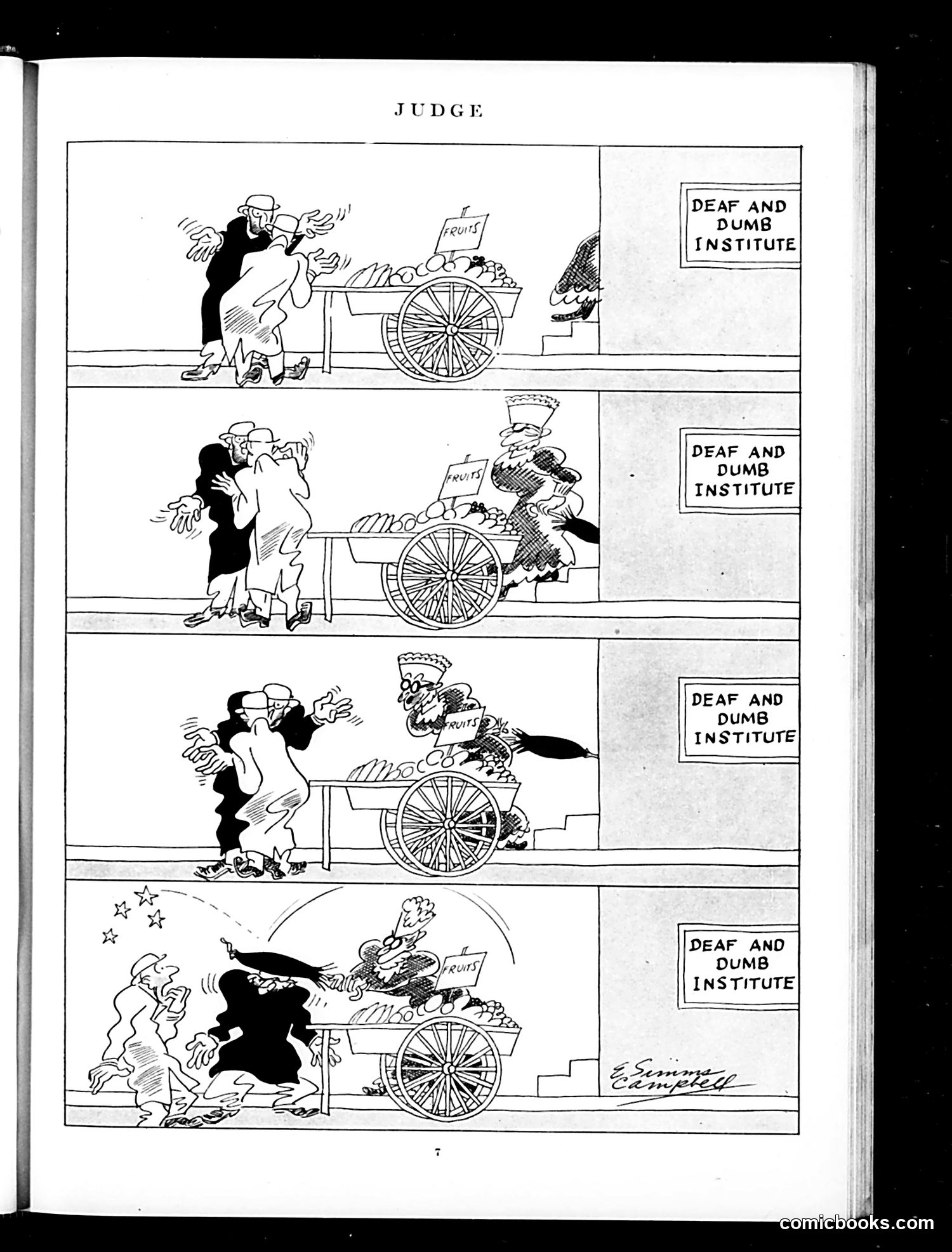
Judge Magazine: "Judge" Cartoon Analysis This four-panel satirical cartoon depicts a judge being repeatedly knocked down by someone pushing a fruit cart labeled "DEAF AND DUMB INSTITUTE." The satire appears to target judicial corruption or incompetence—specifically, a judge who is being literally and figuratively overwhelmed by an institution (likely representing a charitable organization or government entity). Each panel escalates the violence, with the final panel showing the judge flying through the air with stars. The joke suggests the judge is either powerless against institutional interests or is being appropriately punished for favoring such an institution. The "deaf and dumb" label may imply the judge is blind to wrongdoing or acting foolishly in his rulings. Without identifying the specific judge or incident, this represents Judge magazine's typical critique of judicial or institutional abuse during the satirical era.
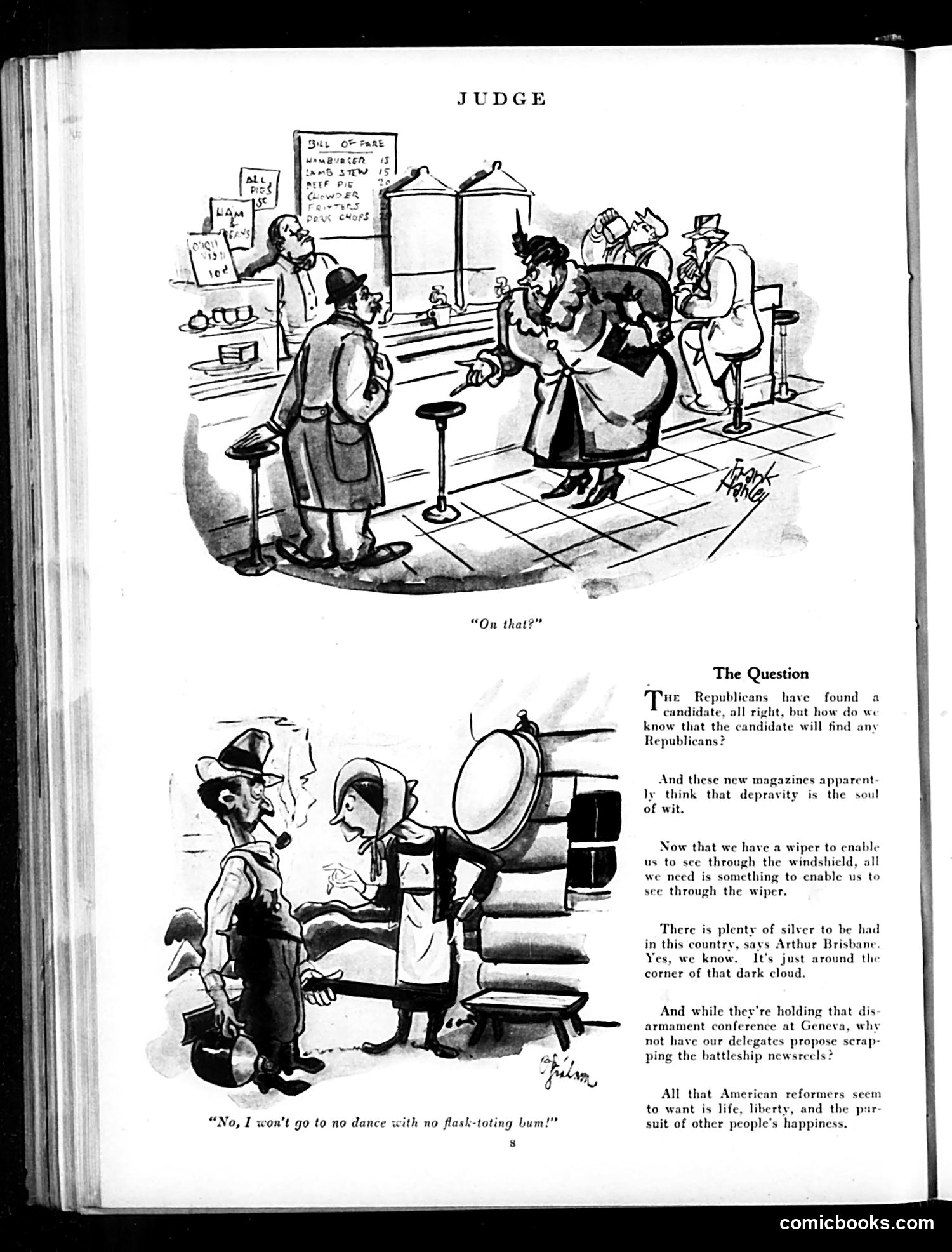
Judge Magazine Page Analysis This page contains two editorial cartoons satirizing American political and social issues of the interwar period. The top cartoon ("On that?") depicts a courtroom scene where a judge appears skeptical or dismissive, likely mocking Republican Party leadership struggles—the accompanying text questions whether Republicans can find candidates who will actually support the party. The bottom cartoon ("No, I won't go to no dance with no flask-toting bum!") shows a couple discussing Prohibition-era drinking culture. The woman refuses to date a man who carries alcohol flasks, satirizing the contradictions of Prohibition enforcement and social hypocrisy. The accompanying text offers brief satirical commentary on contemporary issues: magazine depravity, automobile windshield wipers, economic hardship (silver shortage), disarmament conferences, battleship newsreels, and American reformers' focus on controlling others' behavior rather than solving systemic problems. The overall tone critiques both political incompetence and social pretension during the 1920s-early 1930s.
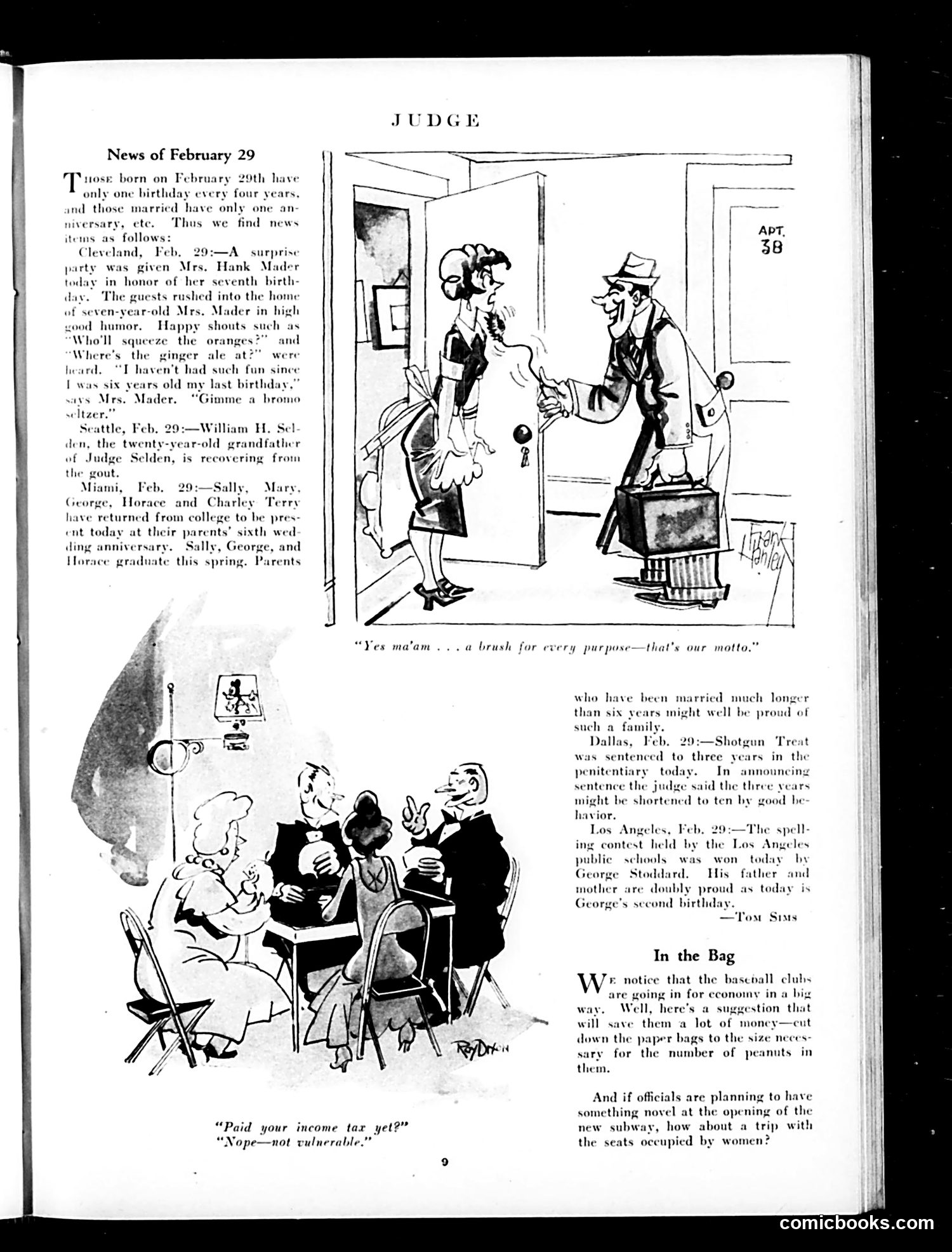
Explanation for Modern Readers This page contains satirical news items and cartoons from Judge magazine, dated around February 29 (a leap-year date). Top cartoon: A salesman pitches brushes to a woman, claiming "a brush for every purpose." The satire mocks over-specialization and marketing excess—the absurd idea that consumers need dozens of specialized products. Bottom cartoon: Two men discuss income taxes. One says "Paid your income tax yet?" and the other responds "Nope—not vulnerable." This jokes about tax avoidance, likely referencing Depression-era anxieties about financial vulnerability and taxes. The "News of February 29" section humorously exploits leap-year births: people born on Feb. 29 only have birthdays every four years. Judge jokes about absurd consequences—a seven-year-old married woman, a 20-year-old grandfather—to satirize the peculiar arithmetic of leap-year births. The "In the Bag" section mocks baseball clubs' penny-pinching during economically difficult times, suggesting they reduce peanut bag sizes.
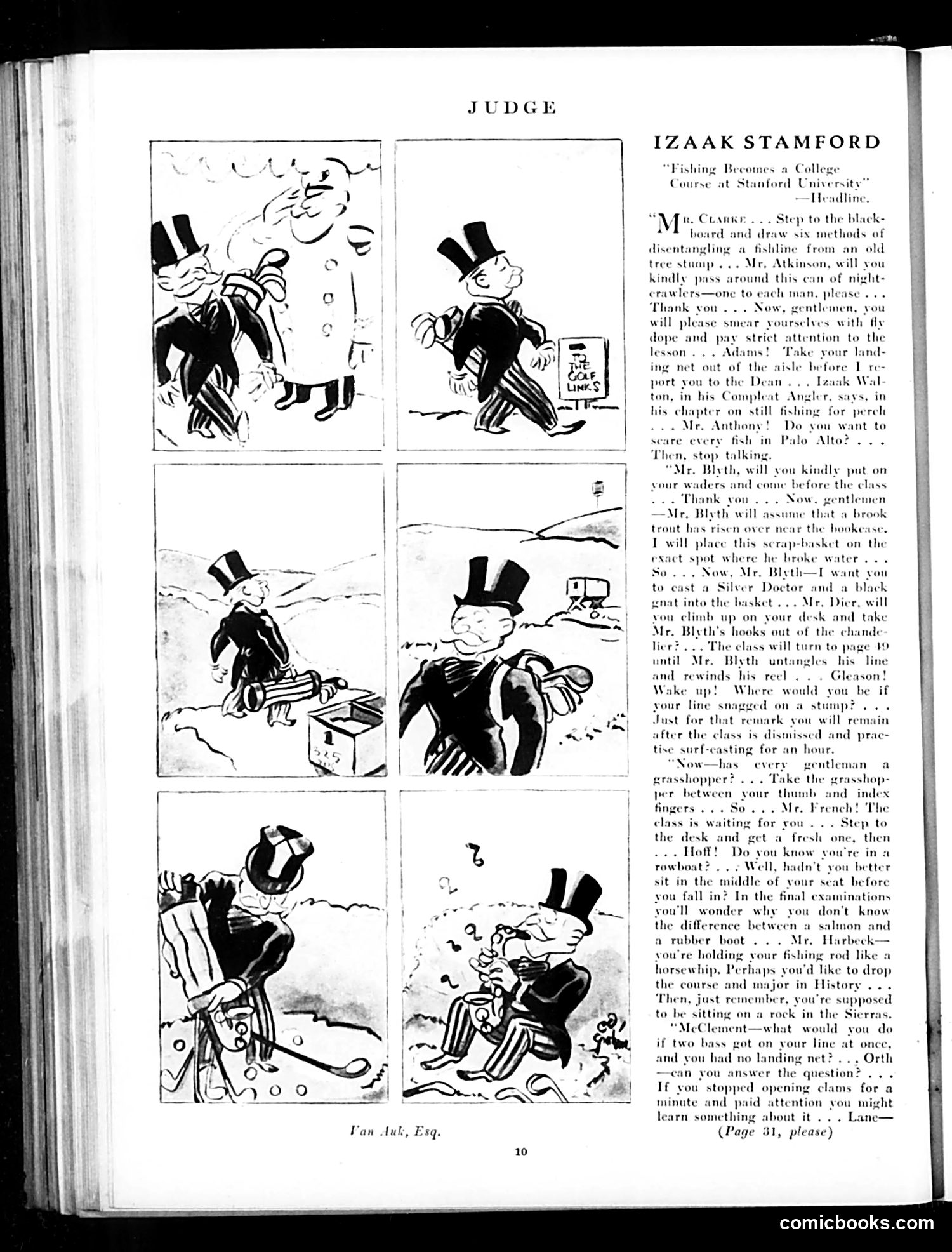
Judge Magazine: "Izaak Stamford" Cartoon Explanation This satirical comic mocks Stanford University's decision to offer fishing as a college course. The cartoon depicts a classroom where an instructor teaches fishing fundamentals through absurd academic methods—students wear waders indoors, cast into wastebaskets, and study classical fishing texts like Izaak Walton's *Compleat Angler*. The humor targets the pretentiousness of colleges offering impractical courses under the guise of serious study. By treating fishing instruction with mock-formal pedagogy (pop quizzes, desk work, disciplinary remarks), the cartoonist satirizes educational institutions expanding their curricula into frivolous territory during what appears to be the early 20th century. The reference to "Izaak Stamford" puns on Izaak Walton (famous 17th-century fishing writer) and Stanford University. The satire suggests that making fishing "academic" strips it of its practical purpose—students learn theory in classrooms rather than actually fishing outdoors.
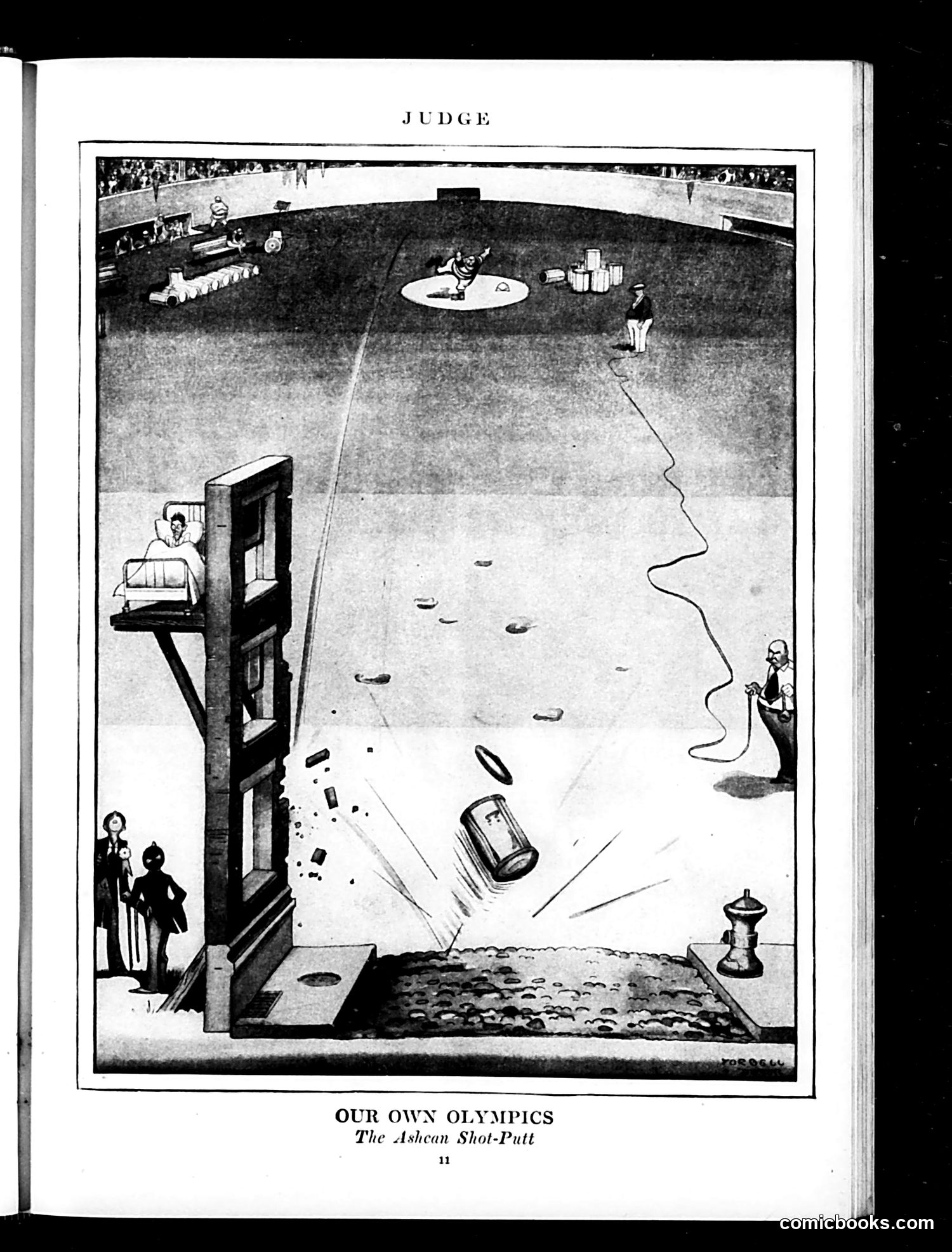
Analysis This is a satirical cartoon titled "The Ashcan Shot-Putt," part of a series called "Our Own Olympics." The image depicts an absurdist sporting event where a trash can or refuse bin serves as the "shot" being hurled across what appears to be a circus or stadium floor (visible audience in background). The satire likely mocks either: - The pretensions of the Olympic games themselves - Urban sanitation problems or "ashcan" schools/institutions of the era - Working-class or immigrant communities (the "ashcan" reference was period slang) The scene's surreal, chaotic composition—with figures positioned oddly around the trajectory—emphasizes the cartoon's mockery. Without additional context about *Judge* magazine's specific 1920s-30s targets, the exact social commentary remains unclear, though it appears to ridicule something about contemporary American institutions or society through this absurd athletic parody.
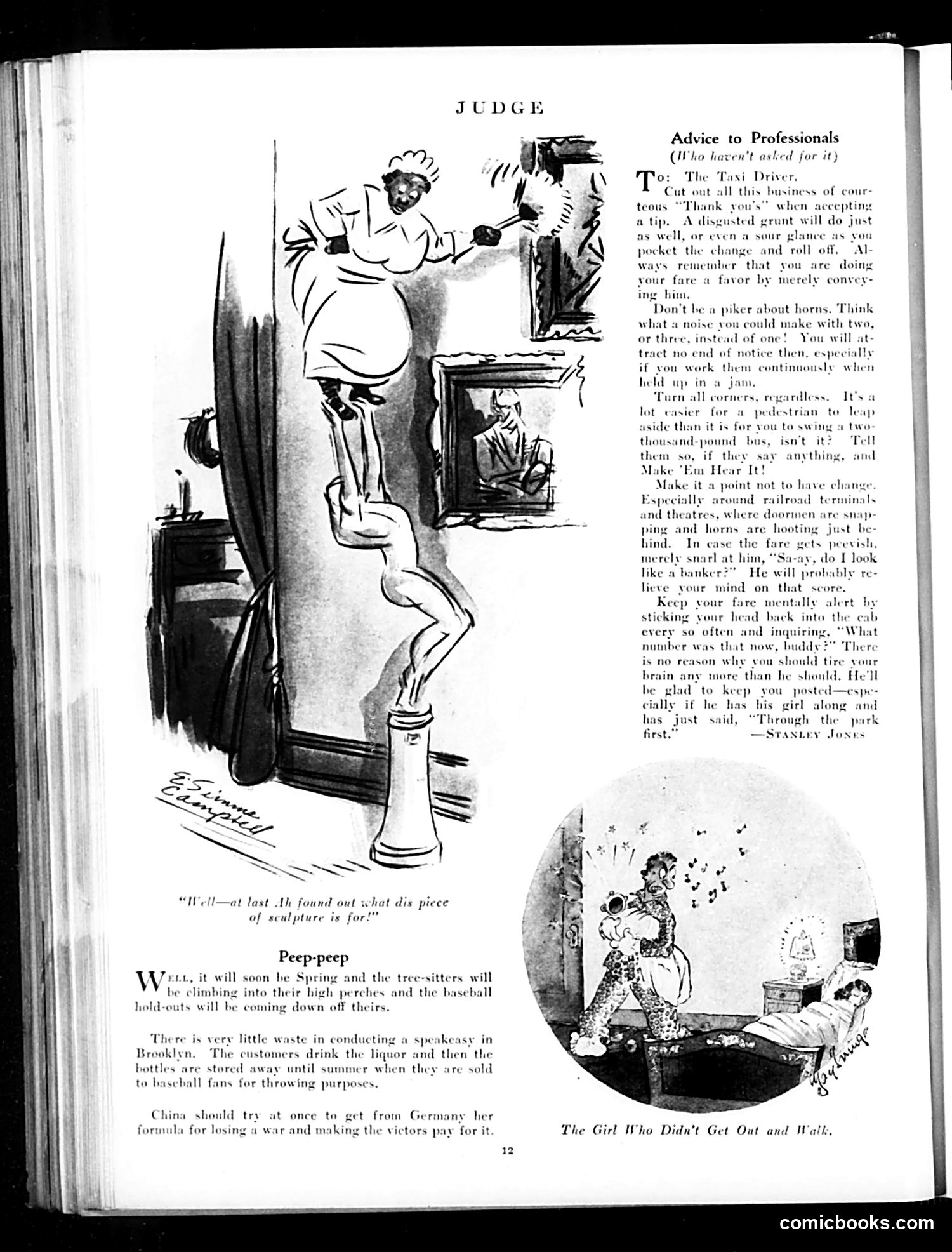
Analysis This Judge magazine page contains satirical content mocking taxi drivers and referencing 1920s urban life. Main Cartoon: The large left illustration shows a portly figure discovering a statue's purpose—likely a fire hydrant, given the dog's presence. This is humor about mistaking street furniture for art. "Advice to Professionals": The column sarcastically instructs taxi drivers to be rude, loud, and unhelpful—the opposite of professional service. It mocks contemporary taxi culture by praising horn-honking, refusing to make change, and ignoring passenger safety. The tone suggests these were actual complaints about NYC cab drivers. References: "Speakeasies" and stored bottles allude to Prohibition-era illegal bars. "Tree-sitters" and "baseball hold-outs" reference labor disputes. The China/Germany quip likely references post-WWI reparations. Point: The satire critiques taxi driver rudeness as normalized behavior while poking fun at various 1920s social issues—Prohibition, labor strikes, and post-war politics.
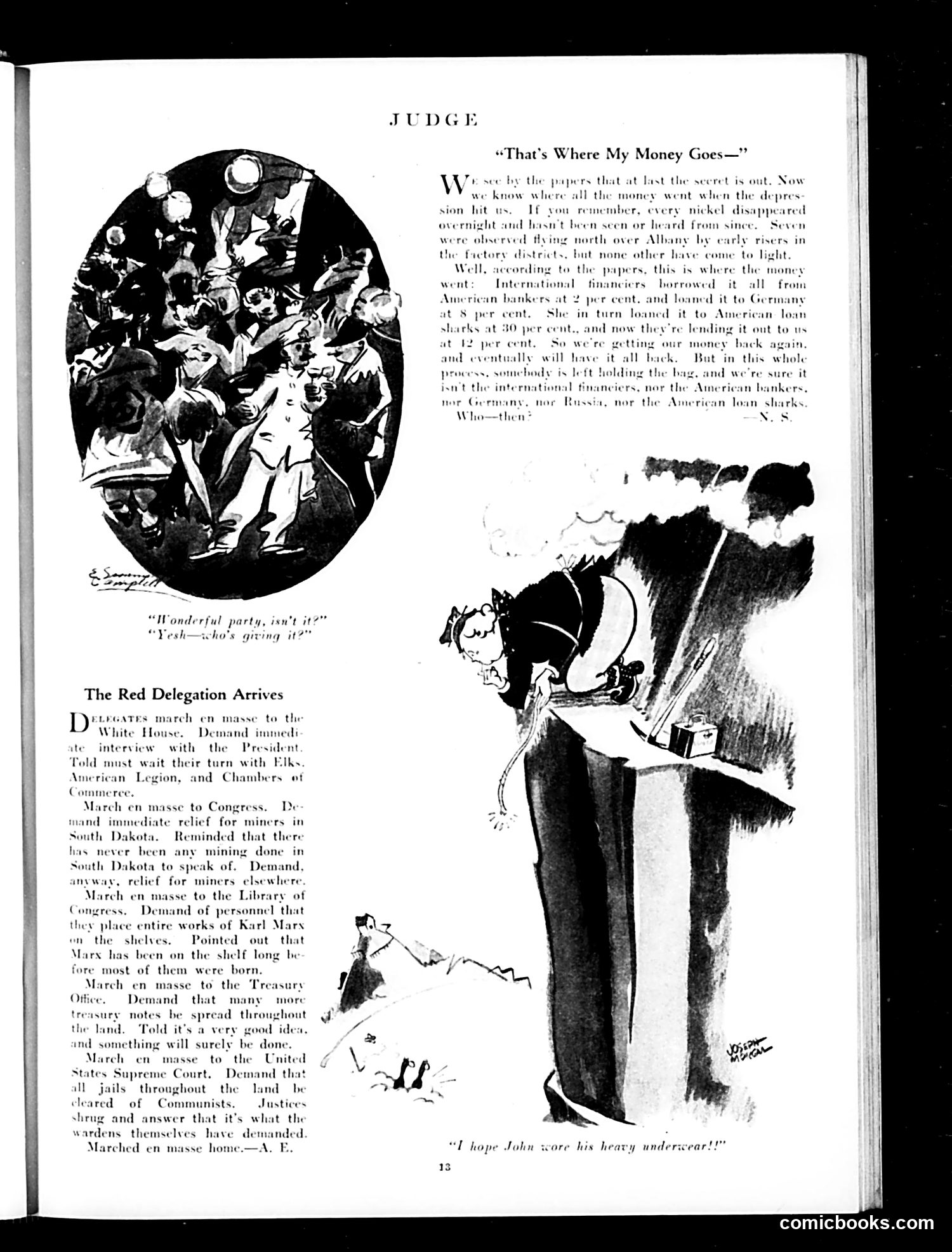
"That's Where My Money Goes—": A Depression-Era Satire This Judge page satirizes the financial chaos of the Great Depression through two distinct pieces: Top cartoon: Depicts money literally flying away as birds over Albany, illustrating how wealth "disappeared overnight" during the crash. The accompanying text sarcastically traces money's path: American bankers lend to Germany at 2%, Germany loans to American loan sharks at 30%, who then lend to ordinary citizens at 12%. The joke: everyone profits except the common person, yet somehow "somebody is left holding the bag"—and it's clearly not the bankers or international financiers. "The Red Delegation Arrives": A humorous account of Communist activists marching to various government offices (White House, Congress, Treasury, Supreme Court) making absurd demands—relief for miners in a state with no mining, shelving Karl Marx books already shelved, etc. The satire mocks both Communist activism and bureaucratic indifference, ending with them simply marching home. Together, these pieces ridicule both Depression-era financial complexity and radical political activism as ineffectual responses to economic crisis.
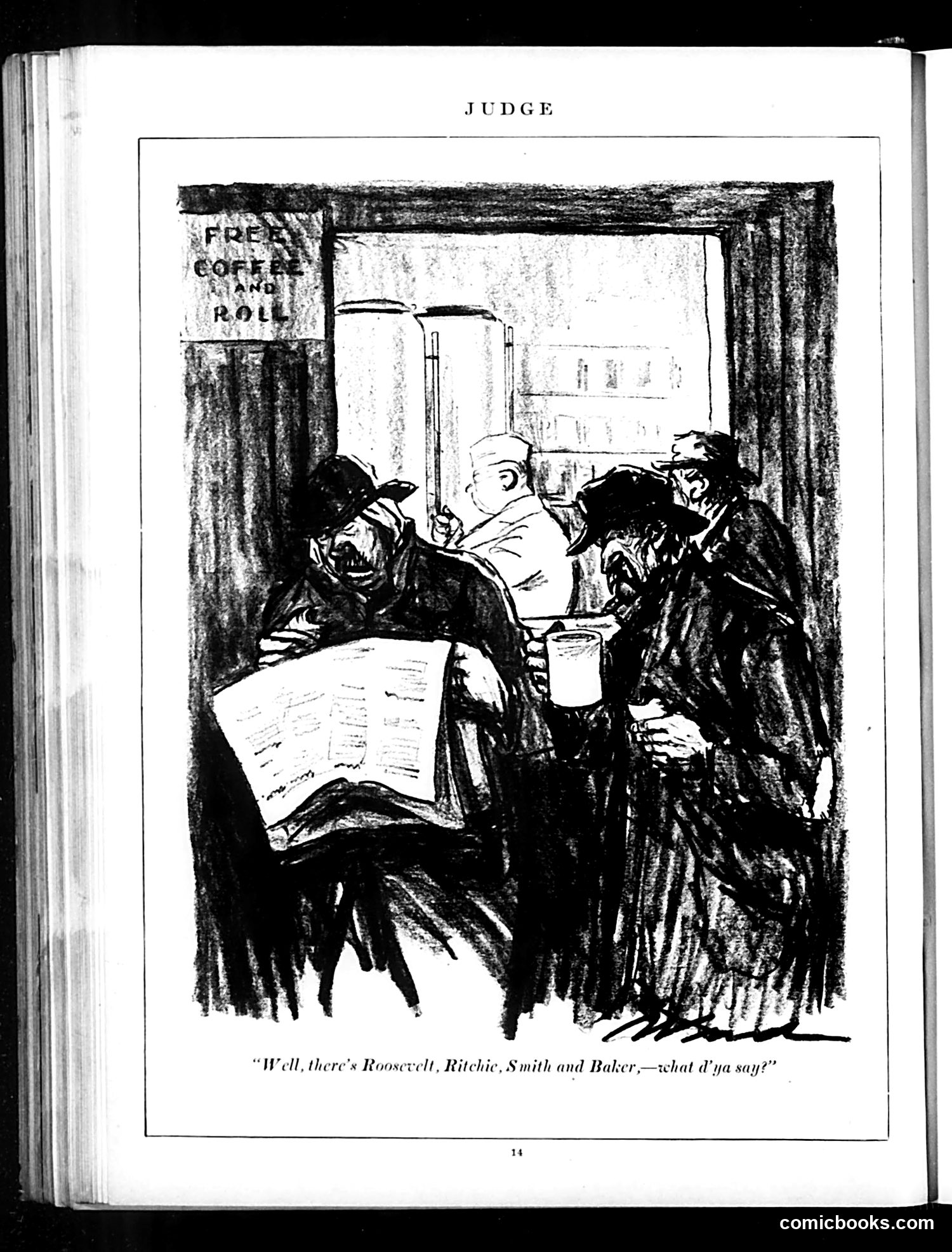
Political Cartoon Analysis This Judge magazine cartoon depicts four men in a diner or café setting (marked "Fresh Coffee and Roll"), apparently discussing politics. The caption references "Roosevelt, Ritchie, Smith and Baker"—likely prominent political figures of the era being considered for office. The cartoon's humor appears to satirize political deliberation or speculation about candidates. The working-class setting and casual tone suggest commentary on ordinary citizens weighing in on political choices. Without the publication date visible, the specific election or context remains unclear, though the names suggest this is from the 1920s-1930s period. The crude, expressive drawing style is typical of Judge's satirical approach to politics and social commentary.
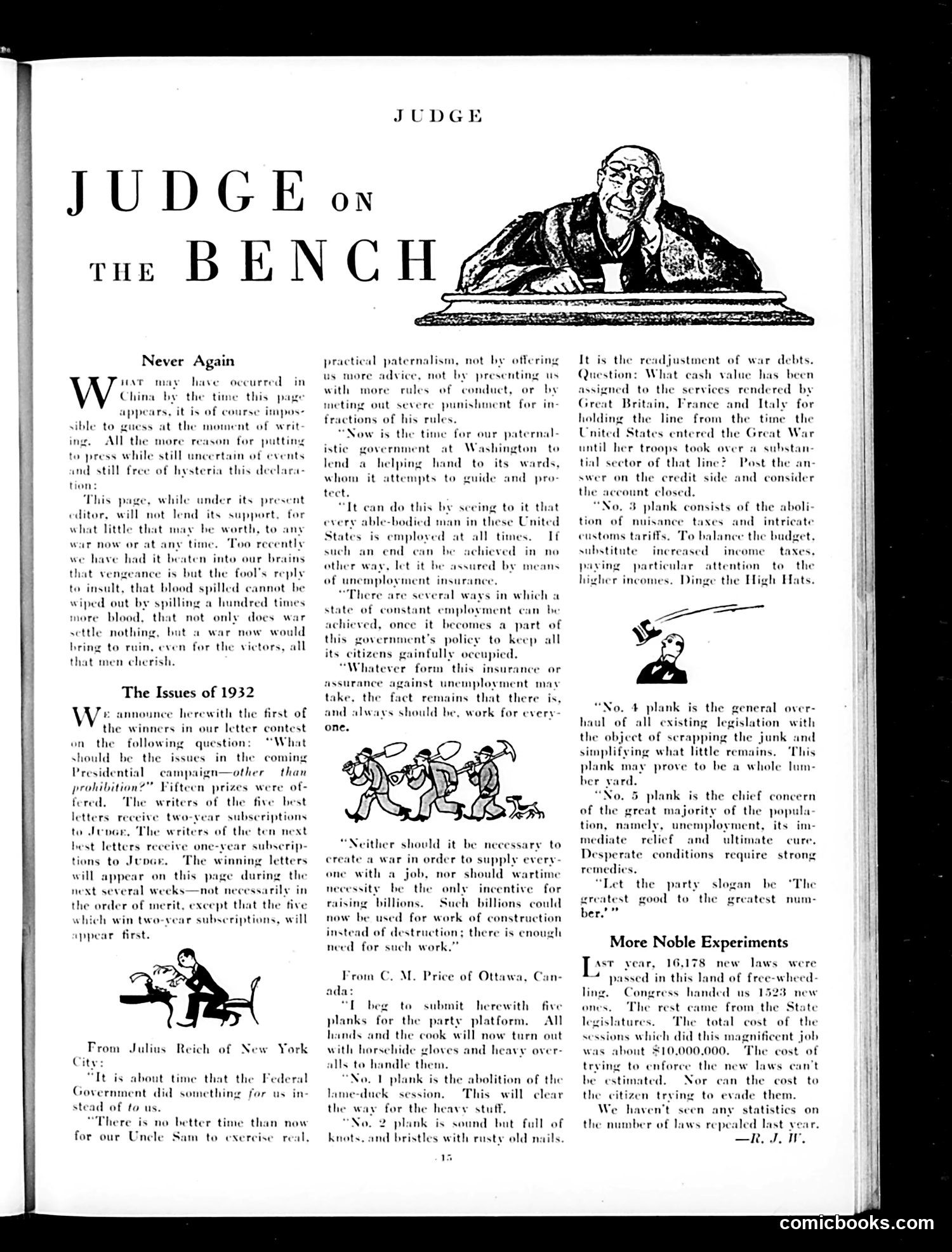
Judge Magazine Page Analysis This 1932 editorial page from *Judge* presents anti-war sentiment and policy proposals during the Great Depression. The main editorial, "Never Again," declares the magazine will not support any U.S. military involvement, referencing ongoing conflict in China. It argues war solves nothing and that "blood spilled cannot be wiped out by spilling." The page then announces a letter-writing contest asking readers: "What should be the coming Presidential campaign issues—other than prohibition?" Two winning letters are excerpted: Julius Reich advocates for federal government action on unemployment through guaranteed employment or unemployment insurance rather than war spending. He argues the government should ensure "every able-bodied man in these United States is employed at all times." C.M. Price proposes five platform planks, including: abolishing the lame-duck congressional session, readjusting war debts, eliminating nuisance tariffs, and implementing progressive income taxes on higher earners. The cartoons (showing figures with various implements) appear to illustrate these planks metaphorically, though their exact meaning requires clearer resolution.
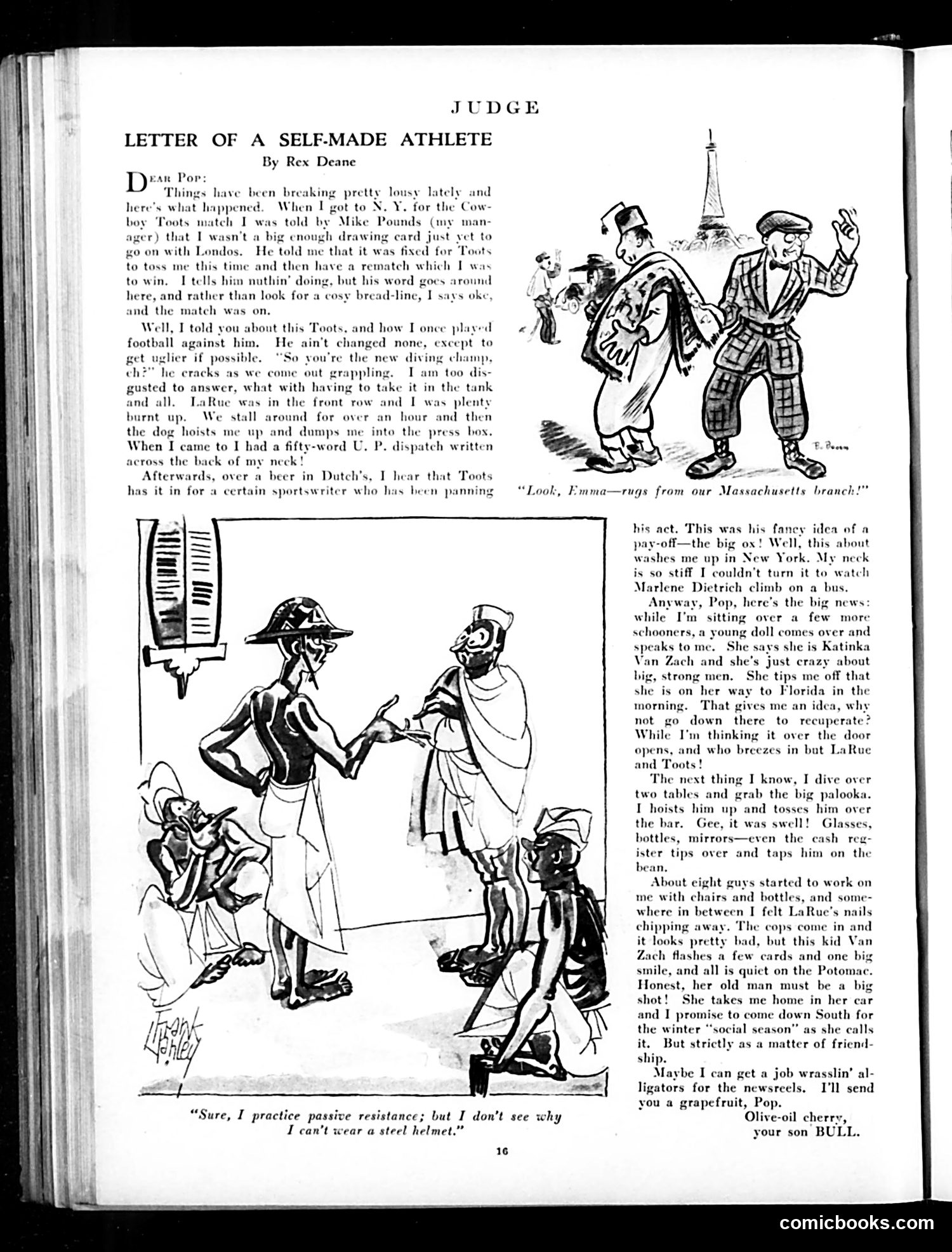
"Letter of a Self-Made Athlete" — Judge Magazine This is a humorous letter from a struggling professional wrestler named "Bull" to his father "Pop," recounting his misadventures in New York. The satire targets professional wrestling's scripted nature — Bull's manager arranges for him to lose ("take it in the tank") to a wrestler named Toots, a humiliating arrangement that backfires when Bull's neck injury prevents him from even watching glamorous events like Marlene Dietrich boarding a bus. The cartoon illustrations depict wrestling scenes with exaggerated physicality. The humor escalates when Bull impulsively brawls with Toots in a bar, destroying property, yet escapes consequences through connections (a mysterious woman's father appears to be important). The caption "Sure, I practice passive resistance; but I don't see why I can't wear a steel helmet" captures the absurdist tone—wrestling is supposedly "fixed," yet Bull keeps getting genuinely injured. The piece satirizes both wrestling's predetermined outcomes and the naive self-deception of athletes involved in the scheme.
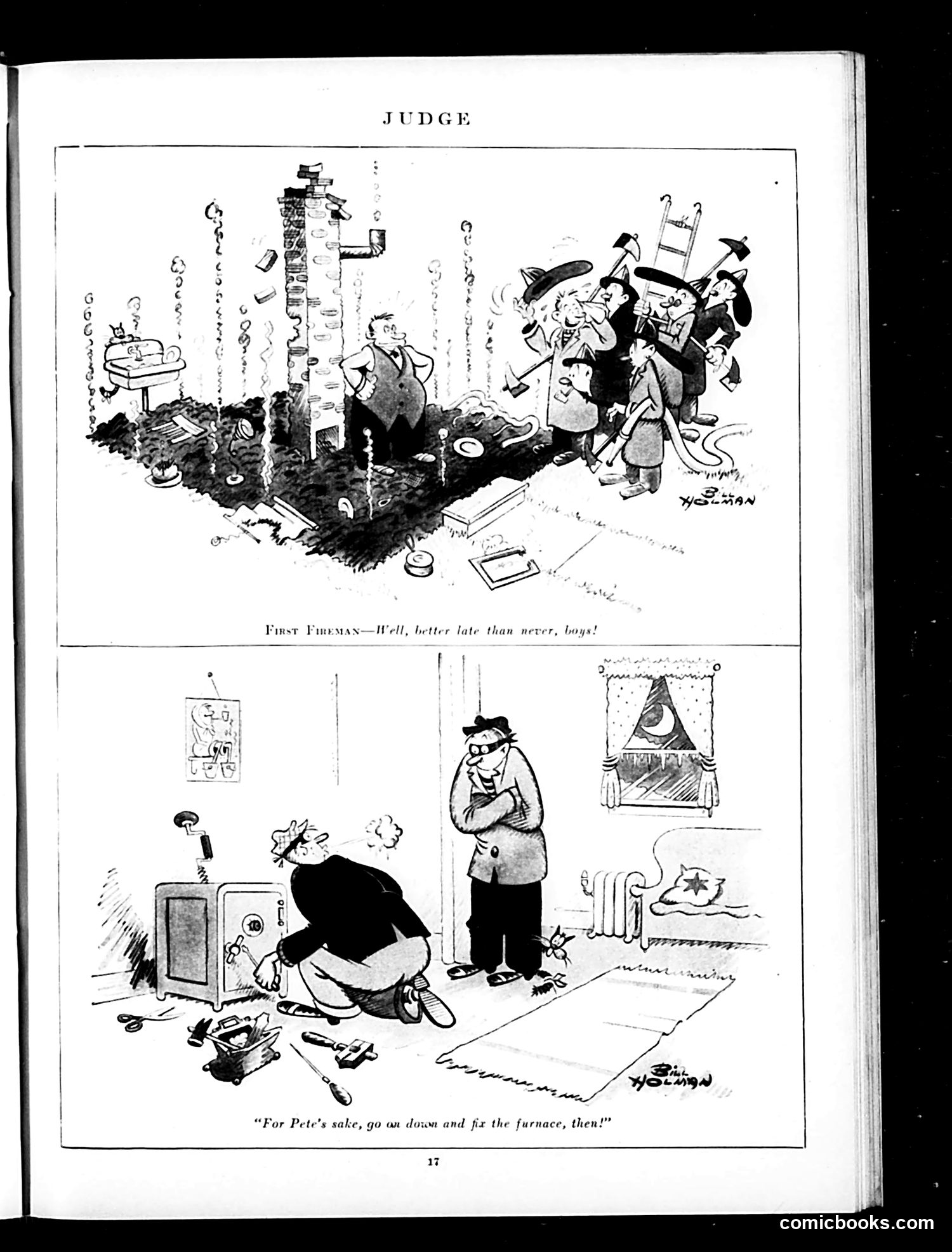
Analysis of Judge Page This page contains two cartoons satirizing domestic life and bureaucracy. Top cartoon: Titled "First Fireman—Well, better late than never, boys!" depicts firefighters arriving at a chaotic scene with a tall, elaborate apparatus. The satire appears to mock the inefficiency of fire departments—their elaborate equipment and procedures arriving after the crisis has already caused confusion. Bottom cartoon: Shows a man crouched by a furnace while another man stands nearby, with the caption "For Pete's sake, go on down and fix the furnace, then!" This satirizes domestic nagging—a wife (or family member) pressuring the husband to perform household maintenance tasks, likely a common source of marital tension during this era. Both cartoons use exaggerated drawing styles typical of Judge magazine's humor, targeting recognizable social frustrations of American middle-class life.
Judge Magazine Theater Critique This page is a theater criticism essay by George Jean Nathan, a prominent drama critic of the early 20th century. The piece attacks the common practice of adapting failed stage plays into musicals, arguing producers choose poorly written source material simply because good plays are hard to find. Nathan ridicules the formula: taking dull plays and "salvaging" them through musical numbers, slapstick comedy (characters pinching actresses), clog dancing, and excessive artificial scenery. He cites specific examples of plays that *could* work musically (Fulda's "Friends of Our Youth," Jerome's "The Great Gamble") but argues producers instead select unsuitable plays and mask their failures with spectacle. The satire targets both the financial desperation of theater producers and audiences' willingness to tolerate poor entertainment when dressed up with music and visual excess—a criticism that remains relevant to modern adaptations.
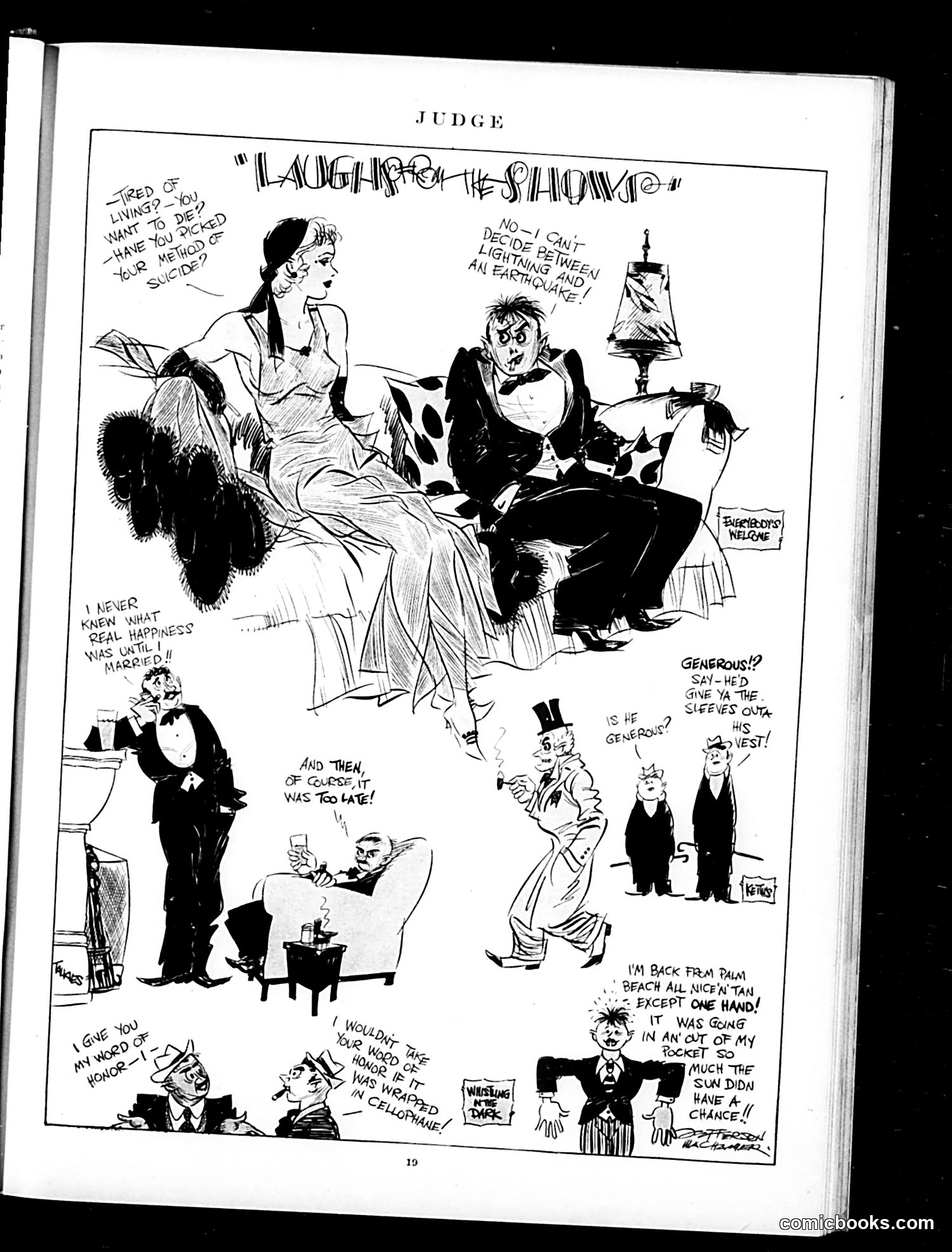
"Laugh at the Show" - Judge Magazine Cartoon This is a multi-panel satirical comic about wealthy aristocratic behavior and marital dynamics. The central scene depicts a couple where the woman reclines luxuriously while the man sits beside her. Various vignettes mock upper-class pretensions: - A servant presents "honor" as a gift - Men discuss wrapping "honor" in cellophane (suggesting it's disposable) - A character returns from Palm Beach with a tanned body except one hand (implying he spent the vacation lazily, one hand perpetually shaded) - References to "generosity" and taking "sleeves out" suggest mockery of false gentility The title "Laugh at the Show" indicates this entire domestic scene is theatrical performance rather than genuine emotion. The satire targets Gilded Age affectation—the gap between aristocratic pretense and actual moral bankruptcy. The cartoon suggests wealthy society members treat honor, generosity, and appearance as mere props in a social performance.
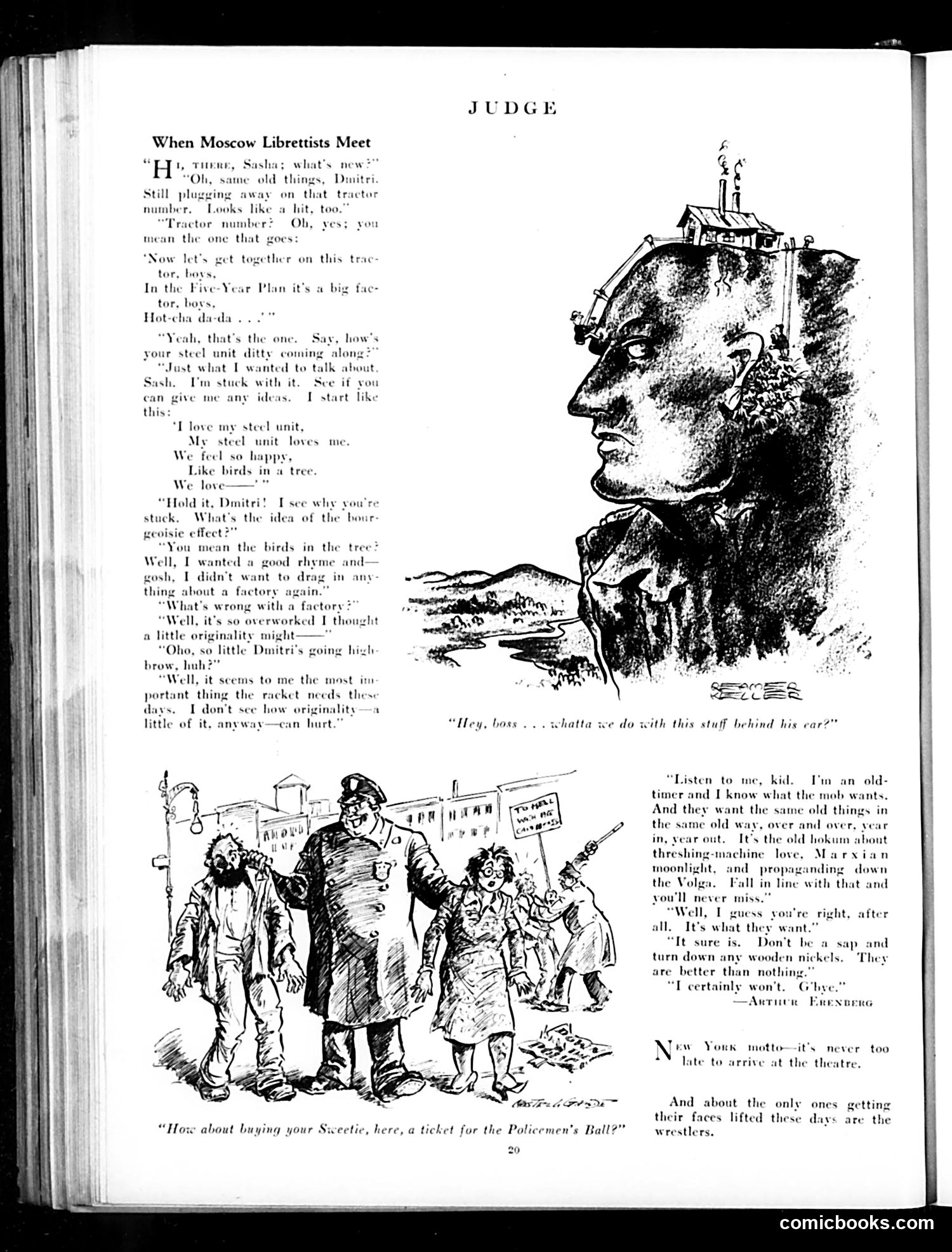
Political Satire: Soviet Propaganda Through American Eyes This cartoon satirizes Soviet propaganda under Stalin's regime, specifically mocking the artificially cheerful "socialist realism" required in Soviet arts during the Five-Year Plans (forced industrialization campaigns). Two Soviet composers ("Moscow Librettists") discuss writing propaganda songs celebrating tractors and steel production—mandatory themes glorifying industrial achievement. The joke: they're struggling with the formulaic, repetitive nature of state-mandated art. One complains the "birds in a tree" metaphor is unoriginal; the older, cynical composer dismisses originality entirely, saying "the mob wants the same old things in the same old way." The lower cartoon shows Russian officials selling propaganda to the masses like cheap tickets. The satire's point: Soviet citizens were force-fed relentless, hackneyed propaganda celebrating industrial production. American readers would recognize this as mocking both Soviet totalitarian control of culture and the absurd gap between propaganda's hollow cheerfulness and grim reality. The cartoonist presents Soviet artists as cynically aware their work is meaningless repetition serving the state machine.
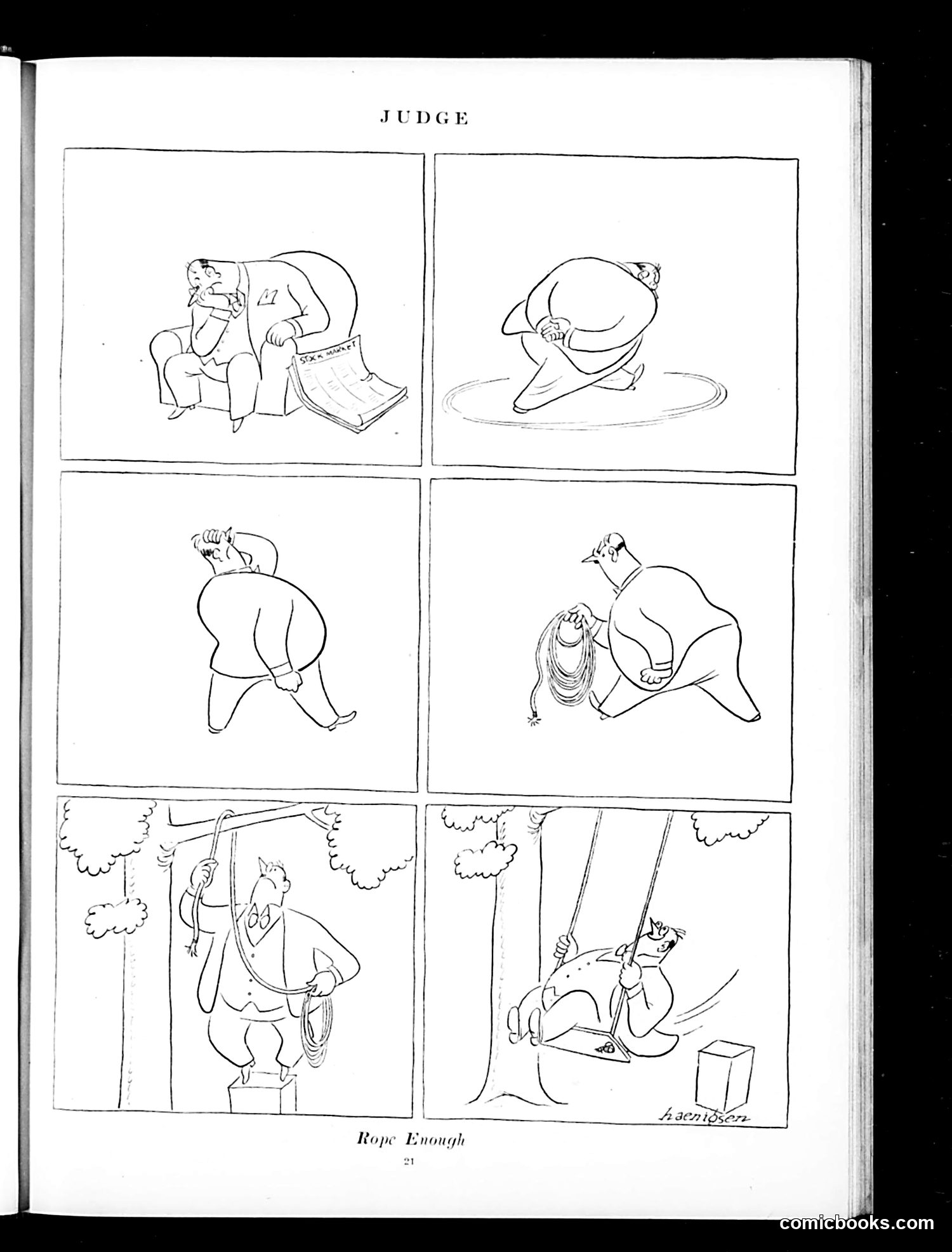
Judge Magazine: "Judge" / "Rope Enough" This six-panel satirical sequence titled "Rope Enough" depicts a rotund judge figure engaging in increasingly absurd contortions and self-entanglement with rope. The progression appears to mock judicial pomposity or incompetence—the judge starts seated authoritatively, then progressively ties himself in knots, ultimately swinging from a tree branch while tangled in rope. The satire likely critiques a specific judge's legal decisions or courtroom conduct, suggesting he's "hanging himself" through his own foolishness or corruption. Without identifying the particular judge or case referenced, the cartoon uses physical comedy and the metaphor of self-strangulation to suggest judicial failure or hypocrisy. The title "Rope Enough" implies the judge has been given adequate means to expose his own incompetence.
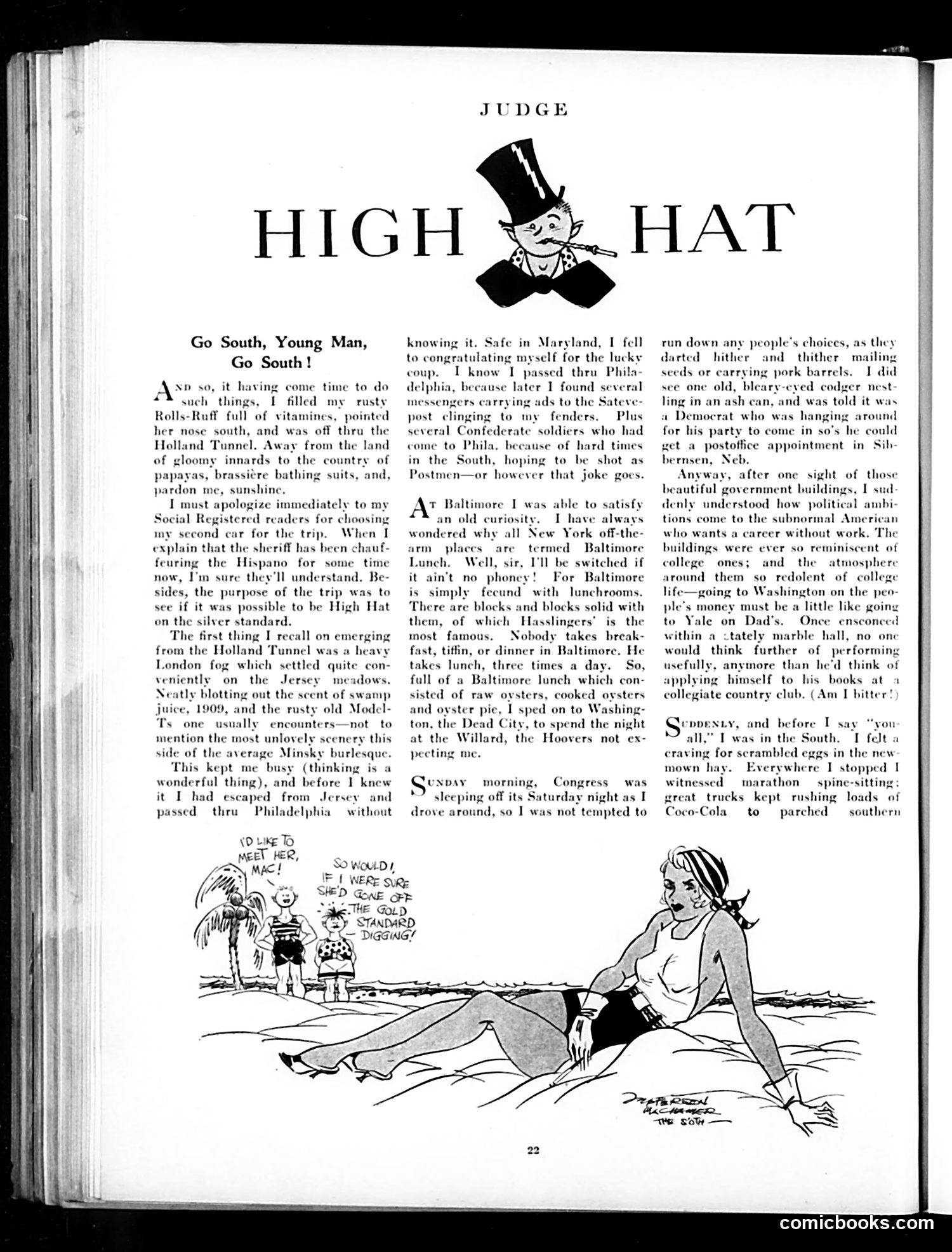
"High Hat" - Judge Magazine Satirical Column This is a humorous travel narrative by an unnamed society writer ("Social Registered") who drives south from New York through Philadelphia, Baltimore, and Washington D.C. in a Rolls-Royce. The satire targets multiple subjects: the author's pretentious "high hat" attitude despite using a second-rate car (the sheriff borrowed the nicer Hispano); the absurdity of Baltimore's obsession with "lunch" (mocking regional identity); and especially Washington politics. The Washington section mocks ineffectual Democratic Party operatives looking for patronage jobs, and satirizes ambitious politicians seduced by the grandeur of government buildings—comparing the Capitol to a "collegiate country club" that encourages idleness over useful work. The cartoon below shows a woman lounging on a beach, likely illustrating the author's Southern destination and the leisure lifestyle being contrasted with serious work. The piece epitomizes Judge's satirical tone: mocking both upper-class pretension and political corruption.
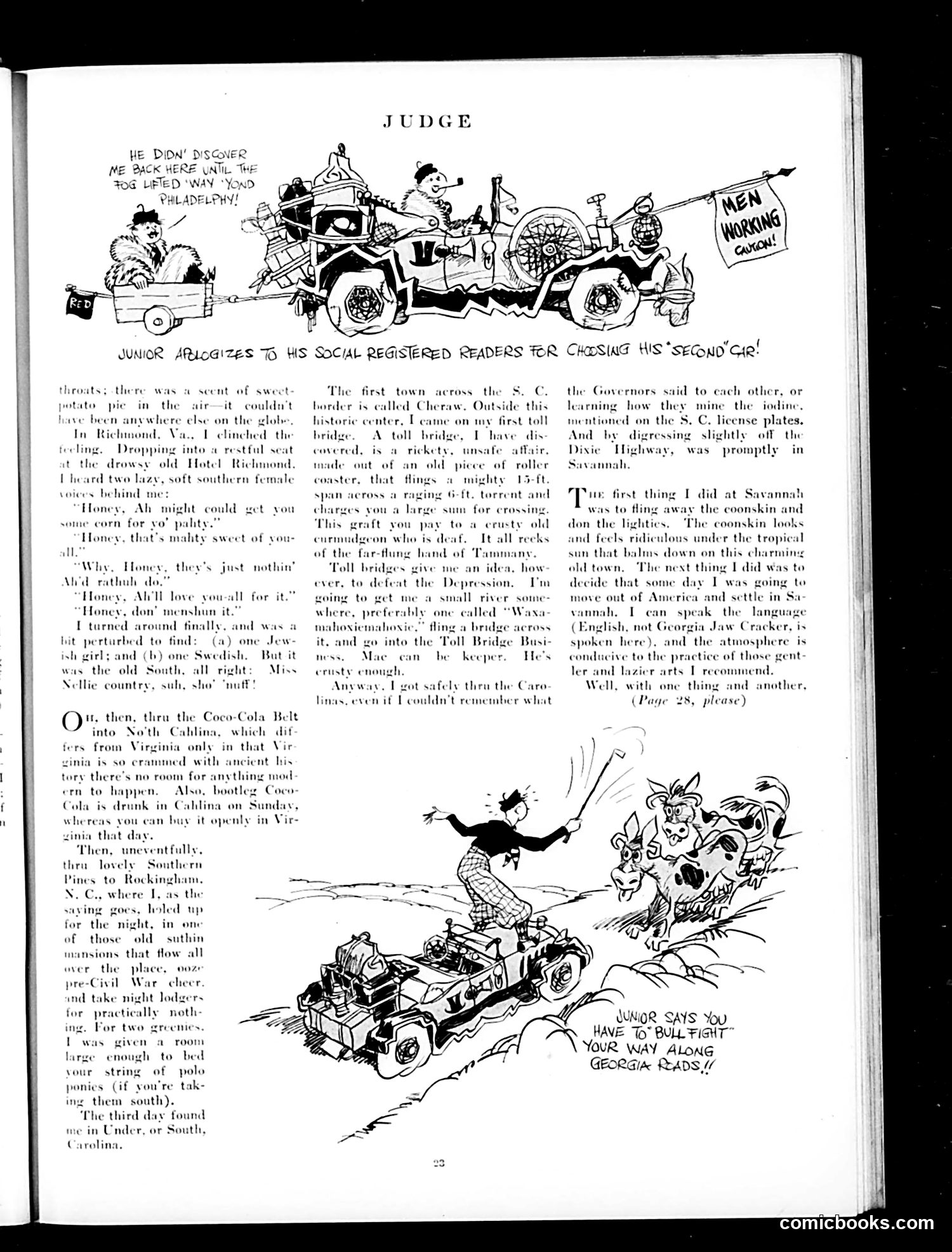
Judge Magazine Cartoon Analysis This page satirizes American regional travel and class pretensions in the early 20th century. The top cartoon shows "Junior" in an absurdly overloaded vehicle labeled "Men Working Ahead," suggesting nouveau riche ostentatious display. The accompanying narrative mocks a narrator's journey through the American South, where he encounters: - Stereotypical "Southern belle" dialect (the "Honey" conversations) representing romanticized Old South nostalgia - Economic critiques: toll bridges as scams, Coca-Cola commercialization, bootleg alcohol availability - Regional condescension: comparing Southern infrastructure unfavorably to Northern standards The lower cartoon depicts the narrator being chased along Georgia roads, with the caption "Junior says you have to 'bull fight' your way along Georgia roads"—mocking dangerous, poorly-maintained Southern highways. The satire targets both Southern pretension and Northern travelers' superiority complex, while criticizing actual conditions: corrupt tollkeepers, Prohibition-era bootlegging, and deteriorating infrastructure in economically struggling regions.
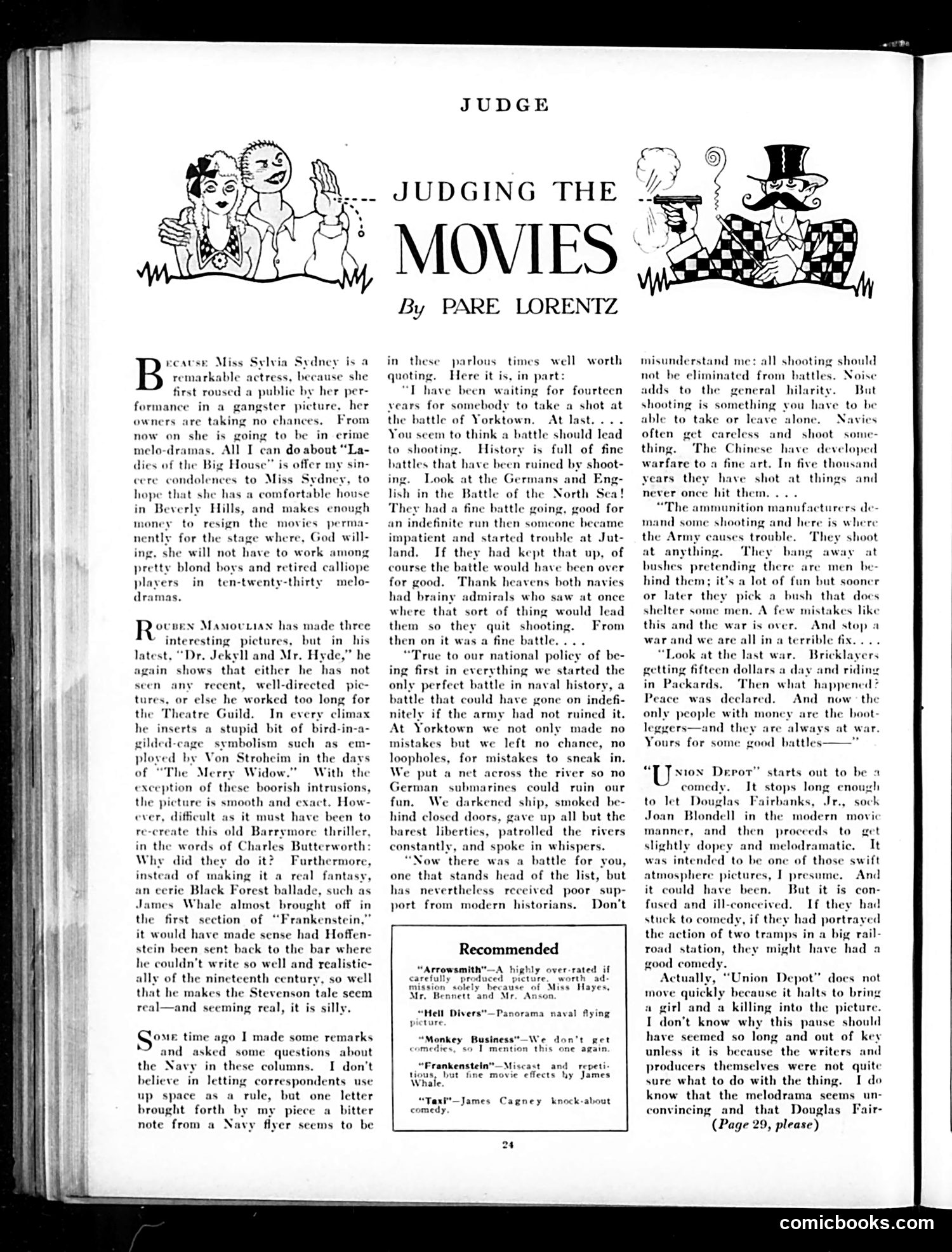
"Judging the Movies" by Pare Lorentz This is a film criticism column from Judge magazine. The main text discusses three Hollywood pictures: Sylvia Sidney's gangster melodramas (criticized as repetitive), Rouben Mamoulian's "Dr. Jekyll and Mr. Hyde" (praised but faulted for pretentious symbolism), and includes a satirical letter from a Navy pilot. The pilot's letter, presented as genuine but likely tongue-in-cheek, mocks pacifist sentiment by praising historical battles that were *never* fought—the Battle of the North Sea and especially Yorktown, which he describes as perfect because neither side actually engaged. The satire critiques naive isolationism or pacifism by showing the absurdity of valuing peace over actual military victory. The "Recommended" box lists contemporary films including "Arrowsmith," "Hell Divers," "Monkey Business," "Frankenstein," and "Taxi"—typical 1930s entertainment Judge's readers would recognize.
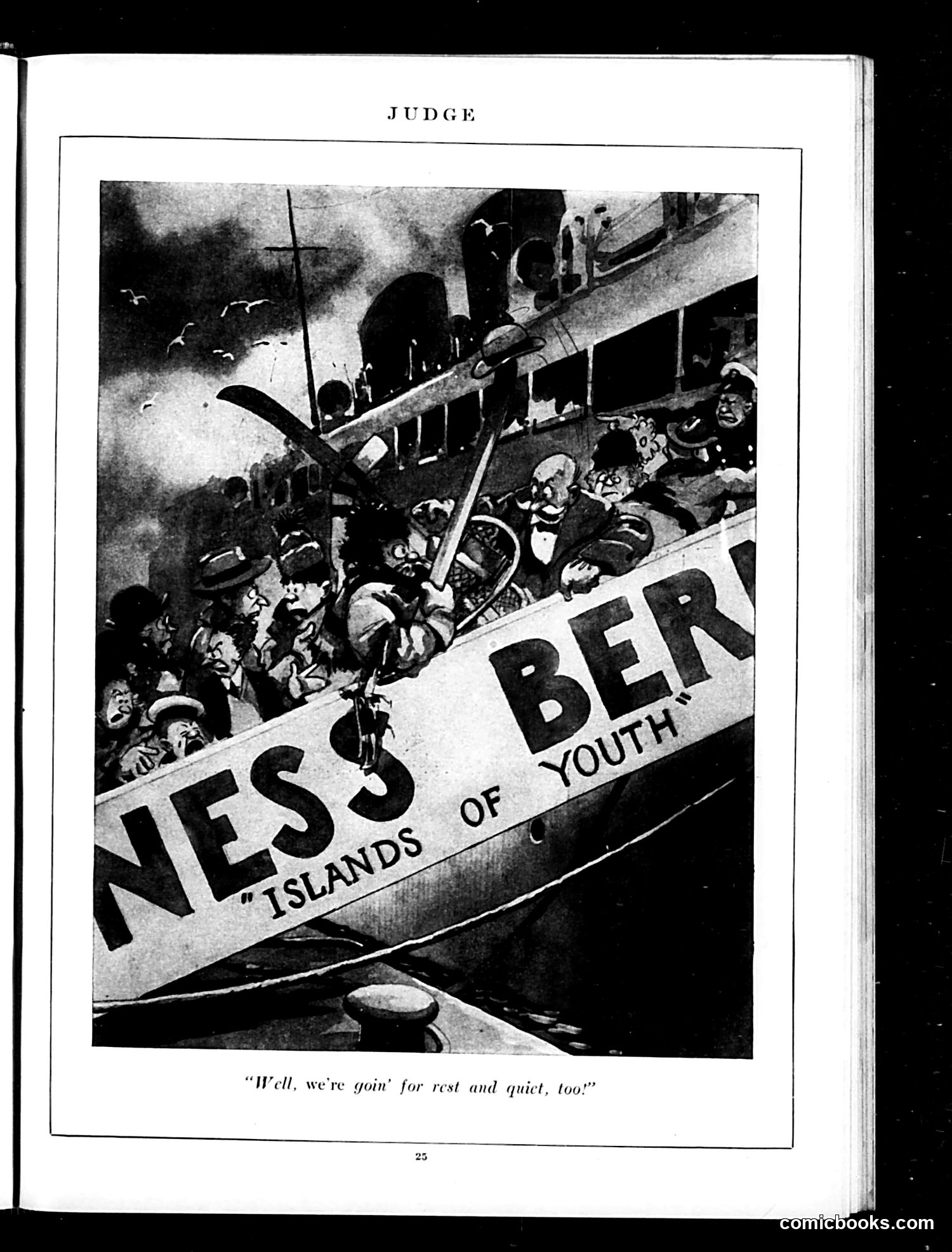
Political Cartoon Analysis This Judge magazine cartoon satirizes what appears to be a government or political initiative promising "rest and quiet" to the public—likely referencing New Deal or similar Depression-era social programs. The image shows a crowded, chaotic boat labeled "Islands of Youth" packed with caricatured figures of various ages and types, all appearing frantic rather than restful. The cartoon's irony is evident: the vessel's promise of peaceful retreat contradicts the disorder visible aboard. The crude caricatures and crowded composition suggest Judge's skepticism toward the program's stated goals. The quoted caption—a figure repeating the official promise—underscores the satirical point: such initiatives deliver chaos rather than the advertised tranquility. The exact program referenced remains unclear without additional context.
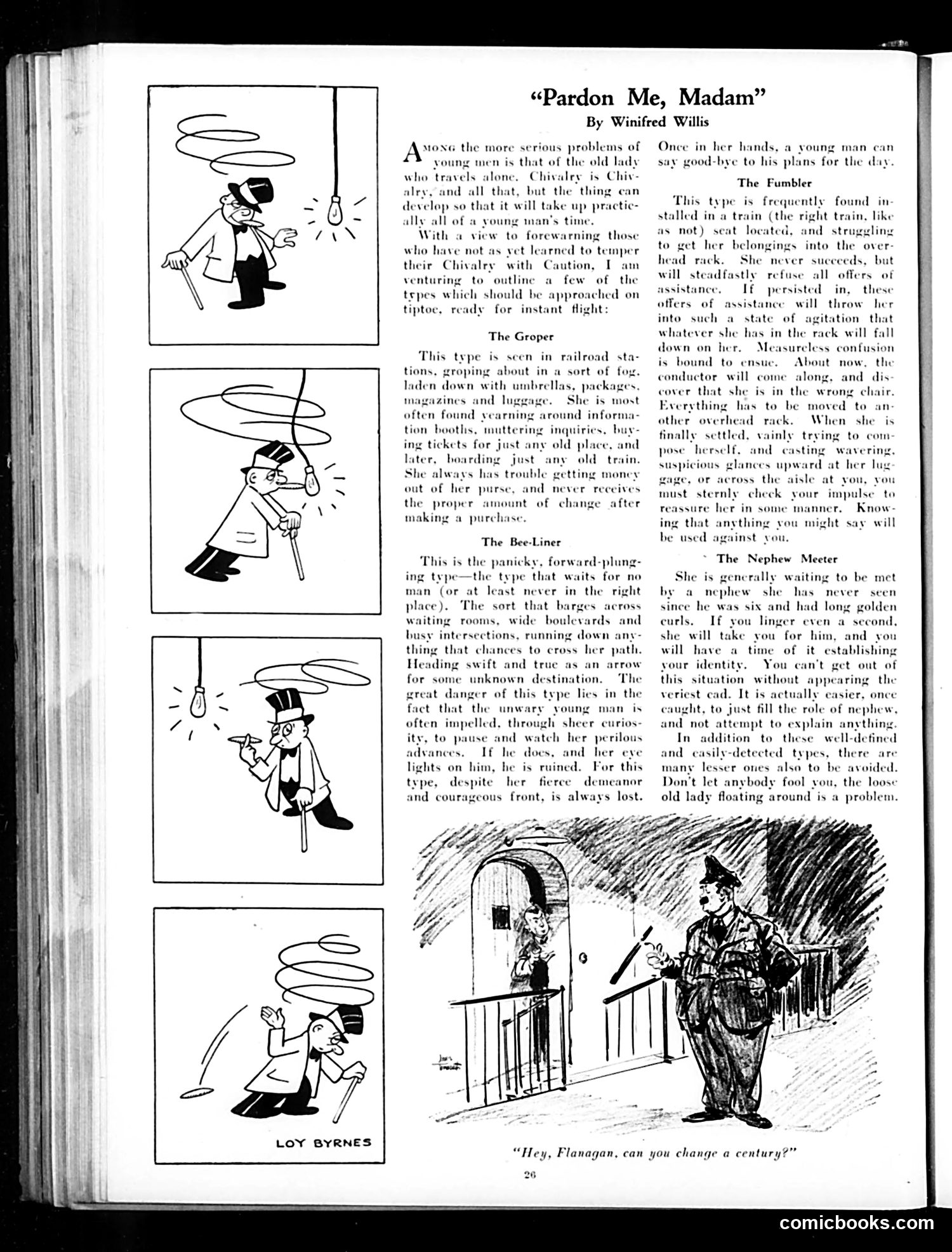
"Pardon Me, Madam" Analysis This is a humorous advice piece by Winifred Willis about the social obligation young men face when encountering elderly women in public spaces—a serious concern in early 20th-century etiquette culture. The article catalogues stereotypical "types" of traveling elderly women that young men should recognize and handle carefully: The Groper (confused and money-troubled at stations), The Bee-Liner (recklessly rushing), The Fumbler (struggling with luggage), and The Nephew Meeter (mistaking strangers for relatives). The satire mocks both the exaggerated chivalric code constraining young men and the predictable behavioral patterns attributed to elderly women travelers. The cartoon illustrations by Loy Byrnes show comically distressed figures with halos, emphasizing the absurdity of treating these mundane encounters as moral dilemmas. The bottom illustration shows the punchline: an elderly woman asking a policeman to "change a century"—suggesting women travelers are hopelessly confused about modern times.
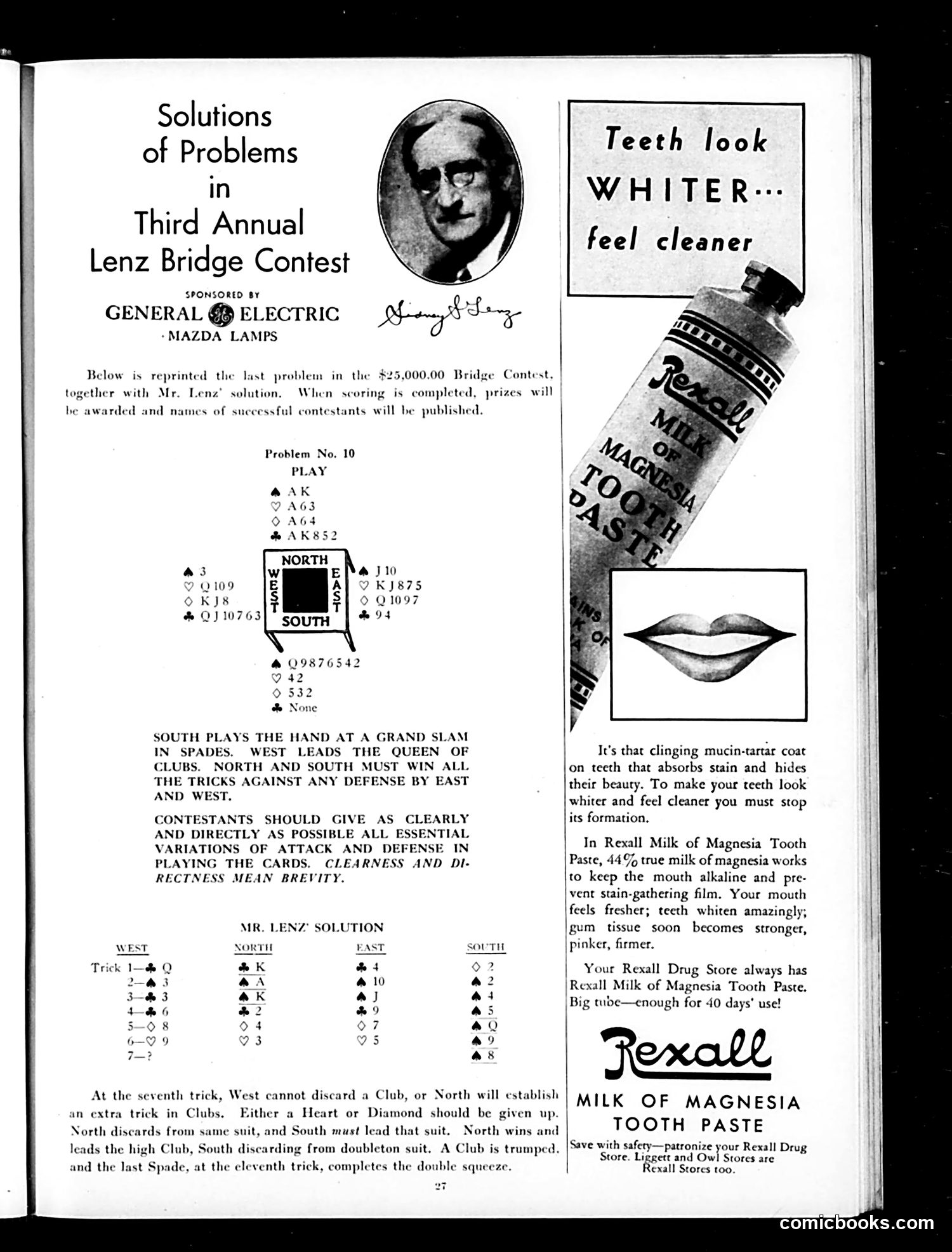
Analysis This page is primarily advertising and puzzle content, not political satire. The left side features the conclusion of Judge magazine's "Third Annual Lenz Bridge Contest," sponsored by General Electric-Mazda Lamps. It presents a bridge card problem (#10) with Mr. Lenz's solution—a technical explanation of how to win a grand slam in spades through strategic card play. The right side contains a toothpaste advertisement for Rexall Milk of Magnesia Tooth Paste, featuring a vintage pitch about removing "mucin-tartar coat" from teeth. The ad uses a portrait of a woman with an exaggerated smile and includes product claims about alkaline properties keeping mouths fresh. There is no political cartoon or satire on this page. The portrait at top appears to be Mr. Lenz himself (signed), not a caricature. The content reflects typical mid-century magazine layout: mixing puzzles, solutions, and commercial advertising to fill space and generate revenue.
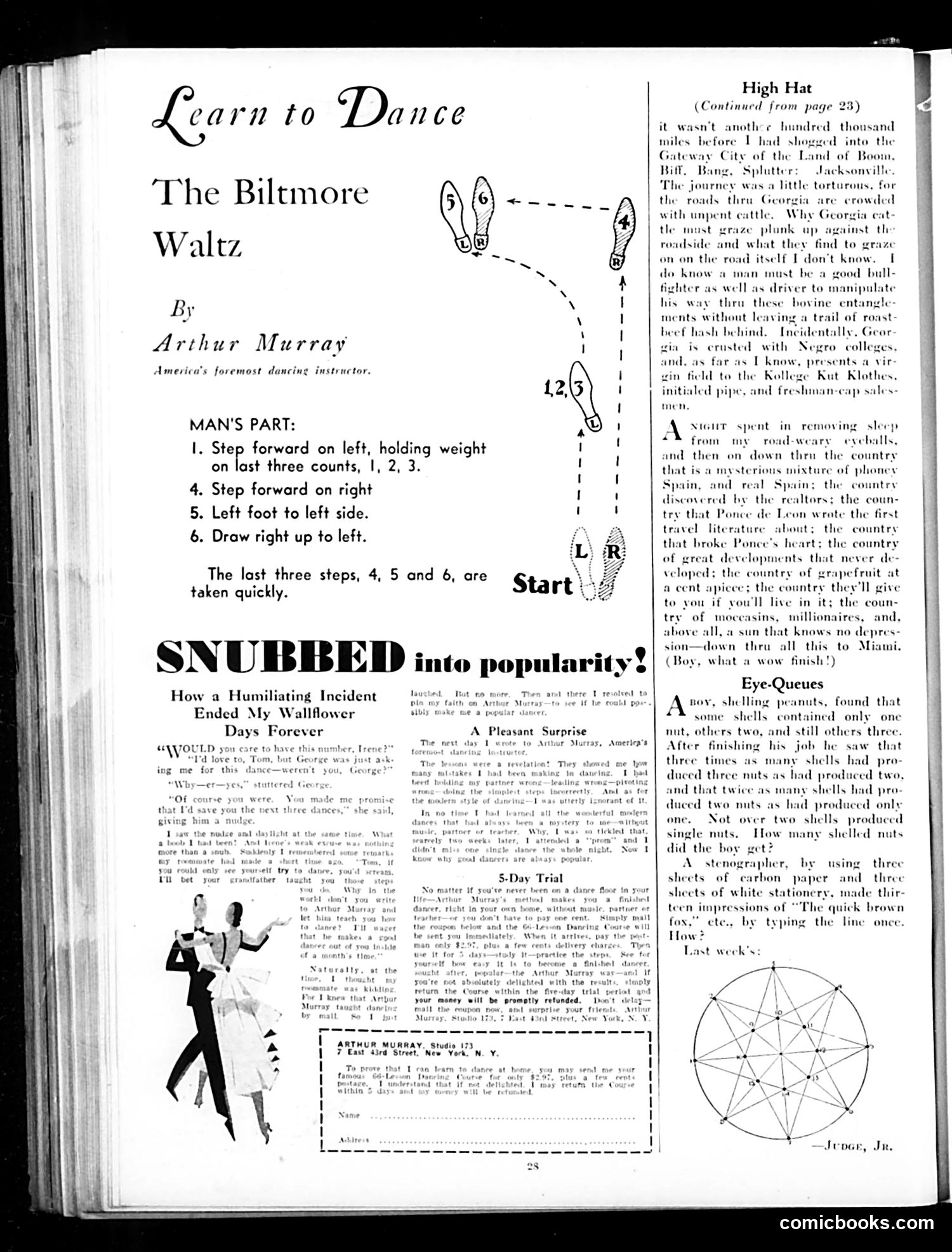
Explanation for Modern Readers This page contains dance instruction and humor content from *Judge* magazine. The main feature is Arthur Murray's "Biltmore Waltz" — an advertisement for the famous dancing instructor's correspondence course, showing footstep diagrams for learning the waltz at home. The sidebar stories are light satirical humor typical of the era: - "Snubbed into Popularity" appears to be a humorous personal anecdote about overcoming shyness through dancing lessons - "A Pleasant Surprise" involves someone (likely a student) discovering unexpected benefits from Murray's instruction - "Eye-Queues" is a puzzle feature about peanut shells — a recreational brain-teaser The "High Hat" column discusses travel through Georgia and Florida, with casual observations about cattle on roads and regional character. The overall tone is lighthearted and promotional for Murray's dancing business, which was heavily advertised in popular magazines of this era. This represents early 20th-century self-improvement marketing combined with entertainment content.
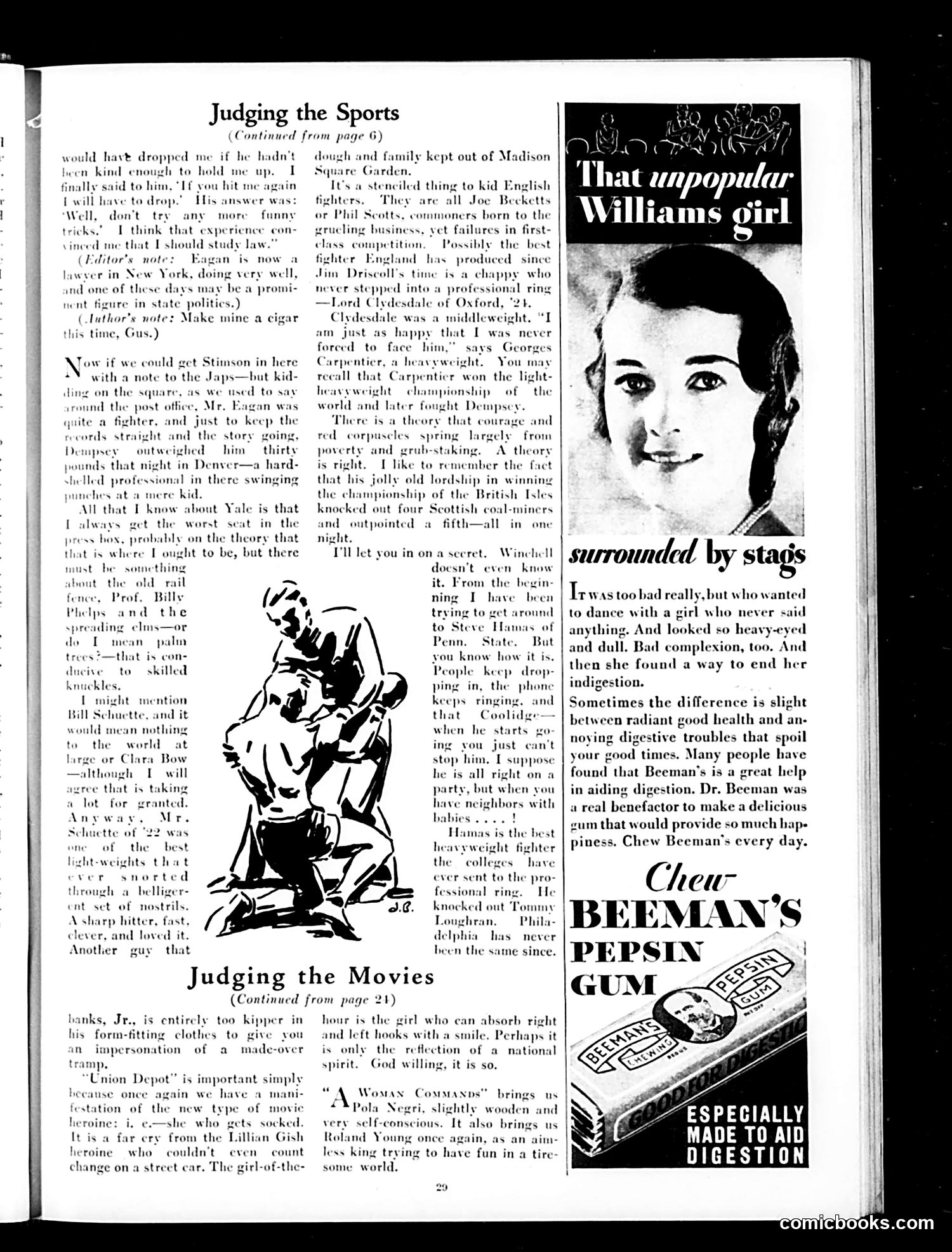
Analysis for Modern Readers This page from Judge magazine contains sports commentary and movie criticism, plus advertising. The main cartoon depicts a boxer in a fighting stance—likely illustrating the article's discussion of collegiate heavyweight fighter Steve Hamas, described as "the best heavyweight fighter the colleges have ever sent to the professional ring." The sports section critiques English fighters as generally mediocre (comparing them to Joe Beckett and Phil Scott), praises Georges Carpentier and Lord Clydesdale, and celebrates Hamas's knockout victories. The writing assumes readers follow boxing closely. The movie section mocks actors like Joseph Banks Jr. for being insufficiently masculine in their costumes, and celebrates a "new type" of movie heroine who can "absorb right and left hooks with a smile"—reflecting what the author sees as modern national spirit. The Beeman's Gum advertisement capitalizes on digestive concerns common to the era, suggesting chewing gum aids digestion—a popular health claim of the 1920s-30s.
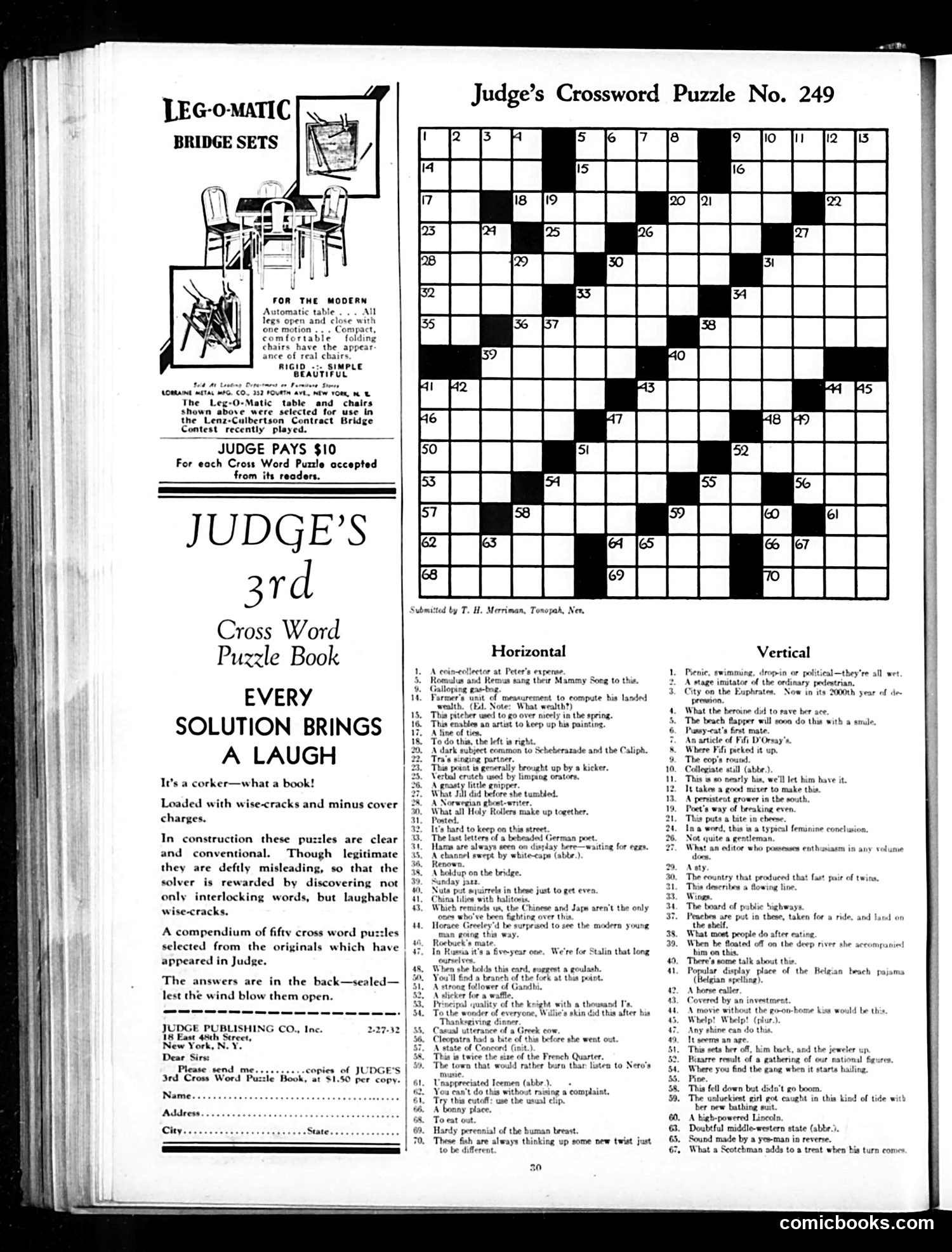
Judge's Crossword Puzzle No. 249 This page is primarily a crossword puzzle from Judge magazine's 3rd puzzle book, not a political cartoon. The bulk of the content consists of the puzzle grid and clues (both horizontal and vertical entries). However, the clues themselves contain topical humor referencing 1930s American culture and politics. References include: - "Holy Rollers" (religious fundamentalists) - Stalin (Soviet leader, contemporary to publication) - "Chinese and Japs" fighting (likely referencing the Second Sino-Japanese War) - Belgian beach pajamas (fashion commentary) - General social satire about wealth, romance, and modern life The page also advertises Leg-O-Matic bridge sets (folding furniture), mentioned as used in the "Lenz-Culbertson Contract Bridge Contest." The puzzle itself uses wordplay and double meanings typical of Judge's satirical style, embedding contemporary social commentary into what appears to be straightforward crossword clues.
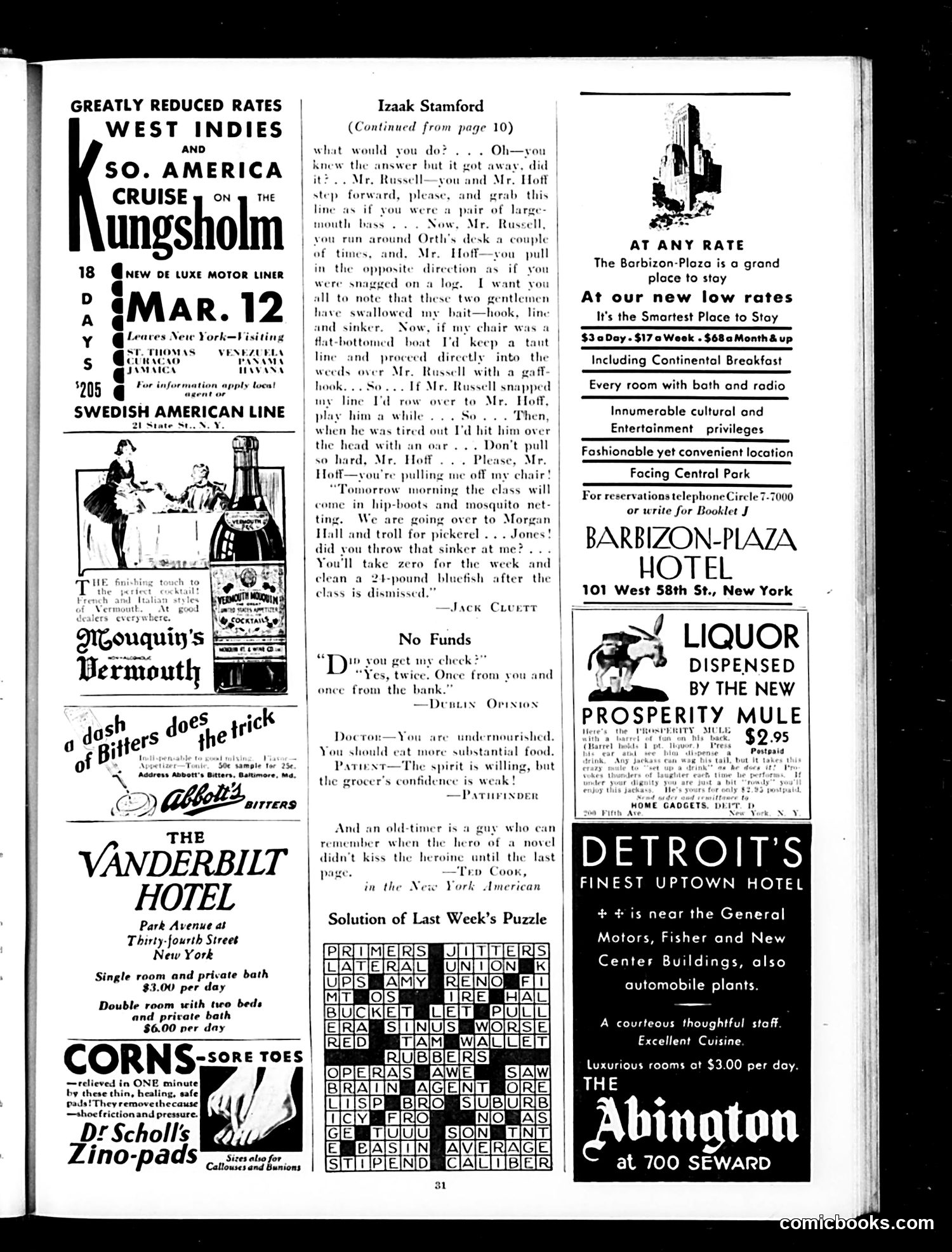
Analysis of Page 31 from Judge Magazine This page is primarily advertising with minimal editorial content. The advertisements promote 1920s-30s hotels, cruise lines, and consumer products aimed at middle- and upper-class readers. The small editorial content includes: "Izaak Stamford" (continued story): A humorous fishing lesson where an instructor uses metaphors comparing classroom discipline to fishing technique, addressing students Mr. Russell and Mr. Hoff. The satire mocks overly elaborate teaching methods. Brief jokes about financial struggles ("No Funds") and class differences—a doctor advising better nutrition to an impoverished patient, and a grocer refusing credit despite the patient's "willing spirit." "Corns-Sore Toes" ad: Uses Dr. Scholl's pads to address working-class foot problems from shoe friction—a practical health concern of the era. The page reflects Depression-era contradictions: luxury travel and hotel advertisements coexist with humor about poverty and financial constraint, suggesting Judge's audience straddled economic uncertainty while aspiring to genteel leisure.
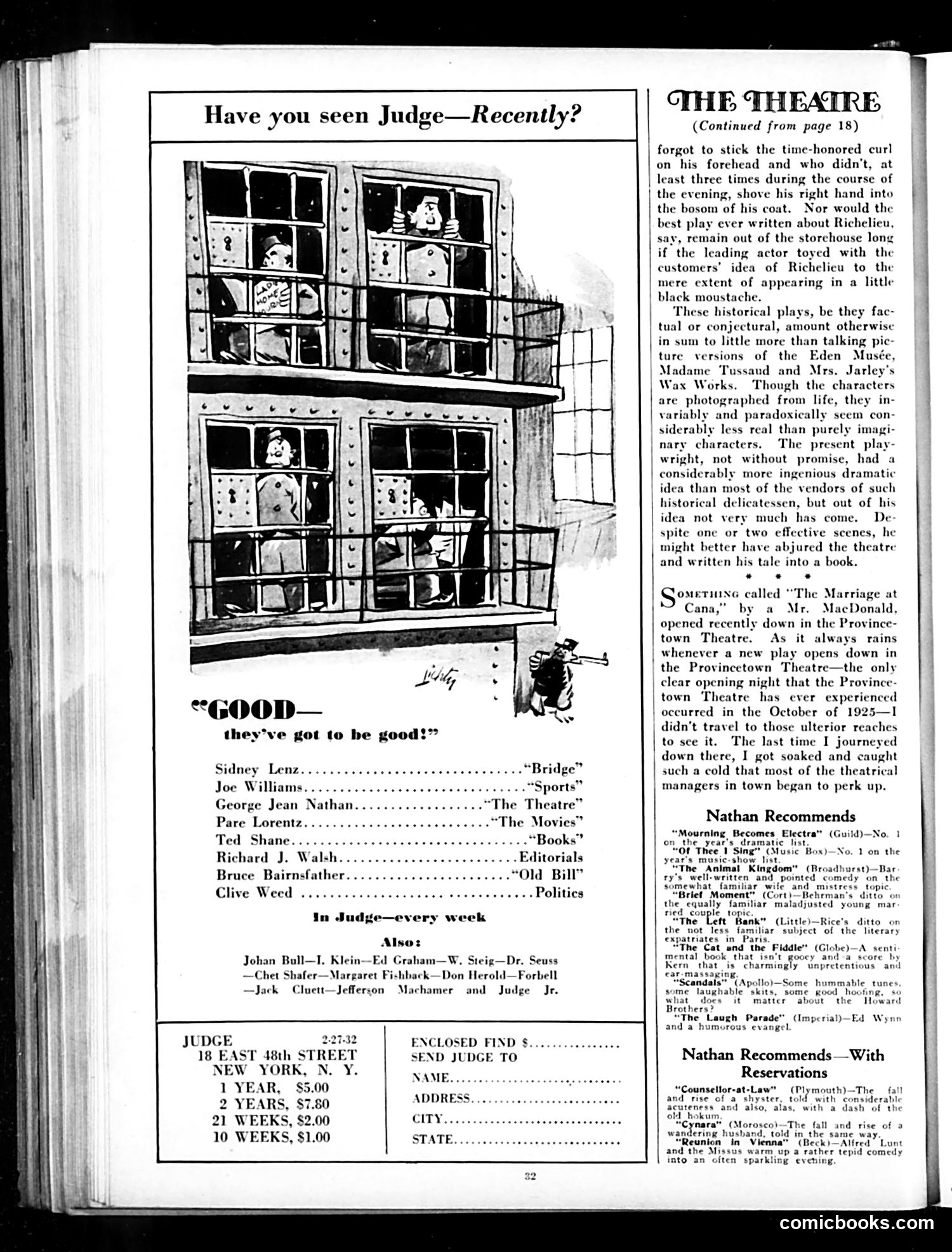
Judge Magazine Theatre Page Analysis This page showcases Judge magazine's editorial structure and theatrical criticism circa early 1930s. The large cartoon depicts a tenement building's windows with various residents—a visual metaphor for the magazine's diverse contributors ("Good—they've got to be good!"). The left column lists staff members by beat: Sidney Lenz covers "Bridge," Joe Williams handles "Sports," George Jean Nathan reviews "The Theatre," and others cover Movies, Books, Editorials, and Politics. This masthead format was common for magazines establishing credibility through recognizable bylines. The right column contains theater reviews by Nathan, critiquing contemporary Broadway productions like "Mourning Becomes Electra" and "Of Thee I Sing." These reviews use period vernacular ("hokum," "maladjusted young married couple") and reference theatrical conventions (historical plays, musicals) familiar to 1930s audiences. The page essentially functions as advertising for Judge's expertise and staff, inviting subscriptions while demonstrating the magazine's serious cultural coverage alongside satirical content.
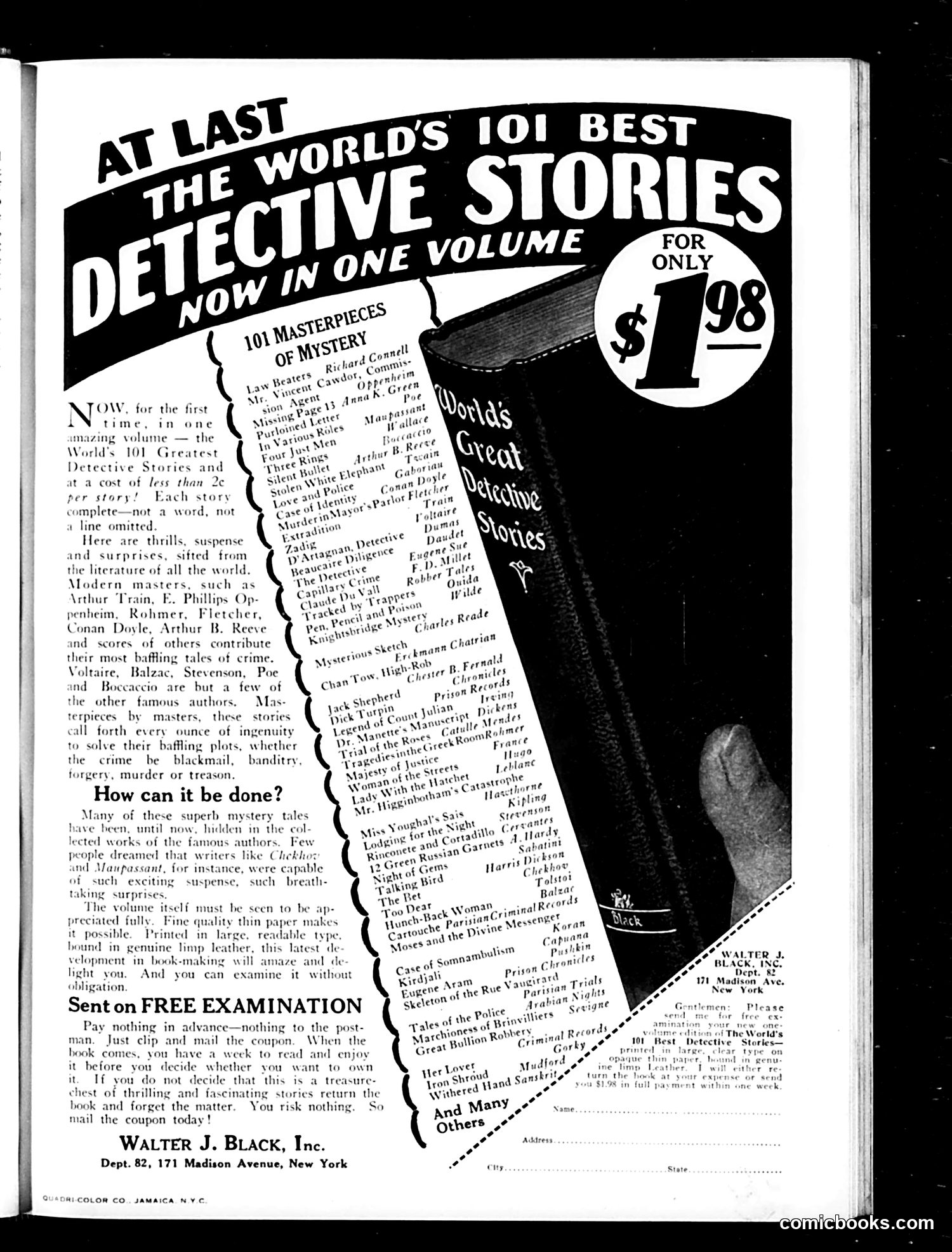
Analysis of This Advertisement Page This is primarily a book advertisement, not a political cartoon. It promotes "The World's 101 Best Detective Stories," a compilation volume selling for $1.98—presented as remarkable value since each story costs less than 2 cents. The ad emphasizes the collection includes works by famous mystery writers: Arthur Conan Doyle, E. Phillips Oppenheim, Sax Rohmer, Arthur Train, and others. It also lists classic literary figures (Poe, Balzac, Stevenson) who wrote detective fiction, lending prestige to the collection. The marketing strategy uses typical early-20th-century direct-mail tactics: the promise of "FREE EXAMINATION" with a week to decide before purchasing, requiring only a mailed coupon. The large book image on the right shows the physical product. There is no political satire or social commentary on this page—it's straightforward commercial advertising aimed at readers of *Judge* magazine who enjoyed mystery and detective stories. The appeal is to popular taste for thrilling narratives at an economical price point.

Analysis This is a Camel cigarette advertisement, not satirical content. Published in 1932 by Judge magazine, it promotes the "Camel Humidor Pack" featuring a smiling woman smoking. The ad emphasizes that Camel cigarettes stay "fresh" through special packaging and the "Reynolds method" of heat application that prevents tobacco from drying out. The marketing targets women smokers specifically, suggesting they've "switched to Camels" and understand the benefits of freshness—a notable detail given women's smoking was still somewhat socially controversial in the early 1930s. The page includes radio program sponsorships ("Camel Quarter Hour," "Prince Albert Quarter Hour"), reflecting cigarette companies' heavy investment in broadcast advertising during this era. For modern readers: This is a straightforward product advertisement with no satire or political commentary—merely period marketing that openly promotes smoking without health warnings, which would be illegal today.