judge
Judge — November 1932
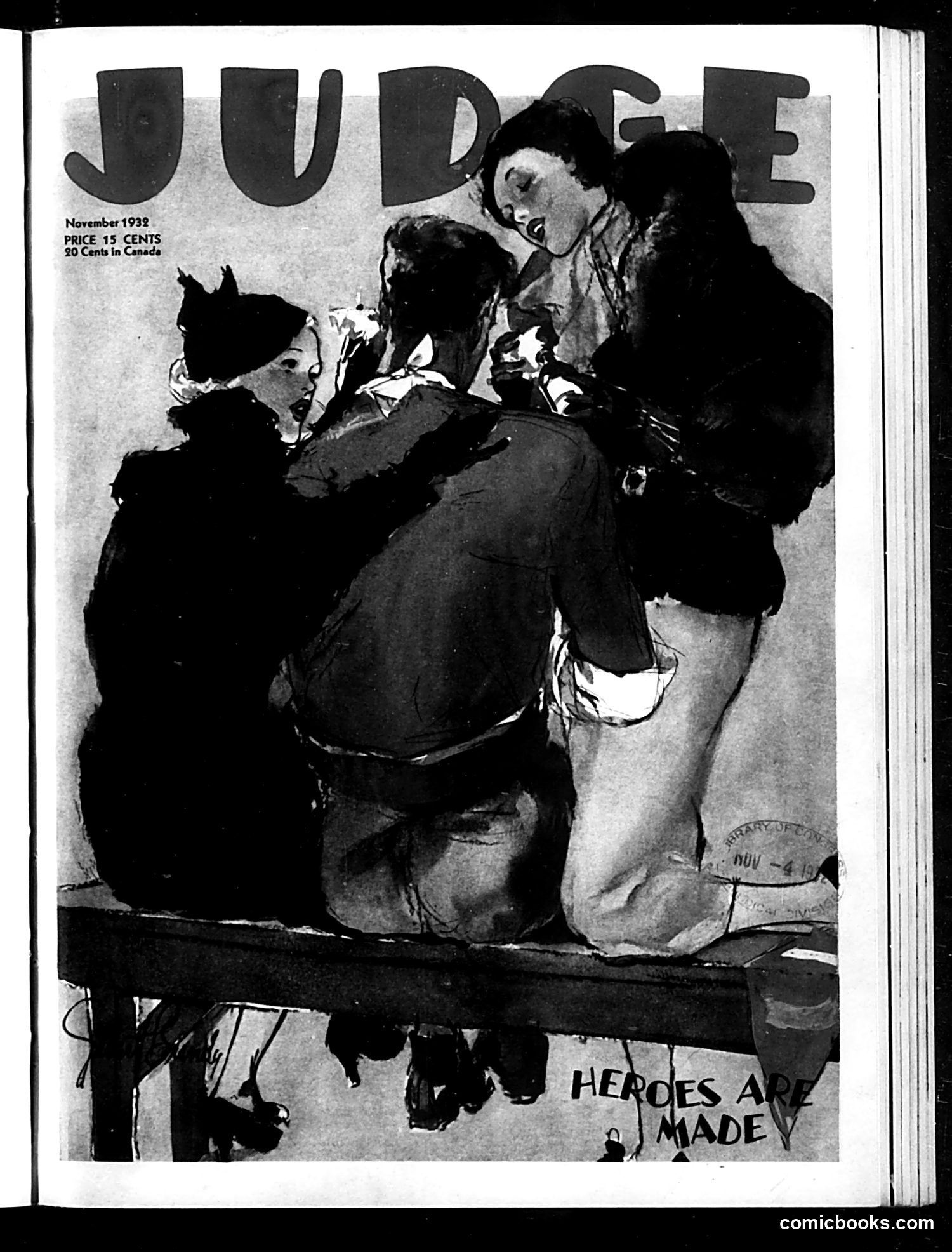
Analysis of Judge Magazine Cover, November 1939 This cover depicts four figures in winter clothing huddled together on what appears to be a wooden beam or ledge. The tagline reads "HEROES ARE MADE," suggesting commentary on heroism or courage under duress. Given the November 1939 date and the imagery of people crowded together in difficult conditions, this likely references contemporary European situations—possibly refugees or victims of conflict during the early stages of World War II. The composition emphasizes human vulnerability and struggle. However, without clearer identification of the specific figures or a readable main article, the exact satirical target remains unclear. The cover appears to critique either the conditions these people face or perhaps attitudes toward those enduring hardship during this turbulent historical period.
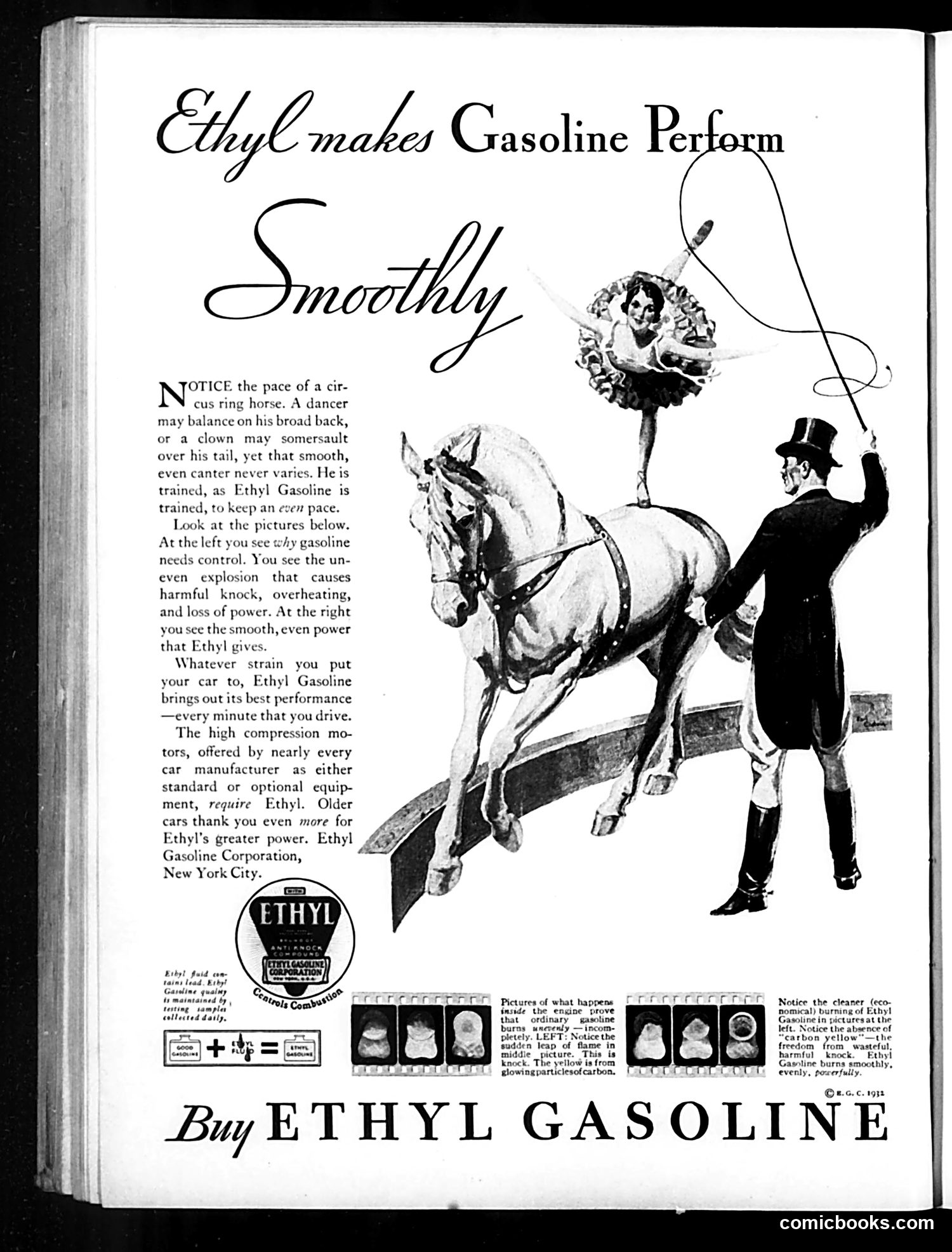
Analysis of "Ethyl Makes Gasoline Perform Smoothly" This is primarily an advertisement for Ethyl Gasoline, not satire. The page uses an extended metaphor comparing gasoline performance to a circus performer's control. The image shows a ringmaster controlling a circus horse with a whip—the horse represents an automobile engine. The metaphor suggests that just as a trained horse maintains "even pace" under a skilled handler, Ethyl Gasoline provides smooth, controlled engine performance. The text claims Ethyl prevents "uneven explosion," "knock," overheating, and power loss. The small engine diagrams at bottom purport to show combustion differences. There is no apparent political satire here—this is straightforward early automotive advertising using circus imagery as a performance analogy. The date appears to be 1920s-era based on styling.
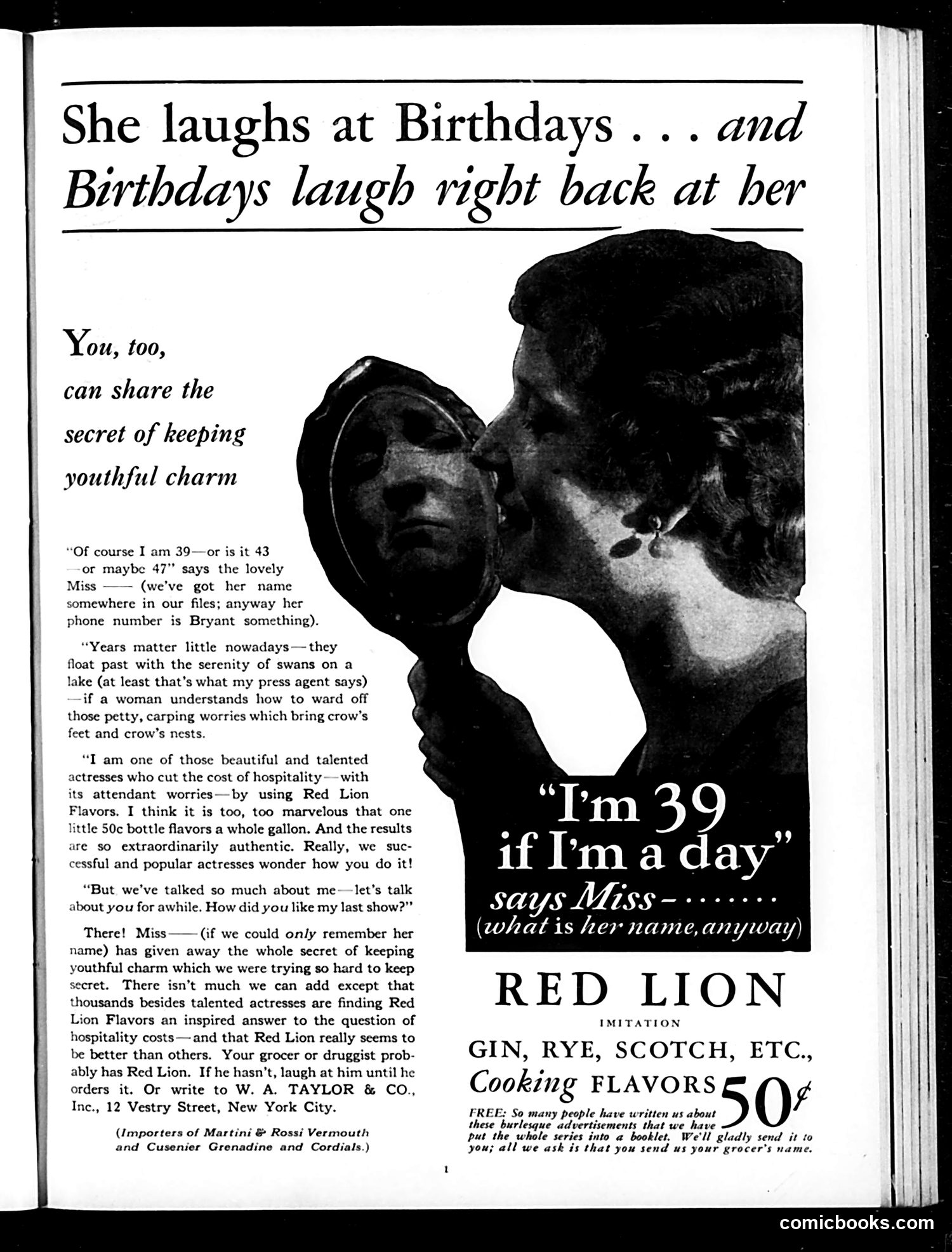
Analysis This page is primarily advertising for Red Lion cooking flavors rather than political satire. The advertisement uses humor to pitch a product by portraying an unnamed actress (identified only as "Miss") who claims to be 39 years old "if I'm a day"—a joke about women misrepresenting their age. The ad suggests that Red Lion Flavors are the "secret" to maintaining youthful charm, implying that using the product helps actresses appear younger and maintain their careers. The humor relies on contemporary stereotypes about actresses' vanity and anxiety about aging, while the accompanying text humorously frames the product as a solution to hospitality costs. This is essentially a consumer advertisement using period-appropriate comedic conventions rather than political commentary.

Analysis This page is not a cartoon or satire—it's a straightforward advertisement for General Electric Mazda Lamps. The ad promotes GE's trademark (the "GE" circle mark on bulbs) as a guarantee of quality and efficiency. The visual shows various light bulbs, with the left one appearing darker or defective to contrast with the brighter, properly-functioning bulbs on the right. The messaging emphasizes that consumers should look for the GE mark to ensure they receive reliable lighting at low cost, and to avoid wasted electricity from inferior bulbs that "blacken quickly" or burn out prematurely. This represents early 20th-century consumer education advertising—establishing brand trust through trademark recognition rather than satire or political commentary.
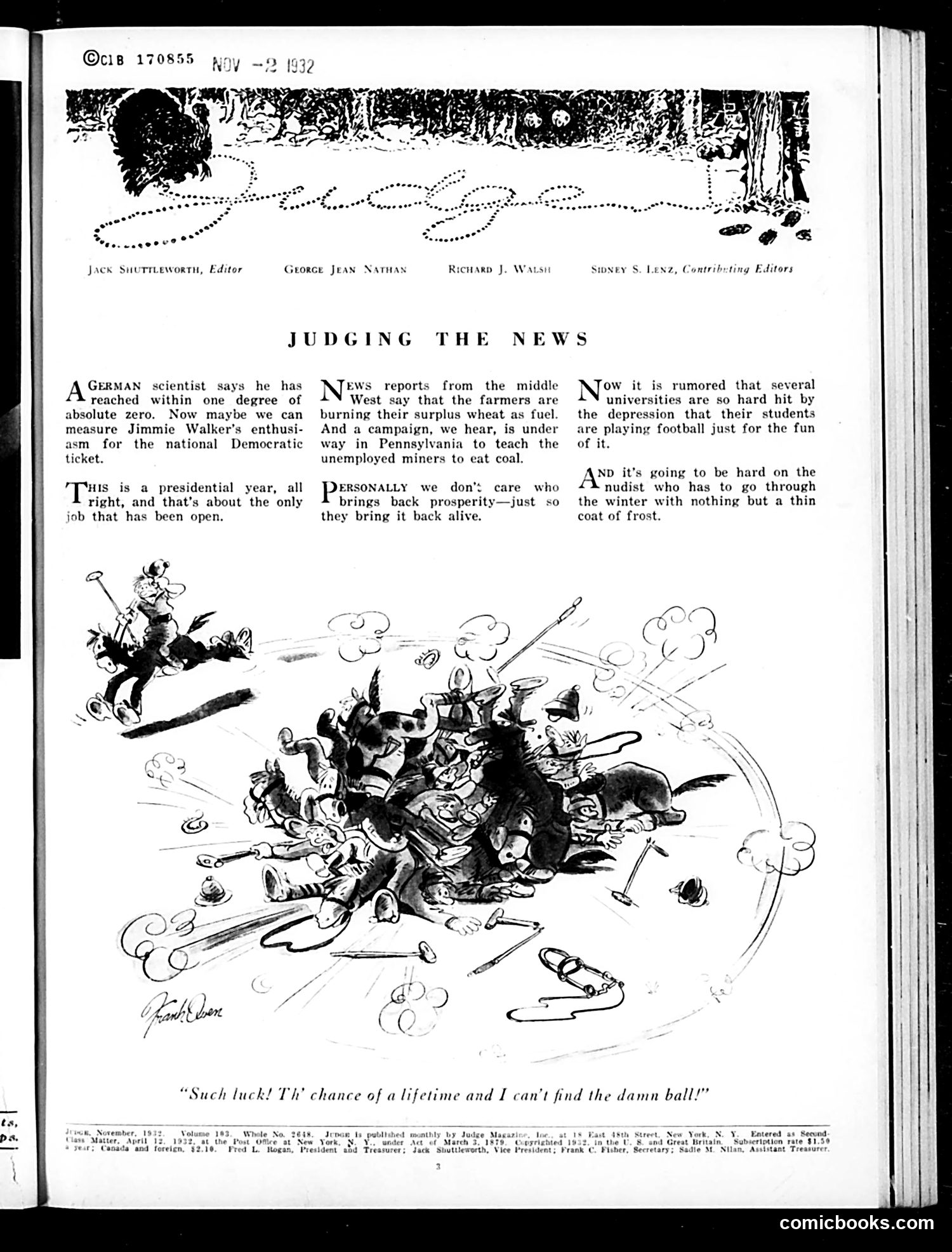
"Judging the News" - Judge Magazine, November 1932 This page contains editorial commentary and a political cartoon satirizing the Great Depression era. The main cartoon depicts a chaotic pile of figures engaged in violent struggle, with the caption "Such luck! I'h' chance of a lifetime and I can't find the damn ball!" The imagery suggests political/economic chaos—likely depicting competing interests (politicians, businessmen, workers) fighting over resources during the Depression. The "ball" appears to represent prosperity or economic opportunity that everyone seeks but cannot grasp. The brief text items mock contemporary news: German scientists' claims, farmers burning wheat as fuel, Pennsylvania's coal-feeding proposals, and universities cutting sports budgets. These snippets illustrate economic absurdities of the Depression period—destroying food and fuel while people starved—which the magazine presents as evidence of widespread dysfunction.
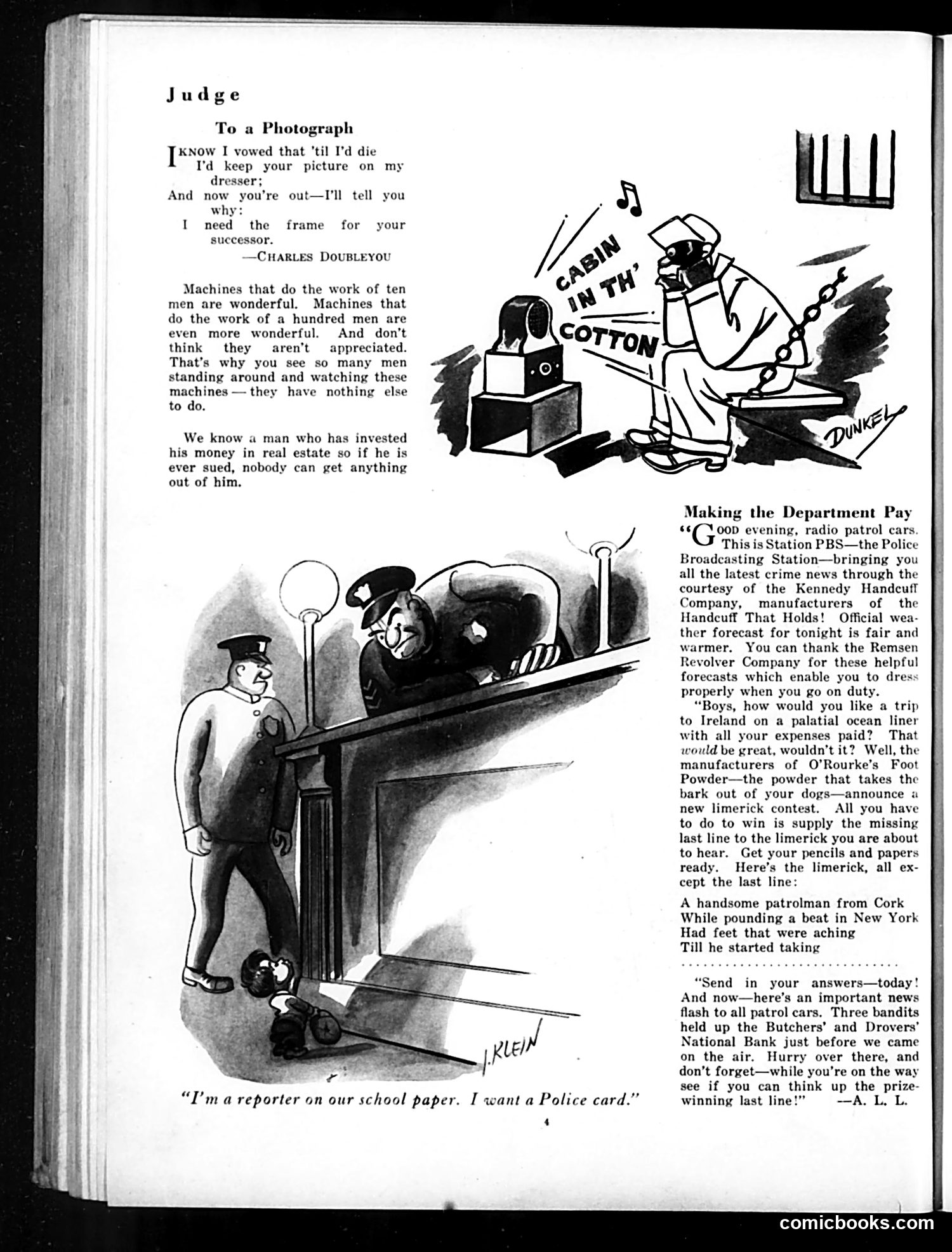
Analysis of Judge Magazine Page This page combines poetry, satirical commentary, and advertising humor typical of Judge magazine. "Judge to a Photograph" is a poem by Charles Doubleday mocking someone who kept a photograph as a memento, now admitting he needed the picture frame for his successor—a cutting joke about replacability. The cartoons include workplace scenes: one shows a man seeking a police card as a school paper reporter; another depicts radio patrol cars and police broadcasting, referencing early 20th-century law enforcement technology. The advertising content dominates the right side, promoting products like Kennedy Handcuff Company's handcuffs, Remsen Revolver Company items, and O'Rourke's Foot Powder. There's a humorous "limerick contest" encouraging readers to submit entries for prizes. The overall tone reflects Jazz Age-era satire: workplace absurdities, modern technology humor, and consumerist messaging blended together.
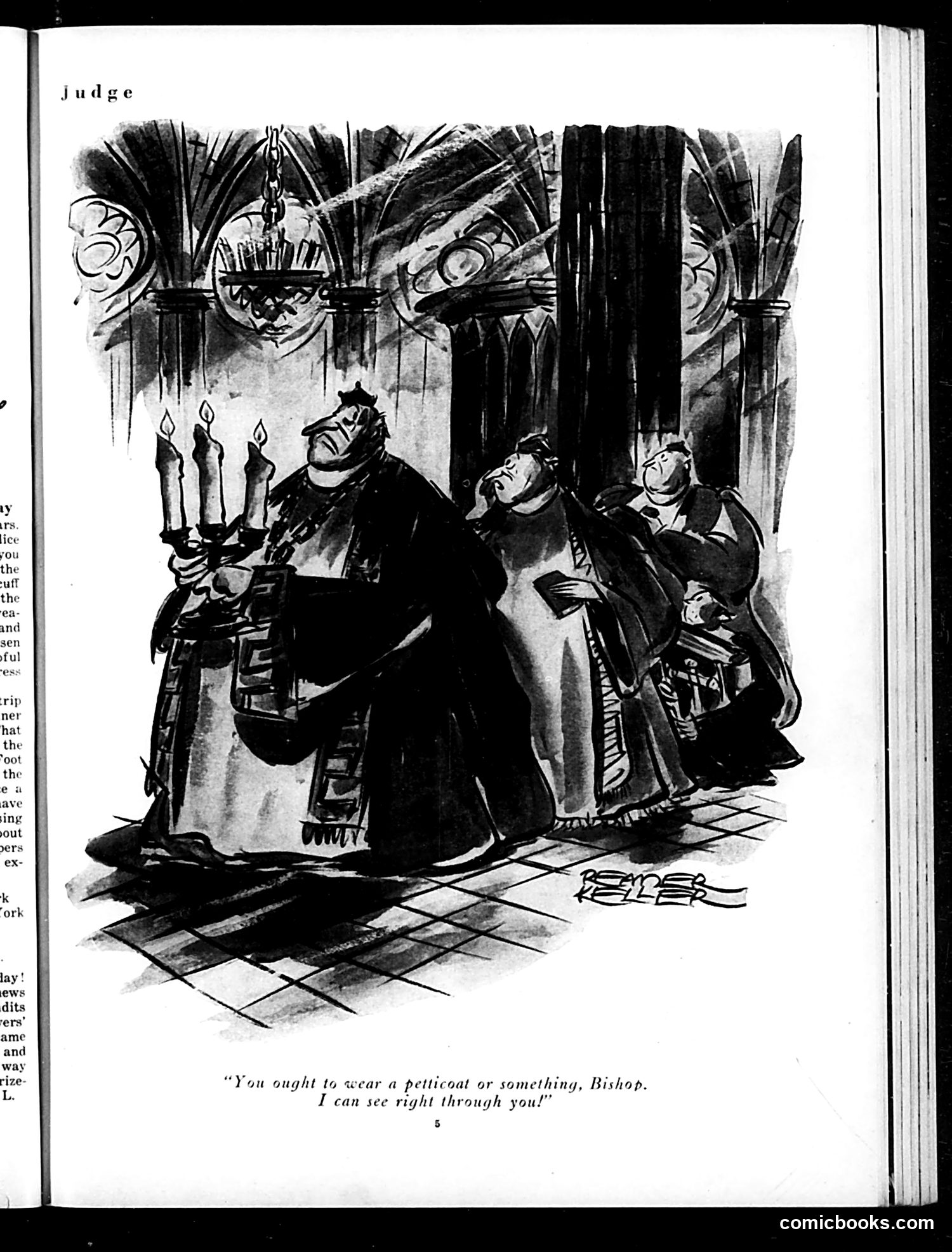
Analysis of "Judge" Cartoon Page This page titled "Judge" contains a single political cartoon depicting three figures in formal ecclesiastical robes in what appears to be a cathedral setting, with ornate decorative elements above. The caption reads: "You ought to wear a petticoat or something, Bishop. I can see right through you!" This is a satirical jab at the transparent hypocrisy or lack of substance of a bishop or religious figure. The cartoon suggests the clergy member has no real depth or integrity—one can "see right through" him metaphorically. The humor relies on the double meaning: literally seeing through thin clothing versus perceiving someone's moral emptiness or duplicity. Without additional context about the specific date or religious controversies of the period, the exact target remains unclear, though it likely critiques clerical corruption or moral failings.
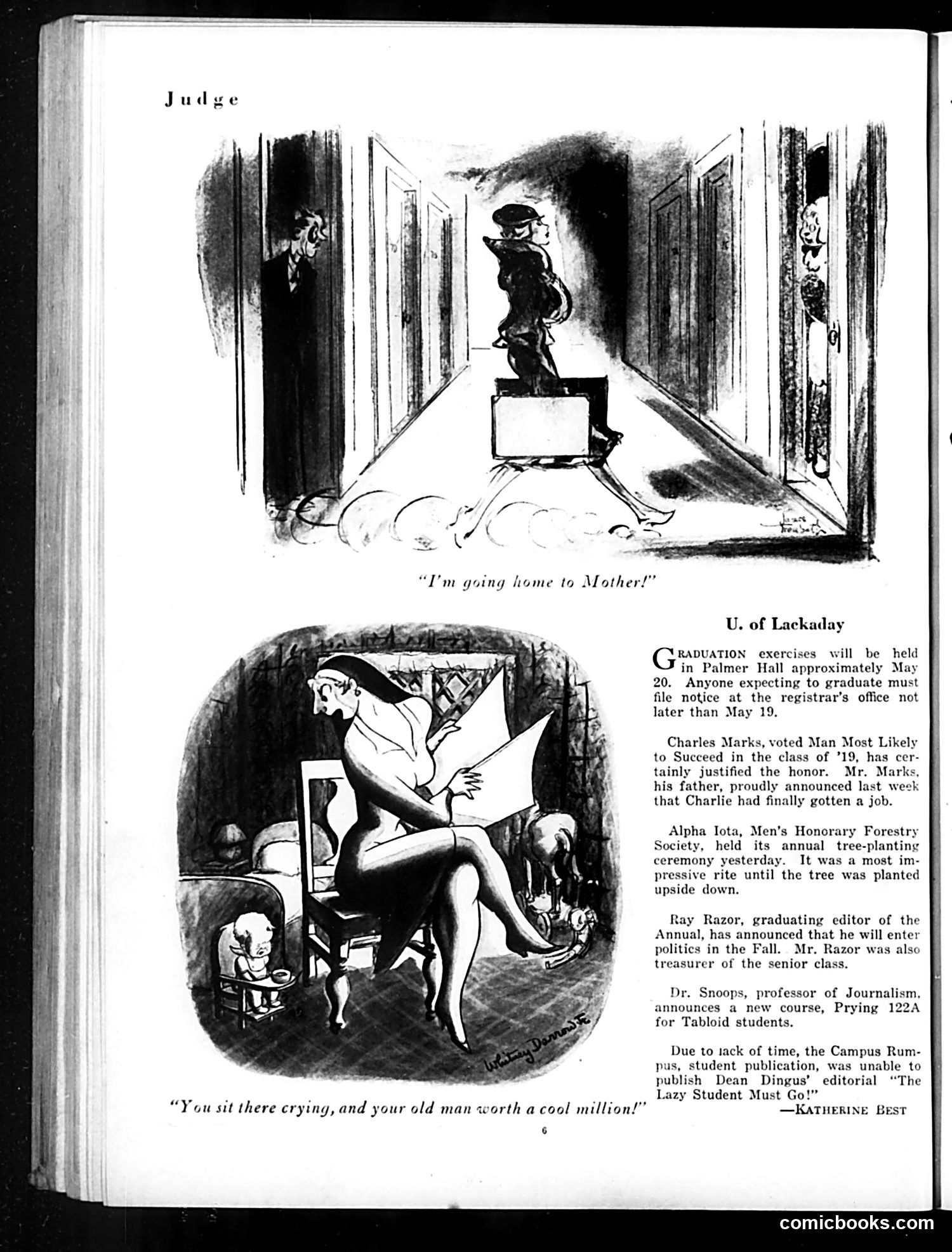
Judge Magazine Page Analysis This page contains two satirical cartoons and university news items from the University of Lackaday (a fictional institution used for humor). Top cartoon: "I'm going home to Mother!" depicts a figure fleeing down a hallway with a suitcase, suggesting shame or defeat—likely mocking students who abandon education when facing difficulty or failure. Bottom cartoon: "You sit there crying, and your old man's worth a cool million!" shows a wealthy person's child crying despite paternal riches, satirizing the entitled, emotionally fragile offspring of the wealthy who expect money to solve all problems. Both cartoons employ class-based humor typical of early 20th-century Judge satire, mocking privileged youth, parental indulgence, and the supposed softness of wealthy Americans' children.
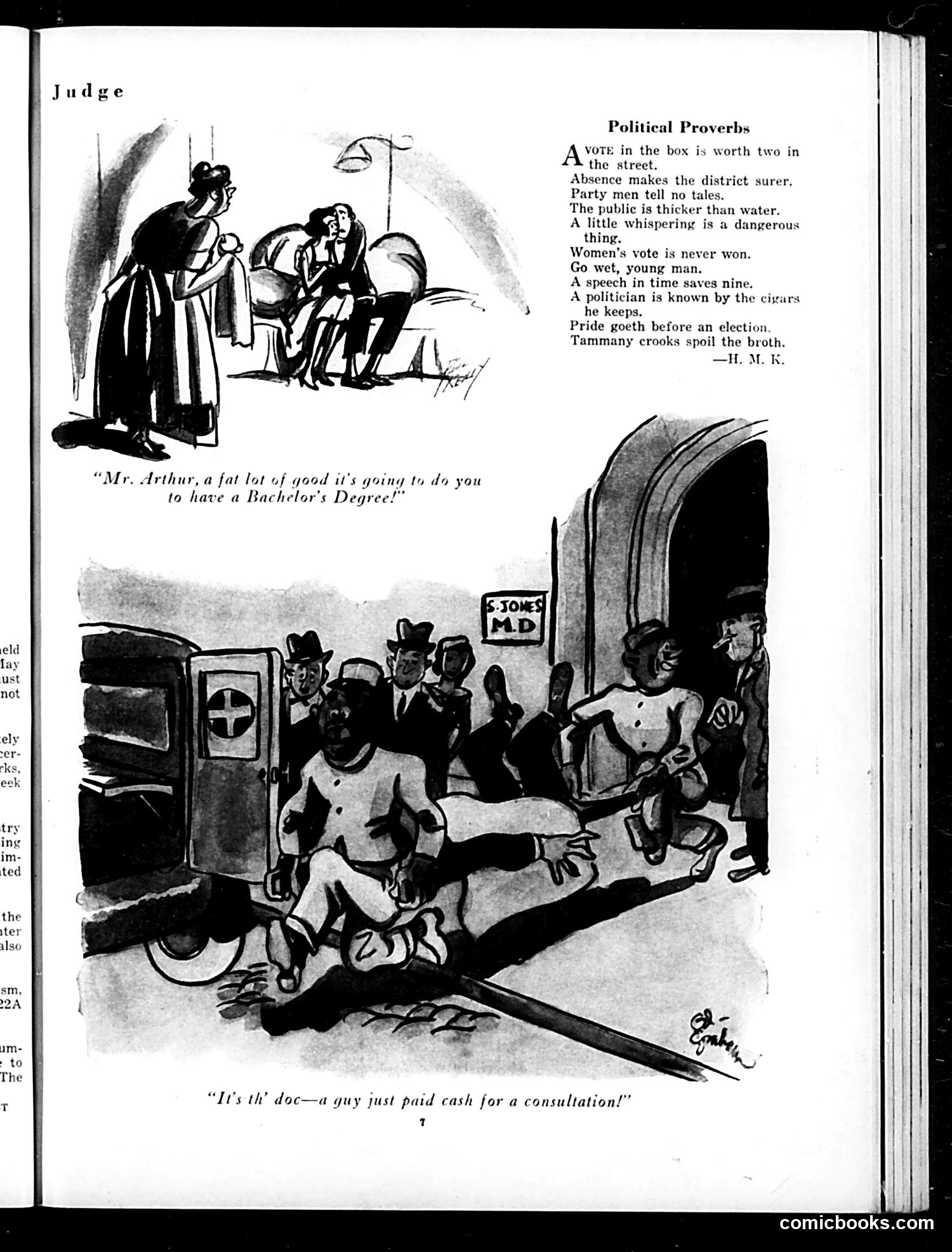
Political Satire in Judge Magazine This page contains two distinct cartoons mocking American politics and social pretension. Top cartoon: References "Mr. Arthur" receiving a Bachelor's Degree, with figures suggesting the credential is worthless—likely satirizing how education fails to guarantee success or respectability in a corrupt political system. Bottom cartoon: Shows a doctor ("S. Jones M.D.") being dragged away by what appear to be Tammany Hall operatives (recognizable by period dress and caricatured features). The caption "a guy just paid cash for a consultation" suggests bribery or corruption—the doctor has been paid off, possibly to provide false medical testimony or suppress evidence. "Political Proverbs" section (right): Mock-serious sayings satirize voter corruption ("vote in the box"), women's disenfranchisement ("Women's vote is never won"), and machine politics. The final line references Tammany Hall—New York's notorious Democratic political machine known for graft and corruption. The satire targets institutional corruption permeating American politics and professional life.
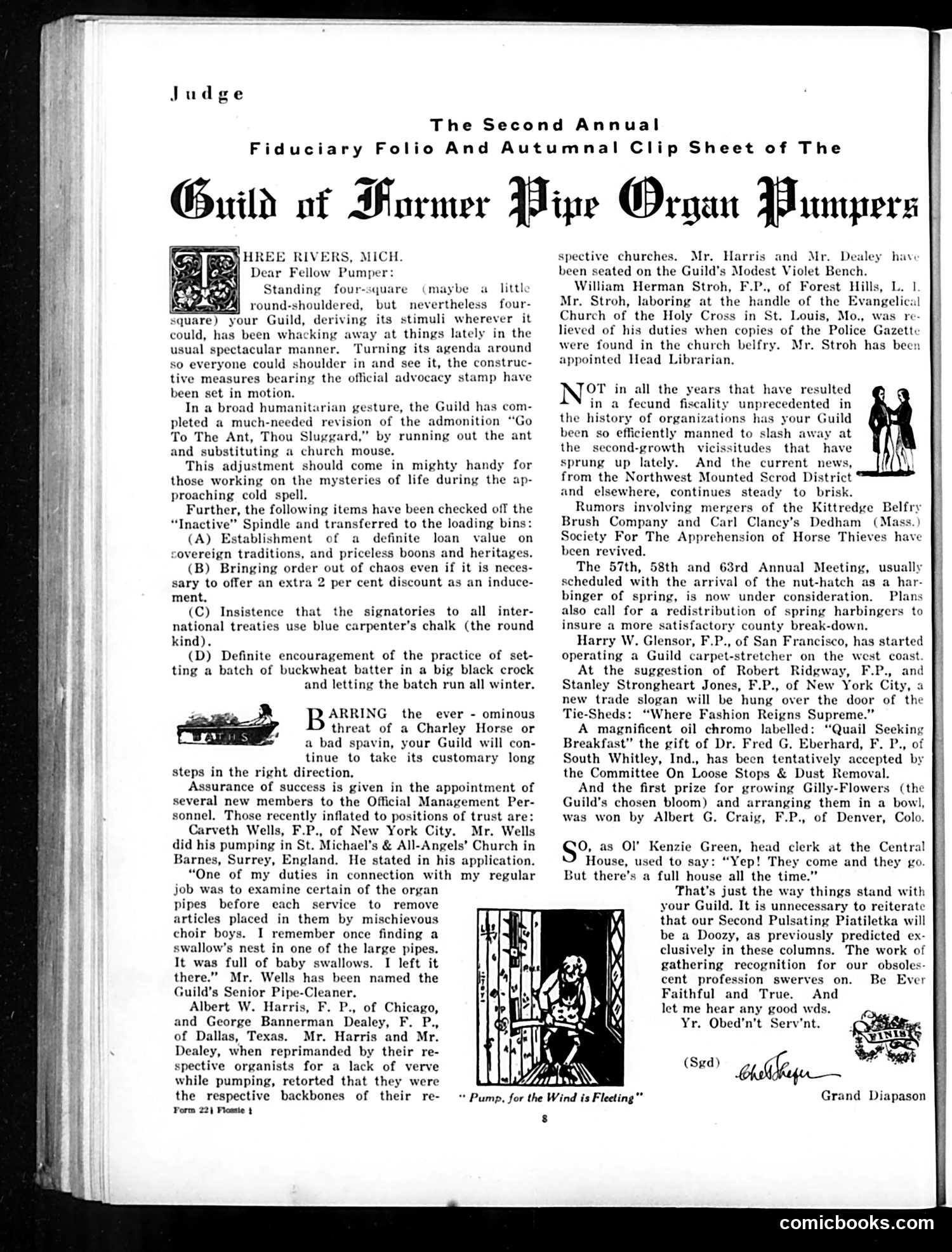
Analysis of Judge Magazine Page This page satirizes the self-important bureaucracy of a fictional "Guild of Former Pipe Organ Pumpers"—workers who manually pumped air into church organs before electric motors existed. The humor: The text mockingly presents mundane or absurd "accomplishments" in grandiose language: replacing "Go To The Ant, Thou Sluggard" with a church mouse, encouraging buckwheat fermentation, requiring blue carpenter's chalk in international treaties. These are meaningless busywork dressed up as serious organizational policy. The illustration shows a pipe organ pumper at work, captioned "Pump, for the Wind is Fleeting"—a wry reference to the obsolescence of the profession itself. The satire targets: Self-aggrandizing fraternal organizations that create elaborate bureaucracy and meaningless honors ("Modest Violet Bench," "Senior Pipe-Cleaner") to justify their continued existence despite their role becoming irrelevant. The invented personnel appointments and their comical dismissals (Stroh found with Police Gazette in the belfry) mock pretentious guild governance. This is Judge magazine's typical early 20th-century satirical approach: mocking institutional pomposity through absurdist exaggeration.
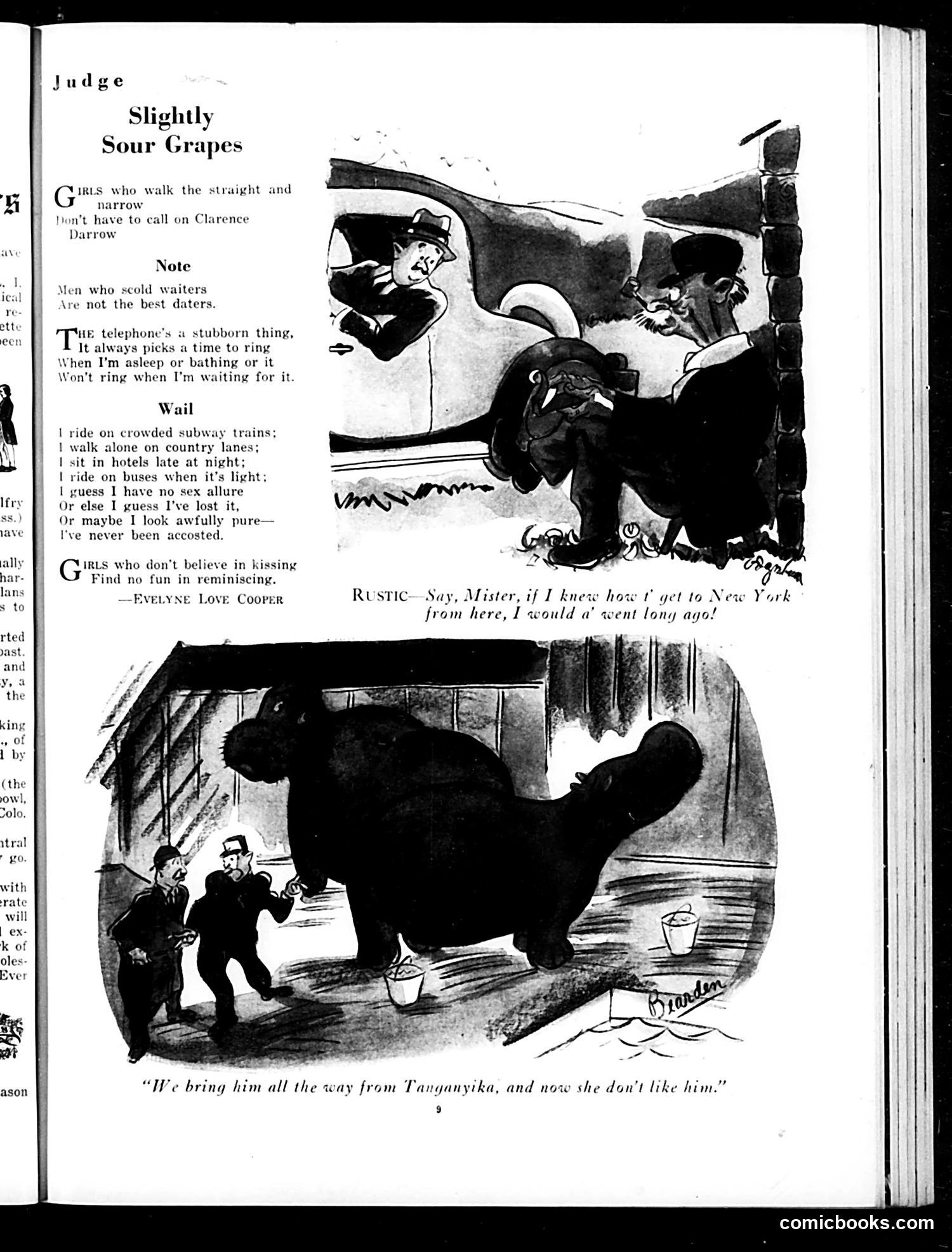
Analysis for Modern Readers This page from *Judge* magazine contains several short satirical pieces about dating and social behavior: "Slightly Sour Grapes" mocks women who claim disinterest in romance while secretly wanting attention—the "straight and narrow" girls avoid calling on men like Clarence. The "Note" and "Wail" sections are humorous complaints: one about inconsiderate men scolding waiters; another about a woman who takes precautions against unwanted advances (riding crowded trains, staying in hotels) yet complains she's never been "accosted" (approached romantically), ironically suggesting she actually wanted attention. The top cartoon depicts a rustic man asking directions to New York, implying rural ignorance. The bottom cartoon shows a couple with what appears to be an exotic animal (brought "all the way from Tanganyika"—then a British colonial territory in Africa), with the woman rejecting it. This satirizes wealthy people's capricious tastes and wasteful consumption of exotic imported goods. All pieces reflect early 20th-century attitudes toward gender, romance, and class.
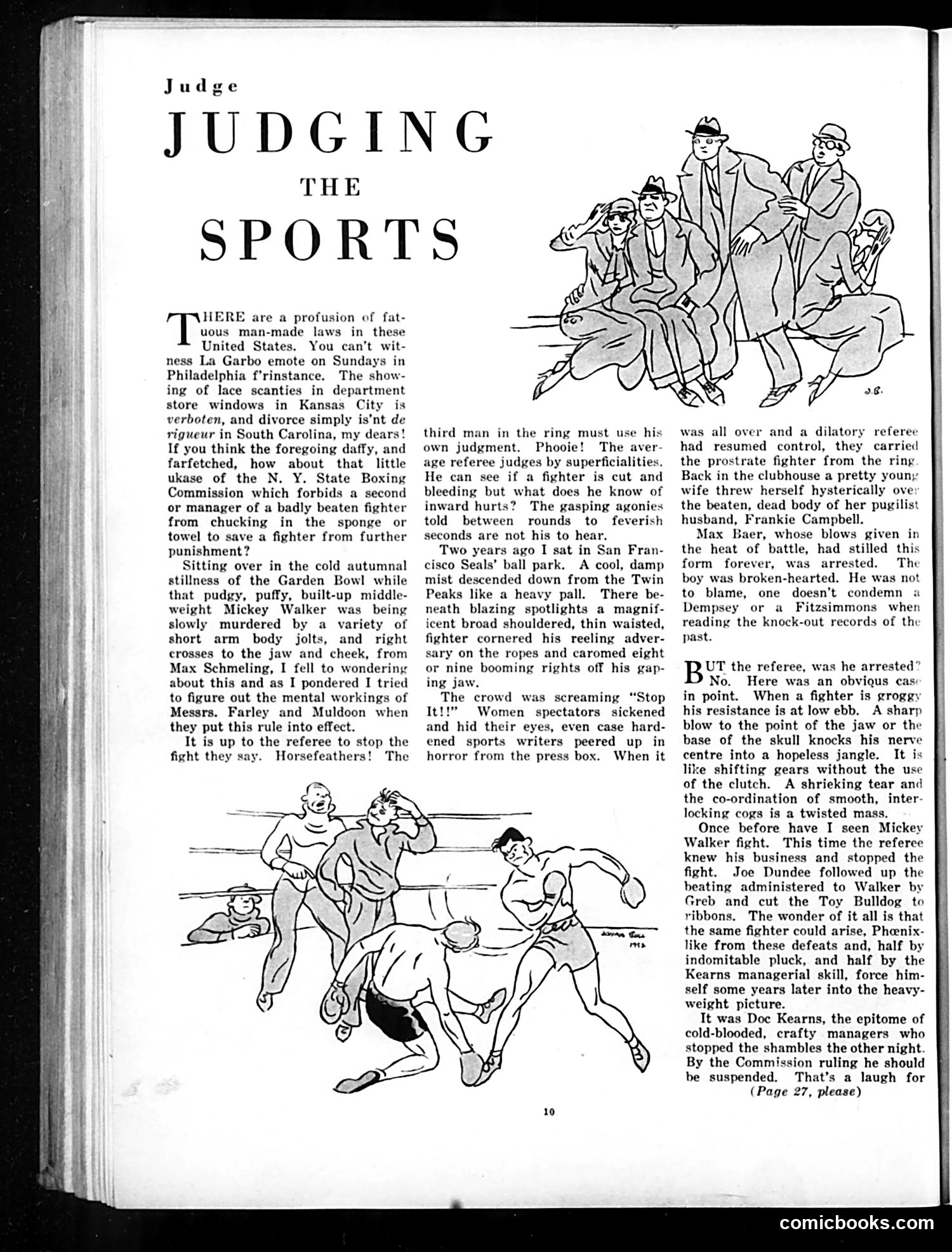
"Judging the Sports" - Judge Magazine Satire This article critiques New York State Boxing Commission rules that prohibit a fighter's manager from throwing in the towel to stop a badly beaten match. The author argues the rule is absurd because referees lack the judgment to know when a fighter is truly finished—they only see external injuries, not internal damage. The piece uses real boxing examples: Mickey Walker's brutal fight with Max Schmeling, and the tragic Frankie Campbell death (likely 1930), where manager Joe Dundee wisely stopped the fight after Campbell was beaten by Max Baer. The author's point: experienced managers like Doc Kearns understand a fighter's condition better than referees do. The Commission should praise Kearns for stopping "the shambles," not suspend him—hence "that's a laugh." The satire exposes the Commission's rule as counterproductive to fighter safety.
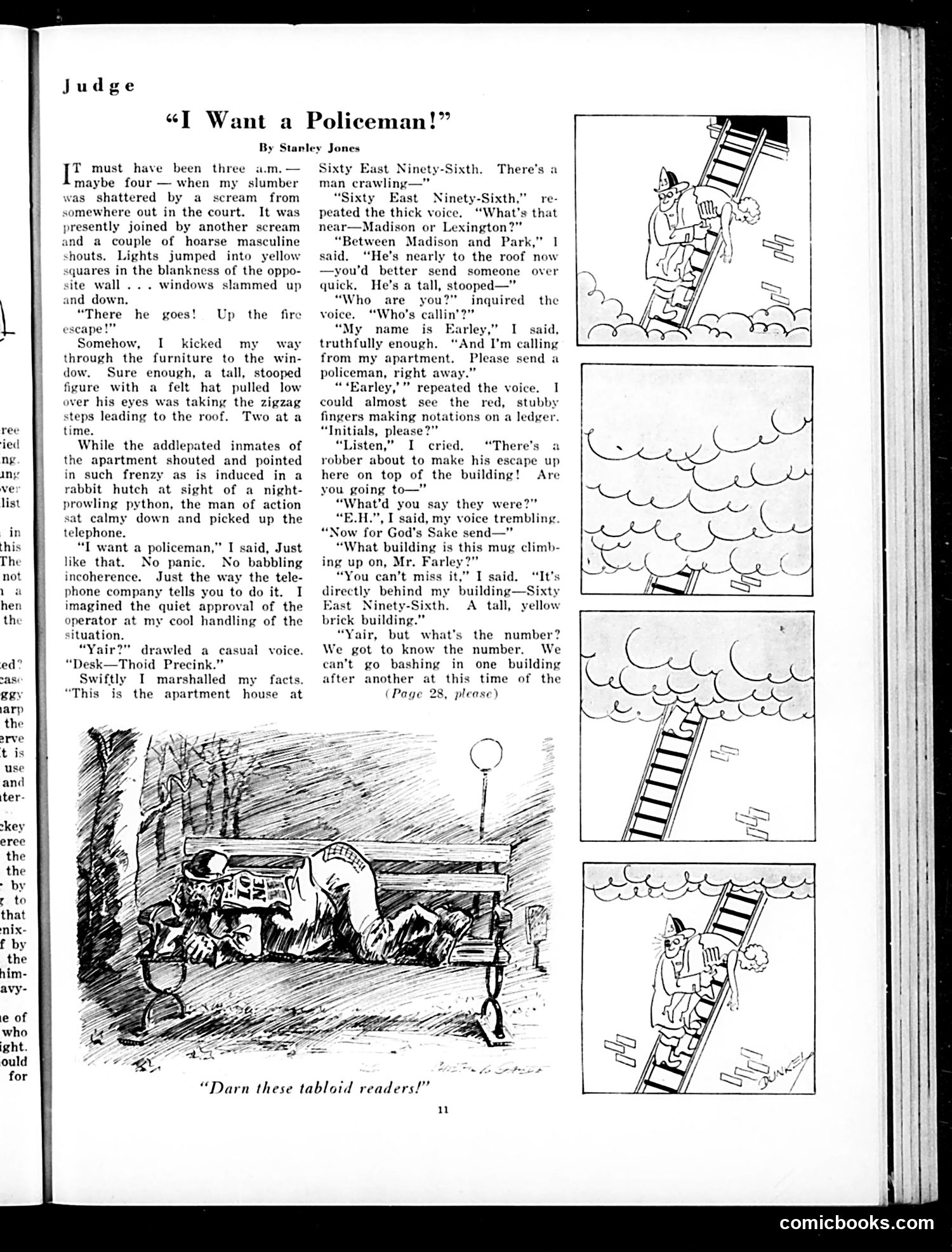
"I Want a Policeman!" - Satire on Urban Bureaucracy This story mocks the absurd inefficiency of urban police dispatch systems. The narrator, awakening to a burglary in progress at 3 a.m., calmly calls for help—only to encounter a stereotypically dim, pedantic desk officer more concerned with paperwork (initials, exact building numbers) than apprehending an active criminal escaping across rooftops. The humor lies in the contrast: while a thief flees overhead, the dispatcher demands trivial bureaucratic details, unable to grasp urgency. The final panel's caption—"Darn these tabloid readers!"—suggests the narrator's frustration with police incompetence has been publicized in the newspapers. This satirizes early 20th-century urban police dysfunction and the frustration of citizens dealing with unresponsive city services. The illustrations show the robber's dramatic escape while bureaucracy fumbles below.
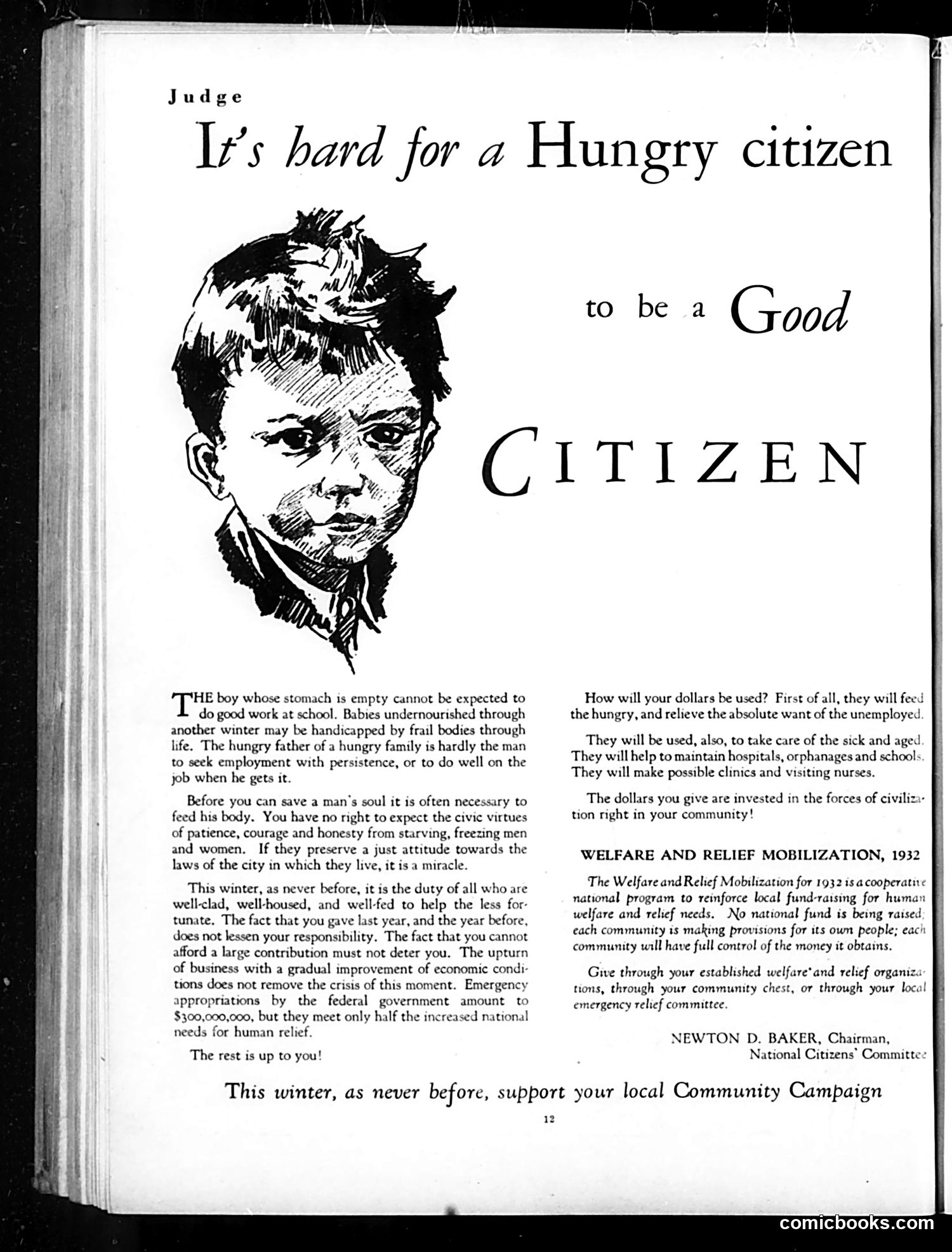
Analysis: "It's Hard for a Hungry Citizen to be a Good Citizen" This is a 1932 welfare appeal, not a satirical cartoon. The illustration shows a gaunt, hollow-eyed boy—a visual representation of Depression-era malnutrition. The accompanying text argues that starving people cannot be expected to behave as good citizens: hungry children can't study, unemployed fathers lose motivation, and desperate people may turn to crime. The piece is a direct moral appeal from the National Citizens' Committee (chaired by Newton D. Baker), urging wealthy Americans to donate to local relief efforts. It explicitly states federal aid ($300 million) covers only half the need, making private charity essential. The satire here is implicit: the title sarcastically reverses typical moralizing about poverty—Judge flips the blame from poor people's supposed moral failings to society's failure to feed them. The point: you cannot demand civic virtue from the starving. This reflects 1932 Depression-era anxiety about social stability and growing pressure for relief assistance.
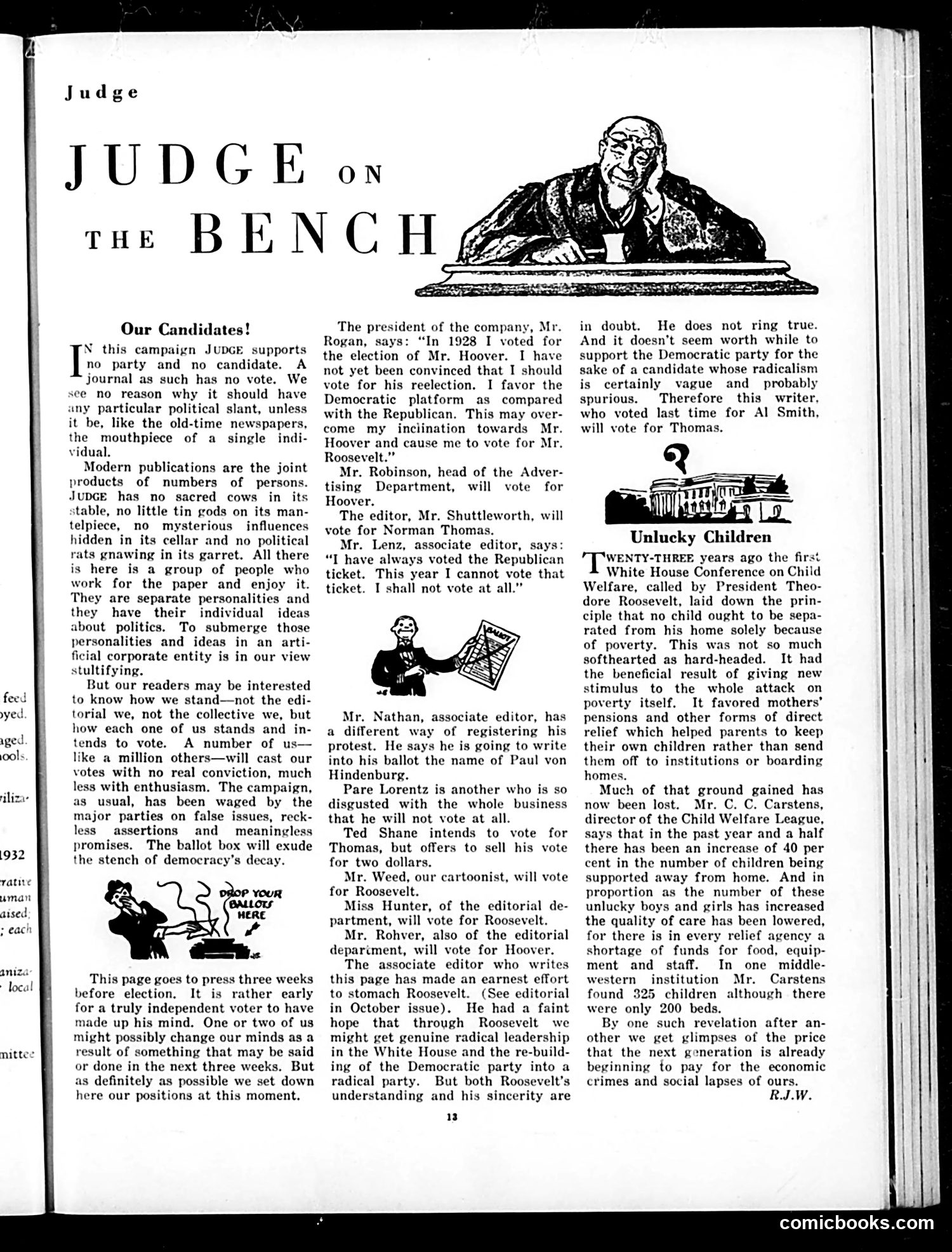
Understanding This 1932 Judge Magazine Page This is a candid editorial feature where Judge magazine's staff publicly reveal their 1932 presidential voting intentions. The context is the Great Depression election between incumbent Republican Herbert Hoover, Democrat Franklin D. Roosevelt, and Socialist Norman Thomas. The satire critiques both major parties. The opening argues Judge is truly independent—no "sacred cows" or hidden political influences. What follows is striking: diverse staff members express deep dissatisfaction. Several reject both major candidates: one votes Socialist Thomas, one writes in Paul von Hindenburg (the German military figure—a joke), two won't vote at all. Most tellingly, the associate editor dismisses Roosevelt as insincere, calling his radicalism "vague and probably spurious," and votes for Thomas instead. The cartoon's judge figure represents Judge's critical oversight. The sidebar on child welfare shifts tone, praising Theodore Roosevelt's progressive policies while lamenting current child poverty—suggesting nostalgia for more decisive leadership. The overall message: 1932 offers no satisfactory choice.
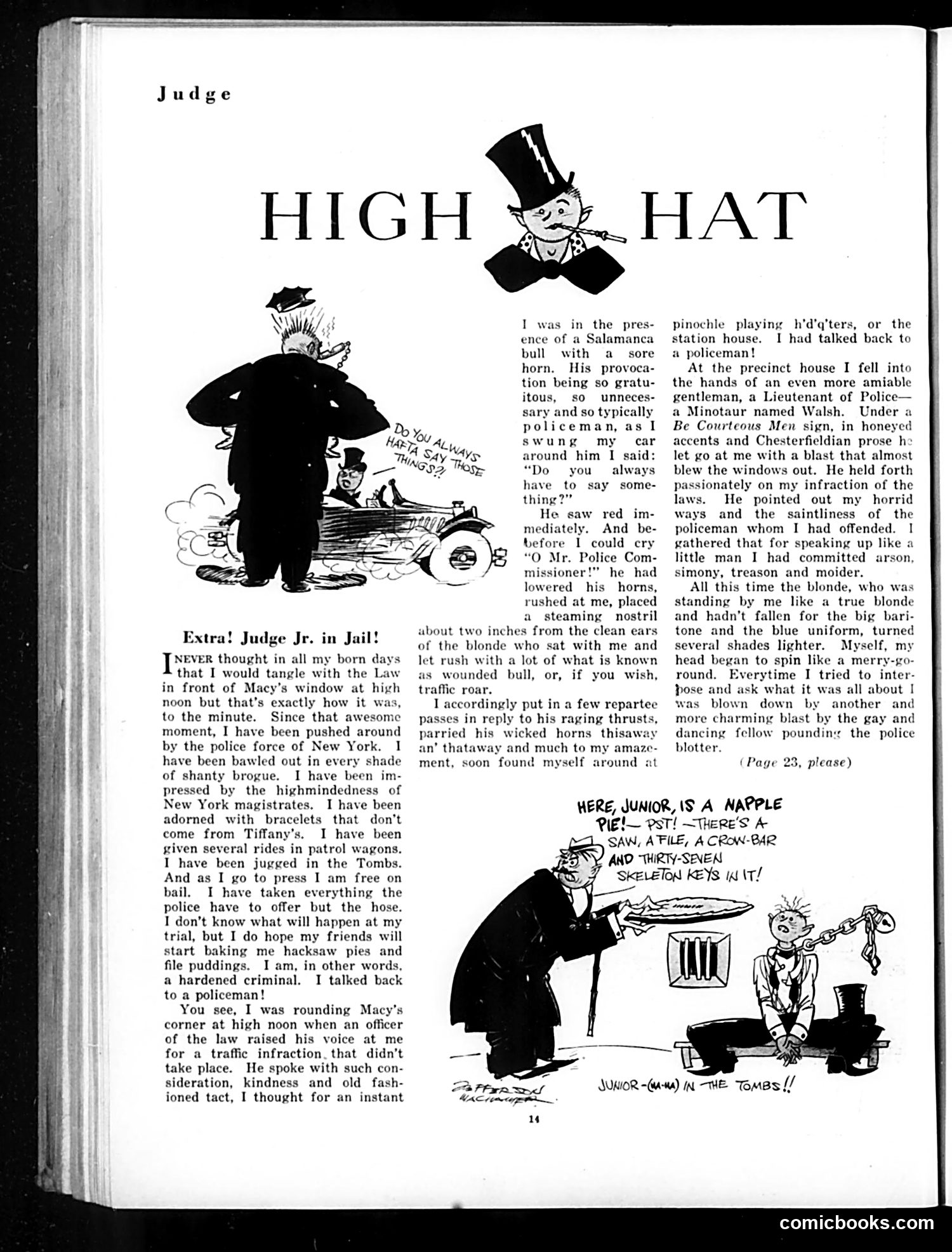
"High Hat" — Judge Magazine Satire This is a humorous first-person account by "Judge Jr." about being arrested for talking back to a New York City police officer. The narrator sarcastically describes his mistreatment: arrested for a traffic infraction that "didn't take place," jailed in the Tombs (NYC's notorious prison), and subjected to theatrical displays of authority by police and magistrates. The satire targets police abuse and arbitrary power—officers using minor infractions as pretexts to assert dominance. The repeated animal metaphors (bull, Minotaur) mock police as brutish and aggressive. The blonde companion serves as a witness to the injustice. The bottom cartoon depicts his mother smuggling tools (file, crowbar, skeleton keys) into prison in a pie—a visual gag about prison escapes. The piece mocks both corrupt law enforcement and the complicit magistrate system that enabled it, framed as satirical social commentary on 1920s-era police misconduct in New York City.
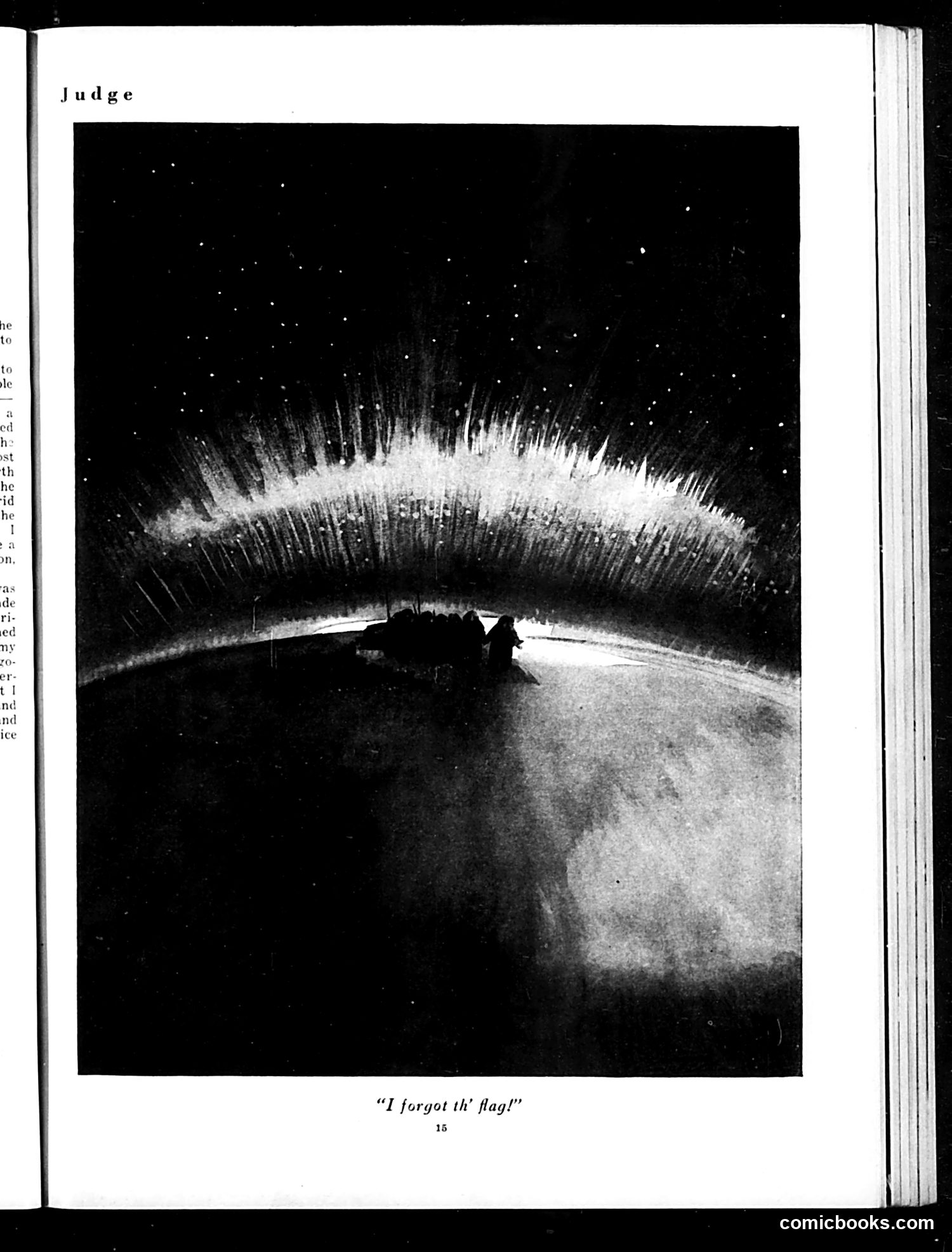
"I Forgot th' Flag!" This Judge magazine cartoon depicts a nighttime scene with a silhouetted figure in a small boat beneath a dramatic sky filled with radiating light rays and stars. The caption "I forgot th' flag!" suggests the figure has forgotten to bring a flag on what appears to be a significant journey or mission. Without additional context about the publication date, the specific reference remains unclear. However, this likely satirizes either a military operation, exploration expedition, or patriotic endeavor where displaying the flag was expected or mandatory. The dramatic lighting and emotional tone suggest the cartoon comments on negligence or an embarrassing oversight in an important patriotic undertaking. The humor derives from the irony of undertaking a major mission yet forgetting its symbolic element.
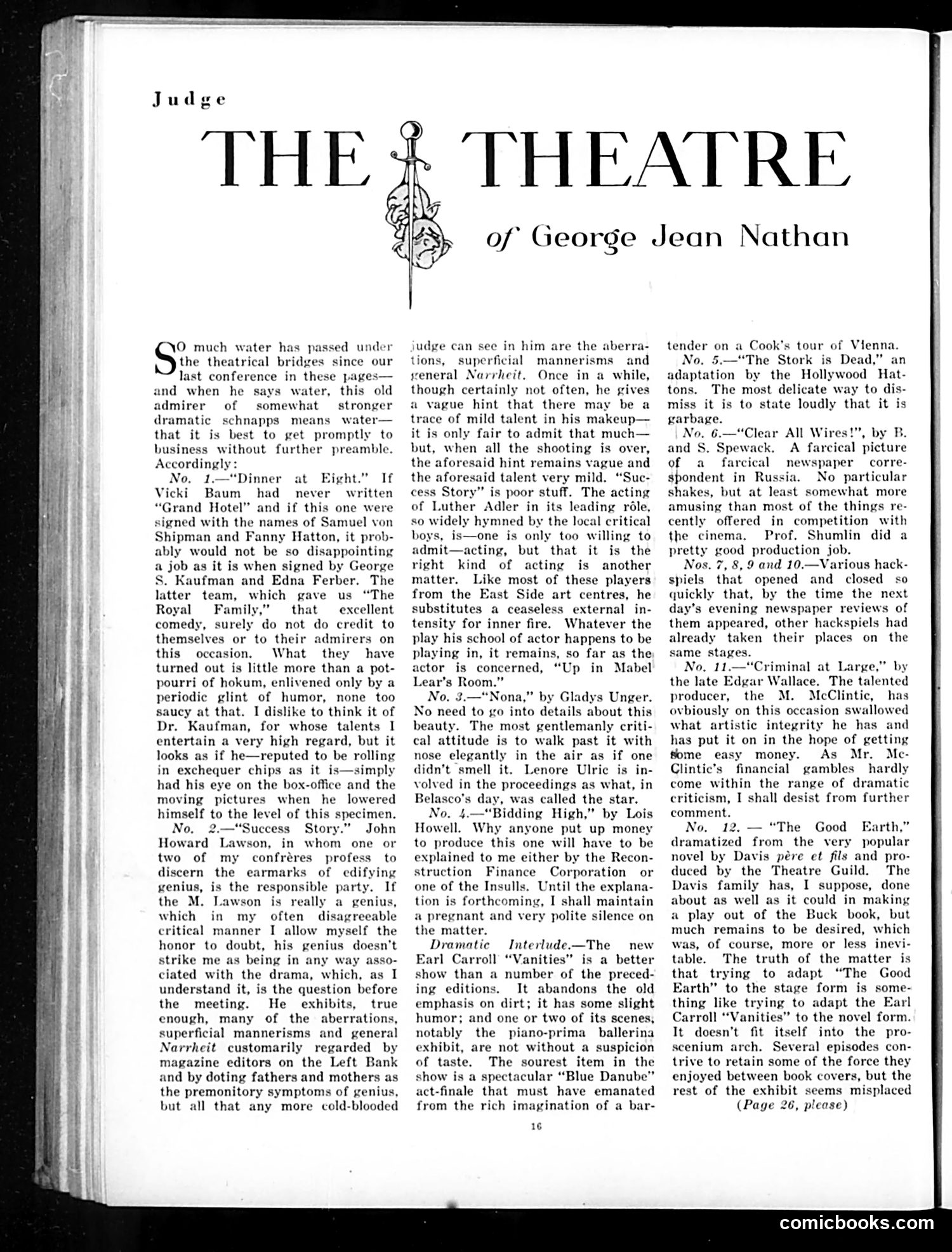
"The Theatre of George Jean Nathan" This is a theater review column by prominent drama critic George Jean Nathan, not a cartoon. Nathan offers scathing assessments of four Broadway productions: 1. "Dinner at Eight" by Kaufman and Ferber—Nathan criticizes the famous playwrights for producing shallow work, suggesting they prioritized box-office appeal and film rights over artistic merit. 2. "Success Story" by John Lawson—Nathan dismisses the play as "poor stuff" and critiques actor Luther Adler's performance style, claiming East Side theater actors substitute "external intensity for inner fire." 3. "Nona" by Gladys Unger—A dismissive review barely worth discussing. 4. "Bidding High" by Lois Howell—Nathan refuses comment, suggesting the production's financing is inexplicable. 5. Earl Carroll "Vanities"—A marginally positive review of this revue show. Nathan's acerbic tone and standards-defending criticism were characteristic of Judge's sophisticated readership during the early 1930s theater scene.
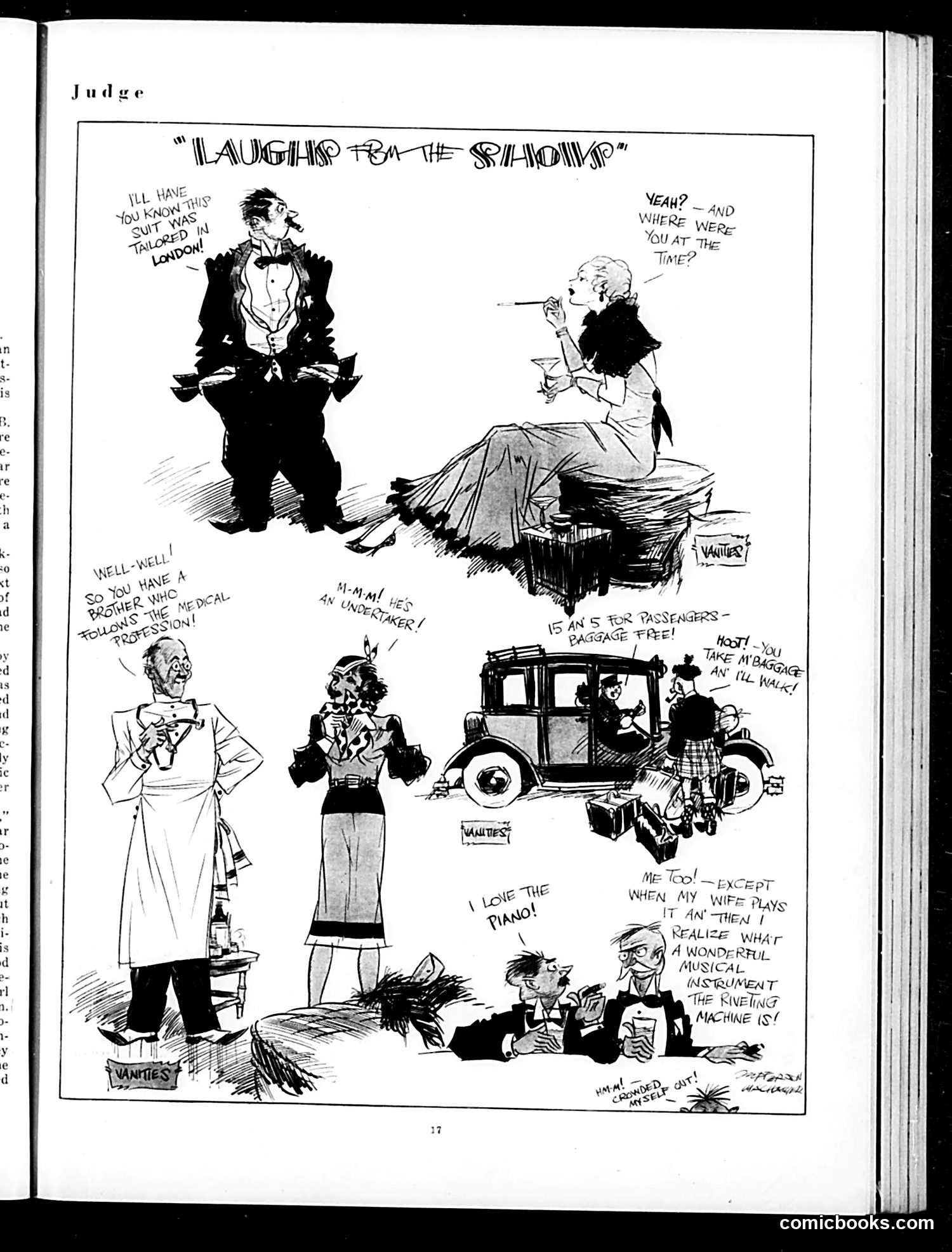
This cartoon satirizes the "riveting machine"—likely a player piano or similar mechanical music device popular in the early 20th century. The joke contrasts genteel society's appreciation for such instruments with their actual annoyance when spouses operate them. The setup shows well-dressed figures in various scenarios: a man in formal wear boasting about his tailored London suit, a woman on a couch, and scenes involving an automobile and the mechanical device itself. The humor centers on the gap between mechanical music's supposed sophistication and its grating reality—a husband sarcastically praising the "wonderful musical instrument" only when his wife plays it, implying he finds it unbearable. This reflects period anxieties about emerging consumer technology and domestic life, mocking both mechanical novelties and marital dynamics of the era.
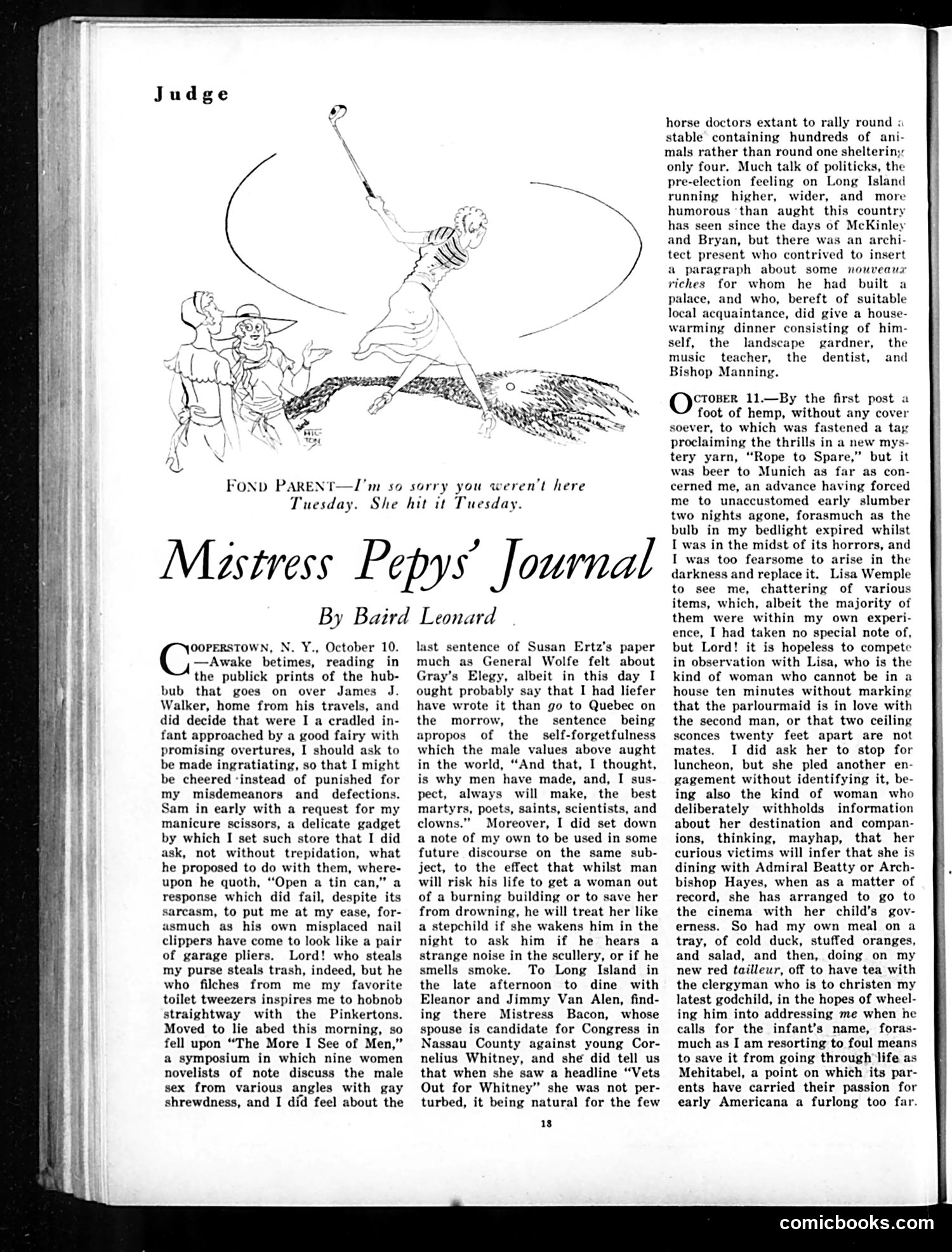
"Mistress Pepys' Journal" — Judge Magazine Satire This page features a faux-diary column written in deliberately archaic, flowery language ("betimes," "forasmuch," "quoth") that parodies Samuel Pepys's famous 17th-century diary. The humor lies in applying this pompous historical voice to mundane 1920s-30s modern concerns. The opening cartoon depicts a negligent "Fond Parent" whose child has misbehaved repeatedly ("She hit it Tuesday"), suggesting parents excuse children's bad behavior through charming ingratiating—a satirical jab at parenting practices. The diary itself mocks upper-class preoccupations: hand-wringing over Mayor James J. Walker's scandals, anxieties about servants stealing household items, intellectual pretension (reading symposiums about male nature), and snobbish gossip about nouveau-riche social climbers and political campaigns on Long Island. The architecture detail about the newly-wealthy hiring only servants and professionals (no genuine friends) for a housewarming is the sharpest social commentary—ridicule of status-obsessed social pretense among the moneyed class.
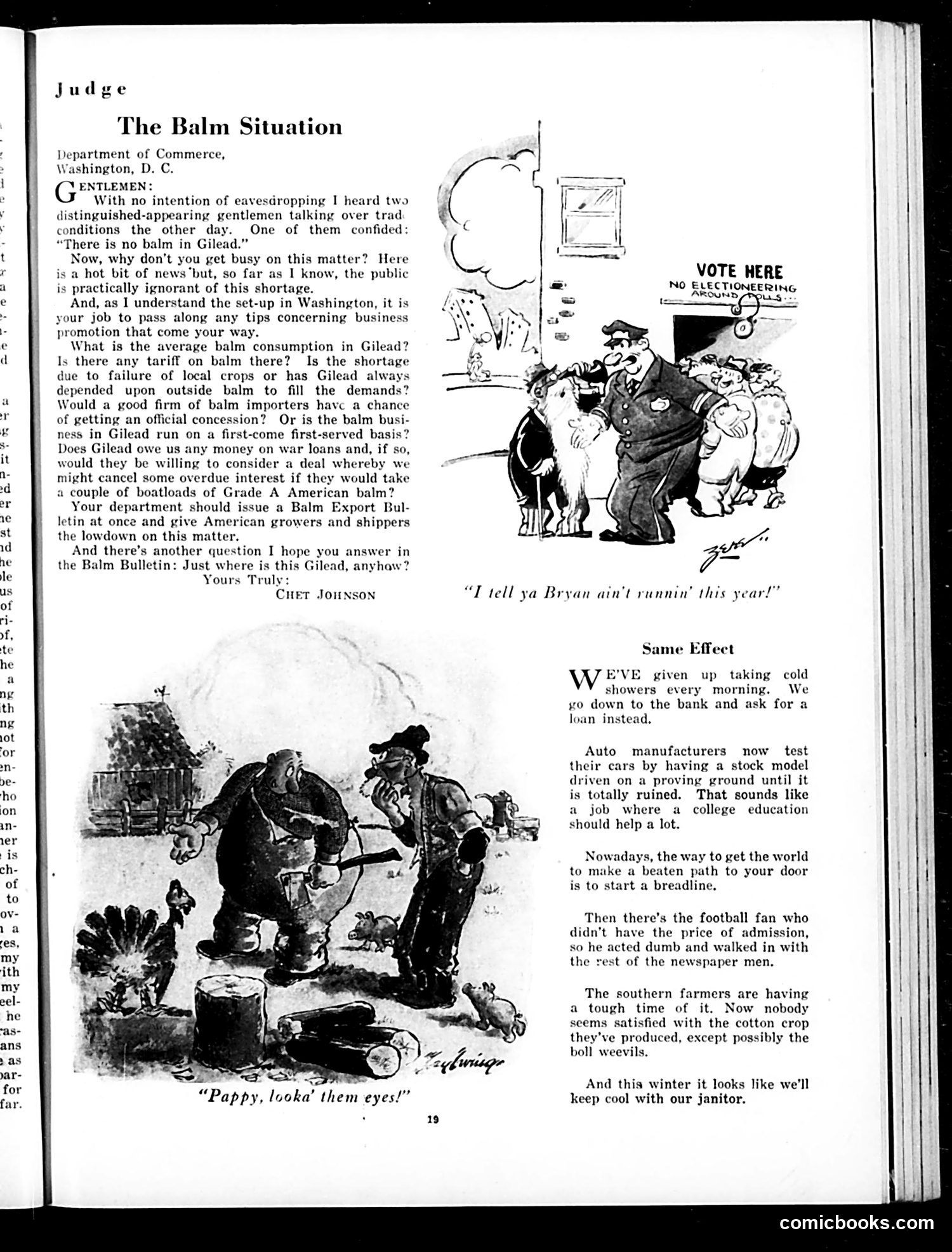
"The Balm Situation" - Judge Magazine Satire This page satirizes government bureaucratic incompetence and absurdity. The main letter, signed "Chet Johnson," mockingly requests the Department of Commerce investigate a nonexistent crisis: the shortage of "balm in Gilead"—a biblical reference to the phrase "Is there no balm in Gilead?" (Jeremiah 8:22), meaning spiritual comfort or remedy. Johnson's letter ridicules how Washington officials take vague business complaints seriously, proposing tariffs, trade concessions, and even linking balm imports to war debt repayment. He ends by asking where this fictional place is located, exposing the absurdity of the entire premise. The cartoon captioned "I tell ya Bryan ain't runnin' this year!" appears to reference William Jennings Bryan, likely mocking political discourse. Below, the "Same Effect" section offers satirical observations on contemporary hardships—cold showers replaced by bank loans, auto testing, breadlines, and the cotton crop crisis—suggesting widespread economic struggle (likely post-WWI era).
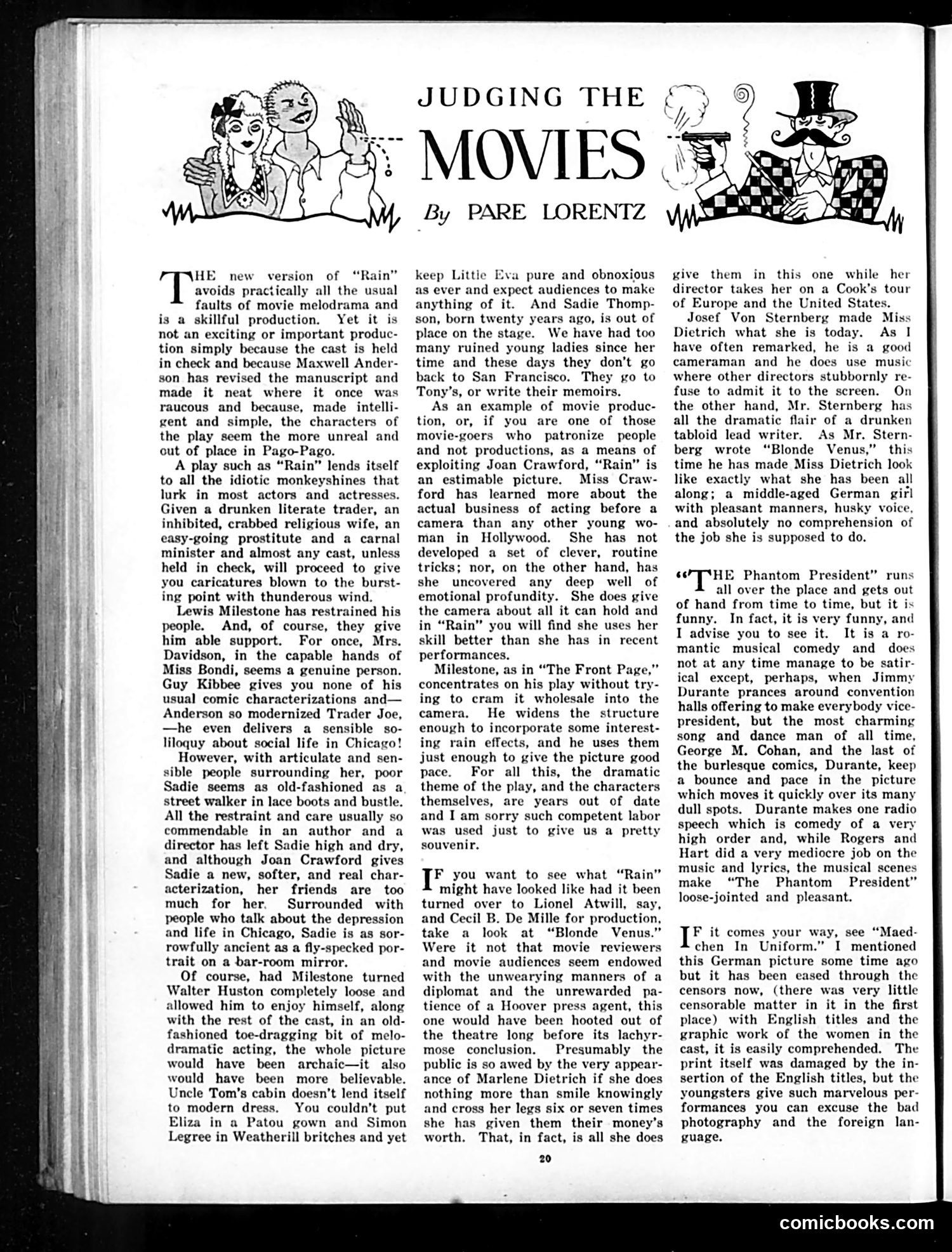
Explanation for Modern Readers This page reviews the 1932 film adaptation of "Rain," starring Joan Crawford. Critic Pare Lorentz argues the film is technically competent but fundamentally misguided. The Problem: The play's original characters—a drunken trader, a rigid minister's wife, and a prostitute named Sadie Thompson—work as exaggerated melodrama. Director Lewis Milestone and playwright Maxwell Anderson "refined" them into realistic, modern people. Lorentz finds this counterproductive: updating the 1920s-set story with dialogue about depression-era Chicago and modern fashion makes the characters feel anachronistic and the plot feel dated. The Satire: Lorentz compares this to dressing *Uncle Tom's Cabin* in contemporary clothes—the mismatch destroys credibility. He praises Crawford's acting ability but suggests that skilled performances can't salvage material fundamentally out of step with modern life. The review critiques a common production philosophy: that artistic restraint and realism improve any material. Lorentz argues some stories *require* melodrama to work at all.
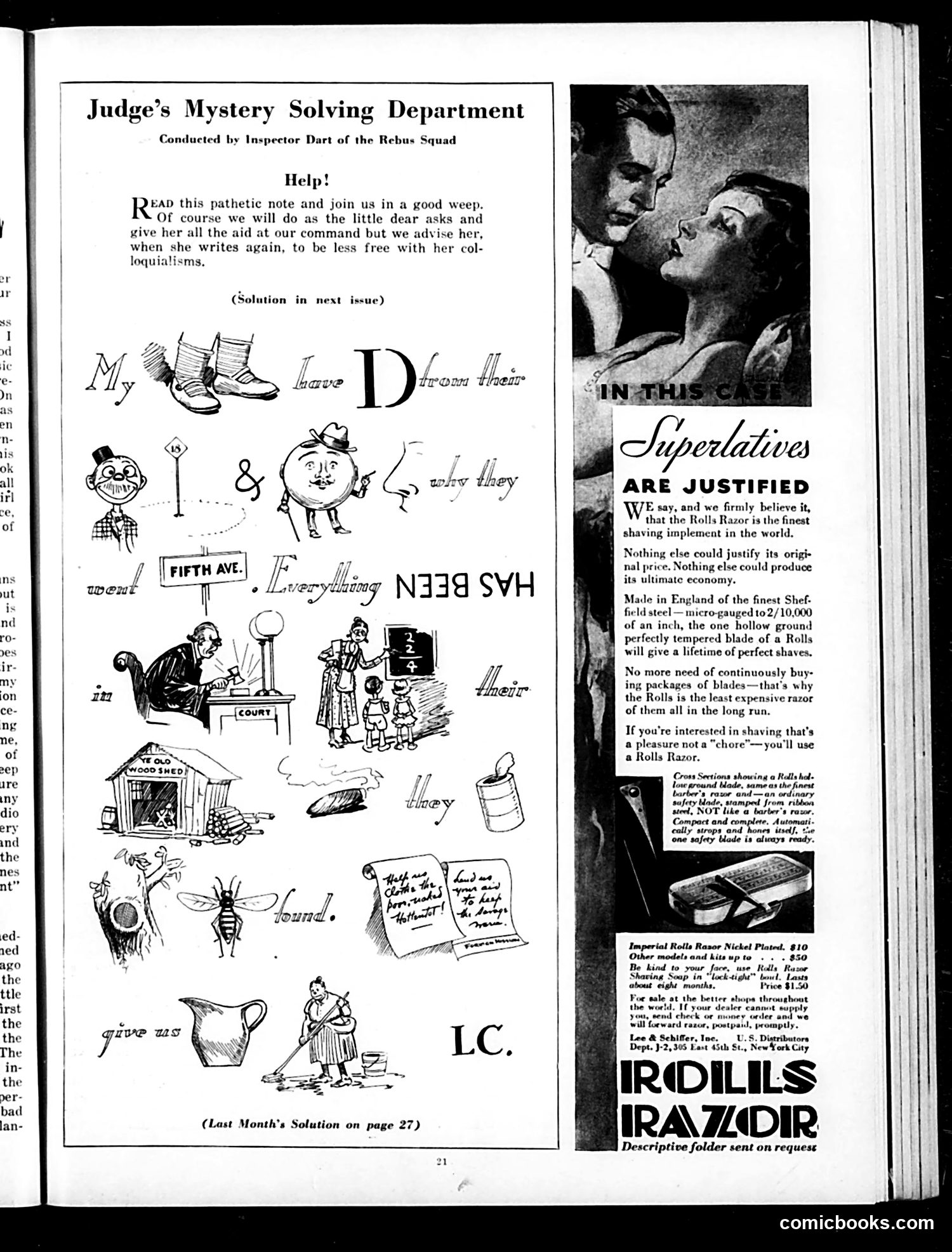
Judge Magazine Page Analysis This page contains two distinct elements: Left side: A "Mystery Solving Department" rebus puzzle. Readers must decode visual puns and symbols to solve a riddle, with the solution promised in the next issue. This was a popular interactive feature in Judge magazine—readers would submit answers for prizes. Right side: A full-page advertisement for Rolls Razor, a premium British safety razor. The ad uses superlatives ("finest shaving implement in the world") and emphasizes durability and value—claiming one blade lasts a lifetime, making it cheaper long-term despite high initial cost ($10, substantial money in this era). The magazine juxtaposes lowbrow participatory humor (the puzzle) with upscale consumer advertising, reflecting Judge's middle-to-upper-class readership. The page number (21) indicates this is from an intact bound volume, likely from the 1920s-1930s based on typography and product styling.
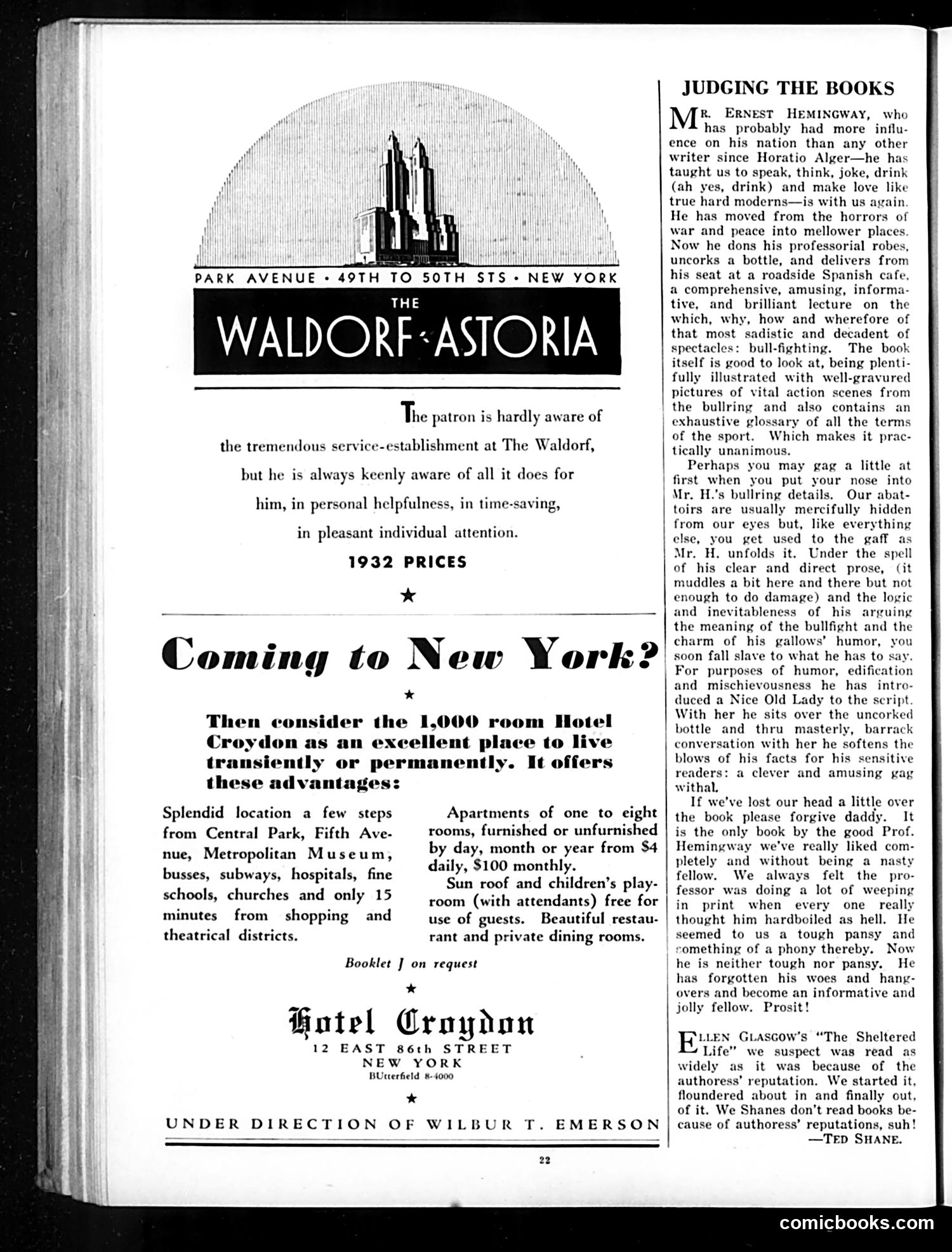
Page Analysis: Judge Magazine (1932) This page contains no political cartoon—it's primarily advertising and book reviews. The main content includes: 1. Hotel advertisements: The Waldorf-Astoria and Hotel Croydon promote 1932 lodging rates to New York visitors, emphasizing luxury amenities and convenient Manhattan locations. 2. "Judging the Books" section reviews Ernest Hemingway's bullfighting book (likely *Death in the Afternoon*, 1932). The reviewer praises Hemingway's prose and innovative use of "a Nice Old Lady" character to soften harsh content for sensitive readers, while playfully critiquing his previous "tough pansy" persona. 3. A brief dismissal of Ellen Glasgow's *The Sheltered Life*, suggesting readers shouldn't judge books by author reputation alone. The page reflects 1932 concerns: Depression-era hotel marketing and contemporary literary culture centered on Hemingway's celebrity influence.
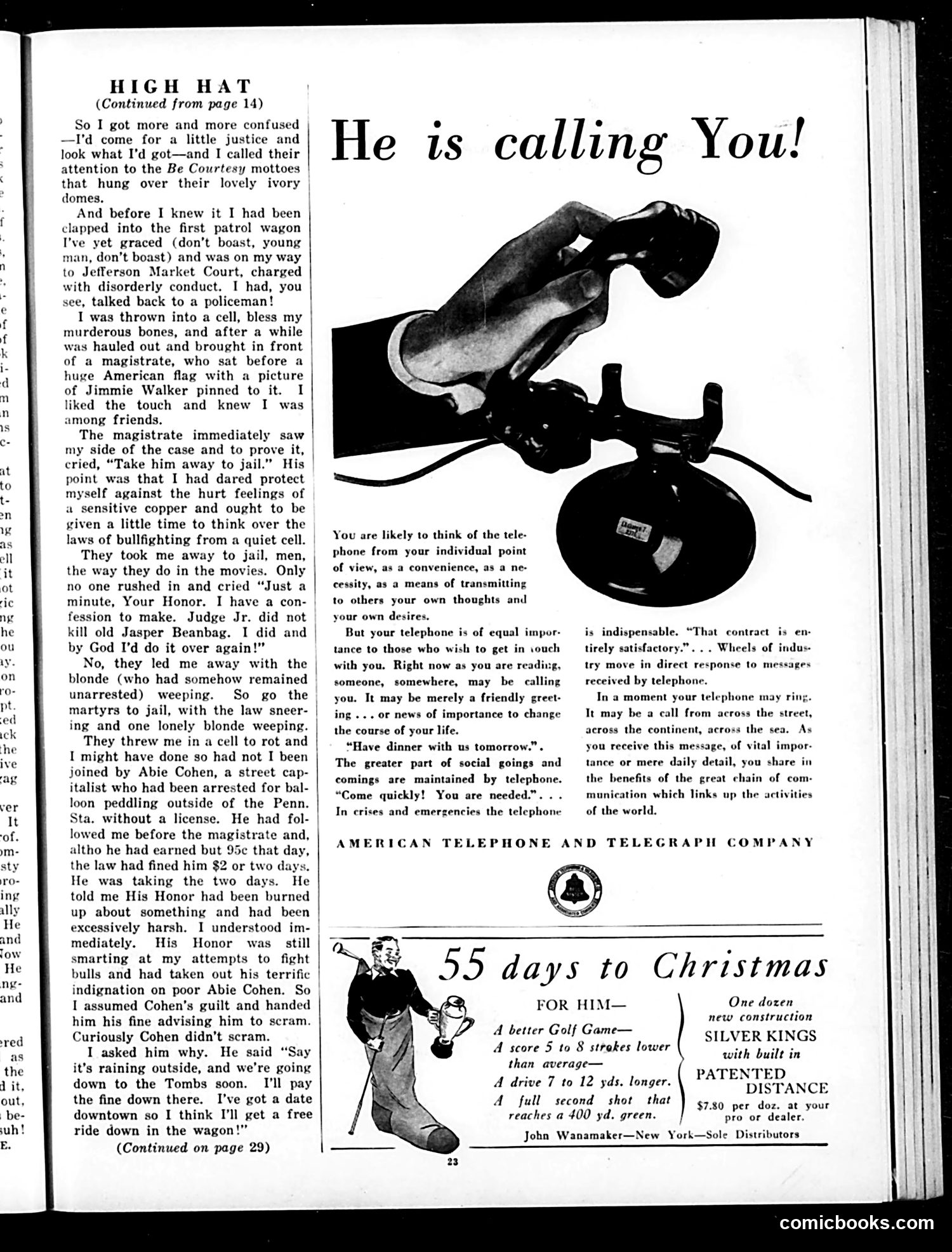
Analysis for Modern Readers This page contains a serialized story titled "High Hat" (continued from page 14) alongside an advertisement for American Telephone and Telegraph Company. The Story: The narrator describes a comedic misadventure in New York City involving a confrontation with police that lands him in Jefferson Market Court before a magistrate with a picture of Jimmy Walker (New York's mayor, 1926-1932) on the wall. The humor derives from the narrator's frustration with bureaucratic justice and police conduct. He's jailed for "disorderly conduct" after talking back to a cop, then meets fellow prisoner Abie Cohen, arrested for unlicensed balloon peddling. The satire critiques corrupt urban governance and arbitrary law enforcement. The Advertisement: The AT&T ad uses emotional appeals—showing a hand holding a telephone receiver—to convince readers that telephones transcend convenience, emphasizing their role in social connection and emergency communication. This represents mid-20th-century corporate messaging promoting telephone adoption. The contrasting content exemplifies Judge magazine's blend of satirical social commentary and commercial interests.
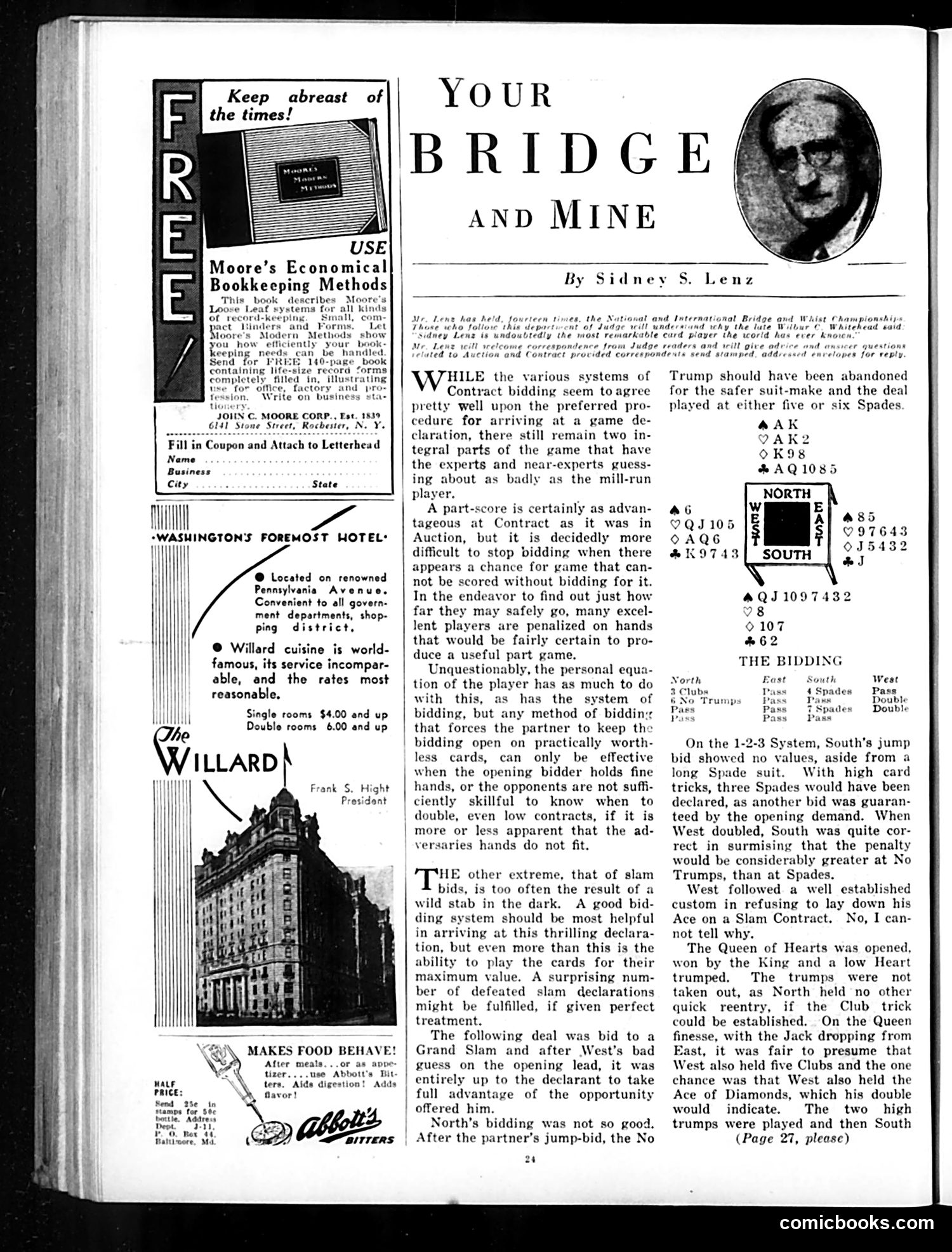
Analysis for Modern Readers This page from *Judge* magazine is primarily not a cartoon, but rather a bridge (card game) instructional article by Sidney S. Lenz, a prominent bridge expert. The page is heavily laden with period advertisements for hotels, bookkeeping methods, and digestive bitters. The content is a technical bridge lesson analyzing a specific hand and bidding strategy. Lenz discusses common errors in contract bridge bidding—particularly the difficulty of knowing when to stop bidding versus pursuing a game, and the dangers of overbidding toward a "grand slam." The only notable element for satirical context: the page appears in *Judge*, a humor magazine, yet contains serious instructional content—suggesting *Judge* served a dual function as both satirical publication and general-interest periodical for educated readers interested in games and business. The advertisements reflect early 20th-century concerns: government proximity, fine dining, bookkeeping efficiency, and digestive aids.
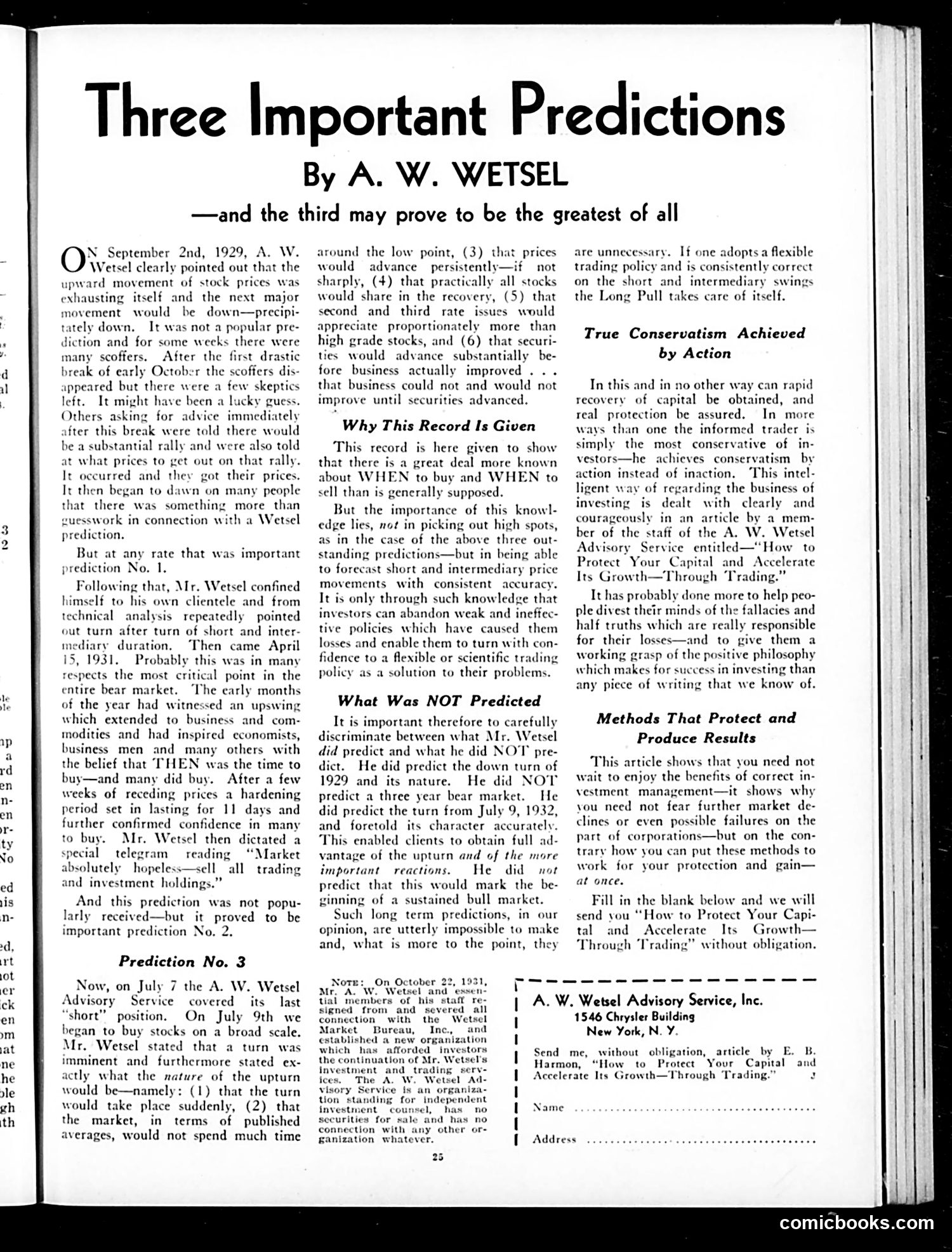
Context for Modern Readers This is not a cartoon or satirical content — it's a financial advertisement disguised as editorial content in *Judge* magazine (October 1931). A.W. Wetsel's Advisory Service claims prescience about stock market timing: predicting the 1929 crash, the April 1931 bear market bottom, and the July 1932 recovery. The piece emphasizes his three "predictions" proved accurate, positioning him as a market oracle. Historical context: This appears during the Great Depression, when stock market predictions were both desperately sought and highly suspicious. The advertisement exploits investors' trauma from the 1929 crash by offering a trading method supposedly based on "technical analysis." The pitch: Readers can apply Wetsel's methods for capital protection and growth through disciplined trading rather than buy-and-hold investing. This represents the era's financial hucksterism — making vague claims about past accuracy to sell trading services to desperate investors.
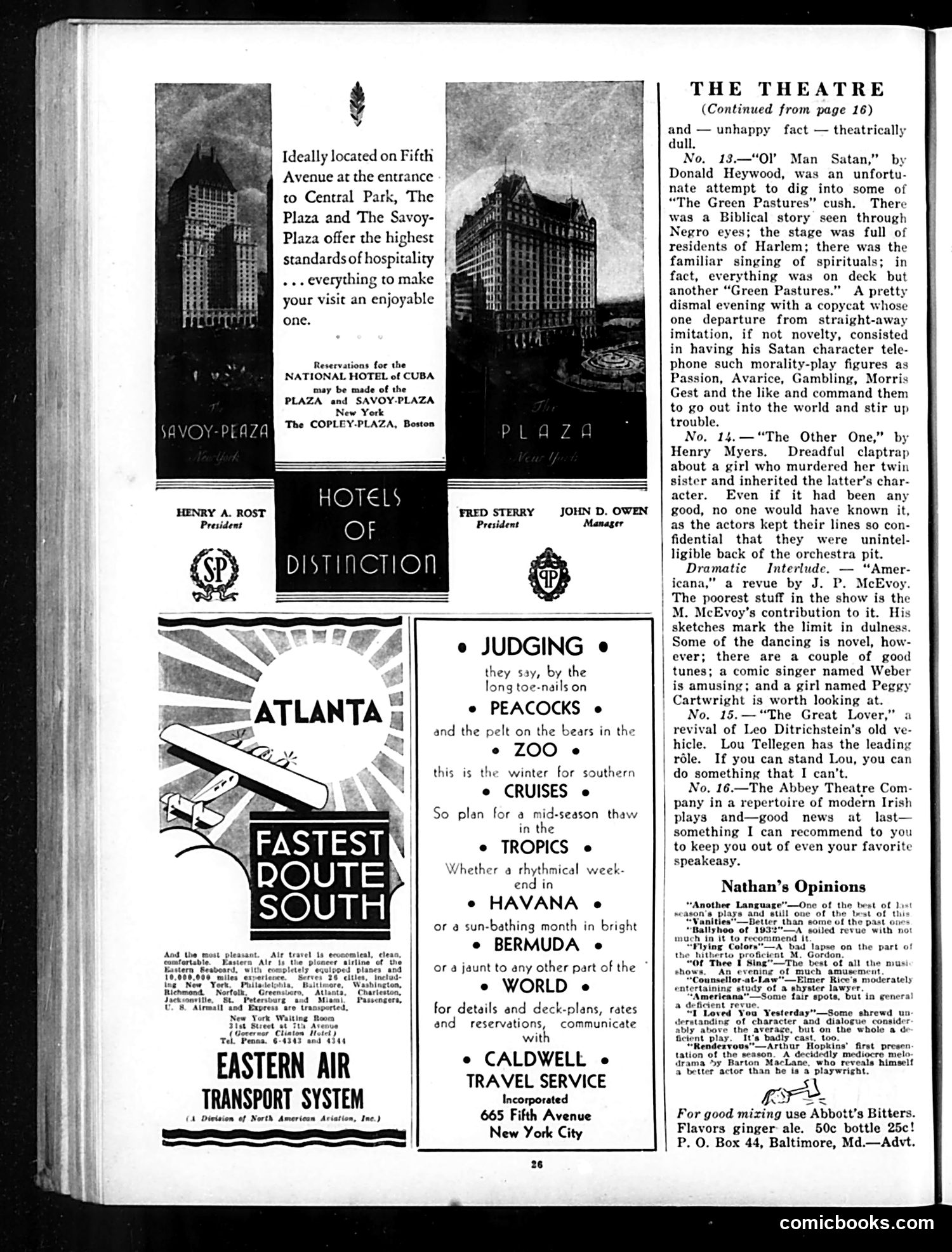
Analysis for Modern Readers This page is primarily theatre criticism and advertising, not political satire. The Theatre Section (right column) contains reviews by Nathan of several Broadway productions, mostly negative. Key references: - "Ol' Man Satan" is criticized as a weak imitation of the successful play *"The Green Pastures"* (1930), which depicted Biblical stories through African American perspectives. The reviewer finds this copycat version "theatrically dull." - "The Other One" and "Americana" receive harsh criticism for poor writing and performance. - "The Great Lover" revival is mocked for star Lou Tellegen's poor acting. - The Abbey Theatre Company production is praised as the only recommendable show. The Left Side features hotel and travel advertisements, including the Plaza Hotel and Eastern Air Transport System promoting southern destinations (cruises, tropics, Havana, Bermuda). The page contains no significant political cartoons or satire—it's straightforward entertainment criticism typical of Judge magazine's coverage.
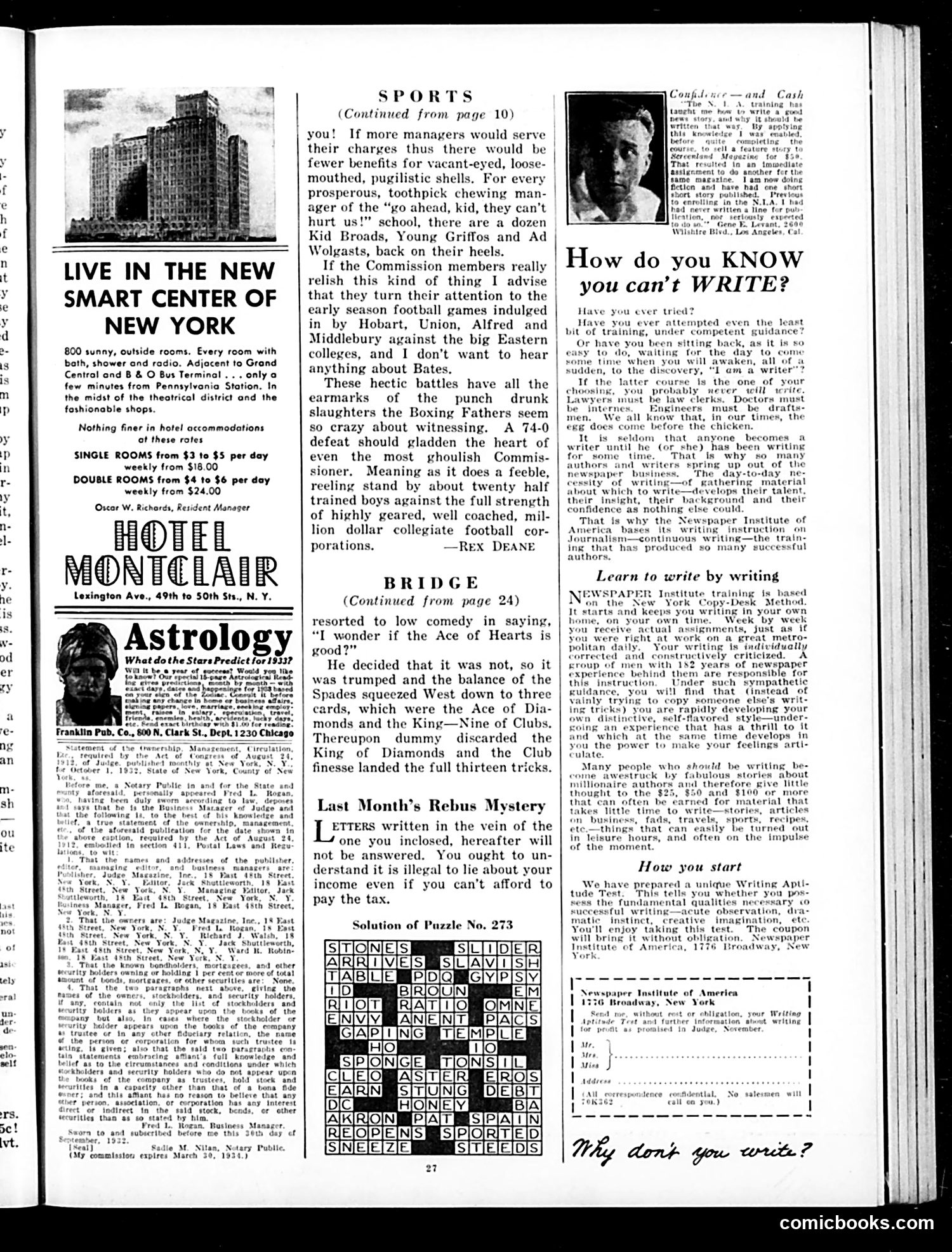
Judge Magazine Content Analysis This page consists primarily of advertisements and instructional content rather than satirical cartoons. The main items are: - Hotel Montclair ad (luxury accommodations) - Astrology prediction service ad - Sports column discussing boxing and football management - Bridge game strategy column - A writing instruction feature titled "How do you KNOW you can't WRITE?" The writing section sardonically challenges readers' assumptions about their own abilities, suggesting people often assume they *can't* write without actually trying. It uses ironic rhetoric ("I am a writer" appears suddenly) to encourage amateur writers to attempt submission. The page includes a crossword puzzle solution and a brief note rejecting dishonest letters about income (likely tax-evasion justifications). No clear political satire or caricatures are visible—this appears to be a typical mid-1930s magazine page mixing advertising, service columns, and reader engagement features rather than editorial cartooning.
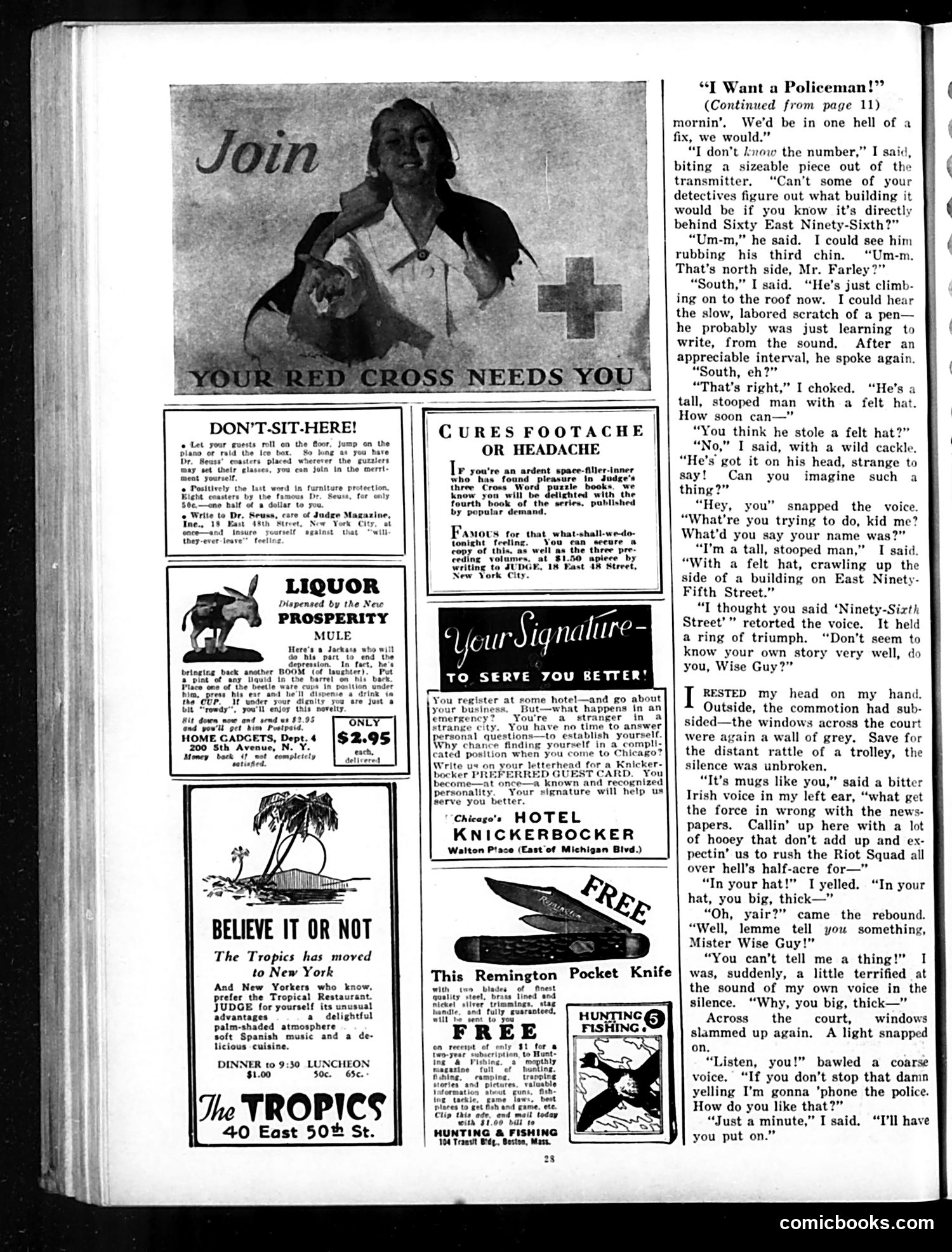
Analysis for Modern Readers This page is primarily advertisements with a serialized fiction excerpt titled "I Want a Policeman!" continued from page 11. The ads showcase 1920s-30s consumer goods: a furniture protector ("Don't-Sit-Here!"), a novelty liquor dispenser ("Prosperity Mule"), crossword puzzle books, the Hotel Knickerbocker, and a Remington pocket knife. These reflect Depression-era marketing and novelty culture. The main narrative is a comedic short story about someone reporting a suspicious figure on a rooftop to police. The humor derives from the protagonist's mounting frustration with an incompetent police dispatcher who misunderstands details, asks redundant questions, and generally botches the emergency call. The escalating argument—with the caller and dispatcher yelling accusations at each other—satirizes bureaucratic incompetence and police inefficiency. The satire targets institutional failures rather than specific political figures.
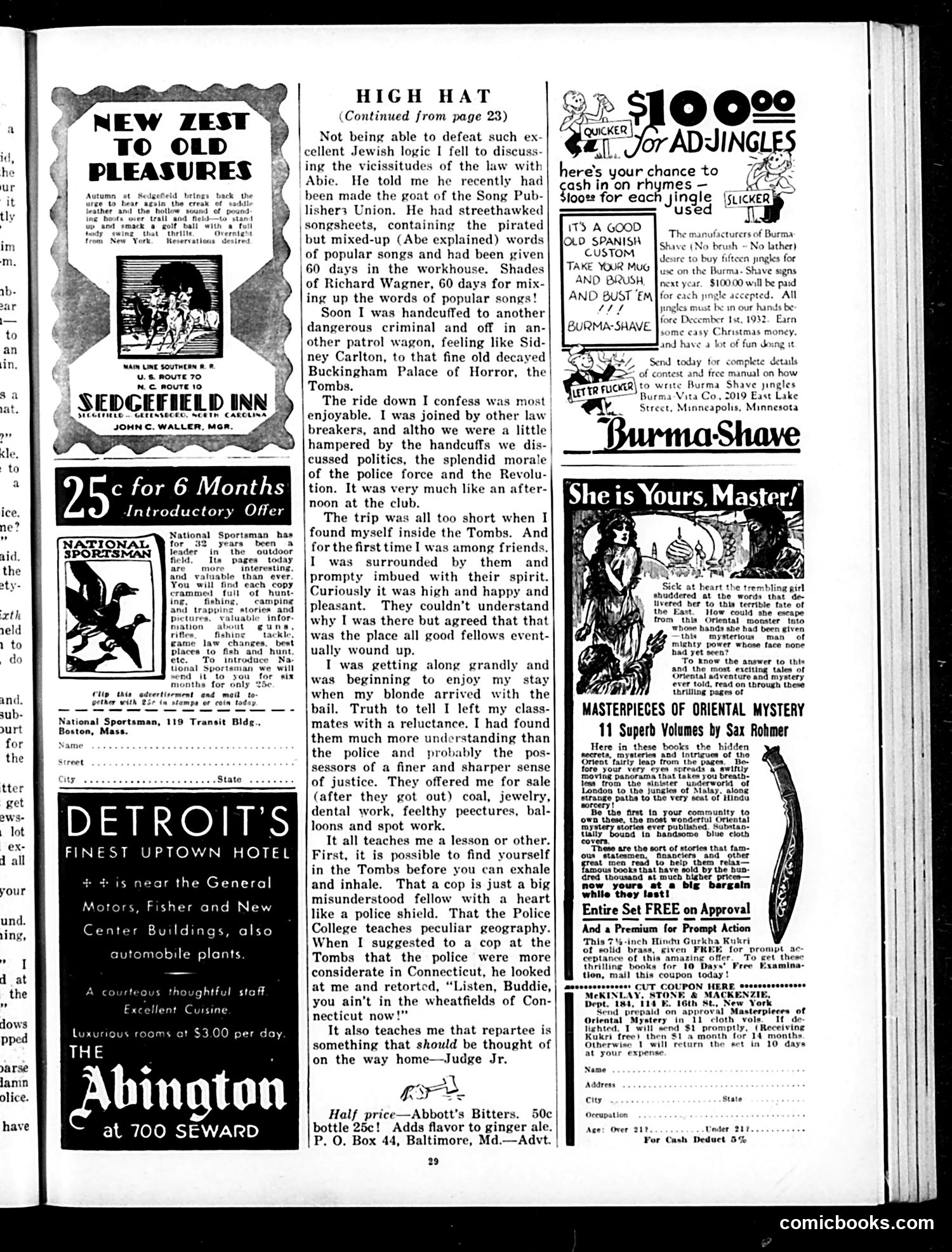
Analysis of Judge Magazine Page (circa 1932) This page is primarily advertising and serialized fiction, not political satire. The main content is "High Hat," a continuing story about a middle-class narrator arrested and jailed at the Tombs (New York's notorious prison). The satire here is social commentary: the narrator discovers inmates are more honest, understanding, and ethically sharp than police and authorities. The humor targets institutional hypocrisy—suggesting criminals possess better moral sense than those enforcing the law. A cop's retort—"you ain't in the wheatfields of Connecticut now"—mocks rigid, unthinking police authority. The page is otherwise filled with ads for hotels, sporting magazines, and notably Burma-Shave (offering $100 for jingle submissions), reflecting Depression-era commercial culture. No specific political figures or events are caricatured here; this is character-driven social satire about class and institutional corruption.
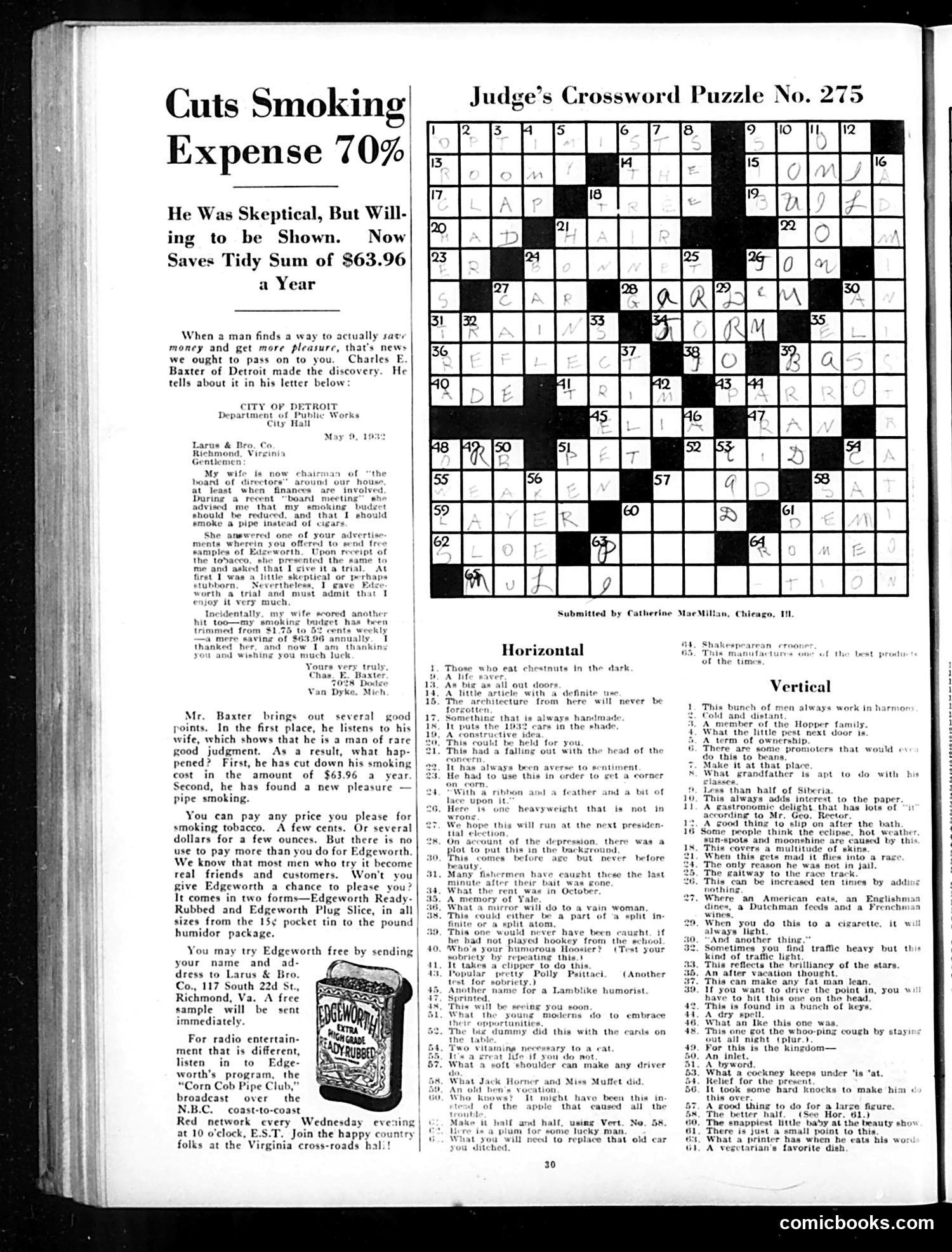
Judge Magazine Crossword Puzzle Advertisement (1932) This page combines a crossword puzzle with a testimonial advertisement for Edgeworth pipe tobacco. The article features a letter from Charles E. Baxter of Detroit claiming he reduced his smoking expenses by 70% (saving $63.96 yearly) by switching from cigarettes to pipe smoking with Edgeworth brand tobacco. His wife, positioned as household "chairman of the board of directors," convinced him to make the change. The satire is gentle: a man listens to his wife's financial advice and discovers both savings and pleasure—presented as surprisingly novel. The testimonial format was common advertising strategy of the 1930s, lending false credibility through "real customer" endorsements. The page also features Judge's signature crossword puzzle (No. 275), typical filler content that made the magazine popular. The Edgeworth advertisement includes a radio show promotion ("Corn Cob Pipe Club" on NBC), reflecting 1930s marketing integration across media.
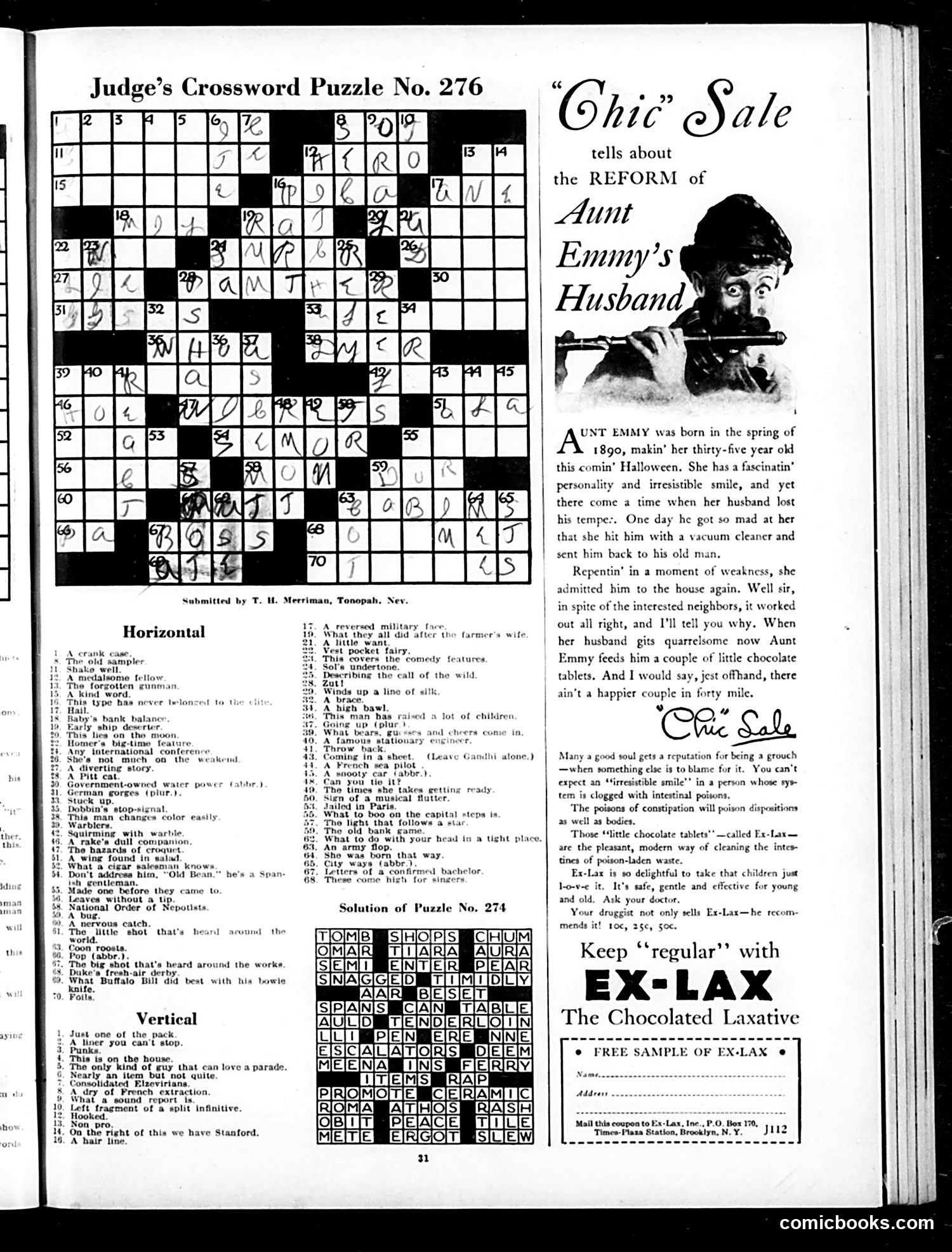
"Chic Sale" and the Ex-Lax Advertisement This page is primarily an advertisement disguised as humorous fiction. The "Chic Sale" piece tells a comedic domestic story about "Aunt Emmy," a 35-year-old woman who hits her quarrelsome husband with a vacuum cleaner, then reconciles with him. The punchline reveals the real product being sold: when her husband becomes difficult again, she feeds him Ex-Lax chocolate tablets, implying his bad mood stems from constipation. The satire is crude but deliberate—suggesting intestinal problems cause personality flaws and marital discord. The accompanying ad emphasizes that Ex-Lax is "delightful to take" and "safe" for children, positioning constipation relief as a cure-all for social harmony. This reflects early 20th-century advertising's aggressive marketing of patent medicines and laxatives, often with exaggerated health claims. The crossword puzzle above is filler; the real content is selling Ex-Lax through entertainment.
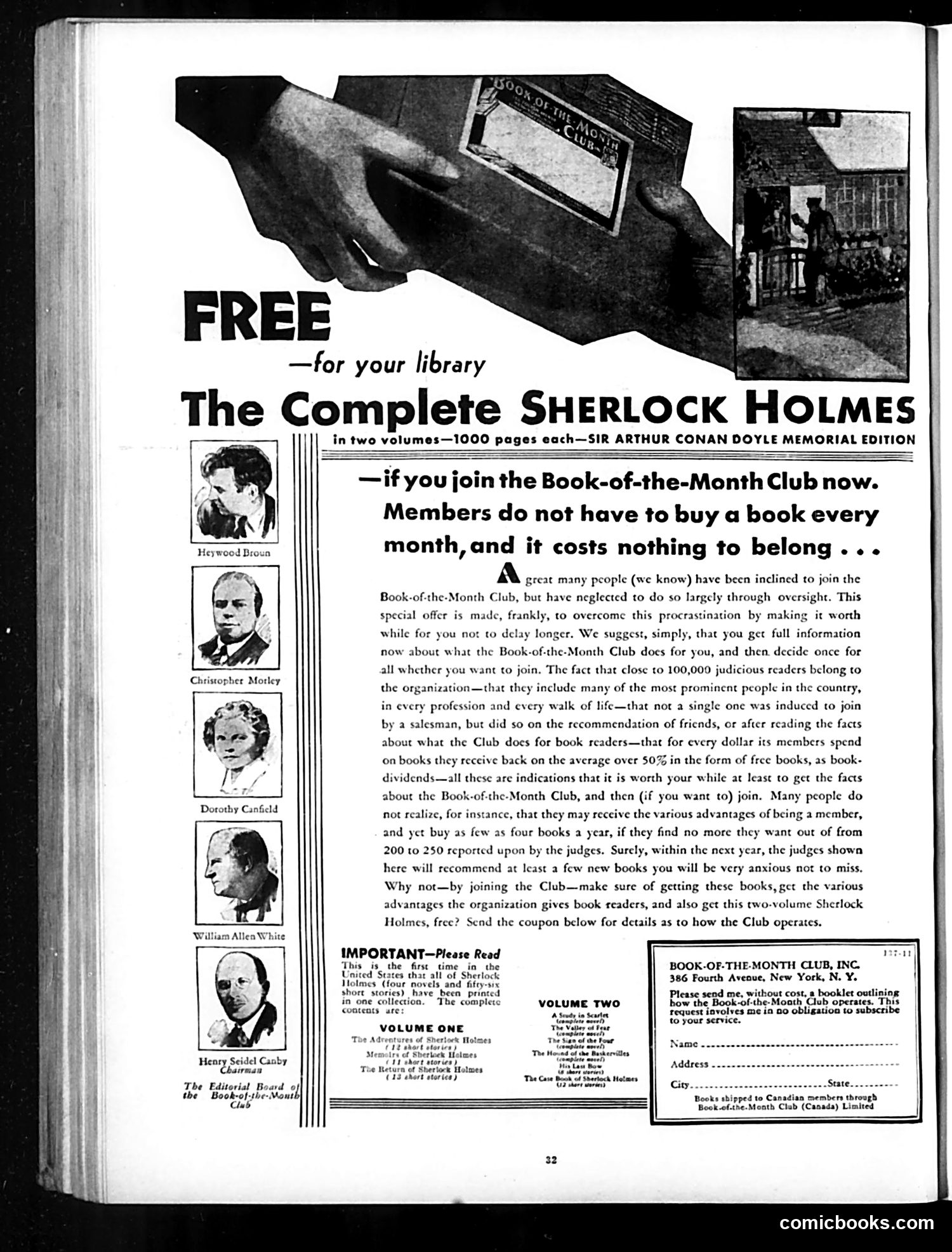
Advertisement, Not Satire This page is not a political cartoon or satire—it's a straightforward advertisement for the Book-of-the-Month Club, appearing in Judge magazine. The page promotes a free two-volume "Complete Sherlock Holmes" (Sir Arthur Conan Doyle Memorial Edition) as an incentive to join the club. It features portraits of the club's editorial judges: Heywood Broun, Christopher Morley, Dorothy Canfield, William Allen White, and Henry Seidel Canby—all respected literary figures of the era. The text emphasizes club benefits: members needn't buy monthly, membership costs nothing, and they receive books at 50% discount value. The ad claims nearly 100,000 members joined through word-of-mouth, not salesmen. This reflects 1920s-30s direct mail marketing strategies and the club's genuine popularity among educated readers before mass-market paperbacks became standard.
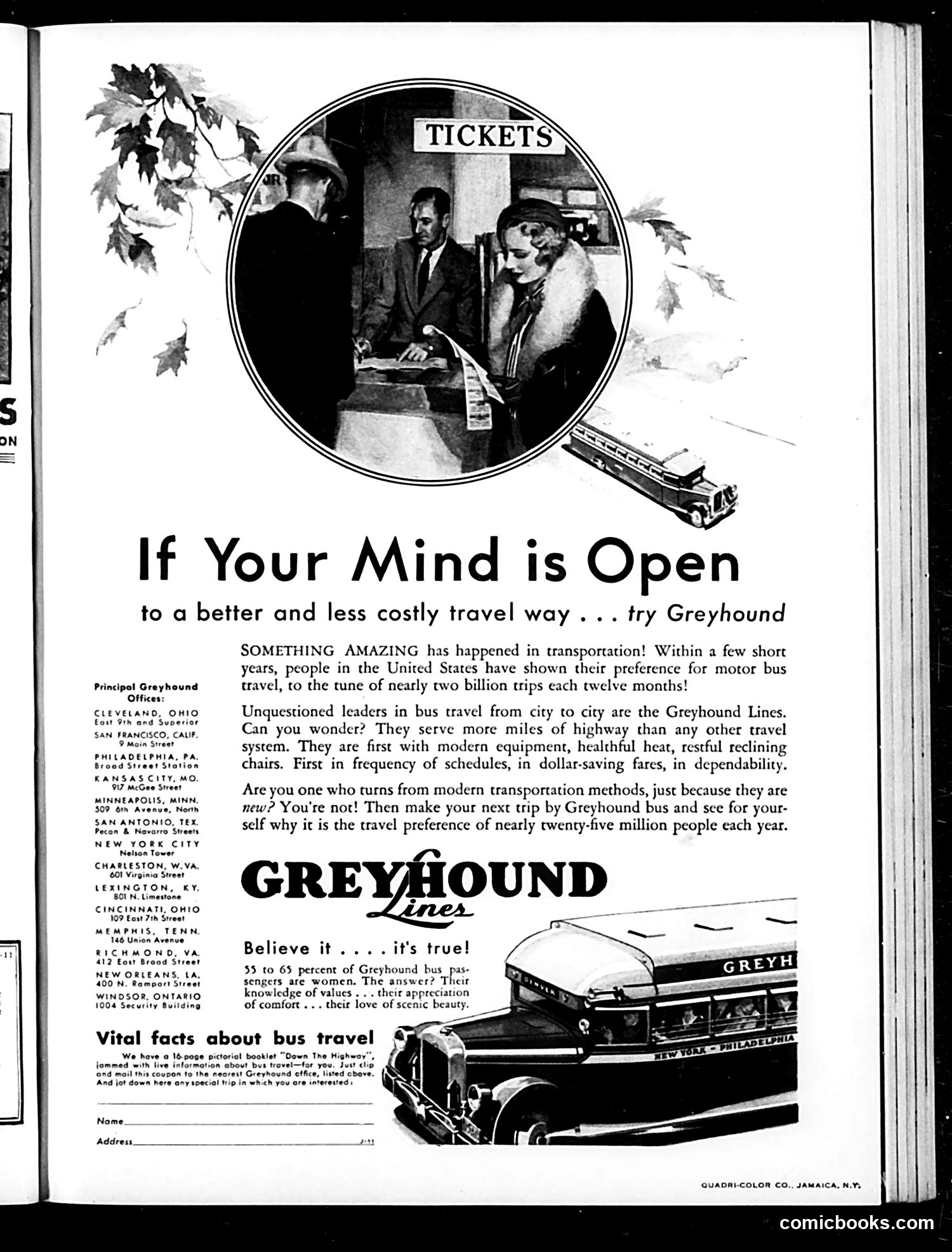
Advertisement, Not Satire This is a Greyhound bus advertisement, not a political cartoon or satire—it simply appears in *Judge* magazine as paid advertising. The image shows a ticket booth scene with three men in business attire conducting a transaction. The ad promotes Greyhound Lines as an affordable, modern alternative to other transportation methods, emphasizing their extensive routes, comfortable seating, frequent schedules, and low fares. The "open mind" framing suggests overcoming resistance to this newer mode of travel. A notable detail: the ad claims 35-65% of passengers are women, framing this as evidence of the service's quality and comfort—appealing to women's supposed appreciation for "values" and "scenic beauty." This reflects 1930s-40s transportation marketing during bus travel's growth period as an economical option rivaling trains and emerging automobile travel.
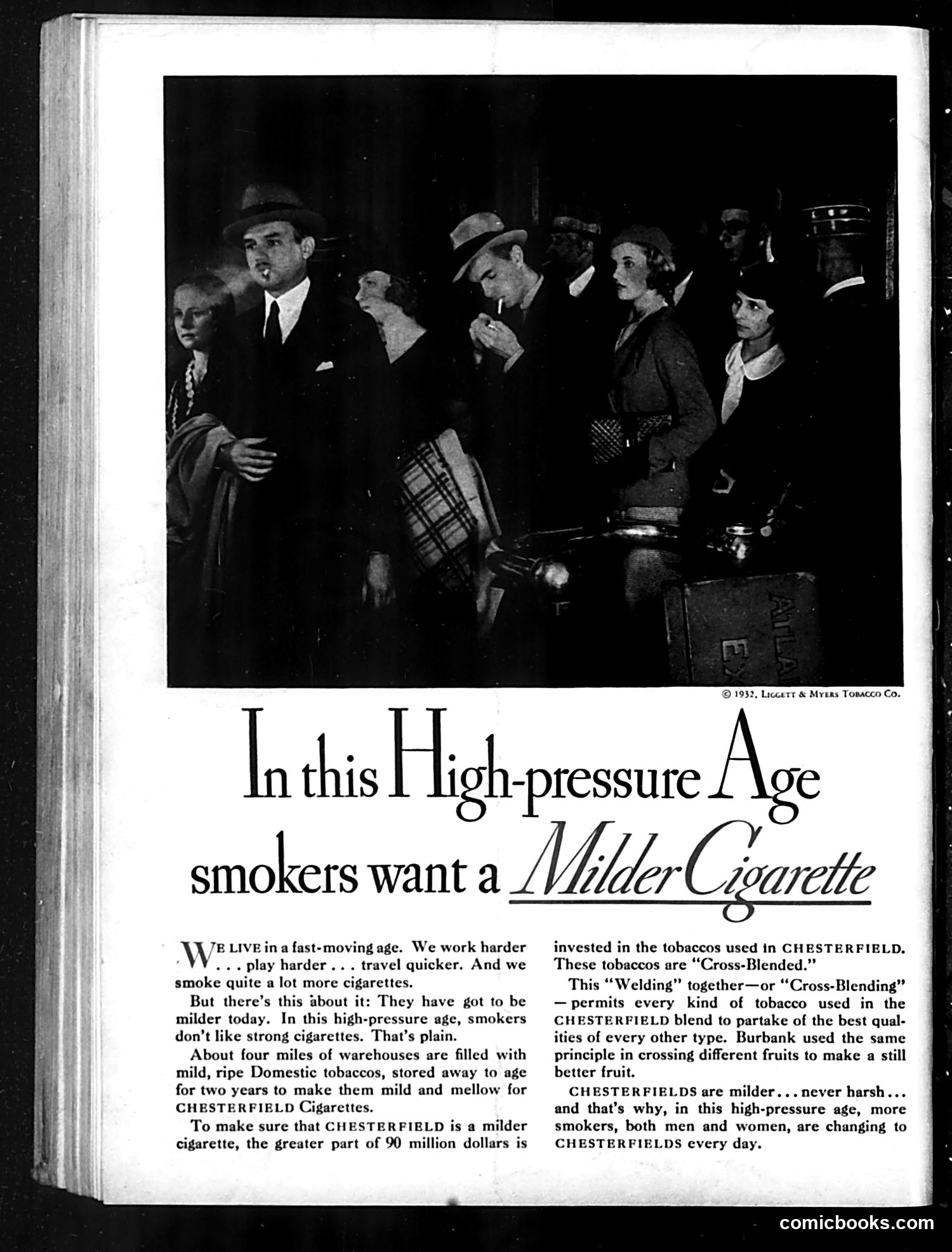
What This Page Actually Is This isn't a political cartoon or satirical content—it's a cigarette advertisement for Chesterfield, placed in Judge magazine (1932). The black-and-white photograph shows what appears to be immigrants or working-class people at a dock or travel hub, illustrating the ad's claim about modern "high-pressure" life: people working harder, traveling faster, smoking more. The advertisement's pitch is that in this stressful modern age, smokers need *milder* cigarettes. Chesterfield claims superiority through "cross-blending" tobaccos aged two years, comparing their process to Luther Burbank's fruit-breeding techniques. The historical irony: This ad confidently markets cigarettes as health-conscious ("never harsh"), with zero acknowledgment of any health concerns—standard practice before mid-century medical warnings. Modern readers would recognize this as promoting an addictive product to stressed workers without any health disclaimers.