judge
Judge — July 1933
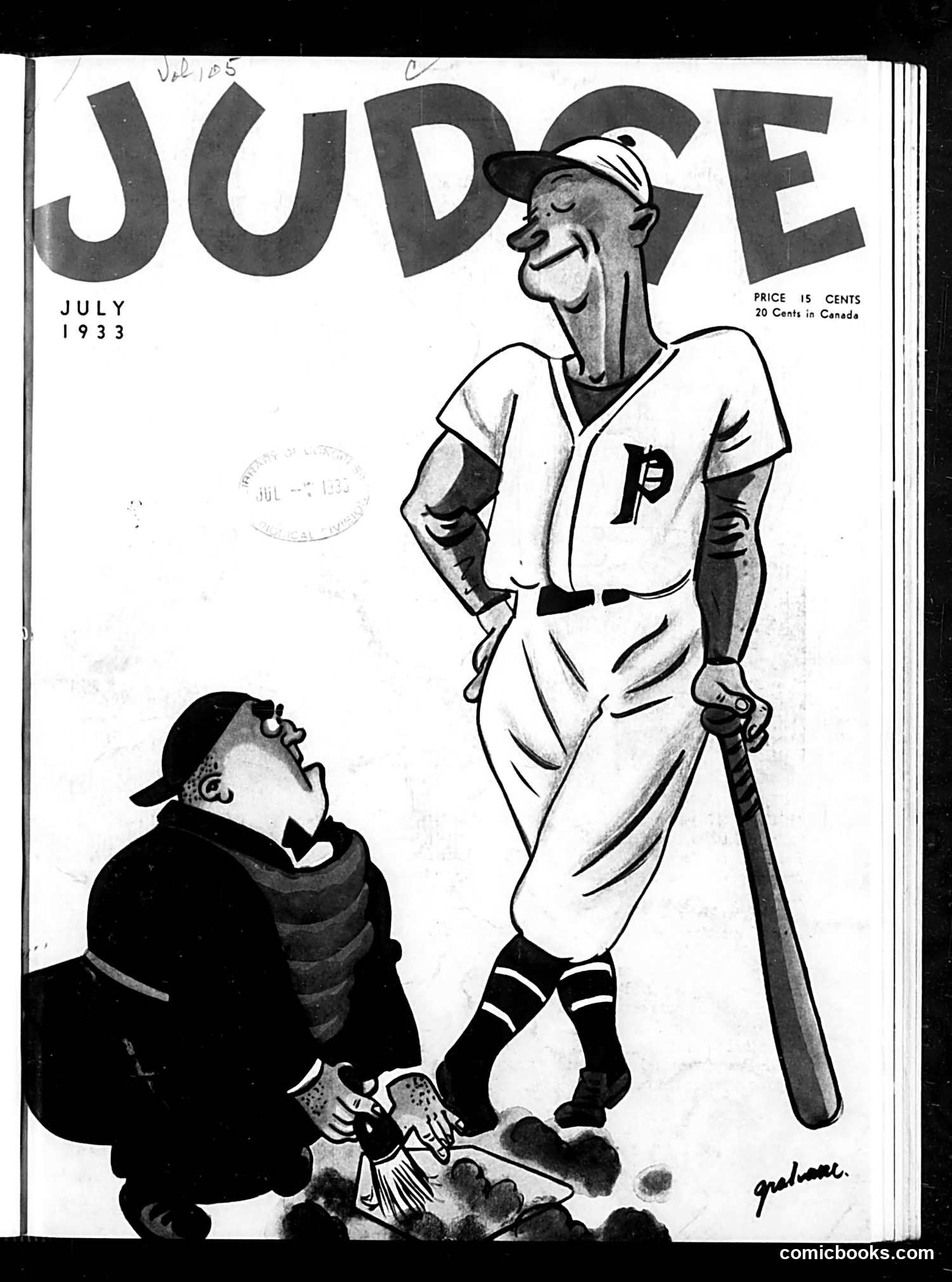
Judge Magazine Cover Analysis - July 1933 This cover depicts a baseball player wearing a "P" uniform (likely Pittsburgh Pirates) towering over a smaller, hunched figure in dark clothing. The tall player appears confident and robust, while the smaller figure looks dejected or defeated below him. The satire likely references the Great Depression era (1933), contrasting prosperity in professional sports with economic hardship affecting ordinary Americans. The exaggerated size difference suggests the disparity between wealthy athletes and struggling citizens during this period. The "JUDGE" masthead and 15-cent price point confirm this as the satirical magazine's commentary on American social conditions. The artist's signature appears to be "Gulbranson" (lower right).

Analysis This is primarily an advertisement for Ethyl Gasoline, not satire or political commentary. The "cartoon" shows two smiling men in an airplane with a "To Chicago" sign, representing vacation travel to the 1933 World's Fair. The "tip" being offered is that drivers should use Ethyl Gasoline for their vacation trips. The advertisement claims Ethyl eliminates engine knock, restores performance to older cars, and ultimately saves money on repairs—making it ideal fuel for the long-distance travel people undertake for leisure. The World's Fair reference and airplane imagery emphasize modernity and progress. This is straightforward commercial messaging dressed in Judge magazine's humorous style, promoting a specific fuel brand to readers planning vacations.
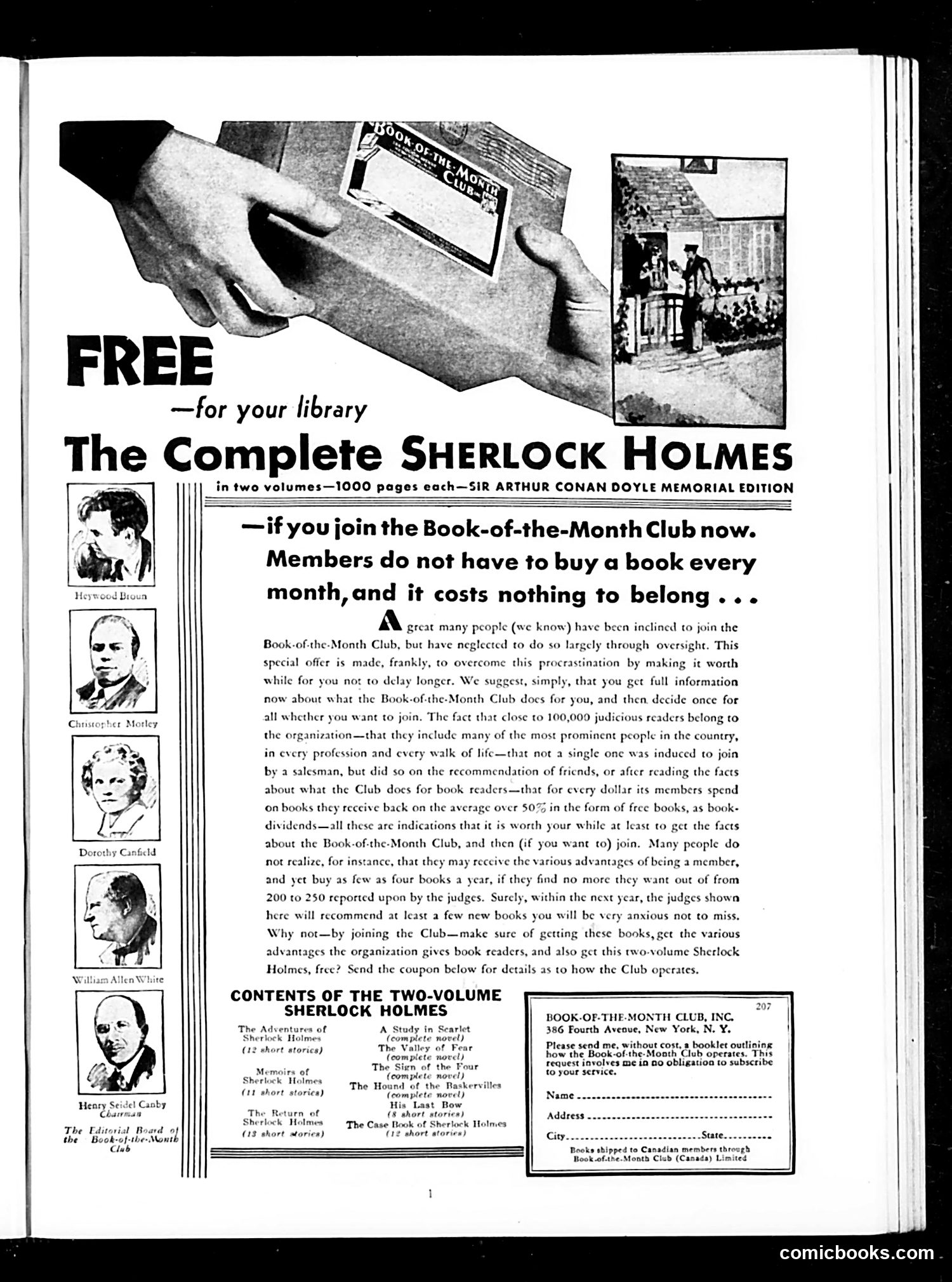
Analysis This page is primarily advertising, not satire or editorial content. It promotes the Book-of-the-Month Club's offer of a free two-volume "Complete Sherlock Holmes" Sir Arthur Conan Doyle Memorial Edition to new members. The left side features portraits of five literary figures—likely editors or board members of the Book-of-the-Month Club—identified by names including Heywood Broun, Dorothy Canfield, and Henry Seidel Canby. The main text is a sales pitch emphasizing membership benefits: readers receive 100,000+ members' recommendations, pay nothing to join, and aren't obligated to purchase monthly selections. The ad highlights that members typically spend only $2-4 annually on books while receiving substantial value. A coupon at bottom-right invites readers to request club information. There are no political cartoons or satirical commentary on this page.
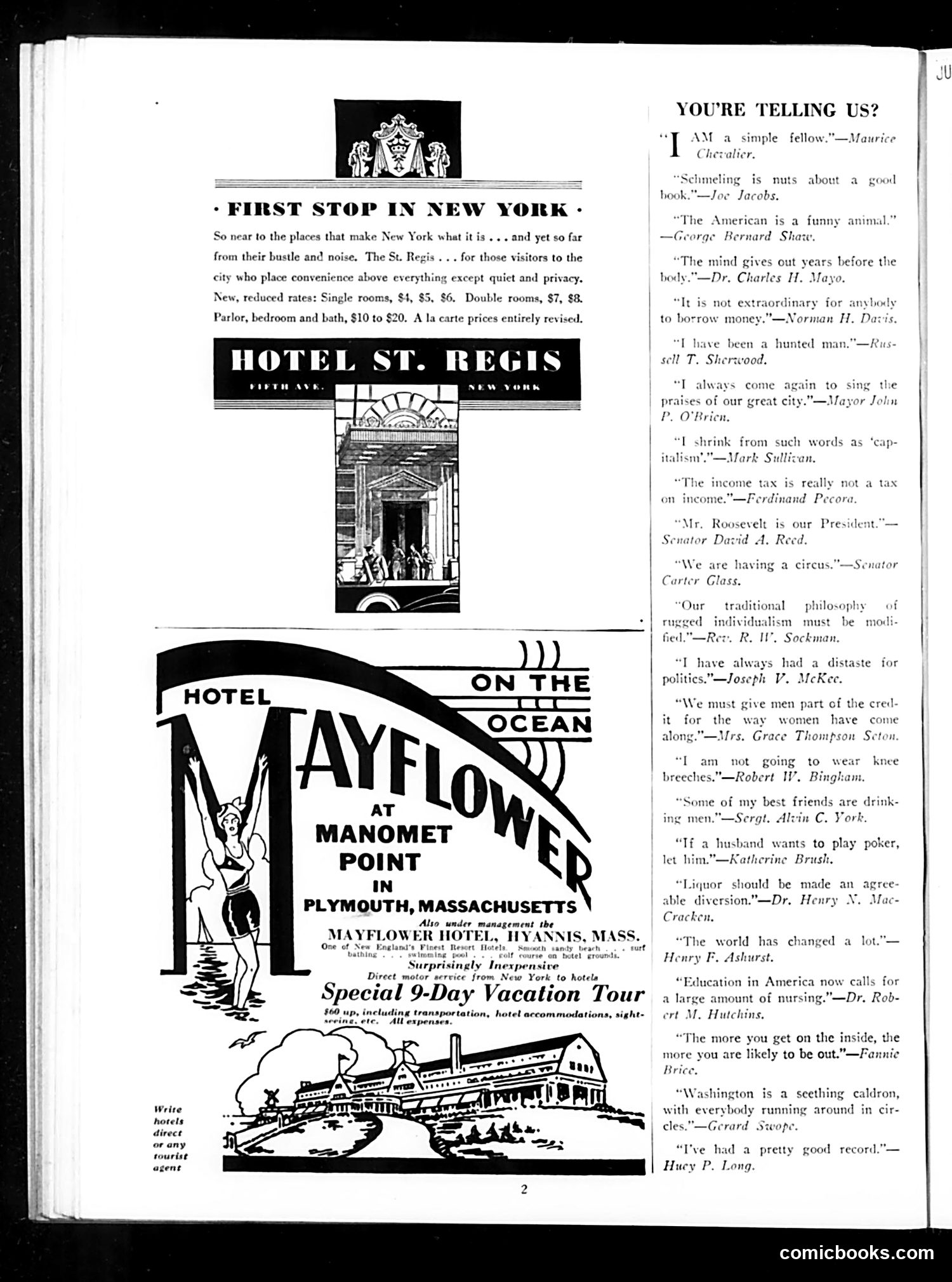
Judge Magazine Page Analysis This page is primarily advertising, not political satire. It features two hotel advertisements: 1. Hotel St. Regis (Fifth Avenue, New York) — positioned as a convenient, quiet alternative to noisier Manhattan locations, offering reduced rates ($4-$20). 2. Hotel Mayflower (Plymouth, Massachusetts) — the dominant advertisement, promoting a "Special 9-Day Vacation Tour" including transportation and accommodations, with an illustration of the coastal hotel. The right column contains celebrity quotations on various topics (taxes, Roosevelt, politics, drinking, etc.), likely meant as entertainment filler or endorsements. The page reflects 1920s-30s leisure culture and tourism marketing, with no apparent political commentary. The celebrity quotes are generic observations rather than satire.
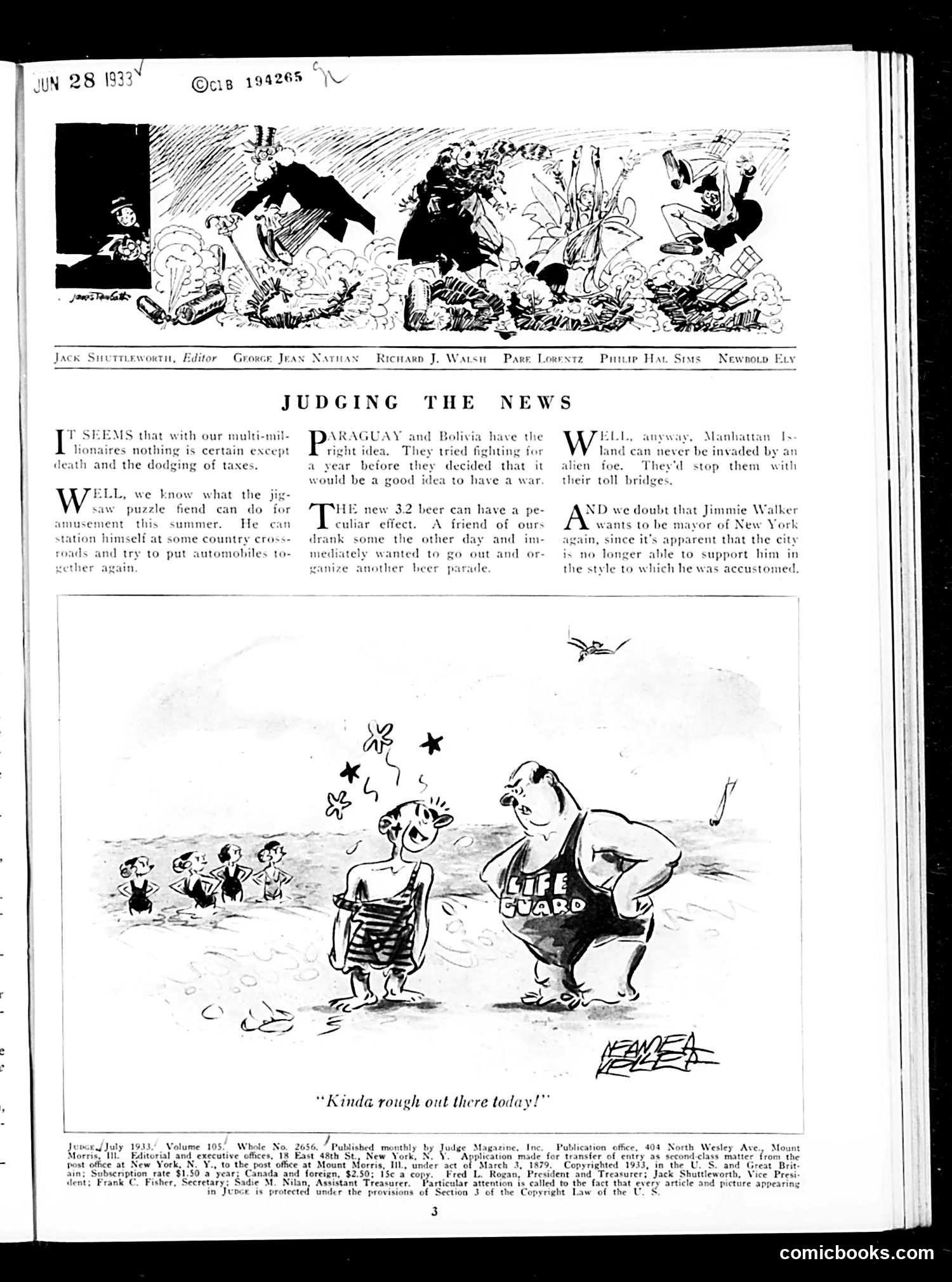
"Judging the News" - June 28, 1933 This satirical page comments on contemporary issues through brief editorial quips and a cartoon. The main cartoon depicts a lifeguard confronting a thin, disheveled bather at the beach, with the caption "Kinda rough out there today!" The likely reference is to economic hardship during the Great Depression (1933). The bather's skeletal appearance suggests poverty or malnutrition, while the lifeguard's comment ironically understates obvious danger—reflecting how authorities minimized serious social problems. The text above discusses Paraguay and Bolivia (military conflict), 3.2% beer (recently legalized after Prohibition), and Jimmie Walker (former NYC mayor facing corruption allegations). These snippets exemplify *Judge's* satirical approach: reducing complex news into pointed, darkly comic observations about politics and social conditions.
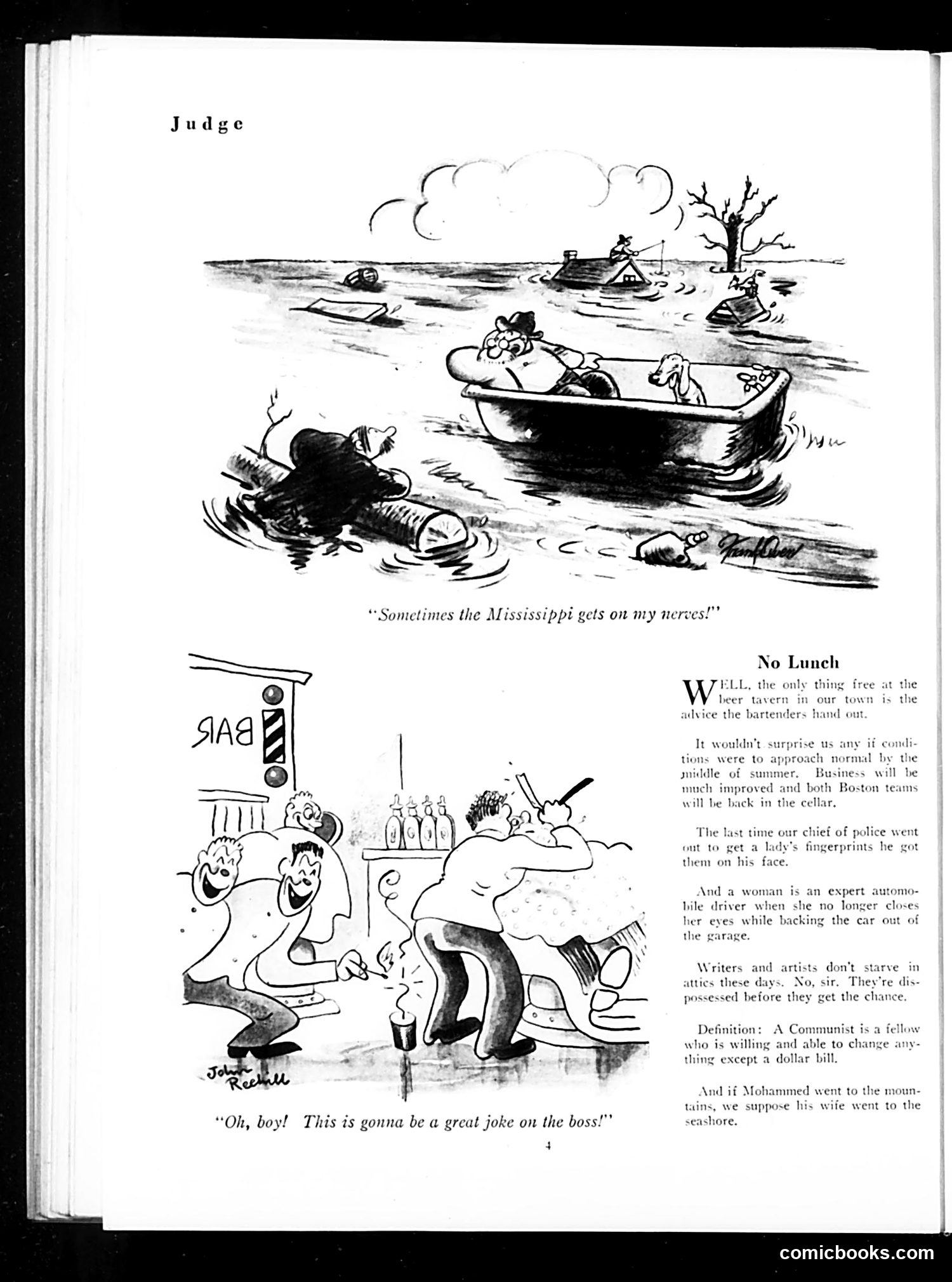
Page Analysis: Judge Magazine The top cartoon depicts a man in a boat on the Mississippi River, apparently stressed by flooding conditions ("Sometimes the Mississippi gets on my nerves!"). This reflects actual Mississippi River flooding—a recurring natural disaster causing public anxiety. The bottom cartoon shows men at a bar labeled "BAR" with bottles visible, captioned "Oh, boy! This is gonna be a great joke on the boss!" This appears to satirize workplace drinking culture and prohibition-era speakeasy behavior. The "No Lunch" article discusses post-summer economic conditions, police inefficiency, and includes a communist definition joke ("willing to change anything except a dollar bill")—typical 1920s-30s satirical commentary on politics and social conditions. The overall page reflects Depression-era American concerns: natural disasters, economic hardship, and labor/political anxieties.
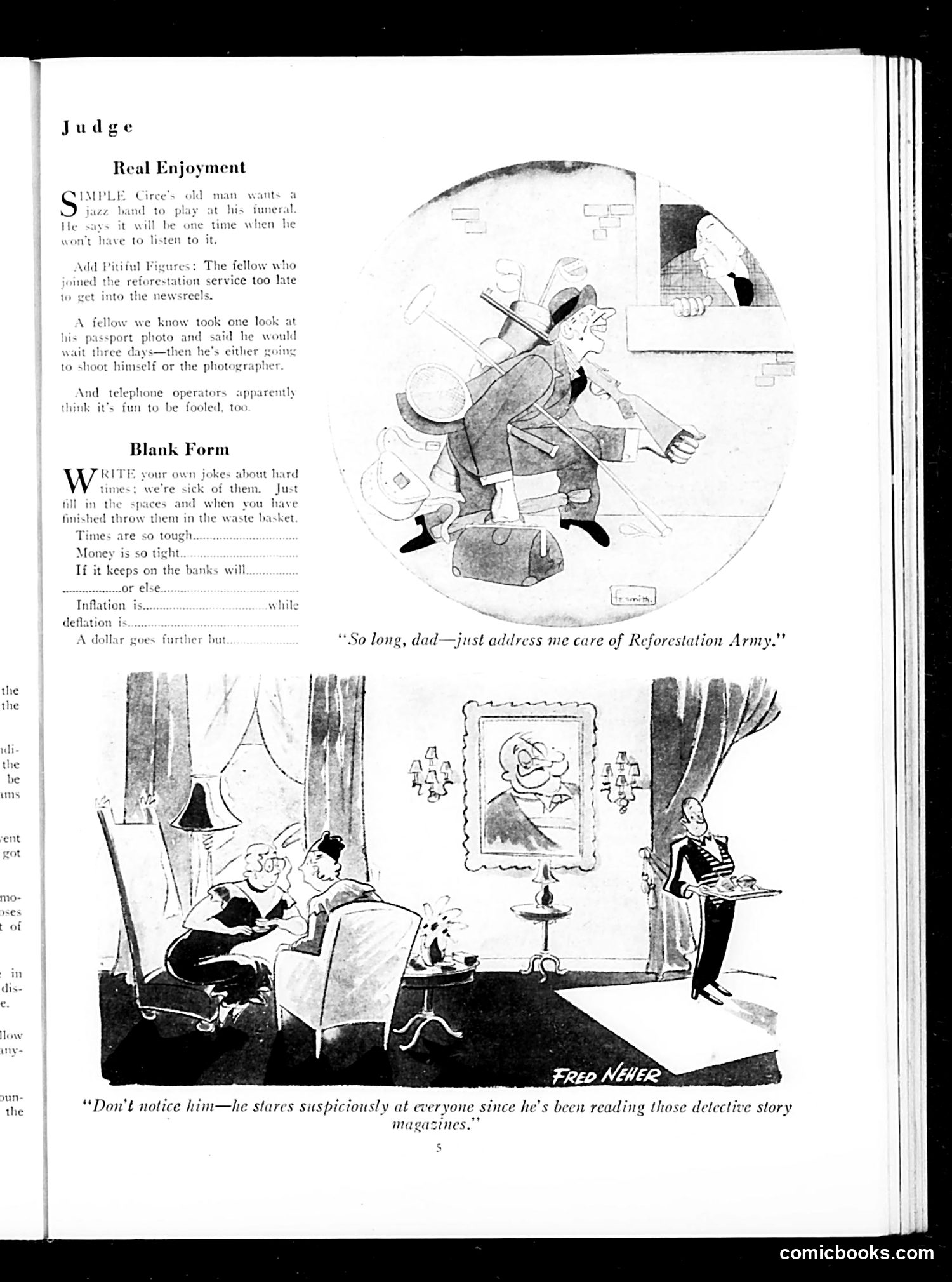
Analysis of Judge Magazine Page This page contains three distinct humor pieces: "Real Enjoyment" mocks people seeking entertainment during hard times—an old man wanting jazz at his funeral, a reforestation service worker too late for employment, and someone threatening a photographer over a bad passport photo. "Blank Form" invites readers to complete jokes about economic hardship (tight money, inflation, deflation, bank failures)—suggesting Judge's audience found dark humor in Depression-era financial struggles. Bottom cartoon (by Fred Naher) shows a man reading "detective story magazines" who now suspiciously eyes everyone—satire on pulp detective fiction's influence on readers' paranoia. The page reflects 1930s economic anxiety and contemporaneous debates about mass media's effects on behavior and mental health.
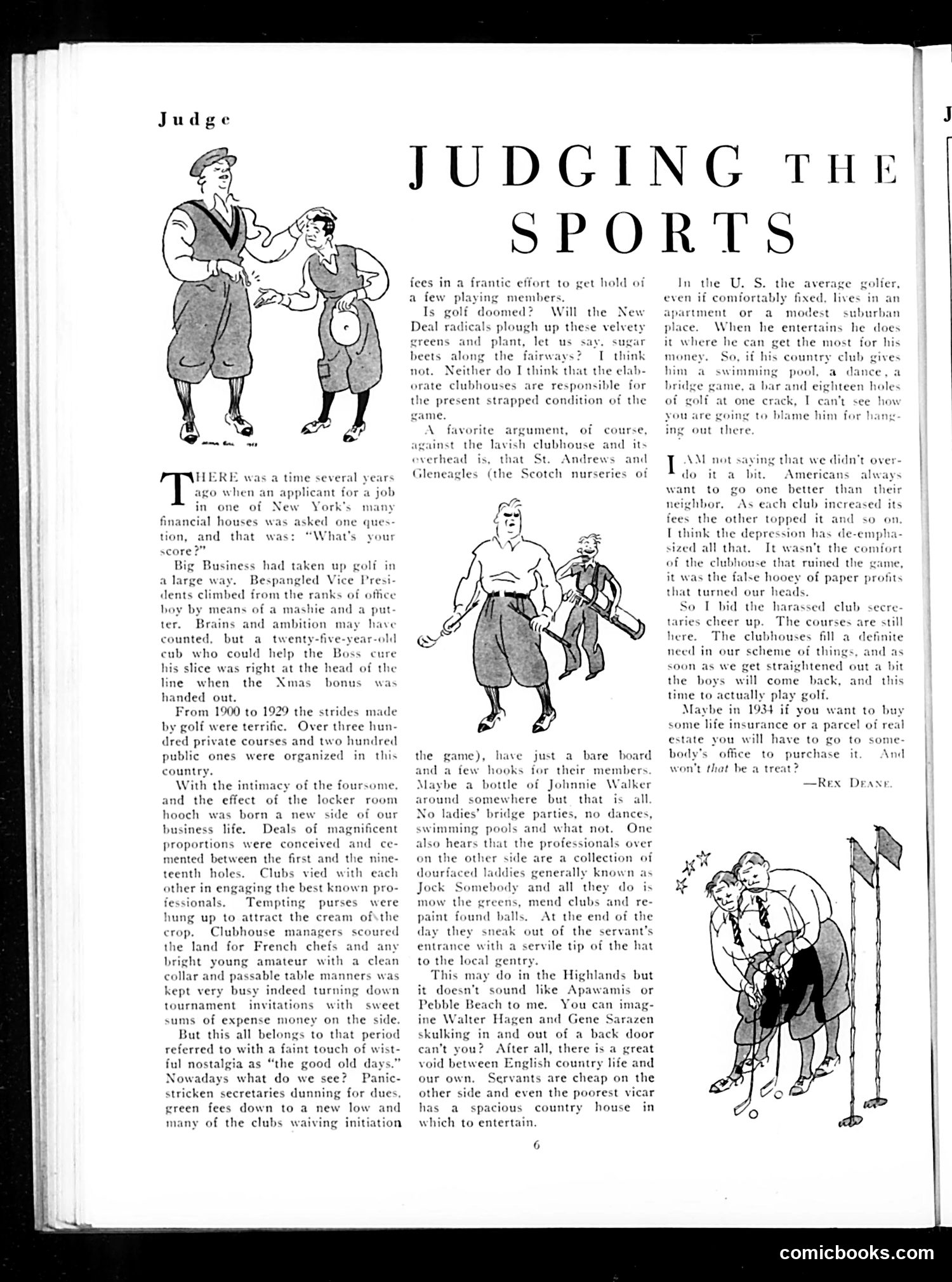
"Judging the Sports": Golf's 1920s Decline This satirical piece critiques the dramatic collapse of American golf's popularity between 1900-1929. The text explains that golf clubs—which had proliferated with "magnificent proportions" and clubhouse extravagance—suddenly faced crisis as the sport fell from fashion. The cartoons illustrate the problem: overeager club managers had chased memberships and revenue so aggressively that the sport lost its appeal. Wealthy amateurs abandoned golf for other entertainments. The author (Rex Deane) argues the crisis stems not from course conditions but from excessive commercialization—the "false hooey of paper profits" that corrupted the game. The illustrations show a judge-like authority figure explaining this collapse to a younger golfer, suggesting satirical commentary on how poor management destroyed what was once an elite pastime.
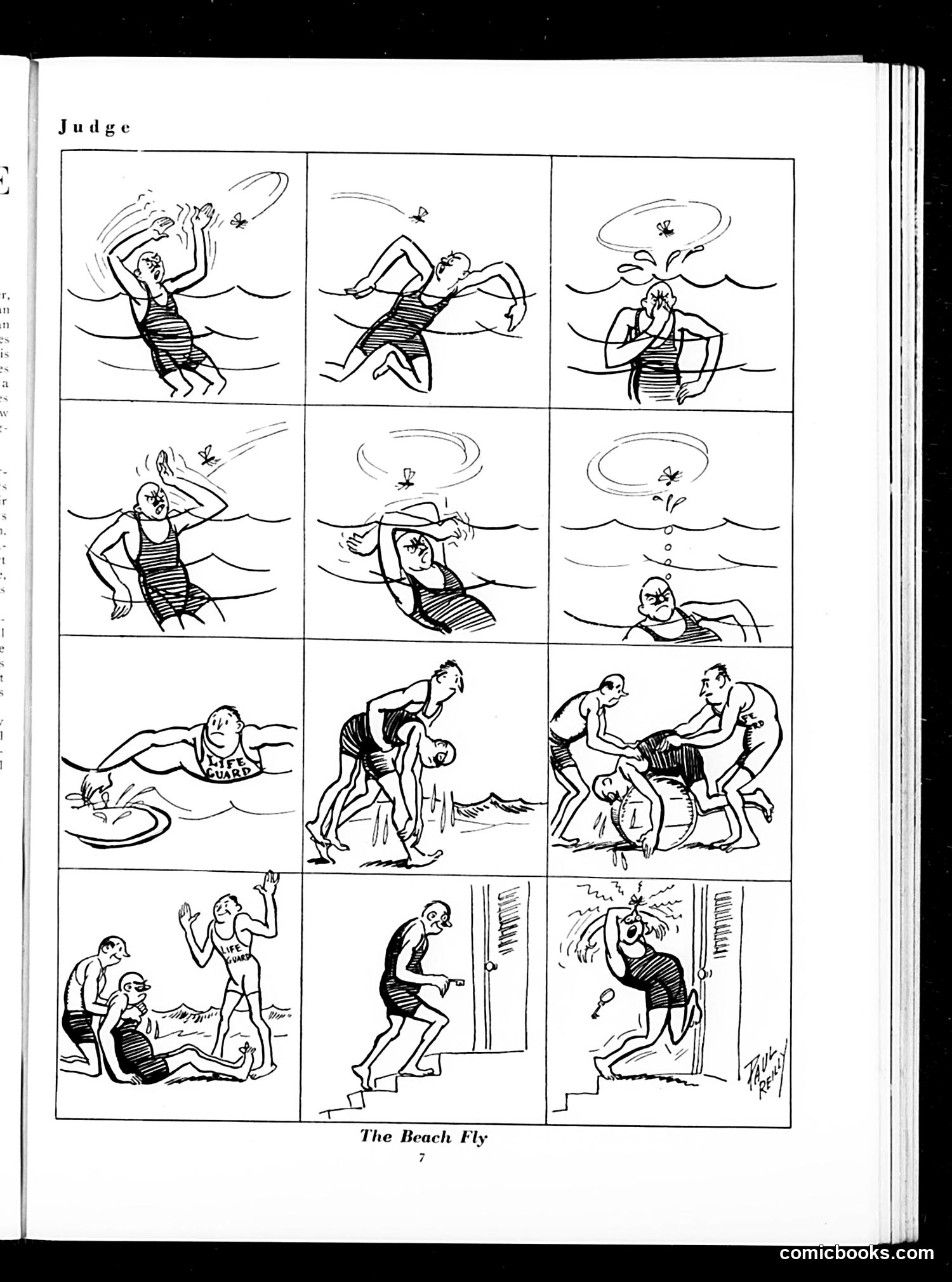
"The Beach Fly" - Judge Magazine This is a humorous comic strip titled "The Beach Fly" depicting various mishaps involving a persistent insect at the beach. The sequential panels show beachgoers attempting to swat or escape from a fly using a frisbee (or similar disc), with escalating chaos: the fly evades their efforts, they collide with each other, interfere with other swimmers and sunbathers, and finally chase the fly indoors where it causes further disruption. The satire is straightforward slapstick comedy—the joke centers on how a tiny annoyance (the beach fly) triggers disproportionate, comical overreactions among adults, resulting in complete pandemonium. It's gentle social humor about the irritations of summer beach culture and human absurdity, requiring no specific political or historical context beyond understanding shared beach experiences.
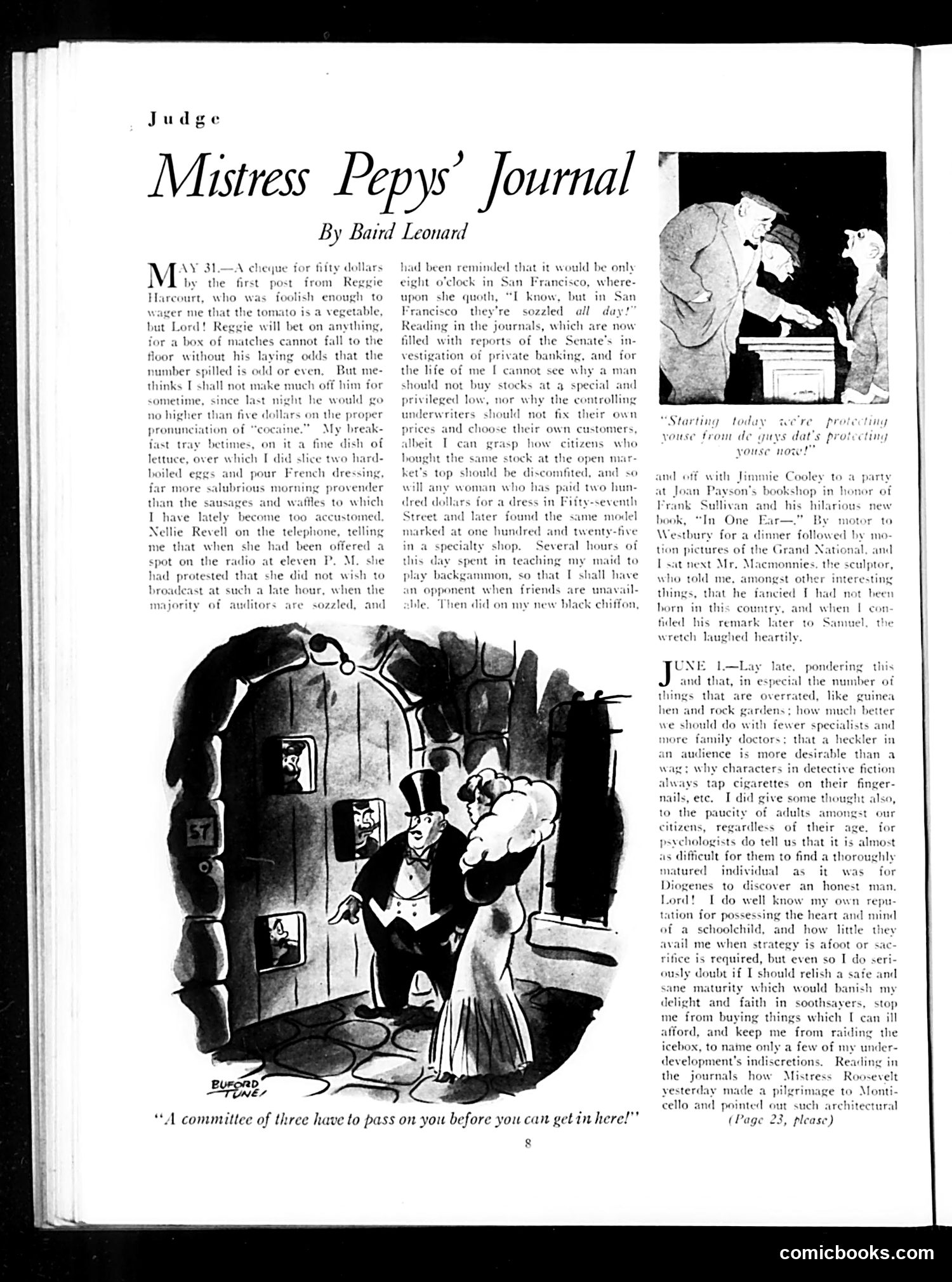
"Mistress Pepys' Journal" — Judge Magazine Satire This is a society gossip column mimicking Samuel Pepys's famous 17th-century diary, written by "Mistress Pepys" (a female diarist). The satire targets wealthy New York socialites and their frivolous concerns during what appears to be the 1920s-30s. The main cartoon depicts a woman entering an exclusive venue where a doorman announces "A committee of three have to pass on you before you can get in here!"—satirizing the exclusivity and gatekeeping of high society. The column mocks the upper class for: obsessing over trivial matters (tomatoes as vegetables, dress prices), attending endless parties and dinners, and complaining about servants and household staff. The diarist also references Senate investigations into private banking, suggesting the piece may target wealthy elites' indifference to serious political matters while absorbed in their own pleasures. The overall joke: despite their pretensions to sophistication, these socialites are shallow, petty, and absurdly self-absorbed—their "journals" recording nothing of substance.
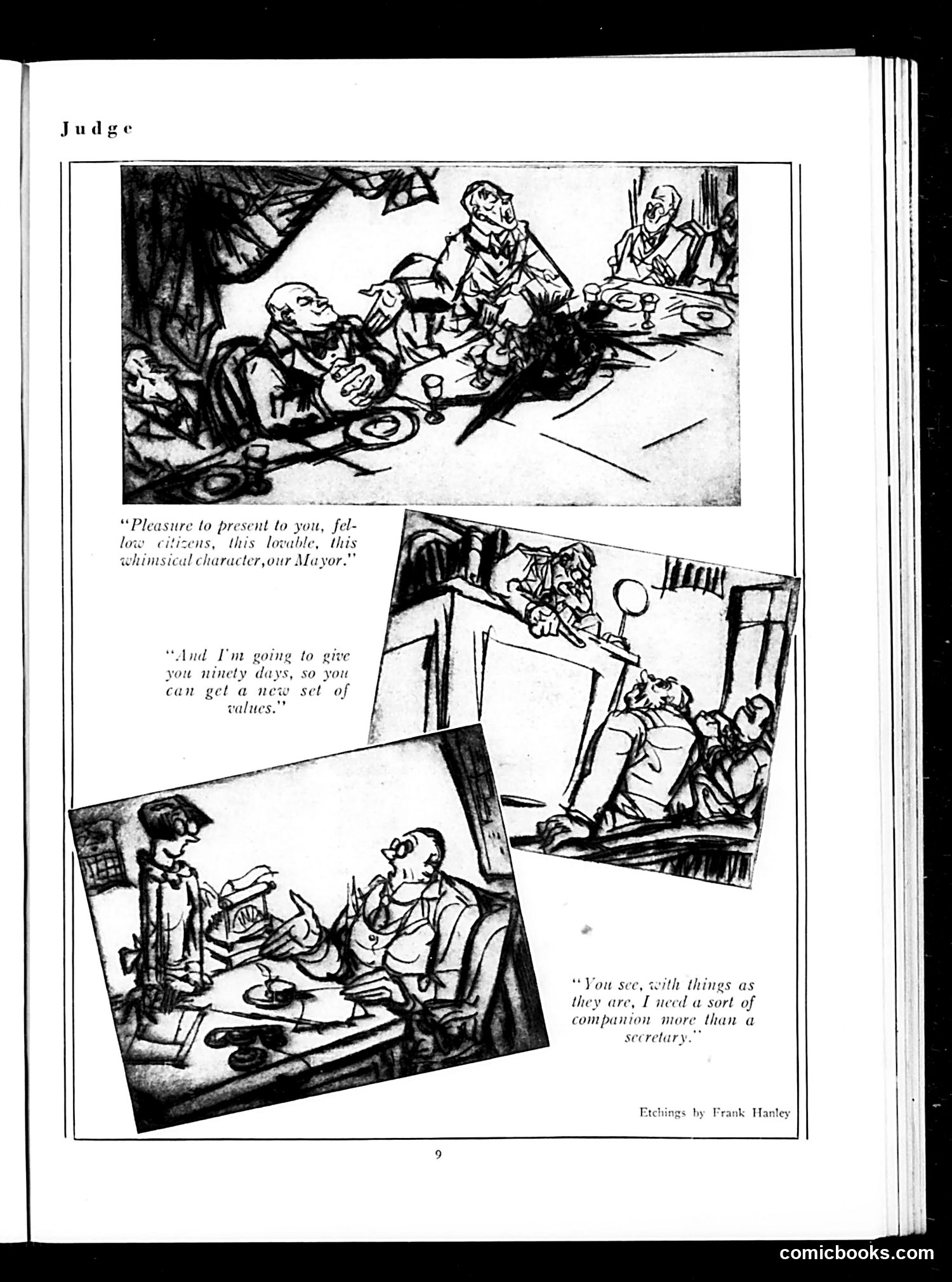
This page from *Judge* satirizes municipal corruption and mayoral incompetence. The cartoons depict a mayor being introduced to citizens as a charming character, then sentencing someone to 90 days in jail supposedly to reform their "values"—suggesting the mayor himself lacks ethical standards while posturing as moral authority. The final panel's joke about needing "a companion more than a secretary" implies the mayor surrounds himself with loyalists rather than competent staff, prioritizing personal support over administrative function. The satire targets the hypocrisy of corrupt local officials who punish ordinary citizens while embodying the very moral failings they condemn. Frank Hanley's etchings emphasize the mayor's whimsical, unserious demeanor despite wielding judicial power.
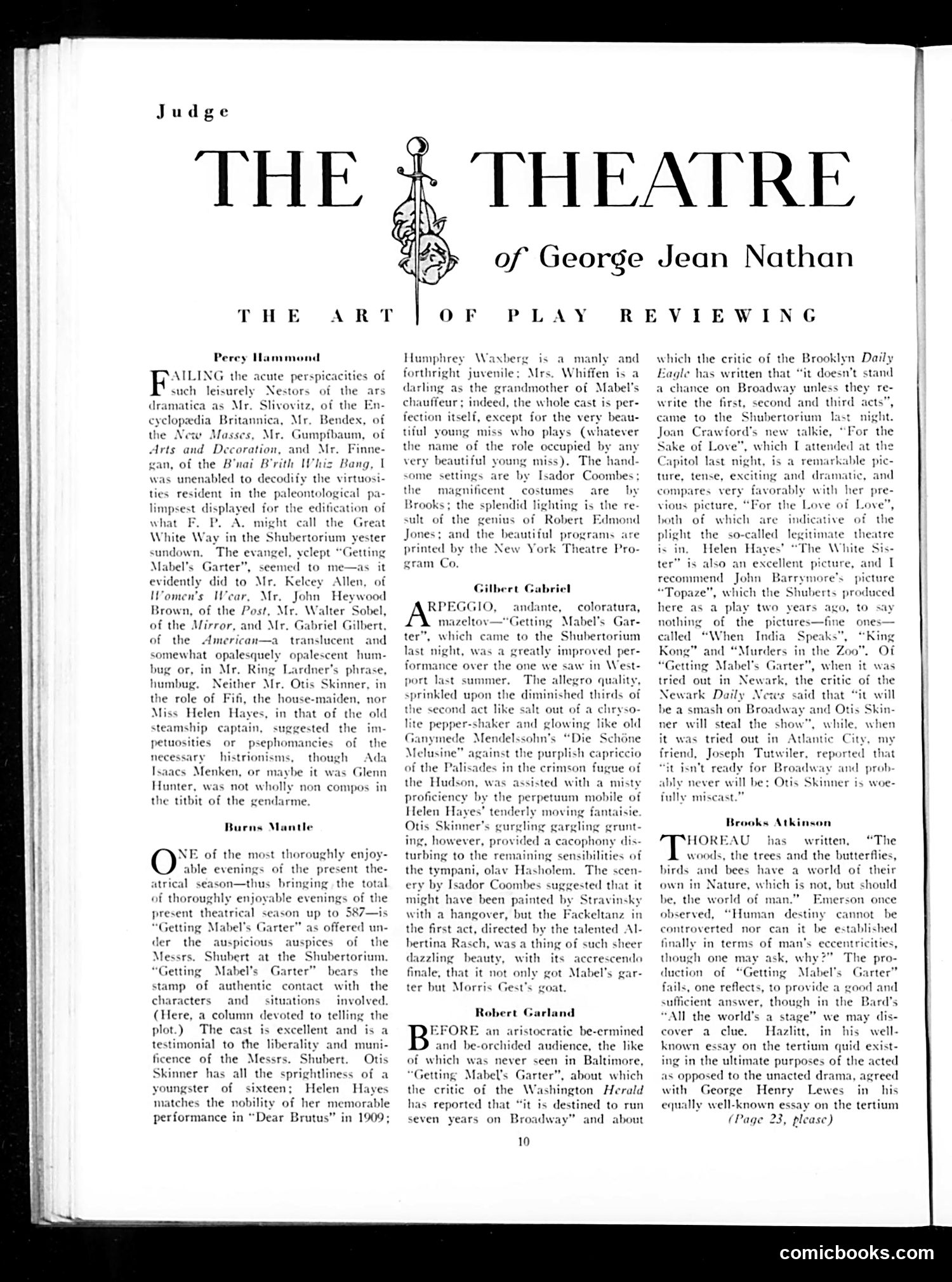
Judge Magazine Theater Review Page This page is primarily a theater criticism column by George Jean Nathan reviewing Broadway plays, particularly "Getting Mabel's Garter" at the Shubertorium. The satire targets pretentious theater critics. Nathan opens by mocking other critics' "acute perspicacities"—listing absurdly named publications like the "Encyclopedia Britannica" and "B'nai B'rith Whiz Bang." He uses deliberately overblown language ("paleontological palimpsest," "opalesquely opalescent") to parody critical pomposity. The reviews themselves are snippets from various critics (Humphrey Wasberg, Gilbert Gabriel, Robert Garland, Burns Mantle, Brooks Atkinson) offering contradictory assessments of the same production and its star, with wildly varying predictions about its success. This demonstrates how subjective and unreliable theater criticism could be. The joke: serious theatrical criticism is often inflated nonsense masking uncertain judgment.
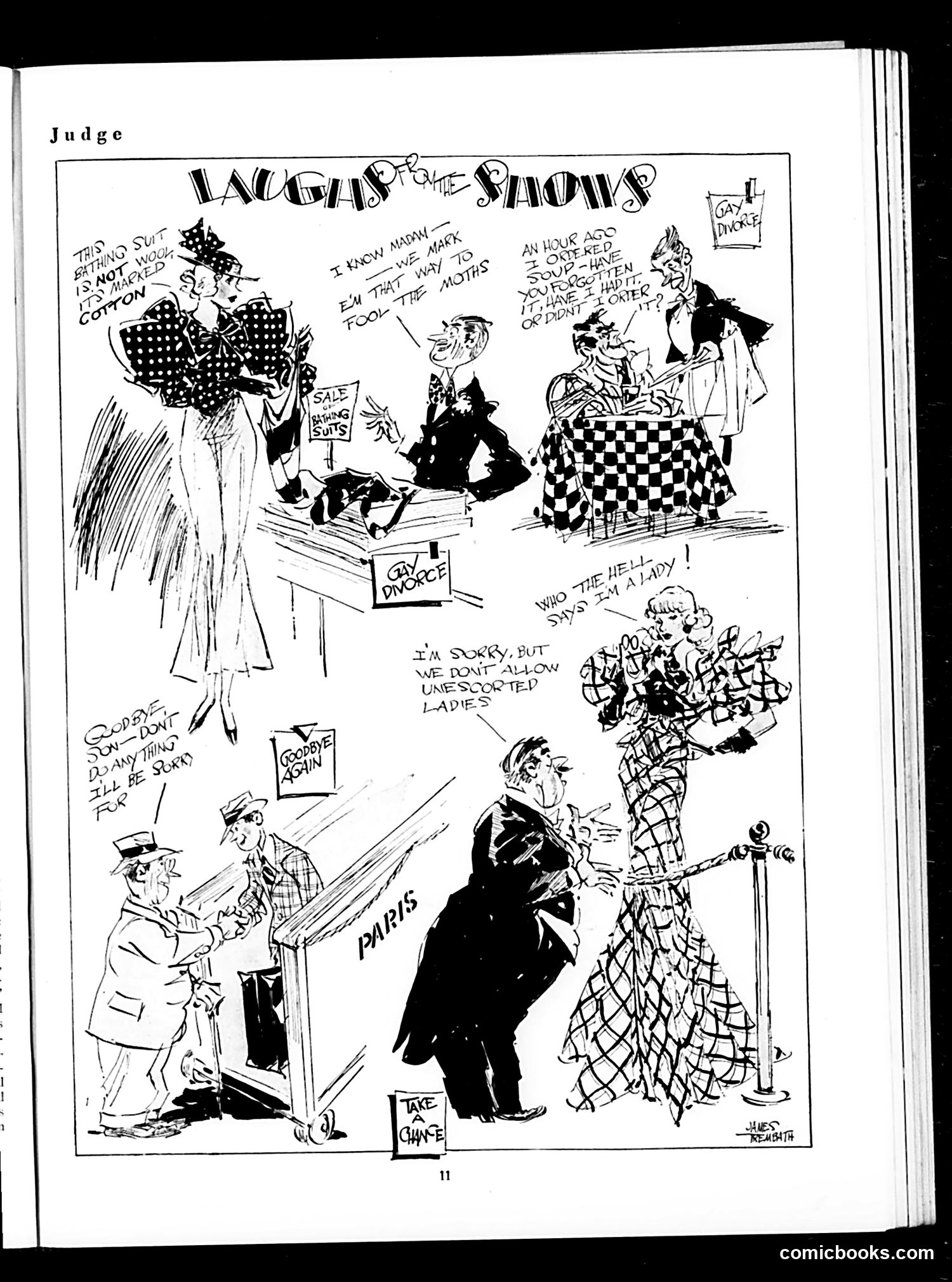
"Judge's Laughs & Snows" This is a satirical cartoon page depicting various social scenes, likely from the early 20th century. The central themes involve: Fashion & Social Commentary: A woman in an elaborate checkered dress dominates the right side, labeled "Who the hell says I'm a lady!" — mocking exaggerated fashion trends and changing women's social roles. Marital/Relationship Humor: Multiple scenes show couples in domestic situations, with dialogue about infidelity, divorce proceedings ("Divorce"), and relationship frustrations — common Judge magazine fodder satirizing marriage customs. Class & Behavior: References to "unescorted ladies" and concerns about propriety suggest satire of strict social etiquette rules and their gradual erosion. Fashion Absurdity: The ornate, patterned clothing and exaggerated designs are targets of mockery for their impracticality. The overall tone mocks both rigid Victorian social conventions and the modern fashions/behaviors beginning to challenge them.
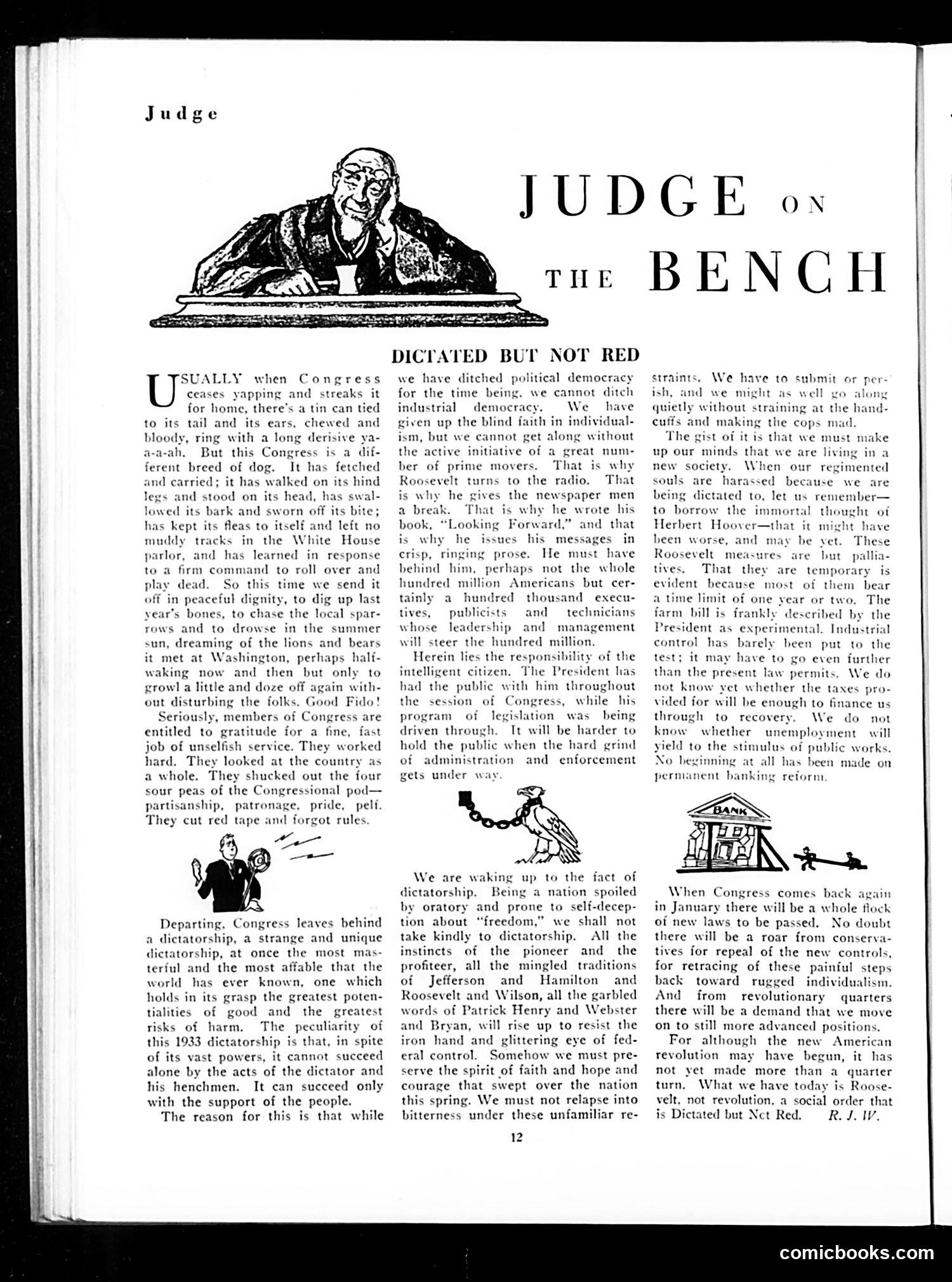
"Judge on the Bench: Dictated but Not Red" This 1933 editorial cartoon critiques Congress's passivity during Franklin D. Roosevelt's New Deal. The judge illustration represents judicial oversight; the text ironically compares Congress to an obedient dog that has surrendered its independence to the executive branch. The piece acknowledges that America has temporarily abandoned "political democracy" for executive dictatorship—but argues this is necessary and acceptable because Roosevelt maintains public support through radio addresses and newspapers. The author defends the arrangement as temporary and claims industrial democracy (worker participation) prevents total autocracy. The satire targets Americans' romantic attachment to "freedom" rhetoric while accepting authoritarian control. "Not Red" distances the argument from communism, emphasizing this is pragmatic American governance, not ideology. The cartoon warns citizens must maintain faith in Roosevelt's vision while accepting unprecedented federal control—essentially arguing: dictatorship is fine if we consent to it willingly.
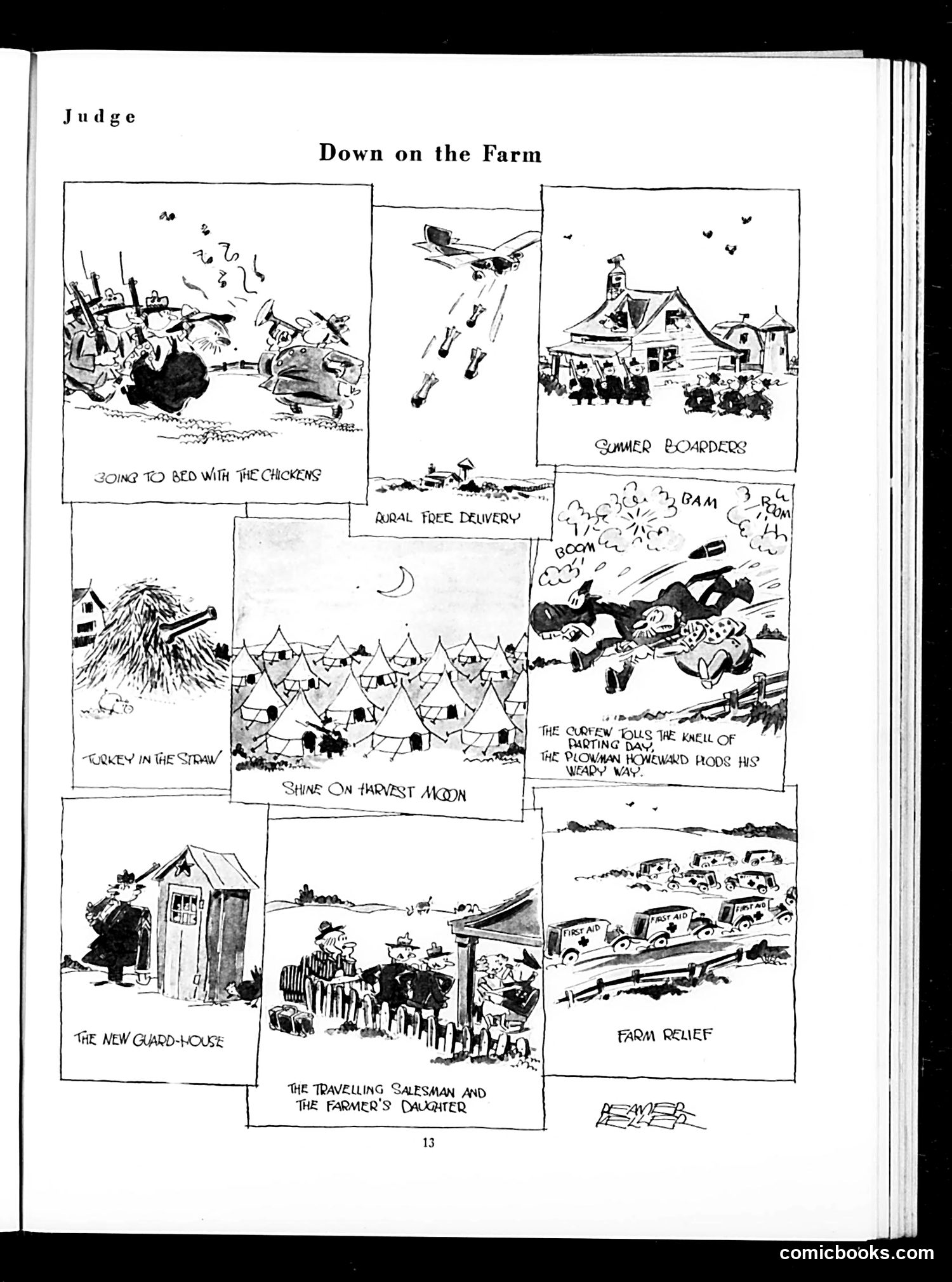
"Down on the Farm" - Judge Magazine Satire This page collects rural-themed comic vignettes satirizing farm life during what appears to be the early 20th century. The cartoons mock common pastoral stereotypes: Key panels include: - "Going to Bed with the Chickens" - mocking early rural bedtimes - "Rural Free Delivery" - likely satirizing new postal service expansion to countryside - "Summer Boarders" - poking fun at city dwellers vacationing on farms - "The Travelling Salesman and the Farmer's Daughter" - referencing the stock joke formula about door-to-door salesmen seducing naive farm girls - "Farm Relief" - depicting economic hardship, showing vehicles and distressed conditions The overall tone ridicules rural simplicity, isolation, and hardship while playing on the "farmer's daughter" trope popular in period humor. "Shine on Harvest Moon" and "The Curfew Tolls" reference contemporary songs romanticizing farm life, contrasting sharply with the disasters depicted. The satire targets both rural conditions and urban condescension toward farming communities.
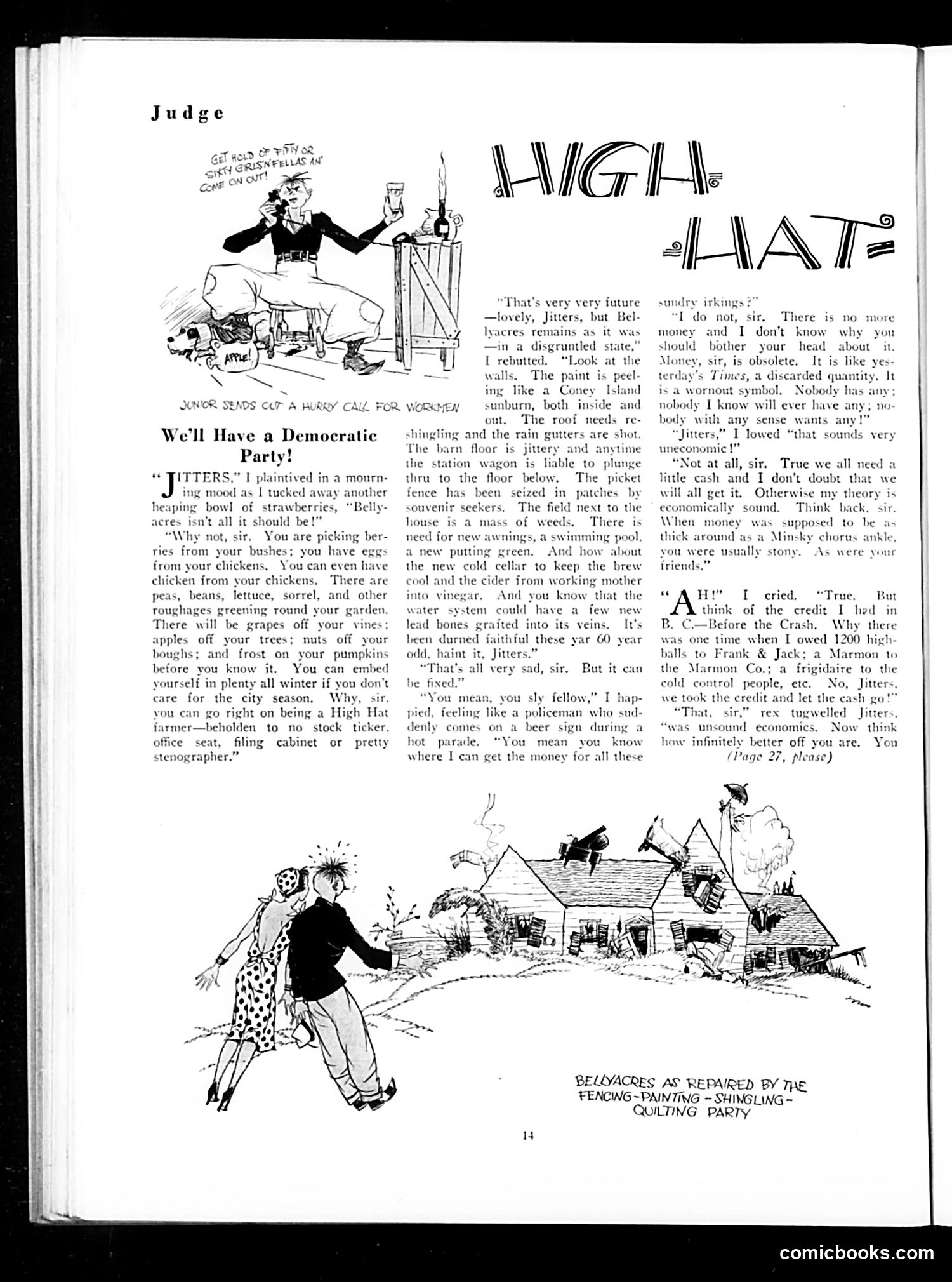
"We'll Have a Democratic Party!" - Judge Magazine Satire This satirical dialogue mocks wealthy urbanites fantasizing about rural self-sufficiency while remaining financially dependent on credit and the stock market. The character "Jitters" complains his country estate ("Bellyacres") is deteriorating despite abundant natural resources (crops, animals, fruit). His interlocutor suggests rural independence requires no money—just hard work and self-reliance. Jitters exposes the fantasy, revealing he cannot afford repairs and once lived lavishly on credit before the 1929 Stock Market Crash. The satire's point: pre-Crash Americans built wealth on borrowed money and stock speculation, not honest labor. Post-Crash, they romanticize agrarian self-sufficiency while remaining trapped in the capitalist system they once exploited. The title's irony suggests only a "Democratic Party" (collective barn-raising) can save such deluded individuals. The bottom illustration shows neighbors gathering for a traditional quilting/repair party—the only solution available.
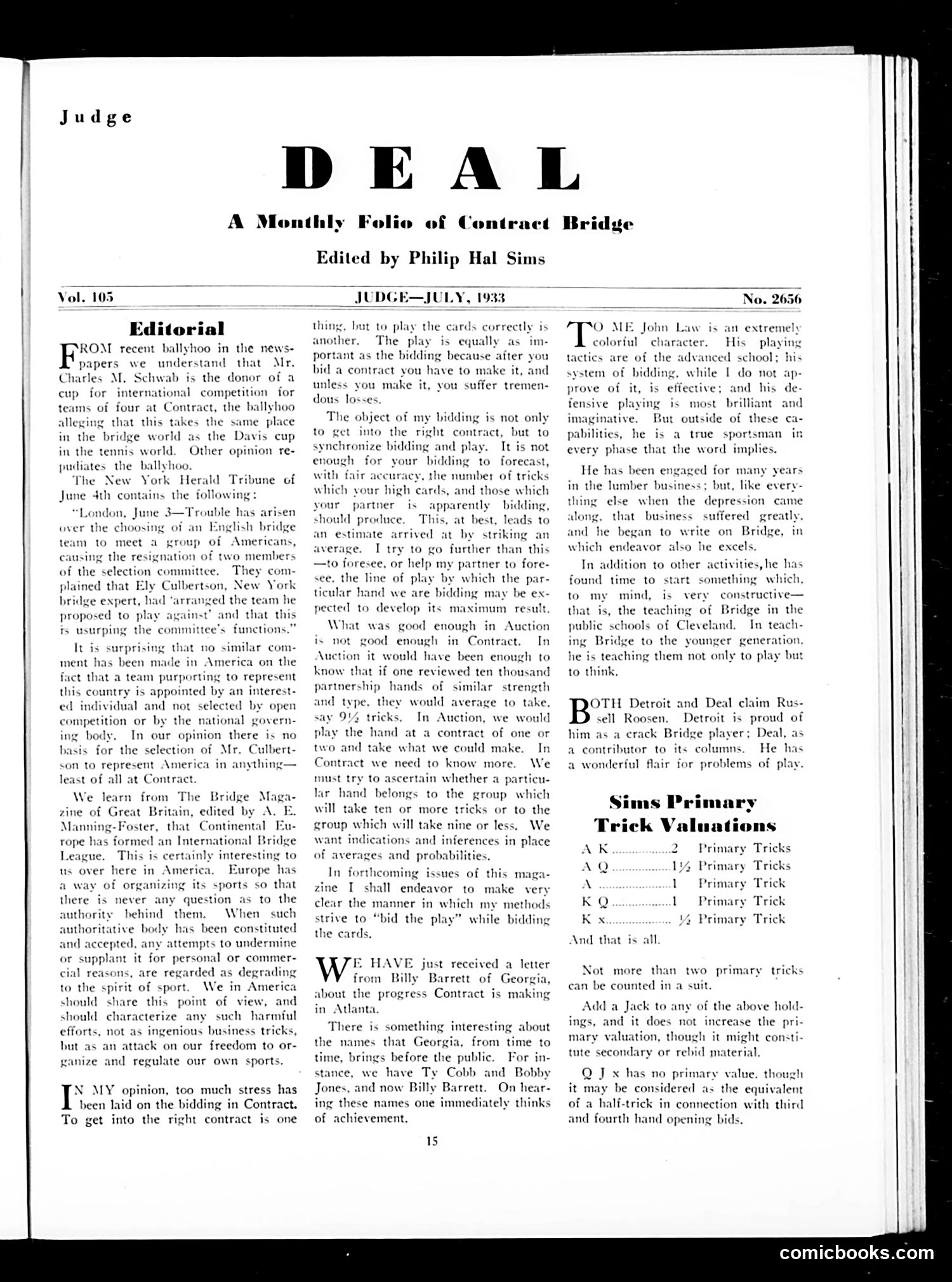
What This Page Means for Modern Readers This page from Judge (July 1933) is primarily an editorial about Contract Bridge, not a political cartoon. The magazine debates whether Charles Schwab's sponsorship of an international bridge competition is appropriate. The central issue: A wealthy businessman (Schwab) is organizing America's bridge team without official oversight, unlike Europe's centralized sports governance. The editors criticize this as undemocratic and self-serving, arguing it undermines proper institutional authority. The satire targets American business culture's tendency toward personal control and commercial interests over organized governance—framed as an attack on "our freedom to organize and regulate our own sports." The page also contains technical bridge instruction about bidding strategy, suggesting Judge's audience included serious card players. This reflects bridge's popularity as an upper-class leisure activity in 1930s America.
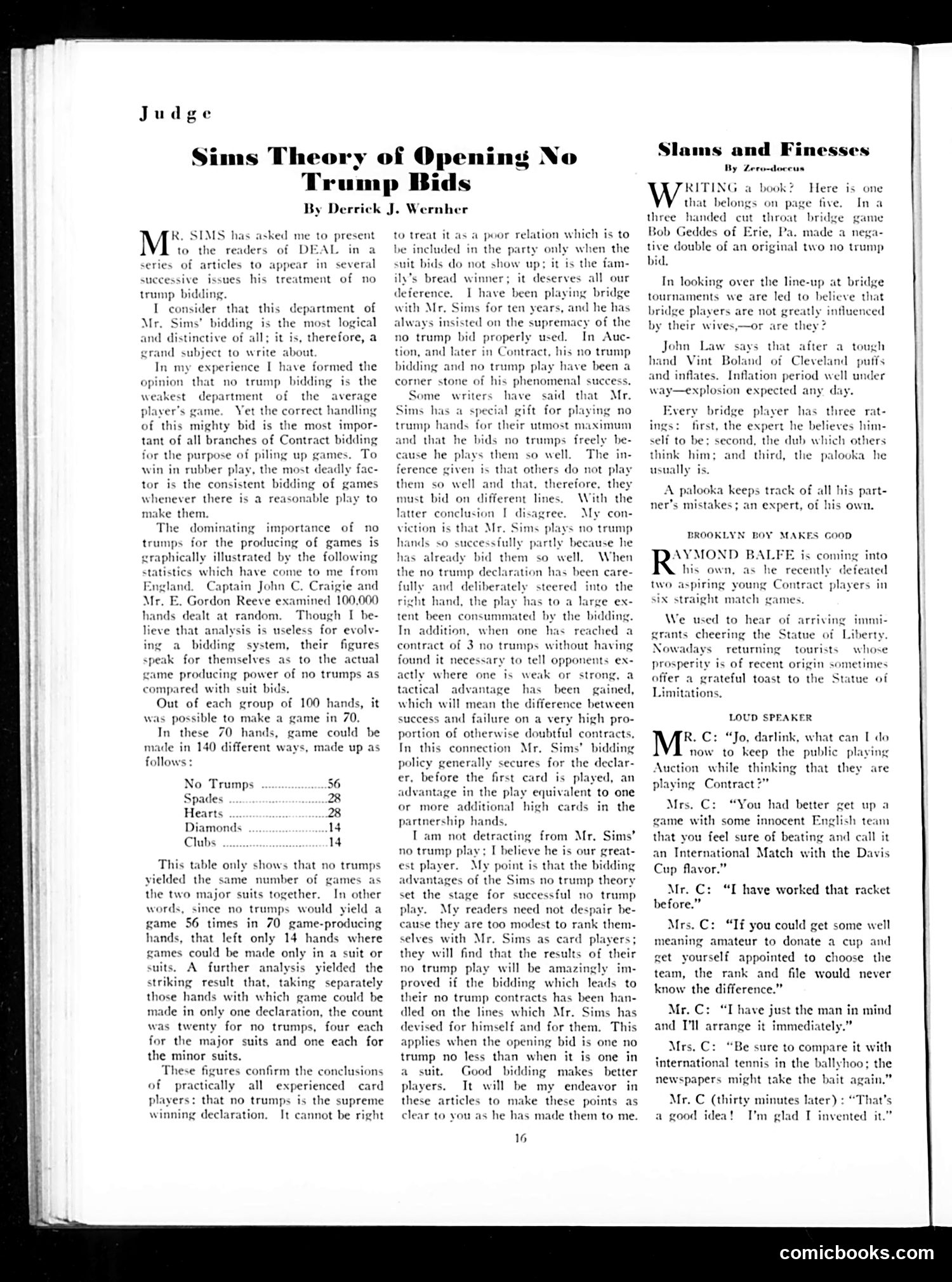
Judge Magazine Bridge Article Analysis This page contains a technical bridge (card game) article by Derrick J. Wernher discussing Mr. Sims' bidding theory for "no trump" contracts—a specialized bridge strategy topic. The left column analyzes statistical data proving no trump bids are the most profitable declaration in Contract Bridge, citing studies of 100,000 hands dealt. The article argues Mr. Sims correctly prioritizes no trump bidding as fundamental to winning play. The right column contains humorous dialogue labeled "Slams and Finesses" and "Loud Speaker," featuring witty exchanges between bridge players discussing contract play and strategy. Context for modern readers: This reflects bridge's peak popularity in 1920s-1930s American culture—Contract Bridge was a national obsession among educated, affluent audiences. Judge magazine regularly featured bridge content alongside political satire. The "loud speaker" format mimics radio broadcasts, which were contemporary entertainment. The humor assumes readers understood sophisticated bidding conventions.
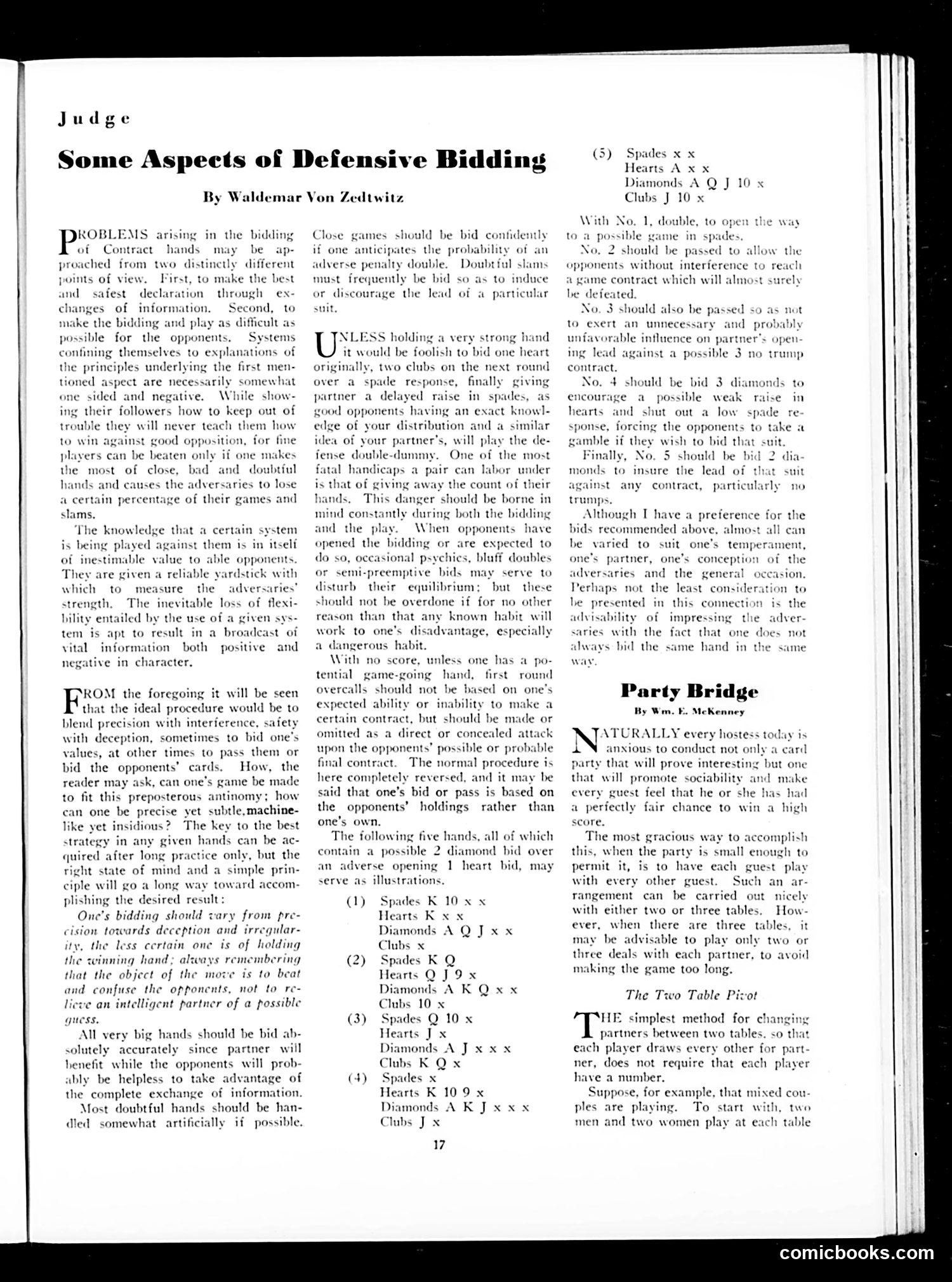
What This Page Contains This is not a cartoon page but rather an instructional article about contract bridge strategy. The page contains two pieces: 1. "Some Aspects of Defensive Bidding" by Waldemar Von Zedtwitz — a technical guide on bridge bidding strategy, discussing how players should balance honest communication with their partner against strategic deception to confuse opponents. 2. "Party Bridge" by Wm. E. McKenney — a separate article about organizing casual bridge games for social gatherings, including hand examples and advice for rotating players between tables. Both are legitimate instructional content about the card game bridge, not satire or political commentary. Judge magazine, while primarily known for humor and satire, also published practical how-to articles and sports/games instruction for its readers during this era.
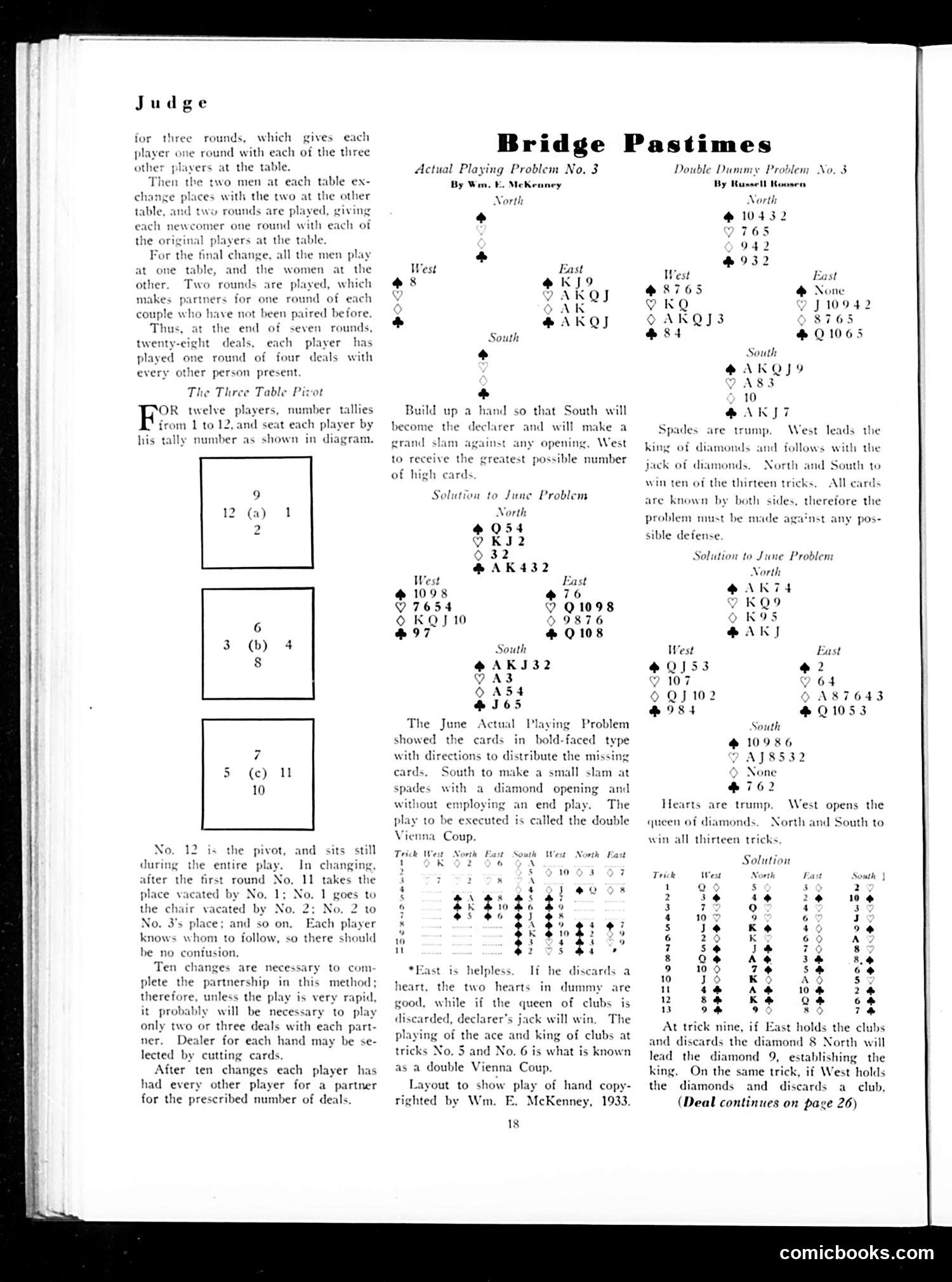
Bridge Pastimes: Card Game Instructions and Problems This page from *Judge* contains no political cartoons or satire. Instead, it presents bridge card game content—specifically instructional material and puzzle problems for readers. The page includes: 1. "The Three Table Pivot": Instructions for organizing a 12-player bridge tournament with a rotating system so all players partner with each other over multiple rounds. 2. Bridge Problems: Three separate "double dummy" card problems where all cards are revealed to the reader. The solver must determine the optimal play for North and South to win a specified number of tricks against any defense—a common puzzle format for bridge enthusiasts. These problems are credited to Wm. E. McKenney (a noted bridge authority) and Russell Koosen, dated 1933. This represents *Judge*'s "pastimes" section—recreational content unrelated to satire or humor, aimed at keeping readers entertained between satirical articles.
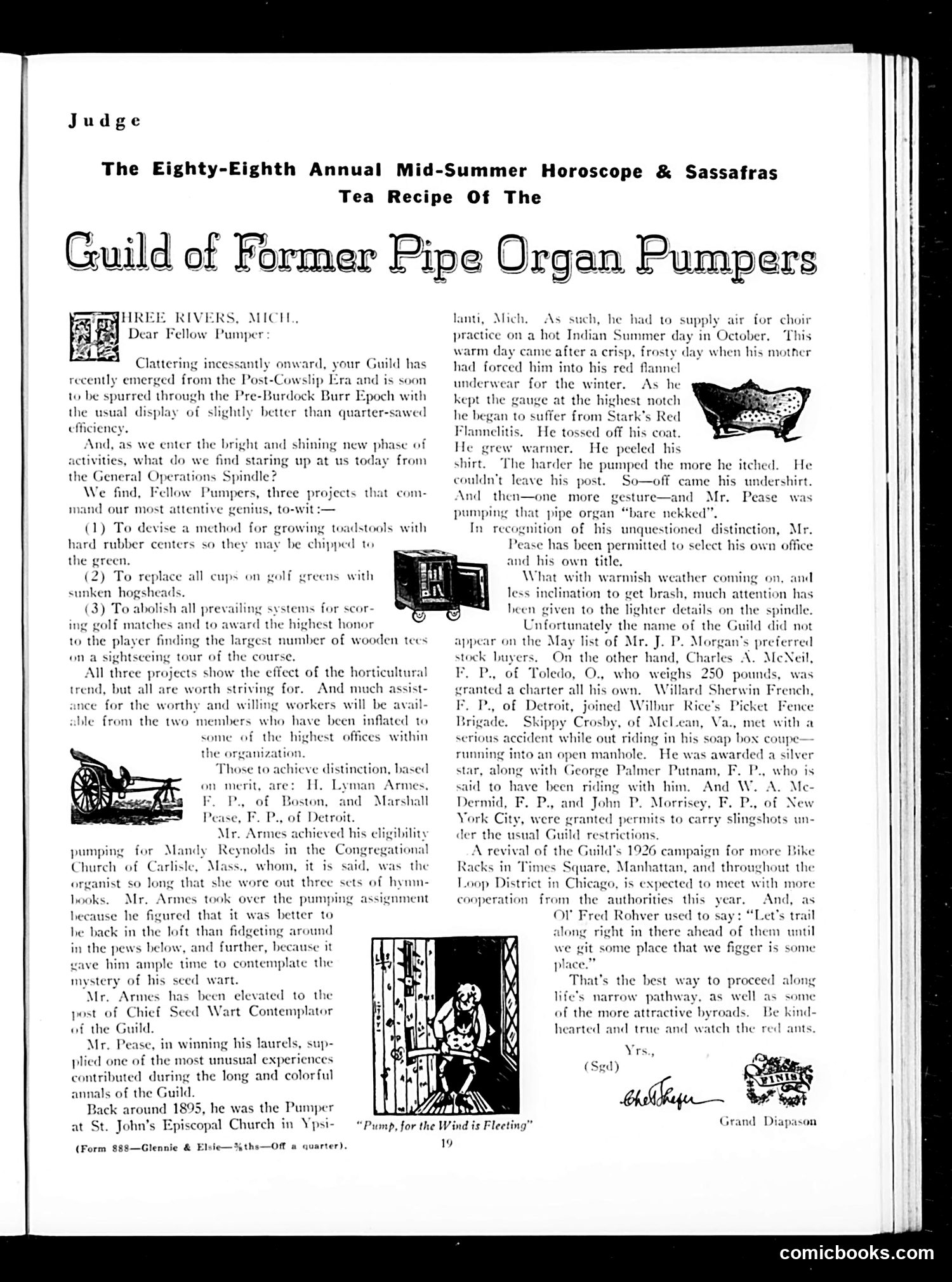
Analysis This page satirizes the "Guild of Former Pipe Organ Pumpers," a fictional organization. Judge magazine presents mock-serious coverage of their "Eighty-Eighth Annual" meeting, complete with absurd resolutions about golf course improvements (hogsheads instead of cups, wooden-tee prizes) and ridiculous engineering projects. The humor lies in treating pipe organ pumping—a now-obsolete job replaced by electric blowers—as a prestigious profession worthy of formal guild recognition, complete with officers, titles, and distinguished membership ceremonies. The text celebrates member "Mr. Pease," who famously pumped while stripped naked due to overheating in wool underwear, now honored with his own chosen title. Other members receive silly distinctions (a "Seed Wart Contemplator"). The satire mocks organizational pretension and nostalgic reverence for outdated occupations. By 1920s standards, organ pumping was quaintly obsolete, making the guild's formal proceedings inherently absurd—though presented with deadpan sincerity typical of Judge's satirical style.
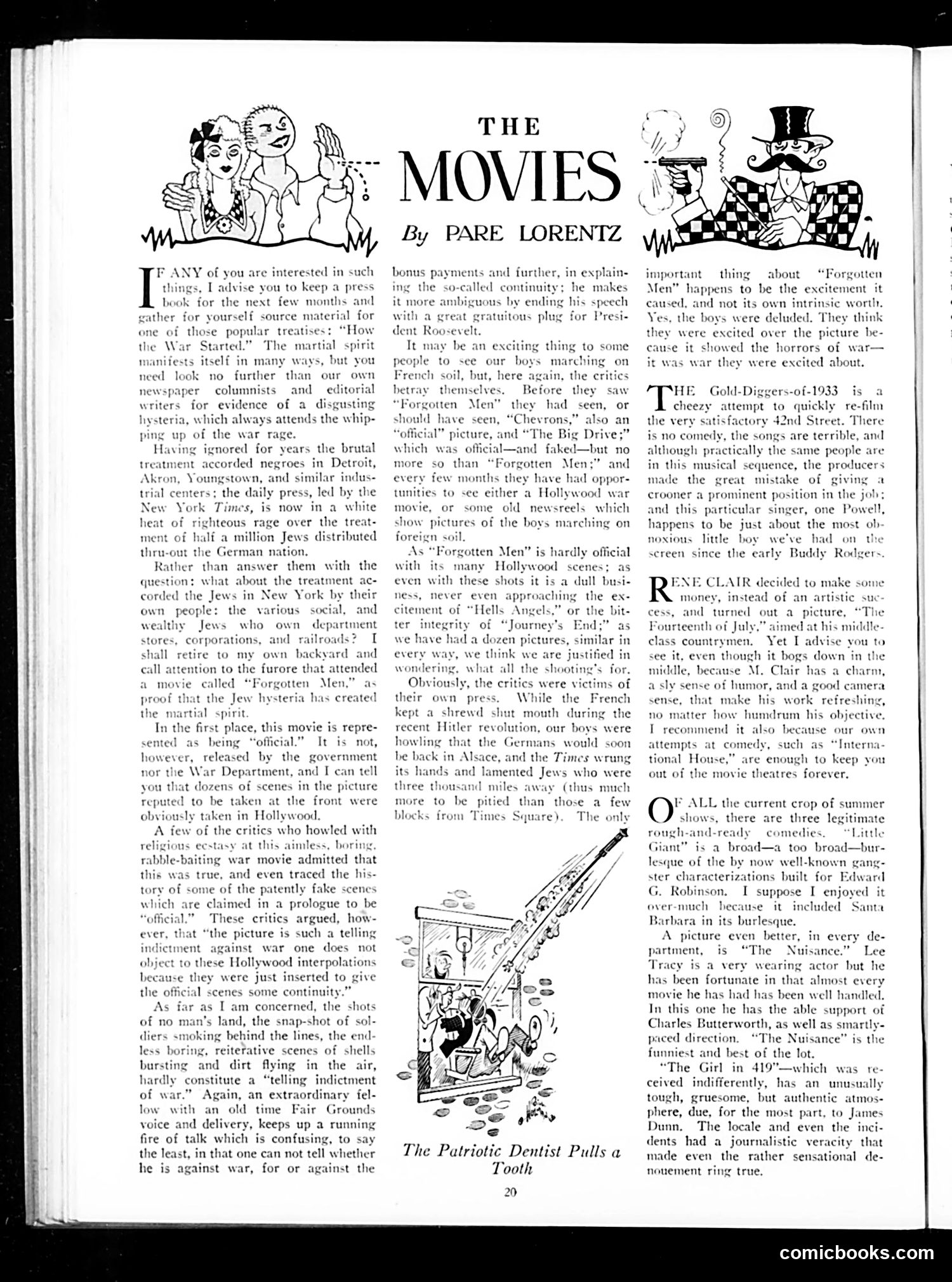
"The Movies" by Pare Lorentz - Judge Magazine This film criticism essay attacks the 1934 war film *Forgotten Men* as propaganda masquerading as documentary. Lorentz criticizes critics who praised the film despite its obvious Hollywood fakery, arguing they were hypocritical about what constitutes acceptable war depiction. His key argument: American papers ignored racial violence against Black Americans in Detroit and Akron for years, yet suddenly became morally outraged about German treatment of Jews. He charges this selective outrage is driven by war-promotion hysteria. The film itself is criticized as technically dull—merely repeating tired stock footage of soldiers and explosions while including a gratuitous plug for President Roosevelt. Lorentz's central complaint is that critics excused the film's manufactured scenes because they served anti-war messaging, revealing their real agenda wasn't artistic integrity but propaganda acceptance. The cartoon illustrates soldiers in combat conditions.
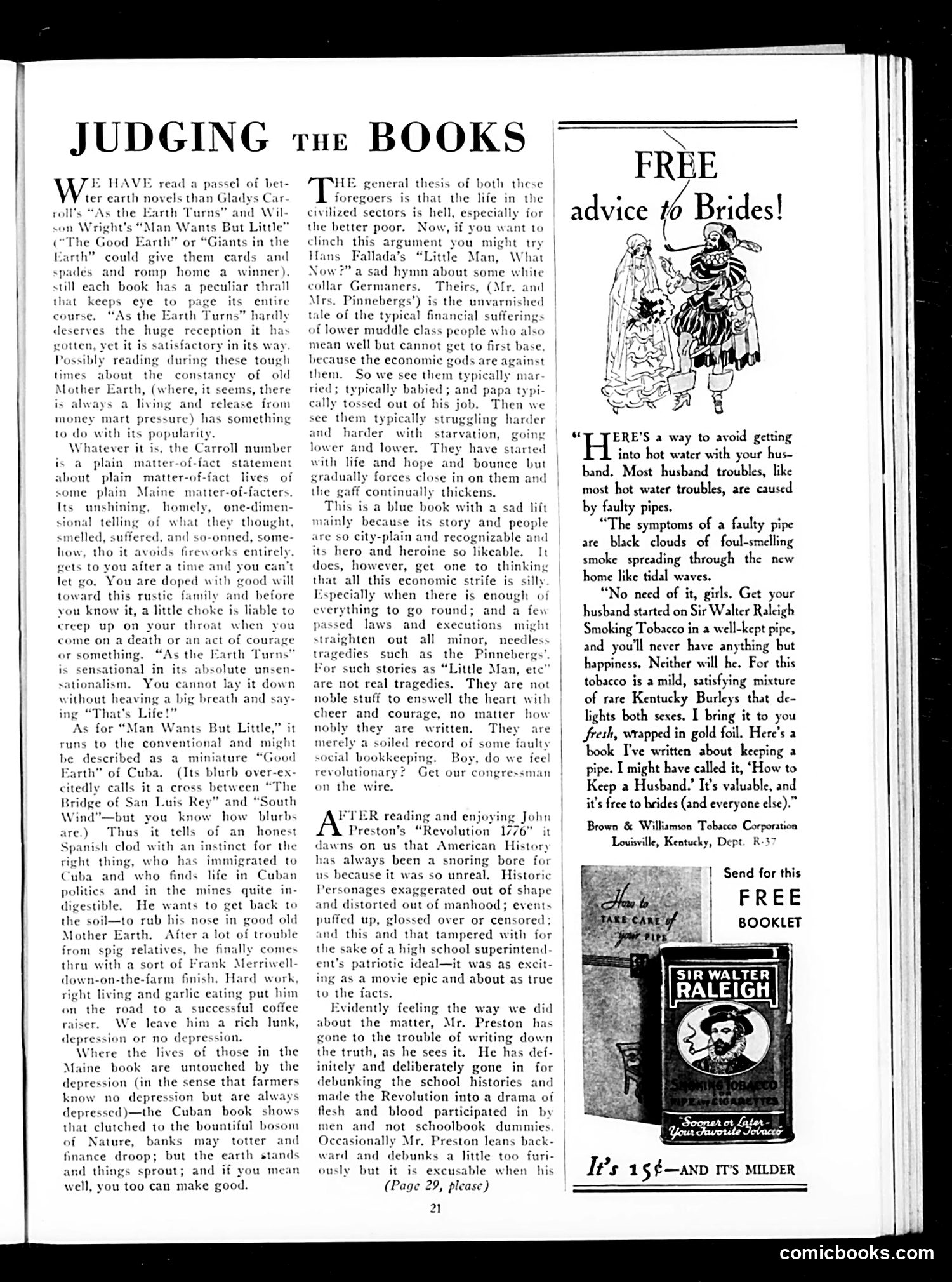
Analysis of Judge Magazine Page This page is primarily a book review column titled "Judging the Books," discussing four contemporary novels about economic hardship and rural life. The reviewer examines works by Gladys Carroll, Wilson, Hans Fallada, and others, noting their shared theme: life in civilized sectors is miserable, especially for the poor. The right-side advertisement for Sir Walter Raleigh tobacco is the only visual satire here—a tongue-in-cheek "advice to brides" that humorously suggests smoking tobacco to avoid marital problems caused by faulty plumbing. This is satirical advertising humor typical of 1930s Judge magazine. The book reviews themselves reflect Depression-era social commentary, praising novels depicting economic struggle and suggesting that such literature resonates because readers experience similar hardships. The reviewer implies that if wealth were redistributed ("enough of everything to go round"), such tragedies could be prevented. This represents Judge's characteristic blend of literary criticism and social satire during economically turbulent times.
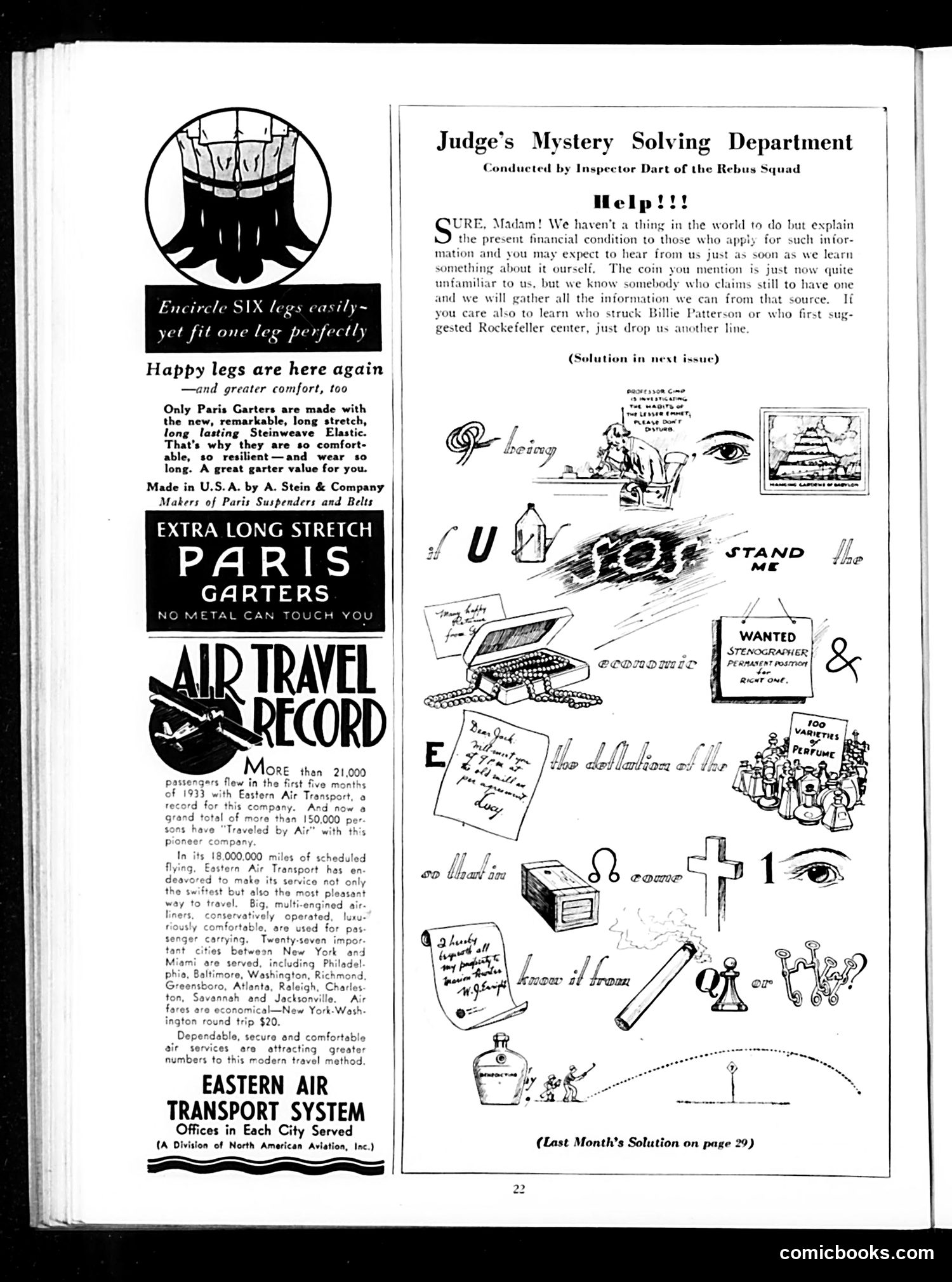
Judge Magazine Mystery-Solving Page (circa 1933) This page combines advertisements with a puzzle feature called "Judge's Mystery Solving Department," conducted by "Inspector Dart of the Rebus Squad." The right side presents a visual rebus puzzle—a word-picture puzzle using sketched objects and letters to spell out a phrase when decoded. The scattered images (eye, cross, perfume bottles, candles, etc.) combine with letters and words to create a hidden message readers must solve. The opening "Help!!!" section humorously suggests the department receives inquiries about mysterious coins and historical events (striking "Billie Patterson," the Rockefeller Center suggestion). It promises solutions in the next issue. The left side features typical 1930s advertisements for Paris Garters and Eastern Air Transport, highlighting the magazine's commercial content. This represents Judge's interactive entertainment—combining visual wordplay puzzles with product advertising, typical of how satirical magazines of this era engaged readers and generated revenue.
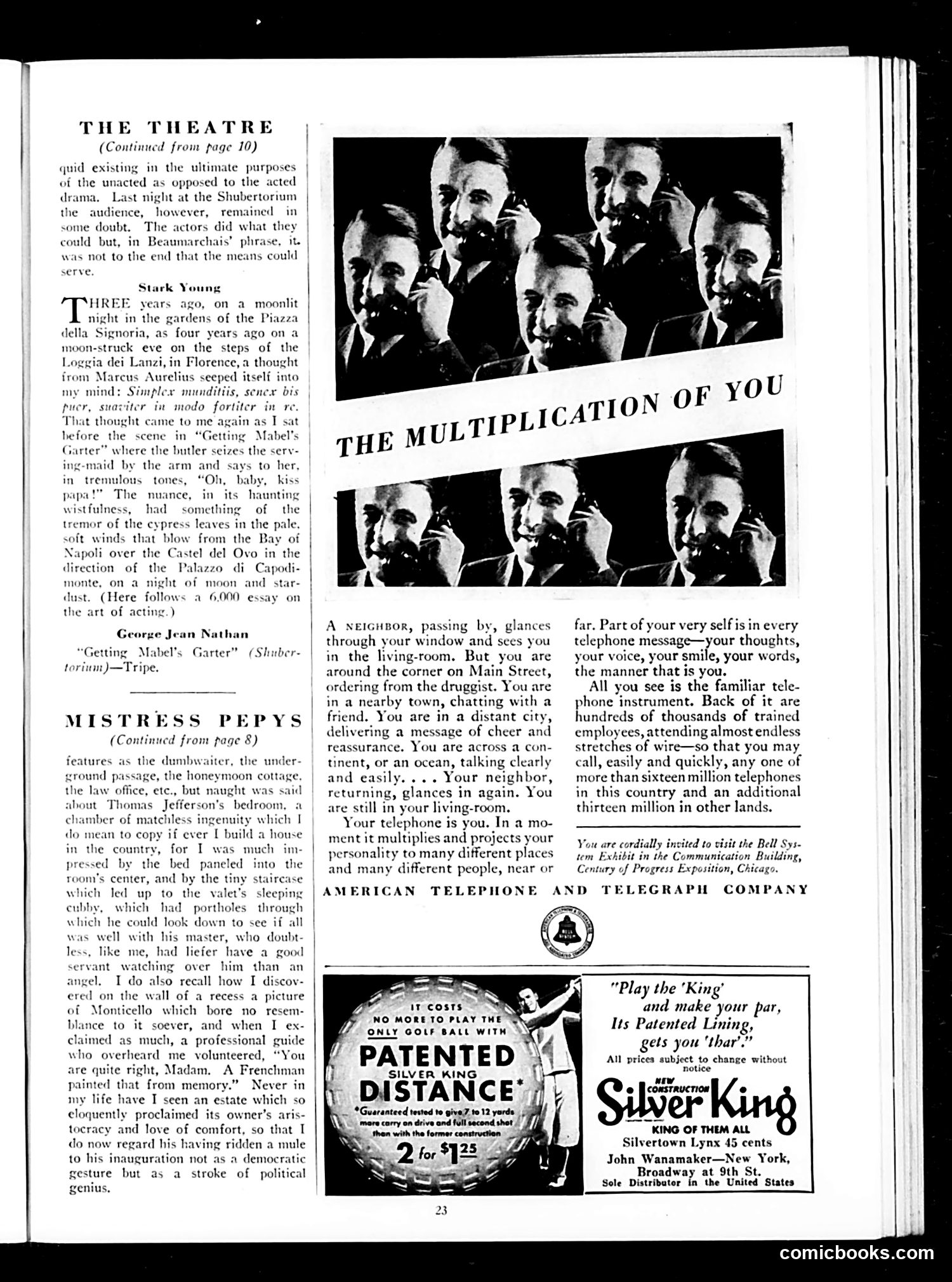
Judge Magazine Page Analysis This page primarily contains theater reviews and advertisements rather than political cartoons. The theater section reviews productions including "Getting Mabel's Garter" at the Shubertorium. Critic Stark Young employs pretentious literary references (Latin phrases, Italian Renaissance locations) to discuss acting nuance—satirizing the overwrought critical style of theater journalism itself. The "Mistress Pepys" column humorously discusses Thomas Jefferson's Monticello estate, making a veiled political point: the author suggests Jefferson's mule-riding to his inauguration was not democratic posturing but rather "a stroke of political genius"—implying calculated image-management rather than genuine principle. The major advertisements are for the American Telephone and Telegraph Company (promoting how telephones multiply one's presence across distances) and the "Silver King" golf ball. No identifiable political cartoons appear on this page. The satire is subtle and embedded in the prose rather than visual.
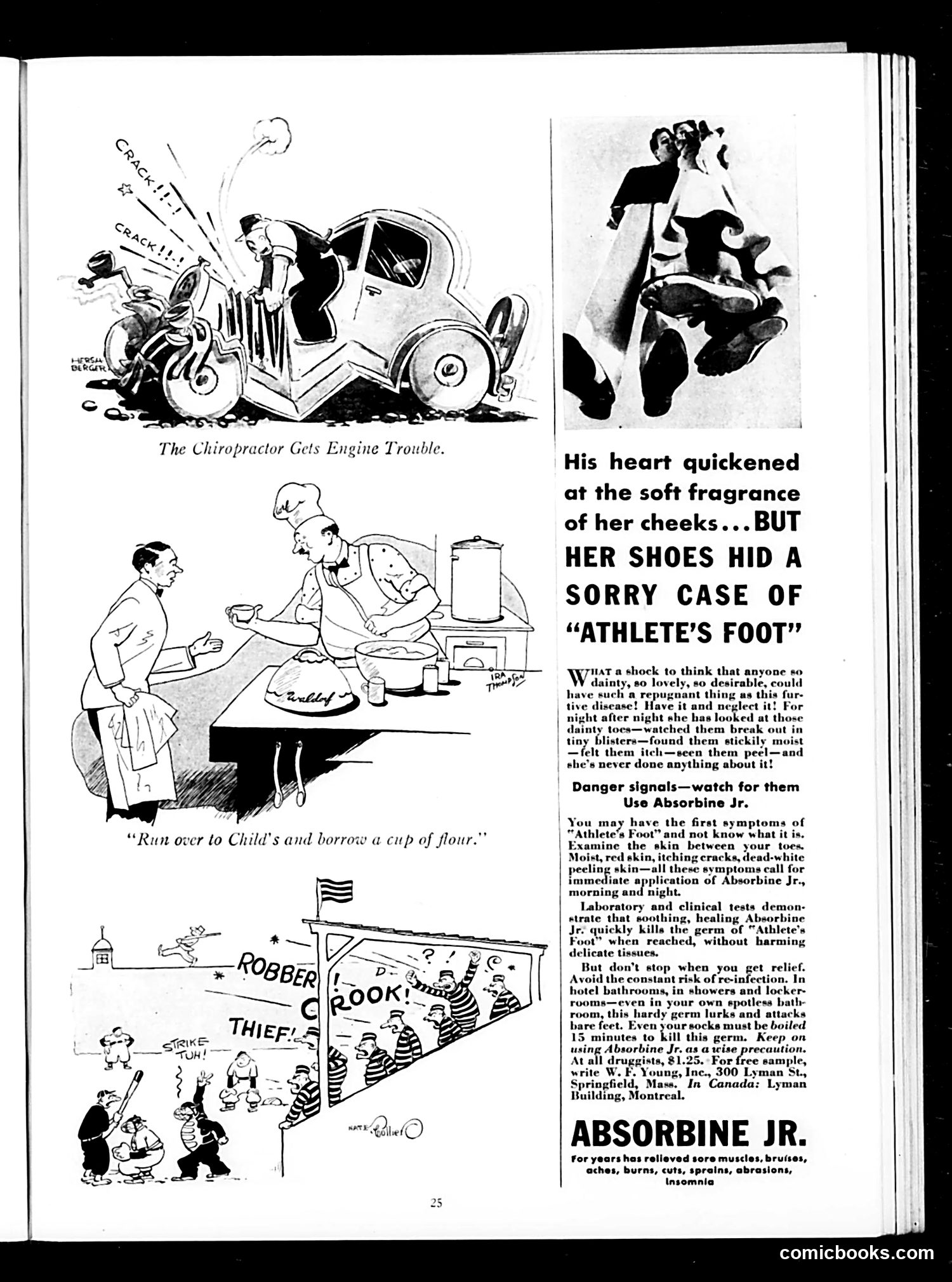
Analysis of Judge Magazine Page This page combines comic strips with a full-page advertisement for Absorbine Jr., a fungal treatment product. The comics at left appear to be unrelated short gags: "The Chiropractor Gets Engine Trouble" (a car crash joke), a domestic scene about borrowing flour, and a "Robber" scene at what appears to be a bank or building. The dominant right-side advertisement uses a common early-20th-century advertising trope: it frames a social/romantic anxiety as a shameful secret. The narrative suggests a romantically promising encounter is ruined because the woman has athlete's foot—presented as embarrassing and dangerous. The ad weaponizes social embarrassment to sell the product, emphasizing that the condition must be hidden, watched for constantly, and aggressively treated. This reflects period advertising strategy: identifying insecurities (particularly affecting women), then positioning the product as essential for social acceptability and hygiene. The tone is melodramatic by modern standards, treating a common fungal infection as a relationship-threatening scandal.
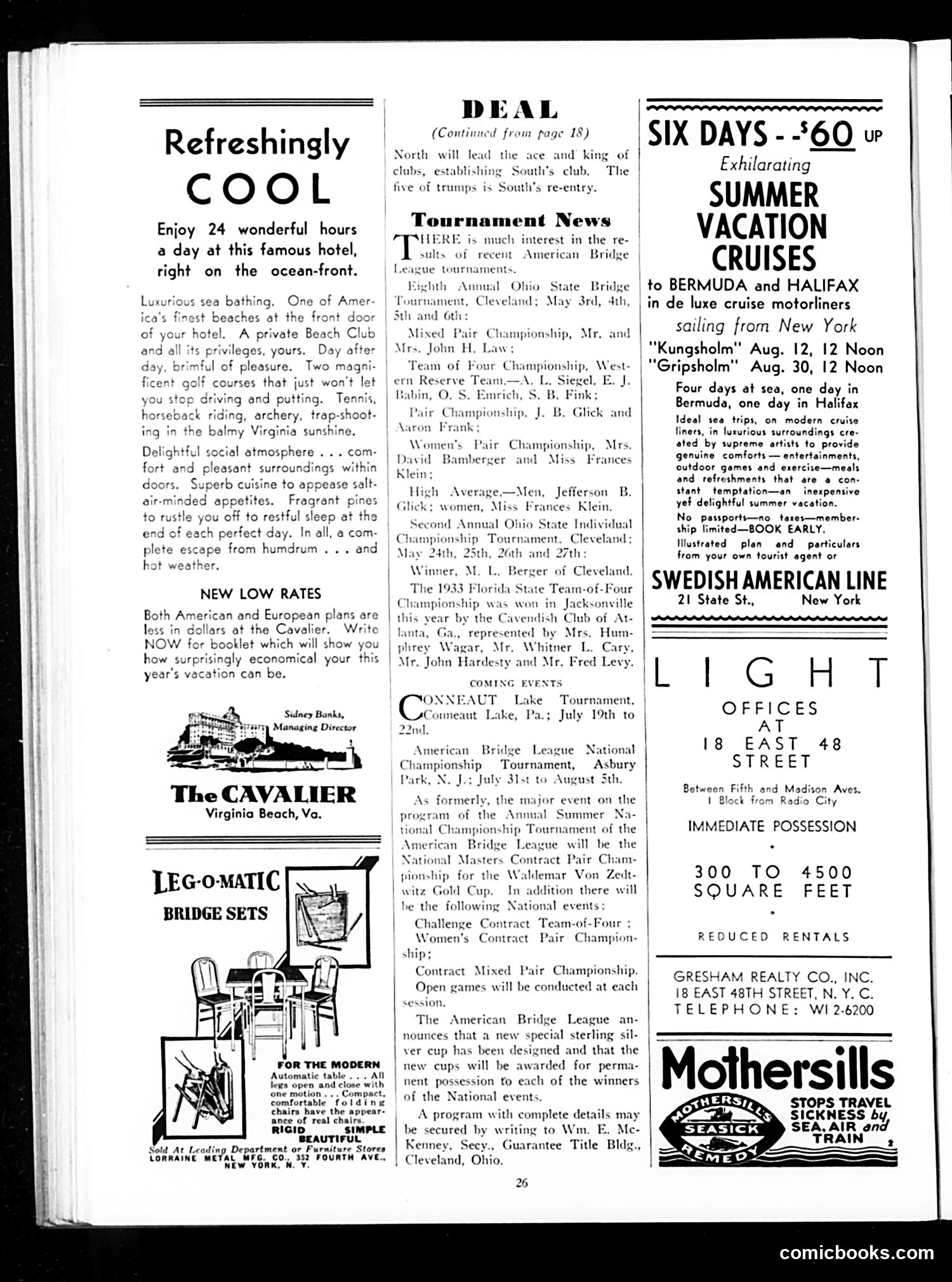
This page is primarily advertising and bridge tournament announcements rather than political satire. The main content includes: Advertisements: - Hotel promotions (The Cavalier in Virginia Beach, emphasizing affordability) - Cruise lines to Bermuda and Halifax - Leg-o-Matic bridge sets (furniture) - Light office space rental - Mothersills seasickness remedy Bridge Tournament Coverage: The substantial middle section announces results and upcoming events for American Bridge League tournaments, listing championship winners and tournament dates across the summer of what appears to be the 1930s. Notable Detail: The "LEG-O-MATIC" bridge set advertisement emphasizes that modern furniture "chairs have the appearance of real chairs" despite their compact, collapsible design—mildly humorous marketing suggesting aesthetic improvement over purely utilitarian designs. This is primarily a commercial/lifestyle page reflecting leisure activities and consumer goods of the era, not satirical commentary.
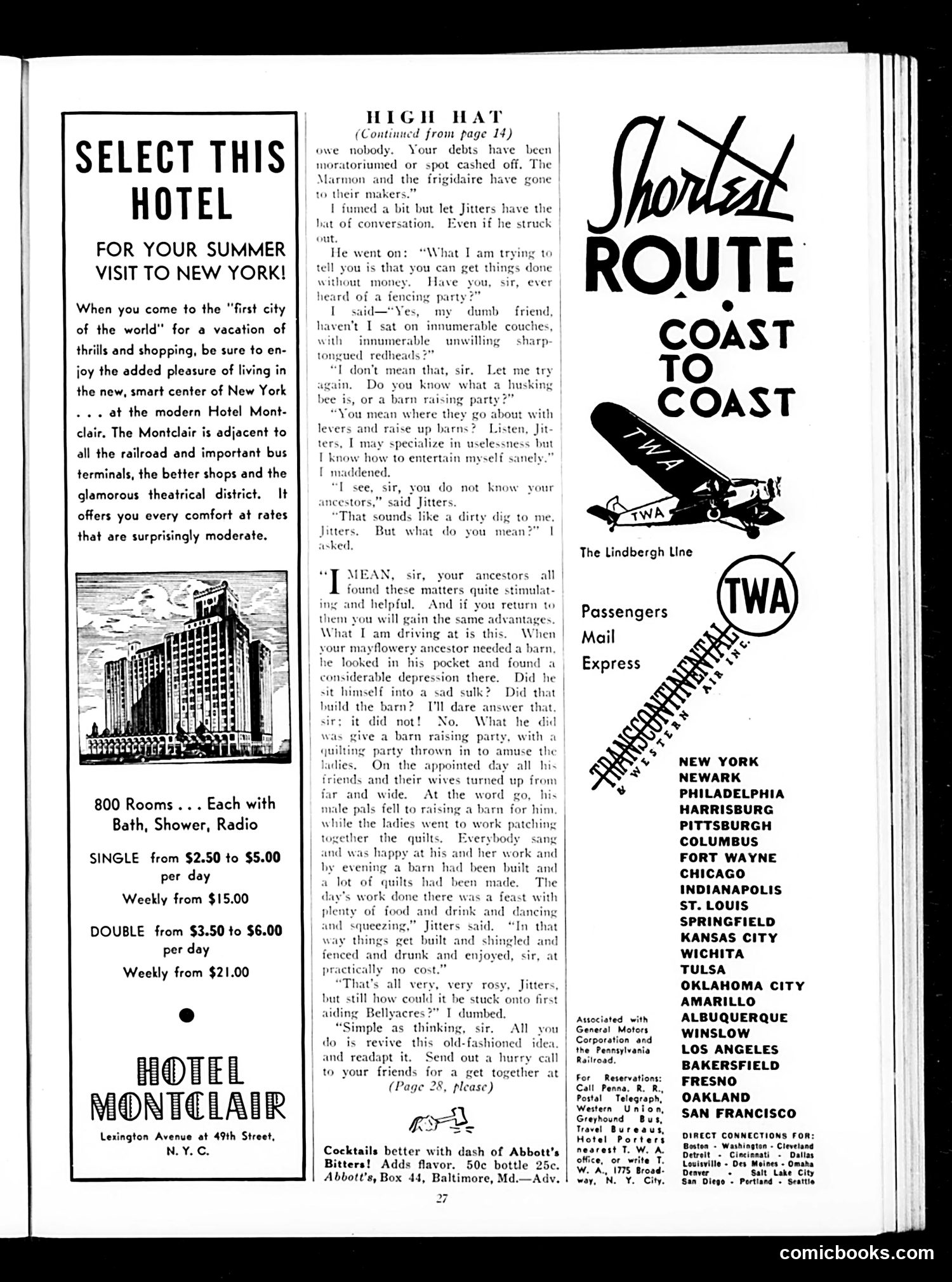
Analysis of Judge Magazine Page This page is primarily advertising, not satire or political commentary. The left side features a hotel advertisement for the Montclair in New York, emphasizing affordable luxury accommodations ($2.50-$6.00 daily) near theaters and transportation hubs—typical 1920s-30s travel marketing. The center contains the continuation of "High Hat," an apparently humorous fictional dialogue where a character named Jitters lectures someone about solving financial problems through old-fashioned "barn-raising parties"—community work-building events where neighbors gather to construct barns collectively. The joke appears to satirize impractical nostalgia: Jitters proposes reviving this Depression-era economic model as modern debt relief. The right side advertises TWA (Transcontinental & Western Air) airline service, "The Lindbergh Line," listing coast-to-coast passenger and mail routes. This references Charles Lindbergh's 1927 transatlantic flight, using his fame to promote air travel. The Abbott's Bitters advertisement at bottom is standard commercial copy. The page reflects pre-WWII American consumer culture and emerging commercial aviation.
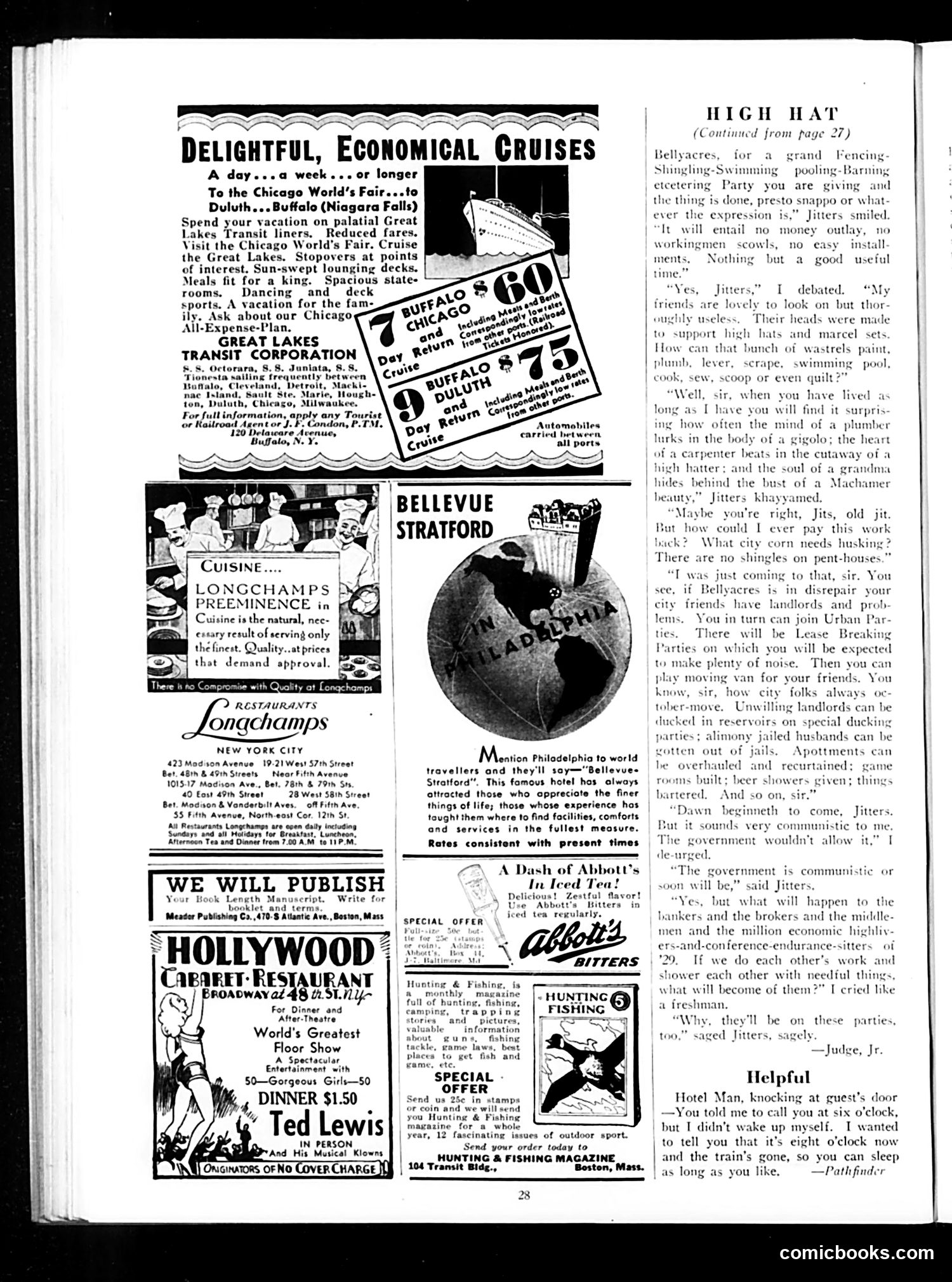
Judge Magazine Page Analysis This page is primarily advertising, featuring travel, dining, and entertainment promotions typical of early 20th-century magazines. The dominant content includes ads for Great Lakes cruises, Longchamps restaurants, the Bellevue Stratford hotel, and entertainment venues like the Hollywood Cabaret Restaurant. The text content on the right side appears to be a continuation of a satirical piece titled "HIGH HAT" (from page 27). The dialogue between characters named "Jitters" and "Judge, Jr." satirizes wealthy urbanites and their social pretensions. The satire mocks high-hat society types and debates urban poverty, suggesting that privileged people hire working-class individuals (plumbers, carpenters) for manual labor while maintaining social distance. The piece critiques economic inequality and the performative nature of upper-class entertaining. The overall page reflects Jazz Age consumer culture and social commentary about class divisions.
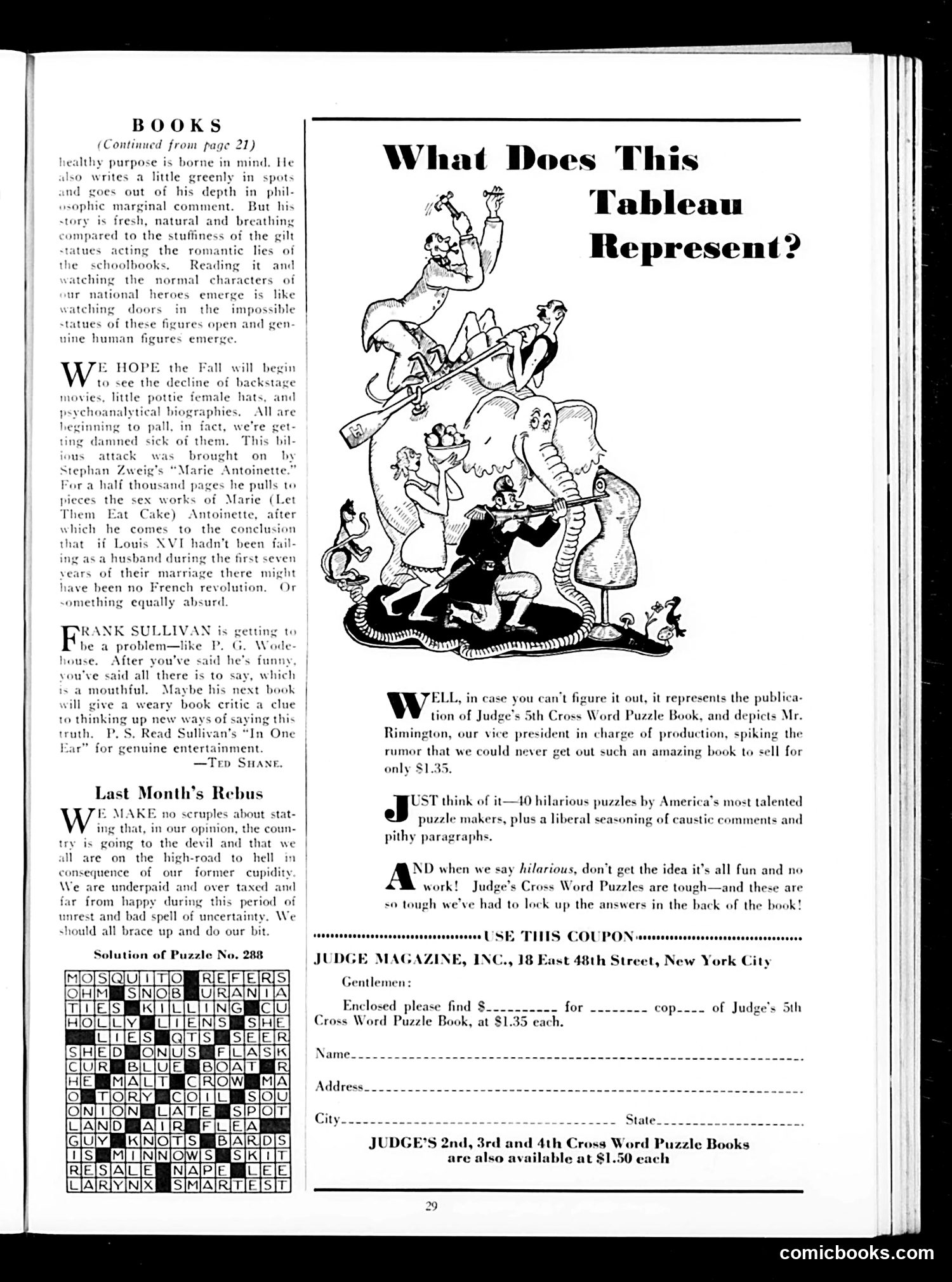
What Does This Tableau Represent? This page features an advertisement for Judge's 5th Cross Word Puzzle Book, disguised as a satirical cartoon. The central image depicts a chaotic scene with multiple figures (appearing to include animals and people) balanced precariously on what looks like a seesaw or plank, representing the tumultuous production of the puzzle book itself. The text reveals the joke: the tableau represents the "publication of Judge's 5th Cross Word Puzzle Book" and depicts "Mr. Rimington, our vice president in charge of production, spiking the rumor that we could never get out such an amazing book to sell for only $1.35." The satire mocks both the difficulty of the puzzle book's creation and contemporary skepticism about whether Judge Magazine could produce such an ambitious product affordably. The chaotic, precarious imagery humorously suggests the mayhem behind the scenes—a common advertising technique mixing self-deprecating humor with product promotion.
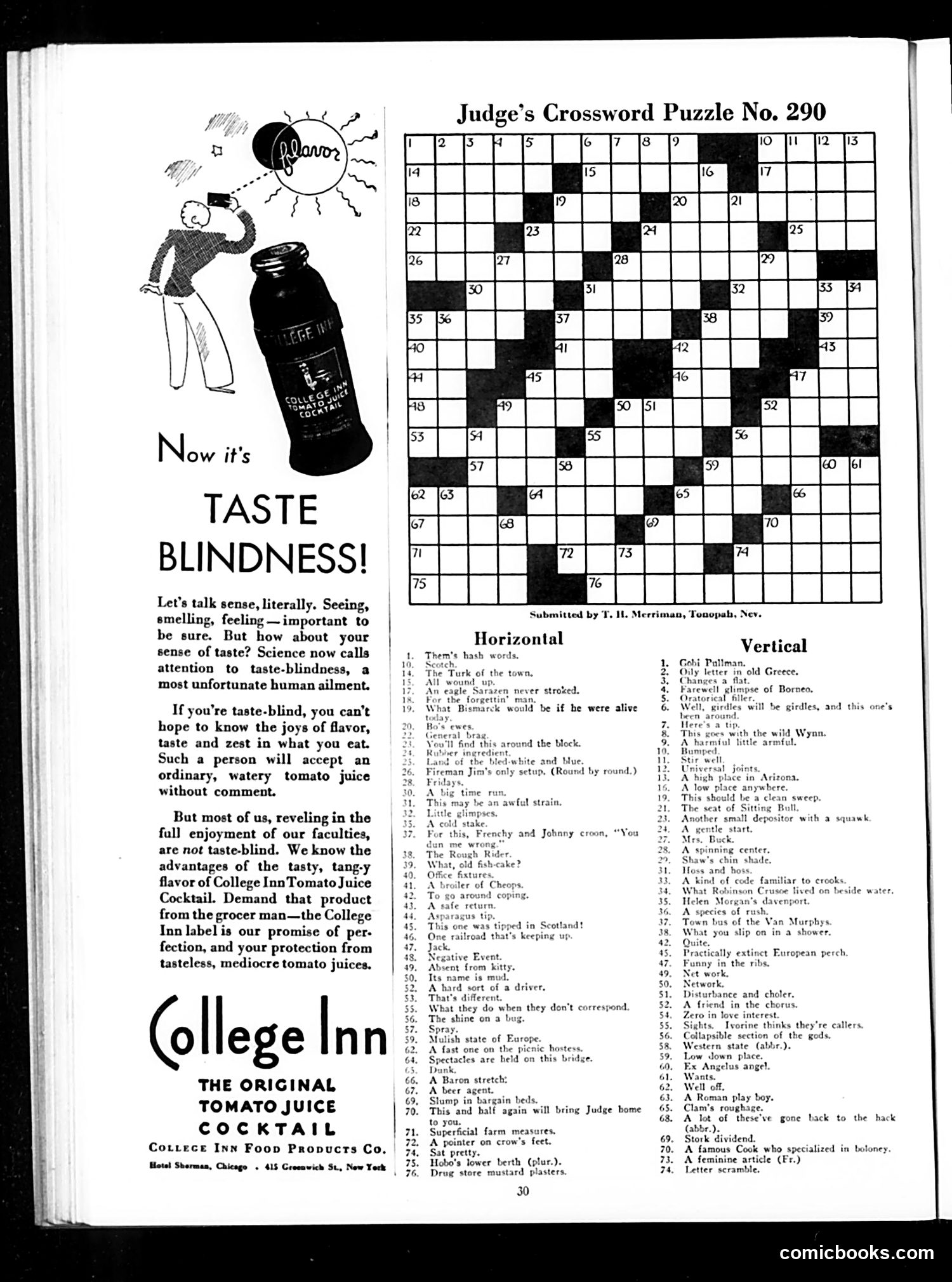
Judge Magazine Crossword & Advertisement Analysis This page combines a crossword puzzle with an advertisement for College Inn Tomato Juice Cocktail, using humor to promote the product. The Advertisement's Satire The ad introduces the concept of "taste-blindness"—a fabricated ailment suggesting some people lack refined taste perception. It satirizes consumer culture and product marketing by: 1. Inventing a pseudo-scientific problem ("taste-blindness") to create demand 2. Shaming ordinary consumers who would accept "watery tomato juice without comment" 3. Positioning the product as a status marker for people with supposedly superior sensory faculties The joke targets both manipulative advertising tactics and snobbish consumer pretension. By framing taste discrimination as a measure of sophistication, the ad parodies how luxury brands exploit social anxiety about appearing uncultured—a common advertising strategy Judge magazine frequently mocked. The crossword puzzle serves as entertainment filler typical of period magazines, with the advertisement occupying prominent space.
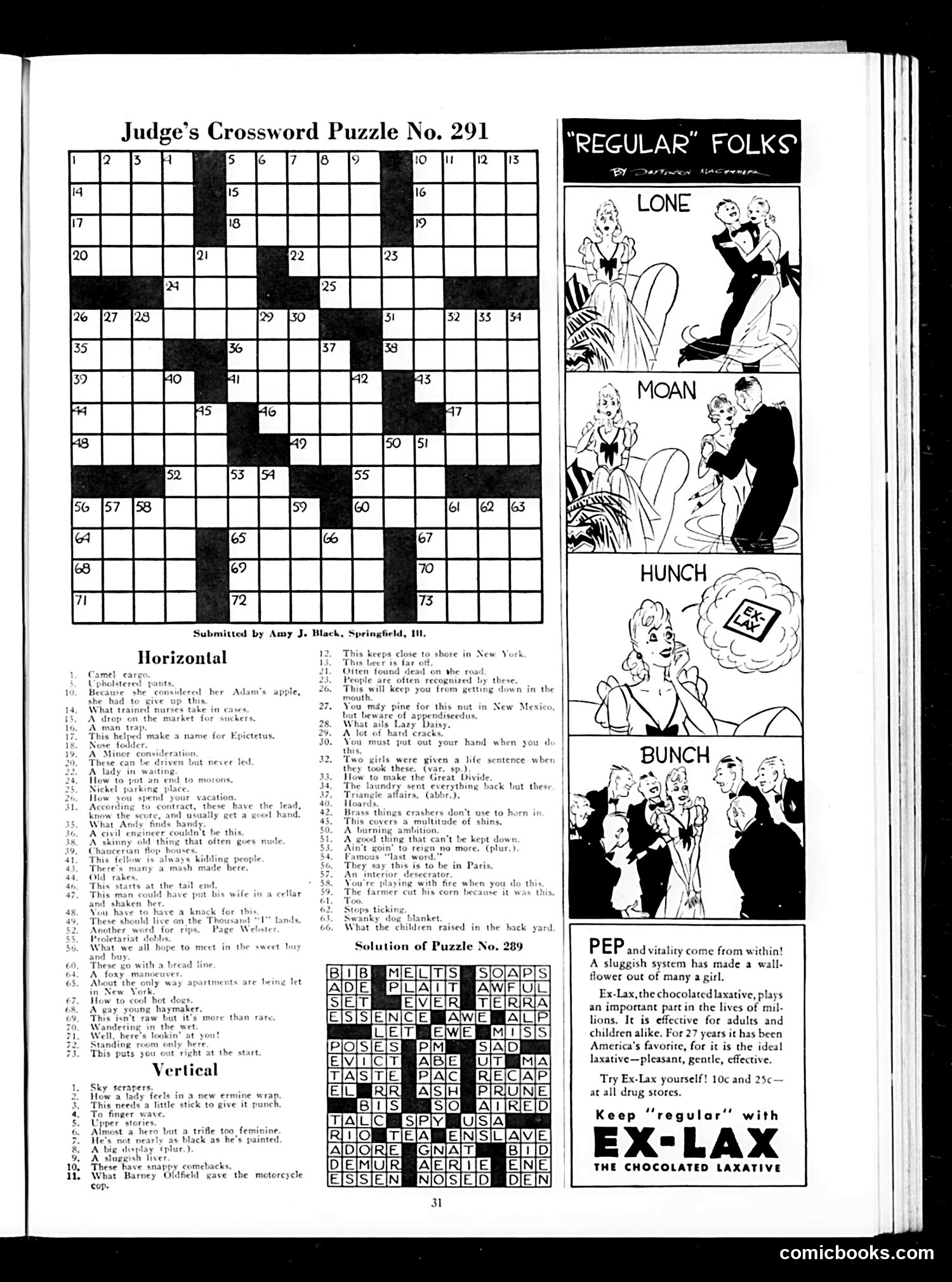
Analysis of Judge Magazine Page This page contains a crossword puzzle and advertisement rather than political satire. The main content includes: "Regular" Folks comic strip panels showing three scenarios (Lone, Moan, Hunch, and Bunch) depicting everyday social situations—apparently illustrating different personality types or social behaviors among ordinary middle-class Americans. Ex-Lax Advertisement: The significant advertising content promotes Ex-Lax laxative, using the phrase "keep 'regular'" as both literal medical advice and social commentary. The ad explicitly links digestive health to social success, suggesting a "sluggish system" causes girls to become "wallflowers" (unpopular). This reflects 1930s-40s advertising's tendency to medicalize normal bodily functions and connect them to social acceptability and romantic prospects—a common marketing strategy of the era that modern readers would recognize as manipulative health anxiety-mongering. The puzzle page itself appears purely recreational rather than satirical.
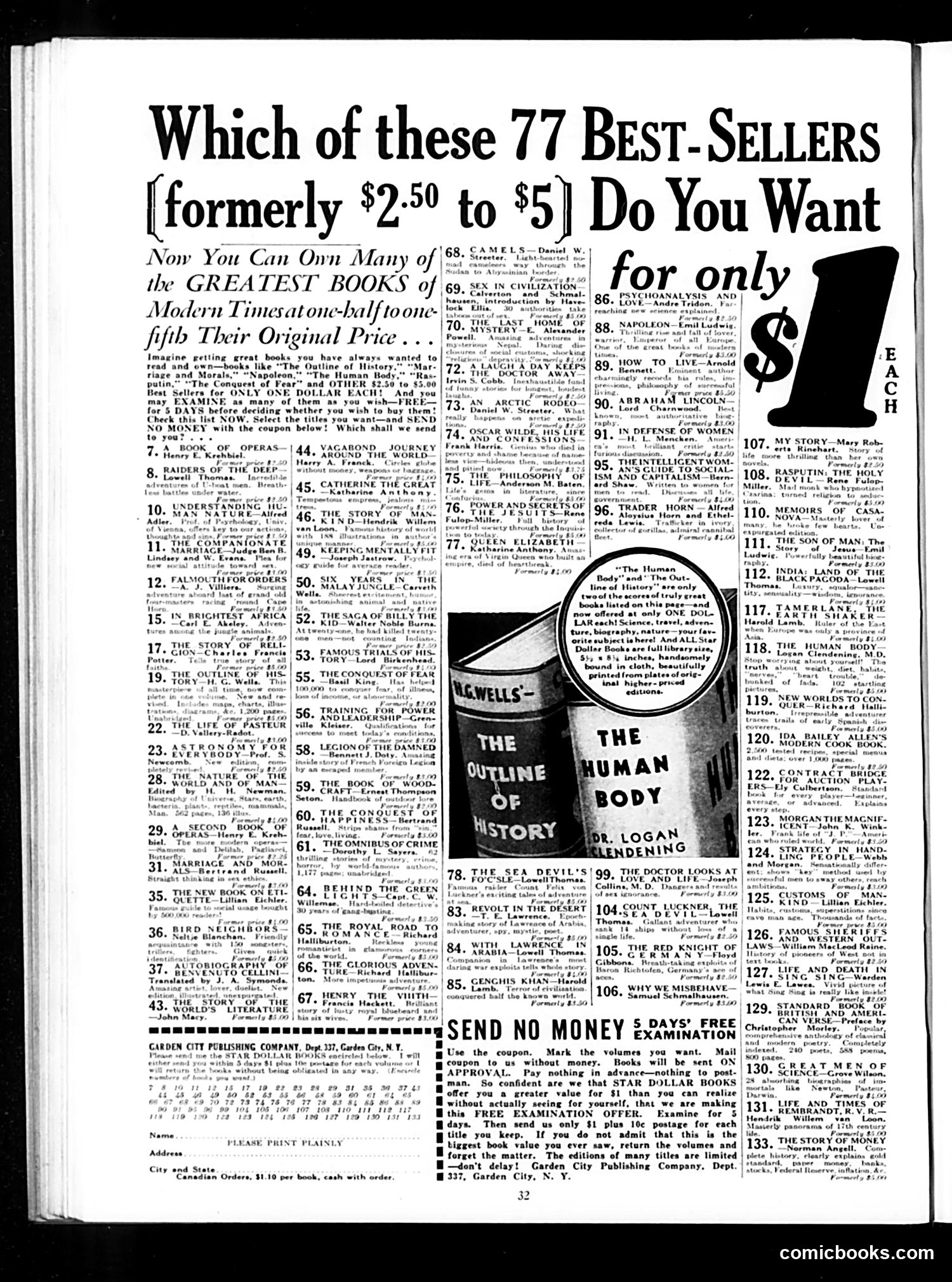
Analysis for Modern Readers This is primarily a book club advertisement, not a political cartoon. The page promotes the "Star Dollar Books" series, offering 77 bestselling titles (originally $2.50-$5) for $1 each with a 5-day free examination period. The small illustration shows two book spines: *The Outline of History* and *The Human Body* by H.G. Wells and Dr. Logan Clendening—representing the "greatest books of modern times" advertised. The cartoon element is minimal; the emphasis is commercial. Historical context: This appears from the interwar period (1920s-30s), when popular education and "self-improvement" literature boomed. Titles like Wells' *Outline of History*, works on psychology (*Psychoanalysis and Love*), and biographies (*Napoleon*, *Genghis Khan*) reflect intellectual aspirations of the era. The "satire" is implicit: Judge magazine—traditionally a humor publication—is repurposing its pages for mass-market book sales, offering "culture at bargain prices" to ordinary readers.
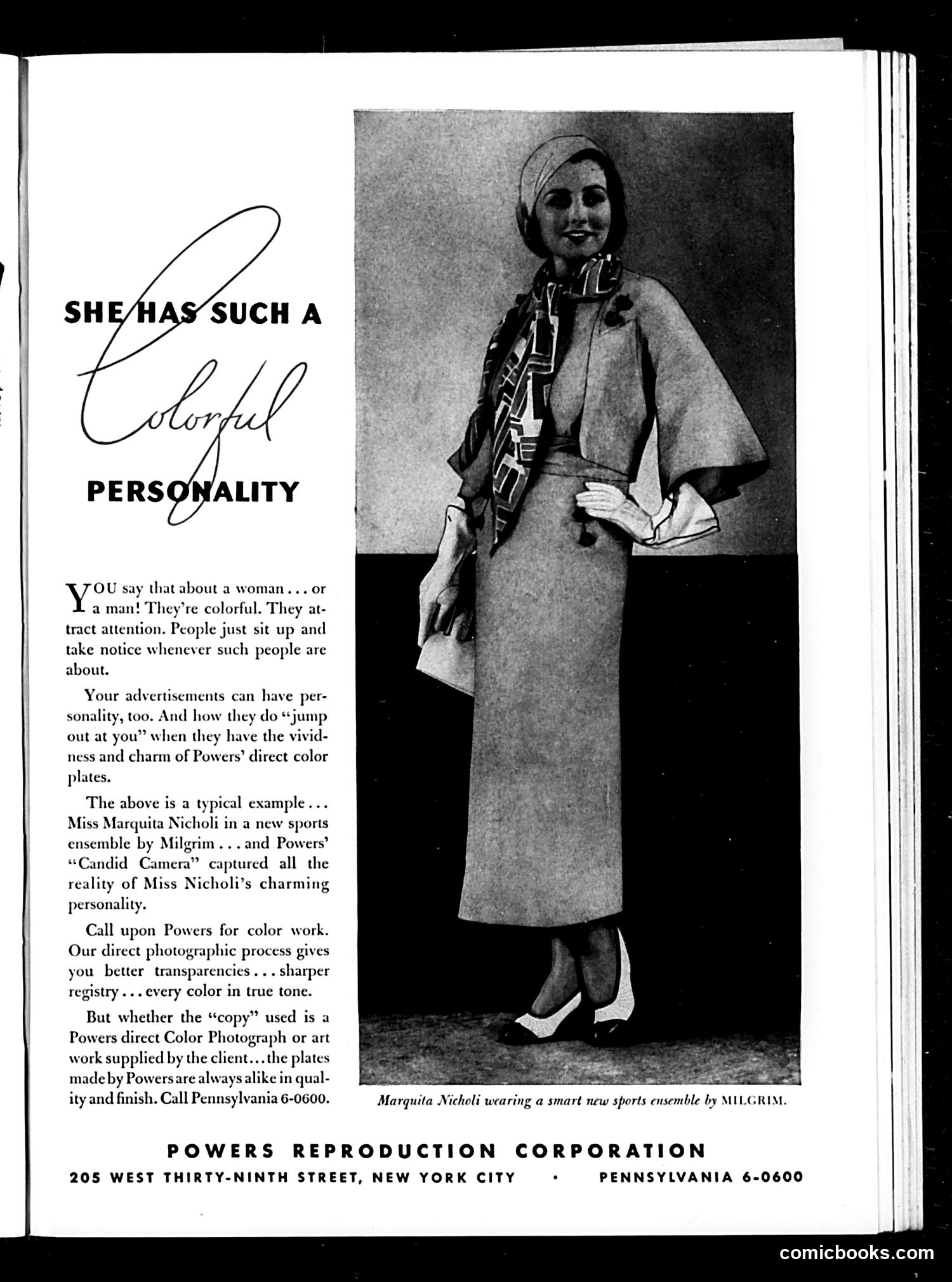
Analysis This page is not a political cartoon or satire—it's a full-page advertisement for Powers Reproduction Corporation, a color printing company. The ad uses a photograph of model/actress Marquita Nicholi wearing a Milgrim sports outfit to promote Powers' color printing technology. The accompanying text argues that "colorful personality" attracts attention, drawing a metaphor between charismatic people and vivid color advertisements. The pitch is straightforward: Powers' "direct color plates" and "Candid Camera" photographic process produce sharp, true-to-life color reproduction that makes advertisements "jump out at you." The ad positions color printing as a tool for creating attention-grabbing marketing materials. There is no satire here—this is standard mid-20th-century advertising copy appearing in *Judge* magazine's pages, likely alongside editorial content.
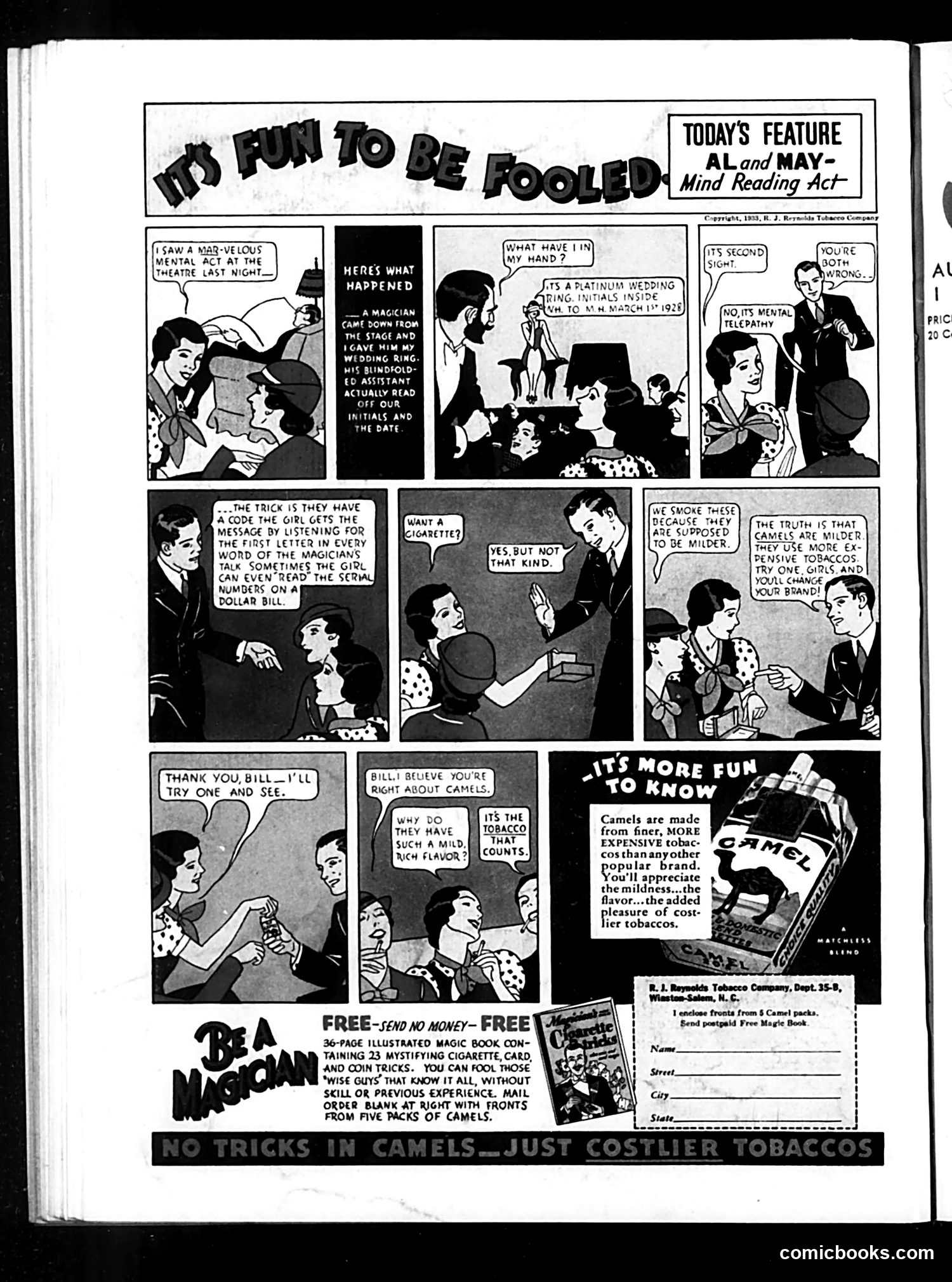
"It's Fun to Be Fooled" — A Camel Cigarettes Advertisement This page is primarily a Camel cigarettes advertisement disguised as entertainment content in *Judge* magazine. The comic strip depicts a magic trick (a "mind reading act") where a magician's blindfolded assistant reads information from an audience member's wedding ring. The joke reveals the trick uses a coded system—the magician's assistant deciphers clues from the magician's patter and the girl's responses. However, the advertisement's real message appears in the final panels, where characters pivot to praising Camel cigarettes' "mild" flavor and expensive tobaccos, using the magic trick as an analogy: just as audiences *enjoy being fooled* by stage illusions, smokers should trust Camel's claims about quality despite skepticism. The page also advertises a free magic book available by mailing cigarette pack fronts—a common mid-20th century promotional tactic targeting young consumers.