judge
Judge — July 1934
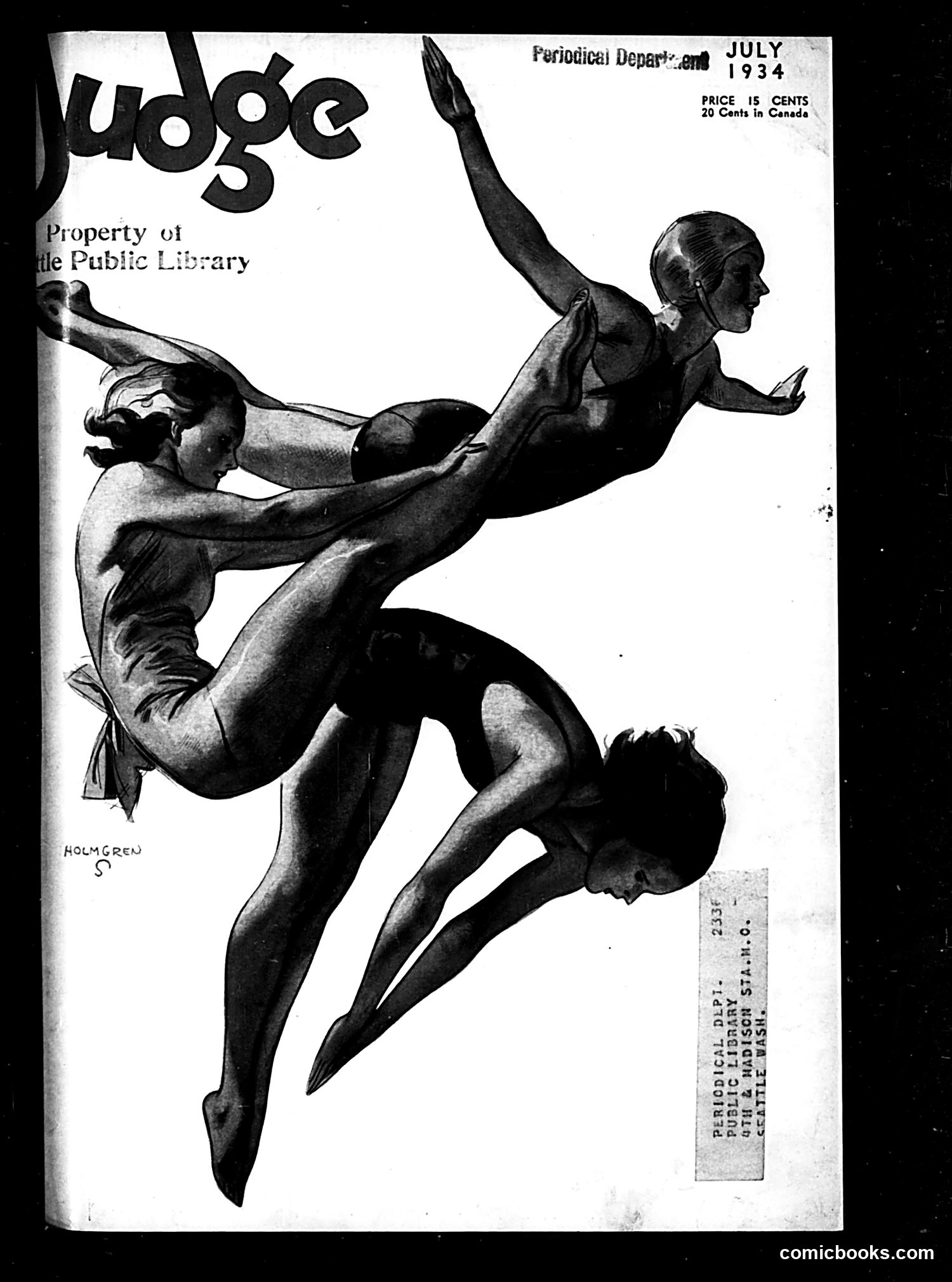
Judge Magazine Cover Analysis – July 1934 This cover illustration by Holmgren depicts three figures in dynamic flying poses, suggesting a satirical commentary on aviation or aeronautical ambitions of the era. The composition—with figures stacked vertically in descending order—implies a hierarchical or competitive relationship, possibly mocking political or social figures engaged in some ambitious venture. The 1934 date places this during the Great Depression and New Deal period. Without identifying specific individuals from the caricatures alone, the image likely satirizes contemporary politicians or public figures pursuing high-flying schemes or projects. The exaggerated body positioning and the "Judge" magazine's satirical tradition suggest mockery of grandiose ambitions or failed endeavors. The exact targets remain unclear without additional context.
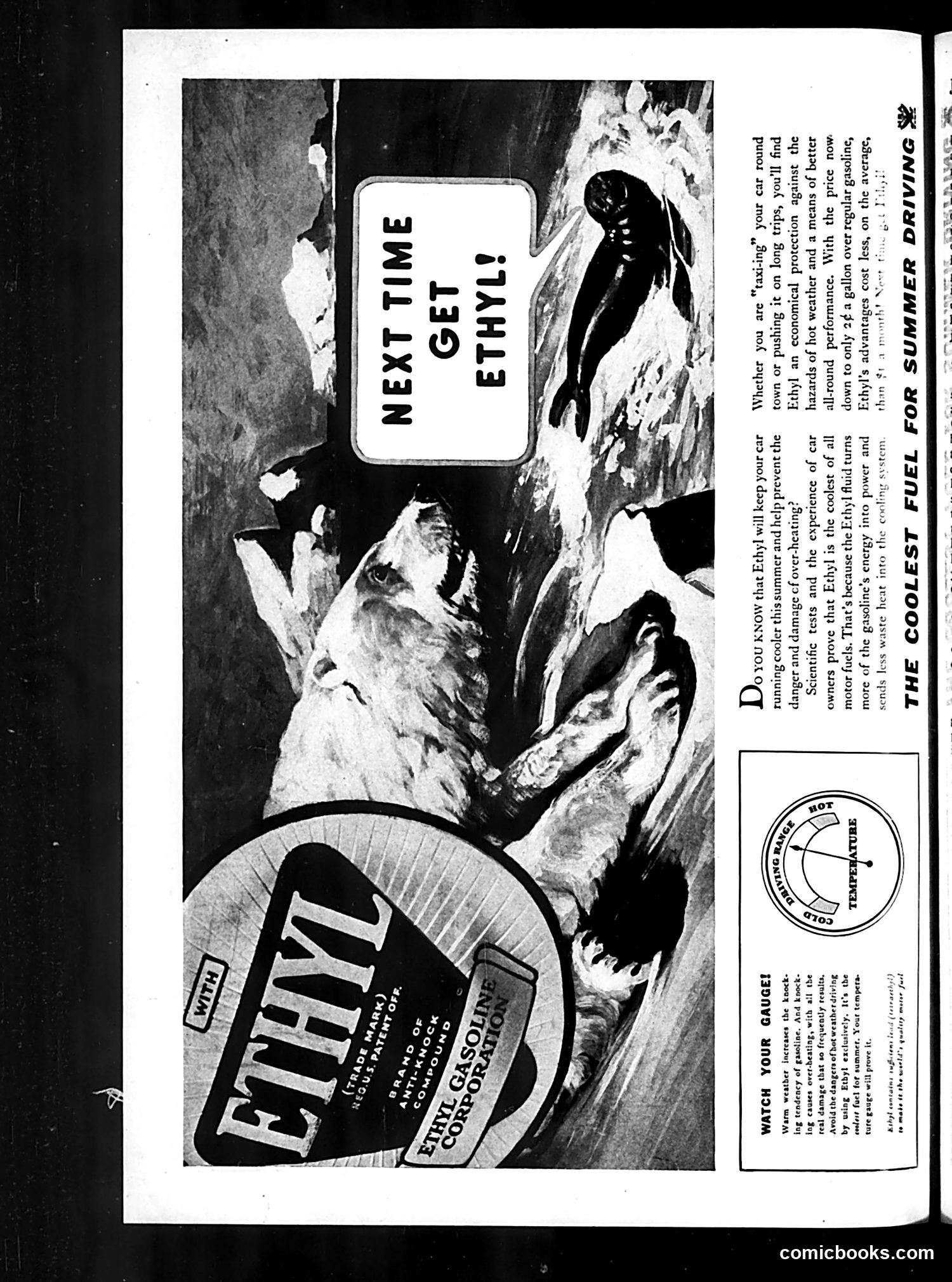
Analysis This page is primarily an advertisement for Ethyl gasoline, not a political cartoon. The ad features a bearded man (likely Santa Claus or a winter figure) with the message "NEXT TIME GET ETHYL!" and shows what appears to be a seal or sea lion. The imagery suggests winter driving conditions and challenges. The accompanying text promotes Ethyl's cooling properties, claiming it prevents engine problems in cold weather and offers superior performance. A temperature gauge is included showing the fuel's effectiveness range. The tagline "THE COOLEST FUEL FOR SUMMER DRIVING" indicates this is a seasonal advertisement, likely from a winter issue of Judge magazine, using humorous imagery to market Ethyl's anti-knock gasoline to readers concerned about vehicle performance.
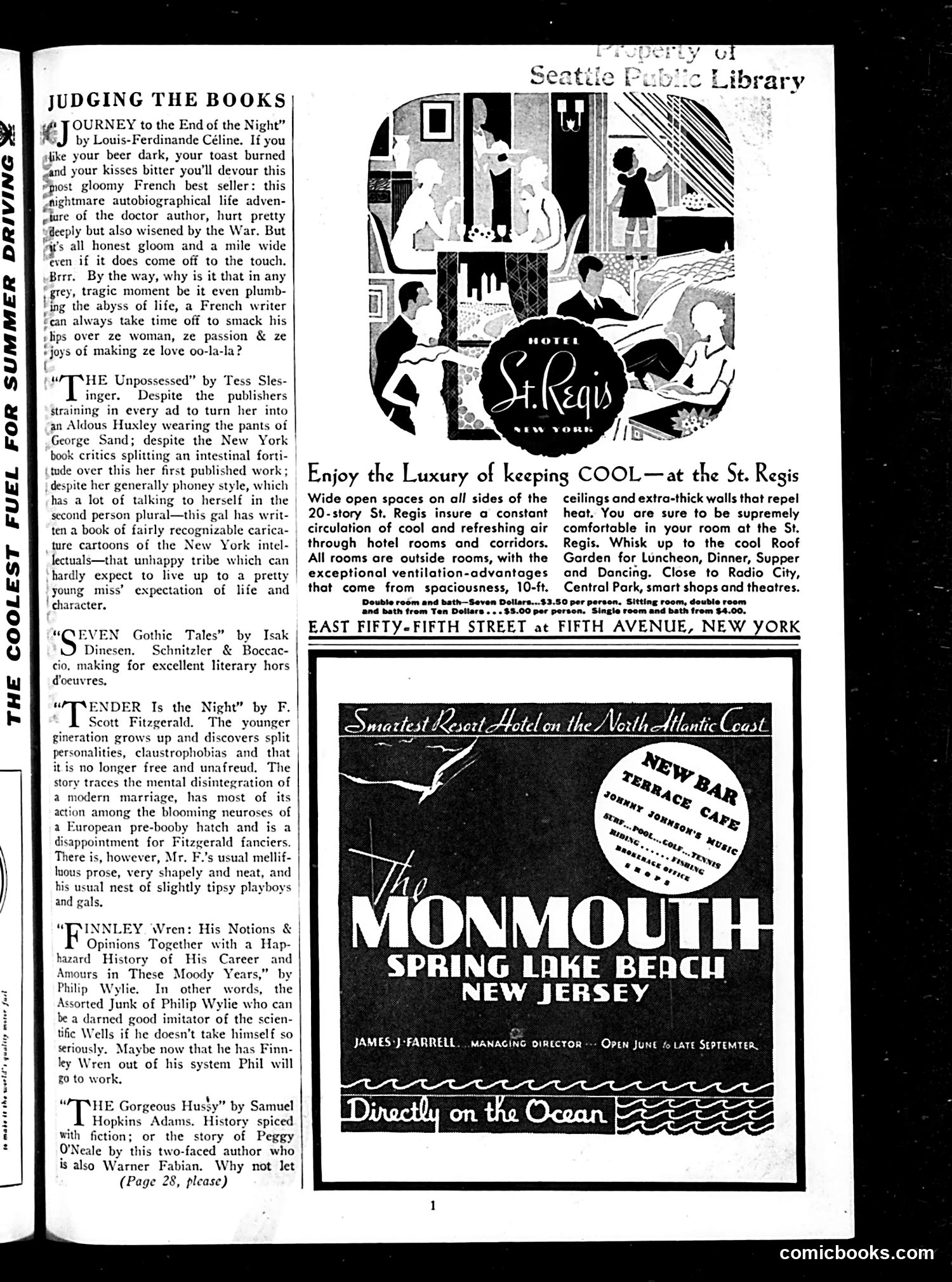
Analysis of Judge Magazine Page This page is primarily advertising, not satirical content. The left column contains book reviews under "JUDGING THE BOOKS," discussing literary works by authors like Louis-Ferdinand Céline and Tess Slesinger. The right side features two hotel advertisements: 1. St. Regis Hotel (New York) - advertising its air conditioning system as a luxury amenity, with an illustration showing well-dressed guests enjoying cool spaces. The "roof garden" is highlighted as a dining destination. 2. The Monmouth (Spring Lake Beach, New Jersey) - promoting itself as a resort hotel "directly on the ocean" with a new bar/terrace cafe. These ads reflect 1920s-30s leisure culture, emphasizing modern conveniences (air conditioning was novel then) and upscale coastal tourism. No political satire is evident on this page.
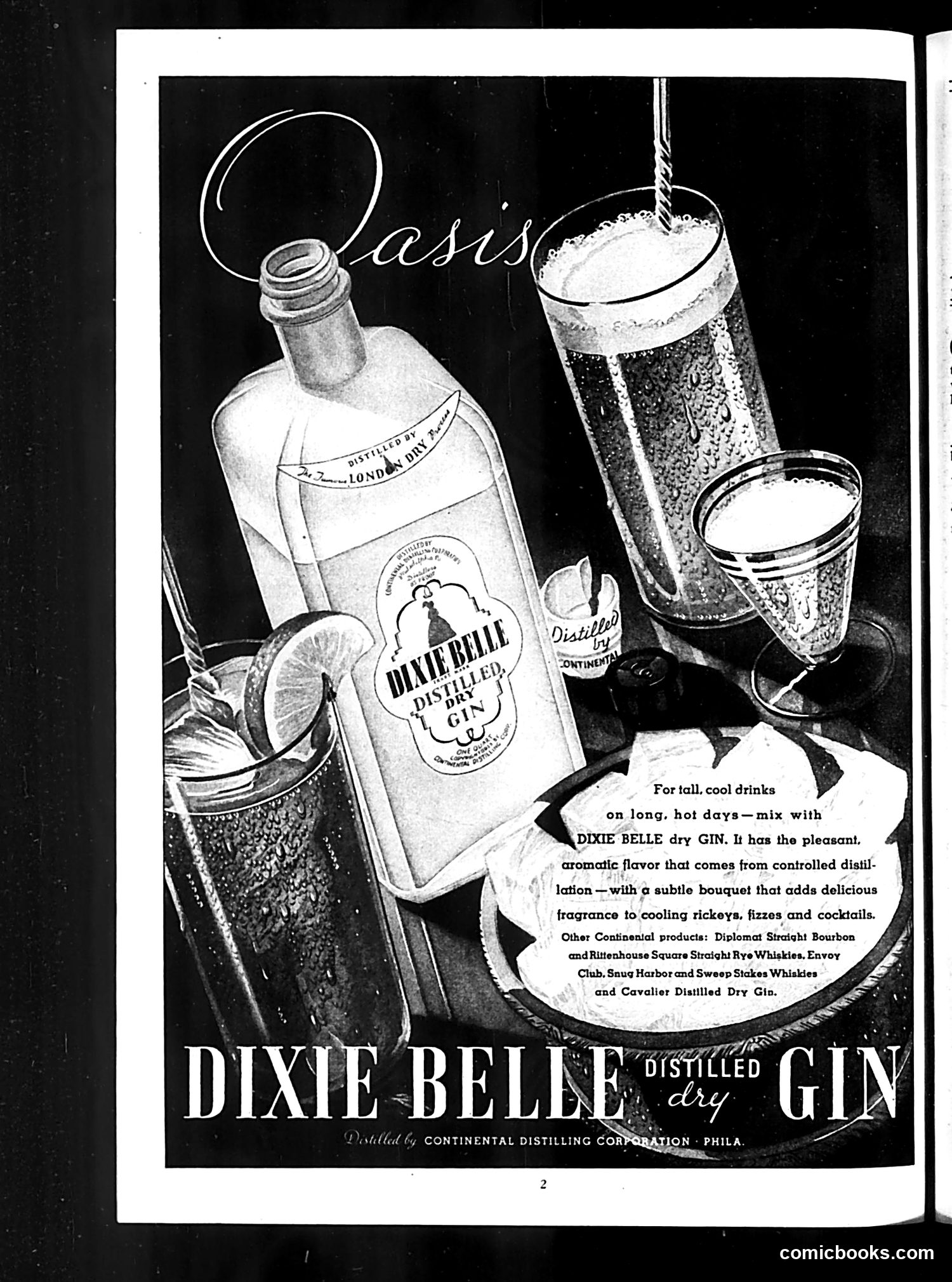
Dixie Belle Dry Gin Advertisement This page is primarily a liquor advertisement, not political satire. It promotes Dixie Belle Dry Gin, distilled by Continental Distilling Corporation in Philadelphia. The ad features product imagery—a gin bottle and two cocktail drinks—alongside the word "Oasis" at top, emphasizing refreshment during hot weather. The copy describes the gin's "pleasant aromatic flavor" and "delicate fragrance" for mixed drinks. The advertisement also lists other Continental products: Diplomat Straight Bourbon, Rittenhouse Square Straight Rye Whiskey, Envoy Club and Sweep Stakes Whiskies, and Cavalier Distilled Dry Gin. This represents typical mid-20th-century alcohol marketing, before modern advertising restrictions. There is no political cartoon or satire present on this page.
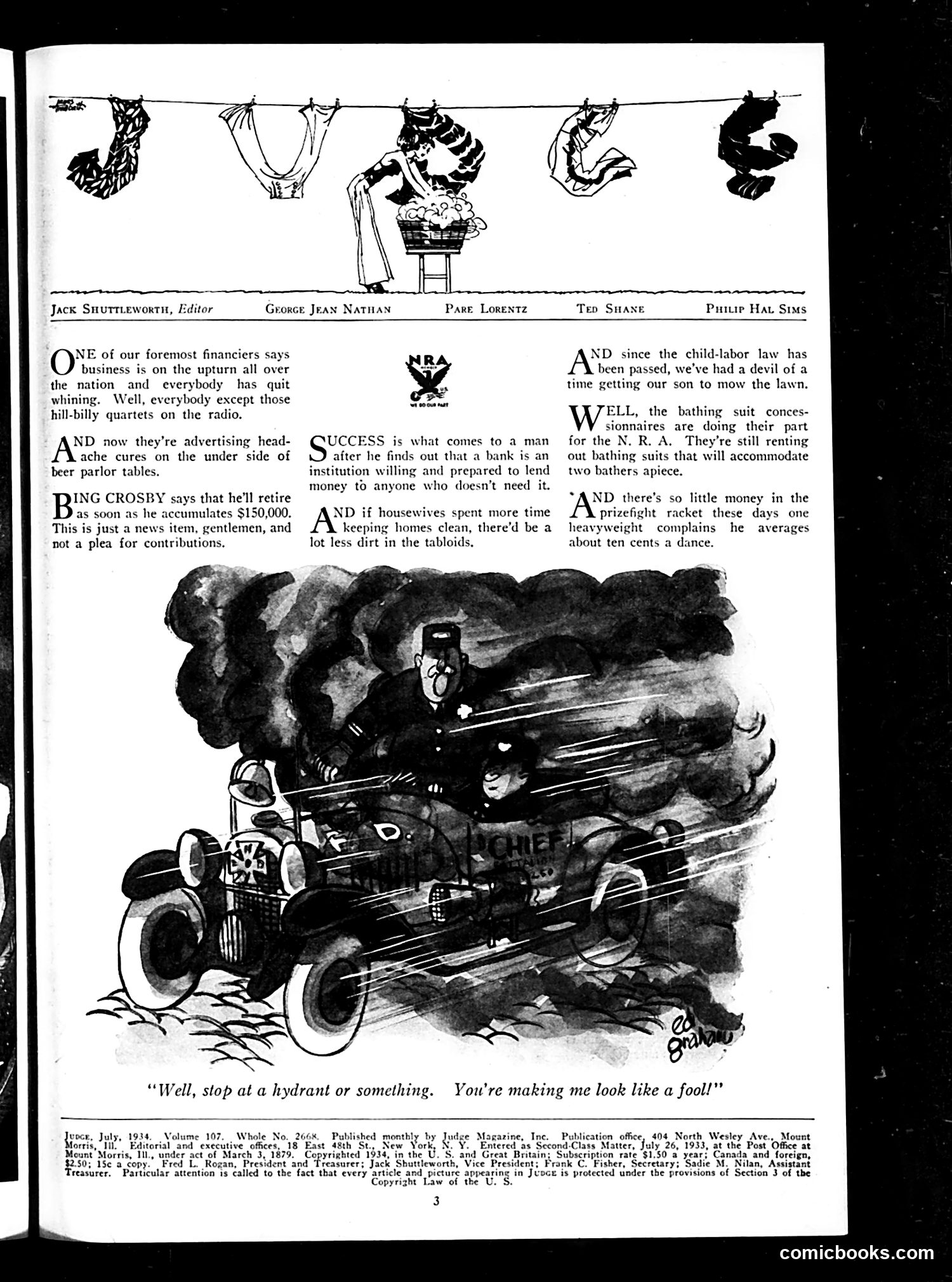
Judge Magazine Cartoon Analysis This July 1914 page features a satirical cartoon about reckless driving. The main illustration shows a speeding automobile nearly colliding with a figure on a bicycle, with the driver exclaiming, "Well, stop at a hydrant or something. You're making me look like a fool!" The joke inverts responsibility: the speeding motorist—clearly the dangerous party—blames the cyclist for making *him* look bad. This satirizes early automotive culture, when wealthy drivers operated vehicles recklessly with little regard for other road users or pedestrians. The accompanying text snippets critique various social issues: business speculation, banks lending recklessly, child labor laws, prizefighting corruption, and housewives' domestic labor. The page reflects Progressive Era concerns about unchecked capitalism and social disorder.
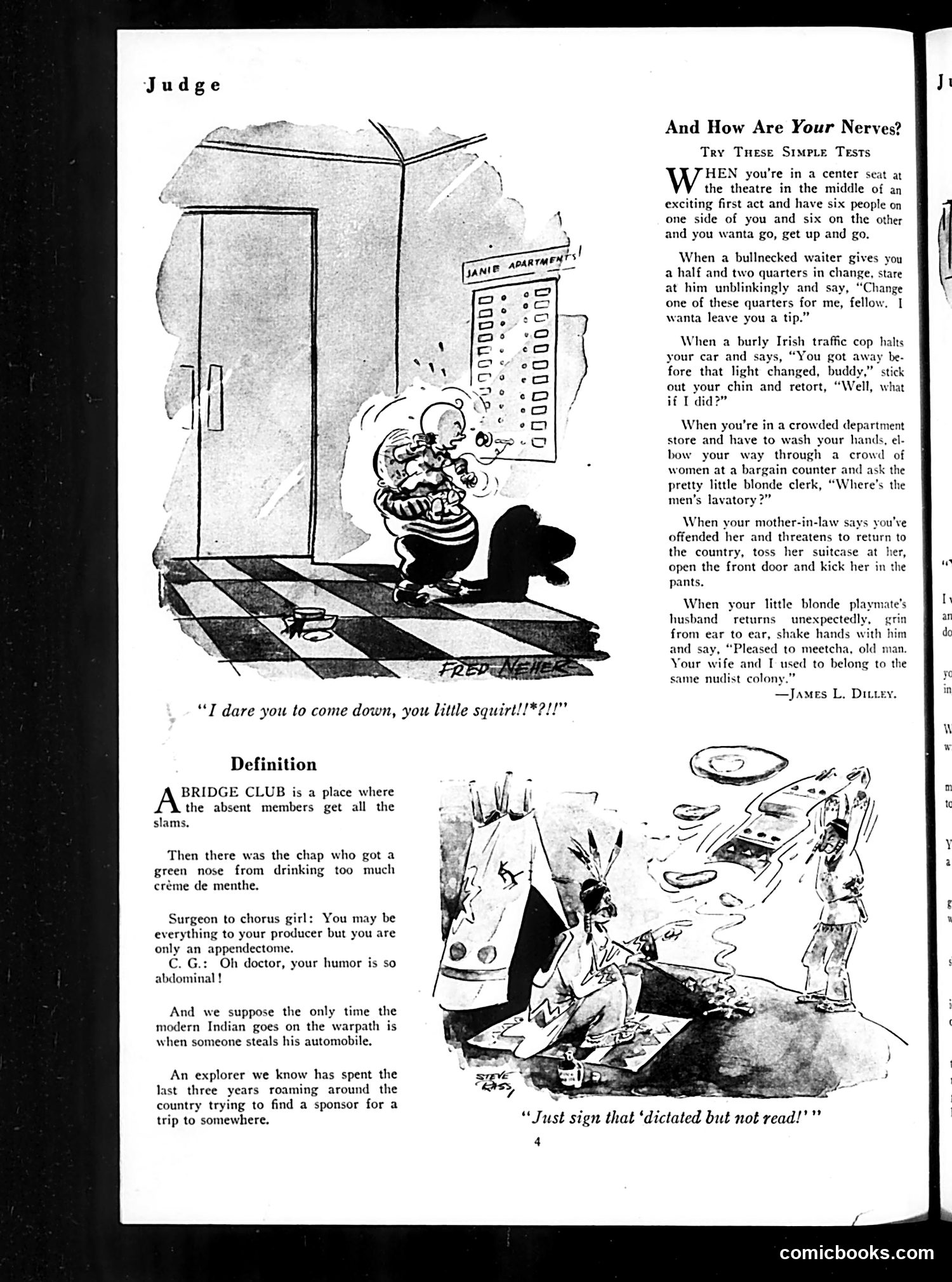
Analysis of Judge Magazine Page This page contains humor pieces satirizing everyday American social situations and anxieties, circa early-to-mid 20th century. The top cartoon shows a nervous person at an apartment building entrance being challenged by a doorman. The accompanying text by James L. Dilley humorously catalogs nerve-wracking social situations: theater etiquette, receiving incorrect change, traffic confrontations, crowded shopping, and embarrassing family encounters. Below, a "Definition" section mocks bridge clubs as places where absent members receive all criticism. Additional jokes target pretentious behavior (a surgeon correcting a chorus girl's diction) and modern inconveniences (car theft, difficulty finding expedition sponsors). The second cartoon depicts someone signing a document while another person objects about it being "dictated but not read"—likely satirizing modern bureaucratic confusion. The satire targets middle-class social anxieties and evolving urban life frustrations.
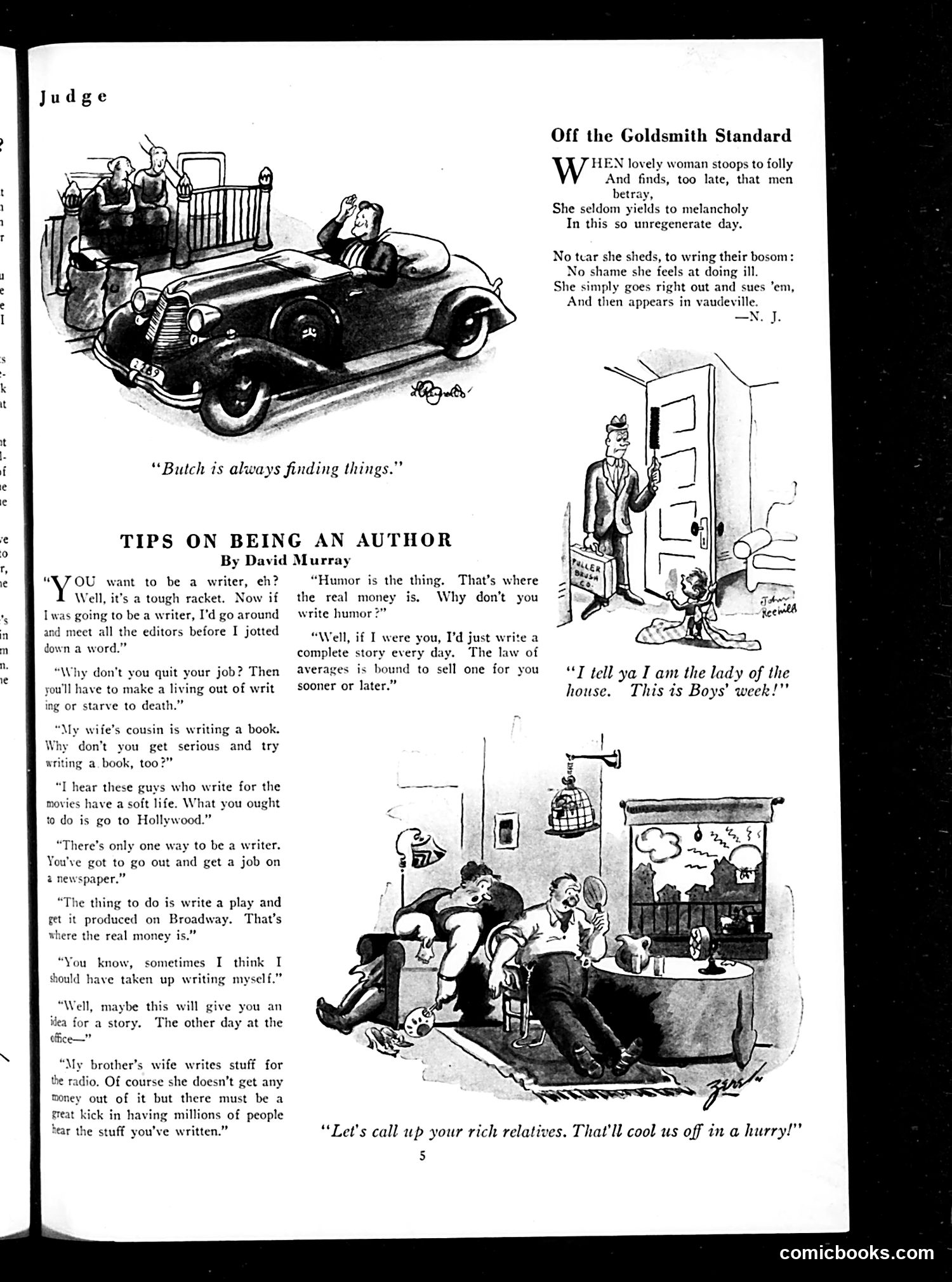
Analysis This Judge magazine page satirizes aspiring writers through humor rather than politics. The main content, "Tips on Being an Author" by David Murray, mocks people who want to write by presenting common excuses and naive assumptions about the profession. The cartoons illustrate these attitudes: one shows a man lounging while apparently expecting success; another depicts someone calling "rich relatives" for money during financial hardship—suggesting writers can't actually support themselves. The broader satire targets the romantic delusion of becoming a writer without real work or sacrifice. Murray's dialogue captures the era's prevalent attitude that writing seemed easier than actual employment, yet the reality was harsh poverty. "Off the Goldsmith Standard" (top right) appears unrelated—a separate poem about betrayal by men.
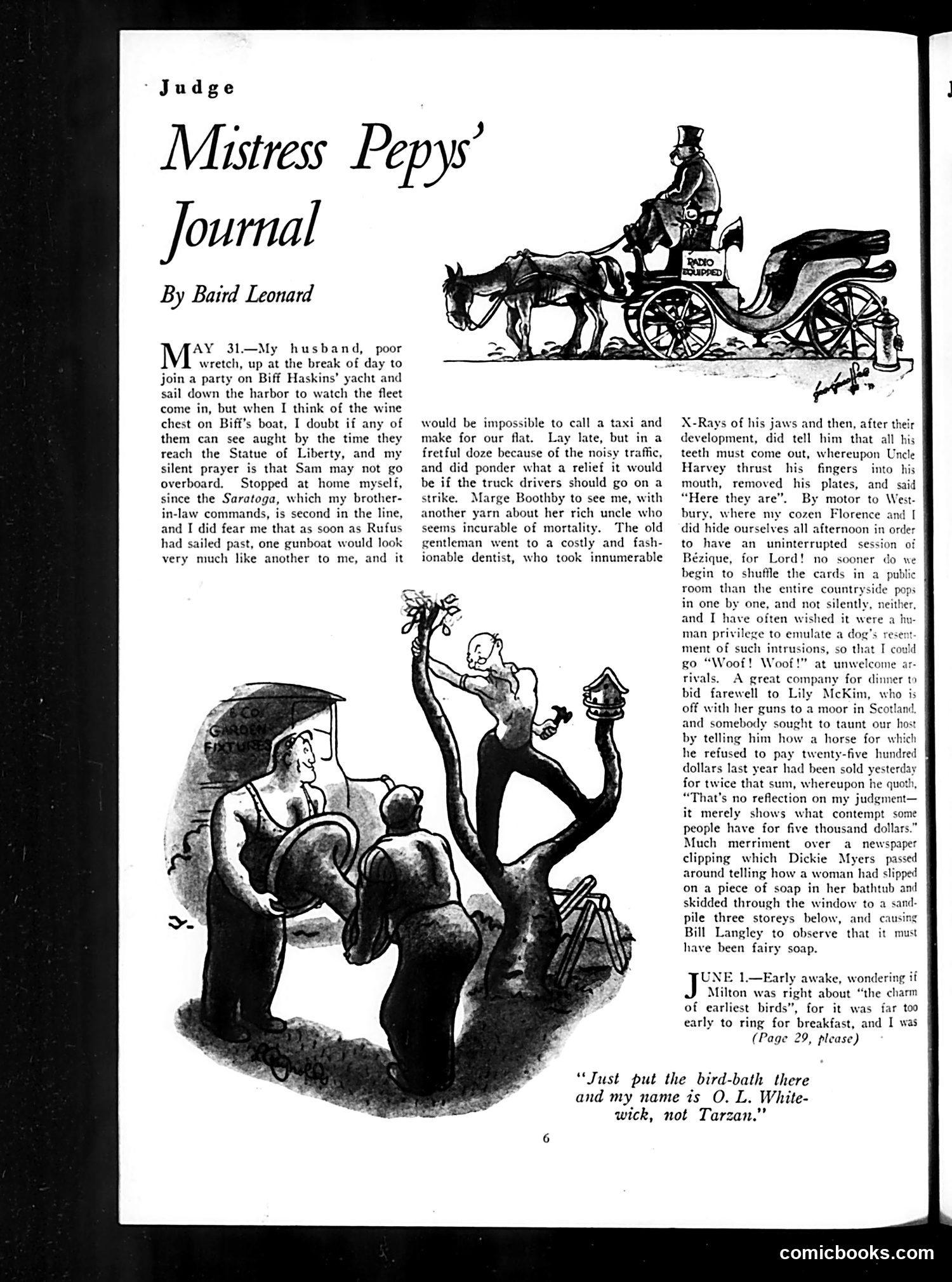
Judge Magazine Page Analysis This is a humor column titled "Mistress Pepys' Journal" by Baird Leonard, presented as a fictional diary entry. The left illustration depicts a woman pulling a grotesque, elongated figure from water—likely satirizing absurd newspaper stories or social gossip of the era. The column's tone is satirical social commentary. It mocks upper-class leisure activities (yacht parties, expensive dentistry), rural pretensions, and the absurdity of society gossip—including a humorous anecdote about a woman who supposedly fell three stories into a sandpile after slipping on soap. The cartoon below shows a man instructing someone to place a bird-bath while correcting his name ("O.L. Whitewick, not Tarzan"), likely mocking either a specific public figure or the general absurdity of servants' misunderstandings. This represents typical Judge magazine fare: satirizing society manners and upper-class foibles.
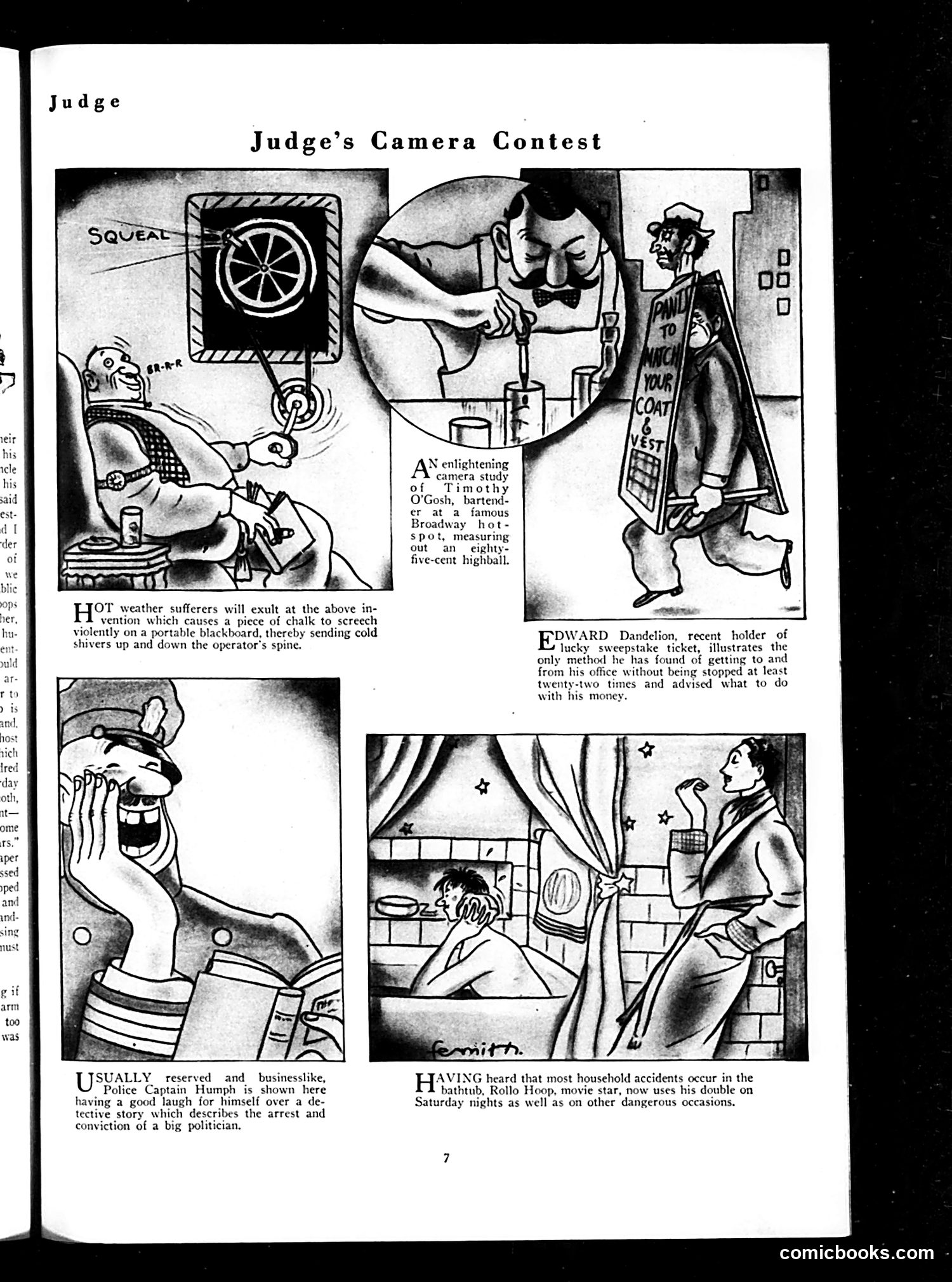
Judge's Camera Contest Explanation This is a satirical page featuring four cartoon vignettes mocking various 1920s-era figures and situations: 1. The Chalk Device: Satirizes people seeking relief from hot weather through an absurd invention that produces an unpleasant noise instead. 2. Timothy O'Gosh: Caricatures a Broadway bartender cheating customers by measuring out inadequate portions of liquor—likely commenting on Prohibition-era speakeasies and dishonest practices. 3. Edward Dandelion: Mocks a lottery winner who must use elaborate disguises to avoid people asking him for money. 4. Police Captain Humph: Shows a rigid authority figure enjoying entertainment about a corrupt politician's arrest—satirizing either his hypocrisy or naive faith in justice. 5. Rollo Hoop: Parodies a movie star so safety-conscious he uses a stunt double even for bathing, mocking Hollywood's excess and paranoia. The page's humor relies on exaggeration and social commentary about prohibition, wealth, corruption, and celebrity culture.
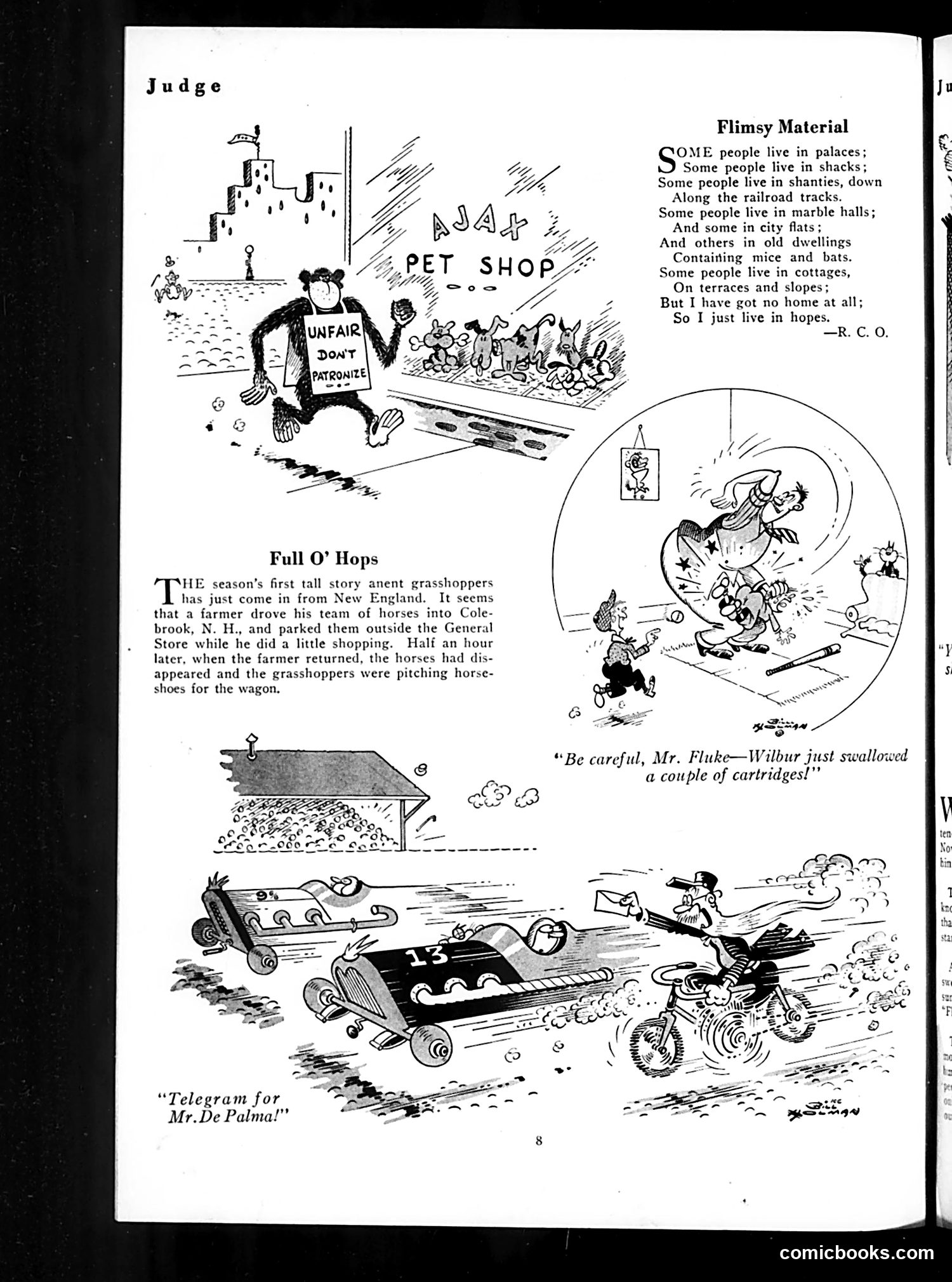
Explanation for Modern Readers This Judge magazine page contains three distinct pieces of satire and humor: "Flimsy Material" is a poem about homelessness and poverty, using ironic understatement ("I just live in hopes") to critique economic inequality. "Full O' Hops" is a tall tale from New England about grasshoppers so enormous they steal horses and play horseshoes—a humorous exaggeration typical of rural folklore meant to amuse readers with absurdist humor. The circular cartoon appears to show someone named Fluke and another character named Wilbur in a chaotic scene involving cartridges, likely depicting slapstick comedy or accidental mishap. "Telegram for Mr. De Palma!" likely references a notable figure (unclear without additional context), shown in a racing/vehicle scene with comic mayhem. The page combines social commentary on poverty with traditional American tall tales and physical comedy—representative of Judge's mix of political/social satire and lighthearted humor.
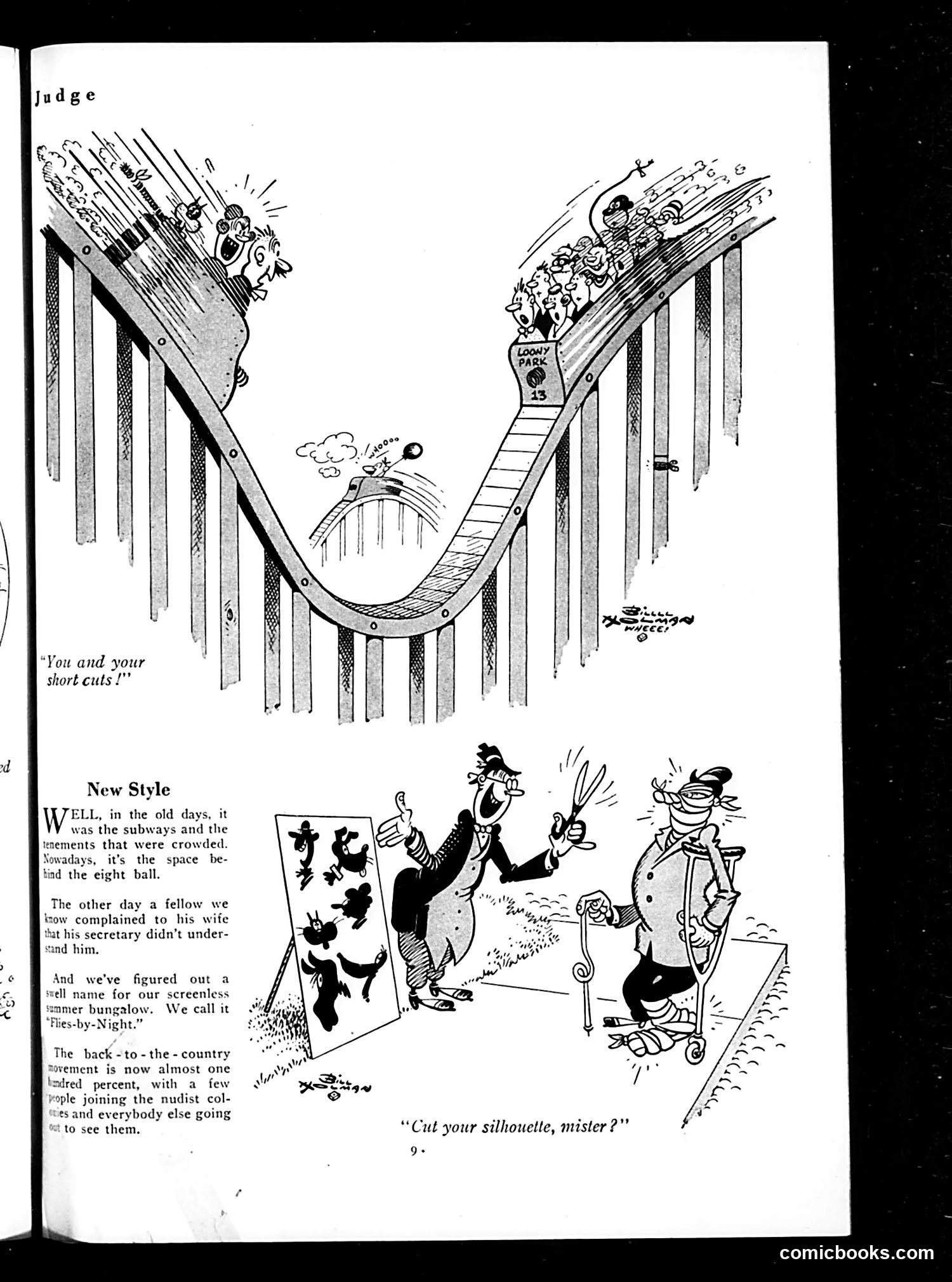
Political/Social Satire in Judge Magazine Top Cartoon ("You and your short cuts!"): This appears to satirize a legal ruling or judicial decision—the "Judge" heading and roller-coaster imagery suggest someone (likely a defendant or litigant) taking a wild, chaotic ride through the justice system. The phrase "short cuts" implies they're trying to circumvent proper legal procedure, with disastrous results. Bottom Cartoon ("Cut your silhouette, mister?"): This mocks the "back-to-the-country" movement mentioned in the accompanying text. A charlatan or con artist is offering to "cut silhouettes" (profile portraits) to rural people, exploiting the nostalgia for simple, pastoral living. The caricatured figures and exaggerated poses suggest gullible country folk being duped by a city hustler—satire on both the movement's idealization and those profiting from it. Overall Theme: Poking fun at contemporary American social trends and their contradictions.
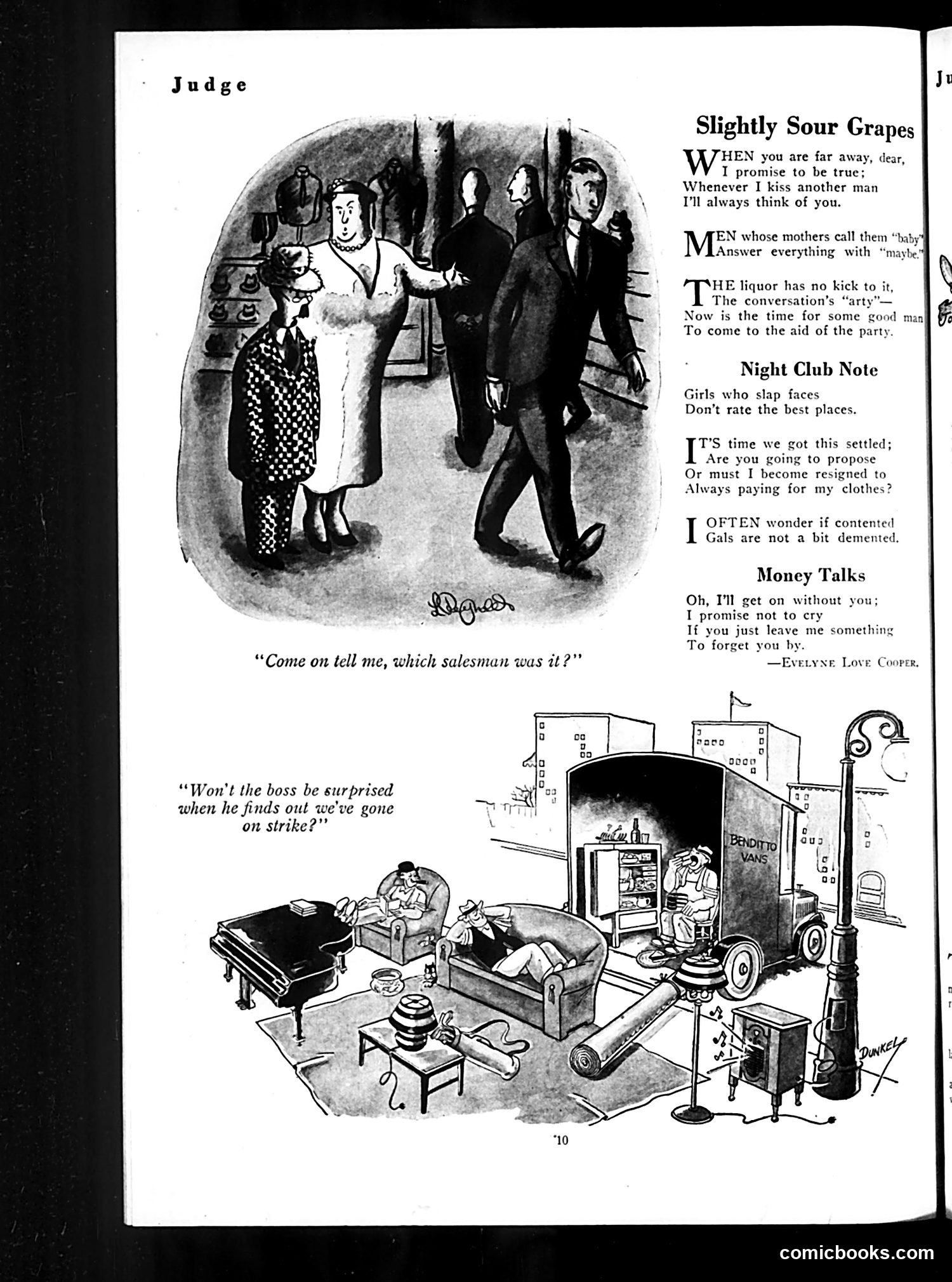
Judge Magazine Page Analysis Top Cartoon: Shows a woman with a child confronting men leaving a building, asking "Come on tell me, which salesman was it?" This references labor strikes — likely depicting workers walking out, with the woman humorously suggesting the strikers are so numerous she can't identify which one is her husband. Bottom Cartoon: Two men lounging in an office with a piano, wrench, and delivery van visible, captioned "Won't the boss be surprised when he finds out we've gone on strike?" This directly satirizes labor unrest and worker strikes, mocking the casual attitude of strikers relaxing on company premises while claiming they've walked out. Right Column Text: Collection of satirical verses on romantic relationships and social behavior. "Slightly Sour Grapes" mocks unfaithful lovers; "Night Club Note" criticizes women's behavior; "Money Talks" jokes about women's financial dependence — reflecting 1920s-era gender attitudes and the tension between emerging female independence and traditional expectations. The page overall satirizes labor disputes and modern dating/relationship dynamics of the Jazz Age era.
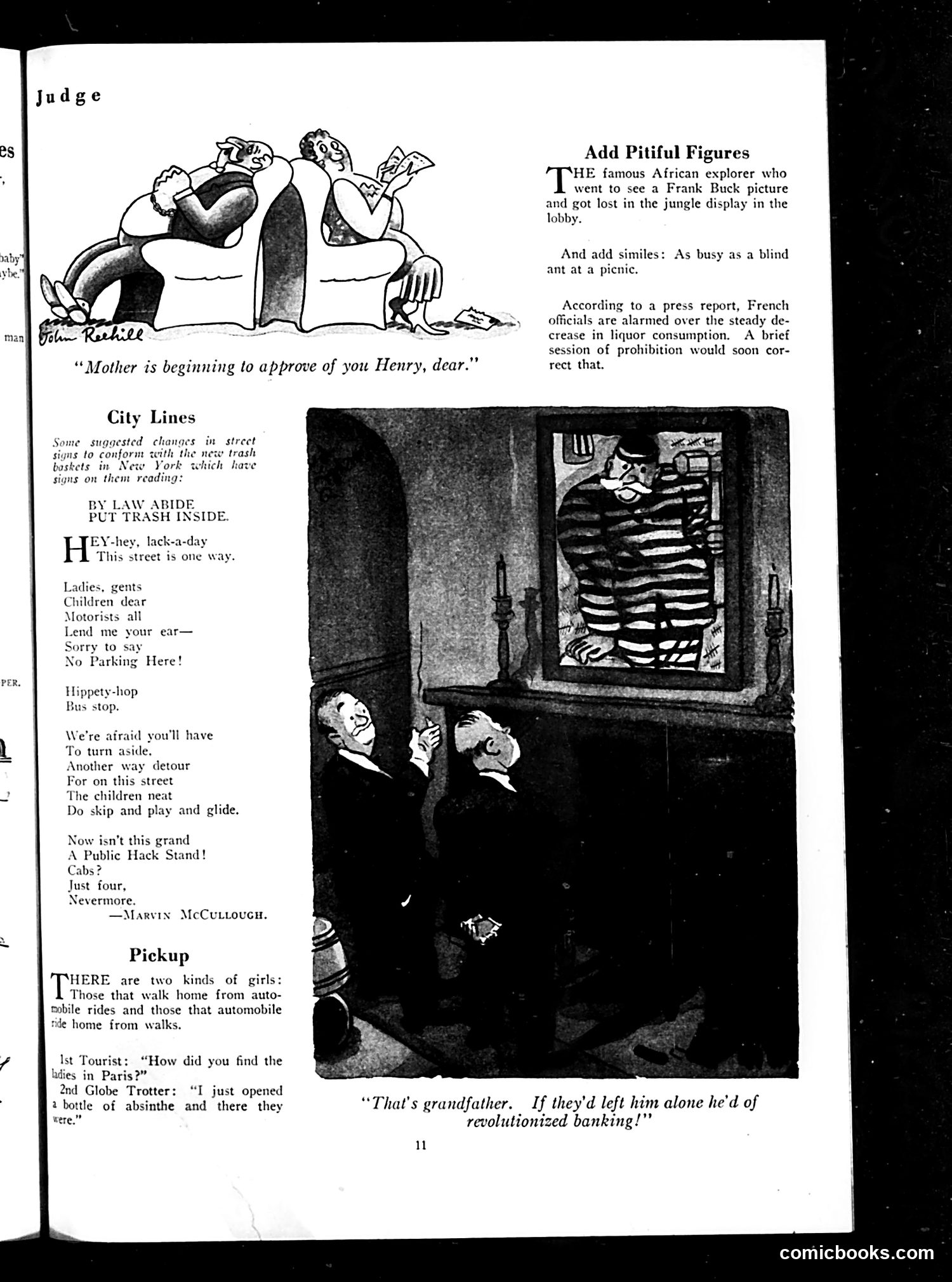
Judge Magazine Page Analysis This page contains several satirical pieces typical of Judge's humor: "Add Pitiful Figures" mocks an African explorer who attended a Frank Buck jungle-themed picture show and got lost in the lobby display—absurdist humor about someone confused by entertainment spectacle. The sidebar joke about French liquor consumption satirizes prohibition debates by suggesting even France's drinking problem could be "fixed" with brief prohibition. "City Lines" (by Marvin McCullough) presents humorous proposed street signs for New York, treating mundane traffic rules as whimsical poetry. It's gentle urban satire about congestion and street regulations. "Pickup" offers a double-entendre joke about two types of girls and automobiles—suggesting women either walk home from car rides or vice versa, implying differing moral standards. The main photograph shows two men viewing a skeletal bank display, captioned with a joke about a grandfather who, "if they'd left him alone," would have revolutionized banking—likely satirizing outdated banking practices or a specific banker of the era. The page reflects 1920s-era American humor: urbane, somewhat risqué, and skeptical of institutions.
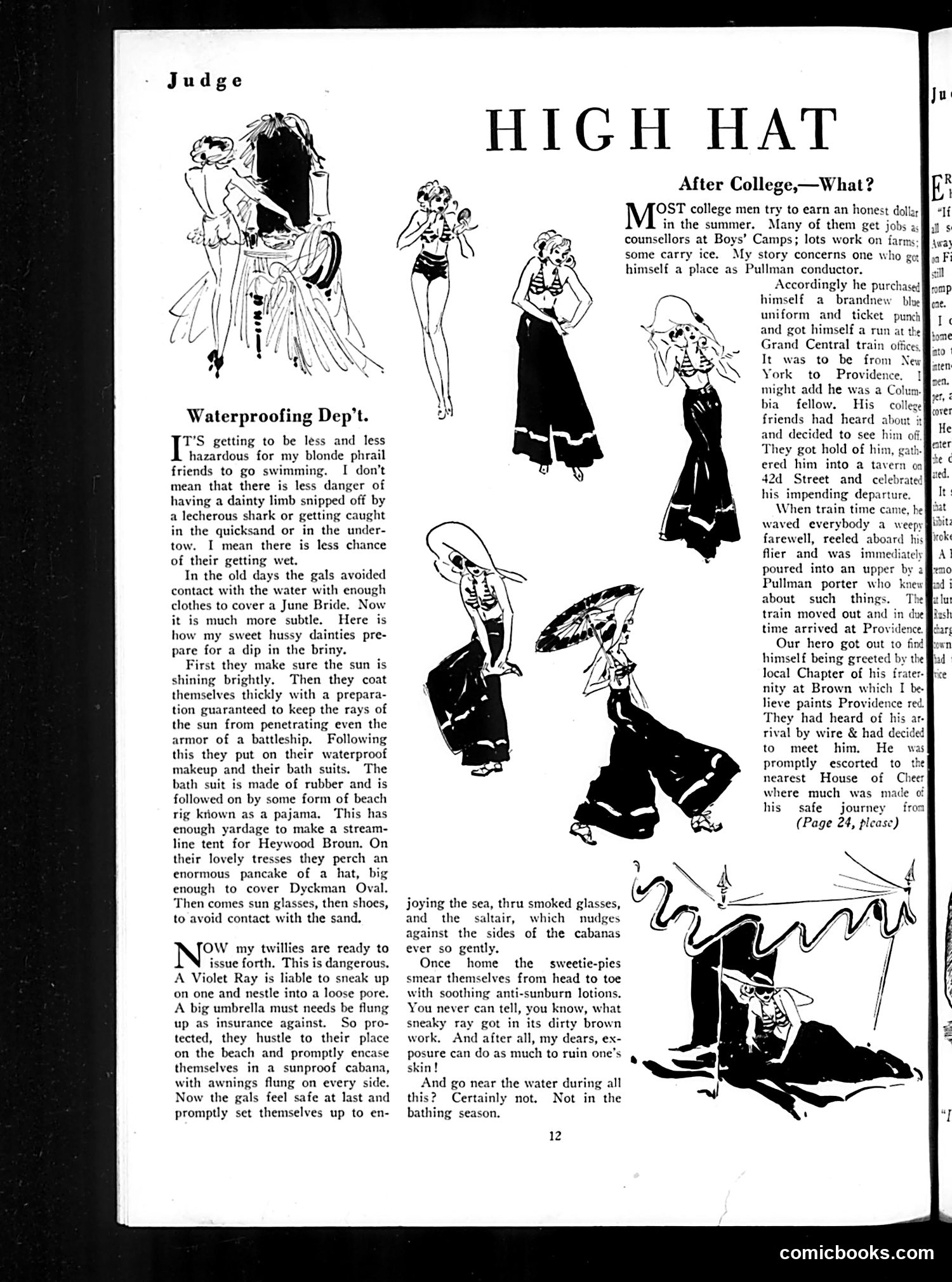
Explanation of Judge Magazine Page This page contains two satirical pieces typical of 1920s humor: "HIGH HAT" (main story): A humorous narrative about a college graduate who lands a summer job as a Pullman conductor on a New York-Providence train route. After being sent off by his fraternity brothers at a bar on 42nd Street, he arrives intoxicated at his destination, where his college fraternity chapter greets him enthusiastically at a local establishment ("House of Cheer"). "Waterproofing Dep't" (left column): A satirical commentary on women's beach culture. The author mocks how female swimmers now wear extensive protective gear—rubber suits, pajamas, hats, sunglasses, umbrellas, and sunscreen—to avoid sun exposure and getting wet, then sit in enclosed cabanas. The joke: despite elaborate "waterproofing," they never actually enter the water. It's social satire about vanity and the absurd lengths women supposedly go to protect their appearance and complexion. Both pieces use humor to mock contemporary social behaviors and attitudes.
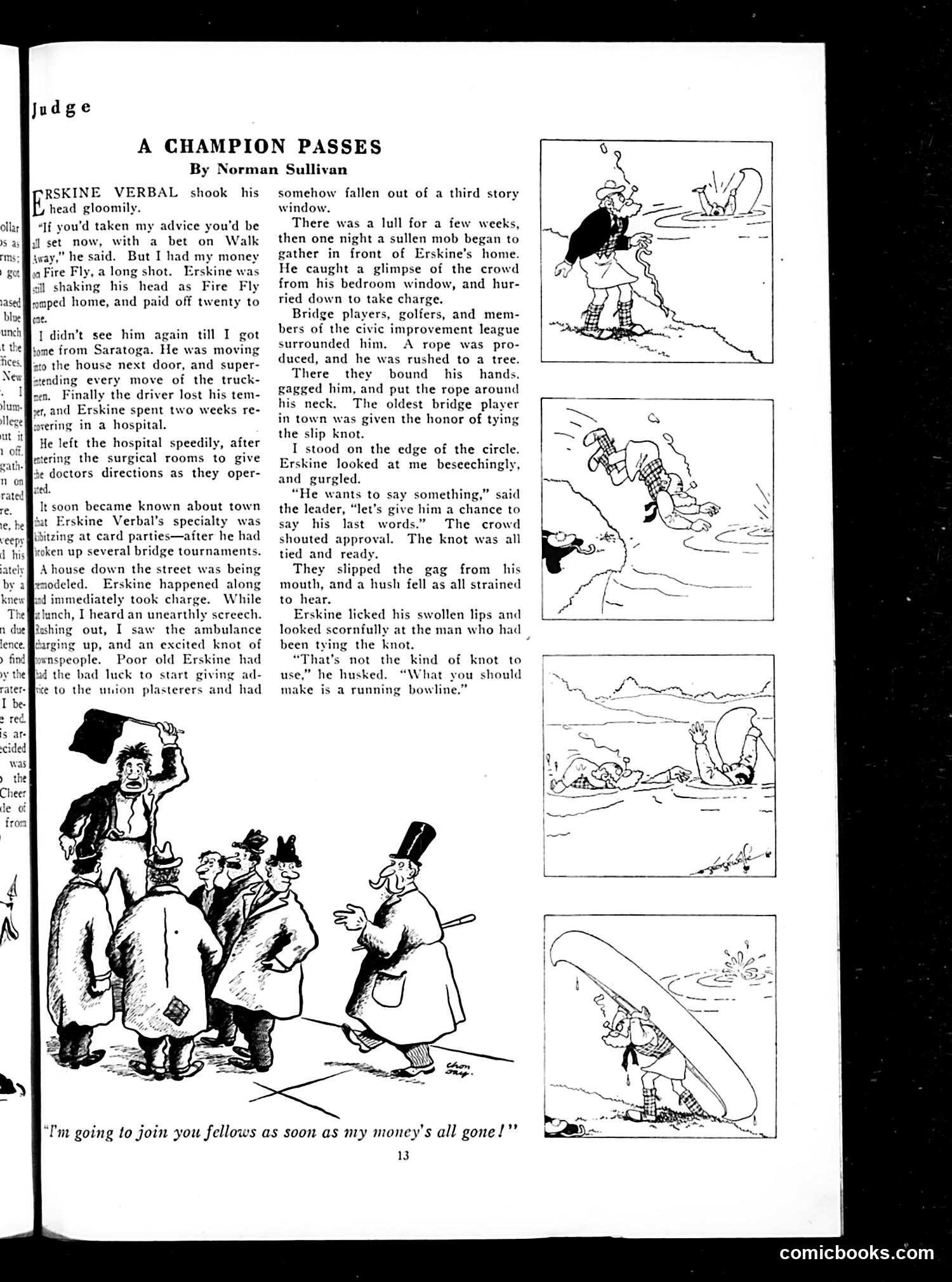
Analysis of "A Champion Passes" by Norman Sullivan This is a satirical story about Erskine Verbal, a chronic "backseat driver" whose compulsive need to give unsolicited advice causes repeated disasters. He loses money on horse races, falls from a third-story window while directing construction workers, and interferes at bridge tournaments. The satire culminates in dark comedy: a mob lynches him for his meddling, yet even facing execution, Erskine can't resist correcting the knot-tying technique. His last words—complaining about the *type* of knot rather than his fate—exemplify his pathological inability to stop advising others. The cartoons show his physical mishaps. The bottom illustration depicts gentlemen in top hats, with one saying he'll "join you fellows as soon as my money's all gone"—suggesting Erskine's type attracts others destined for similar ruin through compulsive behavior. The humor targets people who can't mind their own business, a timeless character type that remains recognizable today.
"The Theatre" by George Jean Nathan - Judge Magazine This is not a political cartoon but rather a satirical essay about New York City nightclubs during Prohibition era (the author last visited in 1926). Nathan mocks the nightclub experience with pointed humor: Main targets of satire: - Overpriced entertainment: Customers pay exorbitant prices for cheap wine (passed off as vintage), mediocre singers, and minimal food - Formulaic band leaders: Described as artificially "oozed" in evening wear, perpetually smiling inauthentically at patrons like they're all "favorite brothers" - Monotonous entertainment: All bands play identical songs; the only time they're loud is when ejecting drunk customers - "Society favorites": Young piano singers performing trite patter songs about women's mishaps The joke: Nothing has changed in eight years—nightclubs remain expensive, boring, and exploitative, yet customers keep returning. Nathan's wit lies in his detailed, contemptuous descriptions of this predictable mediocrity masquerading as sophistication.
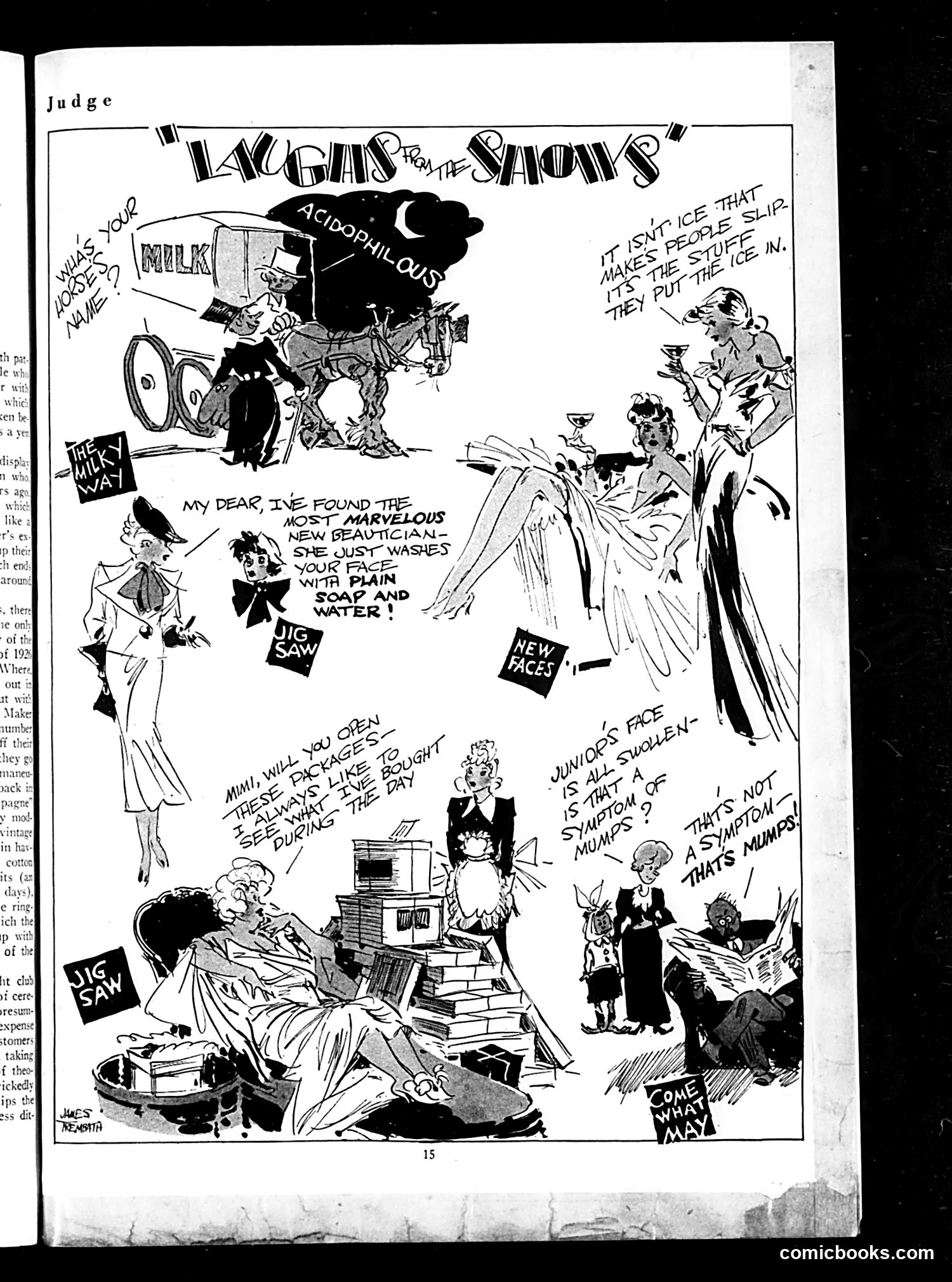
This is a satirical cartoon attacking cosmetics and beauty industry claims. The central image shows a grotesque figure labeled "ACIDOPHILOUS" (a bacteria) being poured into milk, mocking beauty product advertisements that made dubious health claims. The cartoon ridicules women who adopt new beauty treatments, depicting them as gullible consumers. Multiple panels show fashionable women enthusiastically endorsing a "new beautician" who simply washes faces with "plain soap and water"—suggesting expensive cosmetics offer no real benefit over basic hygiene. The satire targets both the cosmetics industry's false advertising and the social pressure on women to constantly seek "new faces" and beauty solutions. References to "mumps" and facial swelling are used mockingly. The "Jig Saw" labels suggest the fragmented, artificial nature of beauty culture. This reflects early 20th-century skepticism toward unregulated cosmetics marketing and the vanity it exploited.
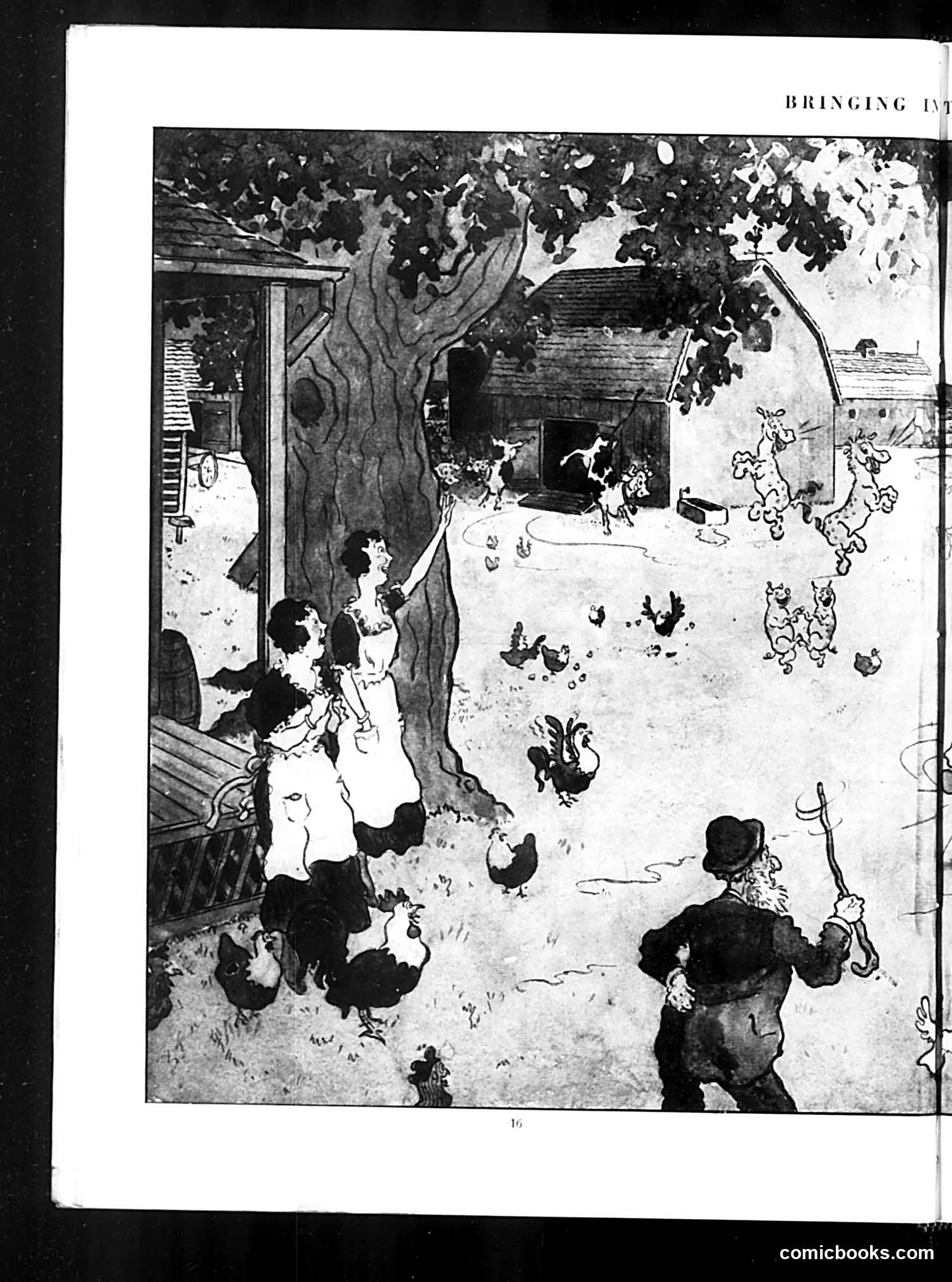
Analysis This appears to be a page from *Judge* magazine showing an illustrated scene of a farmyard or rural courtyard. The image depicts several figures in period dress (appearing to be late 19th or early 20th century) interacting with various farm animals—chickens, roosters, and other livestock scattered about the yard. The scene includes a woman in white (possibly a servant or farm worker), men in dark clothing, farm buildings with shutters, and a large tree. The style is typical of *Judge's* satirical illustration work, though without the complete title or caption text visible, the specific political or social satire being referenced is unclear. The fragmentary OCR text "BRINGING I\4" doesn't provide sufficient context to identify the cartoon's subject matter with confidence.
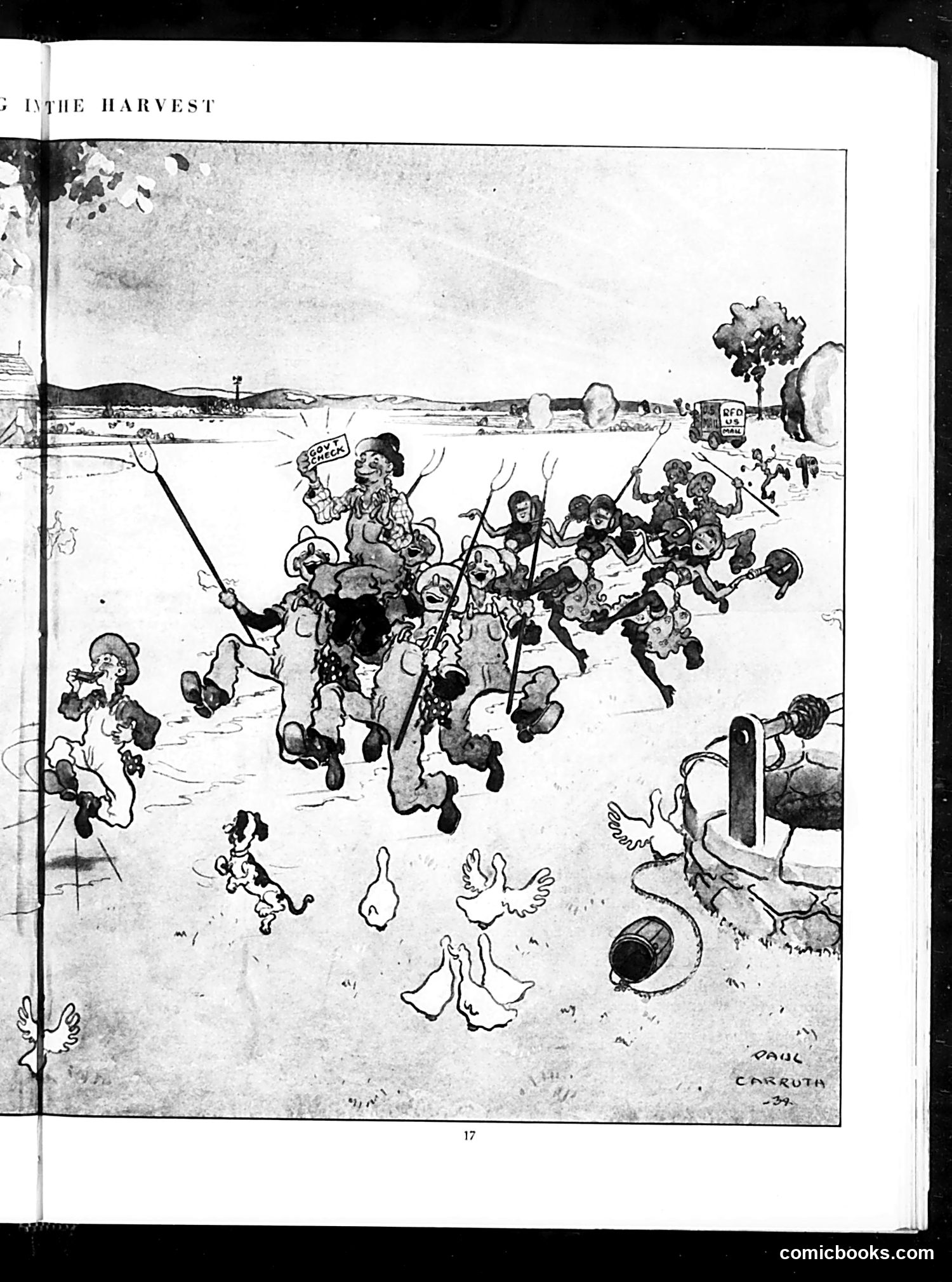
Political Cartoon Analysis This satirical cartoon depicts a chaotic farm harvest scene titled "In the Harvest." A central female figure (likely representing America or a harvesting personification) stands amid numerous children and small figures running frantically across farmland. Agricultural equipment and buildings appear in the background. The satire appears to comment on labor exploitation or the mobilization of child workers during wartime agricultural production. The frantic, disorganized composition—with children scattered everywhere—suggests criticism of relying on youth for essential harvest work, possibly during World War I when labor shortages occurred. The artist's signature appears to read "Paul Carruth." Without the magazine's date visible, the exact historical moment remains unclear, but the imagery critiques turning children into a desperate labor force for food production during a national emergency.
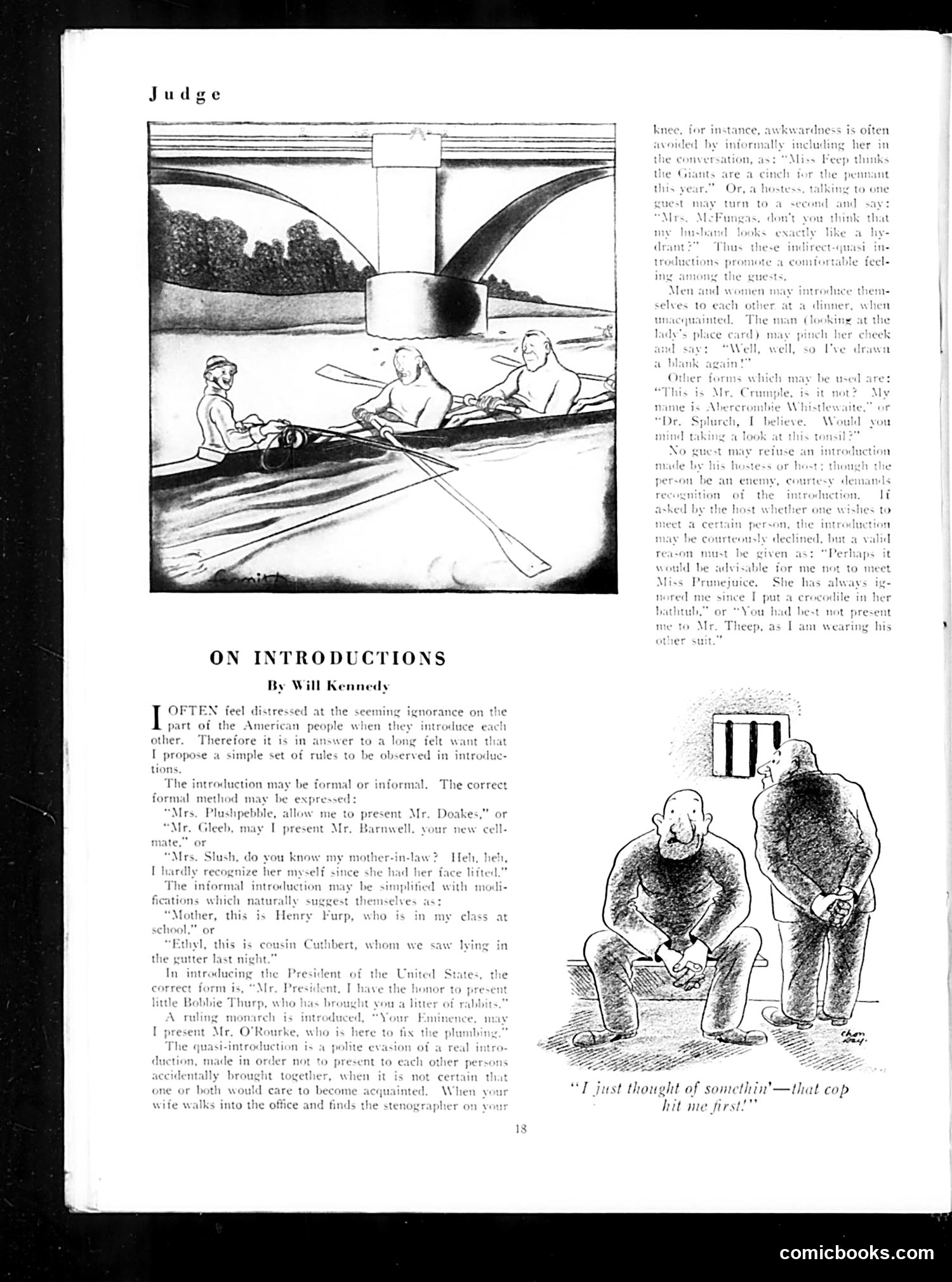
Analysis of Judge Magazine Page This page from *Judge* contains an article "On Introductions" by Will Kennedy offering satirical etiquette rules for American social interactions. The formal text mocks Americans' supposed ignorance about proper introductions, providing both "correct" and "informal" examples with humorous consequences. The cartoons illustrate social awkwardness: the top image shows people in a boat (context unclear from visible text), while the bottom cartoon depicts two men, one appearing to confront another, with the caption "I just thought of somethin'—that cop hit me first!" This suggests dark humor about violence and victim-blaming—the figure is retroactively justifying being struck by a police officer. The satire targets American social pretension and the gap between proper etiquette and reality, while the cartoon humor references police brutality in a flip, sardonic tone typical of early 20th-century satirical magazines.
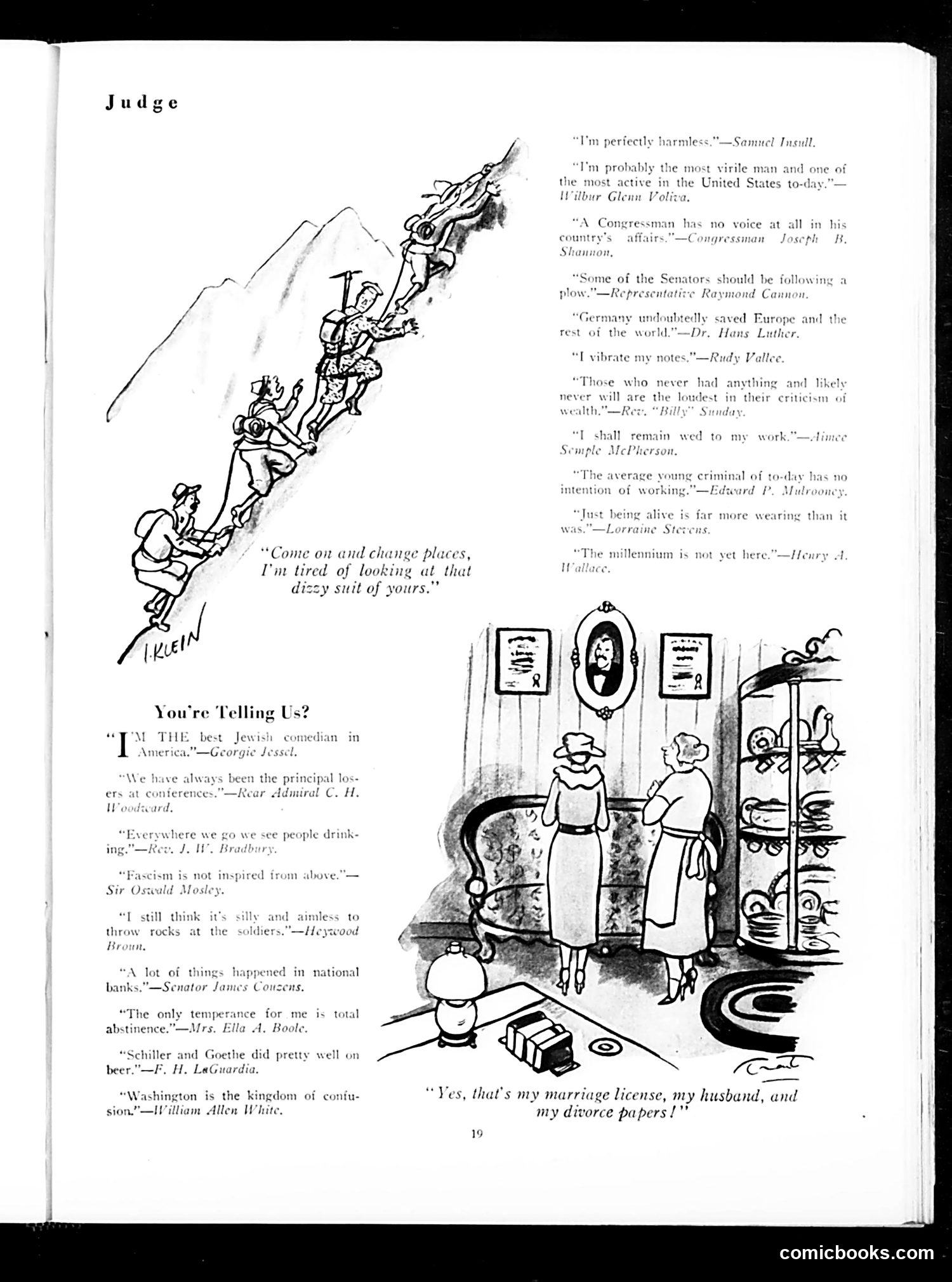
Judge Magazine Page Analysis This page from *Judge* presents two satirical cartoons mocking prominent 1930s-40s American figures and social commentary. Top cartoon ("Come on and change places"): Shows figures climbing a steep, dizzy slope, satirizing political instability and the dizzying pace of change during the New Deal/wartime era. Bottom cartoon ("You're Telling Us?"): Depicts a woman at what appears to be a government office displaying her marriage license, husband, and divorce papers simultaneously—a visual joke about marital instability and bureaucratic absurdity, possibly commenting on changing social mores or divorce rates. The quoted attributions reference recognizable figures of the era: Samuel Insull (financier), various congressmen, Admiral Woodward, Mrs. Ella Boote (temperance advocate), and others. The page sardonizes their public statements about national affairs, banking scandals, political dysfunction, and social issues. The overall tone critiques government ineffectiveness and societal chaos during a turbulent period in American history.
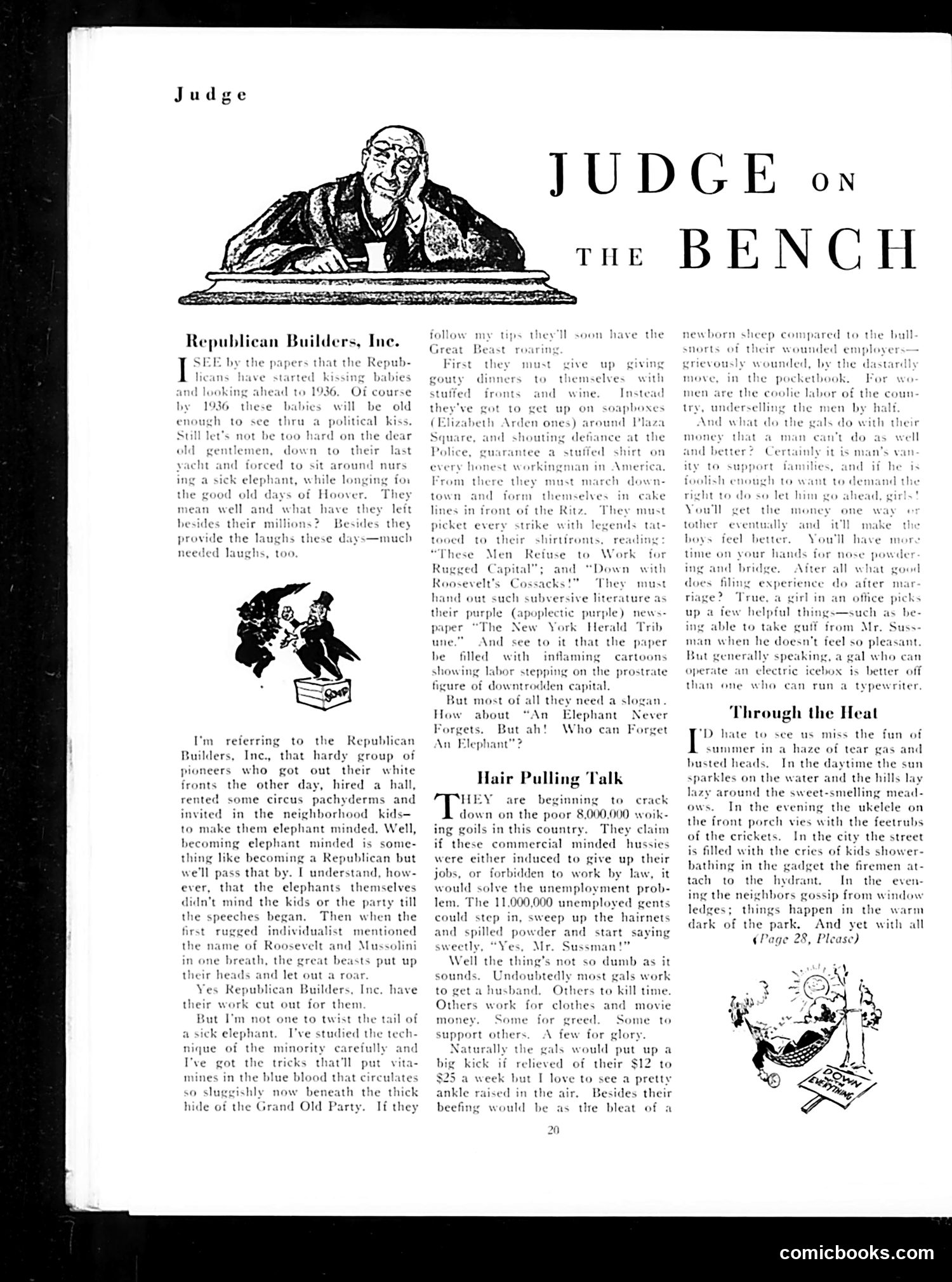
"Judge on the Bench" - Political Satire Page This page contains three separate satirical pieces mocking Republican politics circa 1936: "Republican Builders, Inc." attacks Republicans who staged an elephant-themed campaign event (the elephant being the GOP symbol). The author sarcastically "advises" Republicans on how to manipulate voters: hire circus elephants to impress children, stage theatrical demonstrations at fancy hotels, distribute inflammatory anti-labor propaganda, and adopt a memorable slogan like "An Elephant Never Forgets." The piece ridicules the party's desperation and artificial campaign tactics. "Hair Pulling Talk" criticizes proposals to remove working women from jobs to solve unemployment, sarcastically suggesting this would solve the problem for unemployed men. It mocks the logic while noting women work for various reasons—survival, not just husband-hunting. "Through the Heat" is a nostalgic piece about summer pleasures, seemingly unrelated to politics. The overall tone is characteristic of *Judge*'s left-leaning political humor during the Depression era, targeting Republican electoral strategies and conservative economic proposals.
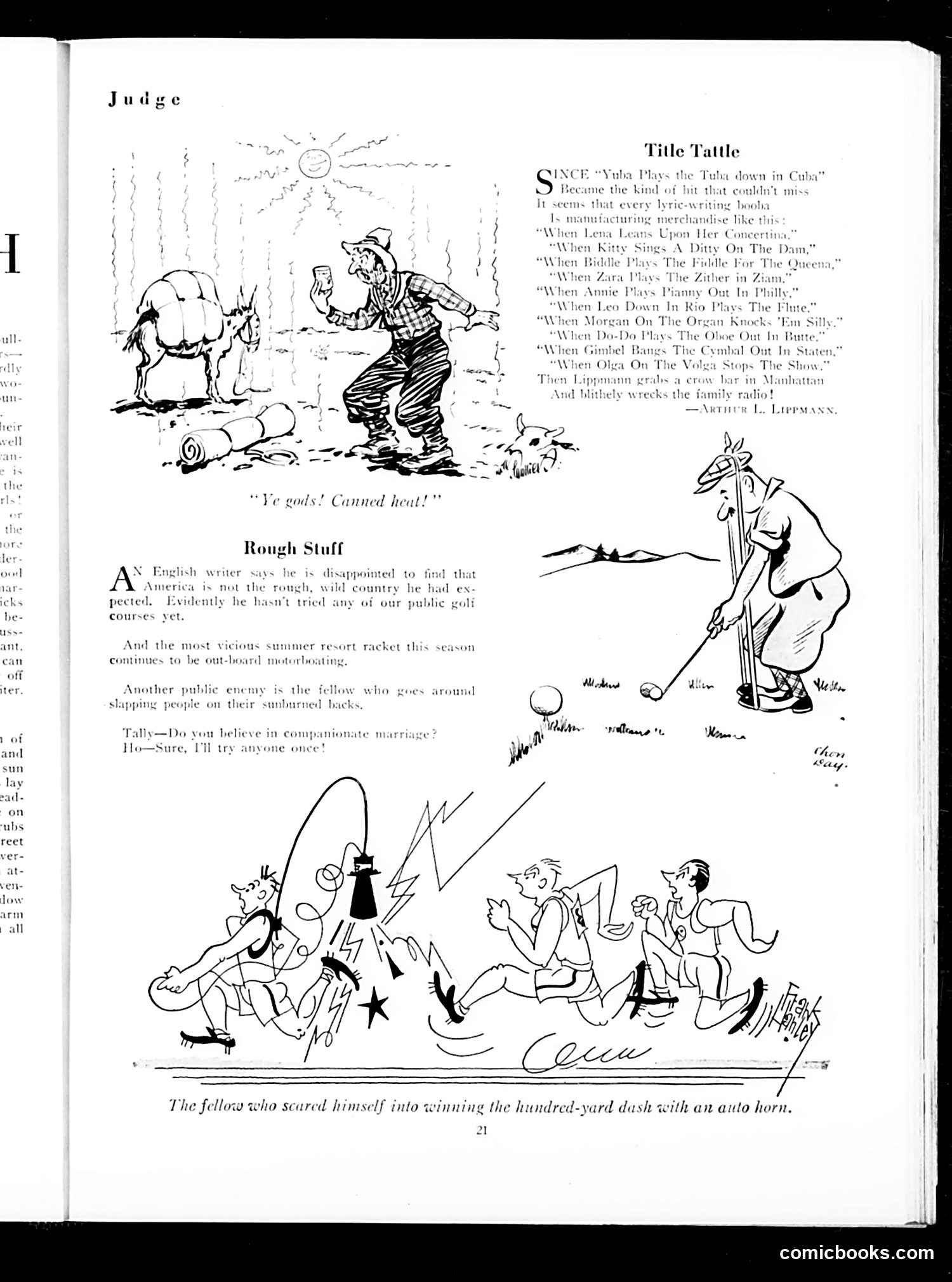
Analysis for Modern Readers This page from *Judge* magazine contains two satirical pieces: "Title Tattle" (top right) is a humorous list of song titles following a pattern where musicians' names precede their instruments and locations—a playful jab at popular music trends of the era. The commentary suggests this manufactured output is cluttering family radio programming. "Rough Stuff" (main section) satirizes two social problems: 1. An English visitor disappointed that America lacks wilderness, despite never visiting public golf courses—mocking pretentious travel expectations. 2. Summer resort rowdiness and the "public enemy" of people who slap sunburned backs—social annoyances of leisure culture. The cartoons below illustrate these points: a man startled by canned heat explosives, and someone sprinting from an auto horn. The humor targets everyday American vulgarity and poor manners rather than political figures, reflecting *Judge*'s focus on social satire and middle-class etiquette.
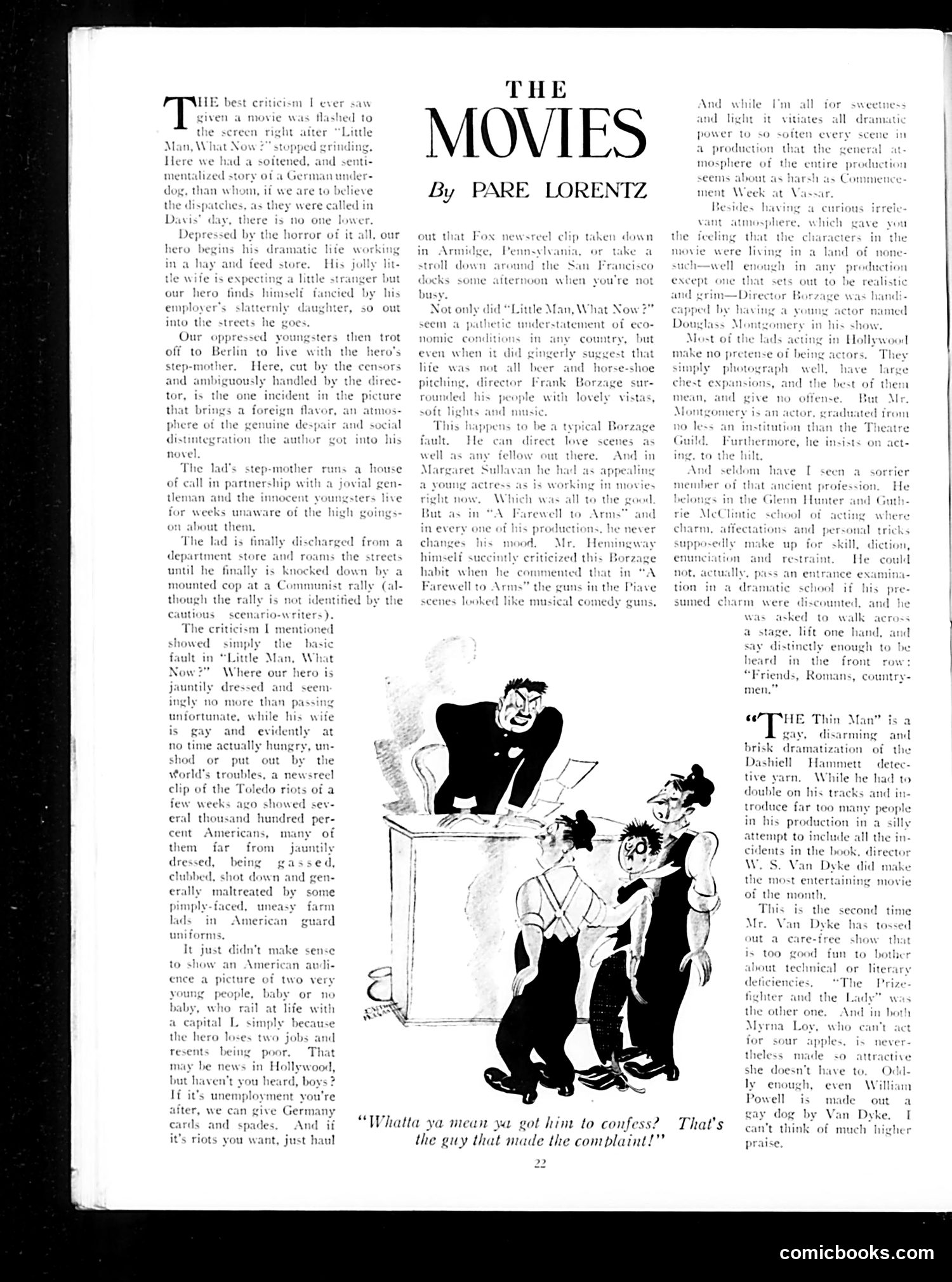
Analysis of Judge Magazine Movie Review Page This page features film critic Pare Lorentz reviewing three movies. The main cartoon illustrates a scene from "Little Man, What Now?"—a German-set drama about economic hardship during the Depression. The drawing shows a man being confronted by what appears to be authority figures or creditors, with the caption "Whatta ya mean ya got him to confess? That's the guy that made the complaint!" The joke satirizes the film's portrayal of injustice: the protagonist, who is the actual victim/complainant, is being treated as the guilty party by those in power. This reflects the film's theme of how ordinary Germans faced legal and economic persecution. The satire highlights the absurdity and corruption depicted in the movie—showing how the system punishes the innocent while protecting the powerful. The reviews discuss how these films (including "A Farewell to Arms" and "The Thin Man") treat serious social subjects, with varying degrees of success in dramatization.
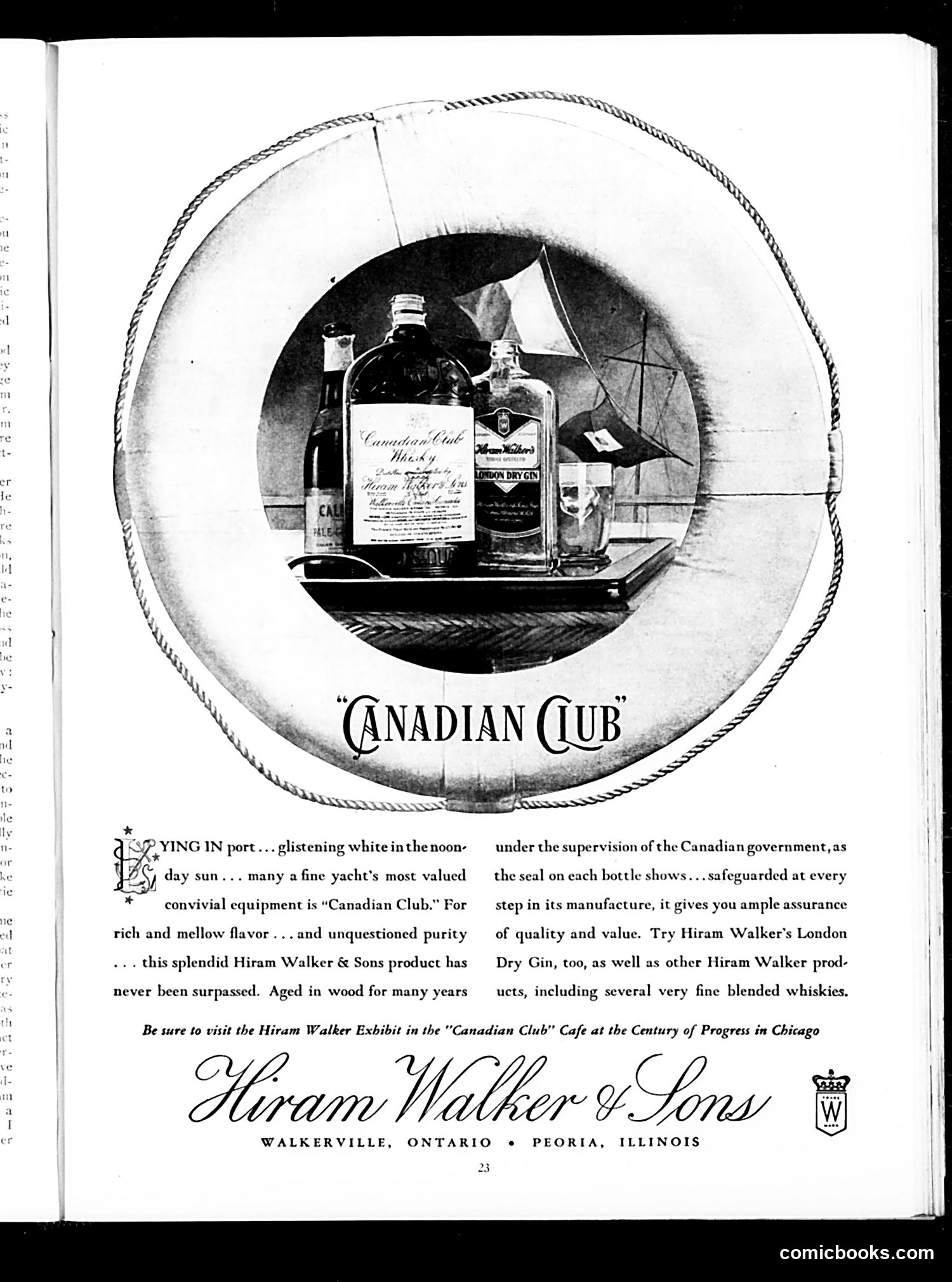
Analysis This is not a political cartoon or satire—it's a full-page advertisement for Canadian Club whiskey by Hiram Walker & Sons, positioned within a life preserver (nautical imagery). The ad emphasizes the product's legitimacy and quality during Prohibition (likely 1920s-early 1930s). Key appeals include: - Government oversight: Claims Canadian government supervision and official seals on bottles, lending legitimacy - Aged quality: "Aged in wood for many years" - Premium positioning: References "fine yachts" and exclusive settings - Cultural legitimacy: Mentions a Hiram Walker Exhibit at Chicago's Century of Progress (1933-34 World's Fair) The contextual irony: while ostensibly promoting a legal Canadian product for export, the ad implicitly markets whiskey to Americans during Prohibition—a period when alcohol sales were illegal. The emphasis on government seals and Canadian manufacture served as reassurance to black-market consumers about quality and authenticity. This reflects how legitimate Canadian distilleries profited by selling to American bootleggers during Prohibition.
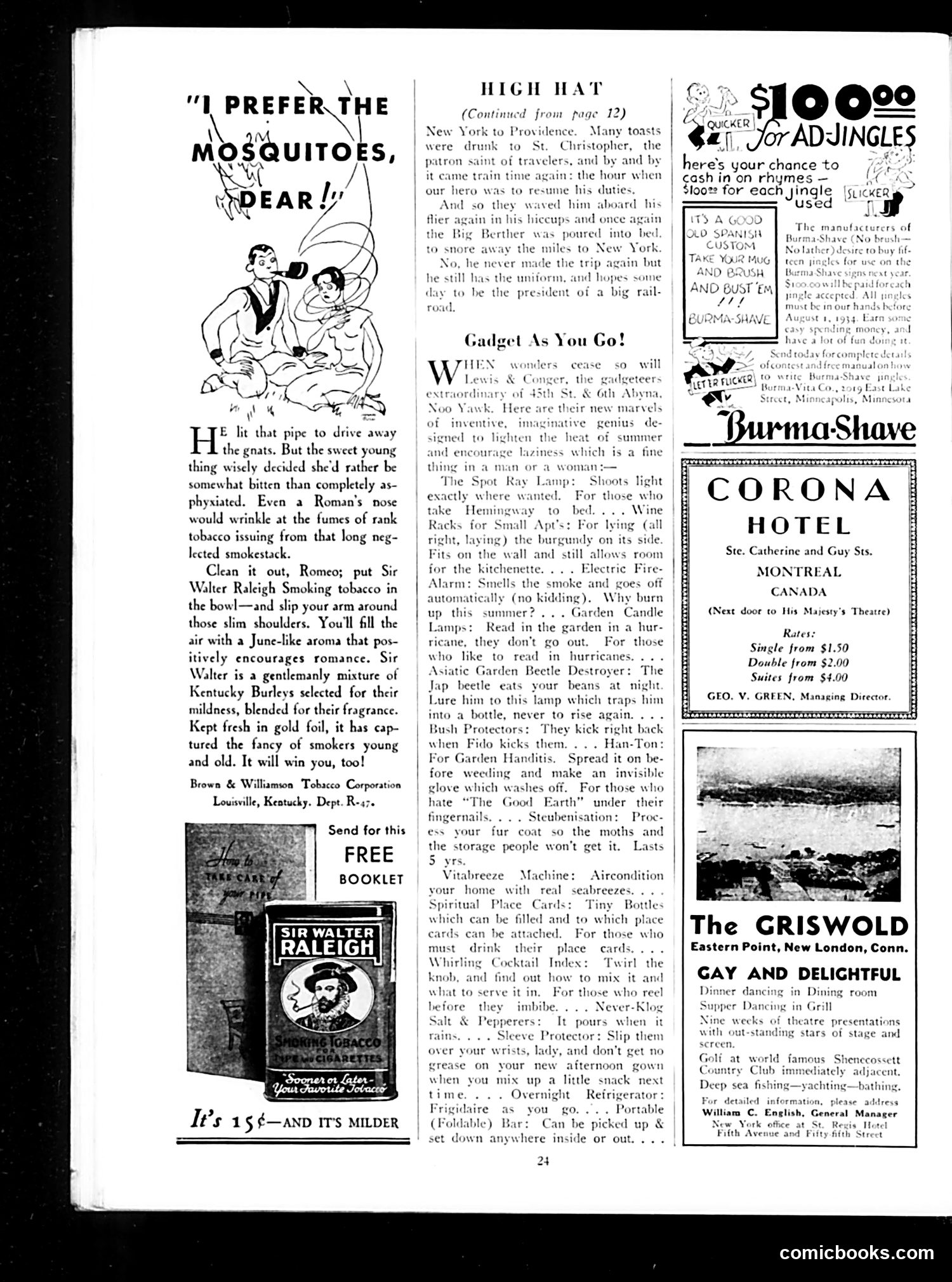
Cartoon Analysis: "I Prefer the Mosquitoes, Dear!" This is a tobacco advertisement disguised as romantic comedy. The setup: a young couple courting outdoors; the man smokes a pipe so foul that the woman prefers being bitten by mosquitoes to enduring the stench. The joke pivots on the "solution": switching to Sir Walter Raleigh brand tobacco, which supposedly smells pleasant enough to make romance possible—implying that good tobacco helps seduction succeed. The satire likely targets exaggerated advertising claims (that tobacco choice impacts romantic success) and the absurdity of men's smoking habits affecting courtship. For a 1920s audience, this would resonate as commentary on male grooming and consideration of female comfort, wrapped in period flirtation humor. The page is primarily commercial content—advertisements for tobacco, hotels, and novelty gadgets—typical of Judge magazine's revenue model.
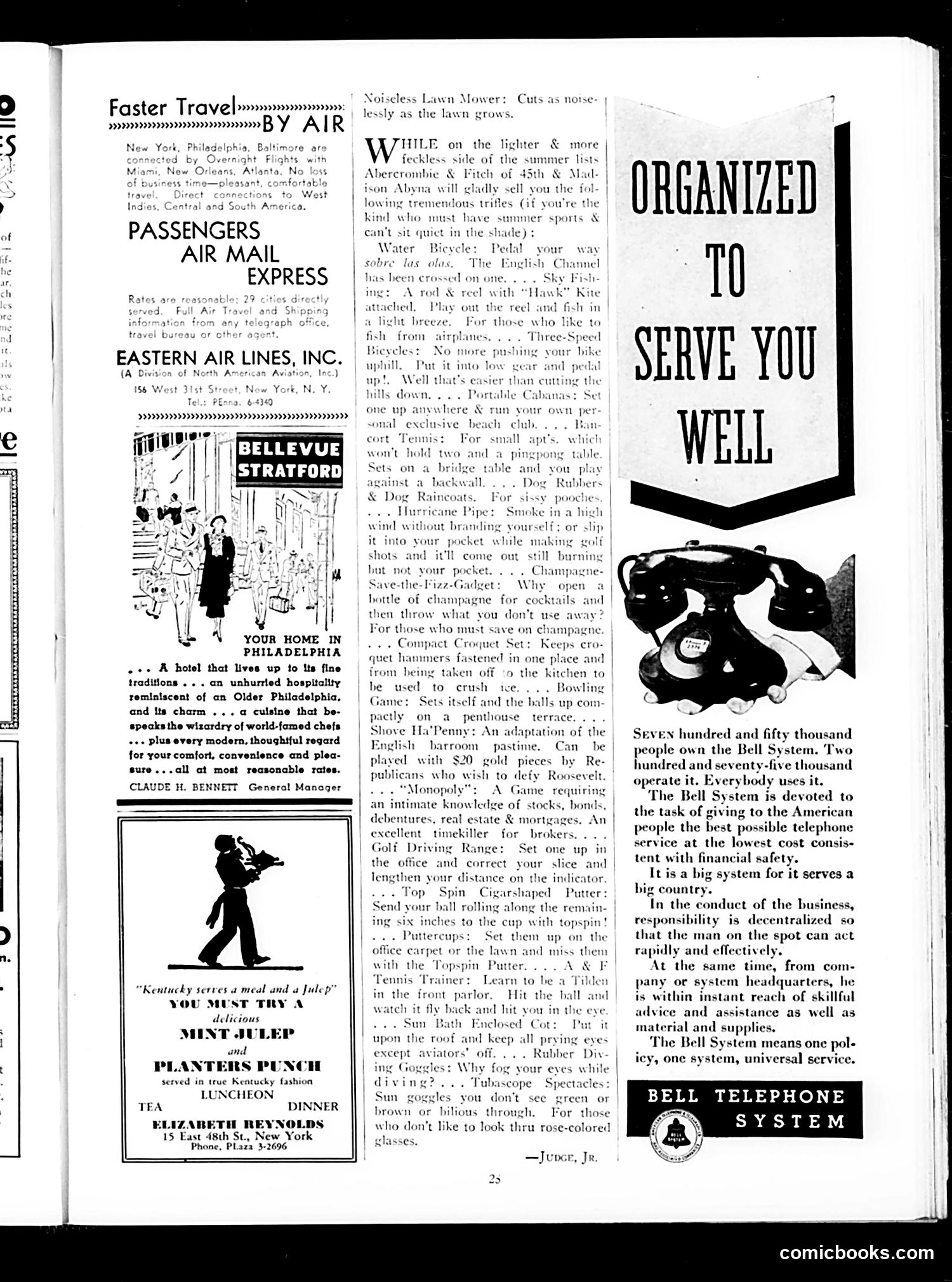
Judge Magazine Page Analysis This page is primarily advertising, with one satirical piece embedded among luxury brand promotions. The main satirical content is a humor column by "Judge, Jr." mocking luxury goods sold by Abercrombie & Fitch. It catalogs absurdly expensive recreational items marketed to wealthy Americans—noiseless lawn mowers, fishing equipment for airplanes, champagne-saving gadgets, and a board game called "Monopoly" described as "an excellent timekiller for brokers." The satire peaks when describing that game as requiring "intimate knowledge of stocks, bonds, debentures, real estate & mortgages"—likely a jab at 1930s financial speculation and the recent stock market crash. The phrase about "$20 gold pieces" for playing "Monopoly" and Republicans who "wish to defy Roosevelt" references contemporary New Deal politics and partisan opposition. The surrounding ads (Bellevue Stratford Hotel, Elizabeth Reynolds restaurant, Eastern Air Lines) represent the upscale lifestyle being gently mocked—luxury goods marketed to an elite audience during economically uncertain times.
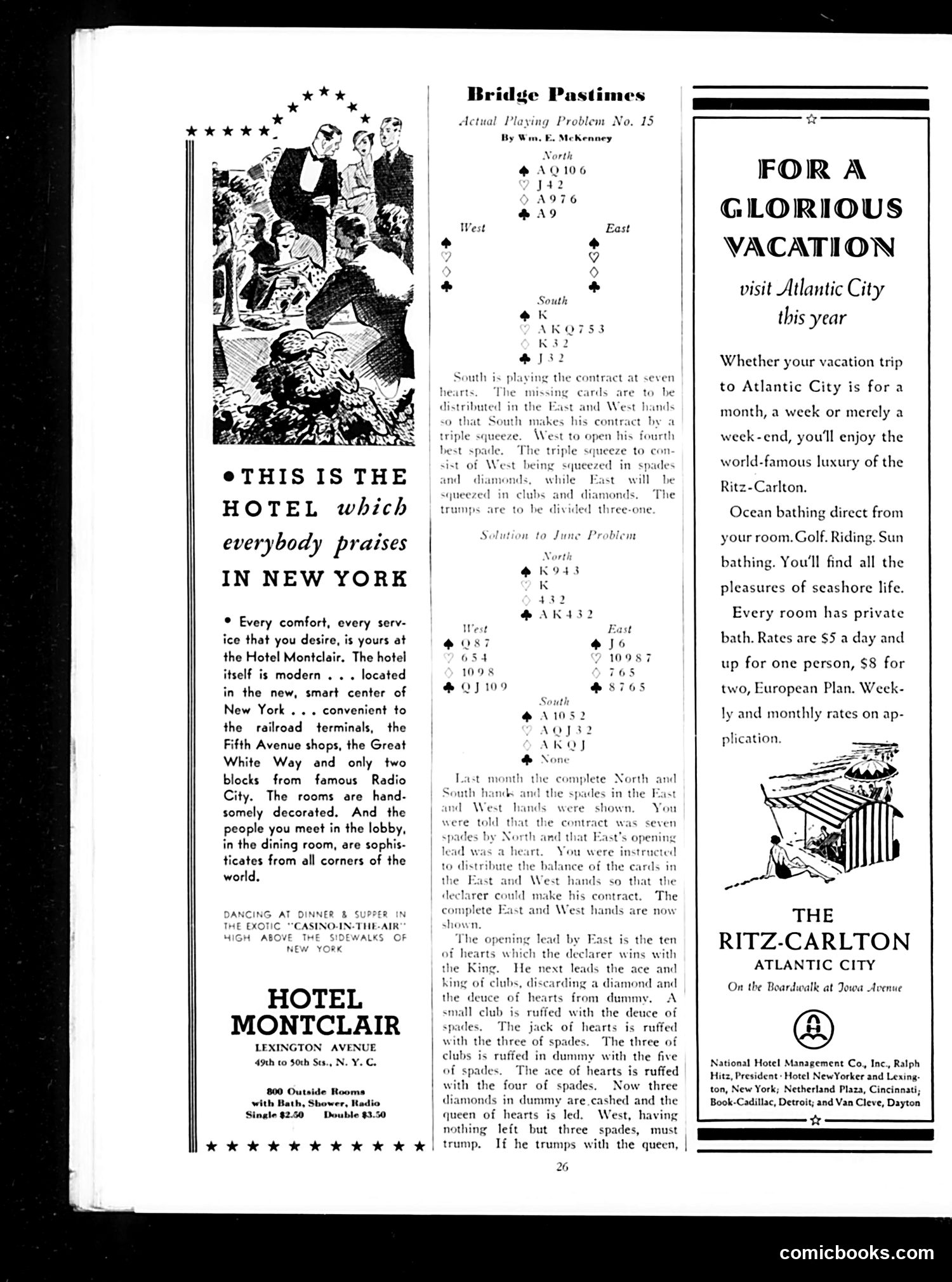
Analysis for Modern Readers This page is primarily advertising with a bridge puzzle, not political satire. The content includes: Left side: Hotel Montclair advertisement emphasizing luxury, modern amenities, and prestigious location in Manhattan's theater district ("Great White Way"). The phrase "everybody praises" suggests aspirational marketing to middle-class readers. Center: "Bridge Pastimes"—an actual card game puzzle where readers solve how South can win a seven-heart contract, a common feature in 1930s magazines for intellectually-engaged audiences. Right side: Ritz-Carlton Atlantic City vacation advertisement, positioning the resort as the ultimate luxury destination with ocean access, golf, and European Plan pricing ($5-8 daily rates). The "cartoon" referenced in the header appears minimal or absent—this is largely a commercial page. The illustration of a well-dressed man supervising hotel staff reinforces the era's emphasis on service and social status through hospitality. No clear political message is evident; this reflects typical Judge magazine content mixing satire with upscale advertising.
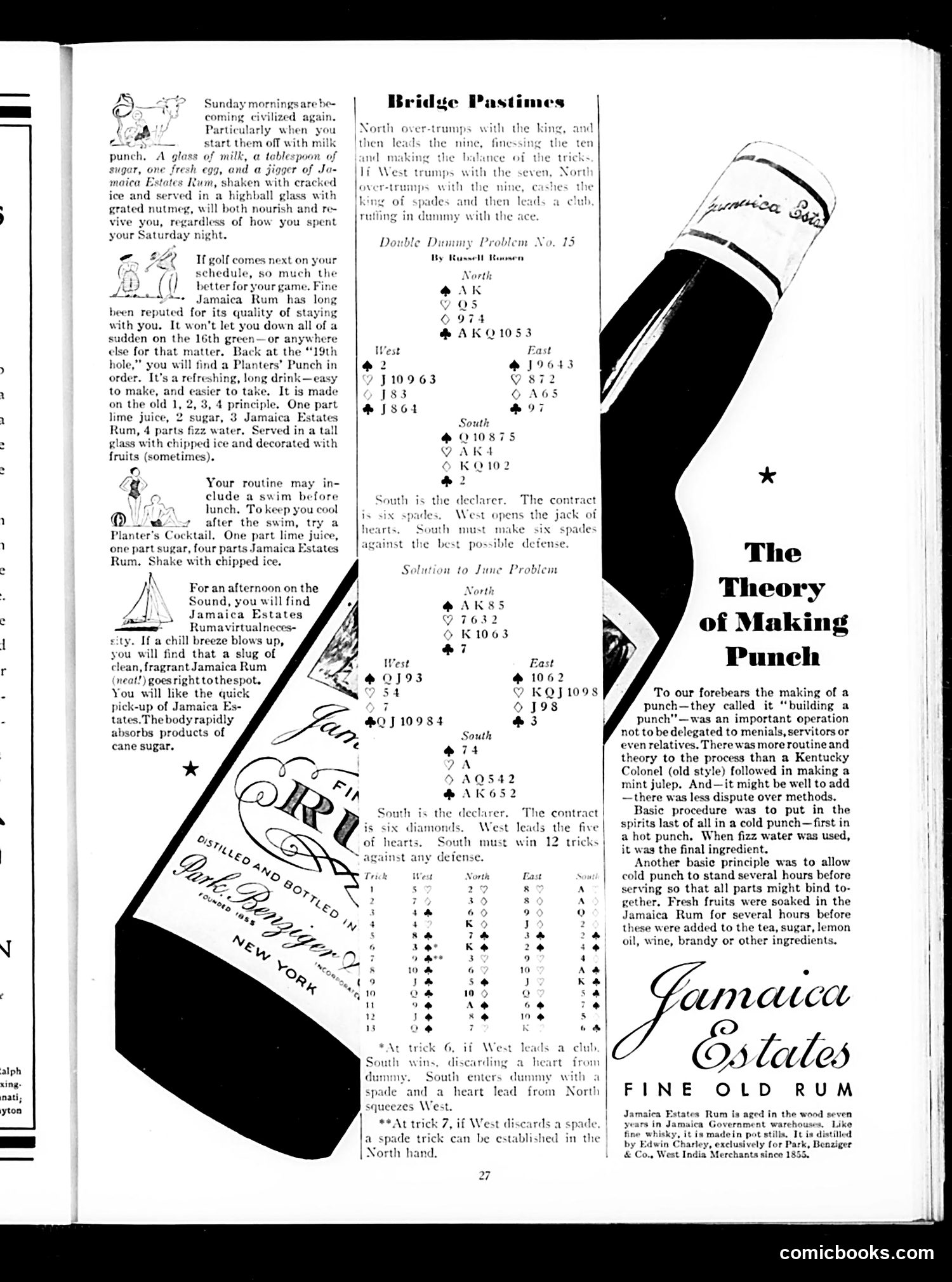
Analysis of Judge Magazine Page This page is primarily advertising and lifestyle content rather than political satire. It contains: Main Content: - Cocktail recipes and drinking advice for golfers and leisure activities, emphasizing Jamaica Estates Rum - Bridge card game problem and solution - An article titled "The Theory of Making Punch" discussing proper punch preparation techniques (spirits added last, allowing time for ingredients to blend, soaking fresh fruits in rum) Context for Modern Readers: The page reflects early-to-mid 20th century upper-class leisure culture: golf outings, afternoon socializing, formal entertaining, and alcohol consumption as routine recreation. The detailed punch-making instructions suggest it was considered a refined skill. Jamaica Estates Rum is positioned as a quality spirit for genteel drinking occasions. No clear political cartoons or satirical targets are visible. This appears to be a typical Judge magazine page blending light humor about leisure with premium alcohol advertising—common editorial strategy for the era.
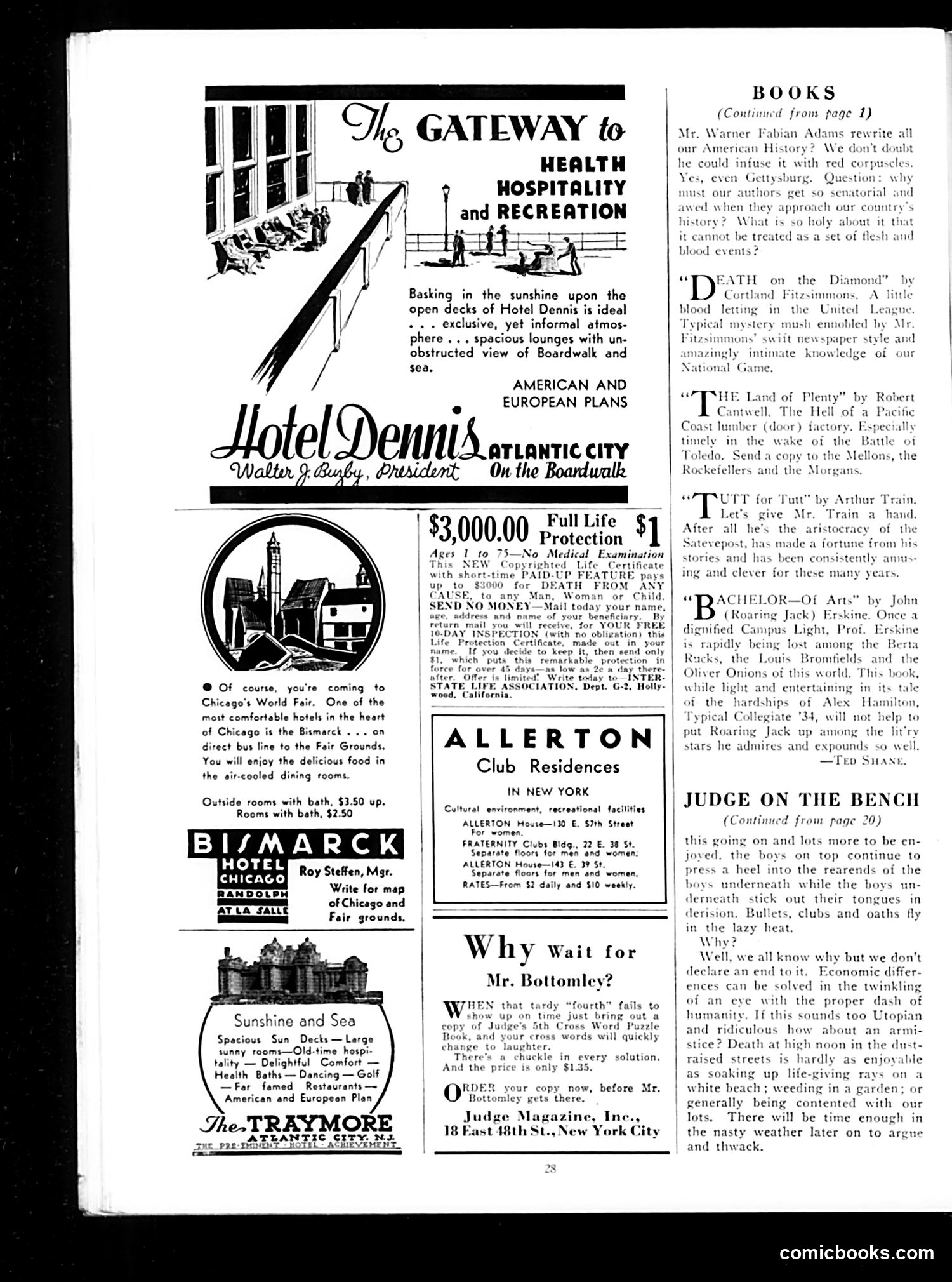
Judge Magazine Page Content Analysis This page is primarily advertising, featuring hotel and club promotions mixed with book reviews. There are no political cartoons or satirical illustrations with identifiable figures. The ads promote Atlantic City and Chicago hotels, New York club residences, and a life insurance product. The book review section discusses titles like "Death on the Diamond" (baseball mystery) and "Bachelor of Arts" by John Erskine. The most notable text element is "Judge on the Bench," a brief editorial-style column criticizing social inequality. It describes wealthy elites literally pressing heels into the necks of subordinates while "bullets, clubs and oaths fly," then sarcastically suggests that economic differences could be solved "in the twinkling of an eye with the proper dash of humanity." It's gentle social critique—acknowledging class conflict exists but dismissing serious solutions as "too Utopian." Context for modern readers: This reflects 1930s anxiety about class divisions, presented with ironic resignation rather than outrage.
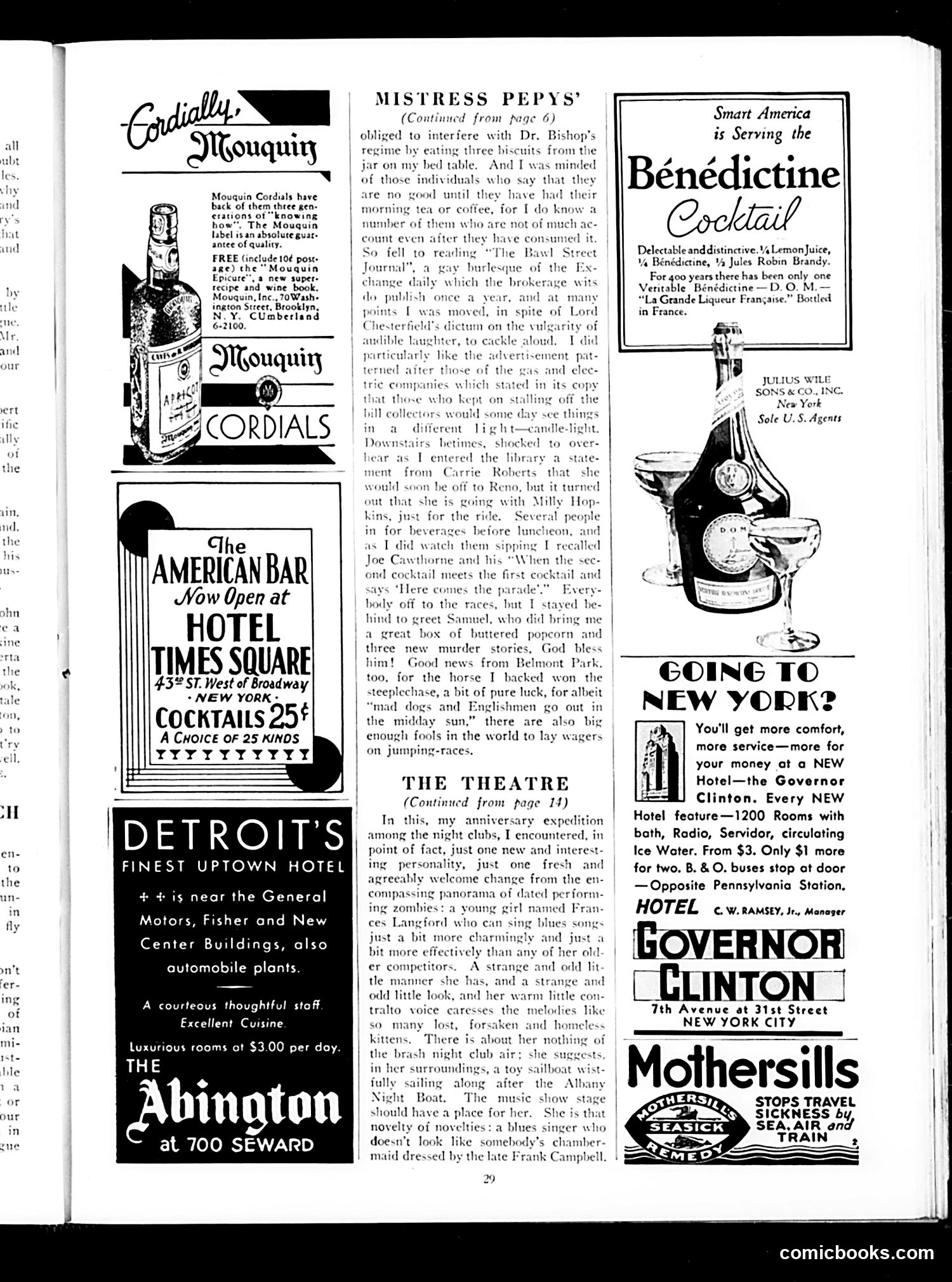
Page Analysis: Judge Magazine Advertisement and Column Page This page is primarily advertising and lifestyle content rather than political satire. It contains: Main Content: - "Mistress Pepys'" gossip column (continued from previous page), discussing New York theater, nightclub personalities, and social observations - Multiple liquor and hotel advertisements typical of 1920s-30s publications Notable Advertisements: - Mouquin Cordials (wine/spirits) - American Bar at Hotel Times Square (cocktails 25¢) - Detroit's Finest Uptown Hotel - The Abington Hotel - Bénédictine Cocktail (liqueur advertisement) - Governor Clinton Hotel (New York) - Mothersills (seasickness remedy) Historical Context: The heavy alcohol advertising and cocktail promotion dates this to the Prohibition era (1920-1933), when such advertisements paradoxically coexisted with federal prohibition laws. The social commentary in Pepys' column reflects upper-class urban leisure culture of that period. No significant political satire or caricature is present on this page—it's a typical magazine layout mixing editorial content with commercial advertising.
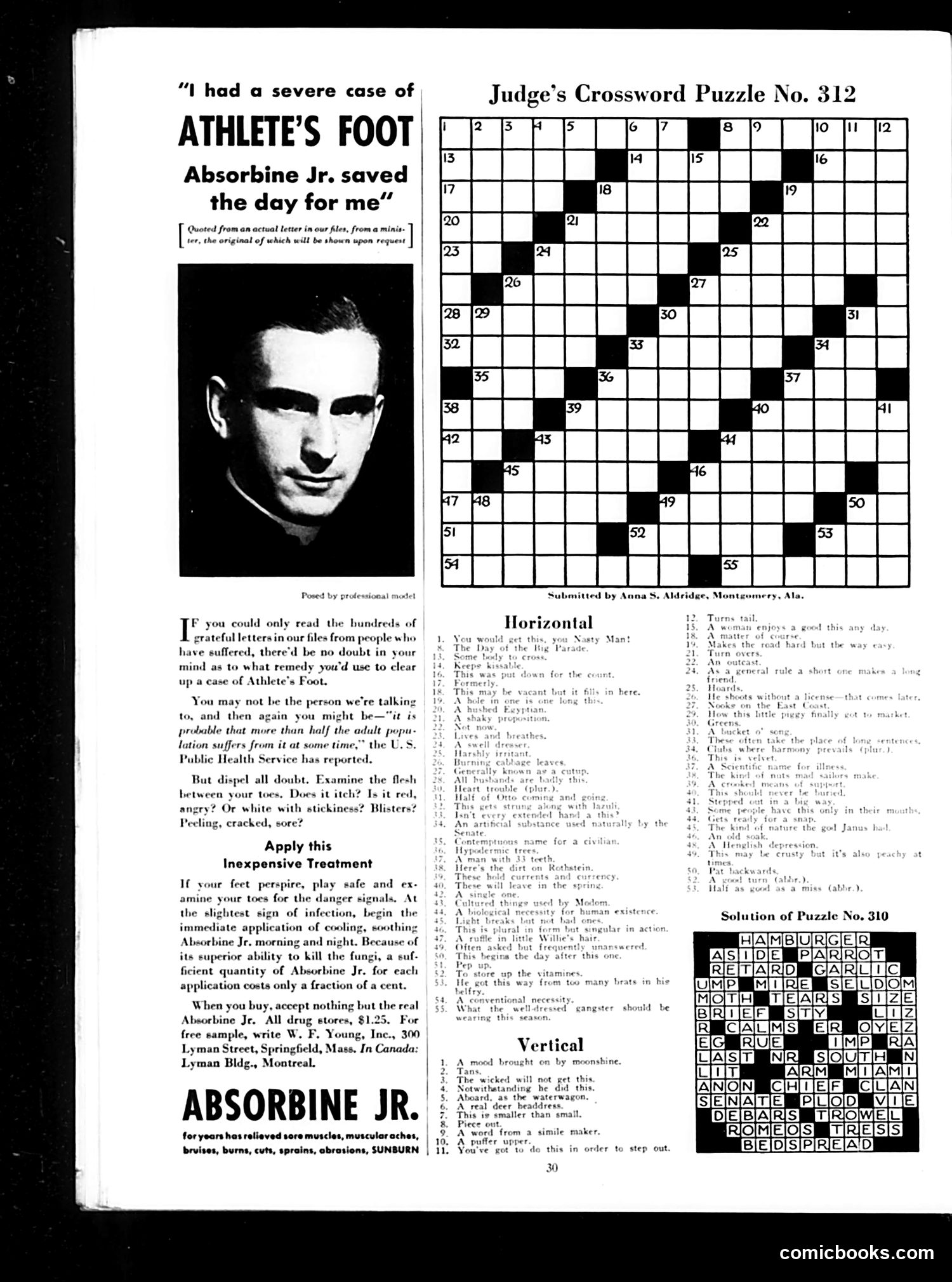
Analysis for Modern Readers This page is primarily pharmaceutical advertising for Absorbine Jr., disguised as testimonial marketing. The "cartoon" is minimal—just a black-and-white photograph of a man's face, presented as an anonymous satisfied customer (note: "Posed by professional model"). The advertisement uses a common early 20th-century marketing tactic: claiming to quote from "actual letters in our files" to establish credibility. The copy emphasizes athlete's foot as a widespread problem affecting "more than half the adult population," then positions Absorbine Jr. as an affordable, accessible solution available at any drugstore. The second half provides medical-style instructions on diagnosing the fungal infection (checking for redness, peeling, stickiness between toes) before recommending their product. The crossword puzzle and surrounding editorial content are filler material common in Judge magazine, designed to make the advertisement appear part of the magazine's regular content rather than pure advertising.
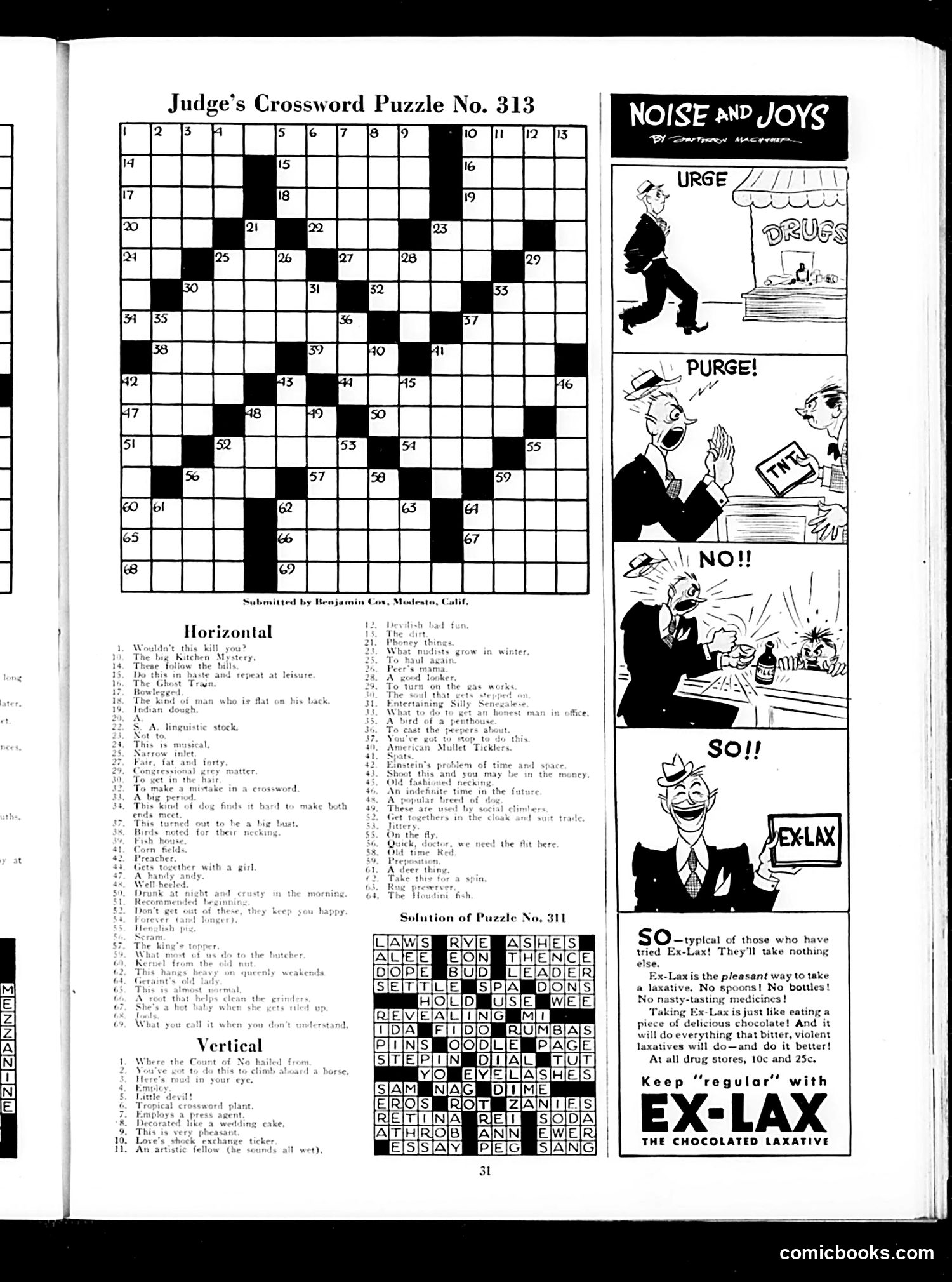
Analysis This page combines a crossword puzzle with comic strips and advertising. The comic strip series "Noise and Joys" shows a man encountering a drug store, appearing panicked about something ("URGE"), then aggressively purging or discarding items ("PURGE!"), followed by emphatic rejection ("NO!!"), and finally relaxation ("SO!!" with "EXLAX" branding). The strip is advertising Ex-Lax, a chocolate laxative medication. The humor relies on the man's exaggerated distress and relief cycle related to constipation—a common advertising trope of the era. The caption explains that Ex-Lax users become so satisfied they'll accept no substitute, treating the product almost like an addiction ("They'll take nothing else"). This represents typical mid-20th-century American magazine advertising that openly discussed digestive remedies with comedic exaggeration. The tone is lighthearted rather than crude, framing bodily functions as an acceptable, even humorous, topic for public discussion and commerce.
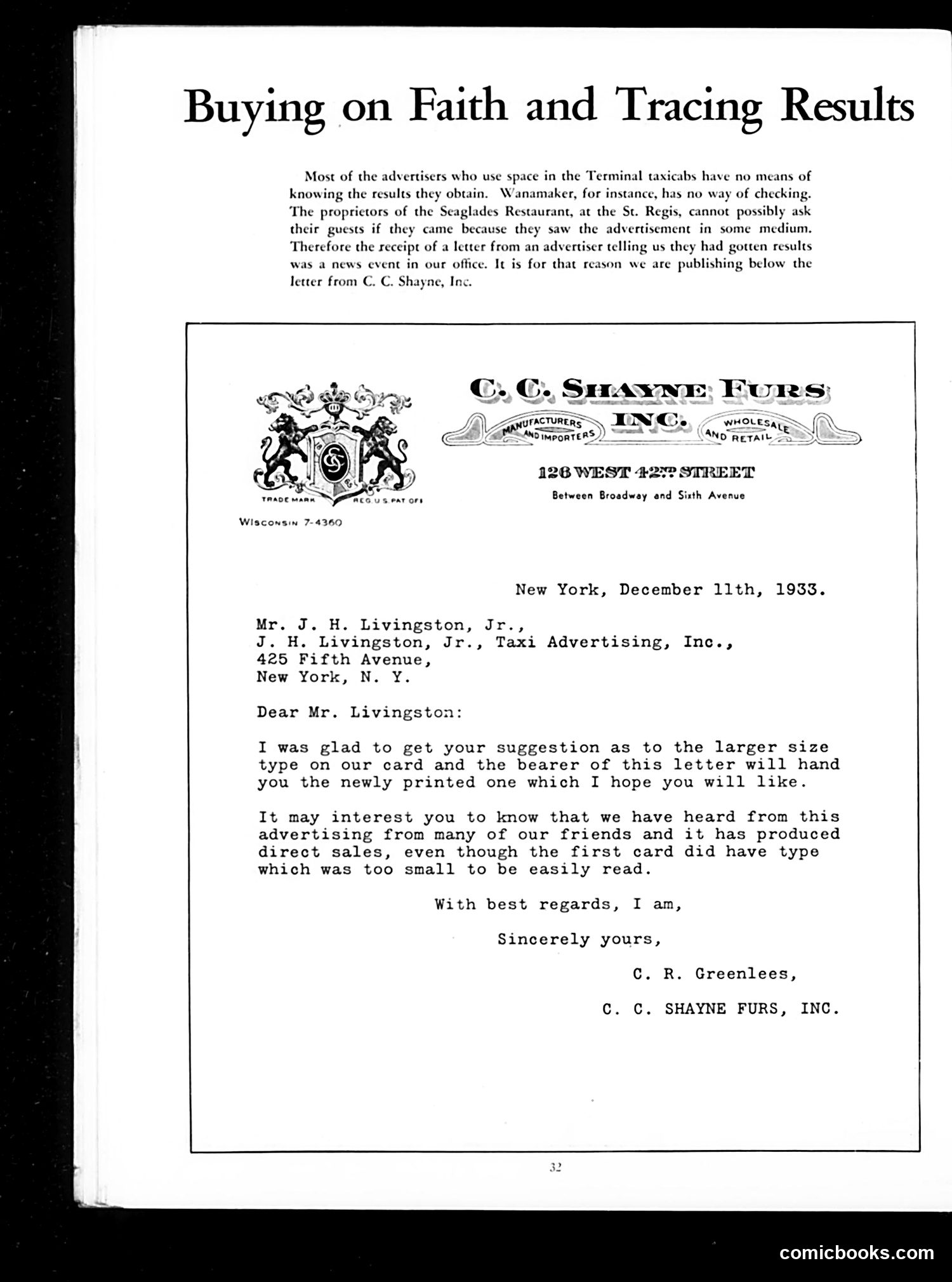
"Buying on Faith and Tracing Results" This page is not a cartoon but rather editorial commentary and advertising testimony. Judge magazine's editors argue that most taxi-cab advertisers cannot measure their ads' effectiveness. They publish a letter from C. C. Shayne Furs as proof that advertising *can* work. The letter confirms that Shayne's improved their ad (larger type, following J.H. Livingston Jr.'s suggestion from Taxi Advertising, Inc.), and it generated "direct sales" from friends who saw it. This addresses the editors' point: advertising results *are* traceable when advertisers receive direct feedback. The piece satirizes blind faith in advertising—many major retailers like Wanamaker couldn't verify results—while celebrating this rare documented success story as evidence that targeted, responsive advertising works.
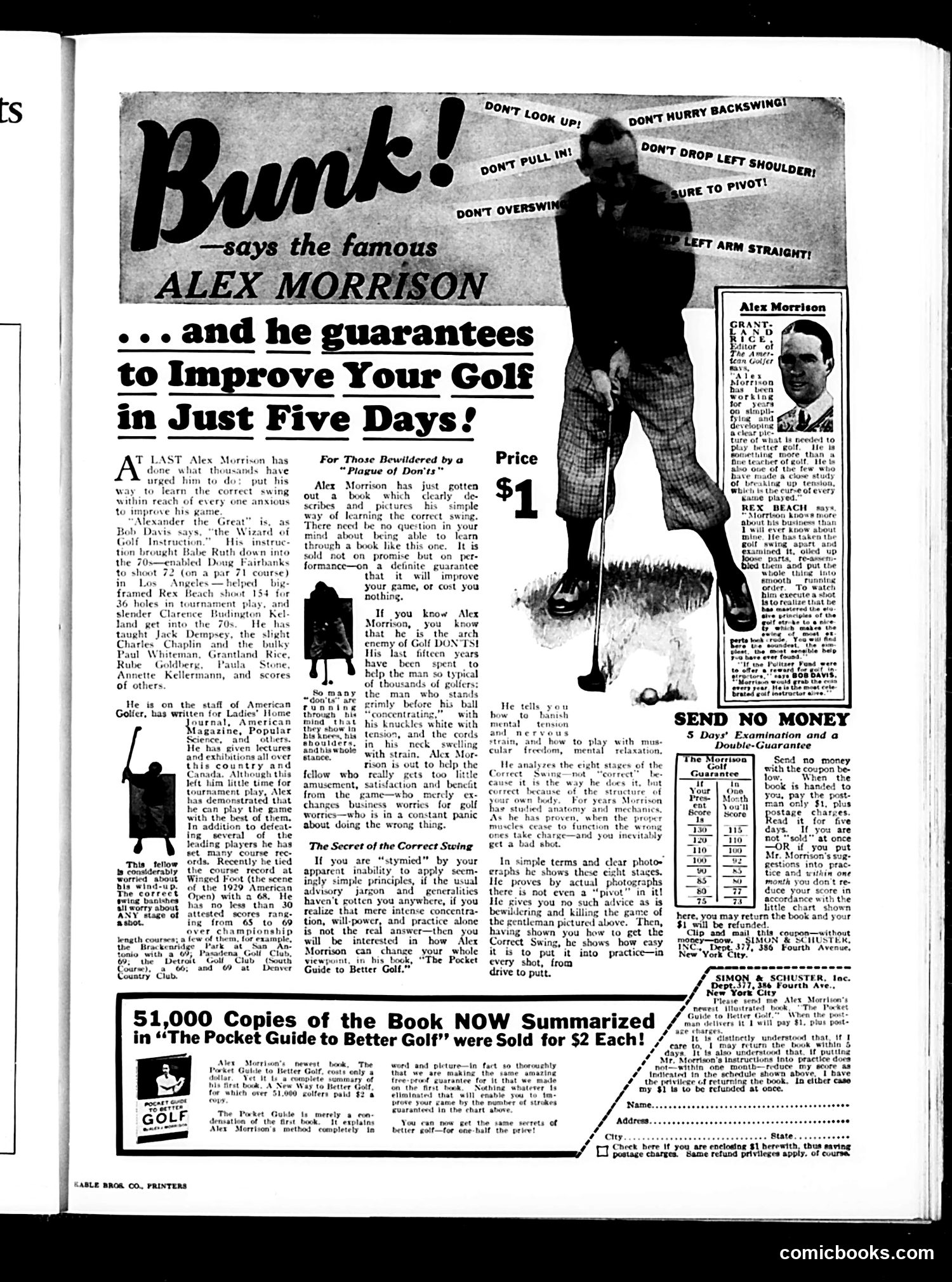
Analysis for Modern Readers This is advertising copy, not satire or political cartoon. The page promotes "Alex Morrison's" golf instruction book, *The Pocket Guide to Better Golf*, priced at $1. The Figure: Alex Morrison was an actual golf instructor famous in the 1920s-30s for teaching celebrities and athletes (Babe Ruth, Douglas Fairbanks, Charlie Chaplin are mentioned). His marketing appeal relied on celebrity endorsement—a common advertising strategy then. The Pitch: Morrison guarantees to improve your golf swing in five days, or your money back. The copy mocks golfers paralyzed by "don'ts" (overthinking) and promises his method replaces anxiety with "muscular freedom, mental relaxation." For Modern Context: This reflects pre-Depression era optimism about quick self-improvement through expert instruction—a sales approach still used today. The "5-day guarantee" is vintage hucksterism, though Morrison was legitimate. The magazine sold 51,000 condensed copies at $2 previously. Bottom line: This is straight commercial advertising positioned within an editorial magazine, not satire.
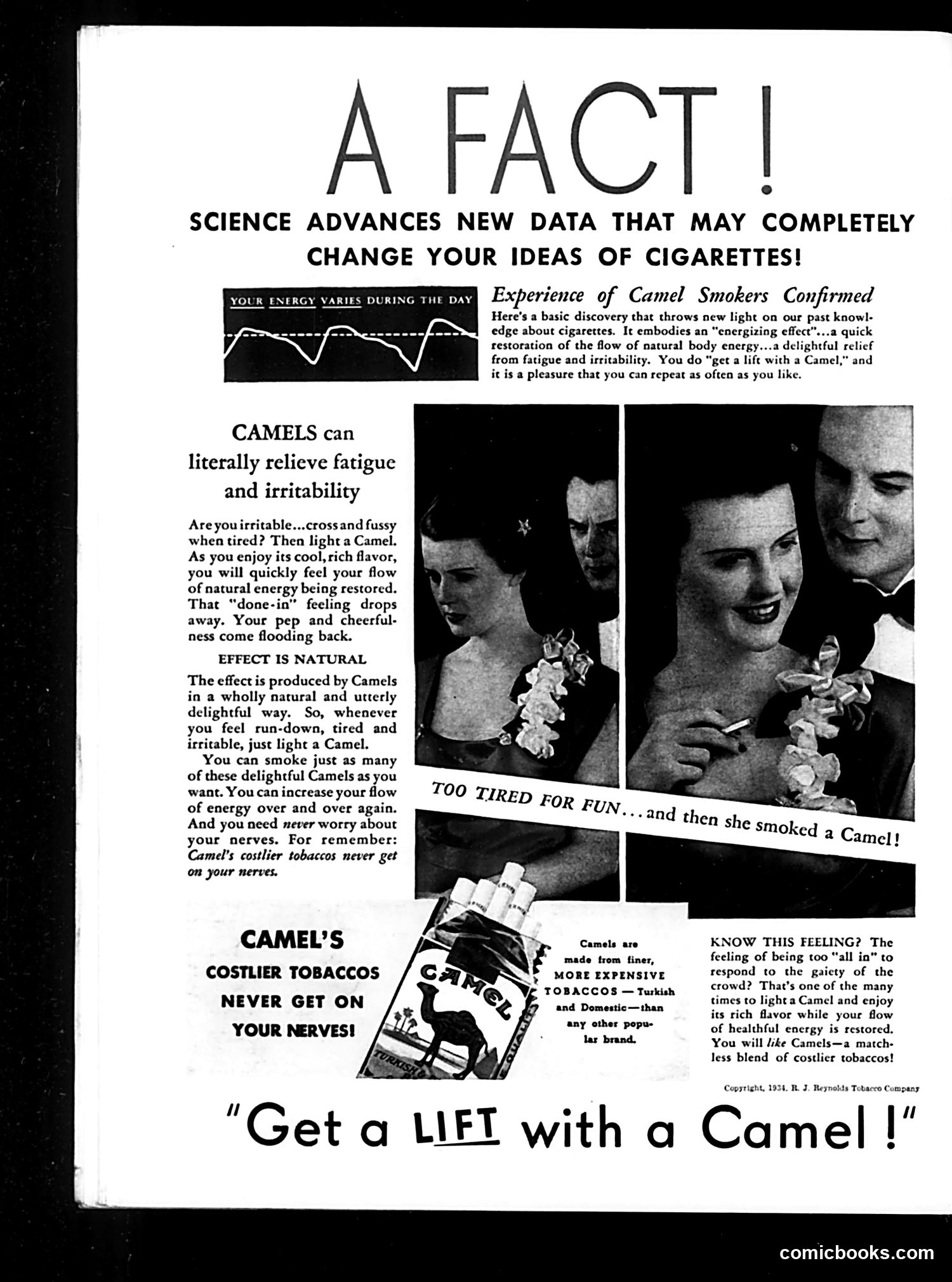
Analysis of This Camel Cigarette Advertisement This is not satire—it's a straightforward cigarette advertisement from 1934. There are no cartoons or political figures here. The ad makes now-discredited health claims typical of early-20th-century tobacco marketing: that Camels provide an "energizing effect," relieve fatigue and irritability, and restore "natural body energy." The images show people appearing rejuvenated after smoking. The tagline "Get a LIFT with a Camel" plays on the double meaning of "lift" (boost/energy). The copy asserts that Camel's "costlier tobaccos never get on your nerves"—a direct appeal to anxious consumers. It explicitly encourages frequent smoking without worry about nervous effects. For modern readers: This represents the era when cigarette companies made unsubstantiated medical claims and actively marketed addiction as therapeutic. Such advertising would be illegal today.