judge
Judge — May 1935
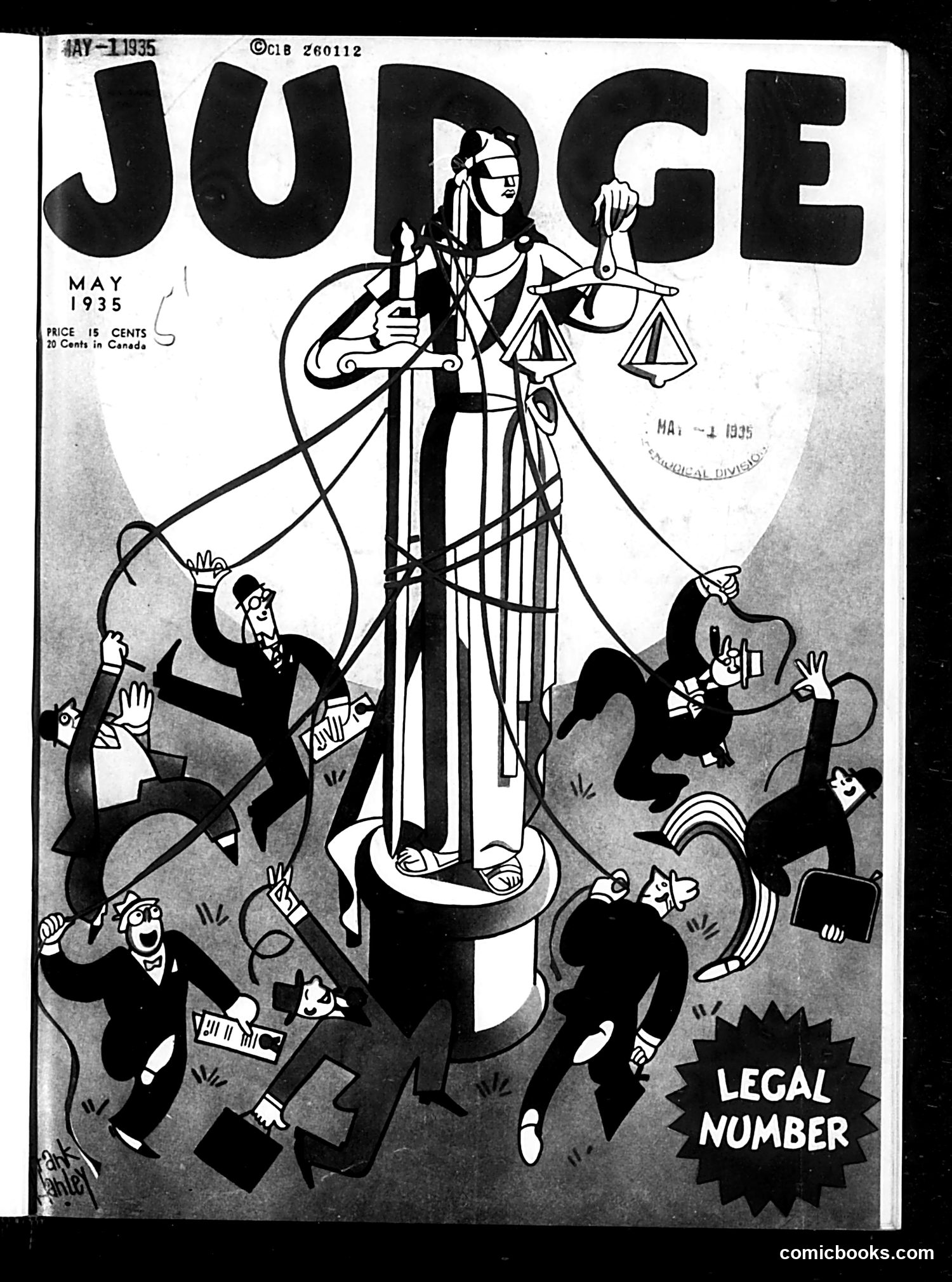
Analysis of Judge Magazine Cover, May 1935 This cover depicts Lady Justice (blindfolded, holding scales and sword) towering over a chaotic crowd of smaller figures below—apparently lawyers, judges, or legal professionals engaged in frantic activity. They're depicted as cartoon characters in exaggerated poses, some appearing to manipulate strings connected to Lady Justice herself. The satire critiques the legal system's vulnerability to manipulation and corruption. The central figure represents idealized justice, but the swarming figures below suggest that lawyers and court officials are actually pulling strings behind the scenes, contradicting justice's supposed impartiality. The "LEGAL NUMBER" label in the corner appears to reference a specific legal case or controversy, though the exact reference is unclear without additional context about 1935 legal events.
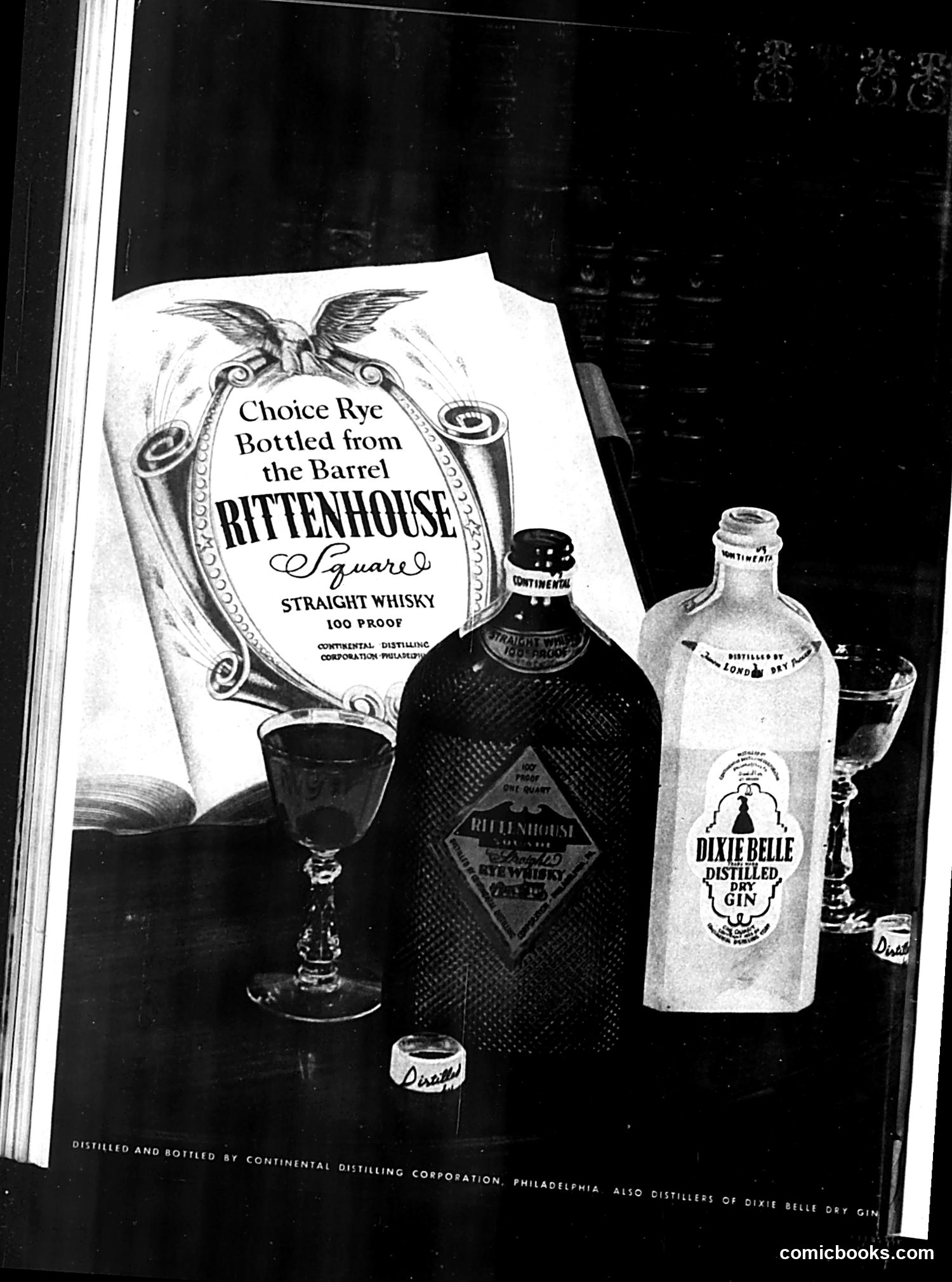
Analysis This page is primarily advertising, not satire or political commentary. It displays liquor advertisements from the Prohibition era (the image quality and style suggest early 1930s). The main ad features Rittenhouse Square Straight Whisky (100 proof), bottled by Continental Distilling Corporation in Philadelphia. Accompanying it are bottles of Dixie Belle Distilled Dry Gin. The significance: This advertisement's appearance in Judge magazine during Prohibition (1920-1933) is itself notable—it suggests either the magazine was published just before Prohibition's implementation or this is from the repeal period (post-1933). The prominent display of whisky and gin would have been illegal or controversial during actual Prohibition enforcement, making this a historical artifact of American alcohol regulation.
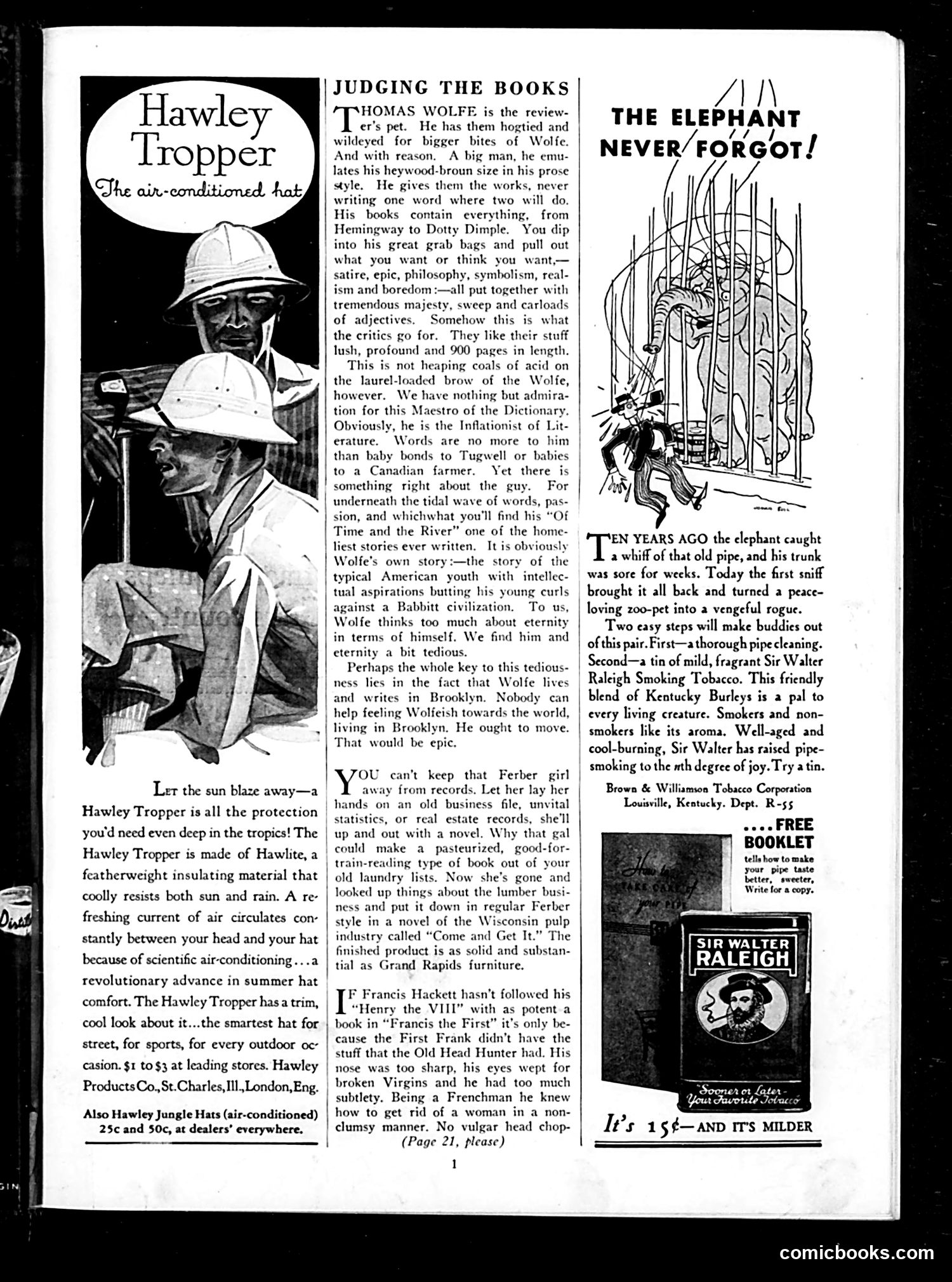
Analysis of Judge Magazine Page 1 This page is primarily advertising and book reviews rather than political satire. The left side advertises Hawley Tropper hats, describing their air-conditioning properties as protection from sun and rain—a commercial pitch emphasizing comfort and innovation. The center section reviews Thomas Wolfe, the novelist, with praise for his ambitious, lengthy works containing philosophy and symbolism. The reviewer admires Wolfe's literary ambition despite finding him occasionally tedious. The right side features "The Elephant Never Forgot!"—an advertisement for Sir Walter Raleigh Smoking Tobacco. The cartoon depicts an elephant remembering a past injury, using humor to suggest the product creates lasting positive memories in smokers. Below is an advertisement for a free booklet about the tobacco, priced at 15 cents. The page reflects 1920s-30s magazine advertising combining literary criticism with commercial promotion.
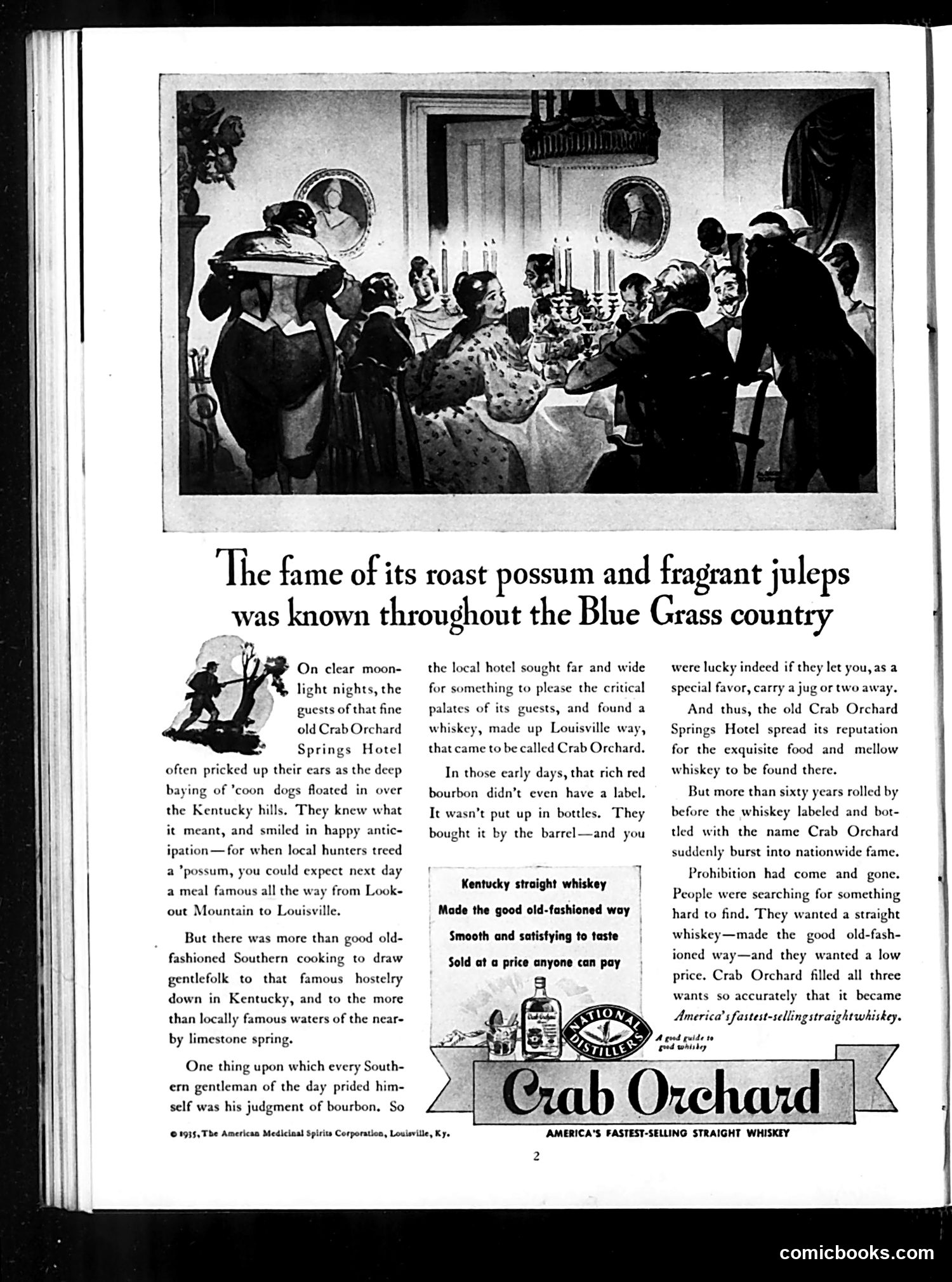
Crab Orchard Whiskey Advertisement This page is primarily a whiskey advertisement rather than political satire. It advertises Crab Orchard bourbon, claiming to be "America's fastest-selling straight whiskey." The narrative describes a Kentucky hotel famous for roasted possum and juleps, establishing Southern frontier authenticity. The illustration shows an elegant dinner party, contrasting the rustic origin story with refined hospitality. The ad emphasizes that Crab Orchard whiskey became notably popular *after* Prohibition ended, positioning it as the answer to consumers seeking "good old-fashioned" straight bourbon "made the good old-fashioned way." The text suggests the brand capitalized on post-Prohibition demand for quality whiskey when "people were searching for something hard to find." This is commercial content, not satirical commentary.
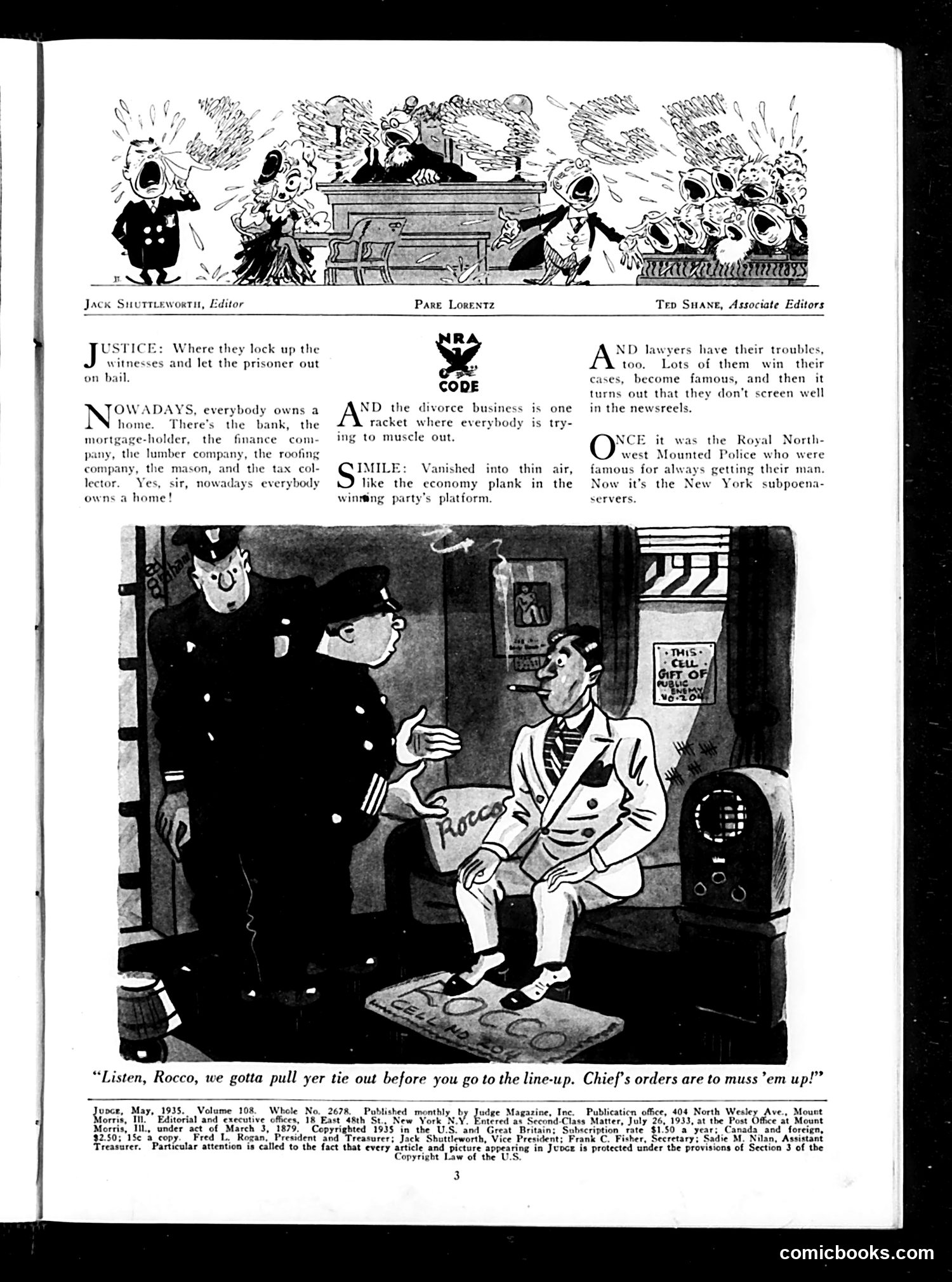
Judge Magazine Satire Analysis (May 1935) This page satirizes several contemporary issues: Top section mocks: - Justice system absurdities: judges releasing prisoners on bail while locking up witnesses - Home ownership: the irony that "everybody" owns homes despite mortgages, banks, and insurance companies holding actual control - Divorce industry: portrayed as a profitable "racket" - Lawyers' troubles: winning cases that damage their reputations - Police: transition from famous Royal Canadian Mounted Police to New York subpoena-servers Main cartoon shows a police officer ("Chief's orders") instructing a suspect named "Rocco" to fabricate testimony ("pull yer tie out") before a police lineup—satirizing police corruption and witness intimidation tactics. The satire criticizes institutional dishonesty across law enforcement, courts, and legal professions.
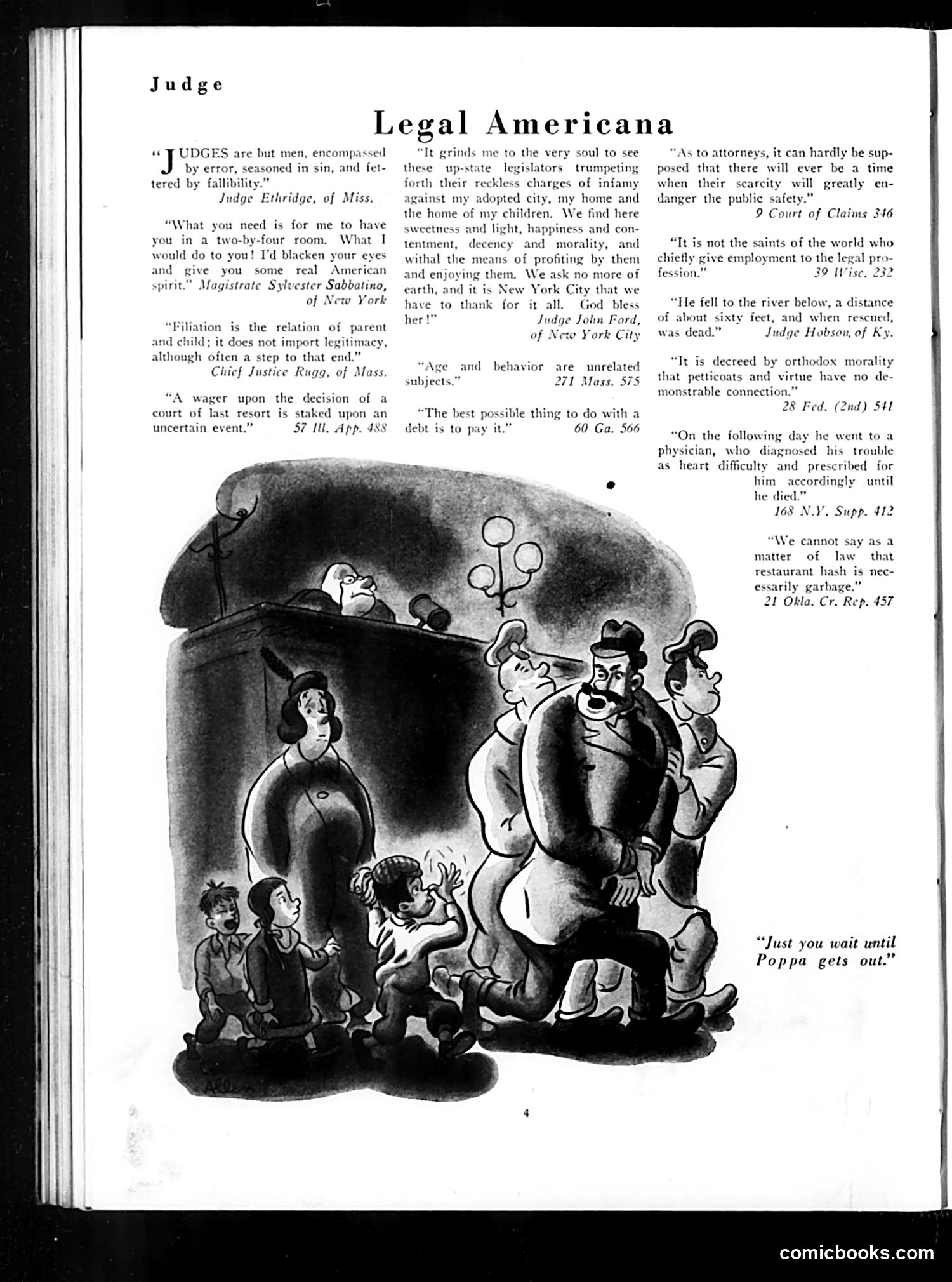
Legal Americana - Judge Magazine Cartoon Analysis This cartoon satirizes organized crime and police corruption, likely from the Prohibition era (1920s-1930s). The large figure at top appears to be a crime boss or gang leader presiding over a criminal operation depicted as an underground den or speakeasy. Smaller figures below—including what look like ordinary citizens and children—are trapped or threatened by the criminal enterprise. The caption "Just you wait until Poppa gets out" suggests a gangster's threat of retaliation. The satire critiques how organized crime infiltrates communities, endangers families, and operates with apparent impunity. The contrasting "Legal Americana" quotes on ethics and law above underscore the irony: judges and officials discuss legal principles while criminals openly threaten violence in the streets.
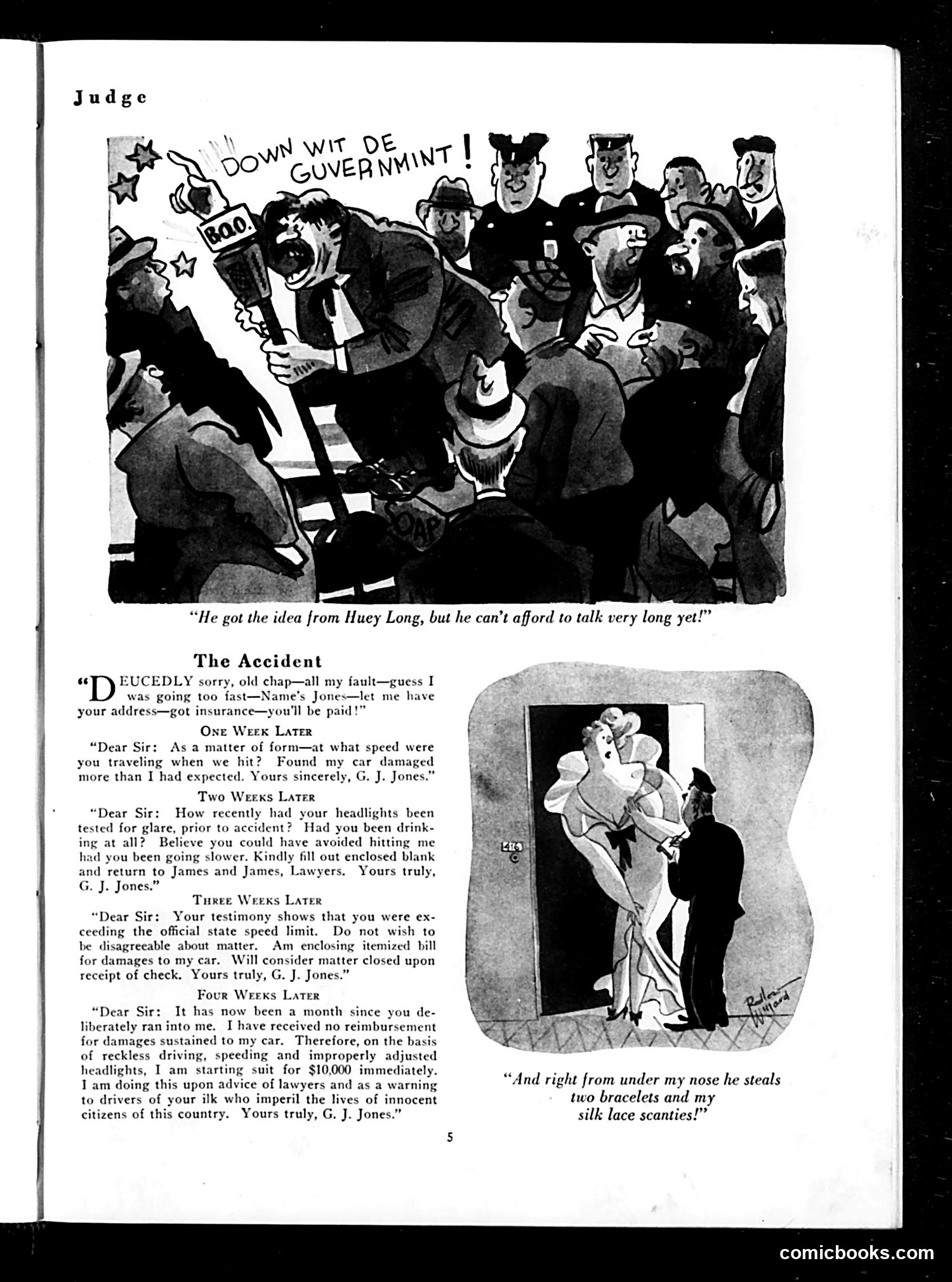
Analysis The top cartoon satirizes political protesters demanding "DOWN WIT DE GUVERNMINT!" One figure holds a torch labeled "ANARCHY," while officials and police surround the agitator. The caption notes he got the idea from "Huey Long," suggesting this mocks populist or radical political movements of the 1930s. The joke implies such protesters are dangerous firebrands whose rhetoric spreads recklessly. The bottom section, "The Accident," presents an escalating dispute between two drivers over a car collision. A series of letters shows how a minor fender-bender transforms into legal threats and a $10,000 lawsuit threat. The accompanying cartoon illustrates a woman catching a man stealing her jewelry, captioning his hypocrisy. Together, this satirizes how litigation and mutual accusation spiral from simple disputes into absurdity.
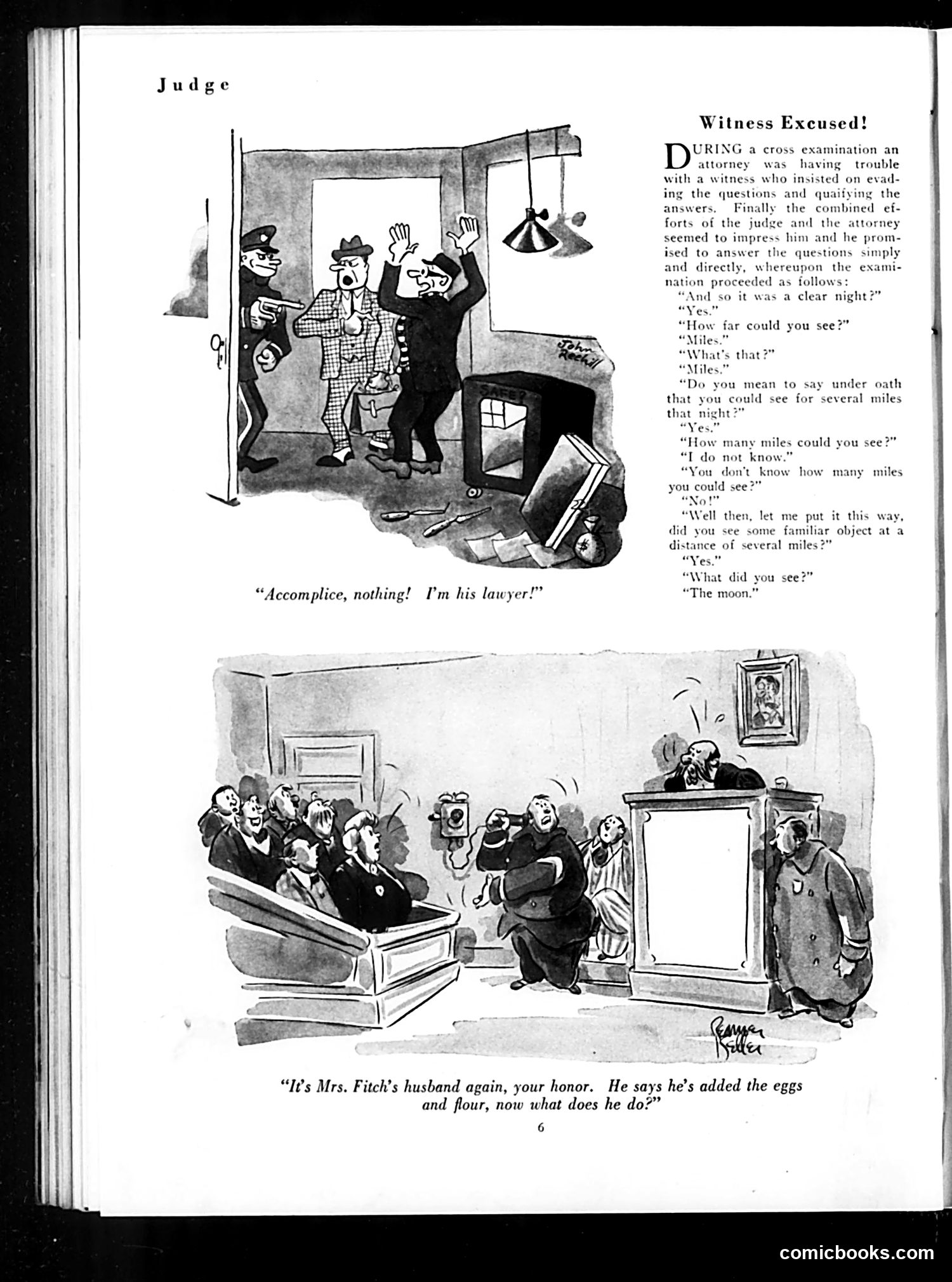
Explanation for Modern Readers This page from *Judge* magazine contains two legal satires: Top cartoon ("Witness Excused!"): An attorney frustrates a witness through repetitive questioning about visibility at night. When pressed to name what he could see "several miles" away, the witness answers "The moon"—exposing the absurdity of the attorney's gotcha-style cross-examination. The judge and lawyer's reaction suggests the witness has outwitted them through literal truth-telling. Bottom cartoon: A judge questions a witness about Mrs. Fitch's husband's cooking, asking what he does after adding eggs and flour. The humor relies on the innuendo that he's asking about baking, but the witness (or reader) might imagine something inappropriate, playing on double meanings common to this era's courtroom humor. Both cartoons mock lawyer tactics and courtroom absurdities.
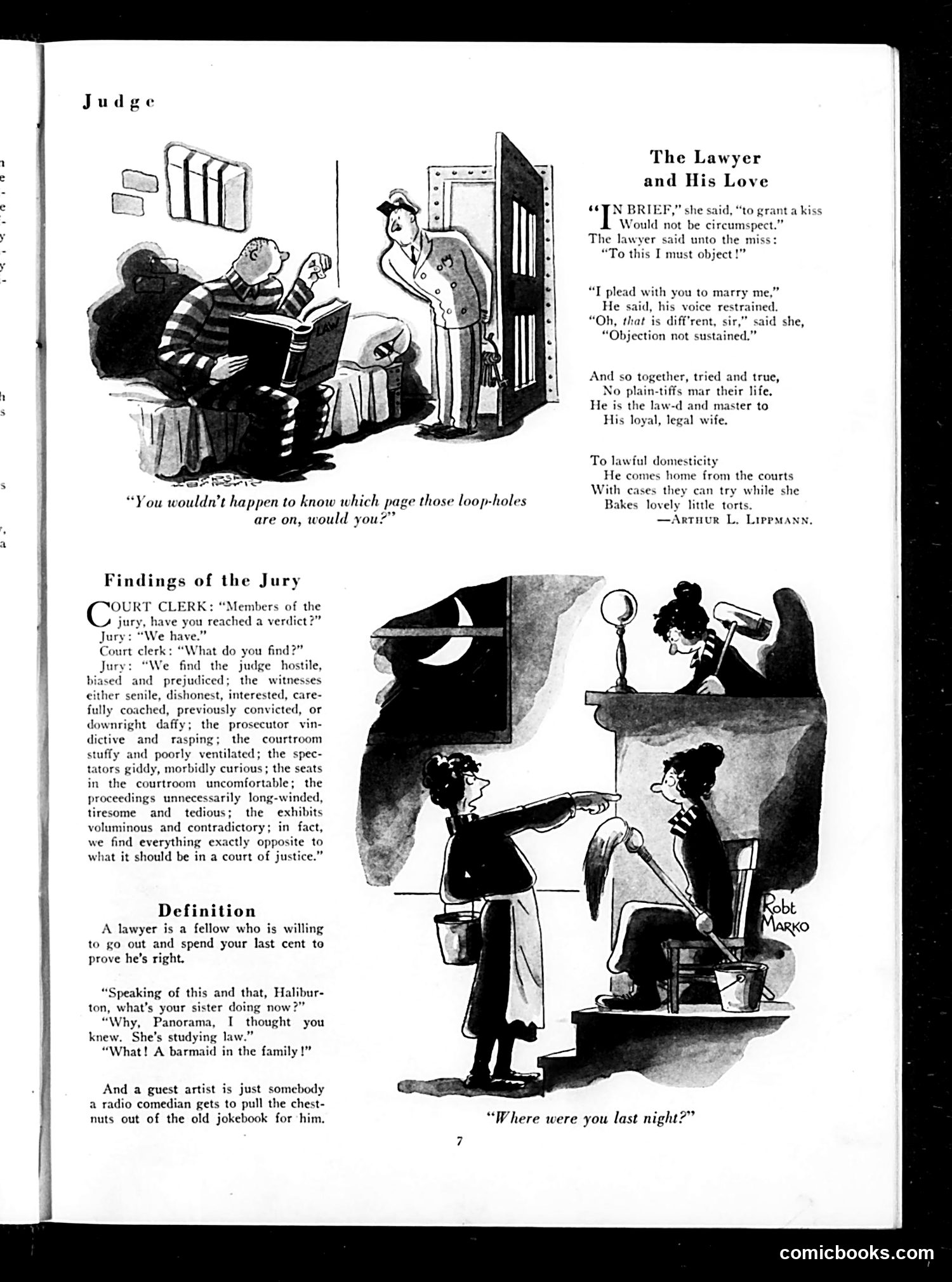
Analysis of Judge Magazine Page This page presents legal humor typical of Judge's satirical style. "The Lawyer and His Love" (top) mocks courtroom procedure: a lawyer objects to his romantic rival's kiss as "circumspect," then objects again when told the rival's kiss is "different." The poem celebrates the lawyer finally winning his case and marrying the woman, finding domestic happiness ("lovely little tarts") preferable to courtroom battles. "Findings of the Jury" satirizes the legal system's failures—biased judges, dishonest witnesses, poor ventilation, and contradictory evidence—concluding courts produce "everything exactly opposite to what it should be." "Definition" provides cynical humor: a lawyer is someone willing to spend money proving he's right. The bottom cartoon shows an interrogation scene, likely depicting typical legal cross-examination tactics.
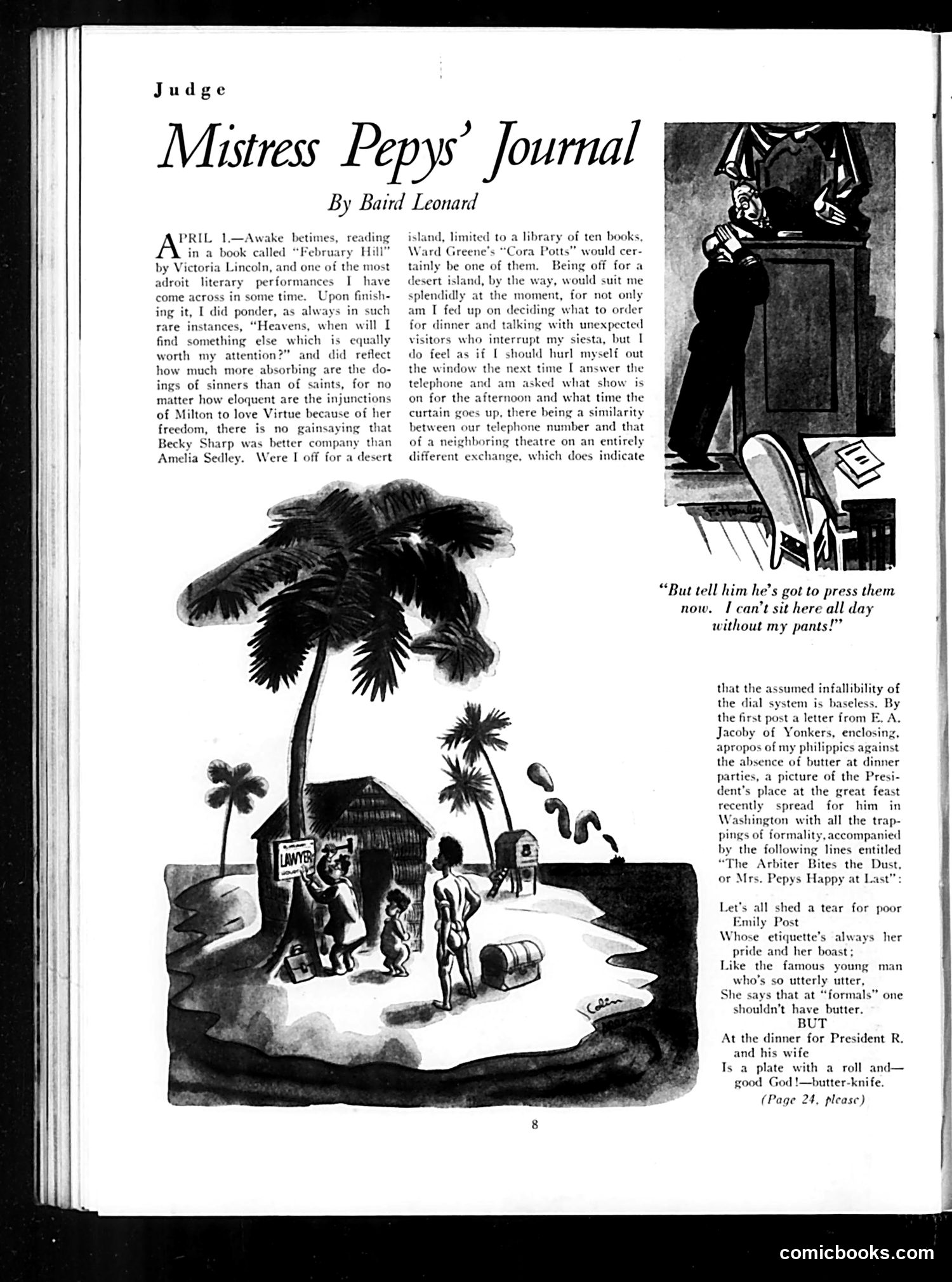
"Mistress Pepys' Journal" — Judge Magazine Satire This is a literary humor column by Baird Leonard mimicking Samuel Pepys's famous diary. The author, writing as "Mistress Pepys," complains about domestic frustrations: deciding dinner menus, unexpected visitors interrupting her siesta, and a telephone number confused with a neighboring theater's. The main satire targets Emily Post, the famous etiquette arbiter. A reader sends verses mocking Post's rigid formality rules—particularly her insistence that butter should be absent from formal dinners. The joke: at a dinner for President R. (likely Roosevelt) and his wife, there's actual butter and a butter-knife present, contradicting Post's strict protocols. The cartoon illustrates desert-island escapism—the author daydreaming of escape from these quotidian annoyances. This satirizes both rigid social conventions and the tedium of upper-middle-class domestic life circa the 1930s.
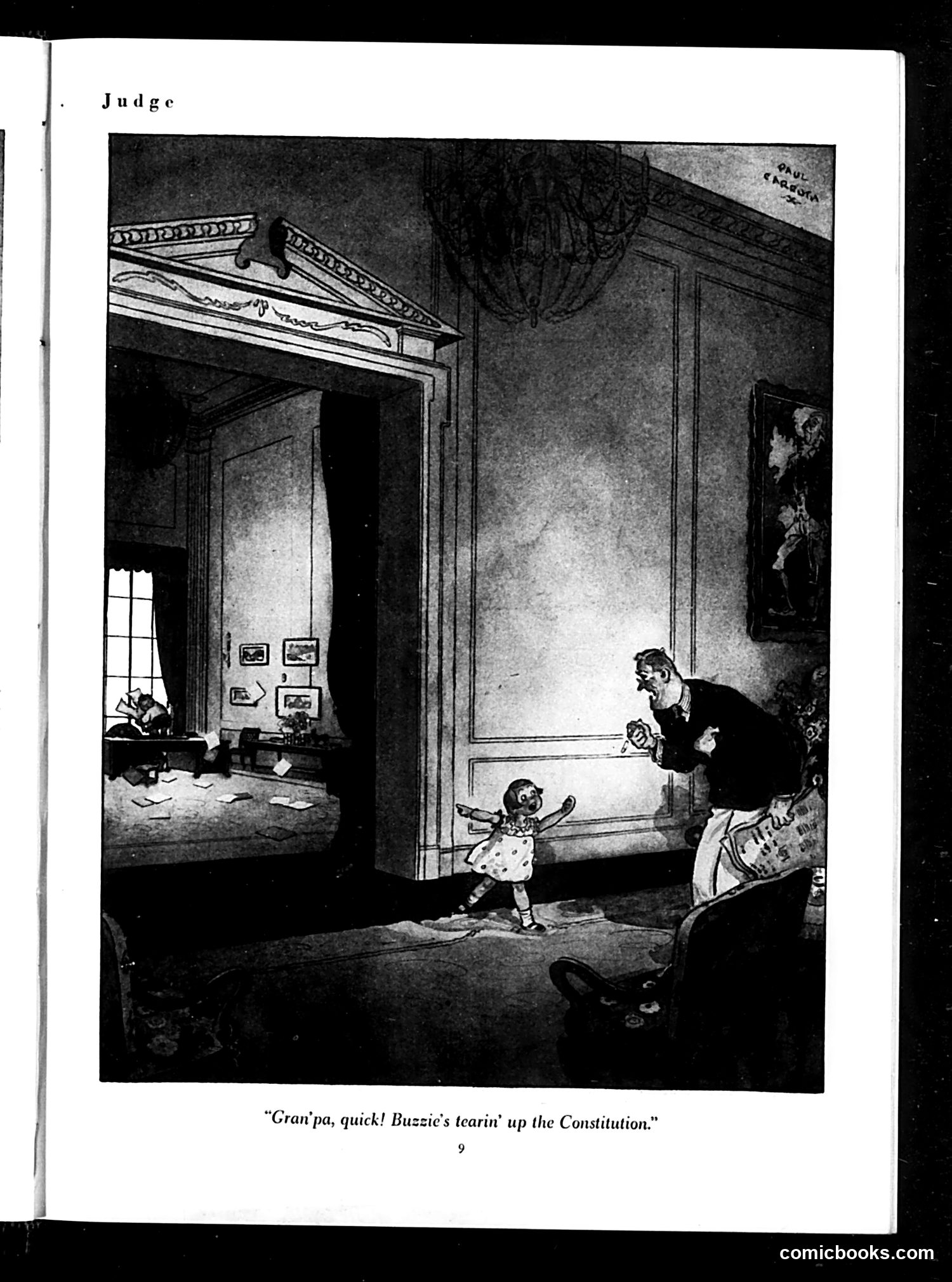
Analysis This is a single-panel satirical cartoon titled "Judge" depicting a domestic scene. An elderly man (labeled "Gran'pa") sits in a chair while a small child runs toward him in apparent alarm. The child reports that "Buzzie's tearin' up the Constitution." The satire appears to reference a political figure or public personality nicknamed "Buzzie" who was perceived as undermining constitutional principles. Without additional context about the publication date, I cannot identify the specific historical figure intended. The humor derives from treating constitutional destruction as casually as a child's misbehavior—something requiring grandpa's immediate intervention. The cartoon satirizes both the perceived threat to constitutional governance and the domestic triviality with which serious political concerns are sometimes treated.
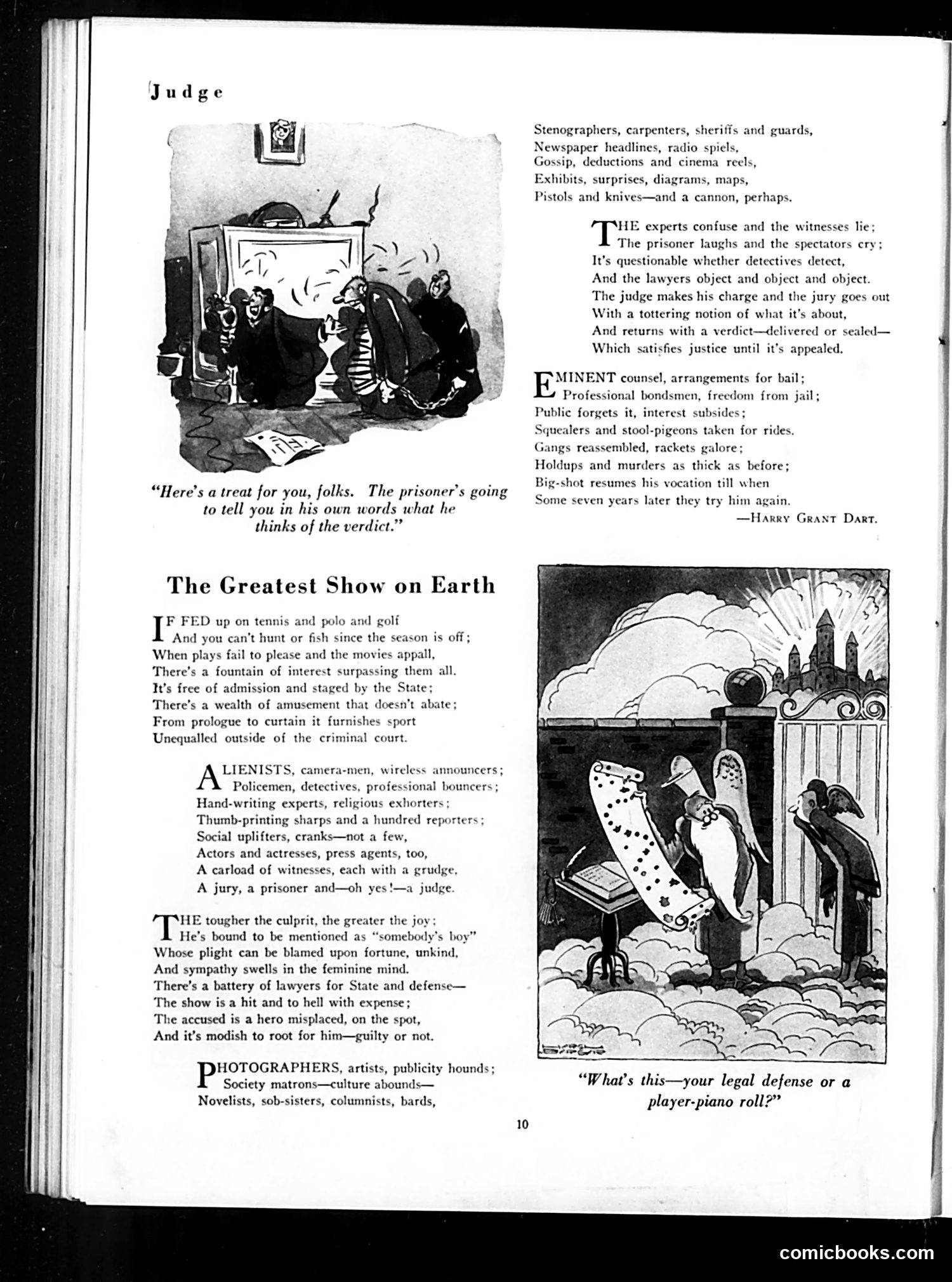
Judge Magazine Satire: "The Greatest Show on Earth" This poem by Harry Grant Dart satirizes criminal trials as public spectacle and entertainment rather than serious justice. The piece mocks how trials attract crowds of photographers, society figures, reporters, and sensation-seekers who treat courtrooms like theater. The satire targets multiple failures: witnesses who lie, detectives of questionable competence, lawyers who endlessly object, and juries confused about their purpose. More pointedly, Dart ridicules public sympathy for criminals—wealthy or famous defendants become "heroes misplaced," while justice becomes fashionable theater rather than legitimate process. The final stanza reveals the system's futility: criminals are freed on bail, gangs reorganize, crime continues unabated, and years later the same criminals face trial again. The accompanying cartoons reinforce this cynicism about courtroom performance masquerading as justice. The work reflects 1920s-30s disillusionment with the legal system's ability to actually prevent crime or deliver meaningful consequences.
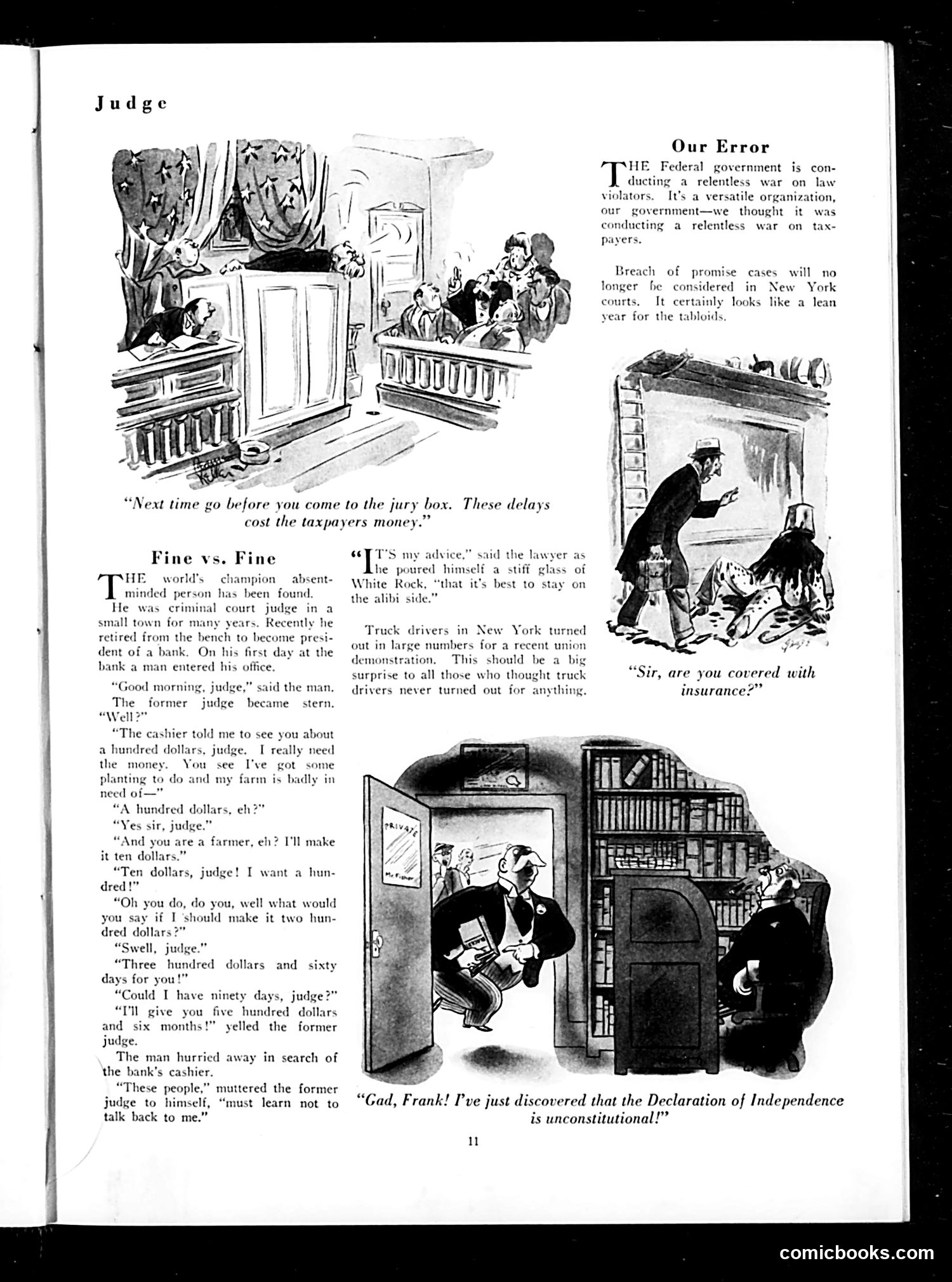
Judge Magazine Page Analysis This page contains three satirical pieces critiquing American institutions: "Fine vs. Fine" mocks judicial overreach. A retired small-town judge, now a bank president, treats a farmer's loan request like a courtroom, arbitrarily escalating penalties (from $10 to $500 plus six months) when the man speaks back to him. The joke: the judge cannot escape his authoritarian habits—he's still "fining" people for minor infractions. "Our Error" briefly skewers government priorities, sarcastically claiming the federal government wages "relentless war on taxpayers" rather than law violators—a critique of excessive taxation or enforcement. The bottom cartoon shows a lawyer advising a client to "stay on the alibi side" when discussing White Rock (likely whiskey), satirizing how lawyers coach clients on legal dodges. The page title "Judge" humorously references both the courtroom setting and the magazine's name. Overall, these pieces mock judicial pomposity, government excess, and legal manipulation—common Progressive-era satirical targets.
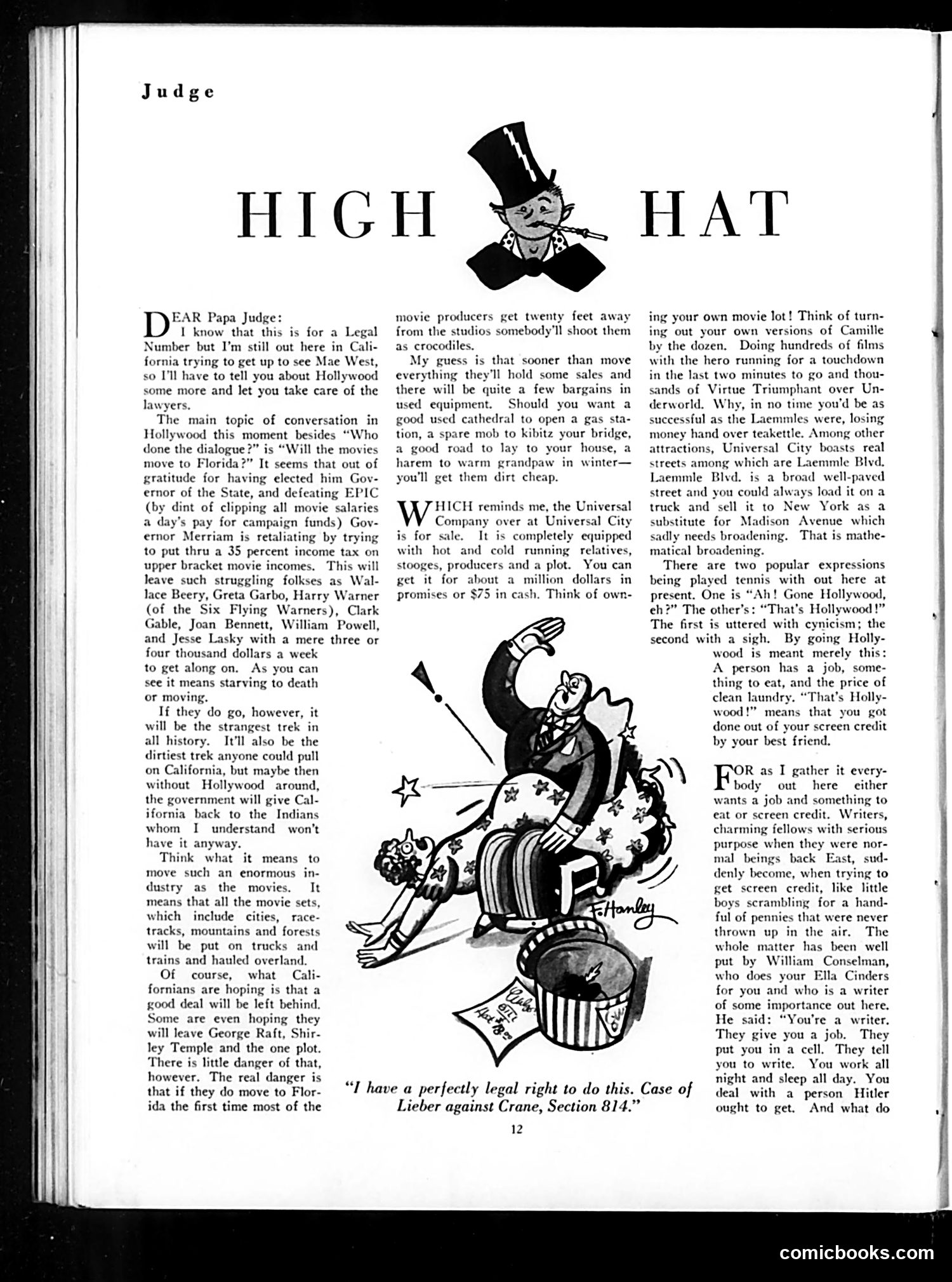
Judge Magazine: "High Hat" Column Analysis This is a humorous gossip column about 1930s Hollywood, written during a real political crisis. California Governor Frank Merriam had just defeated EPIC (an anti-capitalist political movement) and was proposing a 35% income tax on high earners—threatening movie studios with relocation. The satire targets Hollywood's extreme wealth disparity: stars like Greta Garbo and Clark Gable would be "reduced" to earning mere thousands weekly. The cartoon depicts a financier gleefully riding crocodiles (representing Florida as an alternative location), mocking both the studios' threatened exodus and the absurdity of their complaints about "poverty." The column satirizes Hollywood's detachment from reality—stars genuinely fearful of losing excess income—while also mocking the industry's exploitative practices toward writers and crew seeking screen credit rather than fair payment. The Universal Studios "for sale" joke presents the entire industry as cheaply constructed, disposable artifice. The dual expressions ("Gone Hollywood" and "That's Hollywood!") capture the era's cynicism about show business's ability to exploit desperate workers.
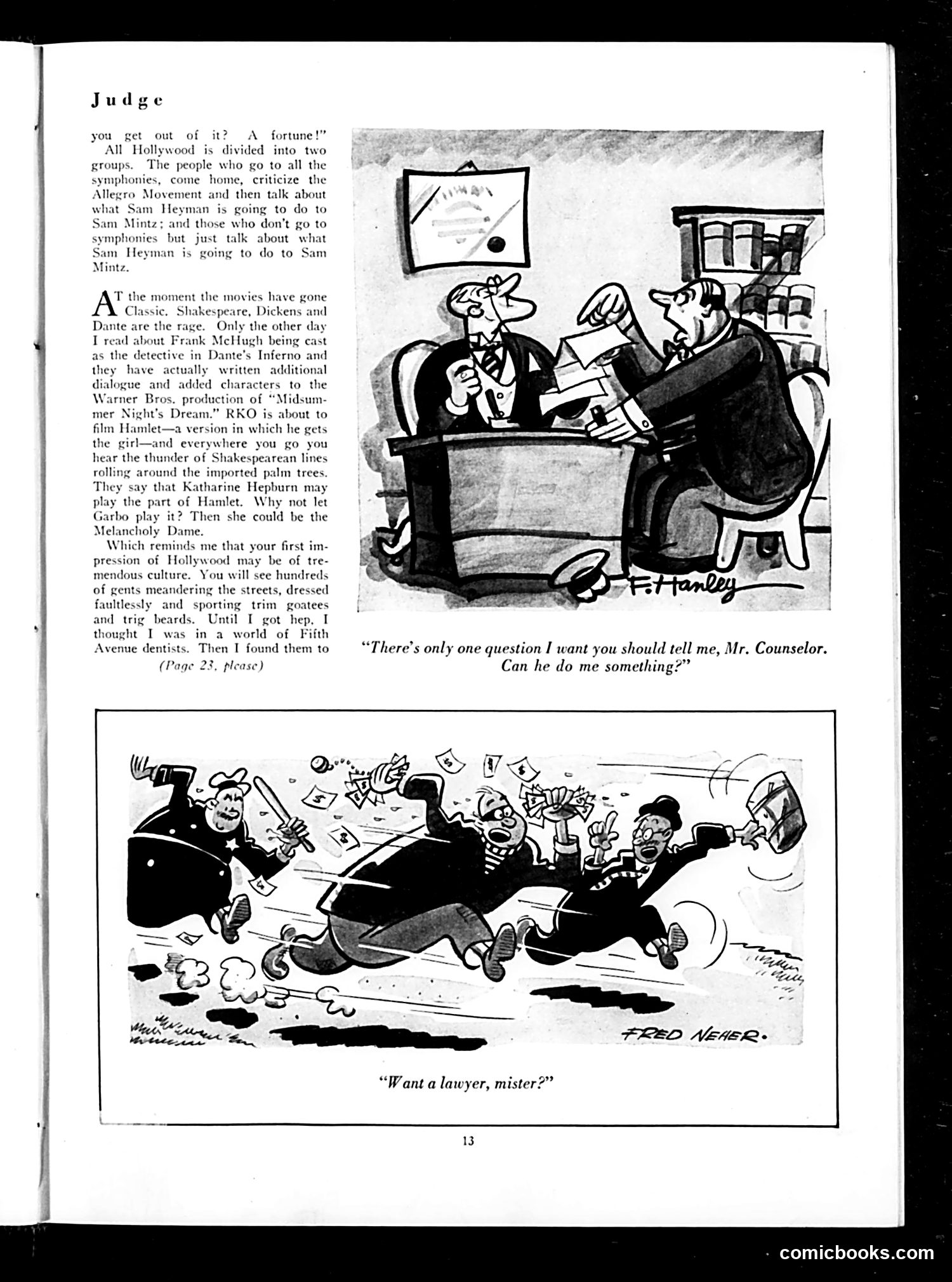
Judge Magazine Page Analysis This page satirizes Hollywood's sudden embrace of "highbrow" culture in the 1930s. The text criticizes how the film industry—previously associated with lowbrow entertainment—had begun adapting classic literature (Shakespeare, Dante, Dickens). The author mocks this pretension, noting that Hollywood insiders now dressed like "Fifth Avenue dentists" sporting goatees and beards to appear cultured. The top cartoon shows a man at his desk being asked if he can "do something"—likely mocking how studio executives or producers are approached with requests, suggesting the transactional, favor-based nature of Hollywood dealings. The bottom cartoon by Fred Neher depicts three men in chaotic celebration with flying money, one saying "I want a lawyer, mister?"—satirizing the financial corruption or legal troubles common in entertainment industry dealings. Both cartoons reinforce the page's central joke: beneath Hollywood's newly adopted cultured veneer lies the same crude, money-driven business it always was.
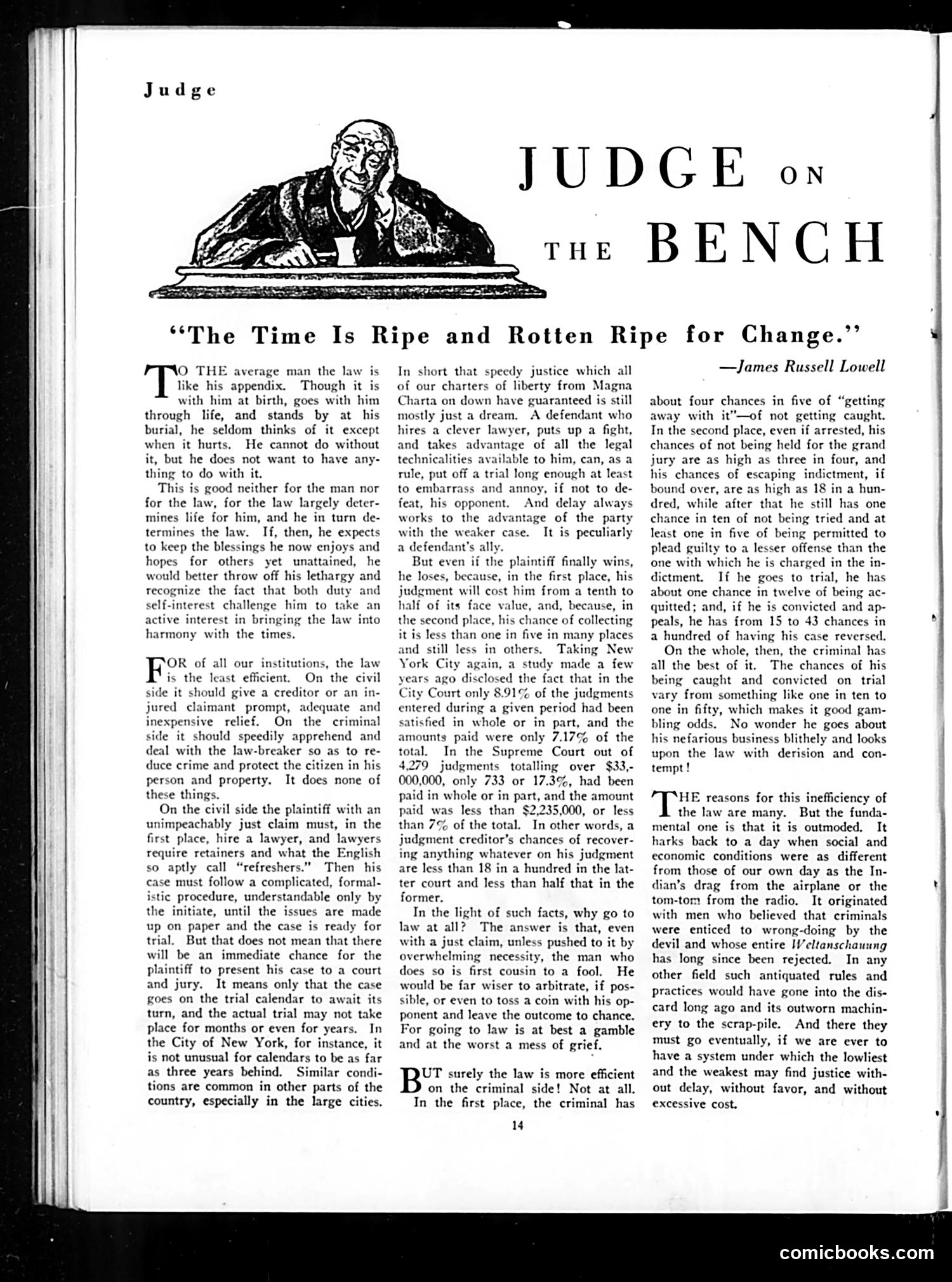
Judge Magazine: "Judge on the Bench" This is an editorial essay (not a cartoon) critiquing America's judicial system's inefficiency. The illustration shows a judge presiding from the bench—a generic representation of the judiciary rather than caricature of a specific person. The article argues that ordinary citizens ignore the law like an appendix—present but unthinking—yet the legal system affects their lives profoundly. The main complaint: the law is dysfunctional on both civil and criminal sides. Specifically, the author cites data showing justice is prohibitively slow and expensive. In New York City courts, judgments were rarely collected (8.91% and 17.3% respectively), making litigation economically irrational for plaintiffs. Defendants exploit legal technicalities to delay trials for years. The satire is implicit: citizens are urged to recognize their stake in legal reform, yet the system itself discourages them from using it. The epigraph from James Russell Lowell suggests radical change is necessary. This reflects Progressive Era (early 1900s) concerns about modernizing outdated legal procedures.
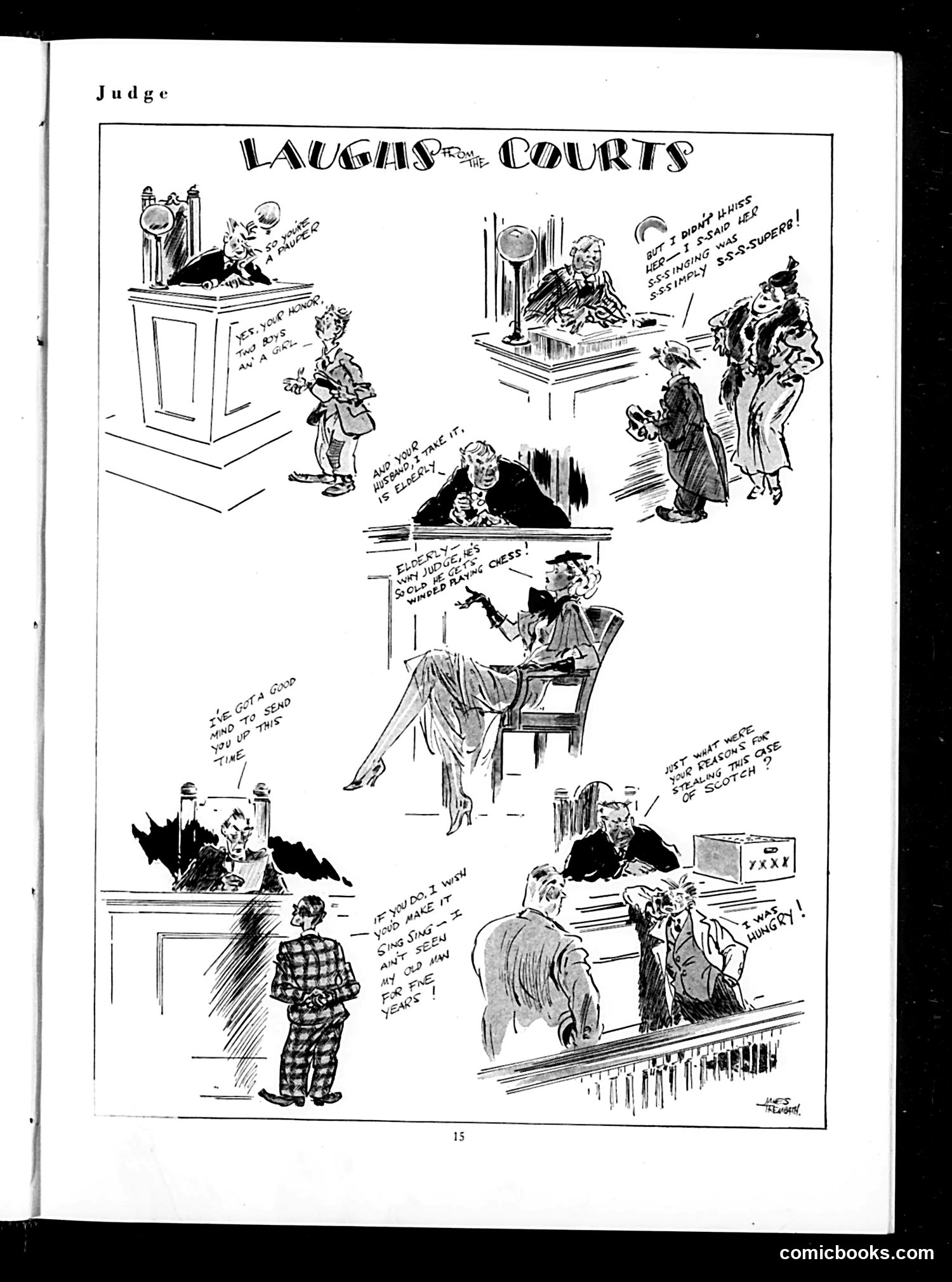
"Laughs in the Courts" This Judge magazine page presents six courtroom vignettes satirizing judicial incompetence and absurdity. Each scene depicts a judge or legal proceeding gone comically wrong: - A judge appears intoxicated or incompetent at the bench - Lawyers make ridiculous arguments while judges seem indifferent - One scene shows a woman in court, possibly mocking gendered bias in the legal system - Another depicts what appears to be a corrupt or biased verdict The recurring theme mocks judges' poor temperament, confusion, bias, and general unfitness for their positions. The cartoons suggest the legal system fails to deliver justice fairly—judges are sleeping, drunk, dismissive, or incompetent. This reflects broader early-20th-century satirical criticism of institutional failures and corruption in American courts. The specific historical references and identities of particular judges remain unclear without additional context.
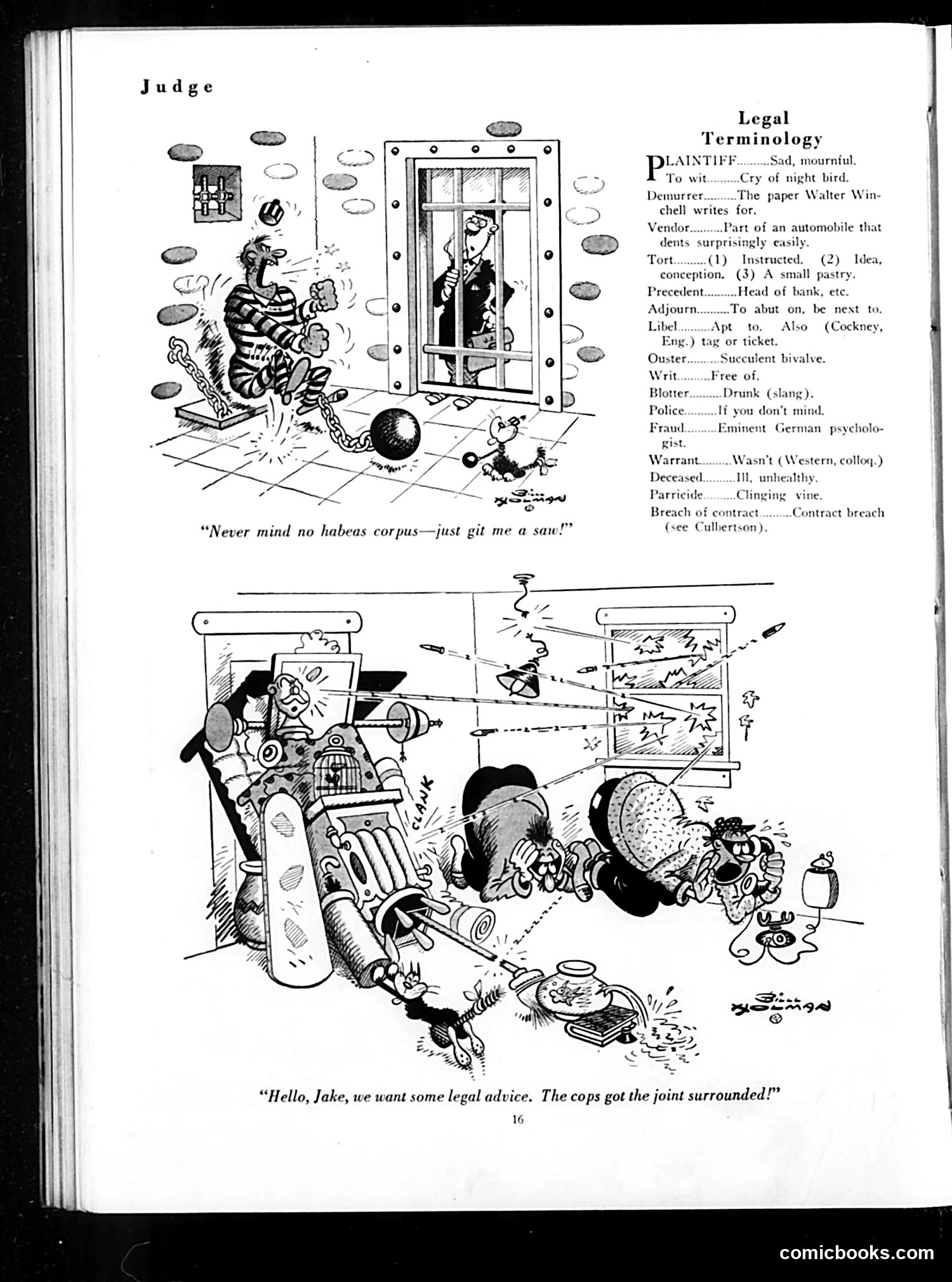
Judge Magazine: Legal Terminology Satire This page satirizes legal jargon through intentional misdefintions. The "Legal Terminology" section humorously redefines actual legal terms with absurd, unrelated meanings—for example, "tort" becomes "a small pastry," "warrant" becomes "wasn't" (mimicking Western dialect), and "plaintiff" means "sad, mournful." The two cartoons illustrate the confusion such terminology causes: the top shows a caged figure pleading "Never mind no habeas corpus—just git me a saw!" (mocking the legal term while depicting someone wanting direct action over legal process). The bottom cartoon depicts criminals requesting legal advice while surrounded by police, with the caption "Hello, Jake, we want some legal advice. The cops got the joint surrounded!" Together, the page mocks both the opacity of legal language to ordinary people and the ineffectiveness of legal remedies in criminal situations, treating the law as absurdly disconnected from practical reality.
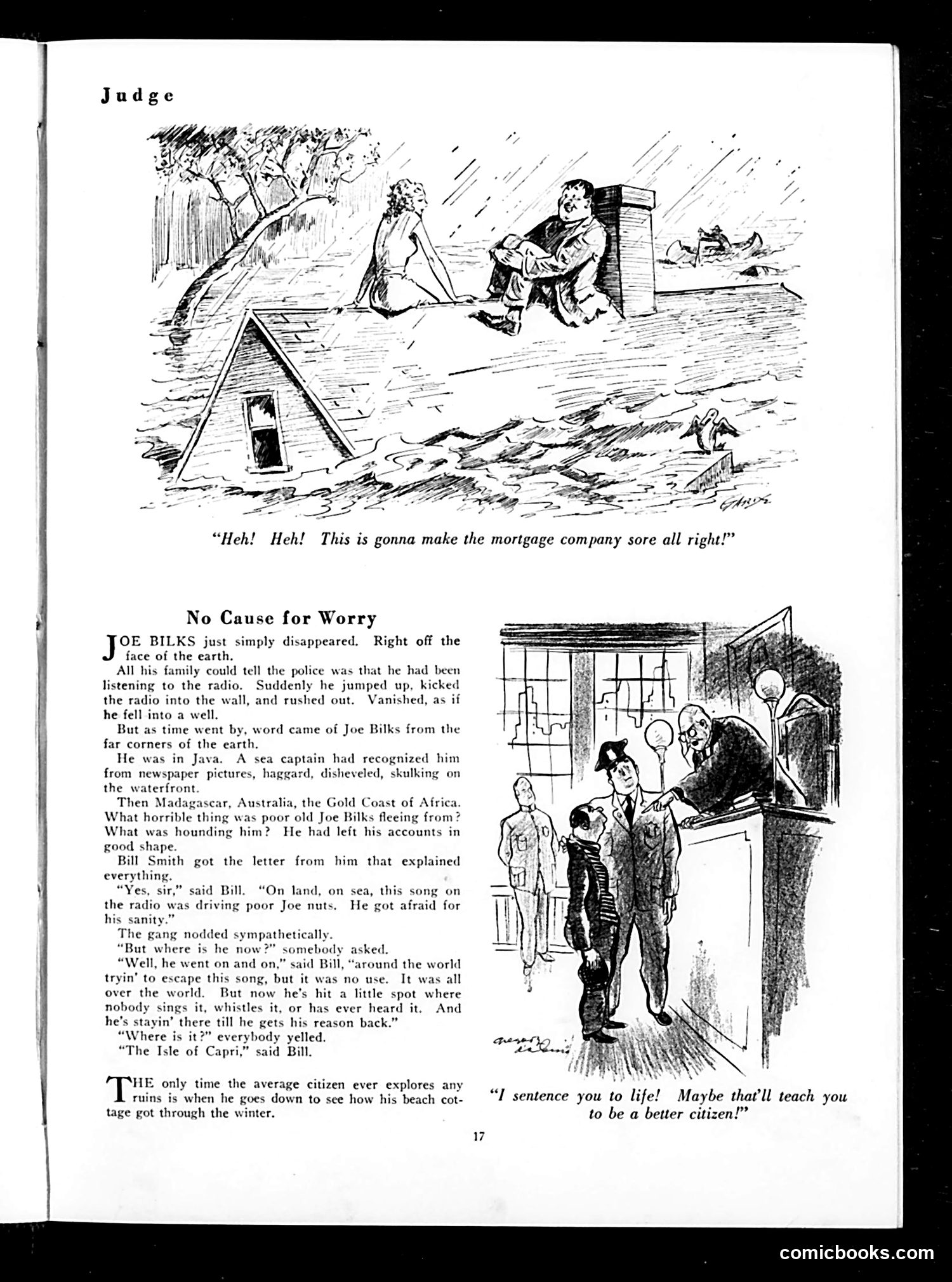
Explanation for Modern Readers This page contains two satirical pieces from *Judge* magazine: Top Cartoon ("Judge"): A flooded house scenario where someone jokes that the disaster will upset the mortgage company—dark humor about financial vulnerability during natural disasters. "No Cause for Worry" Story: A man named Joe Bilks flees civilization after hearing a song on the radio that drives him mad. The song appears to be "Isle of Capri" (a 1934 popular tune). The satire mocks both the obsessive spread of commercial radio entertainment and the song's relentless popularity—Joe must literally travel worldwide to escape it. The joke plays on Radio's then-novel dominance of mass culture and how inescapable hit songs had become. Bottom Cartoon: A judge sentences someone to life imprisonment, sarcastically suggesting it will reform them into a "better citizen"—commentary on the ineffectiveness of incarceration as punishment. The page satirizes 1930s anxieties about technology (radio), commercialism, and the criminal justice system.
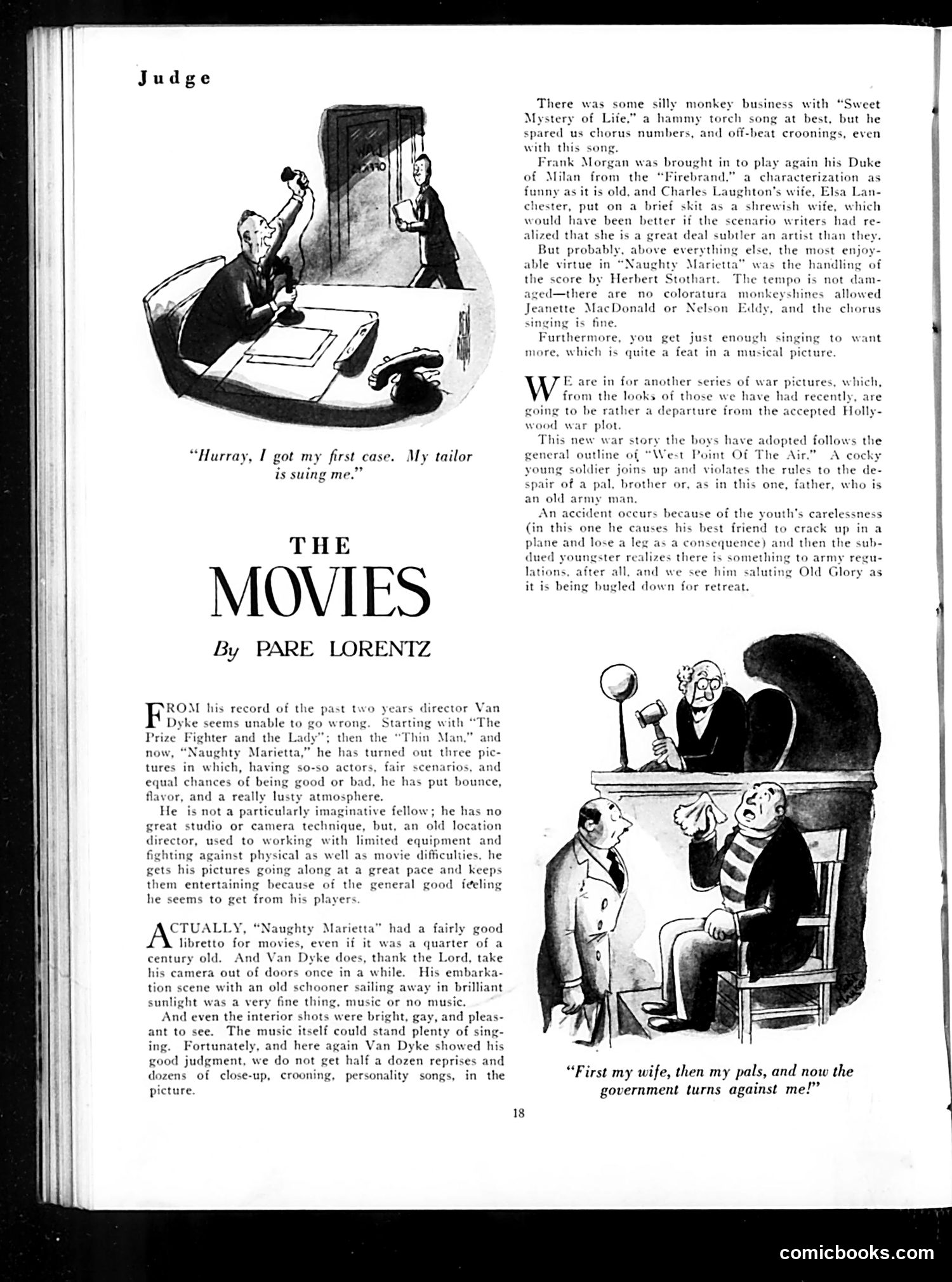
Analysis of Judge Magazine Page This page contains two distinct elements: Top cartoon: A lawyer celebrates winning his first case—his tailor is suing him. The joke satirizes the legal profession: even a novice lawyer can win against a tailor, suggesting lawyers' general incompetence or that the legal system is rigged in their favor. Main article: "The Movies" by Pare Lorentz reviews director Van Dyke's film work, particularly praising "Naughty Marietta." The review discusses casting (Frank Morgan, Charles Laughton's wife Elsa Lanchester, Jeanette MacDonald, Nelson Eddy), musical restraint, and cinematography. Below appears discussion of new war films following the "West Point of the Air" formula—stories about cocky young soldiers who cause accidents (crashing planes, injuring comrades) before learning discipline. Bottom cartoon: A man faces multiple adversaries (wife, friends, government), suggesting the cumulative consequences of wartime mistakes portrayed in these military films.
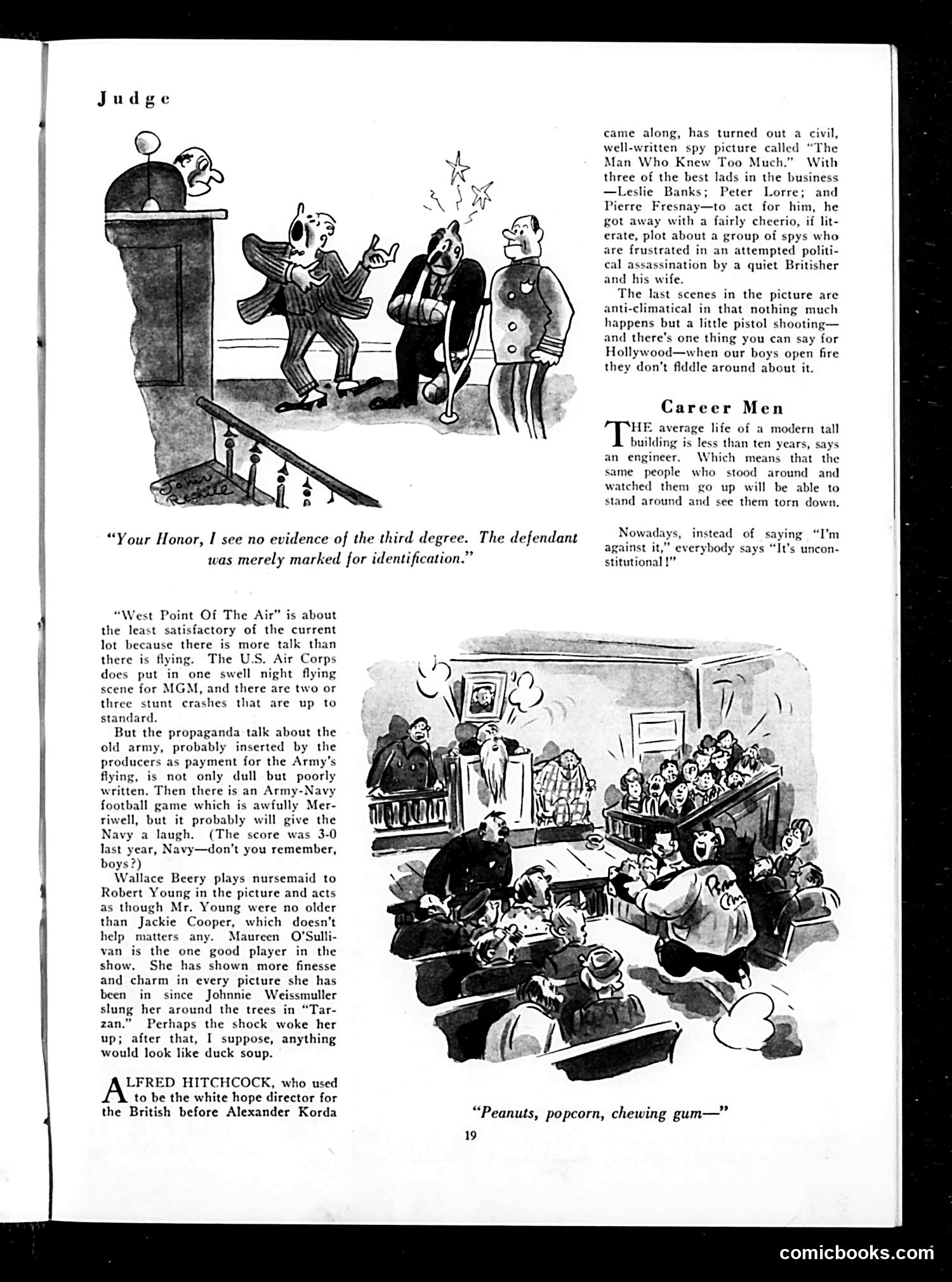
Judge Magazine Page Analysis This page contains film reviews and social commentary typical of Judge magazine's satirical approach. Top Cartoon: A courtroom scene mocking legal proceedings. The judge's comment about "no evidence of the third degree" and the defendant being "merely marked for identification" satirizes either overly lenient justice or the absurdity of courtroom procedures—the joke appears to be that marking someone for identification is being confused with actual evidence of guilt. Film Reviews: The page critiques 1930s Hollywood films, particularly "West Point of the Air" and Alfred Hitchcock's "The Man Who Knew Too Much." The reviewer complains the military film contains heavy-handed propaganda and poor writing, praising only the flying scenes and actress Maureen O'Sullivan's performance. "Career Men" Section: A brief commentary on modern tall building construction, noting these structures last less than a decade—meaning the same observers see both their construction and demolition. The final joke mocks how Americans now reflexively call things "unconstitutional" instead of simply opposing them. Bottom Illustration: Shows a cinema audience enjoying snacks, captioned with concessions vendors' typical offerings.
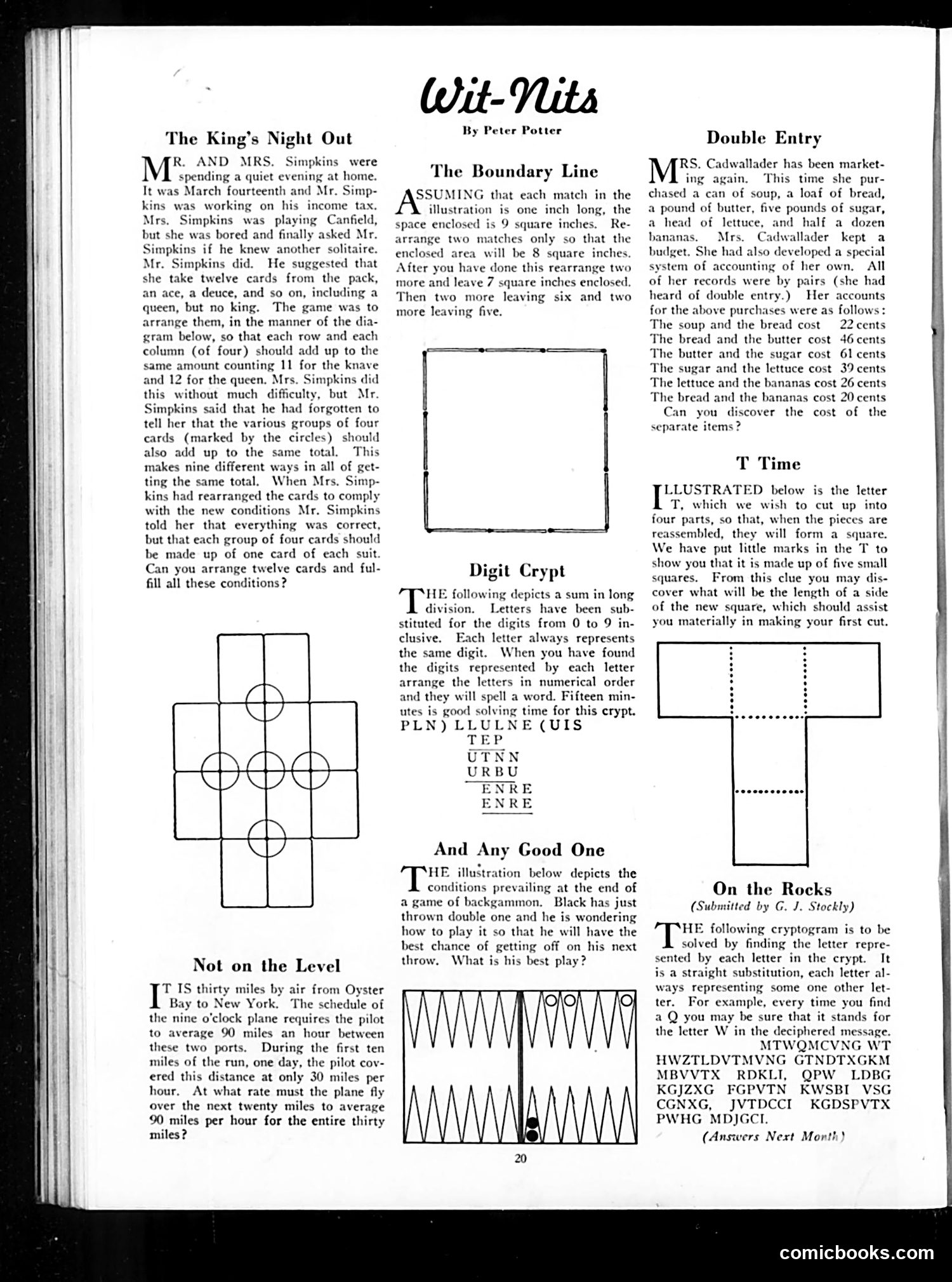
Wit-Nits Page Explanation for Modern Readers This is a puzzle and games page from Judge magazine, not political satire. "Wit-Nits" was a recurring feature offering recreational brain-teasers to readers. The page contains six separate puzzles: 1. The King's Night Out: A solitaire card puzzle requiring arranging 12 cards so rows, columns, and grouped sets all sum to the same value. 2. The Boundary Line: A matchstick puzzle about rearranging matches to create specific enclosed areas. 3. Digit Crypt: A cryptarithmetic puzzle (long division with letters substituting digits). 4. And Any Good One: A backgammon strategy question about optimal play after rolling doubles. 5. Double Entry: An arithmetic puzzle about discovering individual item costs from pair totals (playing on the accounting term "double entry"). 6. T Time: A geometric dissection puzzle—cutting a T-shape into pieces that reassemble into a square. These puzzles represent typical early 20th-century recreational mathematics and logic challenges for educated readers.
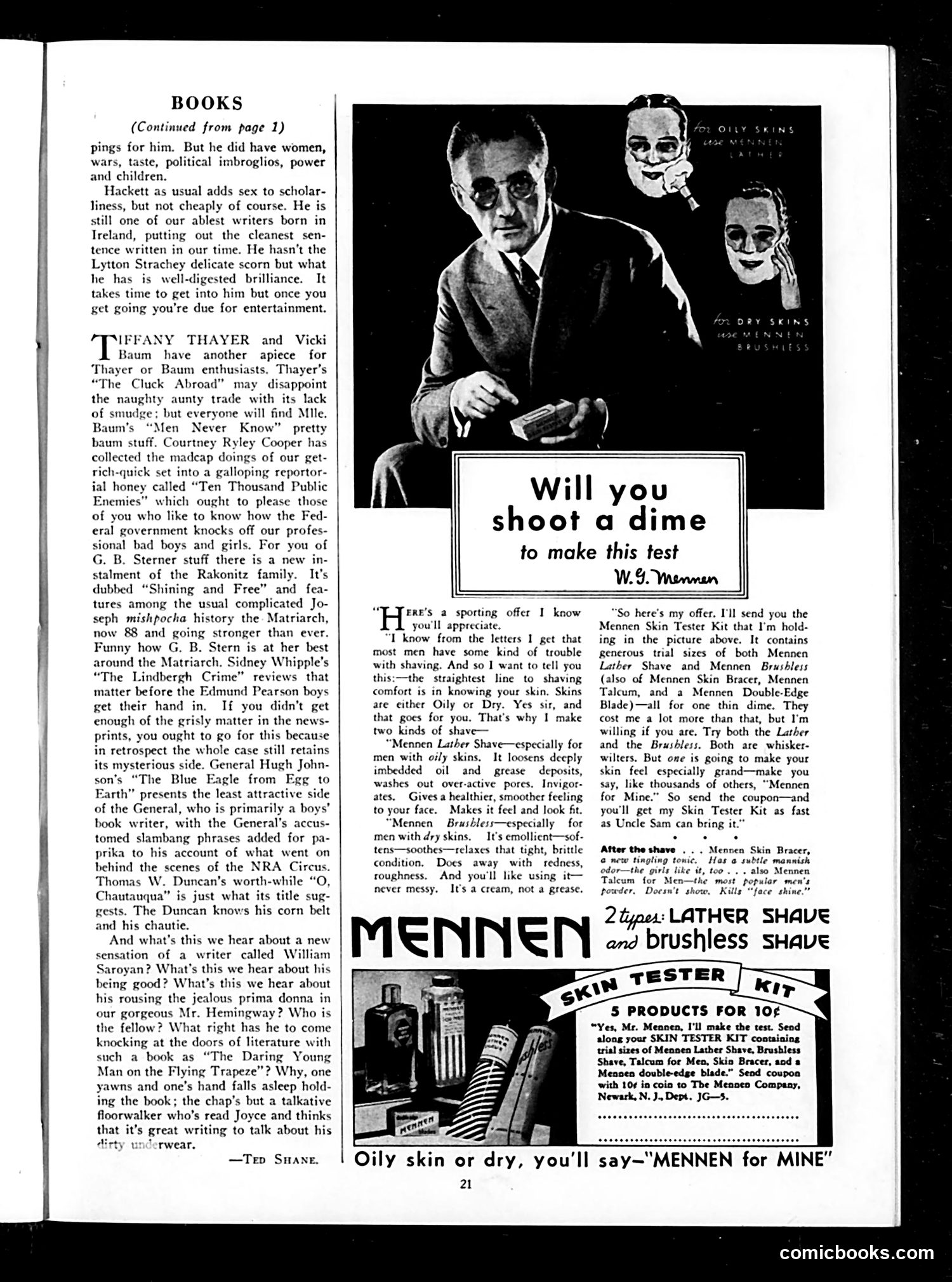
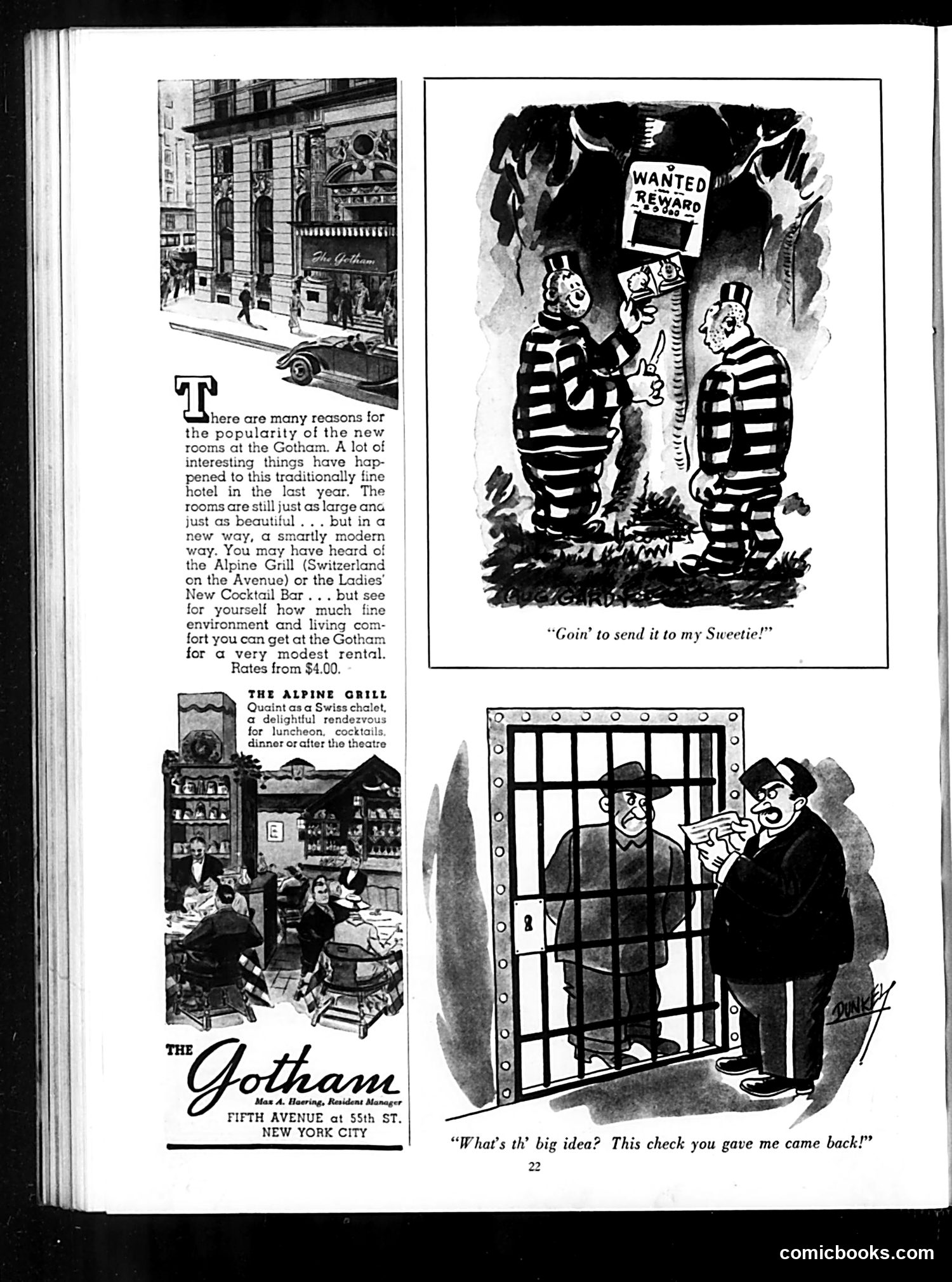
Analysis of Judge Magazine Page 22 This page primarily contains advertising for the Gotham Hotel in New York City, highlighting its renovated rooms and new establishments like the Alpine Grill and Ladies' Cocktail Bar. The page includes two cartoon jokes unrelated to the hotel copy: 1. Top right: Two convicts in striped uniforms discuss sending contraband ("Goin' to send it to my Sweetie!") — a standard prison-humor trope about smuggling items to loved ones. 2. Bottom right: A man complains to another through prison bars about a bounced check ("What's th' big idea? This check you gave me came back!") — the joke being that even in jail, financial transactions fail. Both cartoons use simple, period-appropriate humor about crime and financial mishap. There's no apparent political satire here — just lighthearted gags typical of Judge's style, mixed with high-end hotel advertising targeting wealthy Manhattan readers during what appears to be the 1920s-30s era.
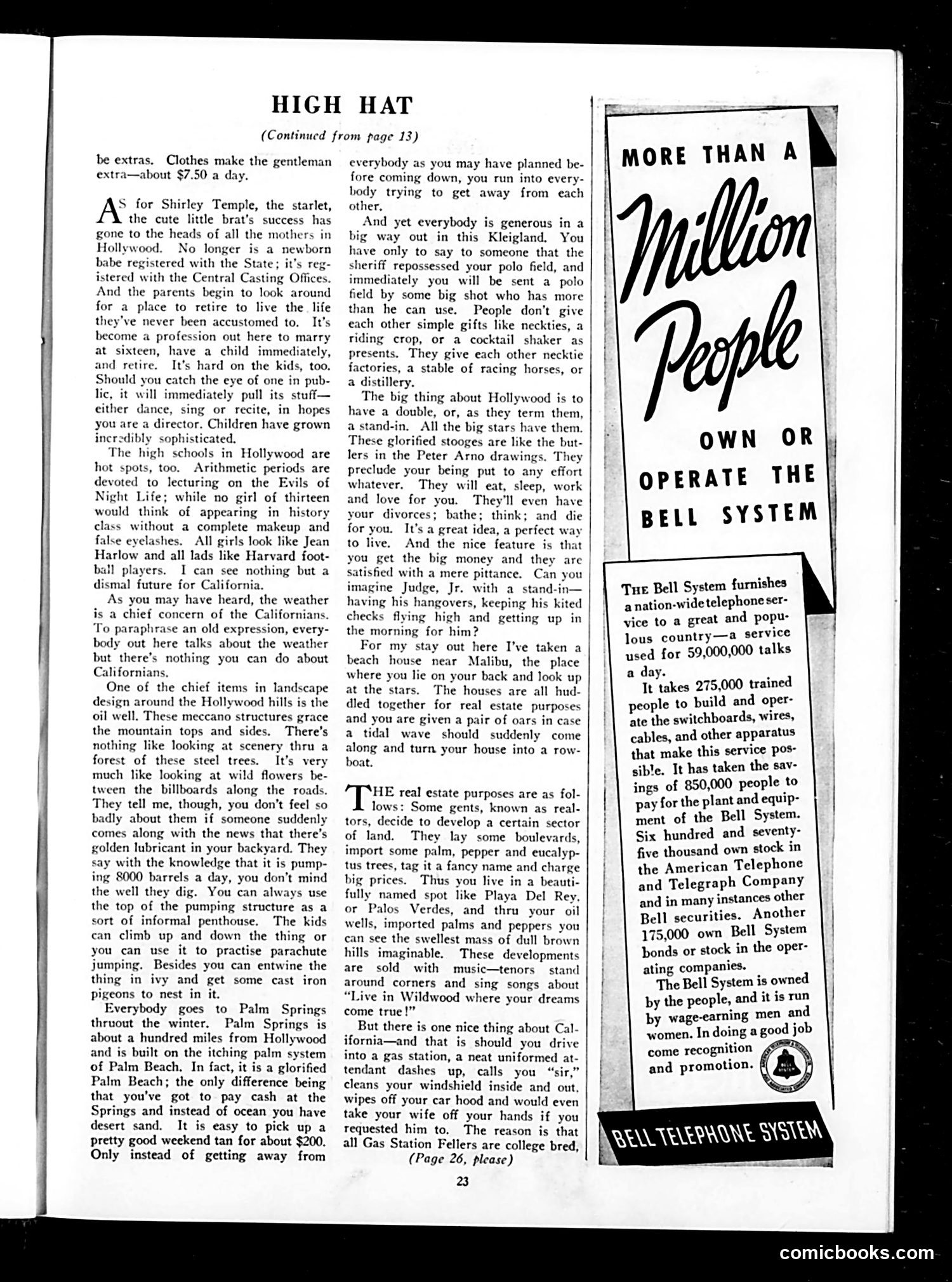
"High Hat" - A Satirical Critique of 1930s Hollywood This is a gossipy, tongue-in-cheek essay mocking Hollywood culture circa the 1930s. The author ridicules several absurdities: Child Star Obsession: Following Shirley Temple's success, parents register newborns with casting offices rather than the state, hoping to retire on their children's earnings. Children become precociously cynical performers. Wealth Excess: The wealthy casually gift each other entire factories, stables, and distilleries rather than simple presents. Generosity is performative. Stand-ins/Doubles: Stars employ substitutes to live their lives—eating, thinking, divorcing, even dying for them—a satirical commentary on celebrity detachment from reality. Environmental Degradation: Oil derricks scar the Hollywood landscape like "steel trees," yet residents ignore ecological damage once told the wells pump 8,000 barrels daily. Palm Springs: A cash-only, desert version of Palm Beach where people go to escape crowds, only to encounter the same crowds. The piece satirizes Hollywood's materialism, superficiality, and moral bankruptcy. The adjacent Bell Telephone advertisement ironically juxtaposes this critique with corporate capitalism.
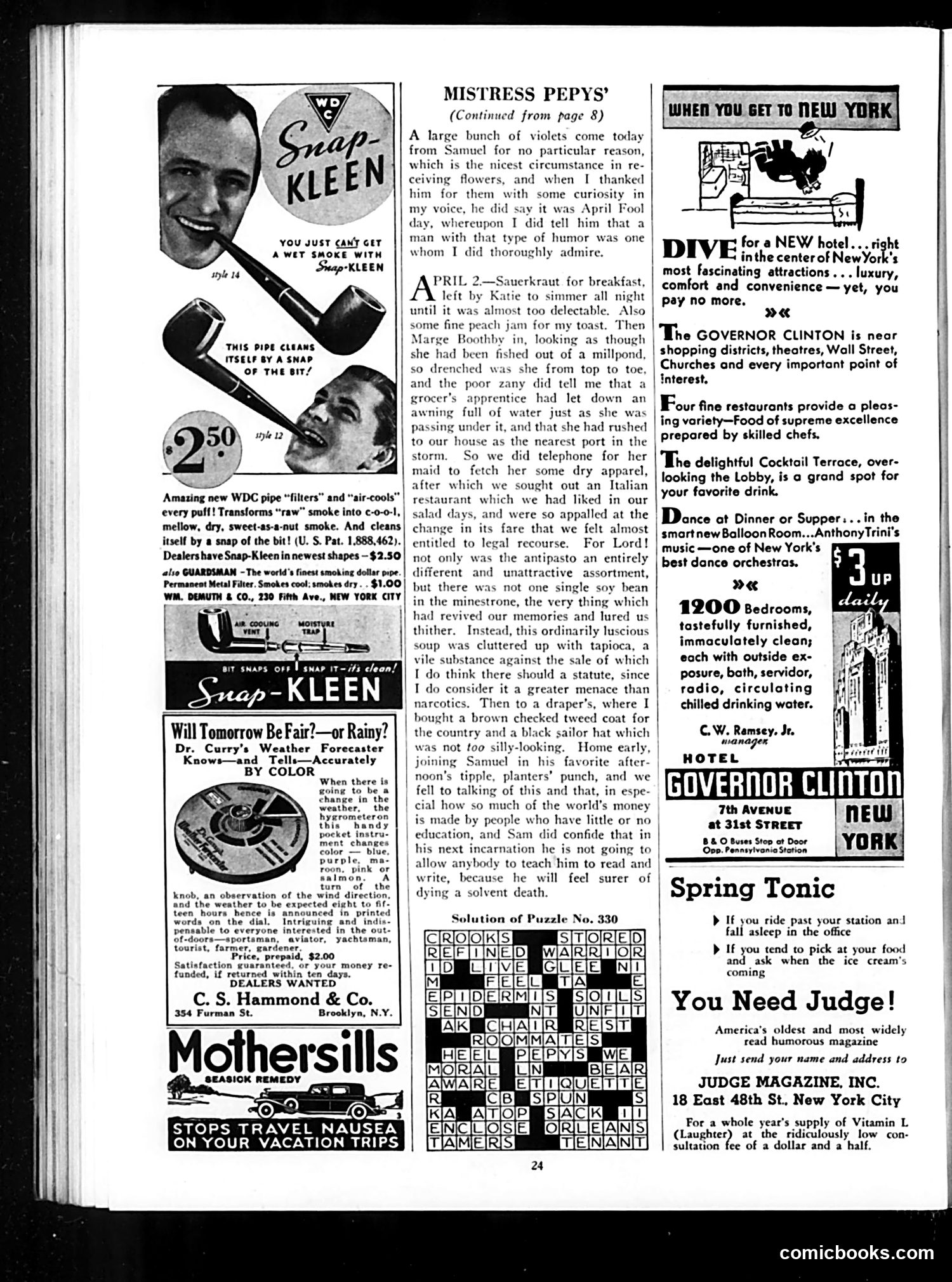
"Mistress Pepys'" Column & Vintage Advertisements This page mixes a serialized gossip column ("Mistress Pepys," continuing from page 8) with period product advertisements. The column mimics the style of Samuel Pepys's 17th-century diary, using mock-period language to humorously recount mundane 1920s-30s social events: receiving violets on April Fools' Day, a friend drenched by an awning accident, disappointment at an Italian restaurant (particularly about missing soy beans in minestrone), and domestic conversation about wealth and education. The advertisements—Snap-Kleen pipes, weather forecasters, Mothersills travel remedy, and the Governor Clinton hotel—are typical Judge magazine content, targeting middle and upper-class readers with consumer goods and travel services. The satire lies in the column's affected, diary-like tone applied to trivial modern concerns, gently mocking both pretentious social commentary and consumerism.
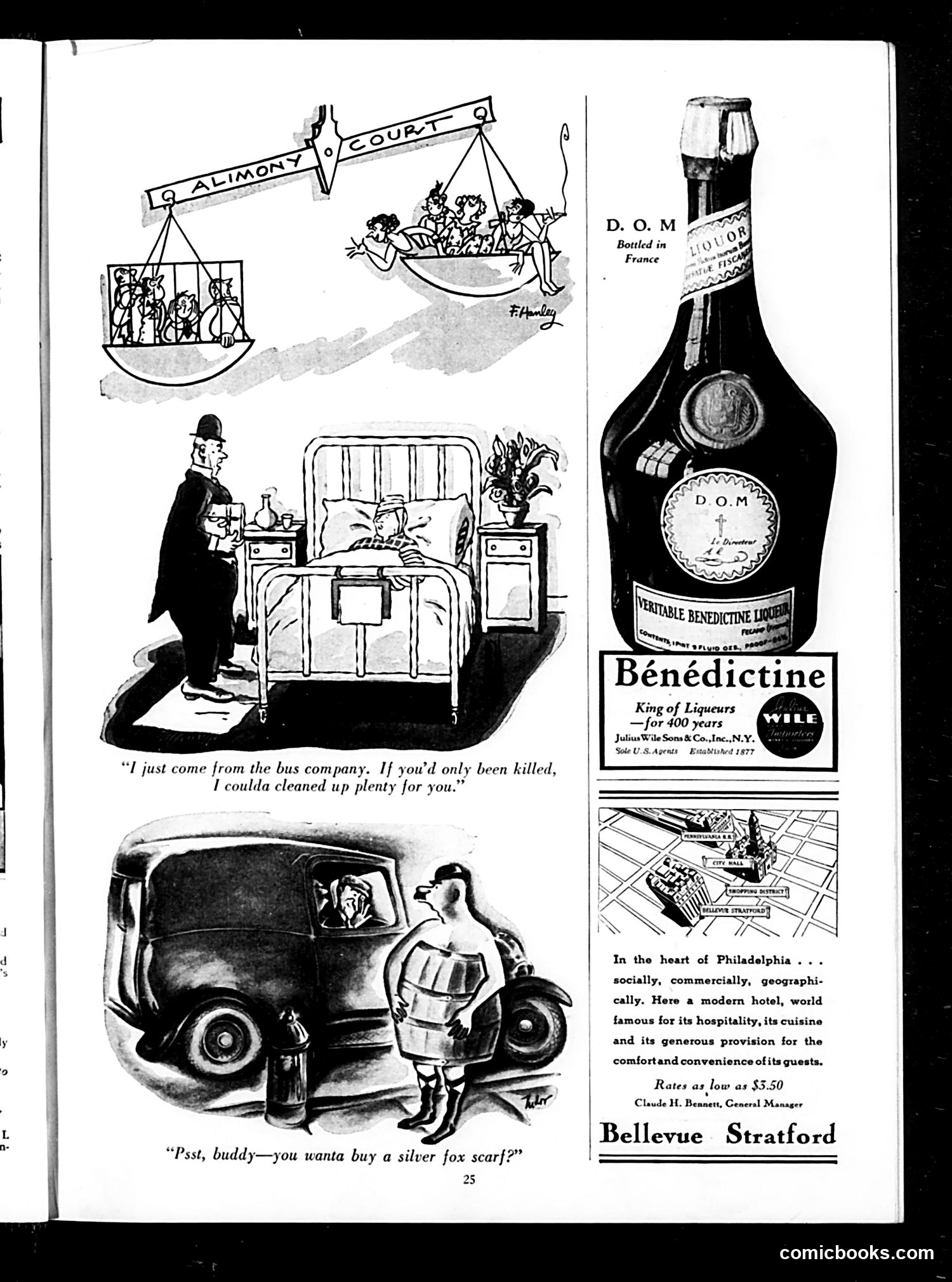
Judge Magazine Page Analysis This page contains two satirical cartoons mocking American social attitudes, plus period advertising. Top cartoon: A man visits his injured wife in a hospital bed. He remarks he just left "the bus company," implying he's pursuing a lawsuit. His comment—that he could profit financially if she'd died—darkly satirizes America's emerging compensation culture and litigation mentality in the early 20th century. Bottom cartoon: A street hustler approaches someone offering to sell a "silver fox scarf," a luxury item. This mocks both petty street crime and the era's obsession with expensive fur fashion as status symbols. Both cartoons target American greed and materialism—one the legal system's exploitation, one street-level con artistry. The page also features advertisements for Bénédictine liqueur and Philadelphia's Bellevue Stratford hotel, typical of Judge's advertising-heavy format.
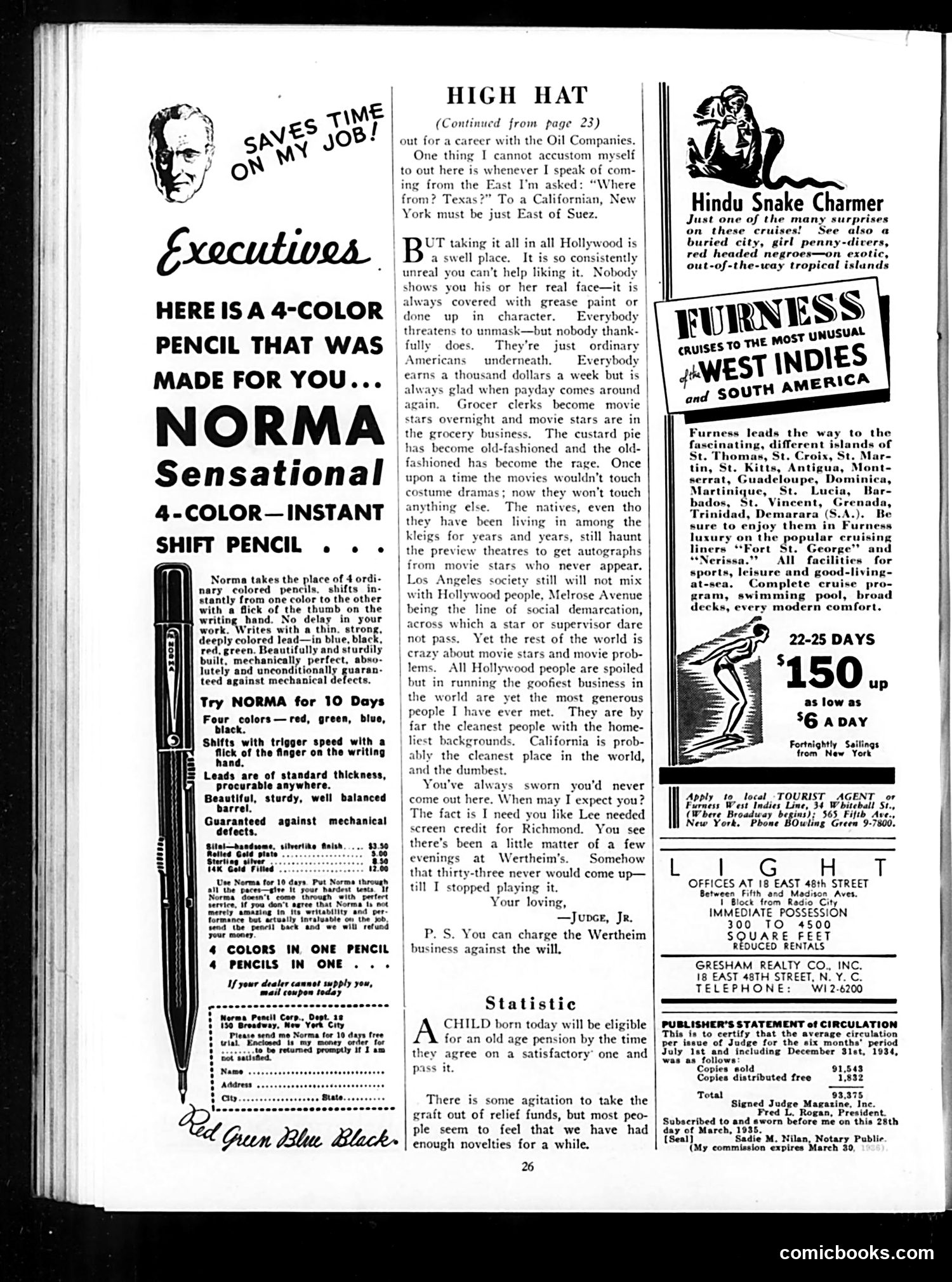
Content Analysis: Judge Magazine Page This page is primarily advertising for the Norma 4-color pencil (left side), with a continuation of a humorous column called "High Hat" (center/right). The "High Hat" column appears to be a satirical letter about Hollywood in the 1930s. The writer mocks the pretension and artificiality of Hollywood culture: actors wearing "grease paint," ordinary people becoming stars overnight, the obsession with autographs from unavailable celebrities, and the rigid social barriers (like Melrose Avenue dividing "respectable" society from film people). The humor targets Hollywood's contradictions—people earning vast sums yet acting desperate on payday, the film industry's whimsical trends (costumes dramas suddenly fashionable, then abandoned), and Californians' geographical ignorance ("New York must be just East of Suez"). A brief "Statistic" joke mocks slow legislative progress on old-age pensions. The page also includes cruise advertisements featuring colonial-era stereotypes ("Hindu Snake Charmer," "red headed negroes").
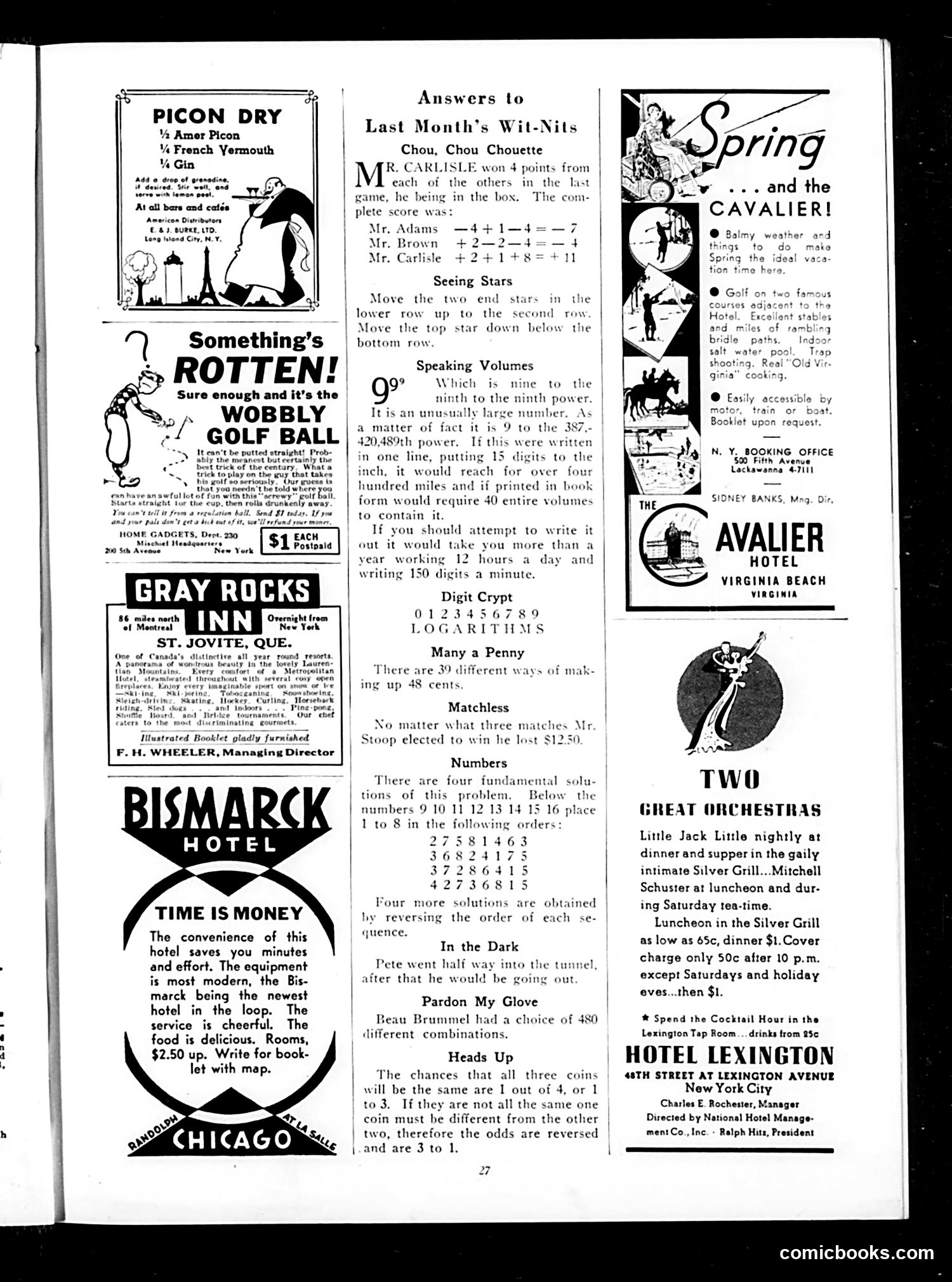
Analysis of Judge Magazine Page Content This page is primarily advertising and puzzle solutions, not satirical editorial content. The main cartoon titled "Something's Rotten! Sure enough and it's the Wobbly Golf Ball" appears to mock defective or inferior golf balls—a consumer complaint joke rather than political satire. The accompanying text suggests some golf balls don't roll straight due to manufacturing defects. The bulk of the page consists of: - Solutions to previous month's puzzles and riddles - Hotel and restaurant advertisements (Bismarck Hotel in Chicago, Cavalier Hotel in Virginia Beach, Hotel Lexington in NYC) - A liqueur advertisement (Picon Dry) The "Wobbly Golf Ball" ad from Home Gadgets is a straightforward product complaint used for comedic effect, not social commentary. This is essentially a filler/advertising page with minimal satirical content—typical of Judge magazine's later issues when it relied heavily on commercial revenue.
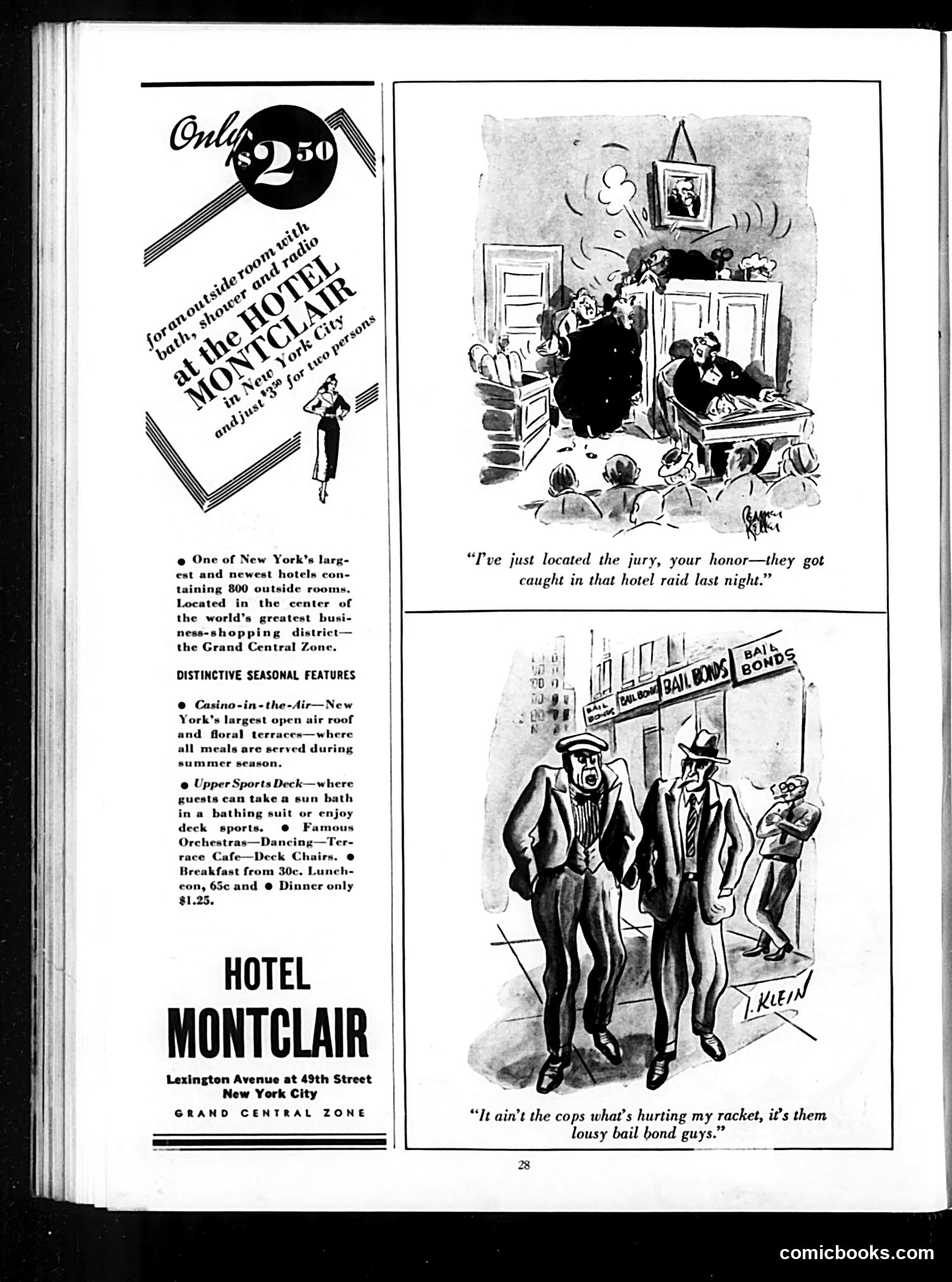
Analysis for Modern Readers This Judge magazine page mixes hotel advertising with two cartoons satirizing Prohibition-era crime and law enforcement. Top cartoon: A judge is told the jury was "caught in that hotel raid last night"—referring to police raids on speakeasies and illegal drinking establishments. The joke is that finding an impartial jury is impossible because everyone participated in illegal drinking. Bottom cartoon: Two men outside a bail bonds shop complain that bail bondsmen—not police—are the real threat to their criminal operations. This satirizes how organized crime and corrupt bail systems enabled criminals to quickly return to the streets. Both cartoons mock the widespread nature of Prohibition violations and the ecosystem of corruption it created. The irony: the Hotel Montclair advertisement appears amid jokes about illegal alcohol and criminal activity, likely suggesting the hotel itself was a speakeasy venue. The humor relies on readers' familiarity with rampant Prohibition lawbreaking.
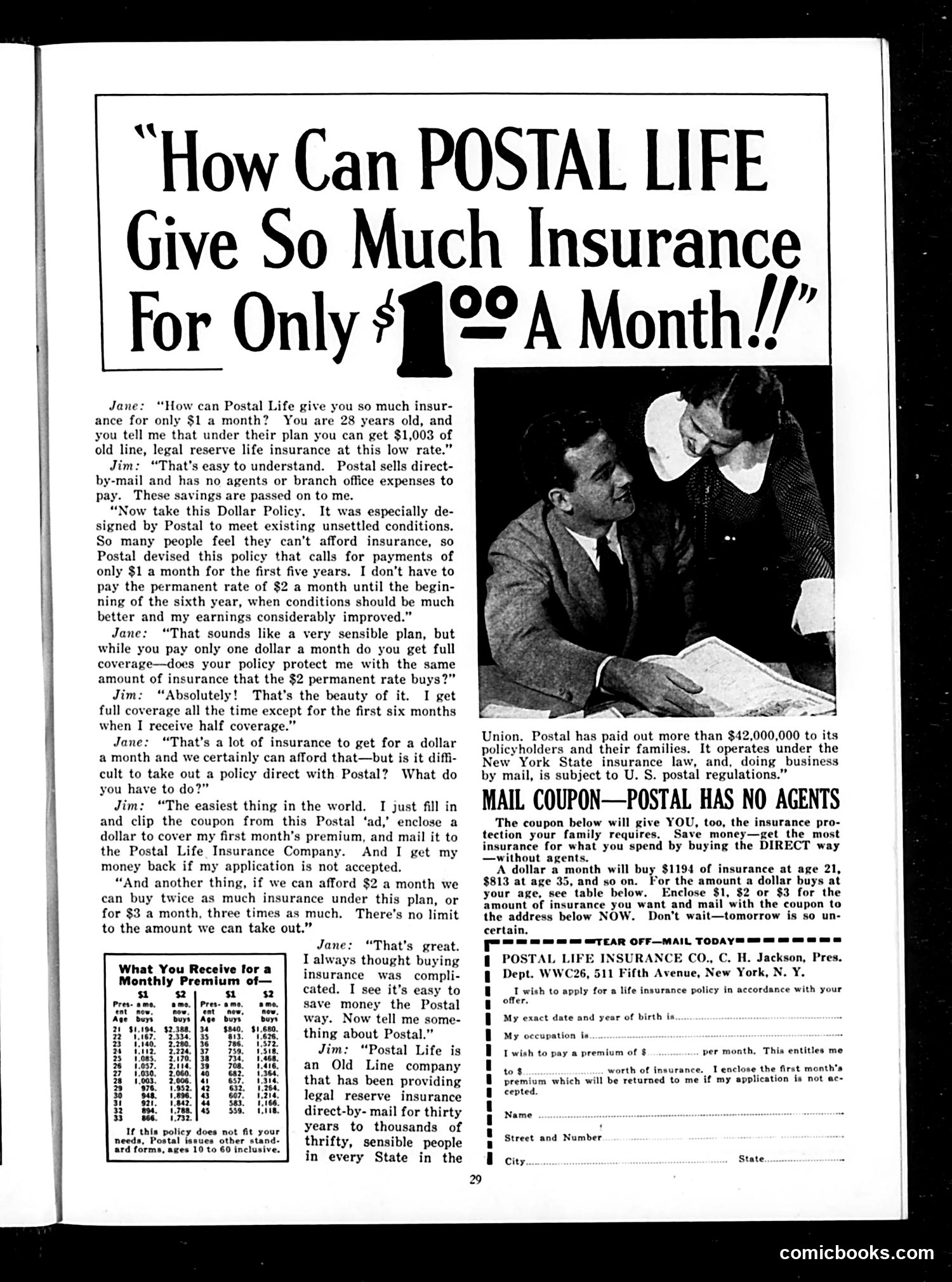
Postal Life Insurance Advertisement This page is primarily a mail-order insurance advertisement, not political satire. It presents a dialogue between "Jane" and "Jim" promoting Postal Life Insurance Company's "$1 per month" policy. The pitch emphasizes how direct-mail sales eliminate middleman costs (no agents, branch offices), allowing Postal to undercut traditional insurance companies. The "Dollar Policy" offers full coverage for $1/month for five years, then $2/month thereafter—appealing to Depression-era consumers who felt insurance was unaffordable. The advertisement includes a mail-in coupon encouraging immediate purchase. A photograph shows a man and woman examining documents, reinforcing the "easy, direct" sales approach. This represents early direct-response advertising, using dialogue and coupons to reach budget-conscious readers. The satire, if any, is mild—simply mocking traditional insurance complexity rather than targeting political figures or events.
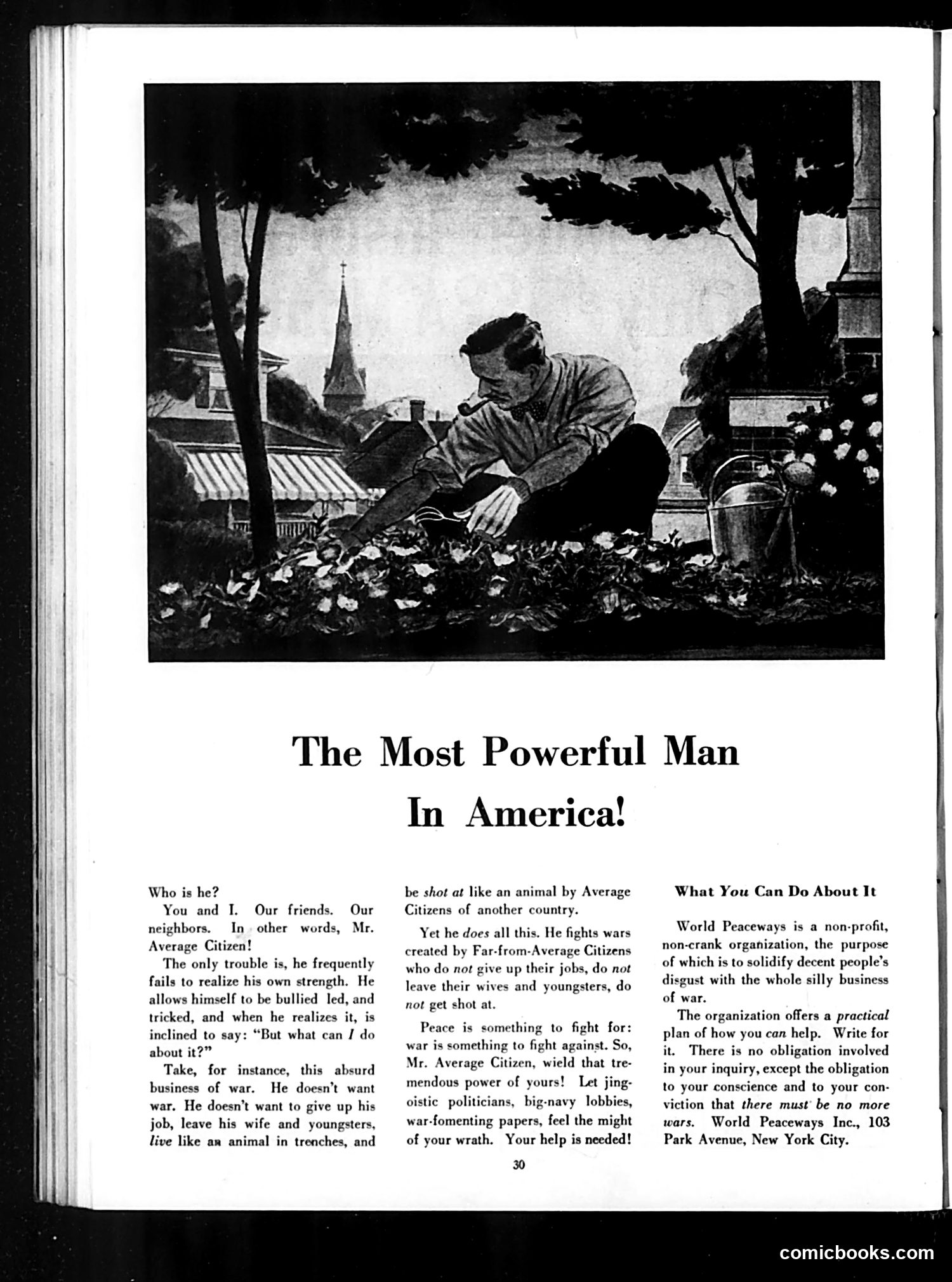
"The Most Powerful Man in America!" — Analysis This is anti-war propaganda disguised as empowerment messaging. The cartoon depicts an "Average Citizen" tending a garden while politicians wage war—illustrating the central argument: ordinary people don't want war but are conscripted to fight and die, while wealthy elites and politicians ("Far-from-Average Citizens") remain safe at home, profiting from conflict. The satire targets the hypocrisy of war-making: average citizens sacrifice jobs, families, and lives in trenches while decision-makers face no such costs. The piece argues ordinary people possess latent political power if they'd recognize it and mobilize against "jingoistic politicians, big-navy lobbies, war-fomenting papers." The advertisement for World Peaceways Inc. positions pacifism as a practical solution, appealing to readers' conscience. This appears to be anti-interventionist propaganda, likely from the interwar period when American isolationism was contested.
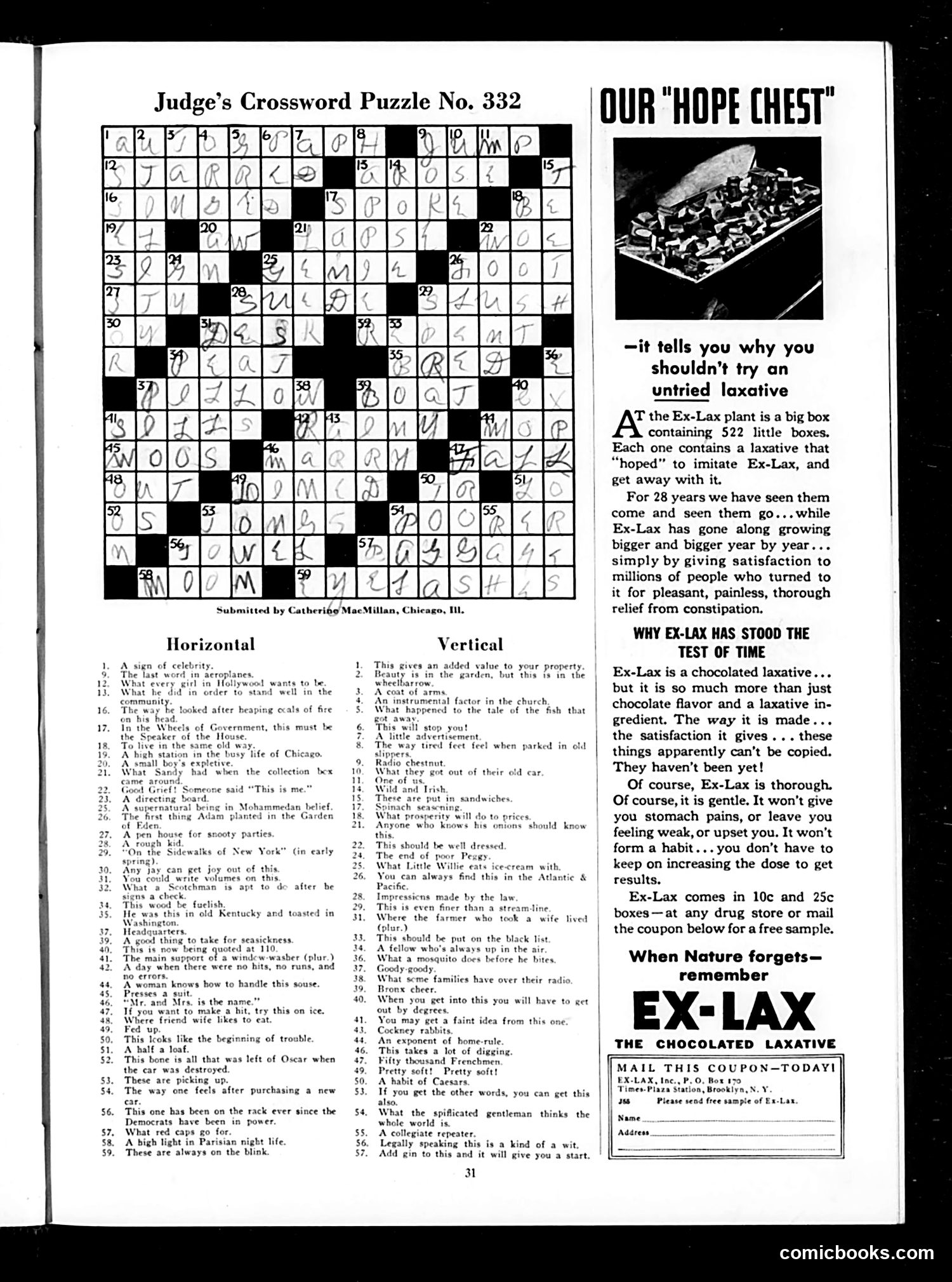
Judge Magazine Page 332 Analysis This page contains Judge's Crossword Puzzle No. 332 (submitted by a Chicago reader) and a full-page Ex-Lax laxative advertisement. The crossword itself is a standard puzzle with no apparent political satire—the clues reference everyday 1930s-1940s life and common phrases. The advertisement is the page's notable content. Ex-Lax markets itself against competitors by claiming superiority through longevity and reliability. The "Hope Chest" imagery (showing a box containing 522 smaller boxes) humorously suggests competitors have tried and failed to replicate Ex-Lax's formula for 28 years. The ad emphasizes Ex-Lax's gentle effectiveness, absence of dependency, and palatability as chocolate, positioning it as the trusted, proven choice for constipation relief. This represents typical mid-20th-century pharmaceutical advertising that made direct health claims now prohibited by regulation.
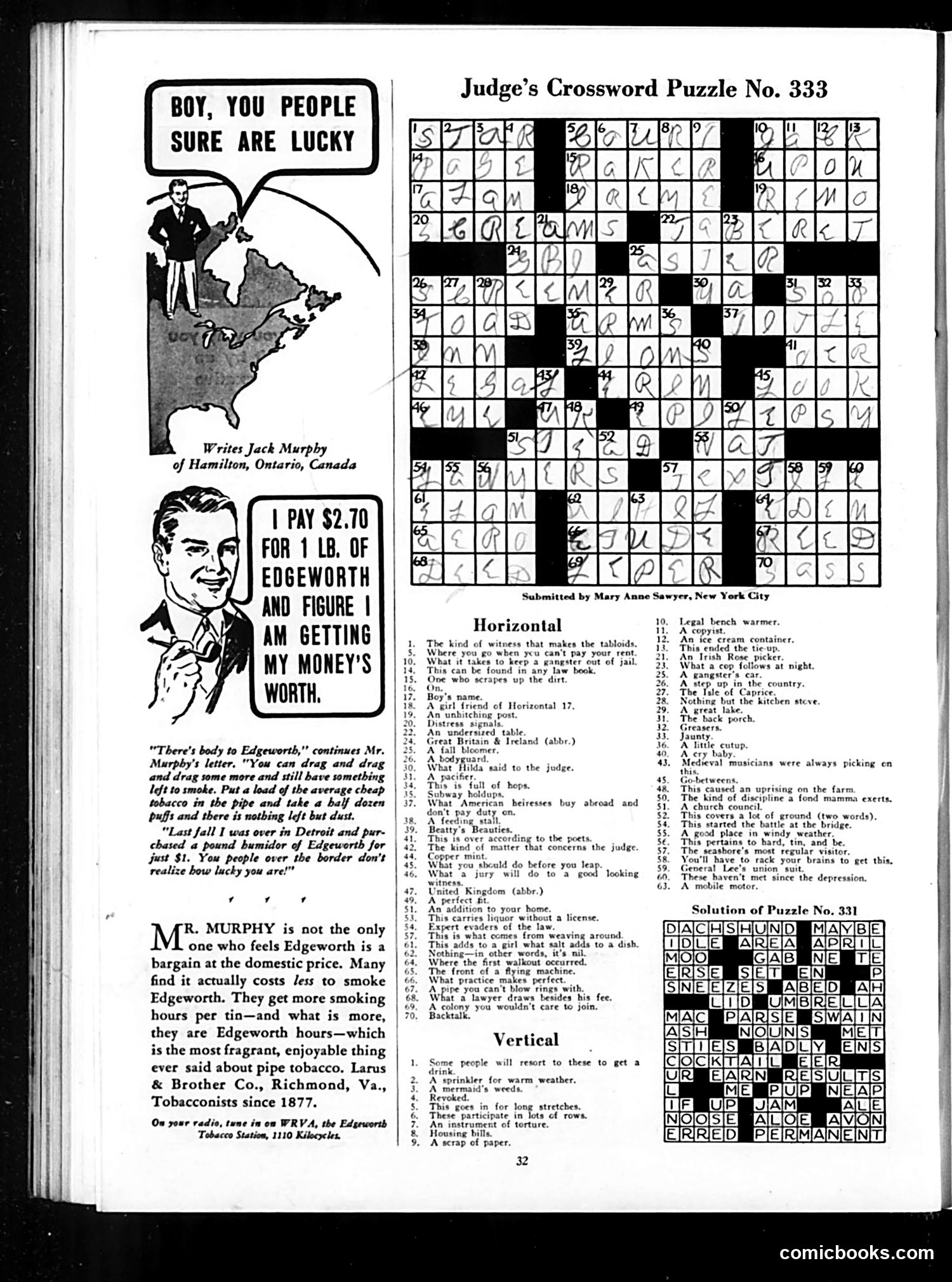
Edgeworth Tobacco Advertisement with Crossword Puzzle This page combines a tobacco advertisement with a crossword puzzle—typical Judge magazine content from the early-to-mid 20th century. The cartoon features a Canadian man praising Edgeworth pipe tobacco, claiming he overpaid for it in Detroit ($1 for a pound) compared to the domestic price of $2.70 per pound, yet still considers it a bargain because it smokes longer and better than cheaper brands. The advertiser's point: Edgeworth provides superior value despite higher cost. The crossword puzzle below, submitted by a reader, contains clues heavy with Prohibition-era and gangster references—"gangster's car," "carries liquor without a license," "underworld" figures—reflecting 1920s-30s American anxieties about organized crime and illegal drinking. Together, the page represents Judge's mix of advertising, reader participation, and satirical social commentary on contemporary American life.
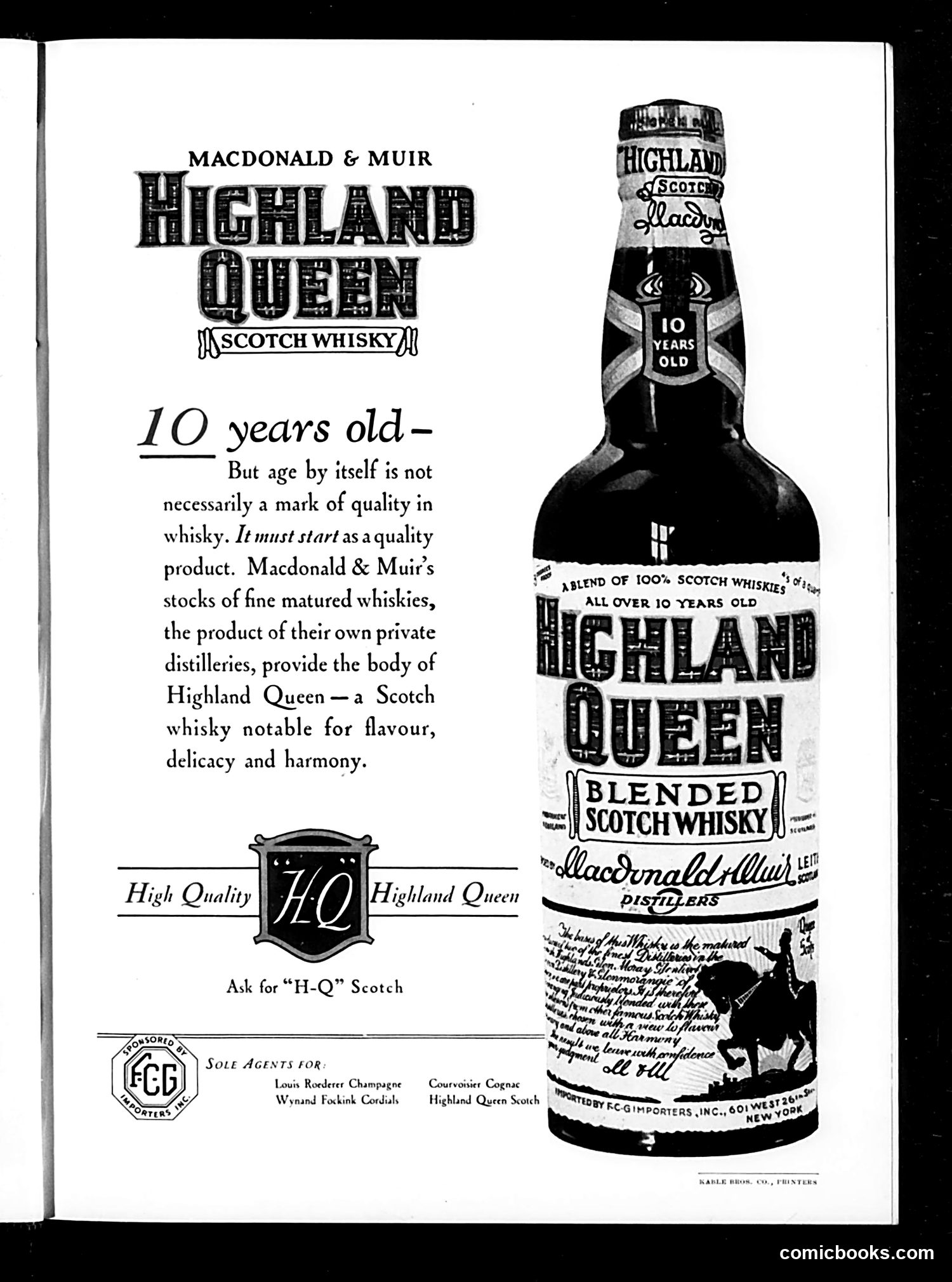
Highland Queen Scotch Whisky Advertisement This is a full-page advertisement, not a cartoon or satirical content. It promotes Highland Queen Scotch Whisky by Macdonald & Muir, a 10-year-old blended Scotch. The ad's central argument addresses a marketing challenge: age alone doesn't guarantee quality whisky—it must *start* as a quality product. The company emphasizes its own private distilleries and carefully matured stocks to establish credibility. The page includes a large product bottle image and branding (the "HQ" Highland Queen shield logo). At the bottom, it lists sole agents for various premium spirits, positioning Highland Queen among prestigious imports like Louis Roederer Champagne and Courvoisier Cognac. This appears in *Judge* magazine likely as a paid advertisement targeting affluent readers during the post-Prohibition era (whisky advertising resumed in American publications after 1933).
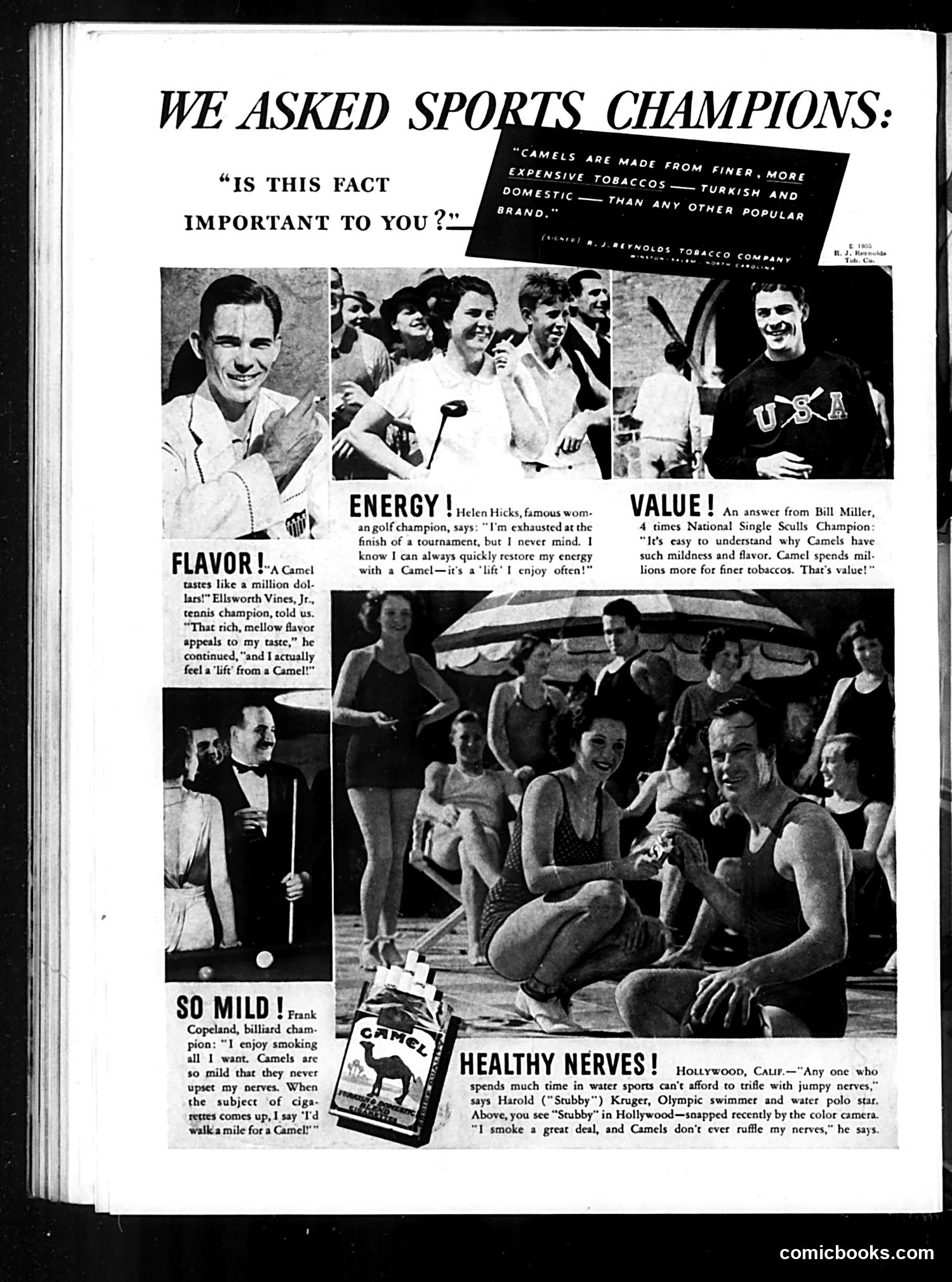
Analysis This is not satire—it's a straightforward cigarette advertisement disguised as editorial content in *Judge* magazine. The page features testimonials from real 1930s athletes (tennis champion Ellsworth Vines Jr., billiard champion Frank Copeland, golfer Helen Hicks, and Olympic swimmer Harold "Stubby" Kruger) endorsing Camel cigarettes. Each athlete claims cigarettes provide specific benefits: flavor, energy restoration, mildness that doesn't upset nerves, and overall "healthy nerves." The advertisement exploits athletes' credibility to market cigarettes to the public by associating smoking with athletic performance and wellness—claims now understood as false and harmful. This represents a common 1930s advertising practice: paid endorsements by celebrities in editorial-style layouts, before regulations restricted such claims about tobacco products' health benefits. Modern readers would recognize this as misleading advertising that conflates athletic endorsement with product safety.