judge
Judge — September 1935
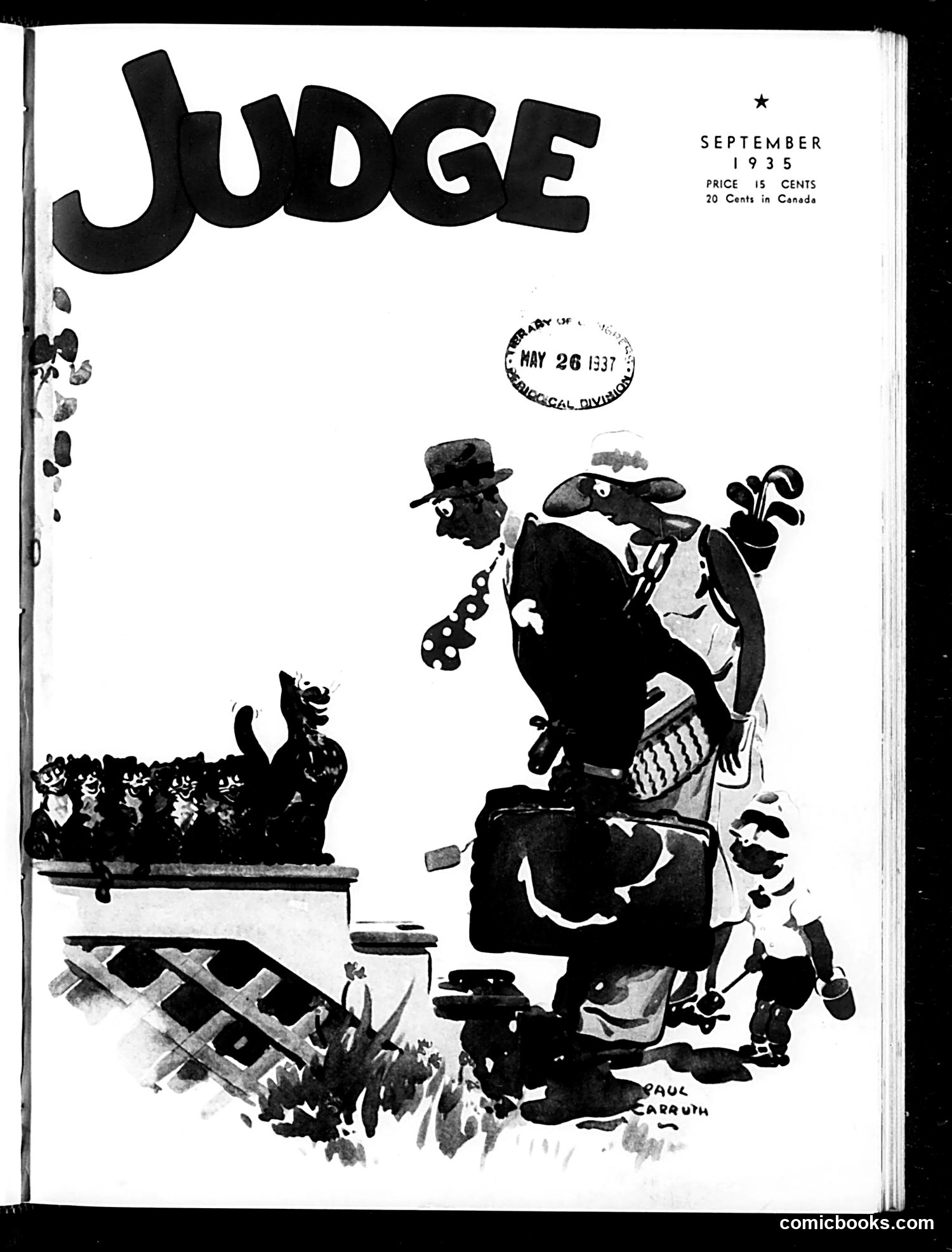
Judge Magazine, September 1935 This cover illustration by Paul Barruh depicts a well-dressed man (appearing to be a wealthy businessman or politician) struggling under an enormous burden of luggage, golf clubs, and other possessions while traveling. A group of figures—possibly representing the public or working class—watches from a lower level, with one appearing to offer assistance or commentary. The satire likely addresses economic disparity or criticism of the wealthy during the Great Depression era. The excessive baggage may symbolize wealth, privilege, or accumulated possessions that burden even the affluent, or conversely, critique how the wealthy travel with luxuries while others suffer. The composition suggests social commentary on class divisions and economic inequality prevalent in 1935 America.
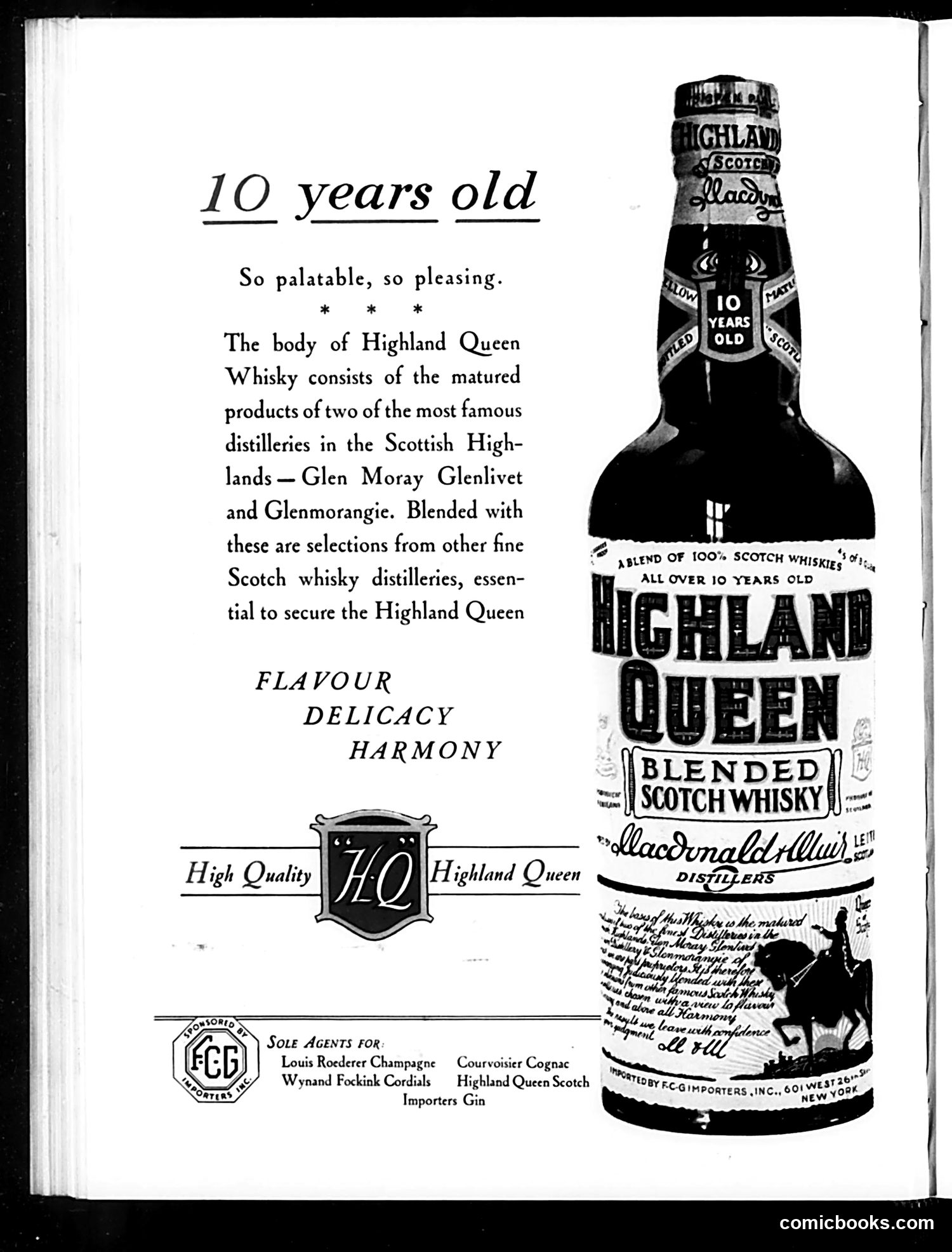
Highland Queen Whisky Advertisement This is primarily a commercial advertisement, not political satire or cartoon content. It promotes Highland Queen, a 10-year-old blended Scotch whisky, emphasizing its quality through: - Claims of palatability and refined taste ("Flavour Delicacy Harmony") - Blend composition from famous Scottish distilleries (Glen Moray Glenlivet and Glenmorangie) - The "HQ" (High Quality) branding The page includes a product bottle image and distributor information for FC Ginportters, Inc. in New York. There is no political cartoon or satire present—this is straightforward vintage advertising from Judge magazine, likely from the mid-20th century when Scotch whisky marketing was prominent in American publications. The aesthetic reflects period advertising conventions rather than commentary.
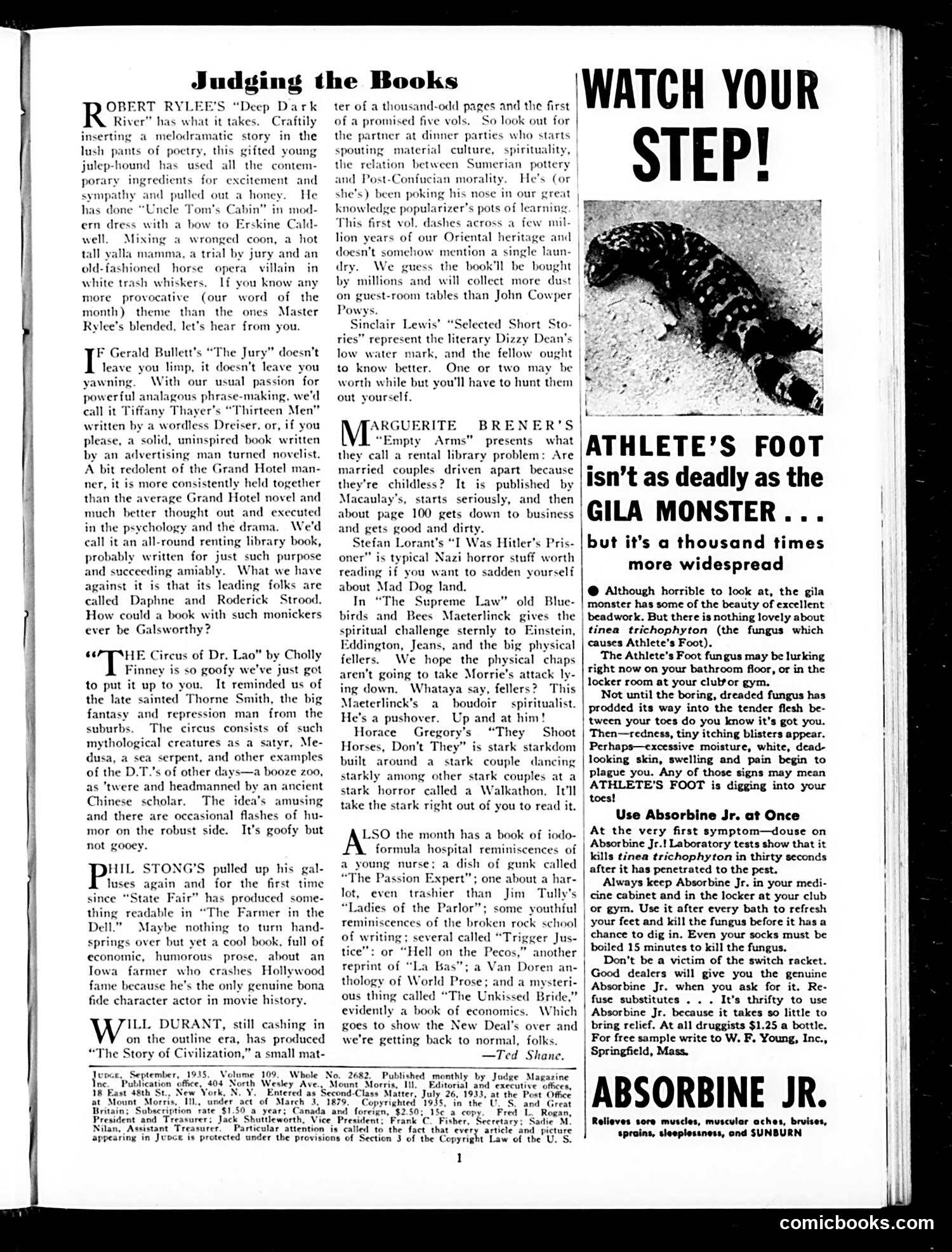
Page Analysis: Judge Magazine Book Reviews (September 1935) This page comprises mostly book reviews with one substantial advertisement for Absorbine Jr., a liniment product. The reviews satirize contemporary literature with typical Judge humor—mocking pretentious or poorly-written works. References include Sinclair Lewis's "Selected Short Stories," Marguerite Brener's "Empty Arms" (criticized as a rental library problem), and Stefan Lorant's "I Was Hitler's Prisoner." The prominent advertisement features a "GILA MONSTER" warning, using the dangerous reptile as hyperbole to explain that while athlete's foot appears minor, it spreads rapidly and requires immediate treatment with Absorbine Jr. The page reflects 1930s consumer anxiety about health conditions and satirical dismissal of middlebrow literature typical of Judge's editorial voice.
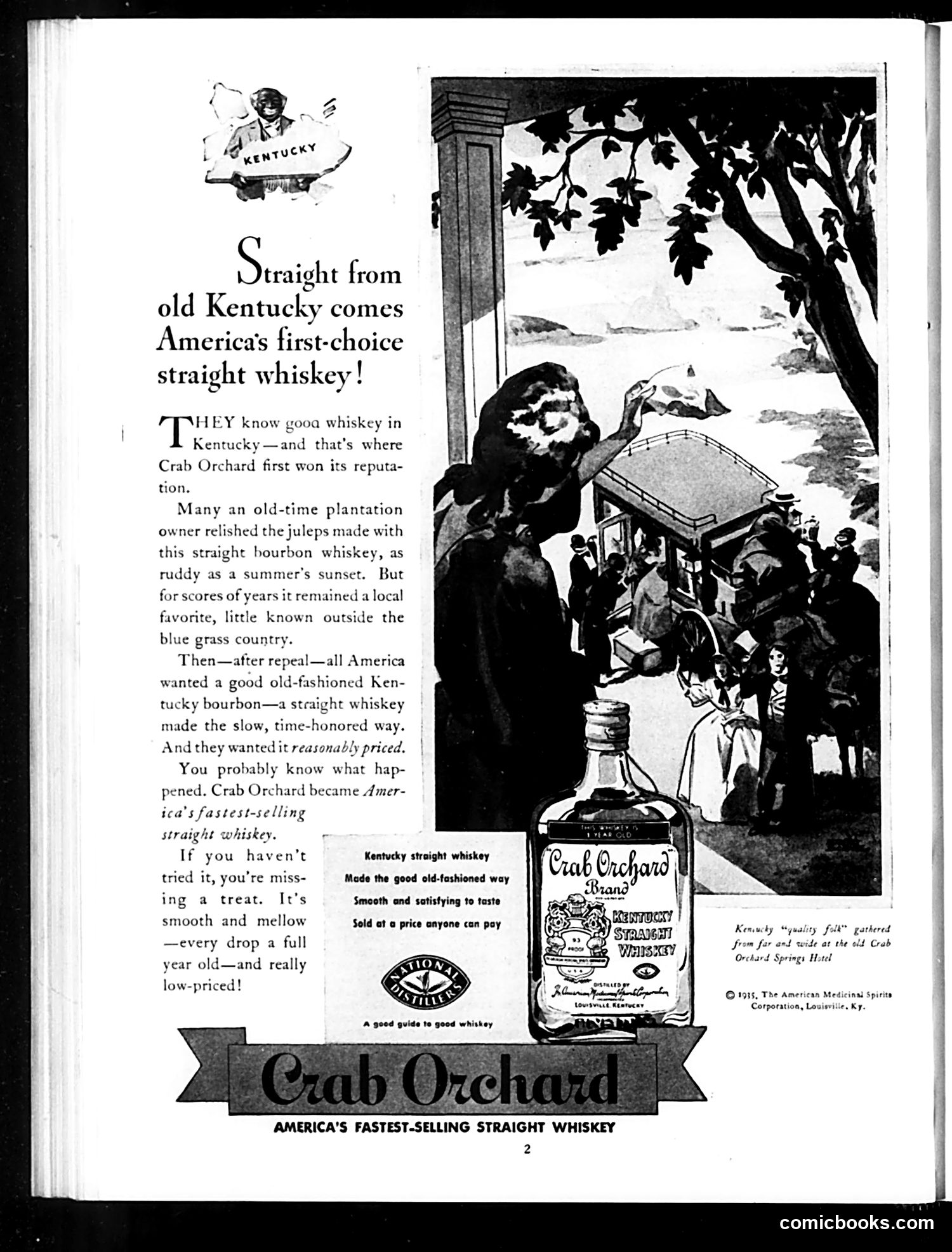
Content Analysis This page is primarily an advertisement, not satire or editorial content. It promotes Crab Orchard, a Kentucky straight bourbon whiskey claimed to be "America's fastest-selling straight whiskey." The ad includes a narrative explaining Crab Orchard's origin: it was allegedly a local Kentucky favorite for years, then became nationally popular after Prohibition ended ("after repeal"). The advertisement emphasizes the product's quality, affordability, and traditional production methods ("slow, time-honored way"). The imagery shows what appears to be a historical scene at a plantation or springs, likely referencing the whiskey's Kentucky heritage and establishing brand legitimacy through nostalgic Americana. The bottle label and branding are prominently displayed. This is commercial content rather than political satire.
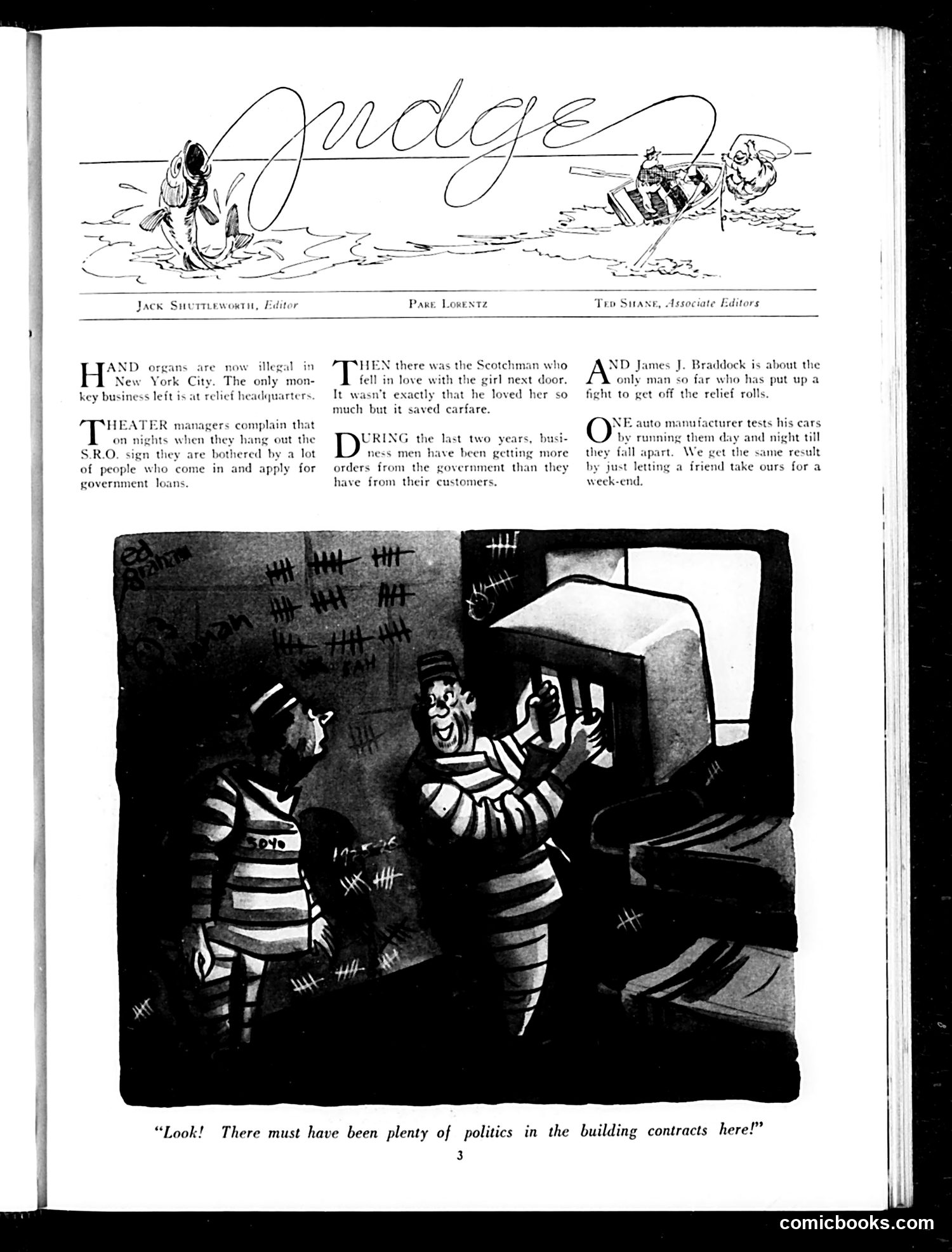
Judge Magazine Page Analysis This page contains four separate humorous items: Top text items satirize contemporary issues: hand organs being illegal in New York (affecting street musicians' livelihoods), theater managers seeking S.R.O. relief during wartime, and business men receiving more government orders than customers during the preceding two years. Main cartoon depicts two prisoners in a cell (marked with tally marks indicating long incarceration). One exclaims about "politics in the building contracts," suggesting corruption in construction projects—likely referencing wartime contract scandals. The cartoon satirizes how political favoritism and bribery influenced government spending, particularly during WWI-era military and infrastructure projects, allowing corrupt officials to profit while honest businesses suffered. The humor targets systemic governmental corruption rather than specific named individuals.
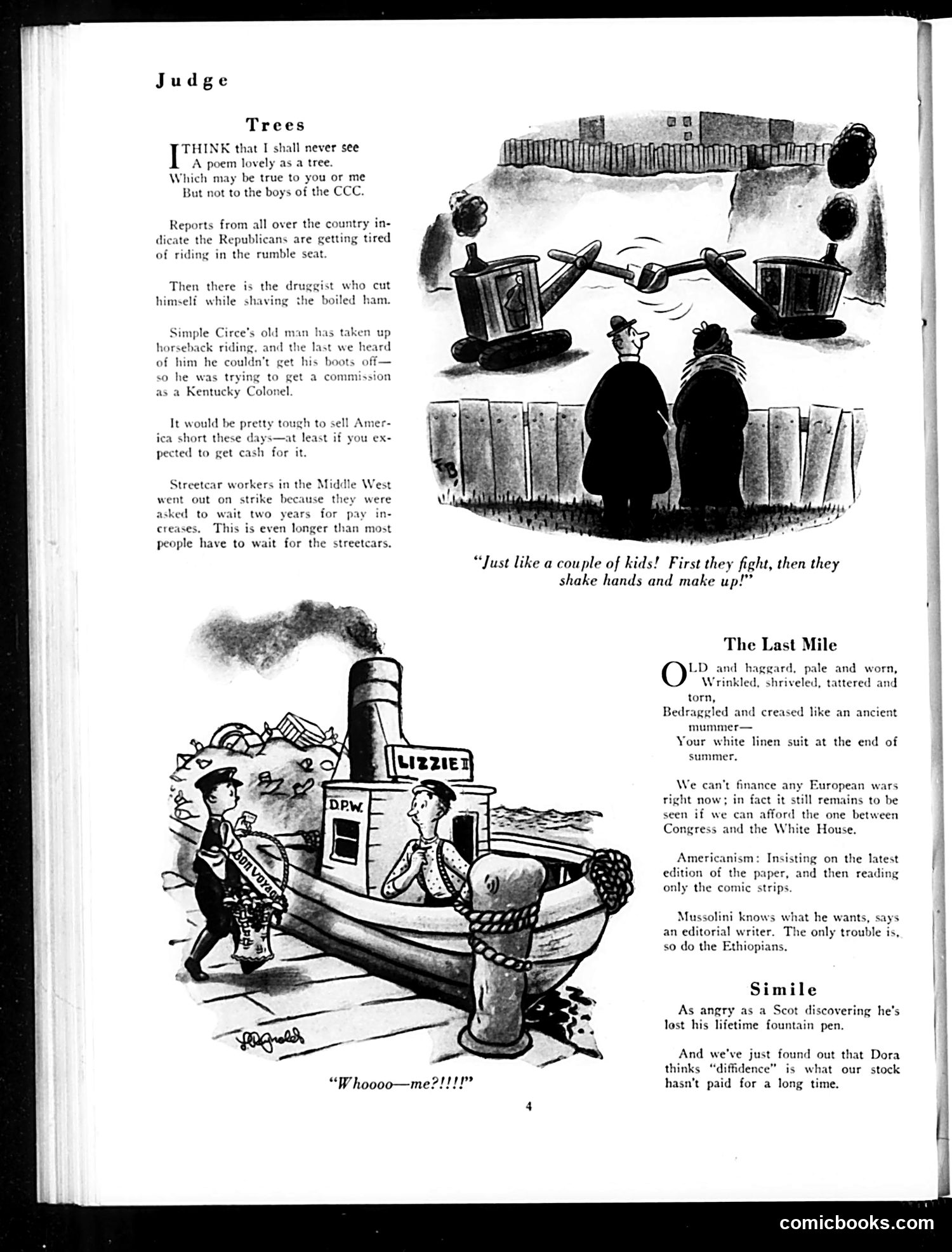
Analysis of Judge Magazine Page This page contains political and social satire from an unspecified era (likely early-to-mid 20th century based on style). "Trees" mocks Republican Party leadership as out-of-touch, referencing the "rumble seat" (a car's rear seat) and mentions of the CCC (Civilian Conservation Corps), suggesting criticism of their handling of labor and economic issues. "The Last Mile" cartoon shows a ship labeled "LIZZIE" (unclear reference, possibly a ship name) with figures appearing distressed. The caption "Whoooo-me?!!!!" suggests panic or evasion of responsibility. "The Last Mile" text critiques American politics and international affairs, mentioning European wars, Congress, the White House, Mussolini, and Ethiopians—suggesting commentary on 1930s fascism and isolationism. Other brief satirical items mock American cultural habits and financial matters.
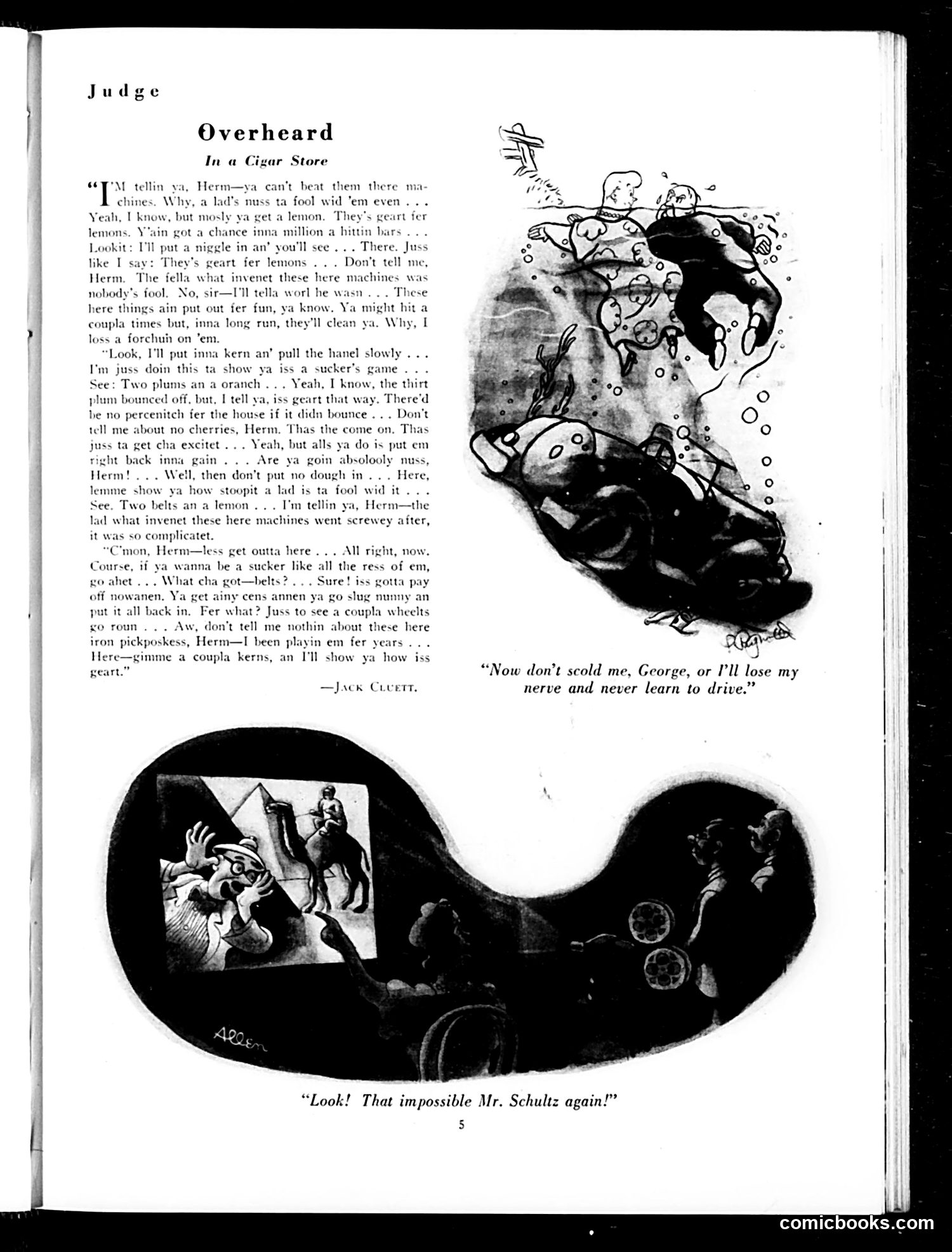
Analysis of Judge Magazine Page This page contains two distinct cartoons satirizing early automotive culture. Top cartoon: A cigar store conversation where one man boasts about newfangled automobiles to "Herm," claiming they're superior to horses. The speaker appears to be a know-it-all salesman type, while Herm expresses skepticism about these unreliable machines. The satire targets early car enthusiasts' overconfidence in primitive automobile technology. Bottom cartoon ("Look! That impossible Mr. Schultz again!"): Shows a car's interior view where Mr. Schultz apparently performs an dangerous or reckless stunt while driving. The joke mocks a specific person known for driving foolishly—likely a local figure or recurring character in Judge's readership. Both cartoons mock automobile culture's dangers and the overconfidence of early motorists, reflecting widespread public skepticism about cars' reliability and safety in the automobile's infancy.
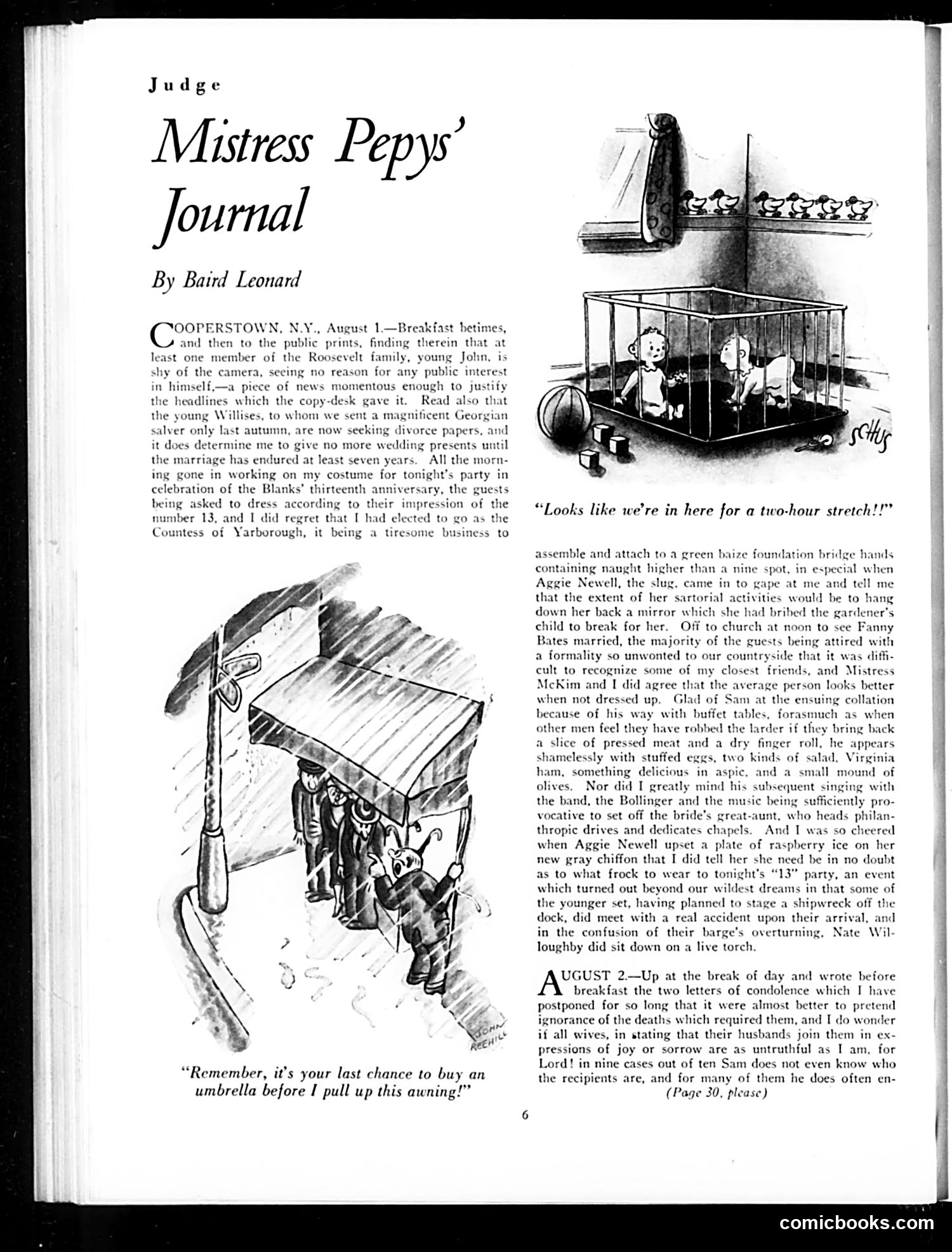
Analysis of "Mistress Pepys' Journal" by Baird Leonard This is a humorous society column satirizing the social activities of wealthy New York families in August. The text mocks: Social pretensions: The author describes attending various upper-class events (weddings, parties, church outings) with elaborate detail and commentary on guests' behavior. The cartoons illustrate everyday social awkwardness: one shows someone selling umbrellas at what appears to be a boat dock (likely satirizing opportunistic vendors), and another depicts children in a playpen with the caption about a "two-hour stretch"—mocking the confining nature of proper child-rearing. The column's title alludes to Samuel Pepys' famous 17th-century diary, suggesting this is mock-historical documentation of trivial society moments. The satire targets the pretentiousness and mundane concerns of Manhattan's wealthy elite.
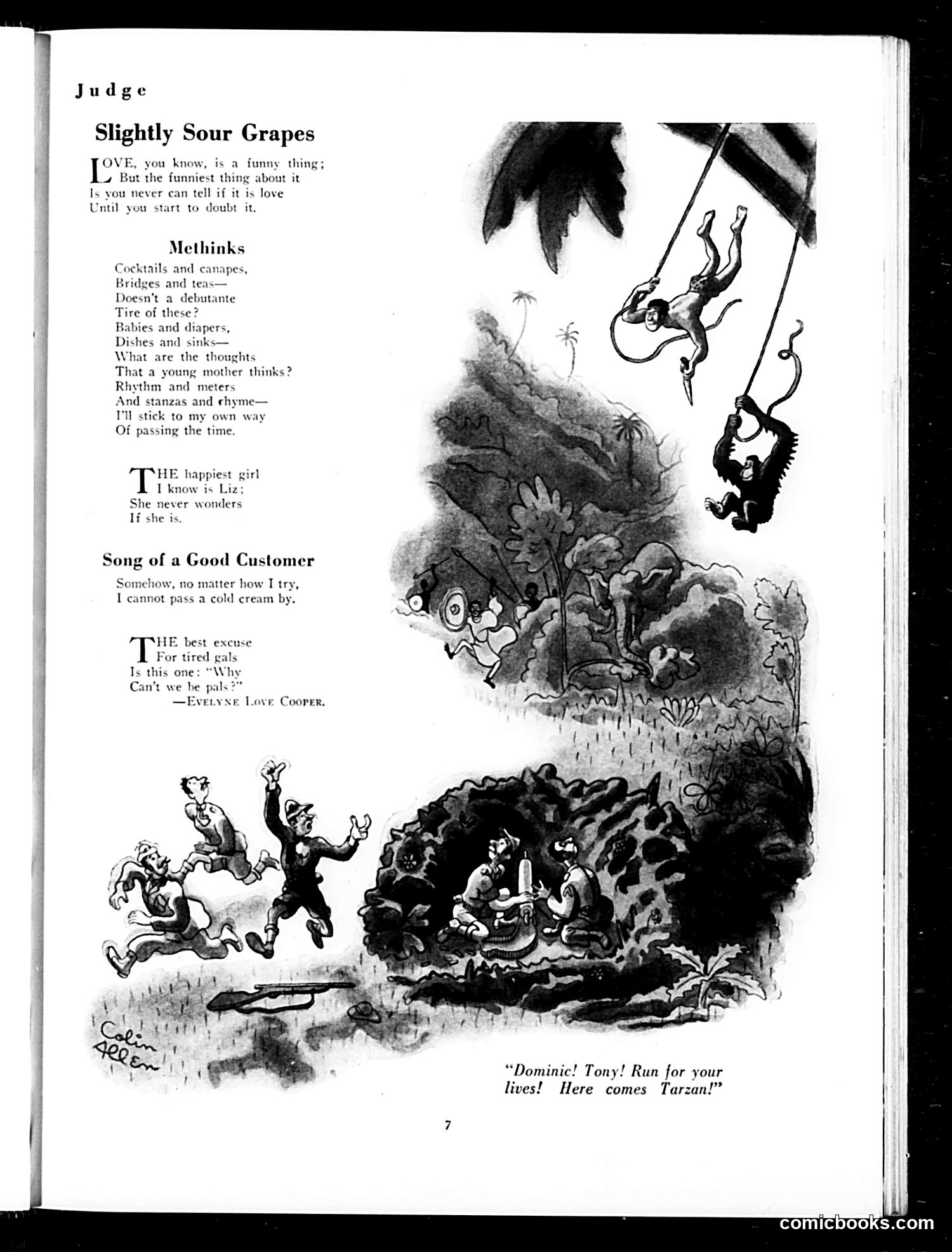
Analysis of Judge Magazine Page This page from Judge contains several humorous verses and illustrations satirizing domestic and social life. "Slightly Sour Grapes" jokes about love's deceptiveness—appearing funny until doubt creeps in. "Methinks" catalogs a young mother's exhausting mental preoccupations (cocktails, household chores, poetry) to satirize the scattered thoughts of modern housewives juggling social obligations and domestic duties. "Song of a Good Customer" humorously complains about passing up cold cream—likely mocking consumer culture and women's beauty product purchases. The lower cartoon depicts men fleeing in panic from what appears to be a cave or gathering, with the caption referencing "Tarzan"—likely a comedic allusion to contemporary popular culture, though the specific satire is unclear without additional context. Overall, the page targets domestic life, consumer behavior, and entertainment trends.
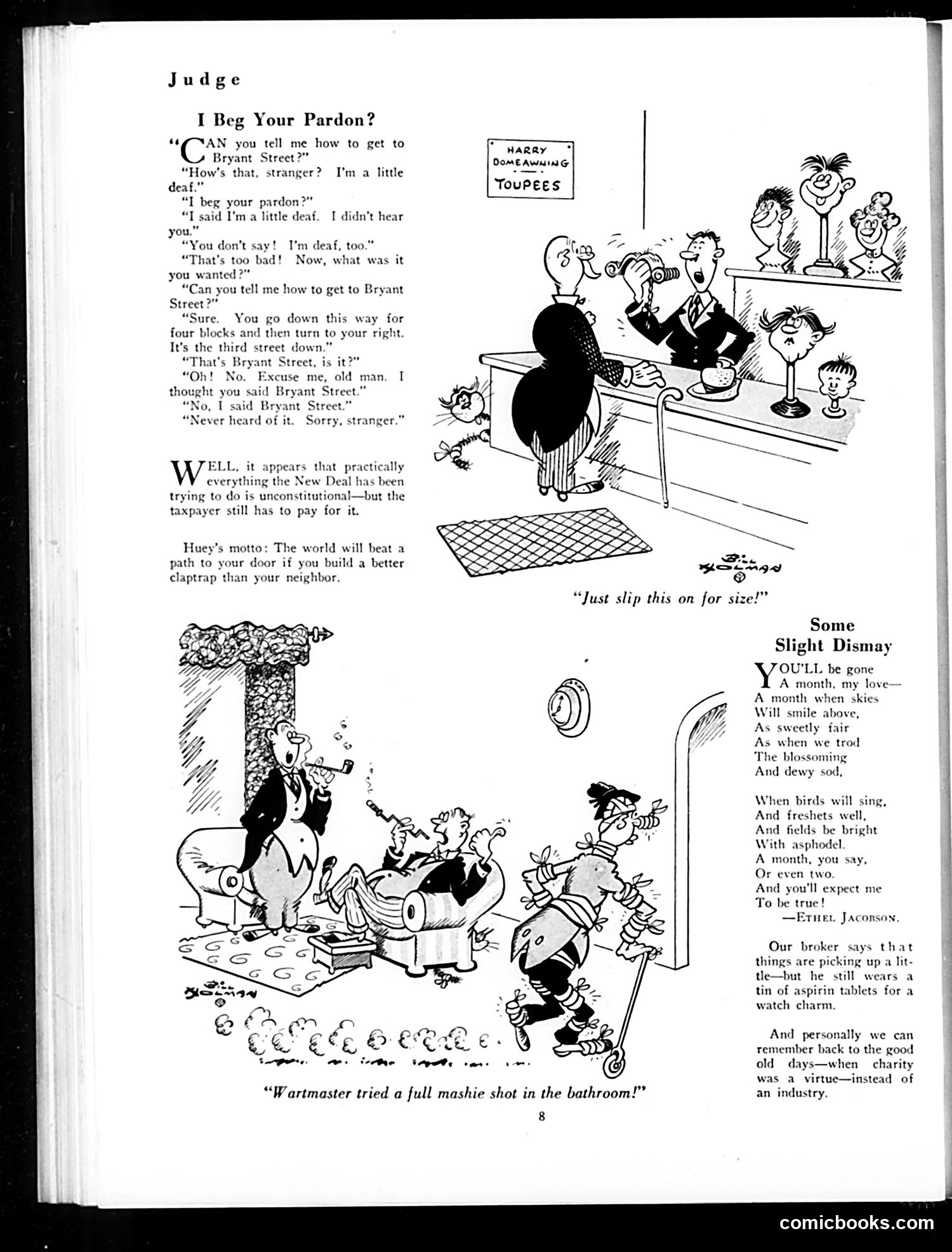
Analysis for Modern Readers This page from *Judge* contains multiple satirical pieces from the New Deal era (likely 1930s): "I Beg Your Pardon?" is a straightforward comedy dialogue where two deaf men repeatedly misunderstand each other about Bryant Street directions—a simple absurdist humor piece with no political content. The editorial commentary critiques Franklin D. Roosevelt's New Deal programs, sarcastically asserting they're "unconstitutional" while taxpayers must still fund them. This reflects conservative opposition to New Deal expansion of federal government power. "Huey's motto" mocks Louisiana Senator Huey Long, a populist politician who challenged FDR. The jab suggests his political appeals were merely "claptrap"—empty, dishonest rhetoric. "Some Slight Dismay" is a romantic poem about a woman's infidelity concerns during her lover's month-long absence. The remaining items are brief economic observations about stock market recovery and nostalgia for pre-Depression charity culture, presenting conservative, skeptical views of contemporary economic conditions.
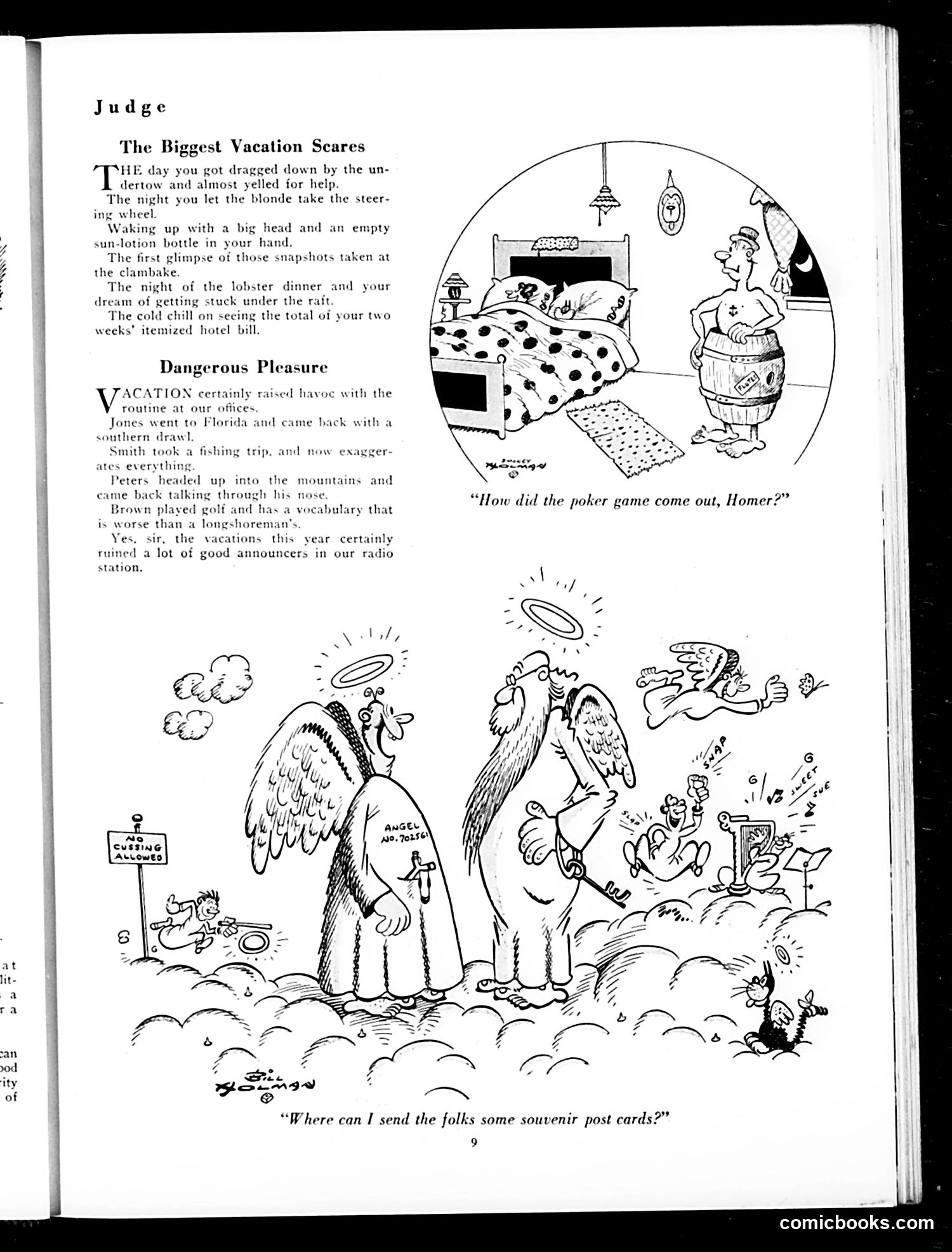
Judge Magazine Satire Analysis This page presents two humorous pieces about vacation mishaps aimed at 1920s-30s readers. "The Biggest Vacation Scares" lists common vacation anxieties: undertow dangers, letting a date drive, hangovers, unflattering photographs, food poisoning fears, and—most pointedly—the shock of itemized hotel bills. The humor targets the emerging middle-class vacation culture and its hidden costs. "Dangerous Pleasure" satirizes how vacations change office workers' personalities: Jones returns with an affected Southern accent, Smith exaggerates fishing tales, Peters adopts mountain dialect, and Brown's golf trip has corrupted his language worse than a "longshoreman's." The joke mocks how people adopt affectations from brief trips and bore colleagues with exaggerated vacation stories. The bottom cartoon shows angels struggling to send postcards from heaven—a gentle afterlife joke about vacation obligation (the tedium of sending souvenirs). The satire targets vanity, pretension, and the emerging consumer culture around leisure travel.
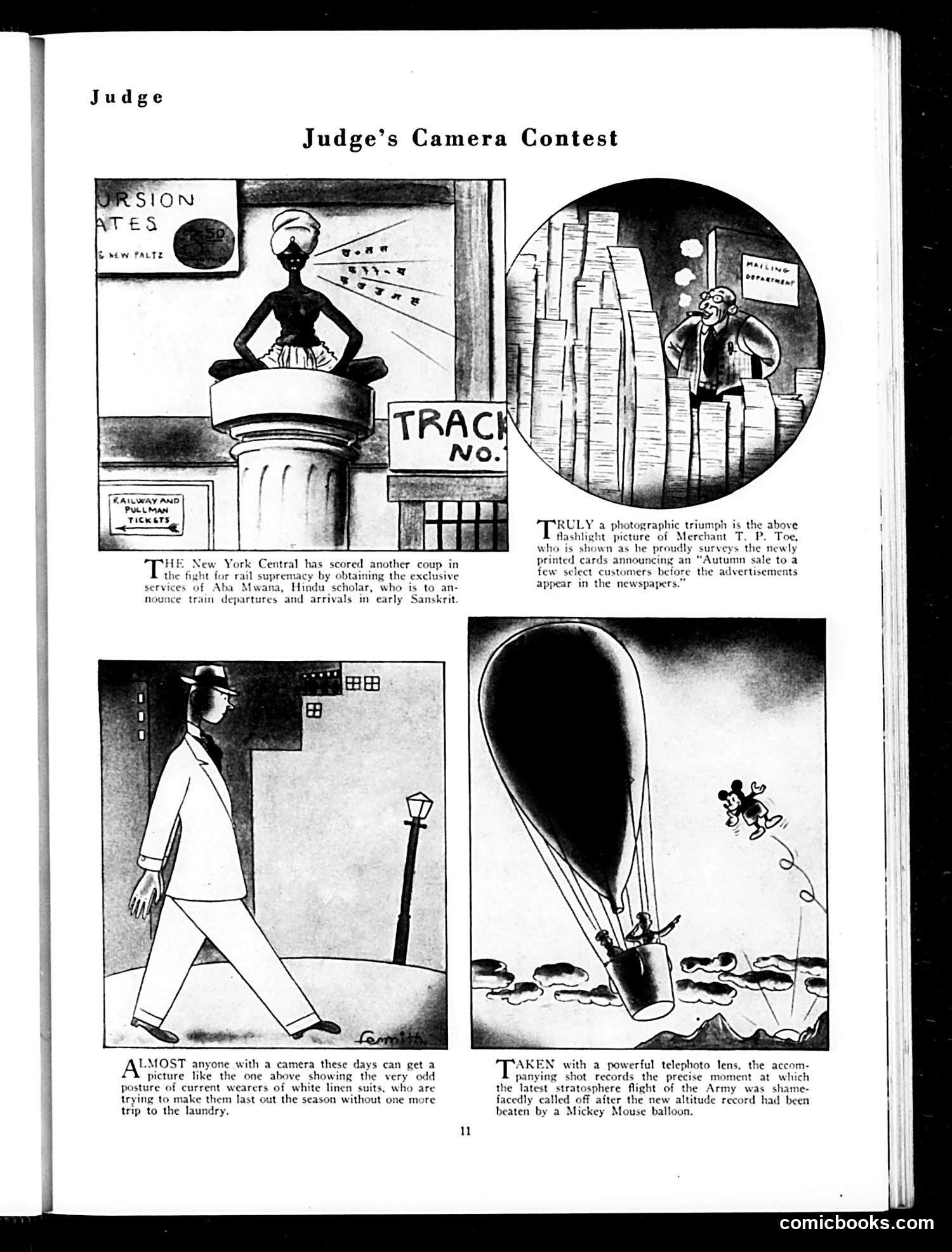
Judge's Camera Contest This page showcases humorous photographs submitted to Judge magazine's contest, with satirical captions. The top cartoon celebrates the New York Central Railroad's coup in hiring Asa Muana, described as a Hindu scholar who announces train schedules in Sanskrit—a joke about the railroad's pretentious modernization efforts. Below, two cartoons mock contemporary fashion and news. One ridicules men wearing white linen suits repeatedly without laundering, suggesting excessive vanity and poor hygiene. The final image, taken with a telephoto lens, depicts a Mickey Mouse balloon floating above a crashed military aircraft, satirizing the Army's stratosphere altitude record being beaten by a toy balloon—mocking military incompetence and the absurdity of losing to something so trivial. The overall tone is lighthearted social commentary on fashion, transportation, and national pride.
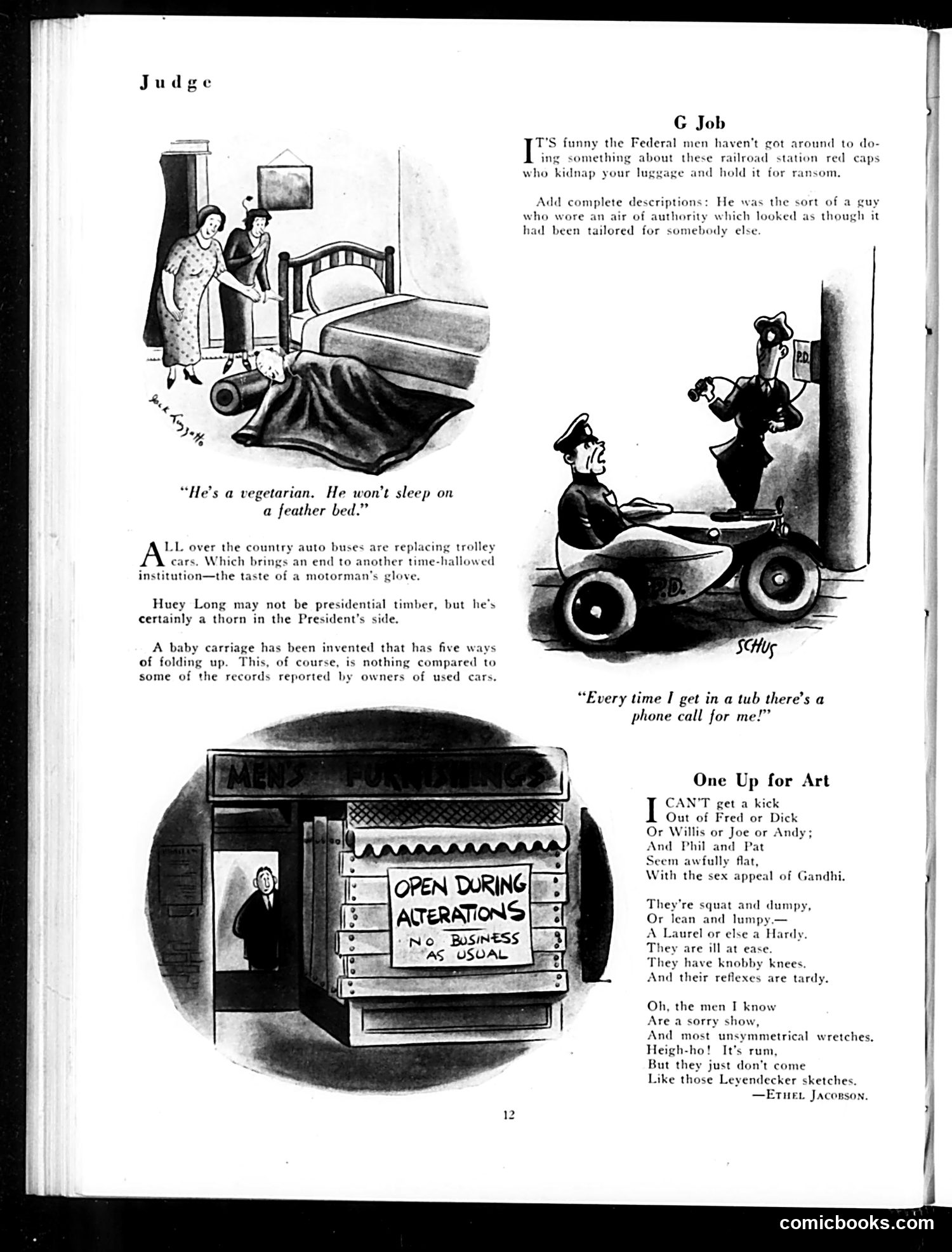
Judge Magazine Page Analysis This page from Judge contains several satirical commentaries on 1930s American life: "G Job" mocks railroad station porters ("red caps") who allegedly extort travelers by holding luggage hostage. The accompanying sketch humorously describes a pompous official type wearing unearned authority. Social commentary includes jabs at: replacing trolleys with buses (losing the "taste of a motorman's glove"—likely referring to confrontational interactions); Huey Long as a political thorn in FDR's side; and automobile reliability issues. "One Up for Art" is a poem by Ethel Jacobson criticizing contemporary male celebrities (Fred, Dick, Willis, Joe, Andy, Phil, Pat—likely 1930s entertainers) as physically unattractive compared to idealized male figures in commercial advertising, particularly Leyendecker sketches (referencing J.C. Leyendecker's famous Arrow collar ads). The poem laments that real men lack the masculine appeal of illustrated advertisements. The cartoons exemplify Judge's signature blend of visual humor and satirical verse targeting everyday frustrations and popular culture.
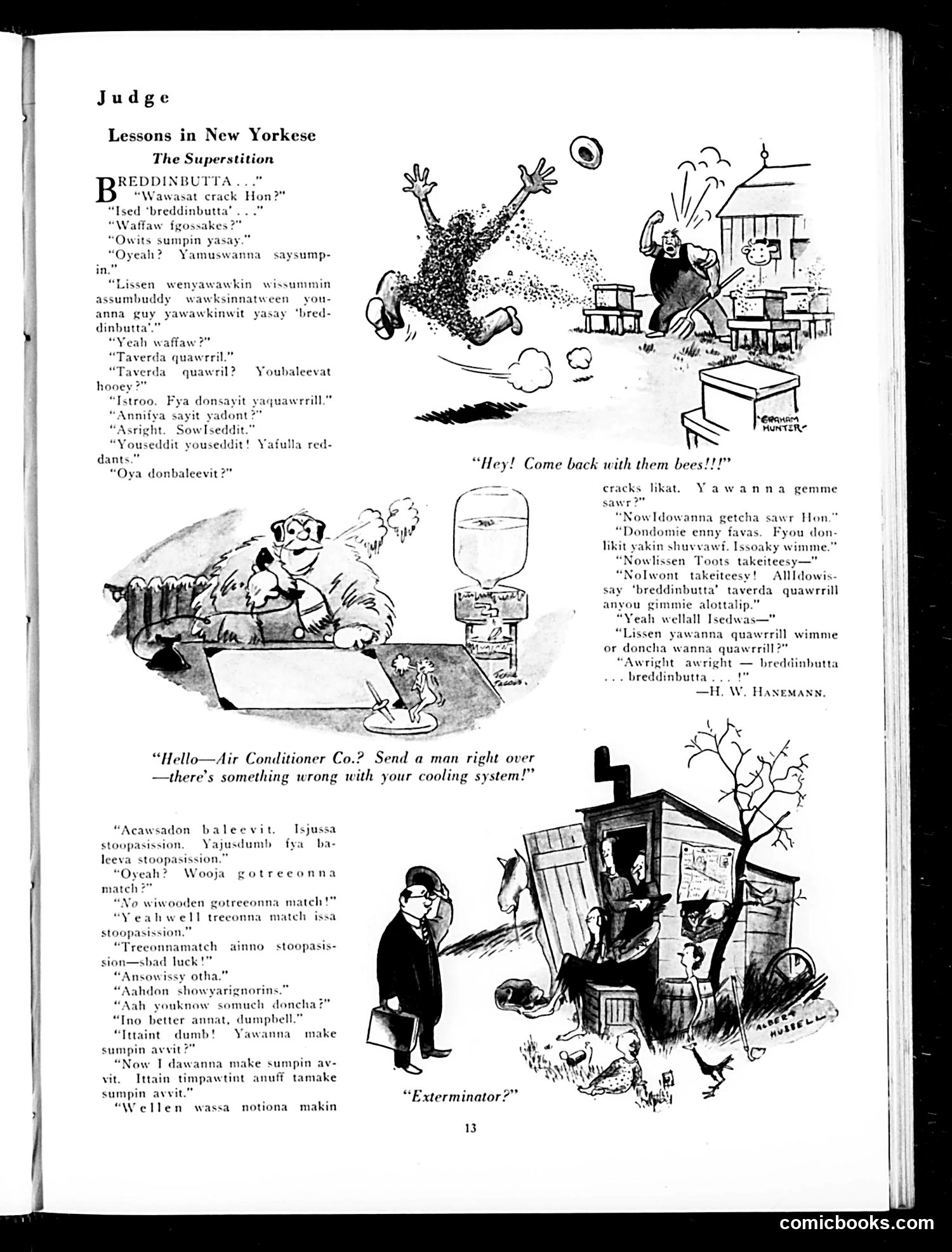
Explanation for Modern Readers This page from *Judge* magazine presents "Lessons in New Yorkese"—satirizing the distinctive accent and speech patterns of working-class New York City residents, likely from the early 20th century. The three cartoons mock New Yorkers through exaggerated dialect and comedic misunderstandings: 1. Top: A domestic dispute over the word "breddinbutta" (Brooklyn butter?), escalating into absurd argument about superstitions. 2. Middle: Someone calling an air conditioner company, blaming supernatural causes rather than mechanical failure—poking fun at superstitious thinking. 3. Bottom: An argument about whether wooden matches are "bad luck," devolving into pointless bickering. The satire targets both the mangled pronunciation ("waffaw," "quawrrill") and the stereotypical combative, argumentative nature attributed to New Yorkers. The humor relies on ethnic/regional mockery common to period satirical magazines, presenting working-class New Yorkers as superstitious, quarrelsome, and linguistically challenged.
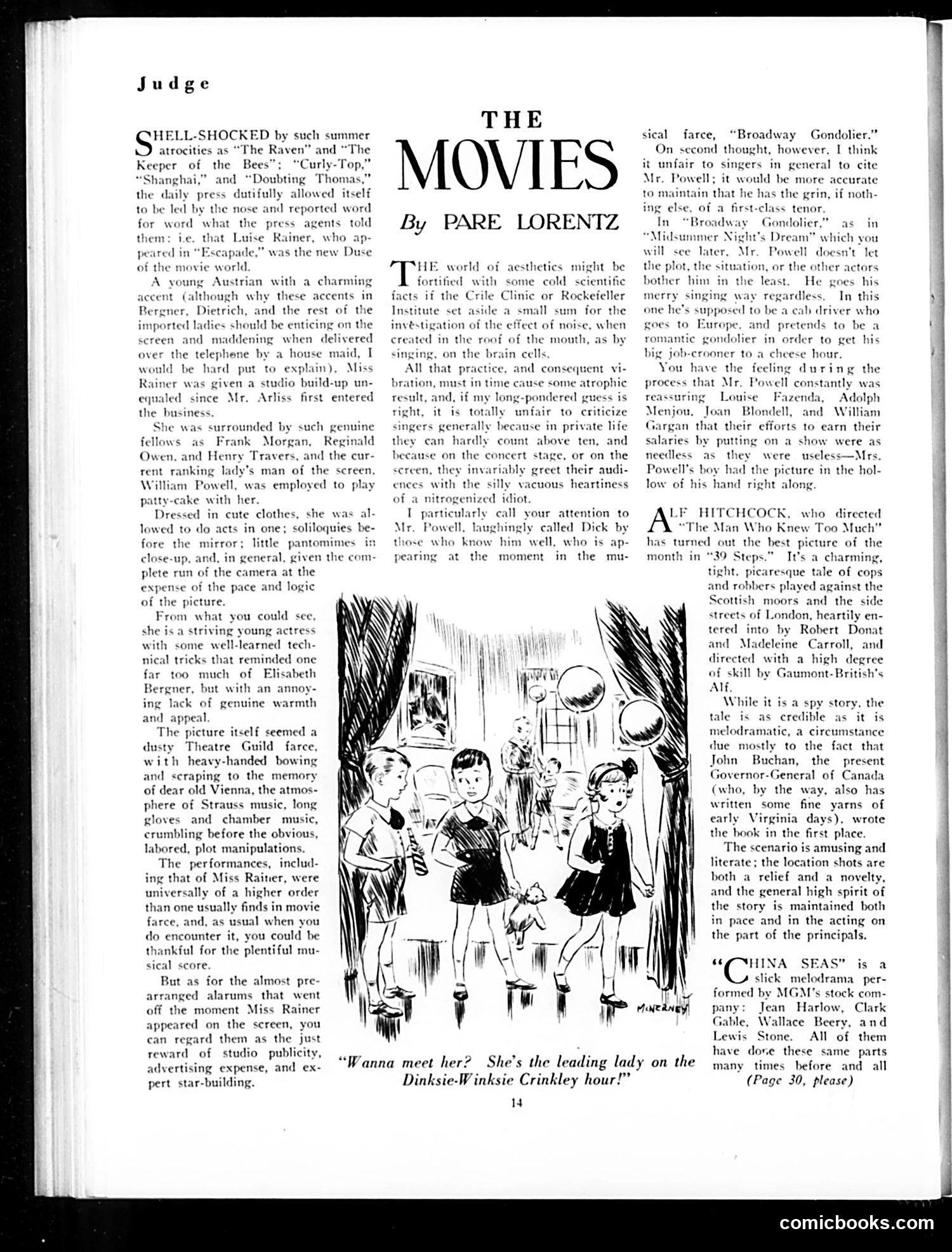
"The Movies" by Pare Lorentz - Judge Magazine Film Criticism This is a film review column criticizing contemporary Hollywood productions and stars. The main target is Luise Rainer, an Austrian actress who received massive studio publicity (a "build-up") for films like "Escapade." Lorentz argues she's an overhyped, technically skilled but emotionally cold performer—comparing her unfavorably to Elisabeth Bergner. The cartoon illustrates a scene from one of these films, showing characters in what appears to be a Viennese theatrical setting (reflecting Hollywood's nostalgia for "old Vienna"). The column also mocks William Powell, a popular male lead, as a vapid performer who ignores plot to deliver an inane, grinning persona—even in "Broadway Gondolier," where he's supposedly a cab driver pretending to be a gondolier. Lorentz's broader critique: studio "star-building" and excessive publicity create undeserved reputations for mediocre actors. The satire targets both the film industry's manufactured celebrity and critics' complicity in amplifying press-agent narratives.
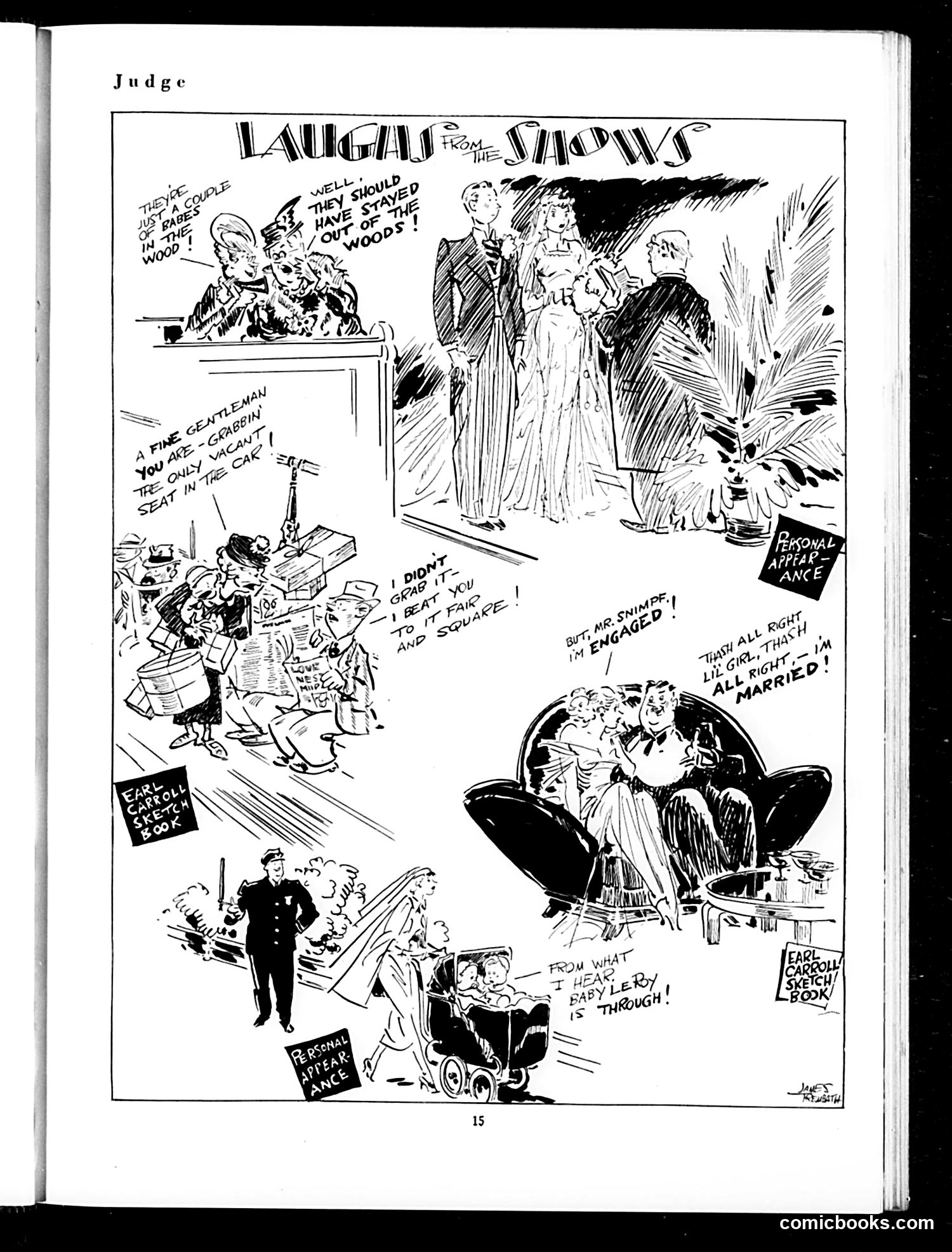
"Laughs from the Shadows" This is a satirical comic sketch about courtroom drama, likely from the early 20th century. The central joke involves a judge presiding over what appears to be a marriage or domestic case. Various characters present their complaints: someone mentions "a couple brief interludes in the woods," another character is identified as a "gentleman" with a "squawk" about improper seating arrangements. The humor derives from innuendo about infidelity and social impropriety being aired in open court. References to "Personal Affidavit" and "Personal Appearance" suggest embarrassing evidence or testimony. The final panel shows a couple declaring they're "all married!" The sketches mock both the legal system's handling of delicate personal matters and the pretensions of the parties involved—typical Judge magazine satire of theatrical courtroom proceedings and marital disputes becoming public spectacle.
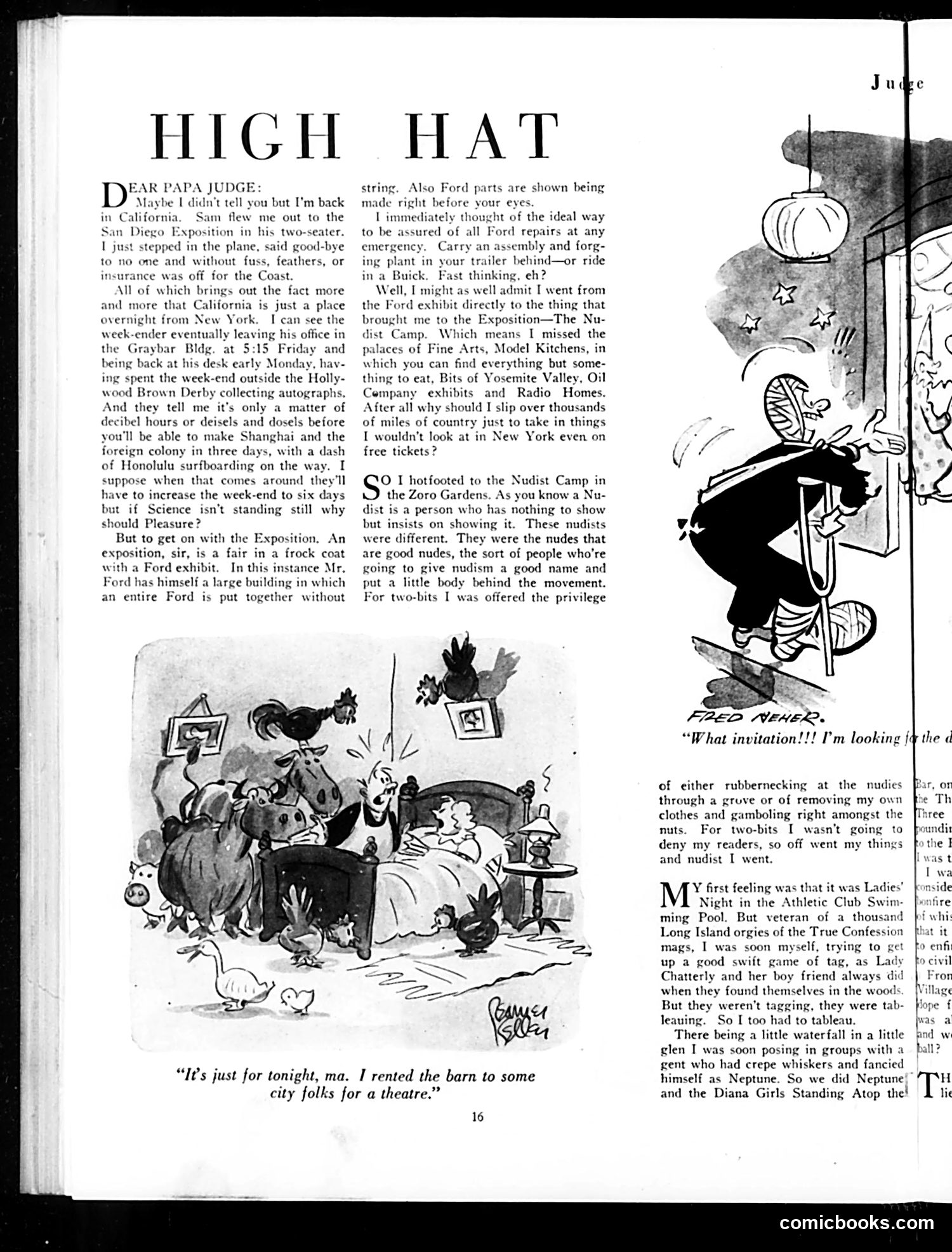
"High Hat" - Judge Magazine Satire Analysis This is a humorous travel column from Judge magazine satirizing 1920s-30s leisure culture and technological change. The writer describes attending the San Diego Exposition, highlighting the absurdity of modern weekend travel—people can now fly from New York to California for a quick trip, returning to work Monday. The column jokes about Ford's manufacturing exhibit (showing assembly-line production) as a "solution" to car repairs. The main satirical target is the Nudist Camp at the Zoro Gardens. The writer mocks nudists as contradictory: people with "nothing to show but insists on showing it." He describes participatory "tableaux" activities (posed scenes, referenced obliquely) involving crepe-whiskered men posing as Neptune and "Diana Girls." The accompanying cartoons mock rural simplicity (the barn-theater) and urban pretension. The satire targets both the nouveau-riche leisure culture and nudism as fashionable California affectation.
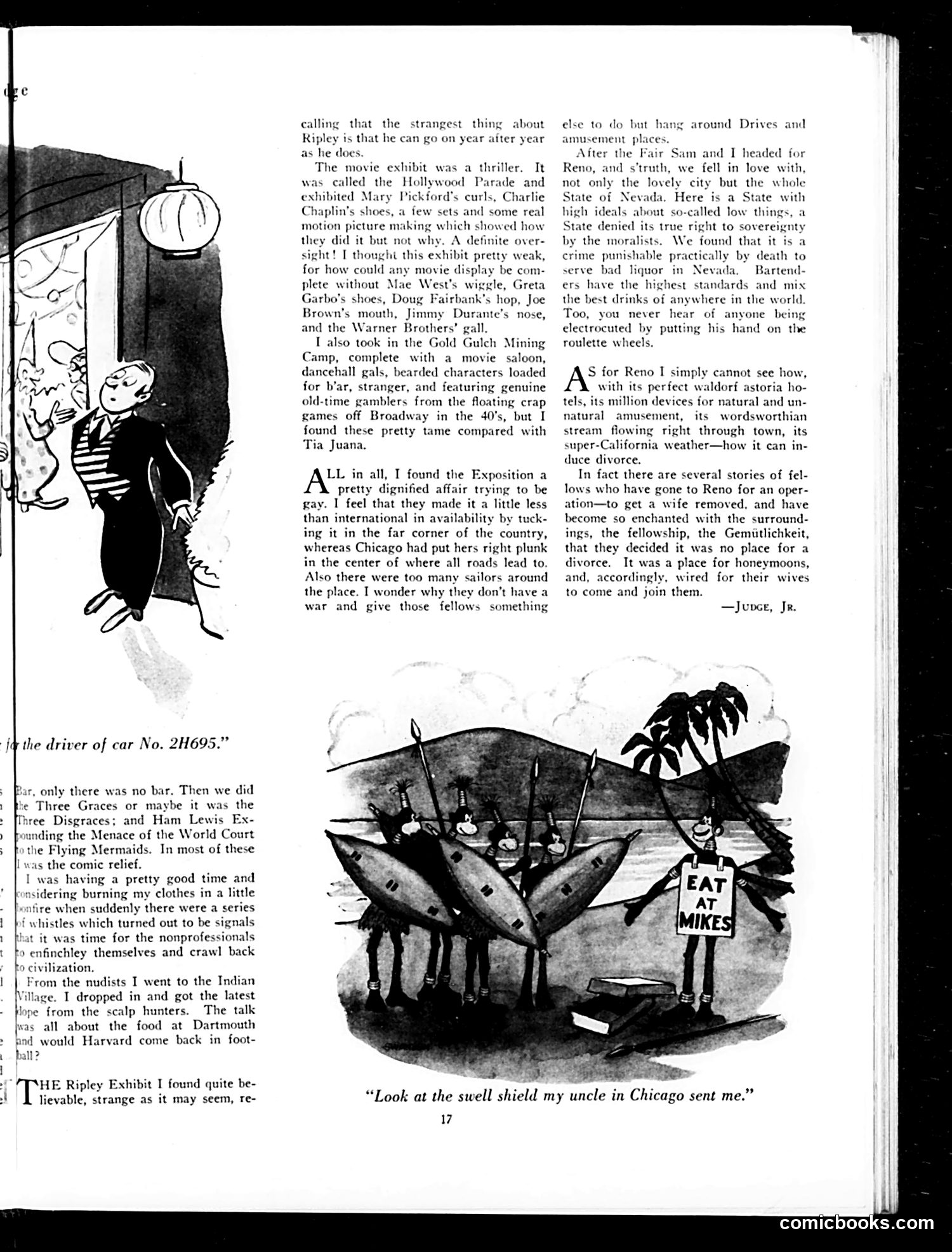
Analysis of Judge Magazine Page This page contains a travel essay by "Judge, Jr." describing visits to various 1920s-30s attractions, paired with two cartoons. Main Cartoon (bottom): Shows a Native American figure with a shield labeled "EAT AT MIKES." The caption "'Look at the swell shield my uncle in Chicago sent me'" is a joke about commercialism invading authentic culture—a tourist shop trinket masquerading as genuine Native American craftsmanship. Essay Context: The author describes visiting a San Diego Exposition, commenting on exhibits featuring Hollywood memorabilia (Mae West, Charlie Chaplin, etc.), then traveling to Reno, Nevada. The tone is satirical about American tourist attractions and entertainment culture. Social References: The essay mocks 1920s-30s tourism, celebrity worship, and Reno's reputation as a divorce destination. References to "nudists," sailors, and liquor (during Prohibition) reflect contemporary social anxieties. The complaint about placing the exposition in "the far corner of the country" versus Chicago shows regional pride. Point: The cartoons and essay jointly satirize American commercialism, shallow celebrity culture, and the packaging of authentic experiences for tourists.
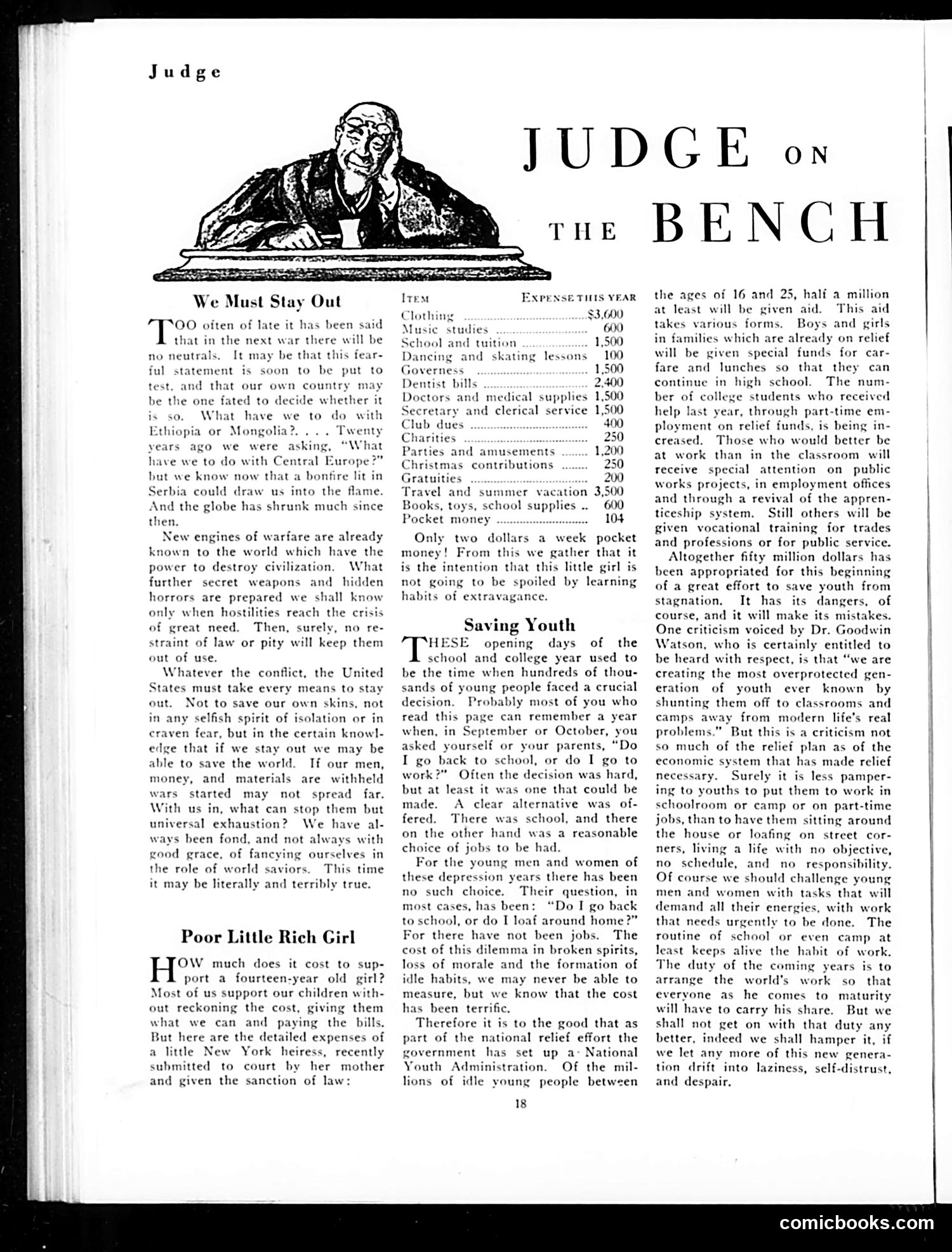
Judge Magazine Page Analysis This page presents three distinct pieces reflecting Depression-era concerns: "We Must Stay Out" argues for American isolationism amid rising global conflict (likely referencing 1930s fascism). The editorial warns that U.S. involvement in war would be catastrophic, but paradoxically suggests America might be "the world's savior" if it stays neutral—a contradictory position typical of isolationist rhetoric before WWII. "Poor Little Rich Girl" satirizes wealth inequality by detailing a fourteen-year-old heiress's annual expenses ($3,600 for clothing alone, etc.) while sarcastically noting she receives only $2/week pocket money—implying such "restraint" won't prevent spoiling. The satire critiques both aristocratic excess and the absurdity of detailed legal accounting for the wealthy. "Saving Youth" praises the newly-created National Youth Administration, a New Deal program providing work and education for unemployed young people. It contrasts the Depression's bleak "loaf around home" option against pre-Depression job availability, treating government intervention as necessary relief. The page overall reflects Judge's progressive stance on domestic relief while maintaining skepticism about foreign entanglement.
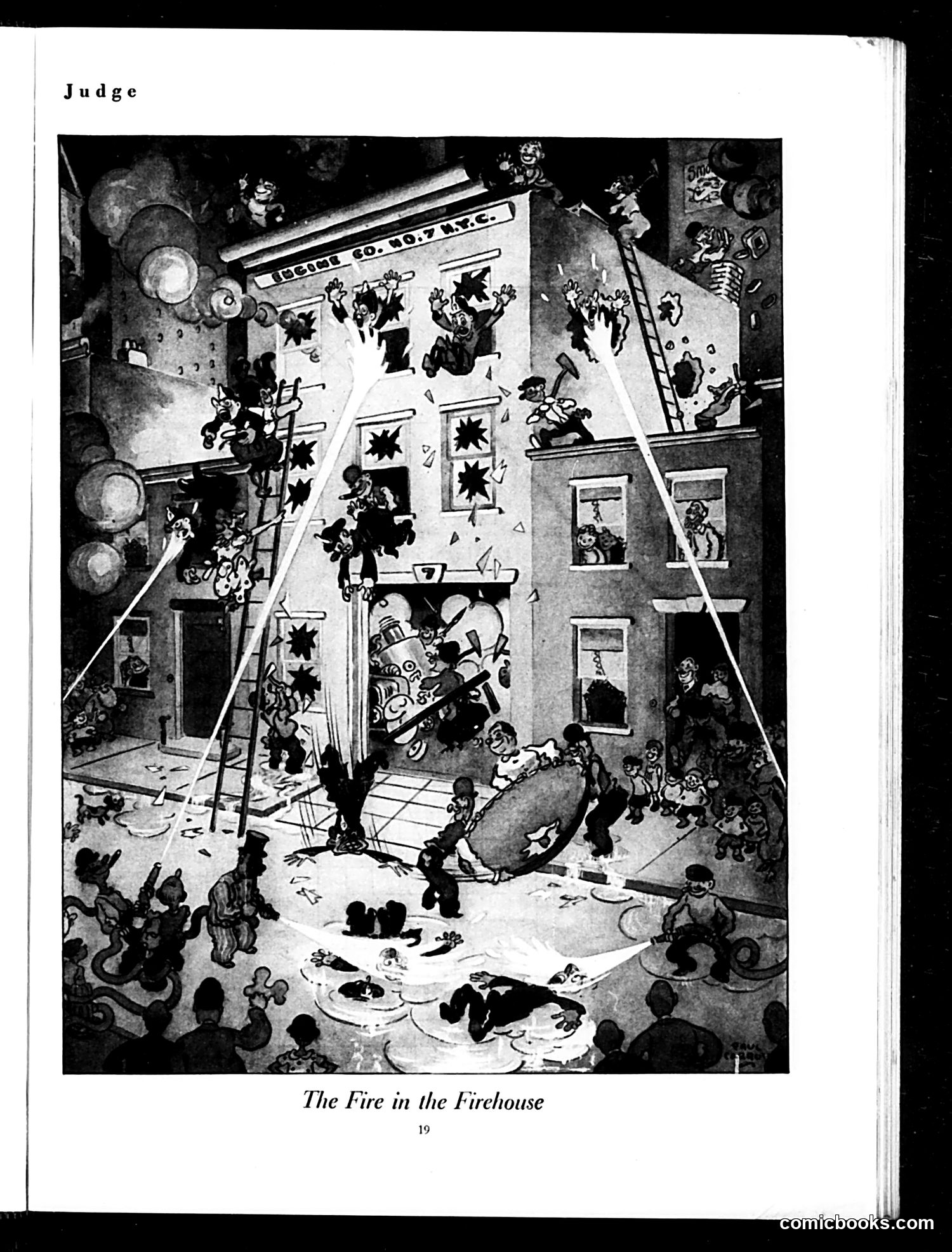
"The Fire in the Firehouse" - Judge Magazine This political cartoon depicts chaos at a firehouse during an emergency. The illustration shows firefighters and officials in disarray—some climbing ladders, others gesturing frantically—suggesting incompetence or mismanagement in responding to a crisis. The cartoon likely satirizes corrupt or inefficient municipal governance, a common Judge magazine theme. The "fire" appears metaphorical, representing a political or administrative crisis that authorities are bungling. The crowded, chaotic scene with multiple figures working at cross-purposes suggests bureaucratic dysfunction. Without knowing the specific publication date or context, the exact political figures or events referenced remain unclear, though this appears to critique local government inefficiency or corruption during the late 19th or early 20th century.
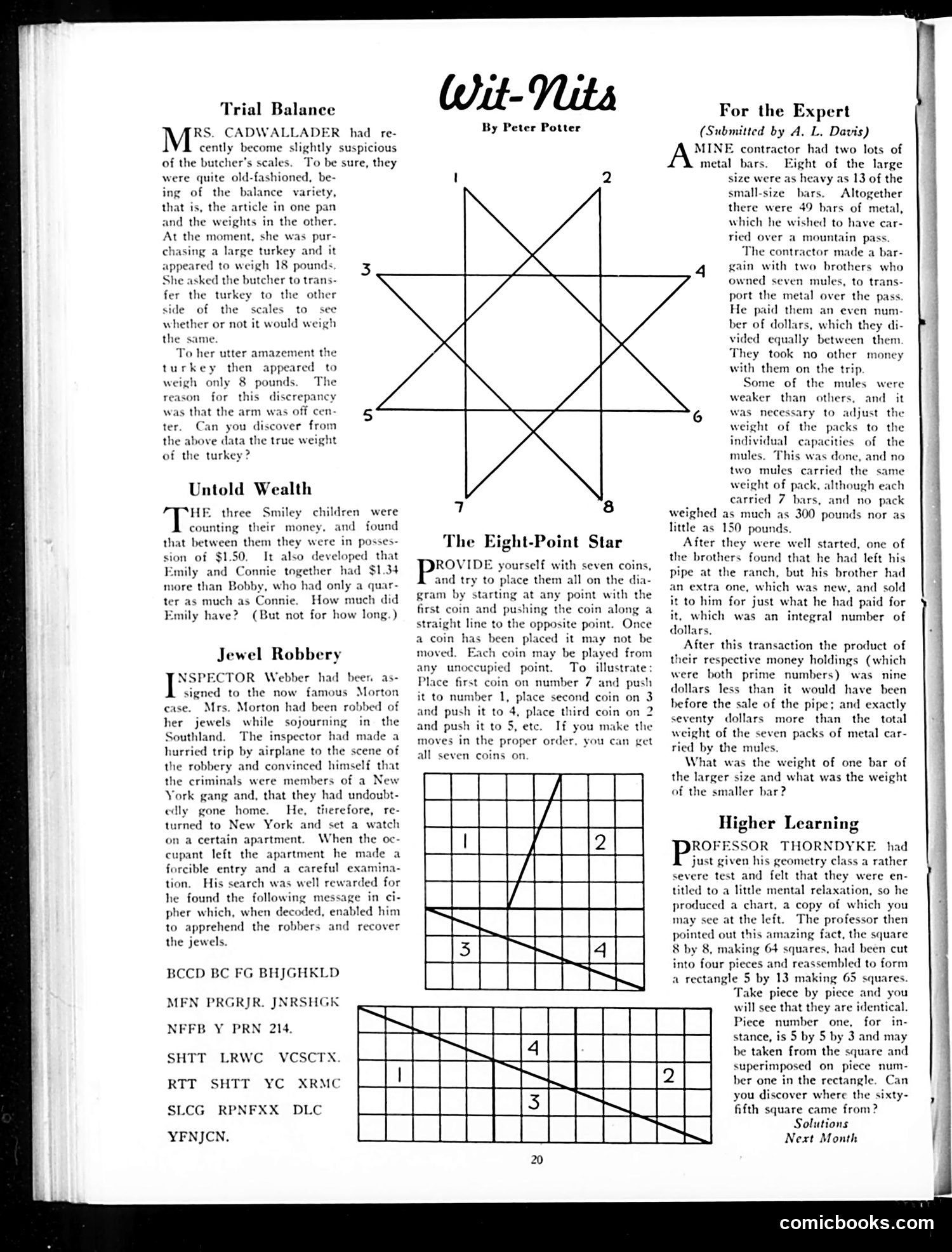
Wit-Nits Analysis This page from *Judge* magazine presents a collection of recreational math puzzles and logic problems rather than political satire. Content Summary: - "Trial Balance": A puzzle about a butcher's unbalanced scales; a turkey weighs 18 pounds on one side but only 8 on the other—readers must deduce the true weight. - "Untold Wealth": A children's money-distribution problem involving three Smiley children and specific financial constraints. - "Jewel Robbery": A cipher puzzle featuring Inspector Webber solving a theft case using a coded message. - "The Eight-Point Star": A coin-placement puzzle requiring strategic moves. - "For the Expert" and "Higher Learning": Complex math problems involving metal bars, mules, and geometric shapes. These are entertainment puzzles typical of early-to-mid 20th-century magazines, designed to engage readers' problem-solving skills rather than comment on politics or social issues. The "satire" is gentle wordplay rather than biting commentary.
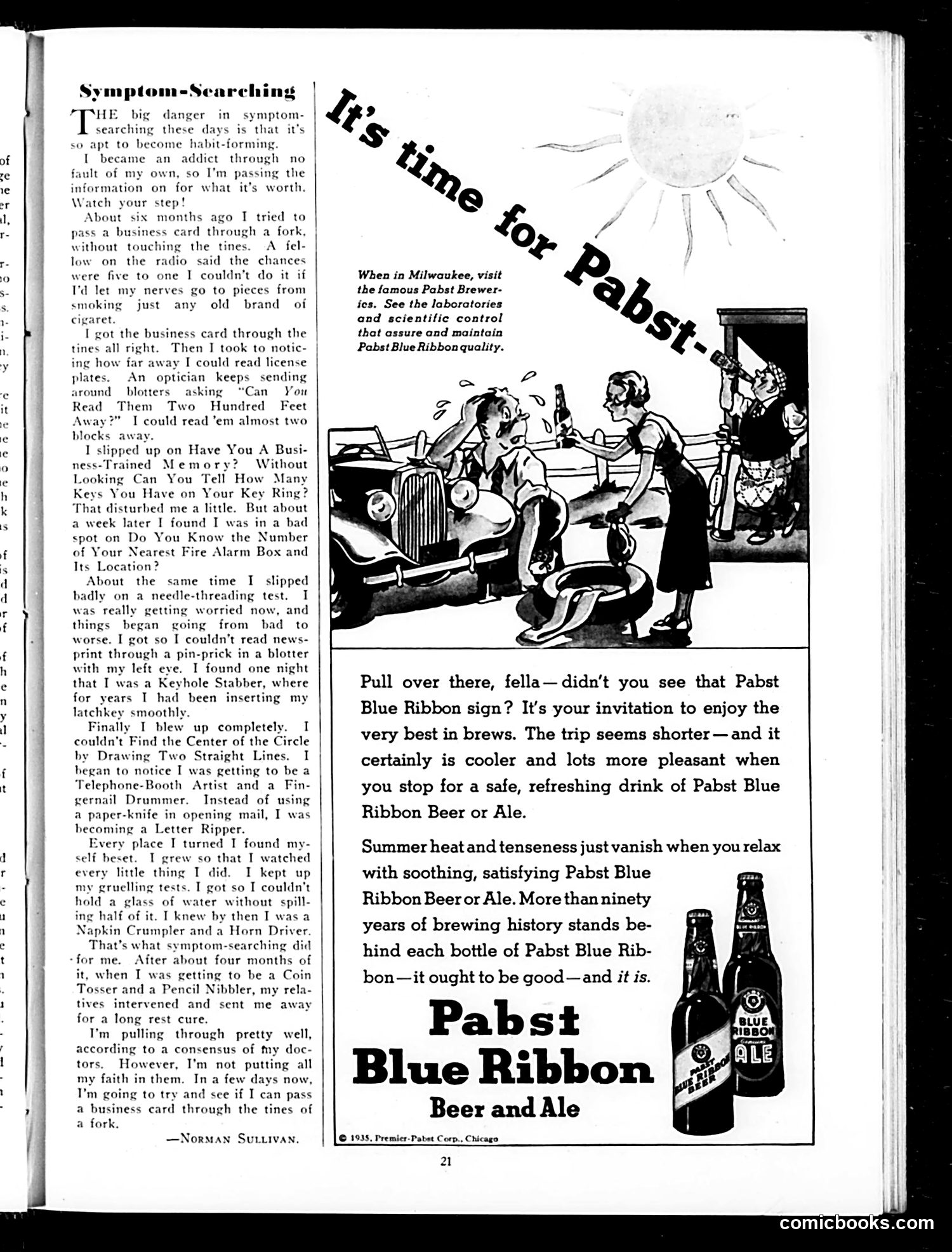
Page Analysis: Judge Magazine (circa 1935) This page contains a humorous essay titled "Symptom-Searching" by Norman Sullivan, flanked by a Pabst Blue Ribbon beer advertisement. The Essay's Satire: Sullivan mocks the 1930s obsession with self-diagnosis and personality tests—a growing fad in popular culture and radio. He describes becoming neurotic after encountering radio challenges ("Can you read this from 100 feet away?") and mental tests, spiraling into hypochondria. He catalogs absurd self-diagnosed conditions (Keyhole Stabber, Napkin Crumpler, Letter Ripper) invented through overthinking mundane actions. The piece satirizes how Americans became addicted to analyzing themselves for signs of nervous breakdown or character flaws, eventually requiring sanitarium treatment. The Advertisement: The Pabst ad features a motorist pulling over at a roadside brewery, positioning beer as a cure for "summer heat and tenseness"—ironically offering a product as "solution" to exactly the anxiety-ridden neurosis Sullivan's essay ridicules. The juxtaposition creates subtle dark humor: one remedy mocks symptom-obsession while the other peddles alcohol as relaxation.
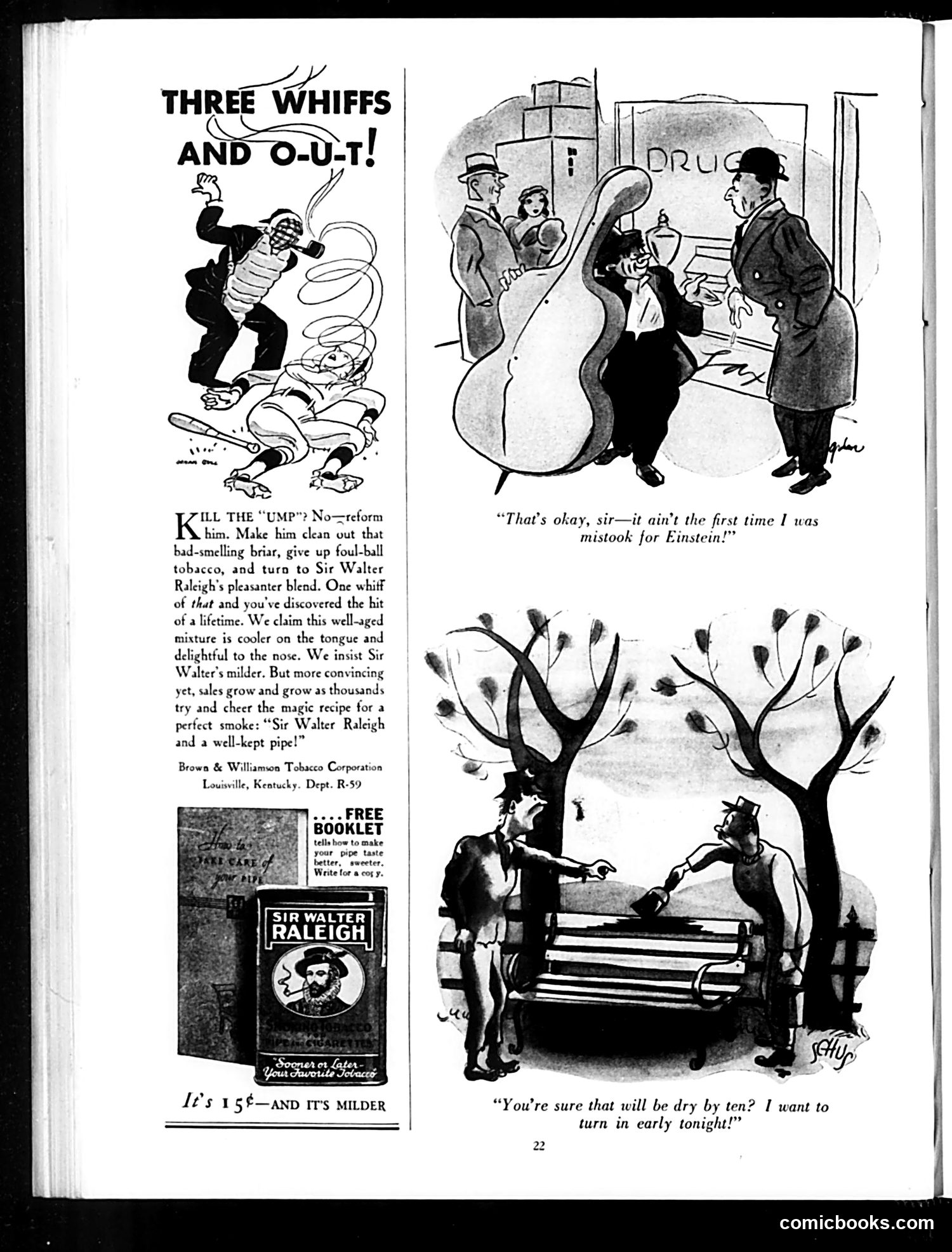
Judge Magazine Satire Analysis This page contains Sir Walter Raleigh tobacco advertising disguised as humor. The left panel's "Three Whiffs and O-U-T!" cartoon mocks a baseball umpire ("UMP"), suggesting he should reform his habits by switching from foul tobacco to the advertised brand—a pun on the umpire's authority to call players "out." The two cartoons on the right are standalone jokes. The top one references Einstein, playing on the physicist's fame and distinctive appearance; someone mistakes a large pear-shaped object (or person) for him. The bottom cartoon shows what appears to be two figures by a bench under bare trees, with domestic humor about drying clothes by nightfall. The page is primarily advertising content using comedic framing to promote Sir Walter Raleigh pipe tobacco at 15 cents, marketed as "milder." The historical context: this reflects early 20th-century advertising practices blending entertainment with product promotion in magazines like Judge.
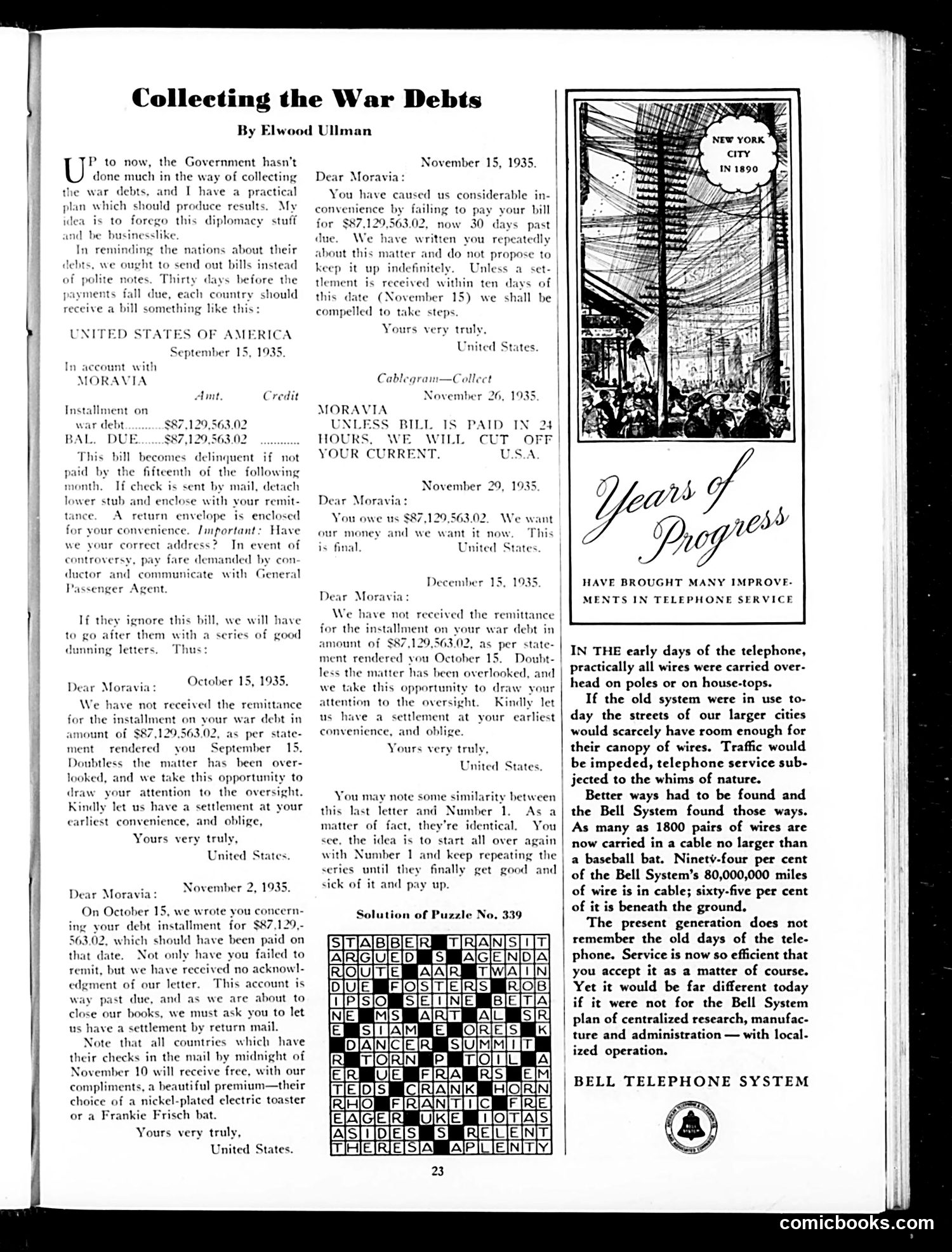
Explanation for Modern Readers This satirical article by Elwood Ullman mocks the U.S. government's ineffective diplomatic efforts to collect war debts from foreign nations (like the fictional "Moravia") following World War I. The Satire's Point: Ullman proposes treating international debt collection like everyday business—sending dunning notices with payment deadlines, late fees, and escalating threats. The humor escalates through five letters (dated September-December 1935) that become increasingly blunt and absurd, eventually offering a "free toaster or Frankie Frisch bat" as incentive, then repeating the cycle endlessly. The Context: Post-WWI European nations owed substantial war debts to America but struggled to pay. Diplomatic reminders had failed. Ullman's exaggerated proposal—treating sovereign nations like delinquent customers—highlights the impotence of polite diplomacy and the absurdity of expecting repayment. The Irony: By pushing the business-collection approach to ridiculous extremes (identical recycled letters, petty premiums), Ullman suggests the real problem isn't the collection method—it's that nations simply won't or can't pay, making any approach futile.
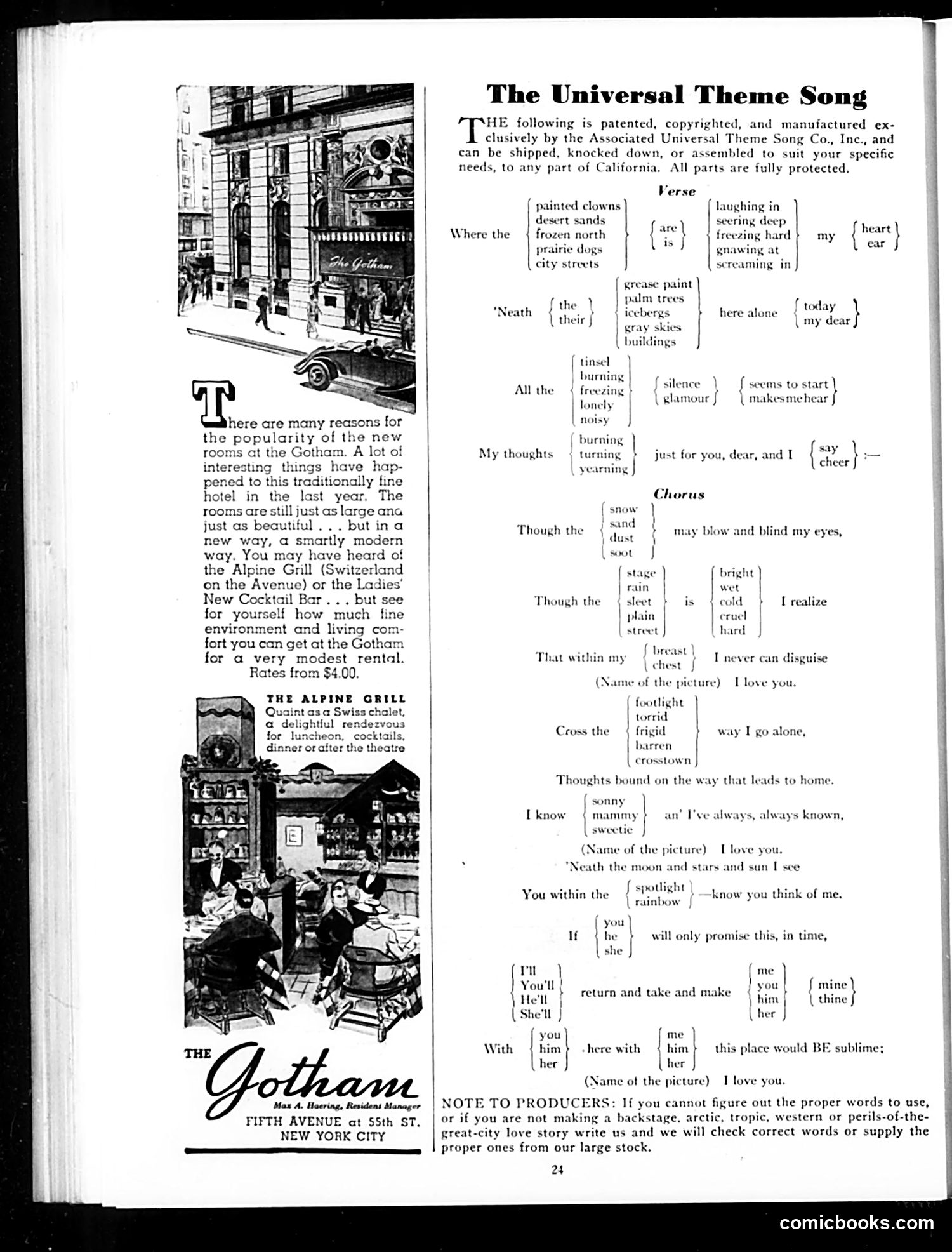
"The Universal Theme Song" — A Satire on Formulaic Film Scores This page satirizes the standardized, interchangeable nature of movie theme songs in the 1920s-30s era. The mock patent and copyright notice joke that such songs are mass-produced commodities—"shipped, knocked down, or assembled to suit your specific needs." The song itself parodies the sentimental clichés of movie scores through its fill-in-the-blank structure, showing how producers could swap generic phrases (painted clowns/desert sands/frozen north, etc.) into identical emotional templates. The note to producers at bottom reinforces this: if you can't write proper lyrics for your backstage/arctic/tropical/western film, just order the correct ones from their stock. Interspersed are advertisements for the Gotham Hotel and Alpine Grill restaurant in New York, suggesting this Judge magazine content mixed editorial satire with paid promotions. The joke targets Hollywood's formulaic approach to filmmaking—that authentic emotion and narrative were secondary to predictable, interchangeable product.
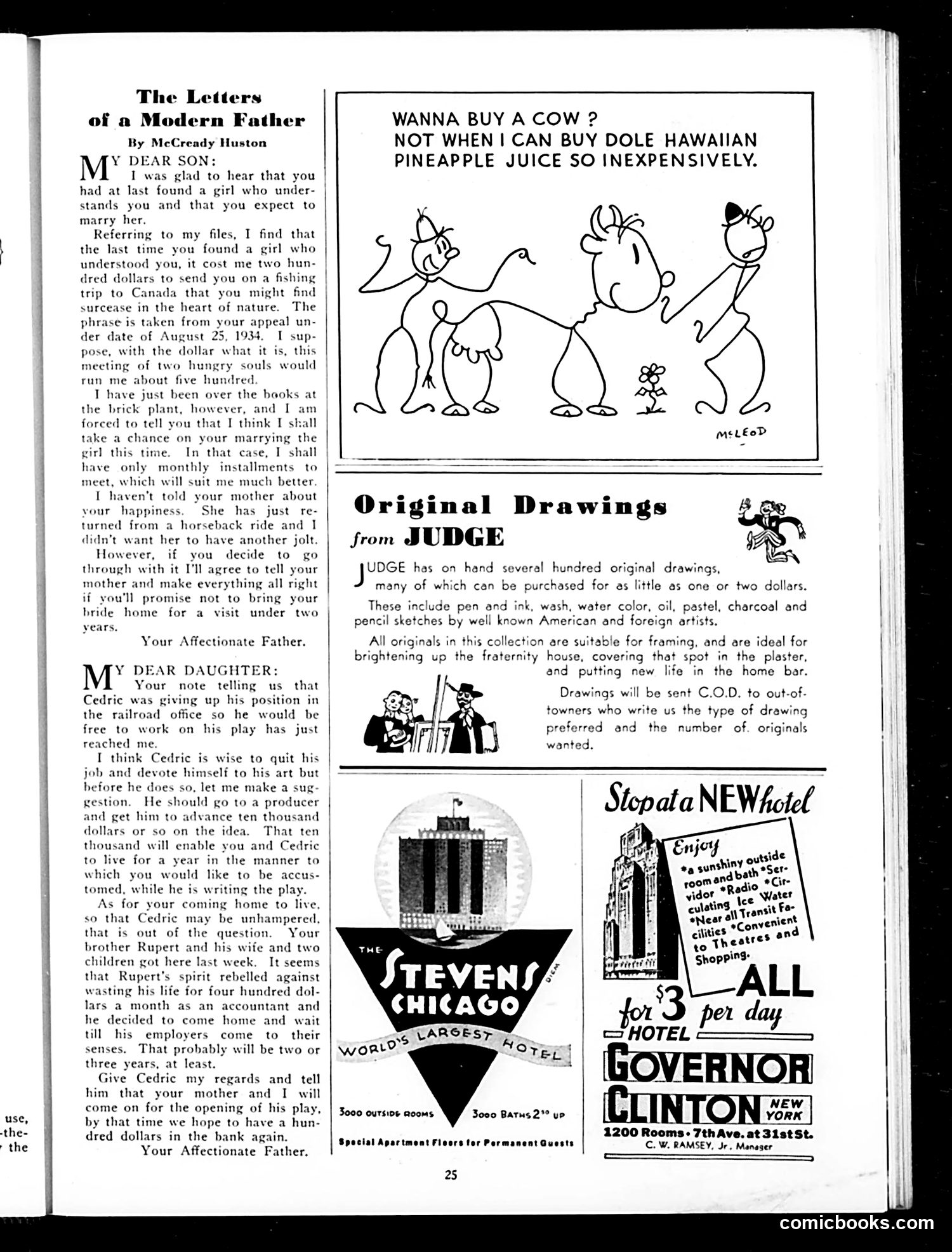
Analysis of Judge Magazine Page This page contains satirical letters from a father to his son and daughter, exemplifying Depression-era humor about financial hardship masquerading as paternal wisdom. The "Modern Father" Letters: The father humorously refuses to fund his son's romantic endeavors, citing previous expensive interventions (a $200 fishing trip to Canada). He agrees to support the marriage only because monthly installments suit his budget better than lump sums. Similarly, he advises his daughter that her husband Cedric should pitch his play to a producer for a $10,000 advance rather than the couple moving home—because supporting another dependent family member is financially unbearable. The Satire: The humor lies in the father's transparent admission that his "wisdom" is actually economic desperation. He frames financial refusal as sensible advice while revealing the household's precarious situation and the burden of supporting multiple adult children during economic crisis. The Cow/Pineapple Cartoon: This separate gag uses similar Depression economics: why buy an expensive cow when cheap Hawaiian pineapple juice suffices? It's domestic/consumer-level satire about substituting cheaper goods.
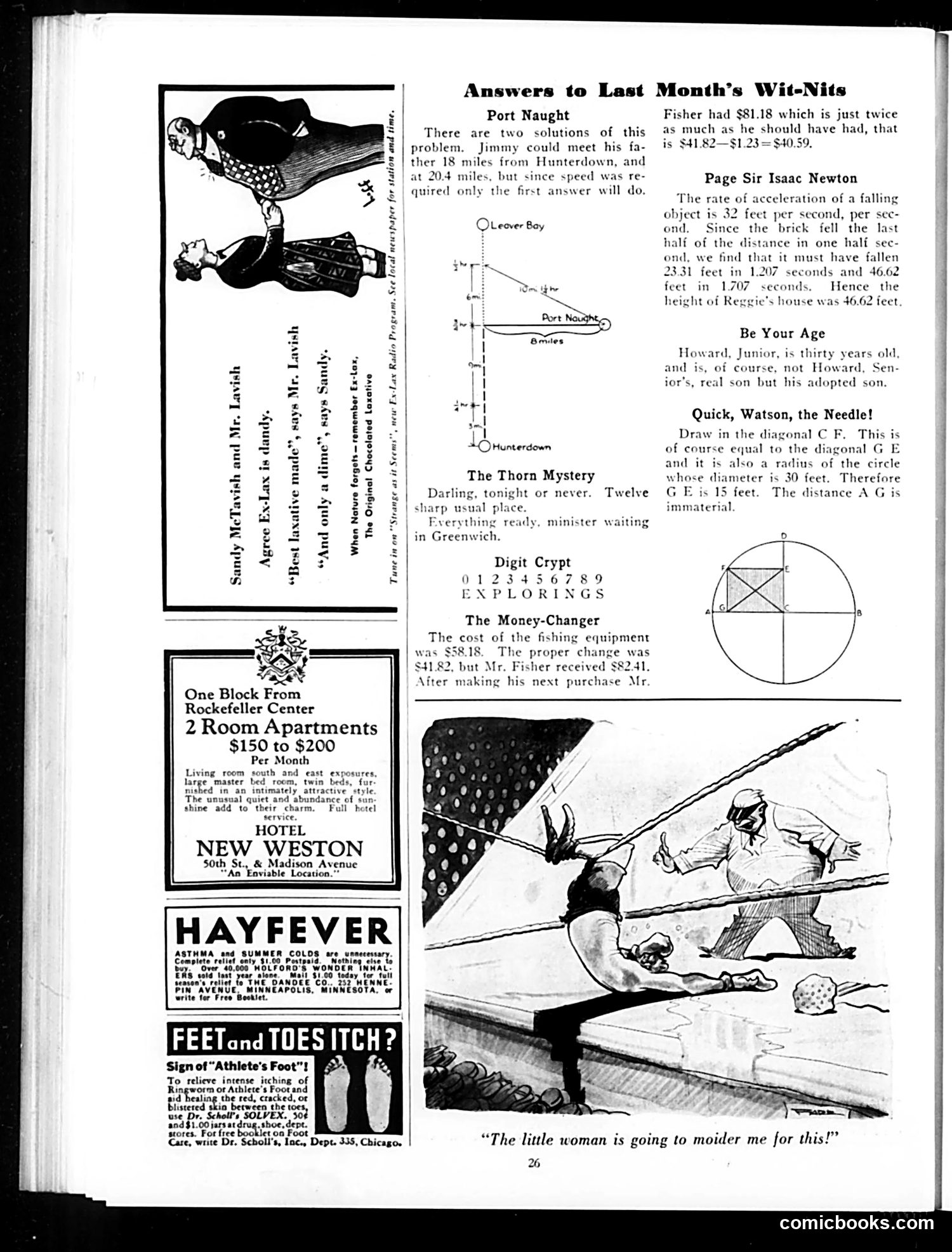
Analysis of Judge Magazine Page Content This page primarily contains puzzle solutions and advertisements rather than political satire. The "Answers to Last Month's Wit-Nits" section solves recreational logic puzzles ("Port Naught," "Be Your Age," geometric problems). These were typical Reader's Digest-style brain teasers popular in early-to-mid 20th century magazines. The single cartoon shows a man caught in what appears to be a domestic mishap—likely fishing-related based on context—with the caption "The little woman is going to moider me for this!" This reflects period stereotypes about nagging wives and henpecked husbands, common comedic tropes of the era. The advertisements (Ex-Lax laxative, Hotel New Weston, athlete's foot treatment, hayfever remedies) reflect 1930s-40s consumer products and concerns. No significant political content is evident on this page. It represents Judge's lighter entertainment and commercial content rather than satirical commentary.
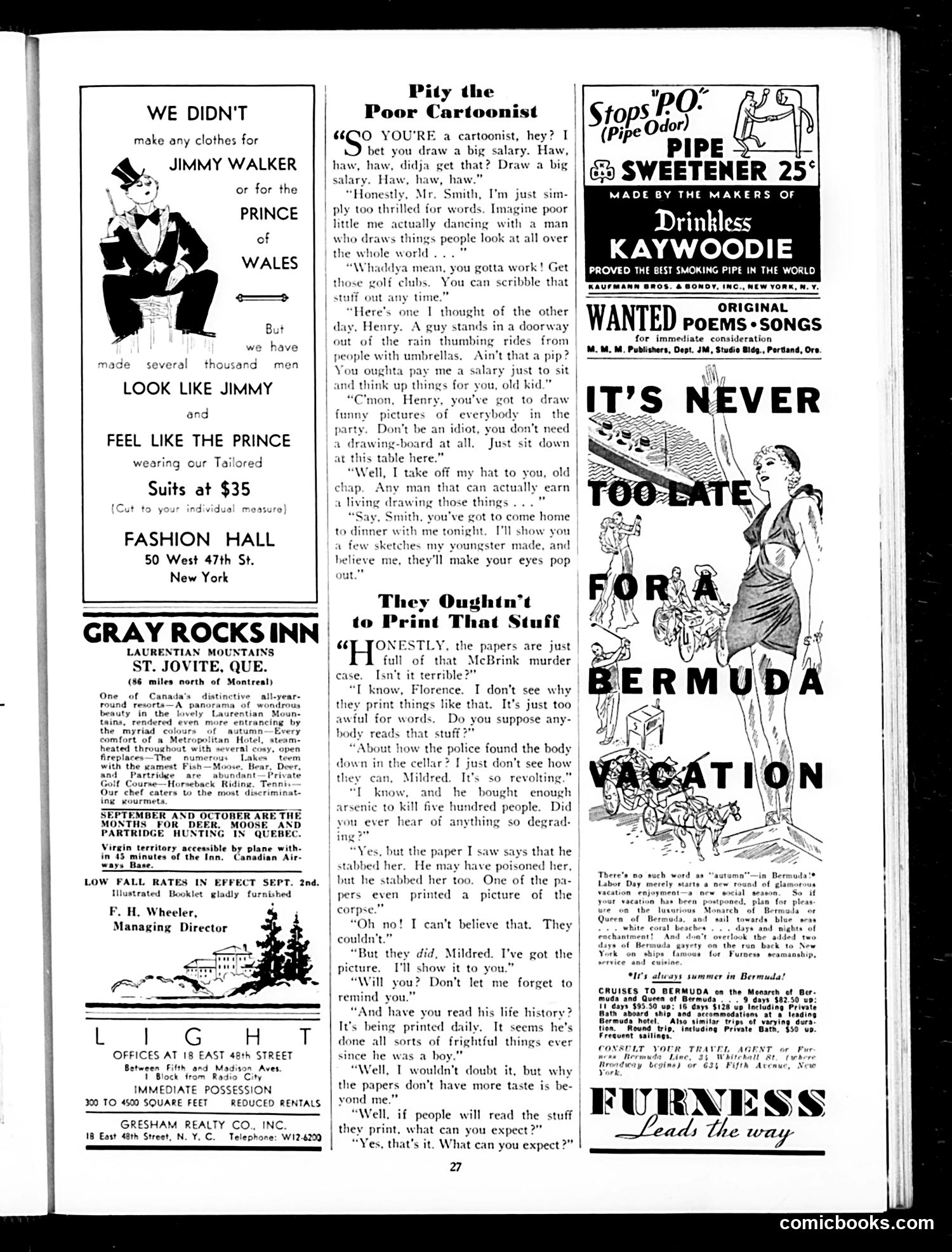
Page Analysis: Judge Magazine Satirical Content This page contains two distinct satirical pieces: "Pity the Poor Cartoonist" mocks the public's casual disrespect for cartoonists' work. Civilians constantly interrupt the cartoonist with unsolicited "ideas" they consider brilliant (a man hitchhiking in the rain), insist he doesn't need proper tools or workspace, and expect him to work without compensation. The satire critiques how creative professionals were undervalued—people assumed cartooning required no real skill or effort, despite its demanding nature. "They Oughtn't to Print That Stuff" satirizes readers' hypocrisy regarding sensational crime coverage. Florence and Mildred express shock and disgust at lurid McBrink murder case details (the body discovery, stabbing, poisoning, corpse photographs, criminal history), yet they eagerly consume and discuss every gruesome detail. The final exchange reveals the irony: papers print sensational content *because* people read it—readers fuel the very journalism they claim to find offensive. Both pieces critique early-1930s American society's attitudes toward artists and media consumption, with dry wit characteristic of Judge's style.
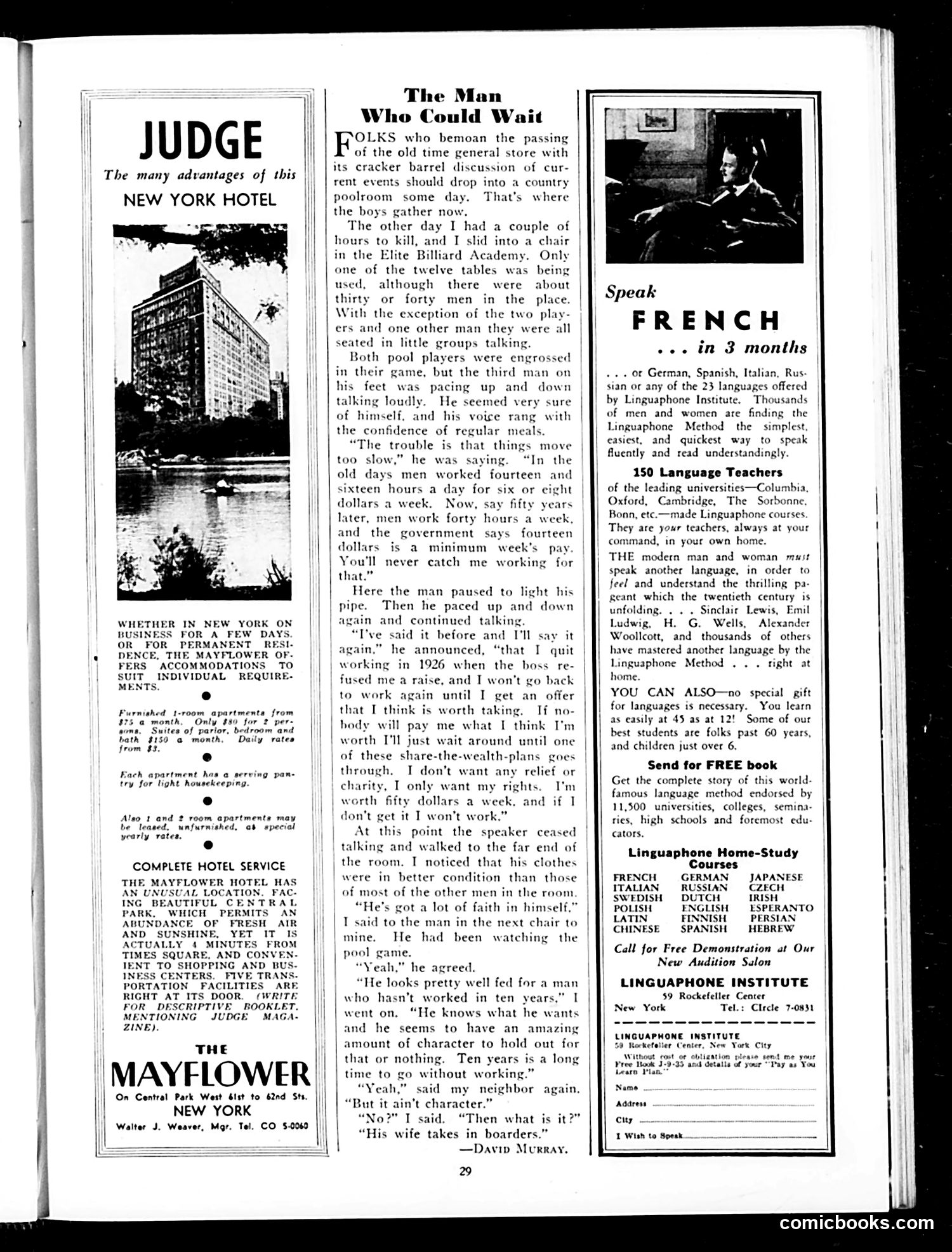
"The Man Who Could Wait" — Satirizing Depression-Era Unemployment This short story by David Murray satirizes the contradictions of unemployed workers during what appears to be the Great Depression era (references to 1926 and "share-the-wealth-plans" suggest 1930s). The narrative follows a man in a poolroom who boasts loudly about his principles: he quit his job demanding a raise in 1926 and refuses to work until offered what he considers his worth—fifty dollars weekly. He presents himself as principled, unwilling to accept "relief or charity," wanting only his "rights." The satirical twist: the punchline reveals he hasn't actually worked in ten years. His survival depends entirely on his wife taking in boarders—the very form of assistance and dependence he claims to reject. The joke exposes the gap between self-righteous talk about personal dignity and economic self-reliance versus the actual dependency many unemployed men faced during economic collapse. His "faith in himself" is revealed as hollow posturing masking his reliance on others.
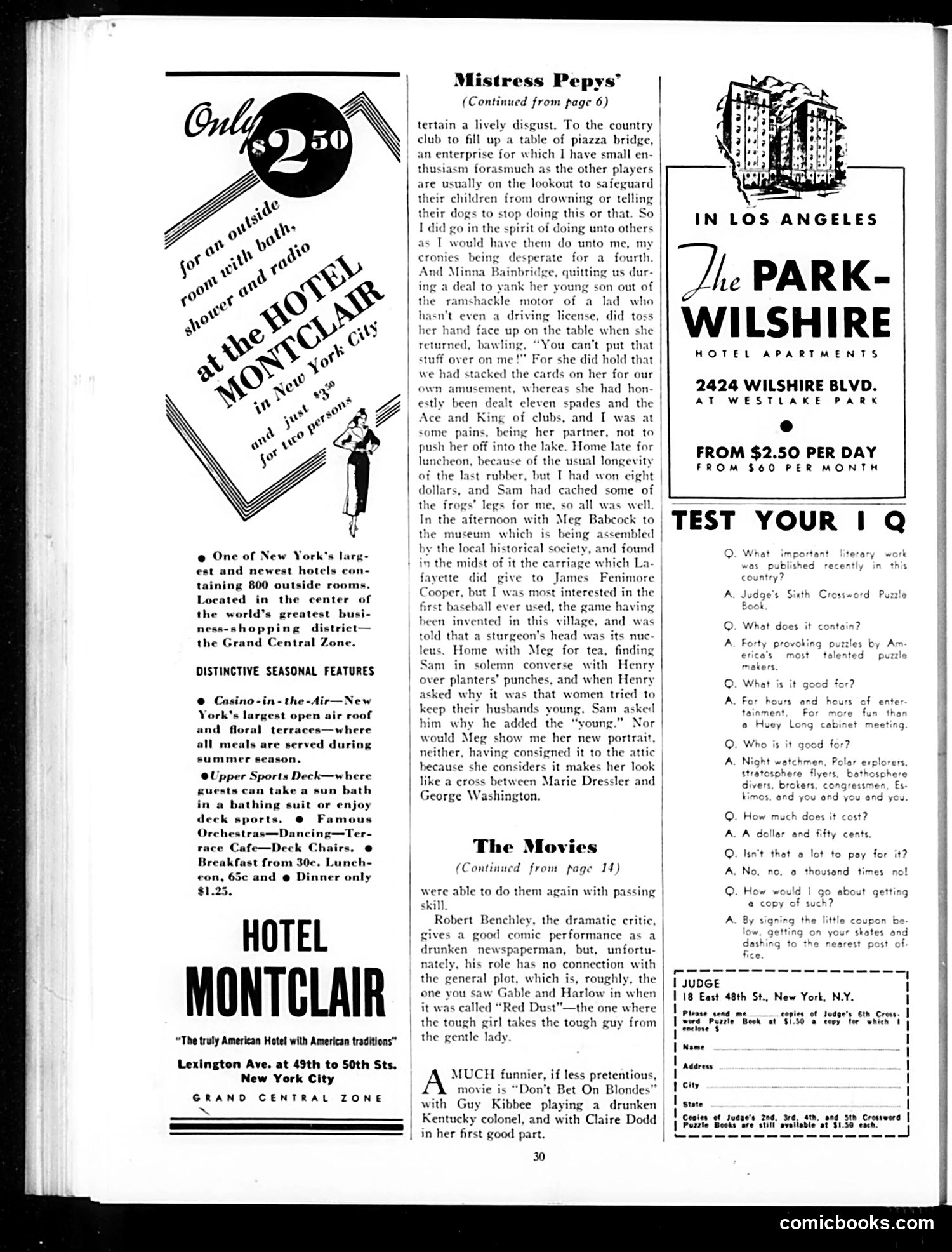
Page Analysis: Judge Magazine This page is primarily advertising and miscellaneous content rather than political satire. The main elements are: 1. Hotel Montclair advertisement (left/center) - promoting a luxury New York hotel in the Grand Central area with amenities like a rooftop casino, orchestras, and affordable meals (30¢ breakfast). 2. Park-Wilshire Hotel Apartments advertisement (right) - Los Angeles lodging at $2.50/day. 3. "Mistress Pepys" column (center) - a society gossip piece describing social activities: bridge at a country club, museum visit to see Lafayette's carriage and baseball's origin, and tea conversations about keeping husbands young. The tone is lightheartedly satirical of upper-class social rituals. 4. "The Movies" column excerpt - brief film reviews mentioning Robert Benchley in a drunken newspaper role and "Don't Bet On Blondes" with Guy Kibbee. 5. "Test Your IQ" - a trivia quiz feature. The page lacks significant political content or recognizable caricatures—it's primarily lifestyle/entertainment material typical of Judge's lighter fare.
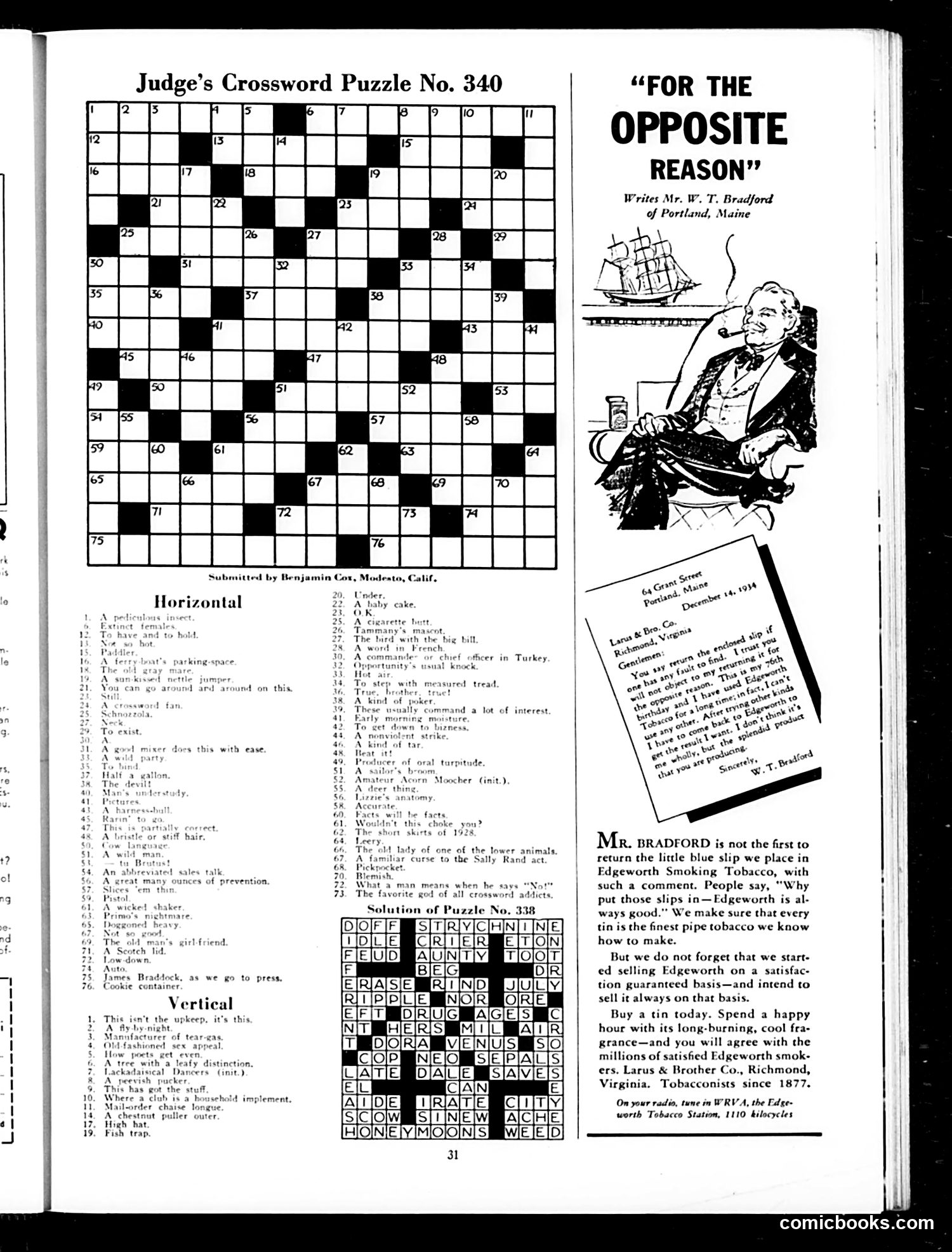
Judge Magazine Page Analysis This page is primarily a crossword puzzle with advertising, not a political cartoon. The main content is "Judge's Crossword Puzzle No. 340," submitted by Benjamin Cox of Modesto, California. The only satirical element is the framing device: a letter from W.T. Bradford titled "For the Opposite Reason," accompanying an illustration of a man (appears to be a sailor or sea captain). Bradford humorously complains about Edgeworth Smoking Tobacco—specifically that they include satisfaction-guarantee slips in their tins despite the product being reliably excellent. He's sarcastically saying he's returning a slip for the "opposite reason": not because the tobacco is bad, but because it's consistently good. This is essentially an advertisement disguised as reader feedback, playing on Edgeworth's established marketing claim of guaranteed satisfaction since 1877. The "joke" targets consumer expectations and brand loyalty rather than political or social issues.
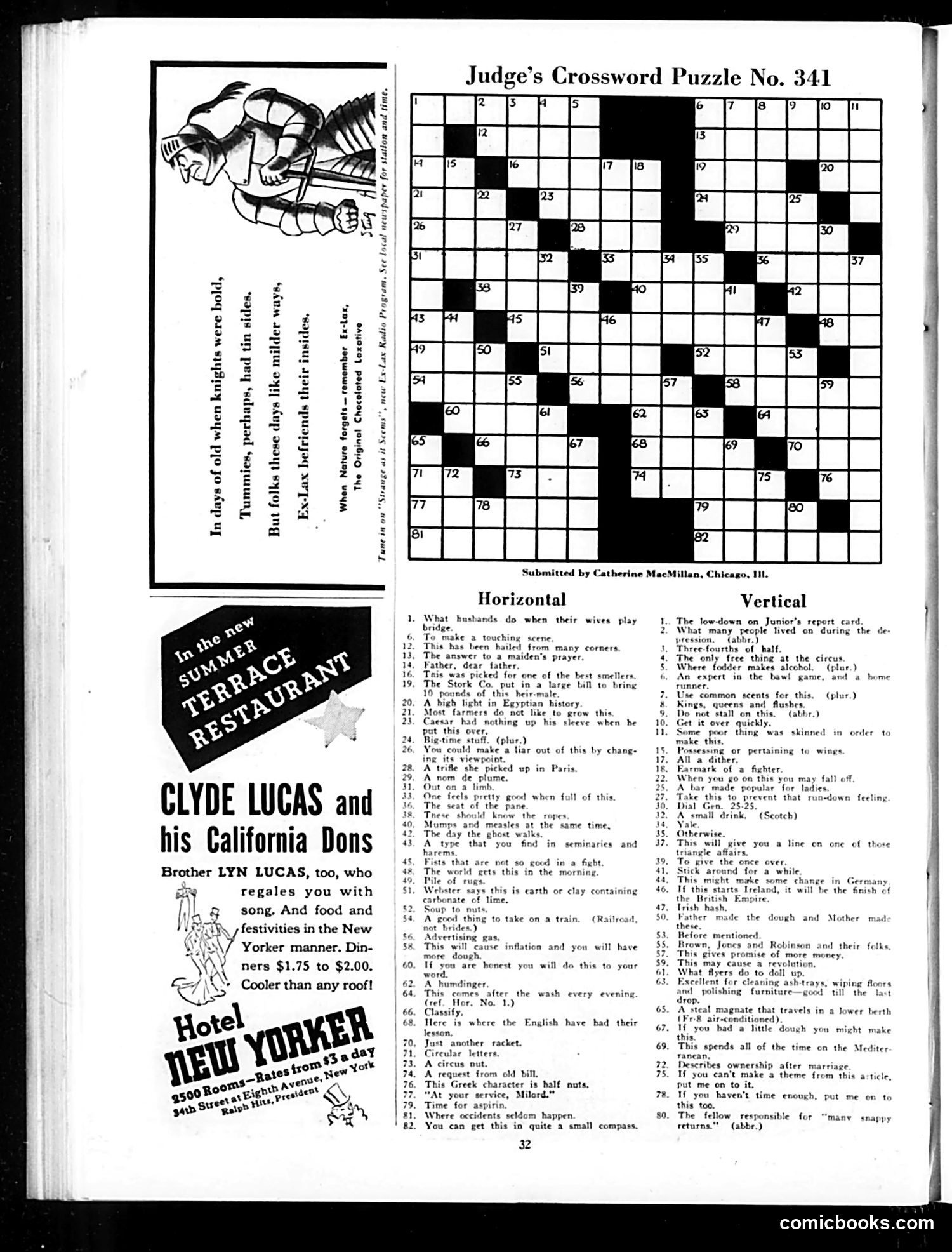
Judge Magazine Page Analysis This page is primarily advertisements and a crossword puzzle, with minimal editorial content. The advertisements feature: - Ex-Lax (a laxative), using the slogan "When Nature forgets" - Clyde Lucas and his California Dons, a musical dining entertainment at a New York restaurant - Hotel New Yorker, advertising rooms and dining The main content is Judge's Crossword Puzzle No. 341, submitted by Catherine MacMillan of Chicago. The puzzle clues are conventional wordplay typical of 1930s-40s crosswords, referencing everyday objects, common phrases, and contemporary culture (radio shows, trains, circus acts). There is no political satire or social commentary visible on this page. This appears to be a standard magazine spread combining commercial advertising with entertainment (the puzzle), representative of Judge's typical format during this era. The page functions as light entertainment and promotional space rather than as a platform for satirical editorial content.
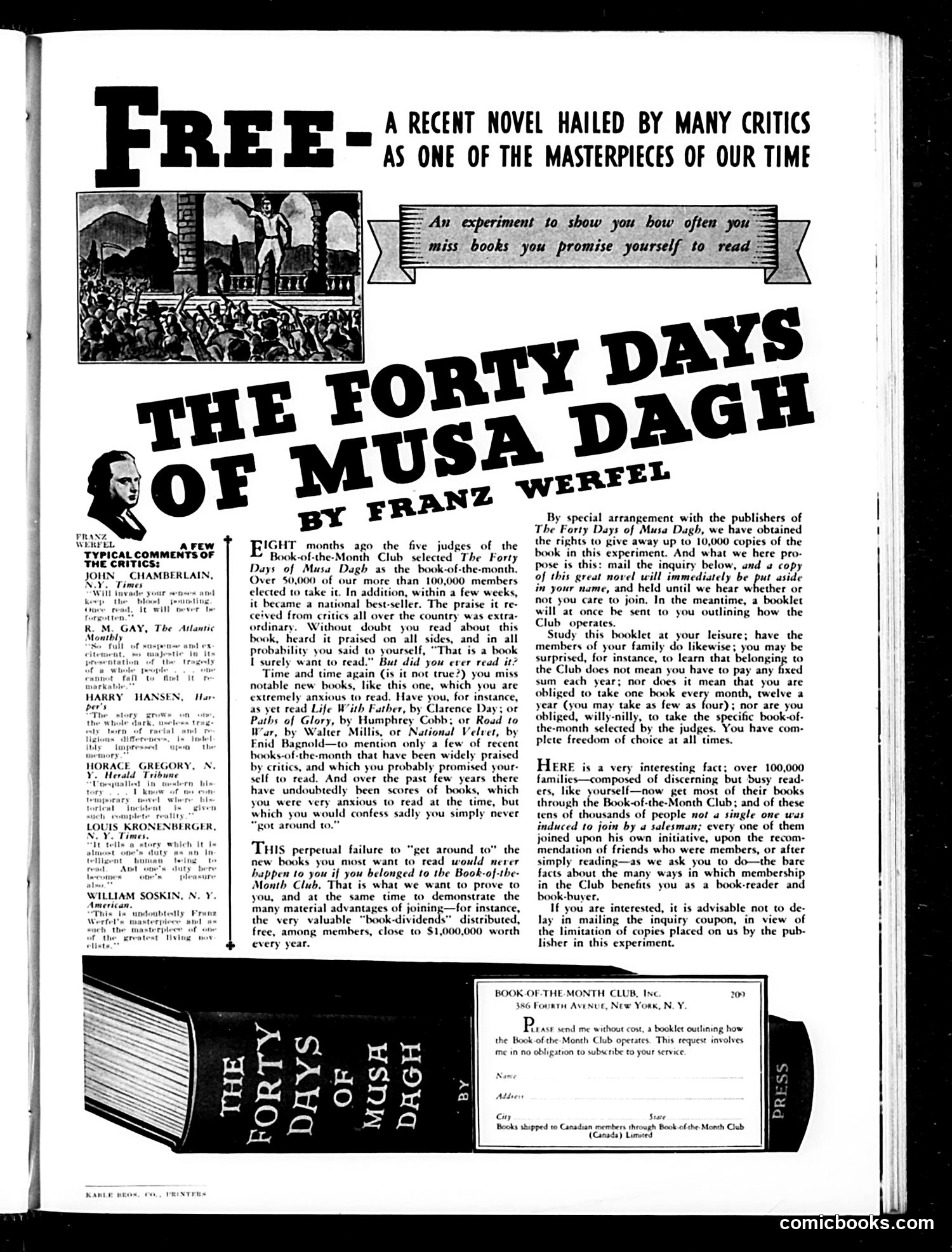
Analysis for Modern Readers This is primarily advertising, not satire or political commentary. The page promotes the Book-of-the-Month Club by marketing Franz Werfel's *The Forty Days of Musa Dagh*, a critically acclaimed 1933 novel about the Armenian genocide. The "experiment" described is a marketing gimmick: the Club offers free copies to potential members to demonstrate their service—the premise being that readers *intend* to read acclaimed books but never actually do. Critical endorsements from publications like *The Atlantic* and *The New York Times* appear on the left, establishing credibility. The implicit social commentary is gentle: busy, educated readers want culture but lack discipline. The Club solves this by curating selections and offering financial incentives ("book-dividends"). No political cartoon appears here. This represents mid-1930s middlebrow American marketing targeting aspirational readers who valued literary prestige.
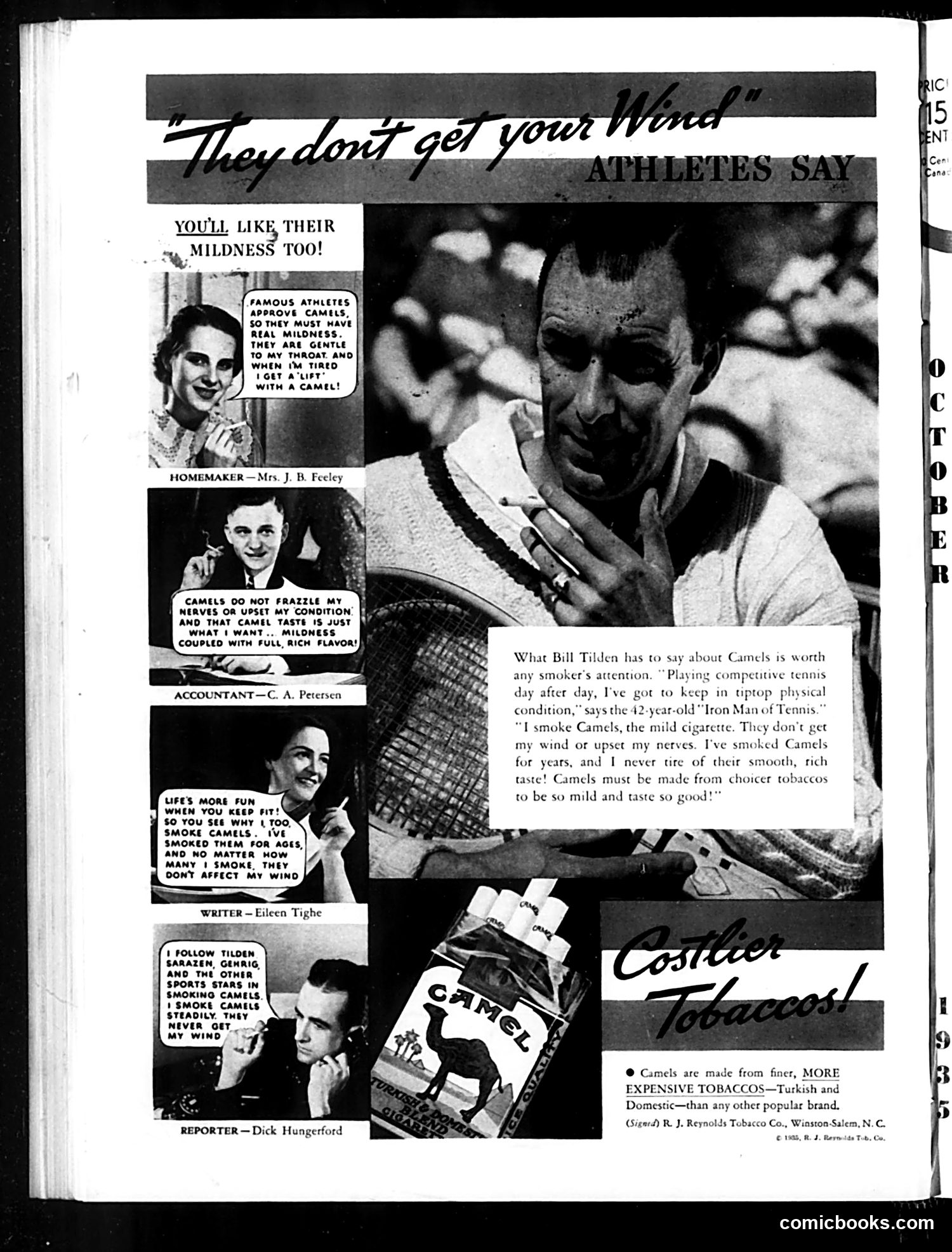
Camel Cigarette Advertisement (Judge Magazine) This is a cigarette advertisement disguised as editorial content, not satire. It features testimonials from famous athletes endorsing Camels cigarettes, including tennis champion Bill Tilden (identified as the "Iron Man of Tennis") and references to other sports figures like Sarazen and Gehrig. The ad's central claim: Camels are "mild" and won't harm athletic performance—they don't affect wind, upset nerves, or "frazzle" the throat. Each testimonial emphasizes smoking Camels "steadily" without negative effects. For modern readers: This represents pre-regulation tobacco marketing (likely 1930s-40s), when cigarette companies routinely used celebrity endorsements and false health claims to market their products. The irony—that these claims are demonstrably false—would be immediately apparent today, but was presented as factual testimonial then.