life
Life — September 6, 1929
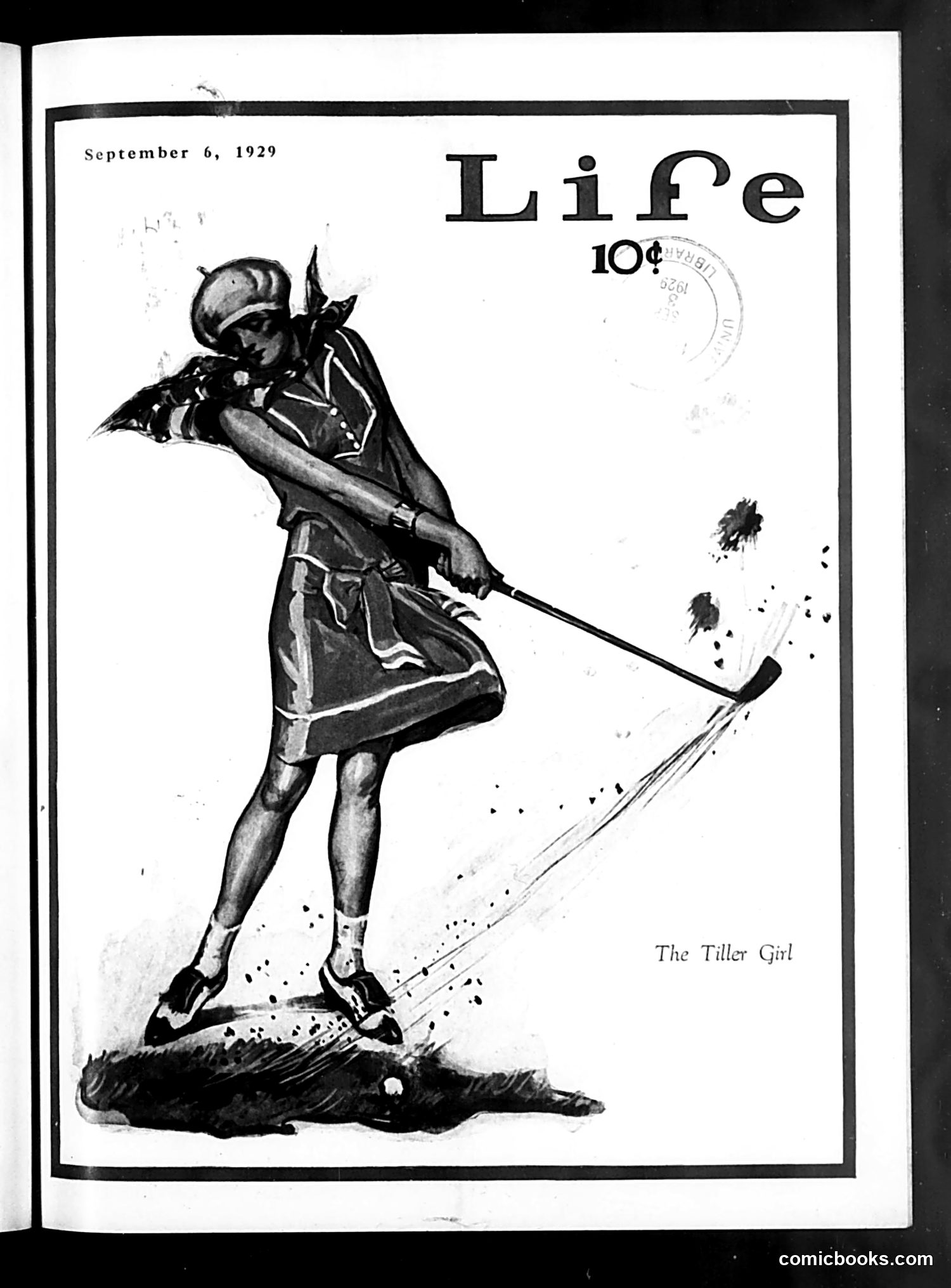
"The Tiller Girl" — Life Magazine, September 6, 1929 This cover depicts a young woman in 1920s athletic wear performing a golf swing, titled "The Tiller Girl." The image satirizes the modern "flapper" phenomenon—young women who embraced sports, shorter skirts, and independent lifestyles that shocked conservative society. The cartoon celebrates this cultural shift with humor. "Tiller" likely references John D. Rockefeller Jr.'s famous golf club, making the joke about women entering traditionally male-dominated recreational spaces. The energetic pose and athletic confidence embody the "New Woman" of the Jazz Age who rejected Victorian restrictions. Published just weeks before the 1929 stock market crash, this cover captures the optimistic, boundary-pushing spirit of the Roaring Twenties before economic collapse.
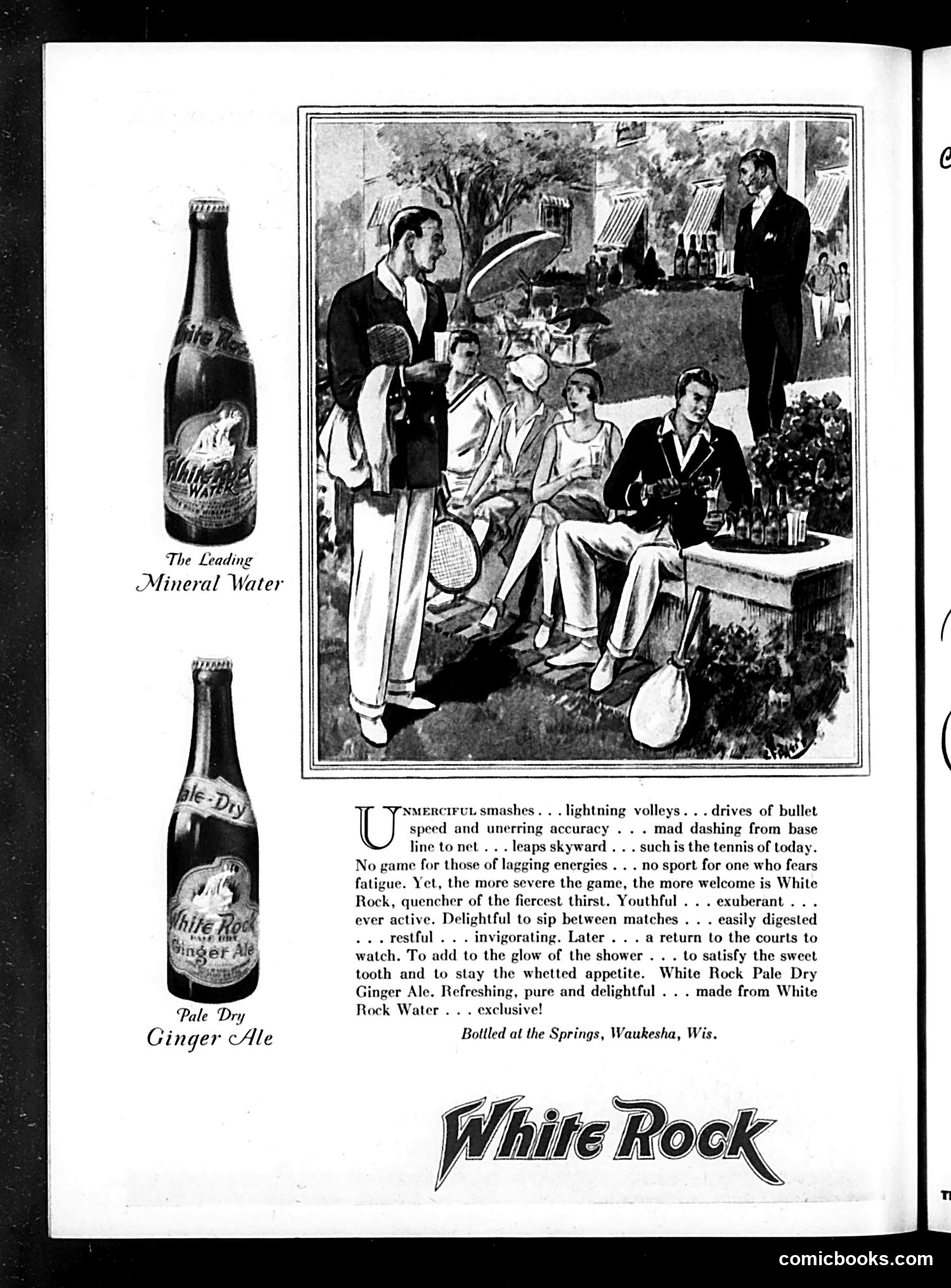
Analysis This page is primarily advertising, not satire or political commentary. It's a White Rock beverage advertisement featuring two products: their mineral water and Pale Dry Ginger Ale. The illustration shows an outdoor tennis scene—young people in 1920s-era athletic wear enjoying refreshments at what appears to be a country club or resort. The text celebrates tennis as a modern, energetic sport requiring "unmerciful smashes," "lightning volleys," and "bullet speed." The ad positions White Rock products as ideal for active, youthful leisure activities. The ginger ale is described as "refreshing, pure and delightful," marketed to appeal to the aspirational middle and upper-class consumers who played tennis and frequented such venues. There is no political satire here—it's straightforward lifestyle advertising from the early 20th century.
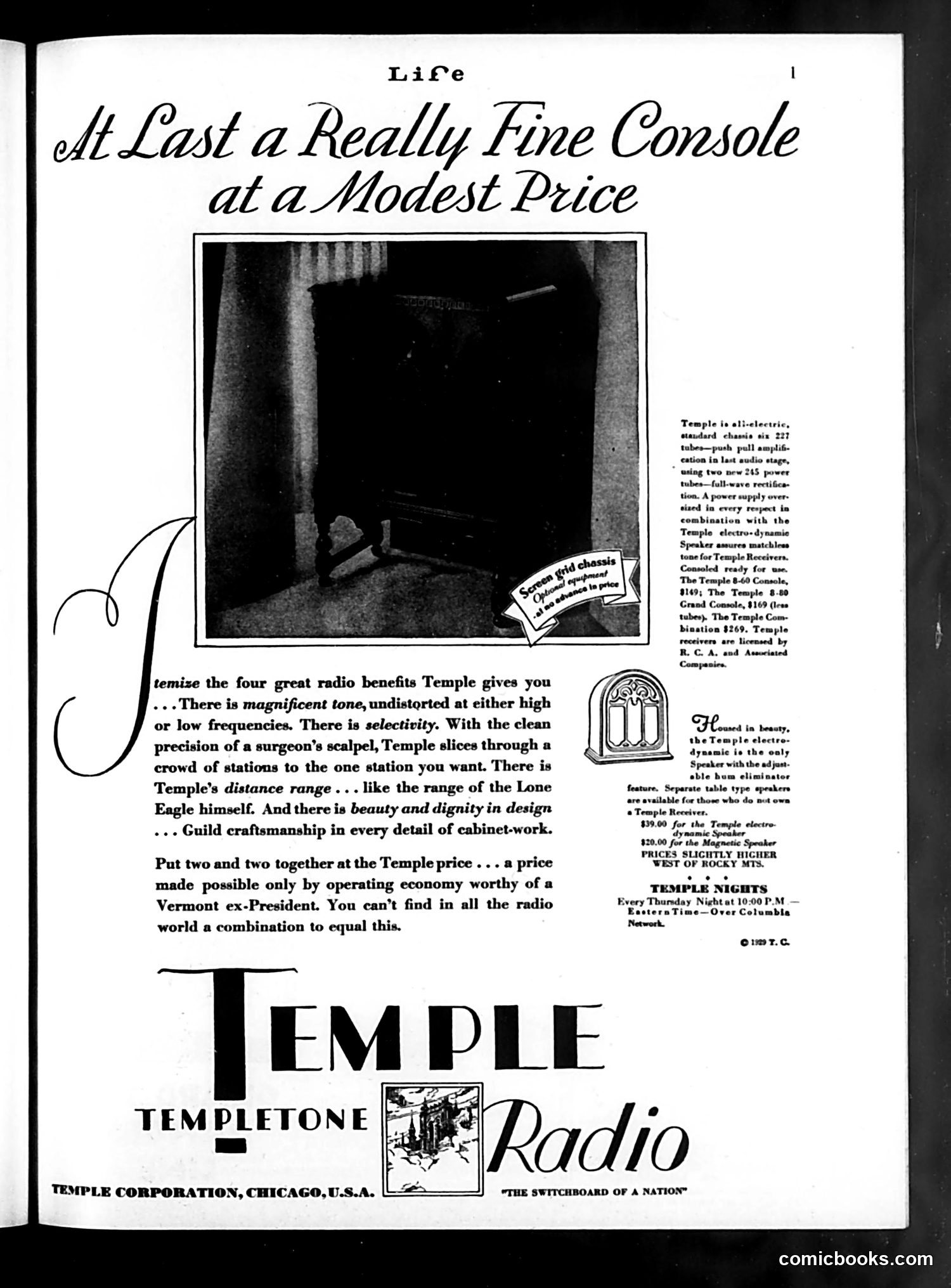
Analysis This page is primarily a Temple Radio advertisement, not satirical content. The "Life" magazine masthead indicates this is from the publication's advertising section. The ad promotes Temple brand radio consoles as affordable, high-quality alternatives to expensive competitors. The main visual shows a radio console in a home setting. The accompanying text emphasizes four "great radio benefits": magnificent tone, selectivity, distance range, and elegant design—all at a modest price point. A small illustration of what appears to be a Native American figure (labeled "Lone Eagle") provides a branding reference, though the specific cultural or commercial context is unclear from this page alone. The bottom promotes "Temple Nights," a radio program airing Thursday evenings on the Columbia Network. This is straightforward product marketing rather than political or social satire.
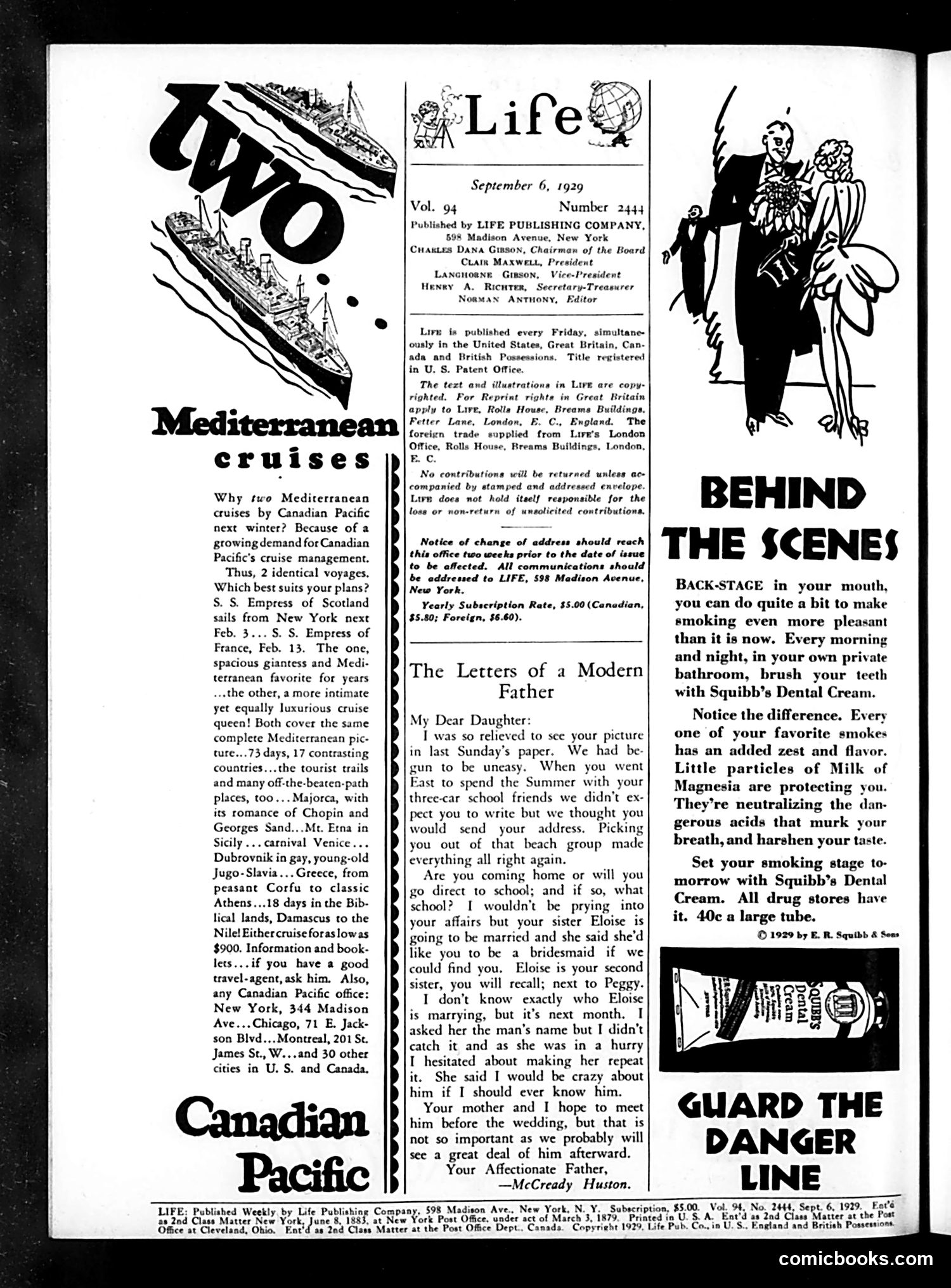
Life Magazine, September 6, 1929 This page is primarily advertising and editorial content rather than political satire. The left side features ads for Canadian Pacific cruise lines promoting Mediterranean voyages—a luxury travel pitch typical of 1929, before the stock market crash that October. The center contains "The Letters of a Modern Father," a domestic humor column where a father writes to his daughter about family matters and her potential bridesmaid role in her sister's upcoming wedding. This type of sentimental, family-focused humor was popular magazine filler. The right side includes an ad for Squibb's Dental Cream and a "Guard the Danger Line" public safety advertisement. These represent typical 1920s consumer and civic messaging. No significant political satire is evident on this particular page.
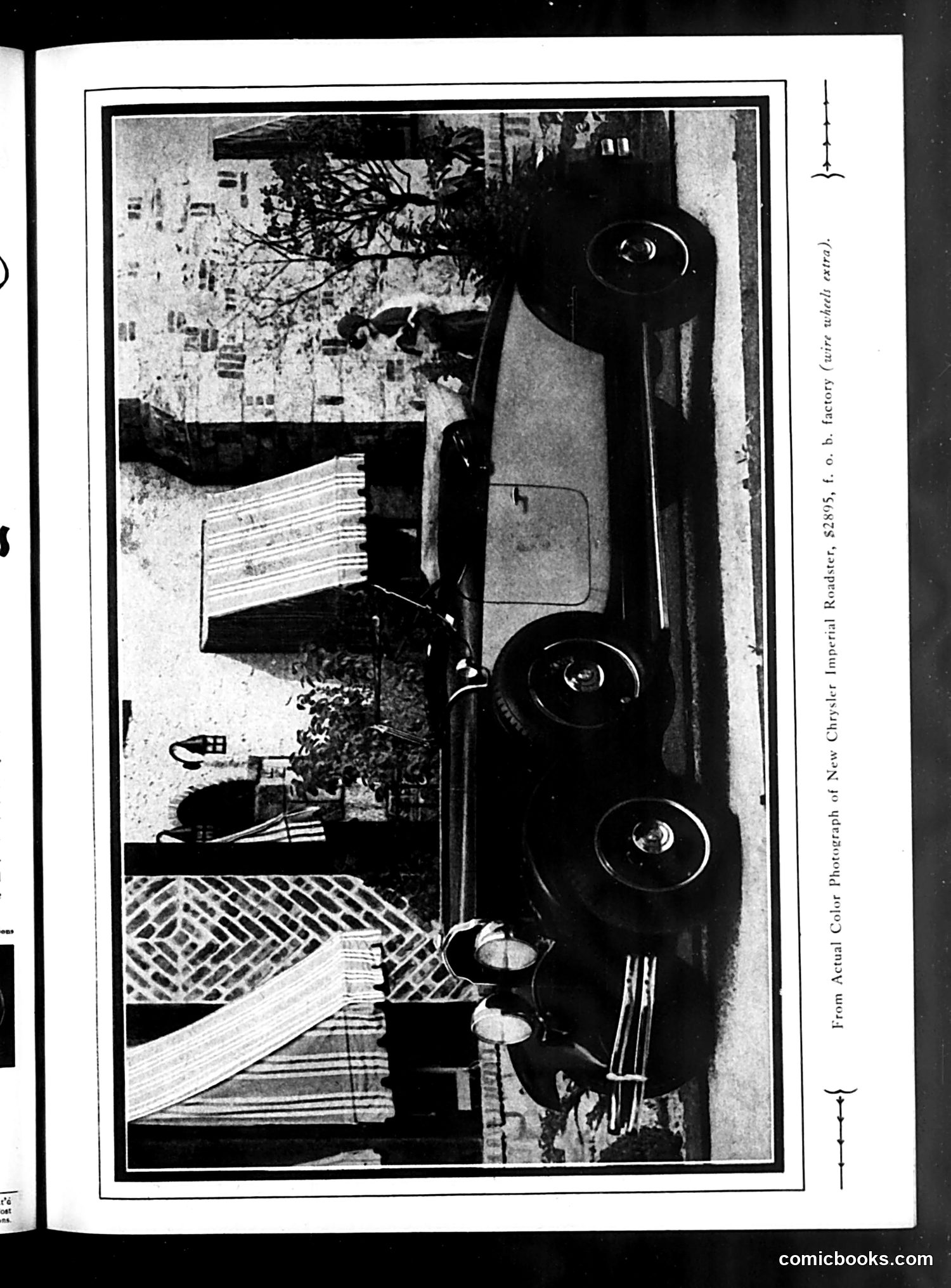
I can see this is a black and white photograph labeled "From Aerial Color Photograph of New Crystal Imprrial Rodsters, S.F.O., a factory under construction." The image appears to be rotated 90 degrees, showing what looks like an aerial or elevated view of an industrial or automotive facility with parked vehicles, buildings, and structural elements. However, I cannot definitively identify this as a political cartoon or satire in the traditional sense. The page appears to be primarily a documentary photograph with caption, rather than a satirical cartoon with identifiable caricatured figures or clear political messaging. Without additional context from surrounding pages or clearer visibility of any satirical elements, I cannot confidently explain what specific social or political commentary this image is intended to convey to a modern reader.
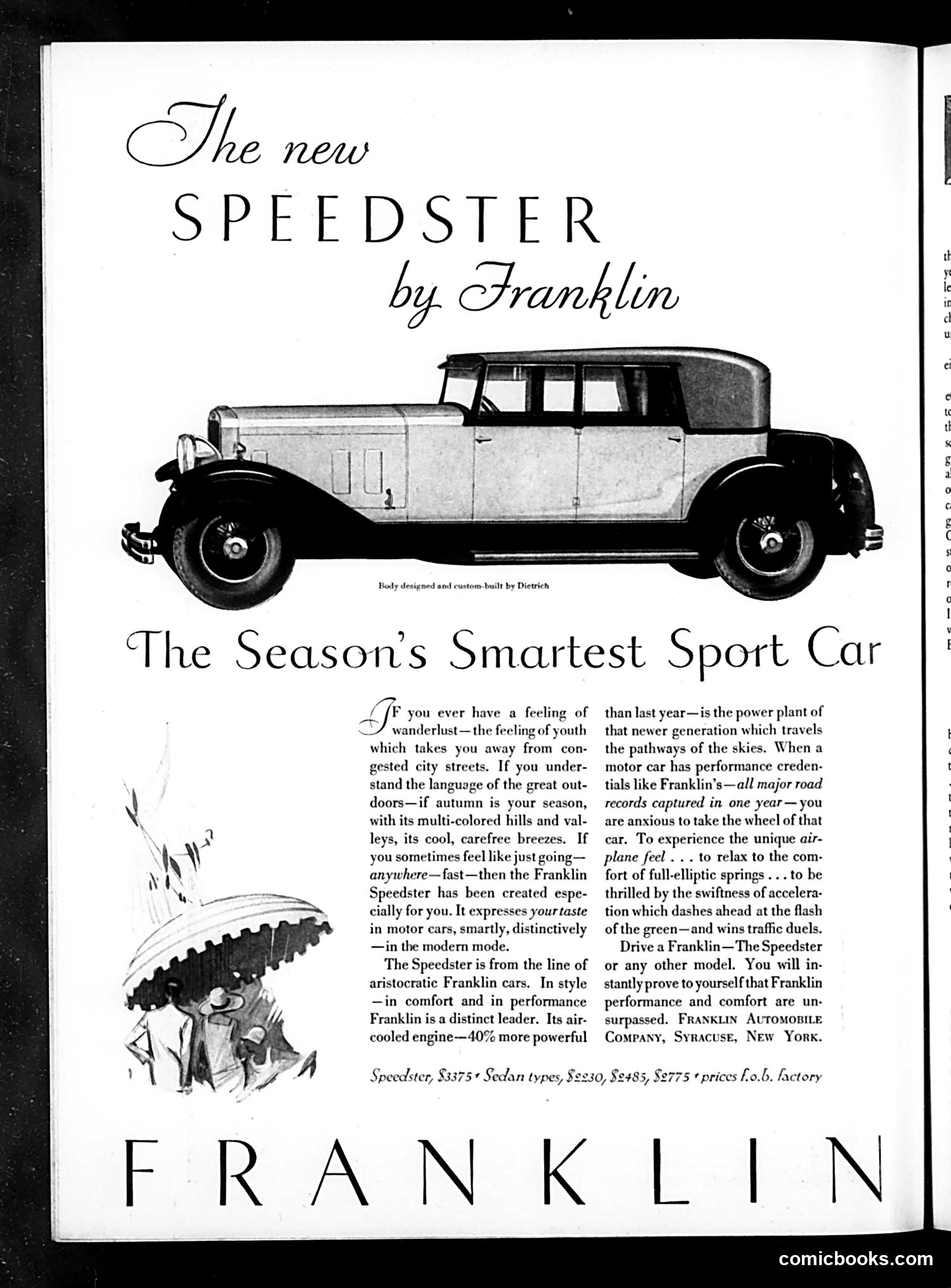
Analysis This page is primarily an advertisement, not satirical content. It promotes the Franklin Speedster automobile, marketed as "The Season's Smartest Sport Car." The ad emphasizes the car's appeal to affluent, leisure-oriented consumers—those seeking escape from "congested city streets" into autumn scenery. Key selling points include an air-cooled engine (40% more powerful than previous models), full-elliptic springs for comfort, and high performance credentials (all major road records captured in one year). The decorative illustration of a woman with a parasol and traveling outfit reinforces the luxury lifestyle messaging. Pricing ($2,375-$2,775) targets the wealthy. This represents 1920s aspirational automotive marketing aimed at America's elite, emphasizing freedom, speed, and sophisticated recreation.
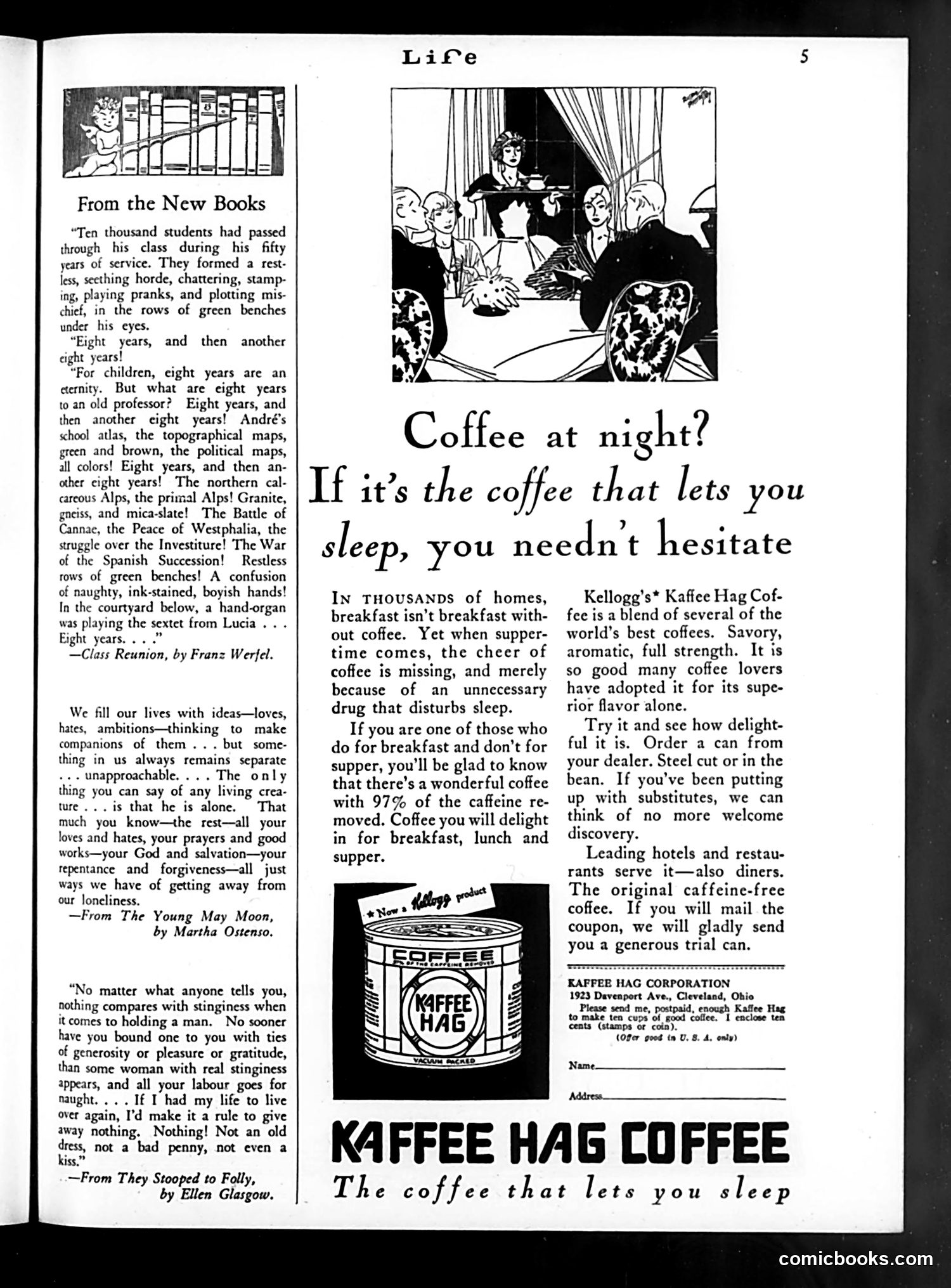
Page Content Analysis This page is primarily advertising for Kaffee Hag Coffee, a caffeine-free brand. The main illustration shows a social gathering where a woman serves coffee to well-dressed guests. The advertisement's central claim is that Kaffee Hag removes caffeine while retaining coffee's flavor—allowing people to drink coffee at night without sleep disruption. The tagline "the coffee that lets you sleep" was the brand's key marketing message. The left column contains literary excerpts ("From the New Books") unrelated to the advertisement, typical of Life magazine's mixed editorial-advertising format. The satire is implicit rather than explicit: the ad assumes readers care enough about coffee culture to worry about caffeine's effects on sleep—addressing an emerging modern concern about stimulant consumption.
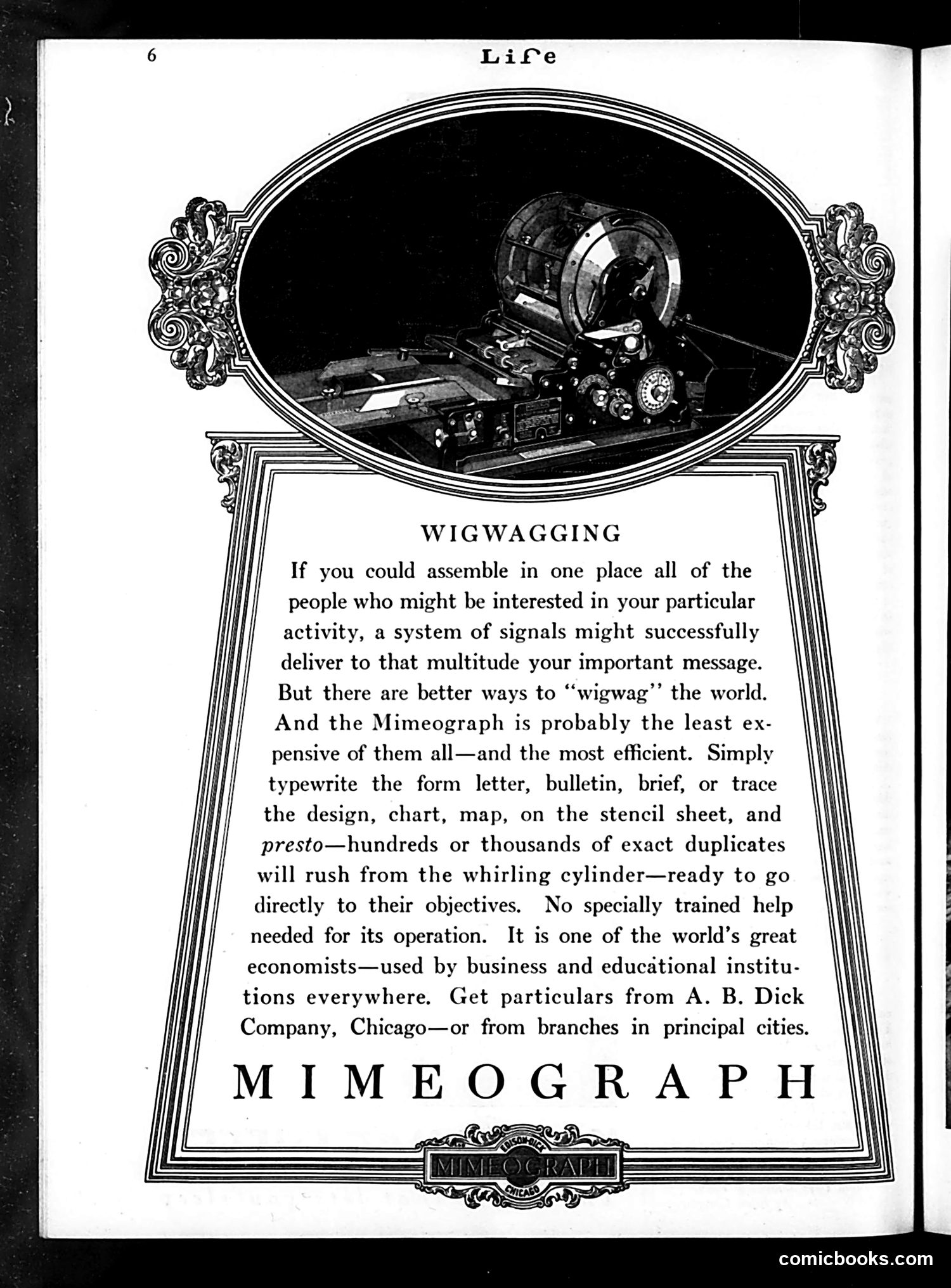
Analysis This is a Mimeograph machine advertisement, not political satire. The page uses the term "WIGWAGGING" (a reference to signal-flag communication) as a metaphor for spreading messages widely. The ad promotes the Mimeograph as an economical, efficient copying device for businesses and educational institutions. It claims the machine can rapidly produce "hundreds or thousands of exact duplicates" from a stencil without requiring trained operators. The image shows the device itself—a mechanical duplicator with a rotating cylinder. The advertisement targets institutional buyers by emphasizing cost-effectiveness and ease of use, positioning the Mimeograph as "one of the world's great economists." Contact information directs readers to A.B. Dick Company in Chicago. This represents early 20th-century office technology marketing.
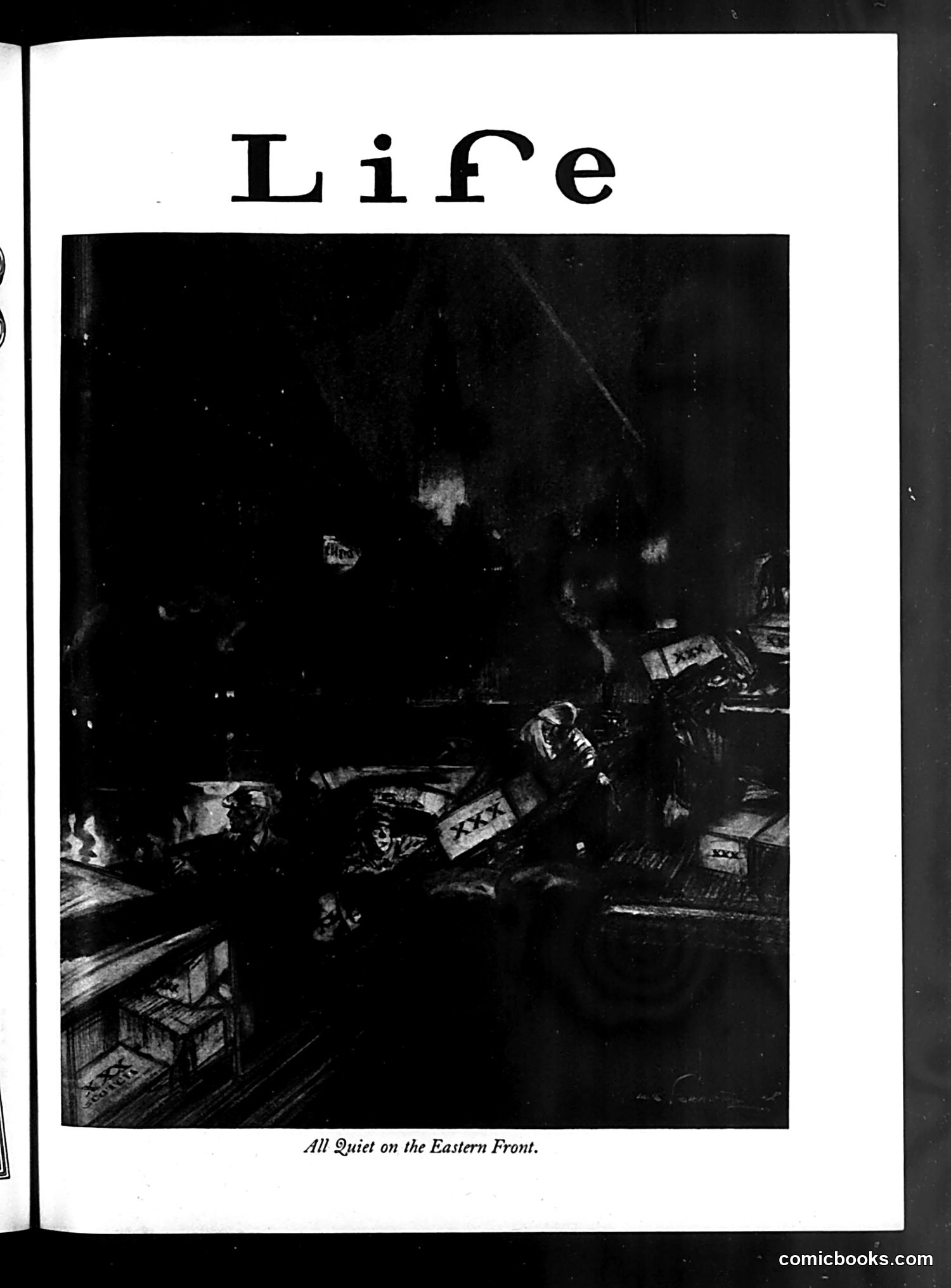
Analysis This appears to be a title page from *Life* magazine featuring a dark, dramatic photograph captioned "All Quiet on the Eastern Front." The image shows what appears to be a wartime scene—soldiers or military personnel in a trench or fortified position at night, with equipment and supplies visible. The caption is a reference to Erich Maria Remarque's famous World War I novel "All Quiet on the Western Front," but deliberately substitutes "Eastern" for "Western." Given the satirical nature of *Life* magazine, this likely comments on military activity or conditions on the Eastern Front during a specific conflict period—though without the publication date visible, the exact historical moment (WWI, WWII, or Cold War era) cannot be definitively stated from the image alone.
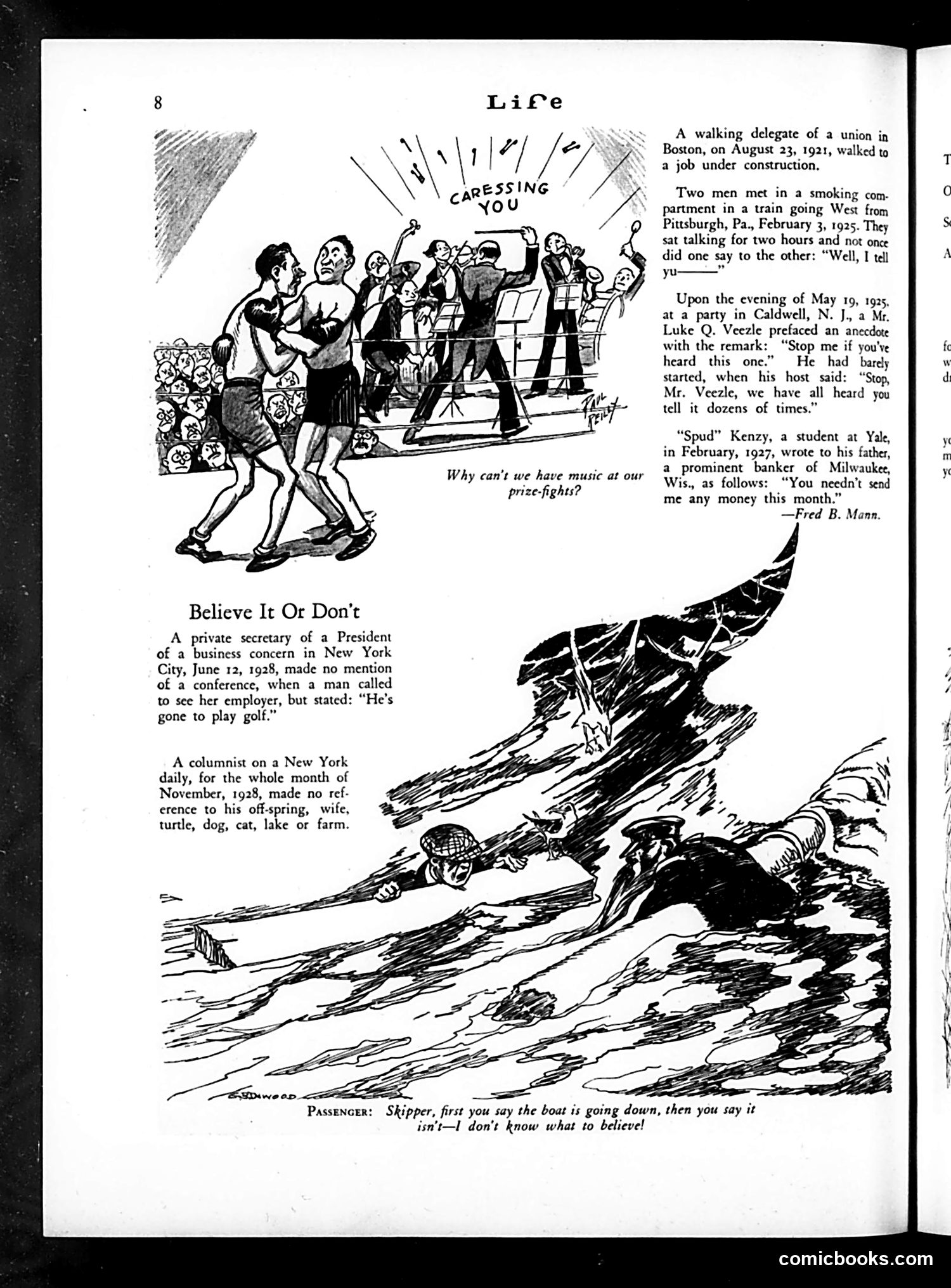
Analysis of Life Magazine Page 8 This page contains humorous anecdotes and two cartoon illustrations rather than political commentary. The top cartoon depicts a boxing match with spectators labeled "CARESSING YOU" and asks "Why can't we have music at our prize-fight?" The joke appears to mock the incongruity of romance/affection at a violent sporting event. The bottom cartoon shows a sinking boat with a caption about conflicting reports: a passenger says the skipper first claimed the boat was going down, then denied it. This satirizes inconsistent official statements or credibility problems. The text anecdotes are light social humor: a secretary's excuse for her boss being absent (golf), a columnist who ignored major life events entirely, and a Yale student's joke about not needing money from his banker father. These reflect 1920s-30s social attitudes and humor styles.
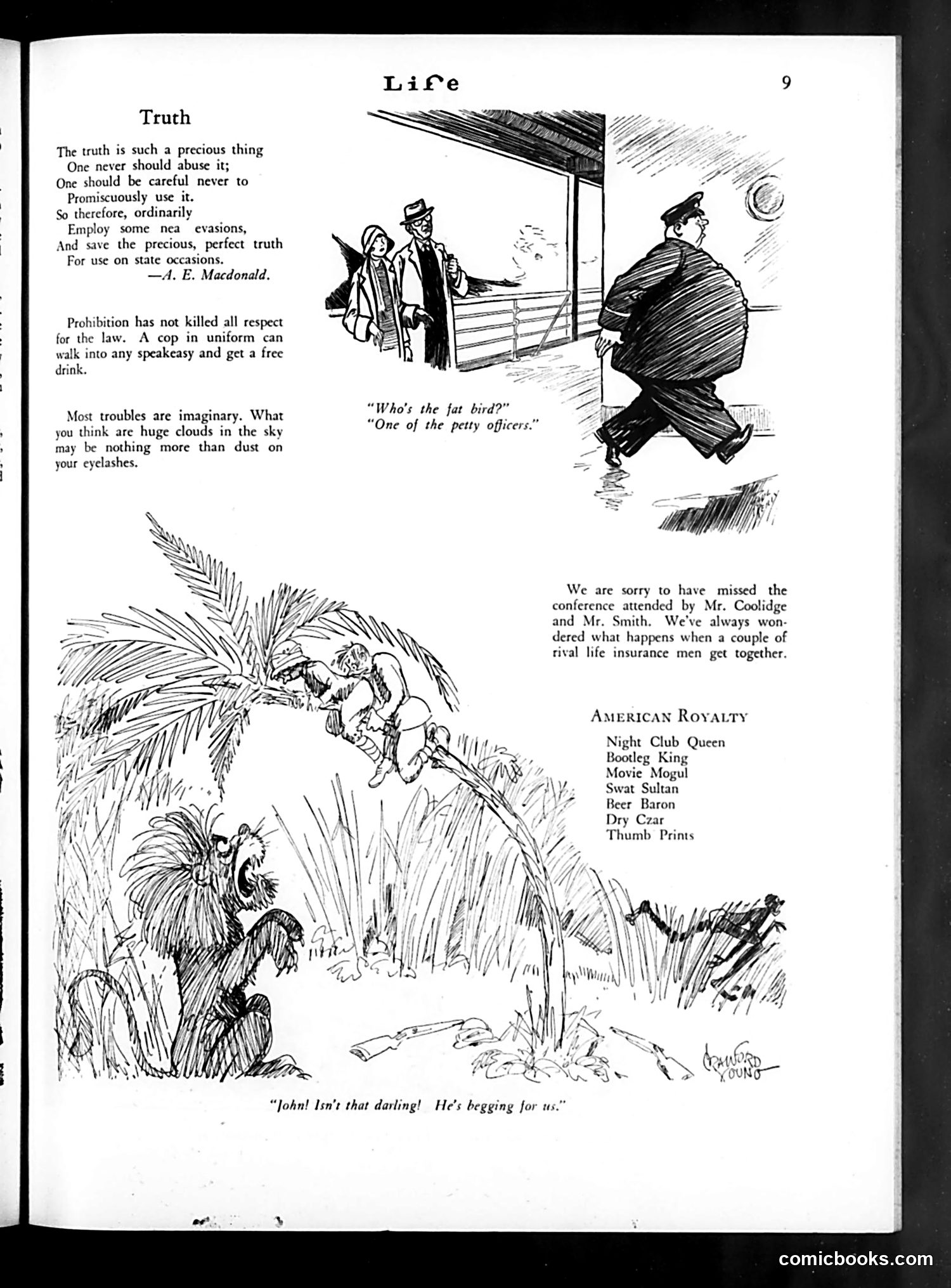
Analysis of Life Magazine Page 9 This page contains two satirical cartoons addressing Prohibition-era corruption and social hypocrisy. The top cartoon depicts a police officer ("fat bird") accepting a bribe at a speakeasy, mocking law enforcement complicity in illegal alcohol sales during Prohibition. The joke criticizes how cops could "walk into any speakeasy and get a free drink." The bottom cartoon shows figures in tall grass, apparently poaching wildlife. The caption "John! Isn't that darling! He's begging for us" satirizes upper-class hunters' attitudes toward endangered animals. Both cartoons mock institutional corruption and moral inconsistency among authority figures. The text block about missed insurance men's conferences adds workplace humor, unrelated to the main cartoons.
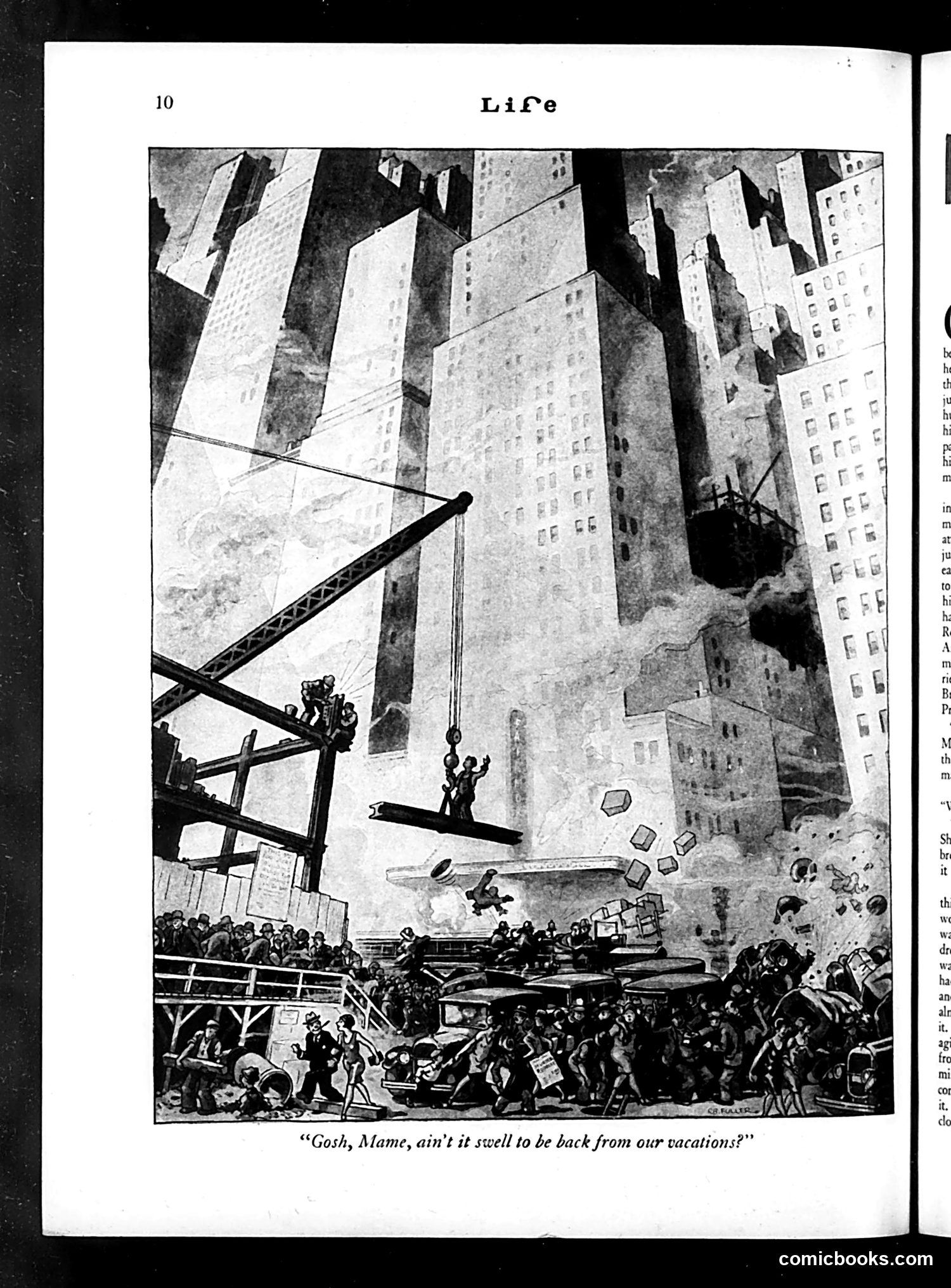
Analysis This is a satirical illustration from *Life* magazine (page 10) depicting a chaotic urban construction scene. The caption reads: "Gosh, Mame, ain't it swell to be back from our vacations?" The cartoon mocks the contrast between leisurely vacation expectations and the reality of returning to a bustling, dangerous cityscape. Towering skyscrapers loom overhead while construction cranes hoist massive steel beams precariously above crowds of workers and pedestrians below. The casual, cheerful dialogue clashes sharply with the perilous industrial activity depicted. This satirizes early 20th-century American urban development—the rapid, chaotic modernization of cities, workplace hazards, and the gap between romanticized leisure and the actual hazards of modern industrial life. The tone is darkly humorous about returning to civilization's dangers.
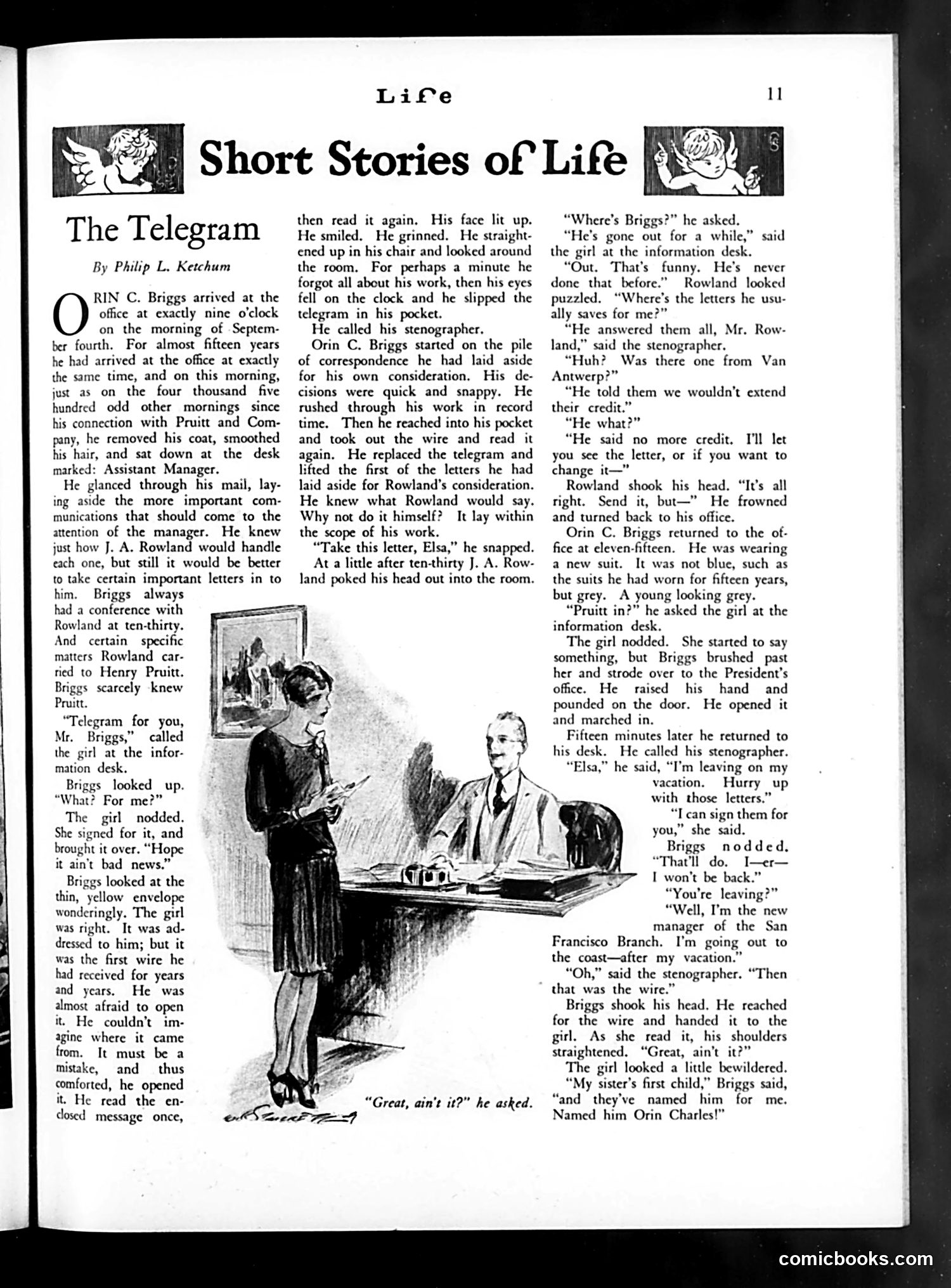
"The Telegram" by Philip L. Ketchum This is a short story rather than a political cartoon. It depicts an office workplace scenario from the early 20th century. The plot concerns Orin C. Briggs, an office worker at Pruitt and Company, who receives an unexpected telegram. He fears it contains bad news but discovers it's actually a birth announcement—his sister has named her newborn son "Orin Charles" in his honor. The story illustrates workplace dynamics of the era: the anxiety surrounding telegrams (then a primary means of urgent communication), office hierarchies, and the personal satisfaction of being honored by family. The illustration shows Briggs at his desk receiving the message from a female office worker. The narrative emphasizes how circumstances initially seemed negative but resolved positively—a modest, sentimental conclusion typical of early Life magazine fiction.
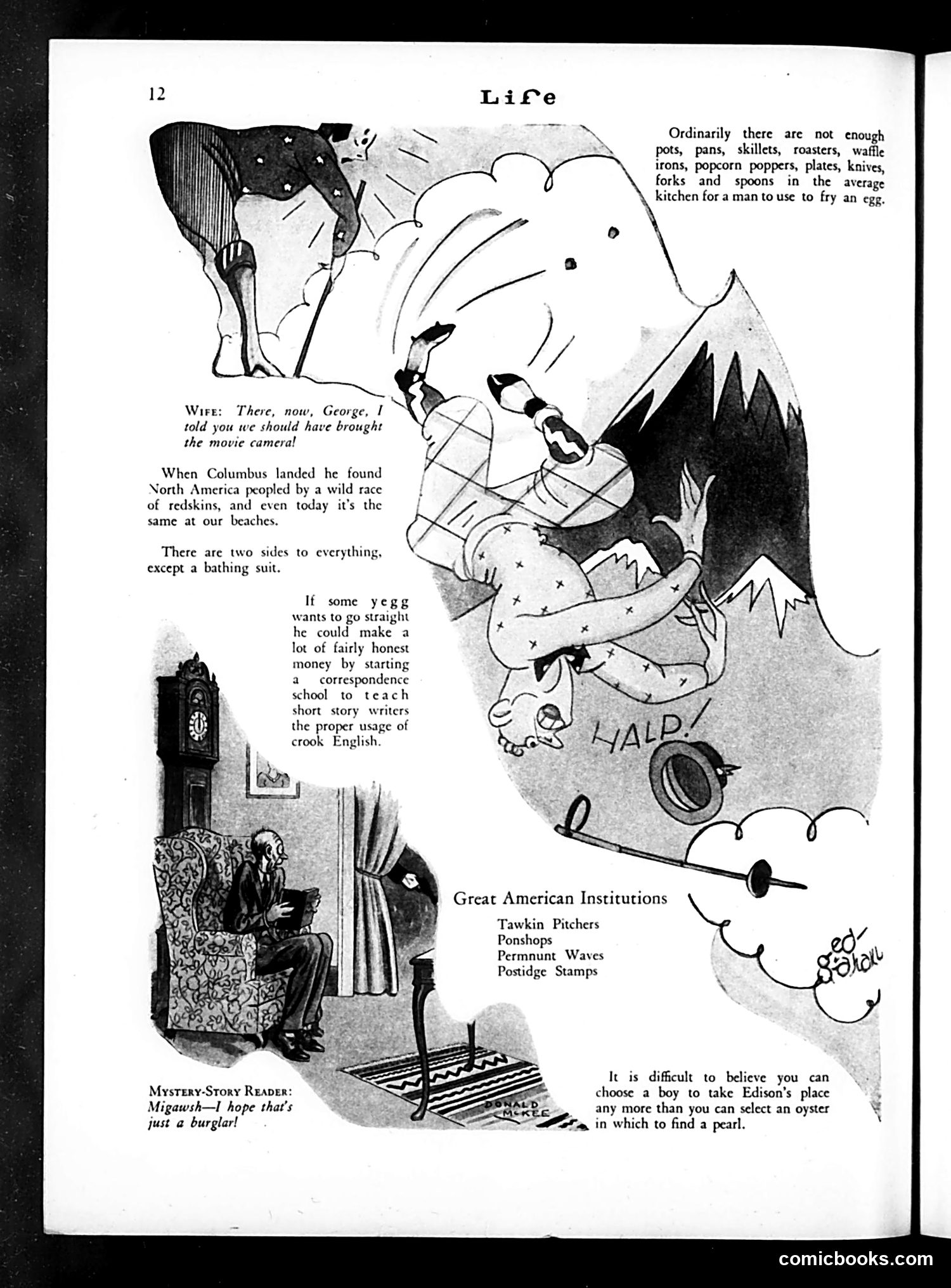
Page Analysis: Life Magazine Satirical Content This page contains multiple humorous sketches and commentary typical of Life magazine's satirical style. Top cartoon: Shows a wife scolding her husband "George" about forgetting a movie camera, while depicting Native Americans. The text references Columbus finding "redskins" and contrasts this with modern beach behavior—satirizing how little American attitudes toward Indigenous peoples had changed. Middle section: Lists absurd "Great American Institutions" (Tawkin Pitchers, Ponshops, Permnut Waves, Postidge Stamps)—parodying common mispronunciations or corruptions of American English. Bottom left: A "Mystery-Story Reader" caption mocks serialized magazine fiction. Right panel: References Thomas Edison, joking that finding a suitable boy to replace him is as difficult as finding a pearl in an oyster—commentary on American innovation and talent. The overall tone satirizes American culture, language, and institutions.
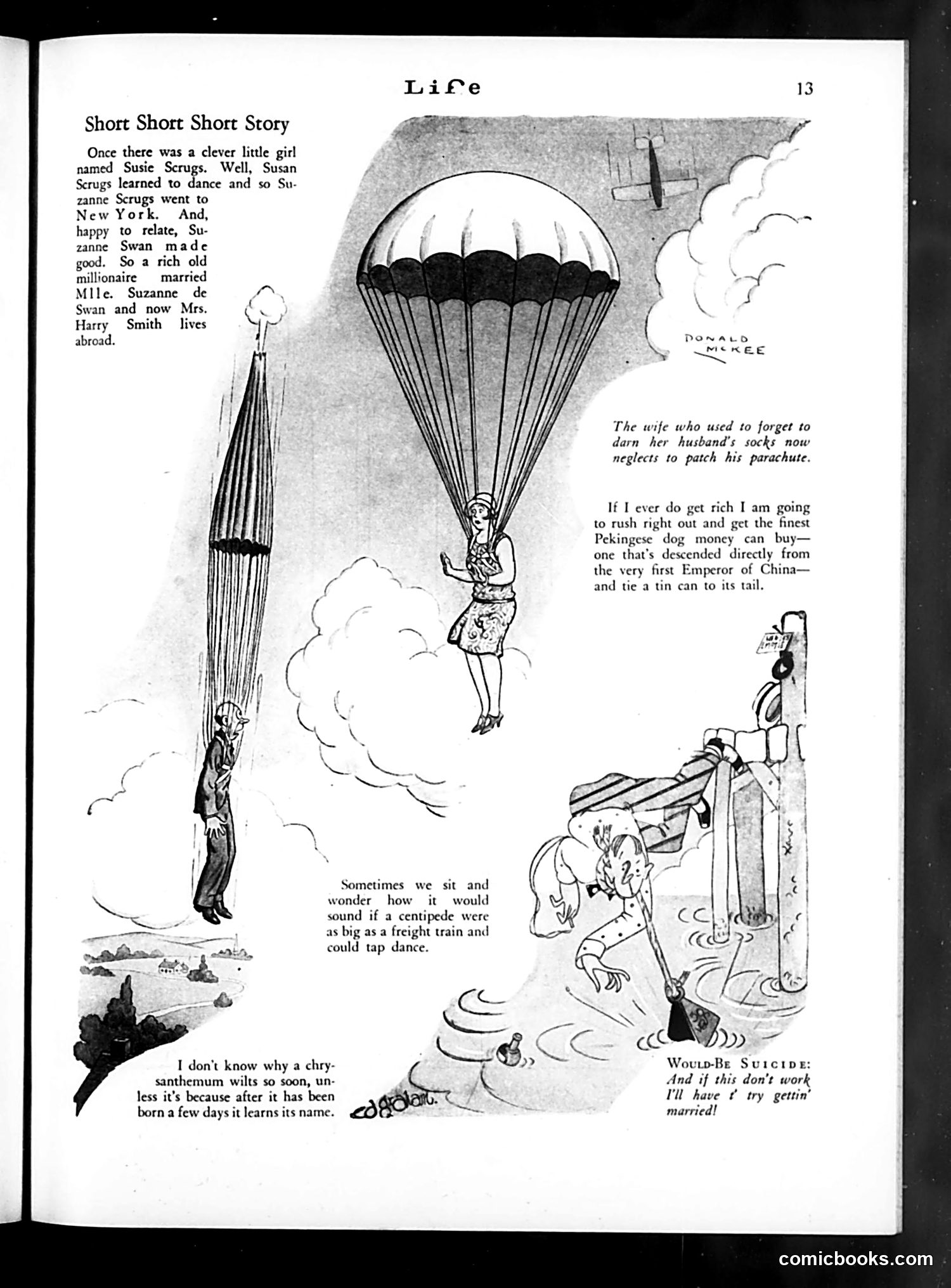
Explanation for Modern Readers This page from *Life* magazine contains humorous illustrations satirizing wealth, marriage, and social aspirations of the era. The "Short Short Story" mocks the marriage plot: a clever girl named Susie Scrugs dances her way to marrying a rich millionaire (now Mrs. Harry Smith), achieving the period's ultimate female aspiration. The cartoons below satirize absurd wealthy fantasies: one depicts someone descending by parachute with surreal plans (buying a Pekingese dog with "Emperor of China" money); another shows someone contemplating a centipede as large as a freight train; the final panel humorously suggests suicide as preferable to marriage. The overall theme: mocking both women's marriage-focused ambitions and the ridiculous, impractical daydreams of the wealthy or aspirational classes.
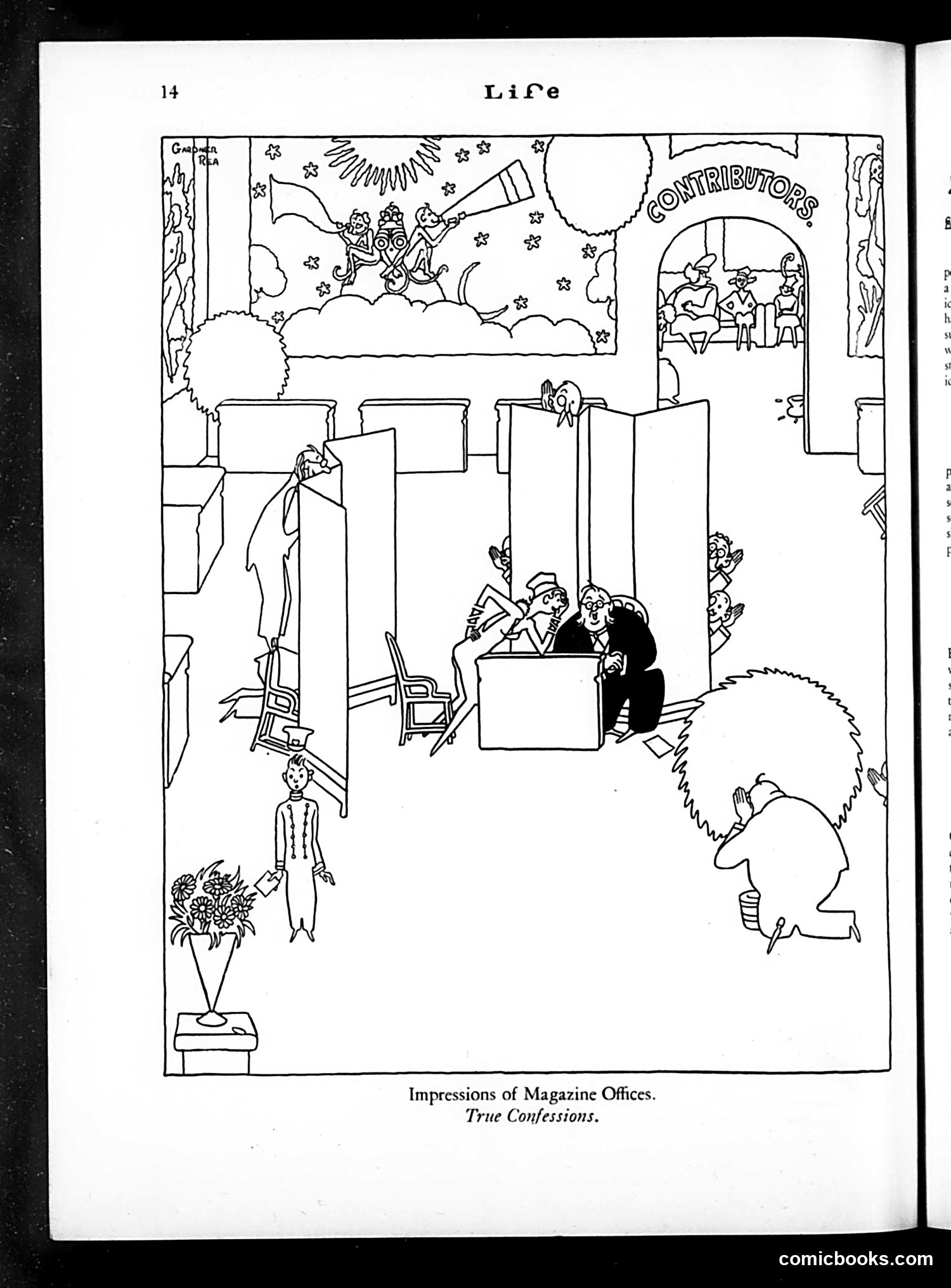
Impressions of Magazine Offices: True Confessions This satirical cartoon depicts the offices of a confession-style magazine. The illustration shows a chaotic workspace with multiple scenes: - Upper right: A "Contributors" box showing writers submitting material - Center: Editors working at desks amid tall partitions/cubicles - Lower left: A woman holding flowers, apparently waiting or visiting - Lower right: A large figure (possibly representing a stereotype) observing the scene - Upper panel: A heavenly scene with cherubs, suggesting the fantastical or sensationalized content these magazines published The satire mocks confession magazines' theatrical operations and the contrast between their glamorous promises and mundane office reality. The title "True Confessions" is ironic—suggesting these supposedly authentic personal stories were actually manufactured entertainment products created by editors and contributors for profit, not genuine confessions.
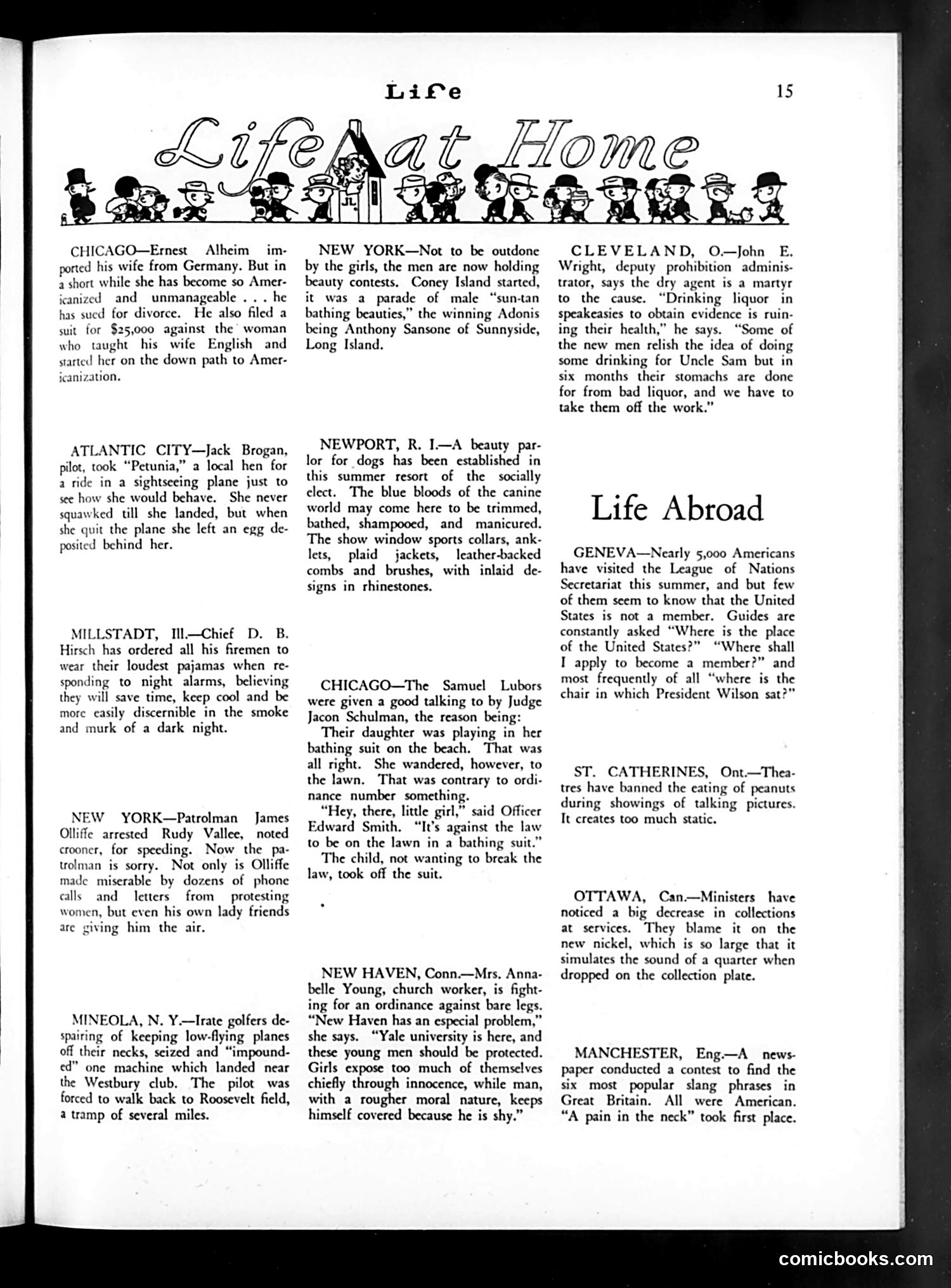
Analysis of Life Magazine Page 15 This page contains two sections of brief humorous anecdotes rather than political cartoons. "Life at Home" reports amusing domestic incidents from American cities, while "Life Abroad" covers international items. The cartoonish header illustration shows a line of small figures in formal attire (top hats and suits), likely representing the magazine's satirical approach to reporting trivial social observations. The anecdotes mock various aspects of 1920s American life: overzealous fire chiefs, eccentric plane owners, and social propriety concerns. The "Life Abroad" section jokes about Americans' ignorance regarding the League of Nations and international affairs. Rather than political satire, this represents *social* satire—mocking everyday behaviors, bureaucratic absurdity, and American provincialism. The humor relies on brief, ironic observations about middle-class life.
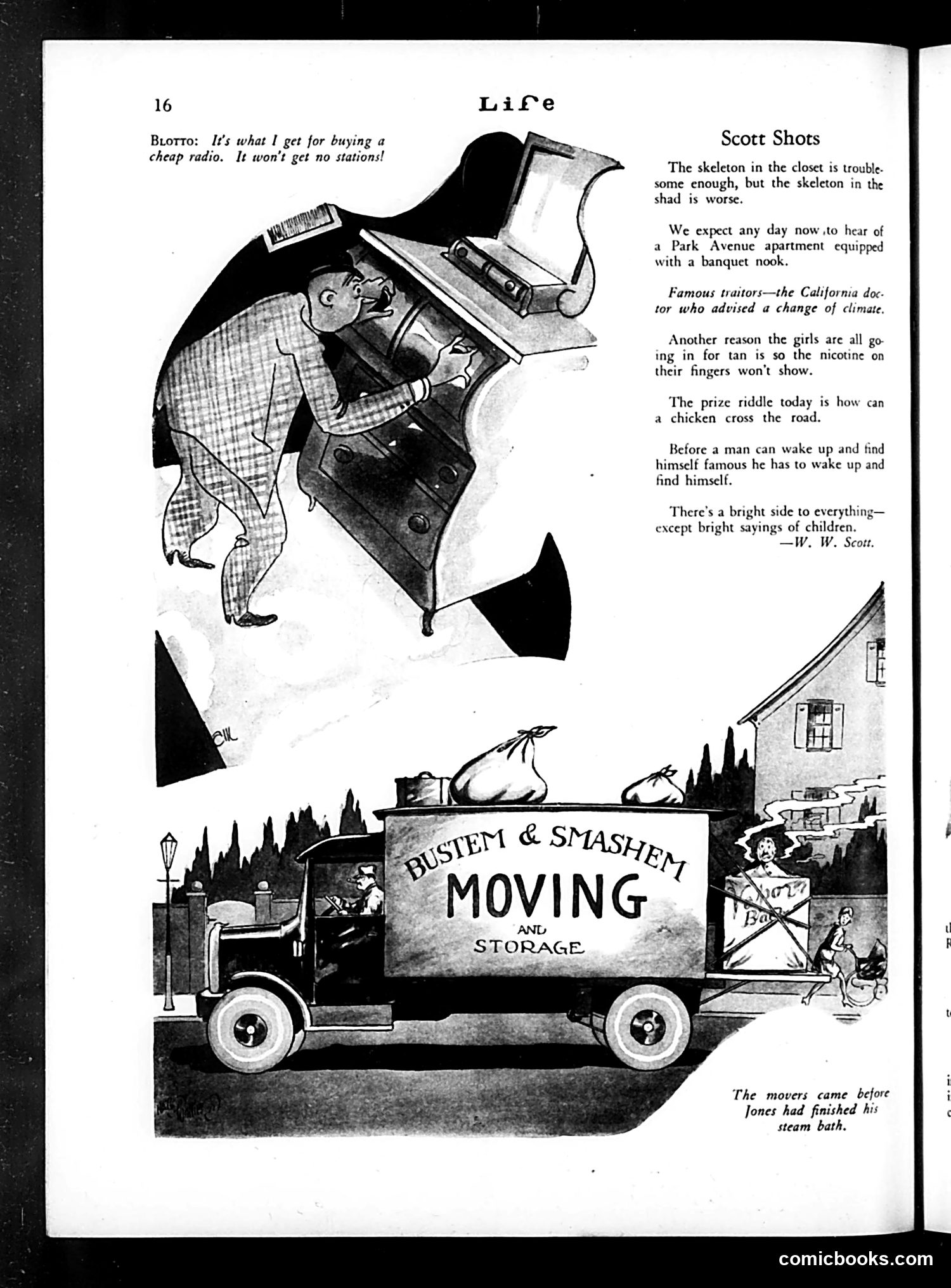
Analysis This page contains two main elements: Top illustration ("Scott Shots"): A caricatured man struggles with an old radio, captioned "It's what I get for buying a cheap radio. It won't get no stations!" The humor satirizes consumer complaints about inferior merchandise—a relatable Depression-era frustration. Bottom advertisement: "Bustem & Smashem Moving and Storage" features a comedic moving truck with household items (including what appear to be chickens) spilling chaotically. The caption reads: "The movers came before Jones had finished his steam bath." The joke plays on the reckless, destructive nature of moving companies—goods are damaged in transit, and the moving company's name literally advertises their destructive tendencies. This reflects contemporary anxieties about poor service quality and consumer vulnerability.
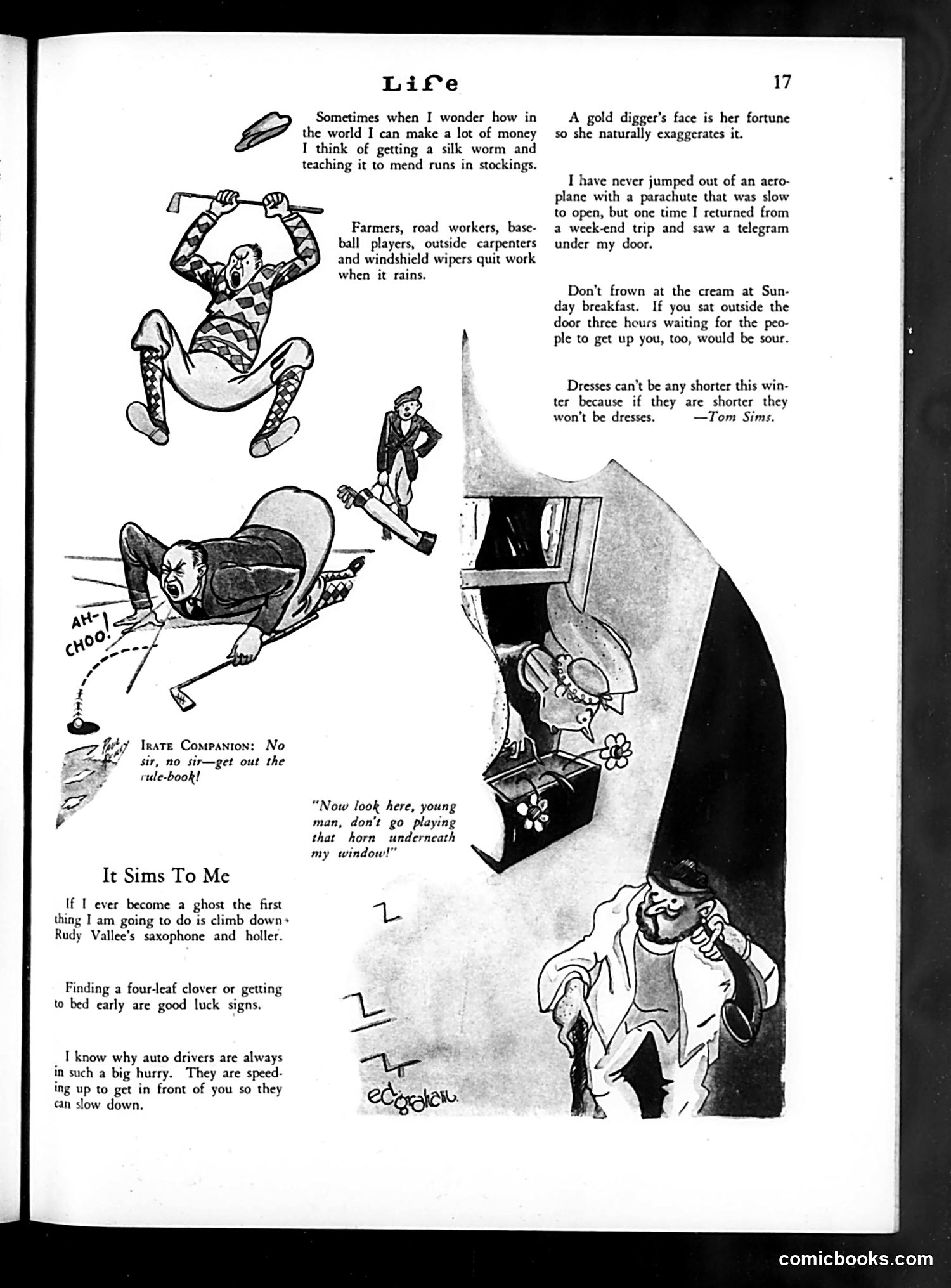
Analysis of Life Magazine Page 17 This page contains humorous observations and cartoons rather than political commentary. The main satire targets everyday social behaviors: Top section: Absurdist humor about making money (silk worms in stockings) and observations about workers quitting during rain. "It Sims To Me" column: Tongue-in-cheek life advice, including a joke about becoming a ghost and visiting Rudy Vallée's saxophone (a 1920s-30s popular singer/entertainer). Right cartoon: A domestic scene where a man plays a horn beneath a woman's window, while an angry tenant confronts him about the noise with a rule-book—satirizing both romantic persistence and bureaucratic regulation of behavior. The humor is lighthearted social observation rather than political satire, typical of Life magazine's comedic lifestyle content from this era.
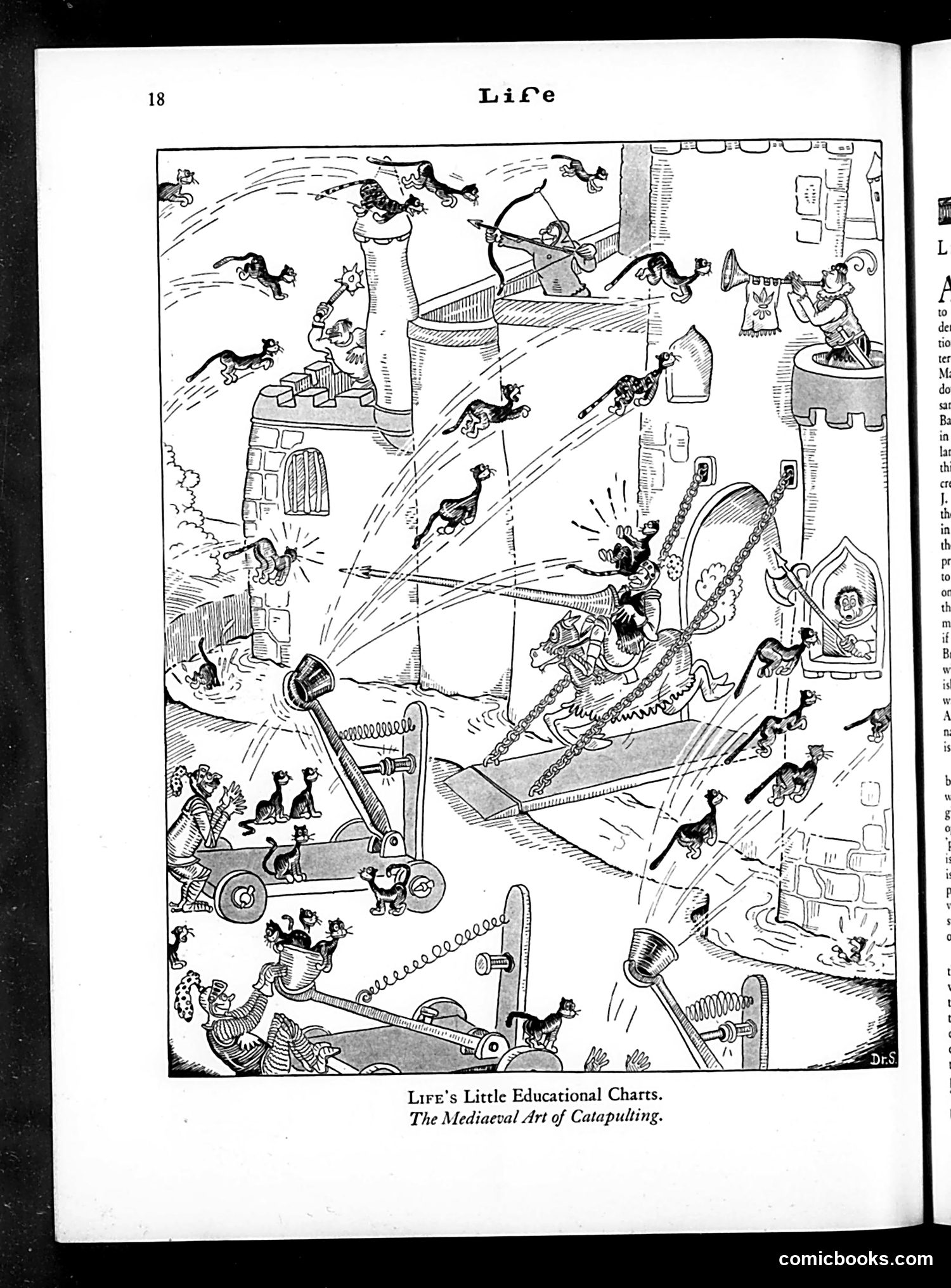
"The Mediaeval Art of Catapulting" This satirical illustration from *Life* magazine presents an elaborate medieval siege scene repurposed as commentary on contemporary society. The cartoon depicts various figures operating giant catapults and launching people/projectiles across a fortified landscape, with numerous small figures flying through the air or caught in trajectories. The title suggests this is mocking some modern practice by comparing it to crude medieval warfare tactics. The dense composition and chaotic activity imply criticism of indiscriminate or reckless treatment of people—possibly satirizing social mobility, employment practices, or institutional systems that "launch" individuals without regard for their welfare. The specific historical or social target remains unclear from the image alone, but the medieval framing suggests viewing contemporary practices as primitive or barbaric.
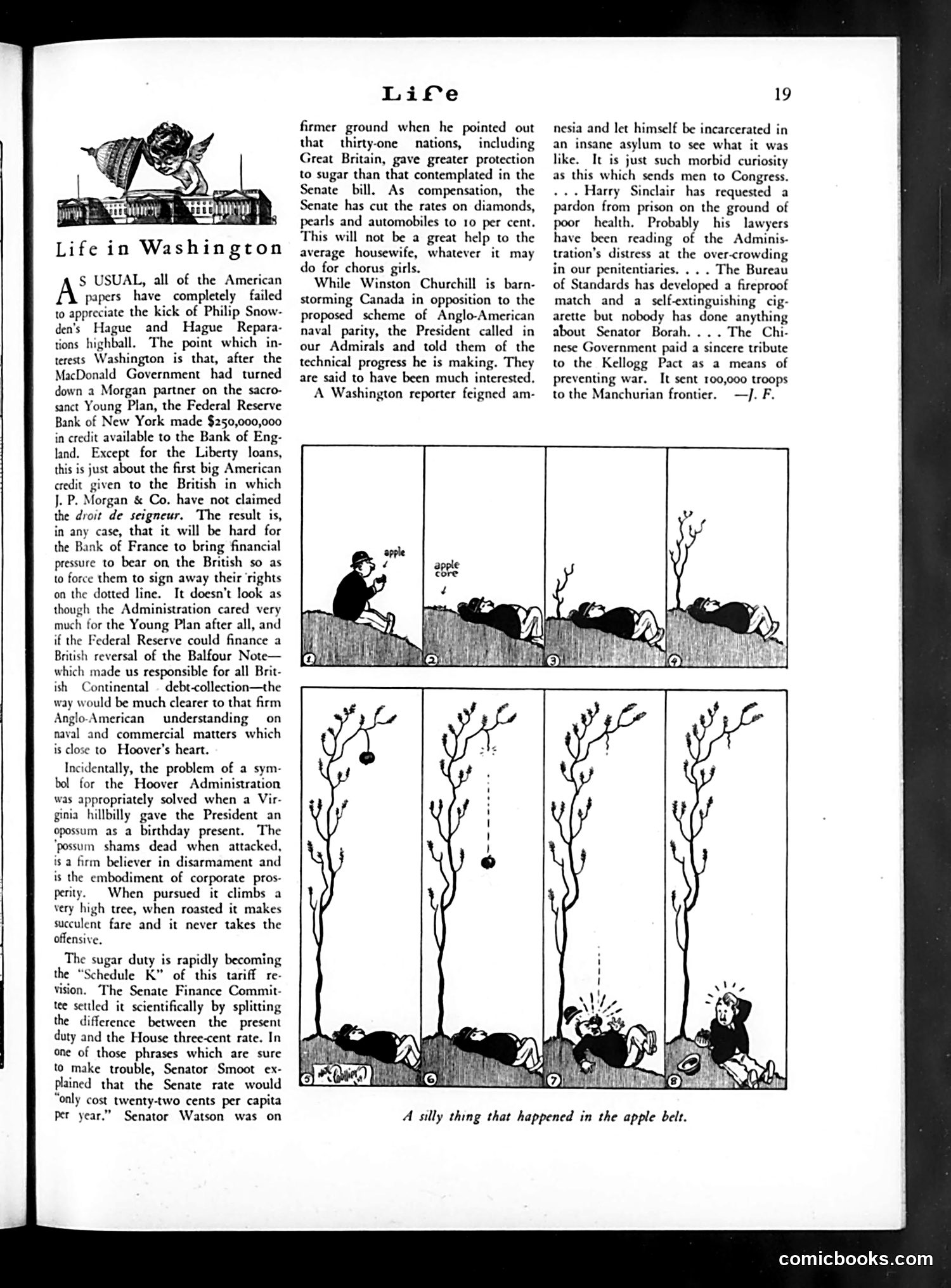
Analysis: "A Silly Thing That Happened in the Apple Belt" This is a sequential comic strip satirizing agricultural economics during the Hoover administration (late 1920s-early 1930s). The narrative shows a farmer repeatedly hitting apples from a tree with increasingly desperate methods—first gently tapping, then harder strikes, finally violently attacking the tree while it lies on the ground. The satire targets the tariff policies discussed in the adjoining text, particularly the sugar duty and agricultural protection schemes. The farmer's escalating desperation mirrors how protective tariffs promised to help farmers but ultimately proved counterproductive. The joke's title suggests this absurd cycle was characteristic of apple-belt (agricultural) policy under Hoover. The strip critiques the disconnect between government promises of agricultural relief and actual economic outcomes—the more the farmer "attacks" the problem, the worse it becomes. This reflects contemporary frustration with ineffective farm support policies during economic hardship.
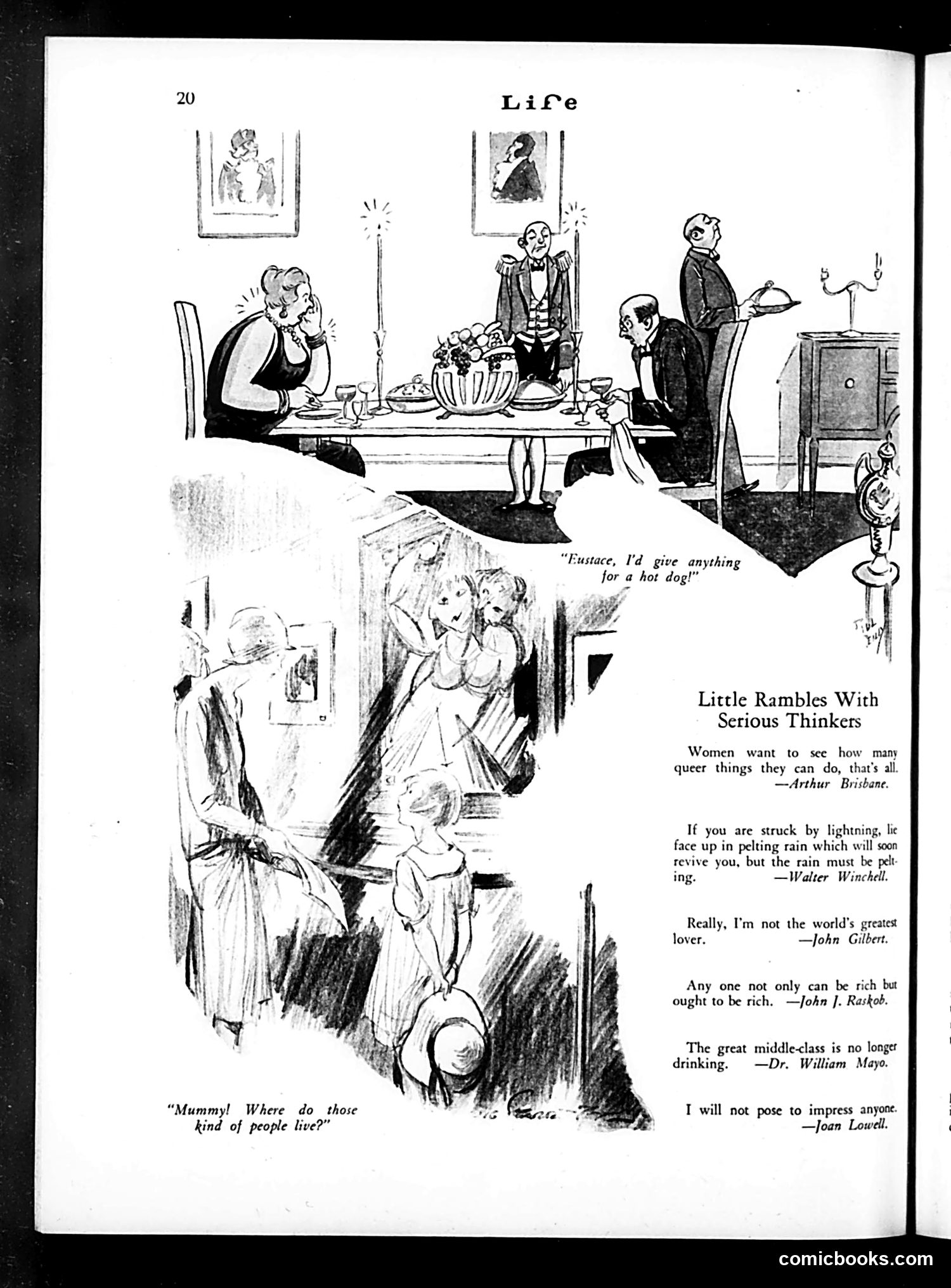
Analysis of Life Magazine Page 20 This page contains two satirical cartoons mocking class pretension and hypocrisy in 1920s America. The top cartoon depicts a formal dinner party where a wealthy woman, observing the elegant setting, confesses she'd "give anything for a hot dog"—exposing the gap between aristocratic pretense and actual desires. The bottom cartoon shows a child asking "Mummy! Where do those kind of people live?"—likely referring to working-class or immigrant populations, satirizing upper-class obliviousness about how ordinary people live. The "Little Rambles with Serious Thinkers" section parodies famous contemporary figures (Arthur Brisbane, Walter Winchell, John Gilbert, etc.) with absurd or contradictory quotes. These are likely invented or exaggerated statements meant to mock their public pronouncements—particularly targeting wealthy figures like Raskob (a financier) who claimed anyone "ought to be rich," and Dr. Mayo's claim about middle-class sobriety (during Prohibition). The overall theme critiques wealthy America's detachment from reality and the pretentiousness of the era's public figures.
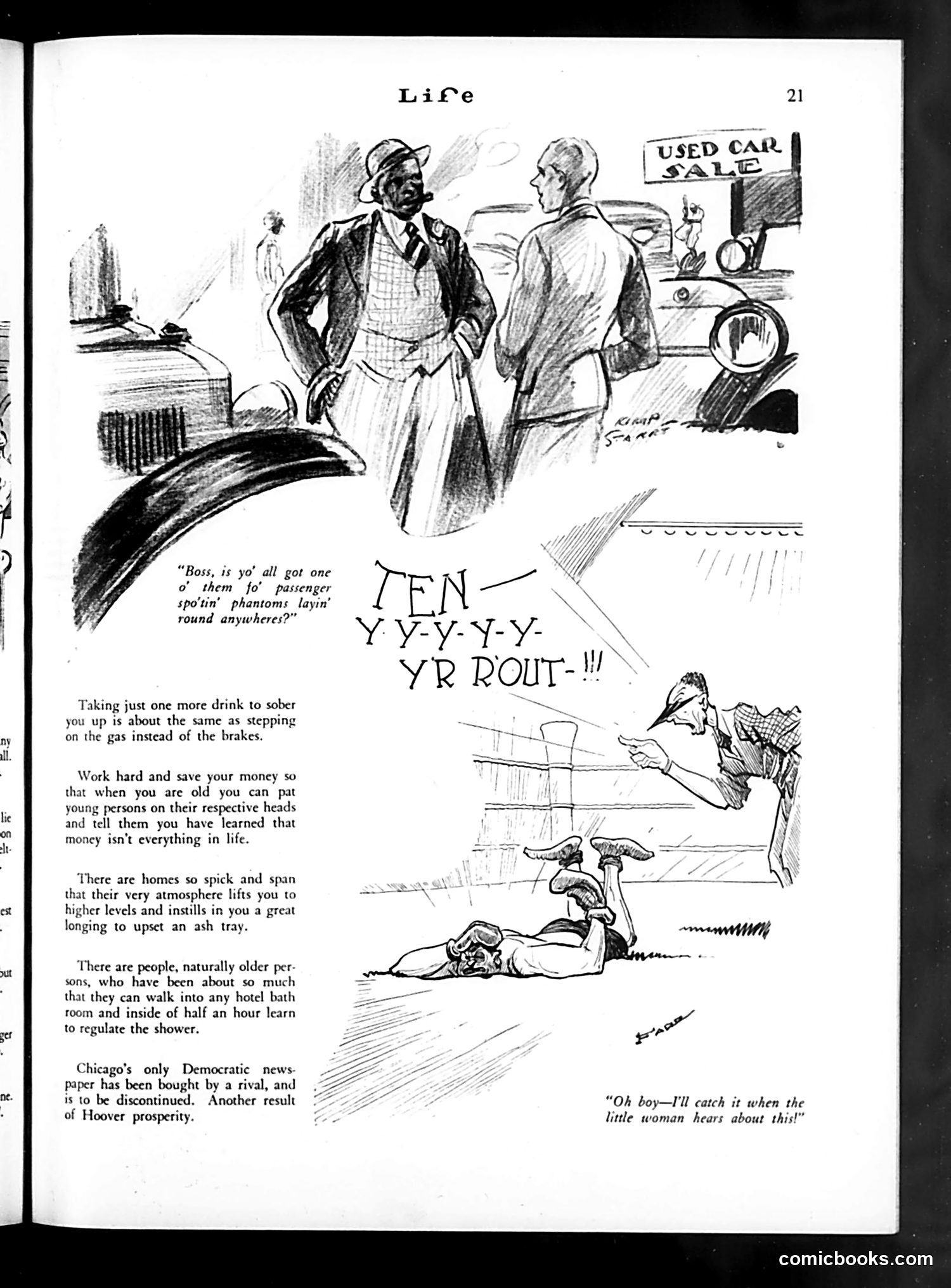
Life Magazine Page 21 Analysis This page contains multiple satirical commentaries typical of Life's humor format: Top cartoon: A used-car salesman (in checkered suit) pitches to a customer, asking about "passenger spo'tin' phantoms"—slang for phantom hitchhikers. The joke satirizes deceptive used-car sales tactics and dubious vehicle quality. Text humor blocks: Series of witty observations mocking American life, including: - The irony of drinking to sober up (comparing it to stepping on gas instead of brakes) - The paradox of working hard to tell young people money isn't everything - Satire on overly pristine homes that make guests want to mess them up - Mockery of older travelers as hotel-shower experts Bottom cartoon: A man flying through the air after hitting something (unclear what), with his wife watching. Caption jokes he'll "catch it" when she learns about the accident—satirizing domestic tensions and marital consequences. Final text block: References Chicago's only Democratic newspaper being purchased and discontinued by a rival—attributed sarcastically to "Hoover prosperity," criticizing President Hoover's economic policies during the Depression era.
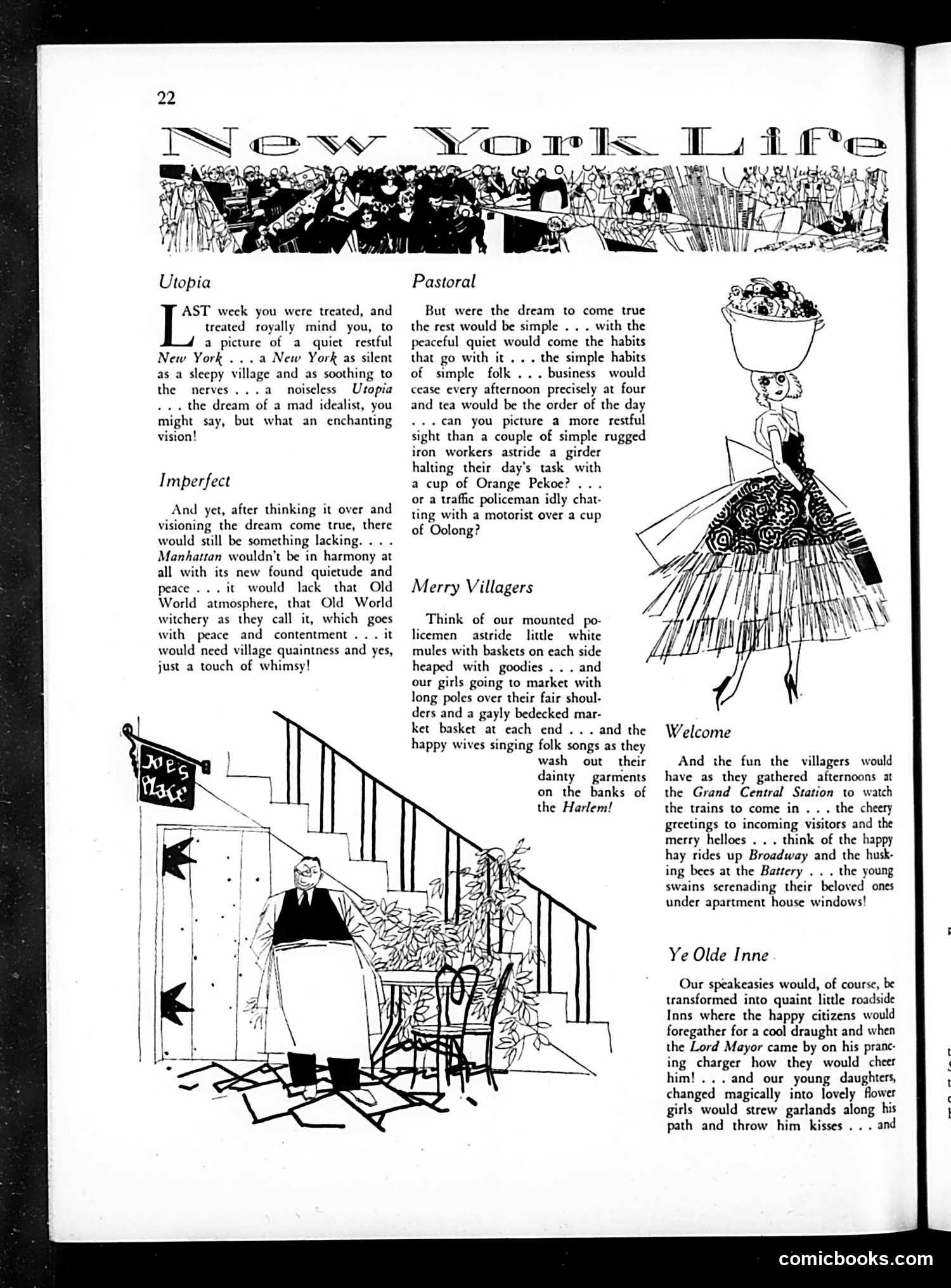
Analysis for Modern Readers This 1920s satirical piece fantasizes about transforming New York City into a quaint, peaceful village. The author initially praised this "Utopia" but now recognizes it's fundamentally flawed—Manhattan needs its bustling energy and "Old World witchery." The satire mocks romanticized pastoral fantasies by imagining absurd scenarios: iron workers sipping tea during workdays, mounted police on mules, hay rides up Broadway, speakeasies transformed into "Ye Olde Innes," and citizens strewing flower petals for a "Lord Mayor." The reference to the Harlem River and speakeasies places this during Prohibition. The cartoon critiques both those nostalgic for pre-industrial village life and the pretension of trying to graft Old World charm onto a modern metropolis. The joke: New York's value lies precisely in what makes it chaotic and modern, not in fantasy-land sentimentality.
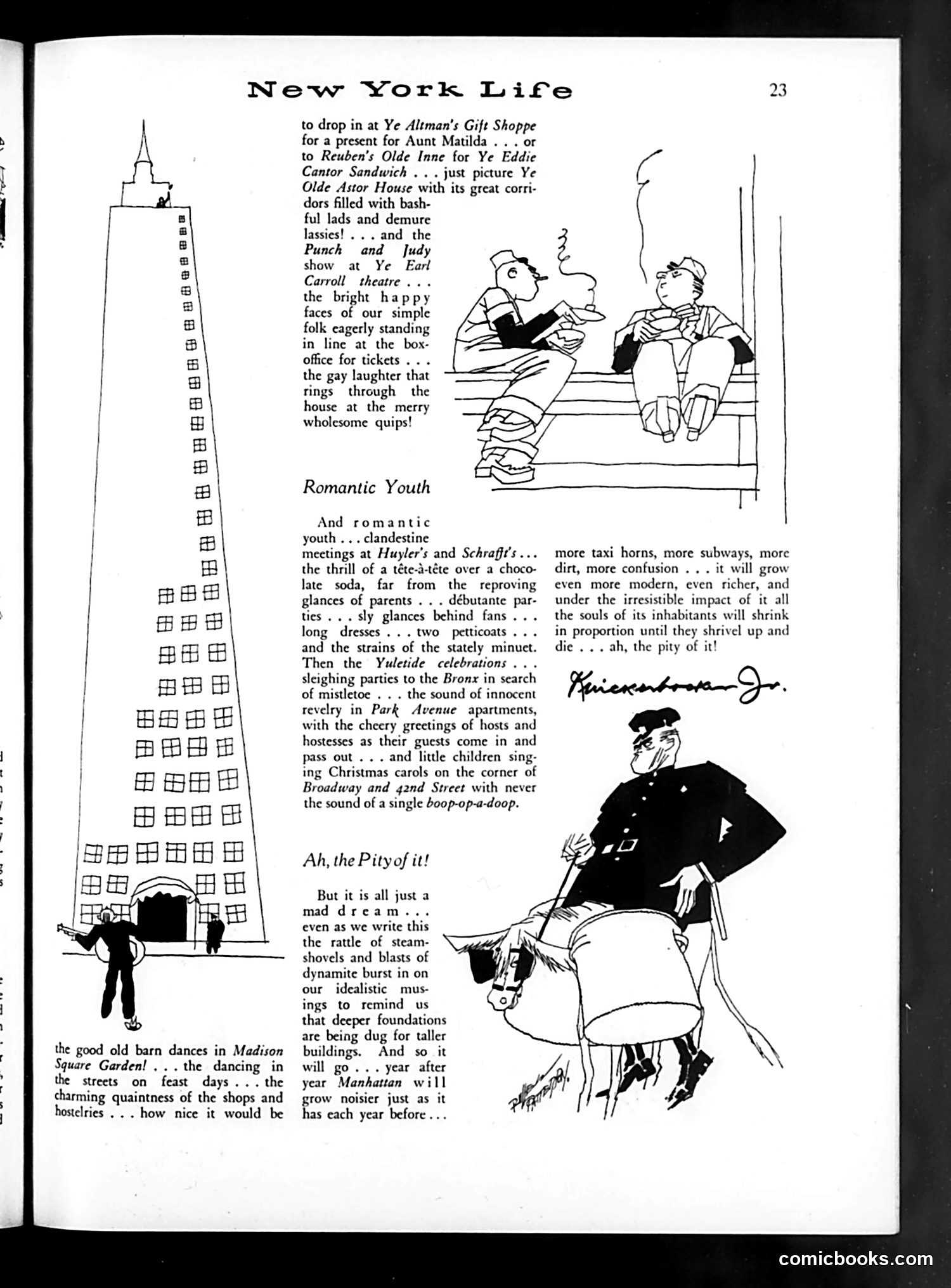
Analysis This satirical piece laments the modernization of New York City. The author nostalgically imagines a romanticized, pre-industrial Manhattan with quaint shops ("Ye Altman's Gift Shoppe," "Ye Olde Astor House"), innocent pleasures (candy-store dates at Huyler's and Schrafft's, sleigh rides), and wholesome entertainment (Punch and Judy shows, Christmas carols). The cartoon's punch comes in the final section, "Ah, the Pity of it!" Here, a figure sits amid construction—steam-shovels and dynamite blasting—representing the relentless urban development destroying this imagined past. The satire critiques how Manhattan's modernization through skyscraper construction, increased traffic, and technological sprawl (subways, taxi horns) is eroding the city's humanity and soul. The illustration of the well-dressed man amid demolition emphasizes the helplessness of nostalgia against industrial progress—a common early-20th-century anxiety about technology's cost to traditional life.
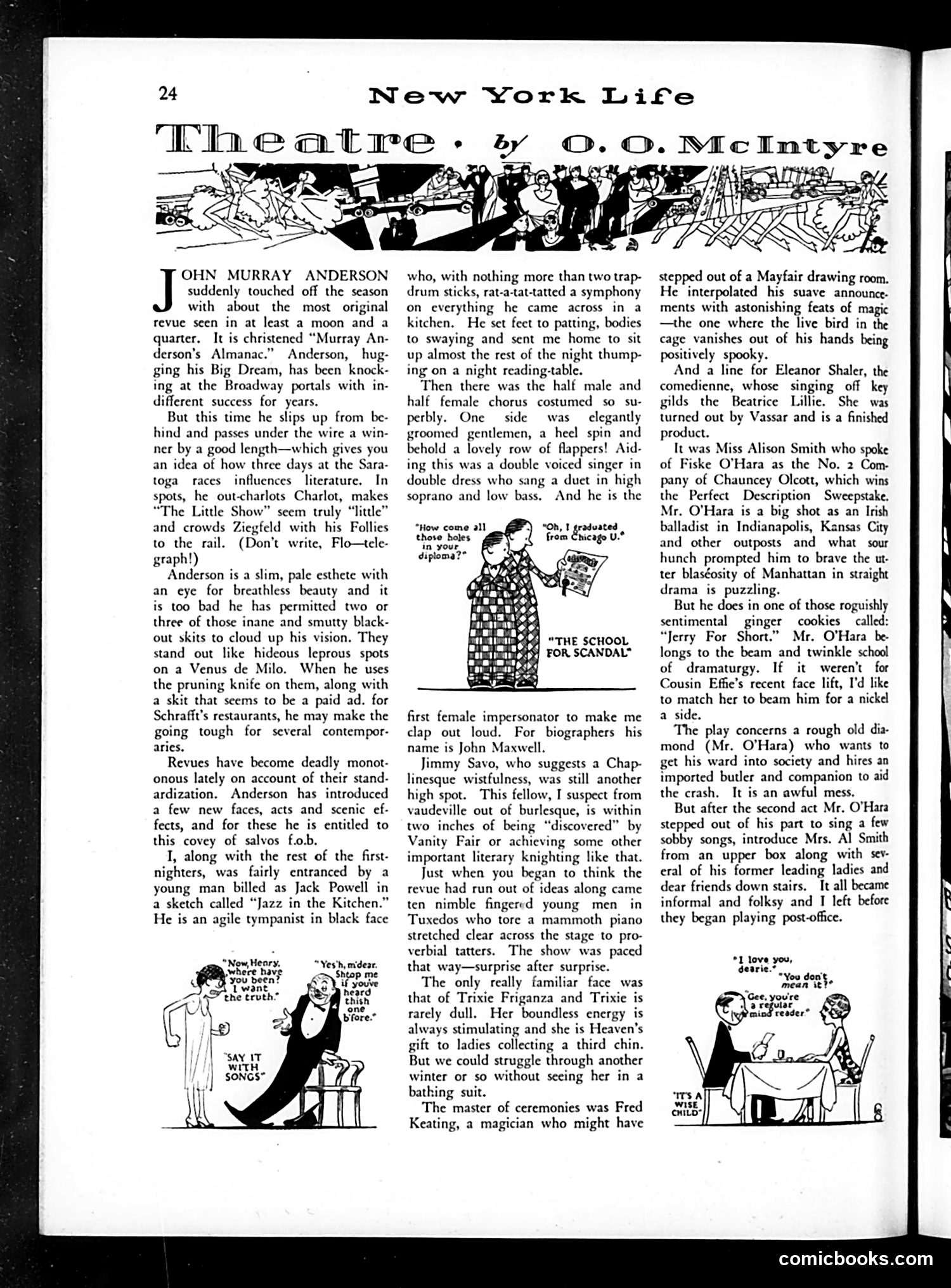
Theatre Review: "Murray Anderson's Almanac" This is O.O. McIntyre's review of a Broadway revue titled "Murray Anderson's Almanac." The cartoons illustrate comedic moments from the show and typical 1920s dialogue. The review praises director Murray Anderson's original production, noting it surpasses recent revues through novelty and fresh talent. McIntyre highlights specific performers: Jack Powell performing percussion "in black face" (a now-offensive theatrical convention of the era), a gender-bending double-voiced singer, female impersonator John Maxwell, and comedian Trixie Friganza. The small cartoons use period slang—"Say It With Songs," references to Chicago education, "mind reader"—to capture jazz-age humor. McIntyre critiques Anderson's inclusion of some "inane and smutty black-out skits" while celebrating his choreography and staging innovation, ultimately endorsing the show as superior contemporary entertainment that challenges established producers like Florenz Ziegfeld.
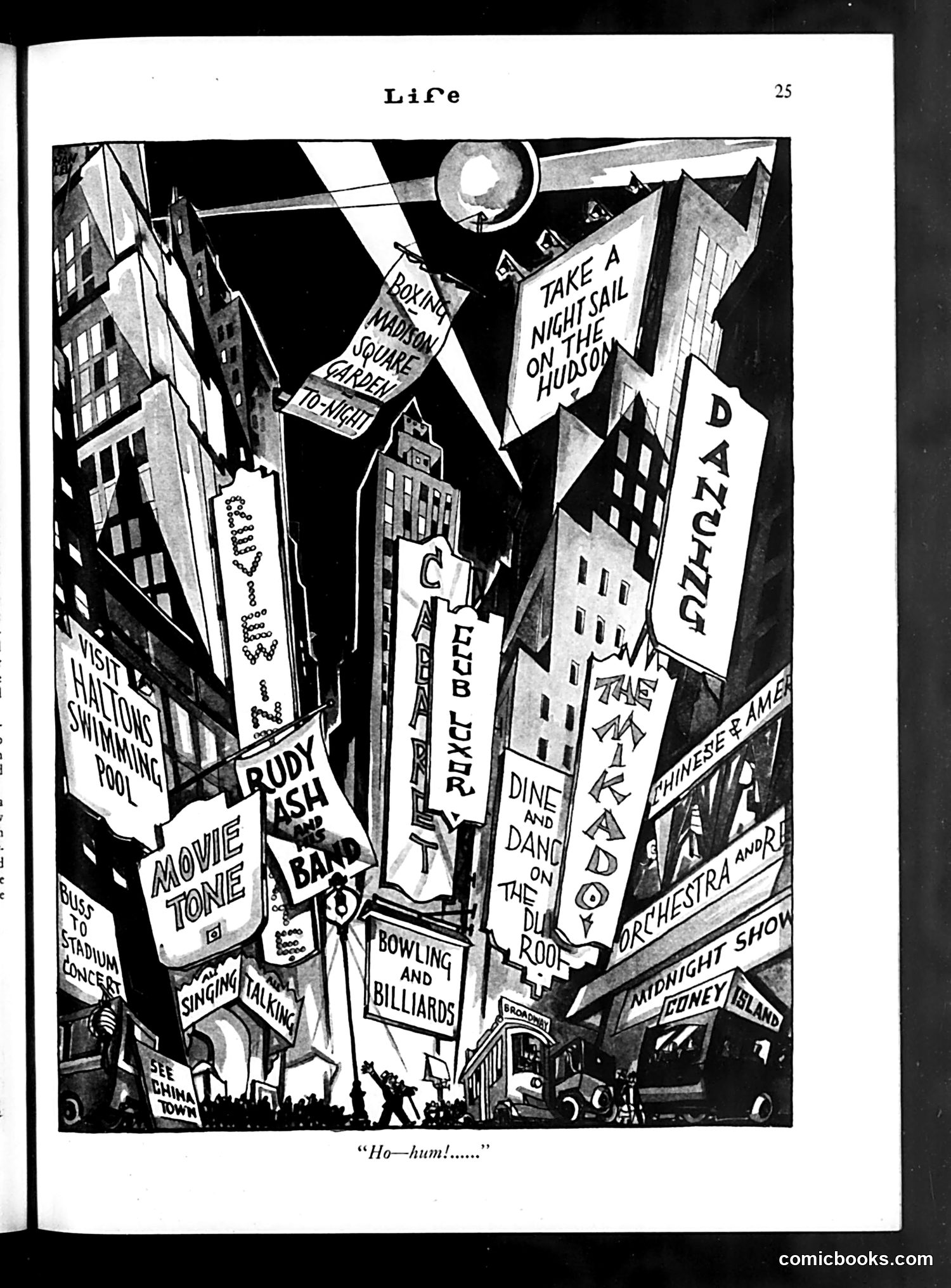
Analysis This is a satirical illustration depicting a vibrant nightlife street scene, likely from the 1920s-1930s based on the Art Deco style and references. The towering buildings are covered with signs advertising entertainment venues and attractions: "Take a Night Sail on the Hudson," "Dine and Dance on the Roof," "Bowling and Billiards," "Movie Tone," "Chinese American," and various other amusements. A full moon illuminates the crowded street below. The satire appears to target urban excess and commercialized leisure culture—the sheer proliferation of entertainment options competing for attention, stacked vertically on buildings. The caption "Ho—hum!....." suggests world-weary indifference despite this overwhelming abundance of diversions. This likely critiques how modern city life, despite endless entertainment choices, produces apathy or ennui rather than genuine satisfaction.
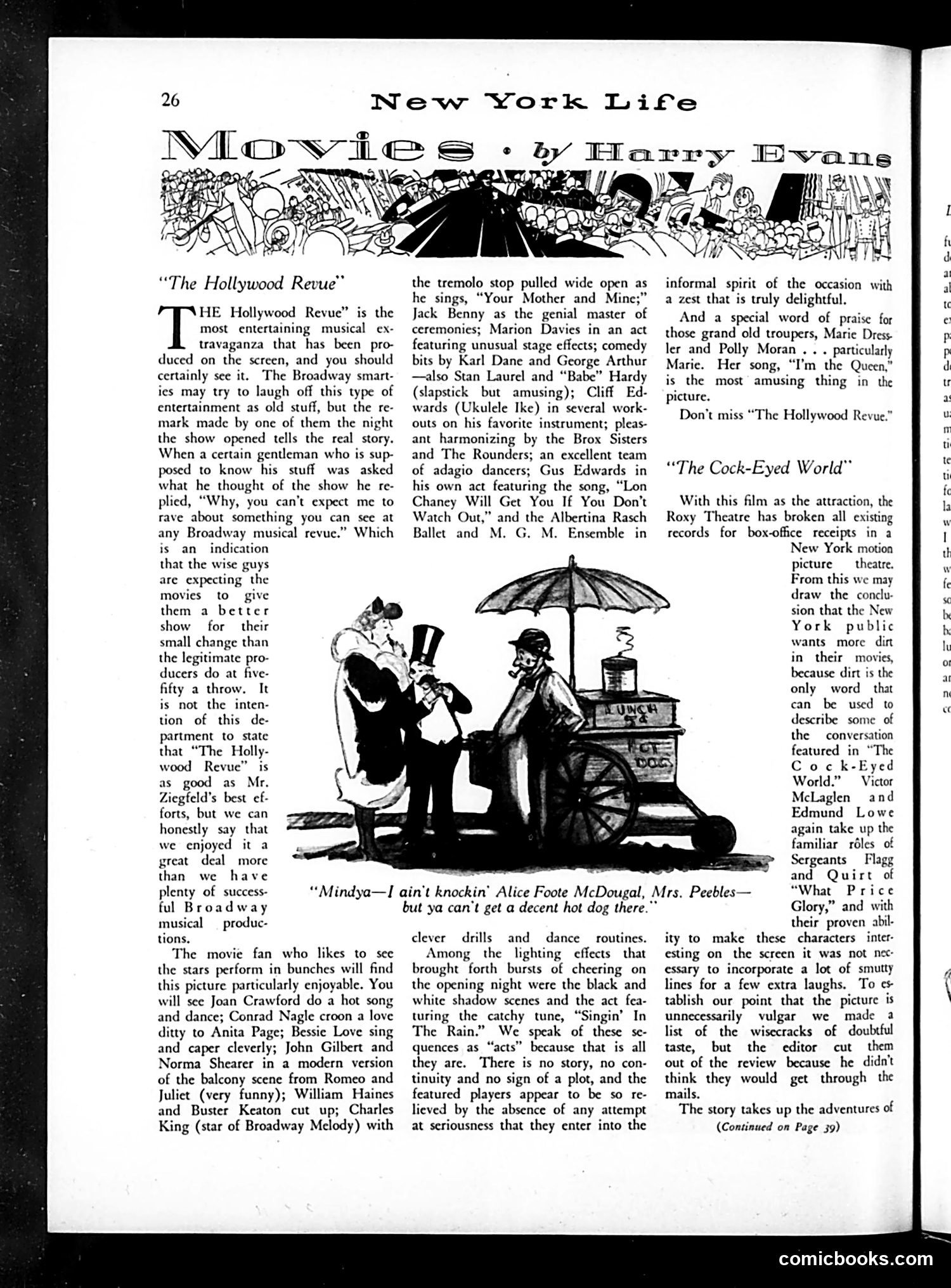
Analysis of Life Magazine Movie Reviews Page This page from Life magazine (circa 1929) reviews two films: "The Hollywood Revue" and "The Cock-Eyed World." The cartoon illustrates a joke about movie theater concessions. A man in a top hat confronts a hot dog vendor, complaining he "can't get a decent hot dog" despite the venue's fancy appearance. This satirizes the gap between upscale movie palace ambitions and shabby reality—a common complaint about early cinema venues. The reviews themselves showcase 1920s cinema attitudes. "The Hollywood Revue" is praised as superior to Broadway revues despite lacking plot, featuring MGM stars (Joan Crawford, Buster Keaton, Laurel and Hardy). "The Cock-Eyed World," featuring Victor McLaglen and Edmund Lowe, is noted for breaking box-office records largely due to "dirt"—the reviewer's euphemism for crude language and vulgar content that apparently attracted audiences. The reviews reflect early sound cinema's novelty and audiences' appetite for star appearances over storytelling.
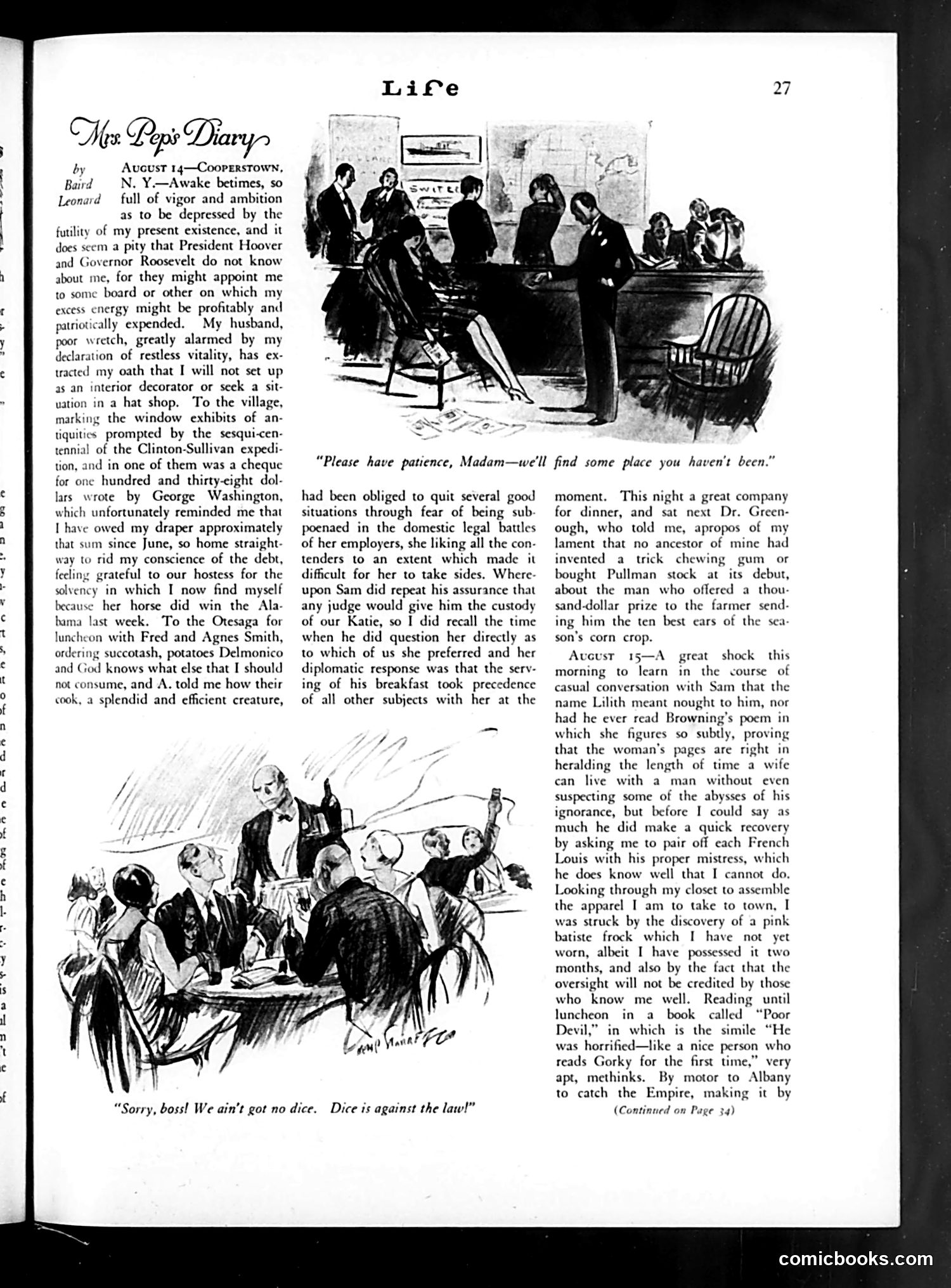
Explanation for Modern Readers This page from *Life* magazine contains a humorous diary entry ("Mrs. Pops Diary") by Baird Leonard, satirizing upper-middle-class anxieties and pretensions during the Depression era (August 1932, based on references to President Hoover and Governor Roosevelt). The two cartoons mock specific social situations: The top illustration shows a woman seeking housing, with the caption "Please have patience, Madam—we'll find some place you haven't been," satirizing how even the wealthy face social exclusion or housing difficulties. The lower cartoon depicts a man refusing to gamble ("Dice is against the law!"), likely mocking Prohibition-era hypocrisy or the absurdity of legal restrictions on vice. The diary itself uses self-deprecating humor about the narrator's restless ambition, her domestic anxieties, and her intellectual pretensions (references to Browning, Lilith mythology). The overall satire targets how privileged people, despite their leisure and resources, remain anxious and status-conscious.
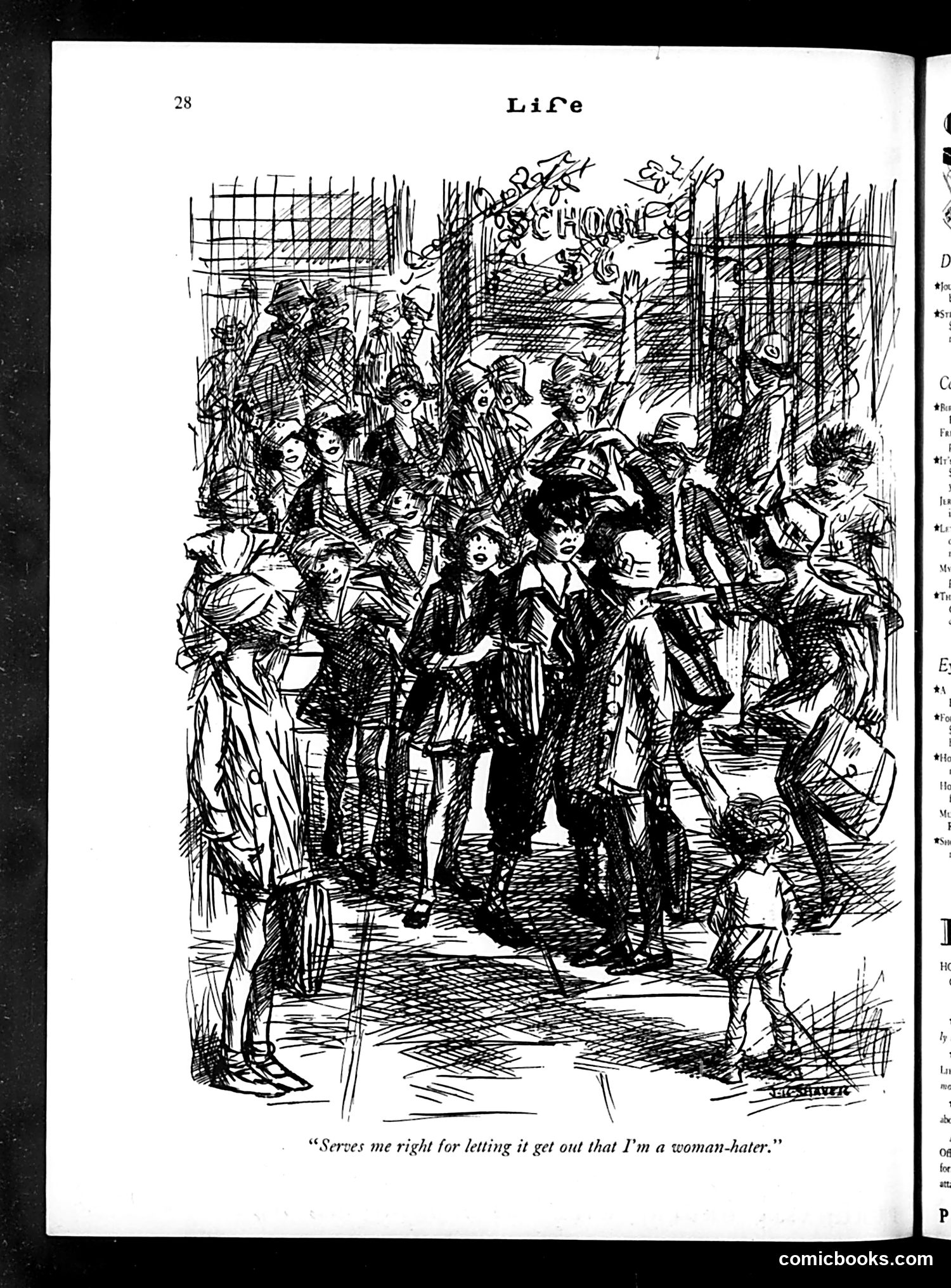
Cartoon Analysis This is a single-panel satirical cartoon depicting a crowded social gathering or party scene. A man stands at the center, surrounded by numerous women who appear to be confronting or surrounding him aggressively. The caption reads: "Serves me right for letting it get out that I'm a woman-hater." The joke satirizes the consequences of publicly declaring misogyny. The man's statement that he "hates women" has apparently spread, resulting in social ostracism—he's now besieged by angry women at what should be a pleasant social occasion. The cartoon mocks both the man's foolishness in broadcasting his prejudice and, implicitly, the women's collective response to it. This reflects early 20th-century social commentary on gender relations and public opinion.
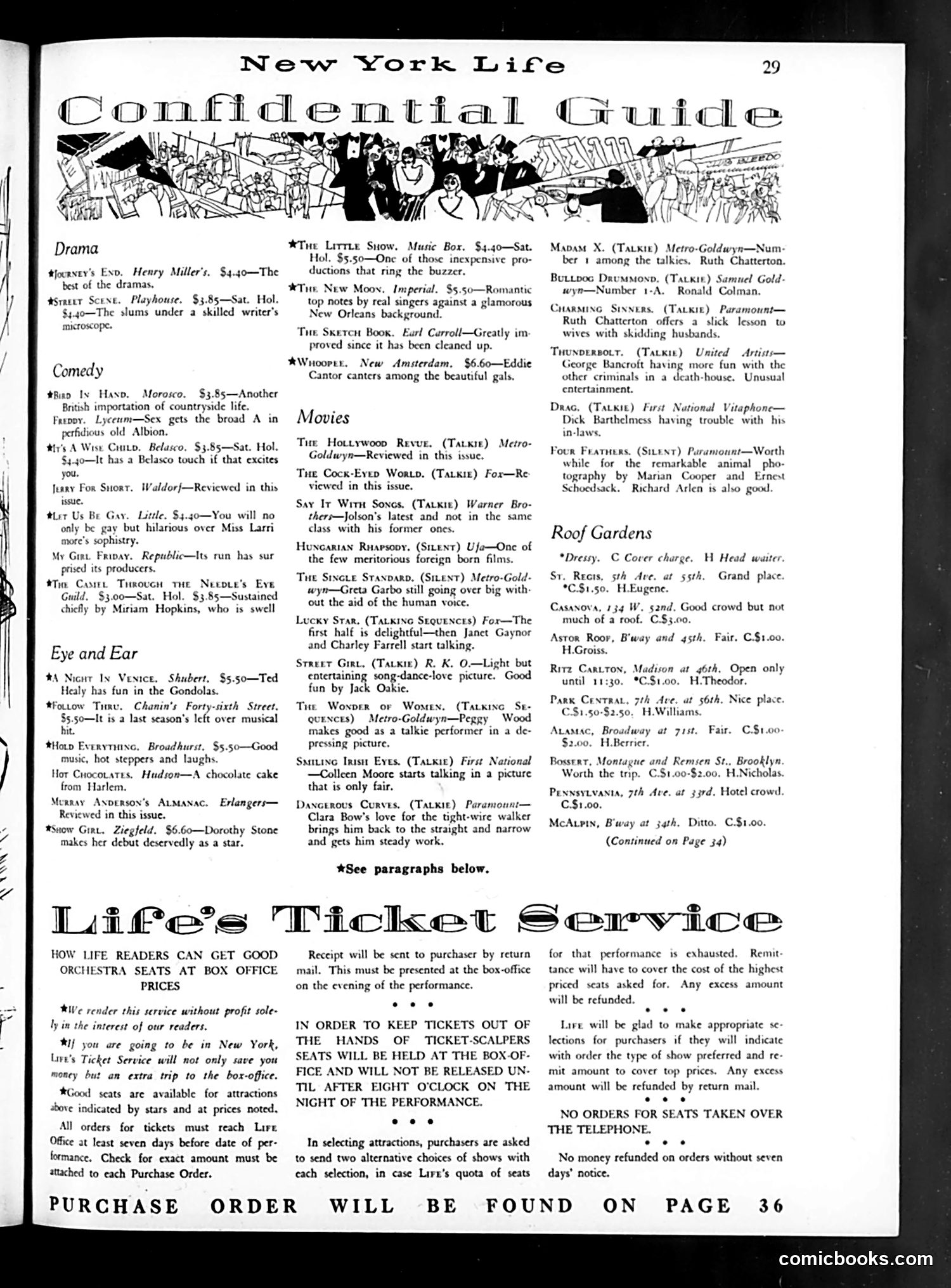
Understanding This Life Magazine Page This is a theater and entertainment guide from Life magazine, not a political cartoon. It lists reviews of Broadway plays, films, and nightclub venues available in New York, organized by category (Drama, Comedy, Eye and Ear, Movies, Roof Gardens). The cultural context: This page reflects the early "talkie" era (late 1920s), when sound films were still novel. Several movie reviews explicitly note whether films are "talking" or "silent," indicating this technological transition was significant to audiences. Stars like Greta Garbo, Clara Bow, and Al Jolson are referenced—major celebrities of that period. The "Life's Ticket Service" section advertises the magazine's box-office purchasing service, warning against ticket scalpers and explaining ordering procedures. The asterisks (*) mark shows Life's editors particularly recommended. This is essentially an entertainment listings page—similar to modern movie/theater guides—offering contemporary New Yorkers curated recommendations for weekend entertainment.
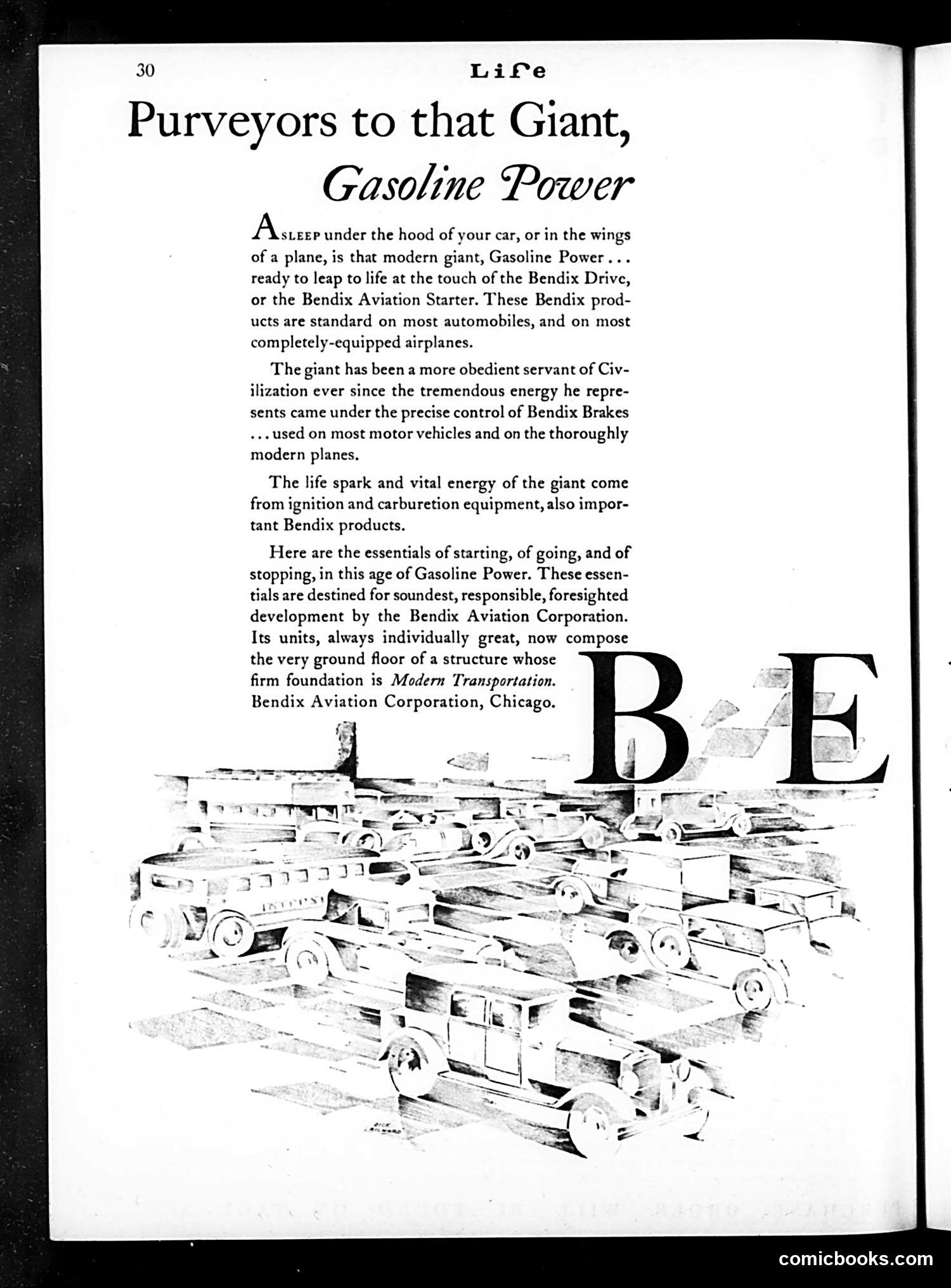
Analysis This is not a cartoon or satire—it's a full-page advertisement for Bendix Aviation Corporation, a manufacturer of automotive and aviation components (starters, brakes, ignition systems). The text uses metaphorical language, personifying gasoline power as a "giant" that requires control through Bendix products. The illustration shows multiple automobiles and vehicles arranged together, symbolizing modern transportation infrastructure. This represents corporate advertising from the early-to-mid 20th century, when Life magazine featured such ads alongside editorial content. The tone is promotional rather than satirical—it presents Bendix components as essential to civilization's technological progress. The reference to "Modern Transportation" as a foundational structure reflects the era's optimism about automobiles and aviation as markers of advancement.

This is an advertisement, not a cartoon. It's a corporate index page from *Life* magazine listing the Bendix Aviation Corporation and its numerous subsidiary companies and divisions across the United States and abroad. The page displays sketched aircraft in flight at the top. The ad catalogs Bendix's extensive business operations—brake systems, electrical equipment, starters, magnetos, and carburetors for both airplanes and motor vehicles. The listing of foreign subsidiaries in Canada and England indicates Bendix's international reach during what appears to be the interwar or early WWII era, when aviation manufacturing was expanding rapidly. This represents corporate consolidation and vertical integration in the aviation industry during a period of significant technological development and military preparation.
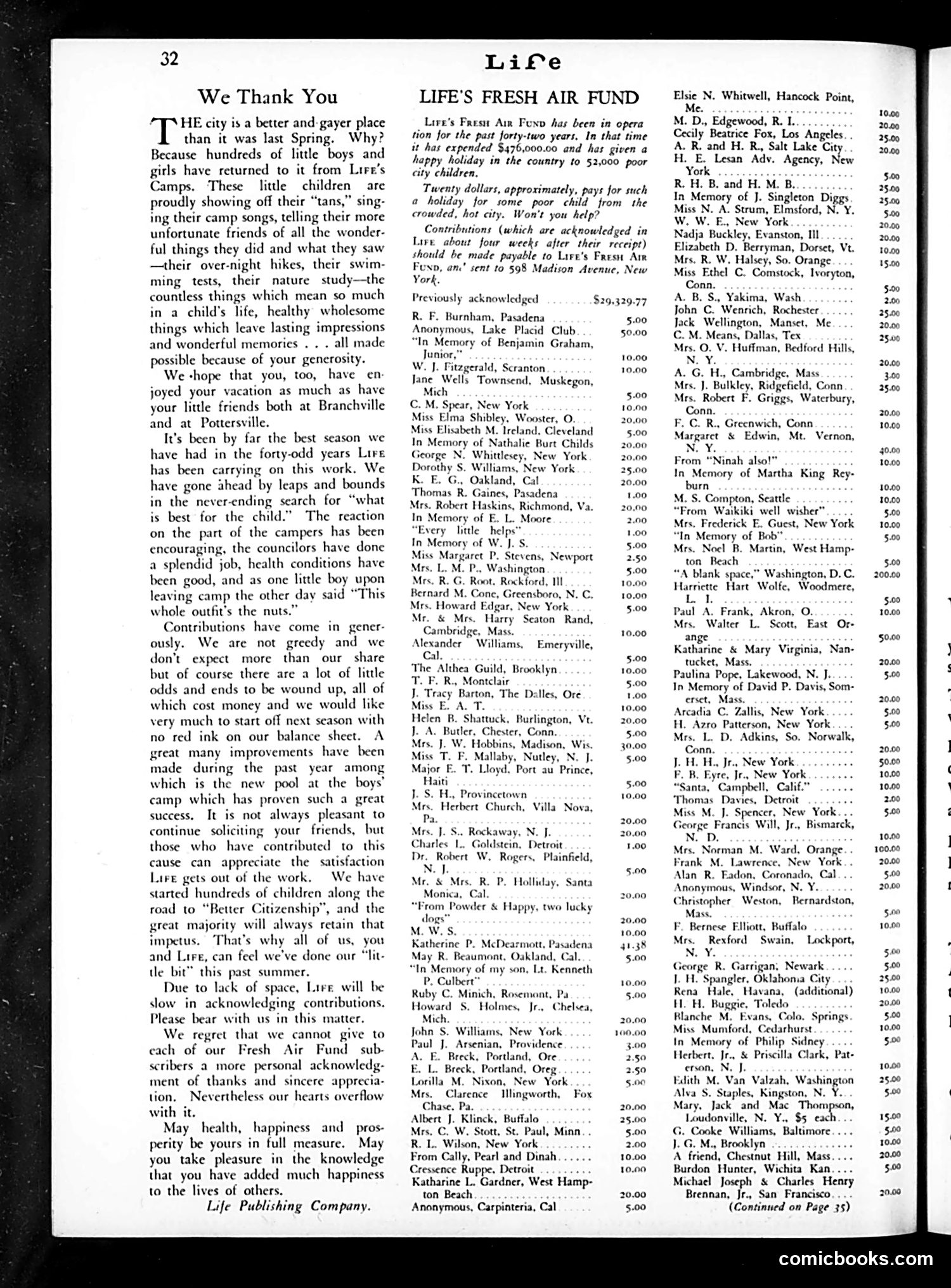
Life Magazine's Fresh Air Fund Appeal This page is not a cartoon, but rather a charitable fundraising appeal and thank-you letter from *Life* magazine's Fresh Air Fund—a real philanthropic initiative. The text explains that Life's Fresh Air Fund has operated for 42 years, providing poor city children with countryside vacations. It has spent $476,000 helping 52,000 children. The magazine thanks donors for contributions and encourages further giving at $20 per child's holiday. The bulk of the page lists donor names and amounts—a common practice in early 20th-century charity publications to encourage additional giving through public recognition. The letter's tone is gratitude mixed with gentle persuasion: acknowledging donors' generosity while noting ongoing financial needs for camp improvements like a new swimming pool. This reflects Progressive Era attitudes toward urban poverty and childhood welfare, positioning charitable giving as a civic duty for middle-class readers.
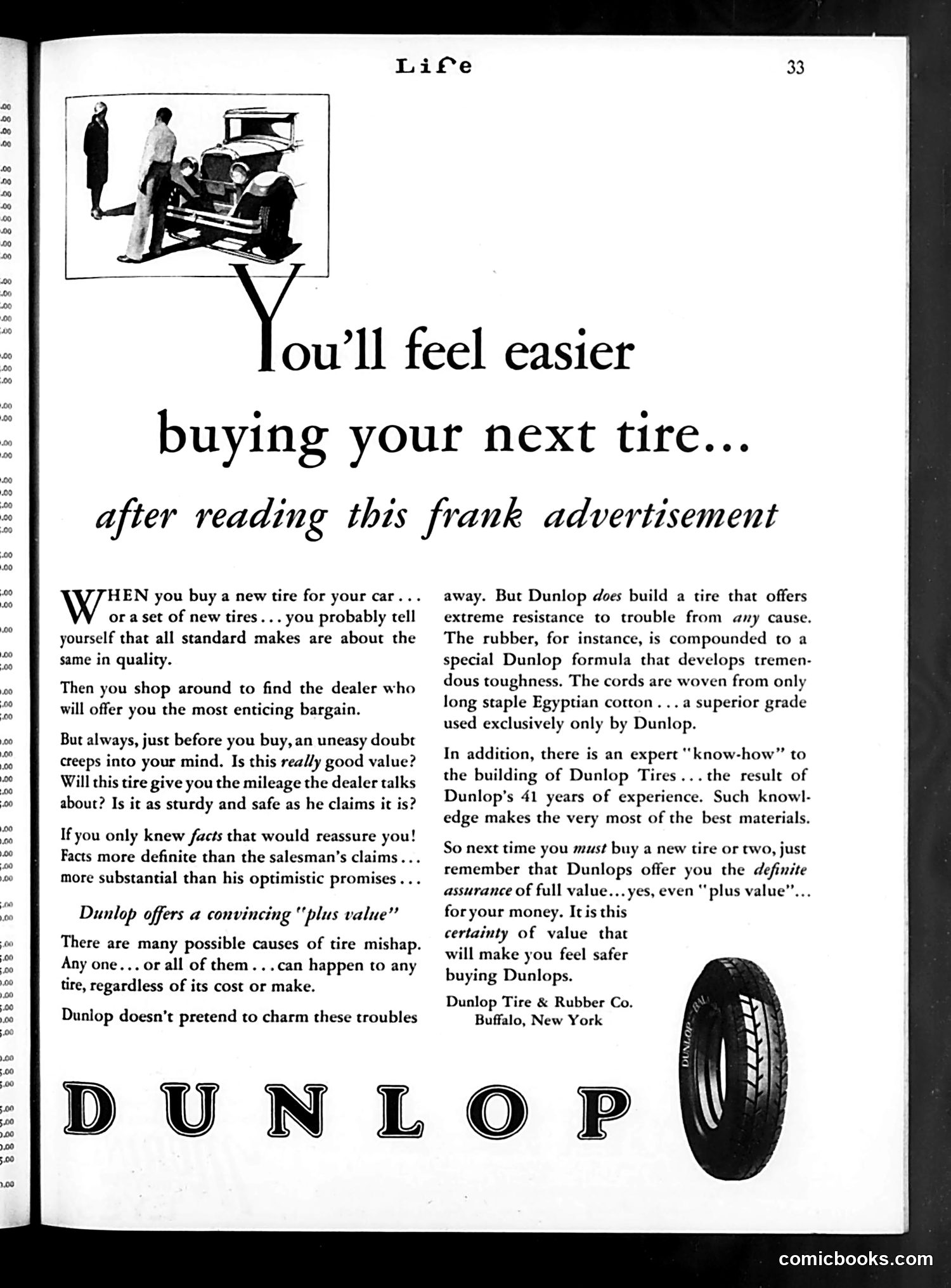
Analysis This is a Dunlop tire advertisement, not a satirical cartoon. The page uses self-aware advertising language that appeared modern for its era—the headline promises readers will "feel easier" after reading this "frank advertisement," acknowledging consumer skepticism about tire quality claims. The ad addresses a genuine early automotive concern: tire reliability and value. It references "many possible causes of tire mishap" that could affect any tire regardless of price, then positions Dunlop as superior through specific claims: special rubber formulation, Egyptian cotton cord weaving, and 41 years of manufacturing experience. The small illustration shows well-dressed customers examining a vehicle, establishing aspirational middle-class appeal. The ad's strategy is honest acknowledgment of buyer anxiety followed by technical reassurance—a pitch designed to seem refreshingly candid compared to typical bombastic advertising of the period. There is no political satire or caricature here; this is straightforward period marketing.
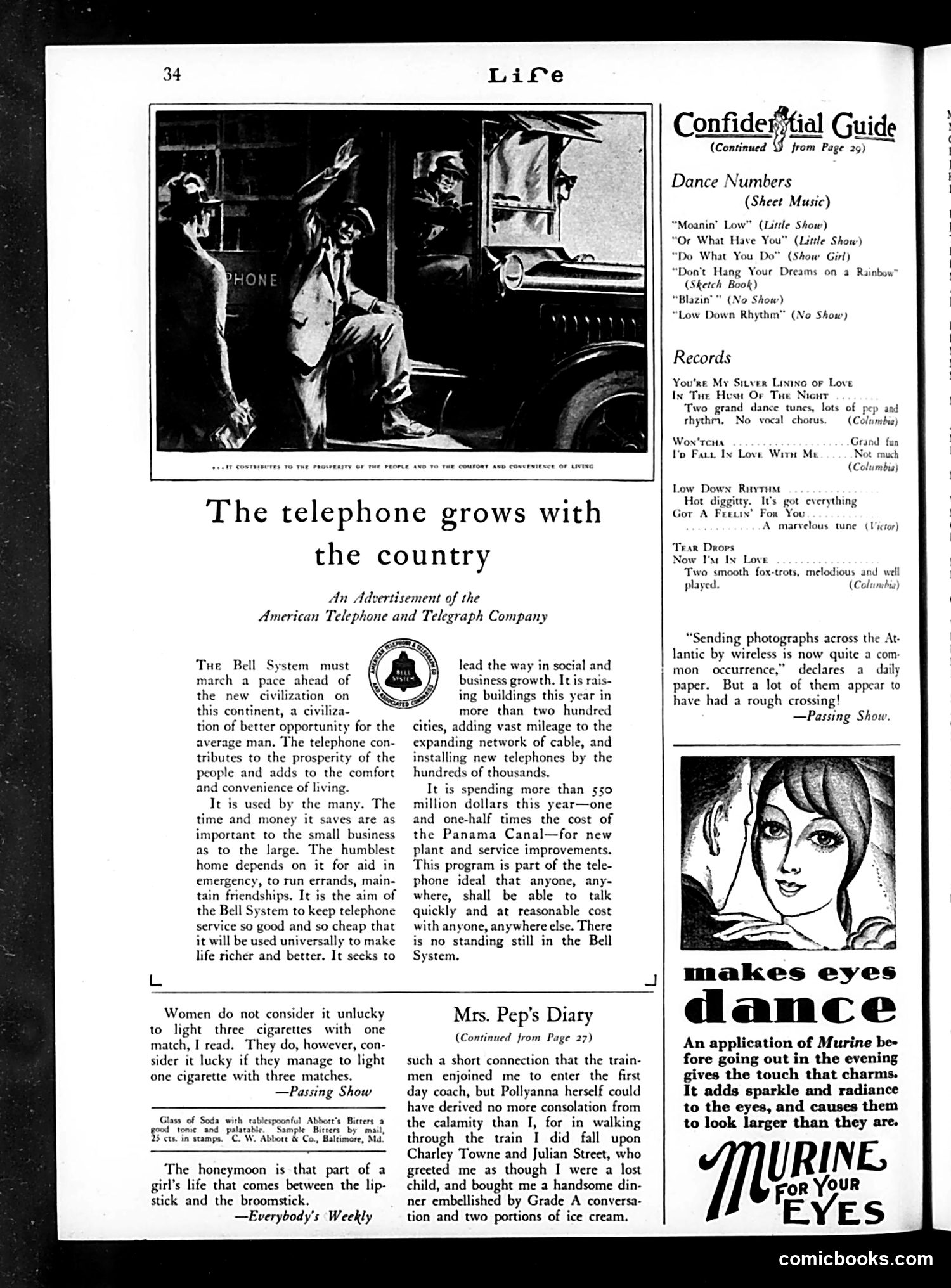
Content Analysis: Life Magazine Page 34 This page combines advertising, humor, and entertainment guidance typical of 1920s Life magazine. Main Advertisement: AT&T's Bell System touts telephone expansion as nation-building, claiming $550 million annual investment—1.5 times the Panama Canal's cost. The messaging positions universal telephone access as democratizing progress, bringing rural and urban areas into modern commercial and social networks. Cartoons/Humor: Small satirical pieces mock contemporary social habits: women lighting cigarettes inefficiently, the "honeymoon" period between courtship and domestic drudgery. These reflect period attitudes about gender and marriage. "Confidential Guide": Lists popular dance numbers and records from shows like "Little Show" and "Show Girl," reflecting jazz-age entertainment. Includes a tongue-in-cheek note about wireless photo transmission across the Atlantic experiencing "rough crossings"—likely poking fun at early wireless technology's unreliability. Murine Advertisement: Cosmetic product promising enhanced eye appearance for evening outings, targeting women's vanity. The page reflects 1920s optimism about technology, popular entertainment culture, and consumer product advertising.
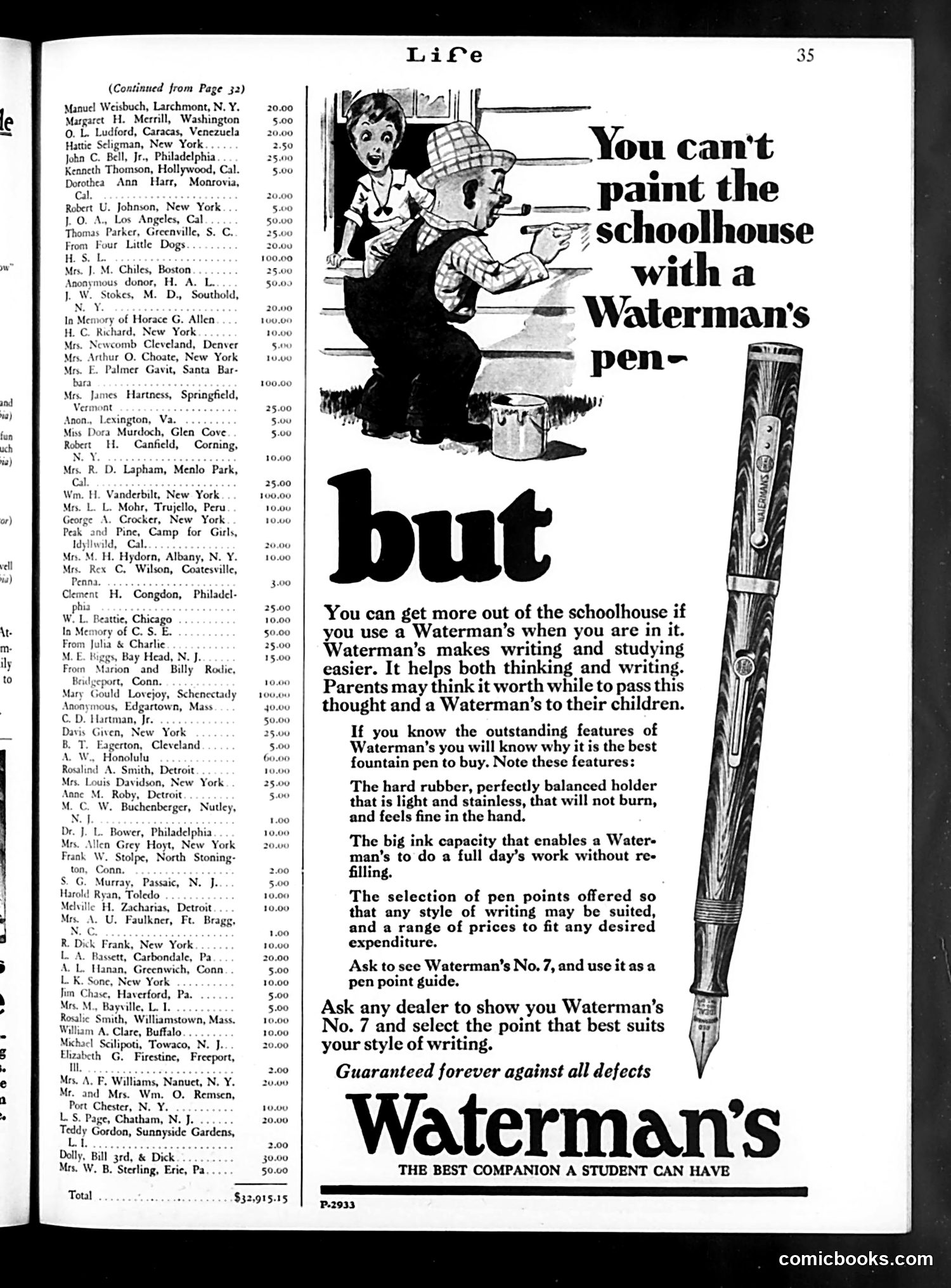
Analysis of Page 35, Life Magazine This page is primarily a Waterman's fountain pen advertisement, not political satire. The cartoon shows a schoolboy attempting to paint a schoolhouse with a fountain pen—an absurd visual joke illustrating the advertisement's headline: "You can't paint the schoolhouse with a Waterman's pen—but..." The humor lies in the obvious impossibility of the task, which leads into the actual sales pitch: Waterman's pens are ideal for *writing and studying*, not painting. The ad targets parents and students, arguing that a quality fountain pen aids both "thinking and writing" and is "the best companion a student can have." The accompanying list appears to be donation acknowledgments to *Life* magazine, showing contributions from readers across America, ranging from $1 to $100. This is commercial content, not editorial commentary—typical of early 20th-century magazine advertising that used humor to promote products to middle-class American families.
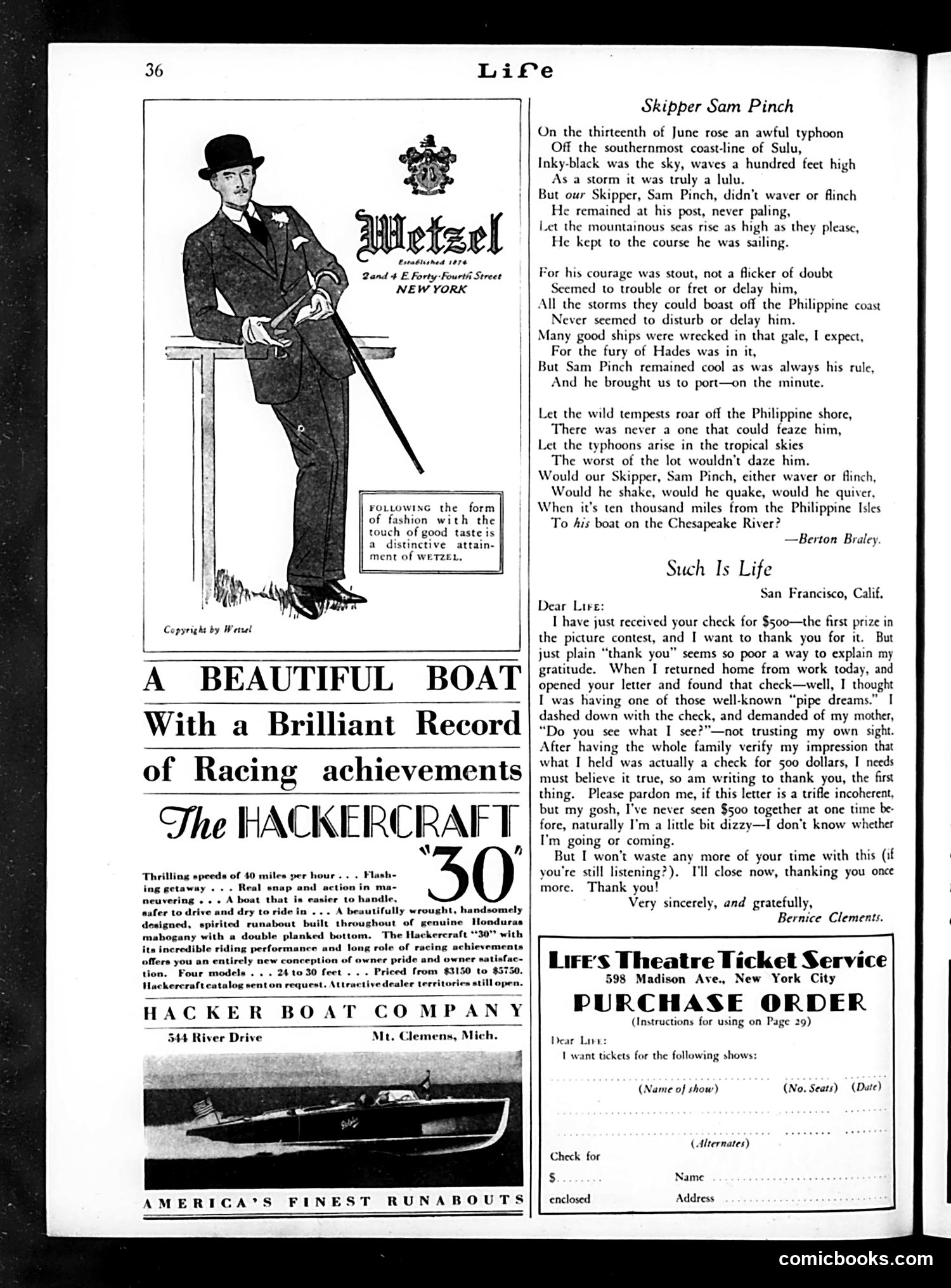

Kodacolor Advertisement This is a Kodak advertisement, not political satire. It promotes the Kodacolor film system for home moviemaking—a significant technological advancement allowing amateur filmmakers to shoot in color rather than black-and-white. The page features a young girl examining her reflection in a pool, illustrating how lifelike Kodacolor's color reproduction appears. The text emphasizes the product's ease of use: consumers simply point the Ciné-Kodak camera, press the lever, and mail the film to Kodak for processing. For modern readers, this represents a pivotal moment in photography history—the democratization of color film technology. Before this, color cinematography was expensive and professional-only. The advertisement targets middle-class families, promising they can now create vivid, permanent records of "precious moments" and family life in natural color, a luxury previously unaffordable to consumers.
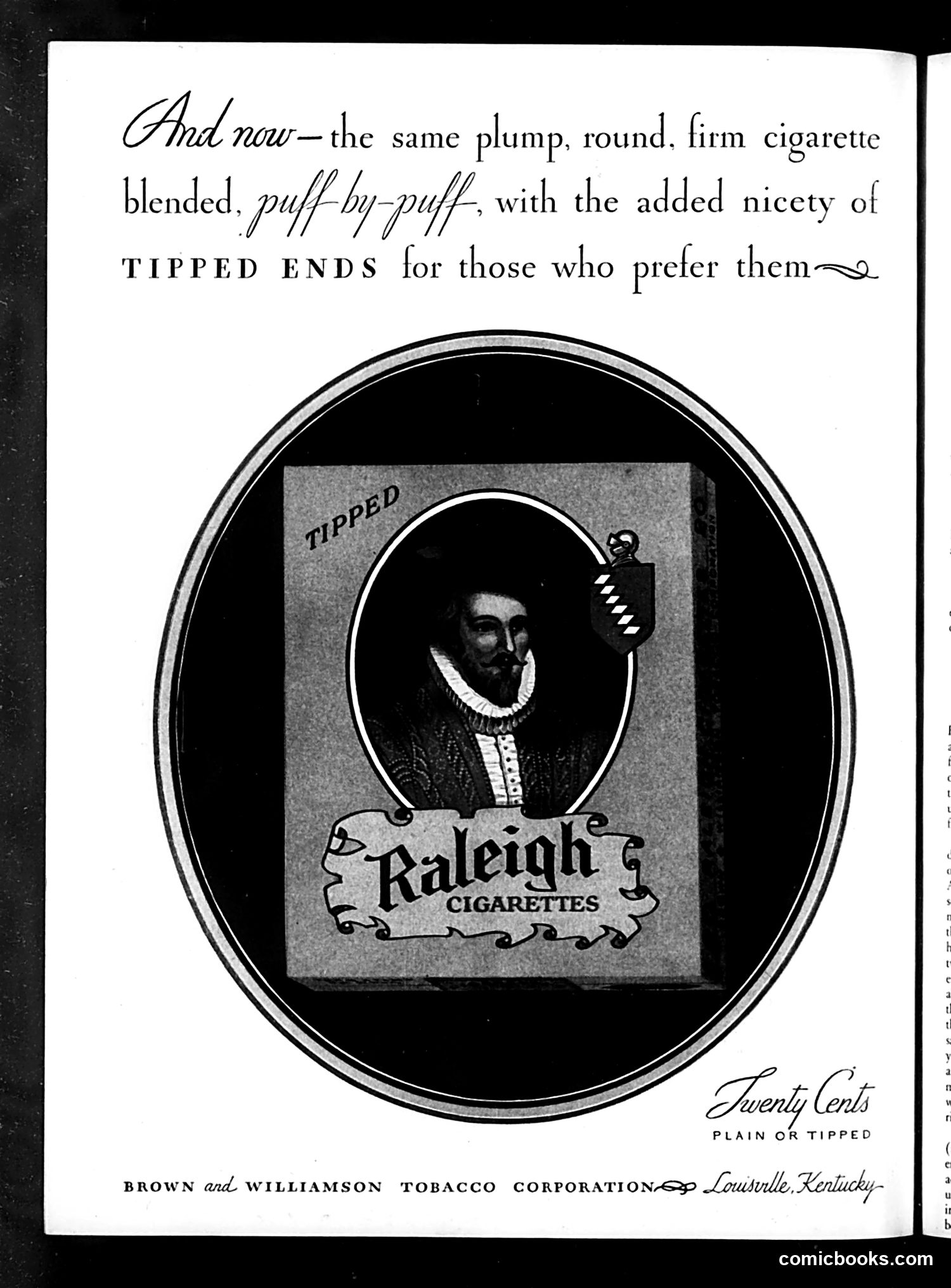
Analysis This is a cigarette advertisement, not political satire. It promotes Raleigh brand cigarettes by Brown and Williamson Tobacco Corporation (Louisville, Kentucky). The page features a historical portrait—apparently of Sir Walter Raleigh, the Elizabethan explorer for whom the brand is named—wearing period clothing with a distinctive ruff collar. A decorative pipe appears beside him. The text advertises that Raleigh cigarettes now come with "tipped ends" (filtered tips) in addition to plain versions, emphasizing their quality as "plump, round, firm" cigarettes. The price is listed as "Twenty Cents." This represents early 20th-century cigarette marketing using historical association and refinement appeals to consumers.
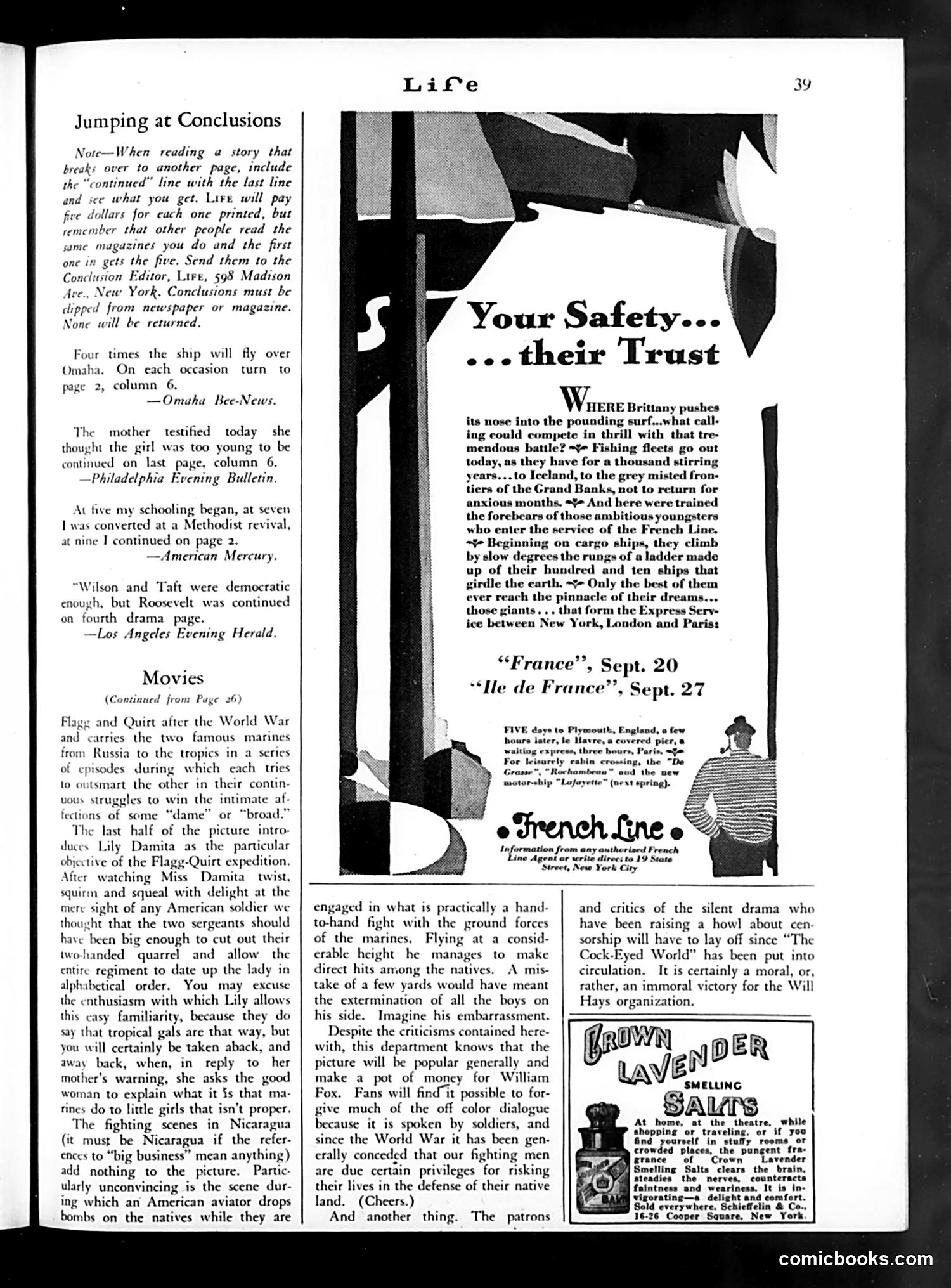
Page Analysis: Life Magazine, circa 1928 This page contains two distinct sections: "Jumping at Conclusions" is a reader-participation feature where Life pays $5 for humorous juxtapositions created by reading continued stories across pages. The examples show absurdist humor: a Methodist conversion "continued on page 2" becomes comically incomplete, and a statement about Roosevelt being "continued on fourth drama page" suggests interrupted thought. The main advertisement promotes the French Line shipping company, emphasizing prestigious ocean liners ("France" and "Ile de France") connecting New York, London, and Paris. The copy romanticizes the maritime tradition and career advancement aboard their "hundred and ten ships." The "Movies" review critiques a post-WWI comedy featuring marines Flagg and Quirt competing for actress Lily Damita. The reviewer mocks the film's unconvincing Nicaragua battle scenes, particularly an aviator dropping bombs amid hand-to-hand combat—noting a "few yards" error would kill friendly troops. The tone is satirical about Hollywood's careless war depictions. The page demonstrates 1920s advertising sophistication alongside cynical entertainment criticism.
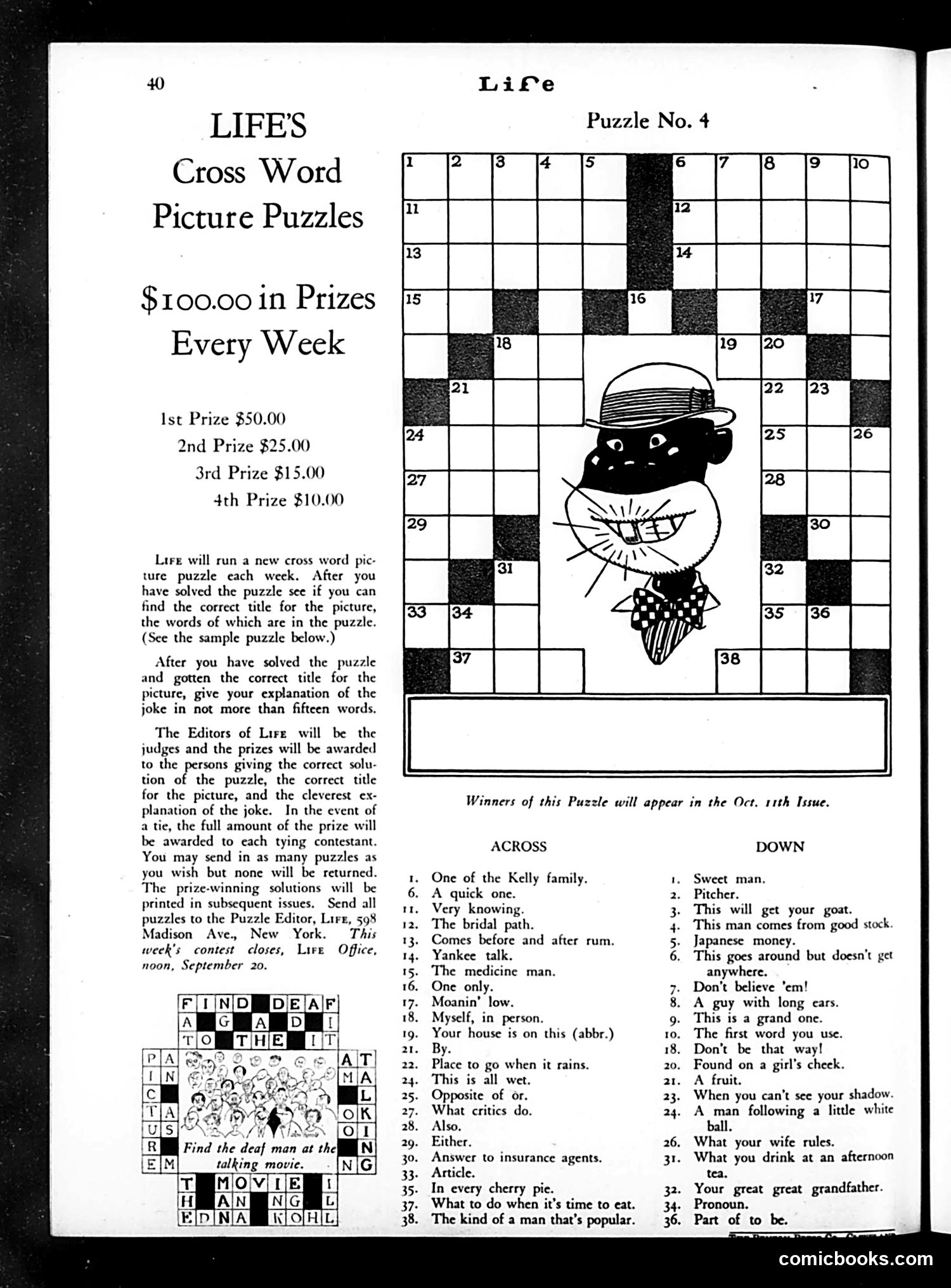
Life Magazine Puzzle Page Analysis This is a puzzle contest page, not a political cartoon. Life magazine ran weekly crossword-picture puzzles offering $100 in prizes (1st prize $50). Solvers had to: 1. Complete the crossword 2. Find the correct title for the accompanying illustration 3. Explain the joke in 15 words or fewer The illustration shows a man wearing a hat and suit, drawn in a simple, cartoonish style. Based on the sample puzzle below (titled "Find the deaf man at the talking movie"), this appears to be a visual joke—likely depicting someone who cannot hear during the era when "talking movies" (talkies) had recently become popular, creating ironic humor. The page represents Life's interactive entertainment format, inviting reader participation with monetary incentives. This was a common feature of 1920s-30s American magazines for audience engagement.
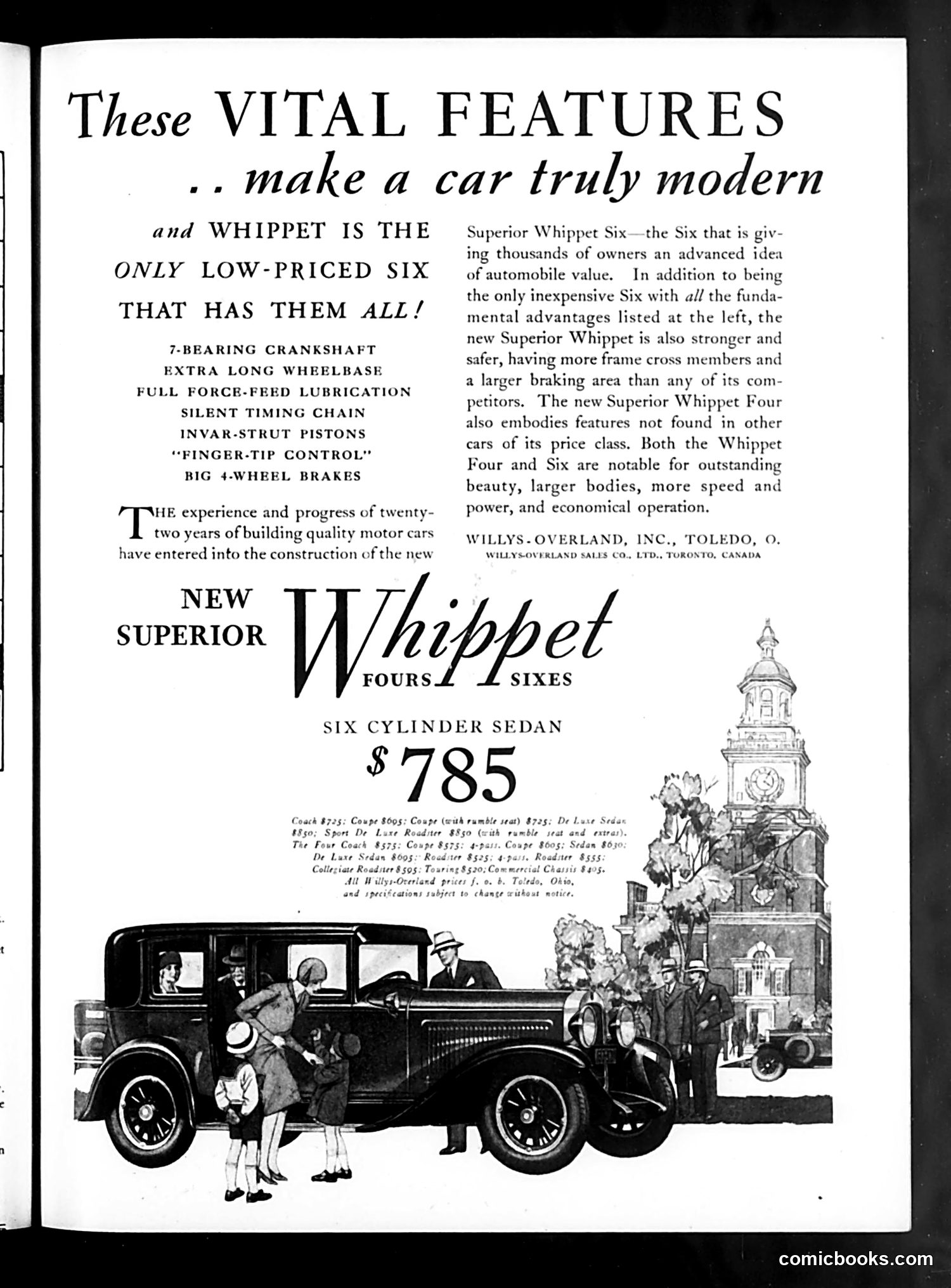
Analysis This is a straightforward automobile advertisement, not political satire or comedy. It promotes the Whippet automobile by Willys-Overland, a major American car manufacturer of the 1920s-30s. The ad claims the Whippet is "the only low-priced six" with modern features like a 7-bearing crankshaft, force-feed lubrication, and 4-wheel brakes—specifications that would have been luxury features on cheaper cars. The $785 price point positioned it as affordable yet technically advanced. The illustration shows well-dressed period figures (appears to be the 1920s) examining the vehicle near a civic building, suggesting respectability and broad appeal. The ad uses the common marketing strategy of listing technical specifications to justify the price and convince buyers they're getting premium quality economically. For modern readers: this is early automotive advertising emphasizing engineering details to differentiate the product in a competitive market—before styling and branding became dominant sales tools.
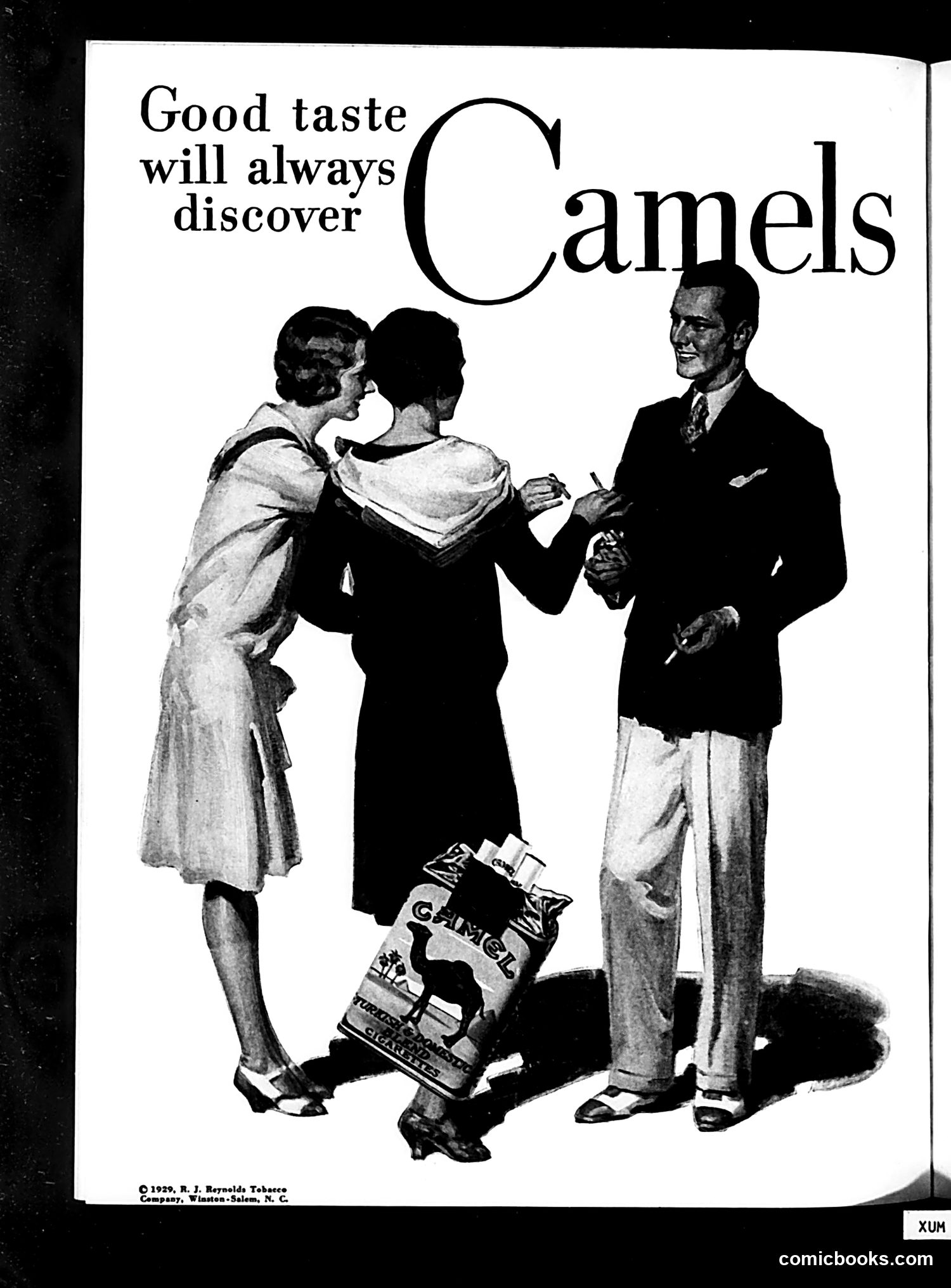
Analysis This is a Camel cigarette advertisement from 1939 (per the copyright notice). The ad uses aspirational imagery to market cigarettes: two well-dressed women and a man in business attire are shown examining a Camel cigarette package. The slogan "Good taste will always discover Camels" equates smoking Camels with sophistication and refined judgment. The fashionable figures and formal clothing reinforce an association between the product and social status. This reflects mid-20th century advertising that portrayed cigarettes as markers of elegance and good taste—before widespread public awareness of health risks. The ad targets consumers by suggesting that discerning people choose Camels, making it aspirational rather than health-focused marketing.