life
Life — November 15, 1929
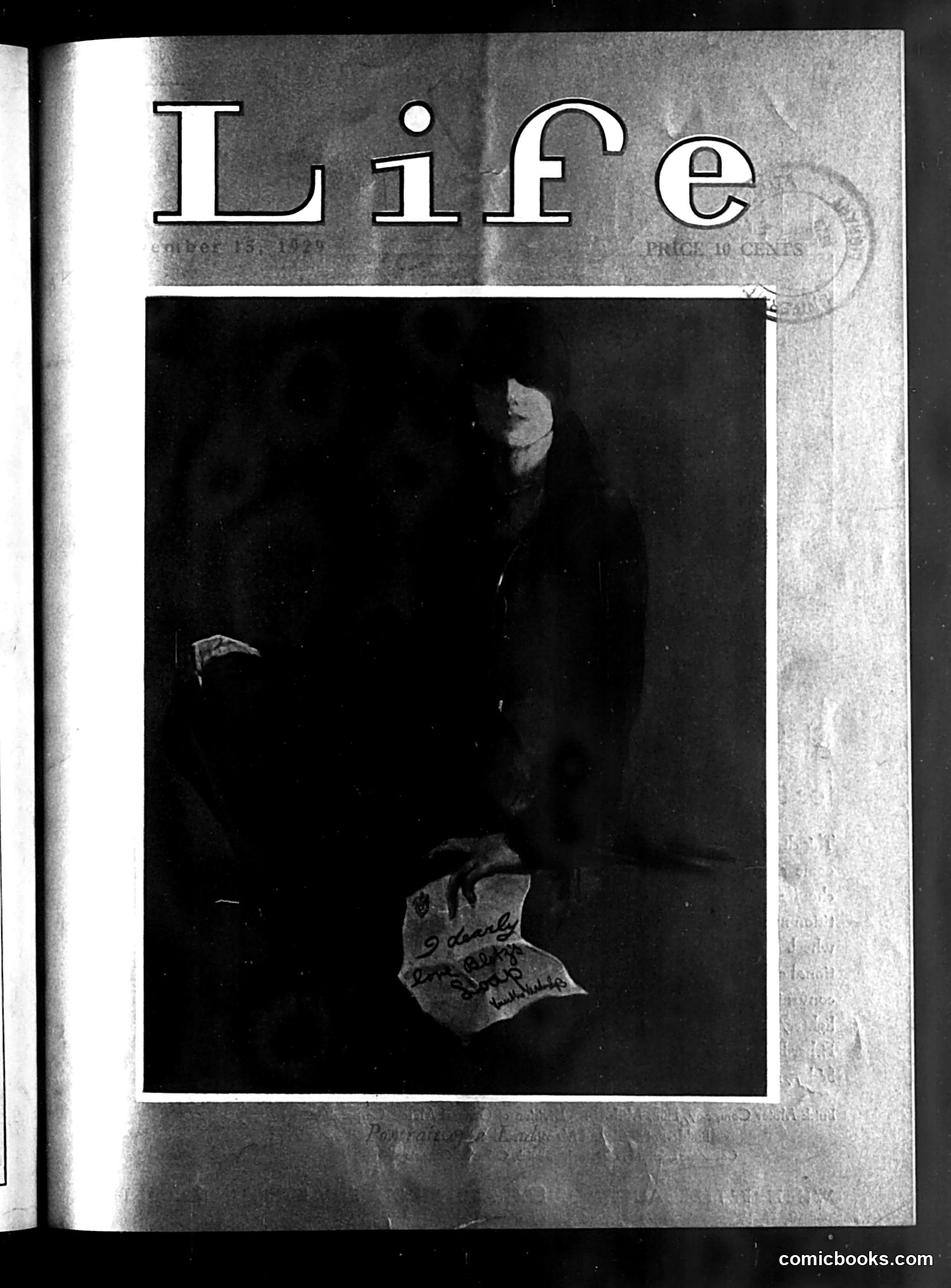
Analysis I can see this is a *Life* magazine cover featuring the word "Life" in large letters at the top. The main image is a very dark photograph showing a figure in silhouette against a black background, with what appears to be a hand or arm gesture visible. There's handwriting or annotation on the lower portion of the photograph. However, the image quality and darkness make it difficult to identify the specific figure, date, or satirical subject with confidence. Without clearer visibility of the photograph's details or accompanying article text, I cannot reliably determine which political or social figure this caricatures, what event it references, or what the intended satire conveys. To provide accurate analysis rather than speculation, I would need either a clearer image or additional contextual text from the magazine page.
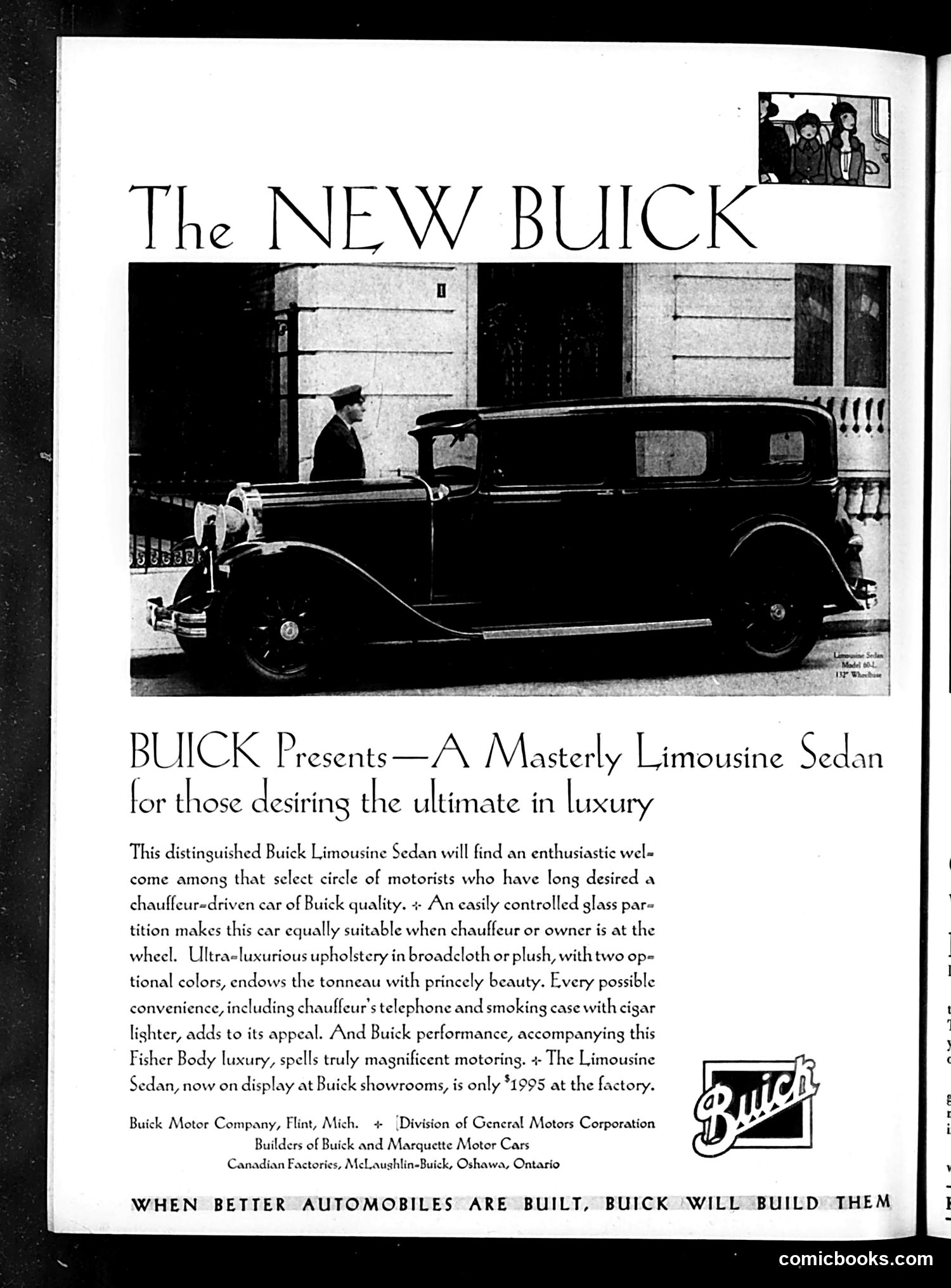
Analysis This is not a cartoon or satire page — it's a straightforward luxury automobile advertisement for Buick's new Limousine Sedan model, circa 1920s-1930s based on the styling. The page features a photograph of an elegant chauffeur-driven sedan parked before an upscale building, with a uniformed driver visible. The advertisement emphasizes luxury features: glass partition between driver and passengers, ultra-luxurious upholstery, telephone, and smoking accessories. The text targets wealthy motorists seeking premium vehicles. The price of $1,495 "at the factory" was substantial for the era, positioning this as an exclusive product. The Buick logo and company information appear at bottom. This is period commercial advertising, not political or social satire.
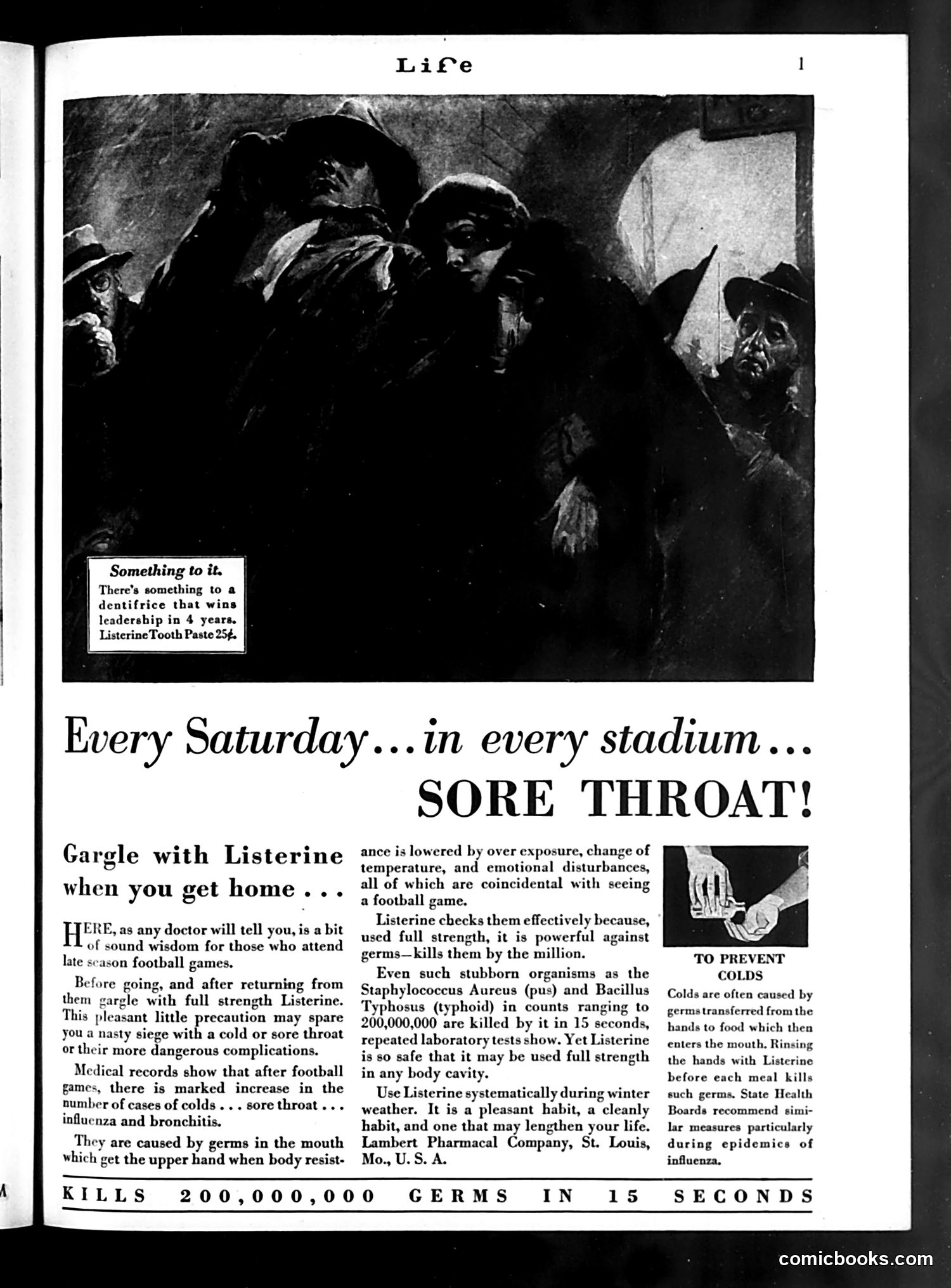
Analysis This is primarily a Listerine advertisement, not a political cartoon. The dramatic dark image at top appears to show a crowd of people in distress or discomfort—illustrating the advertiser's claim about sore throats at football games. The ad uses humorous exaggeration to connect attending football games (specifically Saturday games) with catching colds and sore throats. The text claims that "body resistance is lowered by over exposure, change of temperature, and emotional disturbances, all of which are coincidental with seeing a football game." The joke is satirizing the common experience: attending outdoor fall sports events leads to illness. Listerine positions itself as preventative medicine—a gargle solution that "kills 200,000,000 germs in 15 seconds." This reflects early 20th-century advertising's tendency to manufacture anxieties while promoting medical remedies.
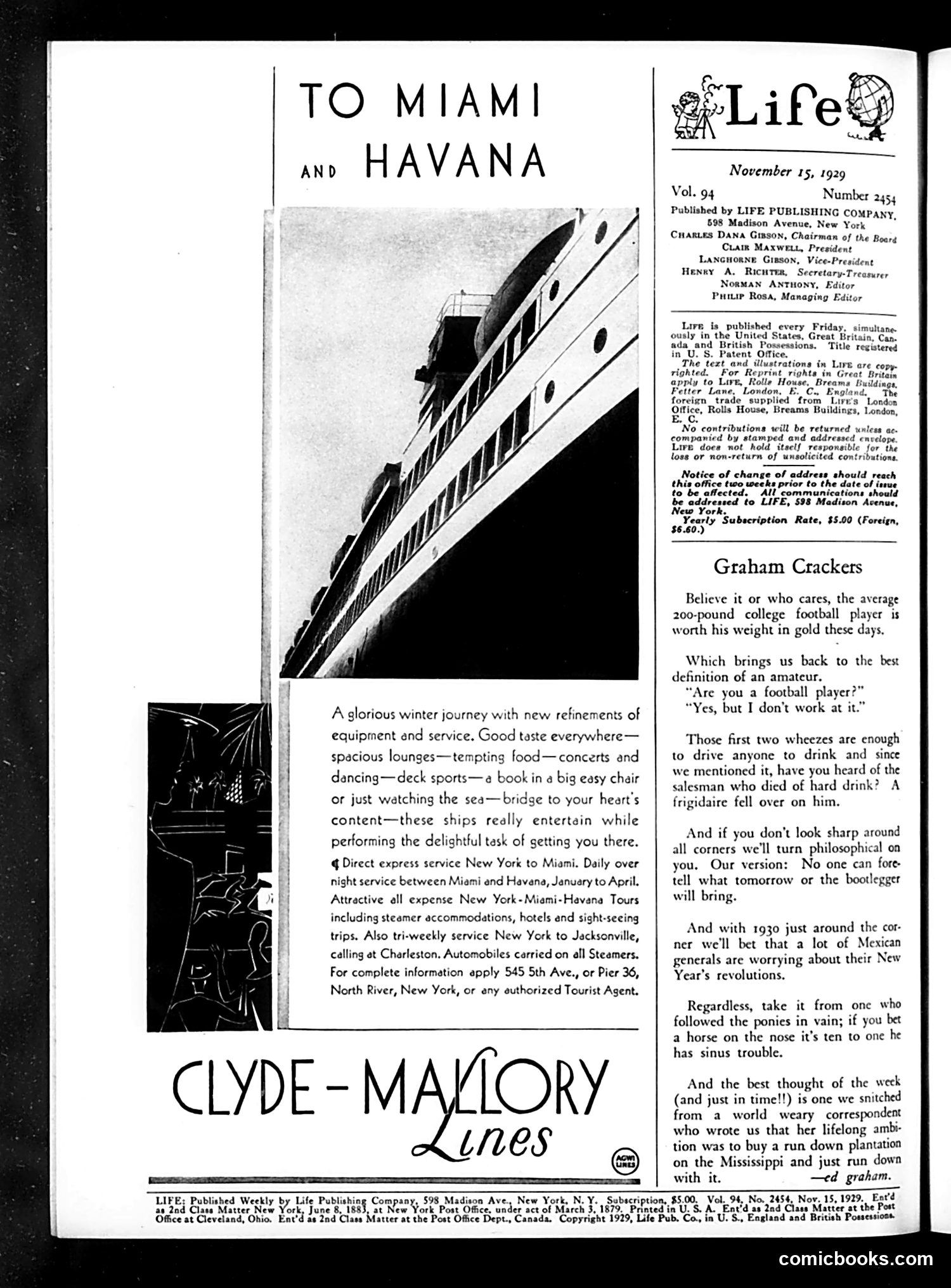
Analysis This page is primarily advertising for Clyde-Mallory shipping lines, promoting their steamship service between New York and Miami/Havana. The large ship photograph illustrates the "glorious winter journey" the company offered. The right column contains "Graham Crackers," a satirical humor column. Its jokes reference: - College football players' market value (they were "worth their weight in gold") - Amateur athletics debate — the tension between amateur status and hidden compensation - 1930 New Year's concerns about Mexico's political situation (likely revolution-related) - General social commentary about horses, drinking, and a correspondent's plantation ambitions The humor is light, conversational satire typical of Life magazine's style — social observation rather than sharp political critique. The column mocks contemporary leisure-class concerns and hypocrisy around amateurism in sports.
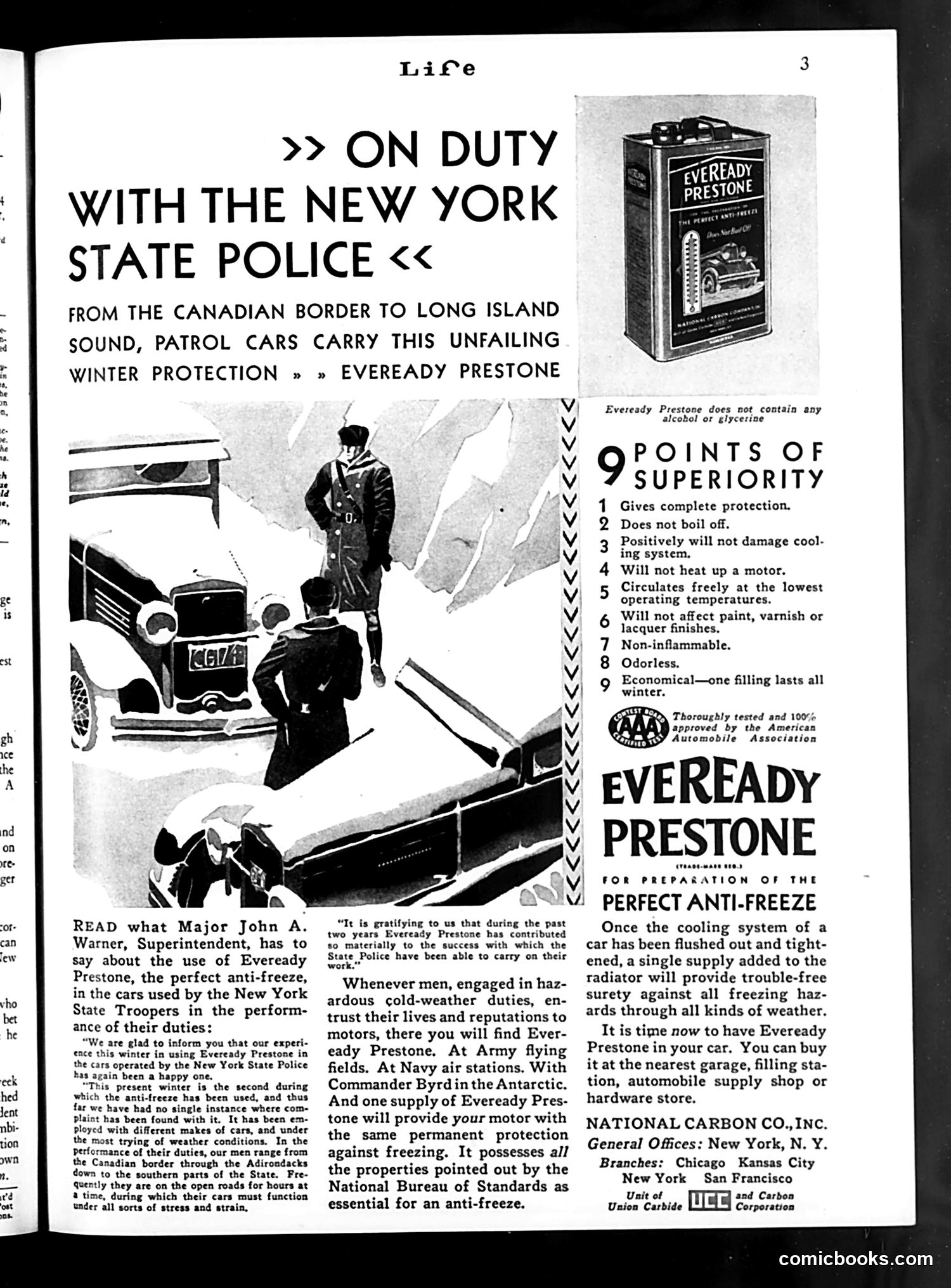
Analysis This is primarily advertising, not satire or political commentary. The page promotes Eveready Prestone antifreeze by featuring a testimonial from Major John A. Warner, Superintendent of the New York State Police. The advertisement uses the authority of law enforcement to market the product, claiming state troopers rely on Eveready Prestone for winter operations along the Canadian border and Long Island Sound. The illustration shows uniformed state police officers with vintage automobiles in winter conditions, establishing credibility through association with official duty. The "9 Points of Superiority" list emphasizes practical benefits (doesn't boil off, won't damage cooling systems, economical). This represents typical mid-20th-century advertising strategy: leveraging institutional endorsement to build consumer trust in a commercial product.
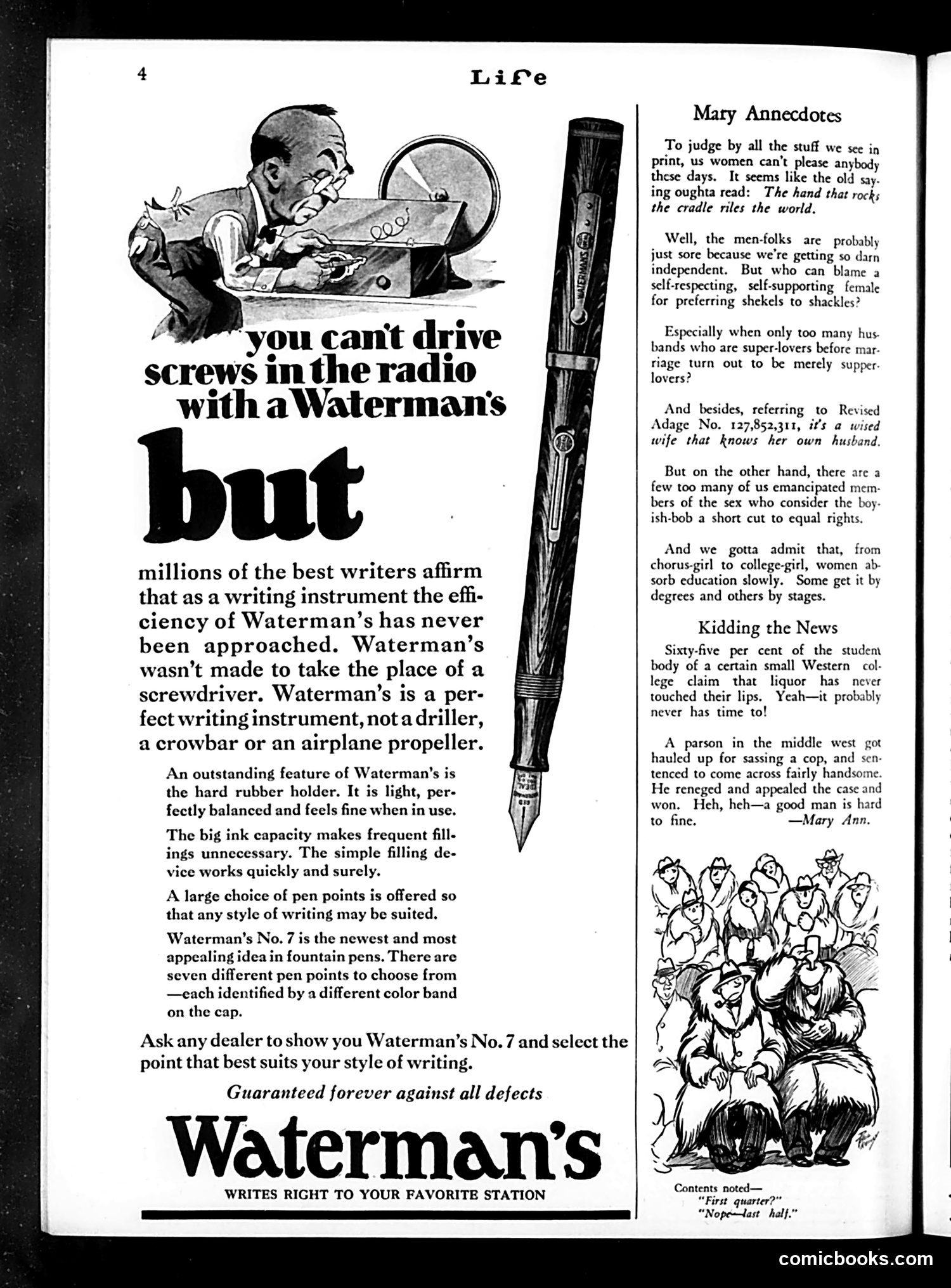
Analysis This page is primarily a Waterman's fountain pen advertisement (left side) with an unrelated editorial column titled "Mary Annecdotes" (right side). The ad features a caricatured man struggling to use a radio with a screwdriver, captioned "you can't drive screws in the radio with a Waterman's but" — a humorous contrast establishing that while pens aren't tools, they excel as writing instruments. The ad emphasizes the pen's efficiency, balance, and variety of points. The right column discusses women's independence and education, referencing debates about gender roles and suffrage-era tensions. The accompanying cartoon shows a group of men in old-fashioned clothing, though its specific satirical target is unclear without additional context. The "Kidding the News" section contains brief anecdotes about contemporary life.
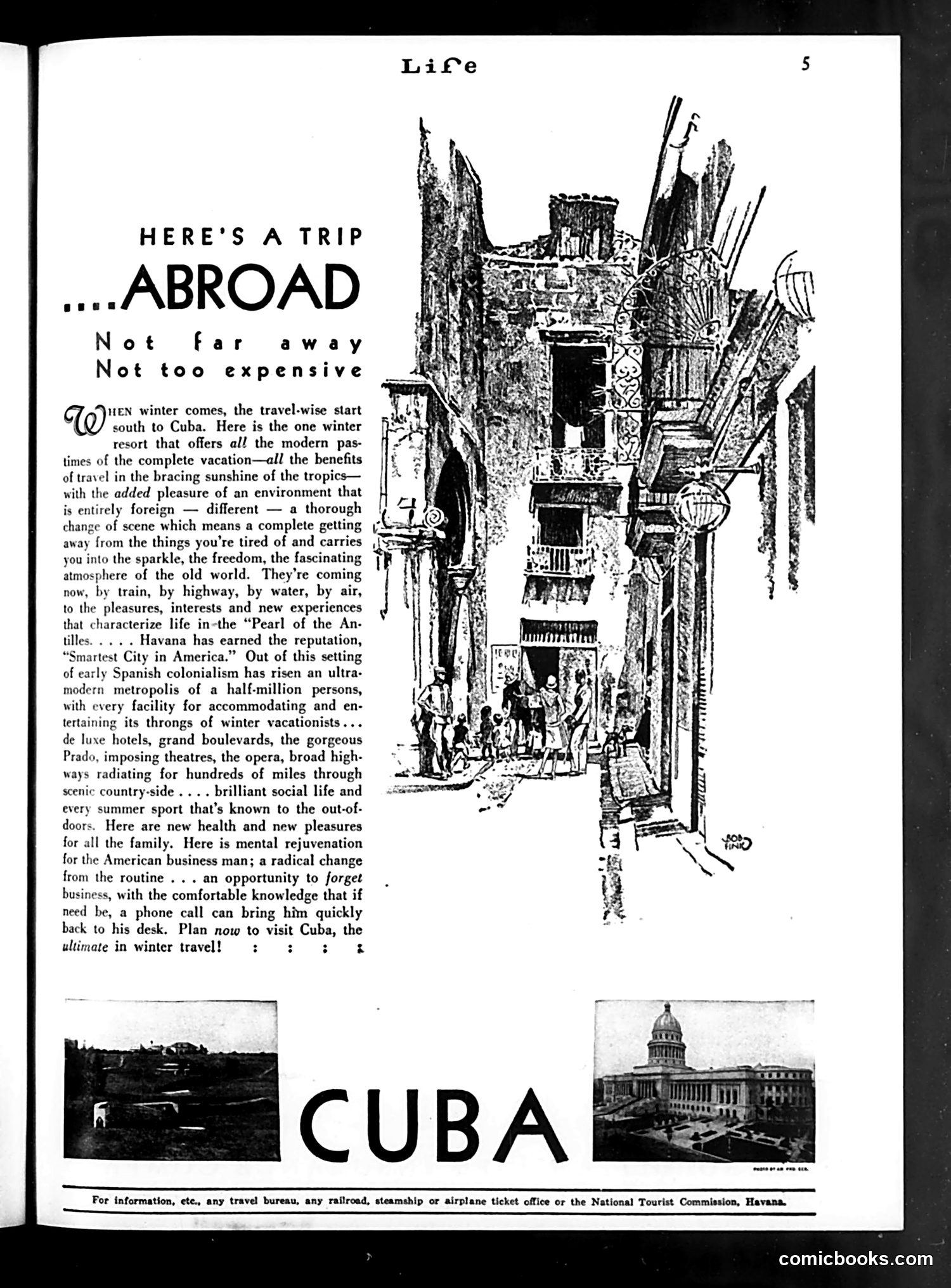
This is a travel advertisement, not a political cartoon. The page promotes Cuba as a winter vacation destination, emphasizing its accessibility and affordability for American tourists. The illustrated sketch depicts a narrow colonial street in Havana, showcasing Spanish colonial architecture with balconies and period buildings. The text describes Cuba as offering "modern" amenities (luxury hotels, theaters, opera) alongside exotic foreign atmosphere and relief from American business routines. The advertisement targets middle-class American businessmen, promising mental rejuvenation and the comfort of quick communication back home ("a phone call can bring him quickly back to his desk"). Two photographs show landscape and the U.S. Capitol building, likely comparing American and Cuban destinations. This reflects early 20th-century American tourism marketing to Cuba before the 1959 revolution.
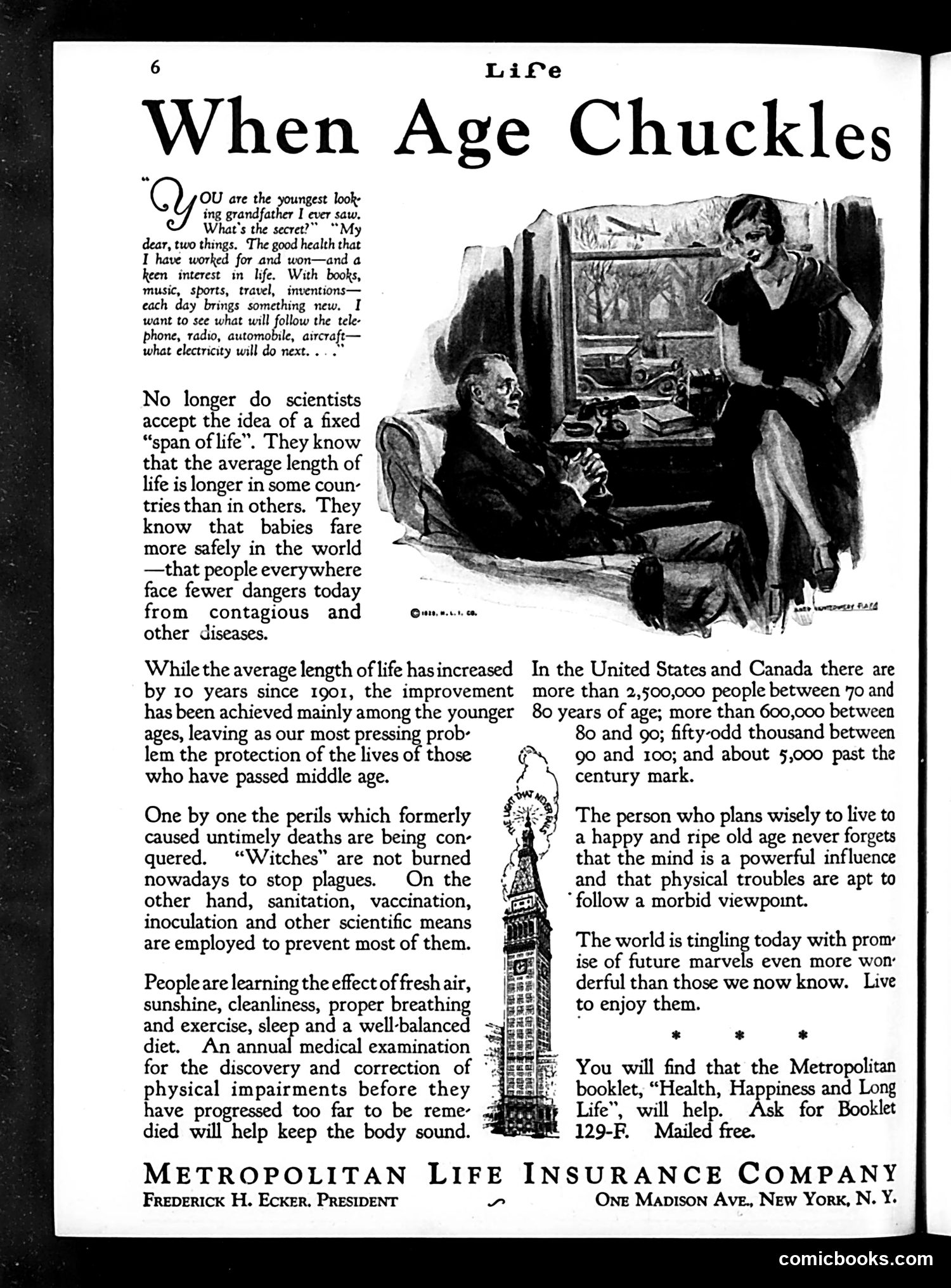
Analysis of "When Age Chuckles" This page is primarily a Metropolitan Life Insurance advertisement disguised as an article about longevity. The illustration shows an elderly man seated while a younger woman (likely a family member or caregiver) stands nearby, suggesting intergenerational family dynamics. The headline plays on the idea that aging people can remain youthful-looking and mentally active. The text argues that modern science has extended life expectancy, particularly for younger generations, making old age less fearful. It emphasizes preventive health measures—fresh air, sanitation, vaccination, medical exams—rather than accepting death as inevitable. The satirical angle is subtle: the ad presents staying young as achievable through proper health habits while simultaneously promoting life insurance as protection. It's essentially selling optimism about longevity while profiting from mortality anxiety.
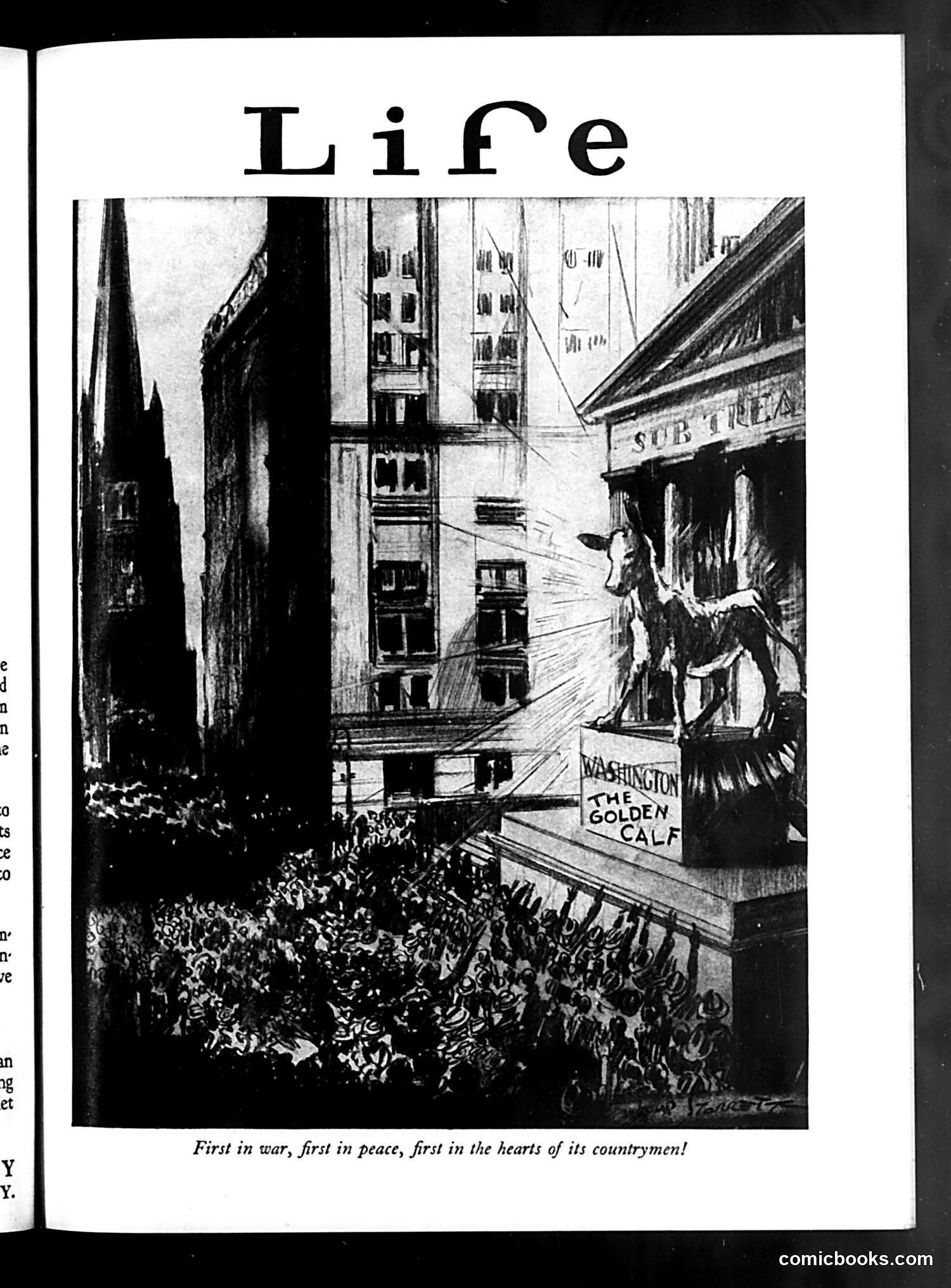
Analysis This is a Life magazine cover featuring a patriotic illustration titled "First in war, first in peace, first in the hearts of its countrymen!" — a famous phrase about George Washington. The image depicts a large crowd gathered in an urban street canyon, with tall buildings creating dramatic perspective. A winged female figure (likely Lady Liberty or Columbia, representing America) hovers above, gesturing triumphantly. A storefront sign reads "THE GOLDEN CALF," apparently referencing materialism or false idolatry. The satire likely contrasts America's patriotic ideals with commercial greed or shallow worship of wealth. The biblical reference to the golden calf (idol worship) suggests the magazine is critiquing American society for prioritizing materialism over genuine civic virtue, even while wrapping itself in patriotic rhetoric. The date and specific historical context remain unclear without additional information.
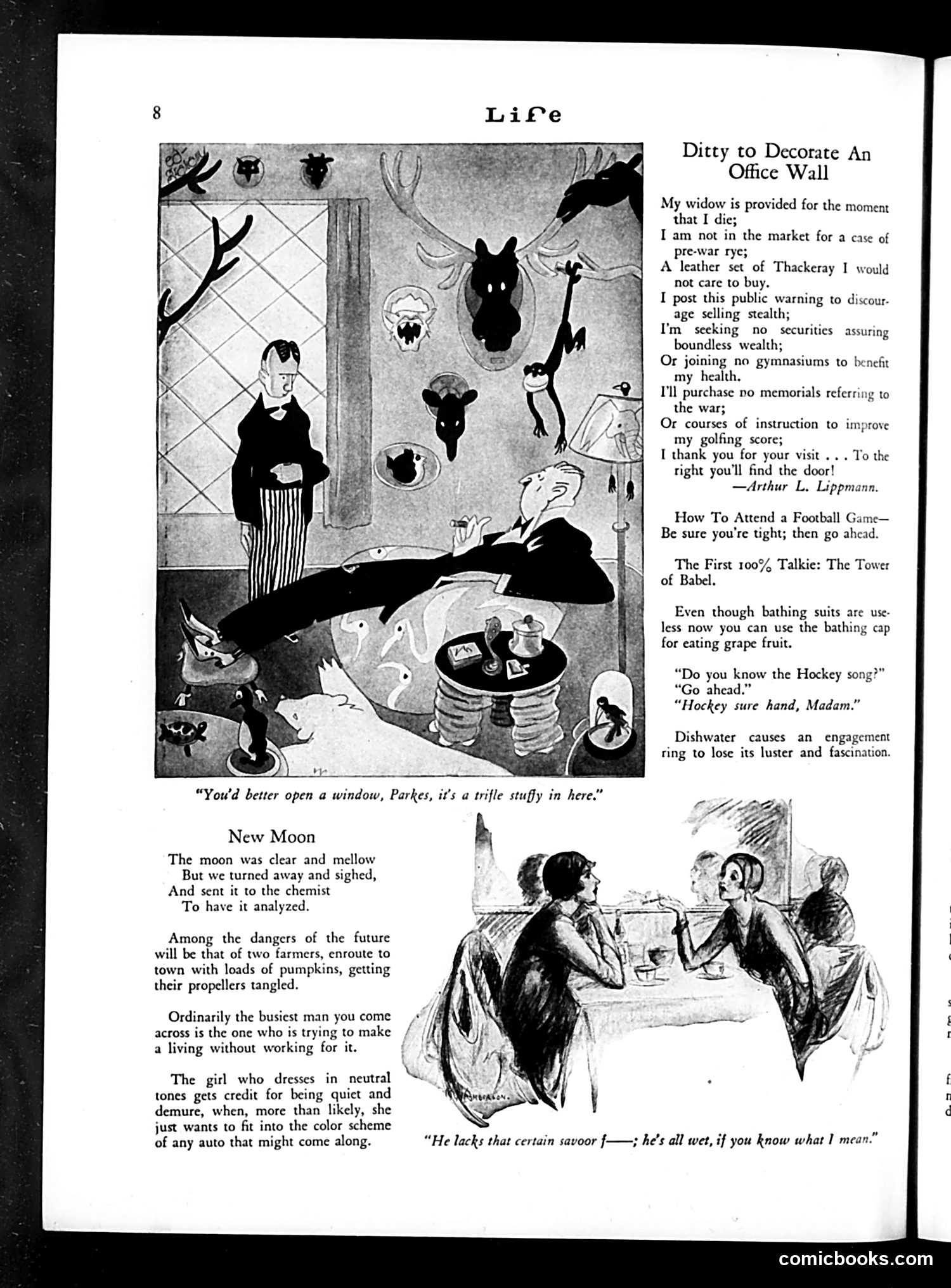
Analysis of Life Magazine Page This page contains humorous social commentary typical of Life magazine's satirical style. The main cartoon depicts a cluttered office where a woman suggests opening a window, with supernatural/demonic decorations covering the walls. The joke mocks the pretentious practice of decorating offices with exotic artwork and "sophisticated" décor—here rendered absurdly with creepy imagery. The column "Ditty to Decorate An Office Wall" by Arthur L. Lippmann humorously lists things the author *won't* do or buy, satirizing wealthy people's ostentatious displays and health-obsessed behaviors. Below, "New Moon" offers witty social observations about contemporary life—farmers with tangled propellers, women choosing drab clothing for practicality rather than style. The lower cartoon shows people dining, with commentary on social pretense and superficiality.
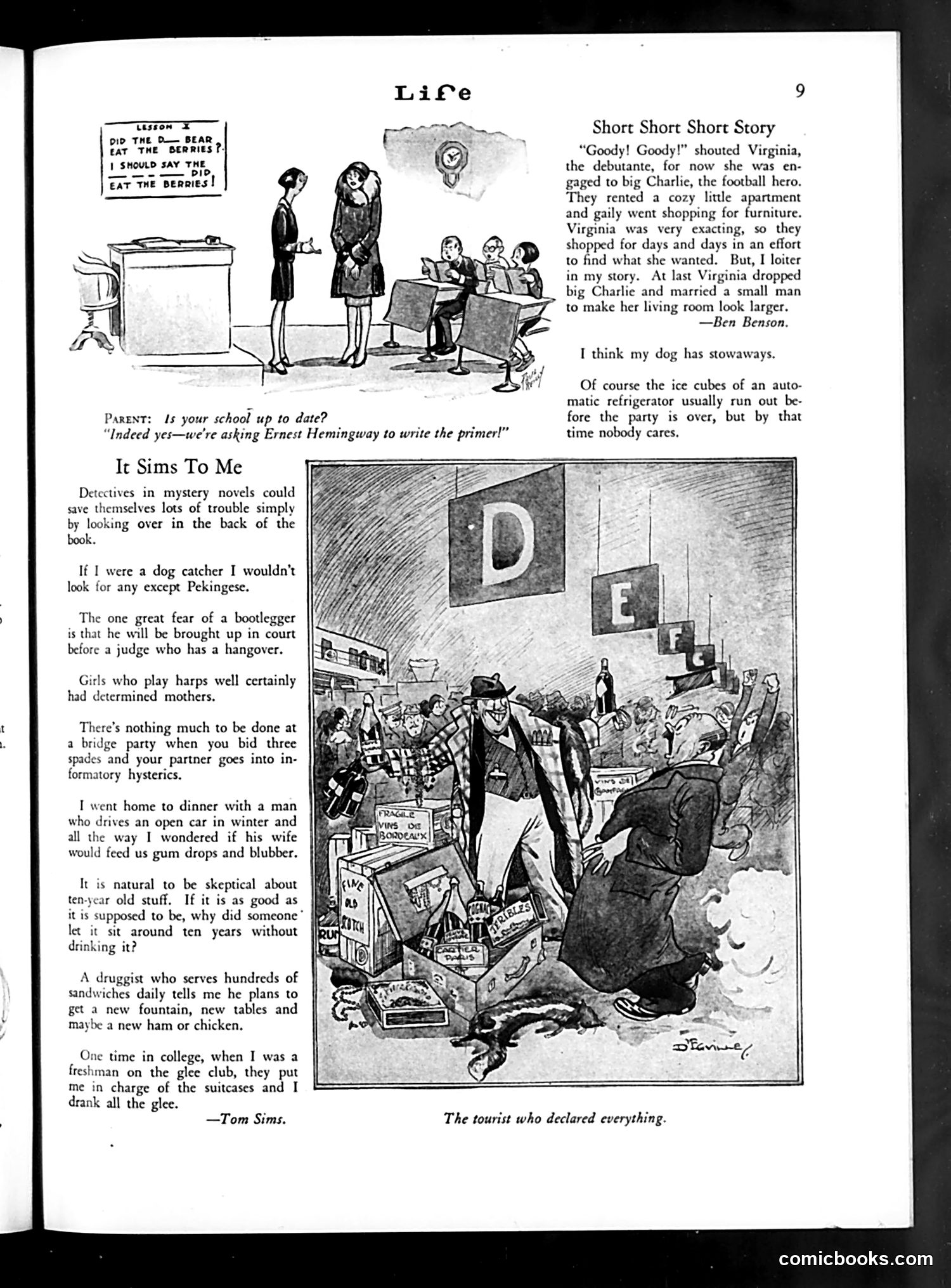
Explanation of This Life Magazine Page This page contains two separate pieces of humor: Top cartoon: Shows a parent asking a teacher if the school is "up to date," requesting Ernest Hemingway write the primer. It satirizes the 1920s-30s trend of treating modernist literary figures as cultural authorities, while mocking both Hemingway's fame and educational pretension. "It Sims To Me" column: Tom Sims offers scattered one-liners on contemporary life—bootleggers fearing judges with hangovers, observations about bridge parties and ten-year-old liquor. These are light social commentary on Prohibition-era concerns. Right illustration: "The tourist who declared everything" depicts a crowded scene with large letters D, E, F visible—likely satirizing tourists who make grand pronouncements about unfamiliar places. The detailed crowd and carnival-like chaos emphasize the chaotic nature of such declarations.
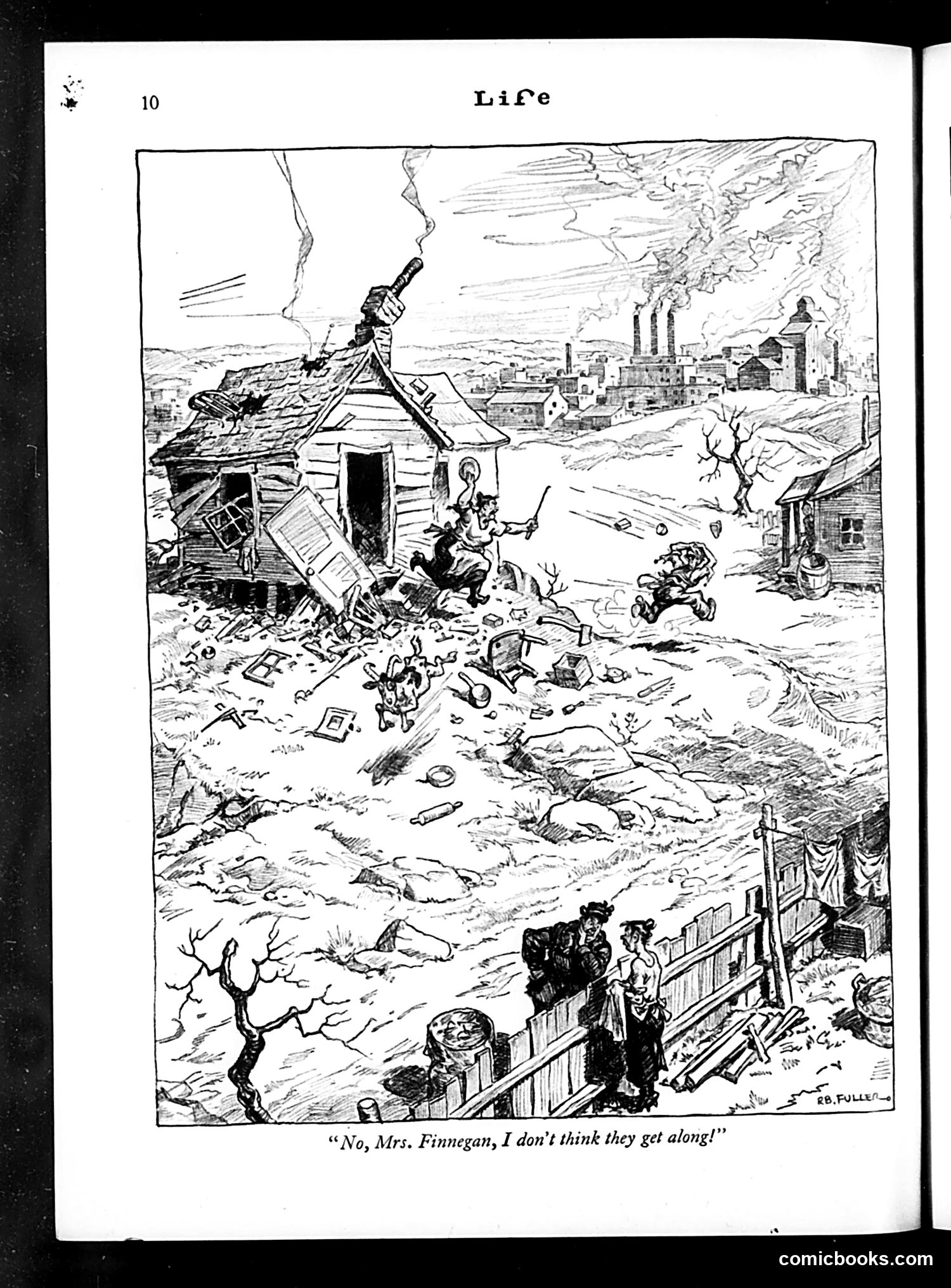
Analysis of "Life" Magazine Cartoon This single-panel cartoon depicts a chaotic domestic scene. A man and woman (identified by the caption as Mrs. Finnegan) stand at a fence observing the turmoil. In the yard, anthropomorphized animals—appearing to be deer or similar creatures—are fighting and creating havoc around a dilapidated house, with furniture and debris scattered everywhere. An industrial cityscape looms in the background. The caption reads: "No, Mrs. Finnegan, I don't think they get along!" The joke appears to be satirizing either poor living conditions, domestic discord, or the chaos of urban/working-class life. The anthropomorphized animals likely represent people, with their fighting symbolizing social conflict or marital strife. The illustration is credited to "B.B. Fuller" (visible at bottom right).
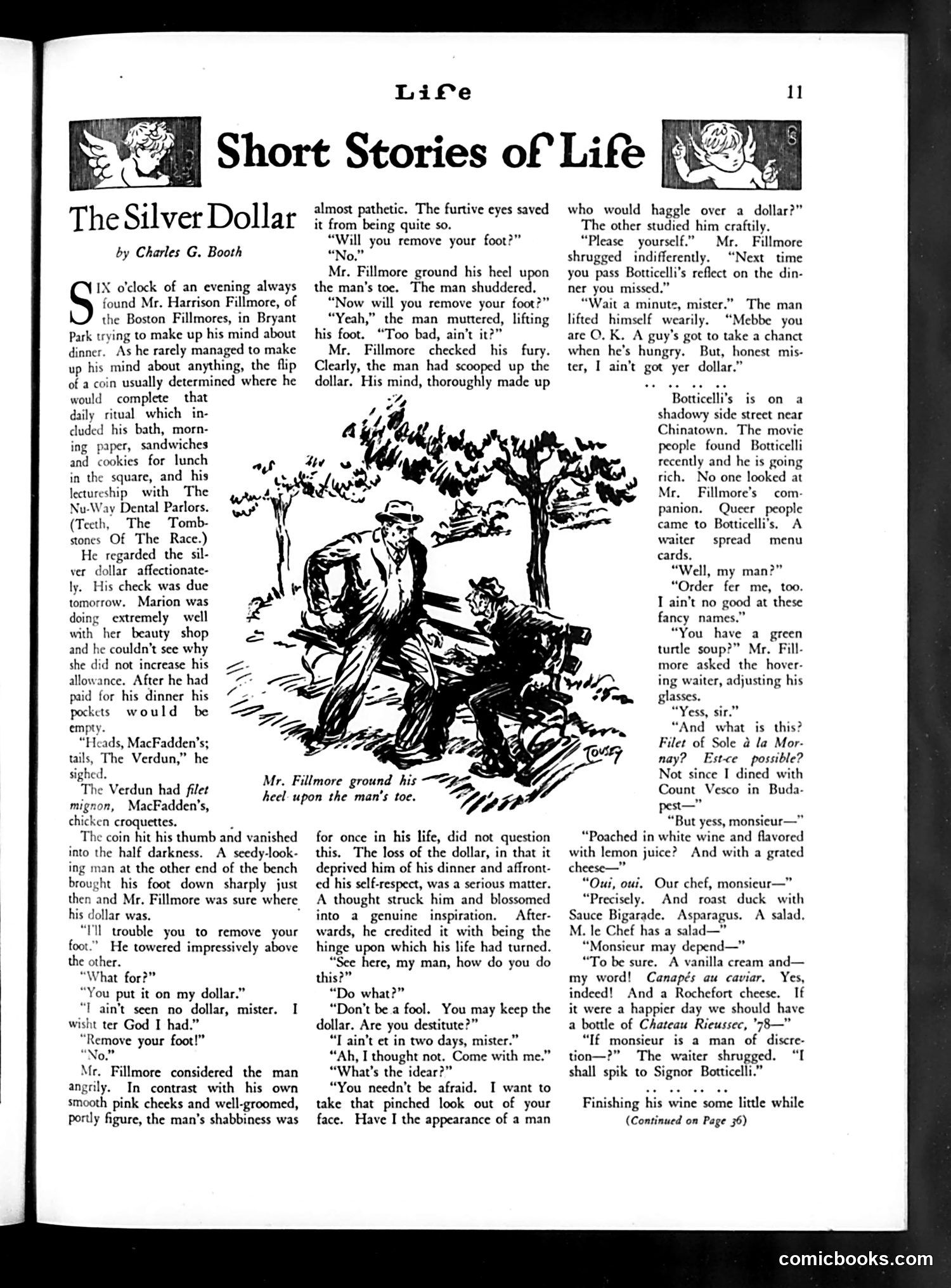
"The Silver Dollar" by Charles G. Booth This story satirizes class pretension and materialism among the wealthy. Mr. Harrison Fillmore, a Boston aristocrat, obsesses over a silver dollar he's lost—not from financial need, but from wounded pride. When a shabby street man finds and returns it, Fillmore condescends to him, demanding he remove his foot from the bench. The satire targets Fillmore's misplaced values: he cares more about a single dollar's symbolic importance to his status than about human dignity. The poor man's straightforward honesty contrasts sharply with Fillmore's affected concern for propriety and cleanliness. The story mocks how the wealthy use trivial possessions to assert social superiority over working-class people.
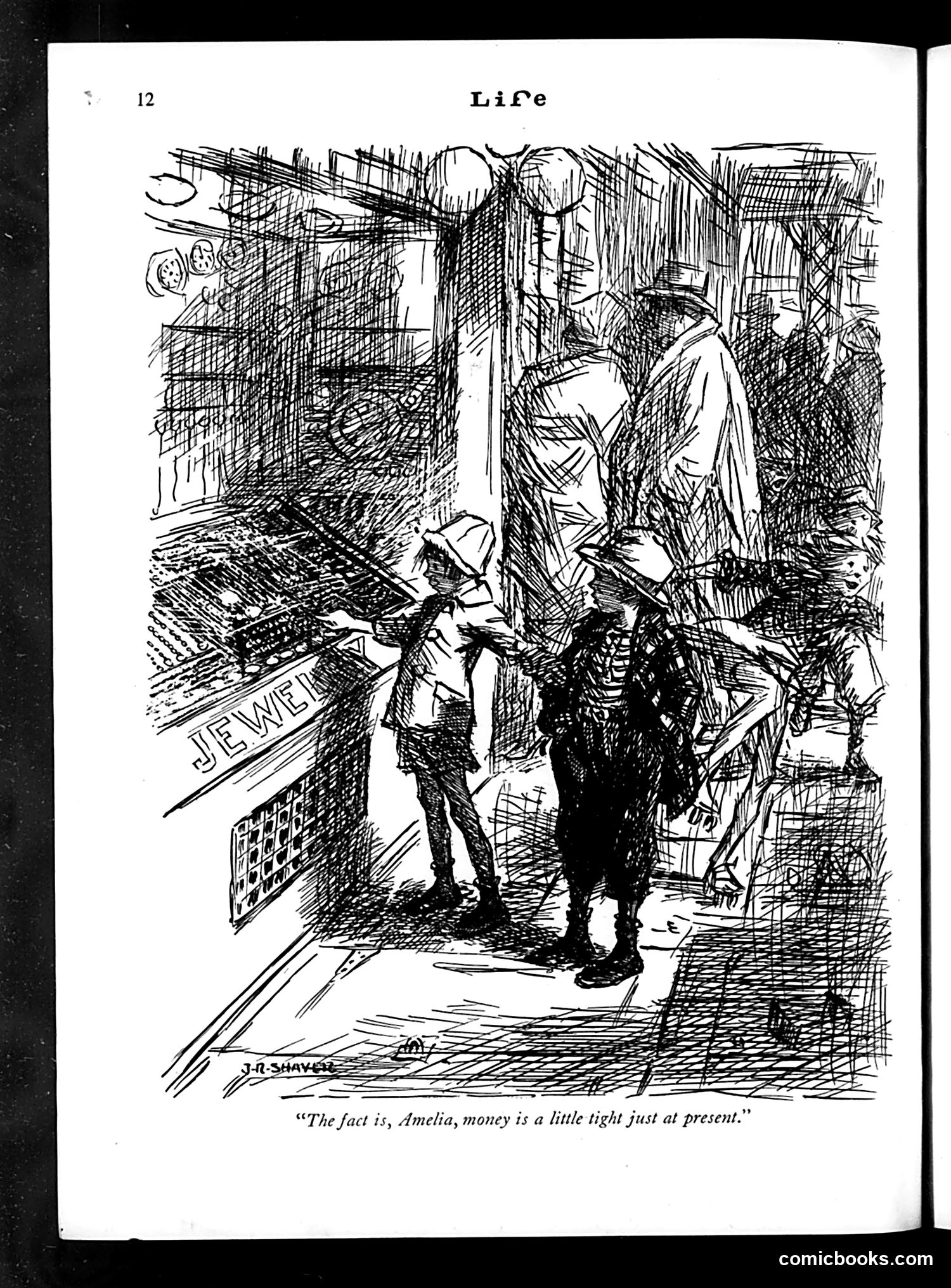
Analysis of Life Magazine Cartoon (Page 12) This is a single-panel cartoon captioned: "The fact is, Amelia, money is a little tight just at present." The scene depicts a jeweler's shop (indicated by the "JEWELS" sign visible on the storefront). A well-dressed man and woman stand outside the window, gazing at jewelry displays while speaking to each other. The cartoon satirizes the contrast between desire and financial reality—the couple wants to purchase luxuries but cannot afford them due to money being "tight." The humor is situational rather than politically topical: it comments on the universal human experience of window-shopping during financial constraints, likely resonating during economically uncertain times. The cartoon's appeal relies on recognizable class aspiration and economic hardship rather than references to specific historical figures or events.
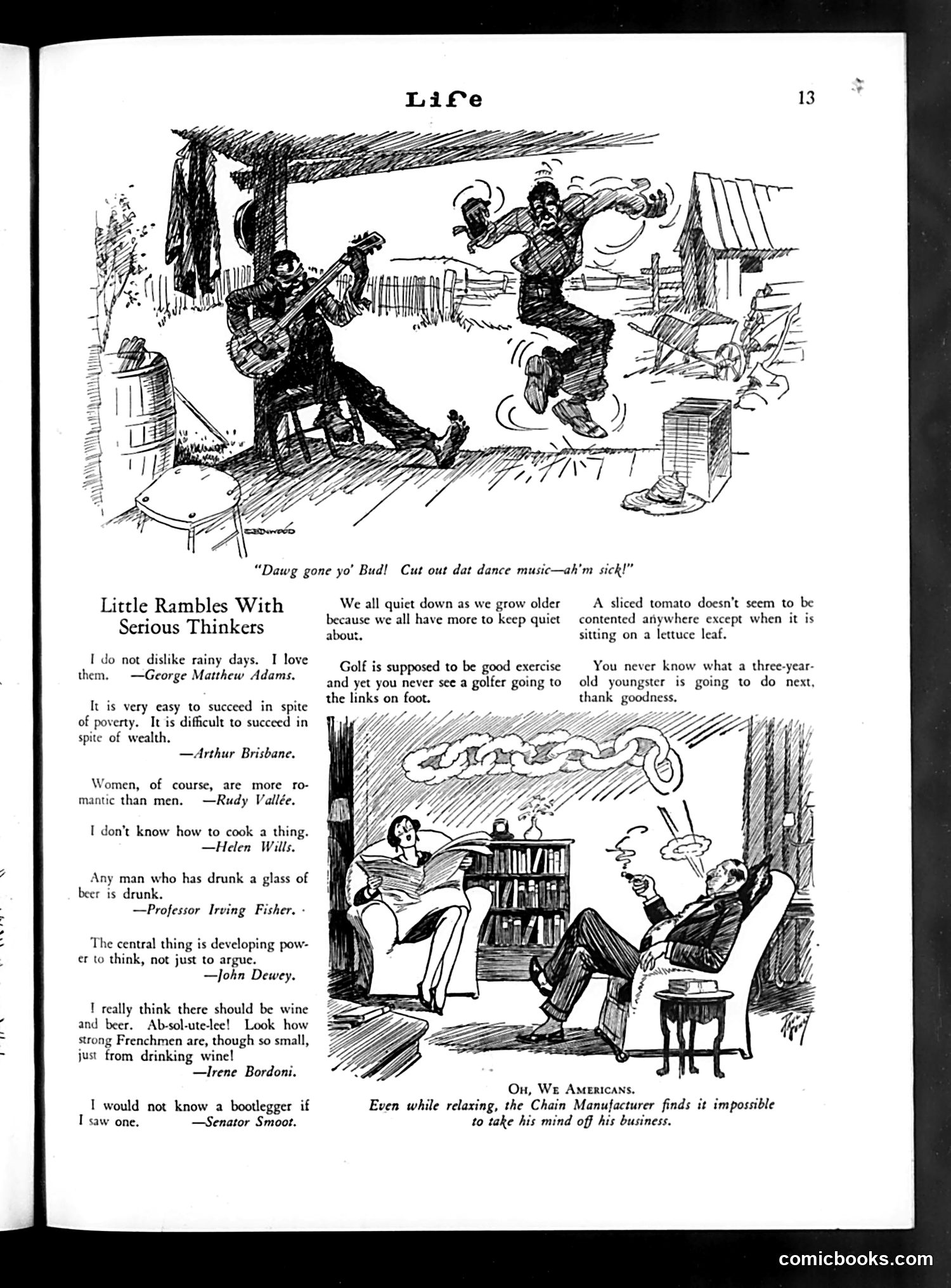
Life Magazine Page 13 Analysis Top Cartoon: Two figures in what appears to be a rural/farm setting - one playing guitar, one dancing wildly. The caption "'Dawg gone yo' Bud! Cut out dat dance music—ah'm sick!'" uses dialect speech patterns typical of early 20th-century racial caricature in American comics, likely depicting rural working-class characters complaining about jazz or popular dance music. "Little Rambles with Serious Thinkers": A collection of brief humorous quotes from named public figures (George Matthew Adams, Arthur Brisbane, Helen Willis, etc.) offering tongue-in-cheek observations about life, cooking, alcohol, and human nature. Bottom Cartoon: Shows a businessman relaxing at home unable to stop thinking about work ("Chain Manufacturer finds it impossible to take his mind off his business"), satirizing American work culture and the difficulty escaping professional concerns.
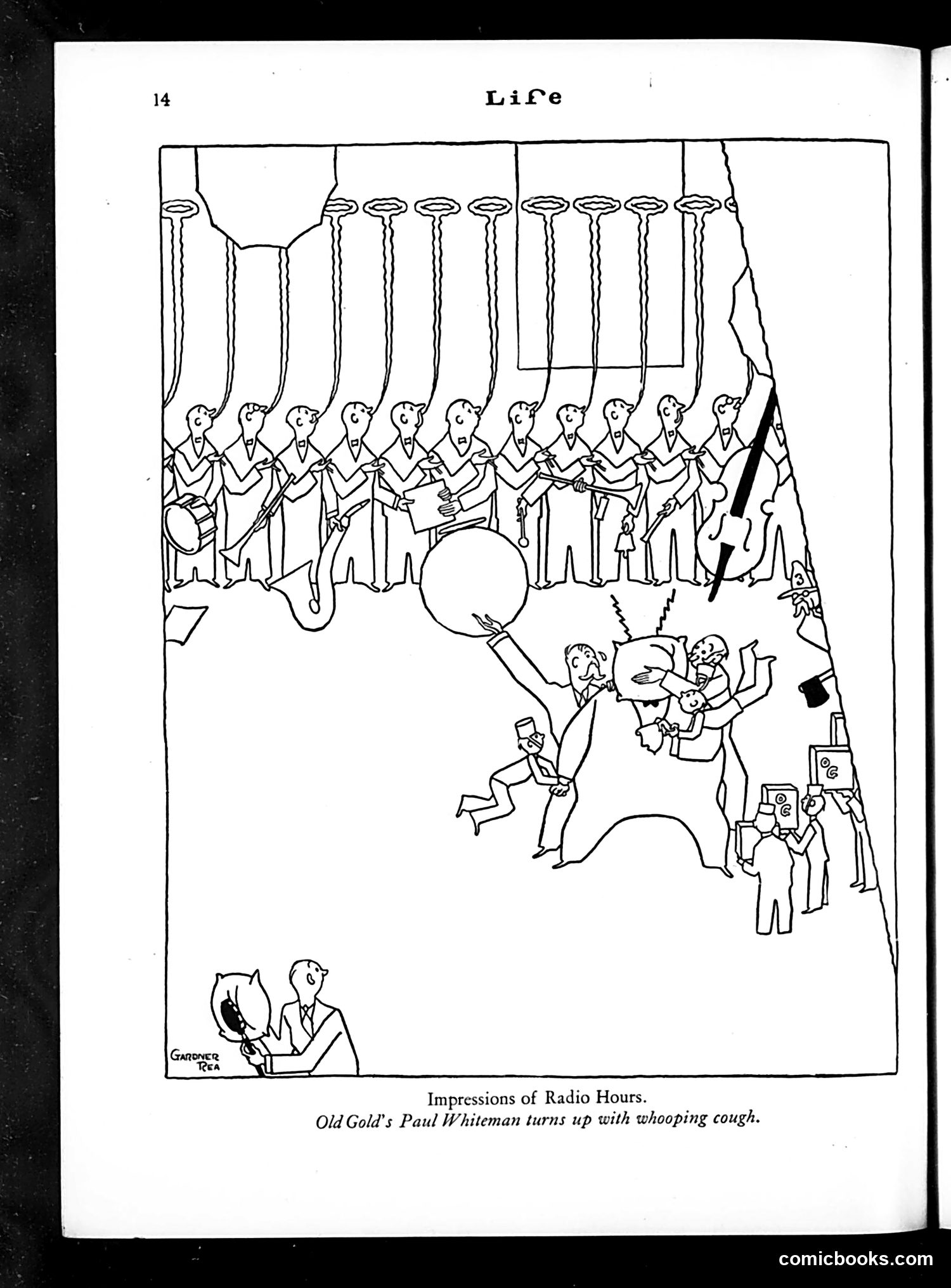
Analysis This is a satirical cartoon titled "Impressions of Radio Hours," with a caption referencing "Old Gold's Paul Whiteman turns up with whooping cough." The cartoon depicts a radio broadcast scenario: musicians and singers stand suspended from above by cords (representing the broadcast setup), while below, Paul Whiteman—a famous bandleader of the 1920s-30s—appears sick and unable to perform, causing chaos. A woman (likely representing Old Gold cigarettes, a sponsor) and other figures react with dismay. The satire mocks radio broadcasting's dependency on celebrity performers and commercial sponsors. When Whiteman falls ill, the entire production collapses, suggesting the fragility of live radio entertainment and the absurdity of glamorous broadcasts disrupted by mundane illness.
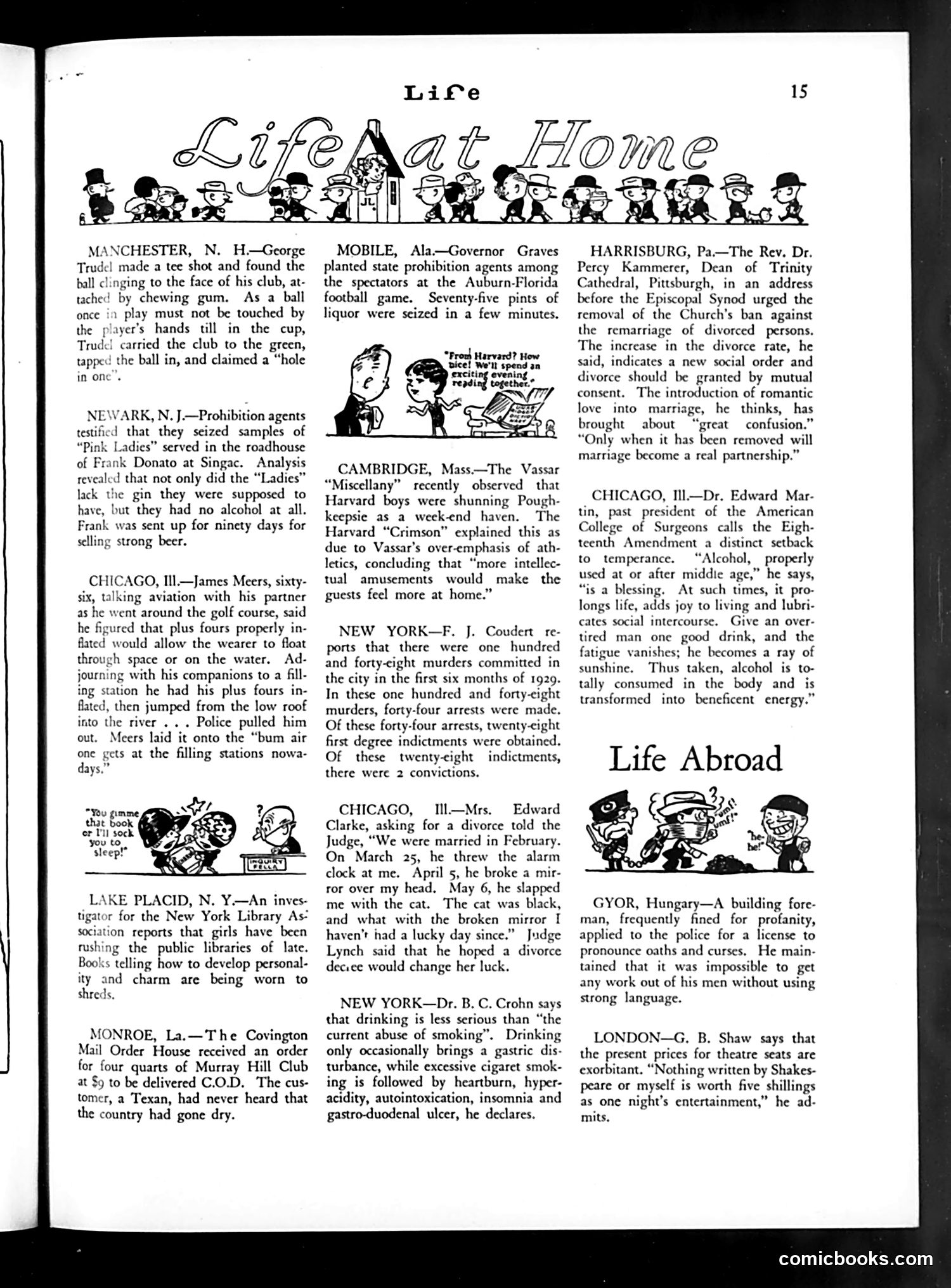
Life Magazine Page 15: "Life at Home" and "Life Abroad" This page contains several brief humorous anecdotes about American domestic life and international observations, typical of Life magazine's satirical format. The visible cartoons appear to show simple line-drawn figures illustrating these stories—one depicts what seems to be a man and woman with reading material (captioned about "Fred Harvard"), and another shows cartoon characters in the "Life Abroad" section. The content mixes Prohibition-era humor (seized liquor, roadhouse raids), marital discord jokes, and social commentary on drinking versus smoking. The stories reference contemporary issues like divorce, aviation mishaps, and library habits. The "Life Abroad" section includes brief observations from Hungary and London about profanity and theater prices, reflecting the magazine's international perspective typical of the 1920s.
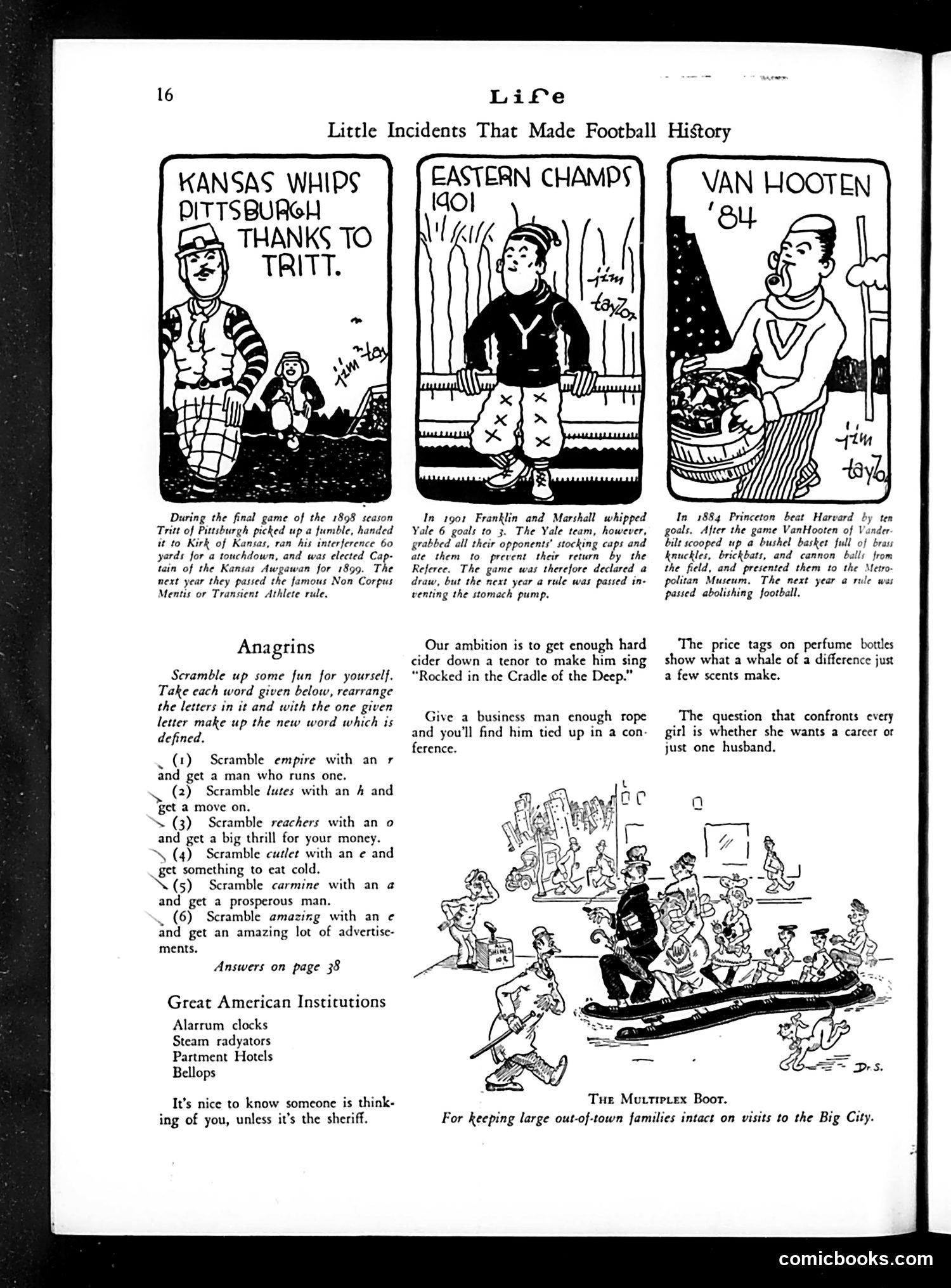
"Little Incidents That Made Football History" This page presents three cartoon panels depicting early football anecdotes: 1. Kansas-Pittsburgh (1898): References Tritt's interference that helped Kansas defeat Pittsburgh. The caption notes this violated the "Non Corpus Mentis or Transient Athlete rule." 2. Eastern Champs (1901): Shows Franklin and Marshall's victory over Yale, achieved through questionable tactics—their opponents wore "shocking caps" and the winning goal involved stomach-pump manipulation, leading to a new rule against "stomach pump" usage. 3. Van Hooten '84: Princeton's player scooped up a bucket of brass knuckles and cannon balls from the field, which the opposing team had deposited there. These are satirical takes on early football's reputation for chaotic, unsportsmanlike conduct before standardized rules were firmly established. The humor comes from depicting absurdly illegal methods presented as historical fact.
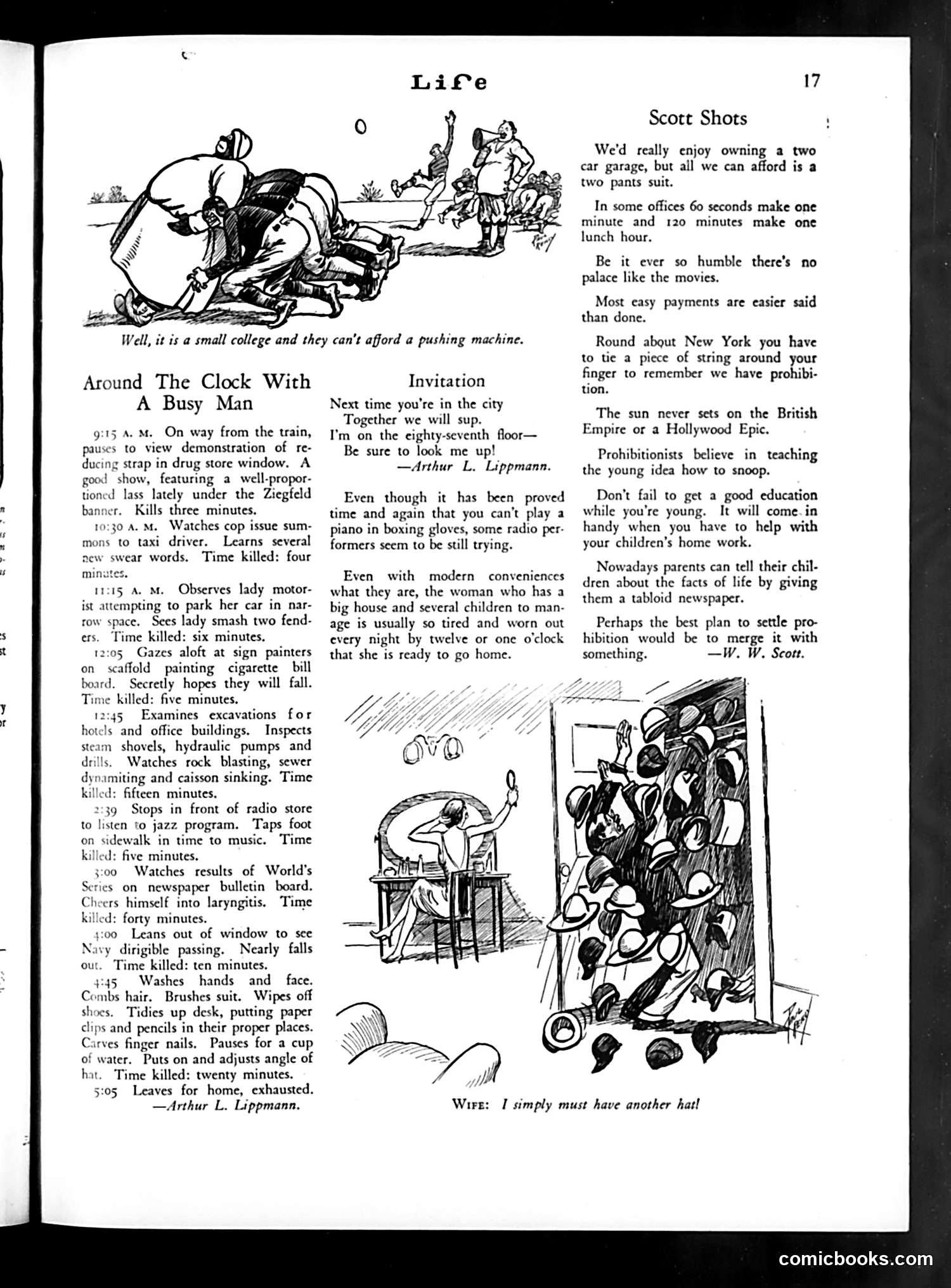
Explanation for Modern Readers This page contains humorous short pieces typical of Life magazine's satirical style. The main cartoon shows a man bent over struggling with a large spherical object labeled as "a small college" that "can't afford a pushing machine"—a joke about the financial struggles of educational institutions. The "Around the Clock with a Busy Man" piece satirizes urban life by documenting a businessman's hectic schedule from 9:15 a.m. to 5:05 p.m., showing how he wastes time on trivial activities (watching demonstrations, observing street scenes, etc.) while claiming to be productive. The "Scott Shots" section offers brief, cynical observations about modern life—prohibition, Hollywood, parenting, and domestic life—reflecting 1920s social concerns. The final cartoon shows a woman surrounded by hats, with the caption "I simply must have another hat!"—satirizing women's fashion consumption.
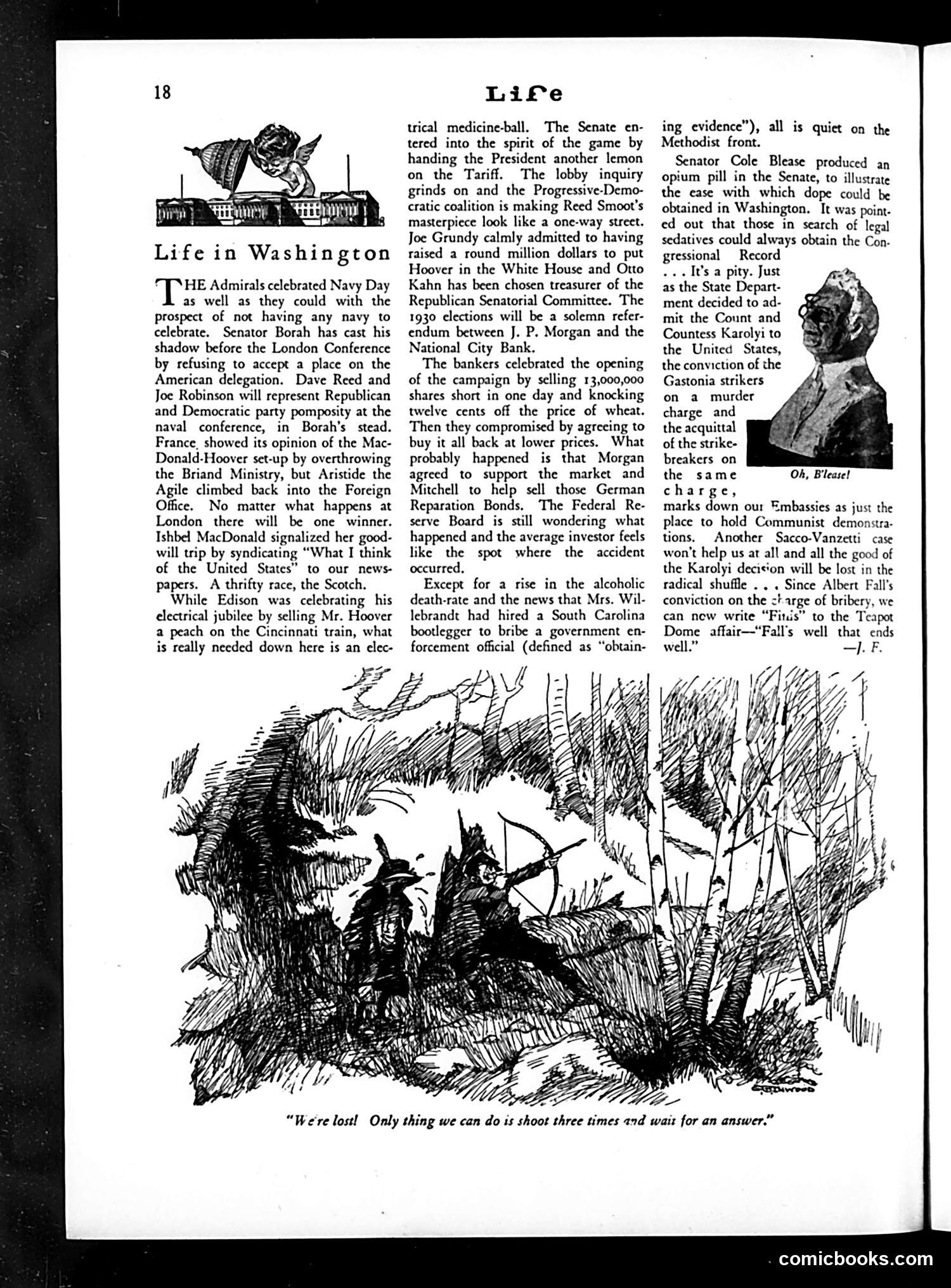
Explanation of Life Magazine Page 18 This page contains a satirical column titled "Life in Washington" discussing Washington political intrigue circa 1930. The main cartoon depicts Native American hunters in a forest, with the caption: "We're lost! Only thing we can do is shoot three times and wait for an answer." The satire appears to reference the absurdity of Washington political communication—suggesting that politicians are so lost and disconnected they must resort to random actions ("shooting") hoping for some response, paralleling the confused state of government decision-making. The text discusses various political figures and scandals: Navy Day celebrations, Senator Borah, Republican operations, banker conspiracies around wheat prices, and cases involving ambassadors and labor disputes. The overall tone mocks the chaos and incompetence of political maneuvering in the capital.
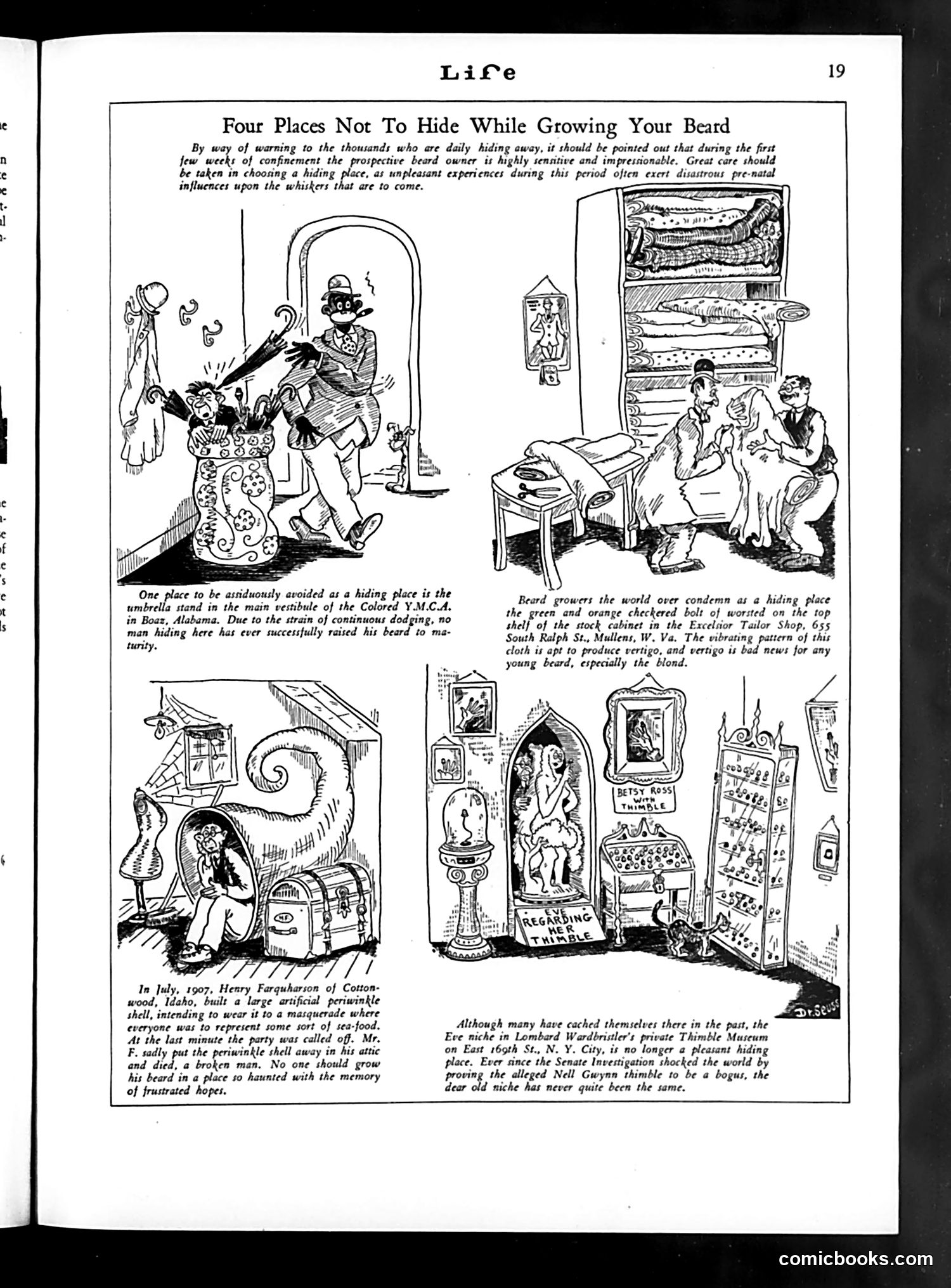
Four Places Not To Hide While Growing Your Beard This is a humorous satirical article from *Life* magazine warning men against hiding in certain locations while growing out their beards during the sensitive early weeks. The piece uses absurdist humor to mock the pretentiousness of the era's beard-growing culture. Four ridiculous hiding places are illustrated and described: 1. A YMCA umbrella stand in Alabama — the strain of dodging people prevents successful beard growth 2. A bedroom with vibrating cloth patterns — causes vertigo, harmful to blonde beards 3. An artificial periwinkle shell built in 1907 — cursed by a canceled masquerade party 4. A museum thimble niche in New York — discredited after a Senate investigation exposed a fake historical artifact The satire mocks both the elaborate superstitions surrounding beard cultivation and the era's obsession with collecting oddities and authenticating dubious historical objects (like the "Nell Gwynn thimble").
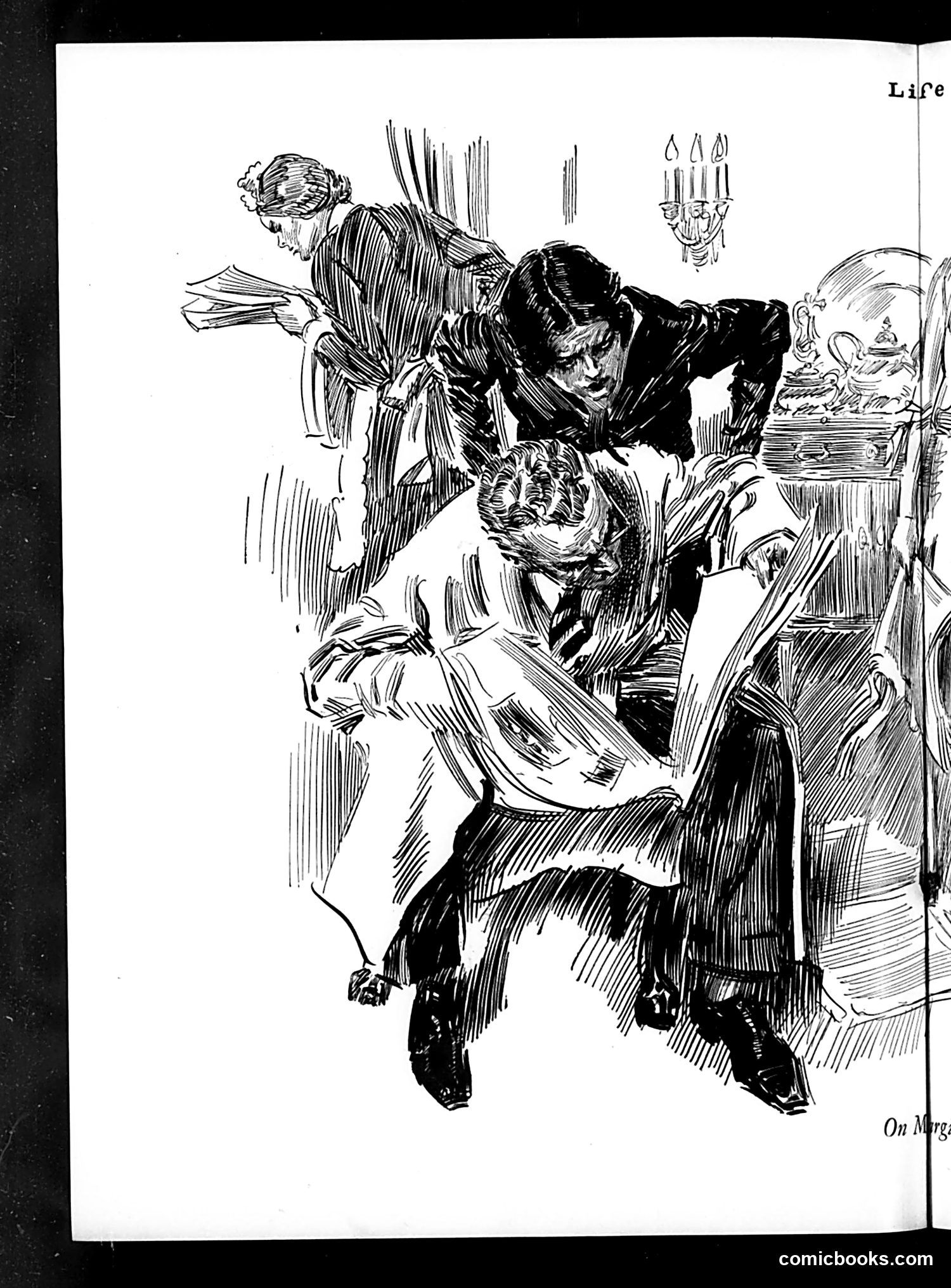
Analysis This page from Life magazine features a satirical sketch titled "On Marge" (visible at bottom right). The illustration shows a woman in an elegant white dress and dark coat being attended to by what appears to be a maid or servant in darker clothing. The scene depicts an interior setting with a mirror, candlabra, and elegant furnishings visible in the background. The satire likely comments on wealth, vanity, or social pretension—common targets of Life's humor. The title "On Marge" suggests this may reference a specific society figure or character, though without additional context, the precise target is unclear. The detailed cross-hatching technique and composition are characteristic of early 20th-century American editorial illustration, emphasizing the subject's fashionable appearance and domestic luxury.
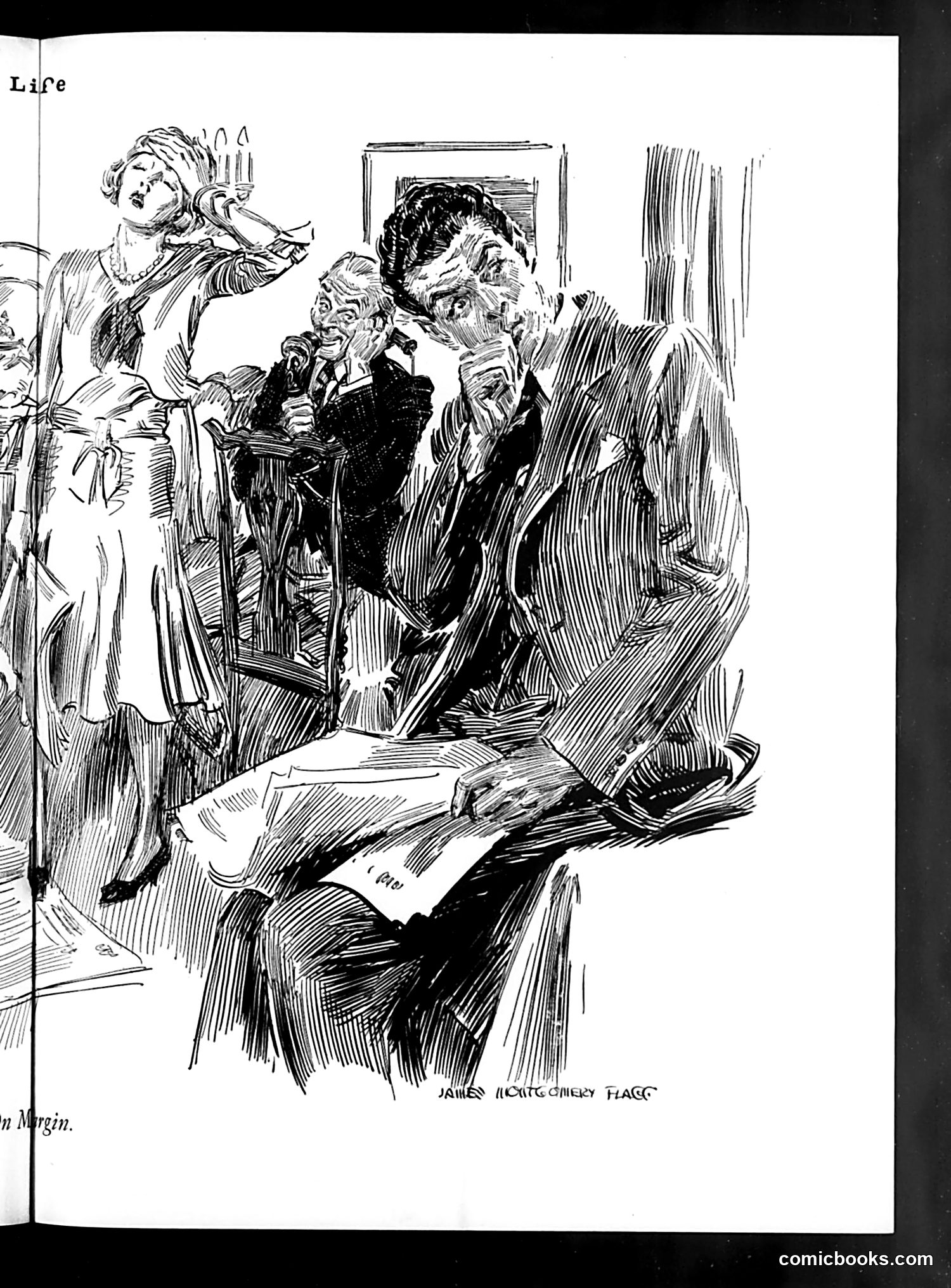
Analysis This page from *Life* magazine features a cartoon signed by James Montgomery Flagg. The image depicts what appears to be a social or political scene with several figures in formal dress (suits and a woman in a dress). The figures appear to be engaged in conversation or interaction, with exaggerated facial expressions typical of satirical illustration. Without clear context from the OCR text (which only shows "Life," "n Margin," and the artist's signature), I cannot definitively identify the specific political figures, event, or social commentary being satirized. The style and composition suggest social satire, likely commentary on contemporary affairs or social behavior, but determining the precise target—whether political figures, social types, or specific events—would require additional context or a clearer publication date and accompanying caption not visible here.
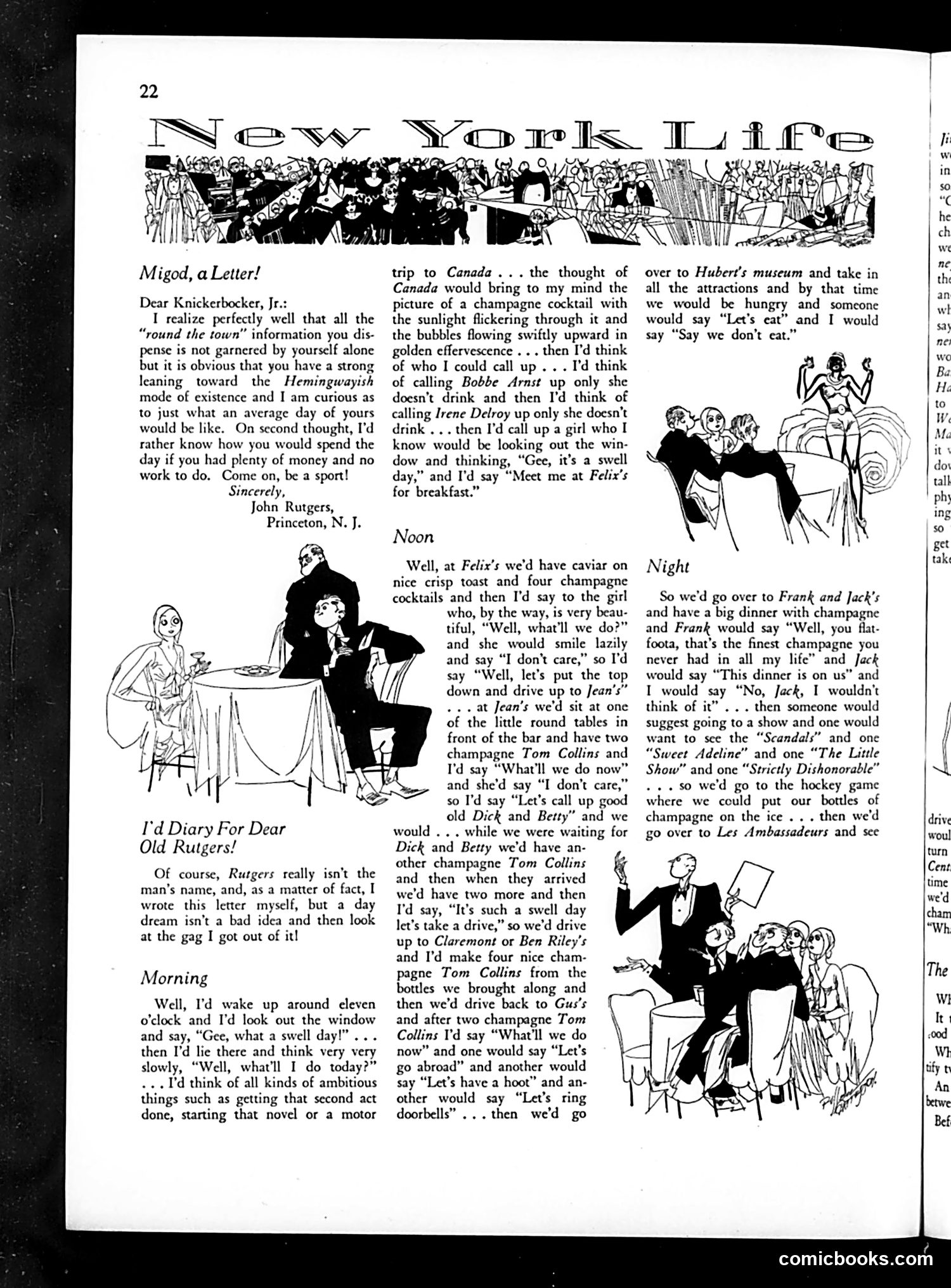
Analysis of "New York Life" Page 22 This is a satirical humor piece from Life magazine (likely 1920s-30s, based on references to shows like "Scandals" and "Sweet Adeline"). The Setup: A reader asks "Knickerbocker, Jr." (Life's gossip columnist) what he'd do with a day of leisure and unlimited money. The editor admits he wrote the letter himself to create the joke. The Satire: The "diary" mocks wealthy Manhattan nightlife excess—specifically the repetitive hedonism of the Jazz Age leisure class. The humor builds through relentless catalog: champagne cocktails at every venue (Felix's, Jean's, Claremont), interchangeable companions who "don't care" what they do, moving between restaurants, shows, and nightclubs in a blur of consumption. The Point: The joke culminates in absurdist contradiction—after an entire day of dining and drinking, someone suggests "Let's eat" and the narrator replies "Say we don't eat." This suggests either moral exhaustion or that eating (substance) matters less than the performance of leisure itself. Visual gags accompanying the text show fashionable diners and revelers in typical Life illustration style, reinforcing the mockery of frivolous upper-class Manhattan culture.
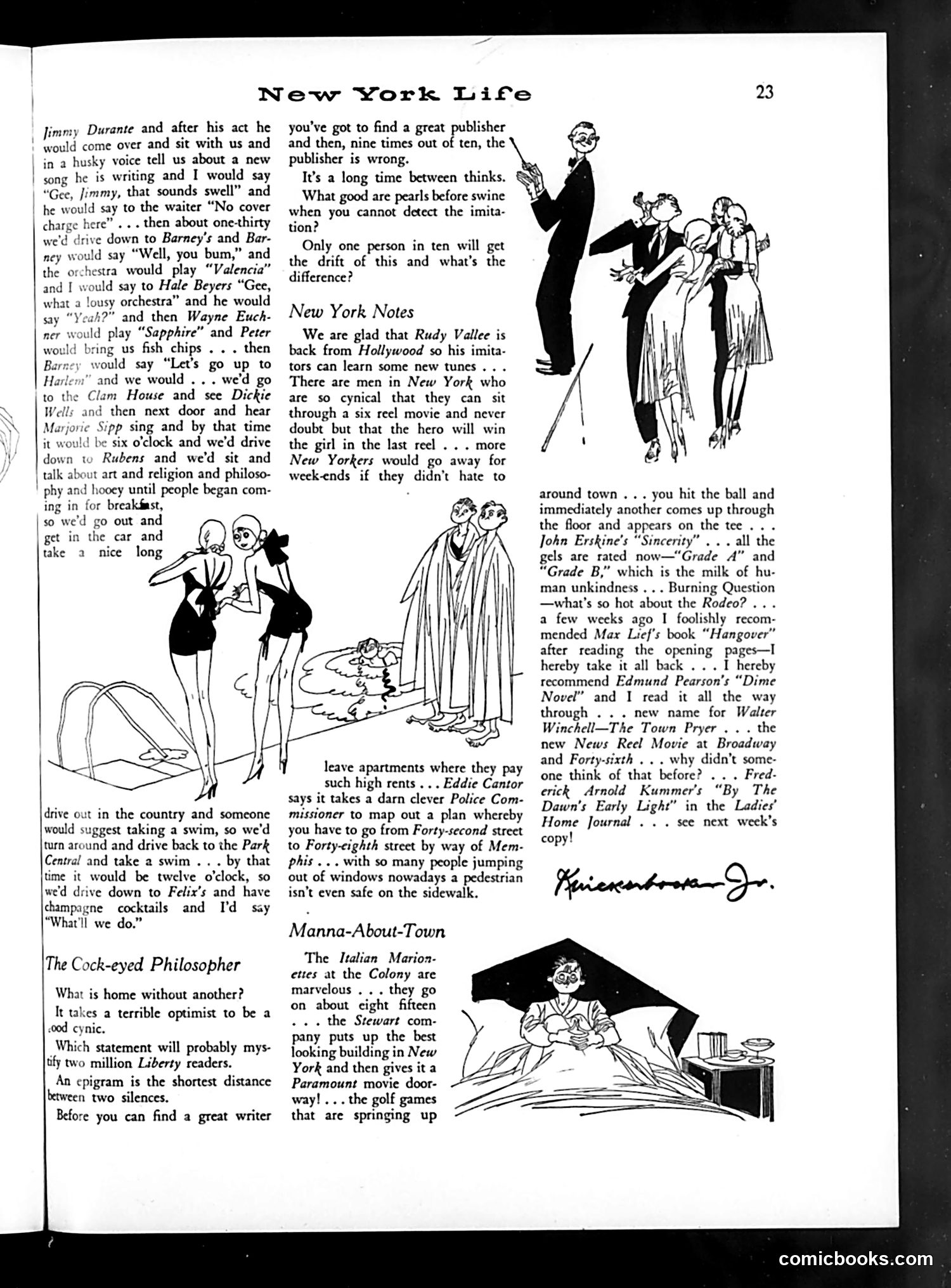
New York Life Magazine Page Analysis This is a satirical humor page from Life magazine featuring social commentary on 1920s New York nightlife and culture. The main text describes a fictional night out visiting jazz clubs and restaurants with celebrities like Jimmy Durante, Wayne Euchner, and others—depicting the era's hedonistic Manhattan social scene. "The Cock-eyed Philosopher" section offers cynical one-liners mocking pretension and false sophistication (e.g., "It takes a terrible optimist to be a good cynic"). "New York Notes" lampoons specific aspects of city life: Rudy Vallee's return from Hollywood, Manhattan's high rents, unsafe streets due to suicides, and crooked police planning. "Manna-About-Town" reviews entertainment and books while satirizing social hierarchies (women rated as "Grade A" or "Grade B" like dairy products) and mocking Walter Winchell as "The Town Pryer." The cartoons illustrate these vignettes with period-appropriate illustrations showing well-dressed urbanites. The overall tone is sophisticated mockery of Jazz Age excess and Manhattan's social elite.
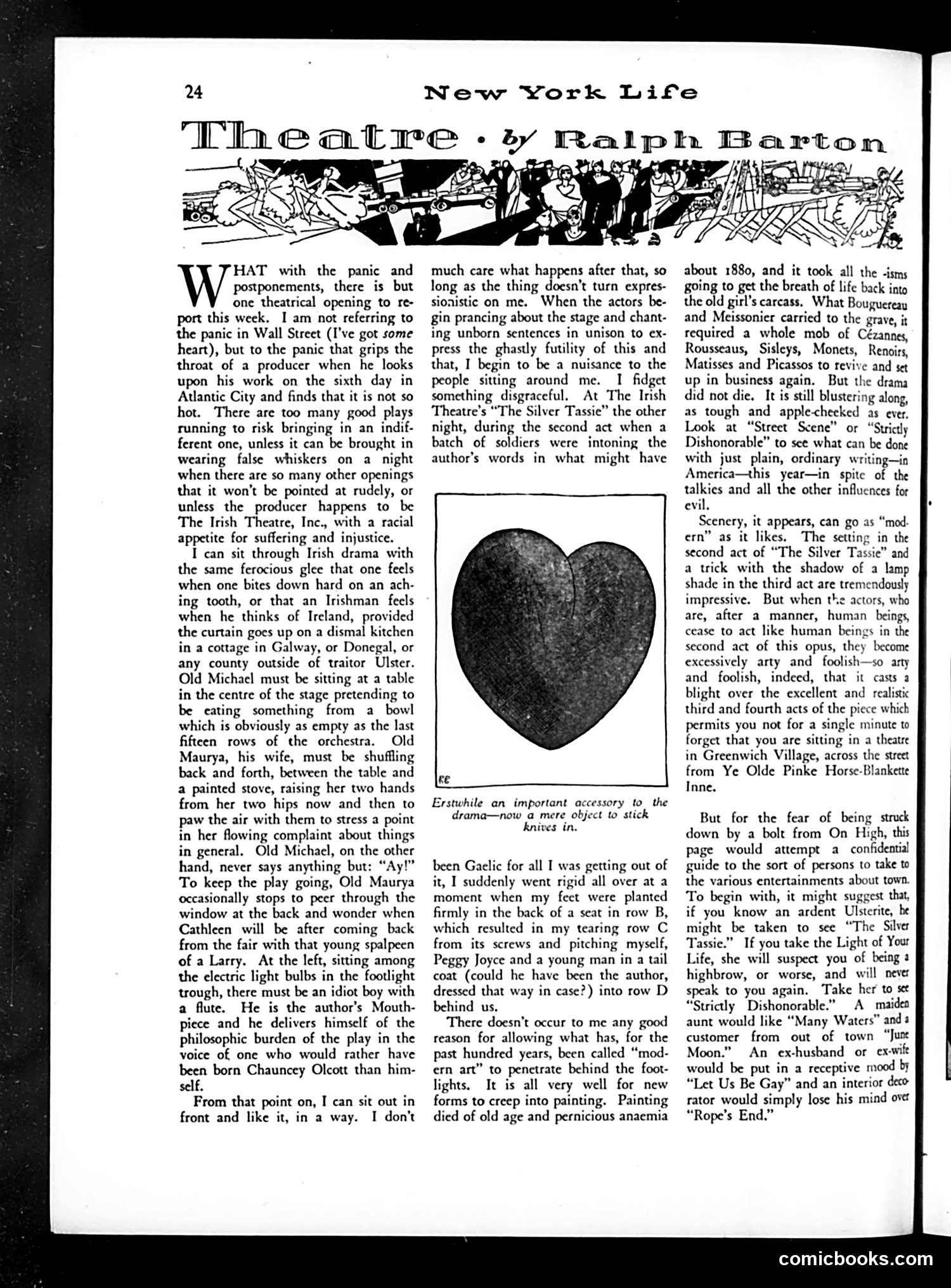
Analysis This is Ralph Barton's theater column reviewing "The Silver Tassie" at The Irish Theatre. The heart-shaped illustration appears to be a prop or symbolic object referenced in the text ("now a mere object to stick knives in"). Barton satirizes modernist theatrical techniques, particularly expressionism. He complains that when actors in "The Silver Tassie" began chanting in unison during the second act—performing what he dismissively calls "unborn sentences"—he found it so intolerable he literally kicked the seat in front of him, tumbling into row D with fellow audience members. His point: while modernism revitalized dying visual arts (he credits Cézanne, Matisse, Picasso), theater should remain grounded in naturalistic Irish drama—dismal kitchens, muttering peasants, empty bowls. Expressionism on stage crosses an unacceptable line into pretentious artificiality. The satire targets avant-garde theater's importation of modernist techniques as self-indulgent and audience-hostile.
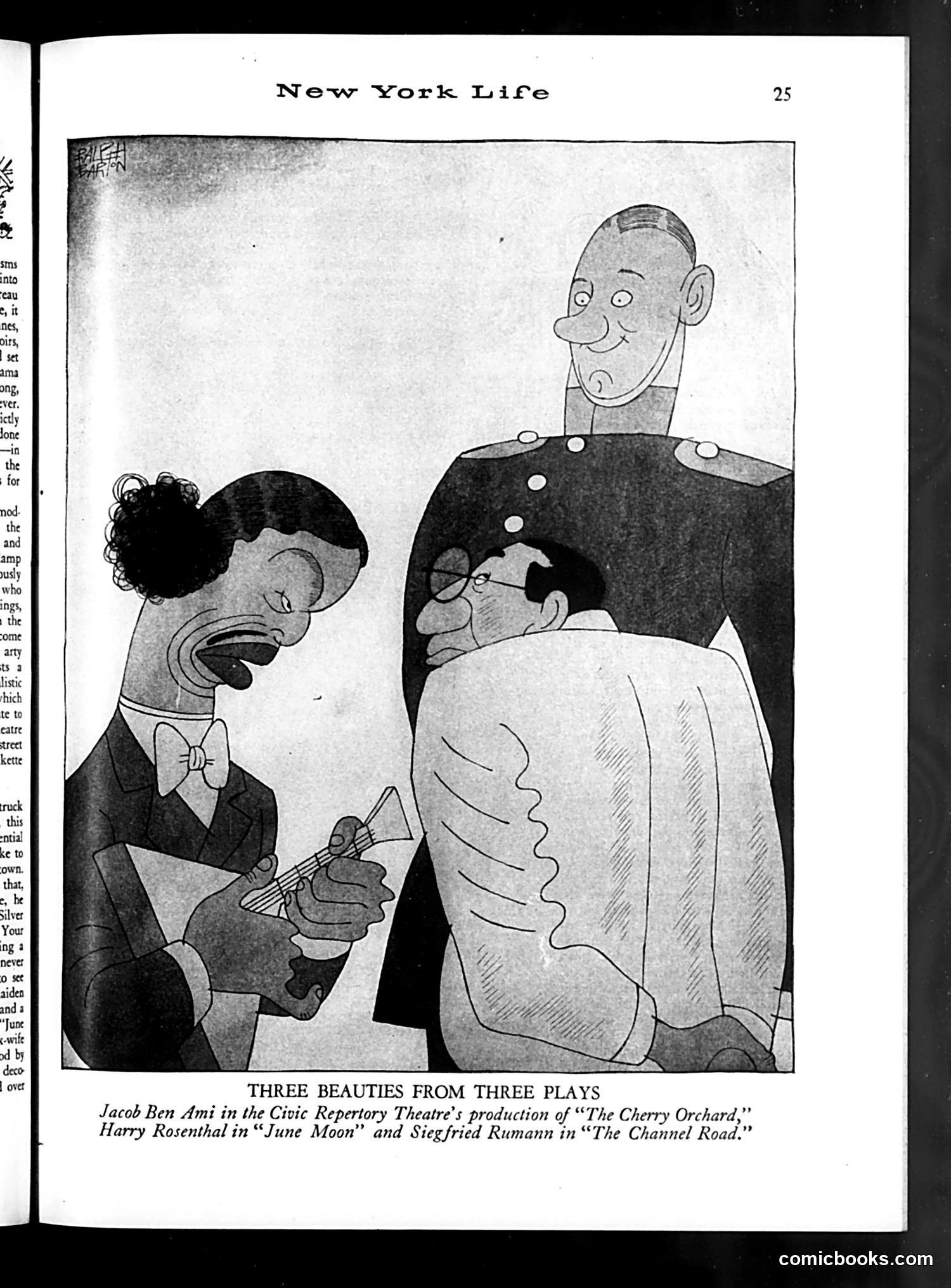
Analysis This is not political satire but rather theatrical humor from *Life* magazine's entertainment section. The caption identifies three male actors from contemporary Broadway productions: Jacob Ben Ami, Harry Rosenthal, and Siegfried Rumann. The joke is visual: the cartoon caricatures these actors with exaggerated features—bulging eyes, prominent noses, and distorted expressions—and ironically labels them "THREE BEAUTIES FROM THREE PLAYS." The humor relies on the contrast between the flattering title and the unflattering, grotesque caricatures. This reflects *Life*'s tradition of theatrical mockery through caricature, common in early 20th-century entertainment journalism. The satire targets the actors' appearances rather than politics or social issues.
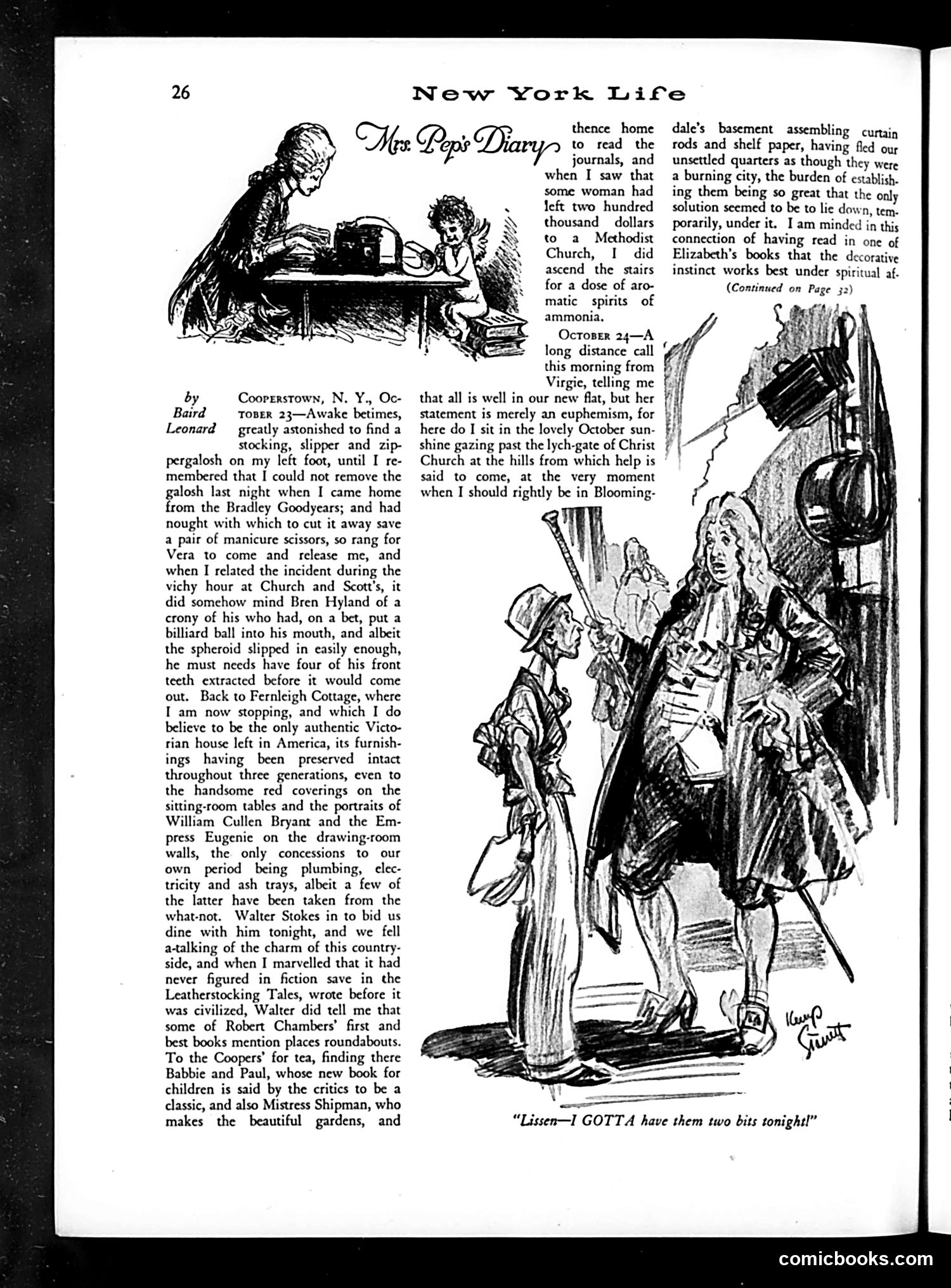
"Mrs. Pep's Diary" - Life Magazine Satire This page presents a humorous serialized diary entry by a society woman named Leonard, mocking upper-class affectations and trivial concerns. The main text satirizes the pretensions of wealthy New Yorkers: obsessing over Victorian authenticity while living in modern apartments, name-dropping literary figures and aristocratic acquaintances, and treating minor domestic inconveniences (a stuck galosh, arranging curtain rods) as profound dramas requiring "aromatic spirits of ammonia." The illustrated cartoon below depicts a working-class confrontation—a poor person demanding "two bits" (25 cents) urgently. This contrasts sharply with the diary's world of leisured country estates and Methodist Church donations of "$200,000," highlighting class divisions that the satire implicitly critiques through juxtaposition. The piece mocks both elite pretension and the economic desperation existing simultaneously in American society.
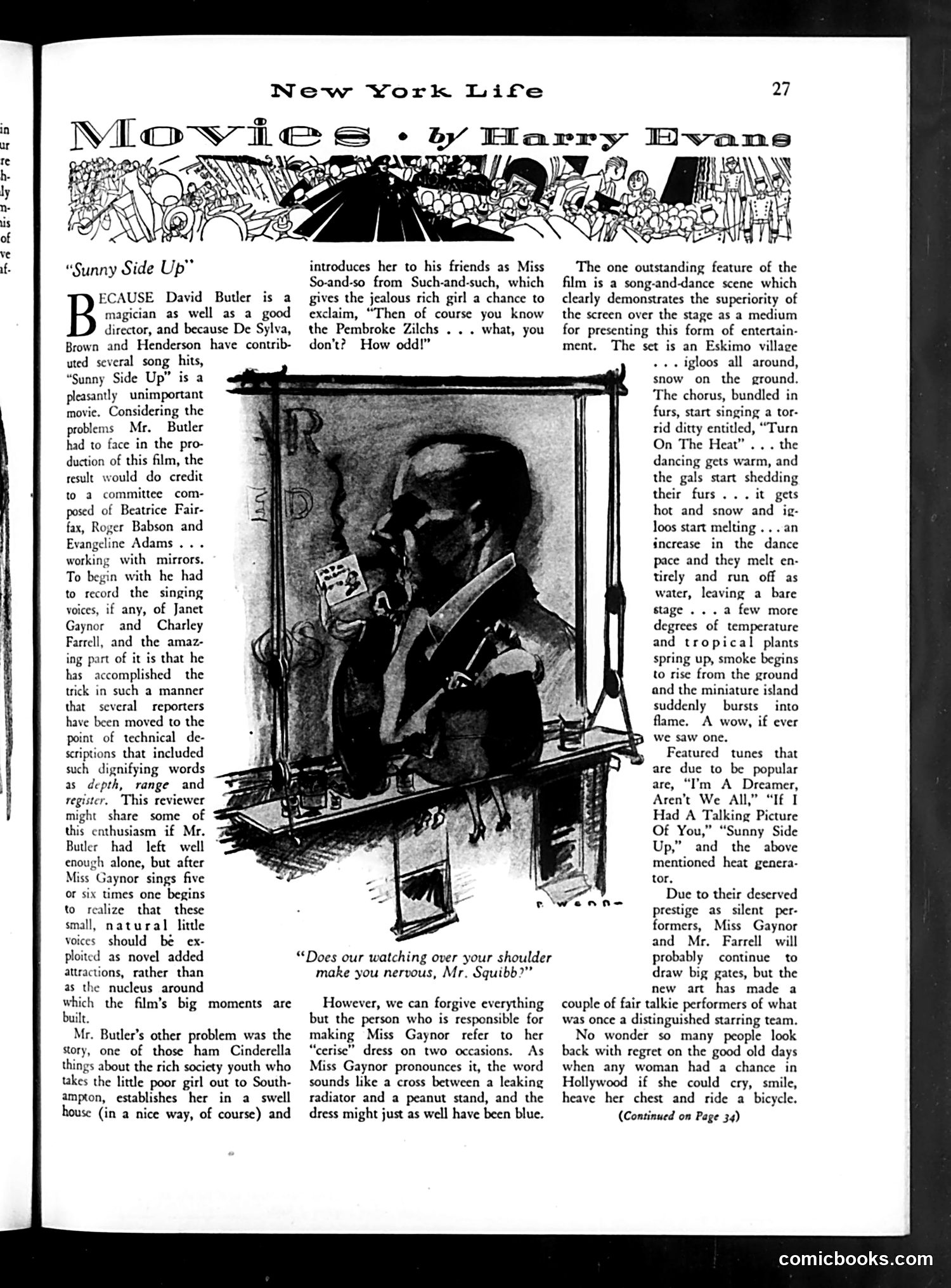
"Sunny Side Up" Film Review - Life Magazine This is a film review by Harry Evans of the 1929 sound film "Sunny Side Up," starring silent-film veterans Janet Gaynor and Charley Farrell. The central joke concerns their transition to "talkies" (talking pictures): Evans mocks their small, unremarkable speaking voices, suggesting director David Butler faced an impossible task recording them. The review ridicules the film's plot as a generic Cinderella story about a poor girl elevated into wealthy society. Evans particularly mocks actress Gaynor's mispronunciation of "cerise" (a shade of red), claiming it sounds like "a leaking radiator and a peanut stand." However, Evans praises the film's spectacular musical number set in an Eskimo village where dancing generates such heat that snow melts into tropical plants that burst into flame—demonstrating cinema's superiority over stage entertainment. The broader subtext laments how sound technology has diminished the careers of once-great silent performers.
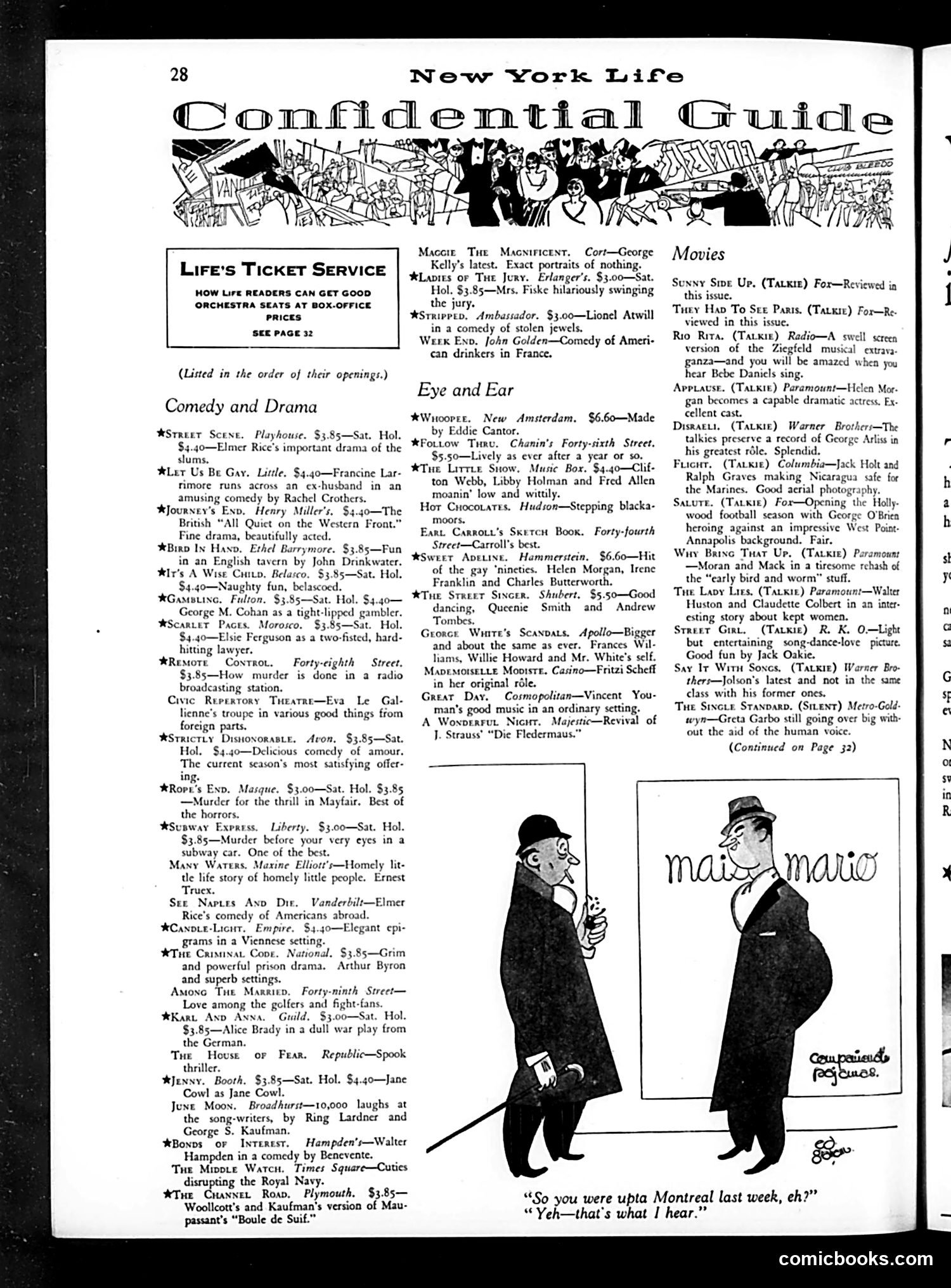
Cartoon Analysis: "Maid-Maid" The cartoon depicts two well-dressed men in suits and fedoras meeting on the street. One says to the other: "So you were up'ta Montreal last week, eh?" The reply: "Yeh—that's what I hear." The joke relies on a prohibition-era reference. During the 1920s (when this Life magazine was published), alcohol was illegal in the United States but not Canada. Montreal was a notorious destination for Americans seeking illegal liquor. The humor lies in the man's admission that he's heard *rumors* about his own trip—suggesting he was so intoxicated while in Montreal that he doesn't remember whether he actually went or not. It's a commentary on the excess and disorientation caused by illegal drinking during Prohibition, presented as genteel male banter between sophisticates.
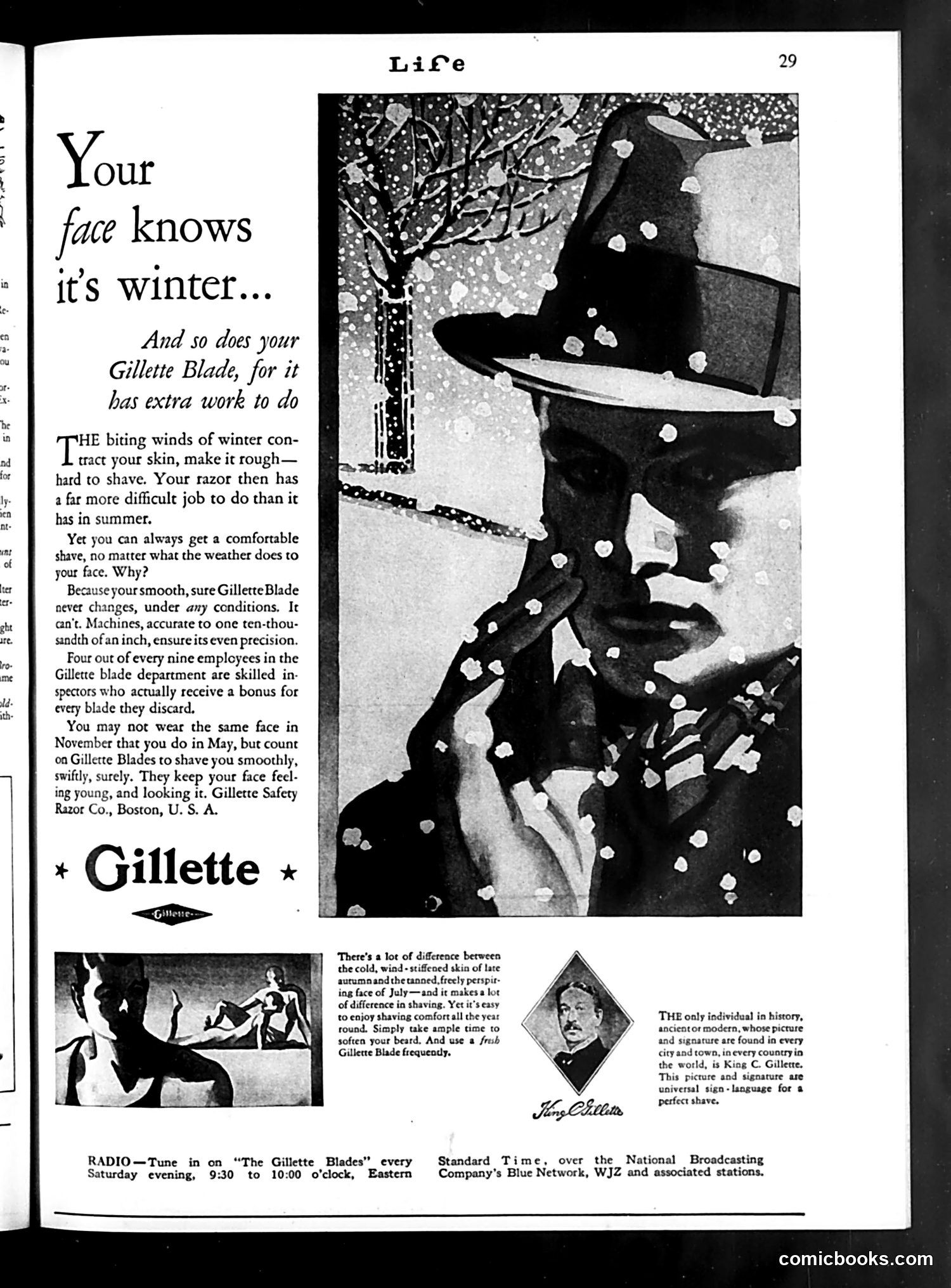
Gillette Safety Razor Advertisement This is a vintage advertisement, not political satire. It promotes Gillette razor blades by addressing a practical consumer concern: winter shaving difficulties. The ad argues that cold weather contracts and roughens skin, making shaving harder—but Gillette blades remain consistently sharp and precise year-round due to their manufacturing standards. The copy emphasizes quality control (inspectors bonus for discarding imperfect blades) and precision engineering. The imagery shows a man in winter clothing with snow on his face and hat, visually establishing the seasonal challenge. A smaller photo depicts proper beard-softening technique. The final panel promotes King C. Gillette as a universally recognized figure—claiming his picture appears "in every city and town, in every country in the world" as synonymous with a perfect shave. This is brand-building through founder mythology rather than satire. The ad also advertises radio programming: "The Gillette Blades" broadcast on Saturday evenings.
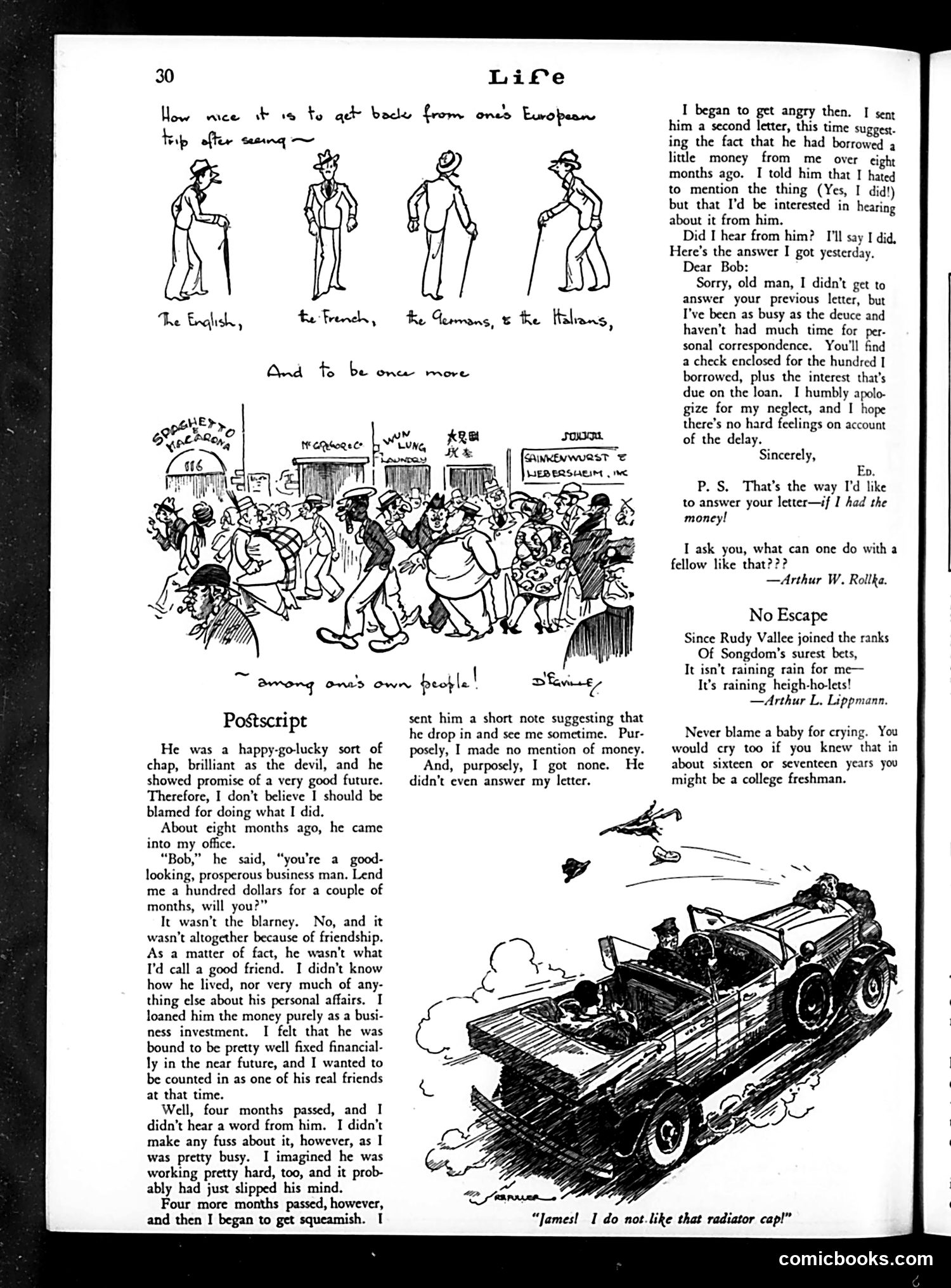
Life Magazine Page 30 Analysis Top Cartoon: A satirical comparison of European nationalities returning home after travel, depicted through stereotypical body postures—the English stiff and formal, French relaxed, Germans rigid, Italians expressive. Below, they're shown "among one's own people" in a chaotic, crowded scene (likely a train station or public gathering), suggesting European social behavior descends into disorder once home. Main Story: "Postscript" presents a cautionary tale about lending money to an acquaintance. The narrator lends $100 to an unreliable "friend" who ignores repeated payment requests. The punchline: the borrower's apologetic letter *claims* to enclose repayment but admits he has no money—he's only answering "the way I'd like to" respond if he could afford to. Humor: The joke mocks both the borrower's audacity and the lender's naive optimism about recovering the debt. The car illustration below reinforces the period's concern about frivolous spending. Context: This reflects 1920s-30s American anxiety about casual borrowing and defaulting debts during economic uncertainty.
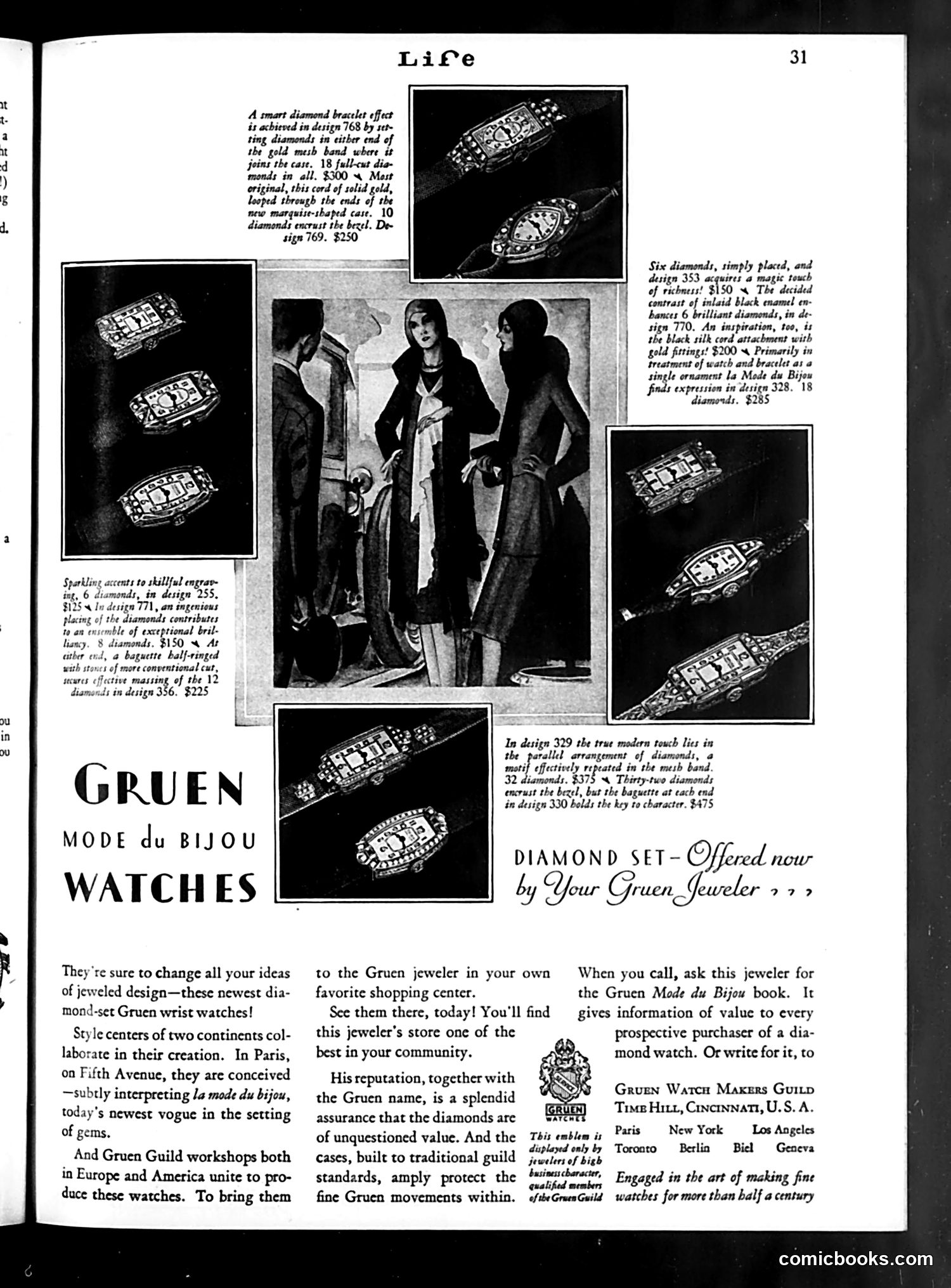
Analysis This is not a cartoon or satire—it's a luxury advertisement for Gruen diamond watches from what appears to be the 1920s-1930s era. The page showcases multiple wristwatch designs featuring diamonds in various settings (bracelets, mesh bands, bezels, and engravings). Each design is numbered and priced, ranging from $125 to $475. The central photograph shows three elegantly dressed women modeling the watches, emphasizing their desirability as fashionable accessories. The text emphasizes that Gruen collaborated between Paris and New York to create "la mode du bijou" (jewelry fashion), positioning diamond watches as the latest luxury trend. The brand appeals to status-conscious consumers by highlighting Guild certification and quality assurance—suggesting that purchasing through an authorized Gruen jeweler guarantees authentic diamonds and craftsmanship. This is pure marketing: transforming functional timepieces into prestige fashion items for wealthy consumers during an era when such jewelry signified social standing.
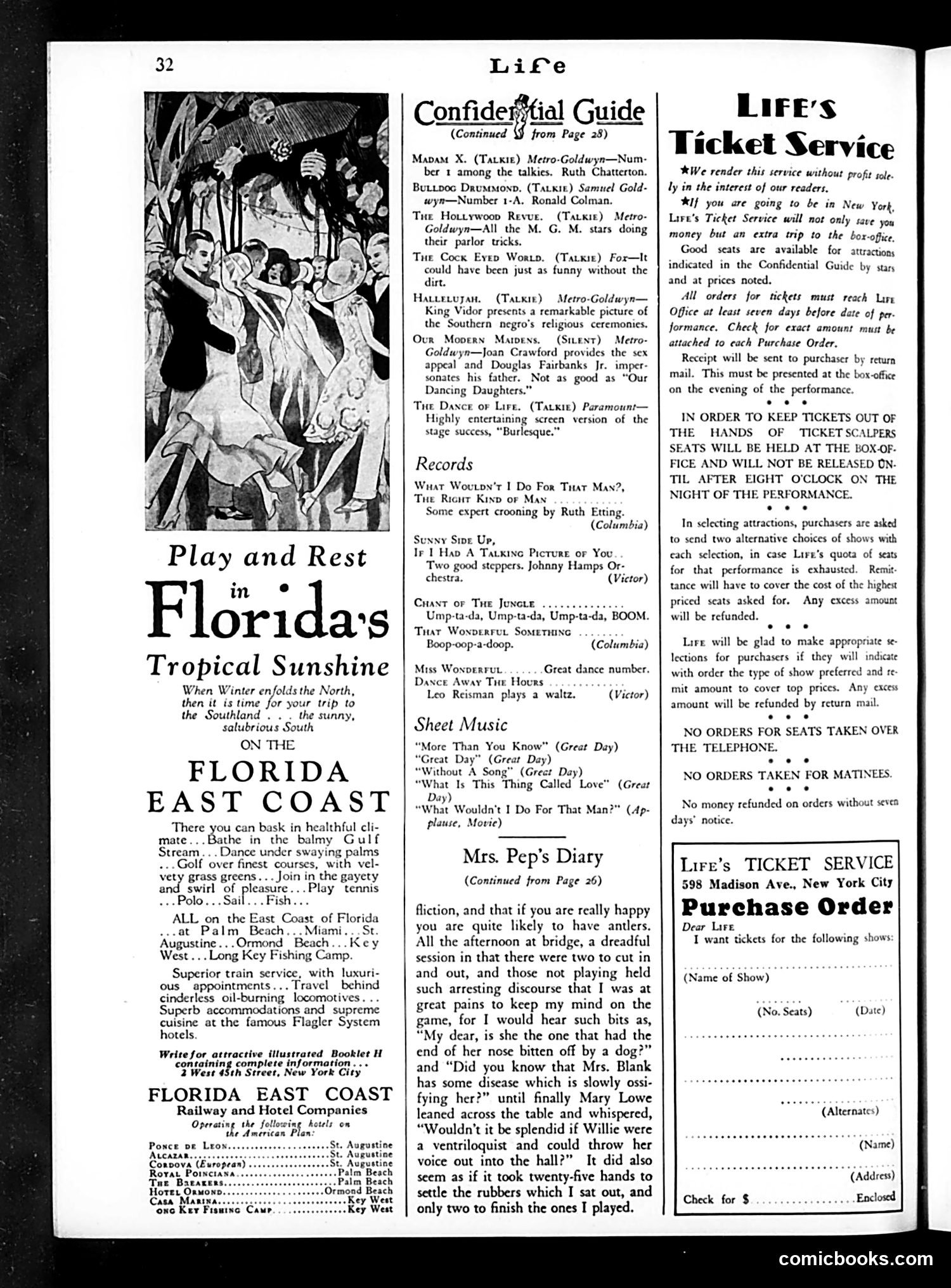
What This Page Shows This is primarily a advertising and services page from Life magazine, not political satire. The left side features a Florida tourism advertisement promoting the Florida East Coast Railway's resort destinations (Palm Beach, Miami, Key West) with appeals to wealthy winter travelers seeking golf, polo, sailing, and luxury hotels. The right side contains entertainment reviews of talking pictures and phonograph records, plus a gossip column ("Mrs. Pep's Diary") featuring satirical social commentary about upper-class women—noting their obsession with scandalous rumors and their tedious bridge games. The small illustration appears to depict a theatrical or musical scene, likely relating to one of the reviewed productions. The page also advertises Life's Ticket Service for New York theater bookings. This is primarily a commercial/entertainment guide page rather than political cartoon content.
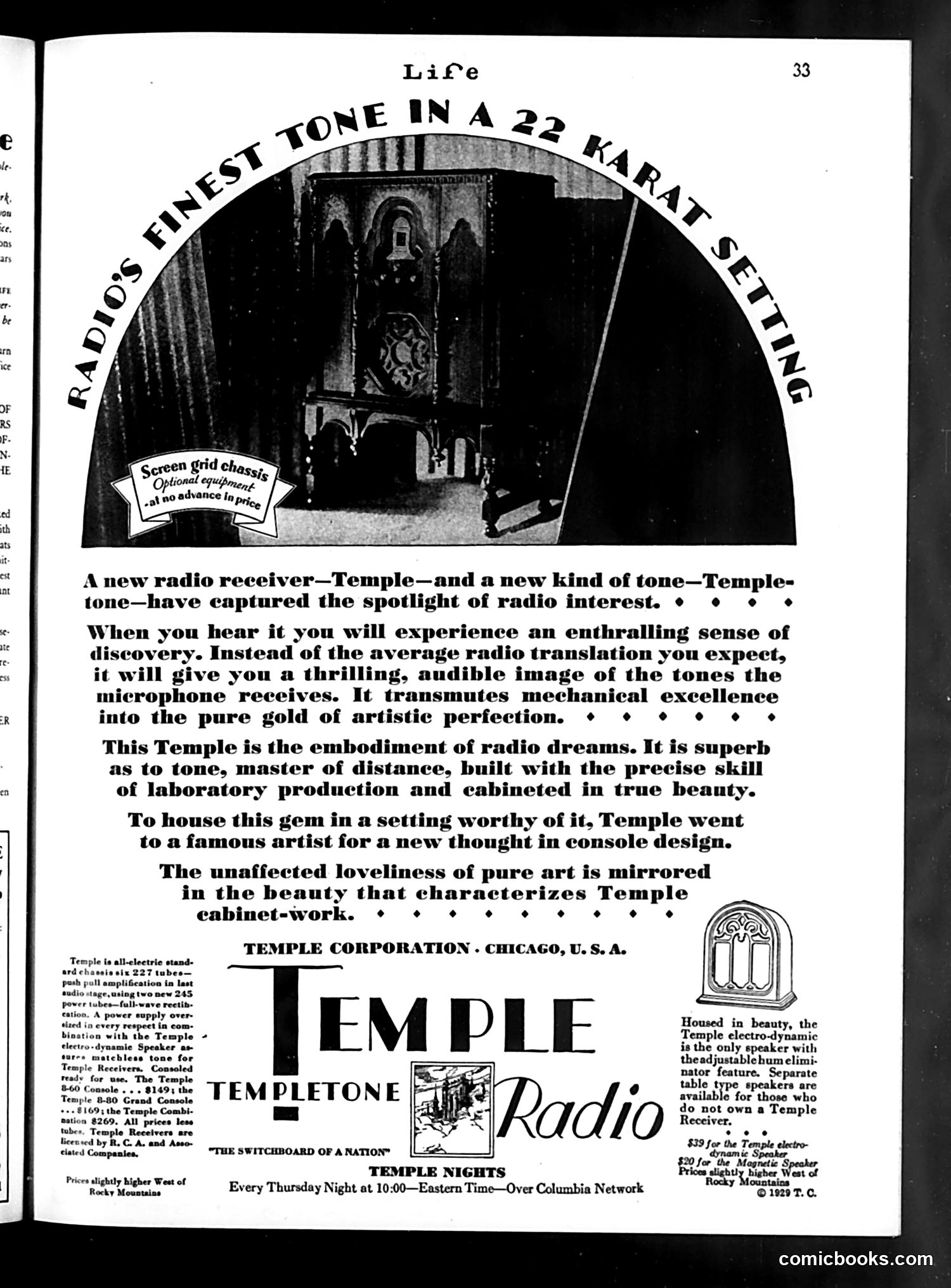
Advertisement, Not Satire This page is primarily a product advertisement for Temple brand radios, not political satire or cartoon commentary. The image shows an ornate Temple radio receiver in what appears to be a decorative console cabinet. The ad emphasizes the radio's superior sound quality ("Templetone"), elegant design by a "famous artist," and technical specifications. The only potentially humorous element is the "Temple Nights" reference—a radio program broadcast "Every Thursday Night at 10:00—Eastern Time—Over Columbia Network"—presented as a showcase for the product's audio capabilities. This represents 1920s radio advertising's typical appeals: positioning consumer electronics as objects of beauty and cultural refinement, not merely utility. The elaborate design language and artistic references reflect how radios were marketed as prestige household items during radio's golden age.
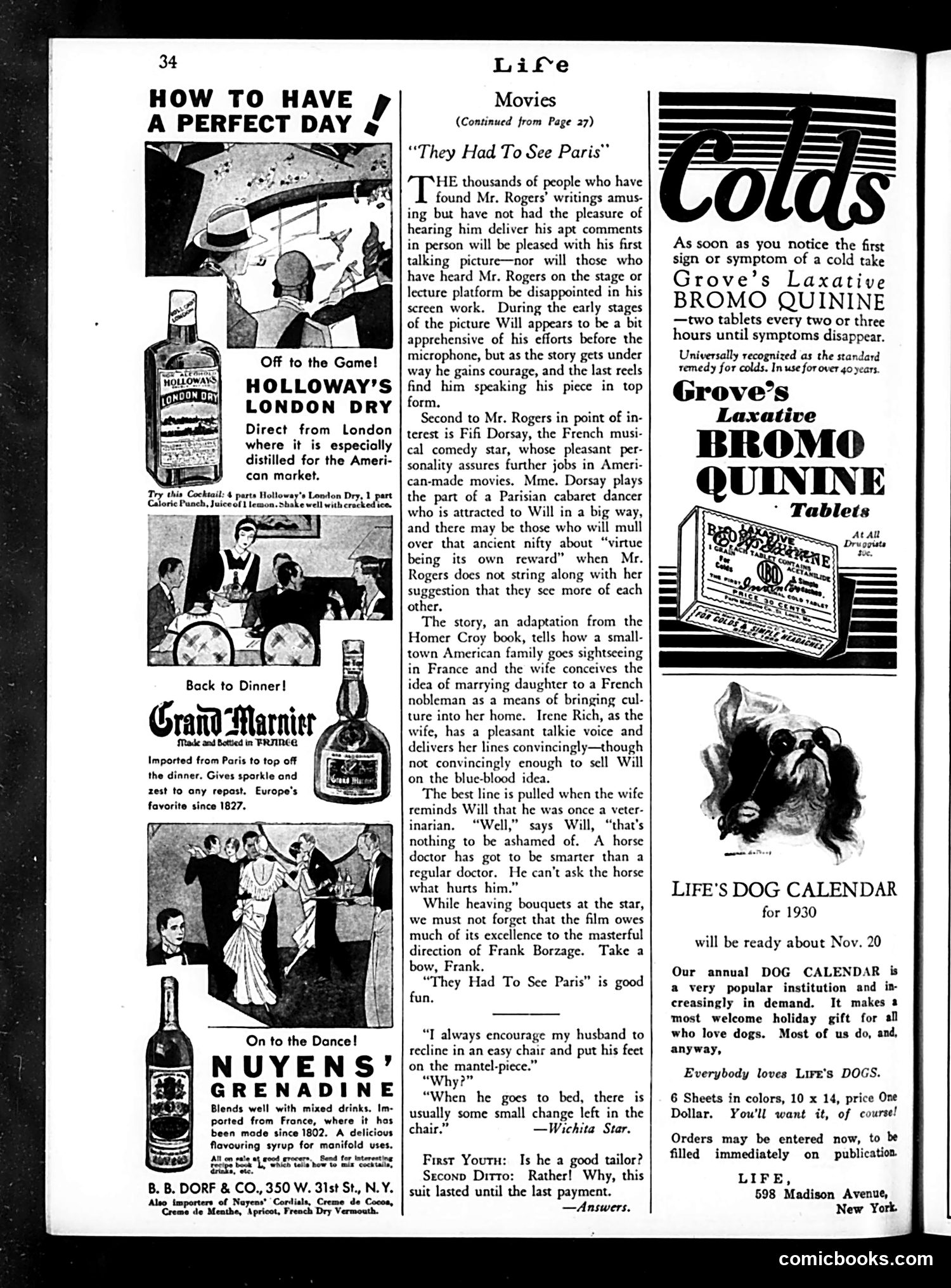
Content Analysis This page combines a satirical cartoon with advertisements and movie reviews from *Life* magazine (circa 1929). "How to Have a Perfect Day" Cartoon: The cartoon mockingly prescribes an ideal day structured entirely around drinking imported liquor: Holloway's London Dry gin at a game, Grand Marnier after dinner, and Nuyens' Grenadine for dancing. This is Prohibition-era satire—illegal alcohol was widely consumed despite the 18th Amendment's ban (1920-1933). The joke targets both wealthy Americans' appetite for contraband European liquors and the absurdity of Prohibition itself by presenting day-long drinking as the path to perfection. Movie Review: "They Had To See Paris" stars Will Rogers, a popular humorist-turned-actor, in a talking picture about an American family visiting France. The review notes Rogers' comedic timing and includes his characteristic folksy wit—a horse doctor must be smarter than a regular doctor because "he can't ask the horse what hurts him." Advertisements: The page also features ads for cold medicine (Grove's Bromo Quinine) and *Life*'s annual dog calendar.
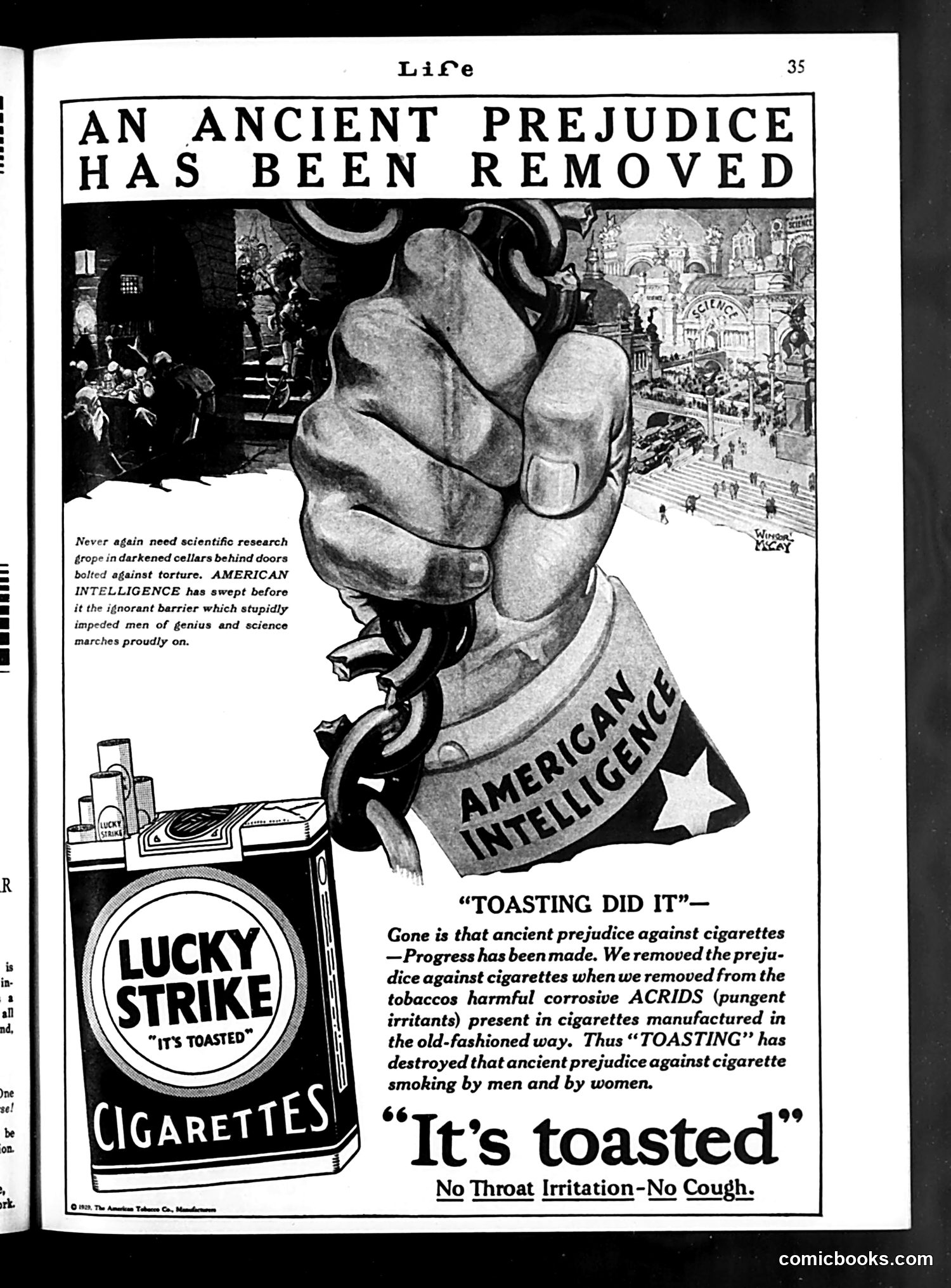
Analysis of Lucky Strike Advertisement (Life Magazine, circa 1927) This is a cigarette advertisement, not political satire. Lucky Strike uses jingoistic rhetoric to market cigarettes as a triumph of "American Intelligence" and scientific progress. The ad's central claim: the "toasting" process removes harmful acids from tobacco, thereby eliminating "ancient prejudice" against smoking. The imagery of a fist breaking chains symbolizes liberation from outdated health concerns. The satire is unintentional and now deeply ironic. The ad: - Claims science has proven cigarettes safe - Frames health skepticism as ignorant prejudice - Uses patriotic language to sell a harmful product - Explicitly targets women ("men and by women"), referencing Lucky Strike's 1920s campaign to expand the female smoking market For modern readers: This reveals how corporations weaponized scientific claims and anti-establishment rhetoric to overcome legitimate health concerns. The "toasting" claim was marketing fiction—not actual harm reduction.
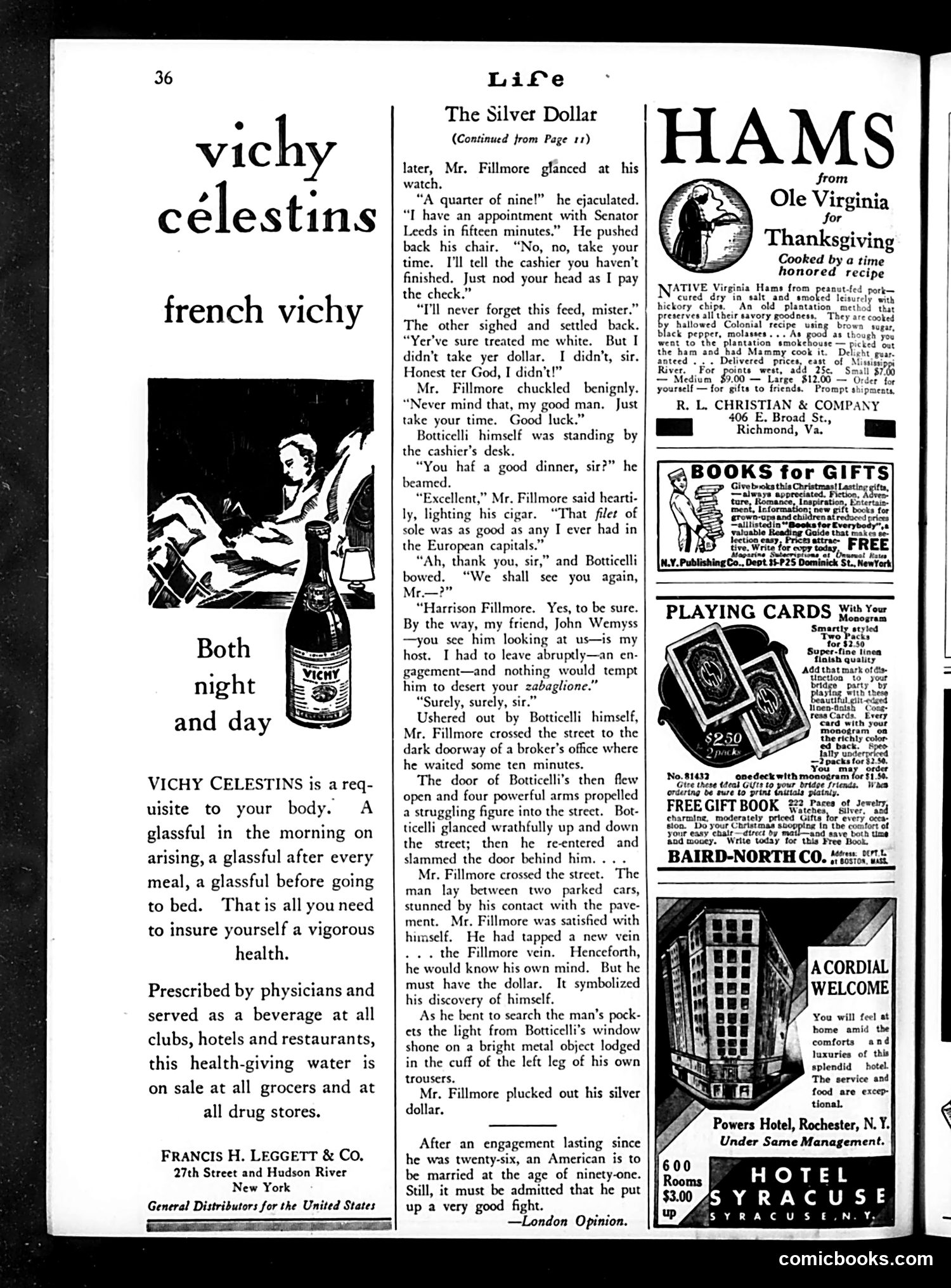
Page 36 of Life Magazine — Content Analysis This page contains primarily advertising rather than political cartoons or satirical content. The main left-side ad promotes Vichy Celestins, a French mineral water marketed as a health tonic to be consumed multiple times daily. It's pitched as "prescribed by physicians" and sold at grocers and drugstores—typical of early-20th-century patent medicine advertising culture. The center text continues a short story titled "The Silver Dollar" (from page 11), depicting a gentleman named Harrison Fillmore's encounter with a diner patron and restaurant owner named Botticelli. The narrative appears to be a morality tale about self-discovery and charity, concluding with a London Opinion joke about an American engagement. The right side contains various product advertisements: ham from Virginia, books, playing cards, and hotels. No political satire or caricature is evident on this page.
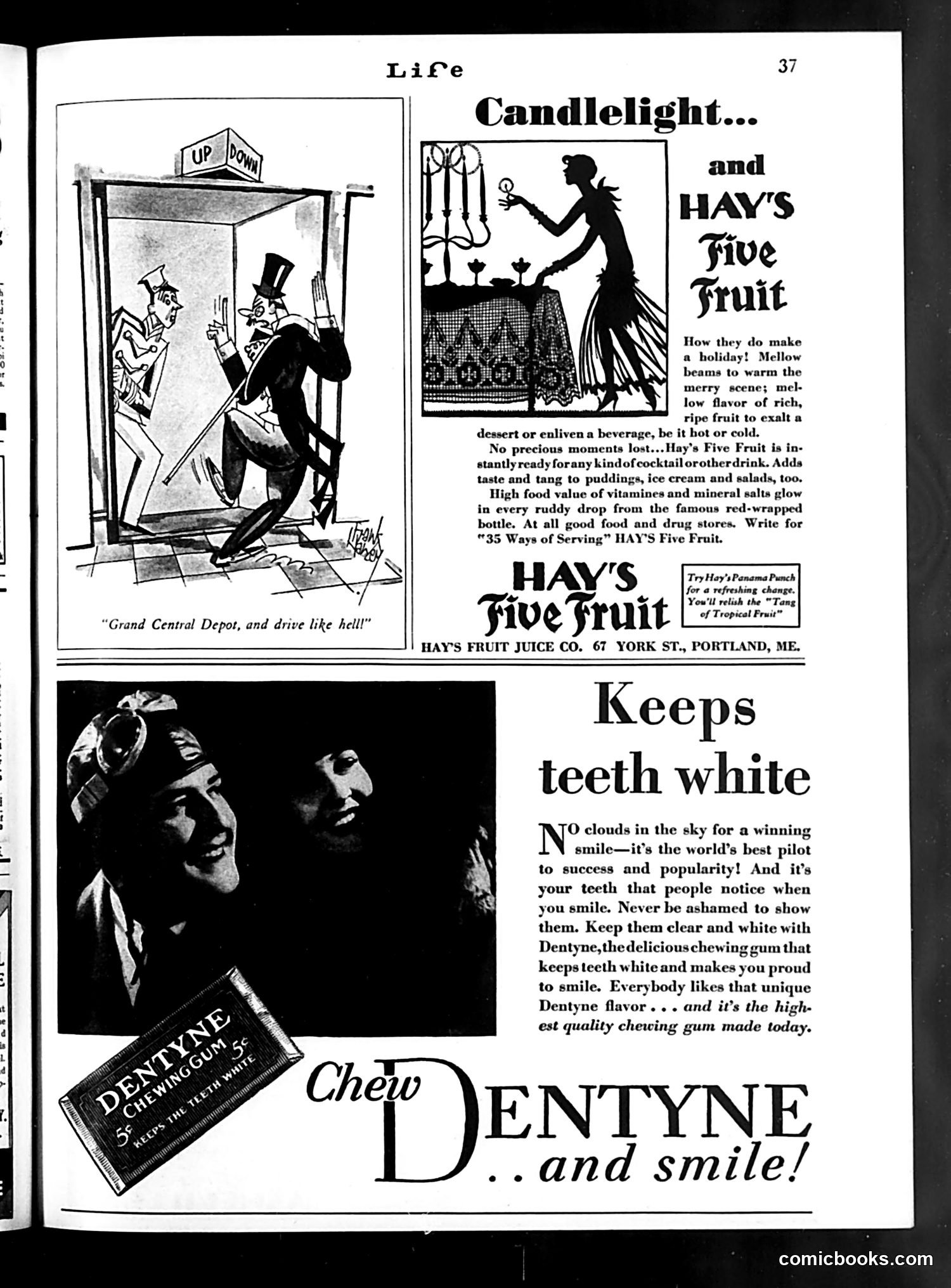
Page 37 of Life Magazine This page consists primarily of advertisements, not satire or political cartoons. The top left cartoon is a humorous illustration showing people rushing through what appears to be Grand Central Depot with the caption "Grand Central Depot, and drive like hell"—likely satirizing the frantic pace of holiday travel. The remainder of the page contains two product advertisements: 1. Hay's Five Fruit (juice)—marketed as a versatile beverage for holidays and entertaining, emphasizing its convenience and nutritional value 2. Dentyne Chewing Gum—using the sales pitch that a winning smile (with white teeth) leads to "success and popularity," associating dental hygiene with personal achievement Both ads employ period-typical marketing rhetoric linking consumer products to success, happiness, and social acceptance. The Dentyne ad's airplane/pilot metaphor is unclear without additional context.
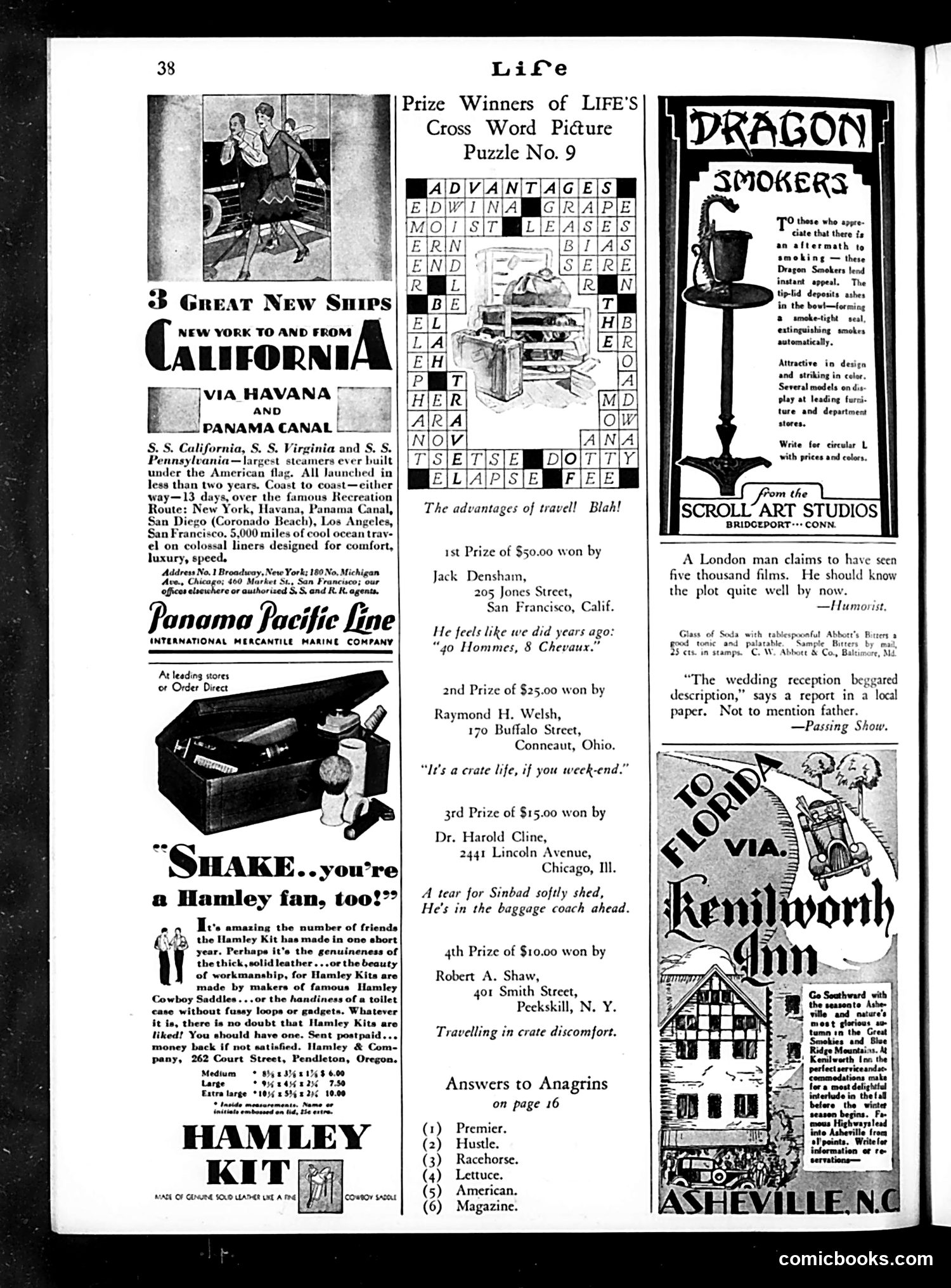
Life Magazine Page Analysis (circa 1920s) This page is primarily advertising with some light satirical content interspersed. Main advertisements: Panama Pacific Line promotes luxury ocean travel from New York to California via Havana and the Panama Canal—appealing to wealthy tourists seeking leisure voyages. Hamley & Company advertises leather "kits" (toiletry cases) marketed as rugged cowboy-style goods. Dragon Smokers promotes an automatic cigarette extinguisher. Kenilworth Inn advertises Florida tourism. Satirical humor: The crossword puzzle winners feature joke captions mocking travel and modern life—"It's a crate life, if you week-end" and "Travelling in crate discomfort" play on the tedium of crowded transportation. A brief quip jokes that a London man who's seen 5,000 films should understand plot by now—light mockery of cinema's repetitive storytelling. The page reflects 1920s consumer culture and leisure advertising aimed at middle and upper-class readers, with gentle humor about contemporary travel and entertainment.
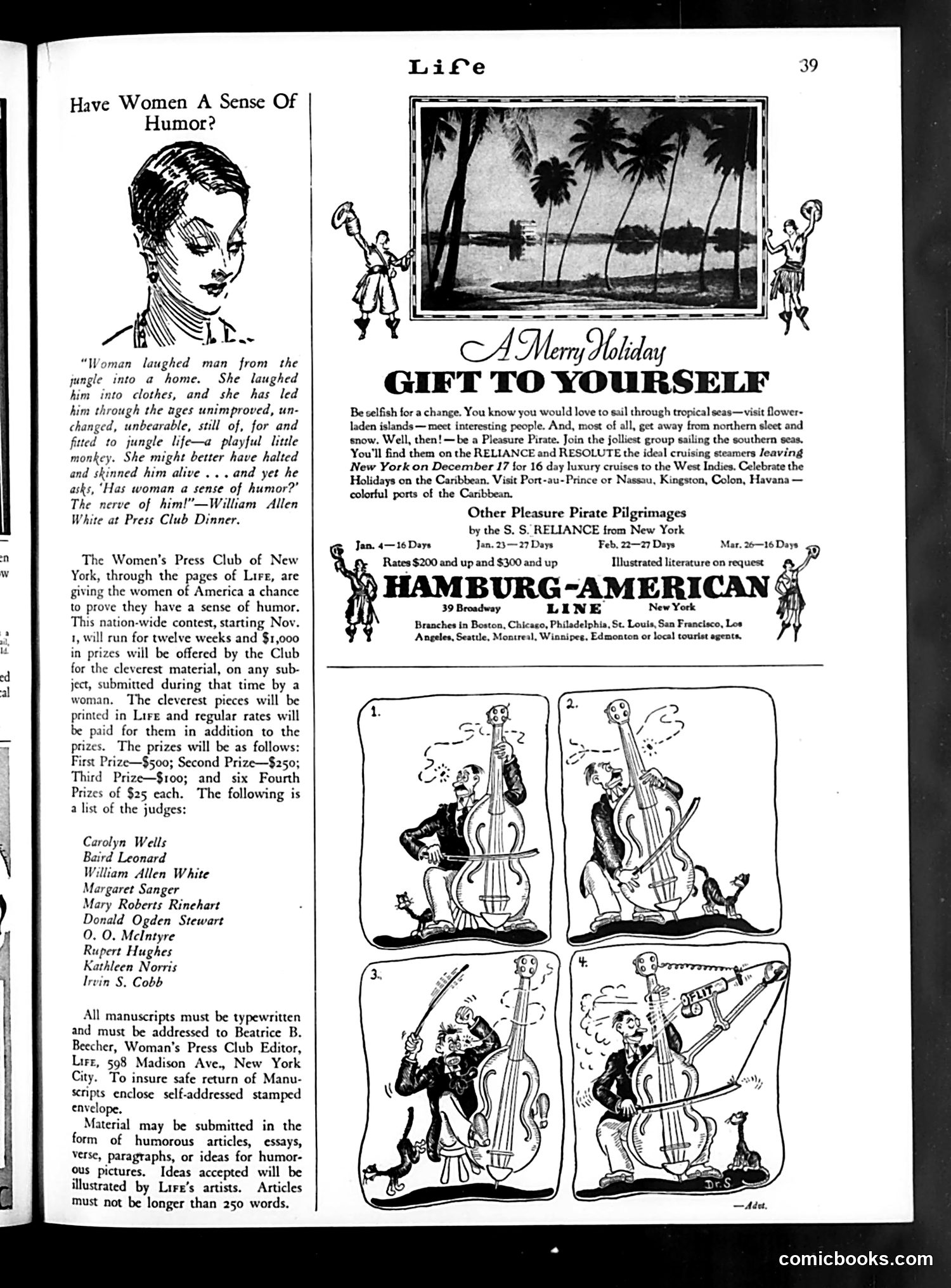
Analysis for Modern Readers This page addresses the contemporary debate: "Do women have a sense of humor?" The opening quote from journalist William Allen White sarcastically argues women *do*—they've "civilized" men from savagery, yet men have the audacity to question their humor. The Women's Press Club of New York responds by sponsoring a nationwide humor contest ($1,000 in prizes), challenging women to prove their comedic abilities in print. The contest judges include notable writers and humorists of the era (Margaret Sanger, Donald Ogden Stewart, etc.), lending credibility. The four small cartoons below (numbered 1-4) appear to show comedic situations involving musicians and large cellos or violins—likely humorous visual gags submitted as contest examples. Context: This reflects 1920s-30s gender debates about women's capabilities and intelligence. The page satirizes the sexist assumption that women lack humor while simultaneously promoting women's creative participation in public discourse through a tangible competition.
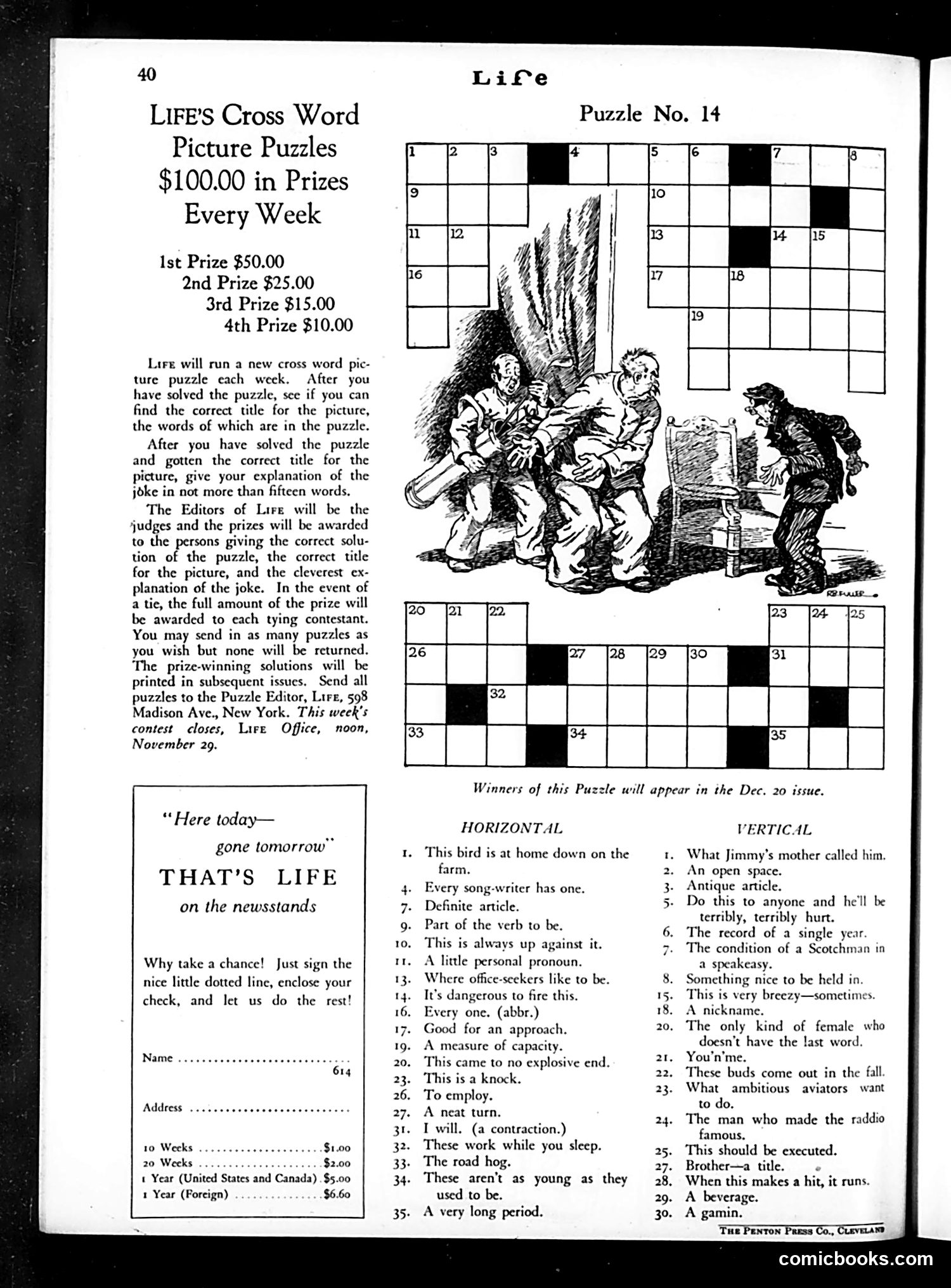
Life Magazine Puzzle Page #14 (circa 1920s) This page presents a crossword picture puzzle contest where readers solve a crossword, then identify the cartoon's title and explain its joke in fifteen words or fewer. Prizes ranged from $50 to $10. The central illustration shows what appears to be children or young people engaged in some kind of mischievous activity—possibly stealing or taking something. The sketch style is typical of 1920s satirical cartooning. The page also advertises "That's Life" magazine subscription on the left, using the phrase "Here today—gone tomorrow" as a sales pitch, encouraging readers to subscribe rather than buying individual newsstand copies. The crossword clues reference contemporary 1920s culture (speakeasies, radio inventor, etc.), making this a participatory puzzle that engaged readers while reinforcing period slang and social references.
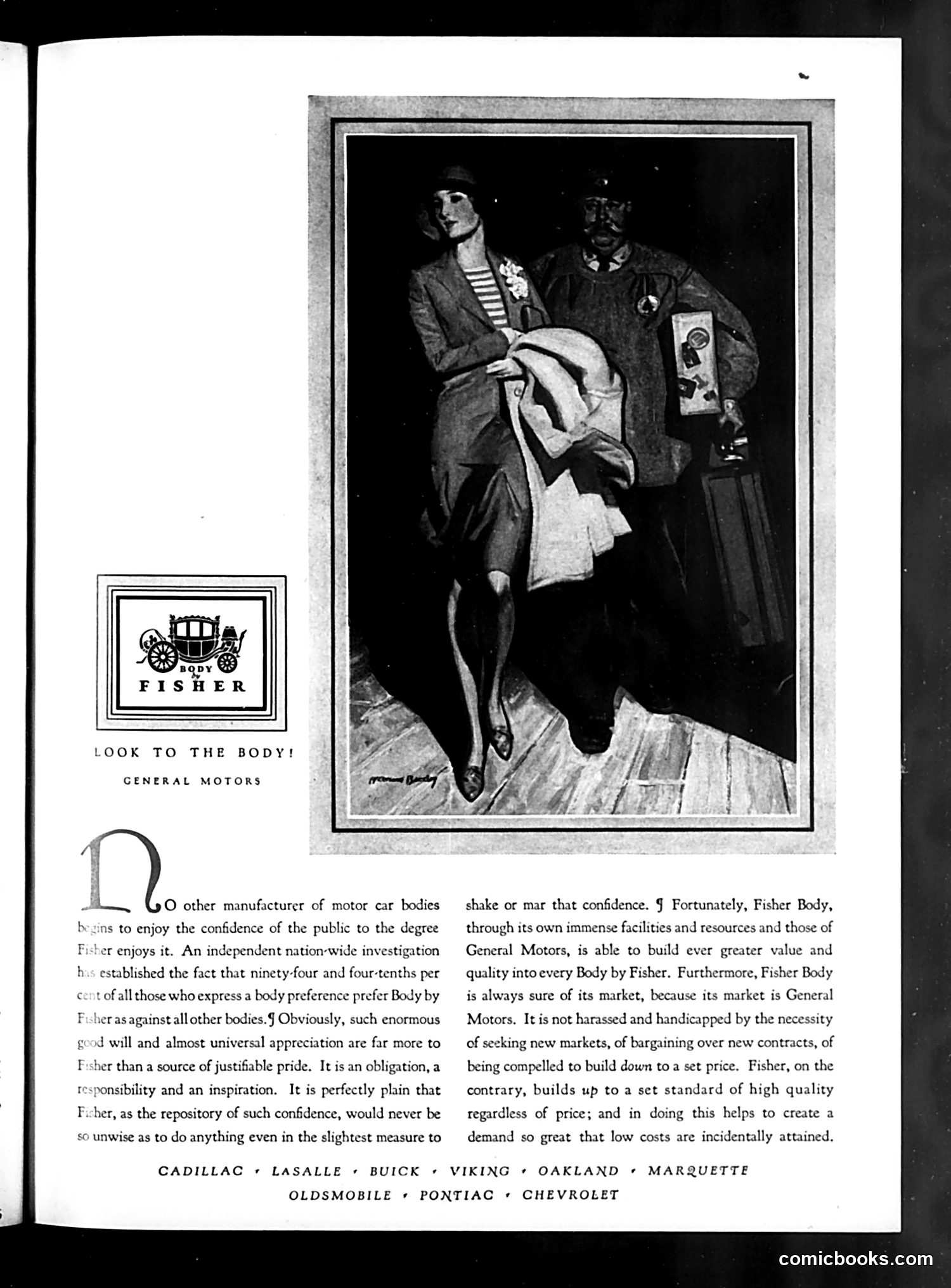
Analysis This is primarily a Fisher Body advertisement for General Motors, not political satire. The illustration shows three fashionably dressed figures examining a woman's legs—a visual pun on "Look to the Body!" The ad claims Fisher Body dominates car-body preferences (94.4% market share, per an alleged "independent investigation"). The copy argues Fisher's confidence comes from being General Motors' captive supplier, which frees it from market pressures. Unlike independent competitors, Fisher can "build up to a set standard of high quality regardless of price." The satirical element—if any—is subtle: the ad's boastfulness about market dominance, the dubious specificity of that "94.4%" statistic, and the ironic suggestion that NOT needing to compete actually improves quality. But this reads more as aggressive corporate marketing than genuine satire. The automobile brands listed (Cadillac, Buick, Pontiac, Chevrolet) were all GM divisions whose bodies Fisher supplied.
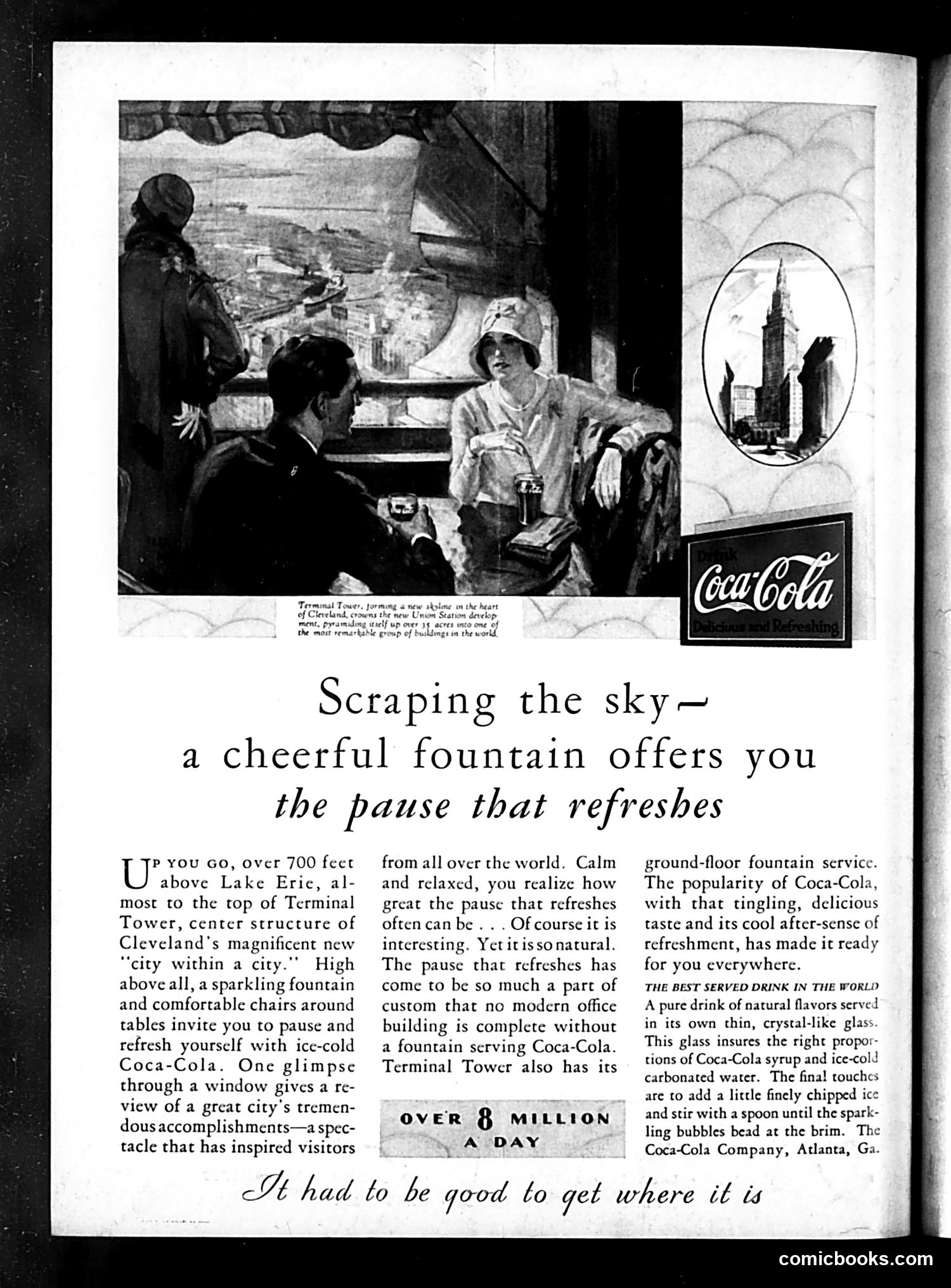
Analysis This is primarily a Coca-Cola advertisement, not political satire. It showcases Cleveland's Terminal Tower (a real 1930 skyscraper), depicting well-dressed visitors enjoying a fountain drink while overlooking the city from 700+ feet up. The ad emphasizes Coca-Cola's integration into modern American life—claiming "no modern office building is complete without a fountain serving Coca-Cola" and noting over 8 million drinks served daily. The tagline "the pause that refreshes" was Coca-Cola's actual marketing slogan. There is no cartoon or satire present. The page illustrates the beverage's aspirational positioning: elegance, modernity, and cosmopolitan sophistication. For modern readers, it's notable mainly as period advertising reflecting 1920s-30s optimism about progress and consumerism, before health concerns about sugar and caffeine were culturally prominent.