life
Life — November 29, 1929
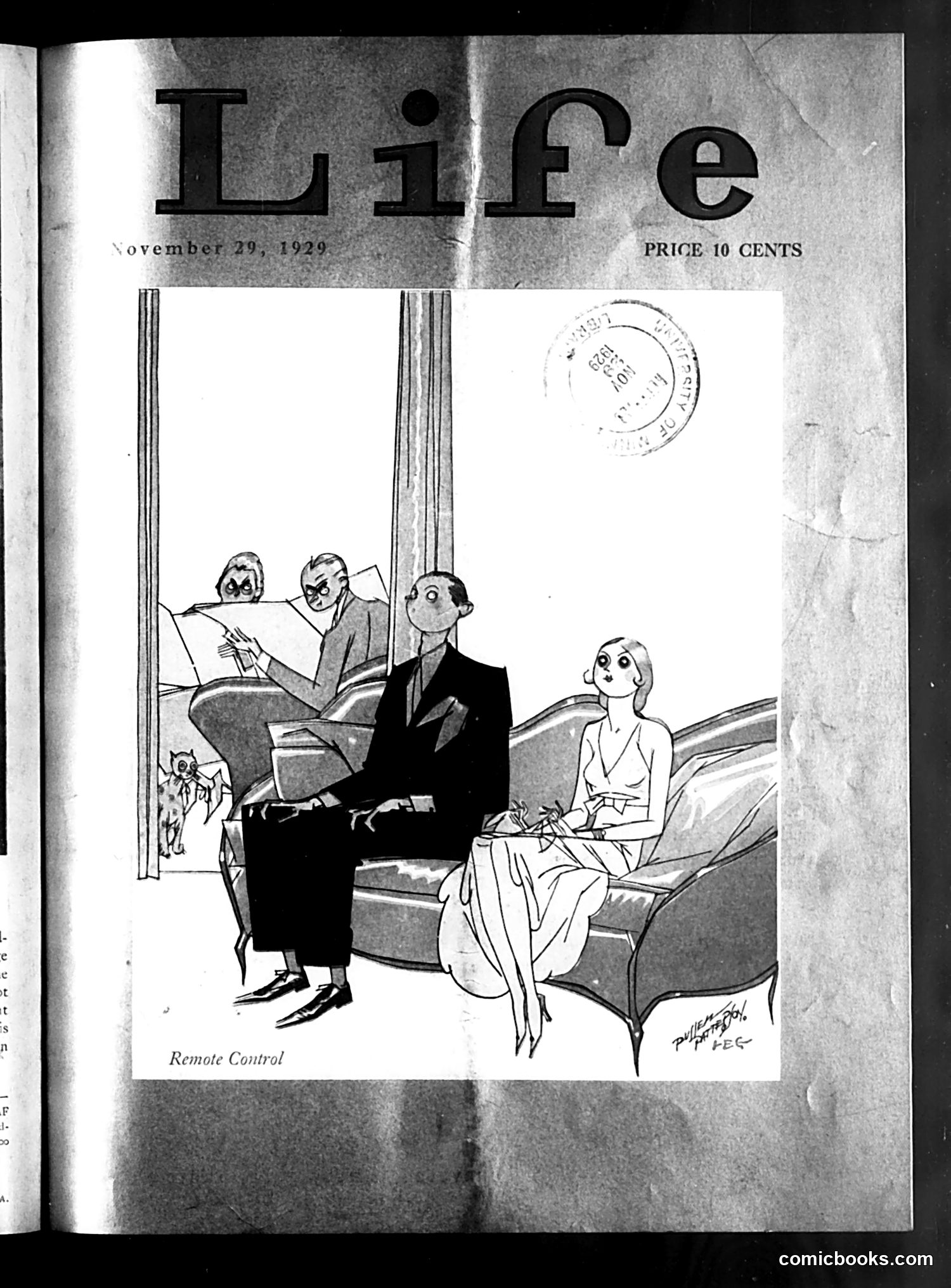
"Remote Control" — Life Magazine, November 29, 1929 This cartoon satirizes modern domestic technology and gender dynamics. A man sits passively on a couch while a woman operates what appears to be an early mechanical control device, manipulating two masked figures visible through a window above them—likely representing puppets or entertainers. The title "Remote Control" is the joke: the cartoon suggests that wives now control their husbands' leisure activities and entertainment choices, just as one might operate a mechanical device. The man's passive posture and bemused expression contrast with the woman's active manipulation of the scene. Published just weeks after the 1929 stock market crash, this reflects 1920s anxieties about shifting gender roles and women's increasing consumer power and household authority during the modern era.
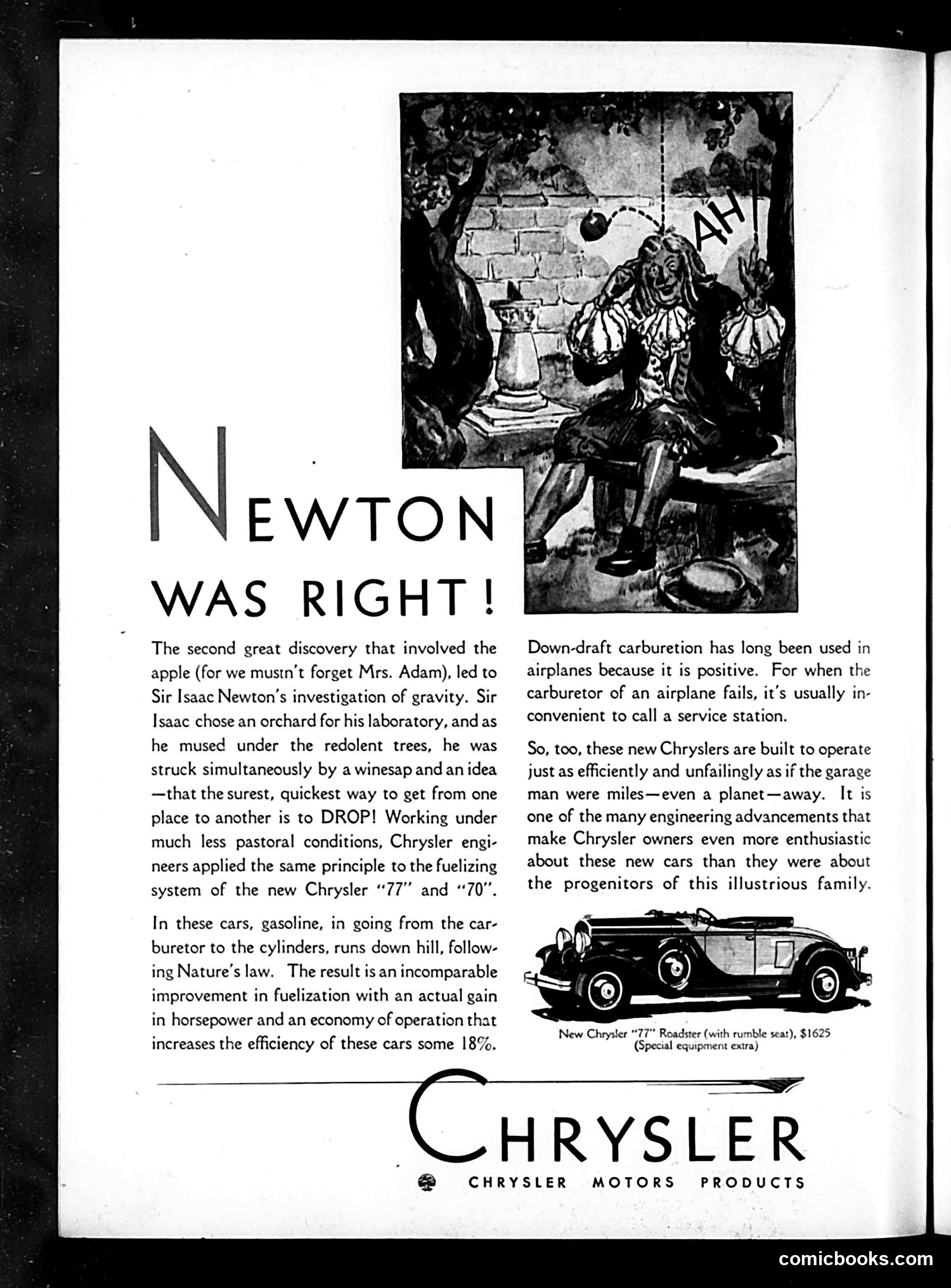
Analysis This is primarily a Chrysler Motors advertisement, not satire or political commentary. The page uses a whimsical illustration to promote the new Chrysler "77" and "70" models. The cartoon depicts what appears to be a witch or goblin-like figure reacting with surprise ("AH!") to an apple falling—a visual reference to Isaac Newton's gravity discovery. The ad cleverly draws a parallel: just as Newton's "DROP" of an apple led to understanding gravity, Chrysler engineers applied a "drop" principle to their fuel system design. The joke is that Chrysler applied physics principles to improve carburetion efficiency by 18%, making their cars operate as reliably as a service station. The Newton reference serves as an intellectual metaphor for engineering innovation, not political commentary.
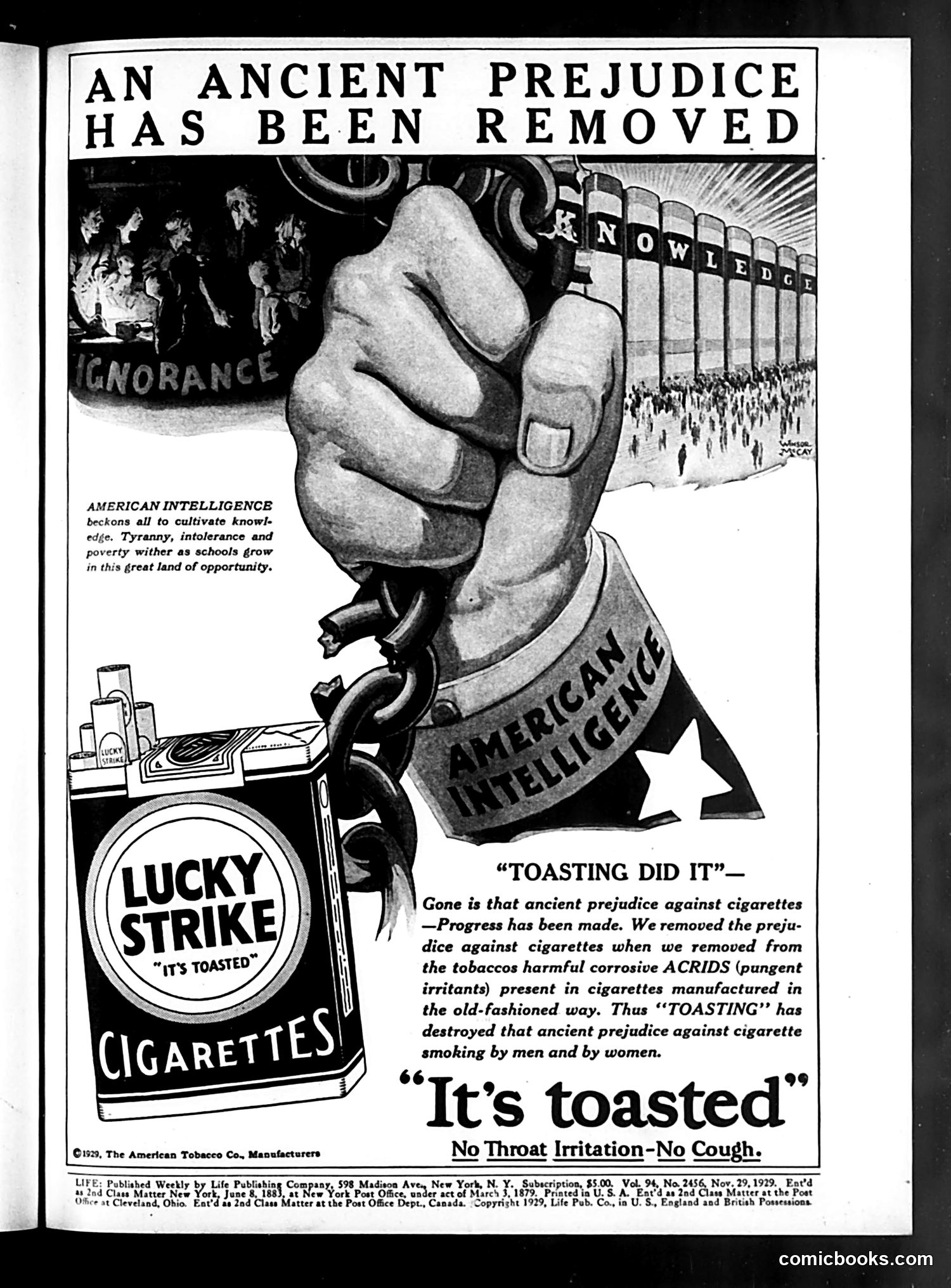
Analysis This is a cigarette advertisement, not satire. It's a Lucky Strike ad from 1929 (copyright visible at bottom) claiming that the "toasting" process removes harmful acids from tobacco, eliminating previous concerns about cigarette smoking. The imagery shows a giant fist labeled "American Intelligence" breaking chains labeled "Ignorance" and crushing prejudice. The text claims "toasting" has destroyed "ancient prejudice against cigarettes." The appeal is to modernity and progress: smoking is reframed as compatible with intelligence and enlightenment. The phrase "No Throat Irritation—No Cough" attempts to address genuine health concerns that existed around cigarettes at the time. This represents early tobacco industry marketing that made health claims later proven false.
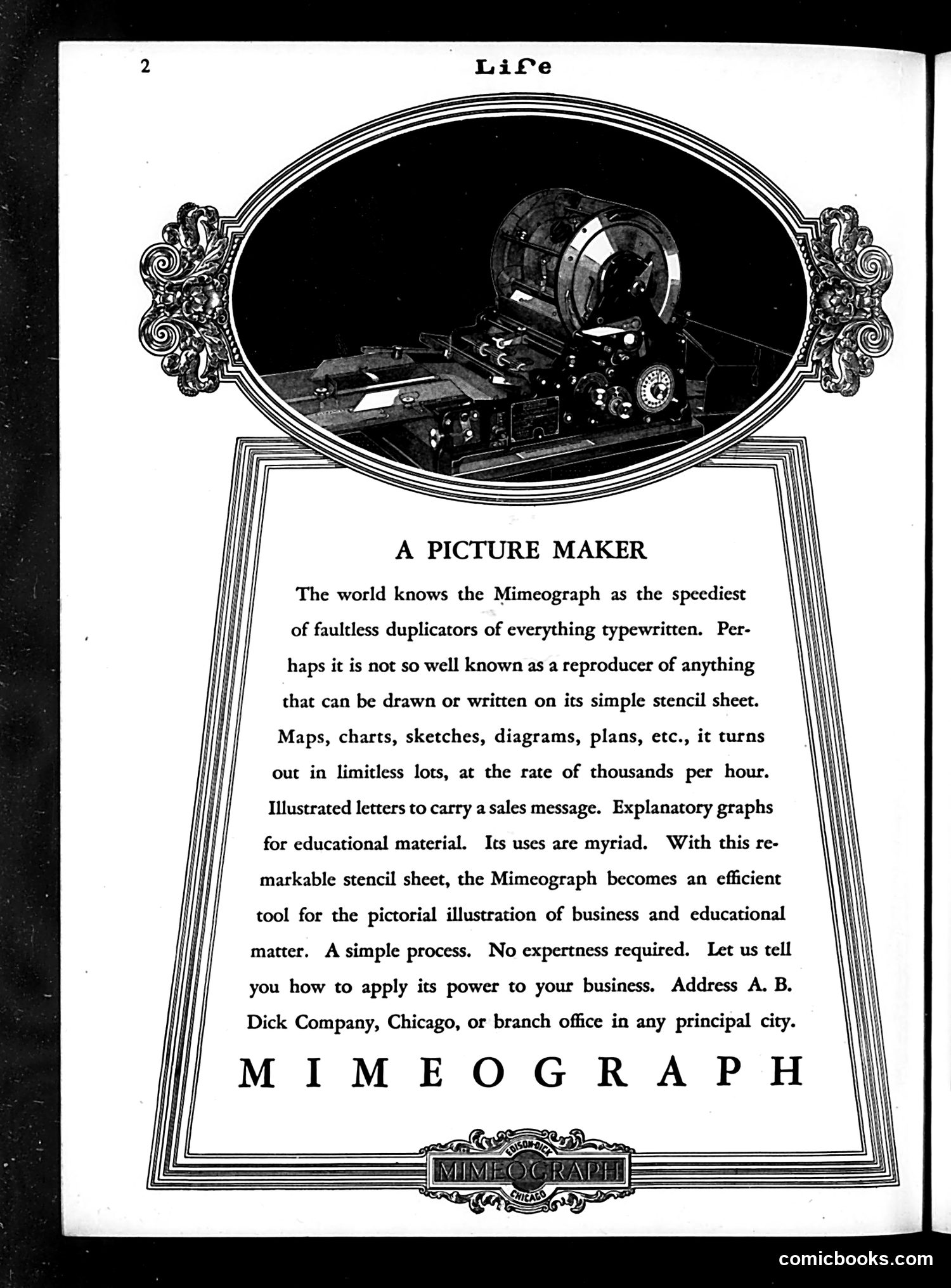
Analysis This page is primarily advertising, not editorial content or satire. It's a full-page advertisement for the Mimeograph machine, manufactured by A.B. Dick Company of Chicago. The ad highlights the Mimeograph as a business tool for mass-producing documents: maps, charts, sketches, diagrams, and illustrated letters at "thousands per hour." The copy emphasizes its simplicity ("No expertness required") and versatility for commercial and educational purposes. The image shows the mechanical device itself—a drum-based duplicating machine typical of early-to-mid 20th century office equipment. This is straightforward product promotion rather than political or social satire. The decorative border and formal layout are typical of period advertising design in magazines like Life.
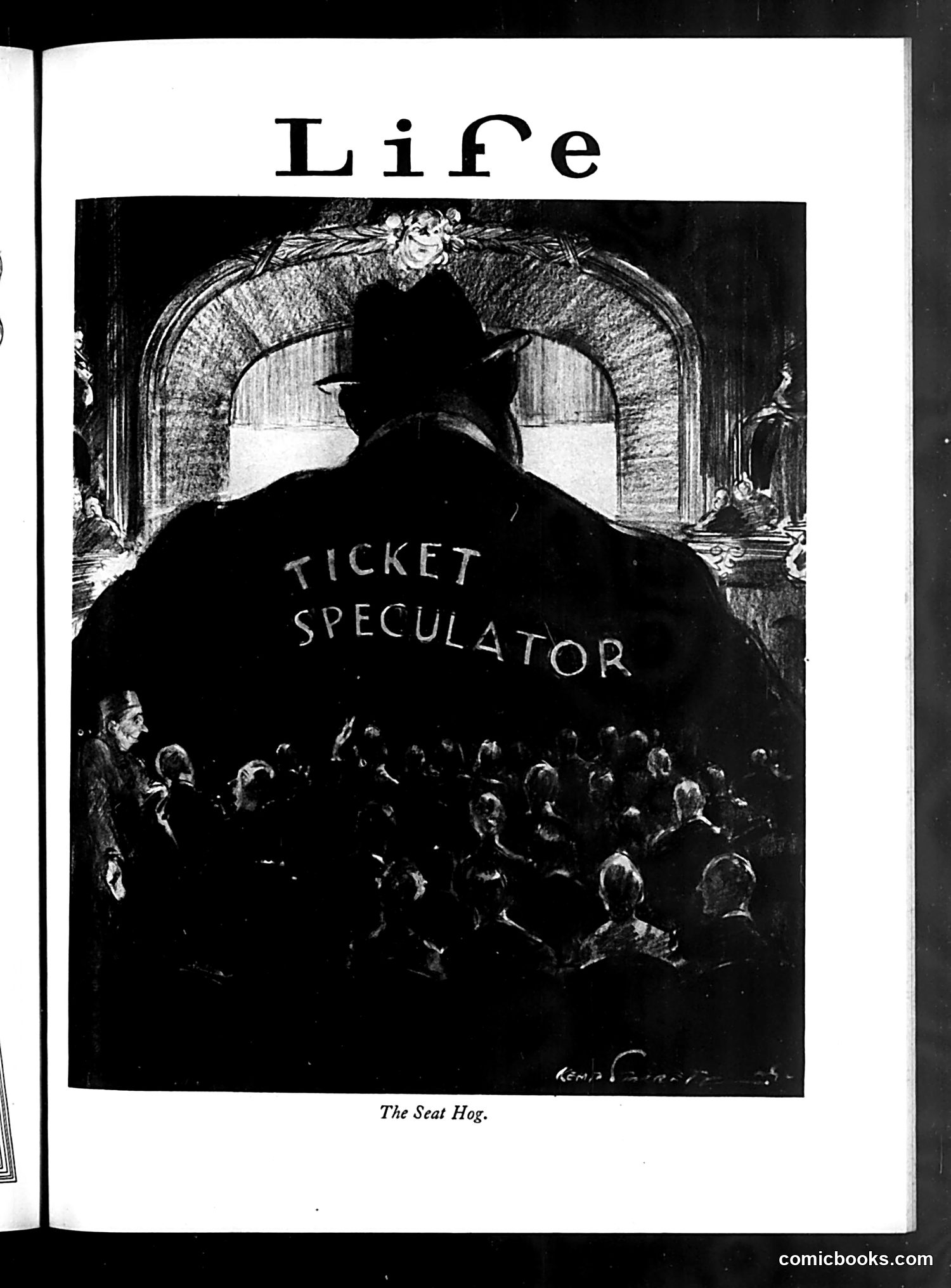
"The Seat Hog" - Life Magazine This cartoon satirizes a common theater annoyance: the "ticket speculator"—a figure wearing a coat labeled "TICKET SPECULATOR" who dominates the opera house seating area. The giant silhouette looms over ordinary audience members crowded below, literally taking up excessive space. The satire targets ticket scalpers or resellers who bought up seats in bulk, forcing regular theatergoers into worse positions or inflated prices. The "seat hog" metaphor is visual: this one person's greed physically crowds out everyone else from enjoying the performance. This reflects early 20th-century frustration with commercial exploitation of theater access—a working-class complaint about wealthy speculators monopolizing entertainment venues.
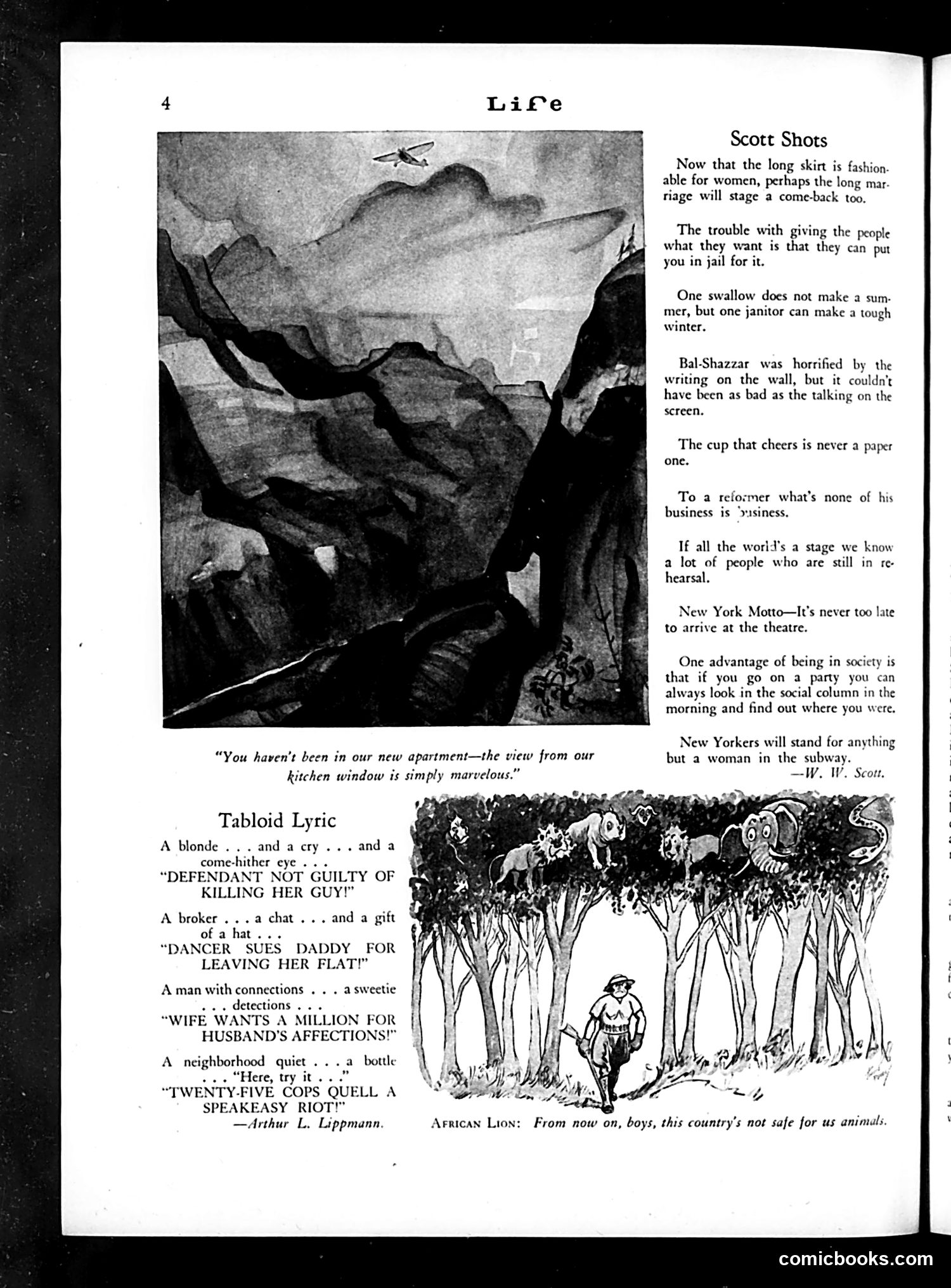
Analysis of Life Magazine Page 4 Top Image & Caption: The photograph shows a dramatic mountain landscape with an airplane flying overhead. The caption quotes someone saying their apartment's kitchen window view is "simply marvelous"—satirizing how New Yorkers exaggerate or find unexpected beauty in ordinary urban settings. This is social commentary on Manhattan living and pretension. "Scott Shots" Column: A collection of brief witticisms and observations about contemporary life, including commentary on fashion, janitors, reformers, theater etiquette, and New York society. These are general satirical jabs at 1920s social behavior and trends. "Tabloid Lyric" & "African Lion" Cartoon: The lyric parodies sensational tabloid crime headlines through absurdist poetry. The lion cartoon appears to comment on wildlife/conservation, with the caption suggesting dangers to animals.
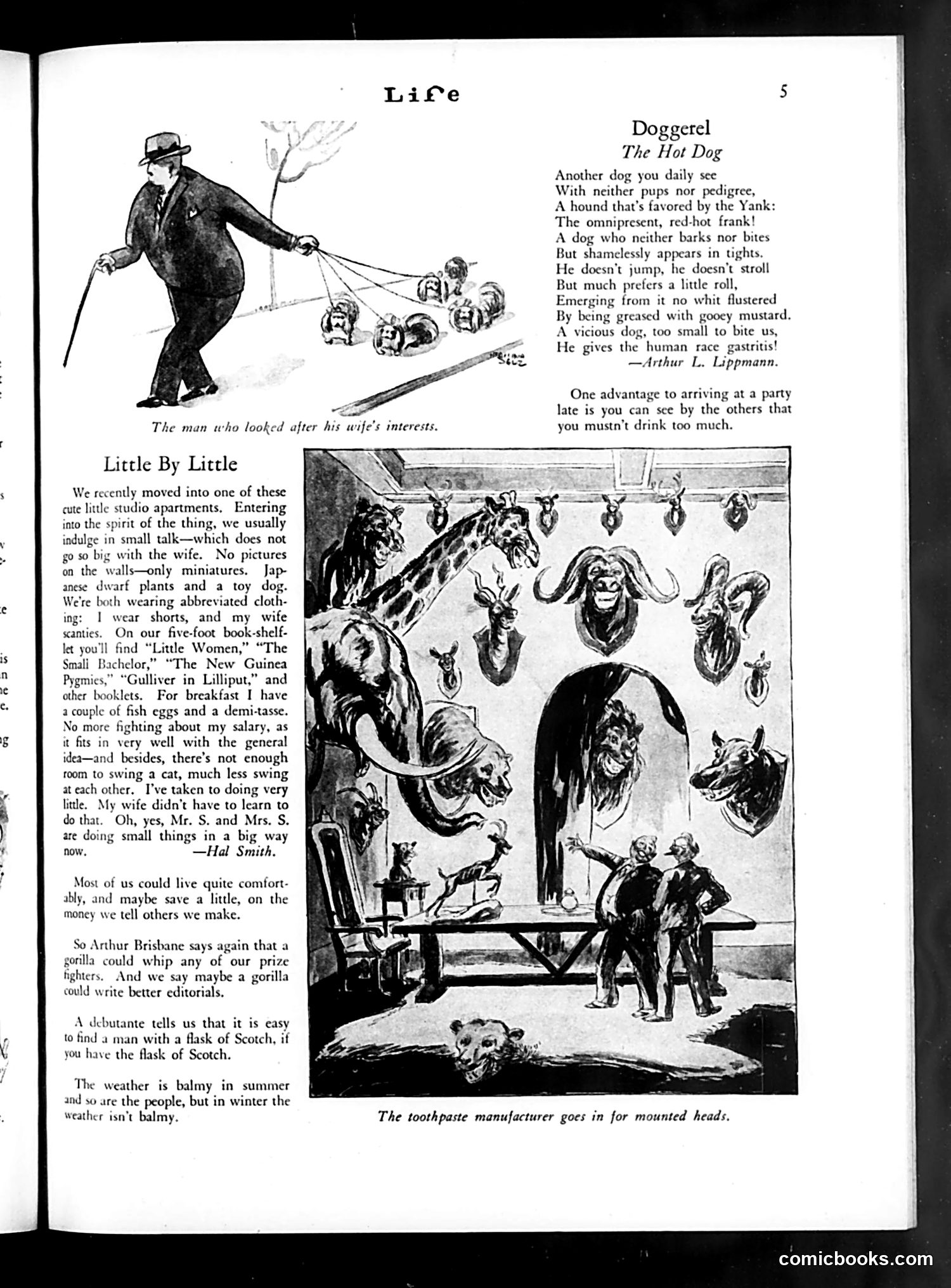
Analysis of Life Magazine Page 5 Top Illustration: A man walking multiple dachshunds on leashes—a visual joke about appearing responsible while managing chaos. The caption "The man who looked after his wife's interests" suggests he's humoring a spouse's pet enthusiasm. "Doggerel" Poem: A humorous verse about the "hot dog"—a dachshund breed. The poem satirizes this fashionable but useless dog: it doesn't bark, bite, or jump, but appears in "tights" (fitted clothing) and "rolls" in mustard. The joke critiques both the dog's lack of utility and wealthy owners' pretensions in keeping such impractical pets. "Little By Little" Essay: Social commentary on modest living in small studio apartments, abbreviated clothing, and economical habits—reflecting post-WWI or Depression-era attitudes about making do with less while maintaining dignity.
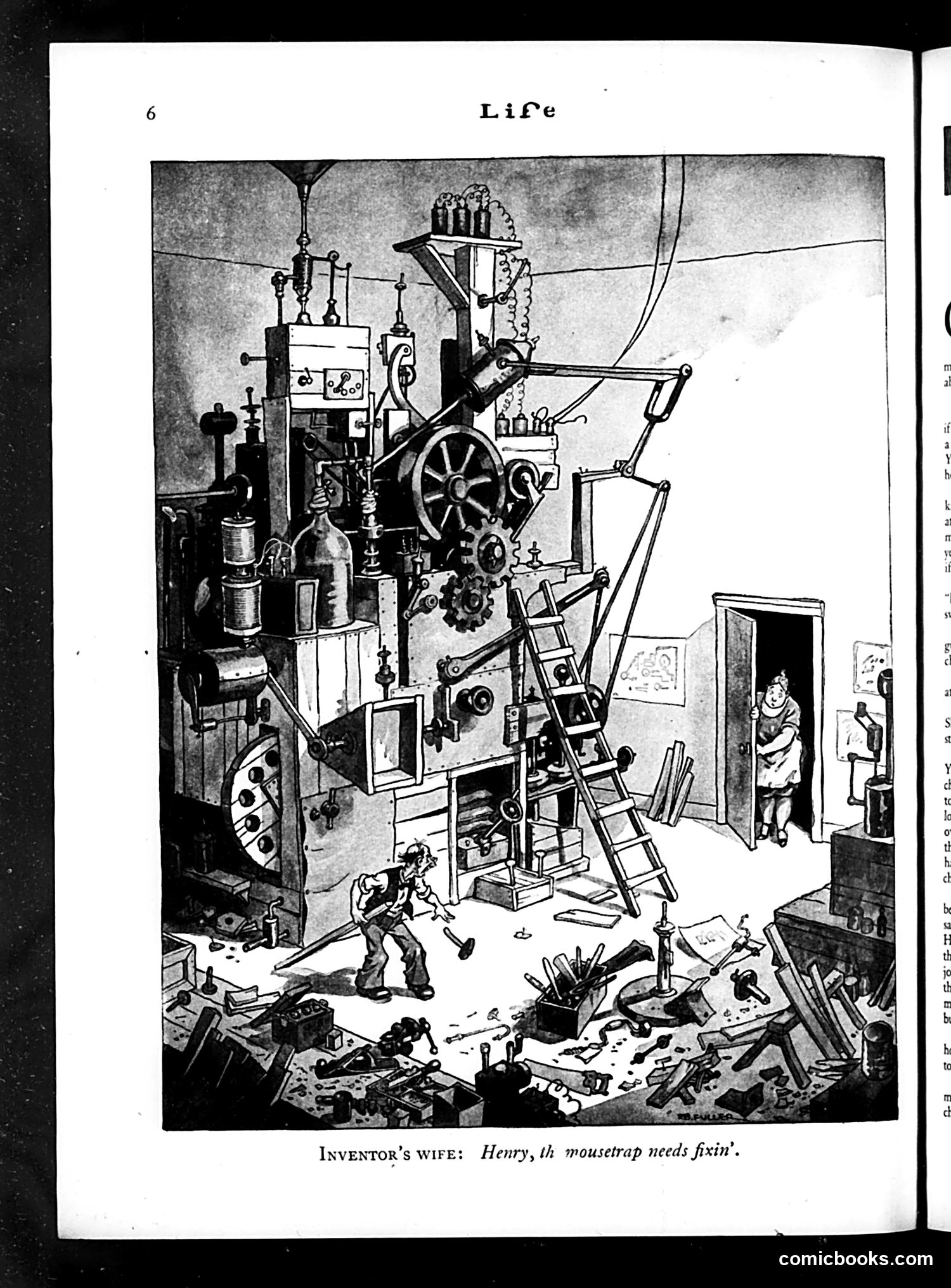
"Inventor's Wife: Henry, th' mousetrap needs fixin'." This is a satirical cartoon mocking the obsessive inventor or engineer. The image shows an absurdly elaborate, towering contraption—a Rube Goldberg-style machine filled with gears, pulleys, valves, and mechanical complexity—crowding a modest workshop. A man operates this monstrosity while his exasperated wife stands at the door pointing out that a simple mousetrap needs basic repair. The joke: The satire critiques inventors who overcomplicate problems with unnecessary technical complexity rather than addressing practical household needs straightforwardly. It's commentary on the gap between grand mechanical ambition and mundane domestic reality—a common theme in early 20th-century American humor about male obsession with technology at the expense of practical family life.
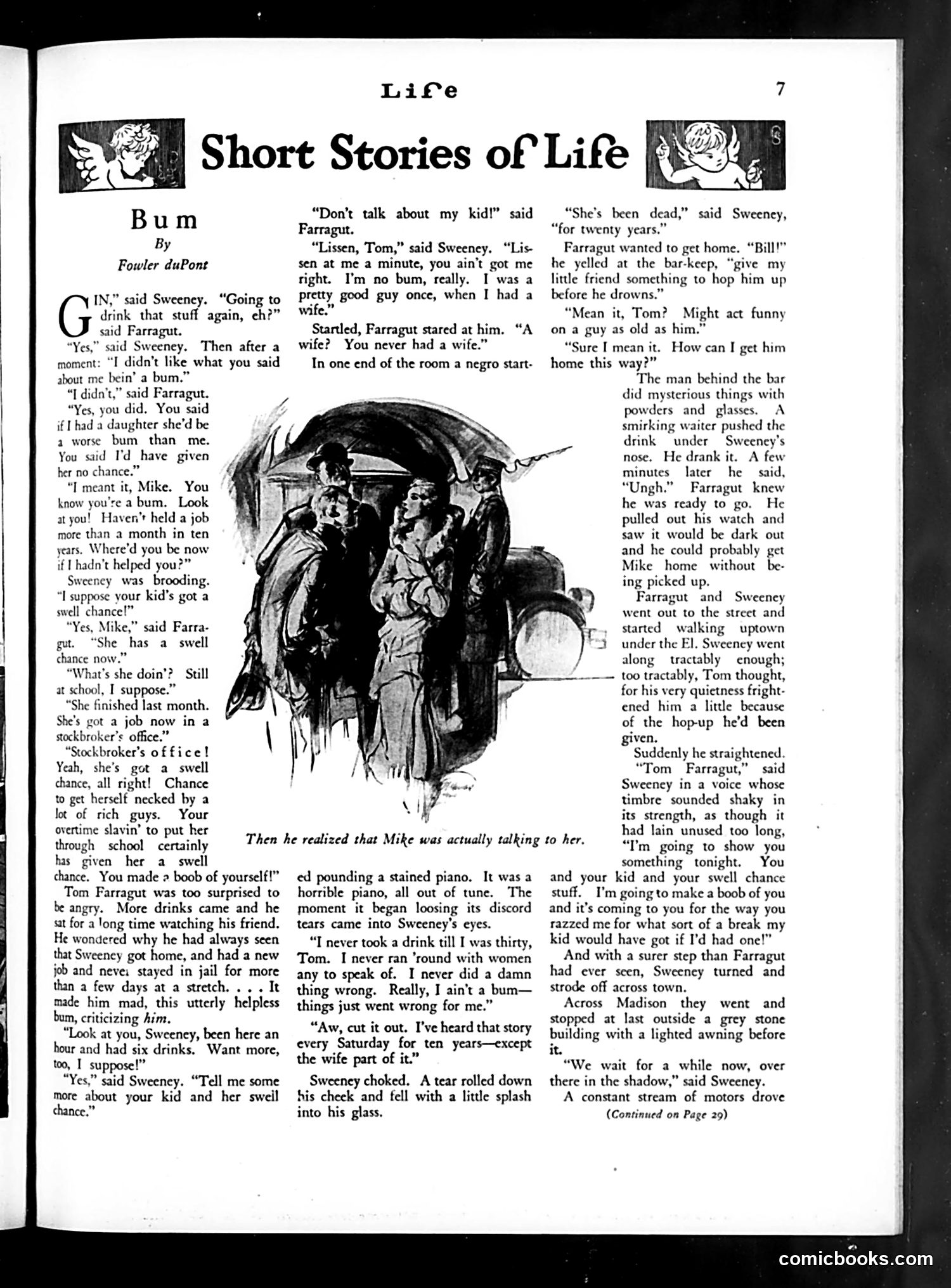
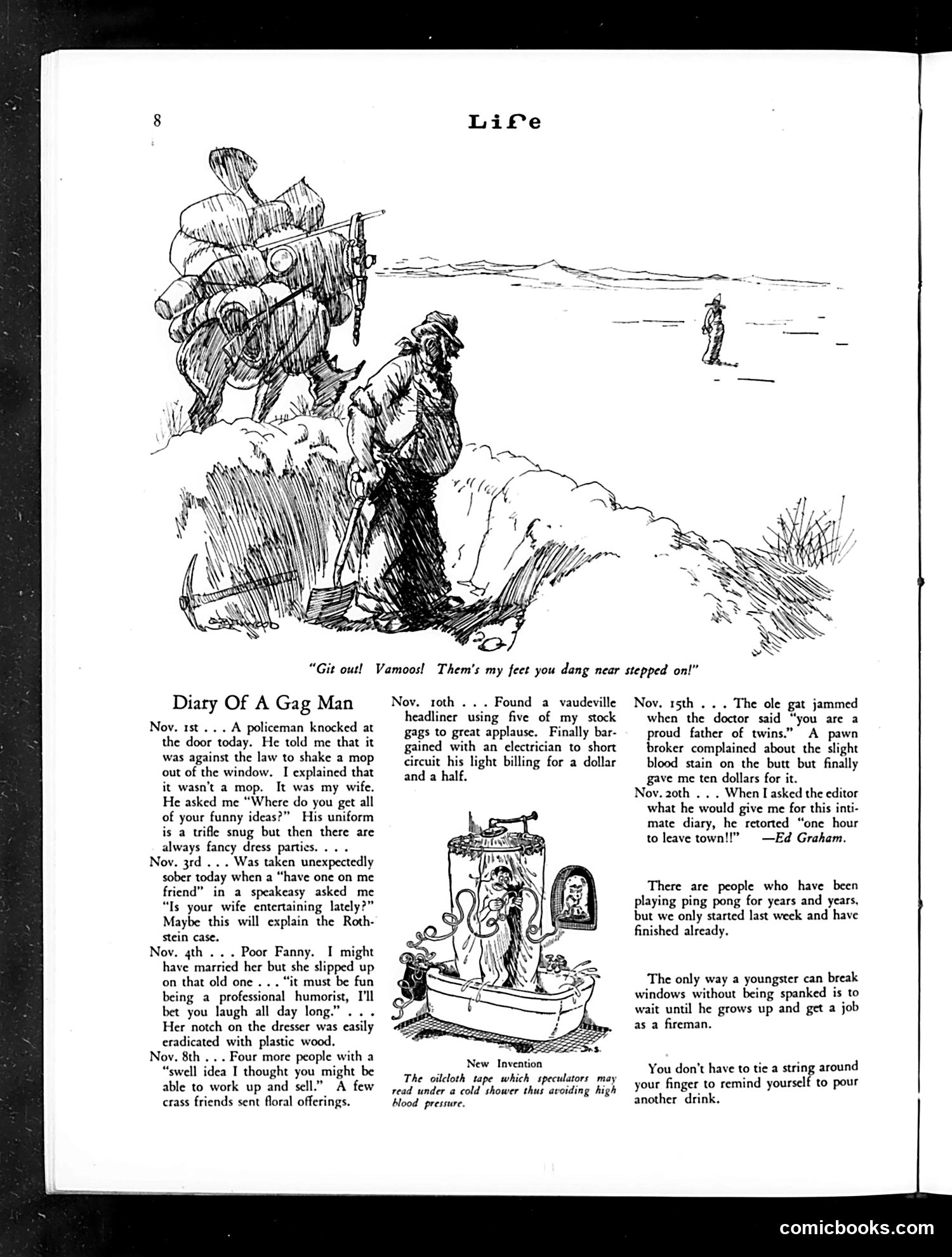
"Diary of a Gag Man" - Life Magazine Satire This page satirizes professional comedy writing in the early 20th century. The "Diary of a Gag Man" column presents supposedly true anecdotes from a comedy writer's daily life—encounters with policemen, vaudeville performers, and editors—each illustrating absurd or embarrassing situations. The humor targets both the writer's struggles and the ridiculous scenarios he mines for material. The accompanying illustration shows a hobo or vagrant character, fitting the "gag" tradition of slapstick and lowbrow humor. The witty observations at page's bottom mock universal human experiences (ping pong, childhood pranks, drinking rituals), typical of Life's sophisticated humor for educated readers. The vaudeville headliner reference and professional comedy context reflect entertainment industry prominence in that era.
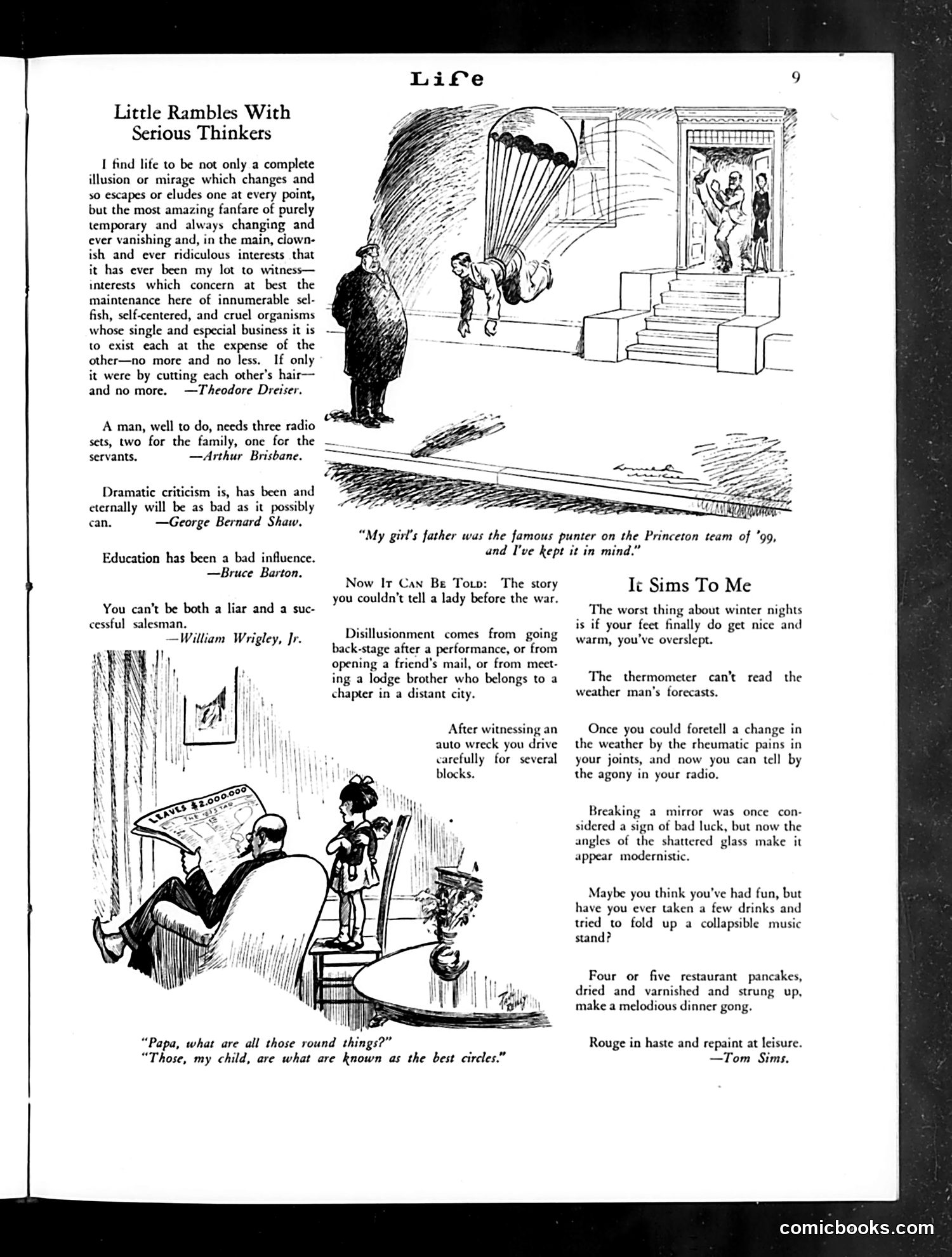
Analysis of Life Magazine Page 9 This page contains several short humorous observations and two cartoon illustrations rather than a unified political cartoon. Top cartoon: Shows a large man holding an umbrella while a small child stands nearby. The caption references "the famous punter on the Princeton team of '99," suggesting nostalgia for college athletic glory—a satirical jab at adults who dwell on past sporting achievements. Bottom cartoon: Depicts a father showing his young child a radio dial. The child asks "Papa, what are all those round things?" and the father responds they are "circles"—a gentle joke about children's literal interpretations and the absurdity of radio technology that adults take for granted. The "Little Rambles" section offers cynical observations on human nature, marriage, drama criticism, and education—typical of Life's satirical commentary on contemporary American life.
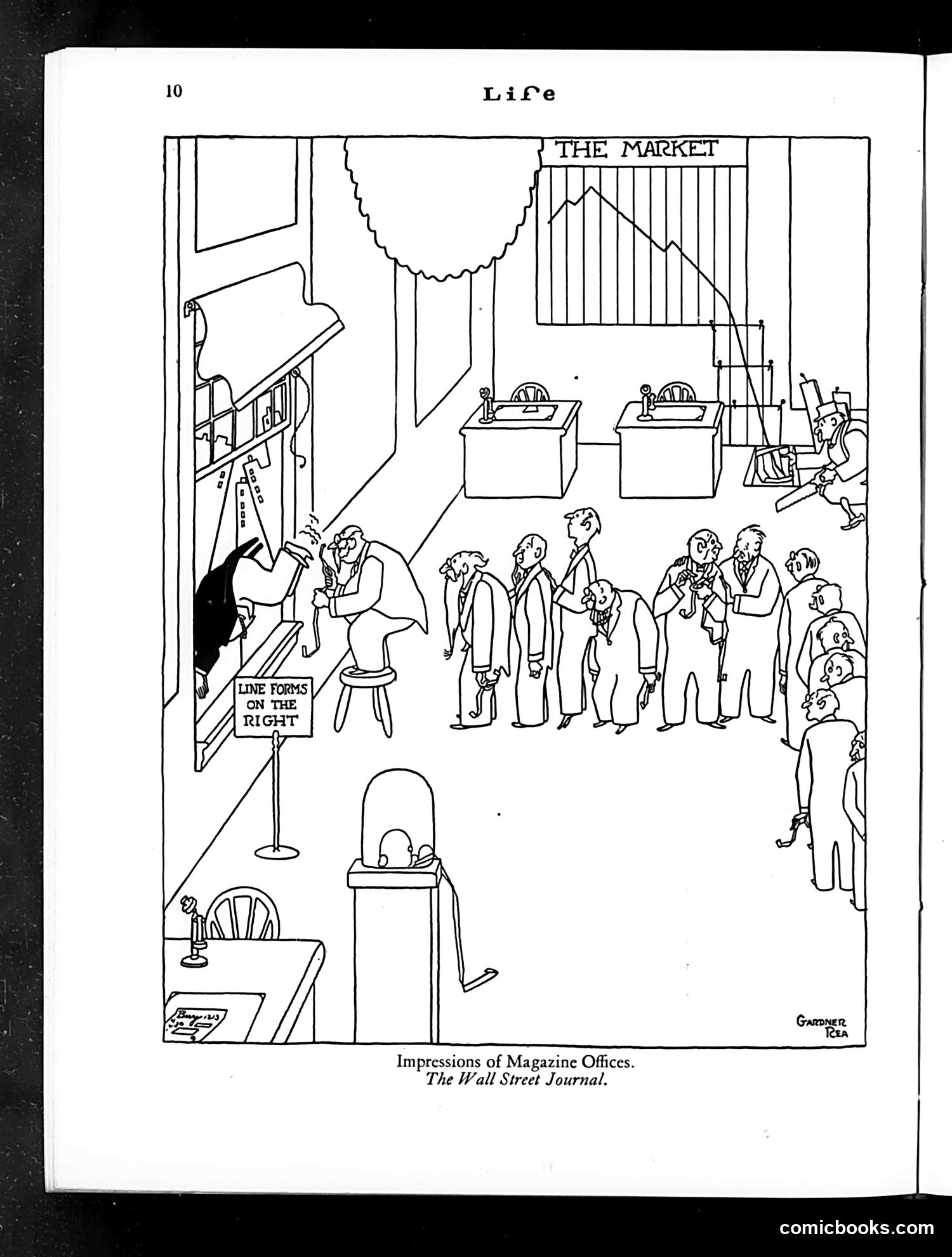
"The Market" - Magazine Office Satire This cartoon from *Life* magazine satirizes the chaos of a newspaper or magazine office during market fluctuations. The chart labeled "THE MARKET" at top shows declining stock prices, creating panic below. The scene depicts office workers in various states of distress reacting to financial losses. At left, a sign reads "LINE FORMS ON THE RIGHT," suggesting people queuing—likely for unemployment or to submit resignations. The desks with suited figures appear to represent stockbrokers or financial staff. The cartoon critiques how Wall Street market downturns directly impact magazine offices and their staff. The subtitle identifies this as "Impressions of Magazine Offices" relating to *The Wall Street Journal*, suggesting satire about financial news operations being themselves vulnerable to the markets they cover. The humor lies in the immediate, visible human chaos caused by abstract market movements.
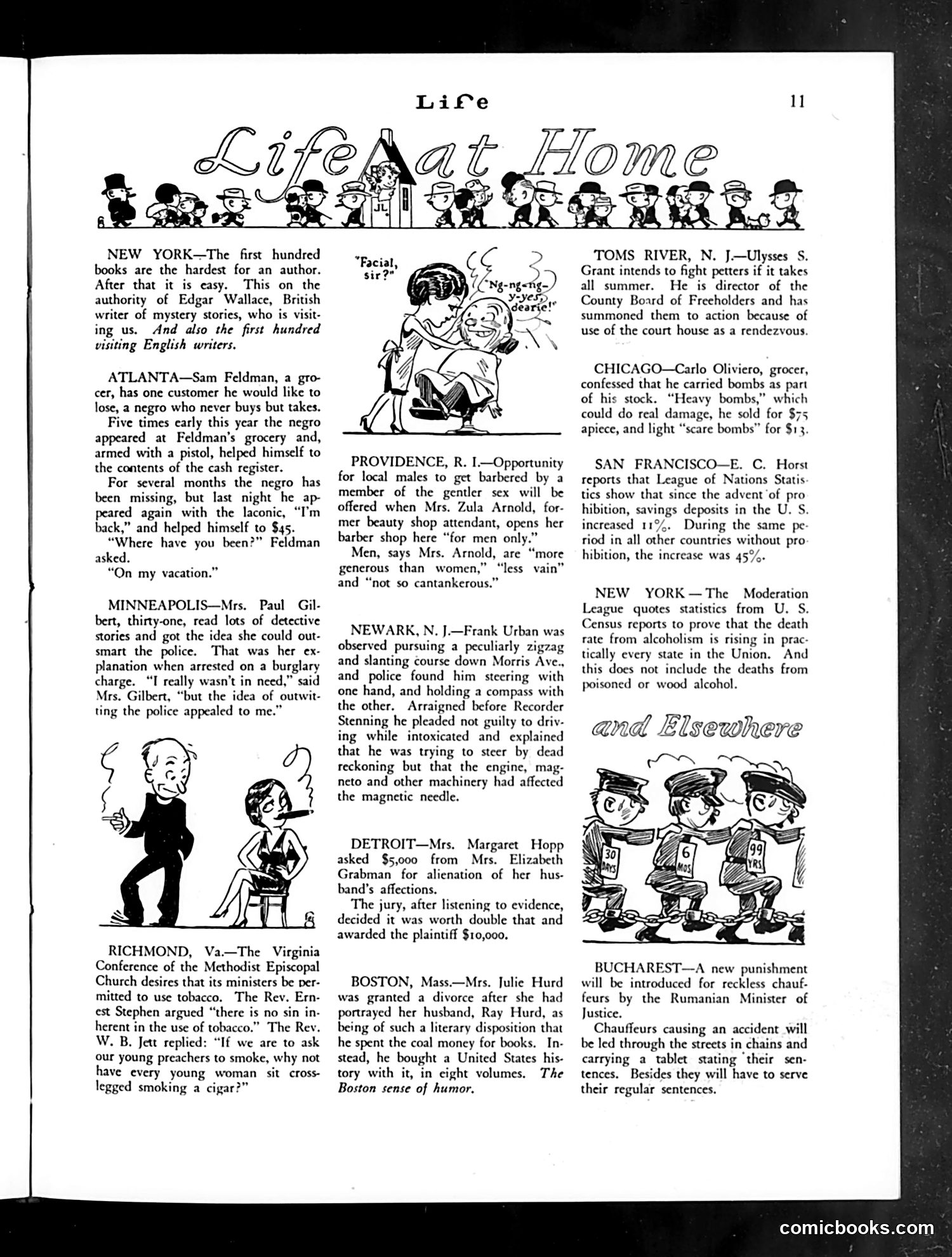
"Life at Home" Page Analysis This page presents humorous anecdotes from various American cities, not political cartoons. The small illustrations are generic comic vignettes accompanying local news items. The stories satirize everyday social situations: a grocer dealing with a persistent customer; a woman opening a "men only" barbershop; a man driving erratically while using a compass; a woman divorcing her husband over literary pretension (he bought books instead of coal); and a church debate about ministerial smoking. The humor relies on domestic irony and social contradiction—for instance, the barber shop claiming women are "more generous" and "less vain," and the Boston wife's sardonic observation that her husband's literary hobby reflects misplaced priorities during economic hardship. These represent *Life* magazine's typical early 20th-century format: satirizing middle-class American behavior through brief, relatable anecdotes rather than explicit political commentary.
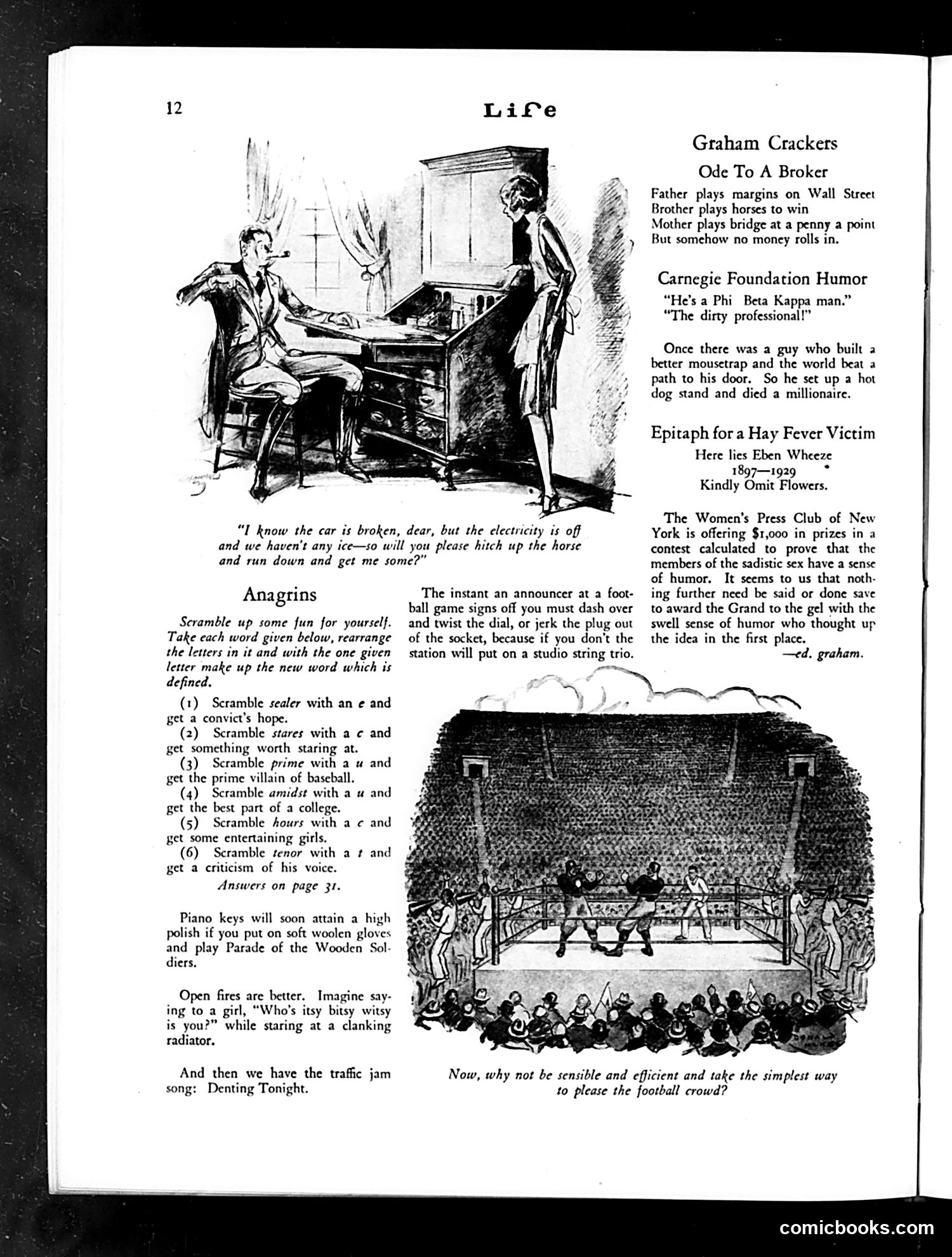
Analysis of Life Magazine Page 12 The top cartoon depicts a broker's office scene with the caption questioning a broken car and electricity situation. This references early 20th-century consumer frustrations with new technology and automobile reliability. The "Graham Crackers" humor section mocks financial instability—a family where everyone gambles (stocks, horses, bridge) but "no money rolls in." This satirizes the economic precarity of middle-class life before the 1929 crash. The "Anagrams" word game and miscellaneous humor pieces (hay fever epitaph, Women's Press Club contest) are filler content typical of Life's satirical magazine format. The bottom illustration shows a crowded football stadium with a caption about "sensible and efficient" crowd management, likely satirizing the chaos of popular sporting events and urban crowds of the era.
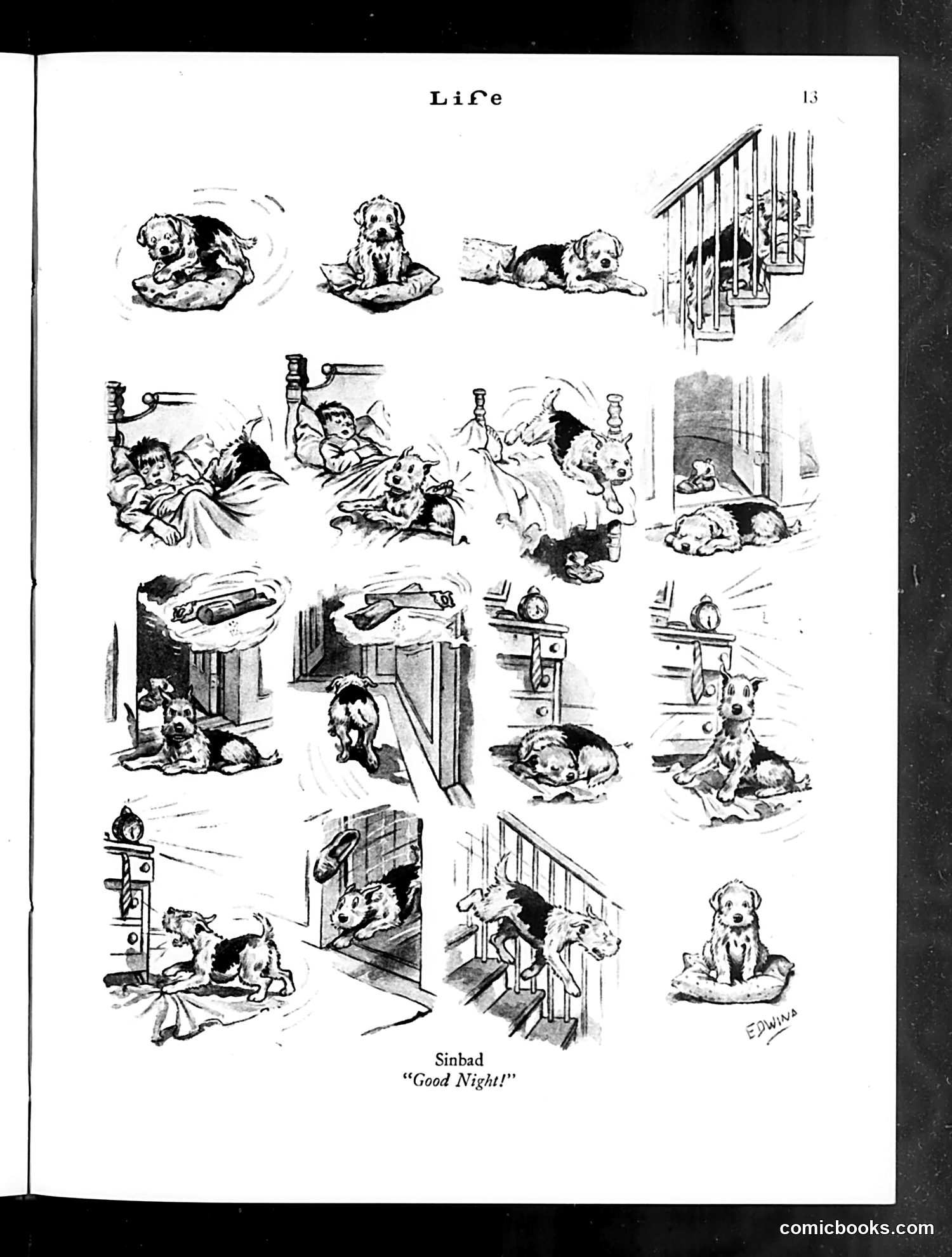
"Sinbad: Good Night!" - A Dog's Bedtime Story This page presents a series of comic sketches titled "Sinbad: 'Good Night!'" depicting a dog's evening routine and dreams. The sequential illustrations show a dog's various nighttime activities: playing with children, being fed, settling into beds or baskets, and appearing to dream or sleep in different domestic settings. The humor derives from anthropomorphizing the dog as a character named Sinbad—evoking the adventurous sailor—while depicting mundane household routines. The contrast between the exotic name and ordinary domestic scenes creates gentle satire. The sketches suggest the dog experiences its own "adventures" within the home, playing on the common human tendency to project emotional narratives onto pets' daily activities.
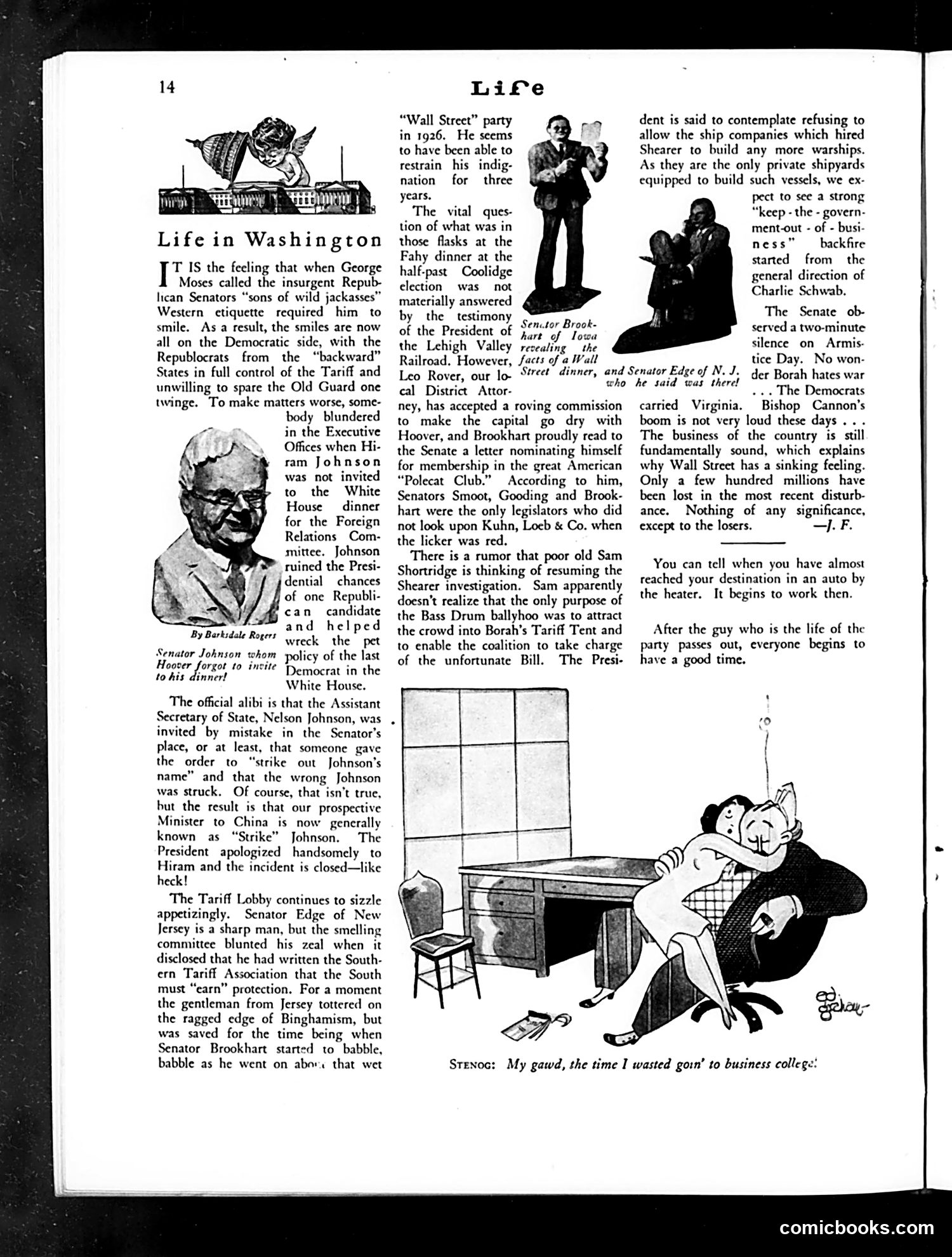
Political Satire from Life Magazine This page satirizes Washington politics circa the 1920s, focusing on the Tariff Lobby and Senate corruption. The main cartoon depicts a businessman lounging at a desk, captioned "My gawd, the time I wasted goin' to business college!" — mocking how practical corruption and deal-making trumped formal education. The text discusses Senator Edge of New Jersey and tariff protection schemes, referencing the Bass Drum billyhoo (a reference to attracting crowds to political venues). There's also mention of Senator Johnson being mistakenly invited to dinner and subsequently becoming known as "strike" Johnson. The satirical point: Washington insiders and lobbyists operated through backroom manipulation and social maneuvering rather than legitimate legislative process, rendering conventional business training irrelevant.
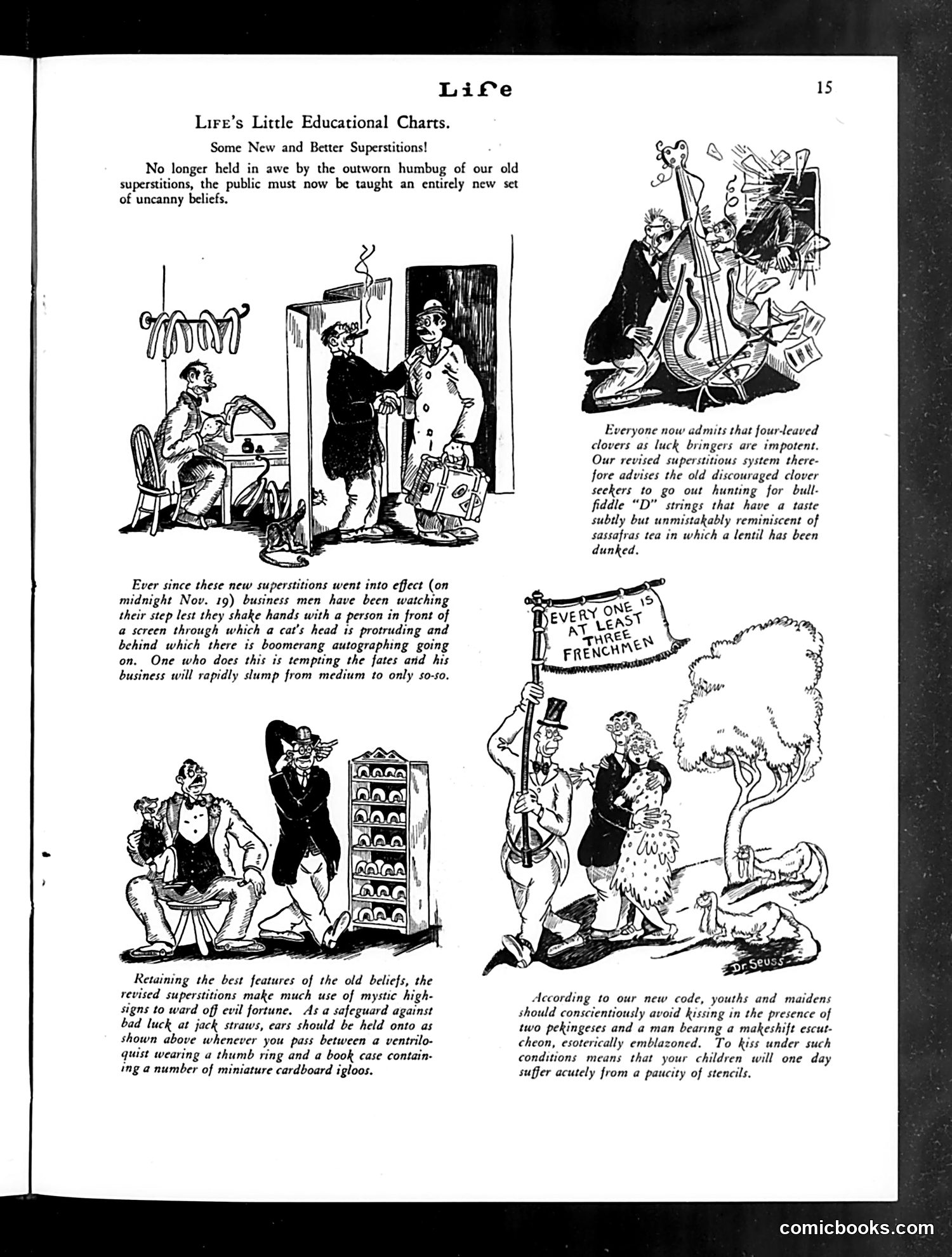
Life Magazine - "New and Better Superstitions" This satirical page mocks the public's embrace of new superstitions to replace old ones. The cartoons show businessmen and society figures adopting ridiculous practices: watching left-handed people for luck, carrying miniature cardboard igloos as talismans, and avoiding kissing near Pekingese dogs. The satire targets the 1920s fascination with pseudoscientific beliefs and fads. Despite claiming to be "modern" and rational, the page argues, people simply swap traditional superstitions for equally absurd contemporary ones. The title promises to teach readers "entirely new" uncanny beliefs—presented with deadpan seriousness to highlight how credulous the public has become. The humor relies on recognizing that educated, sophisticated urbanites remain fundamentally superstitious regardless of era.
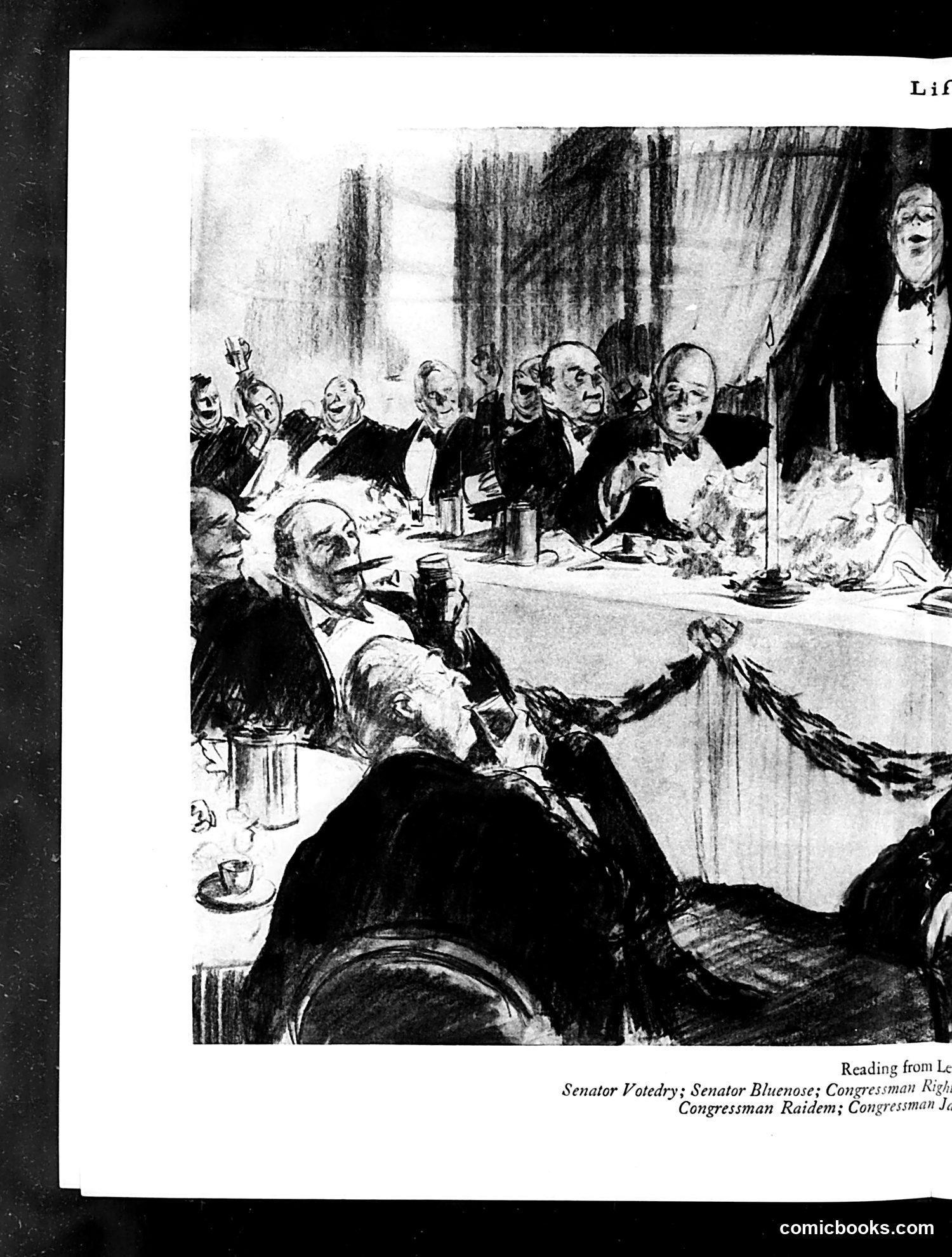
Analysis This is a satirical illustration depicting a formal political dinner or banquet. The caption identifies the figures as Senator Votedrya, Senator Bluenose, Congressman Richpocket, Congressman Raidem, and Congressman Jackass (text is partially cut off). The cartoon satirizes corrupt or self-serving politicians gathered at an elegant dinner table. The exaggerated facial features and caricature style suggest mockery of these elected officials. The formal setting—with fine dining, curtains, and formal dress—contrasts ironically with the implied criticism suggested by the legislators' names themselves: "Richpocket," "Raidem" (raid them), and "Jackass" are clearly derisive labels. This appears to be early 20th-century *Life* magazine's typical satirical commentary on political corruption, greed, and incompetence among members of Congress, using humor and exaggeration to critique their behavior.
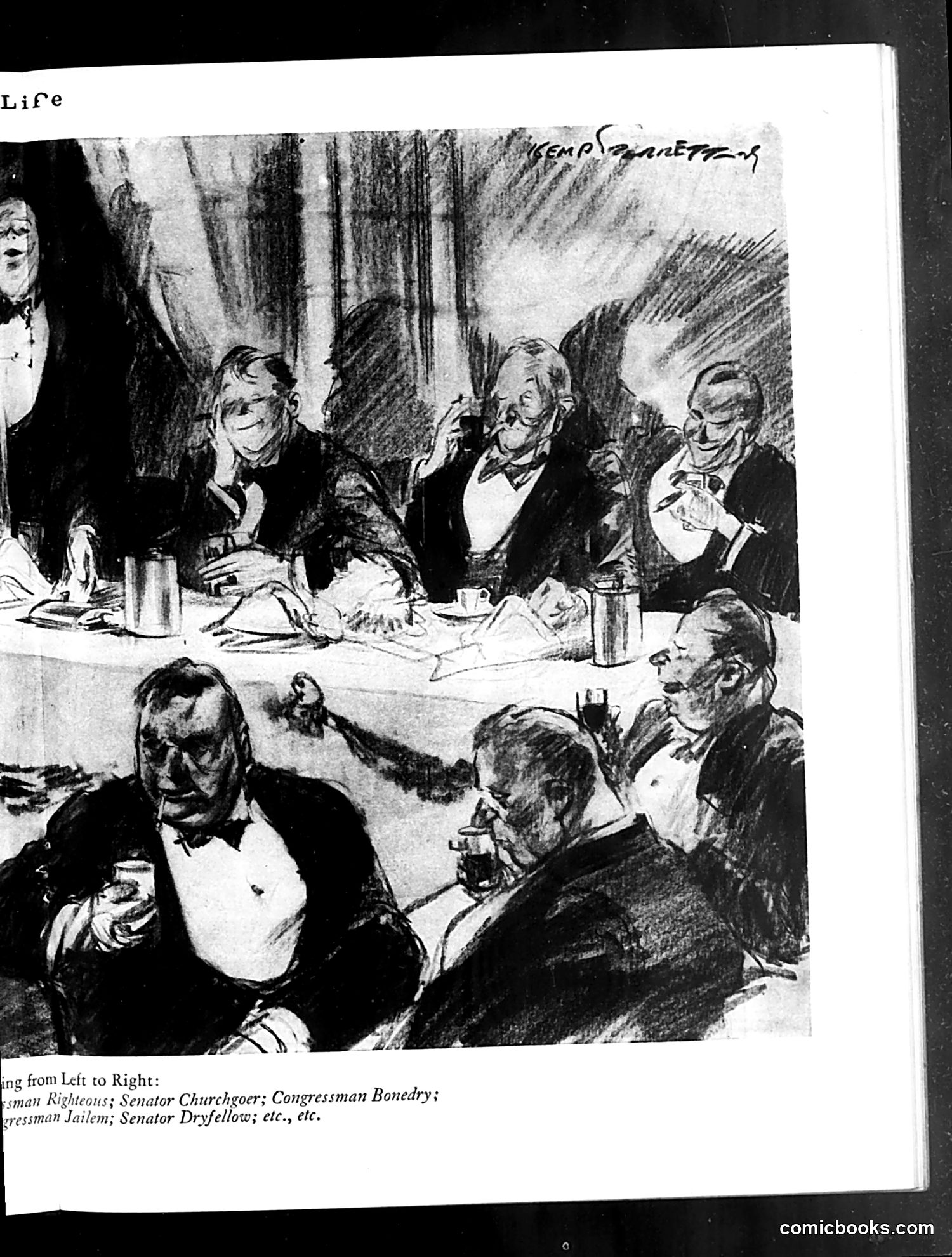
Analysis of Life Magazine Political Cartoon This appears to be a satirical dinner scene depicting prominent American politicians from the late 19th or early 20th century. The caption identifies figures including "Congressman Righteous," "Senator Churchgoer," "Congressman Bonedry," "Congressman Jailem," and "Senator Dryfellow" — clearly satirical names rather than real ones. The cartoon's humor lies in these moralistic-sounding names contrasted with their actual behavior: they're dining together, smoking, and drinking, suggesting hypocrisy between their public personas and private conduct. The exaggerated caricatures emphasize their indulgence and revelry. This satirizes a common theme in American political humor: the gap between politicians' sanctimonious public rhetoric about morality and virtue versus their actual behind-the-scenes behavior. The specific context likely relates to Prohibition-era politics or debates about political corruption and moral standards.
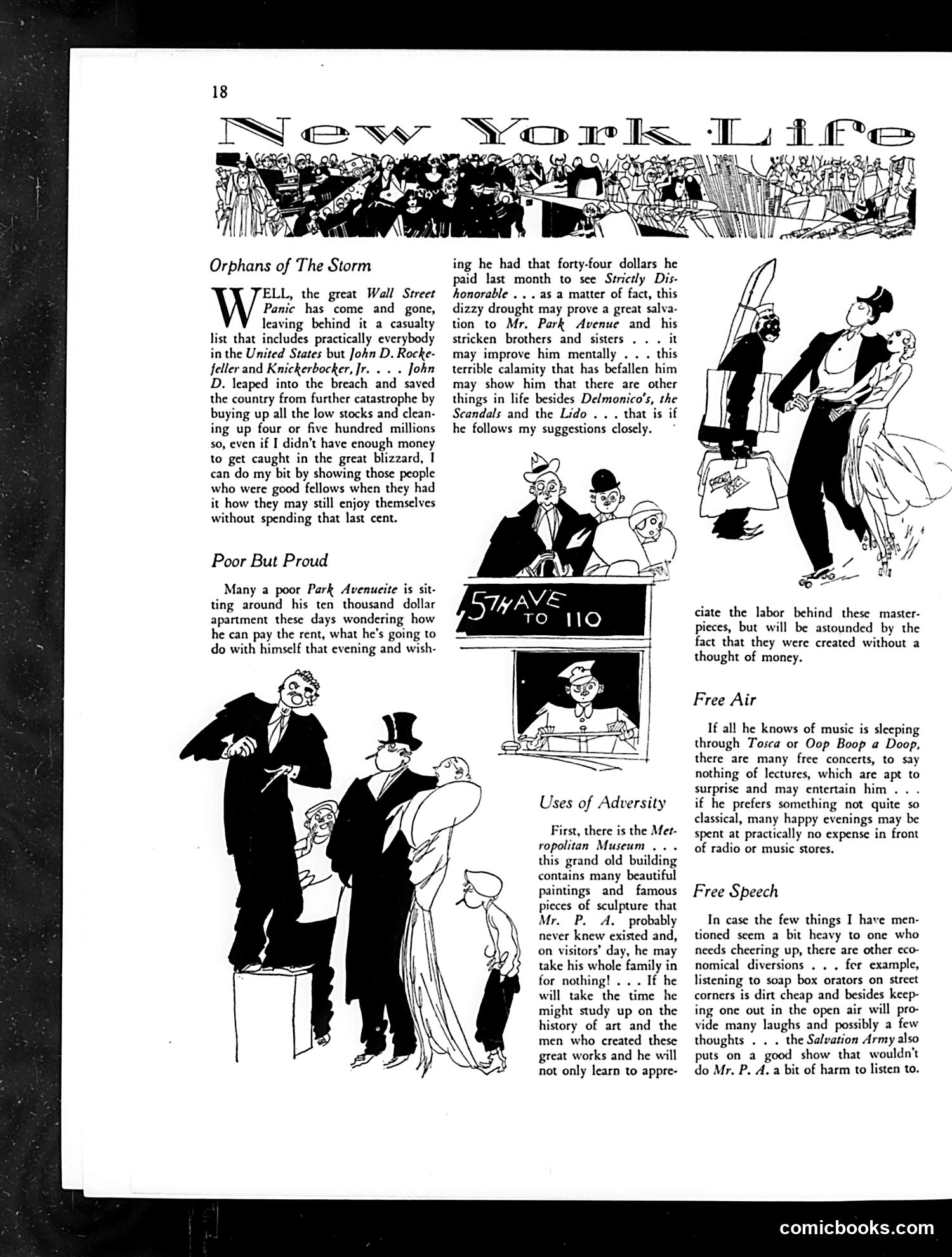
"New York Life" - Page 18 Analysis This page satirizes Depression-era hardships and free entertainment options for struggling New Yorkers. The main sections address: "Orphans of the Storm": References the 1929 Wall Street Crash, which left people financially devastated. The text suggests that experiencing past entertainment (like the film *Strictly Dishonorable*) might console those who lost everything. "Poor But Proud": Shows Park Avenue residents now unable to afford rent, depicted with dark humor as they contemplate their financial ruin. "Uses of Adversity": Ironically recommends free cultural resources—the Metropolitan Museum and free concerts—as silver linings to poverty. "Free Air" and "Free Speech": Highlight radio, lectures, and street entertainers as no-cost diversions for the economically devastated. The cartoons use exaggerated illustrations of well-dressed figures in financial distress to mock upper-class suffering during economic collapse.
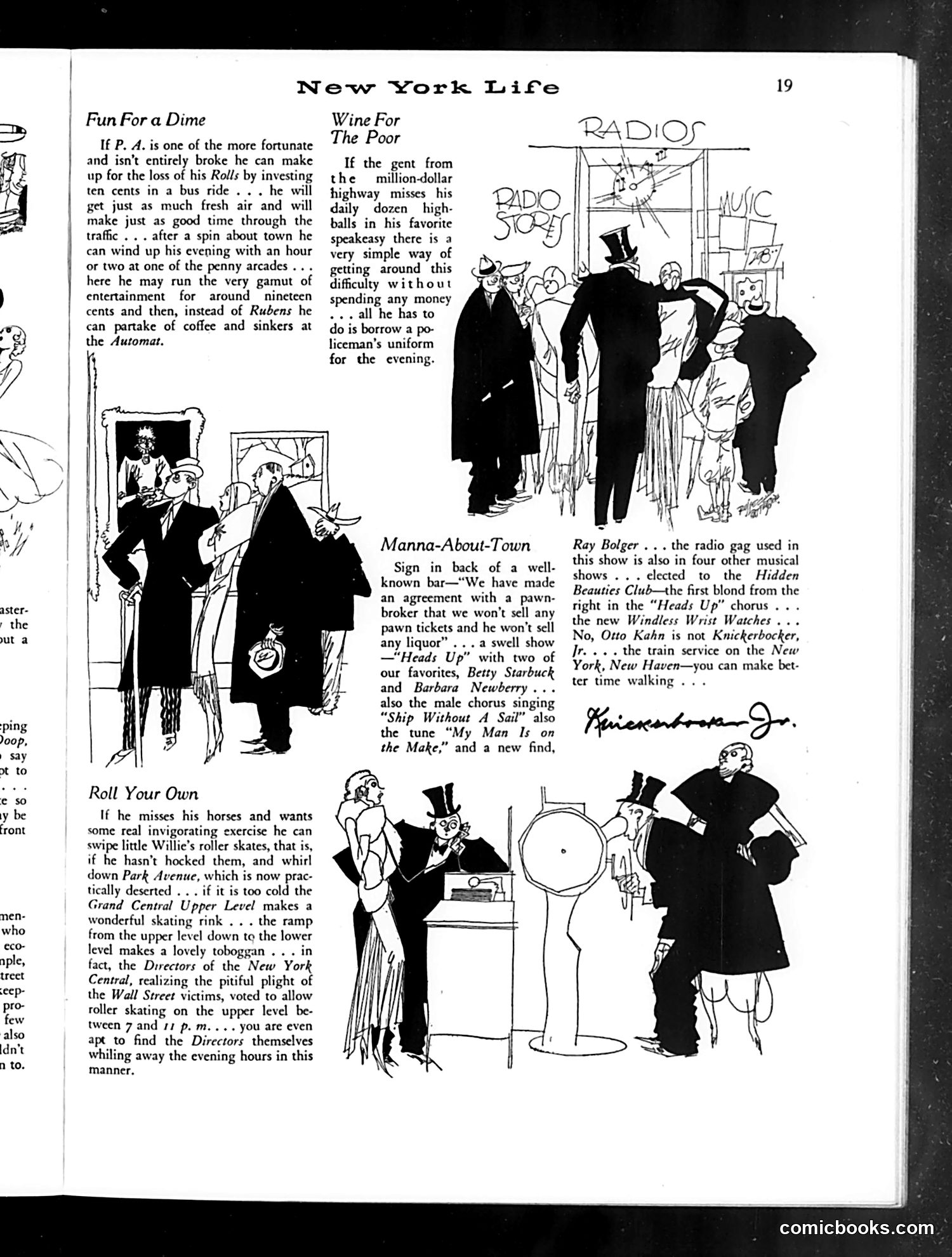
Analysis for Modern Readers This 1929 *Life* magazine page satirizes Depression-era hardship through the lens of wealthy New Yorkers suddenly impoverished. The humor relies on absurdist role reversals: "Fun for a Dime" mocks the newly broke ("P.A." likely means a wealthy person) reduced to penny arcades and automat coffee instead of luxury. "Roll Your Own" jokes that desperate Wall Street victims (referring to the 1929 stock market crash) now use Central Park's upper level as a skating rink and toboggan run—suggesting civic infrastructure repurposed for entertainment by the destitute. "Wine for the Poor" darkly suggests borrowing a policeman's uniform to access speakeasies during Prohibition, implying law enforcement corruption or that only cops could drink freely. "Manna-About-Town" is lighter gossip about Broadway shows and radio, referencing performer Ray Bolger and a pawnbroker-bar agreement preventing liquor sales through pawned tickets. The overall satirical point: the wealthy face comical indignity, while the poor (referenced obliquely) face actual hardship.
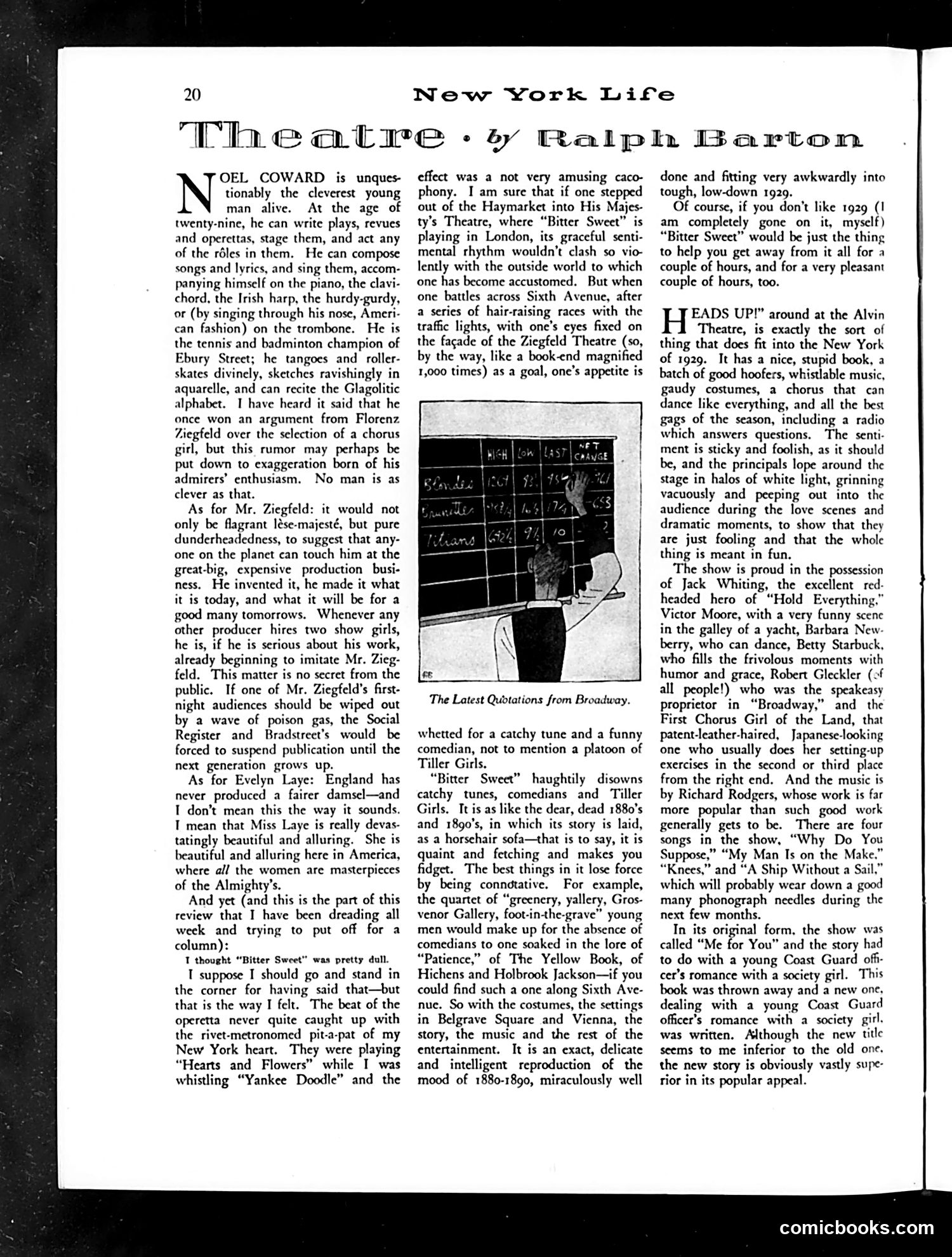
Theatre Review: Ralph Barton on "Bitter Sweet" This is a theatre column reviewing the Broadway production of "Bitter Sweet," an operetta. Barton praises three theatrical figures: playwright Noel Coward (described as universally talented), impresario Florenz Ziegfeld (credited as inventing the modern theatrical production), and actress Evelyn Laye (called exceptionally beautiful). However, Barton's main point is critical: despite these talents, he found "Bitter Sweet" disappointingly dull. The show, he argues, lacks catchy tunes and comedians—elements New York audiences expect after crossing the chaotic streets to reach the Ziegfeld Theatre. Instead, it mimics the 1880s-1890s aesthetic too faithfully, making it "quaint and fetching" but ultimately tedious for modern American audiences, though it might work better in London where such sentimentality fits the cultural context.
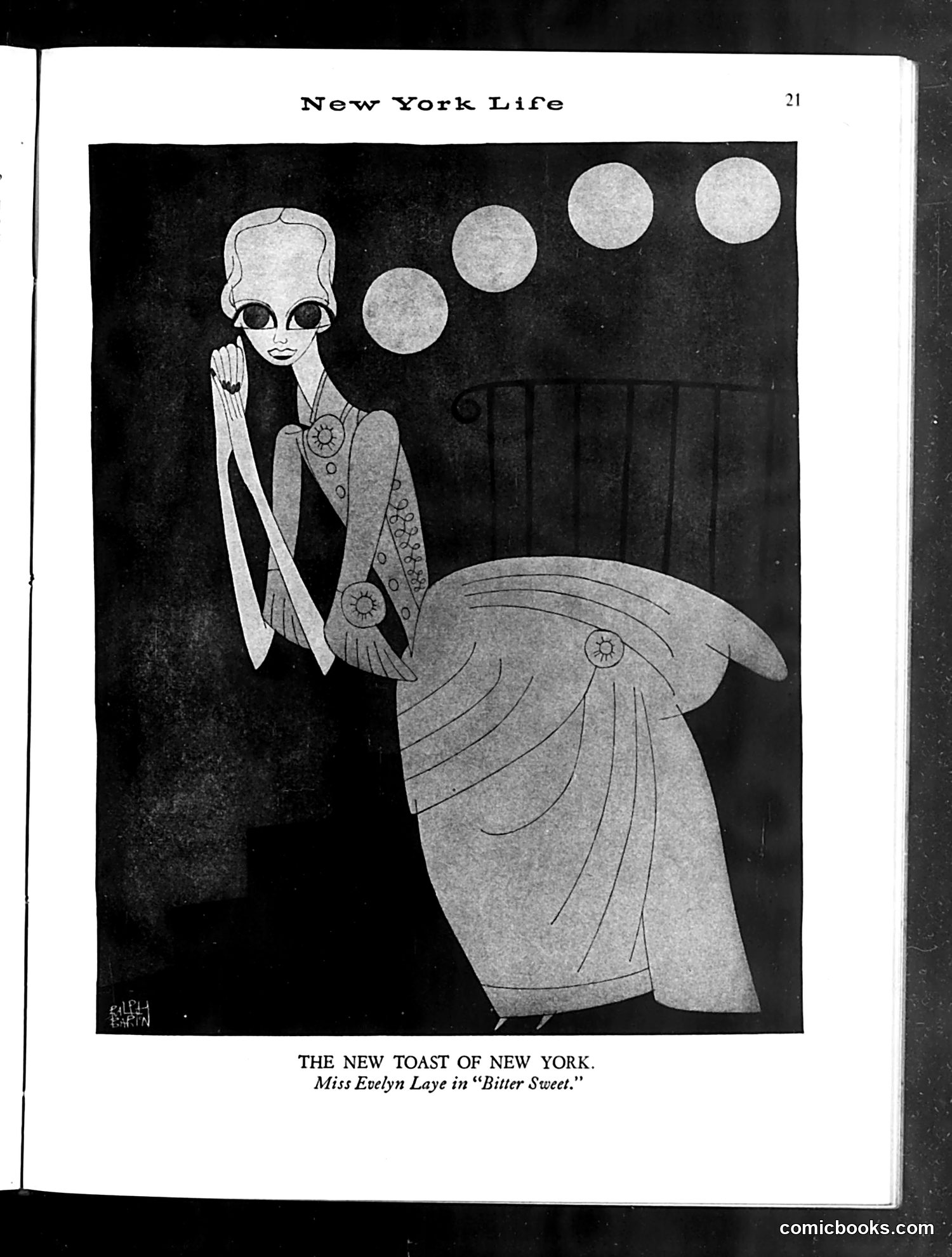
This is an illustration from *Life* magazine featuring Miss Evelyn Laye, a British actress, promoting her role in the theatrical production "Bitter Sweet." The artwork depicts a stylized, Art Deco figure with exaggerated features characteristic of 1920s-30s fashion illustration—elongated limbs, large eyes, and geometric patterns on the clothing. The ascending circles in the background likely represent her rising popularity or success. The caption "The New Toast of New York" suggests she was a celebrated performer of the moment. This appears to be entertainment coverage rather than political satire, showcasing the magazine's coverage of Broadway theater and contemporary celebrity culture.
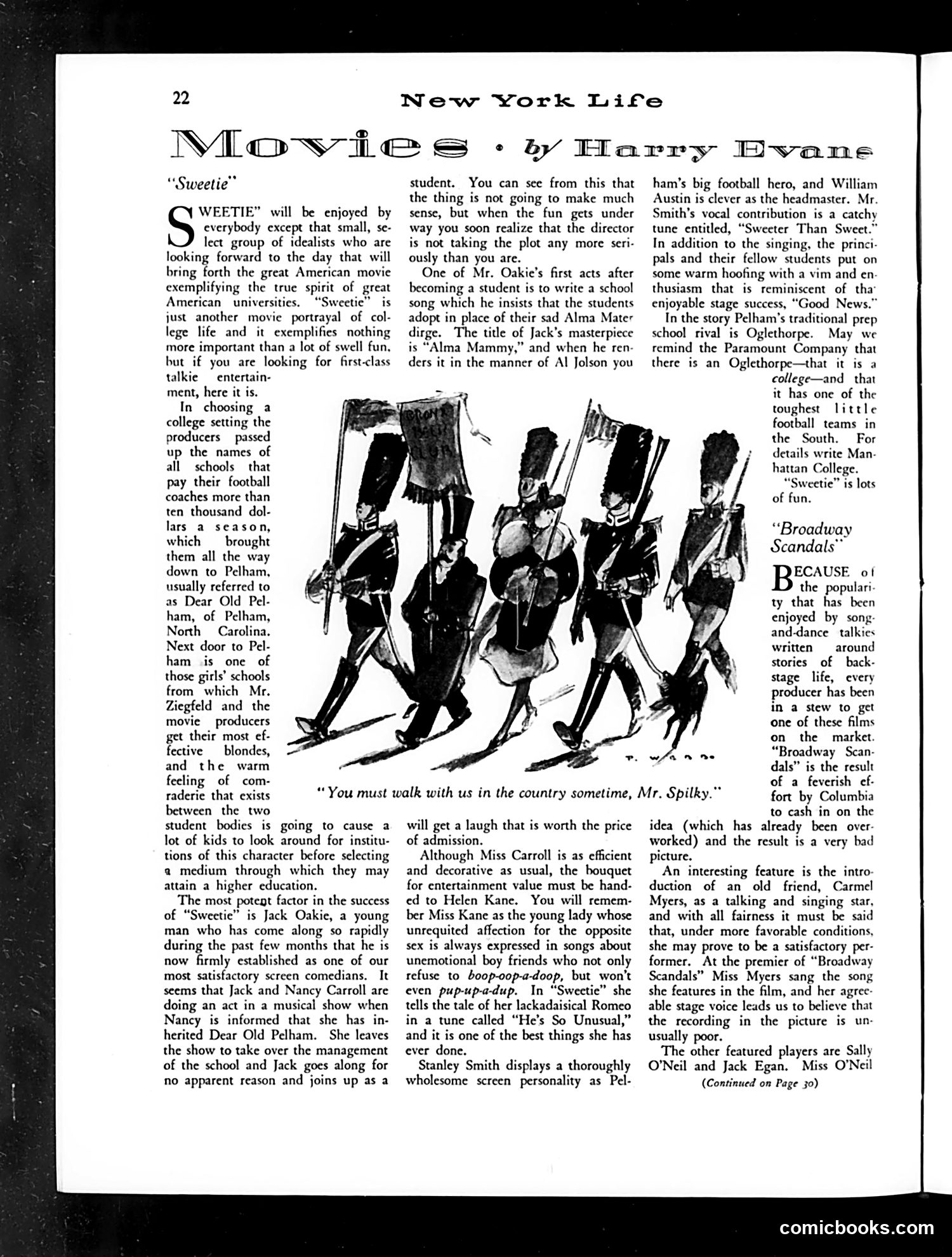
Analysis of This Movie Review Page This is a film review column by Harry Evane in *New York Life* magazine, covering two movies: "Sweetie" and "Broadway Scandals." The main illustration shows five figures in military-style uniforms marching with flags—likely a comedic scene from "Sweetie" depicting college students in some kind of organized formation. Key satirical points: The reviewer jokes that colleges were chosen for the film *specifically because* they don't pay football coaches exorbitant salaries (over $10,000/season)—implying major universities were too flagrantly commercialized to film. "Dear Old Pelham" is fictitious, allowing satirical freedom. The plot is acknowledged as nonsensical (a woman inherits a college, a man inexplicably follows her there), but the reviewer finds the entertainment value sufficient anyway—typical of early "talkies." The reviewer praises Jack Oakie's comedic performance and Helen Kane's singing (referencing her famous "boop-oop-a-doop" catchphrase), while gently mocking a rival college's football prowess. The satire targets both Hollywood's carelessness with plot and American colleges' obsession with football revenue.
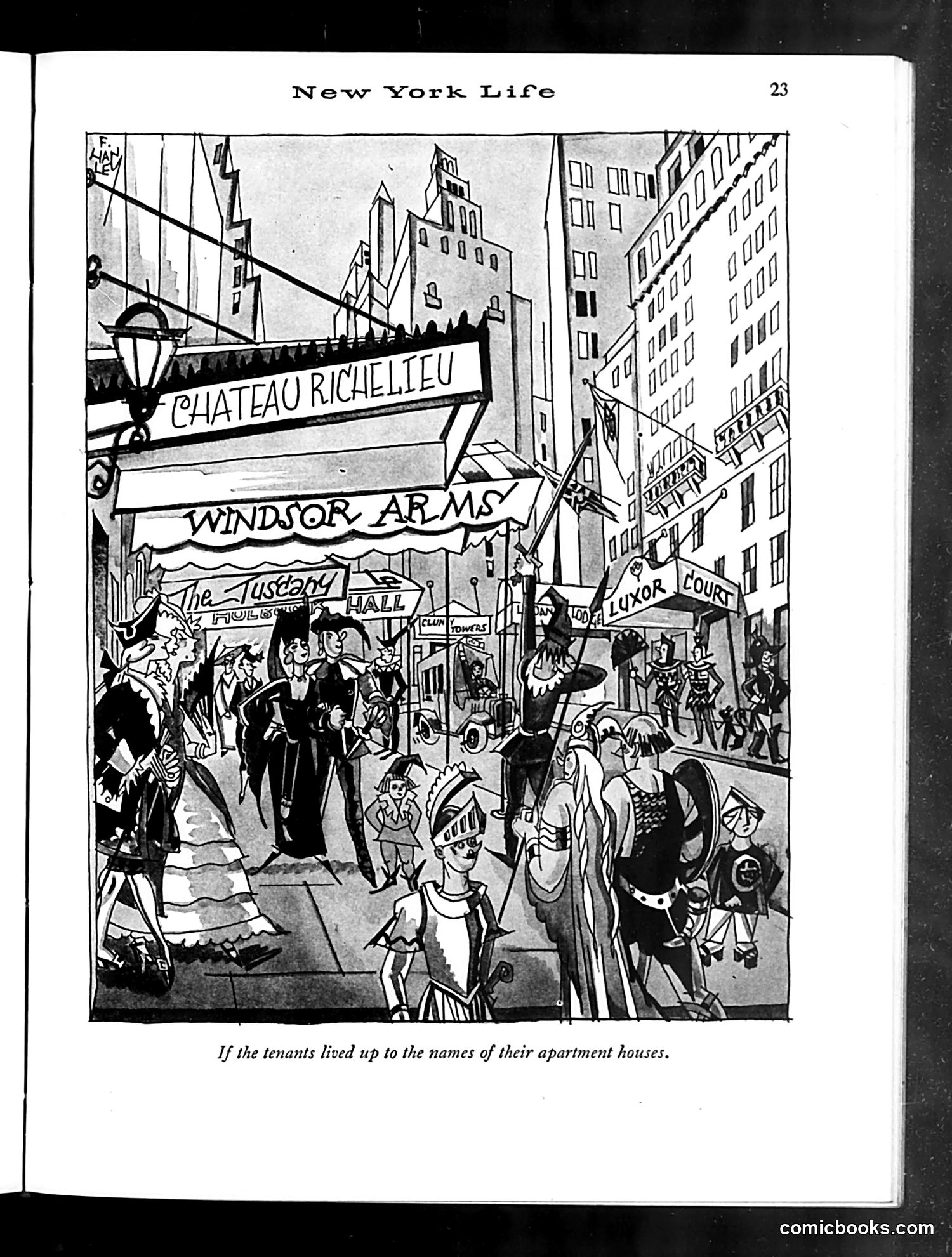
What This Cartoon Means This is a satirical illustration of a New York City street scene showing fashionable apartment buildings with prestigious names: "Château Richelieu," "Windsor Arms," "Tuskegee Hall," and "Luxor Court." The street is filled with well-dressed pedestrians. The caption reads: "If the tenants lived up to the names of their apartment houses." The joke is satirizing New York's pretentious apartment buildings, which adopt grandiose, aristocratic, or exotic names (French châteaux, British royal references, Egyptian imagery) to attract wealthy tenants. The satire suggests these fancy names don't match the actual character of the residents or their behavior. By showing an ordinary, bustling street despite the elaborate naming, the cartoon mocks New Yorkers' aspiration toward false sophistication through housing branding.
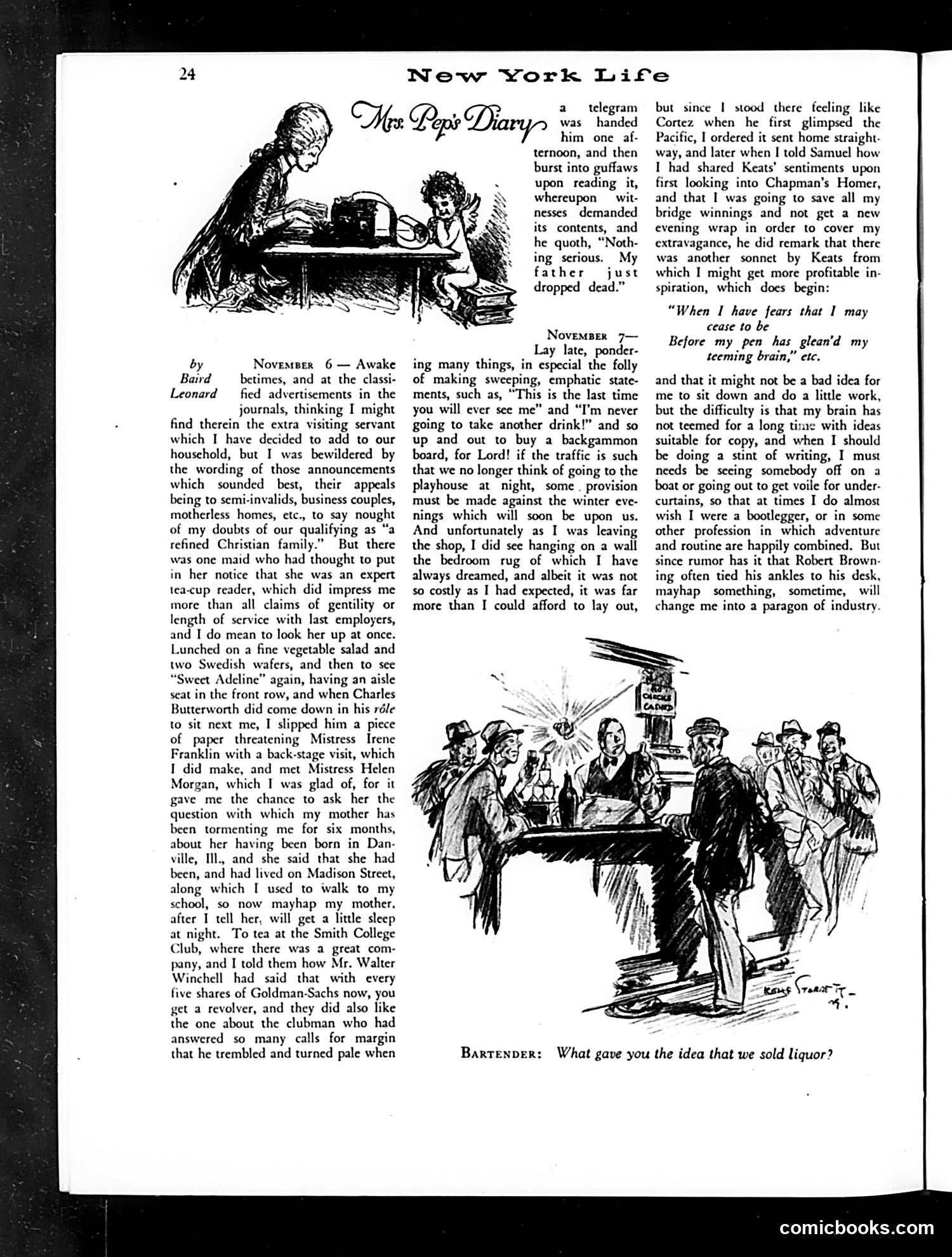
"Mrs. Pep's Diary" - New York Life Magazine Satire This is a humorous diary column satirizing upper-middle-class New York society life, circa 1929. The diarist chronicles mundane social anxieties: hiring servants, attending Broadway shows like "Sweet Adeline," and socializing at the Smith College Club. The satire targets several things: the pretentiousness of servant-hiring advertisements, frivolous consumer spending (an expensive bedroom rug purchased on impulse), and the social currency of Broadway gossip. References to Walter Winchell's jokes about stock market margin calls and Goldman-Sachs reflect the pre-Depression economic climate when stock speculation was rampant and fashionable among the wealthy. The cartoon below depicts a bartender, likely commenting on Prohibition-era illegal liquor sales—the diarist's wistful closing line jokingly wishes she were a bootlegger, humorously suggesting crime might be more profitable than her actual writing work.
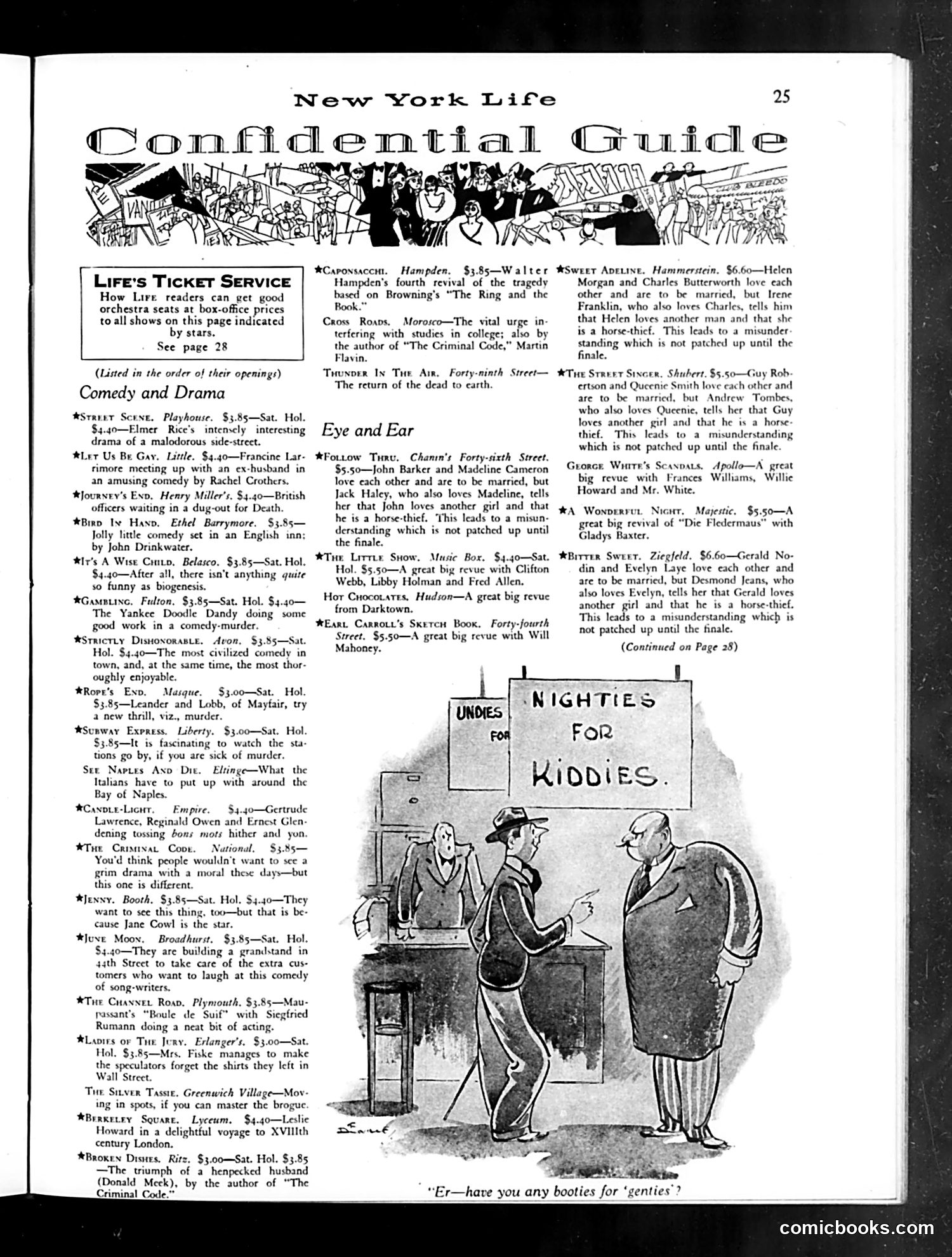
Explanation for Modern Readers This page from *Life* magazine is primarily a theater guide listing Broadway shows with prices and brief plot summaries. The accompanying cartoon is a simple visual joke, not political satire. The cartoon depicts three men outside a theater with a sign reading "UNDIES FOR KIDDIES" (children's undergarments). One man asks another, "Er—have you any booties for 'genties'?" — a play on words using "genties" (gentlemen) instead of the expected "babies." The humor is mild and genteel: the joke relies on the absurdity of grown men inquiring about children's clothing, with the slang term "booties" adding mild innuendo. This reflects 1920s vaudeville-style humor — simple wordplay rather than sharp social commentary. The page itself serves as advertising, listing theatrical entertainments available through *Life*'s ticket service, with asterisks indicating shows where readers could purchase discounted orchestra seats.
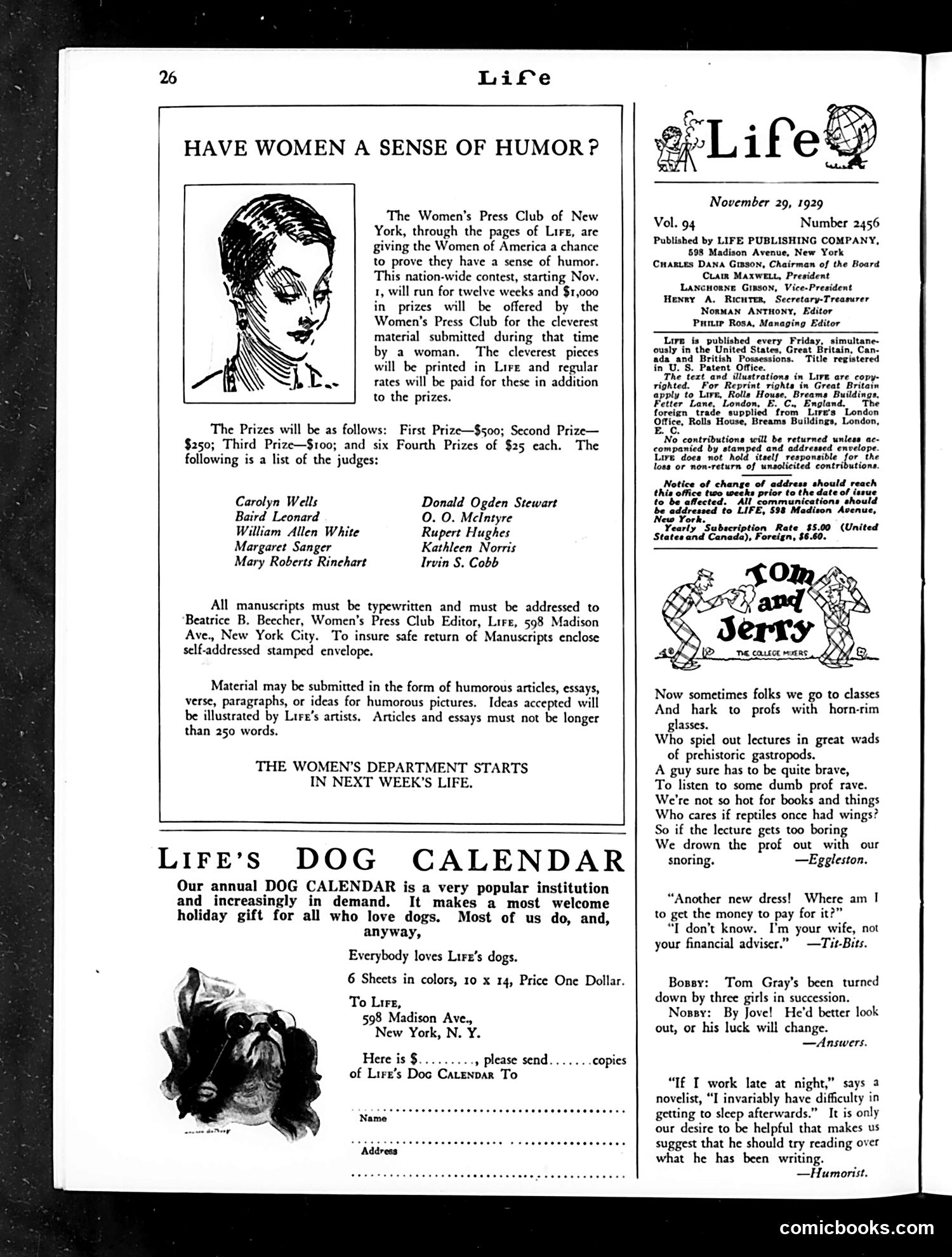
Life Magazine, November 29, 1929 This page announces a Women's Humor Contest sponsored by the Women's Press Club of New York through *Life* magazine. The contest runs twelve weeks starting November 1, offering $1,000 in prizes to encourage women to submit humorous writing—articles, essays, verse, or ideas for pictures—proving women possess a sense of humor. The judges listed (Donald Ogden Stewart, O.O. McIntyre, Rupert Hughes, Kathleen Norris, Irvin S. Cobb) were prominent 1920s humorists and writers. The contest reflects contemporary debate about whether women could be funny—a common gender stereotype of the era. By celebrating women's humor publicly and offering substantial prize money, the contest challenged prevailing assumptions about women's comedic abilities. The page also advertises *Life*'s popular annual dog calendar and includes sample humorous verses typical of the magazine's light satirical content.
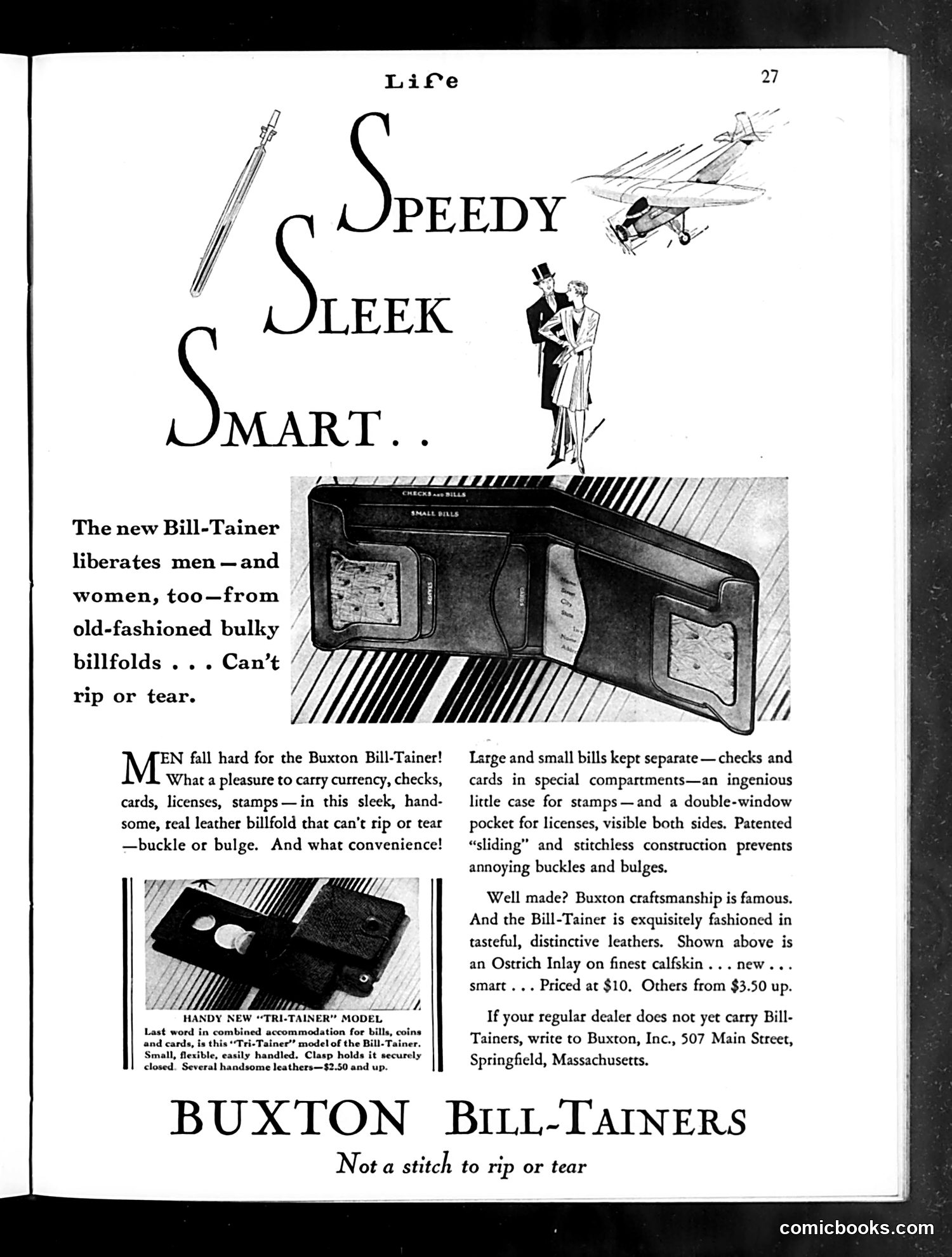
Analysis This is not a cartoon or satire—it's a straightforward advertisement for the Buxton Bill-Tainer wallet, appearing on page 27 of Life magazine. The page promotes a new leather billfold design with organizational features: separate compartments for large and small bills, slots for checks and cards, a stamp case, and a double-window pocket for licenses. The ad emphasizes practical benefits ("Can't rip or tear," "patented 'sliding' and stitchless construction") and appeals to both men and women by positioning the wallet as liberating users from "old-fashioned bulky billfolds." The decorative header includes an airplane, fountain pen, and well-dressed couple to convey modernity and sophistication. The "Tri-Tainer" model is mentioned as a smaller variant. Pricing ranges from $3.50 to $10 (high for the era). This represents typical 1920s-30s advertising rhetoric: functional innovation marketed as progress and convenience.
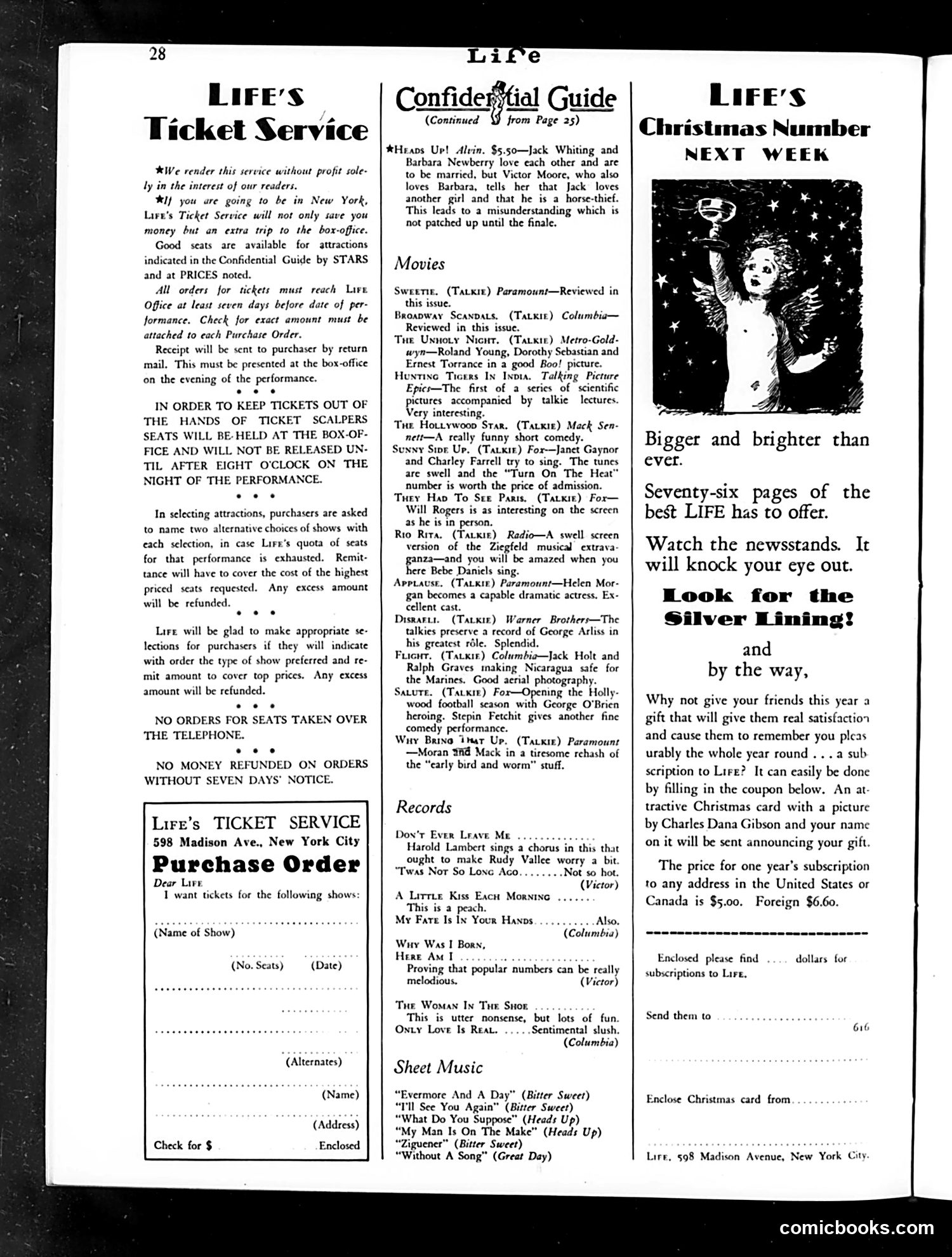
Page Analysis: Life Magazine Service & Entertainment Guide This page is primarily administrative and advertising content, not political satire or editorial cartooning. It consists of: 1. Life's Ticket Service (left column): A practical service allowing readers to purchase Broadway theater tickets by mail, with detailed ordering instructions. This addresses a real problem—ticket scalpers—by holding seats at box offices until performance night. 2. Movie Reviews (center): Brief notices of current talking pictures ("talkies"), reflecting the recent transition from silent to sound films. Reviews mention performers like Will Rogers, Janet Gaynor, and Helen Morgan. 3. Records Section: Listings of popular phonograph recordings. 4. Christmas Gift Promotion (right): An advertisement promoting Life magazine subscriptions as gifts. No political satire or caricatures appear on this page. It's a service-oriented issue demonstrating Life's role as a consumer guide for entertainment in the late 1920s.
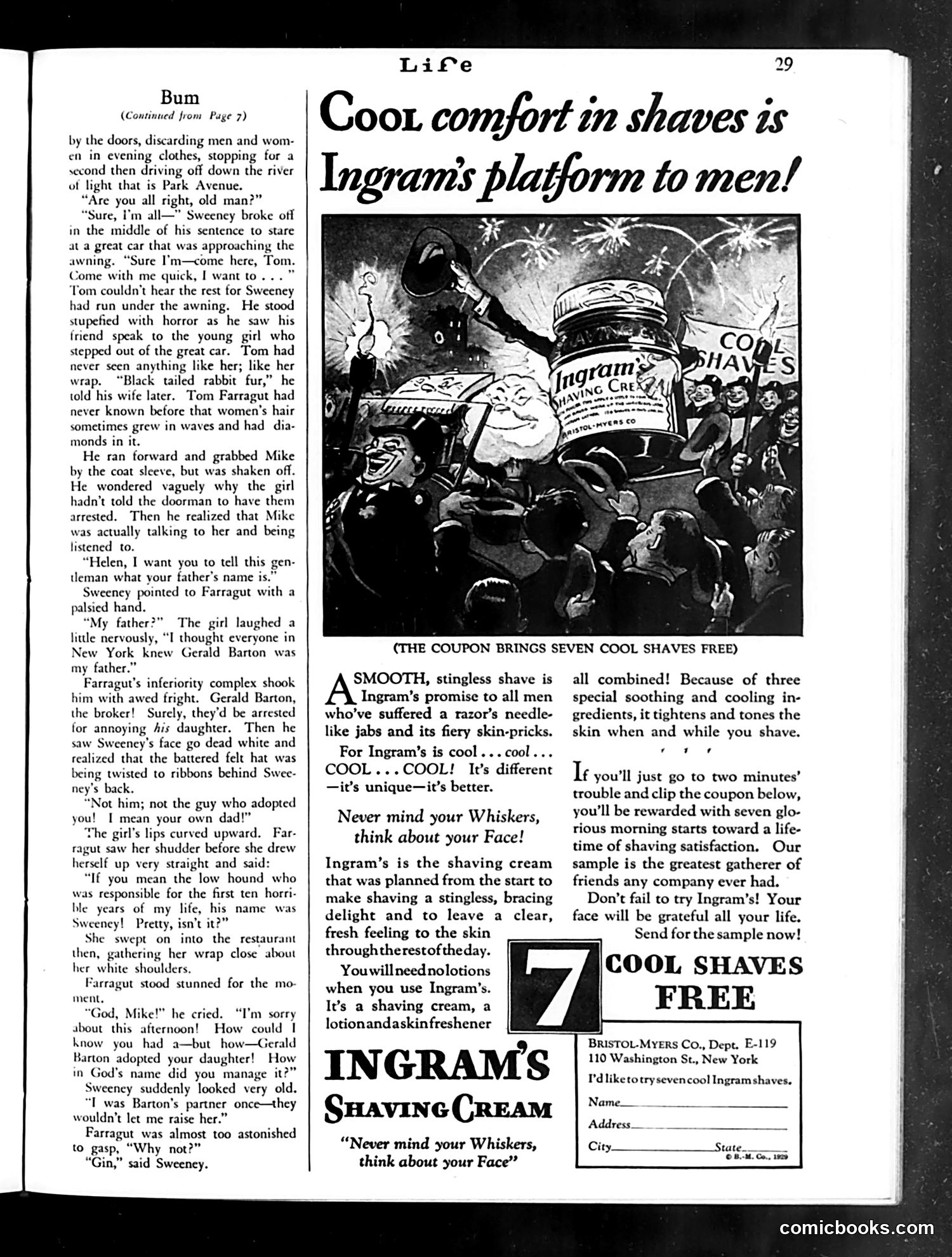
Analysis of This Life Magazine Page This page contains a short story continuation ("Bum") alongside a full-page advertisement for Ingram's Shaving Cream. The Story: The narrative involves class conflict and social mobility. A poor man named Sweeney encounters his illegitimate daughter, who is now wealthy—adopted and raised by Gerald Barton, a successful broker. The girl's elegant appearance (black rabbit fur wrap, waved hair with diamonds) contrasts sharply with her biological father's poverty. When Sweeney reveals his true identity, she acknowledges him but notes he was denied custody years earlier due to his alcoholism ("Gin"). The story explores themes of shame, lost opportunity, and the rigid class barriers of the era. The Advertisement: A typical 1920s-30s pitch using exaggerated promises (soothing, cooling, stingless shaving) and a free-sample coupon offering seven complimentary shaves to encourage trial purchases. The juxtaposition of a melancholic story about poverty and failed paternity with an upbeat consumer pitch was characteristic of Life's satirical editorial approach.
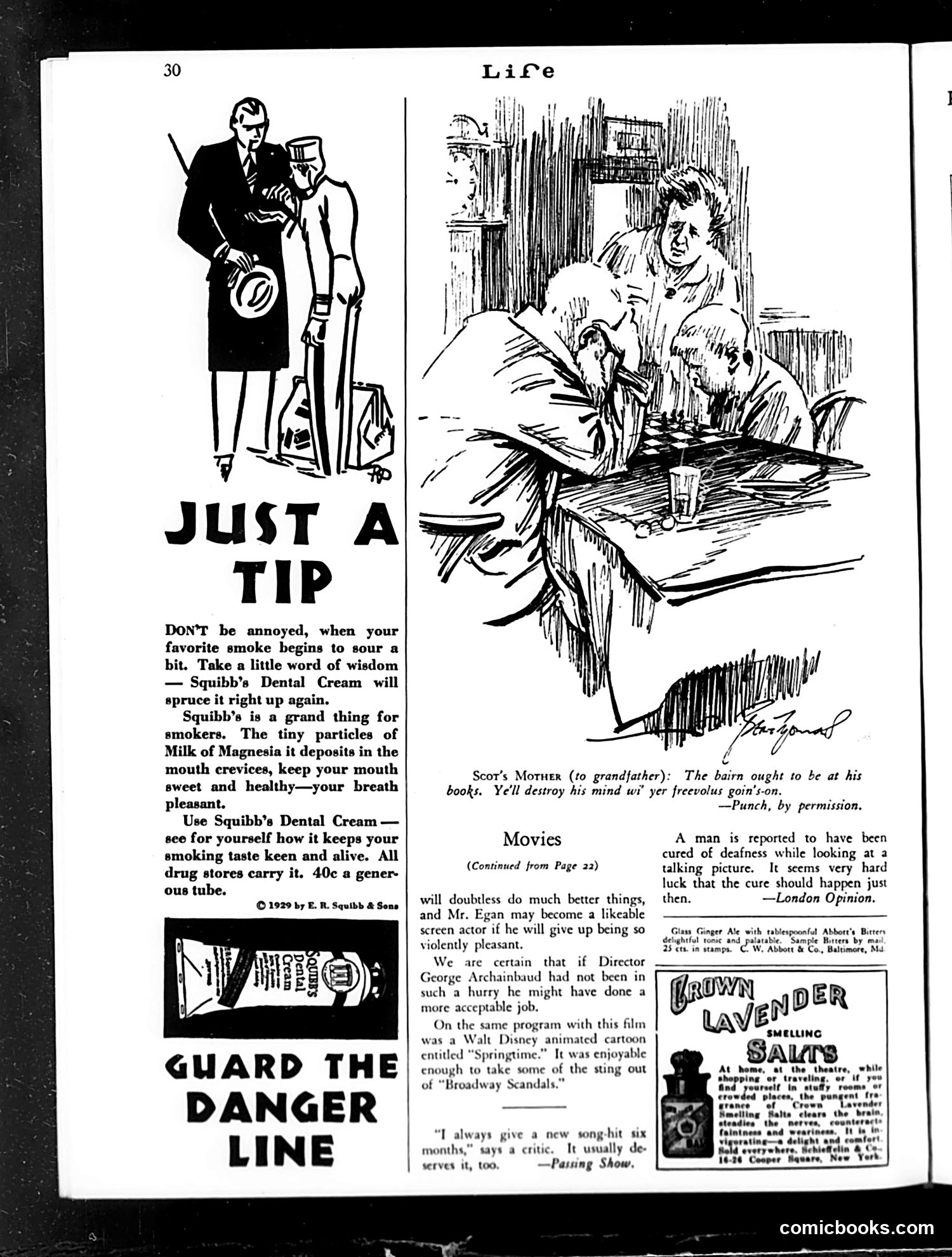
Analysis of Life Magazine Page (circa 1929) This page contains advertising and film criticism, not political cartoons. The Squibb's Dental Cream ad (left) humorously addresses smokers whose tobacco taste has deteriorated—suggesting the product's Milk of Magnesia will restore their smoking pleasure and freshen breath. This reflects 1920s advertising normalcy: openly promoting products to enhance smoking enjoyment. The "Scor's Mother" cartoon (right, credited to Punch) shows a Scottish grandmother scolding her husband for corrupting a boy with "freevolous" (frivolous) entertainment—likely referencing concerns about modern amusements (cinema, jazz) degrading youth morality. The Scottish dialect and generational conflict reflect period anxieties about tradition versus modernity. The film review discusses "Broadway Scandals" and a Disney cartoon "Springtime," critiquing direction and acting quality. The Crown Lavender Salts ad (bottom right) promotes smelling salts for various situations. The page reflects 1920s-30s tensions between new entertainment media and conservative social values.
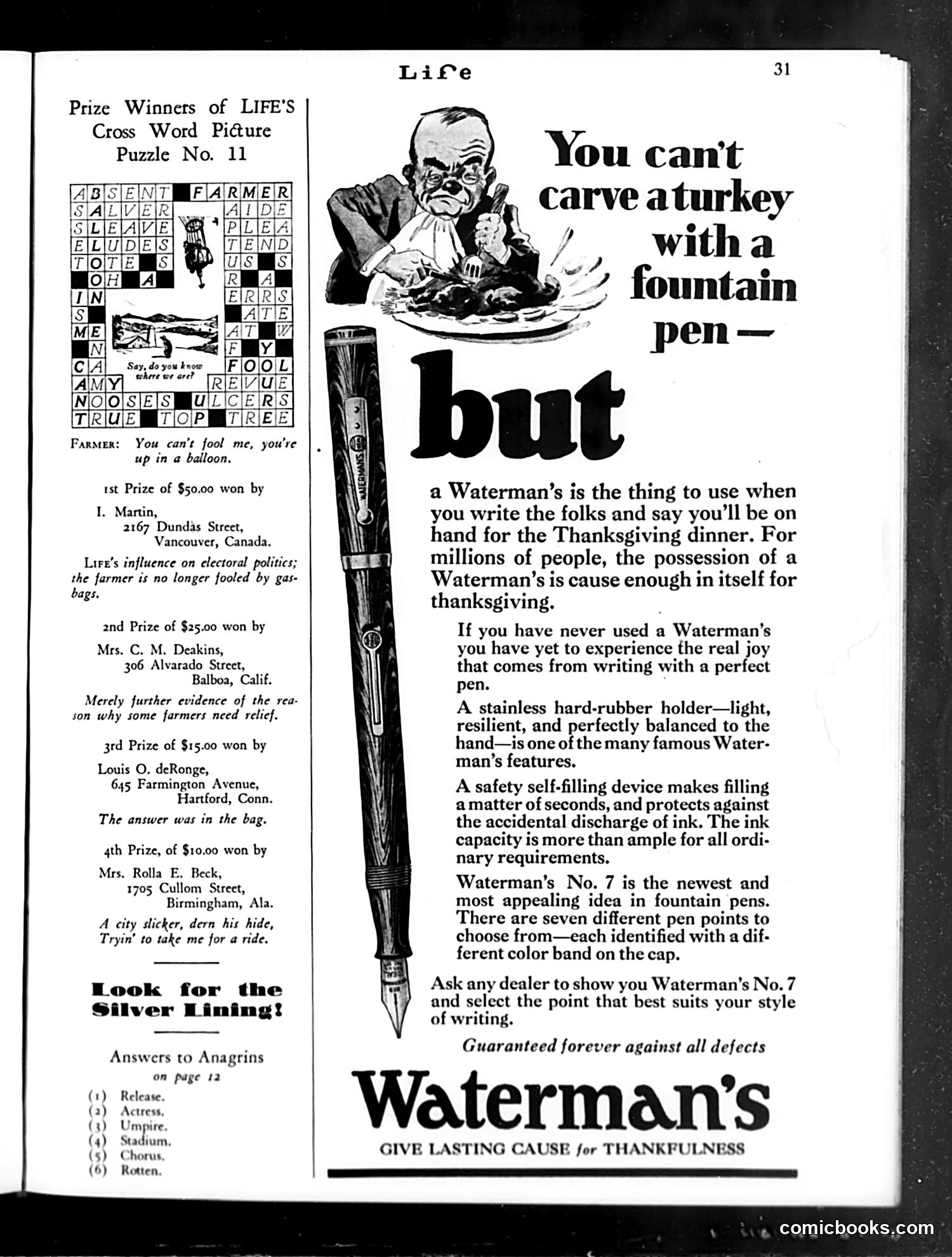
Life Magazine Page 31 Analysis This page combines a puzzle contest with a Waterman's fountain pen advertisement. The main cartoon depicts a farmer confronting a man in a balloon, dismissing him as a "city slicker" trying to deceive him. The farmer declares, "You can't fool me, you're up in a balloon"—suggesting he won't be duped by smooth-talking con artists. Life's editorial note explains the satire: farmers are no longer fooled by "gasbags" (politicians and smooth talkers), referencing farmers' growing political skepticism, likely during the Depression era when rural voters increasingly distrusted urban political rhetoric. The advertisement uses a humorous contrast: you can't carve a turkey with a fountain pen, but a Waterman's pen is the proper tool for writing Thanksgiving dinner announcements to loved ones. It positions the luxury pen as a symbol of reliable communication and social obligation—essential for the holiday season. Both elements reflect interwar American culture: rural skepticism and consumer goods as markers of middle-class respectability.
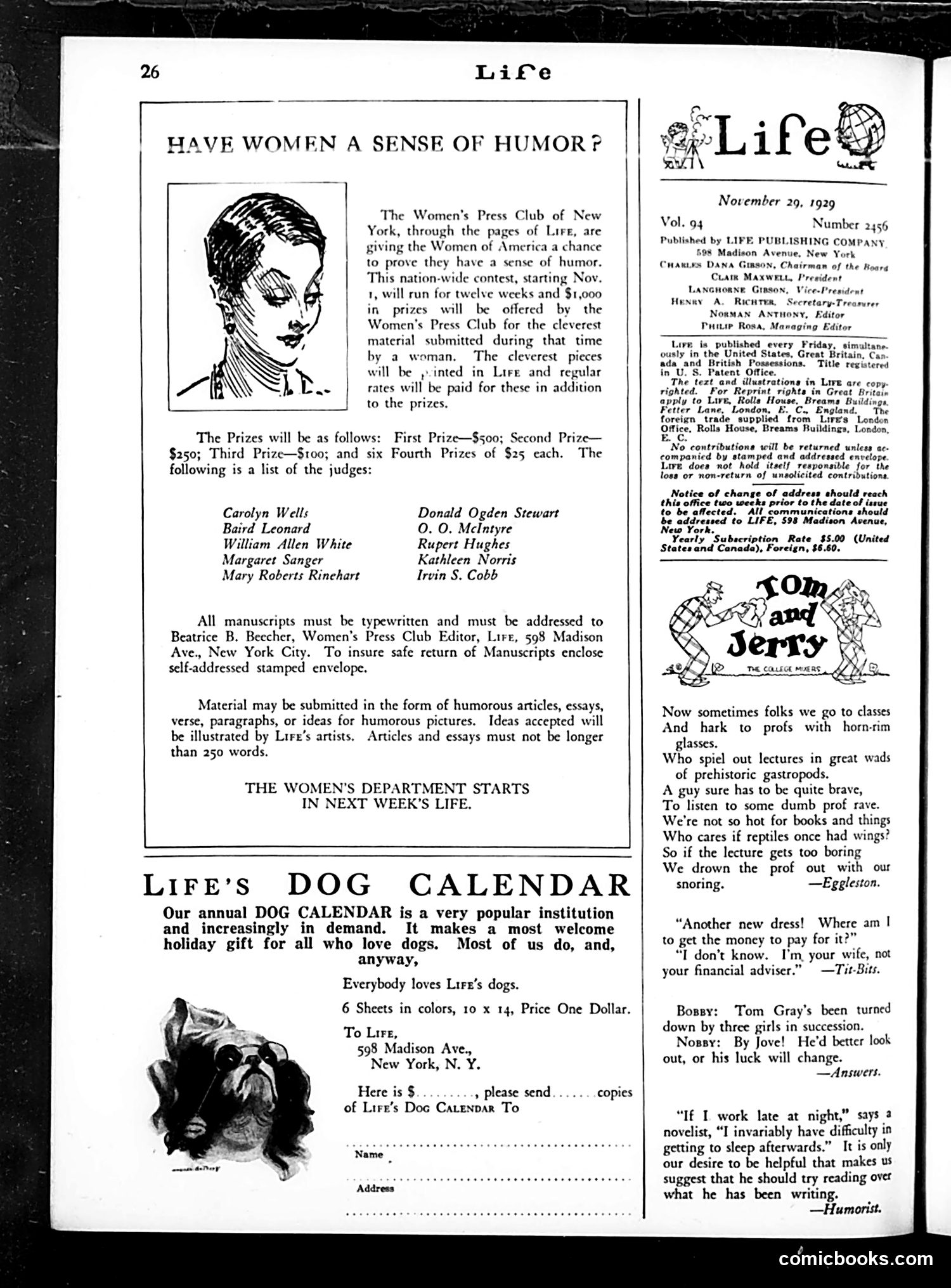
Life Magazine, November 29, 1929: Satire & Content Analysis Main Feature: "Have Women a Sense of Humor?" The Women's Press Club of New York sponsors a nationwide humor contest through *Life* magazine, offering $1,000 in prizes. The satirical premise is implicit: the contest exists to prove women *possess* humor—suggesting contemporary doubt about this. Judges include prominent male writers (Donald Ogden Stewart, Rupert Hughes, Irvin S. Cobb) and women (Carolyn Wells, Margaret Sanger, Mary Roberts Rinehart), legitimizing female humorists. Secondary Content: The page includes humor pieces ("Tom and Jerry" cartoon, jokes about college lectures and marriage finances) and an advertisement for *Life's* annual Dog Calendar ($1). Historical Context: Published November 1929—one week after the stock market crash—this reflects 1920s debates about women's capabilities post-suffrage (1920). The contest itself tacitly satirizes gender stereotypes by treating "women's humor" as a novelty requiring proof.
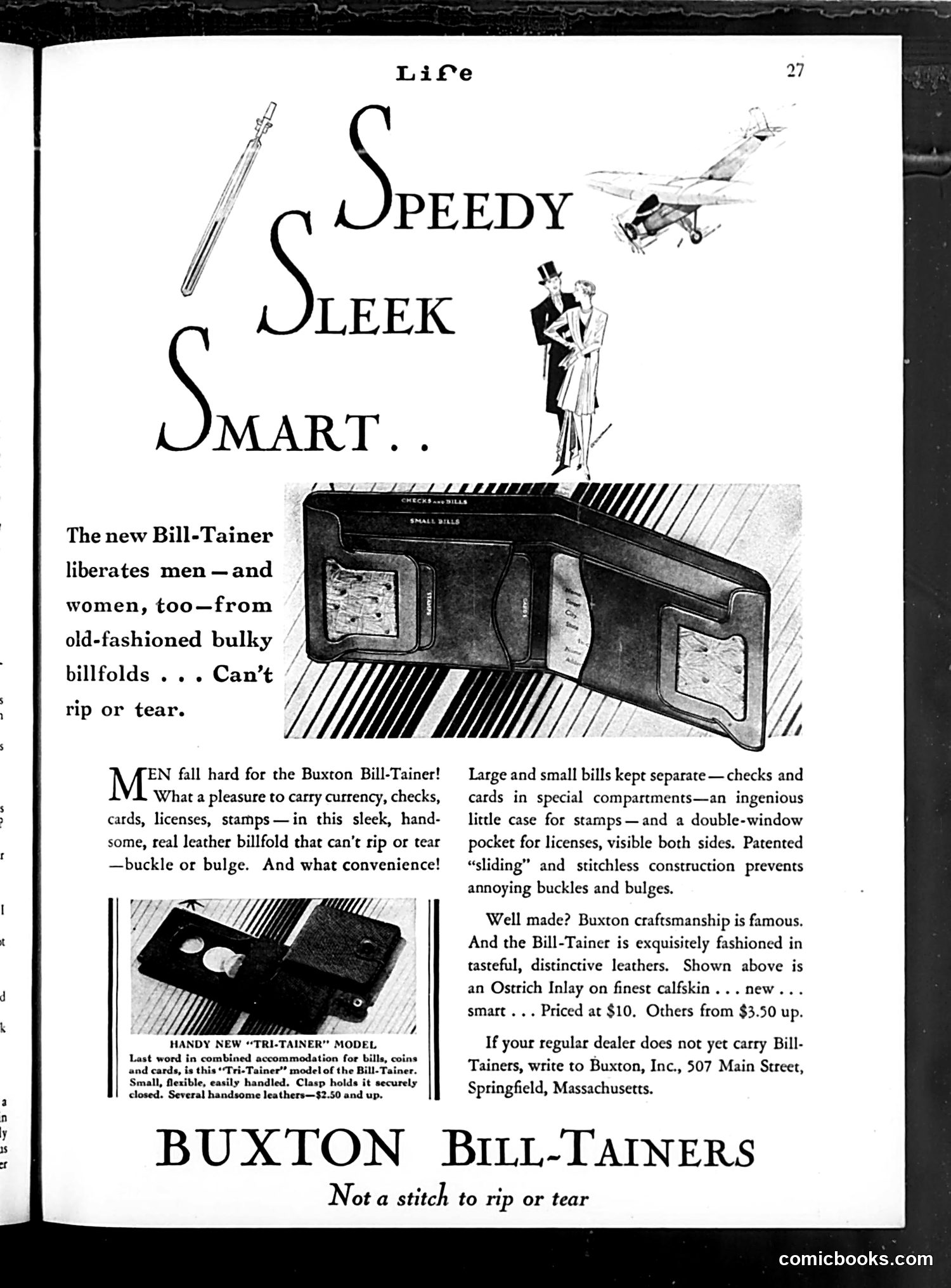
Buxton Bill-Tainers Advertisement This is a product advertisement, not a political cartoon. It promotes the Buxton Bill-Tainer wallet, marketed as a modern solution to "old-fashioned bulky billfolds." The page uses the three-word tagline "Smart...Sleek...Speedy" to appeal to contemporary values. Illustrations show a businessman and woman in formal dress, plus an airplane—suggesting sophistication, progress, and active lifestyles. The design emphasizes practical features: separate compartments for bills, checks, cards, and licenses; durability ("can't rip or tear"); and compact convenience. Pricing ranges from $2.50 to $10 depending on leather quality (ostrich inlay mentioned). The ad targets both men and women, which was noteworthy marketing for 1920s-30s accessories. The company address in Springfield, Massachusetts appears for dealer inquiries.
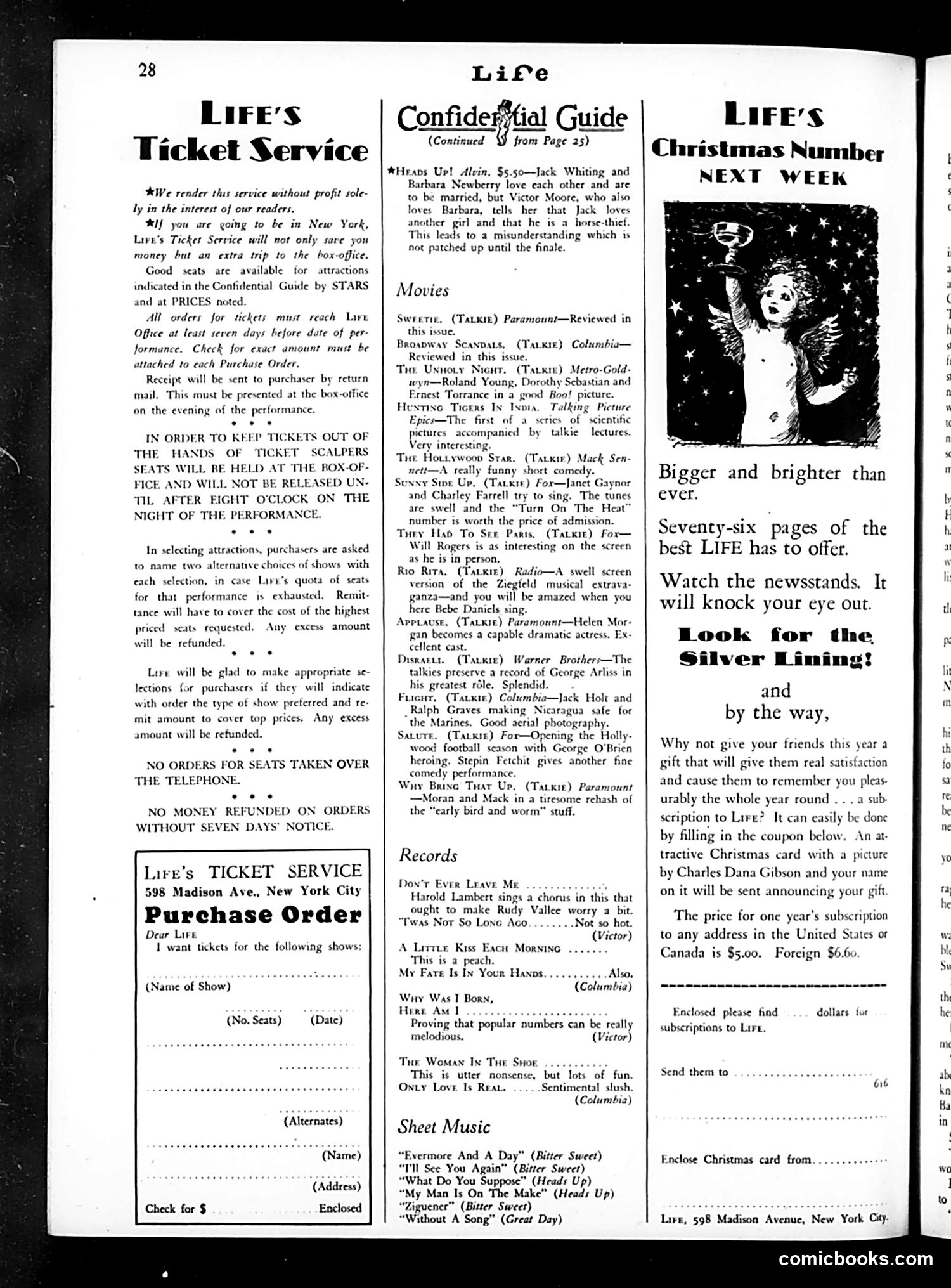
Life Magazine Page Analysis This page is primarily service content and advertising rather than satirical commentary. It contains: 1. Life's Ticket Service — a mail-order theater ticketing system for New York shows, with detailed ordering instructions and a purchase form. 2. Movie and entertainment reviews — brief capsule reviews of talking pictures (early "talkies"), stage shows, records, and sheet music, typical of 1920s entertainment coverage. 3. Christmas subscription promotion — advertising Life's annual subscription as a gift idea. The page reflects 1920s entertainment culture: the prominence of "talkie" films (sound pictures were still novel), vaudeville-style comedies, and Ziegfeld revue productions. Notable names like Will Rogers, Helen Morgan, and George Arliss appear. There is no political satire visible on this page — it's a straightforward service/entertainment guide typical of Life magazine's practical reader offerings during this era.
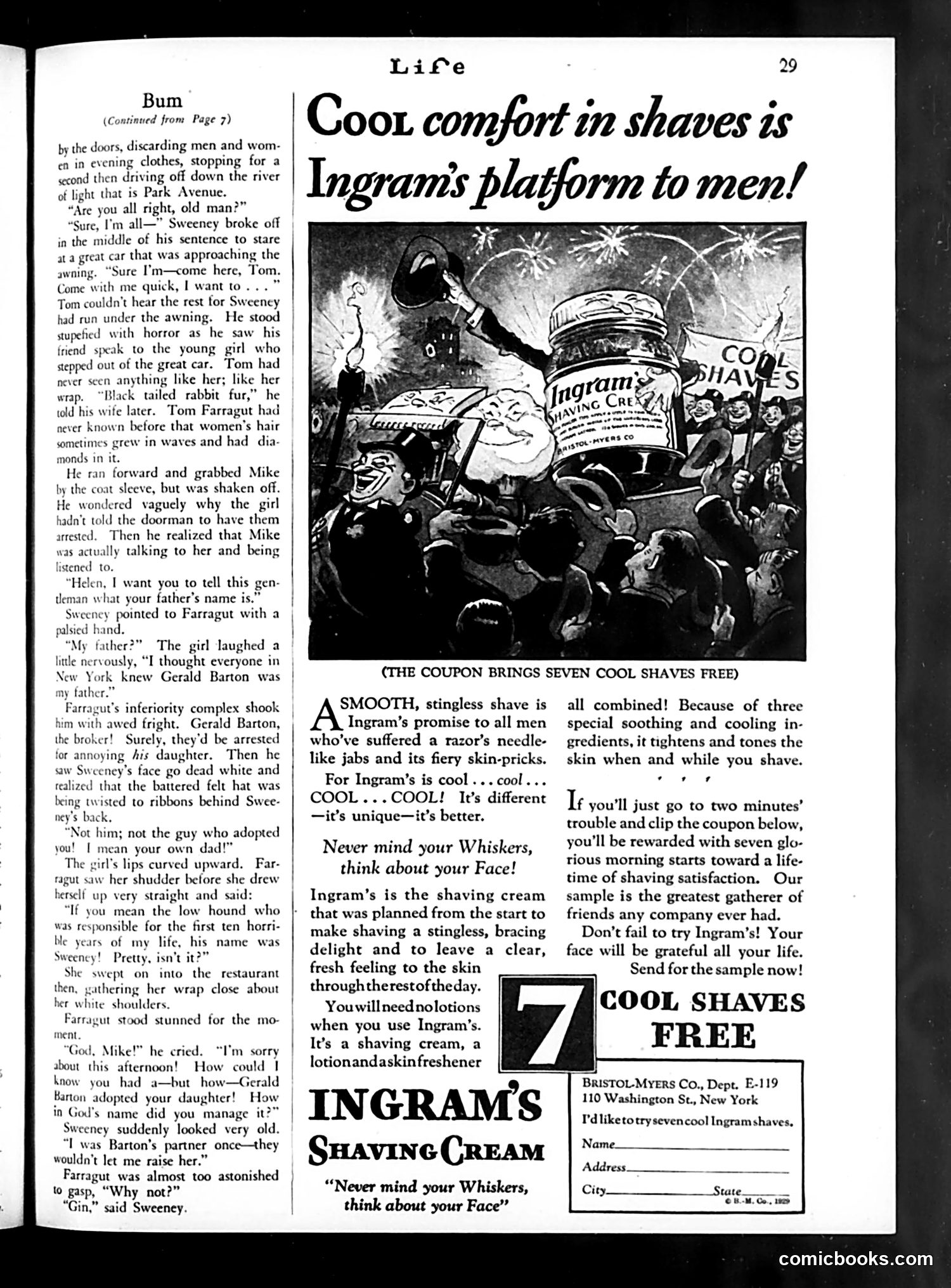
Analysis This page contains a serialized short story titled "Bum" and a full-page advertisement for Ingram's Shaving Cream. The Story: The narrative depicts class anxiety in 1920s New York. A working-class man named Sweeney encounters a wealthy young woman exiting a luxury car on Park Avenue. She reveals her biological father is Sweeney himself—a man of humble circumstances ("gin" being the implication of his dissolution)—though she was raised by Gerald Barton, a wealthy broker who adopted her. The story explores themes of social stratification and shame: Sweeney lost custody of his daughter due to his poverty and drinking, and both he and his friend Farragut are humbled by her refined elegance and the unbridgeable class gulf. The Advertisement: Ingram's promotes its shaving cream by emphasizing comfort and skin care rather than facial hair removal, using the slogan "Never mind your Whiskers, think about your Face." The ad offers free samples via coupon, a common marketing technique of the era. The juxtaposition is notable: a story about social failure opposite an ad promising masculine self-improvement through grooming.
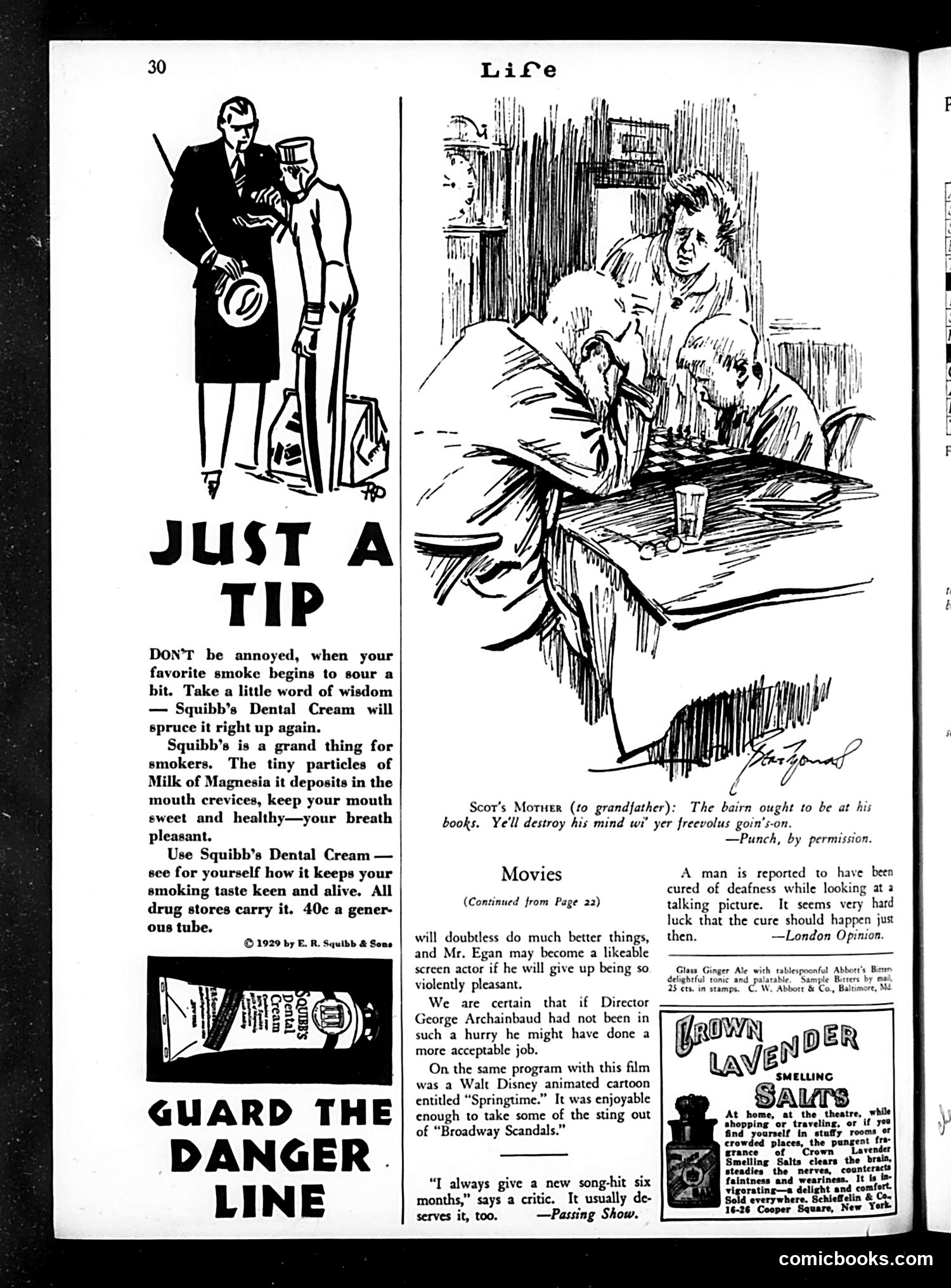
Analysis for Modern Readers This page from Life magazine (1929) contains primarily advertisements and film reviews, not political satire. The main content includes: 1. Squibb's Dental Cream ad: A pitch to smokers to use toothpaste containing "Milk of Magnesia" to keep their breath fresh despite smoking. This reflects 1920s attitudes normalizing smoking while offering a consumer "solution." 2. "Guard the Danger Line" ad: Appears to be a public safety or product advertisement (exact product unclear from visible text). 3. Film review: Discusses movies including a Walt Disney cartoon "Springtime" and a film called "Broadway Scandals," critiquing director George Archainbaud's rushed work. 4. Scottish dialect cartoon caption: Shows a grandmother ("Scor's Mother") warning a grandfather against distracting a boy from his studies with "frivolous" activities—a gentle generational humor piece. 5. Crown Lavender Smelling Salts ad: A period grooming product. The page reflects 1920s consumer culture and entertainment, with no apparent political commentary.
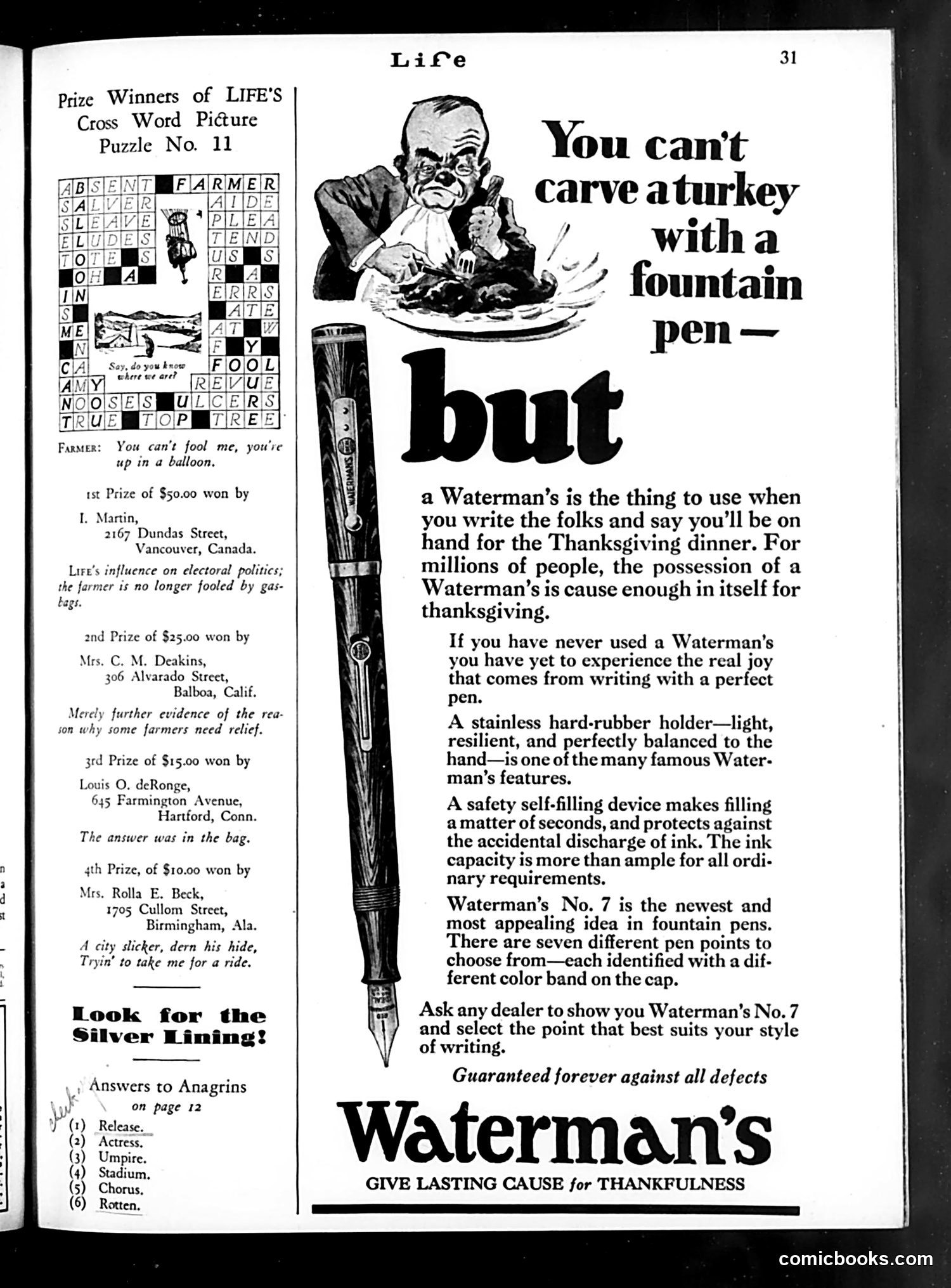
Life Magazine Page 31 Analysis This page contains two distinct sections: Left side: Prize-winning entries from Life's crossword puzzle competition. The cartoon shows a farmer rejecting a con artist in a hot air balloon, saying "You can't fool me, you're up in a balloon." The humor plays on the phrase "gasbag" (a talkative, dishonest person)—the con artist is literally full of gas. The puzzle winners' commentary suggests Life readers appreciated satirical takes on farmers being swindled by smooth-talking city types, a common social anxiety during this era. Right side: A full-page Waterman's fountain pen advertisement. The ad uses Thanksgiving as its hook, suggesting a Waterman's pen is an appropriate gift because it allows one to write letters confirming attendance at the holiday dinner. The ad emphasizes the pen's superior quality and reliability—presenting pen ownership itself as worthy of gratitude. The juxtaposition is purely commercial; the advertisement dominates the page space.
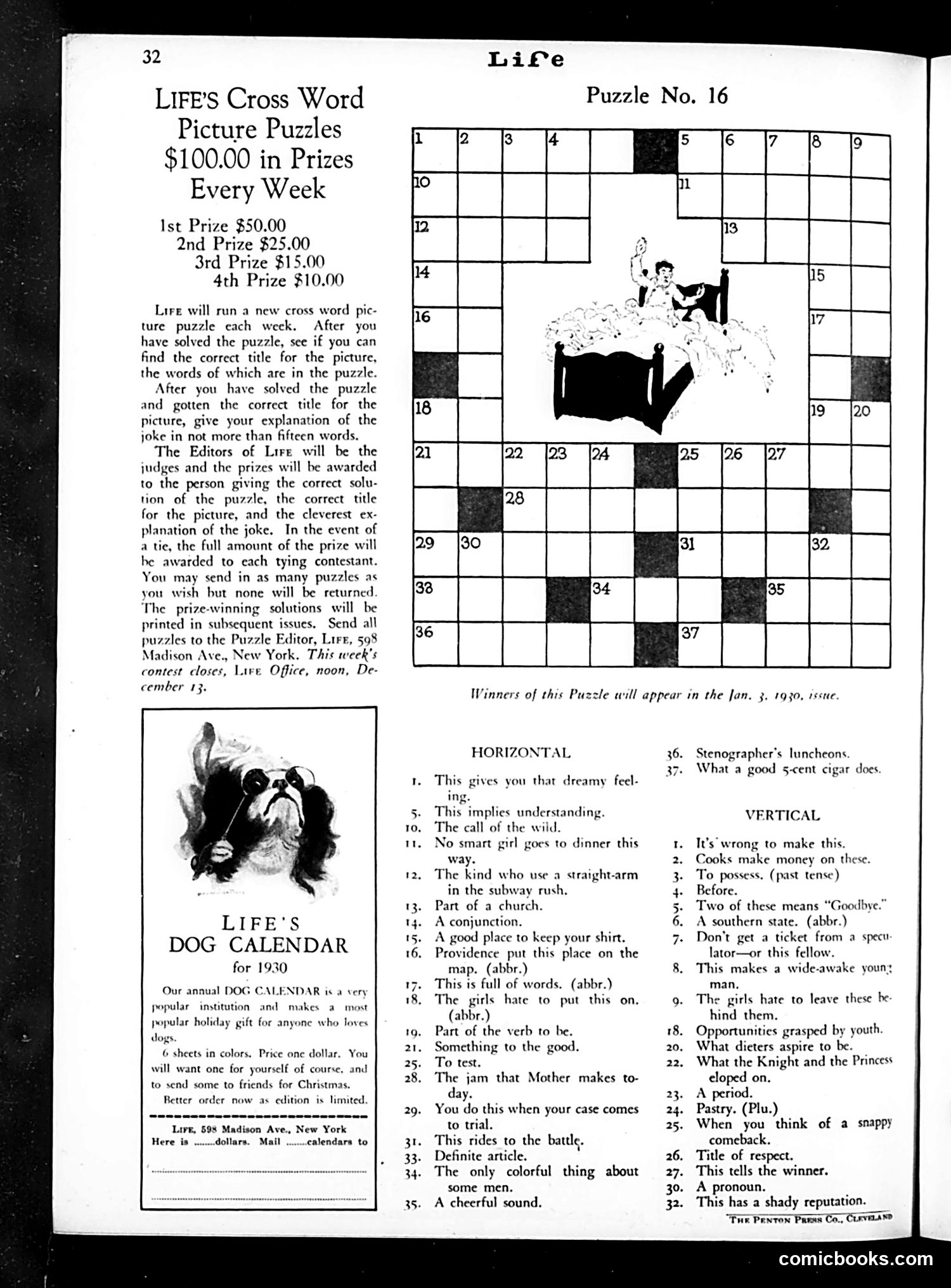
Life Magazine Puzzle Page (circa 1929) This page presents a crossword-picture puzzle contest offering $100 in weekly prizes. The central image shows a couple in formal attire playfully collapsing onto a bed with feathers flying—depicting newlyweds or a romantic moment. Solvers must identify the picture's title using words from the crossword grid, then explain the joke in fifteen words or fewer. The puzzle clues contain period-specific references: "smart girls" avoiding dinner behavior, subway etiquette, speculators (ticket scalpers), and a 5-cent cigar. The "Knight and Princess" reference likely alludes to a contemporary story or song. The page also advertises Life's 1930 Dog Calendar, a popular holiday gift. This reflects 1920s-era entertainment: crossword puzzles were a national craze, and magazine contests offered genuine cash prizes to engaged readers during the pre-Depression era.
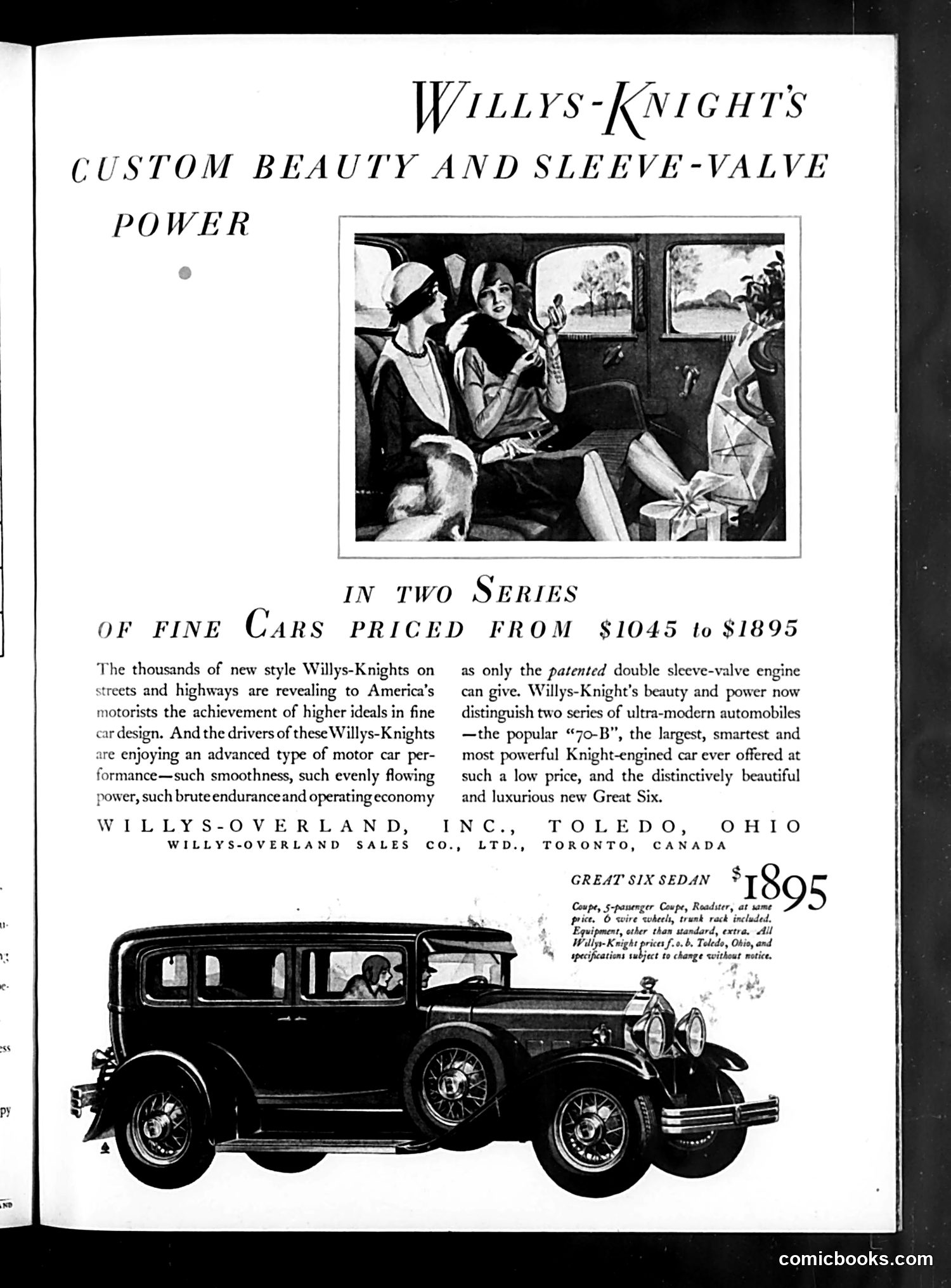
Analysis This is not a political cartoon or satirical content—it's a full-page automobile advertisement for Willys-Knight cars, circa 1920s-1930s. The upper illustration depicts well-dressed women and men socializing inside a luxury automobile, meant to convey sophistication and status. The lower section showcases the "Great Six Sedan" model priced at $1,895. The advertisement emphasizes the car's technical innovation (patented "double sleeve-valve engine"), available price range ($1,045-$1,895), and luxury positioning. The messaging targets affluent consumers by associating car ownership with refined leisure and social standing. This represents typical period advertising strategy: linking consumer goods to lifestyle aspiration rather than practical transportation needs. There is no satire or political commentary present—this is straightforward marketing from Willys-Overland, Inc.
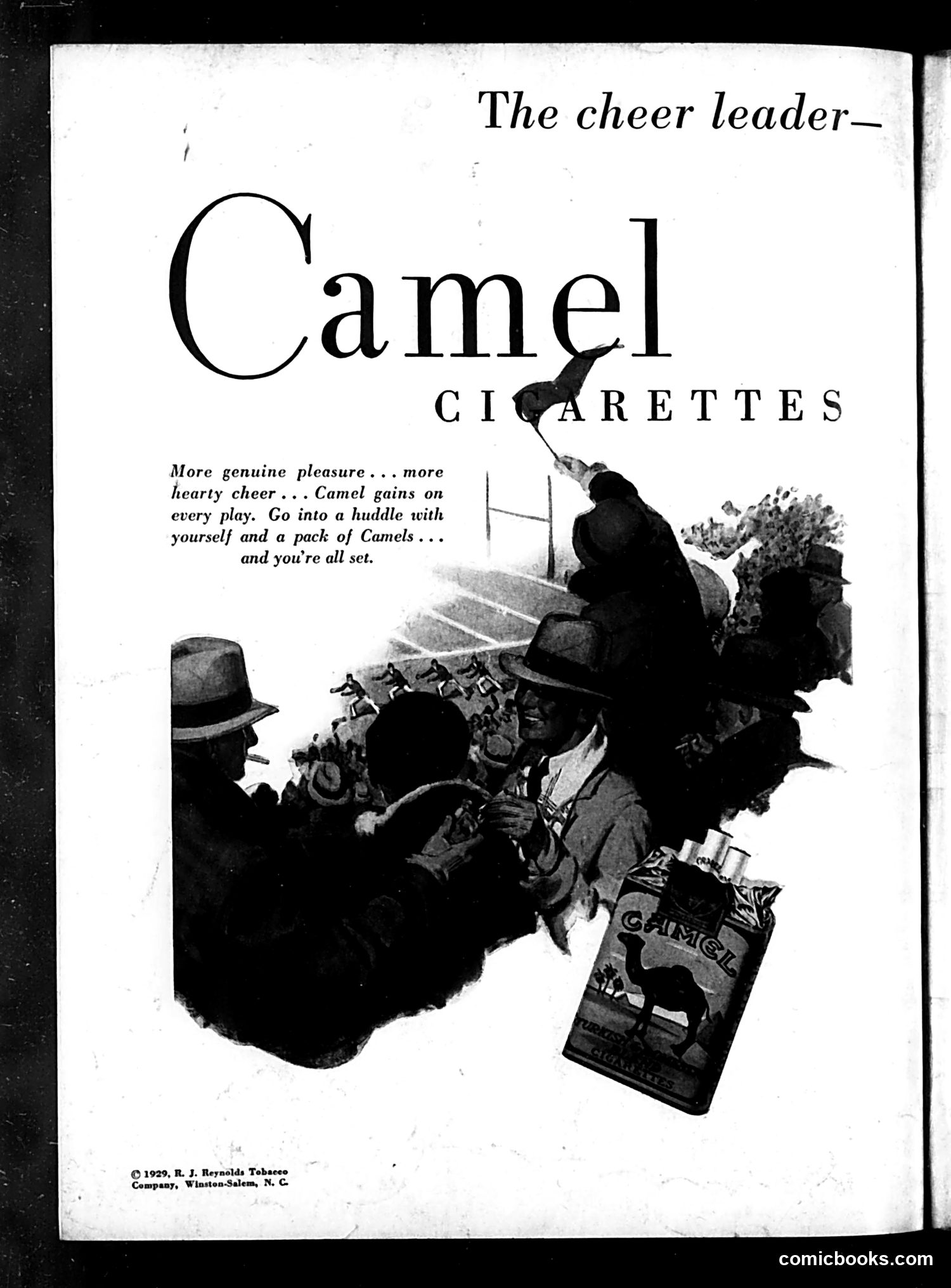
This is a 1929 Camel cigarette advertisement, not political satire. The ad's headline "The cheer leader" references an American football cheerleader—a figure associated with enthusiasm and team spirit. The image shows men in a huddle (a football formation), with one wearing a hat and appearing to lead them. The advertisement's pitch equates smoking Camels with the energy and camaraderie of sports: "Go into a huddle with yourself and a pack of Camels...and you're all set." It positions cigarettes as enhancing social bonding and enjoyment, much like the collective spirit of football. This reflects 1920s-30s advertising practices that freely associated cigarettes with vigor, pleasure, and social success—before health warnings became standard.