life
Life — January 10, 1930
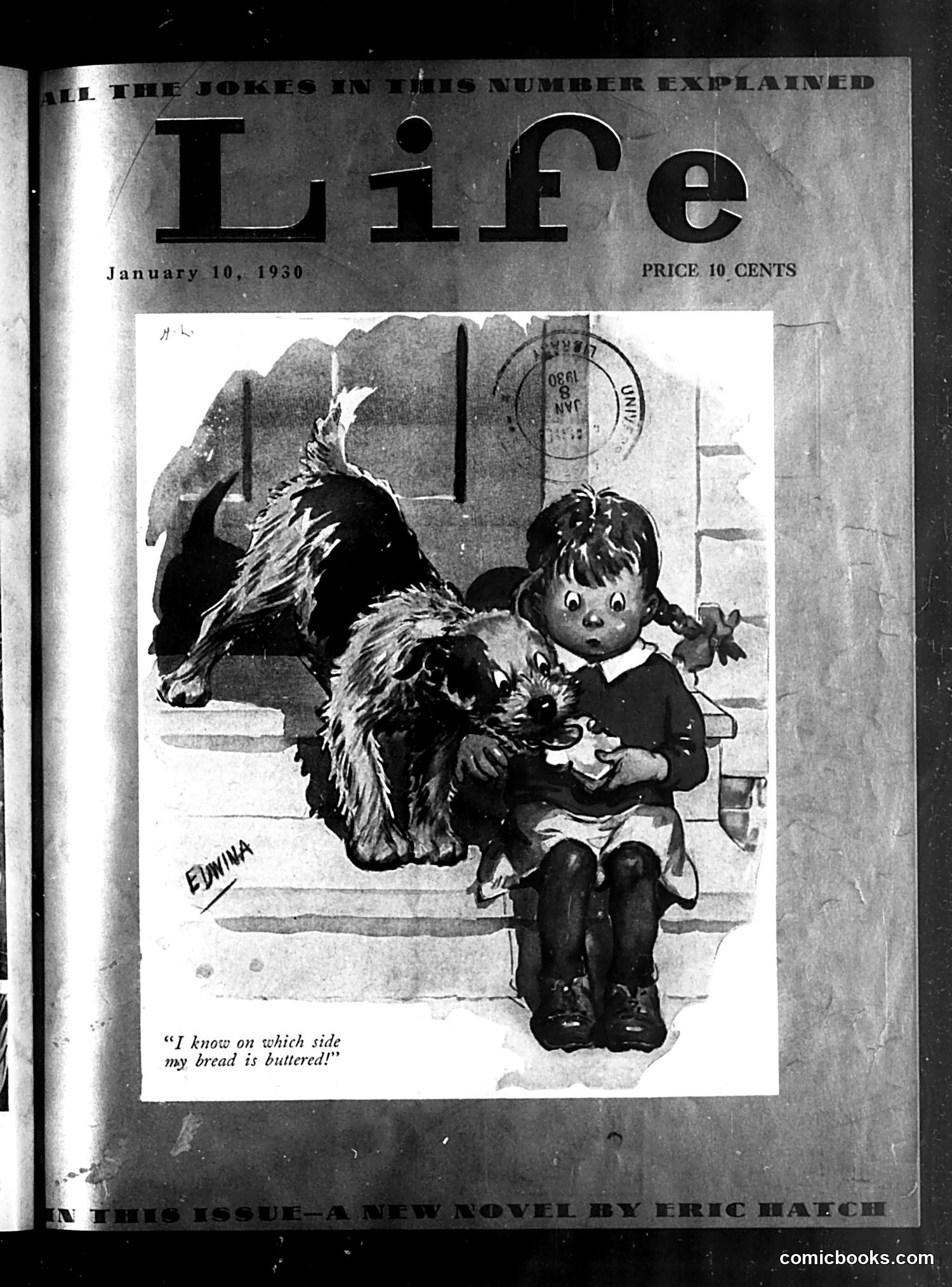
Life Magazine, January 10, 1930 This cover illustration depicts a young child sitting on steps with two dogs, one licking the child's face. The caption reads: "I know on which side my bread is buttered!" The joke appears to be a play on the common expression "knowing which side your bread is buttered"—meaning understanding where your interests or advantages lie. Here, it's applied literally: the child recognizes the dogs are more likely to get butter (or food scraps) from being affectionate toward them than from other sources. This is a straightforward visual pun relying on interpreting an idiom literally through the illustration, typical of Life magazine's humorous approach to satire and wordplay during this period.
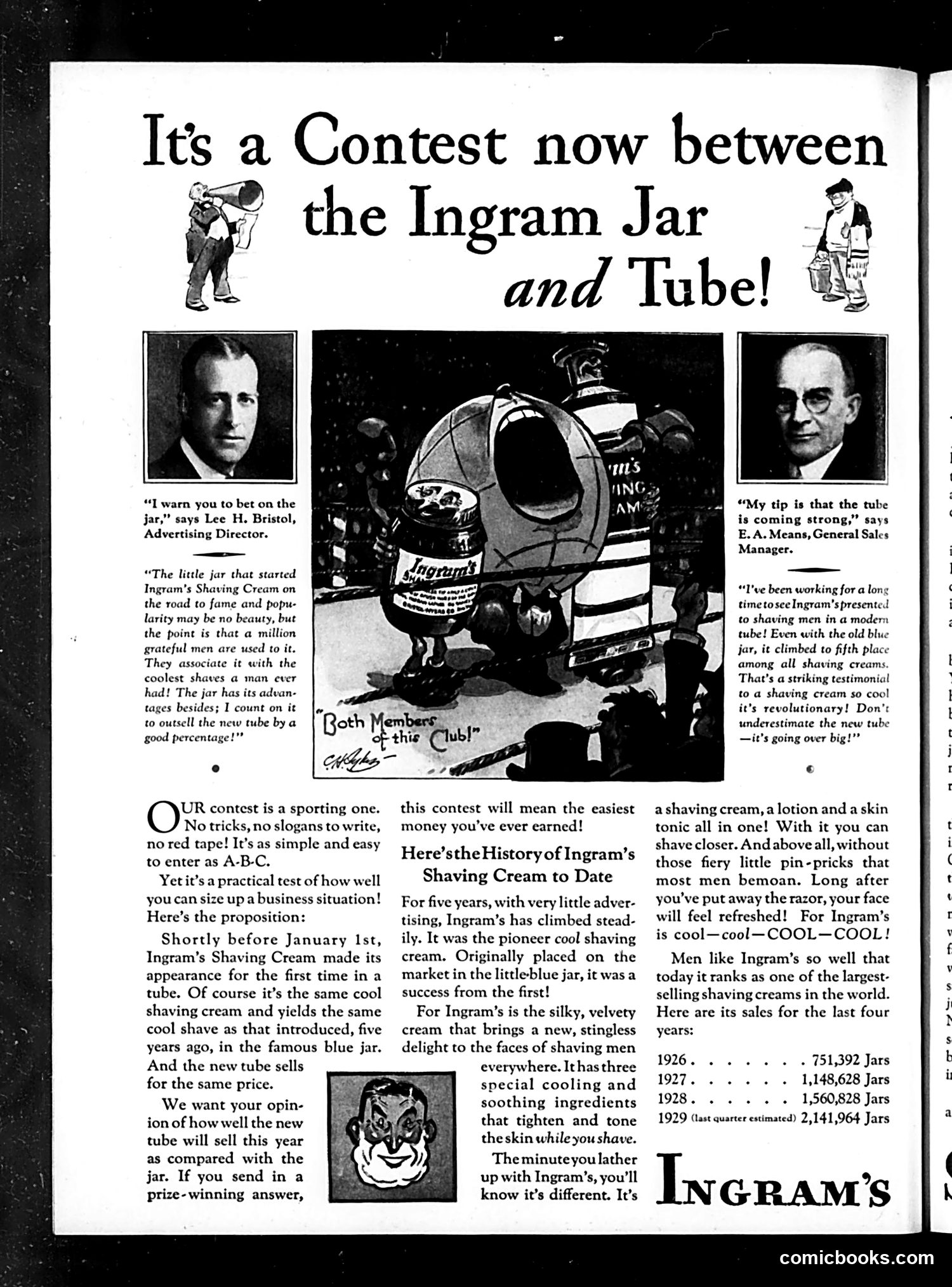
Analysis This page is primarily advertising, not satire or political commentary. It promotes Ingram's Shaving Cream in a competitive marketing campaign framed as a "contest." The page contrasts Ingram's traditional product (sold in a "famous blue jar" for five years) with a new competitor: a shaving cream sold in a tube. Two businessmen are quoted—one defending the jar's heritage, the other promoting the tube as modern and superior. The central image shows both products in an anthropomorphized "contest," with the caption "Both Members of this Club!" suggesting friendly rivalry. The humor is gentle commercial satire: the page playfully frames ordinary product competition as dramatic sporting event, inviting readers to vote on which packaging will dominate the market. It's essentially a creative advertisement disguised as audience participation.
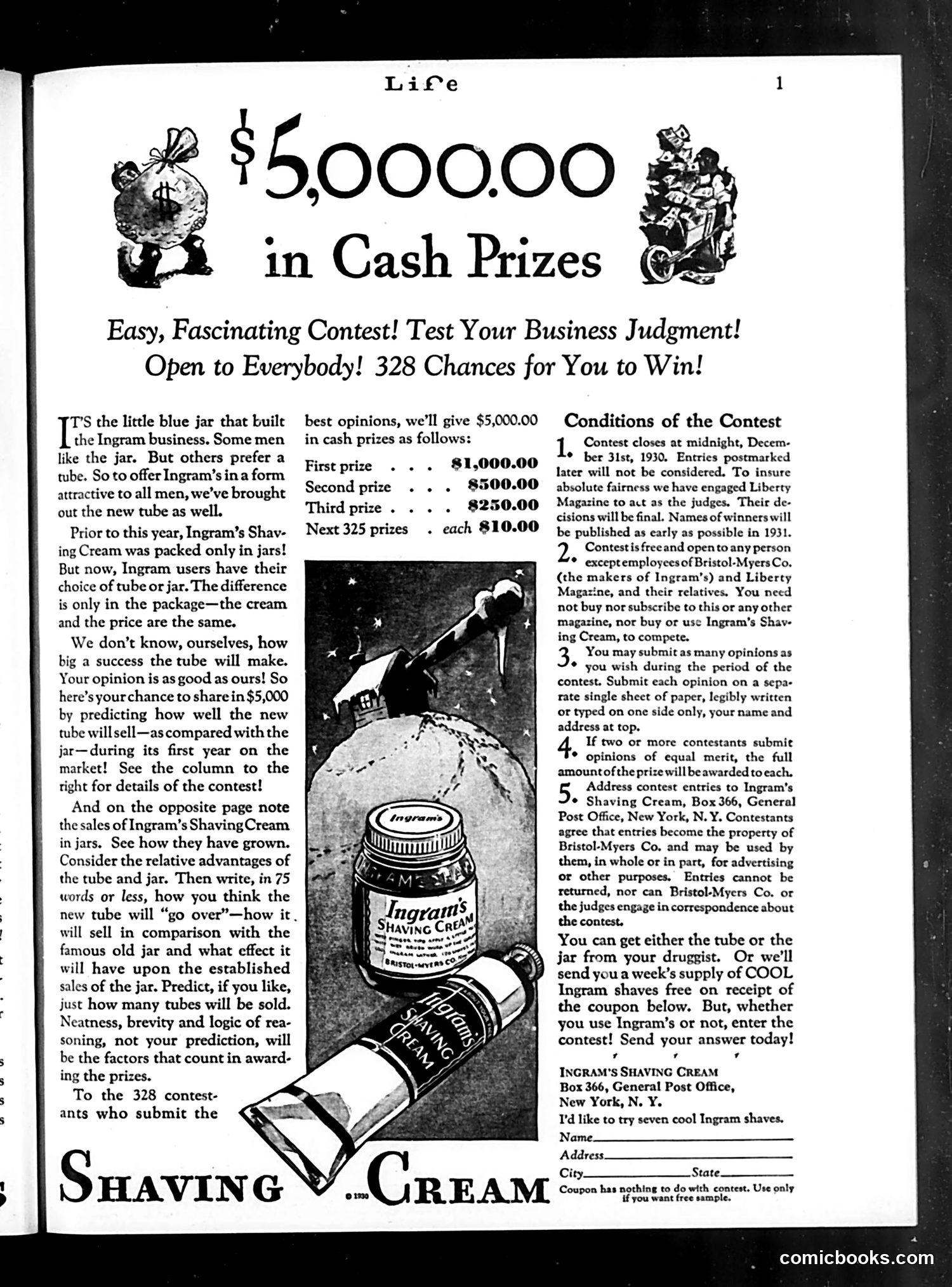
Analysis This page is primarily an advertisement for Ingram's Shaving Cream, not political satire. It's a contest ad offering $5,000 in cash prizes to customers who predict how well a new tube packaging will sell compared to the traditional jar. The imagery shows Ingram's products—a jar and tube of shaving cream—alongside a figure (appears to be a man shaving or demonstrating the product). The "cartoon" element is minimal and decorative rather than satirical. The ad emphasizes consumer participation: entrants must write 75 words or fewer predicting the tube's market success versus the established jar. This reflects early 20th-century marketing tactics using contests to engage consumers and gather market research disguised as entertainment. There is no political content or social satire on this page.
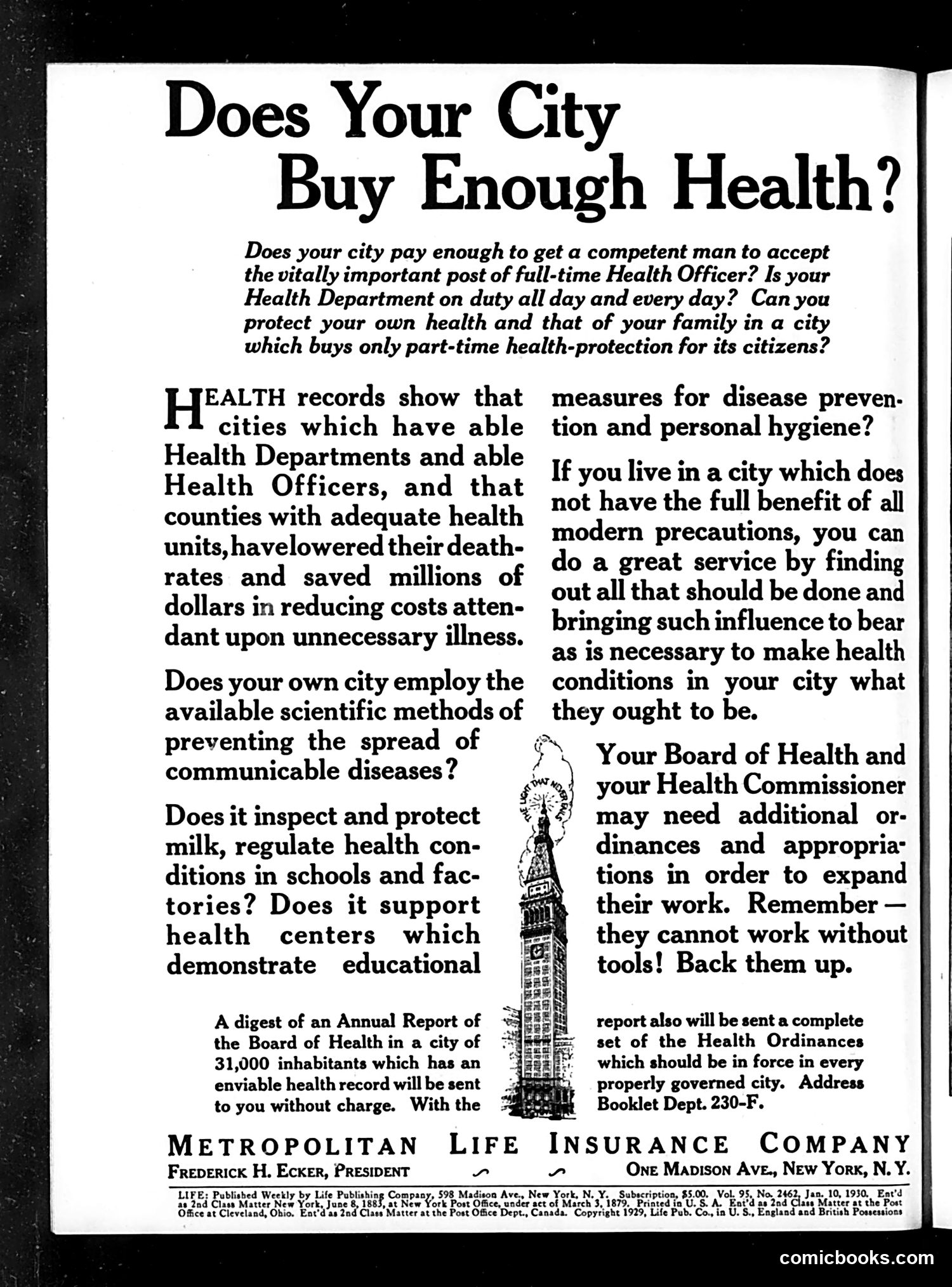
This is primarily an advertisement rather than satirical content. Metropolitan Life Insurance Company uses a full-page ad to advocate for adequate municipal health infrastructure. The ad questions whether cities employ full-time Health Officers and maintain comprehensive Health Departments. It argues that cities with "able Health Departments and able Health Officers" have lowered death rates and reduced illness costs. The piece urges readers to investigate their own city's health provisions—disease prevention methods, milk inspection, school health regulation, and health centers. It calls on citizens to support their "Board of Health" and "Health Commissioner" with necessary funding and ordinances. The illustration shows a city building (likely representing municipal government). Rather than satire, this represents Progressive Era advocacy for public health as a civic responsibility, positioning insurance companies as concerned corporate citizens promoting preventative medicine.
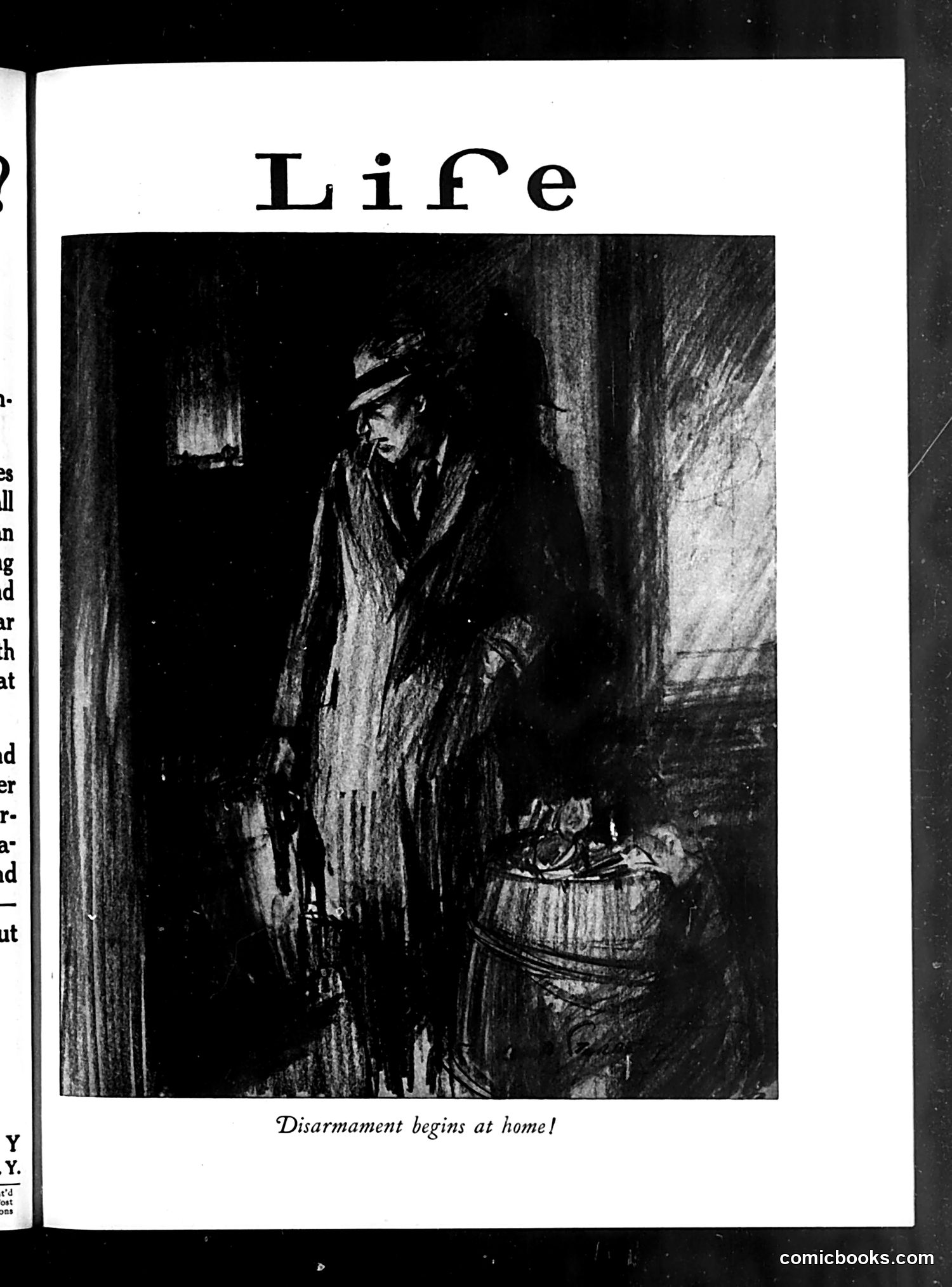
Analysis This page from *Life* magazine features a satirical illustration titled "Disarmament begins at home!" The image depicts an older man in a hat and coat confronting what appears to be a child or smaller figure in an interior setting, likely a home. The satire critiques the hypocrisy of advocating for military disarmament while maintaining domestic violence or corporal punishment. The caption suggests that genuine disarmament—reducing weapons and aggression—must start within families before nations can credibly pursue peace agreements. The sketch-style artwork emphasizes the somber nature of the message, using domestic confrontation as a metaphor for broader peace advocacy. The exact historical period is unclear from this image alone, but the style suggests early-to-mid 20th century.
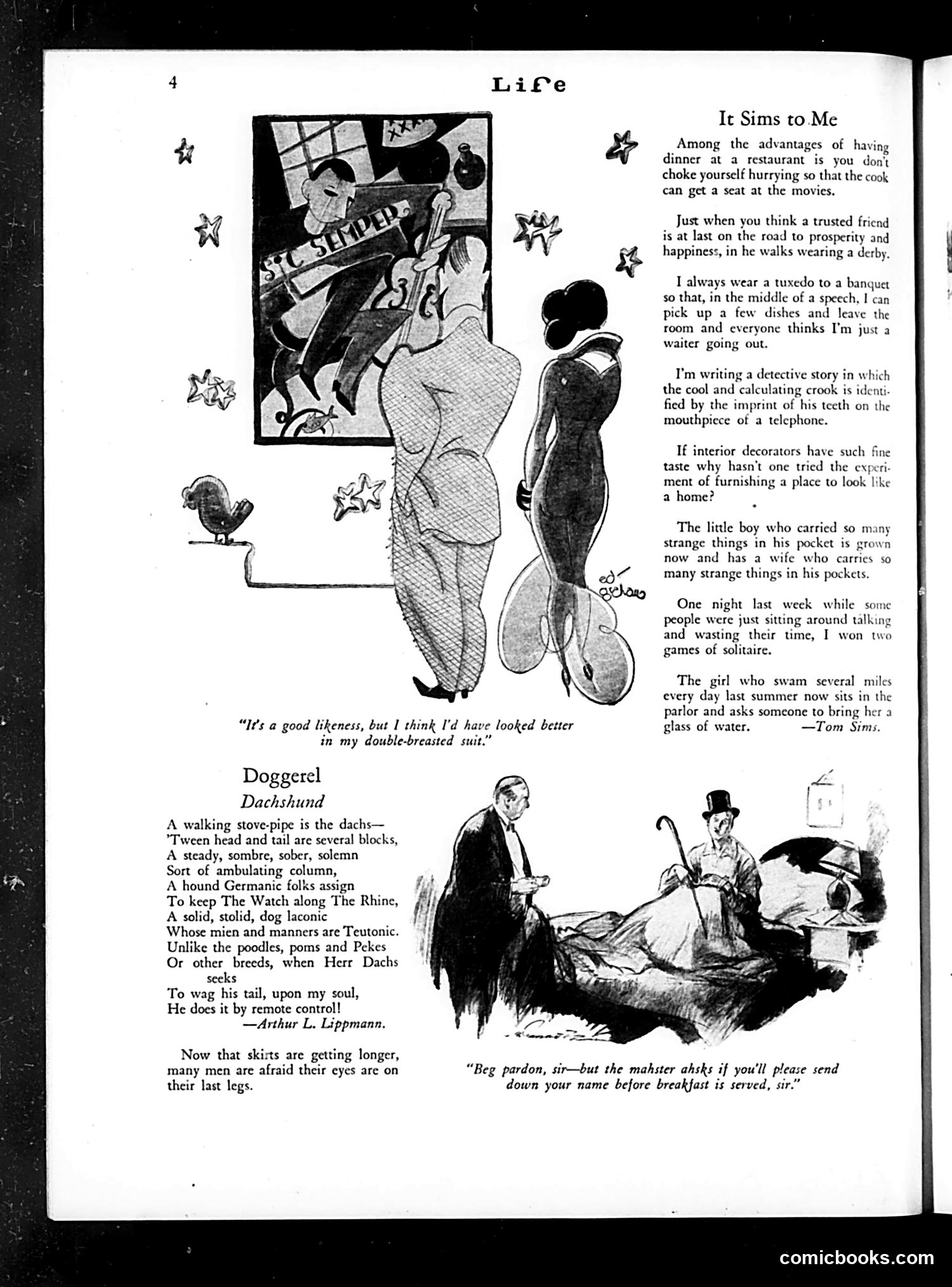
Analysis of Life Magazine Page Main Content: The top illustration shows two women viewing what appears to be a cinema or entertainment poster, with a humorous caption about preferring to look better in a "double-breasted suit." This jokes about fashion trends and women's appearance. "It Sims to Me" Column: Tom Sims's humor column offers observational satire about everyday life—dining out, wearing tuxedos to speeches, detective fiction, interior design, and competitive games. These are lighthearted social commentaries typical of 1920s-30s magazine humor. "Doggerel" Section: A poem about the Dachshund (called "Dacshund"), presenting the breed as a German walking apparatus. The final couplet notes men are increasingly distracted by women's legs as skirts grow longer—period commentary on changing fashion and male attention. The cartoon at bottom appears unrelated domestic humor.
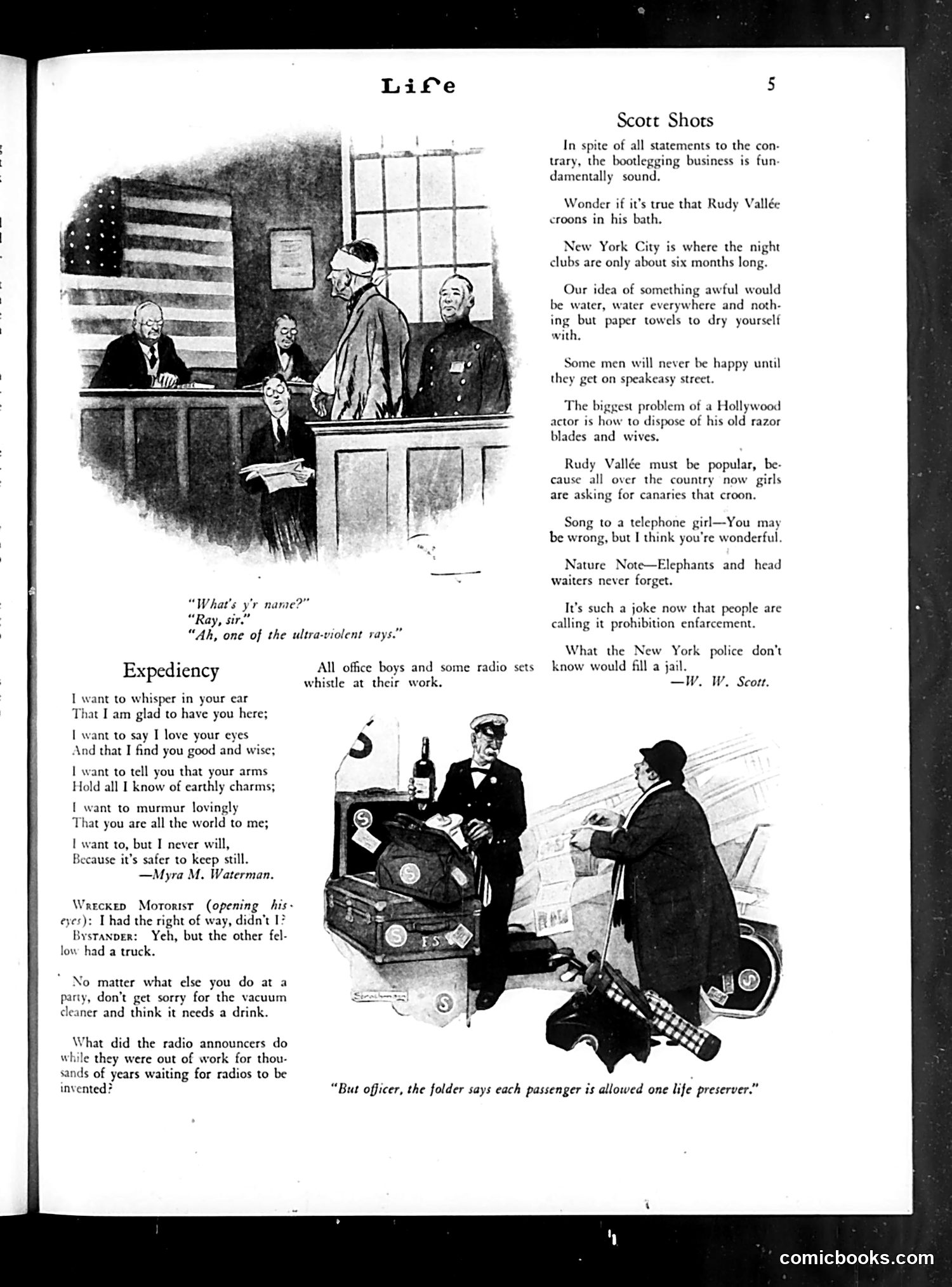
Analysis of Life Magazine Page 5 Upper Cartoon ("What's yr name?"): A courtroom scene where a police officer interrogates a suspect about "ultra-violent rays." This appears to be satirizing contemporary anxieties about new technology or scientific weapons, possibly referencing 1920s-30s concerns about radio or X-rays being used criminally or mysteriously. Lower Cartoon ("But officer, the folder says each passenger is allowed one life preserver"): Two police officers stop a motorist illegally transporting life preservers. The joke mocks the absurdity of traffic enforcement—the officer literally interprets safety equipment regulations, treating life preservers like passengers requiring individual permits. It's satire of overzealous bureaucratic rule-following. Both cartoons ridicule law enforcement and regulatory absurdity of the era.
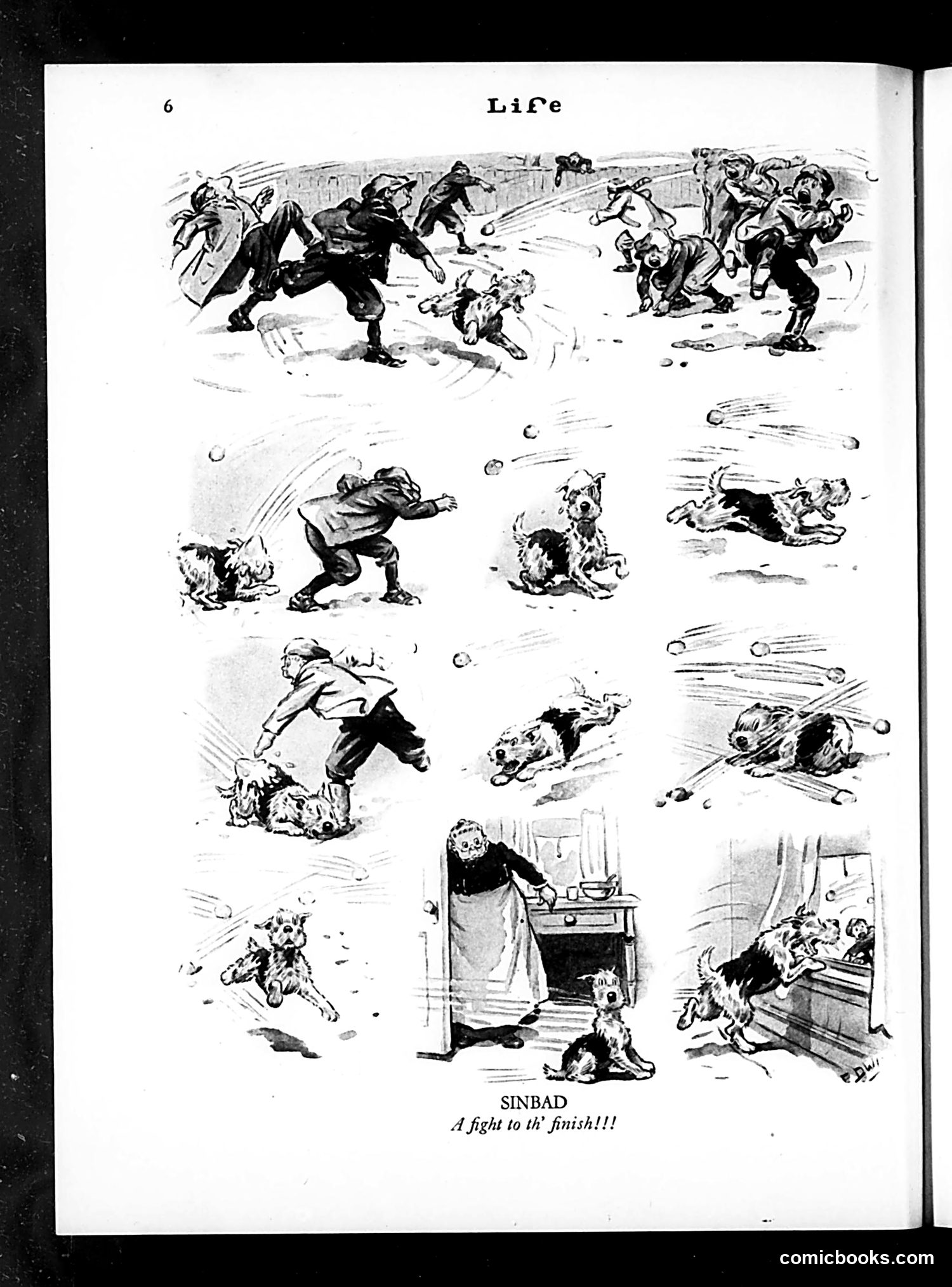
Sinbad Comic Strip Analysis This page from *Life* magazine presents a humorous comic strip titled "Sinbad: A fight to th' finish!!!" The strip depicts a chaotic scene where a man (Sinbad) battles multiple dogs in various comedic scenarios. The top panel shows a large brawl with numerous figures and dogs scattered across what appears to be a street or public space. The remaining panels show individual vignettes of the protagonist struggling with dogs in different situations—chasing them, being chased, fighting them indoors, and engaging in physical comedy. The satire appears to be a lighthearted slapstick takeoff on adventure tales, with the legendary adventurer Sinbad reduced to an ordinary man comically overwhelmed by common street dogs. The humor derives from the contrast between Sinbad's mythic reputation and this mundane, farcical reality of urban dog trouble.
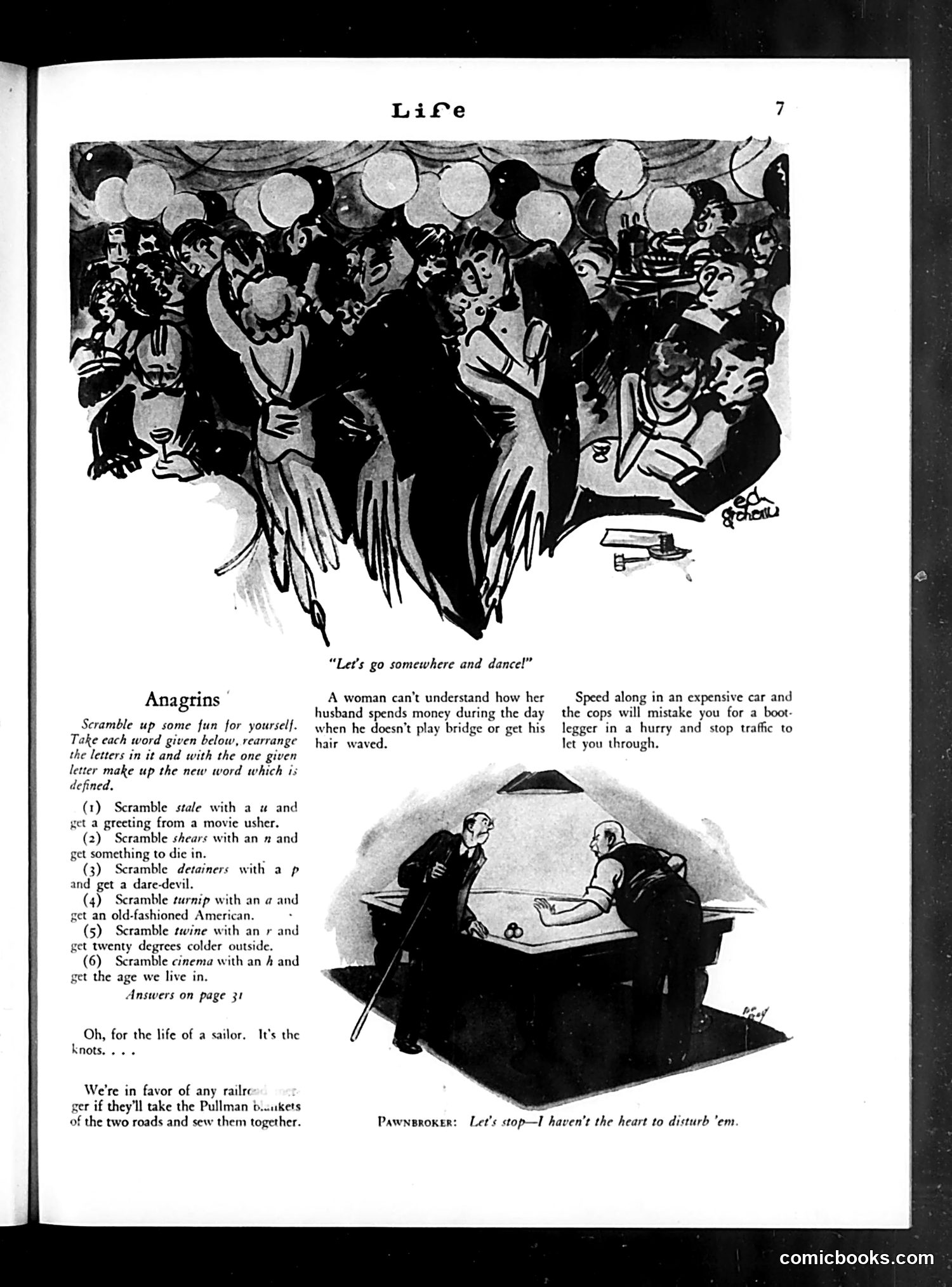
Analysis of Life Magazine Page 7 Top Cartoon: "Let's go somewhere and dance!" depicts a lively Jazz Age party scene with couples in 1920s attire beneath hanging lanterns. The stylized, energetic drawing captures the era's nightlife culture, likely satirizing the social freedoms and moral concerns associated with the "Roaring Twenties." Bottom Cartoon: "Pawnbroker: Let's stop—I haven't the heart to disturb 'em" shows a pawnbroker discovering a couple intimately embraced in what appears to be a boat or enclosed space. The humor relies on the pawnbroker's unexpected sentimentality—he cannot bear to interrupt them despite his profession's transactional nature. Anagrams Section: A word-puzzle game offering definitions for scrambled words, typical of Life's entertainment content. The page reflects 1920s anxieties about leisure, courtship customs, and changing social mores.
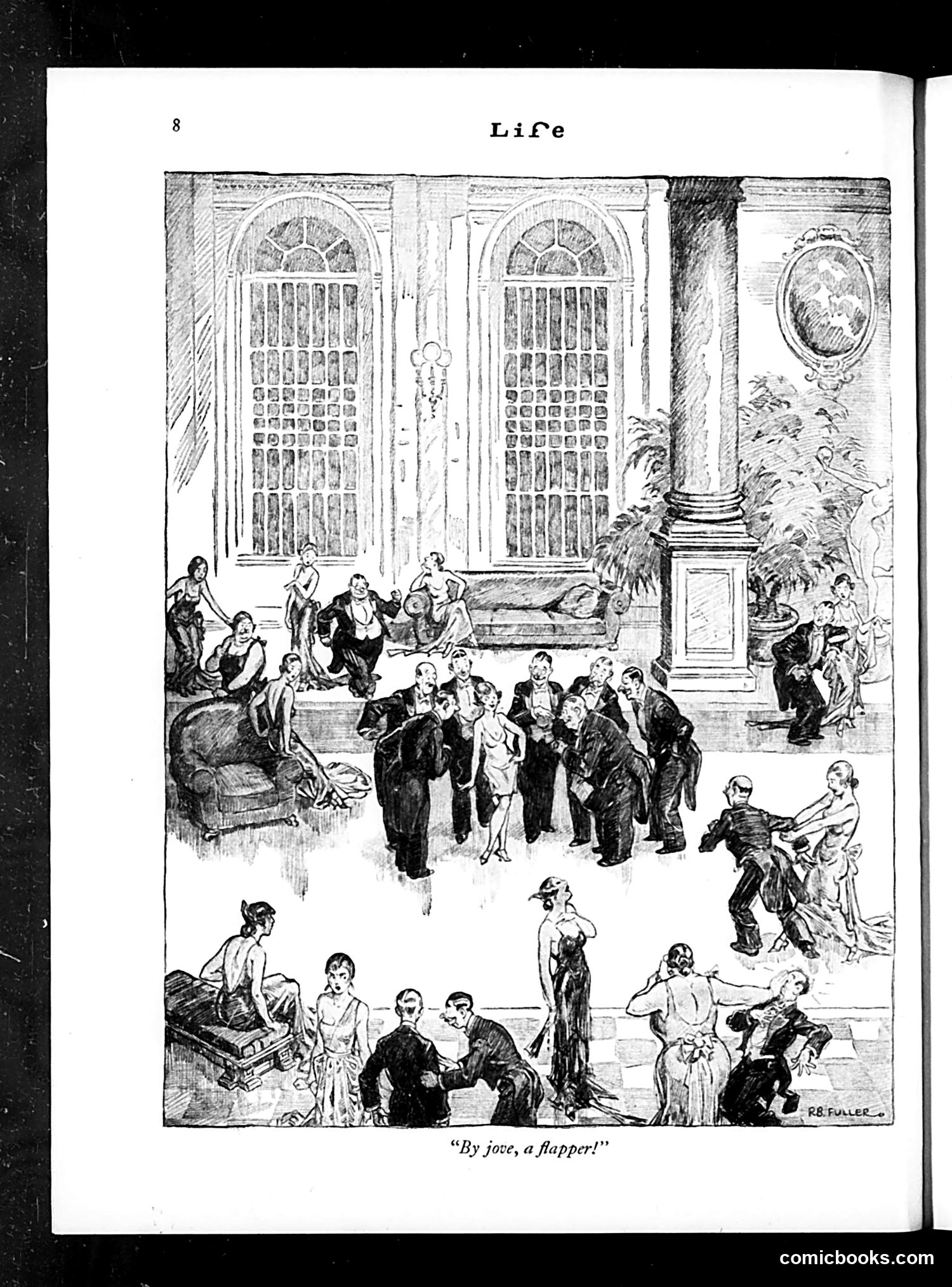
"By Jove, a Flapper!" This single-panel cartoon by R.B. Fuller depicts a fashionable social scene, likely from the 1920s based on the artistic style. The illustration shows well-dressed figures in an elegant interior with tall arched windows and classical architectural details. The caption's exclamation—"By Jove, a flapper!"—appears to be satirizing the social reaction to the "flapper" phenomenon: young women who defied Victorian conventions through bobbed hair, shorter skirts, and independent behavior. The cartoon likely mocks the shock and surprise expressed by older, more conservative society members encountering these modern women. The scene captures the tension between traditional high society and the emerging youth culture of the Jazz Age, with the caption emphasizing outdated genteel expressions of astonishment at changing social norms.
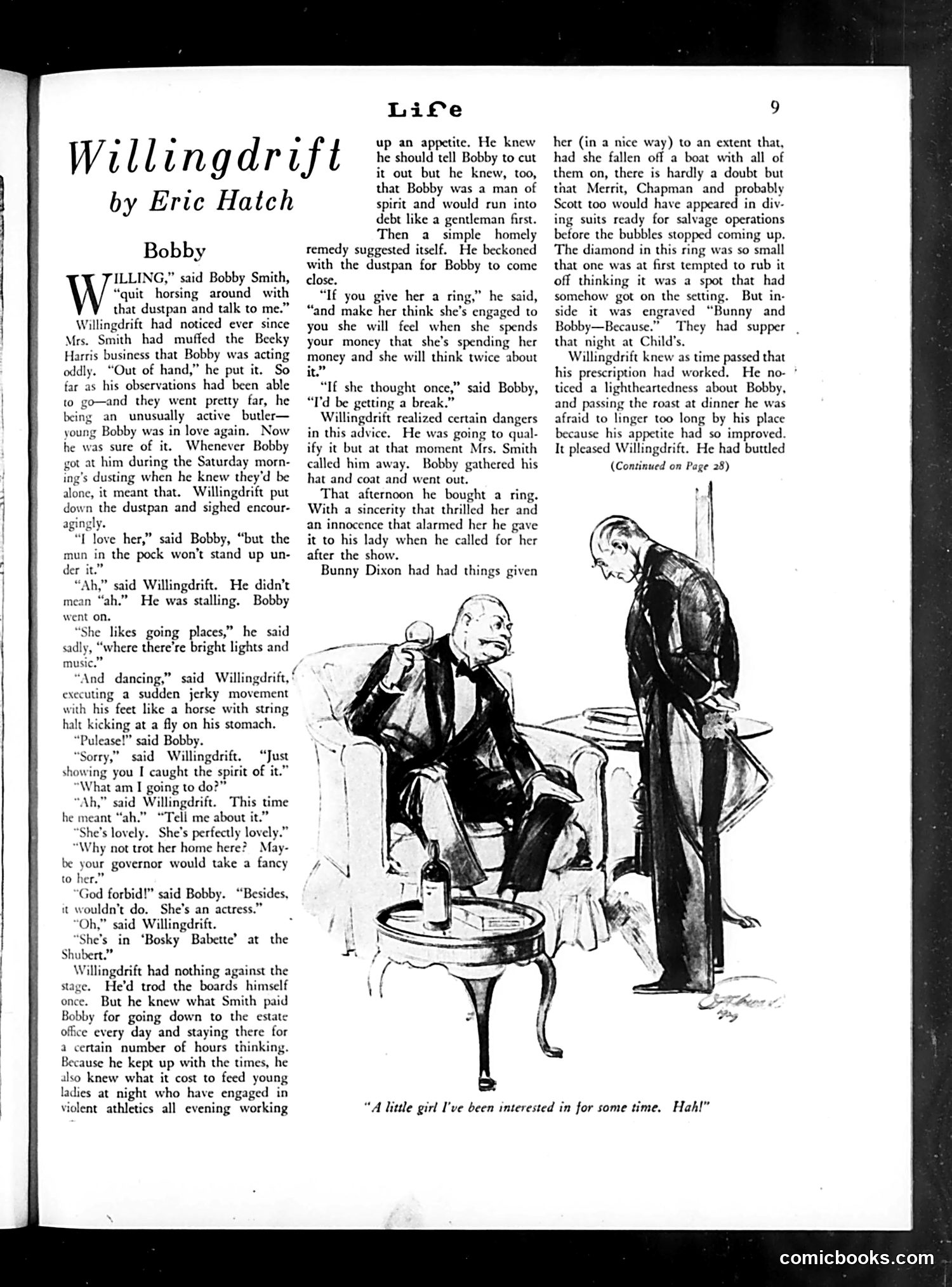
"Willingdrift" by Eric Hatch - Satirical Fiction Page This page presents a short story titled "Willingdrift" featuring a character named Bobby Smith. The accompanying illustration shows two men in formal attire (suits and hats) in conversation, with one seated and one standing, apparently discussing romantic matters. The satirical content centers on Bobby's romantic pursuits and financial naiveté. The story mocks the upper-class gentleman who, despite his social pretensions and awareness of proper decorum, becomes romantically entangled and makes financially questionable decisions—specifically purchasing an engagement ring for a woman of lower social status (an actress). The humor derives from exposing the gap between his self-image as a sophisticated man-about-town and his actual sentimental, economically foolish behavior.
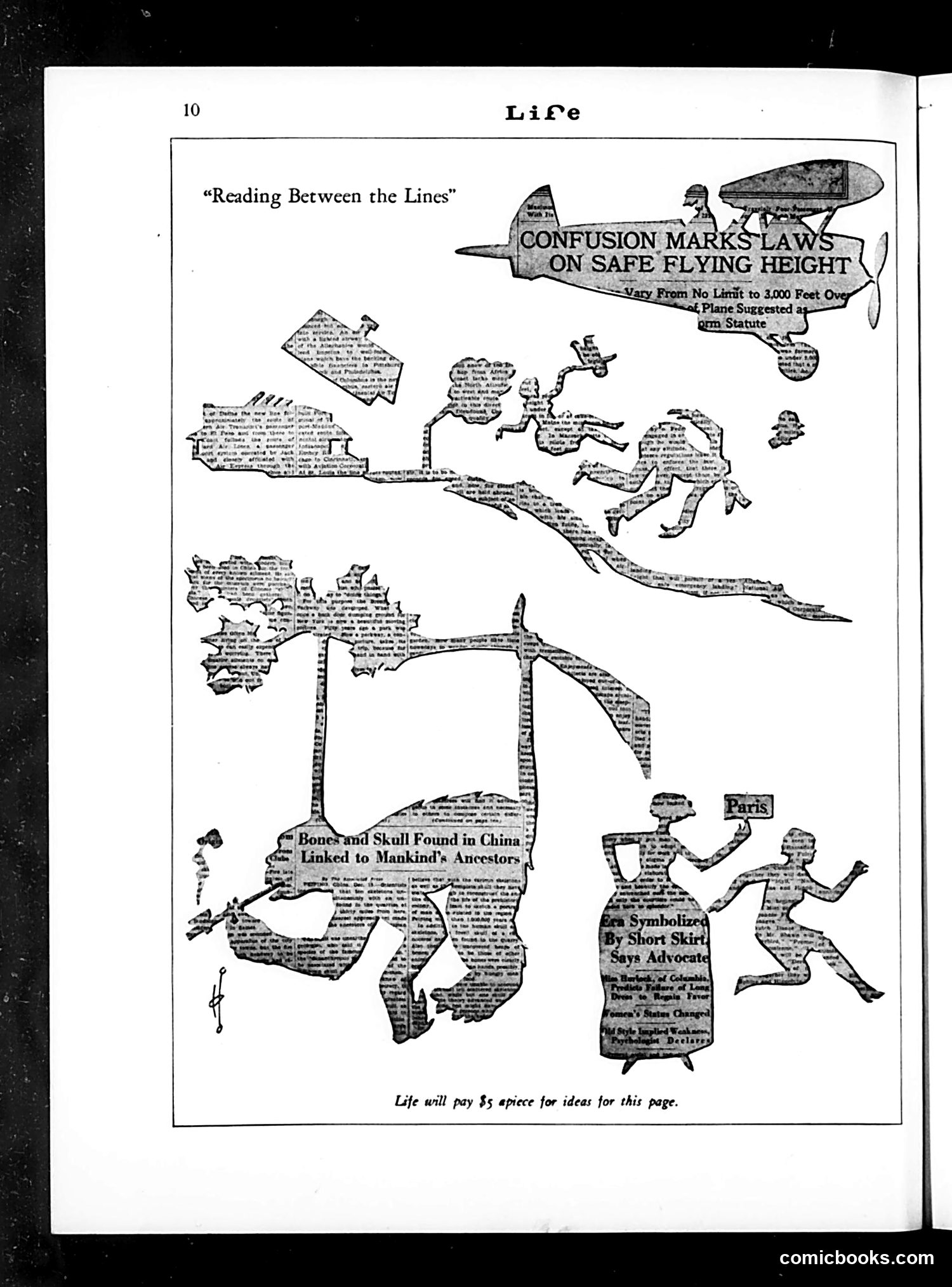
Analysis of Life Magazine Page 10 This page presents a satirical infographic titled "Reading Between the Lines," critiquing American legal inconsistencies through visual metaphors. The main subjects are: - Safe flying height laws: A map showing U.S. states with conflicting regulations on aircraft altitude (ranging "from No Limit to 3,000 Feet"), satirizing the patchwork of state aviation laws - Chinese ancestry debate: A figure labeled about "Bones and Skull Found in China Linked to Mankind's Ancestors"—likely mocking contemporary disputes over human evolution theory - Women's fashion/rights: Figures discussing hemlines and a "short skirt" advocate, referencing 1920s debates about women's clothing and social status The cartoons mock regulatory chaos and cultural anxieties of the era. The bottom tagline offers payment for reader submissions, indicating this was an interactive humor section. The satire targets governmental confusion and contemporary social controversies through absurdist visual contrast.
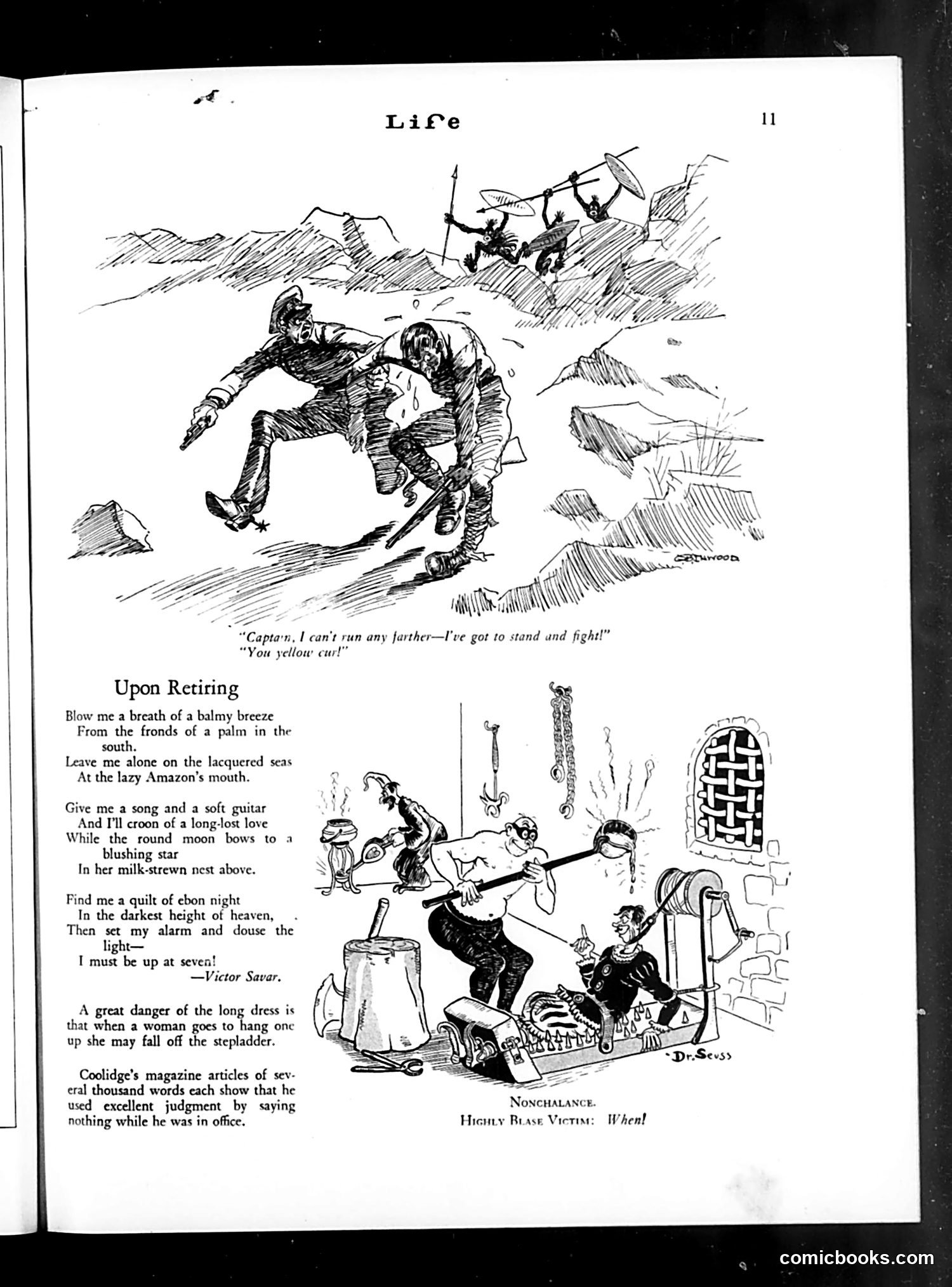
Analysis of Life Magazine Page 11 Top Cartoon: A wounded soldier lies on the ground telling his captain "I can't run any further—I've got to stand and fight!" The captain responds "You yellow cur!" This appears to satirize military officers who pressure exhausted or injured soldiers to continue fighting, questioning their courage while ignoring legitimate physical limitations. "Upon Retiring" Poem: Victor Savar's romantic verse about retirement, accompanied by a Dr. Seuss illustration showing a man relaxing at home with a guitar and servants attending him—contrasting leisurely domestic life with military hardship. Bottom Item: Brief text mocking Coolidge's magazine articles, suggesting he achieved editorial success primarily through silence rather than substantive judgment. The page juxtaposes war's harsh realities with civilian comfort.
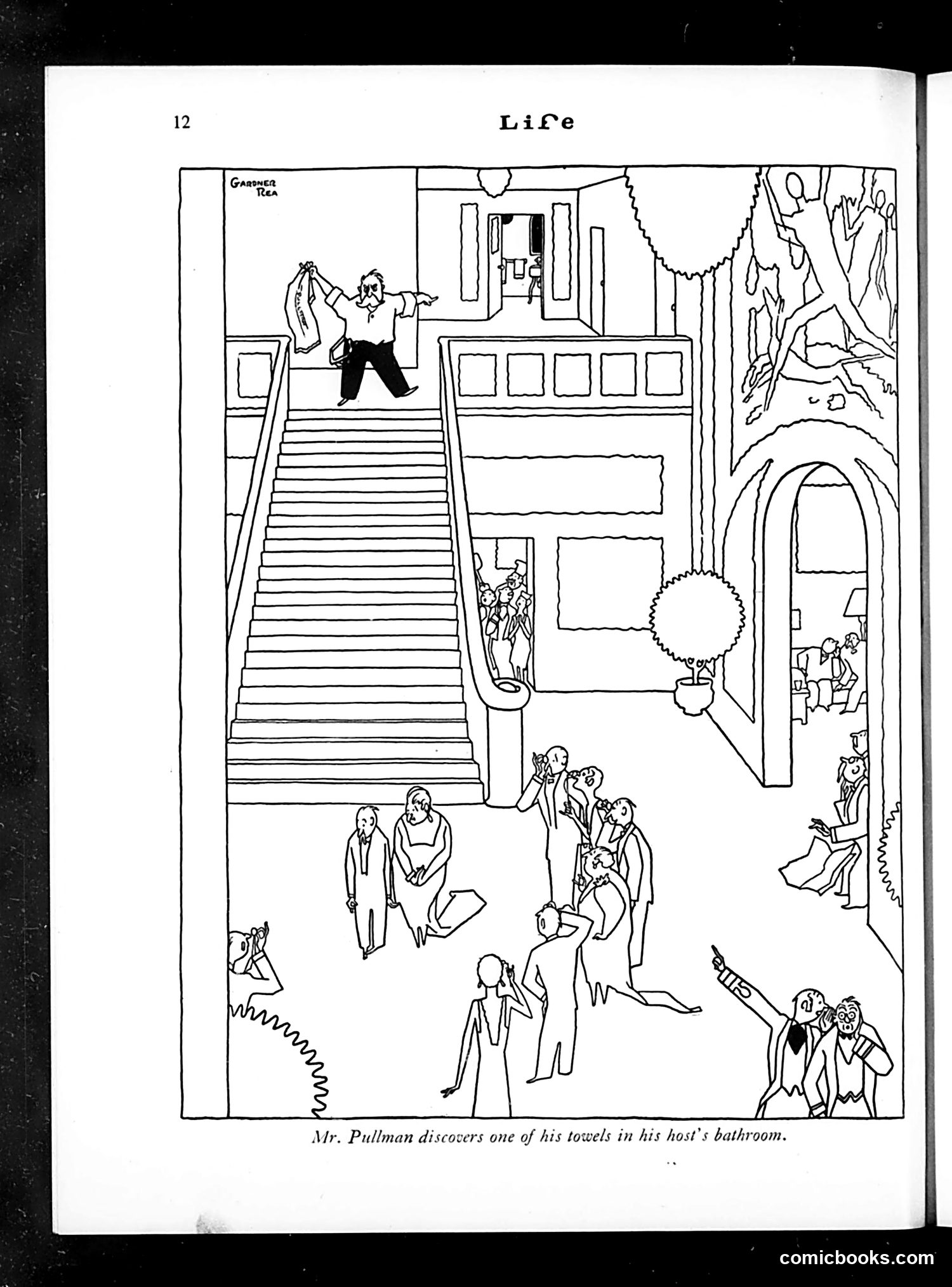
Analysis of Life Magazine Page 12 This single-panel cartoon depicts a humorous domestic scene titled "Mr. Pullman discovers one of his towels in his host's bathroom." The joke centers on Mr. Pullman—likely a reference to George Pullman, the famous railroad magnate and inventor of the Pullman sleeping car. The satire appears to target wealthy industrialists' reputation for excessive wealth and material possessions. The humor derives from Pullman finding one of his own towels in someone else's home, suggesting either: 1. His towels are so distinctive/luxurious they're recognizable anywhere 2. He's so wealthy and particular about possessions that he notices this The crowded public setting with various figures observing the scene emphasizes the social embarrassment of the discovery. This reflects turn-of-the-century satirical commentary on the ostentatious behavior and excessive material consciousness of America's wealthy elite.
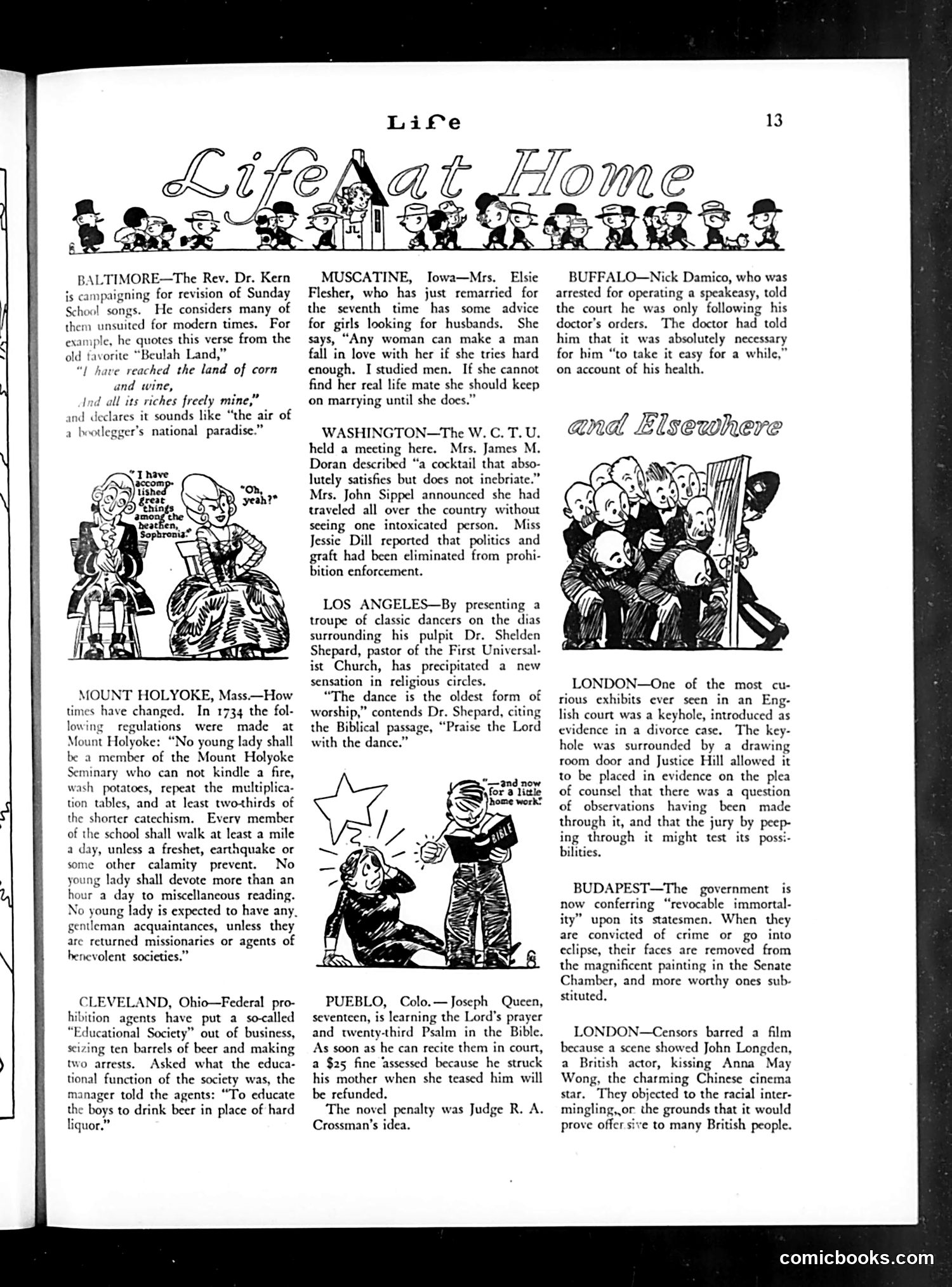
"Life at Home" Satirical Commentary This page presents humorous observations about domestic and social life across American cities. The cartoons mock: Marriage and Gender Relations: A Baltimore piece quotes a woman's cynical advice—that wives should control husbands through withholding affection and matching their husband's effort in the marriage. Religious Hypocrisy: A Los Angeles item satirizes a pastor presenting classical dancers as religious worship, labeled "the newest form of worship," mocking churches that blur entertainment with spirituality. Legal Absurdity: A London divorce case describes a keyhole introduced as courtroom evidence, satirizing the invasive and ridiculous nature of some legal proceedings. Government Excess: Budapest's "revocable immortality" program mocks authoritarian governments conferring honors that can be stripped away. The tone throughout is sardonic social commentary on modern institutions failing to live up to their ideals.
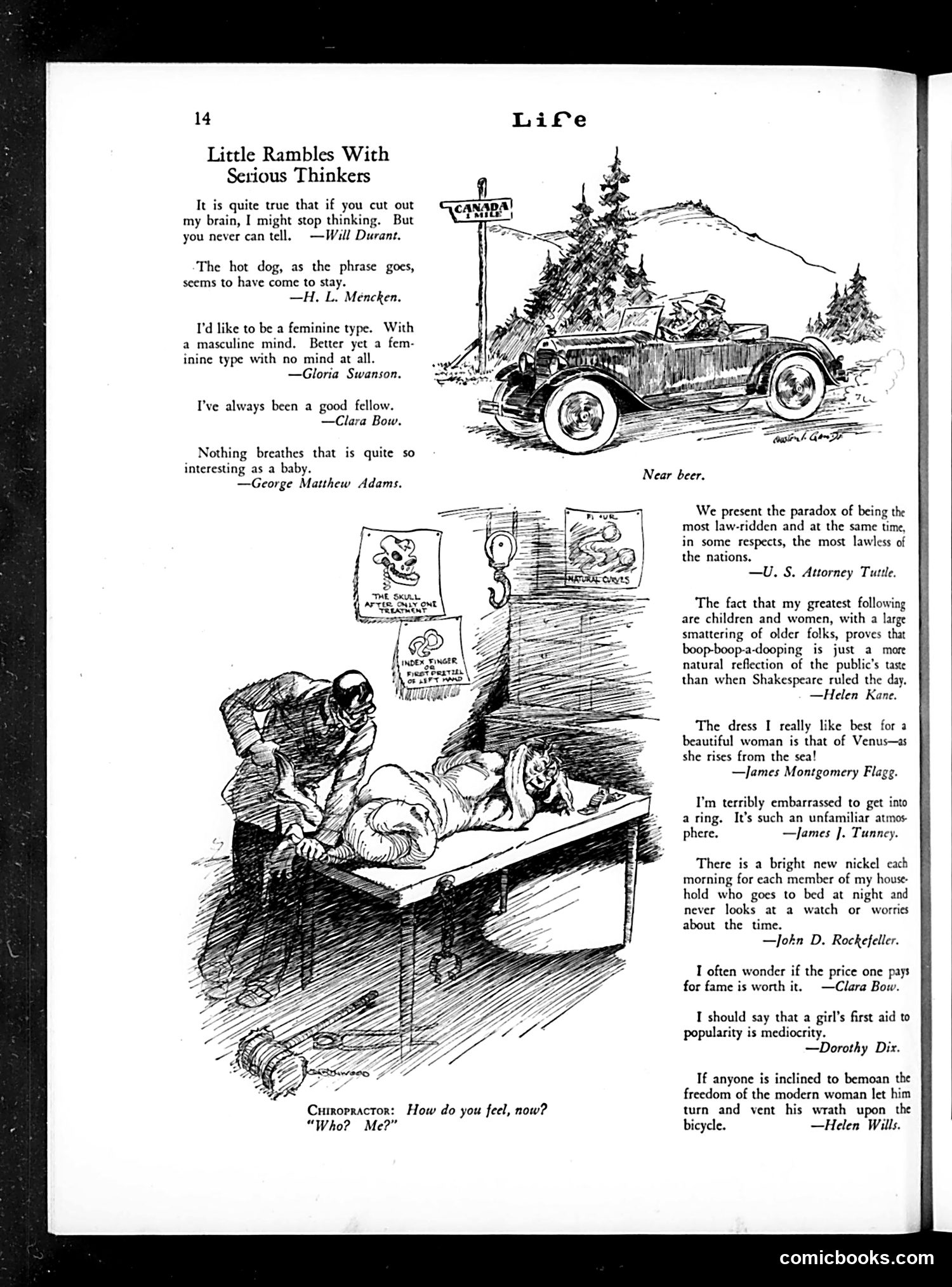
Analysis of "Little Rambles With Serious Thinkers" This page collects witty quotes from prominent figures (Will Durant, H.L. Mencken, Gloria Swanson, Clara Bow, George Matthew Adams, and others) on contemporary topics. The main cartoon depicts a chiropractor treating a patient, with the caption "How do you feel now? 'Who? Me?'" — likely mocking the faddish wellness treatments of the 1920s-30s. The top illustration shows a car near the Canadian border labeled "Near beer," satirizing Prohibition-era alcohol smuggling. The page's dominant theme is 1920s social commentary: women's liberation (Helen Wills on bicycles), celebrity culture (references to Clara Bow and film starlets), fame's costs, and modern anxieties. The quotes reflect Jazz Age skepticism toward progress and changing social norms.
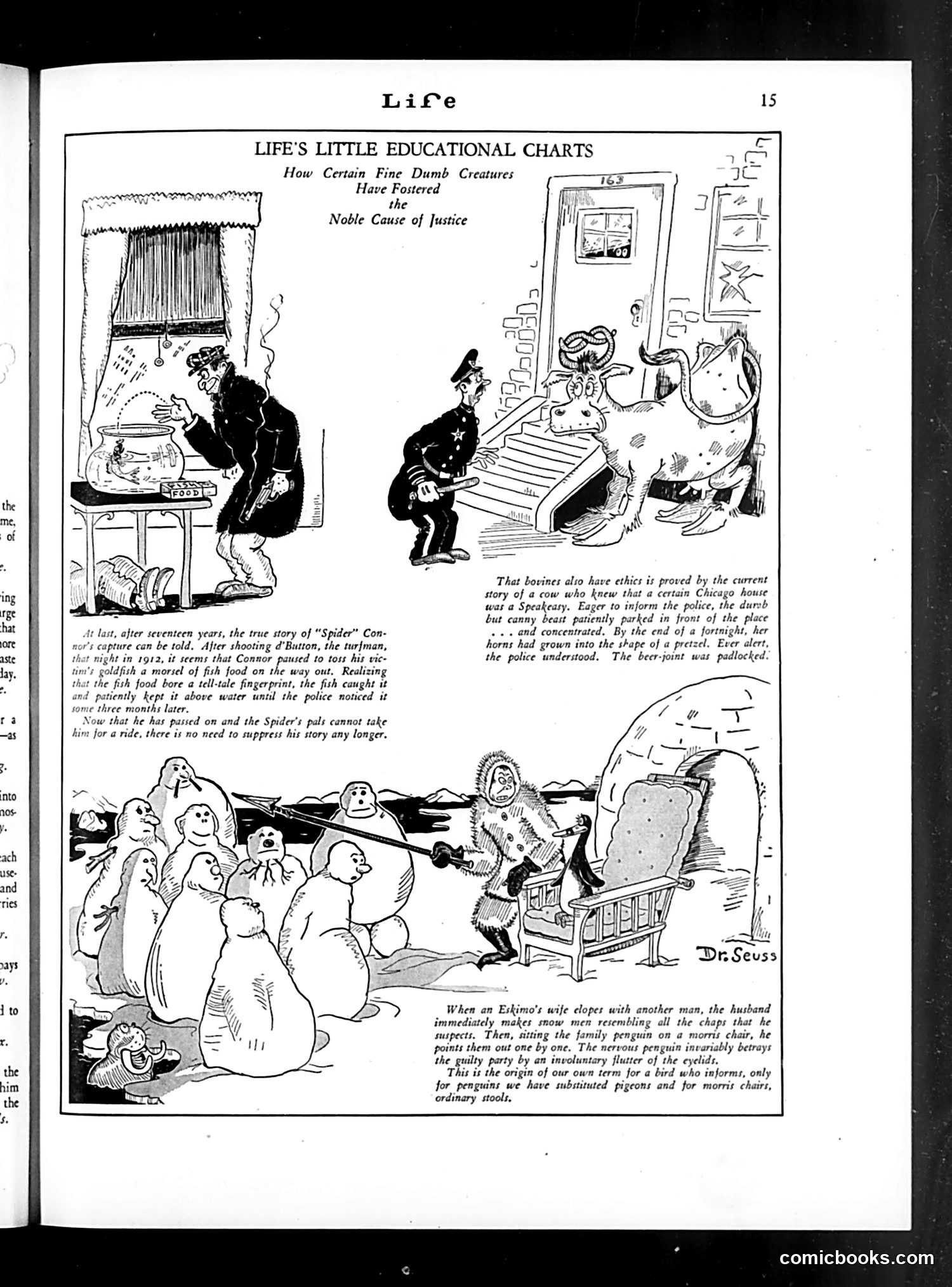
Analysis of Life Magazine Page 15 This page presents Dr. Seuss cartoons satirizing justice and animal behavior. The top panel mocks police corruption: a detective ("Spider" Connor) supposedly captured a criminal after 17 years, but the text reveals he actually found the suspect already caged, then fabricated an arrest story to claim credit—illustrating how corrupt officers manipulate narratives for glory. The bottom cartoon, signed by Dr. Seuss, ridicules marital infidelity using penguin metaphors. When an Eskimo's wife elopes with another man, the community performs a ritualistic "moral choir," forcing the wronged husband to sit while they sing judgments. The text explains this practice originated the term "bird who informs" for unfaithful partners—a satirical explanation for modern slang terminology about infidelity.
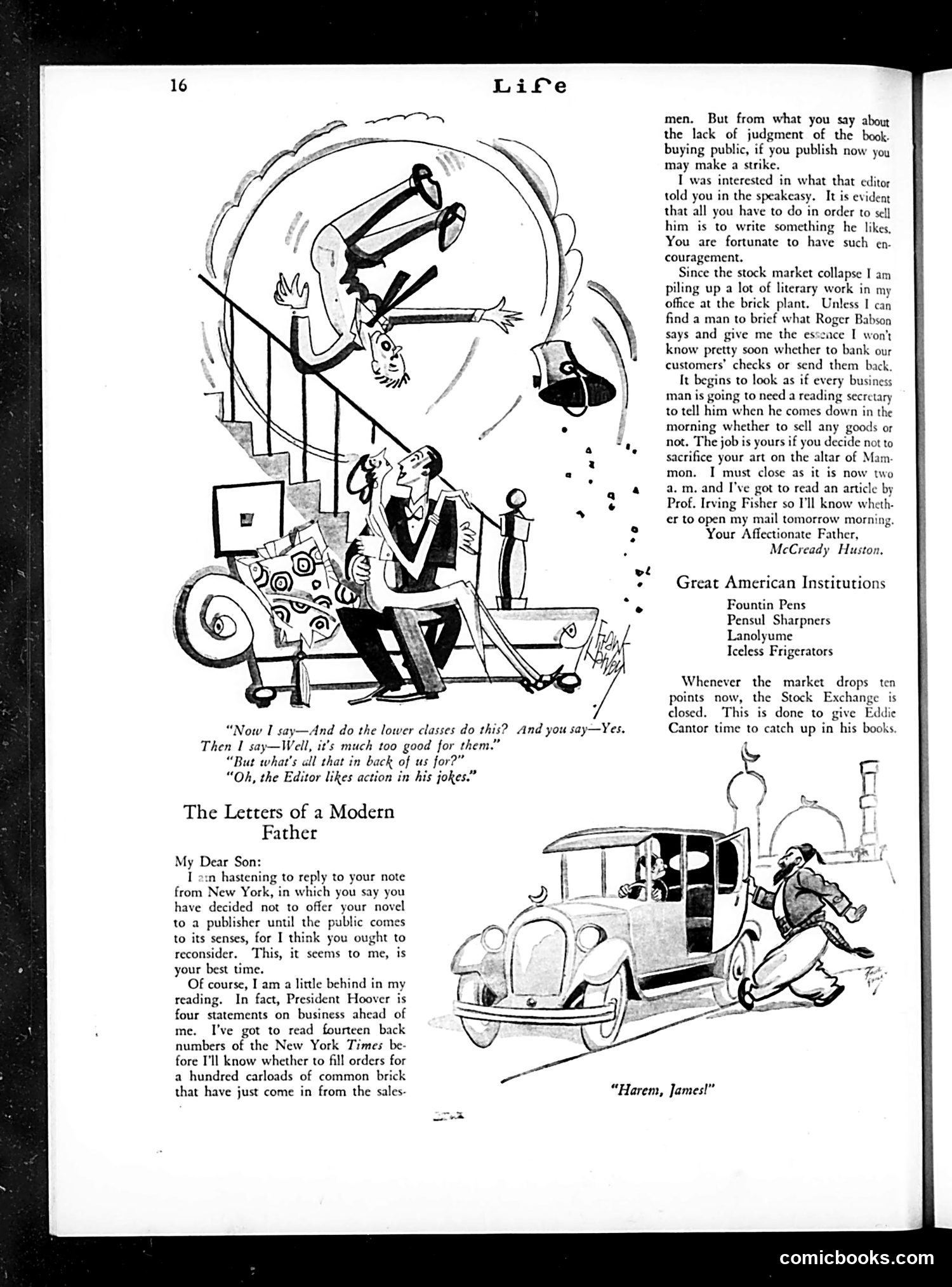
Analysis of Life Magazine Page 16 This page contains "The Letters of a Modern Father," a satirical column about business and publishing in the early 20th century. The top cartoon depicts a chaotic office scene where businessmen are overwhelmed by work—papers flying, people tumbling in a giant gear mechanism. The caption mocks how executives discuss economics while chaos reigns. The accompanying letter from "McCready Huston" advises his son not to publish a novel until public taste improves. He references President Hoover's economic statements and mentions reading the *New York Times* to gauge whether to fill brick orders—satirizing how businessmen obsess over economic indicators and market conditions. The lower cartoon shows a car accident ("Harem, James!"), likely satirizing the automobile age's dangers or class dynamics. The satire targets business anxiety, economic uncertainty, and publishing's commercialism during what appears to be the Great Depression era.
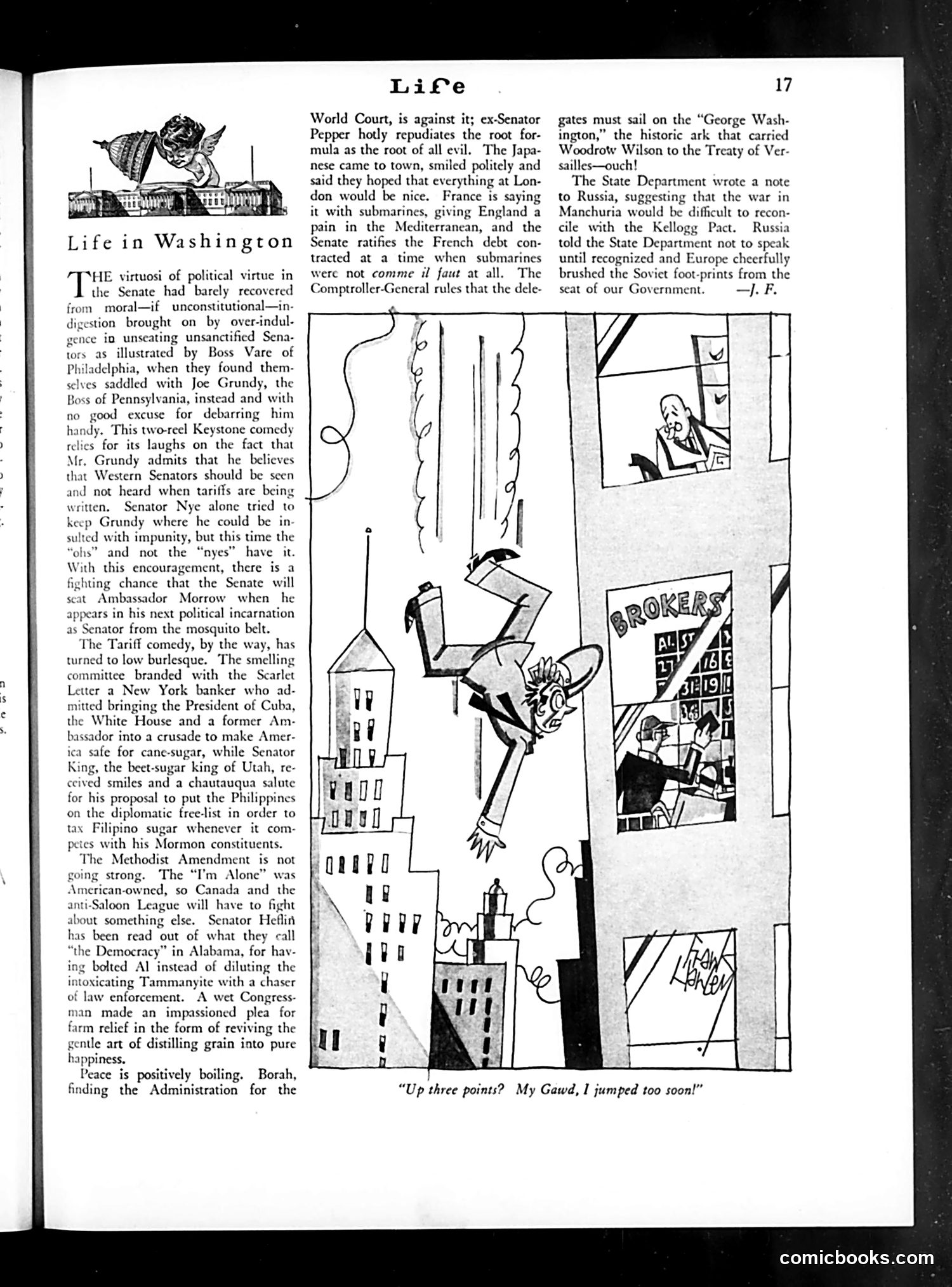
"Life in Washington" - Political Cartoon Analysis This cartoon satirizes a stock market crash, likely the 1929 crash referenced contextually. A man tumbles headfirst from a tall building while shouting "Up three points? My Gawd, I jumped too soon!" The joke depicts the frantic desperation of investors during market collapse. The man apparently jumped from a building believing the market was ruined, only to hear that stocks briefly recovered—a darkly comic commentary on how volatile market swings drove investors to panic and suicide during the Great Depression. The cartoon critiques both the market's instability and investors' irrational, emotion-driven decision-making. The accompanying article discusses Senate political maneuvering and international diplomatic issues of the period.
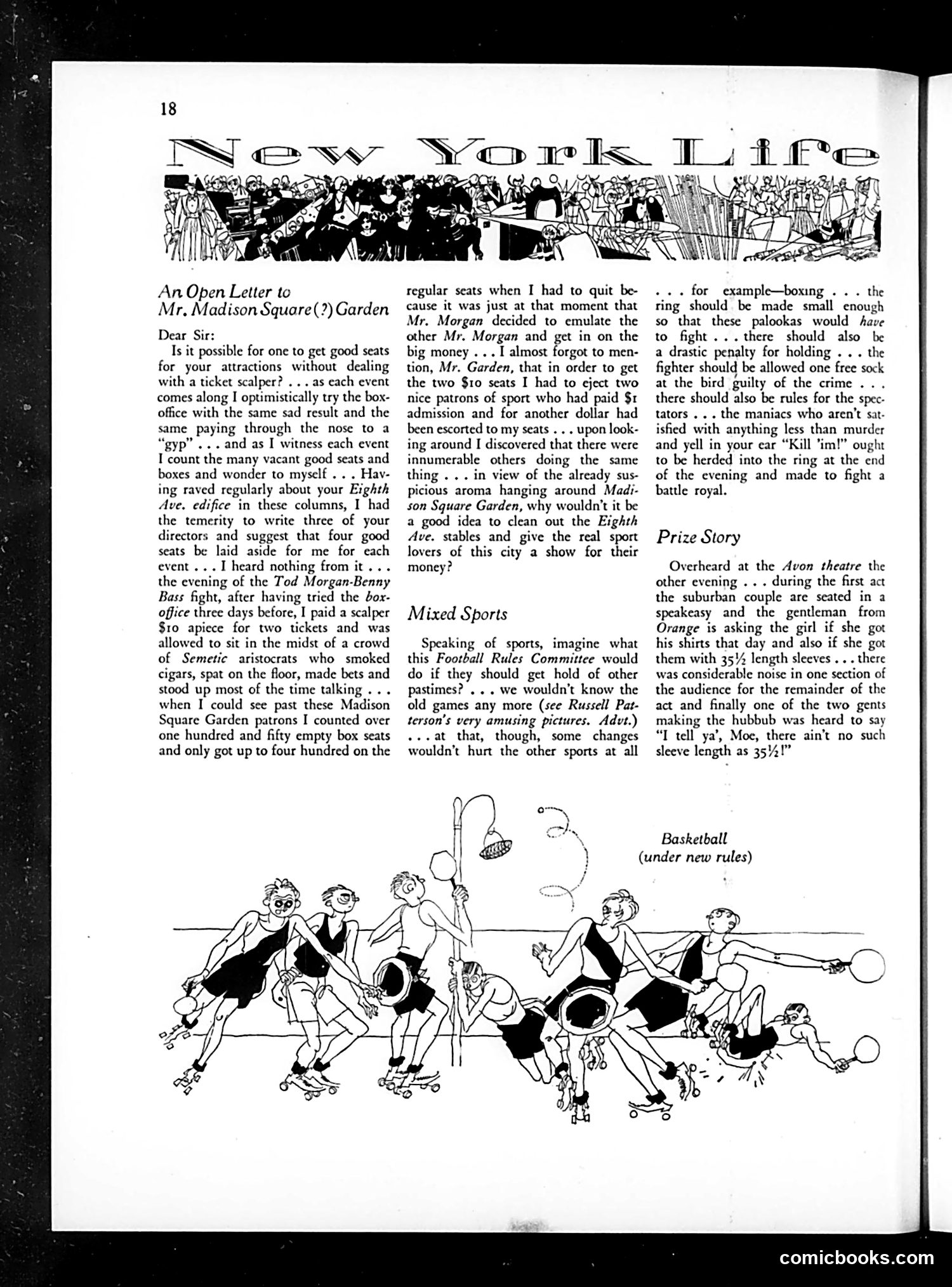
Page Analysis: New York Life, Page 18 This page contains a satirical open letter to Madison Square Garden's management complaining about poor seating arrangements and ticket scalping. The writer describes paying inflated prices for obstructed views while witnessing empty seats, suggesting Garden officials profit by ejecting paying patrons to resell their spots. A second section mocks the Football Rules Committee for not modernizing sports regulations, sarcastically suggesting they govern all athletics. The cartoon below illustrates "Basketball (under new rules)" as absurdist slapstick—players in roller skates chaotically playing with oversized balls, poking fun at how ridiculous revised sports rules might appear if implemented literally. Overall, the page critiques venue management incompetence, sports bureaucratic resistance to change, and commercial exploitation of entertainment venues.
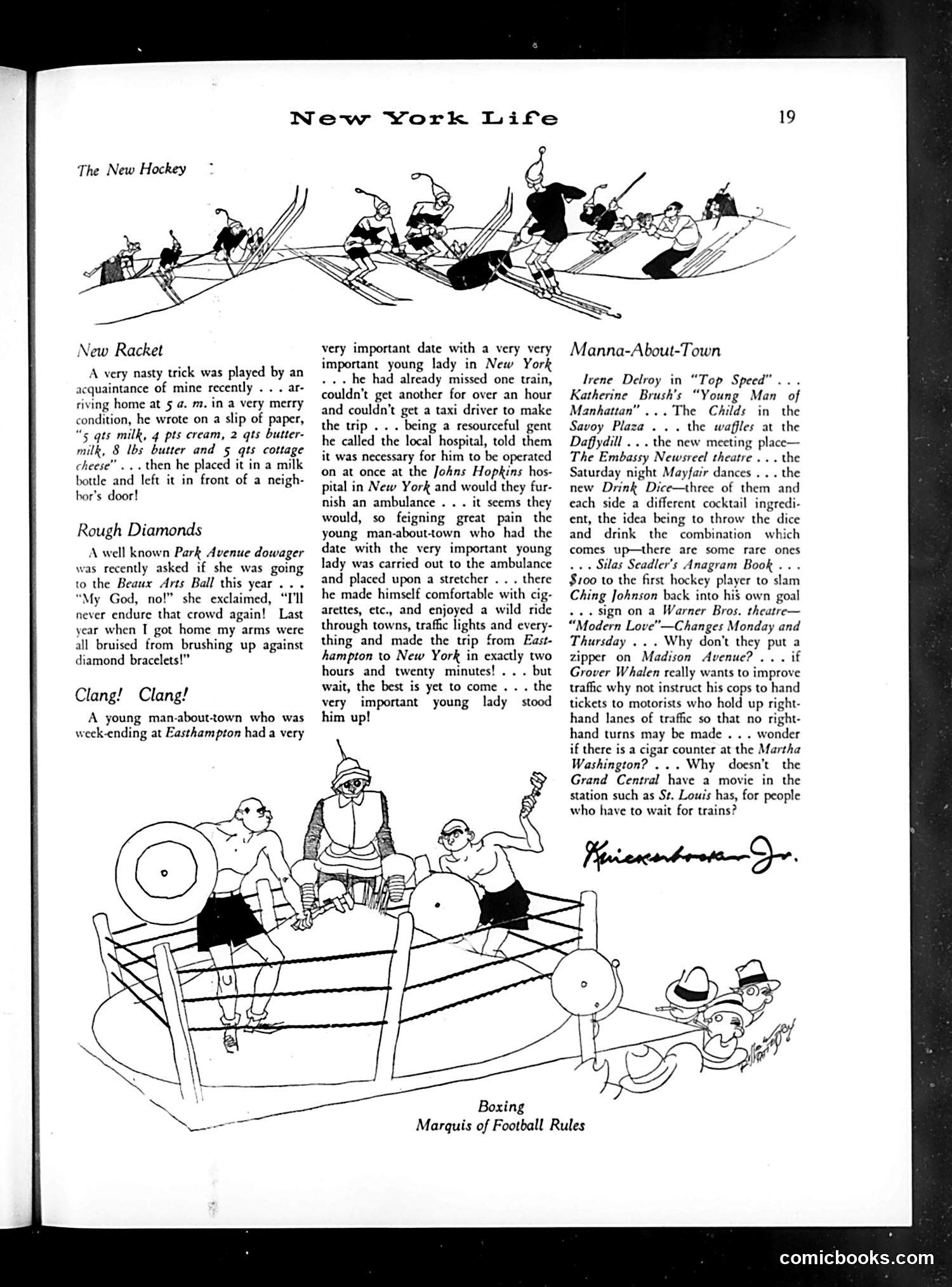
"New York Life" Page Analysis This page from *Life* magazine presents satirical anecdotes about Manhattan's wealthy social scene, accompanied by cartoons mocking upper-class behavior. The humor targets: - "New Racket": A prank where someone leaves a massive grocery order on a neighbor's doorstep—mocking the casual cruelty of the wealthy toward servants/neighbors. - "Rough Diamonds": A Park Avenue dowager complains about bruises from bumping into other women's *diamond bracelets* at a ball—satire on shallow materialism and status obsession among the elite. - "Clang! Clang!": A man fakes a medical emergency, commandeers an ambulance to rush to a date, only to be stood up—mocking male desperation and elaborate deception in courtship. The "Boxing" cartoon depicts absurdist "football rules" with figures in a wrestling ring, likely satirizing either actual rule changes or the pretentious formality of wealthy recreational activities. "Manna-About-Town" is gossip-column commentary on Manhattan nightlife venues, shows, and minor social observations—typical *Life* magazine content for its affluent readership. The overall tone: sophisticated mockery of New York's wealthy elite's vanity, materialism, and ridiculous social rituals.
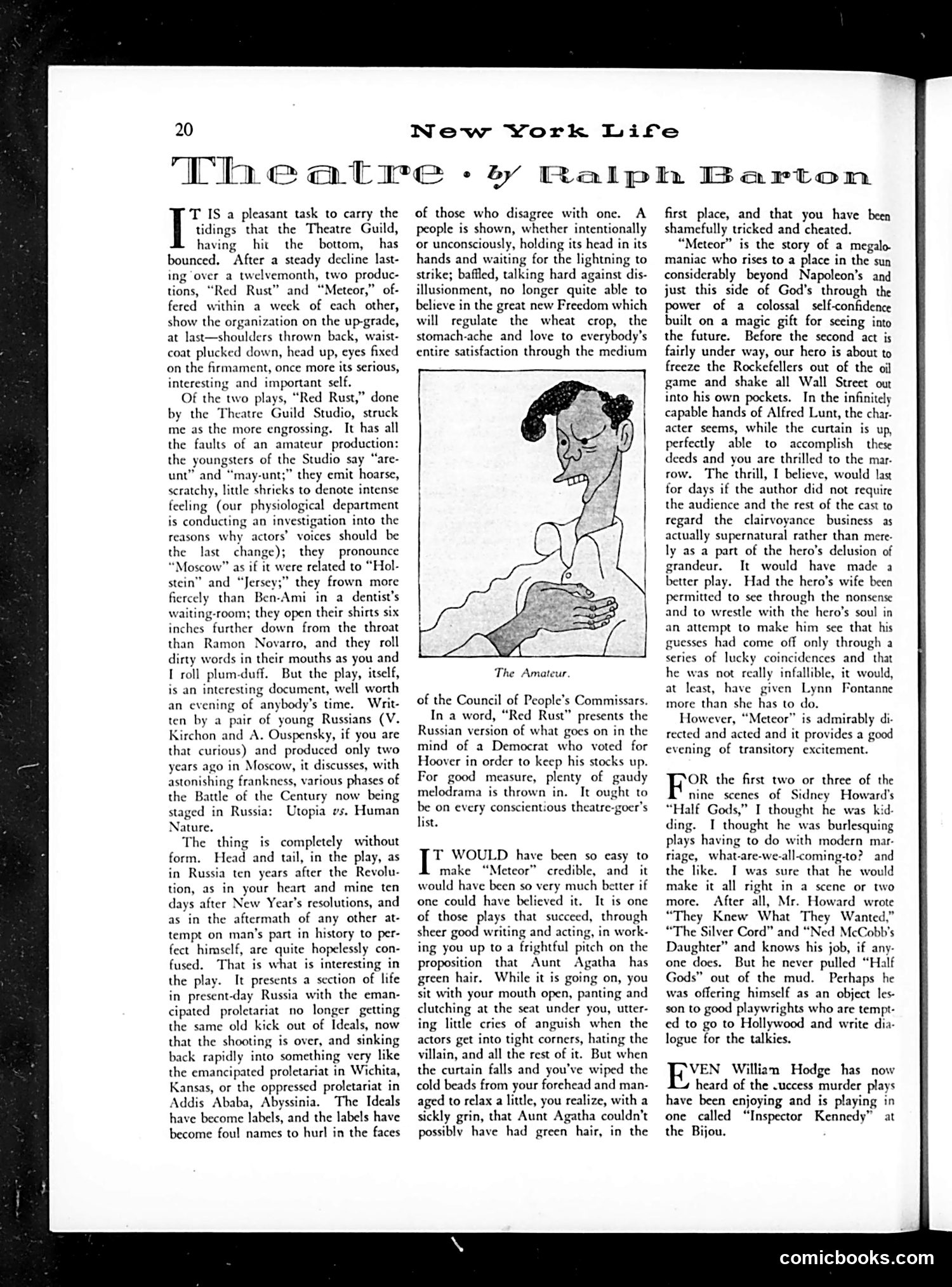
Theatre Review Analysis This is Ralph Barton's theatre column reviewing two Theatre Guild productions: "Red Rust" and "Meteor." The Cartoon ("The Amateur"): The caricature depicts an awkward, enthusiastic amateur actor—representing the young performers in "Red Rust." The exaggerated features and ungainly pose satirize their inexperience and theatrical affectations (the review mentions their affected pronunciations and overwrought emotional displays). The Political Context: "Red Rust," written by Russian playwrights post-Revolution, is described as depicting Soviet disillusionment. Barton uses an American political analogy: he compares it to "a Democrat who voted for Hoover in order to keep his stocks up"—satirizing someone whose idealism has been replaced by self-interest. The play shows the Soviet proletariat losing faith in revolutionary ideals, now treating them as hollow labels rather than genuine beliefs. The Satire: Despite amateur performances, the play itself is praised as an honest, unformed portrait of post-revolutionary Russia—messy and confused, much like reality itself.
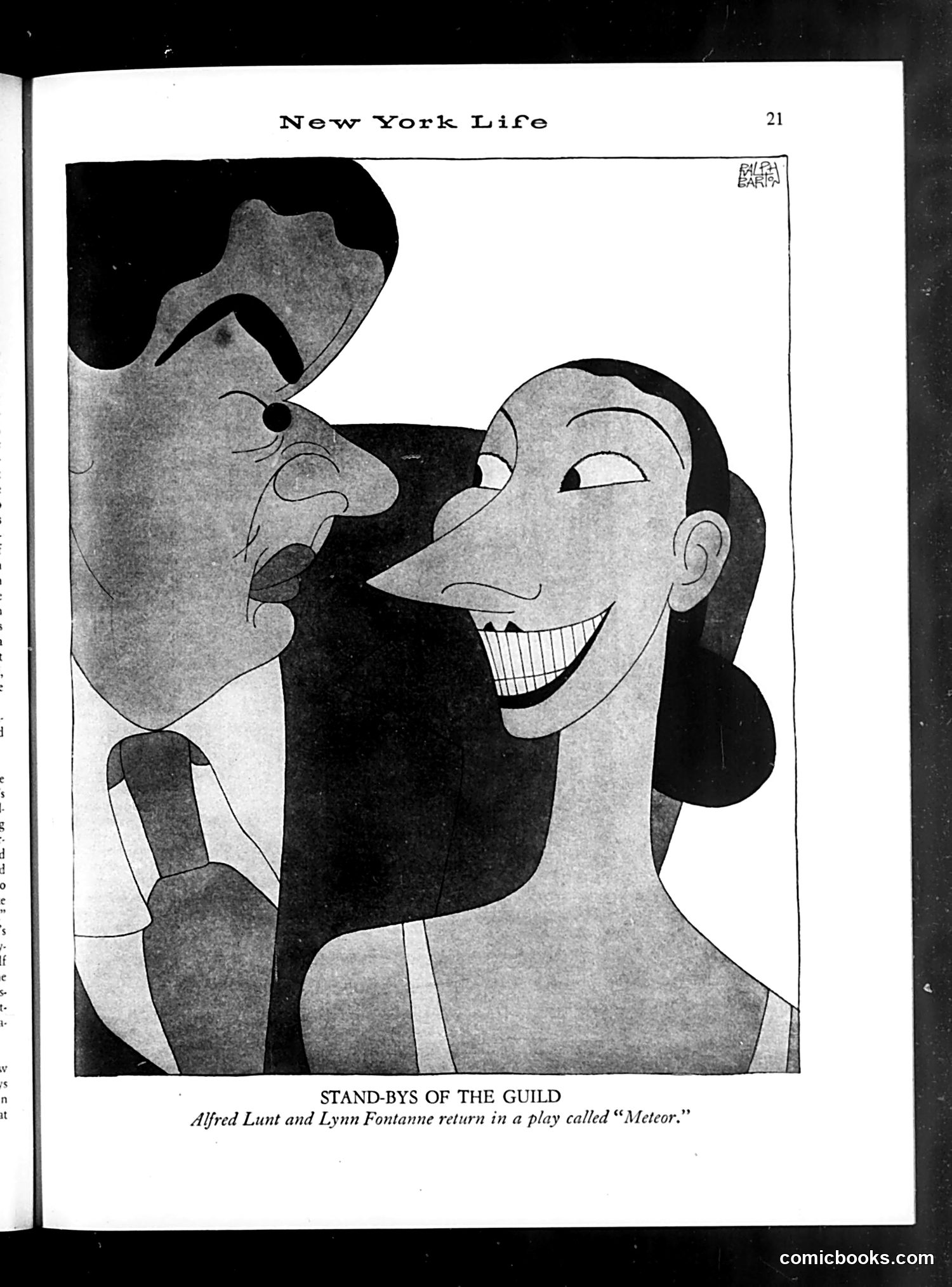
Analysis This is an entertainment page from *Life* magazine featuring an illustration labeled "Stand-bys of the Guild." The caption identifies the subjects as actors Alfred Lunt and Lynn Fontanne, who were returning to perform in a theatrical production called *"Meteor."* The cartoon depicts two figures in close, flirtatious proximity—a man with exaggerated features on the left and a woman with a wide grin on the right. The artistic style uses bold contrasts of black and white typical of 1920s-30s satirical illustration. The humor appears to derive from the actors' celebrity status and their professional partnership, with the intimate composition suggesting romantic chemistry—likely playing on their real-life marriage and on-stage appeal to audiences. The term "stand-bys of the Guild" suggests they were established, reliable performers in theatrical circles.
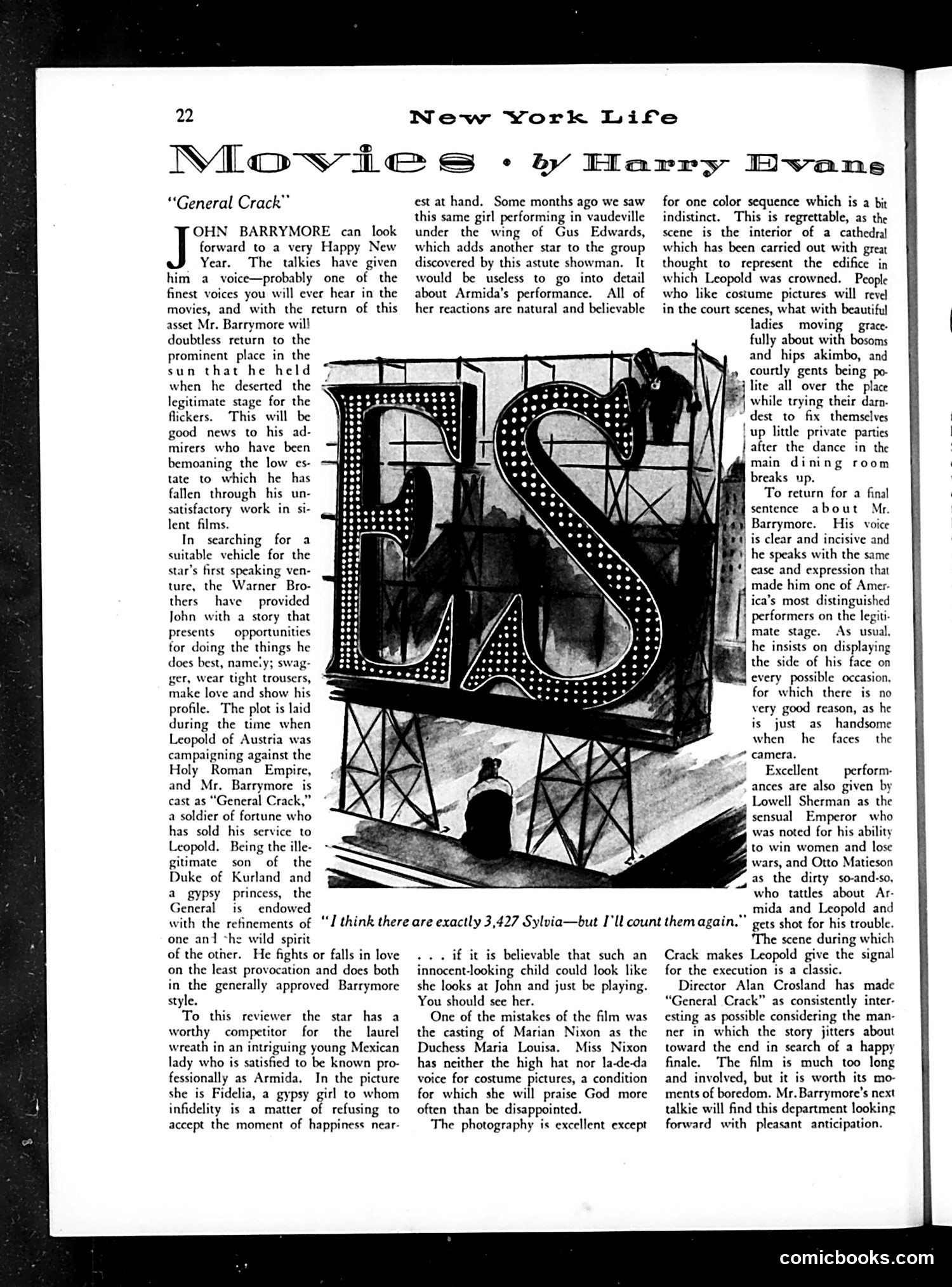
"General Crack" Movie Review Analysis This is Harry Evans's review of John Barrymore's first talking picture, "General Crack" (1929). The large decorative letters in the image are simply part of the magazine's design aesthetic, not a political cartoon. Evans praises Barrymore's transition from silent films to talkies, arguing his fine speaking voice will restore his prominence. The film casts him as a roguish soldier of fortune in 18th-century Austria who "swagger[s], wear[s] tight trousers, make[s] love and show[s] his profile"—stereotypical Barrymore mannerisms. Evans commends supporting actress Armida (a Mexican performer discovered in vaudeville) but criticizes Marian Nixon's miscasting as a duchess lacking aristocratic bearing. He praises the costume-drama court scenes while humorously noting the actresses' physical displays. Overall, he finds the film worthwhile entertainment, though overly long. The review reflects Hollywood's early sound-film era and period-drama conventions of the time.
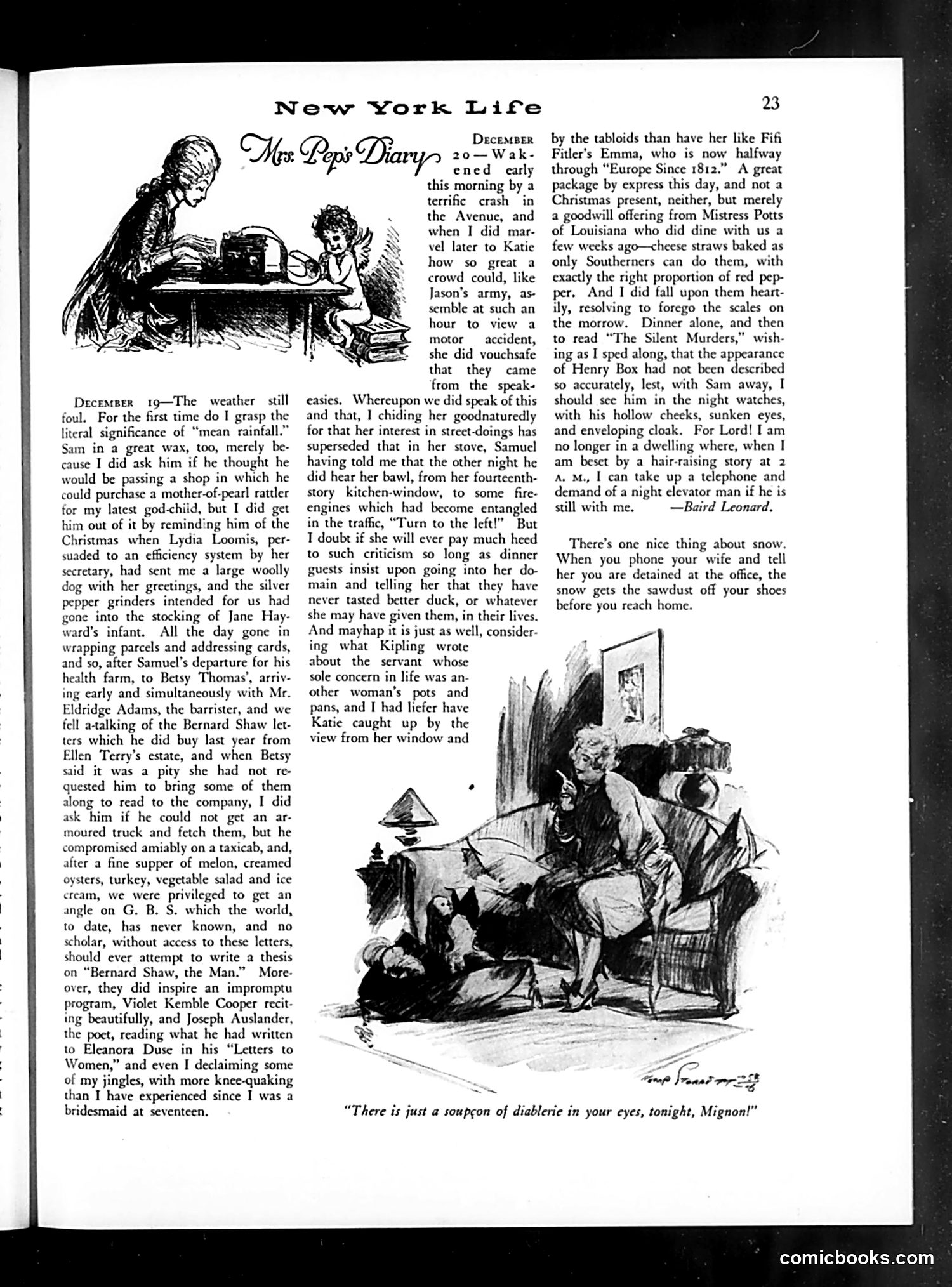
Analysis of This New York Life Diary Page This is a satirical diary column from *Life* magazine (December 1920s era) written in mock-pretentious style. The narrator is a wealthy, gossipy socialite documenting her trivial holiday season activities. The Satire's Targets: The humor mocks upper-class affectations through exaggerated formality and self-importance. References to Bernard Shaw letters, readings by actress Violet Kemble Cooper, and poet Joseph Auslander signal cultural pretension. The narrator fawns over these literary figures while dwelling on mundane domestic complaints. Social Context: Details like "speakeasies" (illegal bars during Prohibition) and the servant Katie's fascination with street accidents reveal 1920s urban life. The comparison to Kipling's servants, anxiety about servants' interests, and casual references to Southern hospitality reflect class consciousness of the era. The Cartoon: The illustration (captioned about diabetic eyes) appears humorous but its specific reference remains unclear from this page alone. The overall effect: *Life* skewers wealthy New Yorkers' pretensions by letting them reveal their shallowness through their own (affected) voices.
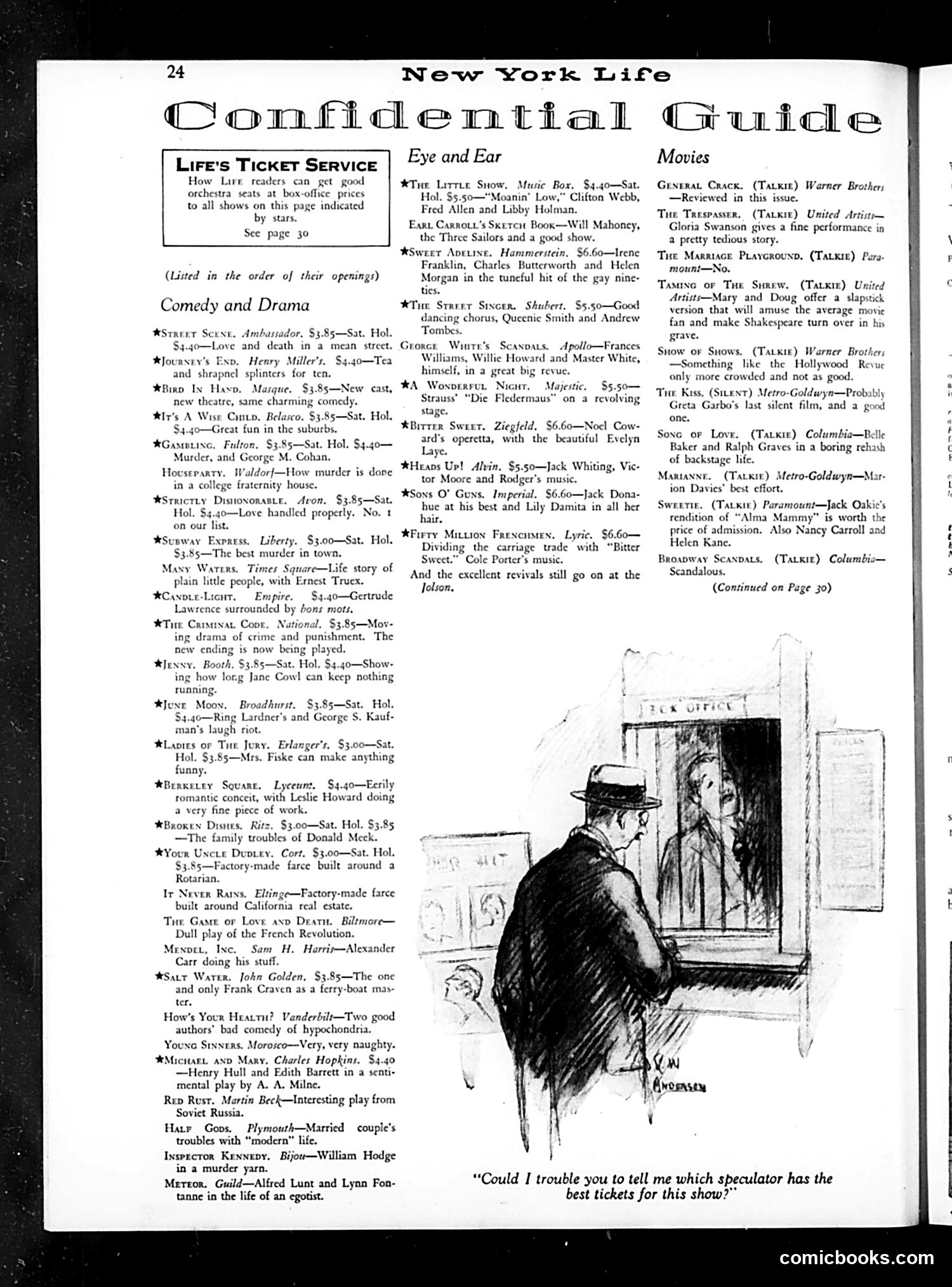
Explanation for Modern Readers This page is primarily a entertainment listings guide for New York City theaters and movies, not political satire. The cartoon at the bottom depicts a man in a fedora and overcoat speaking to a ticket office worker, asking which speculator has the best tickets for a show. The cartoon references the ticket scalping problem of the 1920s-30s. Broadway shows were so popular that speculators (unauthorized ticket resellers) would buy up tickets and resell them at inflated prices. The joke is the man's deadpan question to an official ticket window—acknowledging that scalpers were so common and normalized that he's asking which one to patronize, as if it were a legitimate service. The surrounding text lists Broadway productions, musicals, and films with prices, noting which ones offer discounted tickets through Life magazine's ticket service (marked with asterisks).
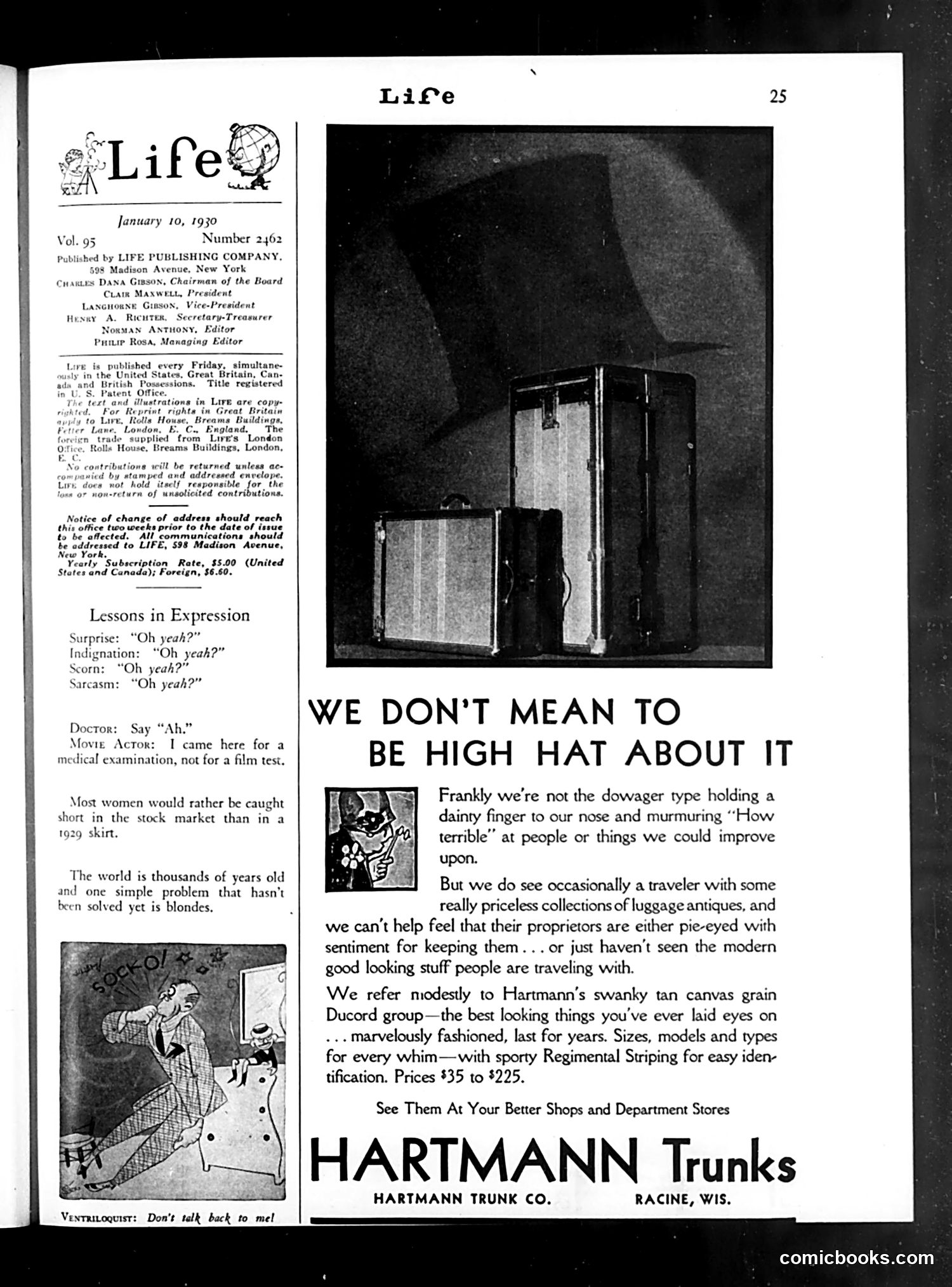
Life Magazine, January 10, 1930: Content Analysis This page is primarily advertising and filler content rather than political satire. The main elements are: "Lessons in Expression" — A brief humor section satirizing how Americans express different emotions through identical phrases ("Oh yeah?"), suggesting cultural monotony or limited emotional vocabulary. Stock market and fashion jokes — Topical humor referencing the 1929 stock market crash (recently occurred) and women's hemlines, both contemporary concerns. "We Don't Mean to Be High Hat About It" — A Hartmann Trunks advertisement disguised as editorial commentary. The "we" voice gently mocks travelers clinging to outdated luggage while promoting modern Hartmann trunks as superior. This is *marketing satire*—using gentle self-deprecating humor to sell products. The cartoons are minor spot illustrations accompanying these brief humor pieces, not substantial political commentary. This represents Life's mix of satirical humor, social observation, and advertising that characterized the magazine during this era.
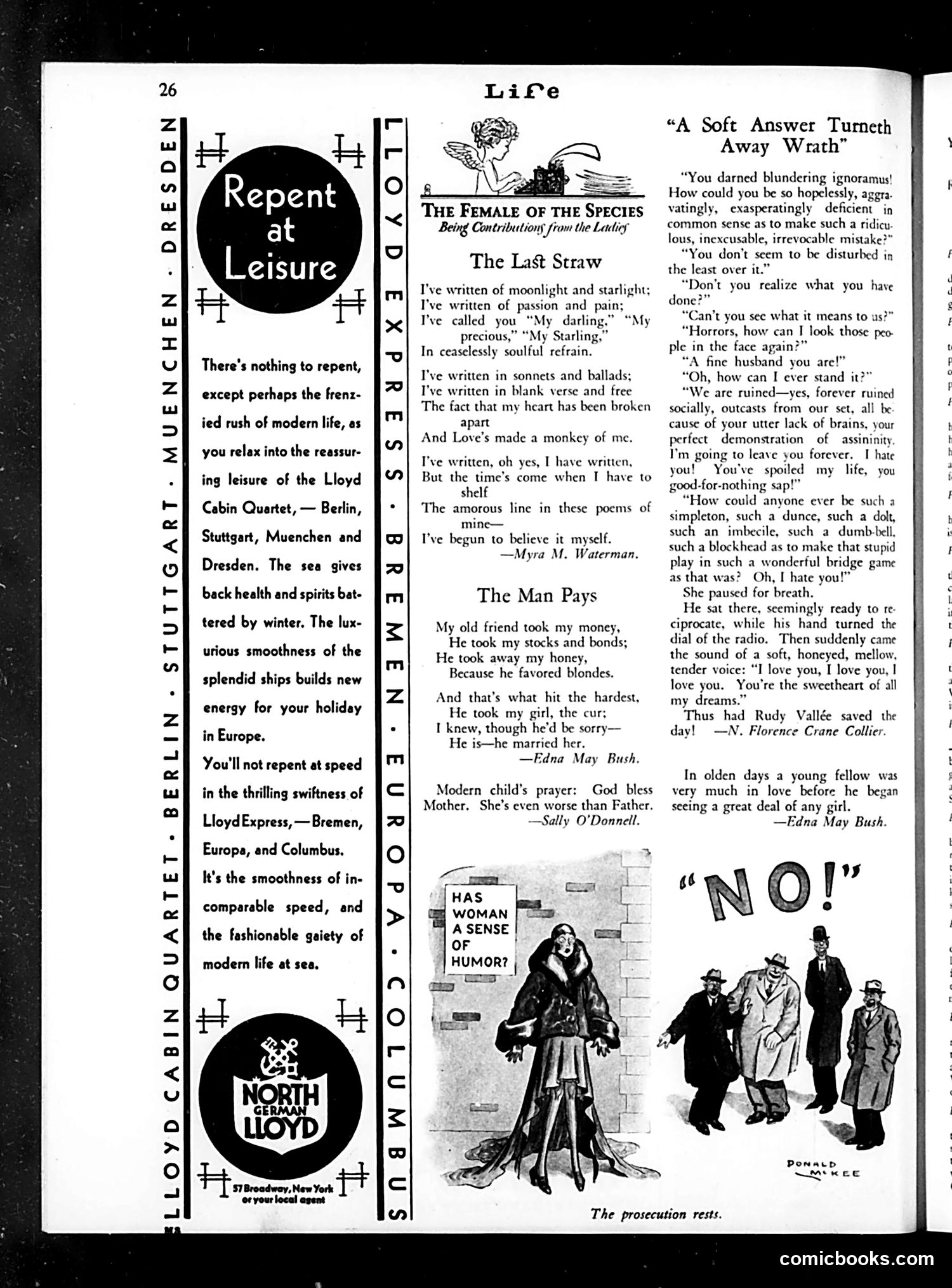
Life Magazine Page Analysis This page contains three distinct elements: Left side: A Lloyd Cruise Line advertisement promoting German ocean liners (Berlin, Stuttgart, Munich, Dresden) as relaxing vacation alternatives to modern life's "frenzied rush." Center/Right: "The Female of the Species" — A humor column featuring poems by women writers mocking romantic clichés and relationship dynamics. "The Last Straw" satirizes overwrought love poetry; "The Man Pays" jokes that a friend lost money and his girlfriend to a rival; the "Modern child's prayer" quips that mothers are worse than fathers. Bottom cartoon titled "Has Woman a Sense of Humor?" — A woman delivers an extended, escalating tirade of insults to her husband about his stupidity and ruined their life. He sits unmoved listening to the radio. When a crooning singer (likely Rudy Vallée, a famous 1920s-30s crooner) comes on singing "I love you," this supposedly defuses her anger. The caption "The prosecution rests" suggests the joke: the woman's complaint is so extreme it becomes absurd—and soft, sentimental radio saves the day. The underlying satire: women are humorless complainers, while sentiment (not logic) pacifies them.
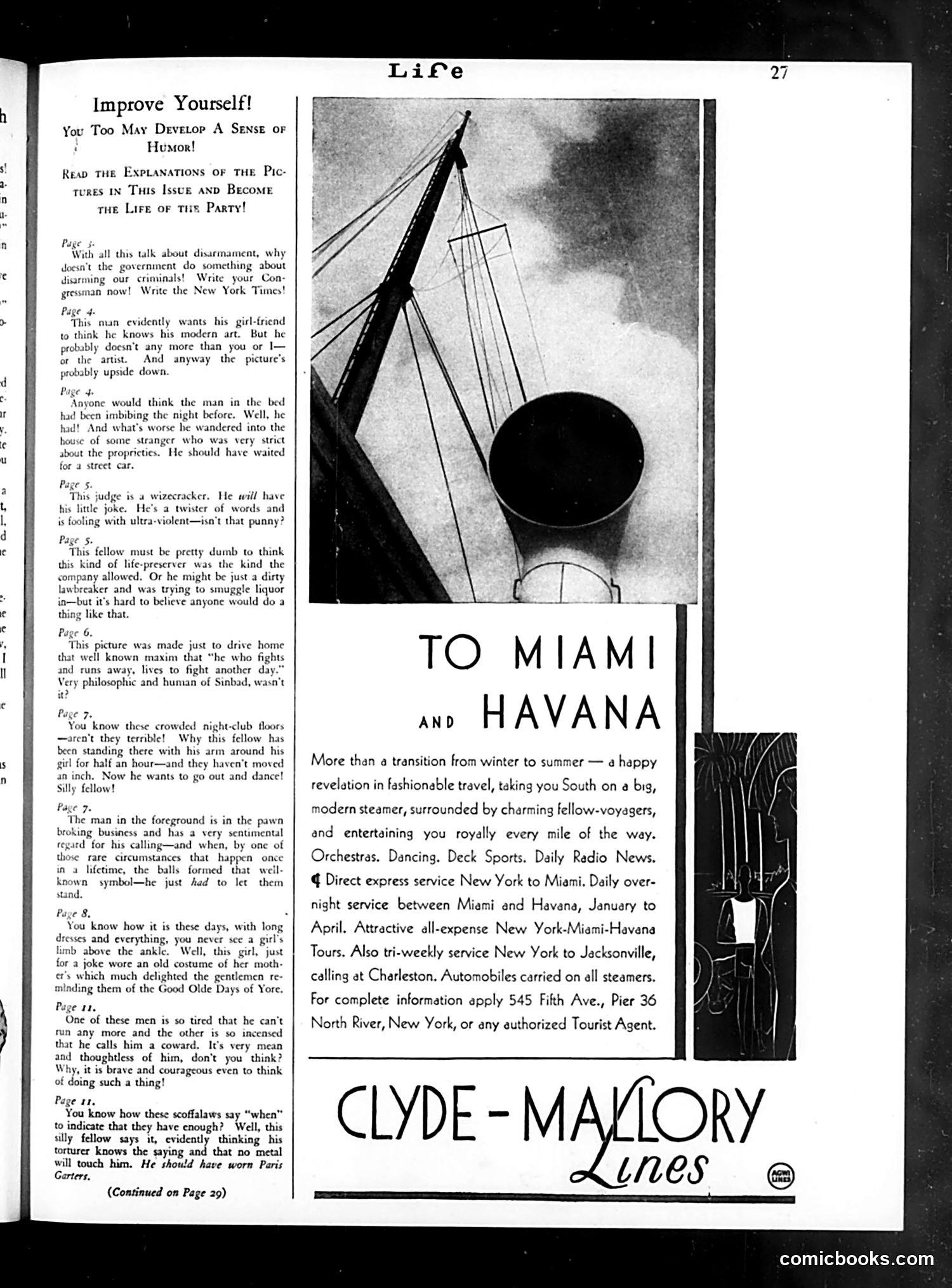
Life Magazine Humor Page Analysis This page from Life magazine presents a "humor instruction" feature with cartoon explanations. The left column contains satirical commentary on various cartoon panels published elsewhere in the issue, teaching readers how to appreciate modern humor. The jokes reference contemporary concerns: government failing to disarm criminals, confusion over modern art, Prohibition-era liquor smuggling (note the life-preserver concealing contraband), night-club culture, and social conventions around dress and propriety. One panel references Sinbad the sailor. The satire assumes readers' familiarity with 1920s social anxieties—prohibition enforcement, changing gender norms (shorter hemlines), and the fast pace of modern urban life. The tongue-in-cheek "improvement guide" itself mocks readers for needing explanations of jokes. The right side is advertising for Clyde-Mallory cruise lines to Miami and Havana, emphasizing luxury travel and entertainment—targeting the magazine's affluent readership.
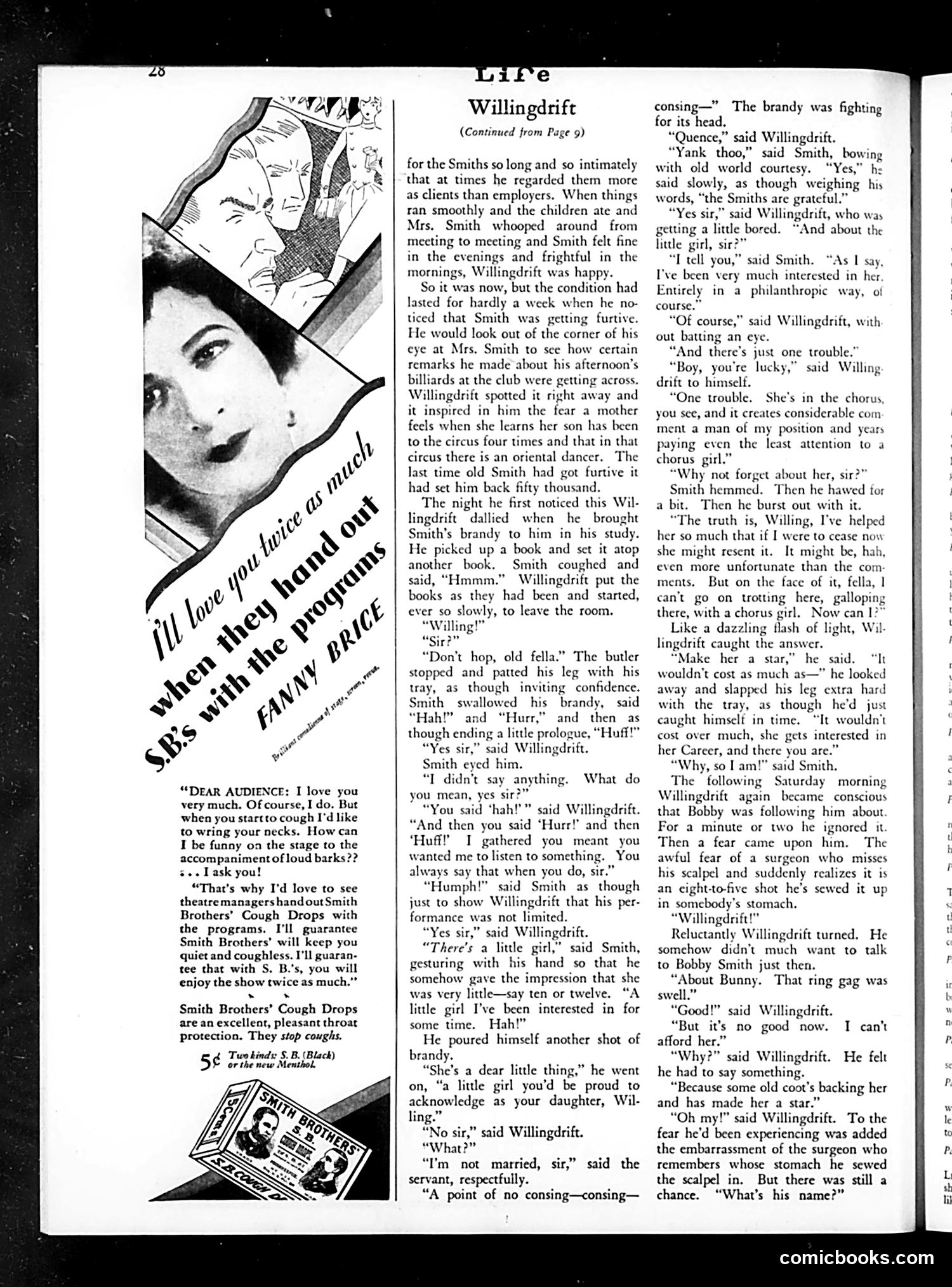
Analysis for Modern Readers This page contains two distinct pieces of Life magazine content: The Advertisement (Left Side) A Smith Brothers' Cough Drops ad featuring a theatrical appeal. An unnamed actor addresses the audience directly, complaining that audience coughing disrupts stage performances. He endorses Smith Brothers' cough drops as a solution—a humorous guilt-trip framing the product as essential for theater etiquette. This reflects early 20th-century advertising's direct, personality-driven approach. The Serial Story (Right Side) "Willingdrift" continues a serialized fiction piece about a wealthy man (Smith) and his butler (Willingdrift). Smith, apparently drunk, confides in his butler about an affair with a chorus girl—a social scandal of the era. The butler's restrained, knowing reactions provide dry comedy. The satire targets the hypocrisy of wealthy men pursuing "inappropriate" relationships while maintaining social respectability, and the butler's patient servitude despite his employer's moral failings. Both pieces reflect early 20th-century class attitudes and entertainment standards.
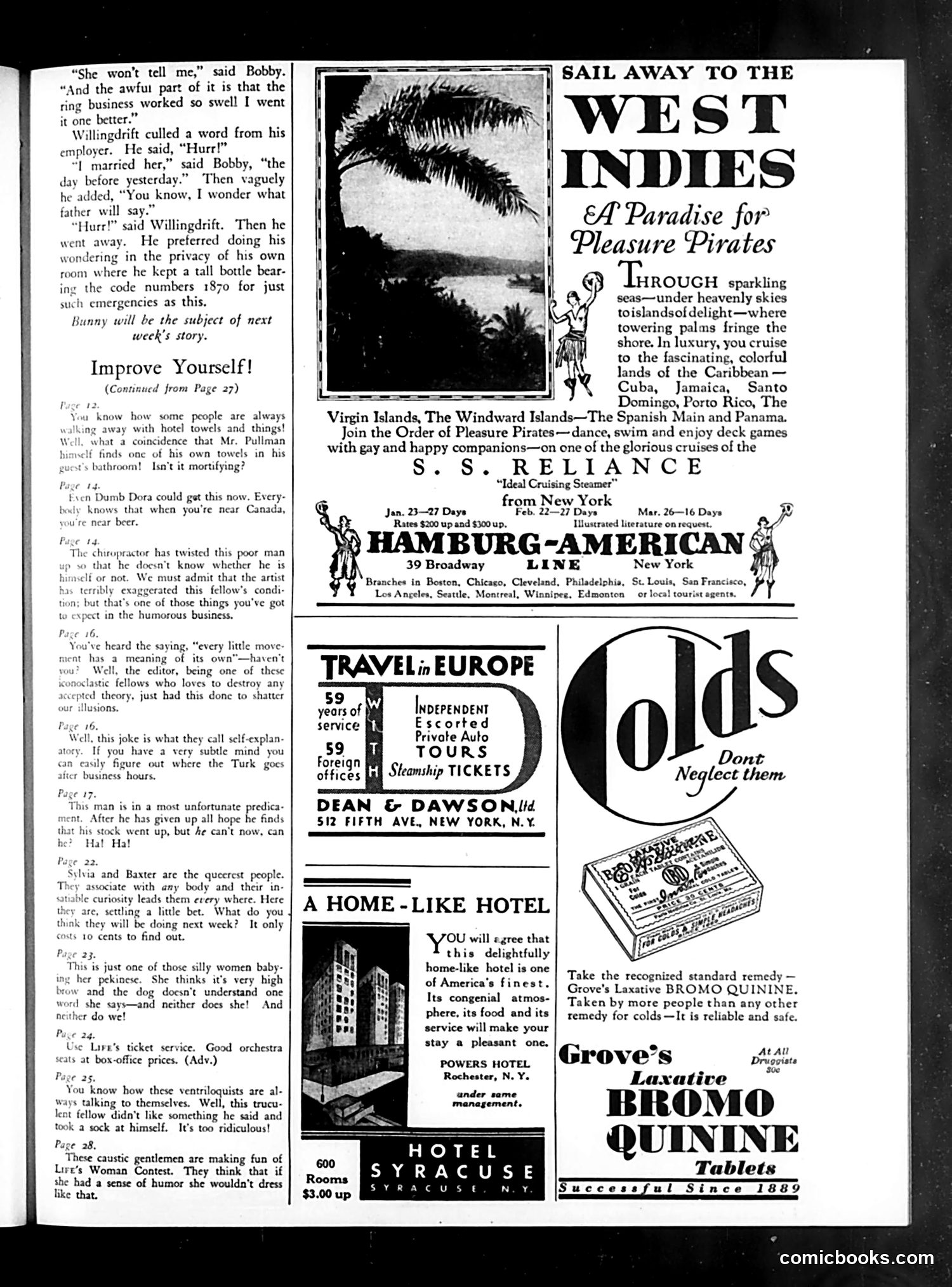
Page Analysis: Life Magazine This page consists primarily of advertisements and filler content, not political cartoons. The text sections titled "Improve Yourself!" are satirical vignettes mocking everyday human behavior—people stealing hotel towels, men confused by chiropractors, a ventriloquist punching himself, silly women baby-talking to dogs. These are gentle social humor, not political satire. The dominant content is travel and leisure advertising aimed at affluent readers: Caribbean cruises on the S.S. Reliance, European tours, hotels (Powers Hotel, Hotel Syracuse), and medicines (Grove's Bromo Quinine). One narrative fragment describes a character named Bobby who impulsively marries a woman, with vague references to his father's reaction and another character seeking solace in alcohol—likely setup for next week's story. The page reflects 1920s American consumer culture and leisure aspirations rather than political commentary.
This page is primarily advertising and service material rather than editorial content with satirical cartoons. The main content includes: 1. Life's Ticket Service — a mail-order ticket-purchasing service for New York theater shows, with detailed ordering instructions and anti-scalping policies 2. Confidential Guide — brief reviews of current films (featuring actors like Ronald Colman and Maurice Chevalier) and music records 3. Multiple advertisements for vacation/resort destinations: - Pinehurst, North Carolina (golf resort) - The Flamingo Hotel in Miami Beach - A European tour package 4. Sheet music listings and a subscription offer for Life magazine itself The page reflects 1920s-30s consumer culture, targeting affluent readers who could afford theater tickets, travel, and leisure activities. There are no political cartoons or satirical commentary visible — this is a commercial/service-oriented page typical of Life magazine's business model of combining editorial content with high-end advertising.
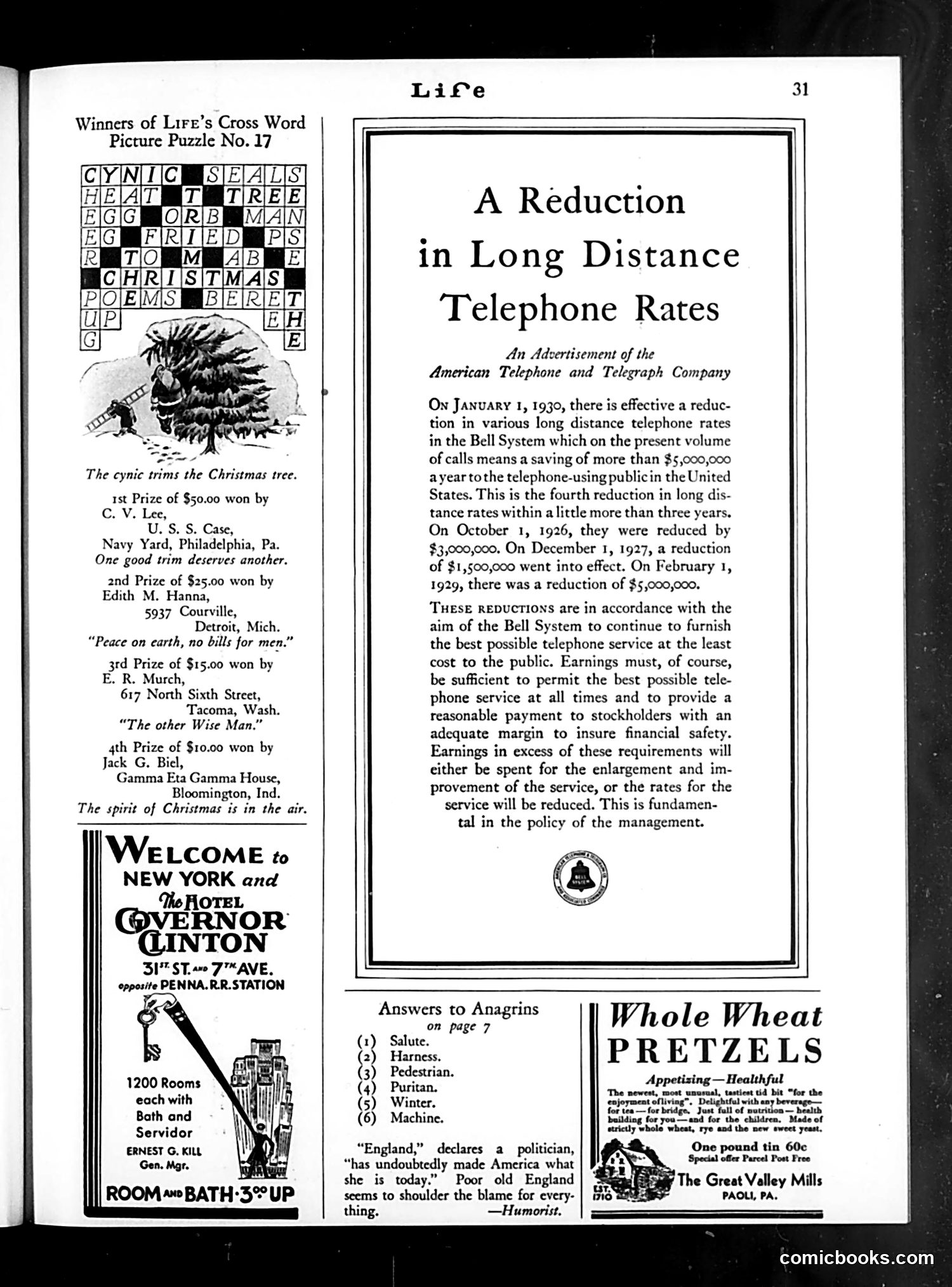
Life Magazine Page 31 (circa 1930): Content Explanation This page contains a crossword picture puzzle contest featuring a cartoon of a cynic trimming a Christmas tree—the joke being the cynic's sardonic approach to holiday decoration. The winning entries include humorous captions like "Peace on earth, no bills for men," satirizing economic concerns during the late 1920s. The page also displays a Bell Telephone advertisement announcing rate reductions effective January 1, 1930—the fourth reduction in three years, saving the public over $5 million annually. This reflects corporate messaging during the prosperous late 1920s. A minor cartoon jokes that England deserves blame for "making America what she is today"—likely a jab at American Anglophobia or cultural criticism common in the era. The remaining content is standard advertising for the Hotel Governor Clinton and Whole Wheat Pretzels.
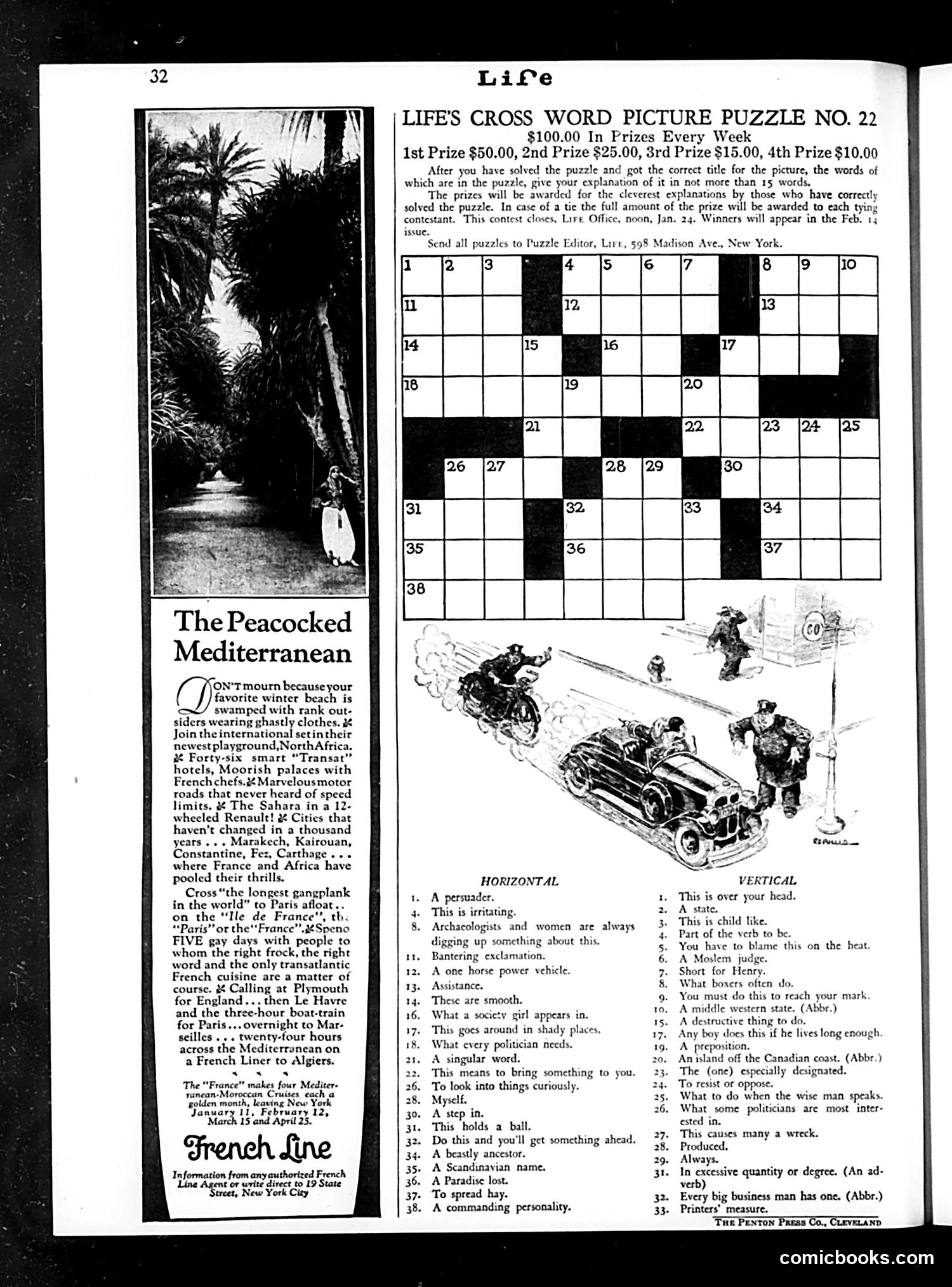
Life Magazine Page Analysis This page contains a crossword picture puzzle contest (the main feature), not a political cartoon. The puzzle invites readers to solve a grid based on a black-and-white photograph showing a woman in a tropical, palm-lined garden setting titled "The Peacocked Mediterranean." The puzzle is a commercial entertainment contest offering prize money ($50 first place) for solving the crossword and providing the cleverest 15-word explanation of the image. The page also features travel advertising for French Line steamships promoting Mediterranean cruises to North Africa—departing from New York to ports like Algiers via Le Havre and Marseilles. The ad emphasizes luxury ("Moorish palaces," "smart hotels," "French chefs") and exotic destinations unchanged for "a thousand years" (Marrakech, Fez, Carthage), appealing to wealthy interwar travelers seeking fashionable leisure destinations away from domestic American beaches. No satire or political commentary is present; this is primarily a puzzle-and-advertising page.
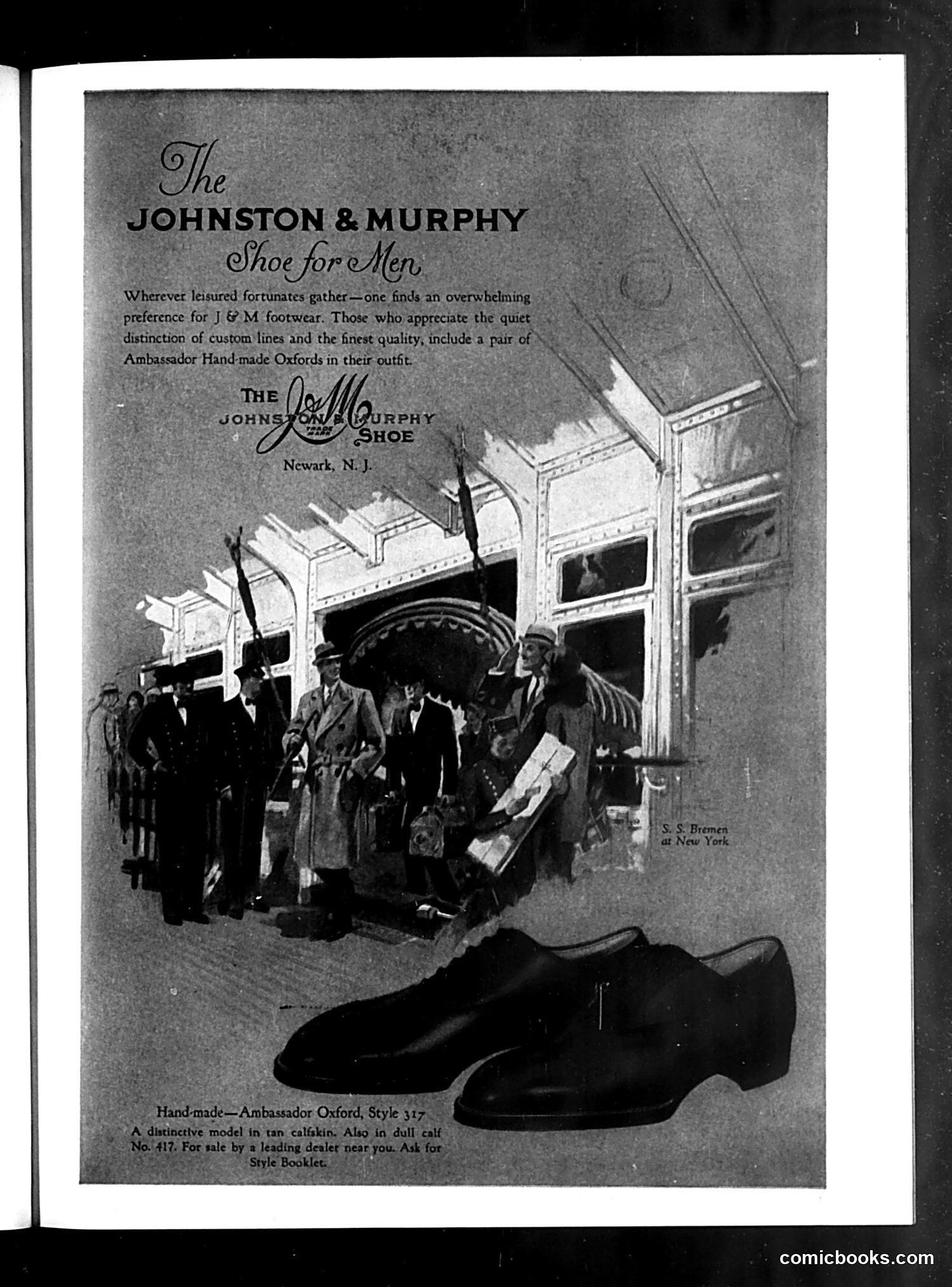
Analysis This is a Johnston & Murphy shoe advertisement, not political satire or a cartoon. The page promotes the "Ambassador Hand-made Oxford, Style 317" — a men's dress shoe in tan calfskin or dull calf. The advertisement emphasizes luxury and exclusivity, claiming that "leisured fortunates" prefer J&M footwear for its "quiet distinction of custom lines and finest quality." The image shows well-dressed men boarding what appears to be a ship (the S.S. Bremen at New York, per the caption), suggesting travel, sophistication, and upper-class leisure. The shoe is displayed prominently at the bottom. This is purely commercial messaging targeting wealthy male consumers, not political commentary. No figures, caricatures, or satire are present—it's a straightforward luxury goods advertisement from the early 20th century.
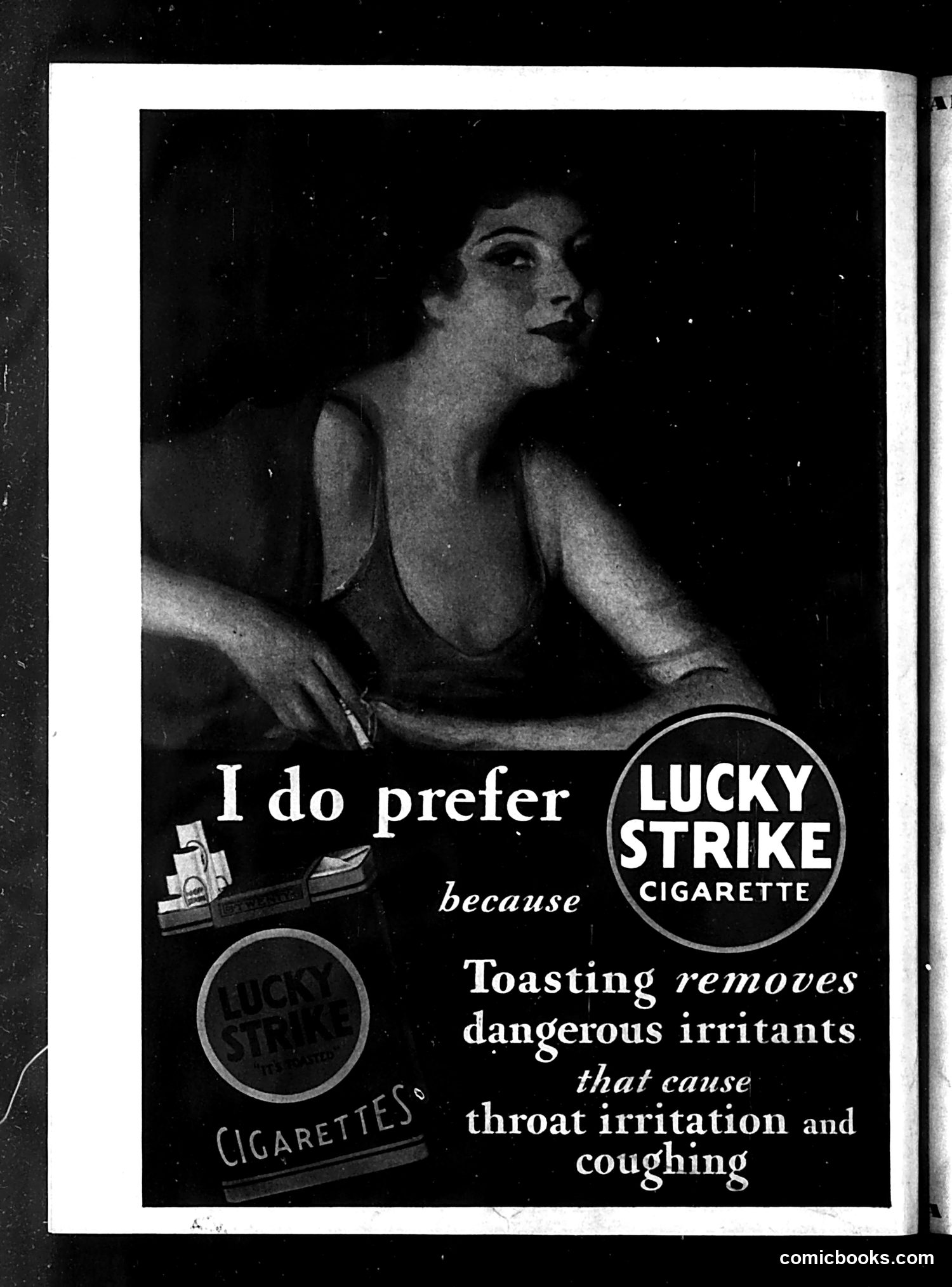
This is a Lucky Strike cigarette advertisement, not political satire. It features a woman in profile endorsing the product with the claim that "Toasting removes dangerous irritants that cause throat irritation and coughing." This reflects early 20th-century tobacco marketing that made health-related claims—common before cigarette advertising restrictions. The "toasting" process is presented as a health benefit, a typical marketing strategy of the era when cigarette companies made unsubstantiated health assertions to consumers. For modern readers: this represents the now-infamous period when tobacco companies advertised directly to health concerns, claims that are laughably false by today's standards and would be illegal under current regulations.