life
Life — April 18, 1930
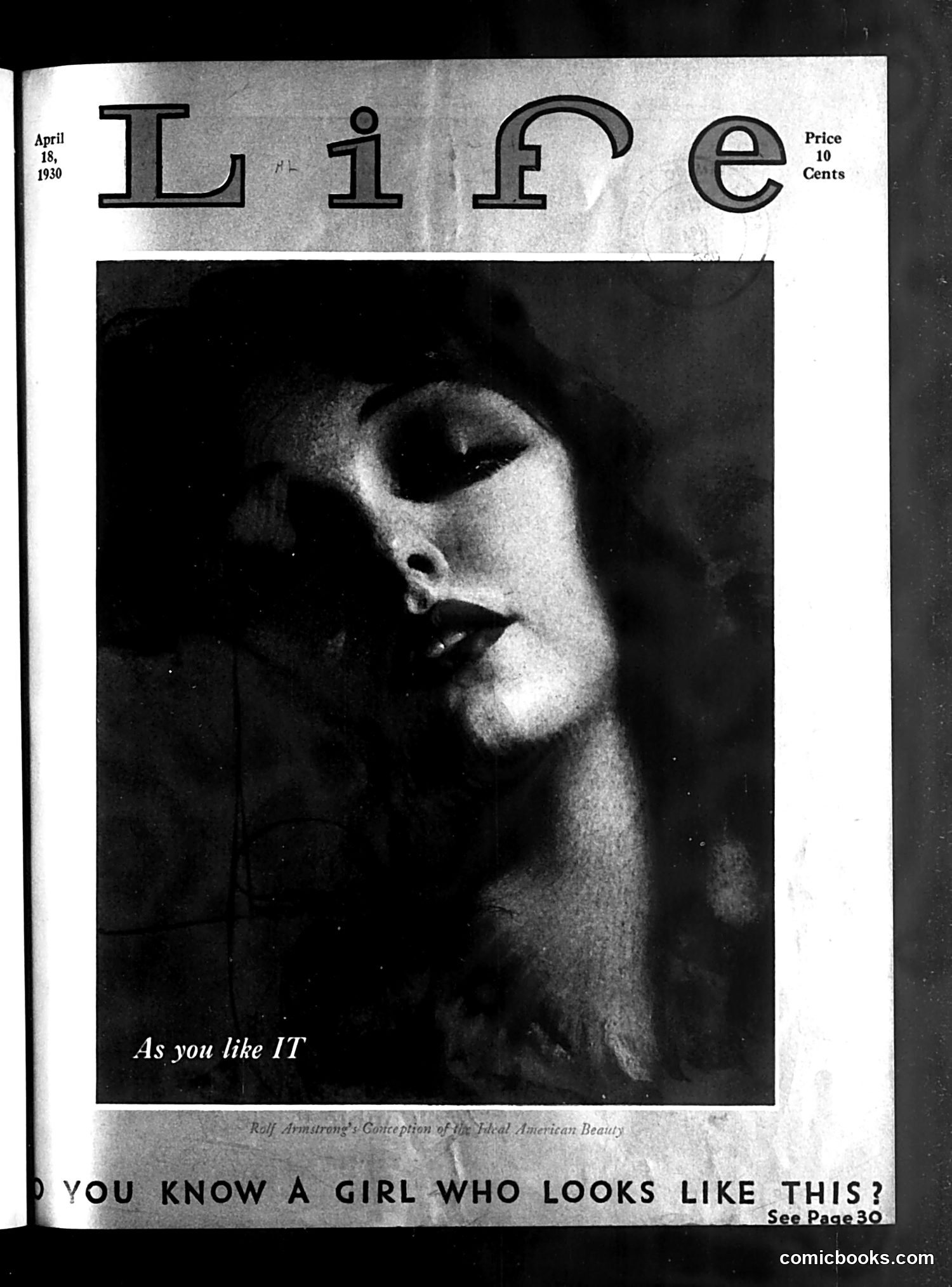
Life Magazine Cover Analysis (April 18, 1930) This is a Life magazine cover featuring a stylized portrait photograph in profile, credited to "Rolf Armstrong's Conception of the Ideal American Beauty." The cover uses the tagline "As you like IT" and asks readers "DO YOU KNOW A GIRL WHO LOOKS LIKE THIS?" The image appears to be promotional rather than satirical—it's showcasing an idealized feminine beauty standard of 1930, likely either advertising a product or promoting a specific actress or model. The dramatic lighting and artistic presentation were typical of Armstrong's commercial illustration work during this era. The "See Page 30" reference suggests accompanying content inside the magazine. This represents how Life used celebrity imagery and beauty standards as cover features during the early Depression period.
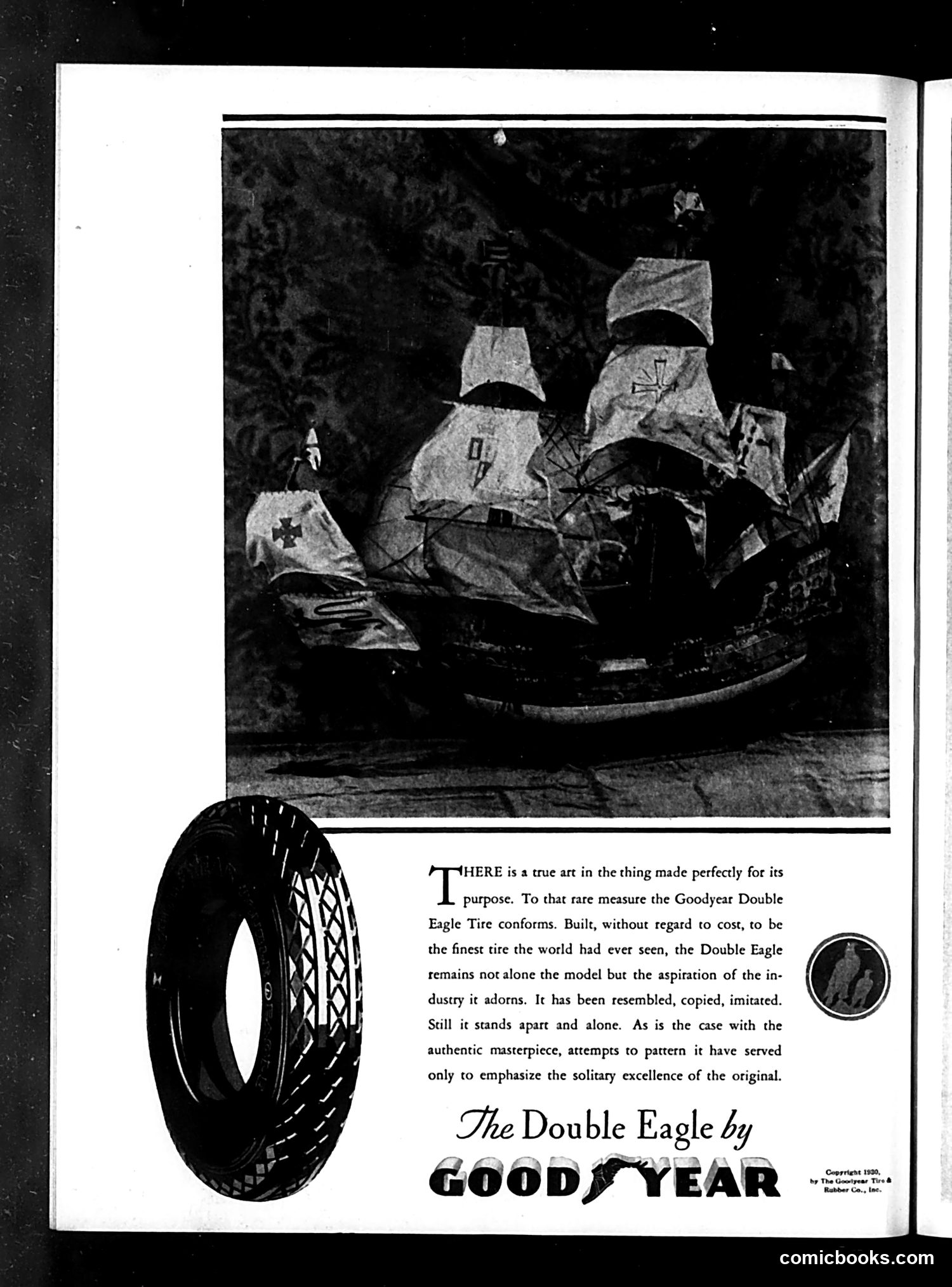
Analysis This page is primarily a Goodyear tire advertisement, not satirical content. The image shows a model ship with three sails bearing what appear to be crosses or religious symbols, photographed against a dark background. The ad's text claims the Goodyear Double Eagle Tire represents "true art" and "authentic masterpiece" quality—language suggesting superiority to competitors' imitations. The ship imagery may allude to maritime heritage or exploration, lending prestige to the product. The small tire photograph on the left displays the product's tread pattern. This is commercial advertising rather than political satire, typical of Life magazine's revenue model during this era (copyright 1930).
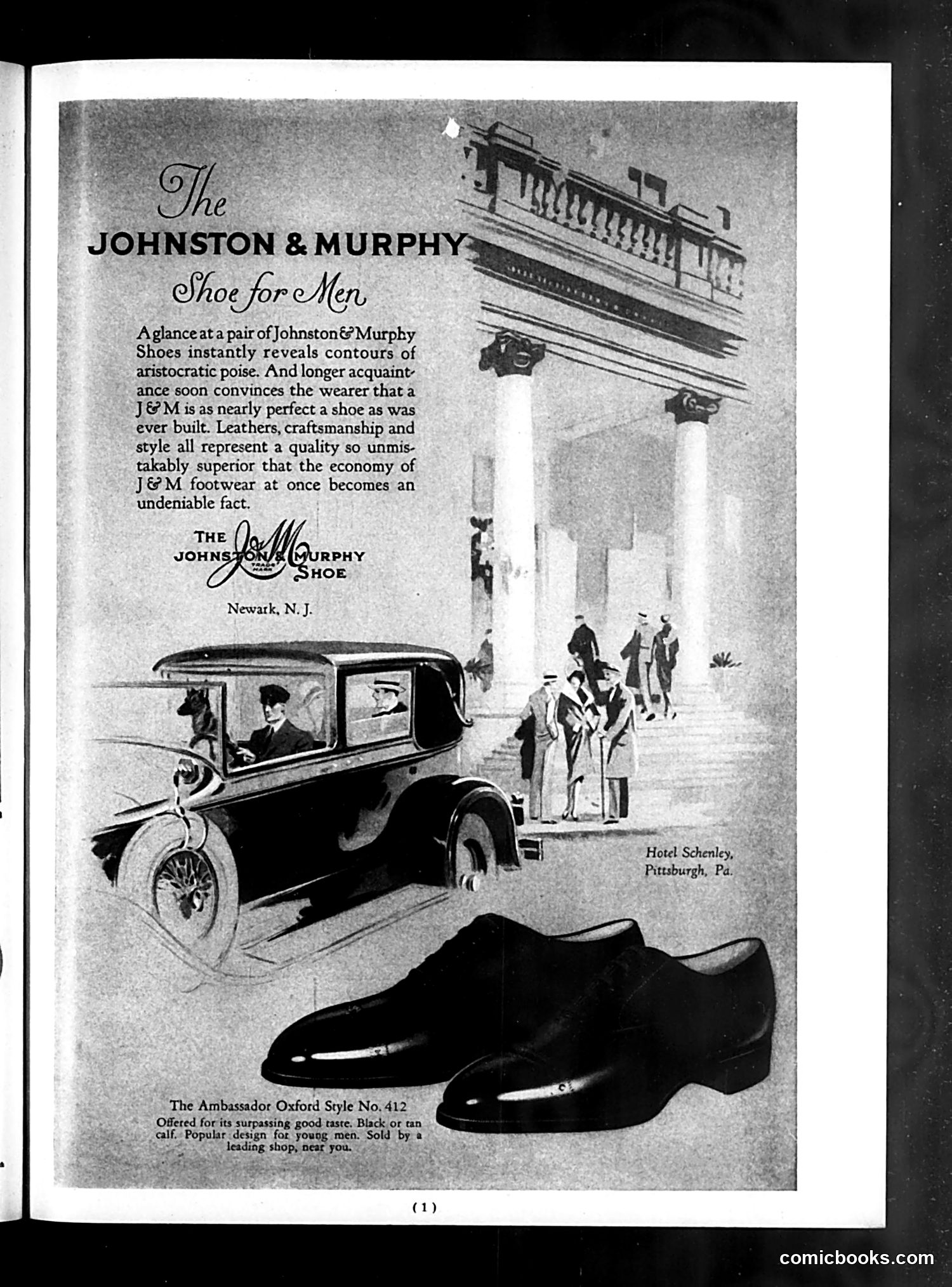
This is an advertisement for Johnston & Murphy shoes, not political satire or a cartoon. The page promotes their "Ambassador Oxford Style No. 412" for men, emphasizing superior craftsmanship and materials as justification for the product's cost. The advertisement includes an illustration of the Hotel Schenley in Pittsburgh, Pennsylvania, with well-dressed men and a period automobile, establishing an aspirational, sophisticated context for the shoe. The shoes themselves are pictured at the bottom. The ad's messaging reflects early-20th-century advertising strategy: associating the product with aristocratic elegance, quality materials, and professional success to appeal to middle and upper-class male consumers who valued respectability and status through proper attire.
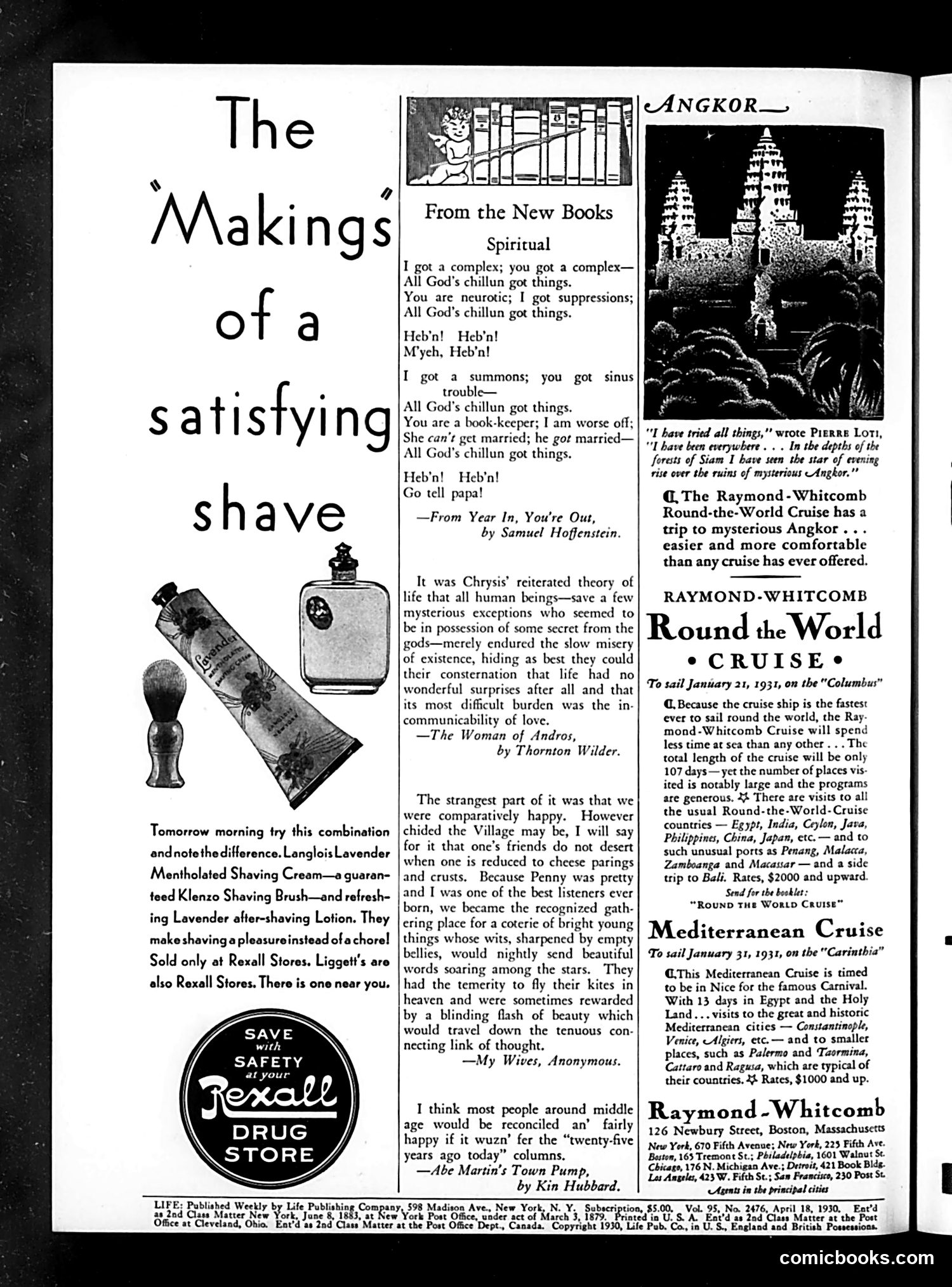
Page Analysis This page is primarily advertising and literary excerpts, not political satire. The left side advertises Rexall shaving products—a Langois Lavender menthol shaving cream, Klenzo brush, and aftershave lotion. The ad promises a "pleasurable" shave and directs readers to Rexall drugstores. The center features literary excerpts from contemporary books, including spiritual poetry and passages from novels by Samuel Hoffenstein, Thornton Wilder, and others—typical of Life magazine's cultural content in the 1930s. The right side advertises Raymond-Whitcomb cruise vacations to Angkor, the Mediterranean, and around the world—luxury travel offerings for affluent readers. No political cartoons or caricatures appear on this page. It represents Life's mixed format of advertising and cultural content from April 1930.
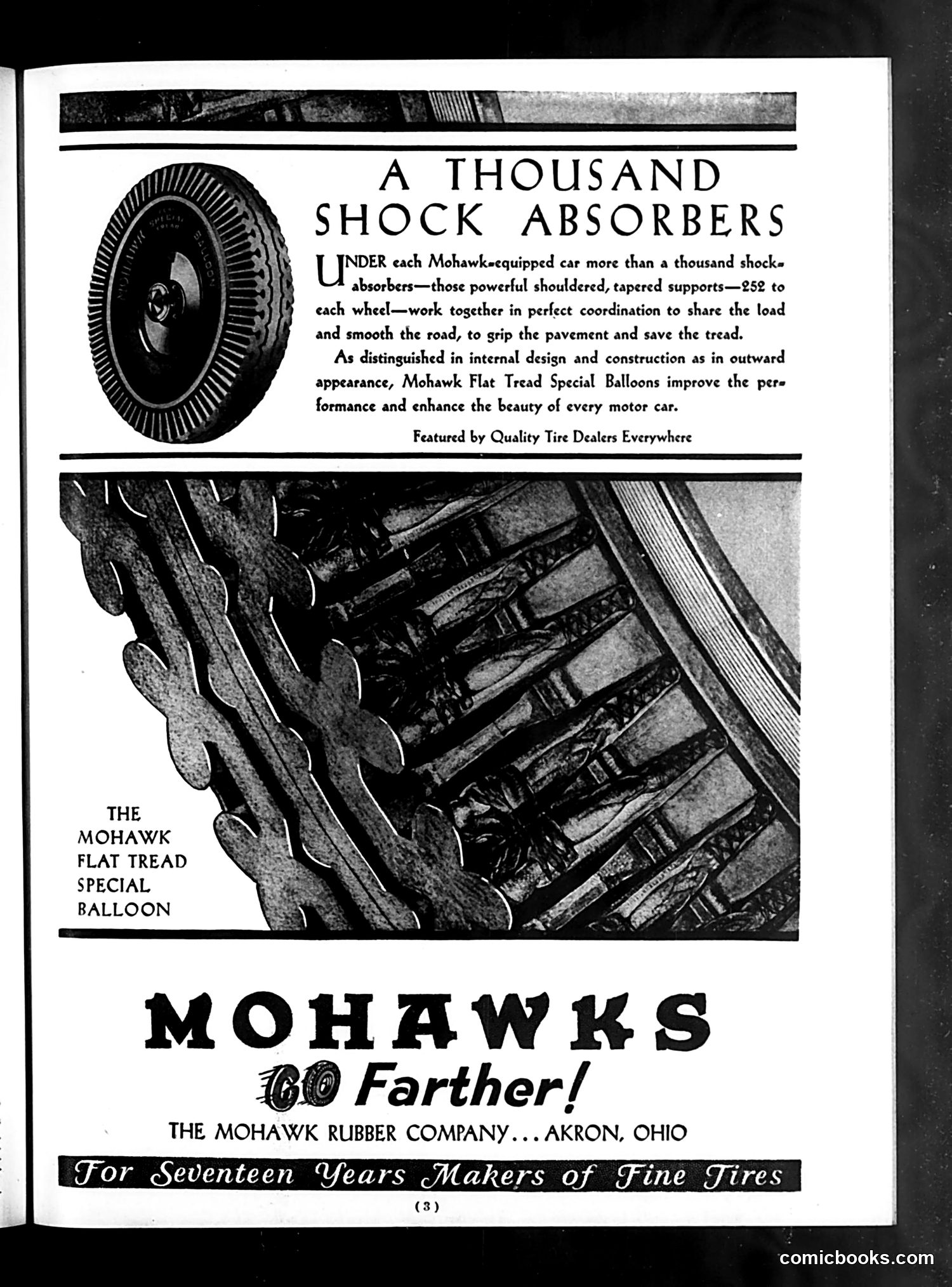
Analysis This page is primarily advertising, not satire or political commentary. It's a Mohawk Rubber Company advertisement for their "Flat Tread Special Balloon" tires. The ad emphasizes technical features: shock absorbers (described as "a thousand" per car), load-sharing suspension components (252 per wheel), and improved road grip. The upper section shows a tire cross-section; the lower section displays the tire's tread pattern. The phrase "Go Farther!" appears to be the company's slogan. The tagline notes Mohawk has been "Makers of Fine Tires" for seventeen years. The company was based in Akron, Ohio, a major tire manufacturing hub. This is straightforward product advertising with no discernible political or social satire.
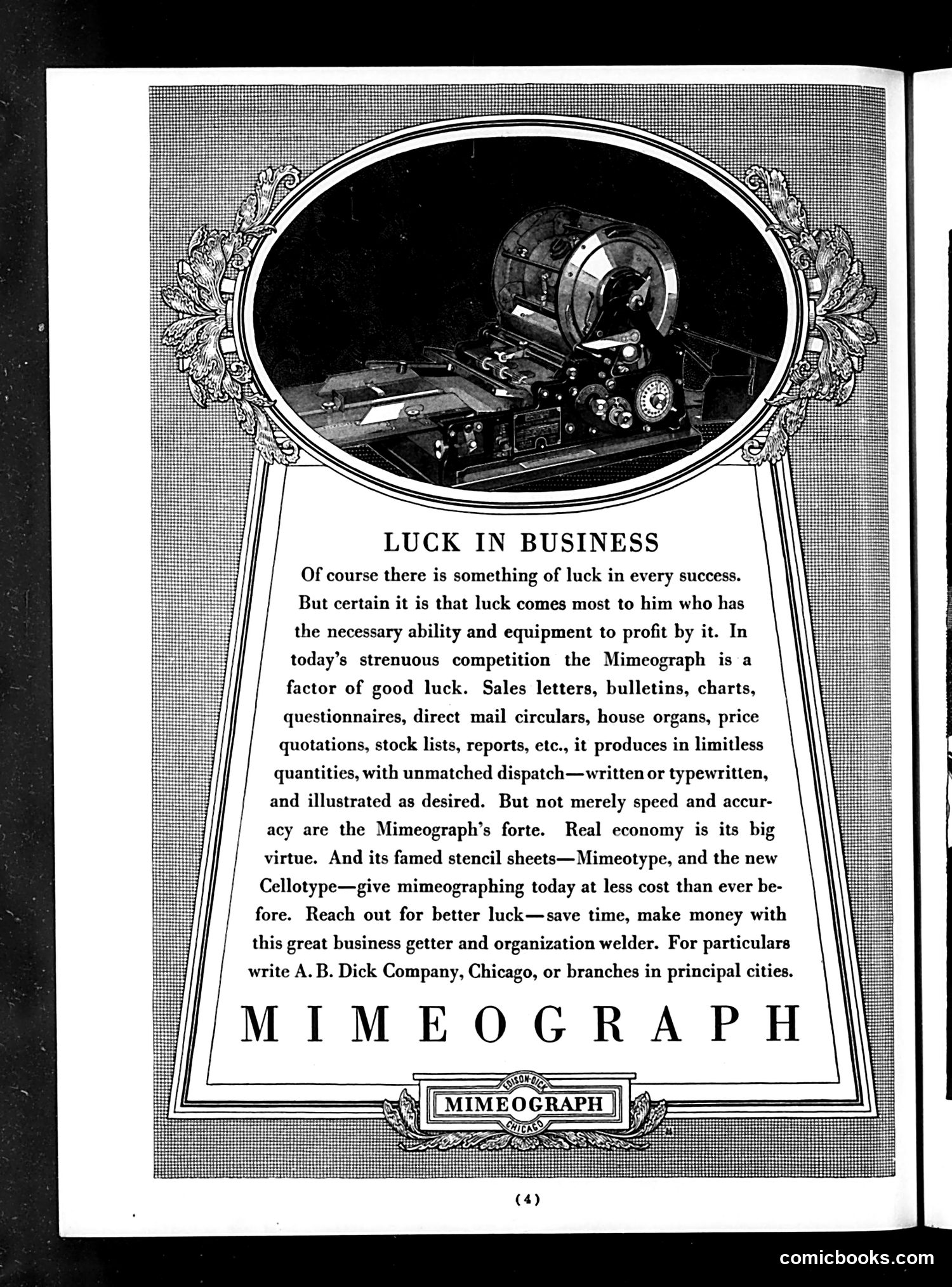
Analysis This is a full-page advertisement, not satirical content. It promotes the Mimeograph machine, manufactured by the A.B. Dick Company of Chicago. The ad's headline "LUCK IN BUSINESS" frames the mimeograph as a competitive advantage. The text argues that while success requires luck, having the right equipment—specifically mimeographing technology—gives businesses an edge in "strenuous competition." The machine pictured appears to be a mimeograph apparatus. The ad emphasizes the device's speed, accuracy, and economy, highlighting its ability to mass-produce sales letters, bulletins, charts, and other business documents "with unmatched dispatch." It mentions newer stencil technologies (Mimeotype and Cellotype) as cost-saving innovations. For a modern reader: this represents early 20th-century office automation marketing—positioning a copying/printing machine as essential business equipment.
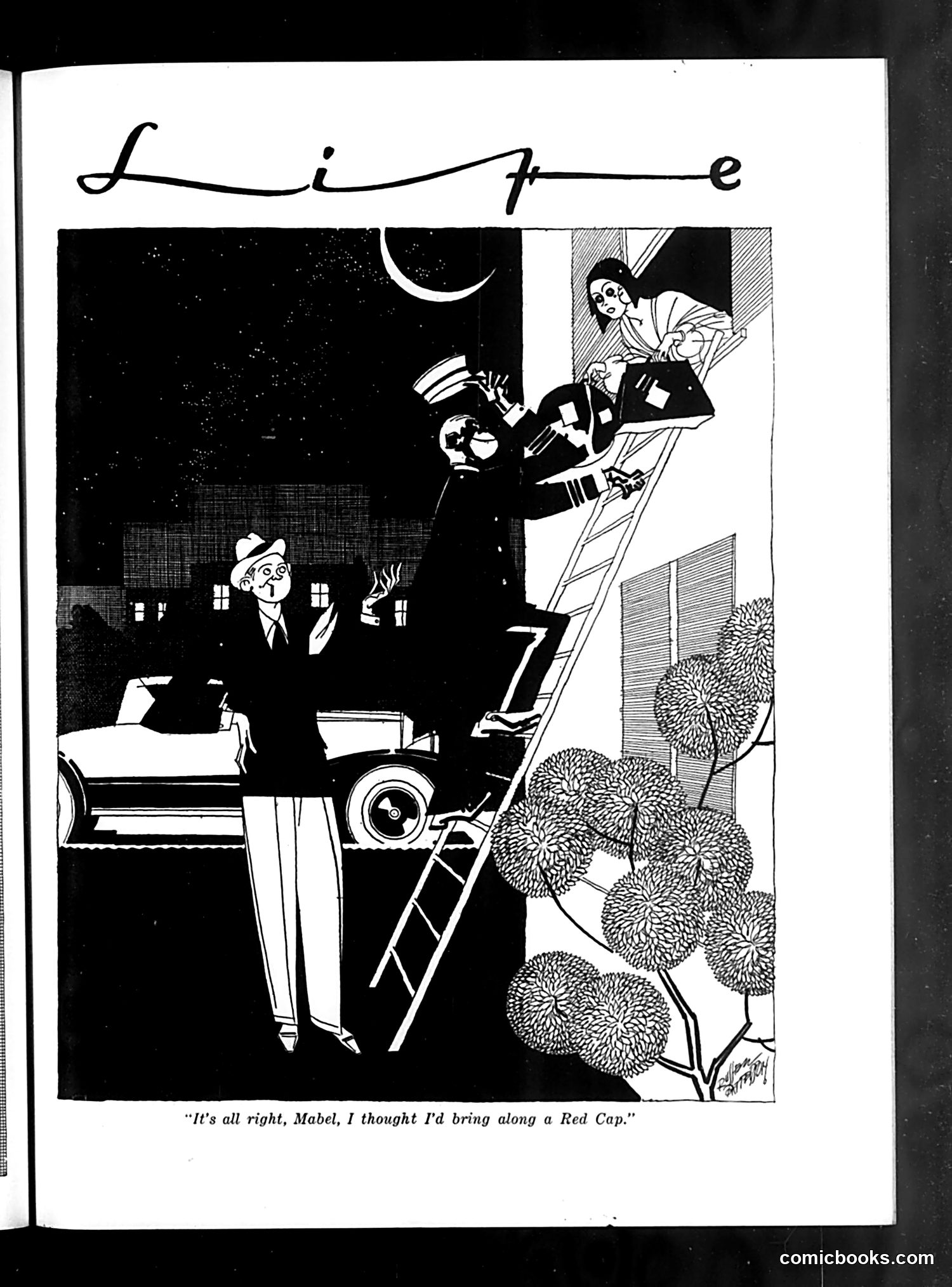
Explanation for Modern Readers This cartoon titled "Life" depicts a nighttime burglary scene. A man in formal attire (bottom left) stands outside a house while his accomplice climbs a ladder toward an open window where a woman appears. The caption reads: "It's all right, Mabel, I thought I'd bring along a Red Cap." The humor relies on a double meaning: "Red Cap" likely refers to a porter or bellhop (identifiable by their distinctive red uniform cap), but the phrase suggests the man is reassuring his wife about bringing an unexpected companion on what appears to be a romantic or illicit nighttime visit. The joke plays on the absurdity of casually introducing a third party in an intimate situation. The cartoon satirizes social awkwardness and marital dynamics through this scenario.
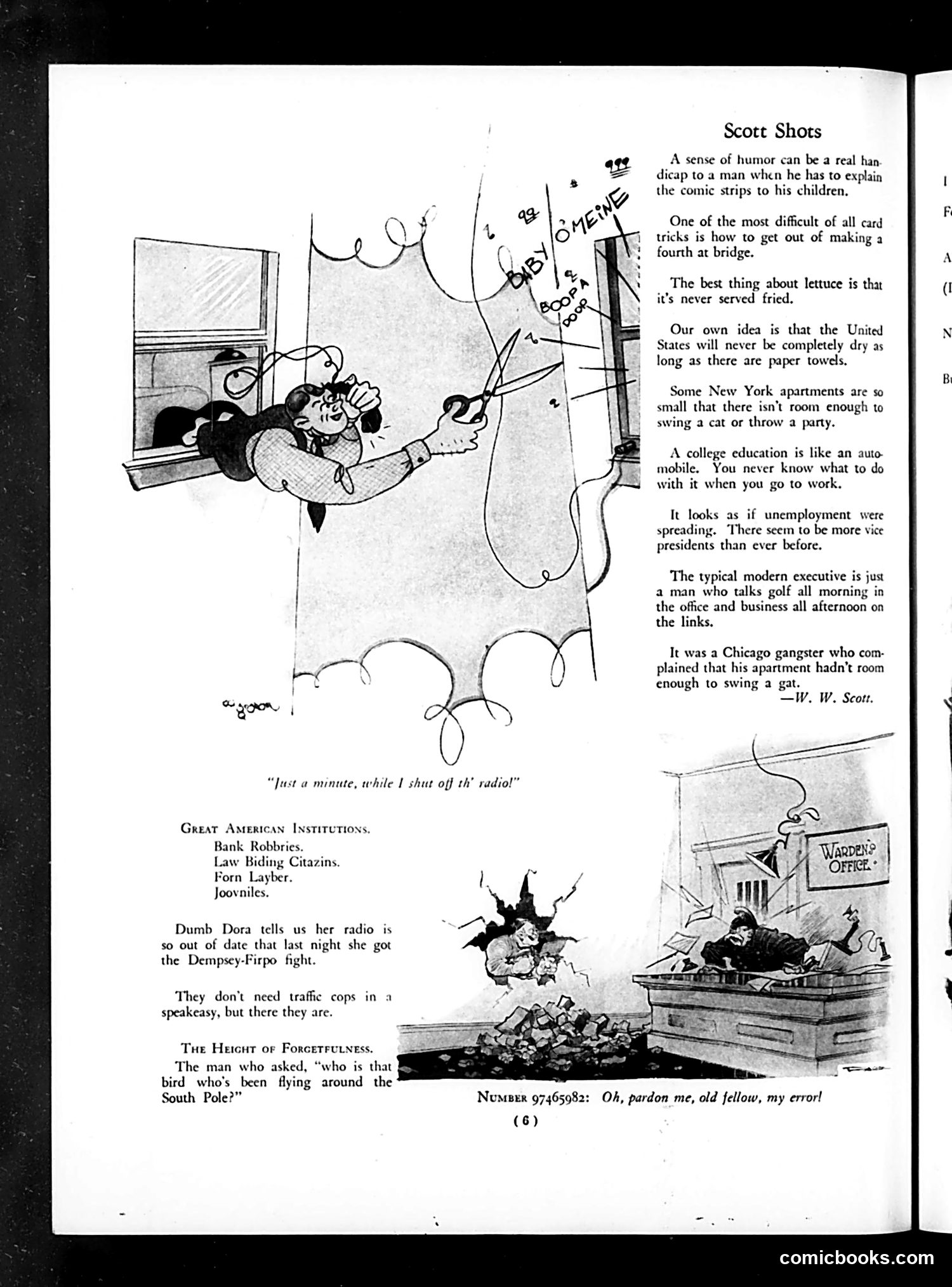
Scott Shorts Page Analysis This page contains humorous one-liners and cartoons by W.W. Scott. The top cartoon shows someone fishing from a window, with the caption "Just a minute, while I shut off th' radio!" — likely satirizing how intrusive radio broadcasts had become in American homes by this era. The second cartoon depicts someone being ejected from a "Wooden's Office" through a window — appearing to reference a coach or authority figure, though the specific identity is unclear from the image alone. The page's text includes satirical observations about American life: cramped NYC apartments, unemployment, golf-obsessed executives, and small apartment living. A final quip references a "Chicago gangster" complaining his apartment lacks room to swing a cat — all gentle social commentary typical of Life magazine's satirical style during the early-to-mid 20th century.
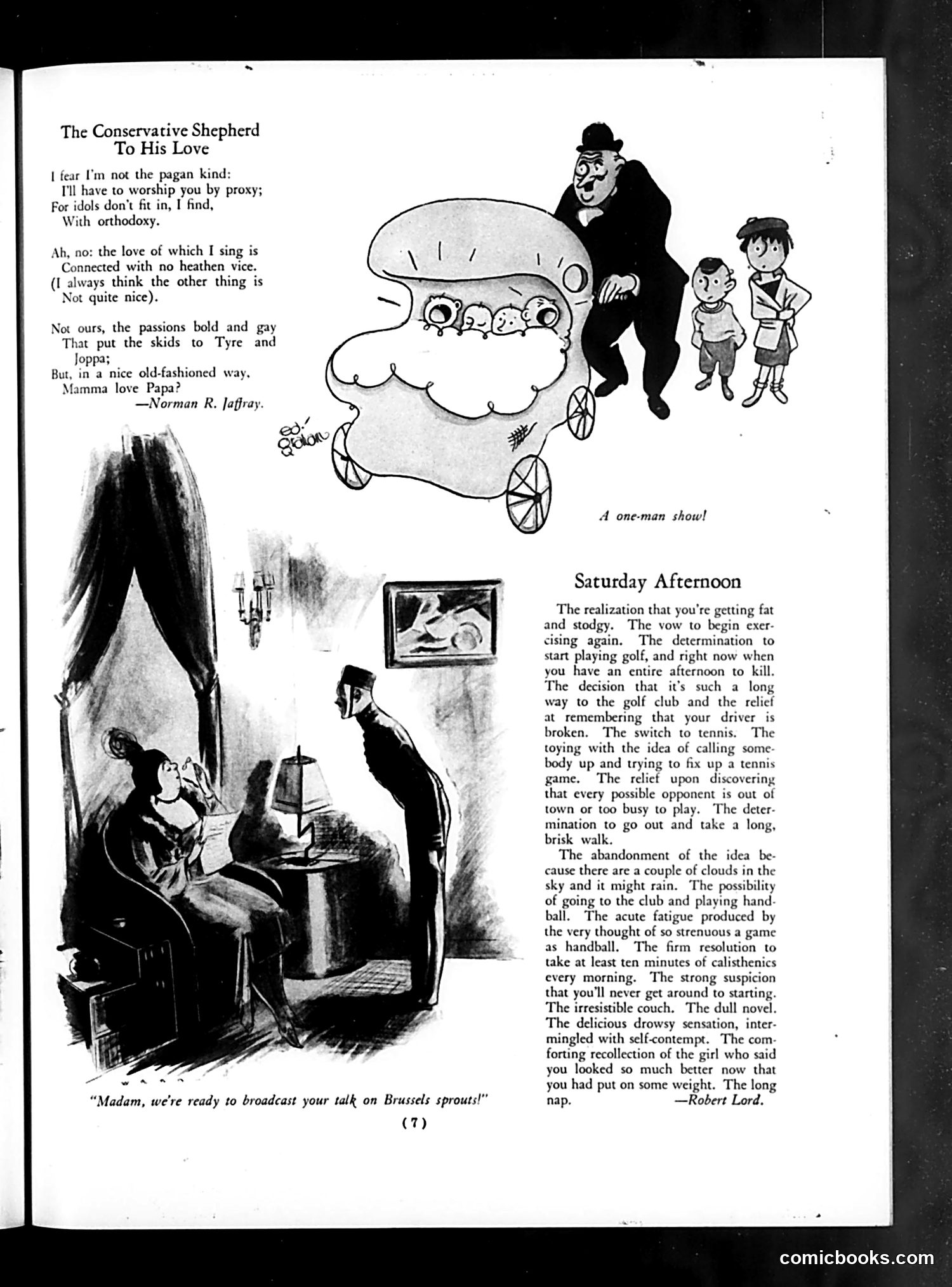
Analysis of Life Magazine Page "The Conservative Shepherd to His Love" (top): A satirical poem by Norman R. Jaffray mocking conservative religious hypocrisy. The verse critiques those who claim traditional morality while avoiding genuine spiritual commitment—worshipping "by proxy" and finding idols acceptable despite "orthodoxy." The accompanying illustration shows a man herding children in a cloud-like carriage, suggesting conservative leadership of the masses. "Saturday Afternoon" (bottom right): Robert Lord's humorous essay cataloging the mental resistance to afternoon leisure activities—the internal negotiations about golf, tennis, walking, or rest. It captures a specific modern anxiety: even free time becomes exhausting indecision. The lower illustration depicts a domestic scene, possibly related to the essay's theme of reluctant recreation.
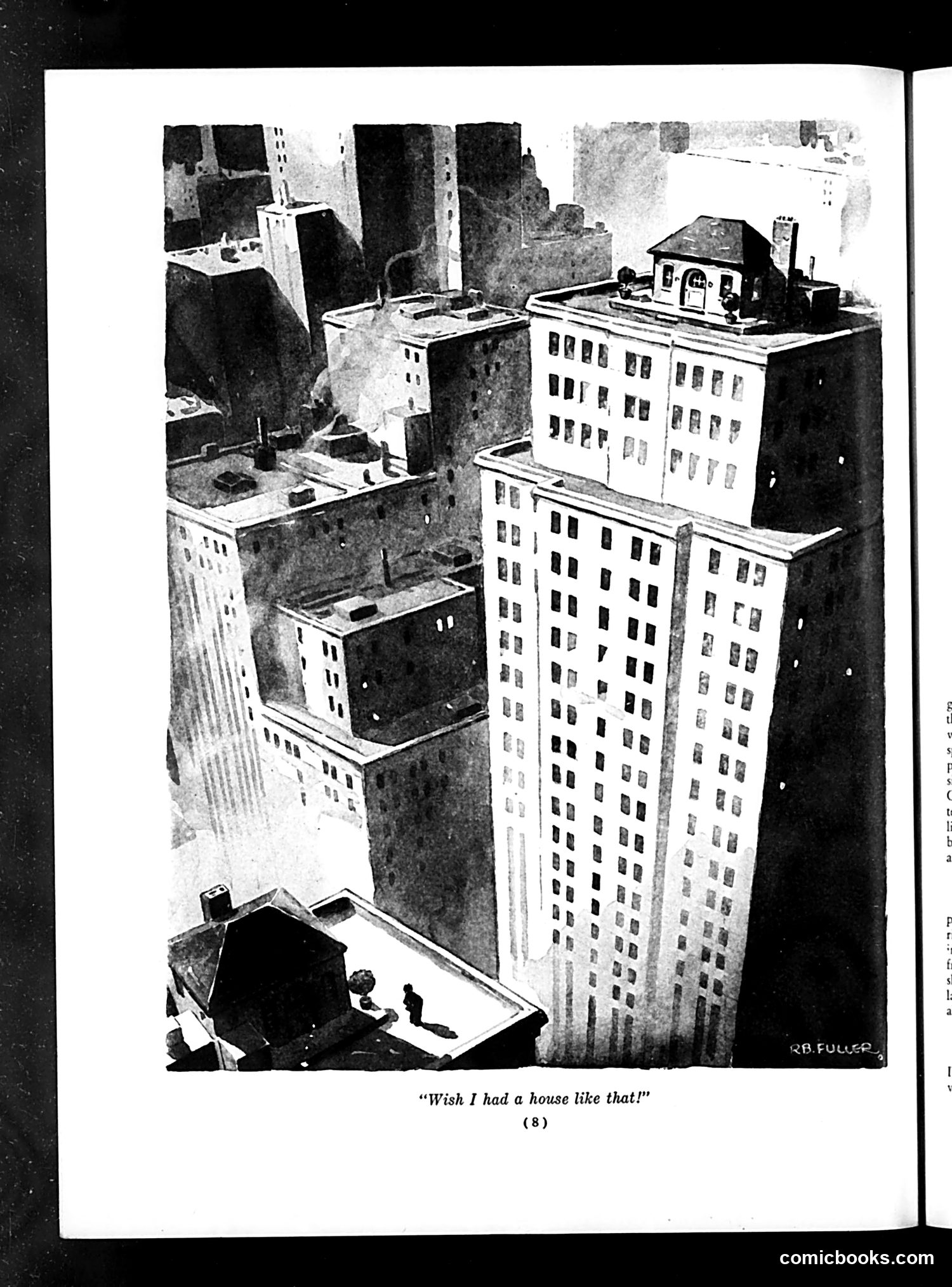
Analysis This is a cartoon by R.B. Fuller titled "Wish I had a house like that!" (numbered 8). The image shows a bird's-eye view of crowded urban tenement buildings from what appears to be a rooftop perspective. In the foreground, two small figures (likely a couple or family) look down at a model or dollhouse—a tiny, pristine residential structure—sitting on a rooftop among the massive apartment buildings surrounding them. The satire critiques urban housing inequality and overcrowding. The joke is bitter: ordinary people, trapped in cramped tenement housing, can only dream of owning a proper house. The contrast between the miniature model house (representing their aspiration) and the looming, densely-packed tenements (their reality) underscores early 20th-century frustrations with inadequate urban housing and class disparities.
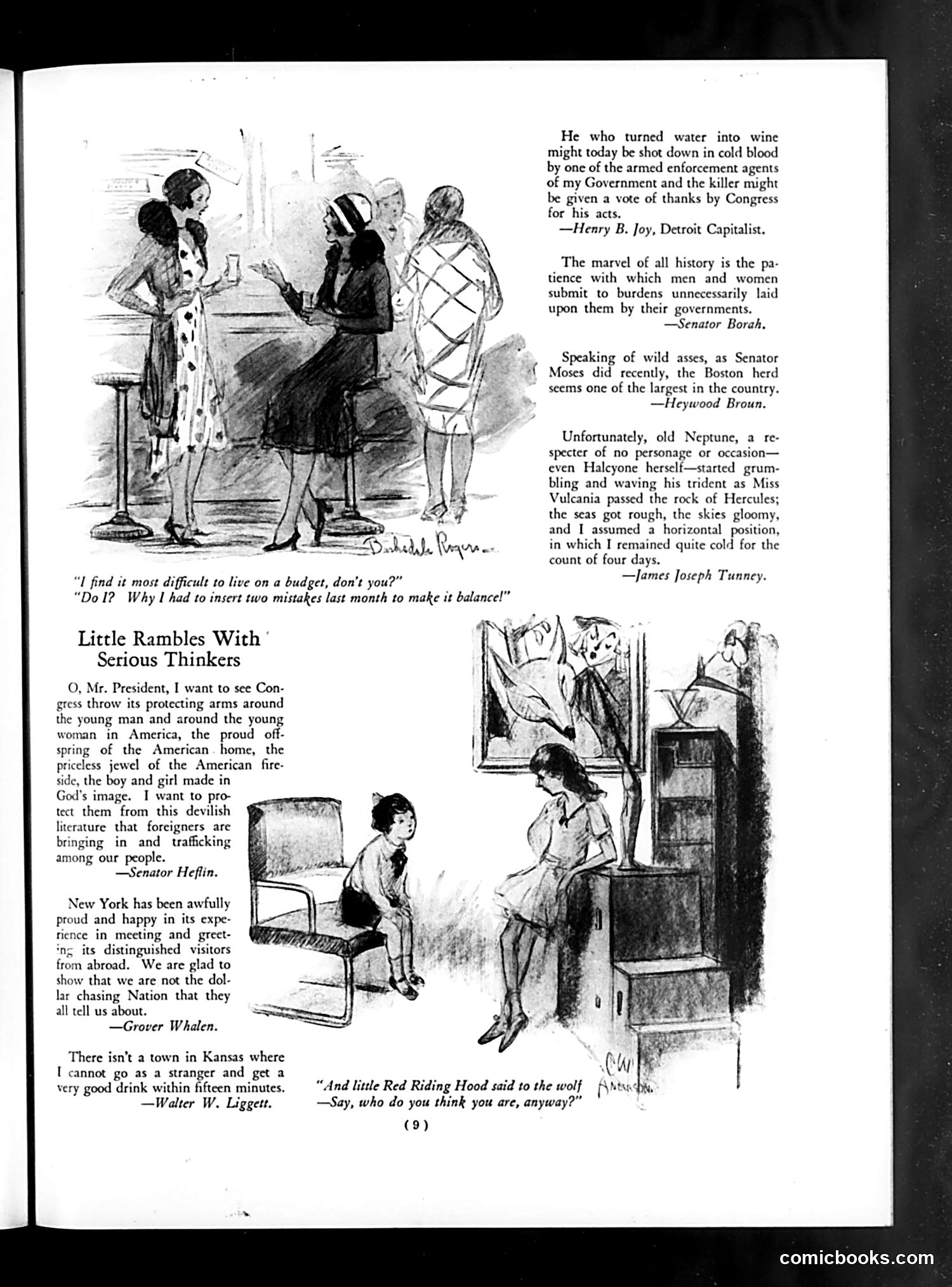
Analysis of Life Magazine Page This page contains two political cartoons and several quoted satirical comments addressing Prohibition-era issues (circa 1920s-early 1930s). Top cartoon: Shows three women discussing household budgeting difficulties, with one stating she had to "insert two mistakes last month to make it balance"—satirizing the economic strain on American families during this period. Bottom cartoon: References "Little Red Riding Hood," showing a woman at a doorway confronting someone, with the caption playing on the fairy tale while appearing to mock moral guardianship or naive trust. The surrounding quotes from politicians and commentators (Henry B. Joy, Senator Borah, etc.) critique government overreach, Prohibition enforcement, and social control. The satire targets the gap between government restrictions and public reality, suggesting such laws created hardship and hypocrisy rather than moral improvement.
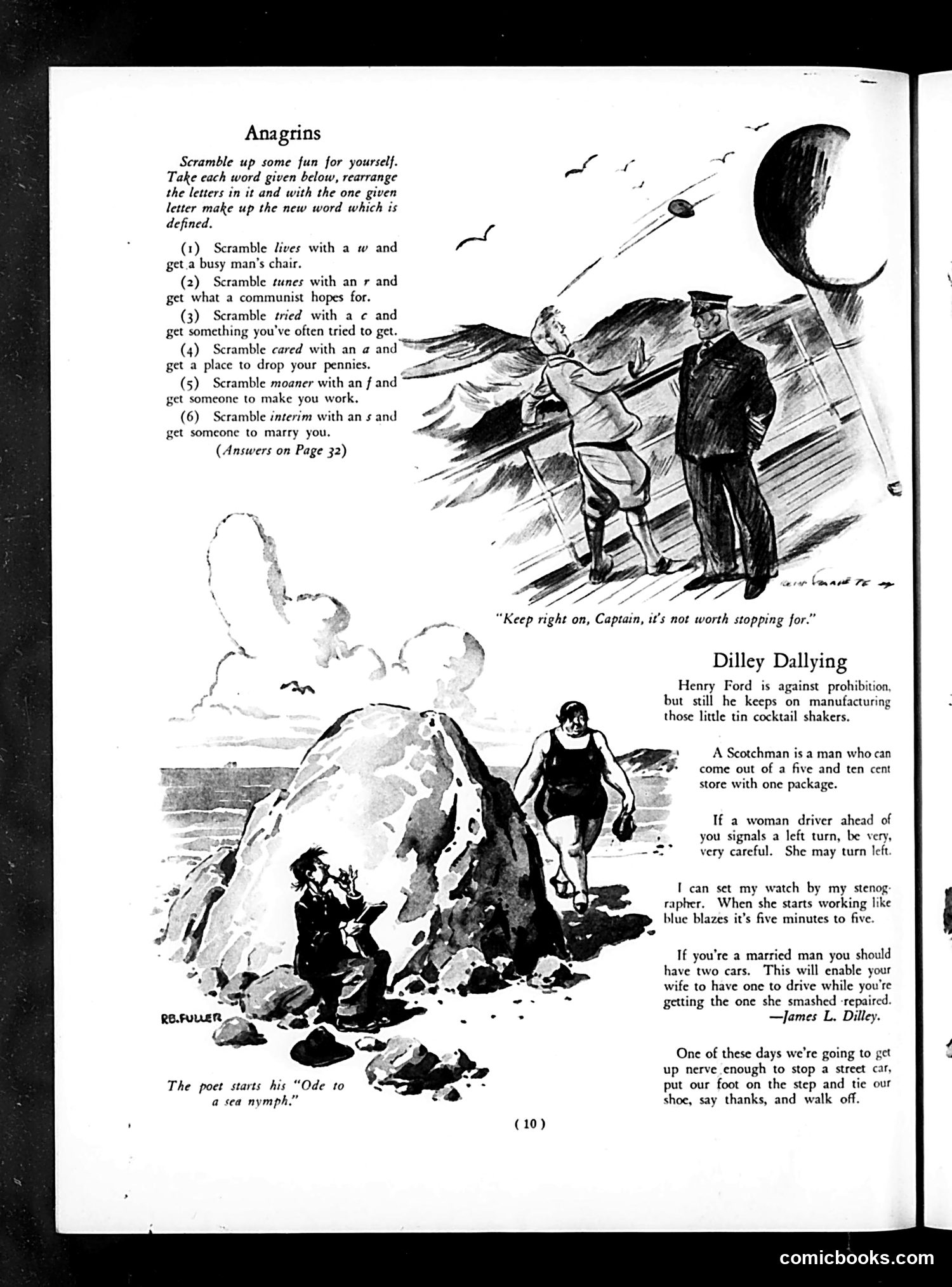
"Dilley Dallying" - Life Magazine Page This page contains a word-puzzle game ("Anagrins") and humorous observations attributed to James L. Dilley. The main cartoon depicts a poet sitting among rocks by the sea, captioned "The poet starts his 'Ode to a sea nymph.'" The joke appears to be visual irony—the romantic literary subject contrasts with the unglamorous, uncomfortable seaside setting. The "Dilley Dallying" section offers satirical observations about contemporary life: Henry Ford's continued manufacture of cocktail shakers despite Prohibition; Scottish frugality; women drivers; stenographers; and married couples needing two cars. These are lighthearted social commentary on 1920s American culture and consumer behavior, without targeting specific political figures. The humor relies on recognizable stereotypes and everyday frustrations of the era.
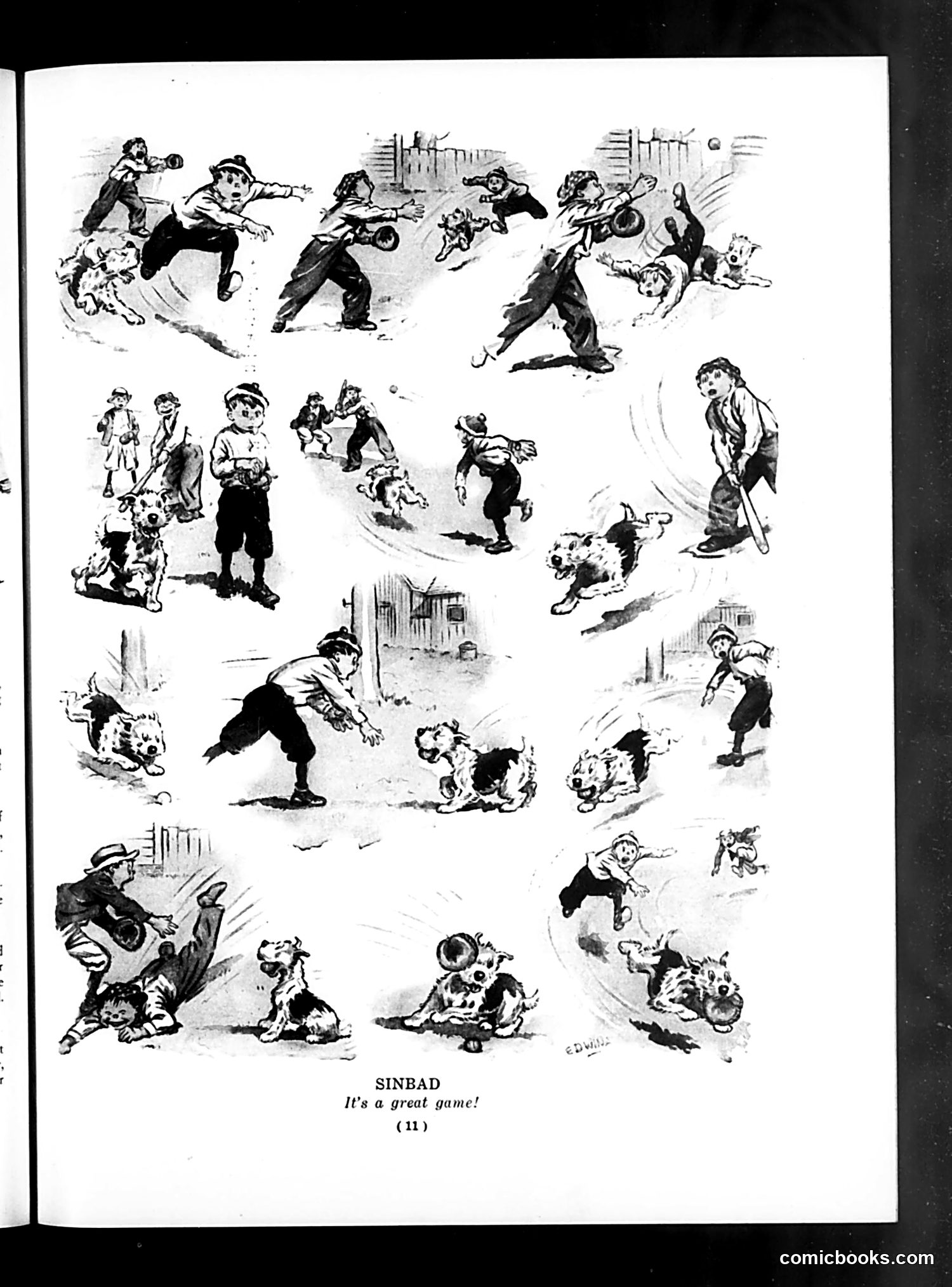
Analysis This page depicts "Sinbad: It's a great game!" — a collection of satirical sketches showing children and adults playing with dogs in various street scenes. The cartoon appears to be social commentary on urban life and childhood play. The repeated pairing of people with dogs suggests the game involves dogs as central participants, likely commenting on how street children and poorer city residents entertained themselves with available animals. The chaotic, energetic compositions emphasize the rowdy, uncontrolled nature of the activity. The title "Sinbad" likely references the adventurous sailor character, ironically applied to these mundane urban scenes. The phrase "It's a great game!" carries satirical weight — what might seem fun to participants appears undignified or problematic to the magazine's middle-class readers, critiquing either child welfare conditions or public behavior standards of the era.
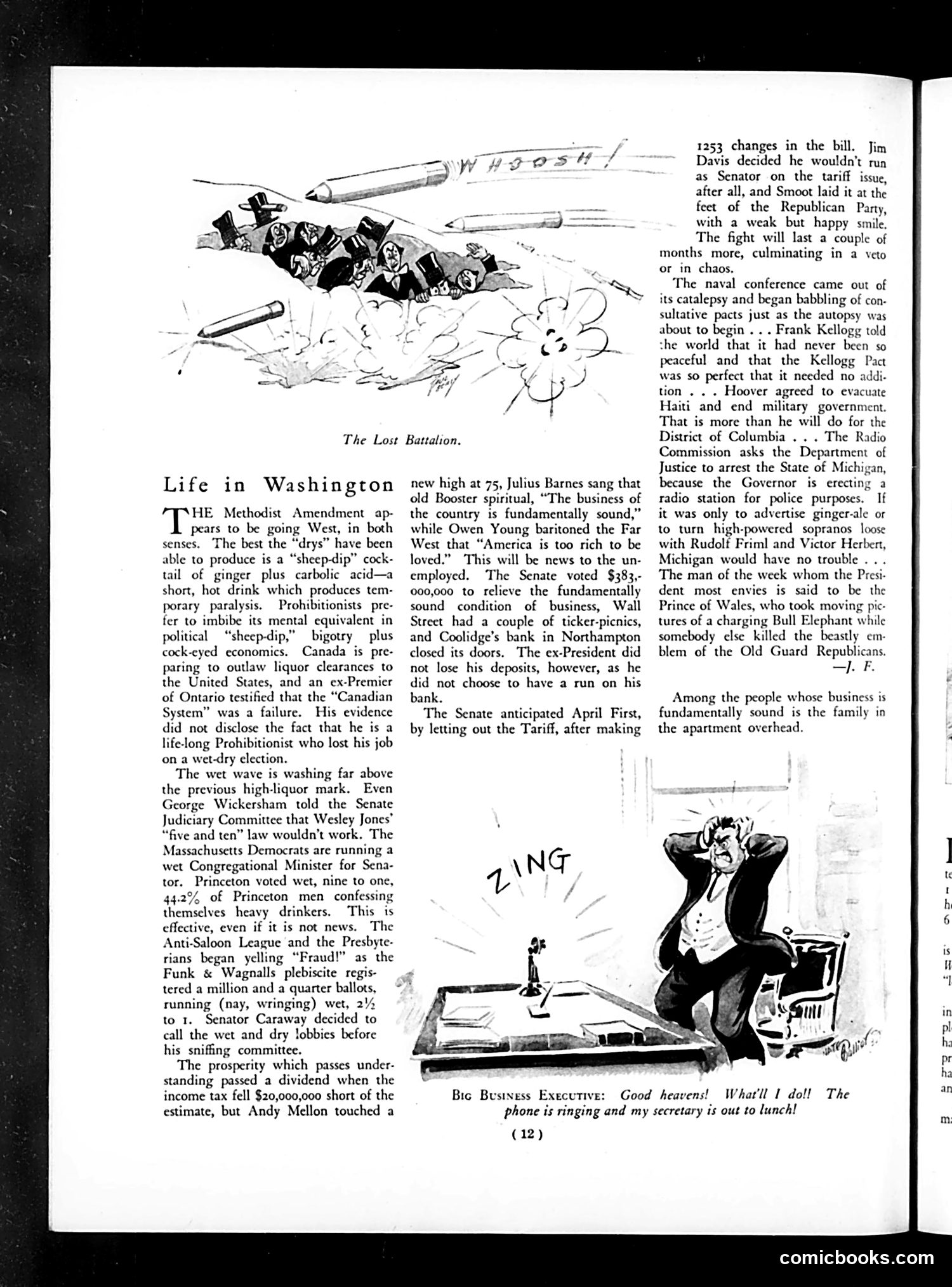
"Life in Washington" - Political Satire, circa 1930 Top Cartoon ("The Lost Battalion"): Shows figures being attacked with pencils labeled "WHOOSH," depicting legislative threats or parliamentary attacks. The context is unclear without additional information. Bottom Cartoon ("Big Business Executive"): A businessman at his desk receives a ringing phone, exclaiming "Good heavens! What'll I do! The phone is ringing and my secretary is out to lunch!" This satirizes corporate inefficiency and dependency—mocking executives who cannot handle basic operations without staff assistance. Text Discussion: The article covers Prohibition enforcement debates, tariff negotiations, and Senate politics. It references Jim Davis (Senator), Frank Kellogg's naval conference statements, and Herbert Hoover's policies regarding Haiti and military government. The satire critiques both wet/dry lobbying efforts and Republican political positioning.
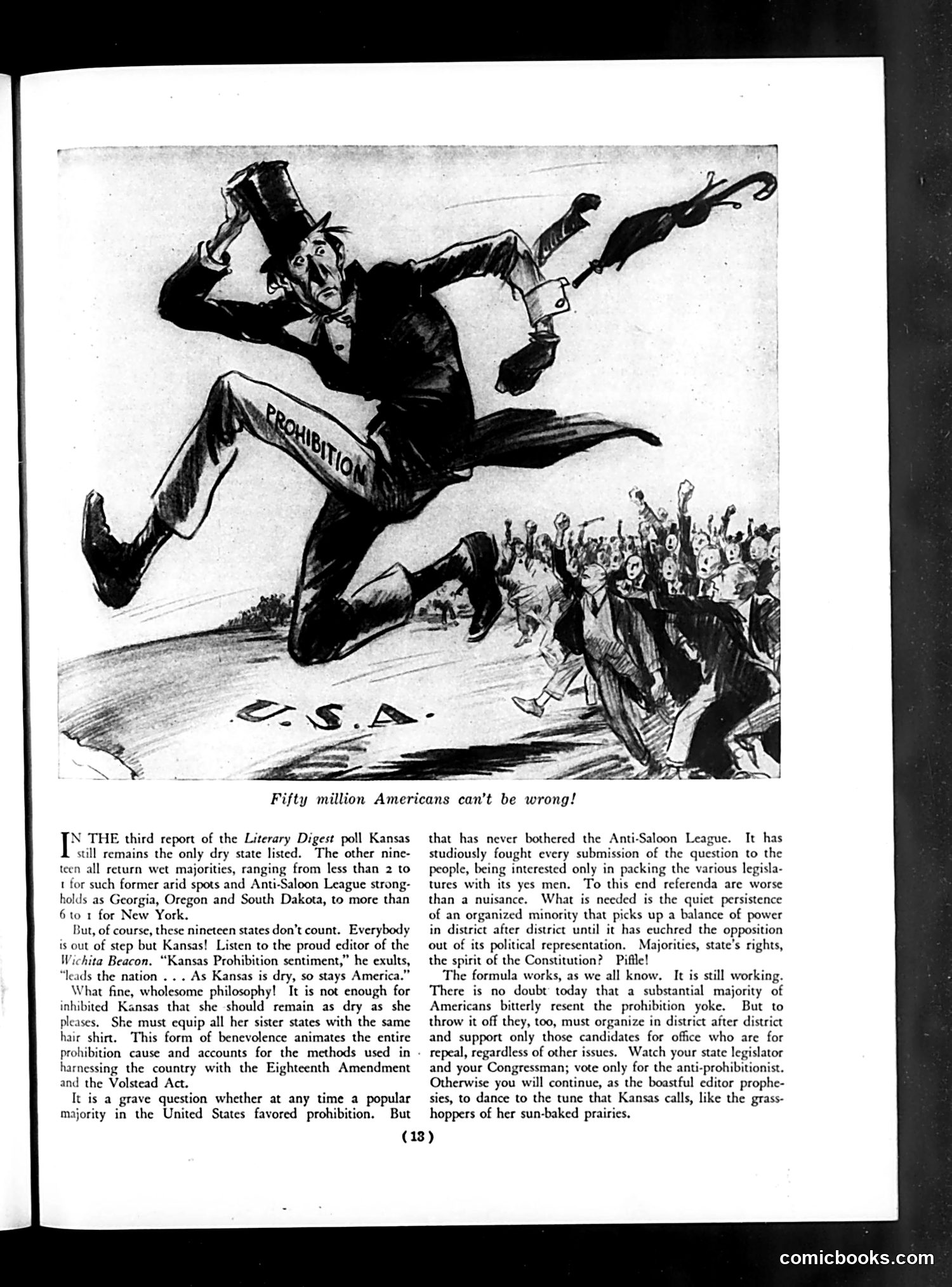
Prohibition-Era Political Satire This cartoon satirizes the Prohibition movement and Kansas's role in enforcing it. A man labeled "Prohibition" leaps joyfully across the USA while a crowd cheers below. The caption reads "Fifty million Americans can't be wrong!" The accompanying text mocks Kansas—a state that strongly supported Prohibition—for its self-righteous "wholesome philosophy." The author argues that Kansas's anti-saloon efforts represent an arrogant minority imposing values on the majority. He criticizes the "quiet persistence of an organized minority" using the Eighteenth Amendment to enforce dry laws, claiming Prohibition hasn't actually worked and voters should support only anti-prohibition candidates. The satire targets Prohibition's overreach and moral superiority, positioning it as an unpopular mandate imposed by zealous activists rather than genuine democratic will.
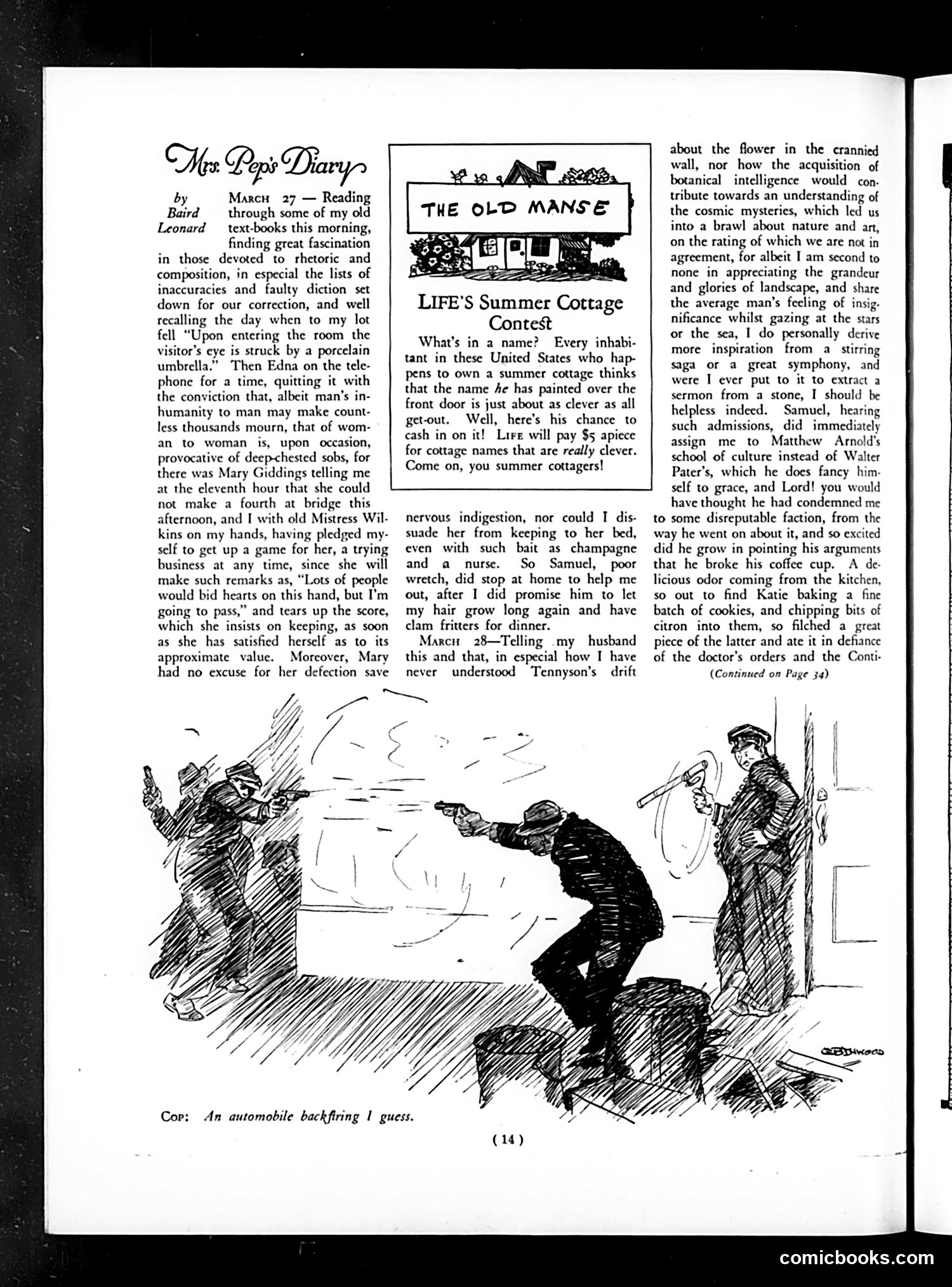
Analysis of "Mrs. Pep's Diary" Page This page from *Life* magazine (dated March 27-28) contains a domestic humor column by "Mrs. Pep's Diary" alongside "The Old Manse" cottage-naming contest. The main cartoon depicts a home-invasion scenario where a man in the center points a gun at intruders on either side—figures appear to be burglars or unwanted guests entering through doorways. The caption reads: "Con: An automobile backfiring! guests." The joke plays on misidentification: the homeowner has mistaken a car's backfire for gunshots and is defending his home against innocent guests, resulting in comedic overreaction. This satirizes both contemporary anxieties about crime/safety and the absurdity of jumping to violent conclusions from innocent noises—a relatable domestic humor premise for early 20th-century readers.
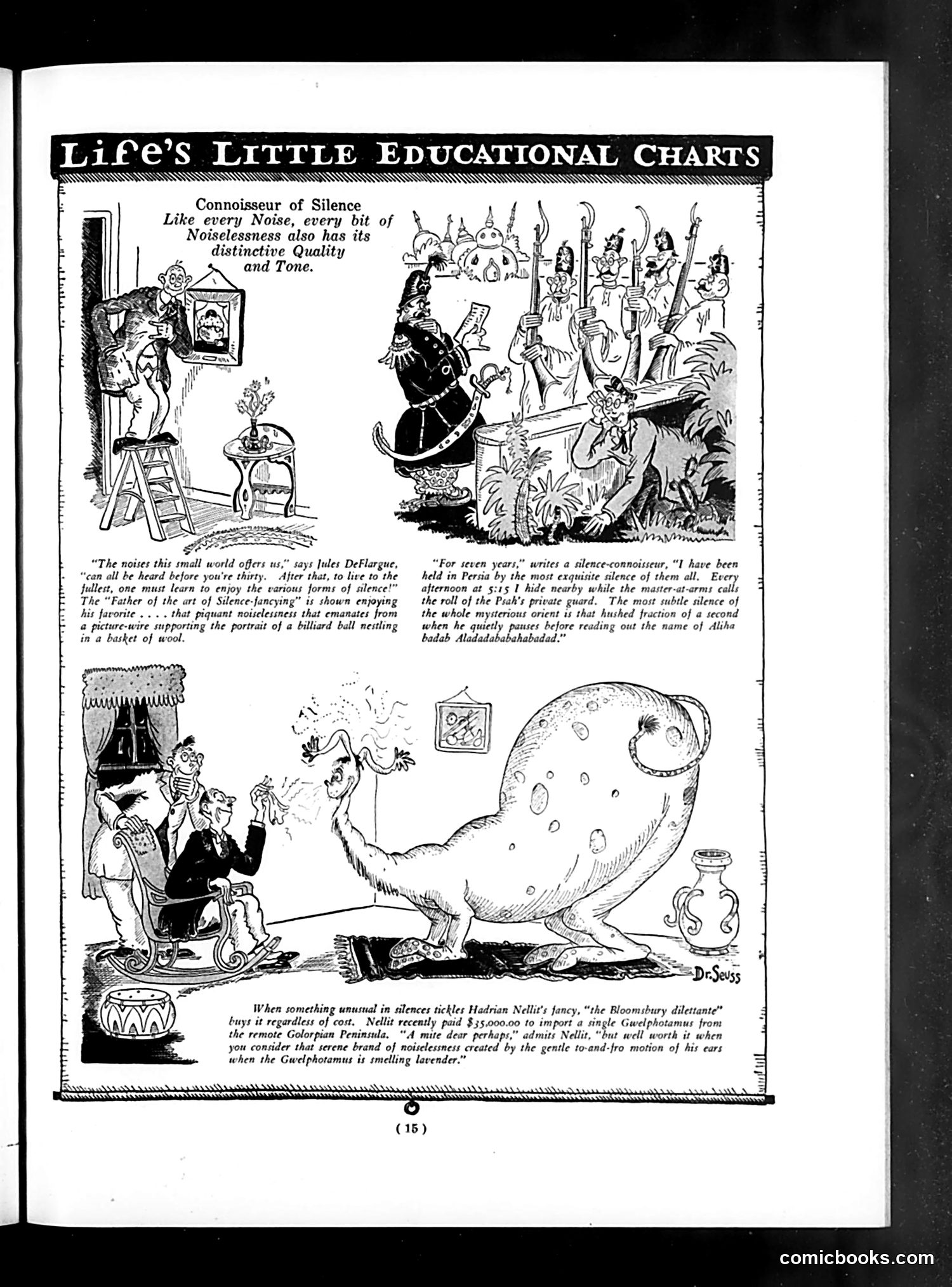
"Life's Little Educational Charts: Connoisseur of Silence" This satirical page mocks the pretensions of art connoisseurs and exotic collectors. The top cartoon shows an aesthete appreciating "silence" as if it were a refined art form, quoting philosopher Jules DeFlargue on enjoying "various forms of silence." The bottom cartoon (signed Dr. Seuss) ridicules Hudson Neffli, a wealthy collector who paid $3,000 to import a rare "Guelpholamus" creature from India. The joke suggests that this bizarre animal—depicted as an oversized, lumpy creature—was likely worthless despite its exotic origin and high price tag. Both cartoons satirize the gullibility of the wealthy and cultured classes, who mistake affectation and expensive acquisitions for genuine sophistication and taste.
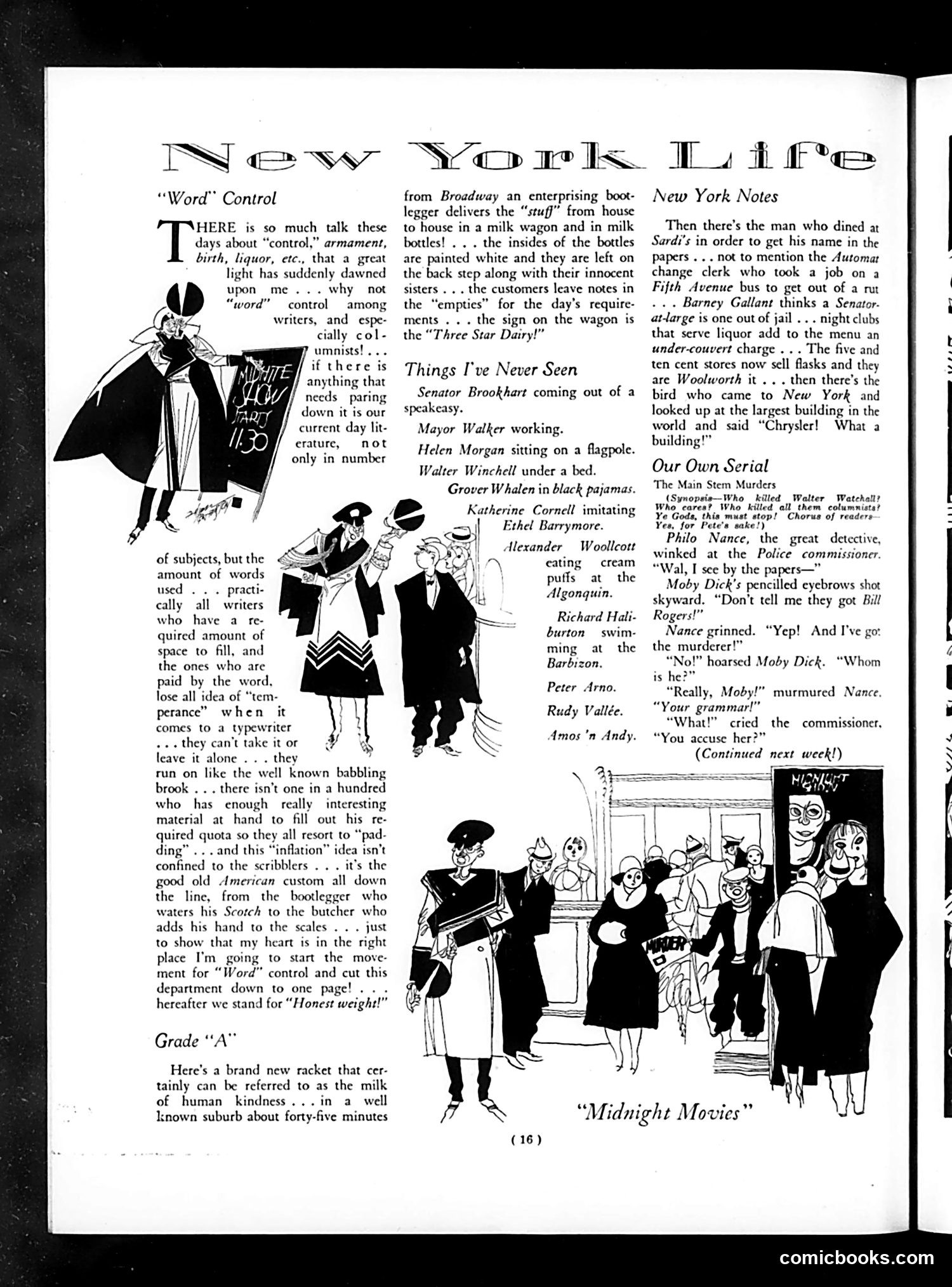
"Word Control" Editorial Cartoon Analysis This editorial advocates for stricter word economy in writing, particularly among columnists. The cartoon depicts a figure wielding a large pencil as a weapon, suggesting aggressive editorial control. The author argues that writers waste space through unnecessary verbosity when filling required word counts. He critiques the contradiction: writers claim they need "padding" to fill space, yet columnists are "paid by the word" — creating perverse incentives for verbose writing. The proposed solution is a "Word" control movement to enforce concision, comparing it to established quality standards (like "Grade 'A'" milk ratings). The satire targets the entire American publishing industry's reliance on word-count-based payment structures, which the author sees as encouraging poor, bloated writing rather than tight prose.
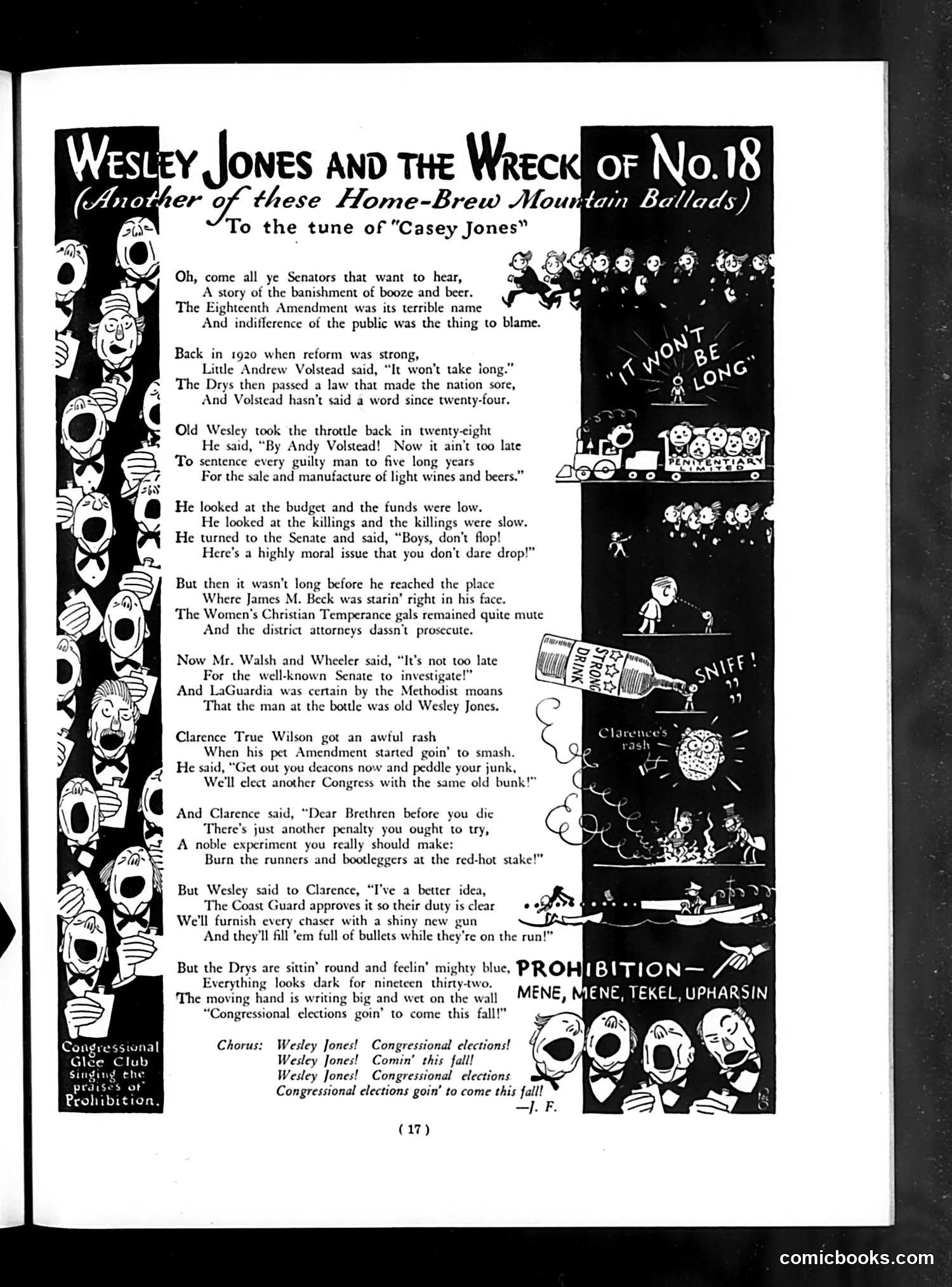
"Wesley Jones and the Wreck of No. 18" This is a satirical ballad mocking Senator Wesley Jones of Washington, a key figure in pushing Prohibition enforcement. The "wreck" refers to Prohibition's failures by the late 1920s. The narrative attacks Jones for his rigid stance: he had pushed harsh penalties for bootleggers and alcohol sales. The cartoon ridicules how Prohibition created unintended chaos—Coast Guard chases, black market violence, and general lawlessness—rather than moral reform. References include James M. Beck (a Prohibition advocate), the Women's Christian Temperance Union (WCTU), and specific politicians opposing enforcement. The title's parody of "Casey Jones" adds mockery. The central joke: Wesley Jones championed a law that spectacularly backfired, leaving him politically wrecked before upcoming Congressional elections. The chorus emphasizes this failure.
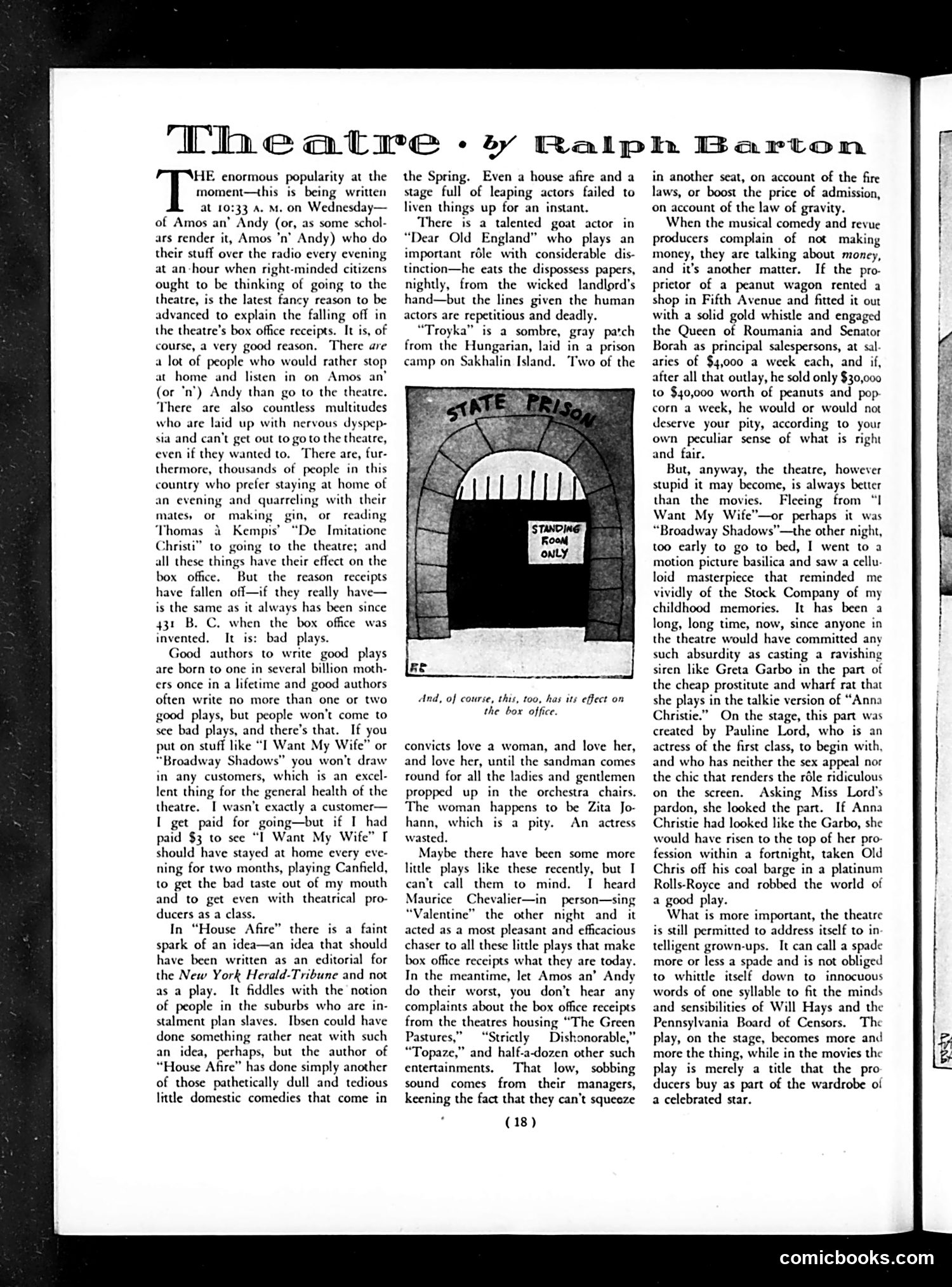
Theatre by Ralph Barton - Page Analysis This is a theatre criticism column by Ralph Barton discussing recent Broadway productions. The single illustration shows a theatre box with a "Standing Room Only" sign and "State Prison" label above it, captioned "And, of course, this too, has its effect on the box office." The satire compares a poorly-reviewed play to a prison—suggesting audiences find sitting through bad theatre as unpleasant as incarceration. Barton critiques current Broadway offerings as artistically weak, arguing that theatrical producers prioritize profit over quality. He references specific flops like "I Want My Wife" and "Broadway Shadows," lamenting how even talented actors cannot salvage mediocre scripts. The cartoon's visual metaphor reinforces his point: bad theatre literally imprisons paying customers in their seats.
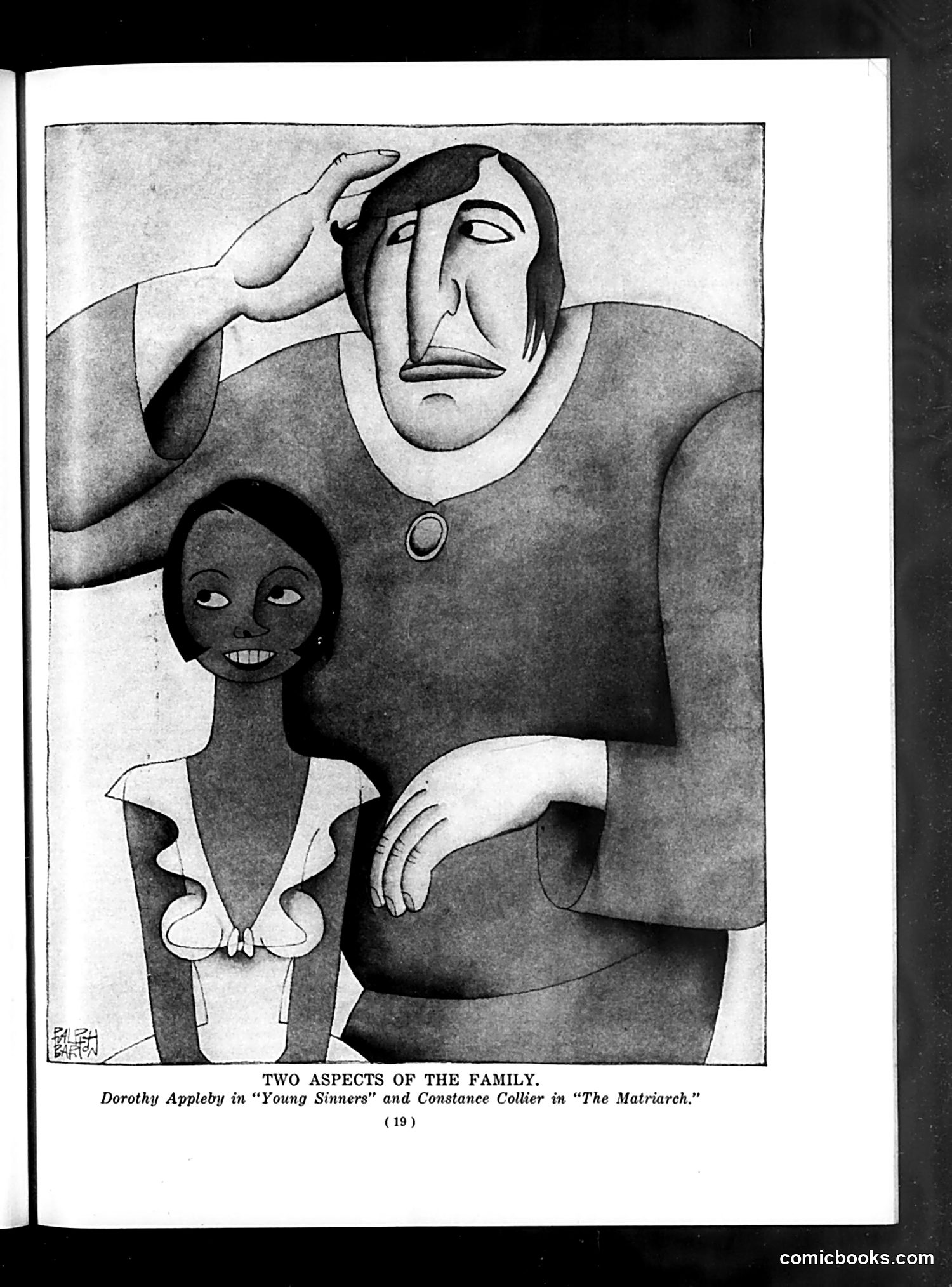
This is a theatrical illustration comparing two film roles about family dynamics. The caption references actress Dorothy Appleby in "Young Sinners" and Constance Collier in "The Matriarch." The cartoon depicts a tall, stern-faced adult (likely representing parental authority or the patriarch/matriarch figure) looming over a smaller, smiling younger character. The size disparity and contrasting expressions suggest the satire's point: the contrasting "aspects of the family" between generational authority and youthful innocence or rebellion. The title "Two Aspects of the Family" likely critiques how cinema portrayed family structures—one emphasizing rigid parental control, the other suggesting youthful defiance or frivolity. This reflects 1920s anxieties about generational conflict and changing family values during the "Roaring Twenties."
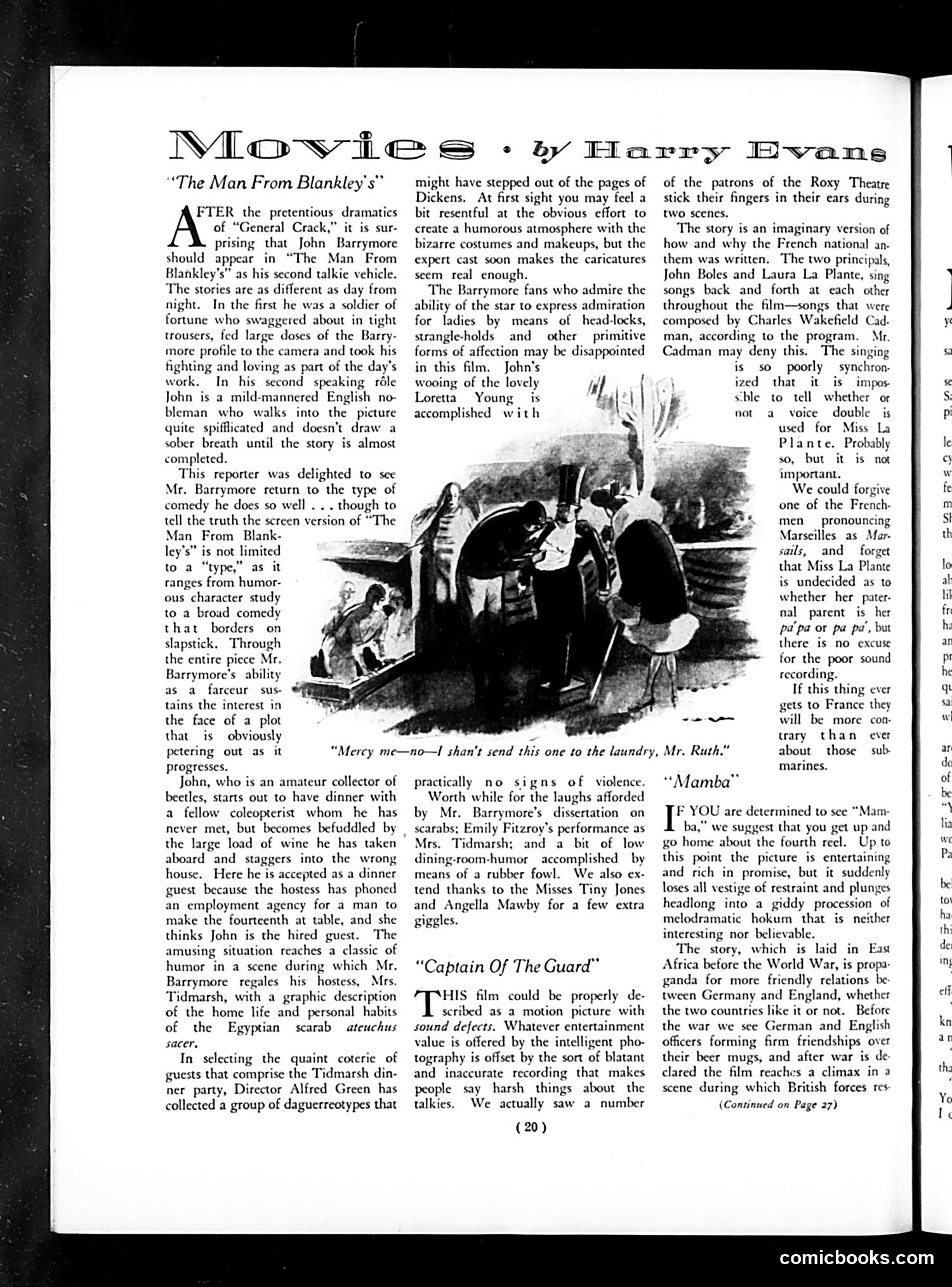
Movie Reviews from Life Magazine This page reviews three early sound films ("talkies"). The main critique concerns "The Man From Blankley's," starring John Barrymore as a drunken English nobleman who stumbles into the wrong dinner party. The reviewer praises Barrymore's comedic talent, noting his ability sustains an otherwise thin plot. The cartoon caption shows a domestic scene with a woman's exasperated comment about laundry—likely illustrating the film's humor. The reviews also address "Captain of the Guard" (about the French national anthem's composition), criticized for poor sound recording so bad that theater patrons covered their ears, and "Mamba," described as entertainingly melodramatic but unconvincing. The context: These are early sound films (late 1920s), when the "talkie" transition was new and technical quality inconsistent. The reviews reflect contemporary concerns about sound engineering in cinema.
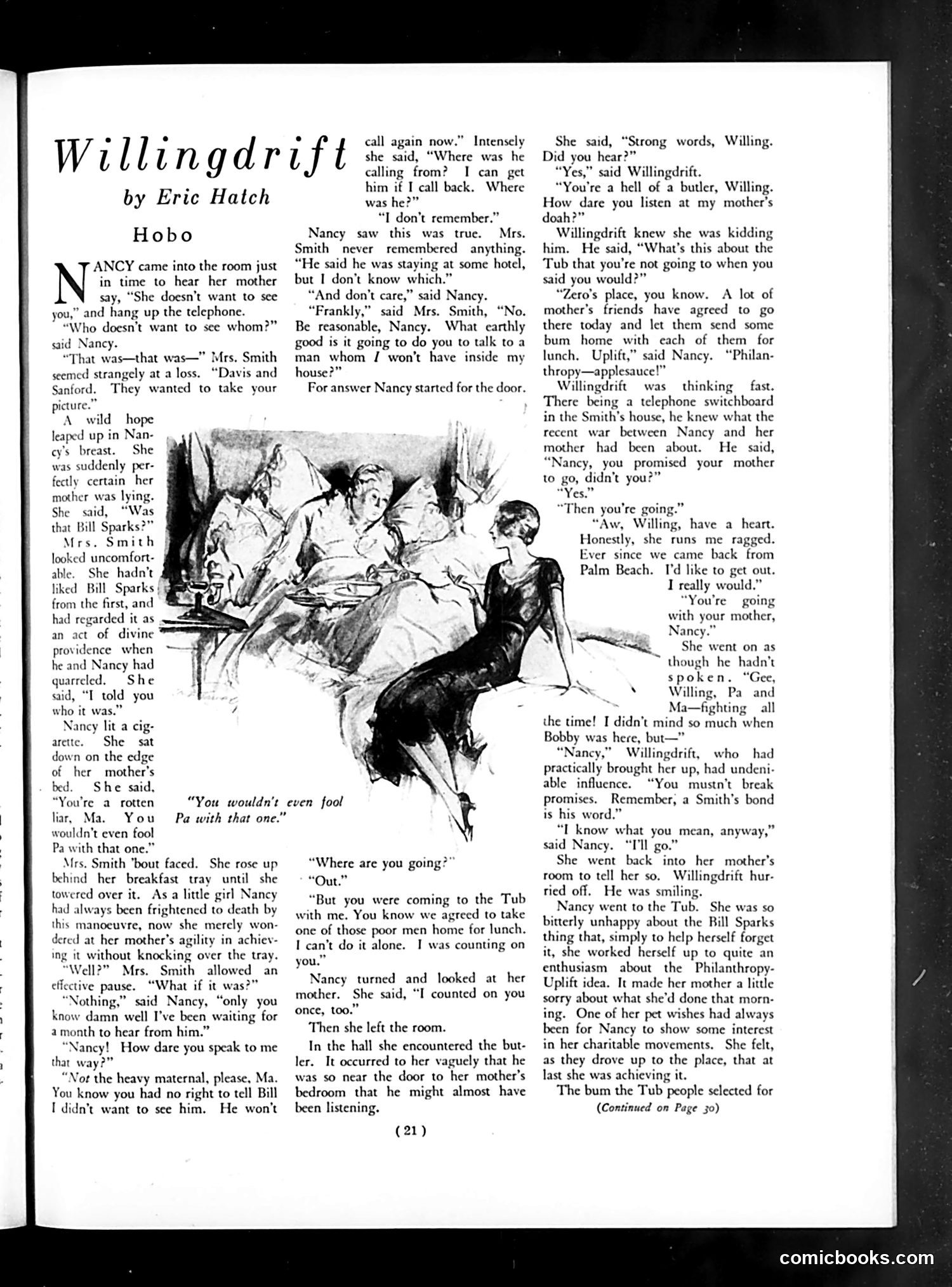
"Willingdrift" by Eric Hatch — Page Analysis This page presents a domestic comedy serialized in *Life* magazine, featuring a conflict between Nancy and her mother over a telephone call from Bill Sparks, a young man Mrs. Smith disapproves of. The Setup: Nancy's mother intercepted a call from Bill and lied about who phoned, claiming it was photographers Davis and Sanford. Nancy sees through the deception immediately. The Satire/Social Commentary: The humor derives from generational tension and parental control over courtship—common themes in 1920s-30s fiction. Mrs. Smith represents the overbearing mother who uses social manipulation ("the heavy maternal") to control her daughter's romantic life. Nancy represents the modern, independent young woman who resents such interference. The Butler's Role: Willingdrift, the family servant, functions as the voice of reason and familial loyalty, gently pressuring Nancy to honor her commitment to accompany her mother to a charitable lunch ("the Tub"), despite her romantic frustrations. Context: This reflects Jazz Age anxieties about youth independence, parental authority, and changing social mores regarding unmarried women's autonomy.
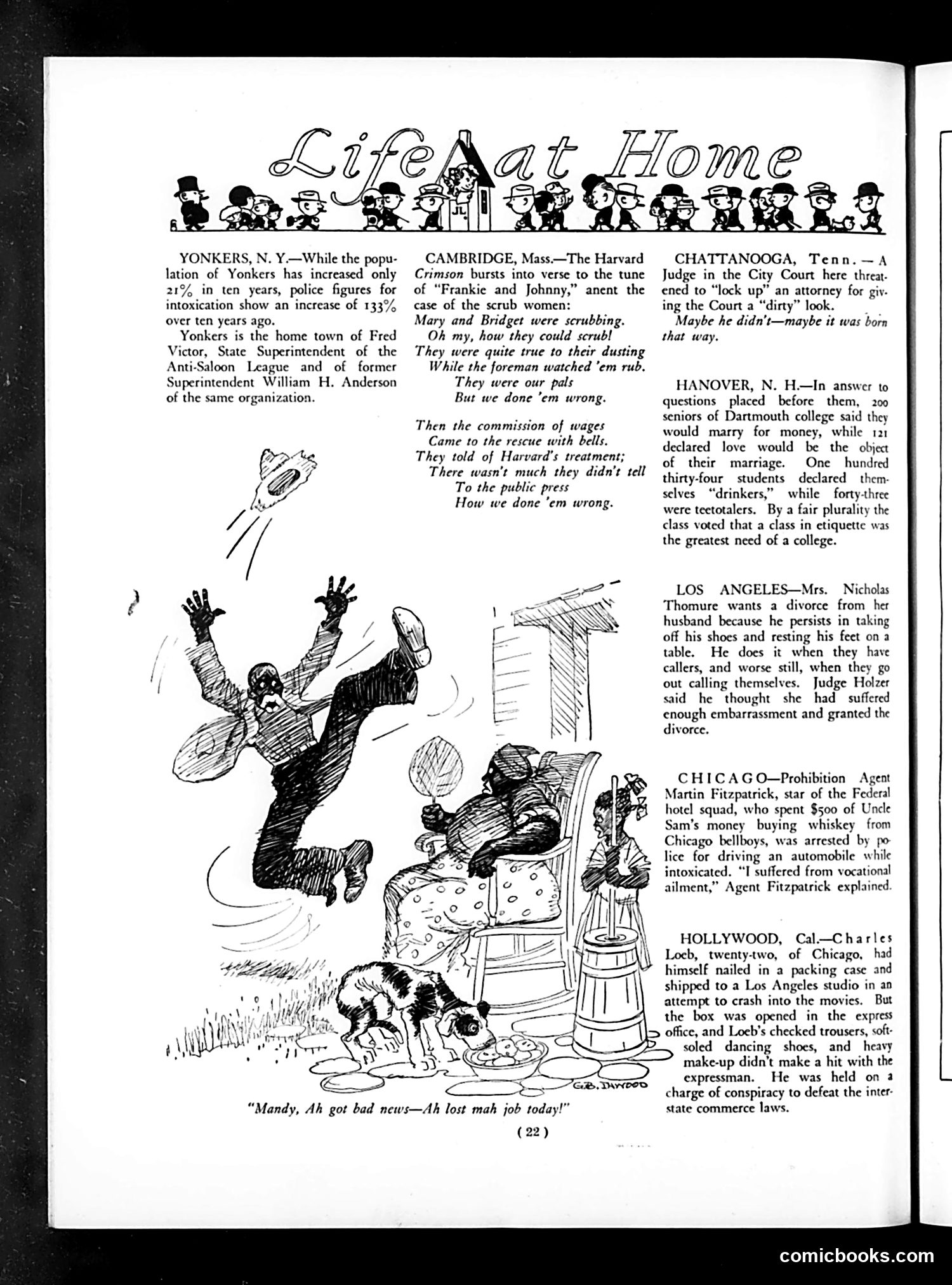
Life Magazine "Life at Home" Page Analysis This satirical column presents humorous news briefs mocking Prohibition-era hypocrisy and social absurdities. The central cartoon depicts a man being ejected—likely representing the chaos of Prohibition enforcement. Key satirical points: Prohibition hypocrisy: Yonkers, home to Anti-Saloon League leaders, has seen intoxication arrests surge 133% despite population growth of only 21%—undercutting temperance advocates' claimed success. Labor exploitation: Harvard's mistreatment of scrub women was exposed publicly, embarrassing the prestigious institution. Enforcement corruption: A federal Prohibition agent was arrested for drunk driving after spending government money buying whiskey from bellboys—the very law he enforces. Social absurdity: Various anecdotes mock divorce proceedings over shoe-resting, college students voting etiquette matters more than character, and a failed actor's stunt. The page ridicules the gap between Prohibition's ideals and reality, institutional hypocrisy, and 1920s social pretensions. The cartoons and brief items collectively critique those in power ignoring rules they impose on others.
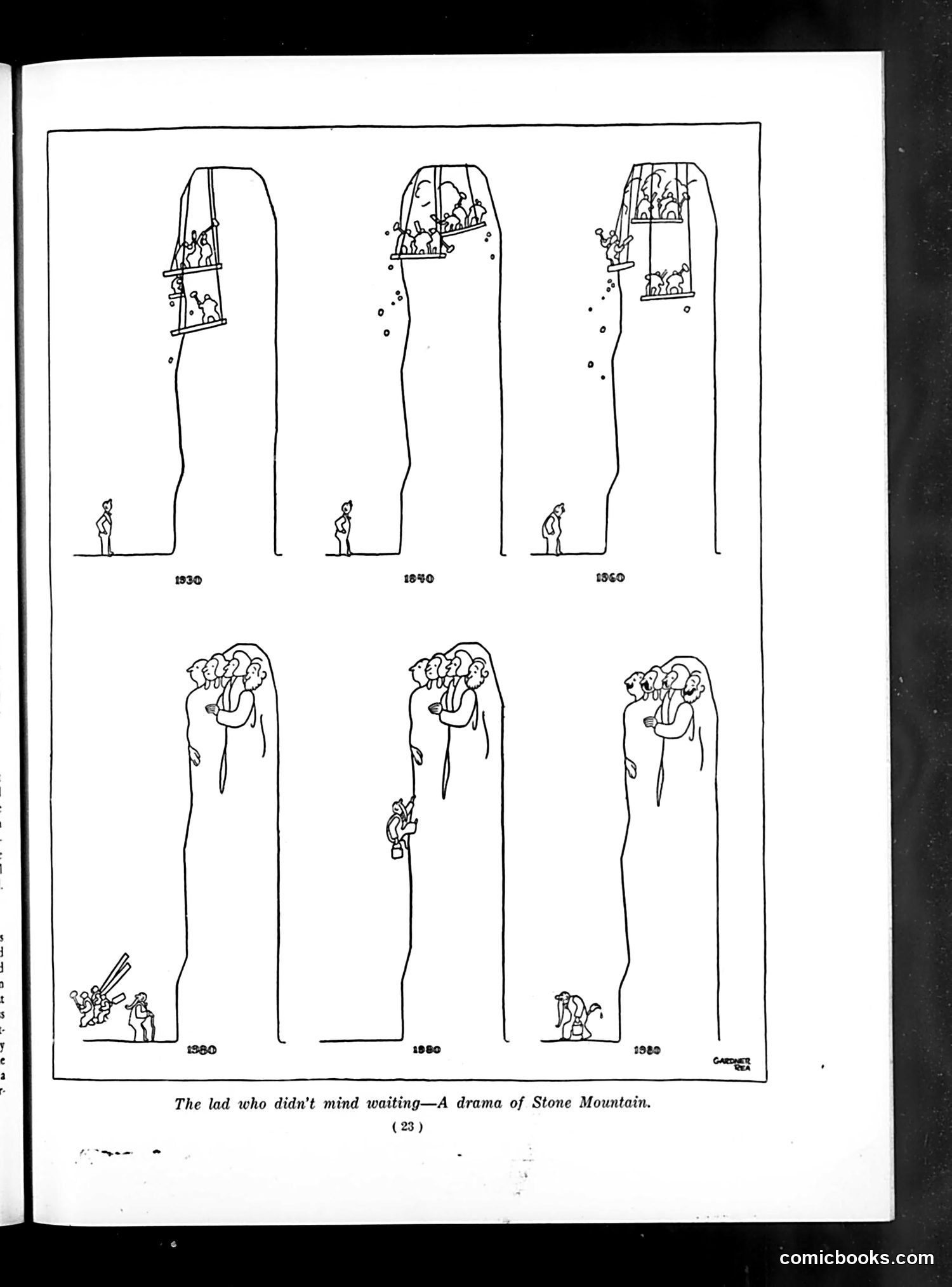
This cartoon satirizes the long construction timeline of Stone Mountain Memorial in Georgia. The six panels, dated 1930-1980, show a single figure waiting at the base of a massive stone mountain while carved figures gradually appear higher up over decades. The joke is that the "lad" remains patient despite the project's glacial progress—what was meant to take years stretched across generations. The carving of Confederate figures into the mountain was notoriously slow and contentious, plagued by funding issues and technical difficulties. The satire mocks both the project's inefficiency and the persistence required to complete such an ambitious (and politically controversial) monument. A modern reader should know Stone Mountain's carving remains unfinished and is now a contested historical site reflecting on Confederate memorialization.
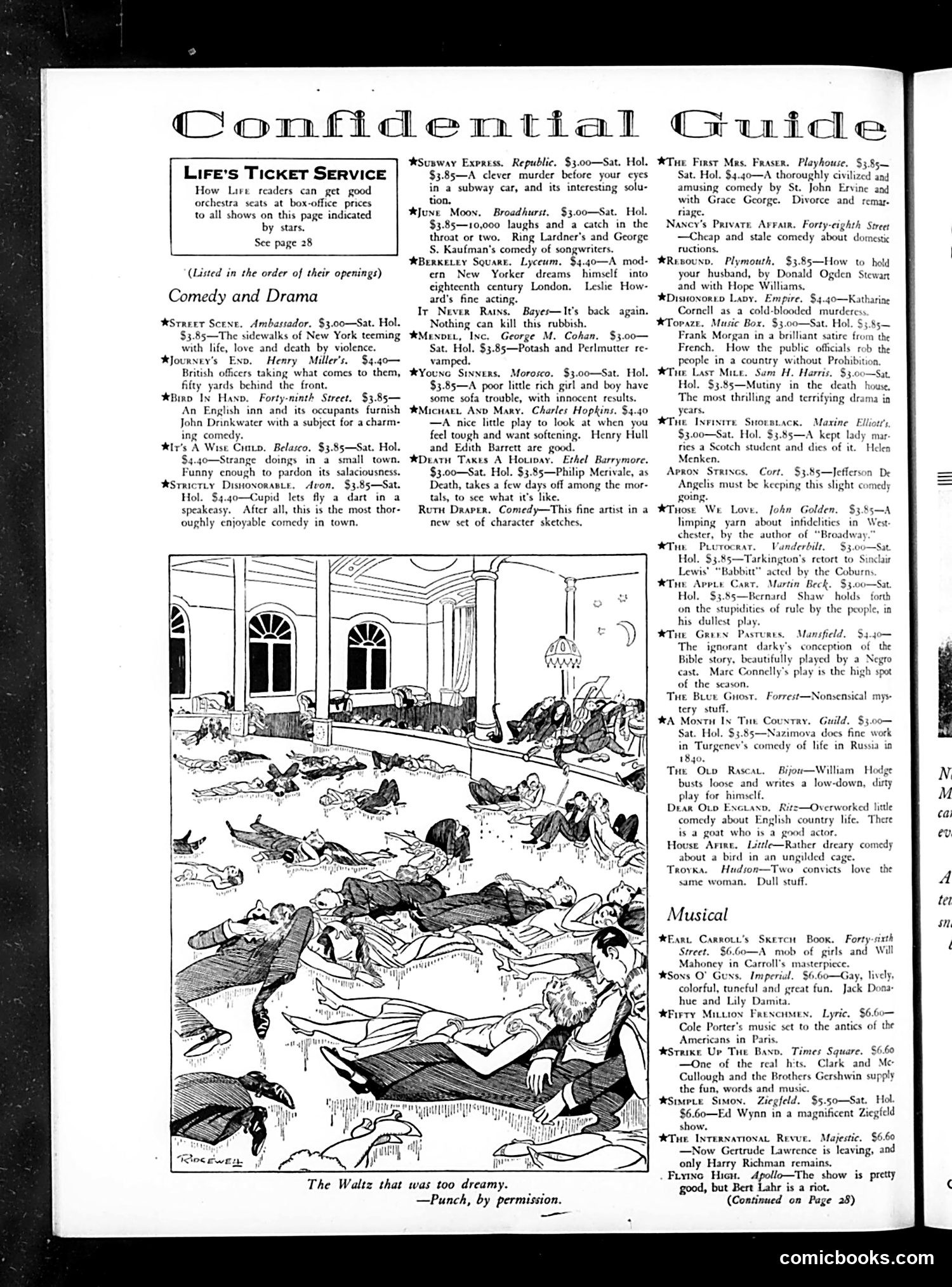
The Waltz That Was Too Dreamy The central illustration depicts a chaotic ballroom scene with numerous couples collapsed or sprawled across the floor in various states of exhaustion or unconsciousness. The caption, credited to *Punch* magazine, satirizes the phenomenon of dance marathons—a popular 1920s fad where couples danced continuously for extended periods, competing for prizes. The joke suggests the waltz was so mesmerizing ("too dreamy") that dancers lost consciousness or control, creating this absurd pile-up. This was contemporary satire about a genuine social craze that often resulted in physical collapse and health concerns. The illustration mocks both the dancers' commitment to the fad and the inherent ridiculousness of the contest itself—people literally dancing themselves into oblivion for entertainment and prize money.
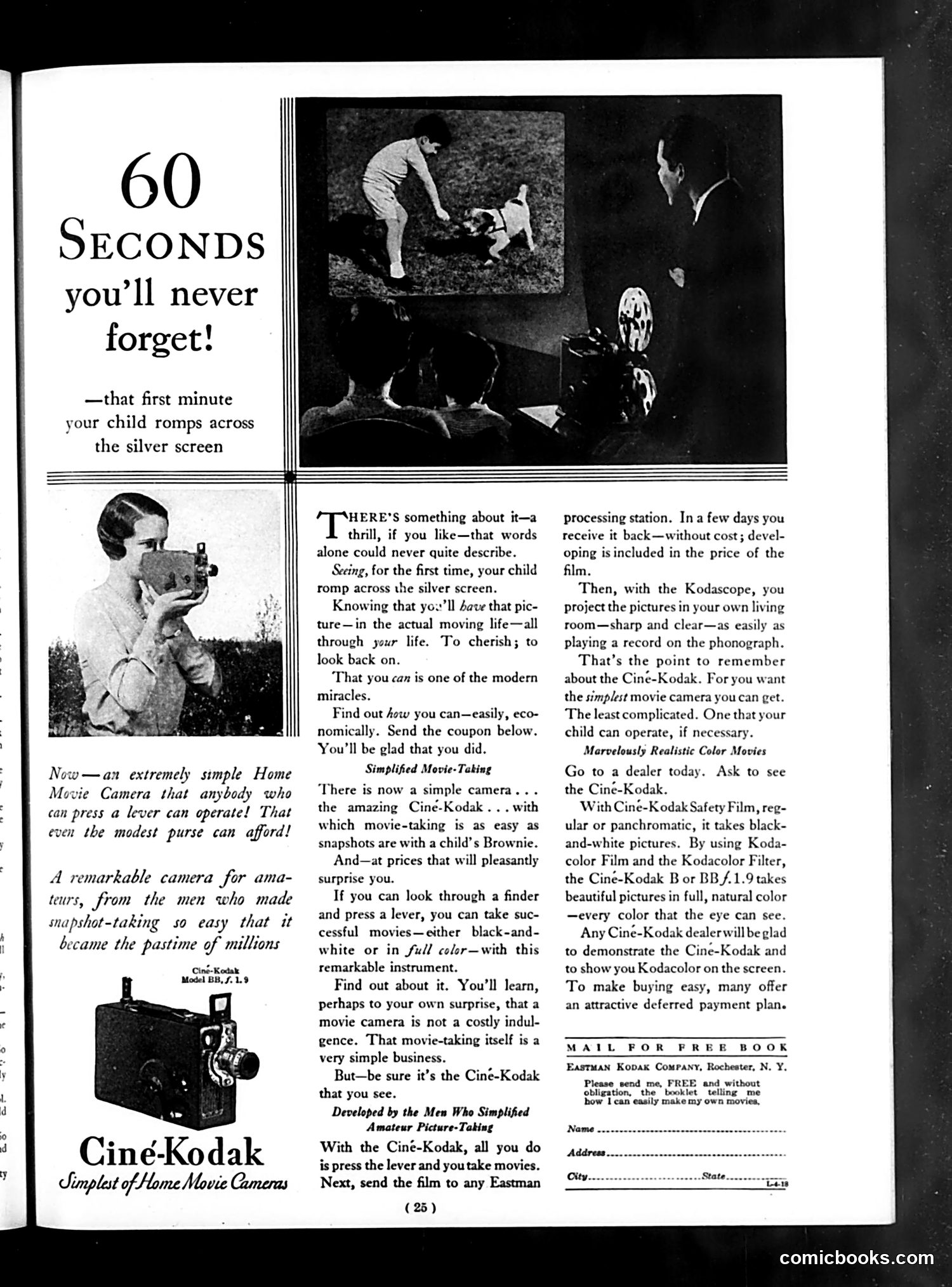
Analysis: Ciné-Kodak Advertisement This is not a cartoon or satire, but a straightforward advertisement for Eastman Kodak's home movie camera, the Ciné-Kodak Model BB. The page promotes the democratization of filmmaking technology. The ad's emotional appeal centers on capturing children's moments on film—positioning home movies as an affordable family treasure. The text emphasizes simplicity ("anybody who can press a lever can operate it") and accessibility through low pricing. The images show: a child operating the camera, family members viewing projected films at home, and the compact camera itself. The "60 Seconds You'll Never Forget" headline references that transformative first moment of seeing your child on screen. This represents a genuine cultural shift in the 1920s-30s: consumer cameras were making personal filmmaking possible for middle-class families, not just professionals. The ad taps into parental sentiment and nostalgia—core marketing strategies then and now.
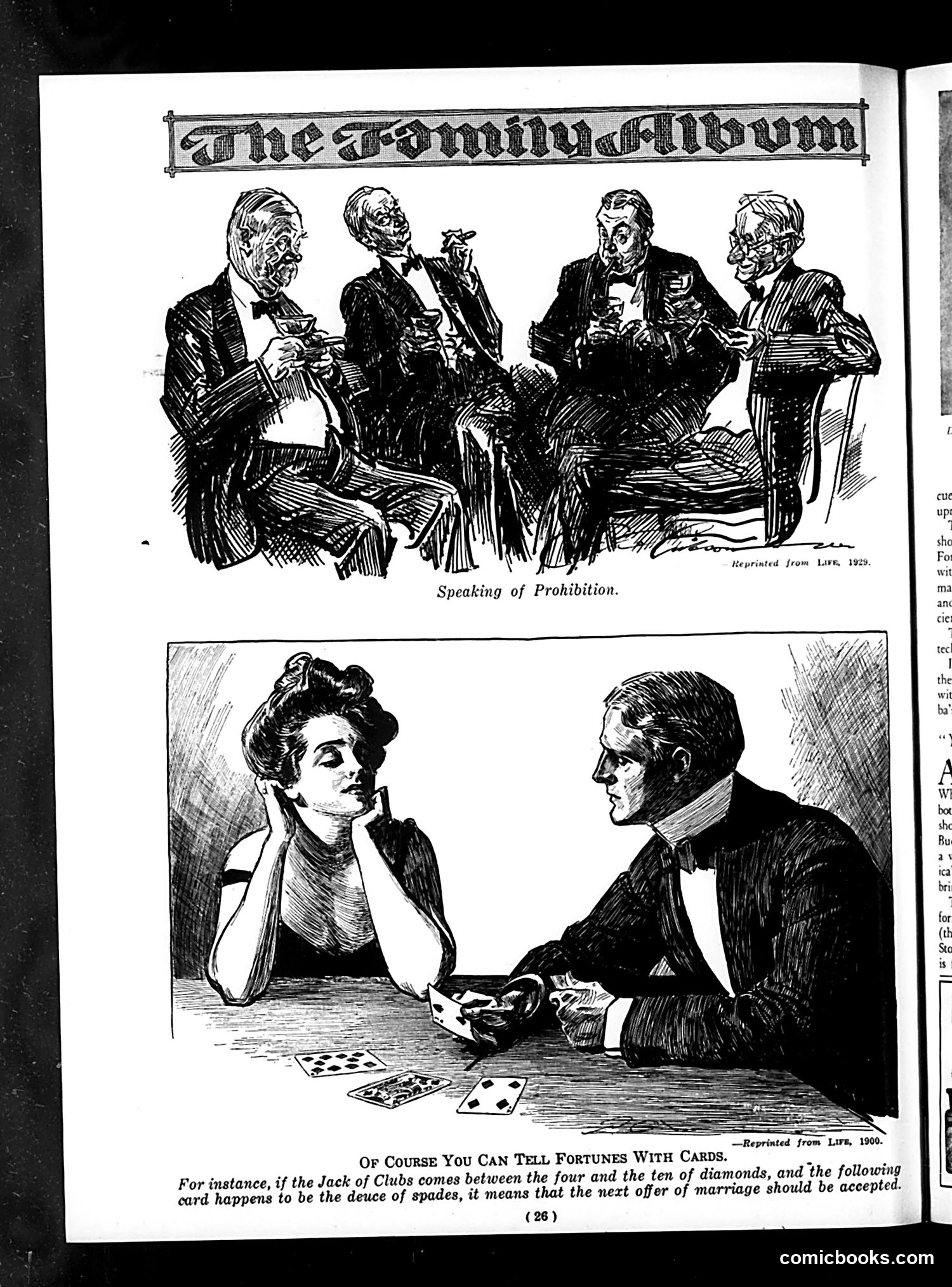
"The Family Album" - Prohibition and Fortune Telling This page from *Life* magazine contains two satirical cartoons about early 20th-century American social issues. The top cartoon, "Speaking of Prohibition" (1929), depicts four men in formal dress discussing alcohol during the Prohibition era (1920-1933), when alcohol sales were illegal. The satire mocks how people openly discussed drinking despite the law. The bottom cartoon, "Of Course You Can Tell Fortunes With Cards" (1900), shows a woman and man at a card table with playing cards visible. The caption sarcastically mocks fortune-telling through card games, presenting absurd fortune-telling "logic" as example. The satire ridicules the pseudoscience of fortune-telling and gullible believers in such practices. Both cartoons use deadpan humor to critique contemporary social behaviors and beliefs.
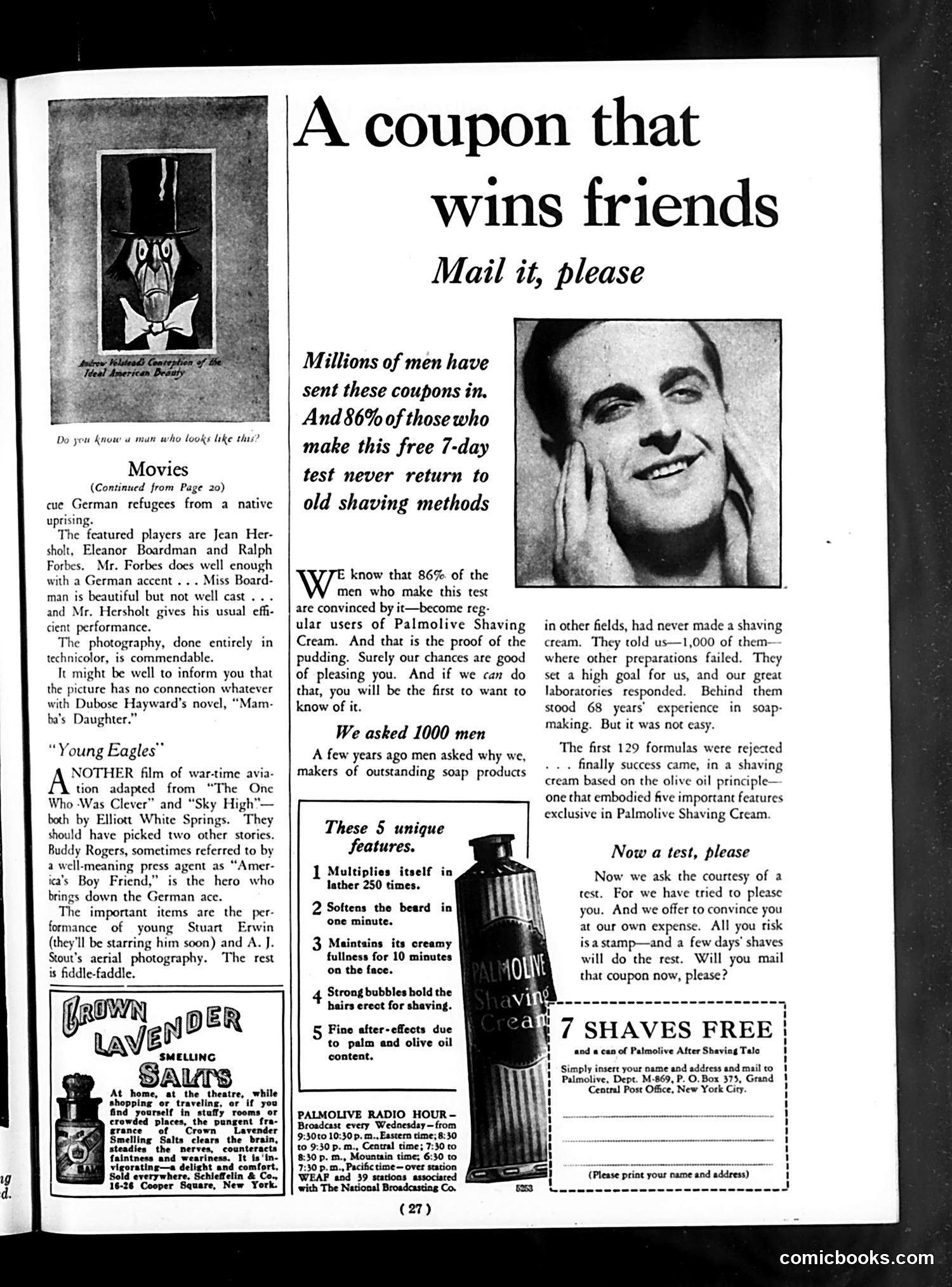
What This Page Means This is primarily a Palmolive Shaving Cream advertisement, not satire or political commentary. The page contains movie reviews (for "Young Eagles" and another film) alongside the ad. The advertisement uses a common early 20th-century marketing tactic: the "test coupon" appeal. Palmolive claims that 86% of men who try their free 7-day shaving test become permanent customers. They emphasize their product's superiority by citing their "68 years' experience in soap-making" and five unique features (better lather, softer beard, etc.). The ad positions the coupon as a "coupon that wins friends"—implying social status and approval come from using this product. The copy stresses low risk (only a stamp) and encourages the reader to mail in the coupon immediately. There's also a small Crown Lavender Smelling Salts advertisement for a different product entirely. No political satire is present; this is straightforward commercial messaging typical of 1920s-era magazine advertising.
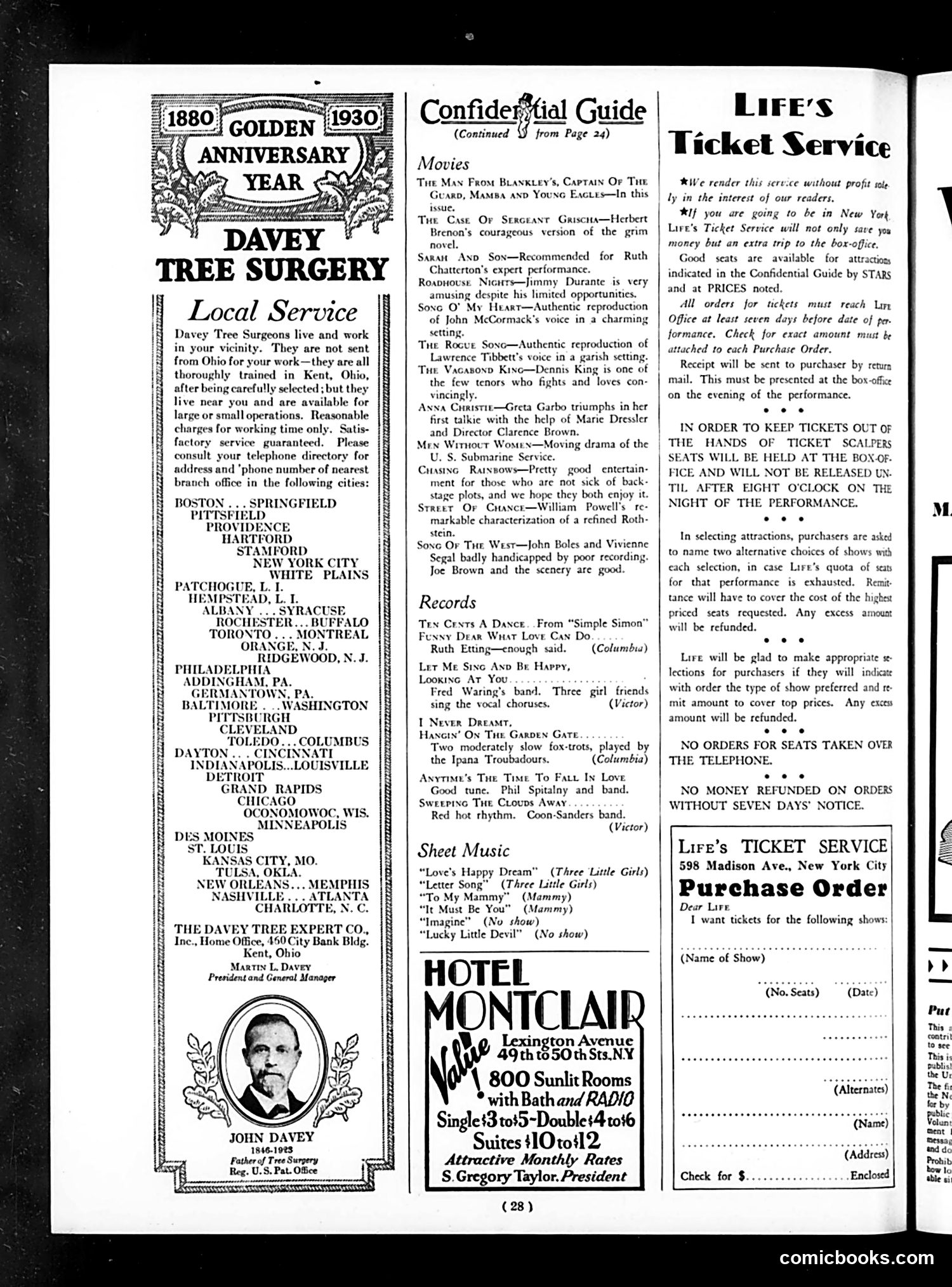
Content Analysis This page consists primarily of commercial advertising and service announcements, not political satire or comics. The main elements are: 1. Davey Tree Surgery advertisement (left): A 1920s business promoting tree care services across multiple cities. Features a portrait of founder John Davey (1846-1923), identifying him as the "Father of Tree Surgery." 2. Life's Confidential Guide (center): Movie and music reviews recommending current 1929-era films (notably including early talkies like *Anna Christie* with Greta Garbo) and phonograph records. 3. Hotel Montclair advertisement (bottom right): A New York hotel promotion. 4. Life's Ticket Service (right): An announcement that Life magazine will help readers purchase theater tickets without profit. No political commentary or satirical content is present. This appears to be a standard magazine page mixing paid advertisements with reader services, typical of Life's business model during the Golden Anniversary year advertised (1880-1930).
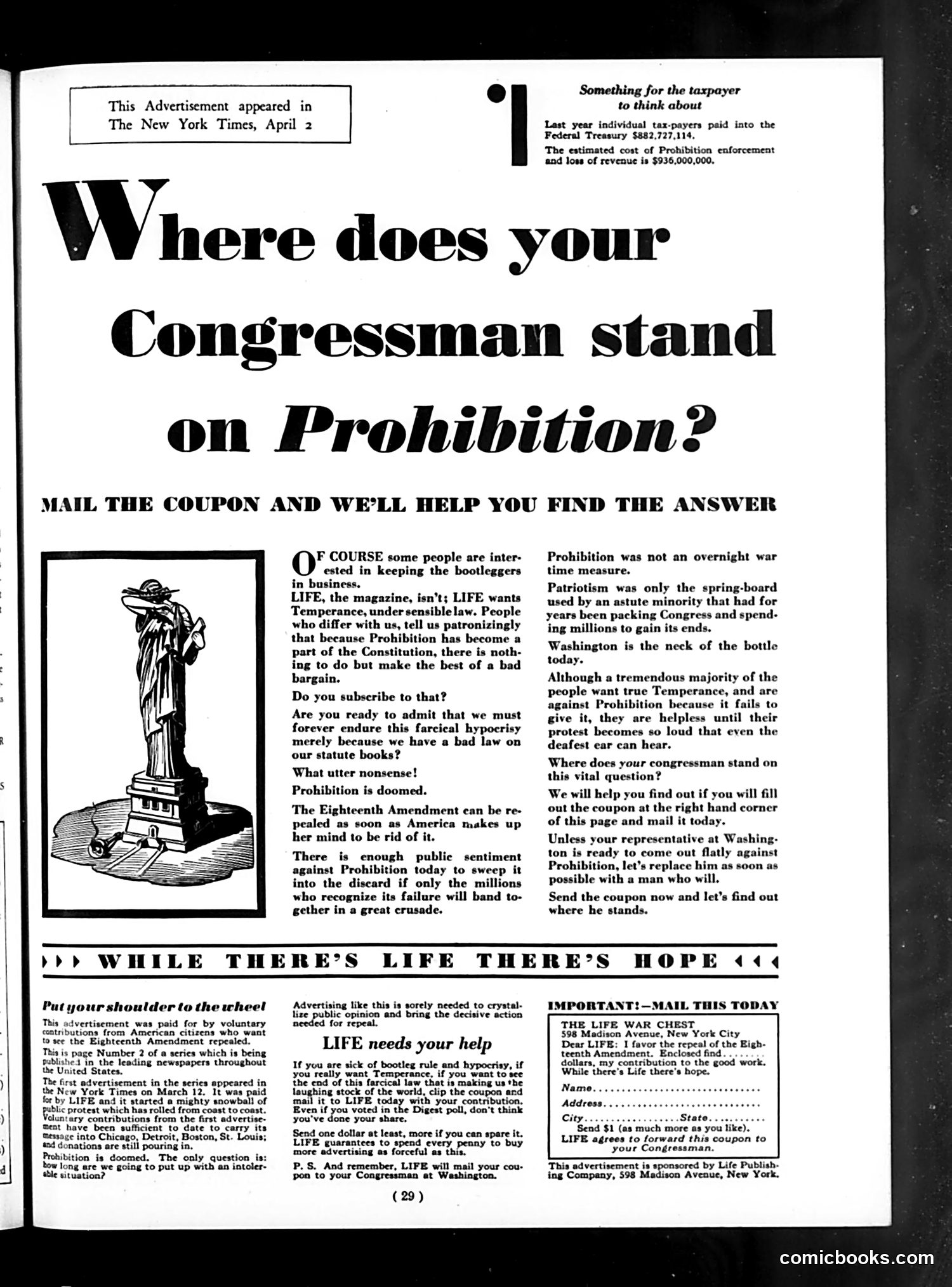
Analysis for Modern Readers This is a repeal advertisement from *Life* magazine (April 1932), arguing against Prohibition. The Statue of Liberty illustration symbolizes American freedom being compromised by the failed law. Historical Context: The 18th Amendment (1919) banned alcohol but created widespread bootlegging, organized crime, and loss of tax revenue. By the early 1930s, public opinion had shifted dramatically against Prohibition. The Satire/Argument: - Life magazine mocks those defending Prohibition as merely "making the best of a bad bargain" - The ad highlights the absurd cost: taxpayers paid $883 million in taxes while Prohibition enforcement cost $936 million and lost tax revenue - It attacks the "astute minority" who imposed this "farcical hypocrisy" decades earlier using patriotism as cover - The call-to-action pressures readers to identify and potentially unseat representatives who won't support repeal The Point: Despite majority public opposition, Prohibition persists because politicians fear the organized minority that pushed it through. Citizens must mobilize to force congressional action—democracy requires participation. (Prohibition was indeed repealed in 1933, the year after this ad.)
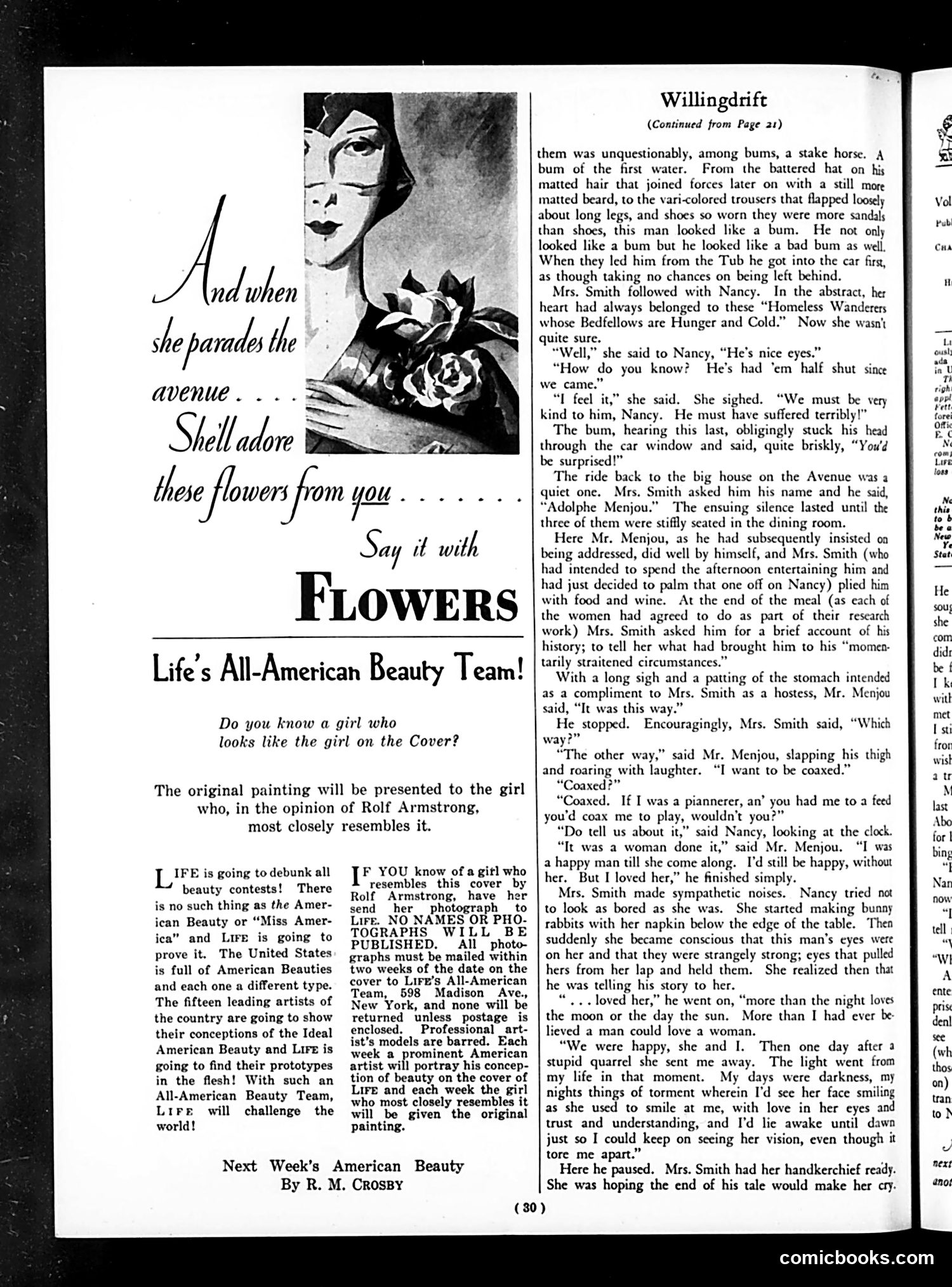
Analysis for Modern Readers This page combines two distinct features: Left side: A beauty contest advertisement. Life magazine is launching an "All-American Beauty Team" contest, inviting readers to submit photographs of women resembling cover artwork by prominent artists. The prize is the original painting. This reflects 1920s-30s media culture where magazines actively shaped and promoted beauty standards through illustrated covers and reader participation. Right side: Continuation of a serialized story titled "Willingdrift" about a wealthy woman (Mrs. Smith) and her companion Nancy who encounter a vagrant claiming to be "Adolphe Menjou" (likely a satirical reference to the actual actor). The man is described as stereotypically shabby but proves clever and charming. The satire appears to mock genteel charitable impulses—Mrs. Smith's romanticized sympathy for "homeless wanderers" clashes with reality when the bum outwits her expectations through wit rather than pathos. The juxtaposition illustrates Life's dual purpose: promoting idealized beauty while satirizing contemporary social pretension.
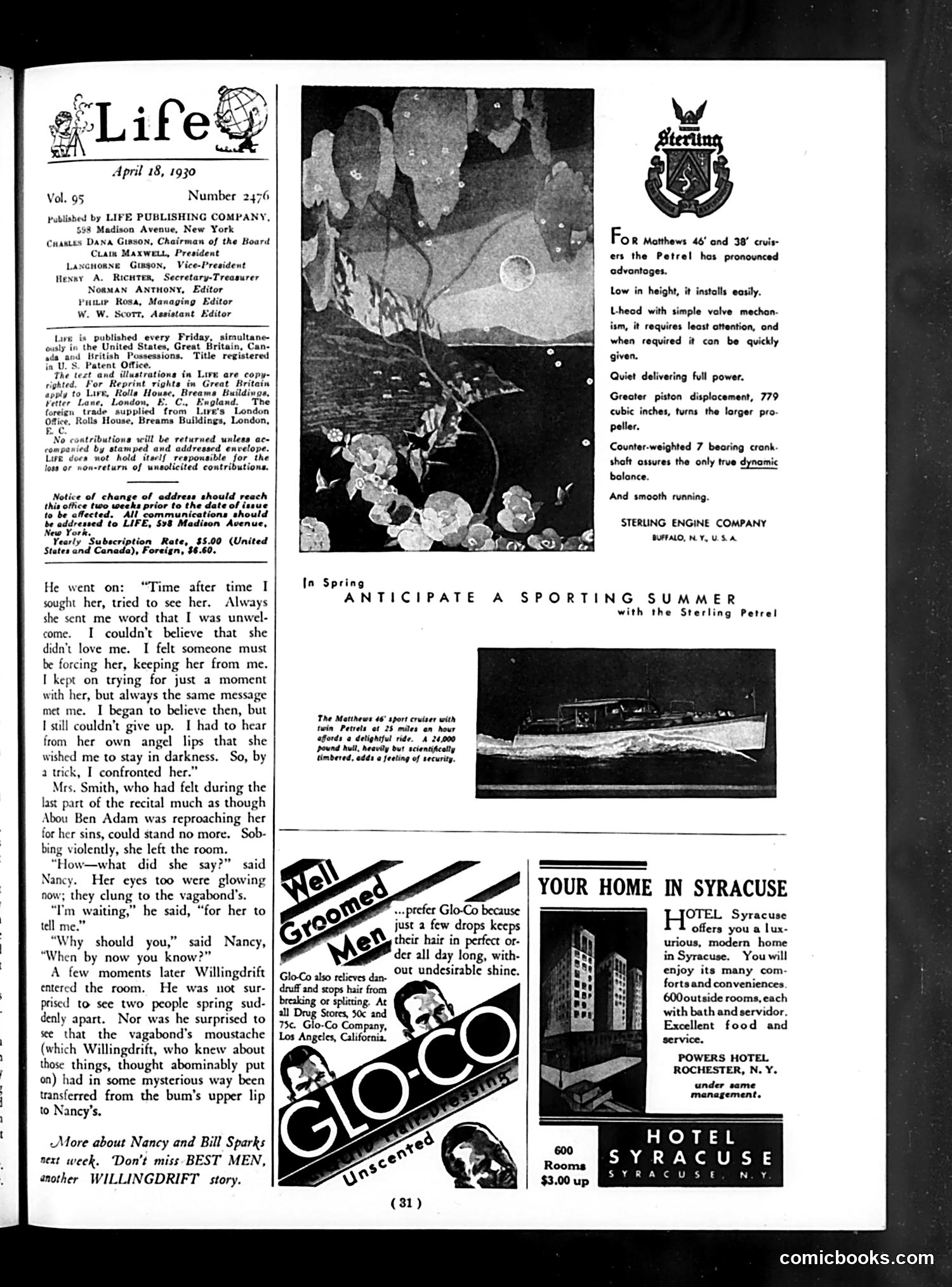
Life Magazine, April 18, 1930 - Page Analysis This page contains a serialized fiction story ("Willingdrift") about romantic intrigue, alongside period advertisements and Sterling Engine Company marketing materials for boat engines. The story excerpt depicts a dramatic confrontation where a vagabond confesses his persistent pursuit of an unresponsive woman to Mrs. Smith, who becomes emotionally distressed. When the woman (Nancy) enters, she and the vagabond are discovered "sprung suddenly apart," and his false mustache has mysteriously transferred to her upper lip—a slapstick comedic reveal suggesting physical intimacy. The humor relies on physical comedy and melodramatic dialogue typical of 1930s serialized fiction. The advertisements—for Glo-Co hair product, Sterling marine engines, and Syracuse/Rochester hotels—represent typical commercial content filling magazine pages of the era, targeting affluent readers interested in leisure boating and travel. The page reflects 1930s popular entertainment: serialized romantic stories mixing sentiment with broad comedy, alongside luxury-goods advertising.
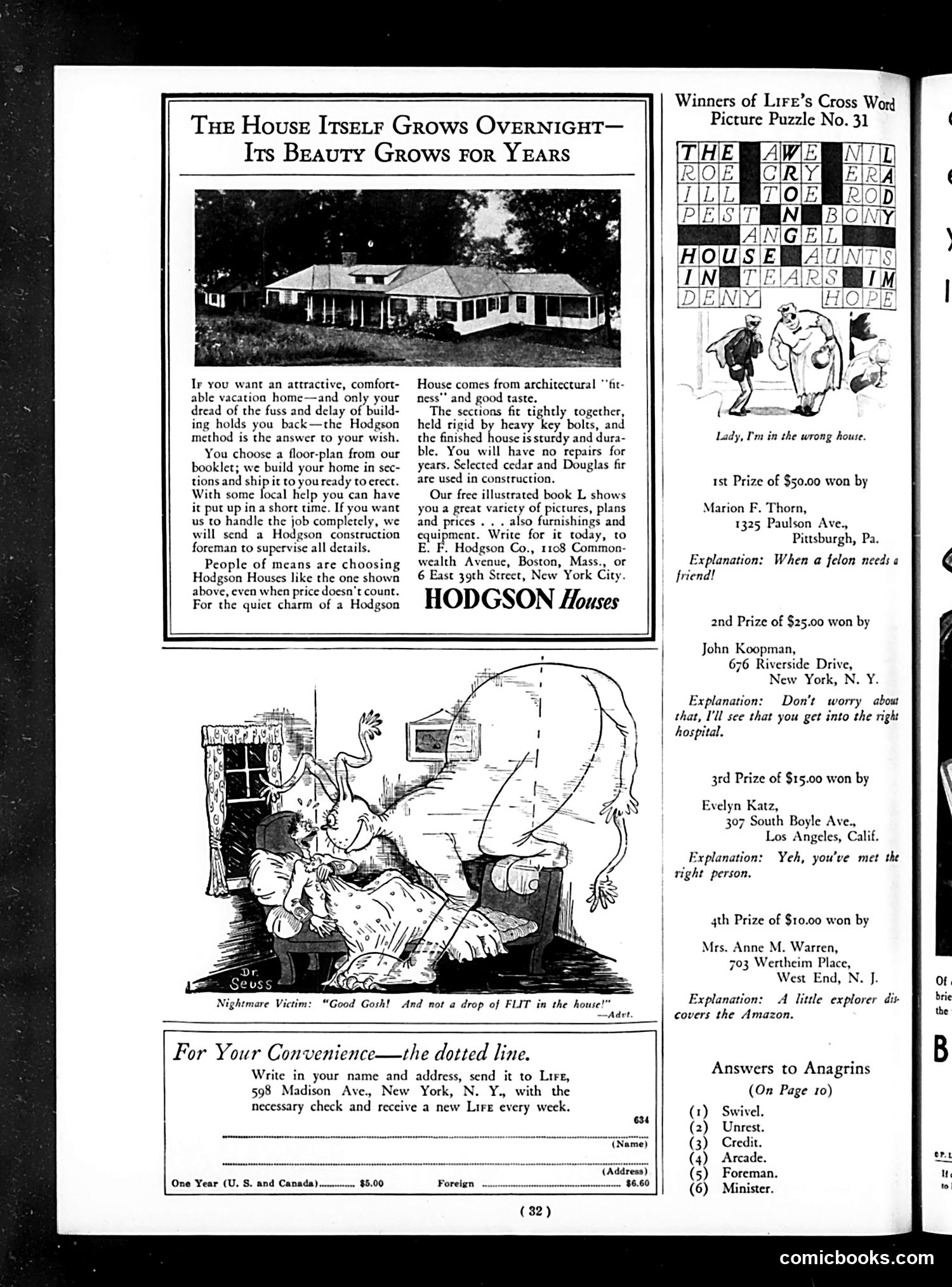
Analysis This page is primarily advertising for Hodgson Houses (prefabricated homes), supplemented by Life magazine's puzzle contests and subscription information. The main cartoon depicts a nightmare victim exclaiming "Good Gosh! And not a drop of FLIT in the house!"—a joke referencing Flit insecticide, a popular commercial product of the era. The humor relies on the absurdity of worrying about insect spray during a bad dream, likely parodying the aggressive advertising campaigns of the time. The Hodgson Houses ad promotes prefabrication—a then-novel construction method where homes shipped in sections and assembled on-site. The pitch emphasizes speed, durability, and architectural quality, targeting affluent buyers seeking vacation homes without construction delays. The puzzle solutions and winners' explanations are puns or wordplay typical of 1920s-30s magazine humor—relatively mild jokes rewarding reader participation.
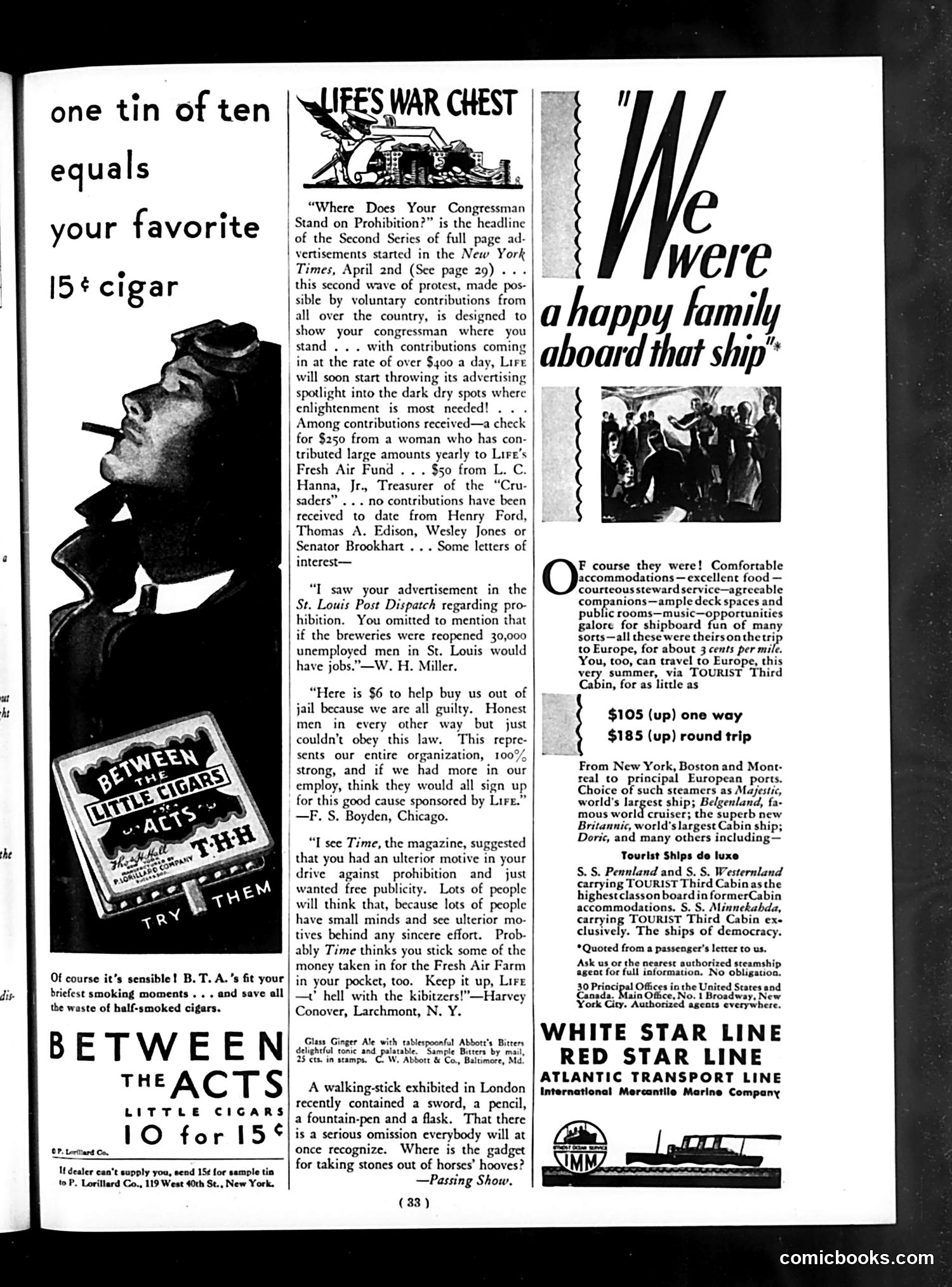
Analysis of Life Magazine Page This page primarily contains advertisements and reader mail, not political cartoons. The main content satirizes Prohibition-era activism. Life magazine is running an anti-Prohibition campaign, soliciting reader contributions to fund newspaper ads pressuring congressmen to oppose the Volstead Act. The satirical commentary comes through the reader letters: one correspondent sardonically notes that reopening breweries would solve unemployment; another humorously admits his organization is "100% guilty" of breaking prohibition laws but wants to fund the campaign anyway. The left side features a cigar advertisement playing on Prohibition themes—"Between the Acts" little cigars as a brief smoking pleasure, implicitly contrasting legal tobacco with illegal alcohol. The shipping advertisement on the right is unrelated political content, promoting European travel via "Tourist Third Cabin" as democratic leisure for ordinary Americans. The overall page reflects 1920s-30s American debates over Prohibition's enforcement and legitimacy.
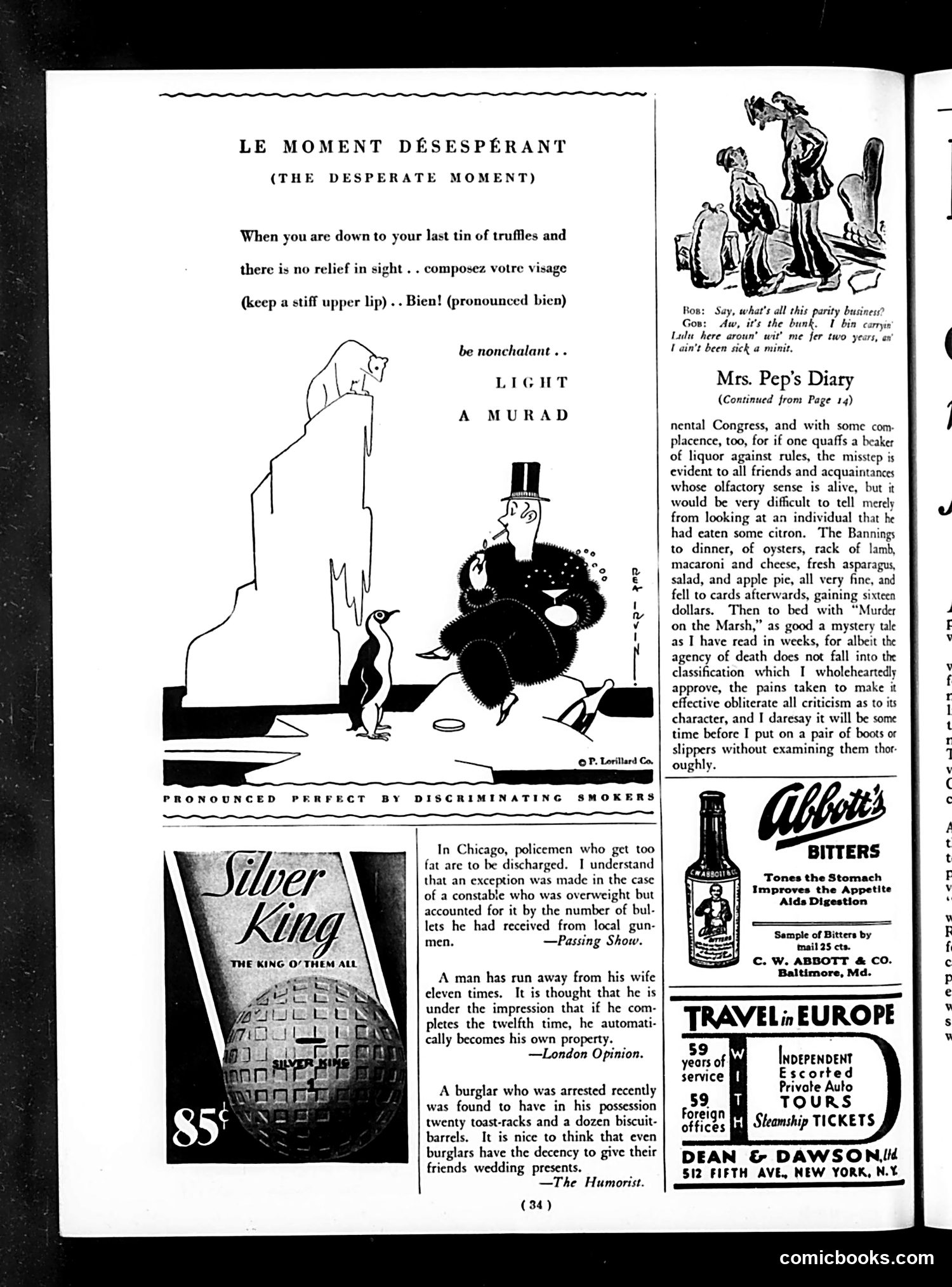
Analysis of Life Magazine Page Main Cartoon ("Le Moment Désespérant"): A satire on French sophistication and emotional restraint. The cartoon depicts someone facing hardship (down to their last tin of truffles) being advised to maintain composure and "be nonchalant"—a commentary on the French cultural emphasis on keeping a "stiff upper lip" and maintaining dignity during crisis. The title plays on French phrases for ironic effect. Advertisements & Humor Snippets: The page includes period advertisements (Murad cigarettes, Abbott's Bitters, travel services) interspersed with short humorous anecdotes from British publications (*Passing Show*, *London Opinion*, *The Humorist*). These jokes reference contemporary concerns: police fitness standards, marital instability, and even burglars having refined taste in wedding gifts—light social commentary typical of 1920s humor magazines. Mrs. Pep's Diary excerpt: Gossip-column style commentary on dinner parties, card games, and mystery novels—reflecting upper-middle-class leisure activities of the era. The page reflects Life's format as a sophisticated satirical magazine blending cartooning, short humor, and advertising.
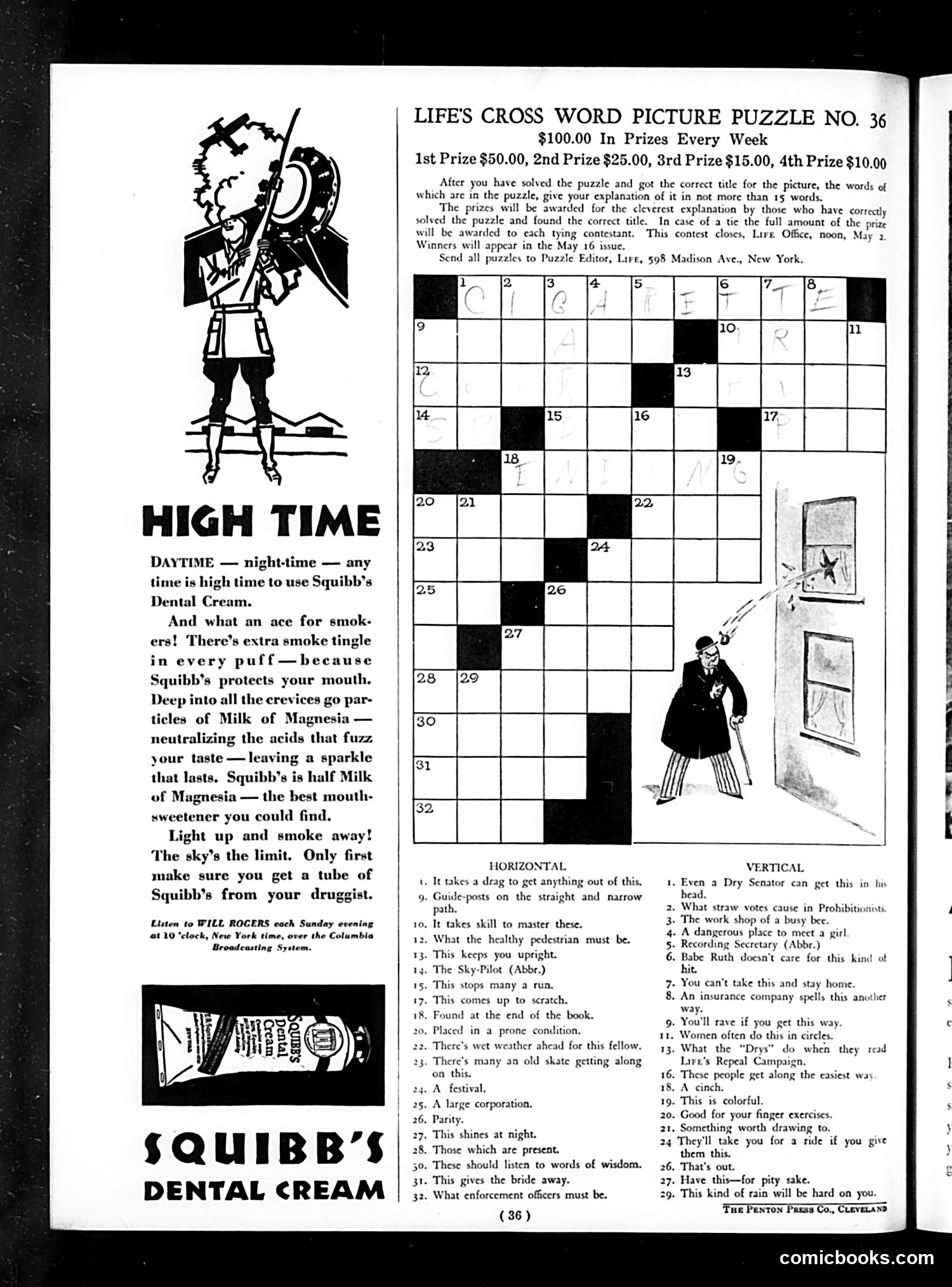
Life Magazine Page Analysis This page contains primarily advertising and a crossword puzzle contest, not political satire. The main content is a Squibb's Dental Cream advertisement featuring a cartoon figure labeled "HIGH TIME"—a cheerful man smoking, promoting the product's appeal to smokers. The ad claims Squibb's protects the mouth and contains Milk of Magnesia to neutralize acidic tastes. It also references Will Rogers' radio program, a popular entertainment tie-in of the era. Below is "Life's Cross Word Picture Puzzle No. 36," a reader-participation contest offering weekly cash prizes ($50 first prize). Solvers must complete a crossword, identify the picture's title, and submit a 15-word explanation. The clues are generic wordplay typical of 1920s-30s puzzles (references to "Dry Senator," "Repeal Campaign," and "Babe Ruth" suggest Prohibition-era content). This is a commercial/entertainment page, not satirical commentary. The modest social references reflect period concerns (Prohibition debates) but serve only as puzzle fodder.
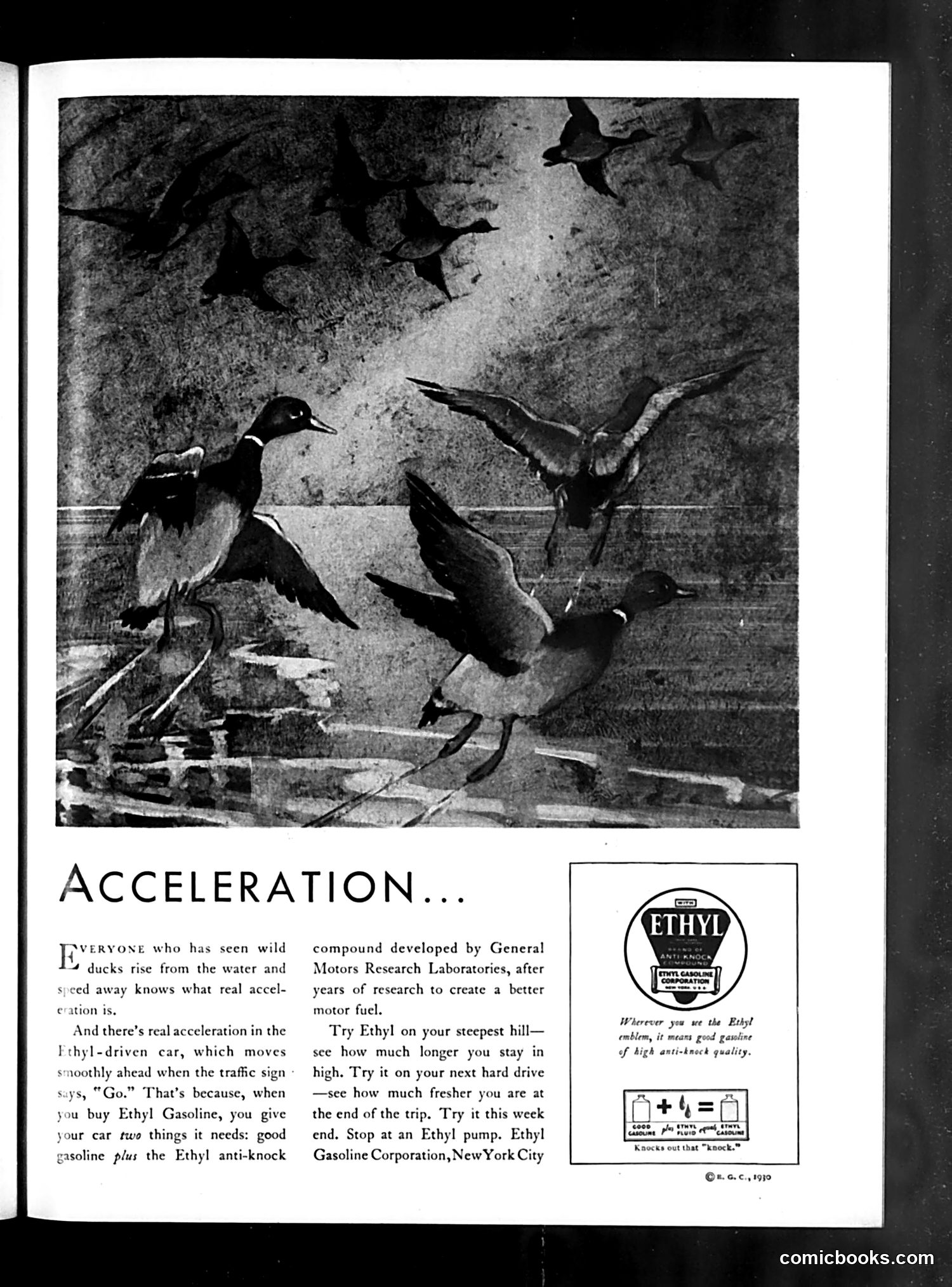
Advertisement Analysis This is primarily a gasoline advertisement for Ethyl brand fuel, not political satire. The page uses wildlife imagery—ducks accelerating upward from water—as a metaphor for vehicle performance. The ad claims Ethyl Gasoline provides two benefits: quality fuel plus an anti-knock compound developed by General Motors Research Laboratories. The copywriter compares a car's acceleration to the natural speed of wild ducks, suggesting smooth, powerful performance. The ad targets car owners by promising improved hill-climbing ability and reduced fatigue on long drives. The logo and tagline ("Wherever you see the Ethyl emblem...") emphasize brand recognition at gas pumps. This reflects early-to-mid 20th-century automotive marketing, when fuel additives were novel selling points and General Motors promoted their research innovations to consumers.
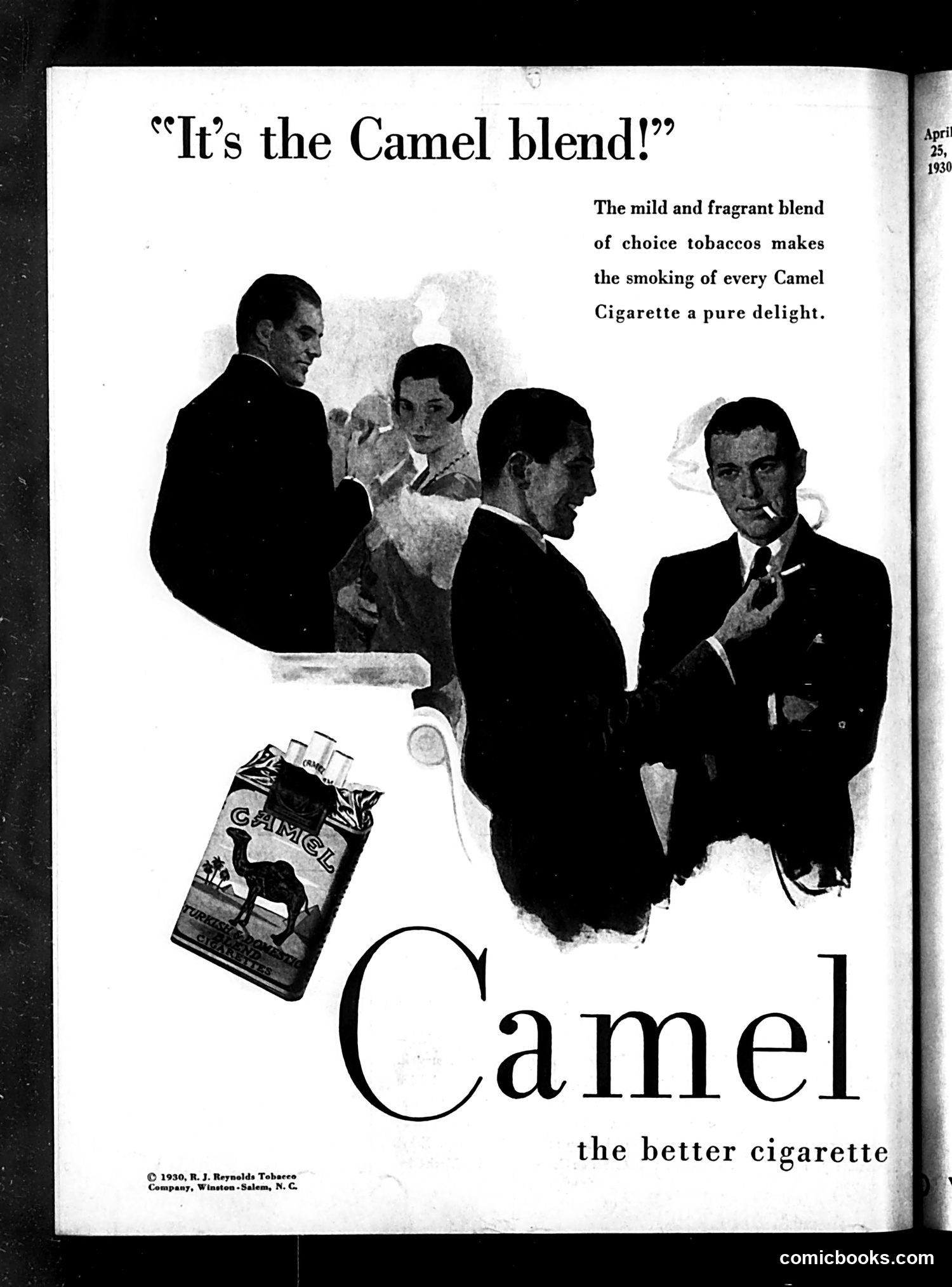
This is a cigarette advertisement, not political satire. It's a 1930 Camel cigarettes ad from Life magazine featuring four well-dressed men in formal attire, with one smoking. The headline "It's the Camel blend!" emphasizes the product's tobacco mixture as its selling point. The ad copy promises mildness and fragrance, positioning Camel as "the better cigarette." The R.J. Reynolds company copyright confirms this is genuine vintage advertising. For modern readers, this represents an era when tobacco companies advertised openly in mainstream magazines without health warnings—a practice now prohibited in most countries due to established links between smoking and disease.