life
Life — May 16, 1930
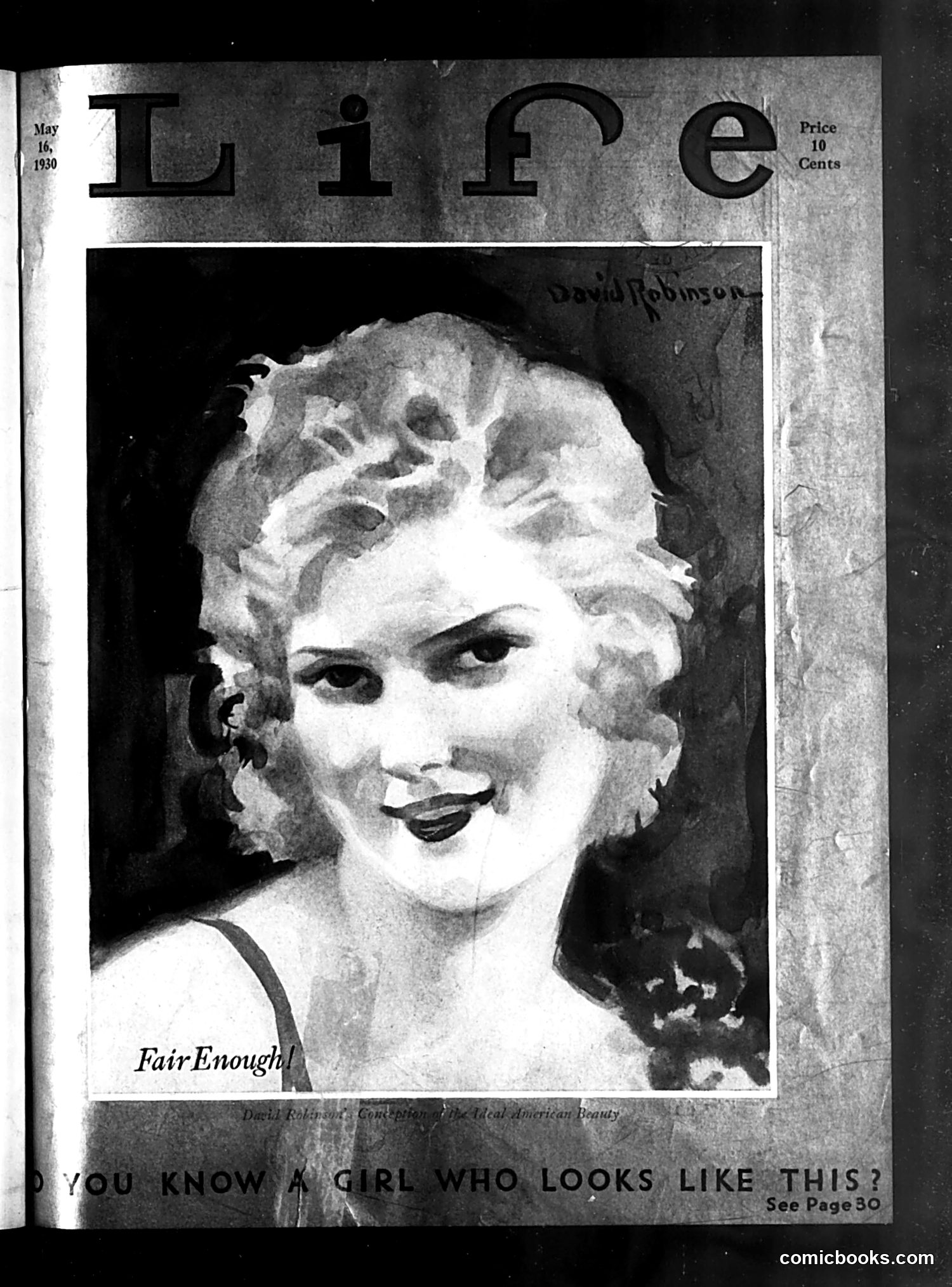
Analysis This is a Life magazine cover from May 16, 1939 (price 10 cents). The page features a glamorous portrait photograph credited to David Robinson, labeled "Fair Enough." The main content is a celebrity photograph rather than a cartoon. The caption "YOU KNOW A GIRL WHO LOOKS LIKE THIS?" with a reference to "See Page 30" suggests this is part of a reader-participation feature—likely asking if readers recognize or know someone resembling the pictured woman. The photograph shows a woman with 1930s-style blonde wavy hair and makeup, presented as representing "The Ideal American Beauty" according to visible text. This appears to be primarily a photographic cover story or advertisement rather than political satire, typical of Life's celebrity and lifestyle content during this era.
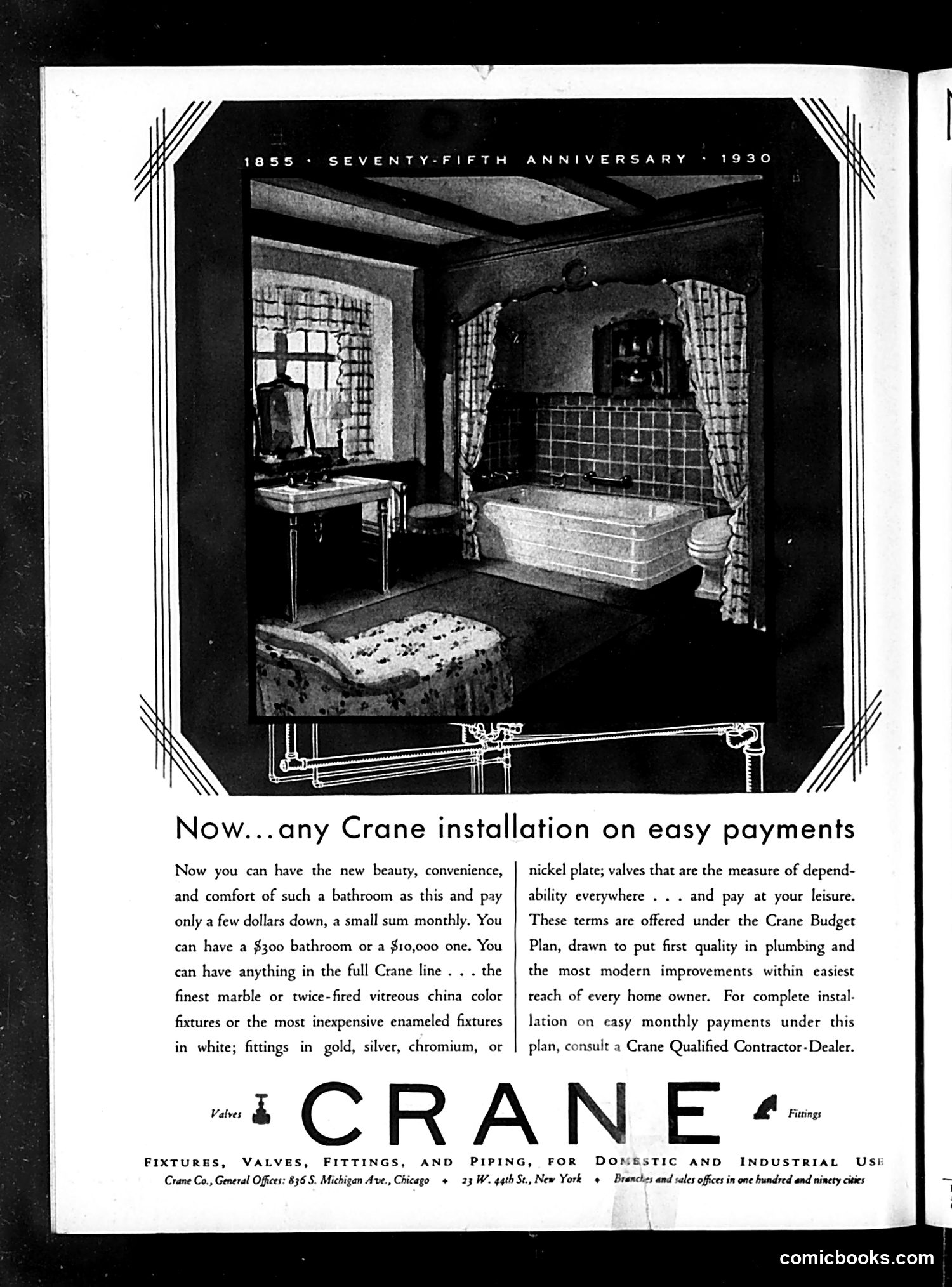
Analysis This is a Crane Company advertisement, not a satirical cartoon or political content. The page celebrates Crane's 75th anniversary (1855-1930) and promotes bathroom fixtures and plumbing installations. The ad showcases a luxurious bathroom interior with a sink, bathtub, and toilet, emphasizing modern conveniences. The key marketing message is the "Crane Budget Plan"—allowing customers to purchase high-end plumbing fixtures through easy monthly payments rather than lump-sum purchase. For modern readers: This reflects Depression-era consumer financing innovation, making luxury home improvements accessible to middle-class homeowners through installment plans. The elegant bathroom setting suggests that indoor plumbing and modern fixtures were still relatively aspirational purchases in 1930.
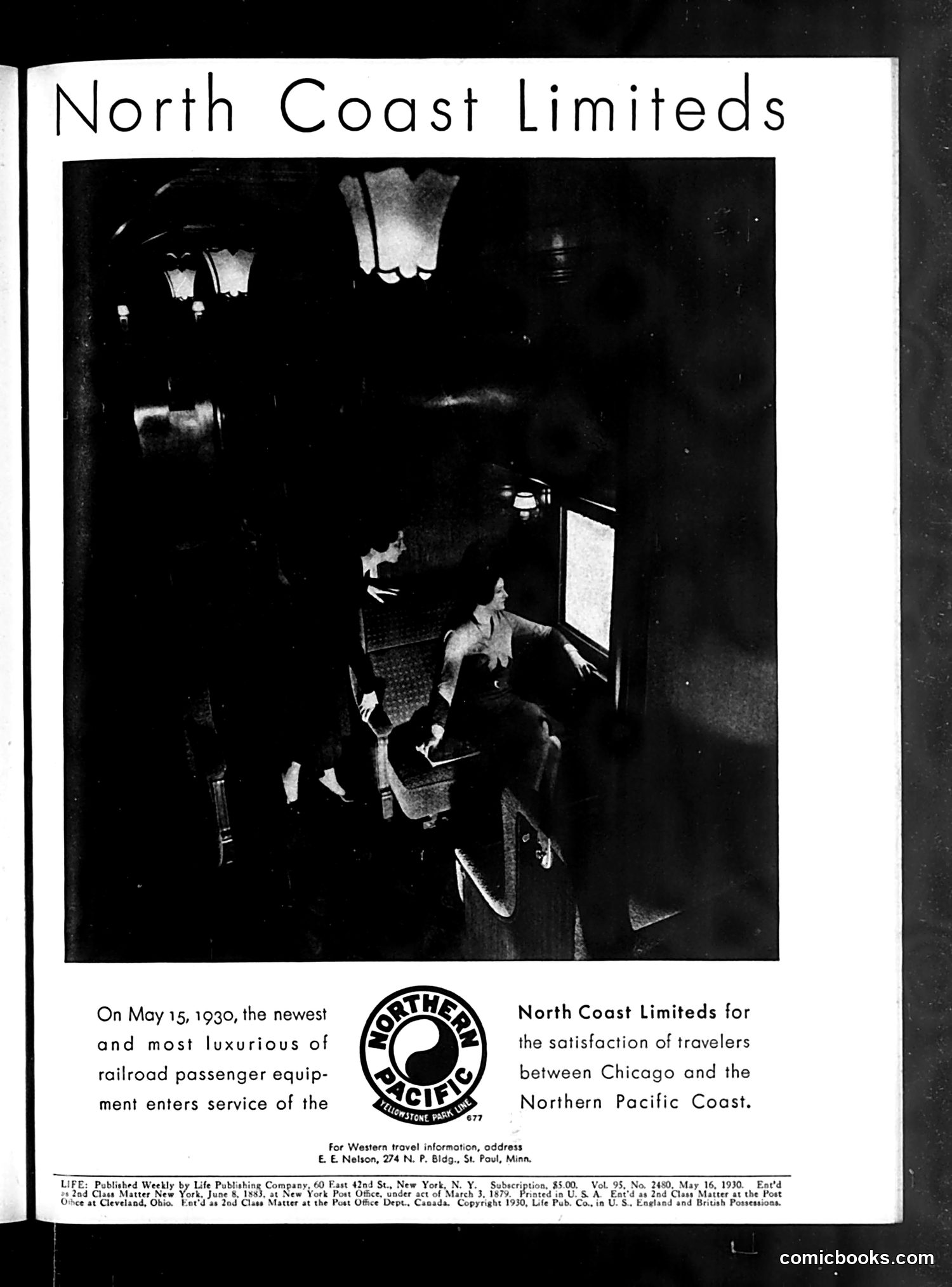
This page is primarily an advertisement for the Northern Pacific Railway's new luxury passenger train, the North Coast Limited, which entered service on May 15, 1930. The photograph shows the interior of the train at night, depicting well-dressed passengers in what appears to be an observation or lounge car, with elegant lighting fixtures overhead. The image emphasizes the train's luxurious amenities designed to appeal to affluent travelers. The ad highlights the train's route between Chicago and the Northern Pacific Coast, positioning it as "the newest and most luxurious of railroad passenger equipment." This is a straightforward commercial advertisement rather than satirical content, typical of Life magazine's paid advertising sections during the Depression era.
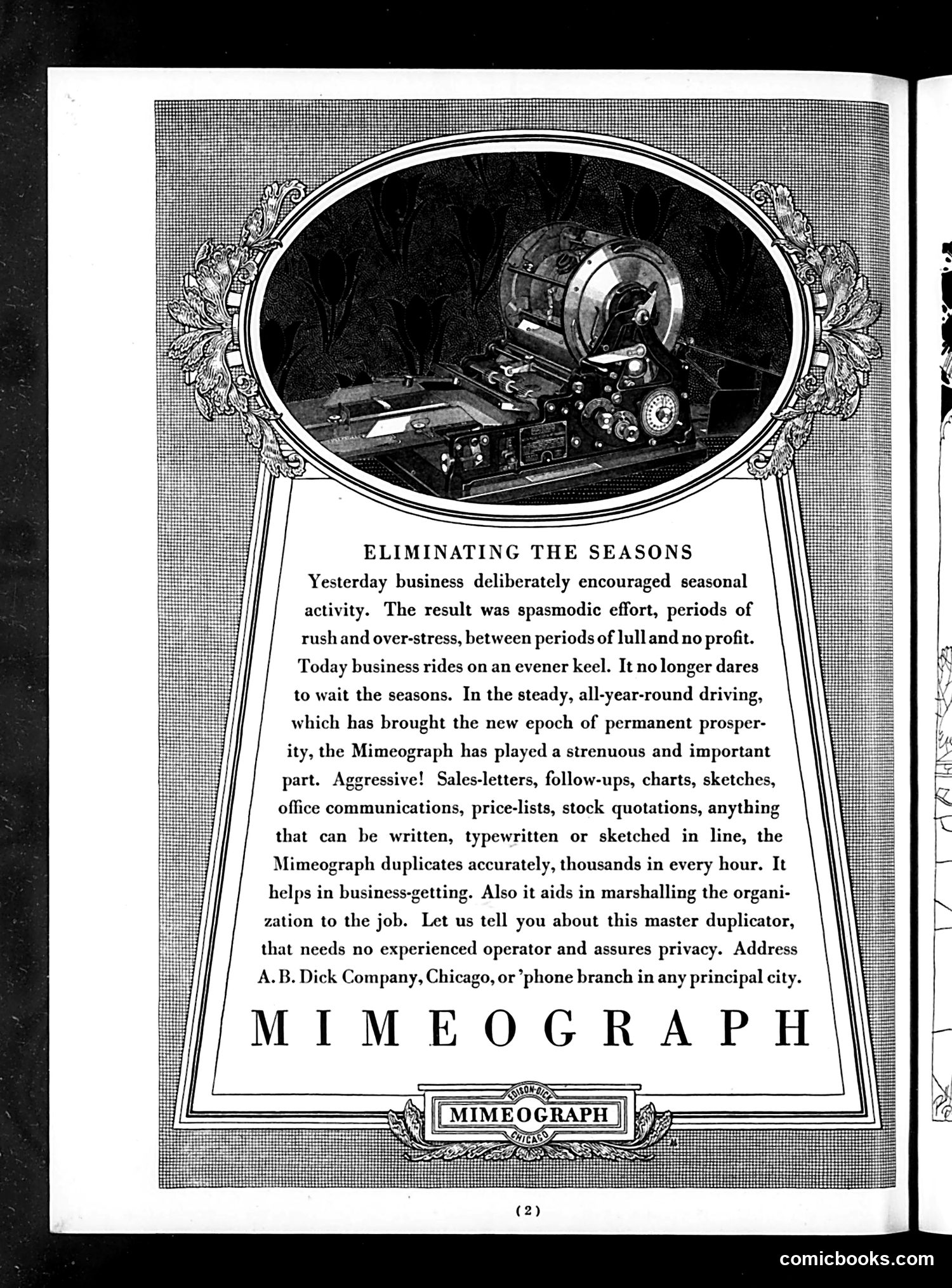
Analysis This is a Mimeograph machine advertisement, not a political cartoon. The page promotes the Mimeograph as a business duplicator manufactured by A.B. Dick Company of Chicago. The ad's rhetorical argument frames the machine as solving modern business efficiency problems. It claims that traditional seasonal business patterns—with their "spasmodic effort" and feast-or-famine cycles—are obsolete. The Mimeograph enables "steady, all-year-round" operations by quickly duplicating sales letters, charts, price lists, and communications "thousands in every hour." The decorative image shows the machine itself. The ad emphasizes the device requires no experienced operator and "assures privacy," marketing it as both practical and democratizing for business correspondence. This reflects early-20th-century enthusiasm for mechanical efficiency and office modernization.
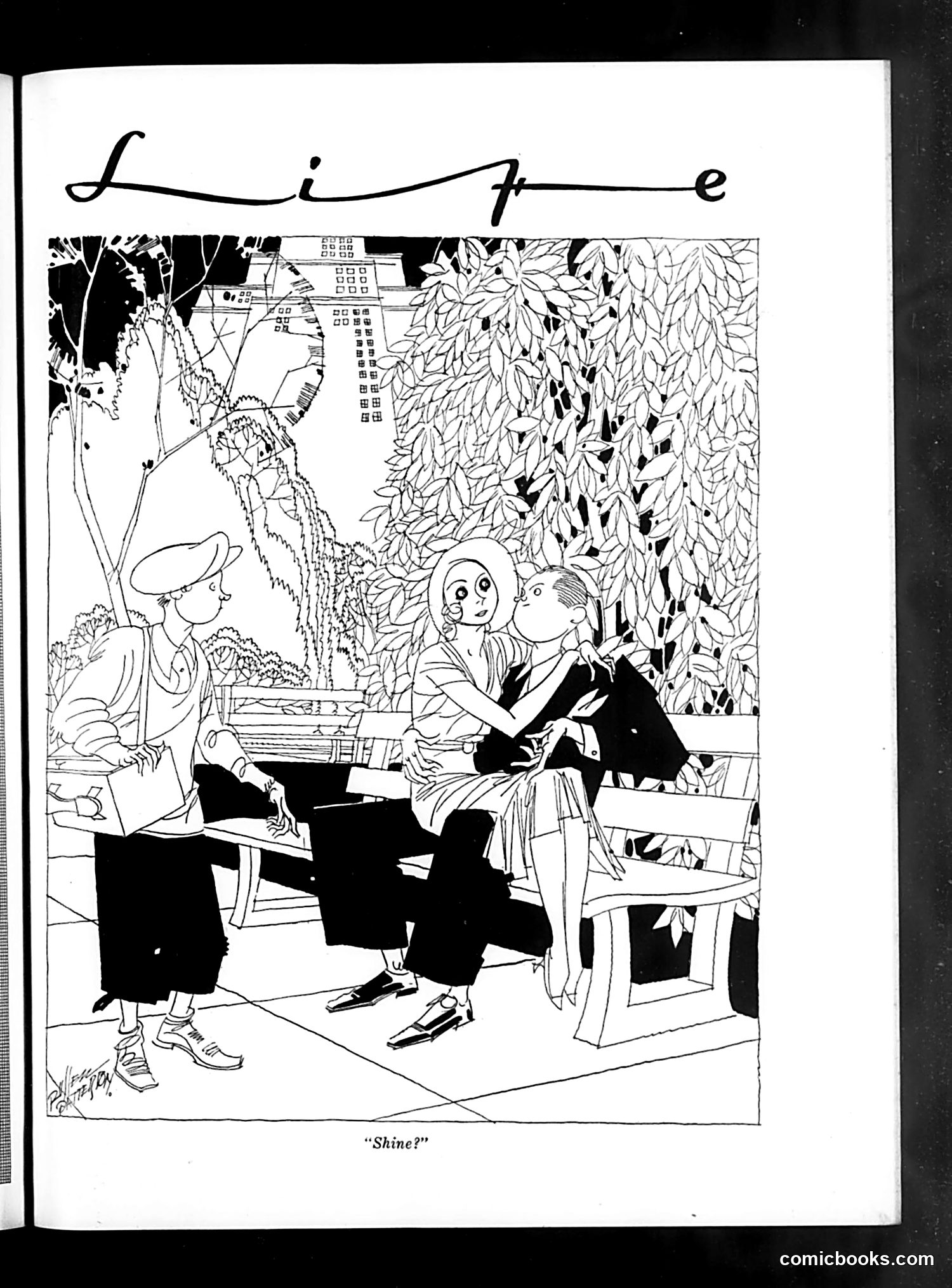
Analysis This page from *Life* magazine features a single-panel cartoon titled "Shine?" showing three figures in a garden setting. Two women sit on a bench while a third figure (appearing to be a shoe-shine worker, suggested by the "Shine?" caption) approaches them. The satire likely plays on social class dynamics and etiquette of the era. The caption's question mark suggests irony about an unexpected or inappropriate offer—perhaps commenting on how economic desperation or social circumstances create awkward encounters, or how traditionally informal service workers might appear in genteel settings. The lush garden background and the women's fashionable clothing emphasize the incongruity. Without additional context about the publication date or broader social issues of that specific moment, the precise satirical target remains unclear, though it appears to critique class interactions or social pretension.
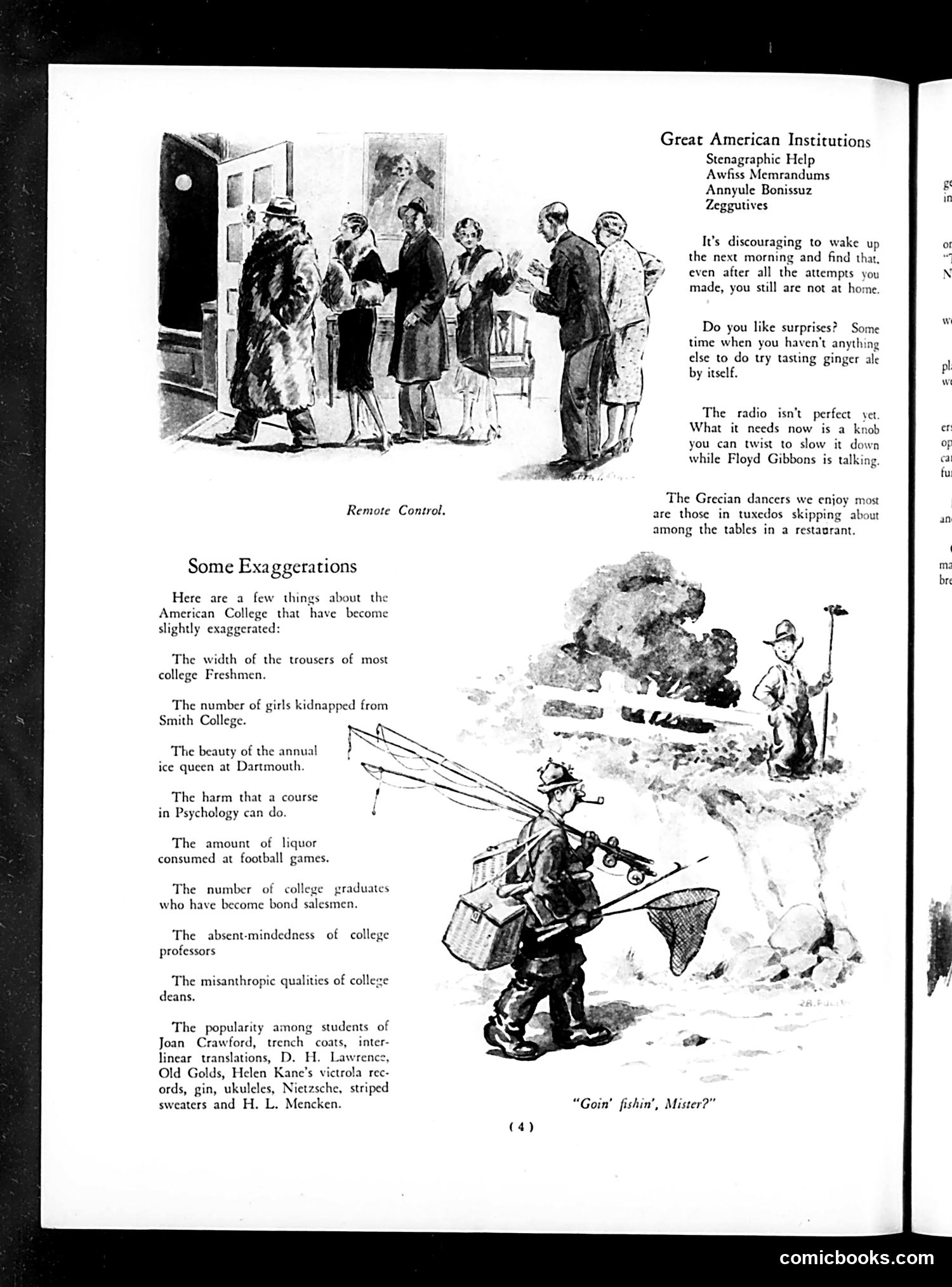
Analysis of Page 4, Life Magazine This page contains two satirical sections about American college life. "Remote Control" (top cartoon) depicts people clustered at a doorway, humorously suggesting college students' difficulty leaving home despite their age and independence. "Some Exaggerations" (below) lists wildly inflated stereotypes about American college culture—absurdly wide freshman trousers, kidnapped Smith College girls, beauty pageants, and excessive drinking. The accompanying illustration labeled "Goin' fishin', Mister?" shows a fisherman laden with seemingly every popular cultural item mentioned: Joan Crawford photos, trench coats, H.L. Mencken, and other contemporary references. The satire mocks how college folklore exaggerates student behavior and consumer trends into mythic proportions. The page ridicules both actual college excess and the gossipy mythology surrounding campus life.
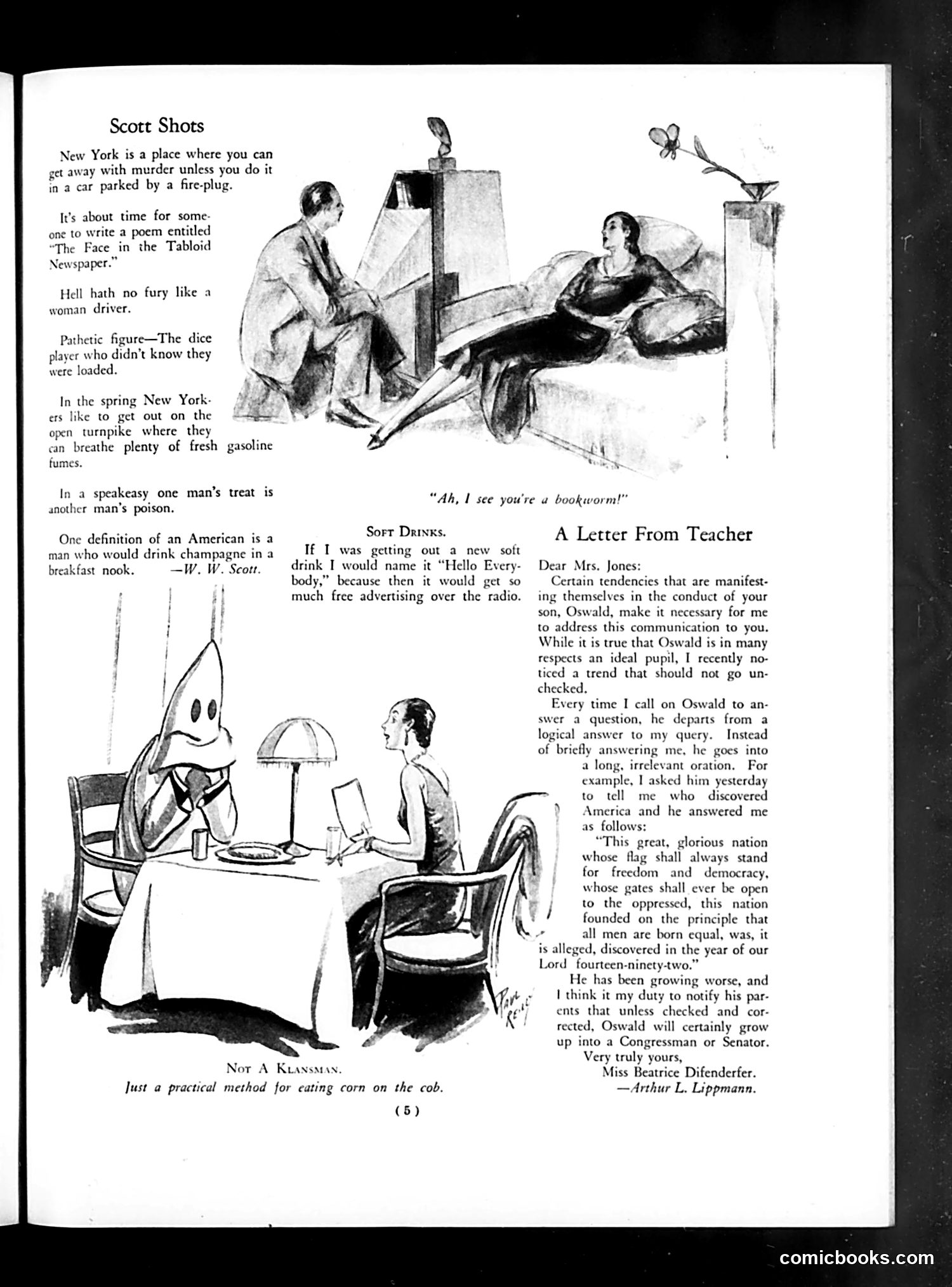
Analysis of This Life Magazine Page This page contains three satirical pieces from Life magazine: "Scott Shots" (top left): Brief humorous observations about New York life and American behavior—jokes about murder, women drivers, gambling, and drinking champagne at breakfast. "Soft Drinks" (center): A quip about naming a new soft drink "Hello Everybody" for radio advertising value. "Not a Klansman" (bottom cartoon): Shows a ghost-like figure at a dinner table. The caption suggests this is a satirical visual joke, though the exact reference is unclear without additional context—possibly commenting on white supremacist imagery or a contemporary political figure. "A Letter From Teacher" (right): A concerned teacher writes to parents about a student named Oswald, warning he's developing troubling tendencies and may become a politician. This is social satire about arrogant, verbose students. The page reflects 1920s-30s American satirical humor and social commentary.
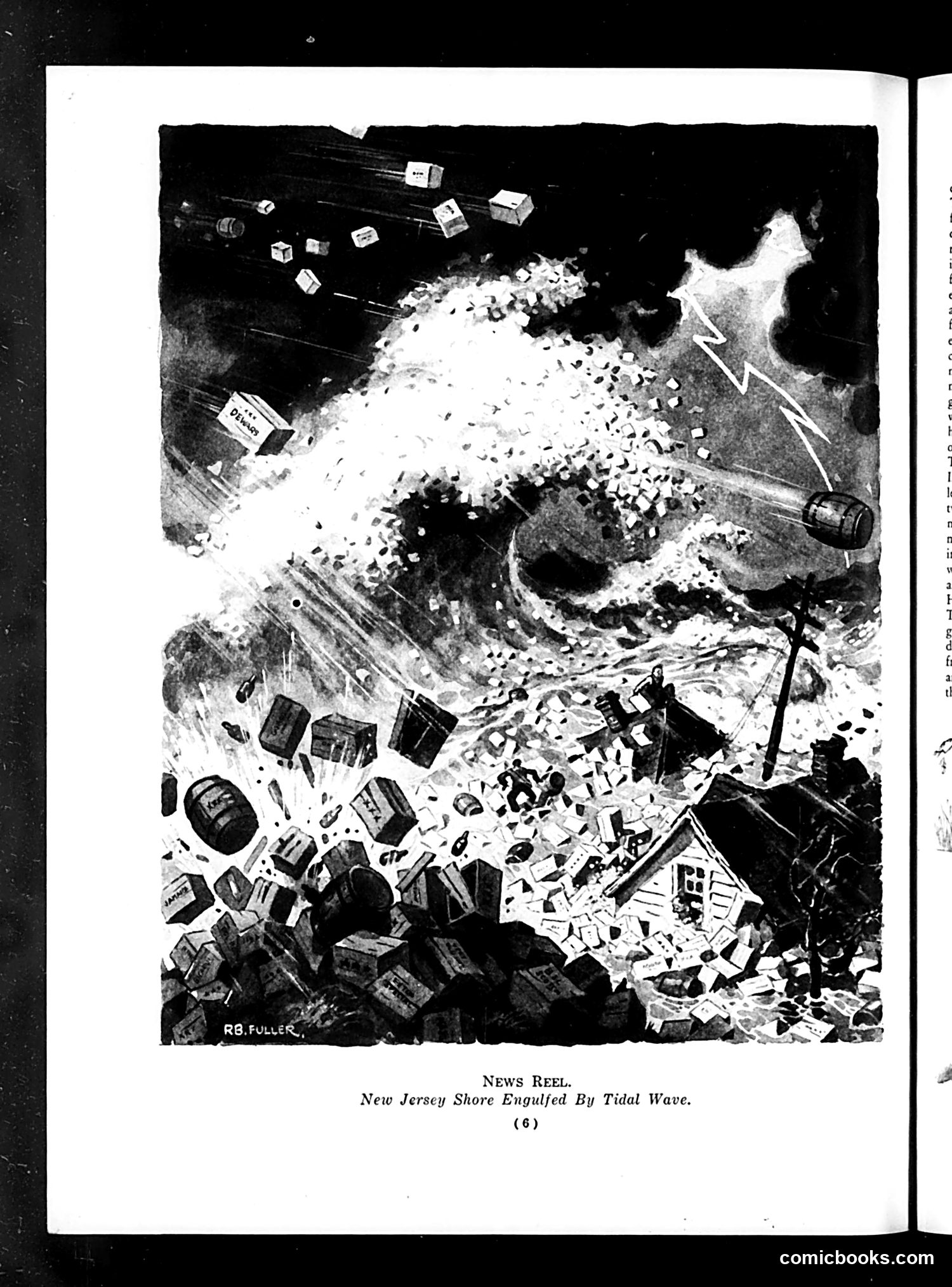
Analysis This is a news reel photograph (not a political cartoon) labeled "New Jersey Shore Engulfed By Tidal Wave." The image shows aerial destruction of a coastal area—scattered buildings, debris fields, and what appears to be a large wave or storm surge impact. The photograph documents a natural disaster rather than satirizing it. The scattered boxes and structures visible suggest residential or commercial buildings destroyed by the tidal event. The credit reads "R.B. FULLER." Without a specific date on this page, the exact historical event cannot be identified with certainty, though tidal waves and storm surge events affecting New Jersey shores have occurred multiple times. This appears to be straightforward news documentation of disaster impact, not editorial commentary or satire.
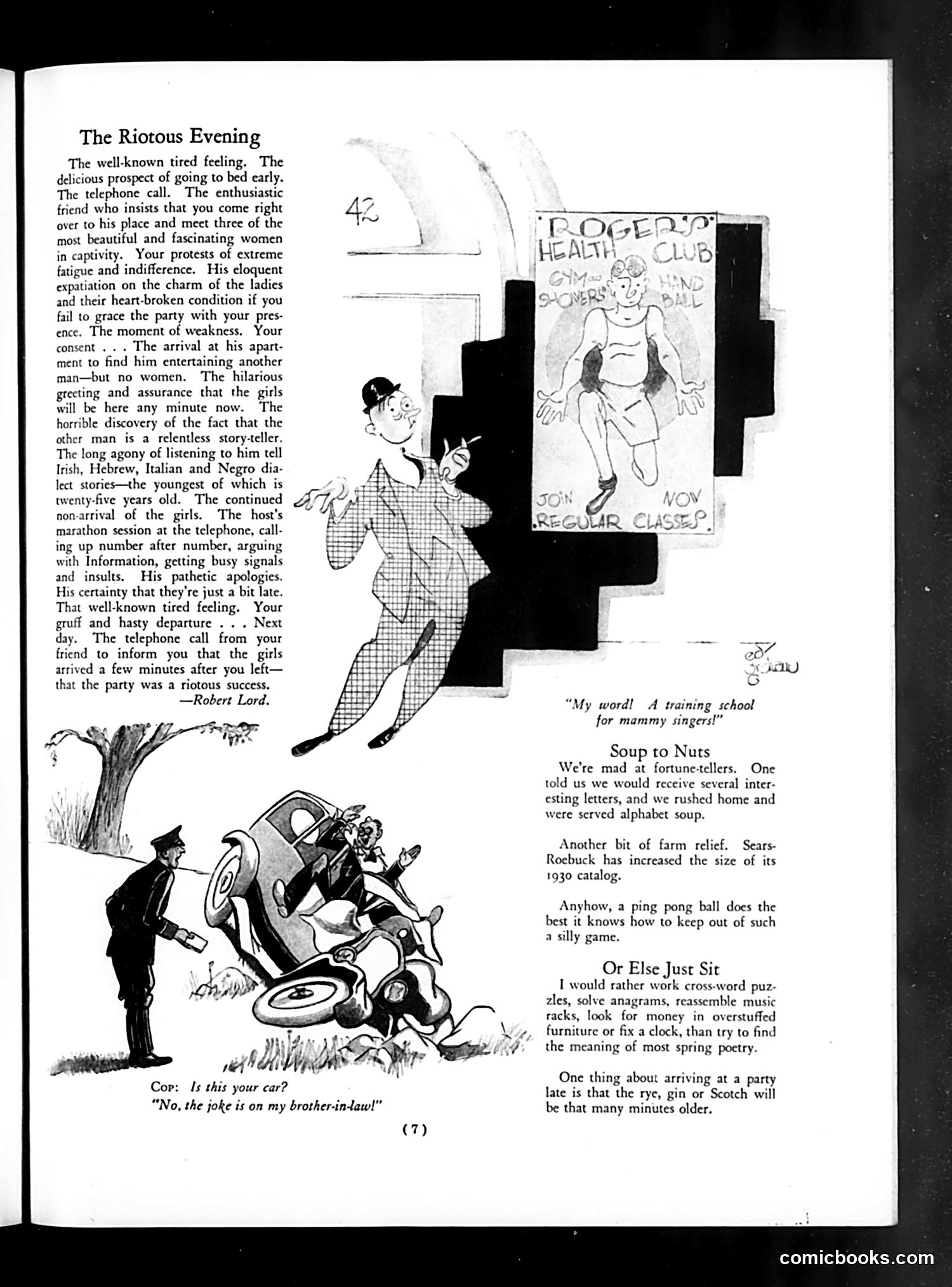
Analysis of This Life Magazine Page This page contains humorous short essays and cartoons about social situations circa the 1930s-40s. "The Riotous Evening" by Robert Lord satirizes the anxiety of social obligation—a man reluctantly attends a party where he's bored by his host's endless storytelling in various dialects, then feels guilty leaving early, only to learn the party succeeded after his departure. The cop cartoon shows a traffic stop where the officer asks "Is this your car?" and the driver replies "No, the joke is on my brother-in-law!"—humor derived from the common practice of blaming a relative for a vehicle's problems. The remaining sections ("Soup to Nuts," "Or Else Just Sit") are brief, unrelated humorous observations about fortune-tellers, farm catalogs, and arriving late to parties—typical filler content for the magazine's satirical format.
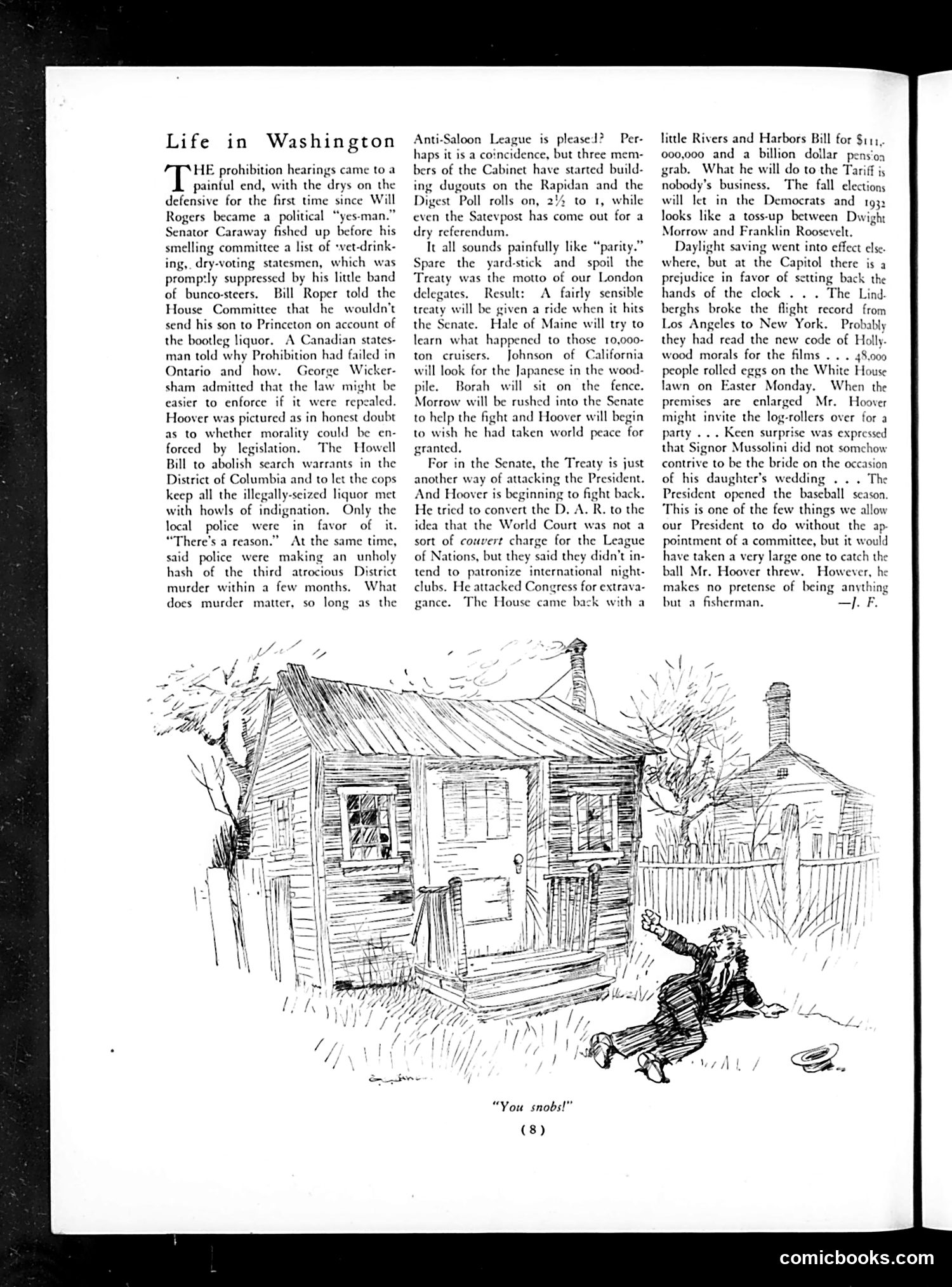
"Life" Magazine Political Cartoon Analysis This page from *Life* magazine contains a satirical column titled "Life in Washington" discussing Prohibition-era politics. The accompanying cartoon depicts a man being ejected from a small wooden house, with the caption "You snob!" The cartoon likely satirizes tensions over Prohibition enforcement and class distinctions. The text references debates over alcohol legislation, mentioning Senator Caraway's involvement in prohibition hearings and criticizing various political figures' inconsistency on the issue. The "snob" caption suggests the cartoon mocks either elitist attitudes toward Prohibition enforcement or hypocrisy among politicians who opposed it while claiming moral superiority. The overall piece critiques Washington politicians' stance on alcohol regulation during the Prohibition era, a major political battleground of the 1920s-early 1930s.
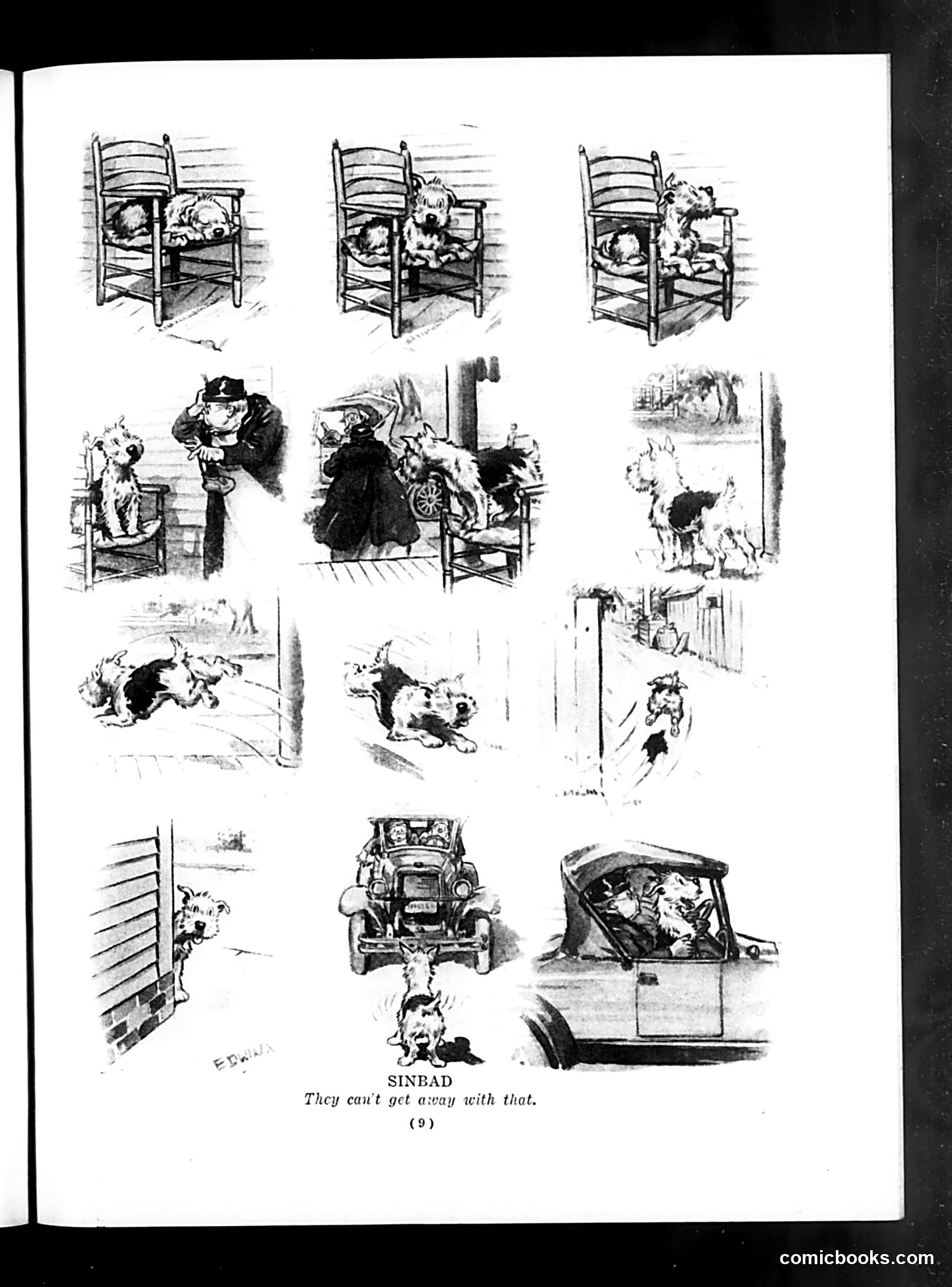
"They Can't Get Away with That" - A Sinbad Comic Strip This is a humorous comic strip titled "Sinbad" showing a small, scrappy dog repeatedly outsmarting or escaping from various situations and people attempting to capture or control him. The sequence depicts: - A dog in chairs with people trying to contain it - The dog evading capture attempts by people and vehicles - A car chase finale where the dog still manages to elude the pursuer The caption "They can't get away with that" appears ironic—the dog clearly *does* get away with mischief repeatedly. The humor derives from the dog's persistent resourcefulness and the frustrated attempts by larger, more powerful figures (humans, vehicles) to contain this small but determined animal. It's a slapstick comedy about underdog persistence and cleverness.
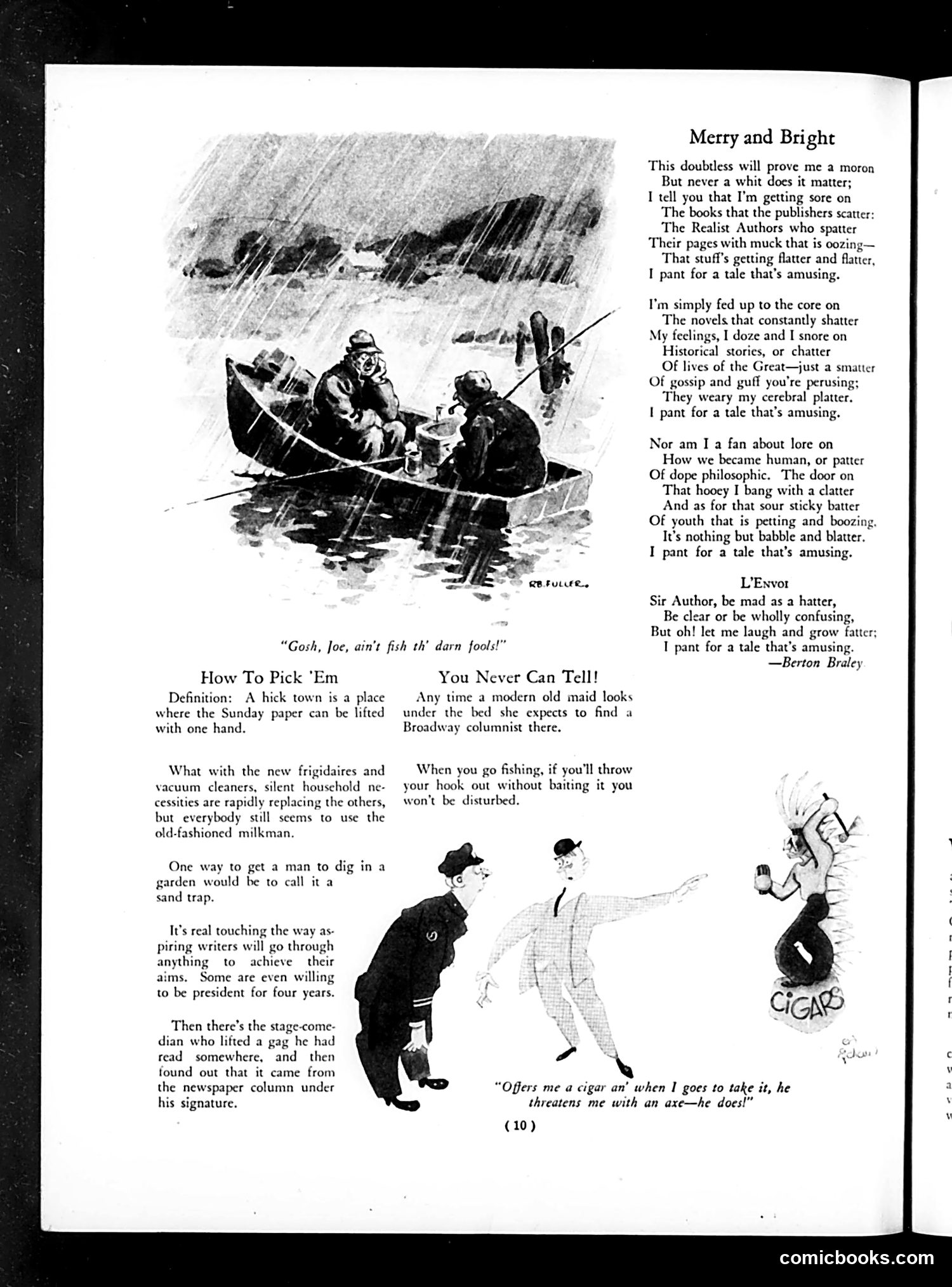
Analysis of "Merry and Bright" Page This page features literary and social satire typical of Life magazine's humor. The main poem "Merry and Bright" by Berton Braley criticizes contemporary publishing trends—specifically "Realist Authors" whose books contain excessive profanity and graphic content. The author complains these works are emotionally exhausting rather than entertaining, and he longs for amusing tales instead. The three cartoons below mock various social absurdities: how to identify a "hick town," modern fishing etiquette, and what appears to be commentary on writers' desperation for success (the columnist gag). The final cartoon about cigars suggests social anxiety around gift-giving or masculine etiquette. Overall, the page critiques both modern literature's pretentiousness and everyday social conventions of the era.
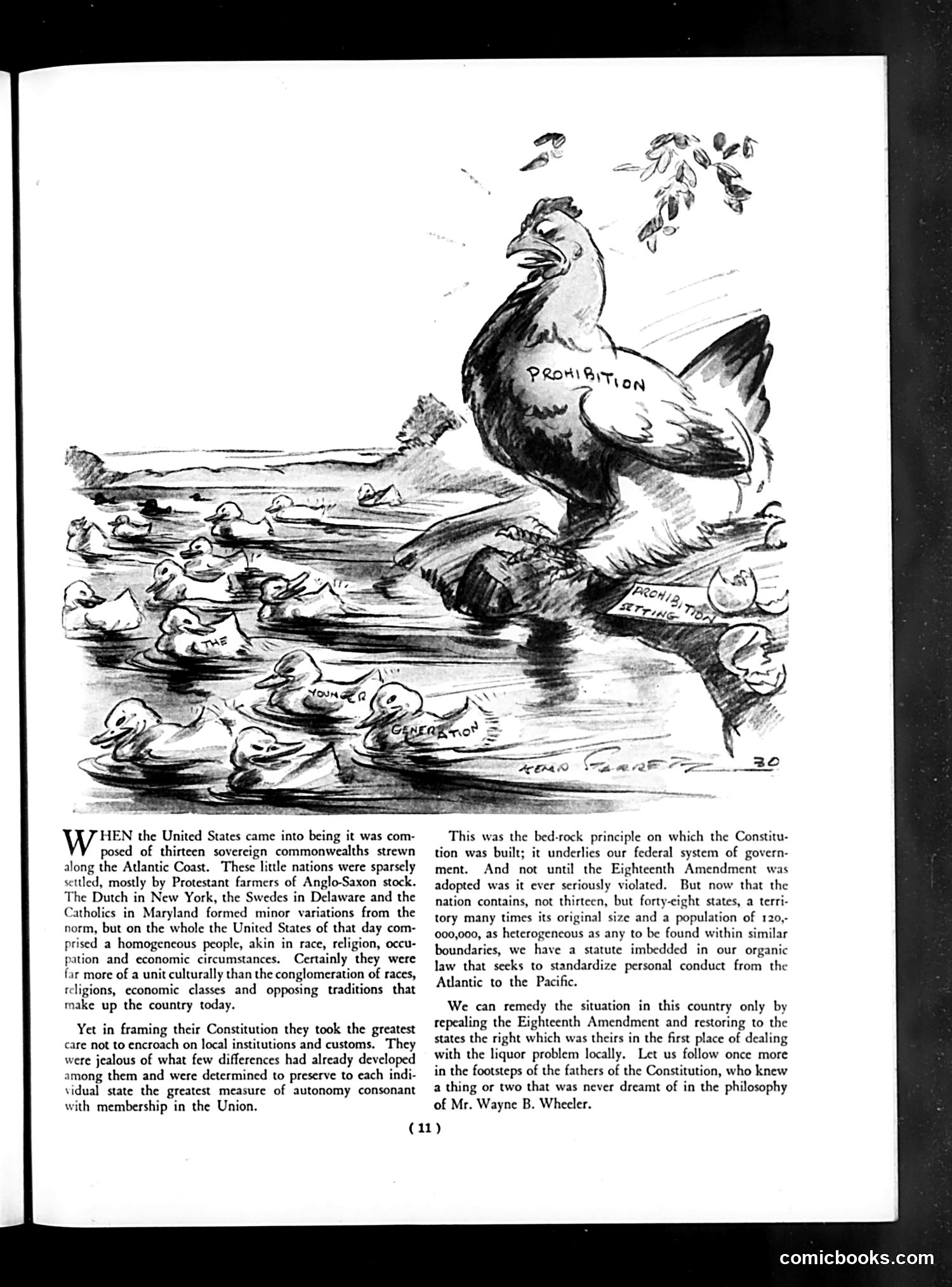
Political Cartoon Analysis: Prohibition Era Satire This Life magazine cartoon satirizes Prohibition enforcement in America. The large bird labeled "PROHIBITION" stands among many smaller ducks in water, representing American citizens or states. The bird's aggressive posture and the scattered ducks suggest forced compliance and resistance to federal liquor laws. The accompanying text discusses how the original thirteen states carefully preserved local autonomy in the Constitution, but the Eighteenth Amendment (implementing Prohibition) centralized power federally. The cartoon visualizes this tension: the imposing federal mandate ("Prohibition") dominates the landscape while smaller entities (states/citizens) scatter in compliance or confusion. The satire critiques how Prohibition overrode traditional state sovereignty that the Founders intended to protect. The reference to "Mr. Wayne B. Wheeler" (visible in text) suggests involvement of temperance advocates behind this unpopular federal overreach.
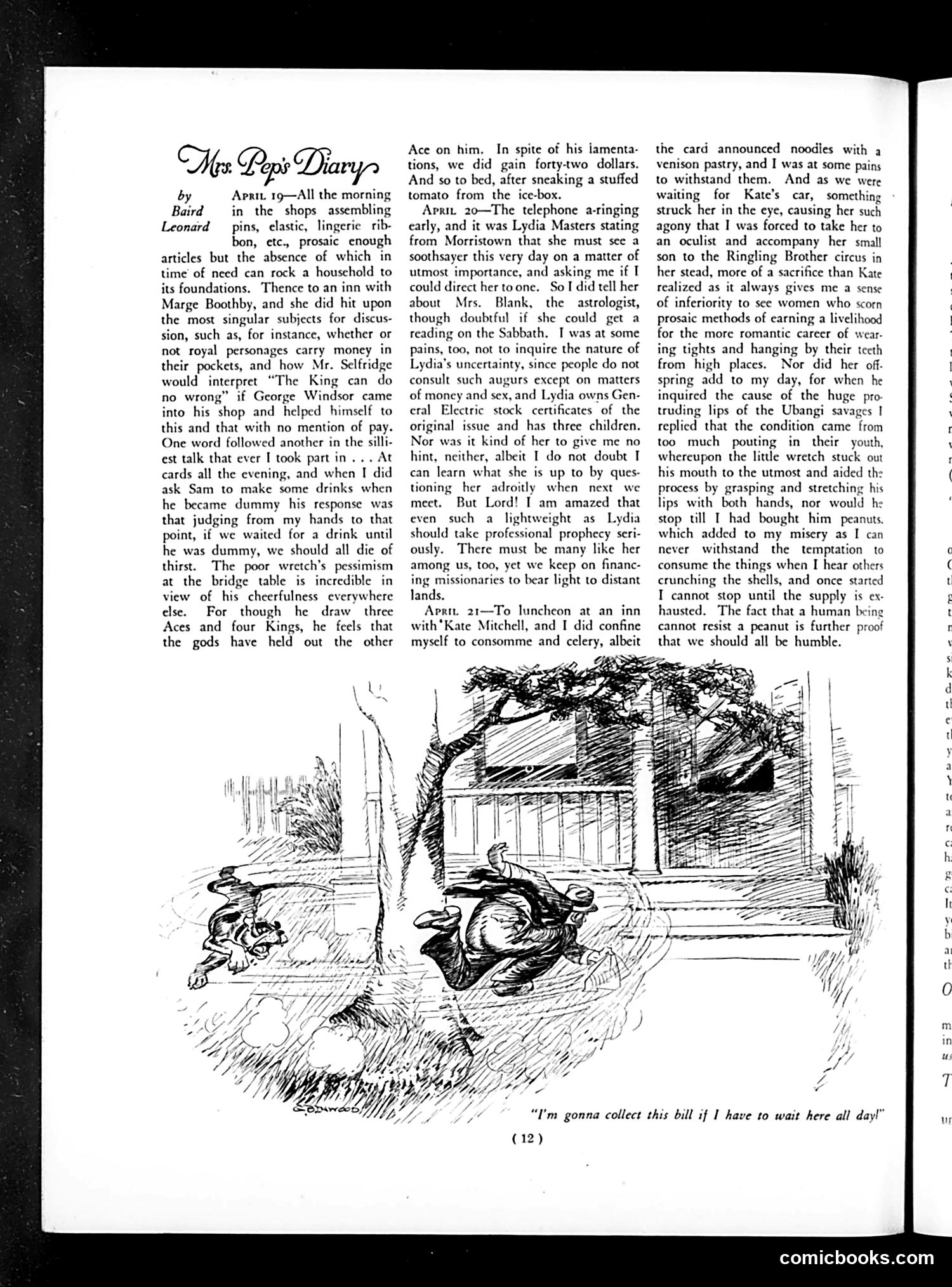
"Mrs. Pep's Diary" - April 19 This is a humorous diary entry by "Baird Leonara" satirizing domestic life and social pretensions. The text mocks various middle-class concerns: a woman's anxieties about household management, frivolous consultations with astrologers about personal matters, financial strain despite stock holdings, and servants' complaining. The accompanying sketch shows someone chasing what appears to be a small animal (possibly a dog or pig) across a yard, with the caption: "I'm gonna collect this bill if I have to wait here all day!" This illustrates the diary's running joke about financial pressures and bill-collecting — likely mocking both working-class debt struggles and upper-class avoidance of payment, presented as humorous domestic chaos typical of Life magazine's satirical humor about American social life.
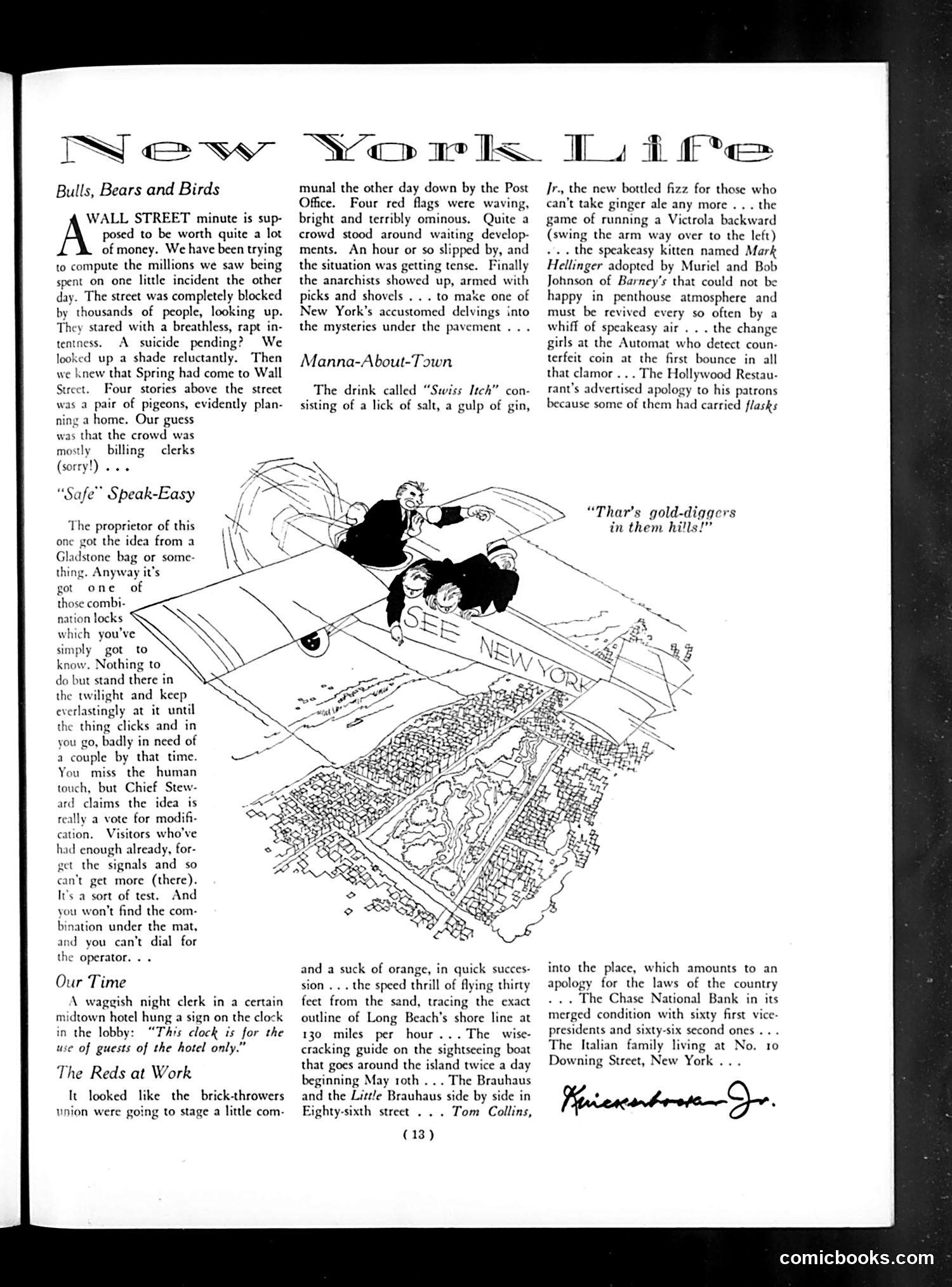
Analysis This page from Life magazine contains several short humor pieces about New York City life, accompanied by a cartoon illustration showing two figures examining a bird's-eye map view of New York City. The cartoon's caption—"That's gold-diggers in them hills!"—appears to be a play on the phrase "them thar hills" (evoking prospectors searching for gold). Here, the figures are literally examining New York City as if it were a mining territory, with "gold-diggers" (women seeking wealthy men) portrayed as abundant resources to be found within the city's blocks. The satire mocks both male-female dating dynamics of the era and the common metaphor of cities as places of opportunity—here reducing romantic prospects to a financial "mining" operation. The humor relies on treating the cityscape literally as a landscape to be prospected and exploited.
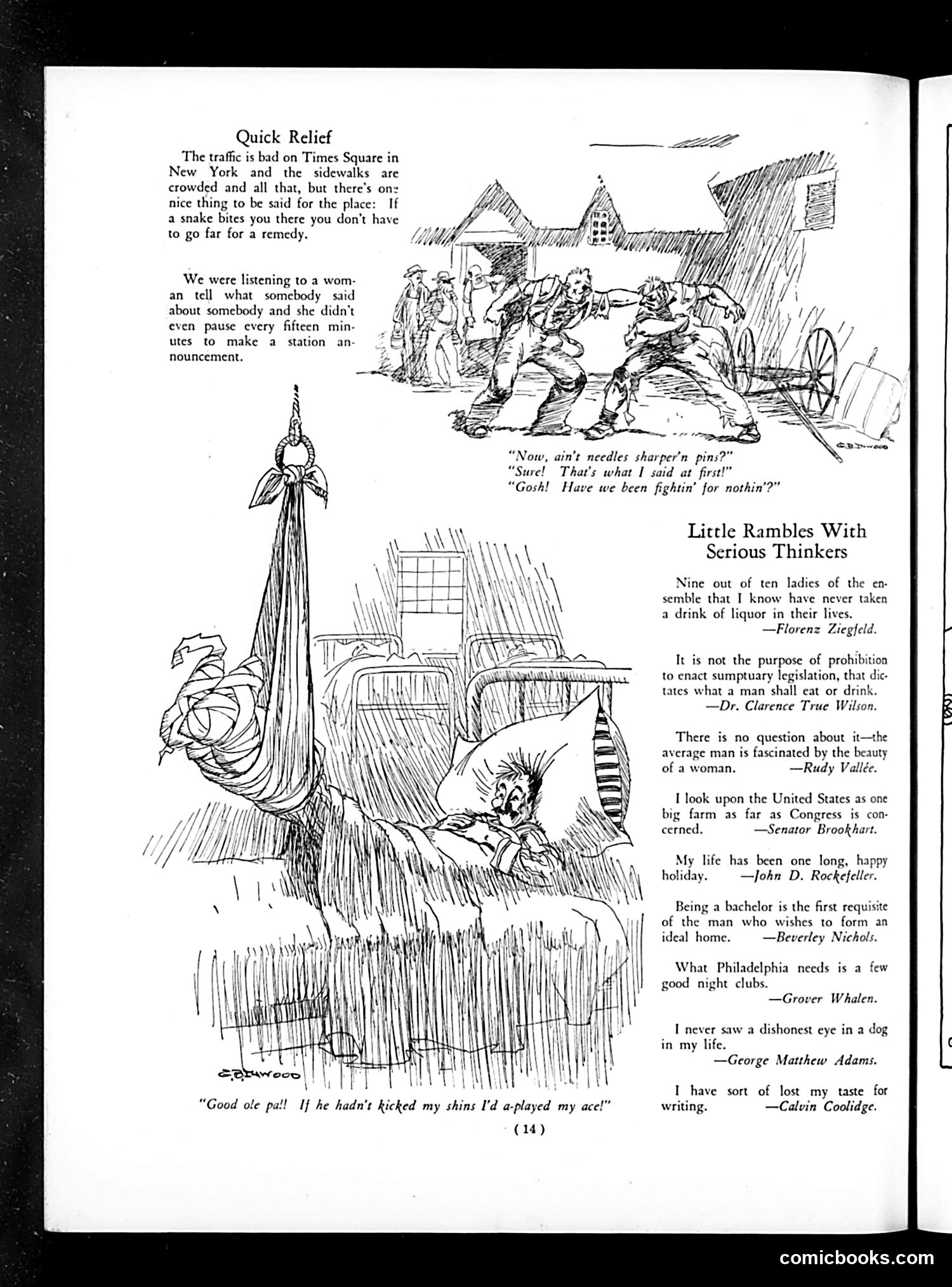
Analysis of "Quick Relief" Page from Life Magazine This page contains two cartoon sections satirizing early 20th-century American culture. The top cartoon, captioned "Now, ain't needless sharpen'n pins?" depicts men engaged in physical labor or fighting near a rural building, mocking working-class disputes over trivial matters. The bottom cartoon shows a figure in bed, apparently ill, with the caption "Good ole pal! If he hadn't kicked my shins I'd a-played my ace!" This appears to satirize rough masculine behavior and violence as entertainment or social bonding. The "Little Rambles With Serious Thinkers" section compiles quotes from prominent figures (Rockefeller, Calvin Coolidge, etc.) on various topics like prohibition, women, and politics—likely chosen to create humorous or contradictory juxtapositions about contemporary social issues.
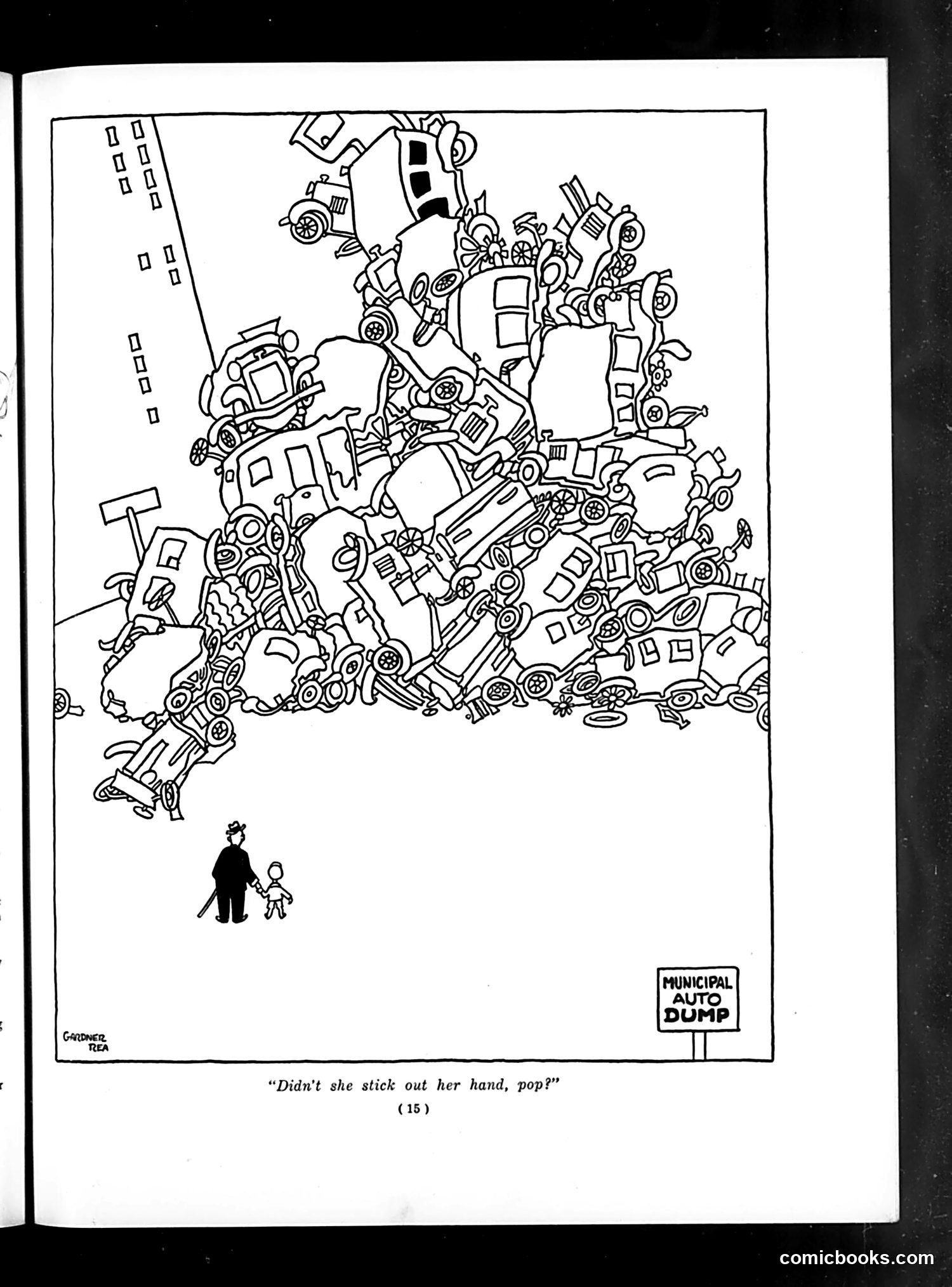
Cartoon Analysis This cartoon depicts a man and child standing before a massive pile of discarded automobiles at a "Municipal Auto Dump." The caption reads: "Didn't she stick out her hand, pop?" The satire appears to target urban automobile waste and disposal practices, likely from the early-to-mid 20th century when car ownership was booming. The child's question—suggesting someone (presumably the child's mother) was buried or lost in the junk pile—darkly jokes about the scale of automotive waste accumulation in American cities. The cartoon critiques the growing problem of automobile disposal and waste management, presenting it as so overwhelming that people could literally disappear within it. It reflects contemporary concerns about industrial growth and urban congestion during America's automobile expansion era. Signed "Gardiner, LIFE."
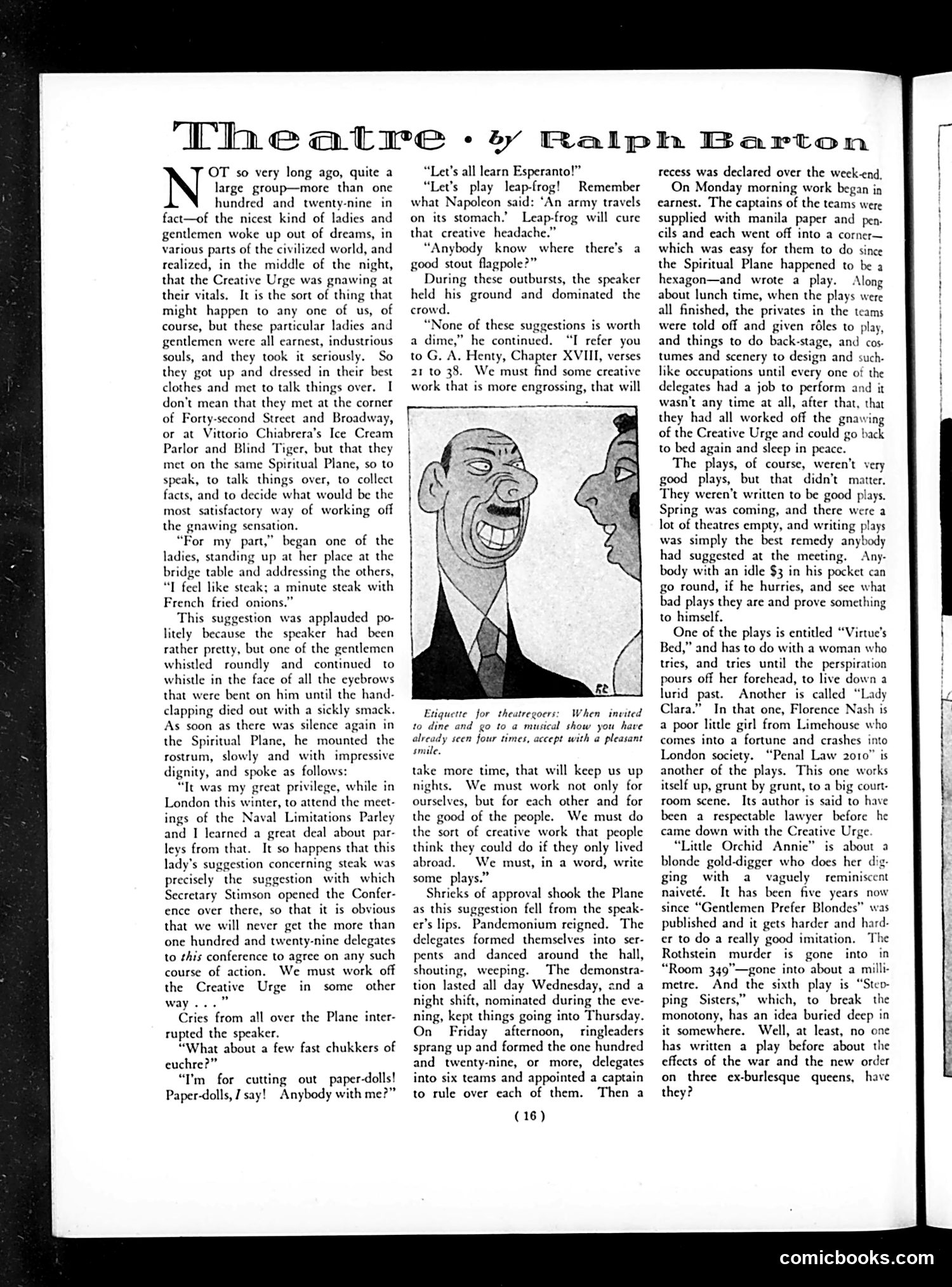
Analysis of "Theatre" by Ralph Barton This page is a satirical essay about theatrical creativity during a period when the theatre was struggling (likely post-WWI). The cartoon depicts two men in exaggerated caricature—one with a grotesquely wide grin, the other in profile—illustrating the absurdity of theatrical discussions. The essay mocks a "Creative Urge" conference where gentlemen suggest impractical theatrical ideas: learning Esperanto, staging leap-frog plays, and other ridiculous concepts. Barton satirizes both the pretentiousness of theatrical circles and their desperation for new material during a slow season. The humor targets the gap between ambitious artistic aspiration and the mundane reality of producing theatre, suggesting that even bad plays might succeed if they simply give audiences something to see.
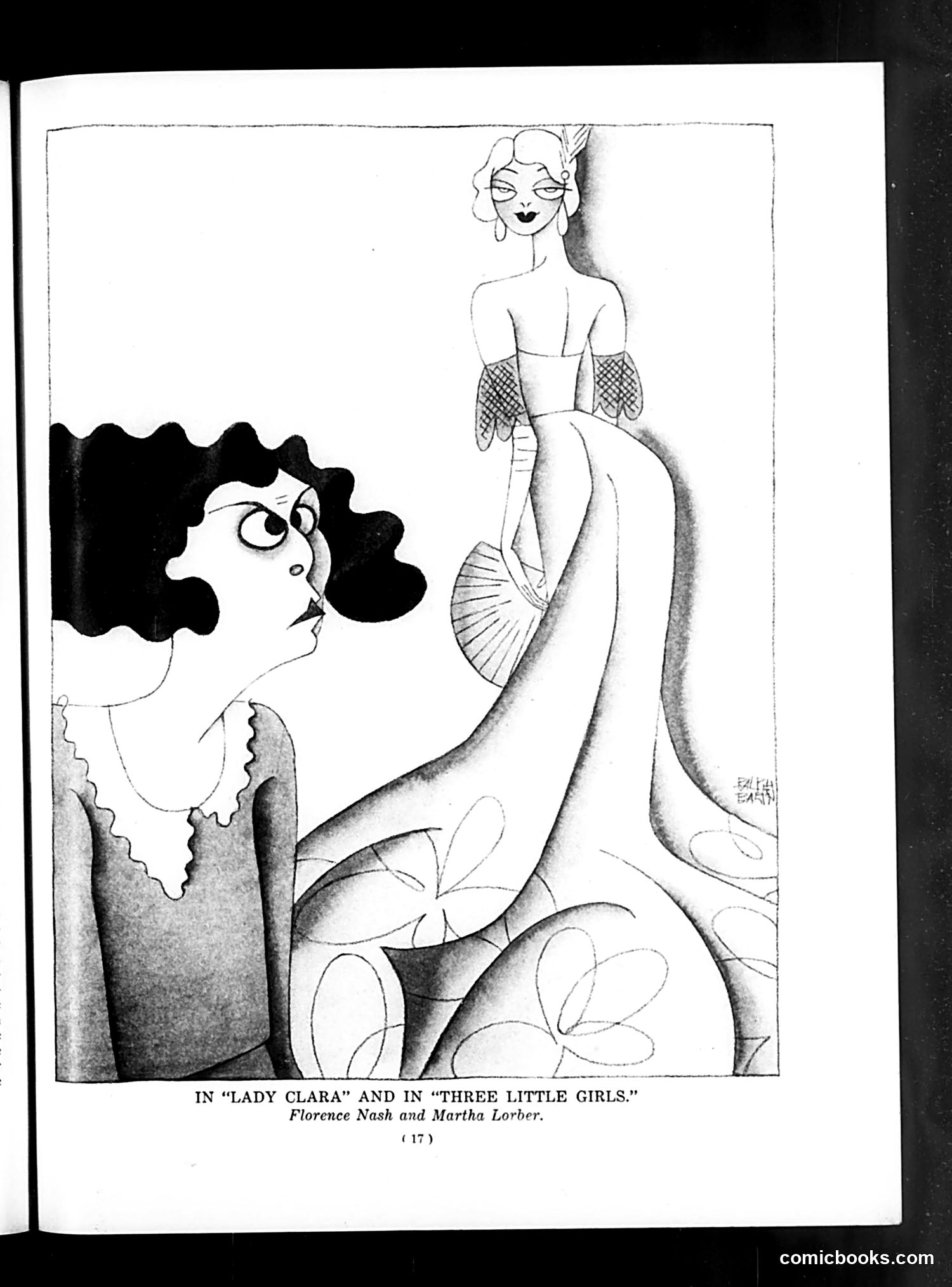
Analysis This is an illustration (not a political cartoon) from *Life* magazine, credited to artist Erich Erwin (signature visible). It depicts two female figures in an Art Deco style characteristic of early-to-mid 20th century fashion illustration. The caption references "Lady Clara" and "Three Little Girls," identifying these as characters from theatrical productions featuring actresses Florence Nash and Martha Lorber. The illustration appears to be promotional artwork showcasing costume design and fashionable silhouettes of the era—the standing figure displays an elegant gown with decorative elements, while the seated figure wears contrasting attire. This is entertainment-focused content rather than satirical commentary, typical of *Life*'s coverage of theater and fashion during this period.
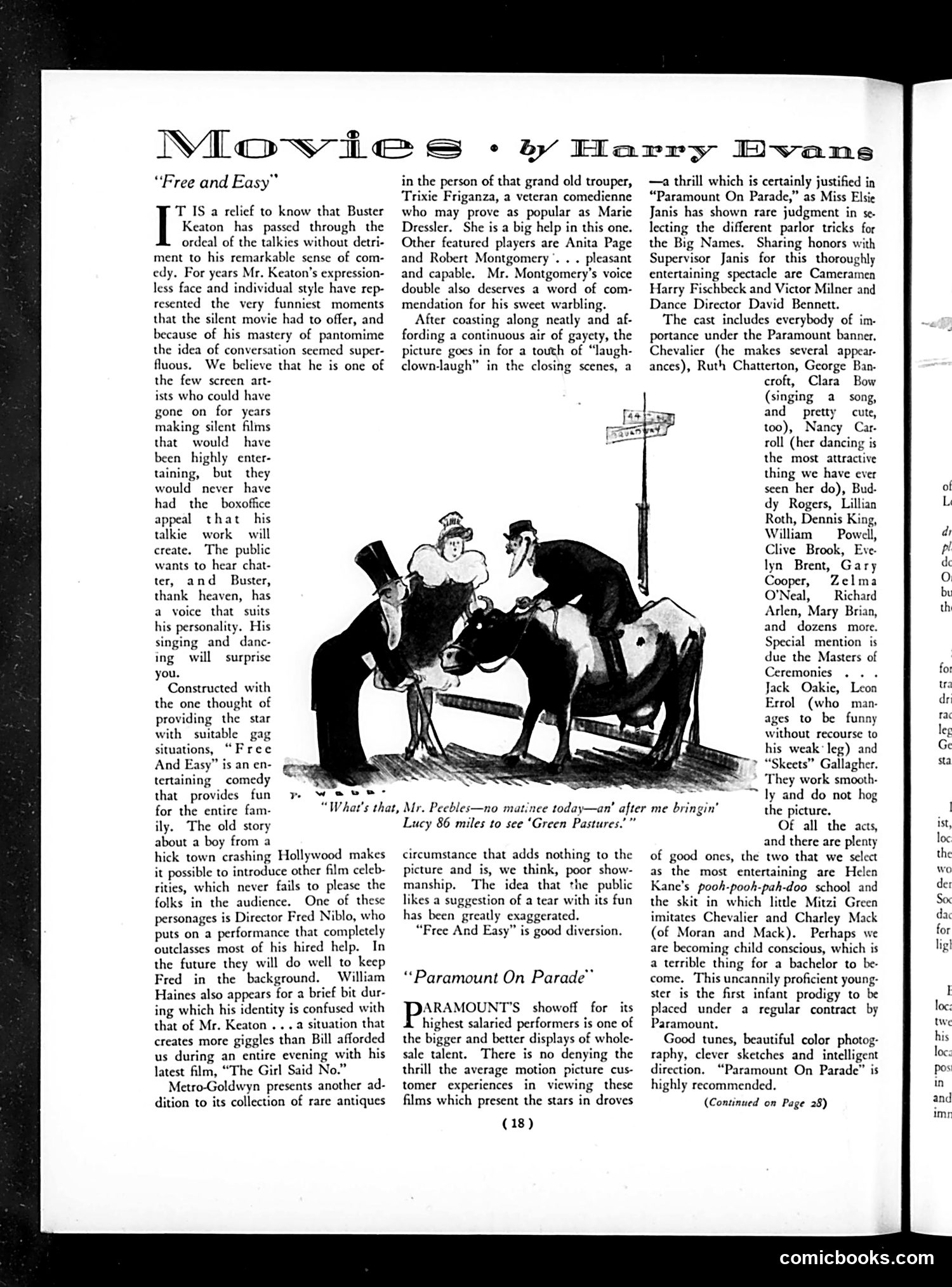
Movie Reviews by Harry Evans This page reviews three 1920s silent films. The main illustration shows a comedic scene from "Free and Easy," featuring Buster Keaton (noted for his expressionless face and pantomime skill). The caption reads: "What's that, Mr. Peckles—no picture today—an' after me bringin' Lucy 86 miles to see 'Green Pastures'?" The joke references a film patron's disappointment when the advertised movie isn't showing. "Green Pastures" (a real 1930 film) serves as the punchline—the person traveled 86 miles expecting to see it. The reviews discuss "Paramount On Parade" and praise various actors including Anita Page, Robert Montgomery, and Nancy Carroll. The tone is lighthearted, typical of 1920s entertainment journalism celebrating Hollywood's emerging star system and comedic talents.
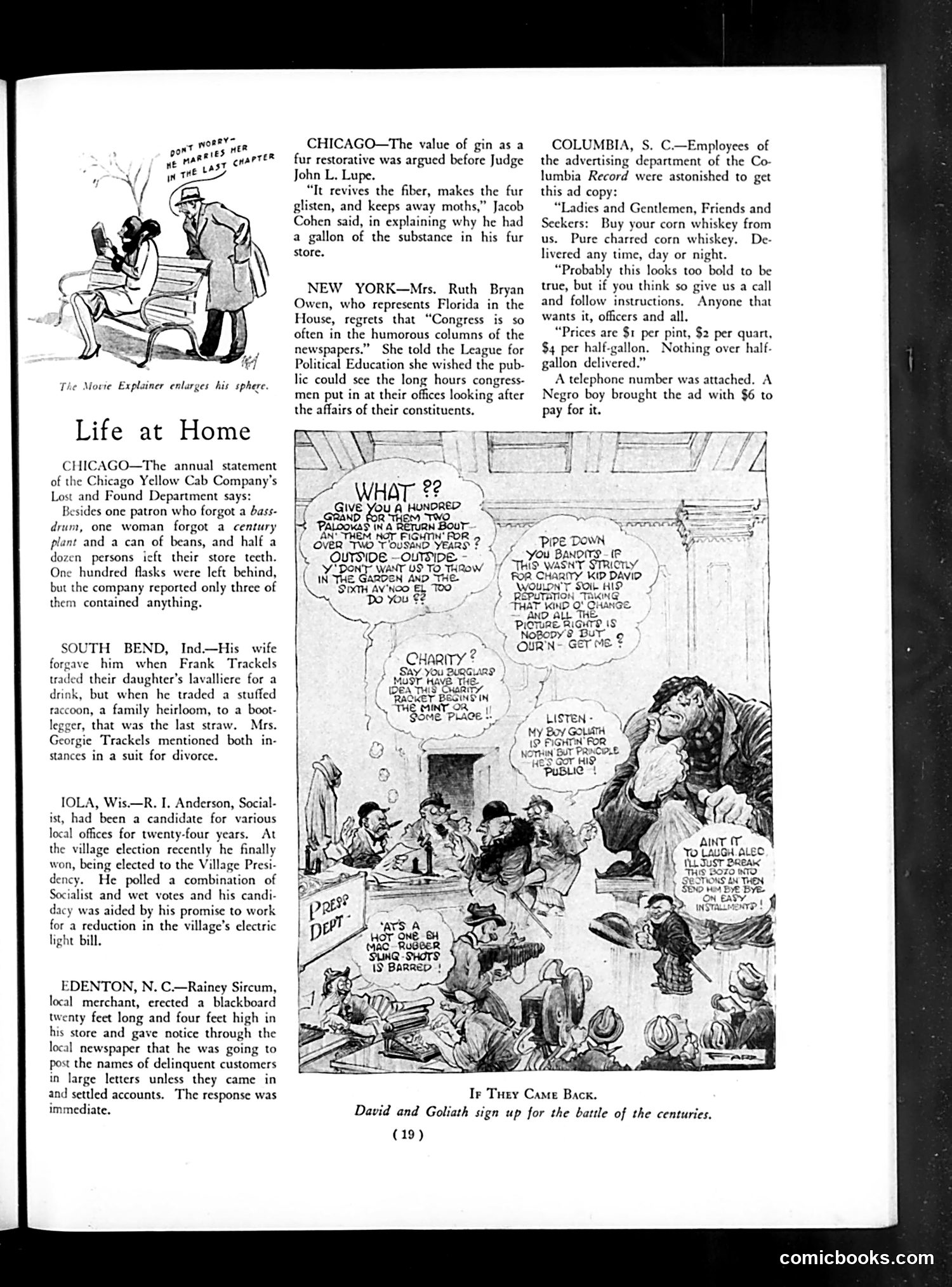
Life Magazine Page Analysis This page from Life magazine presents satirical anecdotes and a cartoon commenting on Prohibition-era America (the 1920s). The Text Items: Short humorous news briefs mock American life, including: a Chicago cab company's lost-and-found (notably 100 flasks abandoned, only 3 containing anything—suggesting Prohibition hypocrisy); a man trading family heirlooms for bootleg liquor; a Socialist winning local office on "wet" votes; a merchant publicly shaming delinquent customers; and a Columbia Records employee shocked to receive a blatant illegal whiskey advertisement. The Main Cartoon ("If They Came Back"): Shows biblical figures David and Goliath in modern dress, apparently "signing up for the battle of the centuries." The satire depicts modern street life filled with arguing, fighting characters in what appears to be a tenement or crowded urban setting. The joke compares ancient biblical conflict to contemporary American urban chaos and violence—suggesting that if those legendary antagonists returned, they'd find plenty of modern conflict to join. The overall page satirizes Prohibition enforcement failures, organized crime, and urban disorder.
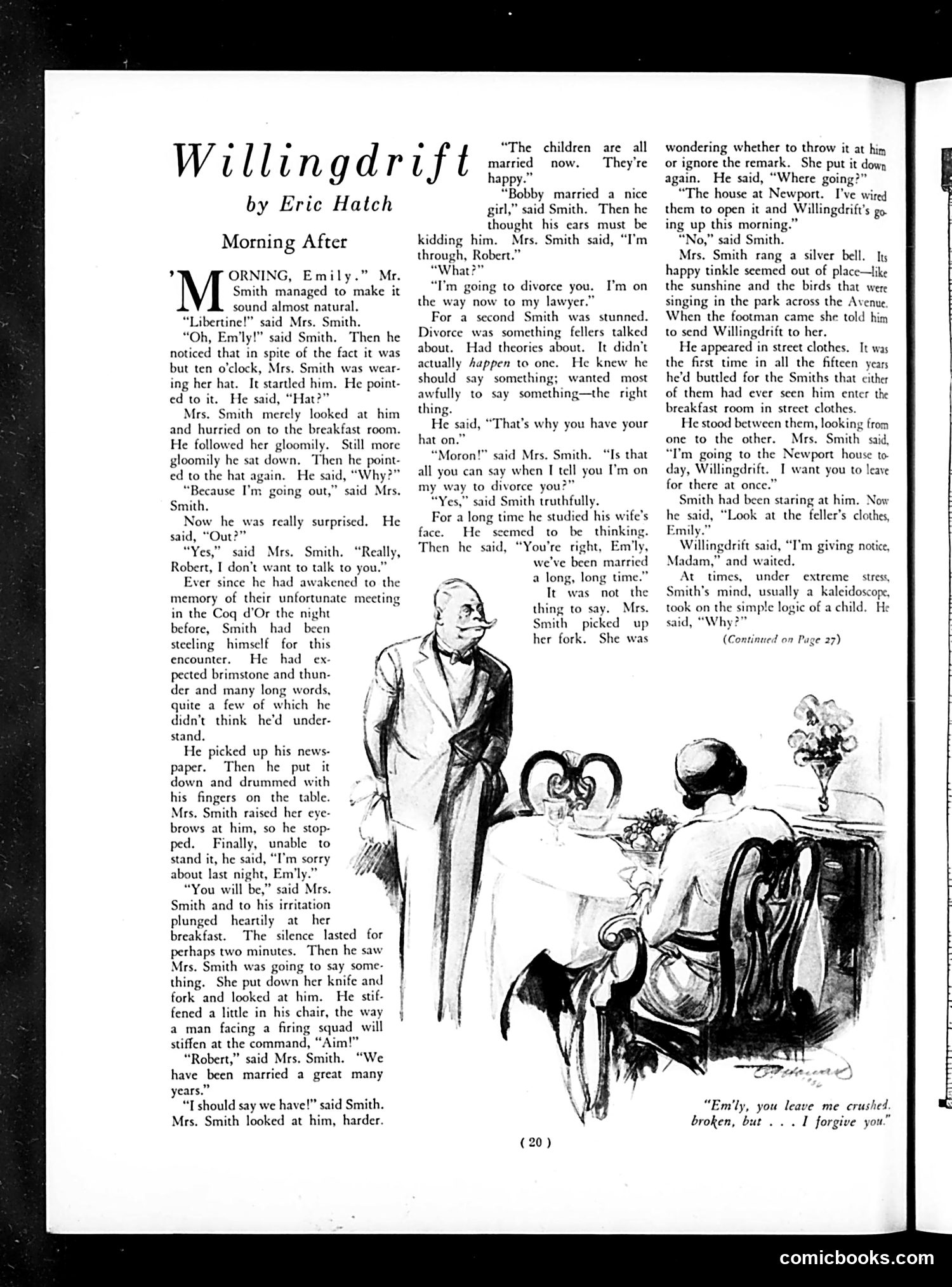
"Willingdrift" by Eric Hatch – Explanation for Modern Readers This is a humorous domestic drama about a married couple's marital crisis. Mr. Smith, hung over from a night at the "Coq d'Or" (a nightclub), faces his angry wife Emily at breakfast. She announces she's divorcing him and leaving for Newport immediately. The satire targets the emotional obliviousness of the husband. Rather than defending himself or engaging seriously, Smith can only fixate on trivial details—her hat, her fork—and offer bland, uncomprehending responses. His famous last words: "You're right, Em'ly, we've been married a long, long time." The story's title character, Willingdrift the butler, appears at the climax in street clothes, announcing *he's* giving notice too. The joke: the servant's dignified departure—leaving his masters over their marital disaster—implicitly judges the husband's pathetic passivity more sharply than any words could. Smith notices only the clothes, missing the point entirely.
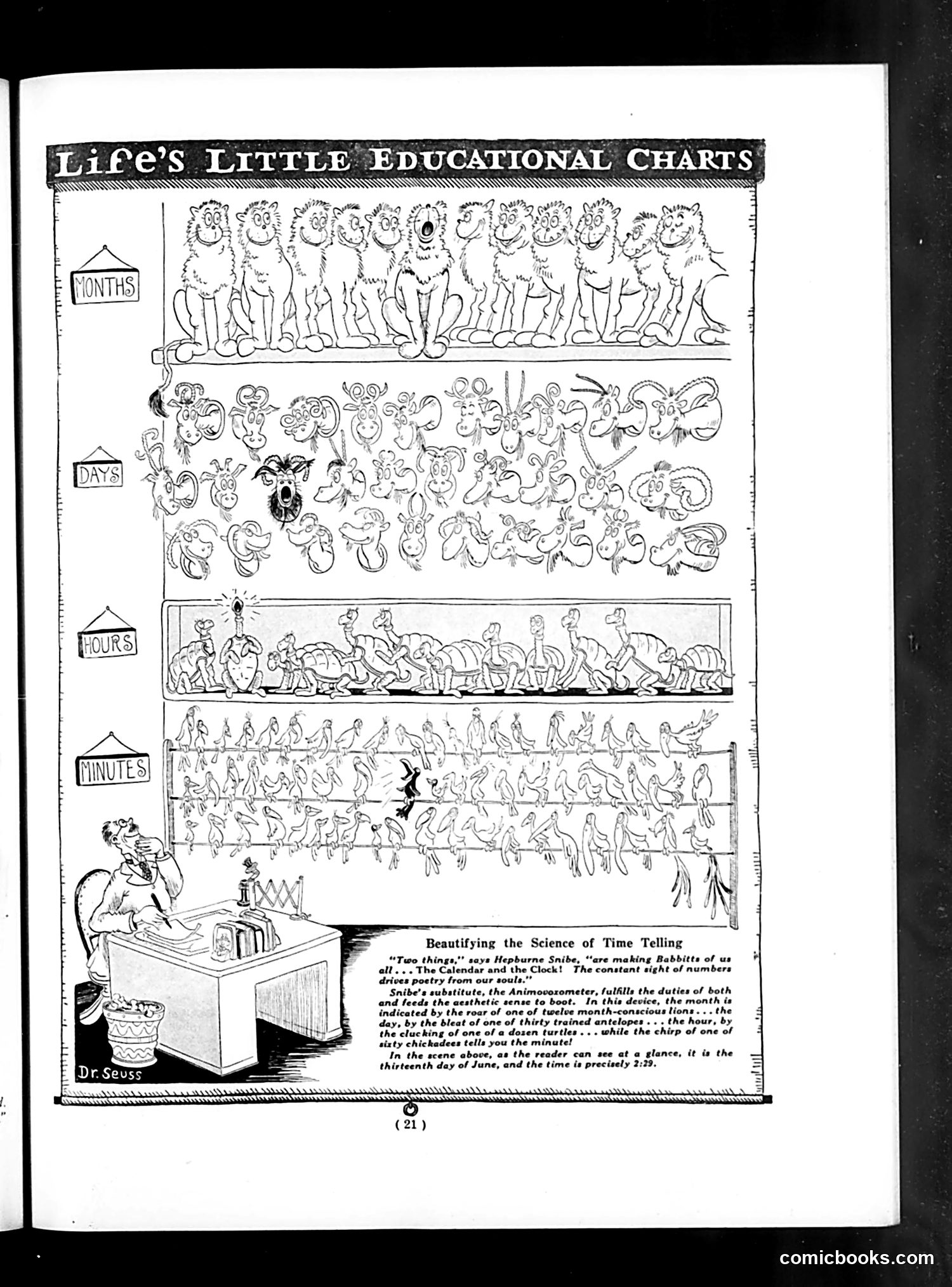
Analysis This is a Dr. Seuss satirical educational chart mocking early 20th-century modernist critiques of industrialization. A character named "Hepburne Snibe" complains that clocks and calendars dehumanize people into "Babbitts" (a reference to Sinclair Lewis's 1922 novel about conformist materialism). Snibe's absurd solution—the "Animovorometer"—replaces numbered time-keeping with animals: lions for months, antelopes for days, turtles for hours, and chickadees for minutes. The joke satirizes both the complaint itself (treating numerical precision as soul-crushing) and the pretentious, impractical alternative offered by aesthetes who reject modern convenience. The proliferating animals in the rows above illustrate this ridiculous system. Seuss uses this to gently mock anti-technology romantics while celebrating the practical efficiency of standard timekeeping—a characteristically witty Seussian inversion of expected sympathy.
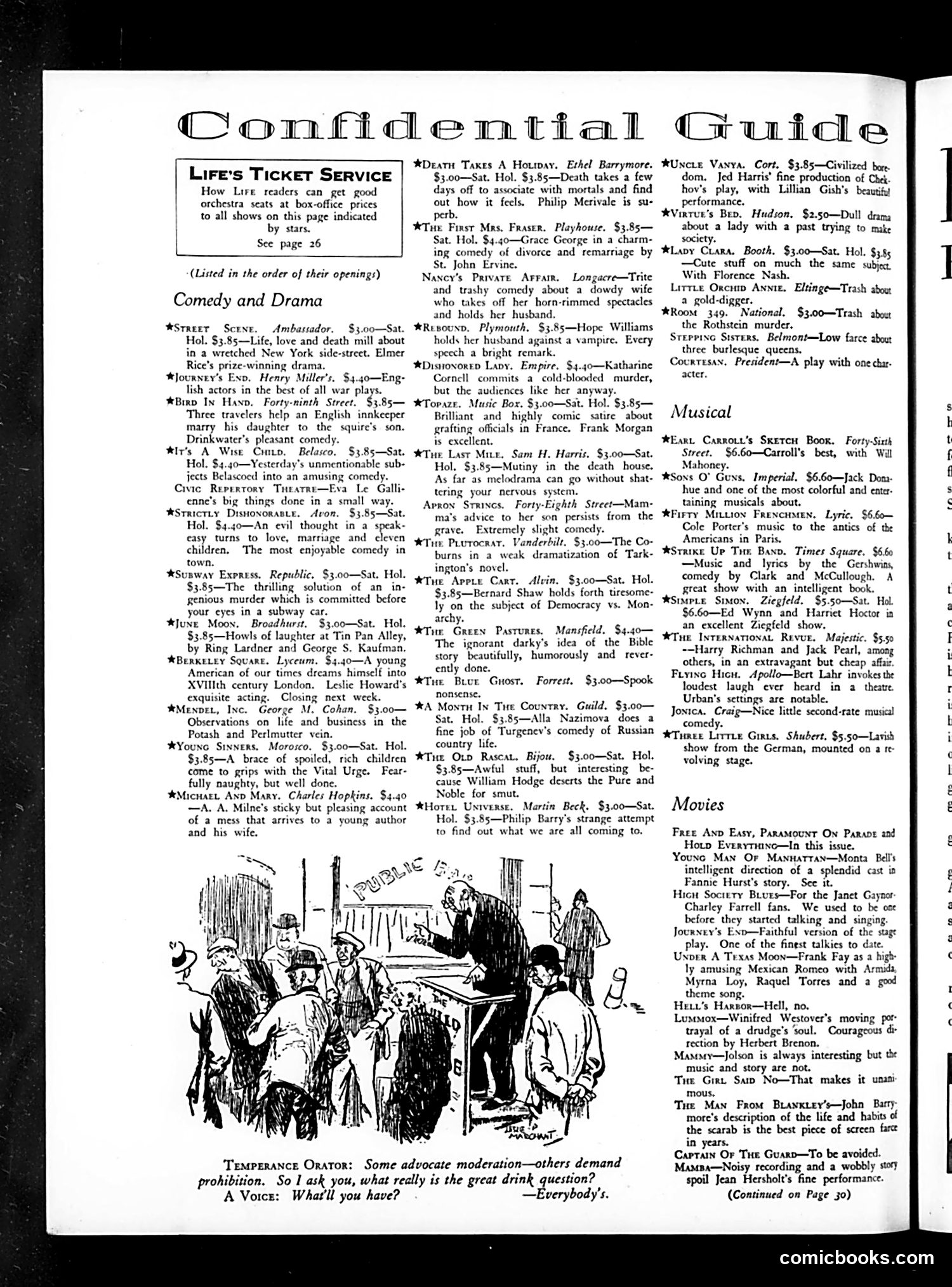
Confidential Guide Cartoon Analysis This page is primarily a theater ticket service and show listings for Life magazine readers, not a political cartoon. The small illustration depicts a crowded public venue (marked "PUBLIC" above the doorway), showing well-dressed patrons and what appears to be an usher or attendant. The cartoon likely illustrates the general concept of theater-going and box-office access that the ticket service provides. The page's satirical content is subtle: the brief commentary at bottom—a "Temperance Orator" debating prohibition while someone asks "what'll you have?"—references the ongoing Prohibition debate of the 1920s-early 1930s. The juxtaposition of temperance advocacy with casual drinking is the joke. The show descriptions themselves contain occasional sarcastic asides ("The ignorant darky's idea of the Bible story" for *Green Pastures*), reflecting period attitudes rather than overt political satire.
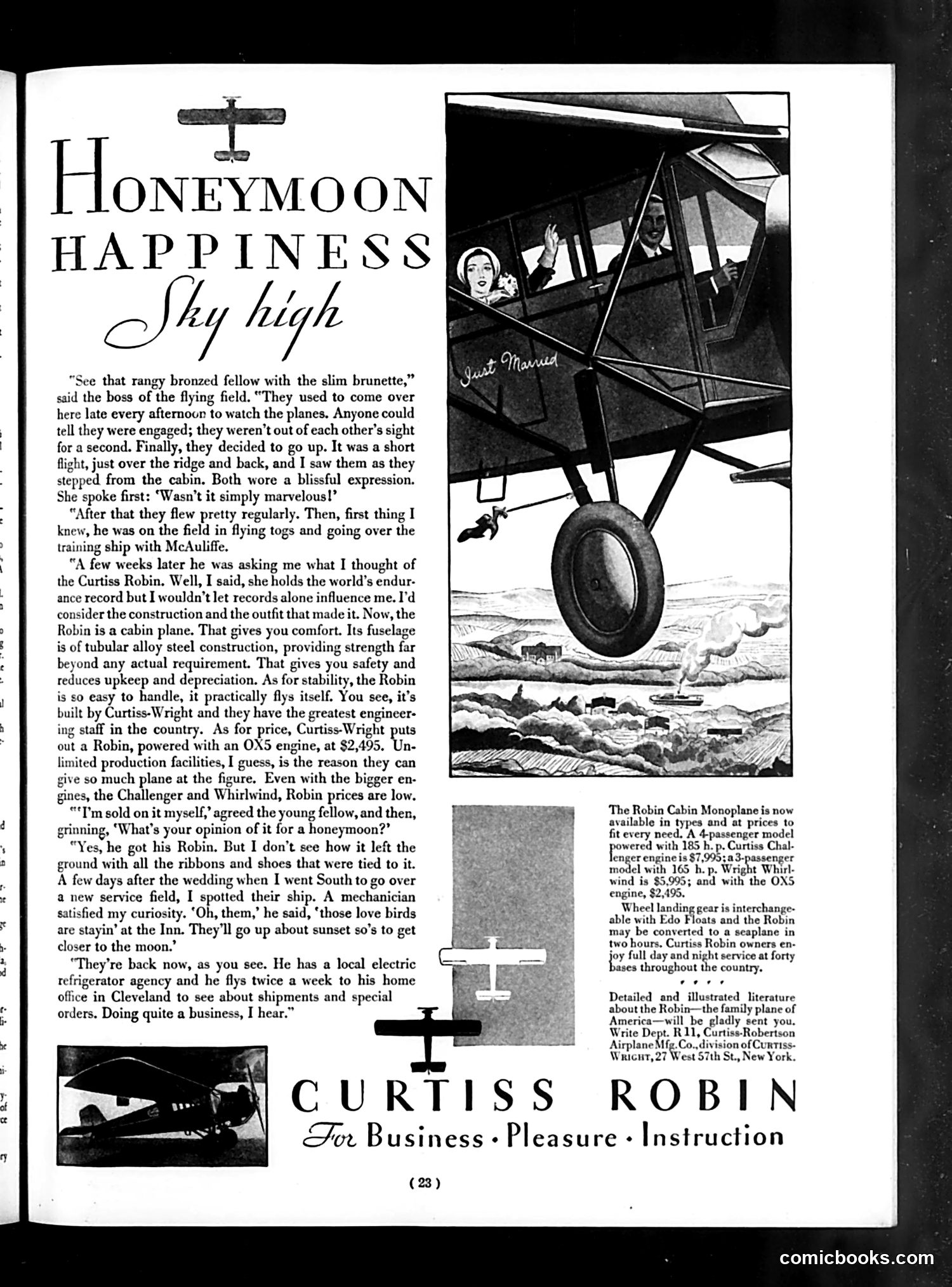
"Honeymoon Happiness Sky High" - Curtiss Robin Advertisement This is primarily a commercial advertisement disguised as editorial content, a common practice in early 20th-century magazines. The "story" describes a young couple who fall in love watching airplanes, take a honeymoon flight in a Curtiss Robin plane, and later the husband purchases one for his refrigerator business—establishing the aircraft as practical for both romance and commerce. The satire is gentle: the humor lies in how the narrative seamlessly pivots from honeymoon romance ("closer to the moon") to business utility, suggesting the Robin serves dual purposes. The couple represents aspirational middle-class consumers—young, attractive, and now successful entrepreneurs. There are no political caricatures. This is lifestyle advertising targeting Depression-era readers with disposable income, promoting personal aviation as attainable luxury and practical investment. The detailed technical specifications and price ($2,495) anchor the fantasy in commercial reality.
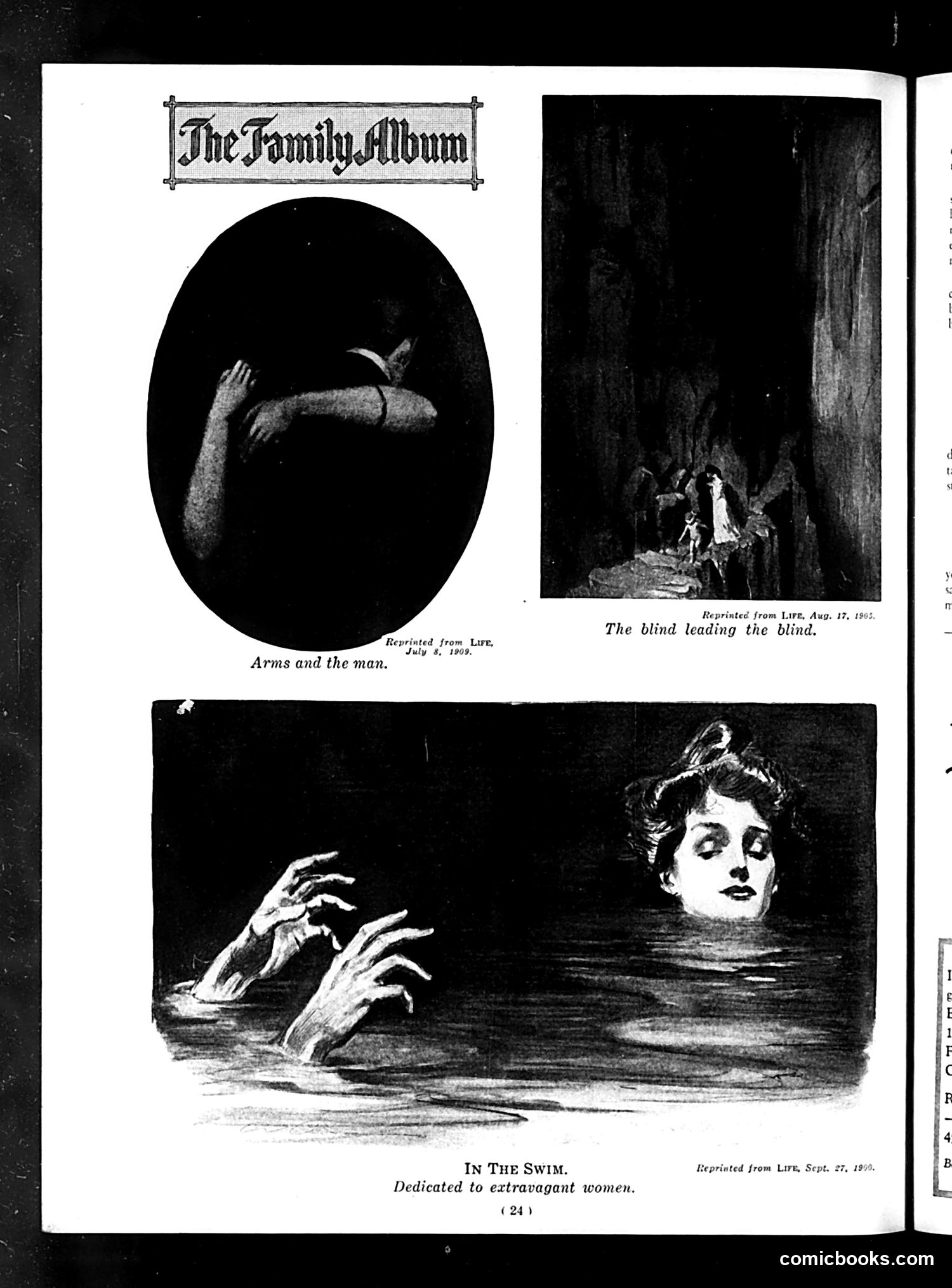
This page from *Life* magazine contains three satirical illustrations, all reprinted from the European magazine *Lire*: 1. "Arms and the Man" (top left): An oval portrait showing embracing arms, likely mocking romantic or militaristic sentimentality. 2. "The Blind Leading the Blind" (top right): A dark scene depicting figures in what appears to be a cave or confined space, referencing the biblical parable about ignorant guidance—possibly satirizing foolish leadership or blind obedience to authority. 3. "In the Swim" (bottom): A woman in water surrounded by grasping hands, captioned "Dedicated to extravagant women." This mocks wealthy or fashionable women as frivolous, using "in the swim" (meaning fashionable) as a visual pun. The page represents *Life*'s reprinting of European satirical art criticizing social pretension, blind conformity, and women's perceived materialism—typical themes of early 20th-century satire.
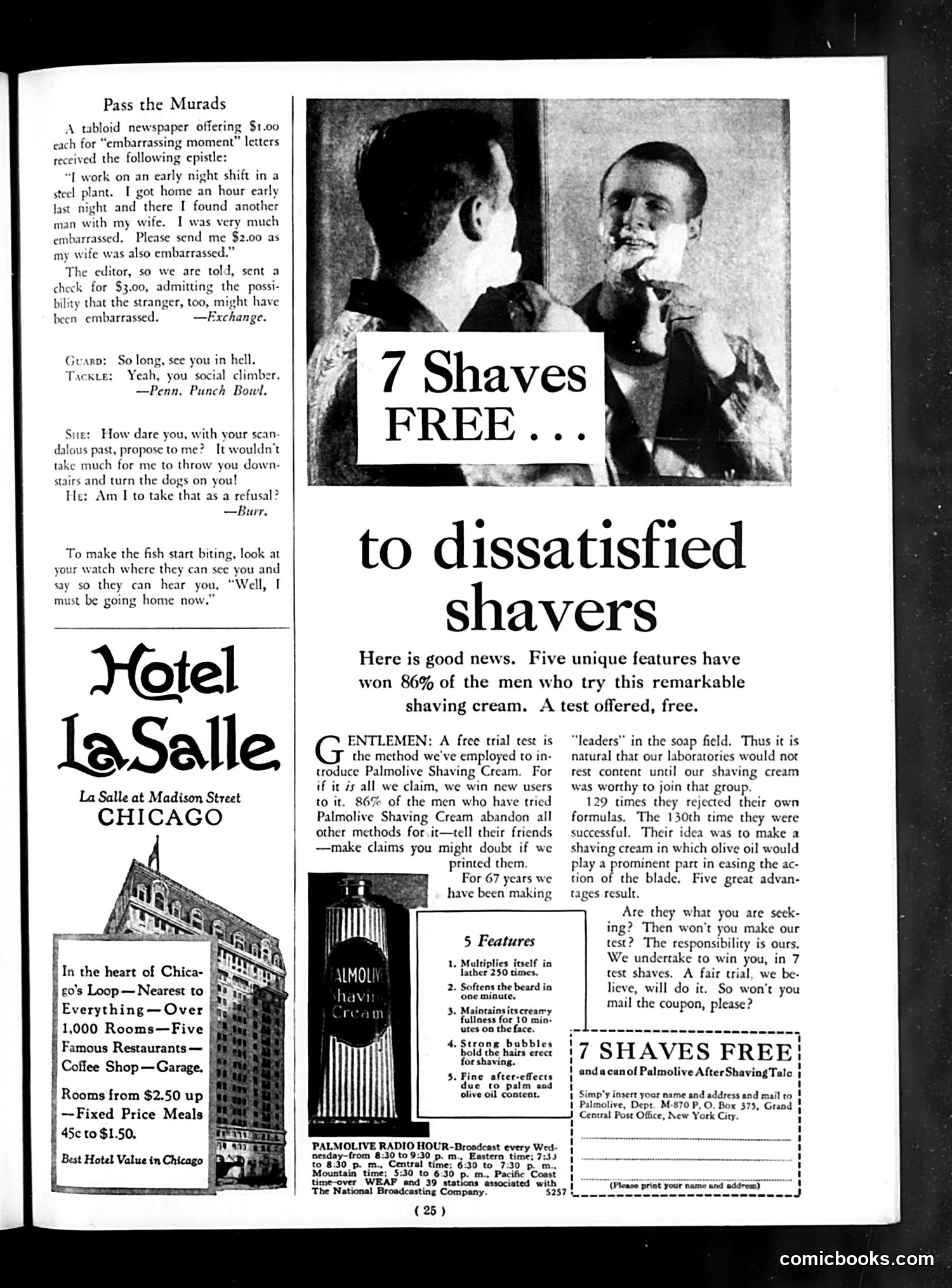
Life Magazine Page Analysis This page is primarily advertising, dominated by a Palmolive Shaving Cream promotion offering "7 Shaves FREE" to dissatisfied shavers. The small satirical section titled "Pass the Murads" at top-left contains three brief joke excerpts from other publications, including one about a man finding another man with his wife—presented as an "embarrassing moment" for a tabloid's contest. The jokes mock social pretension and marital infidelity through crude humor typical of early 20th-century periodicals. The remaining content includes: - A Hotel LaSalle advertisement (Chicago) - A small fishing tip - The main Palmolive ad, which emphasizes the product's superiority through statistics (86% of users abandon competitors) and its olive oil formula The page reflects 1920s-30s advertising practices: bold claims, free trial offers, and direct appeals to consumer anxieties about product effectiveness. No political cartoons or caricatures appear—this is commercial rather than satirical content.
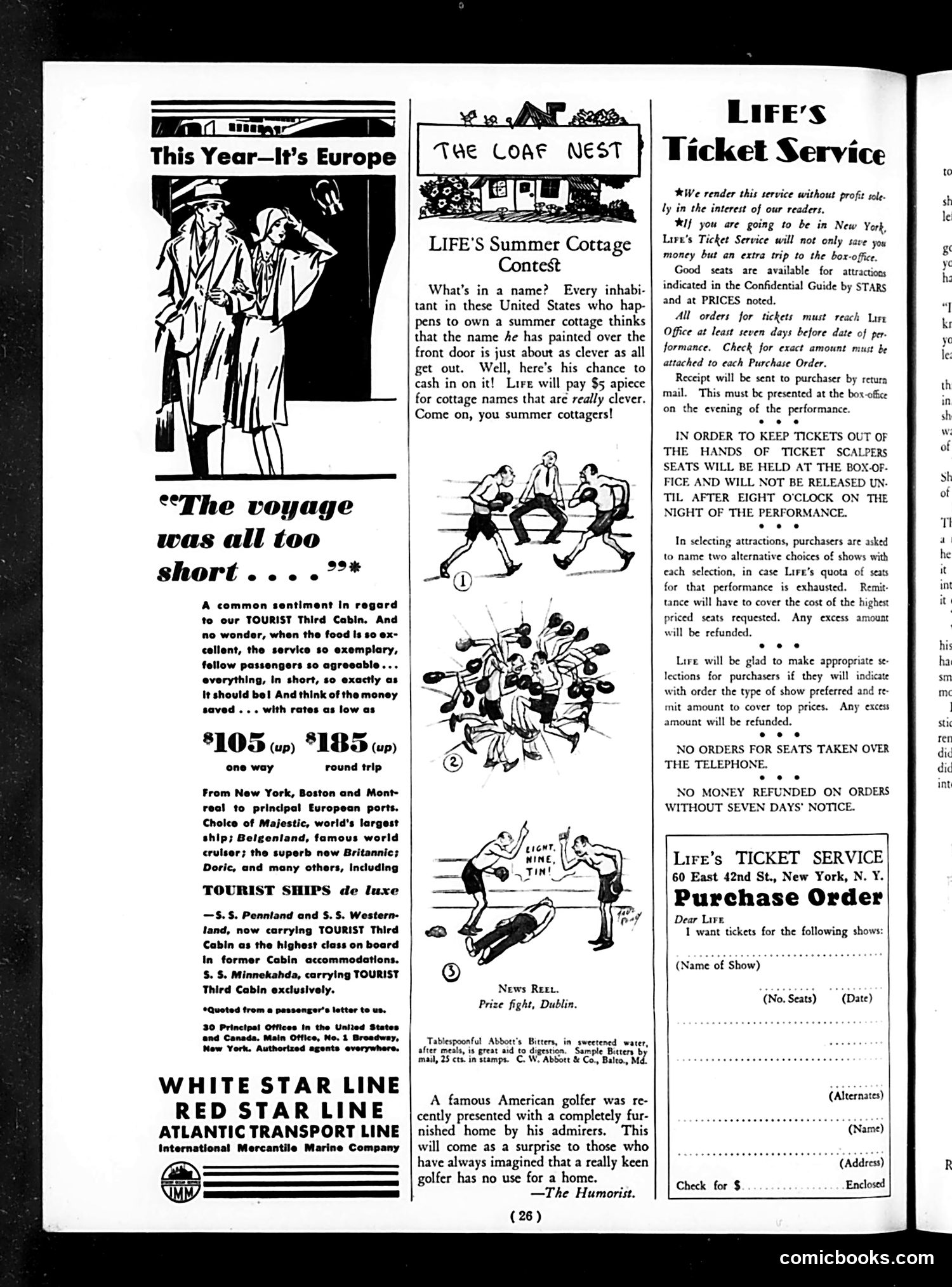
Life Magazine Page Analysis This page is primarily advertising and service content rather than satirical commentary. The left side features a White Star Line ocean voyage advertisement promoting affordable transatlantic travel ($105-$185) on luxury ships. The accompanying illustration shows well-dressed travelers, appealing to middle-class aspirations for European tourism. The center contains "The Loaf Nest," a lighthearted contest inviting summer cottage owners to submit clever names for their properties, offering $5 prizes. Small illustrated vignettes show people playing games. The right side is Life's Ticket Service, a practical ordering system for Broadway and theatrical tickets, emphasizing convenience and anti-scalping measures (seats held until 8 PM performance night, no telephone orders, seven-day refund policy). There is no political satire on this page. The humor is mild and domestic—the golf joke at bottom mocks golfers' supposed obsession with the sport. This appears to be a standard service and advertising page from Life magazine's business operations.
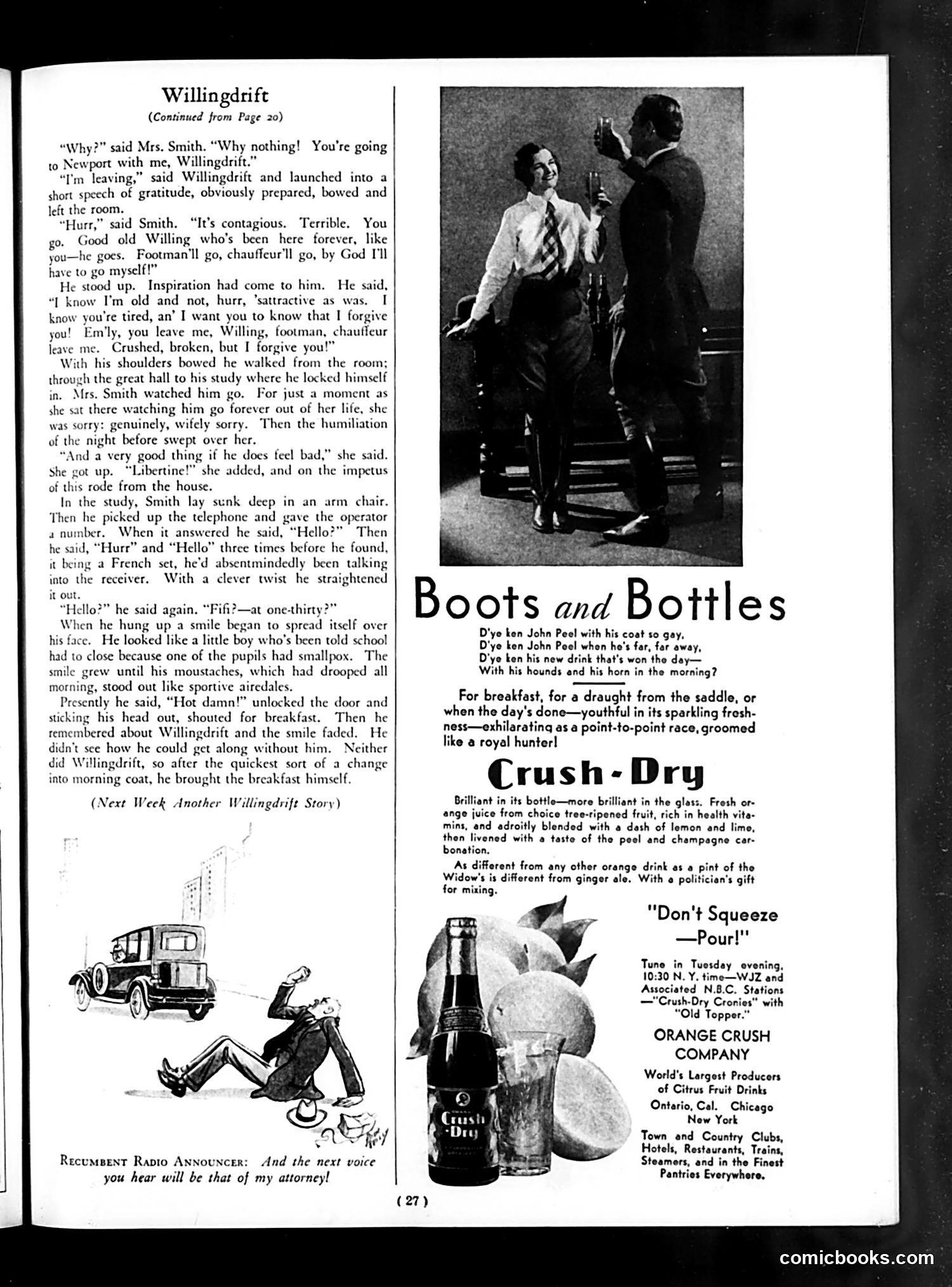
Page Analysis: Life Magazine This page contains two distinct elements: Left side - "Willingdrift" Story: A serialized domestic comedy about a wealthy couple's marital discord. Mr. Smith, feeling abandoned as his wife plans to leave for Newport and his longtime servant Willingdrift departs, experiences a sudden mood shift when he makes a mysterious phone call (apparently to someone named "Fifi"). The humor hinges on his rapid recovery from self-pity to infidelity—he forgets his grievances entirely, though he briefly remembers his servant's departure. The story satirizes upper-class marriage dynamics and male hypocrisy. Right side - "Boots and Bottles" Advertisement: A full-page ad for Crush-Dry orange drink. Features a bottle and citrus fruit imagery, marketing language about "sparkling freshness," and promotion of a radio program ("Old Topper"). The tagline "Don't Squeeze—Pour!" emphasizes the product's ready-made convenience. This represents typical 1920s-era beverage advertising blending lifestyle aspiration with emerging mass media (radio). The juxtaposition of satirical fiction and commercial advertising was standard for Life magazine's format.
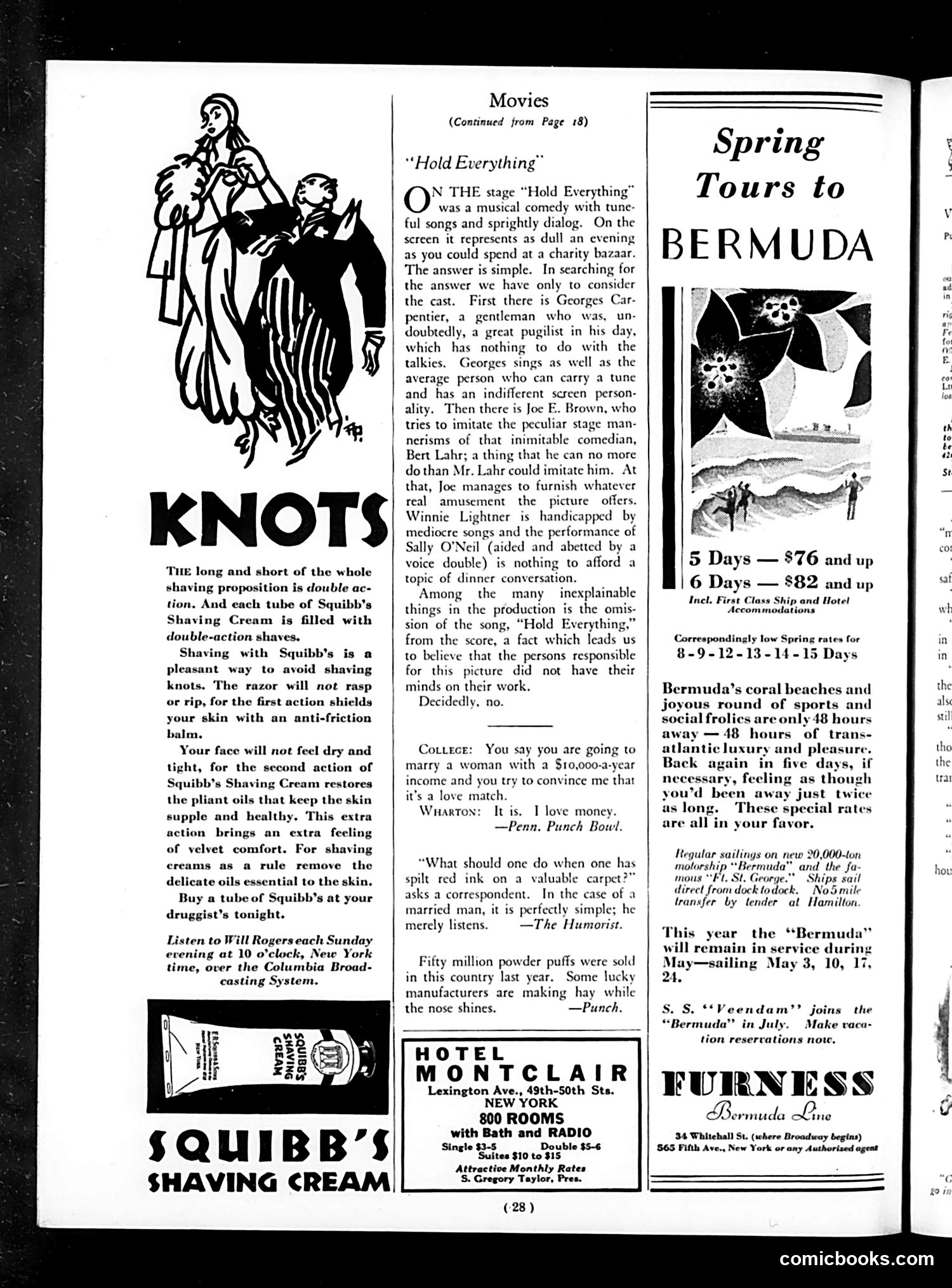
Page Analysis This page is primarily advertising and travel promotion, not editorial content with significant political or social satire. The main visual element is a Squibb's Shaving Cream advertisement featuring a stylized illustration of a man and woman (the "Knots" headline references tangled facial hair). The ad emphasizes the product's "double-action" formula—a marketing pitch common in early 20th-century advertisements. The page also contains a brief movie review of "Hold Everything" (mildly critical) and several short humorous quips typical of *Life* magazine's lighter fare, including jokes about marriage and money, spilled ink, and powder puffs—none carrying deeper political meaning. The substantial right-hand content promotes spring cruises to Bermuda and advertises the Hotel Montclair in New York. In sum: This appears to be a standard magazine page mixing entertainment reviews with advertisements—not a page designed to communicate satire or political commentary.
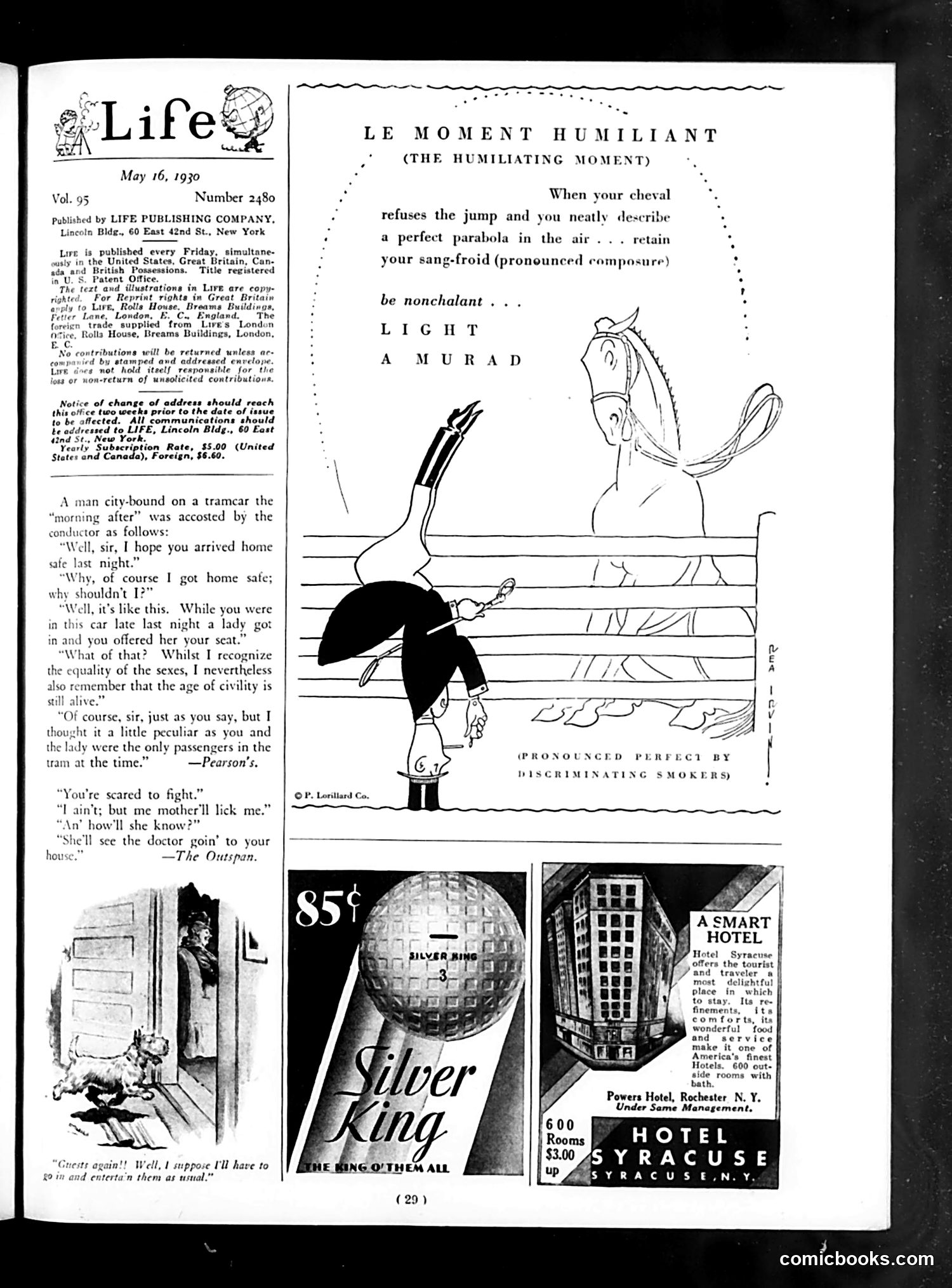
Content Analysis This page combines humor, advertising, and a satirical cartoon about equestrian embarrassment. Main Cartoon: "Le Moment Humiliant" (The Humiliating Moment) depicts a horse-rider being thrown over a jump in a perfect arc—literally describing a parabola. The satire mocks the pretense of maintaining composure ("sang-froid") after such a humbling fall. The French title and vocabulary suggest this targets upper-class equestrian culture and its affected dignity. Supporting Content: - Comic anecdotes about social awkwardness (a man refusing his seat to a woman on a tram, dismissing equality; a child worried about maternal punishment) - Advertisements for Silver King cigars (85¢) and Hotel Syracuse The page exemplifies 1930s *Life* magazine's style: mixing class-conscious satire with everyday humor and commercial messaging. The equestrian cartoon particularly mocks wealthy pretension—the irony that one cannot maintain dignified composure while literally flying through the air.
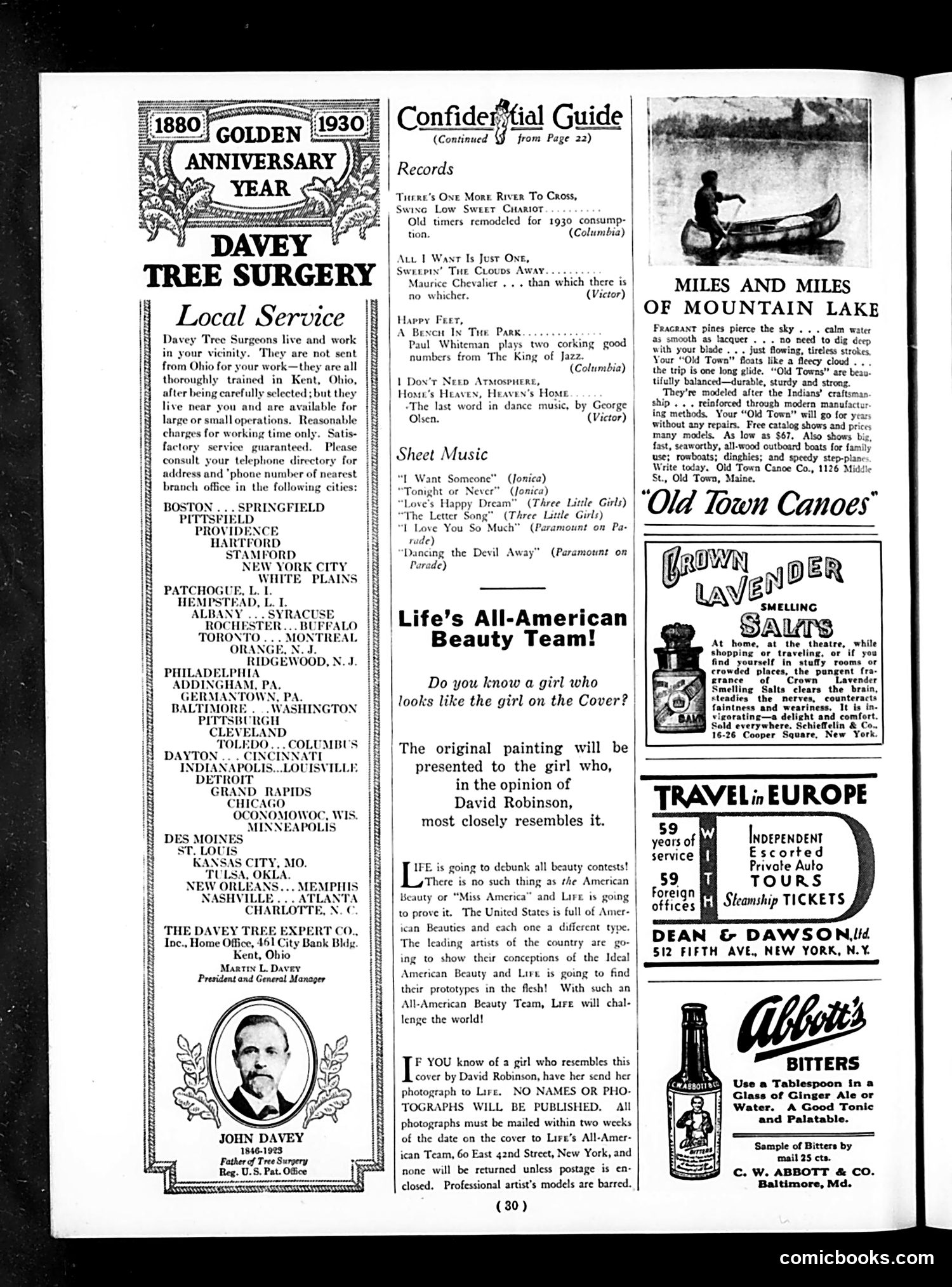
Life Magazine Page Analysis (circa 1930) This page is primarily advertising and announcements, not political satire. The main content includes: Notable Features: 1. Davey Tree Surgery: A local service advertisement emphasizing that trained surgeons work from Ohio branches rather than being sent from afar—a competitive positioning message. 2. Life's "All-American Beauty Team": A contest announcement where Life magazine claims to "debunk all beauty contests" by arguing there's no single "American Beauty" type. Instead, they're commissioning artists to paint ideal American beauties and find real girls matching them. The original painting goes to the girl most resembling it (judged by David Robinson). This reflects 1930s democratization of beauty standards against rigid "Miss America" pageant culture. 3. Various advertisements: Crown Lavender Smelling Salts, Old Town Canoes, Abbott's Bitters, travel services—typical period advertising. The satire is gentle: Life mocks beauty pageants as artificial while running their own beauty contest, which is ironically self-aware.
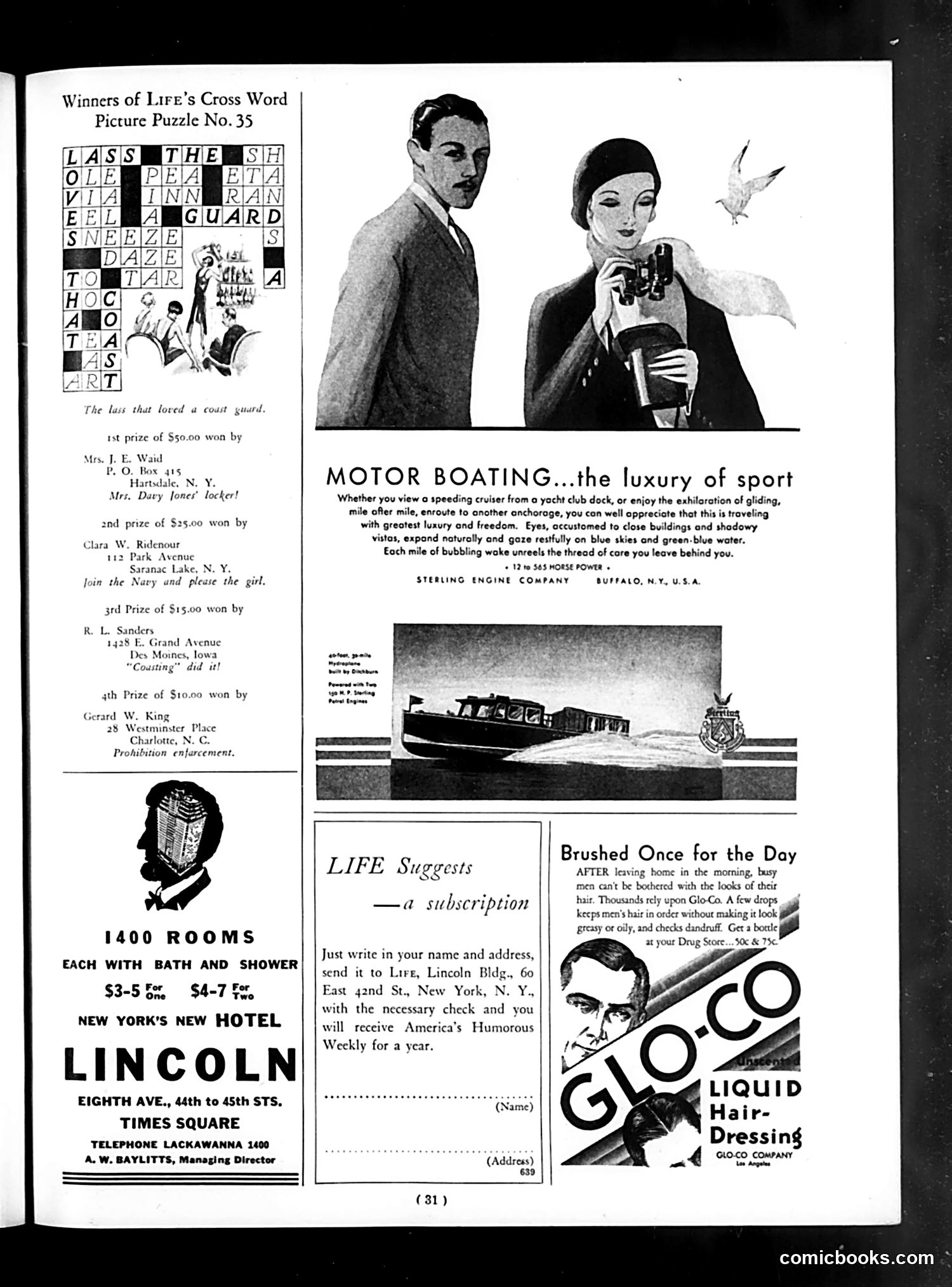
Life Magazine Page Analysis This page is primarily advertising and puzzle results, not political satire. The crossword puzzle winners section references naval/maritime themes ("The lass that loved a coast guard," "Davy Jones' locker," "Join the Navy and please the girl"), which were popular cultural touchstones of the era. The main content features luxury lifestyle advertisements: motor boating as an exclusive sport, the Lincoln Hotel in Times Square, and Glo-Co hair dressing product. These ads target affluent readers seeking leisure and grooming products—typical of Life's satirical magazine's wealthy audience during what appears to be the 1920s-30s. One puzzle answer references "Prohibition enforcement," which indicates this predates or discusses the Prohibition era (1920-1933), but this is incidental rather than the page's focus. The page is essentially a commercial vehicle dressed in entertainment packaging—typical of early 20th-century magazine composition.
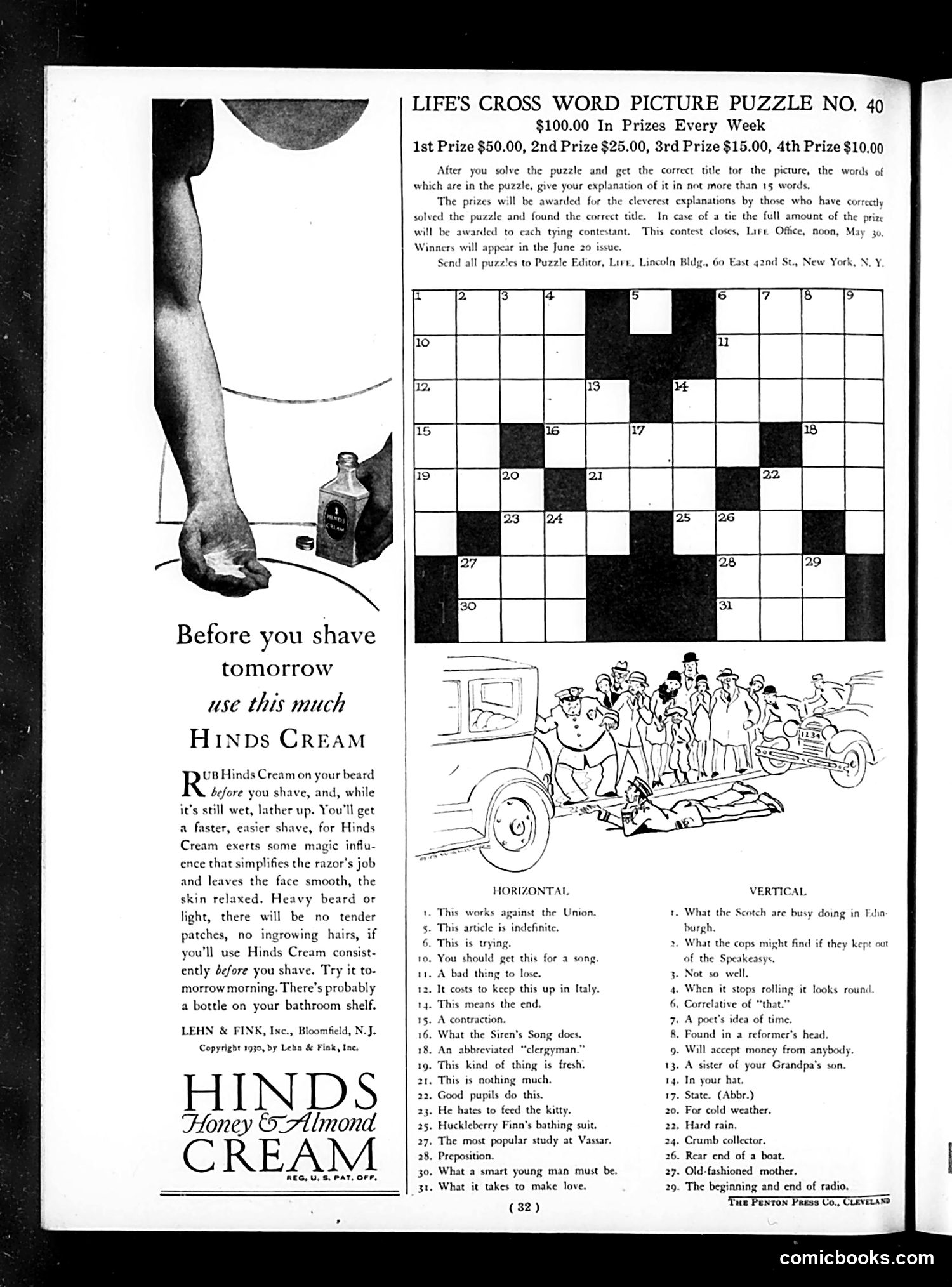
Life Magazine Page Analysis (circa 1930) This page is primarily advertising and puzzle content, not political satire. The main visual is a Hinds Cream shaving product advertisement featuring a detailed illustration of a man's leg and foot with a shaving brush and cream jar—emphasizing the product's use before shaving. Below is Life's Crossword Picture Puzzle No. 40, a reader-participation contest offering $100 in weekly prizes. Solvers must complete a crossword puzzle, identify the resulting picture's title, and explain it in 15 words or fewer. The clues reference 1930s culture: Prohibition ("Speakeasys"), Vassar College, Huckleberry Finn, and Italian fascism ("works against the Union" likely references Mussolini). The puzzle includes a cartoon illustration showing what appears to be a chaotic street scene with multiple figures and vehicles, though the exact subject is unclear without solving the puzzle. This reflects Life's dual role as both satirical magazine and entertainment publication with reader contests.
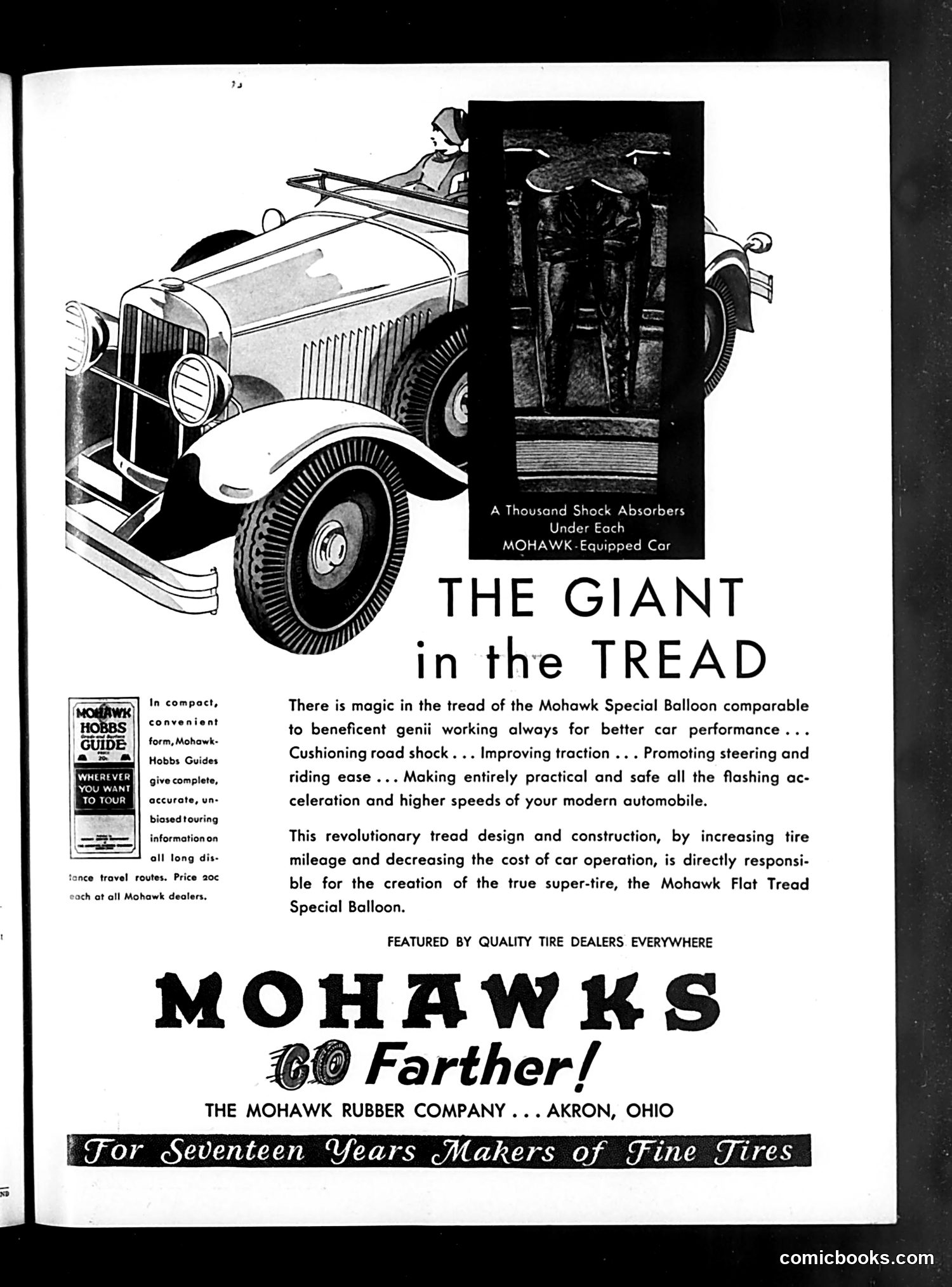
Analysis This is a tire advertisement, not political satire or editorial cartoon. It promotes Mohawk brand tires, specifically the "Special Balloon" model with a "Flat Tread" design. Key elements: - Large illustration of a 1920s automobile with a driver - Photograph inset showing shock absorbers ("A Thousand Shock Absorbers Under Each MOHAWK-Equipped Car") - Headline "THE GIANT in the TREAD" plays on the product name The pitch: The ad claims revolutionary tread design improves tire mileage, reduces car operating costs, and enhances performance—cushioning road shock, improving traction, and enabling safer high speeds. Historical context: This appears from the era when "balloon tires" (low-pressure, cushioned tires) were a recent automotive innovation. The Mohawk Rubber Company (Akron, Ohio) positions itself as a quality manufacturer with 17 years of tire-making experience. This is straightforward commercial advertising with no satirical content.
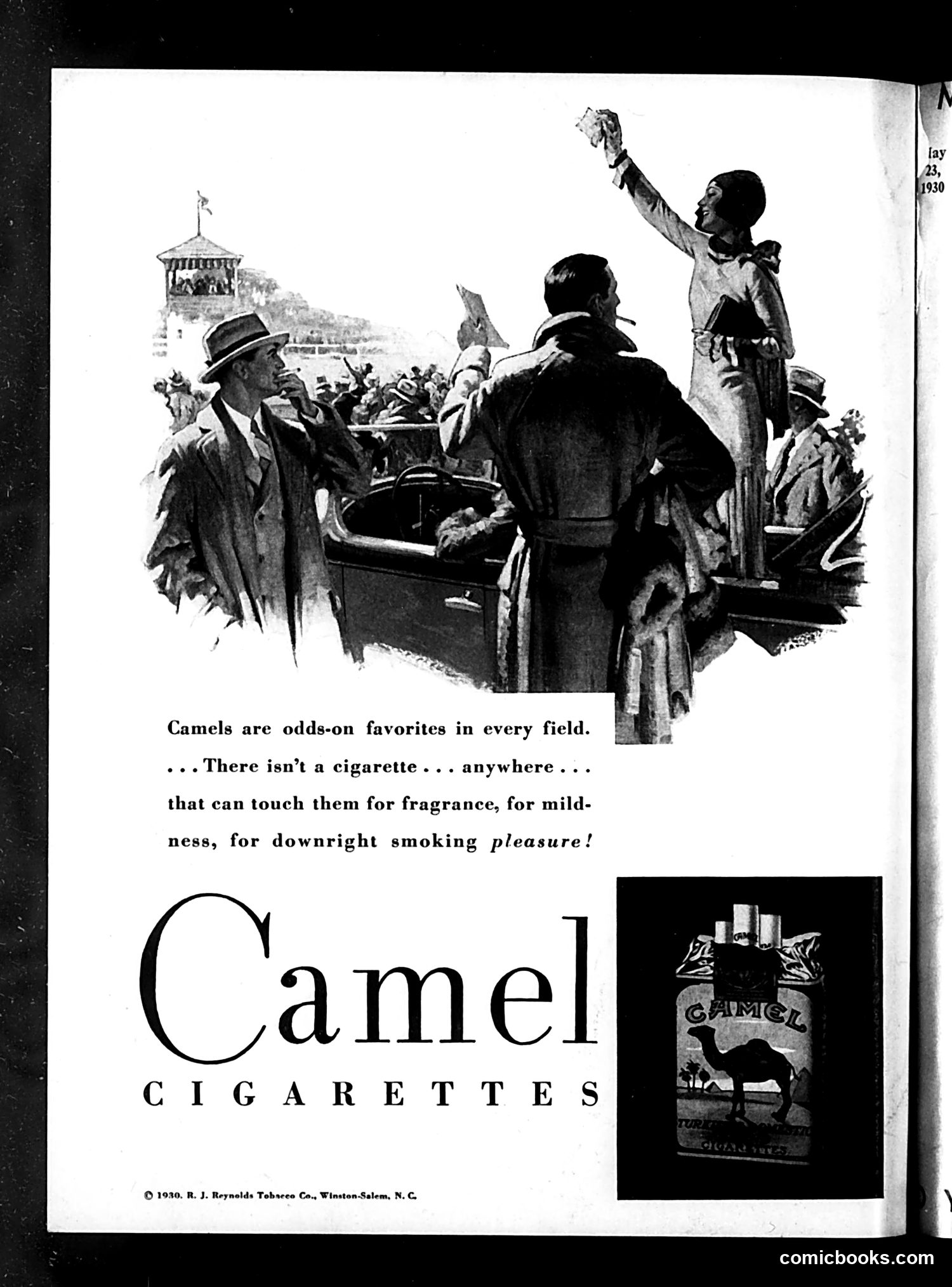
Analysis This is primarily a cigarette advertisement, not satire or political commentary. The page depicts a public scene—possibly at a racetrack or sporting event—with well-dressed men in 1920s attire gathered around a car. One man raises his arm triumphantly, likely celebrating a win. The ad uses the phrase "odds-on favorites in every field" as a double meaning: it references both horse racing (visible in the background tower structure) and Camel cigarettes' claimed superiority. The imagery associates smoking with success, leisure, and masculine celebration—typical advertising strategy of the era. The Camel logo with its distinctive camel design appears in the lower right. This is straightforward product promotion from R.J. Reynolds, not editorial content, satire, or political cartoon. It reflects 1920s attitudes toward tobacco marketing, before health warnings existed.