life
Life — June 13, 1930
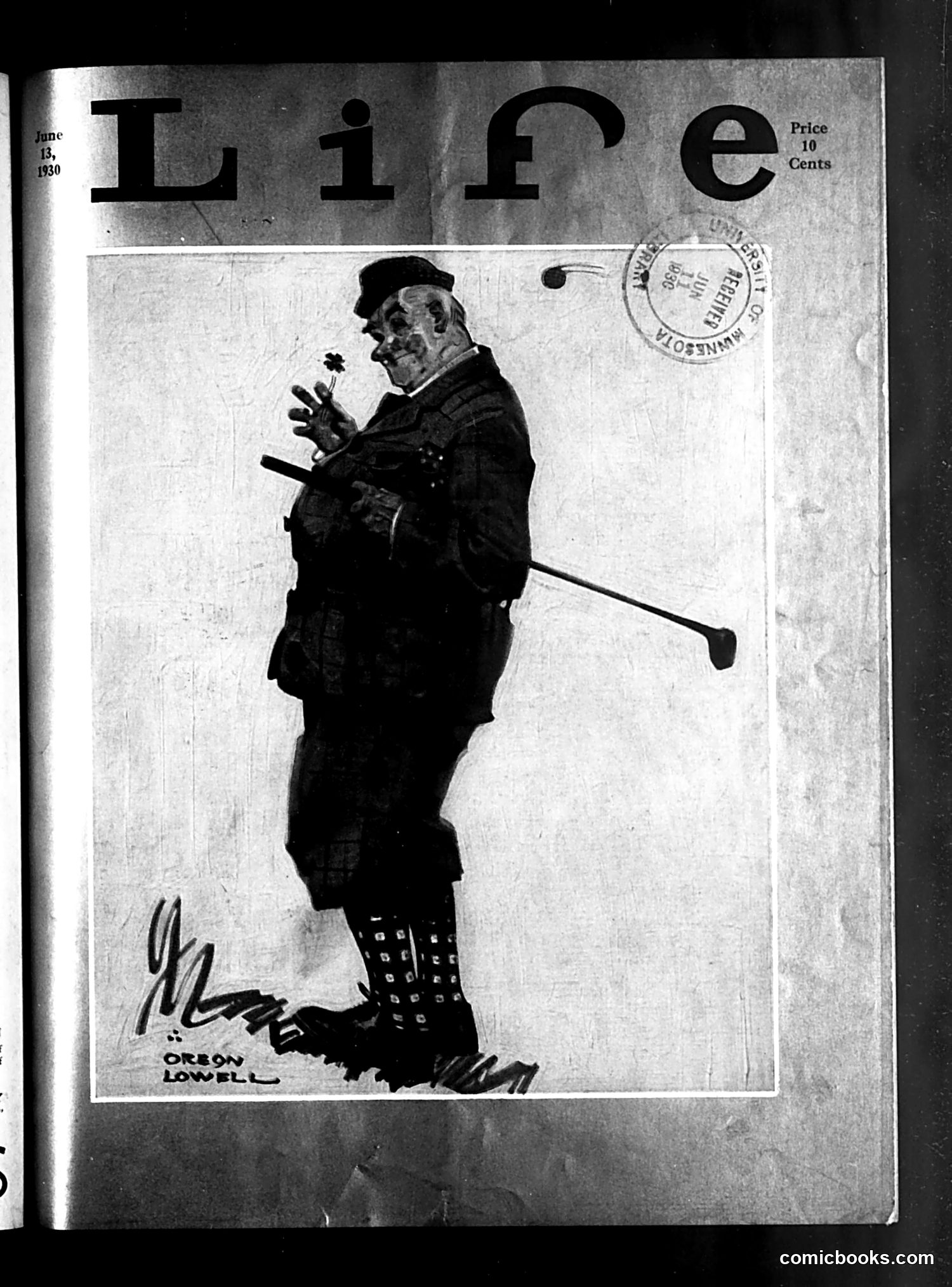
Life Magazine Cover Analysis, June 13, 1930 This is a cover illustration by Cesare Lowell depicting an elderly golfer in formal attire (jacket, knickers, checkered socks) mid-swing with a golf club. He appears distressed or startled, with flowers or some object in his other hand. Without additional context from the magazine's interior, the specific identity of this figure remains unclear. However, the cartoon likely satirizes a prominent public figure of 1930—possibly a politician or wealthy businessman—through the juxtaposition of formal dignity with an undignified moment or circumstance on the golf course. Golf was commonly used in satire to represent leisure, wealth, and upper-class pursuits during this era, making it an ideal vehicle for social or political commentary.
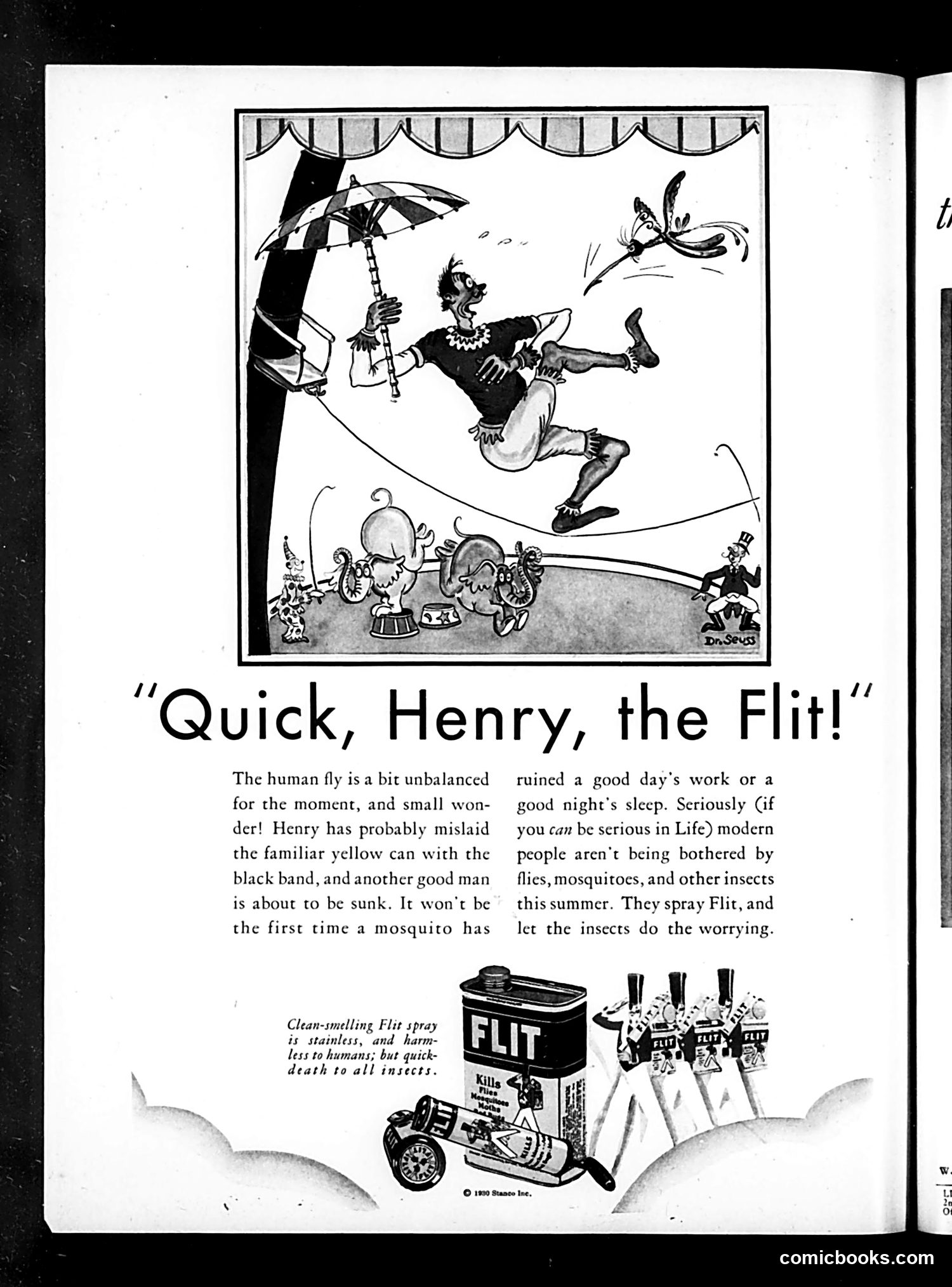
Analysis This is a Flit insecticide advertisement disguised as satirical humor, not political commentary. The cartoon depicts a circus performer ("Henry") doing an acrobatic act while holding a striped umbrella, losing control as insects swarm below. The joke is visual slapstick: Henry has confused a yellow can with a black-banded one—presumably mixing up Flit spray with something else, causing chaos. The advertisement's message is straightforward: Flit spray solves a genuine summer problem. Rather than endure mosquitoes and flies ruining activities (work, sleep, outdoor events), consumers should use Flit, which is described as "clean-smelling" and "harmless to humans" while being lethal to insects. This reflects 1930s-era advertising that used humor and cartoon entertainment to promote consumer products in magazines.
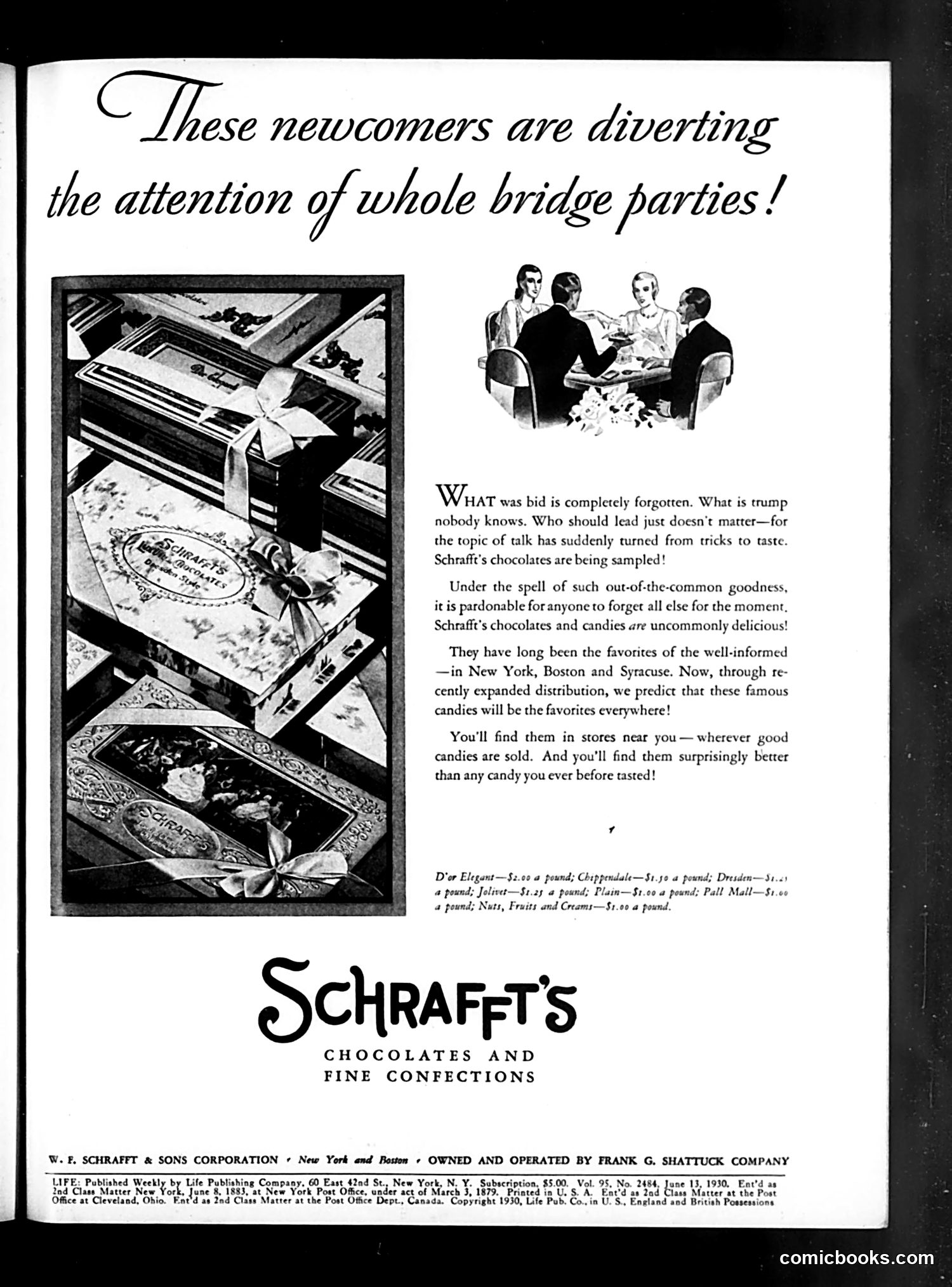
Analysis This is primarily a Schrafft's chocolate advertisement, not political satire. The page shows luxury candy boxes and depicts a bridge party (a popular card game social gathering) being disrupted by the introduction of Schrafft's chocolates. The humor is gentle and commercial: the ad claims these "newcomers" are so delicious they completely distract bridge players from their game—"What was bid is completely forgotten." The joke is that Schrafft's candies are irresistibly good, causing social disruption at genteel gatherings. The ad emphasizes that Schrafft's were previously available only in New York, Boston, and Syracuse, but expanded distribution now makes them available nationwide. This reflects early-to-mid 20th-century consumer culture, targeting affluent audiences who played bridge and could afford premium chocolates.
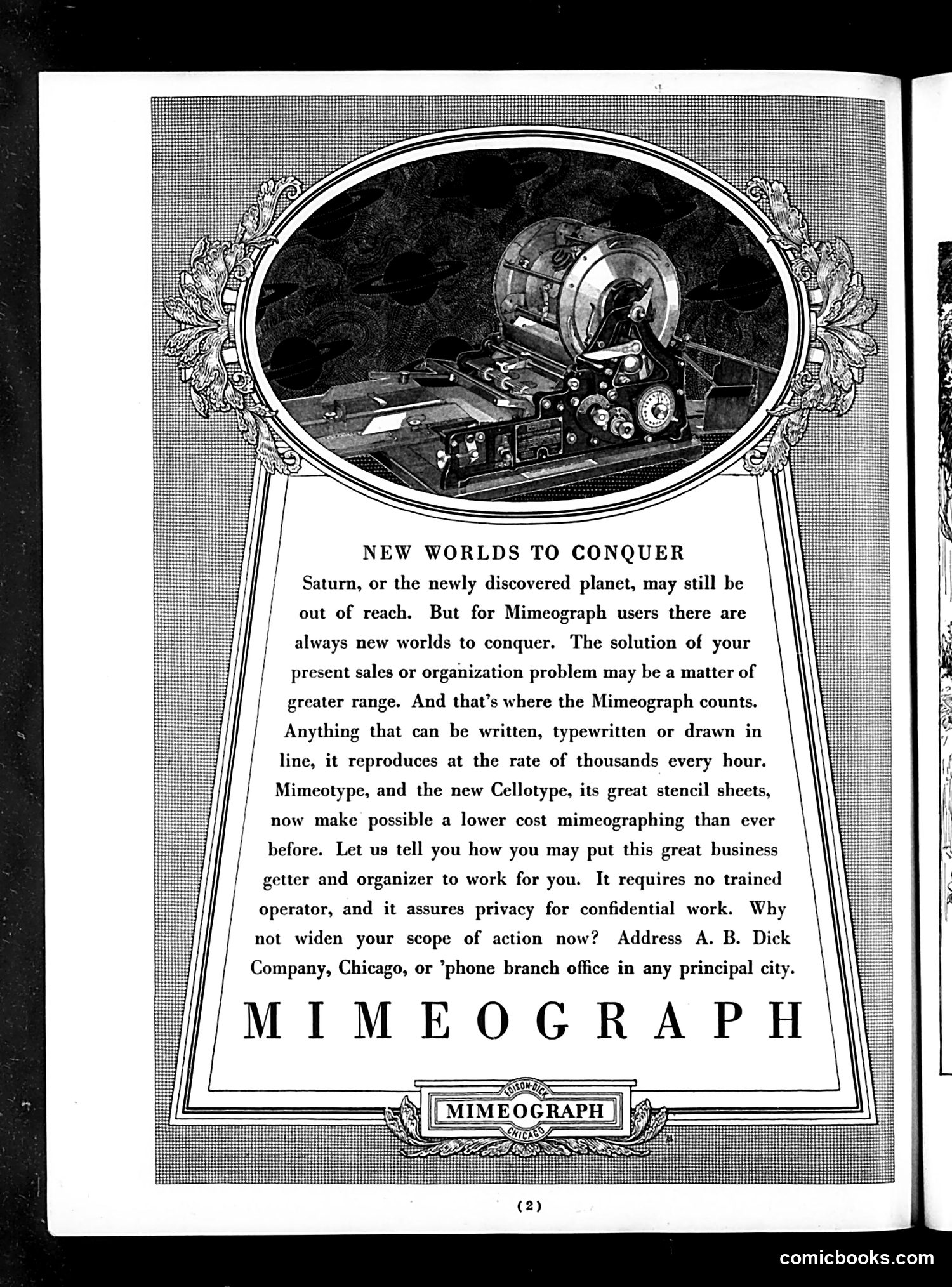
Analysis This is an advertisement for the Mimeograph, a duplicating machine. The ad uses satirical language to sell the device to businesses. The heading "NEW WORLDS TO CONQUER" references astronomical discovery (mentioning Saturn), creating a metaphor: just as explorers seek new planets, businesses should "conquer" new organizational challenges using the Mimeograph. The image shows the machine itself—an early 20th-century copying device capable of reproducing written, typewritten, or drawn documents at high speed ("thousands every hour"). The satire is gentle: the ad suggests the Mimeograph solves business problems as dramatically as discovering new worlds. It emphasizes practical benefits—no trained operators needed, confidentiality, lower costs—while maintaining grandiose language about "widening your scope of action." This is straightforward product advertising using hyperbolic rhetoric common to the era.
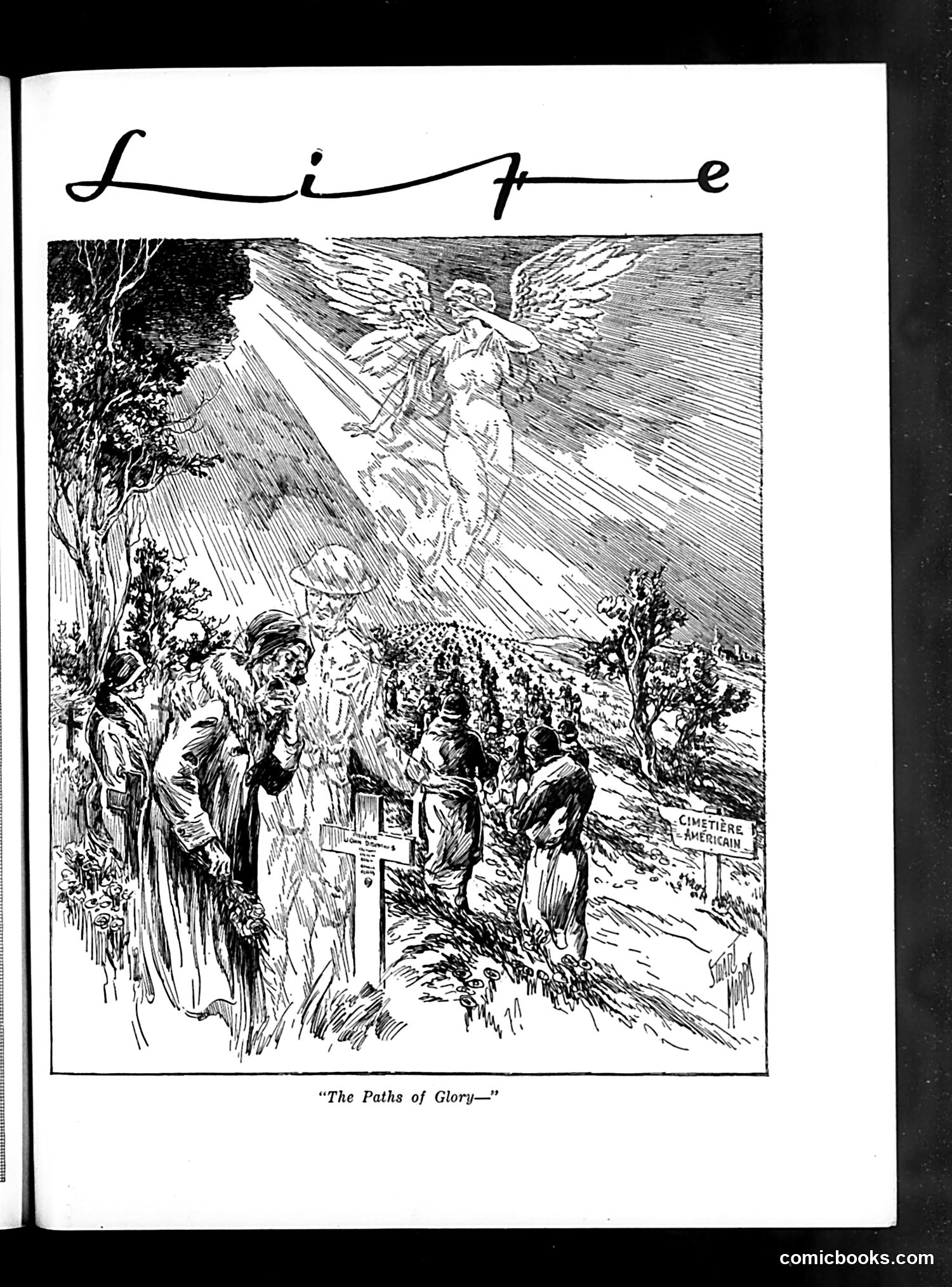
"The Paths of Glory" This illustration depicts a cemetery scene labeled "Cimetière Américain" (American Cemetery), showing mourners visiting graves. An angel hovers above, radiating divine light downward. The title "The Paths of Glory" appears to reference the famous line from Thomas Gray's poem about how "the paths of glory lead but to the grave." The satire likely comments on American casualties during World War I, contrasting the grandiose rhetoric of military glory with the sobering reality of death and mourning in a foreign cemetery. The celestial imagery suggests attempted spiritual consolation for the fallen, while the earthly scene emphasizes loss. This reflects anti-war sentiment or critique of war's human cost prevalent in American publications during the WWI era.
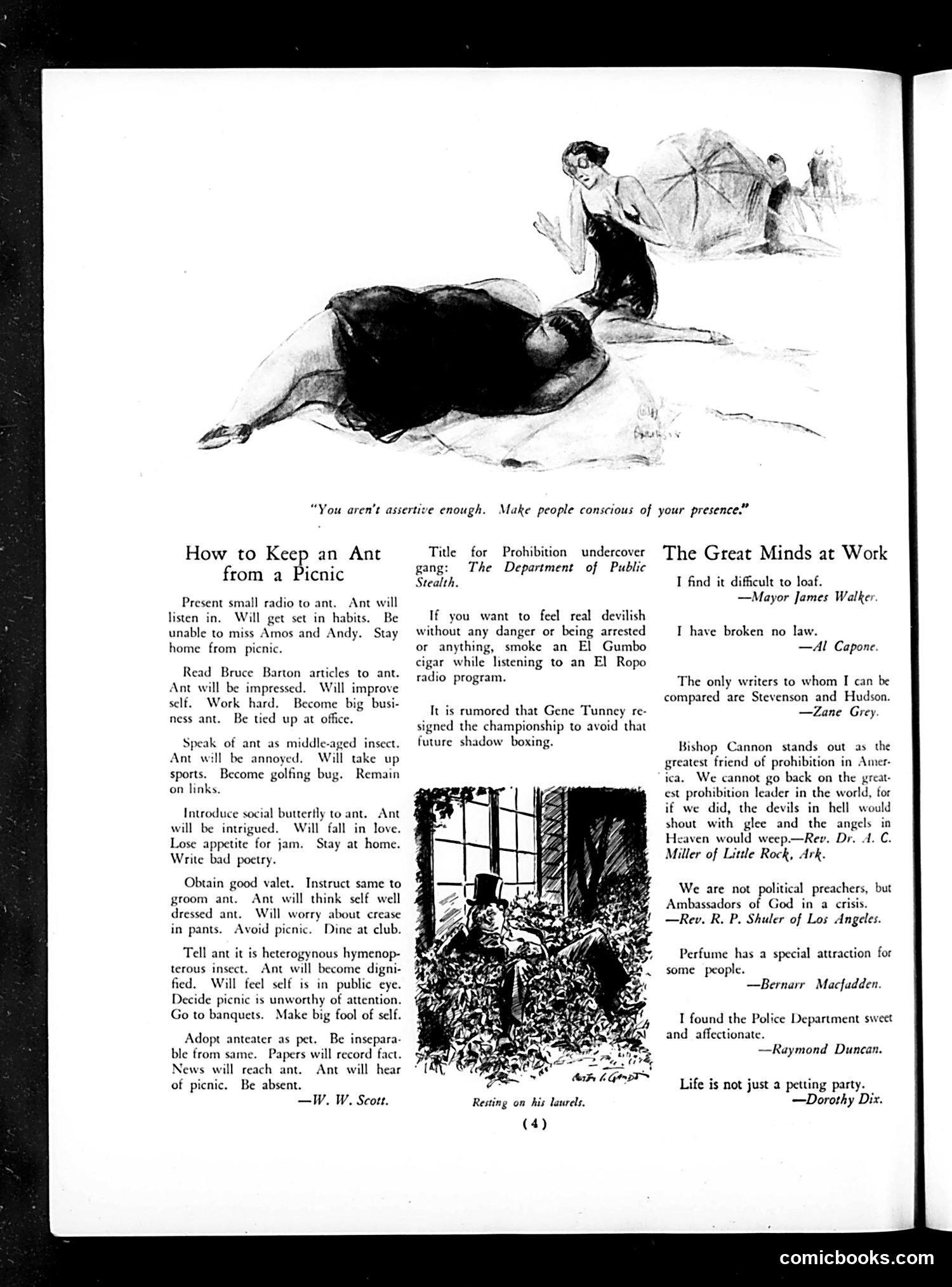
Prohibition-Era Satire This page mocks Prohibition (the ban on alcohol, 1920-1933) through absurdist humor. The top cartoon shows a woman using an umbrella while a man lies sprawled on the beach—illustrating the satirical advice column "How to Keep an Ant from a Picnic," which uses ant metaphors as thinly veiled references to Prohibition enforcement. The column jokingly suggests ways to annoy an ant (i.e., a Prohibition agent/cop), implying readers should make law enforcement's job difficult. It's dark satire: adopt an anteater as a pet, tell the ant it's "heterogenous," stay away from picnics entirely. The right side features quotes from famous figures praising Prohibition, likely presented ironically to contrast with the page's mocking tone. The overall message: Prohibition is absurd and worth circumventing.
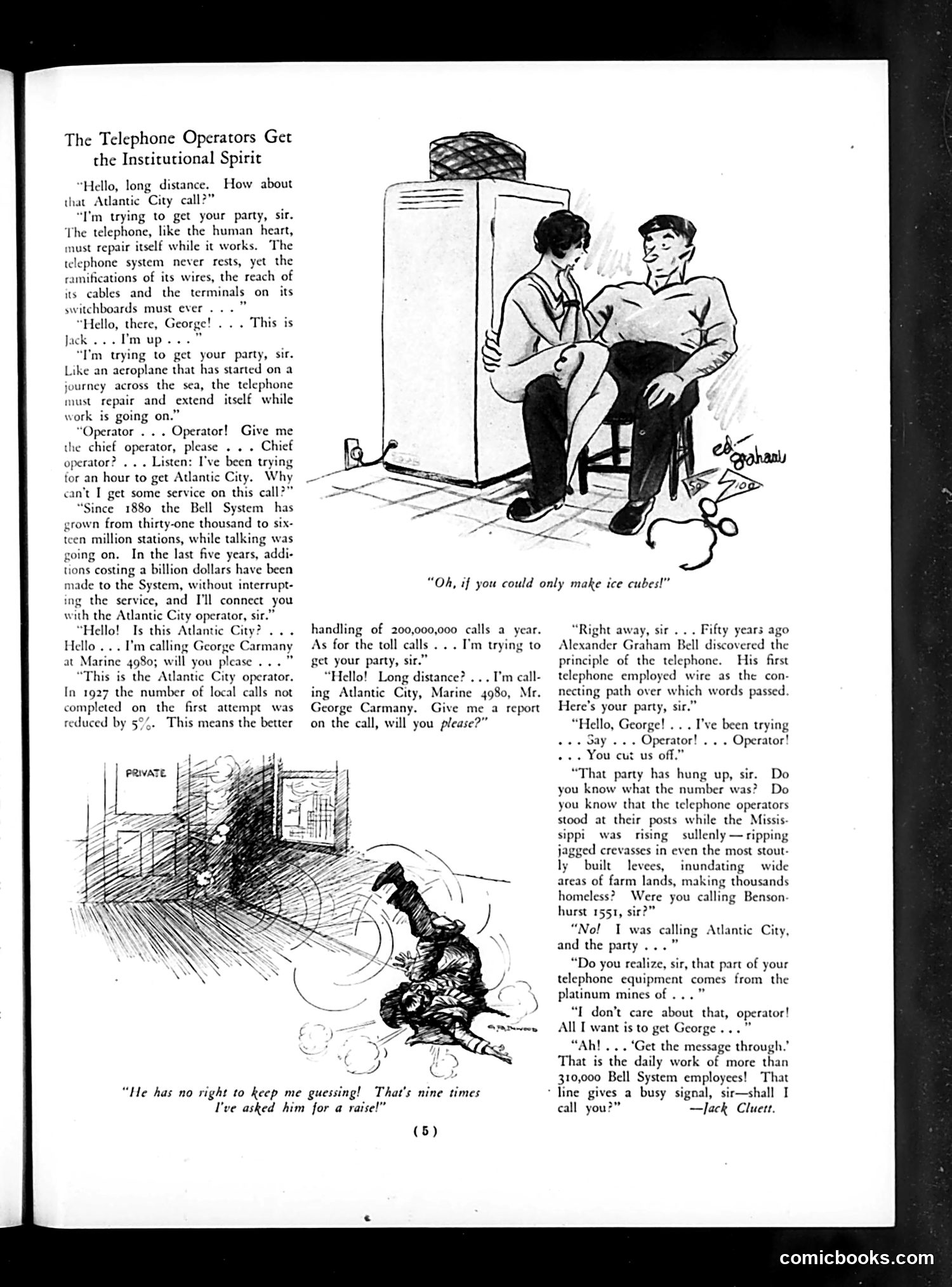
"The Telephone Operators Get the Instructional Spirit" This satirical piece critiques the Bell System's customer service training and operational demands around 1925. The text presents fictional conversations between increasingly frustrated callers and operators, highlighting the gap between corporate ideals and reality. The top cartoon shows a couple relaxing while an operator works, captioned "Oh, if you could only make ice cubes!" — mocking how operators were expected to perform miracles beyond their actual capabilities. The bottom cartoon depicts an operator drowning in paperwork and chaos, captioned "He has no right to keep me guessing! That's nine times I've asked him for a raise!" — sardonically illustrating operator frustrations with wages and working conditions despite corporate demands for ever-better service and call handling efficiency.
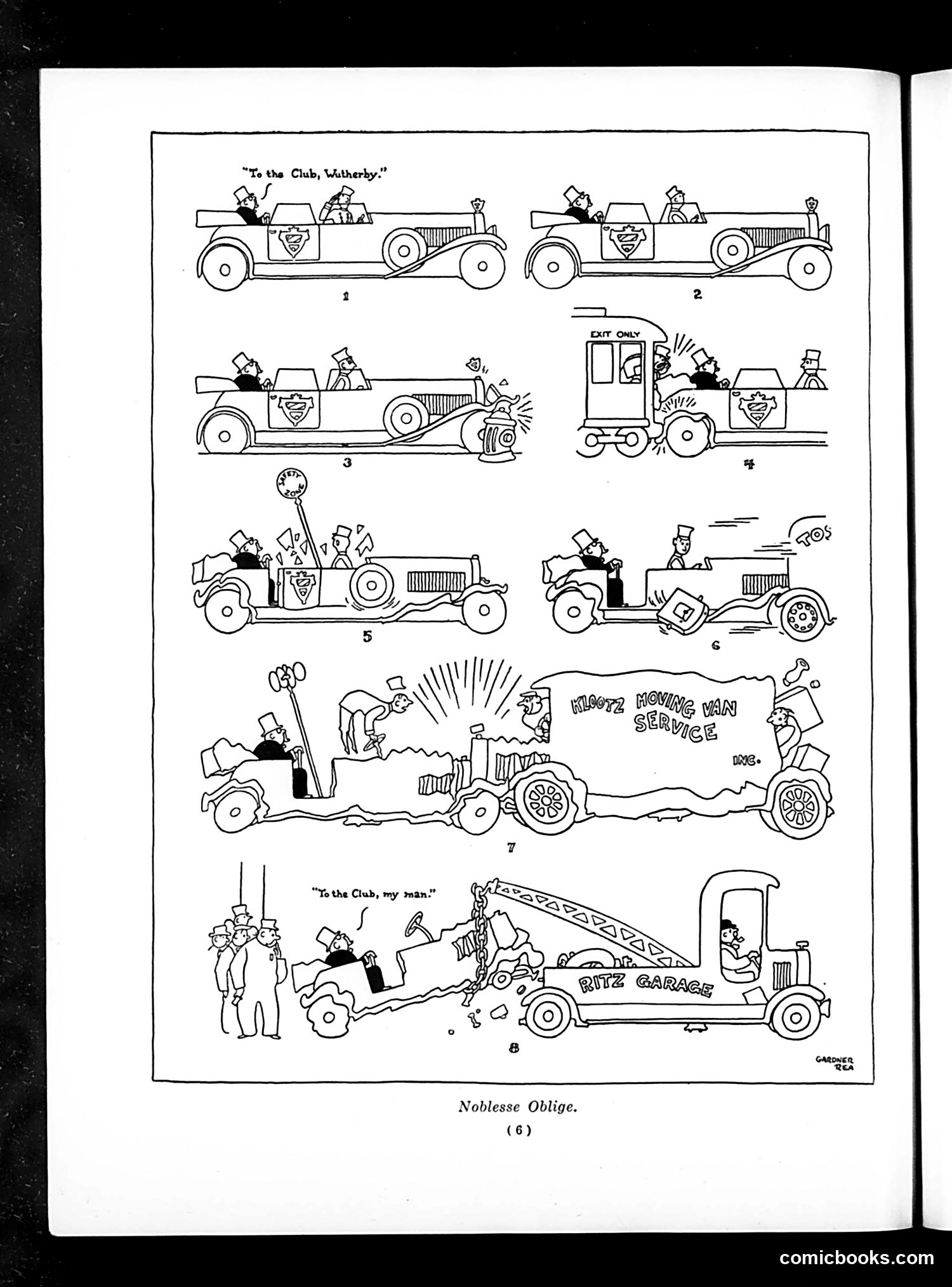
"Noblesse Oblige" This is a humorous eight-panel comic strip about wealthy club members ("To the Club, Wetherby") getting a car to the garage. The sequence shows increasingly chaotic mishaps: the vehicle breaks down, catches fire, crashes into a "Ritz Morning Van Service" truck, and finally ends up being towed to "Ritz Garage" in pieces. The title "Noblesse Oblige" (the obligation of the privileged to act honorably) satirizes upper-class incompetence and entitlement. The wealthy passengers remain oblivious and composed throughout disasters, while service workers must manage the mess. The joke mocks how the privileged assume others will clean up their problems—a social commentary on class disparity and the servants' burden.
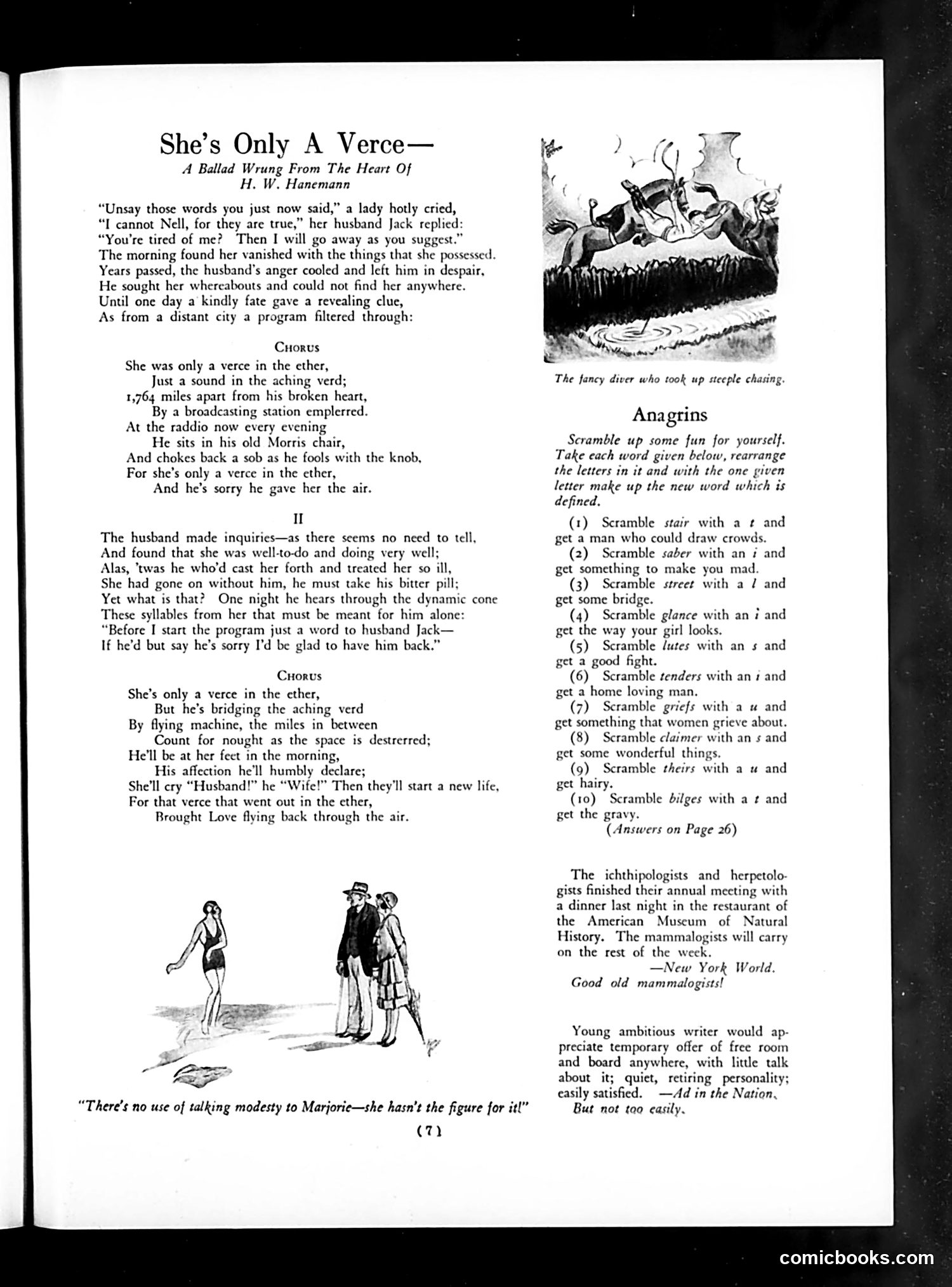
This page features "She's Only A Verse," a ballad by H.W. Hanemann about a husband and wife separated by distance. The story is told through verse and chorus: a wife leaves her husband; years pass as he grows bitter; he hears her voice on the radio as a singing performer 1,764 miles away. The chorus emphasizes their separation through broadcasting technology. The narrative resolves with hope for reconciliation. The cartoon at bottom shows a couple on a beach with the caption "There's no use of talking modesty to Marjorie—she hasn't the figure for it!" This is straightforward social satire mocking female body-shaming and appearance standards of the era. The page also contains word puzzles and brief news items typical of Life magazine's satirical miscellany.
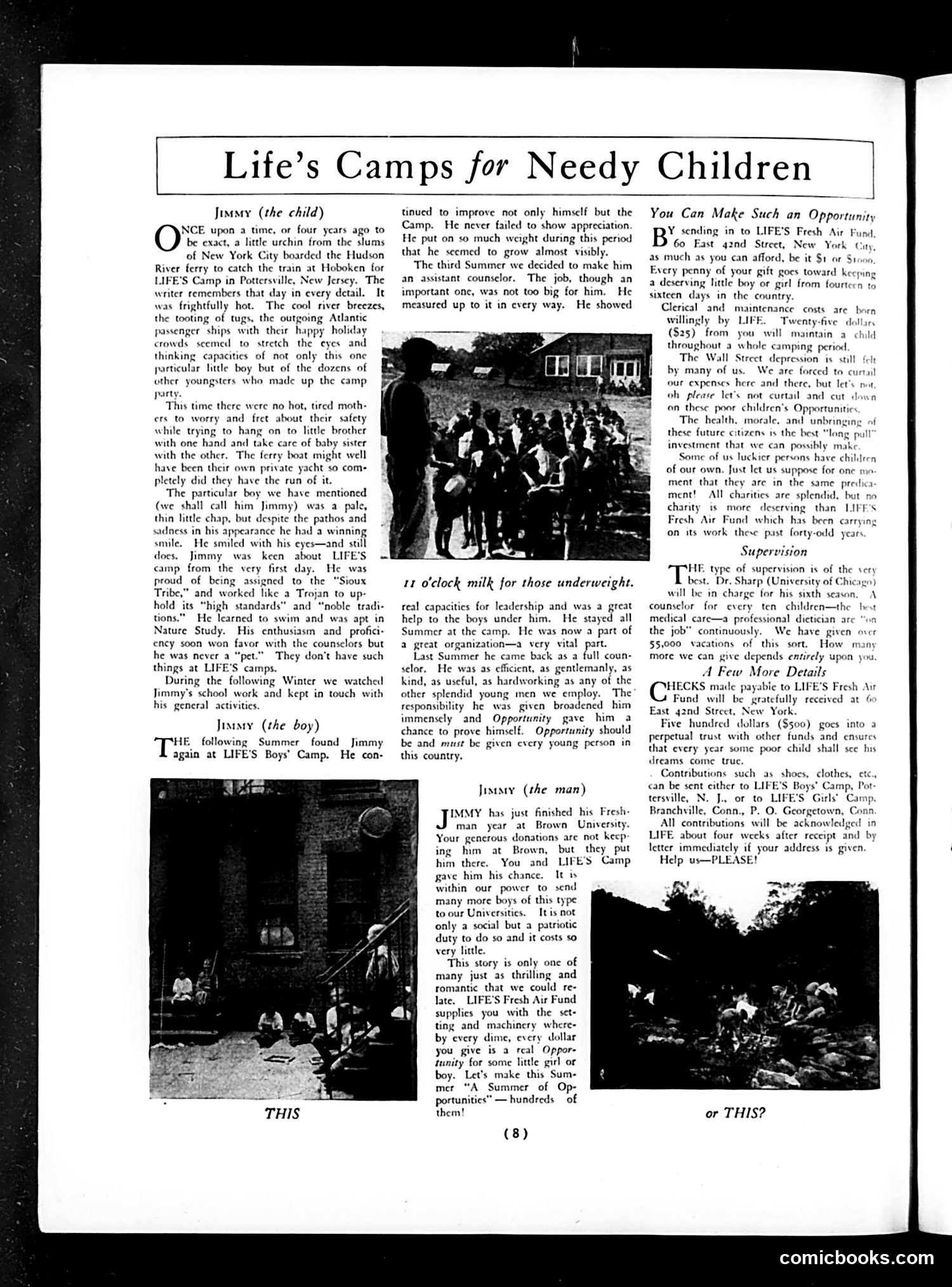
Life's Camps for Needy Children This is not a cartoon or satire, but rather a earnest charitable appeal published in *Life* magazine. The page describes "Jimmy" through three life stages—as a malnourished child, teenager, and young man—to illustrate how LIFE's Fresh Air Fund camp program transforms underprivileged children. The three photographs show actual camp activities and beneficiaries. The narrative argues that donating to the fund is both a "social" and "patriotic duty," emphasizing that these camps provide supervision, medical care, and opportunity for poor urban children from New York City. This represents early-20th-century Progressive Era charitable messaging, presenting institutional aid to poor children as a moral obligation.
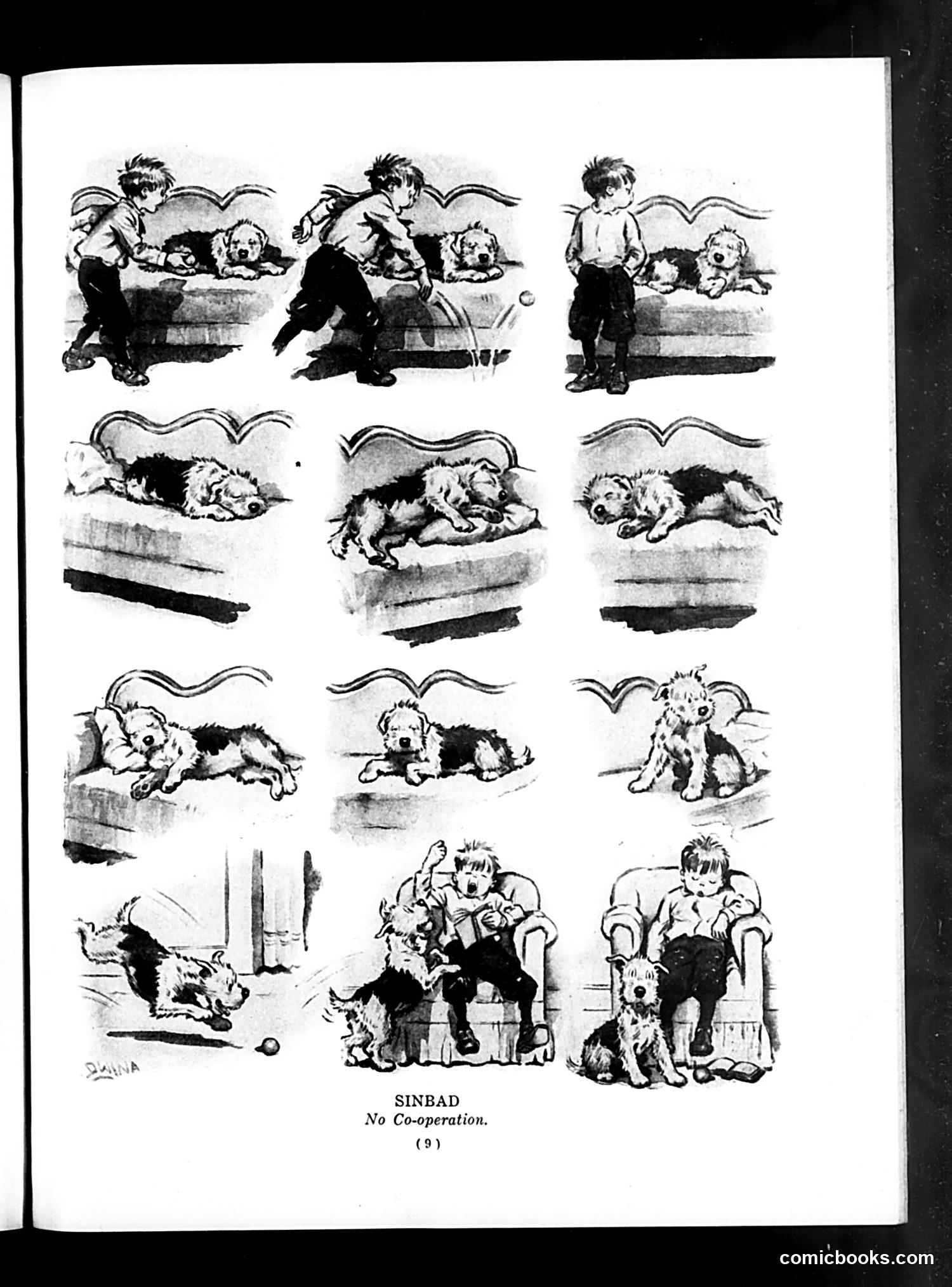
"Sinbad: No Co-operation" This is a humorous illustrated sequence showing a boy named Sinbad attempting various activities with puppies, who refuse to cooperate. The strip progresses through nine panels depicting: - The boy trying to get puppies to sit in a basin - Attempting to make them play or perform tricks - The dogs lying down, playing, or running away instead - Finally, the boy sitting defeated with uncooperative puppies The title "No Co-operation" is the joke: the puppies consistently ignore the boy's attempts to direct their behavior. The satire likely comments on the futility of trying to control or train unruly animals—or possibly serves as a children's humor piece about the frustrations of pet ownership. The signature appears to read "Sanna."
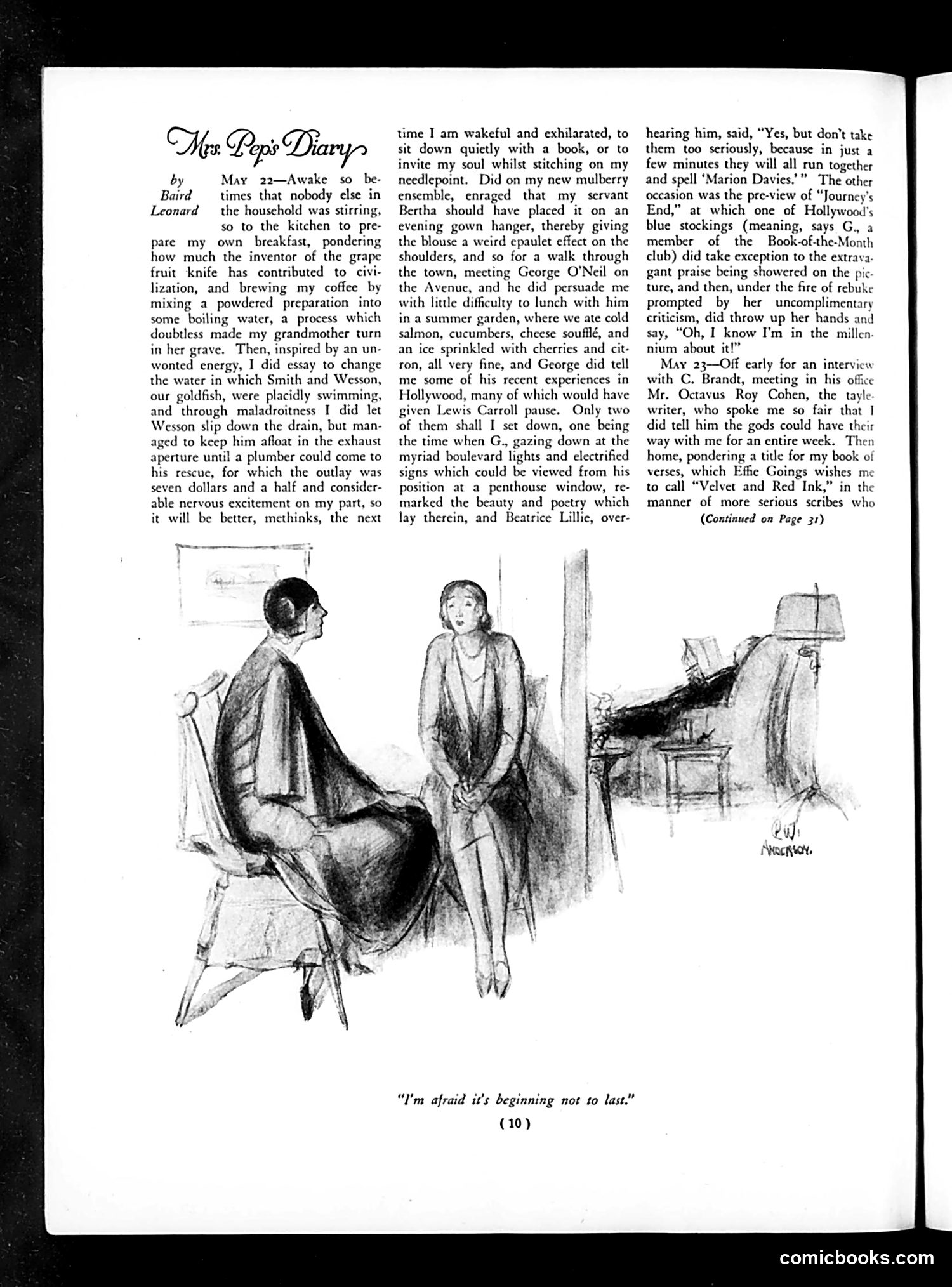
Mrs. Pep's Diary This page presents a serialized humor column by Baird Leonard titled "Mrs. Pep's Diary," dated May 22-23. The narrative describes mundane domestic activities—entertaining guests, visiting a summer garden with George O'Neil, and preparing for interviews with a writer named Mr. Octavus Roy Cohen. The accompanying illustration depicts a woman standing before a seated man, with the caption "I'm afraid it's beginning not to last." The cartoon likely satirizes marital discord or relationship troubles, suggesting the woman is expressing concern about the durability of their relationship. The piece appears to be light domestic satire typical of early-to-mid 20th century *Life* magazine humor, targeting middle-class social conventions and relationship anxieties. The specific references to "Hollywood" and entertainment figures suggest contemporary celebrity gossip is woven throughout.
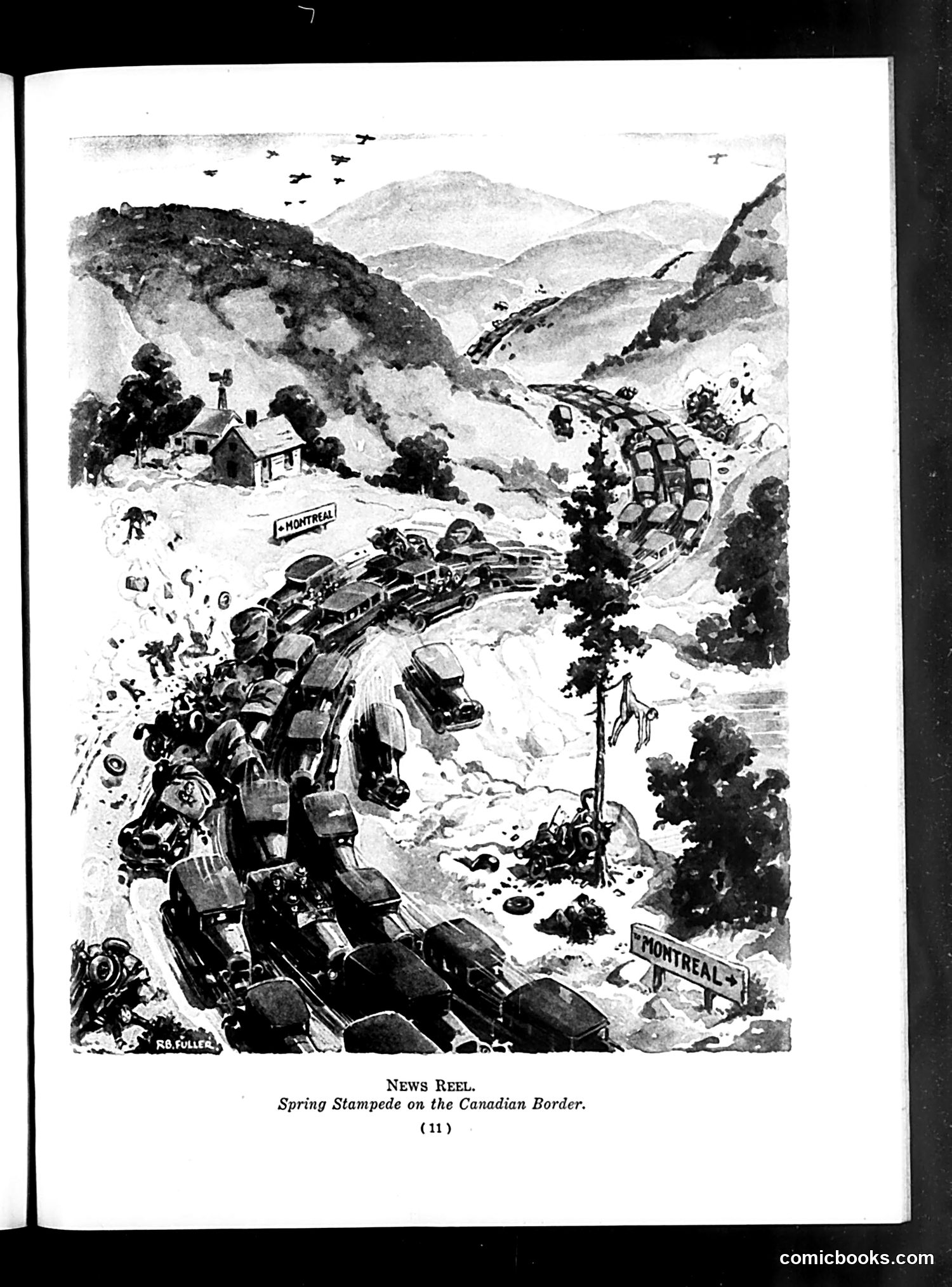
Spring Stampede on the Canadian Border This illustration by R.B. Fuller depicts a chaotic scene of cars, people, and livestock converging at the Canadian border, labeled "Montreal." The image appears to satirize a spring migration or rush—possibly depicting Americans crossing into Canada or vice versa. Multiple vehicles crowd together on a mountain road, while people scatter in various directions. Signs reading "Montreal" mark the border crossing point. The satire likely comments on border traffic patterns or a contemporary rush of cross-border travel. Without additional context about the specific historical moment, the exact nature of this "stampede" remains unclear—it could reference vacation travel, commerce, or another timely phenomenon that Life's readers would have immediately recognized as absurdly frenzied.
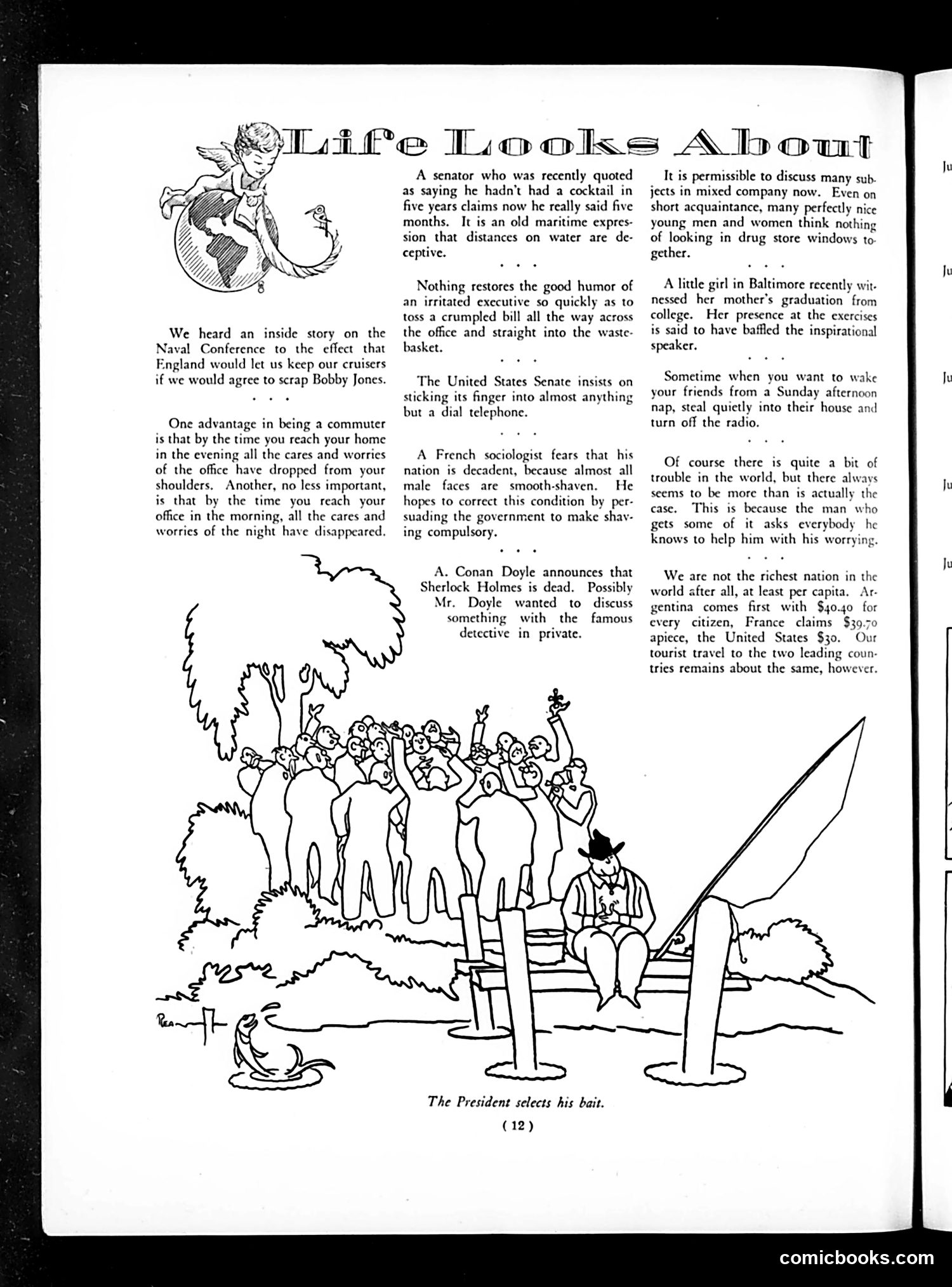
"Life Looks About" - Satirical Commentary Page This page from Life magazine contains several brief satirical items: 1. Naval Conference joke: References keeping cruisers if Bobby Jones is scrapped—likely mocking 1920s naval disarmament debates by comparing them absurdly to golf. 2. Commuter wisdom: Humorously notes that commuting eliminates evening worries because you're already exhausted. 3. French sociology: Satirizes a French sociologist's claim that his nation is "decadent" because men shave—mocking pseudo-intellectual cultural criticism. 4. Sherlock Holmes announcement: A. Conan Doyle's statement about the famous detective, possibly suggesting a final adventure. 5. The cartoon ("The President selects his bait"): Shows a fisherman choosing bait while crowds gather—likely political satire about leadership strategy, though the specific reference remains unclear without more context.
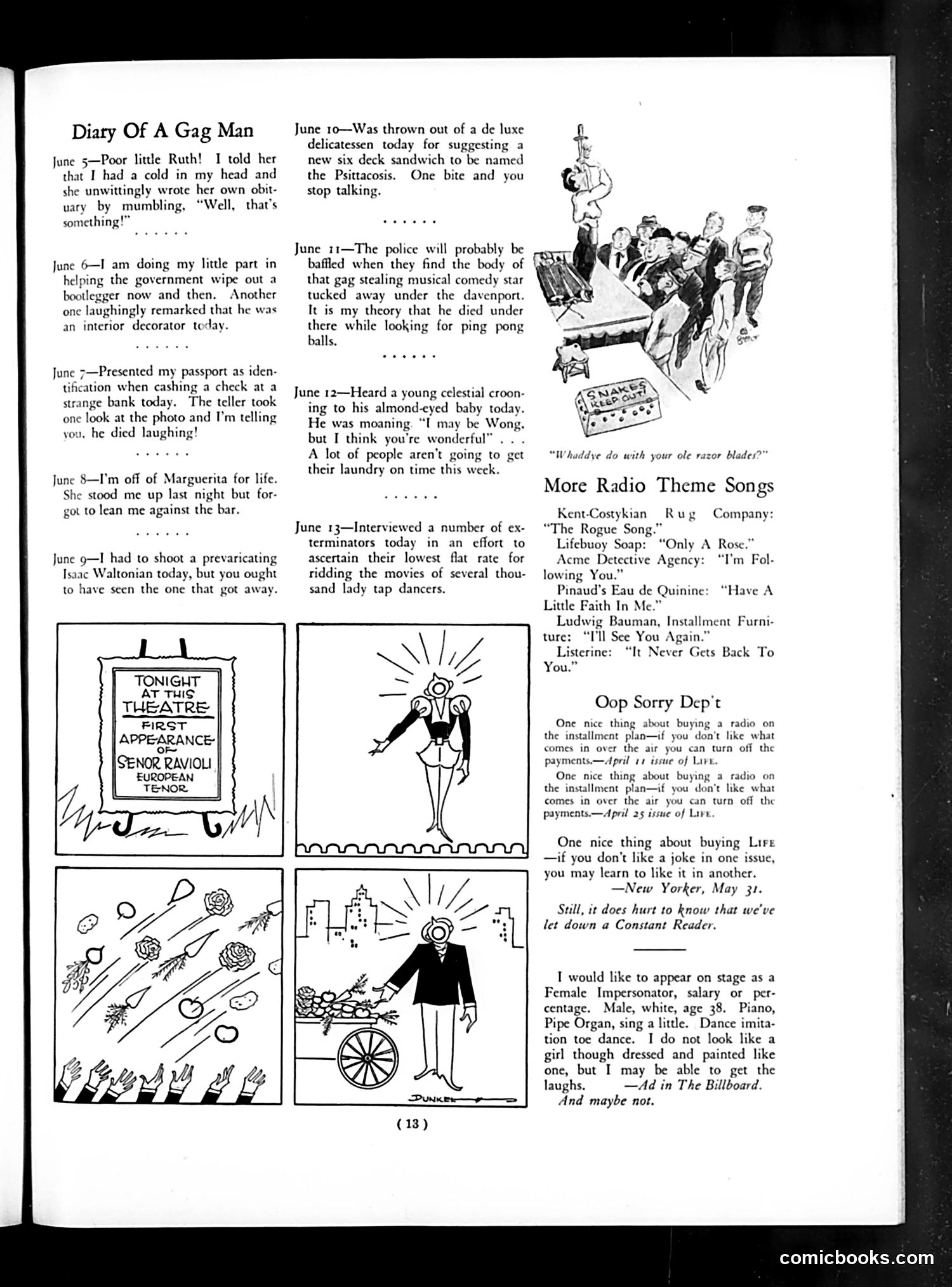
"Diary of a Gag Man" - Life Magazine Page This page contains a humorous diary column about a comedy writer's misadventures, including jokes about suggesting sandwich names and getting ejected from a delicatessen. The four cartoons below illustrate comedic scenarios: a theatre marquee, a person experiencing radio static, someone juggling flowers amid chaos, and a figure with an enlarged head in an urban setting—likely depicting absurd or surreal gag situations. The "More Radio Theme Songs" section lists commercial jingles and advertisements for products like soap and insurance, mocking how ubiquitous radio advertising had become. A classifieds section includes a self-deprecating want-ad from someone seeking stage work as a female impersonator, satirizing both entertainment industry desperation and the absurdist humor typical of Life magazine's comedy approach during this era.
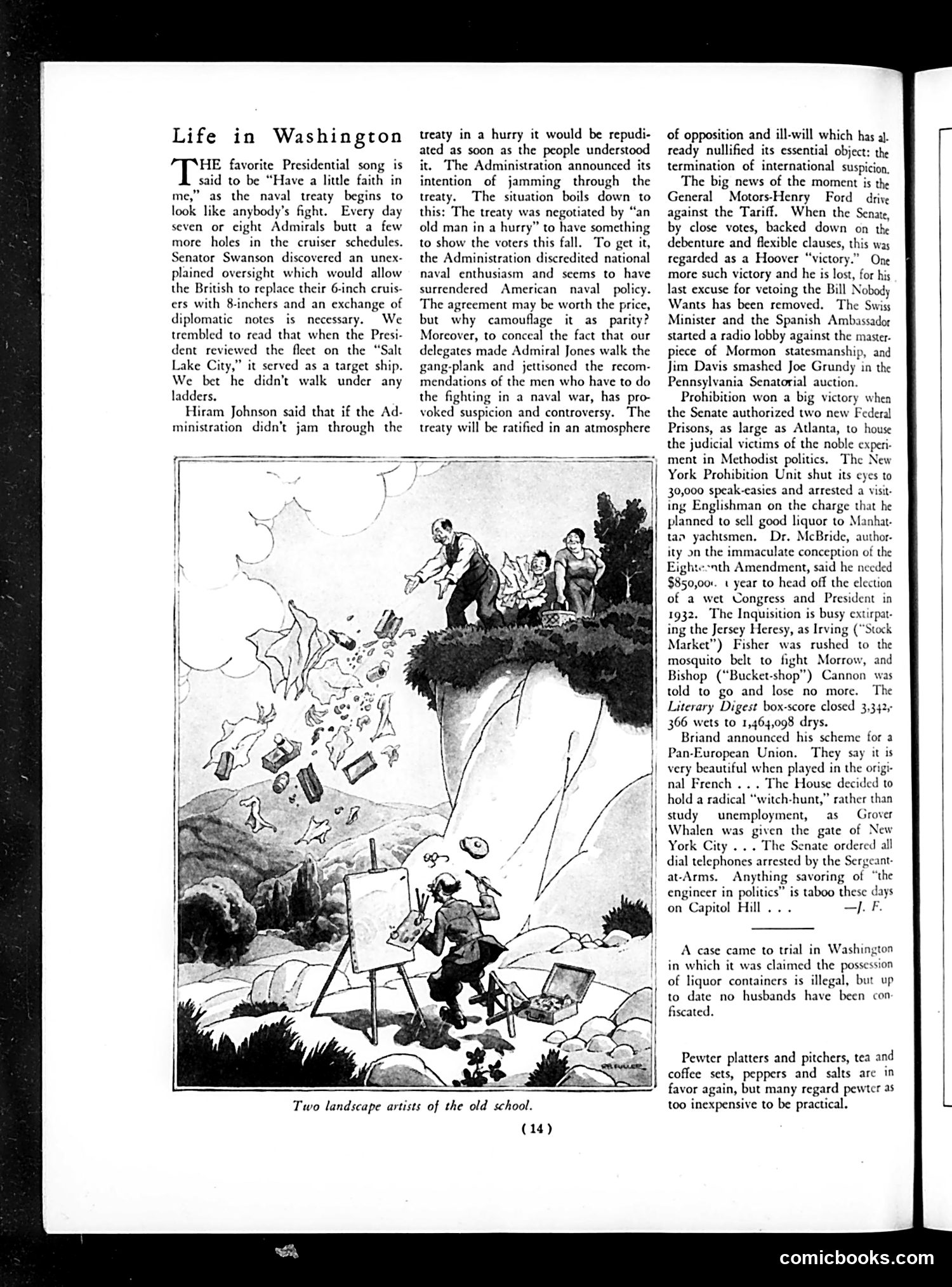
"Two landscape artists of the old school" This political cartoon satirizes wasteful government spending during the naval treaty negotiations. The illustration shows two figures depicted as artists—one above on a cliff dropping money and debris into a chasm, another below catching it. The metaphor mocks officials who are squandering public funds. The accompanying article discusses how the Harding Administration negotiated a naval treaty but faced criticism for poor diplomacy. References mention Senator Swanson discovering unexplained British advantages and Admiral Jones's concerns about American naval readiness being compromised. The "landscape artists" imagery suggests these government officials are carelessly sculpting away American resources and naval strength through poorly negotiated agreements, treating taxpayer money like discarded refuse.
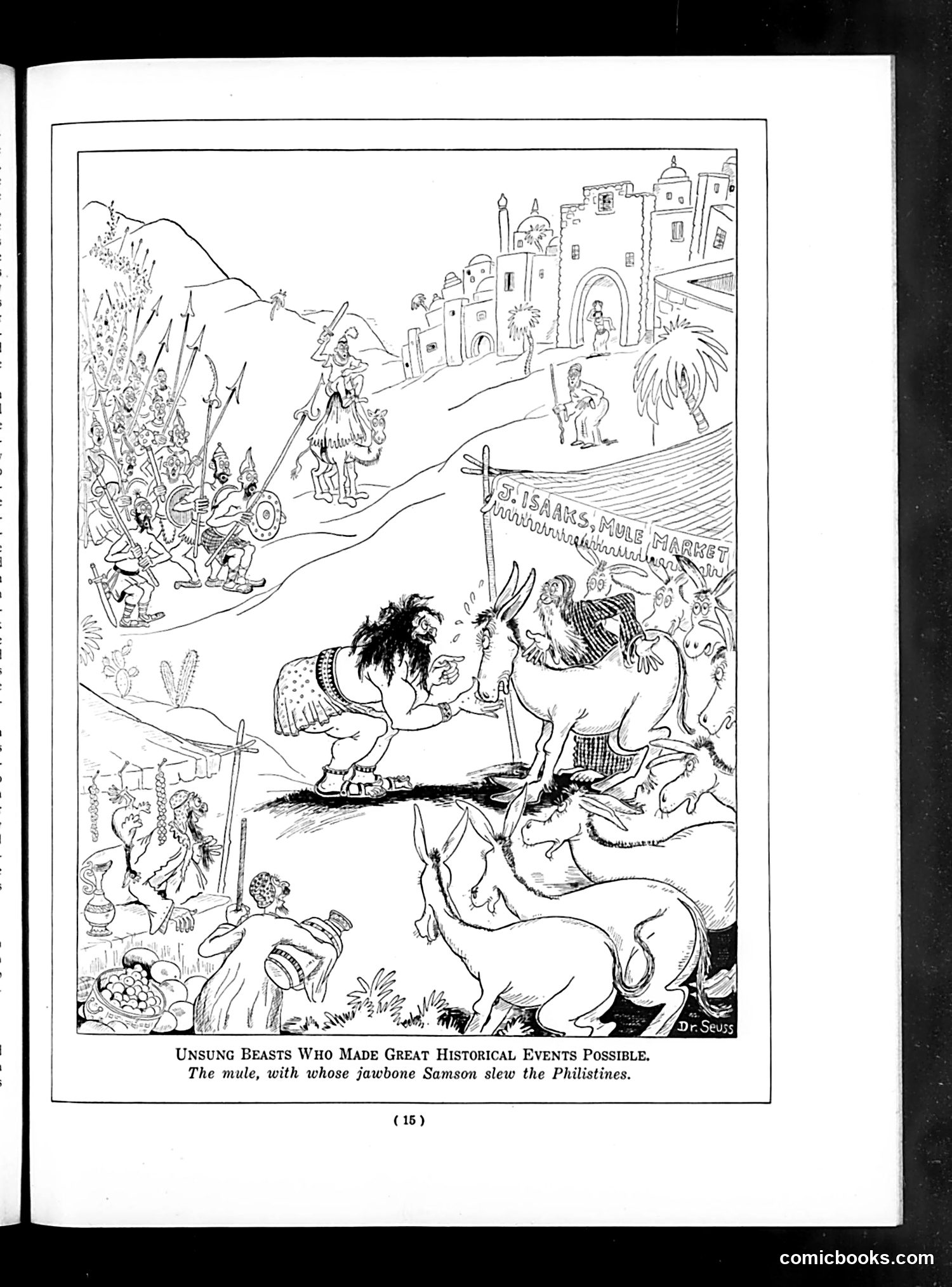
Analysis This is a Dr. Seuss cartoon from *Life* magazine featuring whimsical creatures in a humorous historical commentary. The title reads: "Unsung Beasts Who Made Great Historical Events Possible: The mule, with whose jawbone Samson slew the Philistines." The cartoon depicts cartoon animals (appearing to be a mule and other creatures) in conversation near a fortified city, with armies visible in the background. The joke satirizes overlooked contributors to famous biblical/historical events—specifically referencing the Book of Judges story where Samson used a donkey's jawbone as a weapon. Seuss's satire suggests that while Samson receives historical credit, the humble mule deserves equal recognition for enabling the victory. It's a lighthearted critique of how history overlooks the mundane, practical elements that make heroic achievements possible.
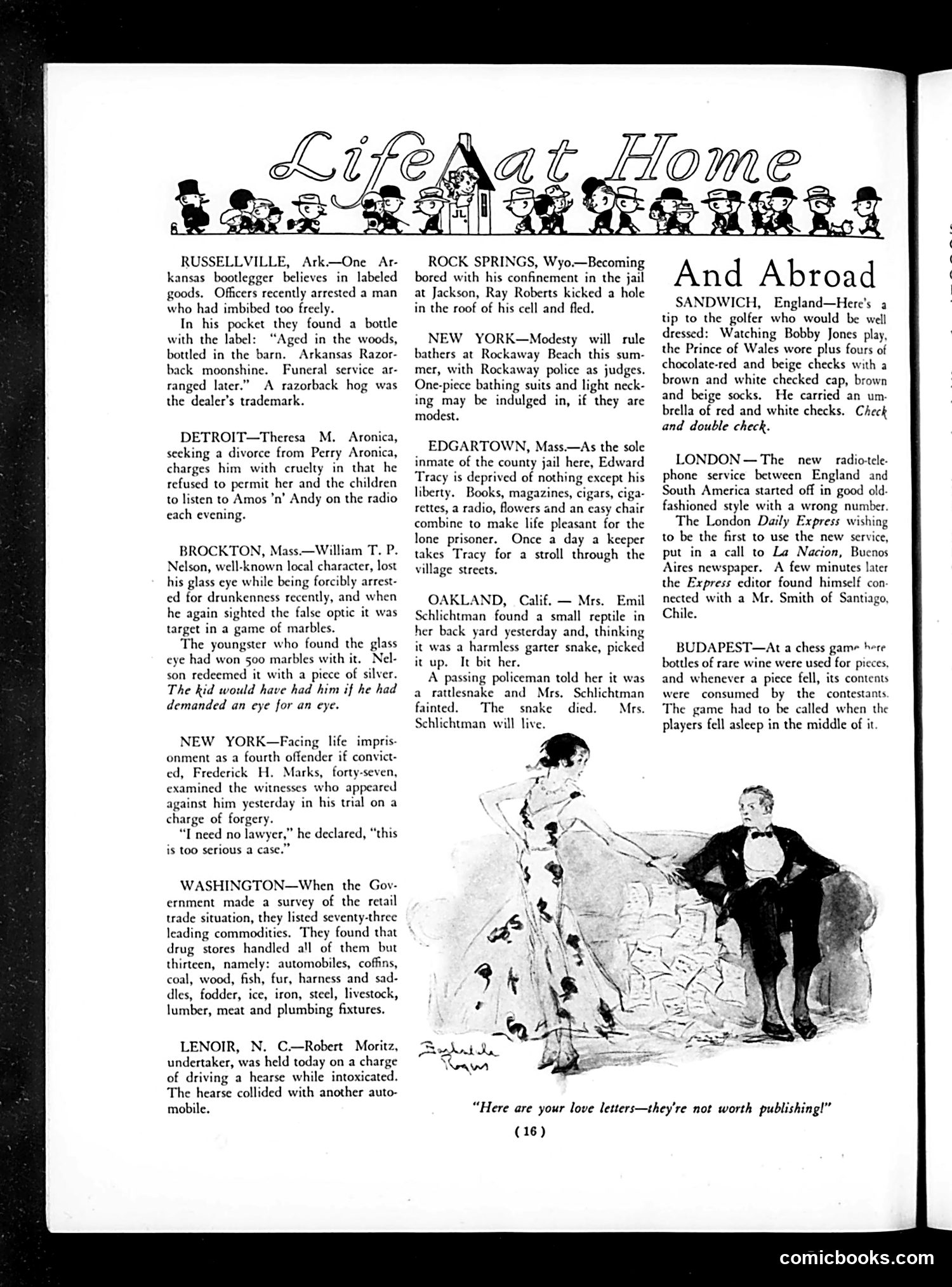
Analysis This page from *Life* magazine contains a section titled "Life at Home and Abroad"—a collection of brief humorous anecdotes from various American and international locations, typical of the magazine's satirical format. The single cartoon depicts a man in formal evening wear showing love letters to another man, who dismisses them as "not worth publishing." The joke appears to satirize the literary pretensions of amateur romantic correspondence—suggesting that even heartfelt personal letters lack publishable merit. This reflects early 20th-century *Life* magazine's recurring mockery of both sentimental romanticism and aspiring writers who overestimate their work's value. The cartoon's humor relies on deflating expectations about the significance of private emotional expression.
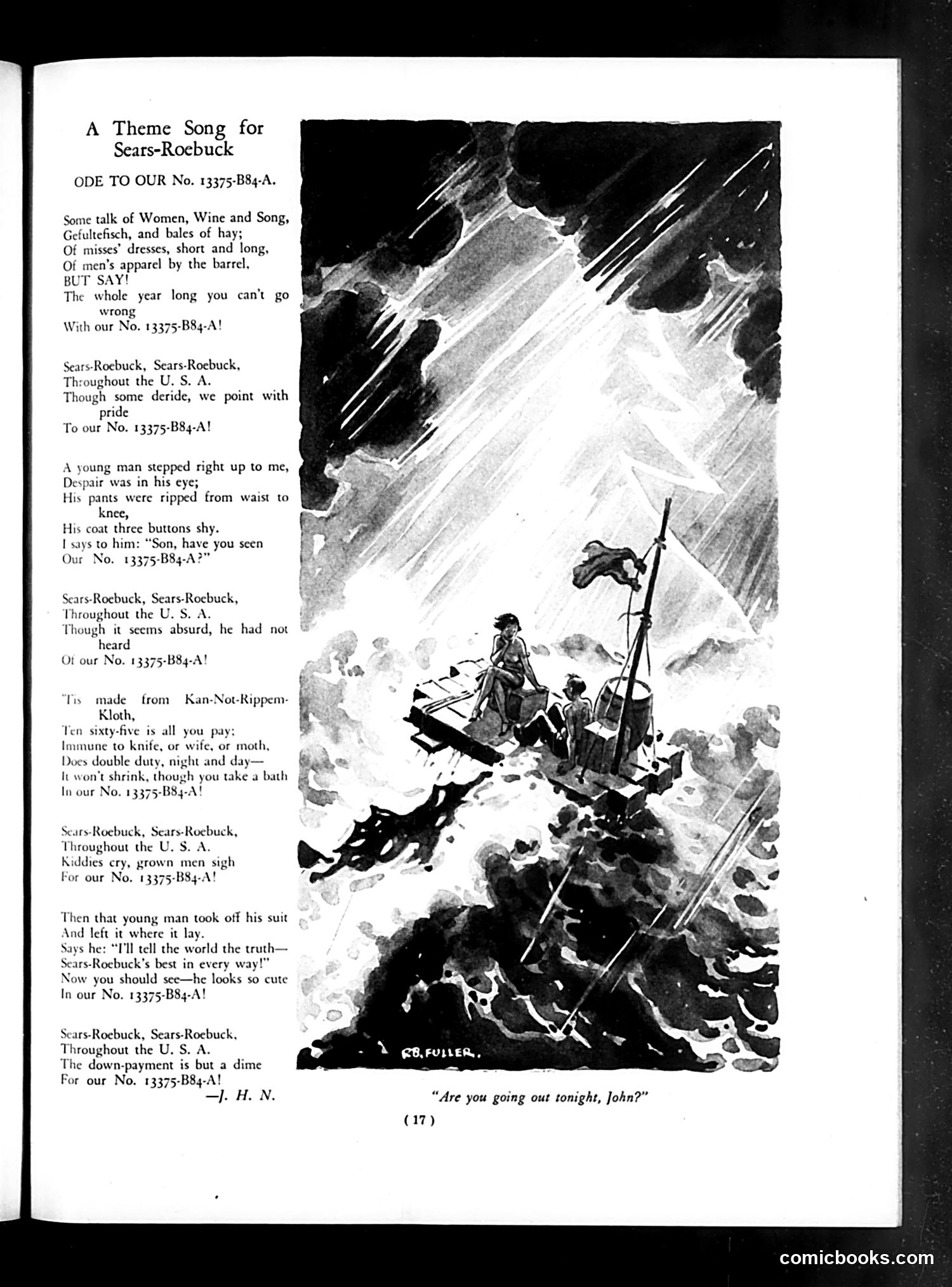
Analysis This page contains a theme song advertisement for Sears-Roebuck catalog (item No. 13375-B84-A), presented as comedic verse with an accompanying illustration. The song mockingly praises Sears-Roebuck's mail-order catalog, claiming it solves all consumer needs year-round—from women's clothing to men's apparel. The humor lies in exaggerating the catalog's importance to American life. The illustration depicts a frontier scene (artist signed "C.B. Fuller") showing a man in tattered clothes encountering what appears to be settlers or mountaineers, with the caption "Are you going out tonight, John?"—suggesting even remote wilderness dwellers could benefit from Sears catalog merchandise. The satire targets both consumer culture and the catalog's marketing claims of universal utility across all American lifestyles and regions.
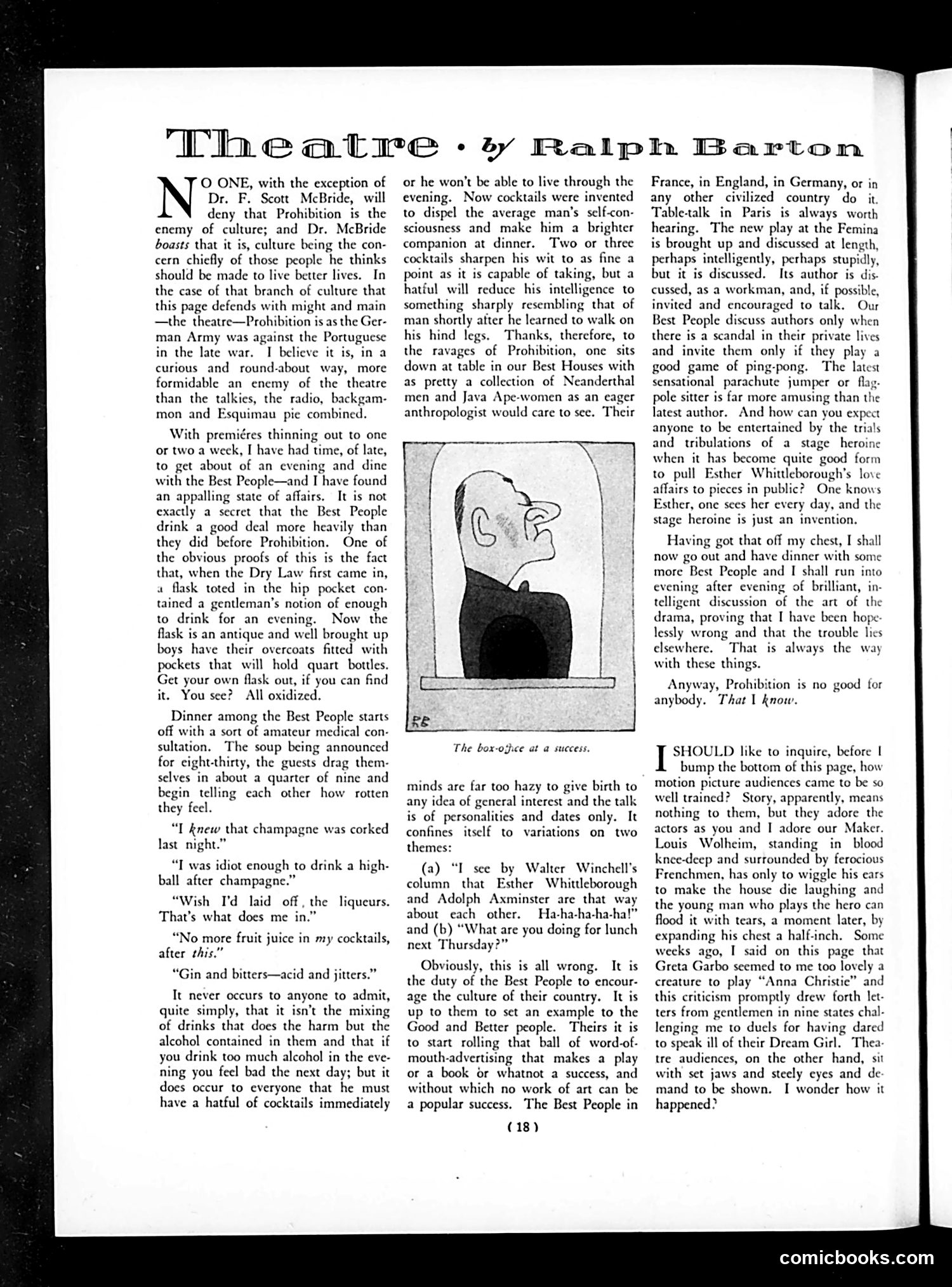
Analysis of "Theatre" by Ralph Barton This page is Ralph Barton's satirical column attacking Prohibition and American high society's hypocrisy. The small cartoon shows a man in profile labeled "The box office of a success" — likely mocking theatrical pretension. Barton argues that despite Prohibition, the "Best People" (wealthy elite) openly drink cocktails at dinner parties, contradicting public morality. He criticizes their shallow dinner conversation about theater scandals (mentioning Esther Whitteborough and Walter Winchell's gossip column) rather than genuine culture. The satire cuts two ways: mocking both Prohibition's failure to stop the wealthy from drinking and the "Best People's" pretentious claim to cultural sophistication while engaging in trivial gossip and moral hypocrisy. Barton's tone is cynical about both bootleggers' enabling and elite society's hollow respectability.
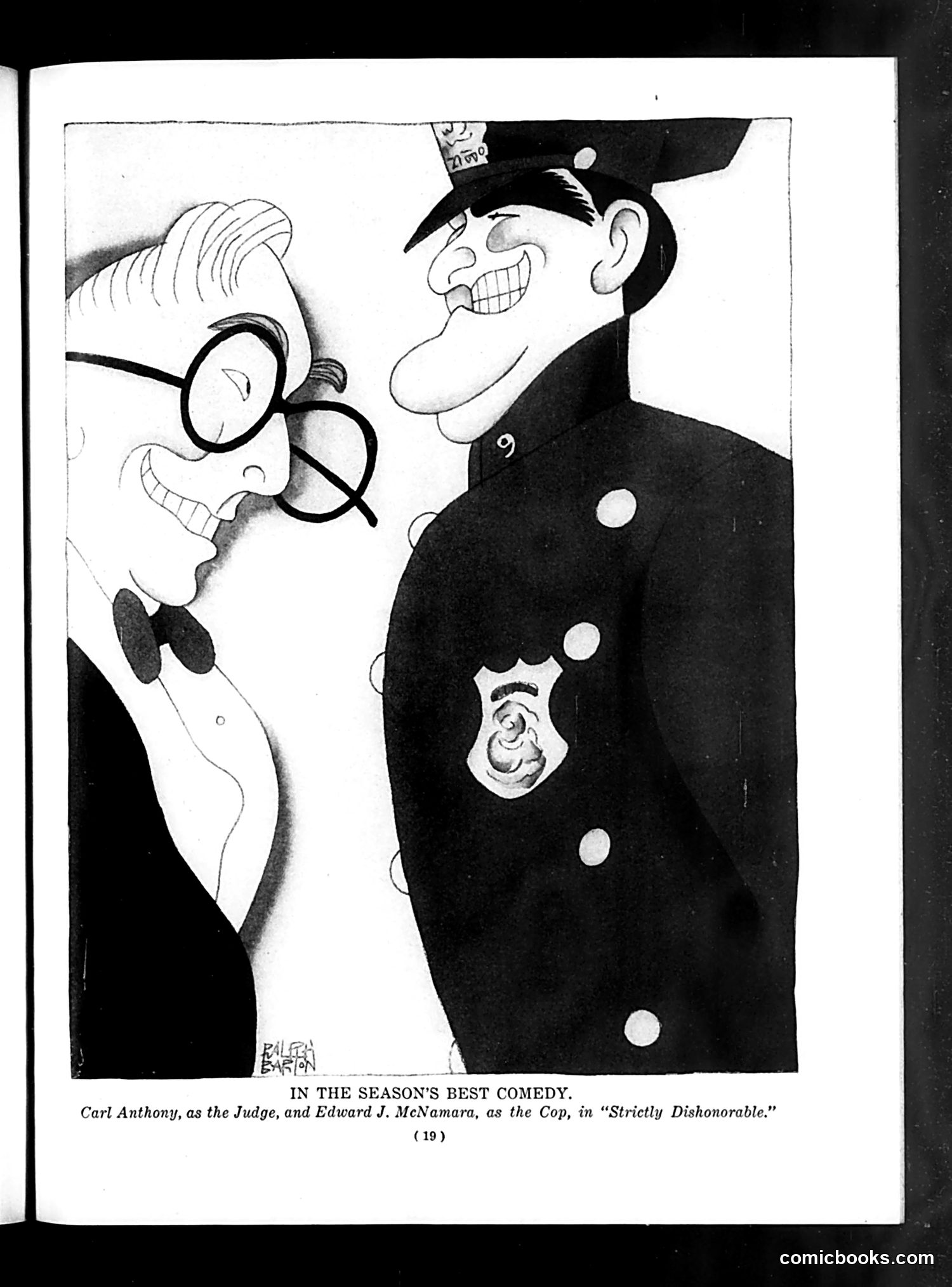
This is a theatrical advertisement for the play "Strictly Dishonorable," featuring actors Carl Anthony and Edward J. McNamara. The caricature shows two men in exaggerated comic style—one wearing glasses and formal attire (the Judge), the other in a police uniform with a large grin (the Cop). The cartoon emphasizes their comedic roles through grotesque facial features typical of early 20th-century theatrical promotion. The contrasting characters—authority figures (judge and policeman)—suggest the play involves legal or law-enforcement humor. The page identifies this as "the season's best comedy," indicating it was a popular or critically acclaimed production. This appears to be promotional material rather than political satire, designed to encourage audiences to attend the theatrical performance.
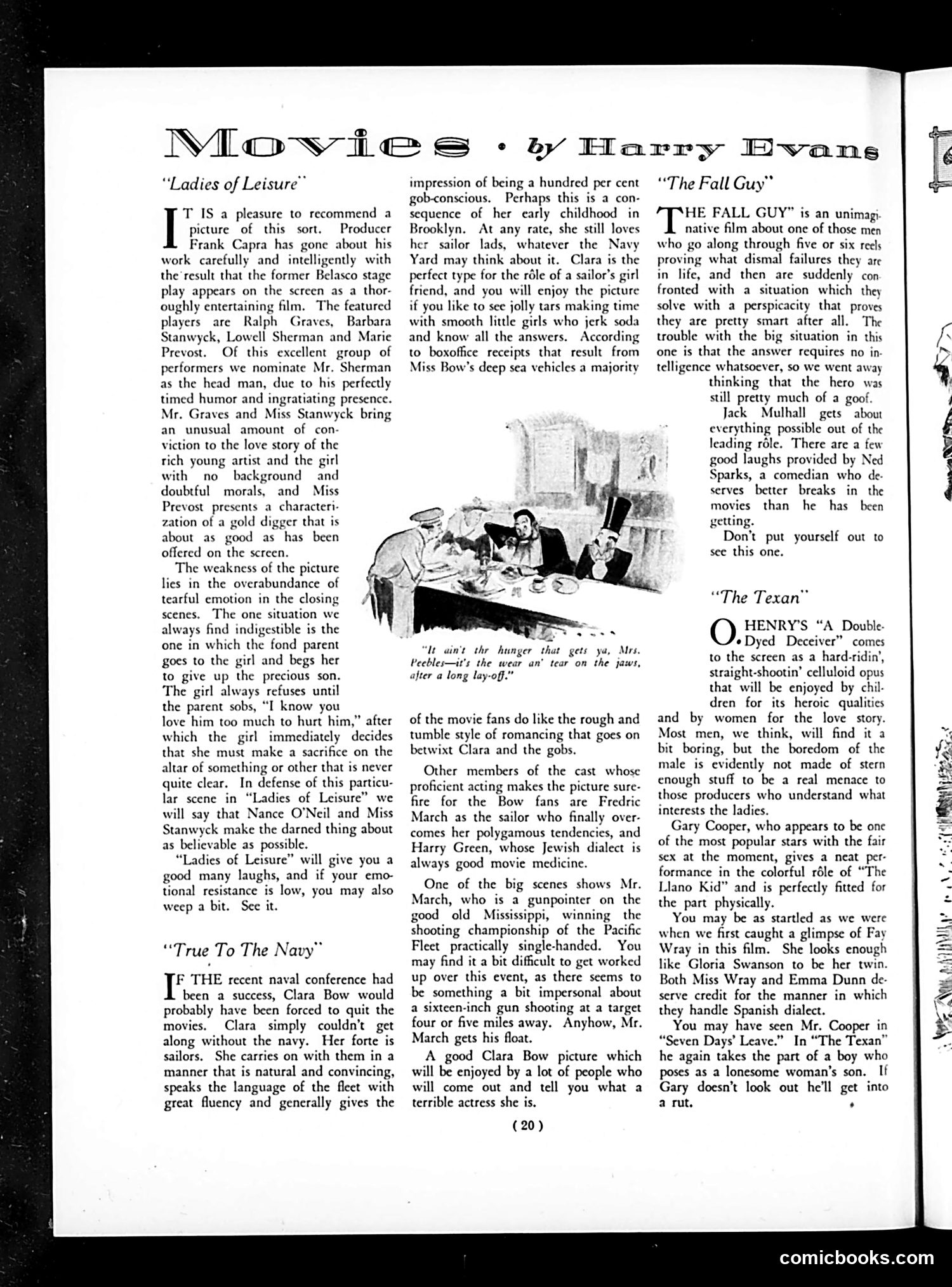
Movie Reviews from Life Magazine This page contains film reviews by Harry Evans for three 1929 movies. The reviews discuss plot, performances, and intended audiences rather than offer political commentary. "Ladies of Leisure" (Frank Capra film) follows a wealthy artist and a girl "with no background and doubtful morals"—a common 1920s plot. The reviewer praises the cast, particularly Lowell Sherman, but criticizes excessive tearful scenes, specifically mocking a clichéd moment where a parent begs a son's girlfriend to leave him. "True to the Navy" stars Clara Bow as a sailor's girlfriend. Evans jokes that if the naval conference had succeeded in limiting navies, Bow would be unemployed, since her career depends on "sailor" films. He notes her authentic "gob-conscious" manner (likely from Brooklyn childhood) and mentions Fredric March and comedian Harry Green as supporting actors. "The Fall Guy" receives brief dismissal as unimaginative. The single cartoon depicts a couple dining, with a caption about jaw strain from eating after a long layoff—apparently a Depression-era economic joke about hardship.
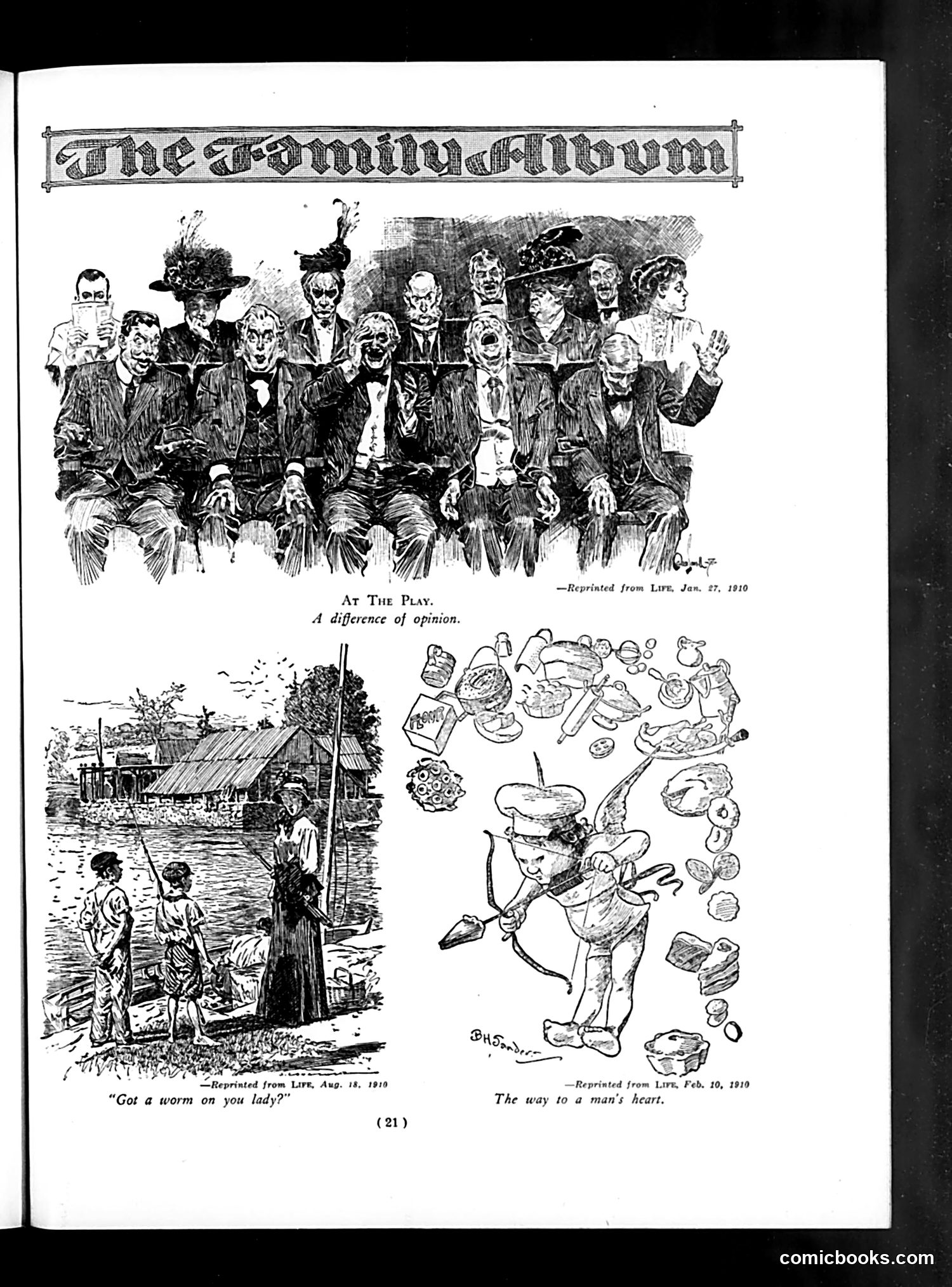
Analysis of "The Feminine Viewpoint" Page This 1919-1910 Life magazine page contains three satirical cartoons about gender relations: "At The Play" (top): Shows an audience of exaggerated, disapproving faces—likely theater-goers with differing opinions about a performance, using caricature to mock social pretension. "Got a worm on you lady?" (bottom left): Depicts children fishing by a riverbank, with one boy's crude pickup line satirizing innocent youth behavior and social awkwardness. "The way to a man's heart" (bottom right): Features Cupid shooting food items rather than arrows at a target—a visual pun on the common saying that cooking/food wins male affection, mocking both romantic ideals and traditional gender roles about women's domestic duties. The page title suggests these cartoons collectively comment on differing male and female perspectives on love, romance, and social interaction in the early 20th century.
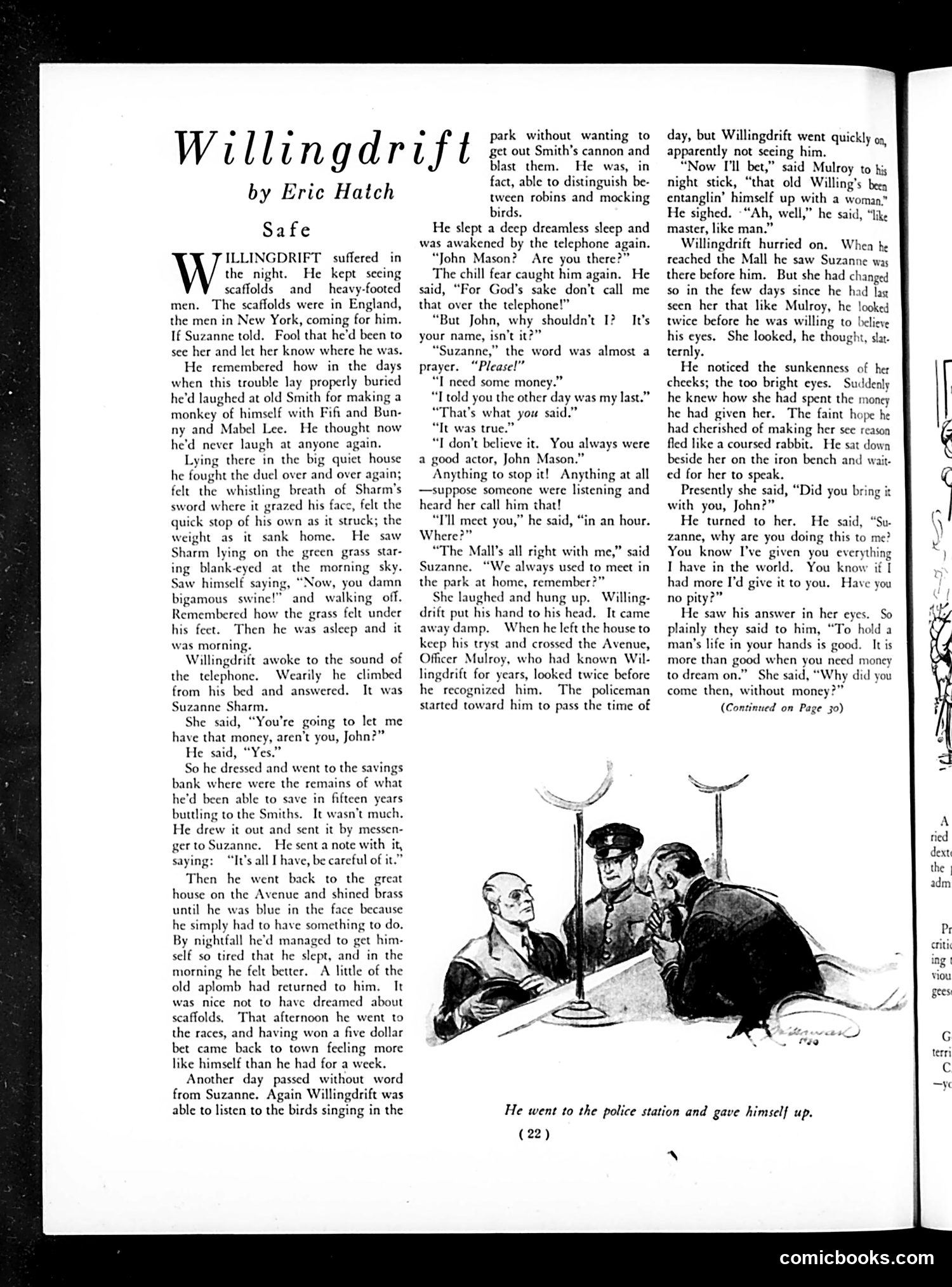
"Willingdrift" by Eric Hatch - Page Analysis This page presents the opening of a serialized short story (labeled "Safe") about a man named Willingdrift (using the alias "John Mason") who is being blackmailed by a woman named Suzanne Sharm. The plot involves guilt over a past duel in which Willingdrift killed a man named Sharm. Suzanne, apparently connected to the dead man, is extorting money from him by threatening to expose his identity and crime to authorities in both England and New York. The illustration shows two men with a lamp (appearing to be police or officials), accompanying the caption: "He went to the police station and gave himself up." The story explores themes of guilt, blackmail, and moral reckoning—typical of early 20th-century magazine fiction. There is no political satire or caricature on this page; it is straightforward narrative fiction with accompanying illustration, representative of *Life* magazine's literary content beyond its better-known satirical cartoons.
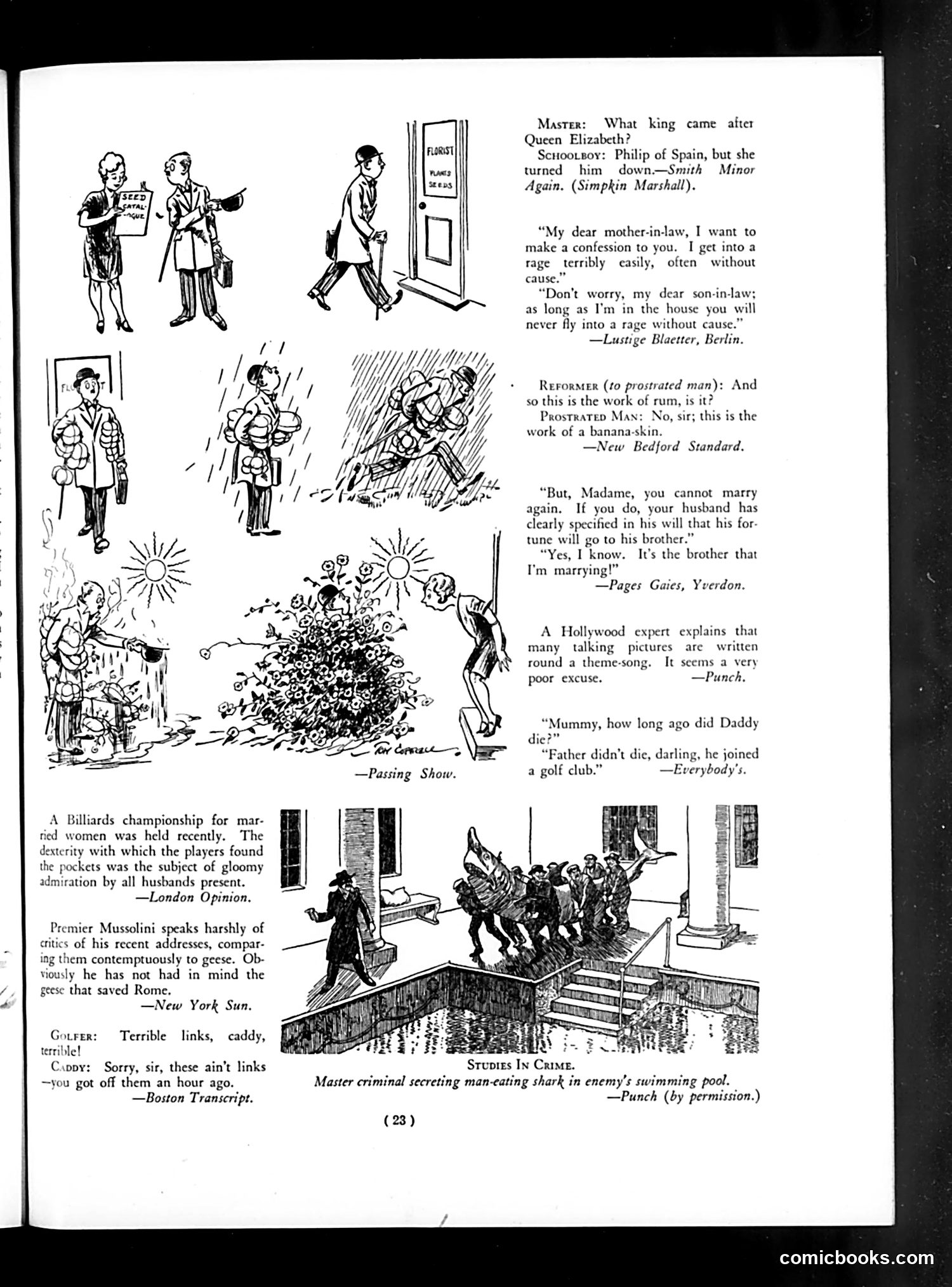
Page 23 Analysis: Life Magazine Humor This page collects brief humorous anecdotes and cartoons from various international sources, satirizing early 20th-century social conventions and behaviors. Key items include: Social satire: A married women's billiards championship jokes that wives are skilled at "finding pockets"—a wry comment on domestic financial management and marital dynamics. Political humor: A jab at Mussolini for harshly criticizing his opponents, comparing them to geese—ironic since the geese of Rome saved the city in ancient legend. Class humor: A golfer mistakenly believes he's on golf links but has actually wandered off; his caddy corrects him rudely. Domestic situations: Several jokes about marriage, in-laws, and parenting—including a woman planning to remarry specifically for her late husband's brother (inheriting the fortune), and a child innocently suggesting father "joined a golf club" (implying death/absence). Bottom cartoon: A spy film reference showing a criminal hiding a man-eating shark in an enemy's pool—satirizing melodramatic movie plots. The page reflects 1920s-30s sensibilities about marriage, class, and entertainment.
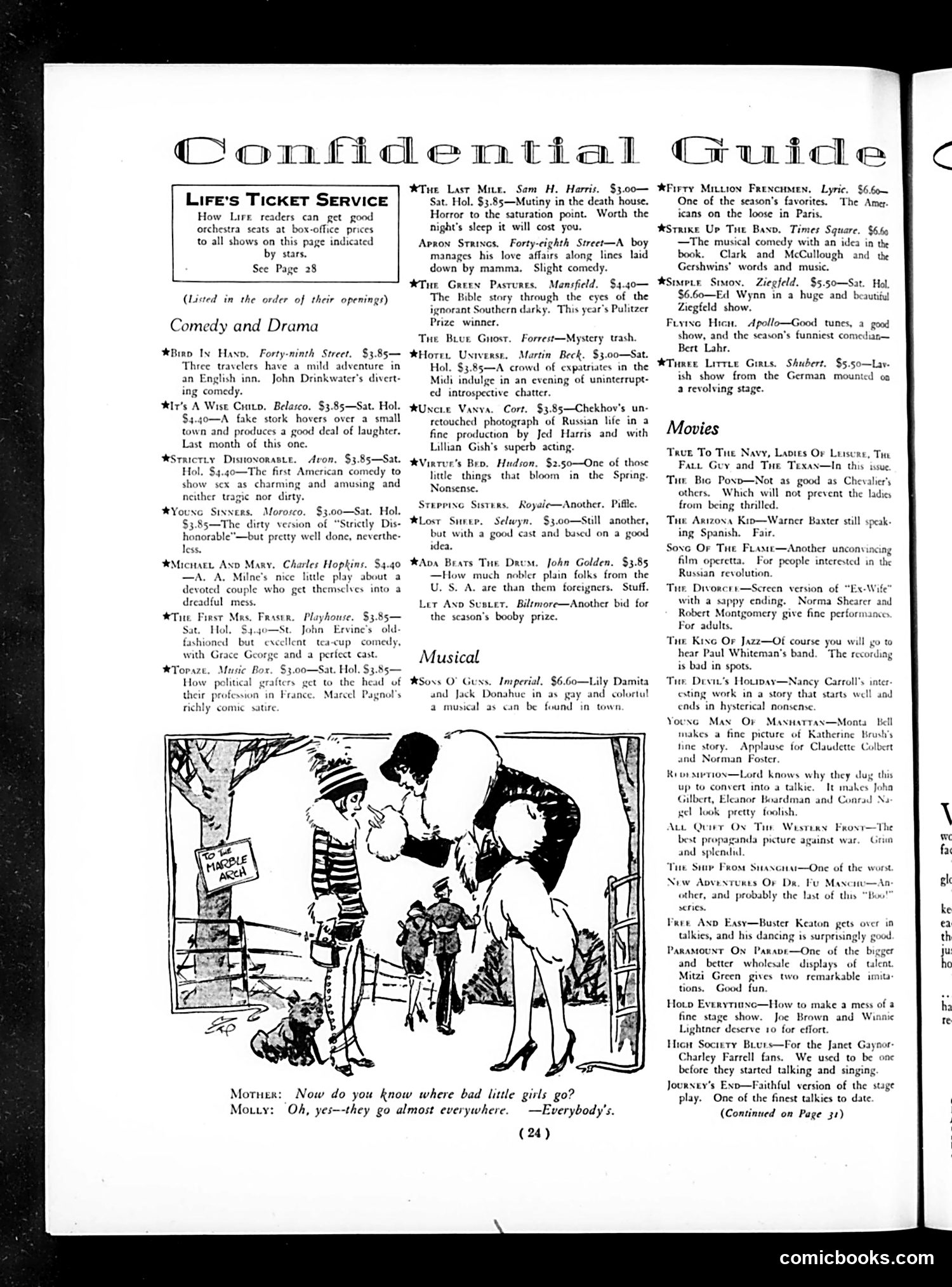
Cartoon Analysis This page is a theater and entertainment guide from *Life* magazine, featuring reviews and ticket information rather than political satire. The main illustration shows a mother and child encountering what appears to be a fashionably dressed woman of questionable reputation on a street. The caption—"Mother: Now do you know where bad little girls go? Molly: Oh, yes—they go almost everywhere"—is a cynical joke about urban moral decline. The humor relies on 1920s anxiety about changing social standards: the child's innocent, matter-of-fact response suggests that "bad girls" are now commonplace and visible everywhere in the city, rather than hidden. This reflects contemporary concerns about flapper culture, looser sexual morality, and the perceived breakdown of Victorian social order during the Jazz Age. The page itself catalogs Broadway shows, musicals, and films with brief, often snide reviews that mock certain productions and audiences.
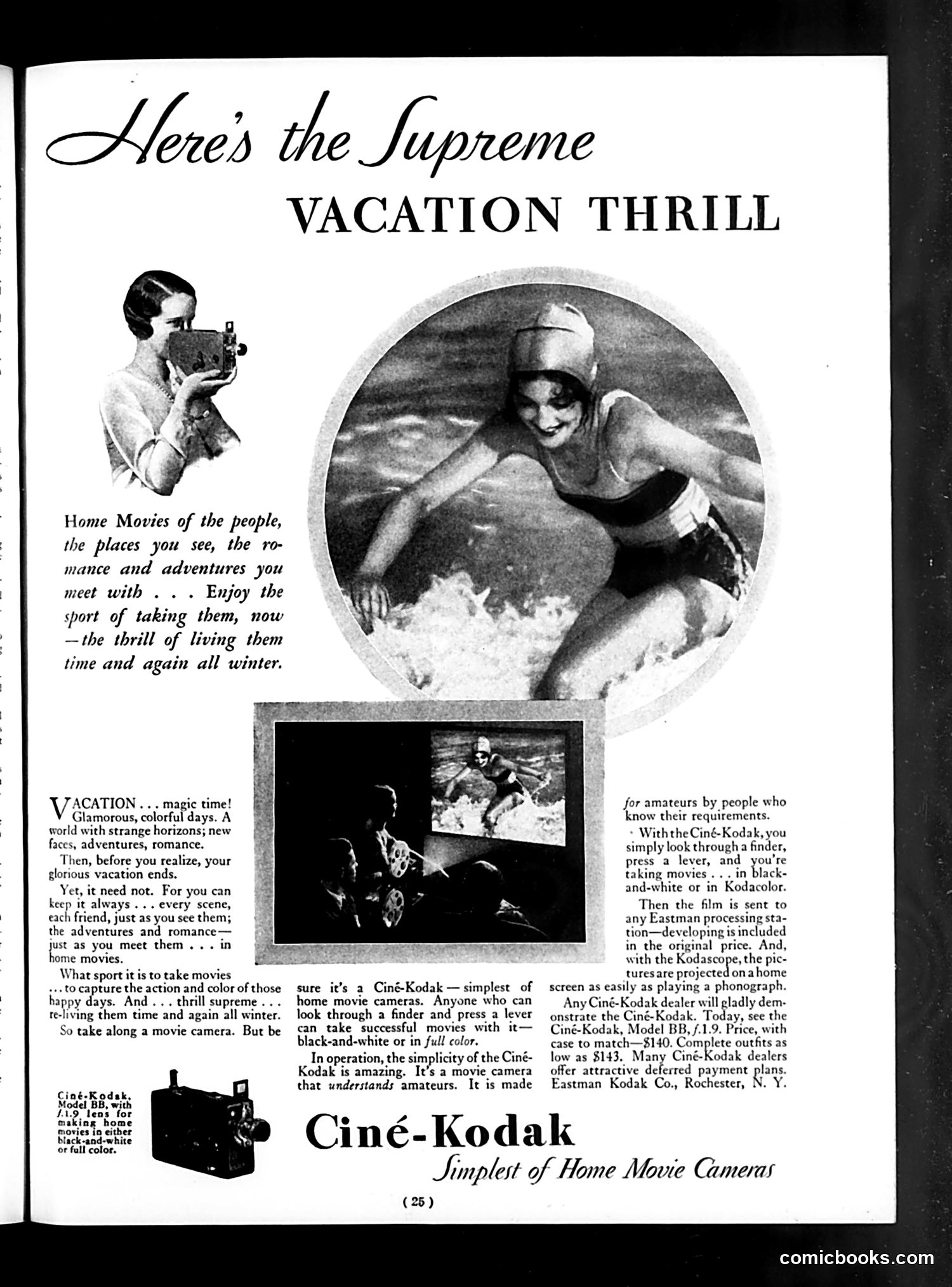
Analysis This is a Kodak advertisement, not political satire. It promotes the Ciné-Kodak home movie camera (Model BB, $140) to amateur users. The page uses the appealing concept of "vacation thrill" to sell the product: families should film their vacations so they can relive them "time and again all winter." The images show a woman operating a camera and a swimmer in water—examples of vacation moments worth capturing. The ad emphasizes simplicity ("understands amateurs") and convenience: users just look through a finder, press a lever, and send film to Eastman for processing. The Kodascope projector lets viewers watch at home like a phonograph. This reflects 1920s-30s consumer culture promoting leisure activities and home entertainment technology to middle-class Americans. The "thrill" being sold is not excitement but the *democratization* of filmmaking—making it accessible to ordinary people, not just professionals.
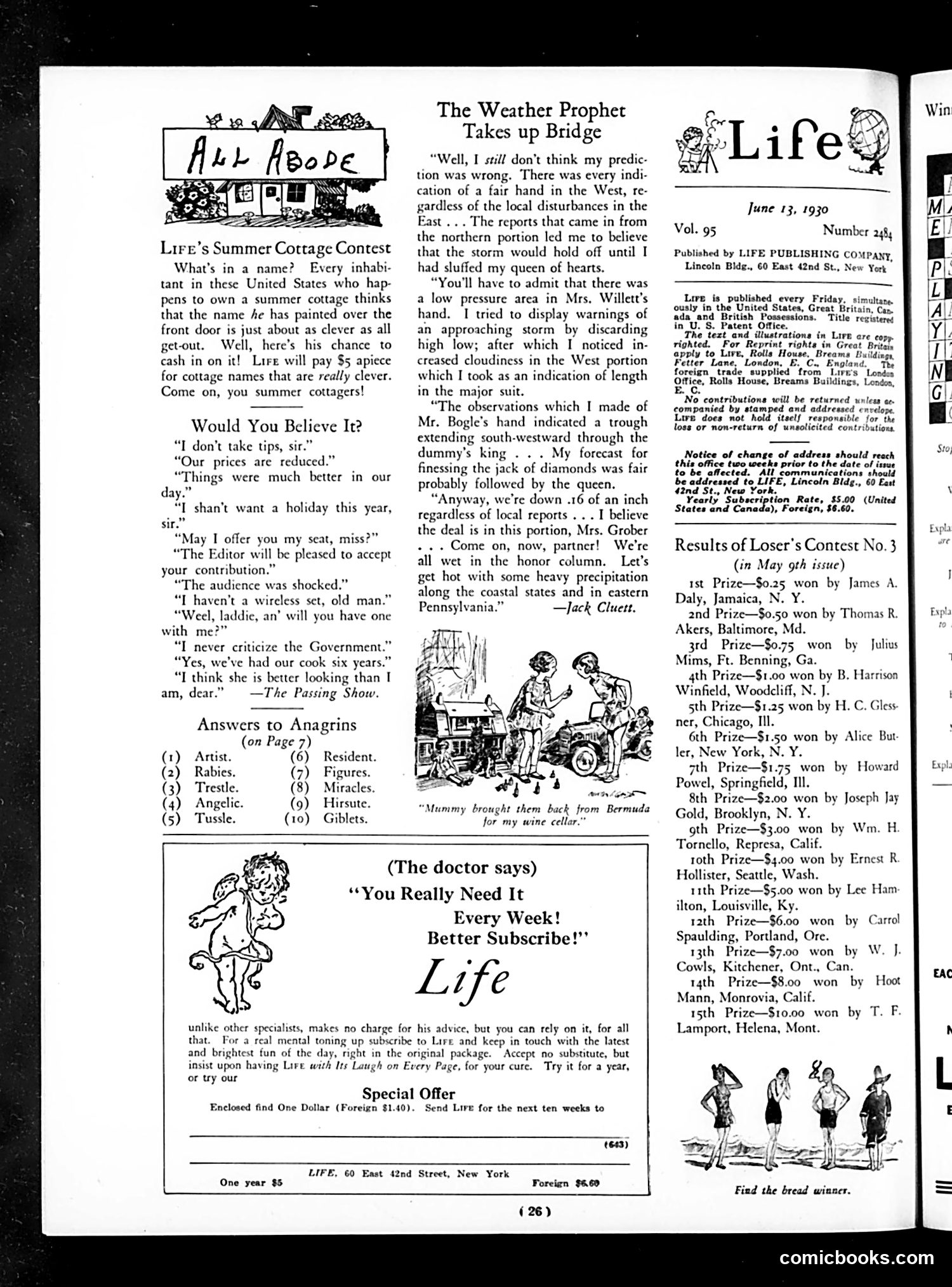
"The Weather Prophet Takes up Bridge" This cartoon satirizes a pretentious weather forecaster who applies meteorological jargon to bridge card-playing. The joke relies on the absurdity of treating a card game with pseudo-scientific language about "low pressure areas," "cloudiness," and "precipitation"—terms borrowed from actual weather prediction but nonsensically applied to opponents' hands and game strategy. The forecaster uses weather vocabulary to rationalize poor play decisions (like discarding the queen of hearts or finessing the jack of diamonds), treating card distribution like weather patterns. The humor targets both pompous experts who over-explain themselves and the arbitrary nature of luck in card games. By 1930, bridge was popular among middle-class Americans, making this an accessible joke about people who take games too seriously and hide incompetence behind technical language.
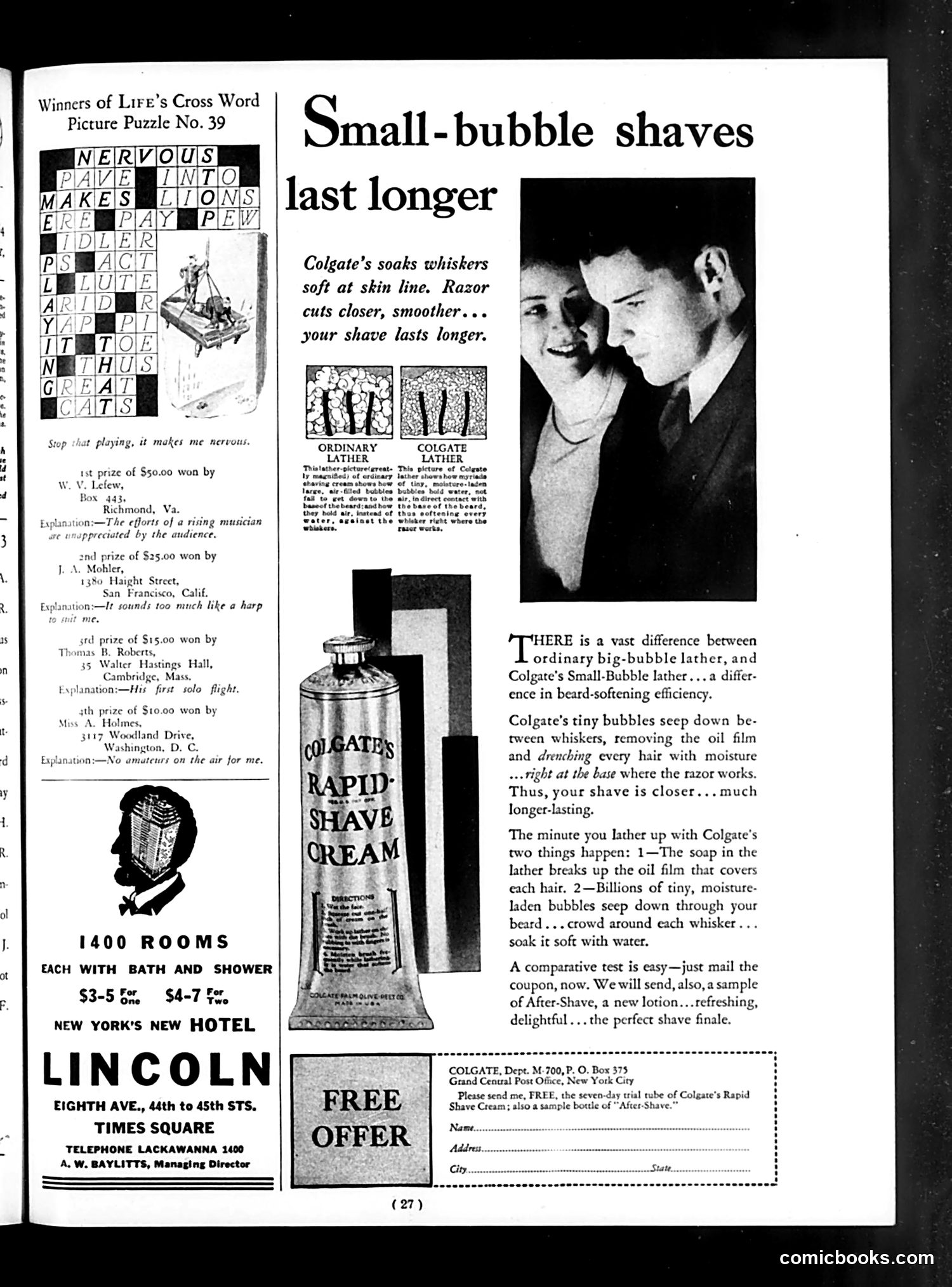
Page Analysis This page combines two distinct elements: a crossword puzzle contest and a Colgate shaving cream advertisement. The Crossword Section shows winners of Life magazine's Picture Puzzle No. 39, with prize amounts ranging from $50 down to $10. The puzzles themselves appear to involve visual/rebus clues—one explanation references "a rising musician" and another mentions "his first solo flight," suggesting the puzzles require interpreting illustrations as answers. The Advertisement occupies the majority of the page, promoting Colgate's Rapid Shave Cream by claiming its "small-bubble" lather penetrates deeper between whiskers than ordinary "big-bubble" lathers. The ad includes comparative close-up photographs of beard texture and offers a free trial coupon. This represents typical 1930s-40s advertising rhetoric: scientific-sounding claims about product superiority through microscopic detail, with an appeal to modern efficiency and masculine grooming. The Lincoln Hotel advertisement in the corner is incidental.
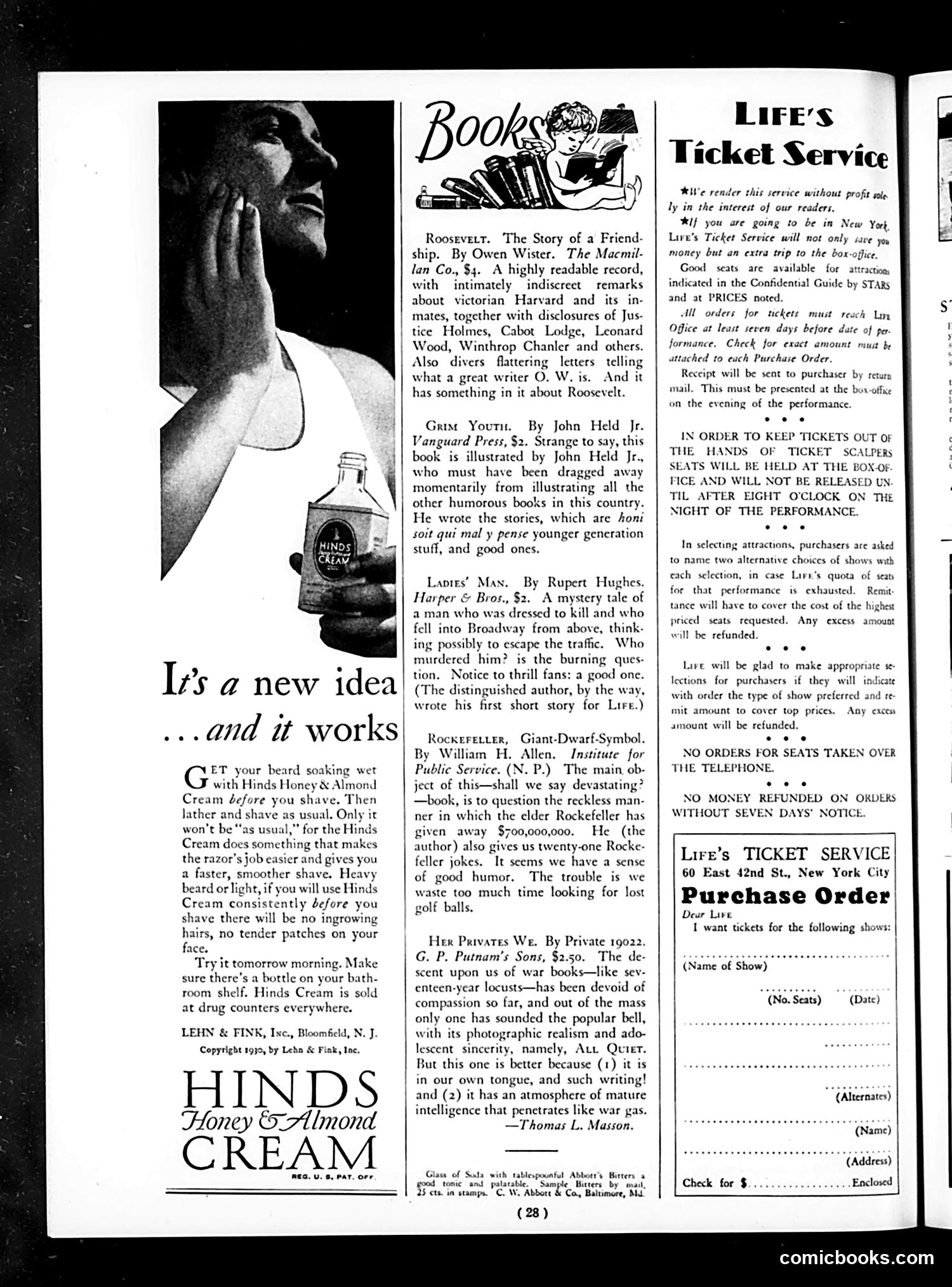
Life Magazine Page Analysis This page combines advertising and book reviews from Life magazine (circa 1930). The Advertisement: The left side features a Hinds Honey & Almond Cream shaving cream ad, using a photograph of a man's face in profile. The "new idea" is pre-soaking the beard with cream before shaving for smoother results—a straightforward grooming pitch. Book Reviews: The right section reviews contemporary books, including Owen Wister's *Roosevelt* biography and war novels. Notably, William H. Allen's *Rockefeller* book is critiqued for questioning how the elder Rockefeller gave away $700 million—the reviewer suggests this is heavy-handed social criticism ("devastating"). The sardonic tone mocks both the book's righteousness and modern life's absurdities (wasting time looking for lost golf balls). The Ticket Service: Life's ticket ordering system is explained—a service to readers offering theater seats without profit. It emphasizes anti-scalper measures, holding seats until 8 PM performance night. The page reflects 1930s consumer culture, business philanthropy debates, and emerging mass media convenience services.
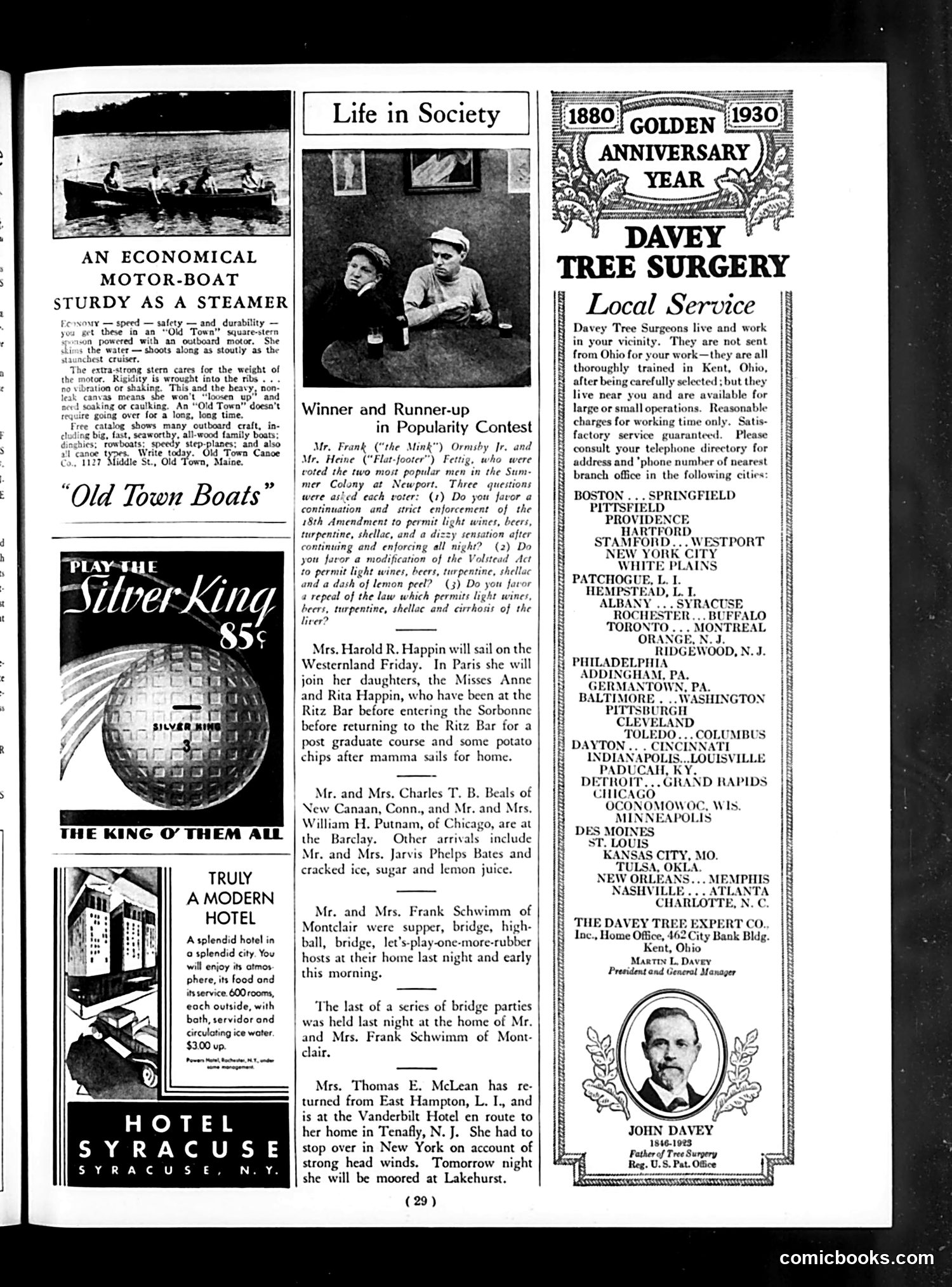
Satirical Social Commentary on Prohibition This "Life in Society" section satirizes wealthy Newport society during Prohibition (1920-1933). The joke centers on a mock "popularity contest" asking which two men were most beloved in the summer colony. The humor lies in the three identical survey questions, each supposedly offering different positions on Prohibition, yet all describing the same thing: consuming alcohol disguised as industrial products ("turpentine, shellac") and accepting its medical consequences ("cirrhosis of the liver"). The implication is savage: Newport's elite hypocritically claim to support Prohibition's 18th Amendment while openly flouting it through creative consumption of alcohol-adjacent substances. The contest "winners"—named with obvious satirical caricature surnames like "the Mink" and "Flat-footer"—are celebrated for this duplicitous behavior. The surrounding gossip items reinforce the theme: wealthy vacationers casually hopping between bars (the Ritz Bar appears twice), playing bridge all night, and conducting their leisure with complete disregard for actual Prohibition enforcement—the very law their popularity supposedly reflects.
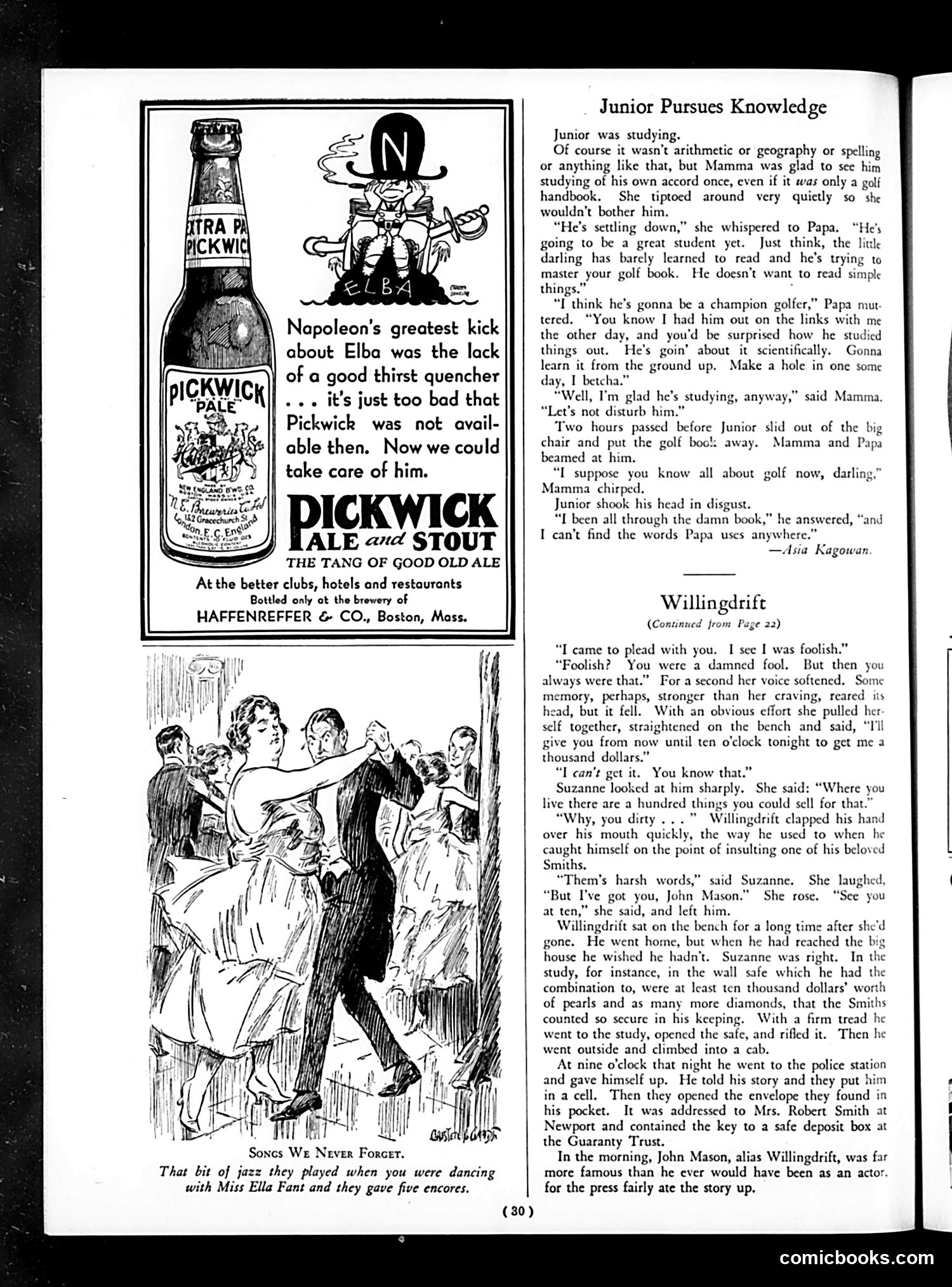
Page Analysis: Life Magazine The "Junior Pursues Knowledge" Comic: A humorous domestic scene where parents mistake their son's studious behavior for intellectual growth. Junior is actually reading a *golf handbook*—not serious literature. The joke's payoff: after two hours of study, Junior complains he can't find his father's colorful curse words in the book. The satire gently mocks both parental assumptions about education and the gap between what adults think children are learning versus reality. The Dickwick Ale Advertisement: A period beer ad using Napoleon and Elba as a hook—Napoleon supposedly regretted lacking good beer on his island exile. The ad emphasizes Dickwick as superior refreshment available "at the better clubs, hotels and restaurants." Standard early 20th-century advertising linking a product to sophistication and social status. The "Willingdrift" Story (continued): A serialized drama about a character torn between moral integrity and desperation. He's a trusted employee (possibly butler/steward) blackmailed into theft, who ultimately confesses rather than steal from his employers, becoming unexpectedly famous through the scandal.
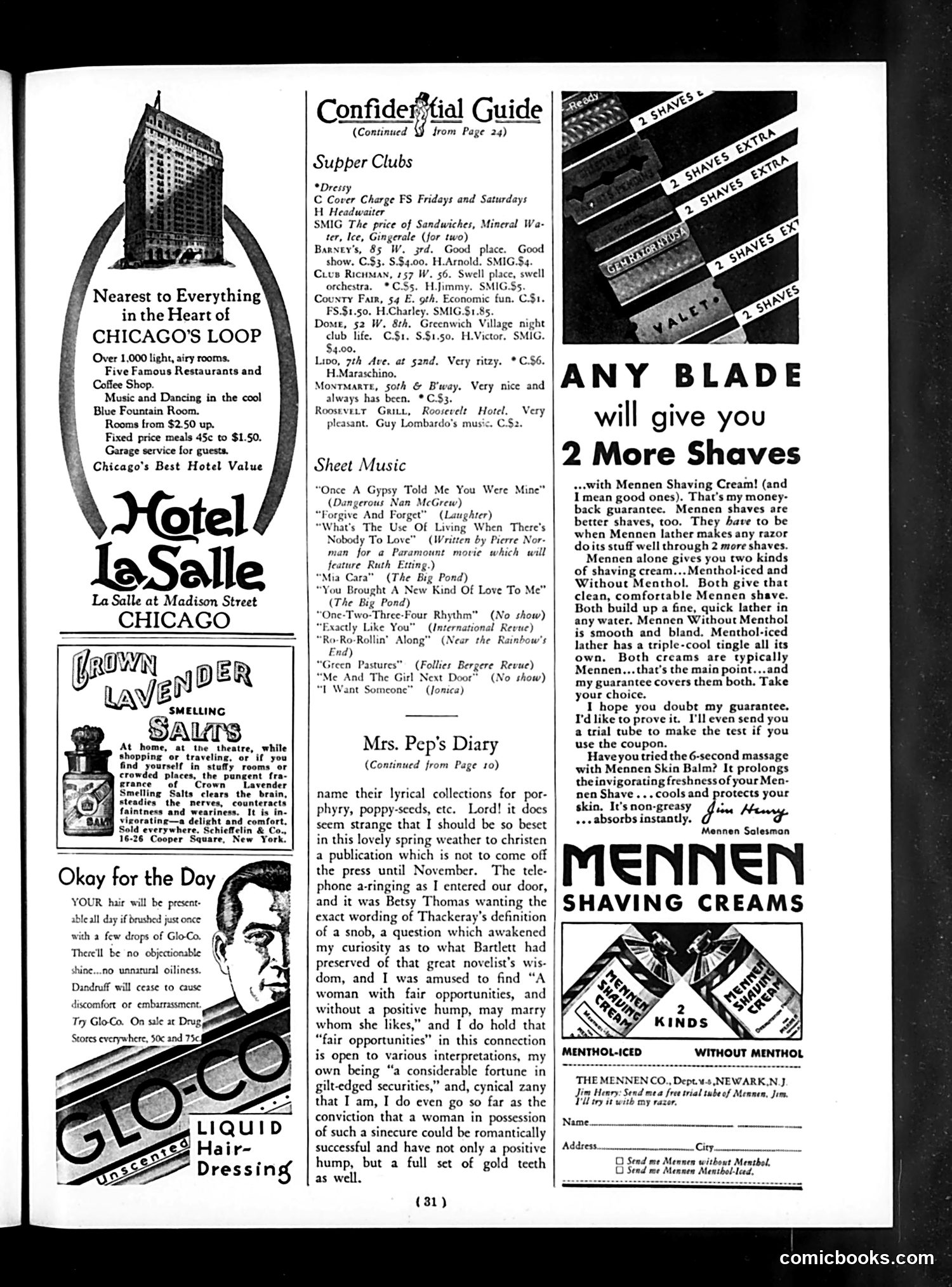
Analysis of Life Magazine Page (circa 1920s-1930s) This page is primarily advertising and lifestyle content, not political satire. The advertisements target middle-class consumers with products reflecting period concerns: Advertisements include: - Hotel La Salle (Chicago luxury lodging) - Crown Lavender Smelling Salts (for fainting, nervousness) - GloCo hair dressing (combats dandruff and oiliness) - Mennen Shaving Cream (promises extra shaves per blade) Editorial content consists of a nightlife guide to supper clubs, sheet music recommendations from current films and Broadway shows, and "Mrs. Pep's Diary"—a column discussing literary references (Thackeray's definition of a snob) in gossipy, sarcastic tone typical of the era's society pages. The page reflects 1920s consumer culture: emphasis on grooming, entertainment venues, entertainment industry products, and witty commentary on romance and social status aimed at affluent readers.
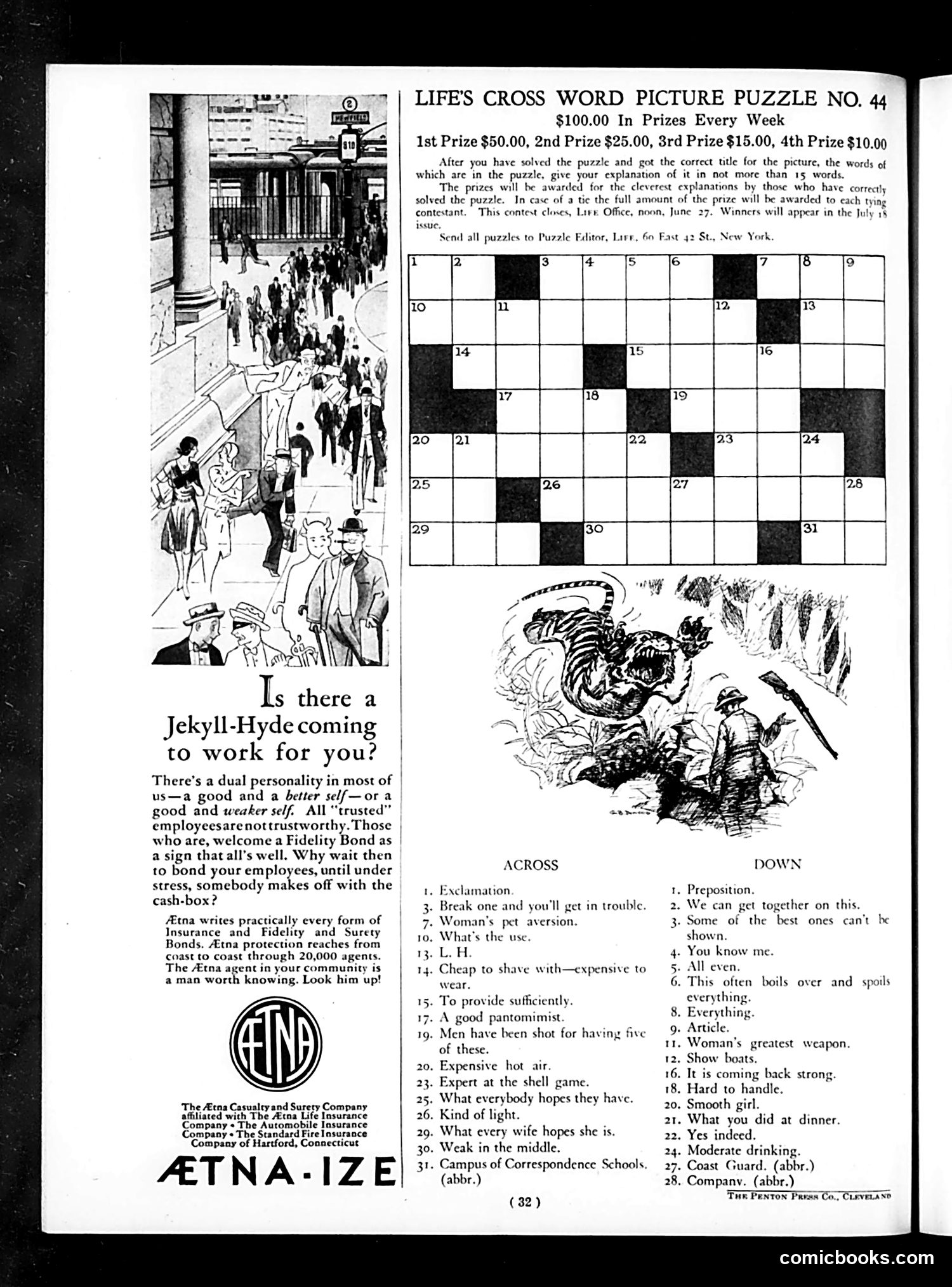
Analysis of Life Magazine Page No. 44 This page combines a crossword puzzle contest with an insurance advertisement. The main visual shows a crowded urban street scene (appears to be early 20th century based on clothing and architecture), likely depicting a busy commercial district. The accompanying advertisement for Aetna insurance uses the "Jekyll and Hyde" reference—the famous literary duality of good and evil personalities—as a metaphor for untrustworthy employees. The pitch warns employers that even "trusted" workers might steal under financial stress, suggesting fidelity bonds as protection. This reflects early-1900s employer anxieties about employee theft and dishonesty. The crossword puzzle invites readers to identify the street scene's title, offering cash prizes ($50 first prize) for correct solutions plus clever written explanations. The clues are typical period wordplay. The page represents Life's format: entertainment (puzzles) mixed with advertising disguised as social commentary—here using a Gothic literary reference to sell business insurance to worried American employers.
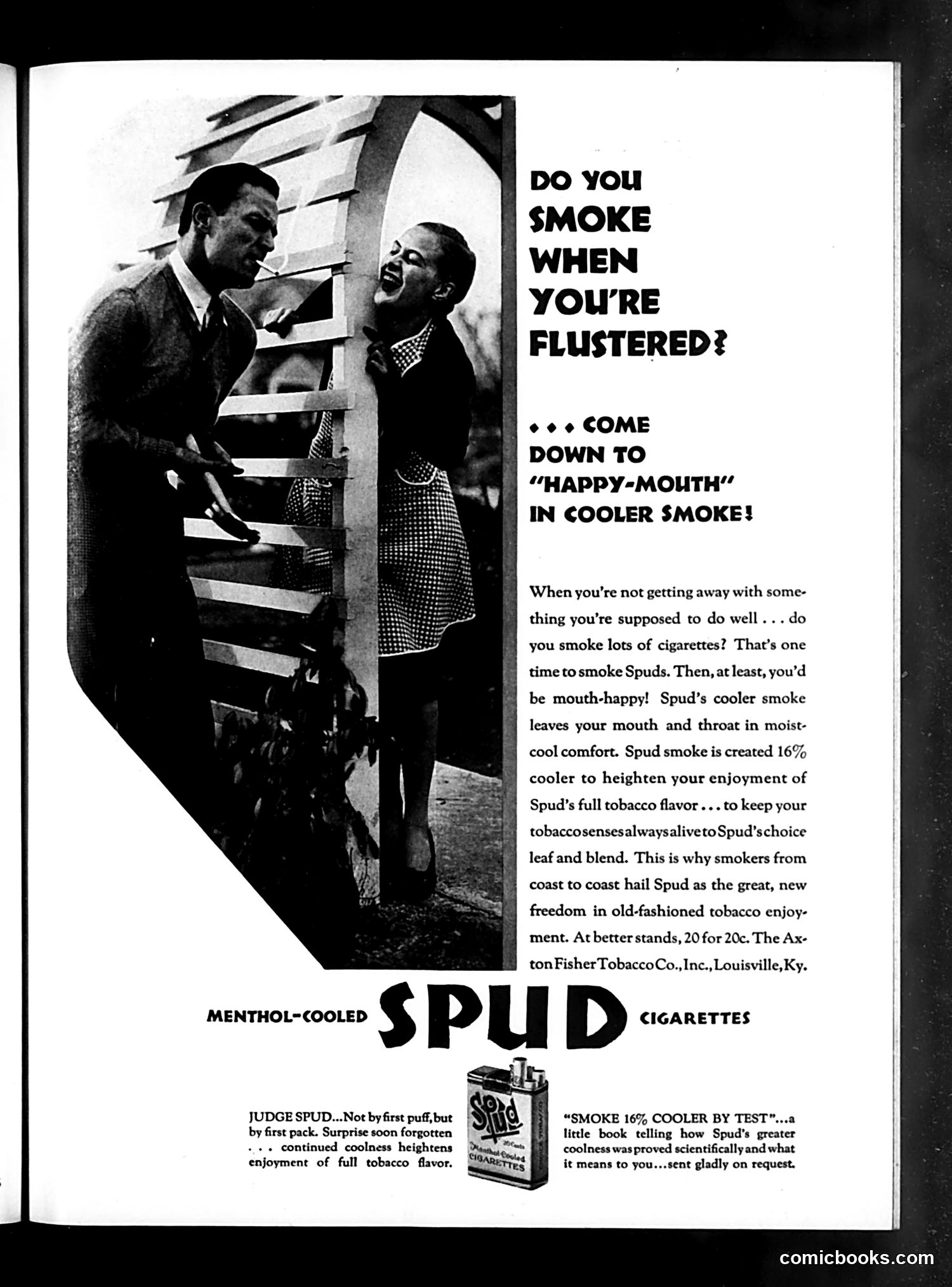
Analysis: Spud Cigarettes Advertisement This is a vintage cigarette advertisement, not satire or political commentary. The page promotes Spud menthol-cooled cigarettes, marketed as a solution for stress-smoking. The image shows two men in business attire appearing agitated or flustered in what looks like an office or institutional setting. The ad's premise—targeting anxious smokers—reflects mid-20th century attitudes normalizing smoking as a stress-relief habit. Key claims made: - Spud smoke is "16% cooler" than competitors - Menthol provides "moist-cool comfort" - Marketed as "new freedom in old-fashioned tobacco enjoyment" - Price: 20 cigarettes for 20 cents The ad exemplifies pre-health-warning tobacco marketing that openly appealed to emotional vulnerability and normalized heavy smoking. No political figures or satirical intent are present—this is straightforward (if now shocking) vintage advertising.
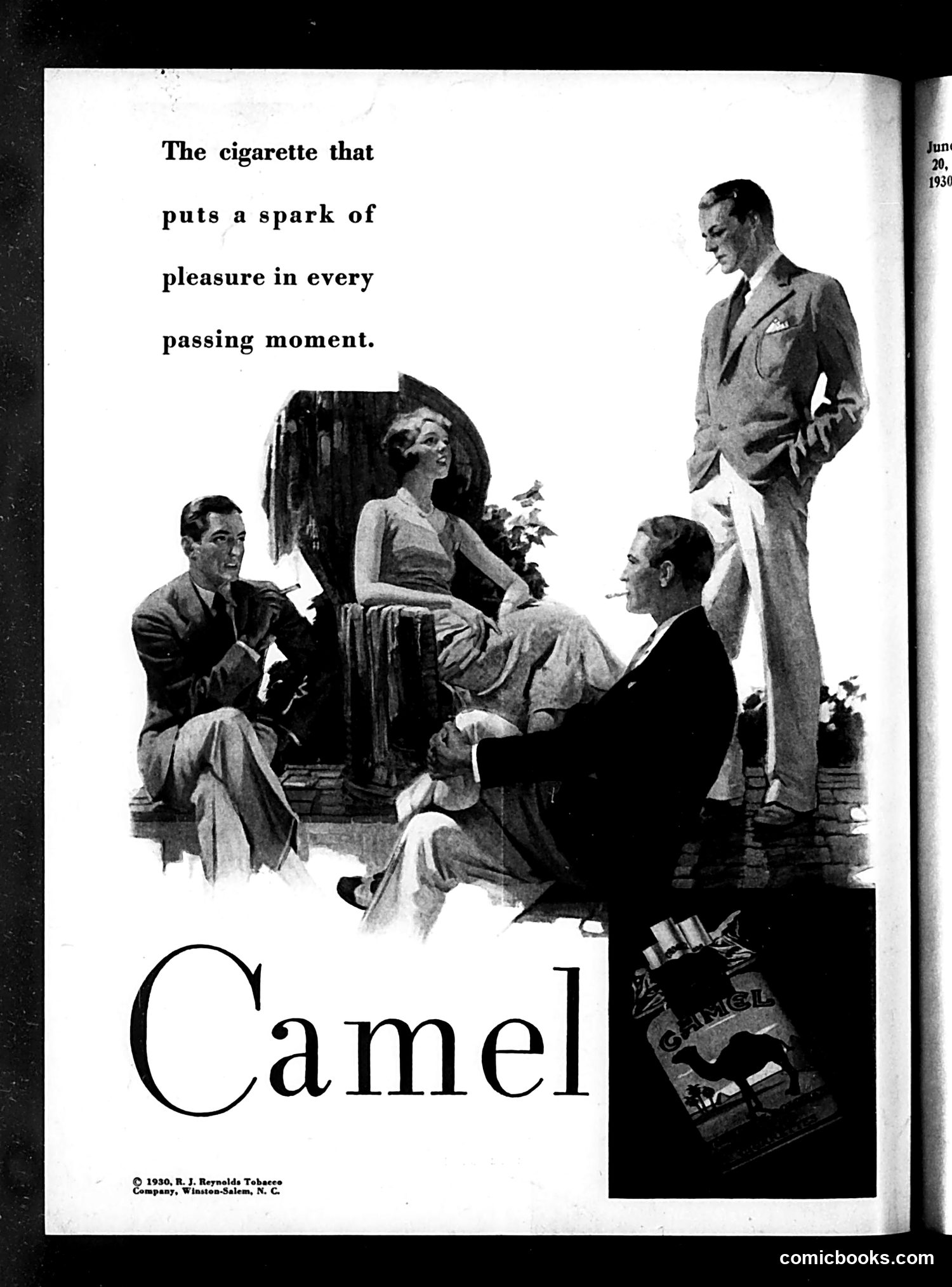
This is a 1930 Camel cigarette advertisement, not political satire. The ad depicts four well-dressed men and a woman in an elegant social setting, all appearing to smoke or hold cigarettes. The tagline promises that Camel cigarettes provide "a spark of pleasure in every passing moment." The image reflects early 20th-century advertising that normalized smoking in sophisticated social contexts. The composition—featuring stylish people in leisure activities—was typical marketing strategy targeting affluent audiences. The copyright credit to R.J. Reynolds Tobacco Company confirms this is commercial advertising rather than editorial content, designed to associate cigarettes with glamour, relaxation, and social status. By modern standards, such advertising would be prohibited in most countries due to health regulations.