life
Life — September 26, 1930
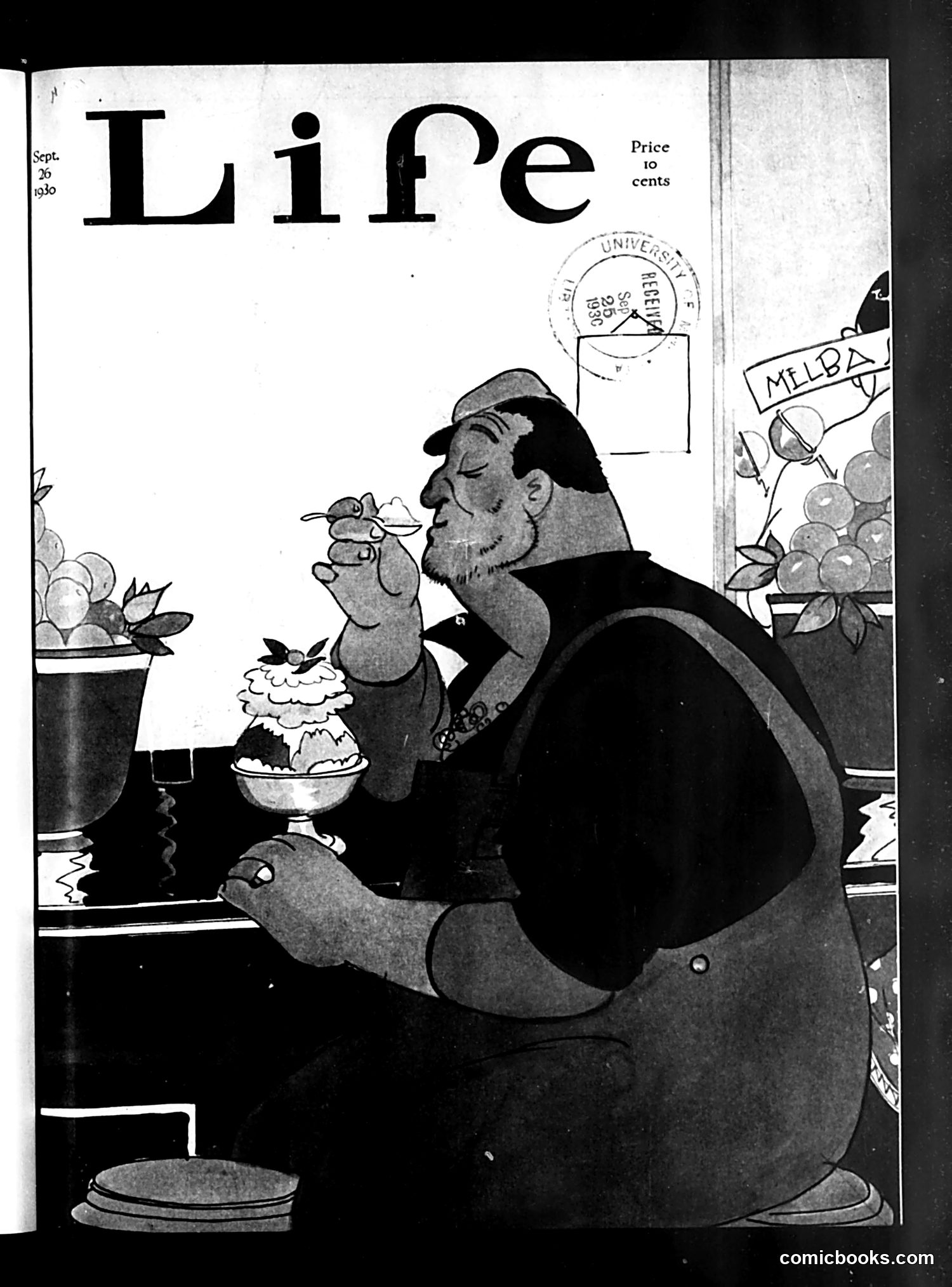
Life Magazine Cover Analysis This is a Life magazine cover from September 20, 1930 (price 20 cents). The illustration shows a corpulent man in a dark suit seated at a table, eating what appears to be a fancy dessert. He's surrounded by potted plants and fruit displays, suggesting an affluent domestic setting with a "Melba" brand visible on the right. The satire likely comments on wealth and excess during the Great Depression era—the man's obvious prosperity and indulgent consumption would have contrasted sharply with widespread economic hardship of 1930. The specific figure's identity is unclear from the image alone, but the cartoon mocks conspicuous consumption and the disconnect between the wealthy elite and struggling Americans.
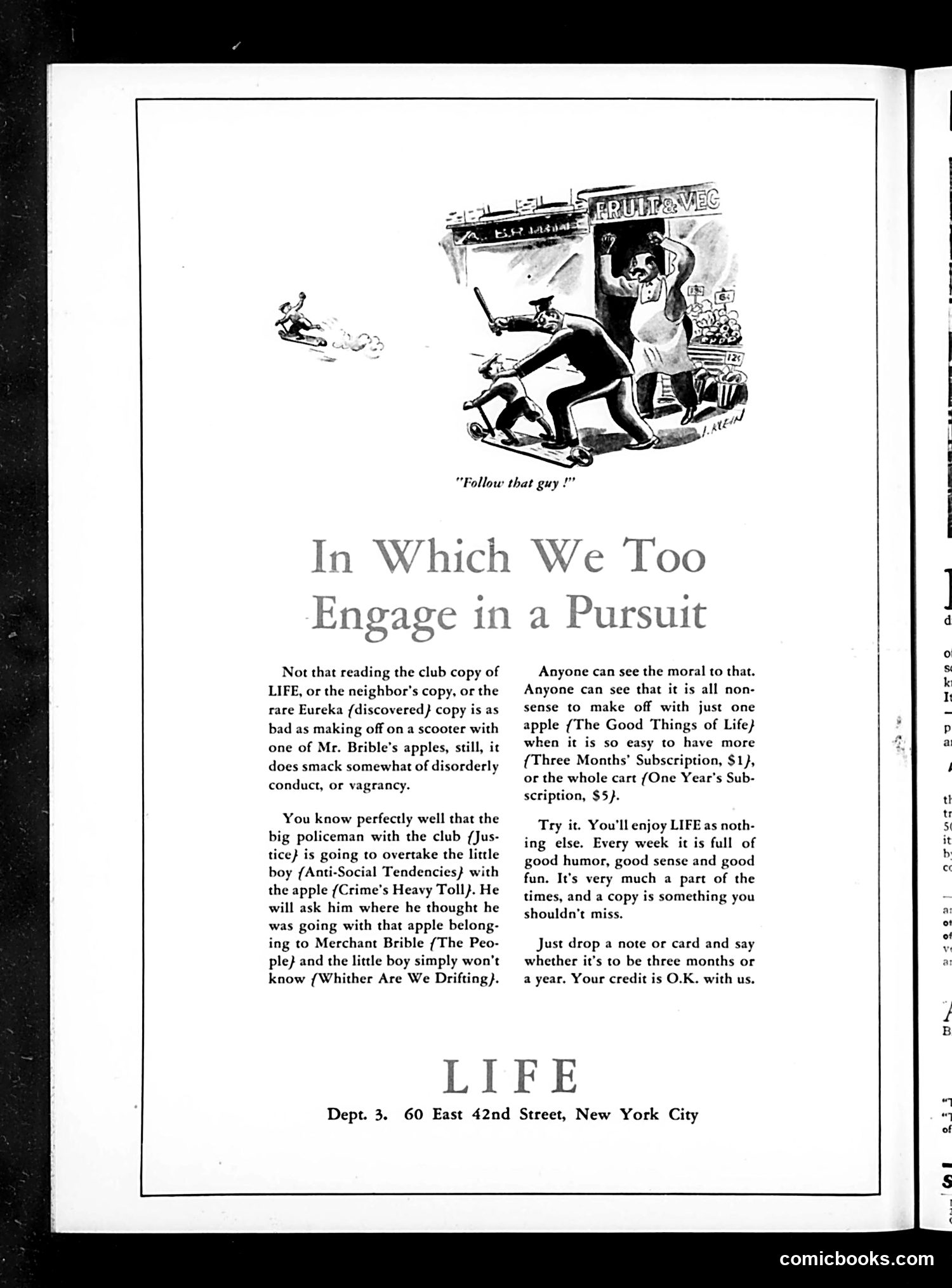
Analysis This is a LIFE magazine advertisement promoting subscriptions. The cartoon depicts a policeman chasing a small boy who has stolen an apple—a reference to the nursery rhyme/fairy tale "The Merchant's Apple" or similar children's stories about petty theft. The ad's humor plays on the absurdity of overreaction: the massive authority figure pursues the child over something trivial. The text's moral lesson—that unauthorized borrowing of magazines (even "rare" copies) is similarly petty misconduct—uses this exaggerated pursuit as an analogy. The subscription pitch promises humor, good sense, and cultural value, arguing LIFE magazine is worth purchasing legitimately rather than borrowing. The appeal to readers' sense of propriety and morality is characteristic of mid-20th-century advertising rhetoric.
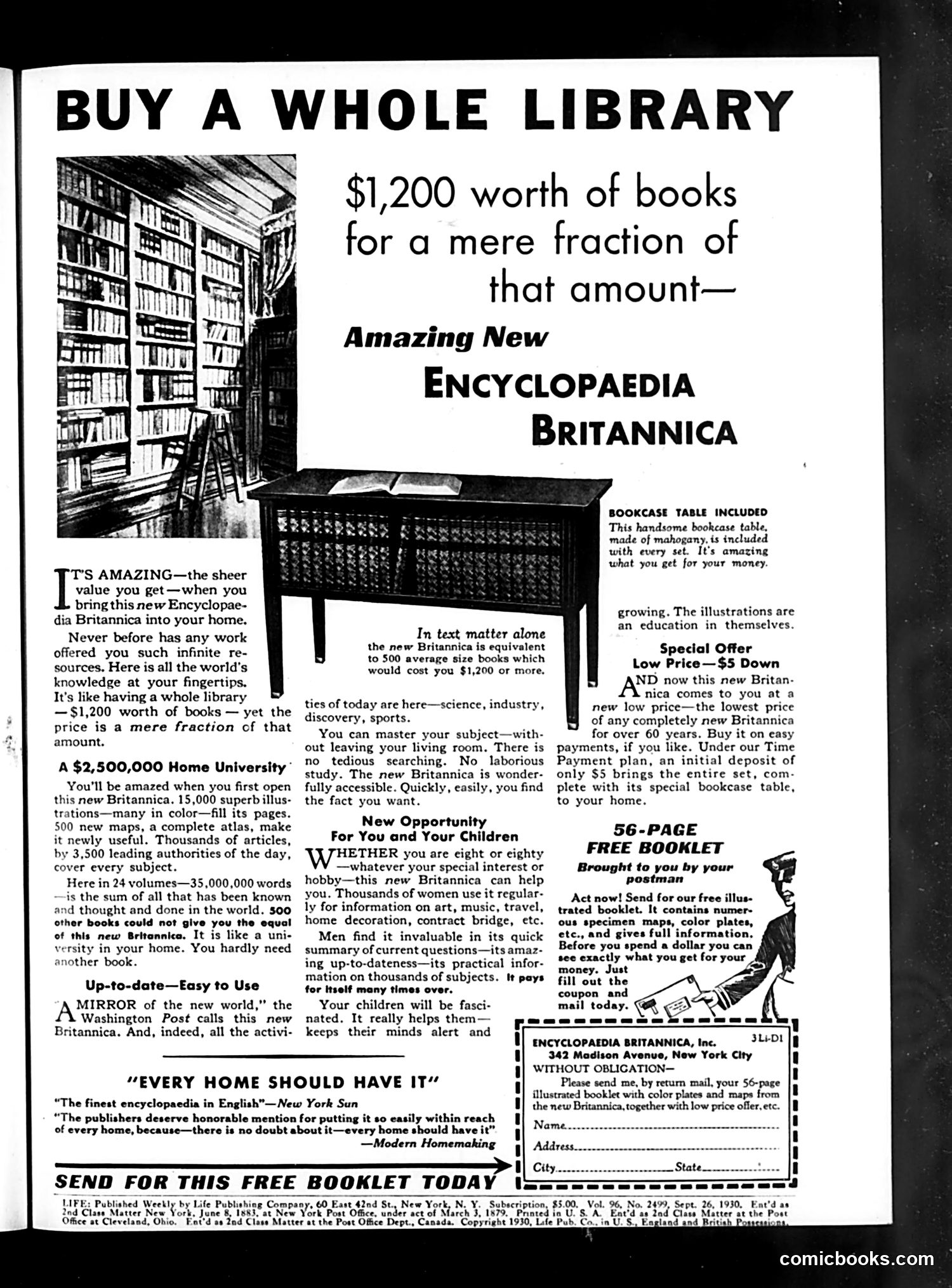
Analysis This is primarily a vintage advertisement, not satirical content. It promotes the "Amazing New Encyclopaedia Britannica" to American households, circa 1920s-1930s based on styling. The ad uses several persuasive appeals: - Value proposition: $1,200 worth of books for a fraction of that price - Status messaging: Calls it "A $2,500,000 Home University," implying cultural sophistication - Practical benefit: 15,000 illustrations across 35,000,000 words covering science, industry, discovery, sports - Accessibility: Emphasizes ease of use ("no laborious study") and payment plans The included bookcase table underscores aspirational home furnishing. The accompanying illustration of a well-stocked library shelf appeals to desires for knowledge and respectability. This reflects early 20th-century marketing targeting middle-class families seeking affordable self-education and social advancement through owning comprehensive reference materials.
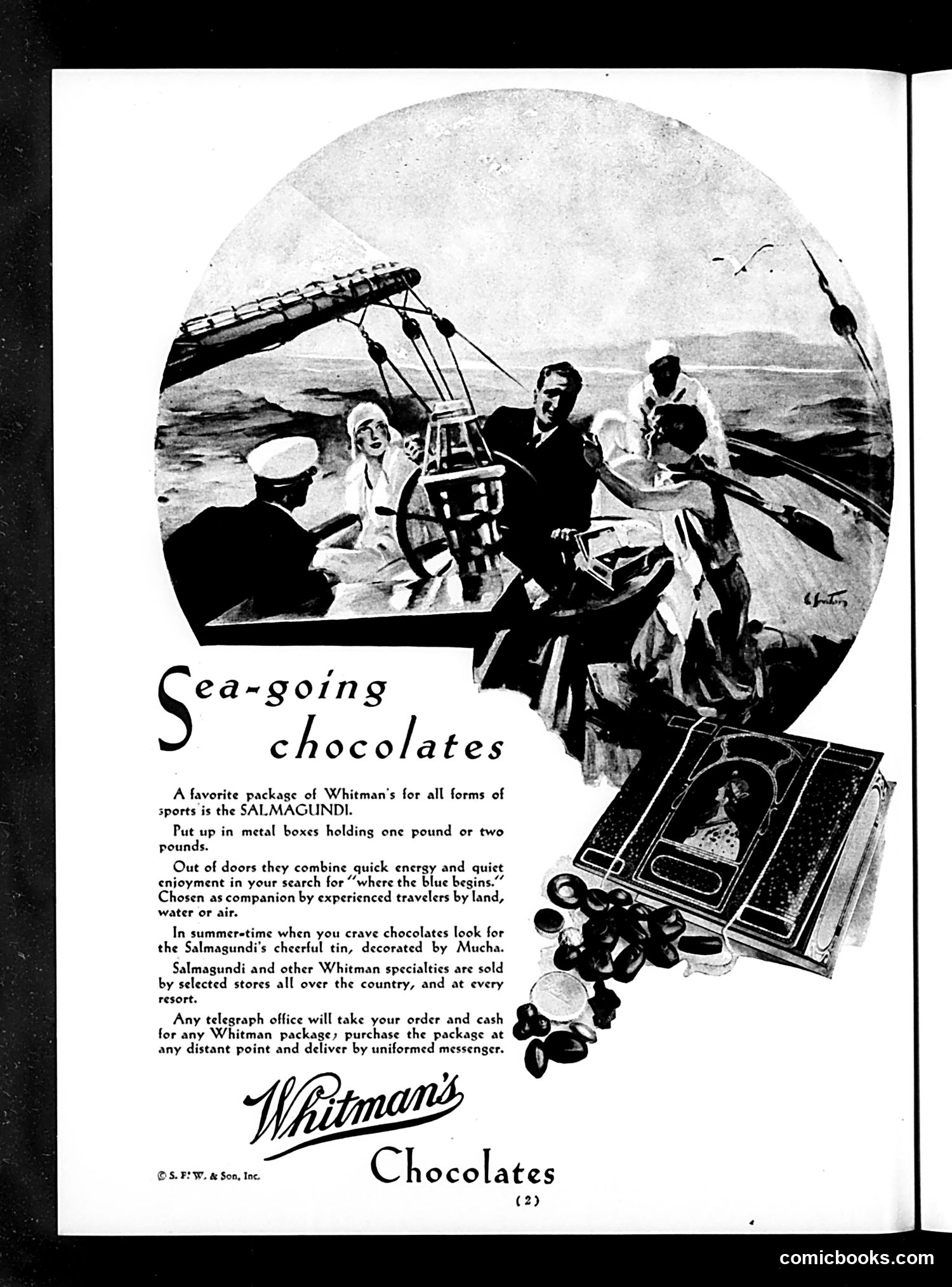
Analysis This is a Whitman's Chocolates advertisement, not political satire. The page depicts a leisure scene set on a boat, showing well-dressed passengers enjoying maritime recreation. The ad promotes "Salmagundi" chocolates—a Whitman's specialty—as ideal companions for seaside activities and travel. The advertisement emphasizes convenience and accessibility: chocolates arrive in metal boxes (1-2 pounds), available at telegraph offices nationwide for mail order delivery. The copy suggests these are luxury goods for "experienced travelers by land, water or air." The illustration's nautical theme and fashionable figures reflect early 20th-century aspirational marketing—associating the product with leisure, sophistication, and adventure. This is commercial advertising rather than editorial content or political commentary.
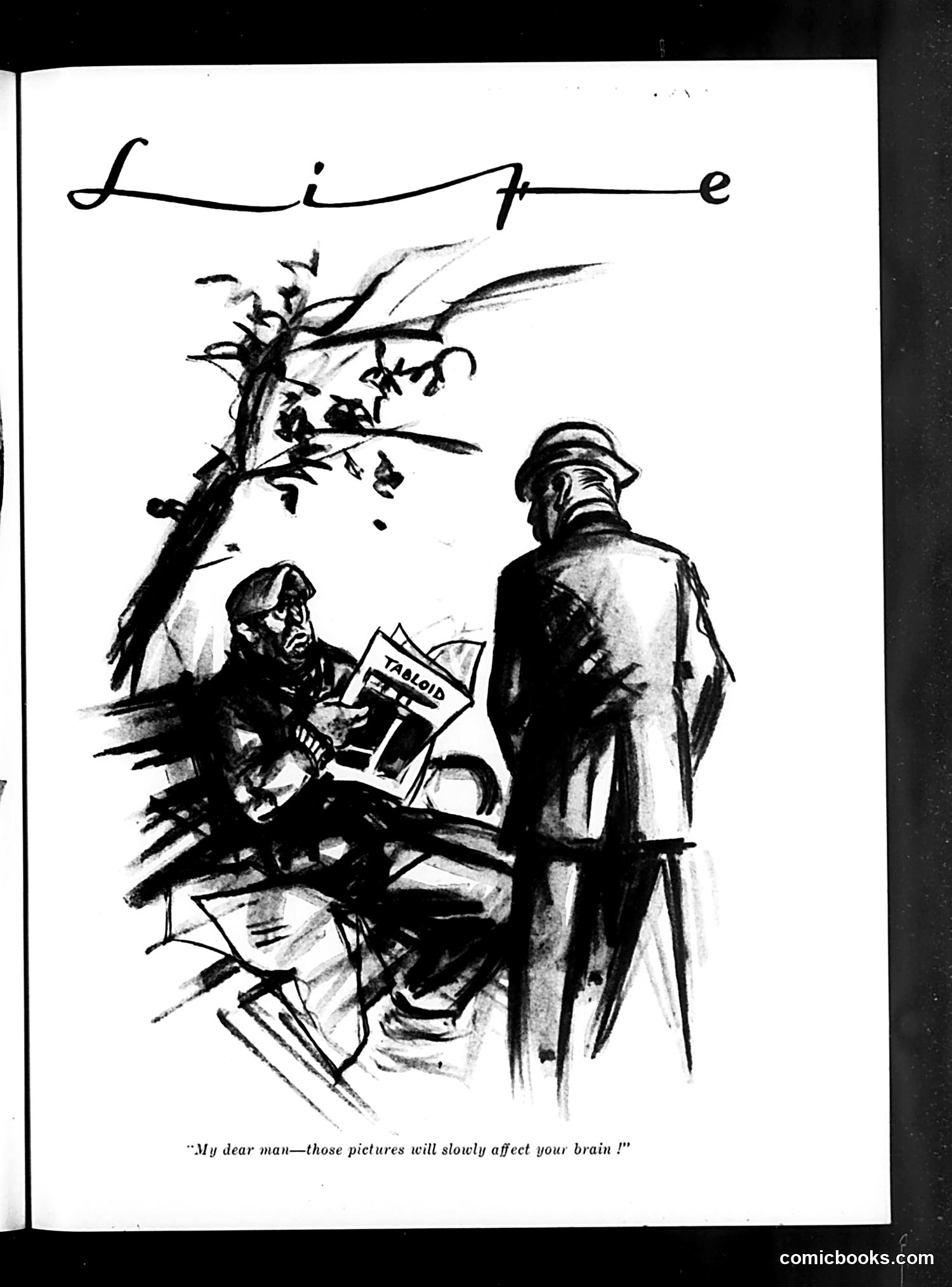
Analysis This cartoon shows two figures beneath a bare, gnarled tree. One sits reading a publication labeled "Tabloid," while the other stands observing. The caption reads: "My dear man—those pictures will slowly affect your brain!" The satire targets the tabloid press and its sensationalist visual content. The standing figure warns that consuming tabloid pictures—known for lurid, shocking imagery—causes intellectual deterioration. The bare tree symbolizes the barren mental state resulting from such consumption. This reflects early 20th-century concern about mass-market tabloid journalism's social impact, particularly its reliance on photographs and graphic content to drive sales. The cartoon positions tabloid readers as intellectually compromised, a common satirical theme in *Life* magazine's critiques of popular culture and mass media.
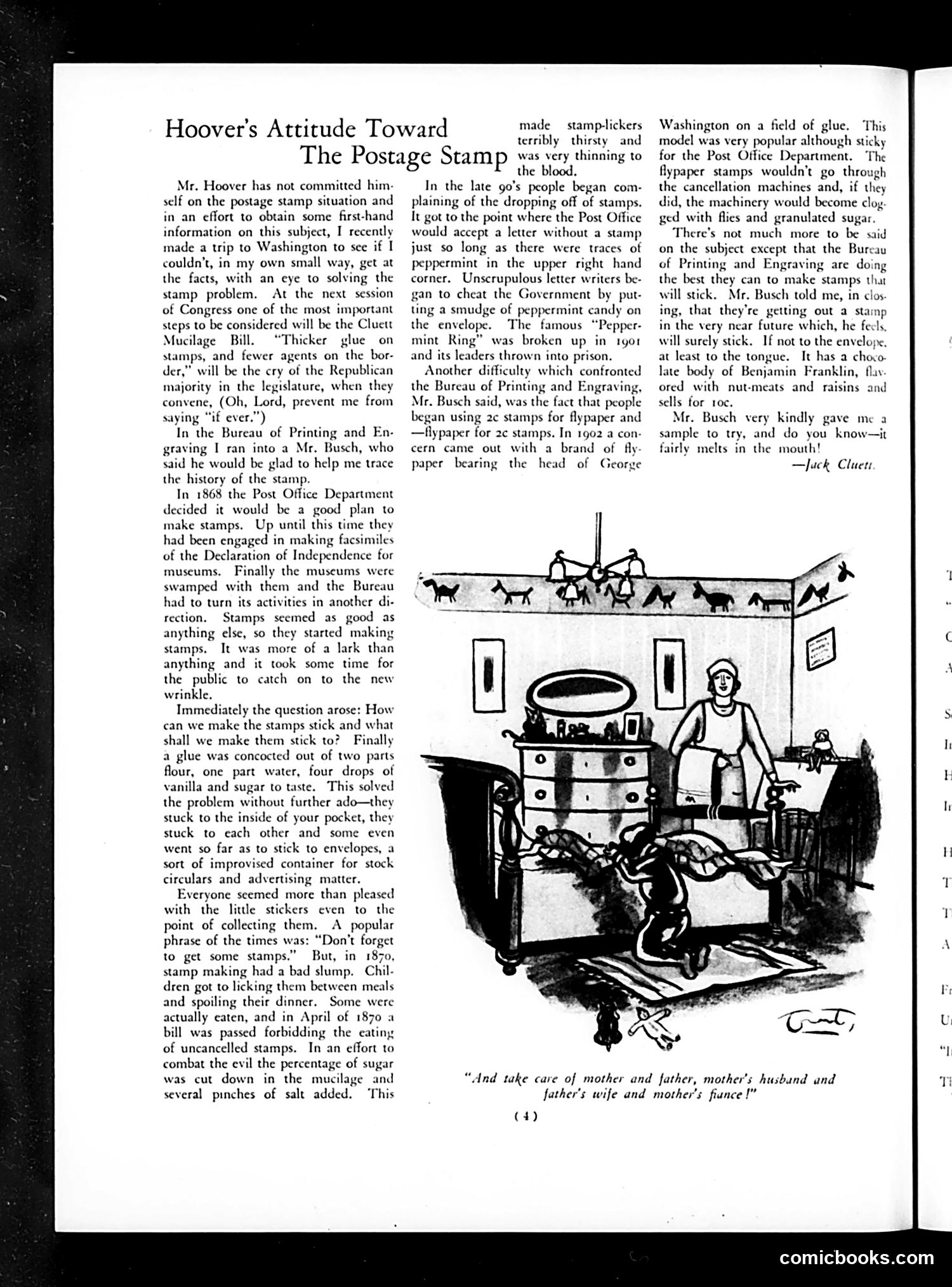
Analysis of "Hoover's Attitude Toward The Postage Stamp" This is a humorous article about postage stamp production history, not political satire. The text discusses how the Post Office Department began manufacturing stamps in 1868, and details the technical challenges of making them stick—including a failed "Pepper Mint" glue formula that led to someone being imprisoned, and issues with flypaper stamps in 1902. The accompanying cartoon illustrates the practical problem: a woman at what appears to be a stamp-manufacturing machine, with the caption warning to "take care of mother and father, mother's husband and father's wife and mother's fiancé!" The joke references children getting stamps stuck to their mouths while licking them, creating domestic chaos. This reflects genuine 1910s concerns about stamp hygiene and adhesive safety.
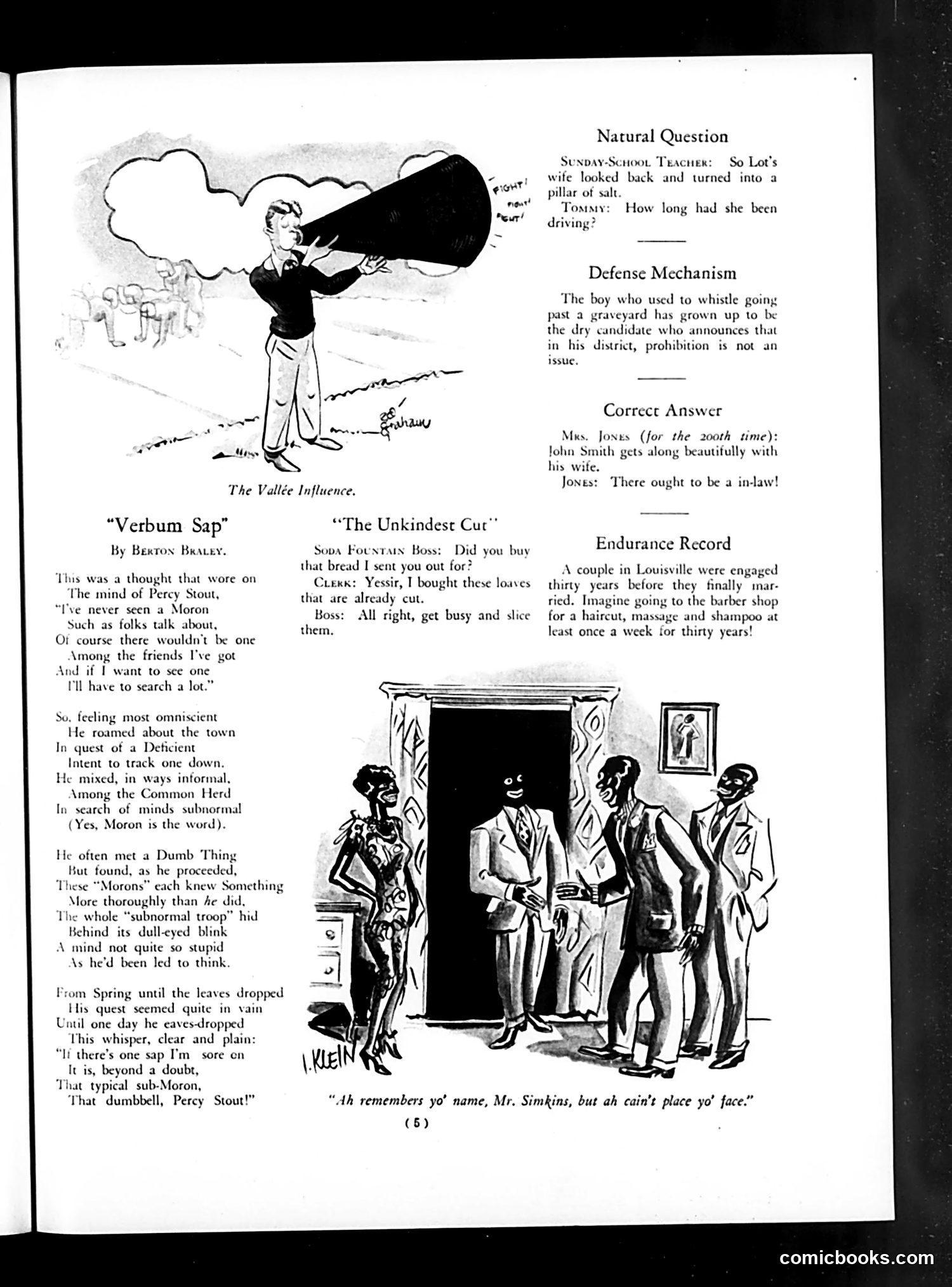
Page 65 Analysis: Life Magazine Humor Section This page contains three separate humor pieces: "The Vallée Influence" (top cartoon): A man with an enormous megaphone addresses an audience. The joke references Rudy Vallée, a famous 1920s crooner known for singing through a megaphone. The satire suggests his vocal style's absurdly outsized amplification. "Verbum Sap" (left column): A humorous poem by Berton Braley about Percy Stout seeking a Moron—suggesting people who believe common gossip are intellectually deficient. It's genteel satire on small-town rumor-mongering. Bottom cartoon: Three men encounter a woman at a doorway. The caption "Ah remember yo' name, Mr. Simkins, but ah cain't place yo' face" appears to mock Southern social pretense or memory lapses. These represent typical *Life* magazine humor: light satire on popular culture, small-town life, and social conventions.
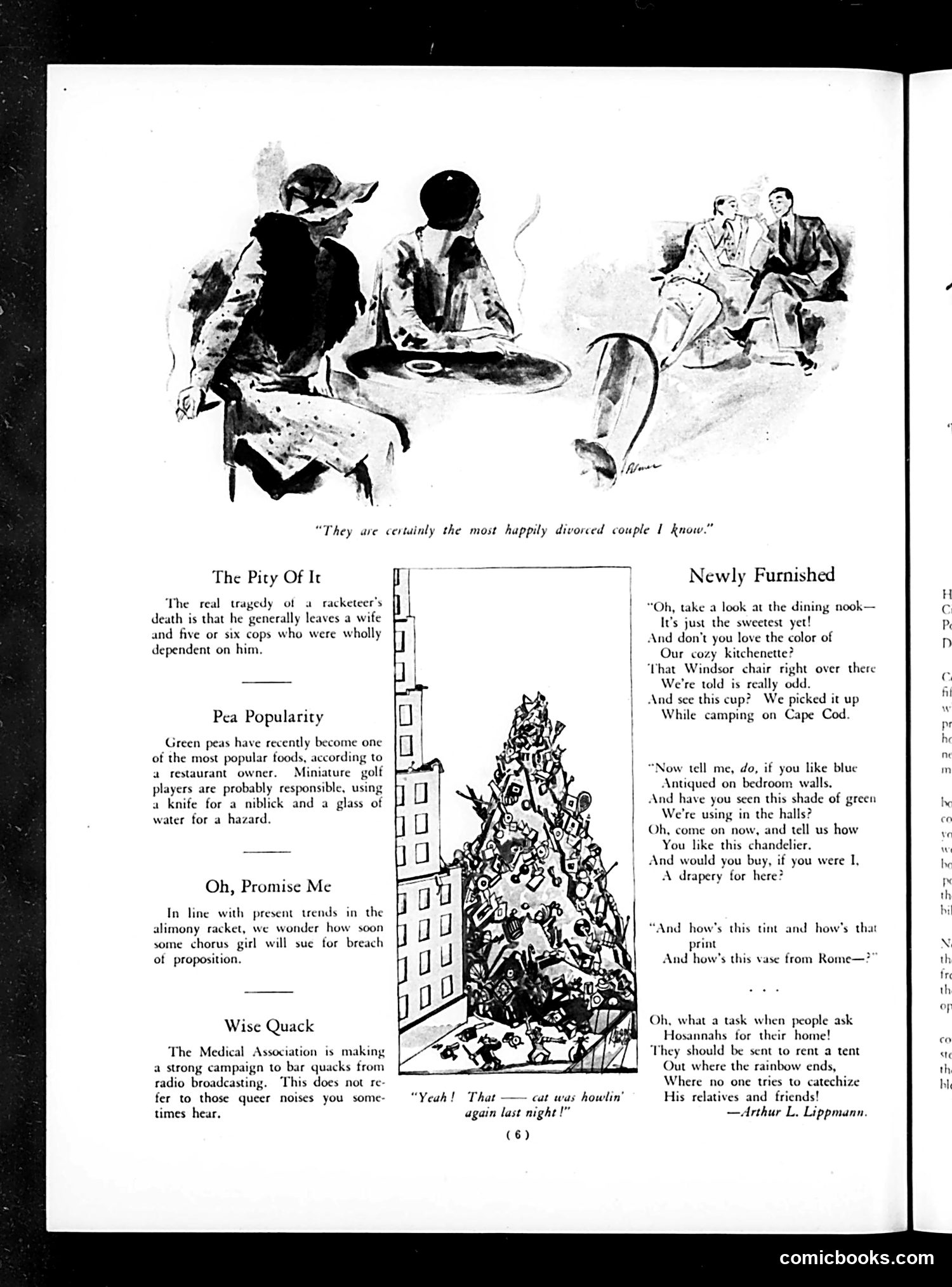
Page 6 of Life Magazine - Analysis This page contains several short humorous pieces and a cartoon, typical of Life's satirical format: Top cartoon: Shows a divorced couple socializing pleasantly, captioned "They are certainly the most happily divorced couple I know"—satirizing the contradiction between divorce (suggesting unhappiness) and their apparent contentment. Left column pieces ("The Pity of It," "Pea Popularity," "Oh, Promise Me," "Wise Quack") are brief social commentary: mocking racketeers' impact on dependents, noting peas' trendy restaurant popularity, commenting on marriage proposals, and criticizing medical quacks on radio. Right section: "Newly Furnished" humorously depicts a couple obsessing over home décor details while living in an overcrowded, chaotic apartment building—satirizing newlyweds' misplaced priorities regarding trendy furnishings over actual space and comfort.
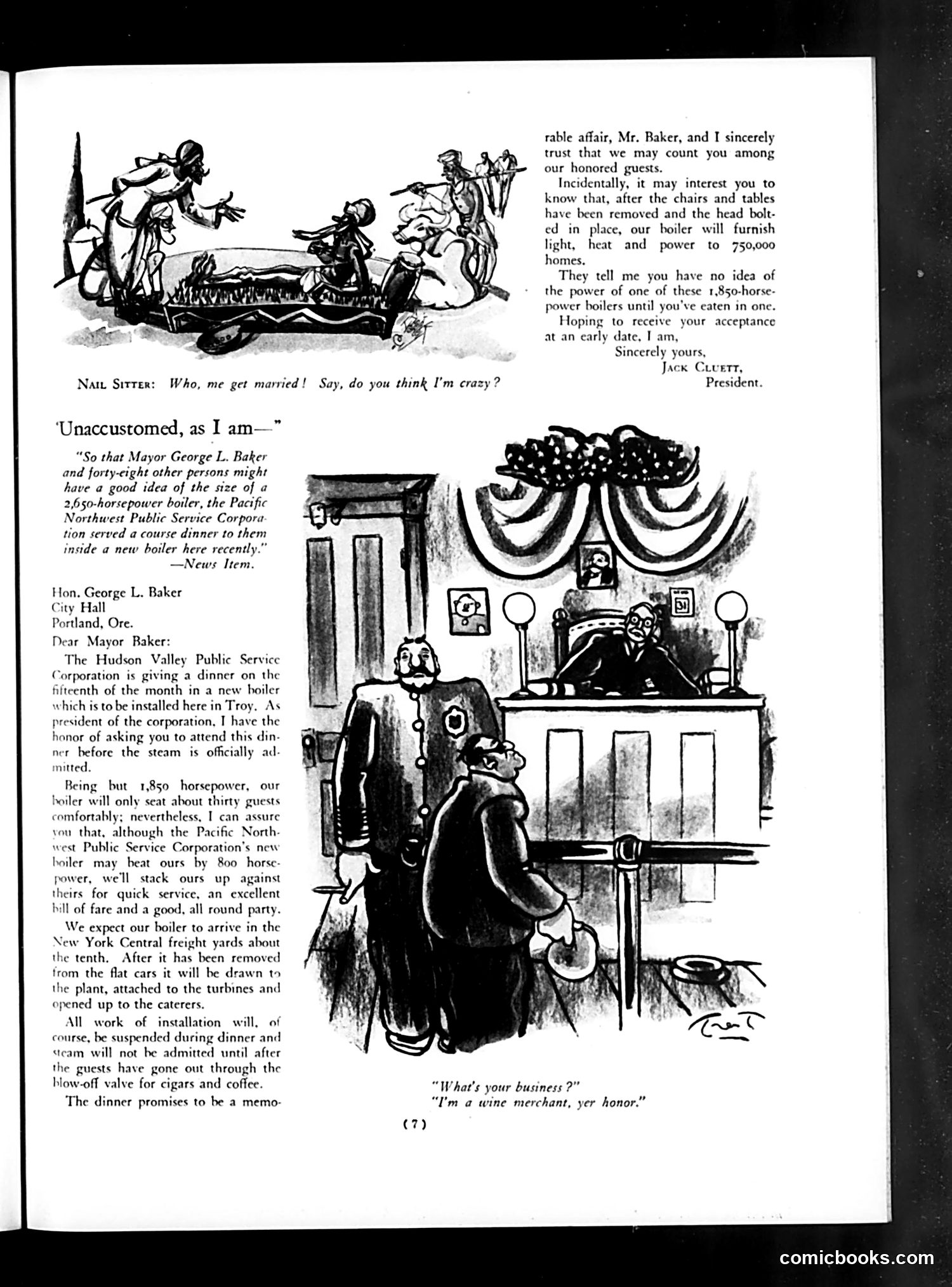
Explanation for Modern Readers This page satirizes a 1920s-era corporate publicity stunt. Mayor George L. Baker of Portland, Oregon received an invitation to a dinner celebrating installation of a massive 1,850-horsepower boiler by the Pacific Northwest Public Service Corporation in Troy. The top cartoon mocks the absurdity: a man asks "Who, me get married! Say, do you think I'm crazy?" — equating marriage to accepting this dinner invitation. The implication is that attending such a corporate event is an equally binding, ridiculous commitment. The bottom cartoon shows a society dinner where a guest claims to be "a wine merchant, yet honor" — likely satirizing pretentious business figures attending corporate celebrations disguised as prestigious social events. The satire targets corporate self-promotion dressed up as civic honor and entertainment.
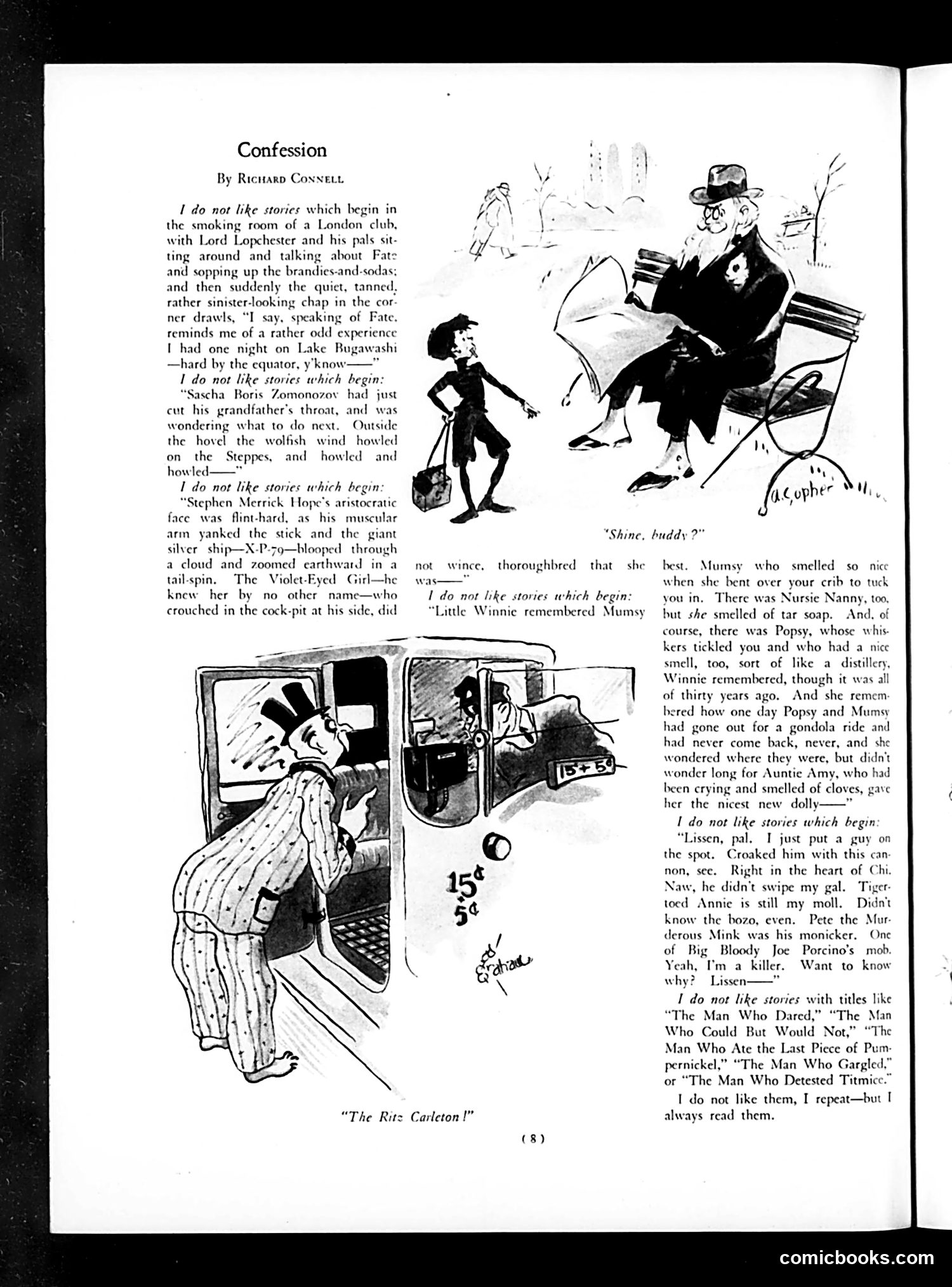
"Confession" by Richard Connell This satirical essay mocks predictable literary story openings. Connell catalogs clichéd opening lines he dislikes—tales beginning in London clubs with aristocrats, stories about Sascha Boris Zomonozov, and adventure narratives like "The Man Who Dared." The two cartoons illustrate his complaints: "Shine, buddy?" shows an exaggerated street character, while "The Ritz Carleton!" depicts a disheveled passenger in a taxi (marked 15¢), likely mocking low-brow or melodramatic story premises. The piece's ironic refrain—"I do not like stories which begin..."—emphasizes how Connell dislikes these tropes *yet always reads them anyway*, capturing the paradox of popular fiction's appeal despite (or because of) its predictability. The humor targets both hackneyed writing and readers' guilty consumption of it.
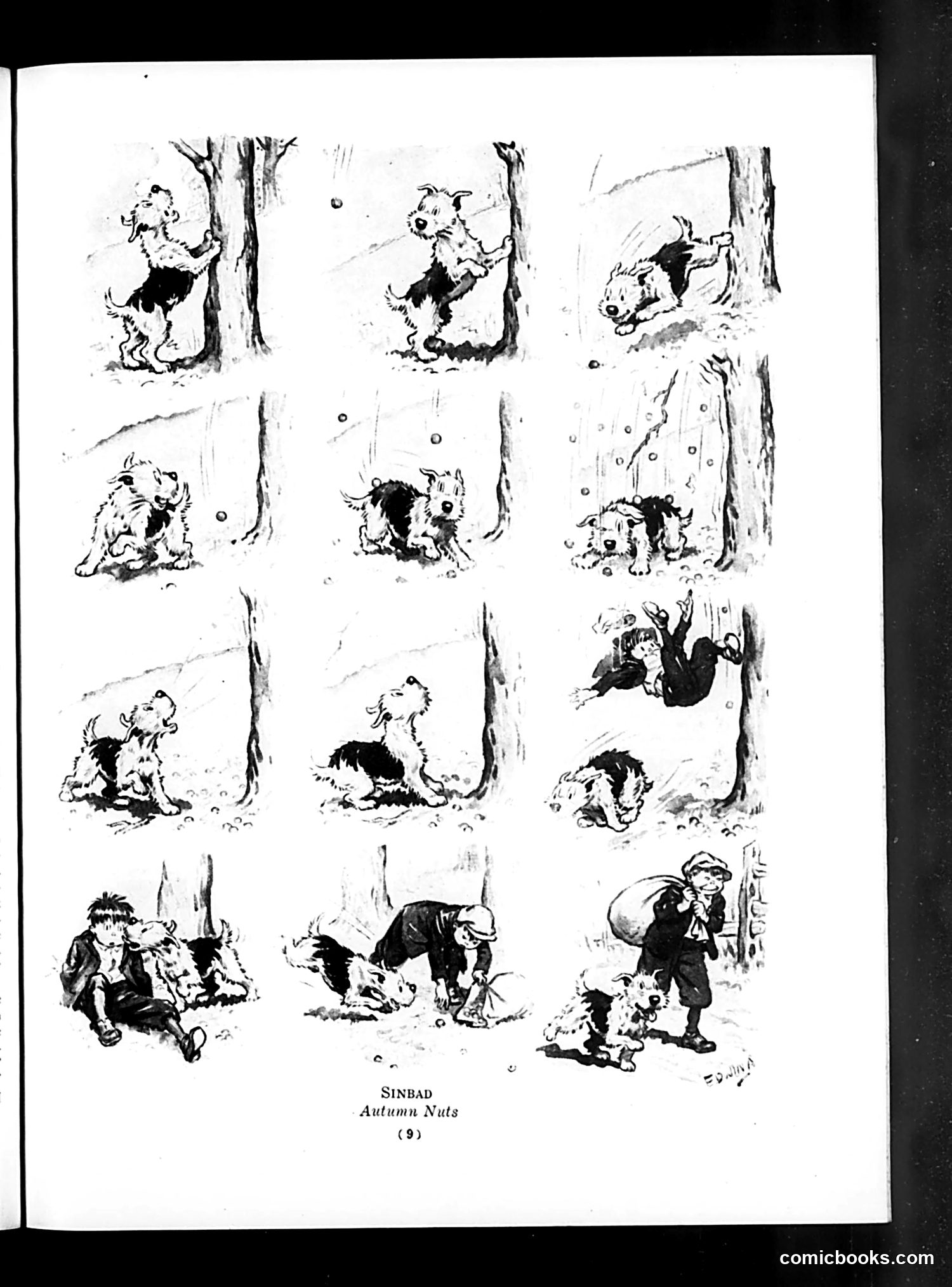
"Sinbad: Autumn Nuts" This is a comic strip featuring Sinbad the Sailor and various animal characters (primarily dogs and what appear to be other creatures) engaged in slapstick adventures around trees. The sequential panels show physical comedy—animals climbing trees, falling, chasing acorns, and interacting with human characters in autumn settings. The humor is visual and physical rather than political or satirical. The title "Autumn Nuts" suggests the plot involves gathering nuts or the animals acting "nutty" (foolish) during fall. This appears to be lighthearted entertainment comics rather than political satire—typical fare for *Life* magazine's humorous content section, using exaggerated character animation and chase sequences common to early 20th-century comic strips.
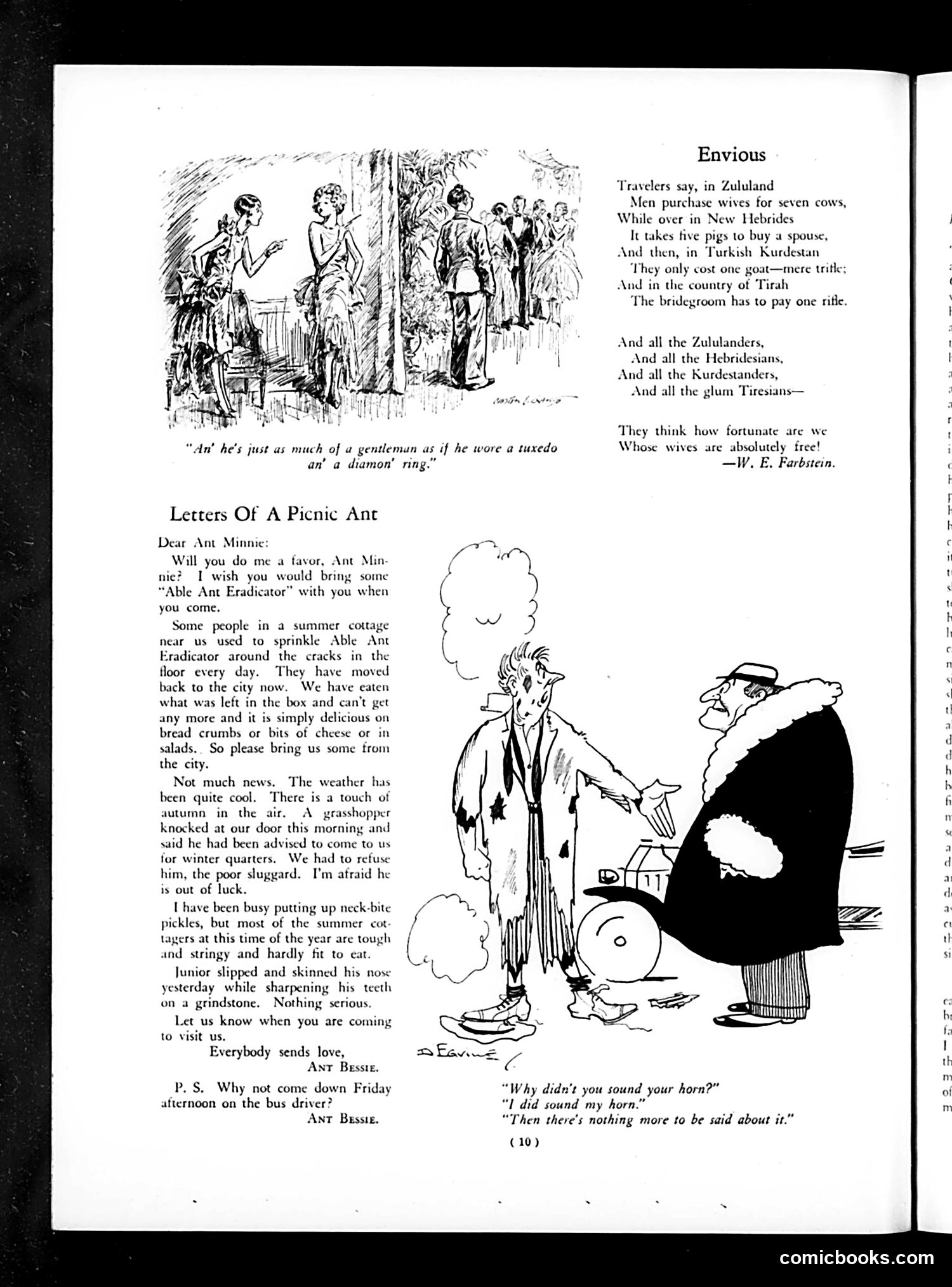
Analysis This page contains two distinct pieces: "Envious" (top right): A poem by W.E. Forstein satirizing marriage customs in various non-Western cultures—Zululand, the Hebrideads, Turkish Kurdistan, and Tirah. The joke compares the economic "cost" of acquiring wives (seven cows, five pigs, one rifle) across these societies, then mocks Western readers for considering themselves fortunate that wives are "absolutely free"—implying wives are actually a financial burden or emotional liability through other means. "Letters of a Picnic Ant" (lower left): A humorous column from "Ant Bessie" requesting ant poison for a summer cottage, complaining about summer boarders being unpleasant, and describing mundane domestic incidents (a grasshopper visitor, a grandson's nosebleed). The accompanying cartoon shows two ants discussing a lost horn. The satire gently mocks suburban summer life and domestic triviality through the ant perspective.
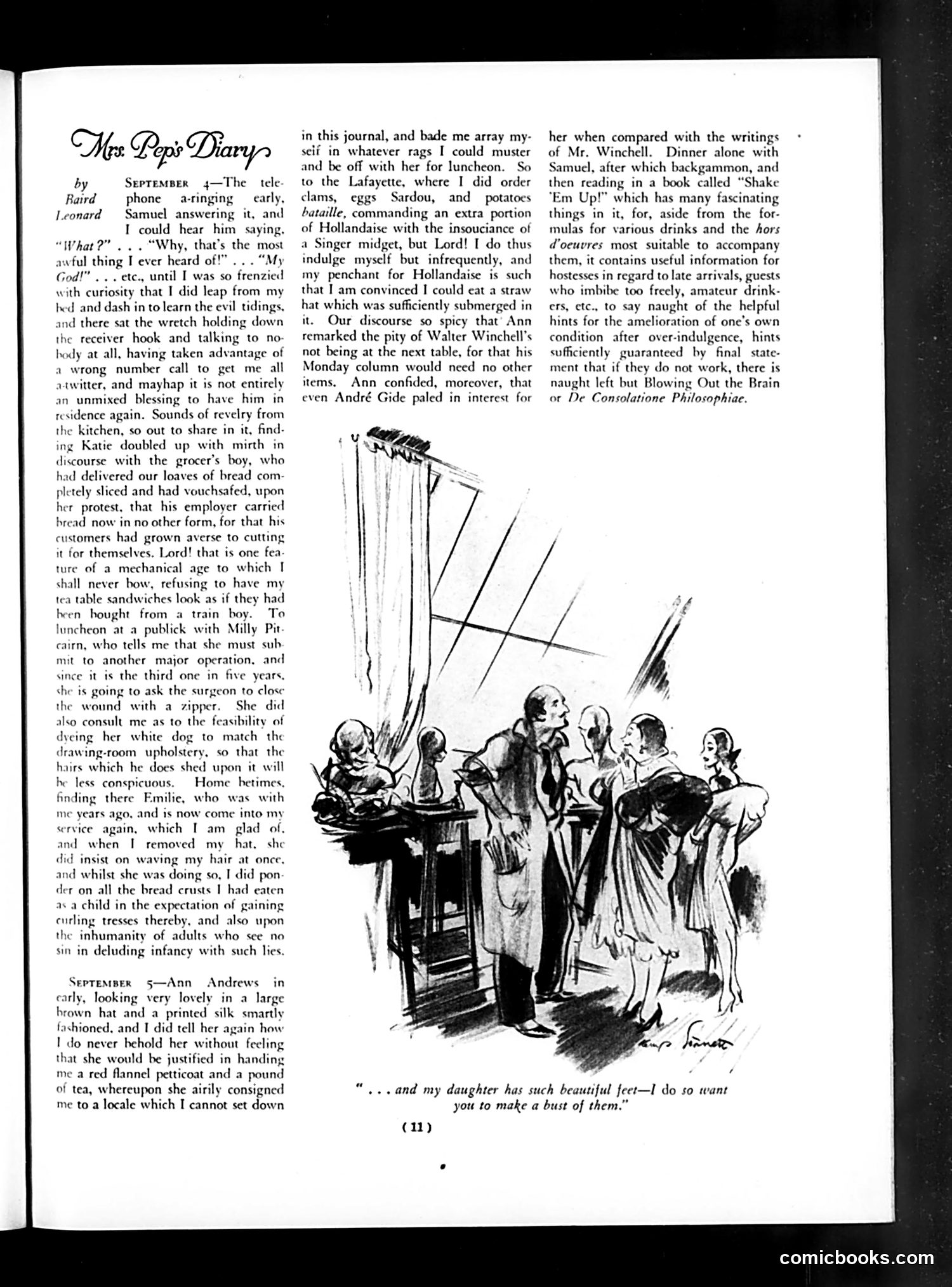
Mrs. Pope's Diary - September 4-5 Entry This page from *Life* magazine presents a domestic diary excerpt with an accompanying illustration. The cartoon depicts a woman (likely Mrs. Pope) at what appears to be a public gathering or social event, speaking with several other figures, including what looks like a man in formal dress. The diary text humorously chronicles mundane household frustrations—a telephone interruption, servants' misconduct, bread delivery complaints, and social visits. The illustration's caption reads: "...and my daughter has such beautiful feet—I do so want you to make a bust of them," which is satirical wordplay mocking pretentious social posturing. The overall satire targets upper-class vanity and the absurdities of polite society conversations.
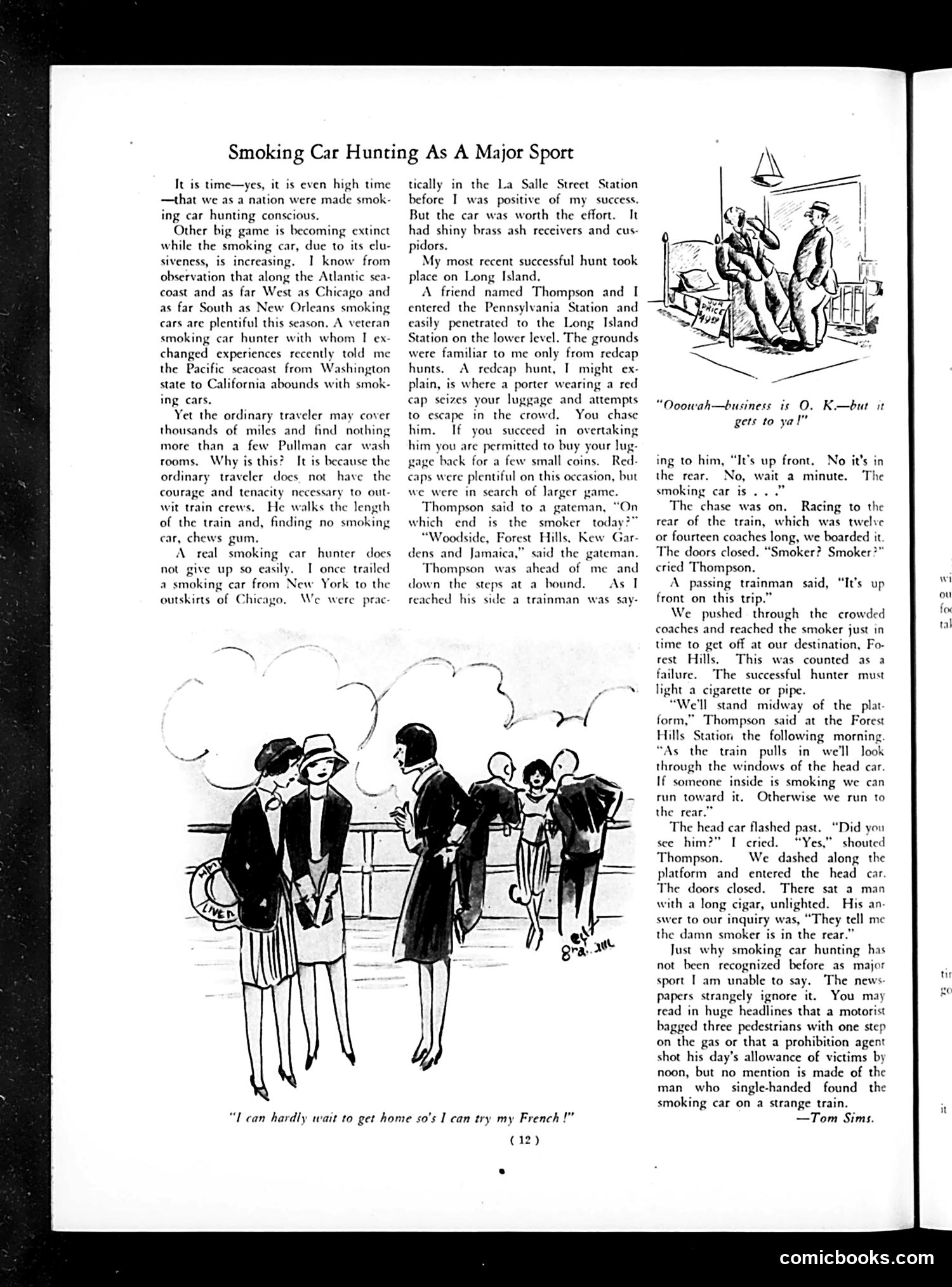
"Smoking Car Hunting As A Major Sport" This satirical article describes an elaborate "sport" of hunting for smokers on passenger trains—specifically targeting people smoking in non-smoking cars. The author describes chasing suspects through multiple train cars, boarding at stations, and interrogating fellow passengers to locate violators. The two cartoons illustrate the absurdity: one shows determined hunters pursuing their quarry through crowded platforms; the other depicts fashionable women gossiping, one saying "I can hardly wait to get home so I can try my French!" The satire mocks early 20th-century prohibition-era attitudes and America's newfound vigilantism around social rules. It presents amateur enforcement of smoking regulations as comic obsession, suggesting the earnestness with which ordinary citizens policed minor violations had become culturally ridiculous.
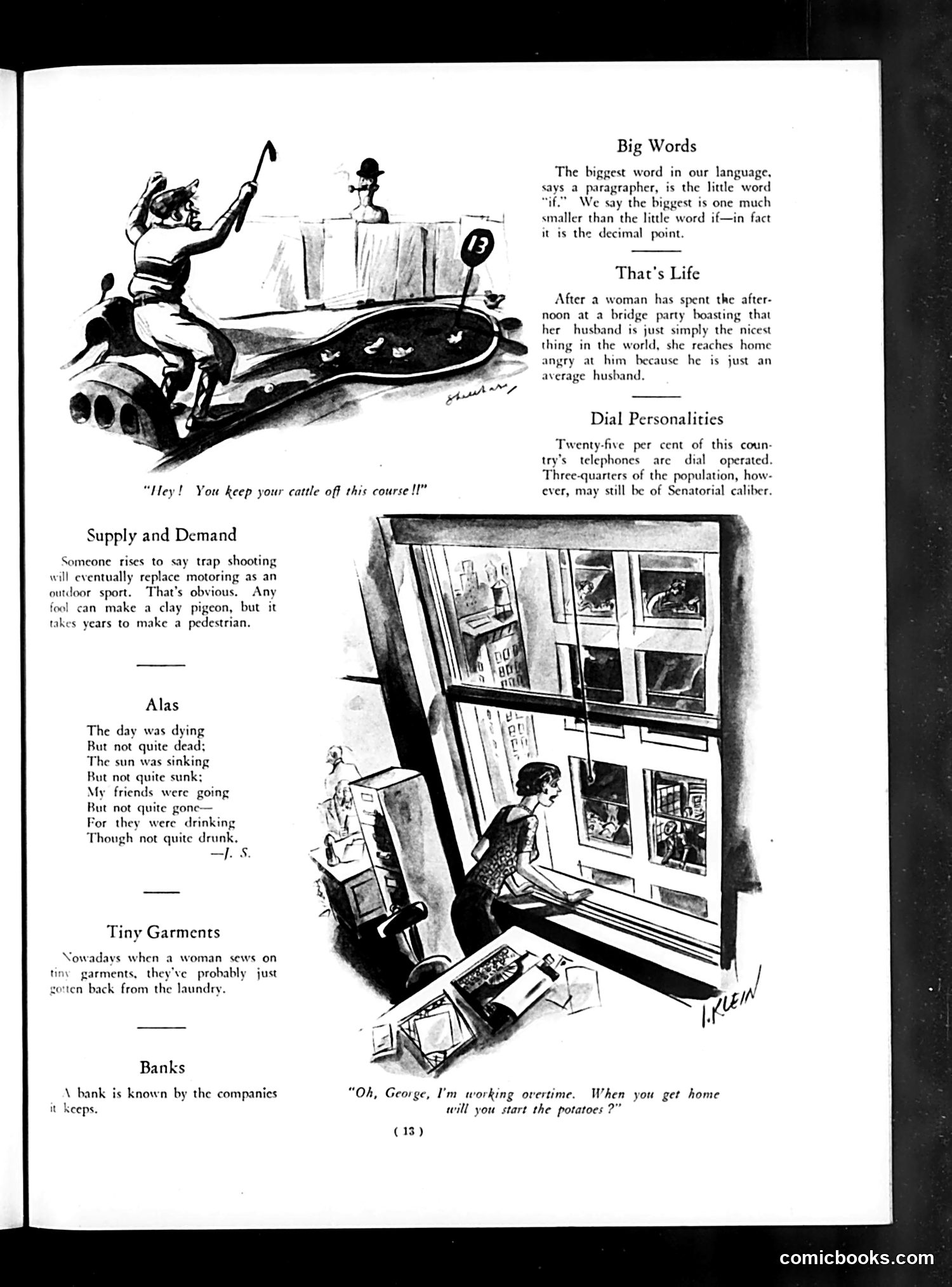
Analysis of Life Magazine Page 13 This page contains several short satirical pieces and two cartoons typical of early 20th-century American humor magazine content. Top cartoon: Shows a woman driving recklessly, nearly hitting cattle. The caption "Hey! You keep your cattle off this course!!" satirizes the growing conflict between automobile drivers and rural/agricultural society as cars became more common. The woman driver suggests commentary on women motorists, likely poking fun at their perceived poor driving skills—a common stereotype of the era. Bottom cartoon: A woman gazes from a window at shop displays while her husband works overtime. The caption "Oh, George, I'm working overtime. When you get home will you start the potatoes?" satirizes domestic expectations: wives' shopping desires contrast sharply with husbands' exhaustion from actual employment, suggesting women's leisure consumption versus men's labor burden—reflecting period gender role anxieties.
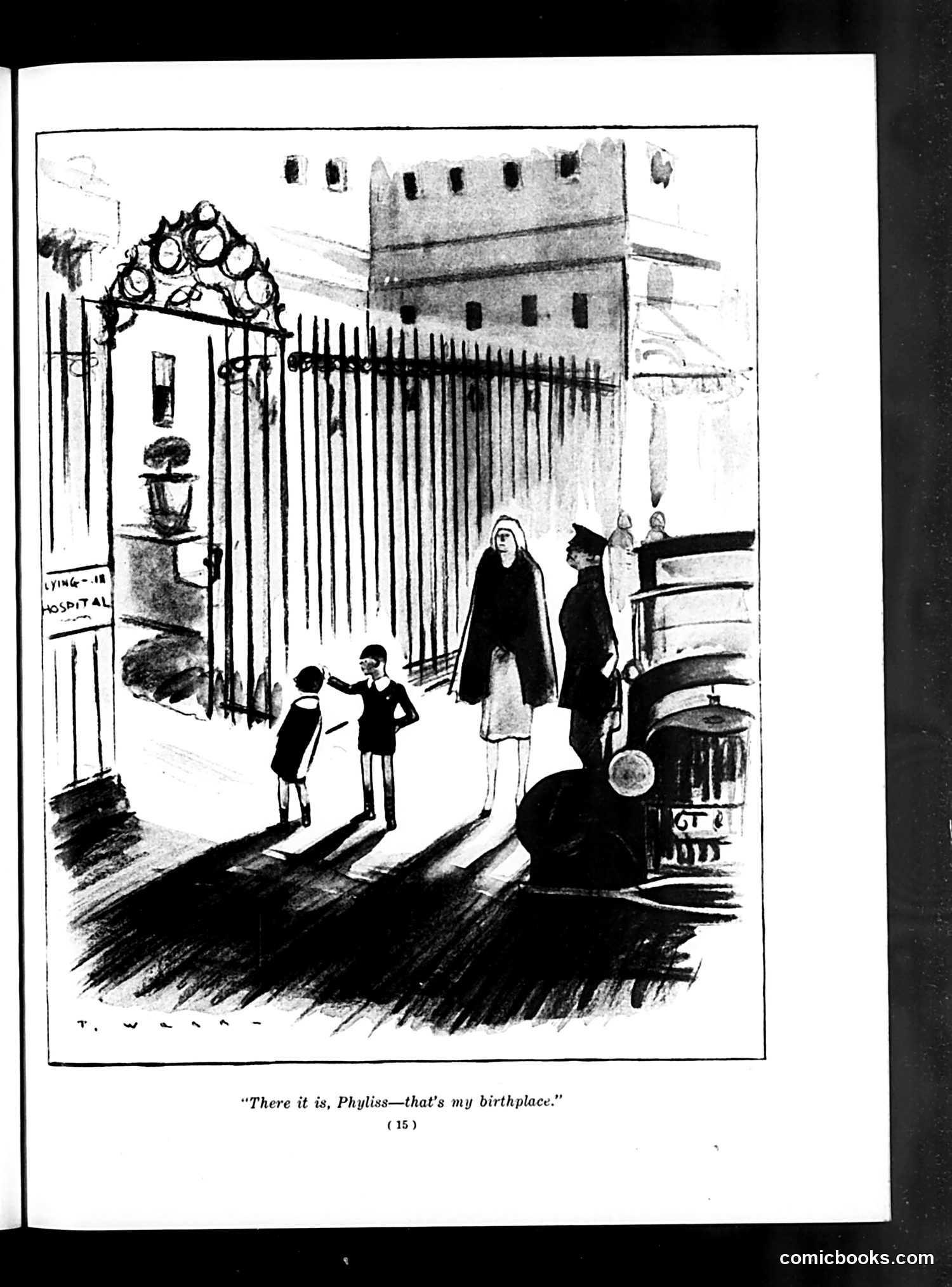
Analysis This appears to be a single-panel cartoon from Life magazine showing an adult pointing out a large institutional building to two children, with the caption "There it is, Phyllis—that's my birthplace." The humor is sardonic: the "birthplace" is labeled "LYING-IN HOSPITAL"—a maternity ward where women gave birth. The joke satirizes the depersonalizing, institutional nature of modern childbirth. Rather than being born at home (the traditional birthplace), the speaker was born in an impersonal hospital facility. The towering, fortress-like building with its barred windows and imposing architecture emphasizes the institutional coldness. The cartoon mocks how 20th-century industrialization and medicalization replaced intimate, family-centered birth experiences with anonymous hospital procedures. The naming of the child "Phyllis" adds specificity to the sentimental moment being undercut by bureaucratic reality.
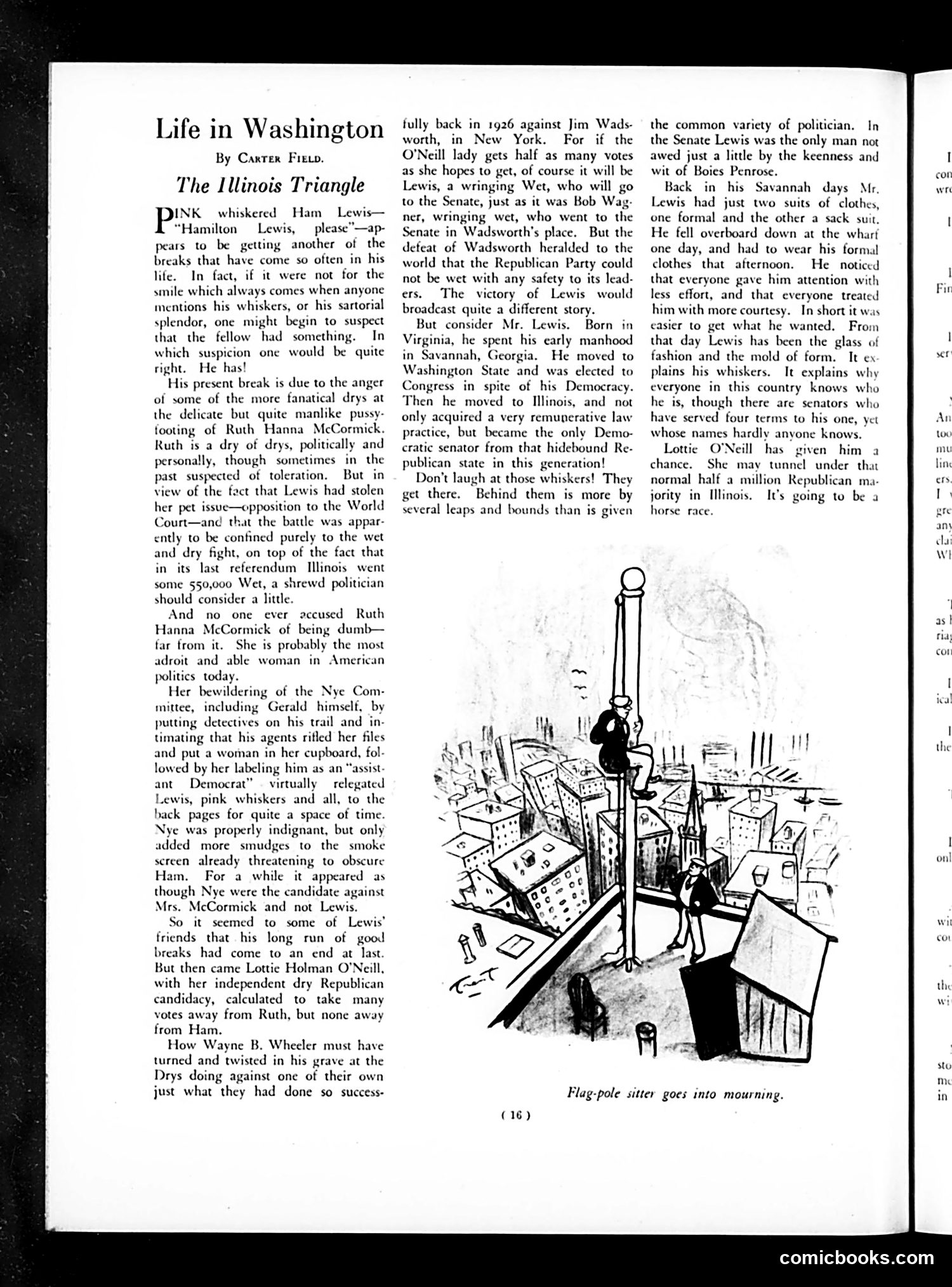
"The Illinois Triangle" - Life Magazine Political Satire This article by Carter Field discusses factional conflicts within Illinois Democratic politics, particularly involving Senator Ham Lewis and rival politicians Ruth Hanna McCormick and Lottie O'Neill. The accompanying cartoon, captioned "Flag-pole sitter goes into mourning," depicts a flag-pole sitter (a popular 1920s stunt) mourning at street level among skyscrapers. This likely satirizes how Illinois political scandals and infighting have overshadowed even sensational news. The flag-pole sitting craze was a major news story of the era, so the cartoon's humor lies in suggesting that political drama has become so dramatic it eclipses other contemporary spectacles. The text reveals these politicians were engaged in competitive campaigns and dirty-tricks operations within the Democratic Party structure.
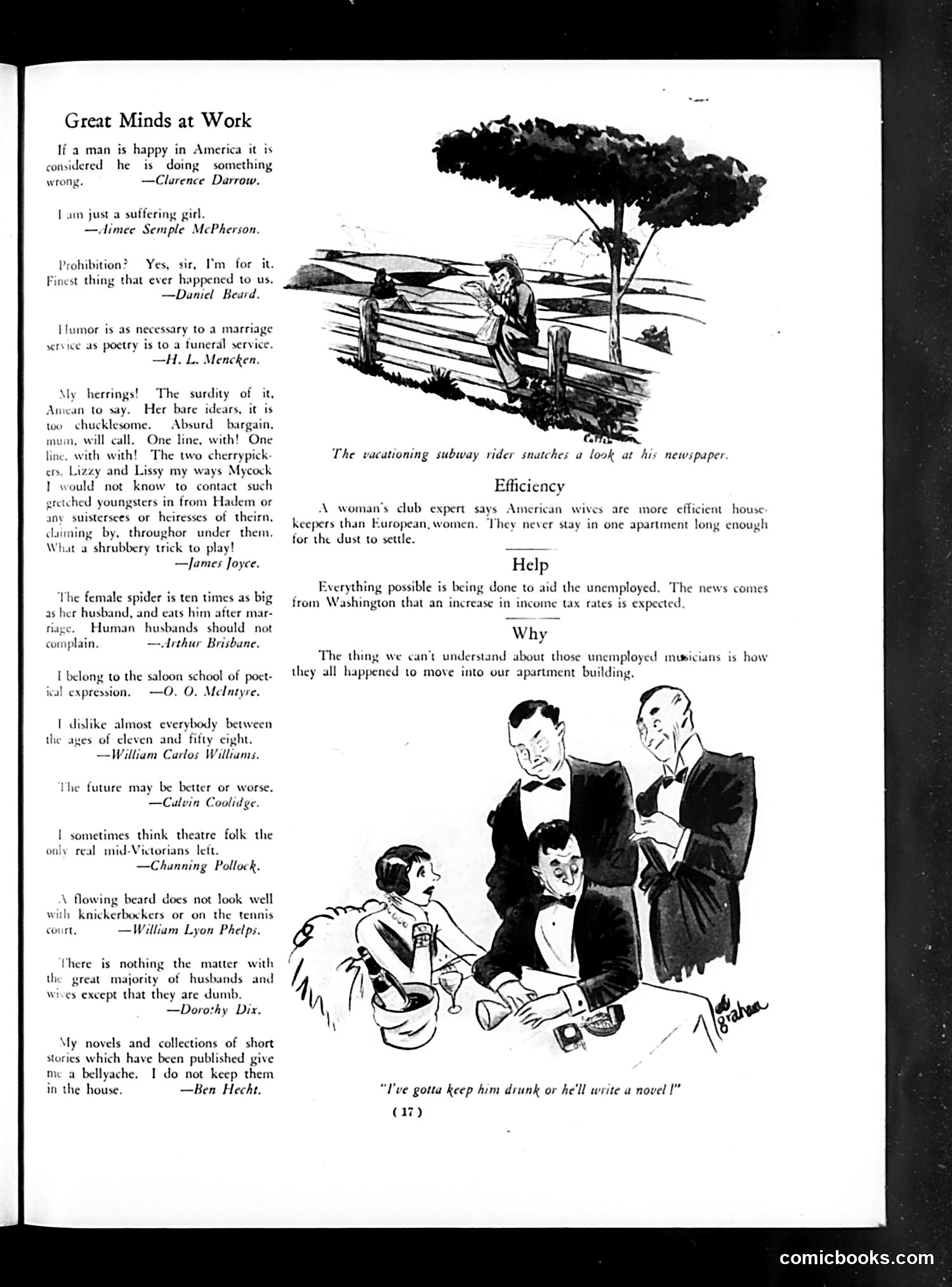
"Great Minds at Work" - Life Magazine Page This page collects witty quotations on various topics (Prohibition, marriage, theater, etc.) alongside two cartoon illustrations. The main cartoon shows three well-dressed men in formal attire with a disheveled fourth man sitting down, apparently intoxicated. The caption reads: "I've gotta keep him drunk or he'll write a novel!" The joke satirizes struggling writers of the era—suggesting that keeping a writer constantly drunk prevents him from producing work. It mocks both the stereotype of the alcoholic writer and the desperation of those trying to suppress literary ambitions, likely commenting on Prohibition-era anxieties about alcohol and creative output. A smaller illustration above depicts a man reading a newspaper by a rural fence, captioned about a "vacationing subway rider."
Theatre Reviews by Baird Leonard This page contains three theatre reviews, not political cartoons. The reviews discuss: 1. "That's The Woman" — A courtroom drama featuring Lucile Watson as a mother questioned about her daughter's paternity. The reviewer praises Watson's performance while criticizing the play's implausible plot. 2. "The Up and Up" — A comedy about bookmakers taking bets on secret telephone lines. The reviewer notes the talented cast (Pat O'Brien, Sylvia Field) but finds the plot weak and predictable, criticizing its treatment of underworld life. 3. "The Long Road" — A play about an American family. The reviewer expresses disappointment with its amateur musical performances and melodramatic plotting. The reviews are critical analyses of Broadway productions, not satirical commentary.
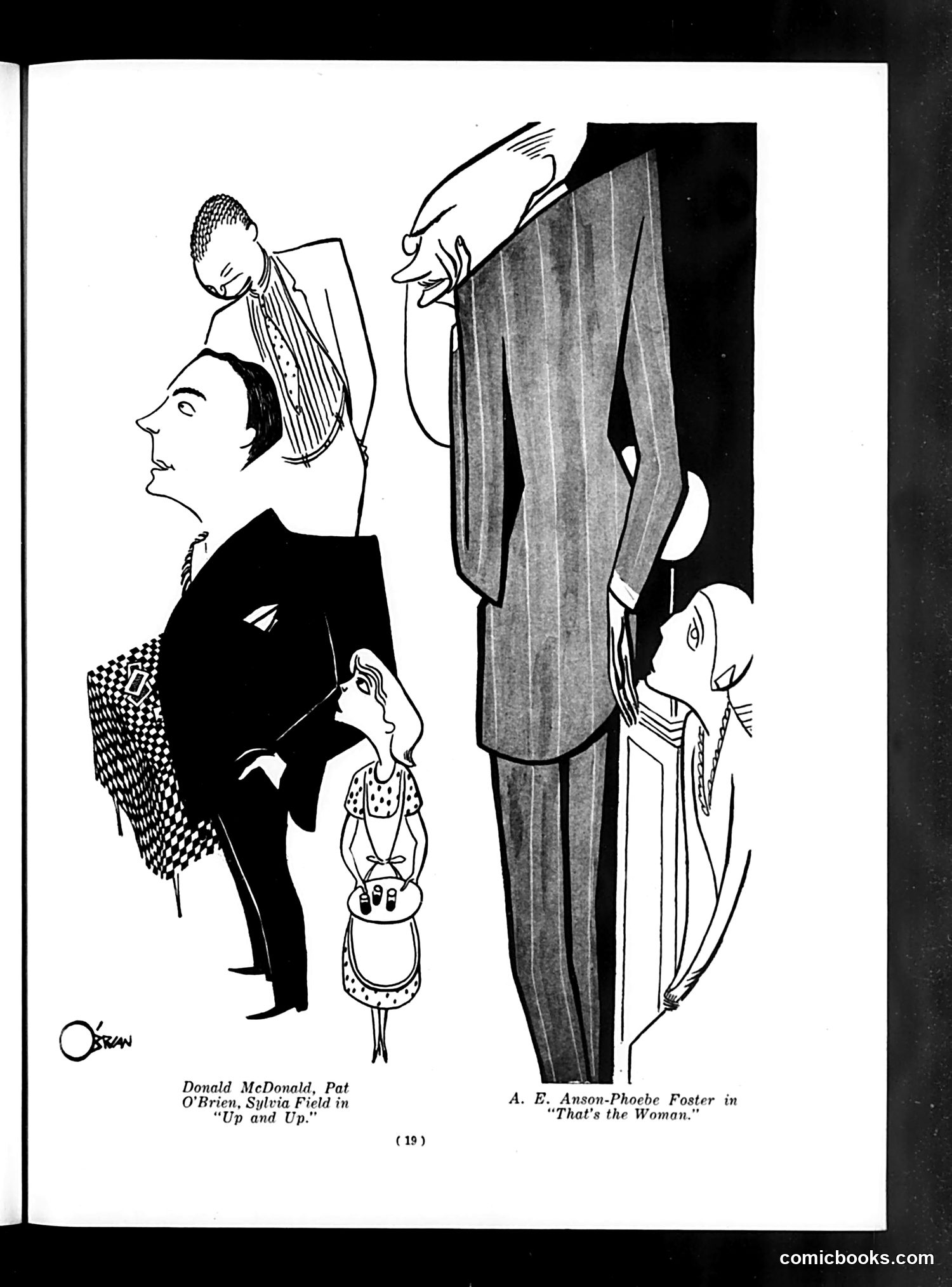
This page shows two theatrical caricatures from Life magazine, likely from the 1920s-30s era. On the left, a stylized drawing depicts actors Donald McDonald, Pat O'Brien, and Sylvia Field in "Up and Up"—showing a tall man with a small child and cherub figure, suggesting comedy involving size disparities or family dynamics. On the right, A.E. Anson and Phoebe Foster appear in "That's the Woman," illustrated with elongated figures in flowing garments, possibly satirizing dramatic or romantic theatrical conventions of the period. The artist's signature (appears to be "Cesare" or similar) indicates professional theatrical illustration. These were typical Life magazine entertainment features showcasing Broadway productions through exaggerated character drawings that captured the comedic or dramatic essence of the plays for readers.
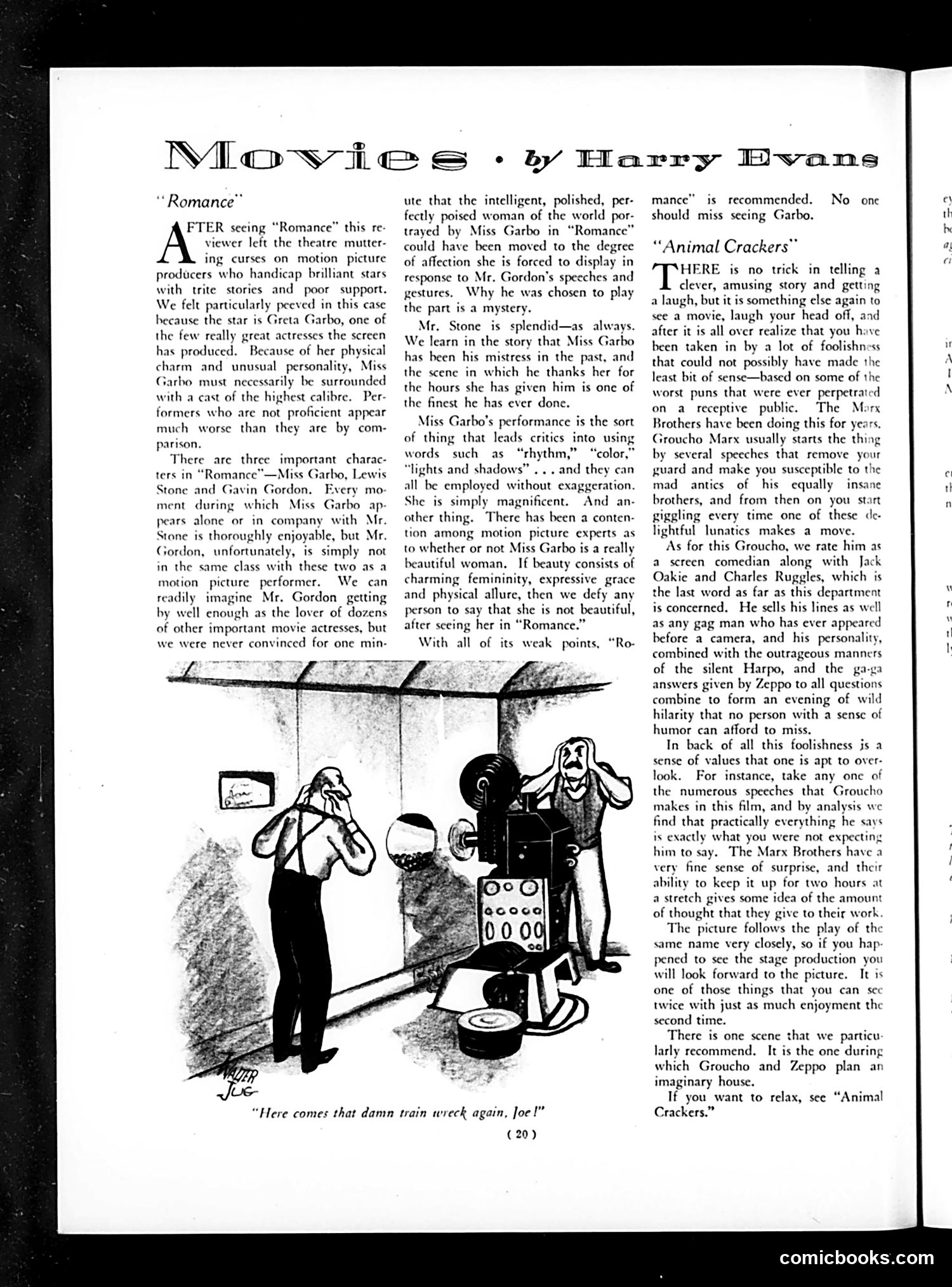
Movie Reviews from Life Magazine This page contains two film reviews by Harry Evans from Life magazine's "Movies" column. "Romance" reviews the film starring Greta Garbo opposite Lewis Stone and Gavin Gordon. Evans praises Garbo's performance as magnificent and beautiful, but criticizes Gordon as miscast and unworthy of her talent—he cannot convince viewers that Garbo's character would be romantically interested in him. Stone receives high marks. "Animal Crackers" reviews a Marx Brothers comedy. Evans explains their appeal: Groucho's rapid-fire speeches and delivery disarm audiences into accepting absurd, pun-filled nonsense that makes no logical sense. Yet beneath the foolishness lies comedic craftsmanship. Evans ranks Groucho among top screen comedians like Jack Oakie and Charles Ruggles, praising his timing and personality working in tandem with silent Harpo's physical comedy. The cartoon illustration shows a train wreck scene, likely referencing slapstick comedy conventions of the era.
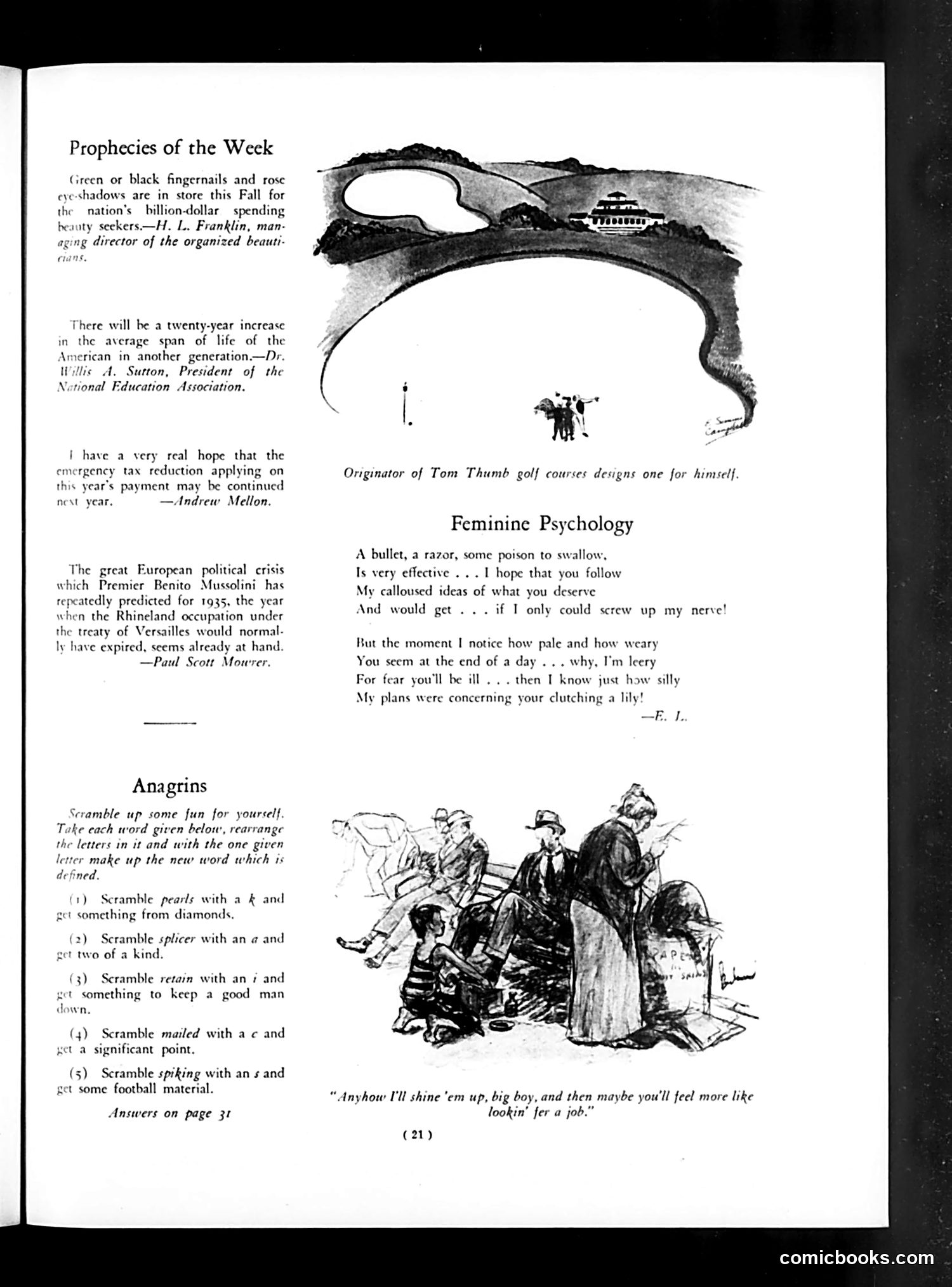
Life Magazine Page Analysis This page from Life magazine contains several distinct sections: "Prophecies of the Week" presents satirical predictions attributed to public figures: beauty industry trends, increased American lifespan, and tax policy hopes from Andrew Mellon (Treasury Secretary). The Tom Thumb Golf cartoon shows someone designing a miniature golf course for himself—likely mocking the newly popular mini-golf craze of the 1930s as an absurdly scaled-down leisure activity. "Feminine Psychology" is a darkly humorous poem where a woman catalogs violent methods (bullet, razor, poison) she *could* use against an ungrateful man, but then softens when she sees him tired, revealing her contradictory emotional nature—a satirical jab at female sentimentality and romantic irrationality. "Anagrins" is a word puzzle game for readers. The illustration accompanying "Feminine Psychology" shows working-class figures, reinforcing the poem's class-conscious domestic drama. The overall tone is typical 1930s satirical humor: cynical about politics, women's nature, and consumer culture.
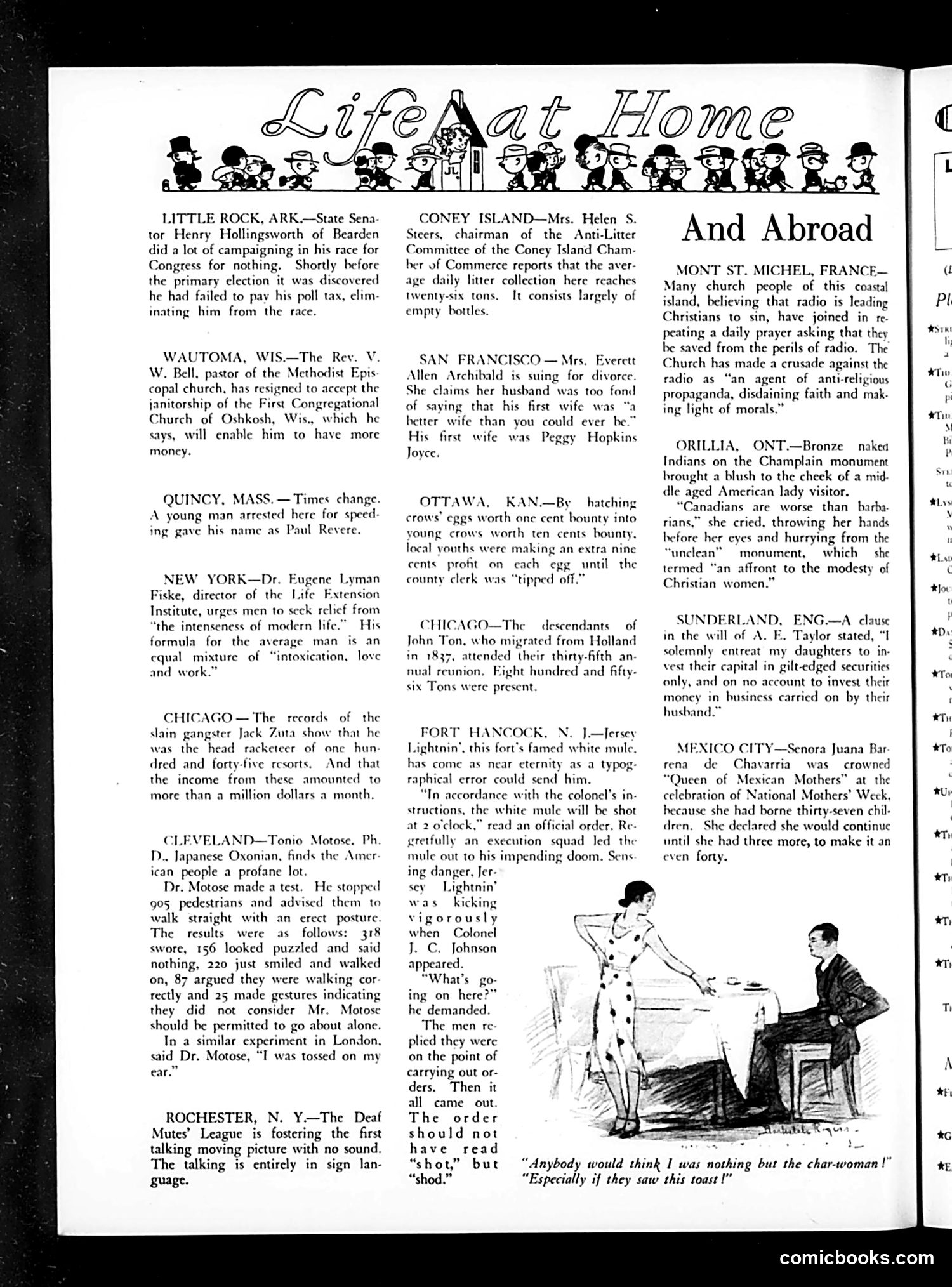
Life Magazine Humor Page Analysis This is a humor column featuring short, absurdist anecdotes from across America and abroad—a common Life magazine feature. The items satirize bureaucratic incompetence, human folly, and social contradictions: Key jokes include: - A politician disqualified from Congress for unpaid poll taxes despite campaigning - A minister taking a janitor job for better pay (ironic given religious vows) - A speeder claiming the name "Paul Revere" - A Japanese academic stopping 905 Americans to test posture etiquette—most either curse him or assault him - A Fort Hancock mule nearly executed due to a typographical error ("shot" vs. "shod") The cartoon shows a woman in spotted dress confronting a seated man, captioned with her claiming she's merely a "char-woman" (cleaning lady), not nothing—a dig at class assumptions and how people judge based on appearance. The "Abroad" section includes religious opposition to radio in France and comments on Canadian modesty. The humor relies on incongruity and ironic observations about modern life.
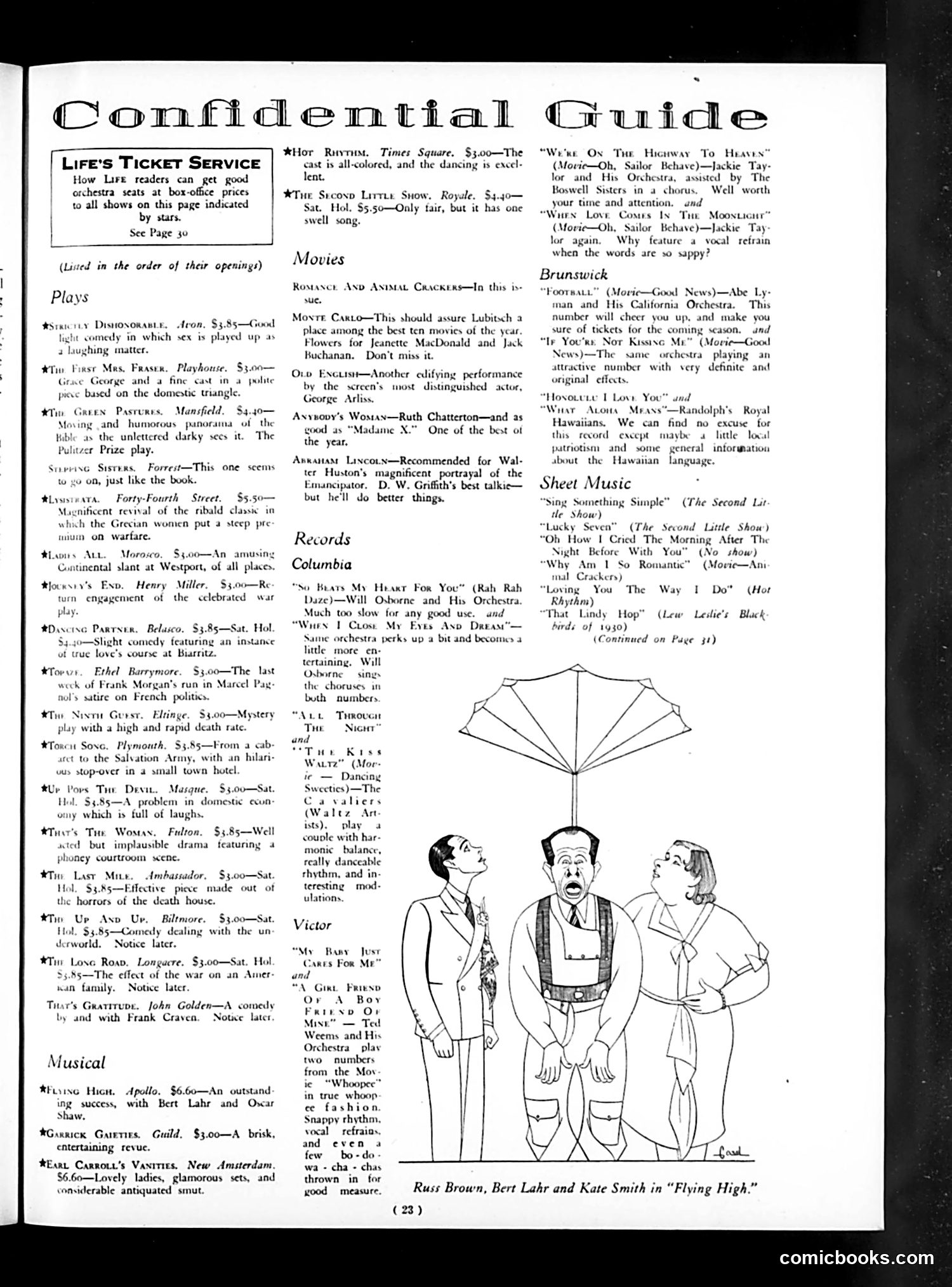
Explaining This Page to Modern Readers This is a "Confidential Guide" — Life magazine's entertainment listings and reviews for Broadway plays, musicals, movies, and records, likely from the 1920s-early 1930s. The cartoon at the bottom shows three figures (identified in the caption as "Russ Brown, Bert Lahr and Kate Smith in 'Flying High'") — performers from a current theatrical production. The illustration is a simple character sketch showing the actors in costume, meant to promote the show. The bulk of the page consists of theatrical recommendations with prices and brief critical commentary. Notable entries include references to all-colored casts ("Hot Rhythm"), established stars (George Arliss, Ruth Chatterton), and musicals featuring Bert Lahr and Oscar Shaw. This wasn't satirical content but rather earnest entertainment journalism — Life's service to readers seeking theater tickets and cultural recommendations in an era before film/television dominated leisure.
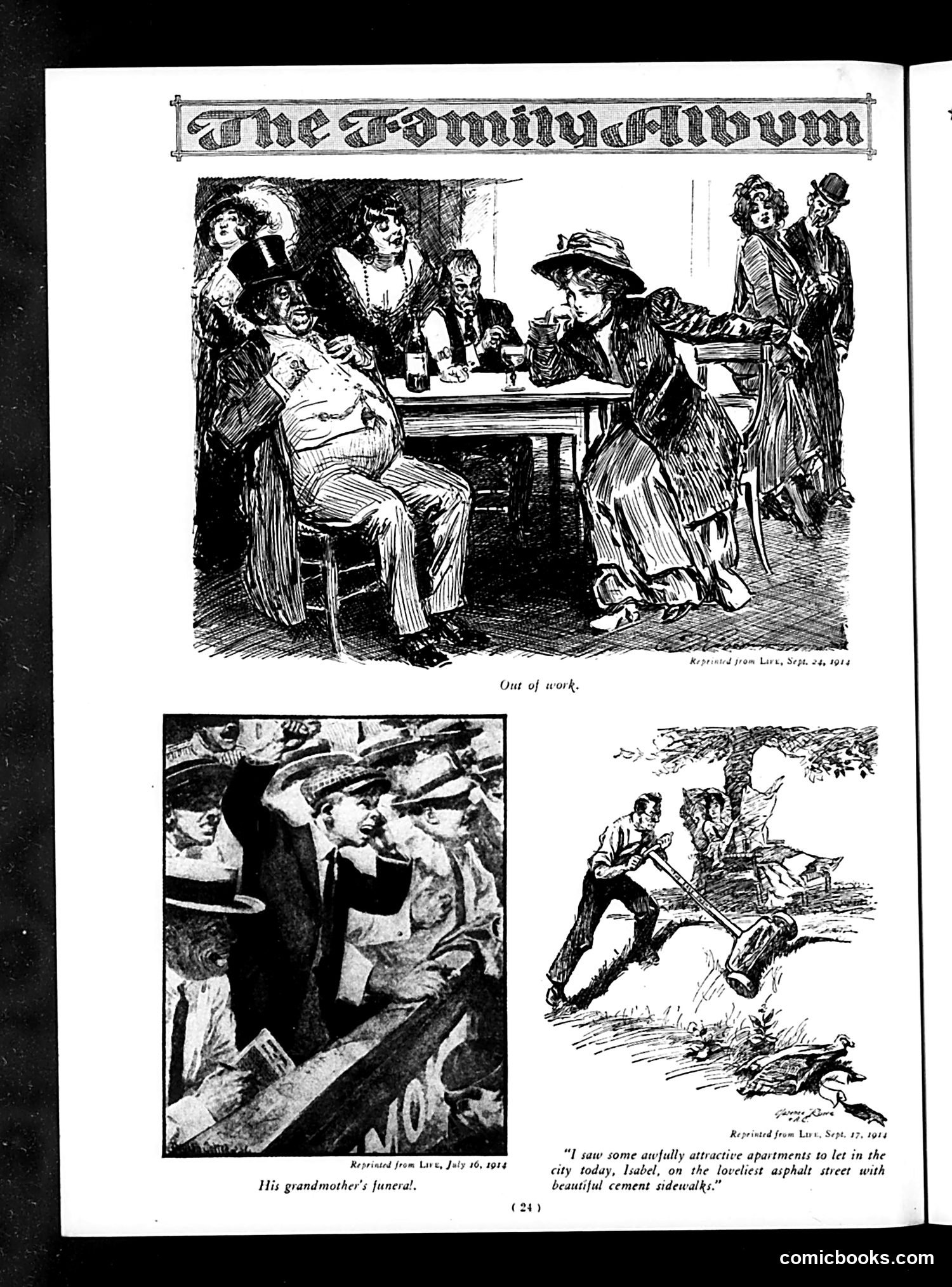
"The Psalming Humorist" Page Analysis This page contains three satirical cartoons from *Life* magazine addressing unemployment and economic hardship, likely from the early 20th century. "Out of Work" depicts an unemployed man at a table with others, illustrating joblessness during what appears to be an economic downturn. "His Grandmother's Funeral" shows a crowded scene at a funeral, with the caption sarcastically noting the large attendance—suggesting people attend funerals more readily than helping the unemployed. The bottom right cartoon features a man and woman discussing apartment rentals, with the woman enthusiastically describing "asphalt street with beautiful cement sidewalks"—an ironic commentary on how landlords market cheap urban housing to desperate renters during hard times, emphasizing worthless amenities while ignoring actual quality. Together, these cartoons satirize poverty, unemployment, and how the desperate are exploited during economic crisis.
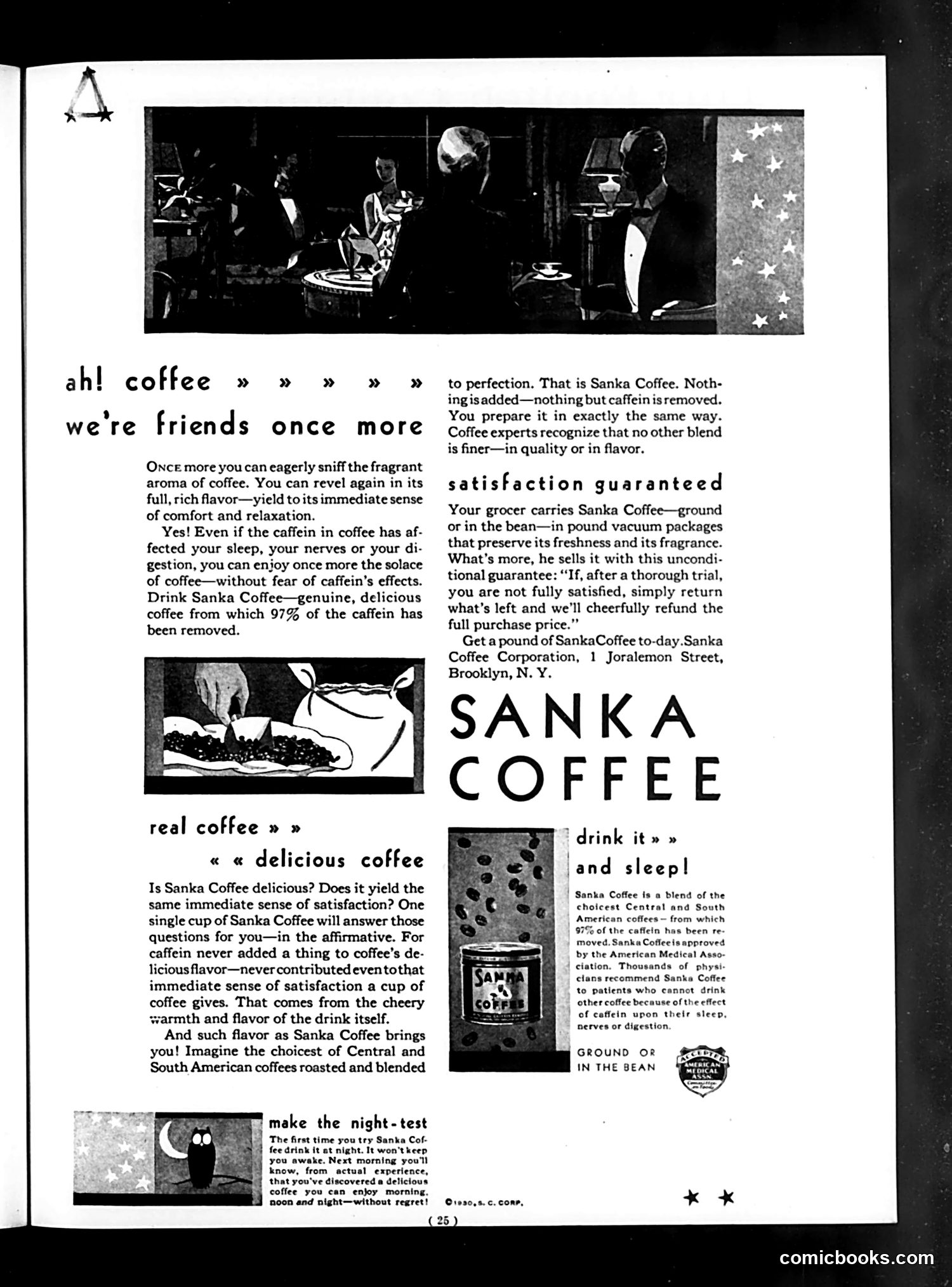
This is a Sanka Coffee advertisement, not a political cartoon. The page promotes decaffeinated coffee to a modern reader unfamiliar with early 20th-century health concerns. The Appeal: Sanka marketed caffeine-removed coffee to people whose sleep, nerves, or digestion were disrupted by regular coffee—a significant concern when caffeine's effects were less understood and more stigmatized. The slogan "ah! coffee we're friends once more" suggests caffeine had created a genuine social problem: people loved coffee's taste but feared its consequences. The Marketing Angle: The ad emphasizes medical approval ("approved by the American Medical Association") and guarantees satisfaction, addressing consumer skepticism about whether decaffeinated coffee could taste good. The "night-test" challenge invites readers to try it without caffeine's wakeful side effects. Historical Context: This reflects 1930s anxieties about modern stimulants and a growing market for "safer" consumer products, alongside early mass-marketing tactics using testimonials and guarantees.
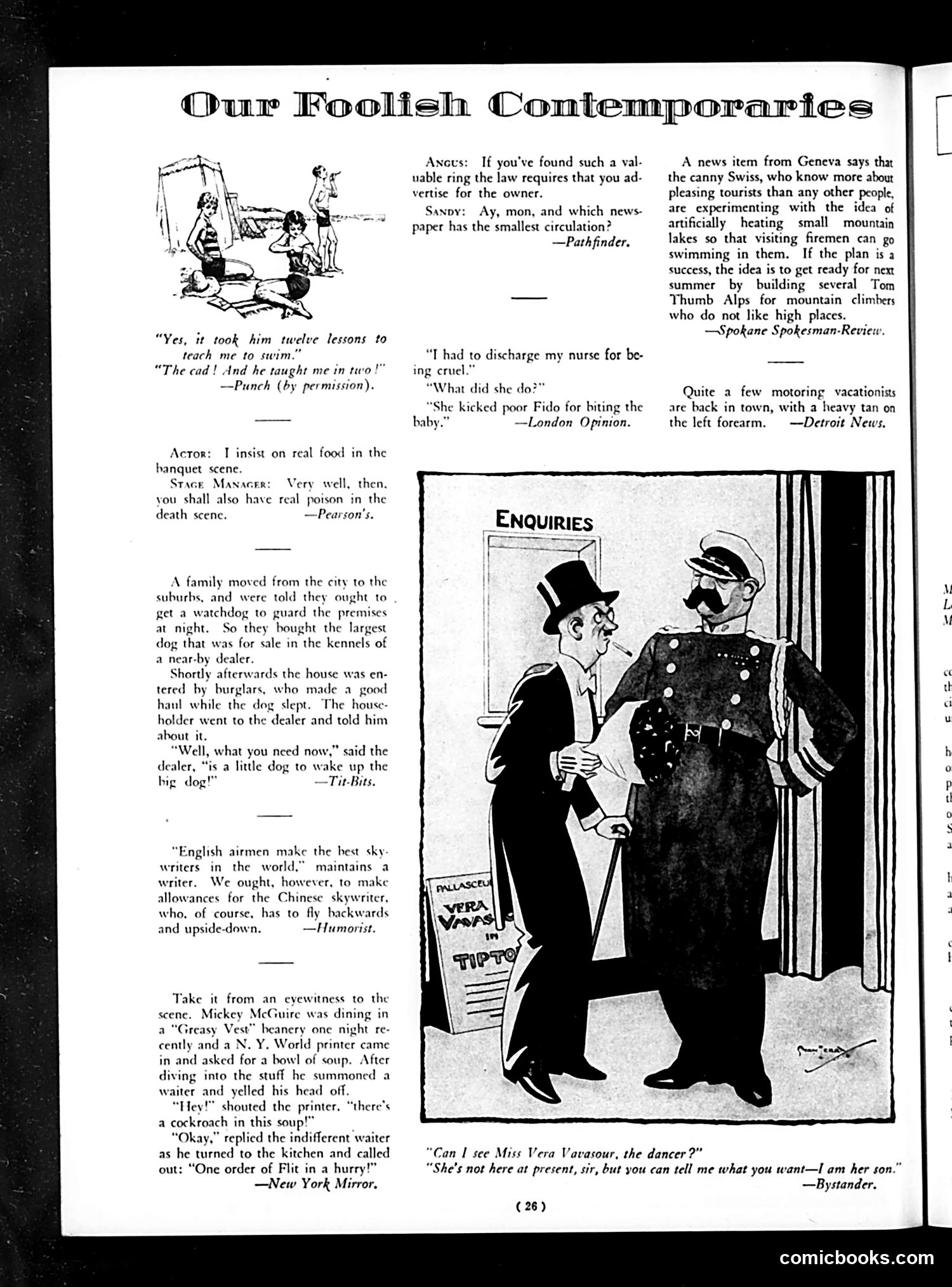
"Our Foolish Contemporaries" - Life Magazine Humor Page This page collects brief satirical jokes and anecdotes from various sources, organized under the heading "Our Foolish Contemporaries." The humor targets everyday absurdities and social pretension: Key jokes include: - A swimming lesson paradox (competitive boasting) - An actor demanding "real food" in a banquet scene, with the stage manager threatening "real poison" in the death scene - A family buying a large watchdog that fails to guard, then being told they need "a little dog to wake up the big dog" - A cockroach in soup at a cheap diner, with the waiter casually ordering "Flit" (insecticide) as if it's a normal kitchen item - A joke about Chinese skywriters flying "backwards and upside-down" - An inquiry about a dancer where her son answers the door The cartoon shows an "Enquiries" desk scene. The satire mocks human foolishness, class anxieties, and the gap between expectations and reality in early 20th-century life.
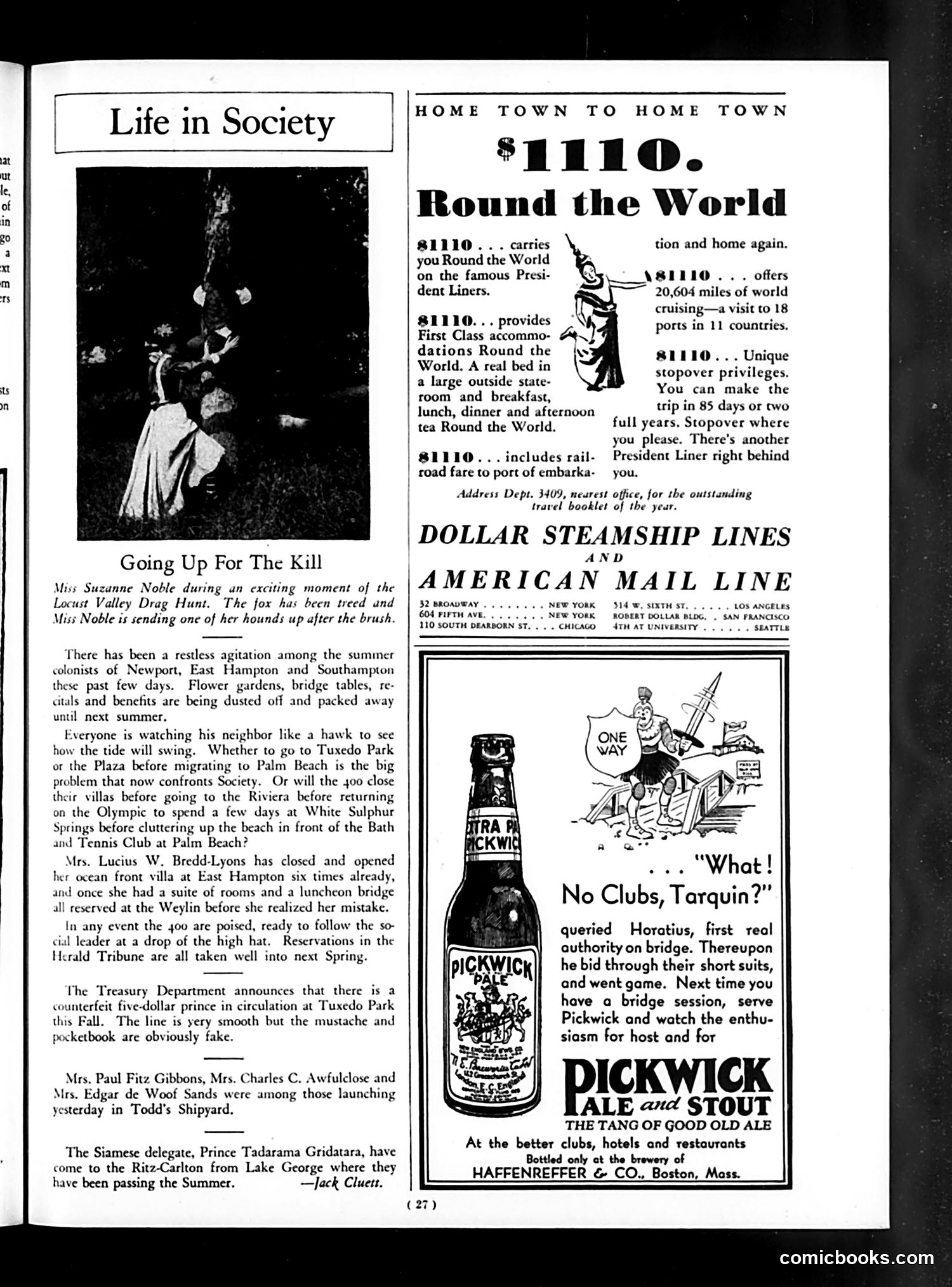
"Life in Society" Page Analysis This page satirizes the anxieties of wealthy American "Society" elites during the summer season. The main article mocks the upper class's obsessive social positioning—specifically their indecision about which exclusive vacation destinations to visit (Newport, Palm Beach, the Riviera, etc.) and their slavish imitation of social leaders. The opening photo shows a woman named Suzanne Noble at a "Locust Valley Drag Hunt," a wealthy leisure activity. The satire targets their frivolous preoccupations: flower gardens, bridge games, recitals—while poking fun at conspicuous consumption and anxiety about social status. A secondary joke mentions a counterfeit five-dollar bill circulating at Tuxedo Park, with the satirical observation that while the bill is well-made, "the mustache and pocketbook are obviously fake"—a jab at the phoniness of the wealthy themselves. The remaining content consists of travel and beer advertisements unrelated to the satire.
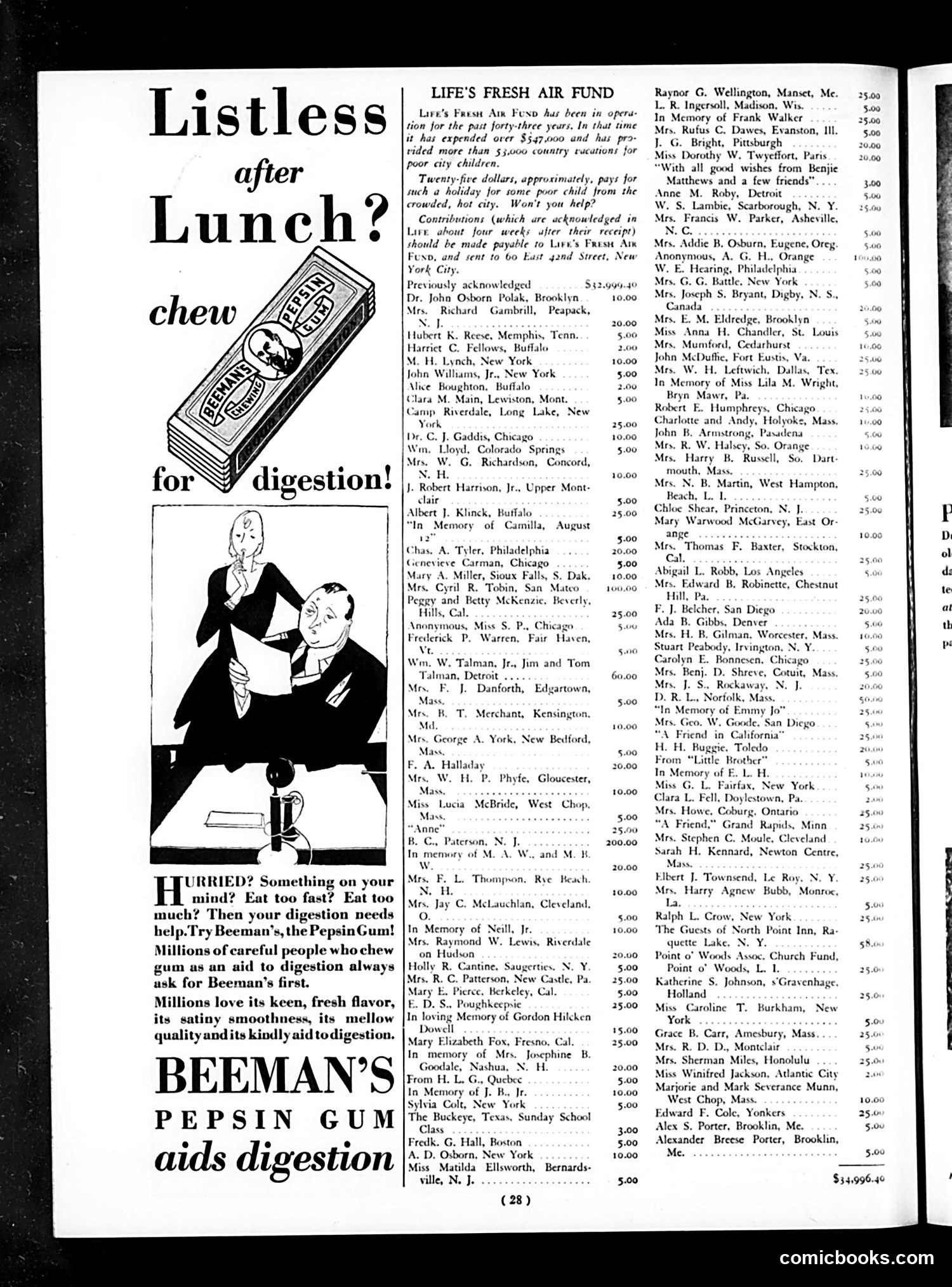
This page is primarily a collection of advertisements and donation acknowledgments rather than satirical content. The main advertisement is for Beeman's Pepsin Gum, which uses humor to mock modern urban anxieties about digestion. The cartoon depicts a frazzled businessman and woman looking stressed, with text suggesting that rushed eating and mental strain cause digestive problems—implying chewing Beeman's gum will solve this. The joke appeals to early 20th-century anxieties about rapid urban life harming health. Below are acknowledgments for the "Life's Fresh Air Fund," a charitable organization that provided country vacations for poor city children. This reflects the era's concern about children's welfare in crowded industrial cities. The satirical angle is implicit: modern, hurried lifestyles require commercial digestive aids, while separately, poor urban children need charitable rescue to fresh air. The page juxtaposes commercial self-help remedies with genuine social welfare concerns.
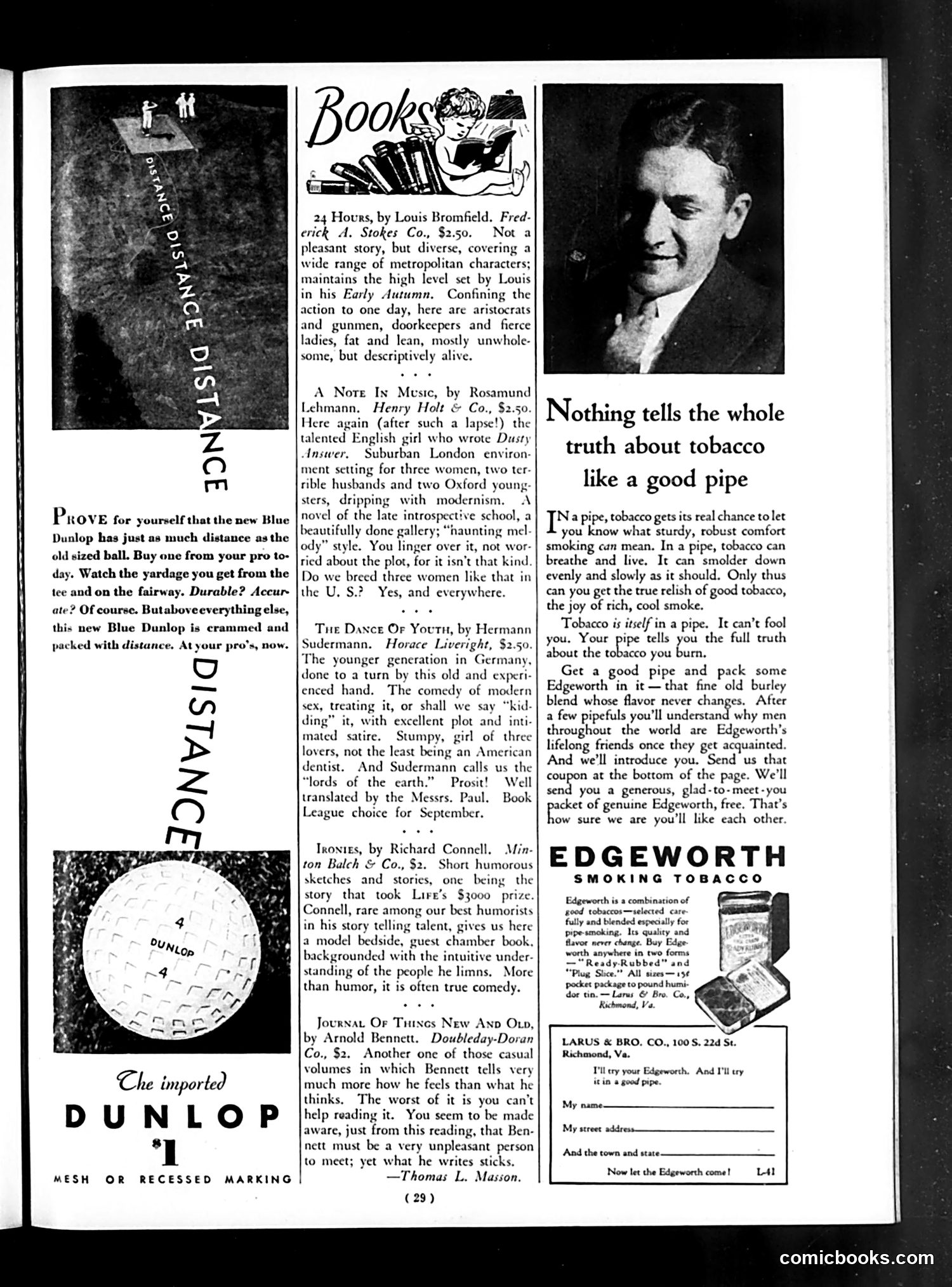
Content Analysis This page is primarily advertising and book reviews, not political satire or comics. Left side: Dunlop golf ball advertisement with product images, emphasizing distance and durability. Center: Book reviews by Thomas L. Masson covering five recent publications—novels by Bromfield, Lehmann, Sudermann, Connell, and Bennett. The reviews discuss plots, literary merit, and social commentary (e.g., noting that Sudermann's German characters include "an American dentist," suggesting transatlantic cultural observation). Right side: Edgeworth smoking tobacco advertisement featuring a testimonial photograph and copy arguing that pipes reveal tobacco's "true" character better than other smoking methods. The ad includes a coupon for a free sample. Context for modern readers: This represents 1920s-30s magazine advertising and literary criticism conventions—lengthy product copy, celebrity/authority endorsements, and serious book discussion alongside commercial pitches. No satire is evident; this is straightforward editorial and advertising content.
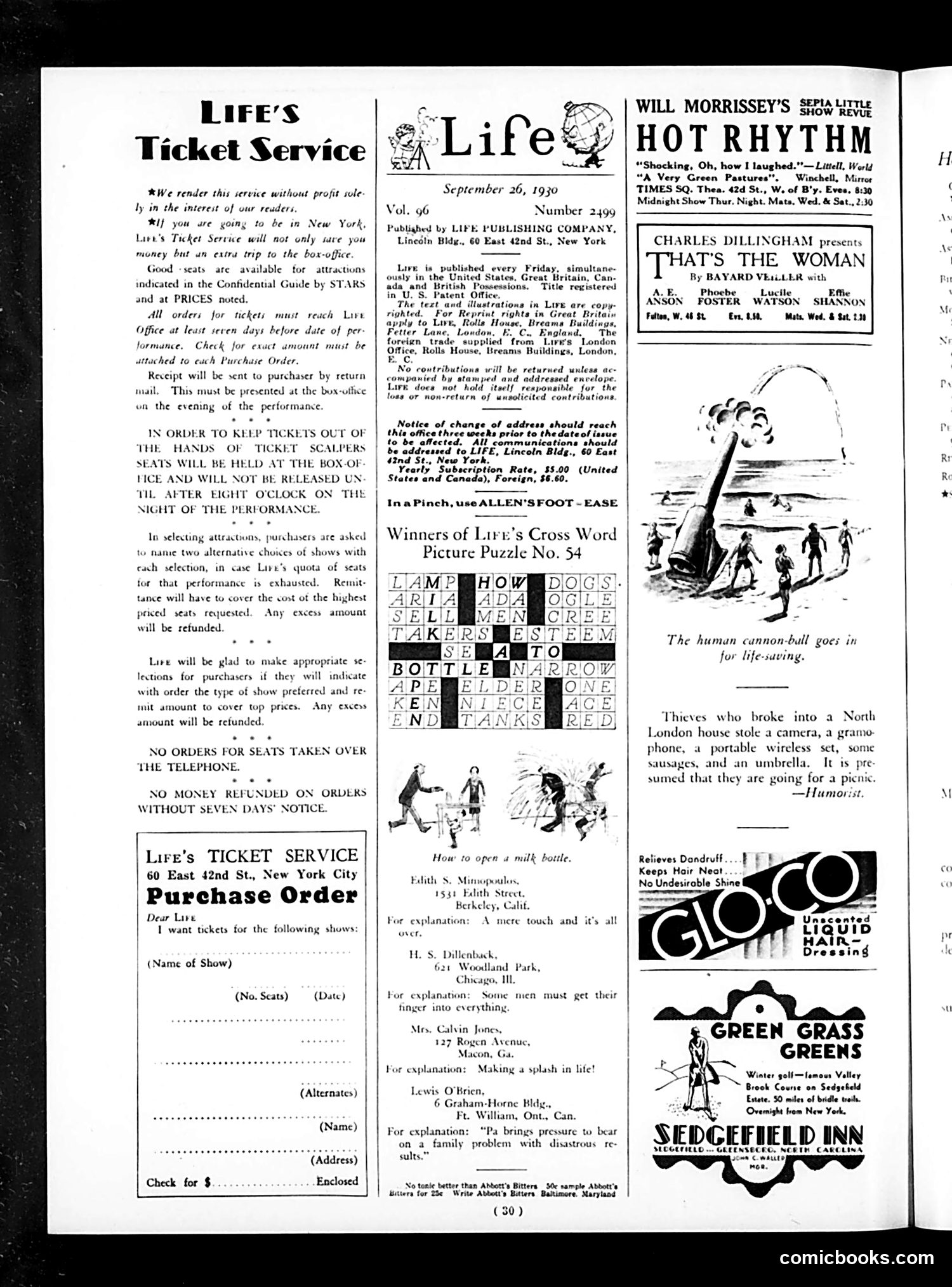
Life Magazine, September 26, 1930 — Page Analysis This page is primarily administrative and advertising content, not political satire. The main content includes: 1. Life's Ticket Service — a box-office ordering system for Broadway shows, with detailed instructions and a purchase order form 2. "That's the Woman" — advertisement for a Broadway play presented by Charles Dillingham 3. The cartoon (small illustration, center-right) shows a "human cannon-ball" performer launching into the air, captioned "goes in for life-saving" — a visual pun treating a circus stunt as literal rescue work 4. Reader contributions — humor snippets from subscribers (theft of sausages for a "picnic," opening milk bottles) 5. Product advertisements — GLO hair dressing, Green Grass Greens resort, Sedgefield Inn The page reflects 1930 commercial entertainment culture and Life's role as a middleman for Broadway ticket sales, rather than offering political commentary.
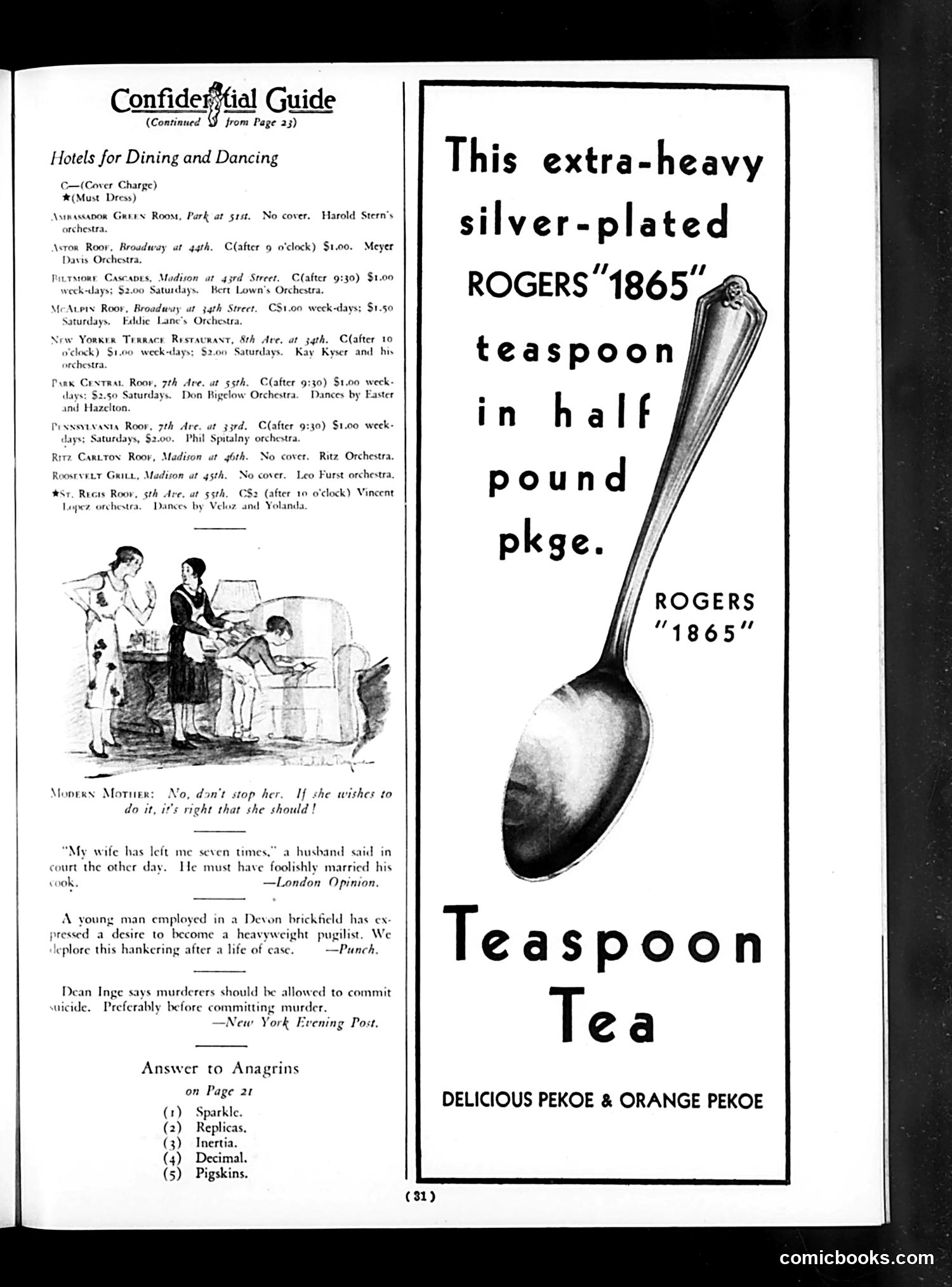
Page Analysis This page is primarily advertising and filler content from Life magazine, not political satire. The left column contains a "Confidential Guide" listing New York City hotels with dining and dancing venues (1920s era, based on orchestra names and cover charges). Below are brief humorous quotes—including one about a husband whose wife left him seven times, and another mocking a young man wanting to become a boxer—these are generic jokes typical of the period's satirical magazines. The right side is a full-page advertisement for Rogers "1865" brand silverware, specifically promoting a teaspoon sold in half-pound packages. The ad features a large product illustration. There are no political cartoons or caricatures on this page. The content reflects early 20th-century American consumer culture and light social humor, with no identifiable satirical targets beyond generic domestic comedy.
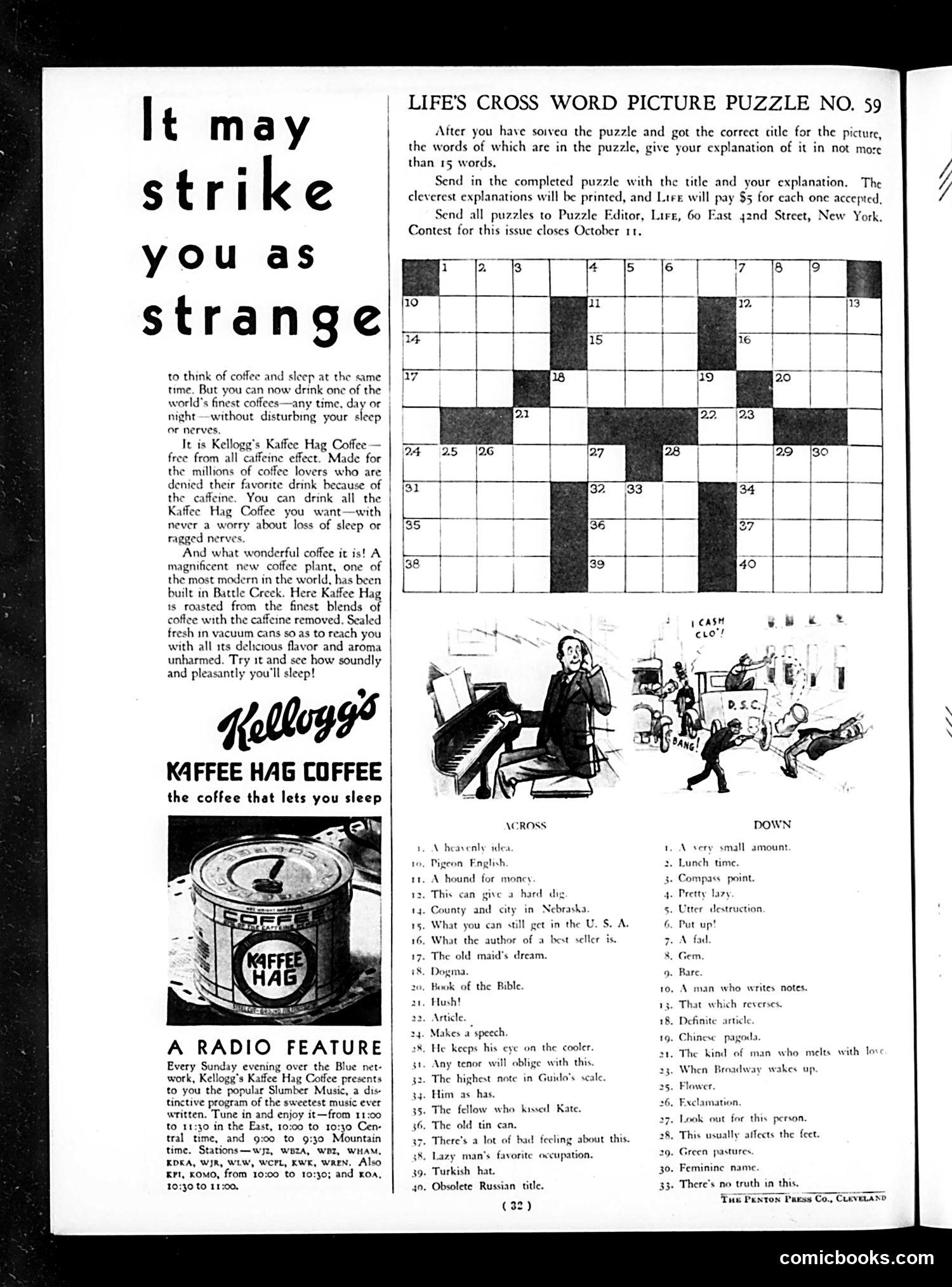
Life Magazine Page Analysis This page is primarily an advertisement for Kaffee Hag Coffee paired with a crossword puzzle contest. The satirical cartoon appears in the middle—a sketch showing people reacting to cash ("I CASH CLOT"), with figures appearing frantic or distressed around what looks like a B.S.C. sign. The ad's humor lies in its contradictory premise: coffee traditionally keeps people awake, yet this caffeine-free product claims you can drink it "any time, day or night" without sleep disruption. The text acknowledges this is "strange" to consider—the joke being that removing caffeine defeats coffee's primary appeal for many drinkers. The puzzle is a reader engagement contest offering $5 payment for clever explanations—typical early 20th-century magazine interactivity. The cartoon's exact meaning is unclear without fuller context, but the "cash" reference suggests commentary on financial desperation or fraud, common Life satirical subjects.
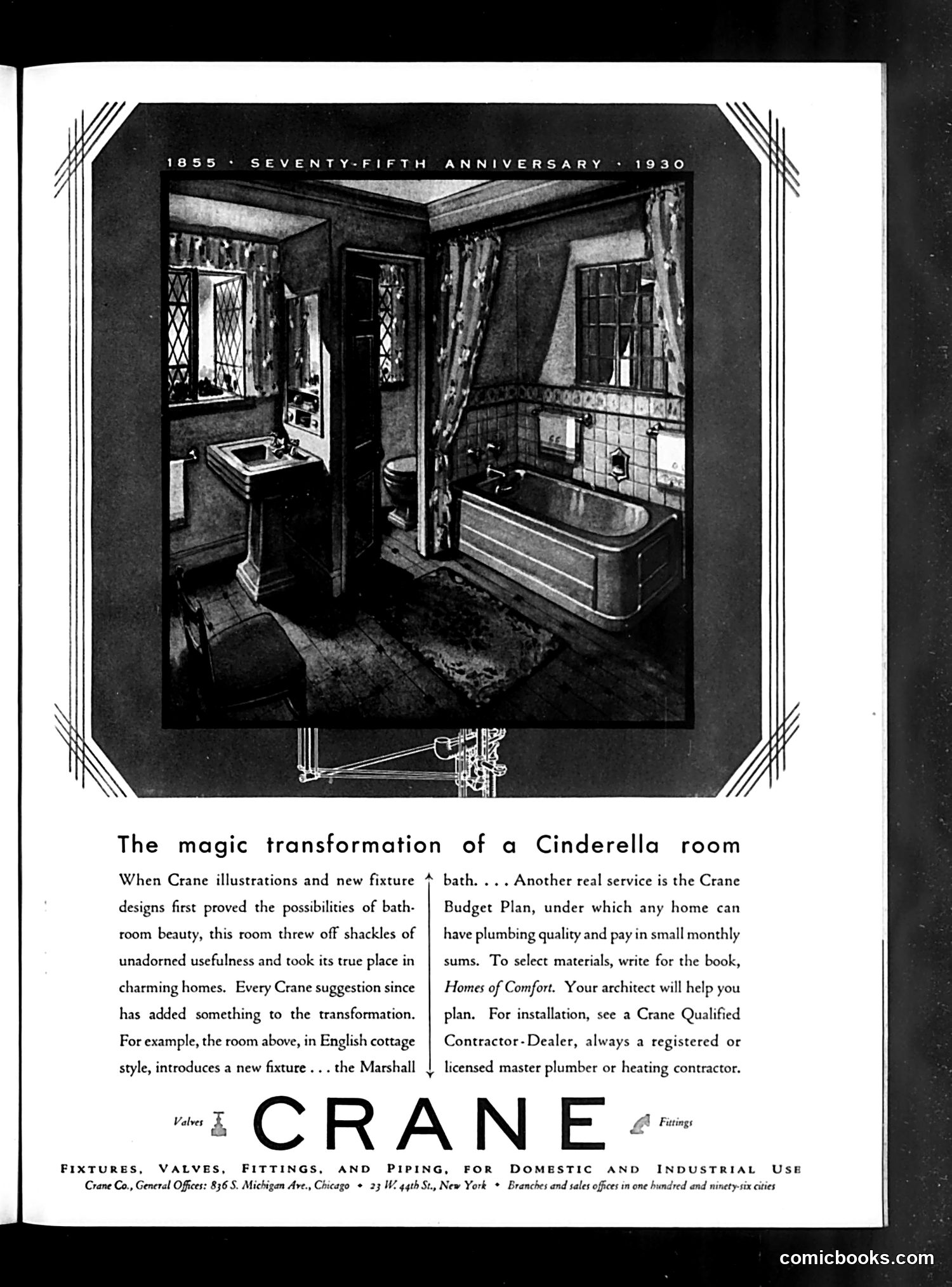
Analysis This is not a cartoon or satire—it's a full-page advertisement for Crane plumbing fixtures, marking their 75th anniversary (1855-1930). The "Cinderella room" reference is metaphorical advertising copy: a modest bathroom has been transformed into an elegant, modern space through Crane products. The black-and-white photograph shows a well-appointed 1930s bathroom with a bathtub, sink, tiled walls, and curtained windows—presented as aspirational home design. The sales pitch emphasizes that Crane's new "Budget Plan" makes quality plumbing affordable through monthly payments, positioning modern bathrooms as accessible to ordinary homeowners rather than only the wealthy. The text directs readers to request a design book and contact licensed contractors. There are no political figures, caricatures, or satirical commentary—only vintage advertising using the fairy-tale framing of "Cinderella" to suggest transformation and uplift through consumer products.
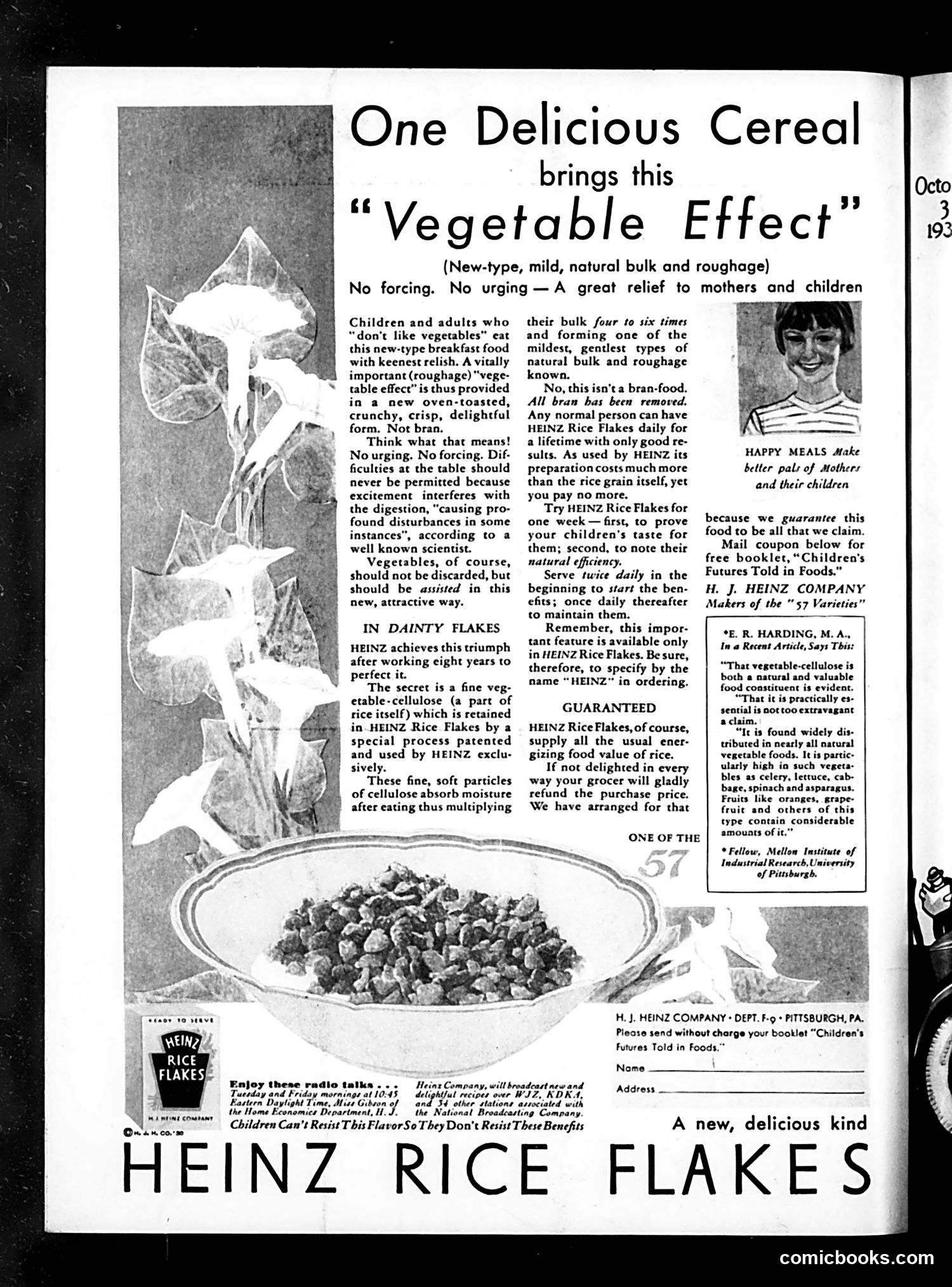
Analysis: Heinz Rice Flakes Advertisement This is primarily a cereal advertisement, not political satire. The page promotes Heinz Rice Flakes as a breakfast cereal with a "vegetable effect." The marketing pitch targets parents concerned about children refusing vegetables. The ad claims the cereal provides roughage and digestive benefits through retained vegetable-cellulose, making it palatable to children who resist actual vegetables. Key selling points: no forcing, no urging, gentle digestion, and scientific endorsement (a quote from "E. R. Harding, M.A."). The left image shows a stylized plant or vegetable form, visually representing the "natural" ingredient claim. The copy emphasizes Heinz's eight-year development process and exclusive patented method, plus a satisfaction guarantee—typical early 20th-century advertising appeals to middle-class mothers managing finicky eaters. Radio broadcasts and free booklets advertised below suggest this was part of a larger promotional campaign. No political commentary or satire is evident.