life
Life — November 21, 1930
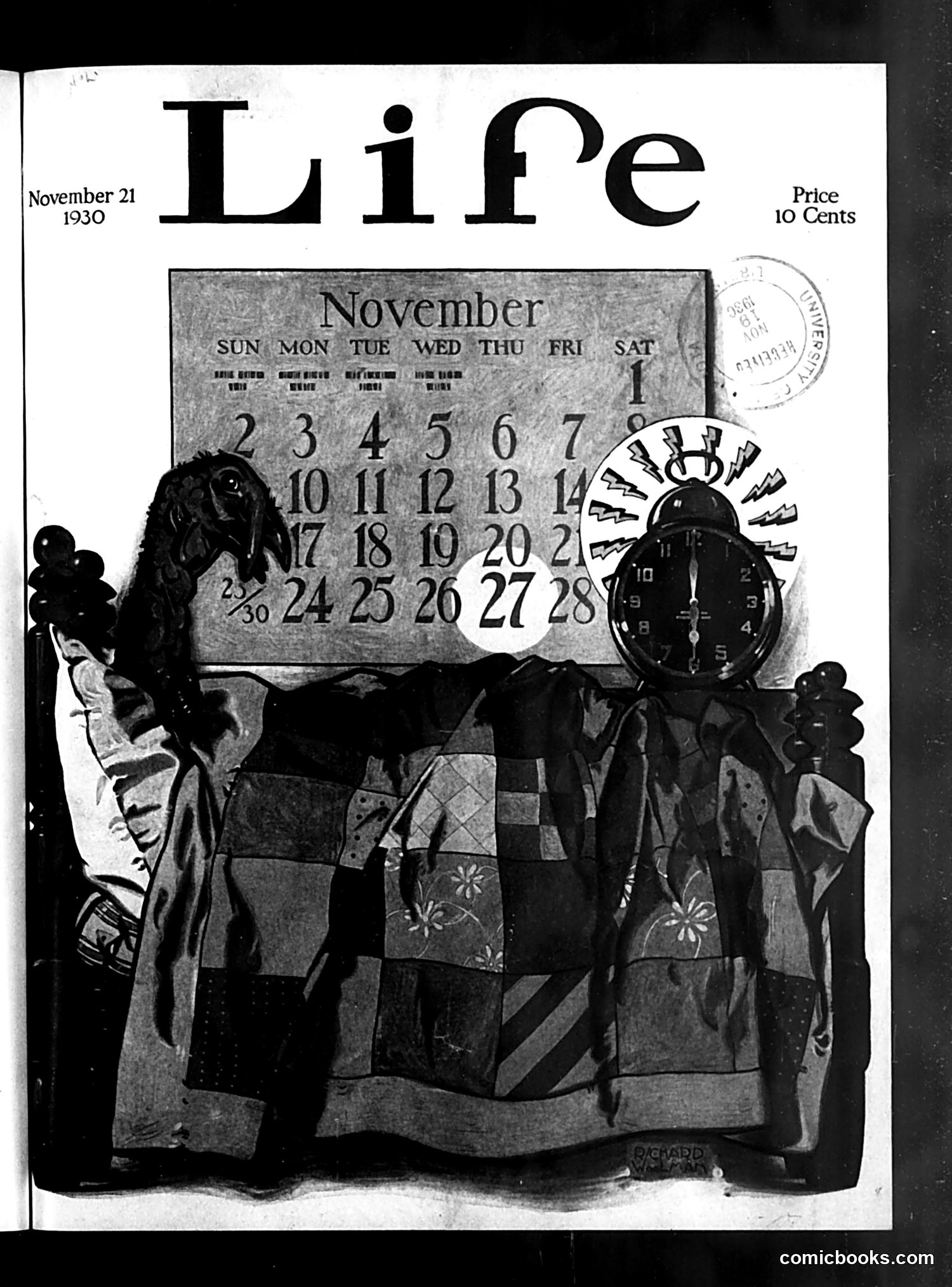
Life Magazine Cover - November 21, 1930 This is a Life magazine cover featuring a November calendar and clock as the central design. A dog (appears to be a spaniel or similar breed) lies across a patchwork quilt or blanket, positioned lazily beneath the calendar and alarm clock imagery. The satire likely plays on the contrast between the dog's relaxed, indifferent posture and the passage of time marked by the calendar and clock—suggesting themes about procrastination, idleness, or the irrelevance of time's passage to those unburdened by human obligations. The humor appears gentle and domestic rather than overtly political. The composition uses the dog as a humorous commentary on how differently animals (or perhaps humans during leisure) relate to scheduling and punctuality.
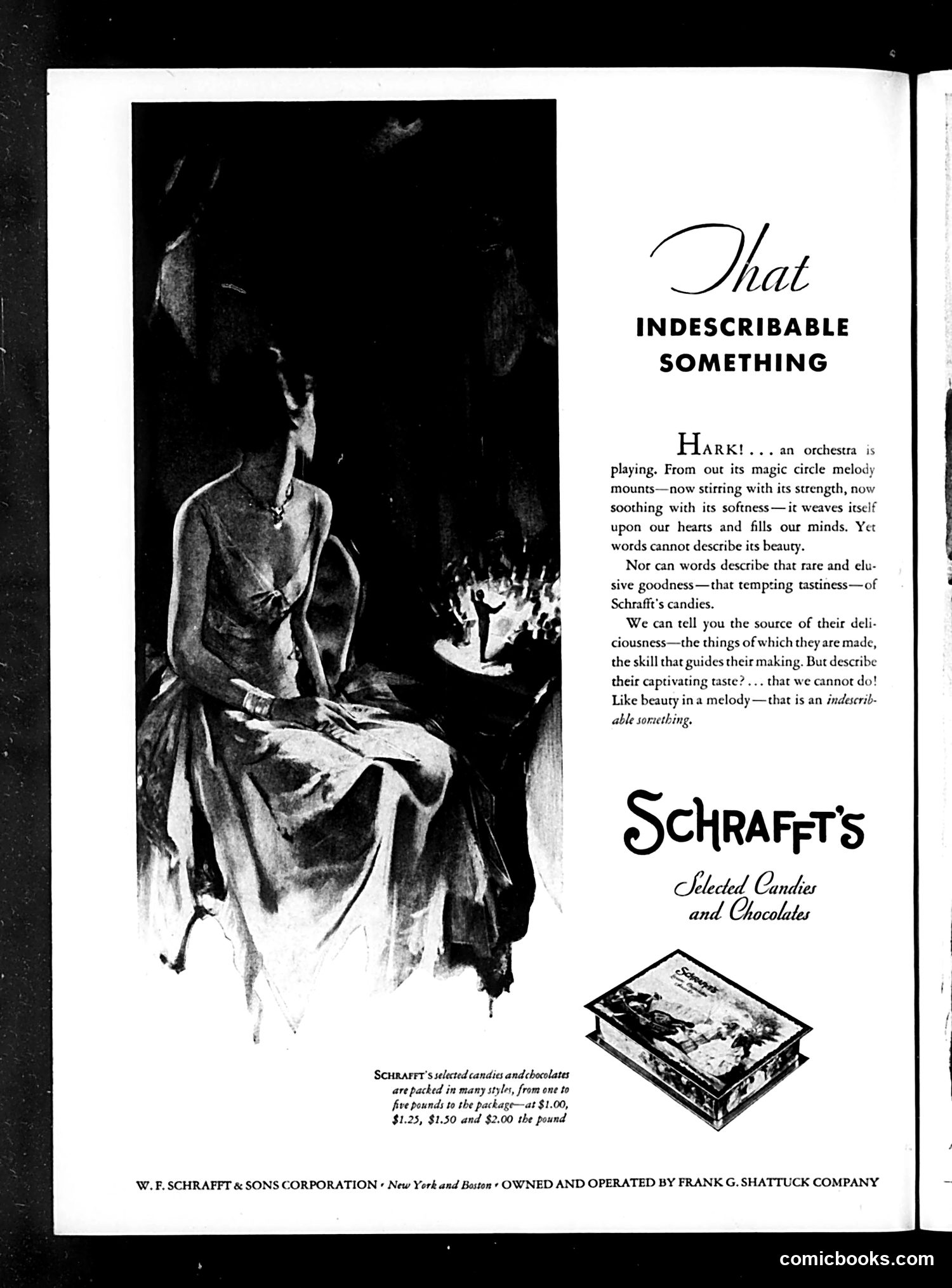
Analysis This is not a political cartoon or satirical content—it's a full-page advertisement for Schrafft's candies and chocolates. The image shows an artistic illustration of a woman in classical or theatrical dress, gazing contemplatively at a box of Schrafft's chocolates, which glows with romantic lighting. The advertisement uses poetic language comparing the "indescribable something" of orchestral music to the ineffable quality of Schrafft's candies—arguing that like beauty in melody, their "captivating taste" cannot be fully described in words. This is typical early-to-mid 20th century luxury brand advertising, using aspirational imagery and romantic sentiment to market premium chocolates. The Schrafft's company operated candy shops in New York and Boston.
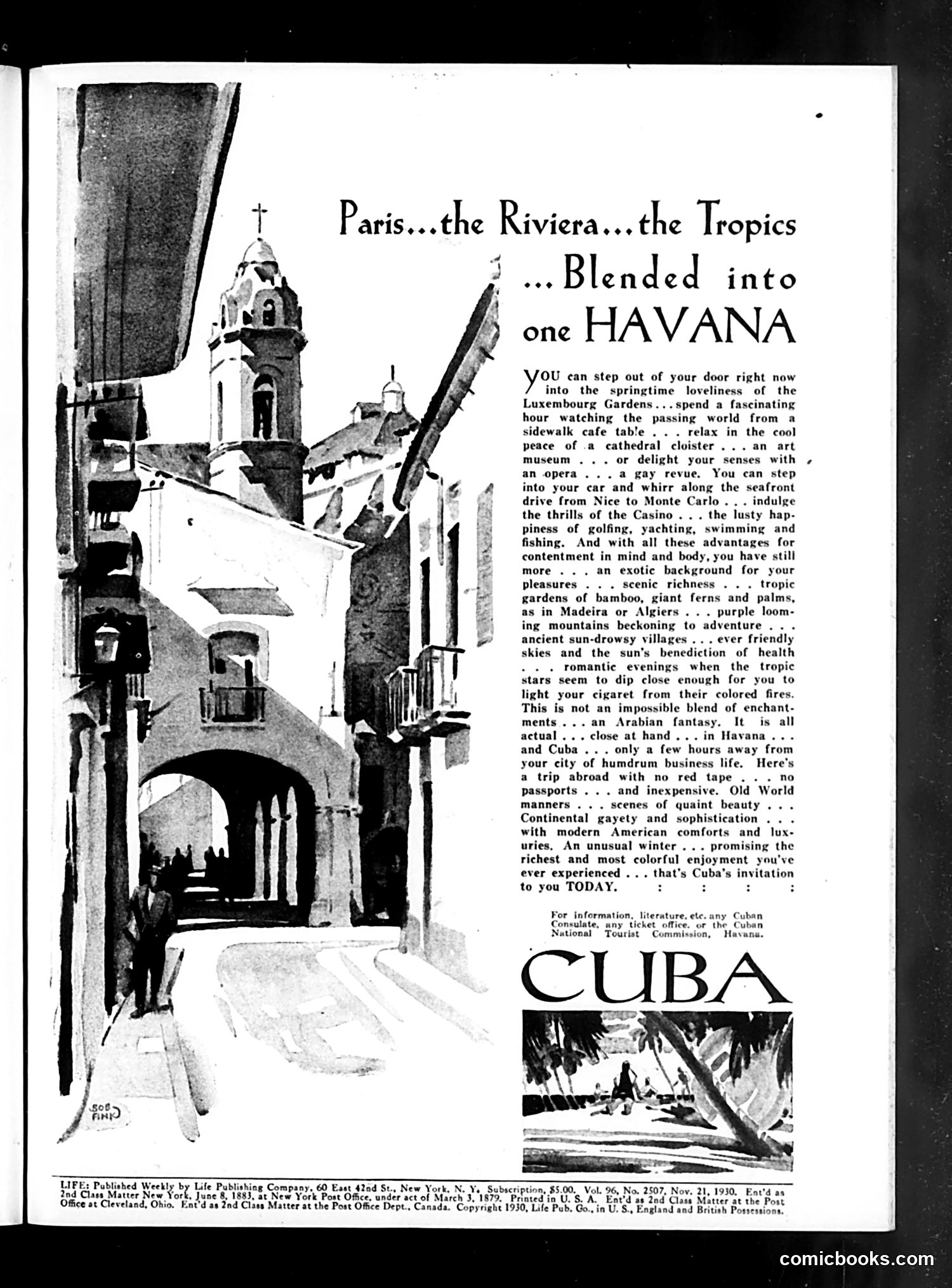
Analysis This is a travel advertisement for Cuba, not a political cartoon. It promotes Cuba as a tourist destination by blending European sophistication with tropical exoticism. The left image shows a narrow Havana street with colonial architecture—a church tower and old buildings—evoking European charm. The text promises visitors can experience "Paris...the Riviera...the Tropics" combined in one location. The advertisement emphasizes Cuba's attractions: gardens, casinos, fishing, beaches, and "Old World manners" alongside "modern American comforts." It explicitly markets Cuba as accessible ("only a few hours away") and affordable for American tourists seeking exotic vacation without extensive travel. Published in 1930, this reflects pre-revolution Cuba's positioning as an American leisure destination. The ad targets wealthy American readers with disposable income for international travel.
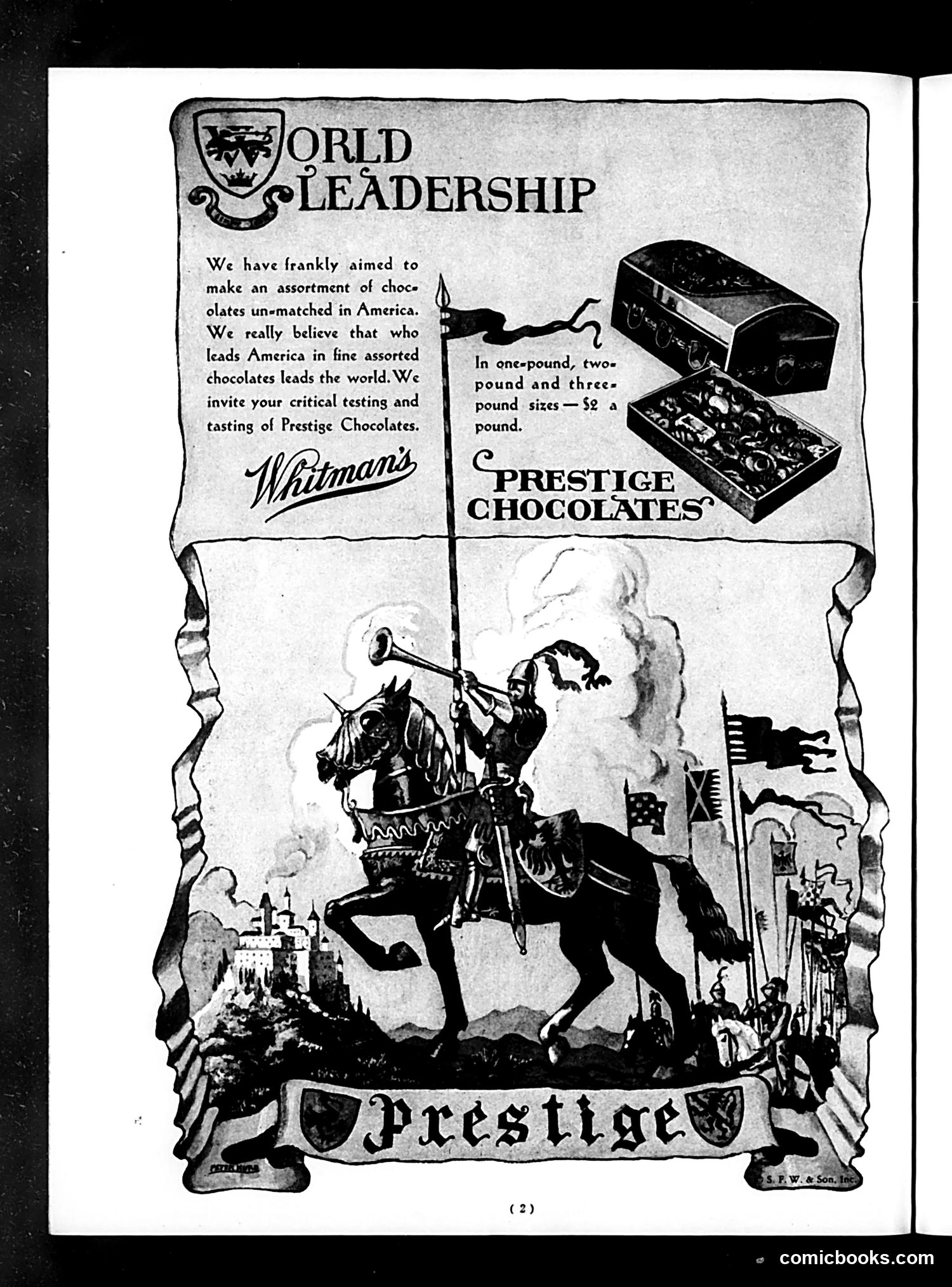
Analysis This is a Whitman's Prestige Chocolates advertisement, not political satire. The page uses the heading "World Leadership" to market American chocolates by claiming superior quality. The upper text asserts that Whitman's chocolates are "unmatched in America" and that "who leads America in fine assorted chocolates leads the world." The lower half features a medieval knight on horseback in heraldic style—a visual metaphor for conquest and dominance. This imagery reinforces the advertising claim: just as knights once conquered territories, American chocolate brands now lead global markets. The knight imagery and "Prestige" branding create an aspirational, luxurious tone. Pricing ($2 per pound for various sizes) targets affluent consumers. This reflects early 20th-century American commercial confidence and the marketing strategy of equating consumer products with national superiority.
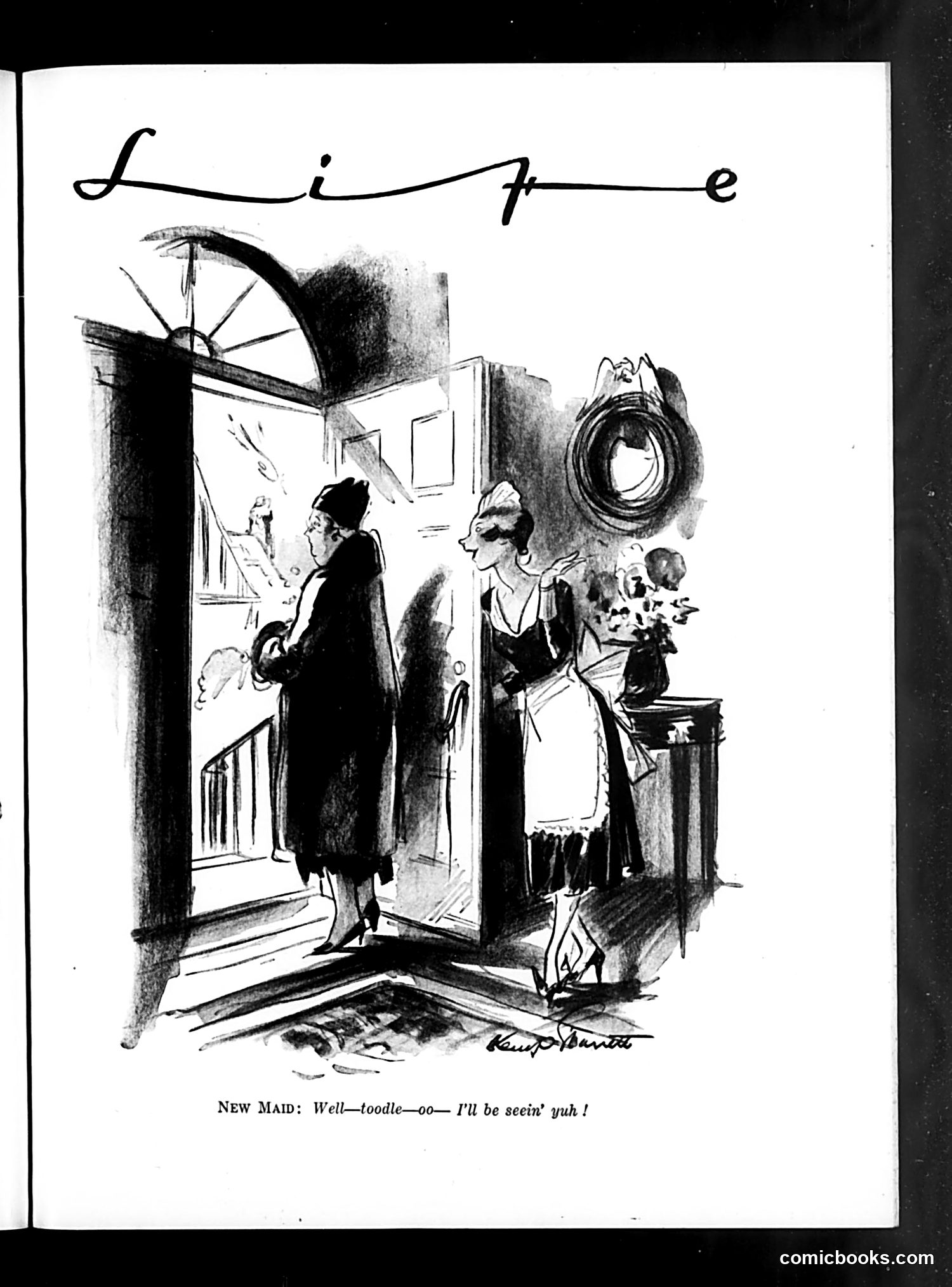
Analysis This is a single-panel cartoon titled "Life" depicting a domestic scene. A woman (labeled "NEW MAID") stands at an open doorway greeting a visitor, saying "Well—toodle-oo—I'll be seein' yuh!" The humor appears to satirize the informal, casual speech and manners of working-class domestic servants, particularly new household help. The exaggerated dialect ("toodle-oo," "seein' yuh") mocks lower-class vernacular of the era. The cartoon suggests social anxieties about servants lacking proper decorum or respect for formal household boundaries—the new maid is treating her employer's home too casually, speaking in slang rather than properly deferential language expected of domestic workers in that period. The satire targets class distinctions and servant etiquette standards of early-to-mid 20th century American households.
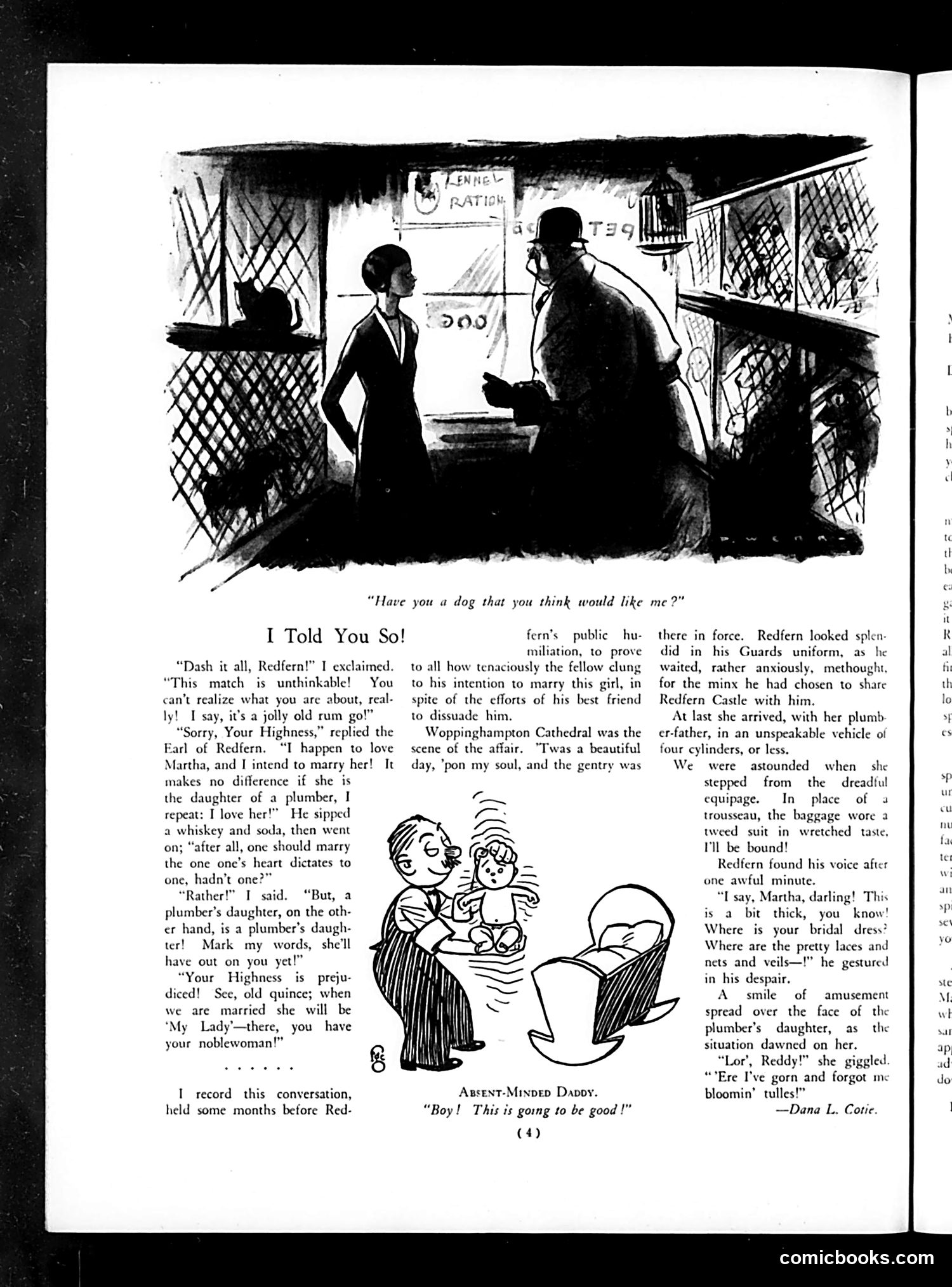
Analysis This is a humorous story titled "I Told You So!" illustrated with a sketch-cartoon at the top and a small comic illustration mid-page. The main cartoon depicts a social scene at what appears to be a pet shop, with the caption "Have you a dog that you think would like me?" The accompanying story concerns a romantic conflict: an Earl opposes his friend Redfern's intention to marry Martha, a plumber's daughter, on class grounds. The Earl argues the match is unsuitable; Redfern defends marrying for love regardless of social station. The humor derives from the class-consciousness of the period—the scandal of an aristocrat's friend marrying "beneath" him. The small cartoon labeled "Absent-Minded Daddy" shows a father comically mishandling babies, providing light comedic relief alongside the main narrative's satire of rigid social hierarchies and marriage expectations among the British upper classes.
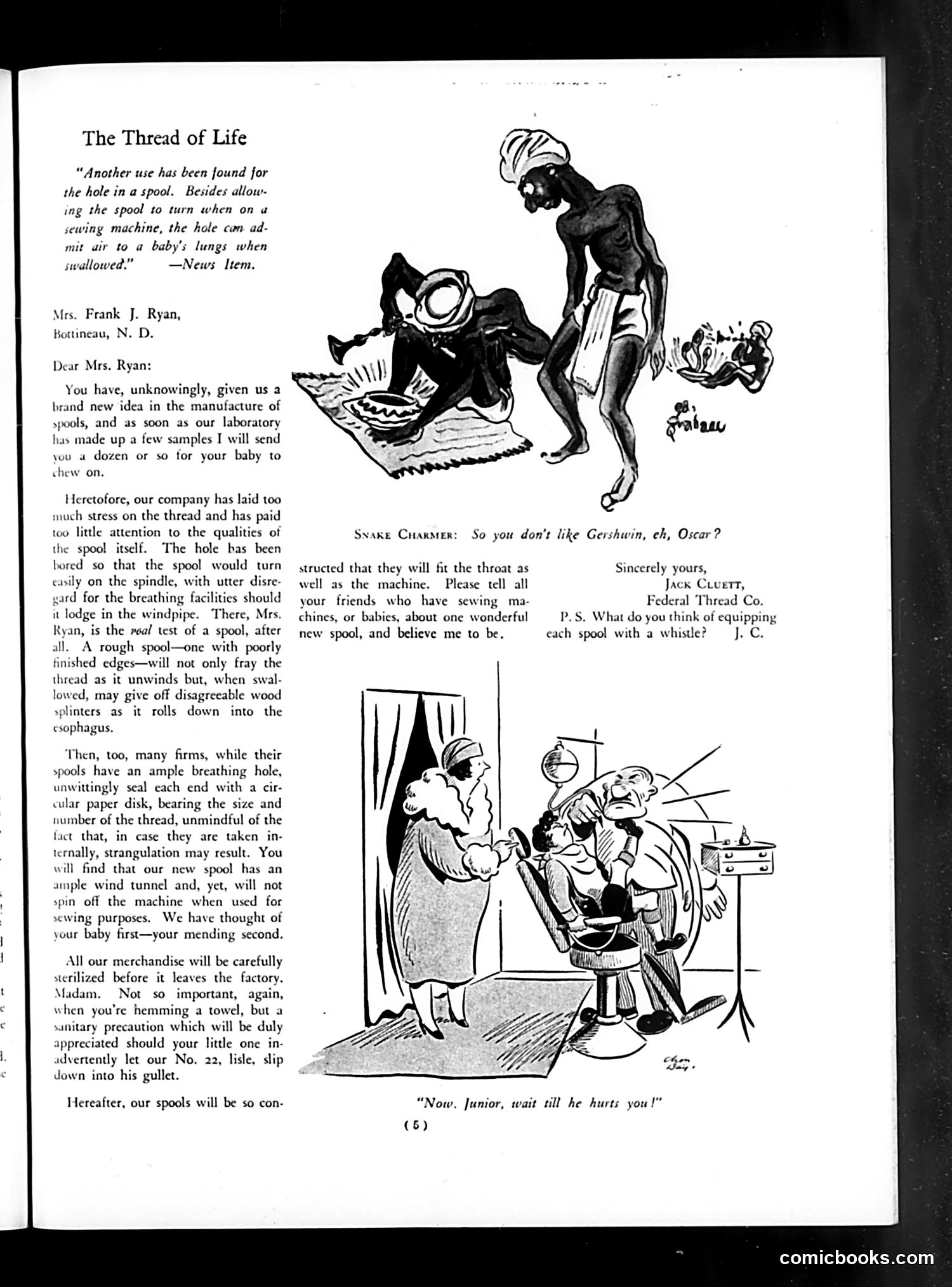
"The Thread of Life" - Life Magazine Satire This page satirizes manufacturing defects in sewing-machine spools. The letter from Jack Culbert of Federal Thread Co. addresses a news item about holes discovered in spools that allow air into babies' lungs when swallowed. The top cartoon shows a figure (labeled "Snake Charmer") playing music to charm thread from a spool—a visual pun on the manufacturing problem. The bottom cartoon depicts a mother discovering her baby has swallowed thread, with the caption "Now, Junior, wait till he hurts you!" The humor is darkly ironic: the mother's threat of punishment to the child is absurd given the actual danger posed by the defective product itself. The satire critiques manufacturers' negligence regarding product safety standards in baby items.
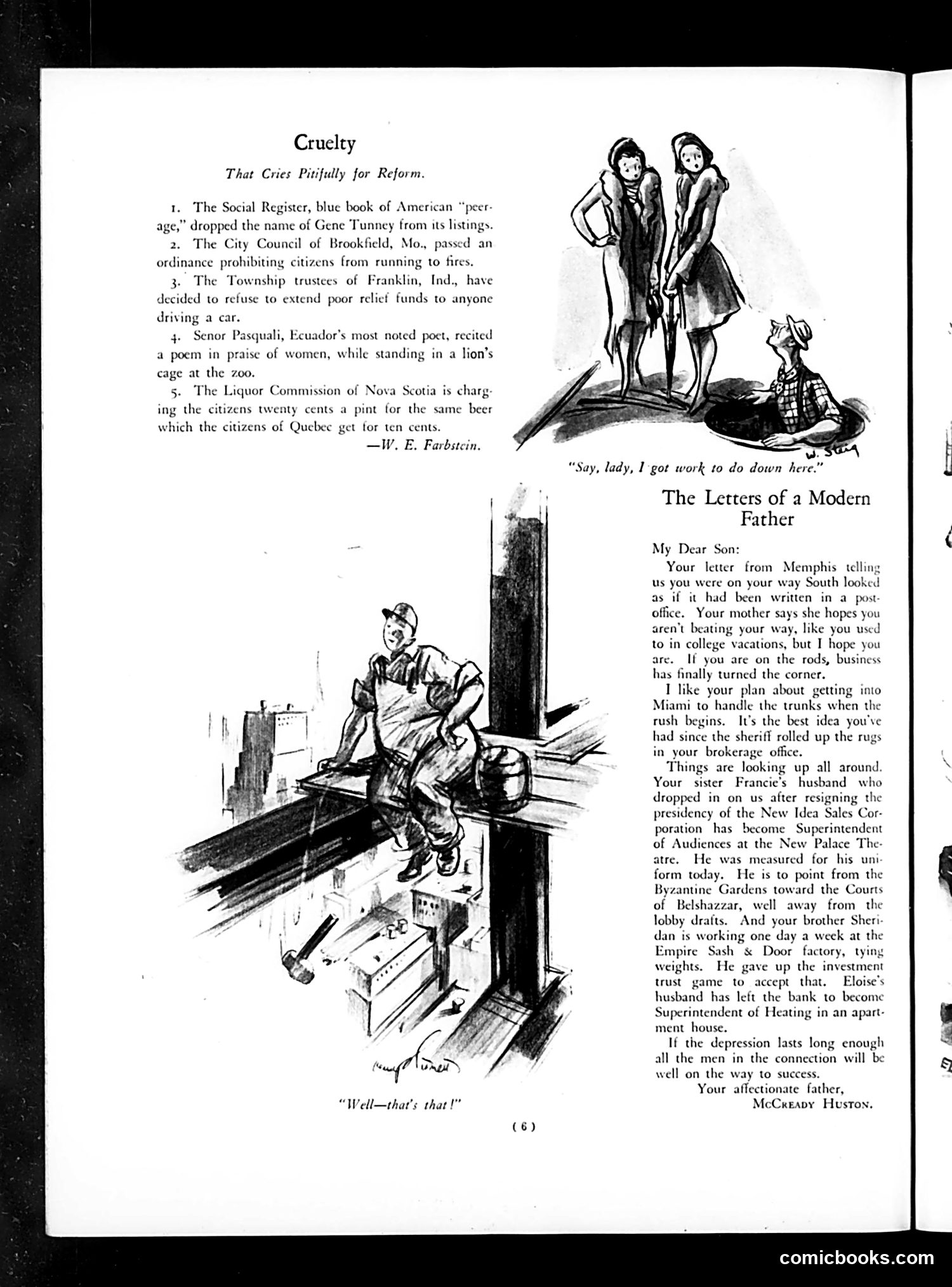
Analysis of Life Magazine Page This page contains two satirical pieces: "Cruelty: That Cries Pitifully for Reform" lists five absurd or petty local regulations by W.E. Farbstein—including banning citizens from running to fires and denying poor relief to car owners—mocking overly restrictive government policies. "The Letters of a Modern Father" is a humorous letter from McCready Huston to his son, describing how family members are adapting during what appears to be the Great Depression. References include job transitions, relatives taking factory work, and the father's hopeful tone that "if the depression lasts long enough all the men in the connection will be well on the way to success." The accompanying illustrations show a working man and a child, reinforcing themes of economic hardship and labor. The satire targets both bureaucratic absurdity and the era's economic struggles.
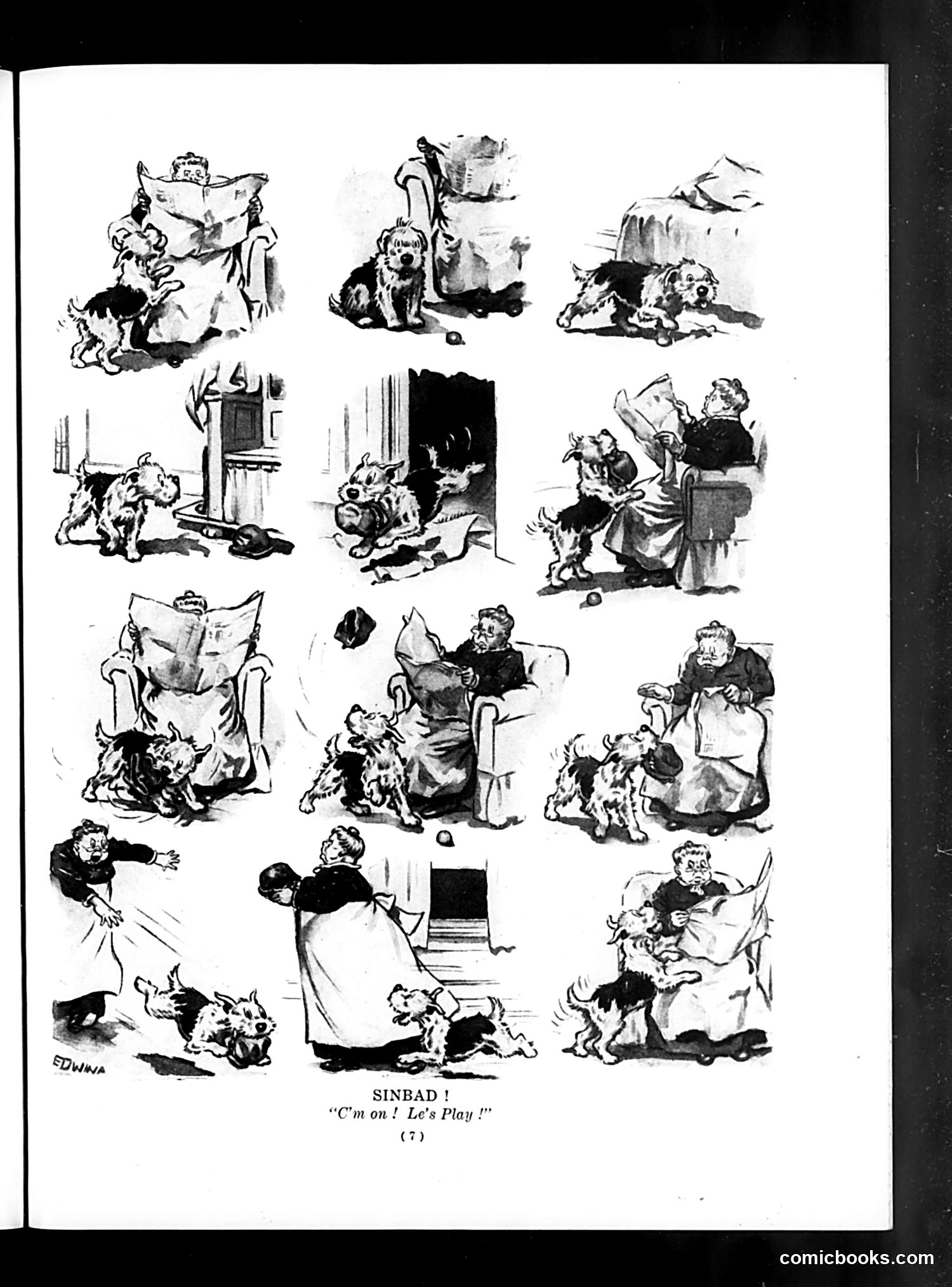
Analysis of "Sinbad! 'C'm on! Le's Play!'" This is a series of comic vignettes by artist Edwina (signed lower left) depicting a small dog persistently pestering various people—adults reading newspapers, sitting in chairs, lying in bed, working—trying to engage them in play. The humor derives from the dog's relentless, energetic attempts to initiate games while the humans are absorbed in their own activities or rest. The repeated scenarios satirize the common domestic conflict between a pet's desire for attention and companionship versus humans' desire for peace and solitude. The title references Sinbad the Sailor, suggesting the dog's adventures are as dramatic as mythological tales. The satire gently mocks both dog owners' neglect of their pets and dogs' single-minded persistence—a relatable household dynamic for Life magazine's early 20th-century audience.
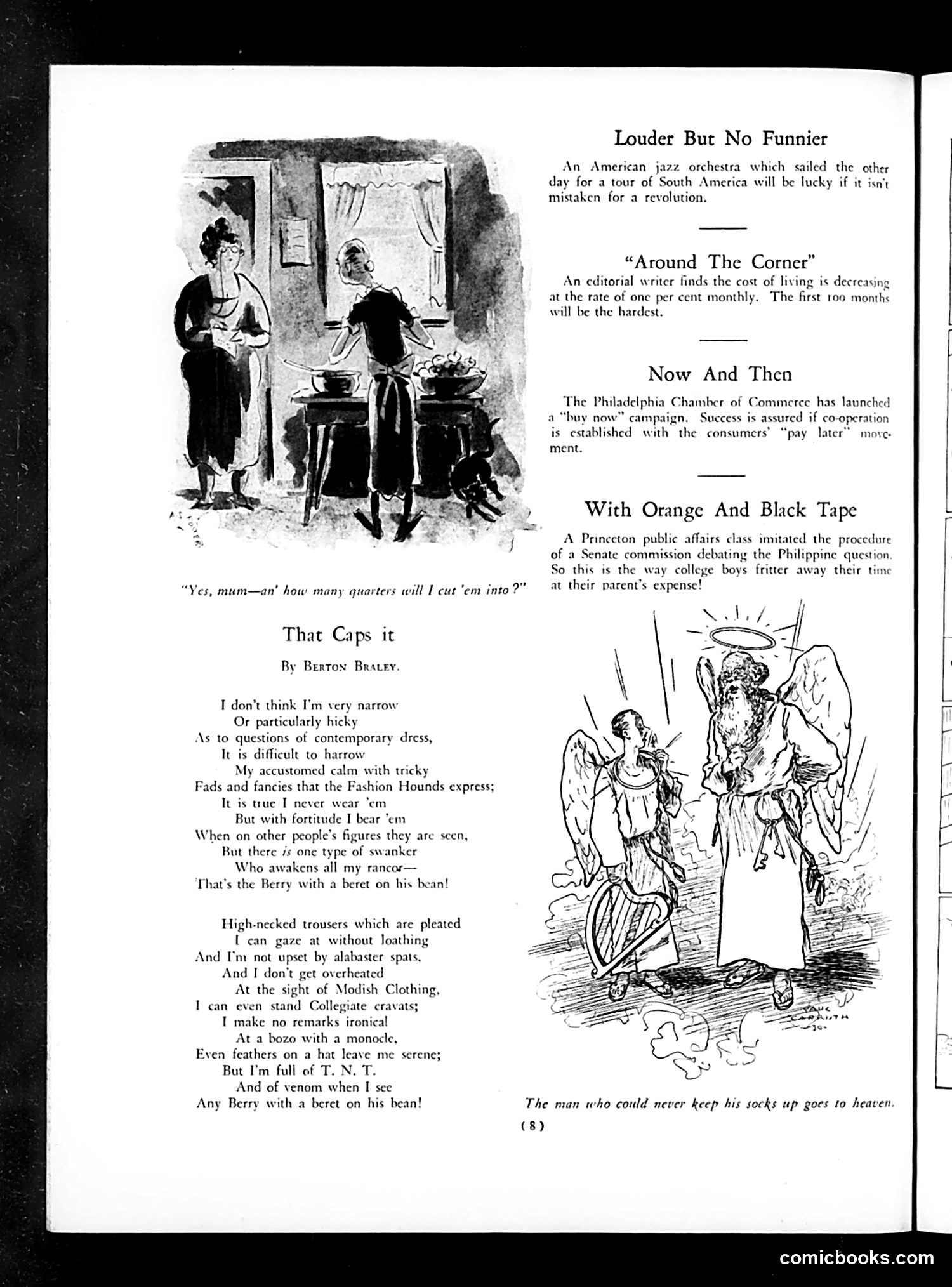
Explanation for Modern Readers This page contains three separate satirical pieces from *Life* magazine: 1. "That Caps It" (poem by Berton Braley): A humorous complaint about contemporary fashion trends. The speaker claims indifference to most modern dress fads but draws the line at "a Berry with a beret on his bean"—apparently referring to men wearing berets, which the poet finds ridiculous and full of pretension. 2. "With Orange and Black Tape": Mocks Princeton students imitating Senate procedures to debate the Philippine question, wasting their parents' money on frivolous activities. 3. "Louder But No Funnier", "Around the Corner", and "Now and Then": Brief satirical notes on a jazz orchestra tour, cost-of-living increases, and a Philadelphia Chamber of Commerce campaign. The overall tone is gently mocking of contemporary trends and institutional behaviors.
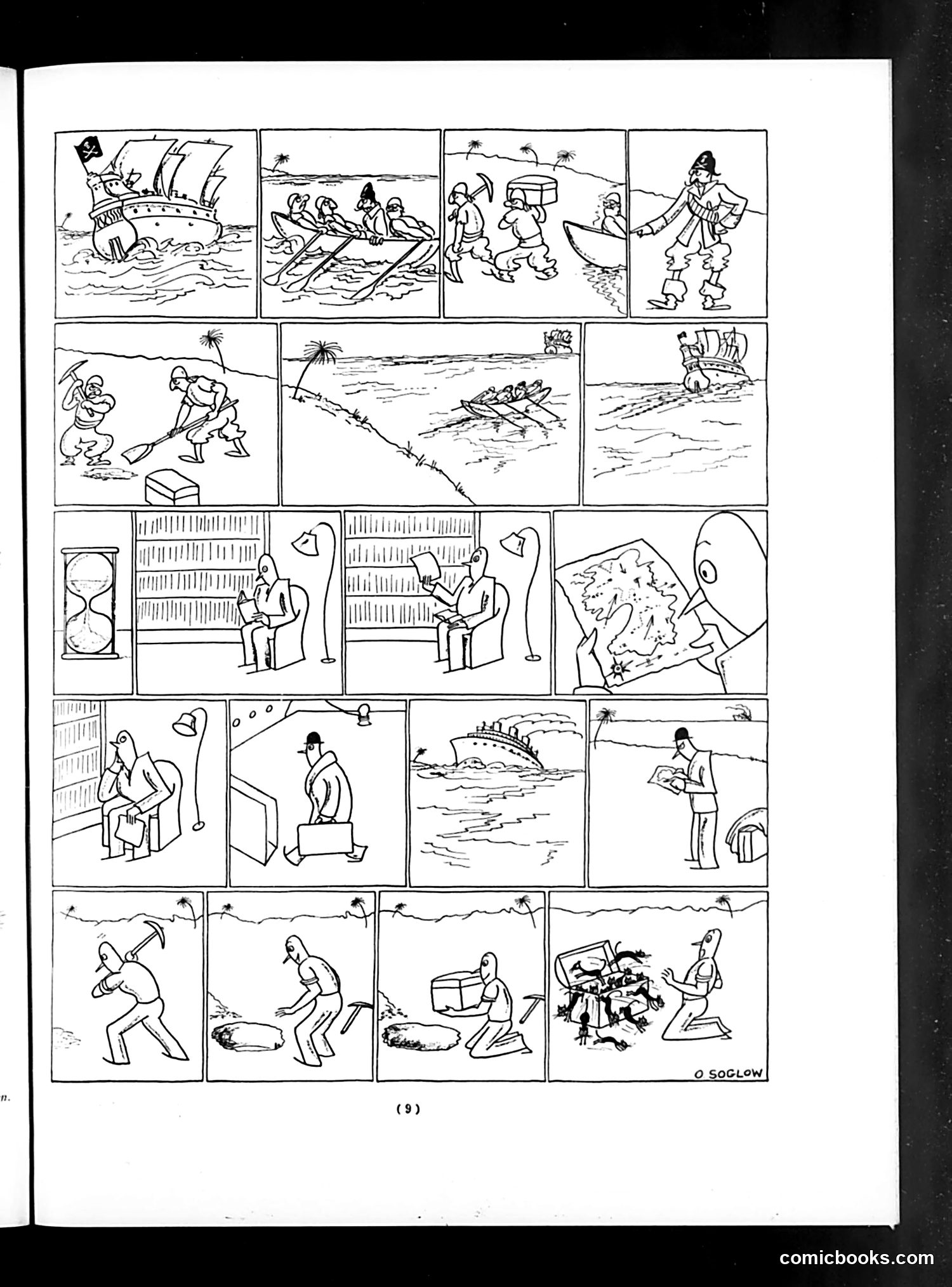
Explanation for Modern Readers This is a satirical comic strip by O. Soglow depicting a shipwreck and survival scenario. The narrative follows castaways from a sinking vessel (top panels) who reach an island. The satire appears to mock civilization's trappings: the survivors initially maintain formal behaviors (hourglass, structured schedules, sitting in chairs). However, as the strip progresses (bottom panels), they gradually abandon these conventions, eventually cooking and celebrating around a fire like "primitive" people. The joke critiques how thin the veneer of civilization is—suggesting that when stripped of society's structures, people revert to basic, primal behavior. It's social commentary on the artificiality of modern etiquette and the supposedly natural human state beneath cultural refinement. The comic is signed by O. Soglow and numbered (9), indicating it's part of a larger publication.
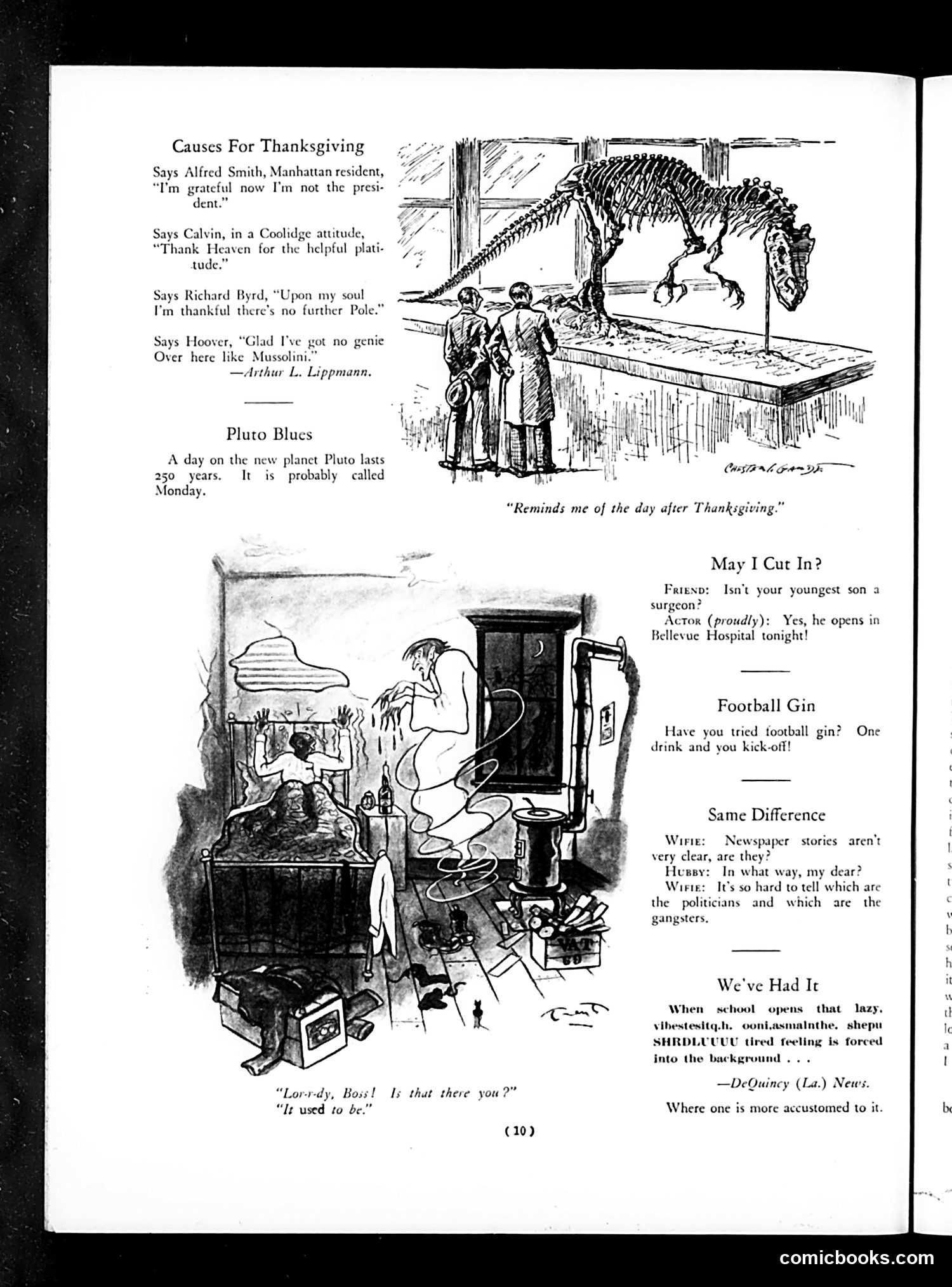
Analysis of Life Magazine Page "Causes for Thanksgiving" presents humorous quotes from public figures expressing gratitude—Alfred Smith (Manhattan resident relieved not to be president), Calvin Coolidge (thanking heaven for helpful platitudes), Richard Byrd (grateful there's no further Pole to explore), and Hoover (glad he has no genie). "Pluto Blues" is a brief sci-fi joke about the newly-discovered planet Pluto, suggesting its long day-length would be called "Monday." The main cartoon depicts Santa Claus visiting a modern apartment, with the caption "Lord-dy, Boss! Is that there you?" and "It used to be"—satirizing how cramped urban living has replaced traditional homes. The remaining brief items mock contemporary social topics: hospital openings, prohibition-era gin drinking, newspaper clarity, and school reopenings.
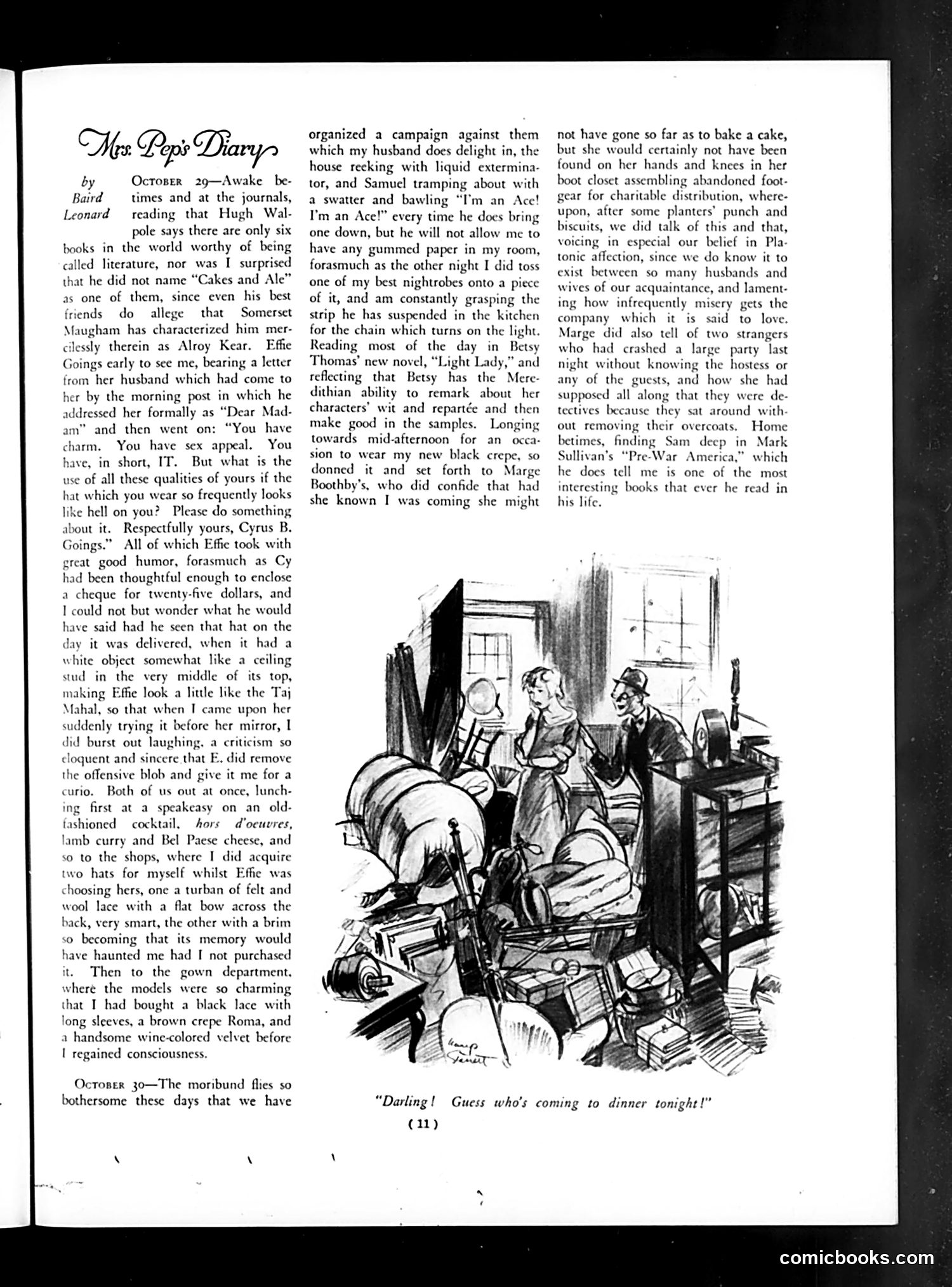
"Mrs. Pope's Diary" - October 29-30 This is a diary entry column featuring domestic humor. The cartoon illustrates a scene where the narrator has unexpectedly invited dinner guests without informing her husband. The caption reads: "Darling! Guests who's coming to dinner tonight!" The humor derives from a common domestic tension of the era: wives making social commitments without consulting their husbands, forcing hasty meal preparation. The crowded room with multiple people and luggage suggests chaos and poor planning. The diary entries above recount various social observations—gossip about Somerset Maugham, domestic annoyances with exterminators and gummed paper, and fashionable book recommendations. The overall tone satirizes upper-middle-class social life and marital dynamics through the perspective of a gossipy, somewhat scatterbrained society woman.
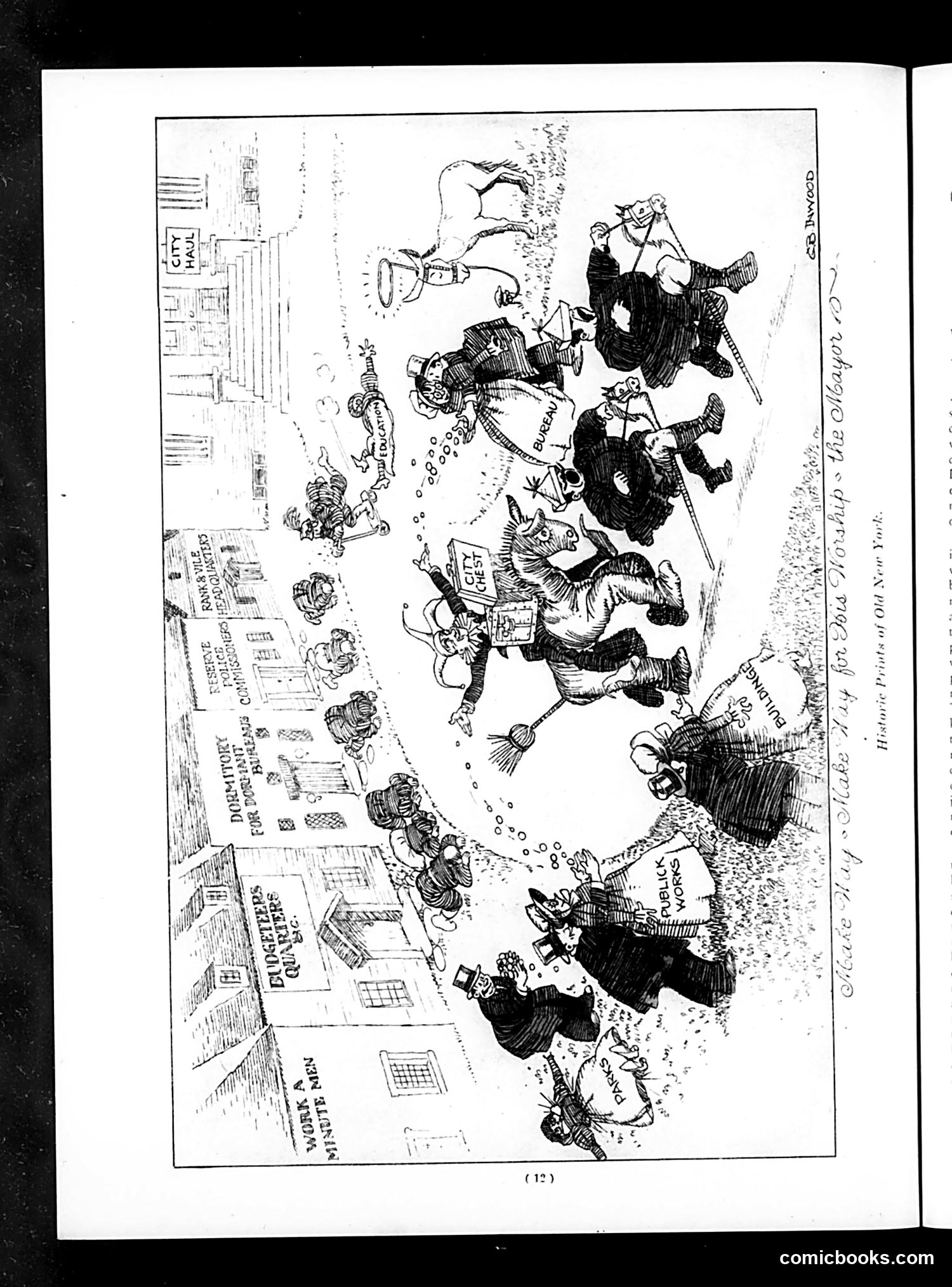
Political Cartoon Analysis This is a satirical cartoon rotated 90 degrees, depicting what appears to be a chaotic scene at an industrial or commercial establishment (buildings visible on left). Multiple caricatured figures are shown in exaggerated poses around what looks like scattered papers or documents, with some appearing to operate machinery or equipment. The style and composition suggest commentary on workplace chaos, bureaucracy, or industrial disorder—common targets of early-20th-century *Life* magazine satire. However, without clearer visibility of specific labels, captions identifying the figures, or surrounding article text, I cannot definitively identify which particular political figures, companies, or events are being satirized. The drawing quality and composition indicate this is likely social commentary on contemporary business or labor conditions.
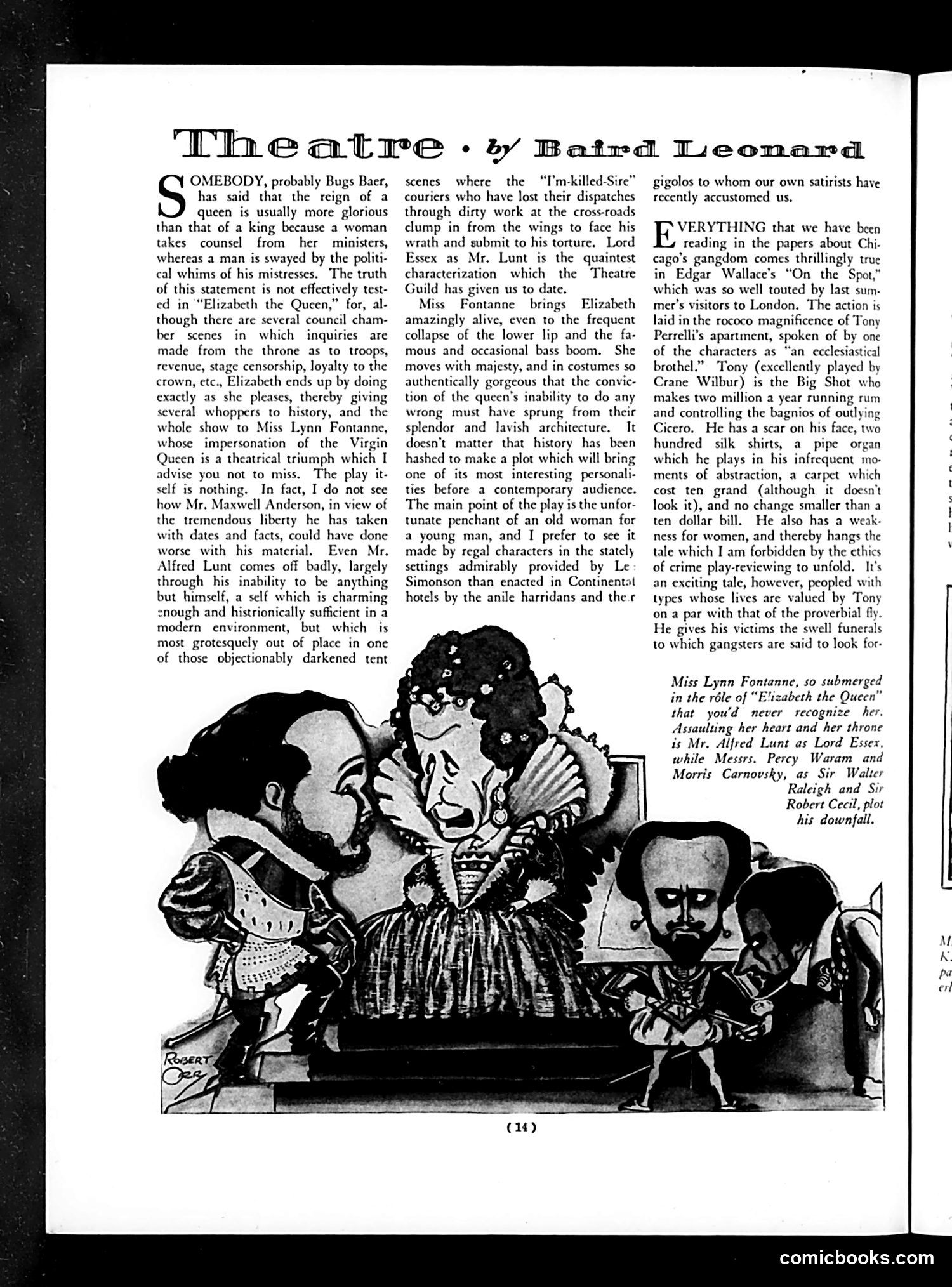
Theatre Review by Baird Leonard This page reviews "Elizabeth the Queen," a Theatre Guild production starring Lynn Fontanne. The text praises Fontanne's performance as Queen Elizabeth I, describing her as "amazingly alive" and moving "with majesty." The cartoon depicts Fontanne (center, in Elizabethan costume) surrounded by smaller male figures, likely representing her male co-stars: Alfred Lunt plays the romantic lead, and the text mentions Percy Waram, Morris Carnovsky, Walter Raleigh, and Robert Cecil in supporting roles. The satire appears to be visual—showing the commanding presence of the lead actress dwarfing her male ensemble—though the review itself is largely complimentary rather than satirical. The overall point seems celebratory of Fontanne's theatrical dominance in the production.
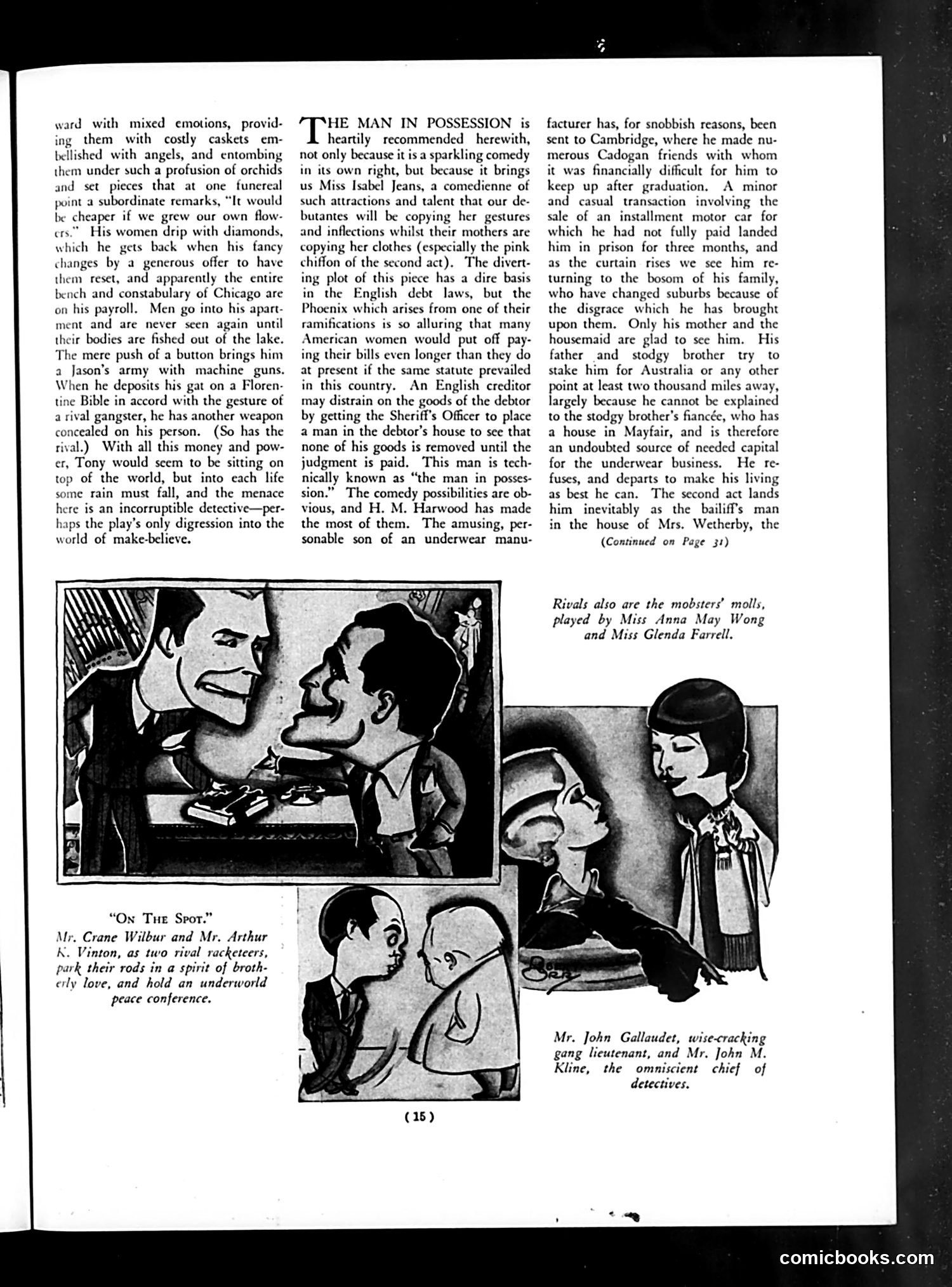
Analysis of Life Magazine Page This page reviews a theatrical production titled "The Man in Possession." The text praises the play as a "sparkling comedy" featuring Isabel Jeans, noting it brings "such attractions and talent" to the stage. The accompanying illustrations show scenes from the play. According to the captions, the images depict: - "On The Spot": Mr. Crane Wilbur and Mr. Arthur K. Vinton as rival racketeers in a comedic confrontation - A scene with Mr. John Gallaudet (described as a "wise-cracking gang lieutenant") and Mr. John M. Kline (the "omniscient chief of detectives") The satire appears to mock underworld characters and crime drama conventions of the period, using comedic exaggeration. The review emphasizes the play's entertainment value and the actors' performances in these stock dramatic roles.
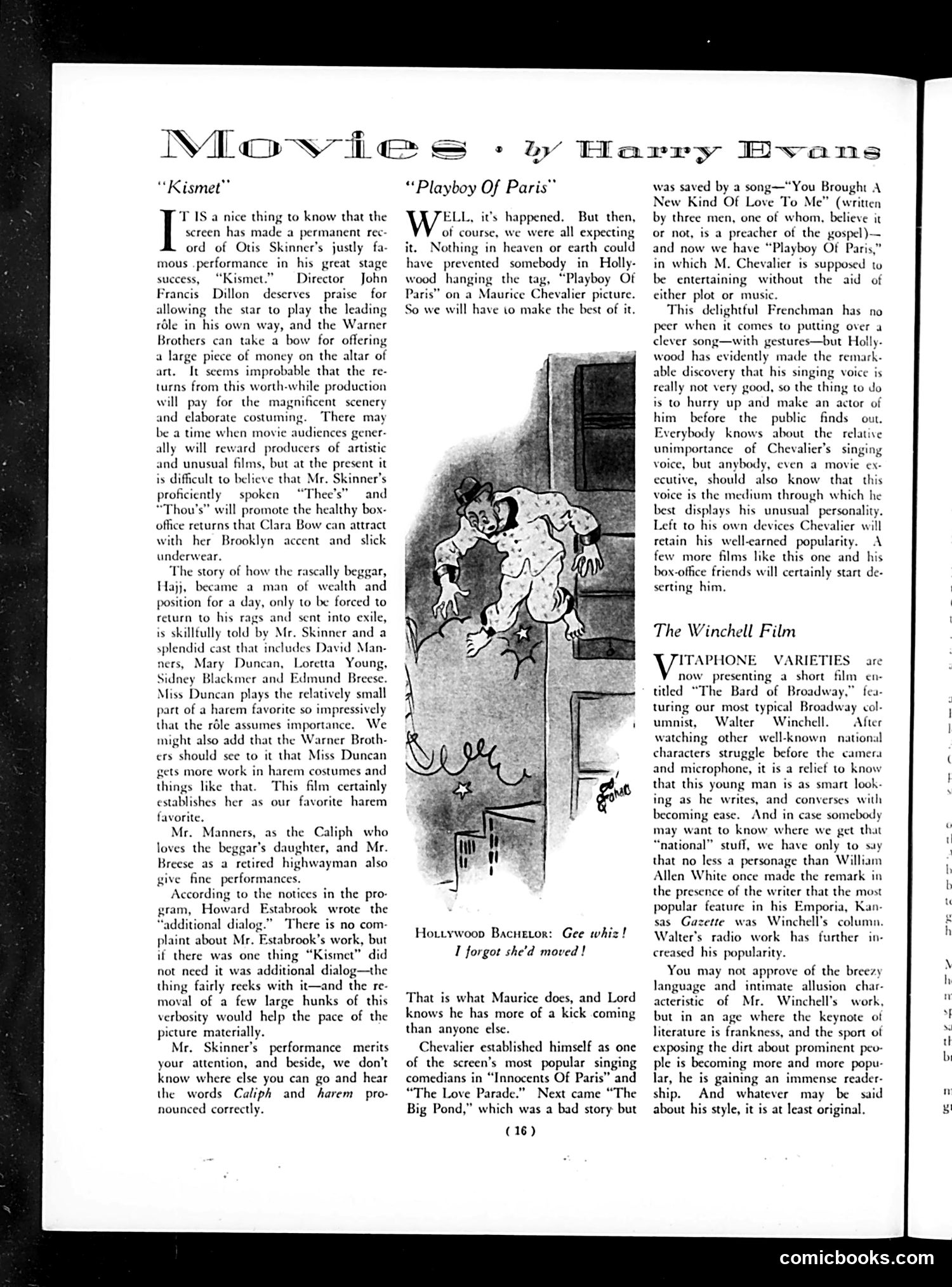
Content Analysis This page from *Life* magazine contains film reviews by Harry Evans covering three movies: "Kismet," "Playboy of Paris," and "The Bard of Broadway" (a Vitaphone short). The cartoon depicts a Hollywood bachelor in what appears to be a bedroom scene, with the caption "HOLLYWOOD BACHELOR: Gee whiz! I forgot she'd moved!" This is a visual gag about romantic entanglements—the joke being that a philandering Hollywood bachelor has so many romantic interests that he's confused about which woman currently lives where, suggesting infidelity or casual promiscuity among wealthy entertainment figures. The satire targets 1920s Hollywood culture, mocking the moral looseness and romantic complications associated with entertainment industry figures during the Jazz Age.
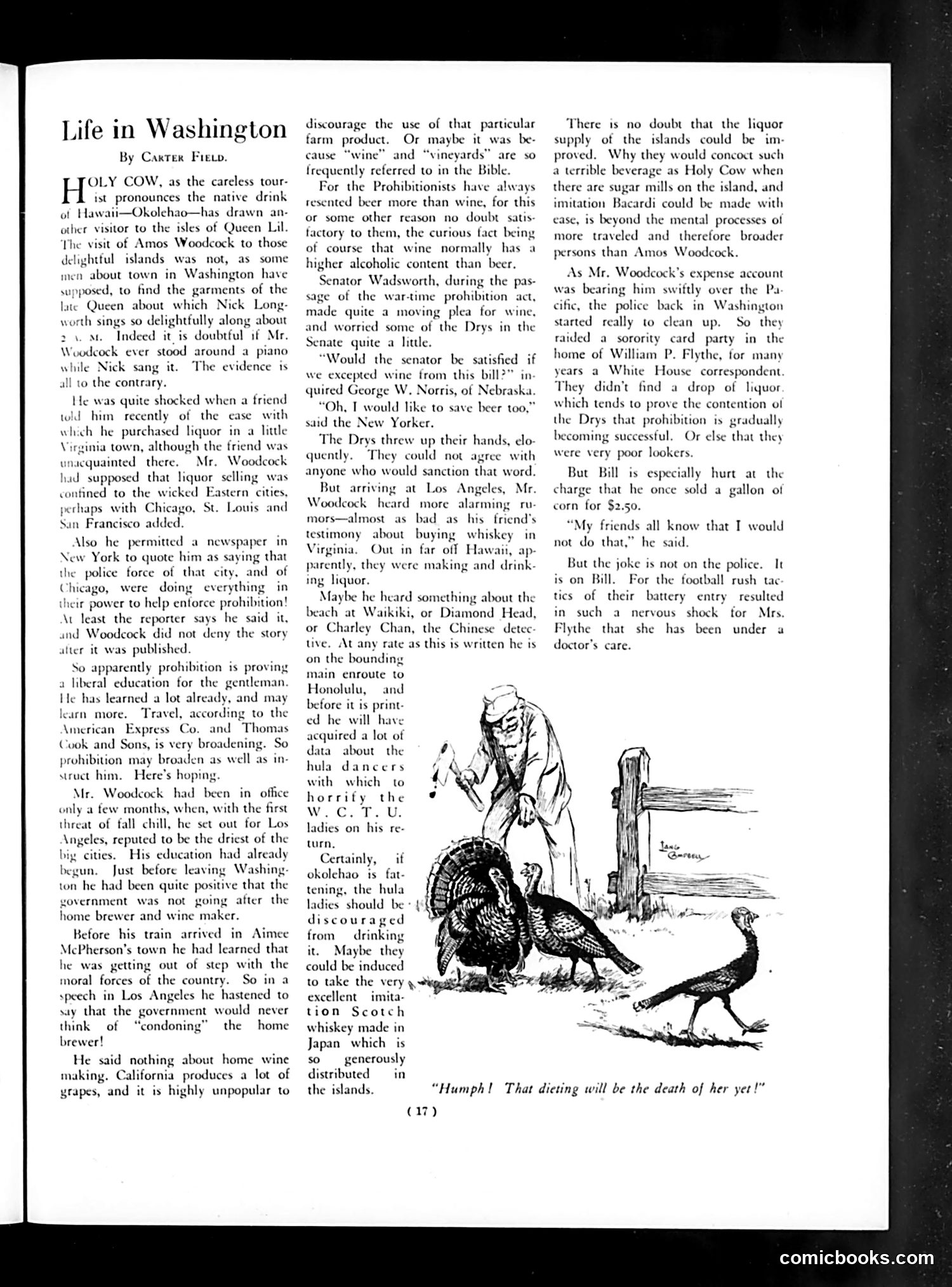
"Life in Washington" - Prohibition Era Satire This article by Carter Field satirizes Prohibition enforcement and hypocrisy during the 1920s-30s era. The main cartoon depicts a hunter shooting at what appears to be a turkey or game bird, with the caption "Humph! That dieting will be the death of her yet!" The satire targets the absurdity of Prohibition: despite laws banning alcohol, liquor remains widely available. The article mocks government officials' contradictory positions—some praising Prohibition's virtue while privately obtaining whiskey through channels like Virginia suppliers. The anecdote about Senator Wadsworth and George W. Norris highlights this hypocrisy. The "dieting" reference in the cartoon likely alludes ironically to Prohibition as a failed "diet" for the nation's drinking habits, doomed to be ineffective or cause other problems. The piece presents Prohibition as an unenforceable, morally bankrupt policy that educated citizens largely ignore.
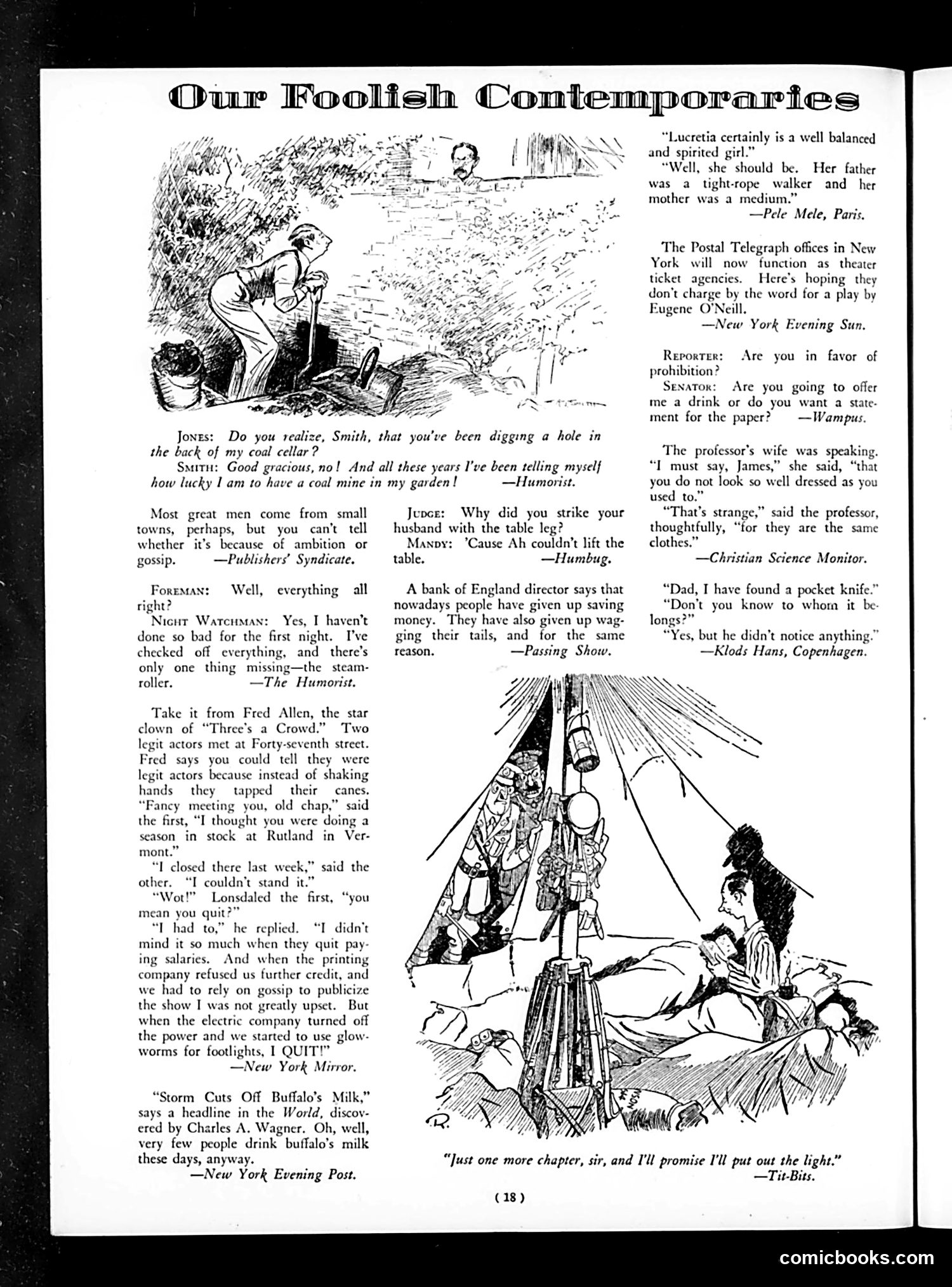
"Our Foolish Contemporaries" This satire page collects humorous quotes and cartoons mocking contemporary figures and institutions. Top cartoon: Shows a man discovering a coal mine in his garden—the joke being he's been told for years how lucky he'd be to have one, now proving it's actually absurd. Middle section: Brief anecdotes satirizing various groups—night watchmen, actors, bank directors, and newspaper editors—highlighting their contradictions or foolishness. One story mocks two legitimate actors shaking hands so vigorously they appear drunk. Bottom cartoon: Depicts someone aboard a ship requesting permission to read "just one more chapter" before extinguishing lights, suggesting excessive book enthusiasm or reluctance to follow orders. The page's overall purpose: exposing hypocrisy and absurdity in everyday American life and public figures through witty observations and exaggerated illustrations.
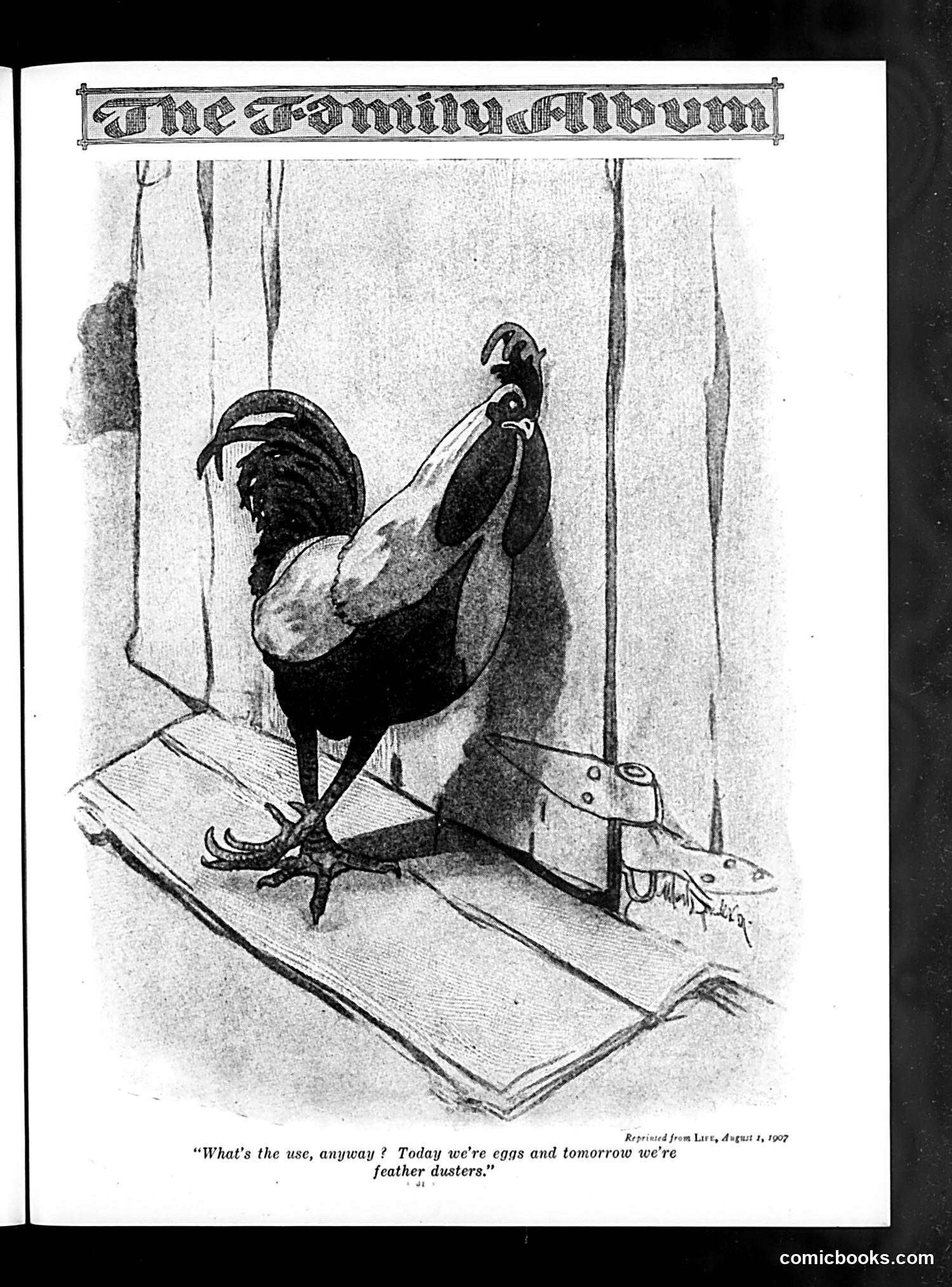
Analysis of Life Magazine Cartoon, August 2, 1907 This cartoon depicts a rooster standing on what appears to be a wooden platform or board, with hanging strips of material (possibly representing feathers or straw) in the background. The rooster's resigned caption—"What's the use, anyway? Today we're eggs and tomorrow we're feather dusters"—presents dark humor about mortality and utility. The satire likely comments on the expendable nature of working creatures (or by extension, workers) in industrial society. The rooster recognizes it will be reduced to its useful parts after death, reducing its existence to economic function. This reflects early 20th-century anxieties about industrial dehumanization and the commodification of life, themes common in 1907 satirical commentary.
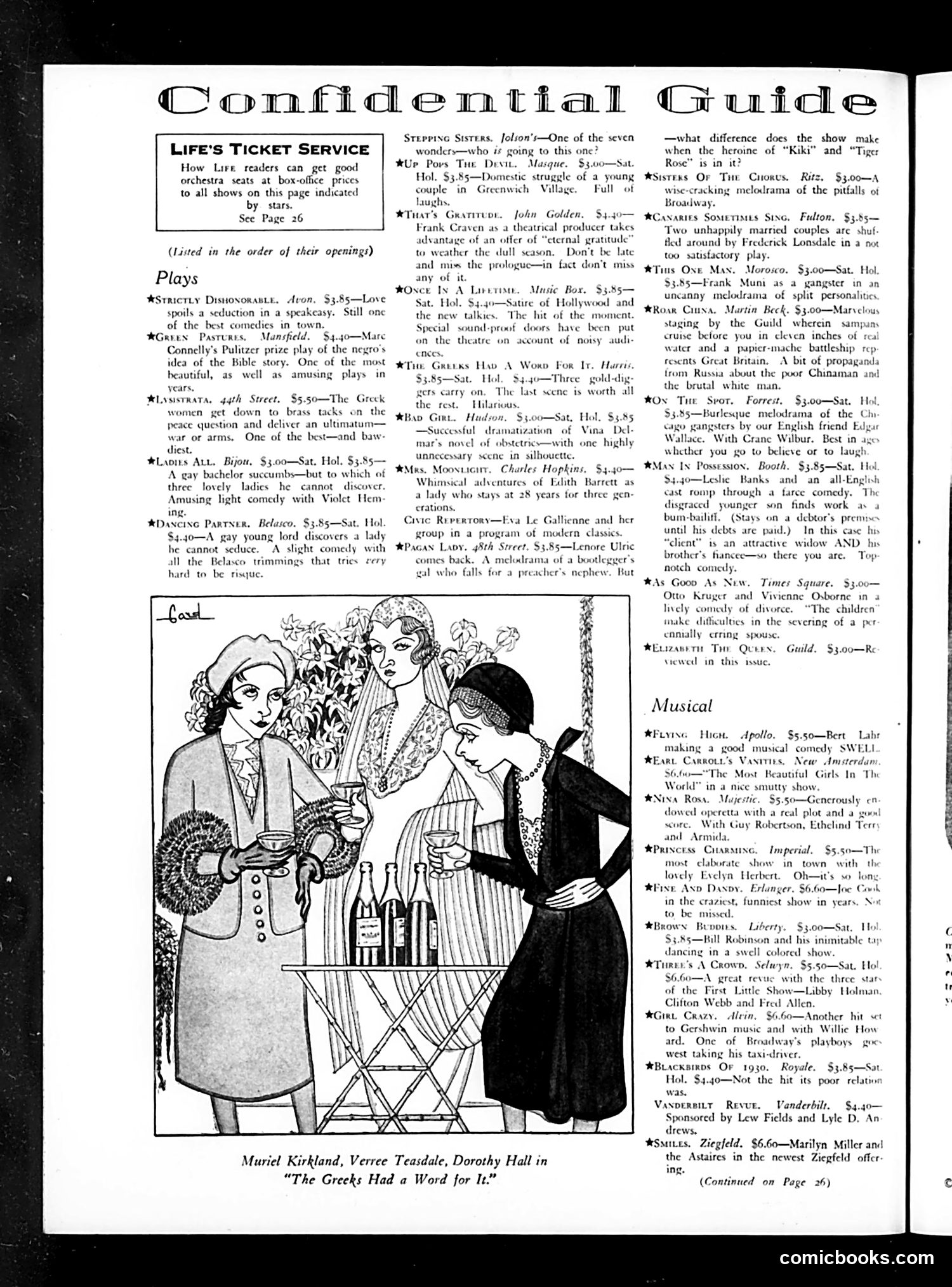
Explanation for Modern Readers This page is a theater guide listing Broadway shows with brief reviews and ticket prices. The illustration shows three elegantly dressed women at what appears to be a cocktail party or social gathering—referencing "The Greeks Had a Word for It," a comedy about three unmarried women navigating urban life and relationships. The satire throughout reflects 1920s-30s theatrical preoccupations: numerous comedies involve seduction, "respectable" women encountering disreputable men, and domestic marital conflicts. The guide pokes fun at Broadway's obsession with risqué material (noting one play is "bawdiest," another "tries very hard to be risque"). A notable detail: "Once in a Lifetime" mocks Hollywood's new talking pictures, with the theater installing "sound-proof doors...on account of noisy audiences"—suggesting early talkie audiences were unprepared for synchronized sound technology and behaved poorly. The asterisks indicate Life magazine's ticket service partnership, allowing readers discounted seats.
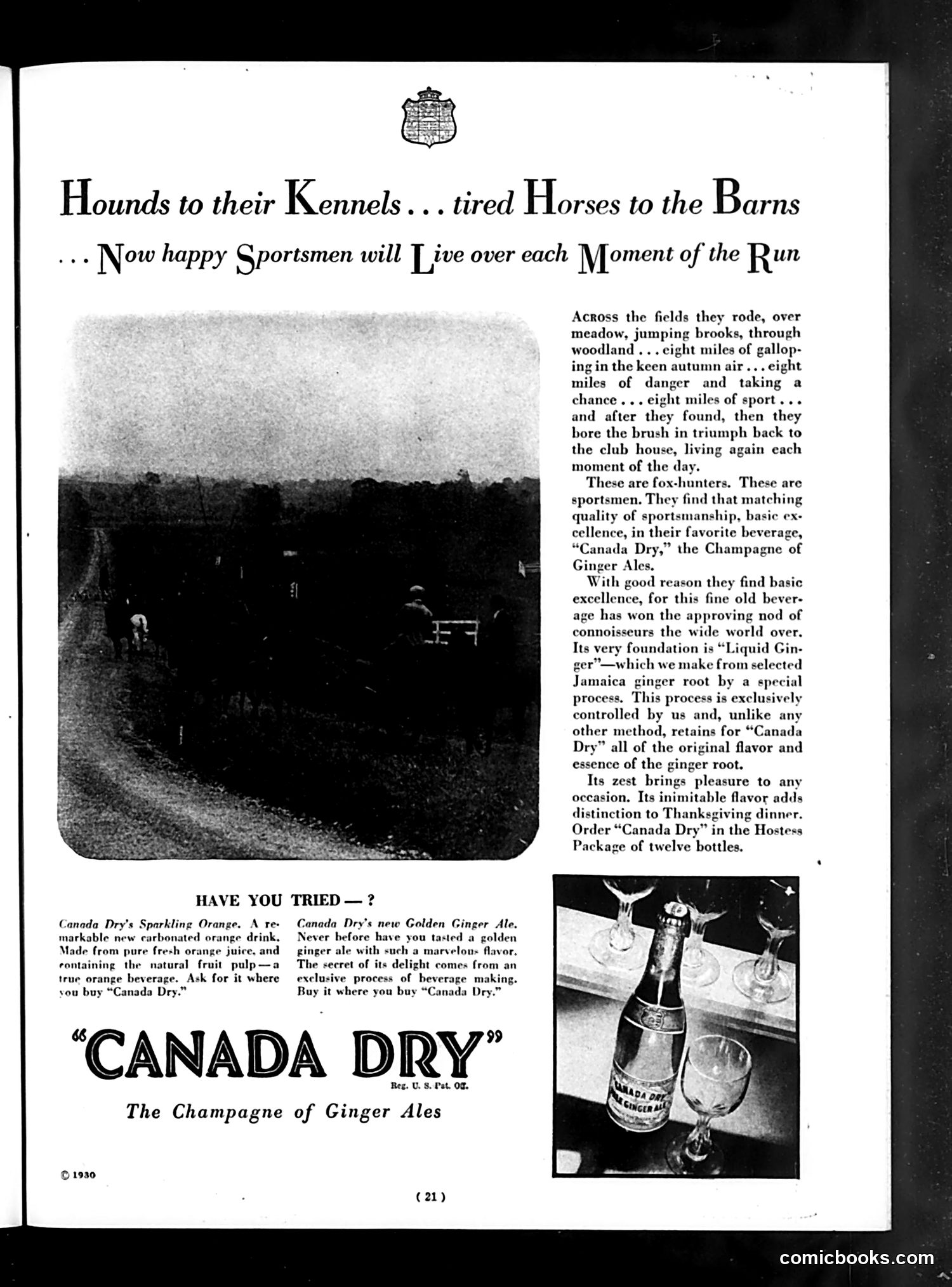
Canada Dry Advertisement (1930) This is a full-page advertisement, not political satire. It promotes Canada Dry ginger ale by associating the beverage with fox hunting—a leisure activity enjoyed by wealthy sportsmen. The ad's strategy links the drink to upper-class leisure and sportsmanship: after an eight-mile fox hunt, gentlemen return to relive "each moment" over Canada Dry. The text claims the drink embodies "sportsmanship" and "basic excellence," positioning it as the preferred refreshment of refined society. The image shows a fox-hunting scene; the smaller photo displays the product bottle alongside a filled glass. The ad also mentions Canada Dry's other products (Sparkling Orange, Golden Ginger Ale) and emphasizes its exclusive manufacturing process using Jamaica ginger root. For modern readers, the appeal to class status and aspirational lifestyle marketing was typical 1930s advertising—equating consumer products with sophistication and social standing.
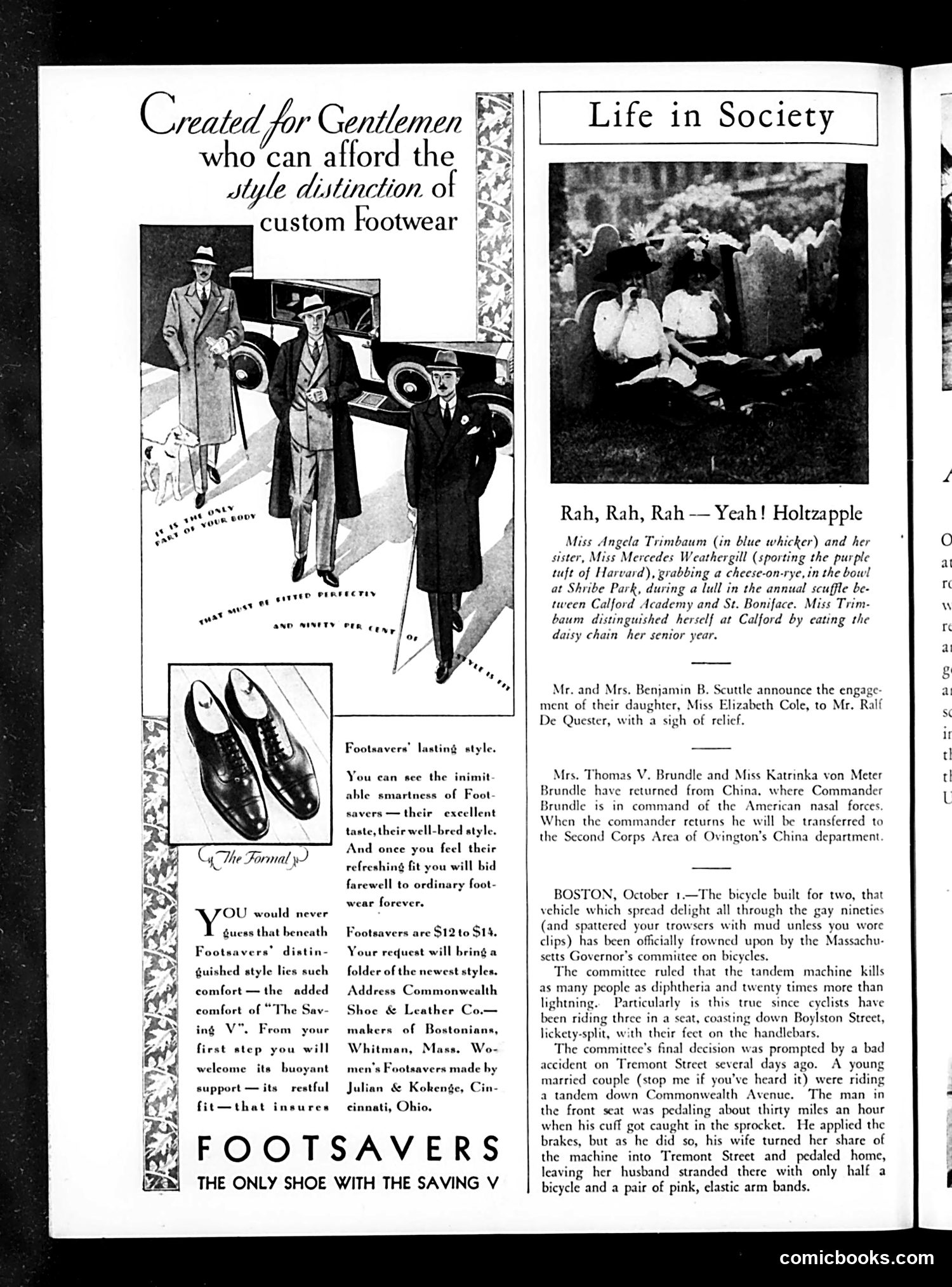
Explanation for Modern Readers This page combines a shoe advertisement with satirical society gossip and humor typical of *Life* magazine's style. The left side advertises "Footsavers" custom shoes ($12-14), marketed to wealthy gentlemen seeking style and comfort—a straightforward period advertisement. The right side contains social satire. The photo caption mocks pretentious college girls eating casual food at a sports event while wearing formal attire. The subsequent gossip items parody society announcements with absurd details: a woman eating a "daisy chain" as a senior-year distinction, an engagement announced with "a sigh of relief" (suggesting the bride is difficult), and a commander posted to "Ovington's China department" (nonsensical bureaucratic jargon). The longest item satirizes a Boston ban on tandem bicycles, treating the "dangerous" three-person cycling trend as seriously as actual public health threats like diphtheria. The punchline—a couple literally splitting apart on a tandem, leaving the husband "with only half a bicycle"—is absurdist physical comedy mocking both the committee's overreaction and reckless cycling behavior. The satire targets social pretension and bureaucratic absurdity.
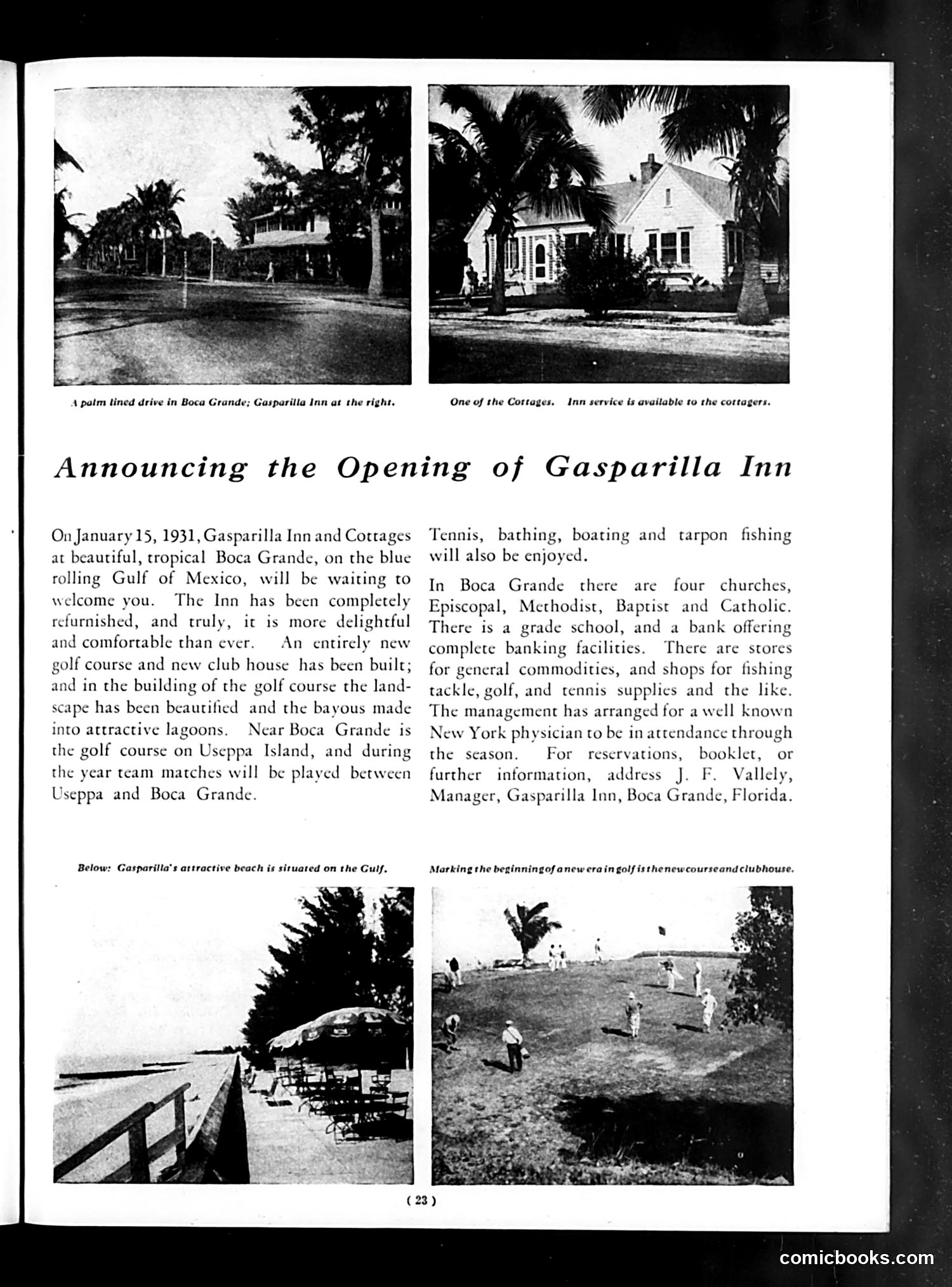
Gasparilla Inn Advertisement (1931) This page is not satire or cartoon—it's a straightforward luxury resort advertisement. Life magazine, despite its satirical reputation, carried advertising throughout. The ad announces the January 15, 1931 opening of Gasparilla Inn in Boca Grande, Florida, a high-end destination resort featuring a newly refurbished inn, cottages, and an entirely new golf course. The photographs show palm-lined drives, attractive cottages, beach access, and the golf course. The appeal targets wealthy leisure travelers: golf, tarpon fishing, tennis, and boating. The management's inclusion of "a well known New York physician in attendance" suggests marketing to affluent northeastern clientele concerned with health and comfort during winter stays. This represents pre-Depression optimism—a promotional piece from early 1931, before the full economic crisis hit. The emphasis on amenities and upscale facilities reflects the leisure industry's confidence in continued wealthy tourism.
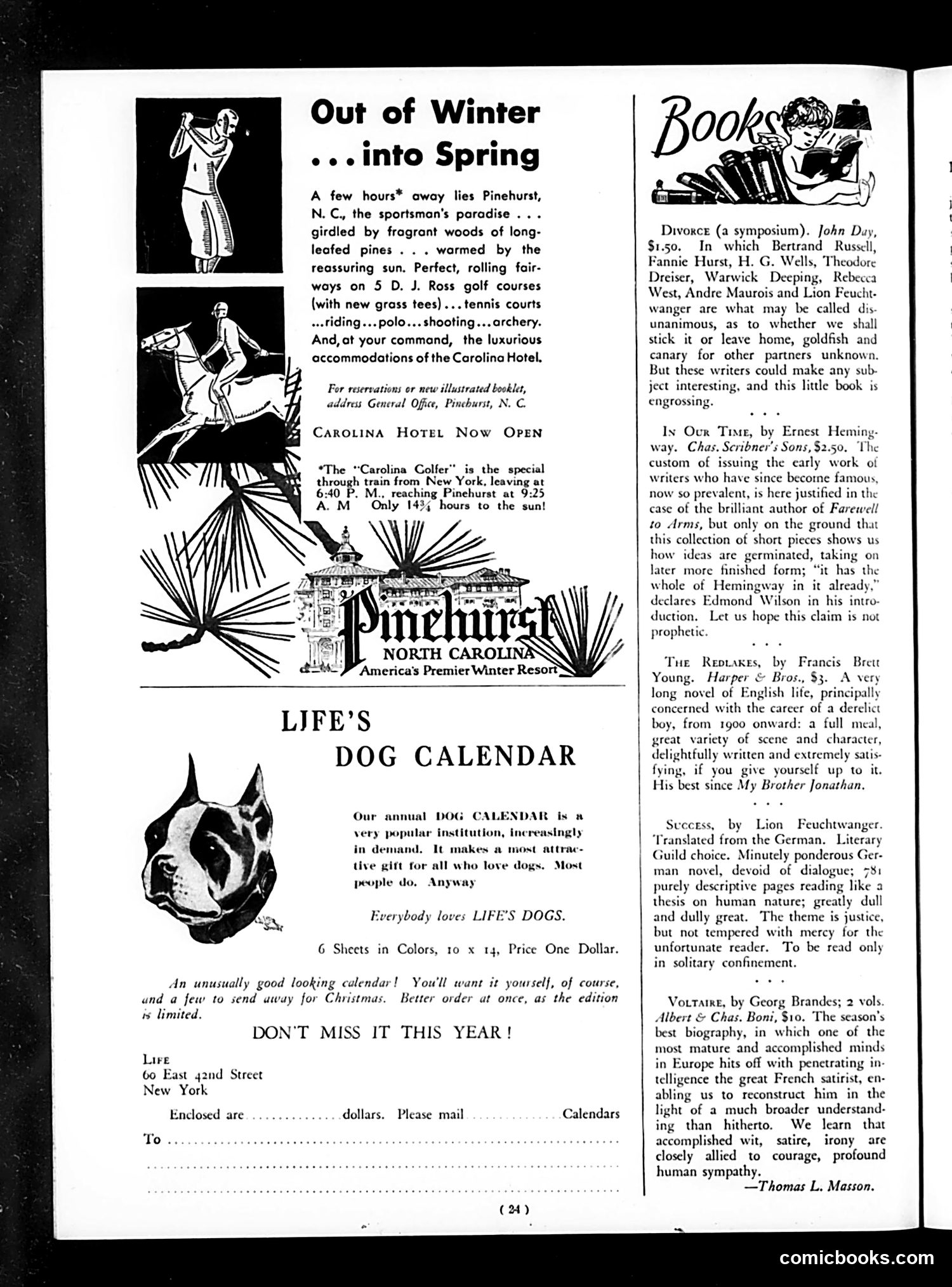
Life Magazine Page Analysis This is primarily a travel and book review advertisement page, not satirical content. The top half features Pinehurst, North Carolina resort advertising, showing stylized illustrations of wealthy leisure activities (golf, polo, riding, shooting) targeting affluent winter tourists seeking escape from cold weather. The "Carolina Colfer" train service is promoted as rapid transport from New York. Below is an advertisement for Life's Dog Calendar—an annual illustrated product featuring six colored sheets, priced at one dollar, positioned as both a personal keepsake and gift item. The right column contains book reviews of contemporary 1920s-30s literary works, including titles by Hemingway, H.G. Wells, and others. The reviewers (notably Thomas L. Masson) offer witty, sometimes barbed commentary—praising Hemingway's early work while dismissing a German novel as "dully great" and suitable only "in solitary confinement." This page reflects *Life* magazine's dual function: upscale advertising for affluent readers alongside serious literary criticism.
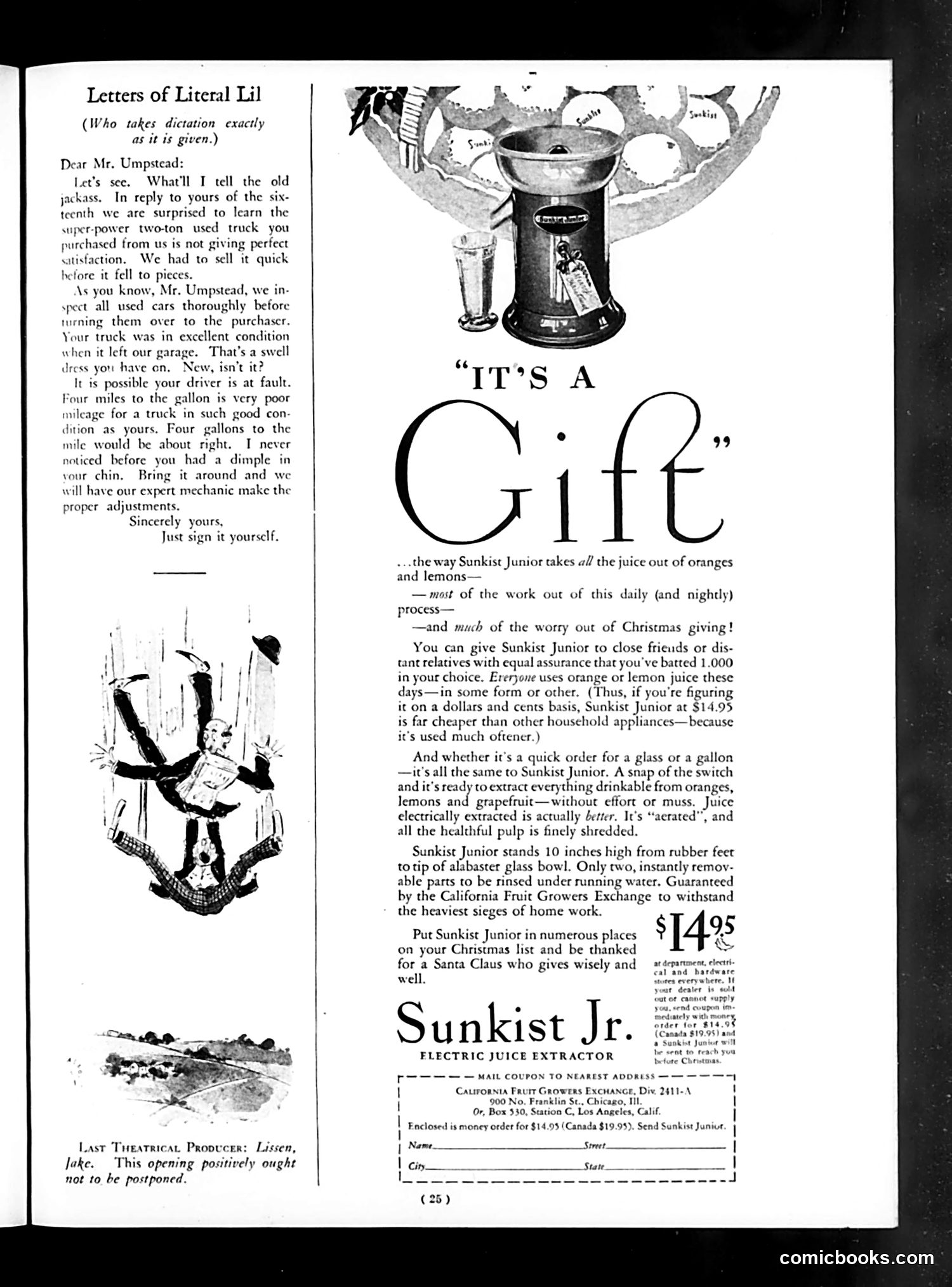
"Letters of Literal Lil" and Sunkist Jr. Advertisement This page combines satire with advertising. "Letters of Literal Lil" mocks dishonest used-car salesmen through a secretary who transcribes her boss's dictation verbatim—including his unspoken thoughts. The letter admits the truck was sold because "it fell to pieces," compliments the customer's appearance as distraction, and casually reverses facts (claiming "four gallons to the mile would be about right" when that's absurd). The satire exposes how salesmen use misdirection and flattery to dodge responsibility for selling defective vehicles—common consumer complaints during this era. The bottom cartoon shows theatrical producers discussing a stage opening. The Sunkist Jr. advertisement dominates the right side, promoting an electric juice extractor as ideal Christmas gift-giving, emphasizing convenience and cost-effectiveness for this "daily (and nightly) process." The price is $14.95. The page reflects early-20th-century consumer skepticism about merchants and the emerging appliance market.
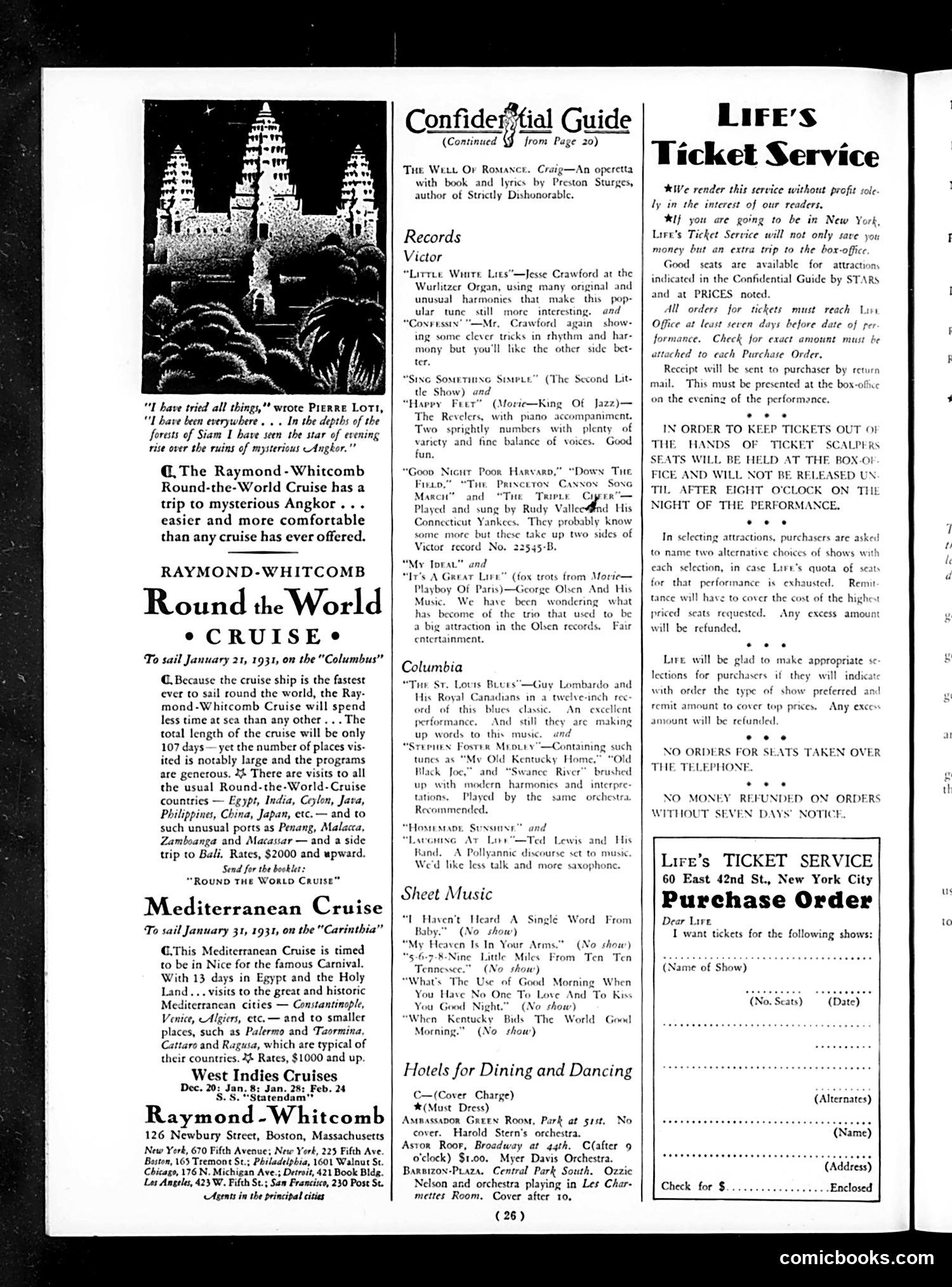
Page Content Analysis This page is primarily advertising and service information, not satire or political commentary. The dominant content is a Raymond-Whitcomb cruise advertisement featuring a stylized illustration of an Asian temple (Angkor Wat). The ad uses a quote from Pierre Loti, a real French writer known for exotic travel narratives, to evoke adventure and romance. It promotes three luxury cruises (Round-the-World, Mediterranean, and West Indies) departing January-February 1931, positioned as accessible yet prestigious travel. The remaining space contains: - Life's Ticket Service (a service for theater tickets) - Record reviews of popular 1930s music - Hotels for dining and dancing listings No cartoon or satire appears on this page. It represents early-1930s consumer culture targeting affluent readers interested in travel and entertainment.
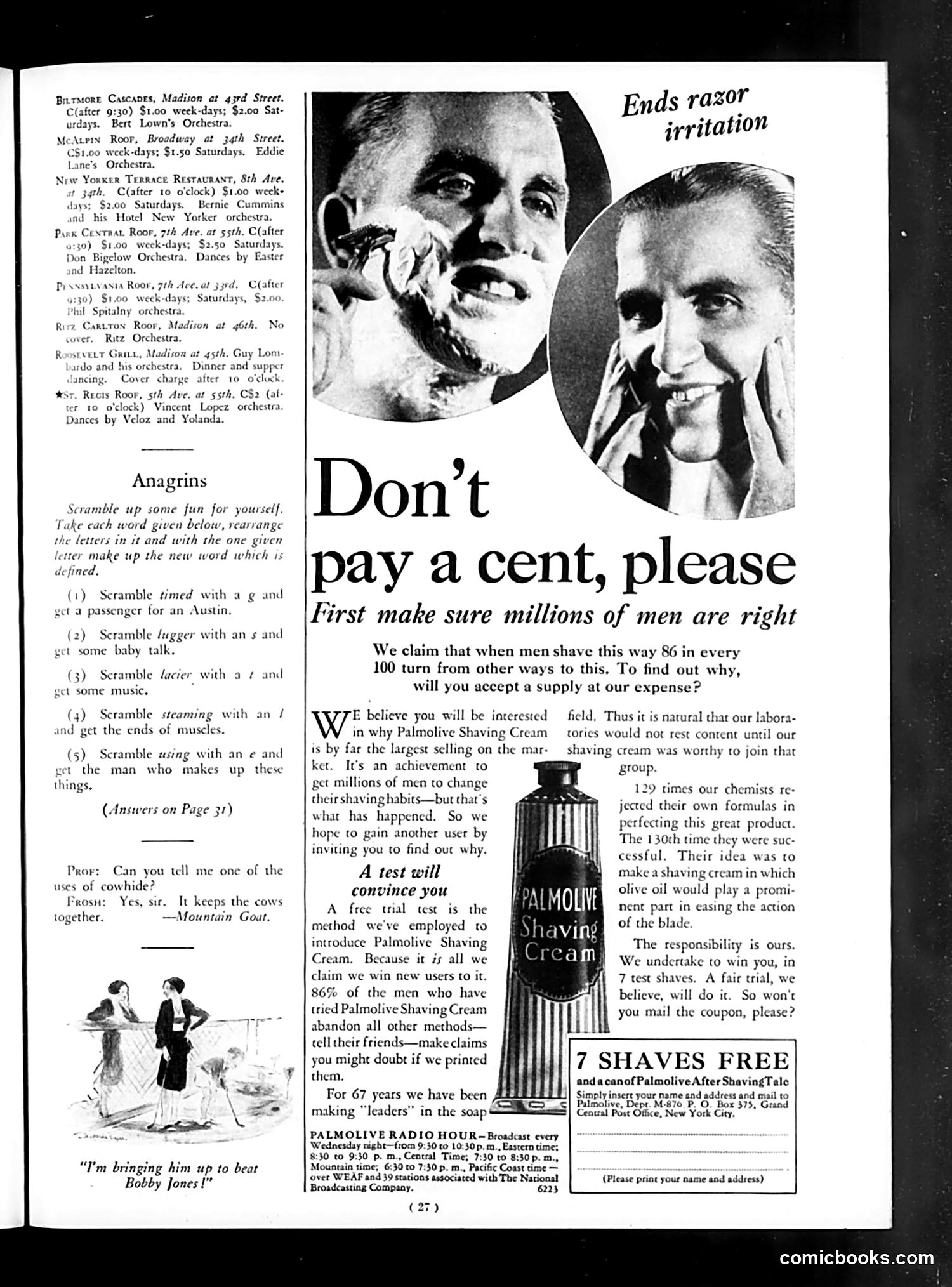
Palmolive Shaving Cream Advertisement This page is primarily a Palmolive Shaving Cream advertisement disguised as editorial content in Life magazine. The two portrait photographs show men demonstrating the product's appeal—likely before-and-after or satisfied-customer imagery typical of early 20th-century advertising. The ad's central claim: 86% of men who try Palmolive abandon other shaving methods. Rather than asking readers to "pay a cent," Palmolive invites them to test seven free shaves, betting their product will convert users. The pitch emphasizes the cream's unique selling point—olive oil reduces blade friction. The surrounding content (dance hall listings, word puzzles, and a golf joke) is filler typical of Life magazine's format. The golf reference to "Bobby Jones" indicates this is from the 1920s-30s, when Jones was a famous amateur golfer. The advertisement cleverly uses Life's humorous tone to make a straightforward sales pitch seem like entertainment editorial.
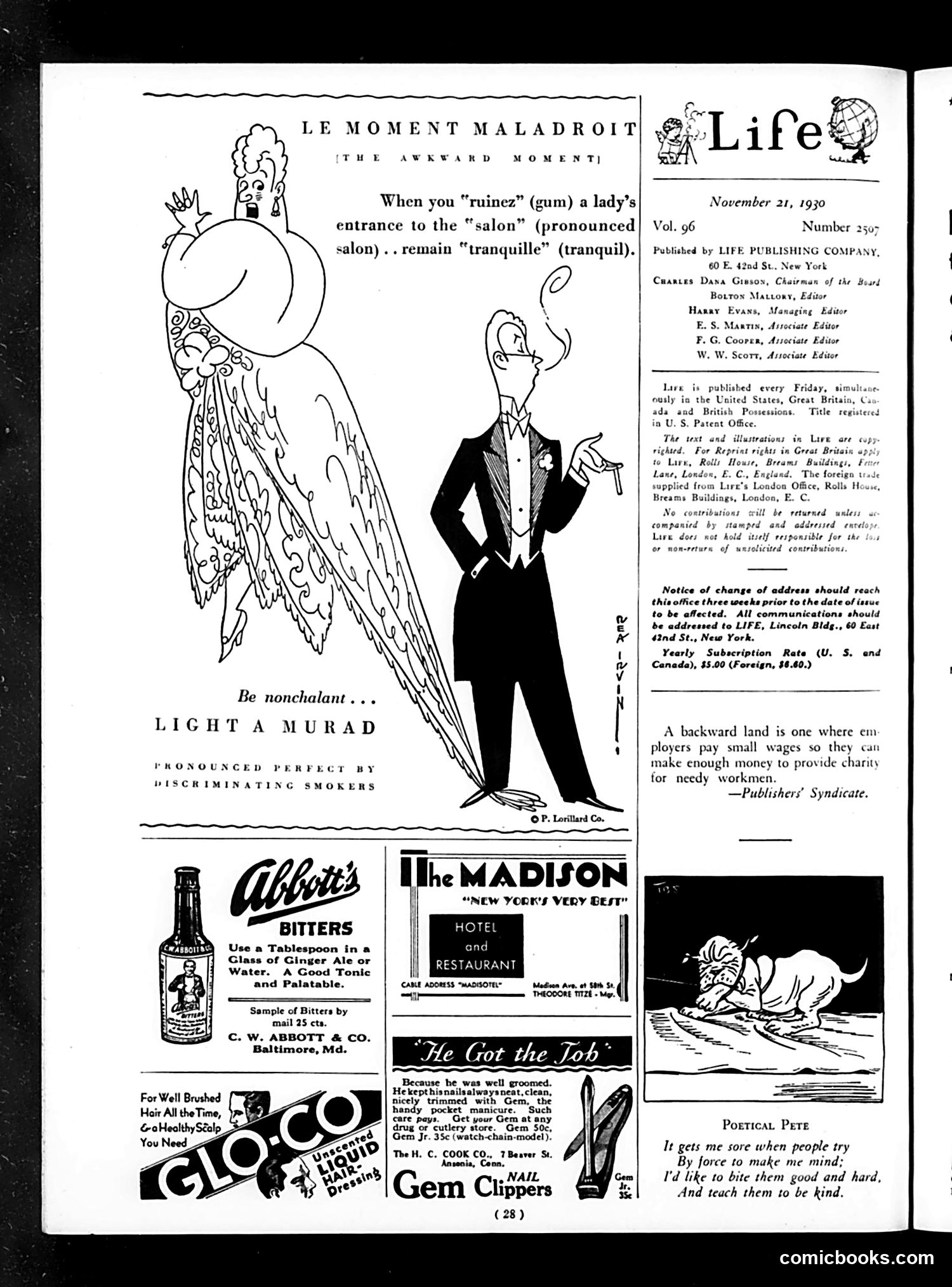
"The Awkward Moment" – Life Magazine, November 21, 1930 This page satirizes social etiquette among the wealthy. The main cartoon depicts a gentleman encountering a fashionable woman at a salon entrance. The joke centers on the French phrase "ruinez" (to ruin)—he has apparently committed a social gaffe by entering her private salon space uninvited, disrupting the tranquility she expected. The cartoon's message: "Be nonchalant" about such awkward situations. The satire mocks the pretentiousness of high society, where minor breaches of decorum (entering a woman's dressing room) are treated as serious infractions requiring studied composure to navigate. The French language usage reinforces the elite, affected nature of salon culture. The page also includes period advertisements (Murad cigarettes, hotel, grooming products) and unrelated satirical content about labor wages, representing typical Life magazine content from this era.
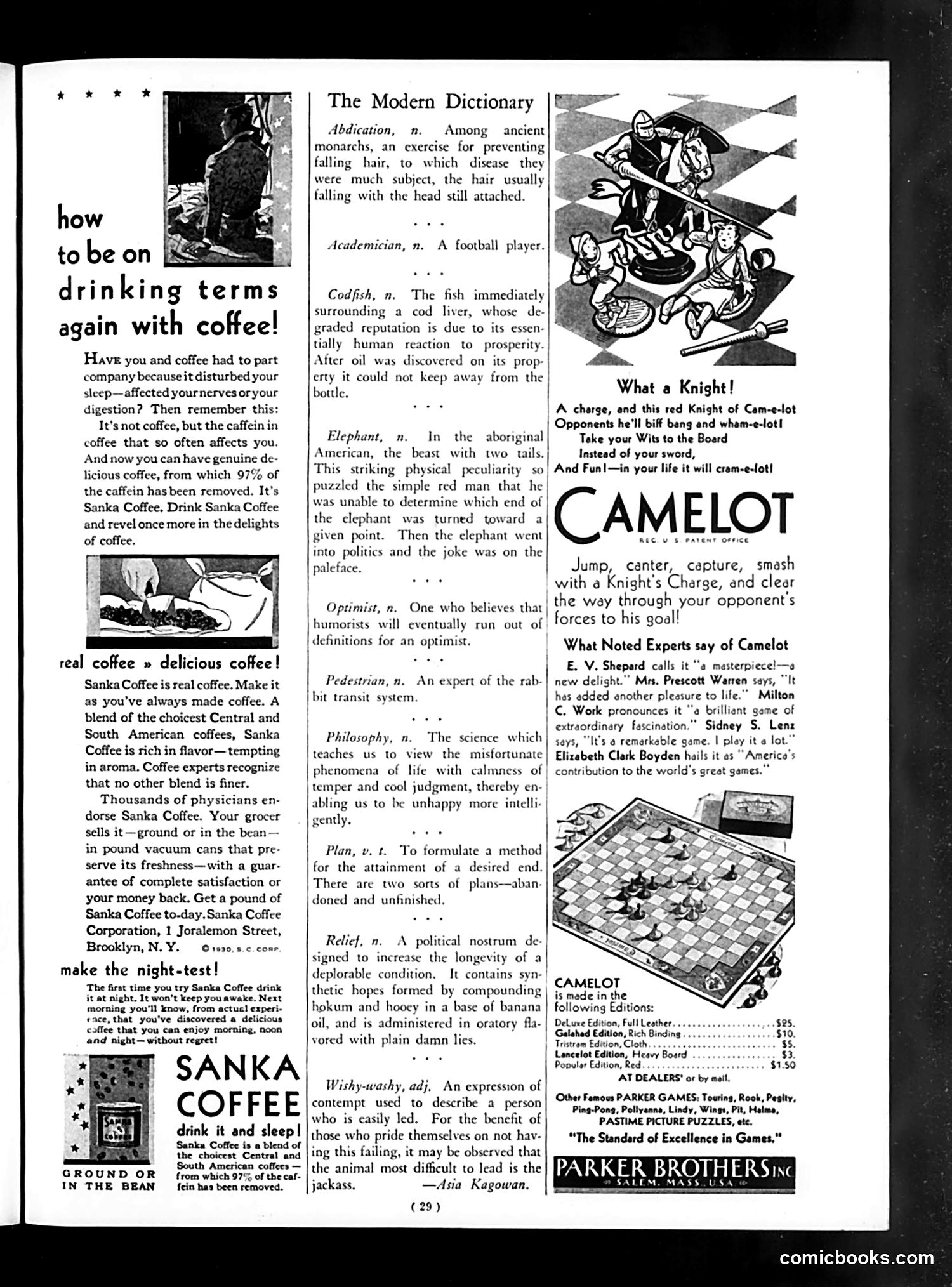
The Modern Dictionary Page (Life Magazine) This page combines advertising with satirical dictionary definitions—a signature Life magazine format. The main content is a Sanka Coffee advertisement promoting decaffeinated coffee for consumers who want to drink coffee without sleep disruption. The satirical element appears in "The Modern Dictionary" section, which offers humorous, cynical definitions of common words. Notable examples include: - "Elephant": A joke about Native Americans unable to determine which end of an elephant faces forward, leading to the punchline "the joke was on the paleface"—mocking white settlers' superiority. - "Relief": Political criticism defining it as false hope built on "hokum and hooey" administered through oratory "flavored with plain damn lies"—likely referencing Depression-era government programs. - "Pedestrian": Darkly defining the term as someone practicing "rabbit transit" (fleeing quickly). The Camelot board game advertisement promotes a chess-like strategy game using medieval knight imagery. The satire reflects 1920s-30s cynicism about politics, technology, and consumer culture.
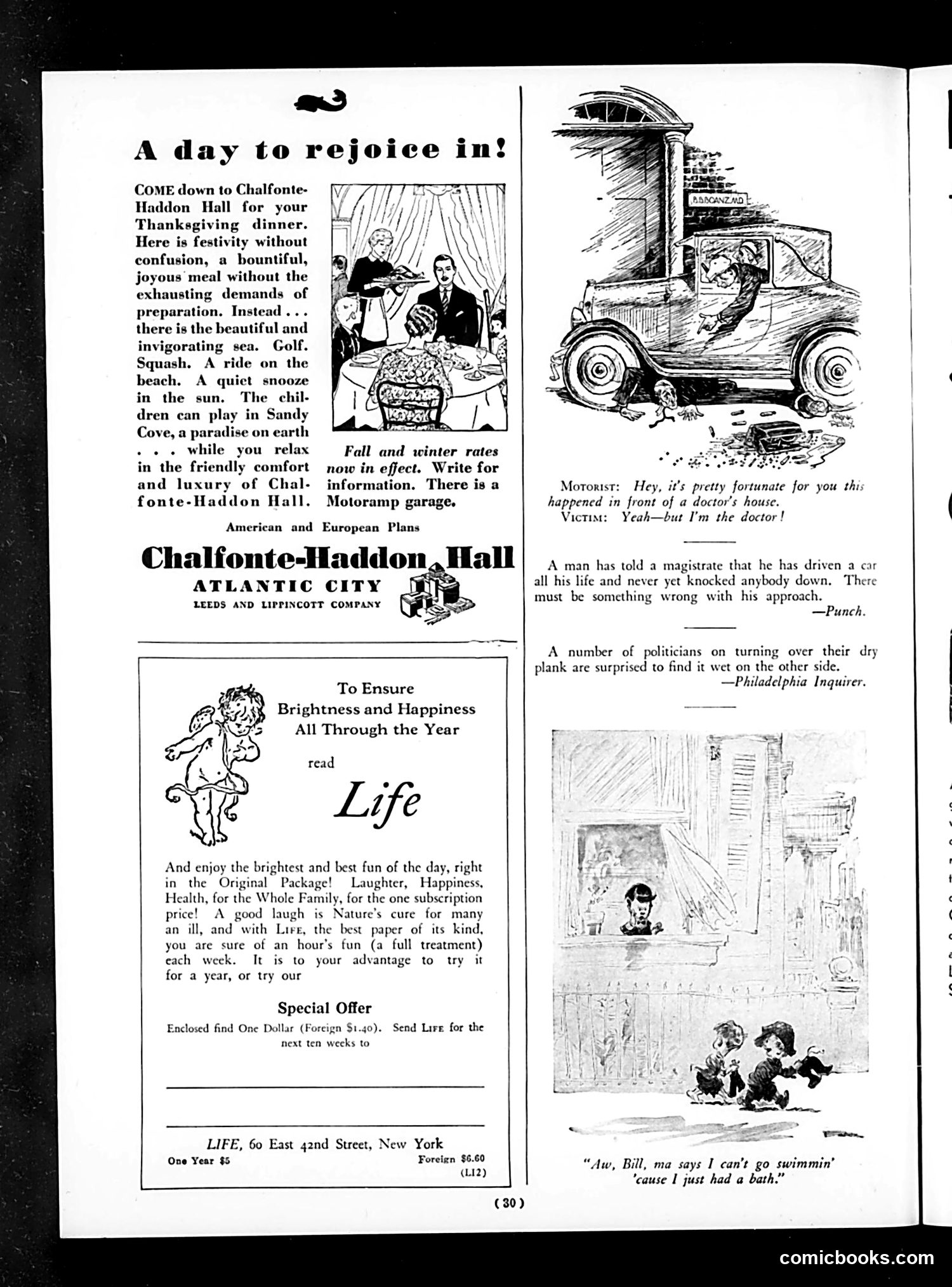
Content Analysis This page contains advertisements and humor content typical of Life magazine's format. The main advertisements promote the Chalfonte-Haddon Hall resort in Atlantic City (offering Thanksgiving dinners and leisure activities) and a subscription offer for *Life* magazine itself, emphasizing humor as therapeutic ("Nature's cure"). The humor section includes three separate jokes: 1. A motorist accident joke where the victim discovers the "doctor" whose house they crashed into is actually the injured driver—reversing expectations for comedic effect. 2. A commentary on reckless drivers: a man claims never hitting anyone, suggesting his poor driving approach is the real problem—satirizing dangerous motorists. 3. A political jab: politicians turning over their "dry plank" (principles/policies) find it "wet on the other side"—mocking political hypocrisy and inconsistency. 4. A children's joke about swimming restrictions after bathing, playing on then-common (but medically unfounded) beliefs about post-bath swimming safety. The page reflects early 20th-century humor conventions and advertising strategies.
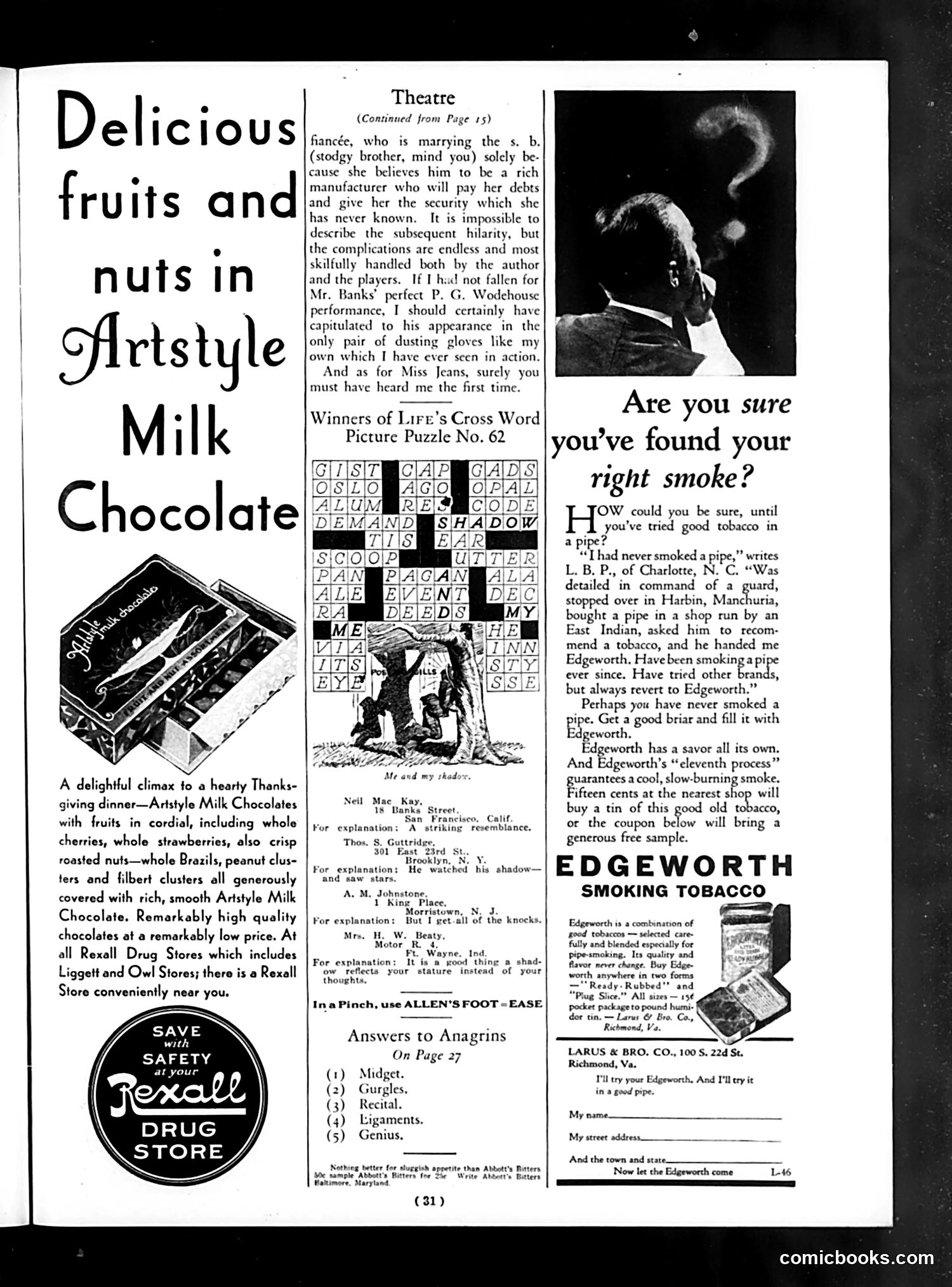
Analysis of Life Magazine Page Content This page is primarily advertising, not satire. It contains three major advertisements: 1. Artstyle Milk Chocolate (left): Promotes boxed chocolates with fruits and nuts as a Thanksgiving gift, available at Rexall drugstores. 2. Edgeworth Smoking Tobacco (right): The largest ad features a testimonial from "L.B.P." of Charlotte, North Carolina, describing how an East Indian shopkeeper in Harbin, Manchuria recommended this pipe tobacco. The ad emphasizes Edgeworth's unique "eleventh process" for slow-burning smoke and offers a free sample coupon. 3. Supporting content: The page includes a crossword puzzle solution, theater review (continued from previous page), and an "Anagrins" word puzzle. The Edgeworth ad uses a common early-20th-century marketing technique: the personal testimonial from an everyday person vouching for product quality. No political satire is present; this is straightforward period advertising.
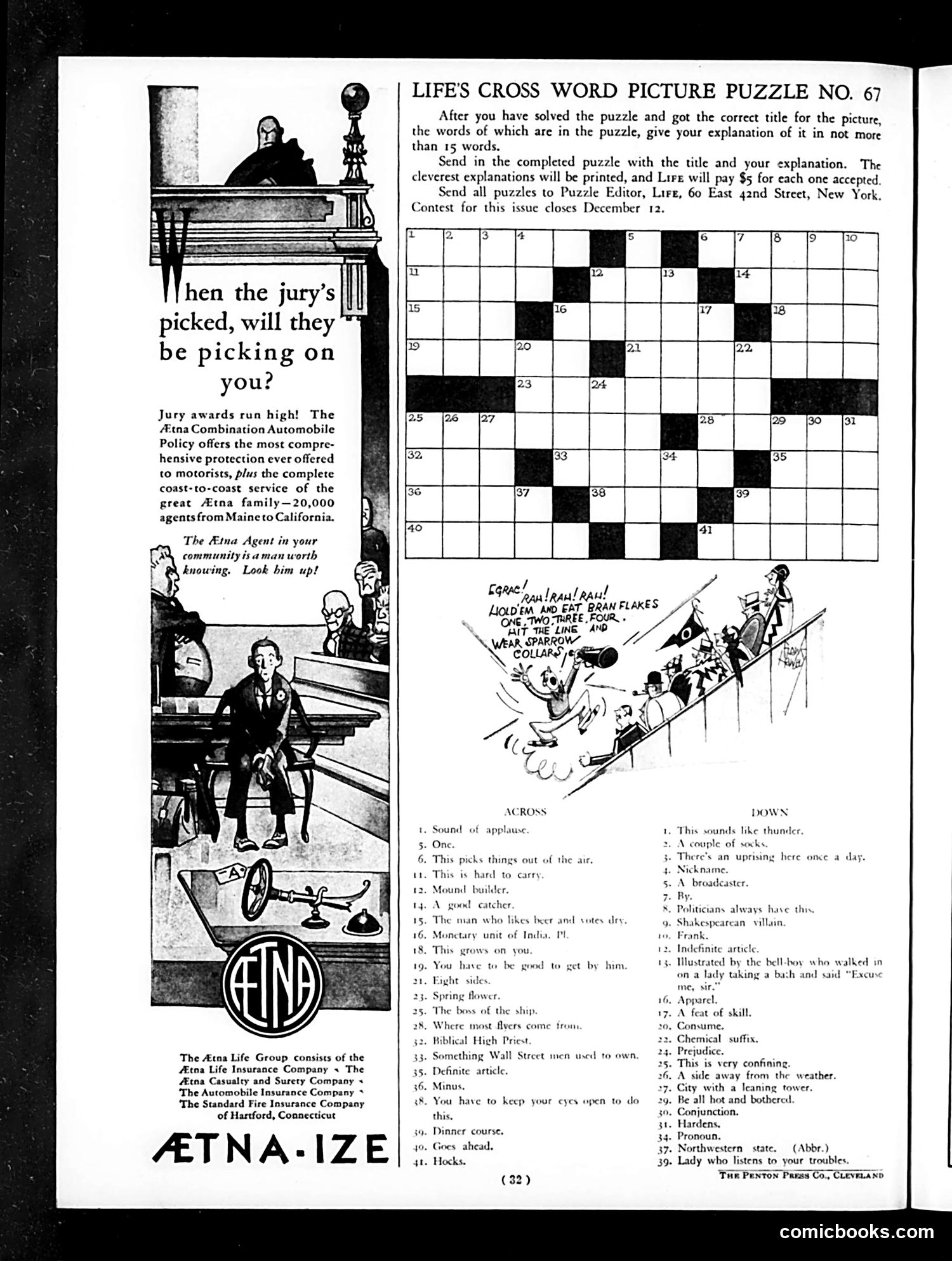
Life Magazine Crossword Puzzle Page This page presents a crossword puzzle competition where readers solve the puzzle, identify its title, and submit explanations for potential publication and $5 payment. The page also features advertising for Ætna Insurance, specifically their automobile insurance policy. The accompanying illustration depicts a courtroom scene with the tagline "When the jury's picked, will they be picking on you?"—a pun implying that juries award high damages in liability cases. The ad emphasizes that Ætna's comprehensive auto insurance protects motorists against such jury awards, with their nationwide network of 20,000 agents available for support. The humor relies on anxiety about legal liability and jury unpredictability—concerns that drove insurance sales during this era.
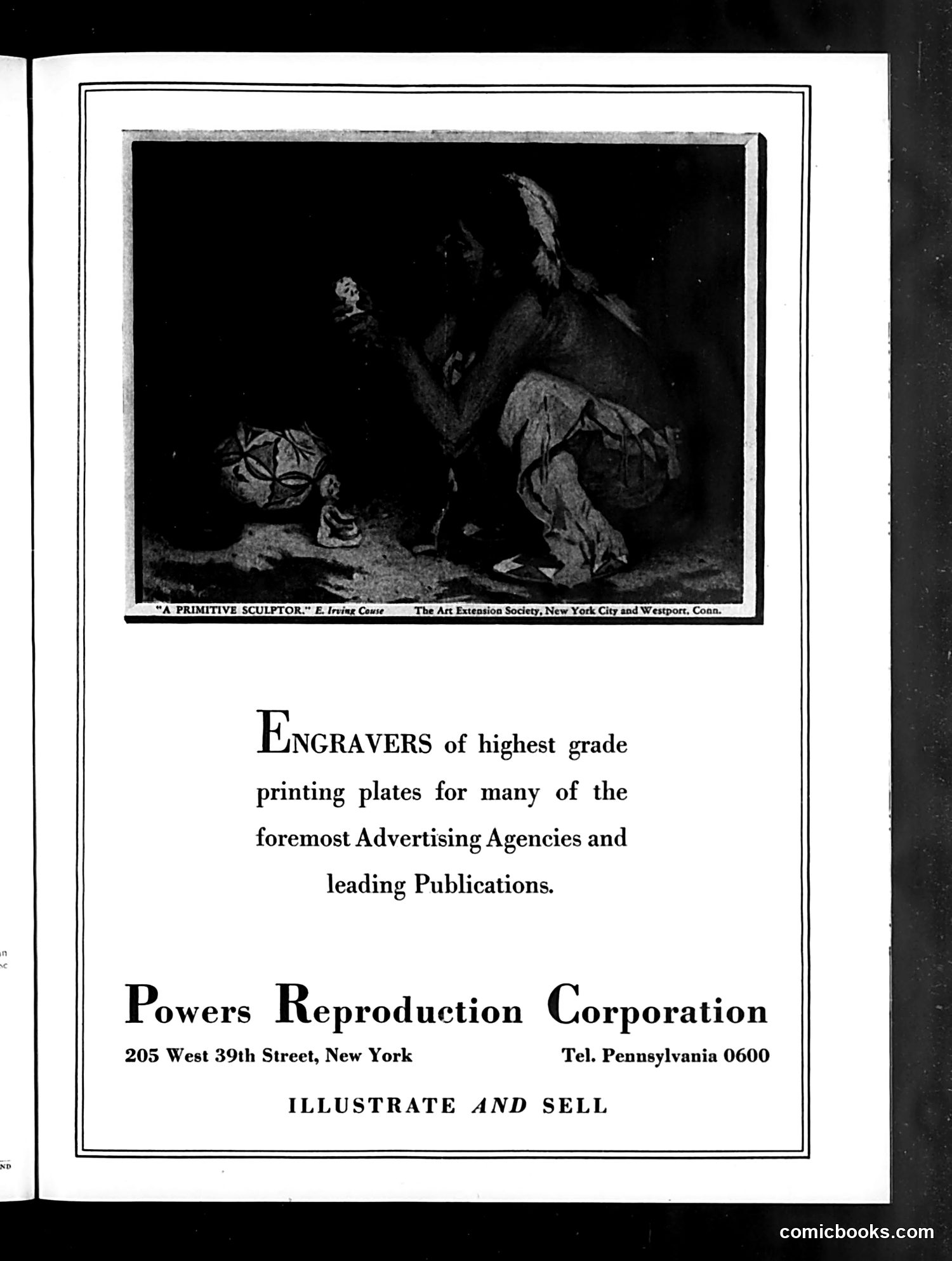
This page is primarily an advertisement for Powers Reproduction Corporation, an engraving and printing plate company serving advertising agencies and publications. The image at top, titled "A Primitive Sculptor" by E. Irving Couse, depicts a Native American figure working on sculptural forms—likely intended to illustrate "primitive" artistic practices. This artwork serves as a visual example of the company's engraving capabilities rather than satire or political commentary. The advertisement emphasizes the company's services for commercial reproduction and printing, using the artistic image to demonstrate their technical quality. The framing reflects early 20th-century attitudes toward Indigenous art as "primitive," a common—though now recognized as condescending—curatorial perspective of that era.
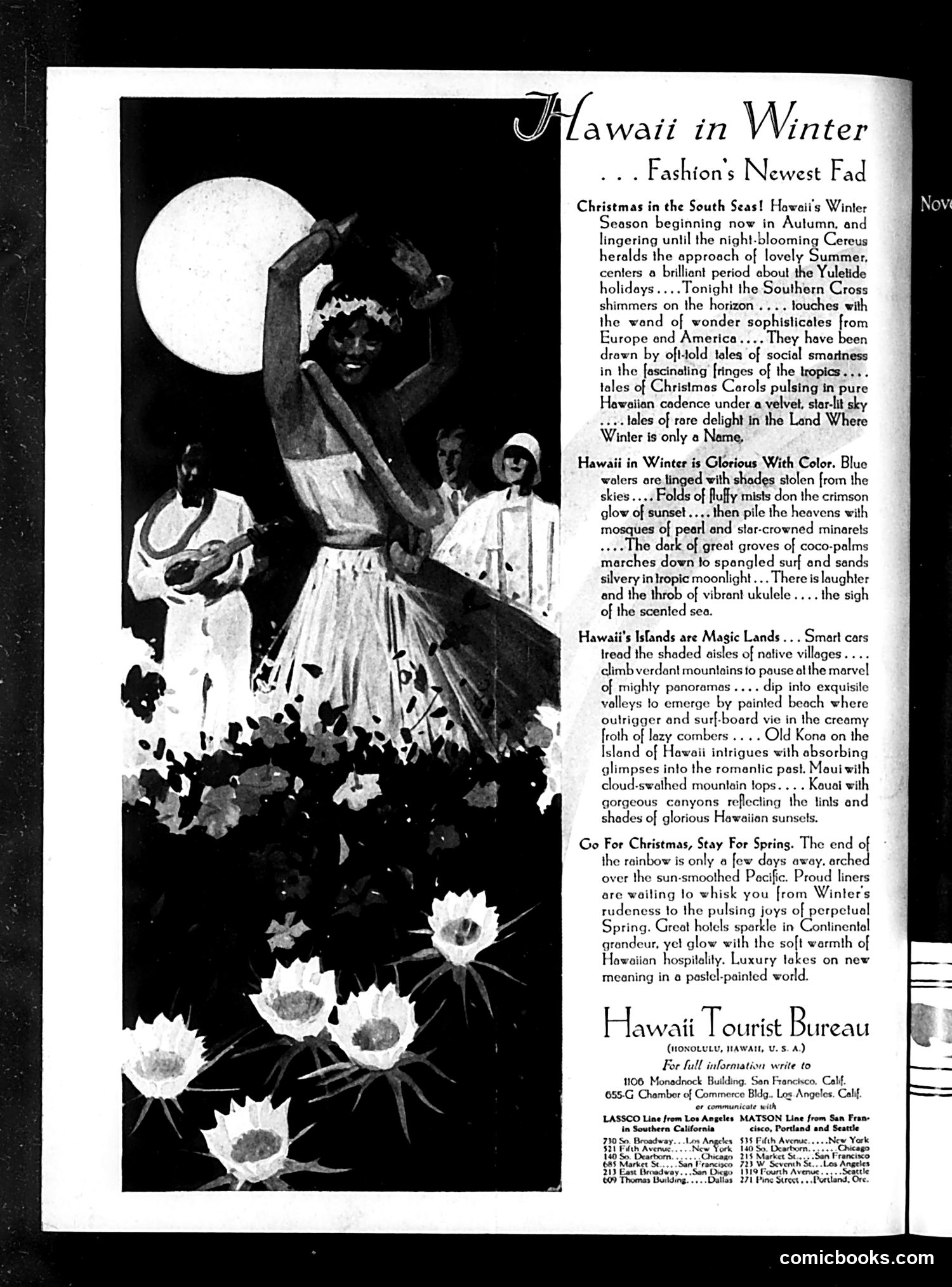
Hawaii Winter Tourism Advertisement This is not a cartoon or satire, but a travel advertisement from the Hawaii Tourist Bureau. The page promotes Hawaii as a winter destination for affluent Americans, particularly during the Christmas-to-spring season. The left side shows a romanticized theatrical photograph of Hawaiian dancers in traditional dress performing under moonlight, surrounded by stylized tropical flowers. This imagery appeals to exotic fantasies popular in early-to-mid 20th-century America. The text uses flowery, orientalist language ("magic lands," "mosques of pearl," "star-crowned minarets") to market Hawaii as an escape from harsh mainland winters. It emphasizes luxury hotels, scenic drives, and "social smartness"—targeting wealthy tourists seeking sophistication combined with tropical escape. The contact addresses list major U.S. cities, indicating this advertisement ran nationally in *Life* magazine to reach potential travelers. The appeal fundamentally rests on romanticizing Hawaii as an exotic paradise destination for American leisure and consumption.