life
Life — December 12, 1930
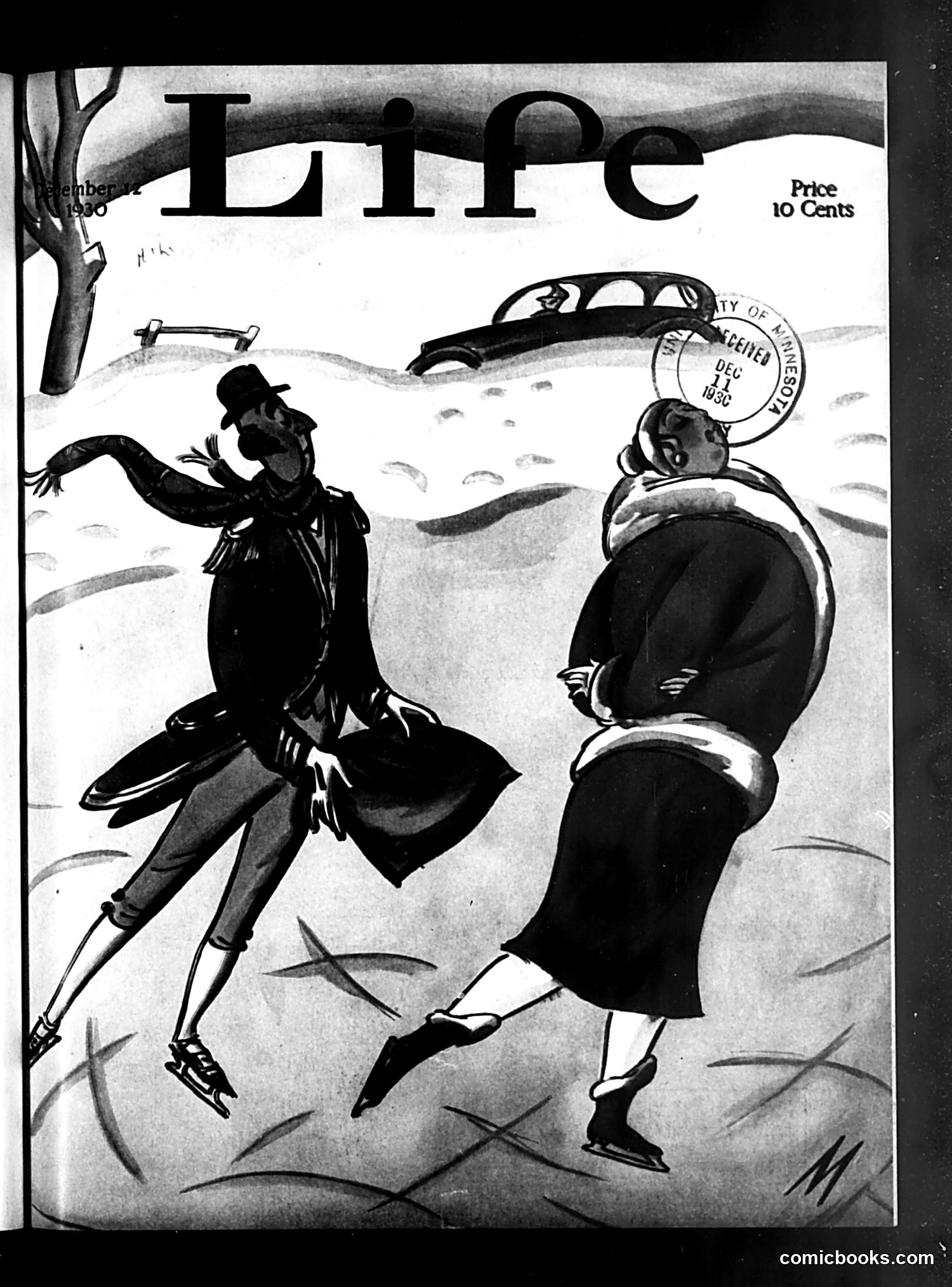
Life Magazine Cover Analysis (December 1930) This cover depicts two figures ice skating in a snowy landscape with a car visible in the background. The illustration appears to be a winter leisure scene, likely satirizing contemporary social activities or fashion. The artistic style is characteristic of 1930s Life magazine covers—using bold silhouettes and exaggerated poses for comedic effect. The skating figures' dramatic body language and clothing suggest the cover may be commenting on winter sports trends or social behavior among the leisure class during the Depression era. Without visible text identifying the specific figures or satirical point, the exact political or social reference remains unclear. The "10 Cents" price indicates this is from the magazine's early period when it was primarily a humor and satire publication before transitioning to photojournalism.
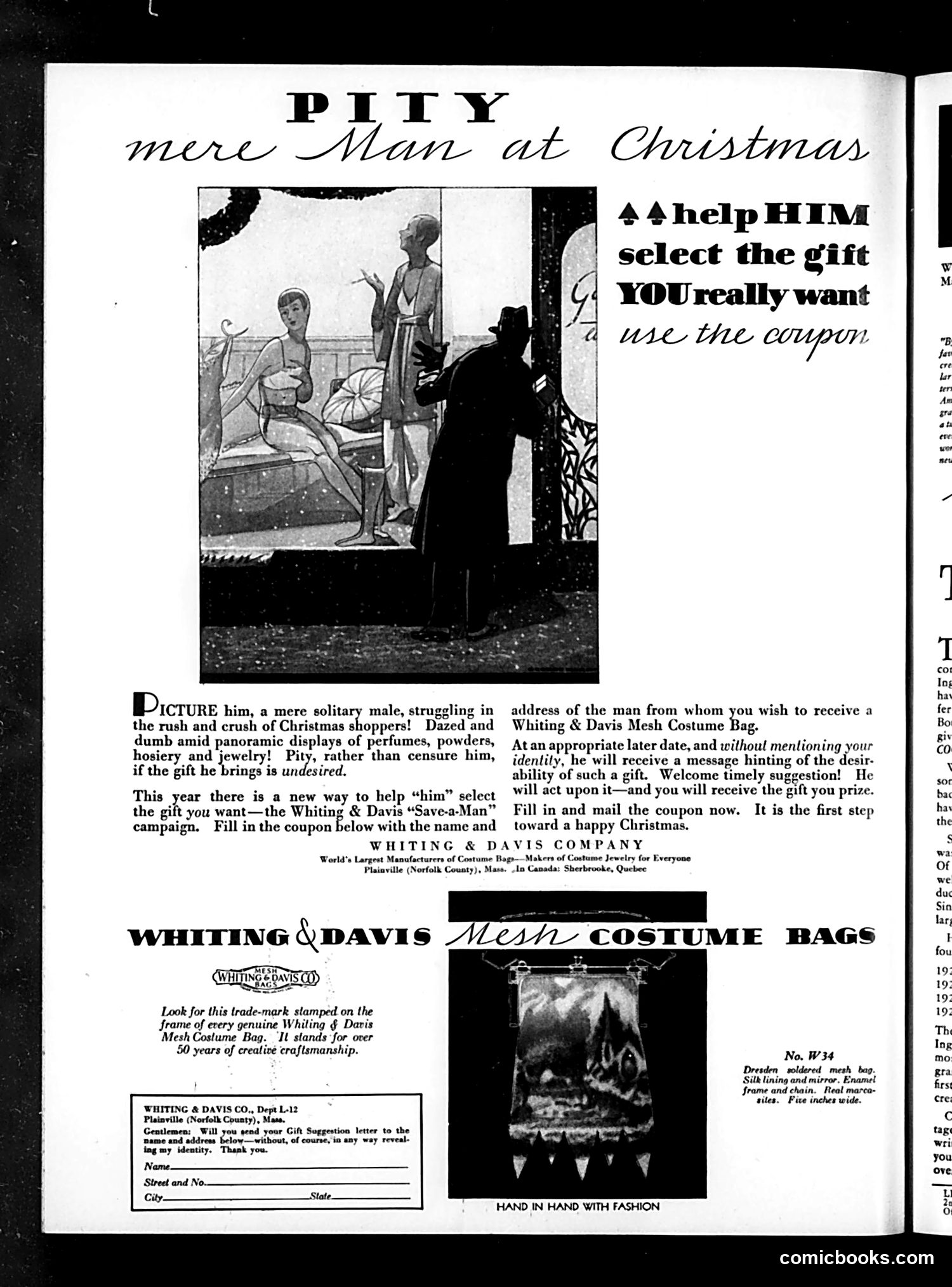
Analysis This page is primarily advertising, not satire or political commentary. It promotes Whiting & Davis mesh costume bags for Christmas gift-giving. The ad's central image shows a man viewing a store window display—a visual metaphor for the advertising campaign itself. The accompanying text addresses gift-givers struggling with what to buy for men during the Christmas shopping rush, describing the male recipient as "a mere solitary male, struggling in the rush and crush of Christmas shoppers." The "Save-a-Man" campaign uses this sympathetic framing to market mesh costume bags as the solution. A coupon system allows gift-givers to send an anonymous suggestion to the recipient, who then redeems it for the advertised product. The actual merchandise shown is a Dresden-soldered mesh bag with silk lining—a luxury accessory marketed as practical holiday gift-giving.
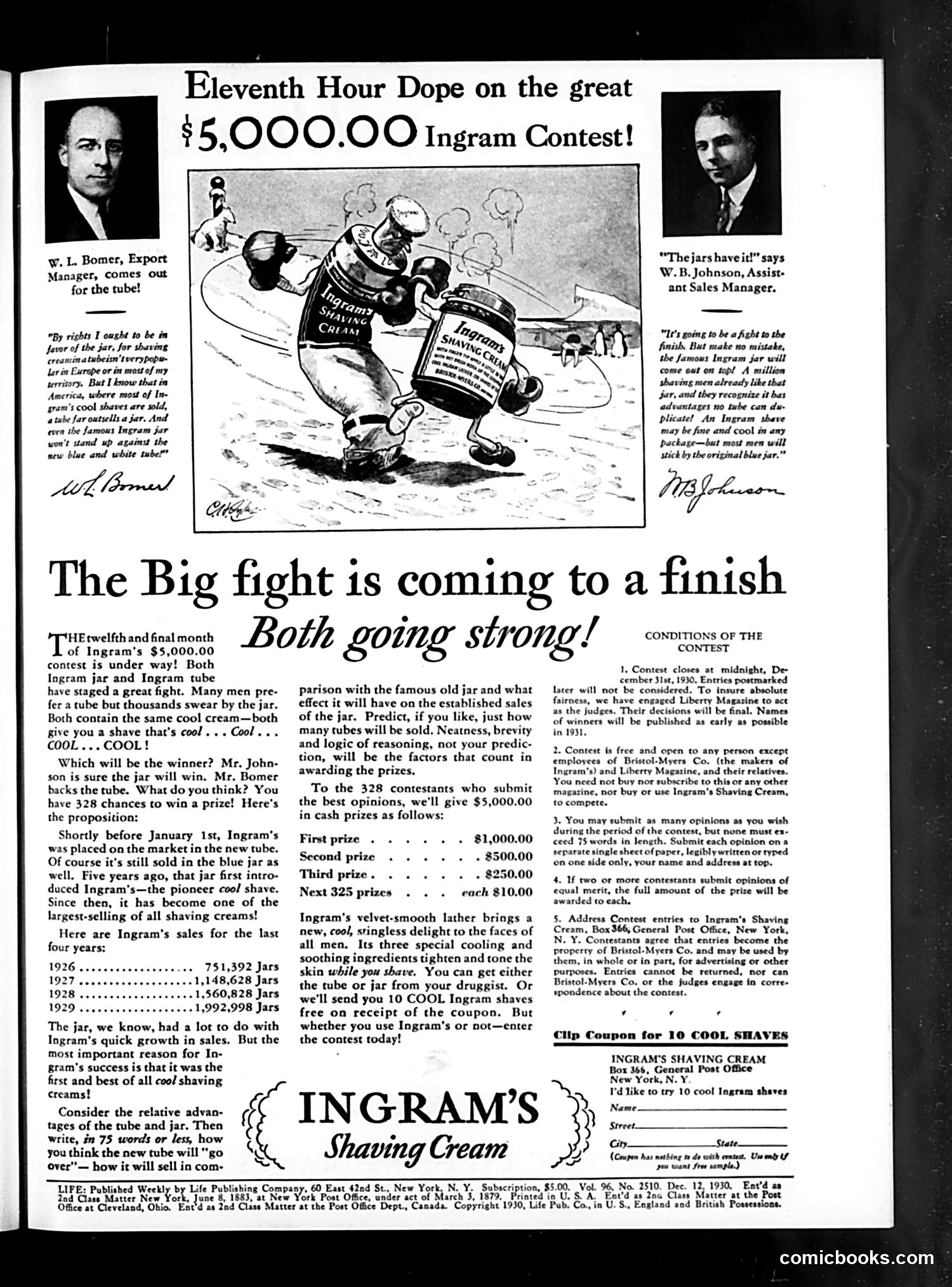
Advertisement, Not Political Satire This is primarily a product advertisement for Ingram's Shaving Cream, disguised as editorial content. The central cartoon depicts anthropomorphized shaving product containers (an Ingram jar and tube) engaged in a boxing match, with the headline "The Big fight is coming to a finish / Both going strong!" The two men pictured (W.L. Bomer, Export Manager, and W.B. Johnson, Assistant Sales Manager) provide testimonials about the product's superiority. The "contest" references a real $5,000 prize competition inviting consumers to submit essays about Ingram's versus competing shaving creams. This represents early 20th-century advertising-as-entertainment: using humor and competitive framing to promote consumer products. Modern readers might find the explicit product placement and the blurred line between advertisement and editorial content notable.
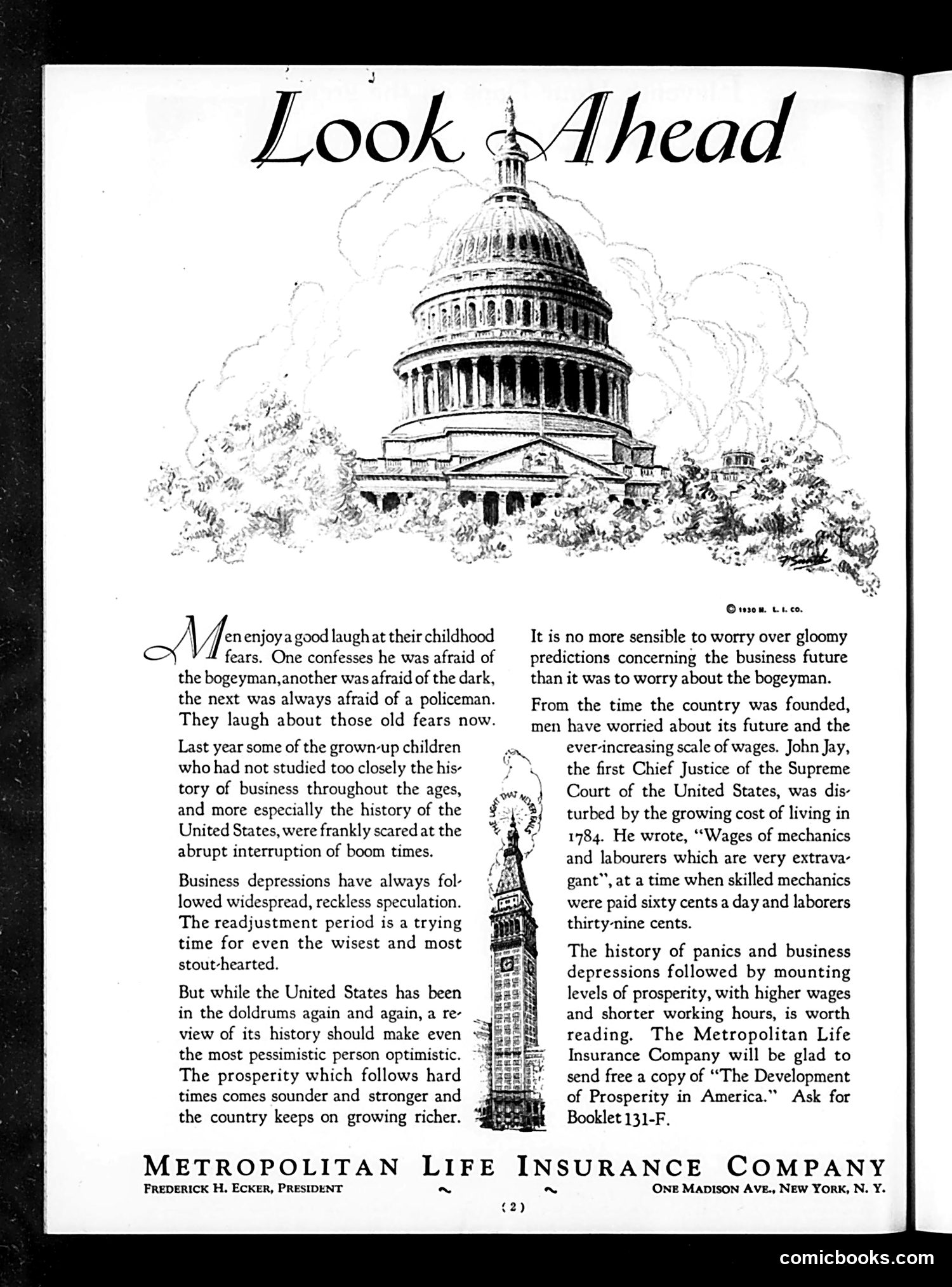
This is primarily a Metropolitan Life Insurance Company advertisement, not political satire. The "Look Ahead" headline frames a reassuring message about American economic resilience during uncertain times. The text argues that despite recurring business depressions throughout U.S. history—including the present "doldrums"—the country has consistently recovered with increased prosperity. It references John Jay (first Chief Justice) worrying about wage increases in 1784, positioning modern economic anxieties as historically normal. The visual imagery (Capitol dome, clock tower) emphasizes American institutional stability and progress. The ad essentially tells readers: don't panic about current economic troubles; American history shows recovery is inevitable. This suggests the piece dates from a period of economic concern, likely the 1920s-30s.
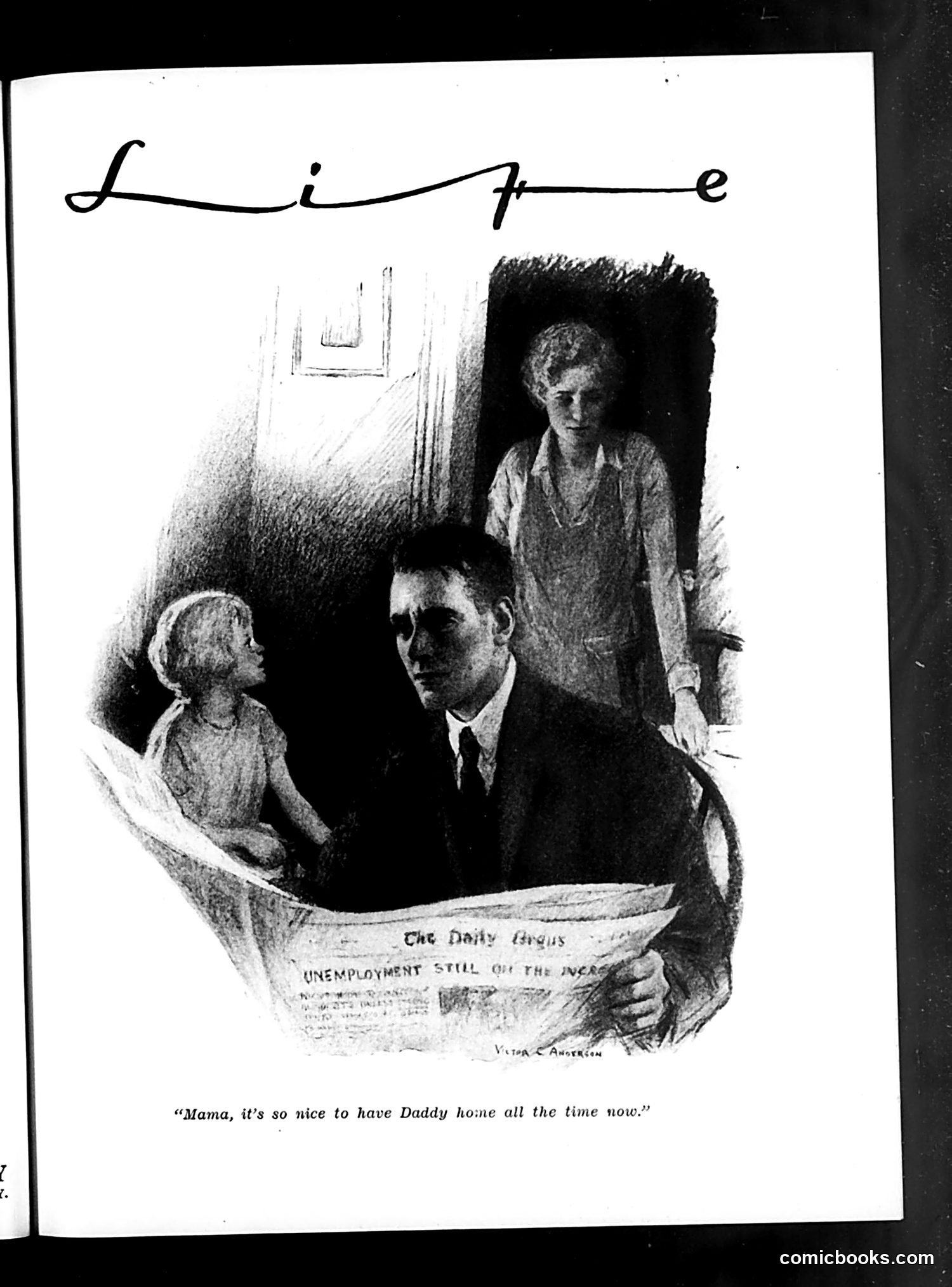
"Life" Magazine Cartoon Analysis This cartoon satirizes unemployment during an economic downturn (likely the 1920s recession). The drawing, signed by Vida C. Anderson, depicts a man reading "The Daily News" with a headline about "Unemployment Still On The Increase." A woman and child observe him at home. The caption—"Mama, it's so nice to have Daddy home all the time now"—uses ironic humor. The child's innocent comment masks the grim reality: the father is unemployed and stuck at home, not enjoying leisure but facing financial hardship. The satire highlights how economic crisis disrupts family life, with joblessness presented through a child's perspective that unknowingly underscores parental anxiety.
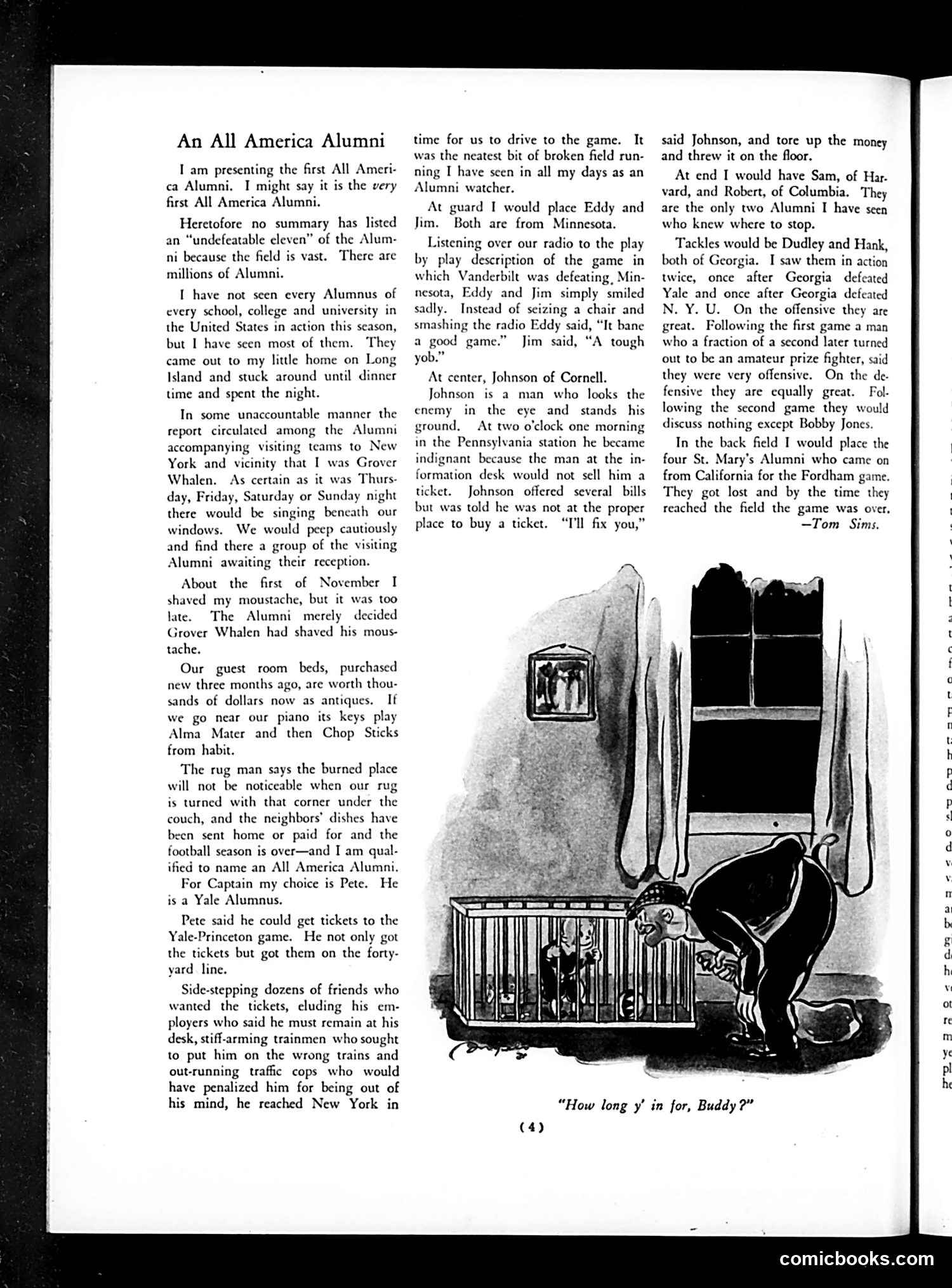
Explanation for Modern Readers This page from *Life* magazine contains an article titled "An All America Alumni" discussing college football and alumni culture. The accompanying cartoon illustrates a humorous scene with the caption "How long y'in for, Buddy?" The image depicts a man peering into what appears to be a jail or prison cell containing several figures. The joke relies on the contrast between the expectation of visiting collegiate alumni and finding incarcerated individuals instead—likely a satirical commentary on the rowdy, lawless behavior associated with college football fans and alumni gatherings during this era. The article itself humorously recounts the author's experiences hosting visiting alumni, including anecdotes about ticket-scalping, train logistics, and game-day mishaps, suggesting alumni culture was chaotic and occasionally criminal in nature.
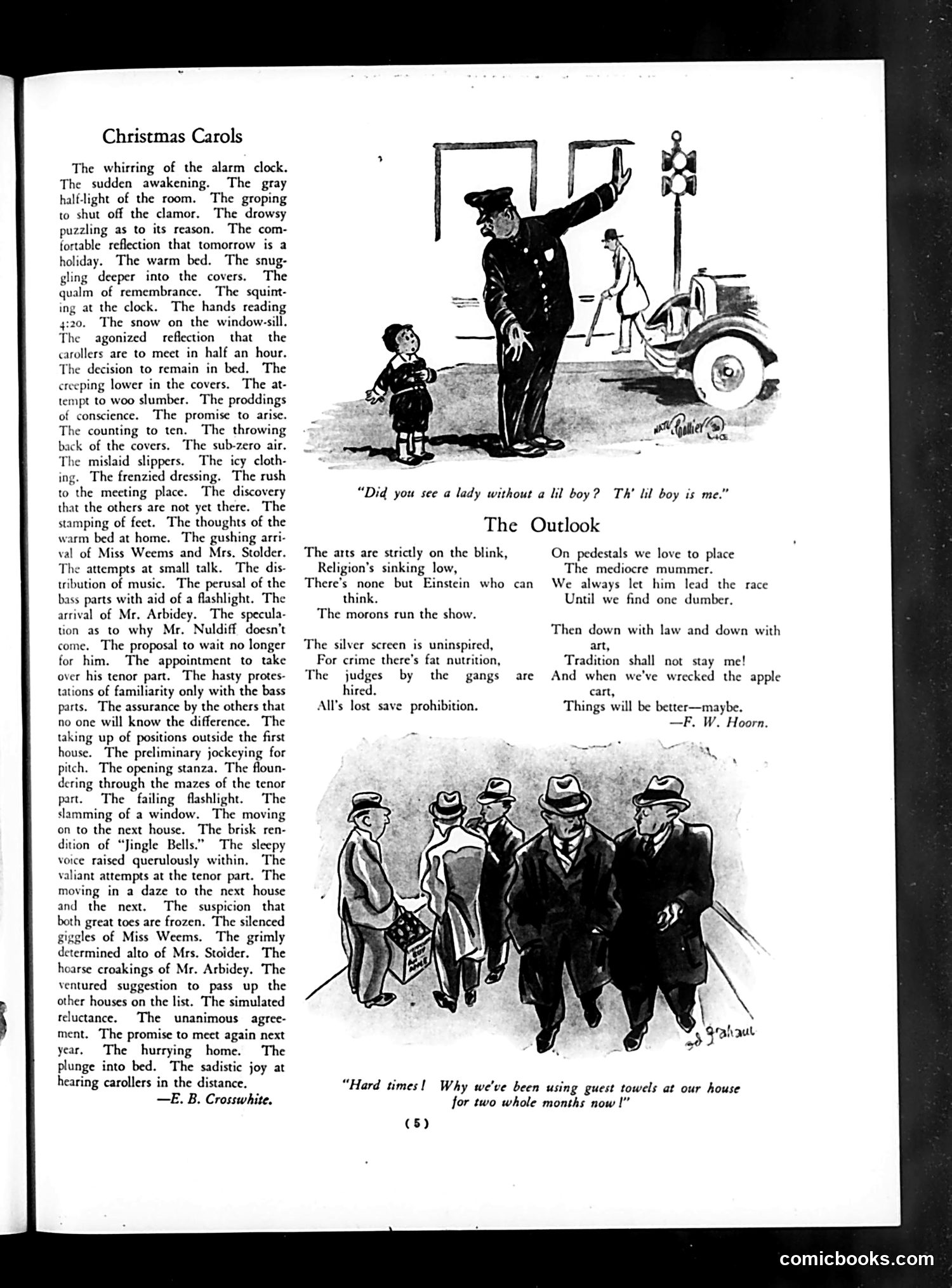
Analysis This page contains two separate satirical pieces from *Life* magazine: "Christmas Carols" (left) by E.B. Crosswhite is a humorous poem cataloging the mundane realities of Christmas—alarm clocks, cold mornings, family obligations—contrasting with idealized sentimentality. It's gentle domestic satire about the gap between Christmas fantasy and everyday experience. "The Outlook" (right) is a poem mocking intellectuals and prohibition-era hypocrisy. References to "Einstein," "morons," "silver screen," and judges "hired by gangs" suggest criticism of 1920s cultural pretension and the enforcement failures of Prohibition. The accompanying cartoon shows men in hats discussing hard times and guest towels—likely satirizing economic hardship and class anxieties of the period. Both pieces use humor to deflate contemporary American optimism and expose social contradictions.
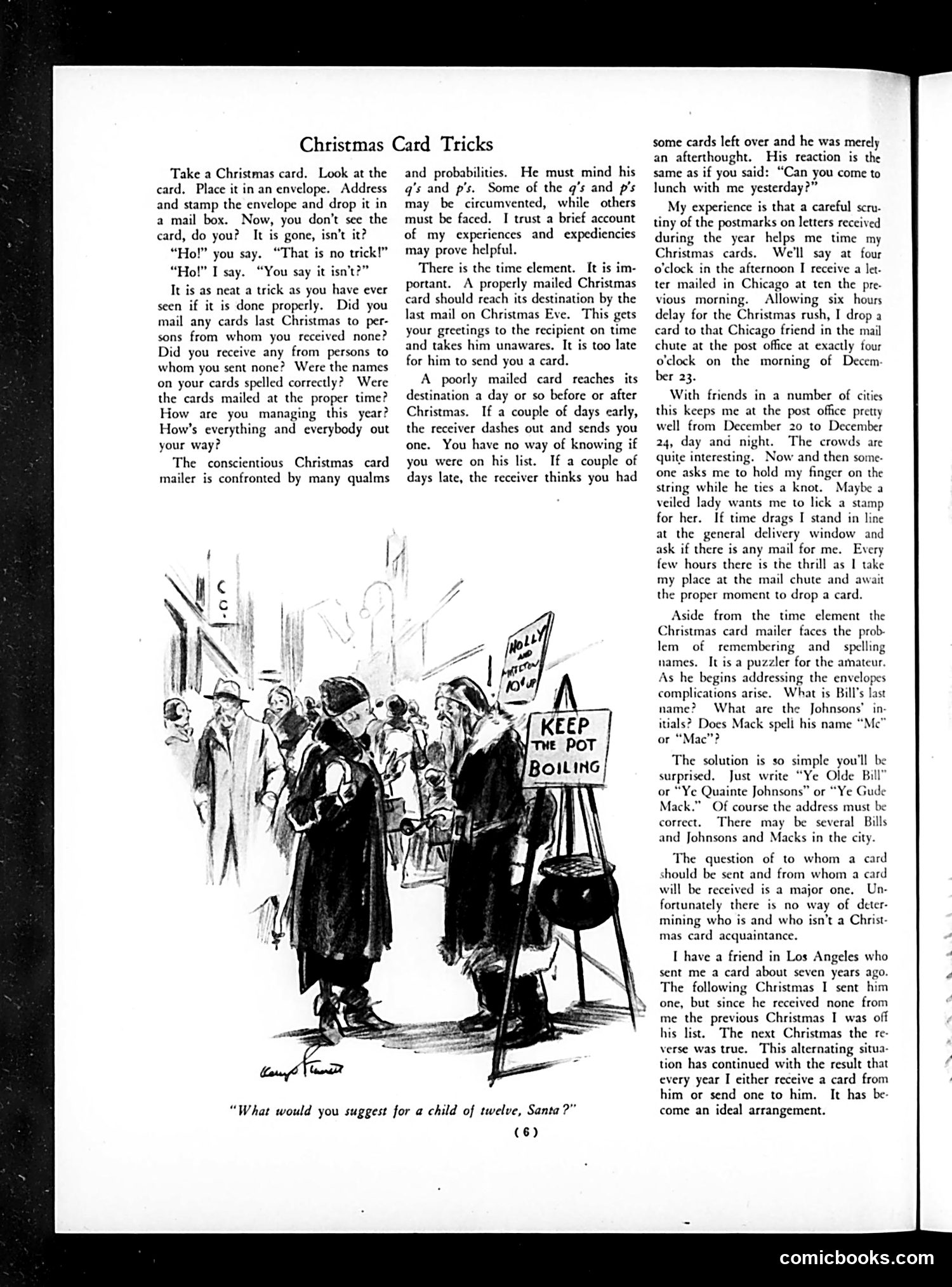
Christmas Card Tricks This page explains the practical challenges of mailing Christmas cards properly and on time. The main cartoon depicts a crowded post office during the holiday rush, with someone asking Santa "What would you suggest for a child of twelve, Santa?"—likely poking fun at the chaos and impossibility of getting mail delivered reliably during Christmas. The article discusses timing issues: cards must be mailed early enough to arrive by Christmas Eve, but senders often forget or miscalculate. It humorously addresses addressing problems—misspelled names, unclear handwriting—that cause delivery delays. The piece also describes the author's experience managing Christmas mail logistics from multiple cities, illustrating how unpredictable the holiday postal system was, even with careful planning.
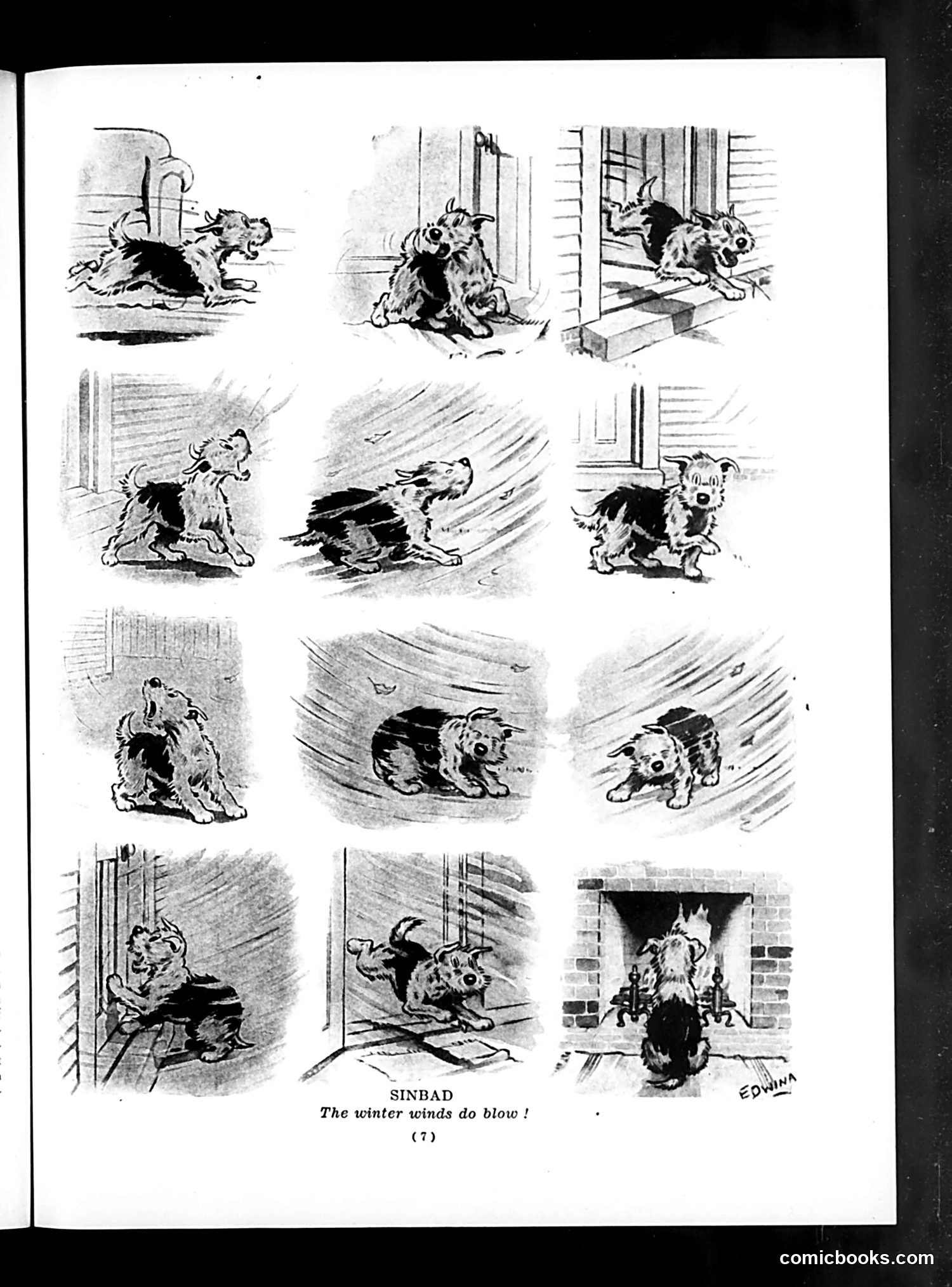
Analysis This is a humorous comic strip titled "SINBAD: The winter winds do blow!" depicting a dog (apparently named Sinbad) being buffeted by harsh winter weather. The twelve-panel sequence shows the dog's misadventures as strong winds push him around outdoors and indoors—blown against walls, doors, and structures; tumbled across floors; and generally tossed about helplessly by gusts. The humor relies on physical comedy: the dog's struggles against an invisible but powerful force. The title's reference to the nursery rhyme "The North Wind Doth Blow" suggests this is a lighthearted commentary on winter's inconveniences. The cartoonist's signature appears to read "EDWINA." The satire is gentle—poking fun at how winter weather disrupts daily life, using a dog as the sympathetic victim of nature's seasonal harshness.
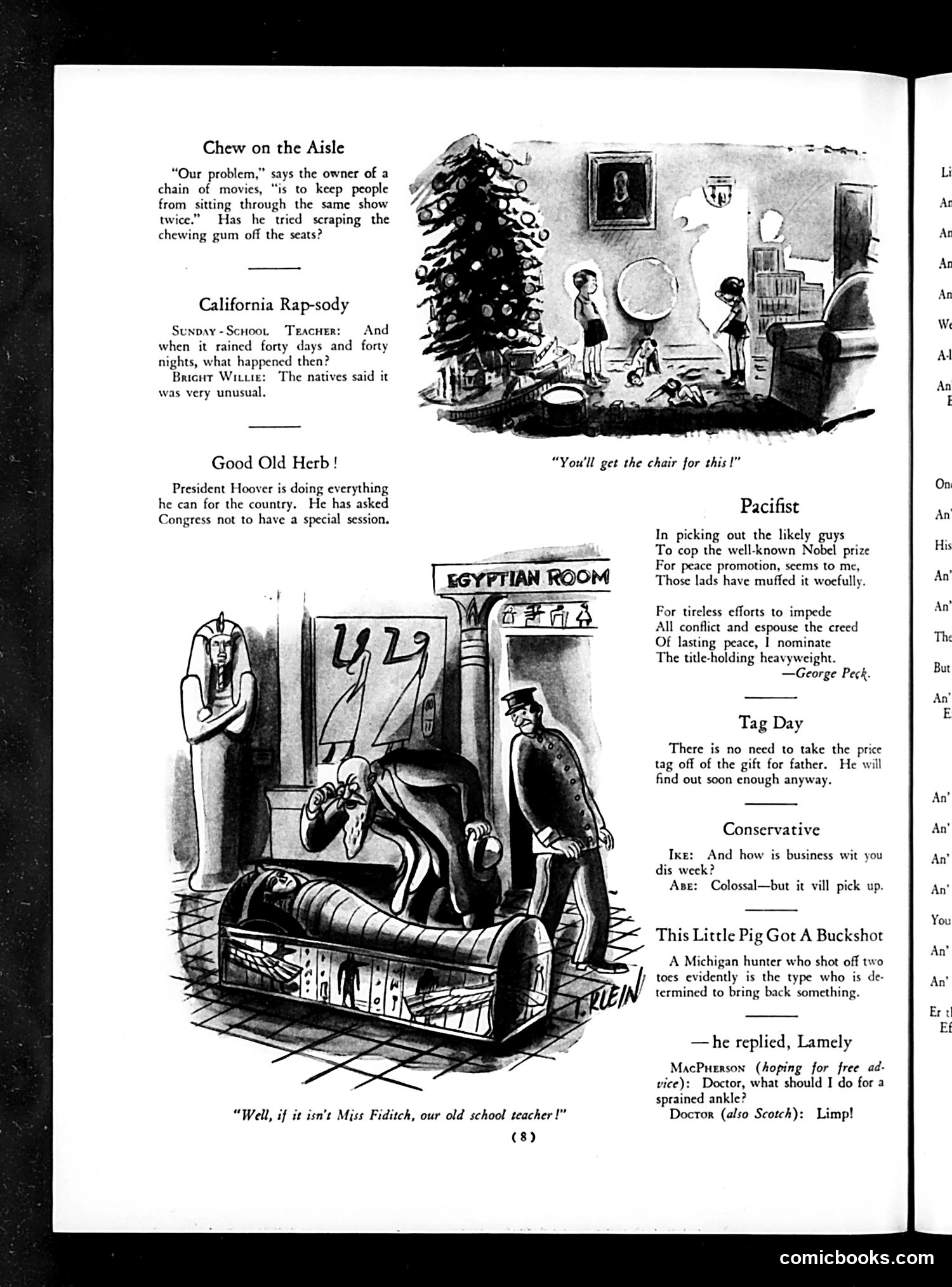
Analysis of Life Magazine Page This page contains several short humor pieces and cartoons from what appears to be the 1920s-1930s era. The main cartoon shows an "Egyptian Room" museum exhibit where a mummy has come to life—a common trope in period horror entertainment. A guard discovers the animated mummy, creating comedic horror. Other brief satirical pieces include: - "Chew on the Aisle": A joke about movie theater gum-scraping problems - "California Rap-sody": A humorous exchange about unusual rainfall - "Good Old Herb": A quip about President Hoover's efforts to avoid a special Congressional session - "Pacifist": A poem by George Peck suggesting Nobel Prize nomination for peace advocacy - Various other short jokes on contemporary topics The humor relies on wordplay, puns, and observations about American life and current events of the period.
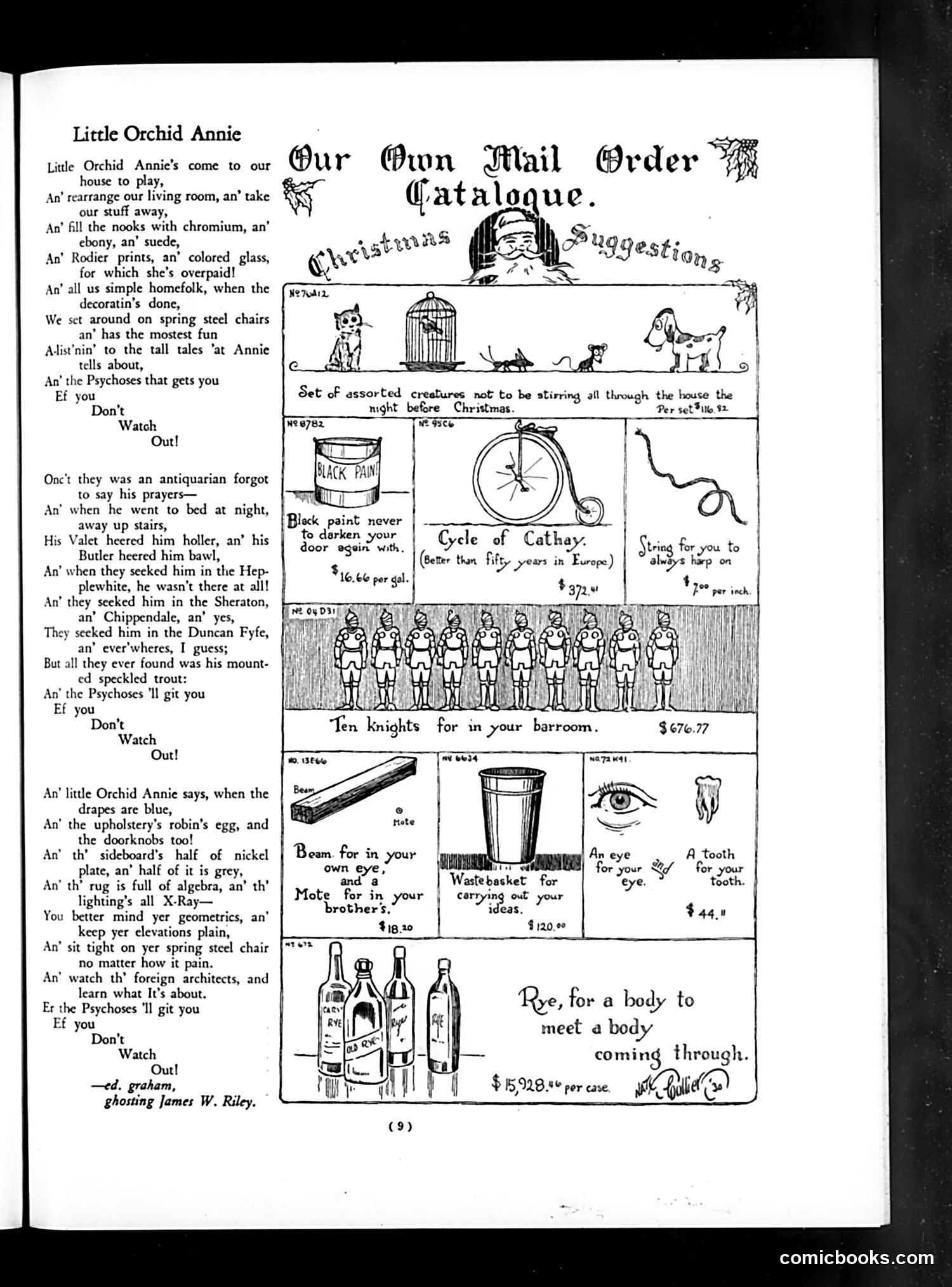
Page Analysis: "Our Own Mail Order Catalogue" This is primarily a humorous mail-order catalog parody rather than political commentary. The left column contains a whimsical poem called "Little Orchid Annie" (credited to ed. graham, ghosting james W. Riley) about a character who rearranges living spaces and collects odd items. The right side presents fake "Christmas Suggestions" — absurdist gift items with satirical descriptions: black paint to "darken your door," a bicycle "better than fifty years in Europe," toy knights for a barroom, and surreal objects like a beam "for in your own eye" and a tooth "for your tooth." The bottom advertises rye whiskey with the phrase "for a body to meet a body coming through" — likely a literary reference. This is satirical advertising humor mocking consumer culture and mail-order catalogs, not addressing specific political figures or events.
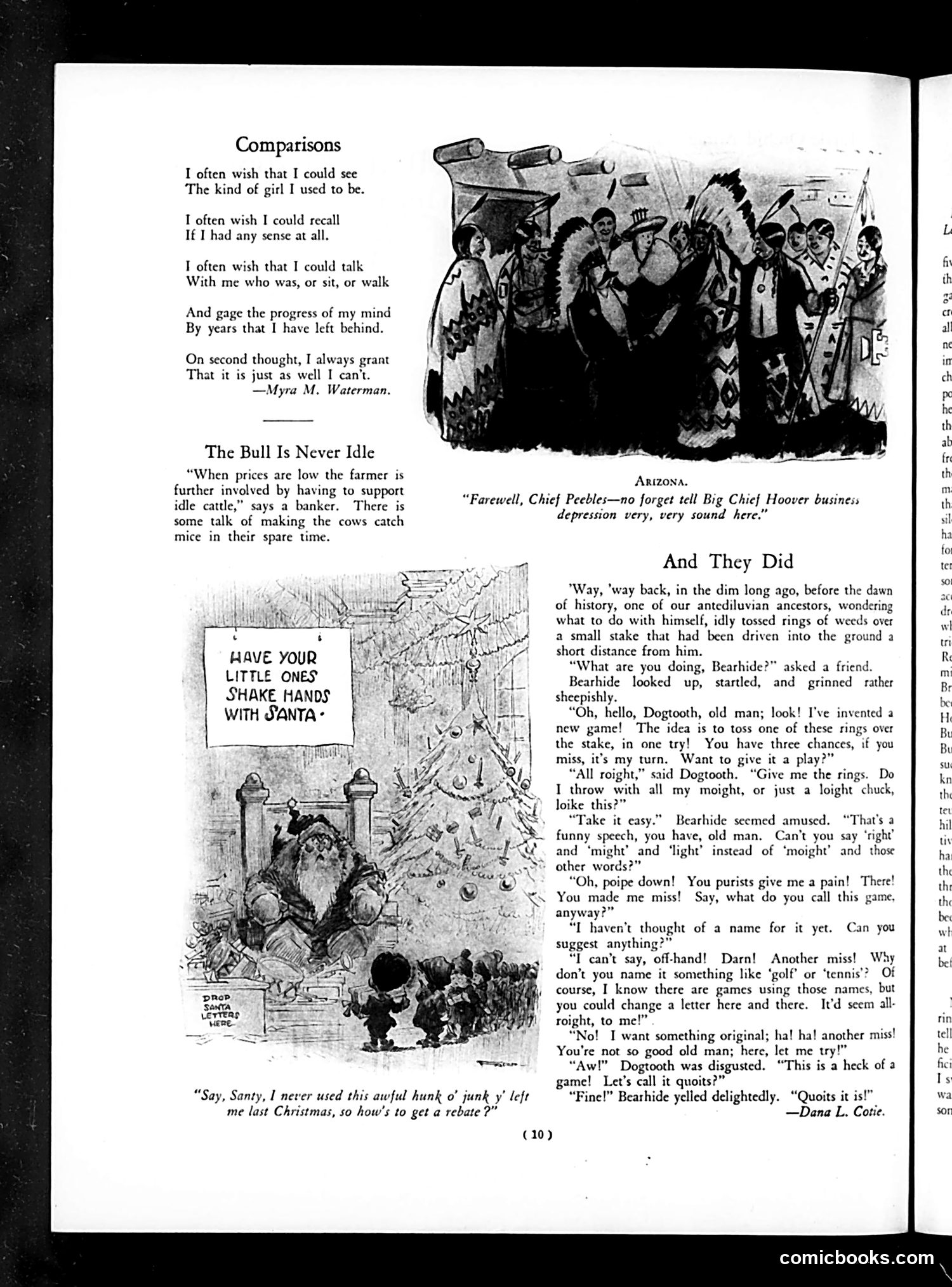
Analysis of Life Magazine Page This page contains two distinct elements: "The Bull Is Never Idle" is a banker's quip about farm economics during hard times—suggesting idle farmers should keep cattle busy catching mice to justify feeding them. It's satirizing the disconnect between bankers' logic and agricultural reality. "And They Did" is a short story about two historical figures—Bearihide and Dogtooth (likely Native American archetypes)—inventing a ring-toss game. The dialogue humorously depicts their trial-and-error process and friendly competition, with Bearihide eventually naming it "Quoits." The political cartoons show Santa Claus with a sign about Jamba (unclear reference) and a Depression-era scene. The magazine's tone suggests early-to-mid 20th century American satire blending economic commentary with lighthearted fiction.
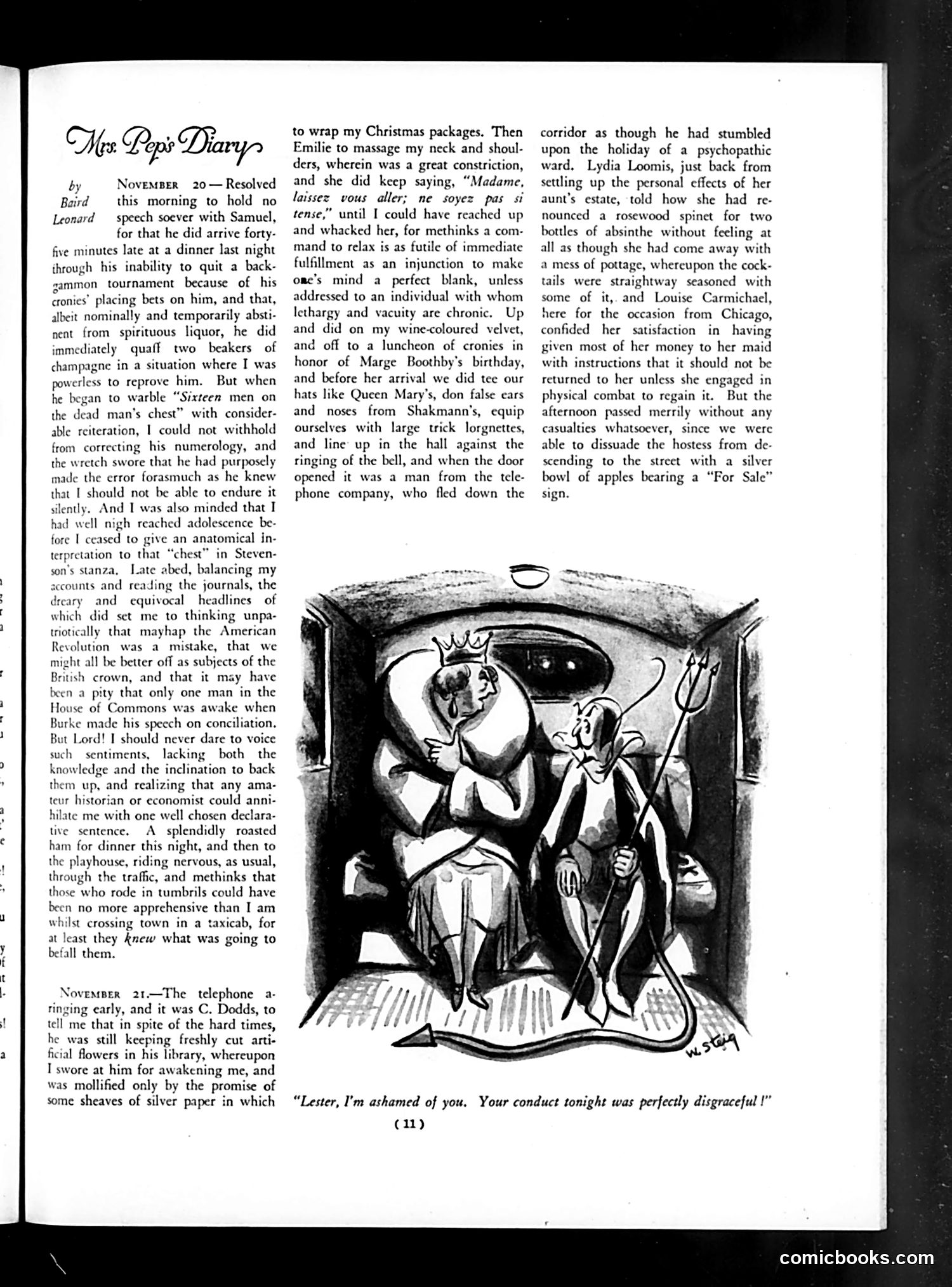
Analysis of "Mrs. Pops Diary" Page This page presents a humorous diary entry dated November 20-21, appearing to be from the early 20th century. The accompanying illustration shows a figure in a crown (appearing to represent royalty or authority) being confronted by a smaller, angry figure with what looks like a trident or fork. The cartoon's caption reads: "Lester, I'm ashamed of you. Your conduct tonight was perfectly disgraceful!" The satire appears to mock domestic power dynamics—specifically, a wife scolding her husband (Lester) for misbehavior at a social gathering. The crown and trident suggest the husband fancies himself powerful or important, yet he's being humbled by his wife's disapproval. This reflects period humor about the gap between men's self-importance and their actual domestic authority.
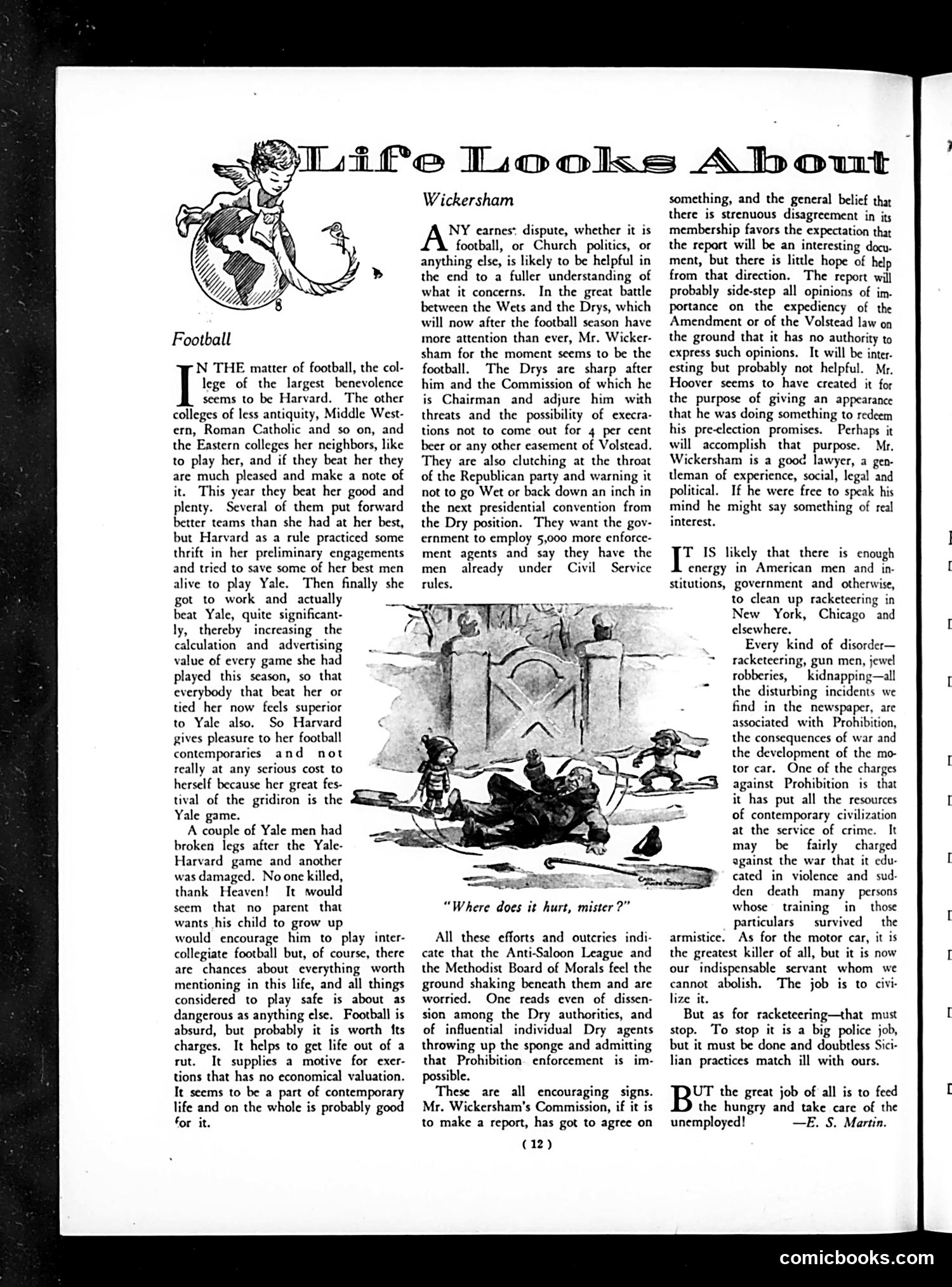
Analysis of "Life Looks About Wickersham" (Page 12) This article by E.S. Martin discusses George Wickersham, likely the U.S. Attorney General or a prominent government figure, particularly regarding Prohibition enforcement. The main cartoon depicts what appears to be law enforcement or prohibition agents confronting criminal figures (possibly bootleggers or gangsters), with the caption "Where does it hurt, mister?" The satire critiques Wickersham's Commission's efforts to address crime and racketeering in major cities, while also touching on the unintended consequences of Prohibition—including increased violence, the motor car's role in crime, and the diversion of law enforcement resources. The piece sardonically suggests the Commission should focus on feeding the hungry and caring for the unemployed rather than battling impossible social problems created by Prohibition itself.
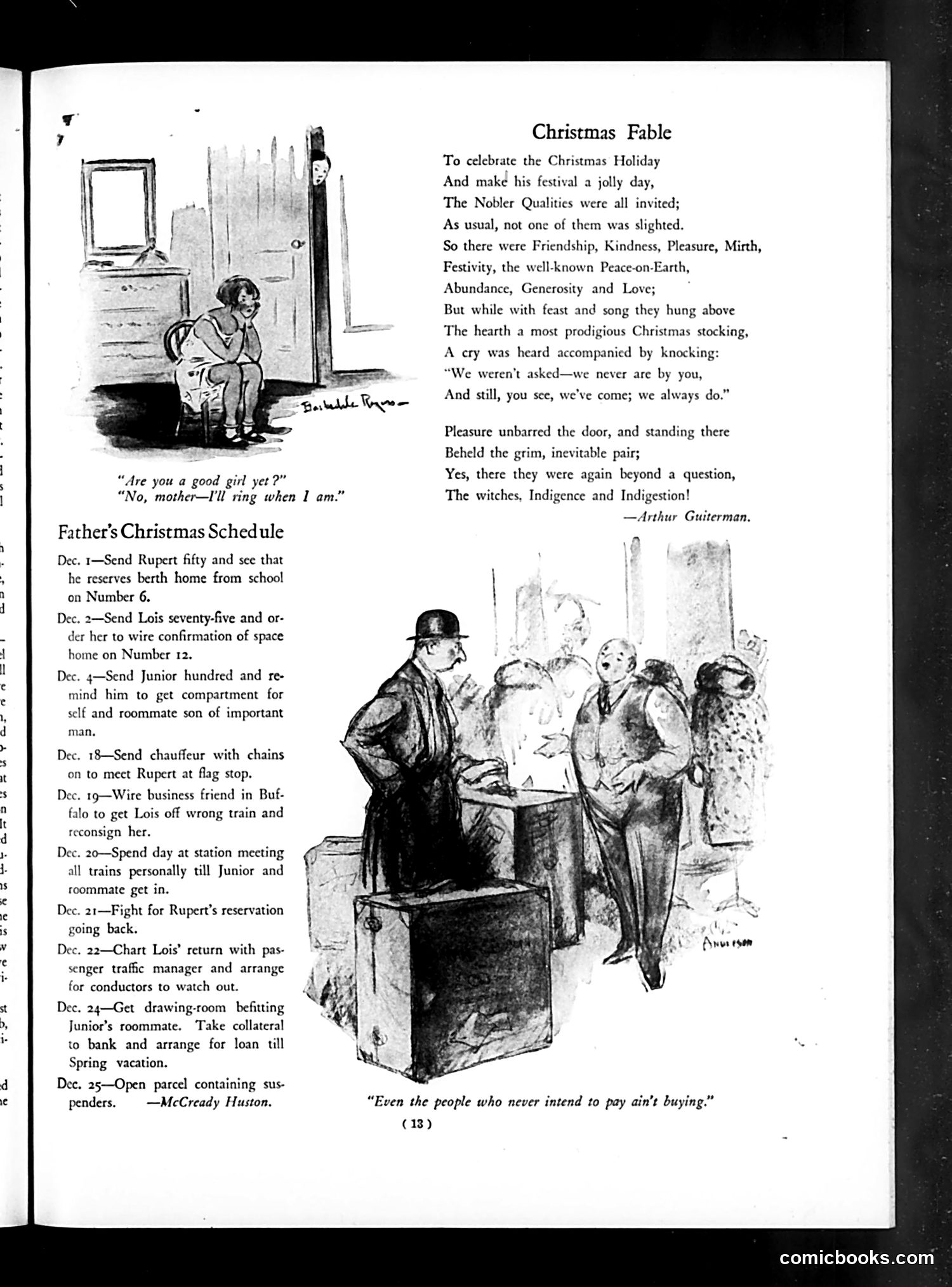
Analysis of This Life Magazine Page This page contains two satirical pieces: "Christmas Fable" (top) by Arthur Guiterman is a moral poem about Pleasure hosting a Christmas celebration for virtues like Friendship and Generosity. Poor qualities—Witches, Indigence, and Indigestion—crash the party uninvited. The illustration shows a child at a door, and the accompanying quote emphasizes unwanted guests arriving anyway. "Father's Christmas Schedule" (bottom left) by McCready Huston humorously lists a father's December obligations: arranging children's train reservations, managing family logistics, and handling financial matters—depicting the mounting stress of holiday planning and parental responsibility. The bottom illustration, captioned "Even the people who never intend to pay ain't buying," appears to mock commercial Christmas excess and debt.
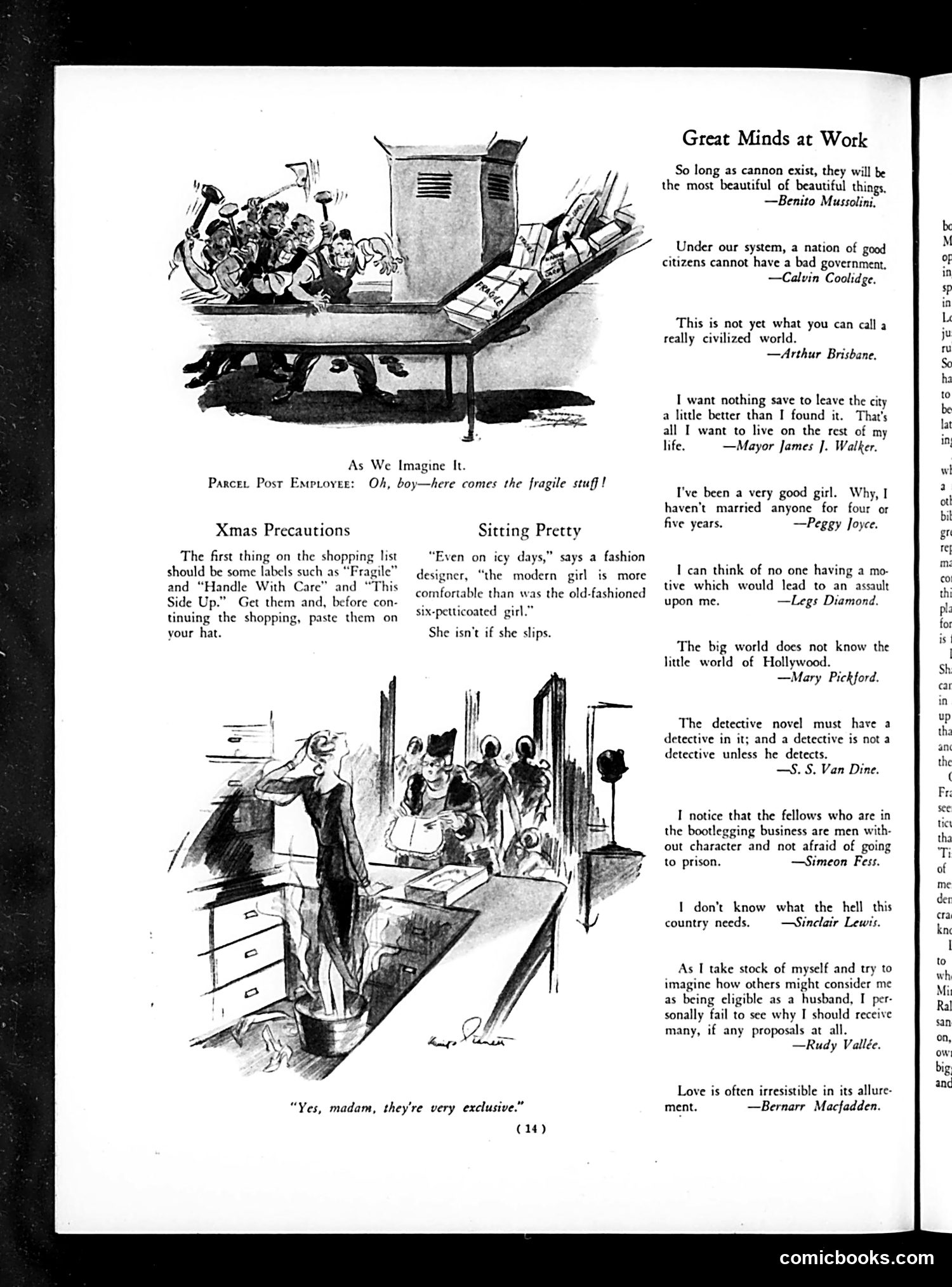
Analysis of Life Magazine Page This page contains satirical commentary and cartoons rather than political cartoons per se. The top illustration, "As We Imagine It," depicts a Parcel Post employee overwhelmed by fragile packages—satirizing the chaos of Christmas shopping and the Parcel Post service's handling of delicate goods. The lower cartoon, "Sitting Pretty," shows a crowded store scene with the caption "Yes, madam, they're very exclusive"—mocking how retailers advertise exclusivity while serving masses of customers. The right column features "Great Minds at Work"—quotations from public figures (Mussolini, Coolidge, Brisbane, etc.) paired with cynical observations about government, civilization, and society. This format allows the magazine to gently mock political leaders and celebrities through juxtaposition rather than direct caricature.
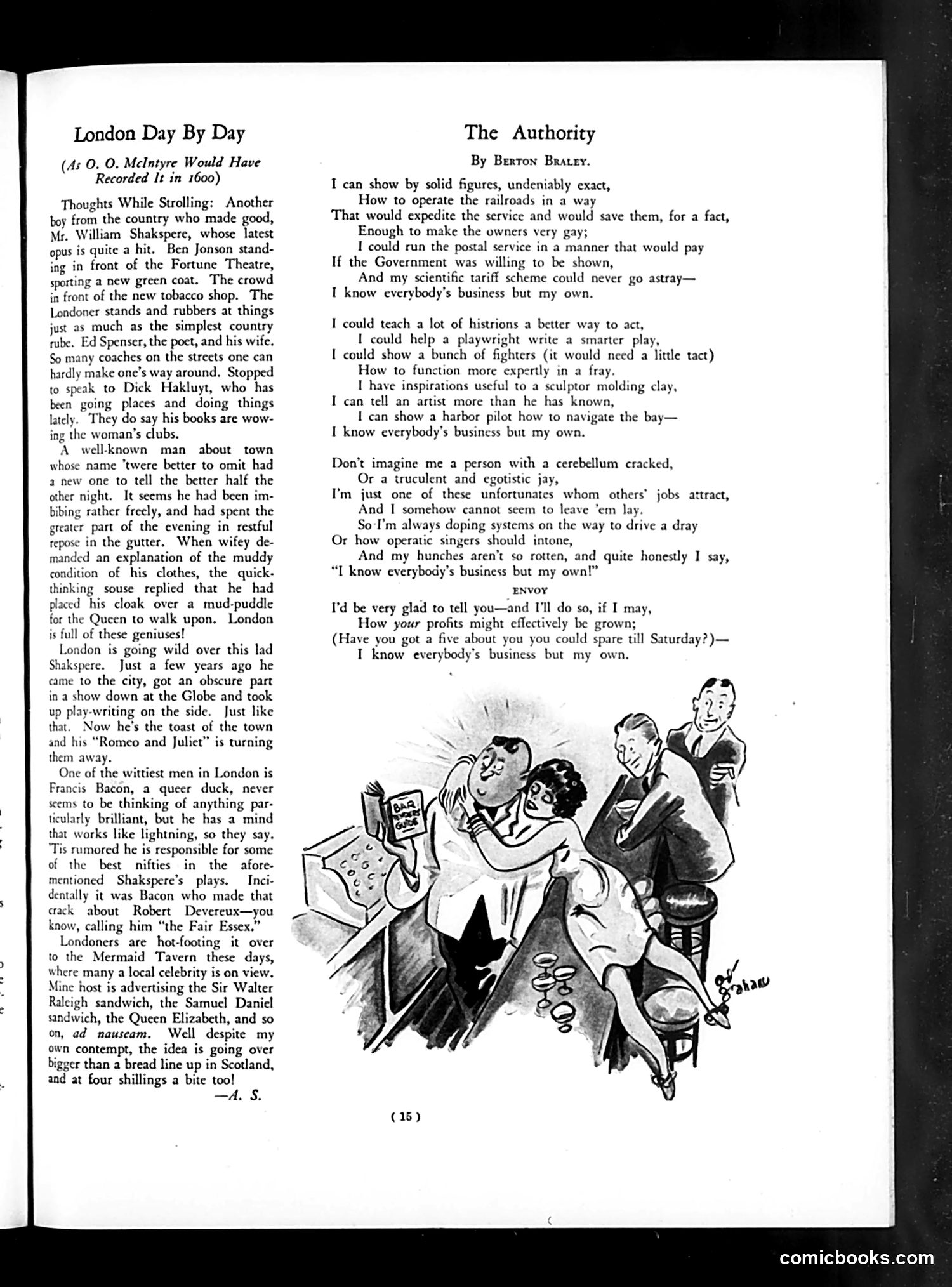
Analysis of Life Magazine Page This page contains two distinct pieces: Left column: "London Day By Day" — a gossipy column about London society, mentioning Shakespeare, Ben Jonson, Francis Bacon, and various London taverns and personalities. It's social commentary on Elizabethan/Jacobean London figures and venues. Right column: "The Authority" by Berton Braley — a satirical poem mocking an arrogant, self-important man who claims expertise in everything (railroads, postal service, theater, art, navigation, etc.) while insisting "I know everybody's business but my own." The repeated refrain sarcastically exposes his pompous meddling. Cartoon: The illustration depicts this know-it-all character lecturing others, appearing to be in a kitchen or domestic setting, surrounded by people who seem to be enduring his unsolicited advice. The satire targets the type of person who constantly interferes in others' affairs while ignoring their own problems.
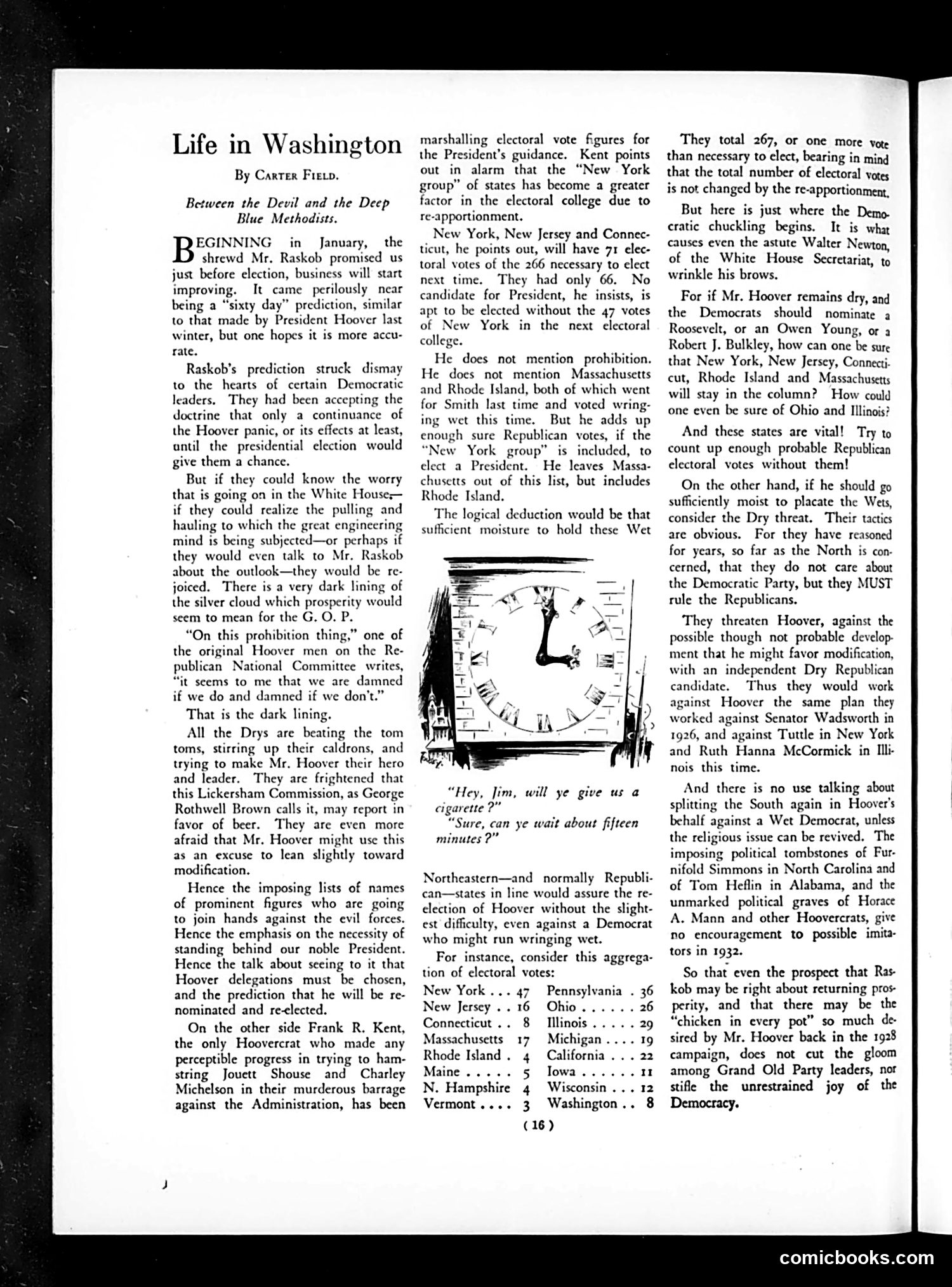
Political Cartoon Analysis: "Life in Washington" by Carter Field This page discusses the 1932 presidential election and electoral strategy. The cartoon depicts a clock showing electoral votes, illustrating the tension over which states will determine the outcome. The article analyzes whether President Hoover can secure reelection. It references Democratic concerns about New York, New Jersey, and Connecticut—states with significant electoral votes (71 combined) that could swing the election. The text notes these states are geographically positioned between "wet" (anti-Prohibition) and "dry" (pro-Prohibition) factions, making them unpredictable. The satire targets both parties' strategies: Republicans fear Democratic manipulation in these pivotal states, while Democrats worry Hoover might gain independent "dry" Republican support. The clock symbolizes how time is running out before the election determines America's political direction.
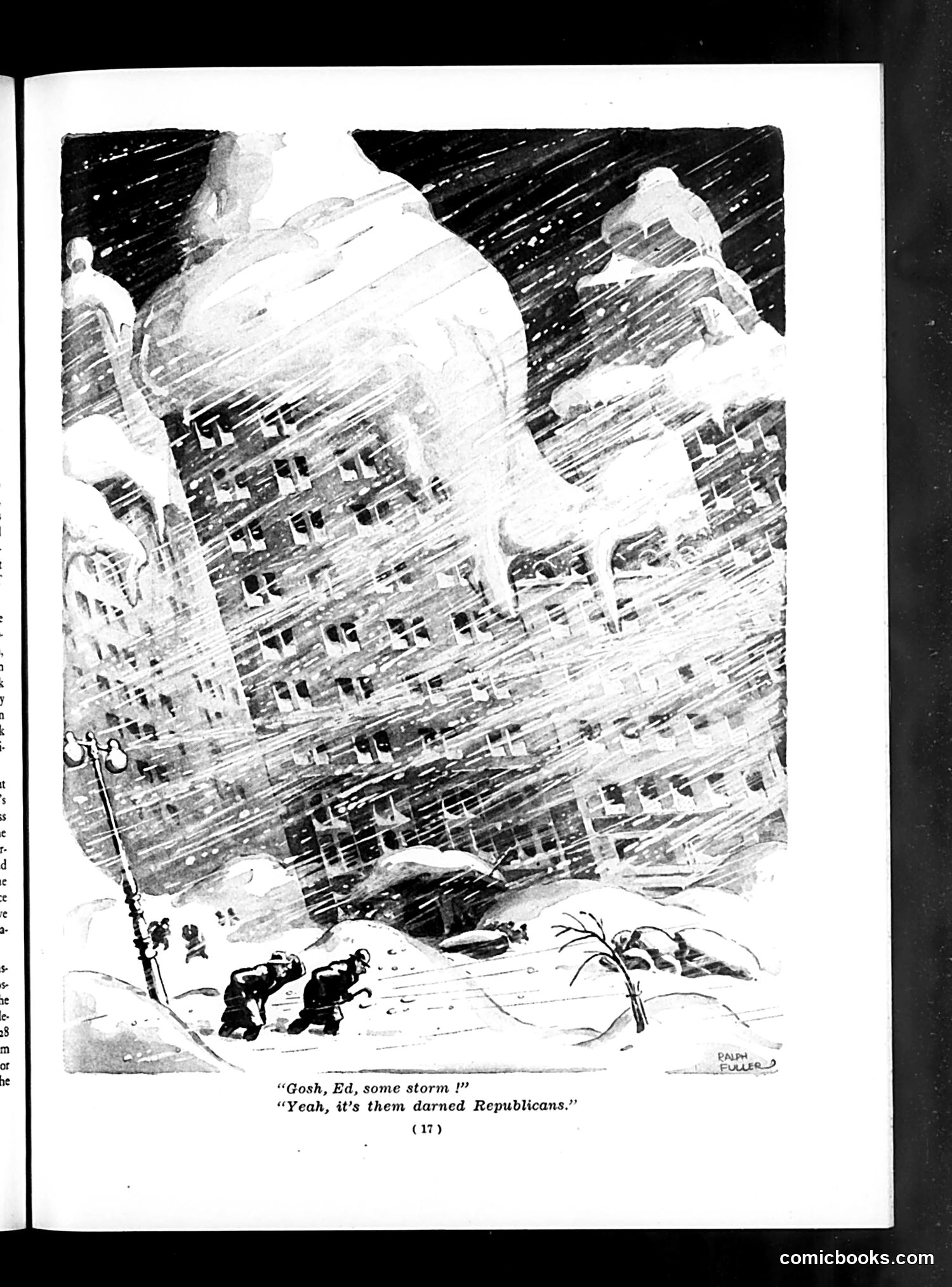
This political cartoon by Palmer Fuller depicts a destructive storm approaching a cityscape. Two figures in the foreground crouch in fear as buildings are threatened by what appears to be a massive tornado or cyclone with swirling winds. The caption reads: "Gosh, Ed, some storm!" / "Yeah, it's them darned Republicans." This is partisan satire blaming Republicans for societal destruction or chaos—likely referencing economic hardship, political turmoil, or failed policies. The cartoon uses weather as metaphor: Republicans are portrayed as an unstoppable natural disaster wreaking havoc on the city (representing American society or economy). The casual dialogue between the characters emphasizes how widespread and obvious this "damage" allegedly is. Without knowing the exact publication date, the specific historical crisis being referenced remains unclear, though the tone suggests significant political conflict or economic distress.
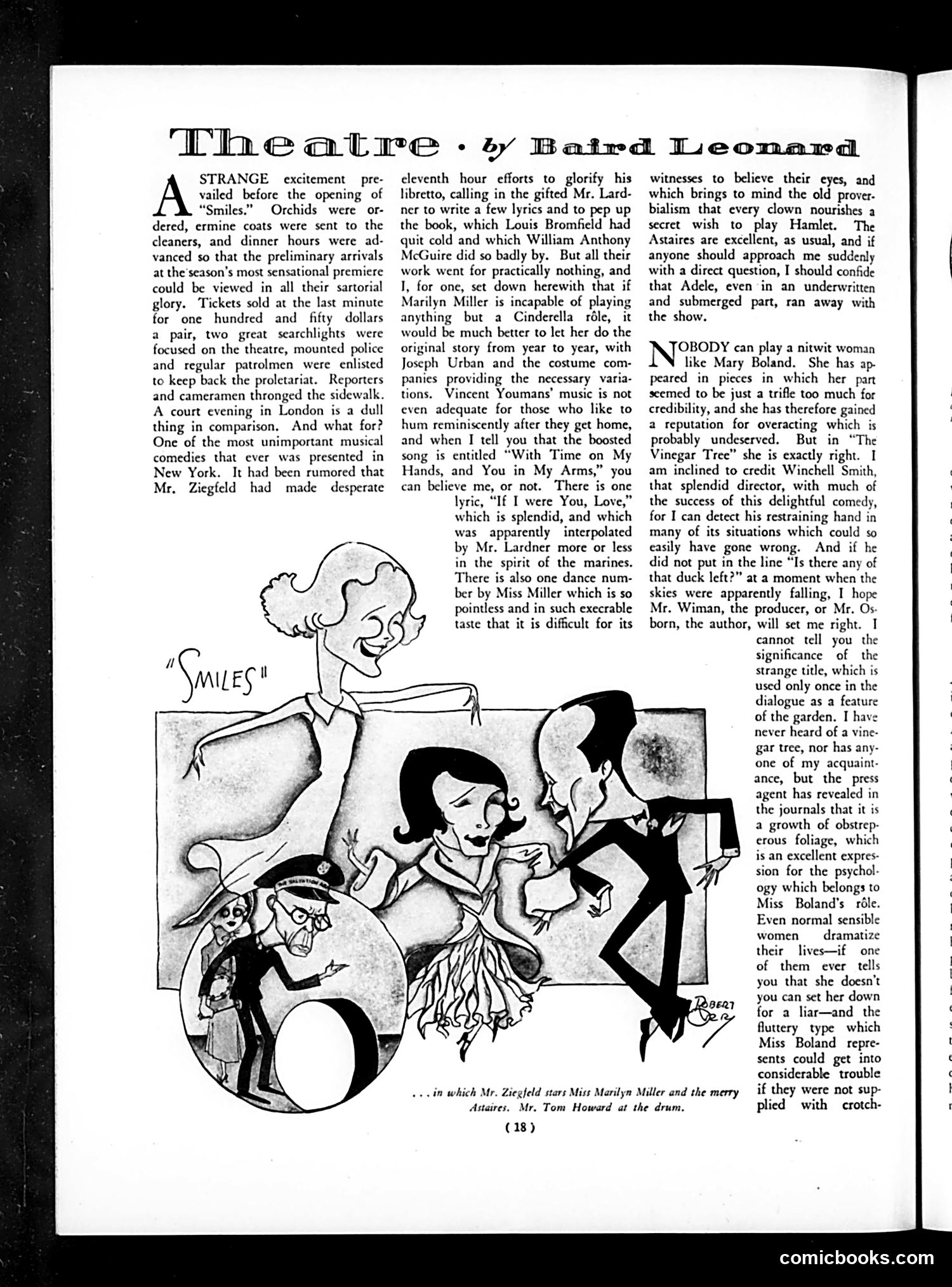
Analysis of "Smiles" Theatre Review This is Baird Leonard's theatre review of the musical comedy "Smiles," which opened with significant fanfare (searchlights, police, patrols). The cartoon illustrates the show's plot involving Mr. Ziegfeld, Miss Marilyn Miller, and Mr. Tom Howard performing. Leonard's review is mixed-to-negative. He praises Miller's performance but criticizes the overall production, calling it derivative (a "Cinderella role") and comparing it unfavorably to previous New York comedies. He particularly mocks Vincent Youmans' music and a dance number by Miss Miller as "pointless" and in "execrable taste." The review targets wealthy producers' desperate attempts to create spectacle—suggesting even star talent cannot salvage mediocre material.
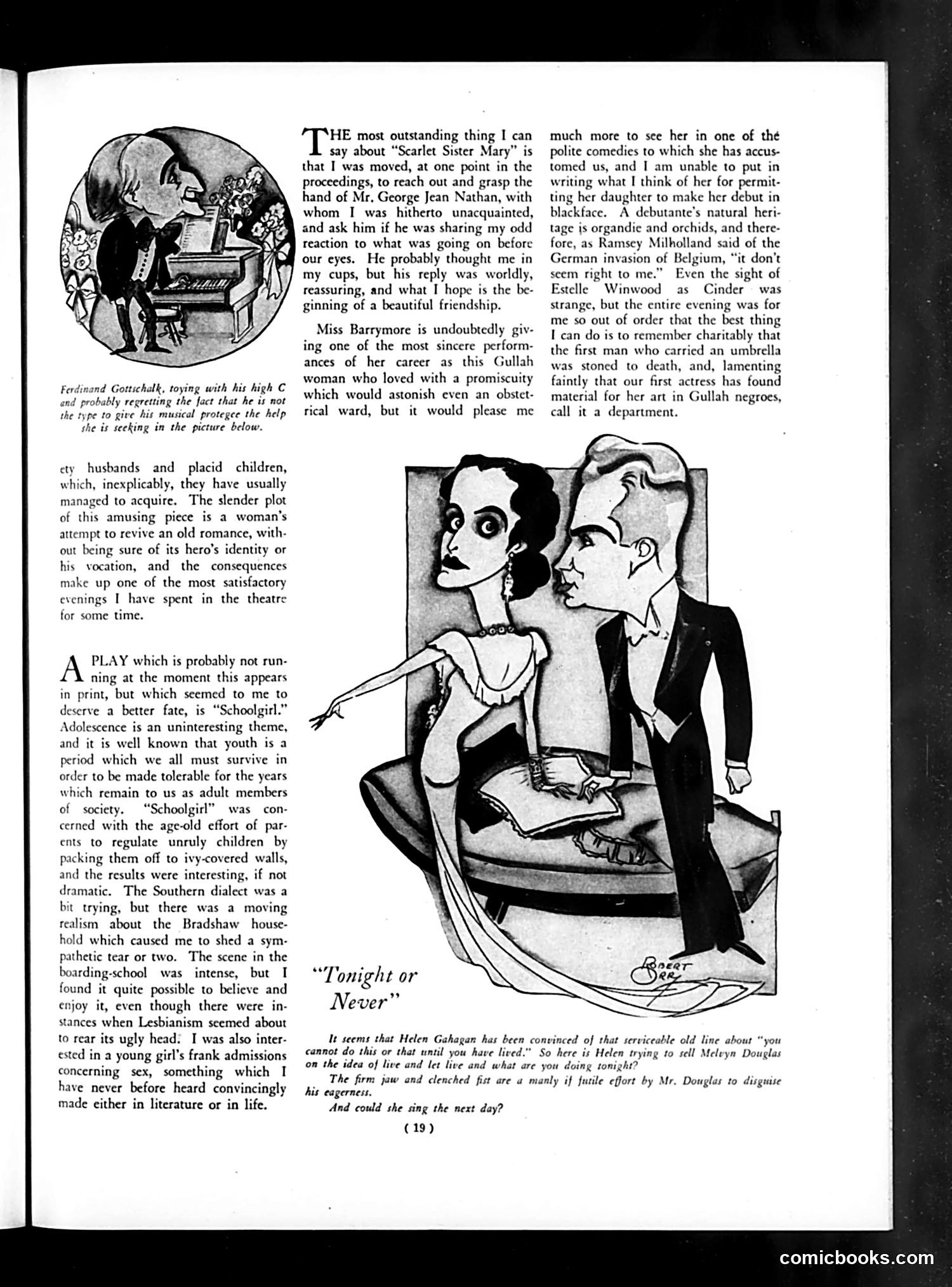
Analysis for Modern Readers This Life magazine page reviews three theatrical productions. The main illustration labeled "Tonight or Never" depicts actress Helen Gahagan attempting to persuade actor Melvyn Douglas to embrace a "live and let live" philosophy about romantic experience before marriage—a daring theme for the era. The text critiques performances by actress Ethel Barrymore in "Scarlet Sister Mary" (playing a Gullah woman, a lowcountry African American character) and reviews "Schoolgirl," which dealt frankly with adolescent sexuality and lesbianism—subjects considered shocking for 1920s theater. The satire targets both theatrical conventions and sexual morality. The reviewer expresses disapproval of Barrymore's daughter performing in blackface while simultaneously acknowledging the frank discussions of female sexuality in these plays as groundbreaking, if uncomfortable, for mainstream audiences.
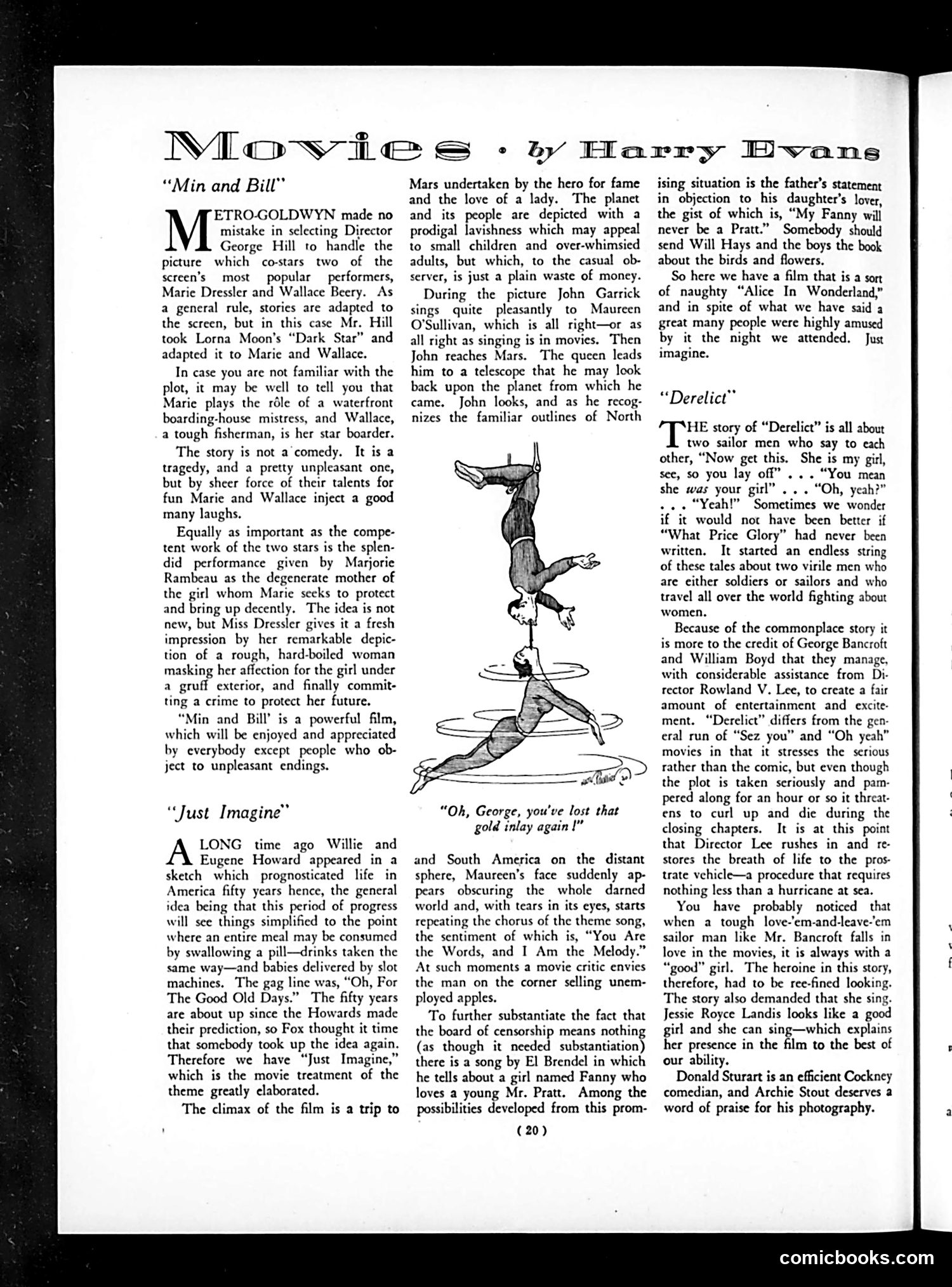
Movie Reviews by Harry Evans - Life Magazine This page contains three film reviews from an early sound-era Hollywood column. The critic discusses: "Min and Bill": Stars Marie Dressler and Wallace Beery in a dramatic (not comedic) adaptation about a waterfront boarding-house keeper protecting a young girl. Evans praises the performances, particularly Marjorie Rambeau's portrayal of a morally compromised mother. "Just Imagine": A futuristic fantasy based on a decades-old vaudeville sketch. Evans criticizes its lavish but pointless Mars sequences and mocks its sentimental romantic moments. He particularly objects to a censorship-dodging song where a character makes a crude pun on the name "Fanny Pratt"—a joke Evans considers crude enough to warrant complaint to Will Hays (Hollywood's chief censor). The cartoon illustrates "Just Imagine," showing acrobatic dancers in futuristic costumes, captioned with the film's sentimental theme about love being eternal. Evans uses this to mock the film's excessive sentimentality.
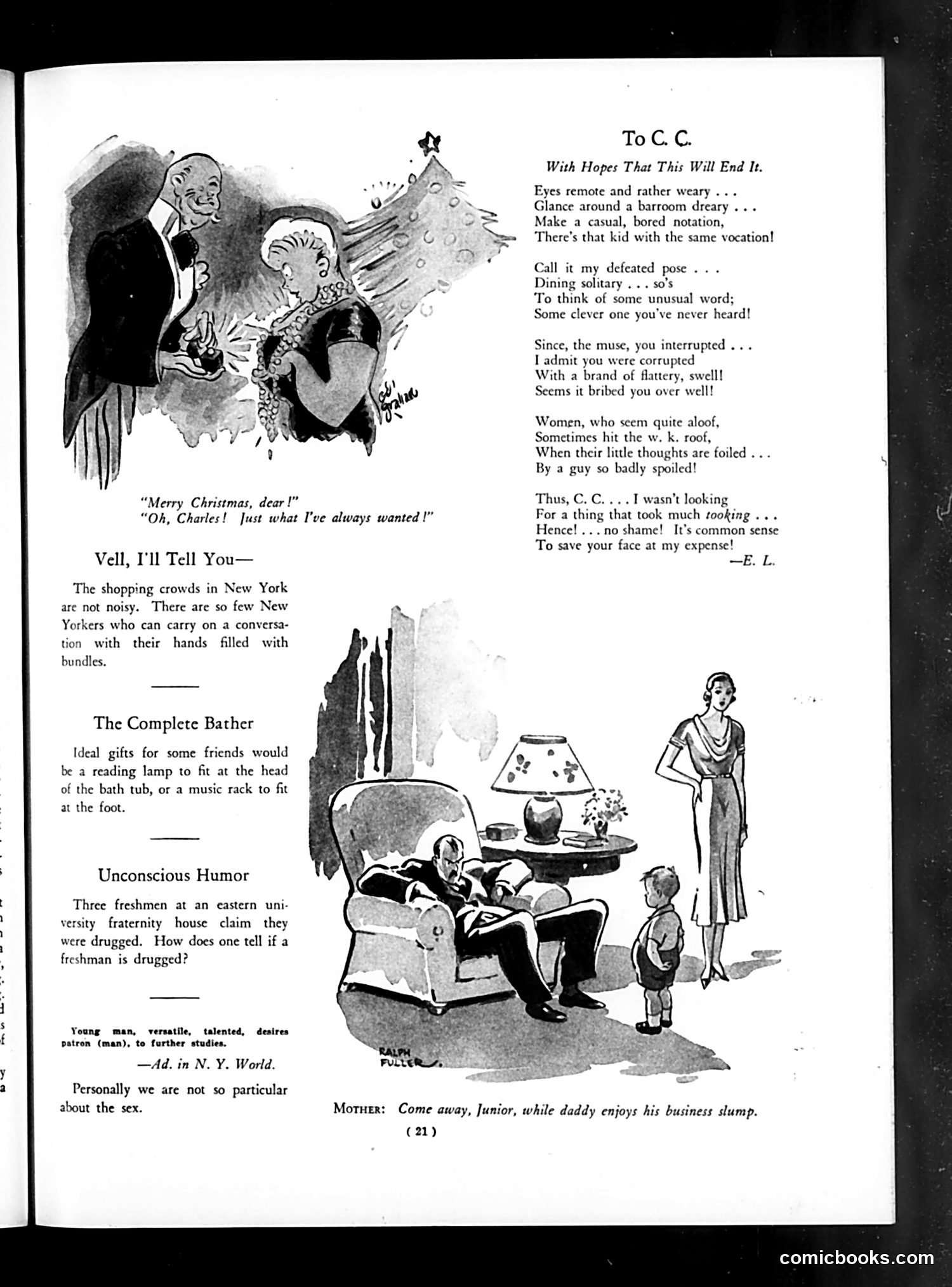
Life Magazine Page Analysis This page contains several brief satirical items typical of Life's humor format: Main Cartoon: Shows a man relaxing while his wife and children wait—captioned "Come away, Junior, while daddy enjoys his business slump." The joke satirizes men who use economic downturns as an excuse to loaf at home rather than work. Text Pieces: Short observations mock social behavior—New Yorkers too laden with shopping bundles to talk, impractical gift ideas (bathroom reading lamps), and a university ad seeking a male patron that humorously suggests the requester doesn't care about the patron's gender. "To C.C." Poem: A longer satirical poem (signed E.L.) appears to address someone who interrupted the writer's creative work, using flowery language about barroom solitude and artistic struggle. The specific reference is unclear without more context, but it's likely personal literary criticism. Overall Tone: Gentle mockery of everyday middle-class life, pretension, and gender dynamics—typical of Life's editorial voice during this era (appears early-to-mid 20th century based on style).
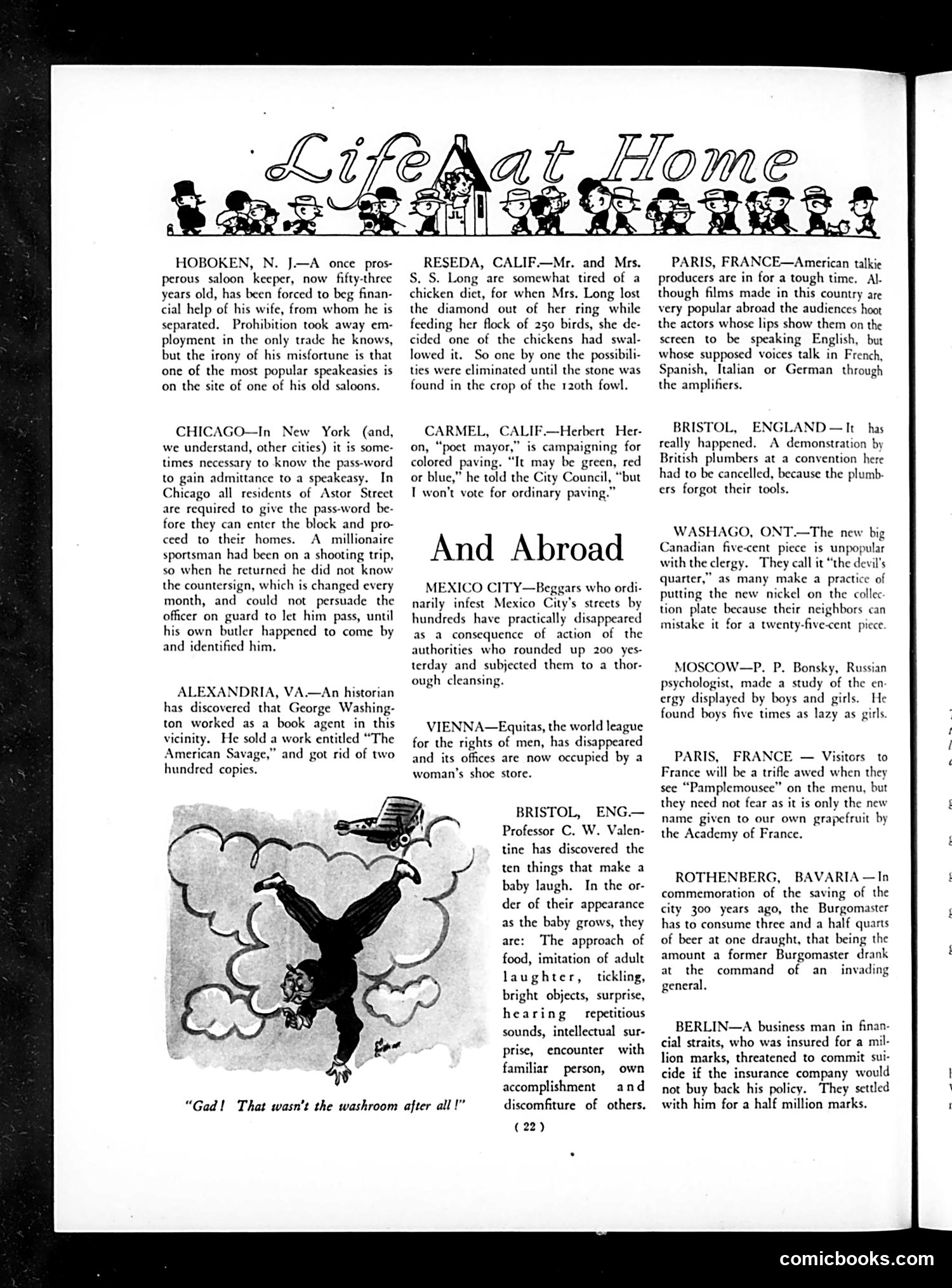
Explanation for Modern Readers This page from *Life* magazine presents satirical anecdotes from around the world, with one cartoon. The main cartoon depicts a man emerging from clouds, apparently having mistaken something for a washroom—the joke's punchline is "Gad! That wasn't the washroom after all!"—likely referring to Prohibition-era speakeasies or illicit establishments. The surrounding text items mock various absurdities: a saloon keeper impoverished by Prohibition while a speakeasy thrives on his old site; a millionaire unable to enter his own neighborhood block without a password; a woman searching 120 chickens for her lost diamond; a poet-mayor championing "colored paving." International items satirize cultural oddities: Vienna's men's-rights league replaced by a shoe store; British plumbers forgetting tools; a Canadian nickel resembling a quarter, troubling clergy collecting donations. The satire targets Prohibition's unintended consequences, class absurdities, bureaucratic ridiculousness, and cultural pretensions across nations.
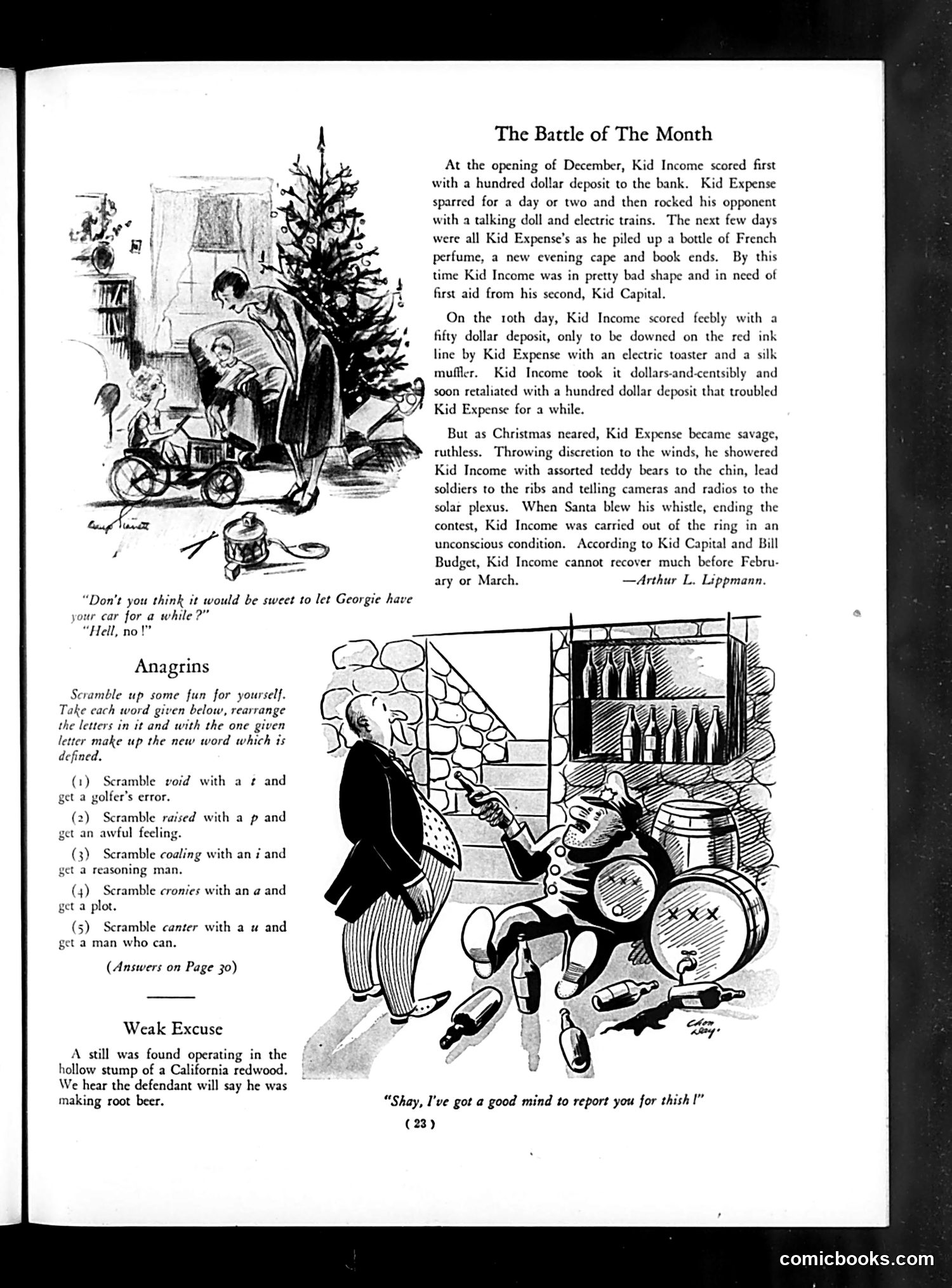
"The Battle of The Month" This satirical piece personifies the eternal household struggle between Income and Expense as a boxing match during the Christmas season. Kid Income represents earnings; Kid Expense represents spending urges. The narrative depicts a December financial battle where Christmas shopping—teddy bears, electric trains, perfume, evening capes, toasters—overwhelms modest paychecks. Kid Capital (savings) must intervene as "second." By month's end, Kid Expense decisively defeats Kid Income, leaving the family financially "knocked out" until February or March recovery. The humor targets the predictable cycle of holiday overspending that depletes annual savings. Written by Arthur L. Lippmann, it's a gentle moral lesson about fiscal discipline disguised as sports commentary—a common pedagogical approach in 1920s-30s American magazines aimed at middle-class readers struggling with consumer temptation.
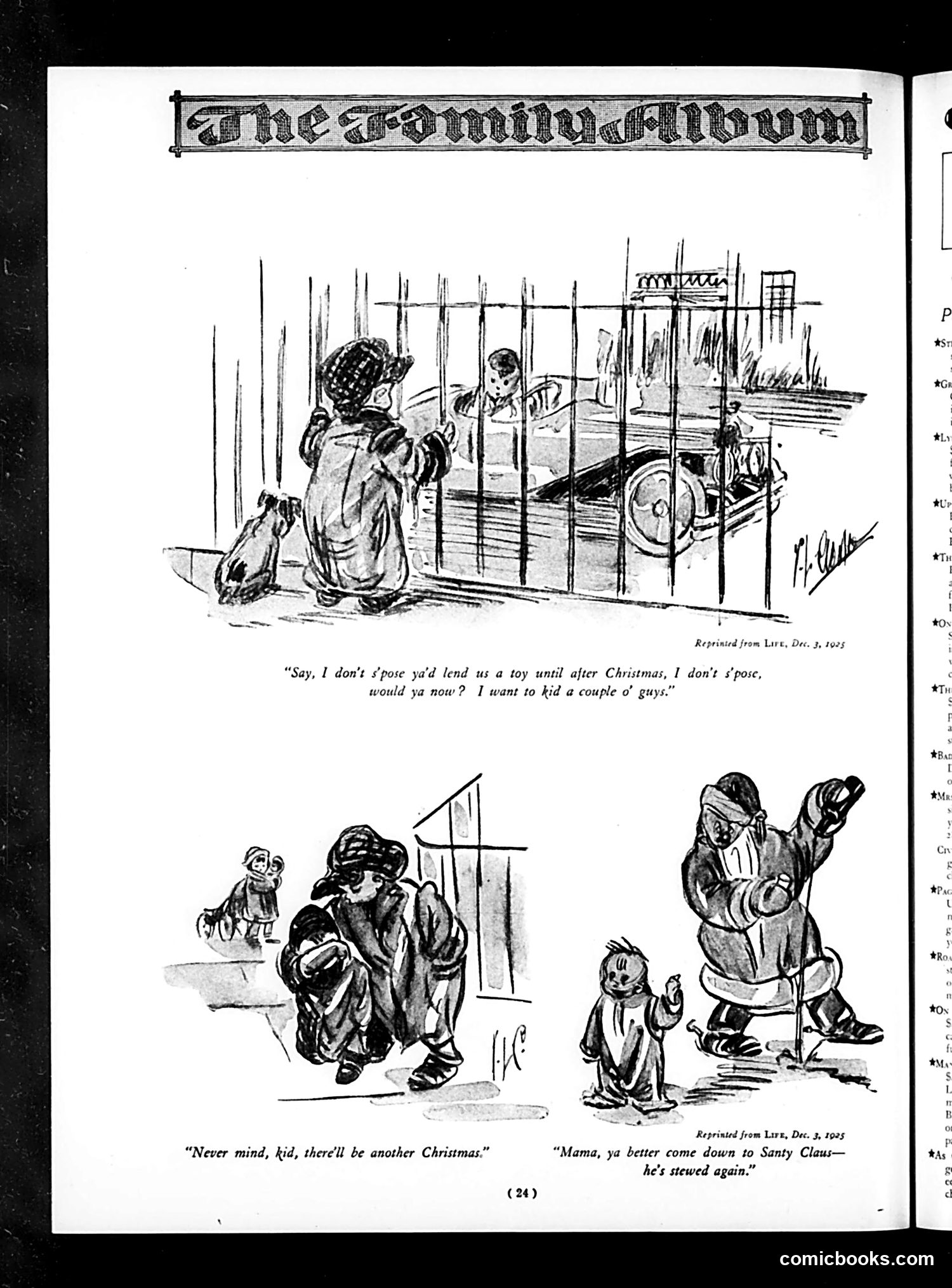
"The Family Album" - December 1925 This page contains three cartoon vignettes about Christmas-era poverty and hardship, reprinted from *Life* magazine (Dec. 3, 1925). The first shows a child asking to borrow a toy to deceive other children—suggesting desperate poverty where families couldn't afford gifts. The second depicts a parent telling a child "there'll be another Christmas," implying the current one won't happen due to financial strain. The third shows a child reporting that Santa Claus is drunk ("stewed"), a dark joke about holiday despair and parental alcoholism during the Depression era. Together, these cartoons satirize the gap between Christmas's idealized image and the reality for working-class families facing economic hardship in 1920s America. The humor is grim, exposing social inequality through children's innocent observations of adult desperation.
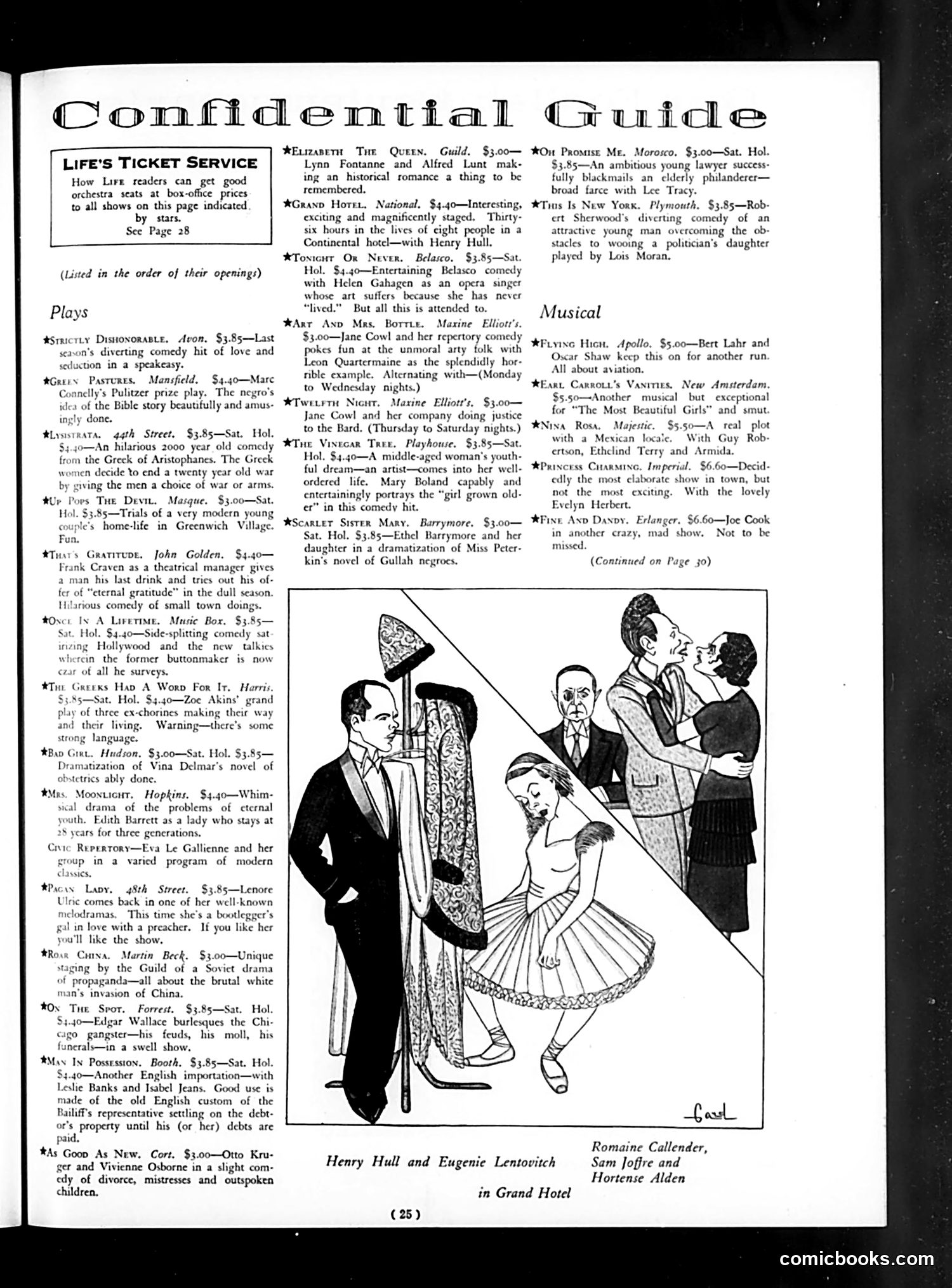
"Confidential Guide" Page Analysis This page is primarily a theater listing and review guide for Life magazine readers, not a political cartoon. The single illustration depicts three figures from the play "Grand Hotel": Henry Hull and Eugenie Leontovitch (identifiable from the caption) with actress Hortense Alden in a ballet pose. The page's function is utilitarian—it catalogs Broadway shows with ticket prices, brief plot descriptions, and star ratings (asterisks) indicating which venues offer Life readers discounted orchestra seats through the magazine's ticket service (details on page 28). The "Confidential" title playfully suggests inside information about theater offerings. Notable cultural references include Mae West, Lenore Ulric, and Jane Cowl as prominent performers; several shows address contemporary themes (talkies/Hollywood, divorce, Soviet propaganda drama). The tone is enthusiastically promotional rather than satirical—this is entertainment journalism, not political commentary.
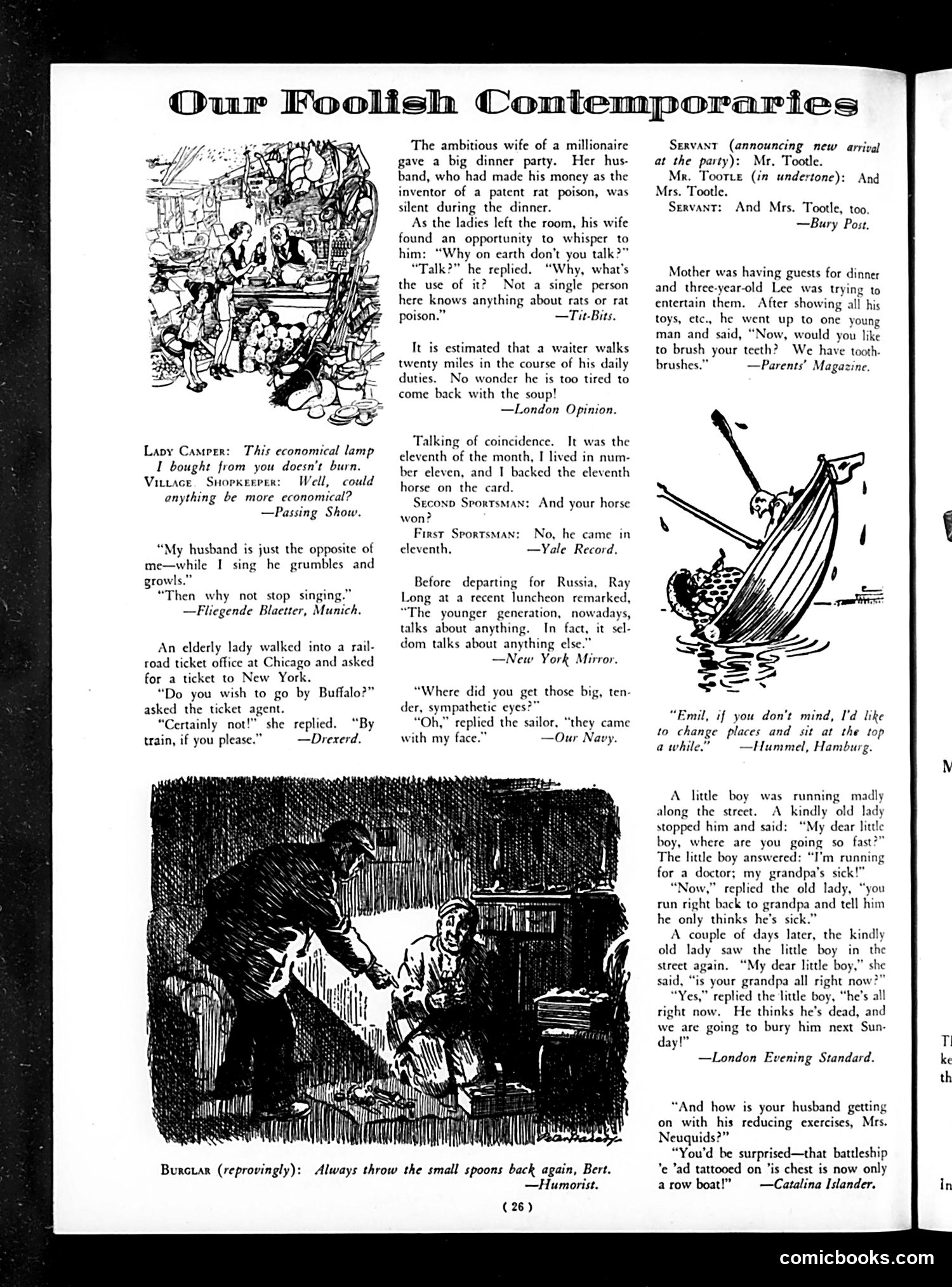
Our Foolish Contemporaries: Page Explanation This is a collection of brief jokes and anecdotes reprinted from various international publications—a common Life magazine feature mocking human folly across cultures. The humor relies on wordplay, logical absurdities, and social observation: - A shop owner's "economical lamp" that doesn't burn - A woman misunderstanding "by Buffalo" as a transportation method rather than a route - A millionaire rat-poison inventor unable to converse because guests know nothing about his product - A tired waiter too exhausted to deliver soup - A gambler experiencing false pattern-recognition (backing horse #11 on the 11th) - A child offering a guest a toothbrush as entertainment - A boy's grandfather "thinking" himself sick, then dead The accompanying illustrations show domestic and working-class scenes. These jokes target vanity, class pretension, misunderstandings, and the gap between self-perception and reality—typical satirical fare for early 20th-century humor magazines aimed at educated readers.
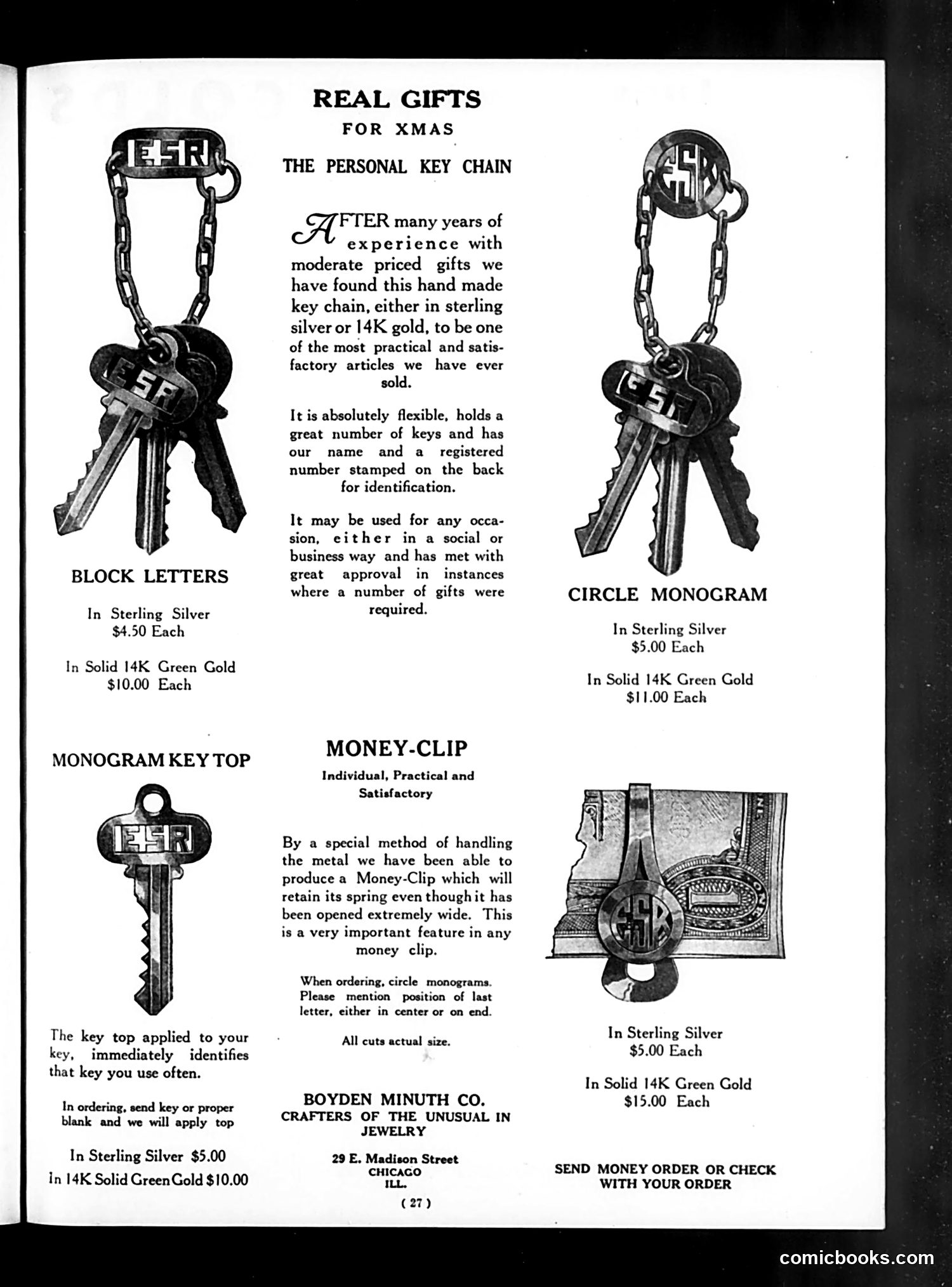
This is a straightforward advertisement, not a cartoon or satire. It's a catalog page from Boyden Minuth Co., a Chicago jewelry firm, promoting Christmas gift items: personalized key chains, monogrammed key tops, and money clips in sterling silver and 14K gold. The "unusual" angle is the emphasis on personalization—monograms, registered identification numbers, and custom engraving—which presumably made these practical items feel more special and gift-worthy for the era. The copywriting stresses durability and versatility ("any occasion, either in a social or business way"). The prices range from $4.50 to $15, suggesting these were mid-range luxury gifts. There is no political content, satire, or caricature—this is simply period advertising showcasing jewelry products aimed at gift-buyers during the Christmas season.
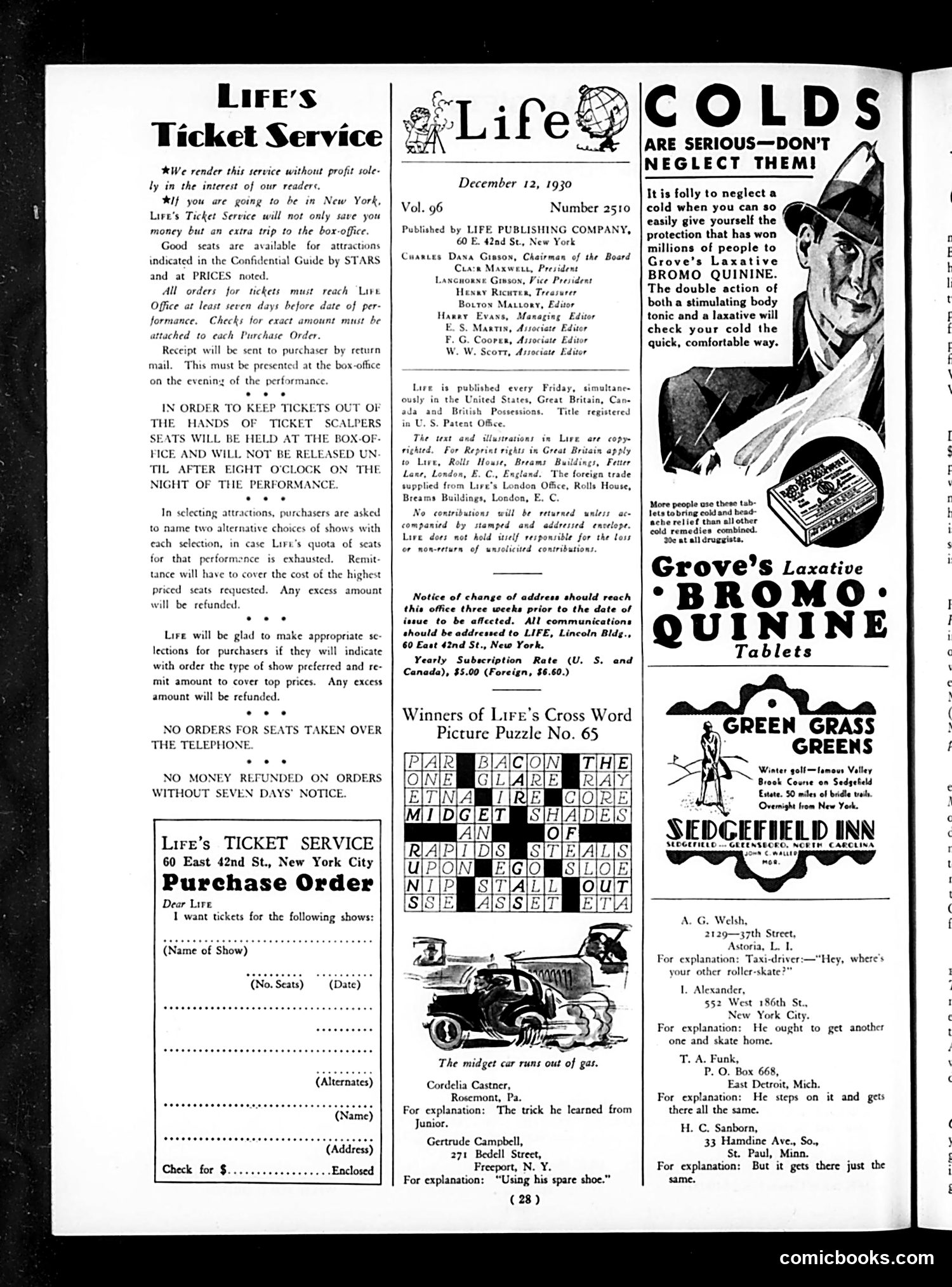
Life Magazine Page Analysis (December 12, 1930) This page is primarily administrative and advertising content rather than satirical cartoons. It contains: 1. Life's Ticket Service - practical instructions for readers to purchase Broadway/theatrical tickets through the magazine, with specific rules about advance notice and scalper prevention. 2. Advertisement for Grove's Laxative Bromo Quinine - a cold remedy marketed with typical 1930s medical claims, emphasizing it as a "body tonic" with dual action. 3. Small cartoon showing "The midget car runs out of gas" - likely a simple visual pun or joke from a crossword puzzle contest. 4. Other minor ads for hotels and services. The page reflects 1930 consumer culture and Life magazine's role as both satirical publication and practical lifestyle guide. The medical advertising shows pre-FDA regulation standards—modern readers would note the dubious health claims made casually for what appears to be a laxative-based product.
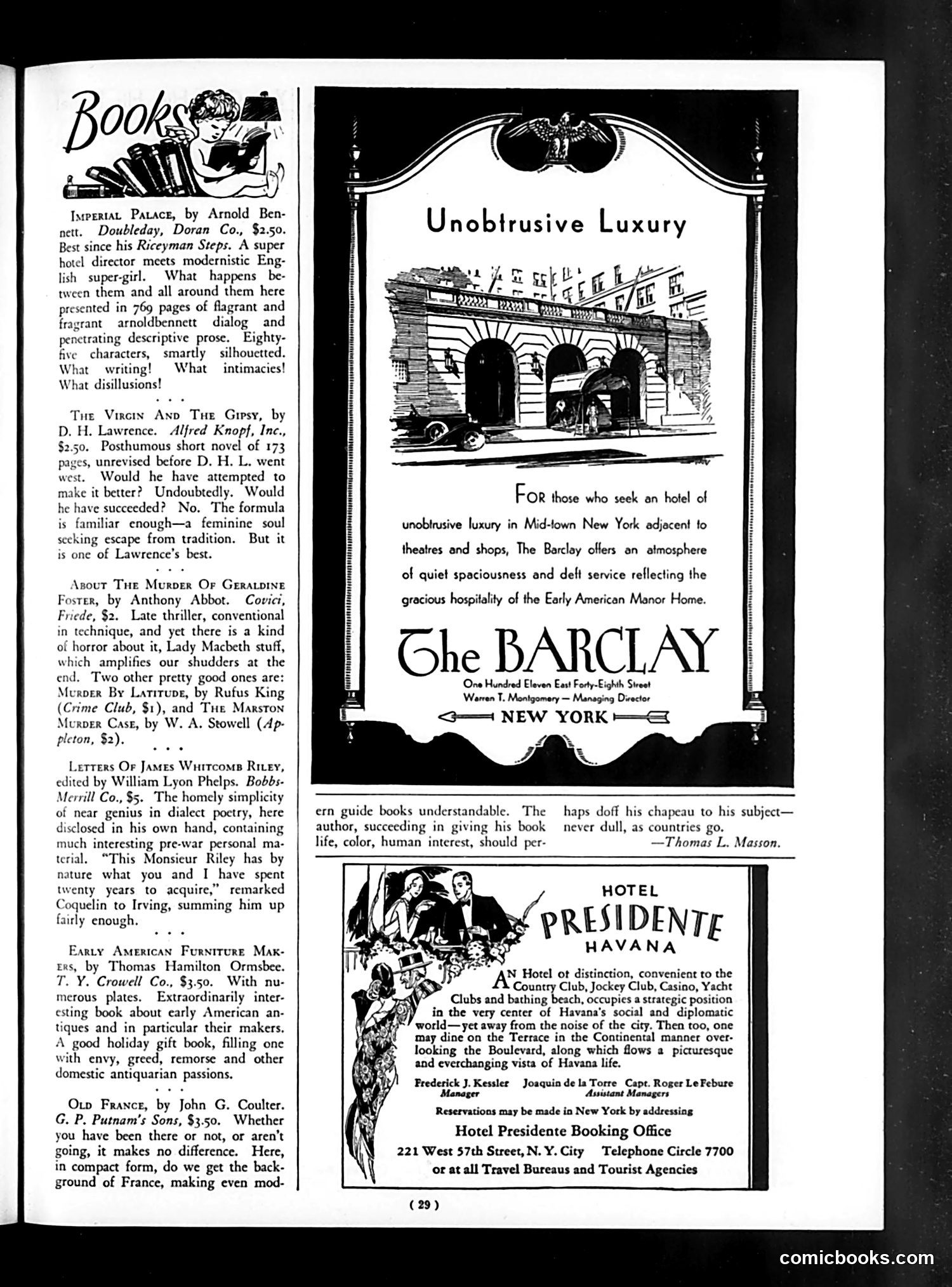
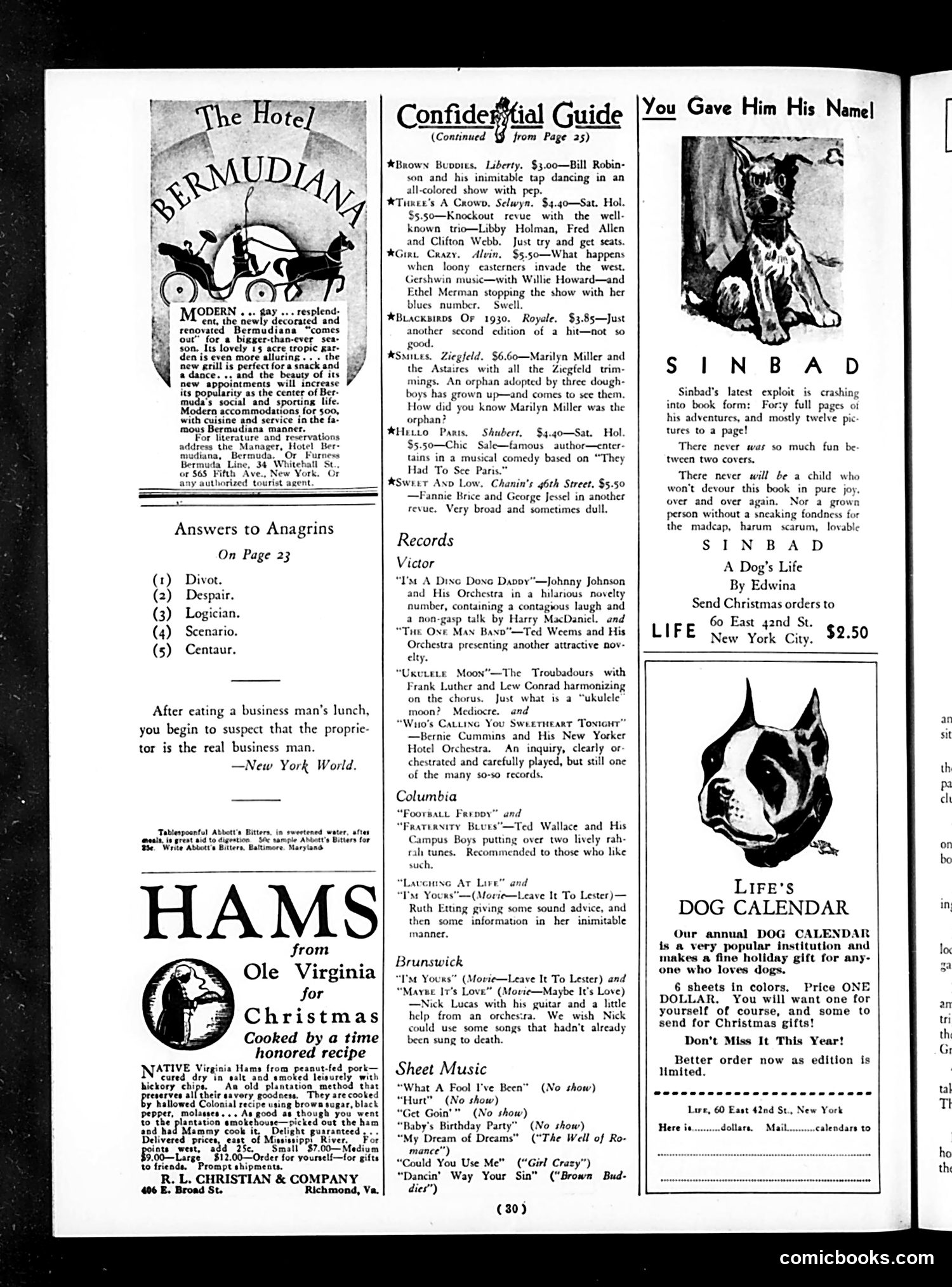
What This Page Means to Modern Readers This is primarily an entertainment and advertising page from Life magazine, likely from 1929-1930 (based on show titles and record releases). The page contains: 1. Hotel advertisement for Bermudiana resort in Bermuda, promoting its tropical gardens and modern amenities 2. "Confidential Guide" — theater reviews of Broadway shows featuring performers like Ethel Merman, Fred Allen, and the Astaire siblings, indicating what was popular entertainment 3. Record reviews from Victor, Columbia, and Brunswick labels, critiquing novelty songs and dance records—this was the era before radio dominated, when people bought recorded music 4. Ham advertisement from Virginia — a luxury Christmas gift item marketed as "authentically colonial" The social context: This reflects 1920s-30s consumer culture, when magazines mixed editorial content with luxury advertising, entertainment was live theater and recorded music, and products like cured hams were premium gifts. The "Confidential Guide" mock-seriously reviews shows as insider tips.
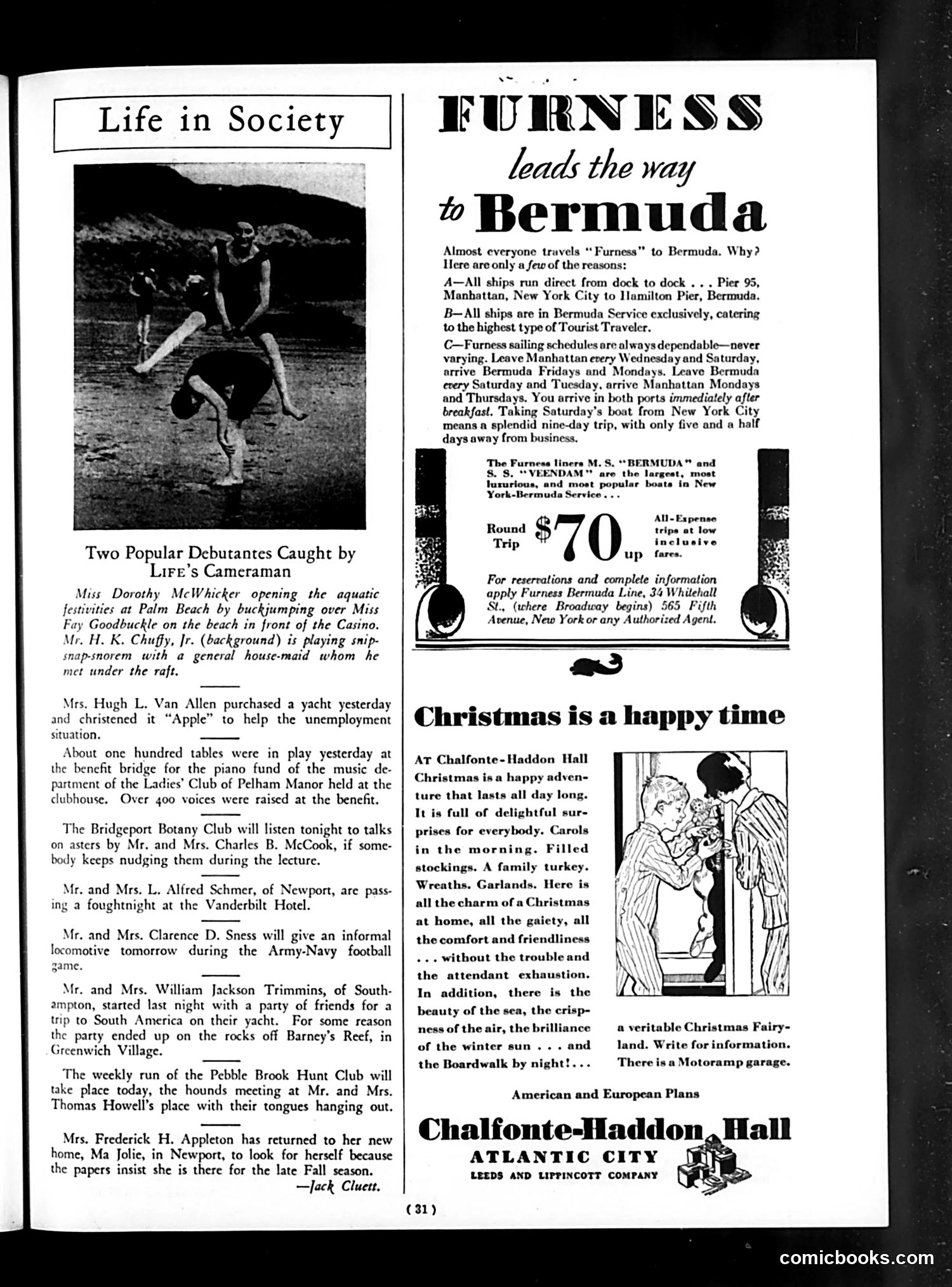
Life Magazine Social Satire Page This is primarily a society gossip column with satirical humor rather than political cartoons. The "Life in Society" section mocks wealthy upper-class activities through absurdist fake news items: The satire targets: - Conspicuous consumption (Mrs. Van Allen buying a yacht named "Apple" to address unemployment—a laughably inadequate gesture) - Social pretension (detailed reports of bridge tournaments, club lectures, yacht parties) - Absurdist humor (a couple ending their South America yacht trip "on the rocks off Barney's Reef, in Greenwich Village"—implying they crashed in Manhattan; a "locomotive" party during a football game) - Upper-class obliviousness (Mrs. Appleton returning to her Newport home because "papers insist she is there") The accompanying photograph of debutantes is captioned with mock-serious descriptions of their activities ("buckjumping"). The rest of the page is advertising for Furness shipping lines to Bermuda and Chalfonte-Haddon Hall resort in Atlantic City—typical 1920s-30s leisure travel marketing. The humor relies on readers' familiarity with society page conventions, which it gently ridicules.
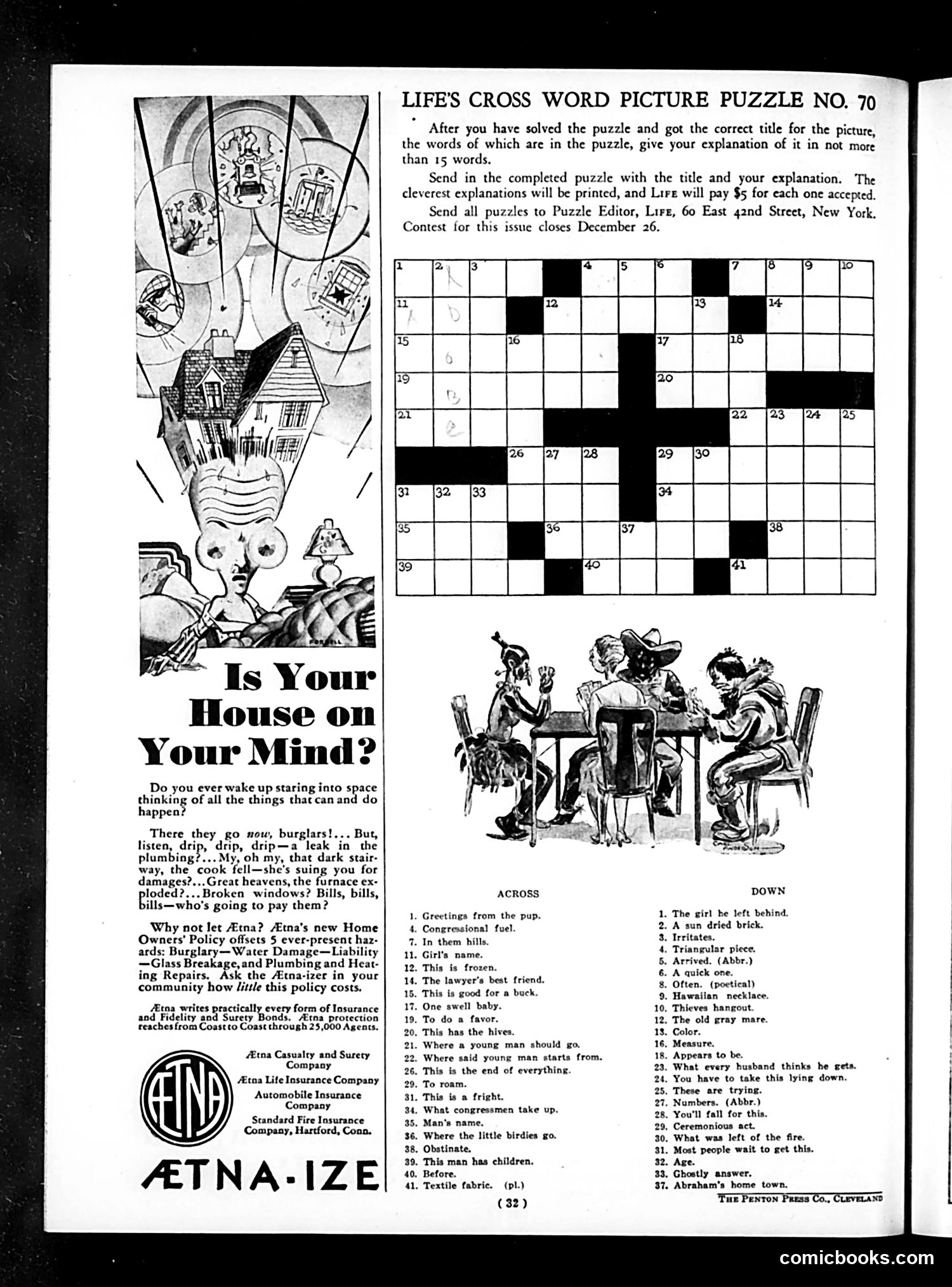
Life Magazine Puzzle Page Analysis This page features Life's crossword picture puzzle No. 70, a reader-participation contest offering $5 payment for clever explanations. The puzzle's image (upper left) appears to show a surreal, worried householder's mind—a visual representation of domestic anxieties. The page is primarily advertising for Ætna Insurance, specifically their new "Home Owners' Policy." The advertisement exploits anxiety about household disasters: burglary, water damage, fires, liability, broken plumbing, fallen servants suing homeowners, and unpaid bills. The tagline "Is Your House on Your Mind?" directly connects the puzzle's anxiety theme to the sales pitch. Below the puzzle are clues and an illustration of people at a dining table (suggesting the domestic sphere being insured). This is early 20th-century marketing psychology—using existential worry about homeownership to sell financial protection. The puzzle gamifies anxiety while normalizing insurance as necessary peace-of-mind.
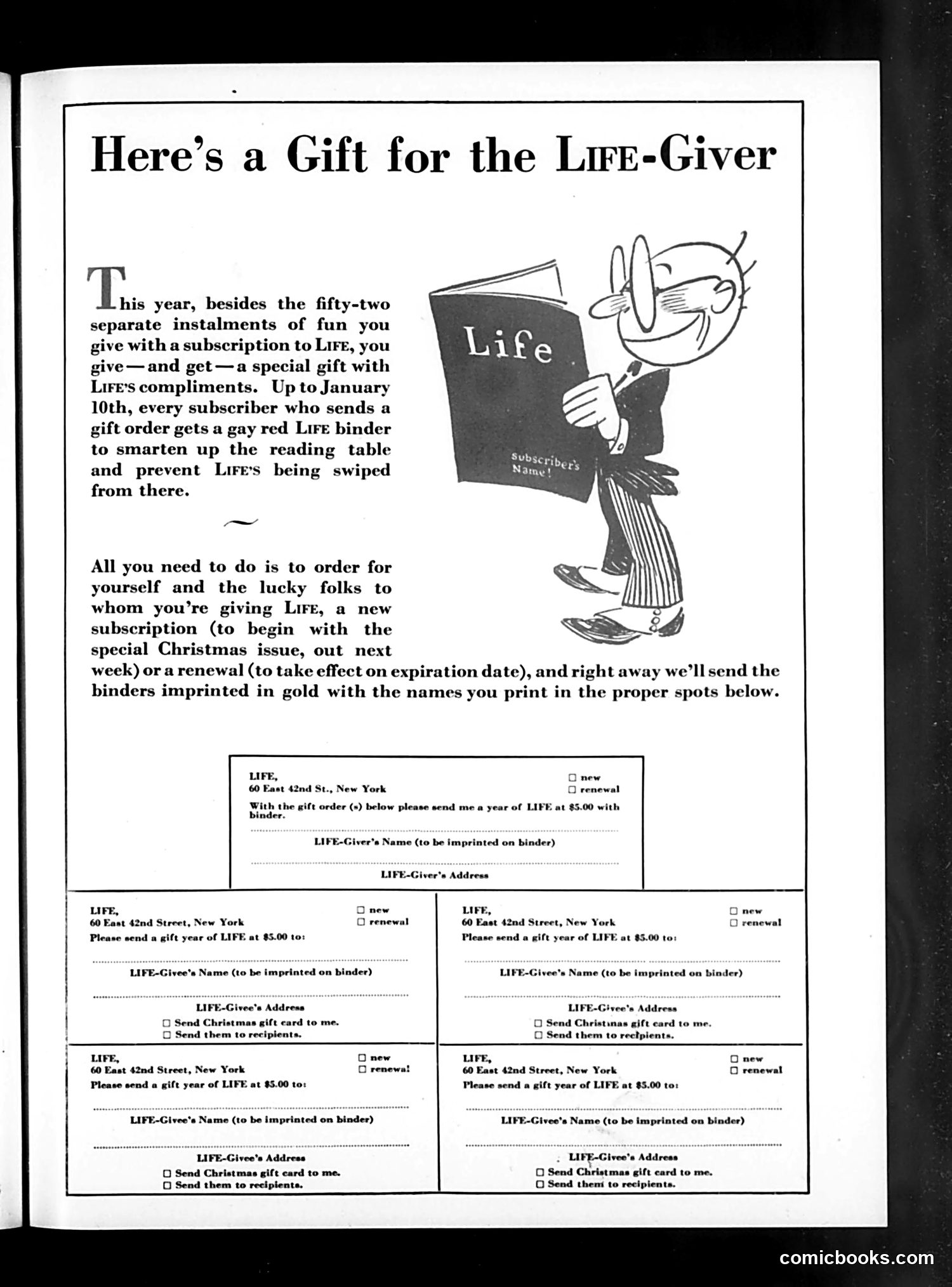
Life Magazine Subscription Gift Promotion This is an advertisement for Life magazine subscriptions as Christmas gifts. The page promotes a special offer: anyone purchasing a new subscription or renewal before January 10th receives a complimentary red binder imprinted in gold with the recipient's name. The cartoon shows an enthusiastic figure holding a Life magazine, illustrating the appeal of giving the magazine as a gift. The accompanying text emphasizes that subscribers receive 52 separate issues annually, positioning the magazine as substantial entertainment value. The multiple order forms below allow readers to purchase gift subscriptions for multiple recipients simultaneously. The phrase "Life-Giver" is a playful pun on the magazine's name, positioning gift-givers as generous benefactors. This is essentially a marketing campaign targeting holiday gift-givers, using the practical appeal of a branded binder to incentivize subscriptions during the peak gift-giving season.
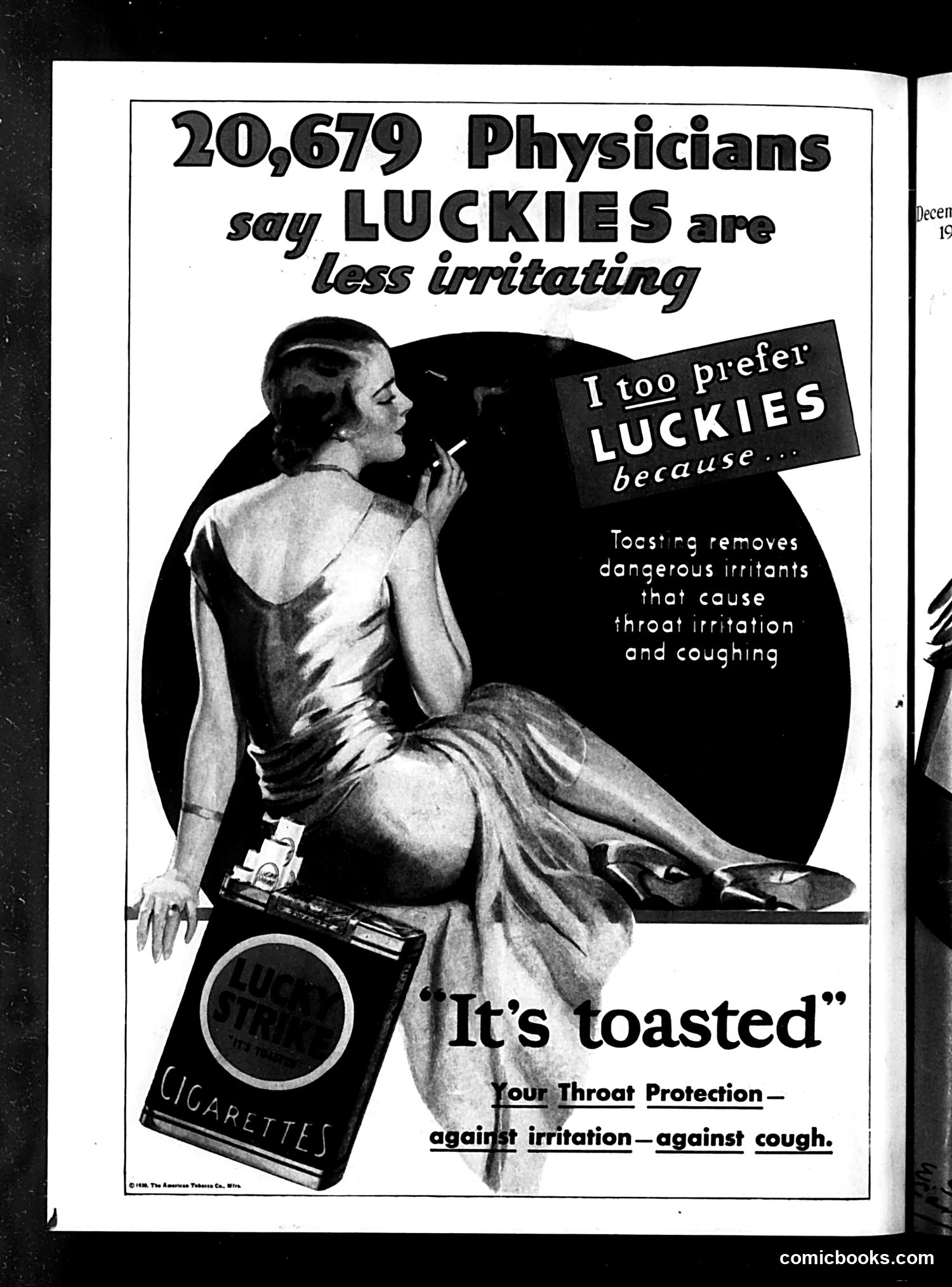
Luckies Cigarette Advertisement This is a vintage cigarette advertisement for Lucky Strike brand, not political satire. The ad claims that 20,679 physicians endorse toasted cigarettes as "less irritating" to the throat. It features a glamorous woman smoking, with the tagline "It's toasted"—Lucky Strike's marketing claim that their toasting process removed harmful irritants. This represents the pre-1950s era when cigarette companies openly advertised health benefits and cited physicians as endorsers. Such claims would later be revealed as false and became illegal. The ad reflects the period's widespread ignorance about smoking's actual dangers and the tobacco industry's deceptive marketing practices that persisted until regulatory crackdowns.