life
Life — January 30, 1931
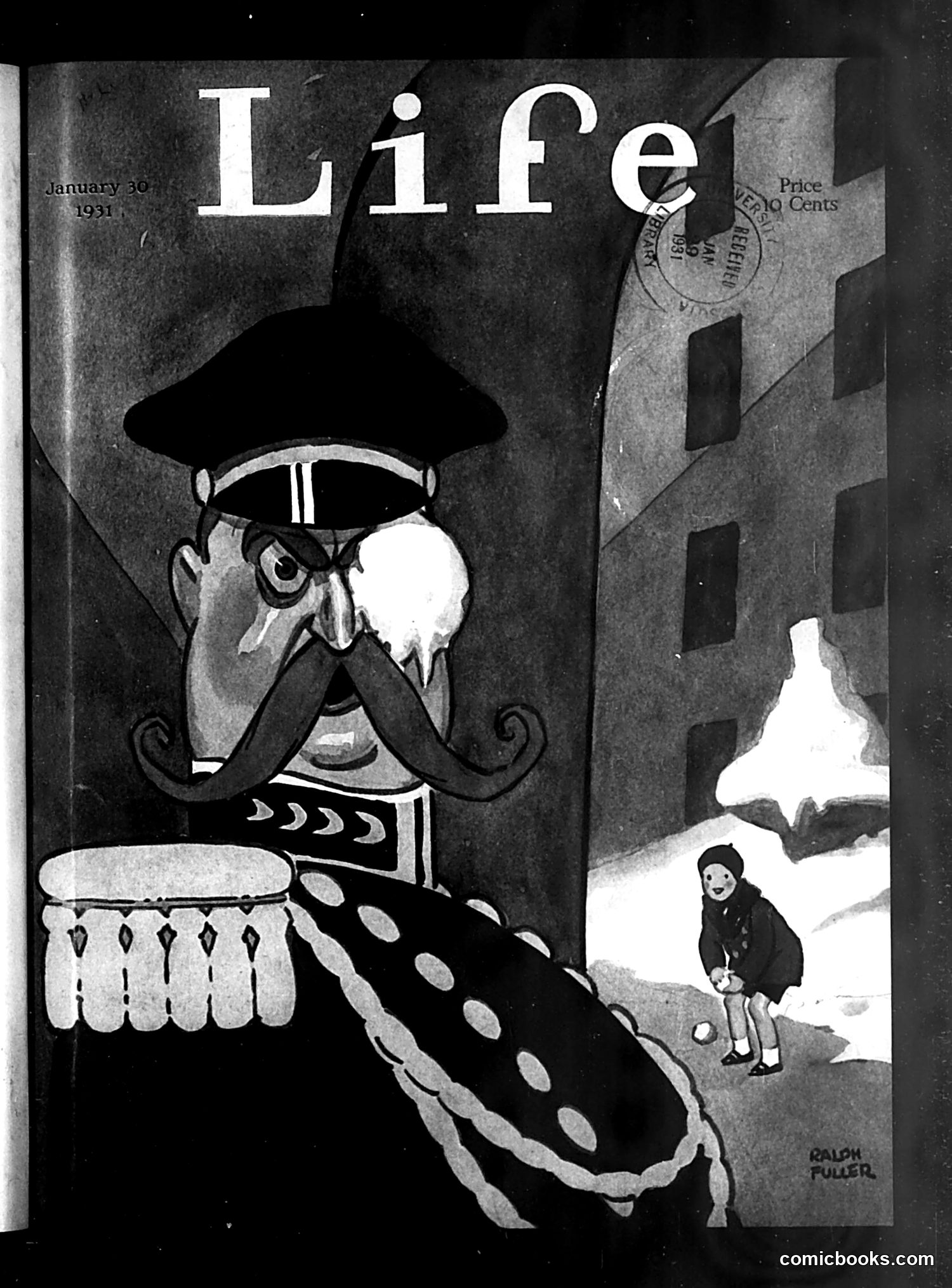
Life Magazine Cover Analysis (January 30, 1931) This cover depicts a menacing military or political figure with an exaggerated villainous appearance—distinctive mustache, monocle, military uniform with ornate decorations, and a threatening pose. A small child huddles outside in the snow, appearing frightened or desperate. The satirical image appears to comment on authoritarian threat and its impact on civilians, likely referencing European fascism or militarism emerging in the early 1930s. The contrast between the grotesquely caricatured authority figure and the vulnerable child emphasizes the human cost of aggressive regimes. The artist's signature reads "Ralph Fuller." Without additional context from the magazine's contents, the specific political target remains unclear, though the date (1931) and aesthetic suggest commentary on rising fascism.
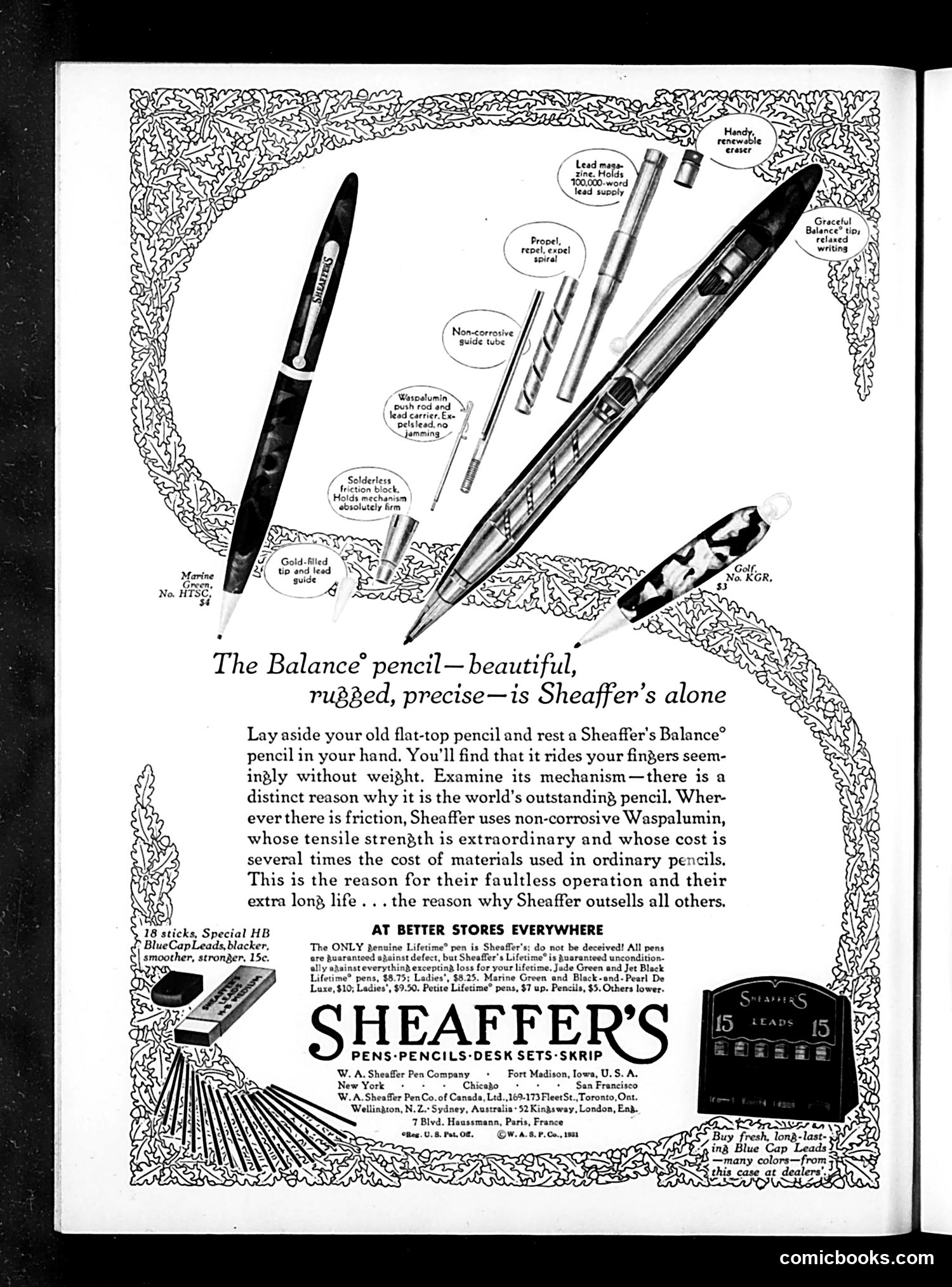
Analysis This is not a political cartoon or satirical content—it's a full-page advertisement for Sheaffer's Balance pencils, a premium writing instrument brand. The page displays various pencil designs with technical annotations highlighting features like "Handy, retractable eraser," "Lead-proof zinc holds 16,000 words," and "Non-corrosive guide tube." The ad copy emphasizes the pencil's superior construction using "Waspalumim" (an exotic material) and claims it "outsells all others." The decorative border and vintage typography are typical of early-to-mid 20th century advertising aesthetics. There is no satire or political commentary here—this is straightforward product marketing aimed at consumers through Life magazine's readership.
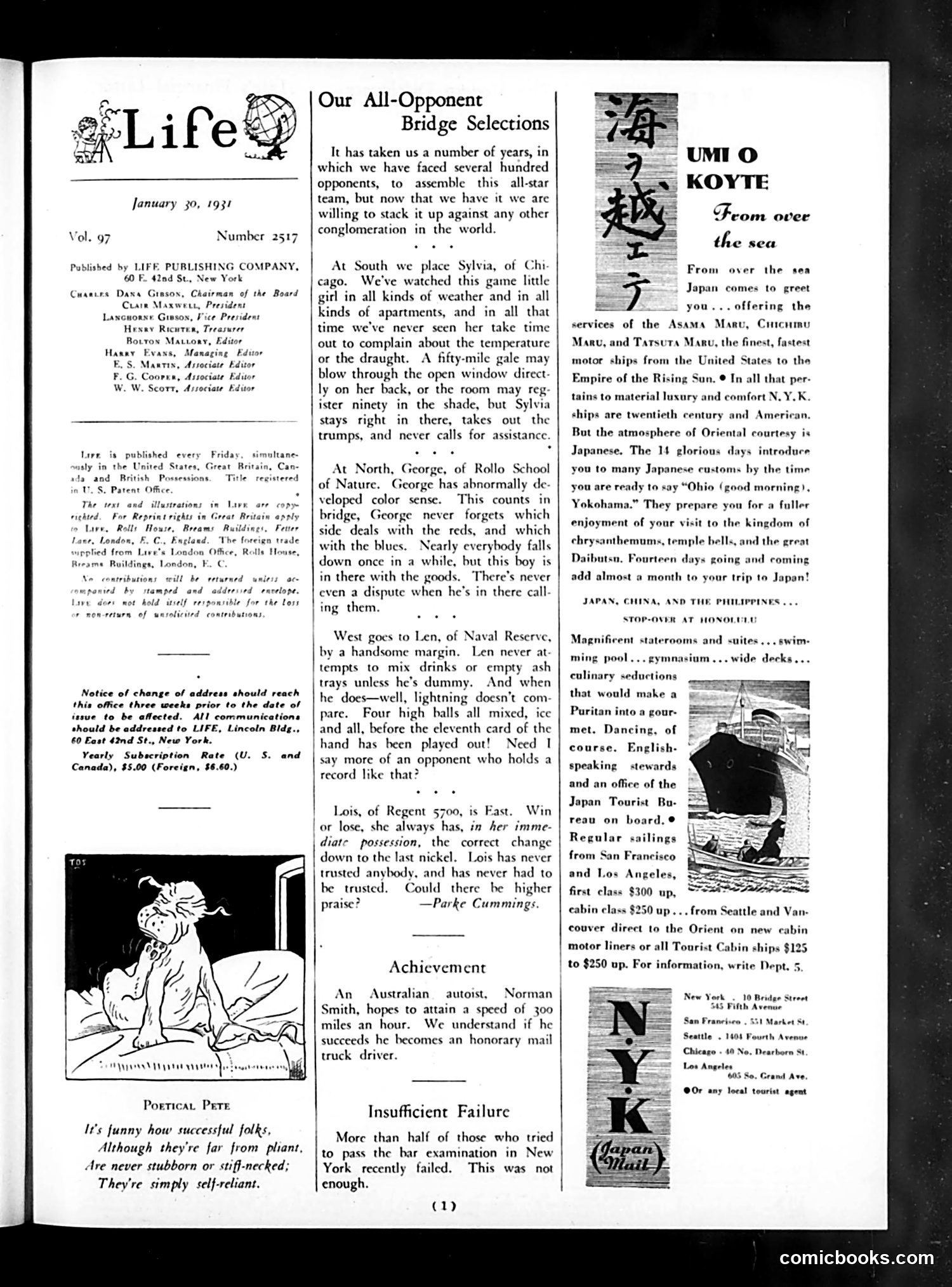
"Poetical Pete" Cartoon Analysis This single-panel cartoon depicts a disheveled character labeled "Poetical Pete" sitting in a dejected pose. The accompanying verse reads: "It's funny how successful folks, / Although they're far from plant, / Are never stubborn or stiff-necked; / They're simply self-reliant." The satire appears to mock successful people's claims of self-reliance while Pete—presumably a struggling or failed individual—embodies the opposite: stubborn, stiff-necked, and unsuccessful. The humor lies in the ironic contrast: the verse suggests successful people achieve their status through flexibility and self-reliance, implying that Pete's failure stems from his rigidity and inability to adapt. This likely critiques either blind ambition or the rationalization by the wealthy about their own success.
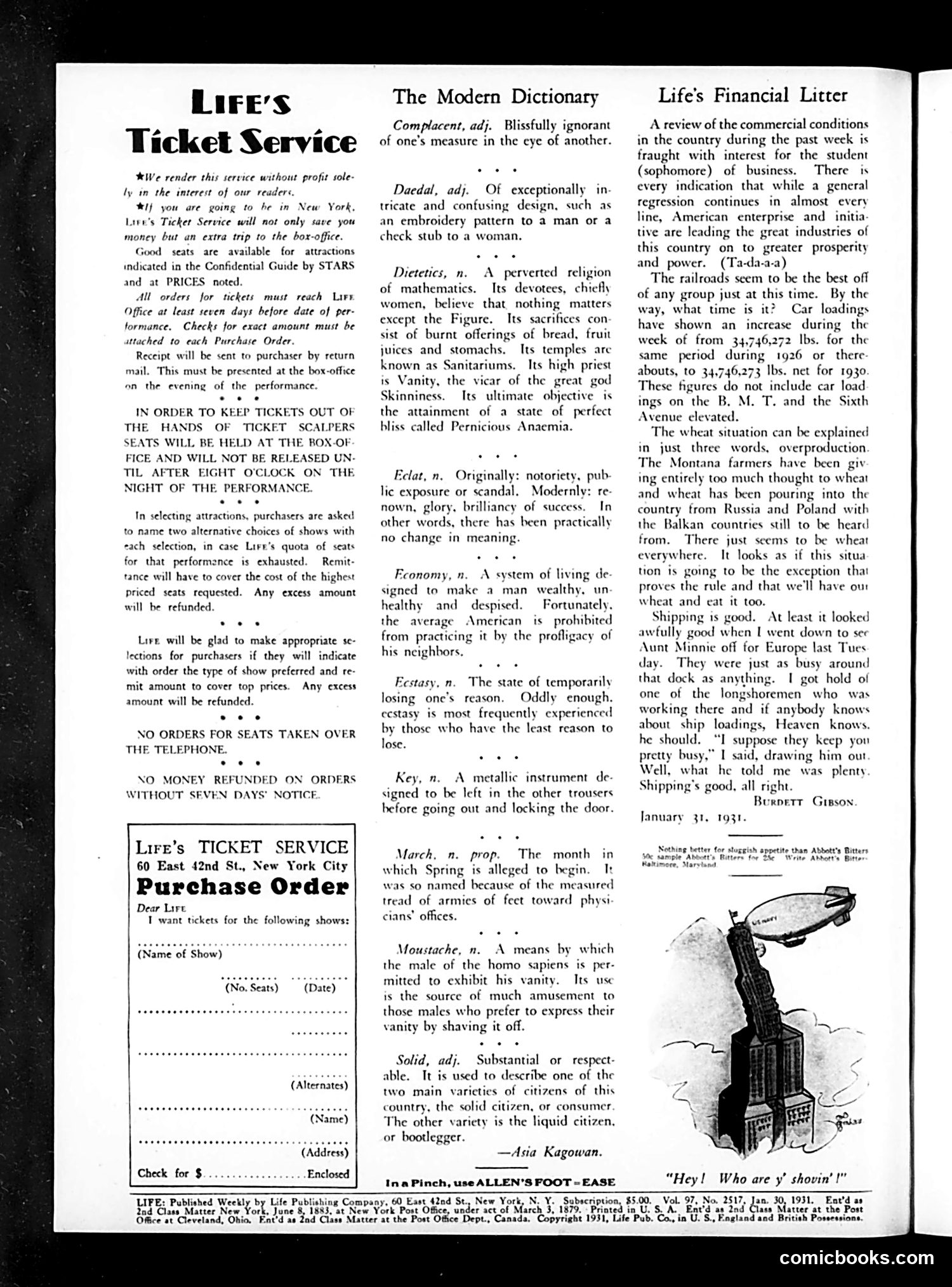
Analysis of Life Magazine Page This page is primarily administrative and advertising content, not political satire. It contains: 1. Life's Ticket Service — a booking service advertisement for theater tickets in New York City, with order forms and terms. 2. "The Modern Dictionary" — humorous definitions of words like "Complacent," "Daedal," "Dietetics," and "Economy." These are gentle satire mocking contemporary social pretensions and behaviors (prohibition, wheat shortages, American materialism). 3. "Life's Financial Litter" — commentary on business conditions, railroads, and the wheat situation, likely referencing agricultural problems of the early 1930s. 4. One cartoon (bottom right): Shows a figure on a tall structure saying "Hey! Who are y' showin' it?" — the subject and satire target are unclear from the image alone. The page reflects *Life* magazine's mix of theater promotion, social commentary, and light humor typical of the era.
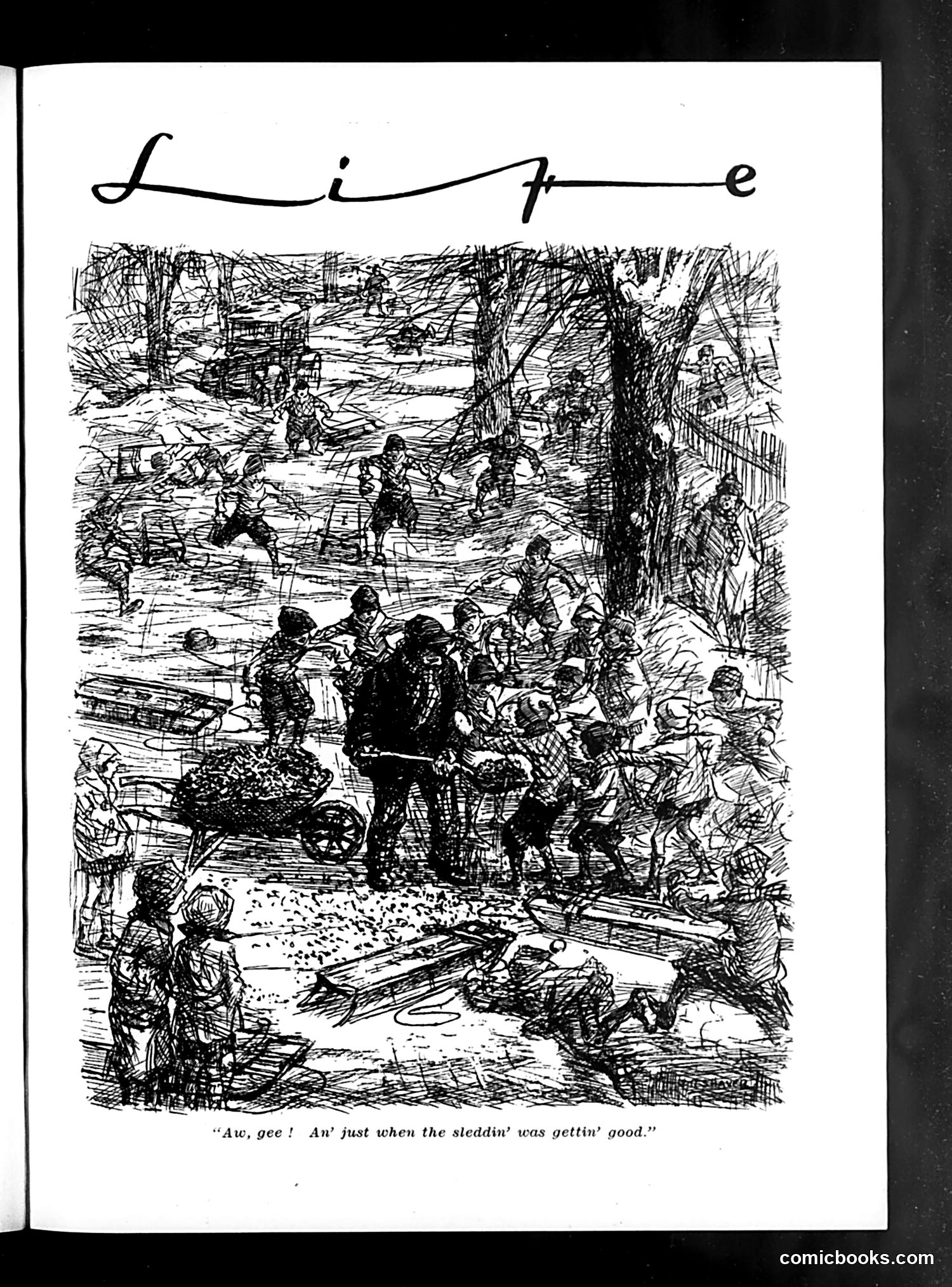
"Life" Cartoon Analysis This is a winter scene depicting children sledding. The caption reads: "Aw, gee! An' just when the sleddin' was gettin' good." The humor appears to be situational rather than political—it shows a moment of disruption during childhood play. A central adult figure (possibly a parent or authority figure) has interrupted the children's sledding activity, seemingly at the moment when conditions were becoming ideal for the sport. The sketch style is characteristic of early 20th-century American humor magazines. The joke relies on the universal experience of having fun interrupted by adult intervention—a relatable domestic scene rather than political satire. The children's disappointed reaction emphasizes the comedic timing of the interruption.
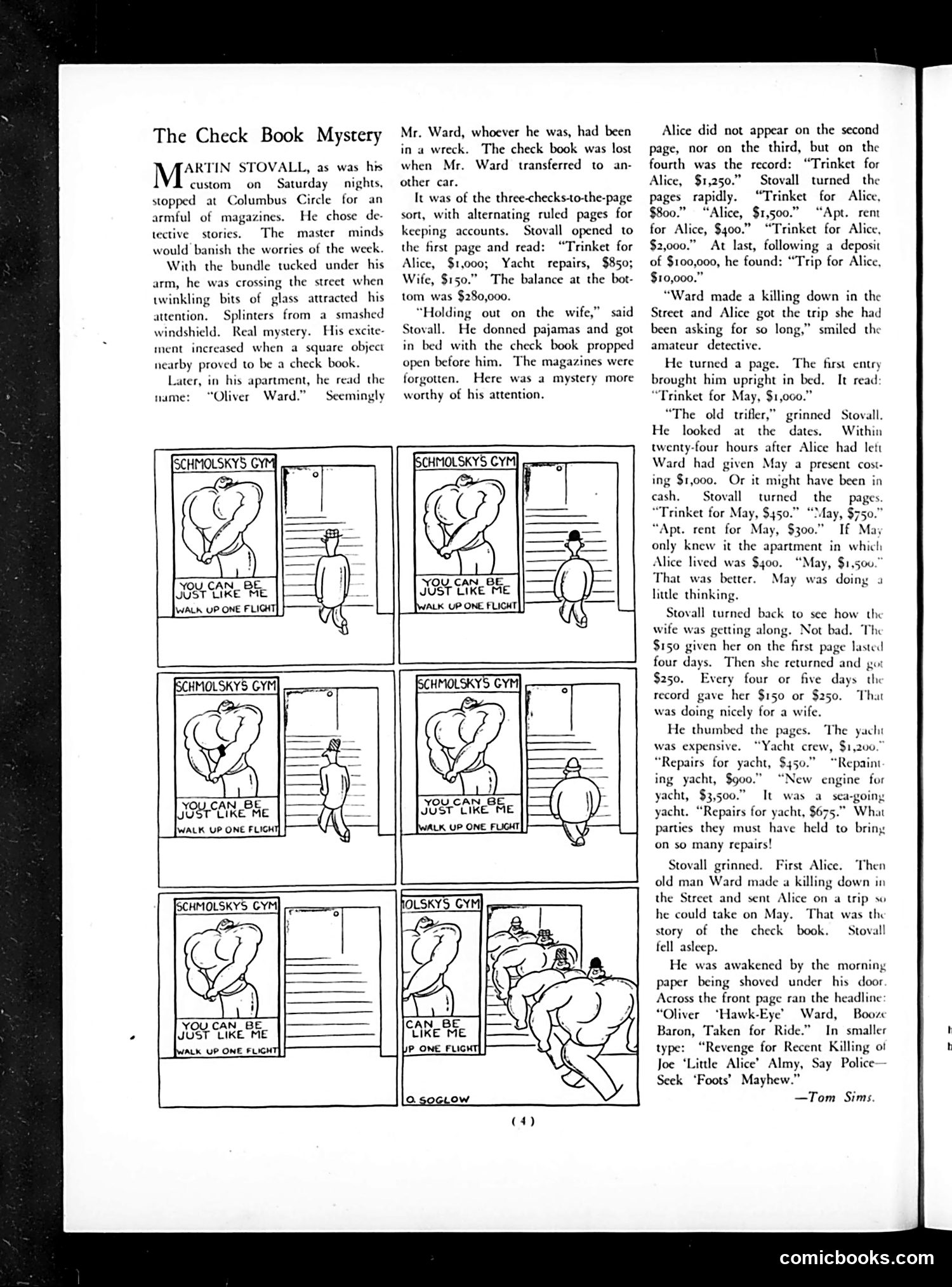
"The Check Book Mystery" by Tom Sims This is a humorous short story with accompanying comic strip illustrations. The narrative follows Martin Stovall, a detective, investigating a missing check book belonging to a man named Mr. Ward. The mystery centers on mysterious check entries: "Trinket for Alice" appears repeatedly with varying amounts ($1,000, $250, $1,500, etc.), suggesting Ward is maintaining a mistress or secret relationship. The comic strip shows a man at Schmolsky's Gym being told he can exercise "just like" someone else by "walking up one flight"—a joke about taking stairs instead of using the gym. The final panel reveals multiple people engaged in this activity, suggesting the gym's inadequate or humorous setup. The story's punchline involves discovering Alice's true identity and the reason for Ward's expenses.
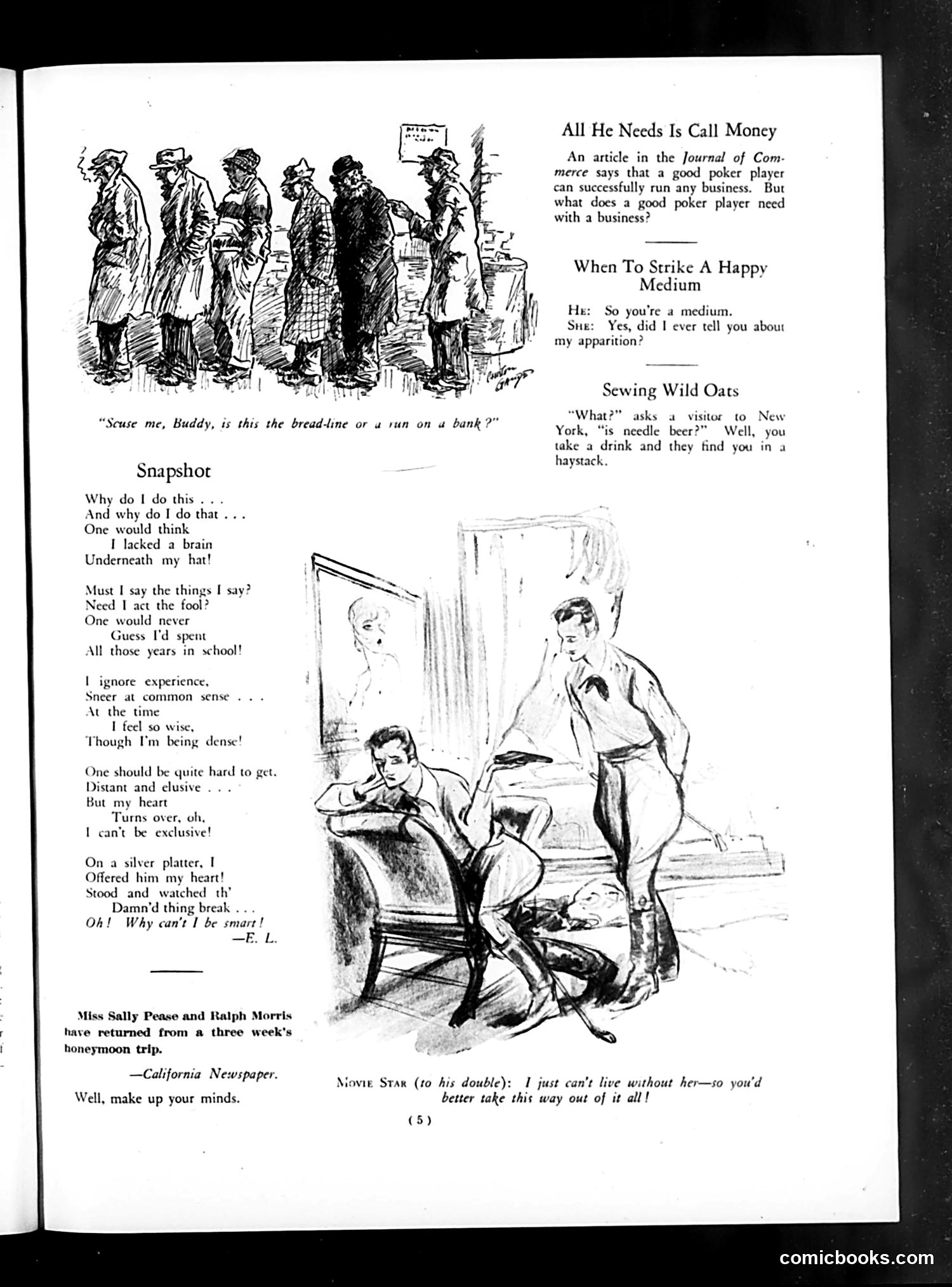
Analysis of Life Magazine Page This page contains several humorous pieces targeting early 20th-century social behaviors: "Snapshot" poem satirizes pretentious intellectuals who affect wisdom despite lacking genuine knowledge or experience—someone who "lacked a brain" but maintains an air of exclusivity and superiority. "All He Needs Is Call Money" jokes that poker skills supposedly transfer to business, questioning whether gambling ability translates to legitimate commerce. "When To Strike A Happy Medium" and "Sewing Wild Oats" are brief quips about courting and youthful indiscretion. The illustration depicts a movie star telling a man he "can't live without her," sarcastically suggesting he should end the relationship to avoid melodrama—poking fun at dramatic romantic entanglements and Hollywood excess. The cartoons collectively mock pretension, gambling culture, and romantic theatricality.
"Life Looks About" - Commentary Page Analysis This is an editorial/opinion page from *Life* magazine featuring social and political commentary rather than a cartoon. The illustration shows a cherub or cupid figure, traditionally associated with the magazine's masthead. The text discusses several contemporary issues: Pope Leo XIII's encyclical on marriage and divorce, concerns about the U.S. House of Representatives' effectiveness compared to the Senate, Paul Warburg's views on financial recovery and unemployment relief, and the Red Cross's charitable work. The pieces critique institutional structures—suggesting the House needs reform, questioning whether relief agencies properly address poverty and hunger, and debating the Pope's authority on moral versus economic matters. The tone is satirical, questioning whether existing institutions adequately serve public welfare during what appears to be a period of economic difficulty.
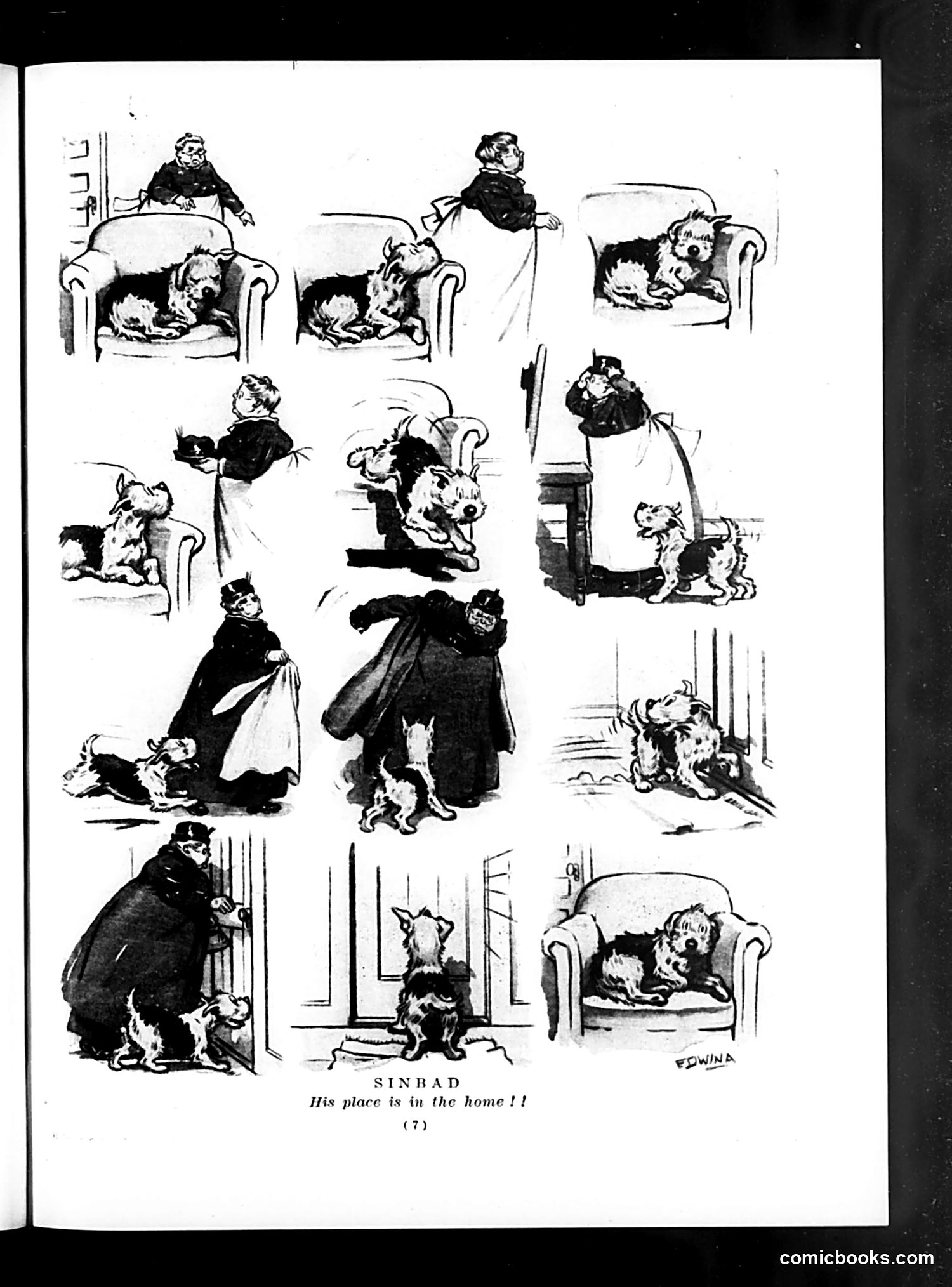
"Sinbad: His Place Is in the Home!!" This is a comic strip sequence showing a small, scruffy dog named Sinbad in various domestic situations with Victorian-era people. The satire appears to target the popular Sinbad tales—exotic adventure stories—by comically subverting them: rather than the legendary Sinbad undertaking grand voyages, this dog's "place" is firmly indoors with his human family. The humor works through contrast: each panel shows Sinbad integrated into ordinary home life—on furniture, with people indoors, being groomed or petted—emphasizing domesticity over adventure. The caption's emphatic double exclamation suggests ironic commentary, possibly mocking either overly-domesticated pets or societal expectations about "proper places" for creatures (or people). The strip appears to be a gentle, whimsical satire rather than overtly political.
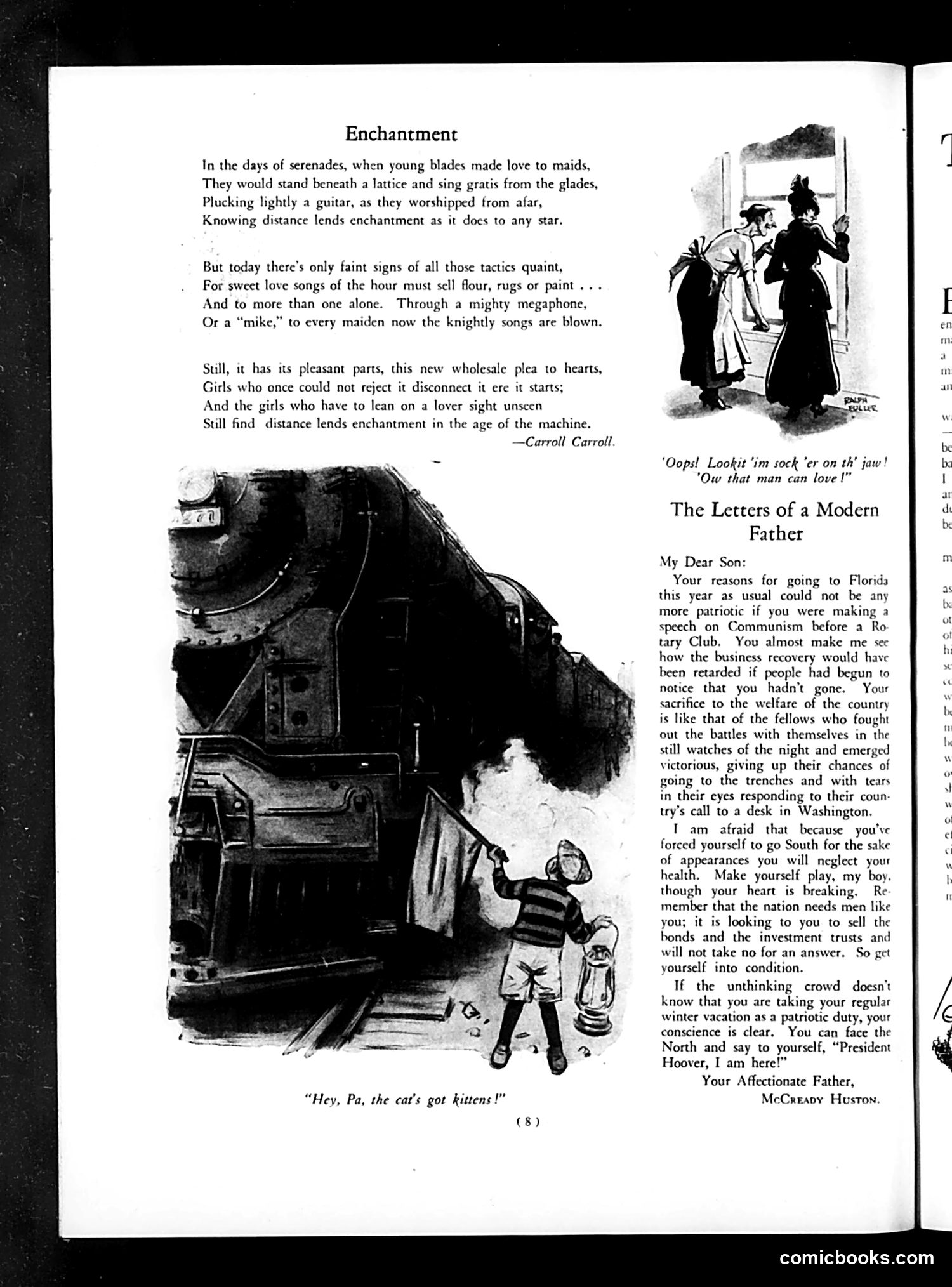
Analysis of Life Magazine Page This page contains two distinct pieces: "Enchantment" (poem): Carroll Carroll contrasts romantic serenades of earlier eras with modern commercialization—love songs now "sell flour, rugs or paint" via megaphones and radio ("mikes"). Yet he notes young couples still find romance through distance and technology. "The Letters of a Modern Father": McCready Huston writes to his son about going to Florida, criticizing him for prioritizing a vacation over patriotic duty during what appears to be an economic crisis (likely the Depression era). The father pressures his son to stay North, work, and help the nation recover, suggesting that taking leisure time is unpatriotic. The illustrations show a steam engine and children, and a couple at a window—visual reinforcements of the era's tension between old and new, duty and pleasure.
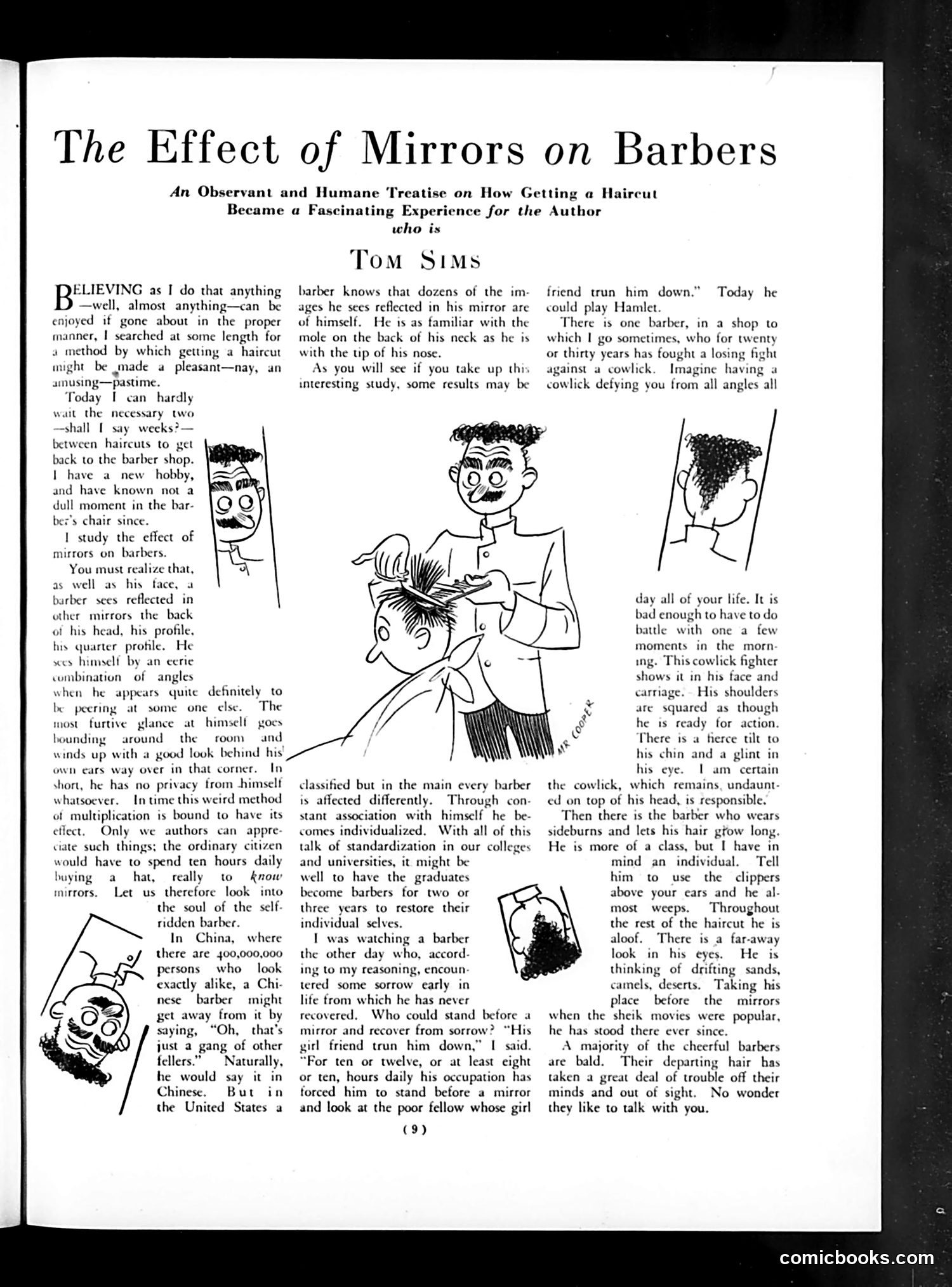
"The Effect of Mirrors on Barbers" by Tom Sims This humorous essay uses barber shops as a vehicle for social satire. Sims observes that barbers constantly see themselves reflected in mirrors—their own faces and profiles from multiple angles—which he suggests creates psychological effects. The accompanying cartoons illustrate barbers encountering their own reflections from different perspectives. The piece satirizes self-absorption and vanity while also commenting on the barber's profession itself. Sims mentions that barbers often appear melancholy or troubled, attributing this partly to their constant mirror exposure and partly to occupational hazards—hearing customers' sorrows daily without relief. The essay uses humorous exaggeration to explore how professional circumstances shape personality and demeanor.
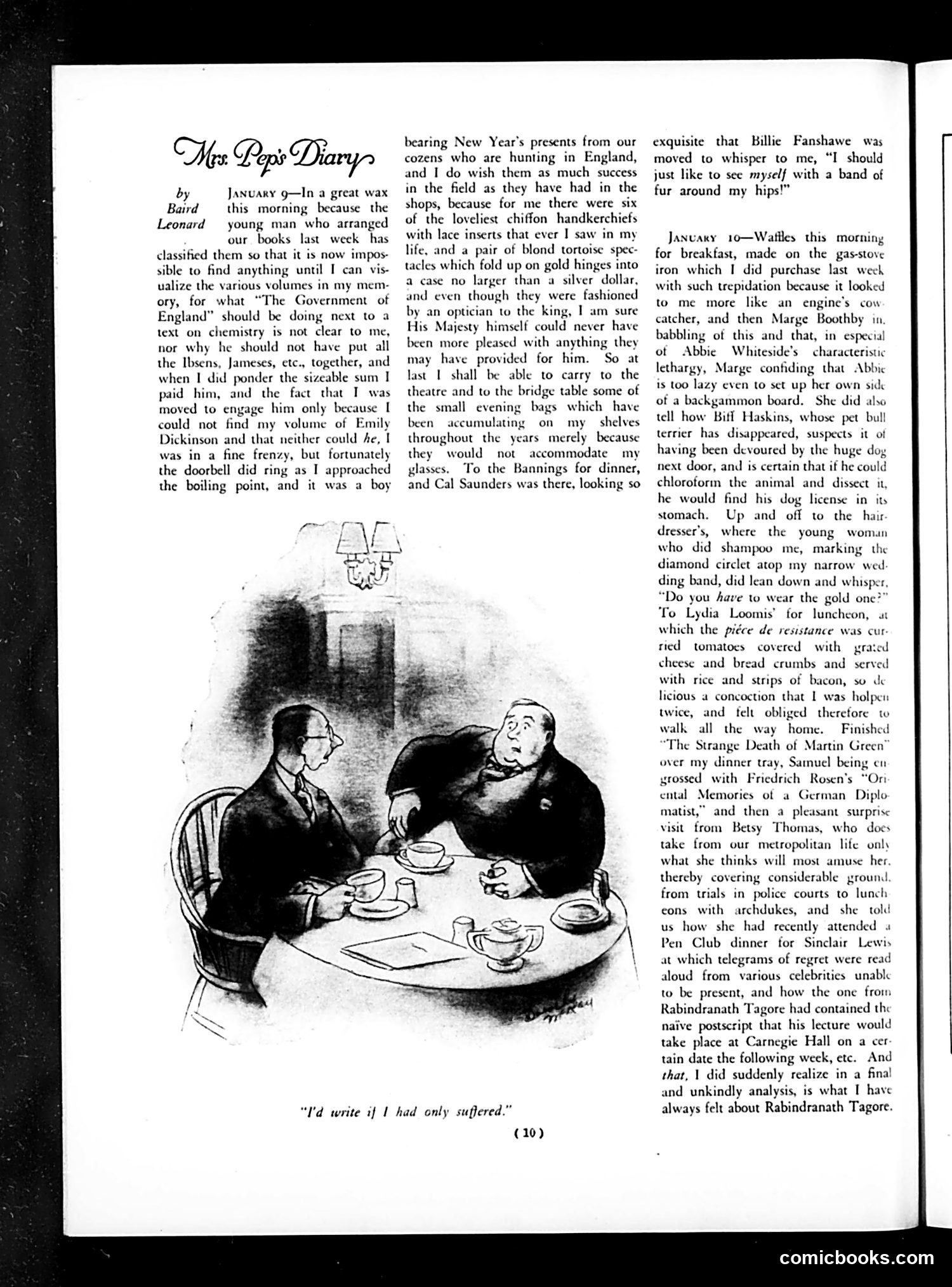
Analysis of "Mrs. Pep's Diary" Page This is a humorous diary entry by Baird Leonard describing social activities from early January. The accompanying illustration shows two men at tea—one thin and bespectacled, the other rotund—engaged in conversation, with the caption "I'd write if I had only suffered." The cartoon satirizes literary pretension: the portly figure appears to be complaining that he lacks sufficient personal hardship to write about, implying that suffering and drama are prerequisites for becoming a published author. This mocks both self-important amateur writers and the Romantic literary tradition celebrating adversity. The diary itself is light social satire, chronicling Pep's activities—shopping, dinner parties, and encounters with friends—depicting upper-middle-class leisure life, with gentle mockery of social affectation and gossip.
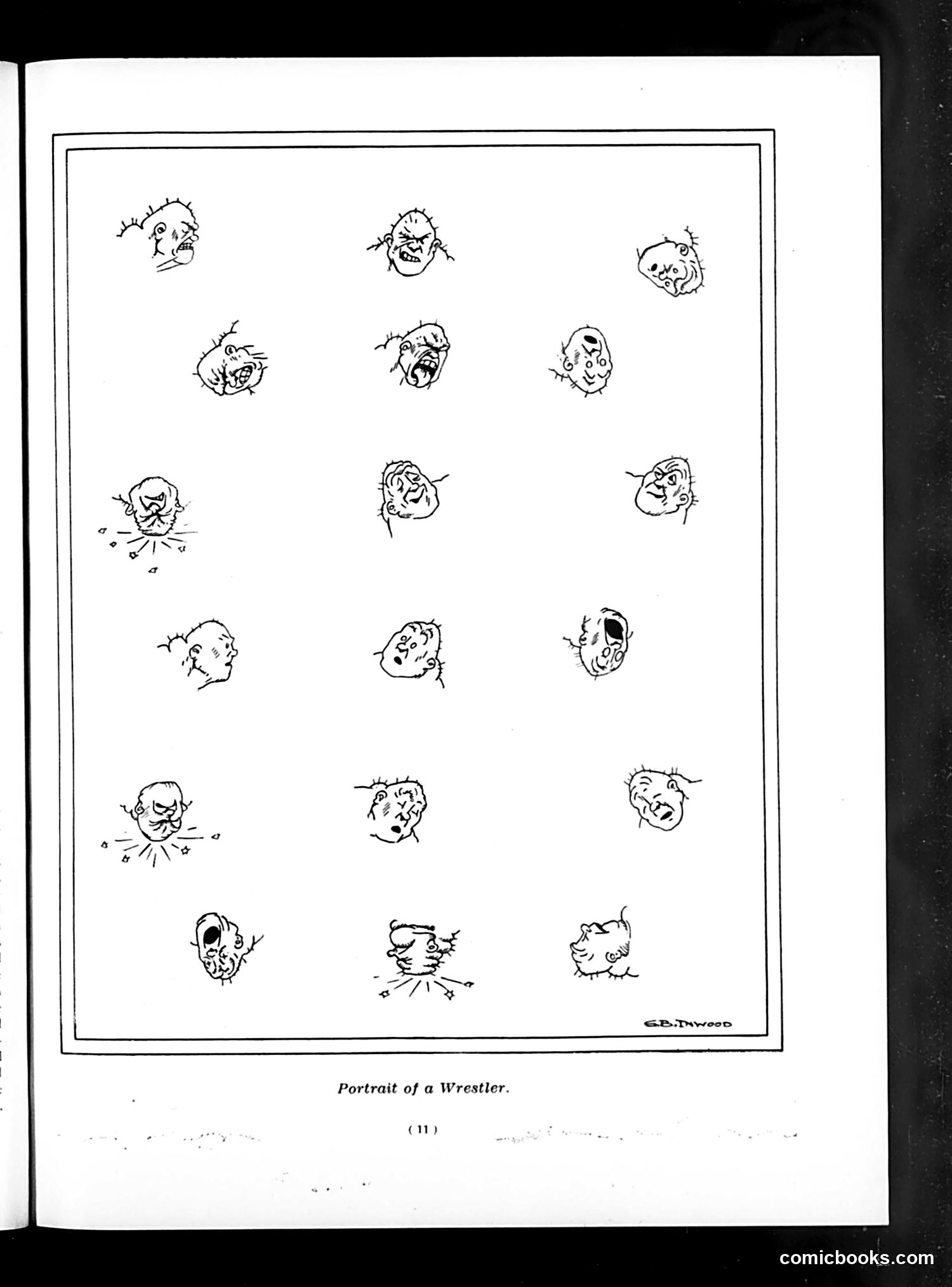
"Portrait of a Wrestler" This satirical cartoon displays approximately 18 caricatured faces showing various expressions of rage, pain, grimacing, and aggression—all meant to represent different moods or moments in a wrestler's emotional repertoire. The joke targets professional wrestling as a spectacle of exaggerated physicality and emotion. Rather than depicting actual wrestling moves or athletic skill, the artist (G.D. Inwood, per signature) reduces wrestlers to their most cartoonish feature: their contorted facial expressions during matches. This reflects early 20th-century skepticism about wrestling's legitimacy as sport versus entertainment. The exaggerated mouths, furrowed brows, and theatrical grimaces suggest wrestlers were performers engaging in staged drama rather than genuine athletic competition—a critique that remains relevant to wrestling commentary today.
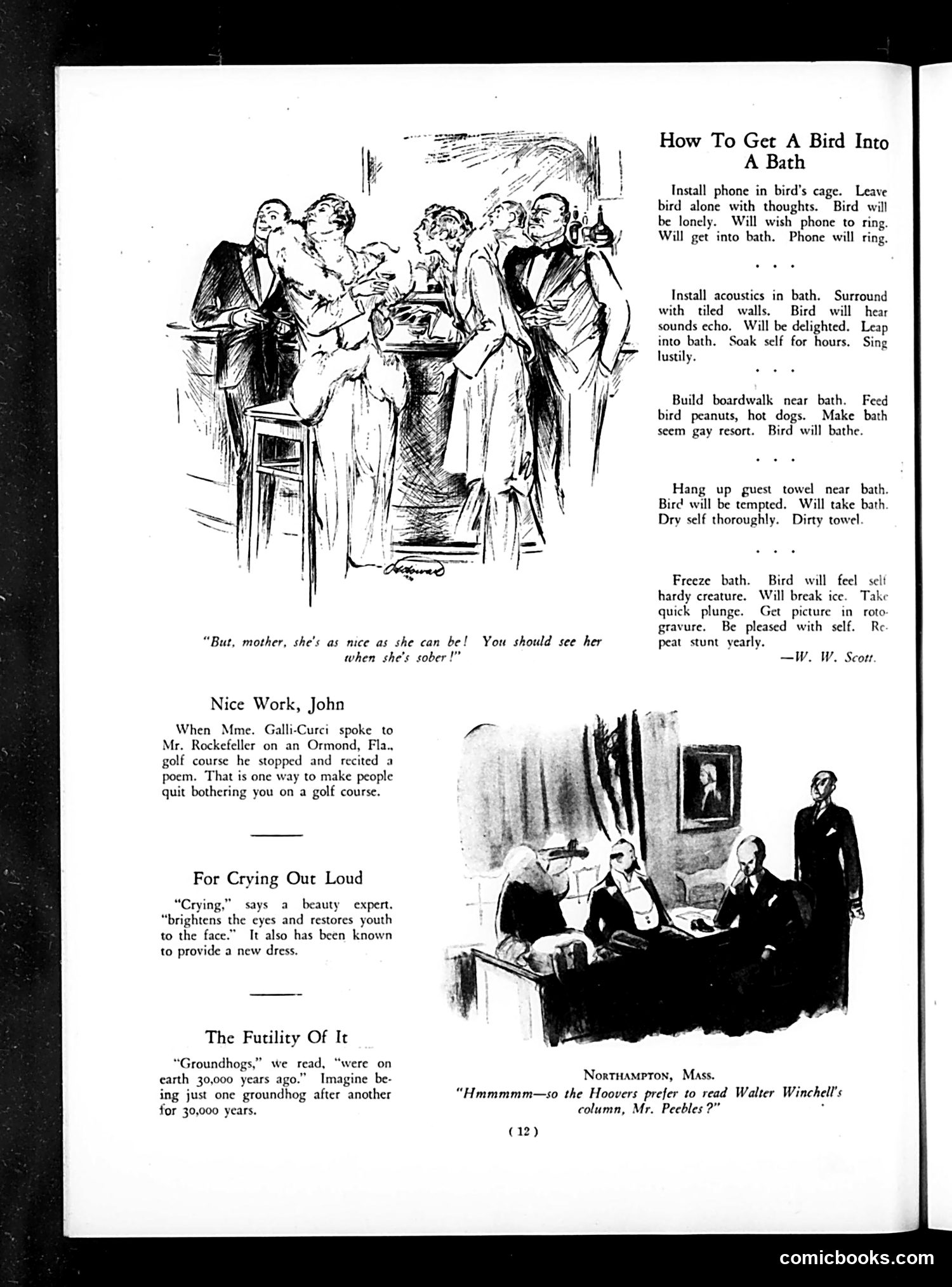
Analysis of Life Magazine Page This page contains several short humorous pieces typical of early 20th-century Life magazine: "How To Get A Bird Into A Bath" is absurdist satire offering ridiculous methods (installing a phone, creating acoustics, building a boardwalk, hanging towels, freezing the bath). The joke mocks overly complicated solutions to simple problems. "Nice Work, John" references Mme. Galli-Curci, a famous opera singer, reciting poetry on a golf course to discourage golfers—satire of celebrity antics. "For Crying Out Loud" puns on "crying" as a beauty treatment. "The Futility Of It" jokes about groundhogs' repetitive nature over millennia. The cartoon at page bottom shows office workers; the caption references Walter Winchell's column, suggesting satire of media gossip culture.
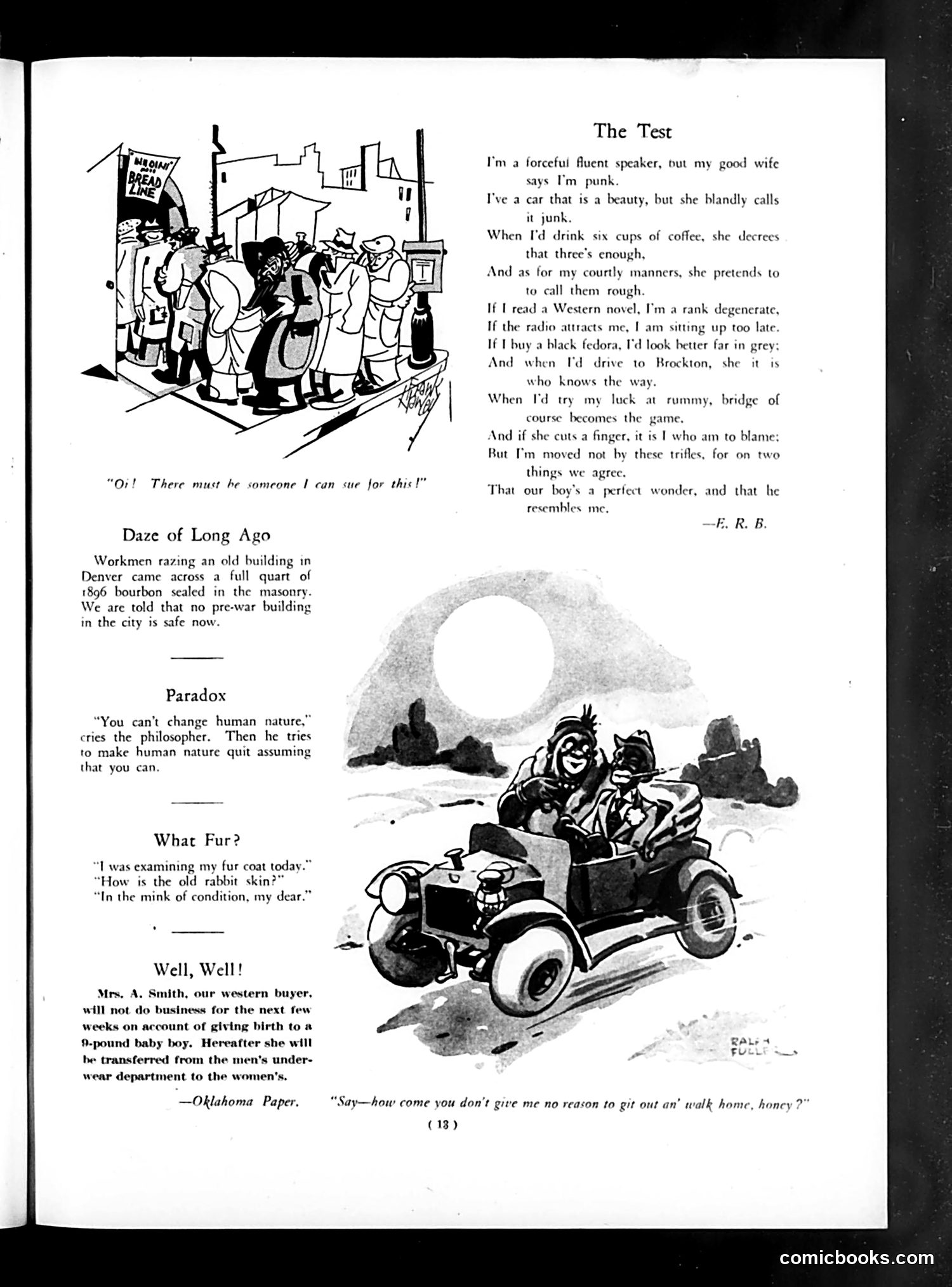
Analysis of Life Magazine Page This page contains several short humorous pieces and illustrations typical of early 20th-century satirical magazine content. "The Test" is a poem by E.R.B. about marital discord—a husband's wife criticizes his behavior (calling his car "junk," his hobbies degenerate). The poem's resolution: he's moved that their son is "perfect" and "resembles me," suggesting his vanity triumphs over their disputes. "Daze of Long Ago" references a 1896 bourbon bottle found in Denver—nostalgic humor about pre-Prohibition alcohol. "Paradox" and "What Fur?" are brief joke snippets about human nature and a fur coat's condition. "Well, Well!" announces a Mrs. A. Smith's maternity leave from her job, moving departments after giving birth—reflecting early 20th-century workplace practices. The central cartoon shows a couple joyride in an automobile under the moon, with the caption suggesting marital tension about leisure activities.
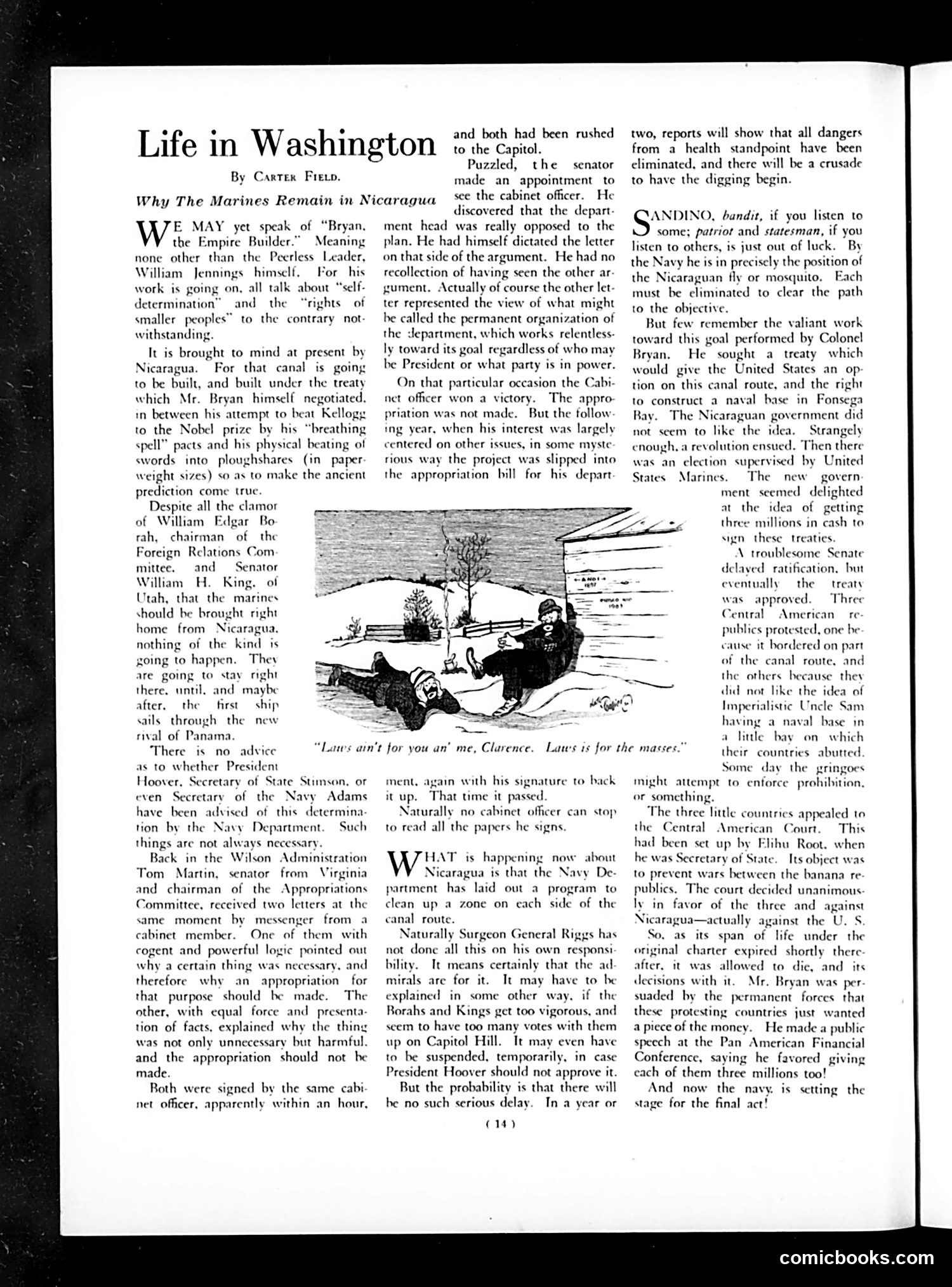
Cartoon Analysis: "Life in Washington" by Carter Field The cartoon depicts two men in a hammock with the caption "Laws ain't for you an' me, Clarence. Laws is for the masses." This satirizes government hypocrisy—specifically how political leaders in Washington exempt themselves from rules they impose on ordinary citizens. The relaxed figures in the hammock represent powerful officials who operate outside legal constraints, while "the masses" (common people) must obey strict laws. The article discusses the Marines remaining in Nicaragua and various cabinet disputes. The cartoon functions as social criticism of the era's political corruption and double standards, suggesting that elite Washington politicians enjoy special privileges unavailable to working Americans.
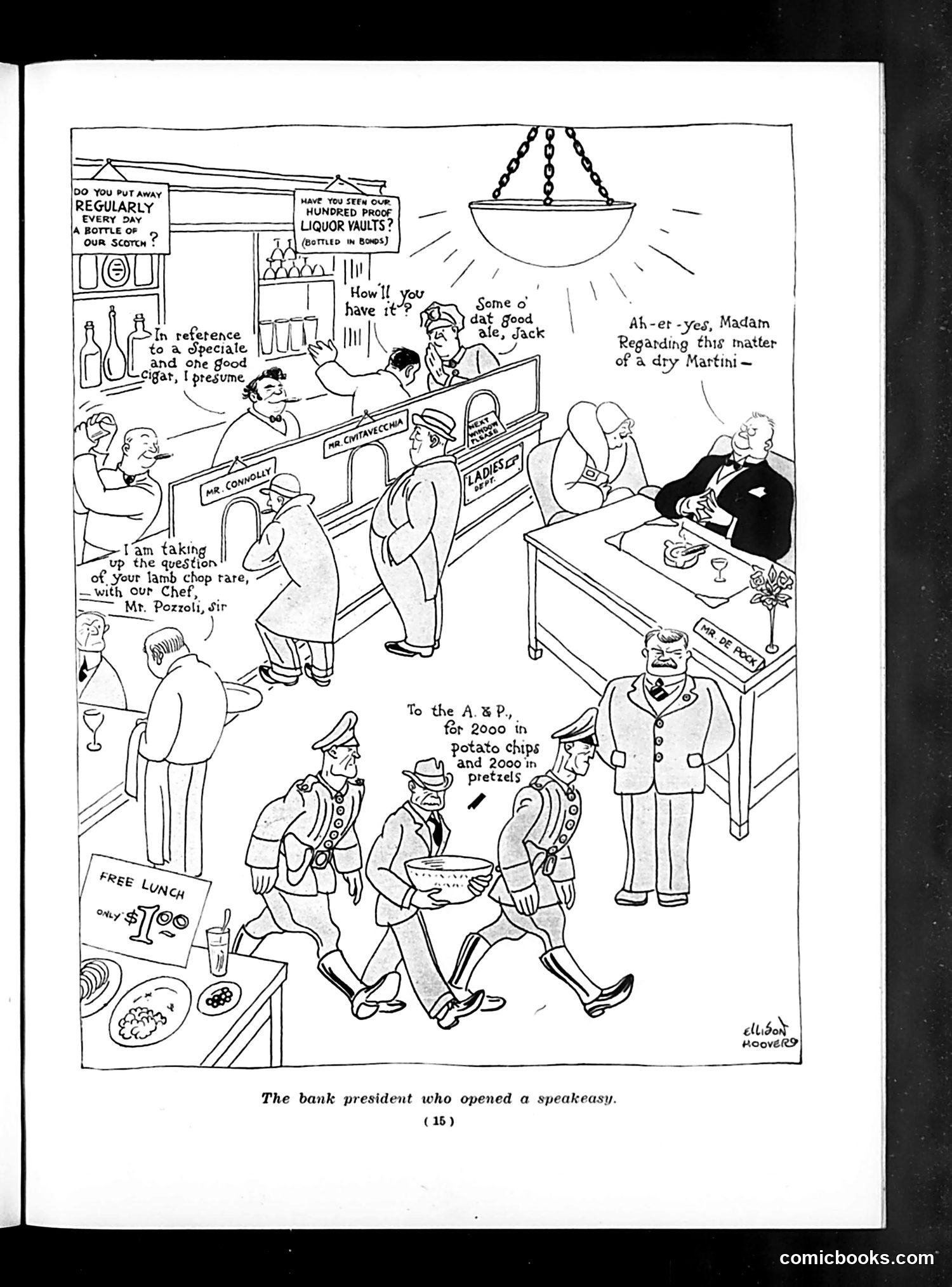
"The Bank President Who Opened a Speakeasy" This cartoon satirizes Prohibition-era hypocrisy. A bank president (respectable establishment figure) has secretly opened an illegal speakeasy, evident from the hidden liquor vault displaying "hundred proof liquor vaults" and bottles marked "scotch." The cartoon mocks the contradiction: while publicly maintaining respectability and financial authority, he illegally operates an alcohol establishment during Prohibition (1920-1933). The elaborate setup—with bartender, customers, and references to supplying the A&P with potato chips and pretzels—suggests widespread criminal enterprise among the supposedly upright. The satirical point: Prohibition was widely flouted by elites and respected citizens, not just criminals. The "free lunch" sign references traditional saloon culture, underscoring how Prohibition failed to eliminate drinking.
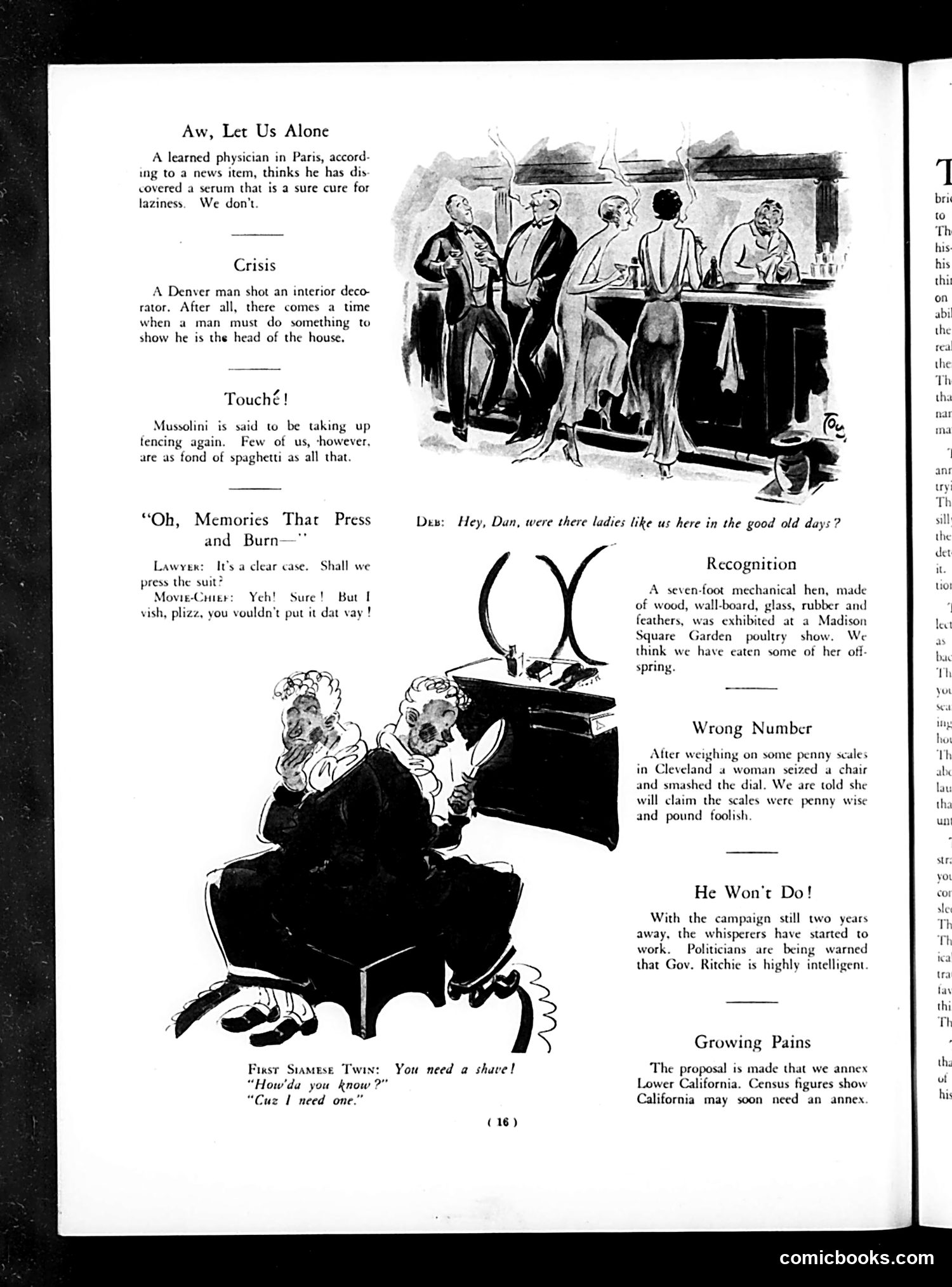
Analysis of Life Magazine Page This page contains several brief satirical items and cartoons typical of Life's humor section. "Aw, Let Us Alone": A joke about a Parisian physician claiming to have cured laziness—Life dismisses this as impossible. "Crisis": Dark humor about a Denver man shooting an interior decorator, joking that sometimes men must "do something" to assert authority in their homes. The main cartoon shows Siamese twins asking for a shave, with the caption "You need a shave!" / "How'd you know?" / "'Cus I need one." This illustrates the absurdity of conjoined twins sharing sensations. Additional brief items joke about Mussolini and spaghetti, mechanical hens at a poultry show, a woman breaking penny scales in Cleveland, Gov. Ritchie's intelligence, and California's potential need for annexation. The humor is typically early-20th-century American satirical magazine fare.
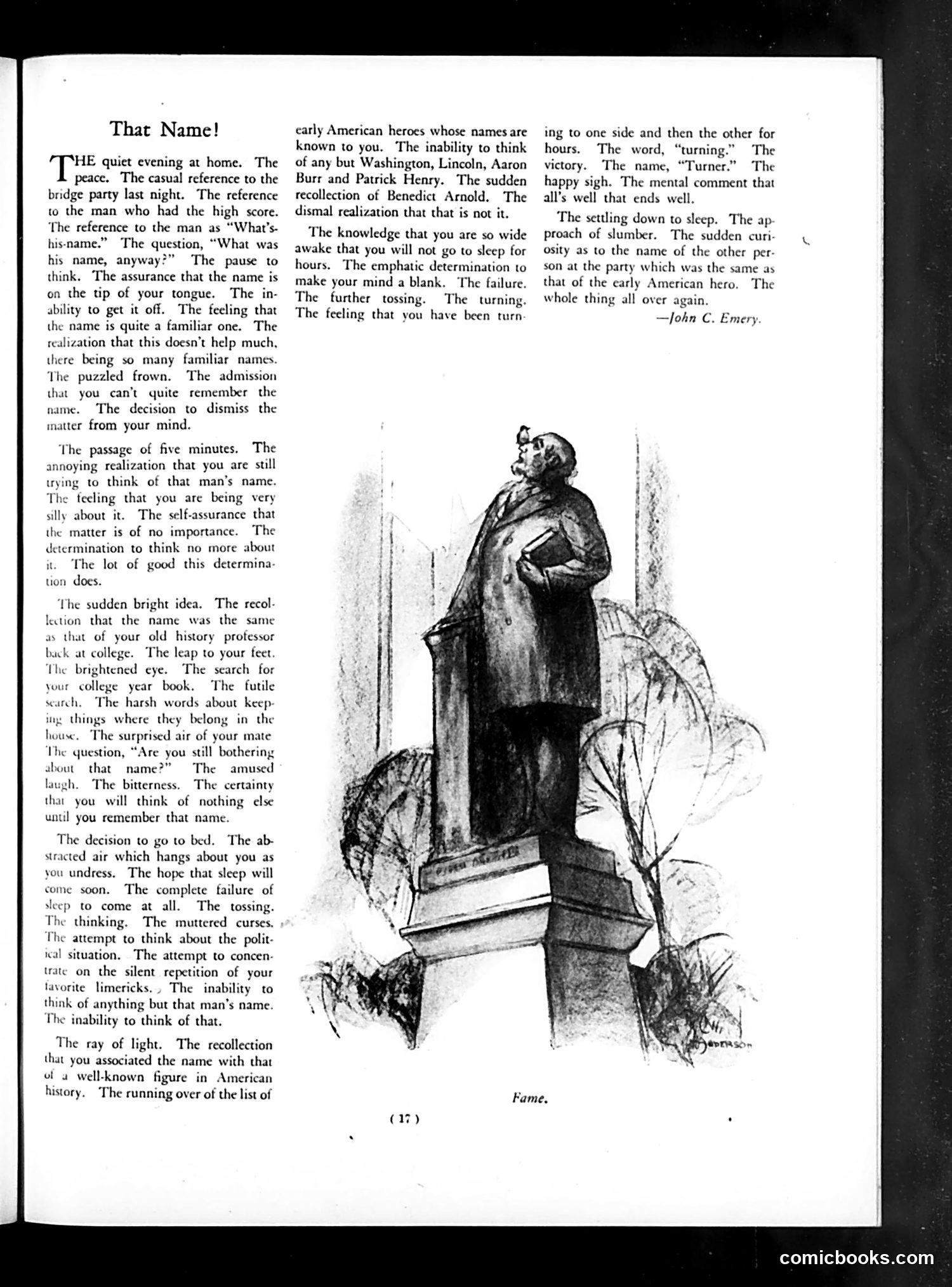
Analysis of "That Name!" - Life Magazine Page This page contains an essay titled "That Name!" by John C. Emery (byline visible), accompanied by an illustration labeled "Fame" showing a statue or bust on a pedestal. The essay humorously depicts the frustration of trying to remember an unfamiliar name—specifically, an early American historical figure mentioned casually at a dinner party. The writer catalogs the absurd mental process: the determination to recall it, the embarrassment of forgetting, the five-minute struggle, attempted diversions, and ultimate failure. The accompanying sketch of a classical bust suggests that while such historical figures achieve lasting "Fame," their names remain frustratingly elusive to modern readers. The satire targets both the pretentiousness of casual historical references and the common human experience of social embarrassment over forgotten names.
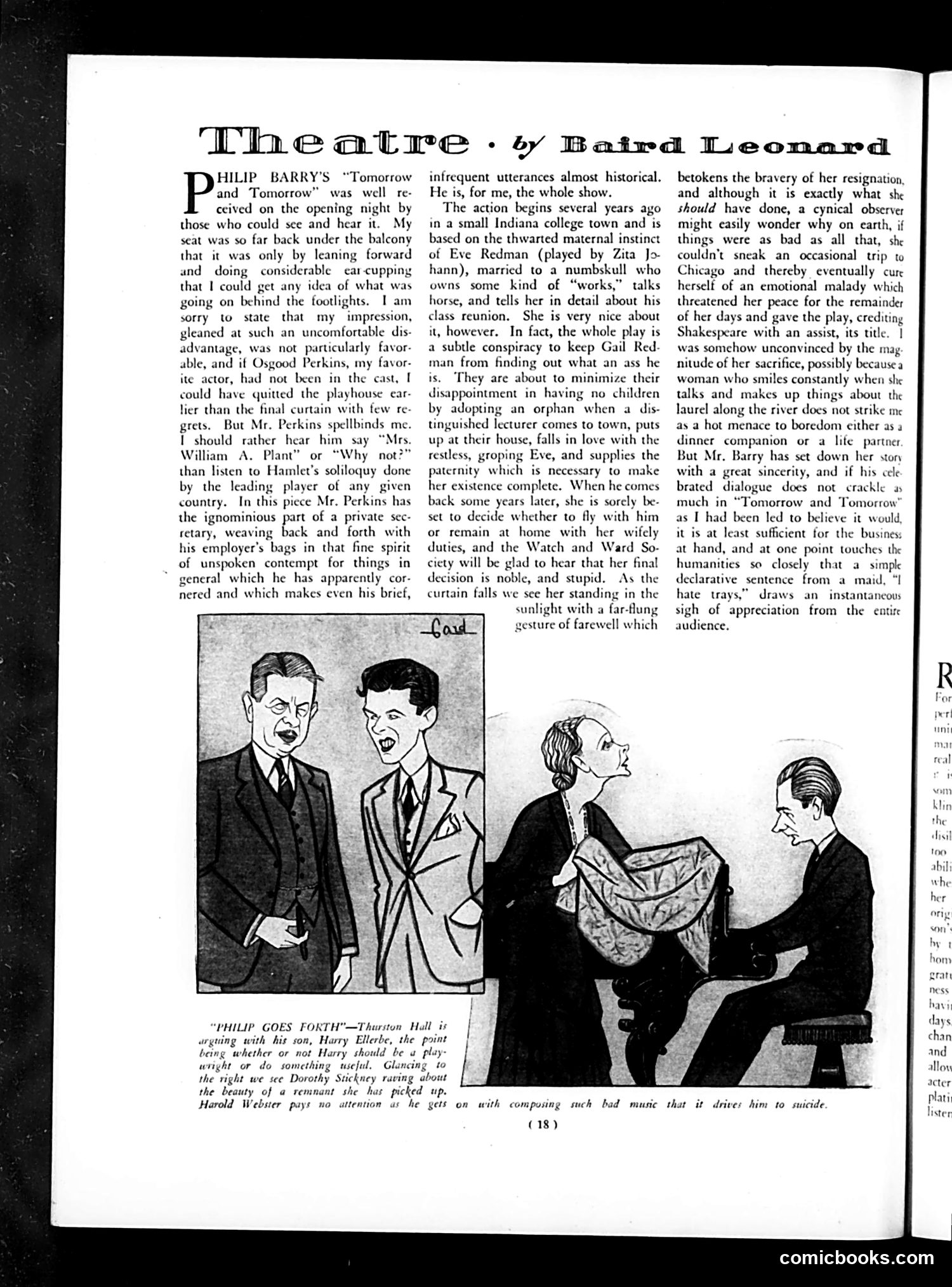
Theater Review: "Tomorrow and Tomorrow" by Baird Leonard This is a theater review of Philip Barry's play "Tomorrow and Tomorrow." The main illustration shows four men in formal attire, apparently depicting a scene where characters discuss a woman and paternity—the central plot involves a restless, groping "Eve" character who falls in love with a lecturer visiting their small Indiana town, leading to questions about her marriage and an orphan child. The reviewer notes that actor Osgood Perkins delivers an "indomitable" performance, and that while the dialogue is "cerebrated" (intellectual), it's "sufficient for the business." The illustration caption references "Philip goes forth" and concerns about whether the son should become a playwright or do "something useful," touching on class anxieties about artistic versus practical work.
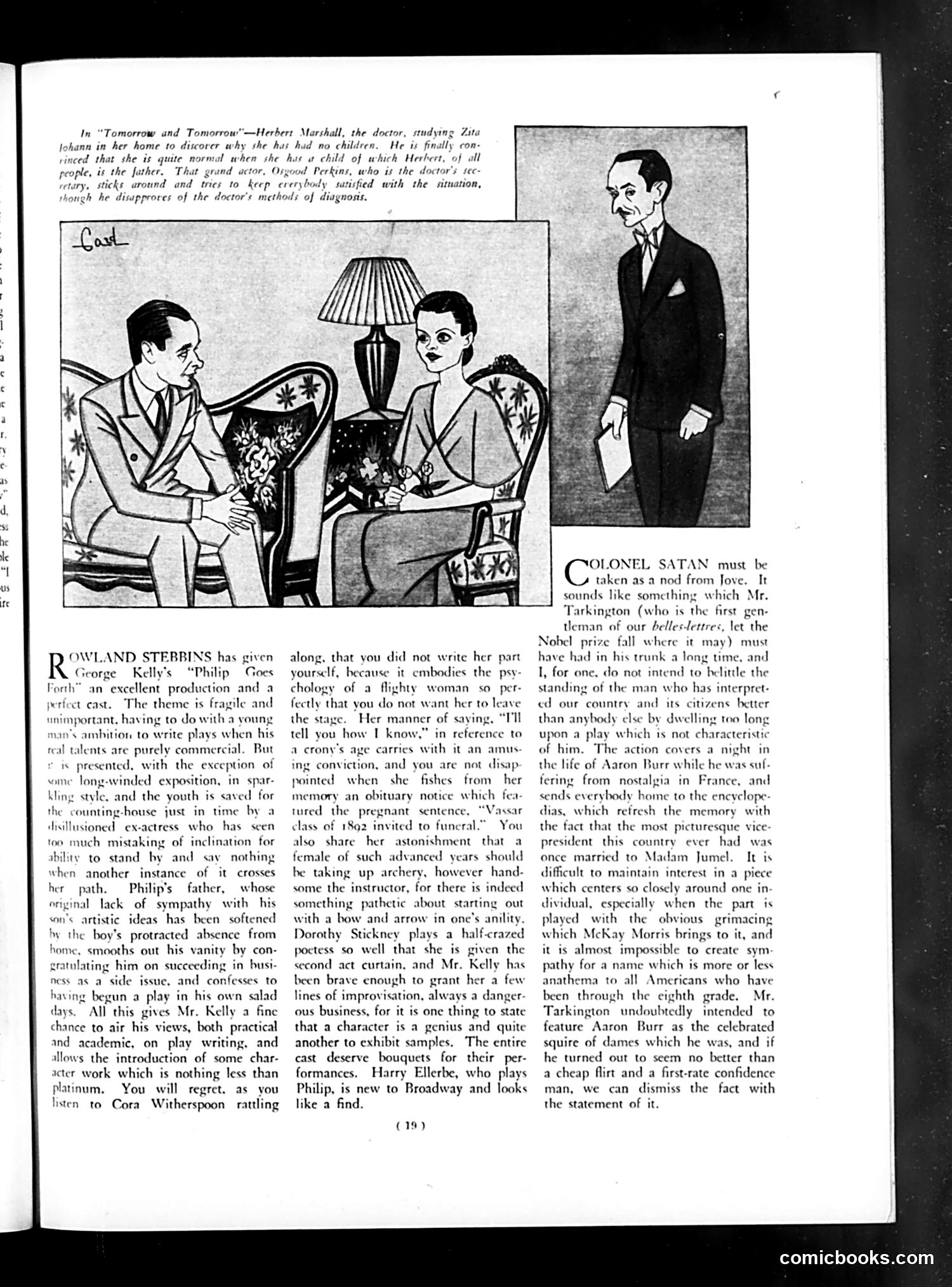
Life Magazine Theater Review, Page 19 This page reviews two Broadway plays. The main content discusses George Kelly's "Philip Goes Forth," praising its cast and witty dialogue—particularly Cora Witherspoon's performance as a flighty society woman who delivers amusing reminiscences. The reviewer credits Kelly for sharp observations on American character and commerce. A secondary review mentions a play called "Colonel Satan," apparently about Aaron Burr's exile in France. The reviewer attributes the script to Booth Tarkington (called "first gentleman of our belles-lettres"), a celebrated American author known for depicting American life. The reviewer dismisses this play as uncharacteristic of Tarkington, finding it difficult to sustain interest in a work centered on a single historical figure, despite apparently competent acting. The cartoon illustration depicts a domestic scene, likely from "Philip Goes Forth," showing two people in conversation with a lamp between them.
Movie Reviews by Harry Evans - Life Magazine This page contains film reviews from Life magazine's movie column. The critic discusses three 1931 films: "The Criminal Code" receives praise for intelligent storytelling and strong performances by Walter Huston, Phillips Holmes, and notably Constance Cummings, whom the reviewer notes had been mistreated on another production ("The Devil To Pay") before this success. "Little Caesar" is reviewed favorably, with Edward G. Robinson praised for his portrayal of a gangster character. The reviewer notes the film overcomes his usual objection to "glorifying the American gangster" through Robinson's nuanced performance—depicting the criminal as simply "a tough, conceited Wop gunman" rather than a romanticized figure. "The Devil To Pay" receives brief criticism for its handling of Constance Cummings and poor makeup choices. The language reflects 1931 attitudes, including ethnic slurs now considered offensive. The reviews emphasize intelligent filmmaking over mere entertainment.
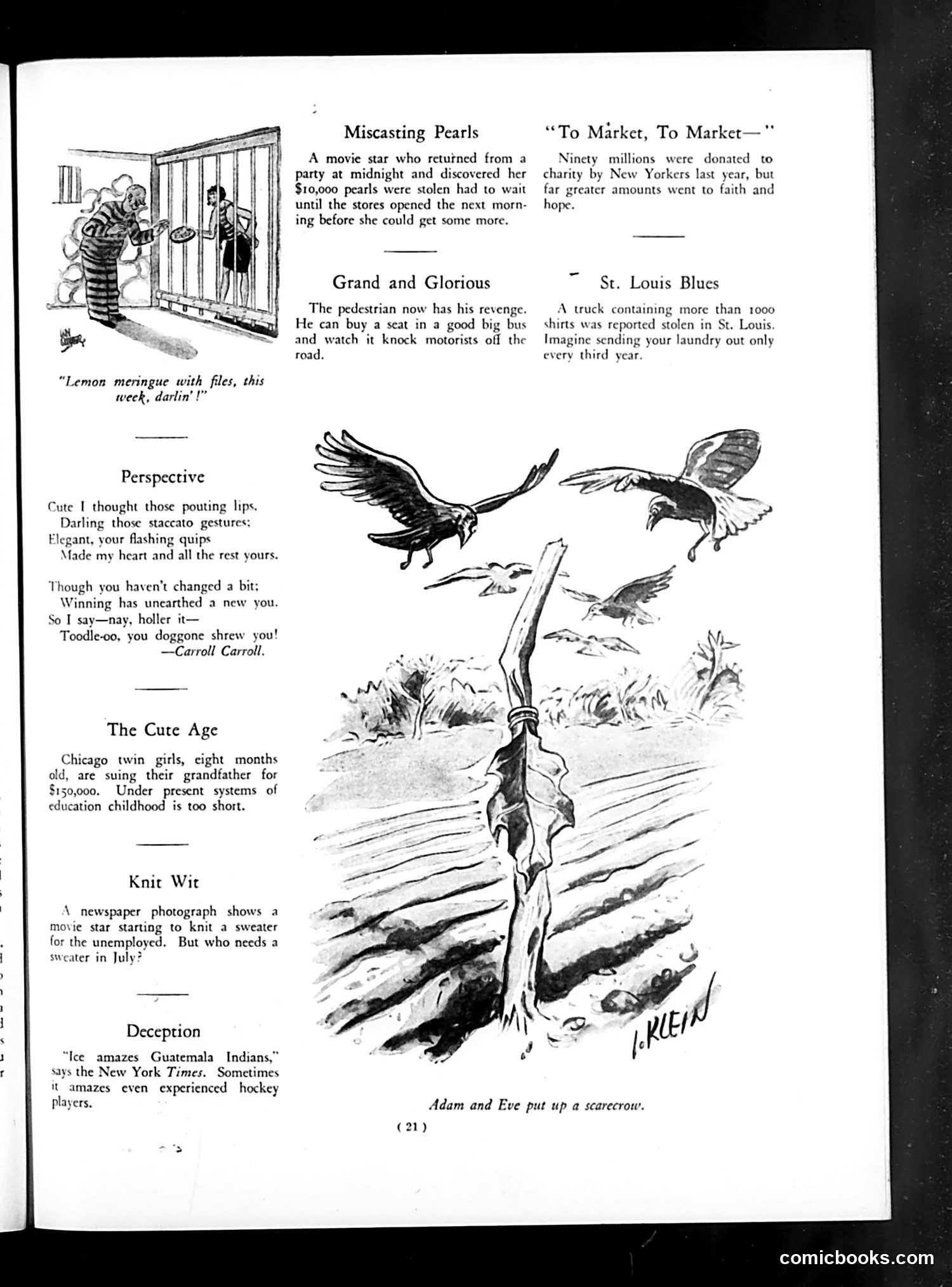
Analysis of Life Magazine Page This is a satirical humor page from Life magazine, containing brief jokes and commentary on 1920s American society. Key pieces: "Miscasting Pearls": Mocks wealthy movie stars' materialism—a starlet's stolen $10,000 pearls are so easily replaced she simply waits for stores to open. "Grand and Glorious": Dark humor about pedestrians gaining "revenge" on motorists by riding buses that hit cars, reversing typical traffic hierarchy. "The Cute Age": Satirizes precocious child actors suing for money ($150,000), suggesting childhood is being exploited/shortened by entertainment industry demands. "Knit Wit": Ridicules a movie star's PR stunt—knitting sweaters for unemployed people in July (summer), when sweaters are useless. "Perspective" (poem): A jilted lover denounces his girlfriend for becoming arrogant after "winning" (likely romantic or social success), calling her a "shrew." The cartoon showing a woman at a door with "lemon meringue with flies" illustrates marital domestic complaint. Overall, these target wealth disparity, celebrity excess, and social pretension during the prosperous 1920s.
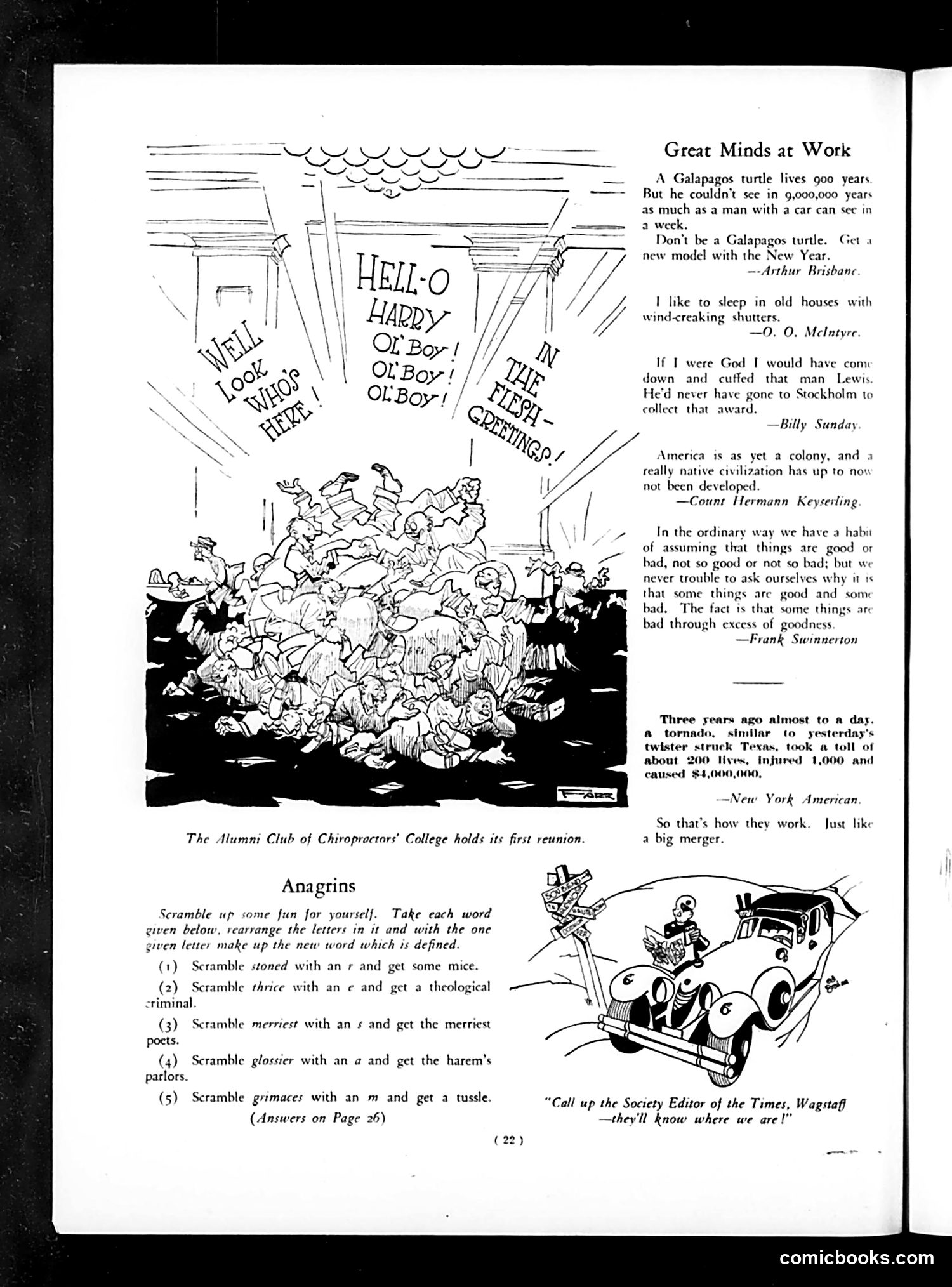
Explanation for Modern Readers This Life magazine page contains two distinct elements: Main Cartoon: The top illustration shows a chaotic reunion of "The Alumni Club of Chiropractors' College." The figures are piled together shouting greetings ("HELL-O HARRY," "OH BOY!"). The joke mocks chiropractors as practitioners of dubious medical credentials—suggesting their "alumni" gatherings would be disorganized and unserious, contrasting with legitimate university reunions. This reflects early-20th-century skepticism toward chiropractic as a fringe practice. Right Column: "Great Minds at Work" collects witty quotes from famous figures (Arthur Brisbane, Billy Sunday, Count Keyserling, Frank Swinnerton) offering observations on modern life, Prohibition-era concerns, and American society. These appear designed to lend intellectual prestige to the magazine. Bottom: A separate cartoon satirizes wealthy people in a car, joking they should contact the *Times* society page so reporters know where to find them—mocking the vanity and social-climbing of the wealthy. The "Anagrins" word puzzle is filler content, unrelated to the satire.
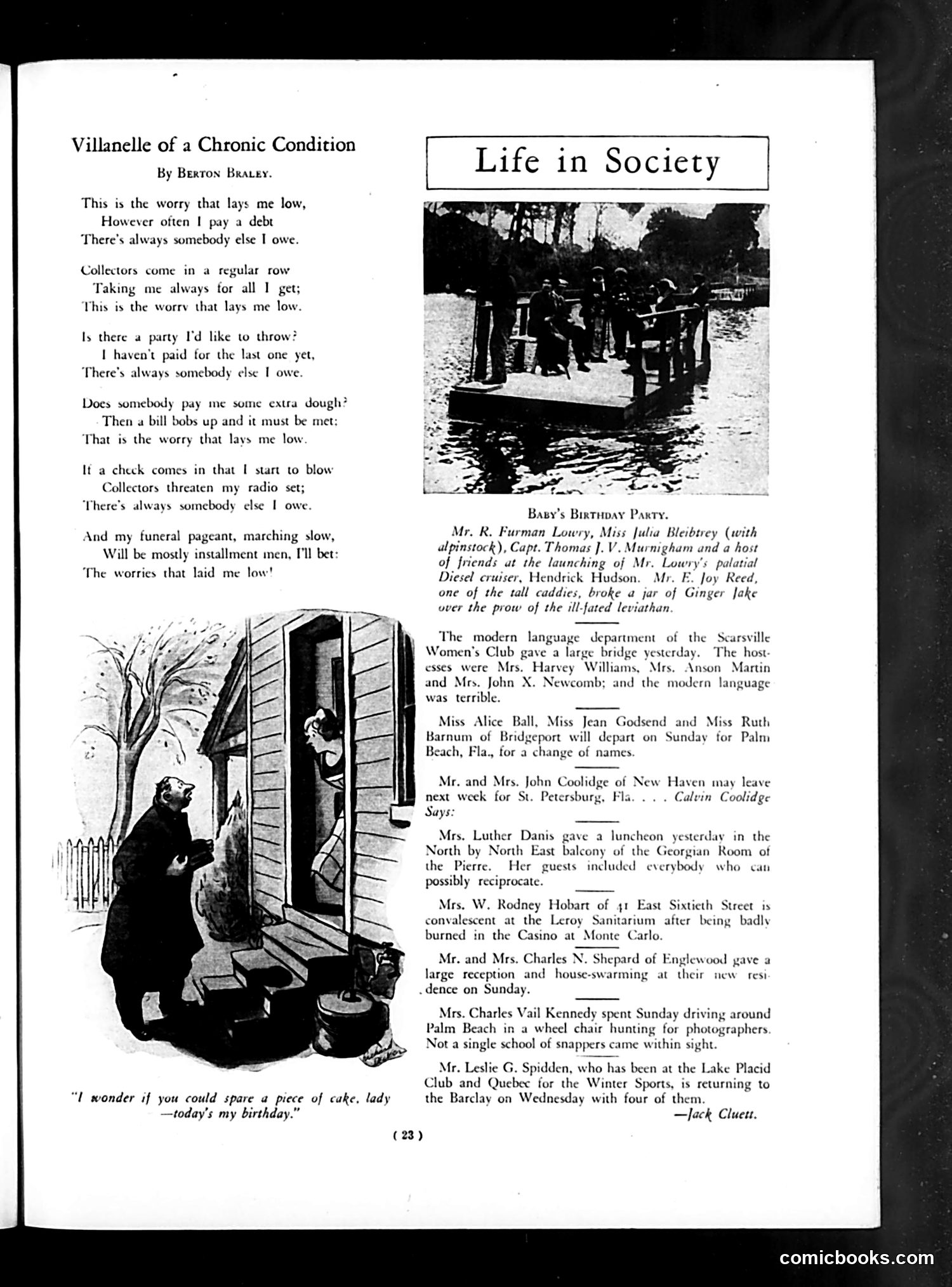
Analysis The Poem ("Villanelle of a Chronic Condition") satirizes financial anxiety during what appears to be the 1920s. The speaker describes perpetual debt: paying bills only to incur new ones, unable to afford social events, with collectors threatening to seize possessions (notably "my radio set"). The dark humor culminates in imagining his funeral attended by "installment men"—creditors collecting even after death. This reflects genuine economic anxiety of the era, when consumer credit and installment buying were becoming common but financially precarious. The Cartoon depicts a debt collector at a poor household door, with the resident offering birthday cake as payment—visual reinforcement of the poem's theme. "Life in Society" is satirical society column gossip mocking the wealthy elite. References include Calvin Coolidge (the sitting president), socialite activities, and absurd details like "a change of names" for debutantes and a woman hunting photographers to document her presence. The humor targets upper-class vanity and frivolousness.
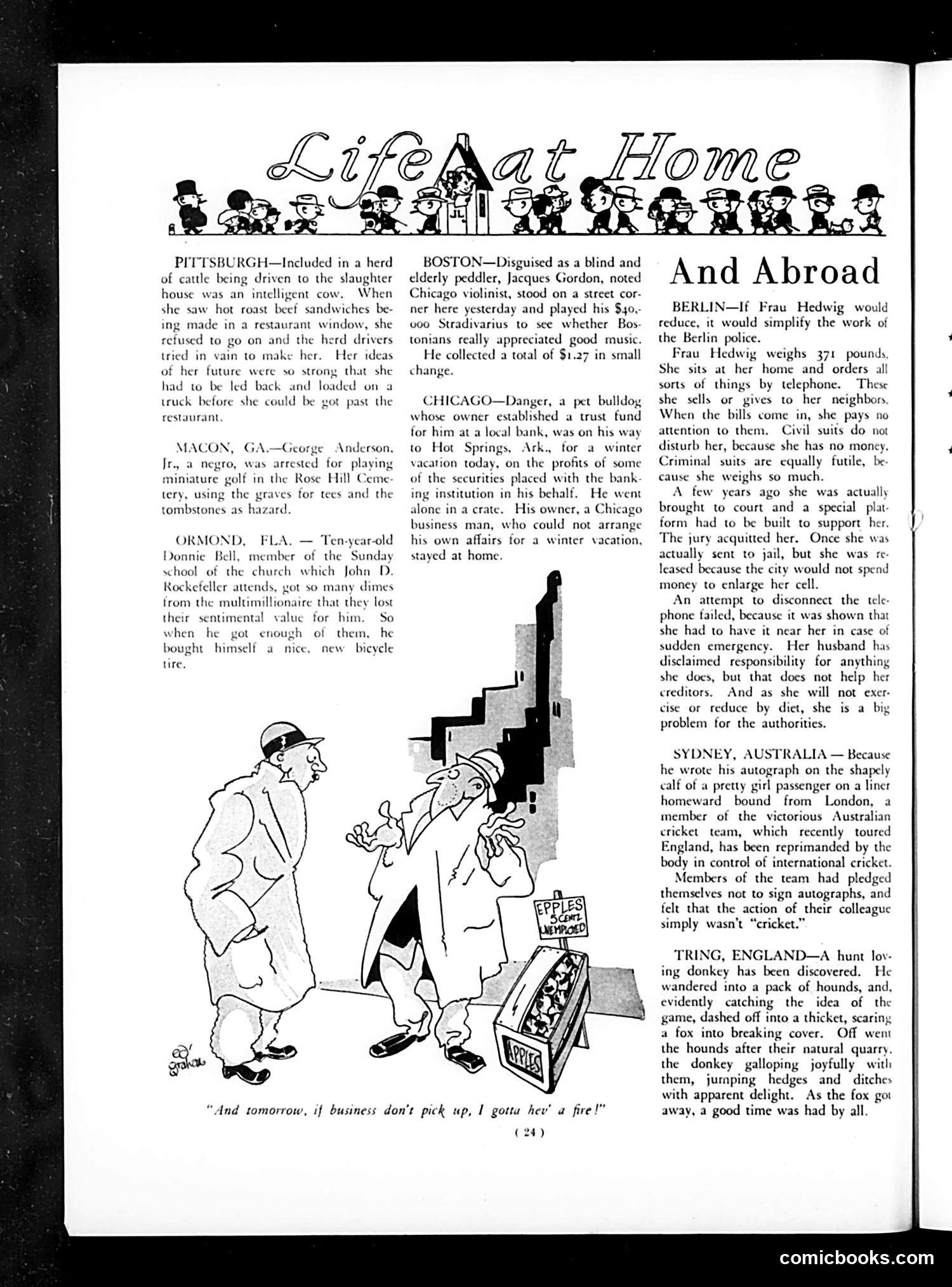
Life Magazine Page Analysis This page from *Life* presents humorous anecdotes and one cartoon satirizing human behavior through animal stories and international oddities. The Main Cartoon depicts two men outside an "Apples" stand discussing arson as a business solution—dark satire on Depression-era desperation and insurance fraud. The Text Stories use ironic contrasts: - A cow recognizing her fate at a restaurant window (animal intelligence vs. human obliviousness) - A famous violinist (Jacques Gordon) earning only $1.27playing a $40,000 instrument on Boston streets (art's undervaluation) - A pet bulldog living better than his owner (wealth inversion absurdity) - Frau Hedwig, a 371-pound Berlin woman evading all legal consequences through her weight (bureaucratic helplessness) - An Australian cricketer reprimanded for breaking team protocol by autographing a woman's leg (rigid propriety) - A hunting donkey accidentally aiding foxhounds (animals outperforming humans) These vignettes share a common theme: exposing society's contradictions, pretensions, and illogical systems through deadpan observation.
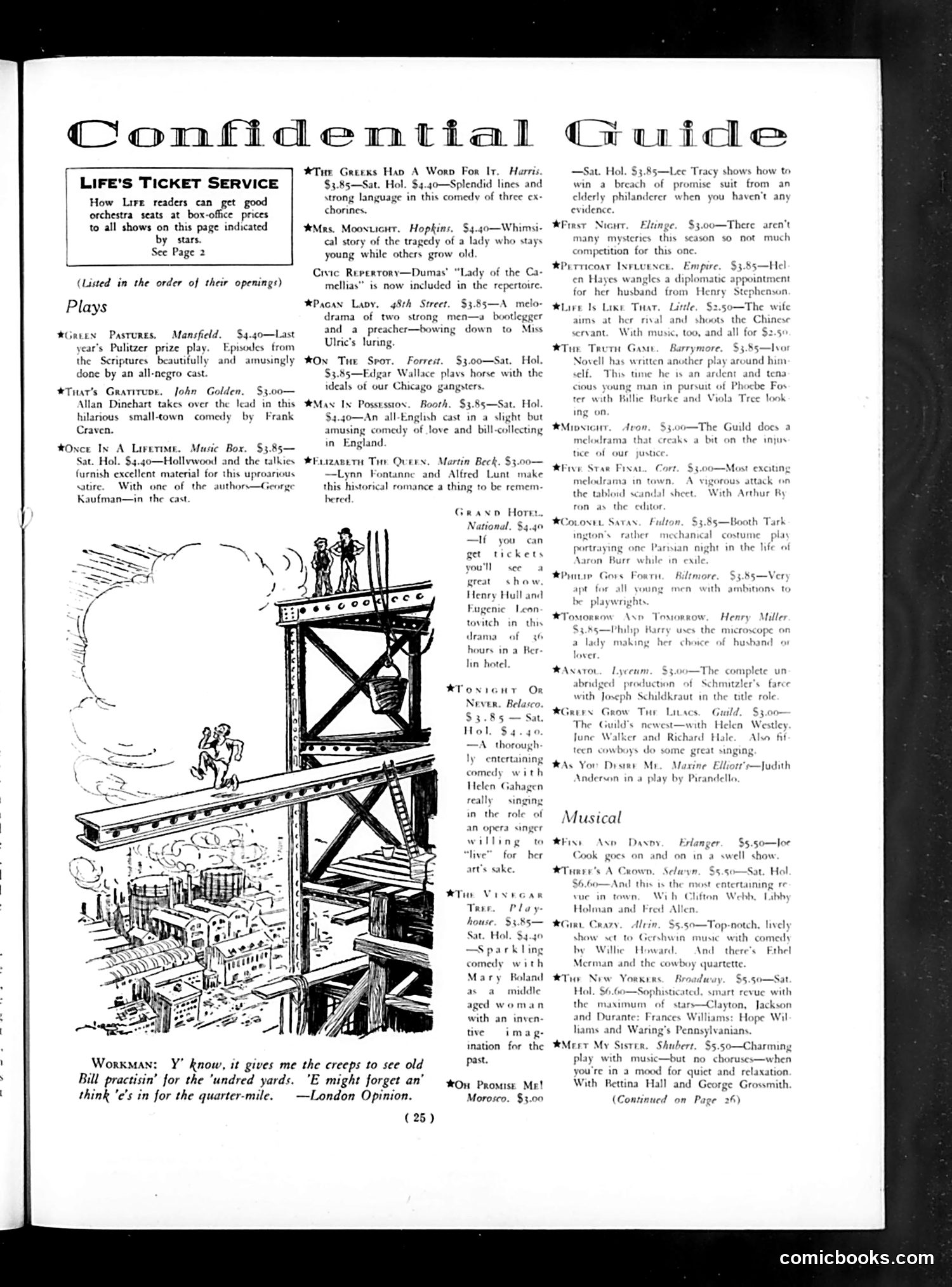
Explanation for Modern Readers This page is a "Confidential Guide" listing Broadway theater shows and musicals currently playing, with ticket prices and brief reviews. The dominant illustration is a cross-section cartoon of a tall theater building, showing multiple floors with audience members, backstage activity, and street level below—a humorous depiction of theatrical life. The small cartoon at bottom left shows a workman commenting on someone "practisin' for the 'undred yards," joking that the person "might forget an'" and "think 'e's in for the quarter-mile"—likely a British music-hall gag about athletic training or distance running that modern readers would struggle to place without context. The page itself functions as advertising and entertainment guide rather than political satire. The reviews mention topical shows like one featuring an all-Black cast and another satirizing Hollywood's new talking pictures, but these are straightforward theater listings rather than editorial commentary.
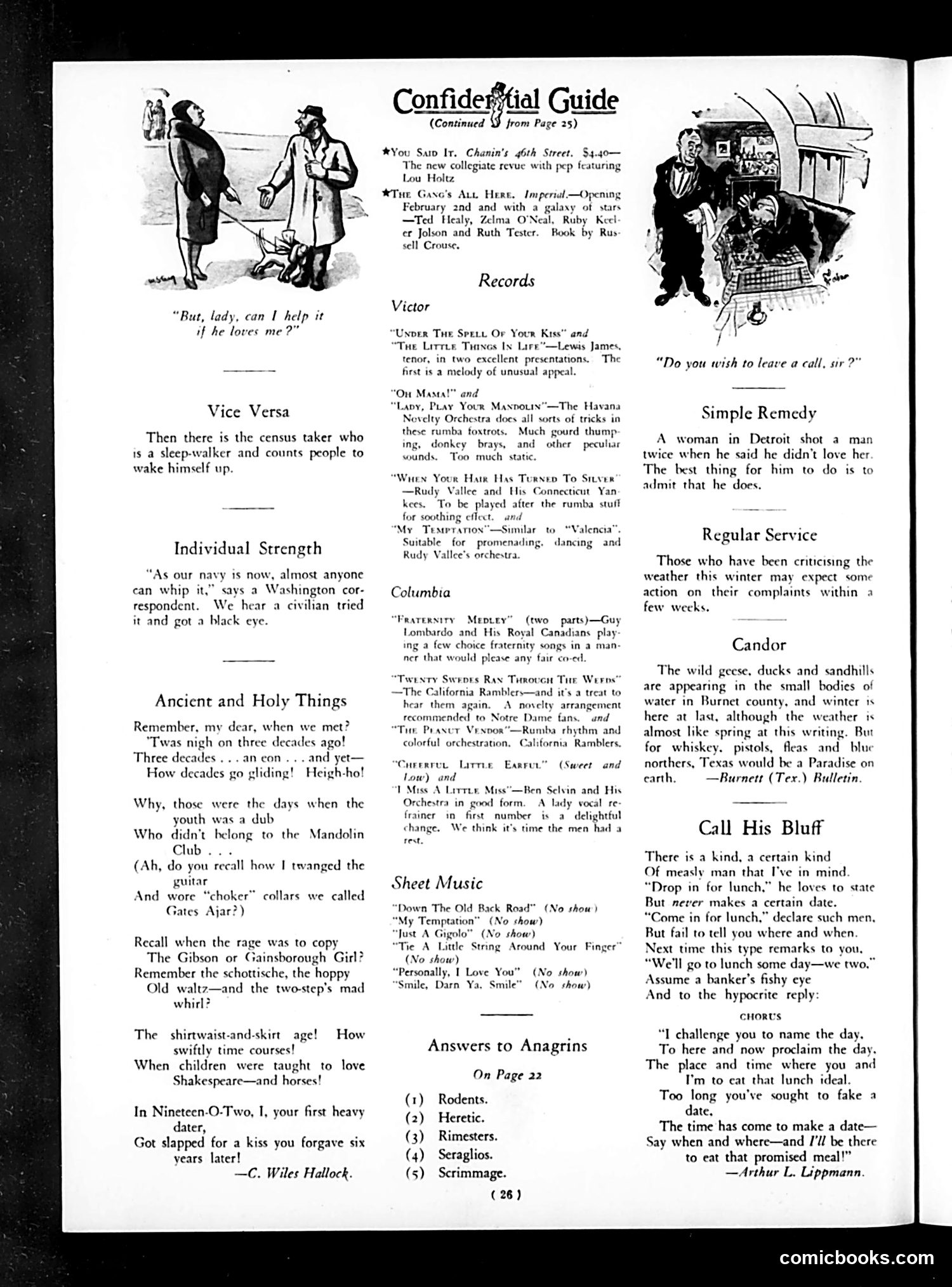
Cartoon and Content Analysis The page contains several brief humorous pieces typical of Life magazine's satirical style: "Vice Versa" jokes about a census taker who sleepwalks while counting people—absurdist humor about bureaucratic tedium. "Individual Strength" satirizes the U.S. Navy's apparent weakness, referencing a Washington correspondent's claim that "almost anyone" could defeat it. The joke: a civilian actually tried and got a black eye, suggesting even the Navy's weakness is exaggerated. "Ancient and Holy Things" by C. Wiles Hallock is nostalgic verse mocking how quickly fashion and customs change—referencing early 1900s styles (mandolin clubs, "choker" collars, Gibson Girls, the schottische). It's gentle satire on aging and how quaint recent past fashions become. The remainder comprises entertainment listings (theater, records, sheet music) and brief anecdotes—typical Life magazine filler content mixing social observation with light humor about relationships and regional Americana.
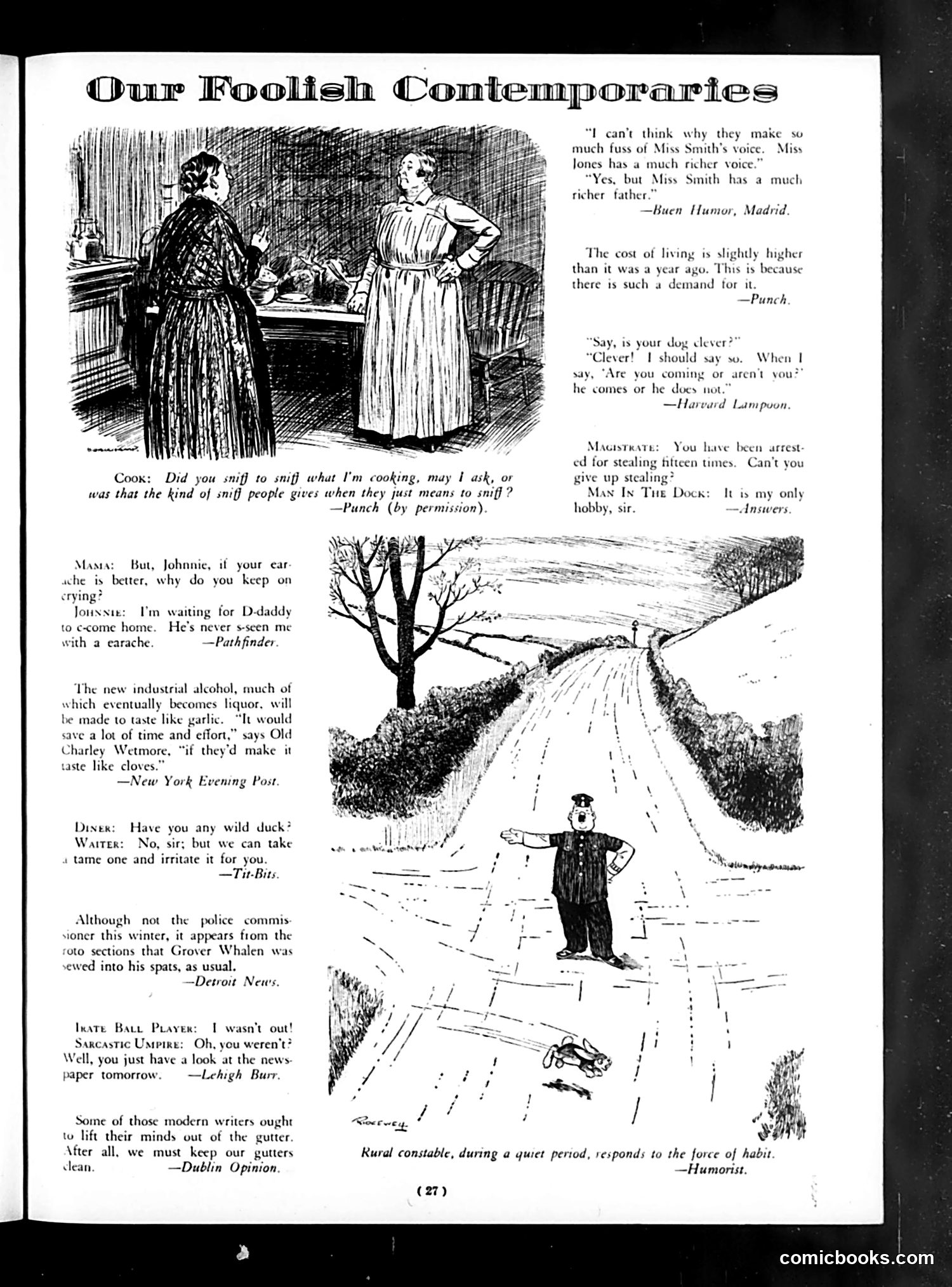
"Our Foolish Contemporaries" - Life Magazine Satire Page This page collects brief humorous quotes and observations from various international publications (Punch, Harvard Lampoon, Madrid's Buen Humor, etc.), a common Life magazine format. The jokes target everyday foolishness: a father's wealth mattering more than talent, inflation blamed on demand itself, a dog's "cleverness" being mere obedience, a habitual thief claiming stealing as his hobby, romantic children manipulating parents with fake illnesses, and a waiter irritating a tame duck to pass it off as wild game. Two cartoons illustrate: a cook defensively explaining her cooking smells to a servant, and a rural police officer mechanically directing traffic during a quiet period out of pure habit—suggesting people mindlessly repeat actions regardless of context. The satire targets human vanity, greed, illogic, and the gap between pretense and reality—timeless subjects that remain recognizable today.
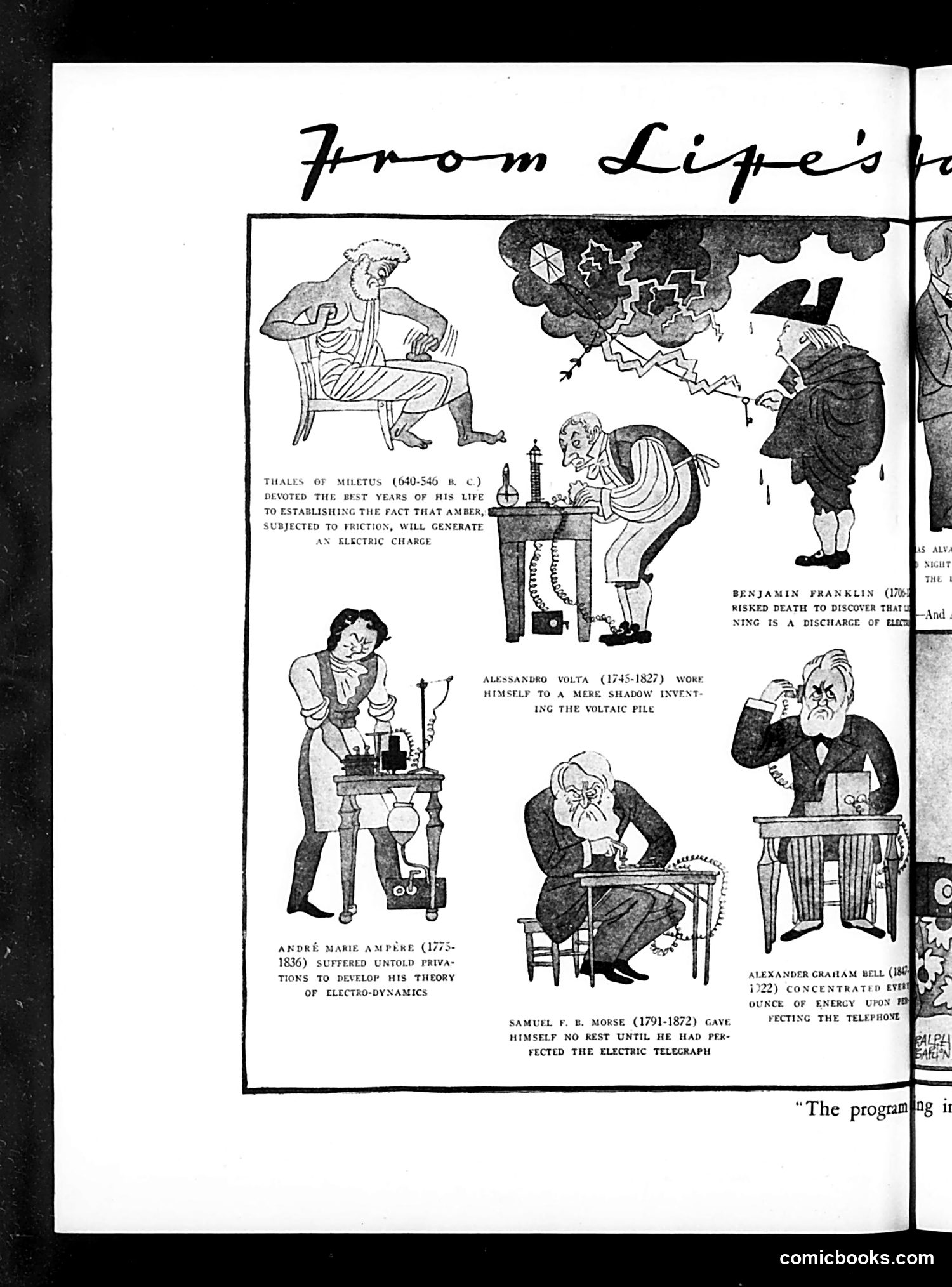
"From Life's" - Electricity Pioneers This page presents a humorous history of electricity's development, showing famous scientists and inventors alongside their struggles. It traces the field from ancient Greek philosopher Thales (who discovered static electricity through amber friction) through modern inventors like Benjamin Franklin (lightning), Alessandro Volta (the battery), André-Marie Ampère (electrical theory), Samuel Morse (telegraph), and Alexander Graham Bell (telephone). The satire lies in the exaggerated portrayal of each figure's "suffering" and obsession—depicted through cartoonish illustrations showing them exhausted, disheveled, or in distress at their work. The joke mocks the Romantic-era glorification of the tortured genius: these men allegedly sacrificed everything for scientific progress. The page ironically celebrates their dedication while visually emphasizing how ridiculous and consuming their pursuits appear.
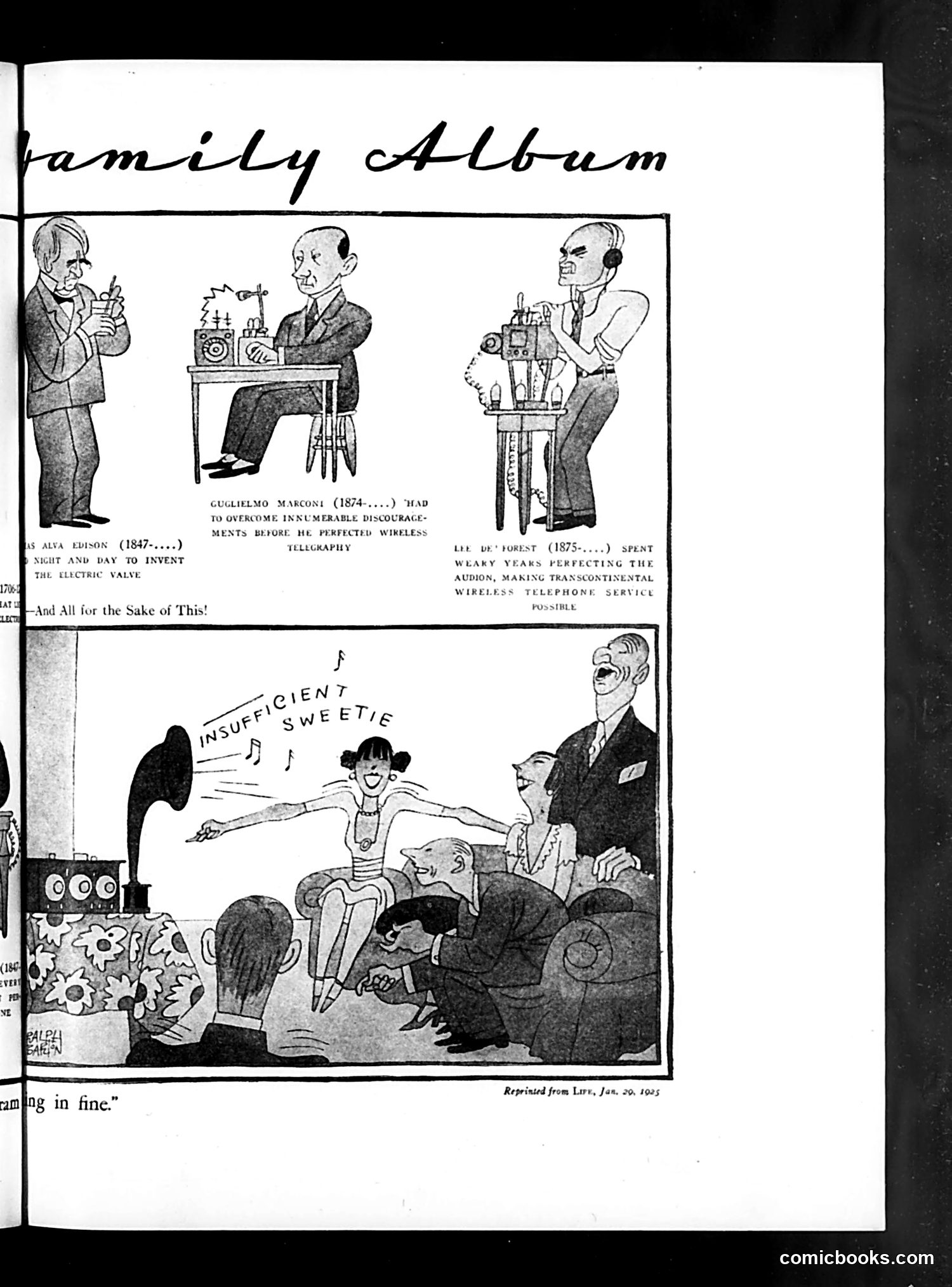
Explanation for Modern Readers This 1925 *Life* magazine page satirizes the gap between scientific achievement and commercial exploitation. The top panel honors three inventors (Marconi, Edison, and Lee de Forest) who struggled for years perfecting wireless technology—telegraphy, electric valves, and transcontinental telephone service. The bottom cartoon reveals the satire's target: "And All for the Sake of This!" shows the fruits of their labor being used for frivolous entertainment. A woman labeled "Insufficient Sweetie" performs while men in formal dress enjoy the show, suggesting wireless technology has been reduced to broadcasting popular songs and dance performances rather than serving serious purposes. The joke critiques how major technological breakthroughs, achieved through decades of dedication and hardship, are ultimately commercialized for mass entertainment and trivial amusement rather than meaningful advancement. It reflects 1920s anxieties about technology serving consumerism and popular culture.
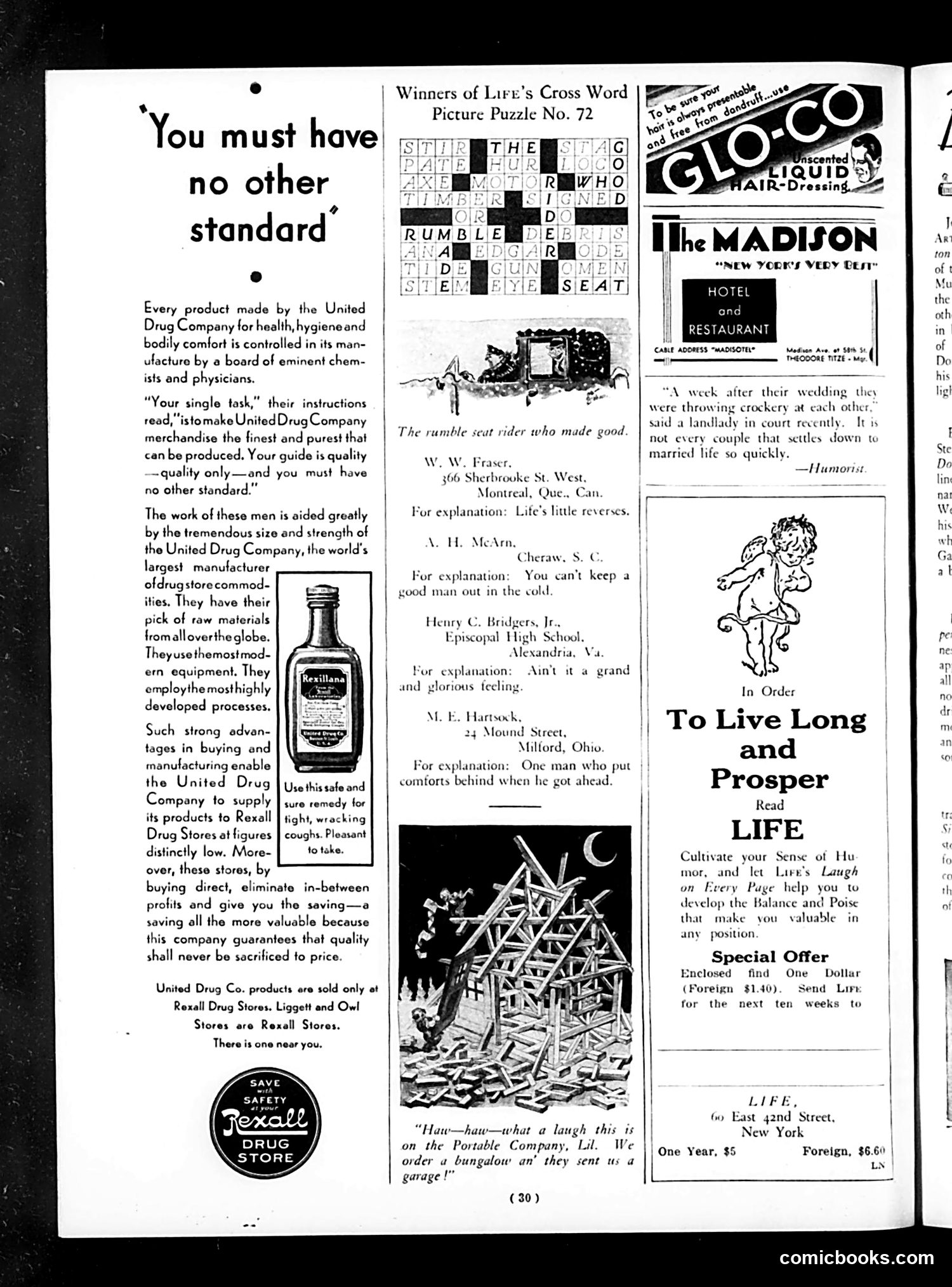
Content Analysis This page is primarily advertising and contest results from Life magazine, not political satire. The main content includes: 1. United Drug Company advertisement (left): Promotes Rexall Drug Stores, emphasizing quality control and affordability. The ad highlights the company's manufacturing standards and distribution network. 2. Crossword puzzle winners (center): Life's Picture Puzzle No. 72 results, with winners' names and humorous explanations of their puzzle answers (e.g., "the rumble seat rider who made good"). 3. Cartoon (bottom center): Shows someone complaining they ordered a bungalow but received a garage instead—a joke about the "Portable Company" apparently sending the wrong structure. 4. Madison Hotel advertisement (right): Promotes dining and lodging. 5. Life Magazine subscription promotion (bottom right): Encourages subscriptions using humor as a health benefit. The page reflects early 20th-century consumer culture and magazine marketing rather than political commentary.
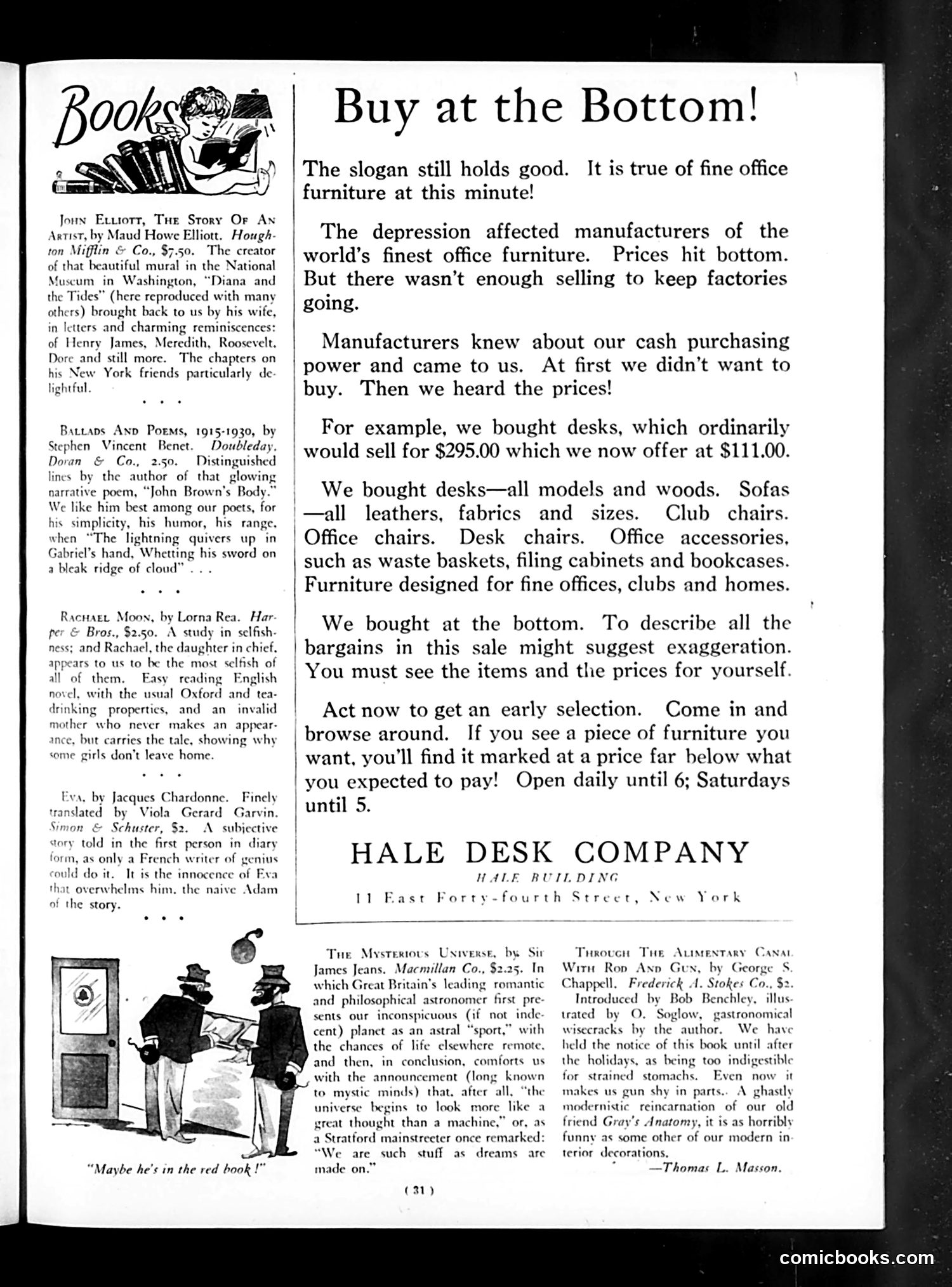
Analysis of This Life Magazine Page This page is primarily a book review section (left column) and a Depression-era furniture advertisement (right column), with one small cartoon. The Cartoon The single cartoon at bottom left shows three figures examining what appears to be a book or ledger, with one saying "Maybe he's in the red book!" This is a play on "red book" (a ledger showing losses/debt) and suggests someone is financially ruined—a timely joke during the Great Depression. The Advertisement Context The Hale Desk Company ad exemplifies Depression-era bargaining. With factories shuttered and no consumer spending, manufacturers approached businesses with inventory at drastically reduced prices—desks dropped from $295 to $111. The ad urges immediate action to capitalize on these "bottom" prices before selection runs out, reflecting the economic desperation of the early 1930s. Book Reviews The left column reviews literary works by contemporary authors (Stephen Vincent Benet, Lorna Rea, Jacques Chardonne), typical of Life's cultural coverage during this period.
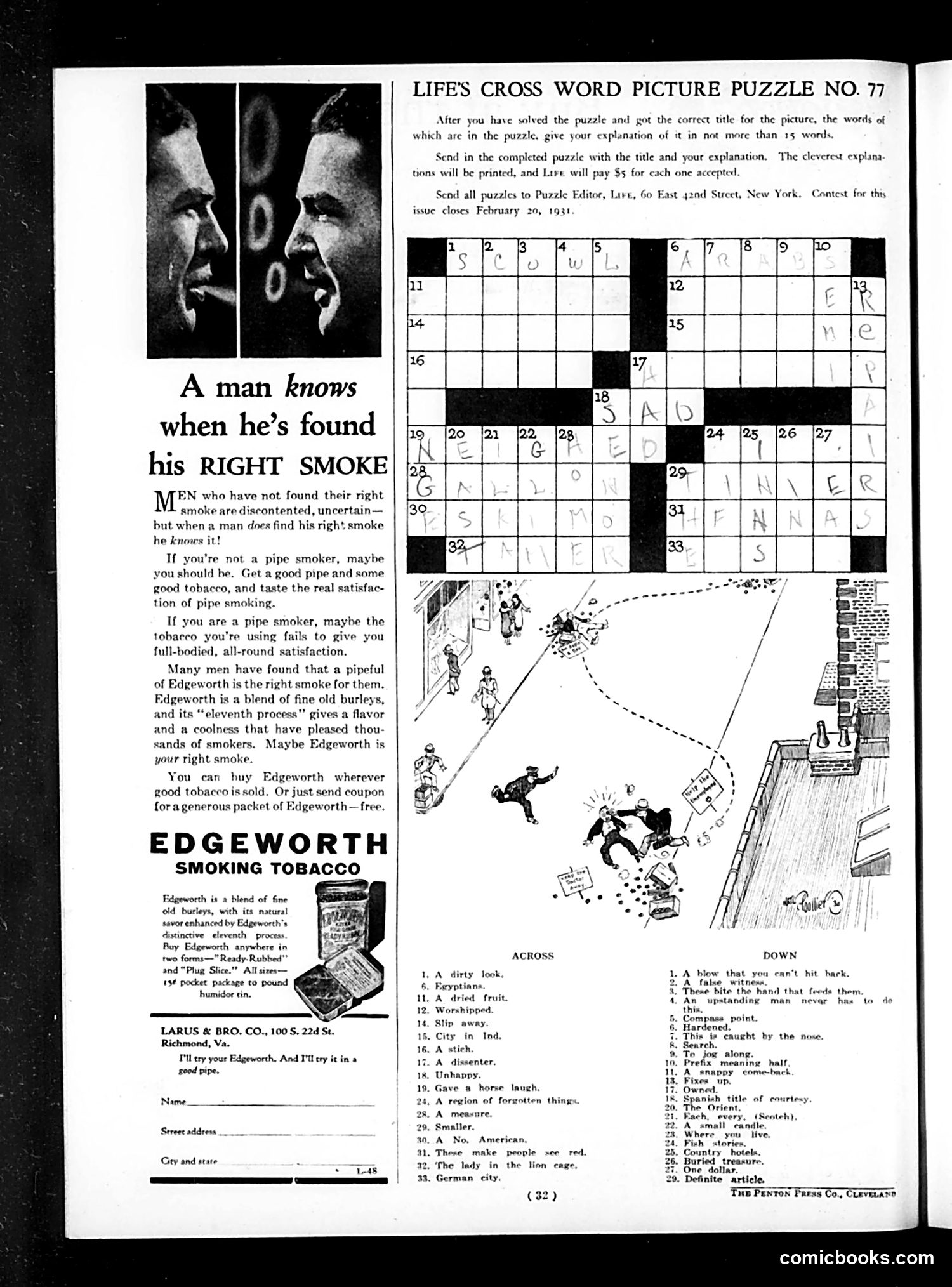
Life Magazine Puzzle Page Analysis This page combines advertising and a contest puzzle. The dominant content is an Edgeworth smoking tobacco advertisement using psychological messaging: "A man knows when he's found his RIGHT SMOKE" appeals to masculine identity and satisfaction. The ad targets pipe smokers with claims that Edgeworth's "eleventh process" delivers superior flavor and coolness. The lower half features Life's Crossword Picture Puzzle No. 77—a popular interactive feature where solvers complete a crossword, then explain the resulting picture (showing people apparently falling or tumbling near buildings) in 15 words or fewer. Life offered $5 for the cleverest explanations, encouraging reader participation and repeat purchases. This dual-purpose layout was typical of 1930s magazines: entertainment and contests drove engagement while advertisements subsidized publication costs.
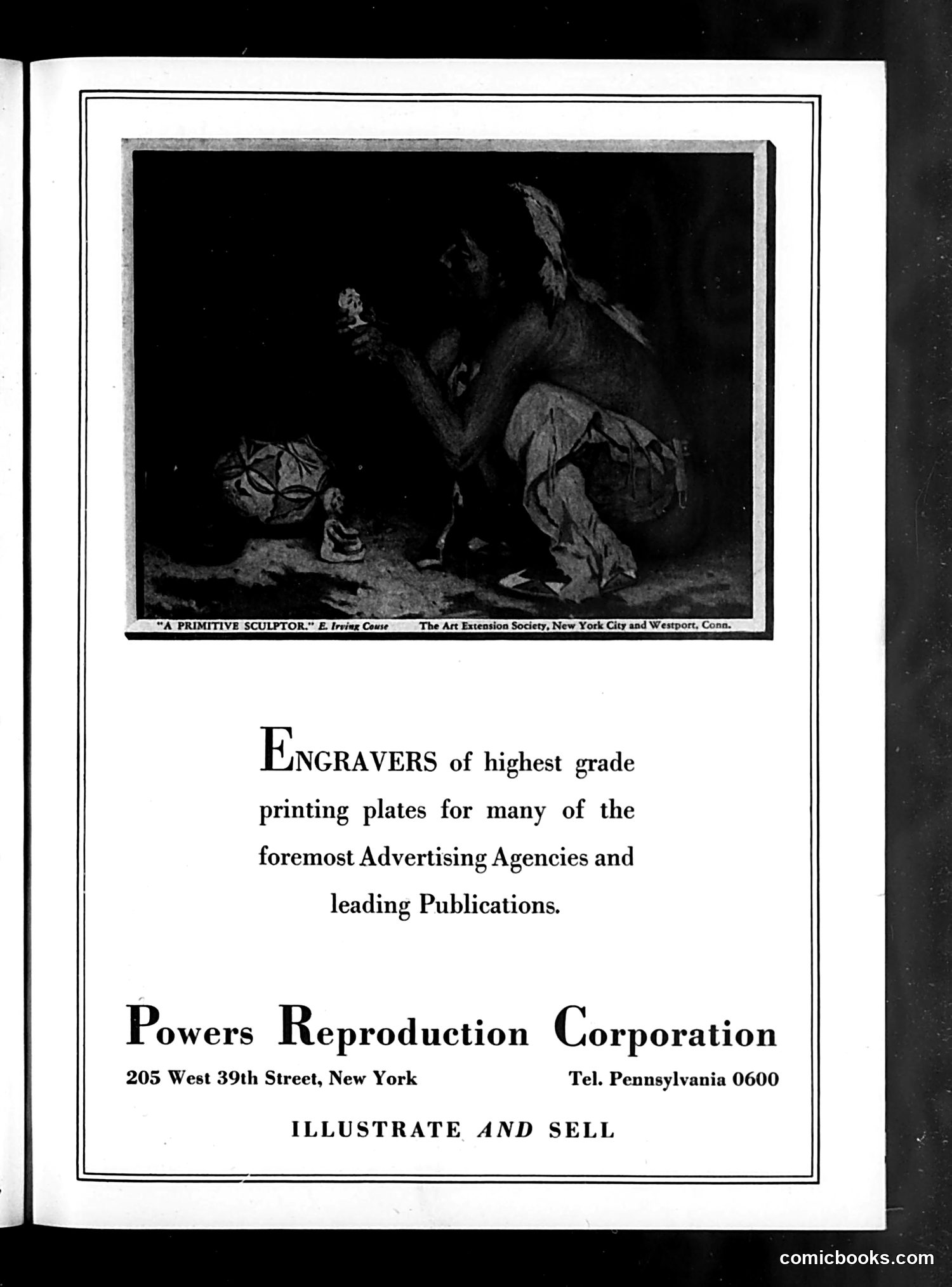
This page is primarily an advertisement for Powers Reproduction Corporation, an engraving and printing plate company serving advertising agencies and publications. The image shown is an artwork titled "A Primitive Sculptor" by E. Irving Couse, depicting a Native American figure working on what appears to be a clay or stone sculpture. The artwork serves as a sample of the high-quality reproduction work Powers Corporation could produce. The page itself contains no satire or political commentary—it's a straightforward business advertisement showcasing the company's printing capabilities through an example of fine art reproduction. The tagline "ILLUSTRATE AND SELL" emphasizes that quality image reproduction was essential for advertising success in this era.
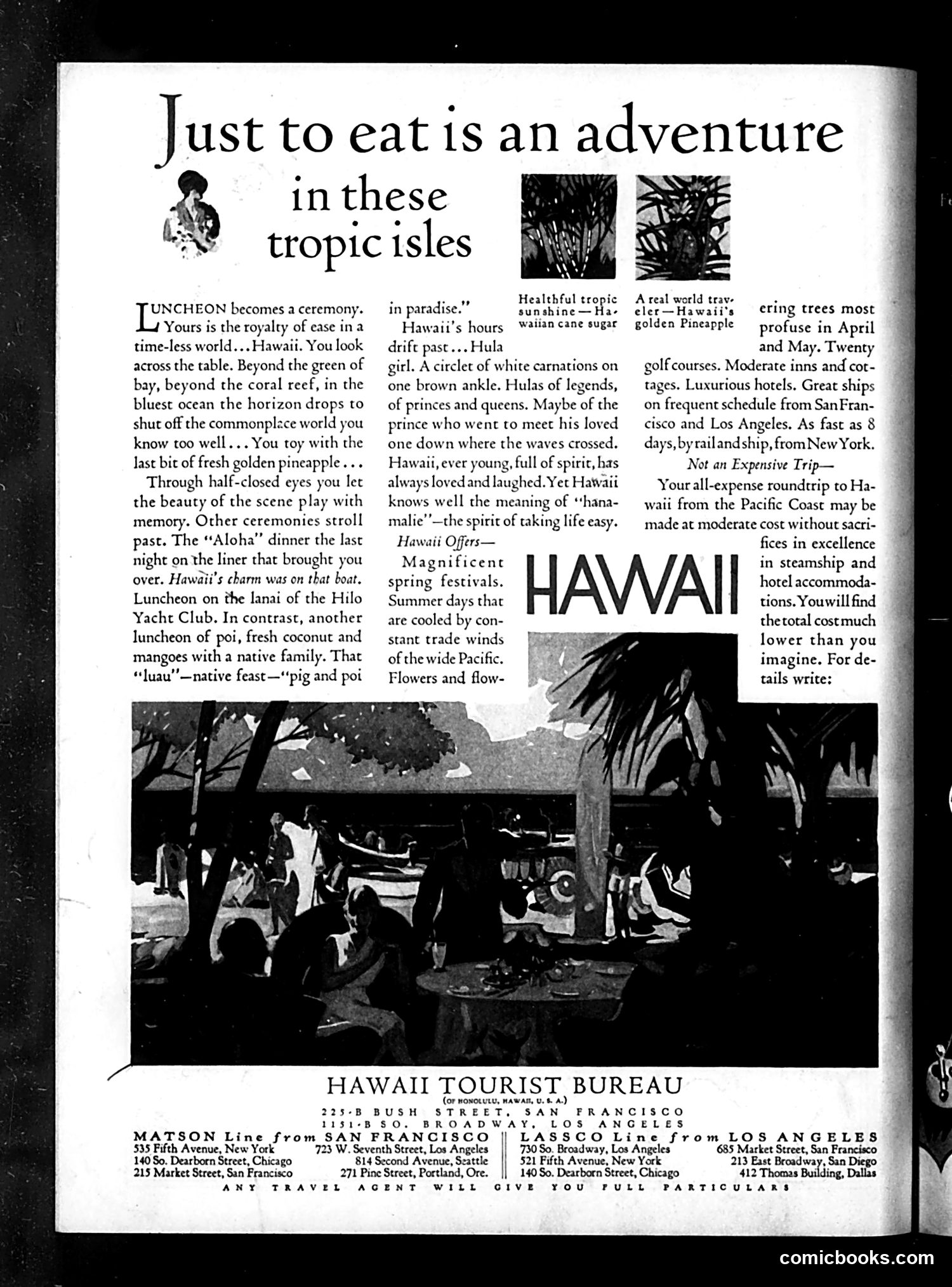
Analysis for Modern Readers This is a tourism advertisement, not satire or political commentary. Published in *Life* magazine (likely 1920s-30s based on style), it promotes Hawaiian travel to affluent American readers. The page romanticizes Hawaii through stereotypical imagery: hula dancers, "native" ceremonies ("luau"), tropical abundance (pineapples, flowers). It emphasizes leisure and escape—"the spirit of taking life easy" through Hawaiian words like "hanamalie." Key selling points for wealthy travelers: luxury steamship lines (Matson and LASSCO), golf courses, upscale hotels, and affordable all-inclusive packages from the Pacific Coast or New York. What's notably absent: any acknowledgment that Hawaii was an independent kingdom until 1893, now a U.S. territory. Native Hawaiians appear only as exotic backdrop—as service providers (hula dancers) rather than people with agency or history. The ad exoticizes and essentially erases Hawaiian culture, presenting it as timeless entertainment for American consumption.