life
Life — May 1, 1931
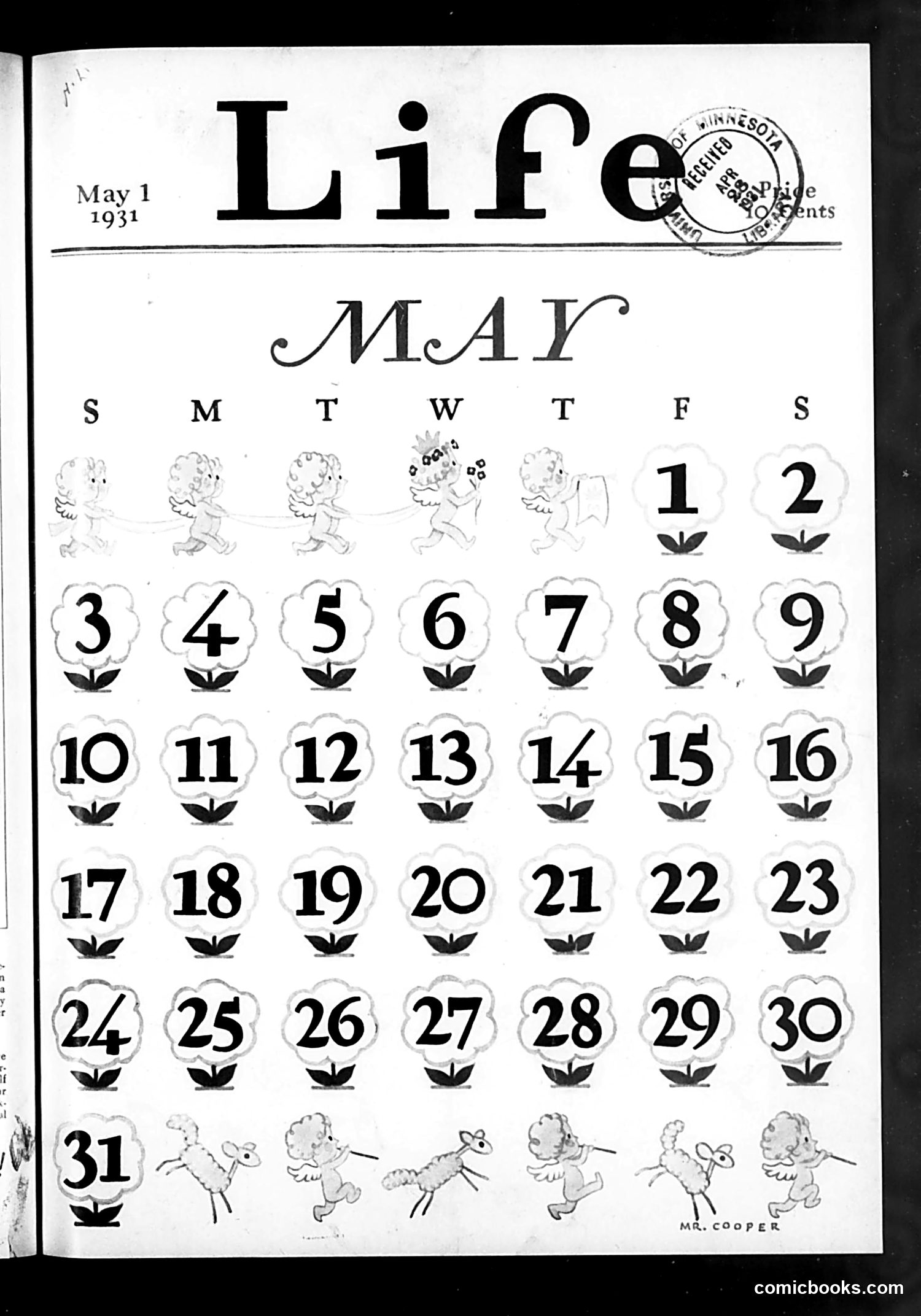
Life Magazine Calendar Page - May 1931 This is a calendar page from Life magazine (May 1, 1931) rather than a political cartoon. The design features charming illustrated cherubs or baby figures in flower pots marking each date from 1-31, with decorative line drawings of children playing at the bottom (around the 31st). The page appears to be purely decorative calendar content, likely by artist Mr. Cooper (signed at bottom). There's no political satire or social commentary visible—it's simply a whimsical, child-themed calendar design typical of family magazines of the 1930s era. The circular library stamp indicates this was part of an institutional archive.
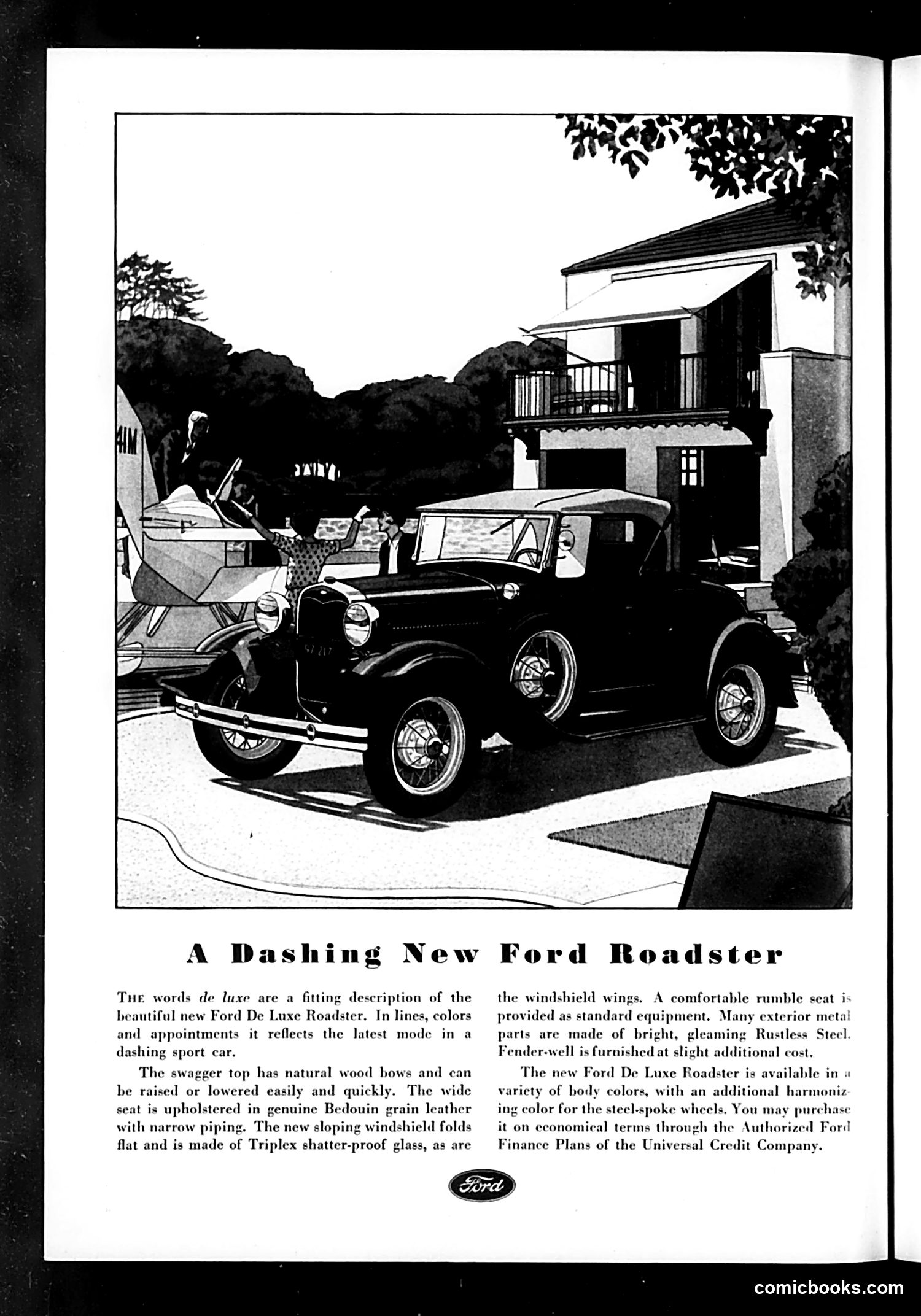
Analysis This is not a political cartoon or satire, but rather a Ford automobile advertisement from Life magazine. The page promotes "A Dashing New Ford Roadster," emphasizing its de luxe styling, features like adjustable windshield wings, comfortable rumble seat, and Rustless Steel components. The illustration shows a wealthy couple with a baby carriage beside the parked Ford, positioned in front of an affluent suburban home—marketing imagery designed to associate the vehicle with prosperity and modern domestic life. The advertisement appeals to aspirational middle-class buyers, highlighting financing options through the Universal Credit Company. This represents typical 1920s-30s automotive marketing that equated car ownership with status and leisure.
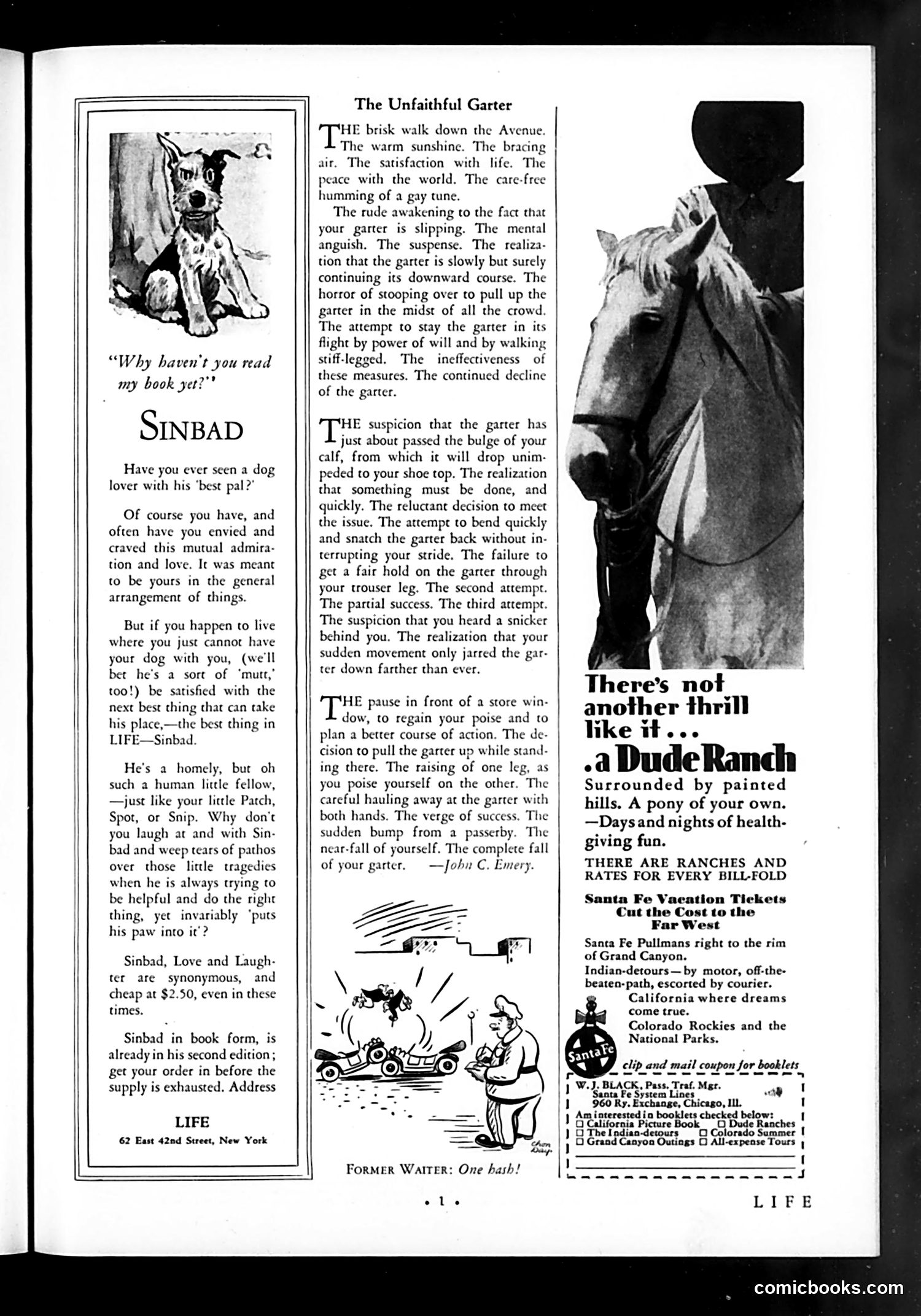
"The Unfaithful Garter" - Explanation This is a humorous essay by John C. Emery about the universal frustration of a garter slipping down one's leg in public. There's no political content or caricature here—it's pure situational comedy relatable to mid-20th century readers who wore garters to hold up socks or stockings. The piece describes the escalating anxiety and failed attempts to discreetly hitch up a drooping garter while walking down the street, trying to maintain composure. The accompanying cartoon shows a man publicly struggling with this embarrassing wardrobe malfunction. The page also includes an advertisement for Dude Ranches and a Sinbad dog-themed book advertisement, but these are separate content items.
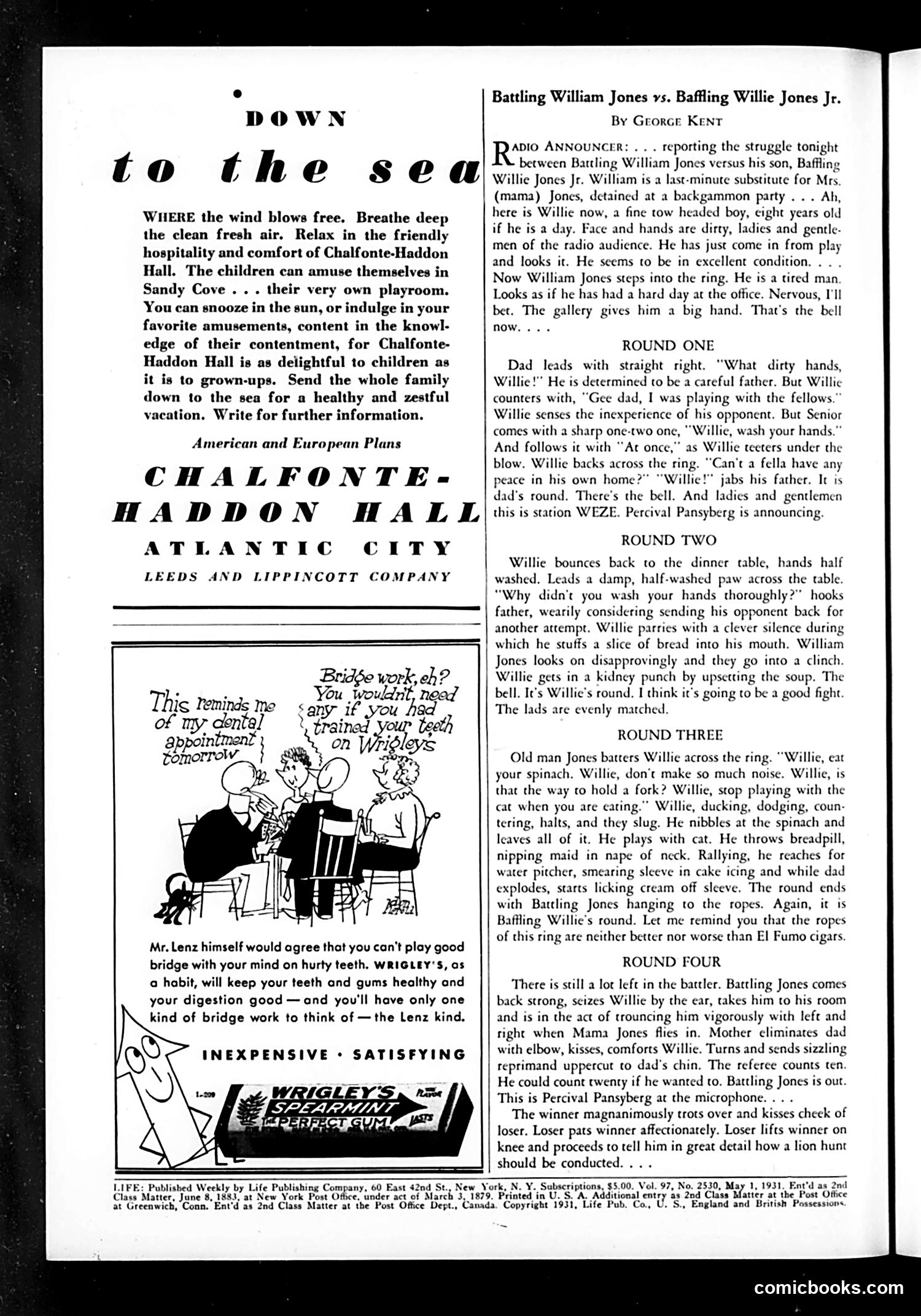
Analysis of Life Magazine Page (May 1, 1931) This page contains two distinct elements: Left side: A Wrigley's gum advertisement featuring a cartoon about dental health and bridge-playing, with the tagline that chewing gum keeps teeth healthy—thus enabling better concentration for card games. The humor plays on the social importance of bridge among the leisure class. Right side: A humorous short story titled "Battling William Jones vs. Baffling Willie Jones Jr." by George Kent, presented as a mock radio boxing match. The narrative describes a comedic fight between father and son at a dinner table, with the son's misbehavior (dirty hands, poor table manners) portrayed as boxing rounds. It's satirical domestic humor typical of 1931 Life magazine—poking fun at generational differences and parenting challenges through the exaggerated lens of a boxing match.
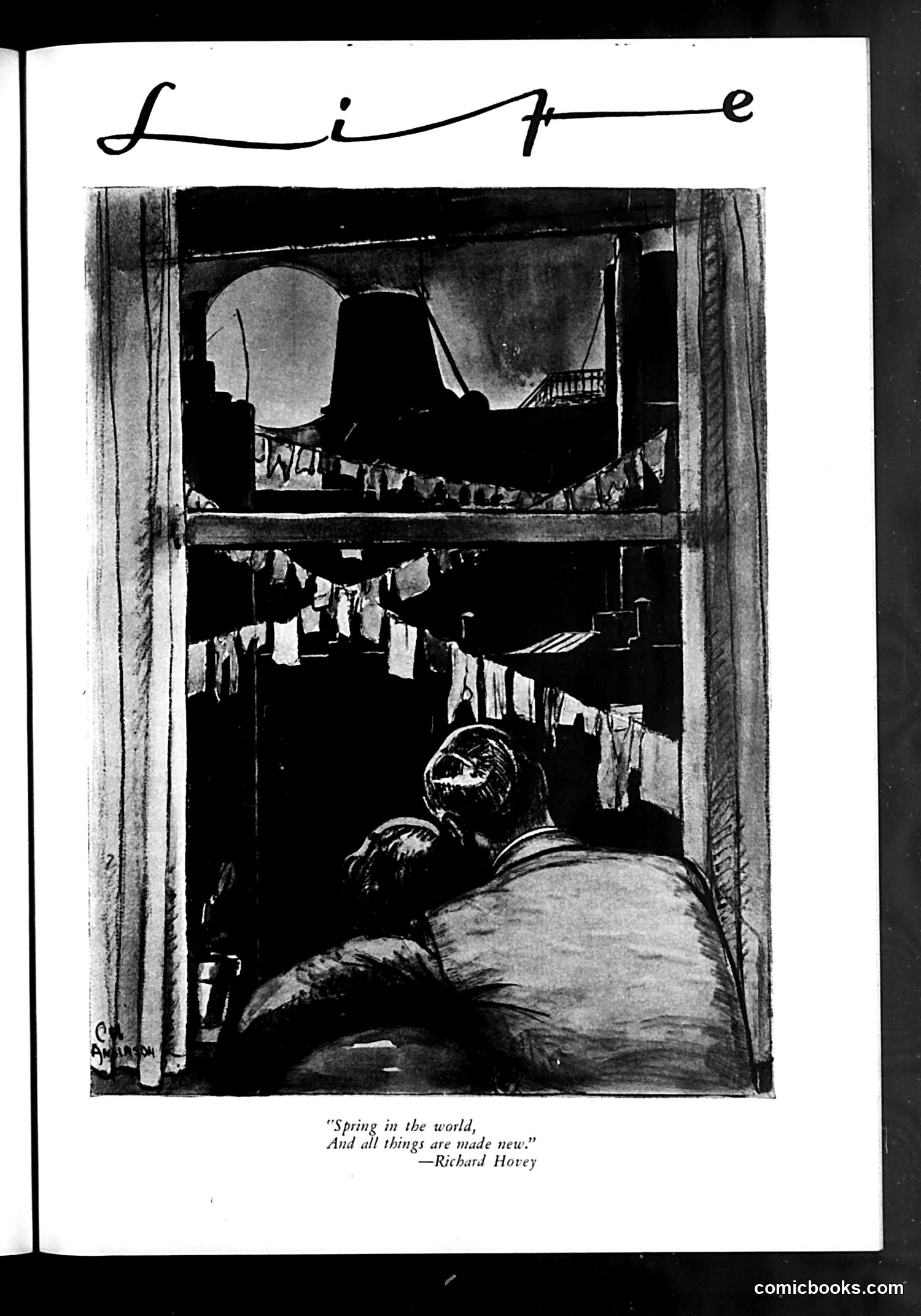
Life Magazine Page Analysis This page features a black and white illustration titled "Life" (handwritten at top). The image shows a person viewed from behind, looking out a window or opening into an urban courtyard scene. Laundry hangs across multiple levels of tenement buildings, and a large moon or circular light dominates the upper background. The caption quotes Richard Hovey: "Spring in the world, / And all things are made new." The satire: This appears to contrast the poetic ideal of spring's renewal with the gritty reality of urban tenement life. The observer gazing at cramped, working-class housing contradicts Hovey's romantic sentiment—suggesting that not "all things are made new" for poor city dwellers. The work critiques the gap between literary idealism and actual conditions for lower classes.
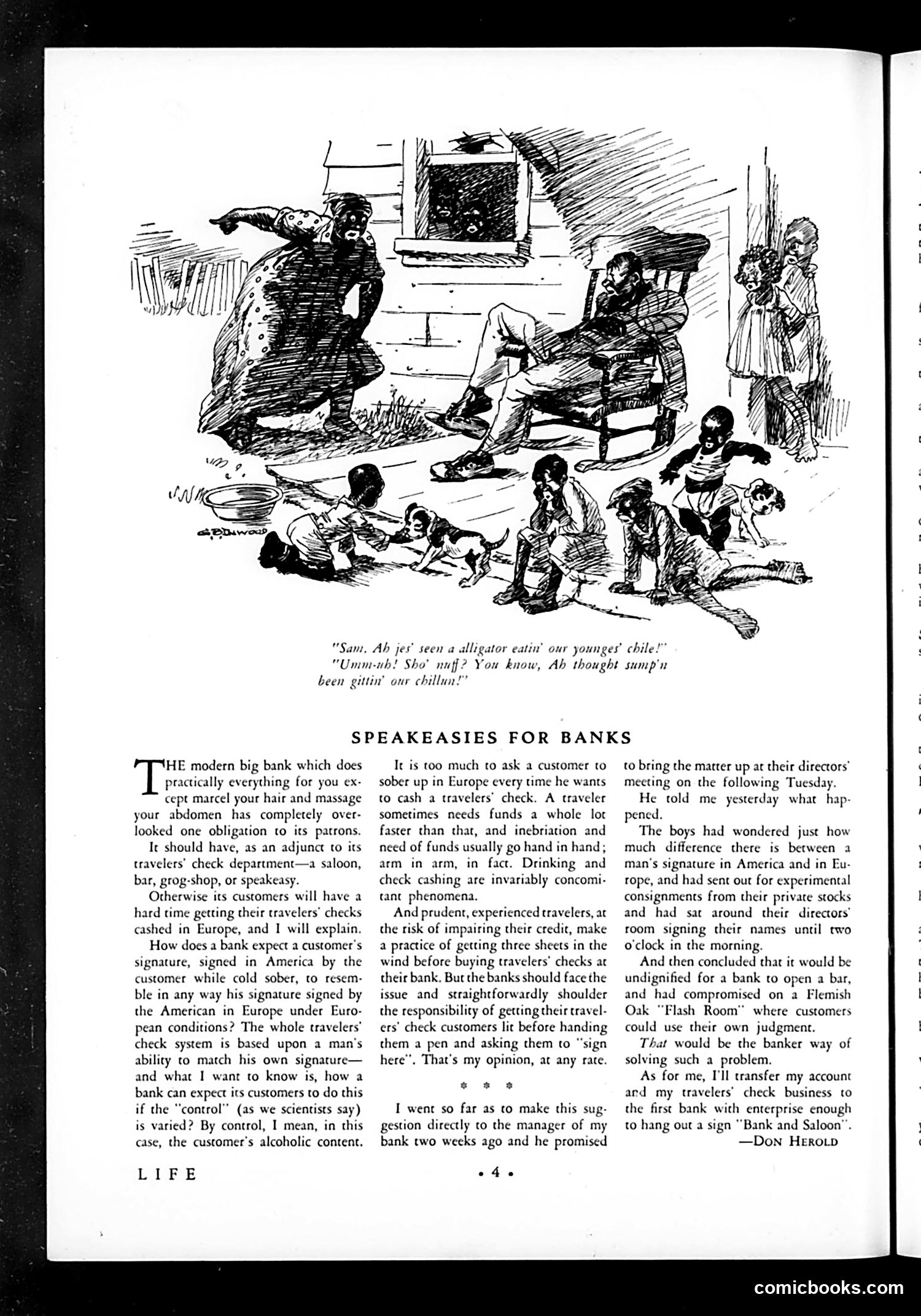
"Speakeasies for Banks" This satirical piece critiques banks that have compromised their integrity by opening bars—a practice enabled by Prohibition-era workarounds. The cartoon depicts a ramshackle building where children play outside while adults engage in drinking inside, suggesting moral decay. The author argues that modern banks have eliminated their traditional responsibility to customers by refusing to cash travelers' checks or manage funds properly. He sarcastically proposes that if banks want to behave like speakeasies (illegal bars), they should simply operate as such openly. The piece mocks banks' loss of professional standards and suggests they've become as disreputable as Prohibition-era illegal establishments. The author threatens to move his business elsewhere, advocating for banks that maintain ethical standards rather than compromising dignity for profit.
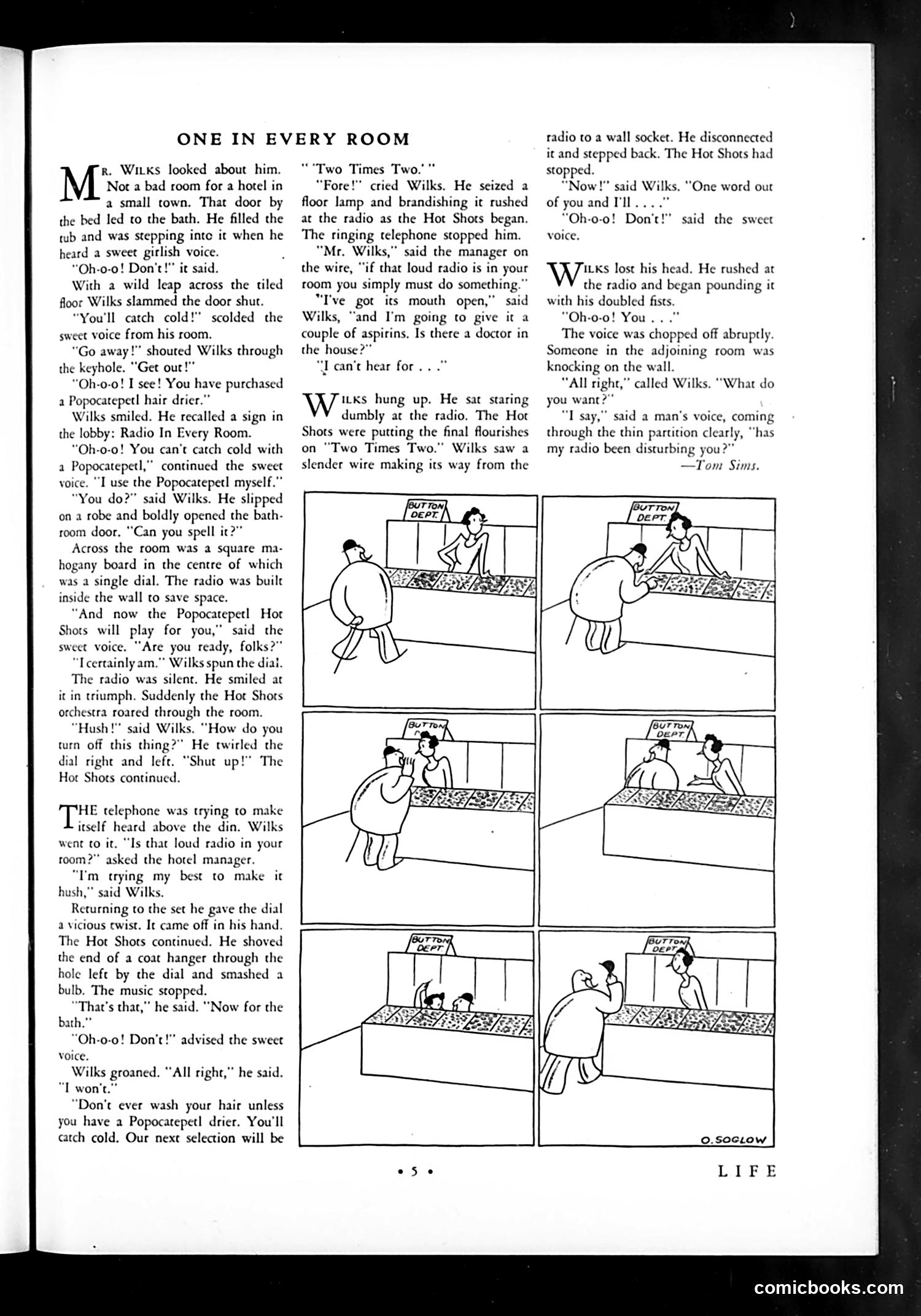
"One in Every Room" - Life Magazine Satire This is a humorous story with comic strip illustrations about a man named Wilks who purchases a "Popocatepetl Hot Shots" radio - apparently a novelty product. The joke centers on the radio's intrusive nature: it plays loudly and uncontrollably throughout his hotel room, disrupting his attempts to bathe and sleep. The comic strip shows Wilks attempting increasingly desperate methods to silence the device - eventually smashing it with a coat hanger through a hole in the wall. The satire mocks both the product's poor design and the emerging culture of consumer gadgets that invade private spaces with unwanted noise and entertainment. The phrase "One in Every Room" sarcastically suggests these radios are becoming ubiquitous household nuisances, a commentary on 1920s-era technological proliferation.
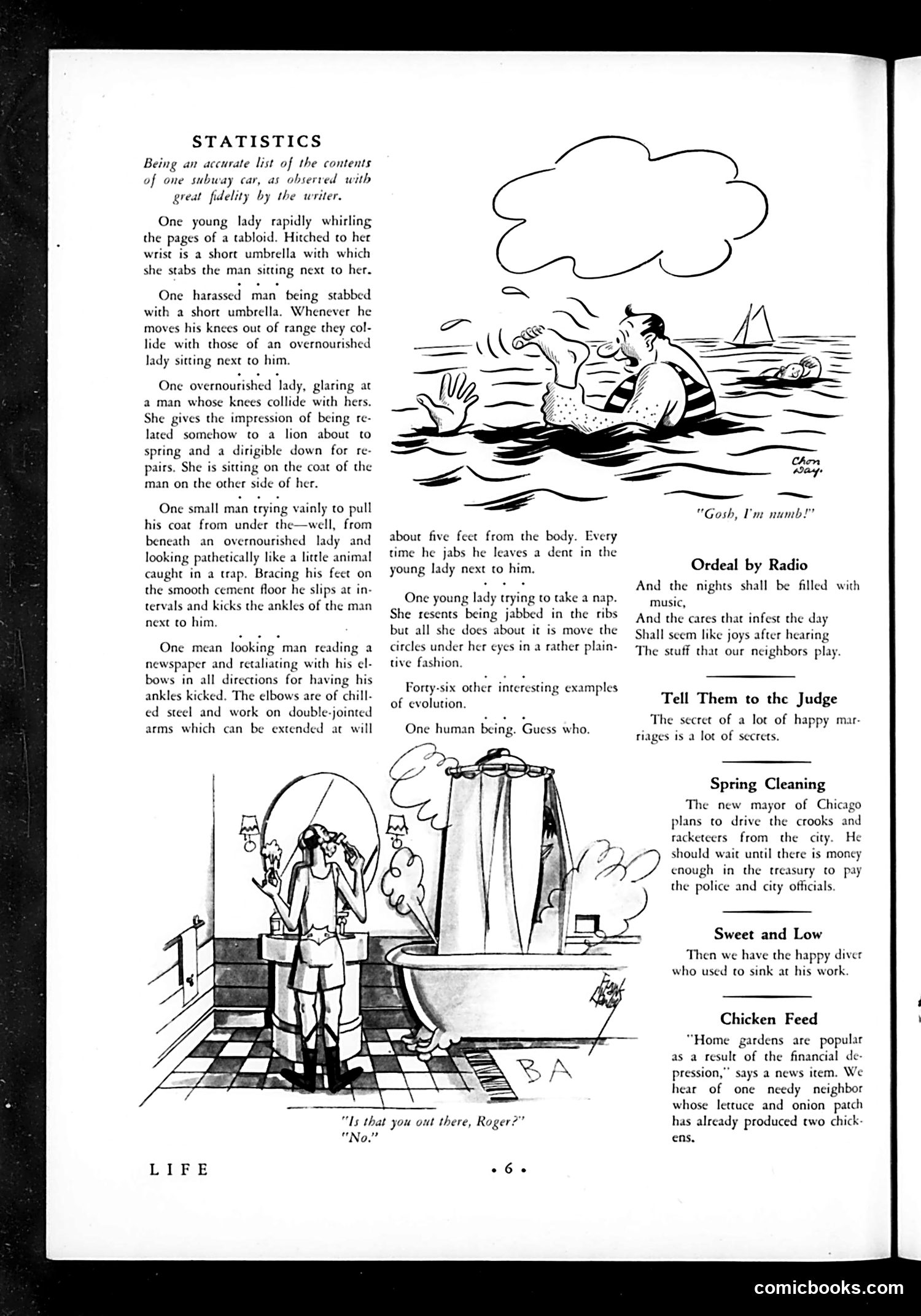
Analysis of Life Magazine Page 6 This page contains satirical vignettes about crowded urban conditions, likely from the 1920s-30s era. The "Statistics" section humorously catalogs annoying subway and public space encounters: women jabbing men with umbrellas, people colliding while reading newspapers, and general physical discomfort from overcrowding. The two cartoons illustrate these scenarios. The first shows a man in water saying "Gosh, I'm numb!"—likely satirizing how even swimming offers no escape from crowds. The second cartoon depicts a woman in a bathtub, captioned "Is that you out there, Roger?"—suggesting even private bathroom spaces aren't secure from intrusions. The accompanying articles ("Ordeal by Radio," "Spring Cleaning," "Chicken Feed") represent typical light satirical commentary on modern life's frustrations and absurdities for contemporary readers.
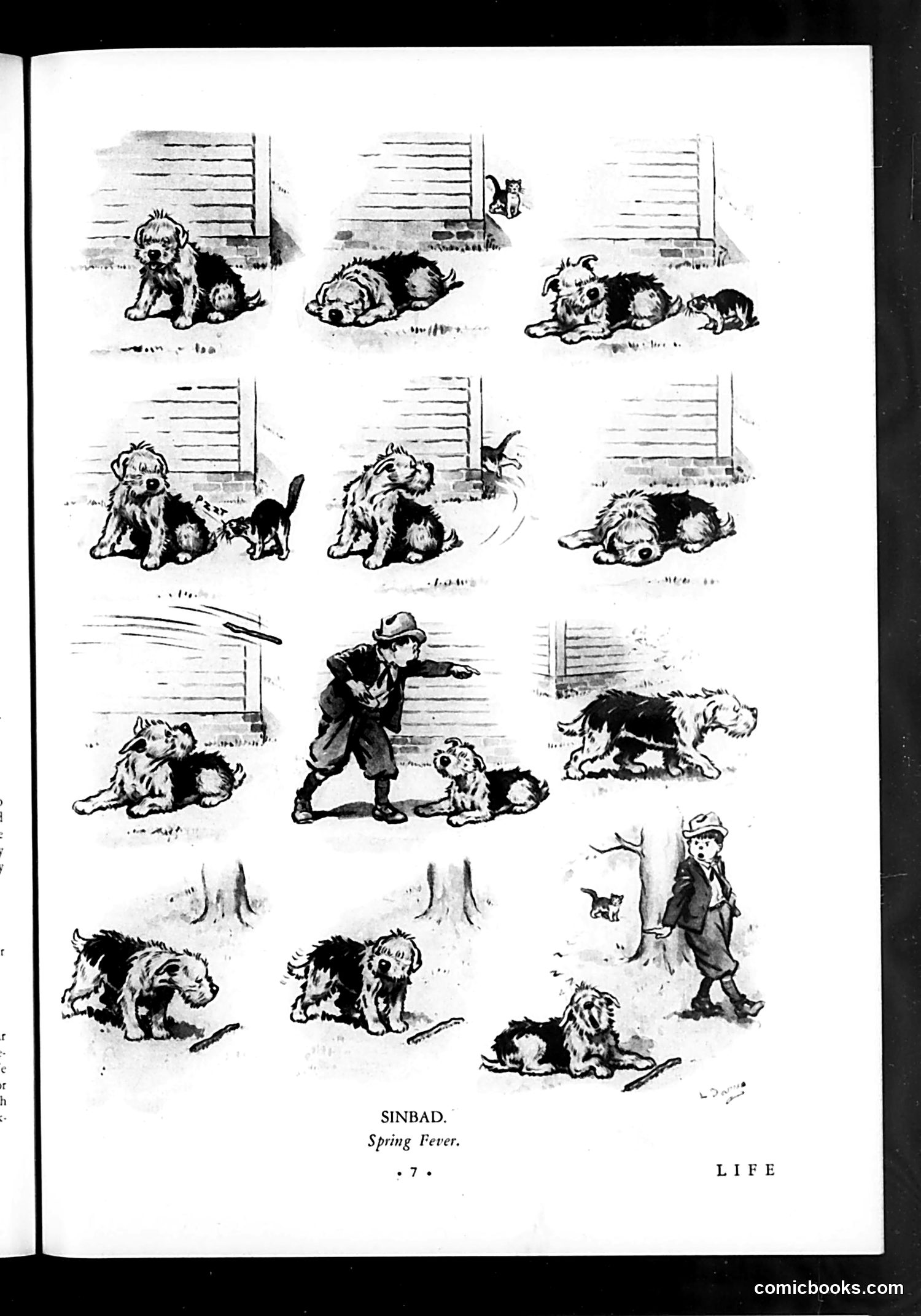
"Sinbad: Spring Fever" - Life Magazine Comic Strip This is a comic strip sequence titled "Sinbad" depicting "Spring Fever," showing a shaggy dog and smaller animals (appears to be a cat or smaller dog) in various scenes around a wooden structure. The narrative follows the larger dog's increasingly erratic behavior—lying down, being distracted, and eventually chasing or playing with the smaller animal. A man in a hat and coat appears midway, seemingly trying to manage the chaos. The sequence culminates with the animals in more settled, exhausted positions. "Spring Fever" was a common period term for restlessness and romantic or mischievous urges triggered by springtime. The comic satirizes how animals (and by extension, humans) become uncontrollably energetic and unfocused during spring, unable to maintain normal routine or discipline.
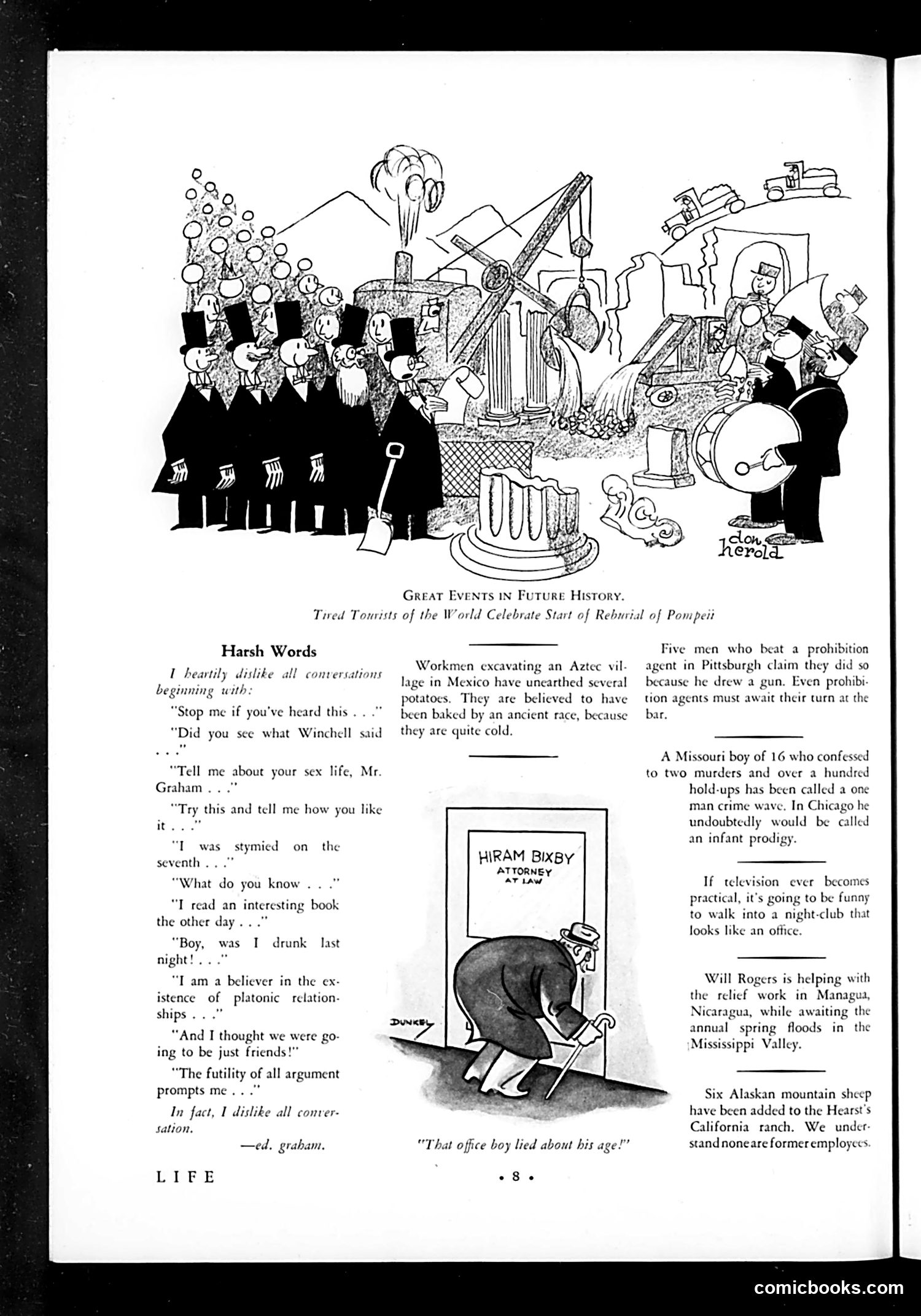
Analysis The page contains a satirical cartoon titled "Great Events in Future History: Tired Tourists of the World Celebrate Start of Rebirth of Pompeii." The top illustration depicts well-dressed figures in top hats observing archaeological excavation equipment and ruins, satirizing how tourists and wealthy observers might celebrate the reconstruction of the ancient Roman city destroyed by Vesuvius. The cartoon mocks the commodification of historical tragedy—turning catastrophe into tourist spectacle. Below is an unrelated cartoon showing an elephant sitting outside an office labeled "Hiram Bixby, Attorney at Law," captioned "That office boy lied about his age!" This appears to be a visual pun about the elephant being absurdly young-looking despite obvious size, playing on job application deceptions. The "Harsh Words" section collects brief satirical observations about conversational clichés and social pretension.
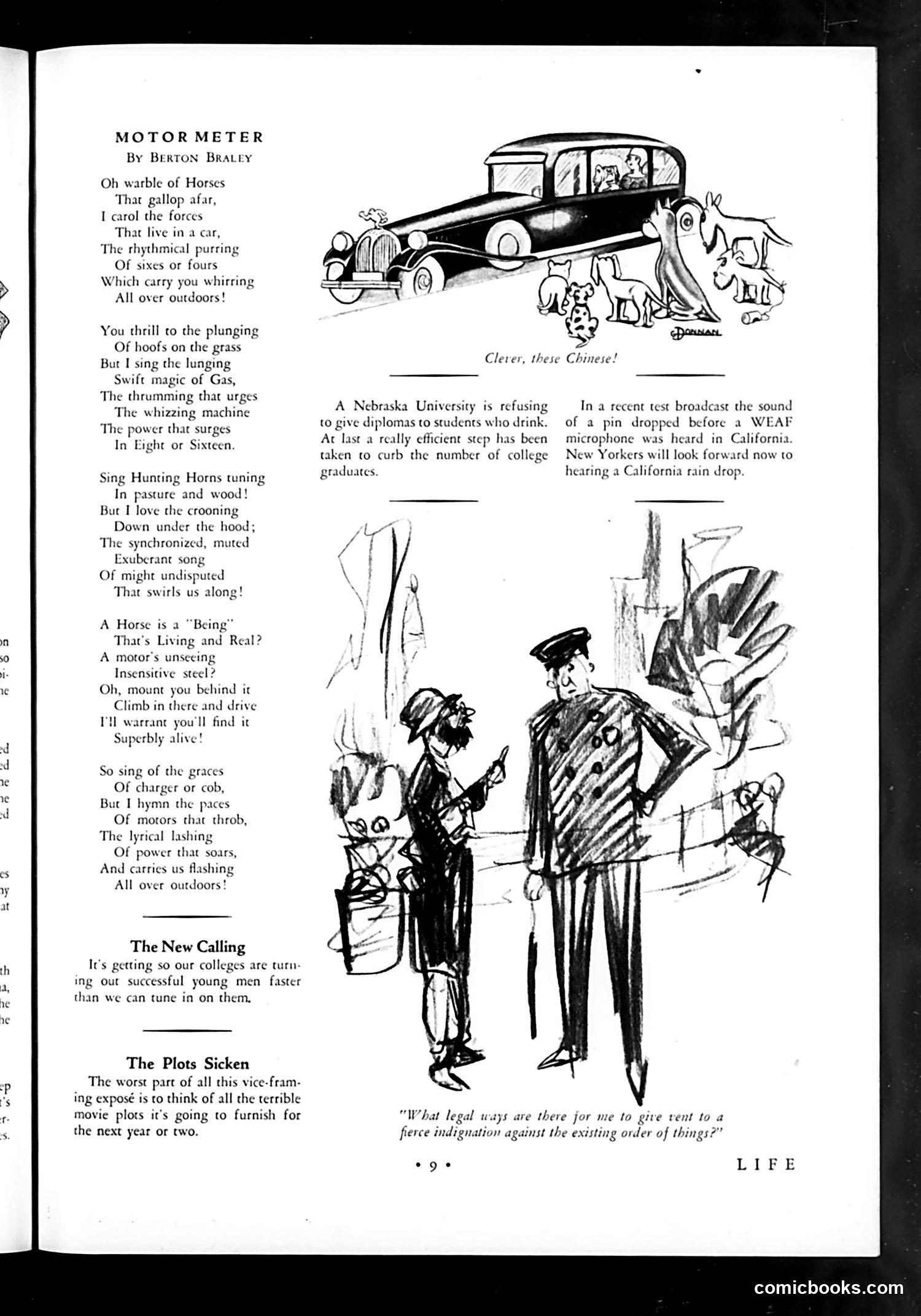
"Motor Meter" Page Analysis This page features a poem by Berton Braley celebrating automobiles as superior to horses, alongside satirical news briefs and cartoons. The main cartoon depicts two figures in what appears to be a confrontation about "legal ways" to "give vent to fierce indignation against the existing order of things." The figures' formal dress and the reference to legal dissent suggest this mocks political activists or reformers of the era who sought change through established channels rather than more radical means. The accompanying news items include humor about Nebraska University refusing diplomas to drinking students and a California radio station's sound-effect experiment. These brief items typify Life magazine's satirical commentary on contemporary social trends and institutional policies, using light mockery to critique educational standards and emerging broadcast technology.
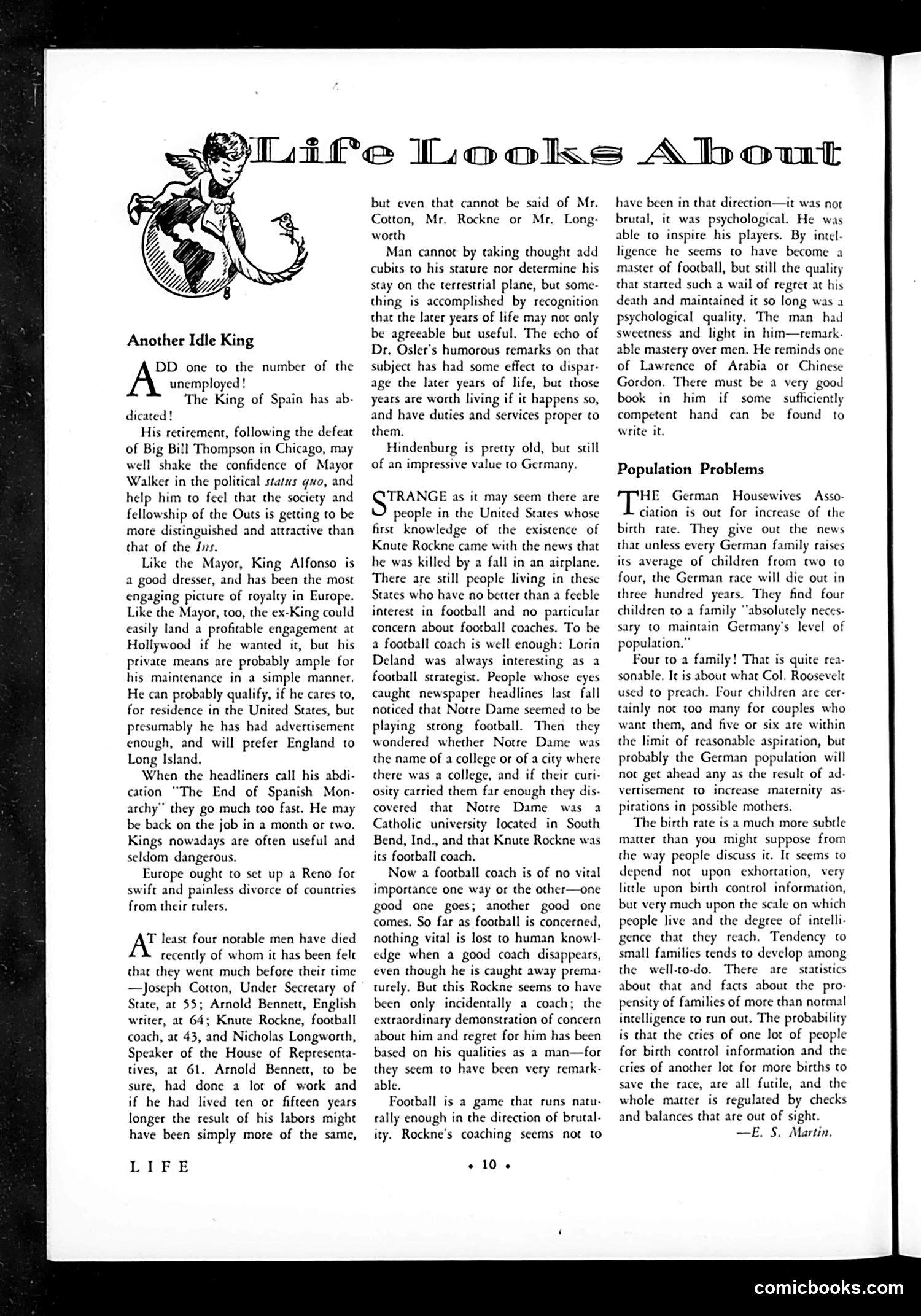
"Life Looks About" - Analysis This page from *Life* magazine contains two satirical articles with a small decorative illustration at the top. "Another Idle King" criticizes Spain's King Alfonso for his ineffectiveness after losing political influence. The article suggests he's become a figurehead without real power, comparing him unfavorably to the Mayor of New York, and sarcastically proposing European monarchs establish "a Reno for swift and painless divorce" from their rulers. "Population Problems" discusses Germany's efforts to increase birth rates through the German Housewives Association, promoting larger families. The author expresses concern that uncontrolled population growth—dependent on social conditions rather than propaganda—could prove counterproductive, arguing instead that "checks and balances" should regulate such matters. Both pieces use satirical commentary on contemporary political and social issues in Europe.
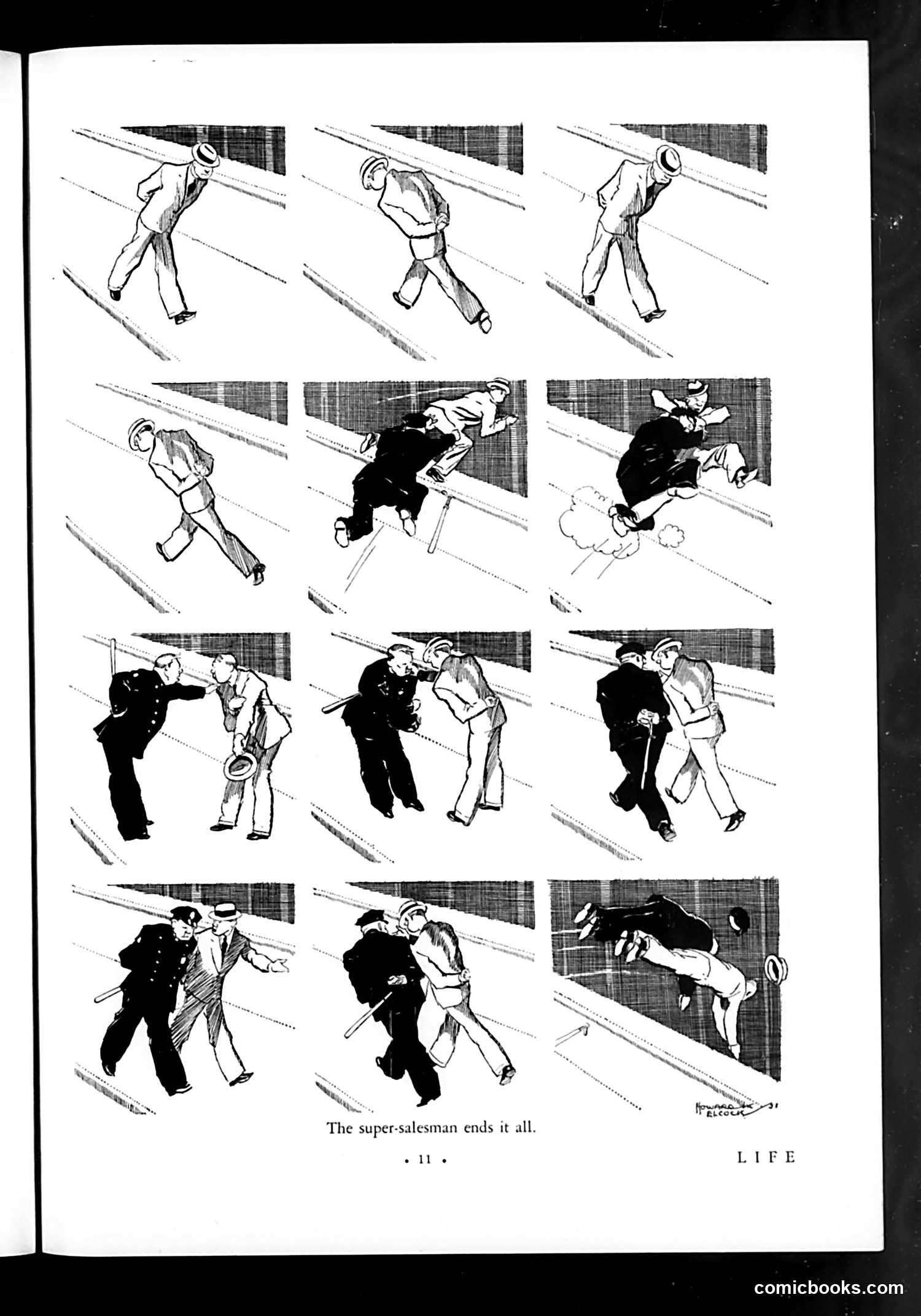
"The Super-Salesman Ends It All" This cartoon sequence depicts a salesman's escalating attempts to make a sale on a steep incline, becoming increasingly physical and aggressive. Beginning with ordinary persuasion techniques (top rows), the figure progresses through increasingly violent tactics—pushing, tackling, and finally launching himself at his prospect in desperation. The satire targets aggressive 1920s-30s salesmanship culture, mocking the "super-salesman" archetype celebrated in business literature of the era. The joke is that relentless sales techniques, taken to their logical extreme, become absurdly violent and counterproductive. The final panel—where the salesman appears knocked backward—suggests such tactics ultimately fail, critiquing both the mythology of the unstoppable salesman and the era's intense commercial pressure.
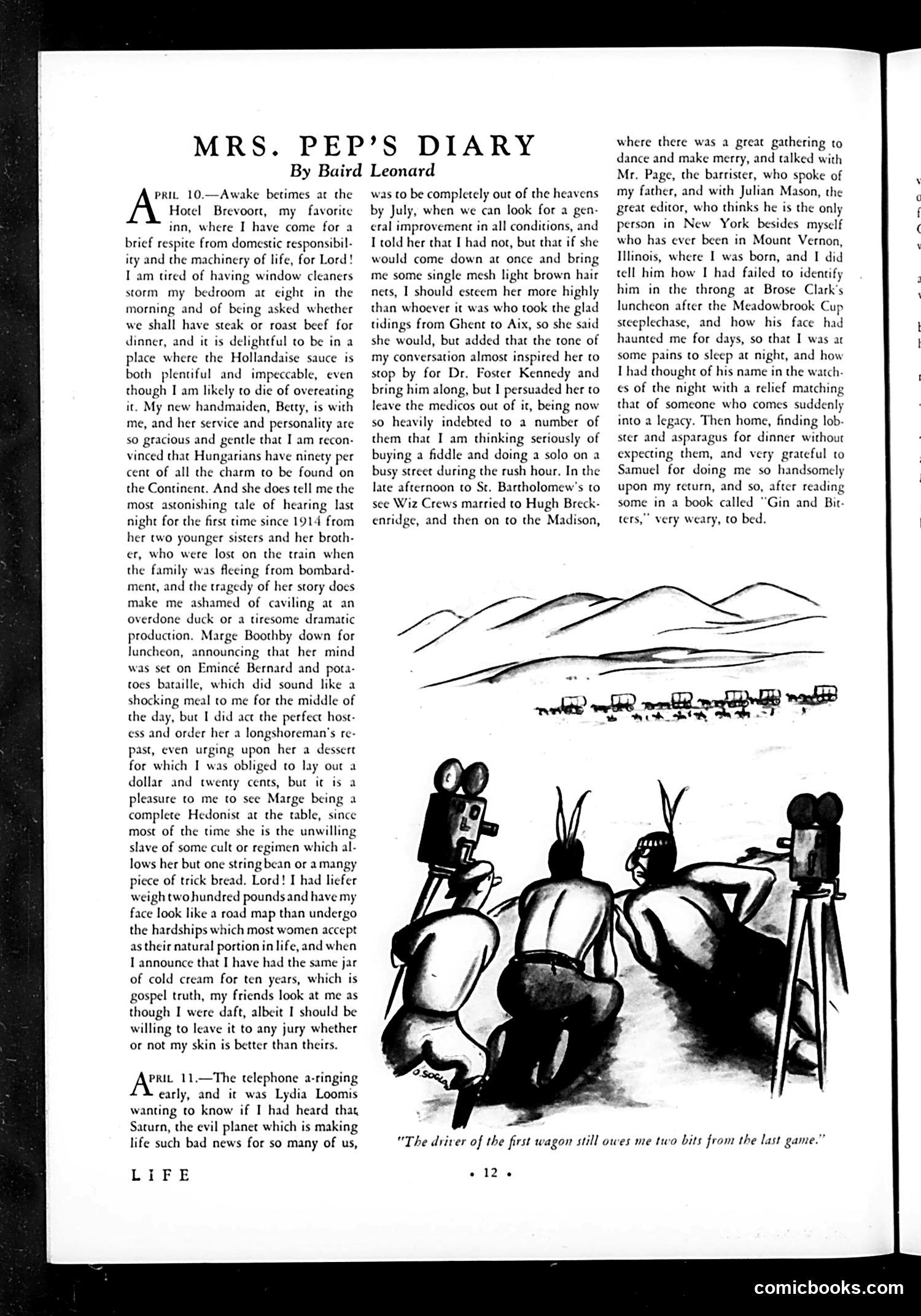
Mrs. Pep's Diary: April 10-11 This is a humorous diary entry by Baird Leonard in *Life* magazine's satirical column. The entry mocks the author's domestic life and social pretensions. April 10 centers on complaints about her boring country inn stay and includes gossip about acquaintances—notably mentioning Julian Mason, editor of a literary magazine, and references to various society events and horse races. April 11 opens with a telephone call from Lydia Loomis about Saturn's "evil planet" causing bad news. The accompanying cartoon shows two anthropomorphic rabbits operating a film camera, with the caption: "The driver of the first wagon still owes me two bits from the last game." This appears to be a visual non-sequitur typical of *Life*'s absurdist humor, depicting animals gambling or settling debts.
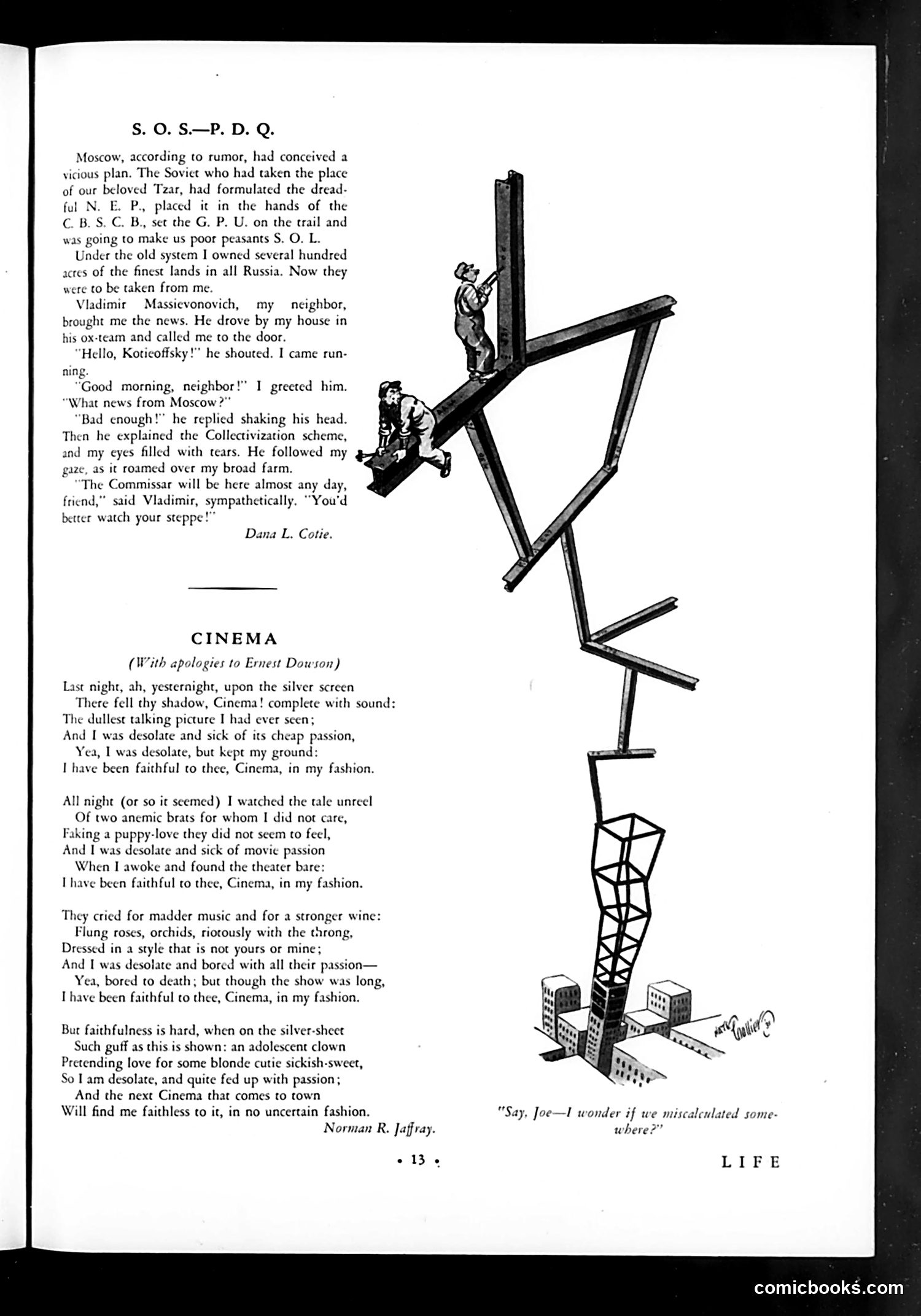
Analysis of Life Magazine Page 13 This page contains two pieces of satirical writing about Soviet Russia and cinema, paired with a striking modernist illustration of an abstract mechanical/constructivist structure. The first excerpt ("S.O.S.—P.D.Q.") by Dana L. Cotie satirizes Soviet collectivization policies, depicting a landowner's distress as his property faces seizure under the new communist system. The neighbor Vladimir brings news of Moscow's "dreadful N.E.P." scheme. The second piece, "Cinema" by Norman R. Jaffray (with apologies to Ernest Dowson), mocks both Soviet cinema and Western movie-goers' shallow passions. It criticizes cheap cinema for exploiting audiences while claiming artistic faithfulness. The geometric illustration appears to reference Soviet Constructivism—the modernist artistic movement associated with the USSR—perhaps ironically complementing critiques of Soviet society and culture.
Analysis of "Life in Washington" by Carter Field This satirical article discusses John Q. Tilson, a Connecticut Republican House leader, and his political ambitions regarding the Vice Presidency and Speakership. The satire centers on Tilson's conflicted position: he simultaneously wants to run for Vice President while also seeking the House Speakership—attempting to "bestride four horses at once." The piece mocks his indecision and mixed signals, suggesting he's like an poorly-trained circus rider. The article references Curtis (likely Vice President Charles Curtis) and political maneuvering within the Republican Party. Field satirizes how Tilson's ambitions have leaked out prematurely, and how other Republicans view his pretensions as comical rather than serious. The humor derives from exposing the gap between Tilson's actual political standing and his outsized ambitions.
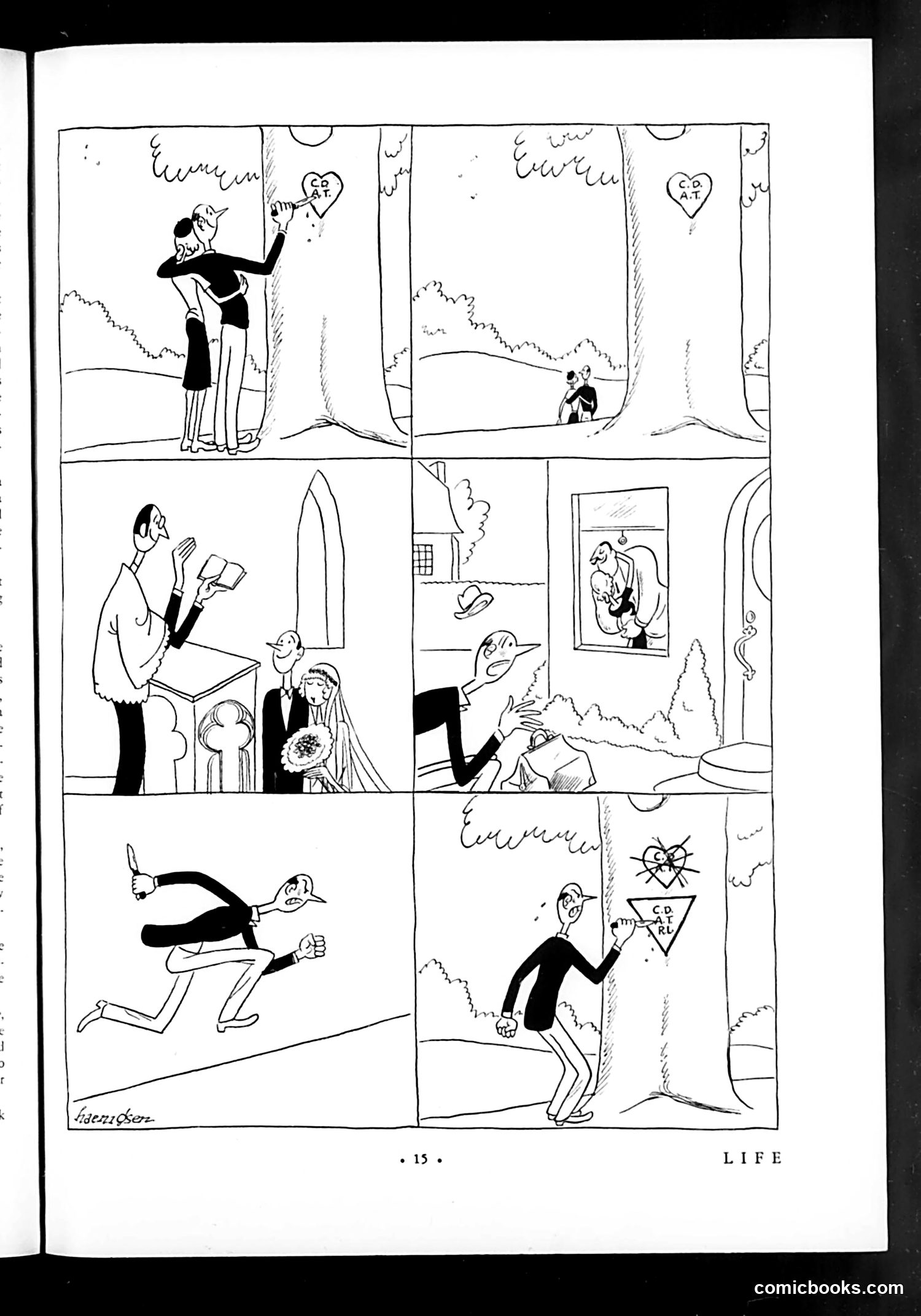
Life Magazine Comic Strip Analysis This six-panel comic strip satirizes romantic courtship and marriage rituals, likely from the early-to-mid 20th century. The narrative follows a man's romantic pursuit: he carves initials into a tree, proposes in a forest, presents an engagement ring at home (with family present), gets married indoors, and finally appears distressed or exhausted in the final panels—suggesting marital discord or regret. The humor derives from contrasting the idealized romance of early courtship with the mundane or disappointing reality of married life. The man's increasingly frantic gestures and expressions in the final panels emphasize the comedic "fall from grace." This reflects common Life magazine themes mocking middle-class domestic life and the gap between romantic expectations and married reality.
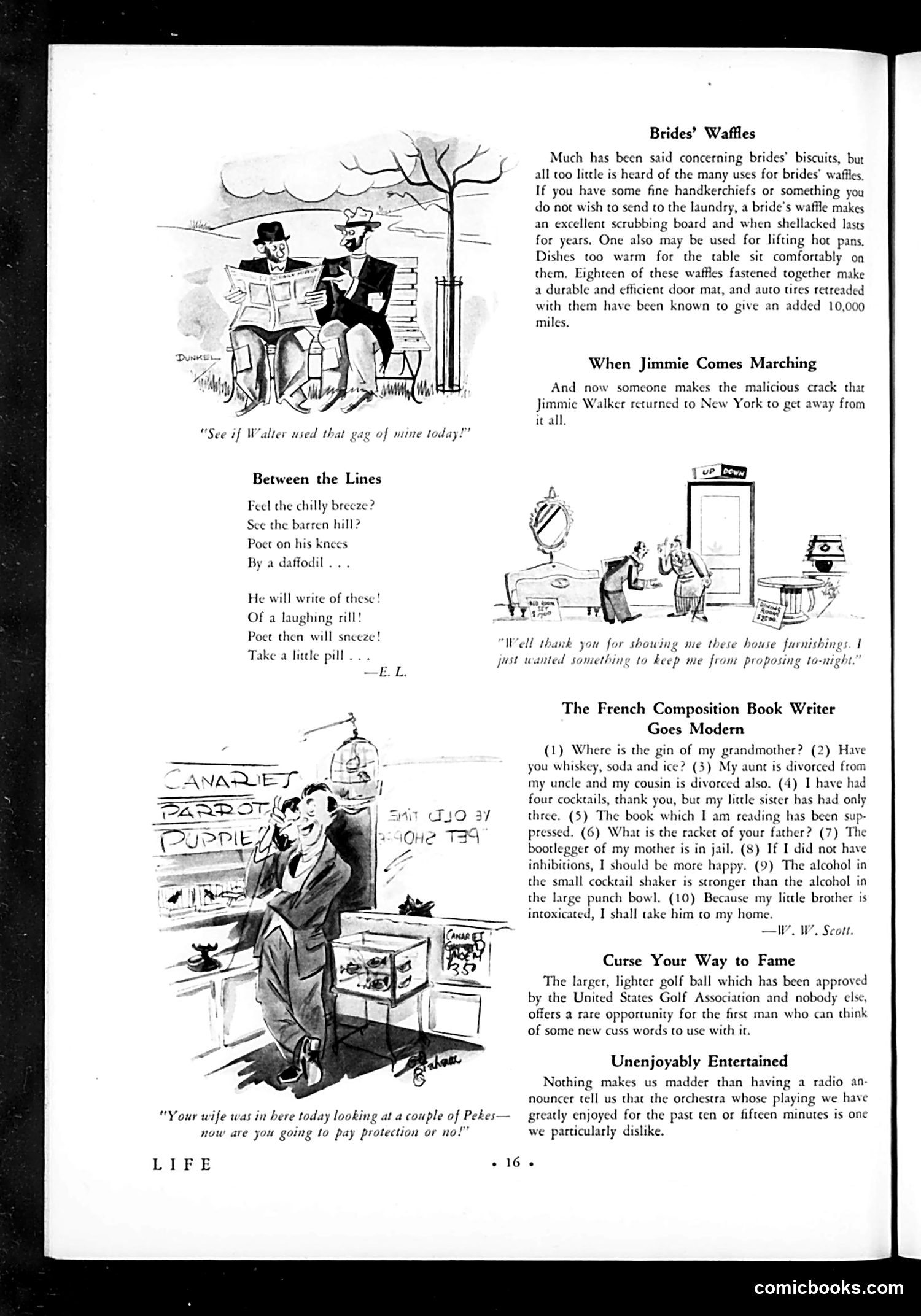
Analysis of Life Magazine Page 16 This page contains several humorous pieces aimed at 1920s readers: Top cartoon: Two men reading newspapers outdoors discuss using a "gag" of wine—likely referencing Prohibition-era humor about alcohol consumption despite the legal ban. "Between the Lines": A short poem by E.L. uses poetic language to describe winter scenery and melancholy. Middle cartoon: Depicts a man at what appears to be a kitchen or bar, with the caption about "protection or not"—likely satirizing Prohibition enforcement and bootlegging concerns. "The French Composition Book Writer Goes Modern": A humorous piece mocking overly complicated modern life through absurdist statements about family dysfunction and drinking. The page reflects 1920s anxieties about Prohibition, modern social changes, and satirizes contemporary writing styles and social pretension.
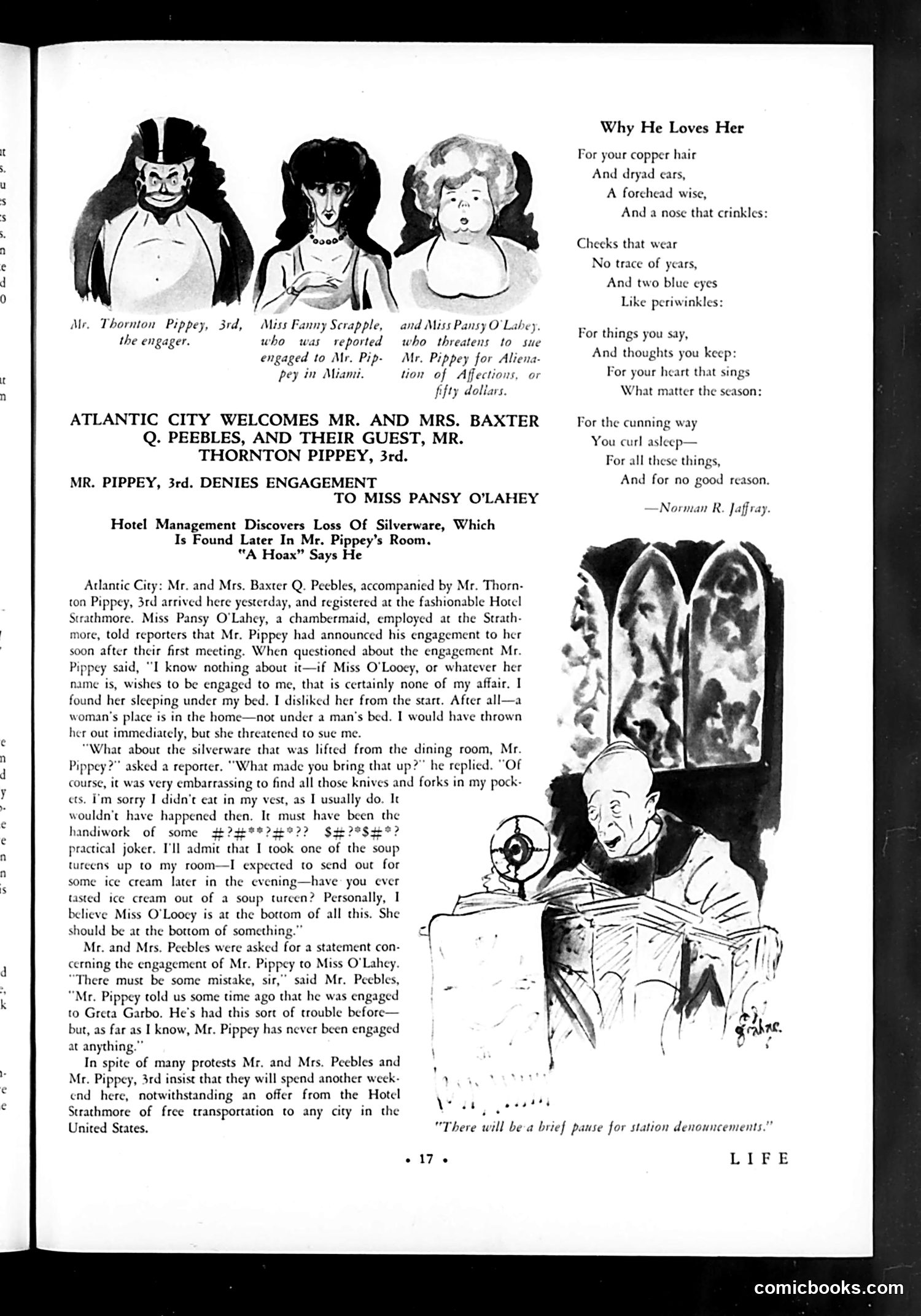
Analysis of Life Magazine Page 17 This page satirizes a hotel scandal involving Mr. Thornton Pippey, 3rd, a wealthy guest at Atlantic City's Hotel Strathmore. The humor centers on three elements: 1. The engagement denial: Mr. Pippey denies his engagement to Miss Pansy O'Lahey despite witnesses claiming otherwise. 2. The stolen silverware: Hotel management discovers missing silverware found in Pippey's room—he unconvincingly blames a "practical joker" who allegedly stole soup tureens. 3. The caricature illustrations show three women (including the allegedly jilted Miss O'Lahey) and a cartoon of a bald man at a ship's wheel captioned about "station denouncements." The satire mocks upper-class hypocrisy: Pippey's absurd explanations for both the broken engagement and theft expose wealthy guests' entitlement and dishonesty. The poem "Why He Loves Her" adds ironic commentary on superficial romantic ideals.
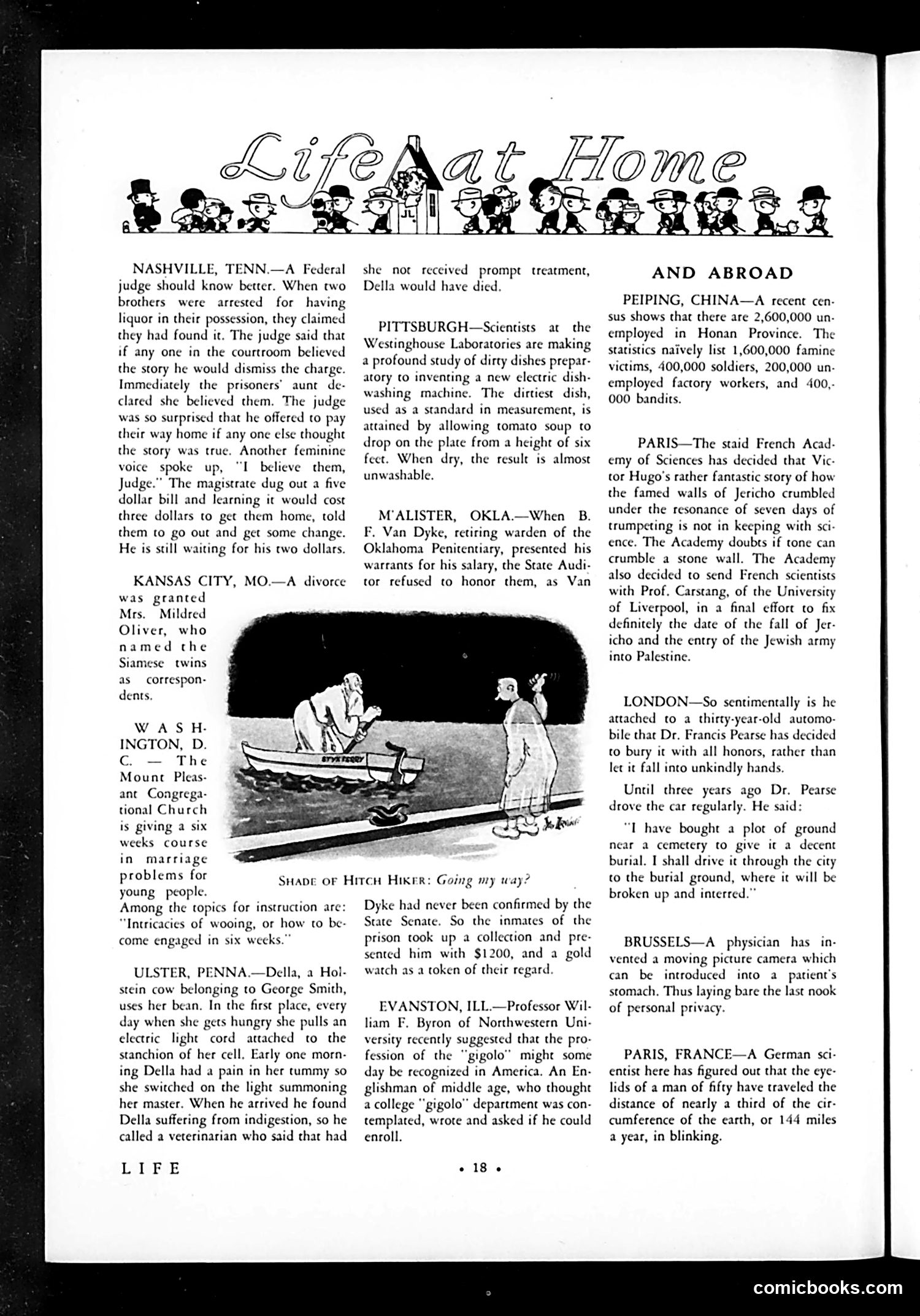
"Shade of Hitch Hiker: Going my way?" This cartoon satirizes a contemporary scandal involving B.F. Van Dyke, a warden at Oklahoma Penitentiary. According to the accompanying text, Van Dyke presented false warrants for his salary to the State Auditor, who refused to honor them. Prison inmates subsequently collected money and presented Van Dyke with $1,200 and a gold watch as a token of regard—apparently a darkly ironic commentary on his management. The cartoon depicts this absurd situation: a hitchhiker (representing Van Dyke) is picked up by what appears to be a ghost or ethereal figure, playing on the phrase "going my way?" The humor lies in the surreal irony of a corrupt prison official receiving gratitude from inmates he oversaw.
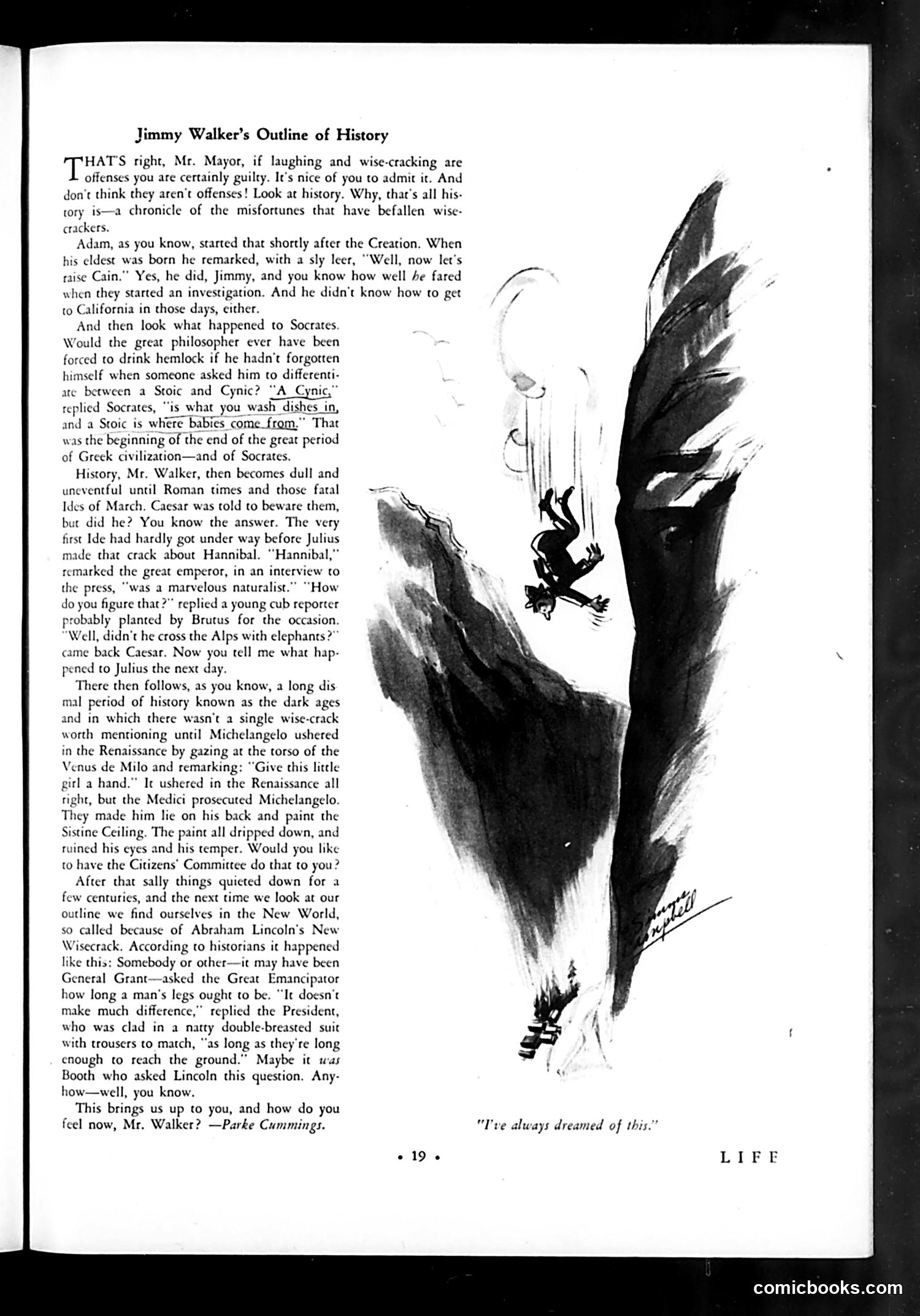
"Jimmy Walker's Outline of History" This is a satirical piece by Parke Cummings about Jimmy Walker, New York City's mayor (implied by "Mr. Mayor"). The cartoon illustrates Walker's humorous, irreverent commentary on history—treating serious historical events as punchlines. The accompanying illustration shows a figure falling or tumbling down a cliff, captioned "I've always dreamed of this," likely mocking someone's misfortune. Walker's "outline" consists of wise-cracks about history's mishaps: Adam's Cain raising difficulties, Socrates being poisoned, Caesar ignoring omens, and Michelangelo's mistreatment. The satire suggests Walker—known for his witty, flippant personality—trivializes serious matters through humor, comparing history itself to a "chronicle of misfortunes that have befallen wise-crackers." This portrays Walker as charming but irreverent.
Analysis for Modern Readers This is a theater critic's column by Baird Leonard complaining humorously about the emotional toll of reviewing plays. The critic uses self-deprecating satire: he compares himself to the biblical prophet Jeremiah, claims he's "lashed by fury," and jokes that he should drive taxicabs instead because he's become bitter and makes inflammatory statements (like saying he didn't care if an actress lived or died). The second section discusses a production of I.J. Golden's play "Precedent" at the Provincetown Theatre. Leonard notes it was based on the Mooney-Billings trial scandal—a real 1916 labor case involving accused bombers. He uses this to satirize how theatrical productions often address current scandals, while his own discomfort (sitting in Row T with poor plaster) undermines any serious theatrical analysis. The humor relies on critics' notorious grumpiness and the gap between theatrical pretension and mundane reality.
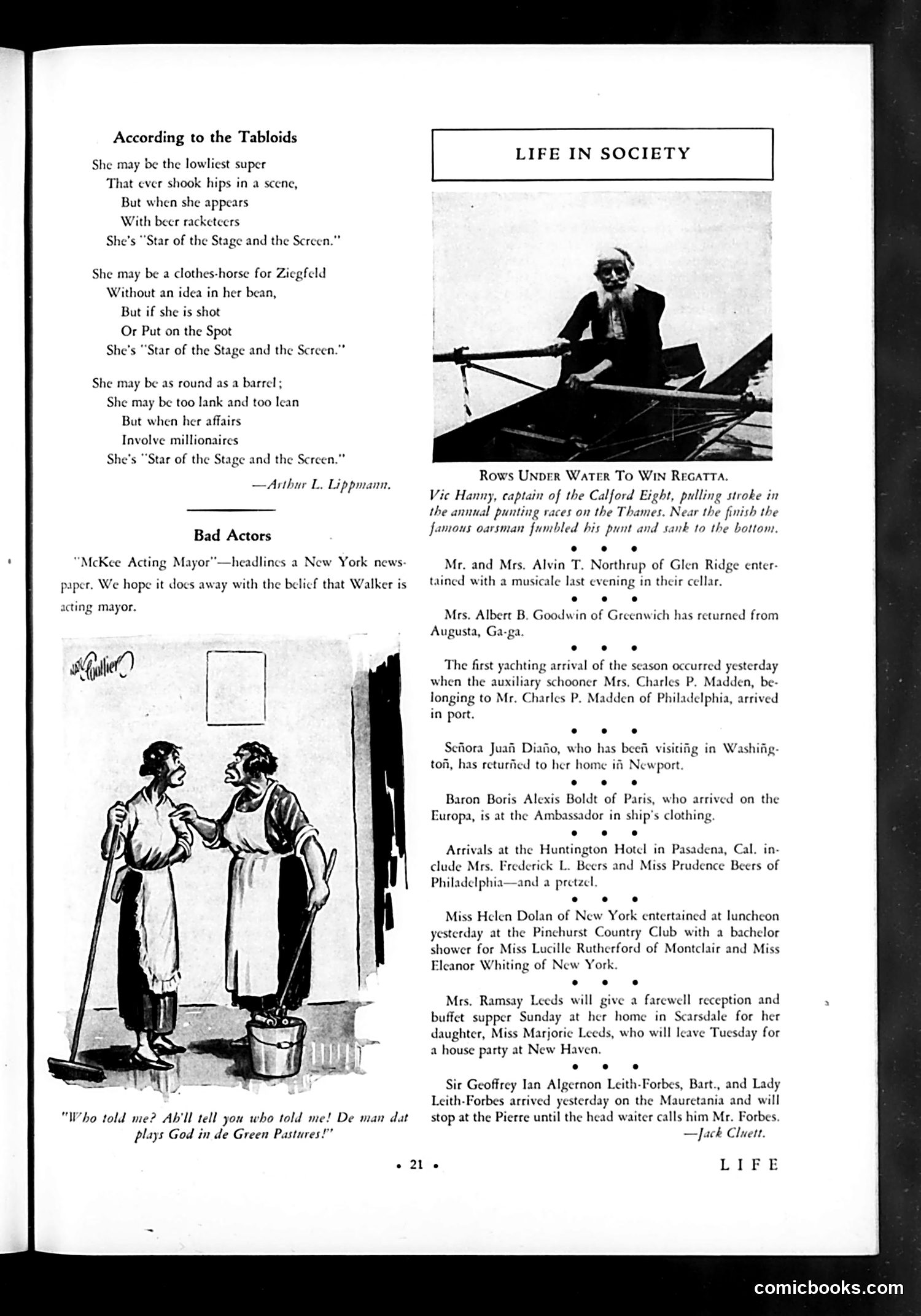
Analysis of Life Magazine Page "According to the Tabloids" poem satirizes how sensationalist tabloid journalism inflates minor entertainers into "stars" through scandal and association. Whether a woman is talentless, unattractive, or unknown, the tabloids elevate her to stardom if she's involved with "beer racketeers" (Prohibition-era criminals) or "millionaires." The satire targets tabloid hyperbole and celebrity culture's dependence on notoriety rather than talent. "Bad Actors" section mocks Mayor Jimmy Walker (likely referenced as the actual "actor" pretending to govern) through wordplay. The cartoon caption jokes about the Broadway play "Green Pastures," suggesting someone spreading gossip claims the actor playing God told them rumors—absurdist humor deflating both bad acting and rumor-mongering. "Life in Society" column offers comedic high-society briefs with subtle jokes: a woman named "Ga-ga," a baron arriving "in ship's clothing" (wordplay on wolf clothing), a pretzel arriving alongside hotel guests—all gently mocking the pretensions of wealthy socialites.
Life Magazine Movie Review Analysis This page contains film reviews by Harry Evans for Life magazine. The main article reviews "Strangers May Kiss," a 1931 film starring Norma Shearer about a woman who leaves her business career to live unmarried with a man in Mexico. The satire targets the Motion Picture censorship board (headed by Will Hays) for gradually accepting adult themes like premarital sex. Evans mocks their self-satisfied approval of the film with the quote "Well, after all, that's life"—presenting their moral flexibility as hypocritical relaxation of standards. The central joke critiques the film's premise itself: the reviewer notes the "problem" (whether women can live freely without losing feminine appeal) only applies to wealthy, beautiful, intelligent women. He compares it to asking a rich friend the cost of maintaining a yacht—if you must ask, you can't afford it. This deflates the film's moral questioning as irrelevant to ordinary audiences. The reviews also praise performances by Montgomery, Rambeau, and Hamilton while making a minor joke about actor Jed Prouty's character name.
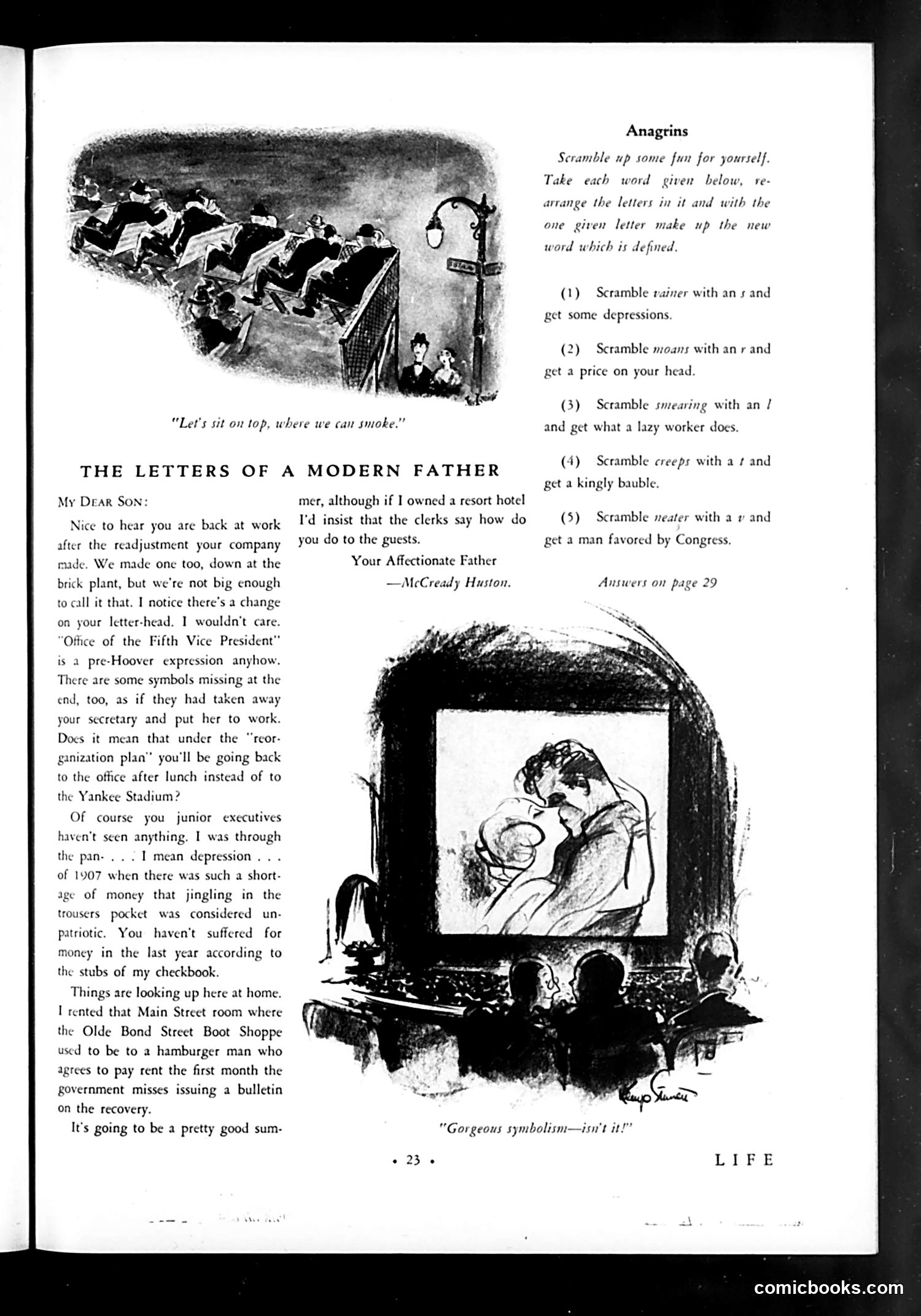
Analysis of Life Magazine Page Main Content: "The Letters of a Modern Father" This satirical letter mocks corporate reorganization during the Great Depression. A father writes to his son about workplace "adjustments"—corporate euphemisms for layoffs and demotions. The father notes his son's letterhead now reads "Office of the Fifth Vice President" (a joke about meaningless titles), missing secretary symbols, and reorganization plans affecting work schedules. The satire cuts both ways: the father gently ridicules his son's junior executive status while boasting he survived the *1907 panic* better than current hardships. He also mocks government "recovery bulletins"—likely New Deal propaganda—by joking a hamburger shop owner will only pay rent when such bulletins stop. Cartoon (top): Workers crowd atop a roller coaster, one saying "Let's sit on top, where we can smoke"—depicting economic volatility as a wild ride. Bottom Cartoon: Labeled "Gorgeous symbolism—isn't it?"—appears to satirize romantic cinema or escapism during hard times. The page also includes an anagram word puzzle unrelated to the satire.
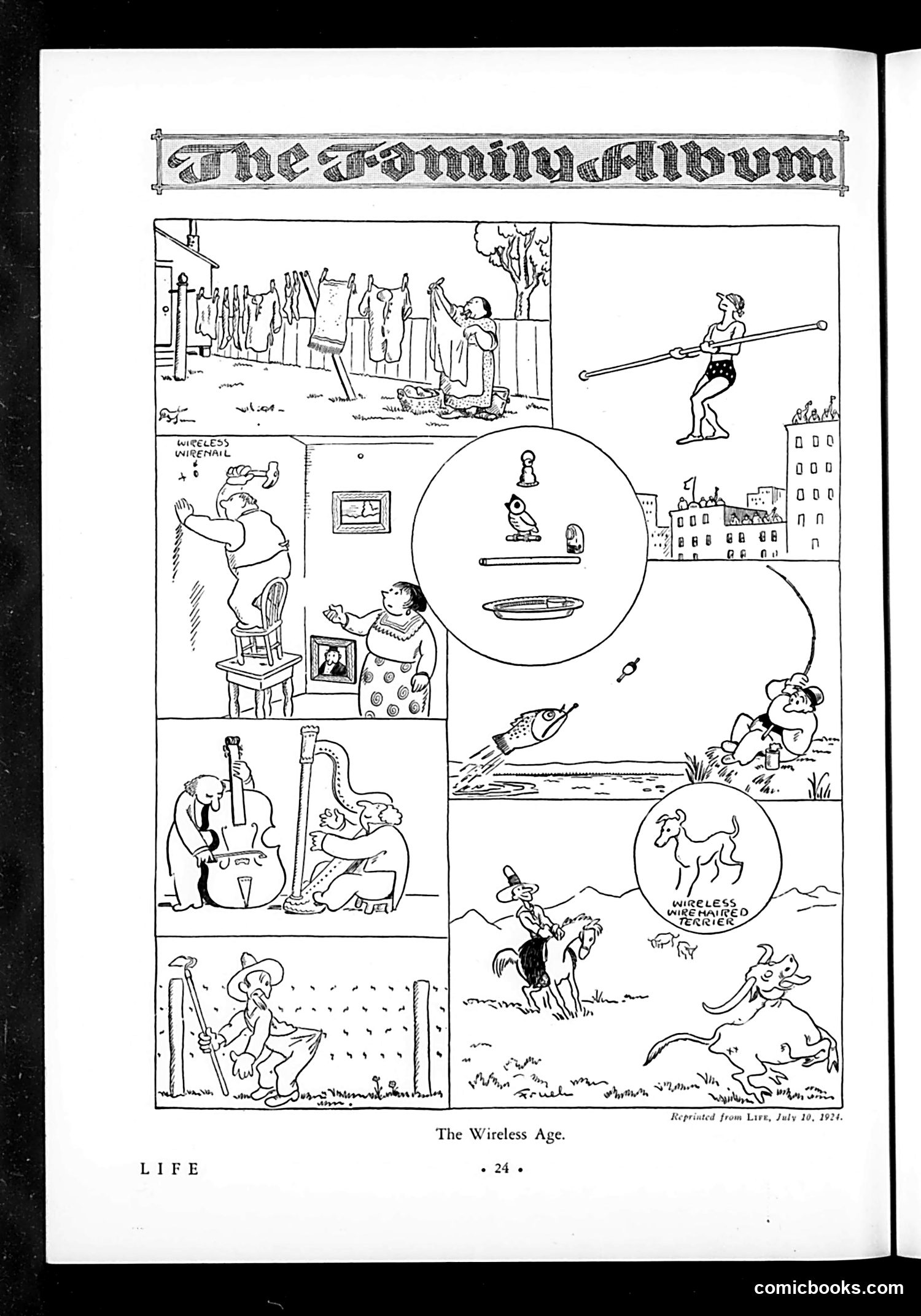
"The Wireless Age" - Life Magazine, July 10, 1924 This satirical cartoon mocks the emerging wireless technology craze of the 1920s. The central circle shows imagined wireless applications: a levitating figure, a saucer-like device, and what appear to be experimental contraptions. Surrounding panels depict absurd wireless scenarios—a man operating a "wireless wiresnail," musicians with wireless instruments, a wireless-haired dog, and a person controlling a horse via wireless. The satire targets contemporary over-optimism about wireless technology's potential. Rather than realistic predictions, the cartoonist presents fantastical, comedic misapplications, poking fun at both the technology's proponents and public excitement about its transformative possibilities. The humor lies in treating practical, mundane activities as subjects for wireless innovation—highlighting how trendy the technology had become in popular imagination.
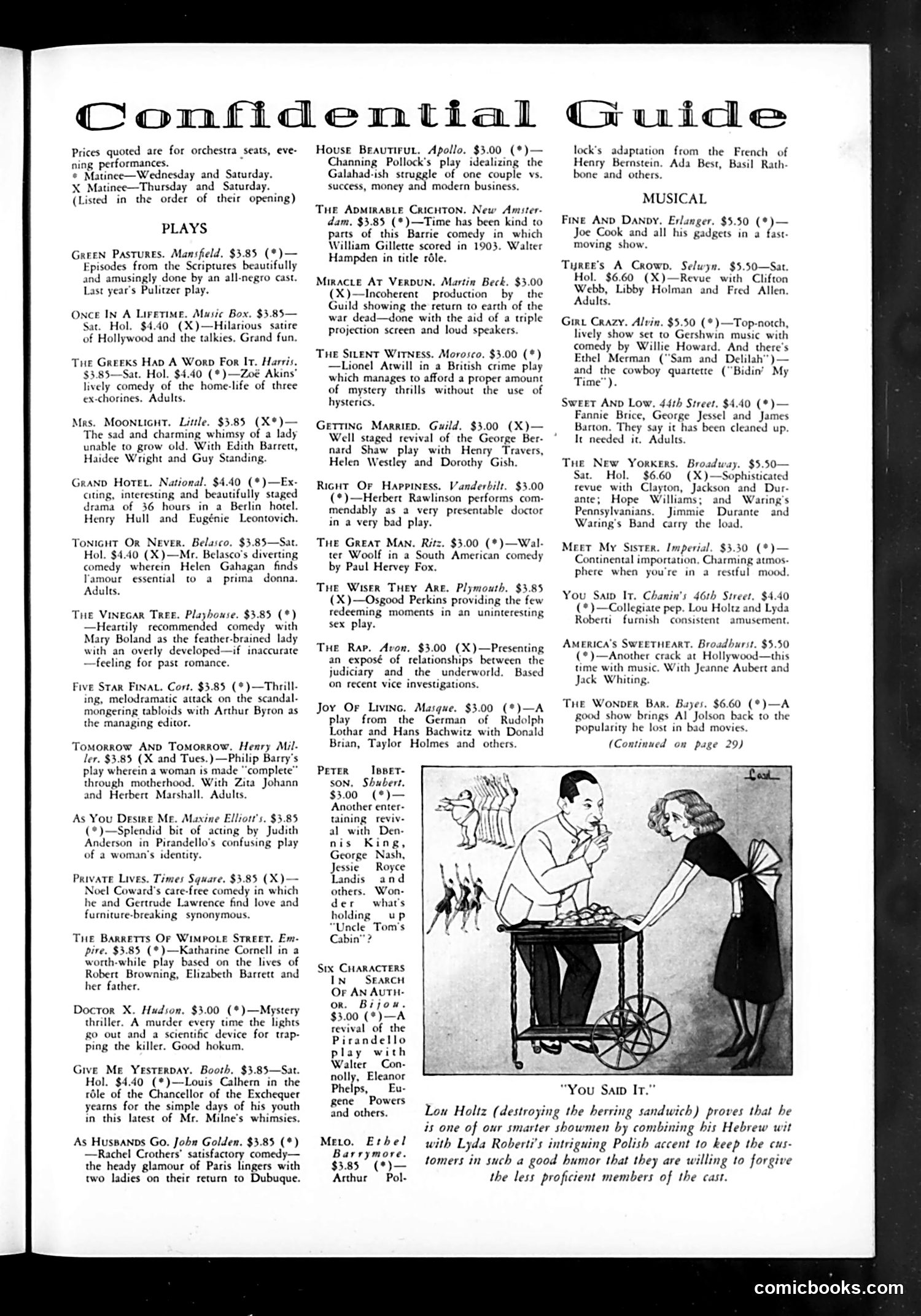
Analysis of "You Said It" Cartoon This page is primarily a theater guide listing Broadway shows with prices and cast information from what appears to be the early 1930s. The single cartoon at the bottom, titled "You Said It," depicts a man at a desk or counter speaking with a woman. The caption reads: "Lou Holtz (destroying the herring sandwich) proves that he is one of our smarter showmen by combining his Hebrew wit with Lyda Robert's intriguing Polish accent to keep the customers in such a good humor that they are willing to forgive the less proficient members of the cast." The joke: Lou Holtz (a Jewish vaudeville comedian) and Lyda Robert (Polish performer) use ethnic humor and charm to entertain audiences so effectively that viewers overlook weaker performers in their show. The "herring sandwich" references Jewish food stereotypes, playing on ethnic caricature comedy common in 1930s entertainment. The satire suggests that personality and audience rapport can compensate for uneven production quality—a cynical but apparently affectionate observation about theatrical entertainment's mechanics.
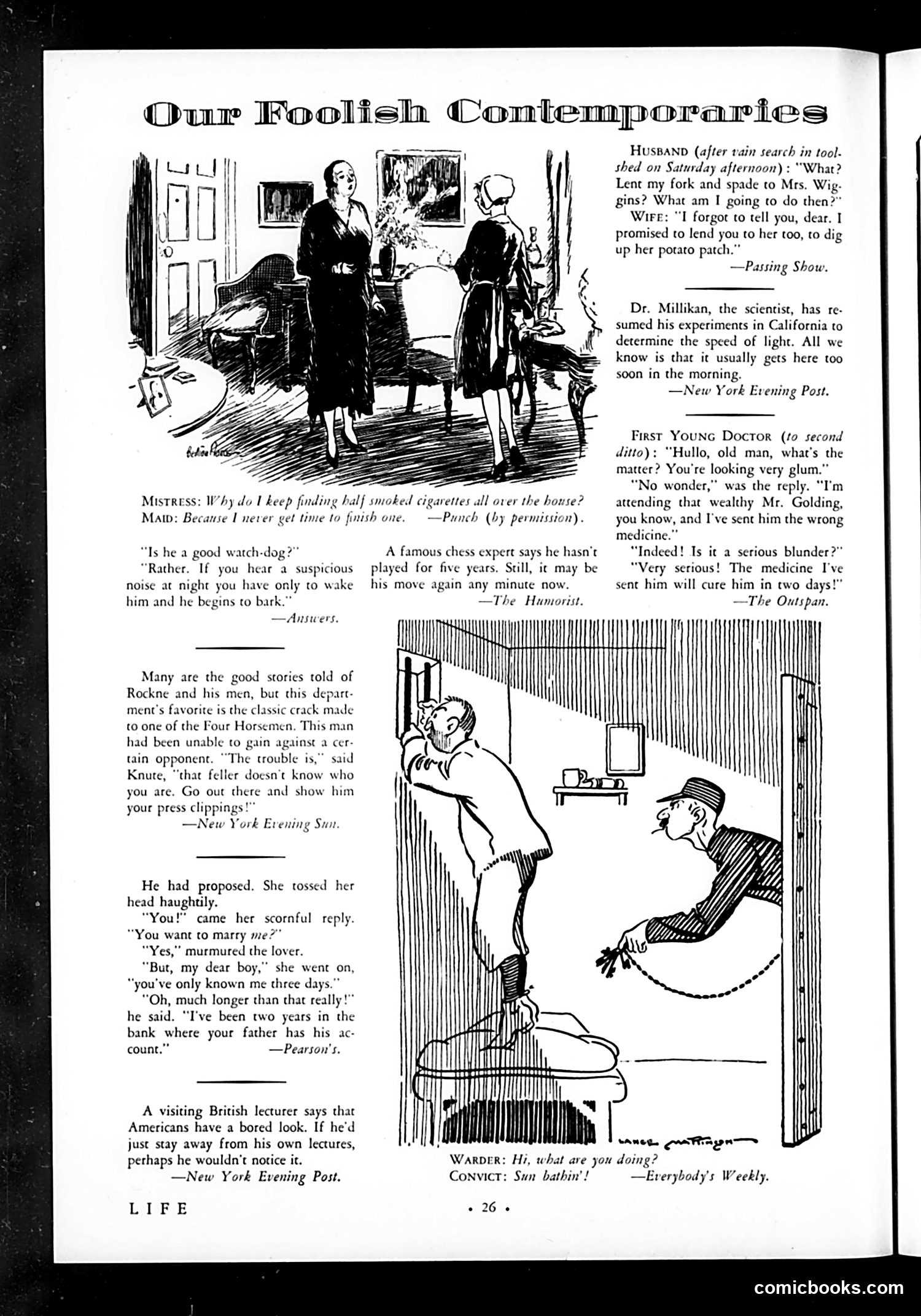
"Our Foolish Contemporaries" - Life Magazine Humor Page This page collects brief jokes and witty observations from various sources, presented as satirical commentary on contemporary foibles. The content reflects early 20th-century concerns and humor: Key targets include: - Domestic incompetence: A wife's logic in lending her husband to a neighbor for yard work - Scientific pretension: Dr. Millikan's light-speed experiments dismissed as irrelevant ("gets here too soon in the morning") - Medical irony: A young doctor's anxiety that correct medicine will actually *cure* a wealthy patient (implying doctors profit from prolonged illness) - Class anxiety: References to banks and wealthy employers - British superiority: A jab at visiting British lecturers as boring The cartoons mock social pretensions, professional incompetence, and domestic absurdities through brief anecdotes credited to publications like *Punch* and *Everybody's Weekly*. The humor assumes readers recognize references like Rockne (Notre Dame football coach) and reflects period anxieties about science, medicine, and class relationships.
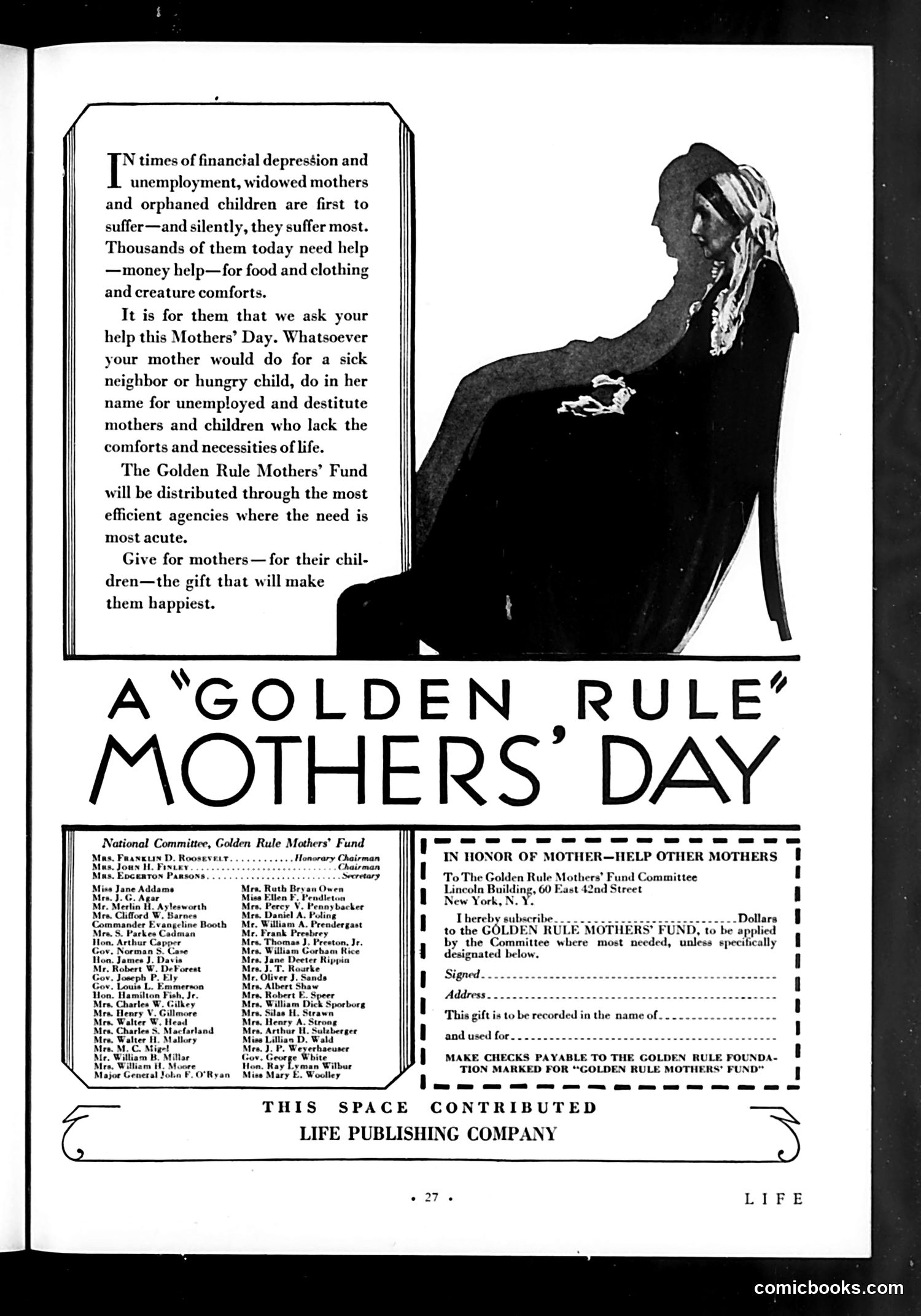
Analysis for Modern Readers This is a charitable fundraising appeal, not a political cartoon. Published during the Great Depression, it solicits donations to the "Golden Rule Mothers' Fund" to aid unemployed mothers and orphaned children—groups hit hardest by economic collapse. The imagery shows a well-dressed woman comforting a child, evoking sympathy. The appeal uses Mother's Day as a fundraising hook, asking readers to honor their own mothers by helping destitute ones. The page lists prominent committee members (including what appears to be references to notable figures of the era) to lend credibility. A coupon allows donors to contribute and designate their gift's use. This reflects Depression-era charitable work before robust government social safety nets existed. The "Golden Rule" reference invokes biblical ethics—treat others as you'd want treatment. Life Publishing donated the advertising space to support the cause.
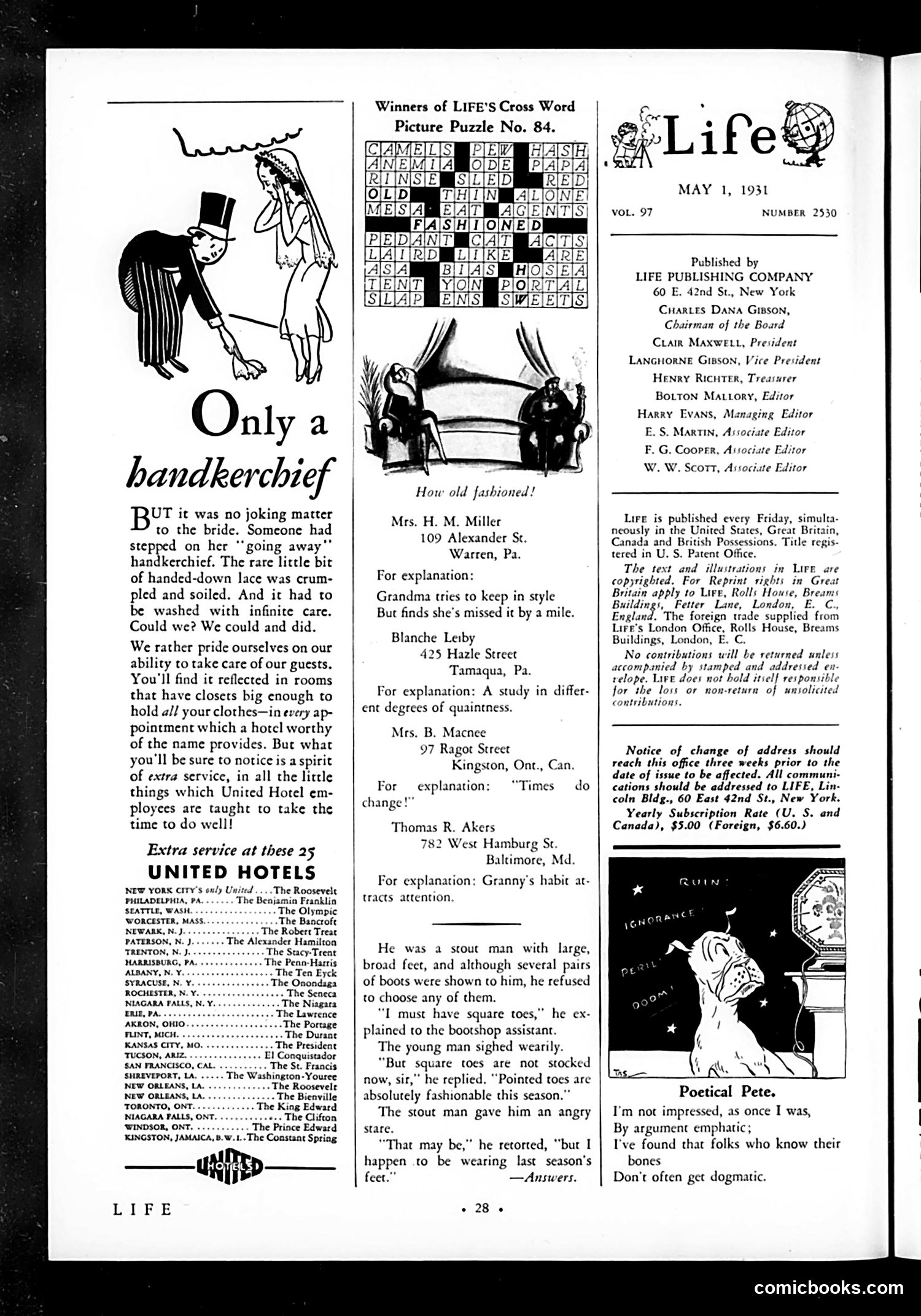
Analysis of Life Magazine Page (May 1, 1931) This page combines advertising with humor pieces typical of Life's satirical approach. The Main Advertisement features United Hotels promoting their service quality through a narrative about carefully laundering a bride's damaged handkerchief—emphasizing attention to detail and "extra service" as their competitive advantage. The illustration shows a fashionable couple from the era. The Humor Pieces satirize outdated fashion and rigid adherence to tradition: 1. A crossword puzzle about "how old fashioned" depicts an elderly woman trying unsuccessfully to stay stylish—the joke being that age inevitably makes one look dated. 2. A story about a man demanding "square toes" on boots when only "pointed toes are absolutely fashionable this season" mocks those who stubbornly resist fashion trends. His retort—"I happen to be wearing last season's feet"—suggests some people are simply too set in their ways to adapt. These pieces humorously critique rigidity against changing fashion standards, reflecting 1931's concern with modernity and progress during the early Depression era.
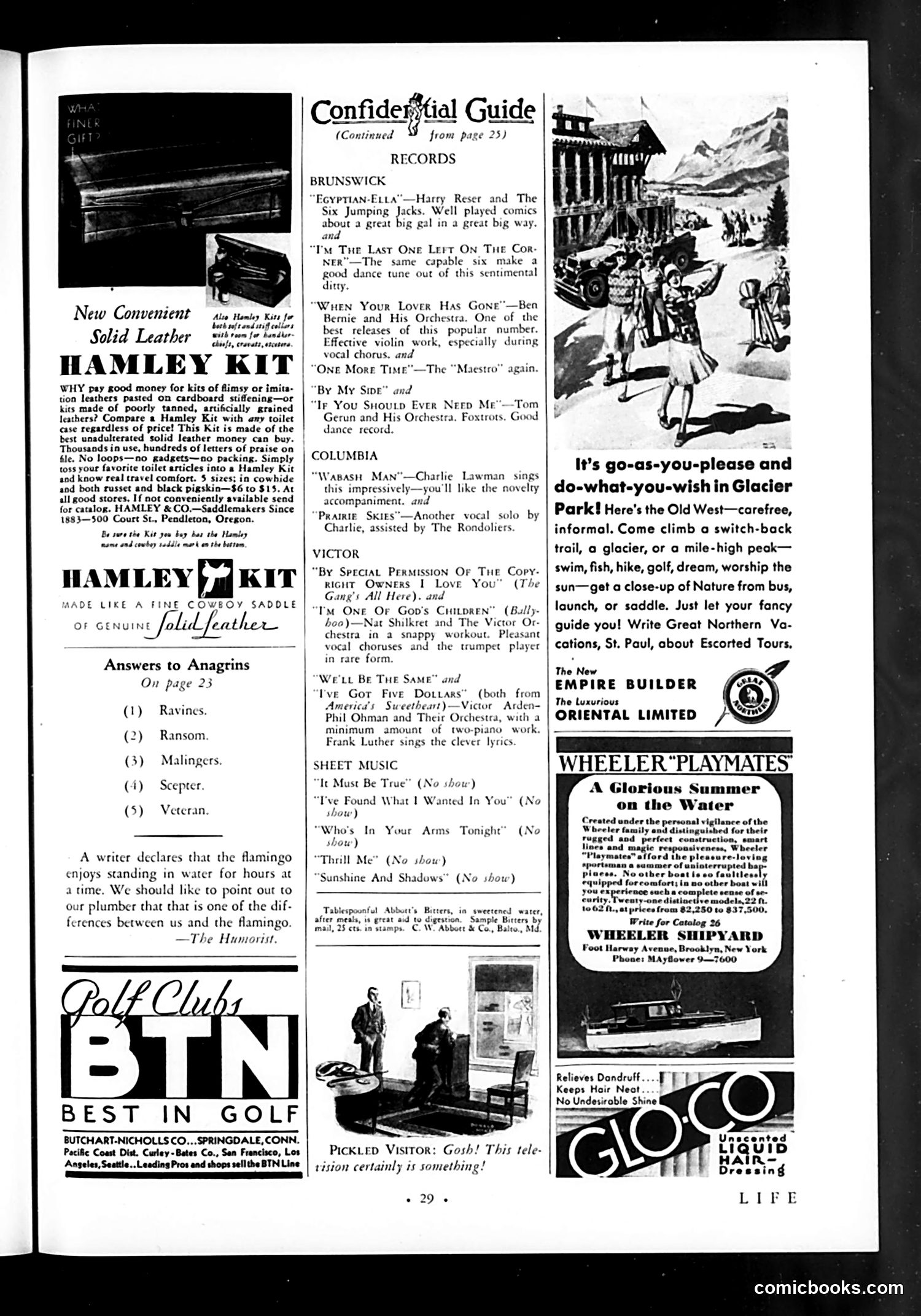
Analysis of Page 29, Life Magazine This page is primarily advertising and entertainment listings, not political satire. The content includes: Main Features: - Hamley Kit advertisement: A leather travel case marketed to consumers, emphasizing quality and durability - "Answers to Anagrins": Solutions to word puzzles from page 23 - Music reviews: Record recommendations from Brunswick, Columbia, and Victor labels—typical entertainment guides from the 1920s-30s era - "Pickled Visitor" cartoon: A small joke showing two men examining a television set, with one exclaiming "Gosh! This television certainly is something!"—reflecting contemporary amazement at emerging TV technology - Tourism and product advertisements: For golf clubs, vacation destinations (Glacier Park), and personal grooming products The satire is minimal: The flamingo joke mocks people complaining about trivial discomforts, and the television cartoon simply captures wonder at new technology—not political commentary. This is primarily a lifestyle and consumer magazine page, showcasing entertainment, travel, and products for middle-class readers.
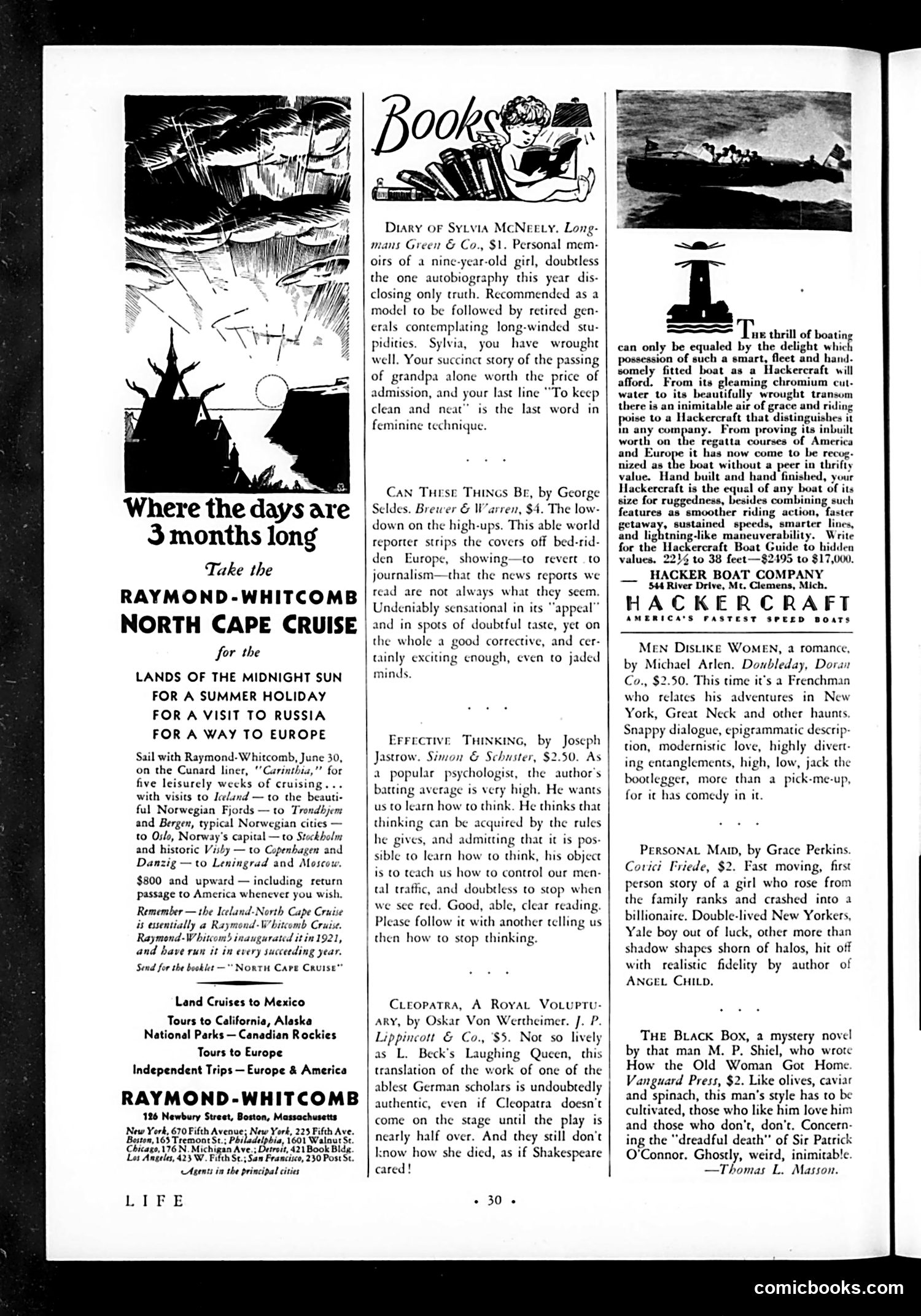
Life Magazine Book Reviews Page This is primarily a book review and advertisement page from Life magazine, not a political cartoon. The left side features a dramatic illustration for a Raymond-Whitcomb cruise advertisement to the Arctic and Russia, showing a silhouetted castle or structure against a midnight sun—appealing to 1920s-era leisure travel interests. The bulk of the page consists of book reviews covering: - A nine-year-old girl's diary (humorously praised for brevity) - George Seldes' exposé on European corruption - Psychology and thinking instruction books - A Cleopatra biography The reviews employ satirical, witty commentary typical of Life's editorial voice—mocking overly earnest or pedantic writing while praising clarity. The page also includes advertisements for Hackercraft boats, positioning them as luxury goods for the affluent reader. This reflects Life's 1920s identity as a magazine for educated, wealthy Americans interested in travel, literature, and consumer goods.
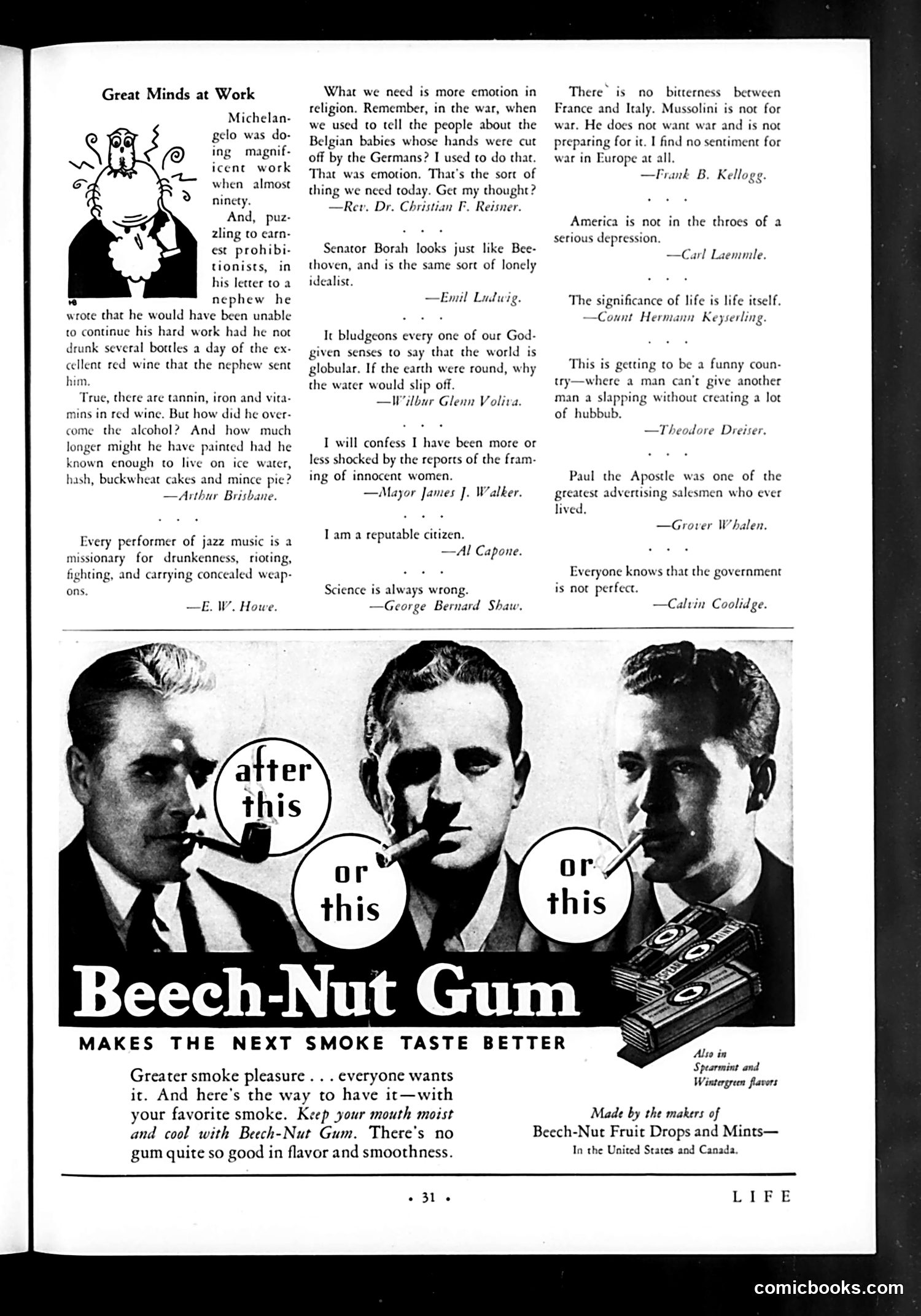
"Great Minds at Work" - Life Magazine Satire This page satirizes prominent public figures of the era through contradictory or absurd quotations attributed to them. The humor derives from exposing hypocrisy and questionable logic: Key targets include: - Prohibition advocates (critiqued for ignoring Michelangelo's wine consumption while productive) - Religious leaders like Rev. Reisner (mocked for manipulative wartime propaganda tactics) - Political figures: Senator Borah, Mayor Walker, Calvin Coolidge (presented as evasive or self-contradicting) - Al Capone (darkly ironic: a known gangster claiming respectability) - George Bernard Shaw (absurdly claiming "science is always wrong") - Mussolini apologist Frank Kellogg (denying Italian warmongering) - Advertisers/showmen (Grover Whalen credited Paul the Apostle as advertising genius—ridiculous) The page ridicules public figures' inconsistent statements and reveals their questionable credibility. The tone is cynical about authority during what appears to be the late 1920s/early 1930s—Prohibition era, pre-WWII tensions, Depression-era politics. The Beech-Nut Gum advertisement below provides commercial padding typical of Life's format.
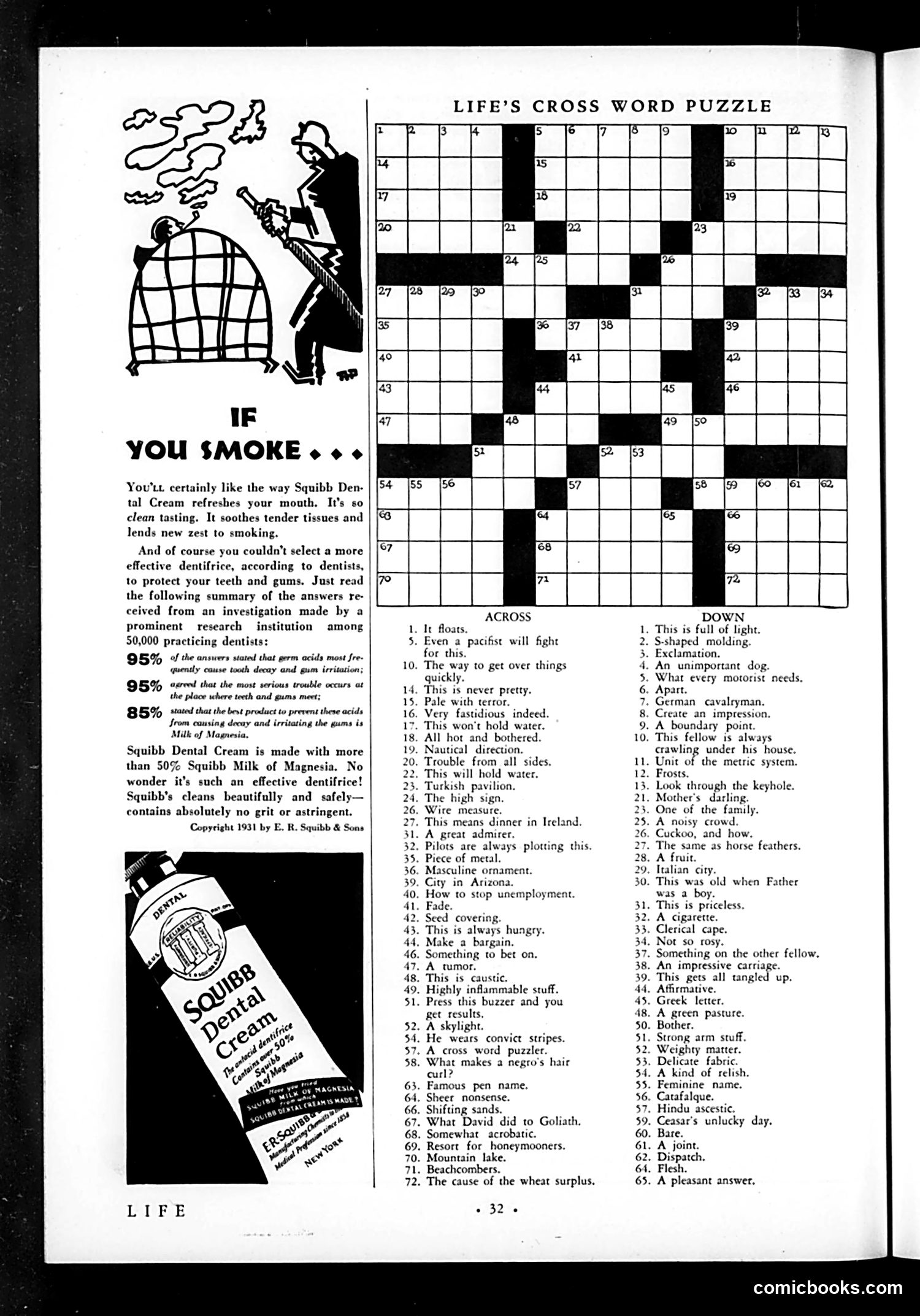
Life Magazine Page Analysis This page contains advertising and a crossword puzzle, not political satire. The dominant content is a Squibb Dental Cream advertisement targeting smokers. The ad's humor lies in its direct appeal: "If you smoke... you'll certainly like the way Squibb Dental Cream refreshes your mouth." It then cites dubious "research" claiming 95% of 50,000 dentists support the product, emphasizing its milk of magnesia content. The cartoon shows a man smoking while caged, humorously suggesting smokers need dental protection. Below is a standard crossword puzzle titled "Life's Cross Word Puzzle" with typical 1930s clues mixing wordplay, current events, and general knowledge. The page exemplifies Depression-era magazine advertising: brands used pseudo-scientific claims and humorous appeals to sell products to mass audiences. The smoking angle suggests this was acceptable advertising in 1931, before health warnings existed.
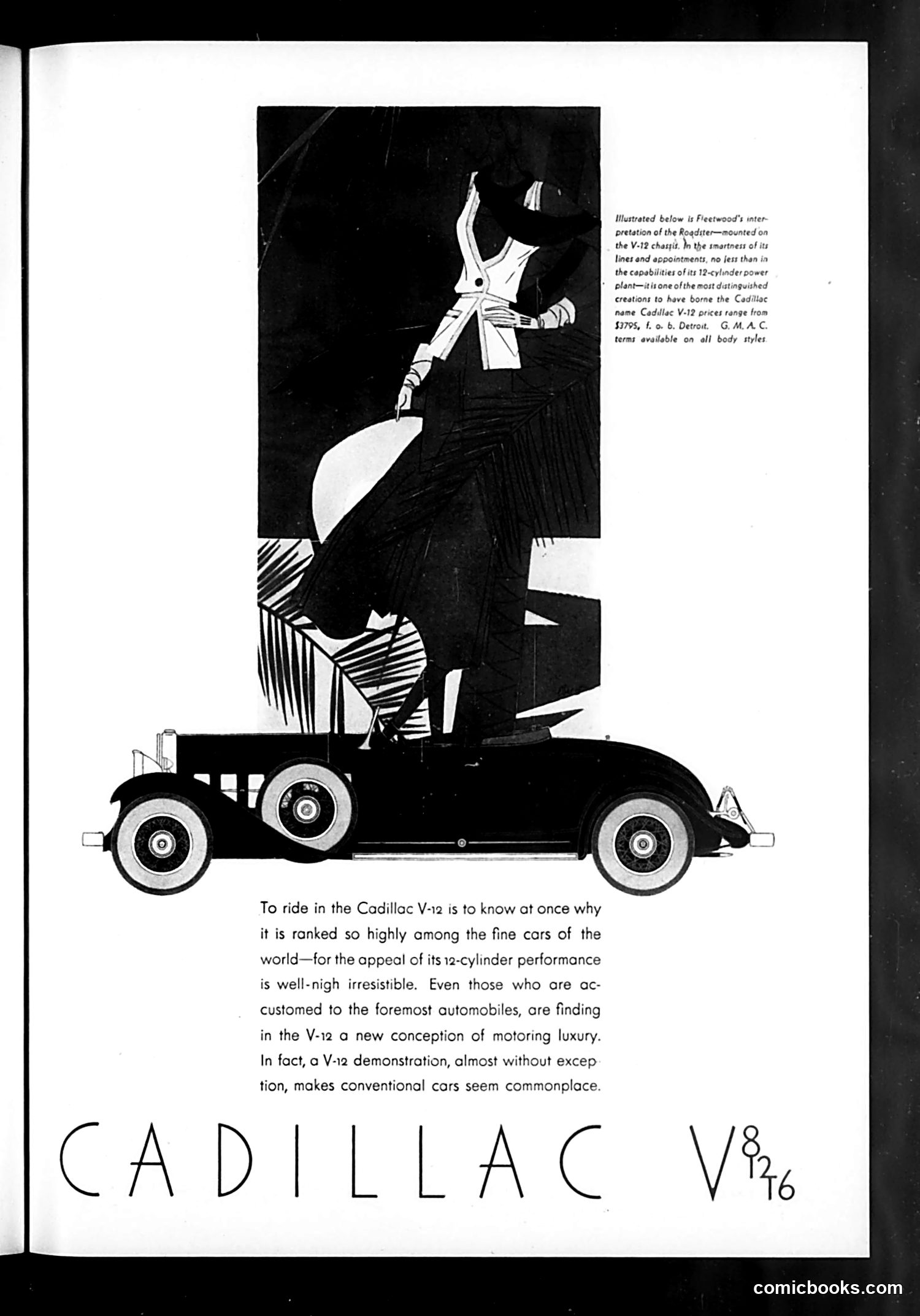
Cadillac V-12 Advertisement This is primarily a luxury automobile advertisement, not political satire. The page showcases the 1930s Cadillac V-12, a high-end car marketed to wealthy Americans. The stylized illustration depicts an Art Deco figure (likely representing sophistication or leisure) mounted on the vehicle's chassis. The accompanying text emphasizes the car's prestige: its 12-cylinder engine supposedly makes competing automobiles "seem commonplace" by comparison. The ad targets affluent consumers by suggesting that owning a V-12 demonstrates refined taste and superiority over conventional car owners. Prices listed ($2,795 and up) confirm this was a luxury product during the Great Depression era—affordable only to the wealthy. There is no satirical content here; this is earnest marketing designed to appeal to status-conscious buyers through appeals to exclusivity and technological superiority.
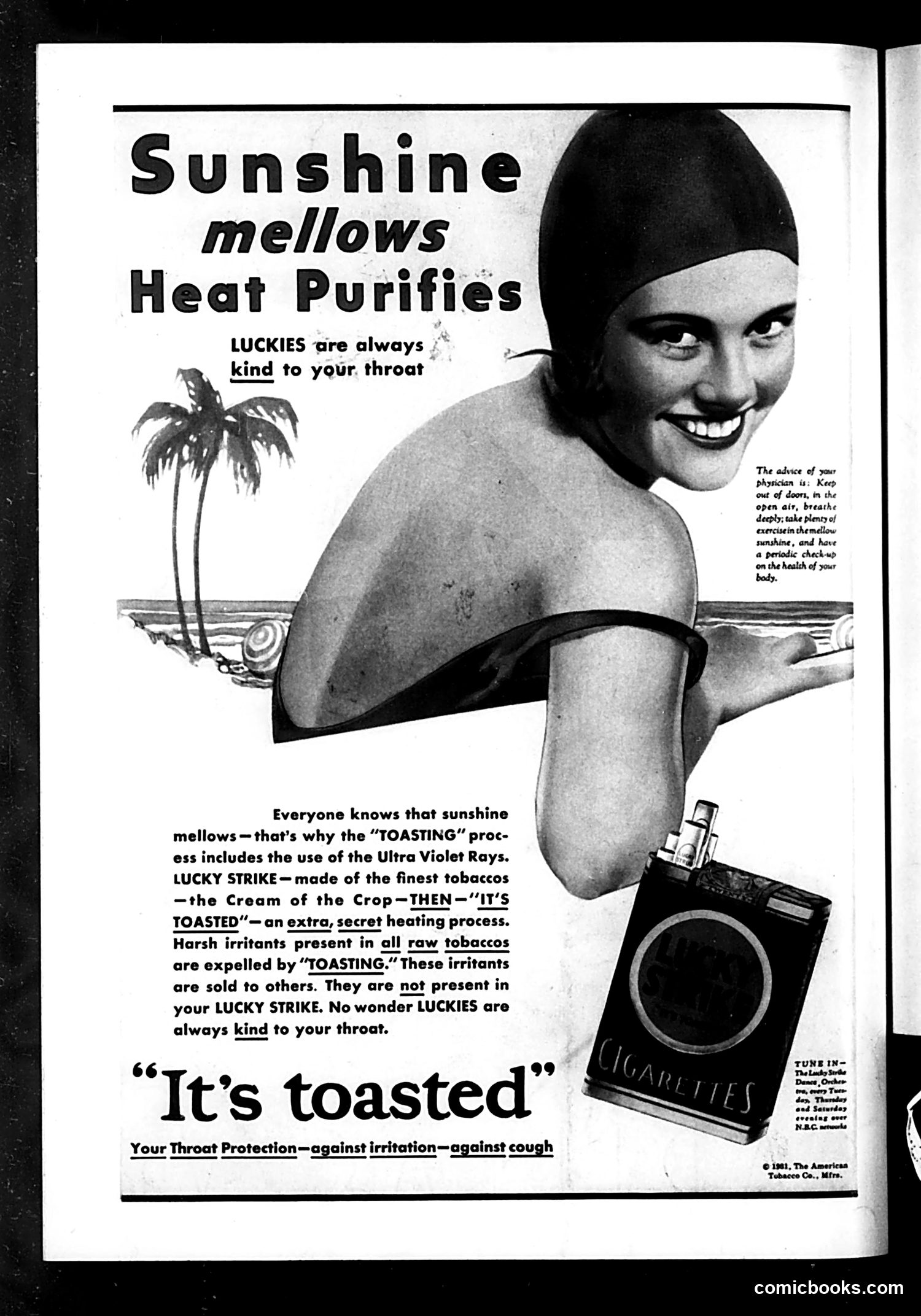
This is a Lucky Strike cigarette advertisement, not political satire. The page promotes Lucky Strike cigarettes by claiming their "toasting" process removes harsh irritants found in other tobaccos. The ad features a smiling woman in beachwear with a lighter, associating the product with health and sunshine. The "satire" here is unintentional—modern readers recognize the absurdity: the ad invokes physicians' advice about fresh air and exercise while selling cigarettes, and falsely claims smoking is "kind to your throat." It references the "toasting" manufacturing process as a health benefit, a marketing claim that exploited public ignorance about tobacco's actual dangers. This reflects 1930s cigarette advertising's deliberate deception before smoking's health risks were publicly acknowledged. The ad exemplifies how tobacco companies used pseudo-scientific language and association with wellness to market an addictive, carcinogenic product as harmless or beneficial.