life
Life — October 1933
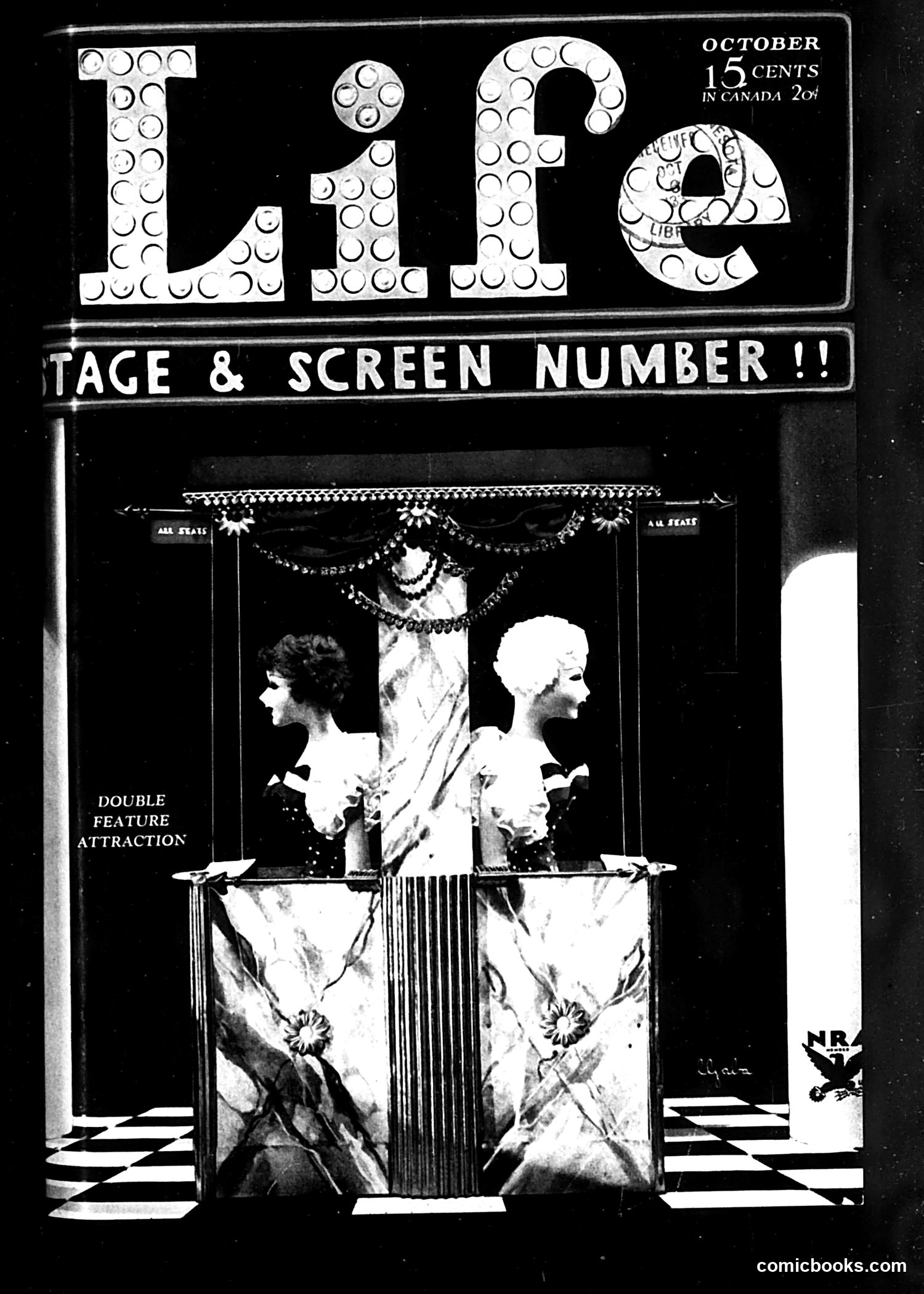
Life Magazine October Issue Cover Analysis This is a Life magazine cover from October (price 15 cents, 20 cents in Canada), featuring theatrical stage and screen imagery. The large "LIFE" letters are filled with coin designs, likely referencing the magazine's focus on entertainment and popular culture. The central image shows an ornate theater stage set labeled "DOUBLE FEATURE ATTRACTION," depicting elegantly dressed women in 1920s-style fashion and hairstyles. The decorative Art Deco elements—including sunburst motifs, swags, and checkerboard flooring—reflect the glamorous aesthetic of contemporary stage productions. The "STAGE & SCREEN NUMBER!!" headline indicates this issue celebrates theatrical and film entertainment. This appears to be promotional coverage of popular entertainments available to American audiences during this era.
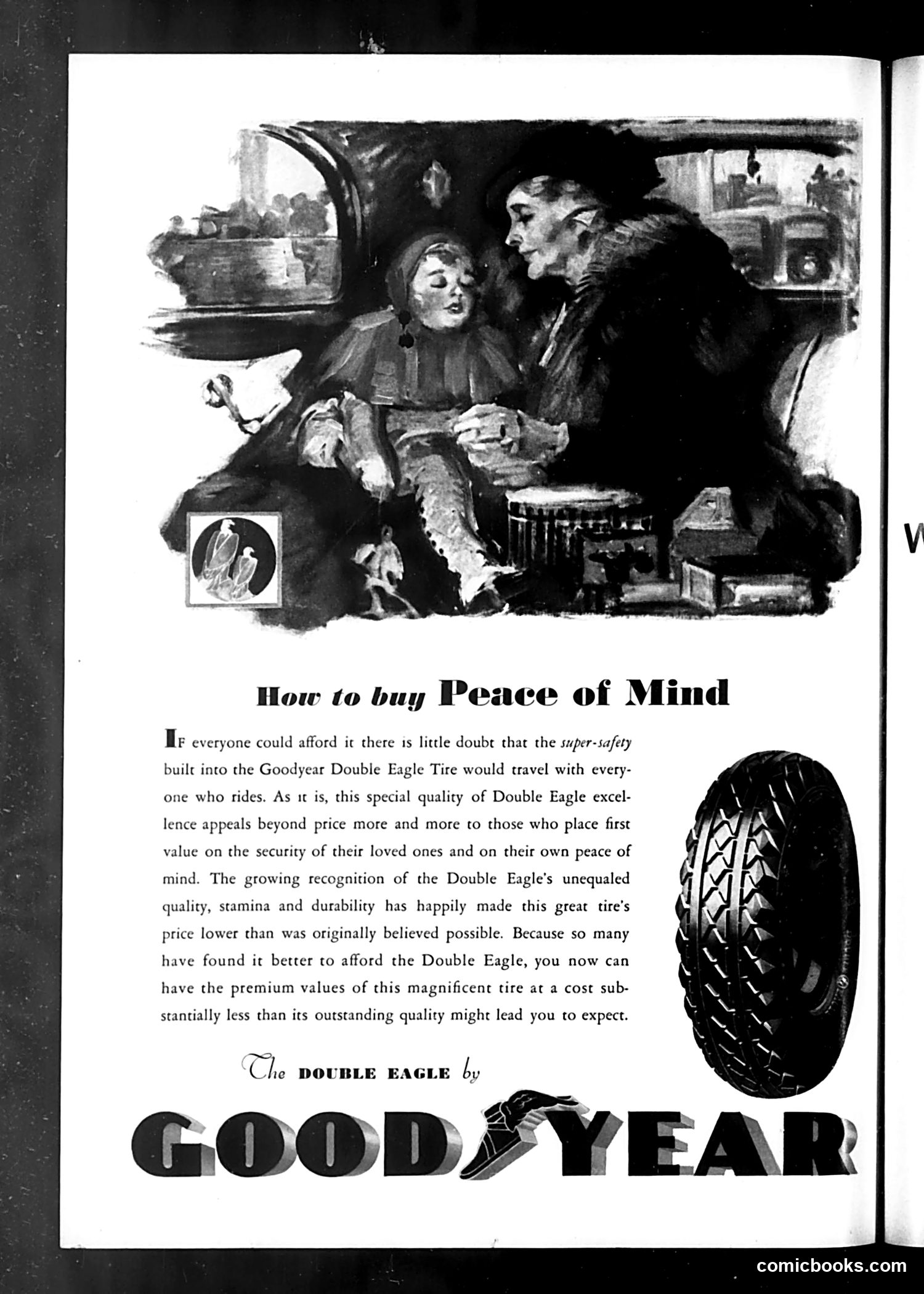
Advertisement Analysis This is a Goodyear tire advertisement, not political satire or comics content. The page features an illustration of two figures in a car—a woman and man in formal attire—with the headline "How to buy Peace of Mind." The ad argues that Goodyear's Double Eagle tire offers safety and reliability that justifies its cost, appealing to buyers concerned about protecting "loved ones." The accompanying tire image and company branding dominate the lower half. The message emphasizes that while premium-priced, the Double Eagle tire has become more affordable due to increased demand, making its "superior-safety" qualities now accessible to middle-class consumers. This reflects early-to-mid 20th-century advertising strategy: linking consumer products to emotional security and family protection rather than purely functional benefits.
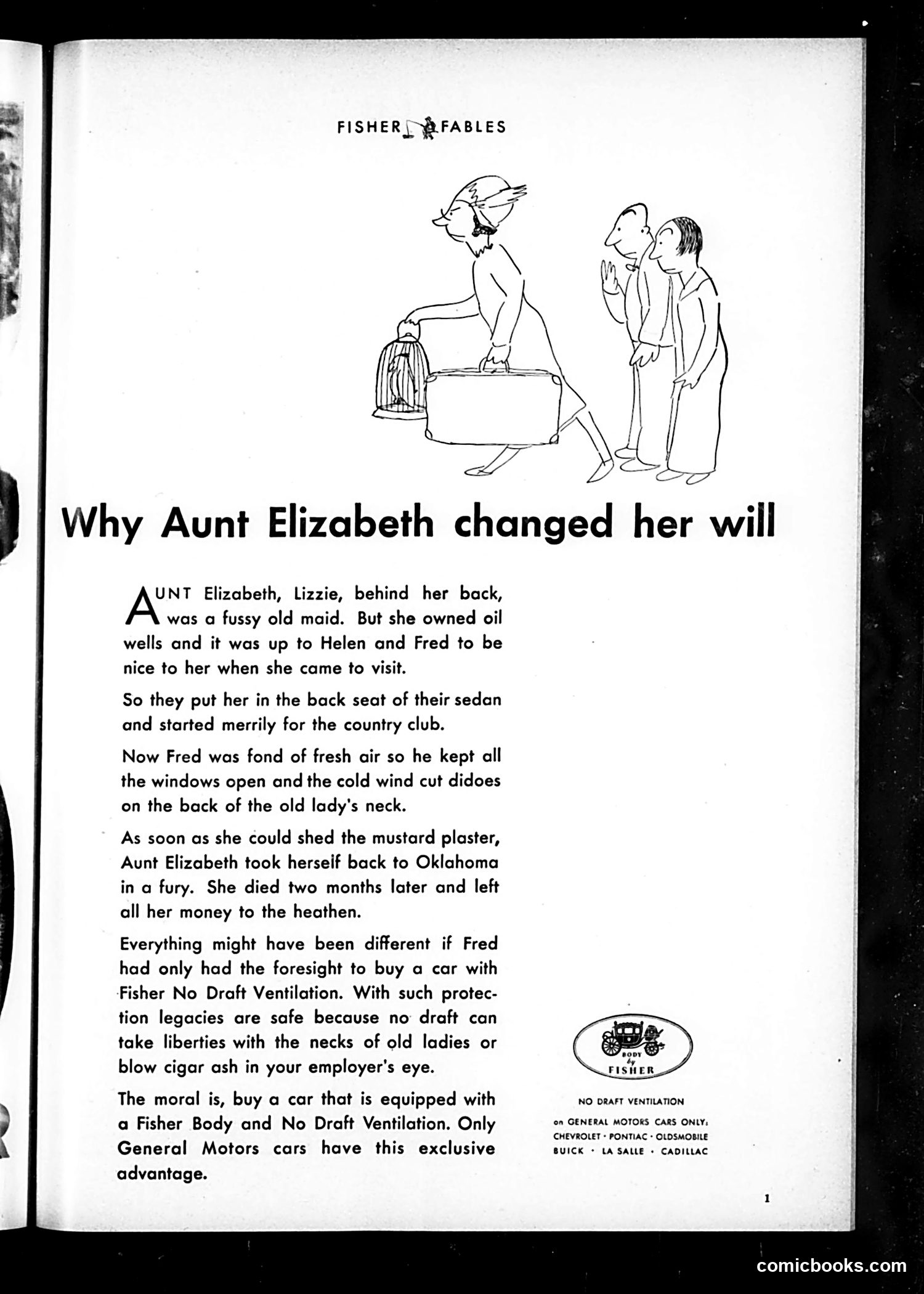
Fisher Fables: "Why Aunt Elizabeth Changed Her Will" This is a Fisher Body advertisement disguised as satirical humor. The "fable" recounts how Aunt Elizabeth, a wealthy elderly woman with oil wells, dies after visiting her niece and nephew Helen and Fred. Fred, preferring fresh air, kept car windows open during their drive, causing a cold that led to her death—and her decision to change her will away from them. The ad's dark joke: Fred should have purchased a Fisher Body car with "No Draft Ventilation," which would have protected the aunt's health and preserved the inheritance. The satire mocks materialistic relatives while promoting General Motors' ventilation feature as a luxury that prevents drafts—and presumably, unexpected disinheritance.
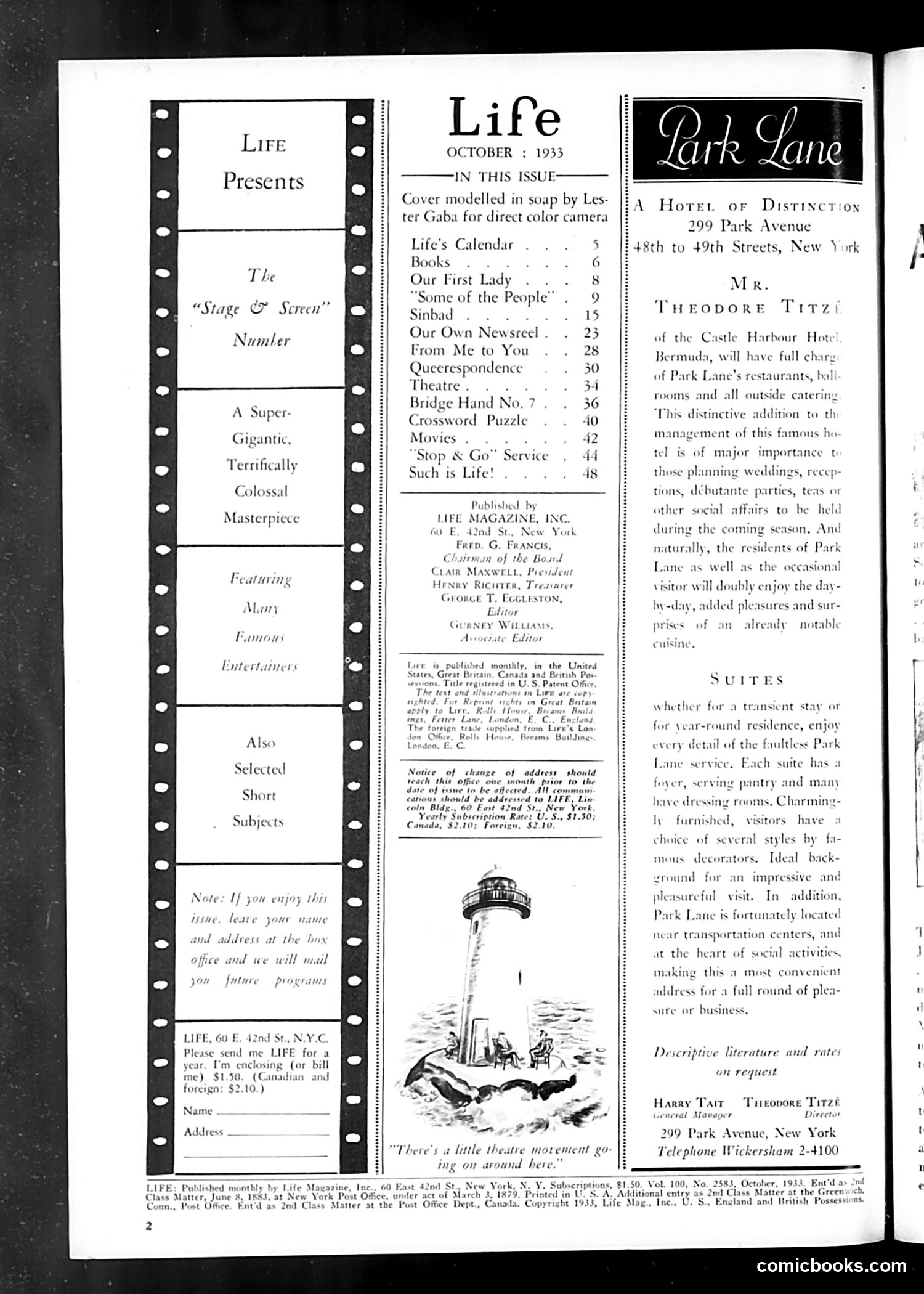
Page Analysis This is primarily a table of contents and advertising page from Life magazine's October 1933 issue, not a political cartoon page. The left side lists the issue's contents, featuring a "Stage & Screen" number described as "A Super-Gigantic, Terrifically Colossal Masterpiece" with "Many Famous Entertainers." The right side advertises Park Lane Hotel in Manhattan, managed by Mr. Theodore Titzi. The advertisement emphasizes the hotel's suitability for social events—weddings, receptions, parties, and teas. The small illustration at bottom shows a lighthouse with people, captioned "There's a little theatre movement going on around here," though its specific satirical meaning is unclear without additional context about 1933 theater trends.
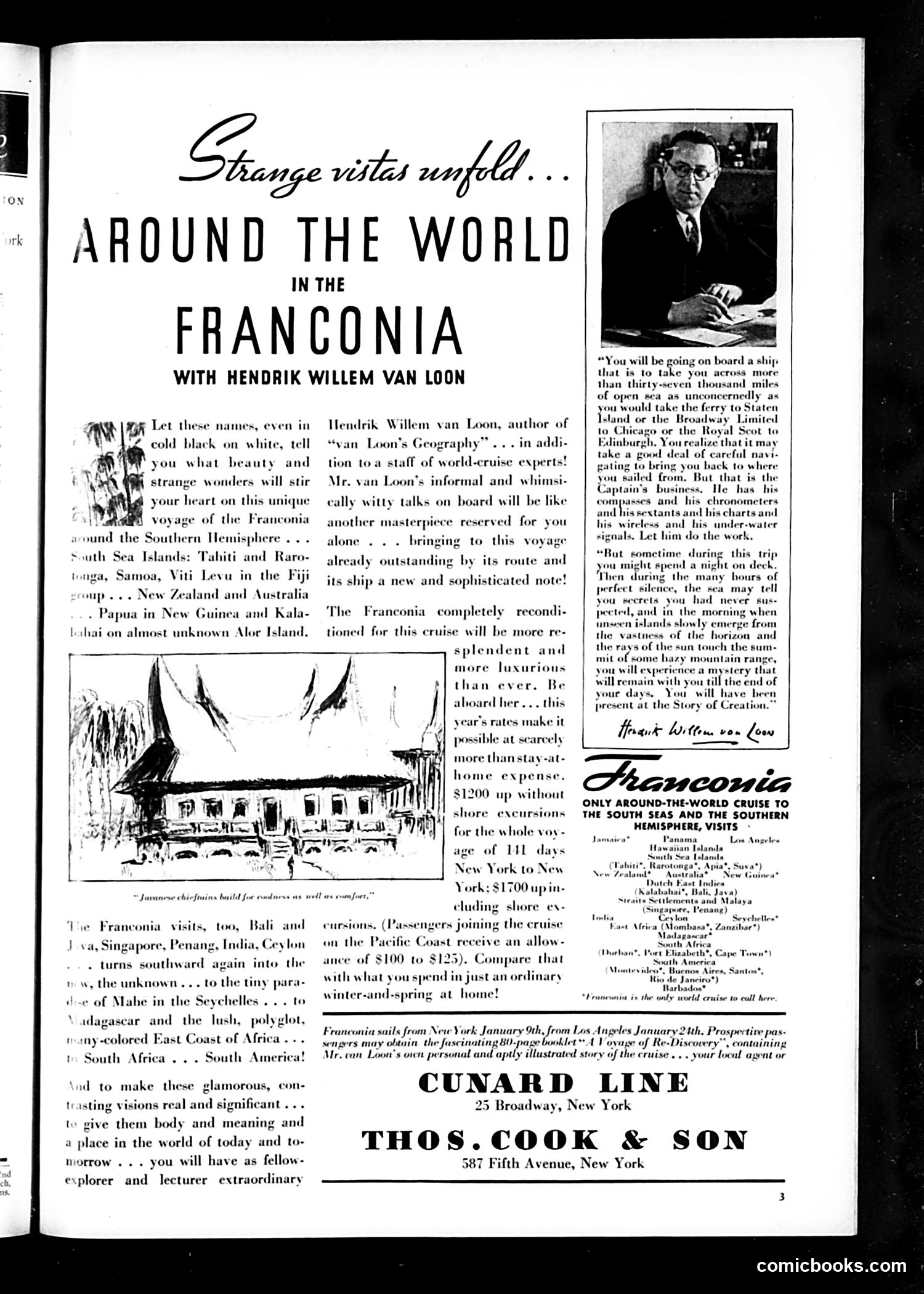
Analysis This page is primarily advertising for cruise travel rather than satirical content. The main advertisement promotes the Franconia ship's "around the world" voyage with travel writer Hendrik Willem van Loon as guest lecturer. The layout features: - A photograph of van Loon (identifiable by caption) - A sketch of the ship - Van Loon's quoted description of the voyage's appeal - Detailed itinerary and pricing information The text emphasizes luxury travel ("splendid and glamorous") at relatively affordable rates ($1,200-$1,700). There is no political satire visible. This represents Life magazine's standard commercial advertising section, showcasing early 20th-century aspirational travel marketing that appealed to wealthy American readers.
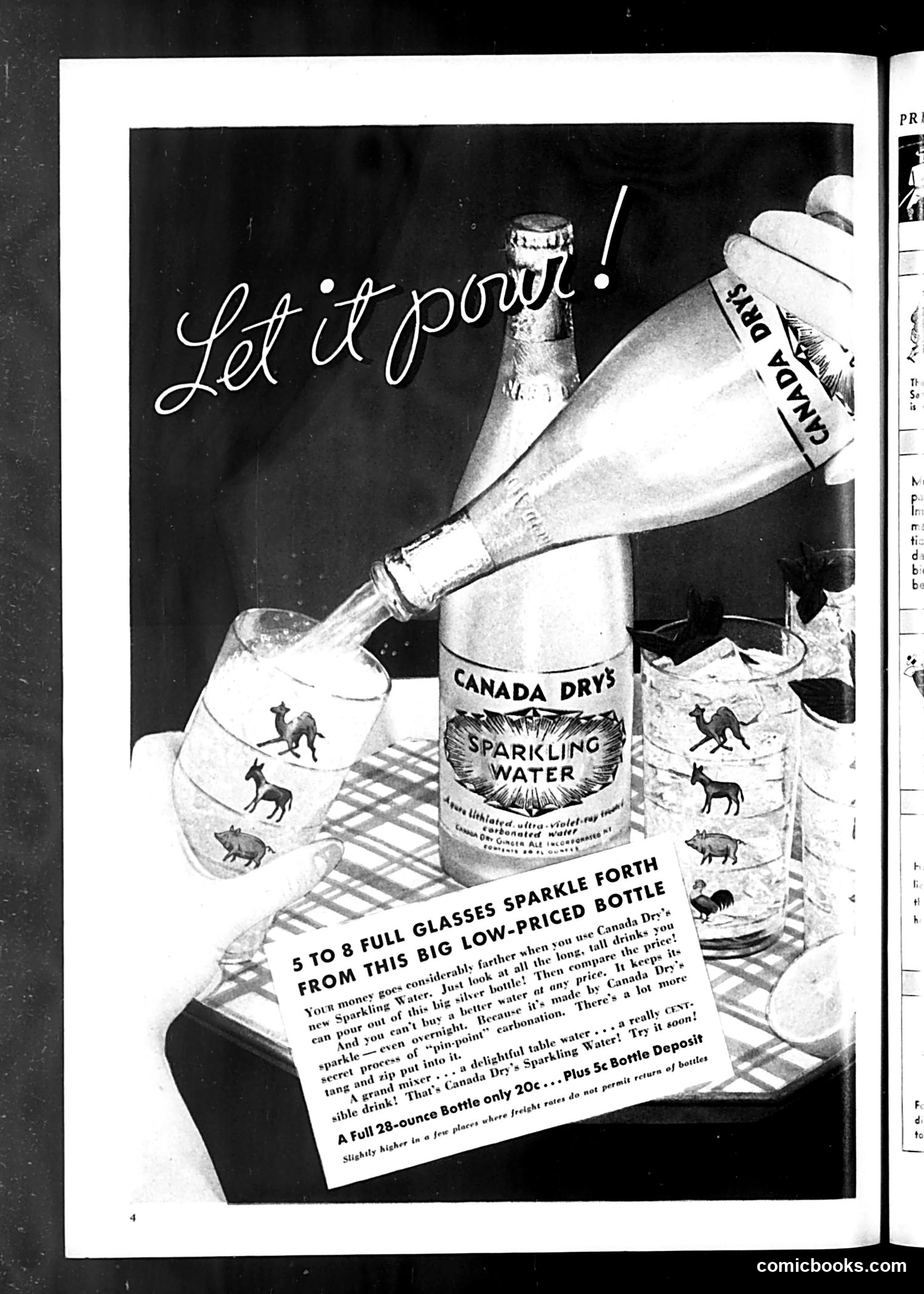
Canada Dry's Sparkling Water Advertisement This is a beverage advertisement, not political satire. The page promotes Canada Dry's sparkling water with the slogan "Let it pour!" The ad emphasizes value: "5 to 8 full glasses sparkle forth from this big, low-priced bottle." It highlights the product's affordability and quantity, noting that a full 28-ounce bottle costs only 20¢ plus a 5¢ bottle deposit. The visual shows champagne-style bottles being poured into glasses decorated with a moose logo (Canada Dry's trademark). The messaging appeals to Depression-era or wartime consumers seeking economical entertainment—sparkling water presented as an affordable alternative to expensive champagne, with the glamorous presentation ("Let it pour!") compensating for the modest price point.
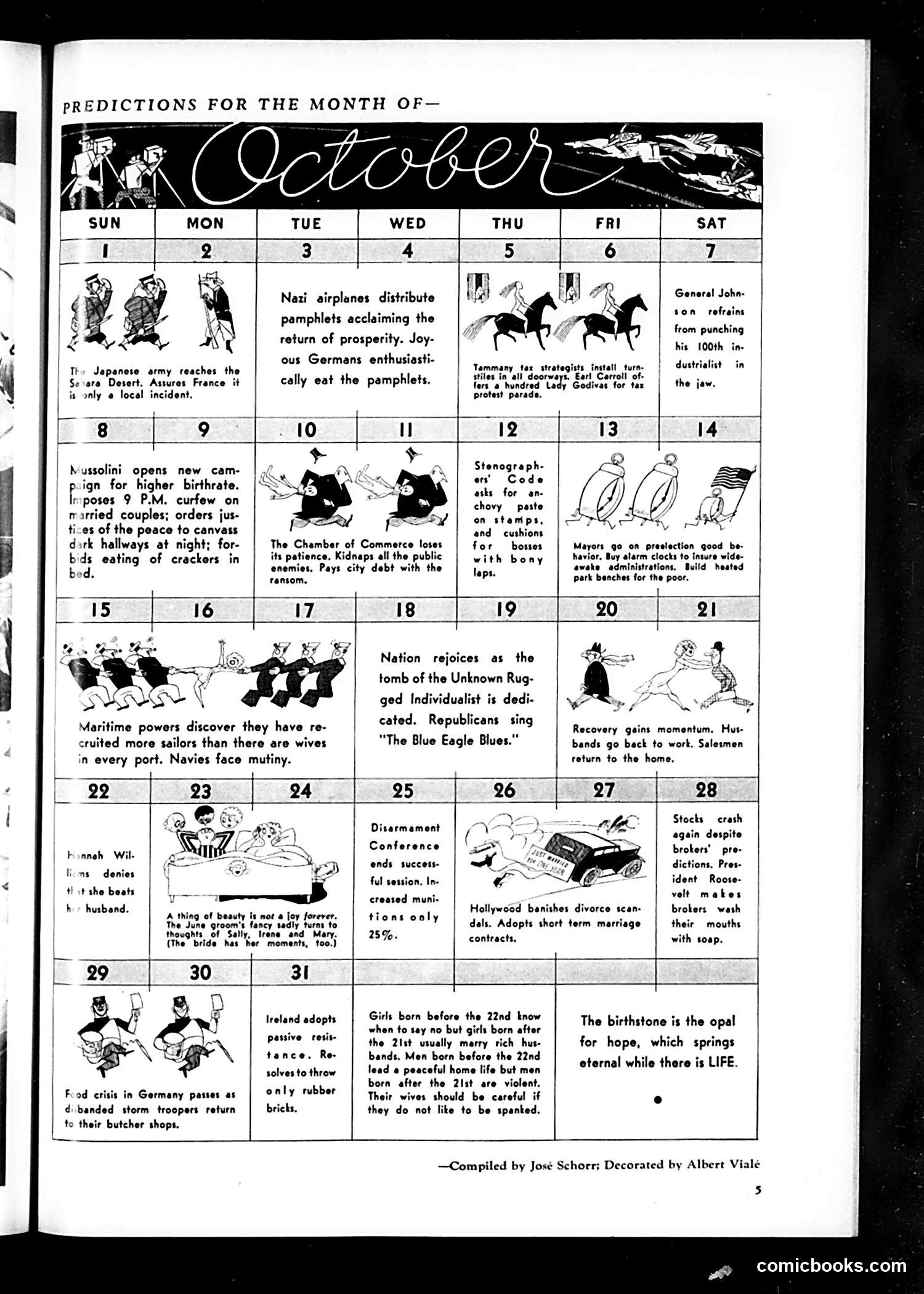
October 1924 Predictions Calendar This is a satirical "predictions" calendar from Life magazine's October 1924 issue. Rather than serious forecasts, each date contains humorous, absurdist predictions mixing current events with ridiculous scenarios: - Political/social references include: Nazi pamphlets, Mussolini's campaign, the Unknown Soldier's tomb dedication, disarmament conferences, and Irish independence debates - The humor juxtaposes real contemporary issues with nonsense (horses eating pamphlets, stocks crashing, Hollywood divorce scandals) - The satire mocks both serious political developments and American popular culture obsessions simultaneously - Illustrations show exaggerated figures and slapstick situations The calendar suggests Life's editorial stance: treating current events with irreverent mockery while poking fun at American preoccupations with celebrity gossip and financial speculation.
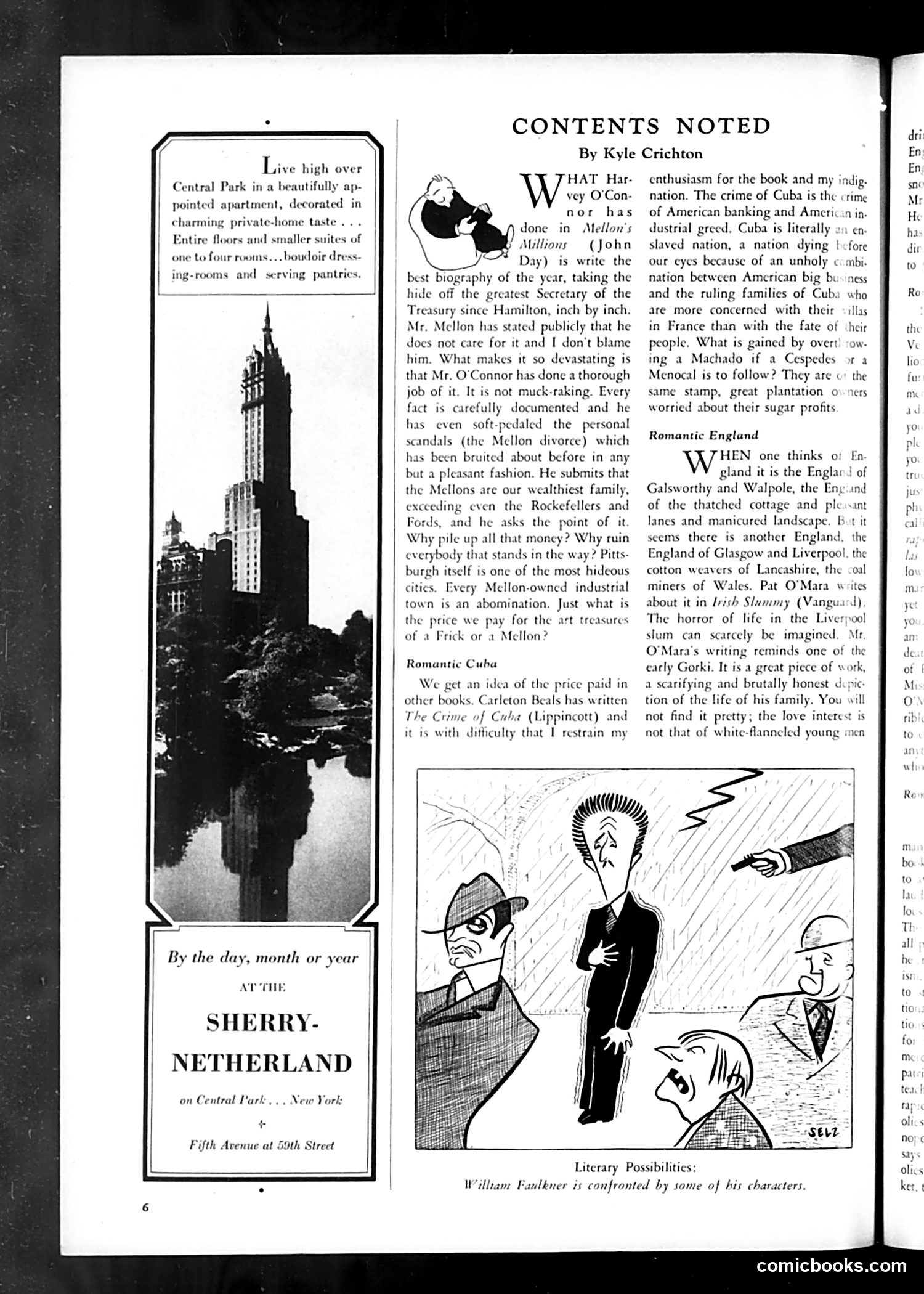
Contents Noted by Kyle Crichton The page reviews three books. The main cartoon (bottom) illustrates "Literary Possibilities: William Faulkner is confronted by some of his characters," showing Faulkner amid grotesque, distorted figures in the rain—likely referencing his complex literary creations and challenging narrative style. The reviews discuss: - Mellon's Millions by John Day (biography of Treasury Secretary Mellon) - The Crime of Cuba by Carleton Beals, criticizing American business interests' exploitation of Cuba - Irish Slumming by Pat O'Mara and related works about England's industrial working class The cartoon satirizes Faulkner's reputation for creating morally ambiguous, psychologically tormented characters that seemed alien to mainstream readers.
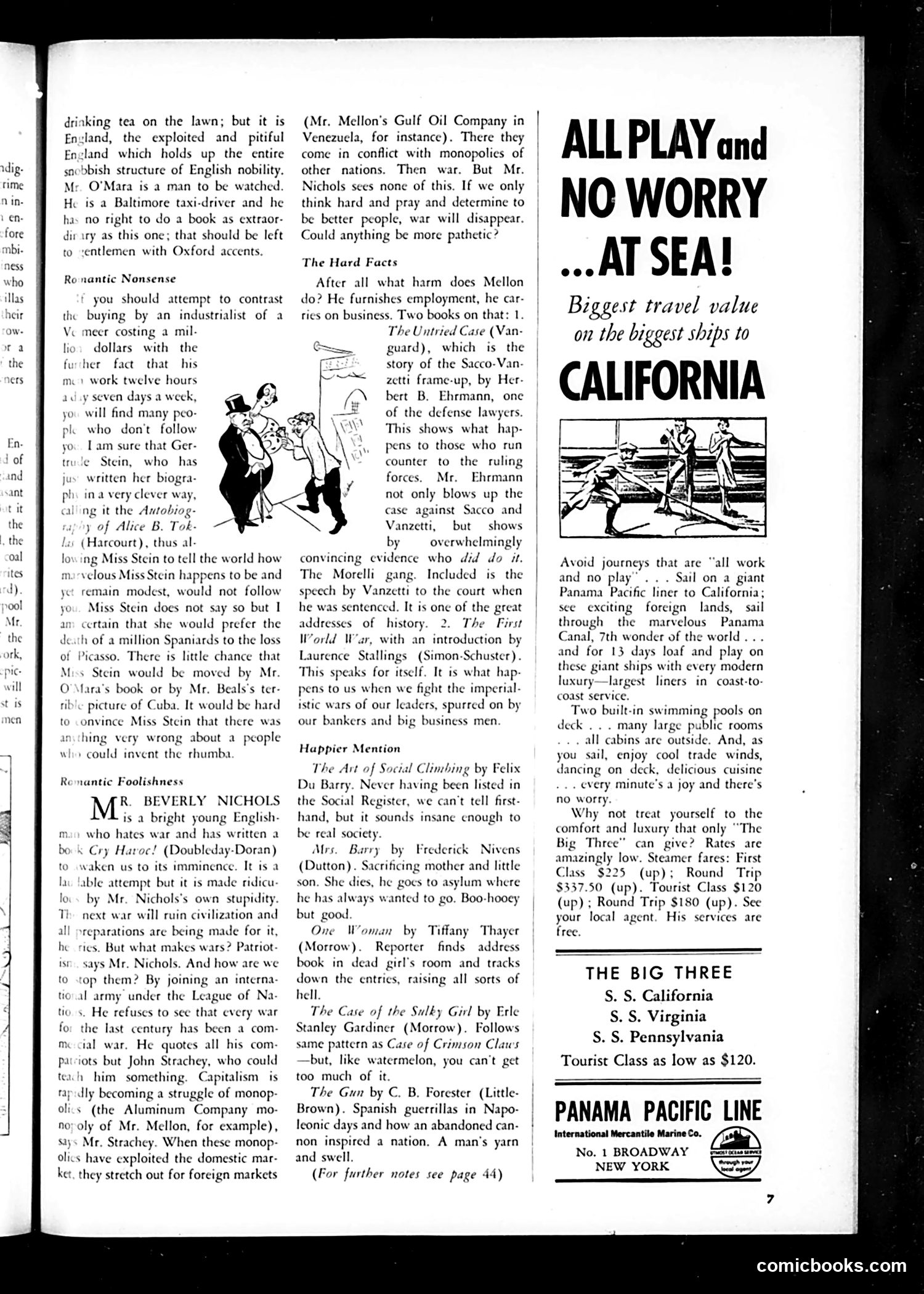
Analysis This page is primarily advertising and book reviews, not satirical political content. The main advertisement (right side) promotes ship travel to California via the Panama Pacific Line, featuring "The Big Three" ocean liners: California, Virginia, and Pennsylvania. It emphasizes leisure amenities—swimming pools, dancing, outdoor activities—targeting affluent tourists seeking luxury vacations. The left side contains literary reviews of contemporary books, including works by Alice B. Toklas and others, discussing topics like business, social climbing, and Spanish guerrillas. There is one small cartoon (center-left) showing men in business attire, apparently illustrating the book *The Flooring Case of the Vanguard*, but it's unclear without additional context what specific satire it represents. The overall page reflects 1920s-30s publishing and leisure travel marketing.
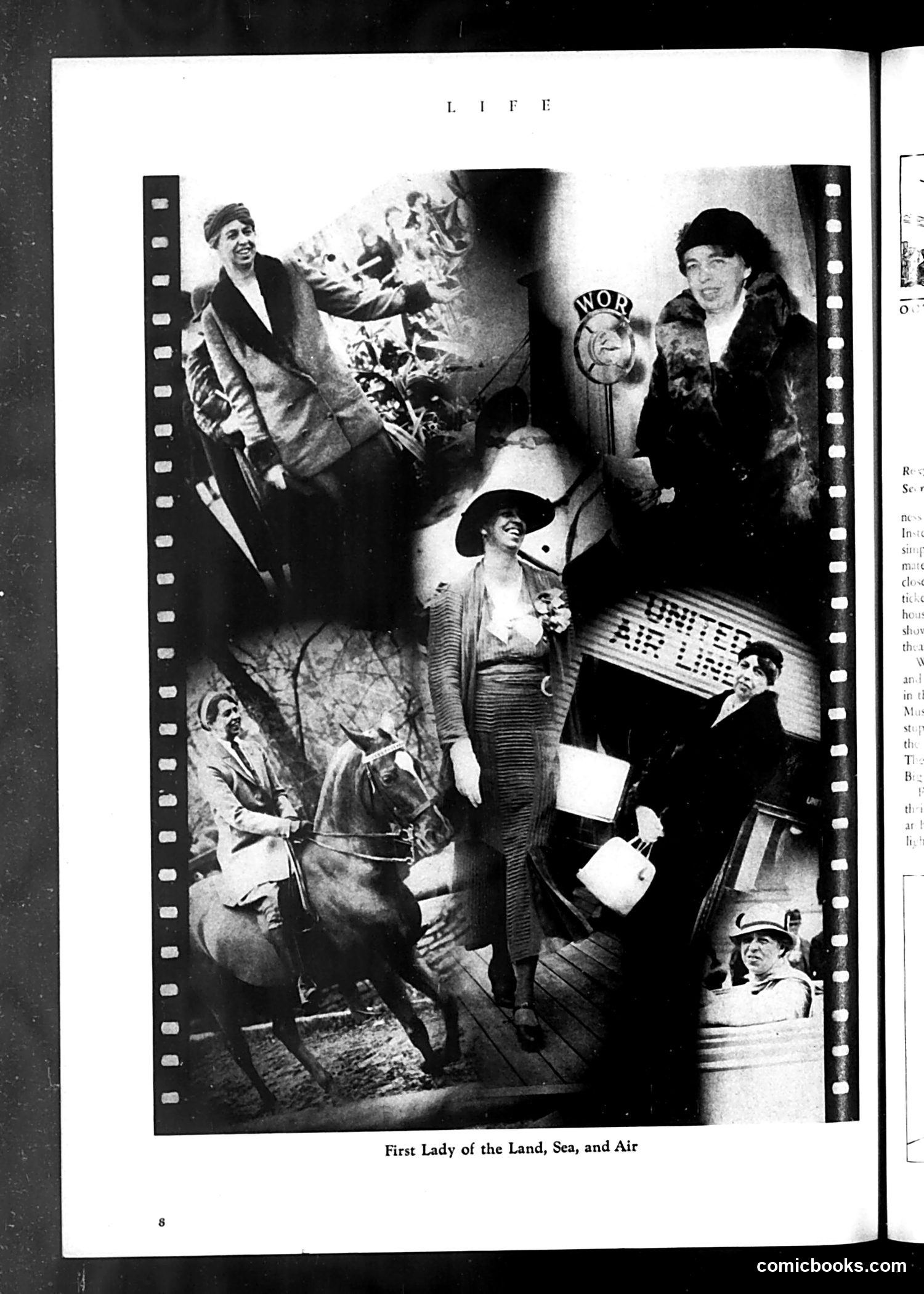
"First Lady of the Land, Sea, and Air" This Life magazine page presents a satirical composite photograph mocking a prominent woman's ubiquitous public presence across multiple domains. The title suggests the subject holds authority or visibility in all three spheres—literally combining images showing her involvement in land (horse), sea (visible ship/maritime setting), and air (radio microphone marked "WORD") contexts. The collage format, typical of 1920s-30s Life satire, ridicules excessive public exposure and influence. Without visible identification, the specific figure remains unclear, though the "First Lady" reference suggests a president's wife or similar high-profile political woman. The WORD radio branding indicates media prominence. The overall effect mocks celebrity culture and women's expanding public roles during this era.
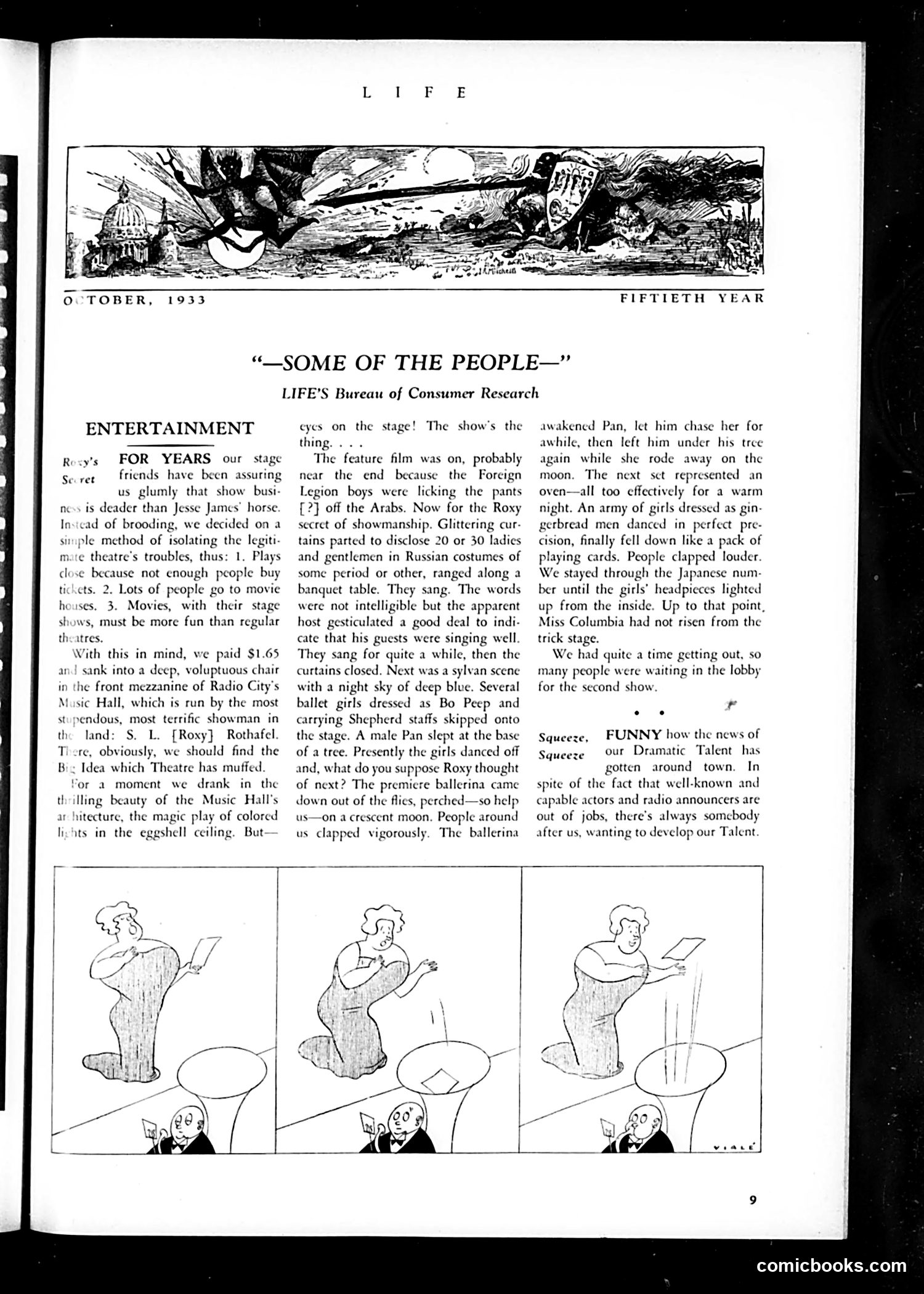
Analysis This page from Life magazine (October 1933) contains an entertainment review and a three-panel comic strip. The text discusses a Rosy theatre production featuring a Foreign Legion show with Russian costumes, ballet dancers, and Pan mythology scenes. The comic strip below satirizes talentless theatrical hopefuls. It shows a woman performer repeatedly reading from a script while a seated audience member (likely an agent or producer) watches impassively across three panels. The joke appears to be about desperate, untalented entertainers pursuing show business—she keeps performing the same act, seemingly oblivious to the lack of interest. The caption notes how "the news of Dramatic Talent has gotten around town," sarcastically suggesting wannabe performers chase opportunities despite lacking genuine ability. This reflects 1930s anxieties about aspiration and unemployment during the Depression.
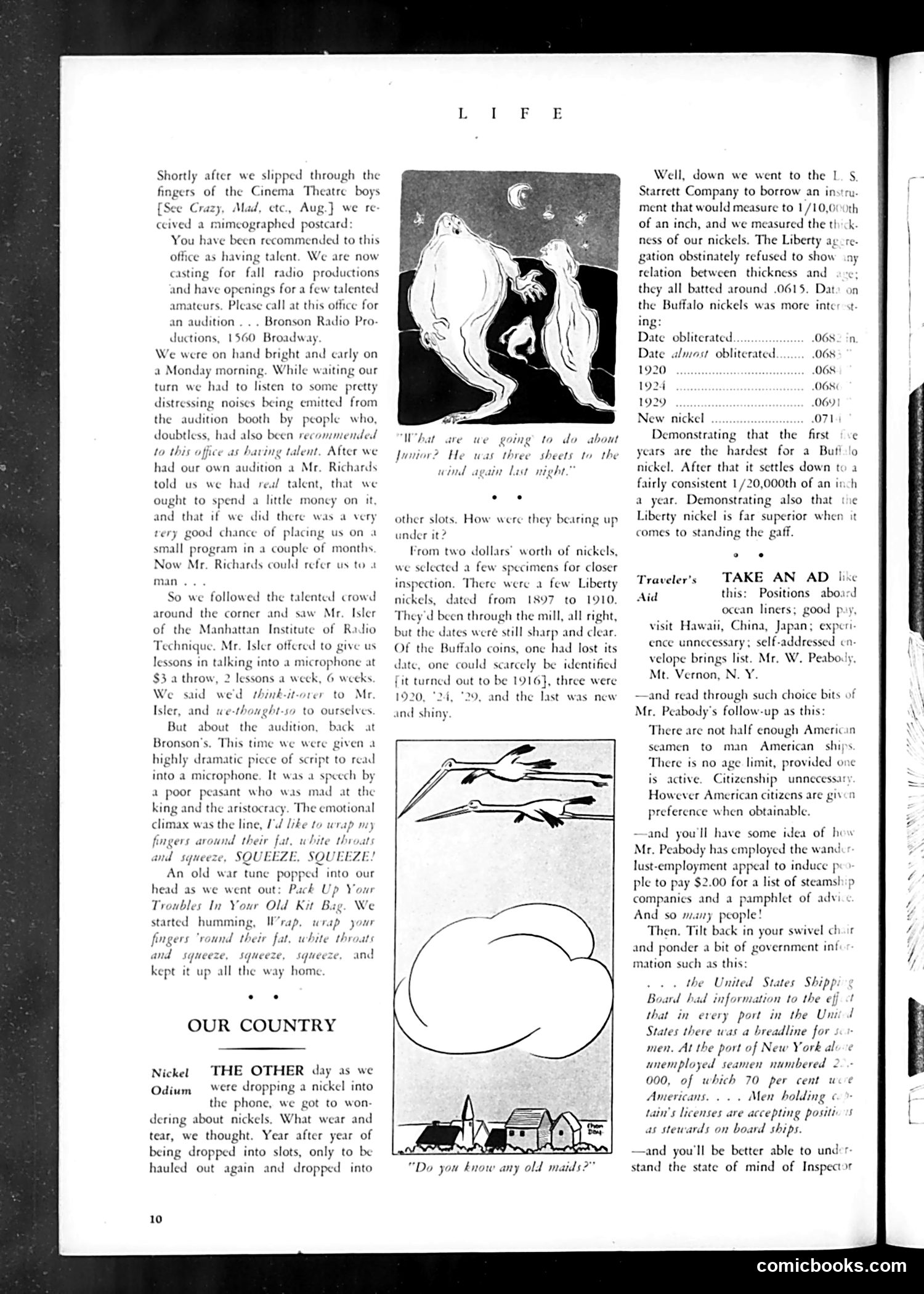
Analysis of Life Magazine Page This page contains two separate pieces of humor content: Upper section: A narrative about auditioning for radio work at Bronson's, featuring an illustration of what appears to be a person being thrown or falling. The text jokes about an audition experience and includes the line "I'd like to wrap my fingers around their fat, white throats and squeeze. SQUEEZE, SQUEEZE!" — using exaggerated language for comedic effect about frustration with the audition process. Lower section ("OUR COUNTRY - Nickel Odium"): Discusses worn nickels being repeatedly dropped and retrieved. Includes illustrations of clouds and a rural house. The humor derives from the wear-and-tear on currency over time, presented as a mundane, relatable complaint about everyday objects deteriorating. Both pieces exemplify Life's style of satirizing ordinary American life experiences through absurdist humor and visual gags rather than political commentary.
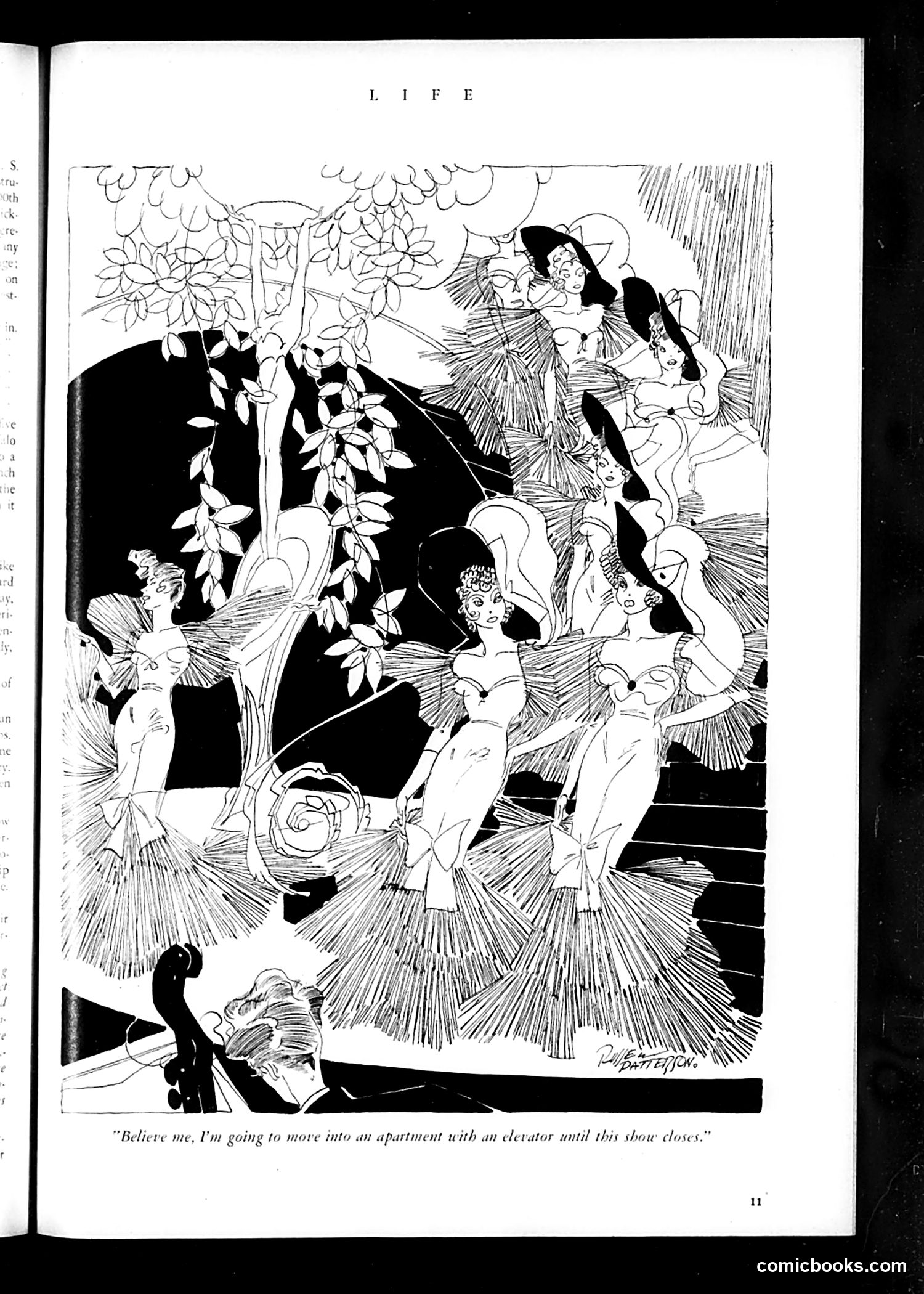
Analysis of Life Magazine Cartoon This cartoon satirizes the nouveau riche and their aspirations during the Jazz Age. The central figure—a wealthy man in formal attire surrounded by scantily-clad women in an opulent, art deco setting—represents the ostentatious lifestyle of the era's wealthy elite. The caption, "Believe me, I'm going to move into an apartment with an elevator until this show closes," mocks the pretensions of someone claiming temporary residence in luxury accommodations. The joke targets the gap between actual wealth and aspirational performance—suggesting the speaker cannot *actually* afford permanent residence in such an upscale building, only a short-term stay during a fashionable entertainment's run. The elaborate staging and exaggerated figures lampoon both materialism and the entertainment industry's social influence during the 1920s-30s.
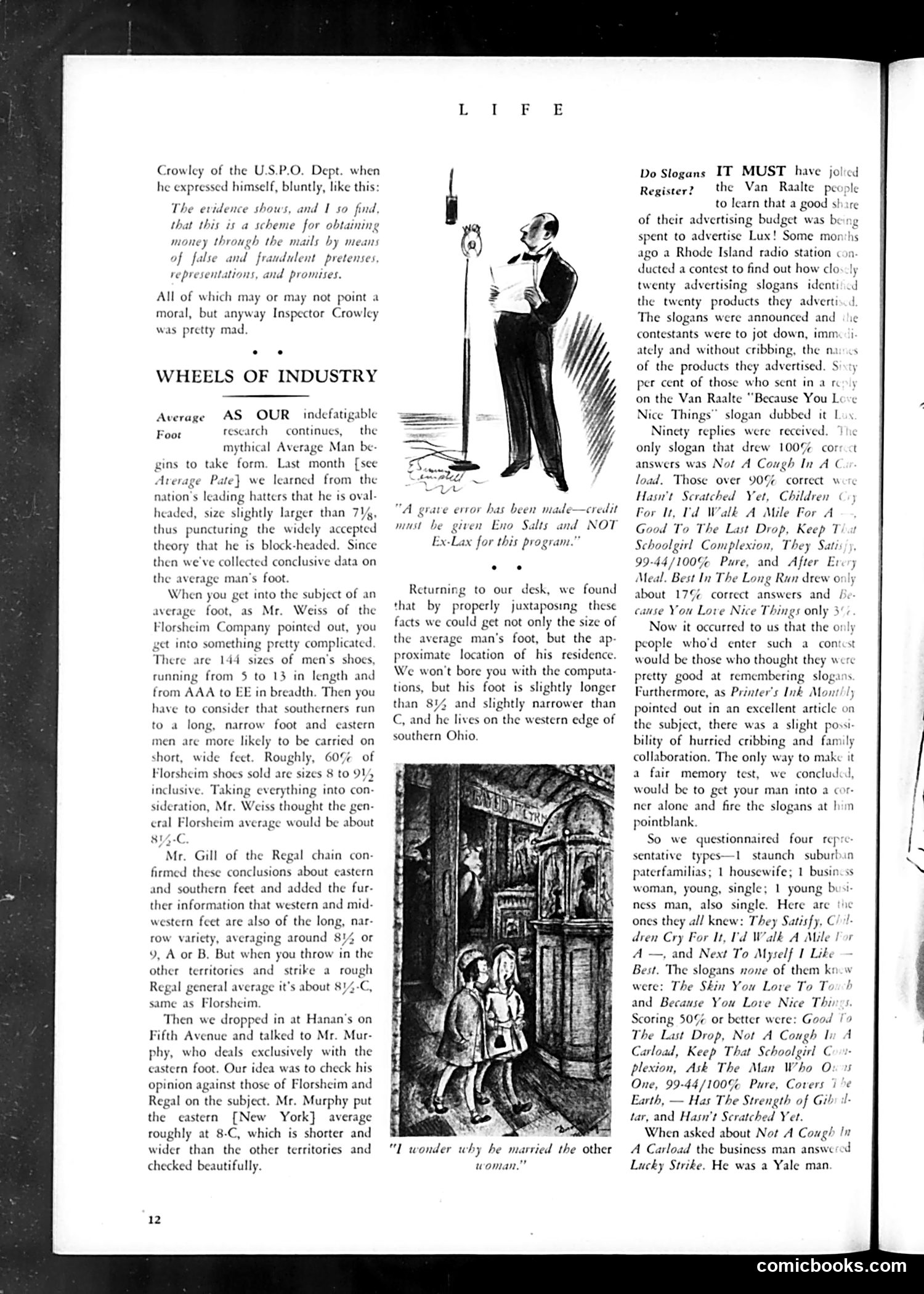
Analysis of Life Magazine Page This page contains two main sections: an article about shoe sizes ("Wheels of Industry") and a section titled "Do Slogans Register?" about advertising effectiveness. The cartoon shows a man at a microphone speaking to someone off-screen, with the caption "A grave error has been made—credit for a given Eno Salts and NOT Ex-Lax for this program." This satirizes how advertisers worry about proper brand attribution—the joke being that the wrong laxative company got credit for sponsoring the radio broadcast. The accompanying article discusses a Rhode Island radio contest testing whether listeners could remember advertising slogans from products. The results suggest most people either forgot or deliberately misremembered which product went with which slogan, pointing to advertising's limited effectiveness in building brand recall among consumers.
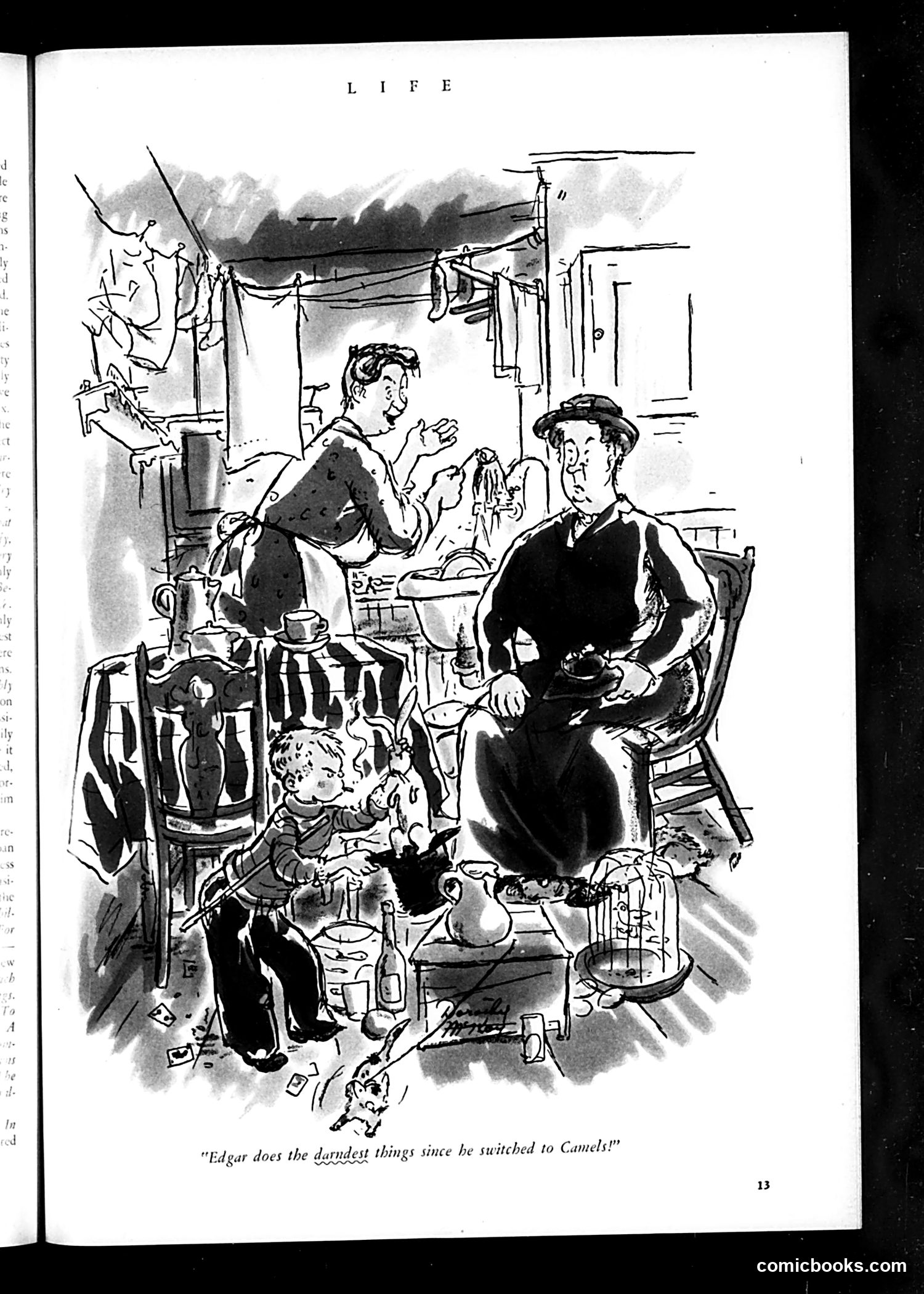
Analysis of Life Magazine Cartoon This cartoon satirizes a man named Edgar who has switched to smoking Camel cigarettes. The scene depicts a domestic interior with multiple figures—a woman standing, a seated woman, children, and a dog—all appearing to react with dismay or discomfort to Edgar's behavior. The joke plays on cigarette advertising claims popular in this era. The caption "Edgar does the darnedest things since he switched to Camel!" suggests the cartoon mocks the absurd behavioral changes supposedly caused by brand switching. Rather than improving Edgar's character or making him more appealing, his switch to Camels has apparently made him behave badly or inappropriately around his family. This represents vintage advertising satire, poking fun at exaggerated marketing claims about cigarettes' transformative effects on personality and behavior.
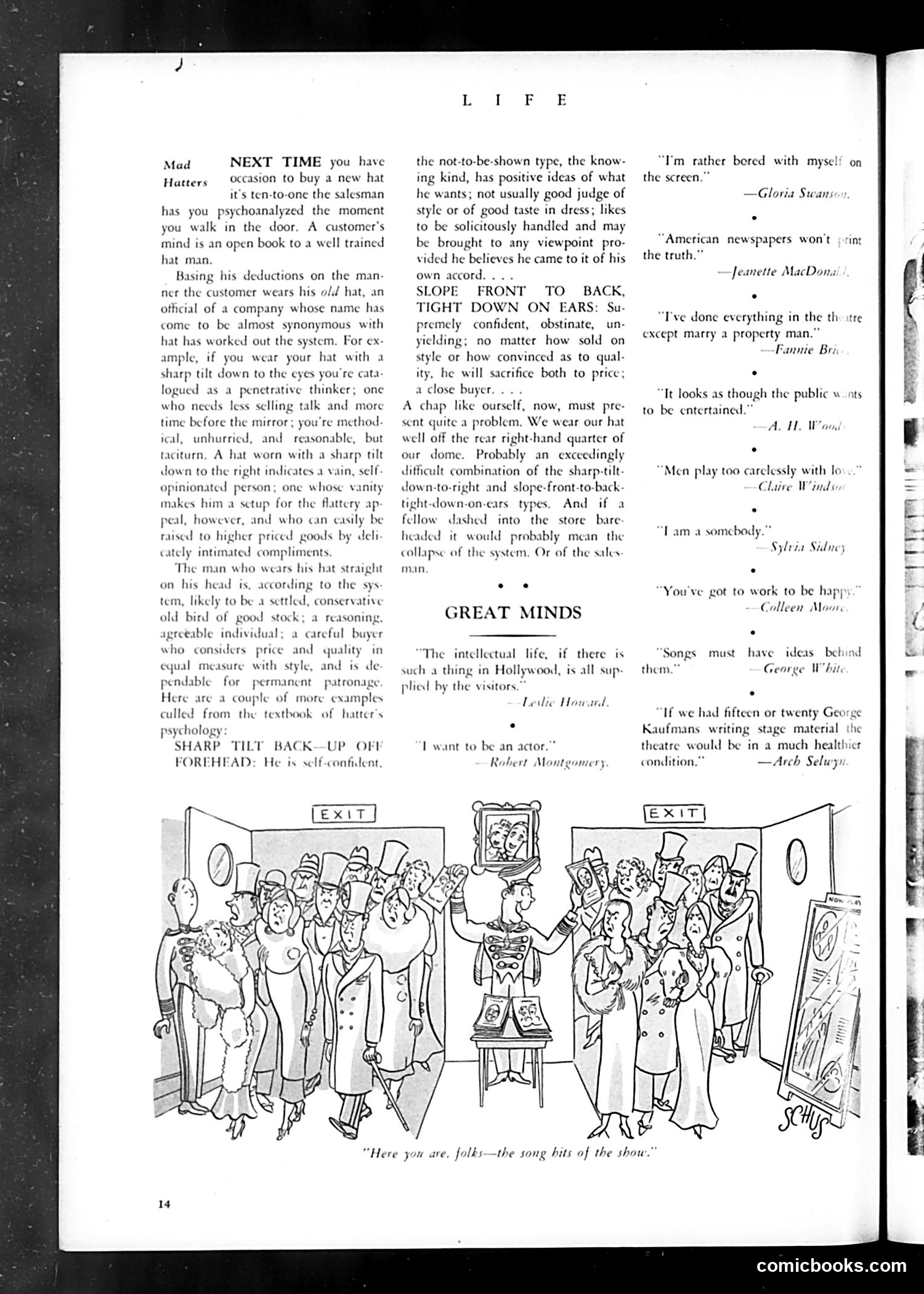
Analysis of Life Magazine Page This page combines fashion/retail commentary with celebrity quotes. The main cartoon depicts a crowded theater lobby or nightclub scene, with well-dressed patrons examining what appears to be merchandise or artwork displayed centrally. The caption reads: "Here you are, folks—the song hits of the show." The satire targets the commercialization of entertainment—specifically how songs from theatrical productions are packaged and sold to audiences as commodities rather than artistic expressions. The upper section, "Great Minds," collects quotes from entertainment figures (Robert Montgomery, Leslie Howard, George White, Arch Selwyn) discussing theater and acting. These contrast sharply with the "Mad Hatters" section's cynical analysis of retail psychology and hat salesmanship, suggesting entertainment industry practices mirror manipulative consumer marketing techniques of the era.
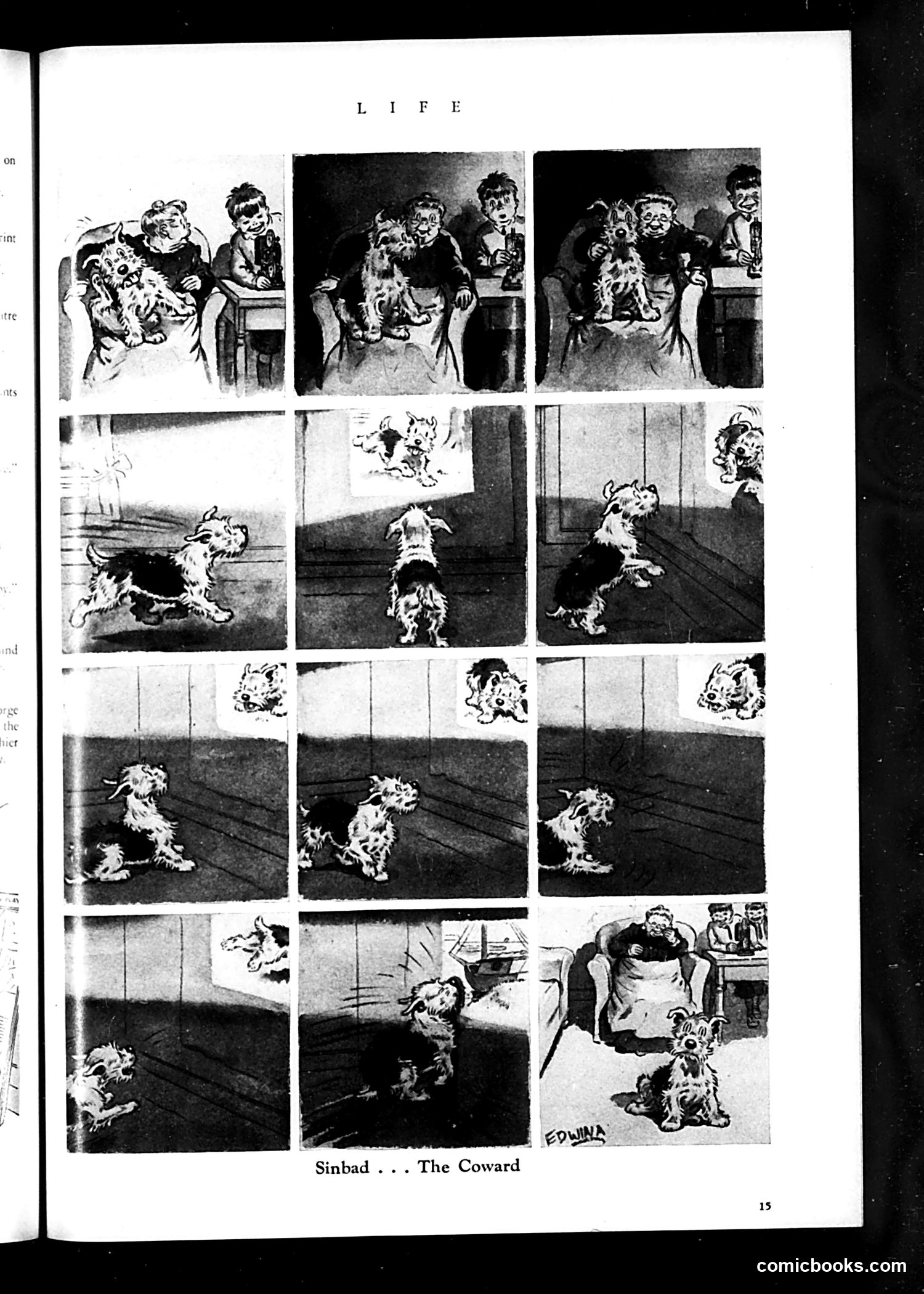
"Sinbad... The Coward" This appears to be a sequential comic strip showing a small, scraggly dog character (labeled "Sinbad") in various scenes of cowardice. The narrative progresses from the dog being held by children indoors, to the dog running away or hiding in outdoor settings, to finally cowering in what appears to be a domestic interior. The humor derives from the character's name—Sinbad, the legendary brave sailor—contrasted with the dog's consistently fearful behavior throughout the strip. The satire inverts expectations: rather than the heroic adventures associated with the Sinbad legend, this character exhibits only timidity and avoidance. The strip appears to be a humorous commentary on mismatched names or ironic characterization, common in early 20th-century comics.
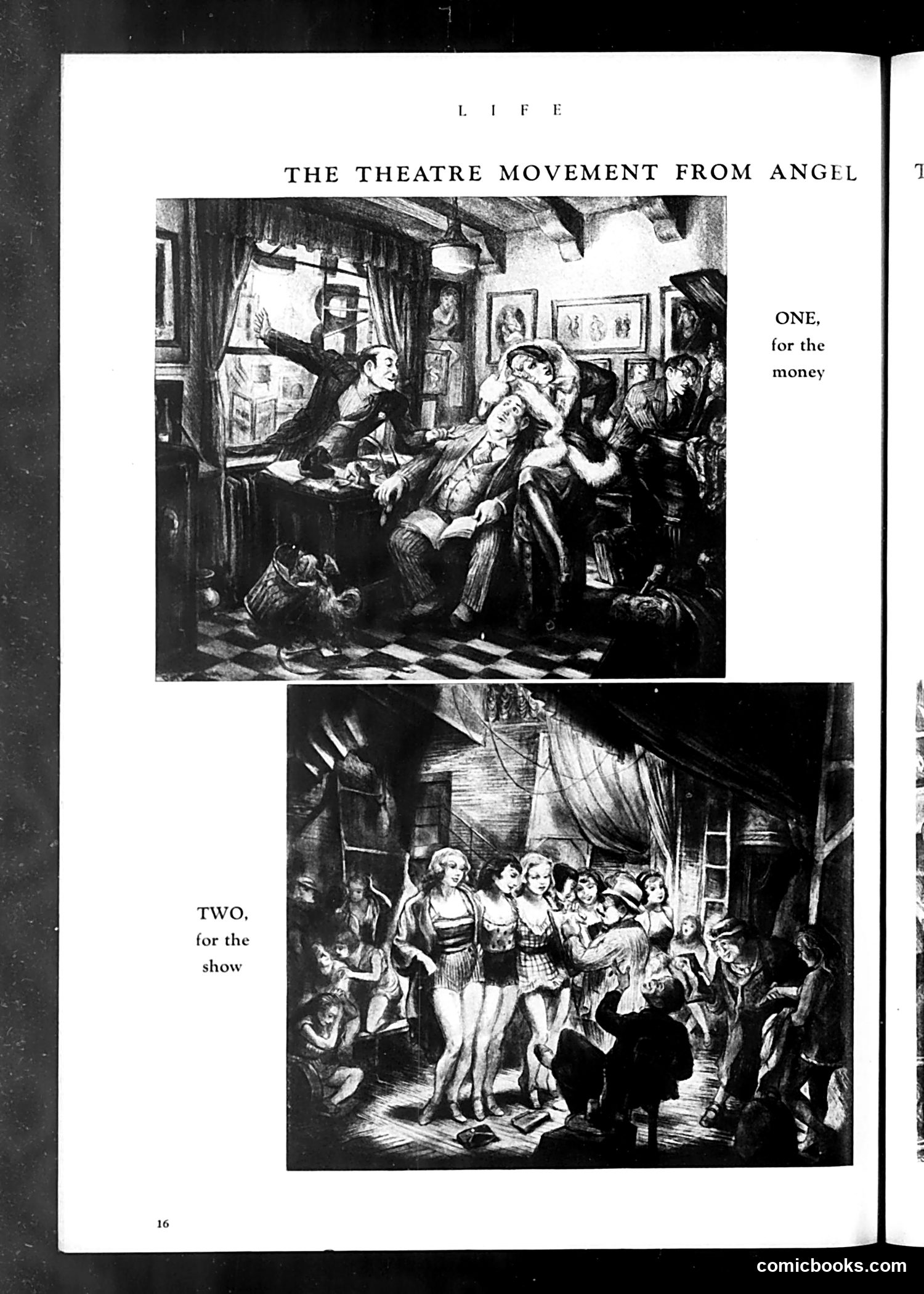
"The Theatre Movement from Angel" This page satirizes theatrical motivations through two contrasting scenes. The top image, labeled "ONE. for the money," depicts what appears to be a crowded, chaotic theatrical scene with figures in period dress, suggesting mercenary chaos behind the scenes. The bottom image, "TWO. for the show," presents a more orderly, elaborate production number with costumed performers arranged formally. The satire juxtaposes why people actually engage in theatre (financial desperation) versus the polished result audiences see. The title "from Angel" likely references wealthy theatrical "angels"—wealthy backers funding productions. Together, these images mock the gap between theatre's financial realities and its glamorous public presentation, a recurring concern in early 20th-century theatrical criticism.
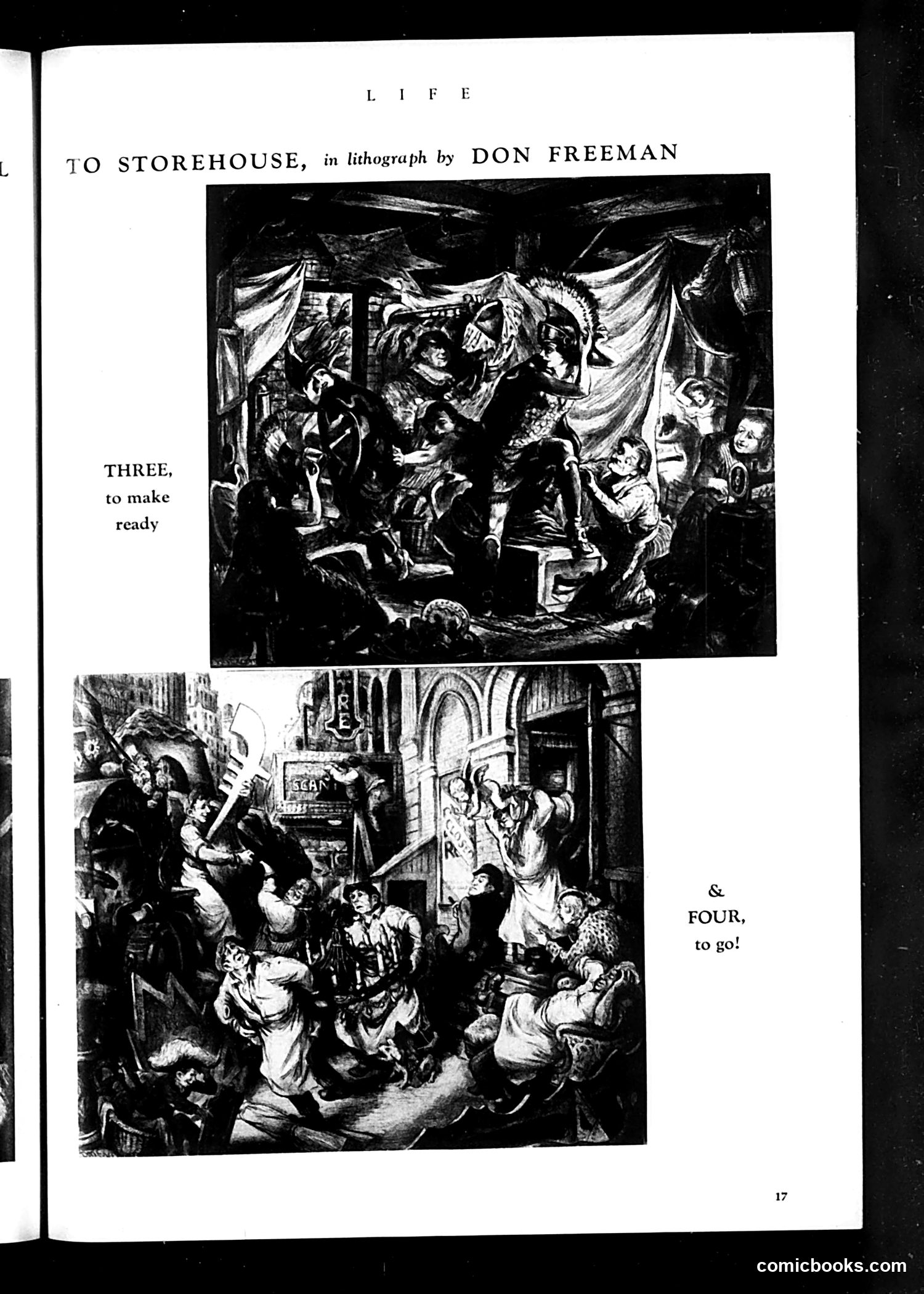
Analysis of "To Storehouse" by Don Freeman This page presents two lithographs by Don Freeman depicting chaotic street scenes. The title "TO STOREHOUSE" with the counting sequence "THREE, to make ready" and "FOUR, to go!" suggests a nursery-rhyme structure, likely satirizing preparation for wartime rationing or supply-gathering. Both scenes show crowded, energetic crowds in urban settings—one appears to be an indoor market or gathering, the other an outdoor street scene with storefronts. The frantic activity and densely packed figures suggest panic buying or emergency provisioning, common during wartime shortages. Freeman's distinctive loose lithographic style emphasizes chaos and movement. Without a visible date, the specific historical context remains unclear, though the imagery aligns with WWII-era American anxieties about rationing and resource scarcity.
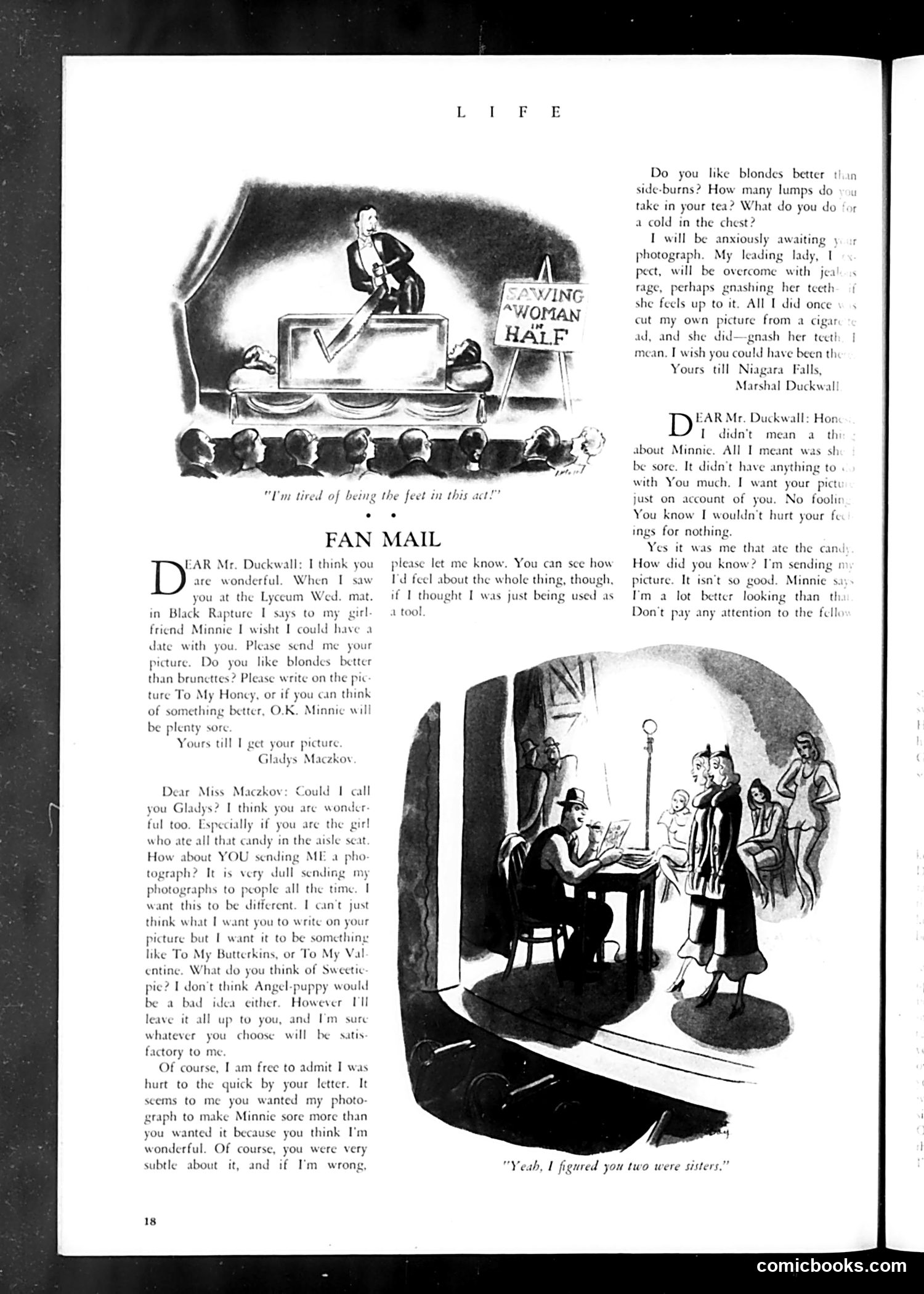
Analysis of Life Magazine "Fan Mail" Page This page features reader letters to the magazine and two cartoons. The top cartoon depicts a woman performing as a "Saving Woman Half" (likely a magic trick illusion) on stage, with an audience below. The caption "I'm tired of being the feet in this act!" suggests satire about women's roles in entertainment—being literally the "lower half" or less visible part of a performance. The bottom cartoon shows a domestic scene where a man tells a woman "Yeah, I figured you two were sisters," apparently commenting on two female visitors. This appears to satirize social assumptions or awkward observations about women's appearances. The fan mail section shows readers responding enthusiastically to Life's entertainment coverage and requesting photographs of performers, typical of early-20th-century fan culture.
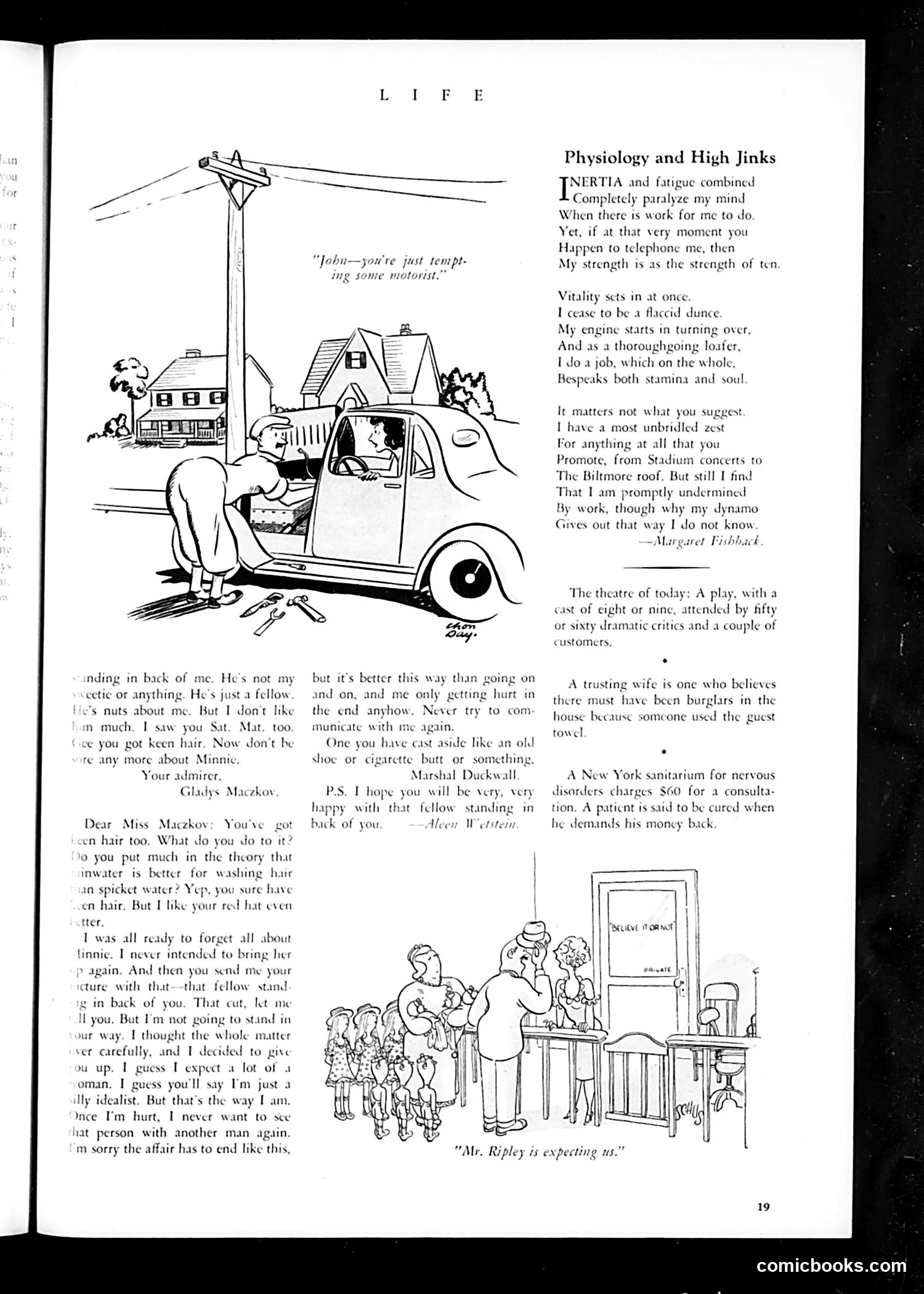
Analysis of Life Magazine Page 19 Main Cartoon (top left): Shows a man repairing a broken-down car while a woman leans out the window saying "John—you're just tempting some motorist!" The joke satirizes gender roles: the implication is that a disabled car with an attractive woman visible attracts unwanted male attention, making the repair attempt itself risky. Featured Poem: "Physiology and High Jinks" by Margaret Fishback describes a woman's exhaustion from work and constant availability—she's perpetually tired, "undermined" despite her "unbridled zest." The poem satirizes the impossible demands placed on working women. Bottom illustration: Shows a teacher or authority figure addressing children, captioned "Mr. Ripley is expecting us"—context unclear without additional information. The page overall critiques gendered expectations of female availability and labor.
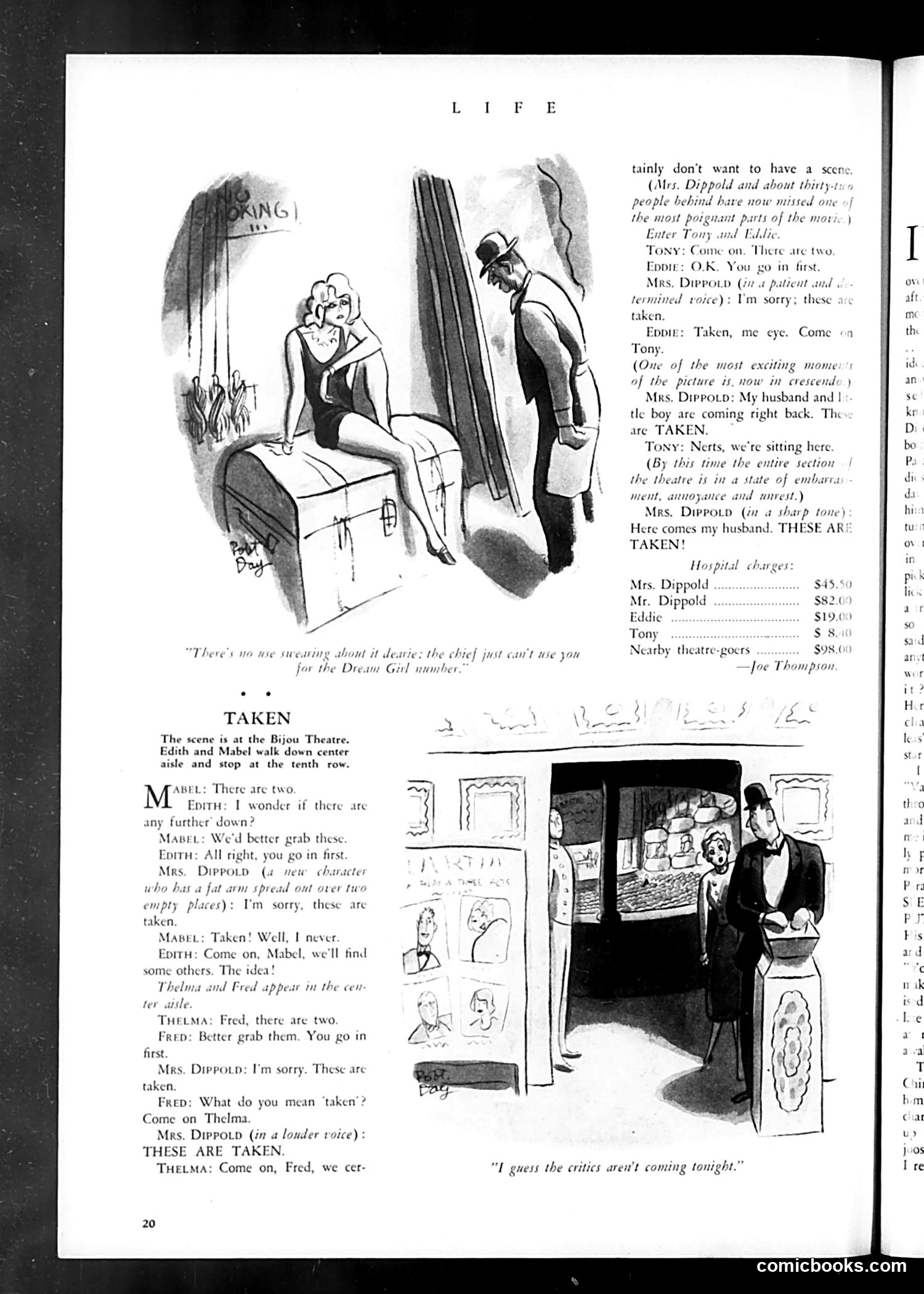
Analysis: "Taken" by Joe Thompson This is a satirical sketch about theater etiquette and social conflict. Mrs. Dippold reserves two empty seats at the Bijou Theatre by sitting with her arm sprawled across them, claiming they're "taken" (reserved for her husband and child). Multiple couples attempt to sit in these seats, and Mrs. Dippold repeatedly insists they're reserved, growing increasingly loud and aggressive. Each confrontation causes disruption throughout the theater section, with people missing key moments of the film. The satire targets selfish moviegoers who reserve seats inconsiderately and those who escalate minor disputes into public scenes. The punchline's "hospital charges" imply the situation culminates in physical violence—suggesting that Mrs. Dippold's stubbornness (and possibly her husband's arrival) results in a brawl affecting multiple theatergoers. The cartoon mocks both unreasonable seat-reservation practices and the breakdown of civility over trivial matters in public spaces.
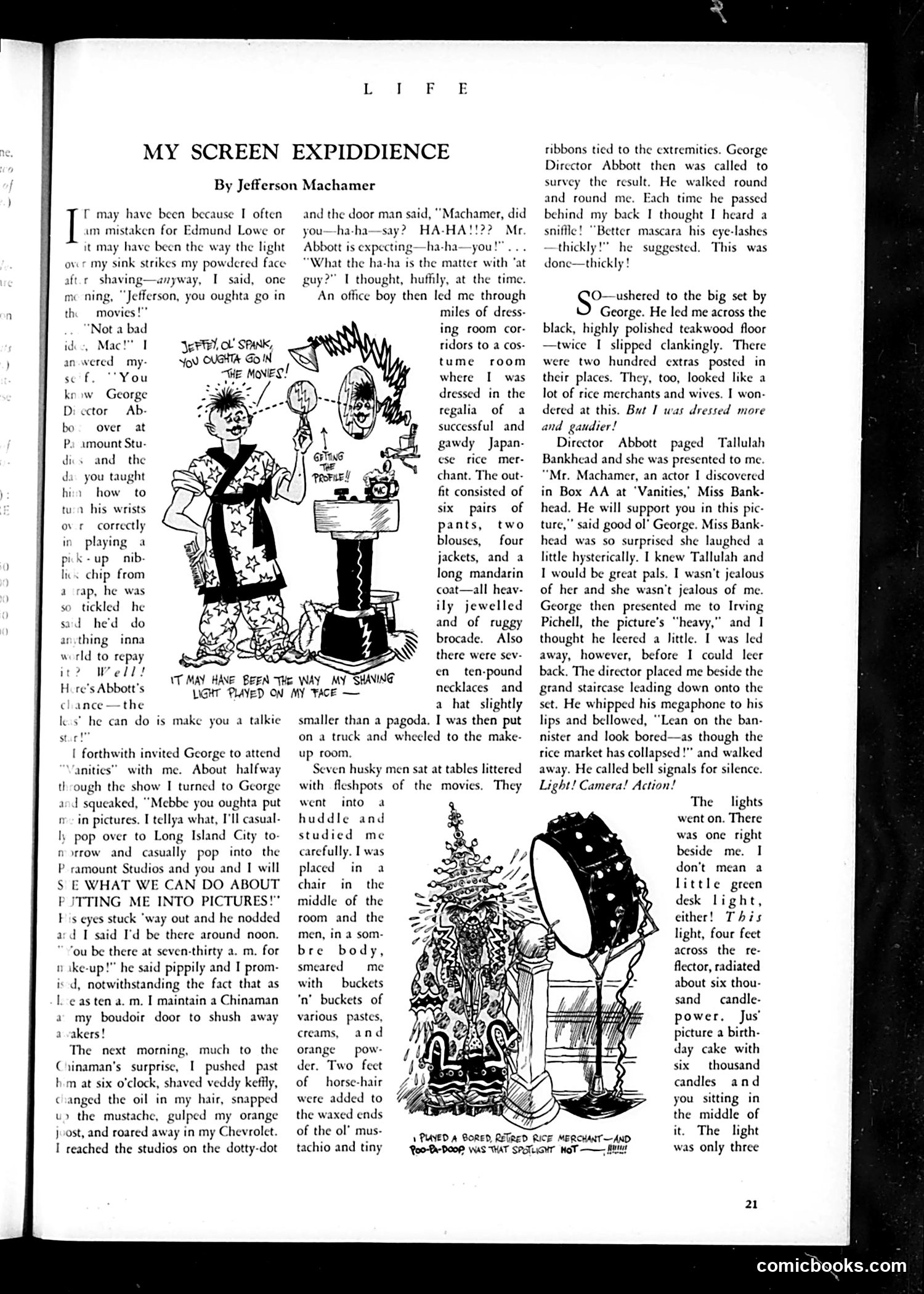
"My Screen Expiddience" — A Silent-Era Hollywood Satire This humorous first-person account by Jefferson Machamer mocks 1920s Hollywood's absurd filmmaking processes. The author, a regular person, is jokingly encouraged by a friend (George, apparently a studio director) to become a movie star. He shows up at a studio and is transformed into an "Oriental" rice merchant through elaborate costuming and makeup—complete with false mustaches, ten-pound necklaces, and heavy pancake makeup applied by teams of workers. The satire targets the era's casual racial caricature in cinema and the mechanical, impersonal nature of silent-film production. Famous actress Tallulah Bankhead is cast opposite him. The cartoons illustrate the author's bewilderment amid the studio's overcomplicated machinery. The joke lies in exposing how studios manufactured "stars" from ordinary people through costume and makeup alone—highlighting the artificiality and racial insensitivity of early Hollywood filmmaking.
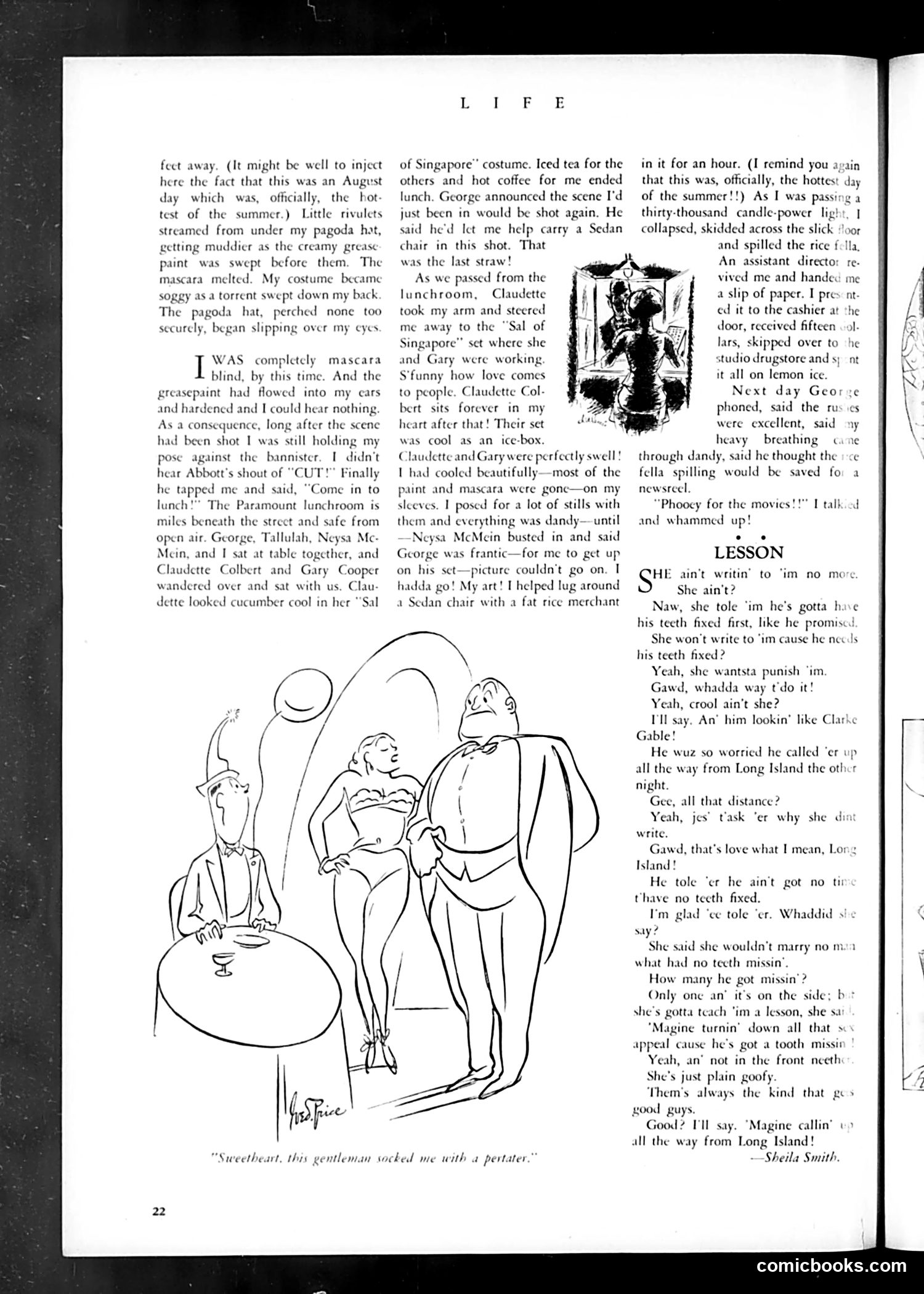
Analysis of Life Magazine Page This page contains two distinct pieces of satirical content typical of Life magazine's humor format: Main Article (Left): A first-person Hollywood anecdote about filming in brutally hot conditions. The author (identity unclear from visible text) describes melting makeup, heat exhaustion, and the indignity of hauling a sedan chair as an extra—all while major stars like Claudette Colbert and Gary Cooper casually work nearby. The satire targets Hollywood's glamorous facade versus actors' actual working conditions, and the author's dramatic self-pity about physical discomfort. "The Lesson" Dialogue (Right): A working-class gossip piece in vernacular speech about a woman refusing to write to a man until he fixes his missing tooth—despite his calling long-distance from Long Island and resembling Clark Gable. The joke satirizes women's stubbornness over trivial matters and the absurdity of punishing an otherwise desirable suitor over dental hygiene. The byline credits "Sheila Smith." The cartoon illustration depicts what appears to be a social/romantic scene with stylized figures.
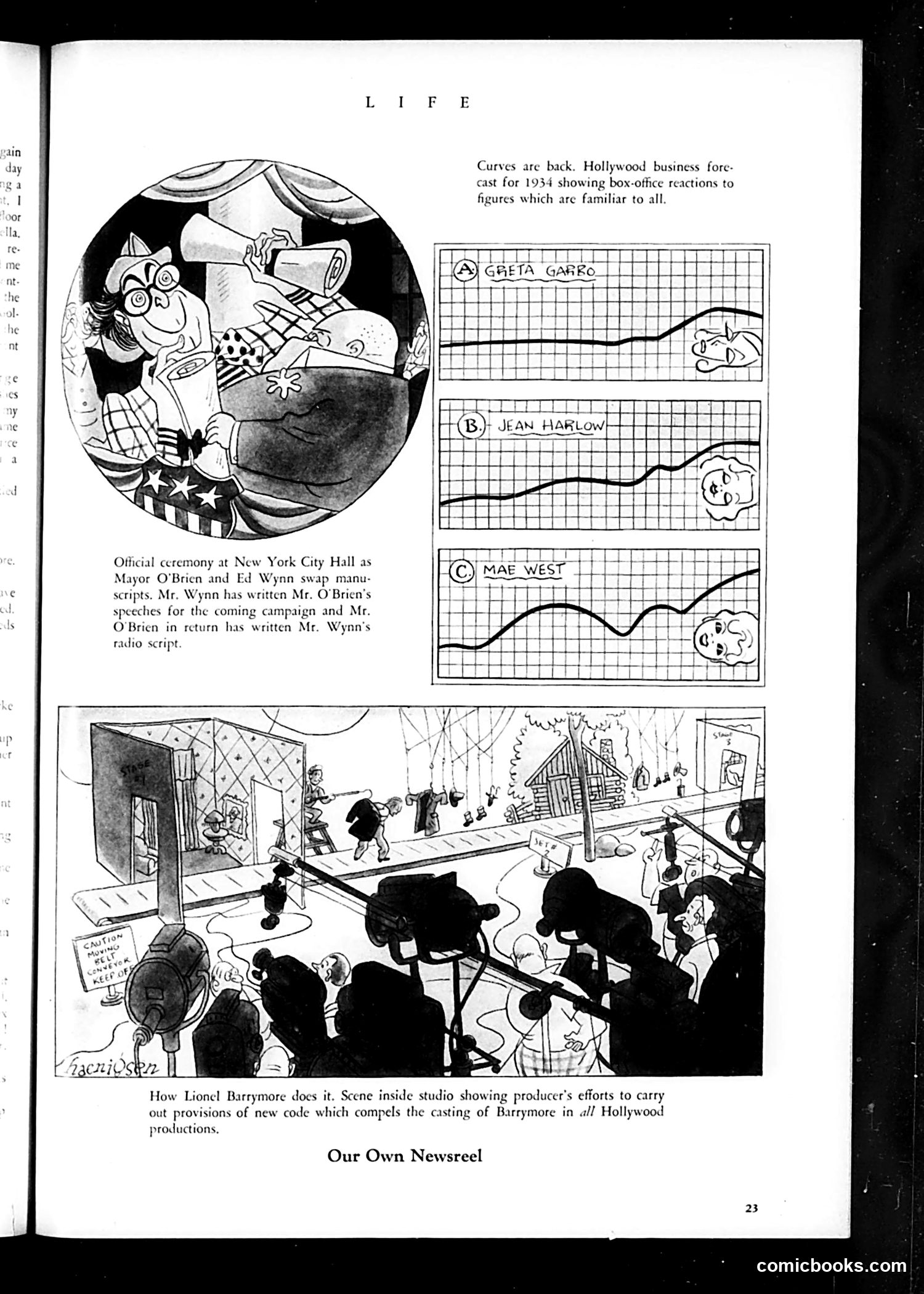
Life Magazine Satire Analysis This page presents three Hollywood and New York political satires: 1. Top circular cartoon: Depicts Mayor O'Brien and entertainer Ed Wynn exchanging scripts—a joke about their supposed collaboration where Wynn writes the mayor's campaign speeches while O'Brien writes Wynn's radio material. The satire mocks the blurred lines between entertainment and politics. 2. Box-office graphs (A-C): Charts labeled with actresses Greta Garbo, Jean Harlow, and Mae West show fluctuating curves, satirizing Hollywood's obsession with stars' physical "curves" and their box-office appeal—a commentary on how studios marketed actresses' bodies as box-office commodities. 3. Bottom illustration: Shows Lionel Barrymore's casting in all Hollywood productions under a new industry code, sarcastically suggesting the code mandates his universal inclusion. This likely references the Motion Picture Production Code (Hays Code) and critiques how studios comply with regulations. All three target 1930s Hollywood's superficiality and commercialism.
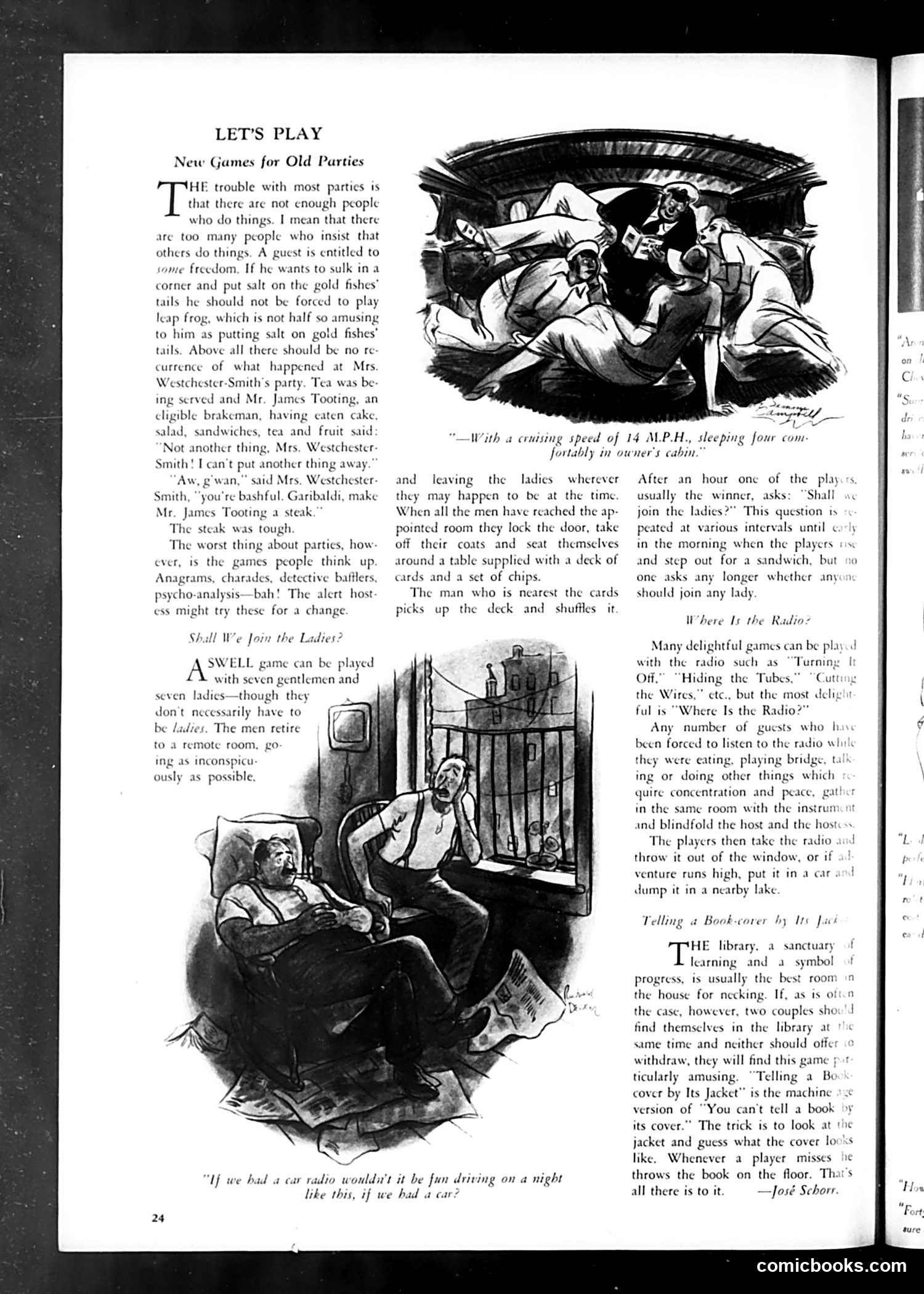
"Let's Play: New Games for Old Parties" This satirical article mocks the forced entertainment at social gatherings. The main joke: hosts pressure guests into tedious parlor games when people simply want to relax or do as they please. The specific games lampoon party culture absurdities: "Shall We Join the Ladies?" satirizes segregated socializing—men retreat alone to gamble for hours while women wait, then periodically ask if they should rejoin the ladies (implying they won't). "Where Is the Radio?" mocks mandatory radio listening at parties. The "game" involves blindfolding the host, then guests literally remove or hide the radio—a joke about unwanted background entertainment forcing concentration during conversation or cards. "Telling a Book-cover by Its Jacket" ridicules couples sneaking away to the library to neck (kiss/make out), disguised as a parlor game about judging books. The cartoons show people cramped in boats and awkwardly positioned in windows—visual representations of forced confinement at social events. The overall satire targets the rigid, joyless obligation of 1920s-30s party etiquette where hosts dictate entertainment and guests must comply.
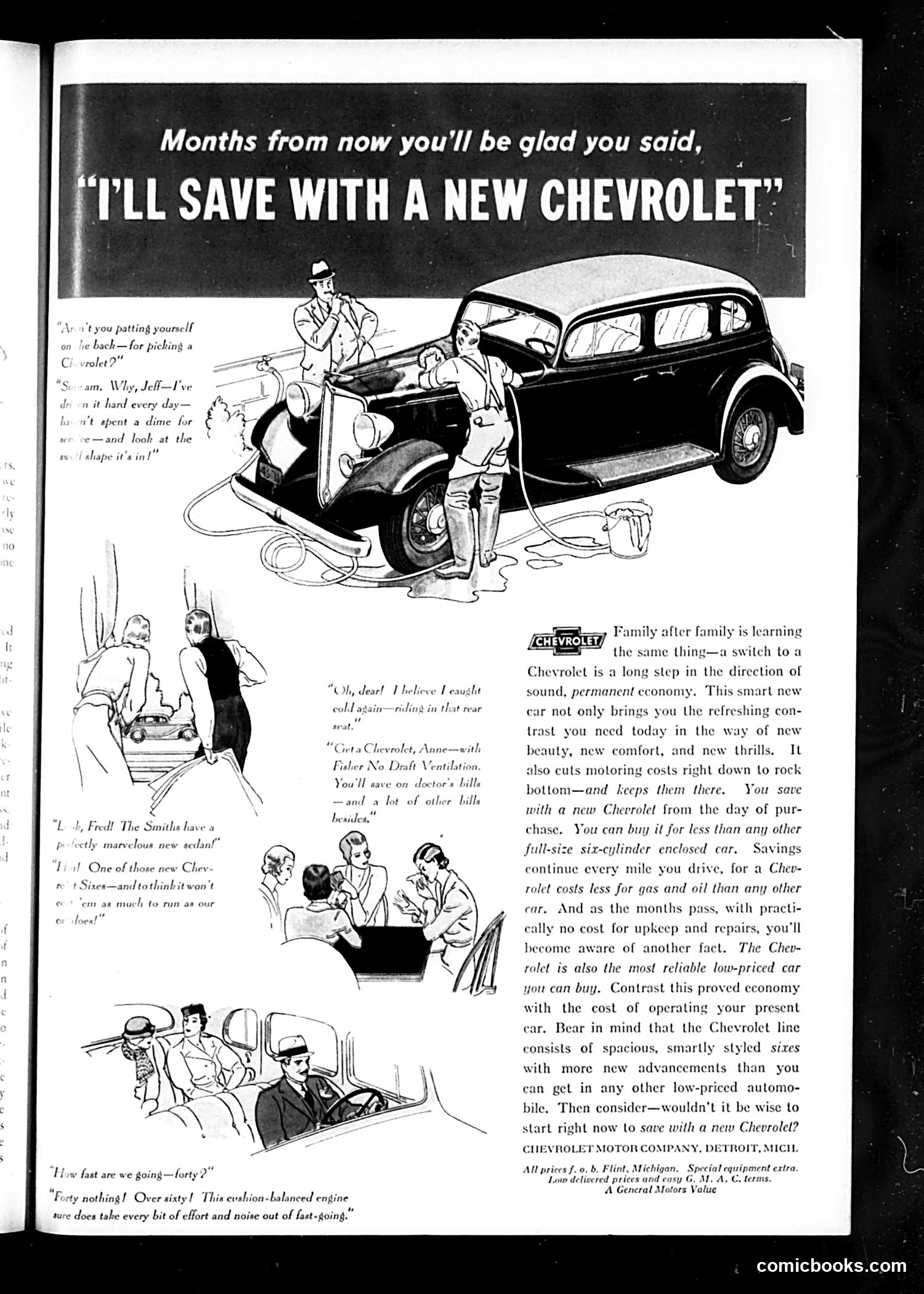
Analysis of This Chevrolet Advertisement This is a full-page automobile advertisement, not political satire. It presents testimonial vignettes showing middle-class families discovering reasons to buy a new Chevrolet. Each scene depicts a "problem" solved by switching cars: a husband boasting about fuel savings, a wife mentioning doctor's bills from riding in drafty cars, neighbors envying the Smiths' new vehicle, and passengers praising the smooth, quiet ride at high speed. The appeal is to practical economics and family welfare—themes particularly resonant during the Depression era or post-Depression recovery. The tagline promises that "months from now you'll be glad you said" you'd save with a Chevrolet, emphasizing long-term value and reliability. The advertisement stresses low purchase price, cheap fuel consumption, minimal maintenance costs, and spacious comfort compared to other "low-priced automobiles." This represents typical 1930s-40s advertising strategy: lifestyle storytelling rather than product specs alone.
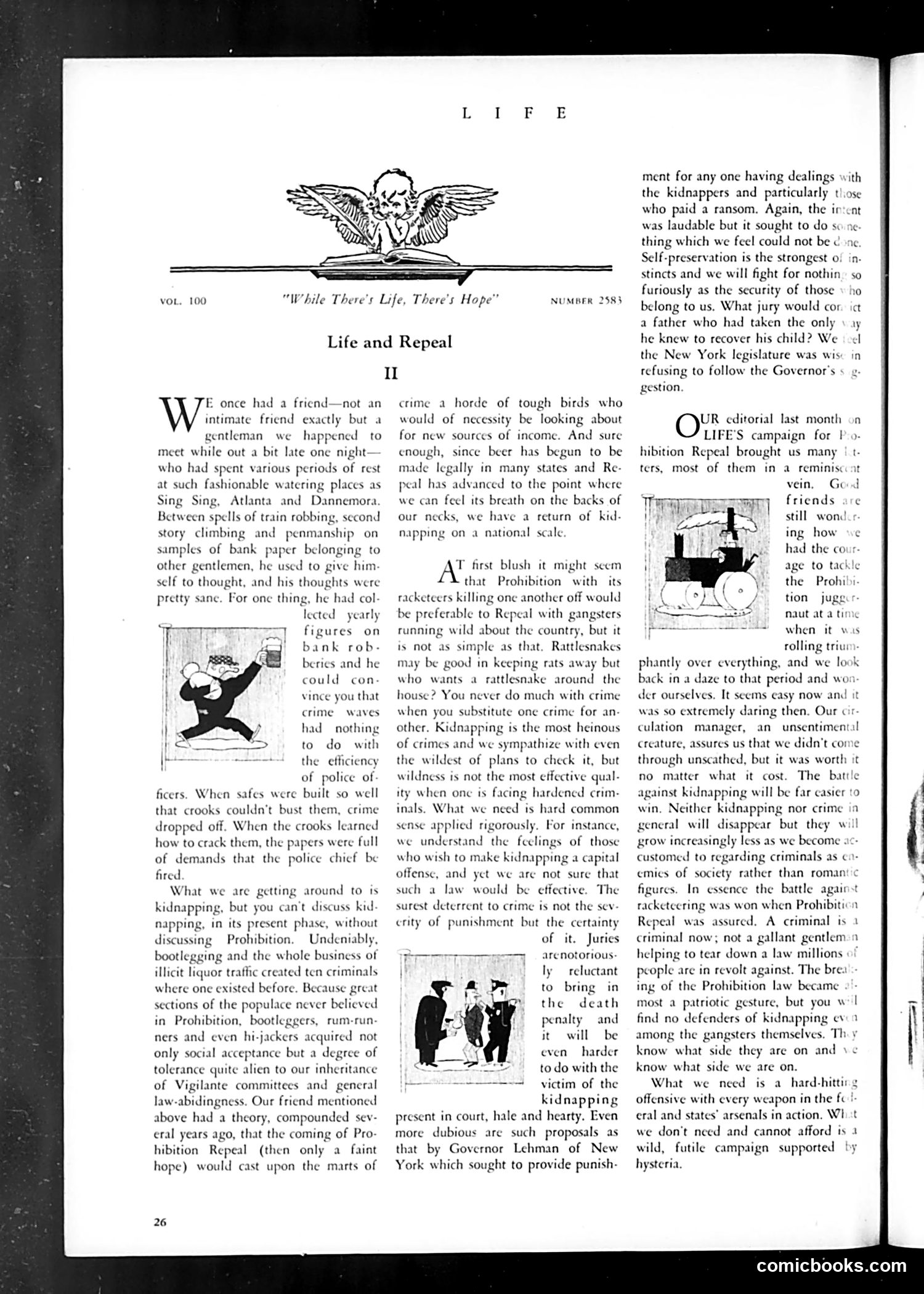
"Life and Repeal" - Historical Context This 1933 article addresses kidnapping's surge following Prohibition's repeal. The author argues that Prohibition created a criminal infrastructure (bootleggers, rum-runners, hijackers) that society had paradoxically tolerated. With legal beer returning and Repeal imminent, these hardened criminals would seek new income sources—particularly kidnapping, which had indeed become epidemic in early 1930s America. The piece critiques Governor Lehman of New York's proposed law punishing those who pay ransoms or deal with kidnappers. The author contends such measures, while well-intentioned, are unenforceable: self-preservation instincts are too strong, and juries won't convict desperate parents trying to save their children. The three small cartoons appear to illustrate criminal activity (bank robbery, police confrontation, arrest), reinforcing the article's discussion of crime waves and law enforcement.
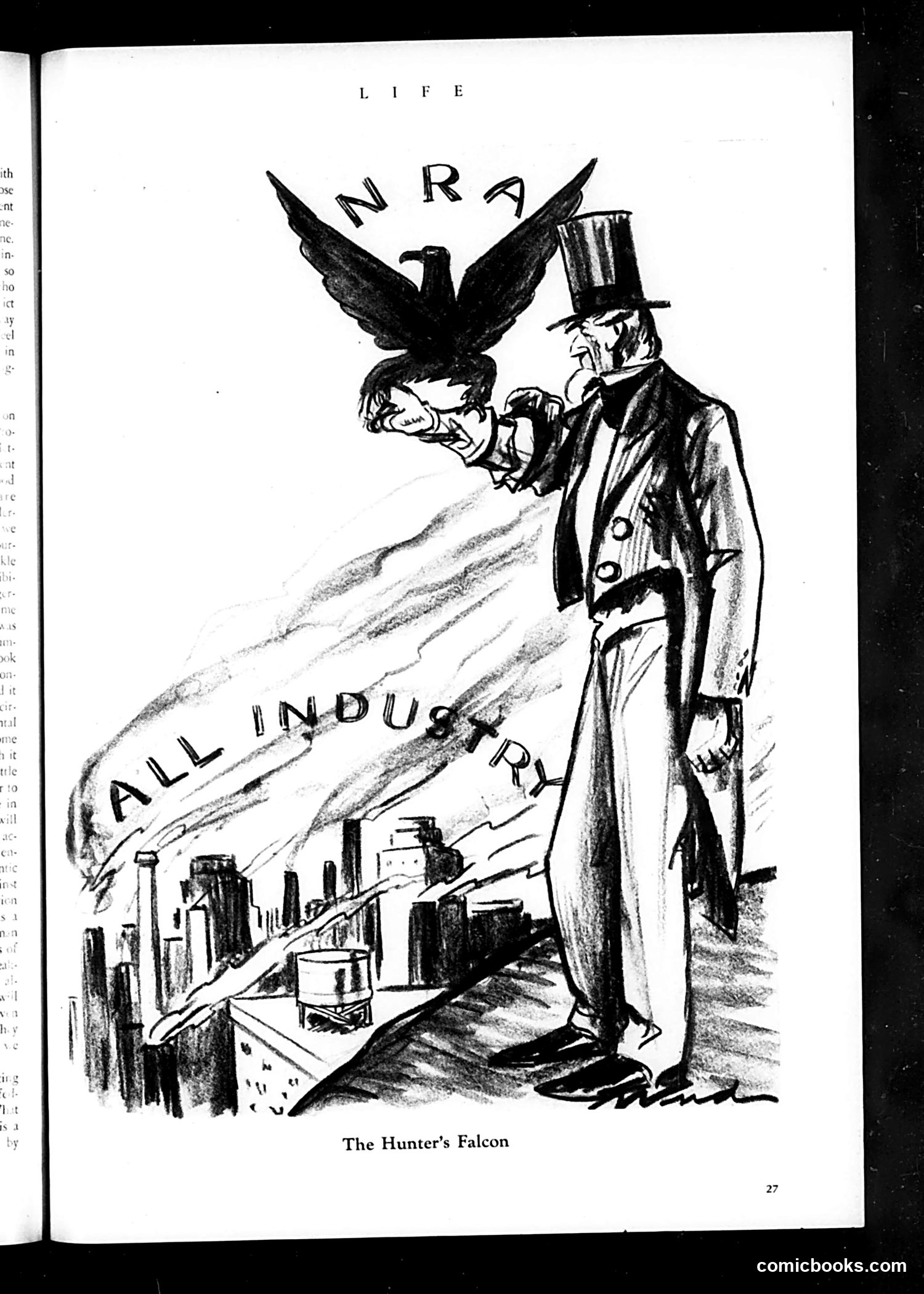
"The Hunter's Falcon" - Political Cartoon Analysis This cartoon depicts a well-dressed gentleman in a top hat controlling a large black eagle labeled "INRA" (likely referring to the National Recovery Administration, a New Deal program). The eagle carries a banner reading "ALL INDUSTRY," symbolizing government control over American business. The satire appears to criticize New Deal policies as excessive federal overreach into private enterprise. The "hunter" (likely representing either President Franklin D. Roosevelt or the government generally) wields industrial regulation like a falcon—a tool for pursuing prey. The cityscape below suggests American industry under this control. This reflects contemporary conservative opposition to 1930s New Deal expansion of government authority over business, portraying such regulation as governmental "hunting" of the American economy rather than partnership or freedom.
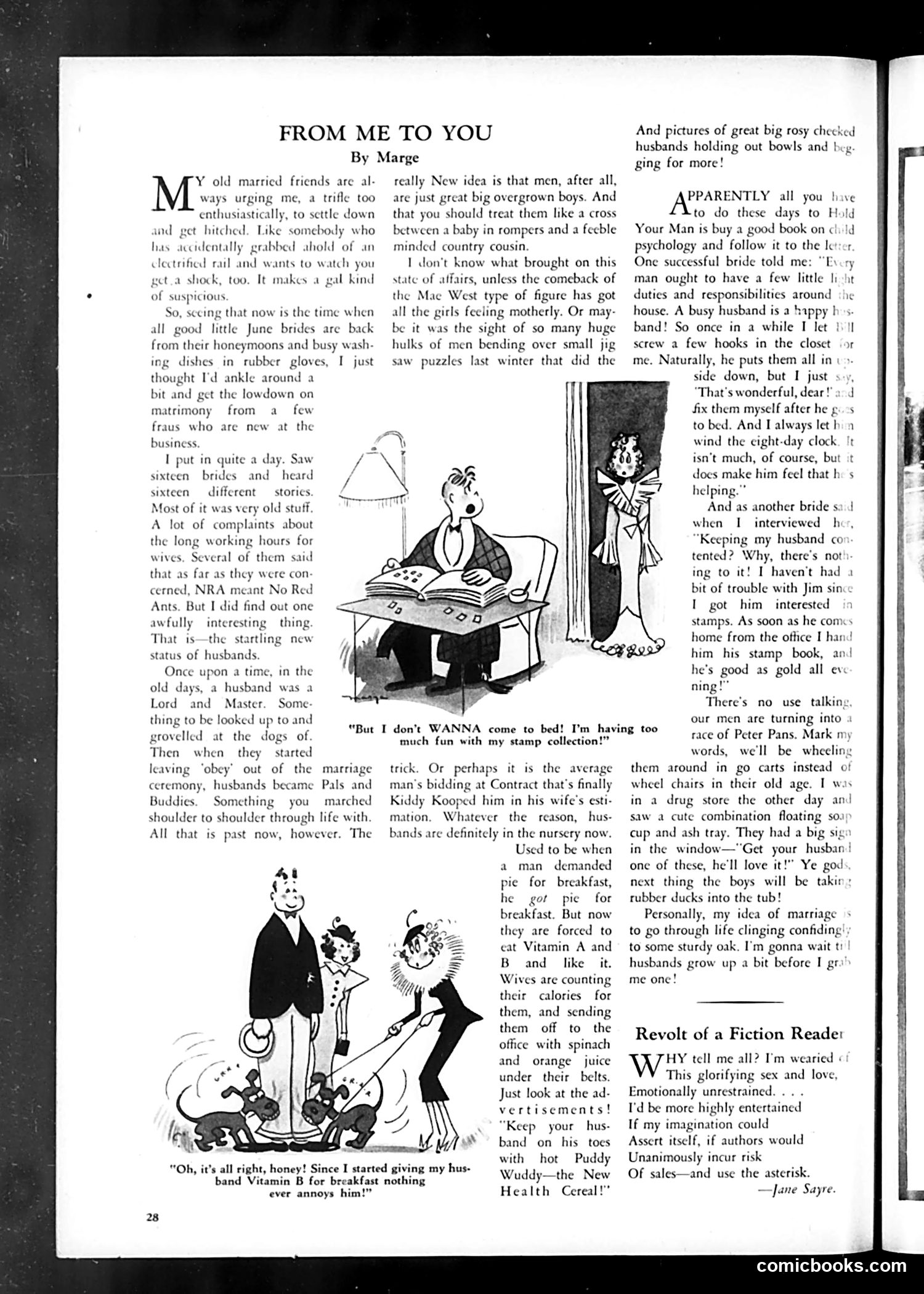
"From Me to You" by Marge — Life Magazine This satirical article mocks the shifting domestic role of husbands in modern marriage. The author interviews newlyweds about their marriages and discovers a new trend: wives now treat husbands like children rather than "Lords and Masters" (the old ideal) or even "Pals and Buddies" (the previous generation's model). The cartoons illustrate husbands as overgrown boys—one refuses bedtime to play with his stamp collection; another childishly demands pie for breakfast. The satire targets wives who manage their husbands' nutrition (forcing Vitamin A and B), assign them trivial "busy work" projects around the house, and keep them occupied like toddlers. This reflects post-Depression anxieties about changing gender dynamics and domesticity. The advertisements referenced ("Puddy Wuddy cereal") supposedly market to wives as mothers of their own husbands—a cultural inversion the author finds both amusing and troubling.
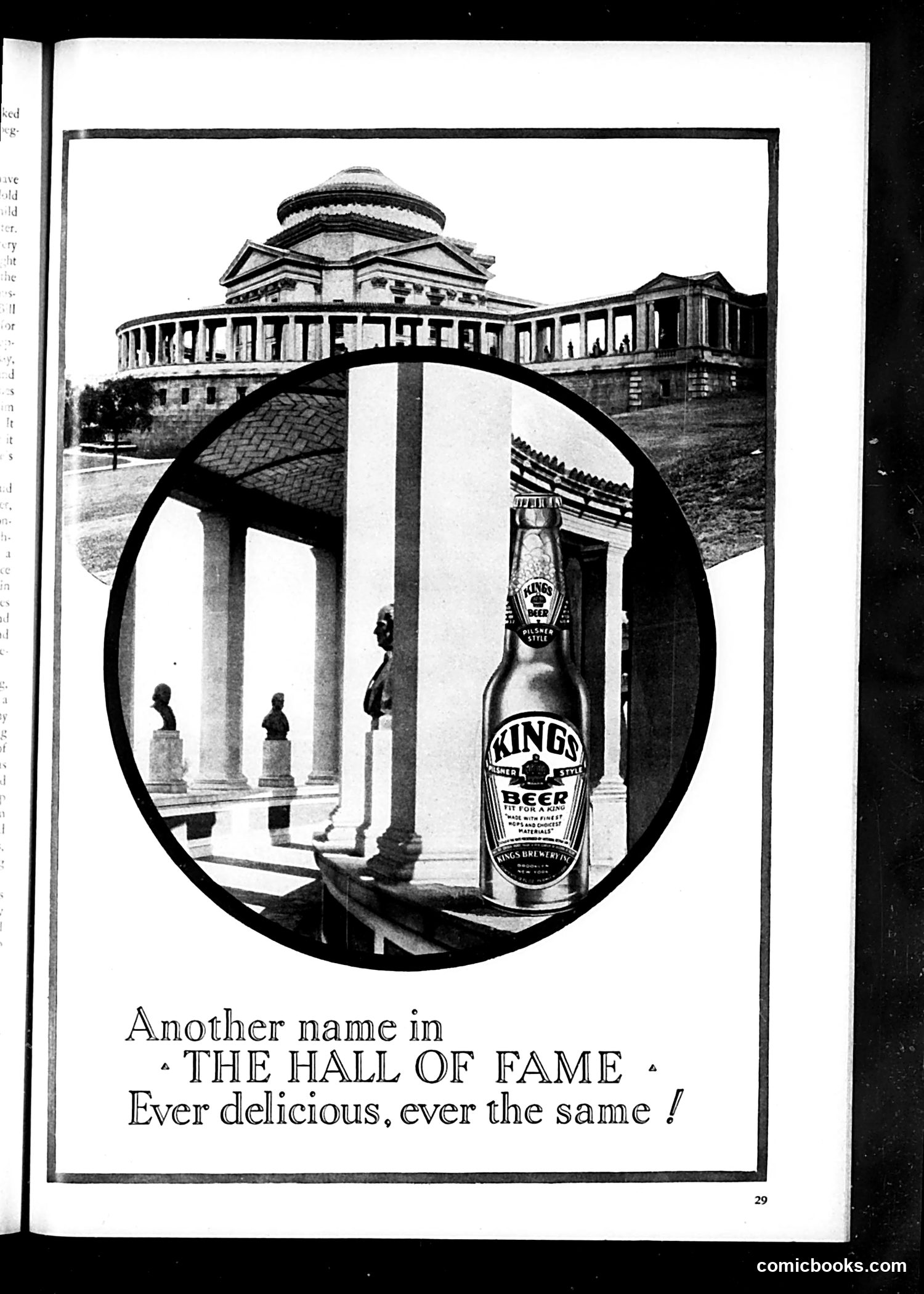
Advertisement for King's Beer This is a beer advertisement using a clever visual pun. A bottle of King's Beer is positioned within a circular frame that views through classical Greek or Roman columns toward a grand domed building in the background—evoking prestigious institutions like museums or government halls. The text "Another name in THE HALL OF FAME" treats the beer brand as if it belongs among America's most celebrated achievements and honored figures. The phrase "Ever delicious, ever the same" emphasizes product consistency and quality. This appears to be a Life magazine advertisement from the early-to-mid 20th century. The humor derives from elevating a commercial product to the status of national treasures, a common advertising strategy of the era. The classical architecture creates an impression of timelessness and respectability.
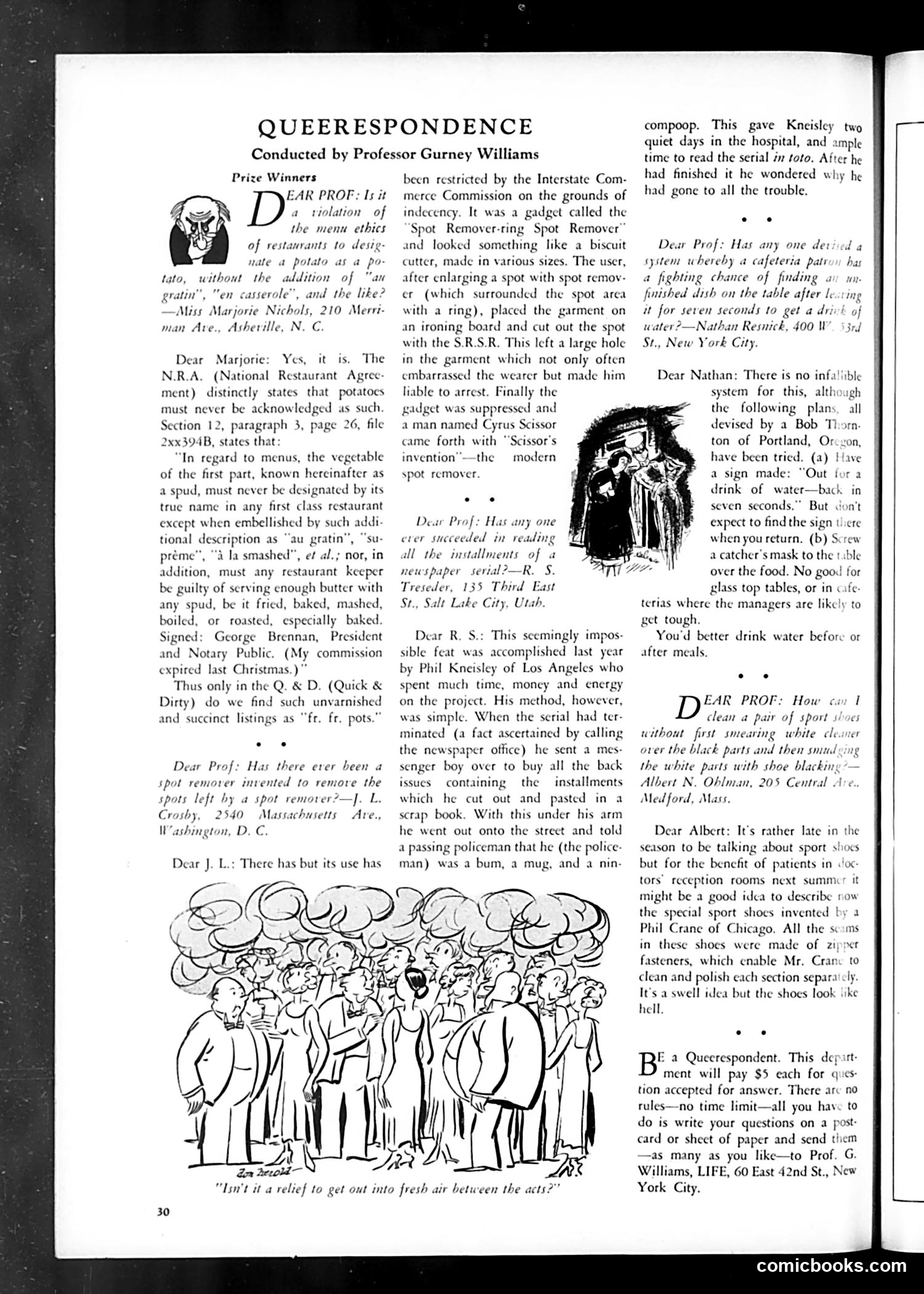
Explanation for Modern Readers This is a humor advice column called "Queerespondence" from *Life* magazine's satirical section. The cartoon illustrates one question about getting fresh air between theater acts. The column mocks bureaucratic absurdity and everyday frustrations through mock-serious responses: 1. Restaurant menus: Satirizes how fancy restaurants obscure simple foods (like potatoes) with French names to seem upscale, citing a fake "N.R.A." regulation. 2. Spot removers: A recursive absurdist joke—a "spot remover remover" that was supposedly banned for creating larger holes than it fixes. 3. Newspaper serials: Mocks readers' difficulty following serialized newspaper stories by describing one man who collected all back issues (and got arrested for it). 4. Cafeteria food theft: Humorously offers impractical solutions to keep others from stealing your unattended meal. The cartoon shows crowded theater patrons, illustrating the relief of escaping stuffy indoor spaces—common mid-20th century urban experience. The satire targets consumerism, bureaucratic jargon, and everyday annoyances of 1930s-40s American life.
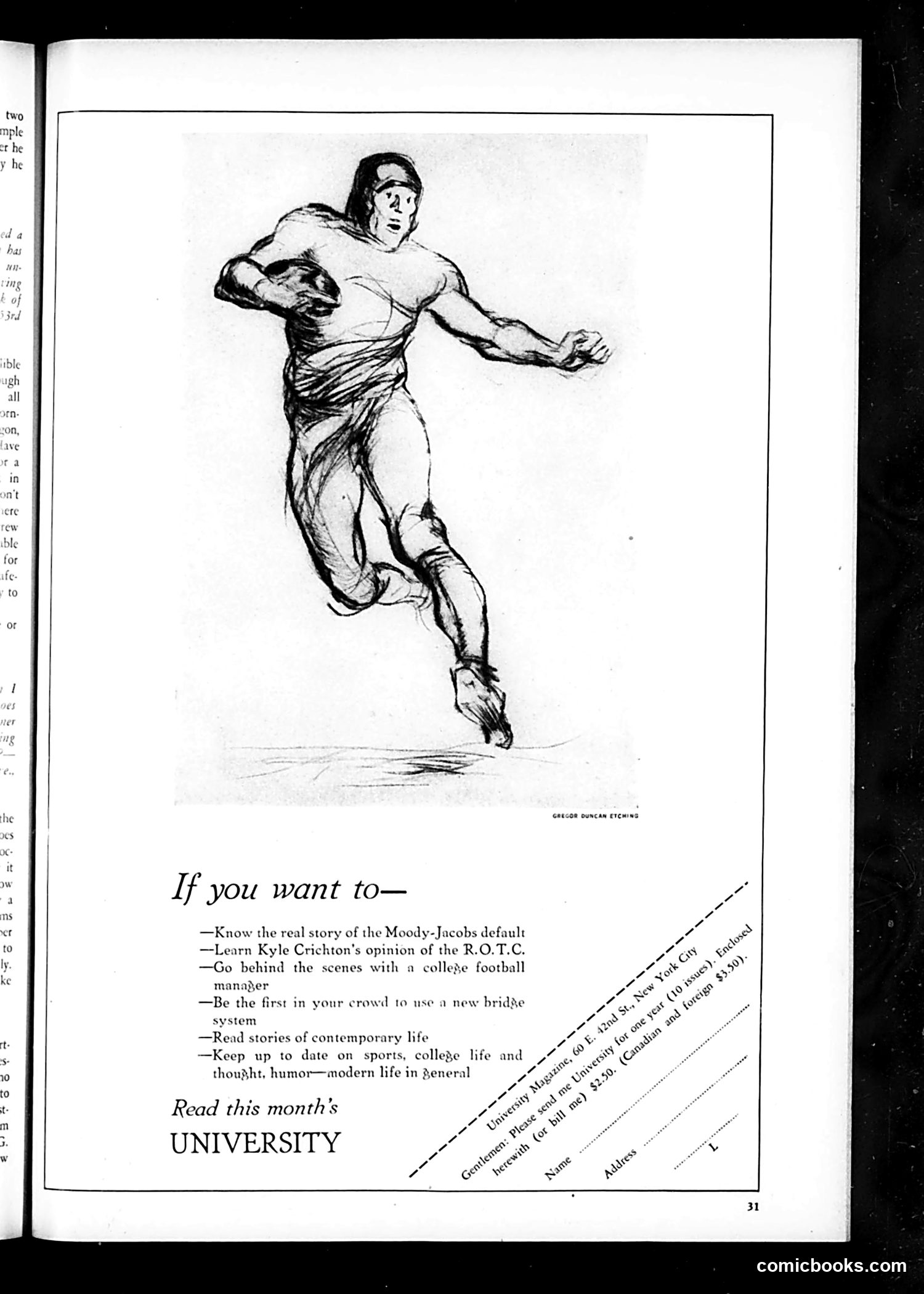
Analysis This is an advertisement for *University* magazine, featuring a dynamic sketch of a football player in action. The etching emphasizes athletic movement and vigor. The ad lists content appeals designed for college readers: sports coverage, college life stories, humor about contemporary issues, and specific features like Kyle Crichton's opinion on the R.O.T.C. (Reserve Officers' Training Corps) and coverage of the "Moody-Jacobs default" (likely a financial scandal of interest to the era). The "new bridge system" reference is unclear without additional context. The overall pitch positions *University* as covering both serious institutional matters (R.O.T.C. debates, financial defaults) and lighter entertainment, making it essential reading for college-age audiences interested in sports, social life, and contemporary humor about modern institutions.
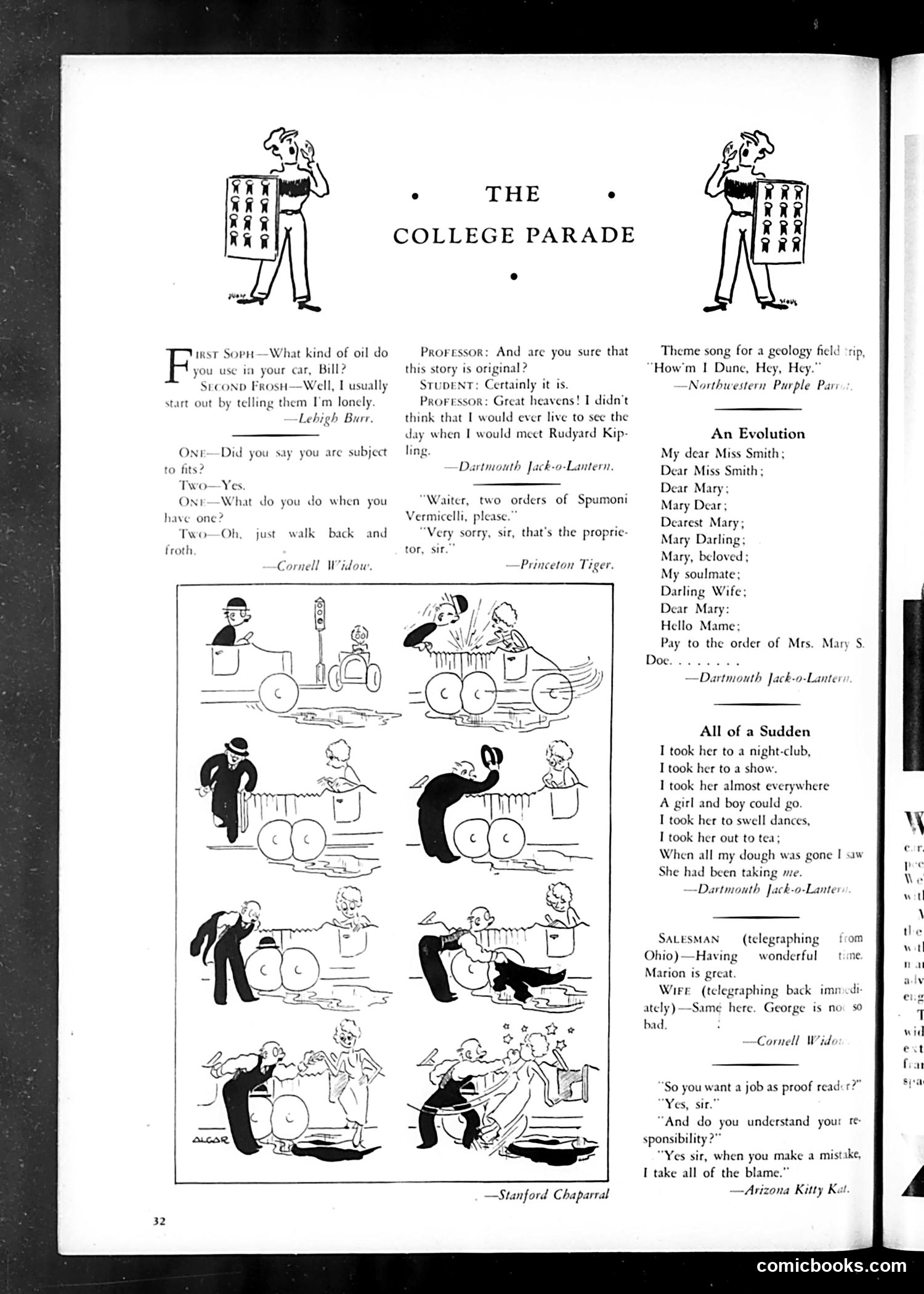
"The College Parade" - Explaining the Satire This page collects humorous submissions from various college humor magazines (Lehigh Burr, Cornell Widow, Dartmouth Jack-o-Lantern, Princeton Tiger, Northwestern Purple Parrot, Stanford Chaparral, and Arizona Kitty Kat). The jokes target recognizable college student types and situations: The visual centerpiece—a comic strip showing a man with a baby carriage in various scenarios—illustrates the chaos of dating mishaps: the baby carriage tips, spills, and generally creates disasters as the man attempts courtship. The text jokes satirize college life: freshmen using pickup lines about loneliness, students plagiarizing famous authors (Rudyard Kipling), a waiter mistaken for a restaurant owner, and the bitter realization that a date has been using a man's money ("taking me"). The "Evolution" piece mocks how relationships deteriorate from romantic ("My dear Miss Smith") to transactional ("Pay to the order of Mrs. Mary S"). These are gentle, era-typical college humor pieces mocking dating, academic dishonesty, and male-female relationship dynamics of the period.
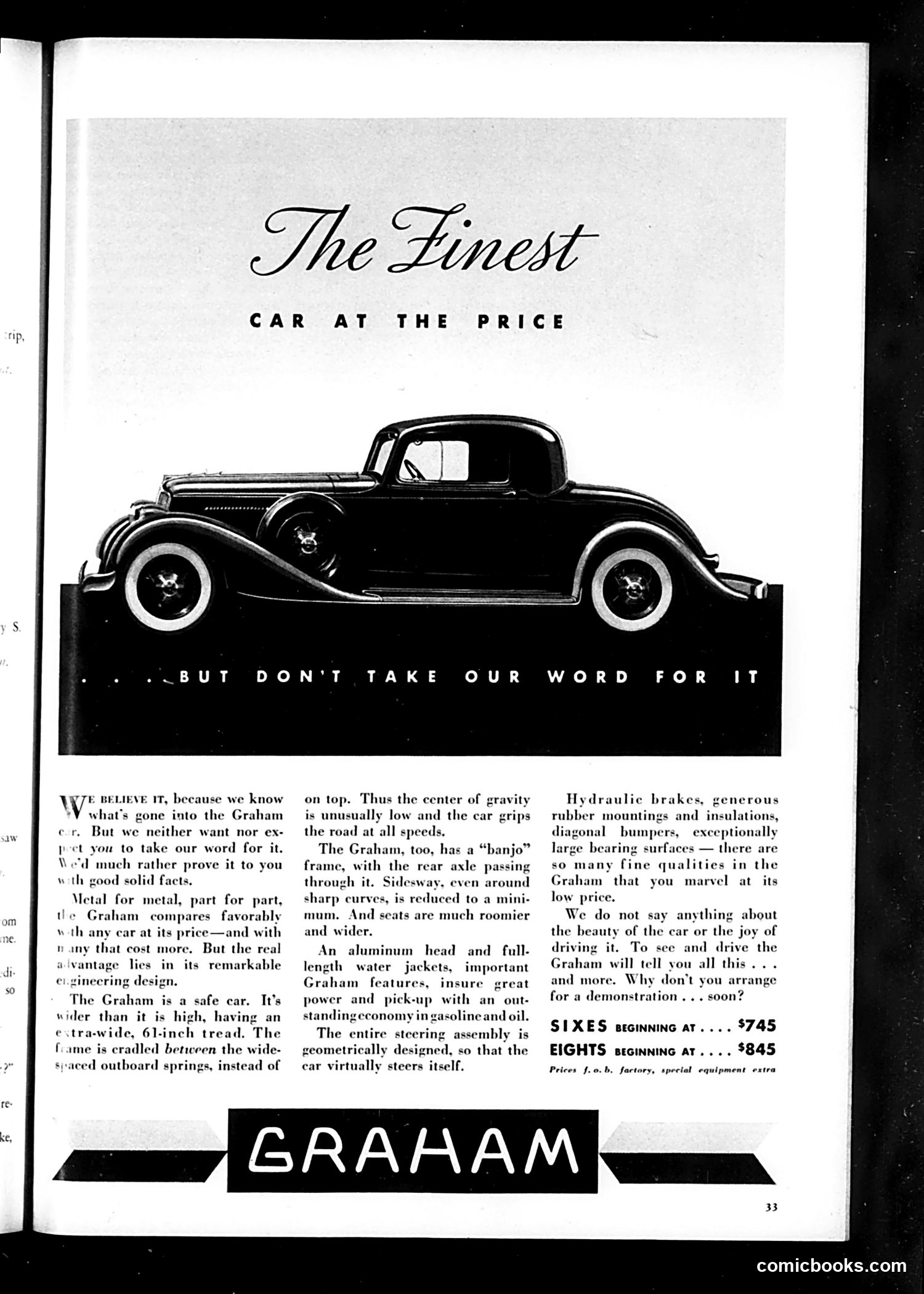
Analysis This is primarily a car advertisement, not a political cartoon. It's a Graham automobile ad from Life magazine, likely 1930s-era based on the styling and price points ($745-$845). The headline "The Finest Car at the Price—But Don't Take Our Word for It" uses ironic self-awareness typical of period advertising. The tagline plays on consumer skepticism by acknowledging that readers shouldn't just trust the manufacturer's claims. The ad emphasizes engineering features: a low center of gravity for stability, a "banjo" frame, hydraulic brakes, aluminum head, and self-steering geometry. These were genuine mechanical innovations marketed to appeal to buyers interested in safety and performance, not just luxury. The phrase "we'd much rather prove it to you with good solid facts" suggests this competed against other mid-range cars by stressing practical engineering over styling or prestige—positioning Graham as the rational consumer's choice in an increasingly competitive automotive market.
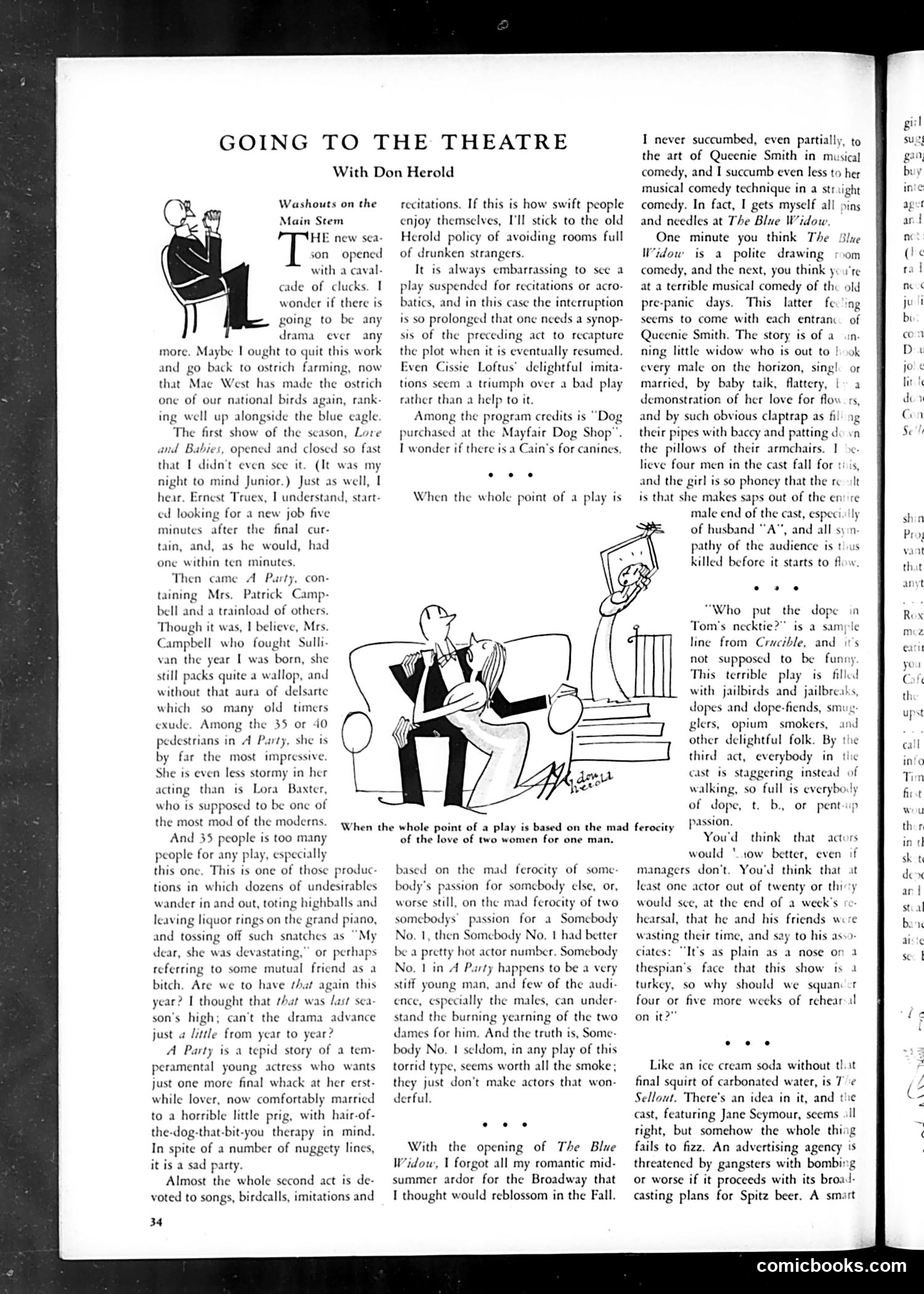
"Going to the Theatre" by Don Herold — Life Magazine Theater Criticism This is a theater column reviewing Broadway plays from an unspecified season (likely 1920s-30s based on references). Herold critiques three productions: "Love and Babies" — opened and closed so quickly that even the star Ernest Truex quit immediately afterward. "A Party" — featuring the veteran actress Mrs. Patrick Campbell (a famous figure from the 1880s onward), criticized as a tedious play populated by 35 unnecessary characters performing drunken antics. Herold mocks the second act's digressions into songs and recitations, including impressionist Cissie Loftus's performance. "The Blue Widow" — featuring Queenie Smith, which Herold dismisses for its reliance on artificial musical-comedy technique. The cartoon shows a man collapsing in a theater seat—visualizing Herold's exhaustion with mediocre Broadway productions. His broader complaint: modern theater has abandoned drama for spectacle, excess, and performers' egos.
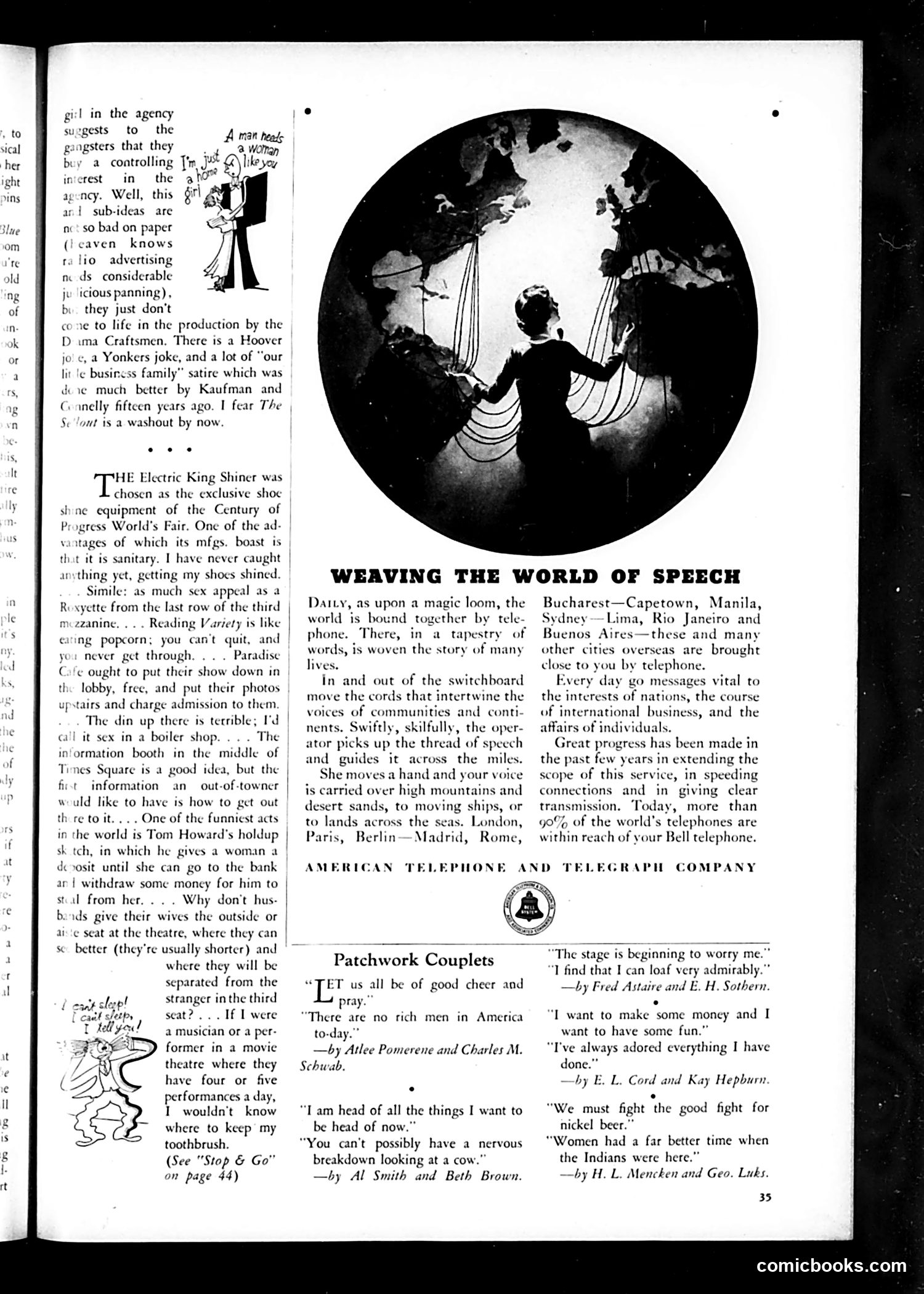
Analysis for Modern Readers This Life magazine page combines humor with advertising. The top section contains brief satirical commentary on theatrical productions and advertising—noting that clever ideas on paper often fail in actual production, with specific jabs at shows like "The Scent" (called "a washout"). The large circular illustration titled "Weaving the World of Speech" is a Bell Telephone advertisement depicting telephone operators at switchboards connecting callers across continents. The poetic language emphasizes the technology's role in global communication. The "Patchwork Couplets" section presents witty quote-pairs attributed to famous figures of the era (Al Smith, H.L. Mencken, Fred Astaire, Kay Hepburn), creating humorous contrasts between their supposed statements. These appear designed to satirize public figures' contradictions or pretensions. The scattered cartoons throughout mock everyday absurdities—theater etiquette, workplace inconveniences, marital dynamics—typical of Life's satirical approach to 1920s-30s American life. The tone is lighthearted rather than politically pointed.
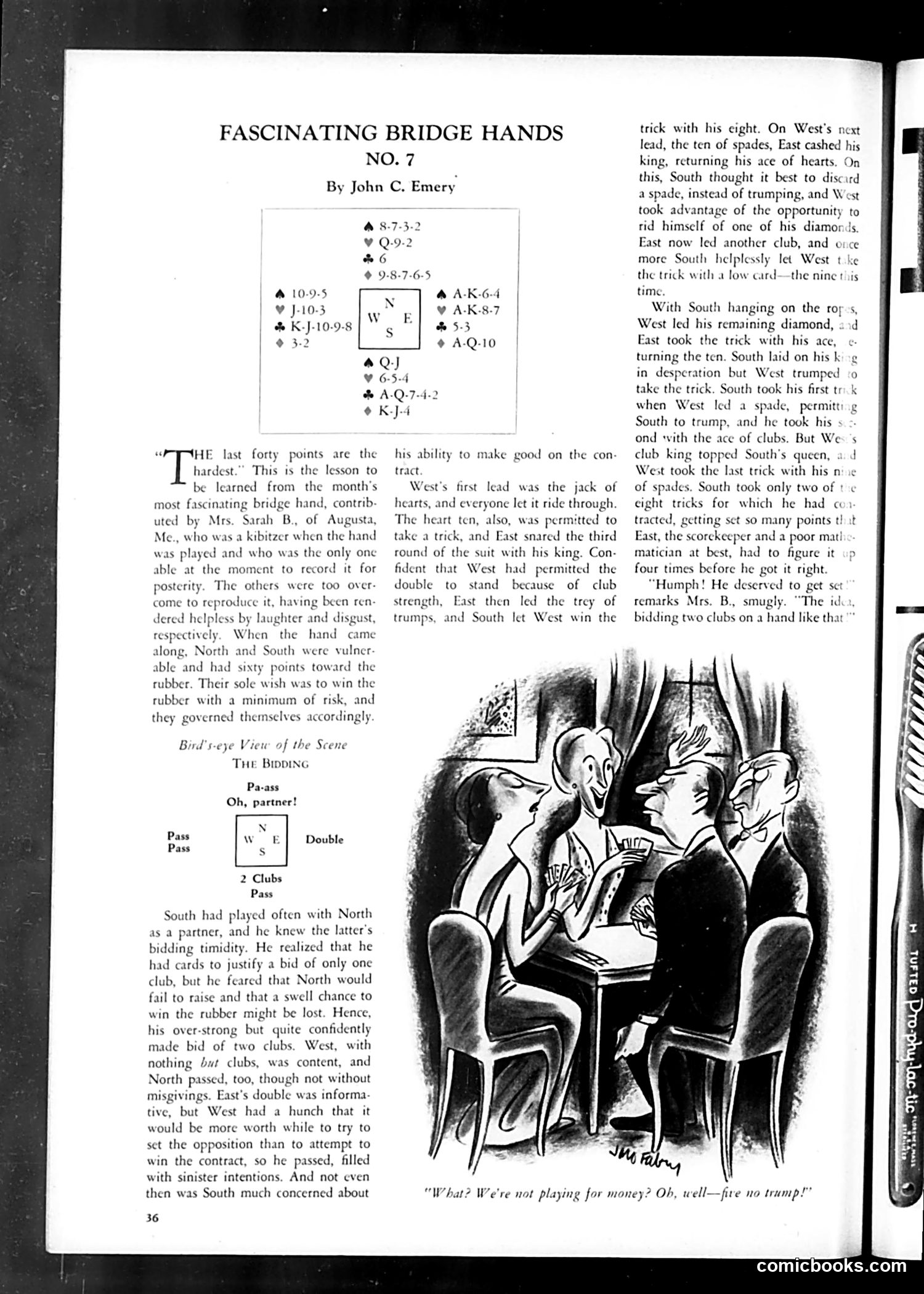
Explanation for Modern Readers This page contains a bridge card game analysis, not political satire. "Fascinating Bridge Hands" was a recurring educational feature by John C. Emery teaching readers about contract bridge strategy. The content documents an actual hand where South made a strategically poor bid—overcalling with "two clubs" on insufficient strength, then played terribly afterward, failing to make the contract by a wide margin. The accompanying cartoon (bottom) satirizes casual bridge players' tendency to escalate bids recklessly when no money is at stake, with one player mockingly suggesting "five no trump!" after learning stakes aren't monetary. The lesson: overconfident bidding and poor card play led to disaster. Mrs. B., the kibitzer who recorded this hand, remarks the player "deserved to get set." This was typical bridge instruction content for Life magazine's affluent, leisure-class readership in the early-to-mid 20th century.
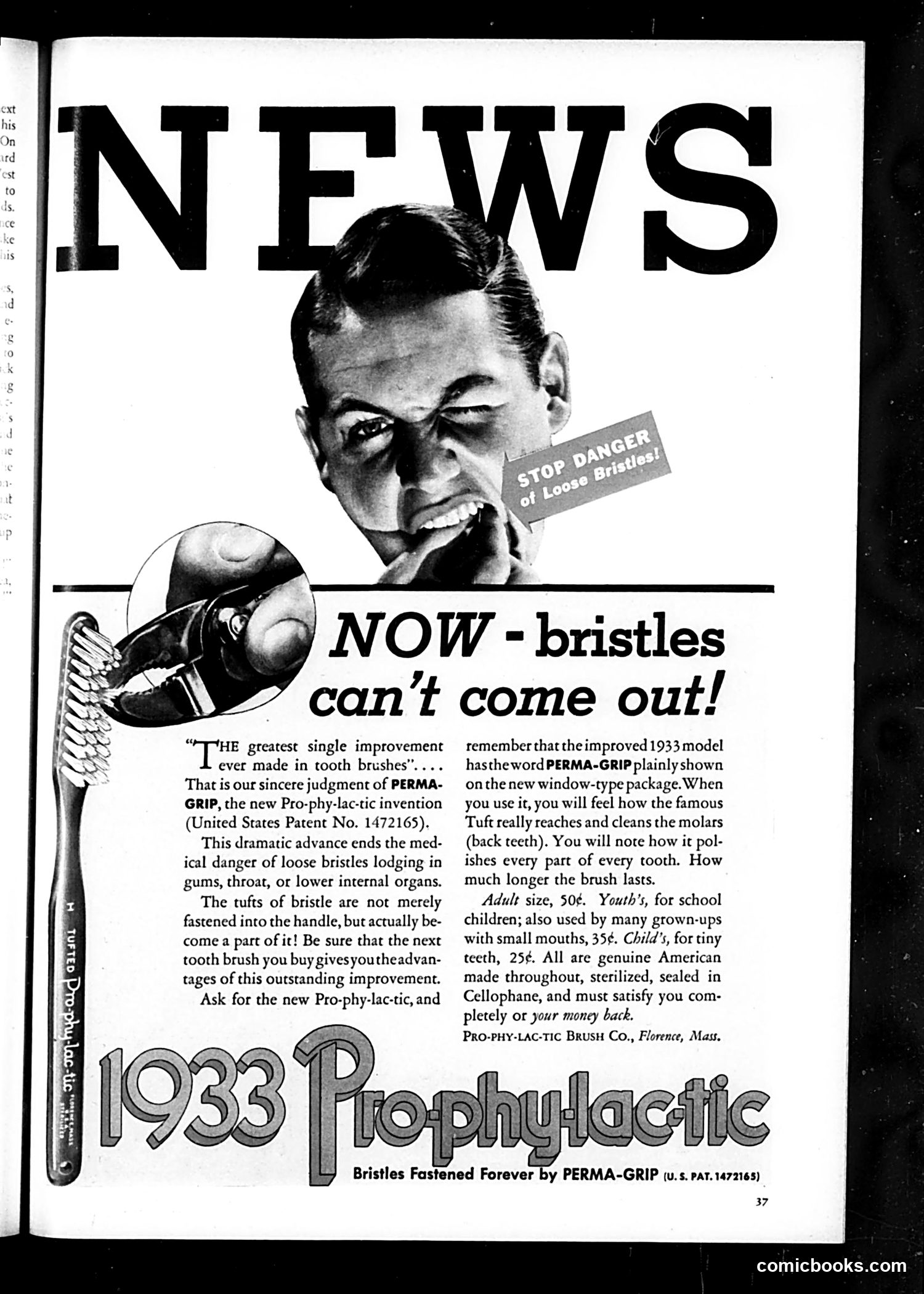
Analysis This is a 1933 toothbrush advertisement, not political satire. The "NEWS" headline and dramatic facial expression are marketing tactics designed to grab attention by presenting the product as urgent, important innovation. The ad promotes Pro-phy-lac-tic's new "PERMA-GRIP" toothbrush, emphasizing that bristles are now permanently fastened rather than loose—addressing a genuine health concern (bristles lodging in gums or throat). The exaggerated grimacing face with the warning label "STOP DANGER of Loose Bristles!" creates sensational drama around this problem. Pricing tiers ($0.25–$0.50) targeted different demographics. The money-back guarantee and emphasis on "genuine American made" reflect Depression-era marketing. This represents typical 1930s advertising strategy: using alarm and hyperbole to sell mundane products as vital improvements.
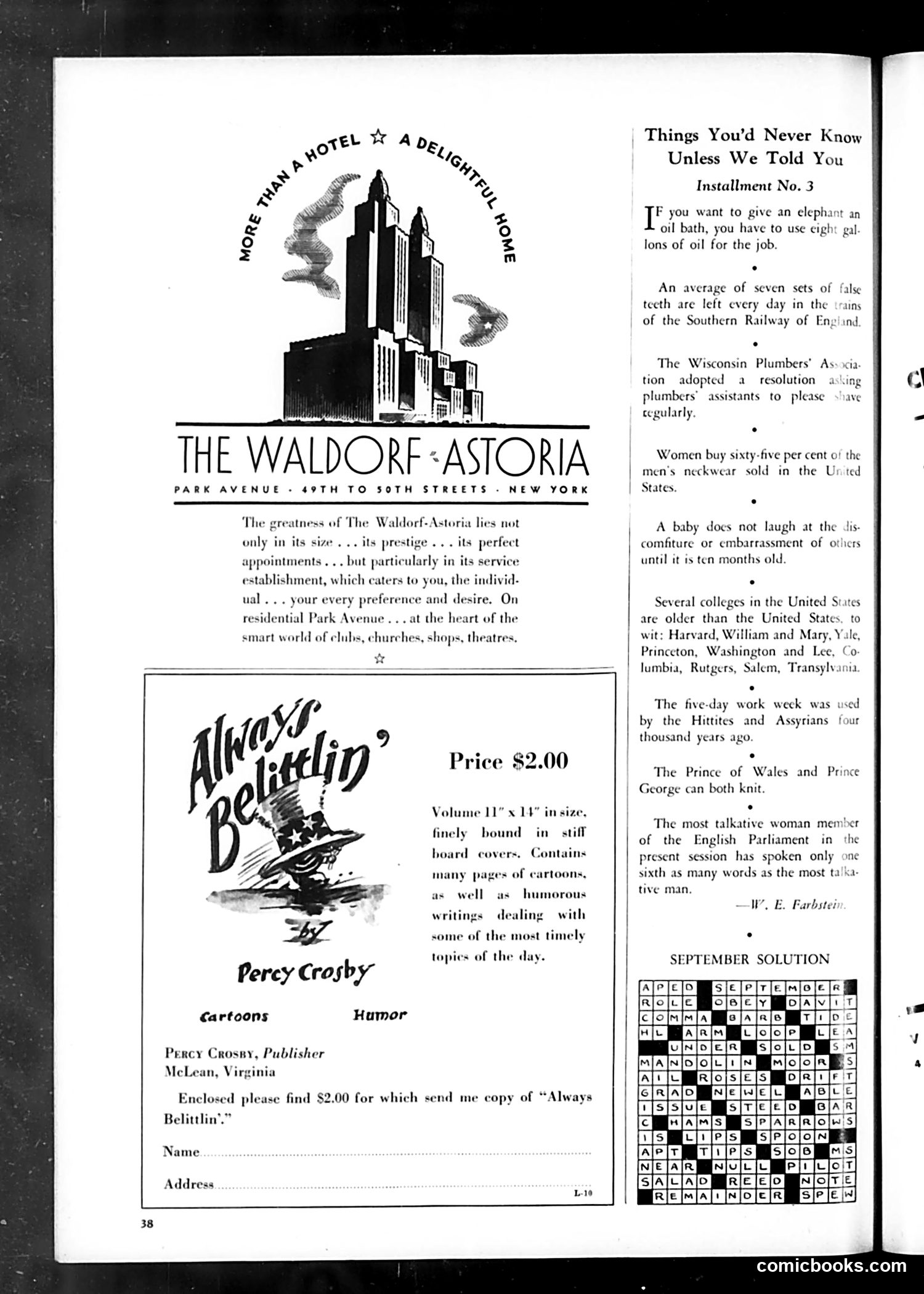
Analysis of Life Magazine Page This page is primarily advertising and miscellaneous content, not political satire. The main advertisement is for the Waldorf-Astoria Hotel in New York, emphasizing luxury service and prestige accommodations on Park Avenue—catering to wealthy clientele in the "smart world of clubs, churches, shops, theatres." Below is an ad for "Always Belittlin'" by Percy Crosby—a cartoon/humor book priced at $2.00, described as containing cartoons and humorous writings on timely topics. The right column features "Things You'd Never Know Unless We Told You"—trivia facts covering topics from elephant care to parliamentary statistics. These represent typical early 20th-century magazine filler: oddball facts meant to amuse readers. A crossword puzzle solution appears at the bottom. No political cartoons or satire are present. This is a standard magazine page mixing advertisements, product promotion, and light entertainment content typical of the era.
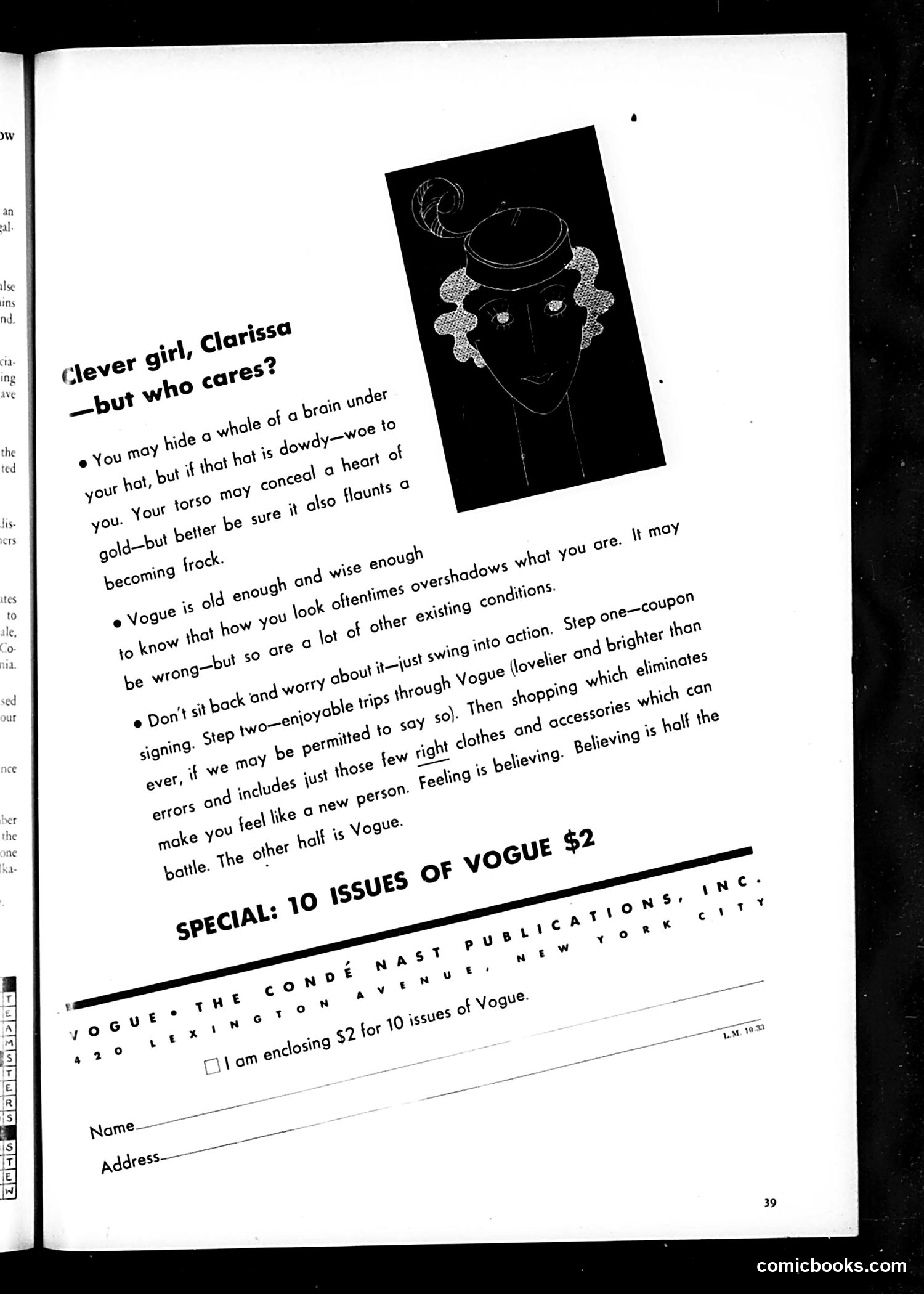
Analysis This appears to be a vintage Vogue magazine advertisement, not political satire. The page features: Content: A humorous ad addressing "clever girl, Clarissa" about fashion advice. The text suggests that while intelligence matters, one's appearance—hat, torso, and accessories—also conveys important messages about who you are. It encourages readers not to overthink fashion but to embrace Vogue's guidance on "right clothes and accessories" to transform into "a new person." The illustration: Shows a stylized female face wearing a distinctive hat and decorative earrings, rendered in black-and-white graphic style typical of mid-20th-century fashion illustration. The pitch: A subscription offer for 10 Vogue issues for $2, with a tear-off coupon below. This is consumer advertising, not political commentary—promoting fashion magazine subscriptions through flattery and the promise of self-improvement through style.
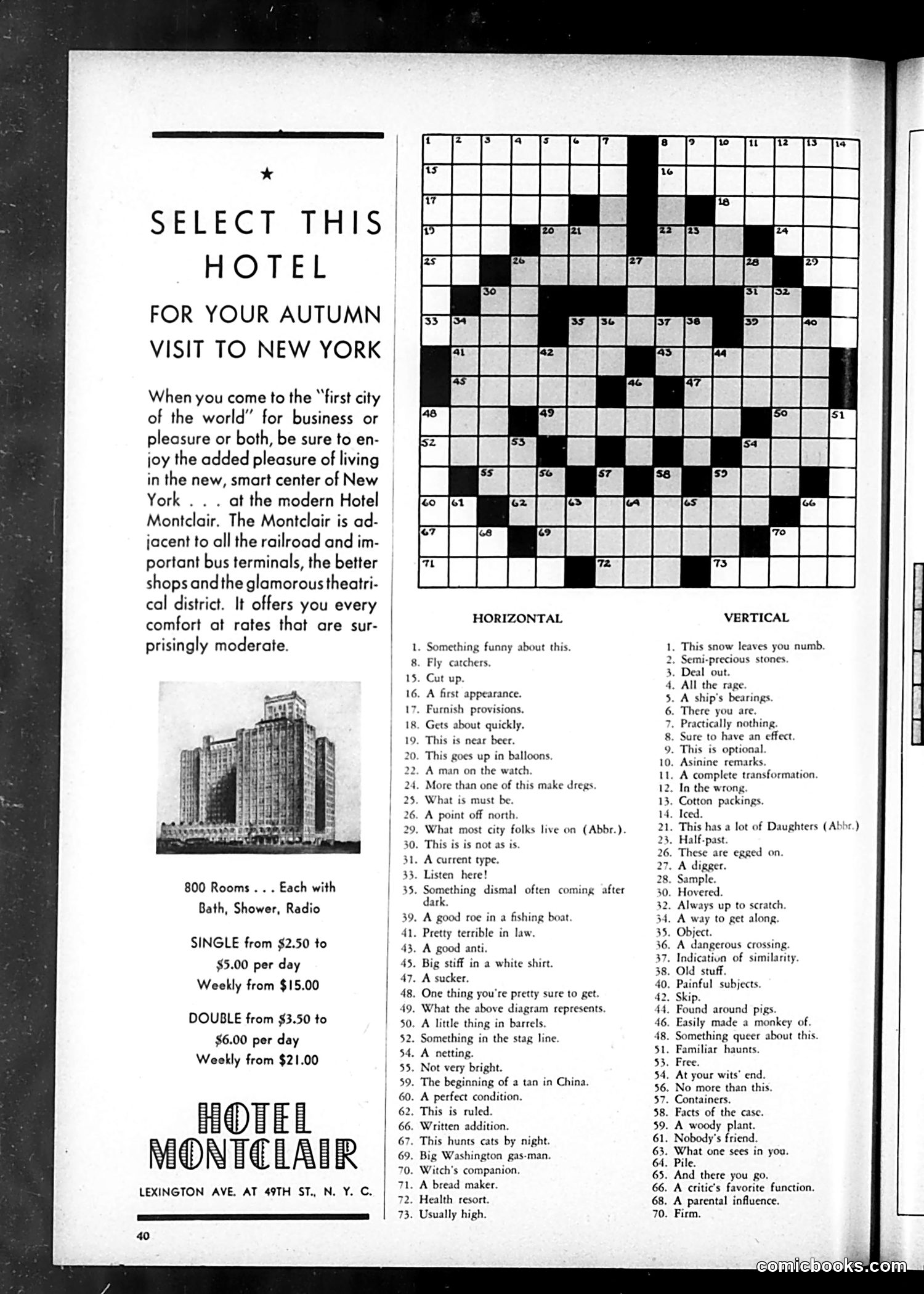
Hotel Montclair Advertisement Page This is primarily a hotel advertisement, not political satire. The page promotes the Hotel Montclair in New York City, positioned as an affordable, modern lodging option for autumn visitors. It emphasizes convenience (near transit and theaters), amenities (800 rooms with bath, shower, radio), and surprisingly moderate rates ($2.50-$6.00 per day for singles). The only "cartoon" element is the crossword puzzle accompanying the ad—a common magazine feature of this era used to engage readers. The puzzle clues are standard wordplay and riddles unrelated to the hotel itself. This appears to be a vintage Life magazine advertisement page (likely 1920s-1930s based on styling and pricing), functioning as commercial promotion rather than editorial satire or political commentary.
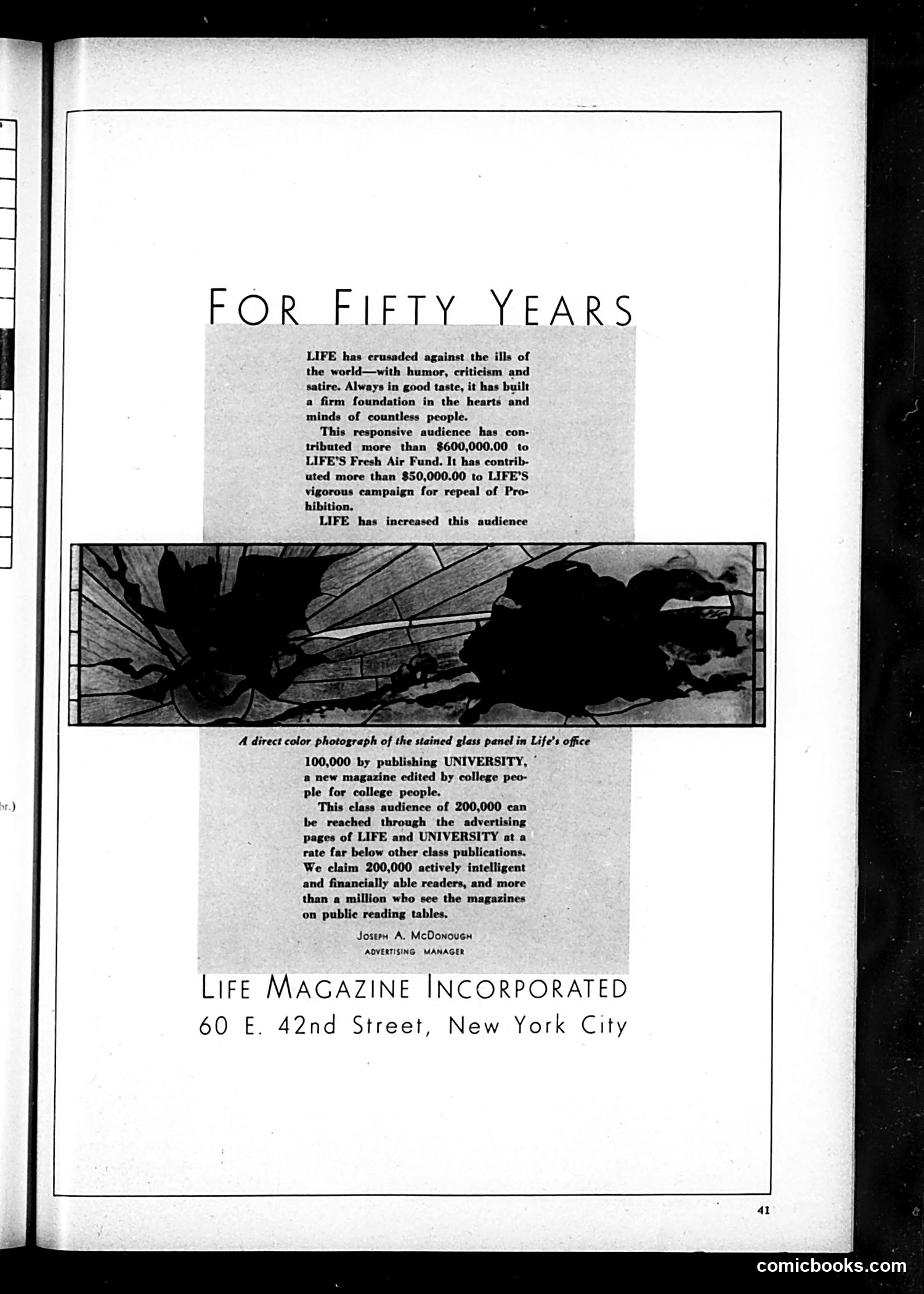
Life Magazine's 50-Year Anniversary Advertisement This is primarily an advertisement and institutional promotion, not political satire. Life Magazine celebrates its 50-year history of satirical journalism, listing accomplishments: contributions to the Fresh Air Fund ($600,000) and a campaign for Prohibition repeal ($50,000)—indicating Life opposed alcohol bans, a major 1920s-30s political issue. The stained glass photograph shown is decorative, depicting Life's office emblem. The text emphasizes Life's audience reach: 200,000 "actively intelligent and financially able readers" plus over a million casual viewers, pitching advertising rates to potential corporate clients. The advertising manager Joseph McDonough signs off, essentially selling Life's credibility and reach to advertisers. This is corporate self-promotion rather than editorial content—Life positioning itself as an influential middlebrow publication worthy of advertising investment.
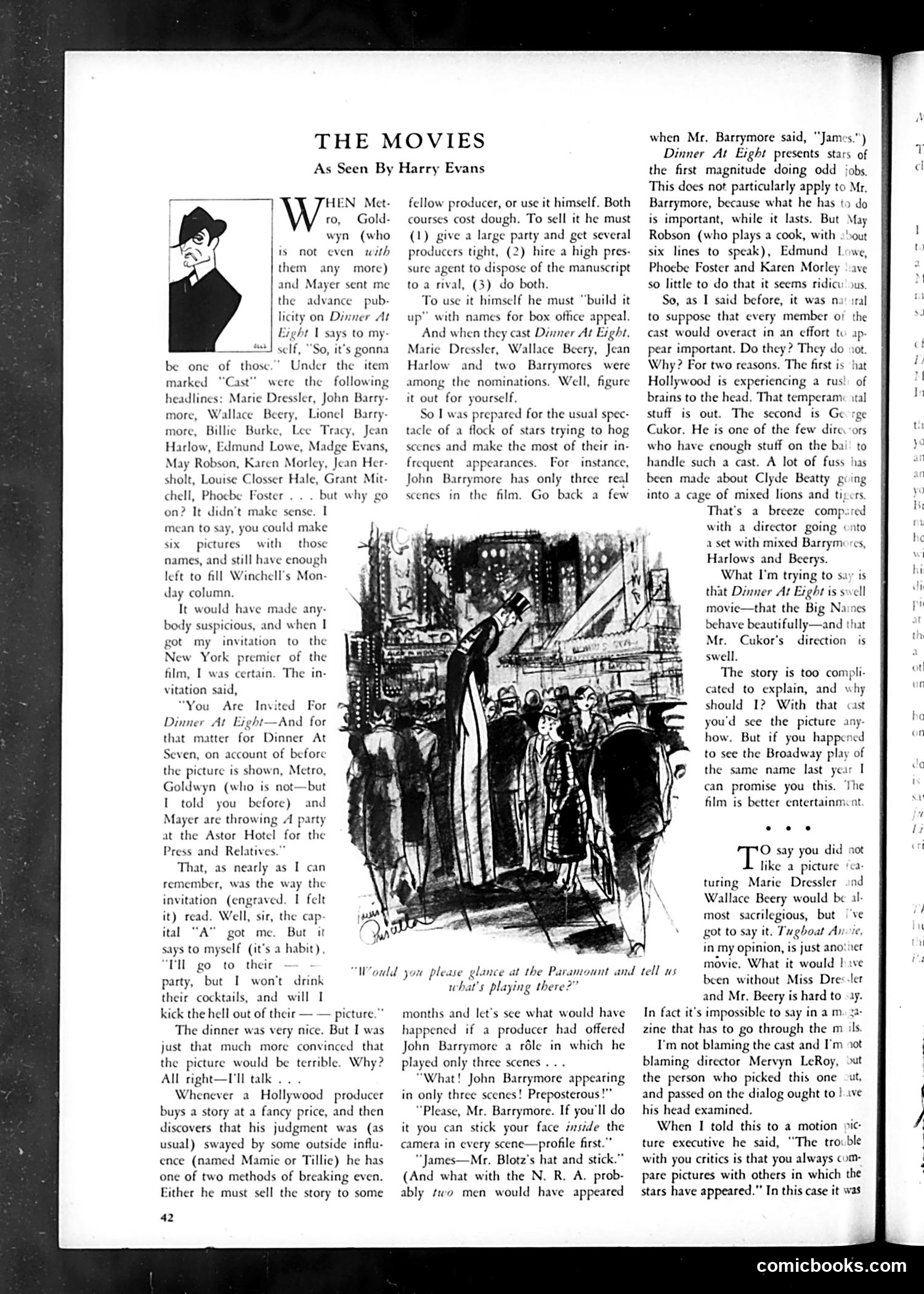
"The Movies As Seen By Harry Evans" This is a 1932 film review of *Dinner at Eight*, a prestigious MGM production. Harry Evans satirizes Hollywood's casting practices: studios assemble massive star casts—here listing Marie Dressler, the Barrymores, Wallace Beery, Jean Harlow, and others—to sell expensive properties, often giving major stars tiny roles despite their demands for prominence. Evans mocks this through the fictional example of John Barrymore demanding special treatment (camera angles, assistants) for a three-scene part. He critiques how producers "build up" stories with famous names for box-office appeal rather than artistic merit, yet notes—surprisingly—that *Dinner at Eight* succeeds because Hollywood is experiencing "a rush of brains to the head," suggesting actors are finally acting professionally rather than hogging scenes. The sketch depicts a theatrical dinner party, illustrating the industry's self-congratulatory premiere culture.
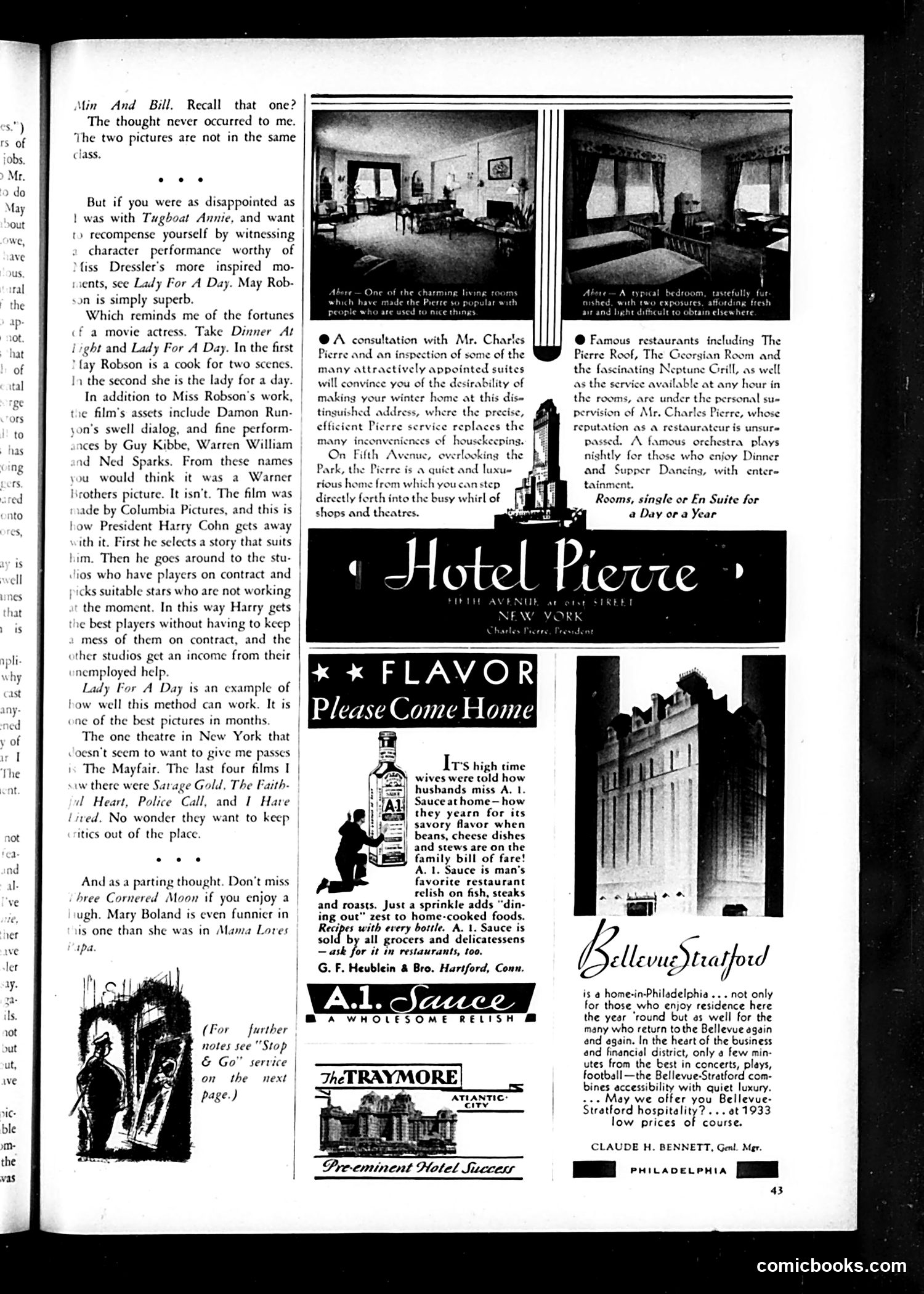
Analysis of This Life Magazine Page This page is primarily advertising and entertainment criticism, not political satire. The text discusses 1930s Hollywood films: the author critiques "Tugboat Annie" as disappointing, praises "Lady For A Day" starring May Robson, and notes Columbia Pictures president Harry Cohn's practice of borrowing contract players from other studios to cast films economically. The page features no political cartoons—only commercial advertisements for luxury hotels (Hotel Pierre, Bellevue-Stratford, The Traymore), A.1. Sauce condiment, and Flavor sauce. These ads target affluent readers, emphasizing fine dining, elegant accommodations, and upscale living. The only illustration with satirical potential is a small sketch (bottom left) labeled "For further notes see 'Stop & Go' service," but its subject is unclear from the image provided. This is essentially an entertainment/lifestyle magazine page blending movie reviews with period advertisements.
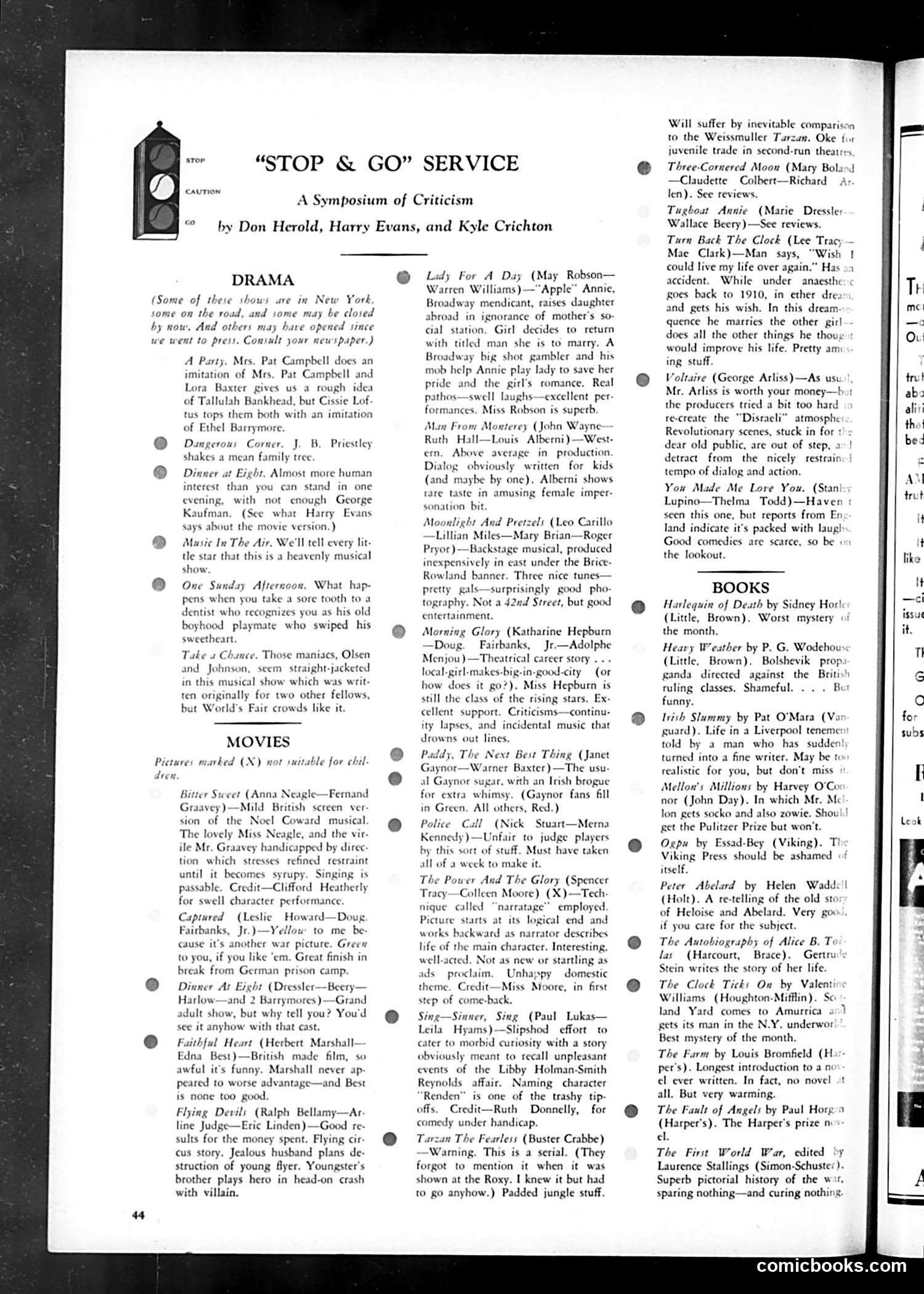
"Stop & Go" Service: A Critic's Traffic Light This page presents a theatrical review column using traffic-light imagery as its organizing metaphor. The "Stop & Go" title refers to the traffic light icon at the top—critics rate shows with red (stop/avoid), yellow (caution/mixed), or green (go/see) recommendations. The reviews cover 1933 Broadway dramas and Hollywood films. Notable references include Katharine Hepburn in *Morning Glory*, Leslie Howard in *Captured* (a WWI picture), and Mae West films. The critics appreciate strong performances (praising May Robson in *Lady for a Day*) while mocking lesser efforts like the "awful" British film *Faithful Heart*. The satire lies in reducing complex artistic judgments to simple traffic signals—poking fun at both rushed theatergoers and critics who oversimplify entertainment value into binary recommendations. The format itself is the joke.
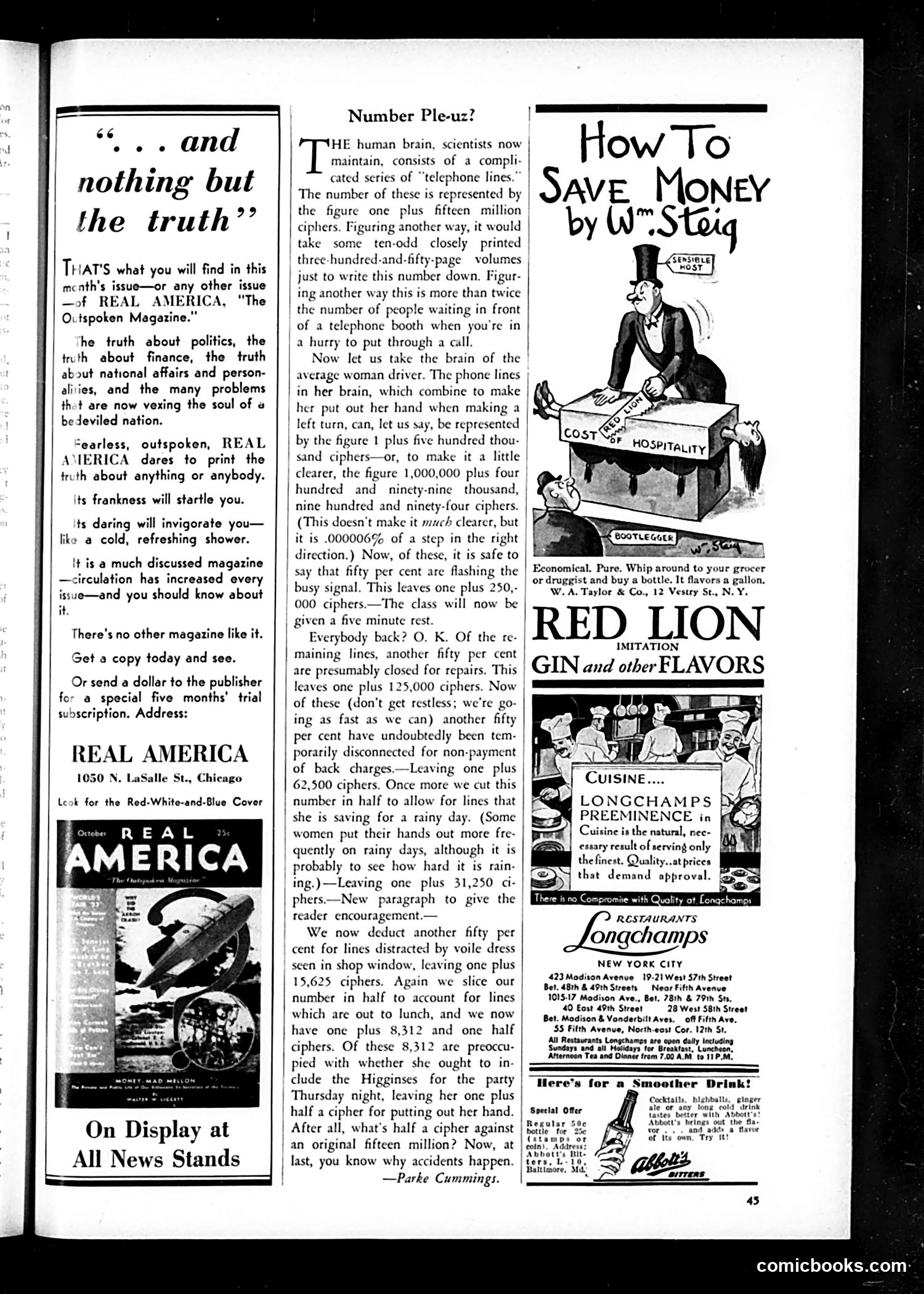
Analysis for Modern Readers This page contains two distinct elements: Left side: Advertisement for *Real America* magazine, positioning itself as fearlessly truthful about politics, finance, and national affairs—promising shocking frankness that will "invigorate" readers. Center: A humorous essay titled "Number Ple-uz?" by Parke Cummings, using mathematical satire to mock women drivers. The piece systematically reduces a woman's mental "telephone lines" (brain capacity) through increasingly ridiculous deductions—half for busy signals, half for repairs, half for distraction by shop window dresses, half for lunch, half for party planning—leaving her virtually incapable of operating a vehicle. The satire: This 1920s-era piece relies on contemporary gender stereotypes portraying women as mentally scattered, vain, and forgetful. The essay's overwrought pseudo-scientific framework mocks both the era's pop-psychology about brains and common sexist assumptions about female drivers. Modern readers should note this reflects period attitudes now recognized as discriminatory.
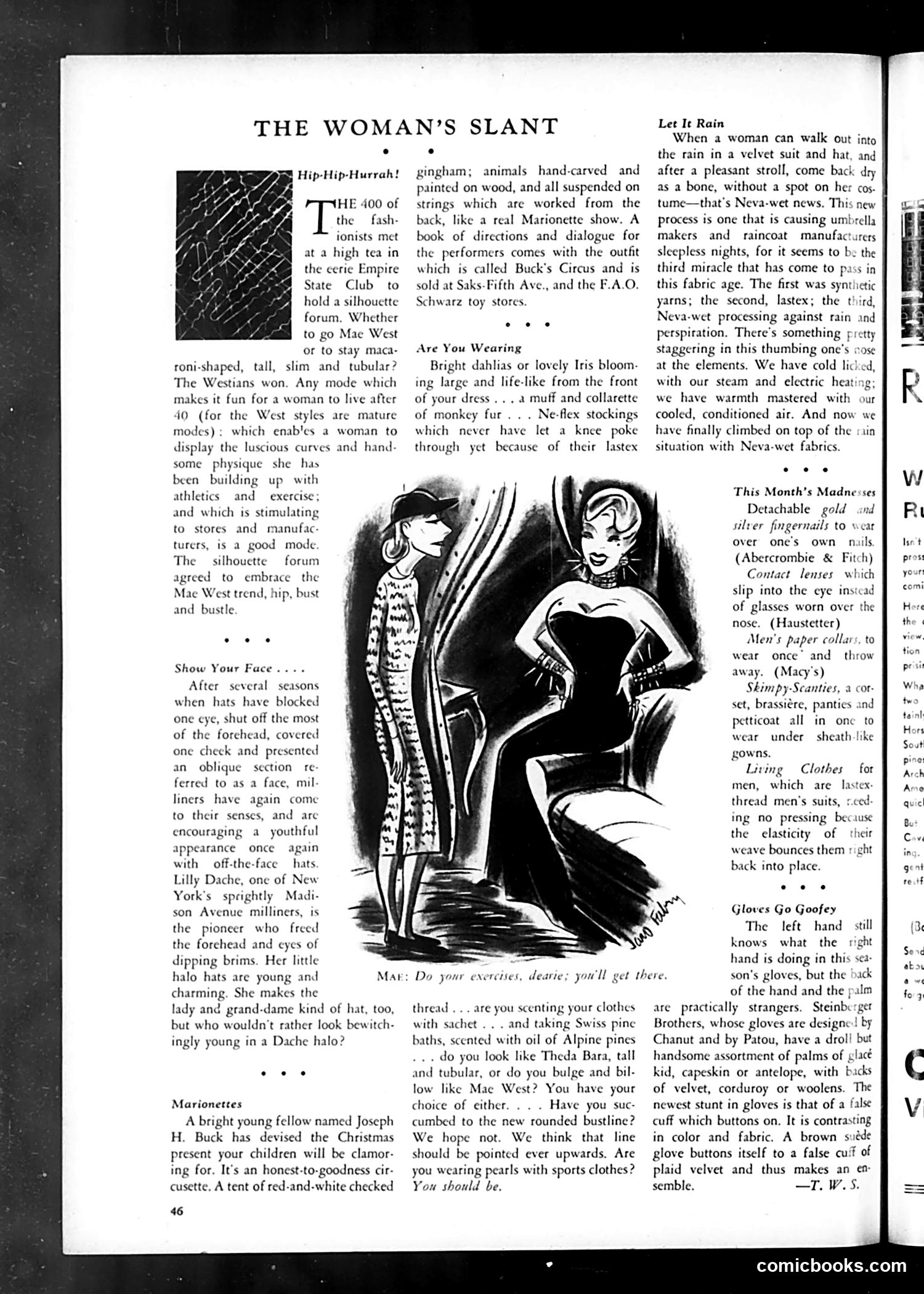
"The Woman's Slant" - Life Magazine Fashion & Satire Page This page mocks 1930s-40s women's fashion trends through satirical commentary. The main cartoon depicts two fashionable women: one wearing a coat with a patterned collar, the other in a form-fitting black dress. The caption "Do your exercises, dearie; you'll get there" jokes about the Mae West silhouette trend—a fashion embracing curvy, mature feminine shapes—versus the competing "tubular" flat aesthetic. The page satirizes fashion industry obsessions: a "silhouette forum" of 400 fashionists debating body shapes, milliners gradually revealing women's faces after seasons of hat-blocked vision, and absurd "madnesses" like detachable fingernails and contact lenses. Throughout, the tone gently mocks how fashion dictates women's choices while celebrating new practical innovations (Neva-wet rainproof fabric, lastex stockings) that actually improve daily life. The satire suggests fashion's pretension versus utility's genuine value.
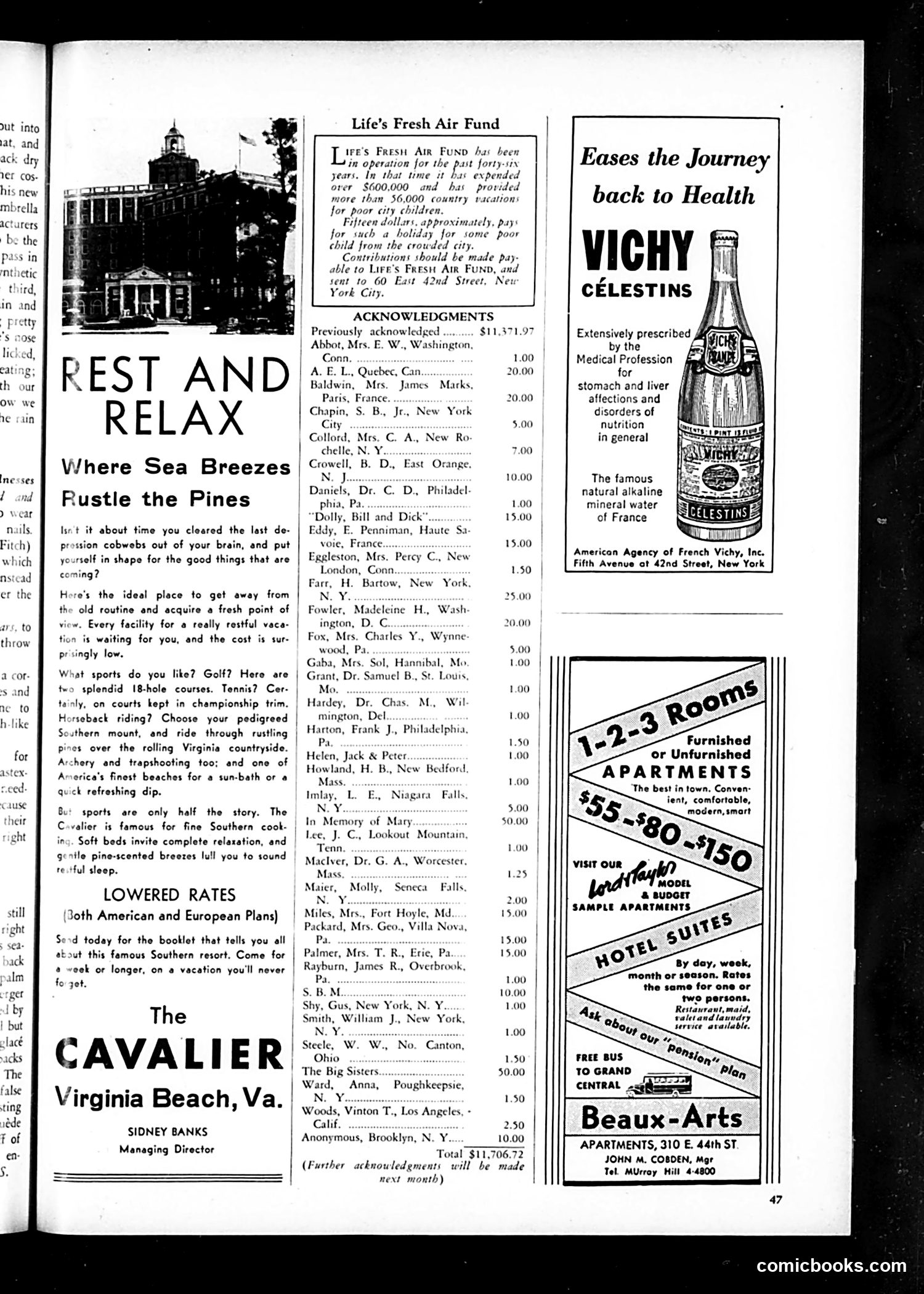
Life Magazine Page Analysis This page primarily features advertising and fundraising content rather than political cartoons. The main elements are: 1. The Cavalier Resort Advertisement (left): Promotes a Virginia Beach hotel offering "Rest and Relax" with golf, tennis, horseback riding, and Southern cuisine at "lowered rates" — likely appealing to Depression-era readers seeking affordable vacations. 2. Life's Fresh Air Fund (center): A charitable fundraising list documenting donations to send poor city children to country vacations. The fund had operated 46 years and distributed over $600,000. This reflects Progressive-era philanthropy and urban poverty concerns of the 1930s-40s. 3. Vichy Celestins Advertisement (right): Promotes a French mineral water as medicinal treatment for digestive issues — typical of period medical advertising before modern FDA regulations. The page reflects Depression-era economic concerns (affordable leisure, charitable giving) and early 20th-century attitudes toward health and tourism.
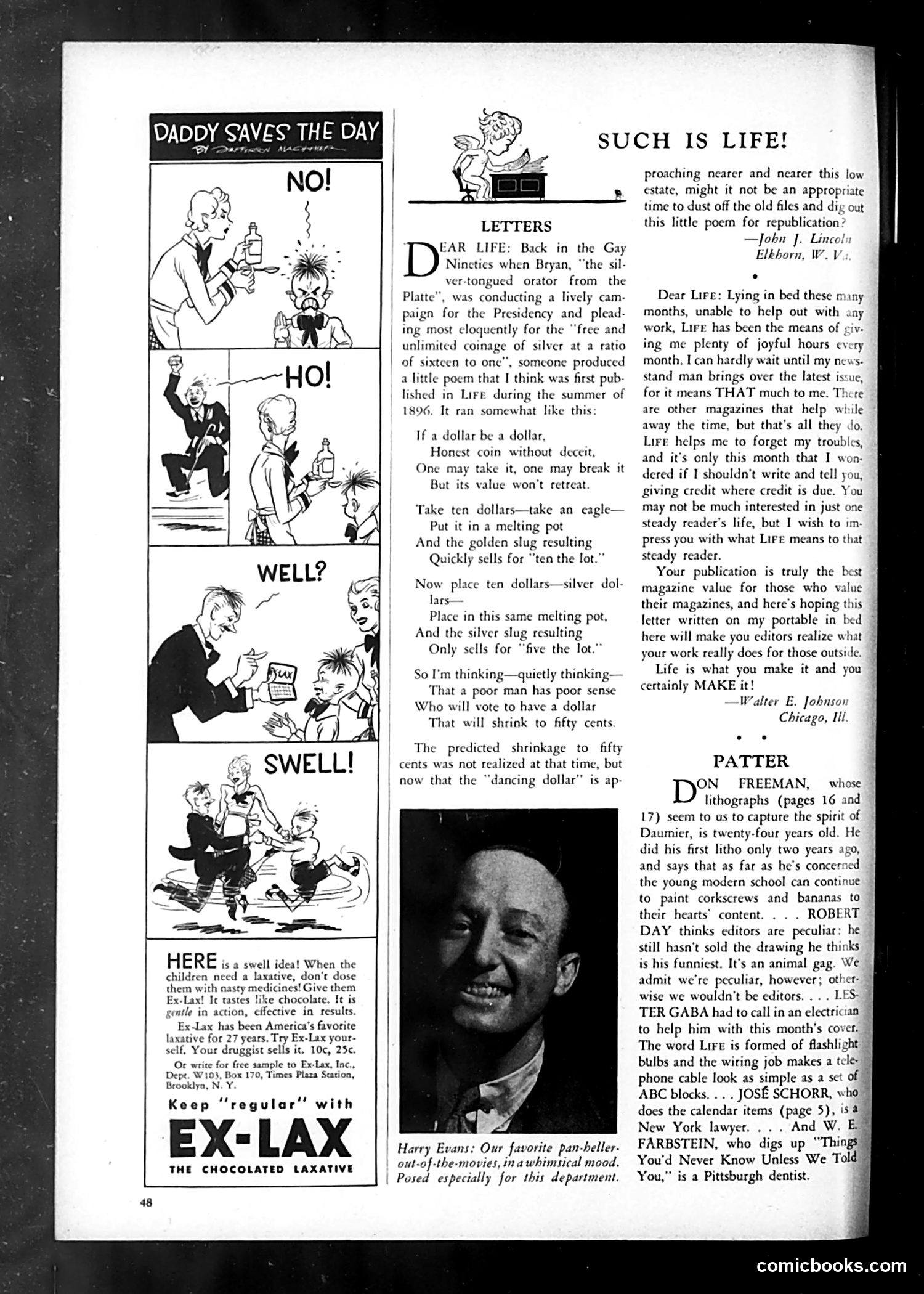
"Daddy Saves the Day" Cartoon & Page Analysis The Cartoon This is an Ex-Lax laxative advertisement disguised as comic commentary. A father repeatedly gives his resistant child the chocolate laxative, progressing from "NO!" to "HO!" to "WELL?" to "SWELL!"—showing the child's reluctant acceptance and the inevitable bathroom results. The joke: parents solving childhood resistance to medicine by presenting it as a treat. The Letters Section The page includes reader correspondence, notably one referencing William Jennings Bryan's 1896 presidential campaign and his advocacy for "free silver" (unlimited silver coinage at a 16:1 ratio to gold). The letter-writer revives an 1896 poem predicting currency devaluation, suggesting contemporary economic anxieties mirror that era's debates. Context This appears to be from Life magazine's "Such Is Life" section mixing advertisements, reader letters, and editorial notes. The Bryan reference indicates this was published during Depression-era economic uncertainty, when silver-coinage debates resurfaced.
I cannot reliably analyze this page. The image is almost entirely black or heavily degraded, with only scattered white marks and fragments visible. On the left margin, there appear to be partial text snippets, but they're too fragmented to read coherently. The watermark "comicbooks.com" is visible at the bottom. Without being able to see the actual cartoon(s), illustrations, or read the complete text, I cannot identify figures, caricatures, political references, or explain any satire or jokes. The OCR data provided is also too minimal and unclear to provide meaningful context. This page appears to be either severely damaged, poorly scanned, or improperly digitized.