pulps
Munsey's Magazine, November 1891
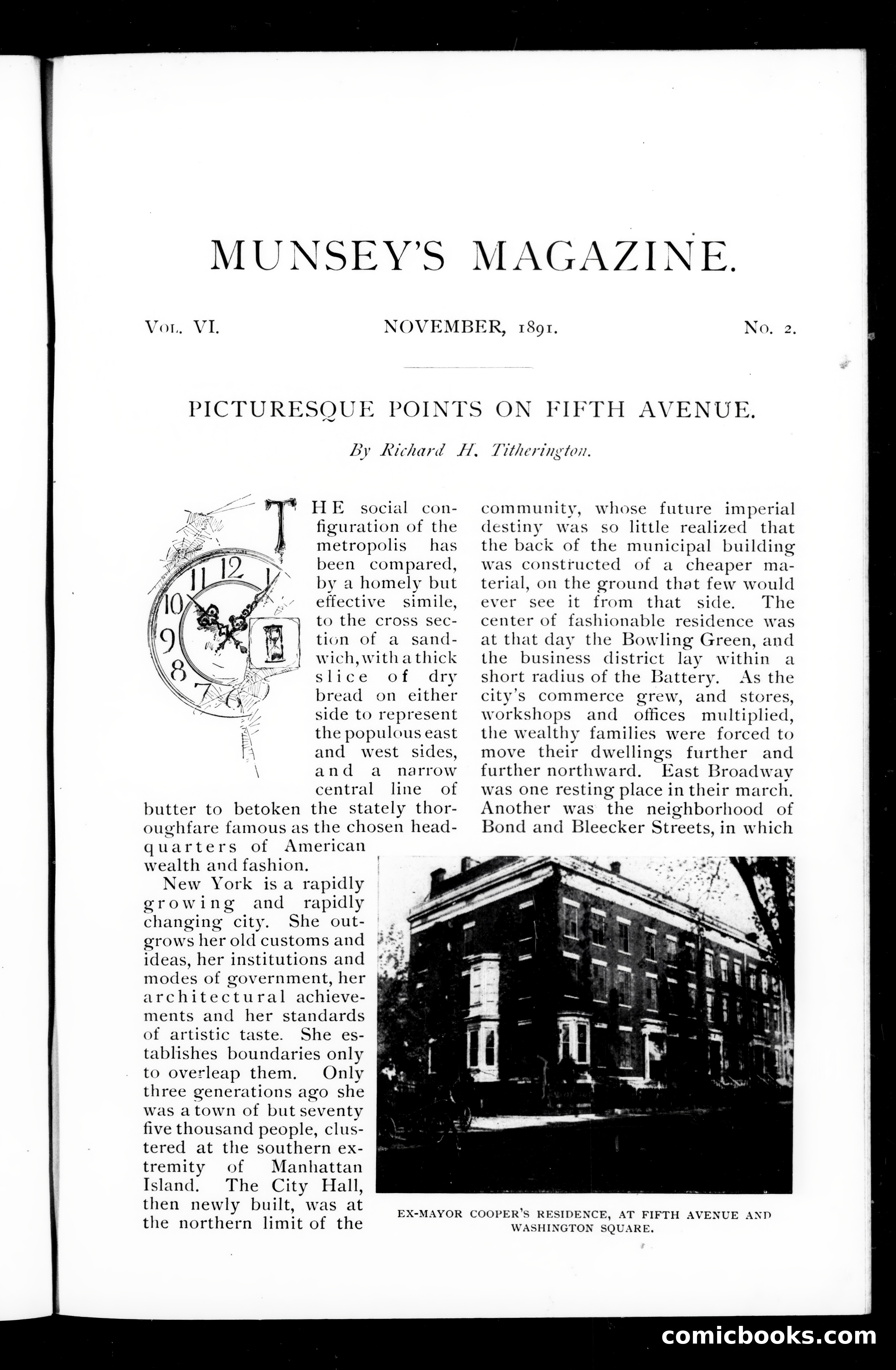
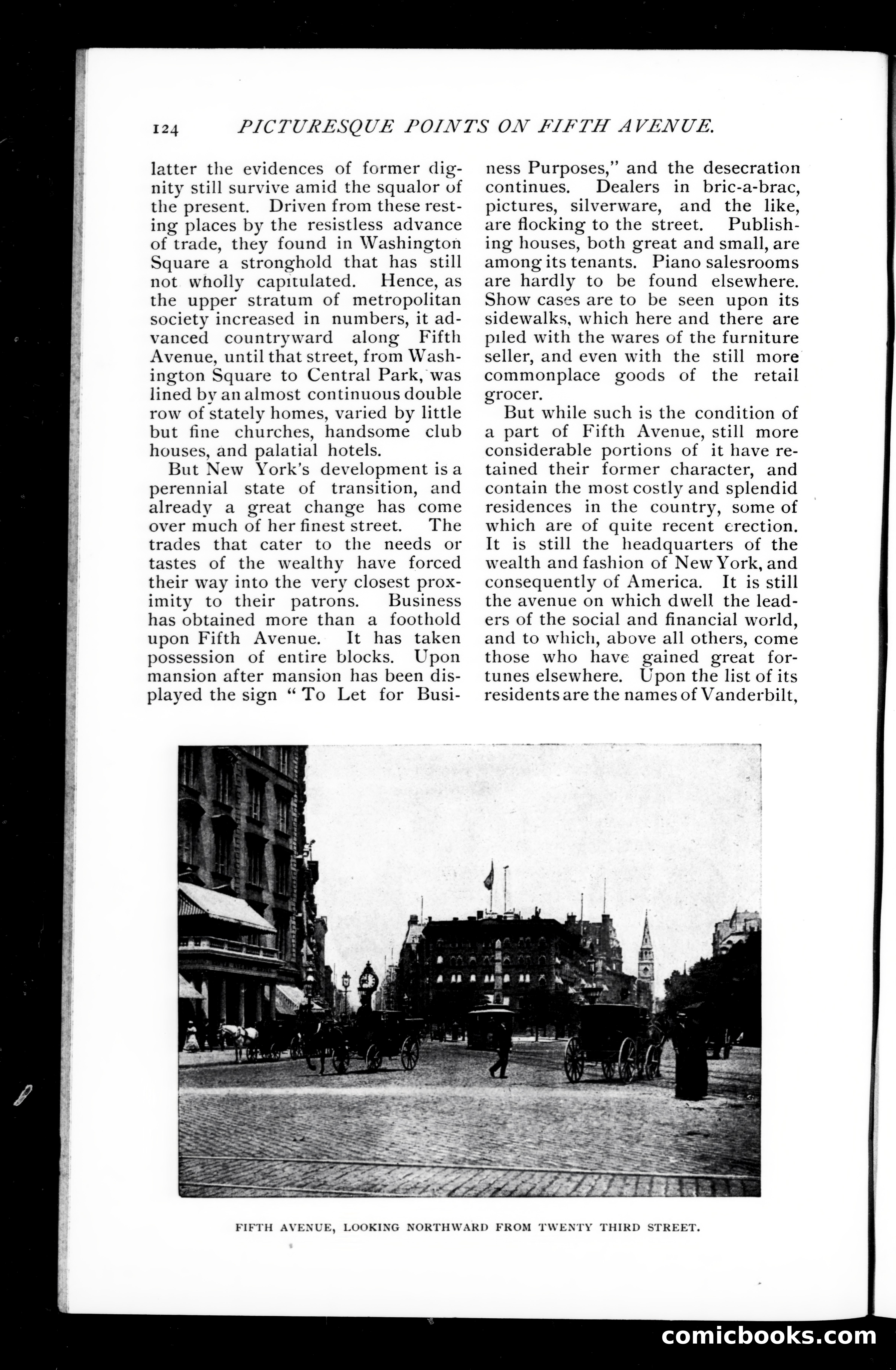
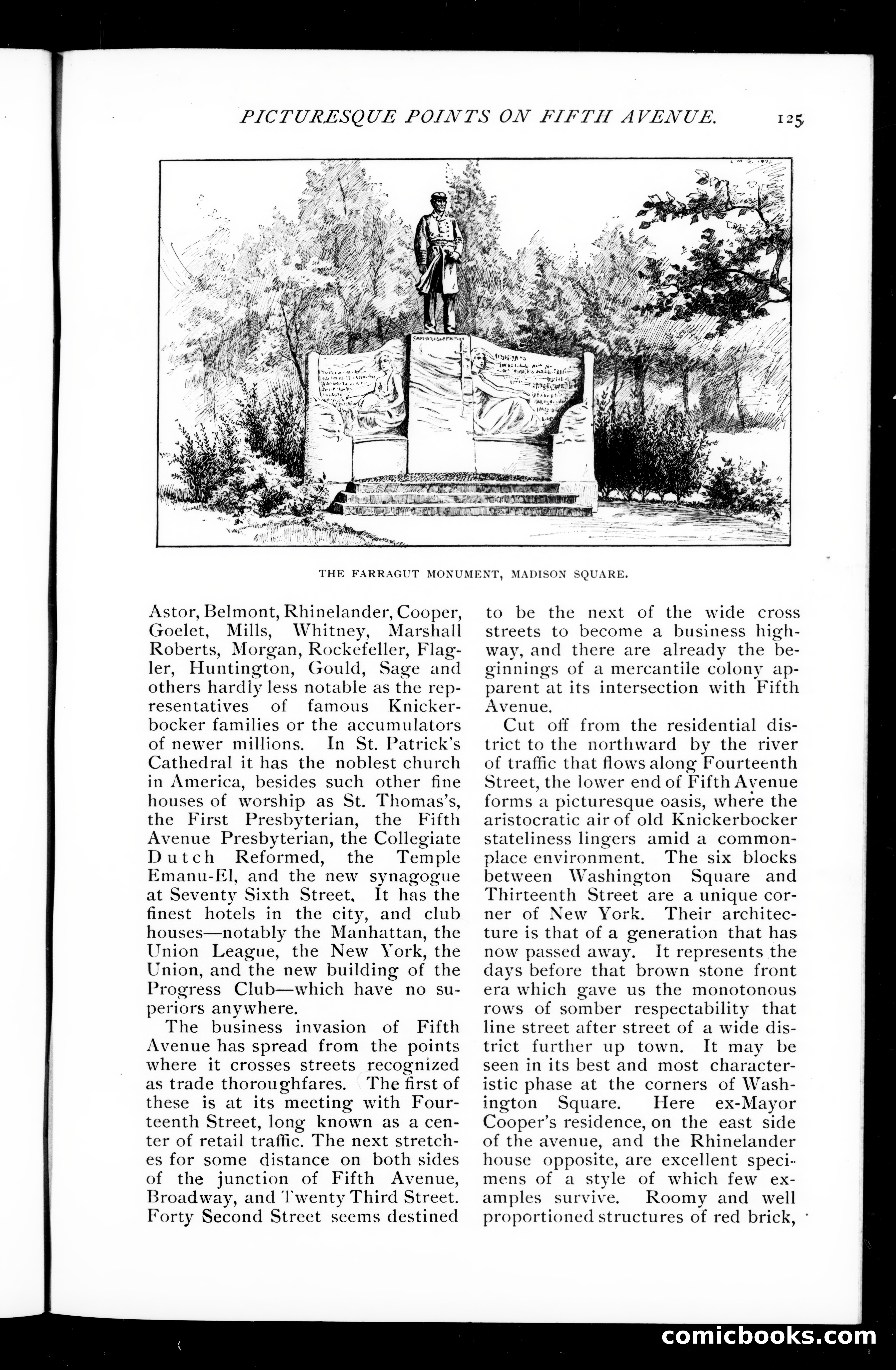
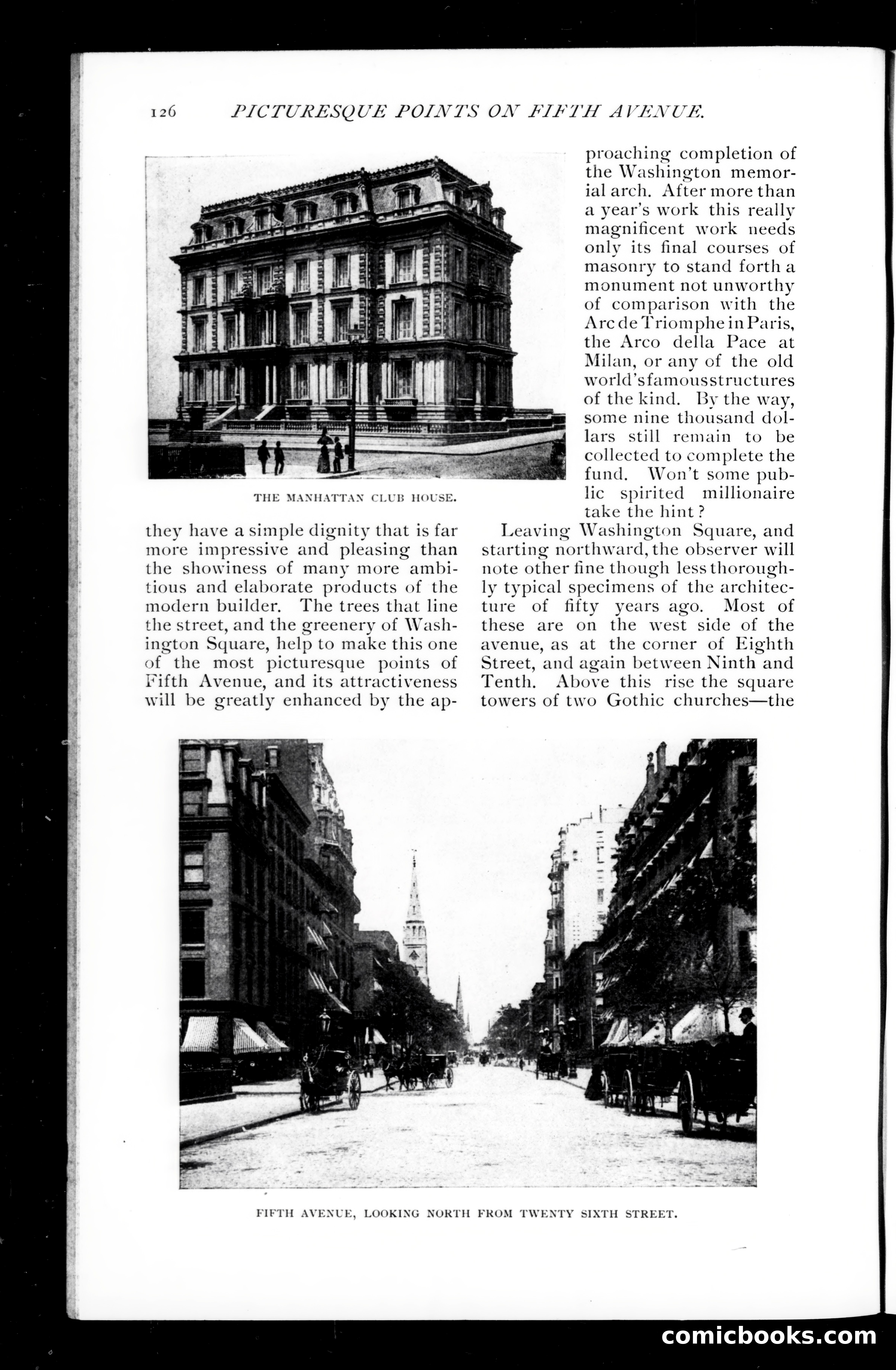
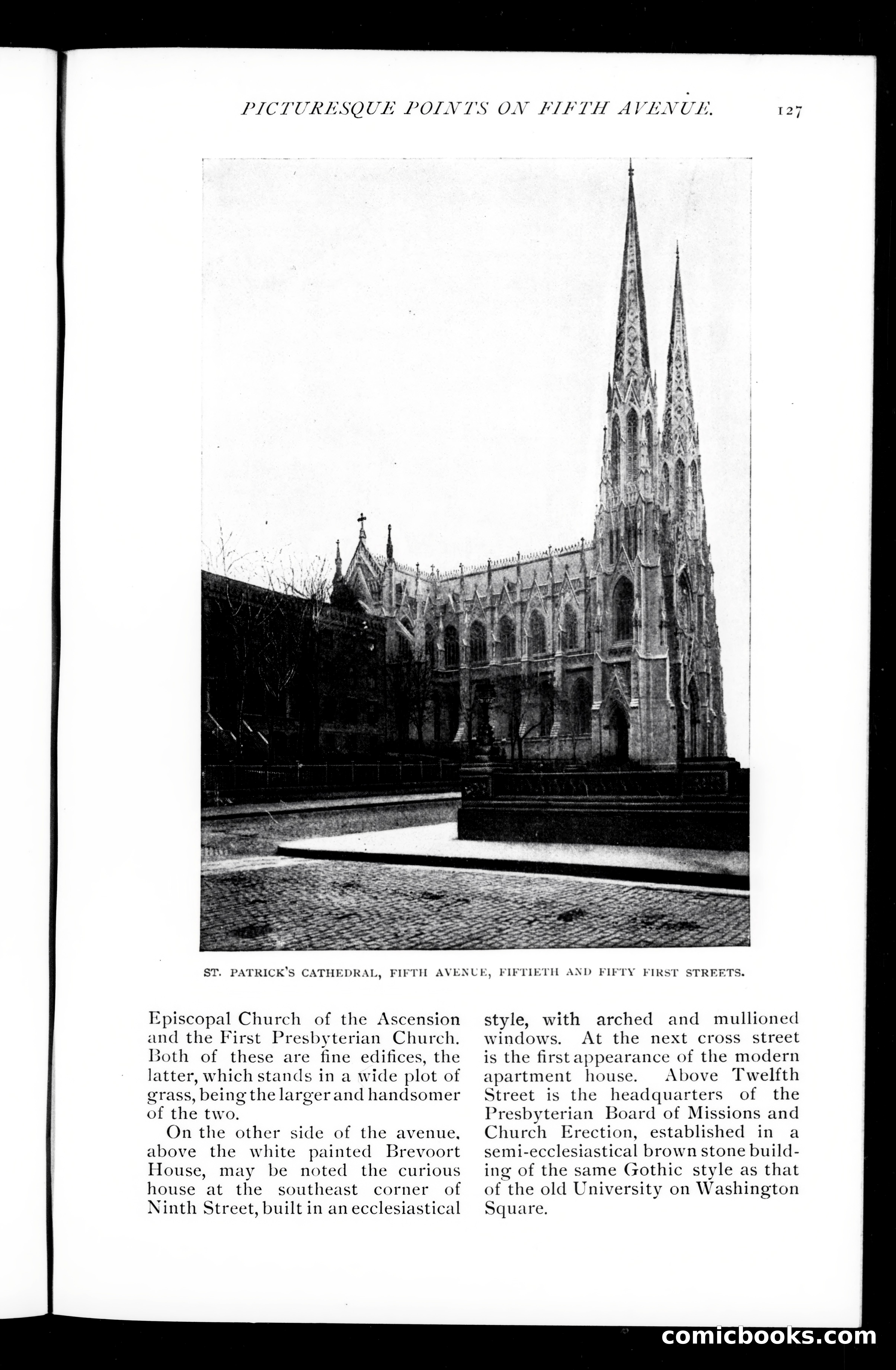
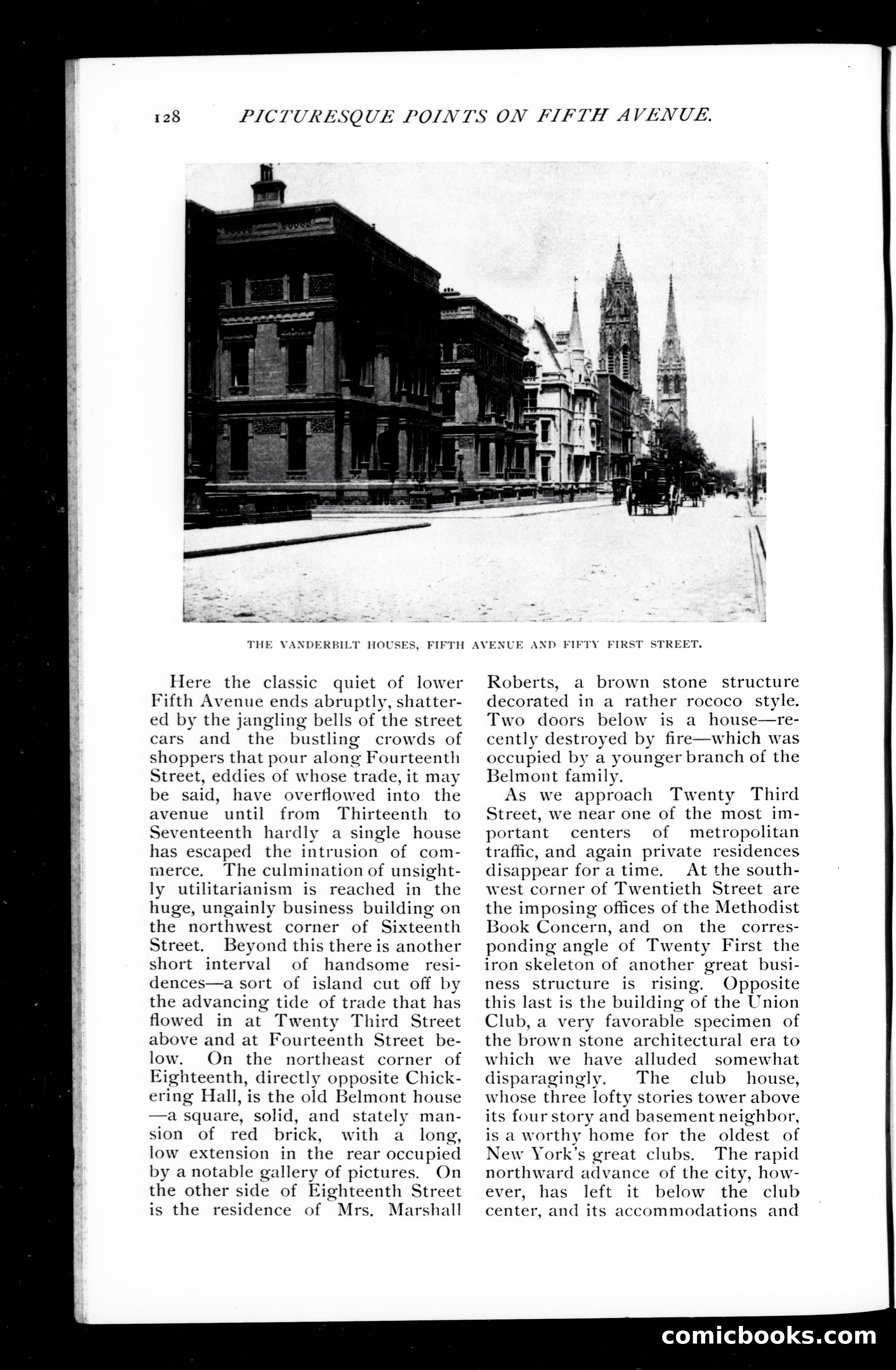
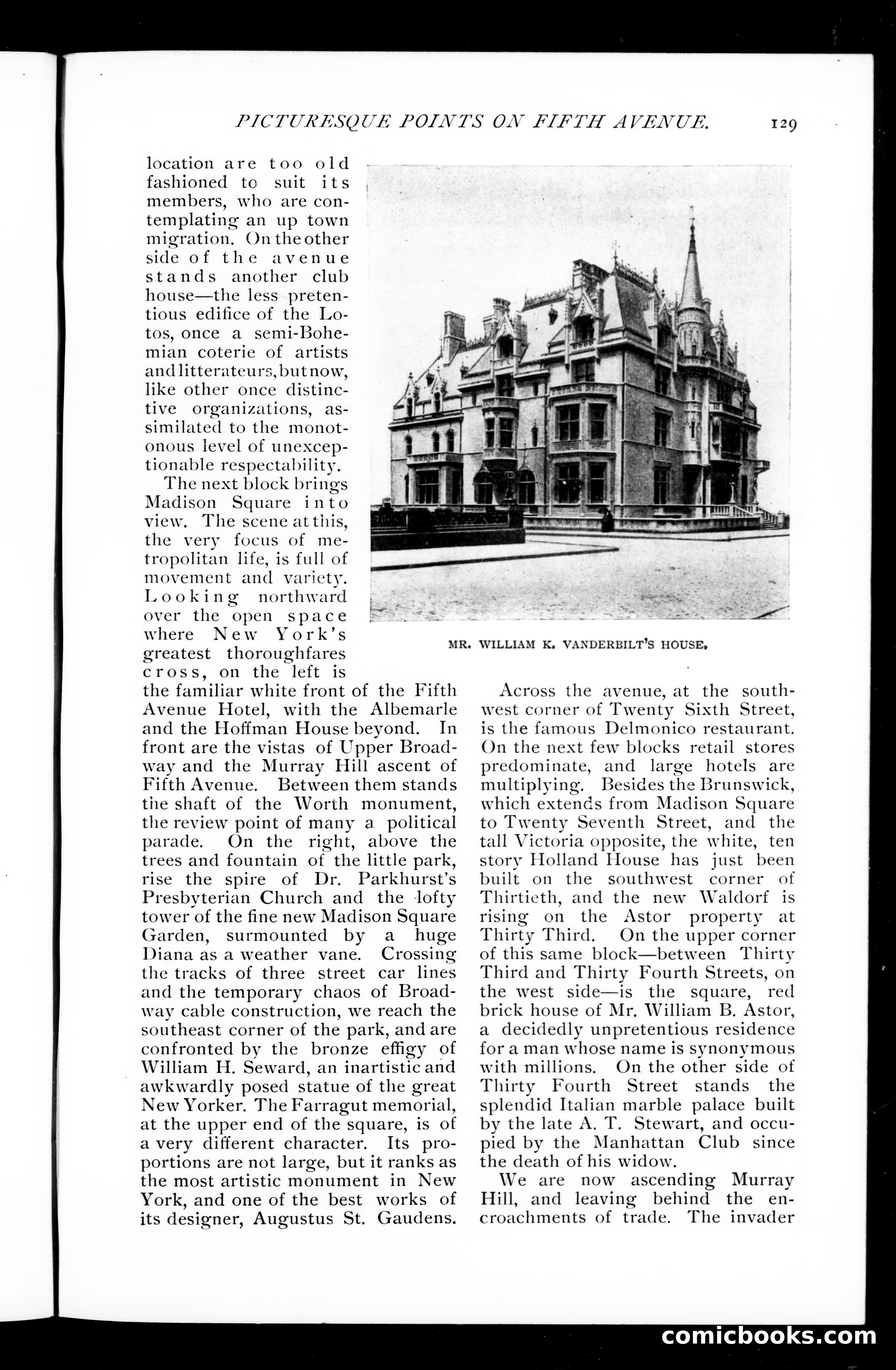
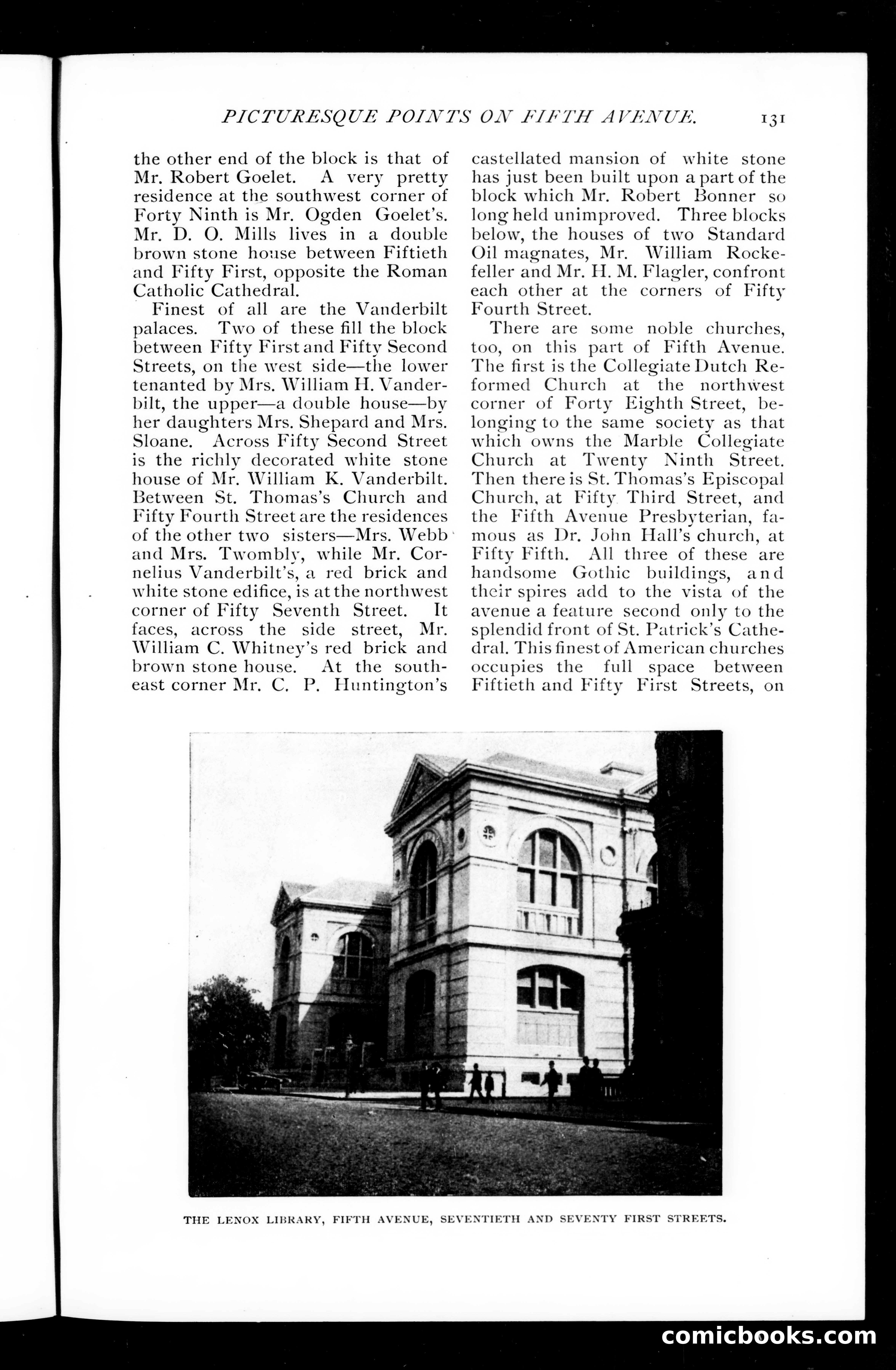
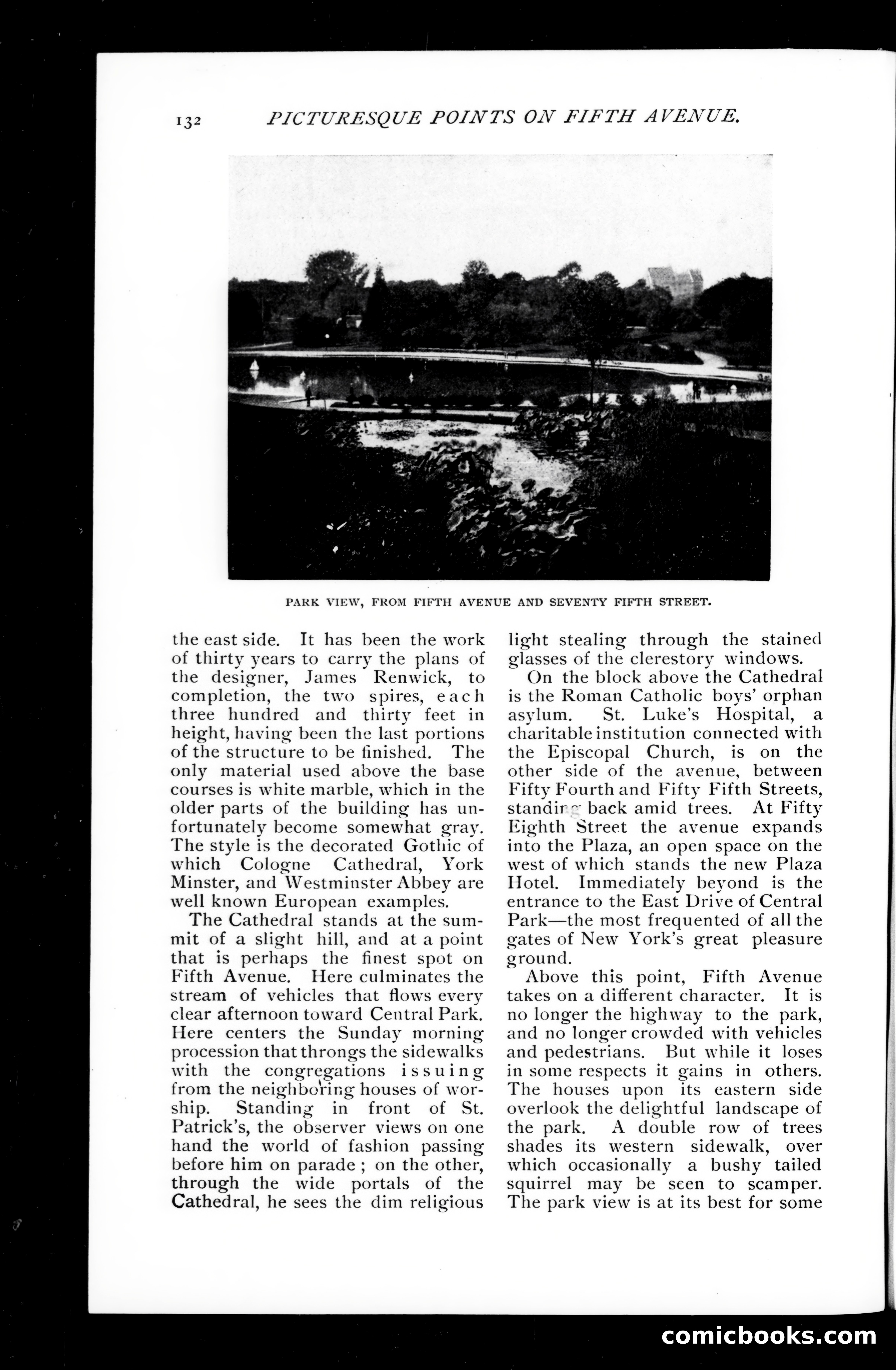
Munsey's Magazine, November 1894: "Picturesque Points on Fifth Avenue" This is a nonfiction architectural and urban history essay by Richard H. Titherington documenting Fifth Avenue's transformation in the 1890s. The article traces the street's evolution from an exclusive residential quarter to a mixed commercial-residential district, arguing that wealthy families have been progressively displaced northward by encroaching retail trade. Titherington surveys the street block by block from Washington Square northward to Central Park, cataloging notable residences (those of Vanderbilt, Astor, Belmont, Morgan, and others), prominent churches (St. Patrick's Cathedral, the First Presbyterian Church), club houses (Manhattan Club, Union League Club, Union Club), and hotels (Fifth Avenue Hotel, Brunswick, Waldorf, Holland House). The essay includes photographic illustrations of architectural landmarks and monuments. Titherington criticizes both the commercial invasion of Fifth Avenue—with retail shops, publishing houses, and piano salesrooms—and certain modern structures like the Croton reservoir. He praises examples of earlier red-brick architecture and Augustus St. Gaudens' Farragut Monument as superior to contemporary design.