pulps
Munsey's Magazine, January 1907
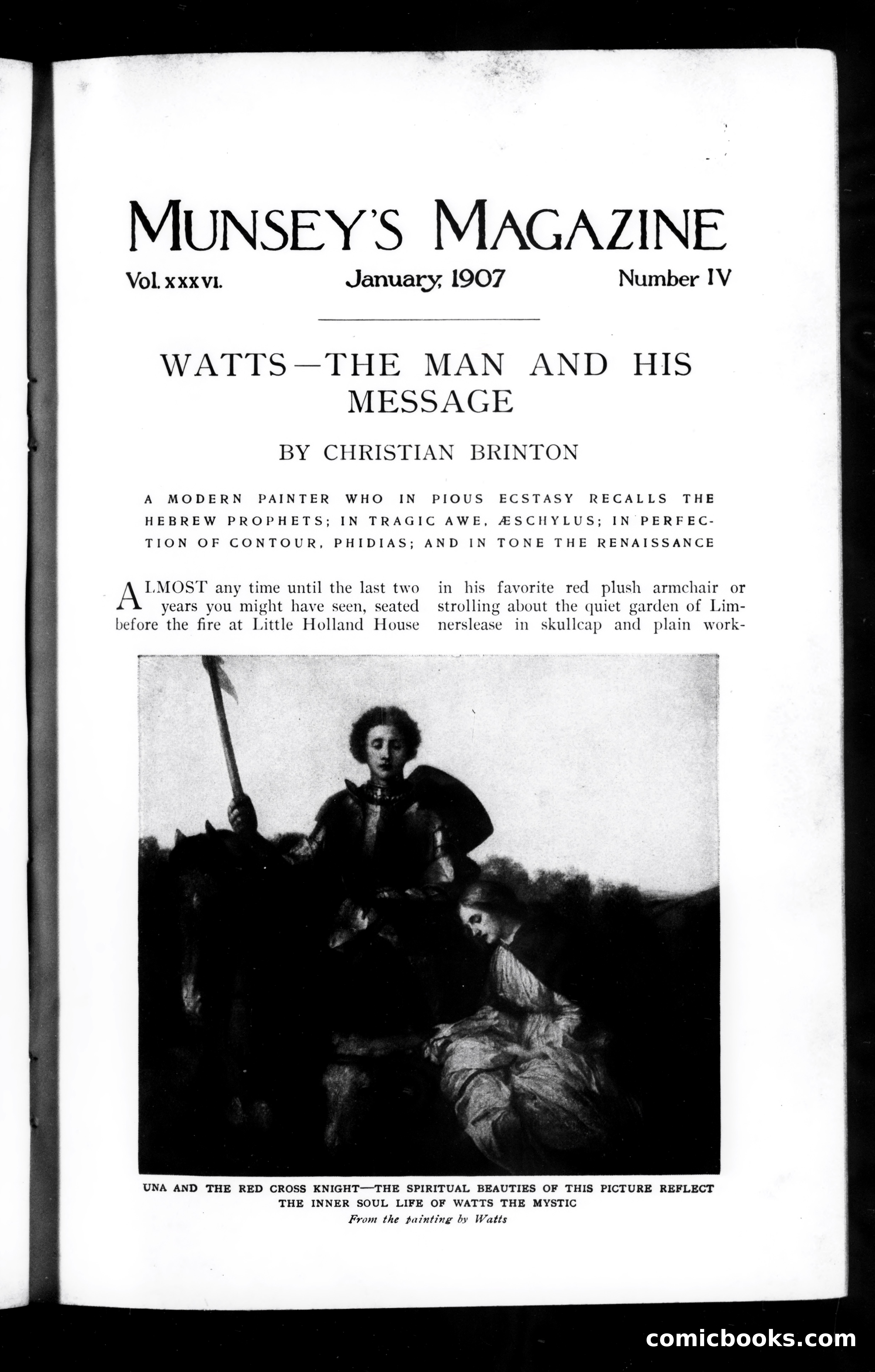
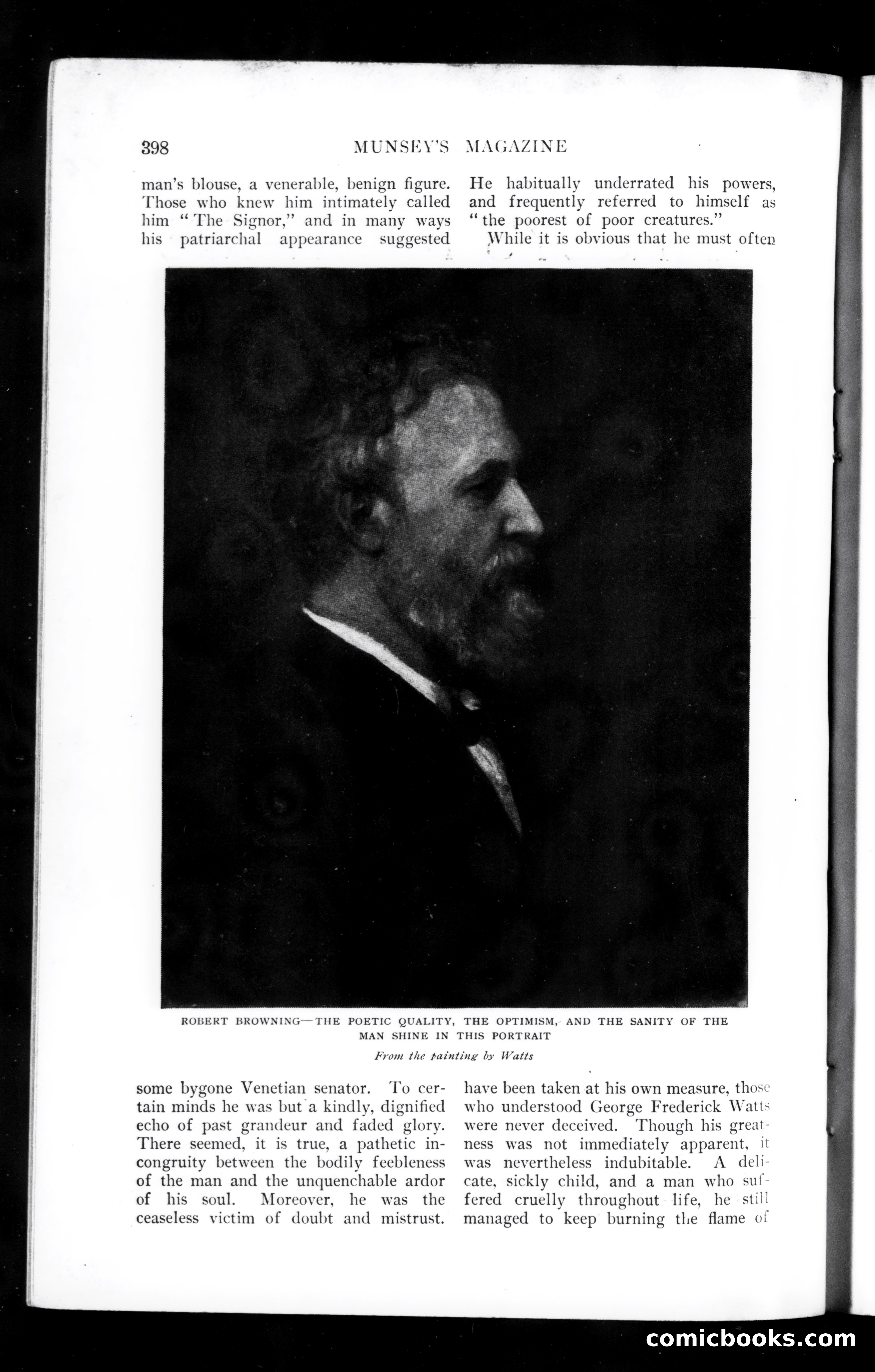
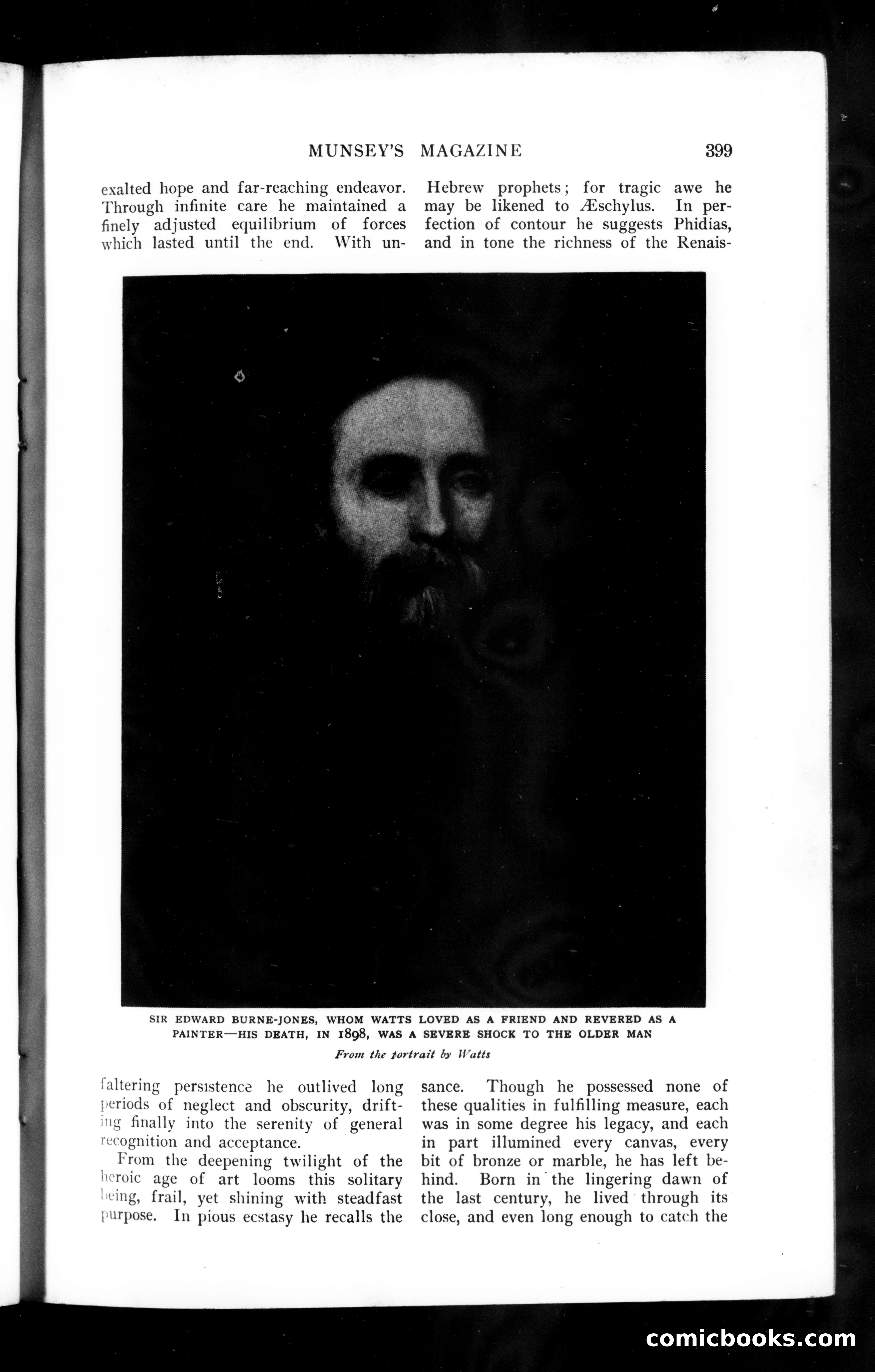
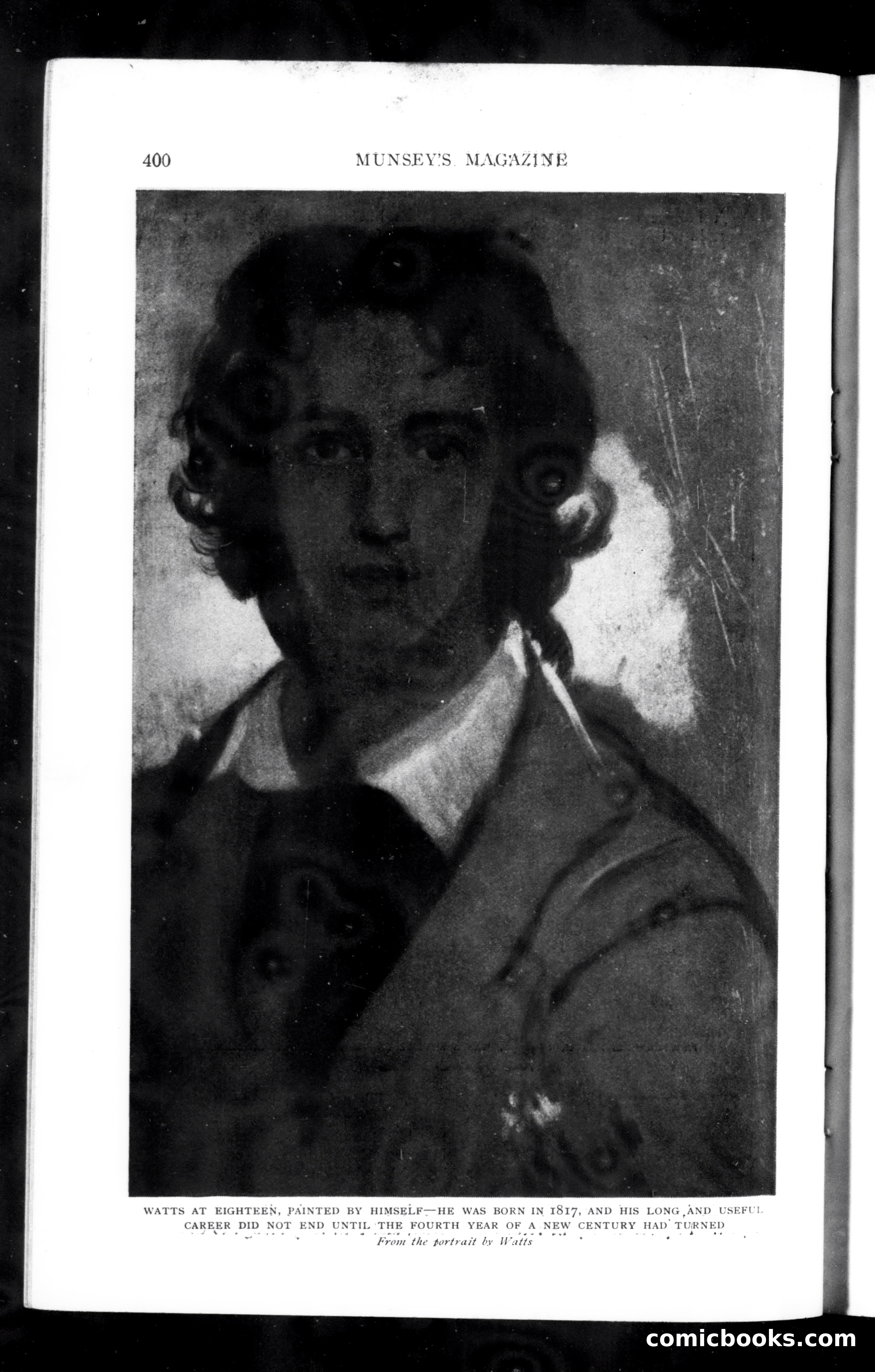
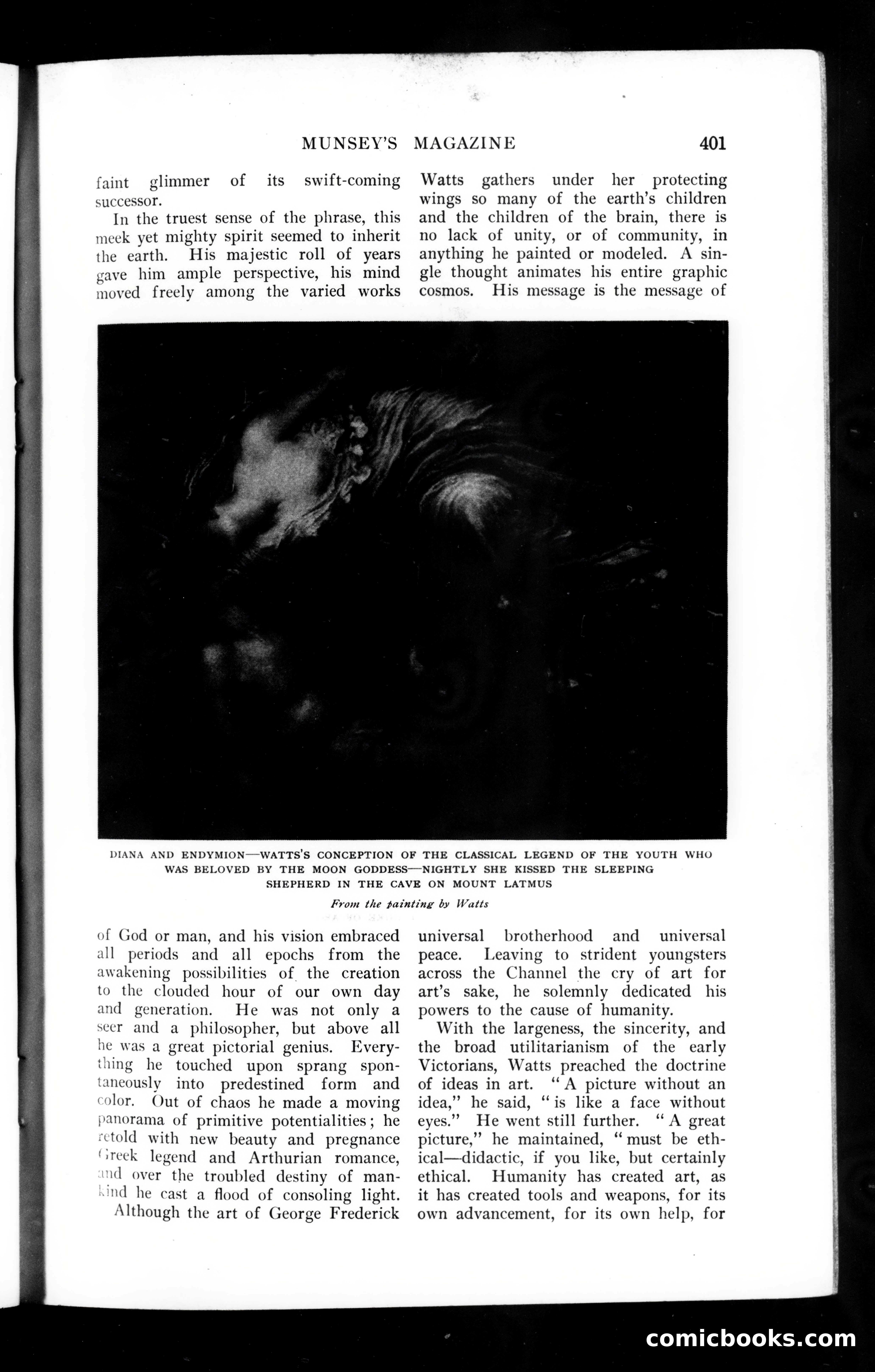
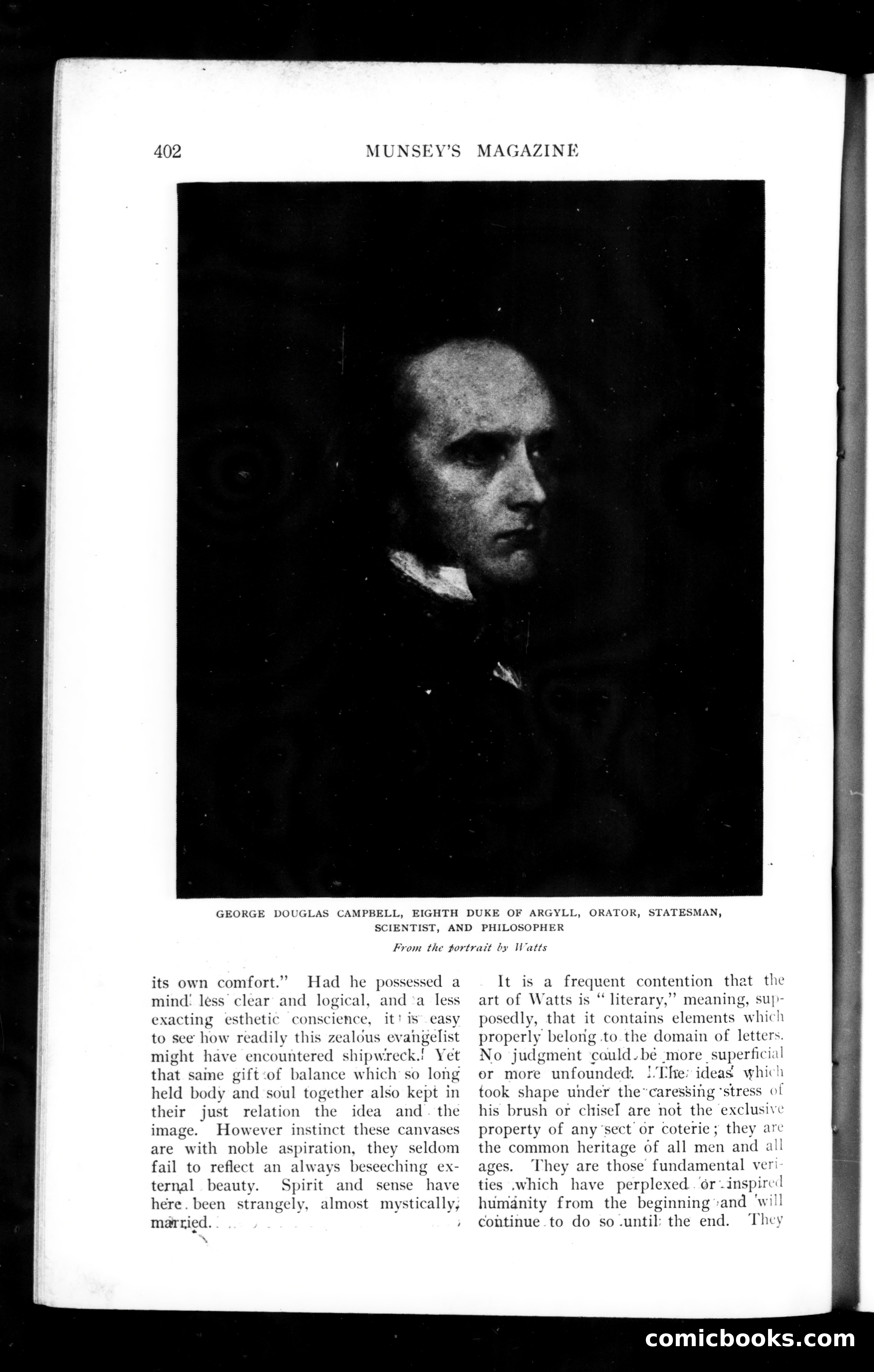
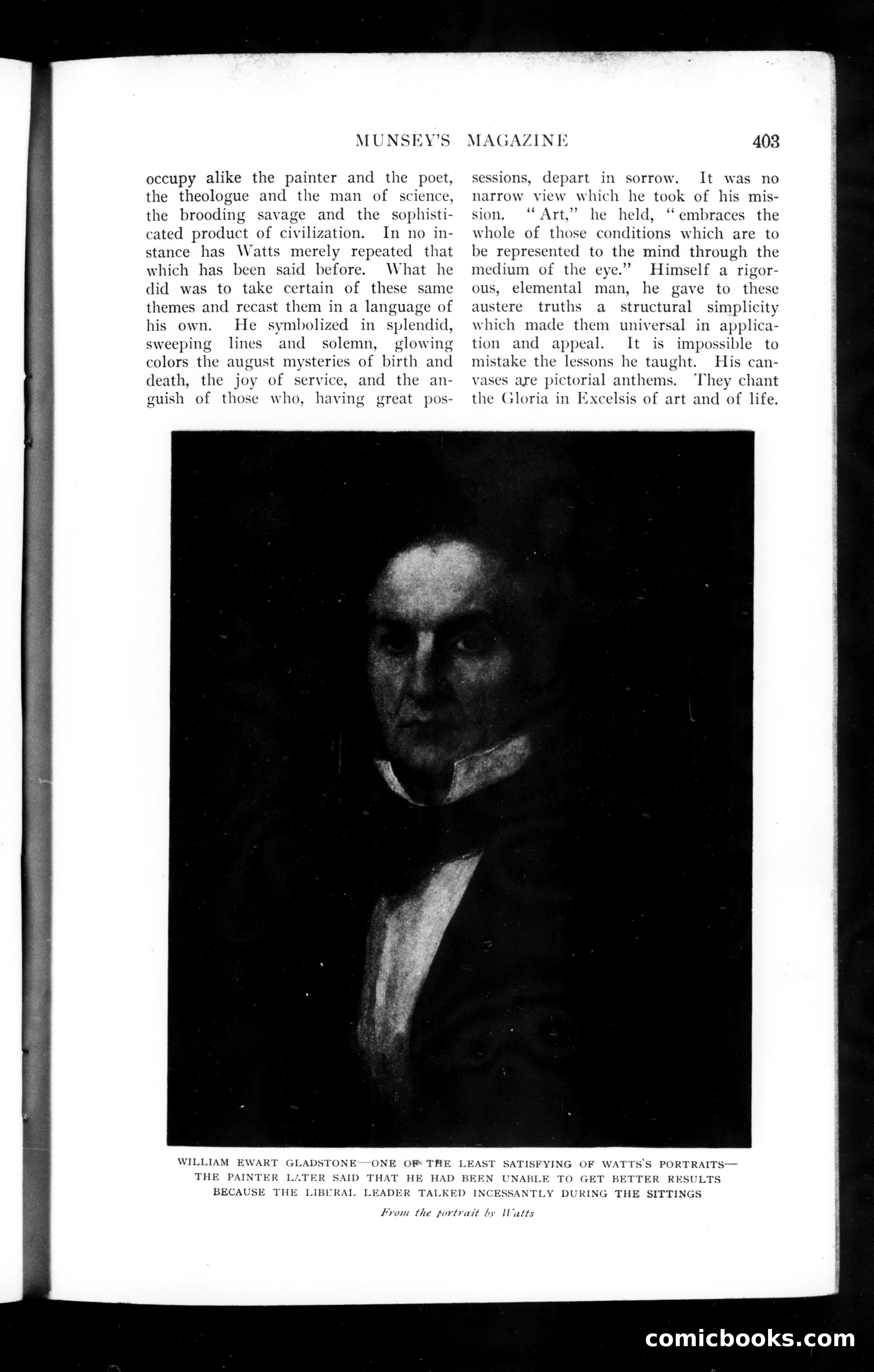
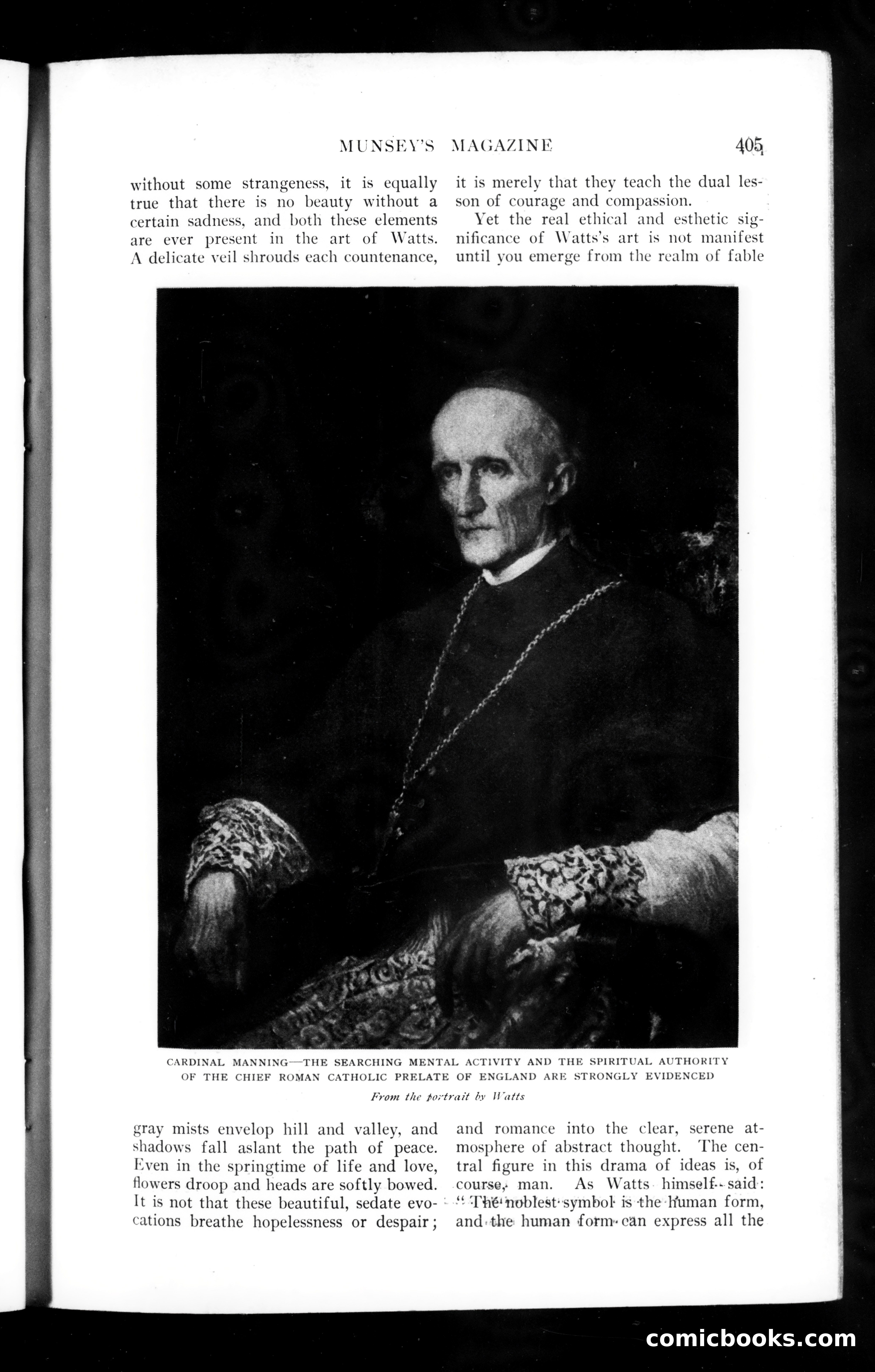
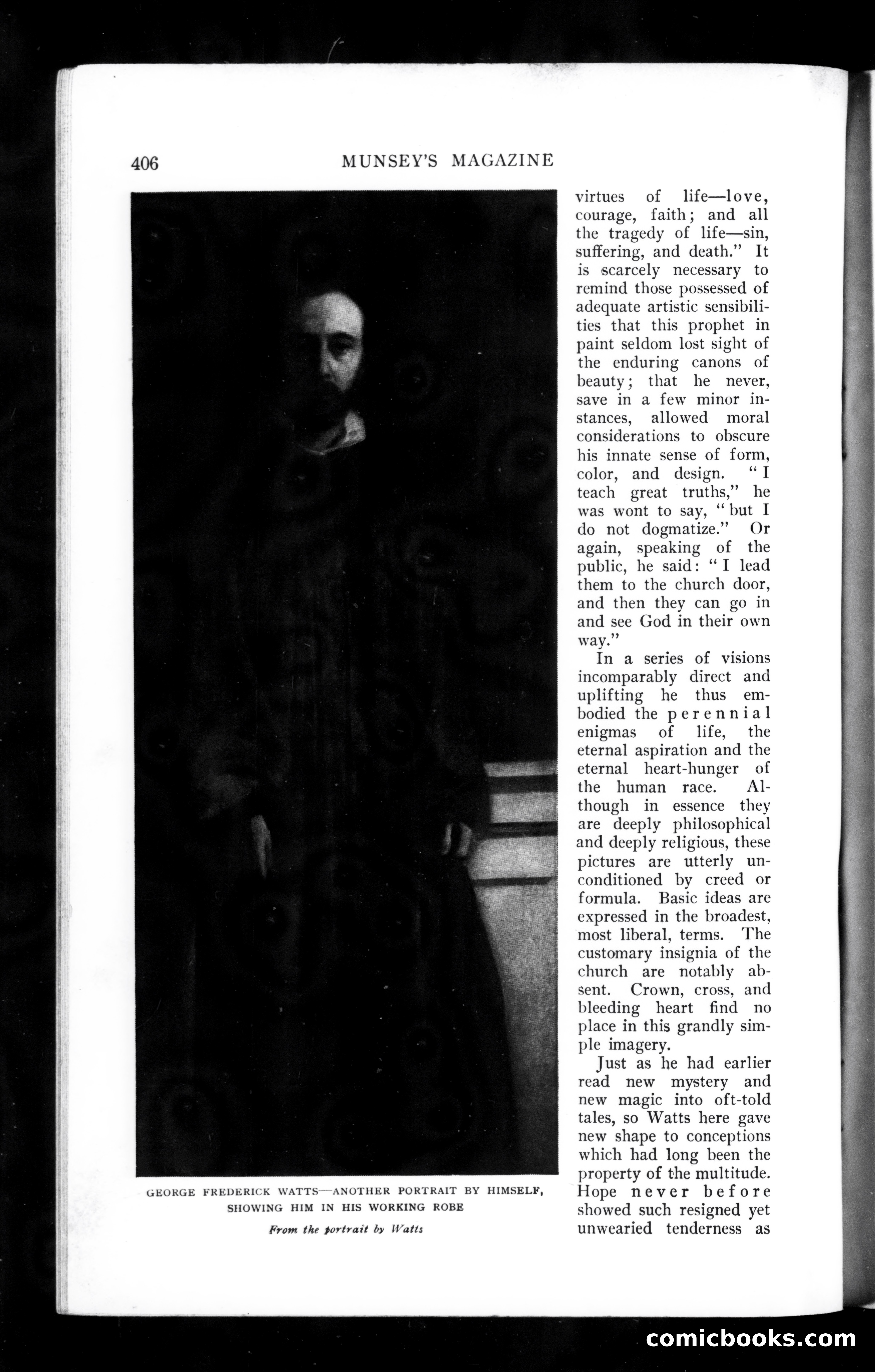
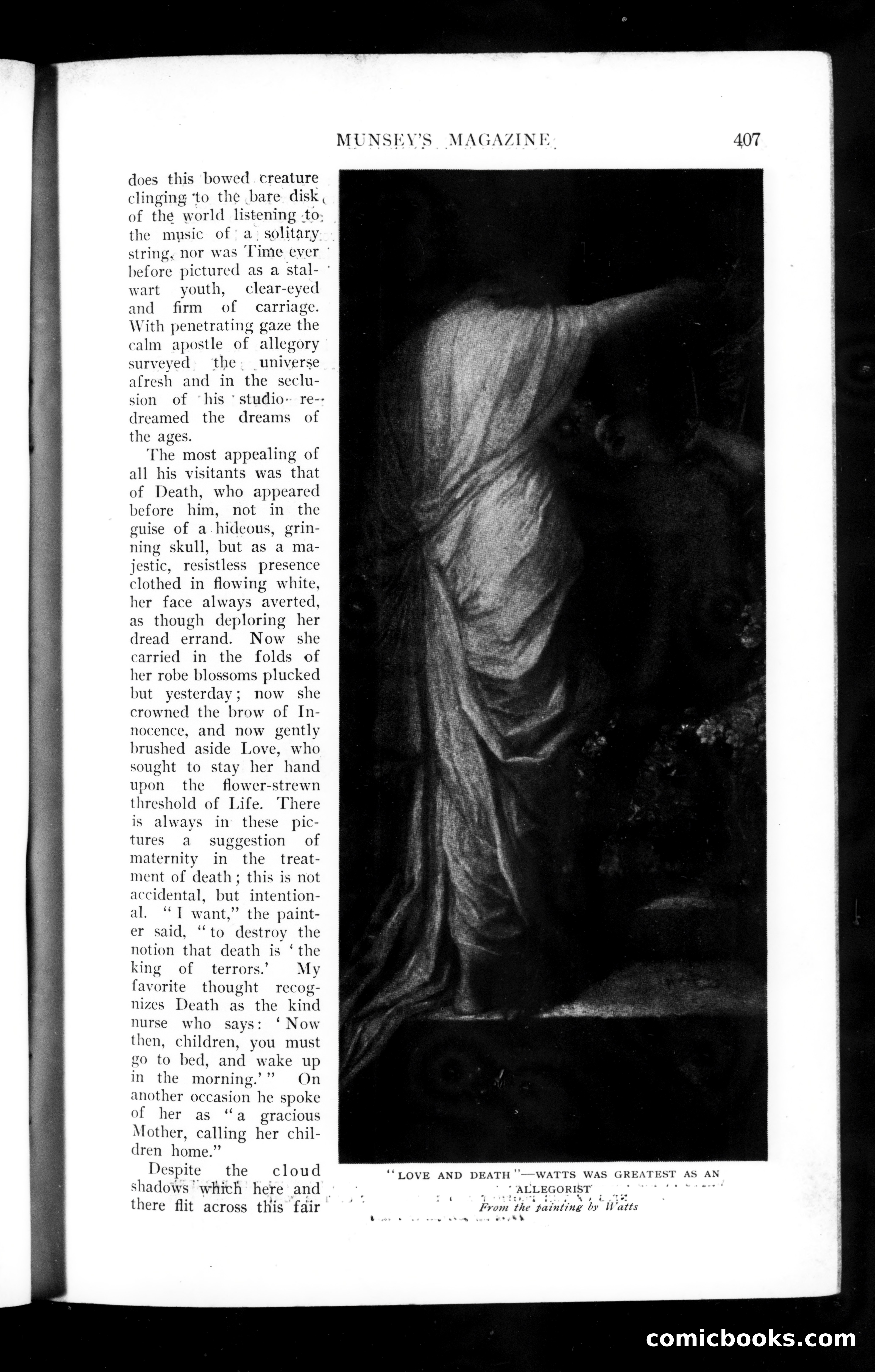
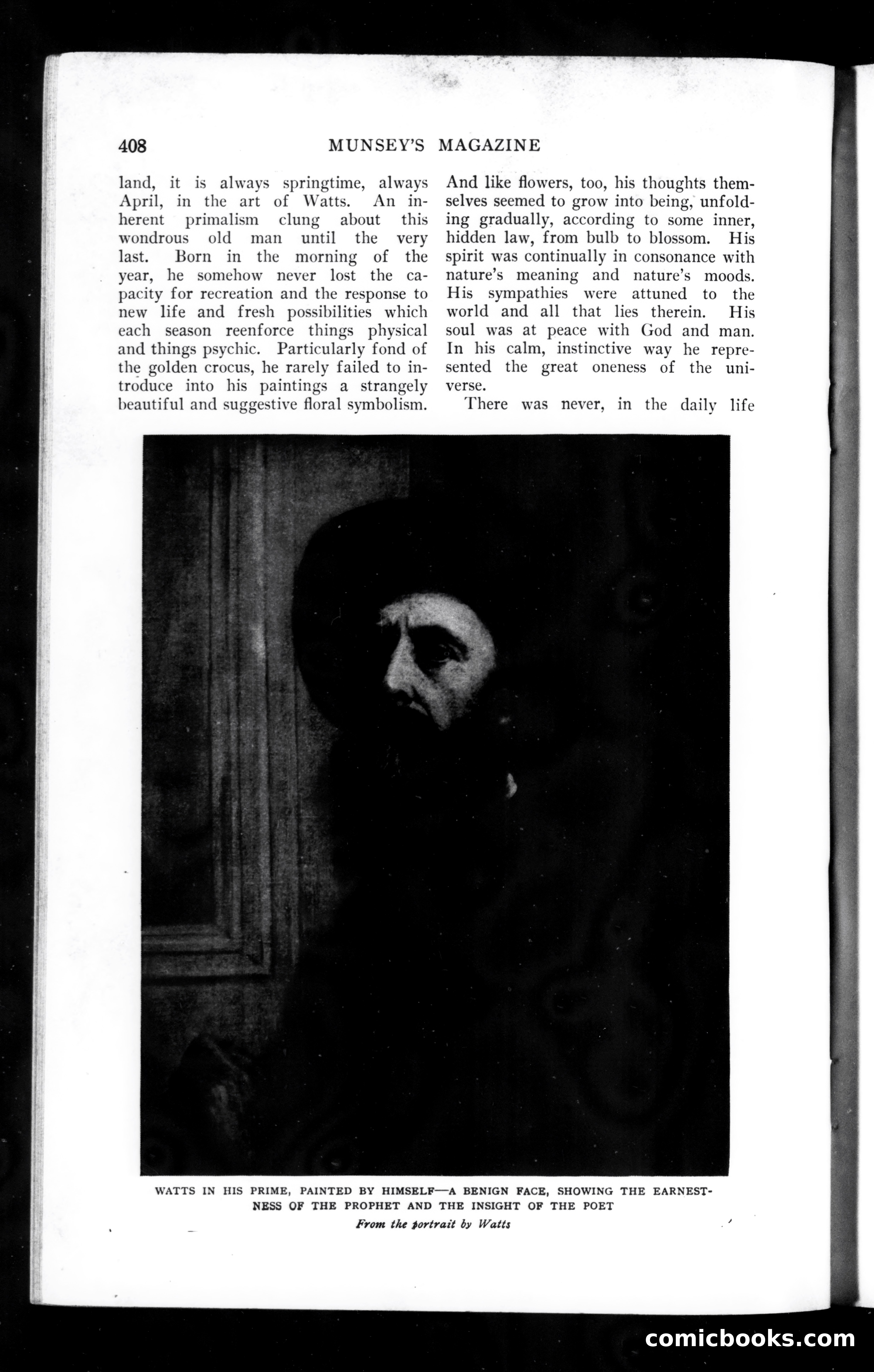
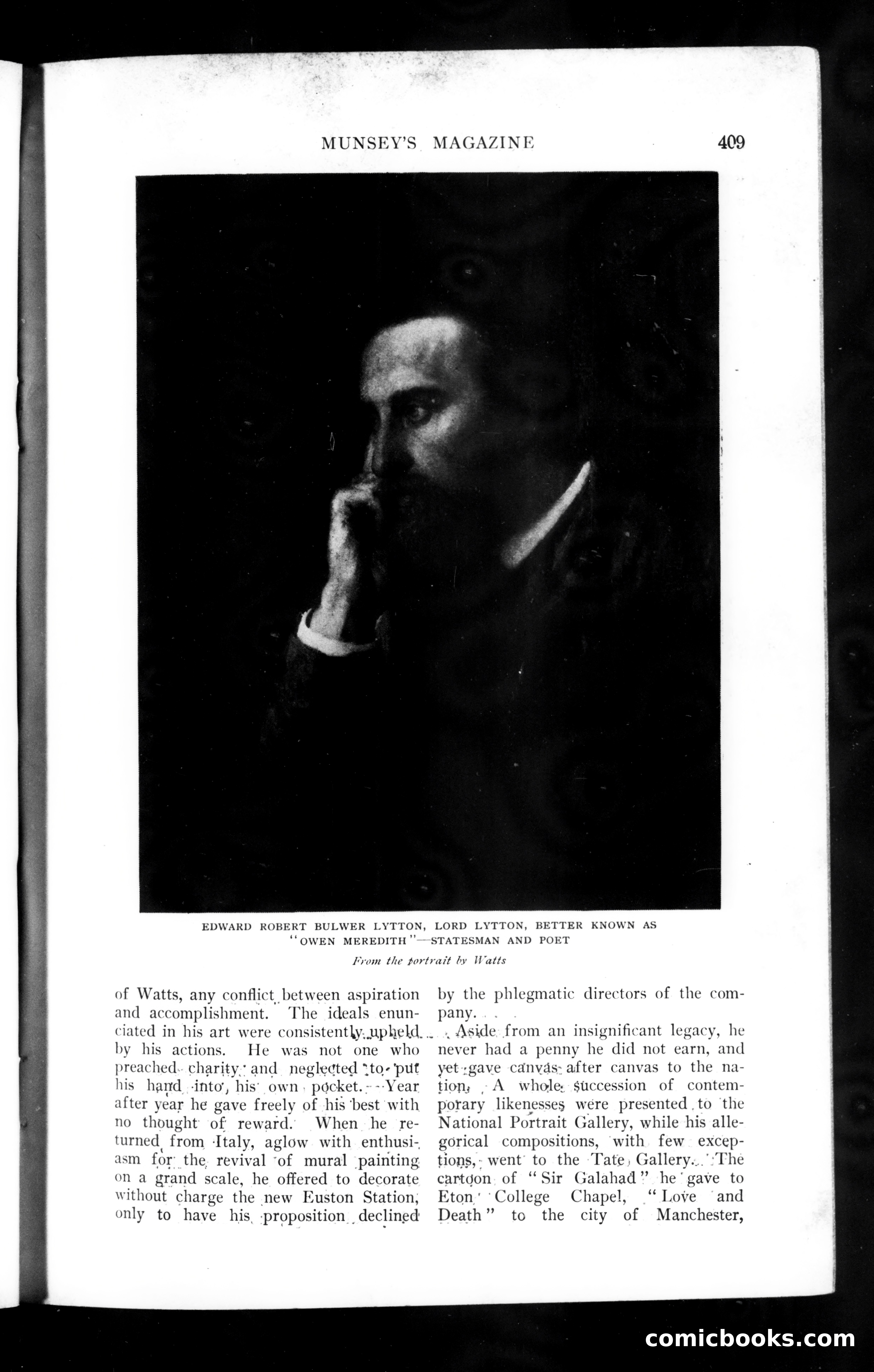
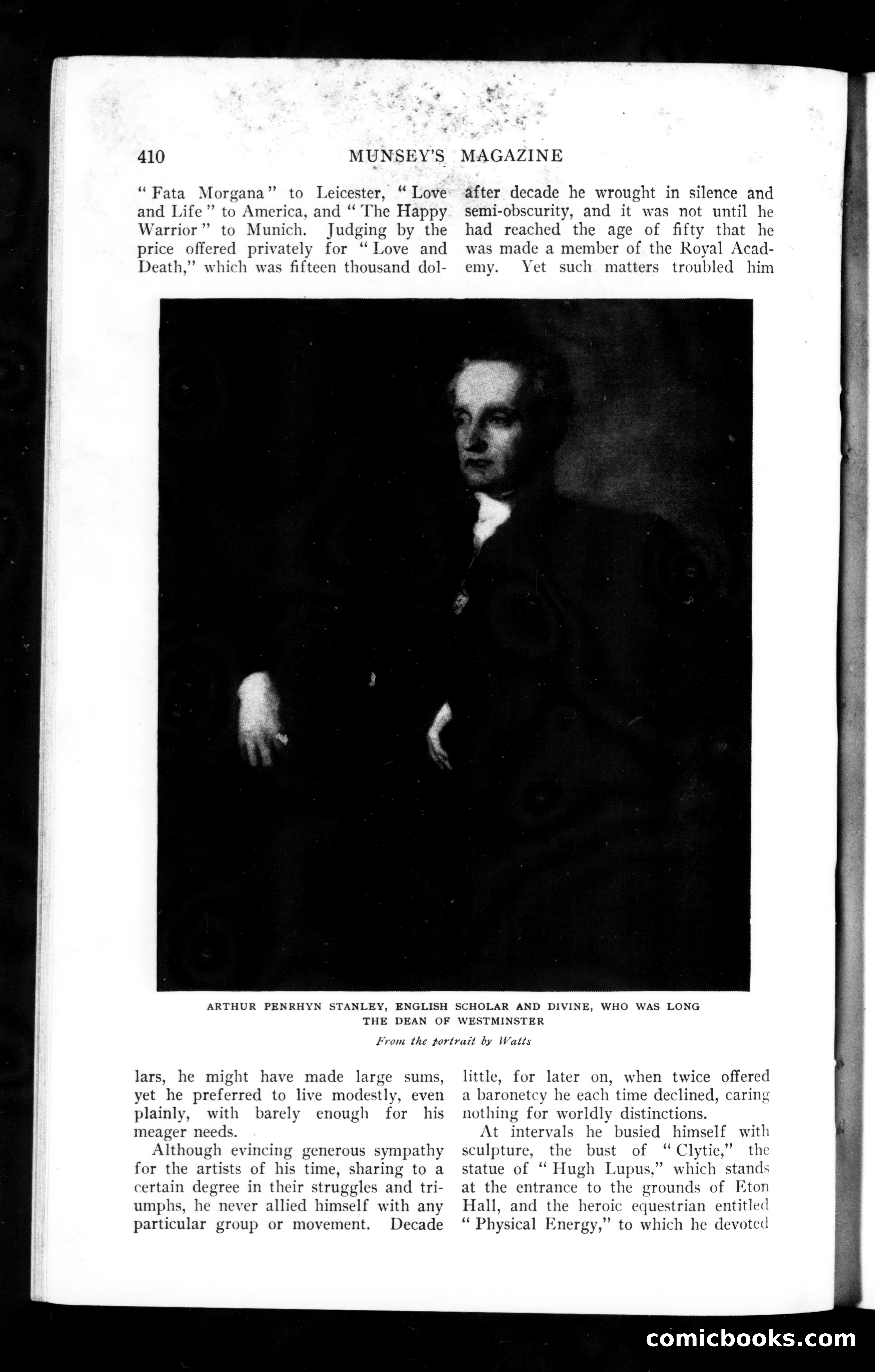
Munsey's Magazine, January 1907 Christian Brinton's essay "Watts—The Man and His Message" examines the painter George Frederick Watts (1817–1904), comparing him to Hebrew prophets, Aeschylus, Phidias, and Renaissance masters. The article traces Watts's career, which began in poverty and obscurity before achieving late recognition. Brinton discusses Watts's ambitious unrealized project—a "Temple of Life" depicting humanity's evolution—and his belief that art must be ethical and didactic, expressing universal human truths. The essay emphasizes Watts's mystical approach to classical mythology, biblical narratives, and portraiture of prominent Victorians (including Robert Browning, Gladstone, Cardinal Manning, and Edward Burne-Jones). Watts recasts ancient stories—Ariadne, Orpheus, Diana, Paolo and Francesca, and Galahad—with psychological depth. The article describes his allegorical figures: Hope as a bowed creature clinging to the world; Time as a youthful apostle; Death as a majestic, sorrowful presence bringing both destruction and comfort. Illustrated with reproductions of Watts's paintings and self-portraits.