From the exhibition
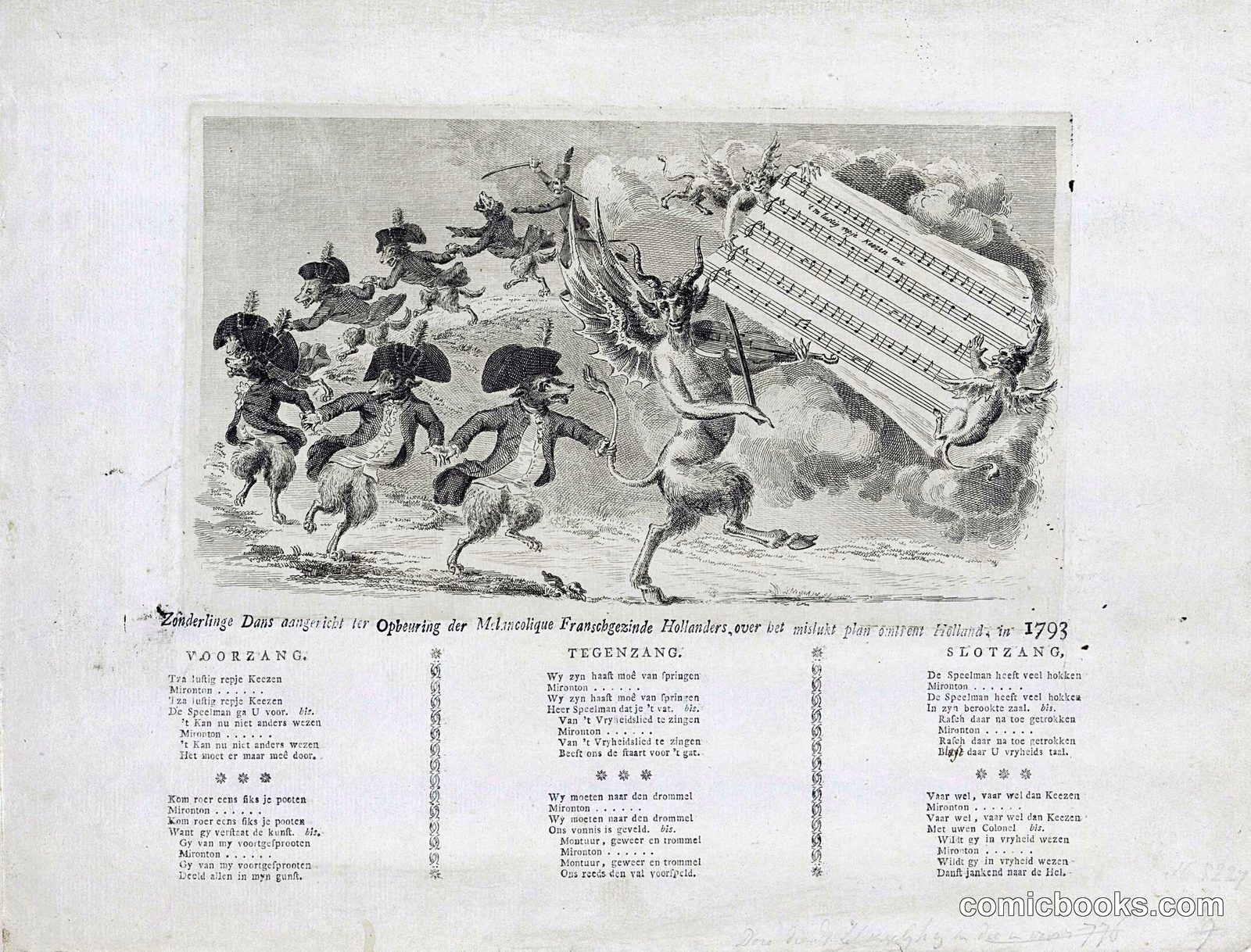
De Kezendans met de duivel als speelman (The Money Dance with the Devil as Musician)
· 1793
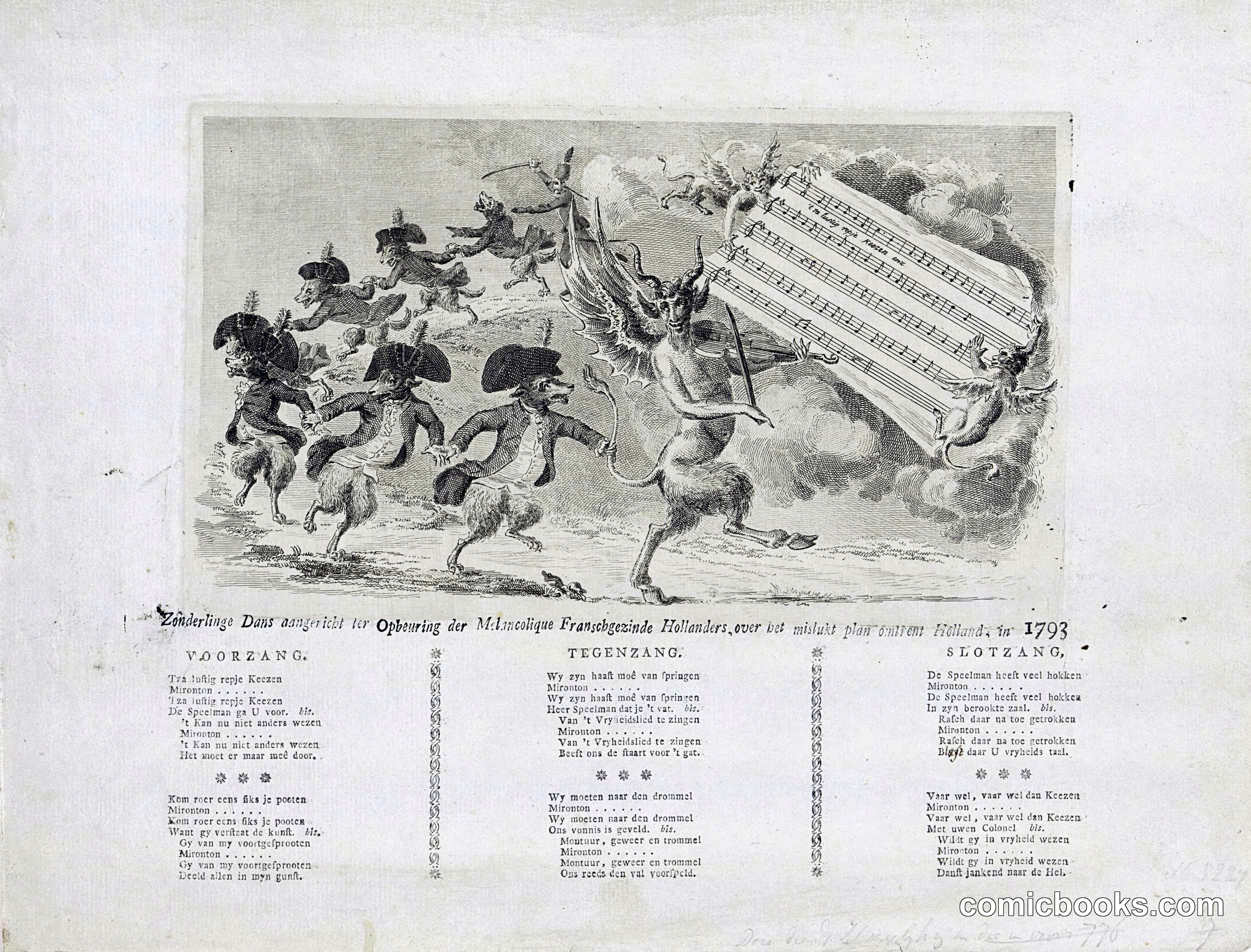
This etching depicts demons and devils dancing wildly around a figure playing a fiddle, while sheet music floats above in a chaotic swirl. The print mocks Dutch financial and political figures during the turmoil of the French Revolution and Batavian Republic, portraying the ruling class as literally dancing to the devil's tune. Below, three-column verses in Dutch mock the corruption and folly of those in power. The work exemplifies the Northern European tradition of political satire inherited from Hogarth and Gillray—using grotesque caricature, allegorical figures, and crude humor to attack elites. Such popular engravings, distributed as broadsheets, entertained the masses while encoding sharp social critique. The devil-musician trope reflects period anxiety over moral decay and the chaos of revolutionary upheaval, visualizing political disorder through demonic carnival.
Public domain, restored and presented by comicbooks.com http://creativecommons.org/publicdomain/mark/1.0/