From the exhibition
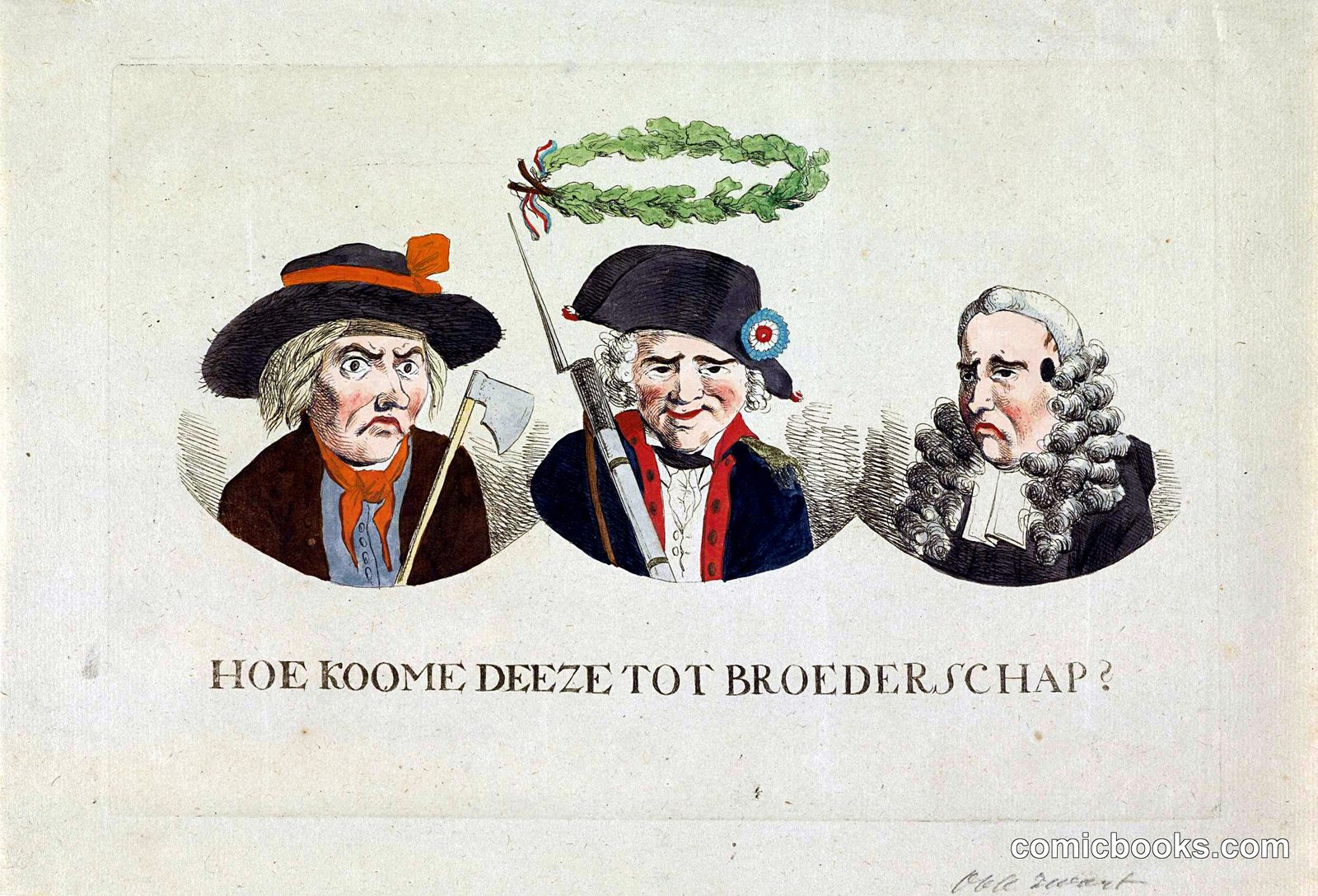
How Does This Come to Brotherhood?
· 1795
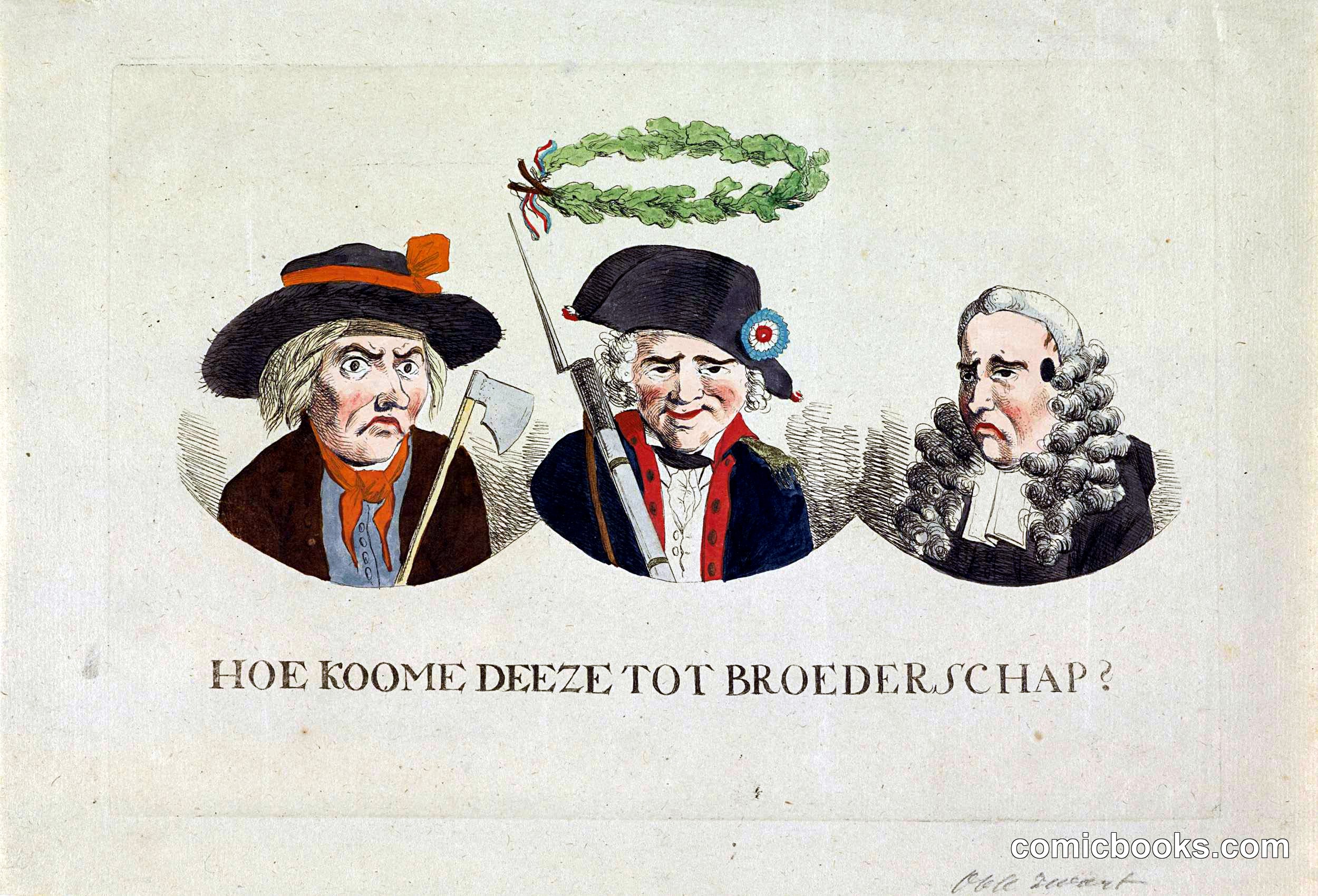
This Dutch hand-colored etching mocks revolutionary ideals of equality and fraternity through three grotesque heads. A woodsman with axe, a sans-culotte holding a liberty pole with Phrygian cap, and a clergyman represent competing classes—laborer, radical, and ecclesiastic—whose violent discord contradicts Enlightenment promises of unity. The print employs caricature's exaggerated features and crude expressions to ridicule French revolutionary rhetoric circulating in the Low Countries during the 1790s. Such satirical images descended from an established Northern European tradition of political prints by Hogarth and Gillray, using physiognomic distortion and symbolic objects to deflate public figures and movements. This work demonstrates how popular printmaking functioned as visual polemic, translating elite anxieties about social upheaval into accessible, often cruel humor for mass audiences.
Public domain, restored and presented by comicbooks.com http://creativecommons.org/publicdomain/mark/1.0/