From the exhibition
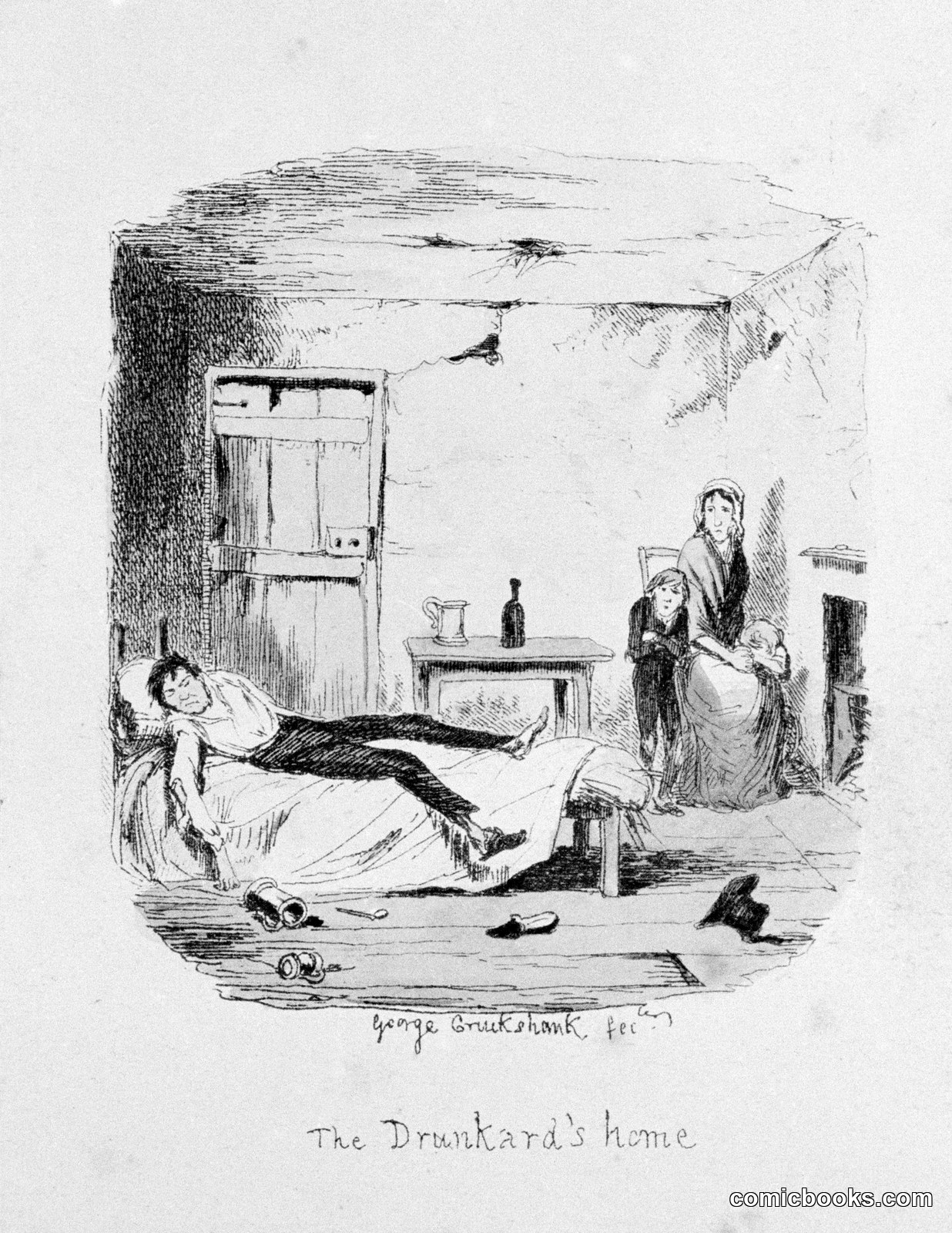
The Drunkard's Home
http://data.europeana.eu/agent/63272 · c. 1842
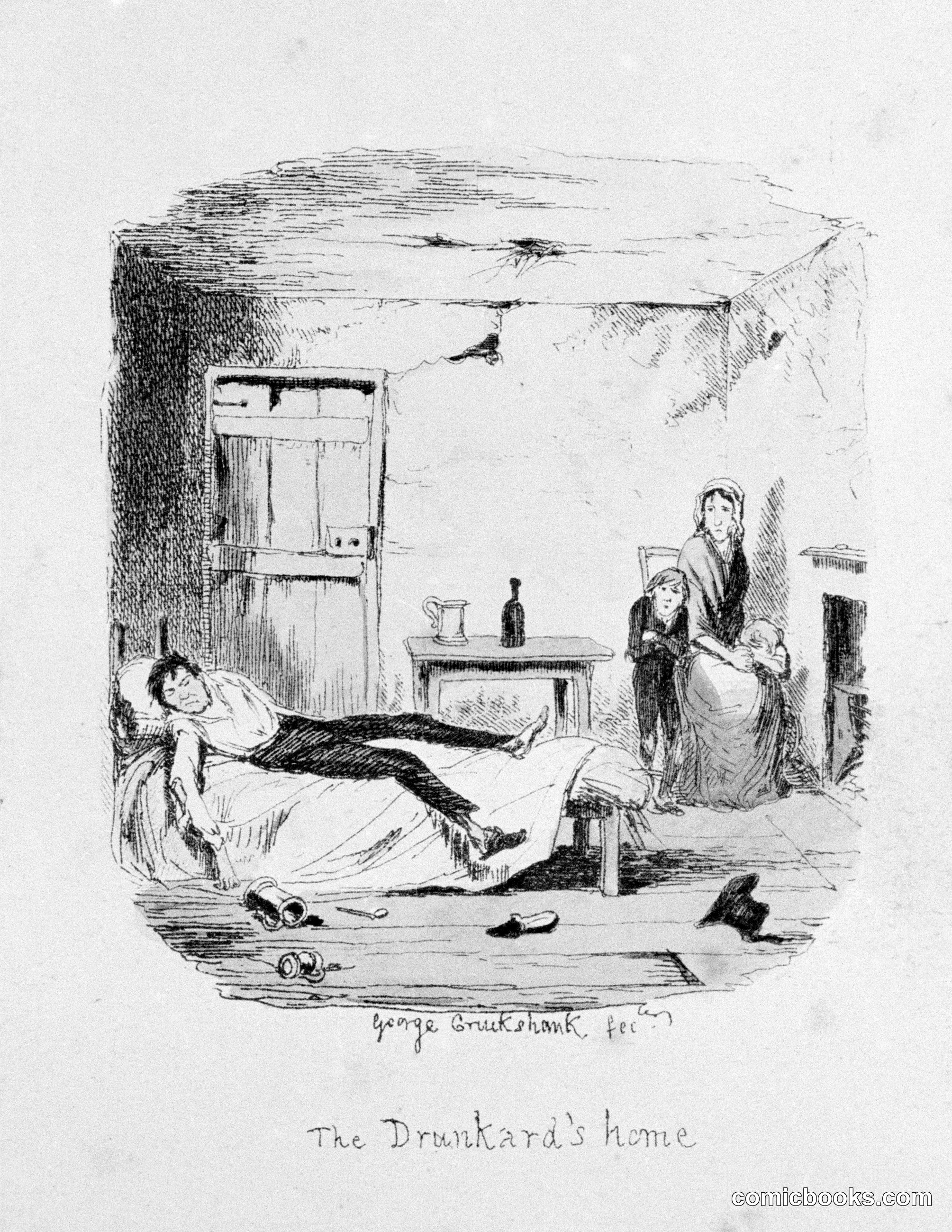
George Cruikshank's etched line renders a squalid interior with cold economy: a man splayed unconscious across a disordered bed, empty bottles on the floor, while a shawled woman and child watch from the far corner in attitudes of exhausted resignation. The room itself argues the moral — cracked walls, a bare table holding only a jug and another bottle, a broken-down door. Cruikshank was England's foremost illustrator-moralist, heir to Hogarth's narrative sequence (think *Gin Lane*, 1751) and collaborator with Dickens before turning ardent temperance crusader. His class depiction is blunt: the poor suffer visibly in their bodies and domestic spaces in ways prosperous readers were meant to observe from a safe distance. This sequential-moral mode — single image implying before-and-after, cause-and-effect — fed directly into the narrative panel tradition that became the comic strip.
Public domain, restored and presented by comicbooks.com http://creativecommons.org/licenses/by/4.0/