From the exhibition
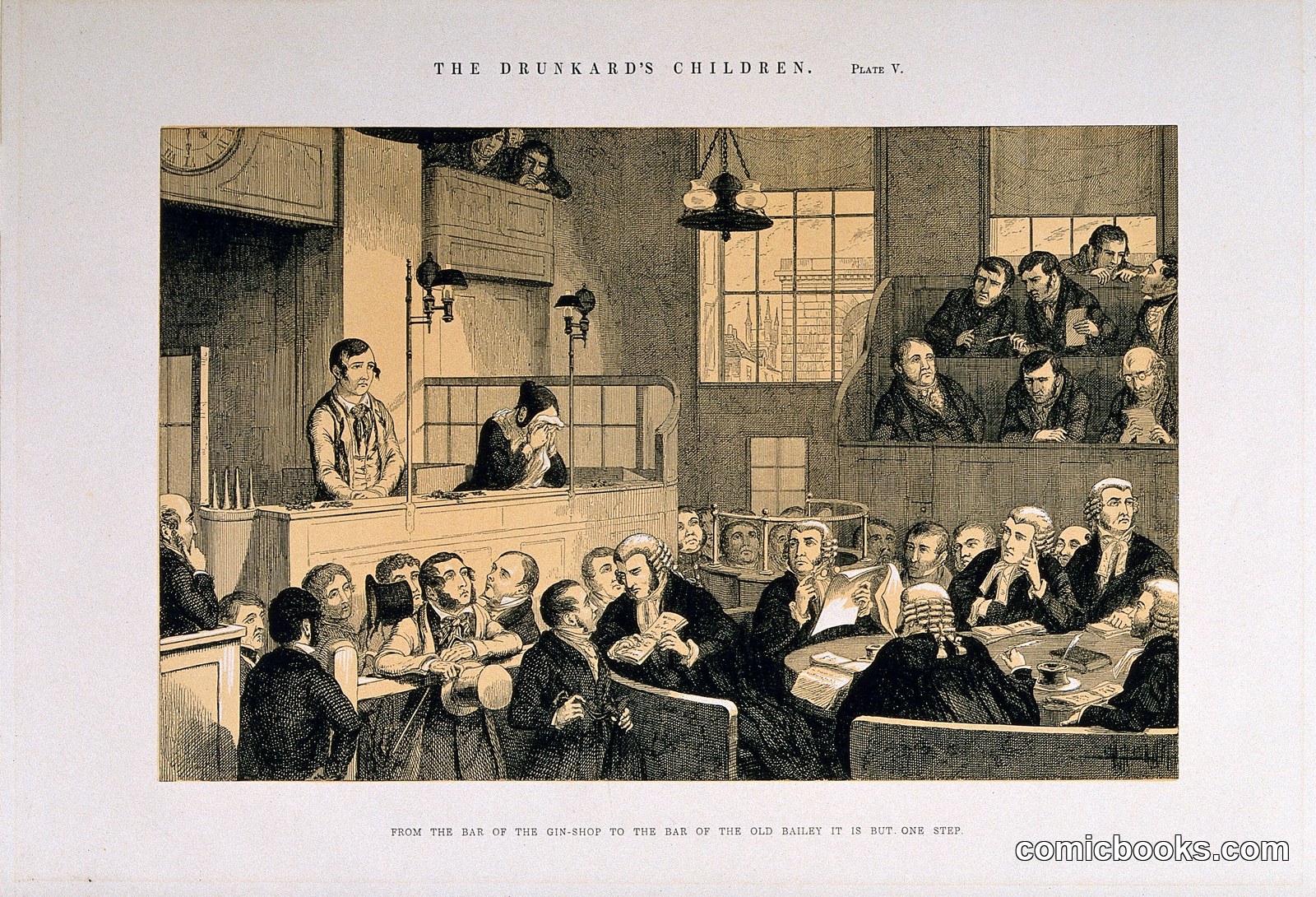
The Drunkard's Children, Plate V: From the Bar of the Gin-Shop to the Bar of the Old Bailey
http://data.europeana.eu/agent/63272 · 1848
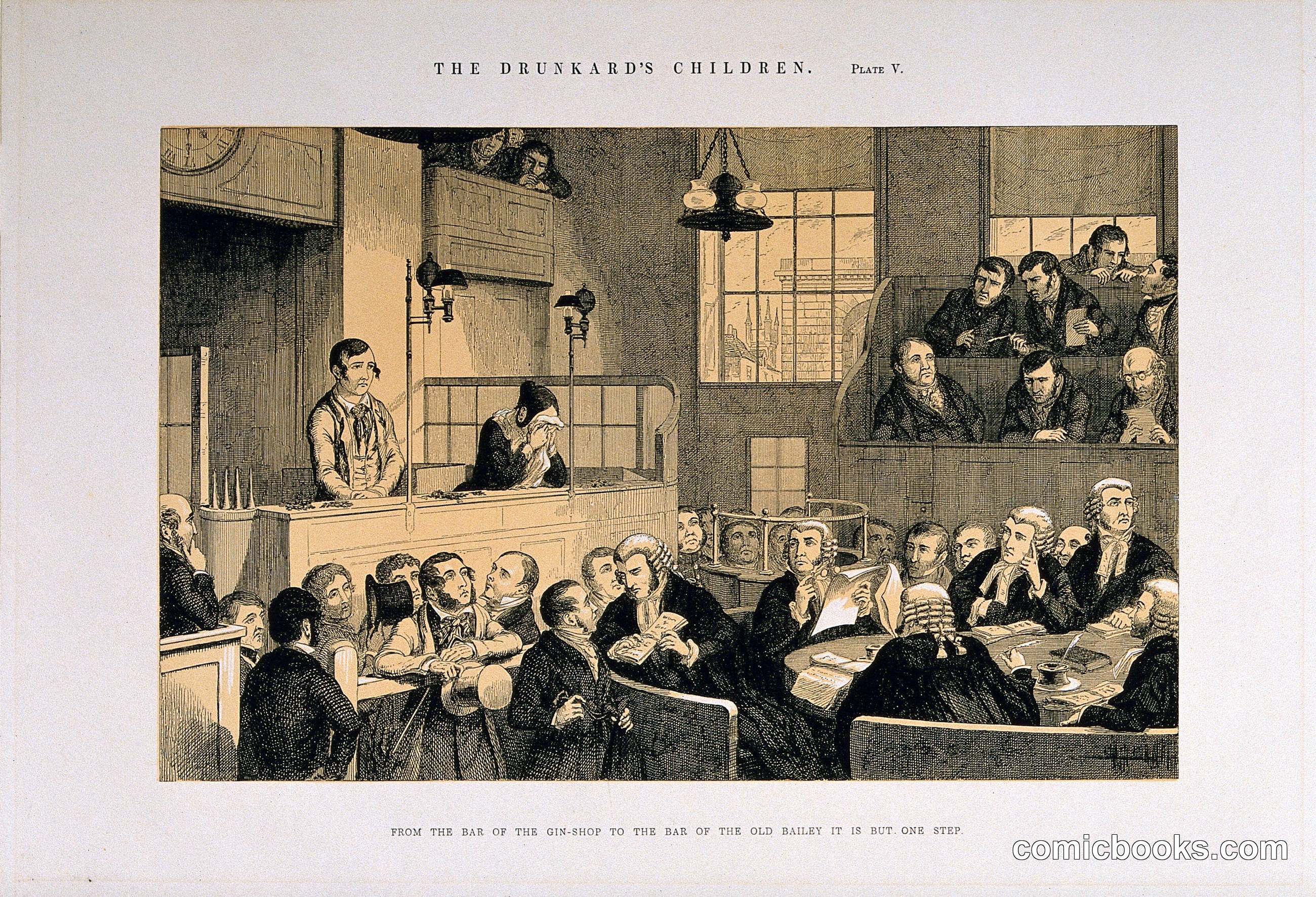
George Cruikshank's etching — fine cross-hatched lines bitten into copper, printed in monochrome — depicts a courtroom at the Old Bailey crowded with lawyers in horsehair wigs, a stern judge elevated on the bench, and packed public galleries of onlookers rendered with exaggerated, rubbery faces typical of the period's moral-reformist caricature tradition. The accused young man stands in the dock; his weeping sister, the primary victim of the narrative, is visible below. Cruikshank's sequence descends directly from Hogarth's *Industry and Idleness* (1747) and *Beer Street / Gin Lane* (1751) — sequential picture-stories using numbered plates to drive a didactic argument across time. That multi-plate sequential logic, sold cheaply to broad publics, fed directly into the Victorian illustrated press and eventually the comic strip itself. Class contempt saturates every face in the gallery: the poor are drawn as slack-jawed and bovine, the legal professionals as pompous grotesques — moral equality conspicuously absent from Cruikshank's temperance sermon.
Public domain, restored and presented by comicbooks.com http://creativecommons.org/licenses/by/4.0/