From the exhibition
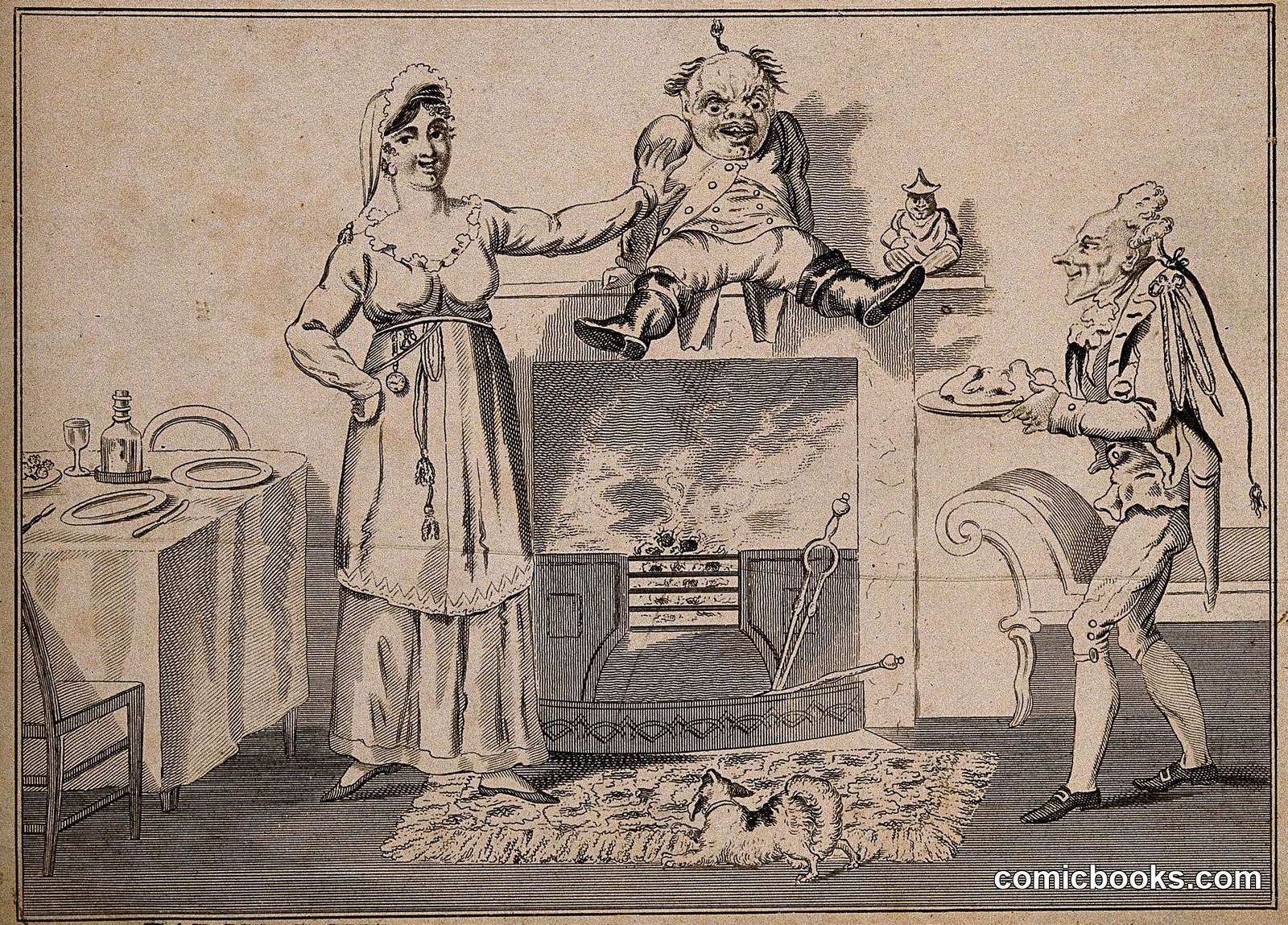
Baron Donder-Dronk-Dickdorf and Miss Quoltz, a Scene from a Musical Drama
Isaac Cruikshank · 1810, attributed to Isaac Cruikshank (possibly with George Cruikshank)
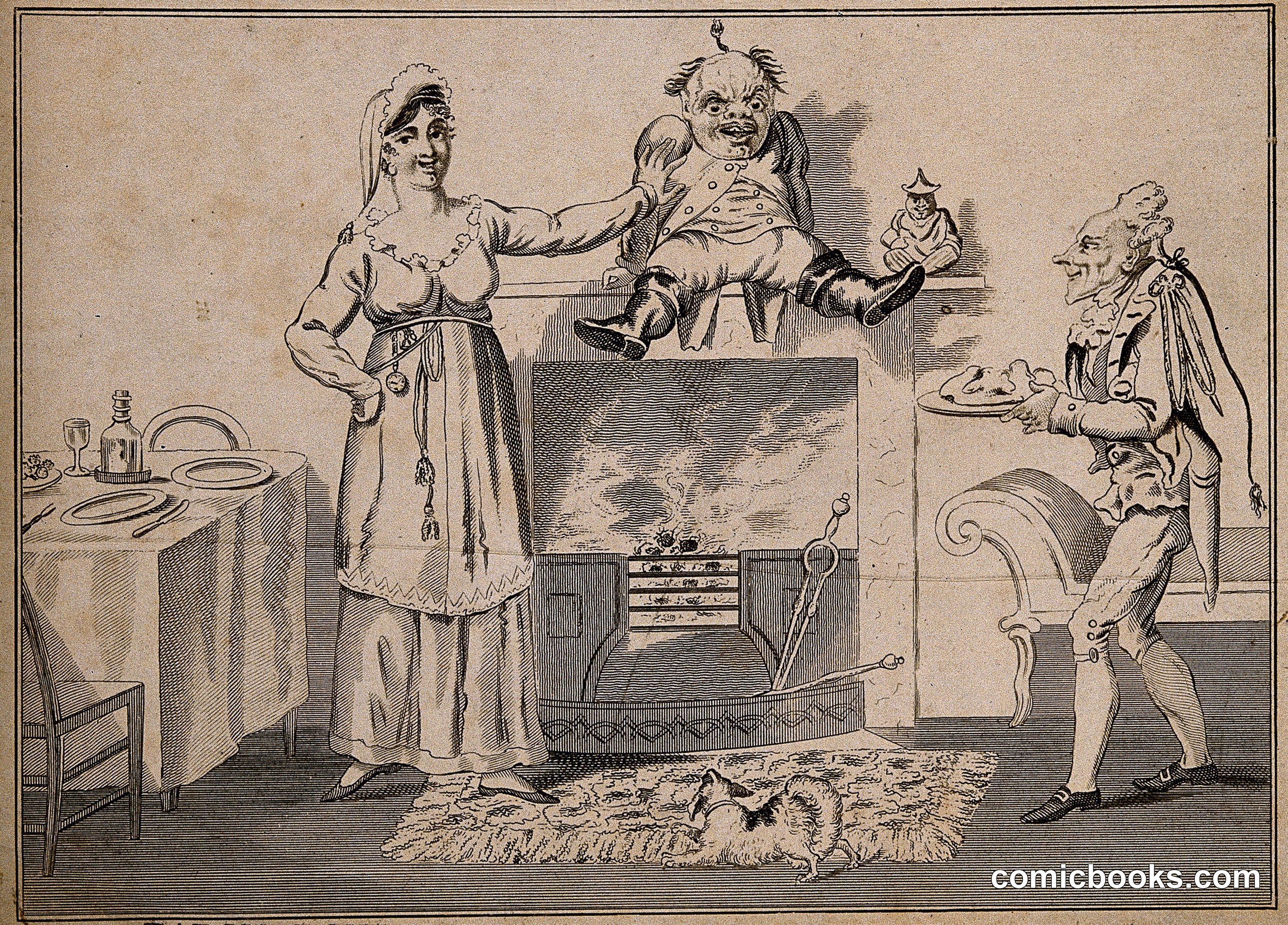
An etching — line-bitten, hand-finished in wash — staging a domestic interior whose comedy hinges on gross physical contrast. A composed young woman in Empire-waist dress steadies an absurdly corpulent, goblin-faced man perched atop a fireplace surround; a cadaverously thin elderly suitor approaches bearing a dish. The fat/thin binary was a stock comic pairing from Rowlandson onward, and the Baron's Germanic name signals the era's appetite for mocking Continental manners and Teutonic pomposity, a condescension normal to Regency print satire. Isaac Cruikshank, father of the more famous George, worked squarely in the Gillray tradition of physiognomic exaggeration — distorted faces as moral or social indices — that fed directly into the sequential pictorial storytelling of nineteenth-century comic papers and, ultimately, the comic book.
Public domain, restored and presented by comicbooks.com http://creativecommons.org/licenses/by/4.0/