From the exhibition
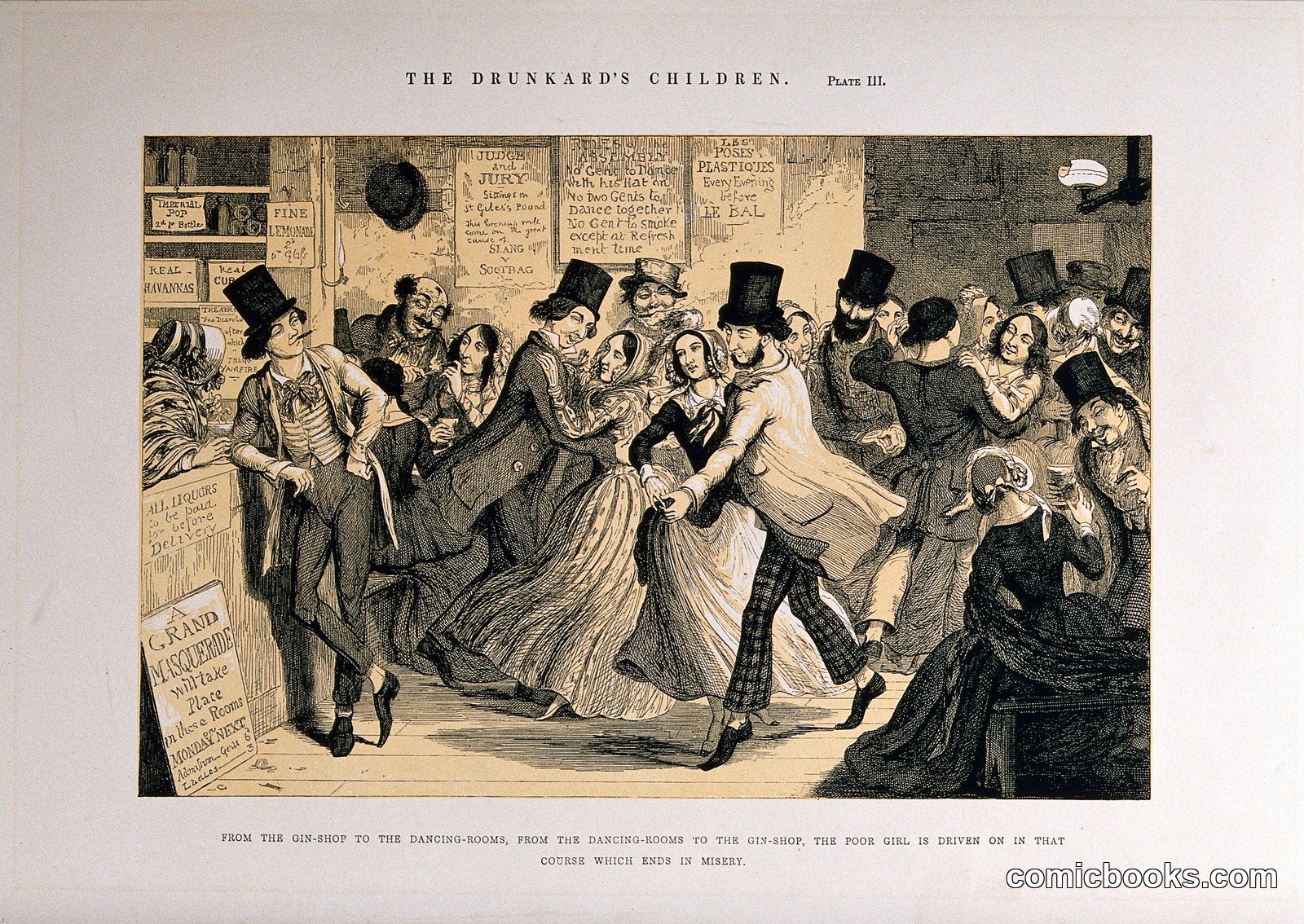
The Drunkard's Children, Plate III
George Cruikshank · George Cruikshank, 1848
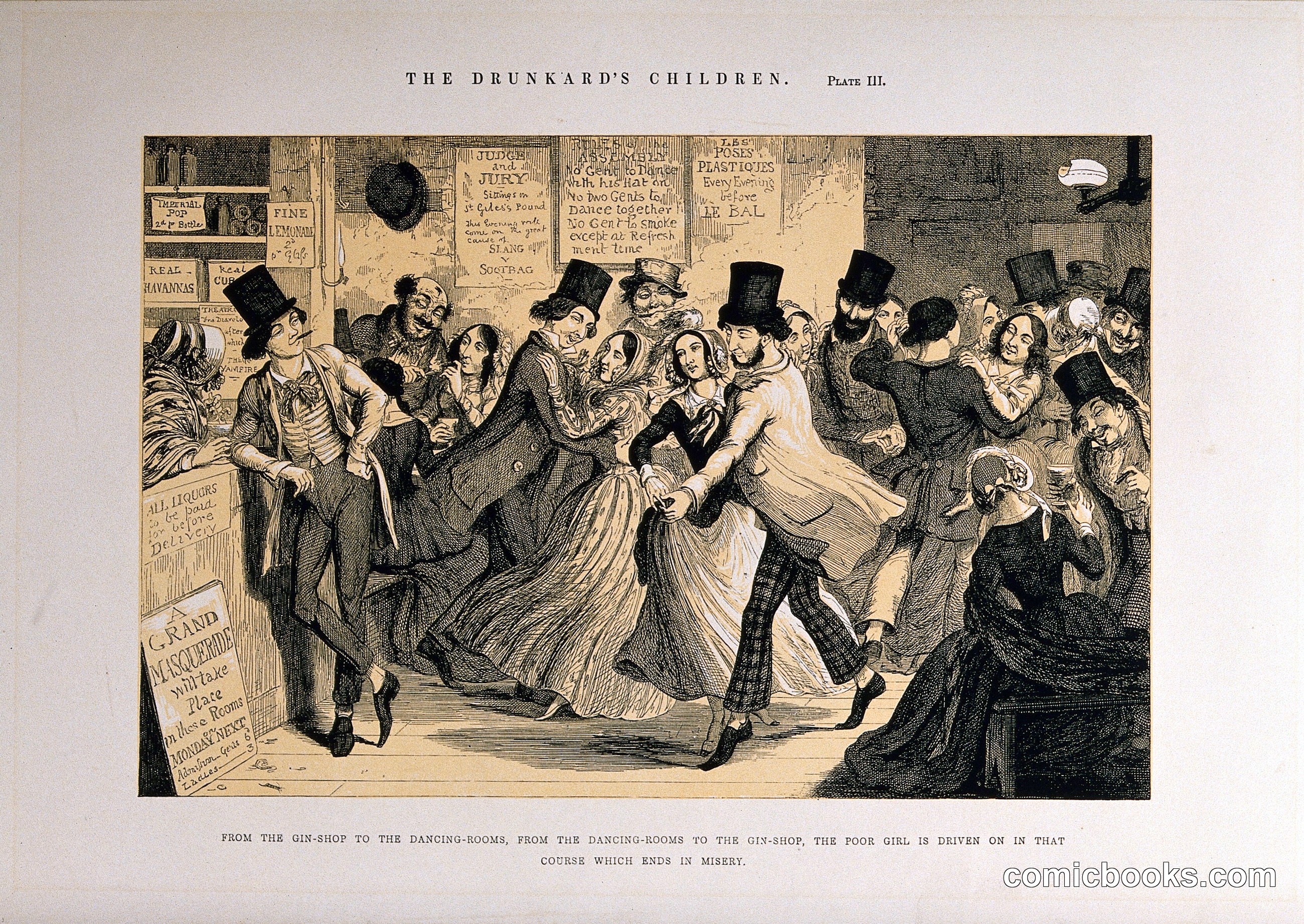
A crowded gin-shop dancing room churns with frantic energy: couples spin in coarse embrace, top-hatted men leer, and a young woman—the "poor girl" named in the plate's own caption—is pressed forward by the momentum of the crowd toward ruin. Cruikshank renders working-class Londoners with the broad, slightly grotesque exaggeration his era normalized: slack mouths, reddened cheeks, bodies losing dignity to drink. The lithographic line is dense and theatrical, the wall placards legible social documentation. This plate belongs to the sequential moral-narrative tradition Hogarth codified in *A Rake's Progress* (1735)—numbered images telling one story across multiple sheets—a direct ancestor of the comic strip. Cruikshank's temperance series carried that grammar of sequential pictures-with-text straight toward the Victorian illustrated press and, eventually, the comic book page.
Public domain, restored and presented by comicbooks.com http://creativecommons.org/licenses/by/4.0/