From the exhibition
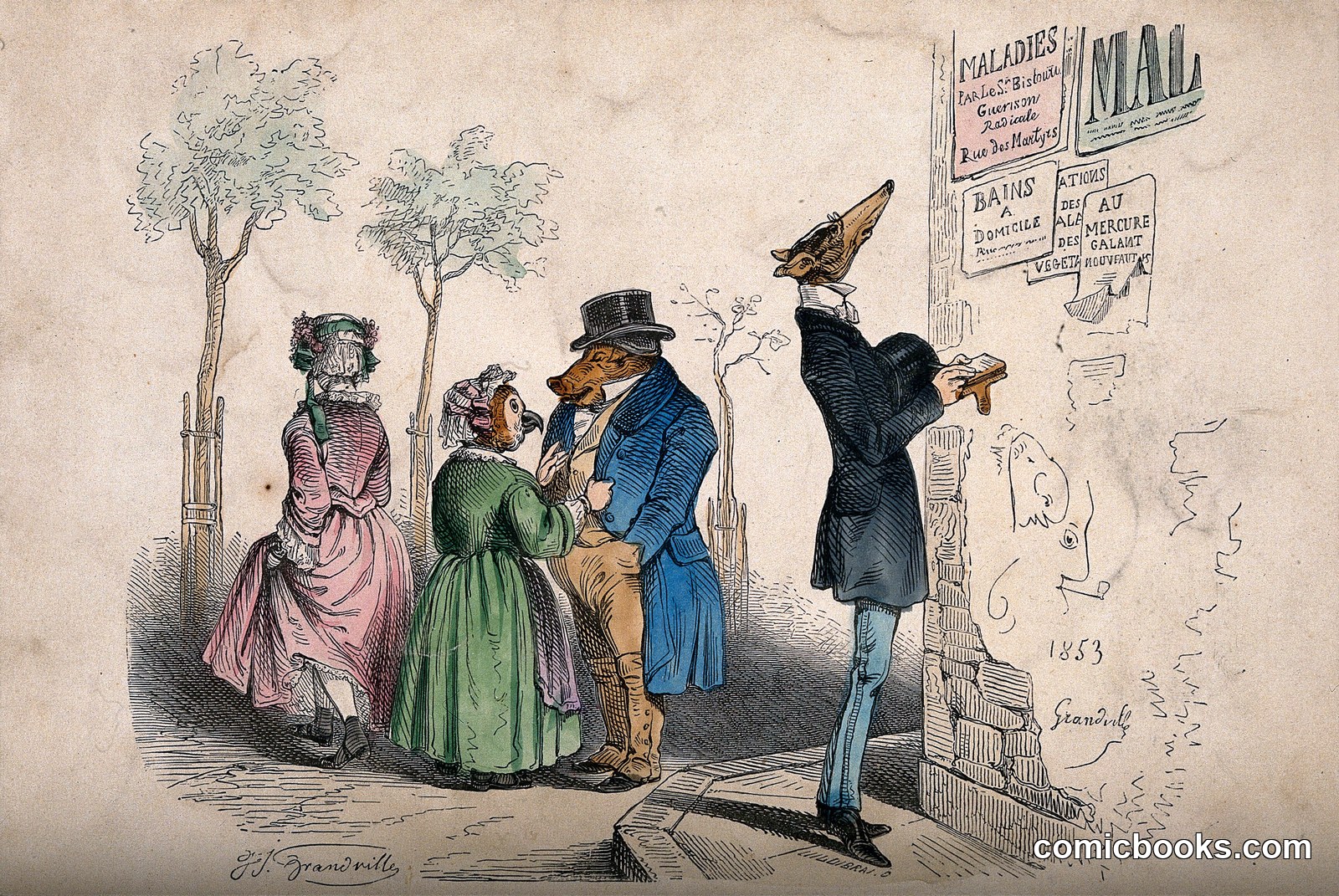
Animals dressed as gentlemen and ladies survey the medical advertisements on a wall
Jean-Ignace-Isidore Gérard · 1853
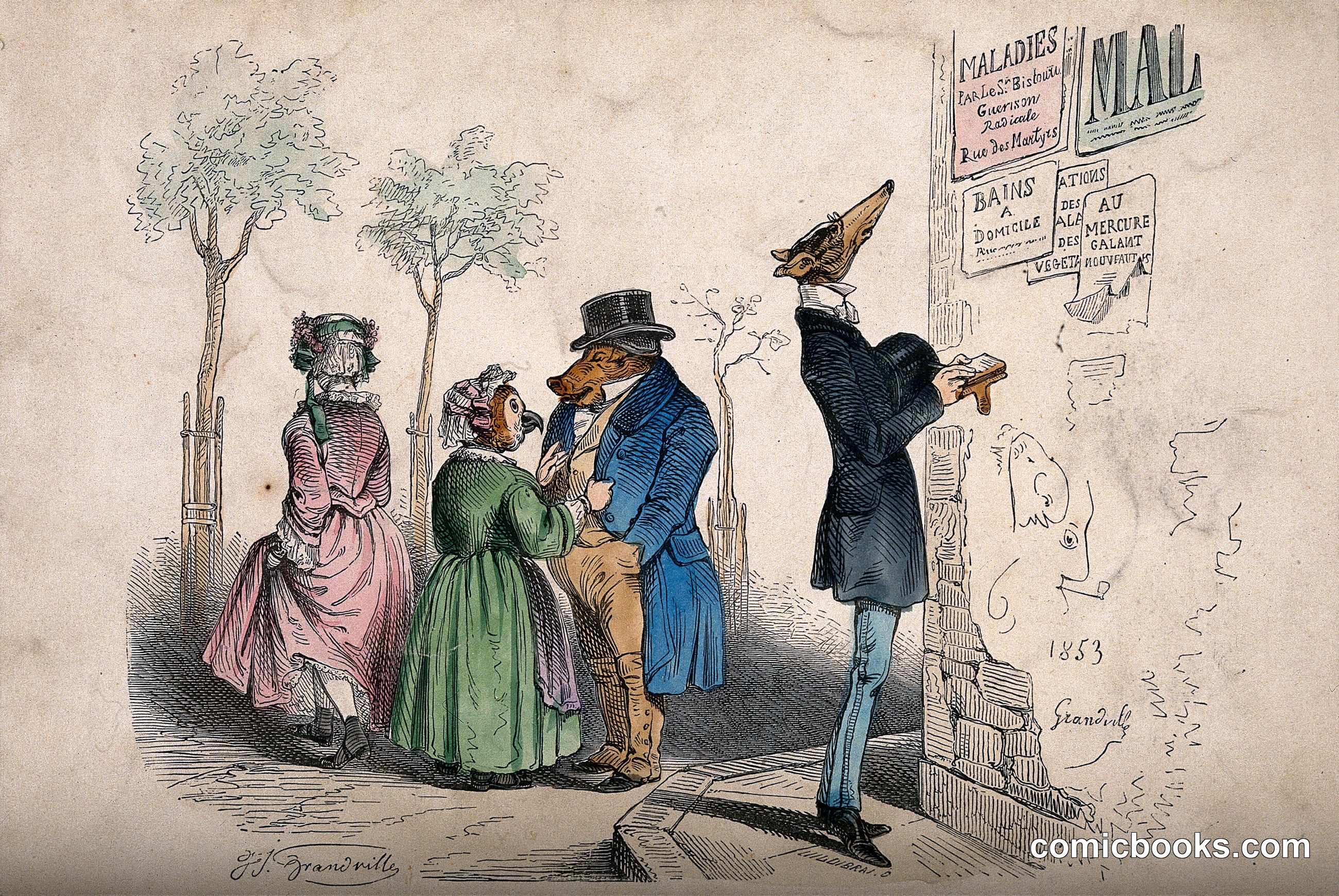
Jean-Ignace-Isidore Gérard, who published under the name J. J. Grandville, produced this coloured wood engraving in 1853, placing dog- and fox-headed bourgeois figures before a wall plastered with advertisements for *maladies* and *bains à domicile* — patent-medicine culture skewered through zoomorphic displacement. A fox in tall coat leans toward the notices; a canine couple confer behind him; a third figure withdraws in apparent disgust. The animal-as-human conceit, rooted in Aesop and La Fontaine, let Grandville satirise French middle-class vanity and quackery without libelling named individuals — a legal and commercial calculation his predecessor Honoré Daumier understood equally well. This tradition of sequential-image satire, running from Hogarth's *Rake's Progress* through Gillray's political prints and Rodolphe Töpffer's picture-stories, is the direct ancestor of the modern comic strip: a lineage of popular printed art in which ridicule does the moral work that polite discourse could not.
Public domain, restored and presented by comicbooks.com http://creativecommons.org/licenses/by/4.0/