From the exhibition
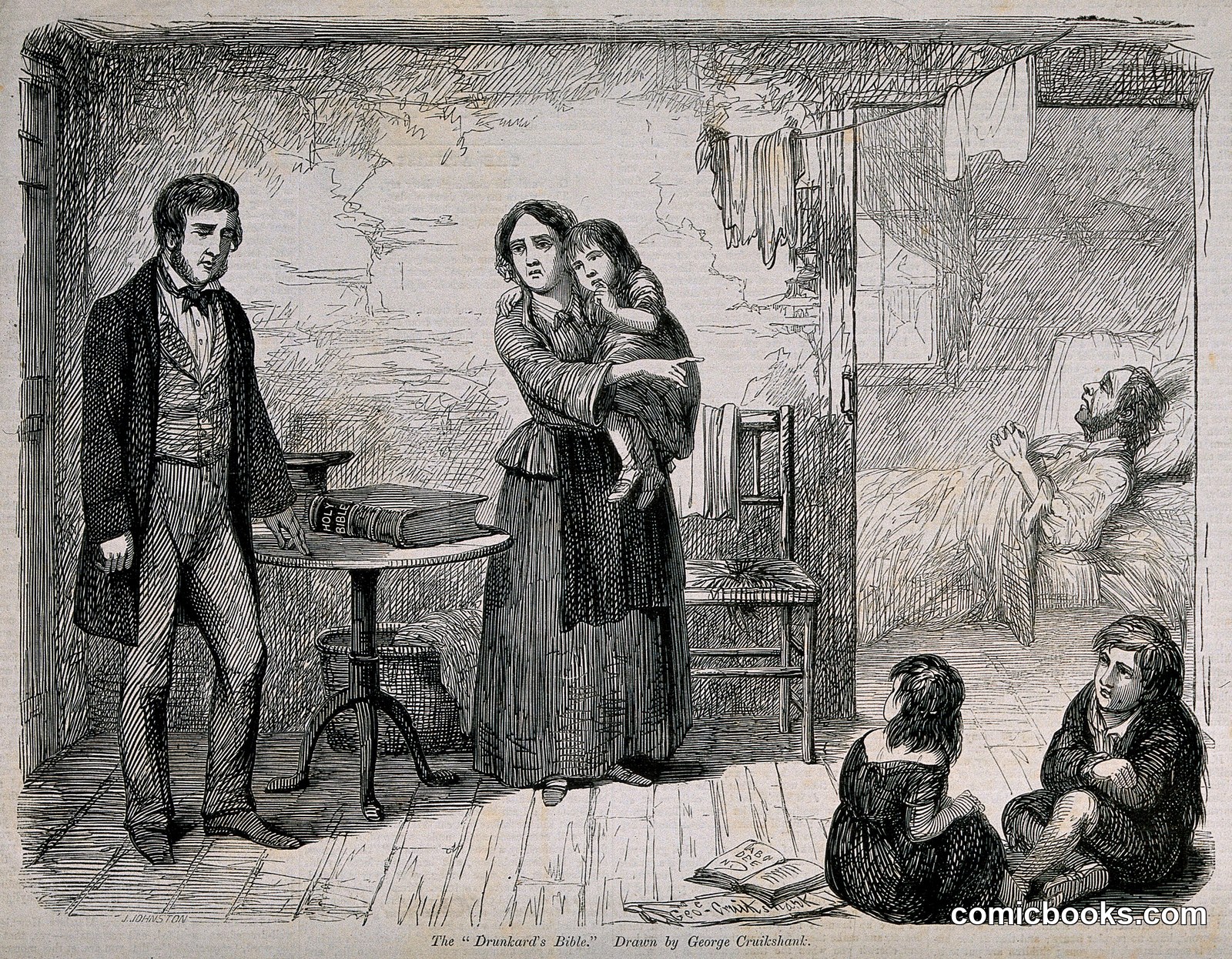
The Drunkard's Bible
http://data.europeana.eu/agent/63272 · c. 1864, after George Cruikshank
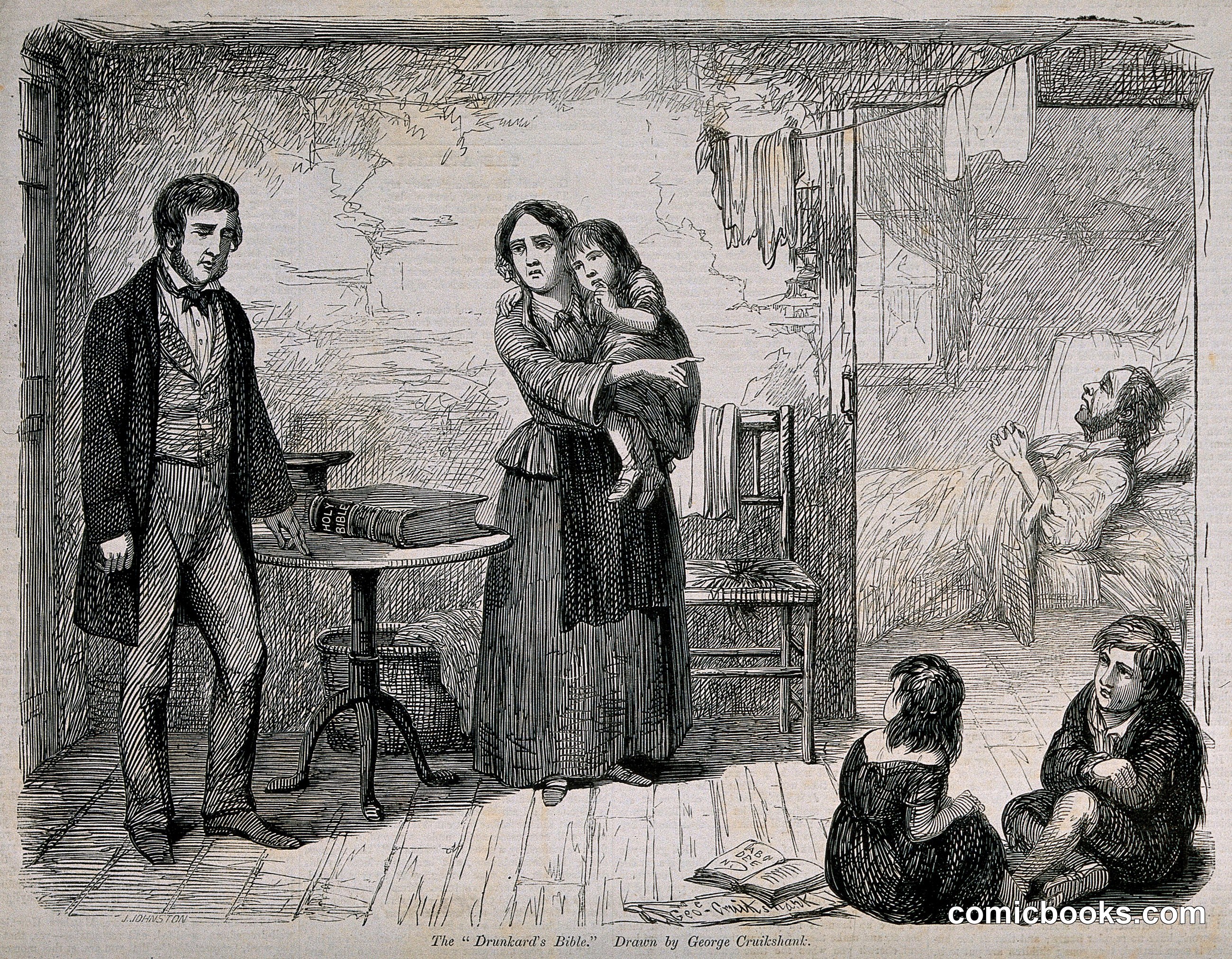
A wood engraving after George Cruikshank — the great moralist illustrator who renounced alcohol and made temperance his crusade — shows a respectable-looking man in a frock coat standing over his wrecked household: a haggard wife clutching an infant, two ragged children huddled on a bare floor, and a figure prostrate in bed, hands raised in supplication. The scene's stagey tableaux and tight cross-hatching descend directly from Hogarth's *Gin Lane* (1751) narrative tradition, in which sequential images and single loaded scenes argued social policy through pity and disgust. Cruikshank's working-class figures are rendered without the grotesque ethnic distortion common in Gillray or Rowlandson — his caricature here is moral, not physiognomic. This lineage of sequential moral imagery fed directly into Victorian illustrated papers and, eventually, the comic strip itself.
Public domain, restored and presented by comicbooks.com http://creativecommons.org/licenses/by/4.0/