Exhibition · 1830–1900
The Satirist's Press
Lithographic weeklies that invented the editorial cartoon and the recurring type.
In 1830 a new kind of paper appeared on the boulevards of Paris. Charles Philipon's *La Caricature*, and soon its daily companion *Le Charivari*, put a single large lithograph at the center of each issue and pointed it straight at those in power. The technology mattered: lithography let an artist draw with a crayon and pull thousands of copies fast and cheap, so a picture could answer the news within the week. Honoré Daumier turned the form into an art of attack, modelling politicians into unforgettable grotesques; Paul Gavarni worked the softer register of manners and social types. Louis-Philippe's censors struck back, and Daumier went to jail. London followed in 1841 with *Punch*, which gave the word "cartoon" its modern meaning and, in John Leech and John Tenniel, produced draughtsmen who could carry a national argument in one frame. These weekly sheets established the grammar the comics would inherit: caricature, the labelled figure, and above all the recurring visual type who returns issue after issue.
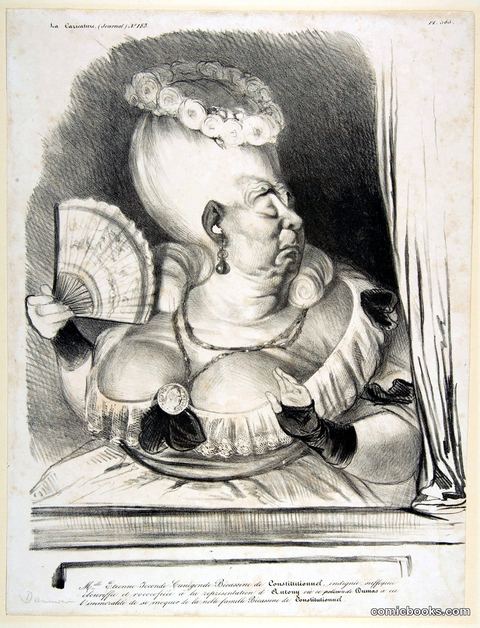 Caricature of *Le Constitutionnel*Honoré Daumier 1834
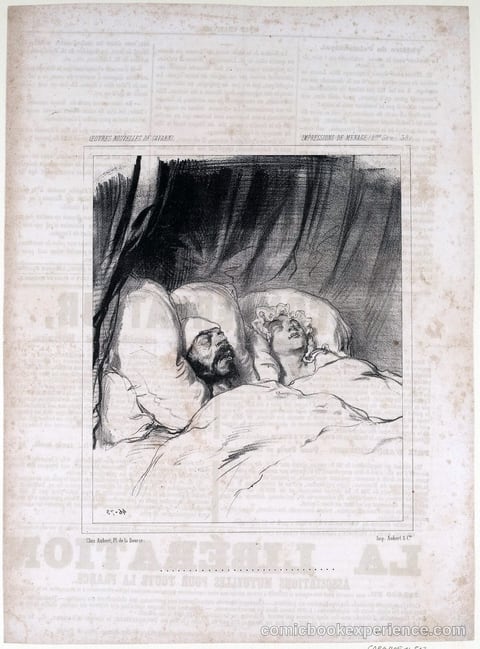 *Impressions de Ménage*Paul Gavarni 1840s
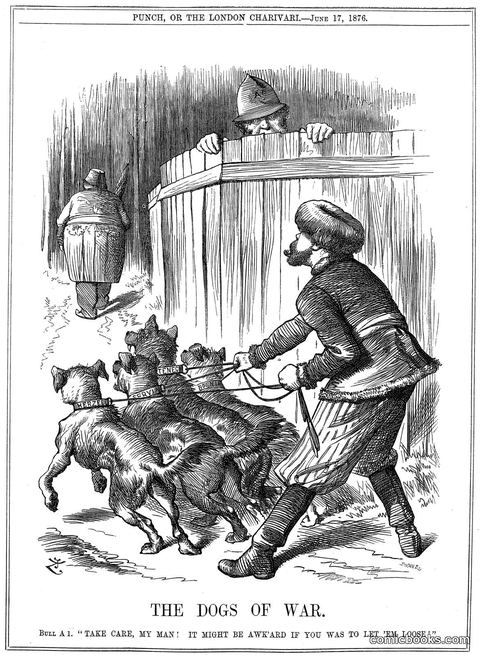 *The Dogs of War*John Tenniel 1876
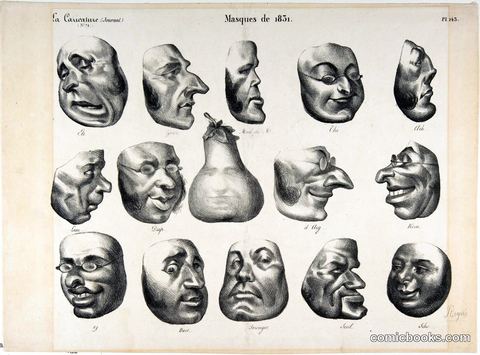 *Masques de 1831*Honoré Daumier 1832
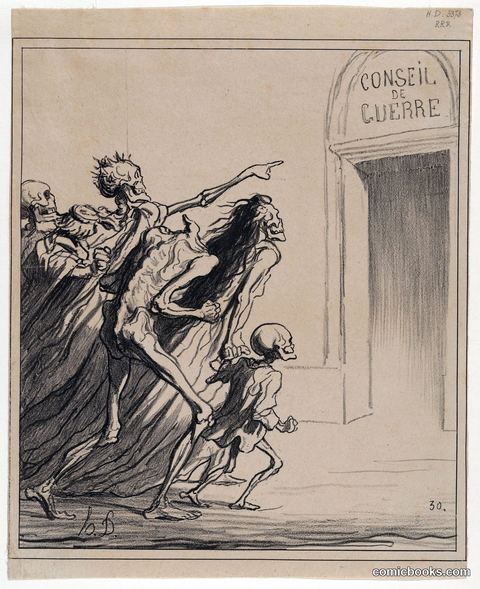 *Conseil de Guerre* (The War Council)Honoré Daumier 1872
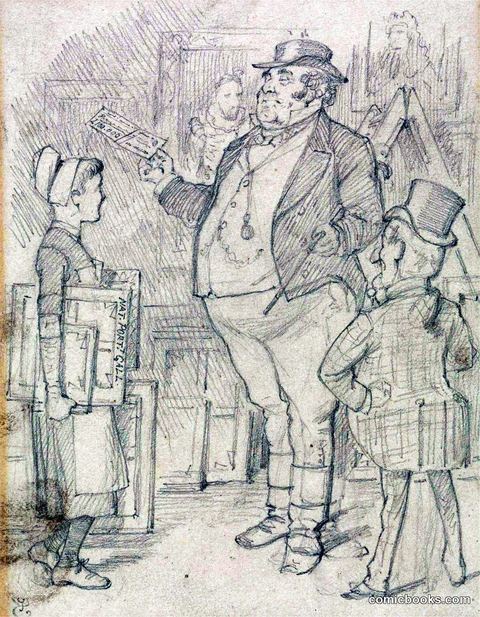 Study for a *Punch* DrawingJohn Tenniel c. 1880s
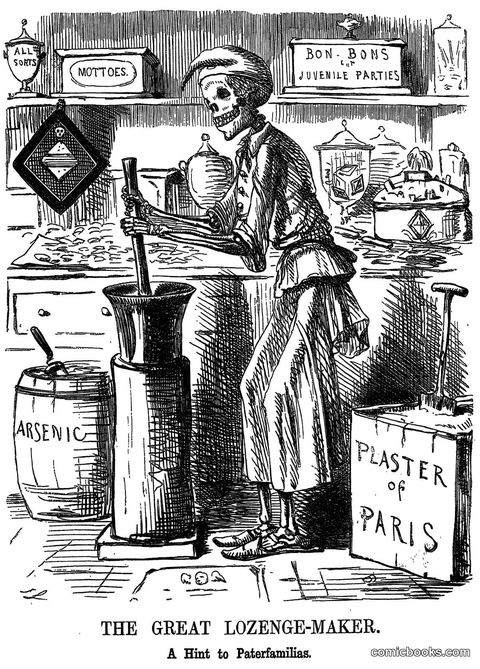 *The Great Lozenge-Maker*John Leech 1858
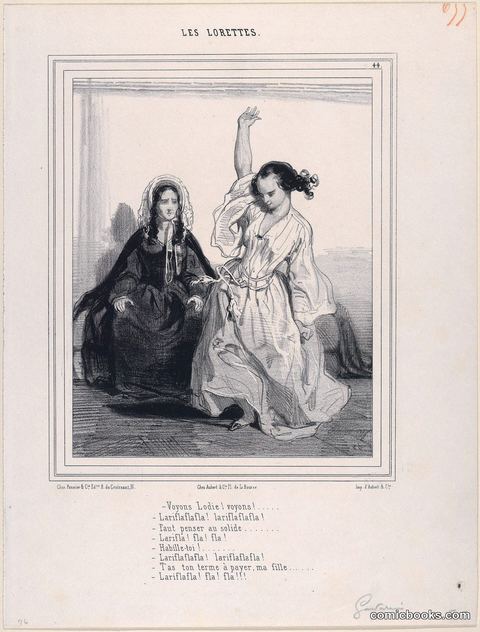 *Les Lorettes*, No. 44Paul Gavarni 1840s